




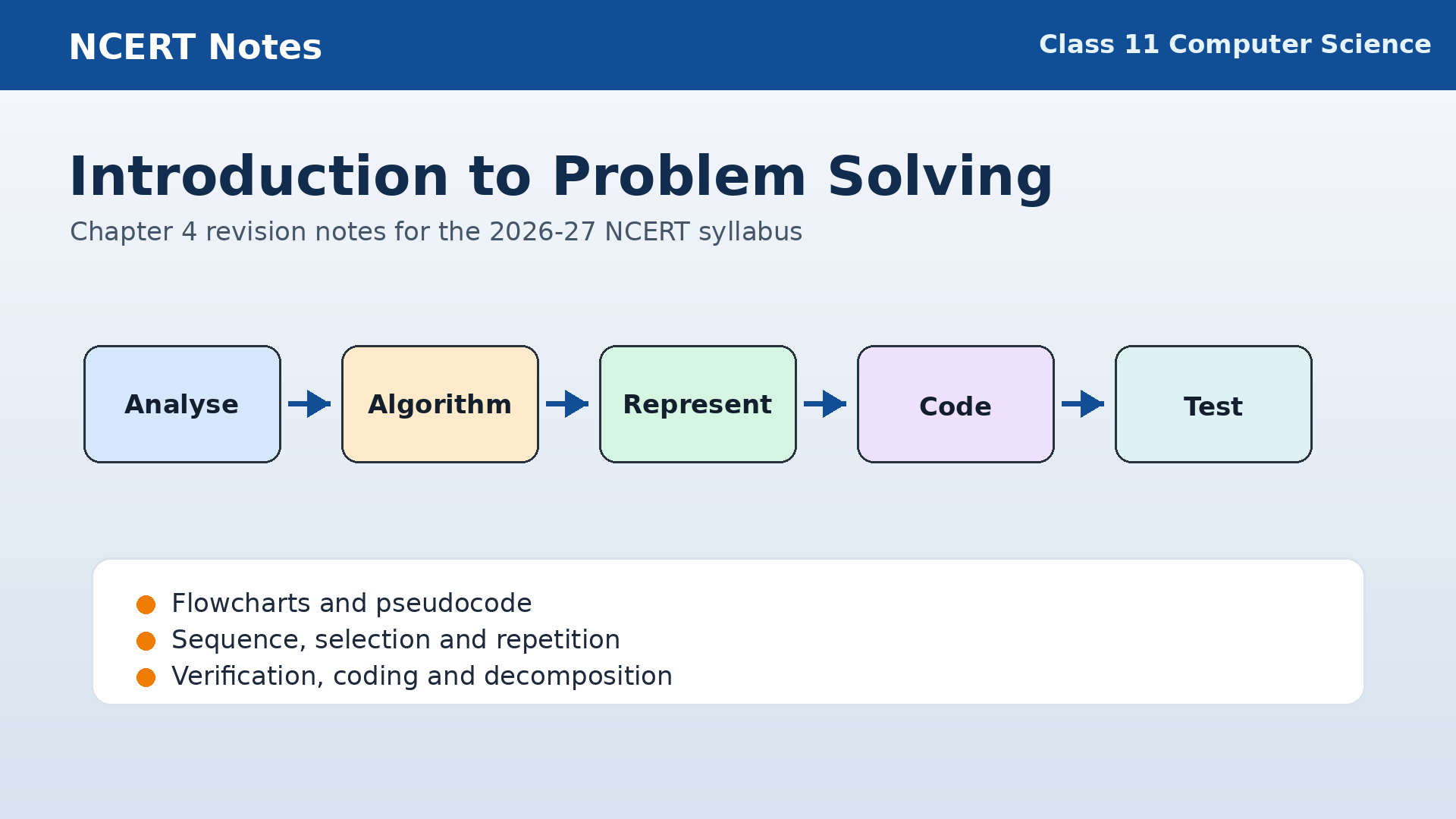
NCERT Notes for Class 11 Computer Science Chapter 4 Introduction to Problem Solving help students revise problem analysis, algorithms, flowcharts, pseudocode, control flow, verification, coding and decomposition for the 2026-27 NCERT syllabus.
- PDF included: 19 pages with tables, diagrams and exam-use anchors.
- Key focus: algorithms, flowcharts, pseudocode, sequence, selection and repetition.
- Best use: read the workflow first, then practise NCERT exercise pseudocode questions.
Student Feedback: In a Collegedunia survey of Class 11 students preparing for 2026 exams, many students said flowchart symbols and loop conditions needed quick revision before tests.
Introduction to Problem Solving Notes Overview for Class 11 Computer Science
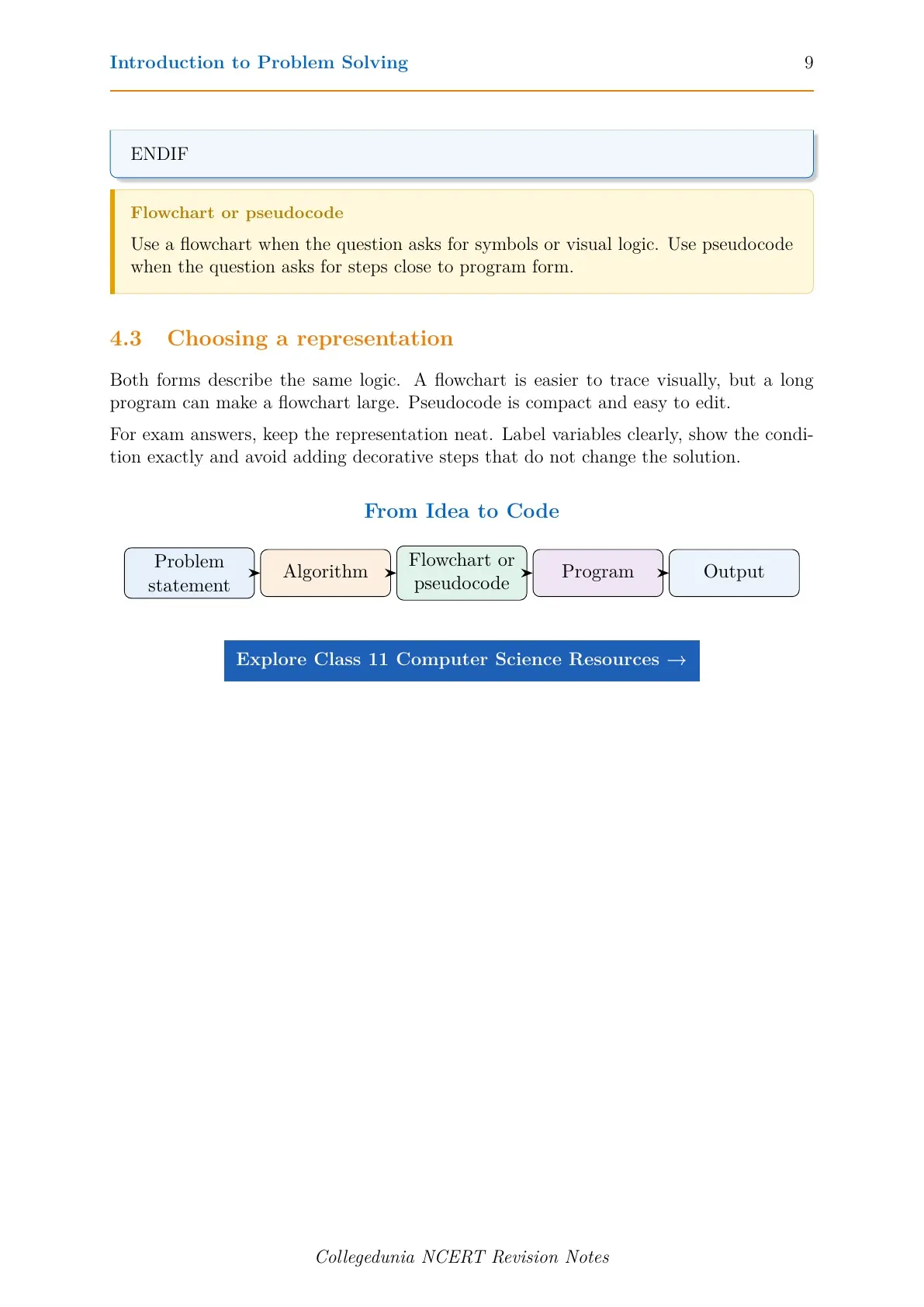
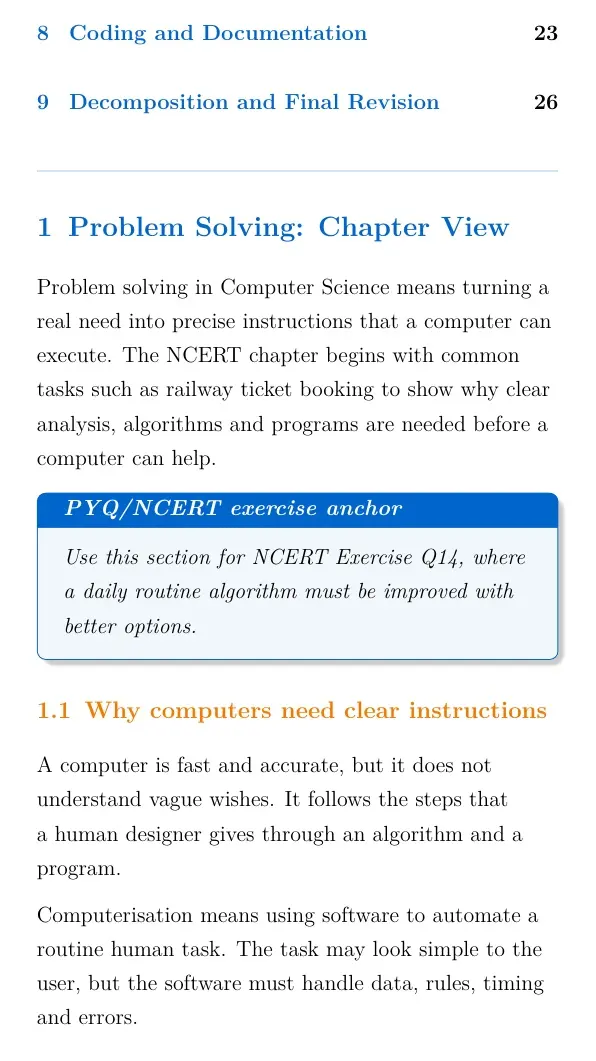
Introduction to Problem Solving explains how a real-life problem becomes a program. The chapter starts with analysis, then moves to algorithms, representations, control flow, verification, coding and decomposition.
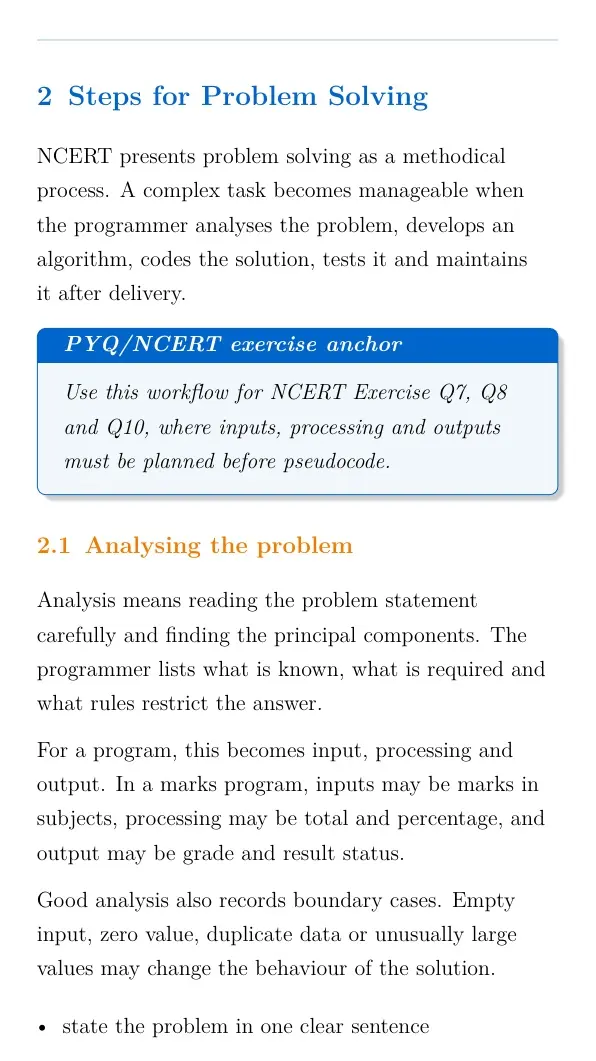
| Stage | What to revise | NCERT cue |
|---|---|---|
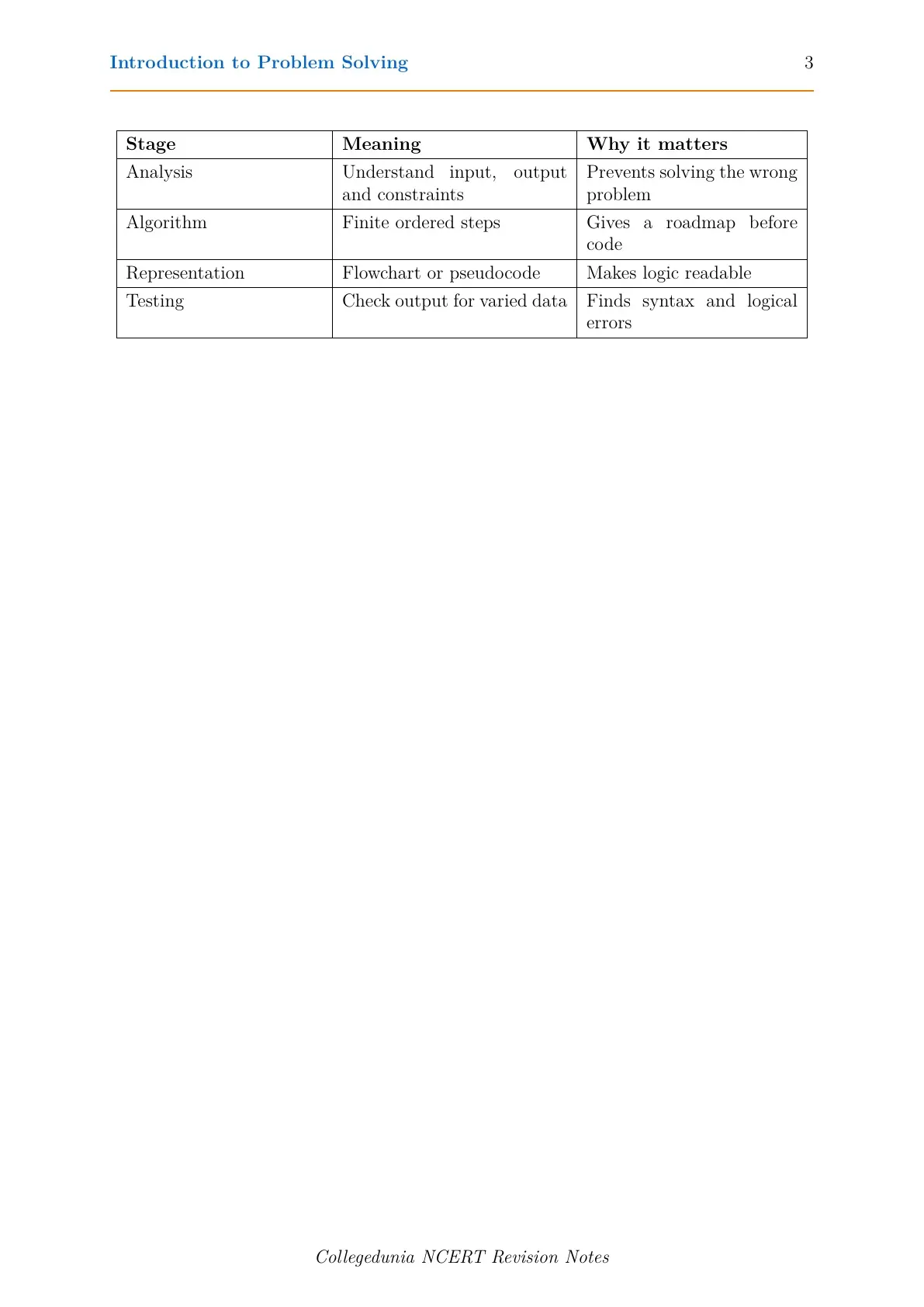
| Analysis | Input, processing, output and constraints | Understand the problem before coding |
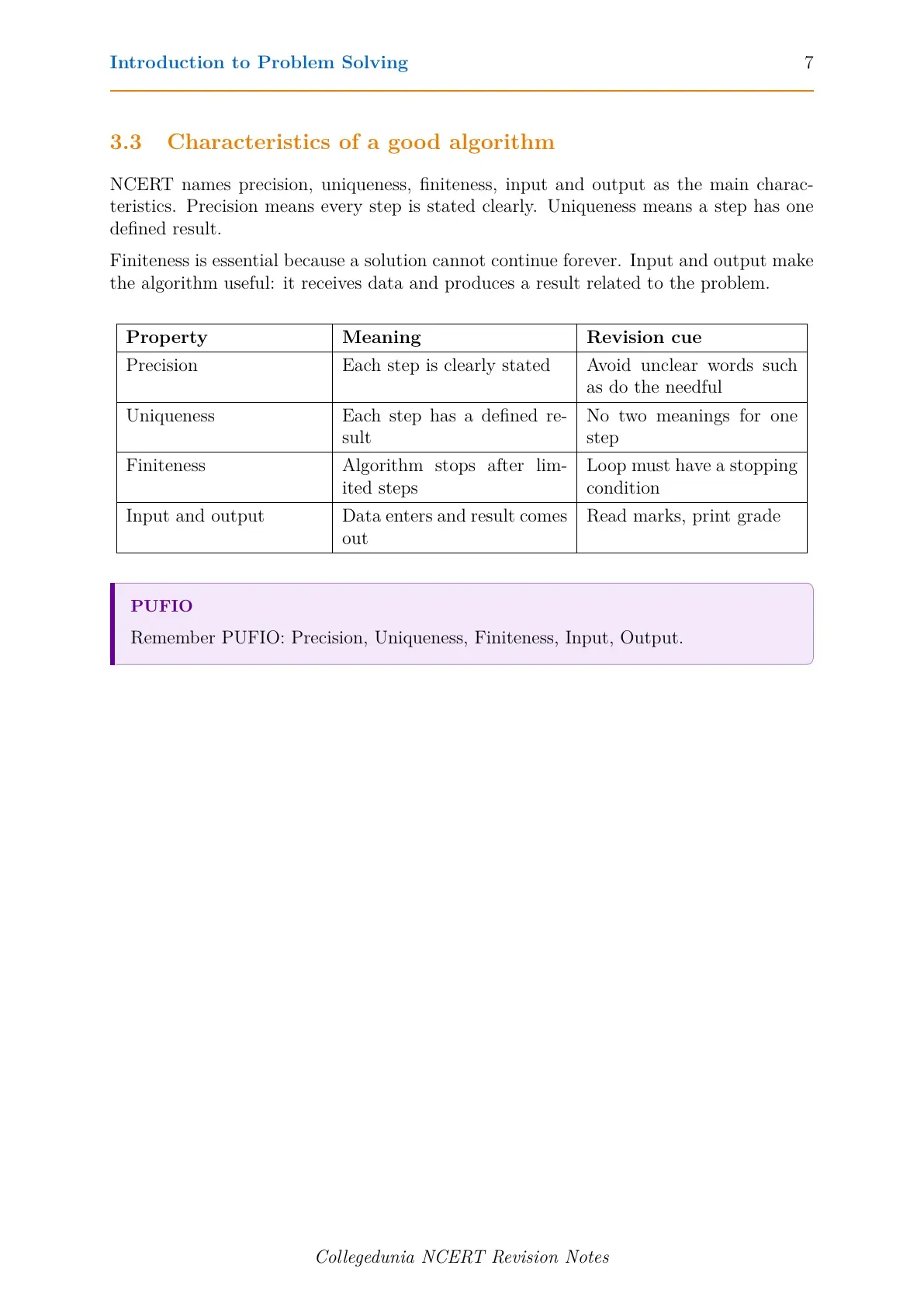
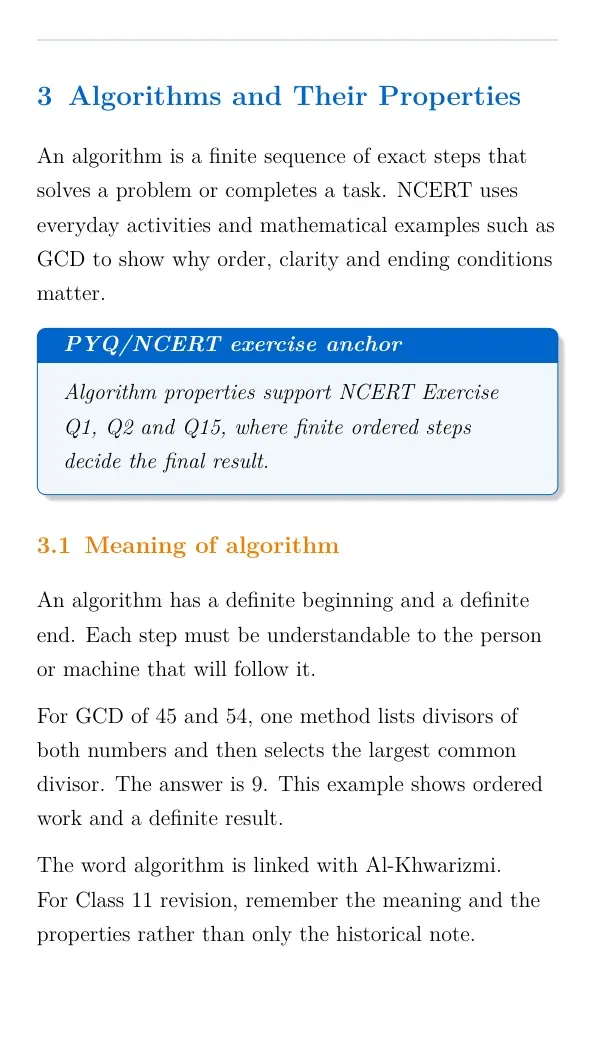
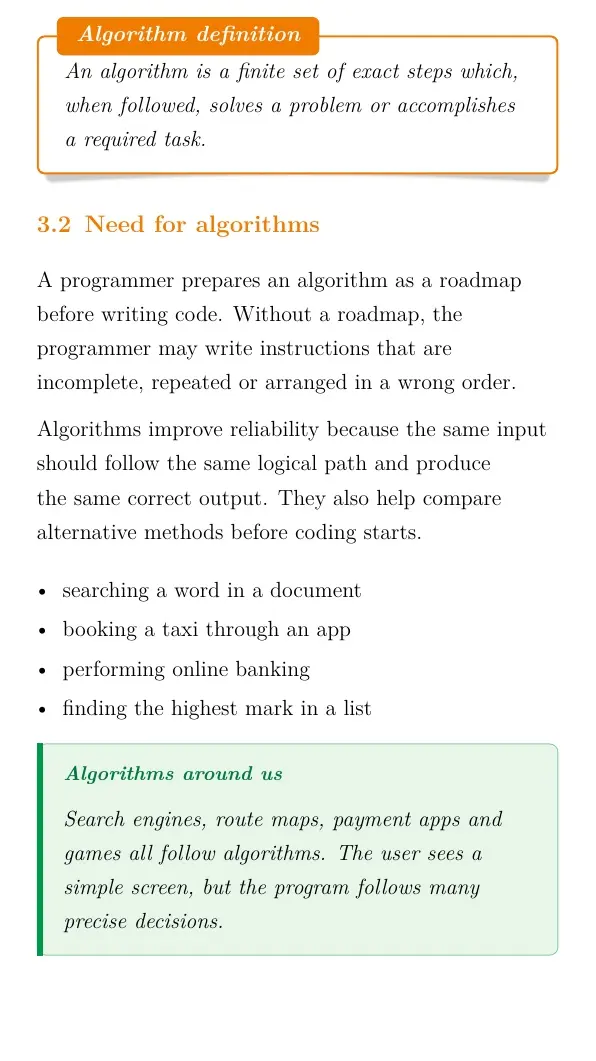
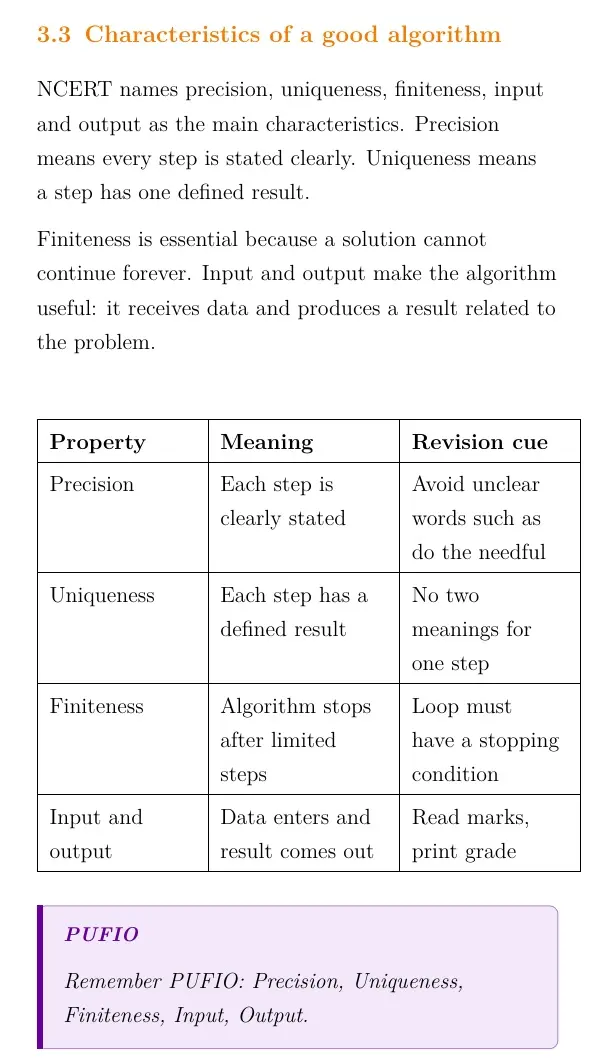
| Algorithm | Finite exact steps | Precision, uniqueness, finiteness, input and output |
| Representation | Flowchart and pseudocode | Use symbols or structured English |
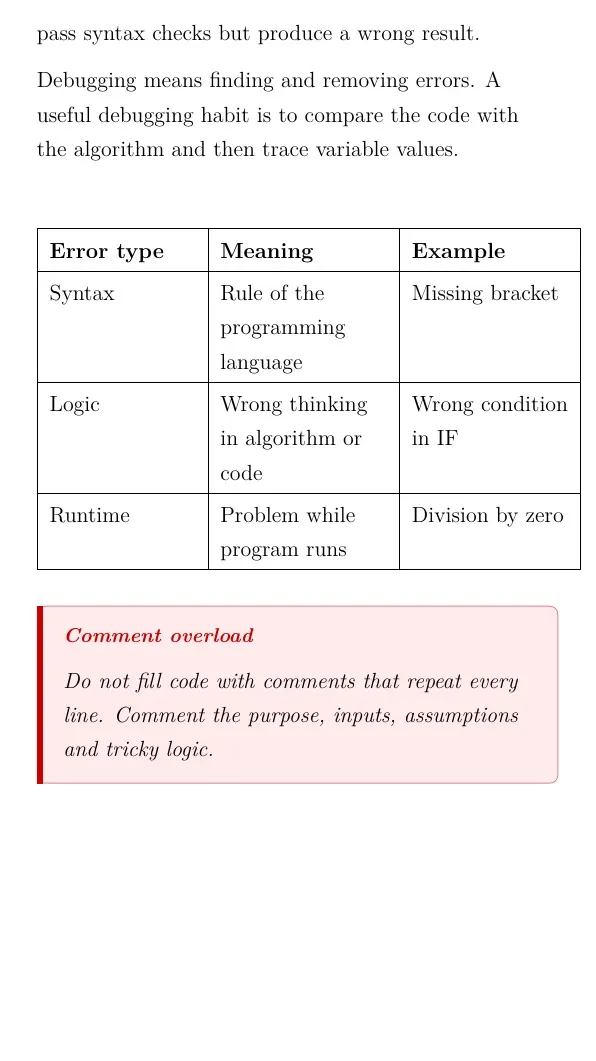
| Testing | Dry run and varied data | Find logical errors early |
Problem Solving Steps and Algorithms
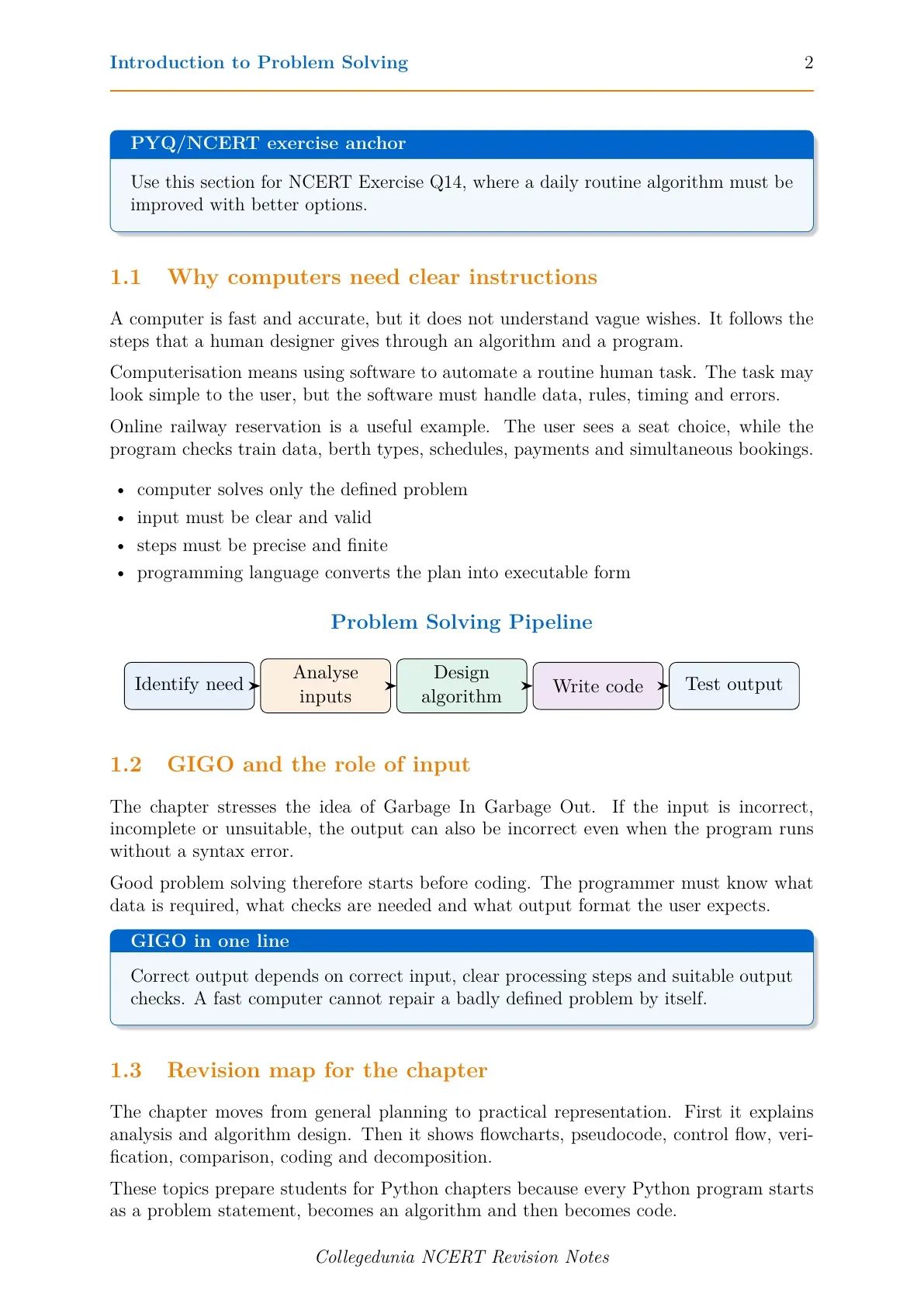
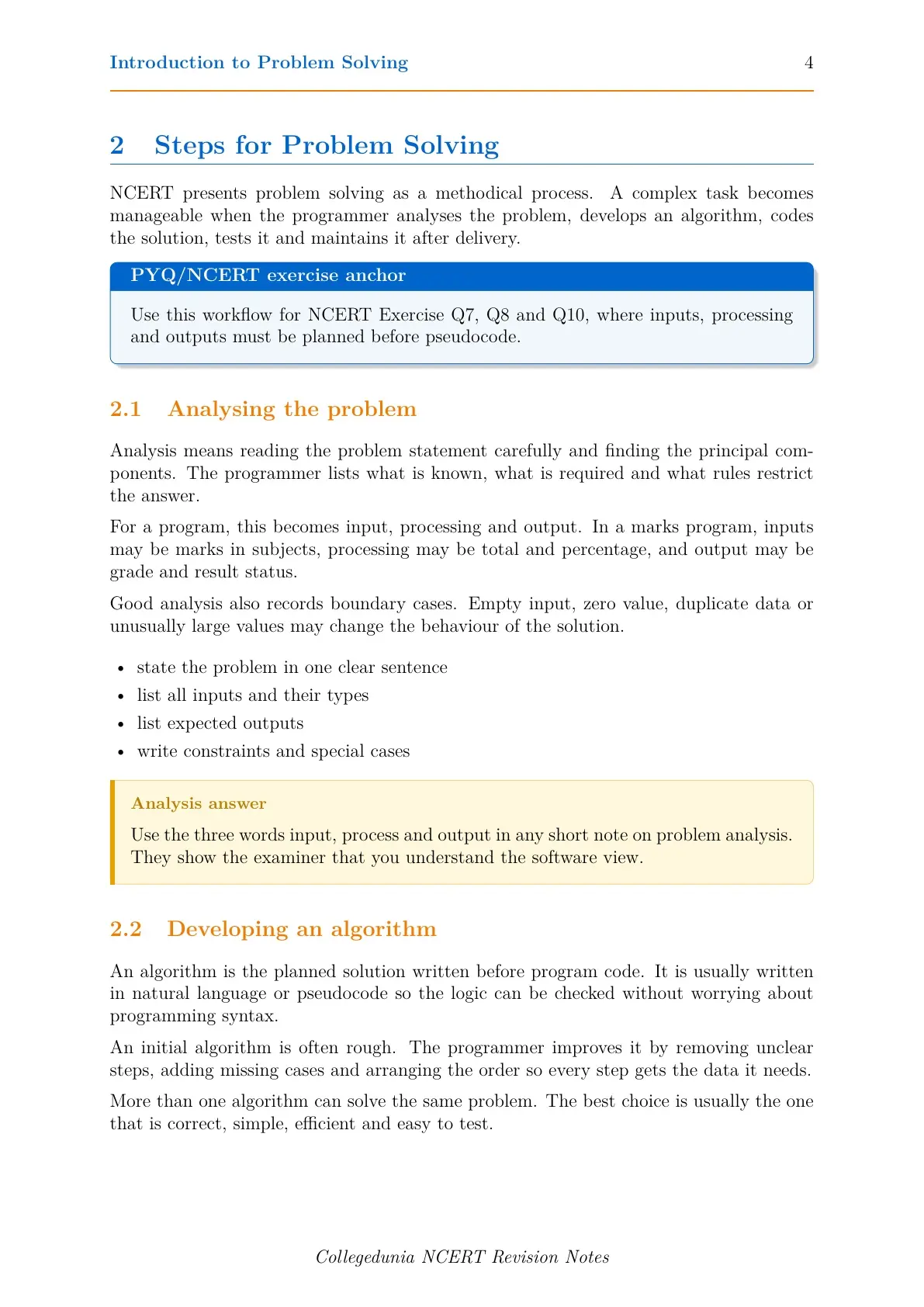
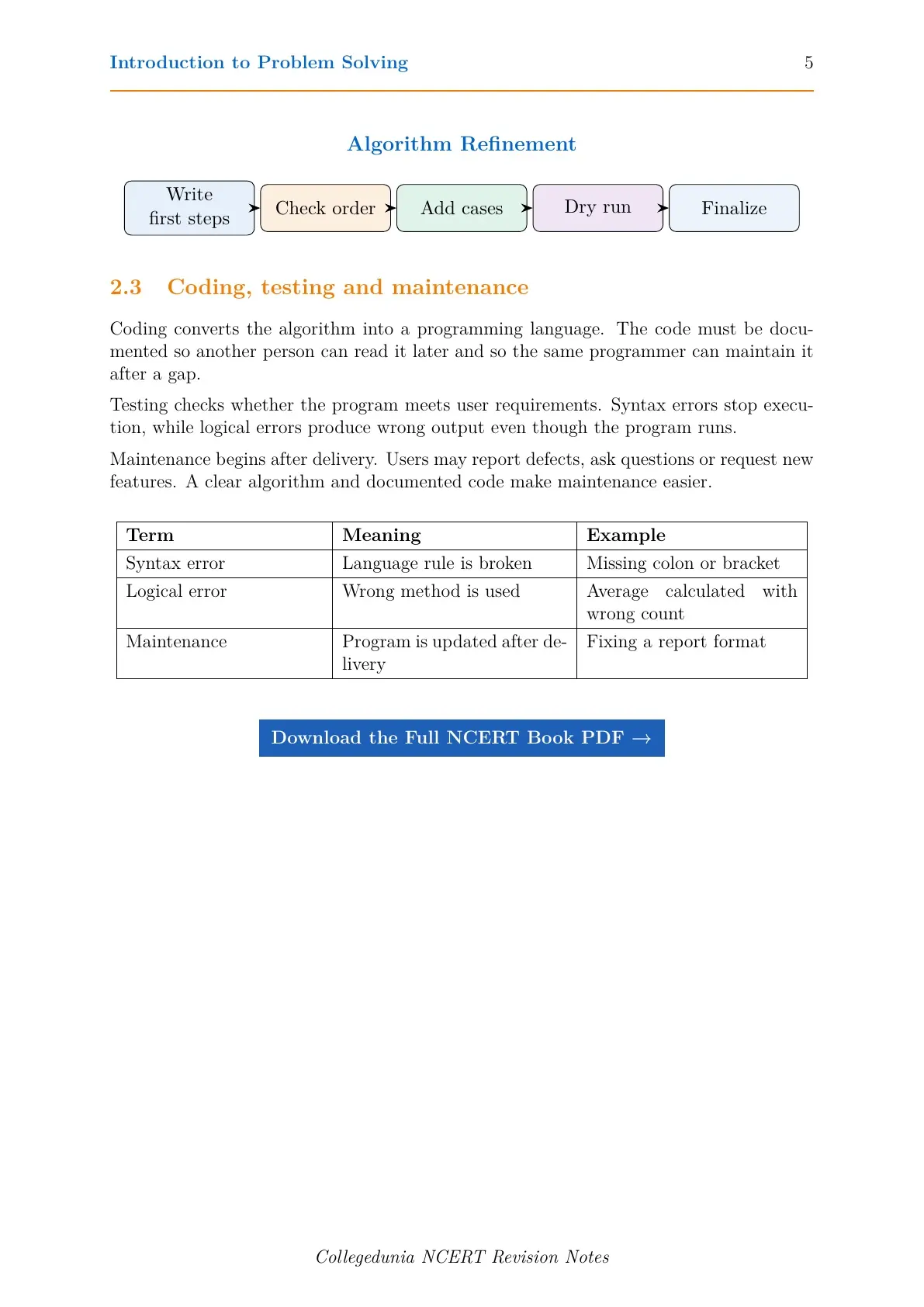
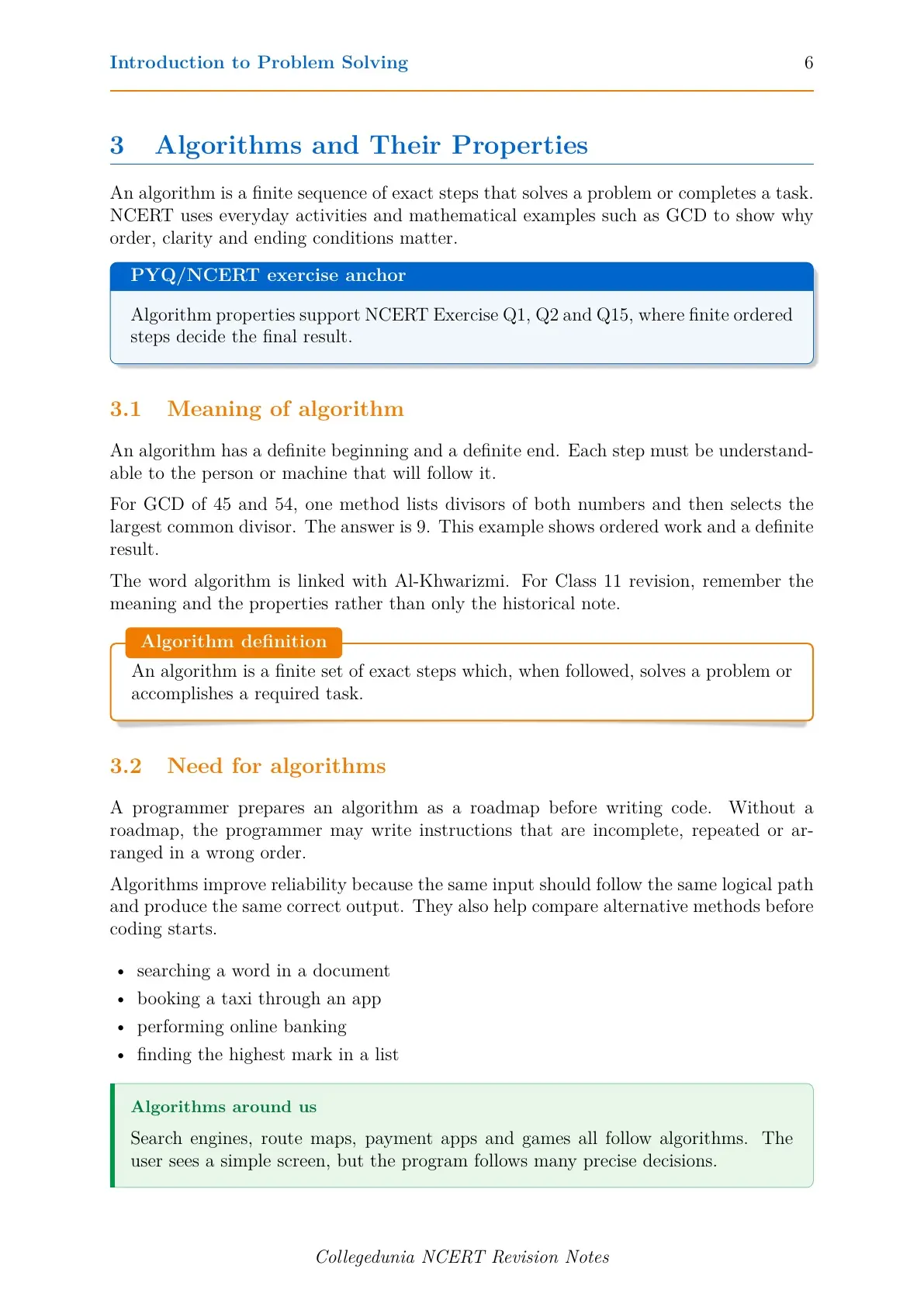
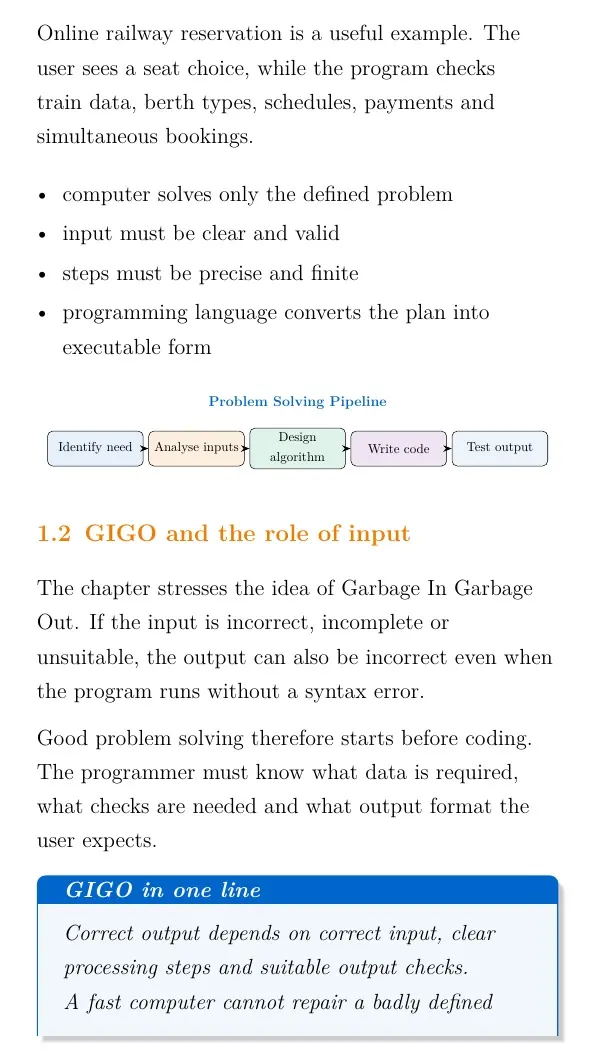
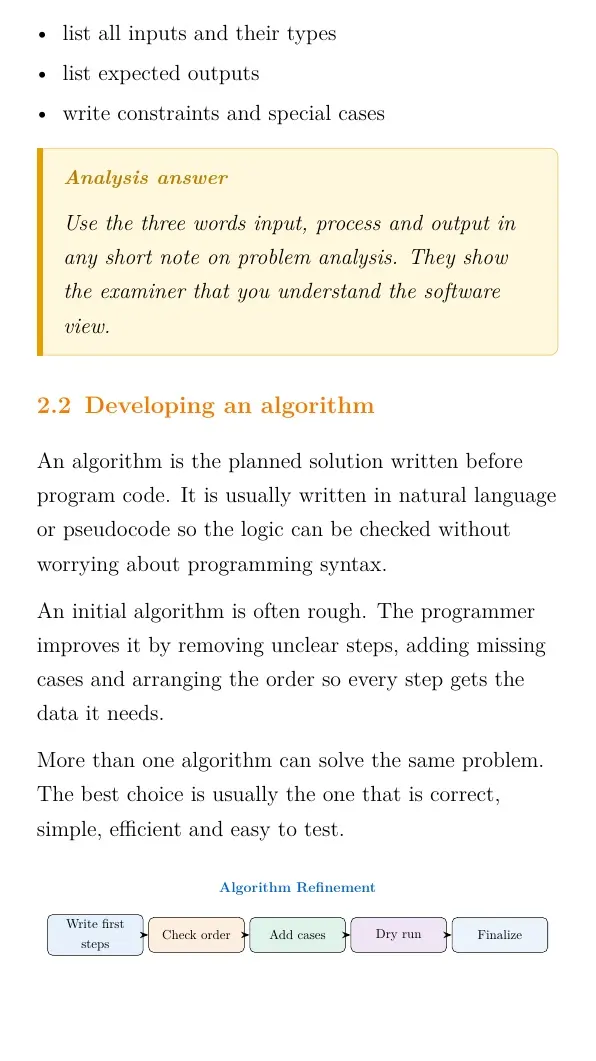
Problem solving begins with a clear statement of the task. A student should list the input, the processing needed and the expected output before writing an algorithm. This keeps the final program close to the user requirement.
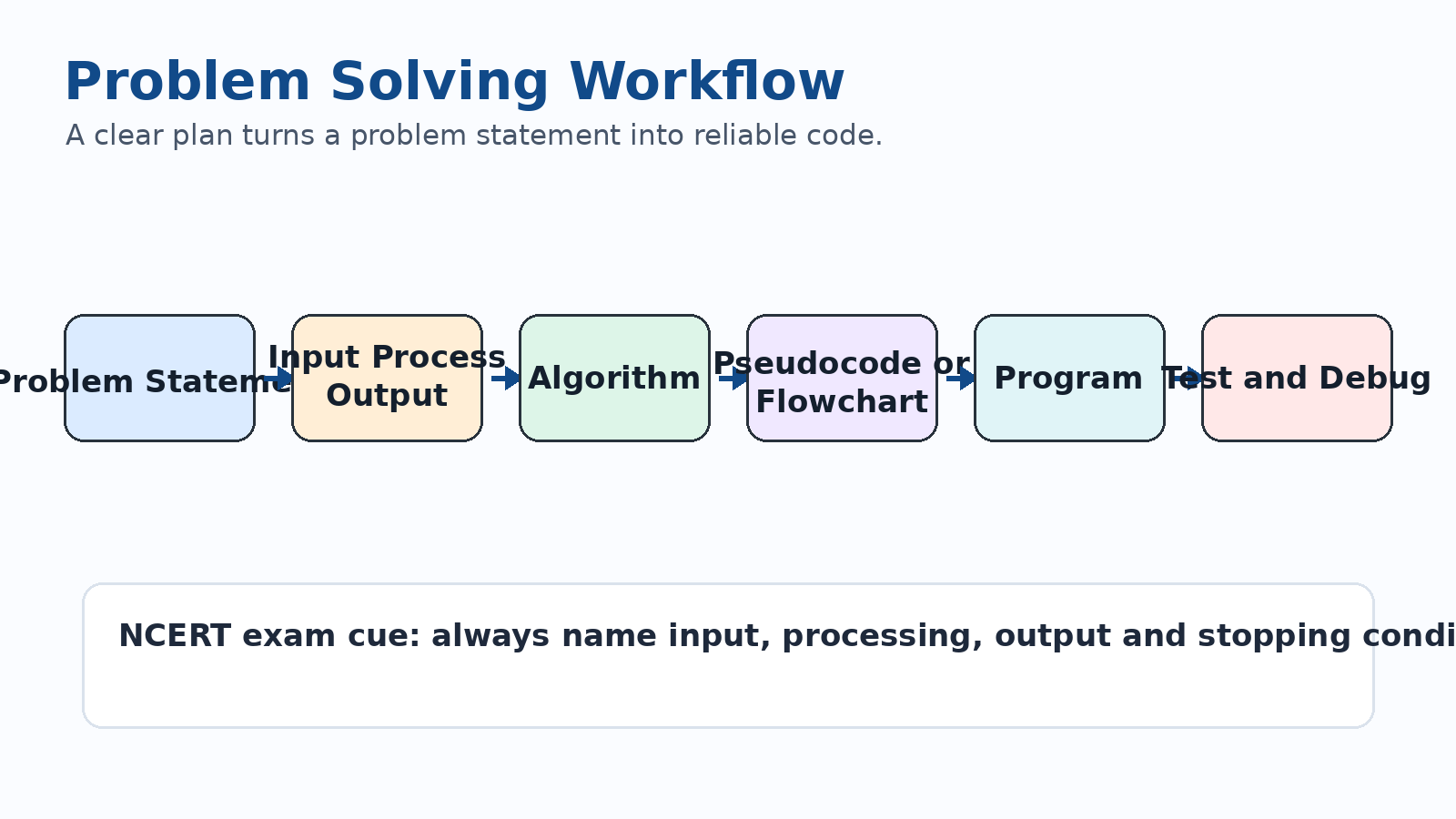
- Analysis: read the problem and list the core components.
- Algorithm: write finite, precise and ordered steps.
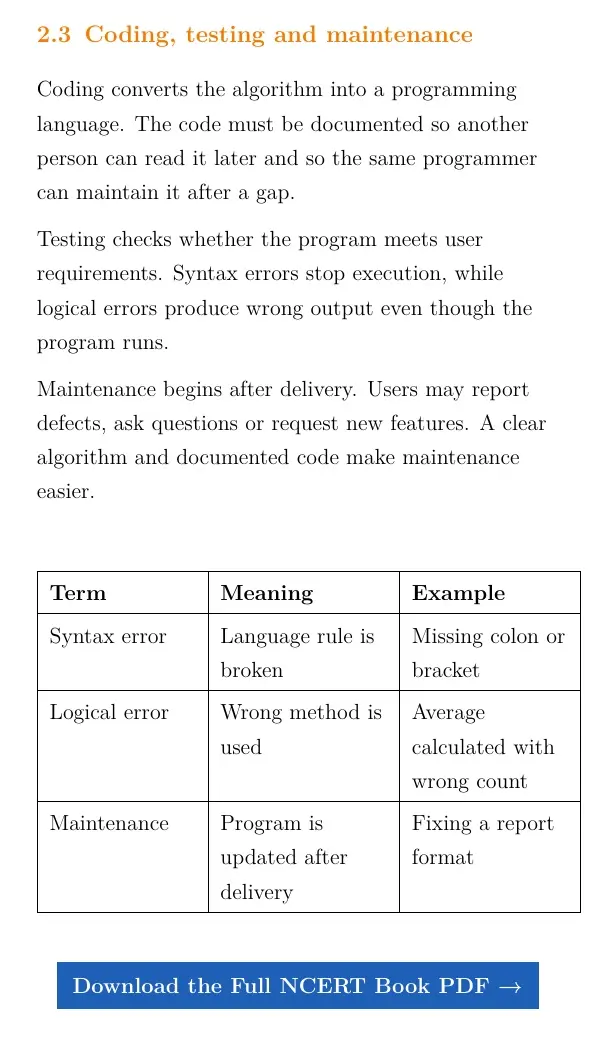
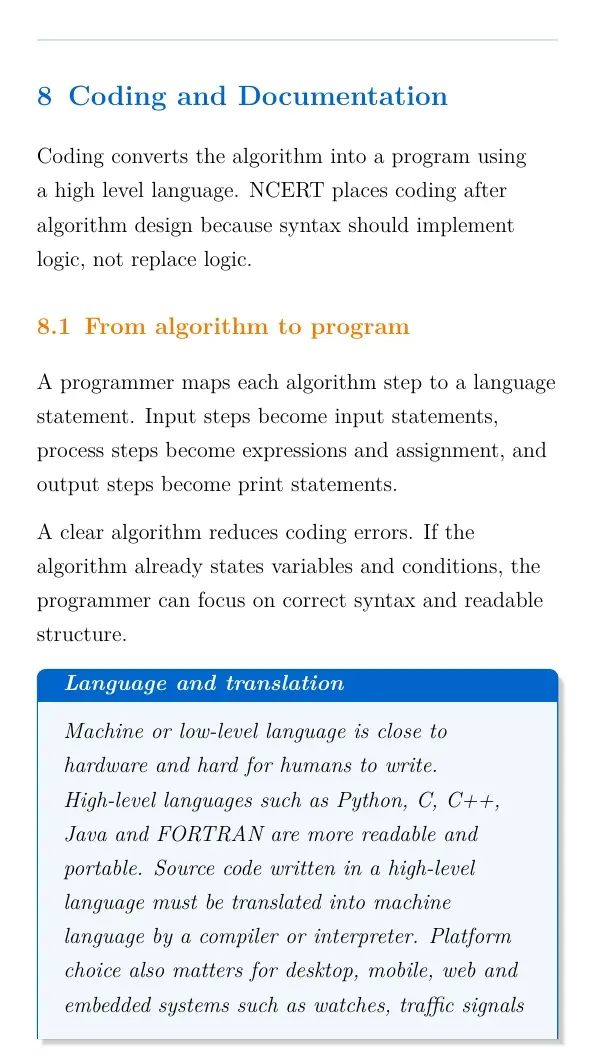
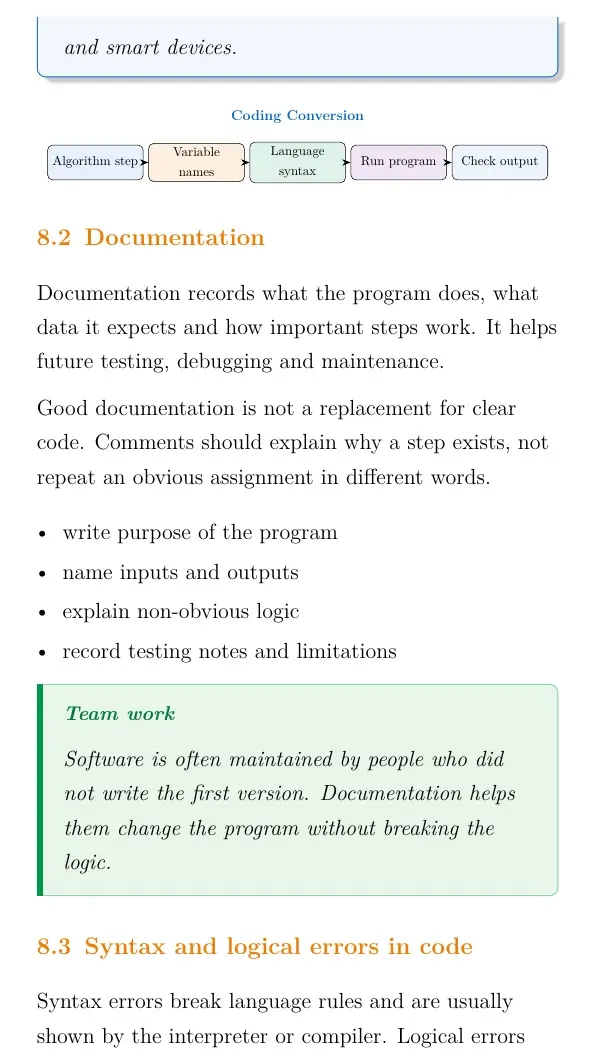
- Coding: convert the algorithm into a high-level language.
- Testing: check normal, boundary and unusual data.
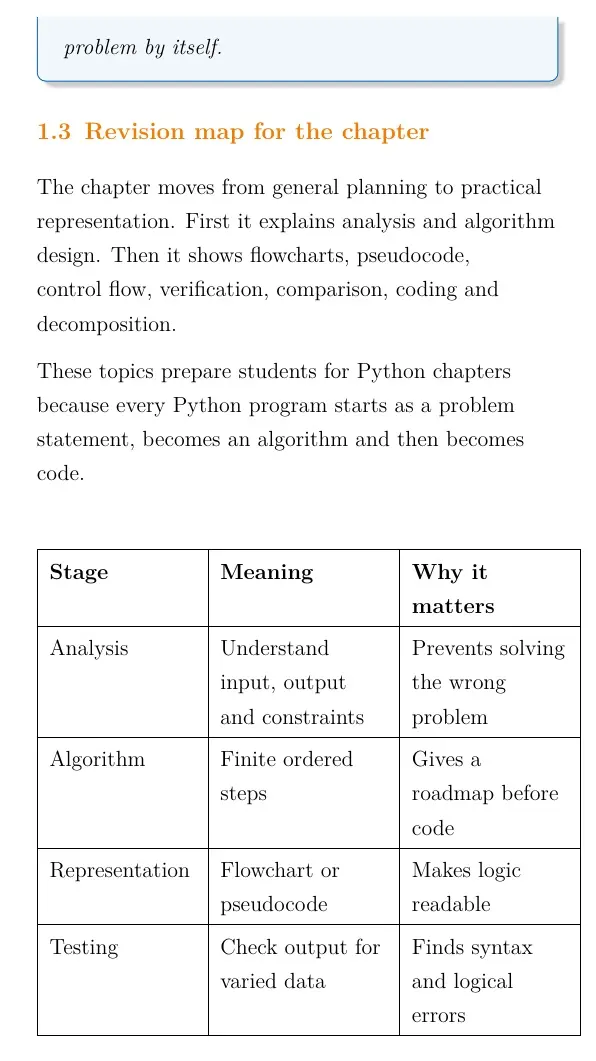
GIGO means wrong or unclear input can lead to wrong output, even if the computer runs fast.
Flowcharts and Pseudocode in Introduction to Problem Solving
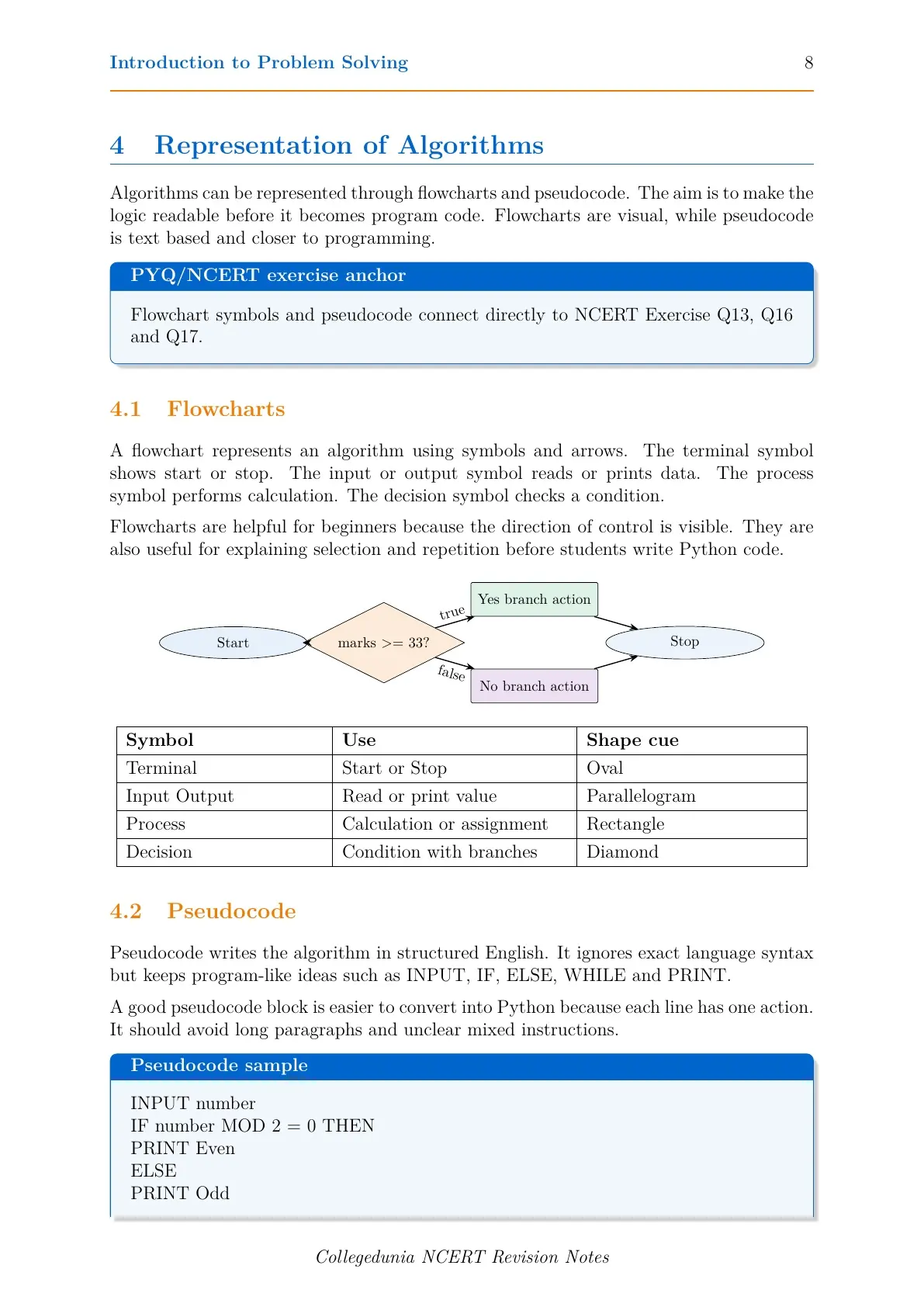
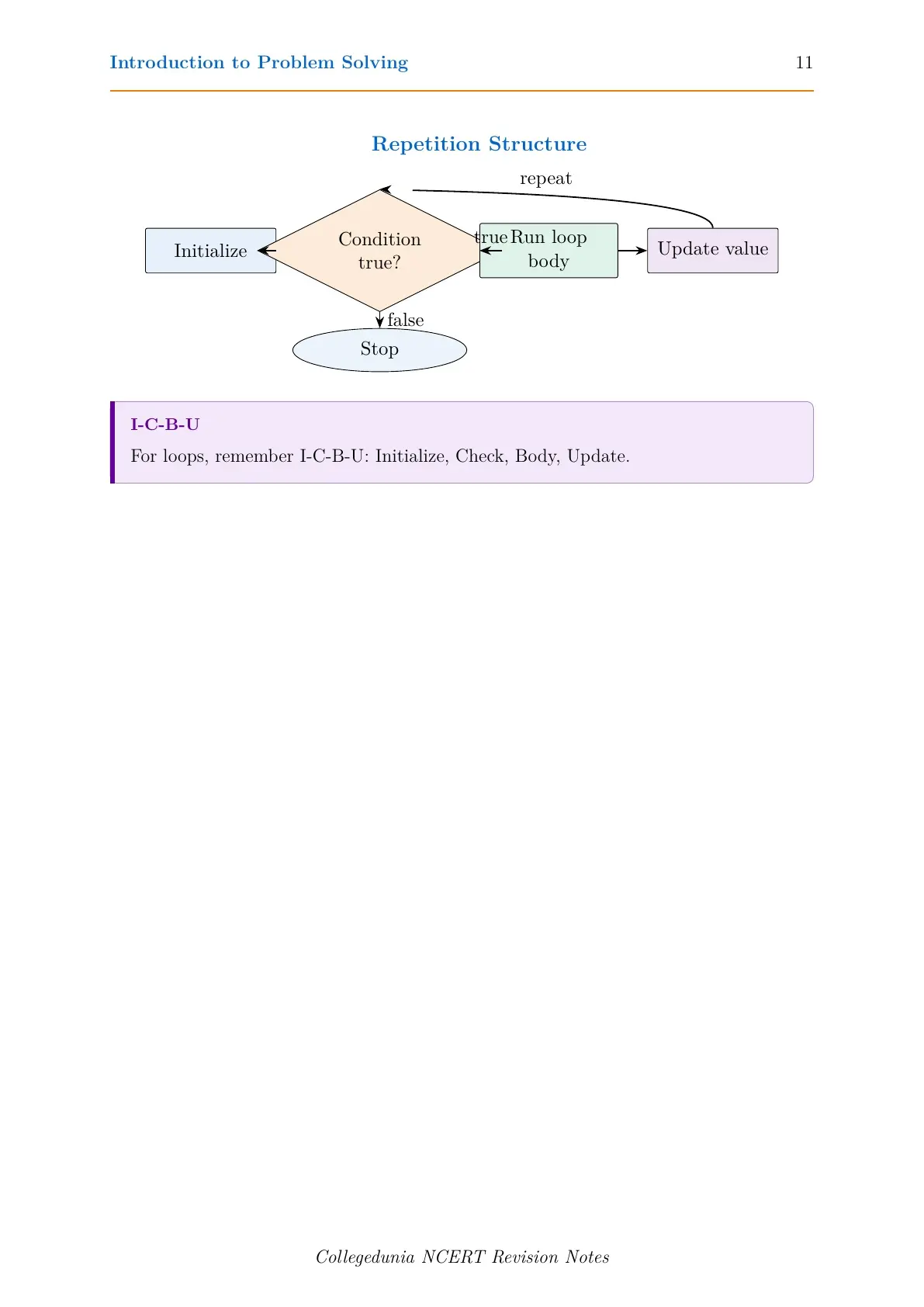
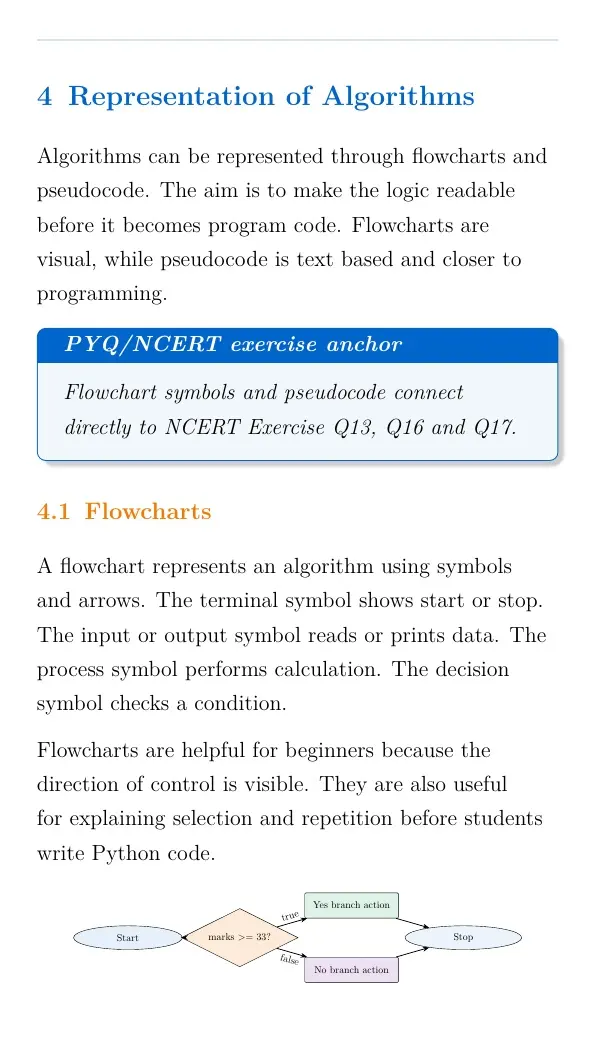
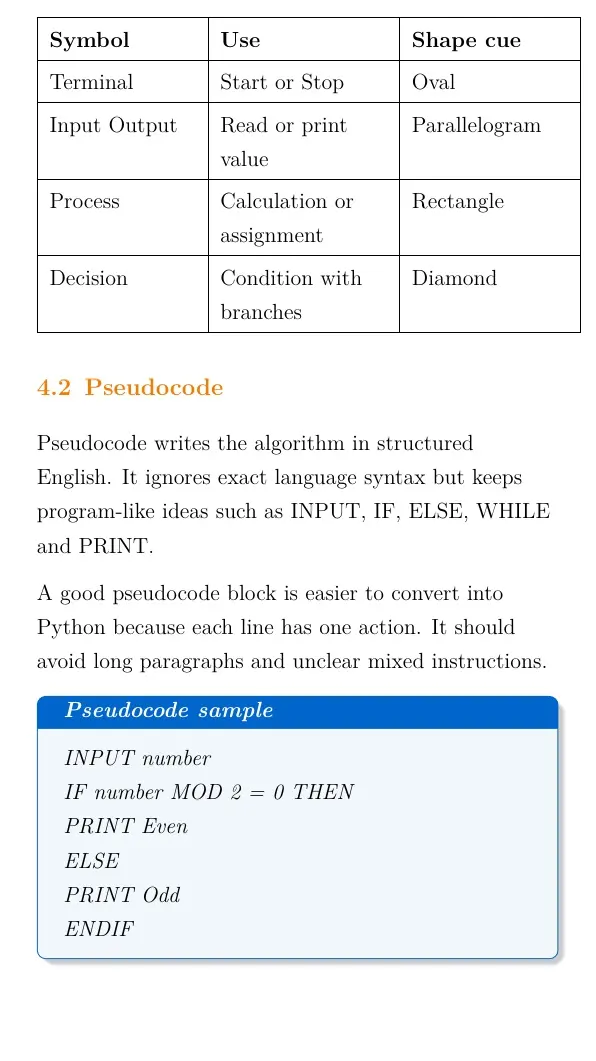
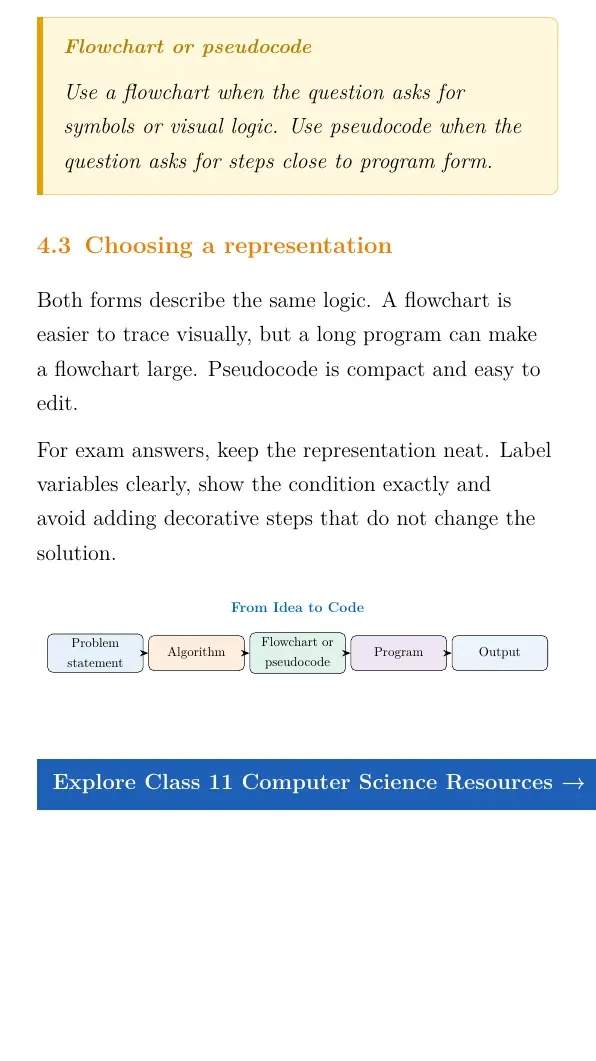
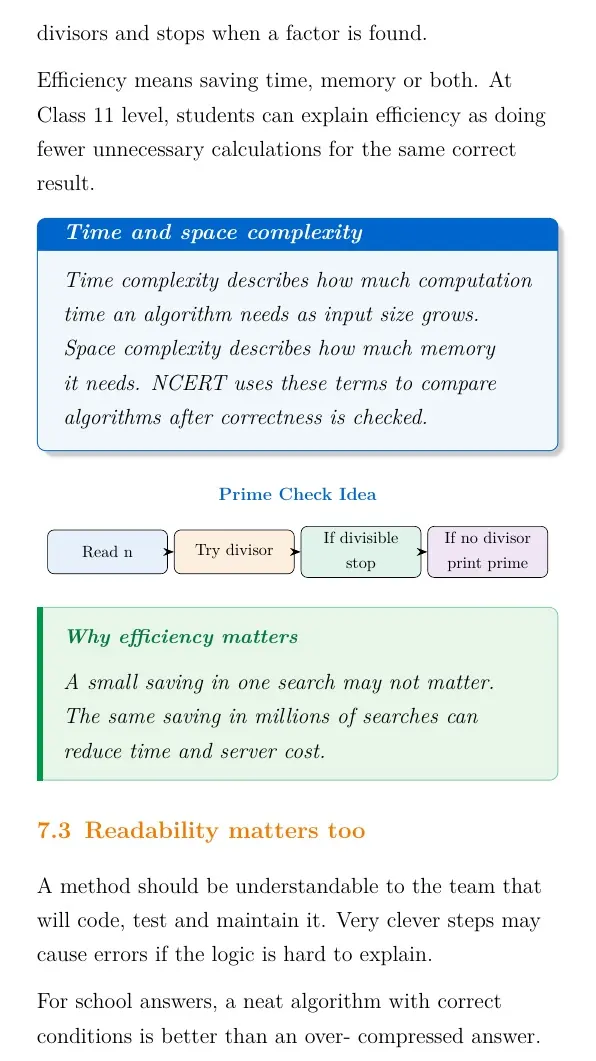
A flowchart shows an algorithm visually through symbols and arrows. Pseudocode writes the same logic in structured English. Both help students check logic before coding.
| Flowchart symbol | Use | Shape cue |
|---|---|---|
| Terminal | Start or Stop | Oval |
| Input or Output | Read or print data | Parallelogram |
| Process | Calculation or assignment | Rectangle |
| Decision | Condition with branches | Diamond |
Sequence, Selection and Repetition in Algorithms
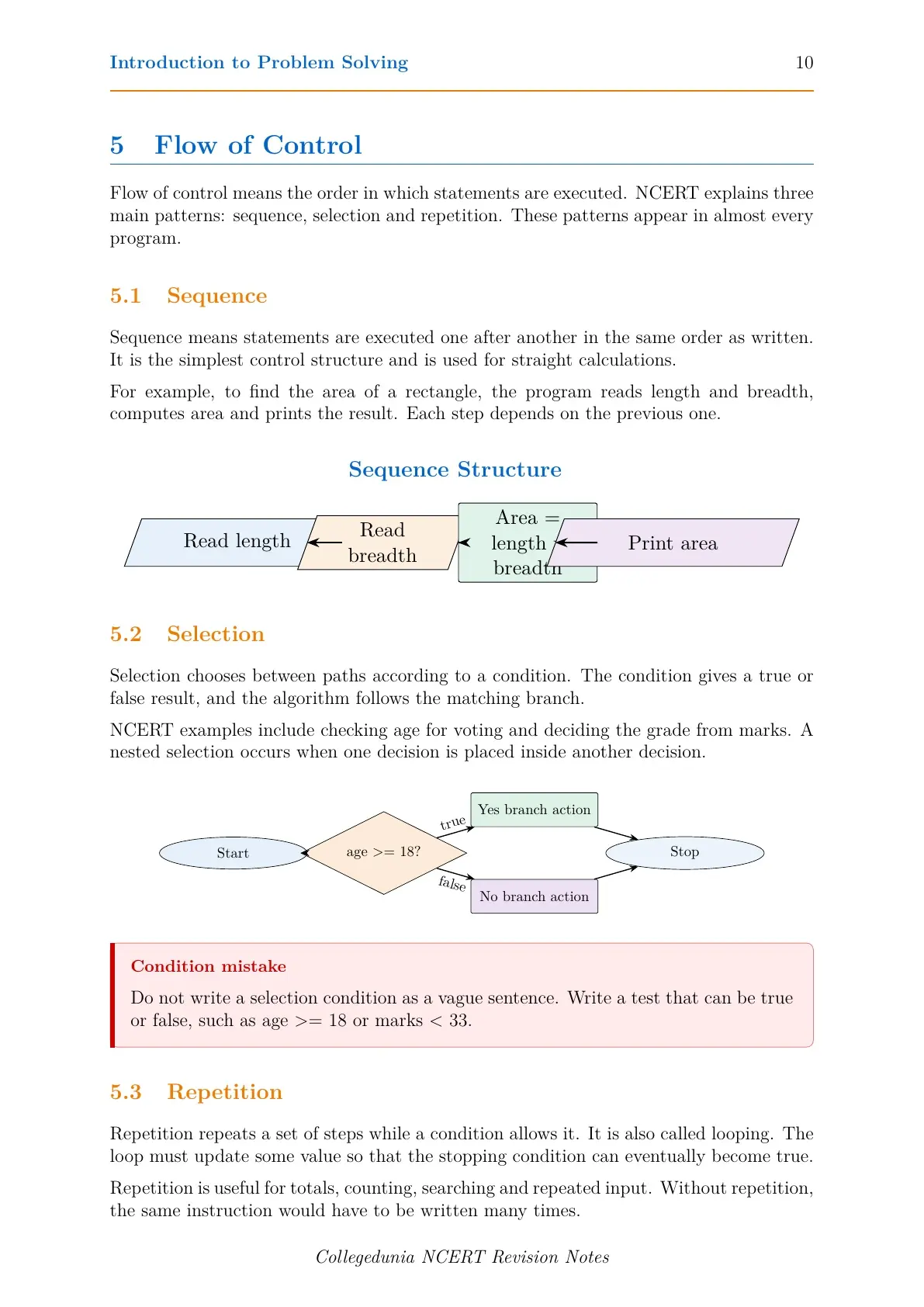
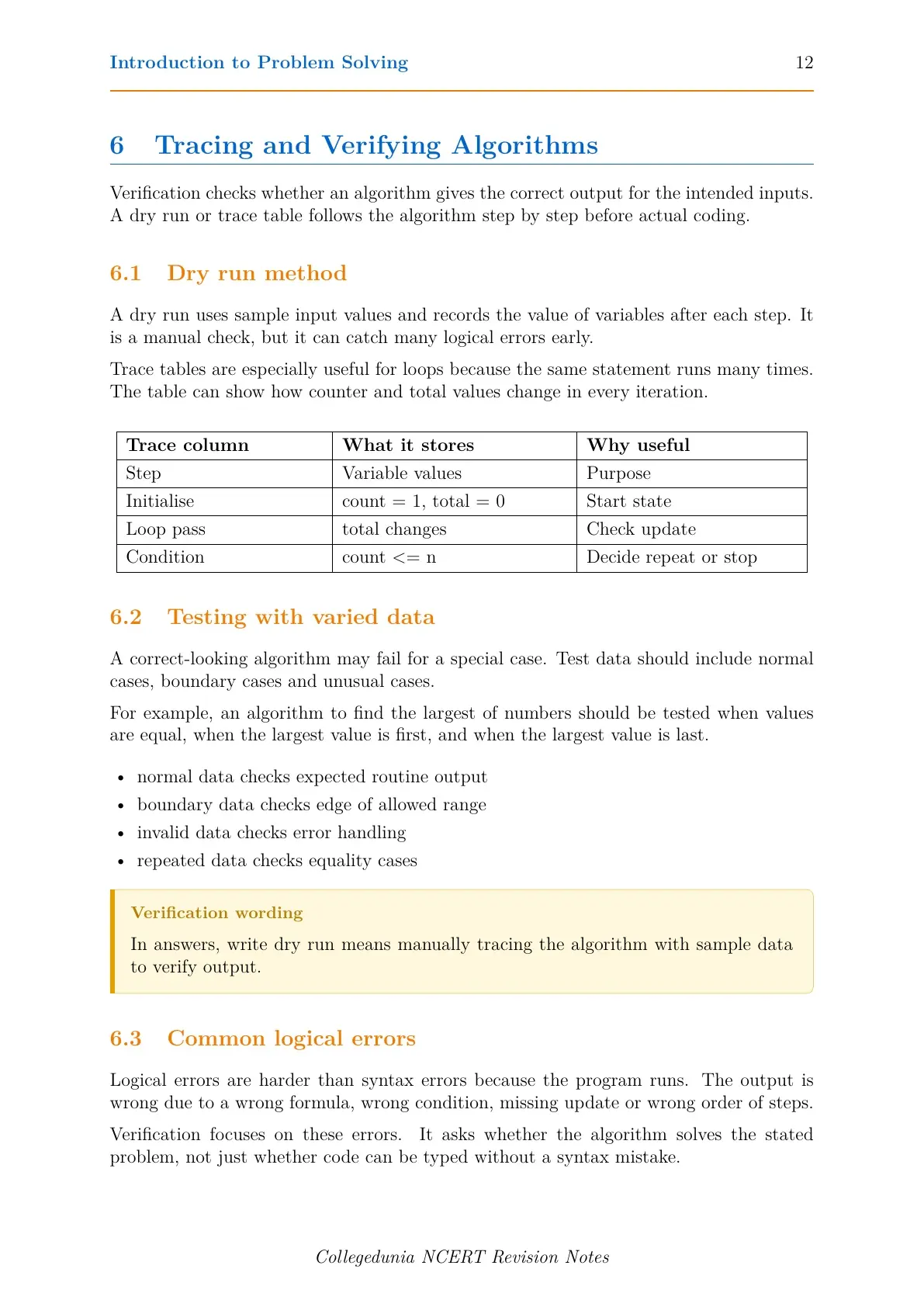
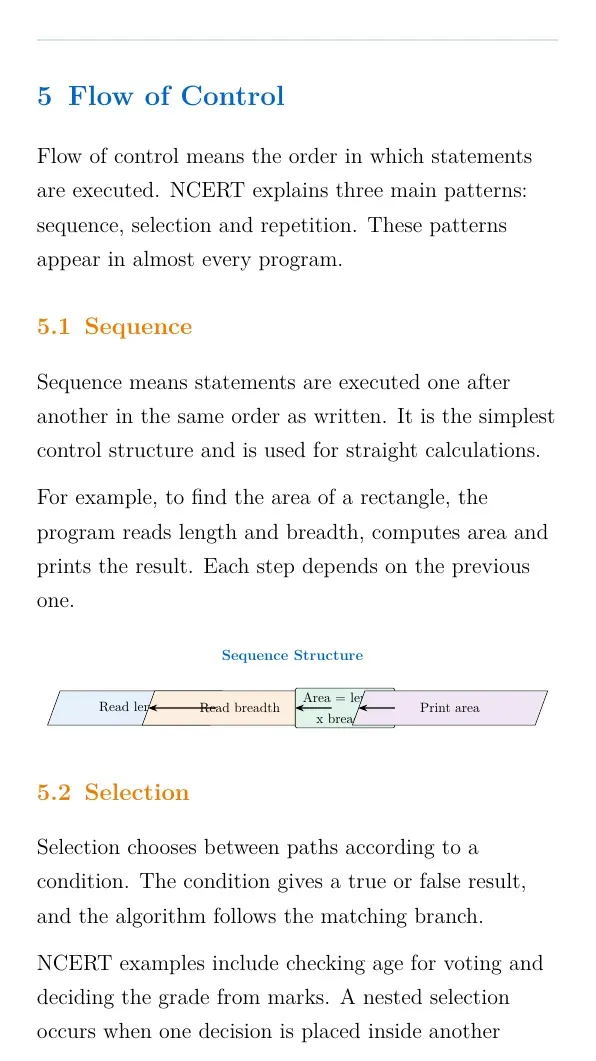
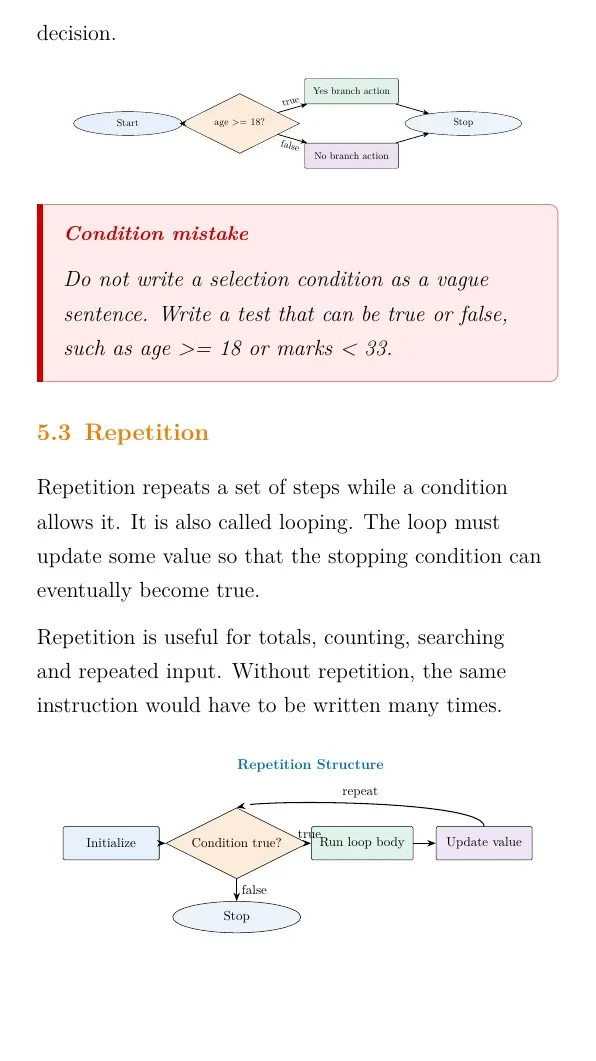
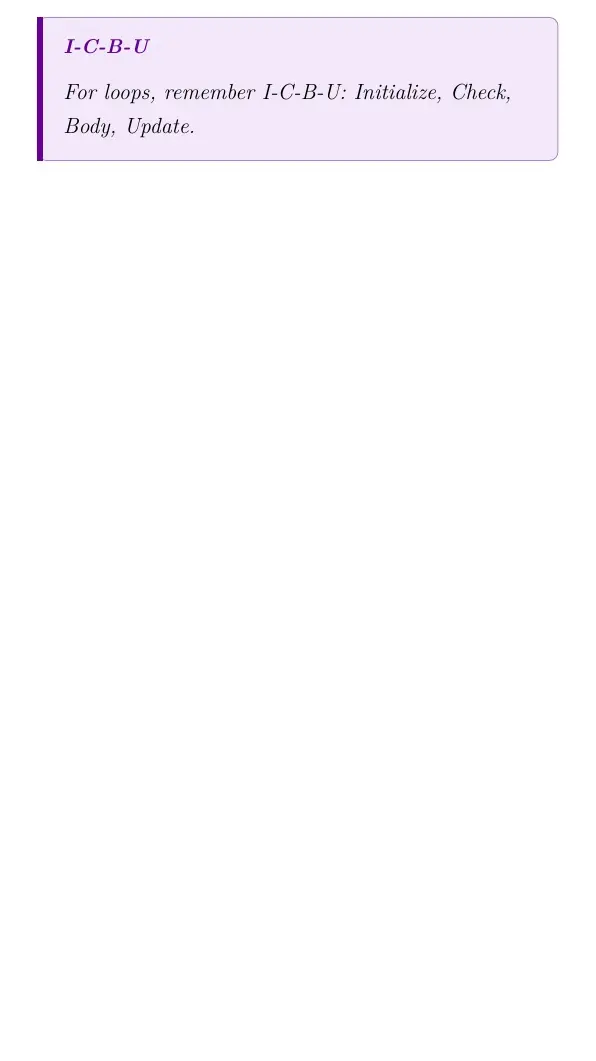
Flow of control means the order in which statements run. NCERT explains three common patterns: sequence, selection and repetition. These patterns later become normal Python control structures.
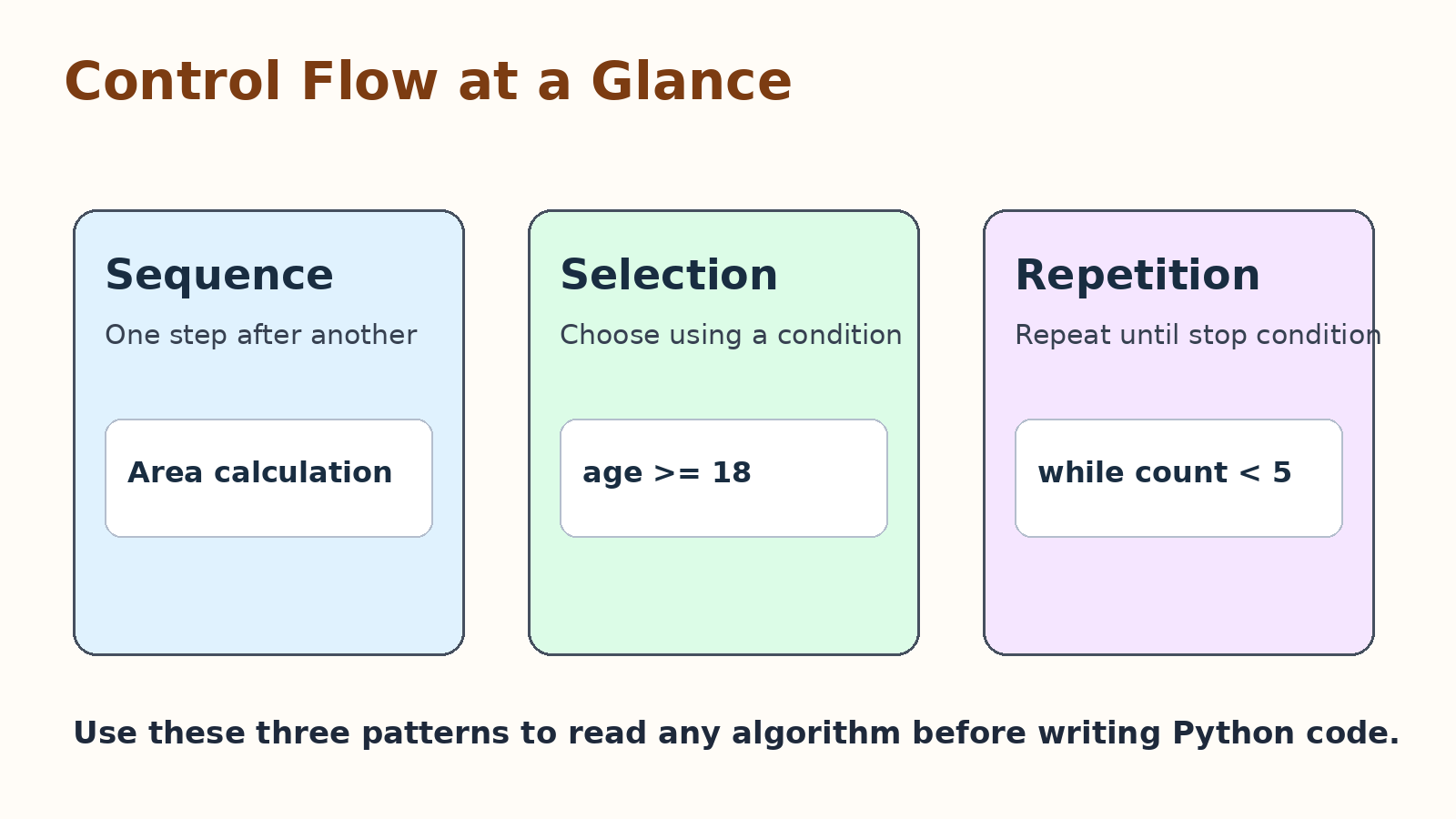
- Sequence: steps run one after another.
- Selection: a condition chooses one branch.
- Repetition: a loop repeats statements until a condition stops it.
Verification, Coding and Decomposition
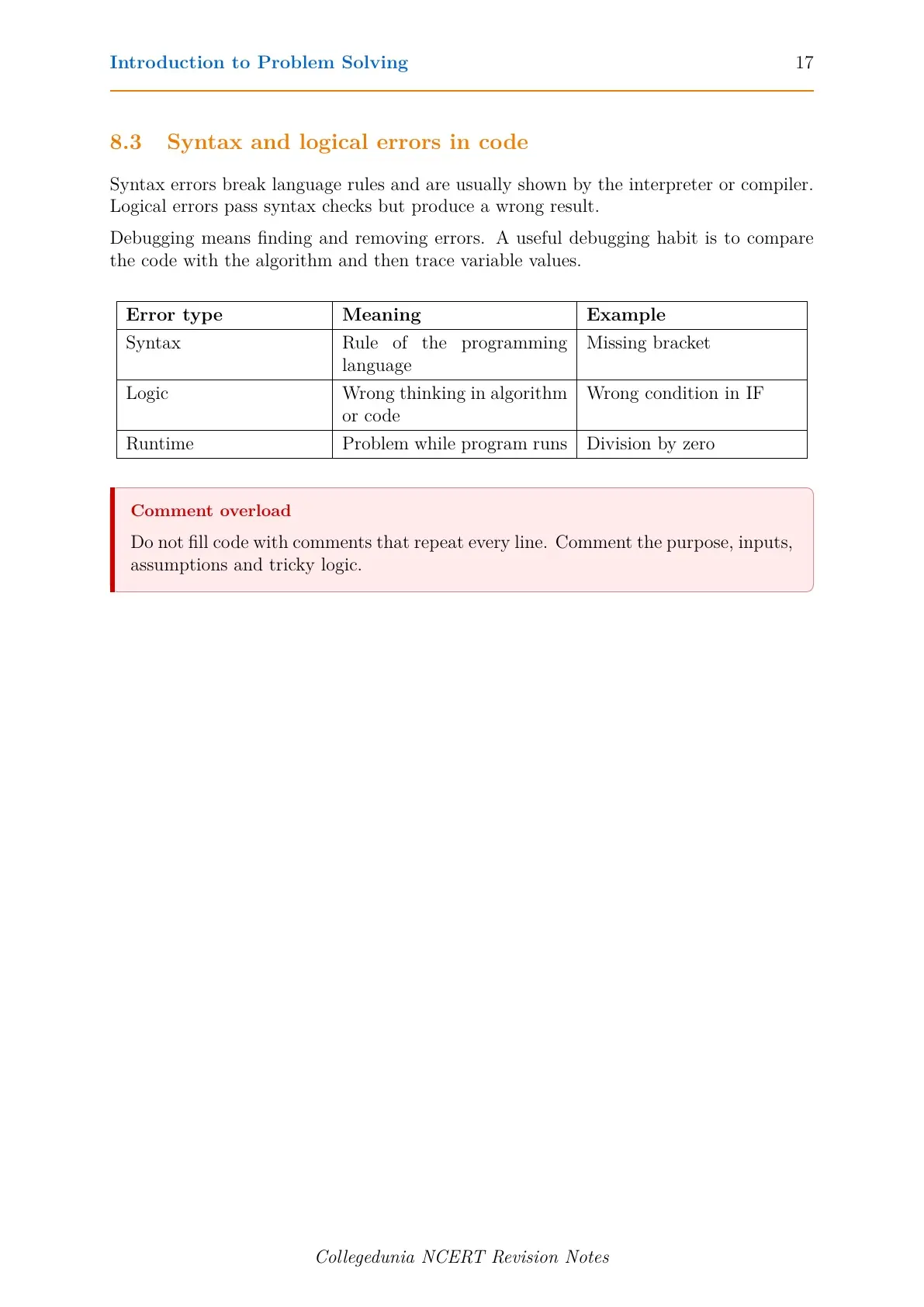
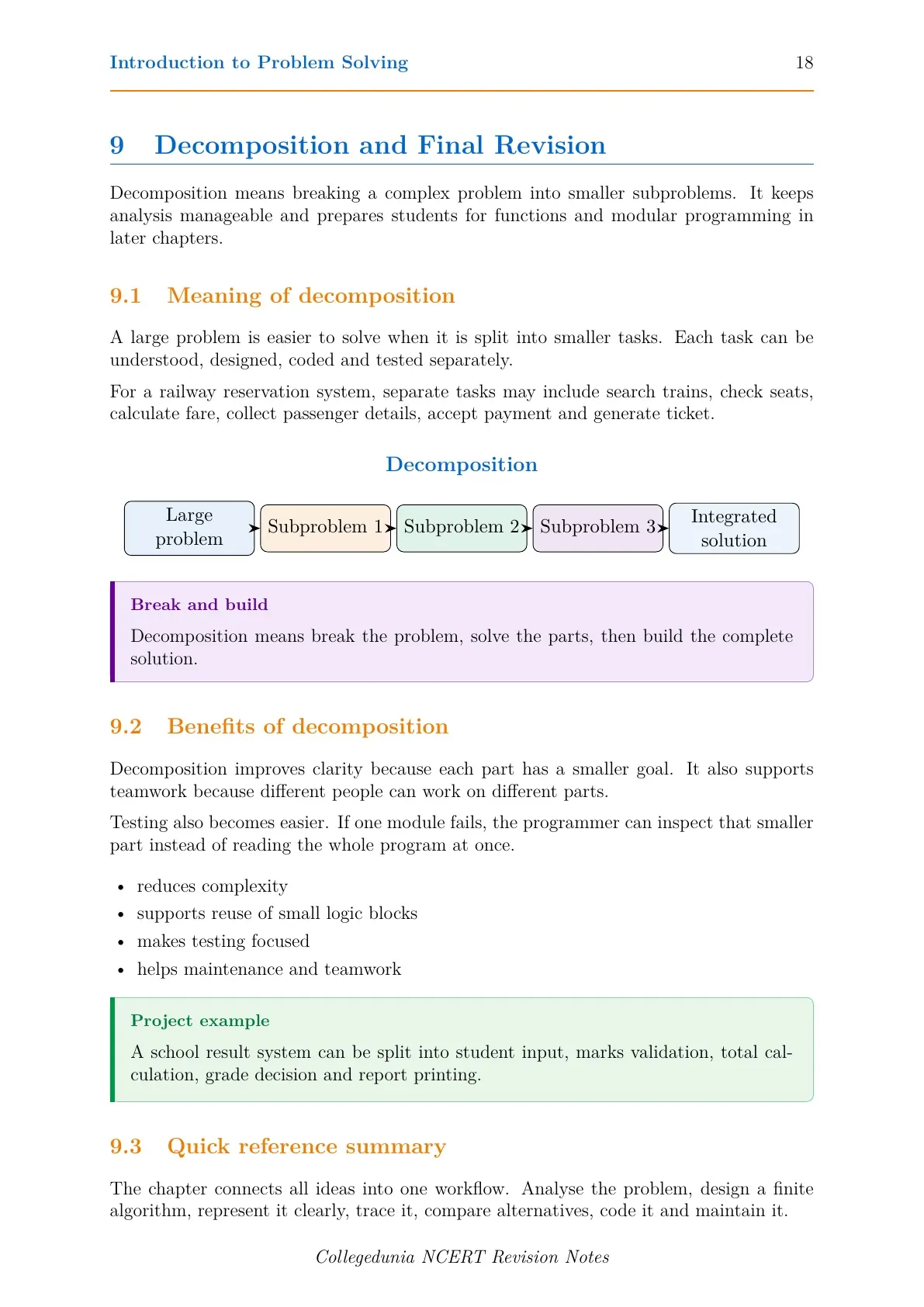
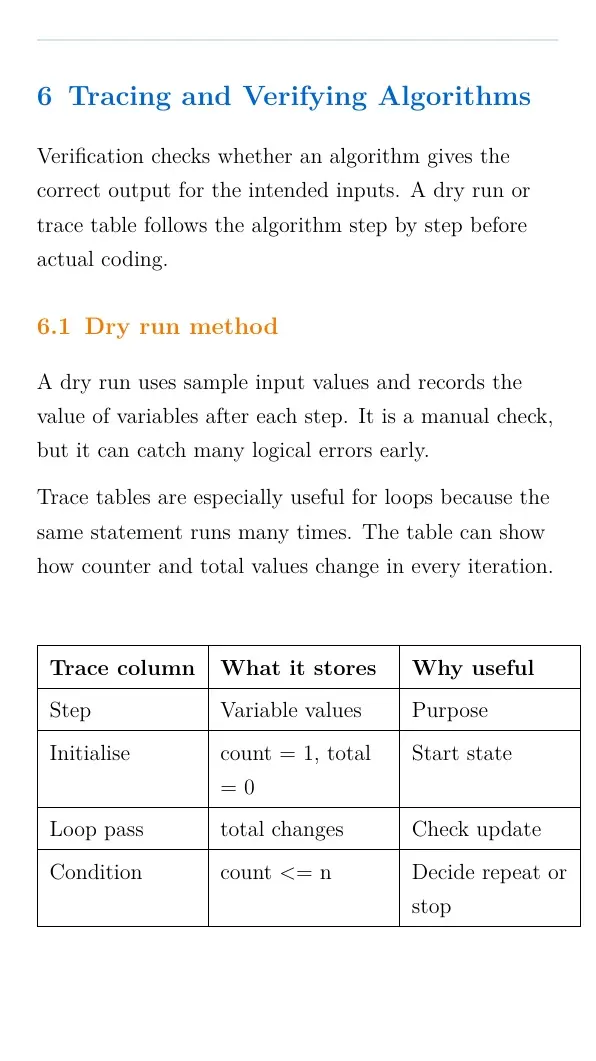
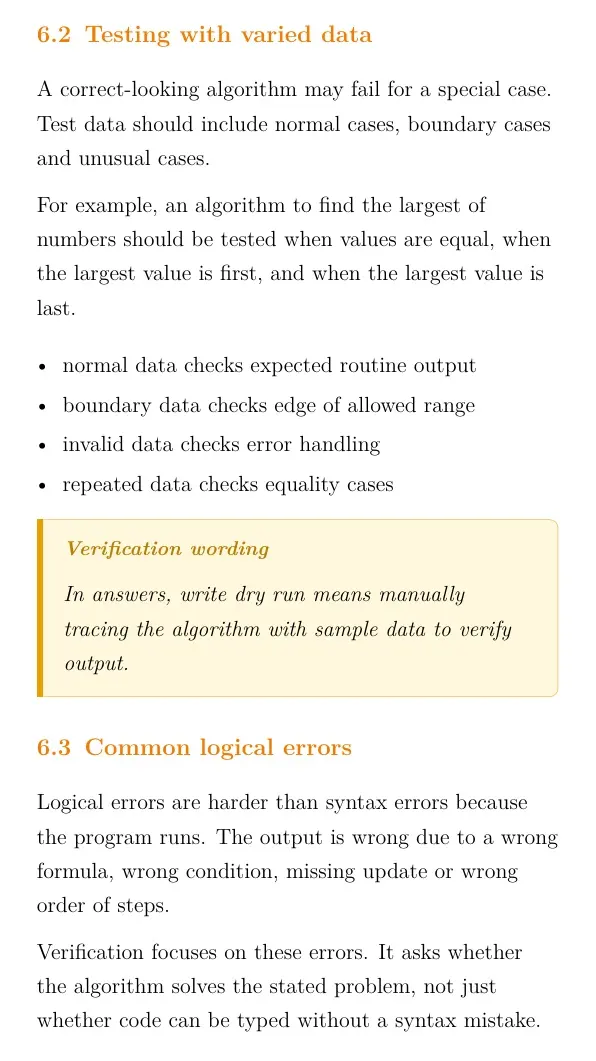
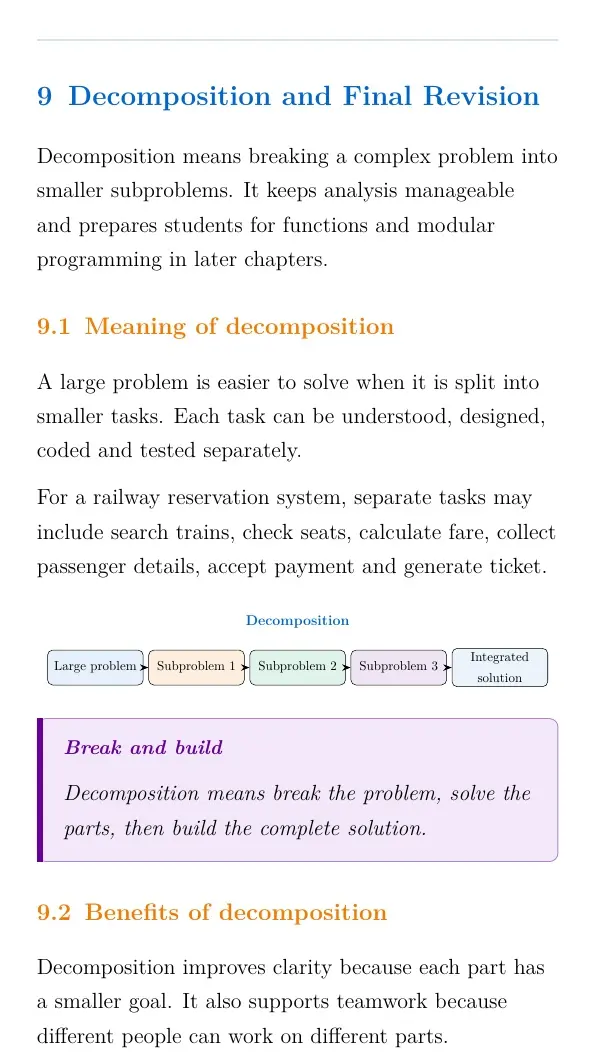
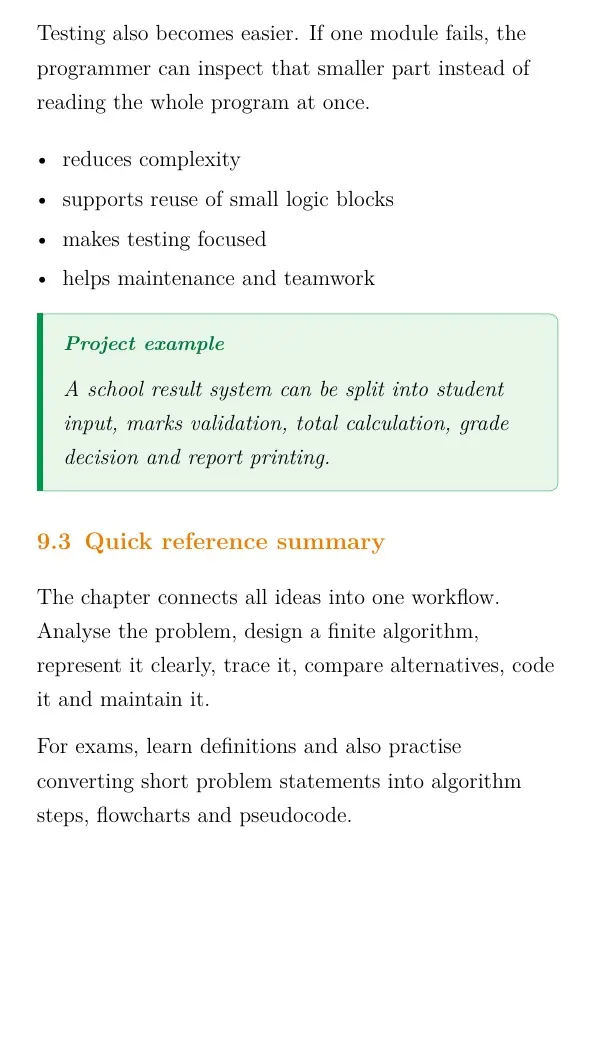
Verification checks an algorithm with sample data before final coding. Coding then writes the algorithm in a selected high-level language. Decomposition breaks a complex problem into smaller subproblems that are easier to solve and test.
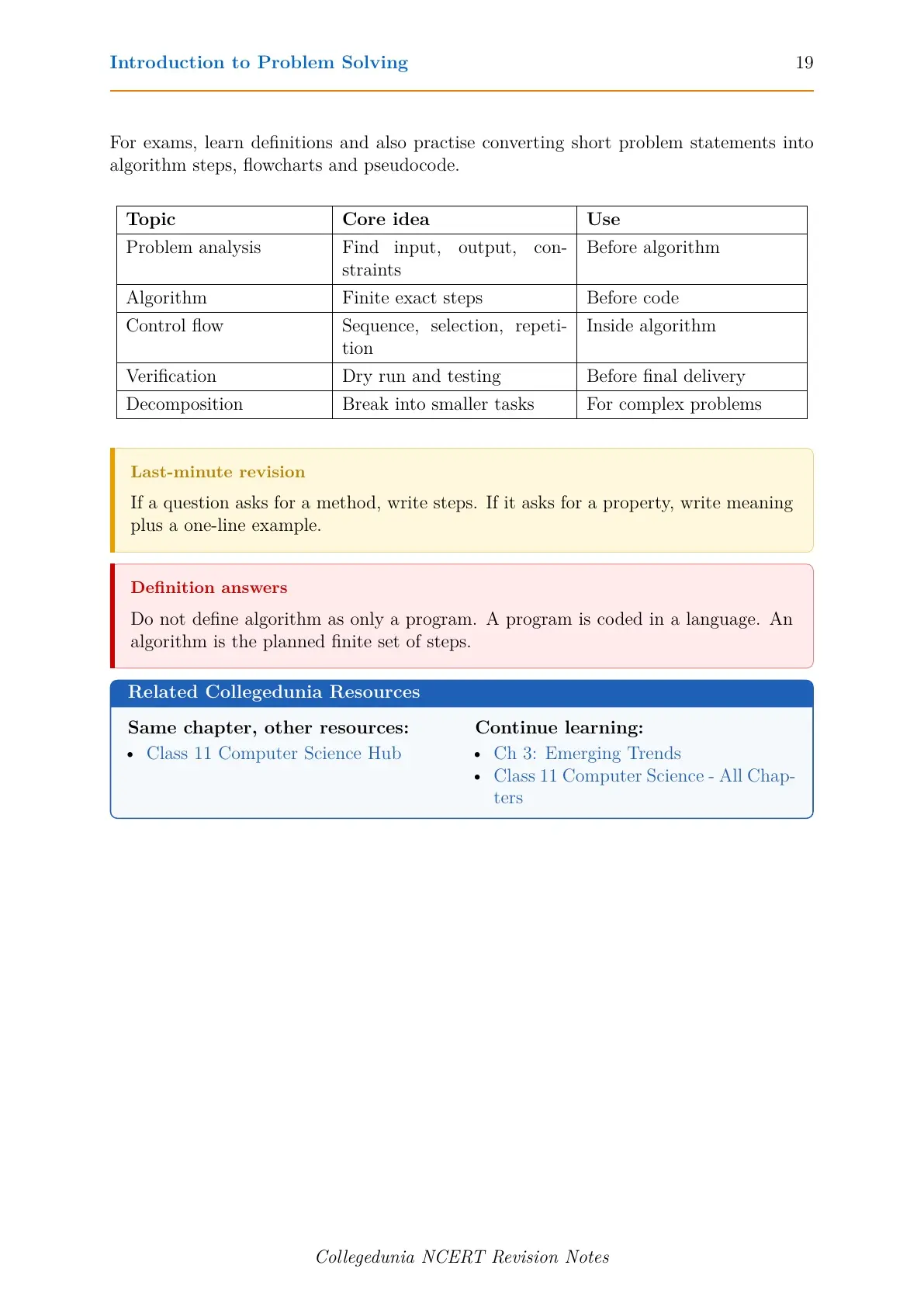
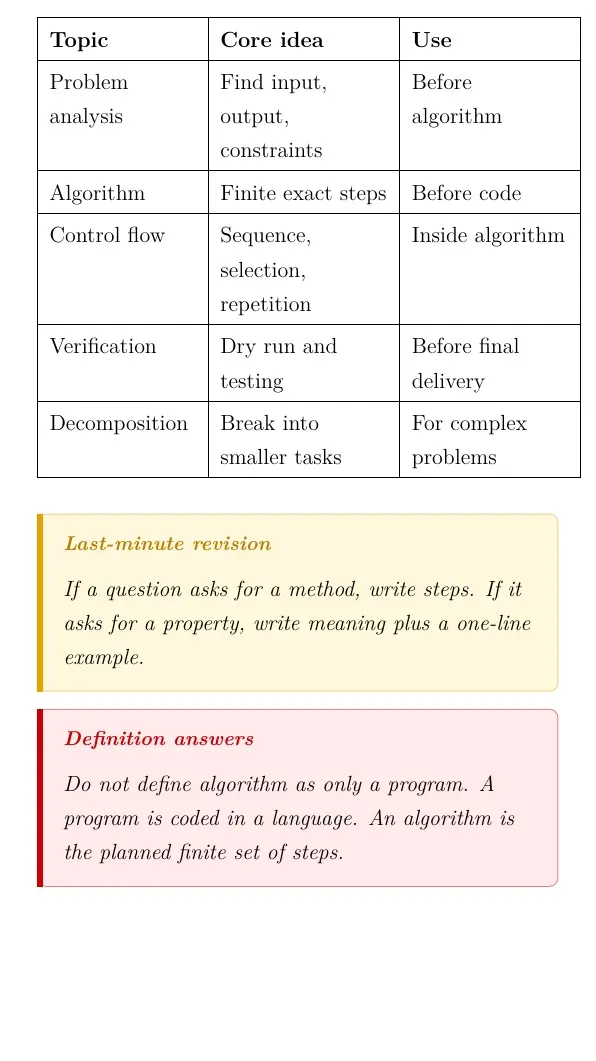
| Topic | Revision point | Common exam link |
|---|---|---|
| Verification | Use dry runs and trace tables | Correct faulty algorithms |
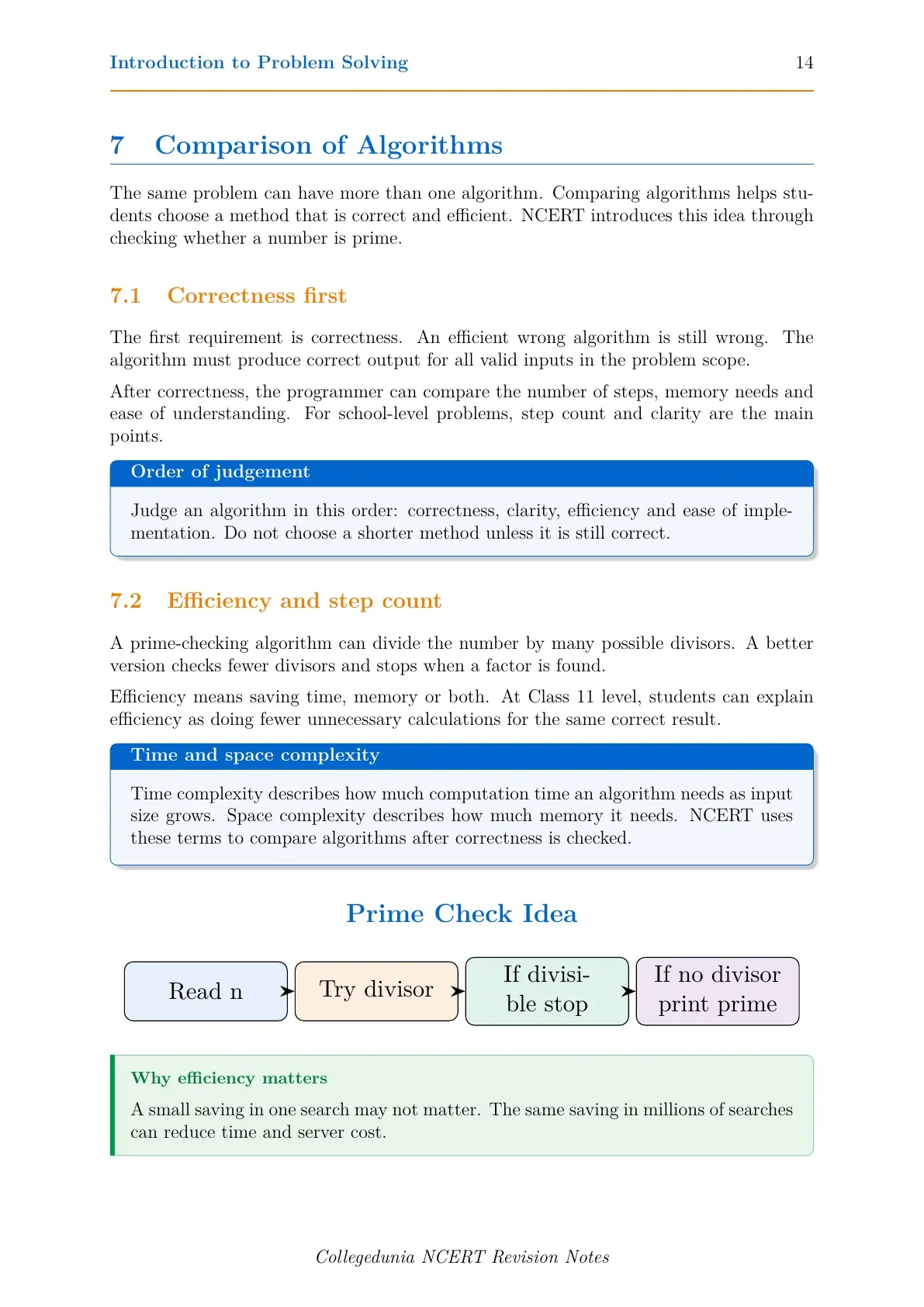
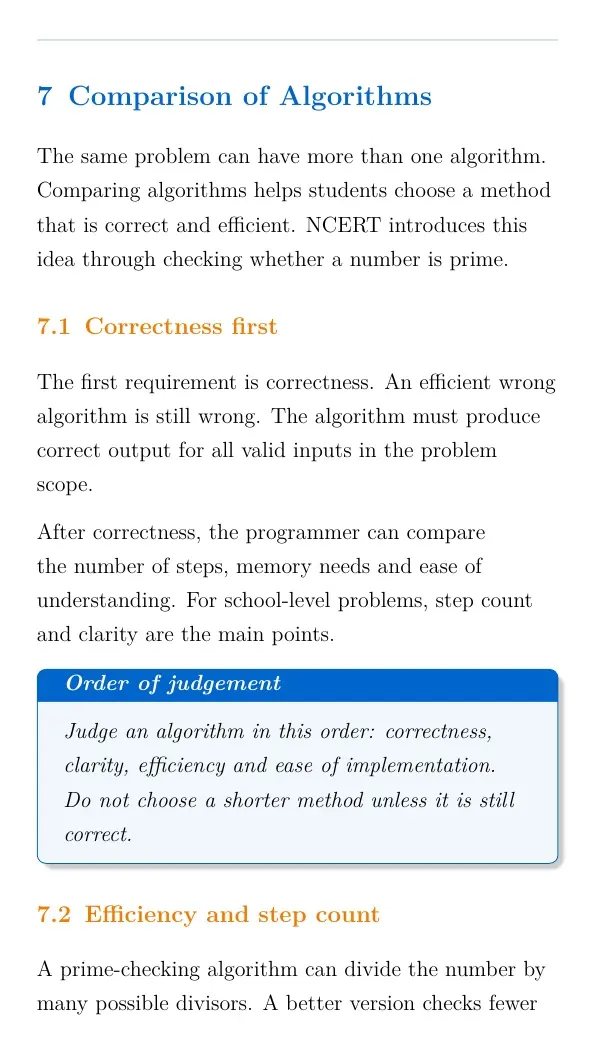
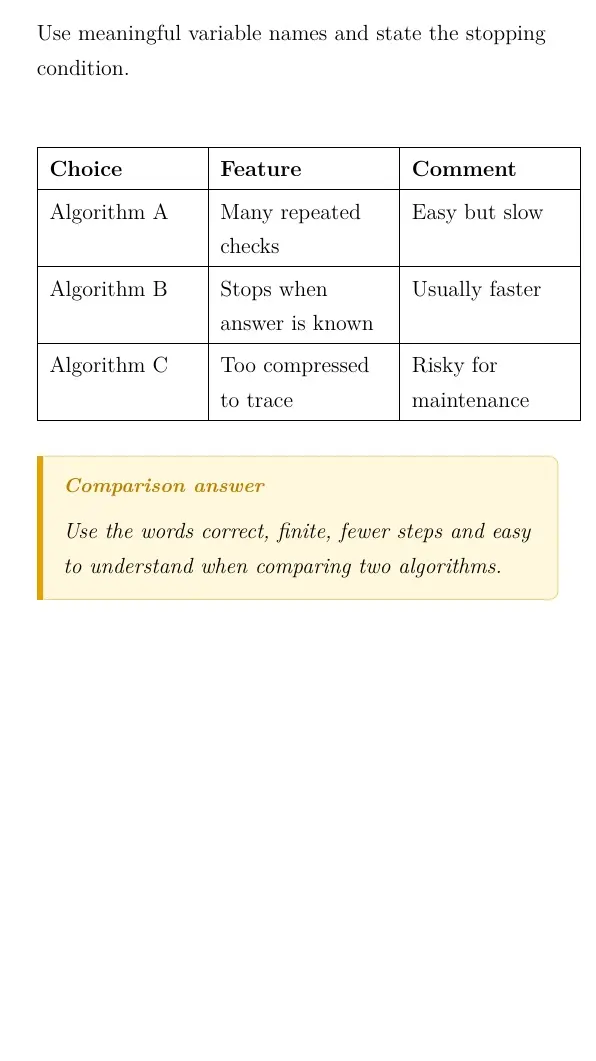
| Complexity | Time means computation; space means memory | Compare algorithms |
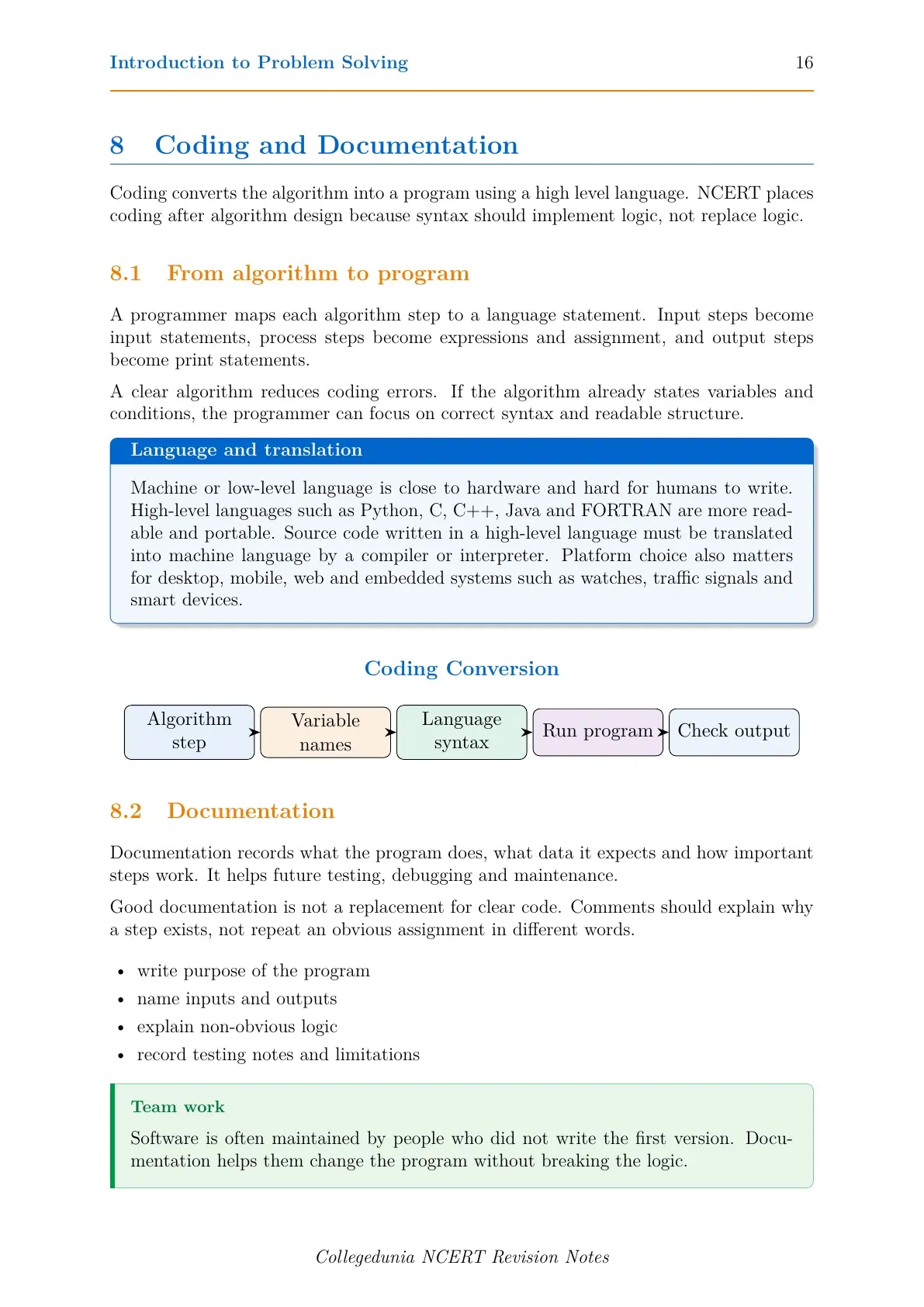
| Coding | Source code needs compiler or interpreter | Explain high-level language use |
| Decomposition | Break large tasks into smaller parts | Improve broad routine algorithms |
Introduction to Problem Solving Video Revision
Source: Magnet Brains on YouTube
Use the video after reading the PDF once. Pause when flowchart symbols appear and match them with the symbol table above.
Related NCERT Class 11 Computer Science Resources
| Resource | Use it for | Link |
|---|---|---|
| NCERT Book PDF | Official chapter reading | Introduction to Problem Solving Book PDF |
| NCERT Solutions | Exercise answers and algorithms | Introduction to Problem Solving NCERT Solutions |
| Handwritten Notes | Quick handwritten revision | Introduction to Problem Solving Handwritten Notes |
Class 11 Computer Science Notes for All Chapters
| Chapter | Notes Link |
|---|---|
| Chapter 1 Computer System | Computer System Notes |
| Chapter 2 Encoding Schemes and Number System | Encoding Schemes and Number System Notes |
| Chapter 3 Emerging Trends | Emerging Trends Notes |
| Chapter 4 Introduction to Problem Solving | Current chapter notes |
| Chapter 5 Getting Started with Python | Getting Started with Python Notes |
Introduction to Problem Solving Computer Science Notes FAQs
Ques. What is covered in Introduction to Problem Solving Class 11 notes?
Ans. These notes cover problem analysis, algorithms, flowcharts, pseudocode, control flow, verification, coding and decomposition.
Ques. What are the main characteristics of a good algorithm?
Ans. A good algorithm is precise, unique, finite, takes input and produces output.
Ques. What is the difference between flowchart and pseudocode?
Ans. A flowchart shows logic using symbols and arrows. Pseudocode writes the same logic in structured English.
Ques. Why is verification important in problem solving?
Ans. Verification checks an algorithm with sample data so logical errors can be found before final coding.



Comments