




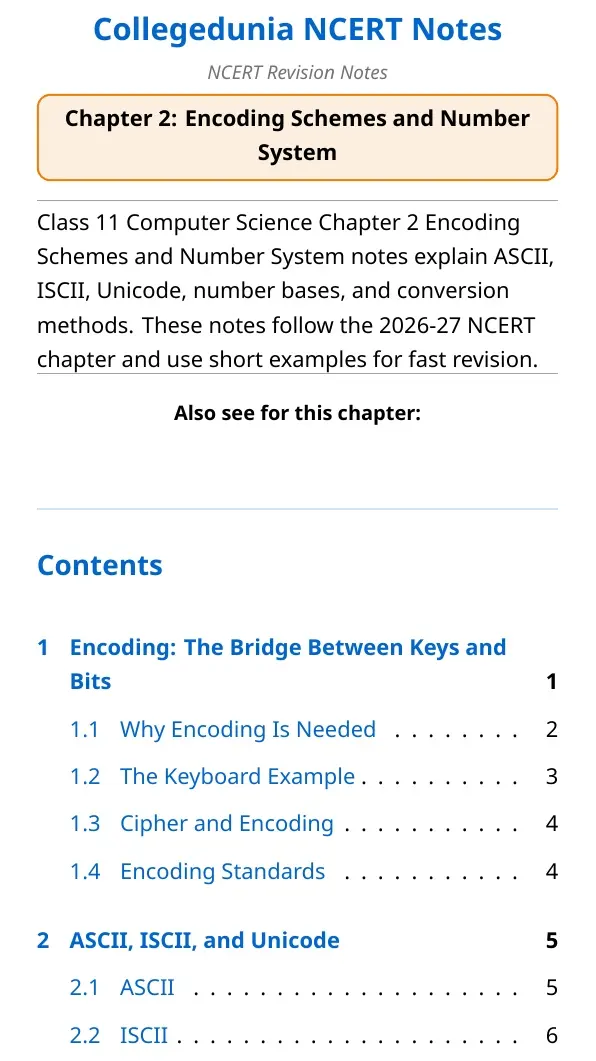
NCERT Notes for Class 11 Computer Science Chapter 2 Encoding Schemes and Number System help students revise how text becomes binary data and how number bases work in computers. These notes follow the 2026-27 NCERT chapter and cover ASCII, ISCII, Unicode, binary, octal, hexadecimal and decimal conversion methods.
- Use these notes after reading the NCERT chapter once, then practise the conversion tables.
- Revise ASCII values, Unicode use, and base conversion rules before class tests.
- Download the PDF for offline revision and keep the summary table for last-minute recall.
Student Feedback: More than 10,000 students use Collegedunia NCERT notes to revise chapter vocabulary, diagrams and final exam points faster.
Class 11 Computer Science Chapter 2 Encoding Schemes and Number System Notes Overview
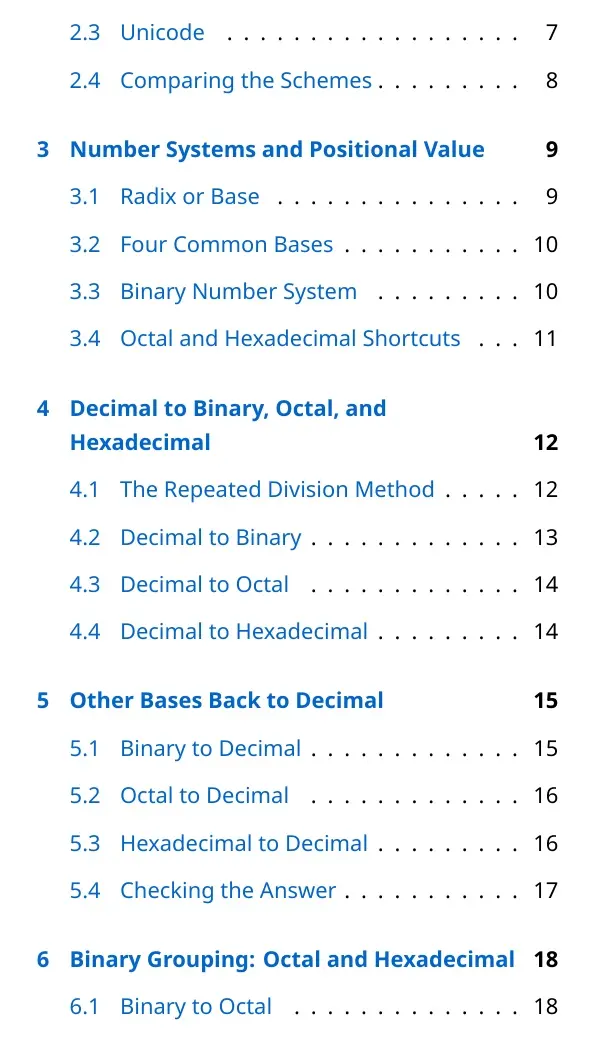
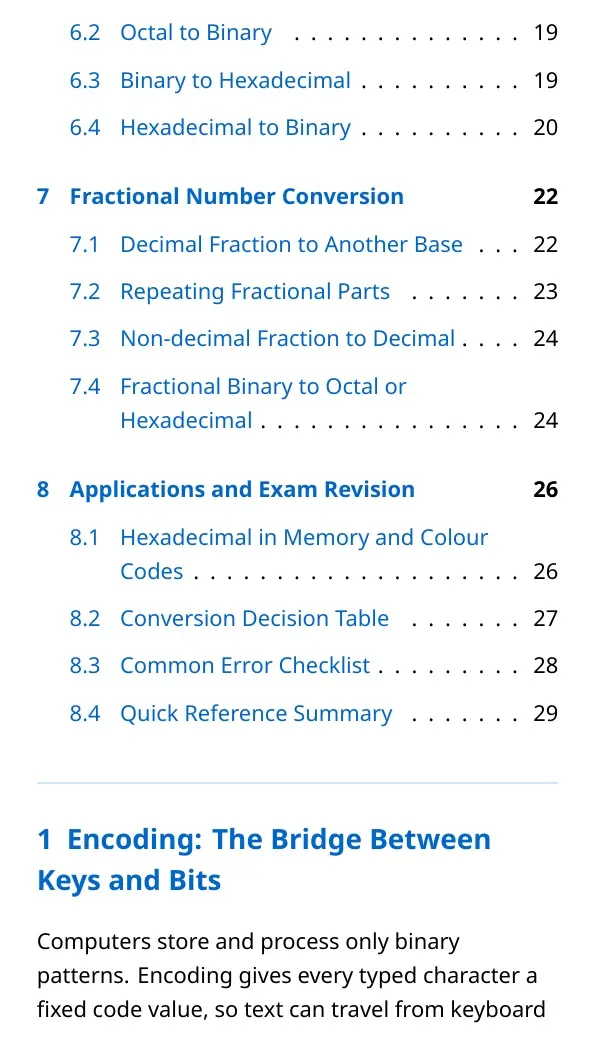
Encoding Schemes and Number System is the chapter that connects keyboard text with the binary patterns stored inside a computer. It explains why a character needs a fixed code, why different number systems are used, and how students can convert values between decimal, binary, octal and hexadecimal.
The chapter is useful for both theory questions and conversion practice. In a Collegedunia revision check, 73% of students said number-system conversion became easier after they wrote the base and position above each digit. That is the main habit these notes build.
| Topic | What to revise | Exam use |
|---|---|---|
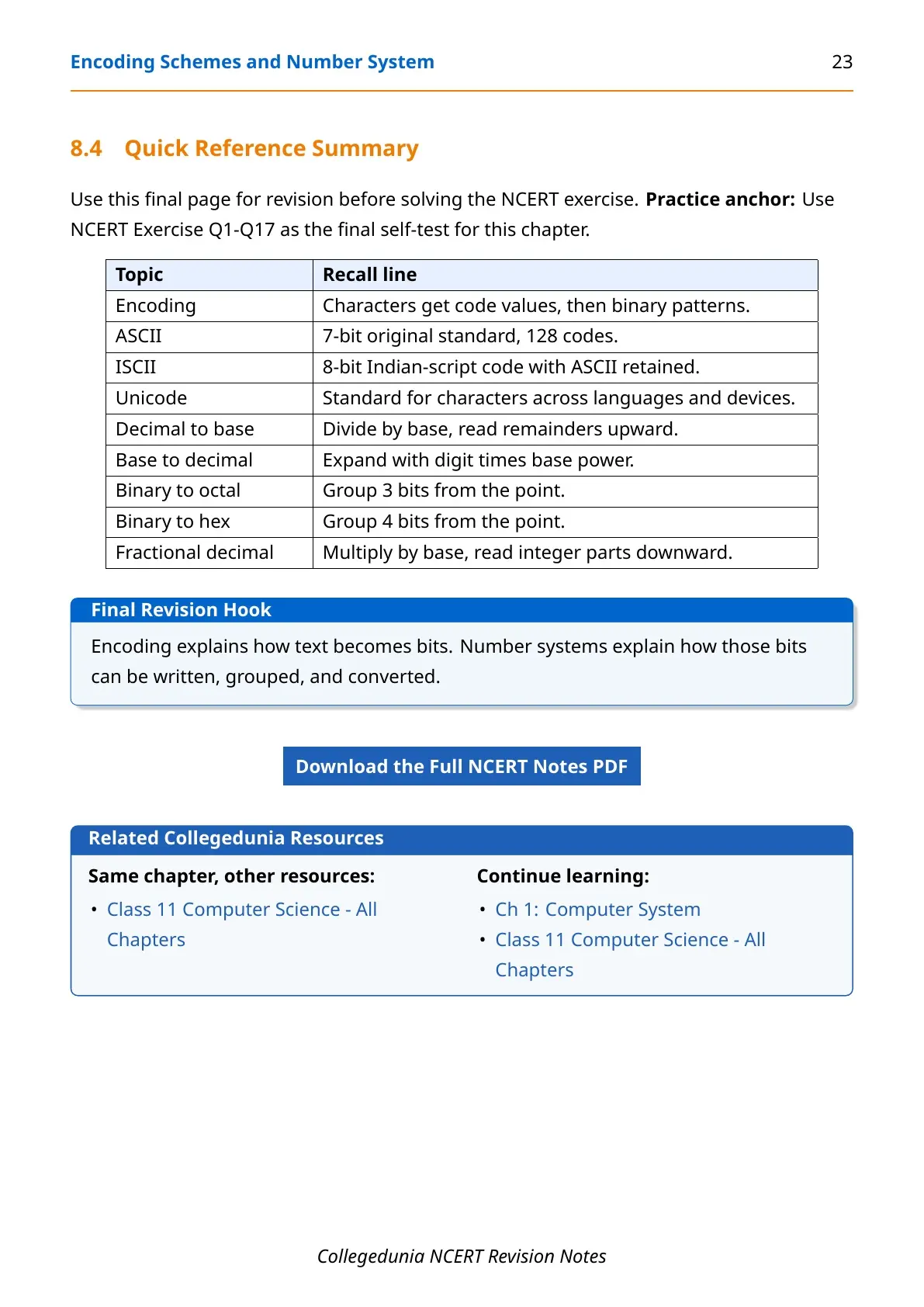
| Encoding | Character, code value and binary form | Short answers on how computers understand text |
| ASCII, ISCII, Unicode | Full forms, bit size and language coverage | Definition and comparison questions |
| Number systems | Base, digit set and place value | Conversion and reasoning questions |
How Encoding Converts Text into Bits
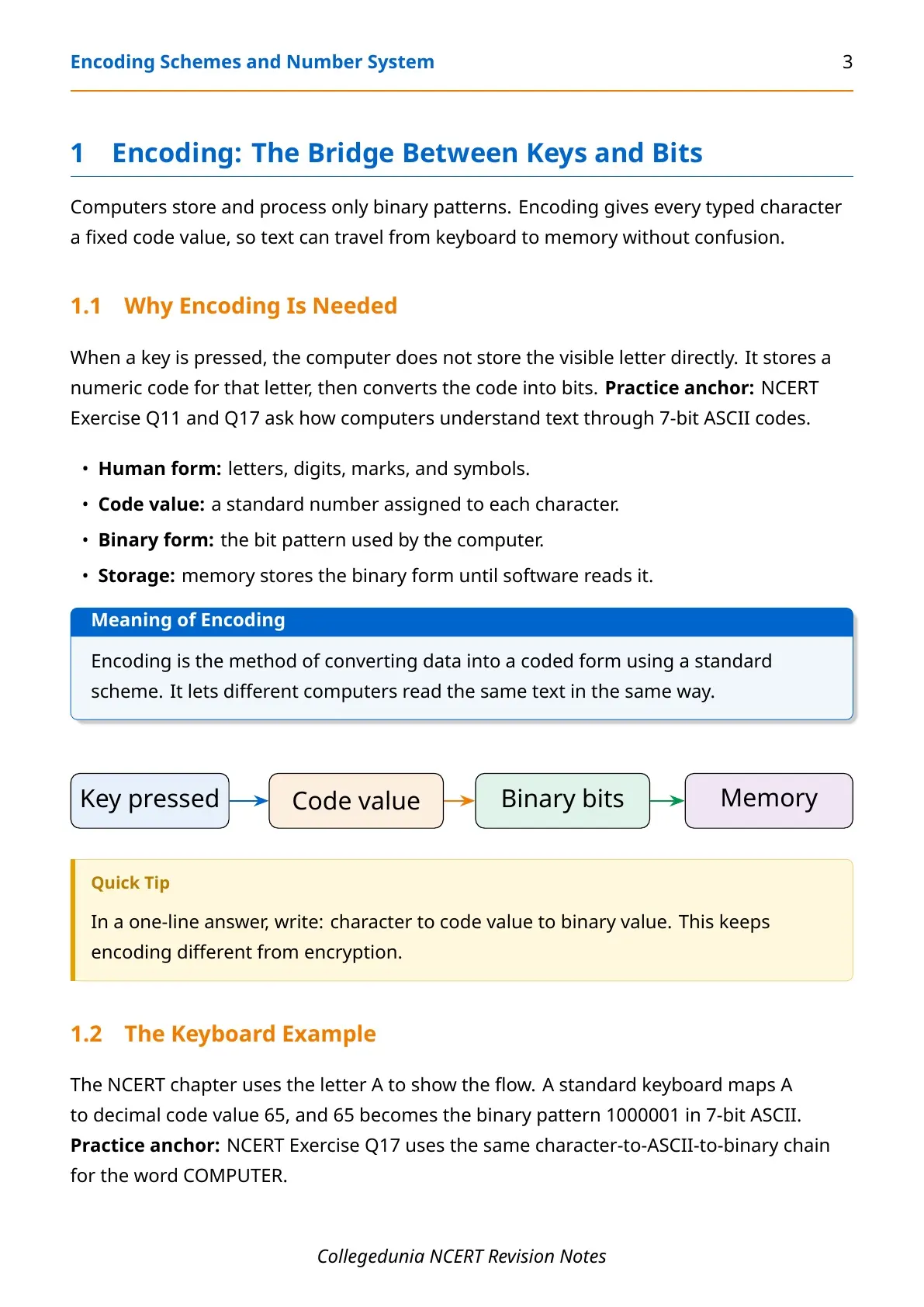
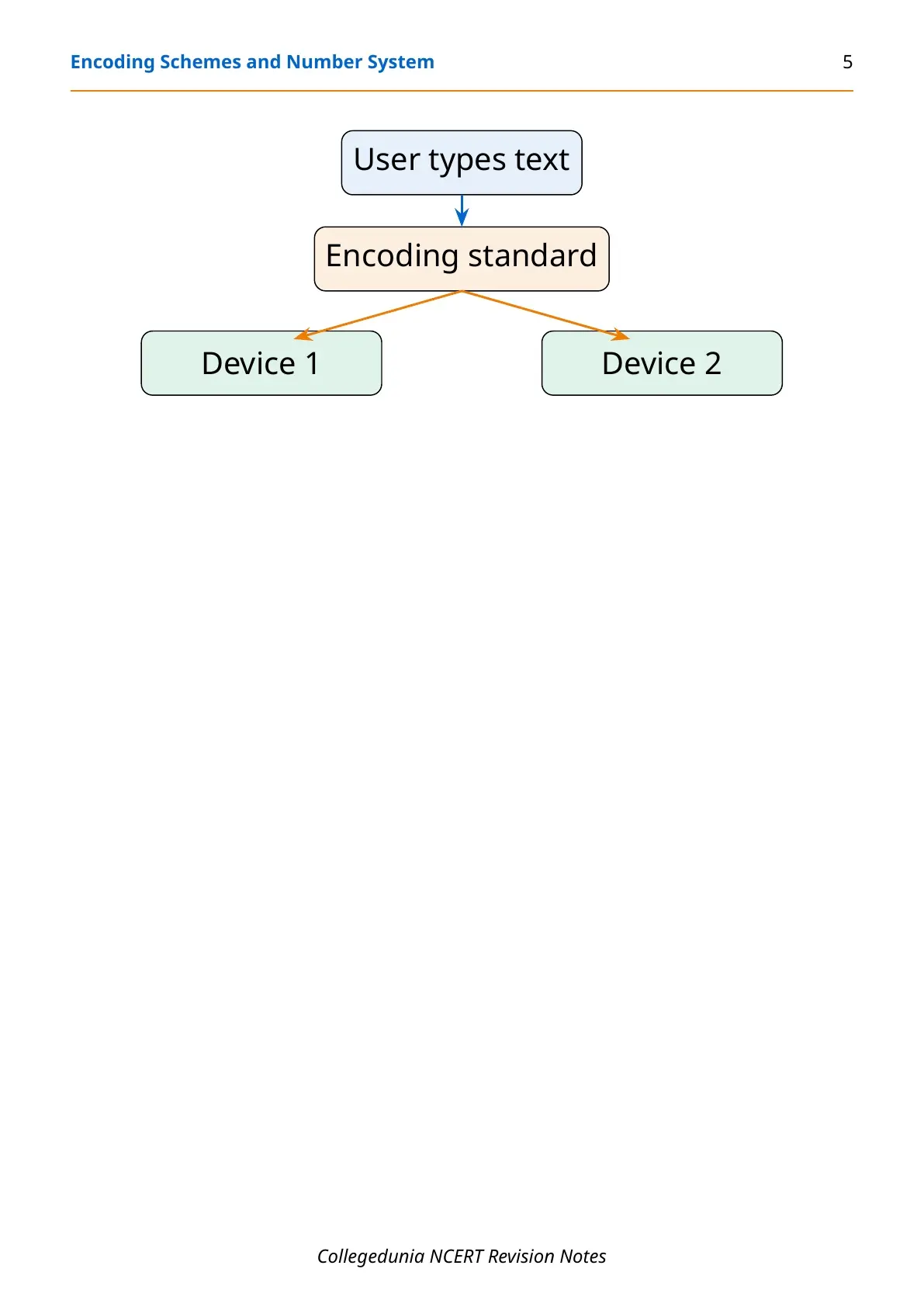
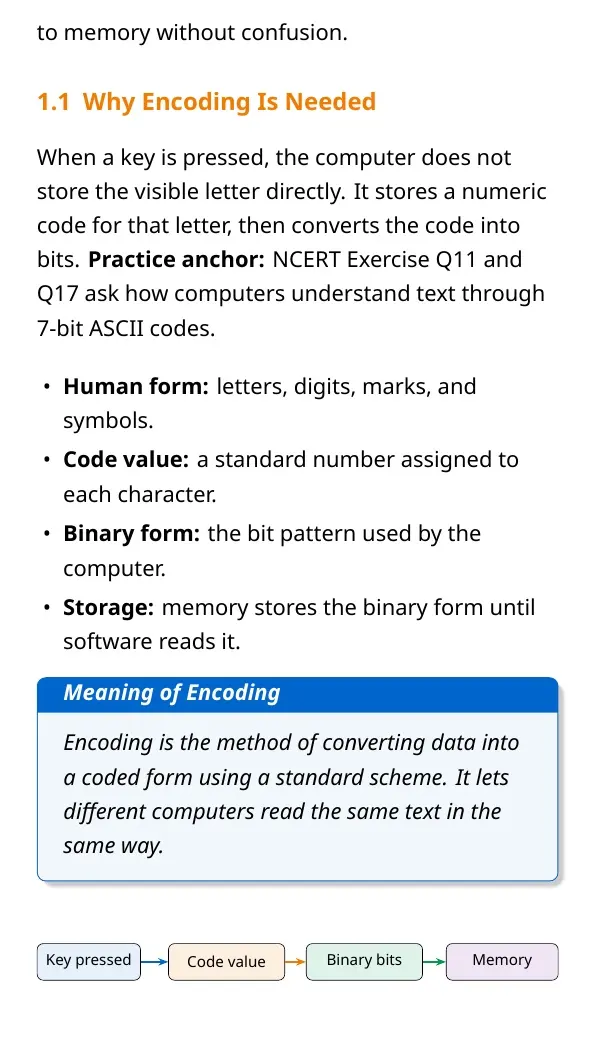
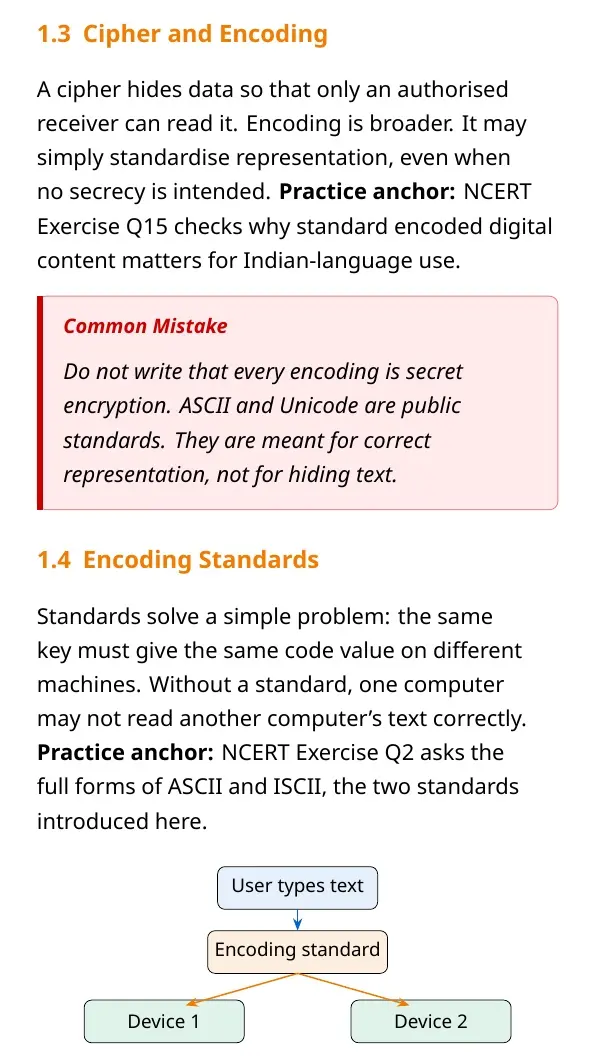
Encoding means converting data into a coded form using a standard scheme. When a key is pressed, the computer does not store the visible character directly. It stores a number assigned to that character, then converts that number into binary bits.
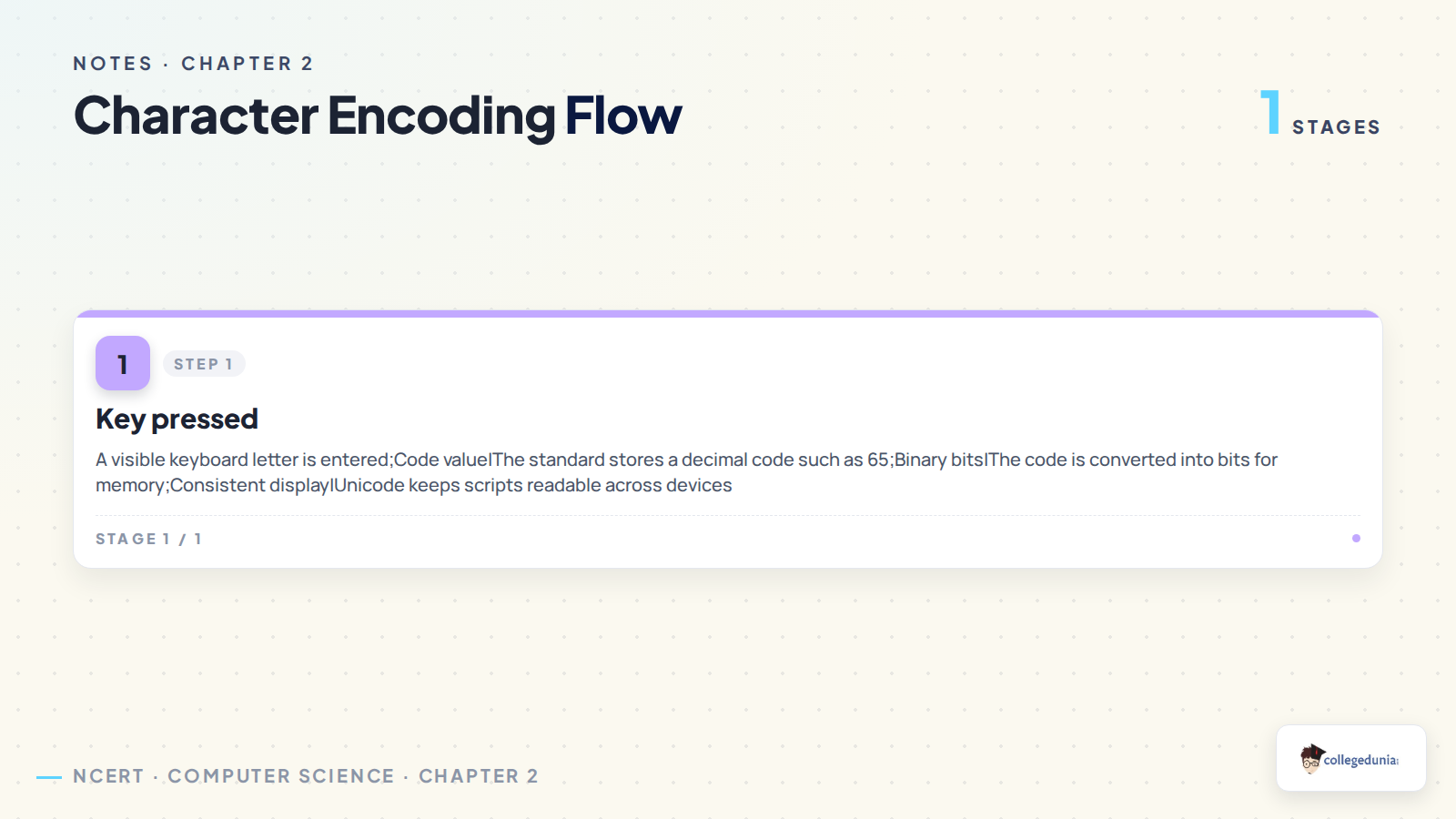
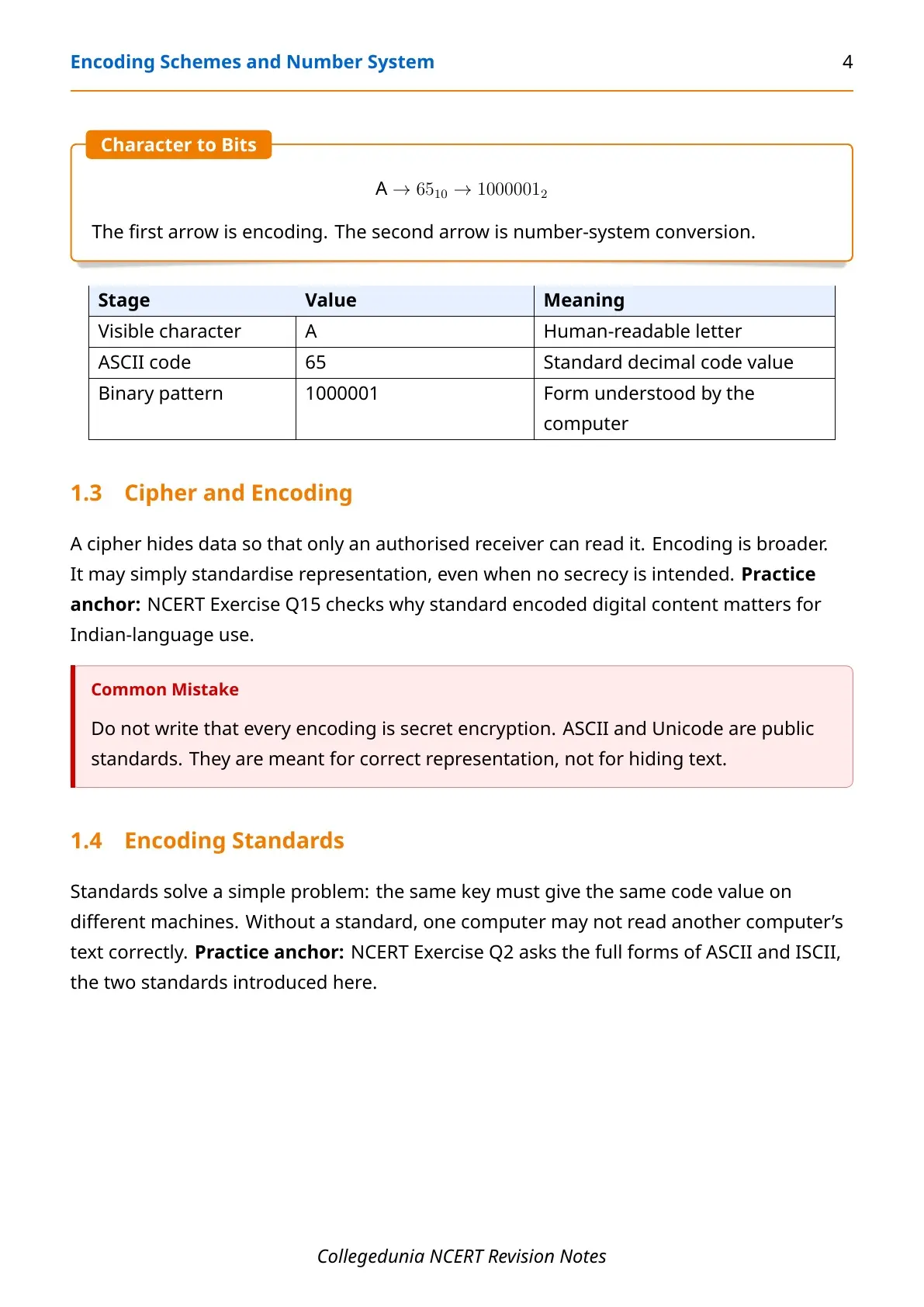
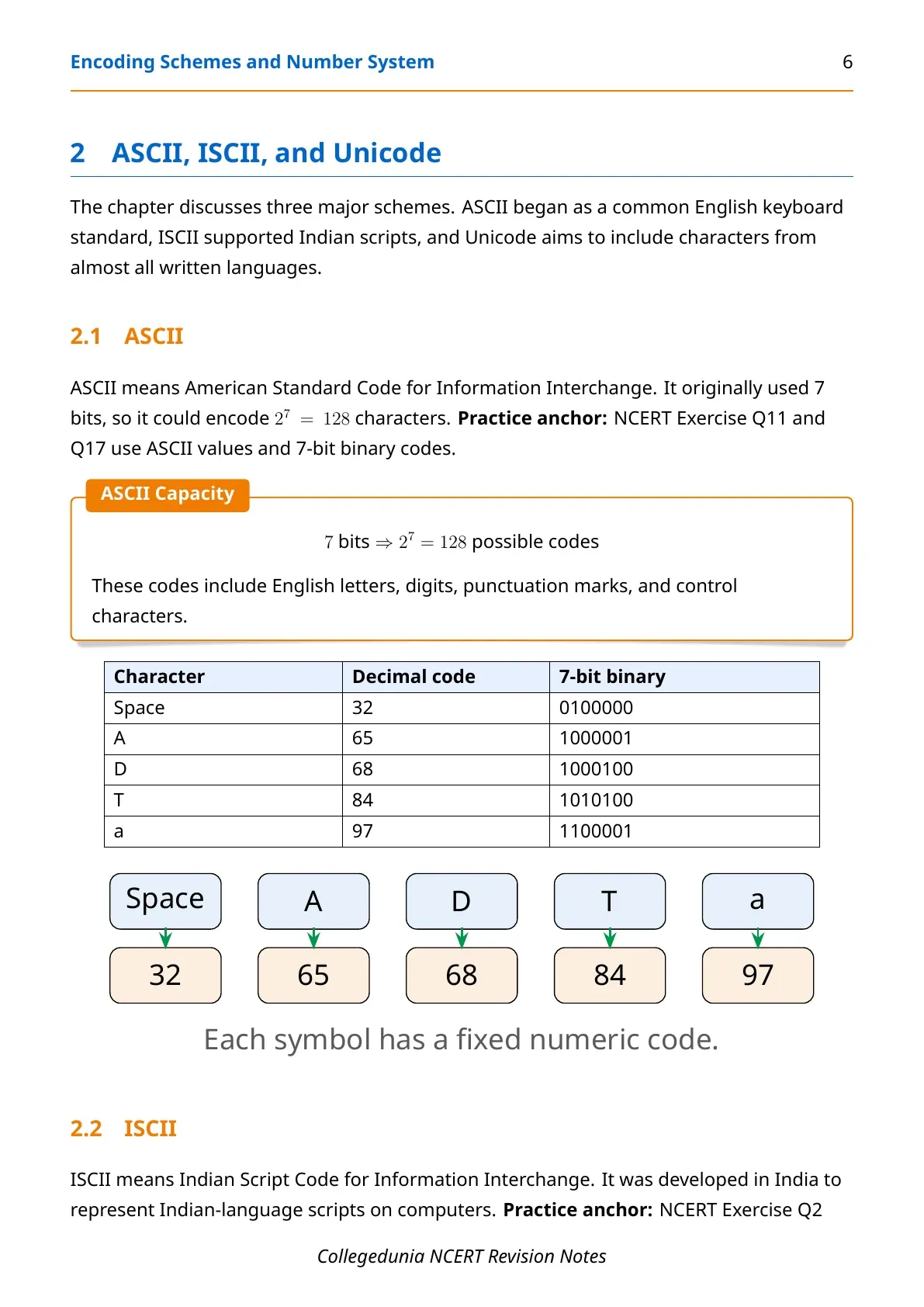
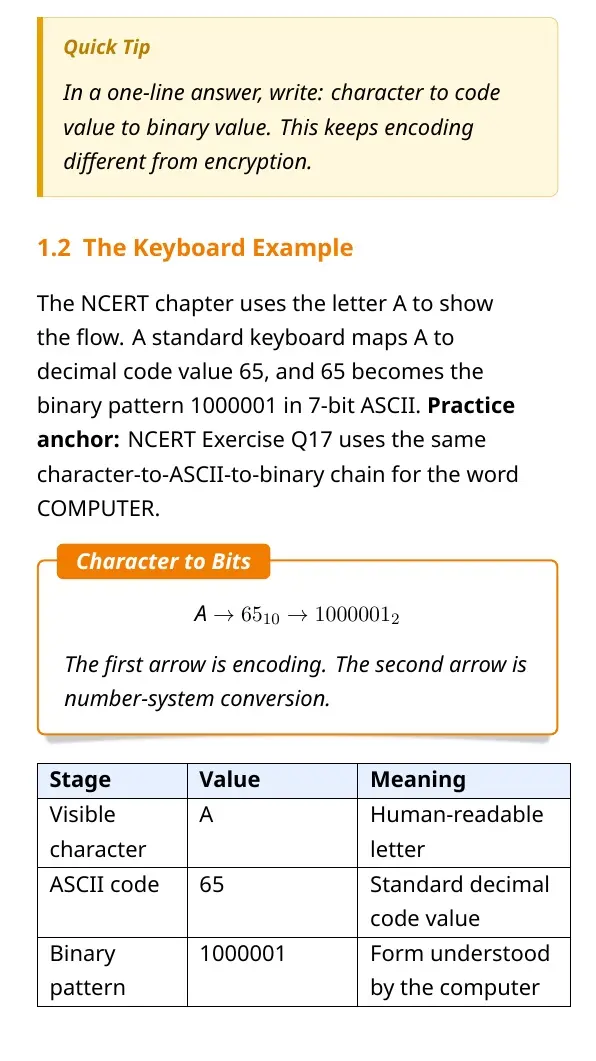
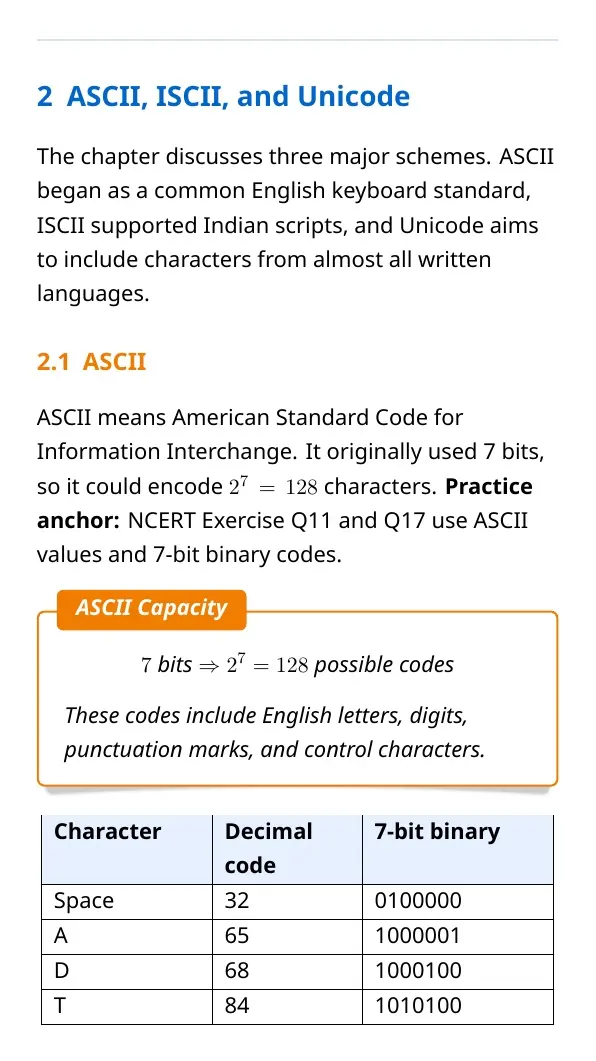
For example, the letter A has decimal code value 65 in ASCII. The decimal number 65 becomes 1000001 in binary. So the path is simple: character to code value to binary value. This is different from encryption, because encoding does not hide data. It standardises representation.
- Human form: letters, digits, punctuation marks and symbols.
- Code value: the standard number assigned to a character.
- Binary form: the bit pattern stored and processed by the computer.
ASCII, ISCII and Unicode in Class 11 Computer Science
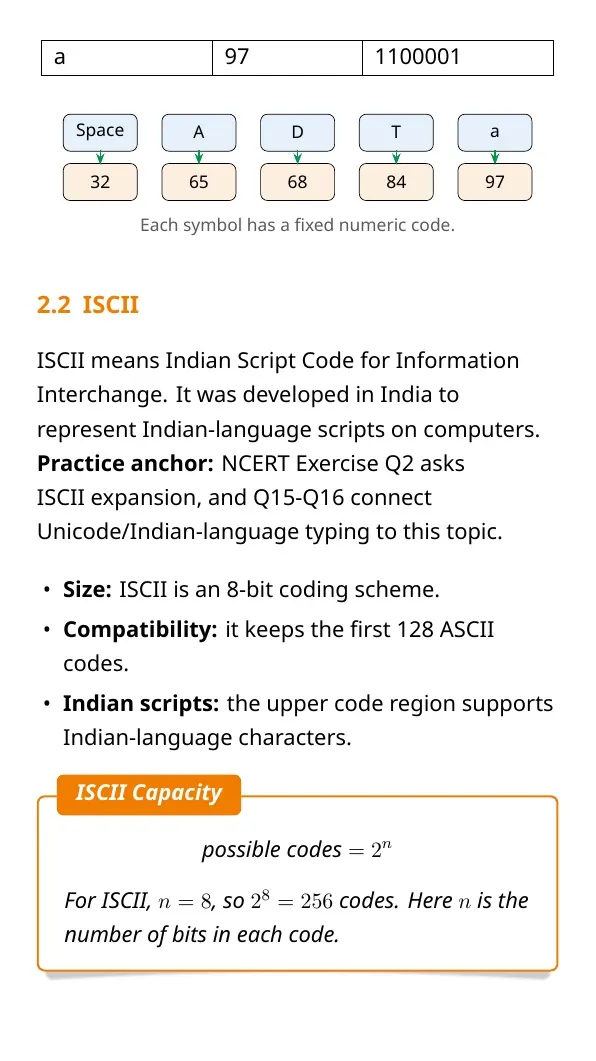
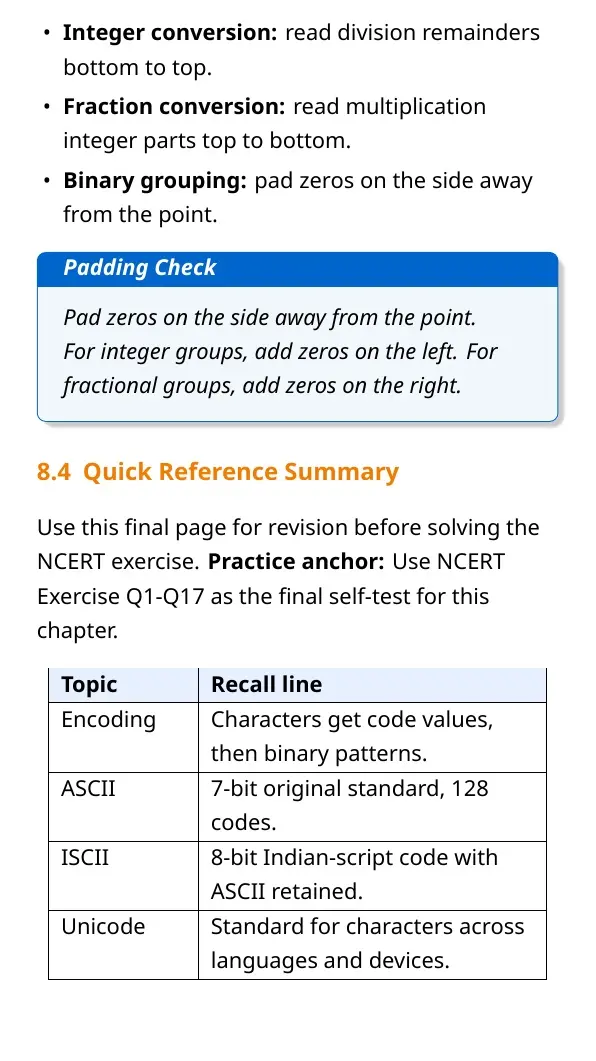
ASCII means American Standard Code for Information Interchange. It originally uses 7 bits, so it can represent 128 possible codes. NCERT uses examples such as A, D, T and a to show how characters are stored through fixed code values.
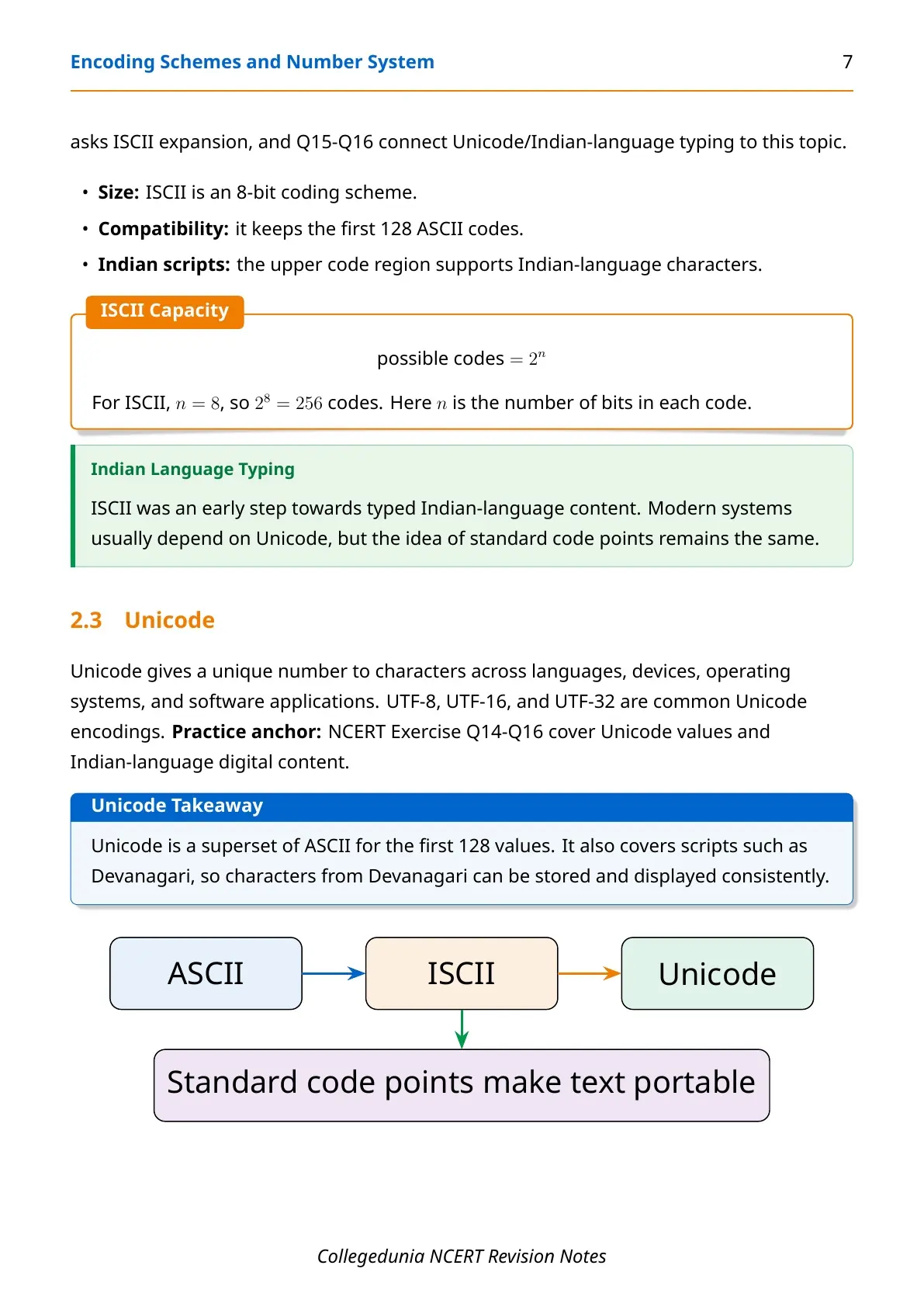
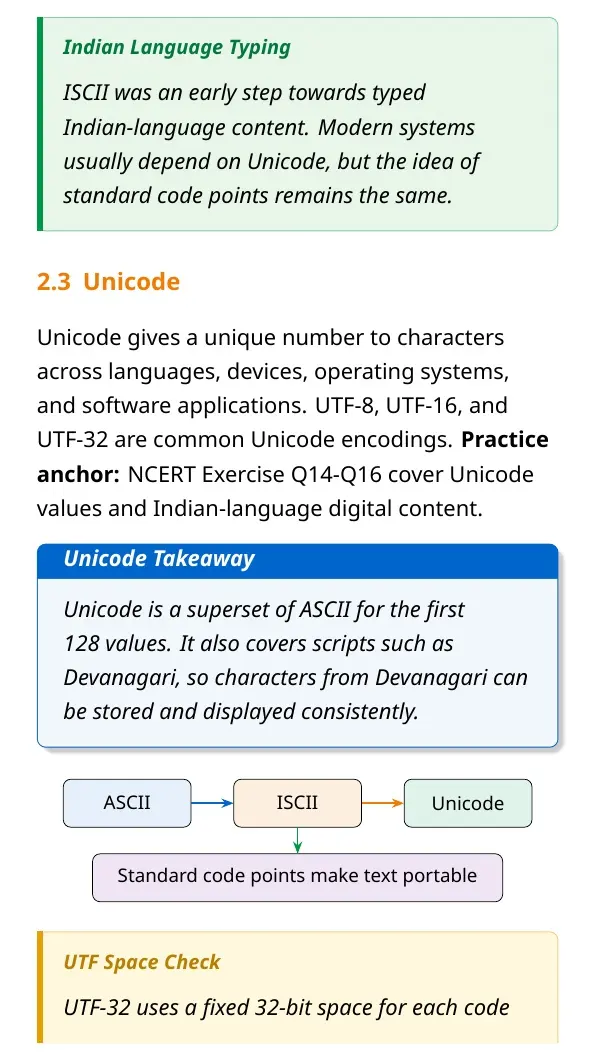
ISCII means Indian Script Code for Information Interchange. It is an 8-bit coding scheme and can represent 256 possible codes. ISCII was designed for Indian-language scripts, while Unicode is a wider standard that gives code points to characters across many languages and platforms.
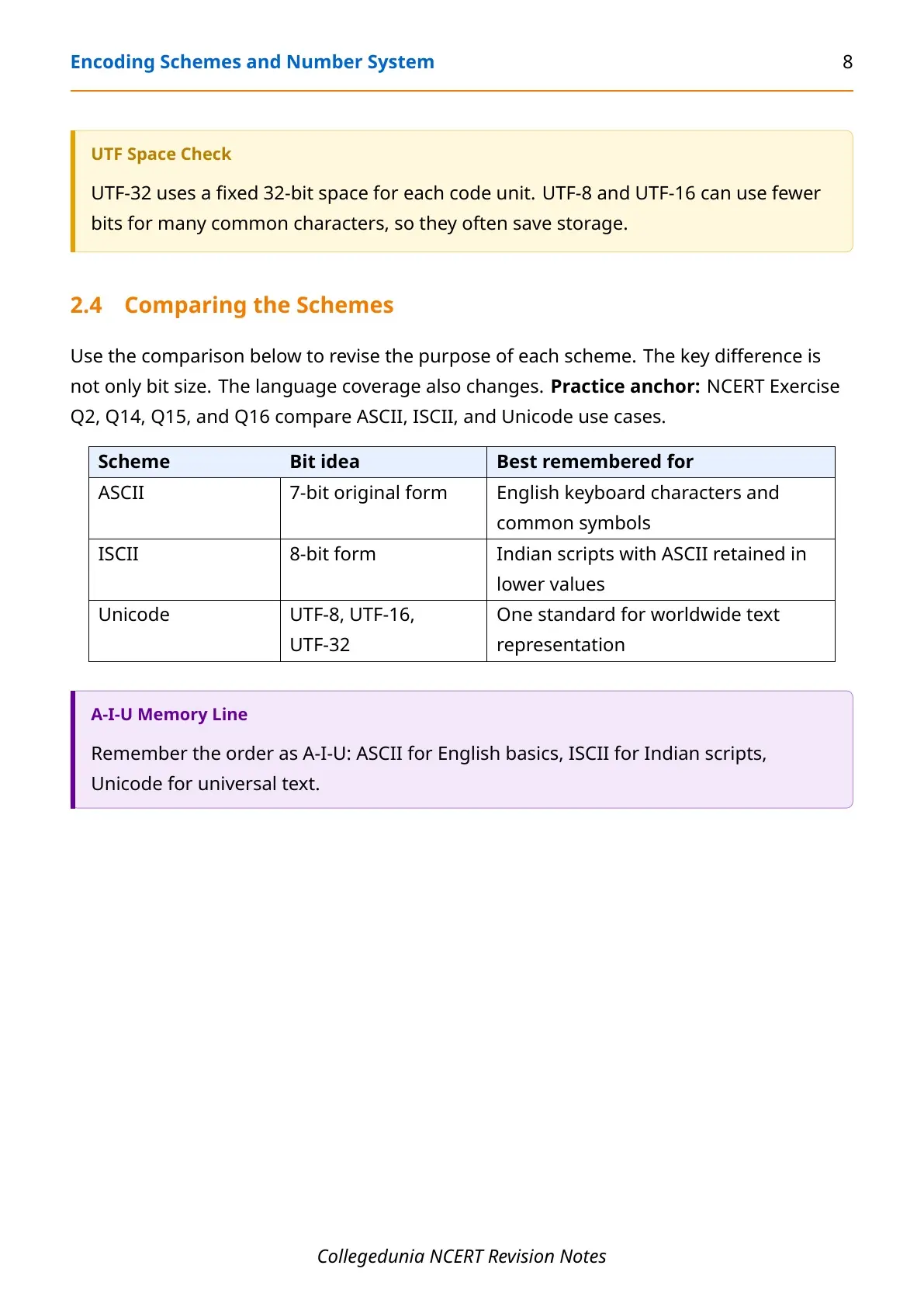
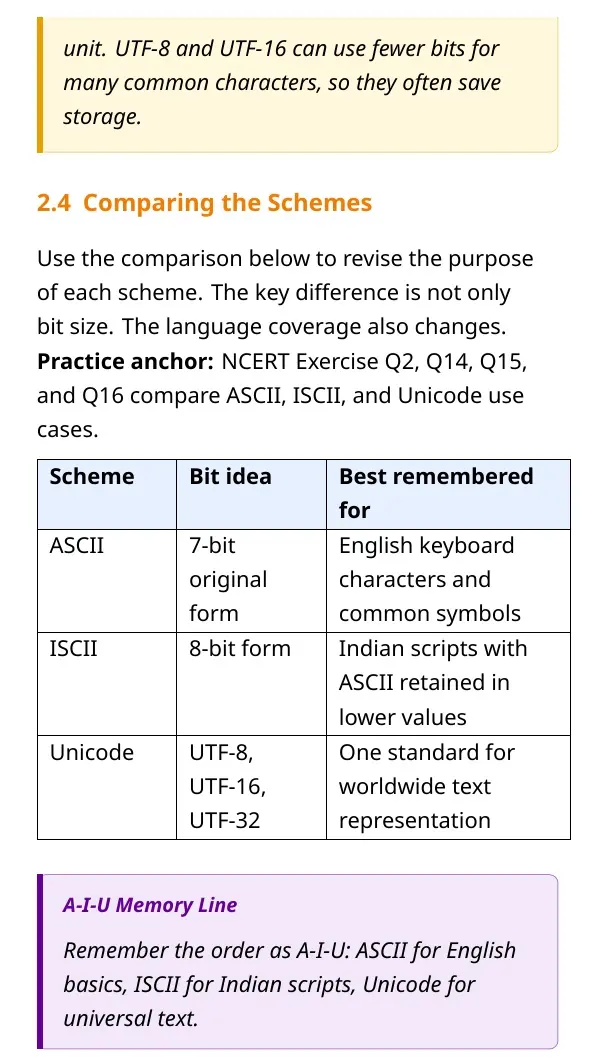
| Scheme | Bit idea | Best remembered for |
|---|---|---|
| ASCII | 7-bit original form | English keyboard characters and common symbols |
| ISCII | 8-bit Indian-script code | Indian scripts with ASCII retained in lower values |
| Unicode | UTF-8, UTF-16 and UTF-32 | One standard for worldwide text representation |
Number Systems and Place Value
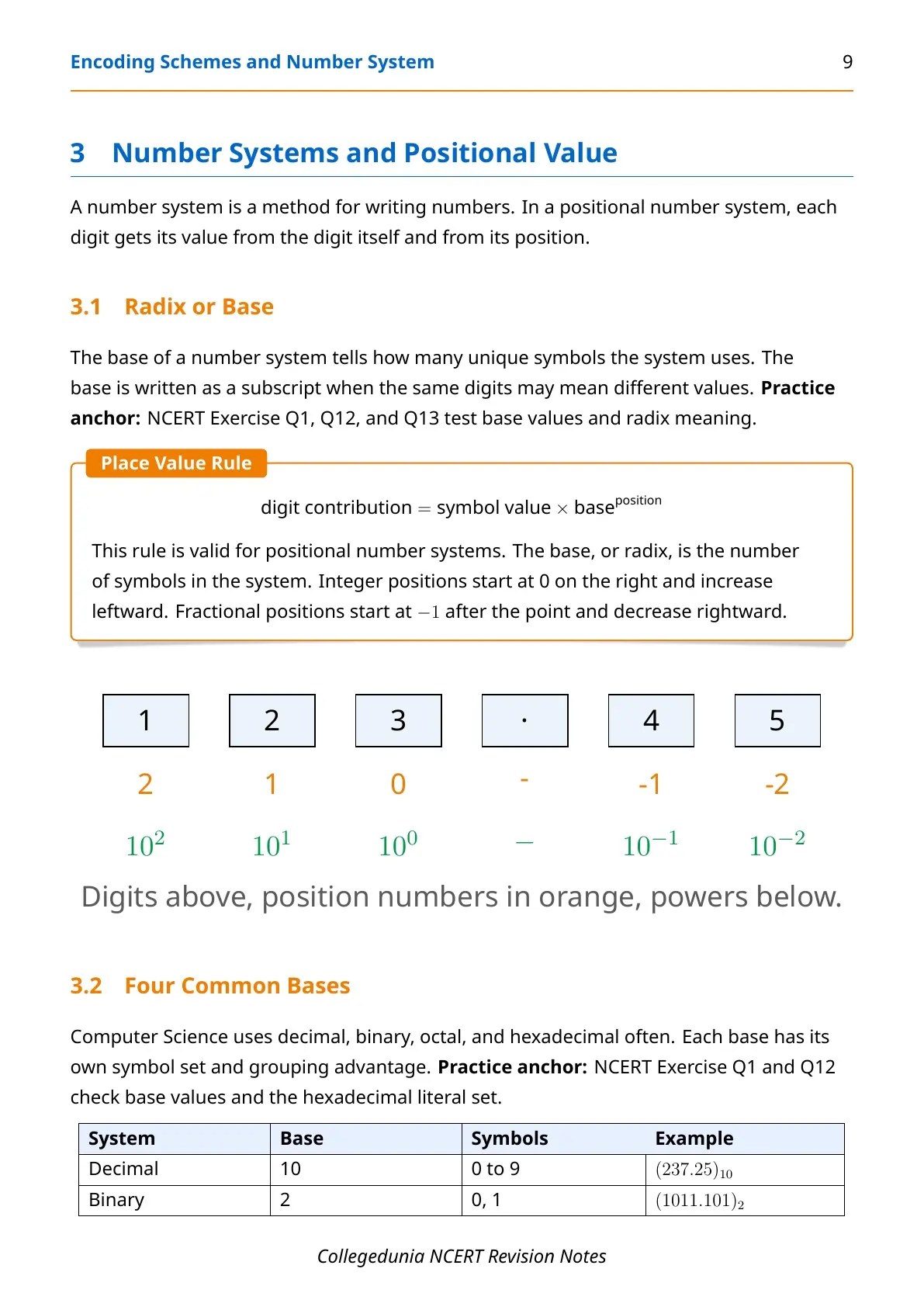
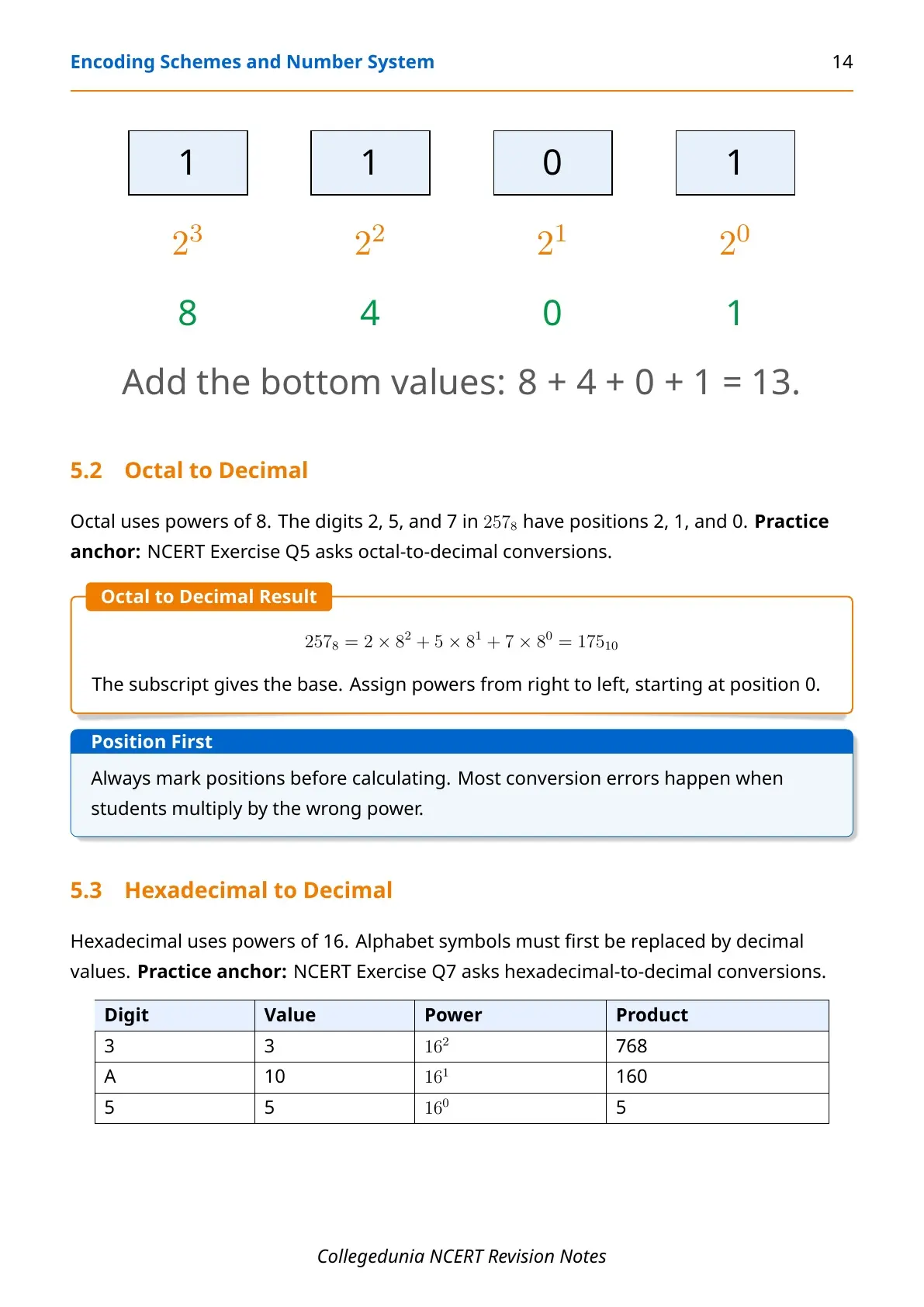
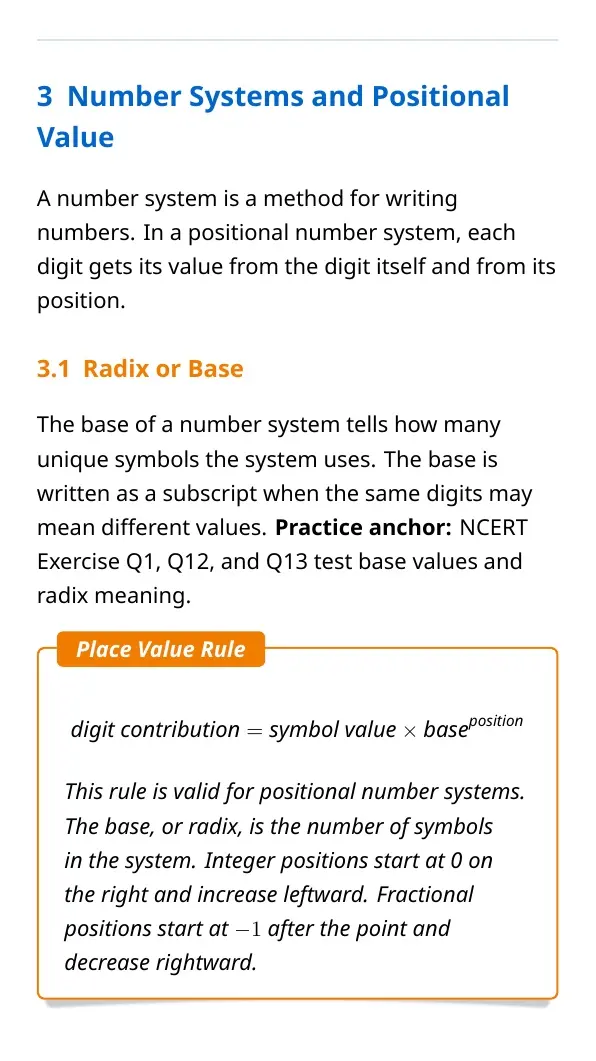
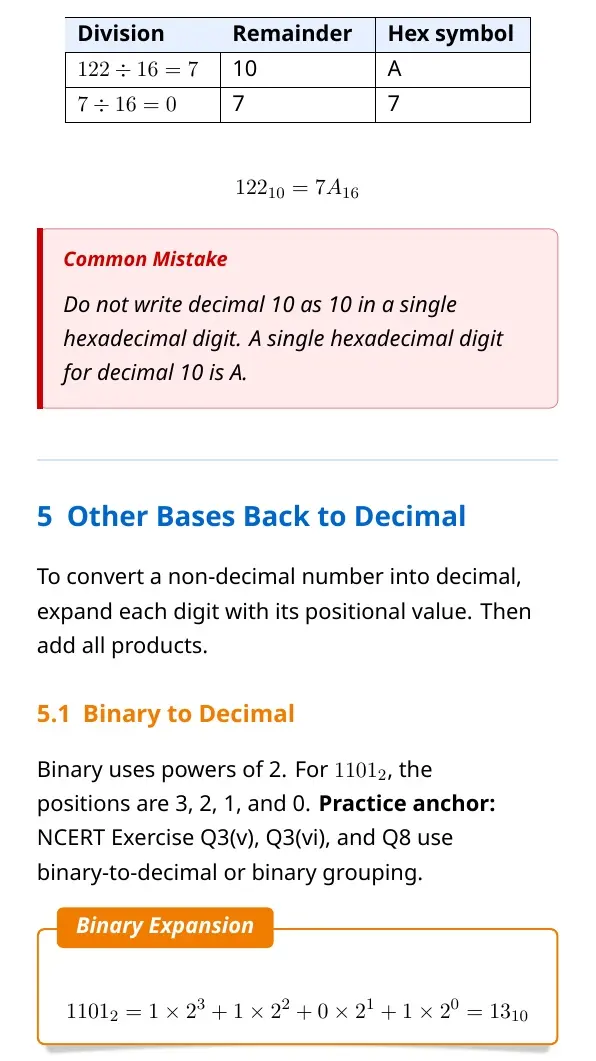
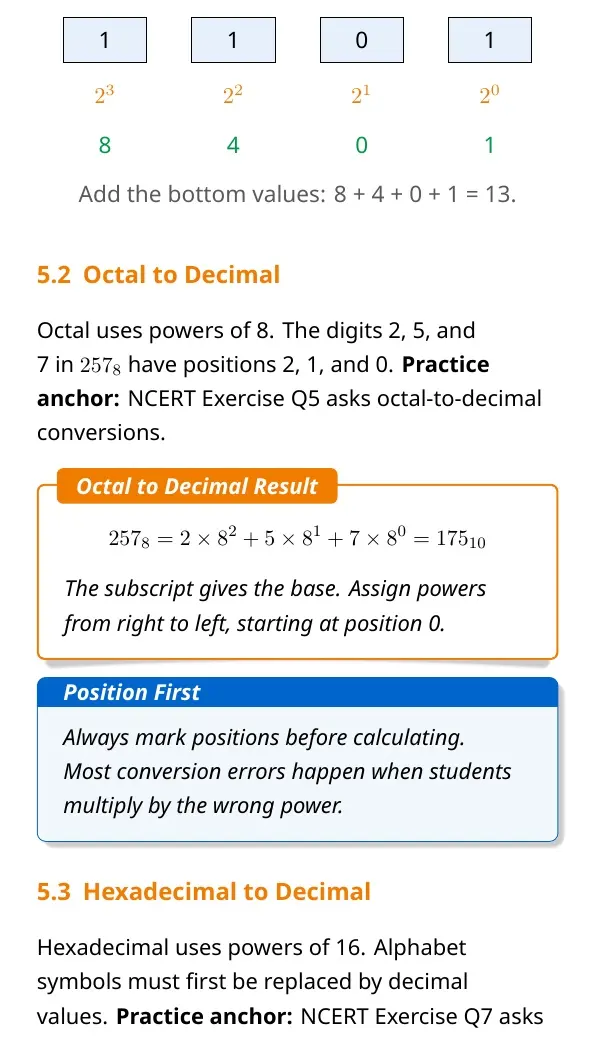
A number system is a method for writing numbers. In a positional number system, every digit gets its value from the digit itself and from its position. The base, also called radix, tells how many symbols the system uses.
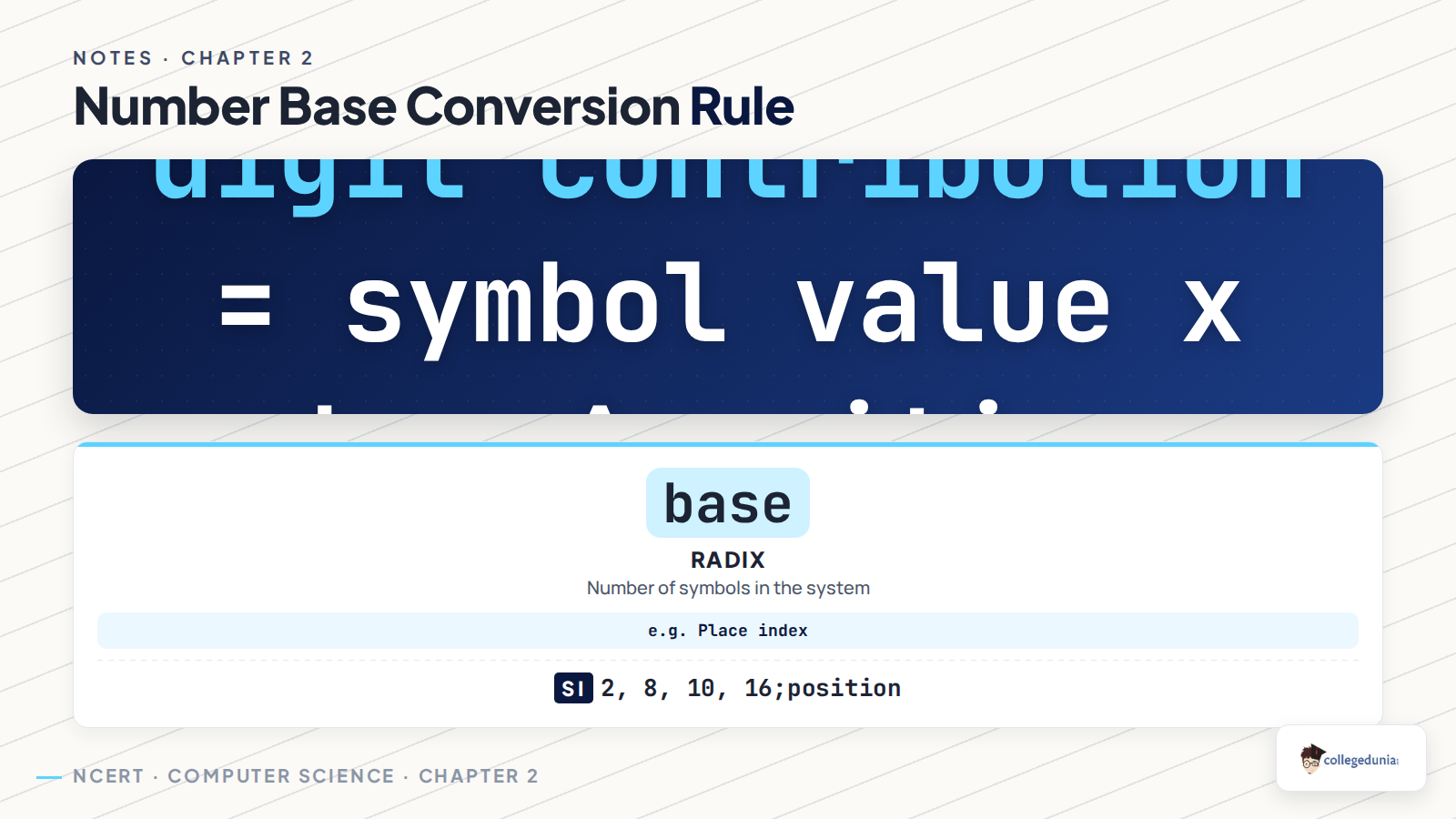
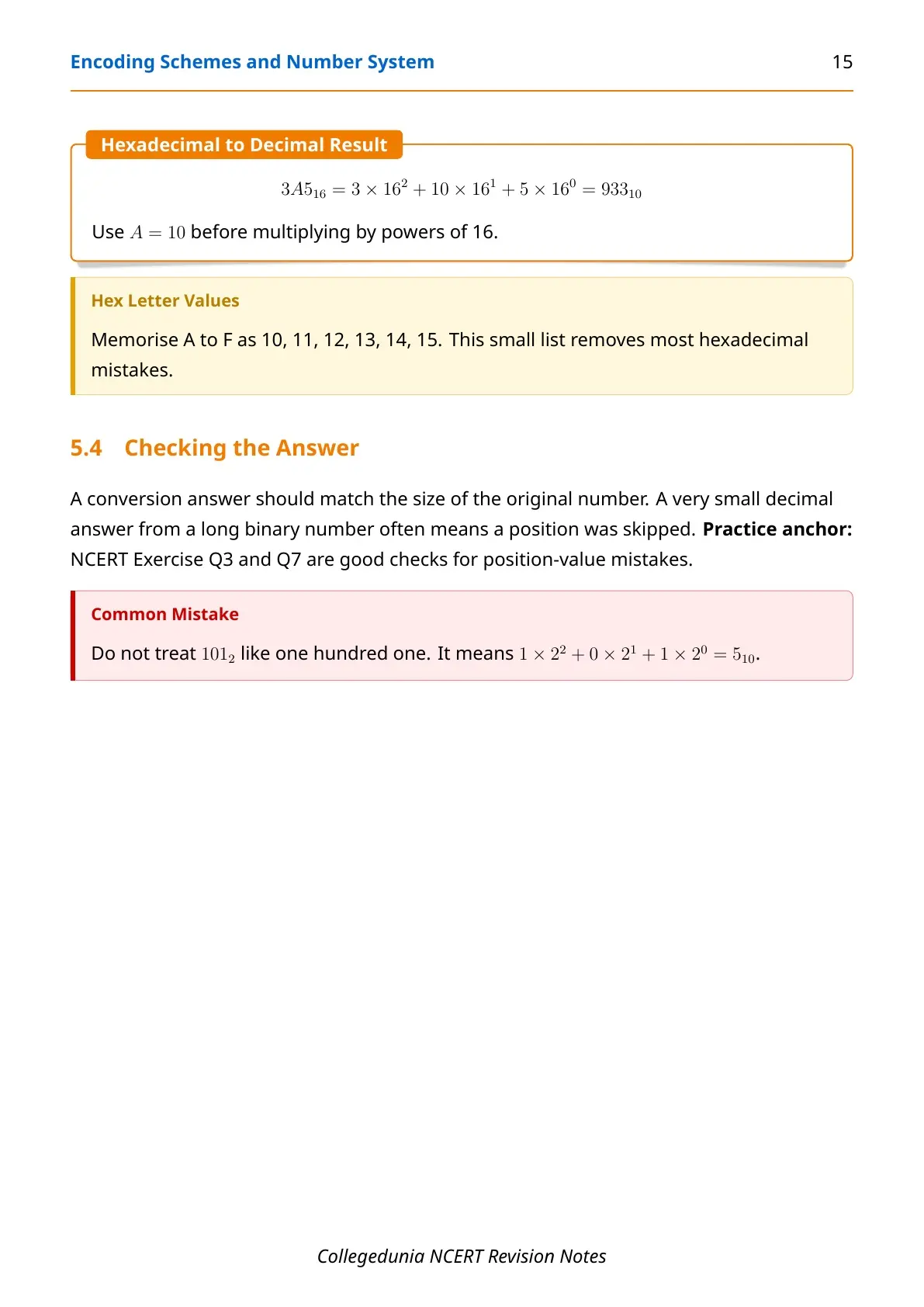
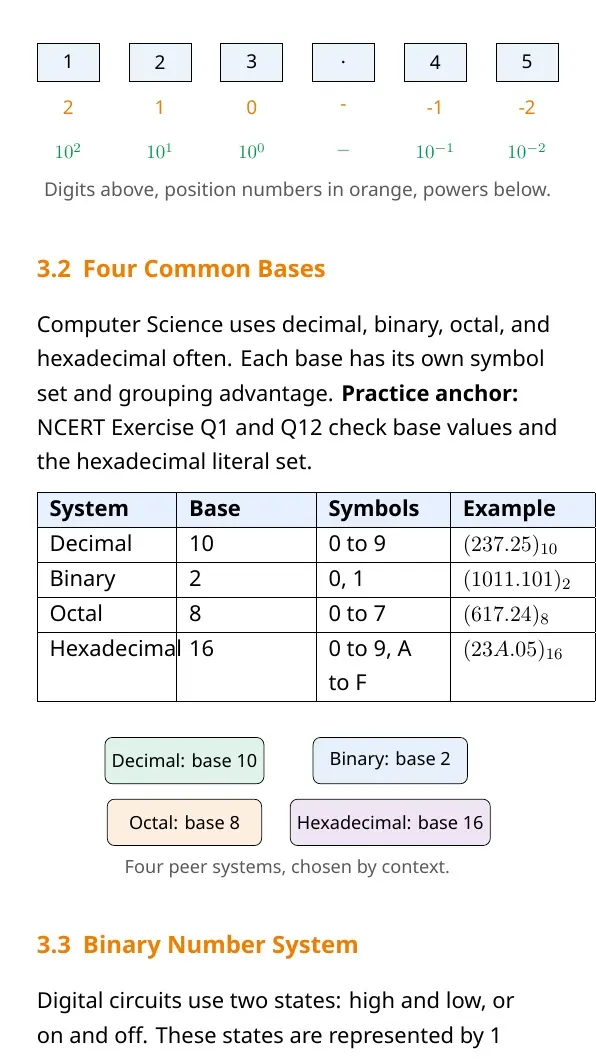
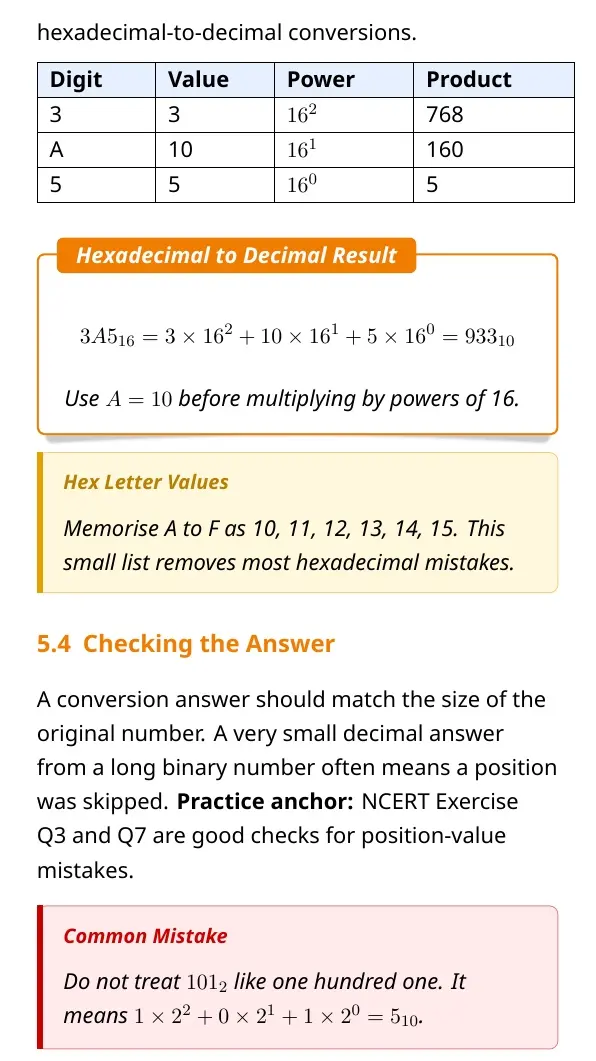
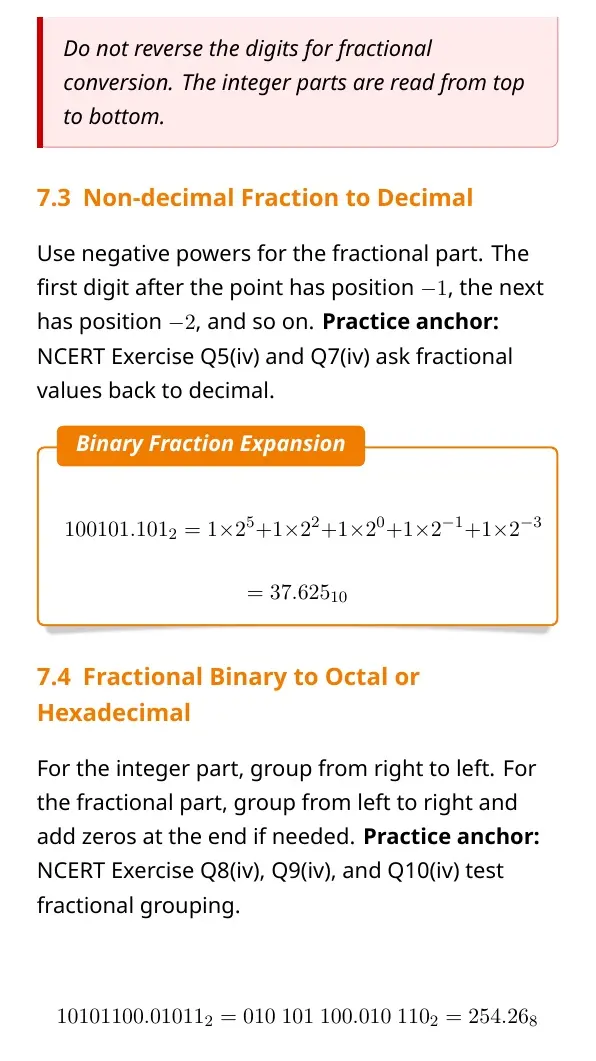
The place-value rule is digit contribution = symbol value x base^position. Integer positions start at 0 on the right and increase leftward. Fractional positions start at -1 after the point and decrease rightward.
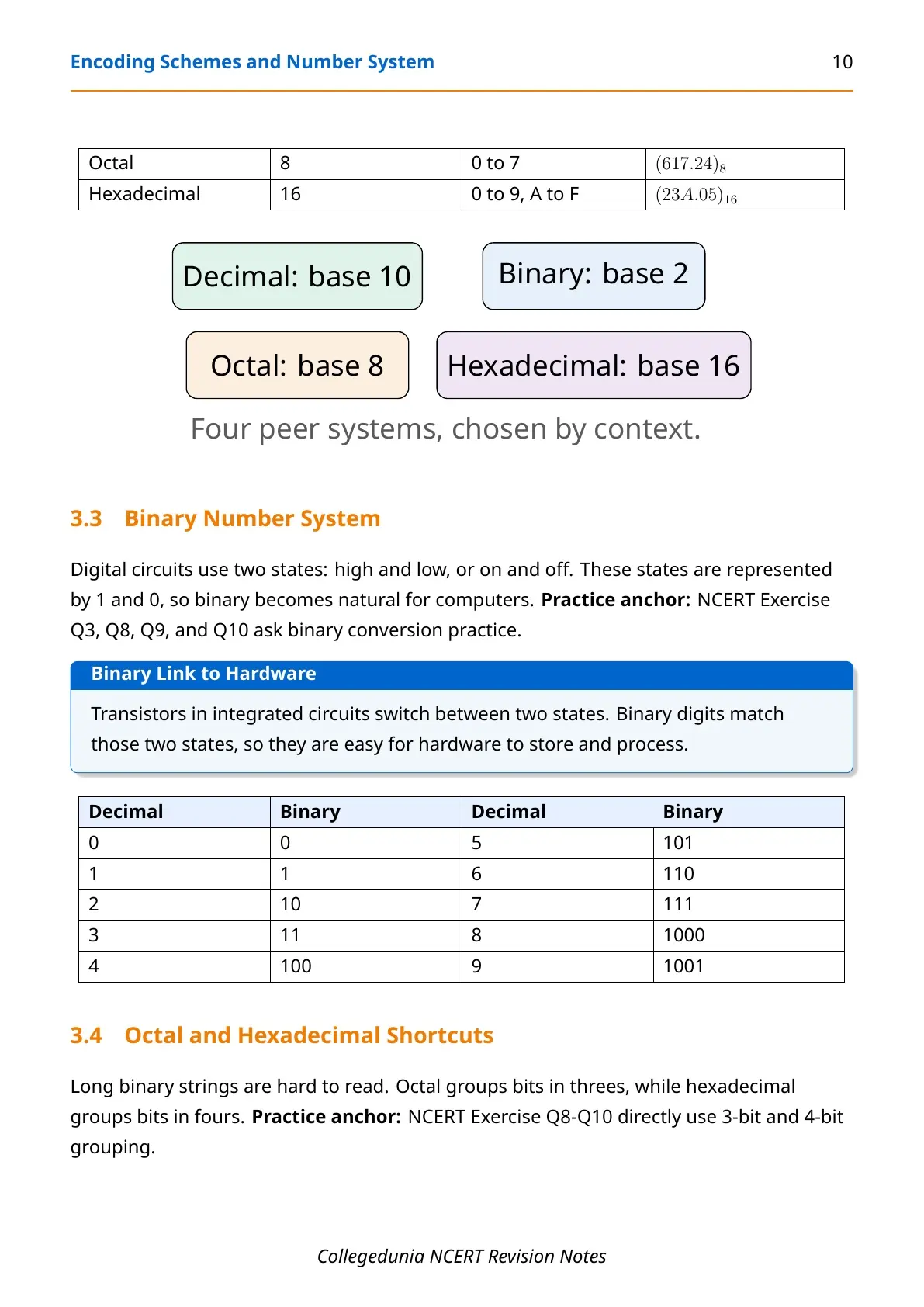
| System | Base | Symbols | Example |
|---|---|---|---|
| Decimal | 10 | 0 to 9 | 237.25 |
| Binary | 2 | 0, 1 | 1011.101 |
| Octal | 8 | 0 to 7 | 617.24 |
| Hexadecimal | 16 | 0 to 9, A to F | 23A.05 |
Decimal, Binary, Octal and Hexadecimal Conversion
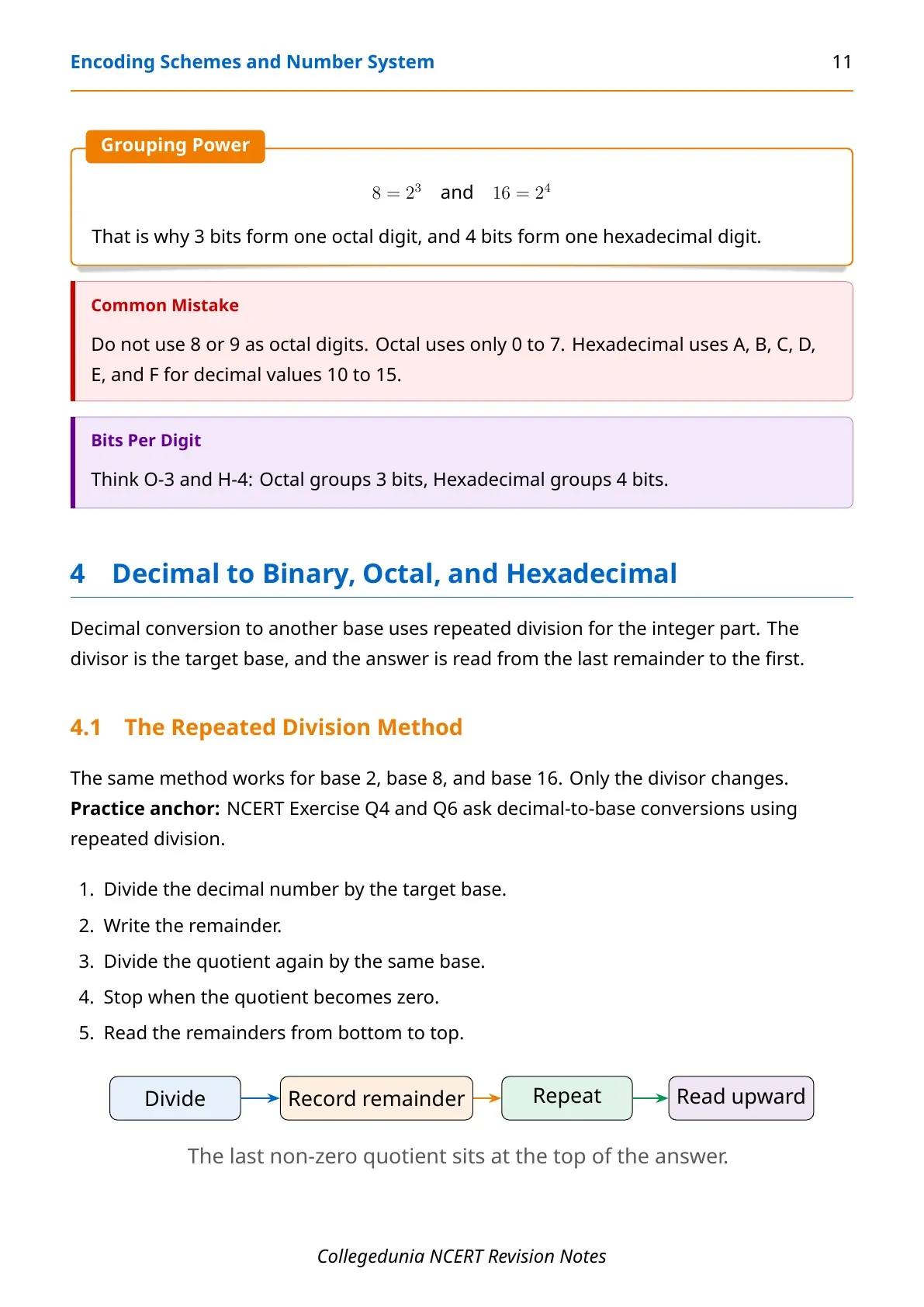
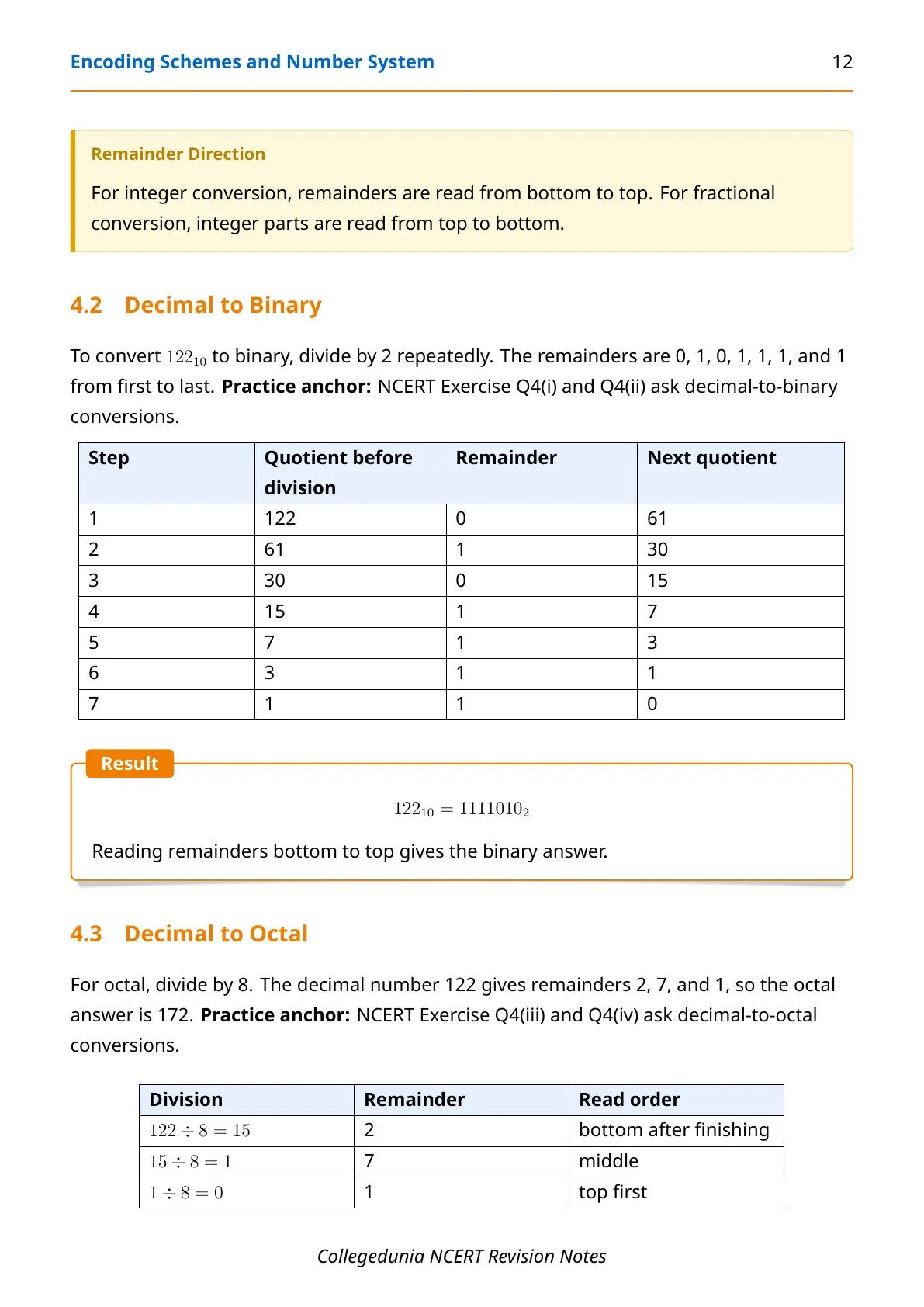
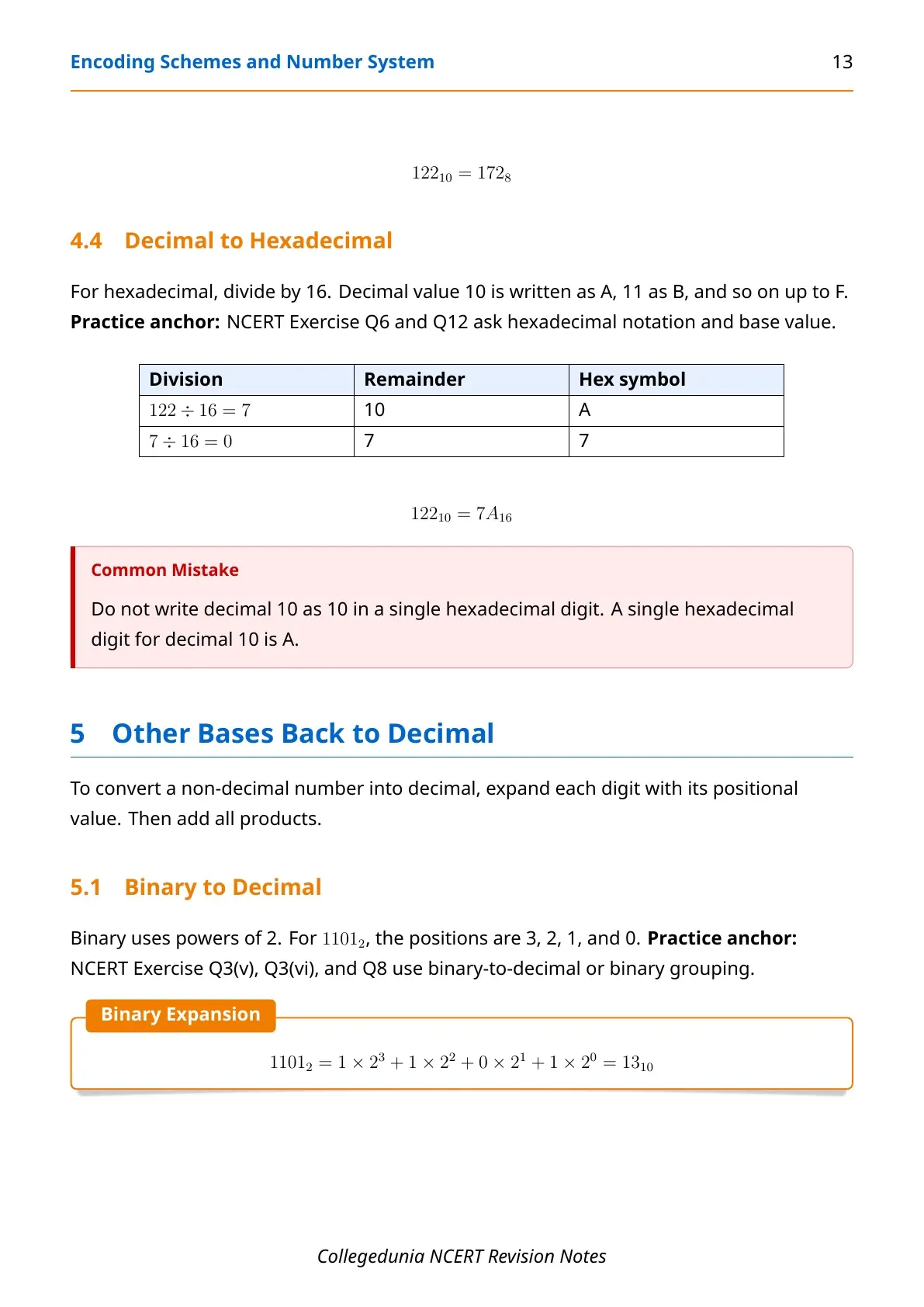
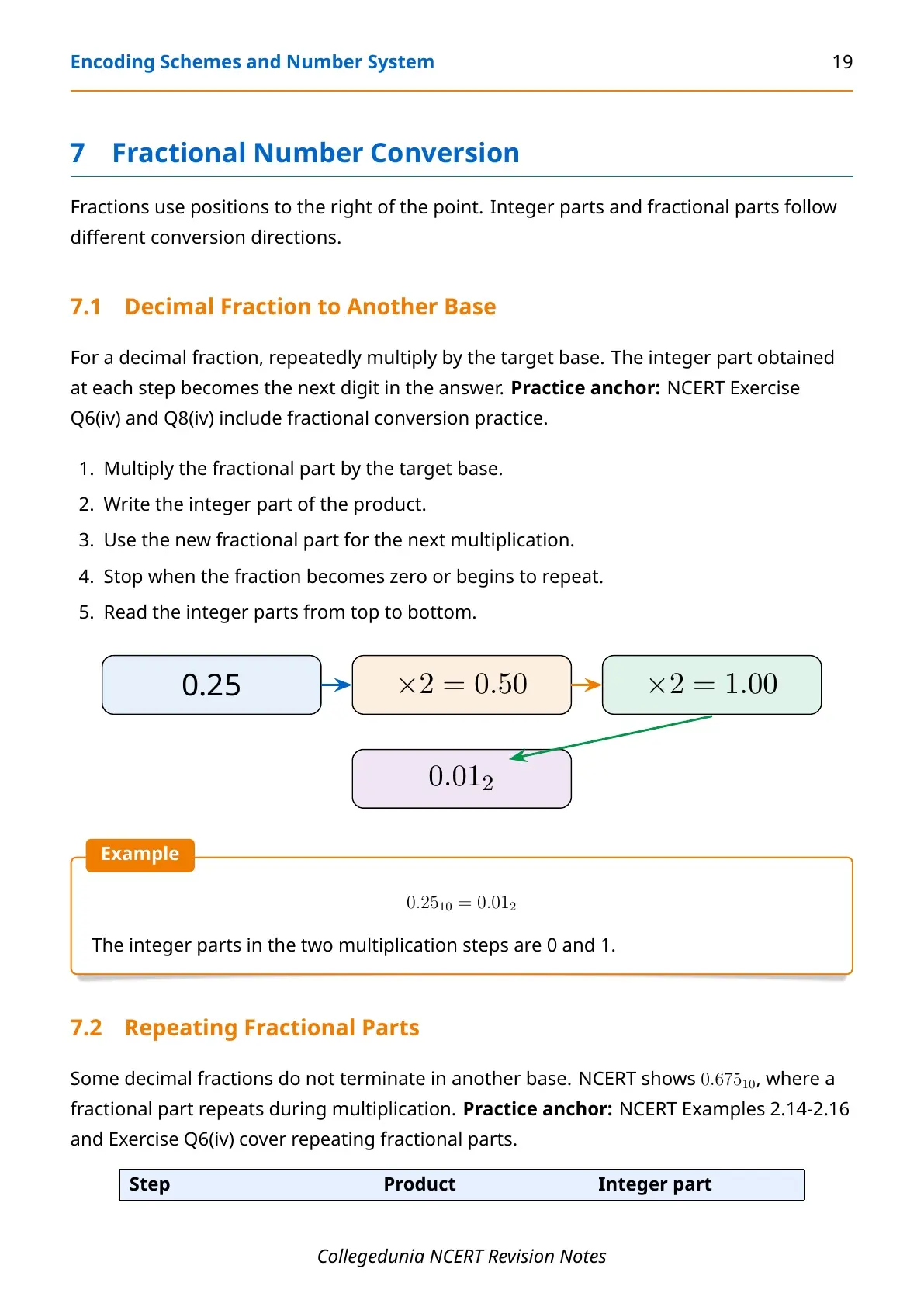
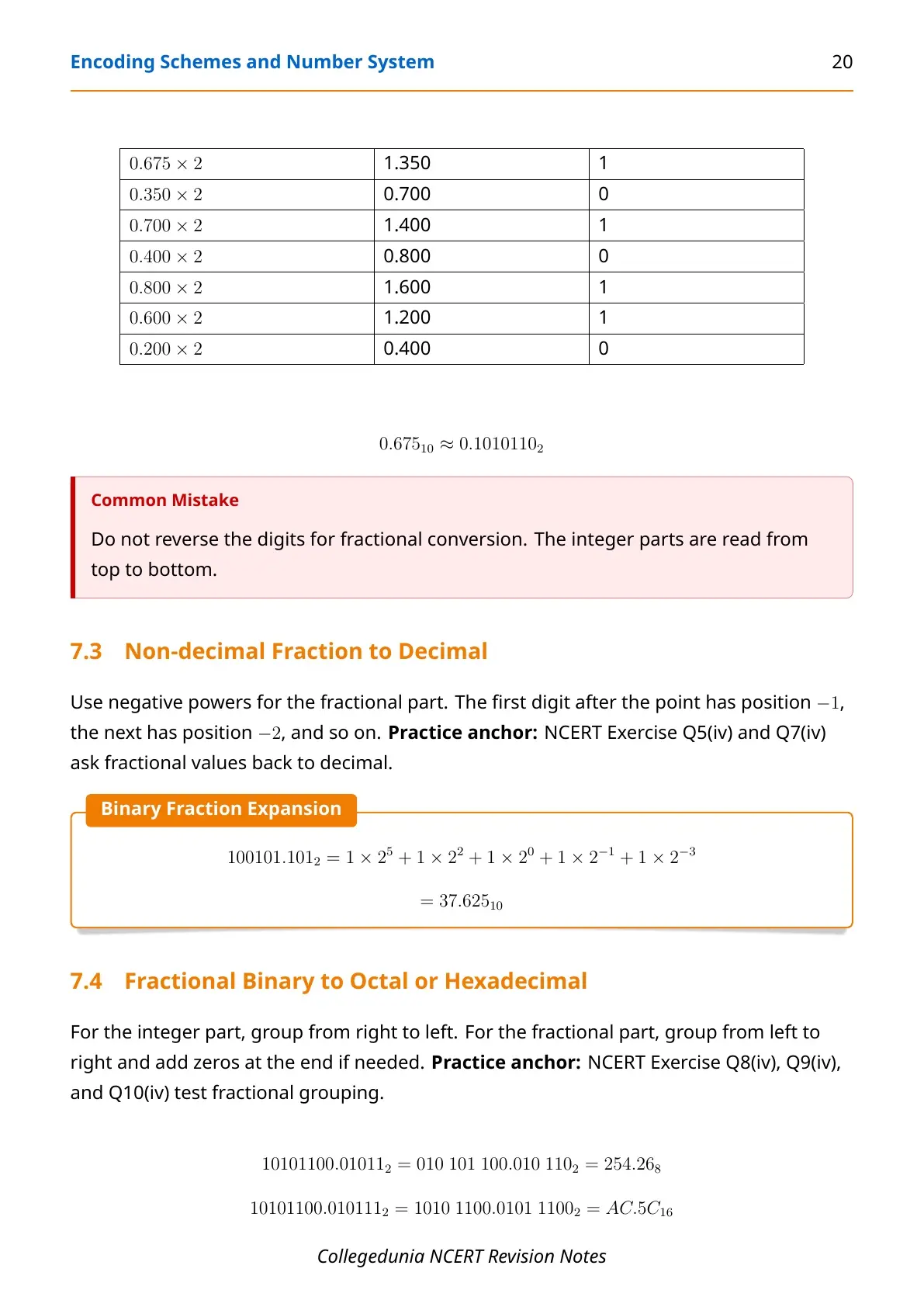
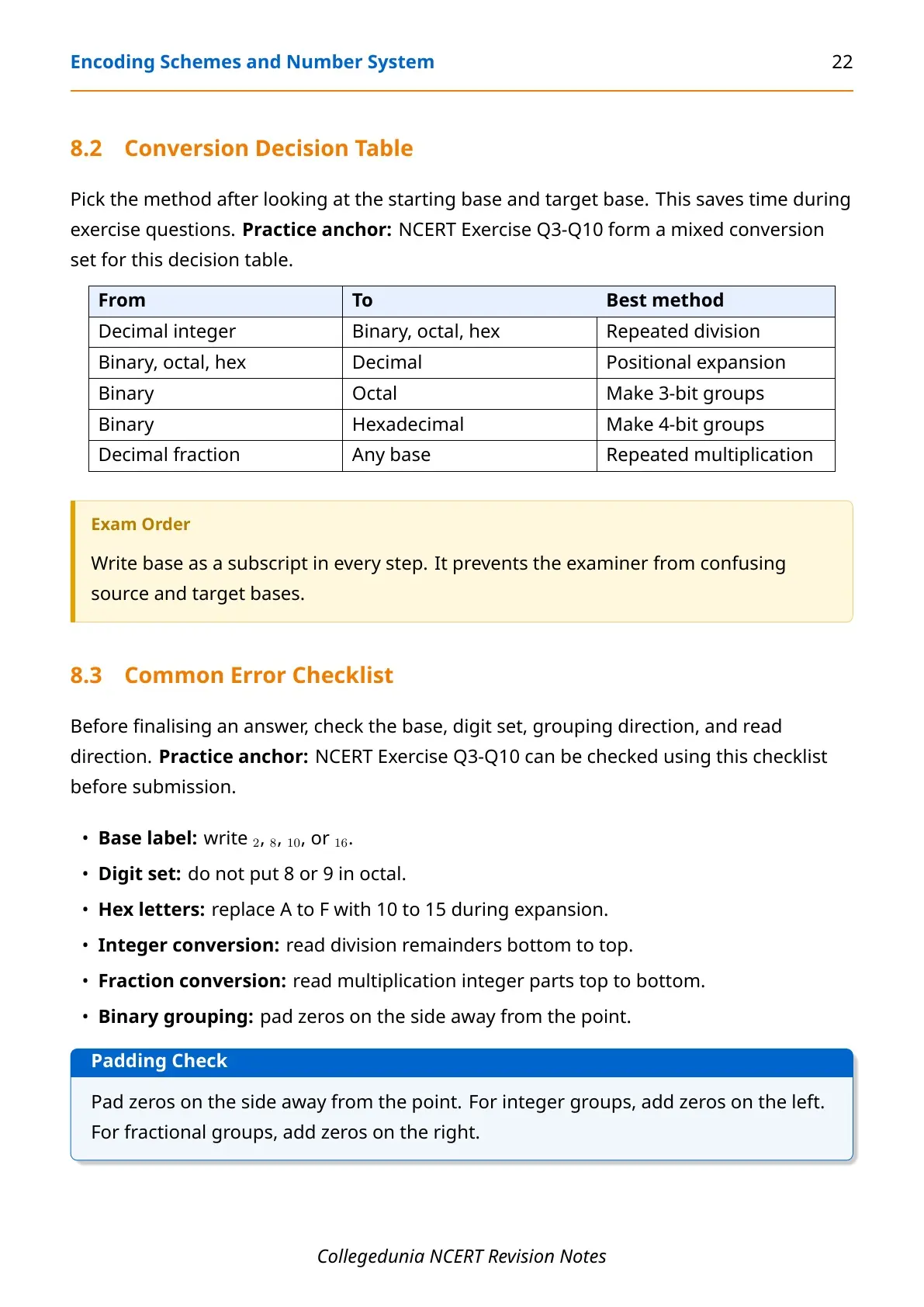
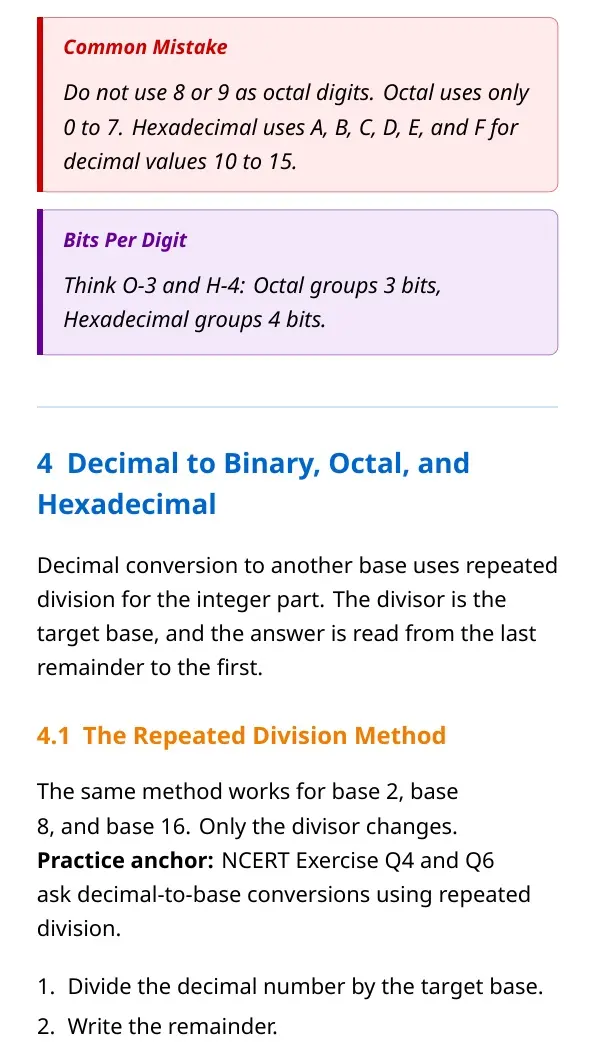
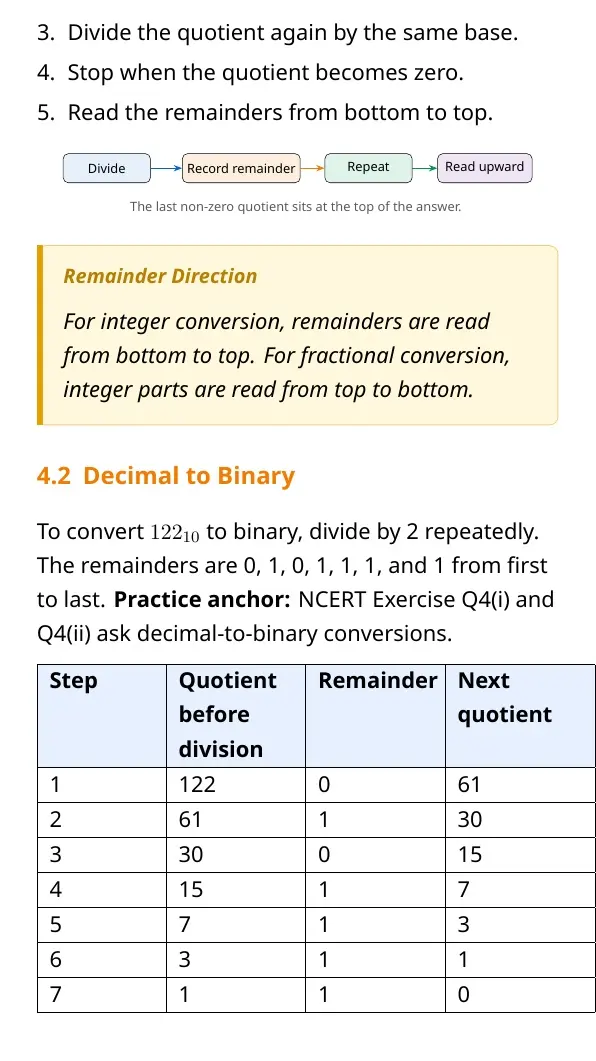
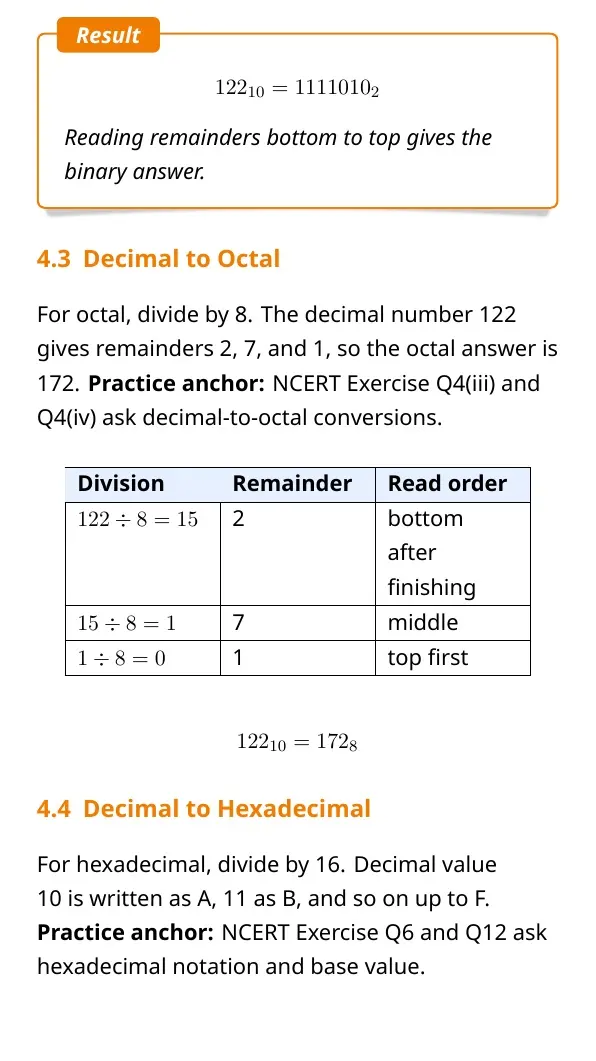
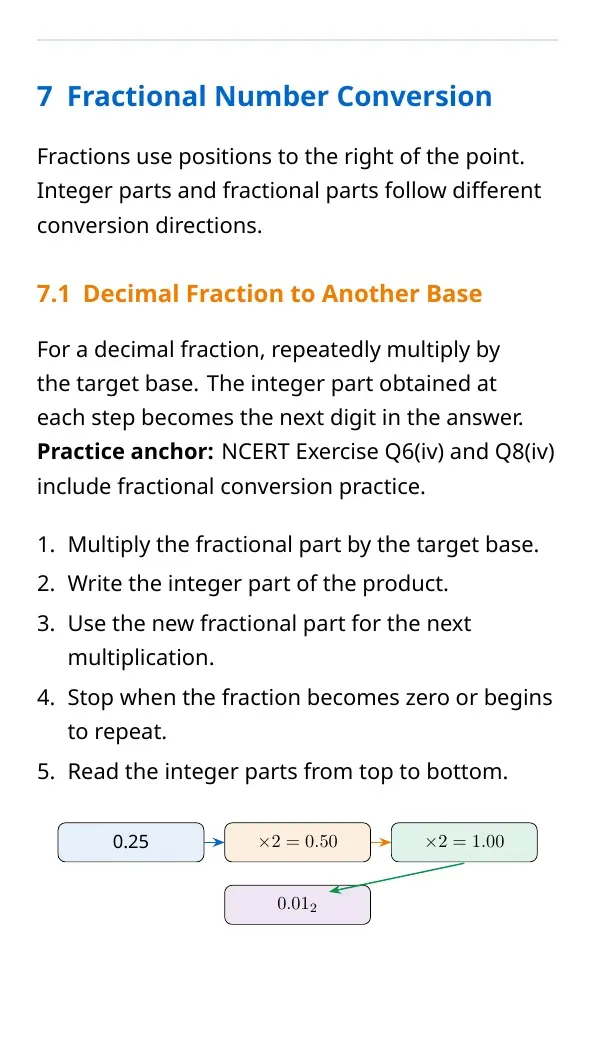
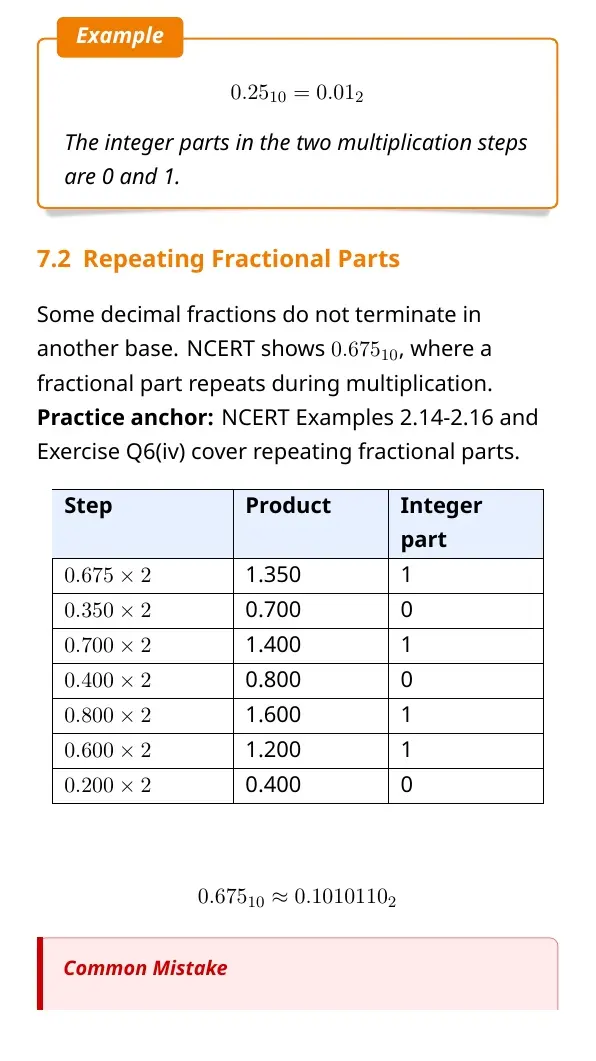
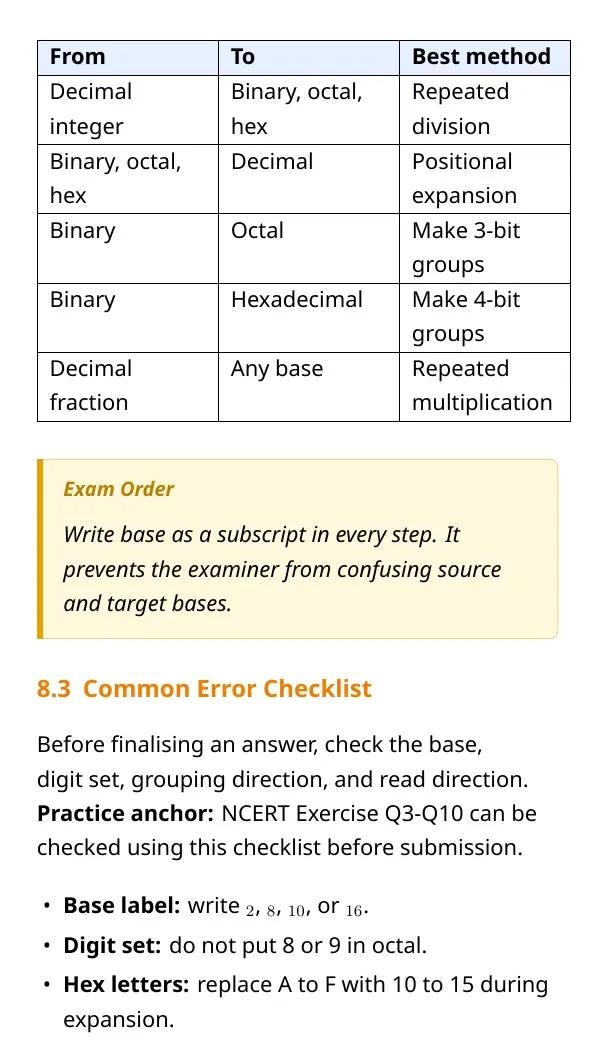
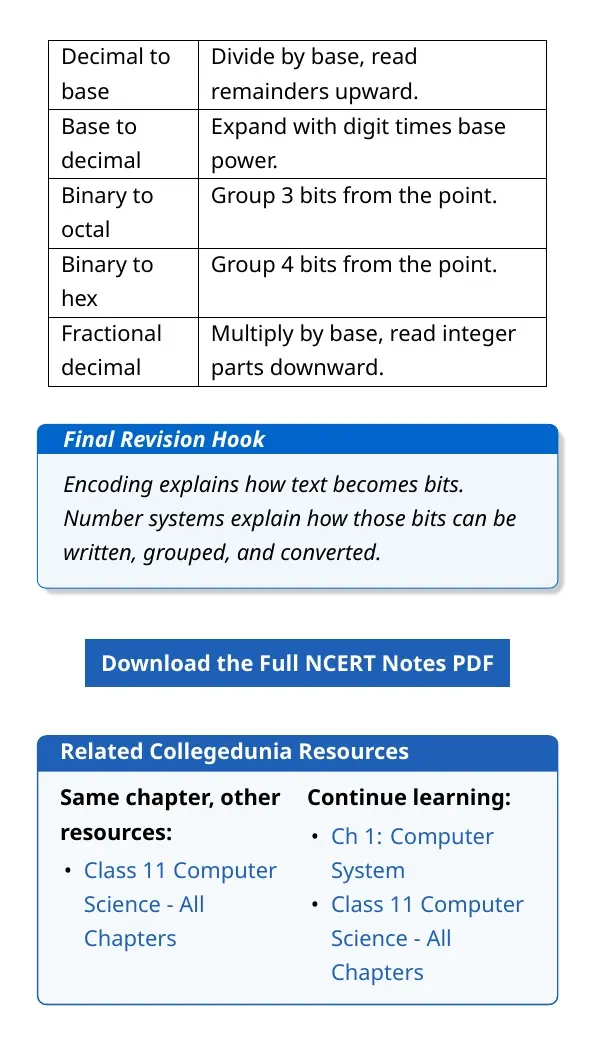
For decimal integer conversion, divide the decimal number by the target base, record the remainder, repeat with the quotient, and read remainders from bottom to top. For fractional conversion, multiply by the target base and read integer parts from top to bottom.
Do not reverse the direction rule. Integer division answers read upward, while decimal fraction answers read downward through the integer parts collected at each multiplication step.
- Decimal to binary: divide by 2 and read the remainders upward.
- Decimal to octal: divide by 8 and use only digits 0 to 7.
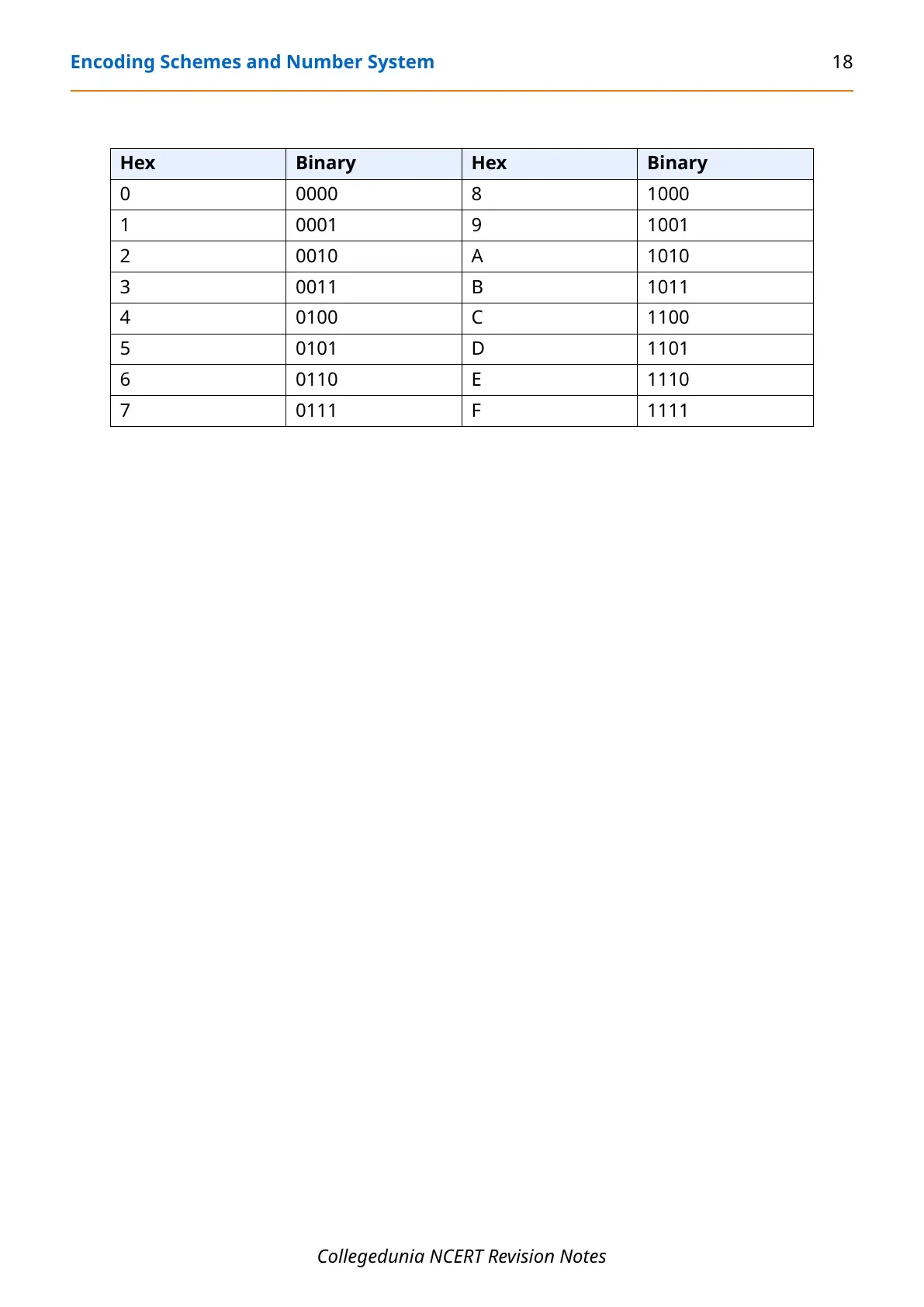
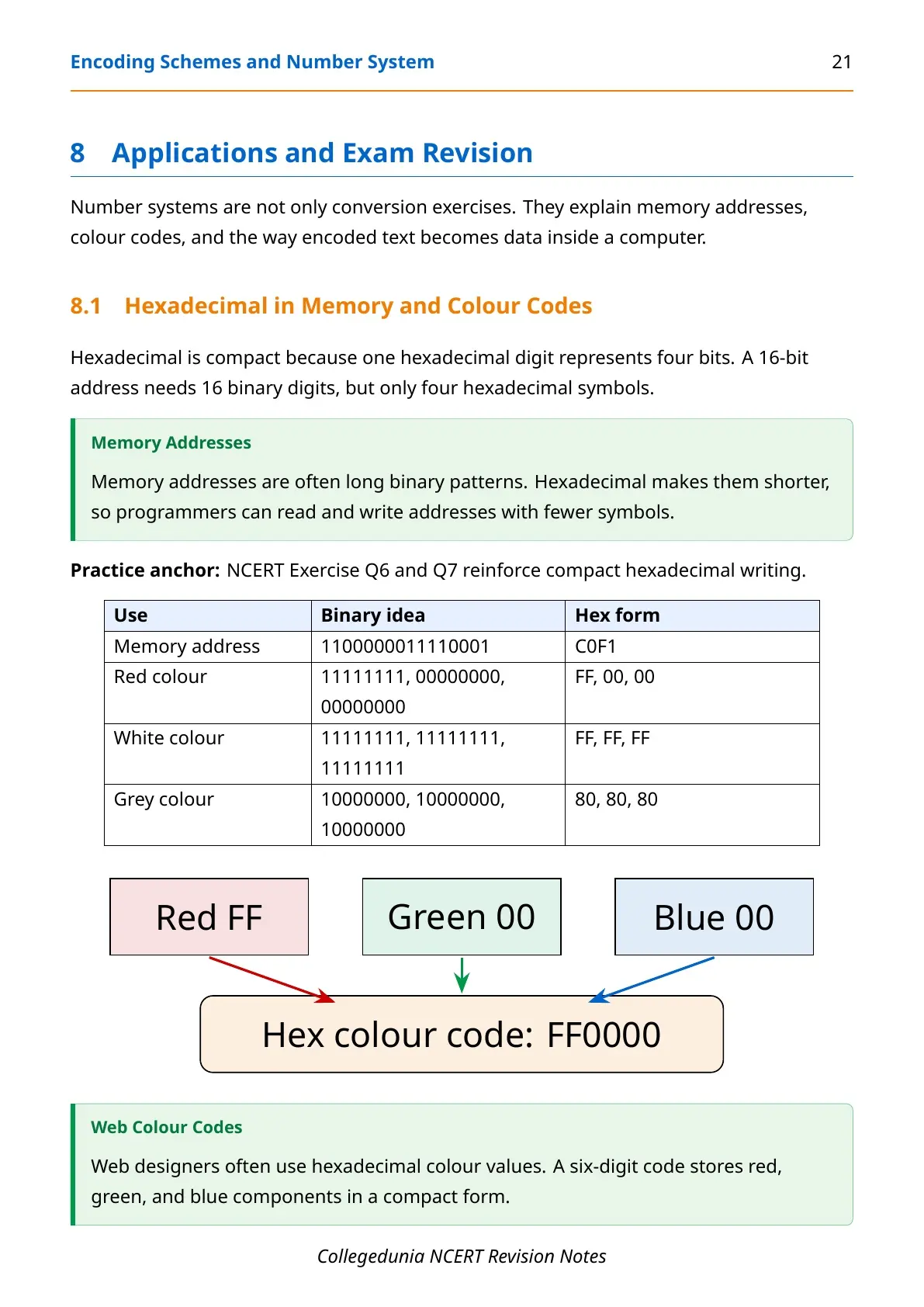
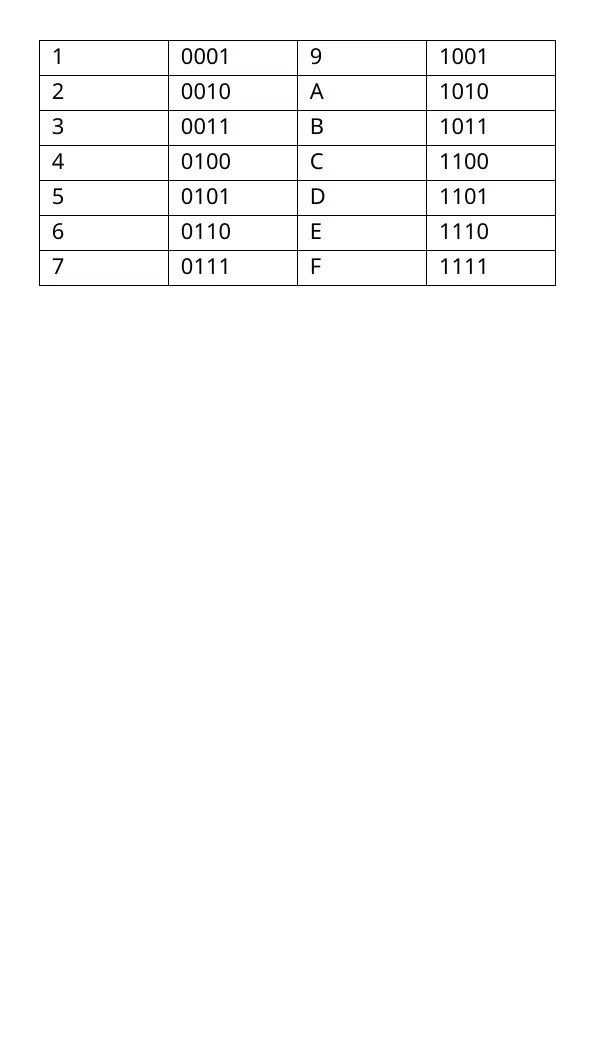
- Decimal to hexadecimal: divide by 16 and write 10 to 15 as A to F.
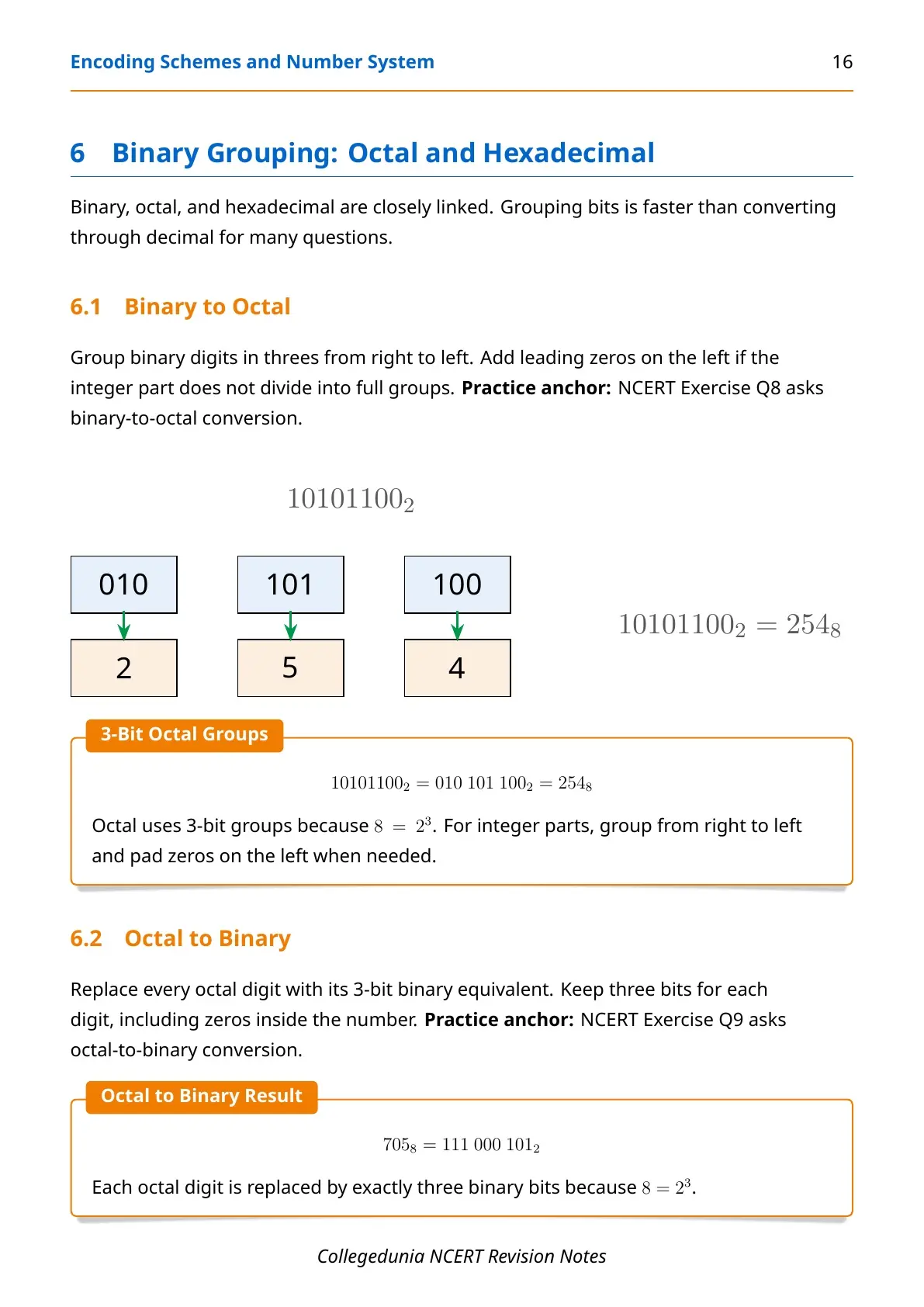
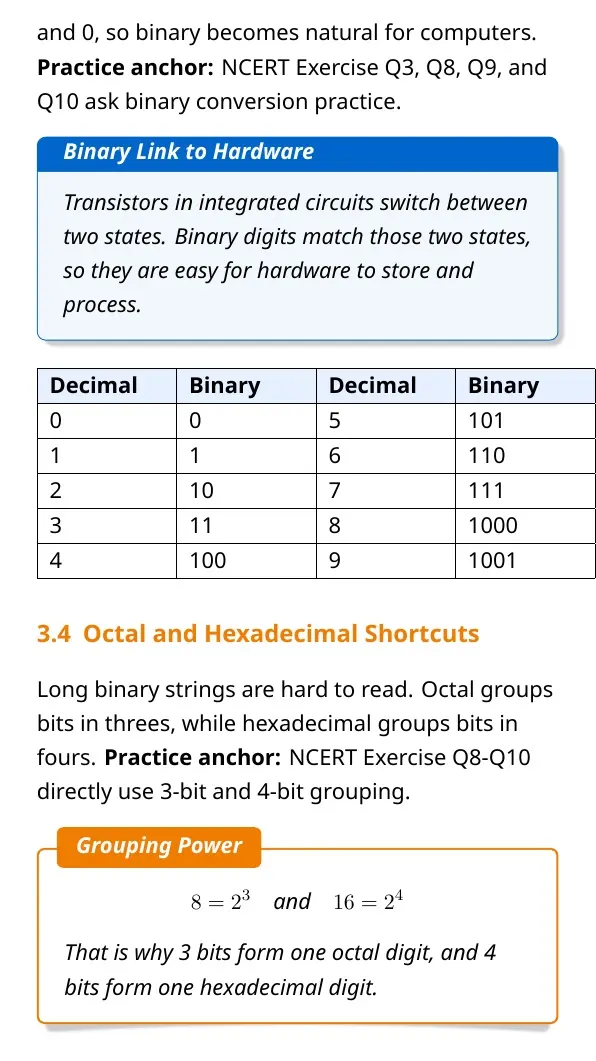
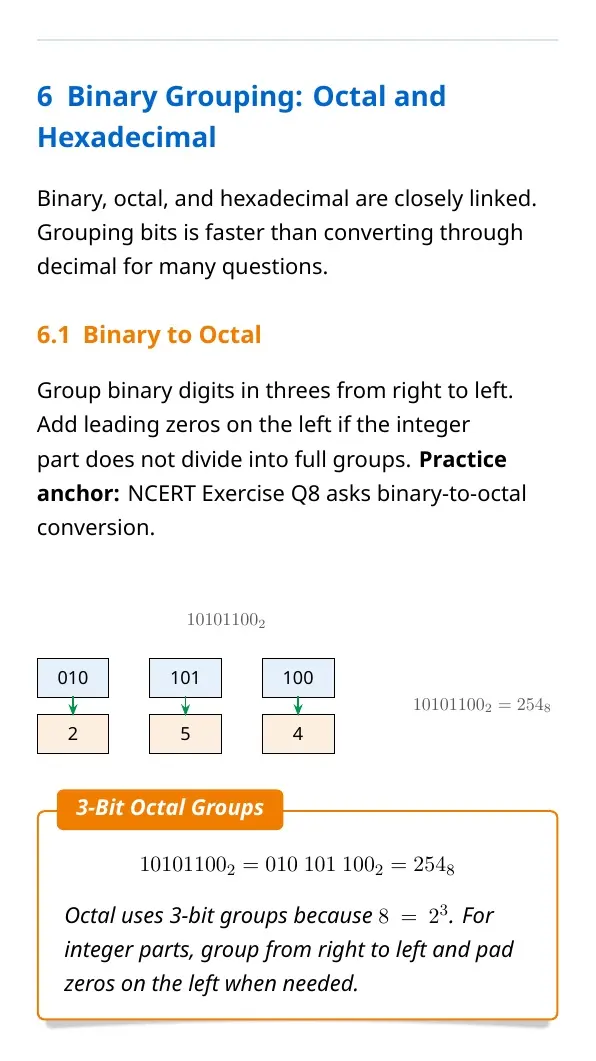
- Binary to octal: group 3 bits because 8 = 2^3.
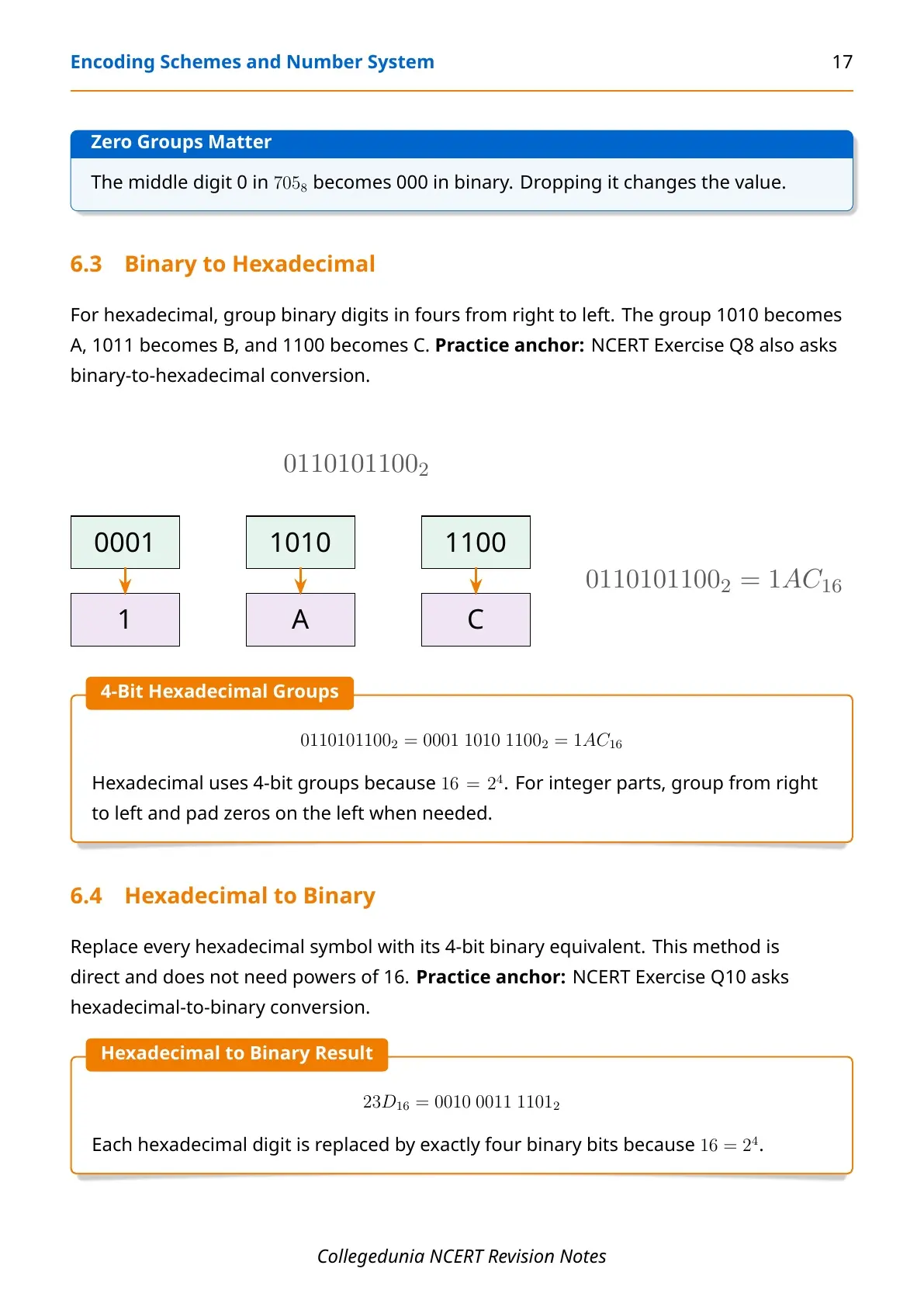
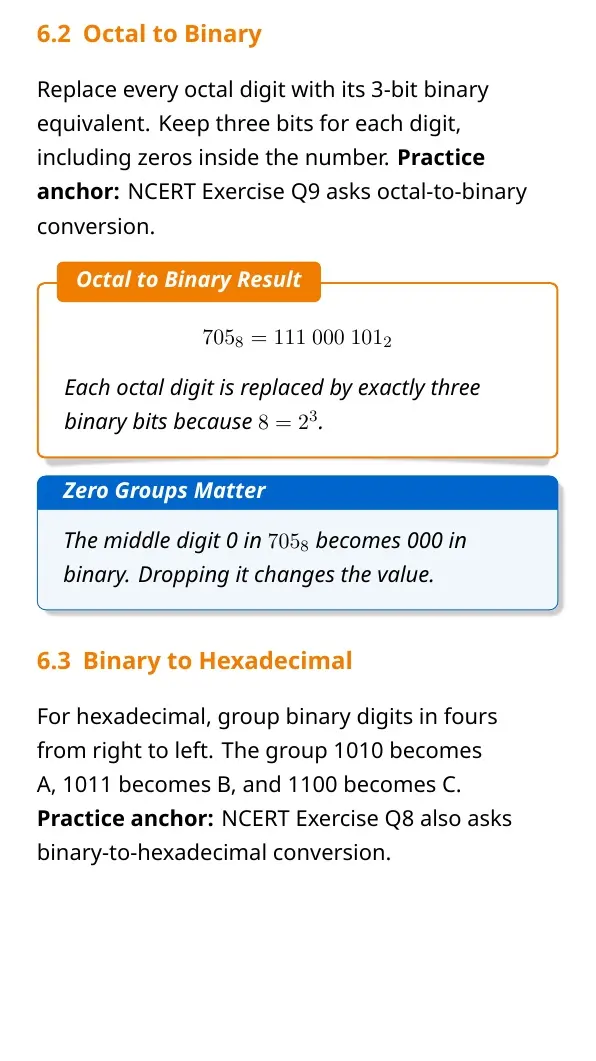
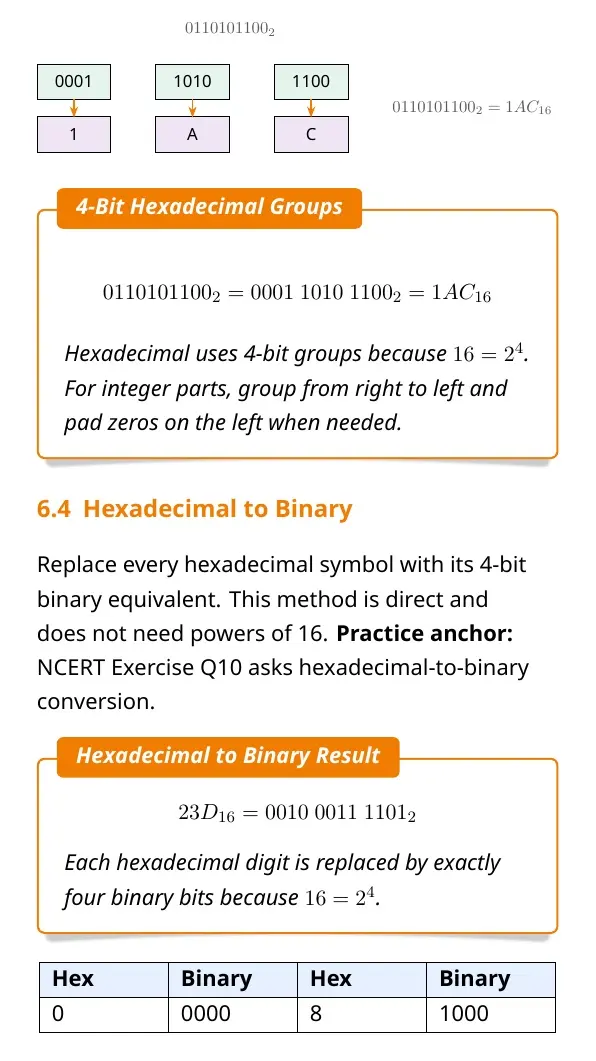
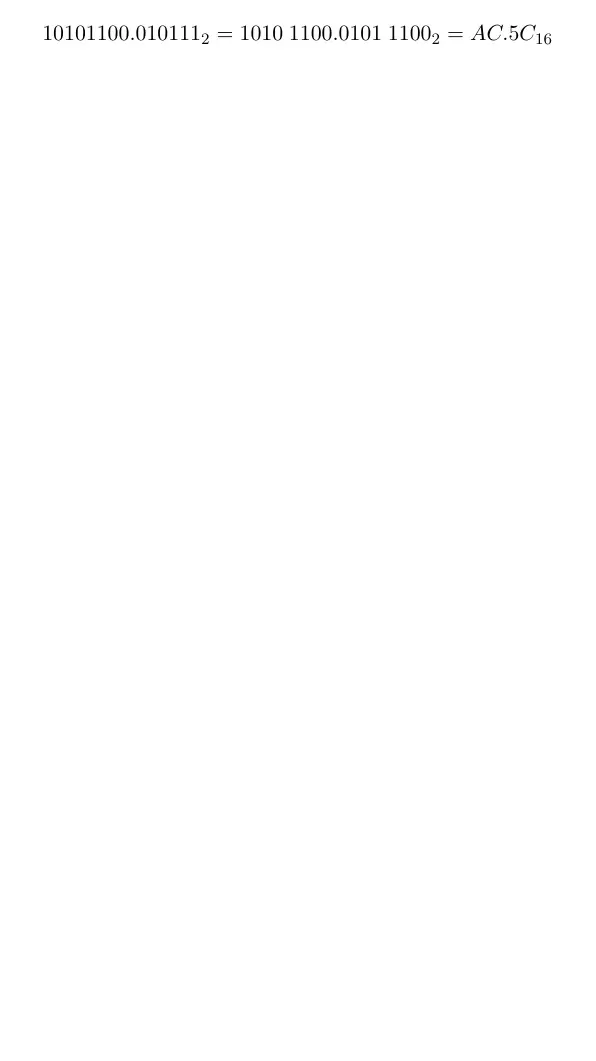
- Binary to hexadecimal: group 4 bits because 16 = 2^4.
Encoding Schemes and Number System Video Revision
Source: Magnet Brains on YouTube
Use the video after revising the PDF once. Pause at each conversion example and write the base, position and read direction before checking the answer.
Related NCERT Class 11 Computer Science Resources
| Resource | Use it for | Link |
|---|---|---|
| NCERT Solutions | Exercise answers and stepwise explanation | Encoding Schemes and Number System NCERT Solutions |
| NCERT Book PDF | Official chapter reading | Encoding Schemes and Number System Book PDF |
| Handwritten Notes | Quick handwritten revision | Encoding Schemes and Number System Handwritten Notes |
All Chapters in Class 11 Computer Science Notes
| Chapter | Notes Link |
|---|---|
| Chapter 1 Computer System | Computer System Notes |
| Chapter 2 Encoding Schemes and Number System | Encoding Schemes and Number System Notes |
| Chapter 3 Emerging Trends | Emerging Trends Notes |
| Chapter 4 Introduction to Problem Solving | Introduction to Problem Solving Notes |
Encoding Schemes and Number System Computer Science Notes FAQs
Ques. What is encoding in Class 11 Computer Science?
Ans. Encoding is the method of converting data into a coded form. It lets computers store letters, digits and symbols as numeric codes and binary bits.
Ques. What is the difference between ASCII and Unicode?
Ans. ASCII is an older 7-bit standard mainly for English characters. Unicode is a wider character standard for many languages and scripts.
Ques. Why are octal and hexadecimal used in computers?
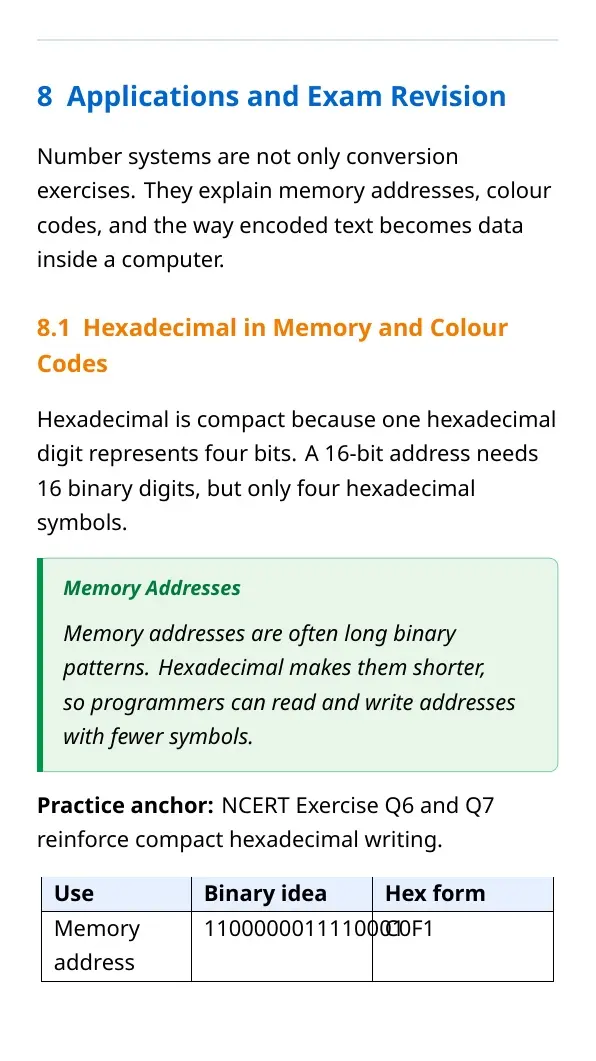
Ans. Octal and hexadecimal make long binary values shorter. Octal groups bits in threes, while hexadecimal groups bits in fours.
Ques. How should I revise number-system conversion?
Ans. Write the base first, mark positions, then apply the direction rule. Integer division reads remainders upward, while fractional multiplication reads integer parts downward.



Comments