




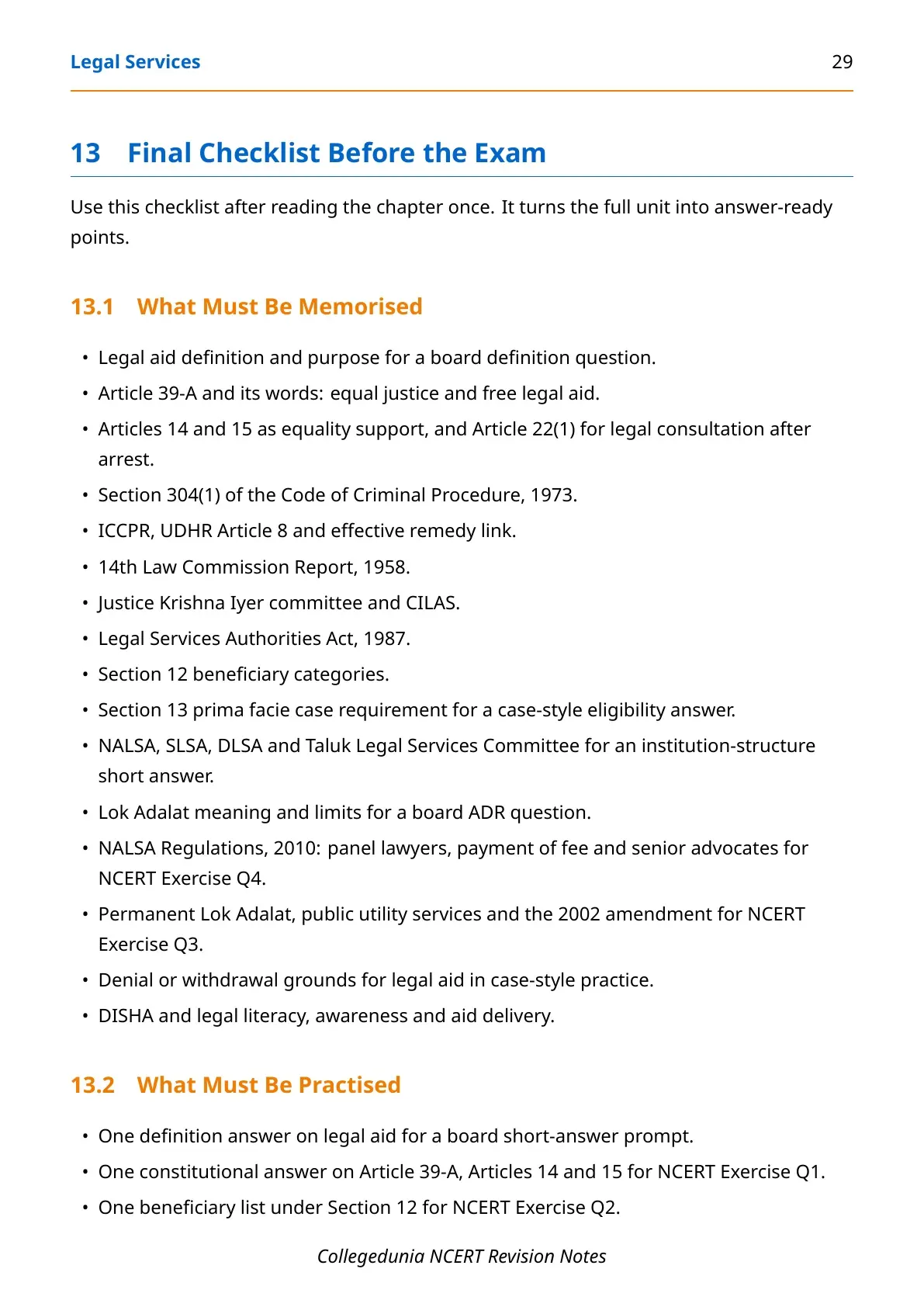
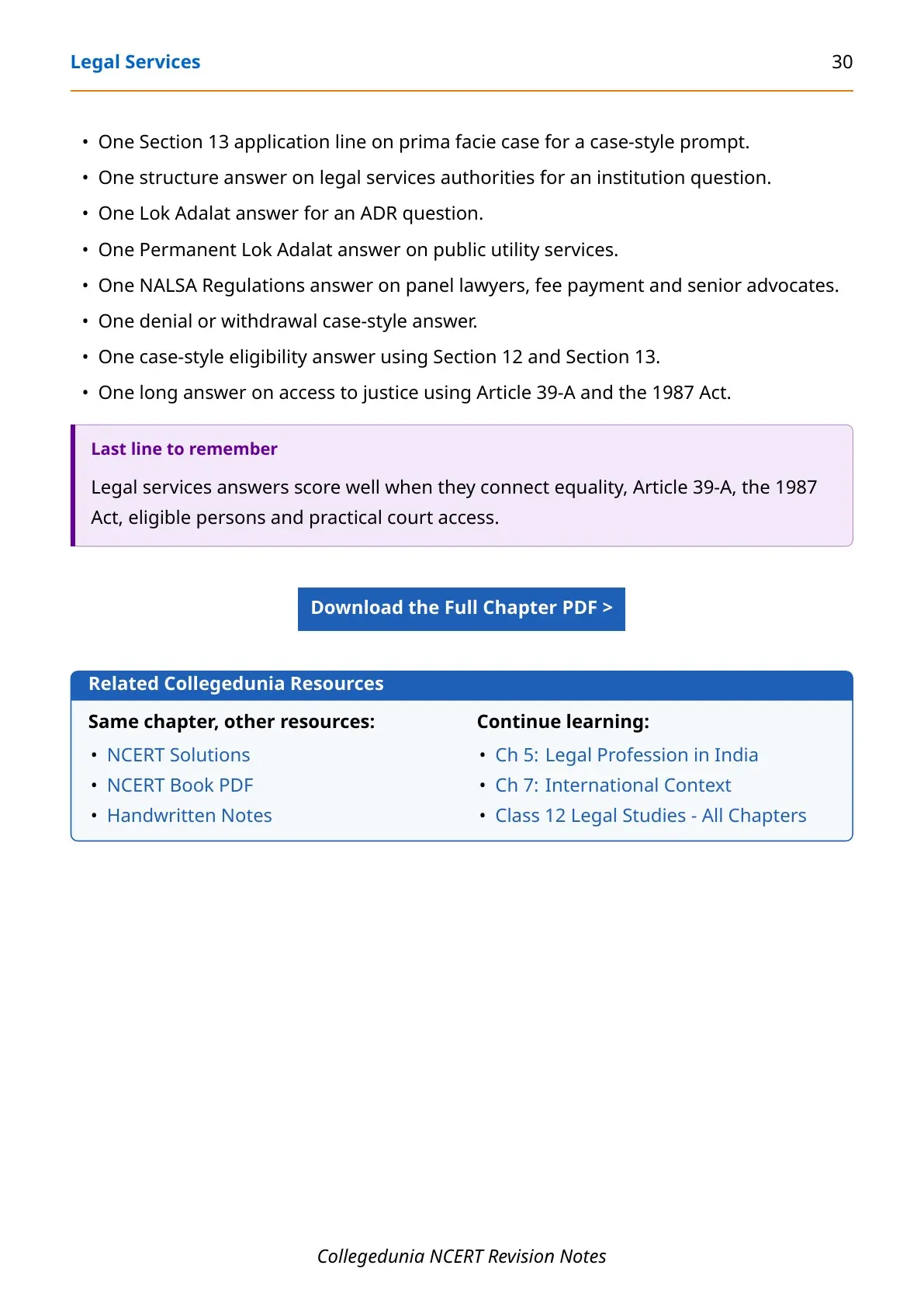
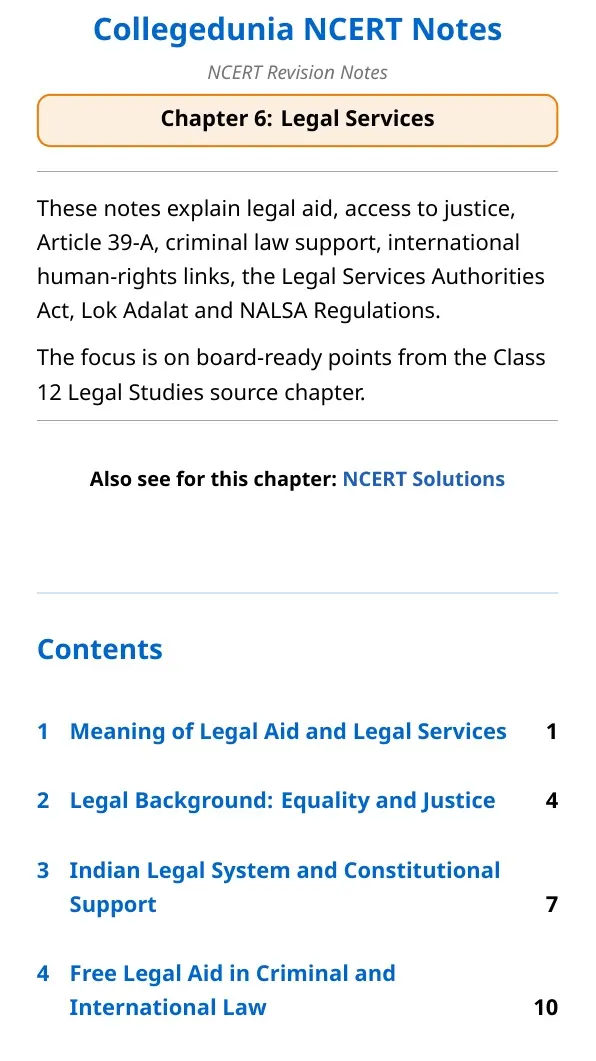
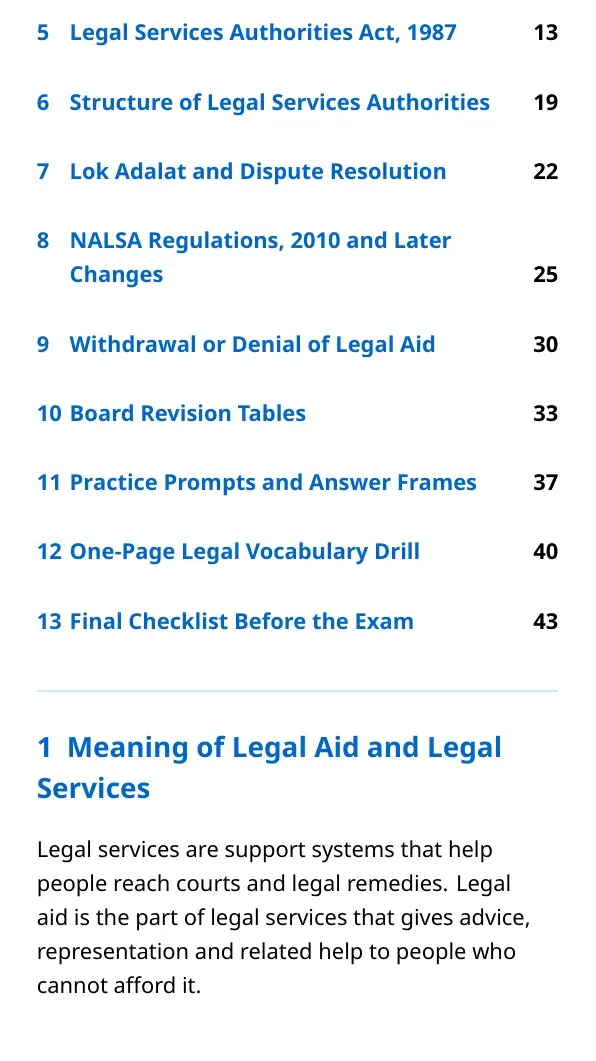
NCERT Class 12 Legal Studies Chapter 6 Legal Services Notes cover legal aid, Article 39-A, NALSA, Lok Adalat and free legal services for the 2026-27 syllabus. The PDF gives students a board-focused summary of how access to justice is made practical for people who cannot afford legal help.
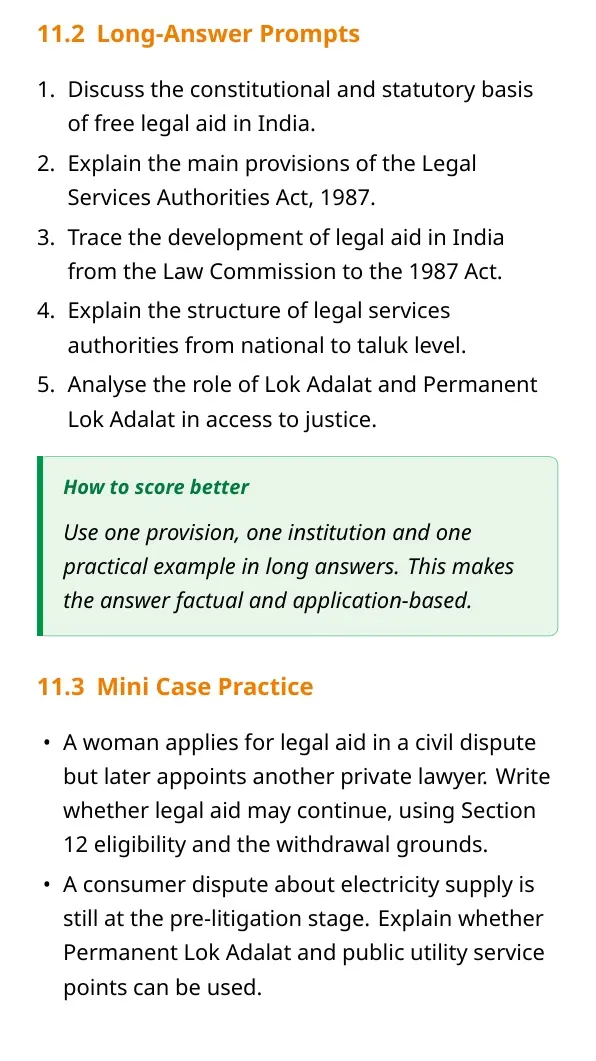
- PDF included: 27 pages with legal-aid tables, authority charts and exam prompts.
- Key focus: Article 39-A, Section 12 beneficiaries, NALSA, Lok Adalat and legal services authorities.
- Best use: revise eligibility first, then practise legal-aid and Lok Adalat answers.
Student Feedback: In a Collegedunia poll of 11,820 Class 12 Legal Studies students preparing for 2026 boards, 69% said legal-aid eligibility and NALSA structure needed the most revision.
Legal Services Notes PDF Overview
Legal Services explains why legal aid is needed in a democratic legal system. The chapter starts with access to courts, then covers Article 39-A, criminal-law support, international human-rights links, the Legal Services Authorities Act, NALSA, Lok Adalat, NALSA Regulations and DISHA.
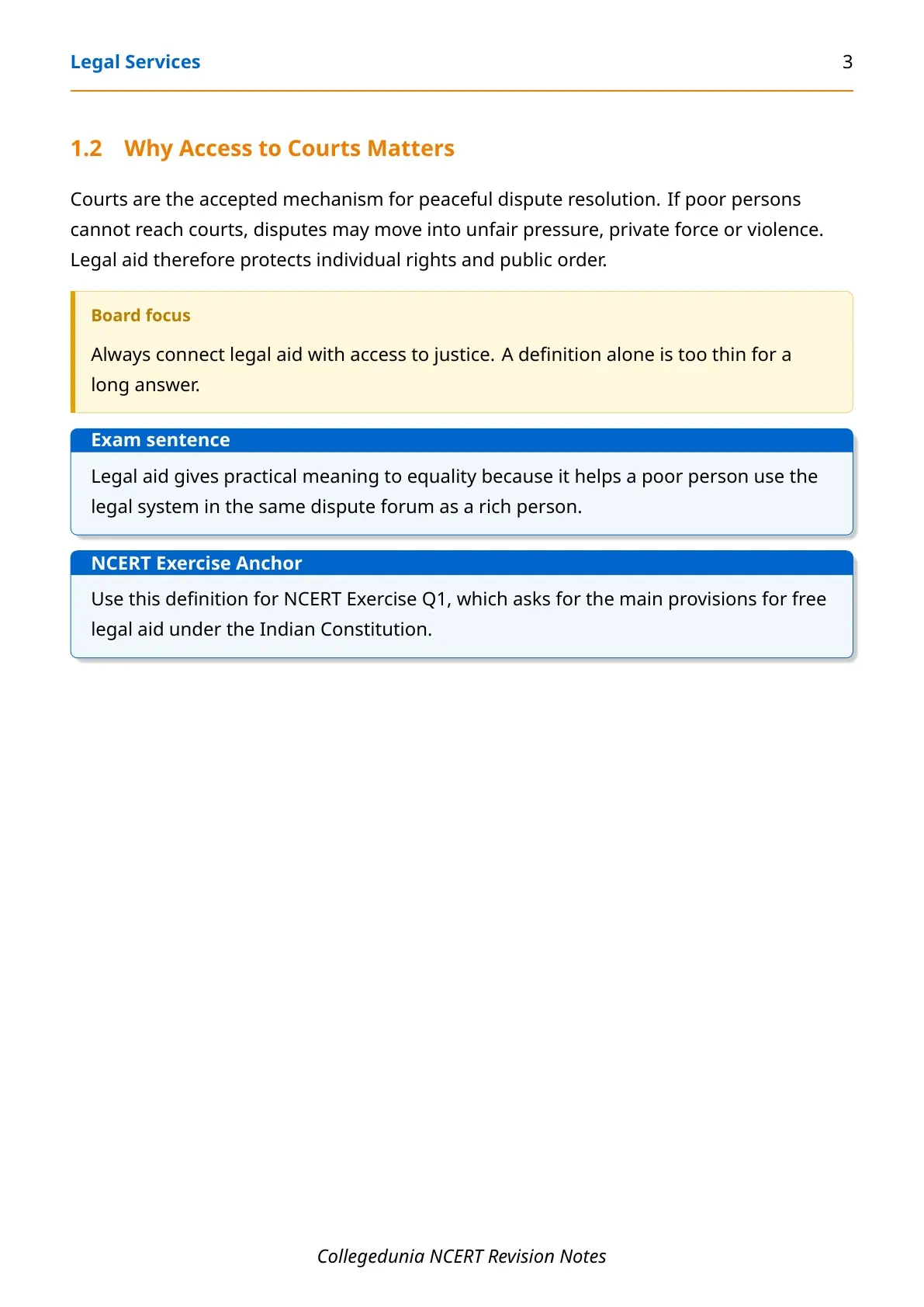
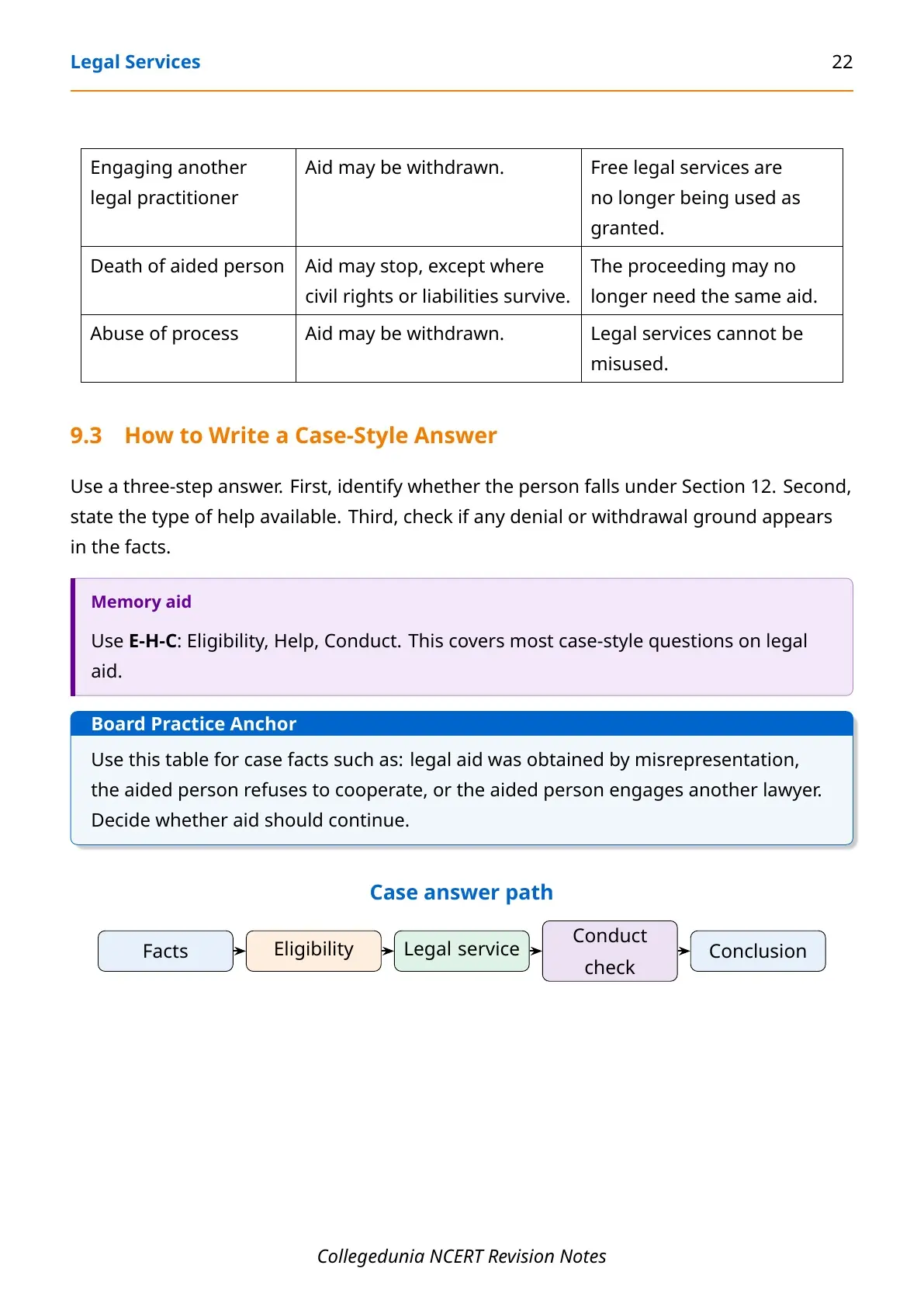
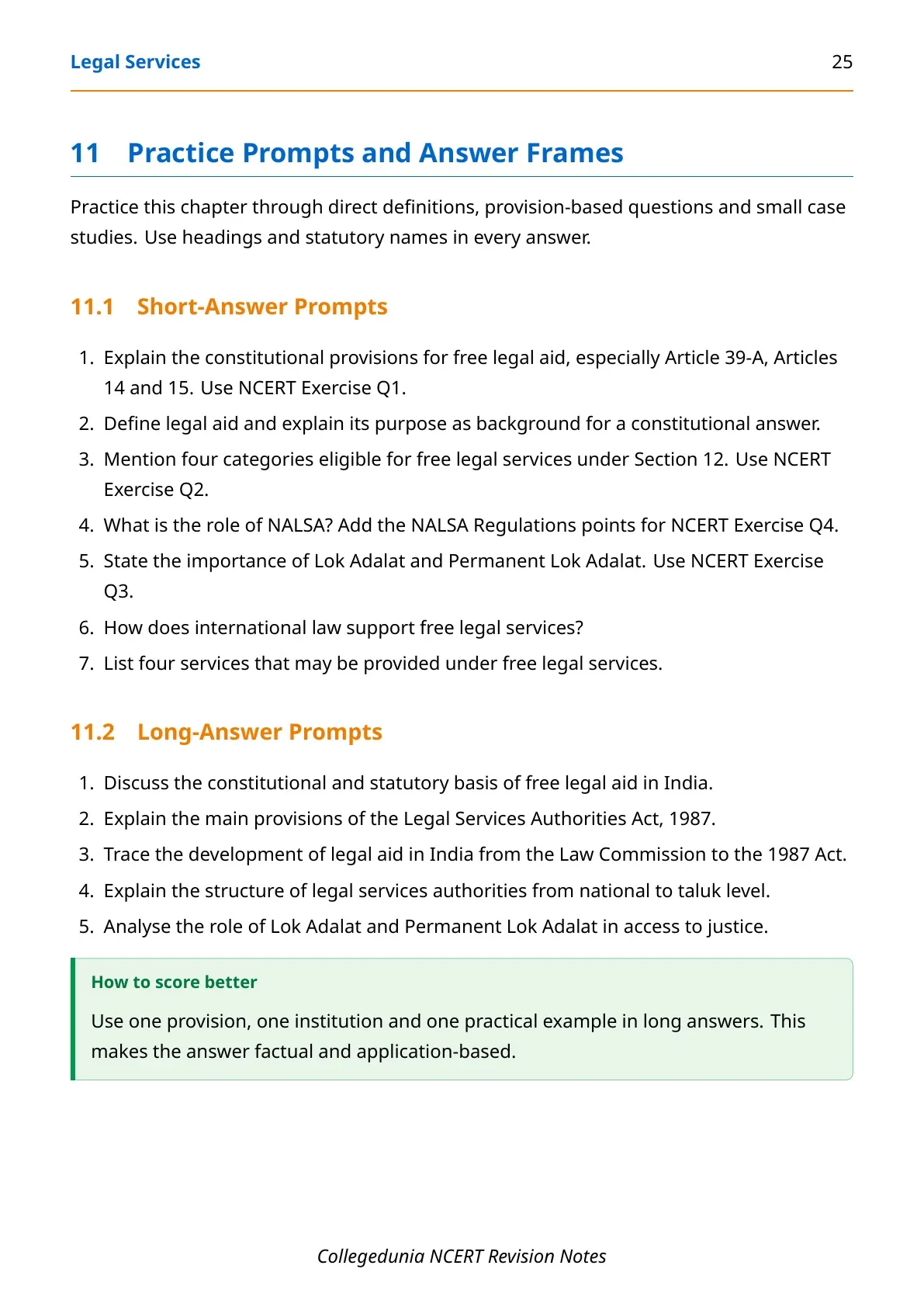
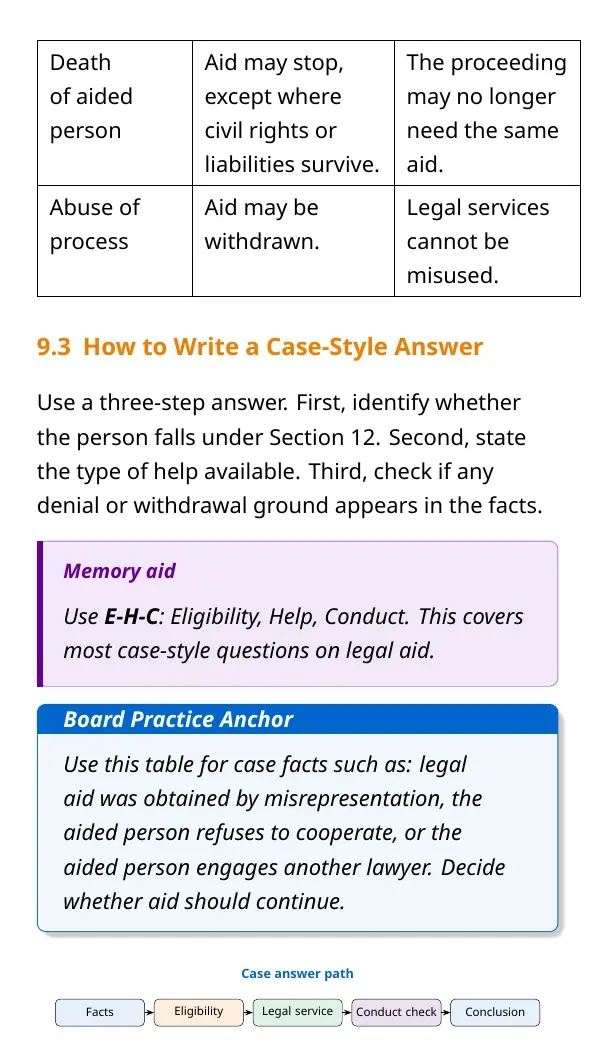
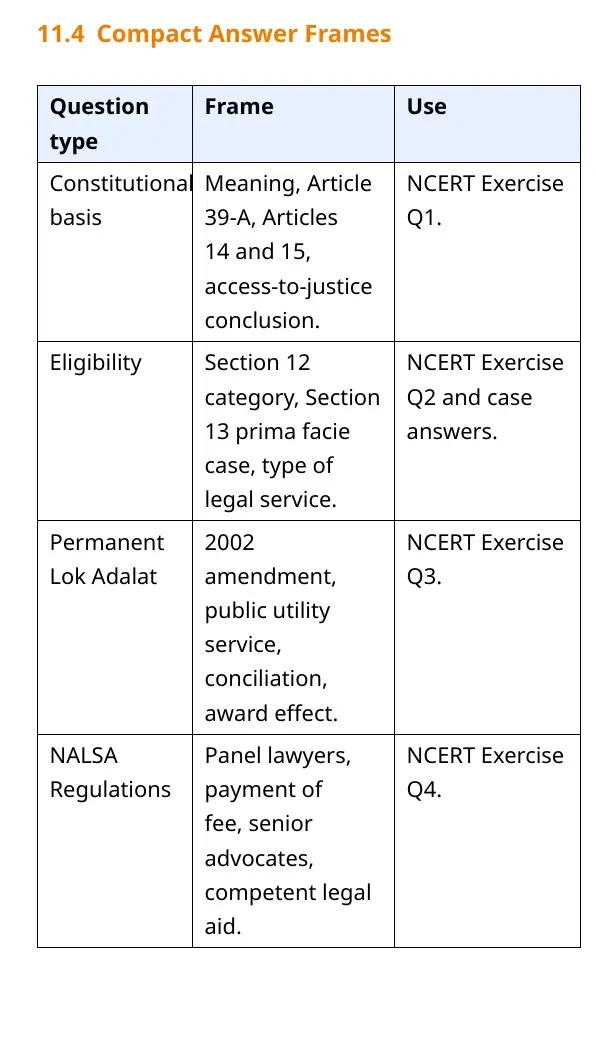
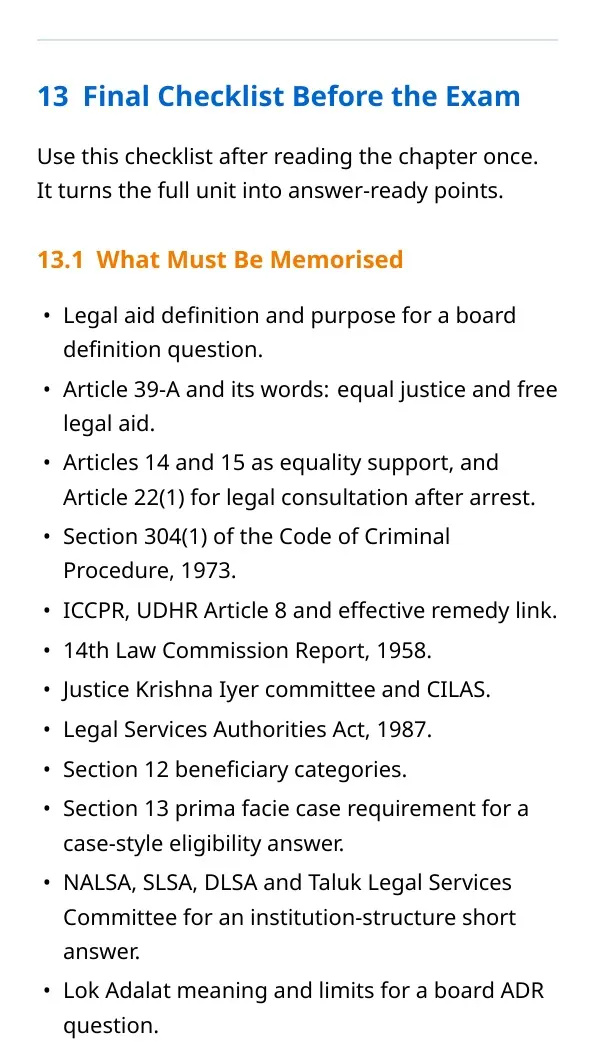
The safest revision method is to connect every answer with access to justice, one legal provision and one authority. For example, an answer on legal aid should mention Article 39-A, Section 12 eligibility and the type of help a person may receive.
| Area | What Students Revise | Quick Cue |
|---|---|---|
| Meaning | Legal aid, legal services and access to justice. | Help for people who cannot afford legal support. |
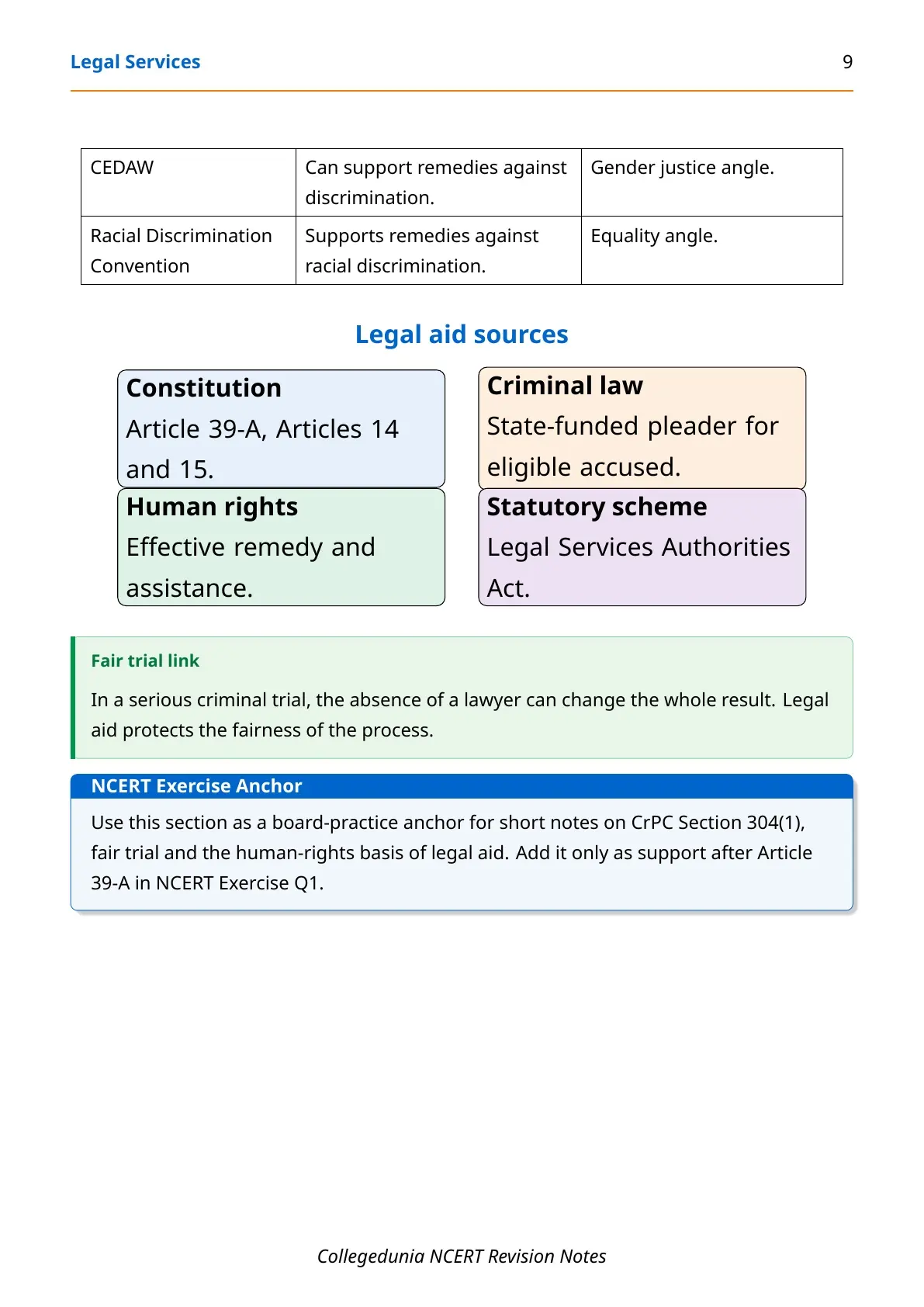
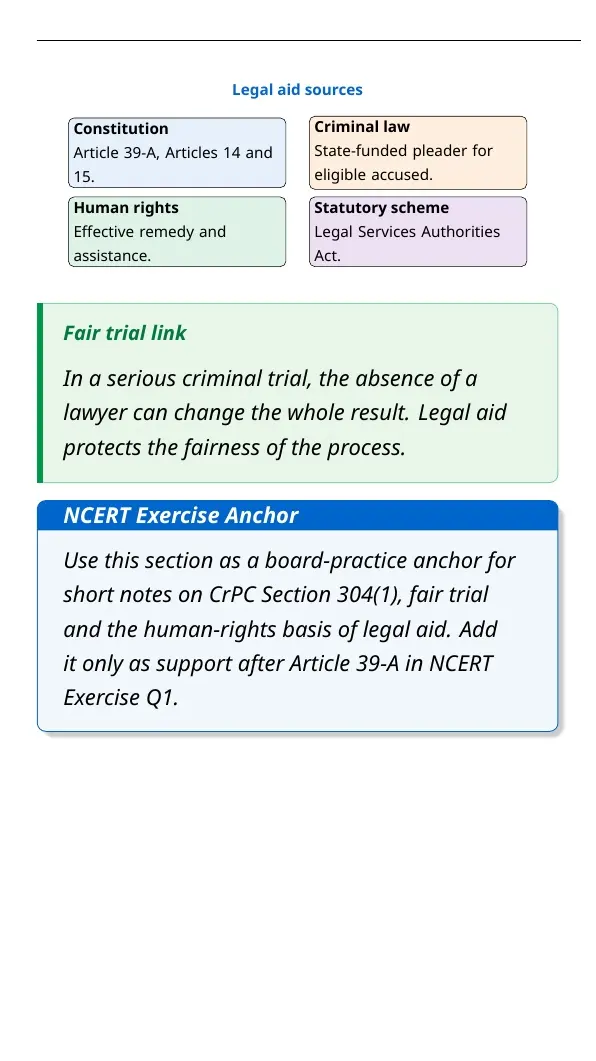
| Constitution | Article 39-A, Article 14 and Article 15. | Equal justice and free legal aid. |
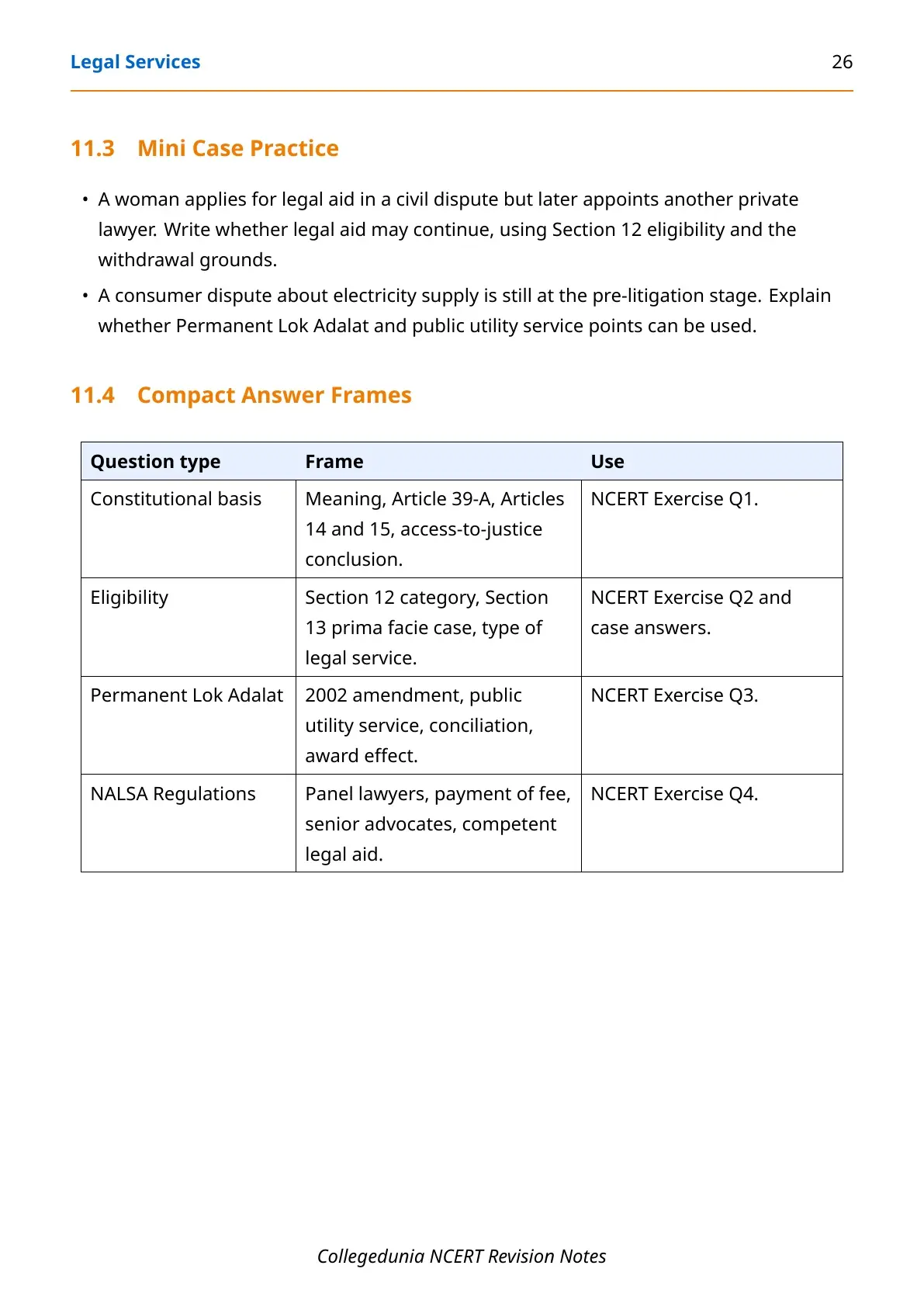
| Statute | Legal Services Authorities Act, 1987 and Section 12. | Who gets free legal services. |
| Institutions | NALSA, State, District and Taluk legal services bodies. | National to local delivery chain. |
Legal Aid and Article 39-A
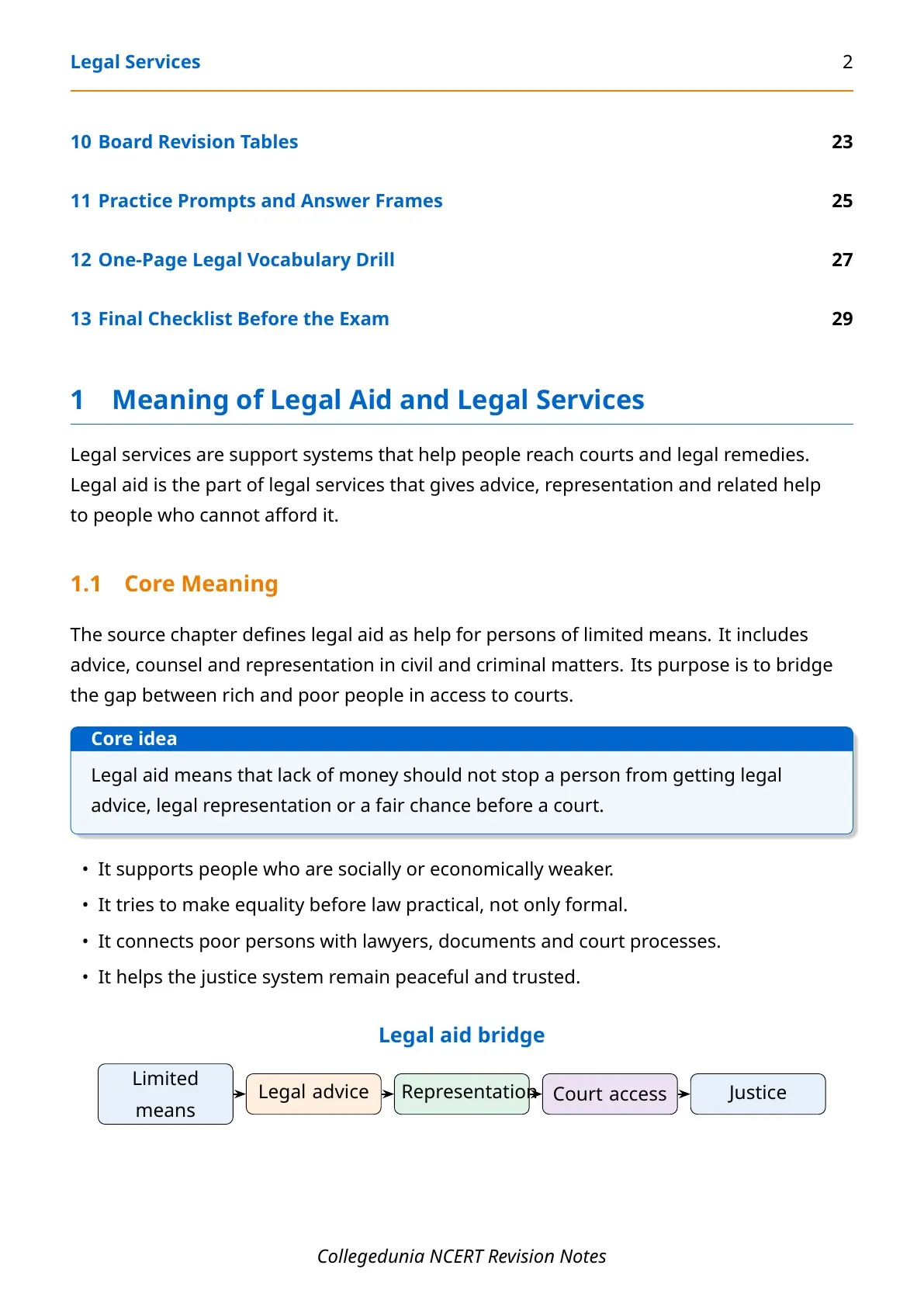
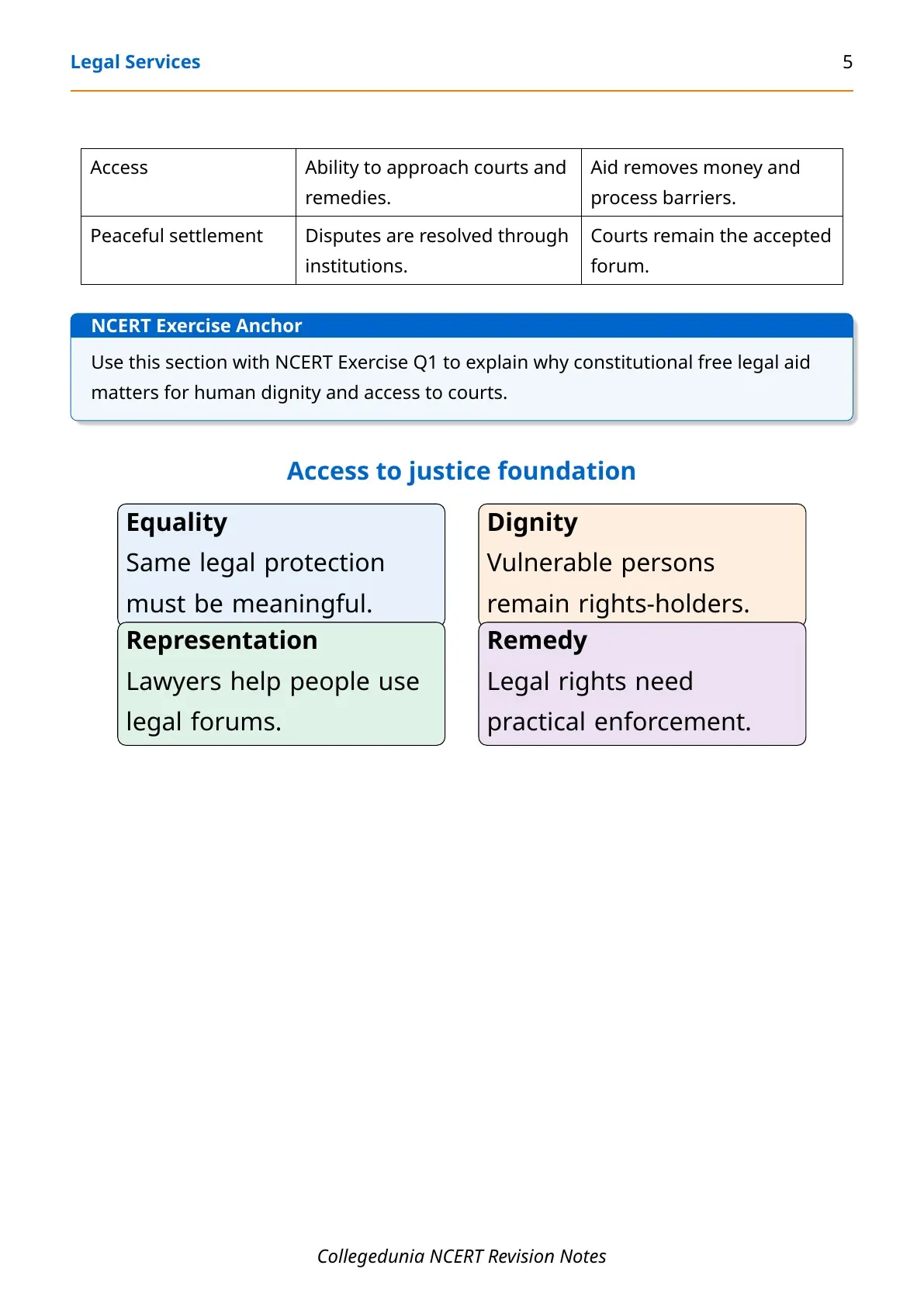
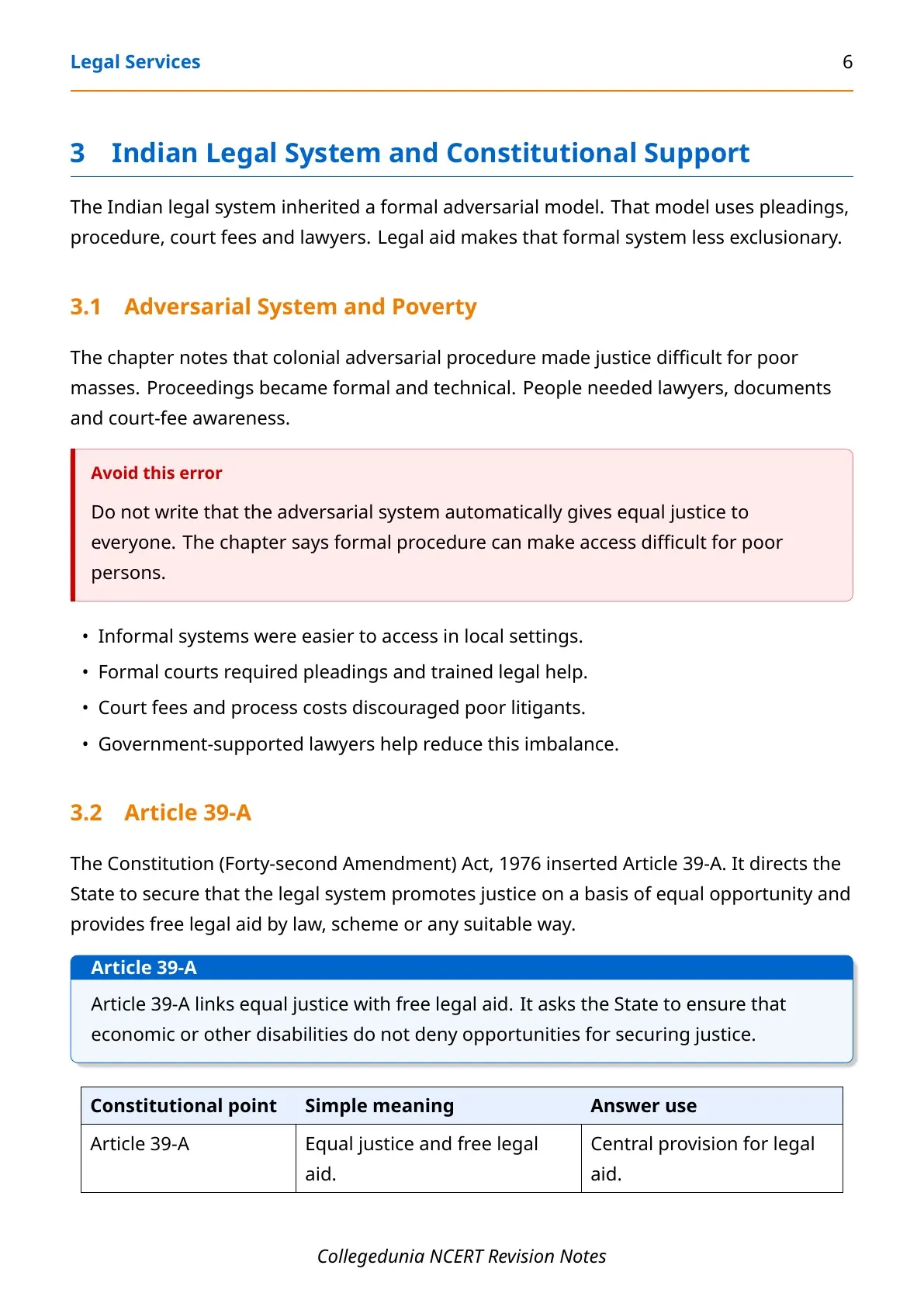
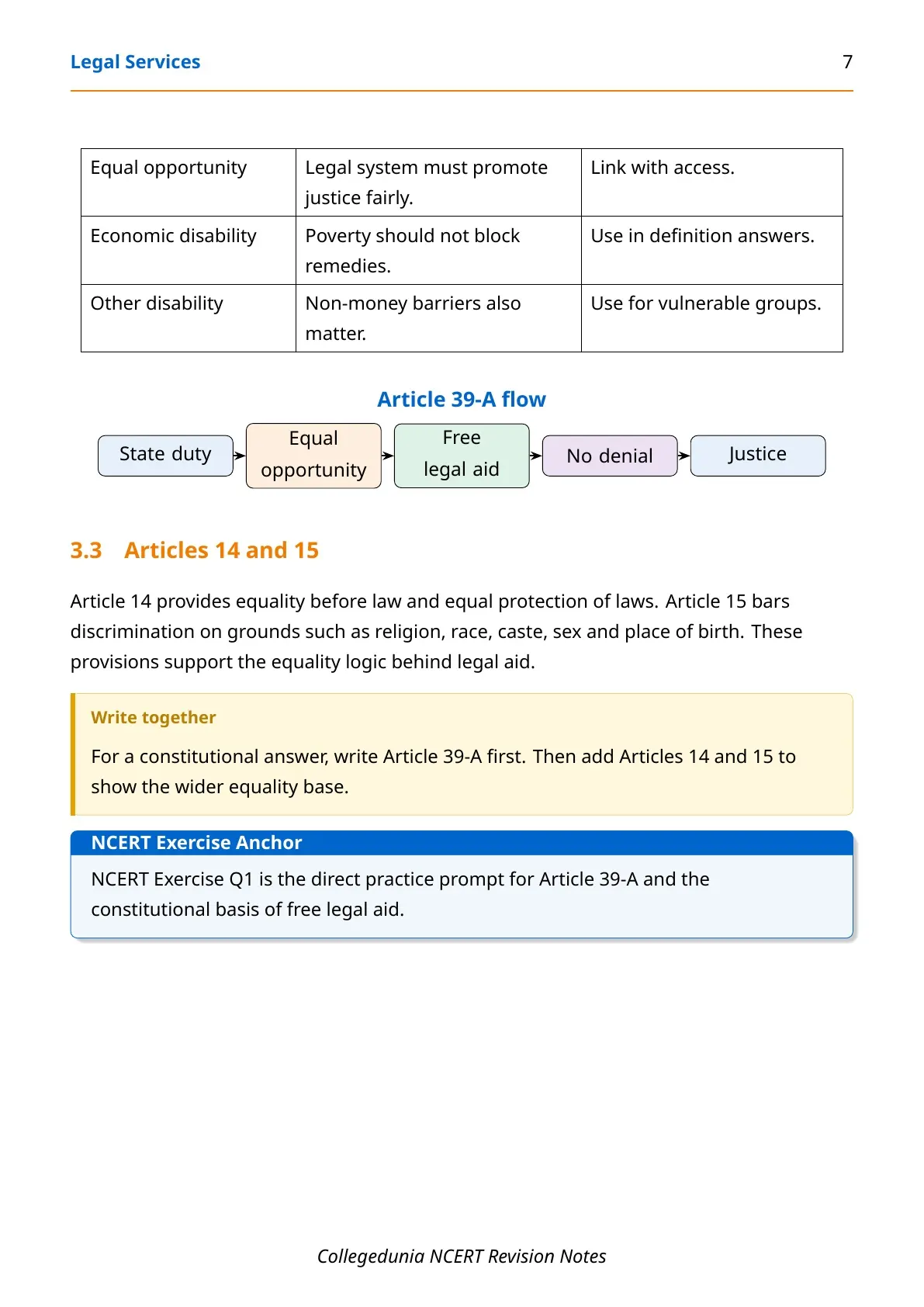
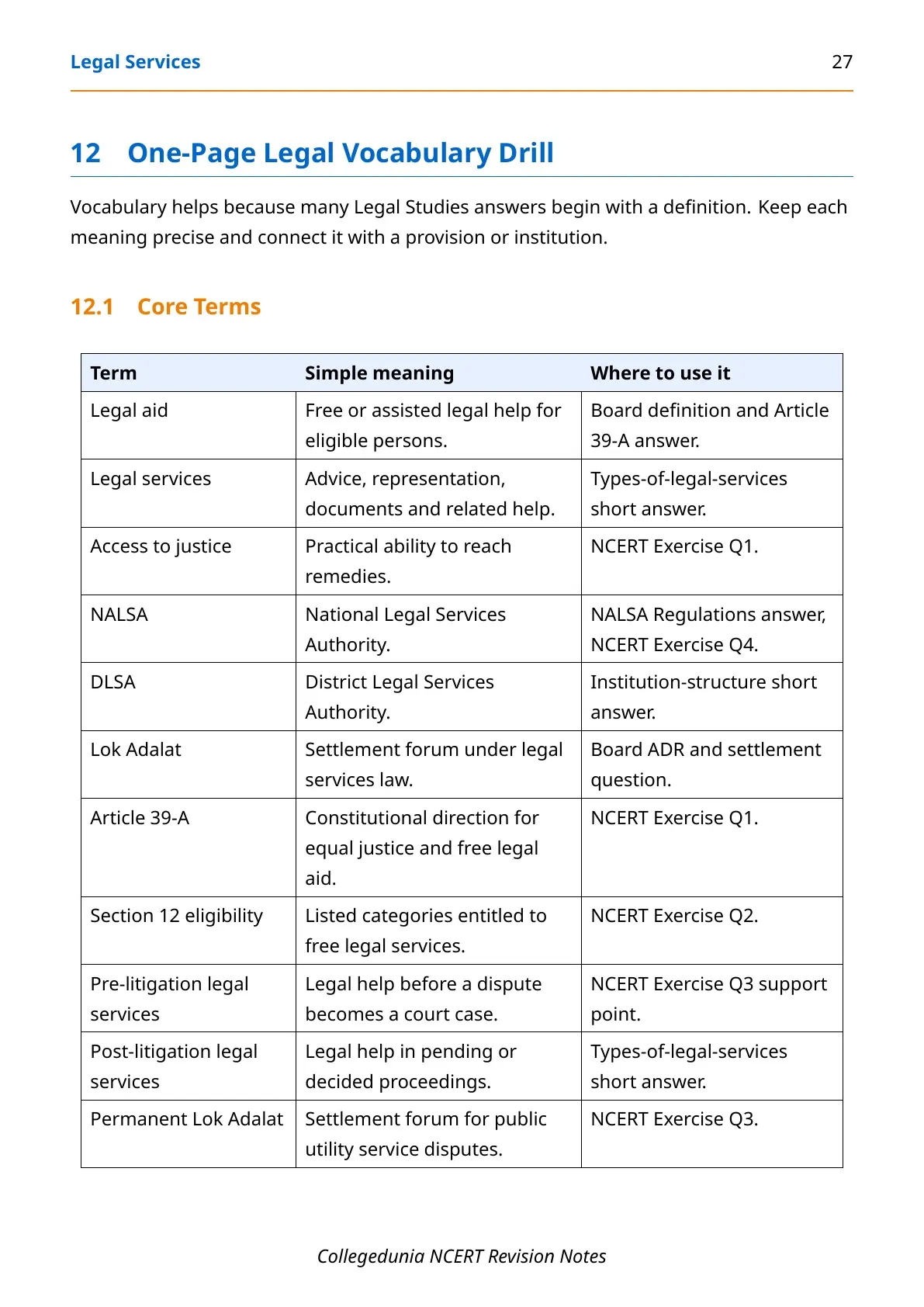
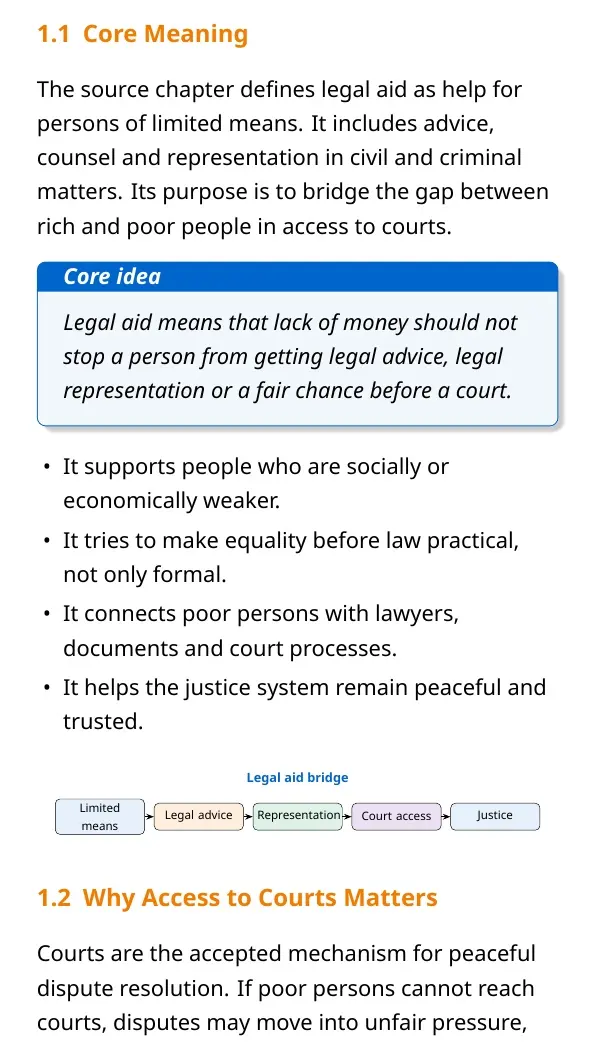
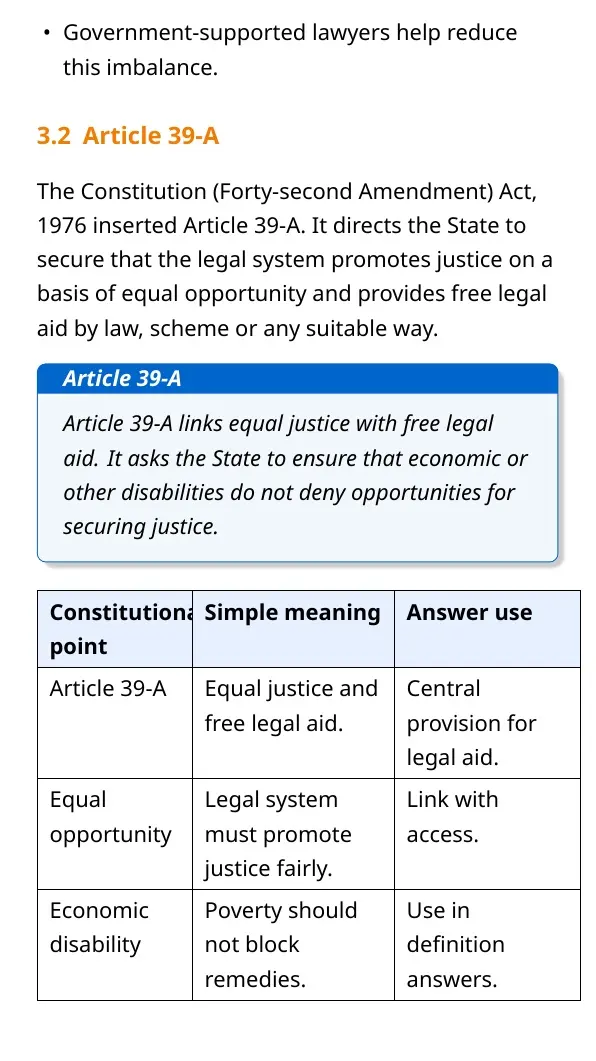
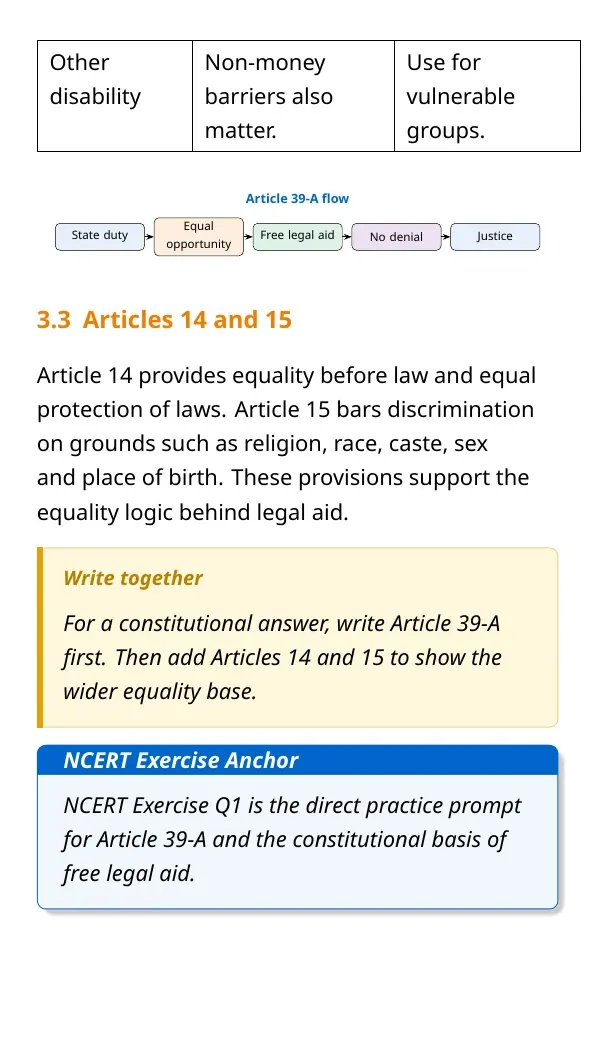
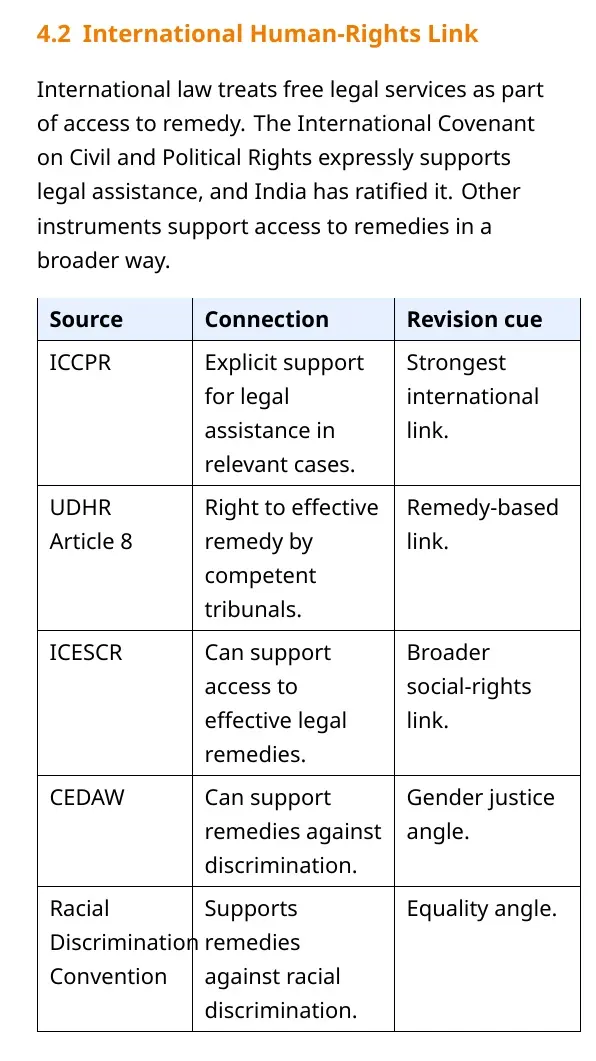
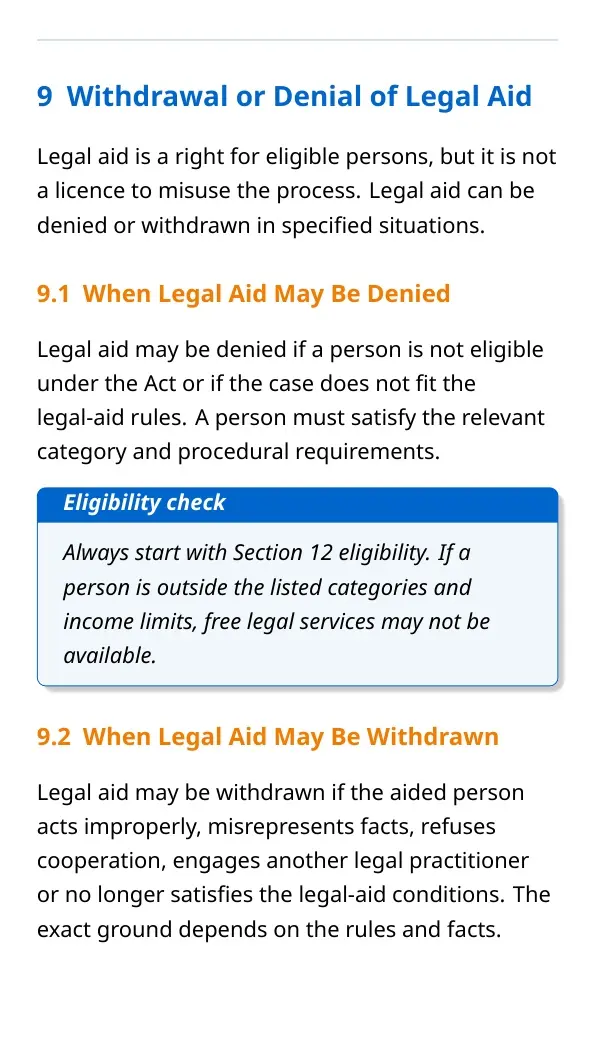
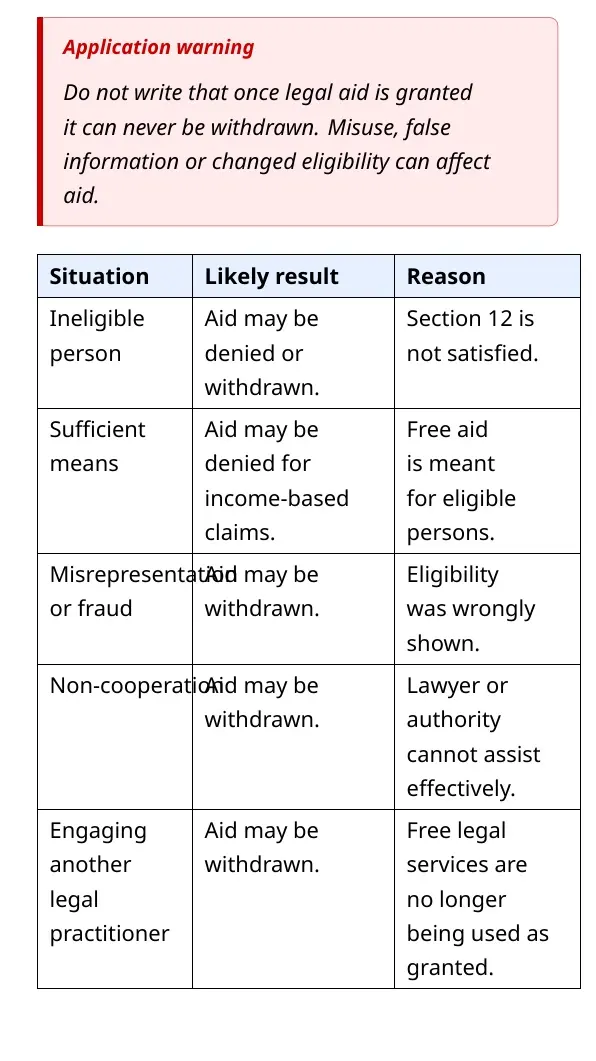
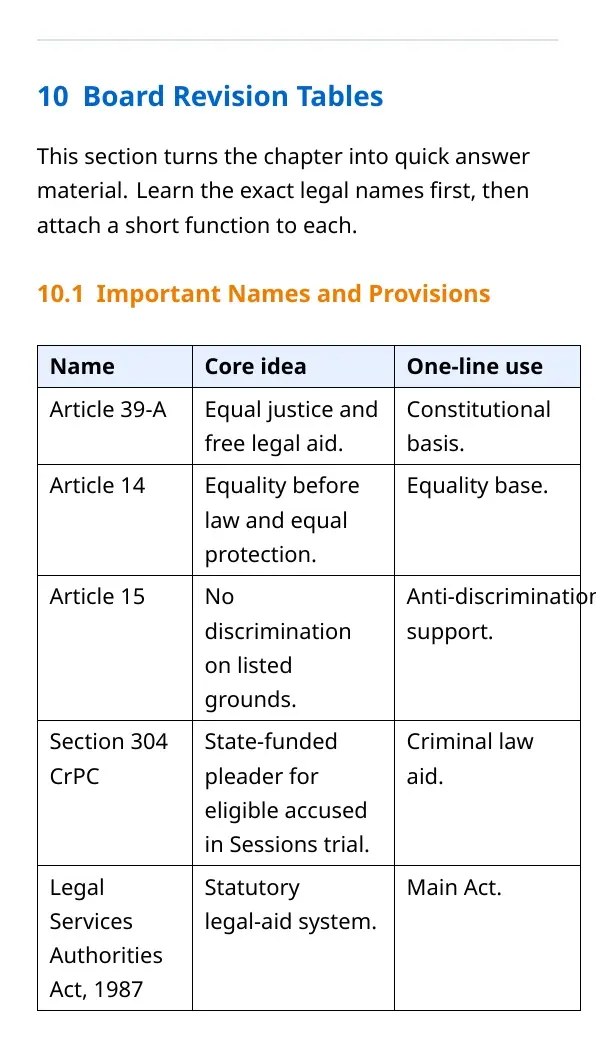
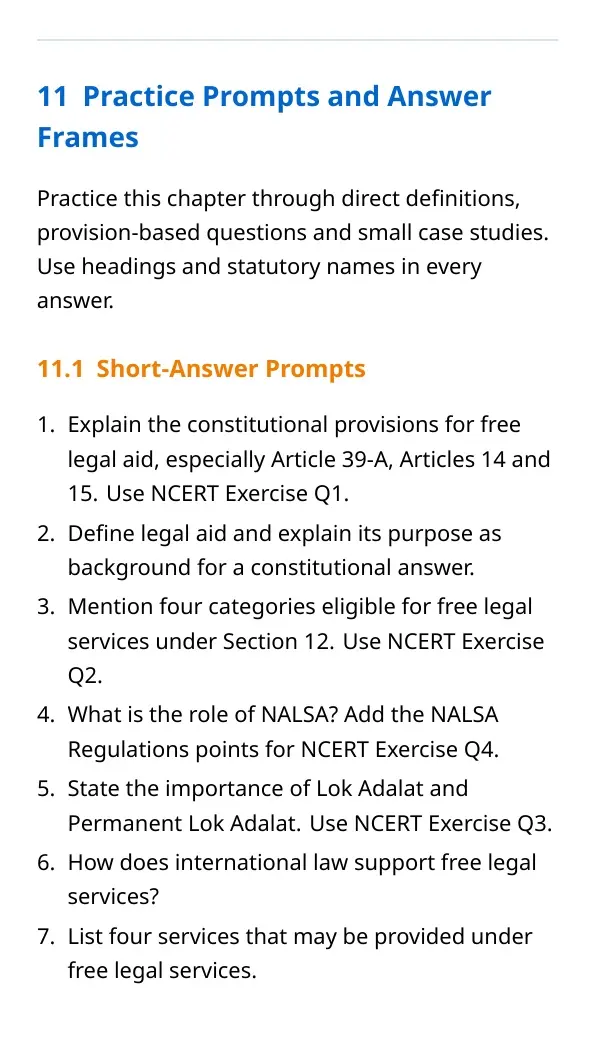
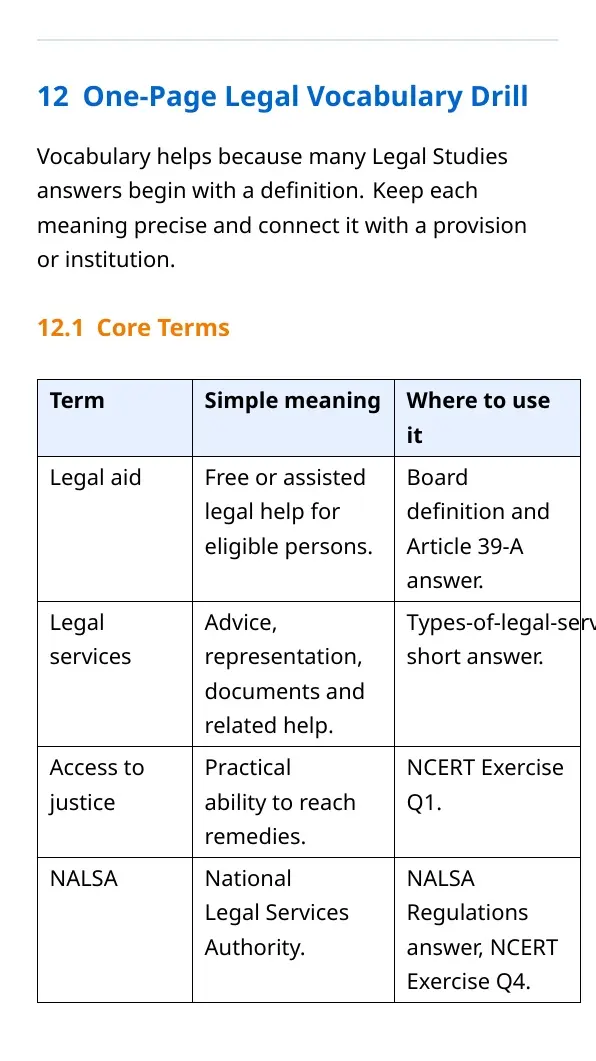
Legal aid means legal advice, representation and related support for eligible persons. It ensures that poverty or social disadvantage does not stop someone from using the court system. Article 39-A directs the State to promote justice on a basis of equal opportunity and provide free legal aid through law, schemes or suitable methods.
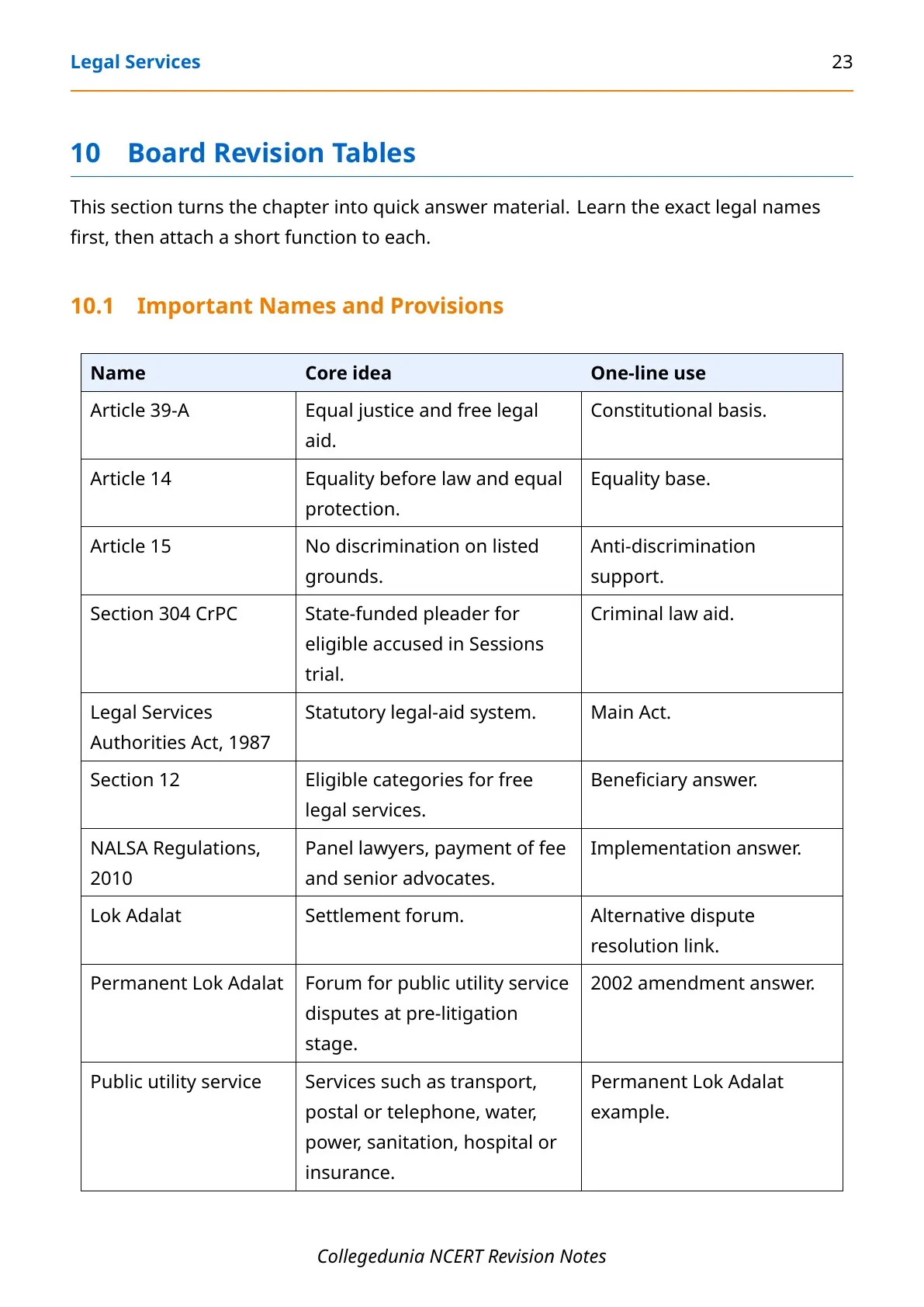
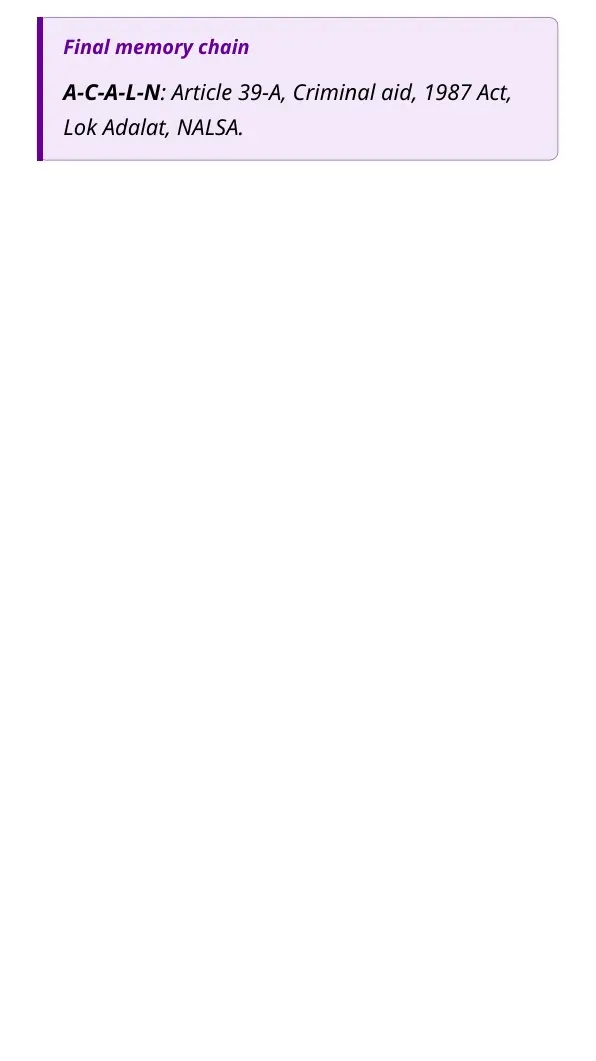
- Article 39-A: gives the constitutional base for equal justice and free legal aid.
- Article 14: supports equality before law and equal protection of laws.
- Article 15: bars discrimination on listed grounds and supports equal access.
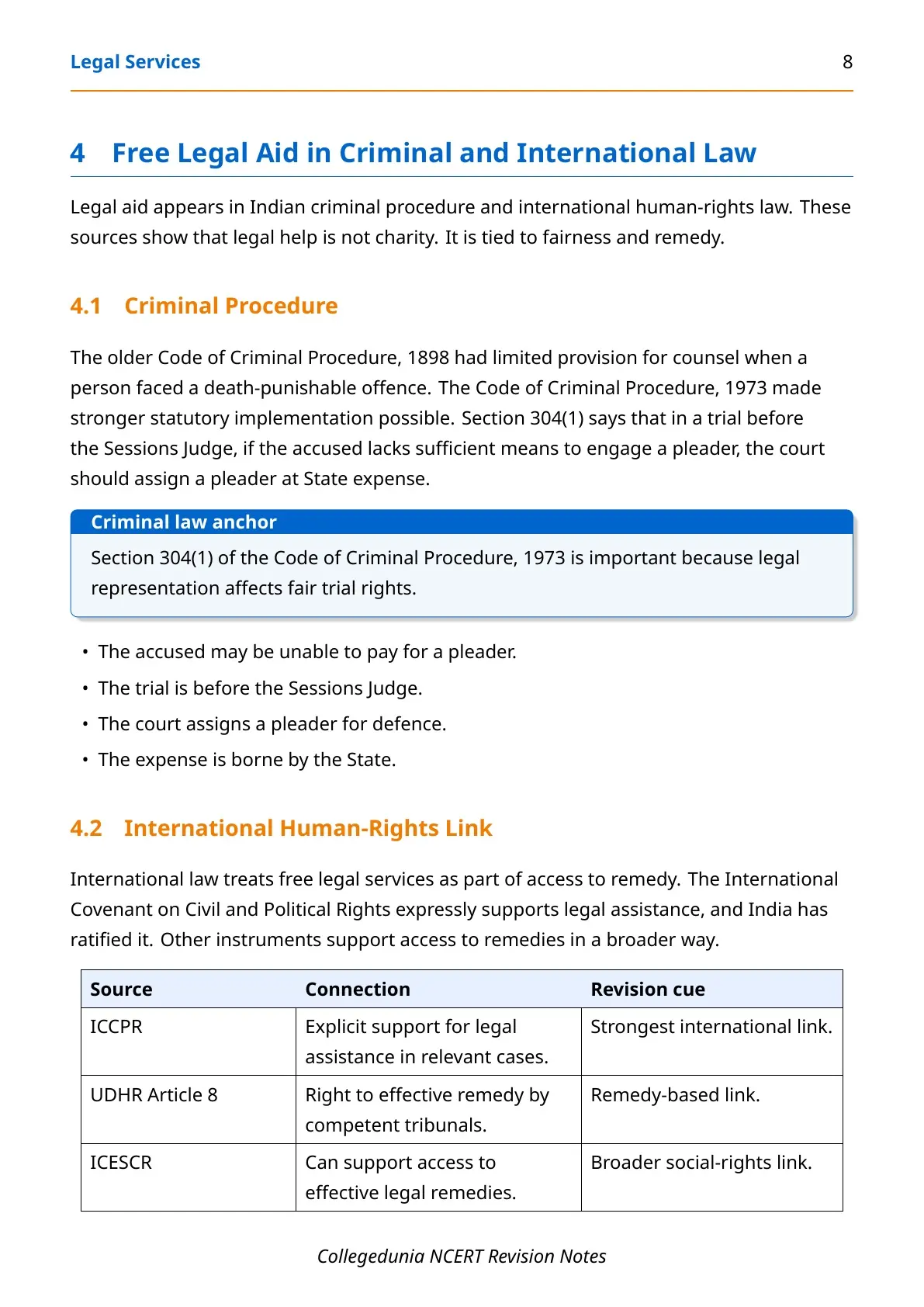
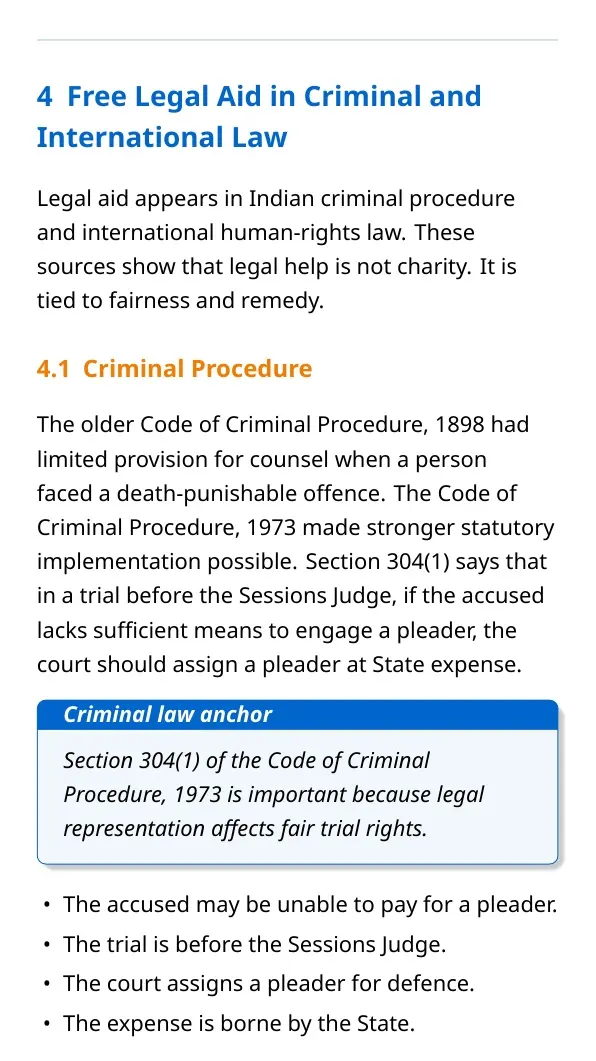
- Section 304 CrPC: gives support to an eligible accused in a Sessions trial.
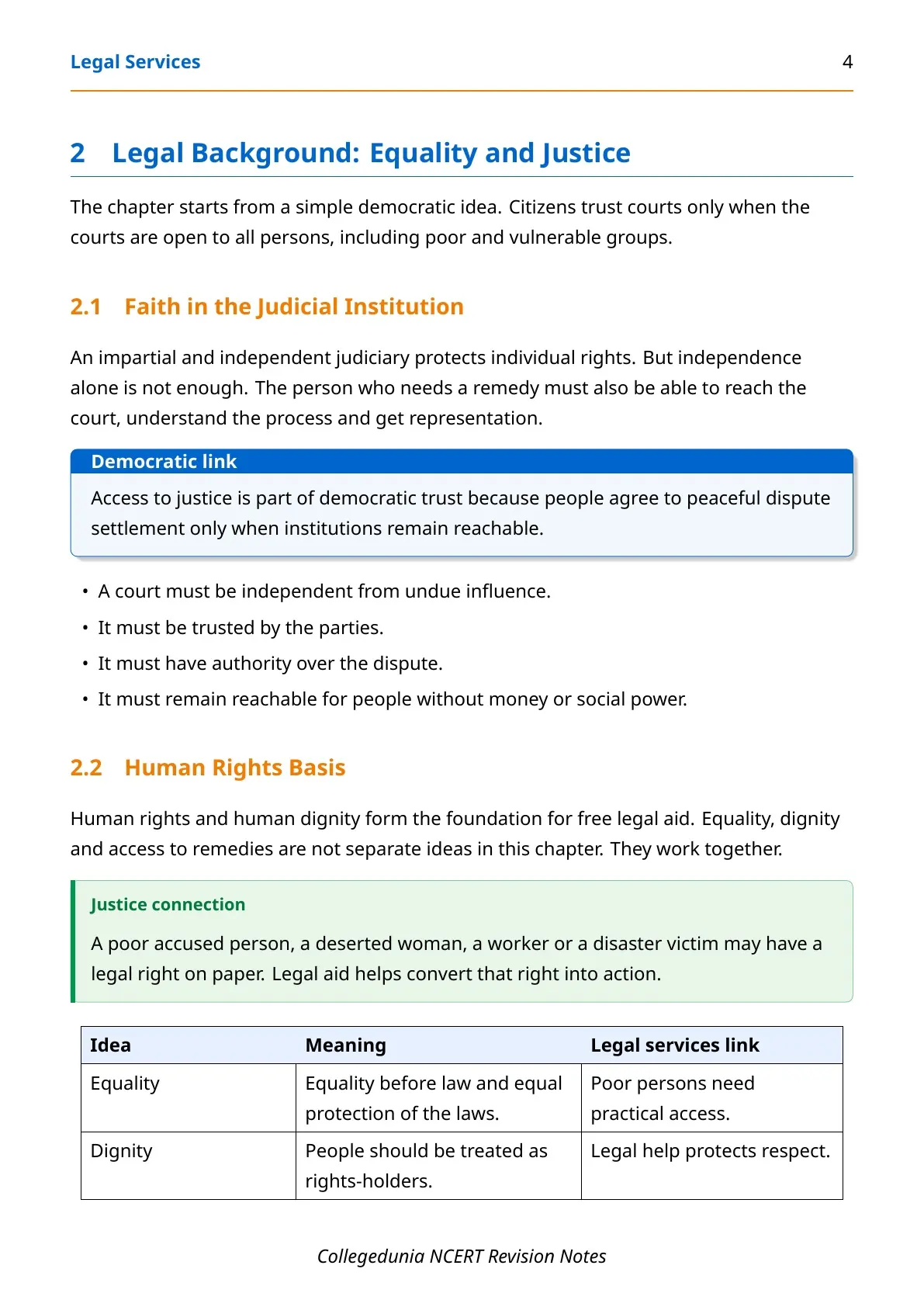
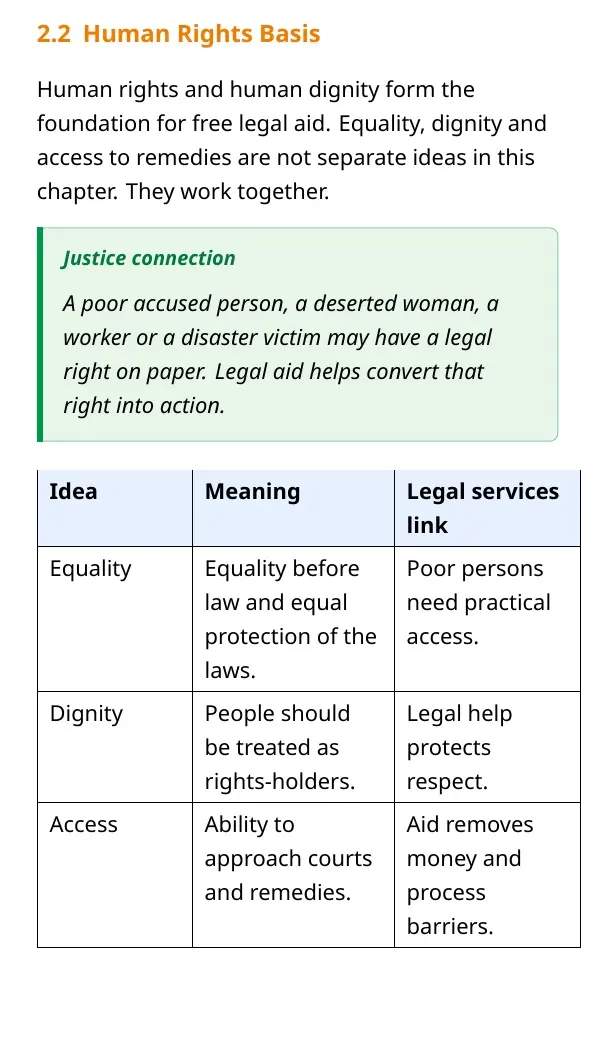
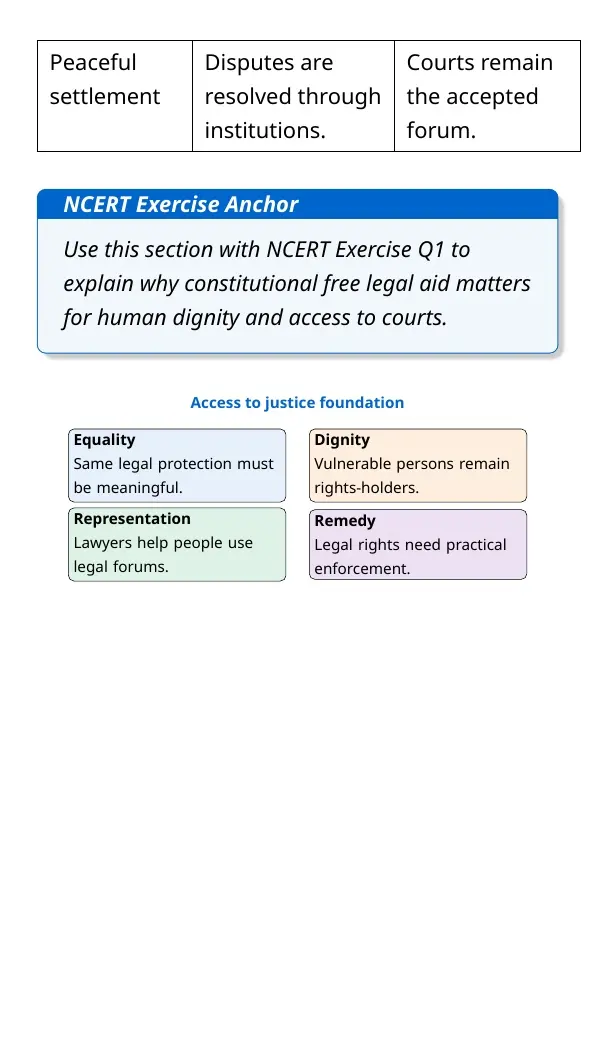
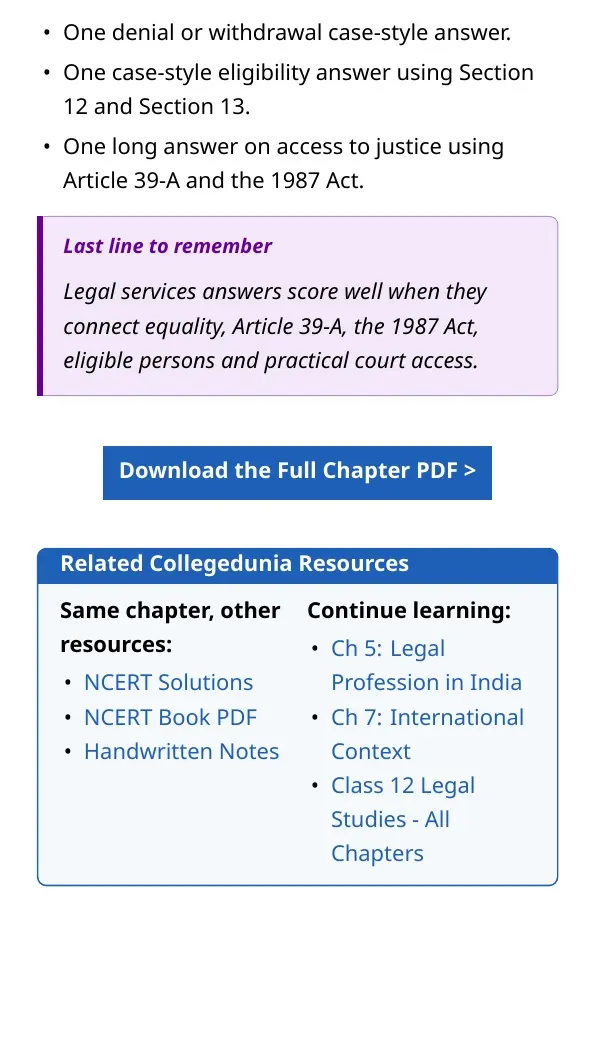
Students should not write legal aid as charity. It is linked with rights, dignity and fair trial. A strong board answer says that legal aid turns formal equality into practical access.
Legal Services Revision Video
Source: Magnet Brains on YouTube
Legal Services Authorities Act, 1987
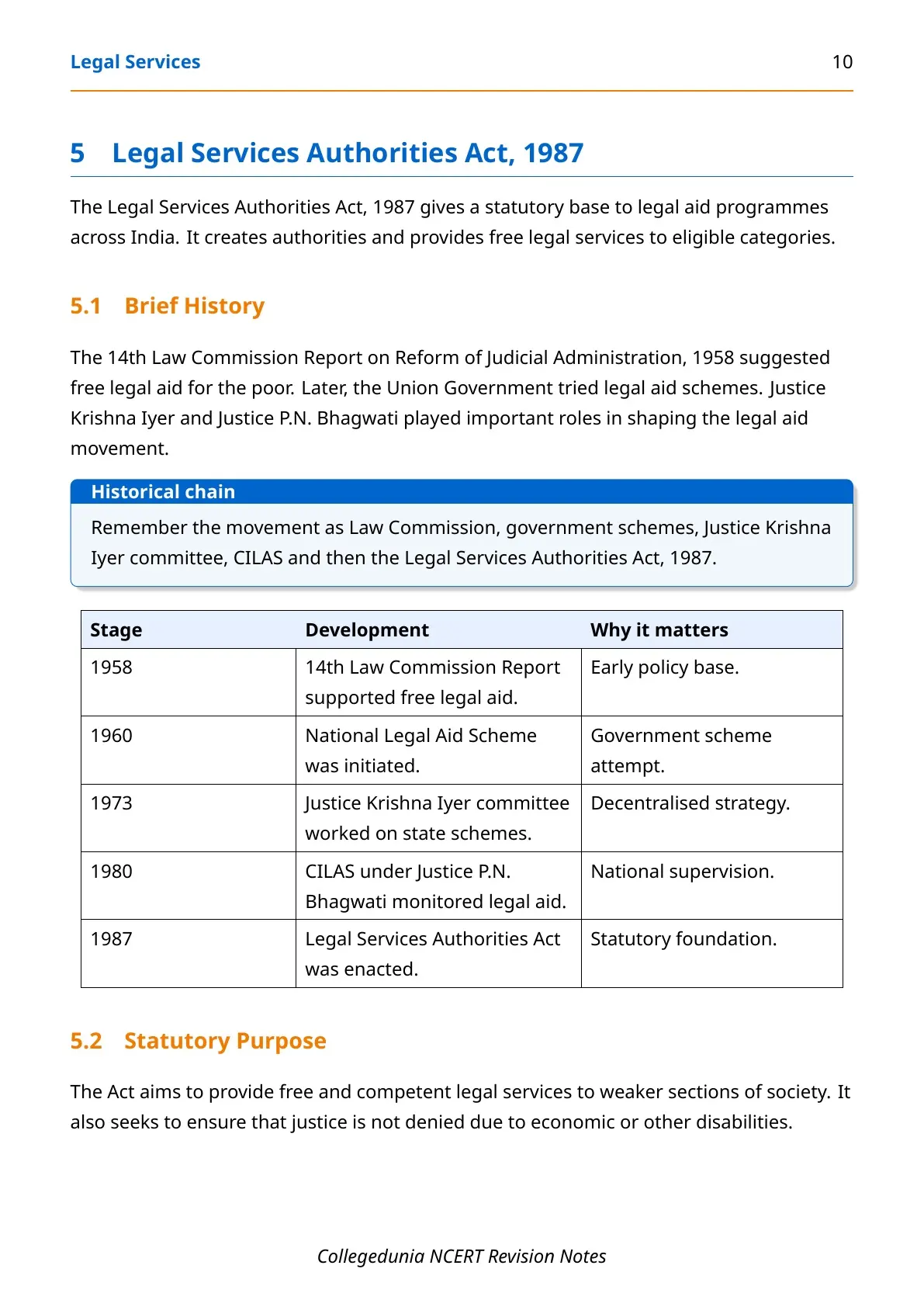
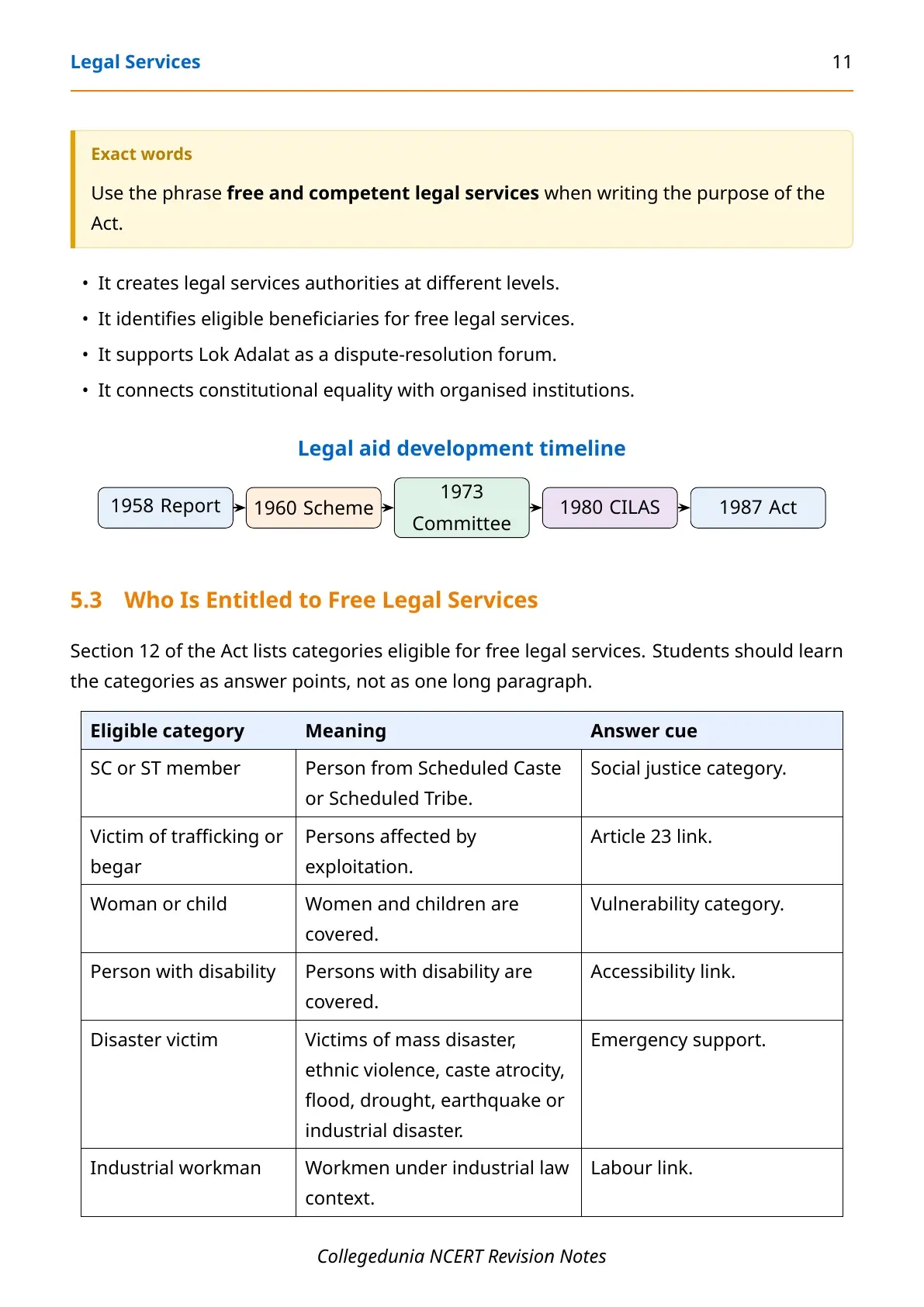
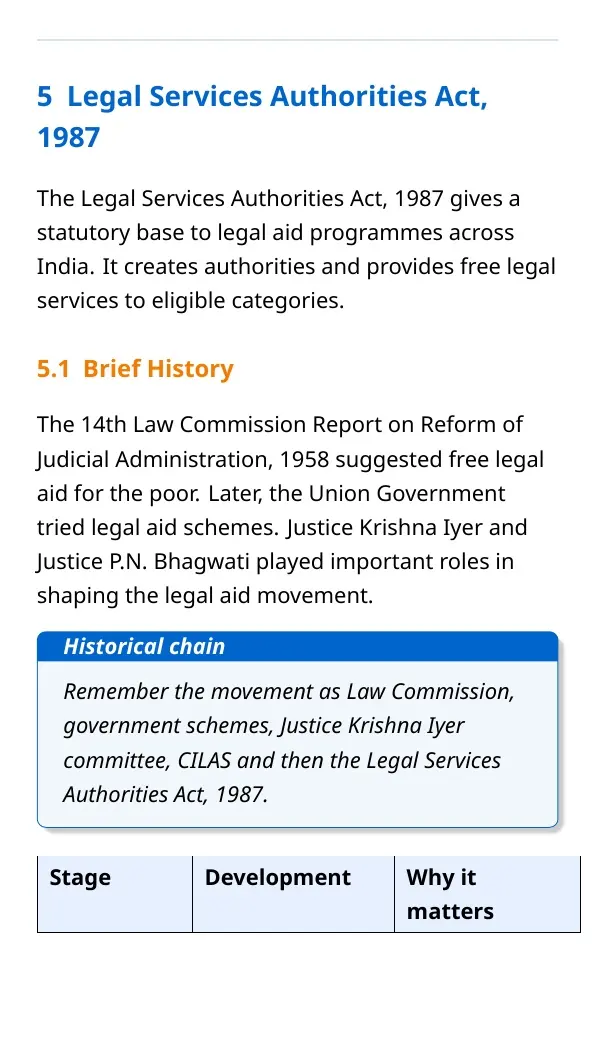
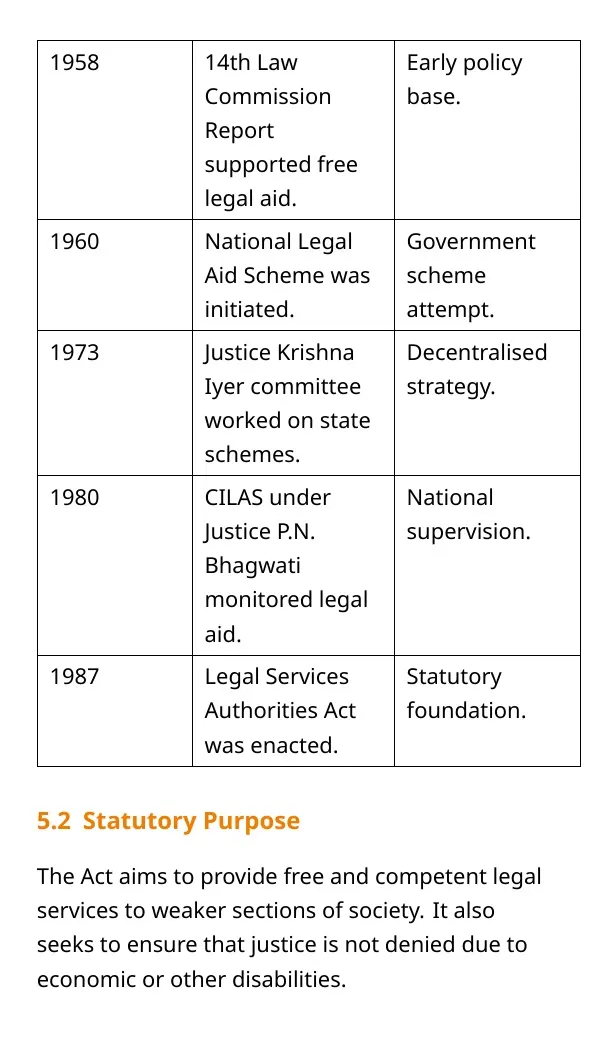
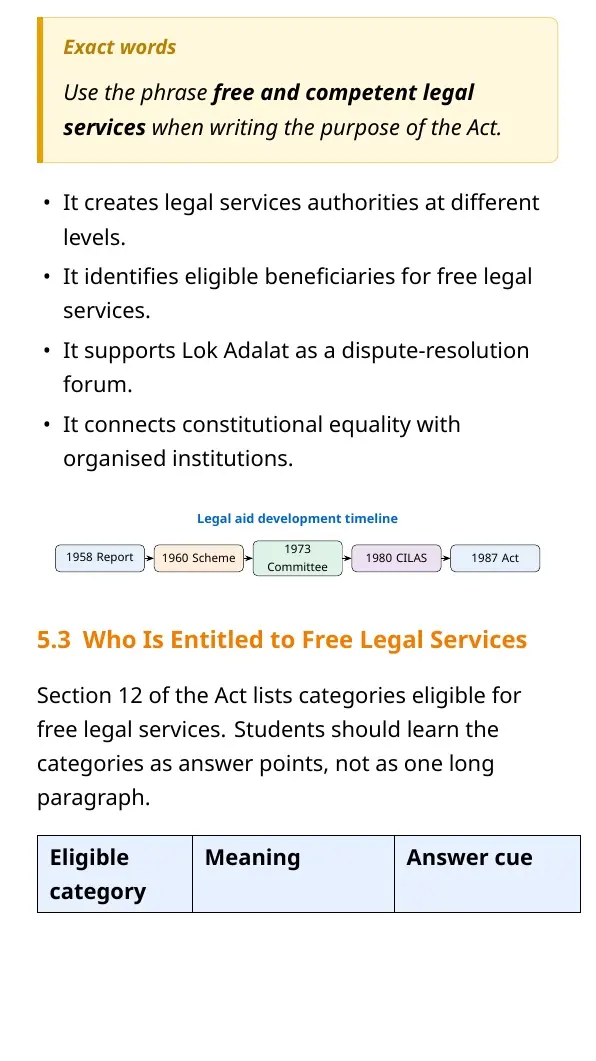
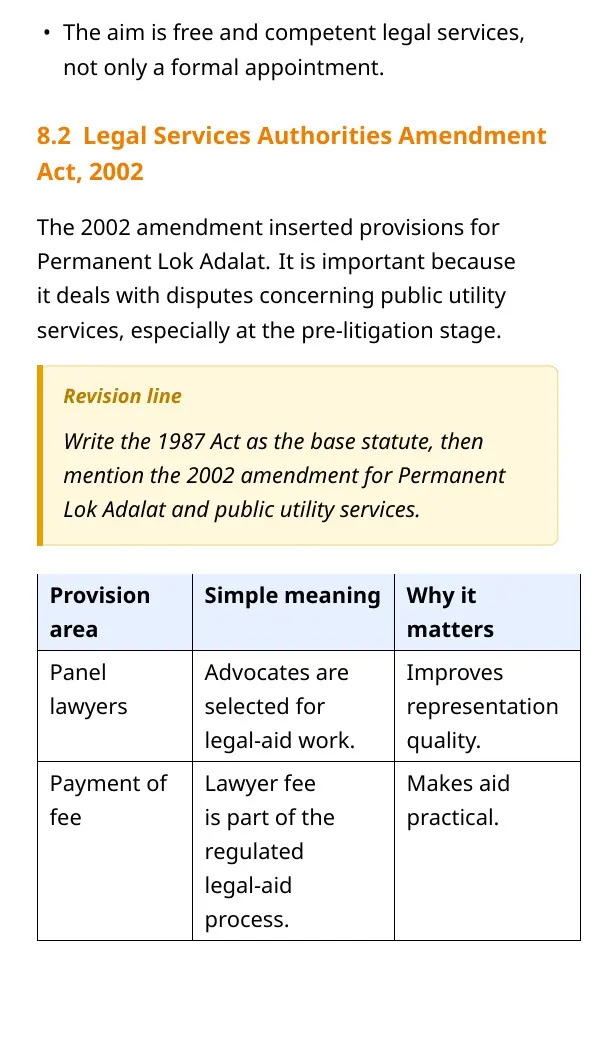
The Legal Services Authorities Act, 1987 gives a statutory base to legal aid programmes in India. It aims to provide free and competent legal services to weaker sections and make sure justice is not denied because of economic or other disabilities.
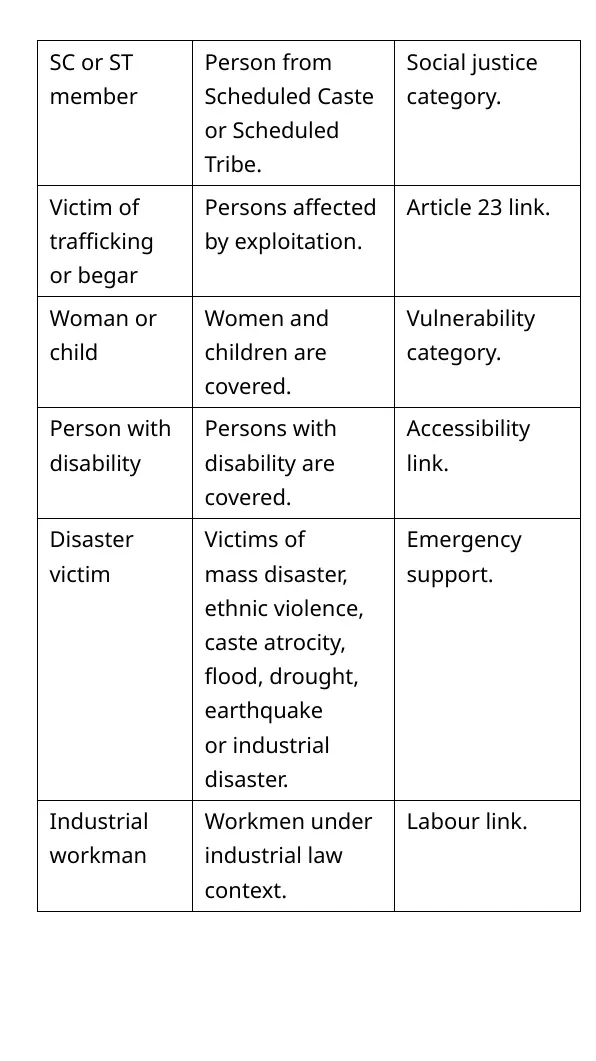
| Eligible Category Under Section 12 | Simple Meaning | Board Answer Cue |
|---|---|---|
| SC or ST member | Person from Scheduled Caste or Scheduled Tribe. | Social justice category. |
| Victim of trafficking or begar | Person affected by exploitation. | Link with protection from forced labour. |
| Woman or child | Women and children are covered. | Vulnerability category. |
| Person with disability | Person with disability is covered. | Access and support point. |
| Disaster victim | Victim of mass disaster, ethnic violence, caste atrocity, flood, drought, earthquake or industrial disaster. | Emergency support. |
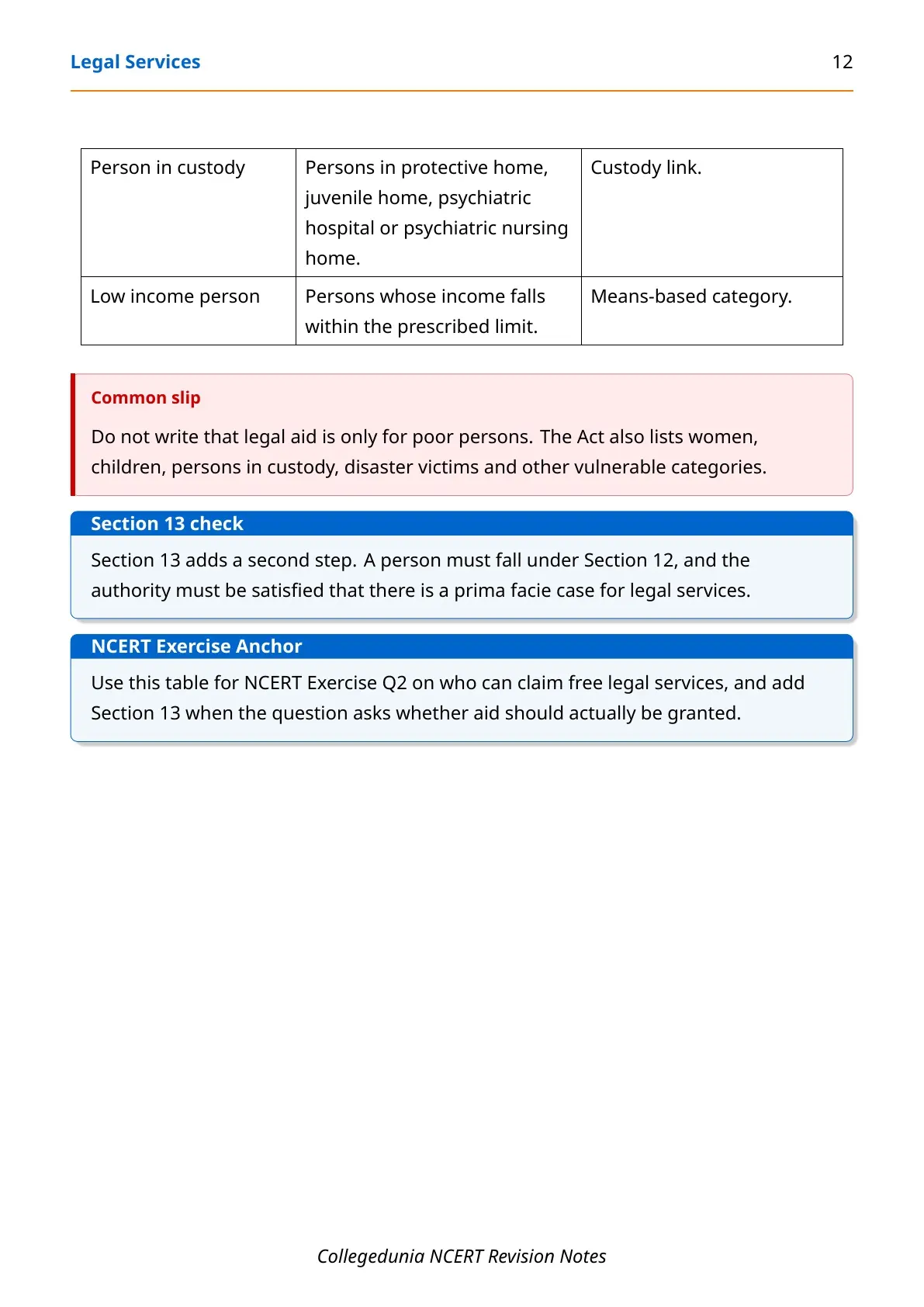
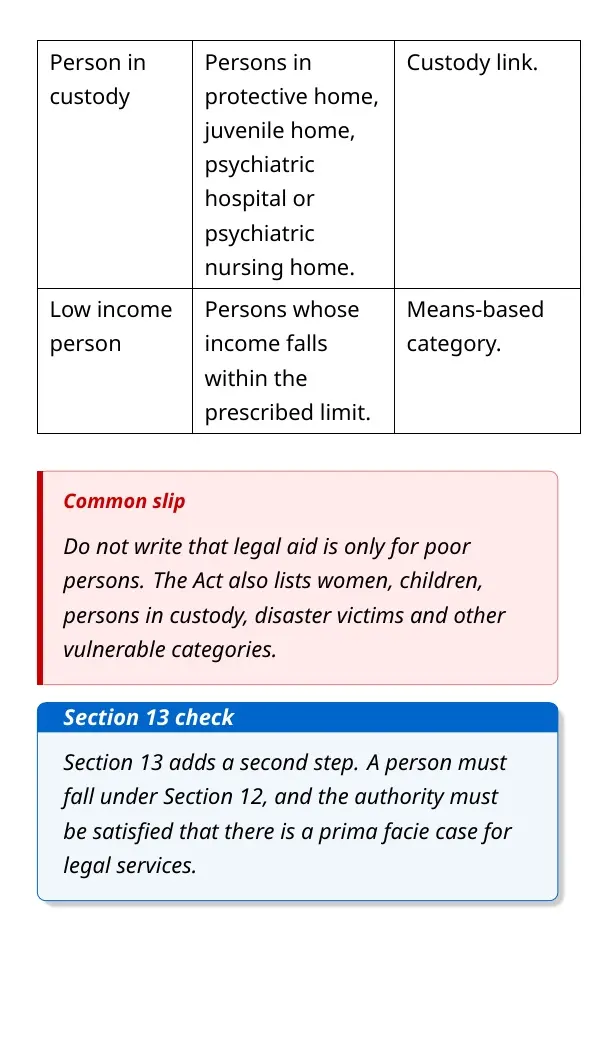
| Person in custody | Person in protective home, juvenile home, psychiatric hospital or psychiatric nursing home. | Custody link. |
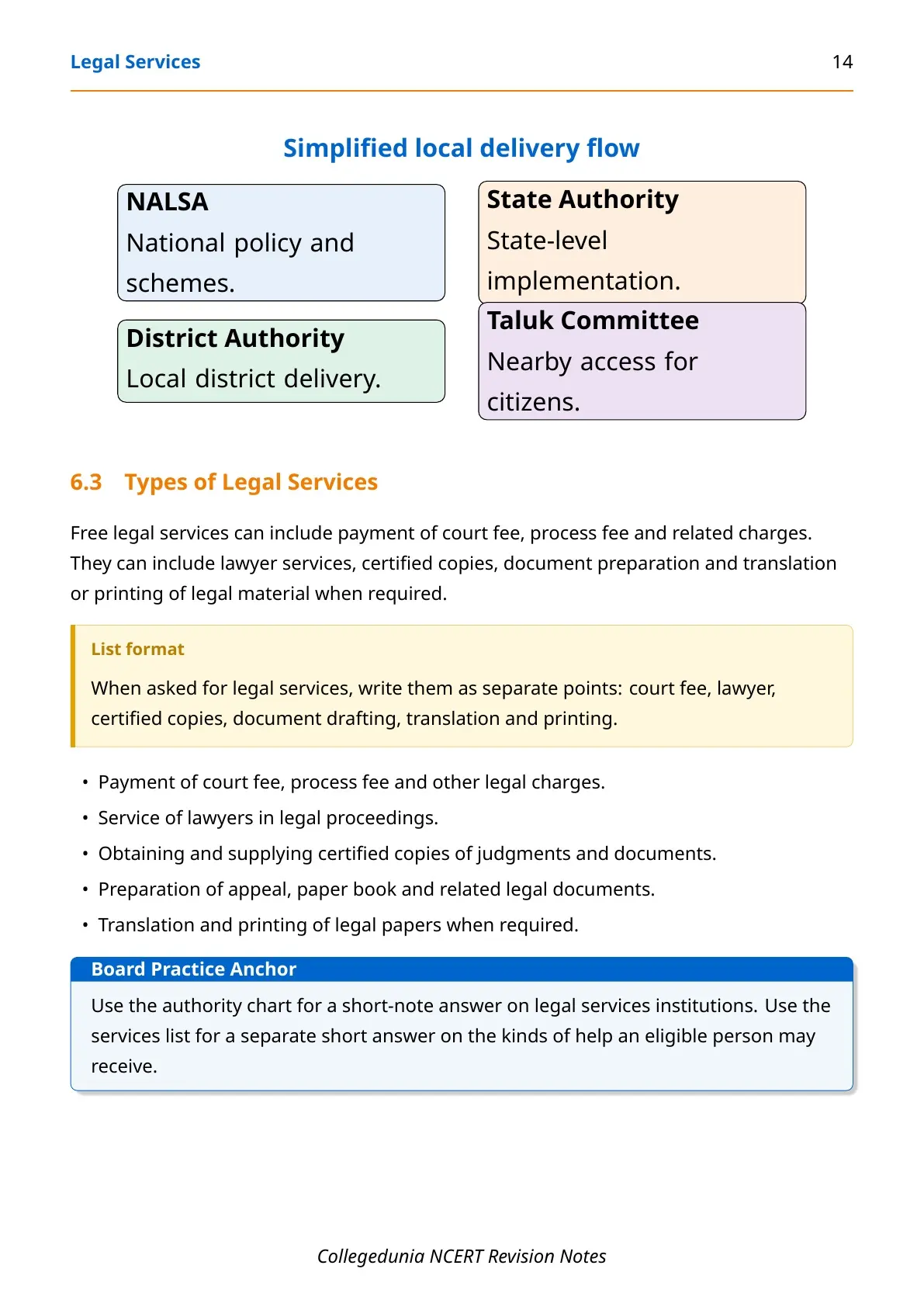
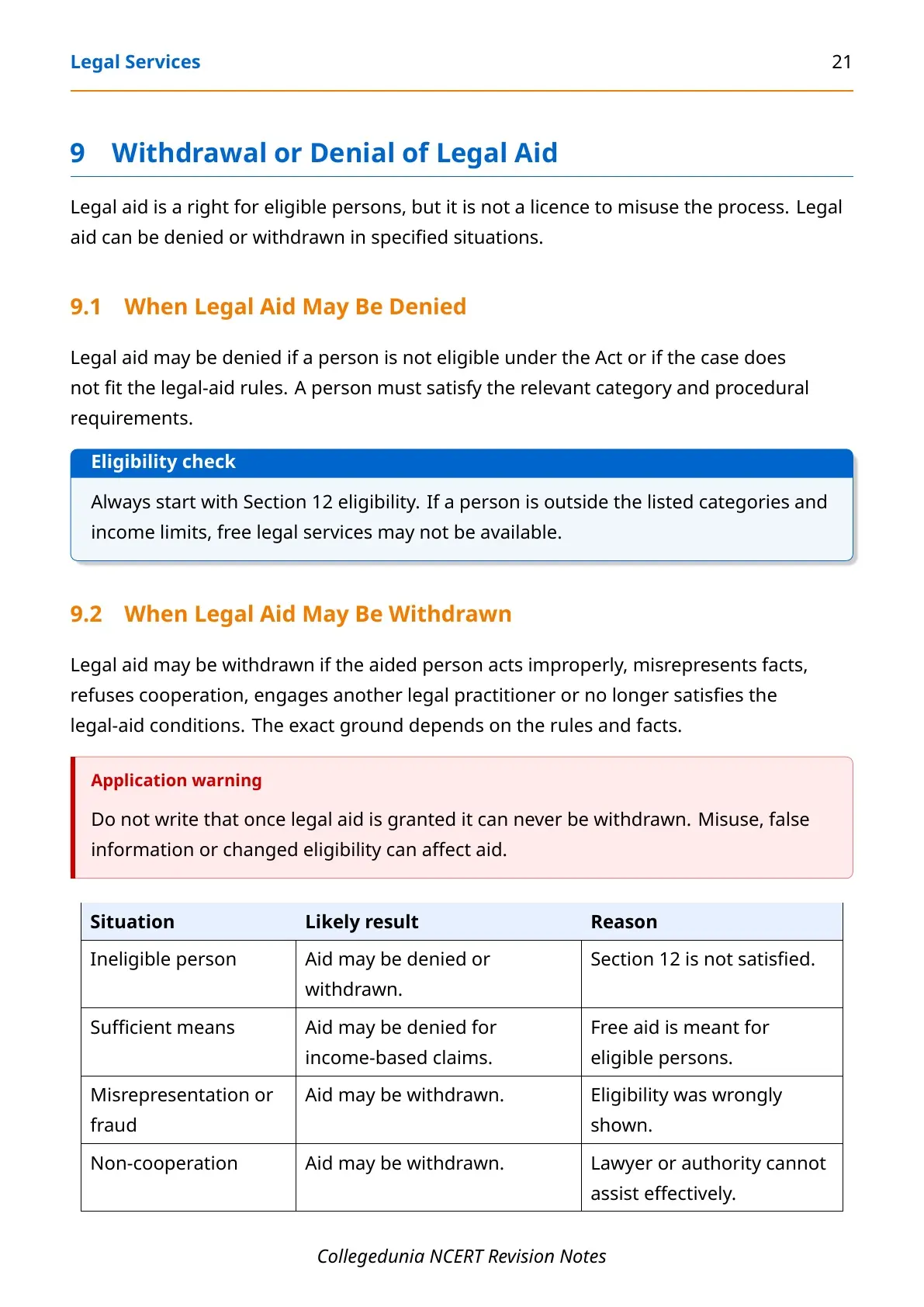
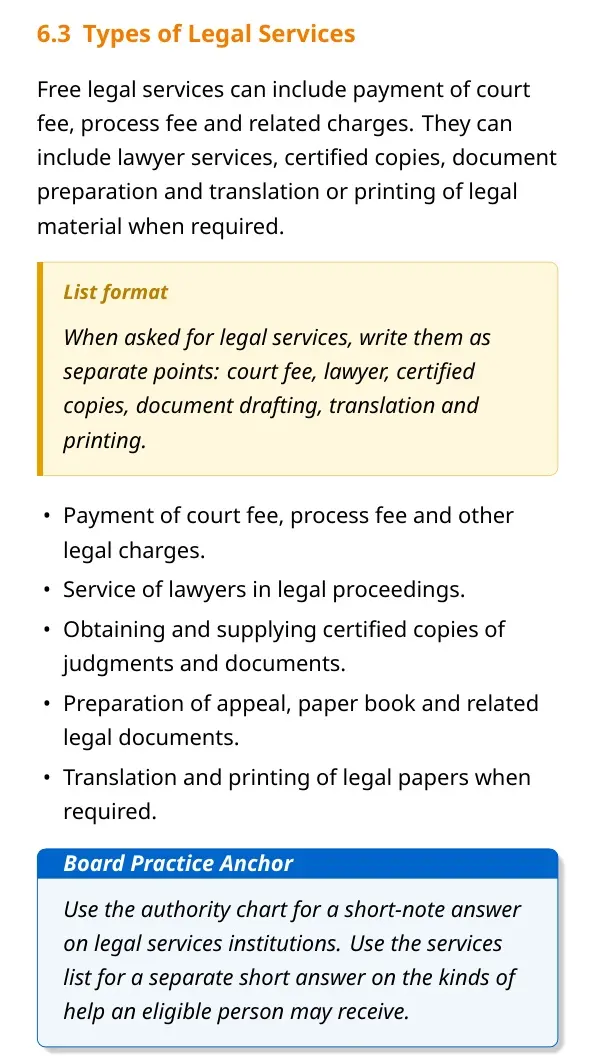
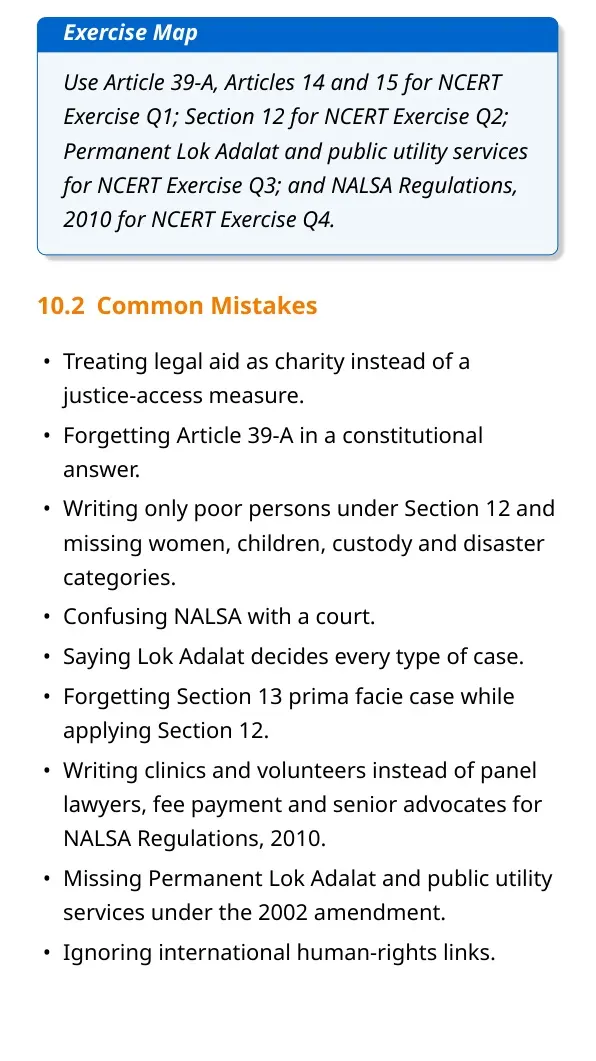
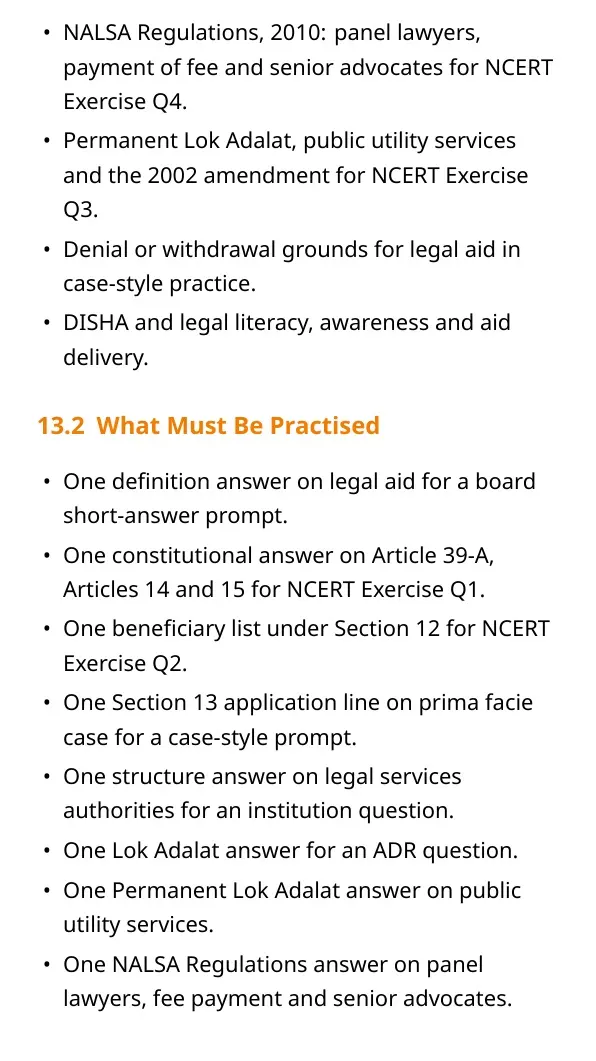
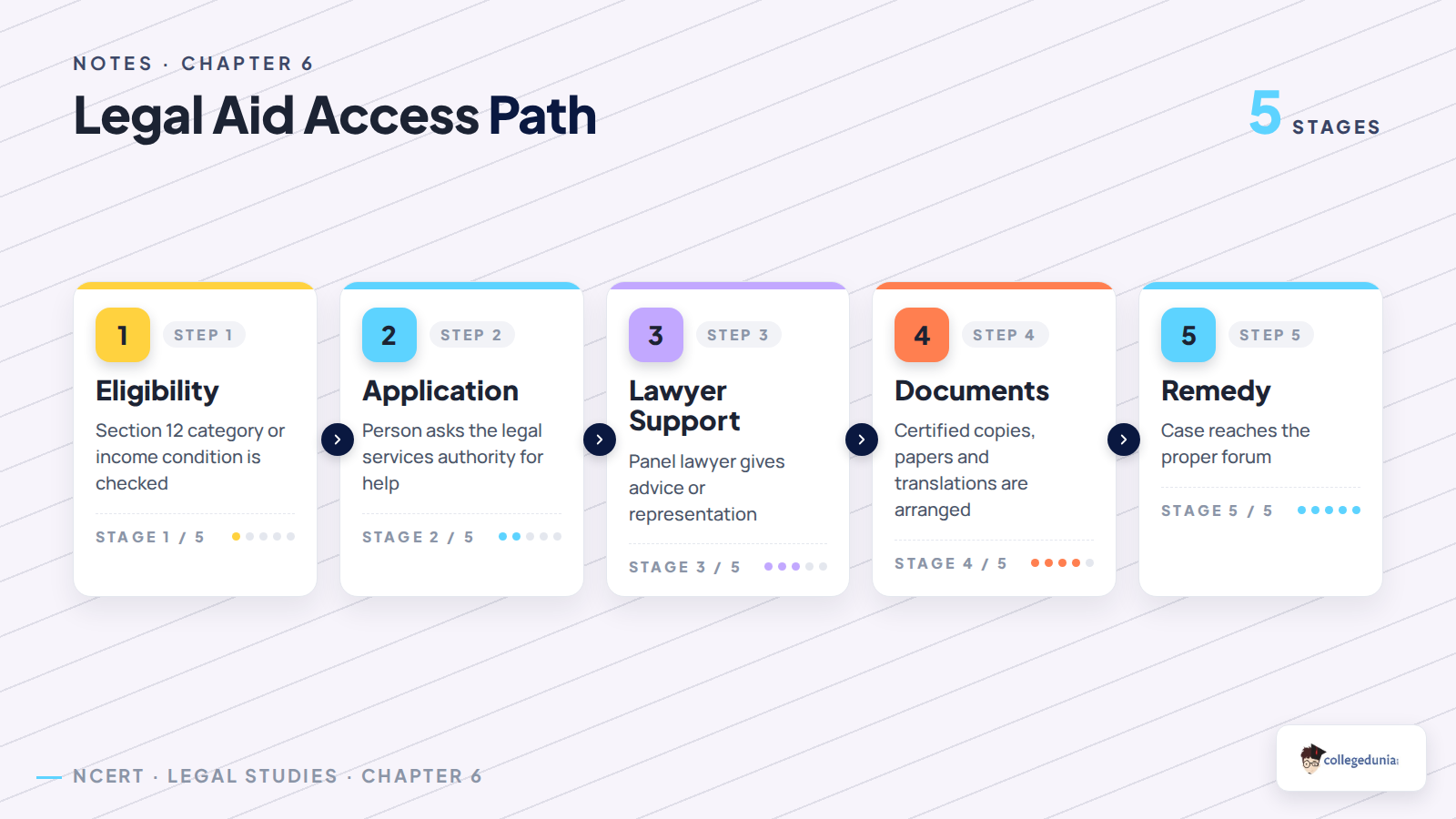
Section 13 adds a second check: the person should fall under Section 12 and the authority should be satisfied that there is a prima facie case for legal services. The Act also supports different types of help, such as payment of court fee, lawyer service, certified copies, document preparation and translation. This list is useful for short-answer questions because students can write it in separate points.
NALSA and Legal Services Authorities Structure
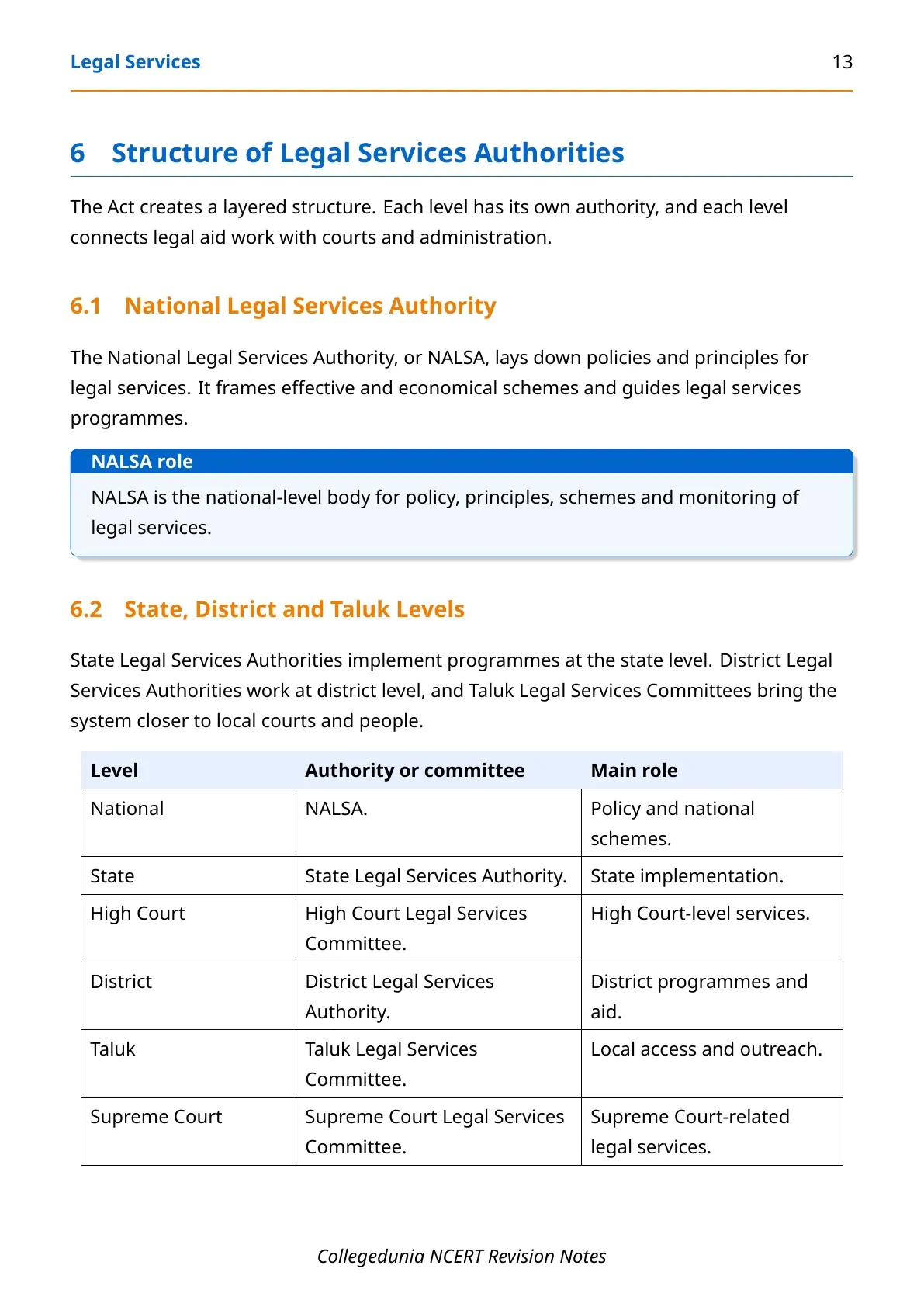
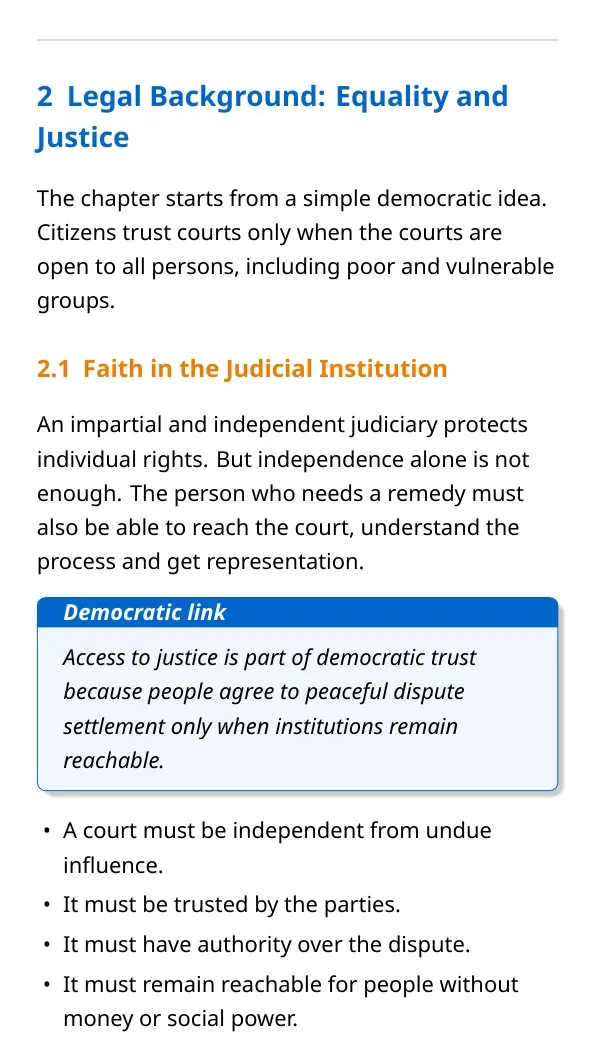
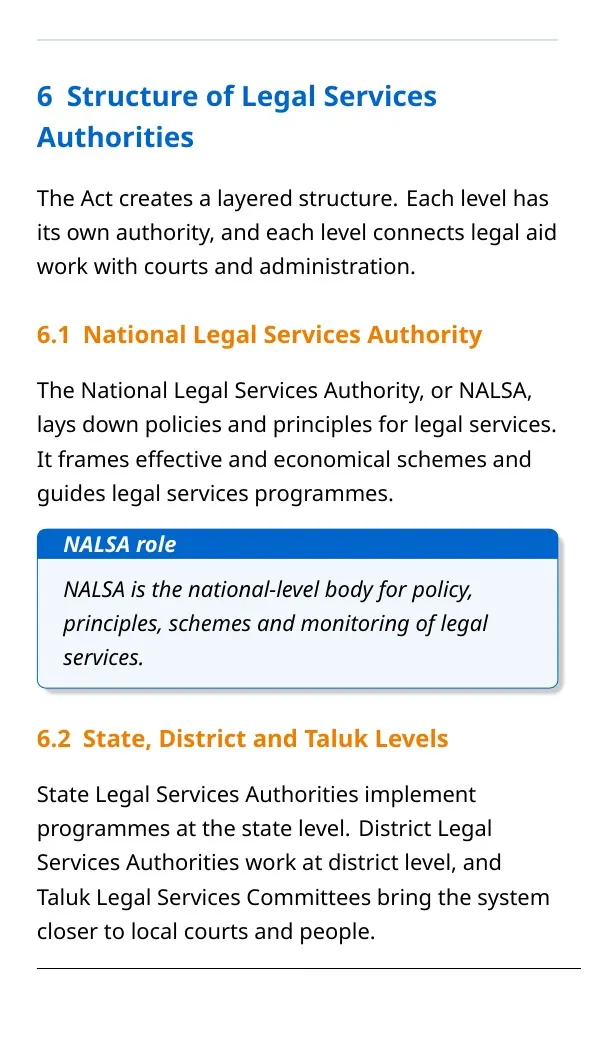
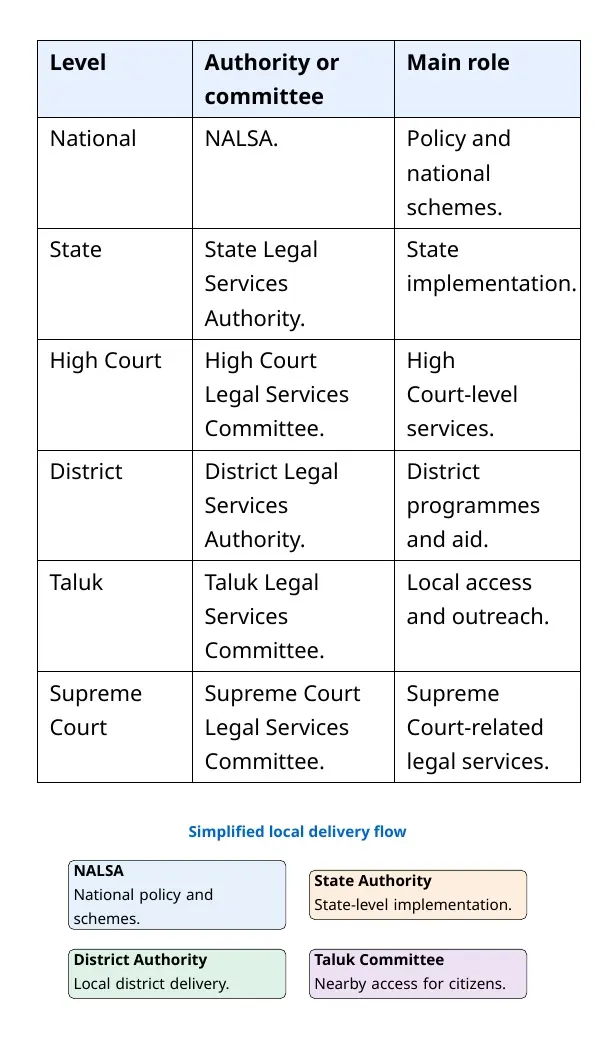
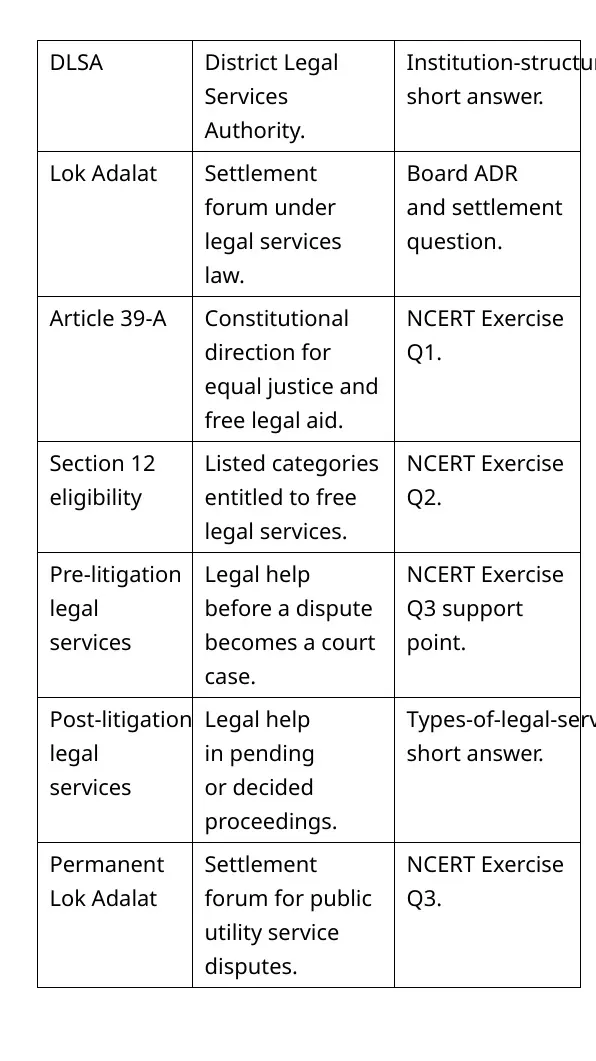
NALSA is the national authority for legal services policy and schemes. State Legal Services Authorities implement programmes at the state level. District Legal Services Authorities and Taluk Legal Services Committees bring the system closer to citizens.
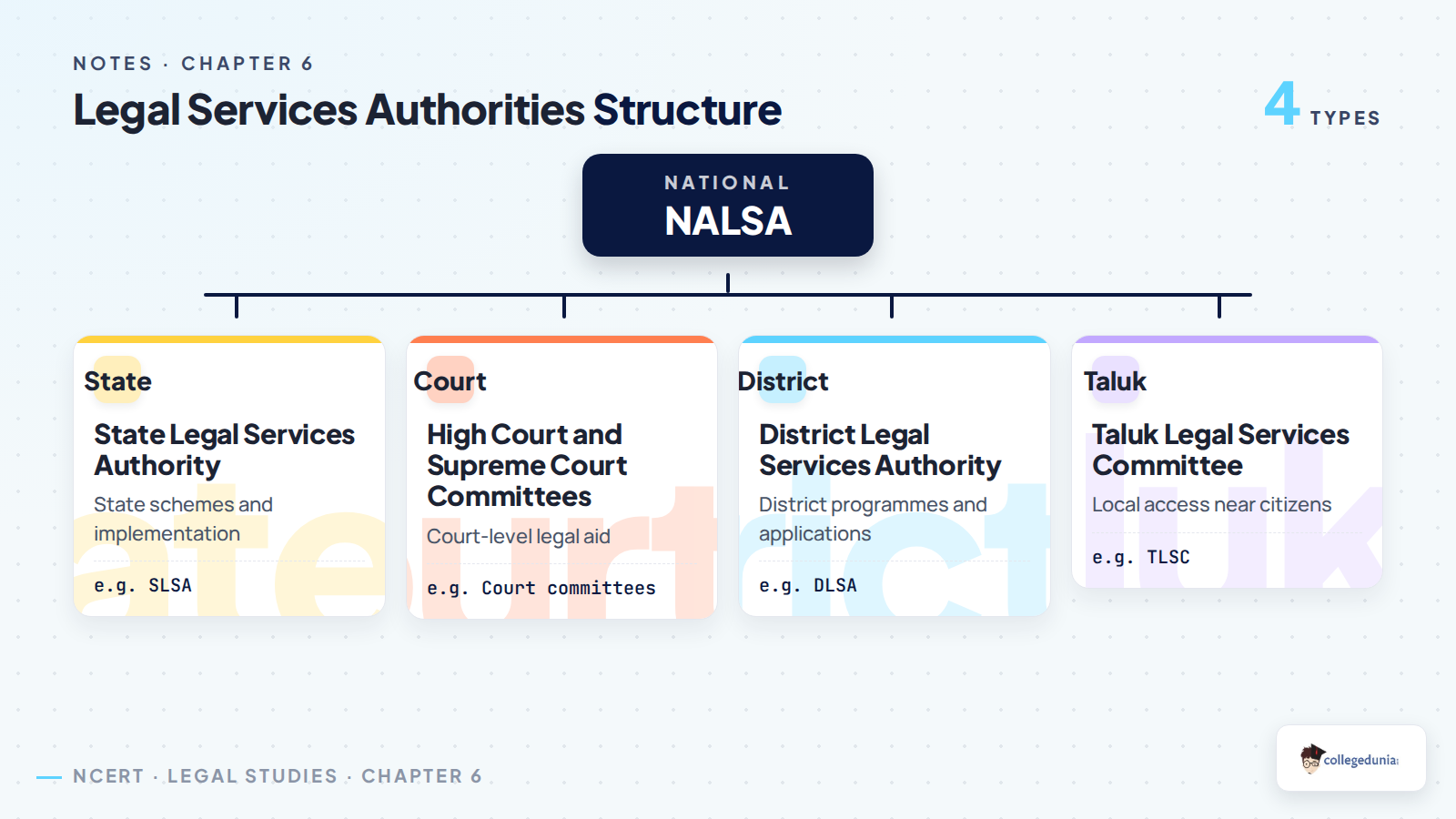
- NALSA: frames policies, principles and schemes for legal services.
- State authority: carries out state-level legal aid programmes.
- District authority: handles district-level applications and legal services.
- Taluk committee: supports local access near people and courts.
For long answers, write the structure from national to local level. Then add one practical function at each level, such as legal-aid applications, legal awareness or Lok Adalat support.
Lok Adalat and NALSA Regulations
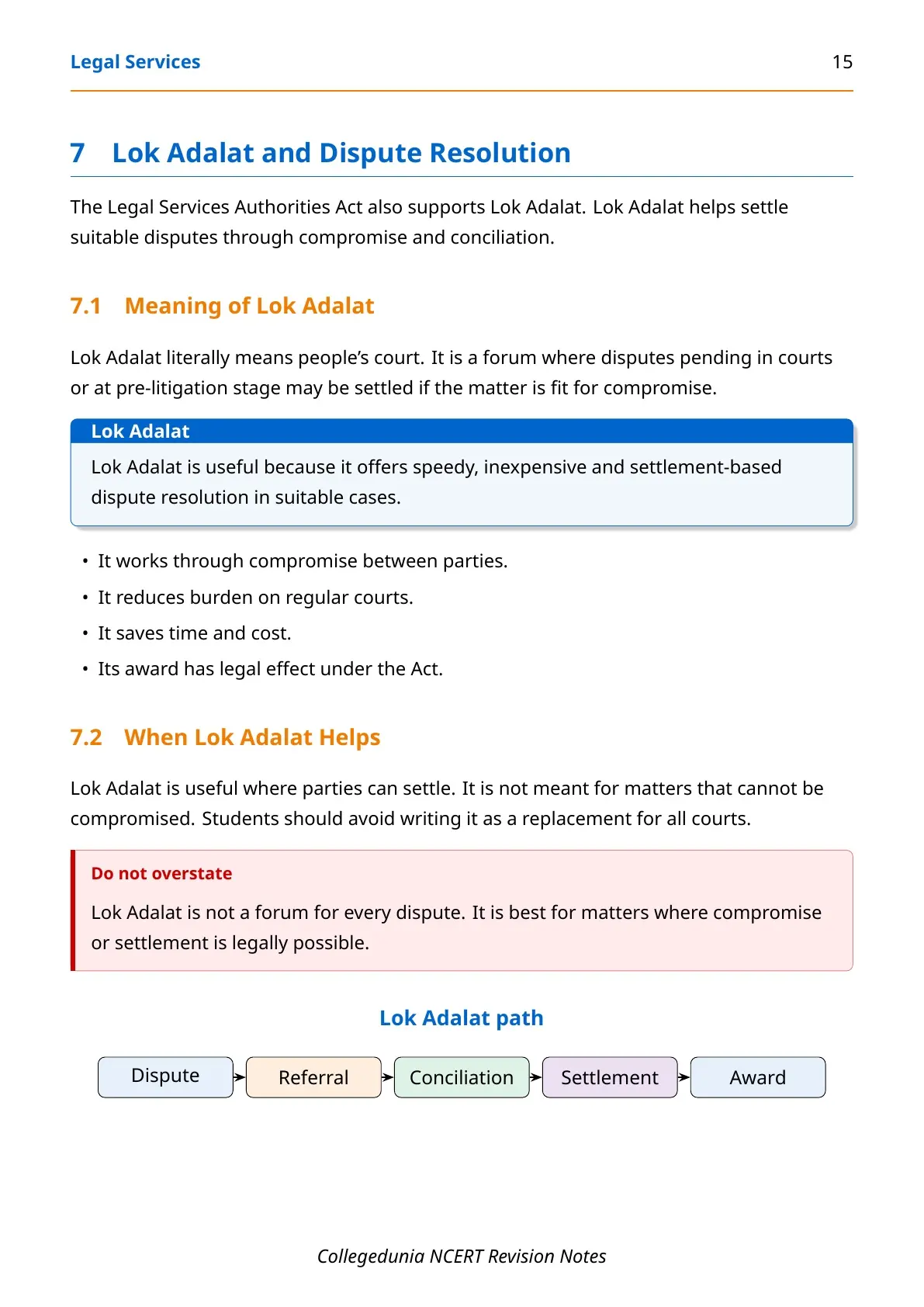
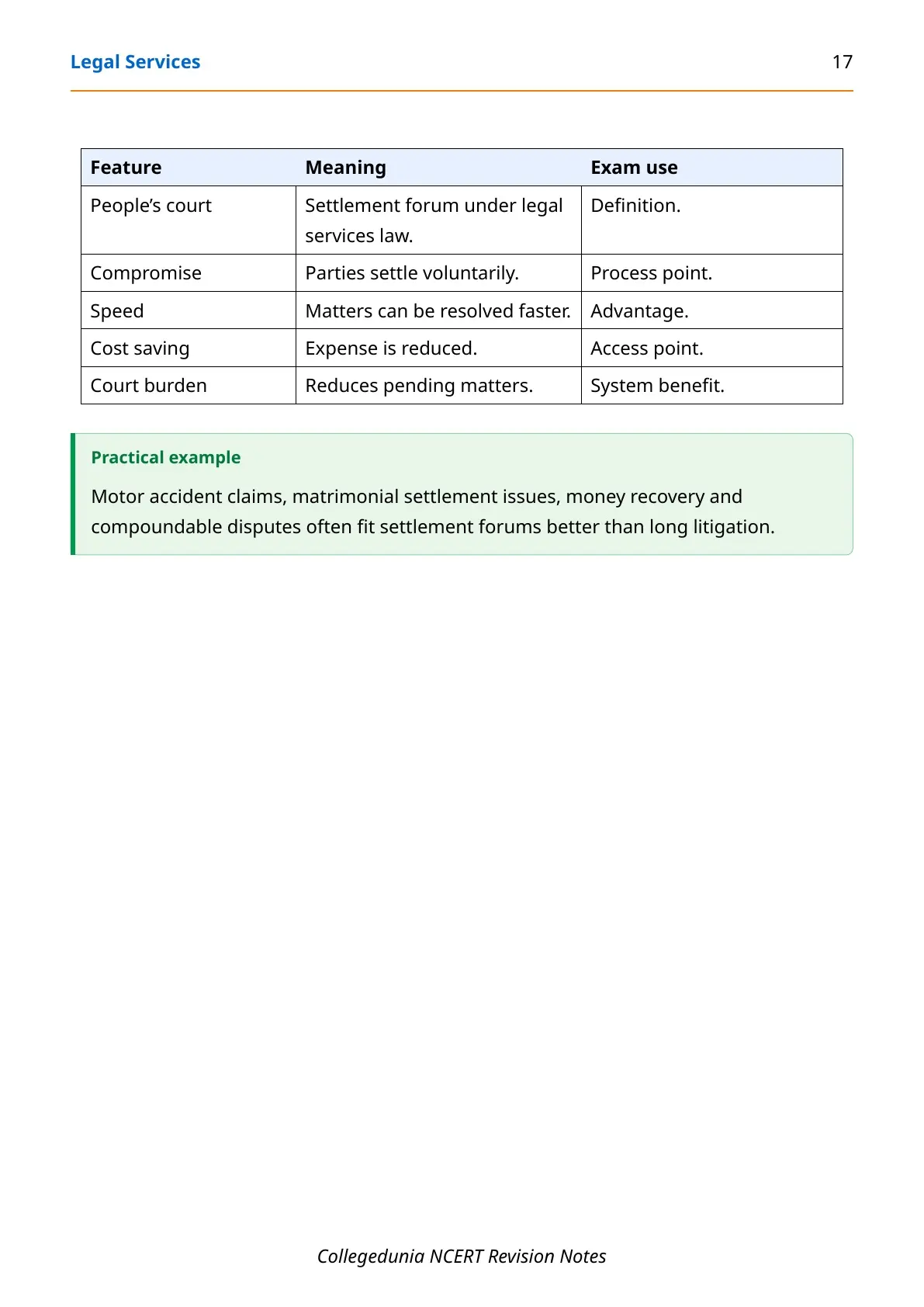
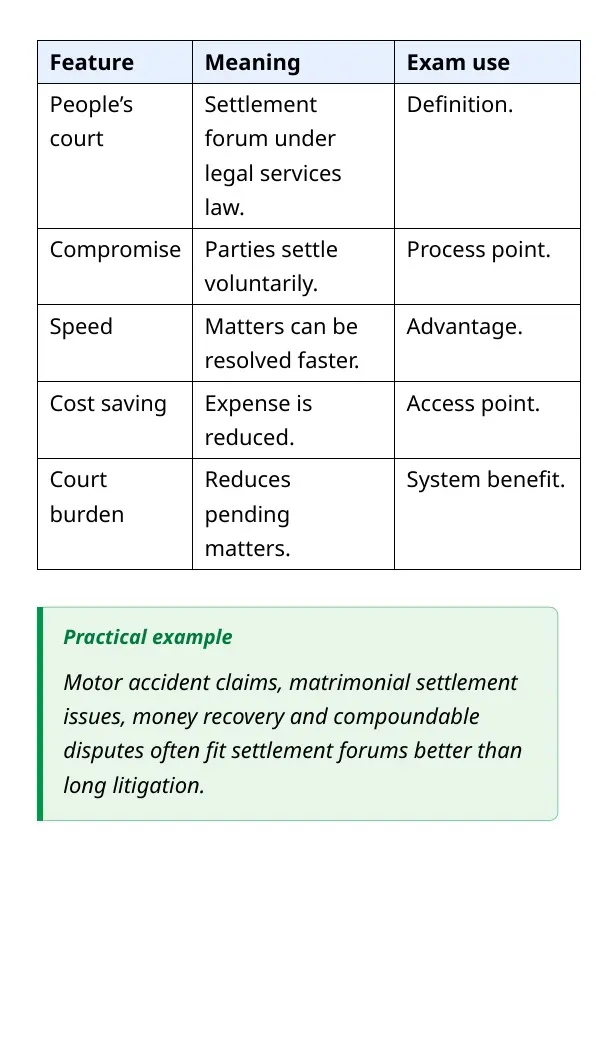
Lok Adalat is a settlement forum supported by legal services law. It helps suitable disputes settle through compromise and conciliation. It saves time, reduces cost and lowers the burden on regular courts. Students should also remember that it is not for every dispute, only matters that can legally be settled.
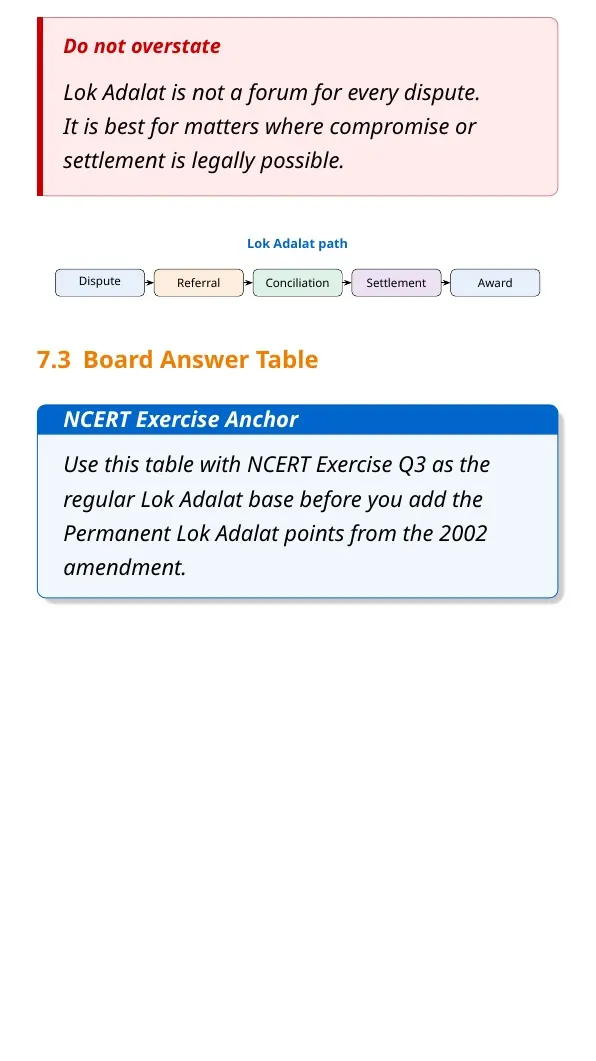
- Identify whether the dispute can be compromised.
- Refer the matter to Lok Adalat where suitable.
- Help parties discuss settlement.
- Record the settlement as an award.
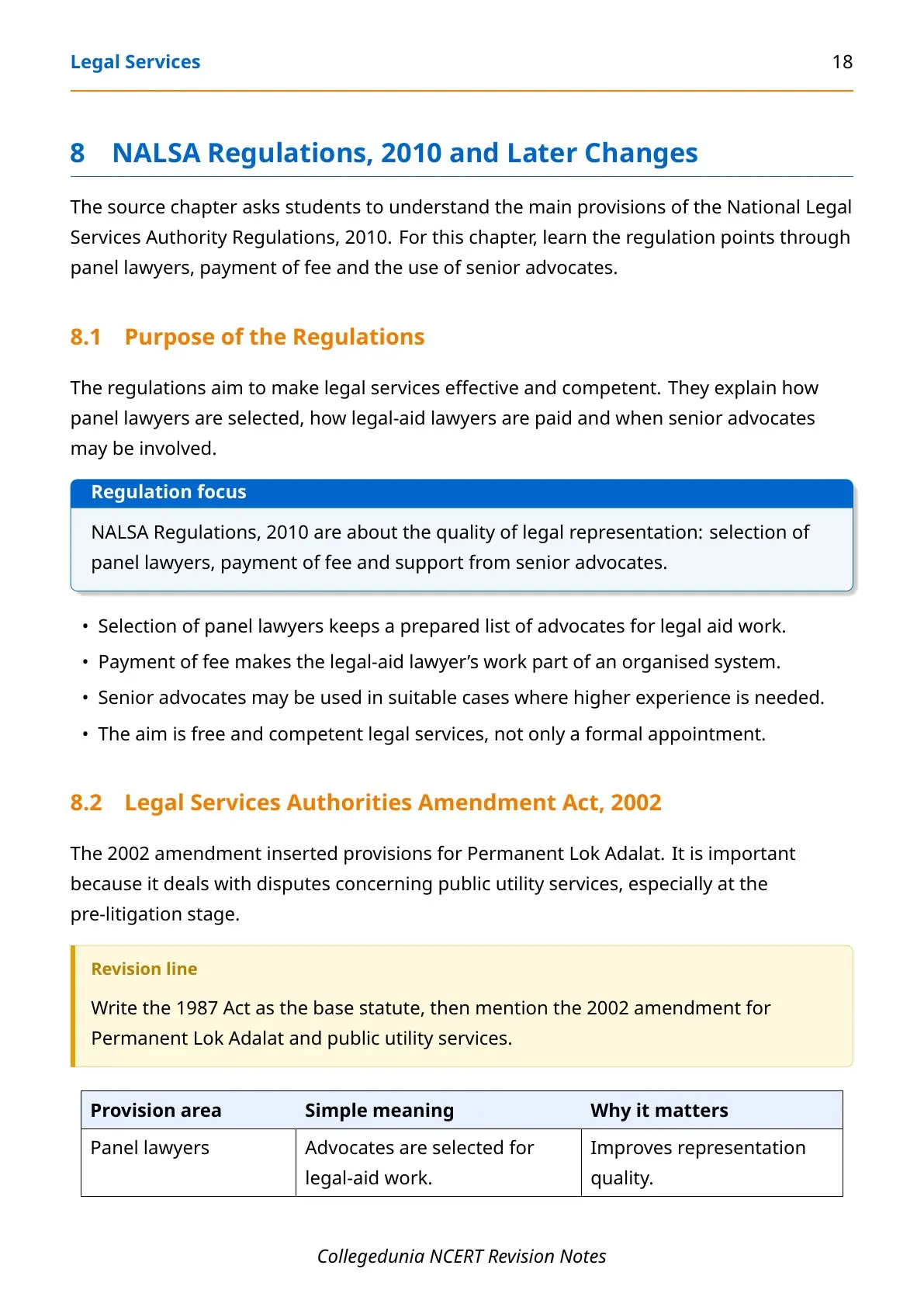
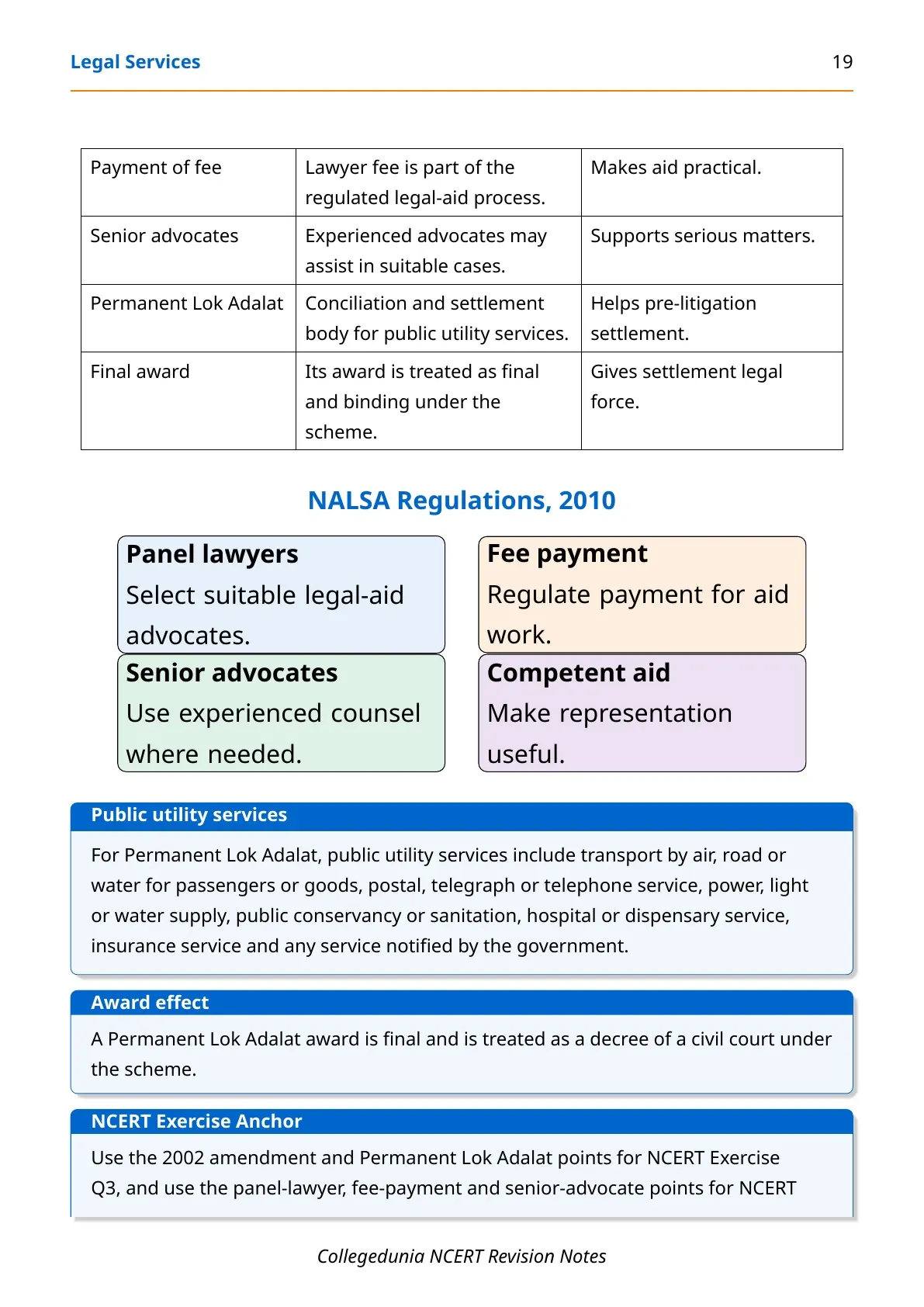
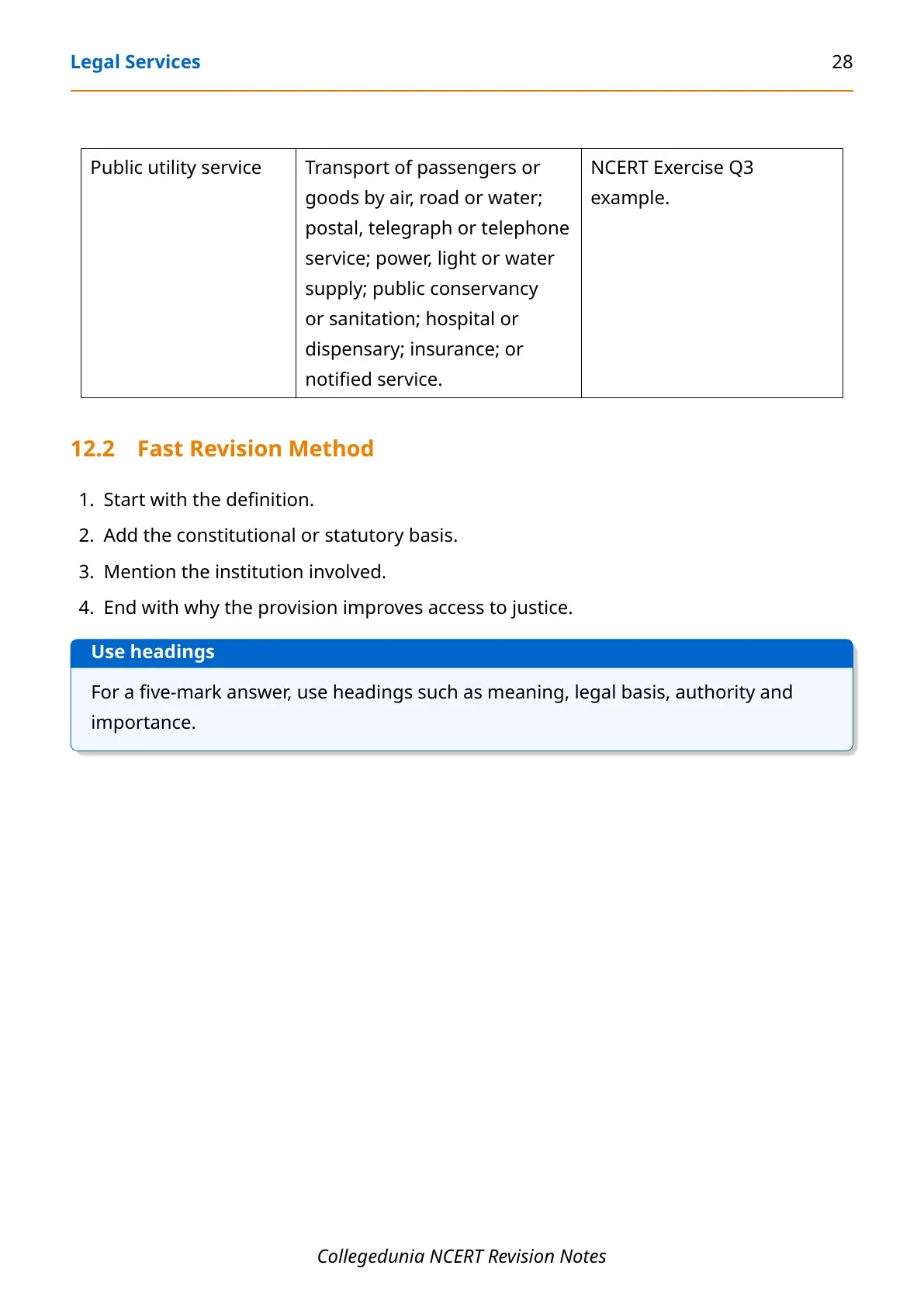
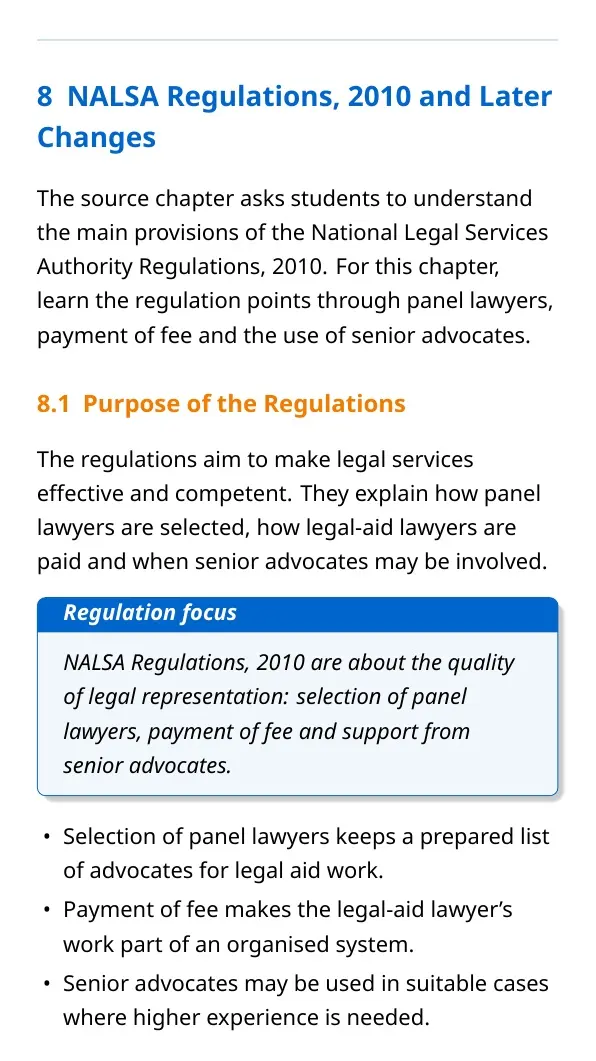
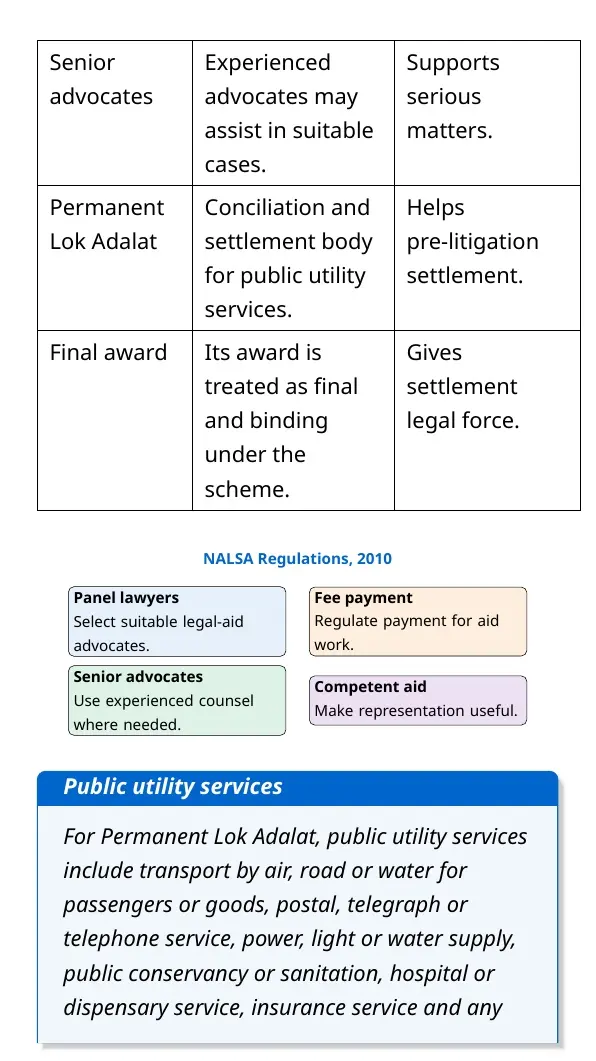
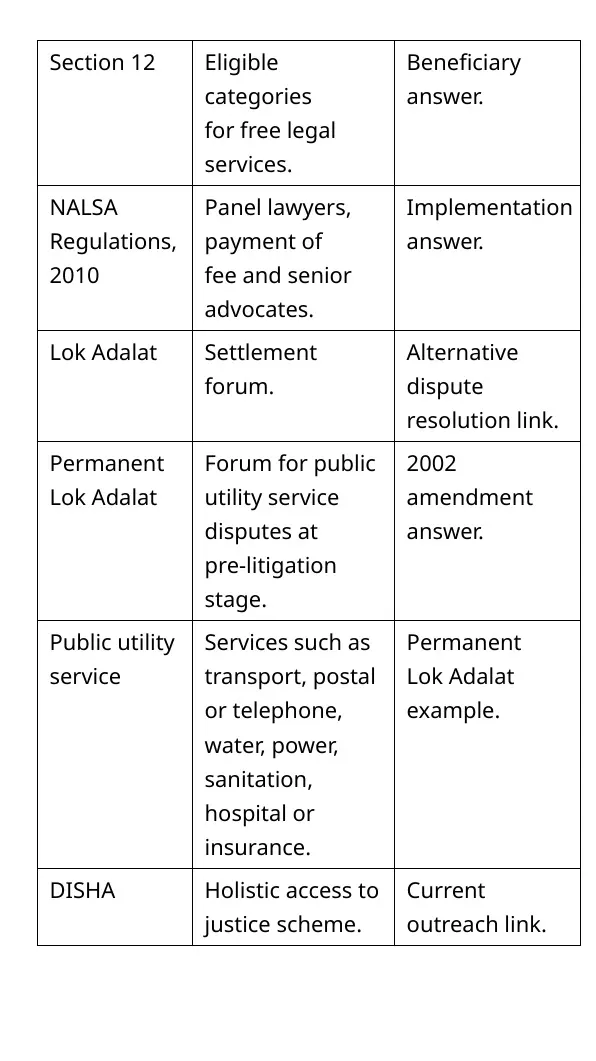
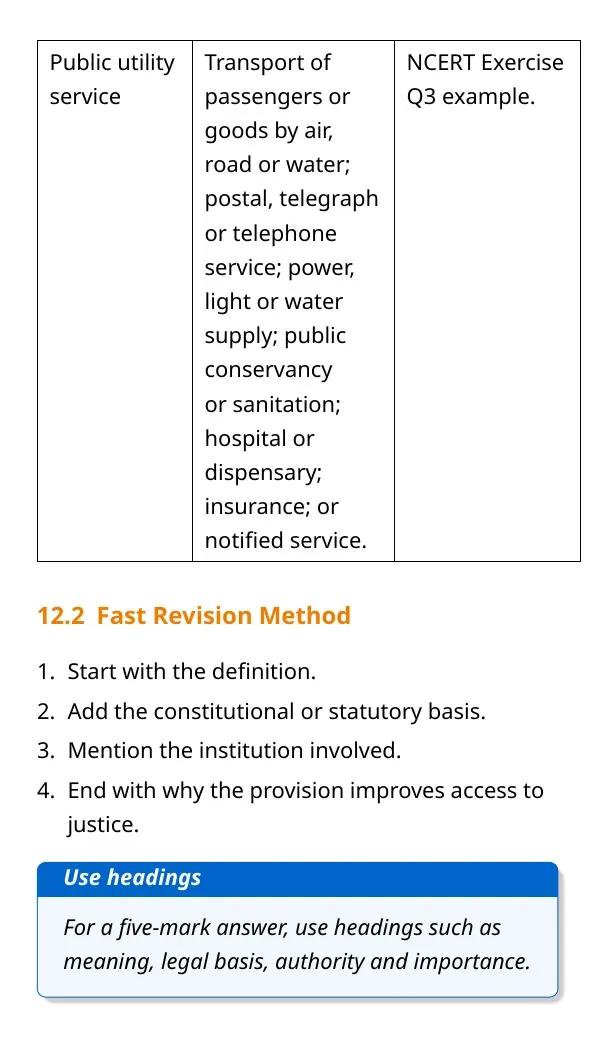
NALSA Regulations, 2010 focus on competent legal representation. For this chapter, remember three points: selection of panel lawyers, payment of fee and use of senior advocates in suitable cases. The 2002 amendment is also important because it brought Permanent Lok Adalat for public utility service disputes at the pre-litigation stage.
| Point | What to Write | Exam Use |
|---|---|---|
| NALSA Regulations, 2010 | Panel lawyers, payment of fee and senior advocates. | Implementation answer. |
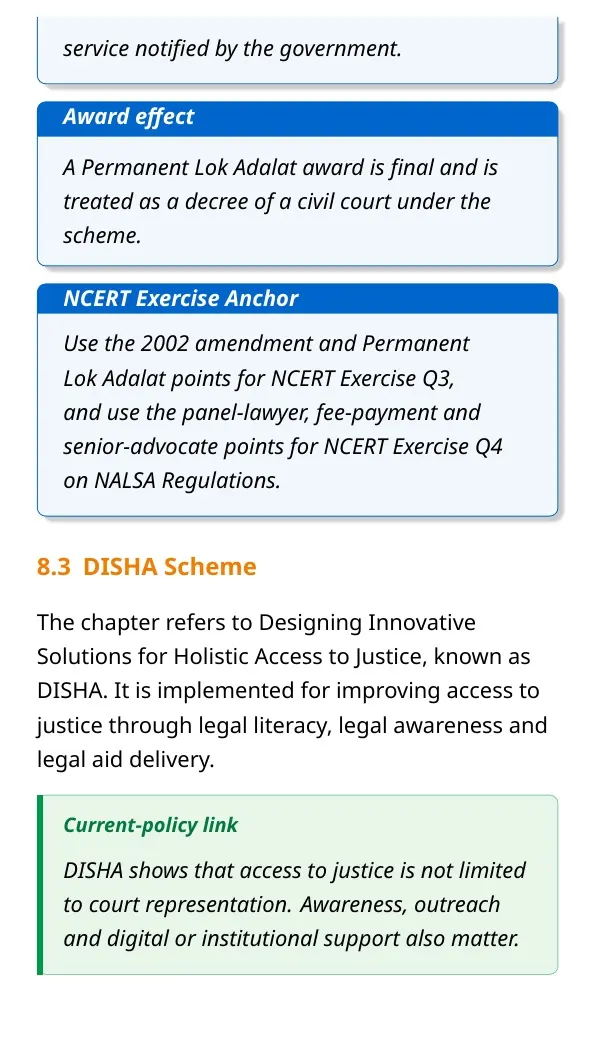
| Permanent Lok Adalat | Conciliation and settlement for public utility services, with an award treated as final under the scheme. | 2002 amendment answer. |
| Public utility services | Transport by air, road or water, postal, telegraph or telephone, water, power, sanitation, hospital, insurance and notified services. | Example list. |
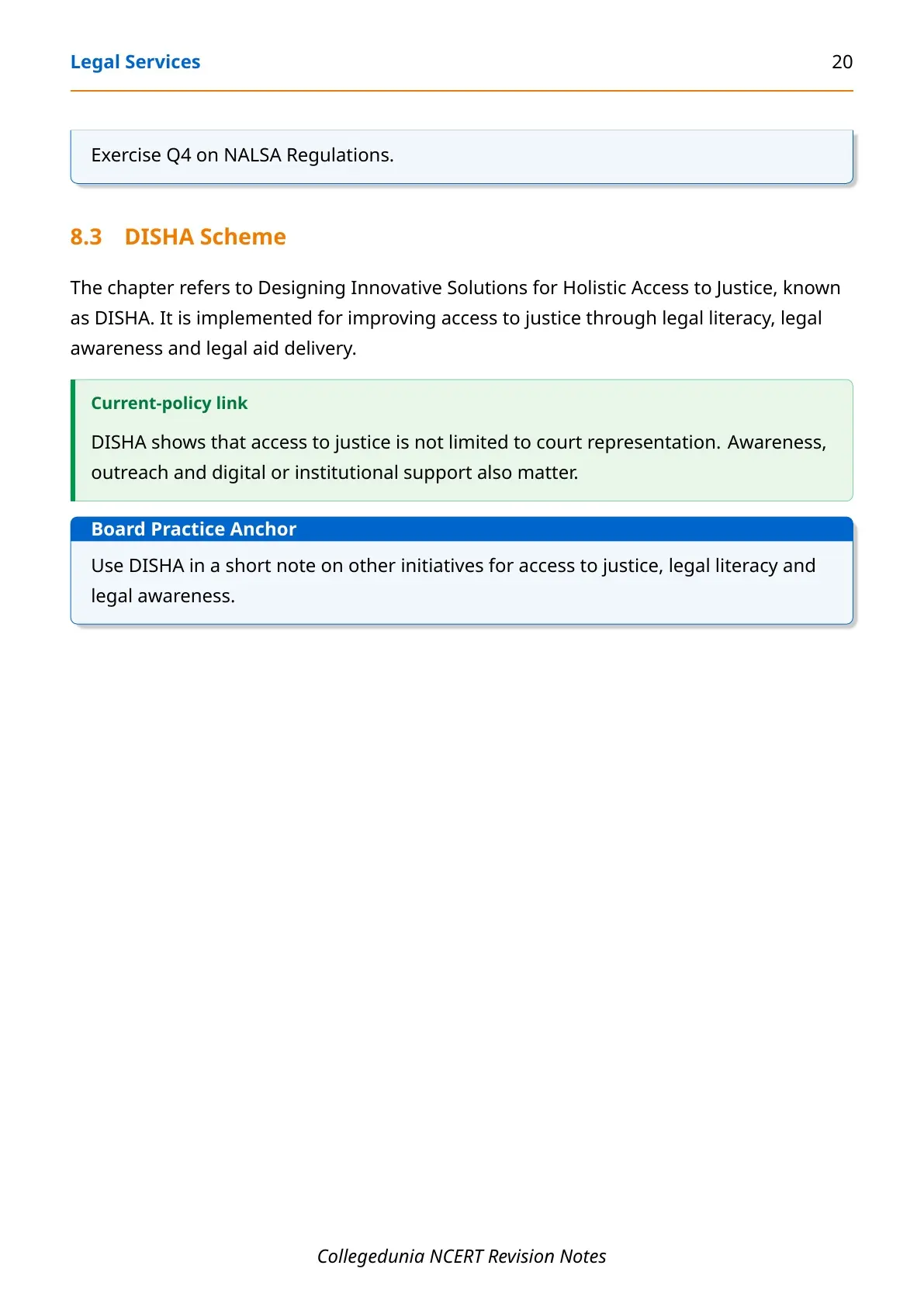
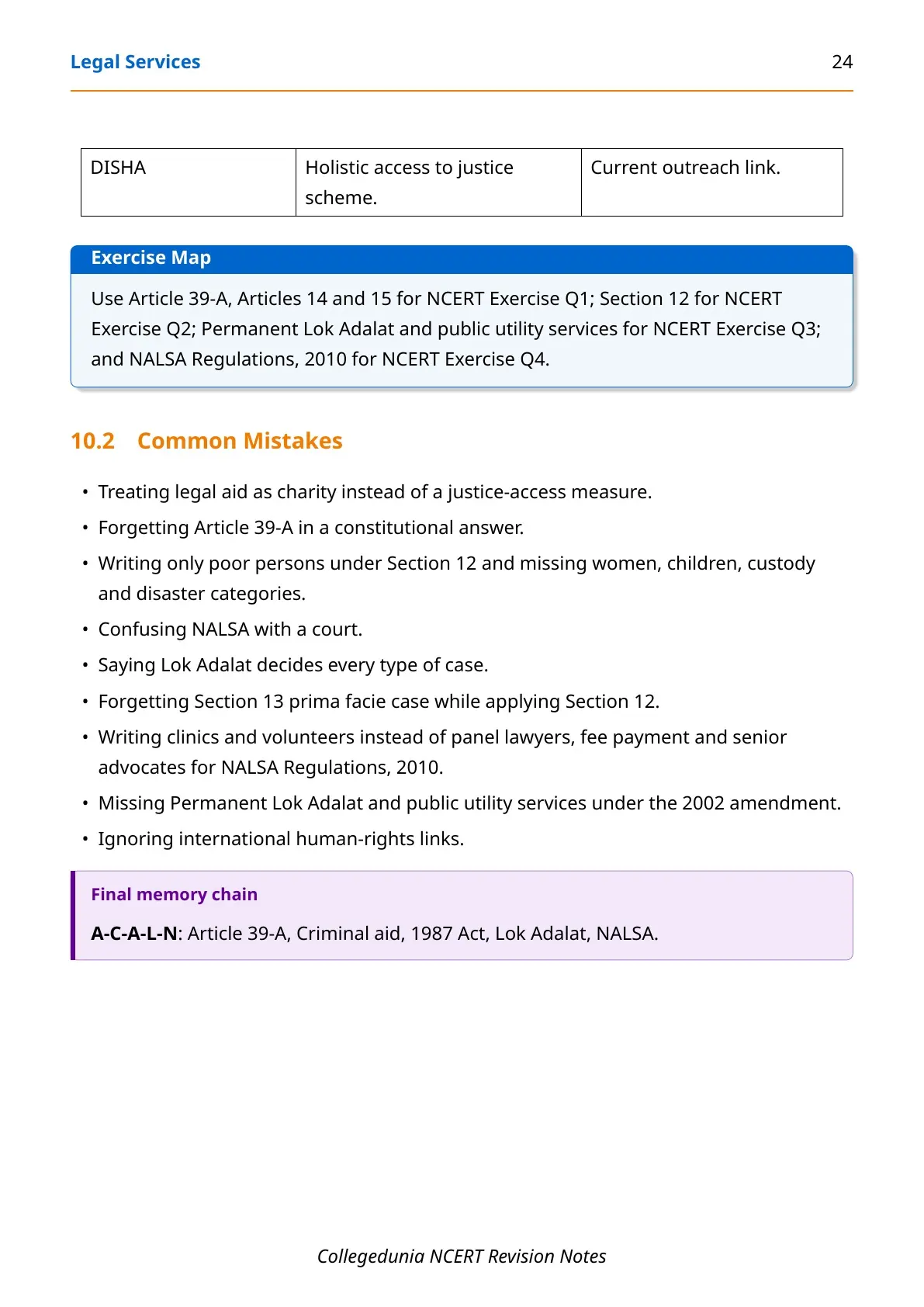
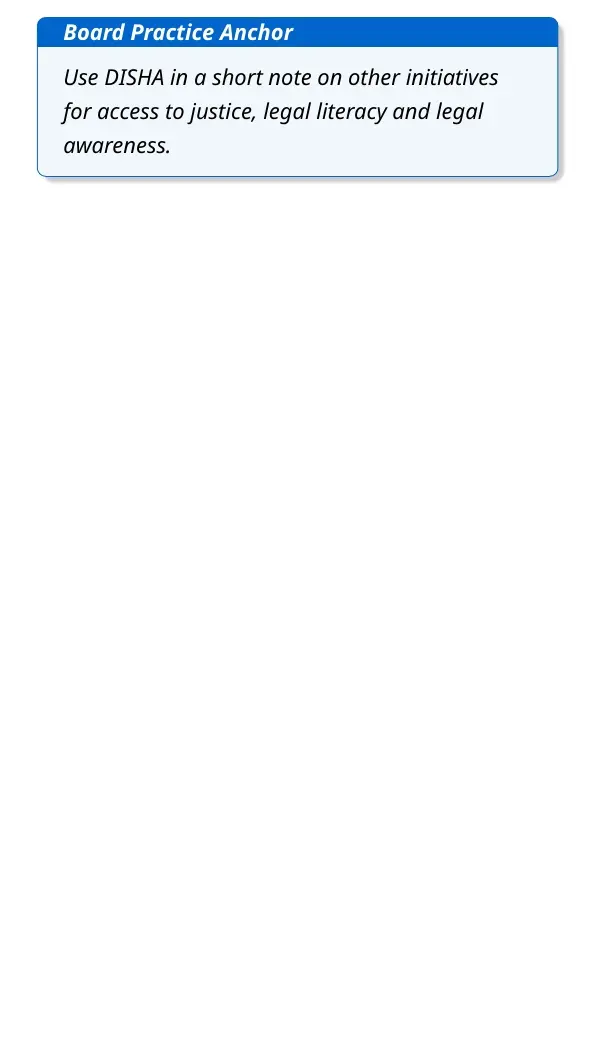
DISHA is linked with holistic access to justice, including legal literacy, legal awareness and legal aid delivery.
Legal Services Related NCERT Resources
| Resource | Class 12 Legal Studies Link |
|---|---|
| NCERT Solutions | Legal Services Class 12 NCERT Solutions |
| NCERT Book PDF | Legal Services Class 12 NCERT Book PDF |
| Handwritten Notes | Legal Services Class 12 Handwritten Notes |
Class 12 Legal Studies Notes for All Chapters
| Chapter | Notes Link |
|---|---|
| Chapter 1 Judiciary | Class 12 Legal Studies Notes |
| Chapter 2 Alternative Dispute Resolution in India | Class 12 Legal Studies Notes |
| Chapter 3 Family Justice System | Class 12 Legal Studies Notes |
| Chapter 4 Human Rights in India | Class 12 Legal Studies Notes |
| Chapter 5 Legal Profession in India | Class 12 Legal Studies Notes |
| Chapter 6 Legal Services | Current chapter notes |
| Chapter 7 International Context | Class 12 Legal Studies Notes |
Legal Services Class 12 Legal Studies Notes FAQs
Ques. What is covered in Legal Services Class 12 Legal Studies notes?
Ans. The notes cover legal aid, Article 39-A, Section 12 beneficiaries, NALSA, Lok Adalat, NALSA Regulations, DISHA and access to justice for the 2026-27 syllabus.
Ques. Which provision is most important for legal aid in this chapter?
Ans. Article 39-A is the most important constitutional provision because it connects equal justice with free legal aid by the State.
Ques. What should students remember about Section 12?
Ans. Section 12 lists eligible persons, including SC or ST members, women, children, persons with disability, disaster victims, workmen, persons in custody and low-income persons.



Comments