




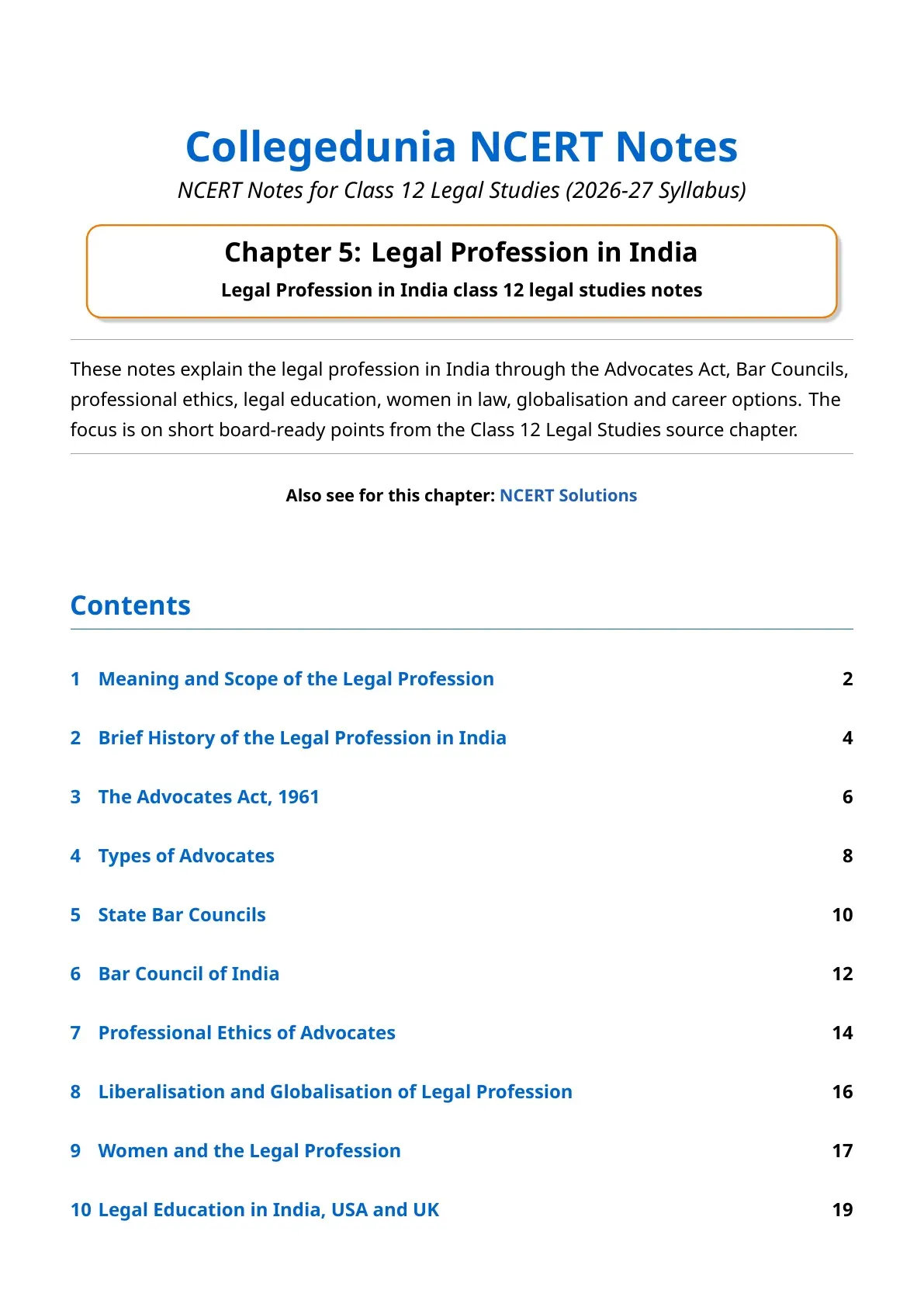
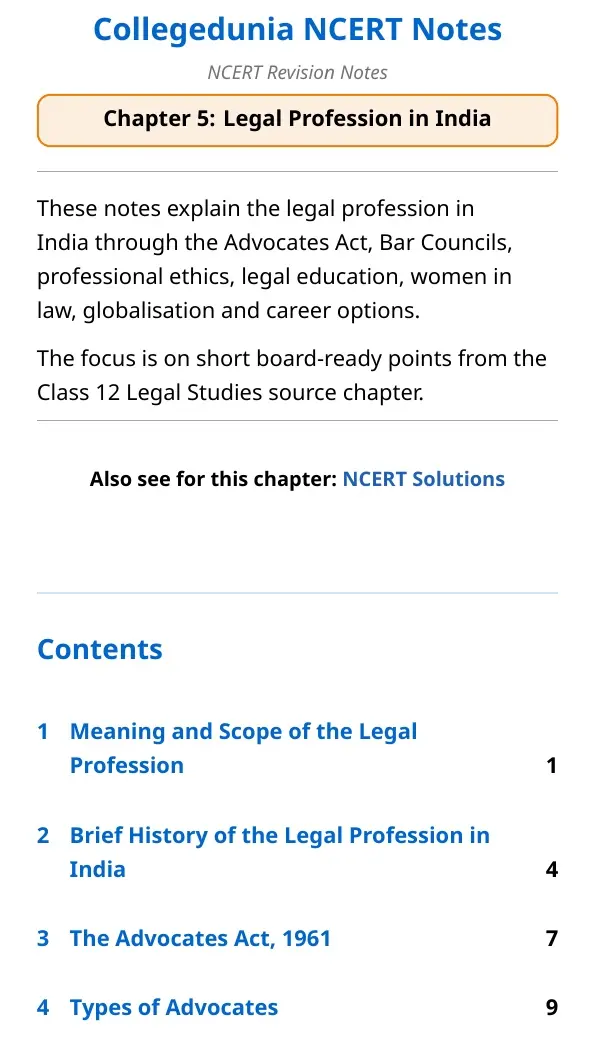
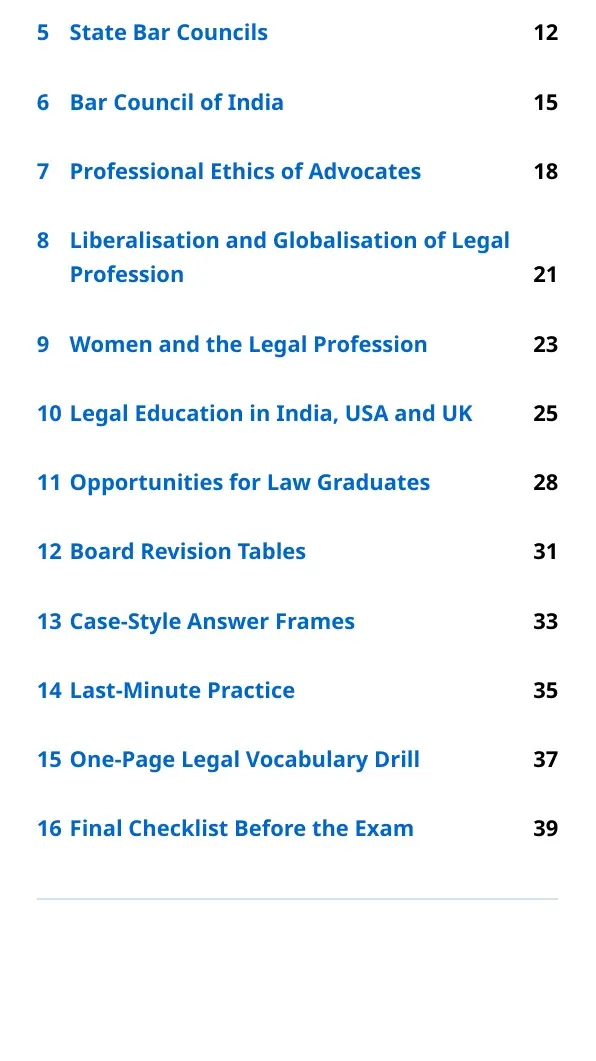
NCERT Class 12 Legal Studies Chapter 5 Legal Profession in India Notes cover the Advocates Act, Bar Councils, professional ethics, legal education and career routes for the 2026-27 syllabus. The PDF gives students a board-focused summary of how the legal profession is organised and regulated in India.
- PDF included: 28 pages with institutional tables, ethics checklists and exam prompts.
- Key focus: Advocates Act, State Bar Councils, Bar Council of India, advocate categories and conduct rules.
- Best use: revise the institutions first, then practise category and ethics comparison answers.





Student Feedback: In a Collegedunia poll of 12,460 Class 12 Legal Studies students preparing for 2026 boards, 71% said Bar Council functions and advocate categories needed the most revision.
Legal Profession in India Notes PDF Overview
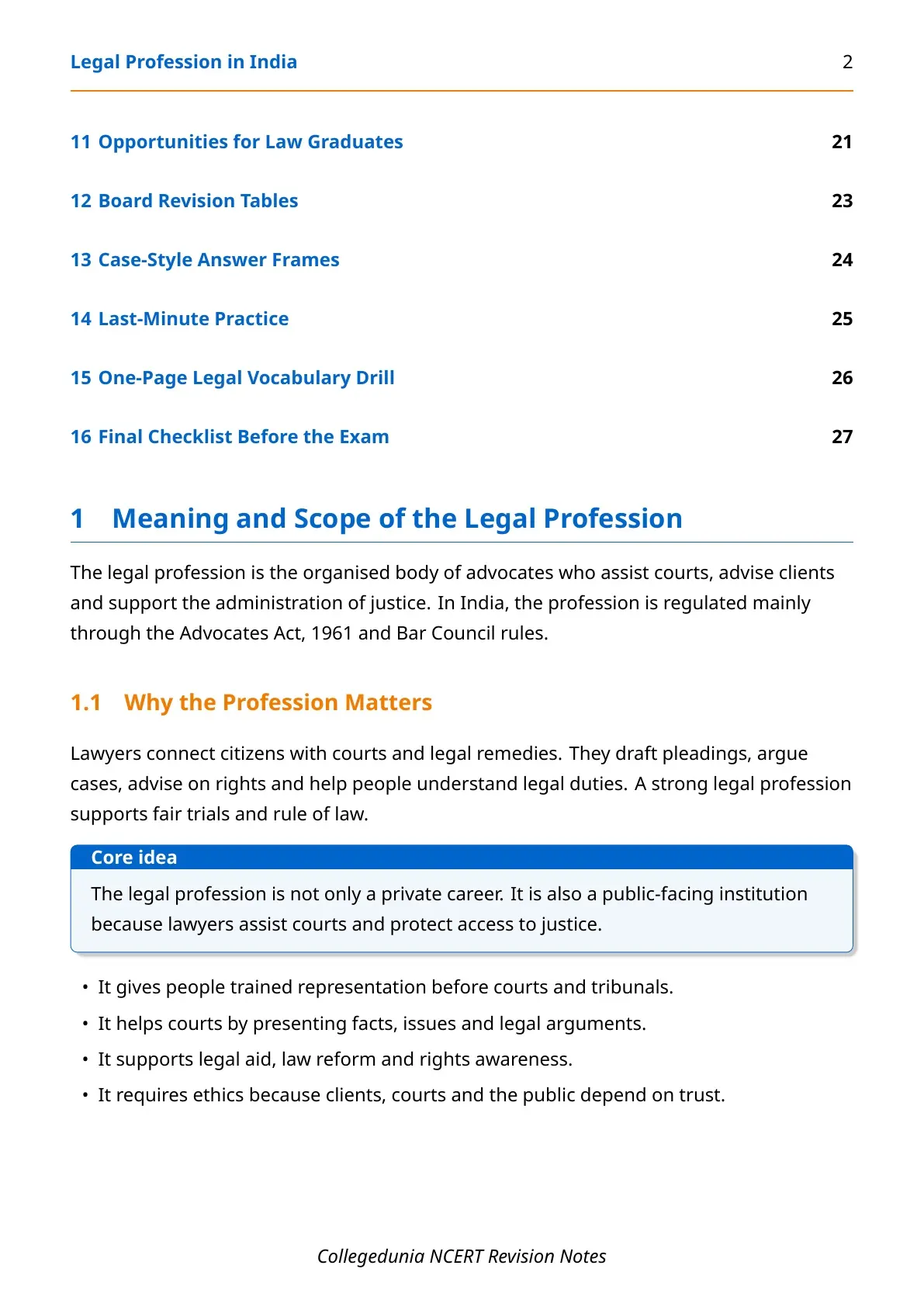
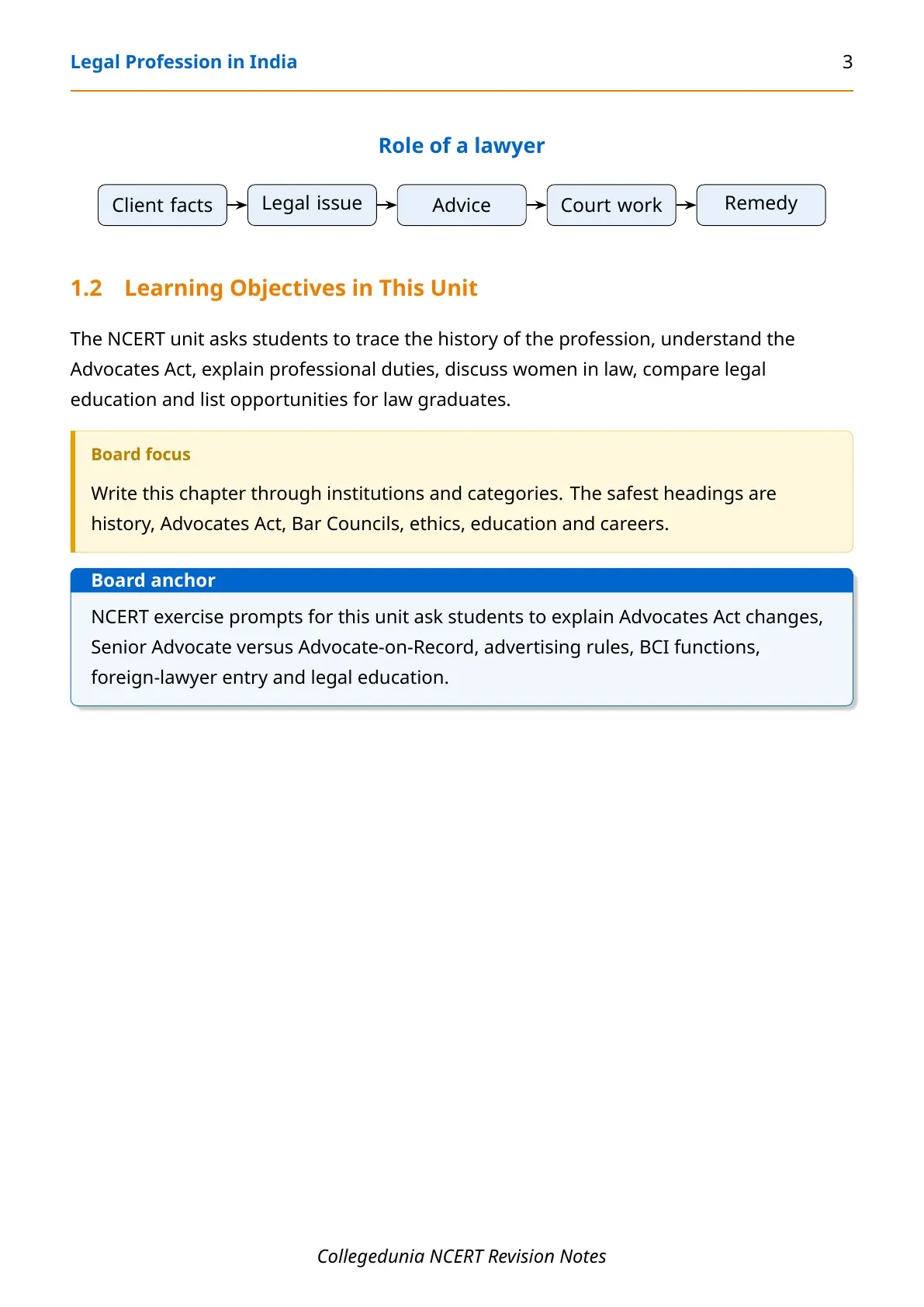
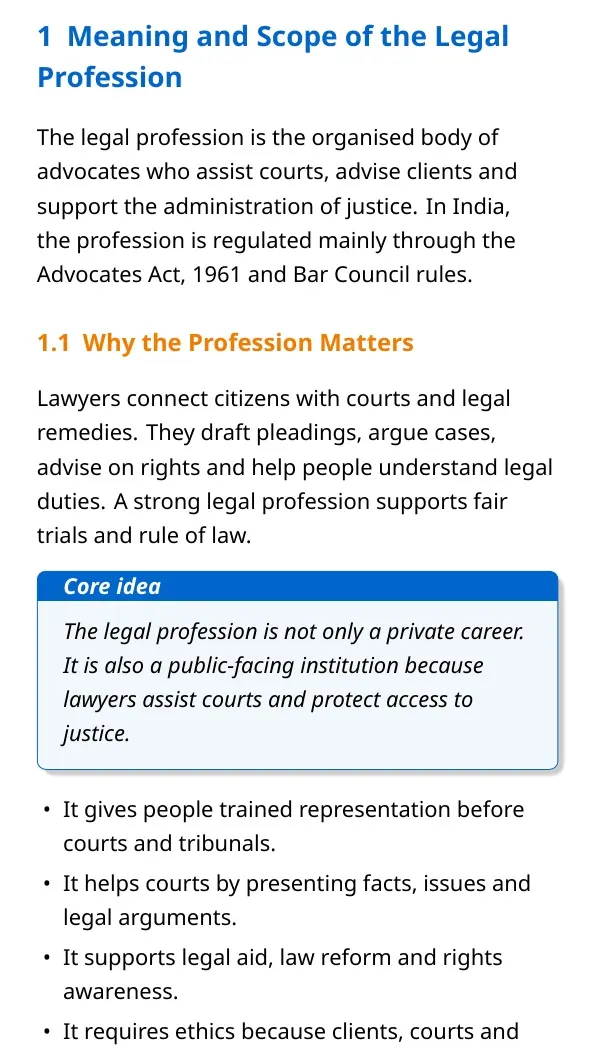
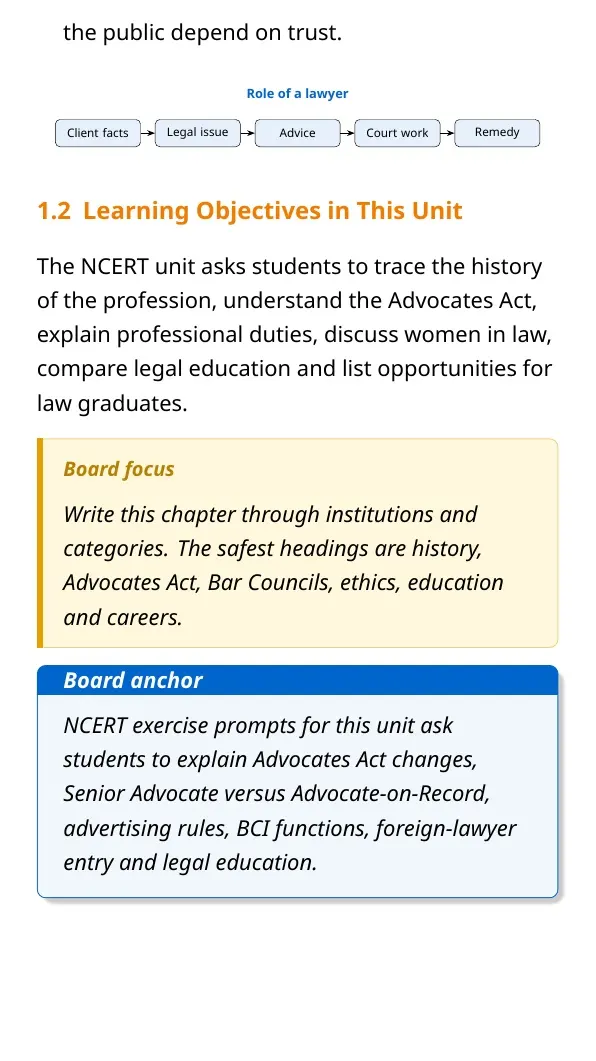
Legal Profession in India explains how advocates are enrolled, regulated and expected to behave while assisting courts and clients. The chapter begins with the historical development of the profession and then moves into the Advocates Act, 1961, the State Bar Councils, the Bar Council of India, professional duties, advertising restrictions, legal education and opportunities after law.
The safest revision method is to connect each answer with one institution, one legal rule and one practical duty. For example, an answer on the Bar Council of India should mention its statutory position, its role in legal education and its role in professional conduct.
| Area | What Students Revise | Quick Cue |
|---|---|---|
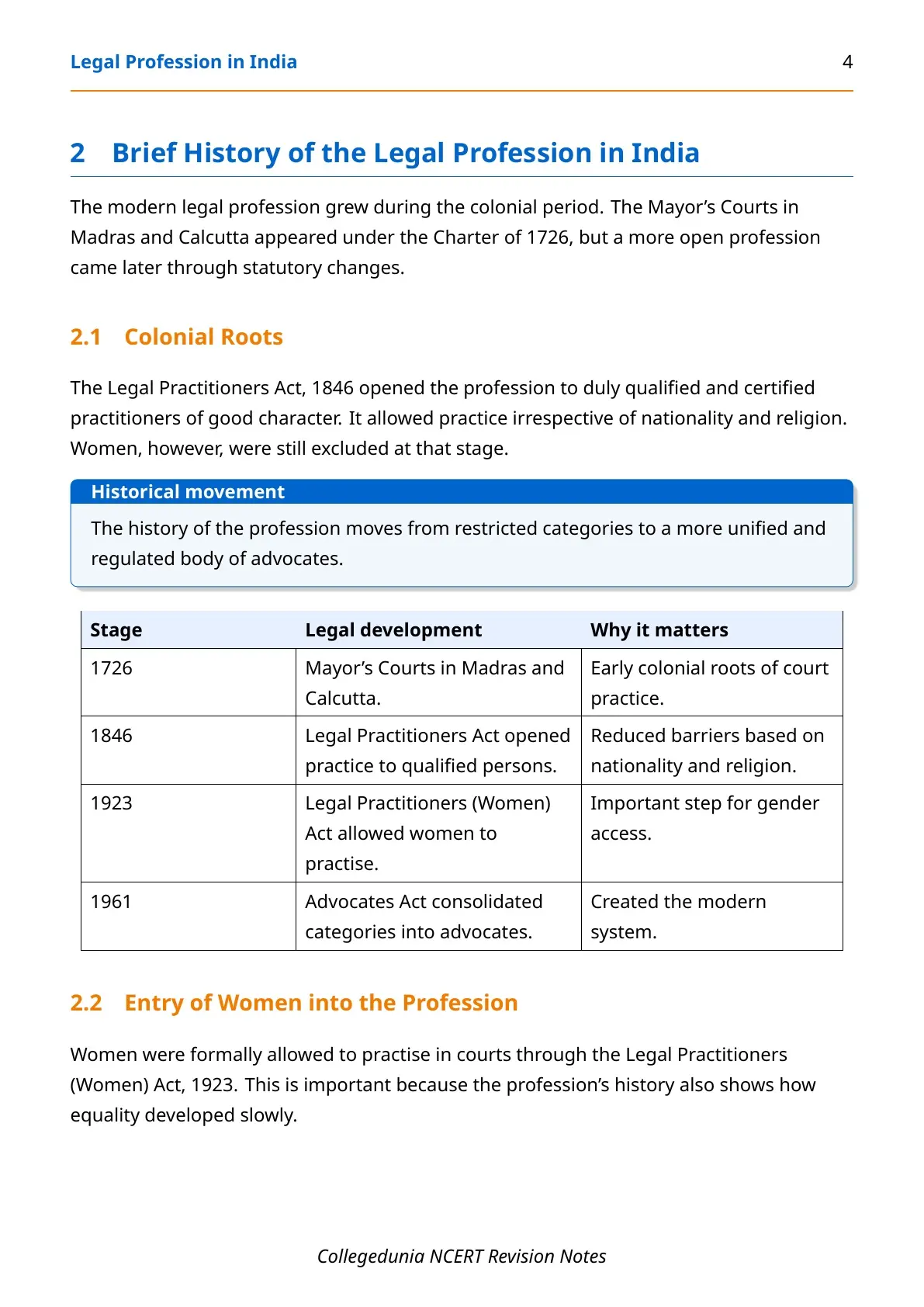
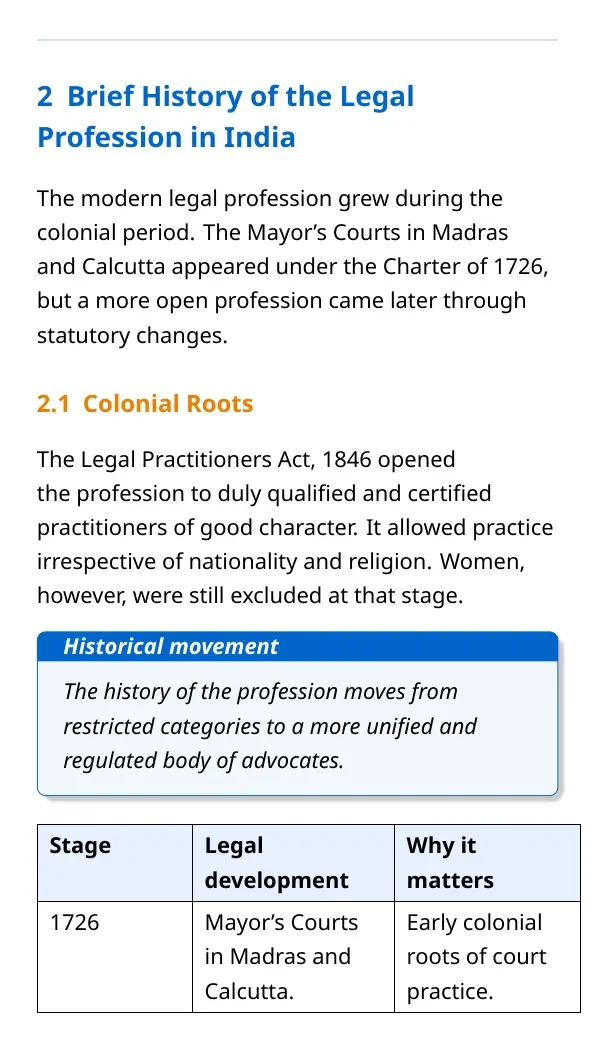
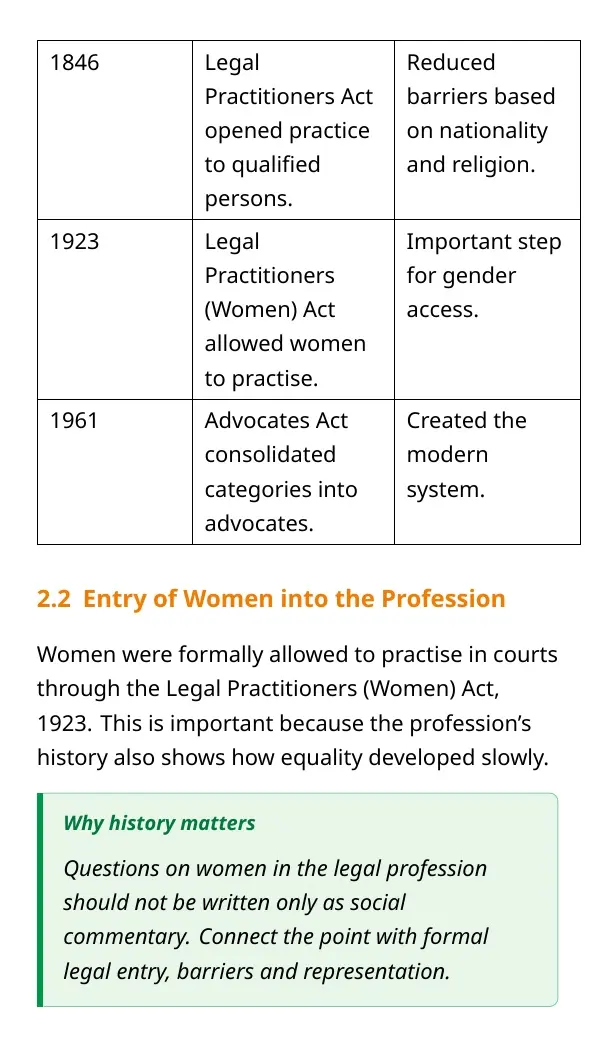
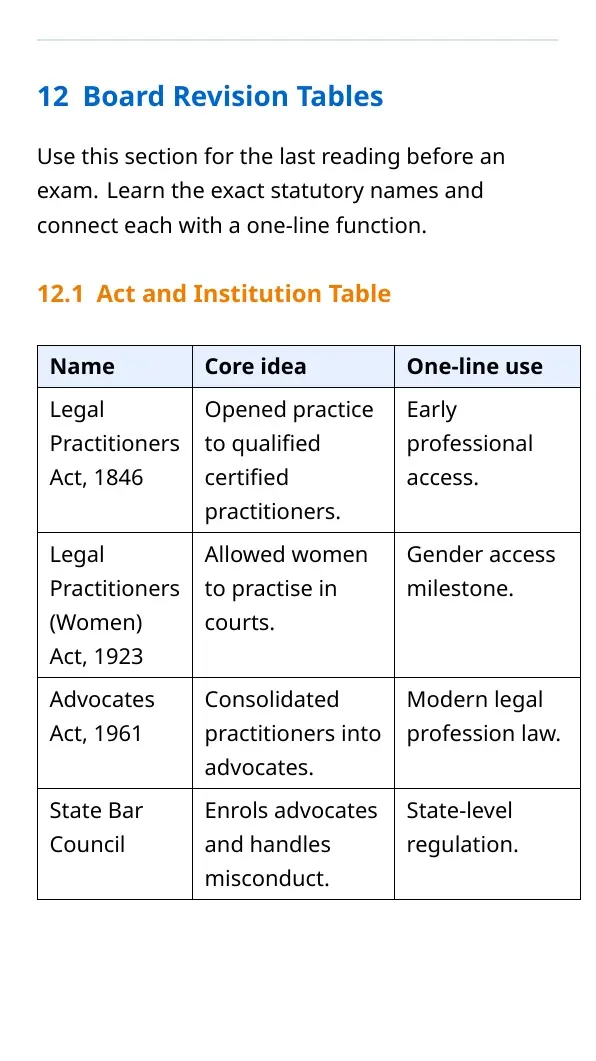
| History | Colonial courts, Legal Practitioners Act, women in law and the Advocates Act. | From restricted practice to unified advocates. |
| Institutions | State Bar Councils and Bar Council of India. | Enrollment, regulation and standards. |
| Conduct | Duties to court, client, opponent and profession. | Independence with responsibility. |
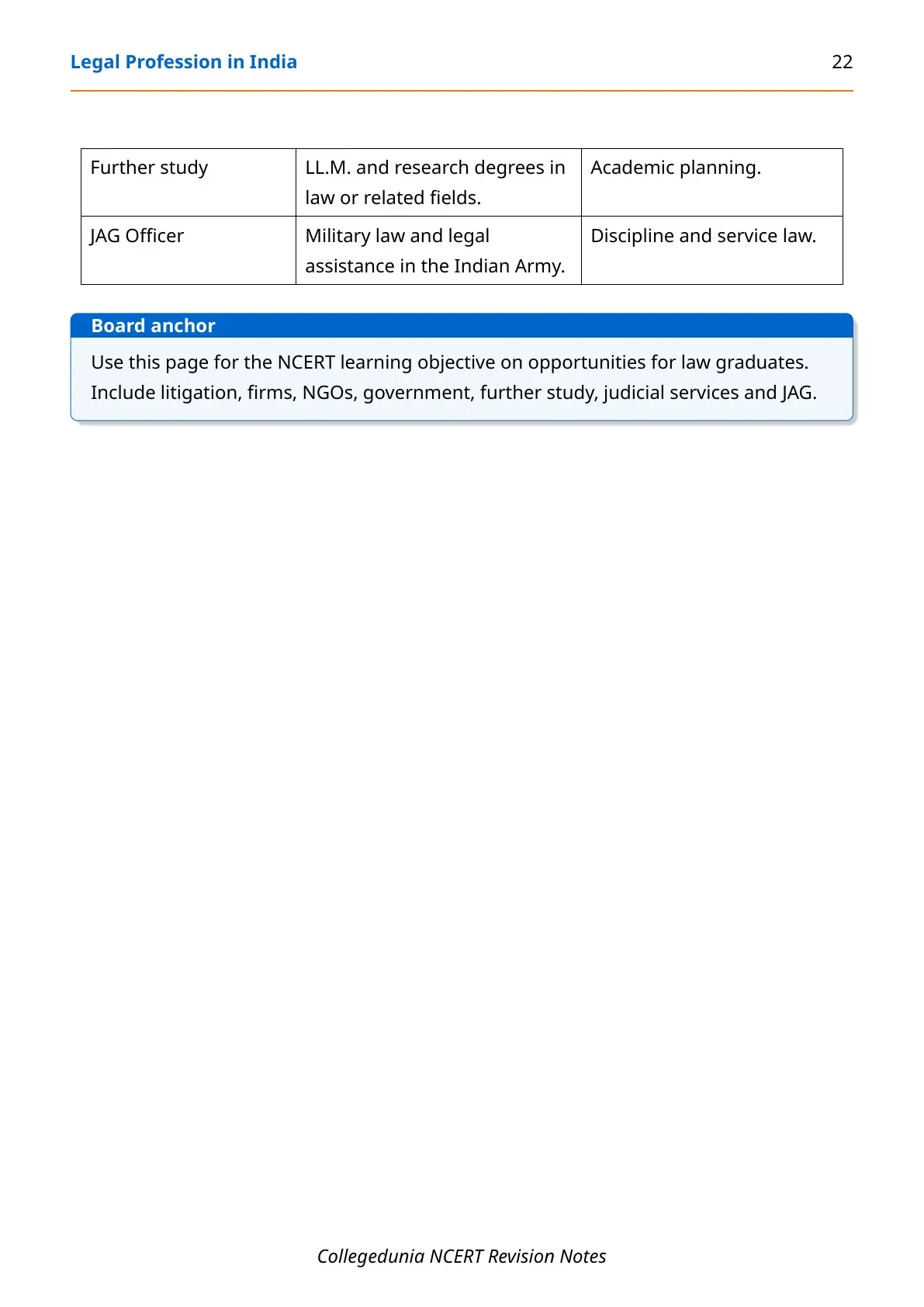
| Careers | Litigation, firms, legal process work, academics, legal services and JAG. | Law is broader than courtroom practice. |
Advocates Act and Bar Councils
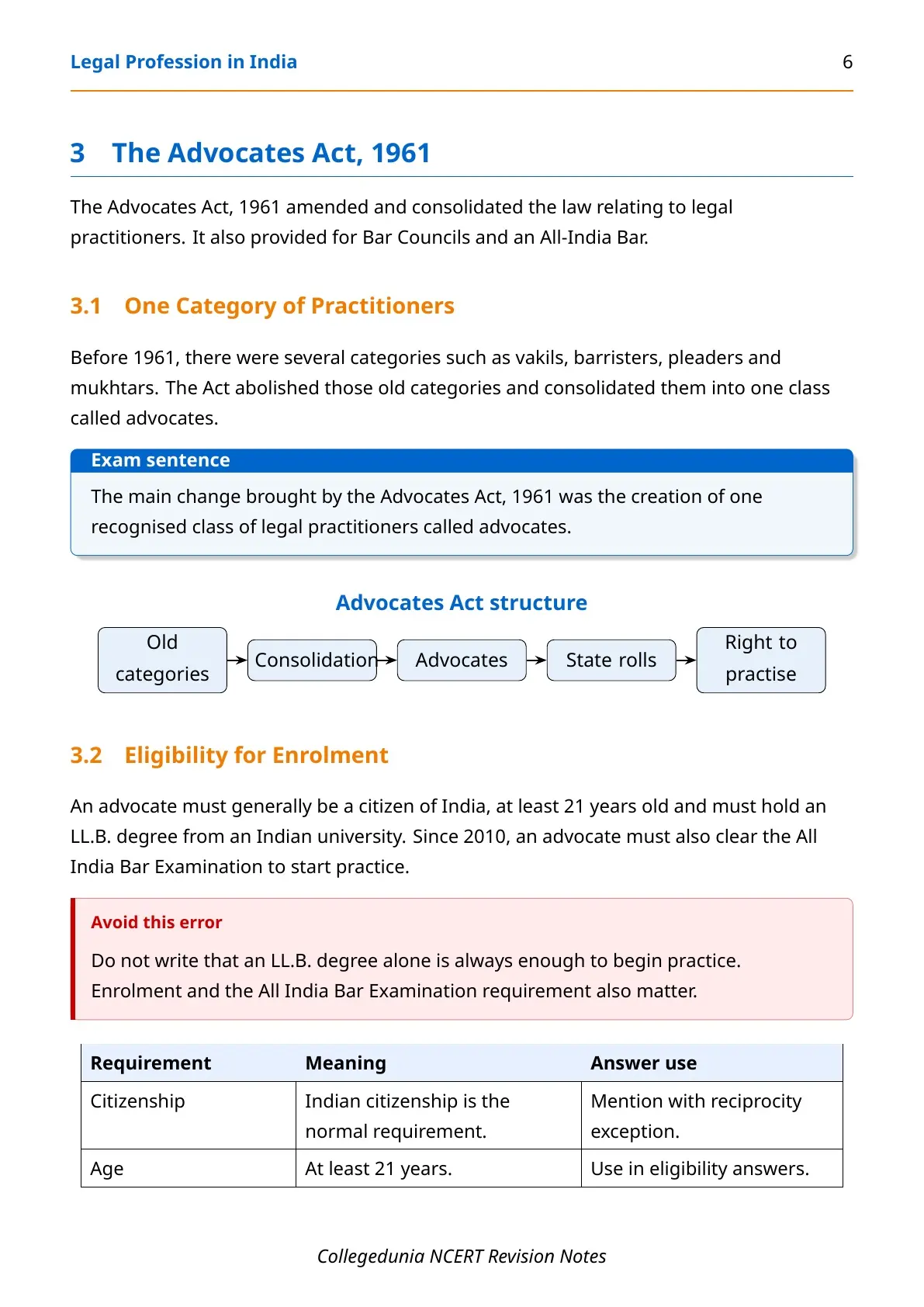
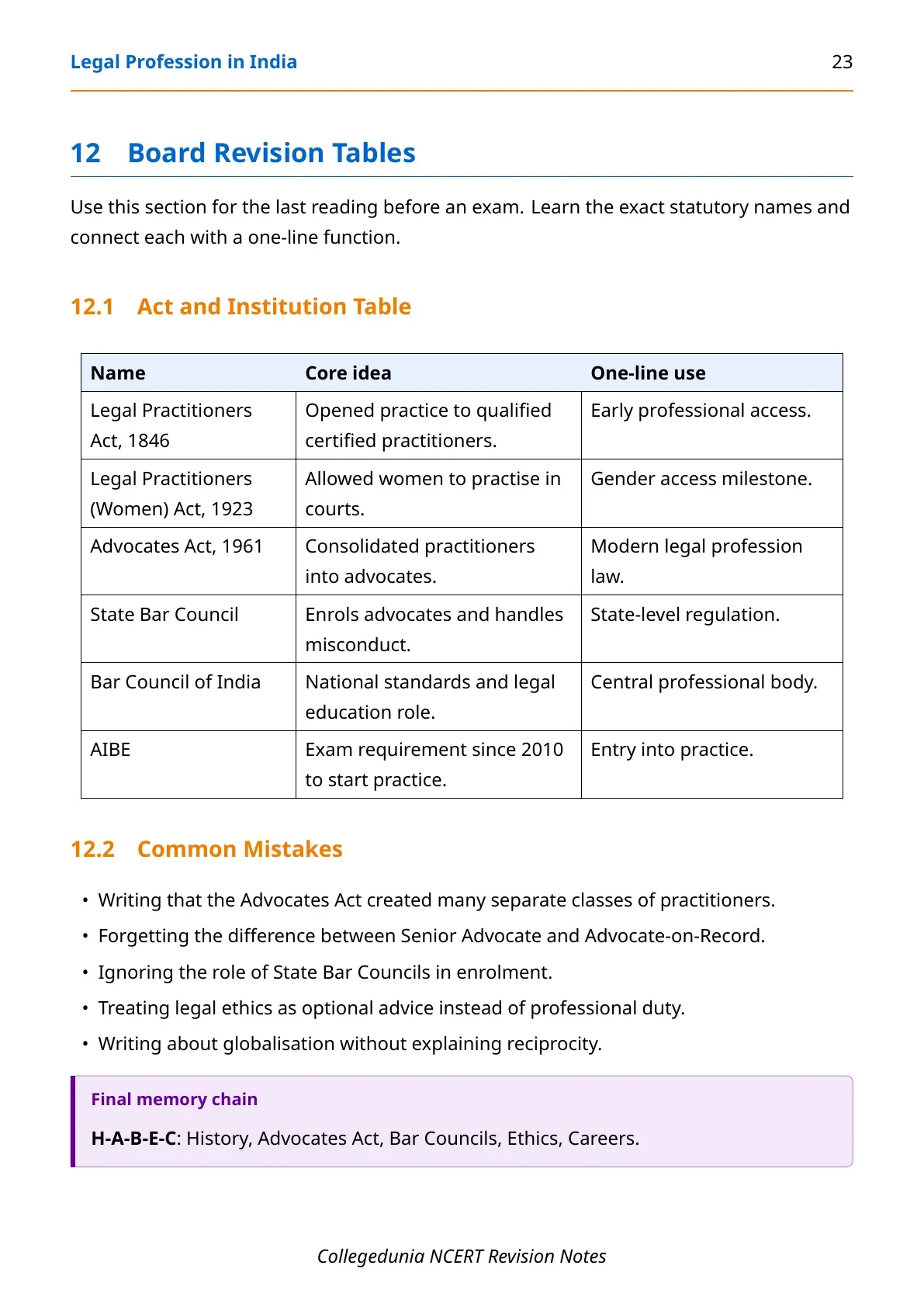
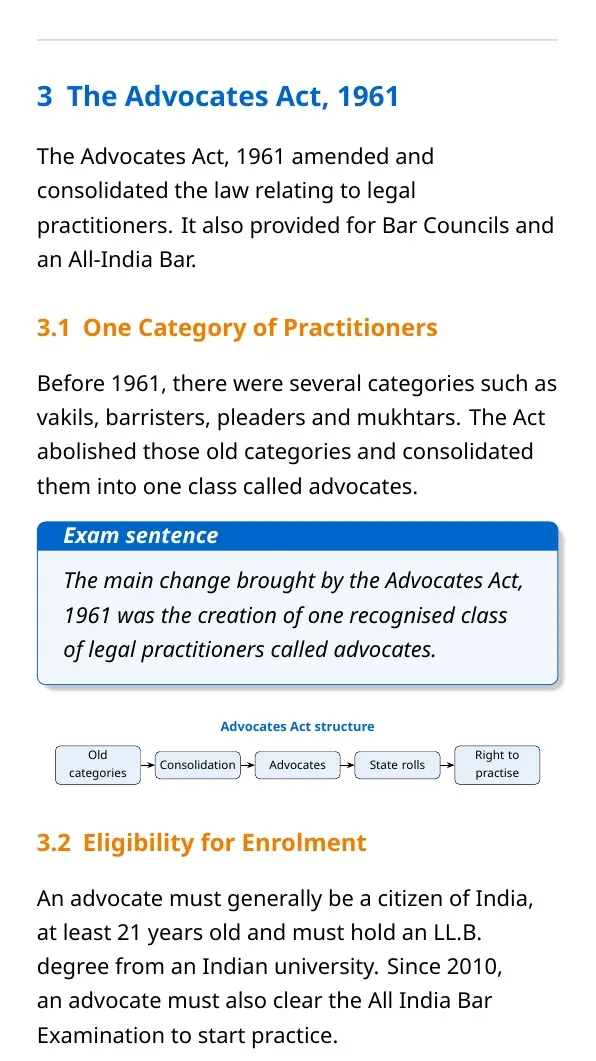
The Advocates Act, 1961 created the modern structure of the legal profession in India. It consolidated earlier categories of legal practitioners and built a regulated system around advocates, State Bar Councils and the Bar Council of India. A student answer should mention that the Act supports a unified profession while still allowing different court-specific categories such as Senior Advocates and Advocates-on-Record.
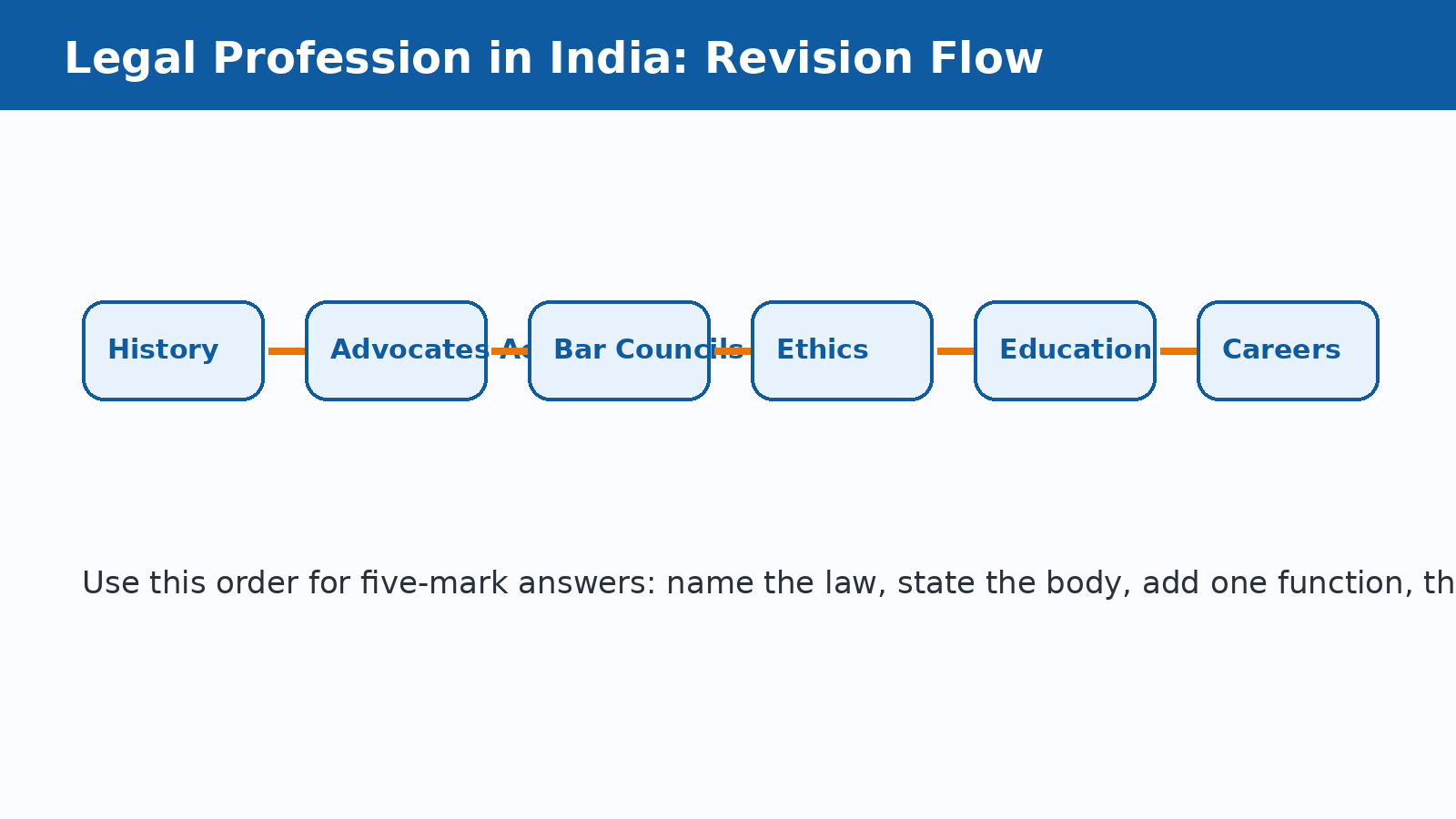
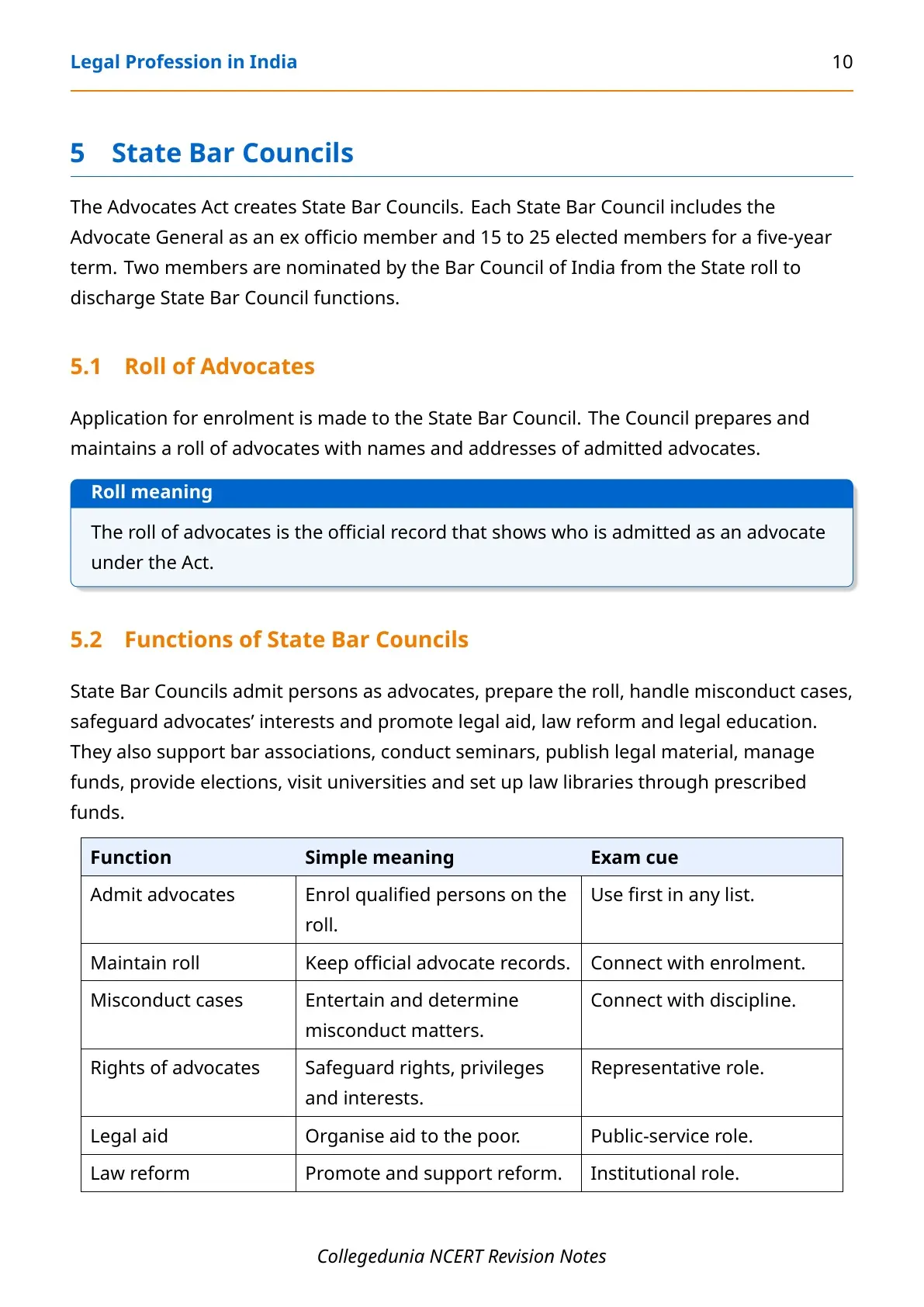
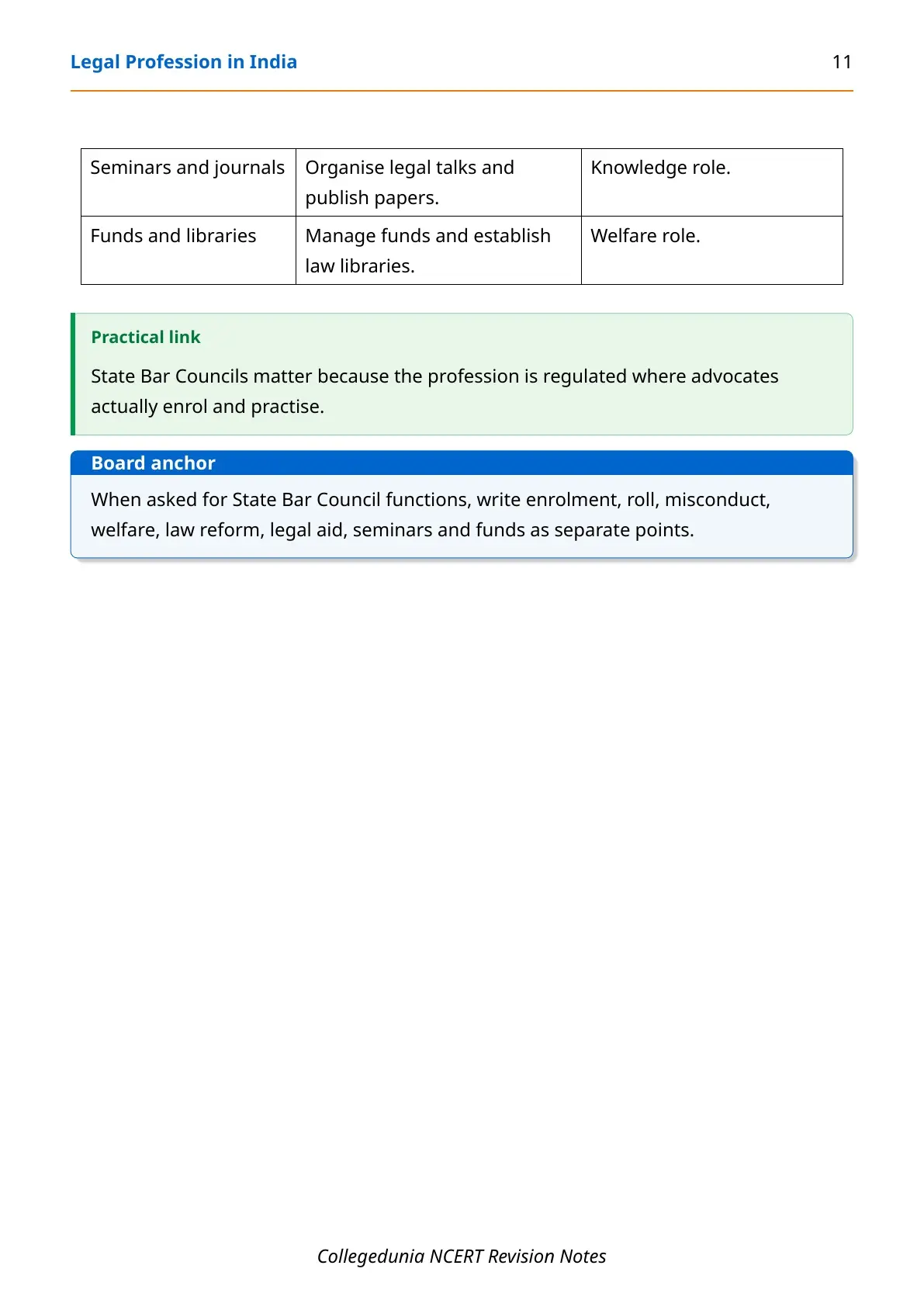
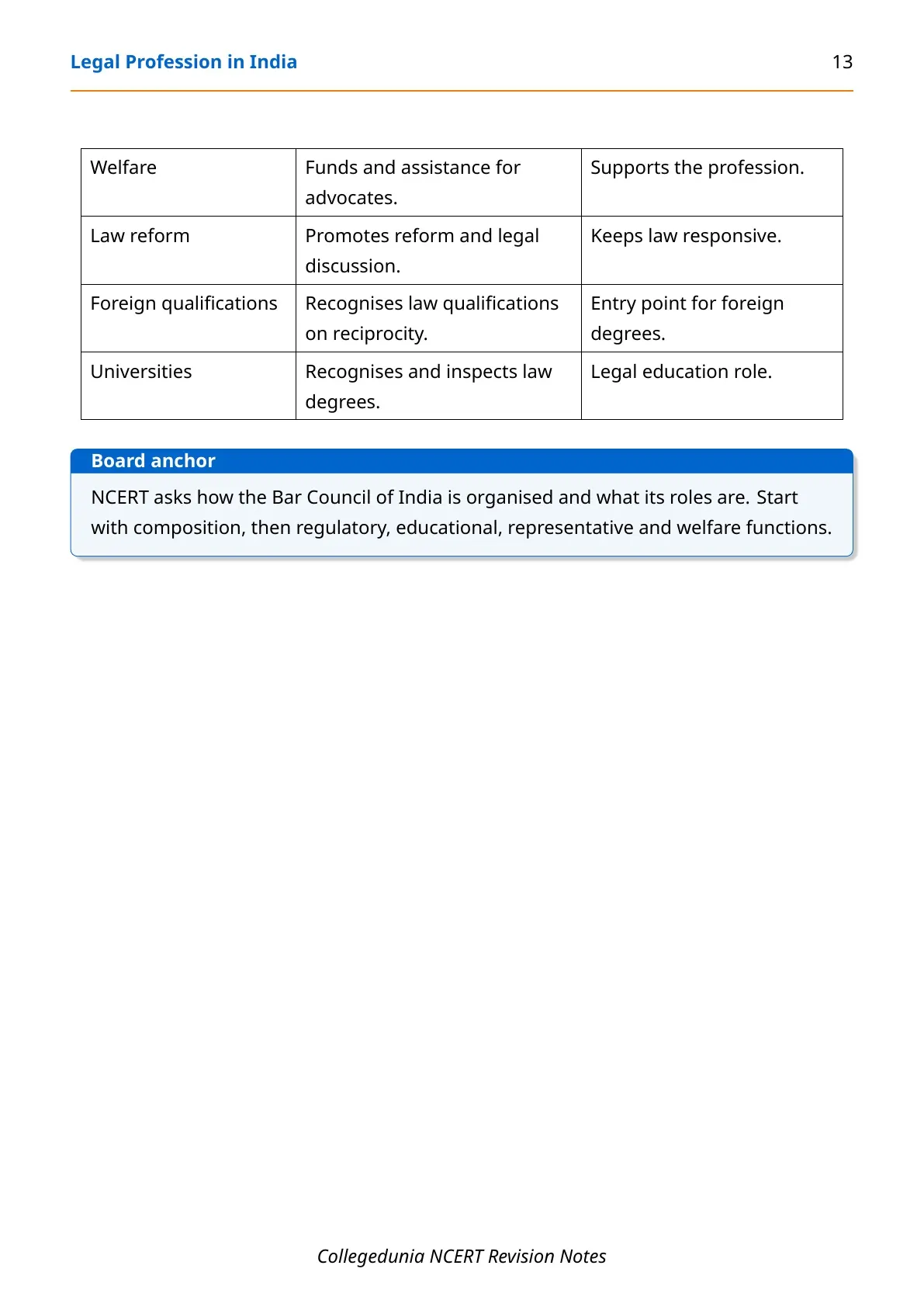
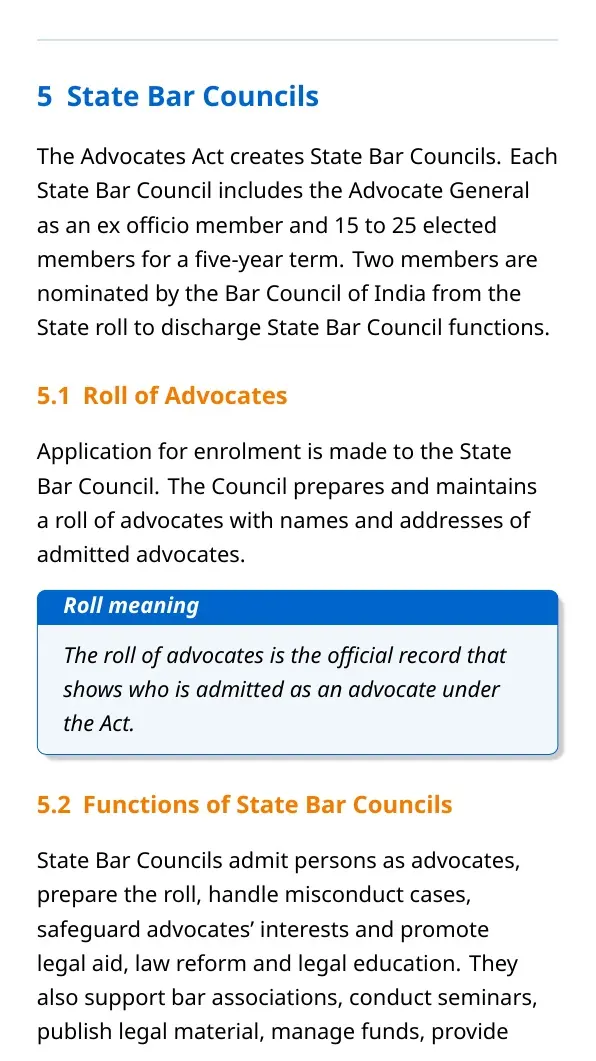
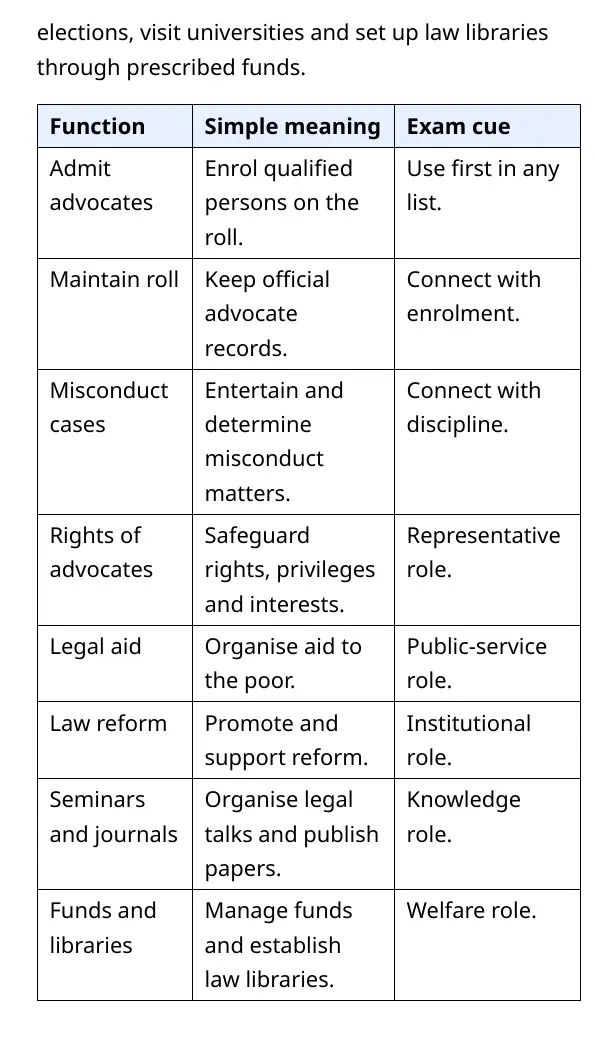
- State Bar Councils: enroll advocates, maintain rolls, safeguard professional standards and handle disciplinary matters at the state level.
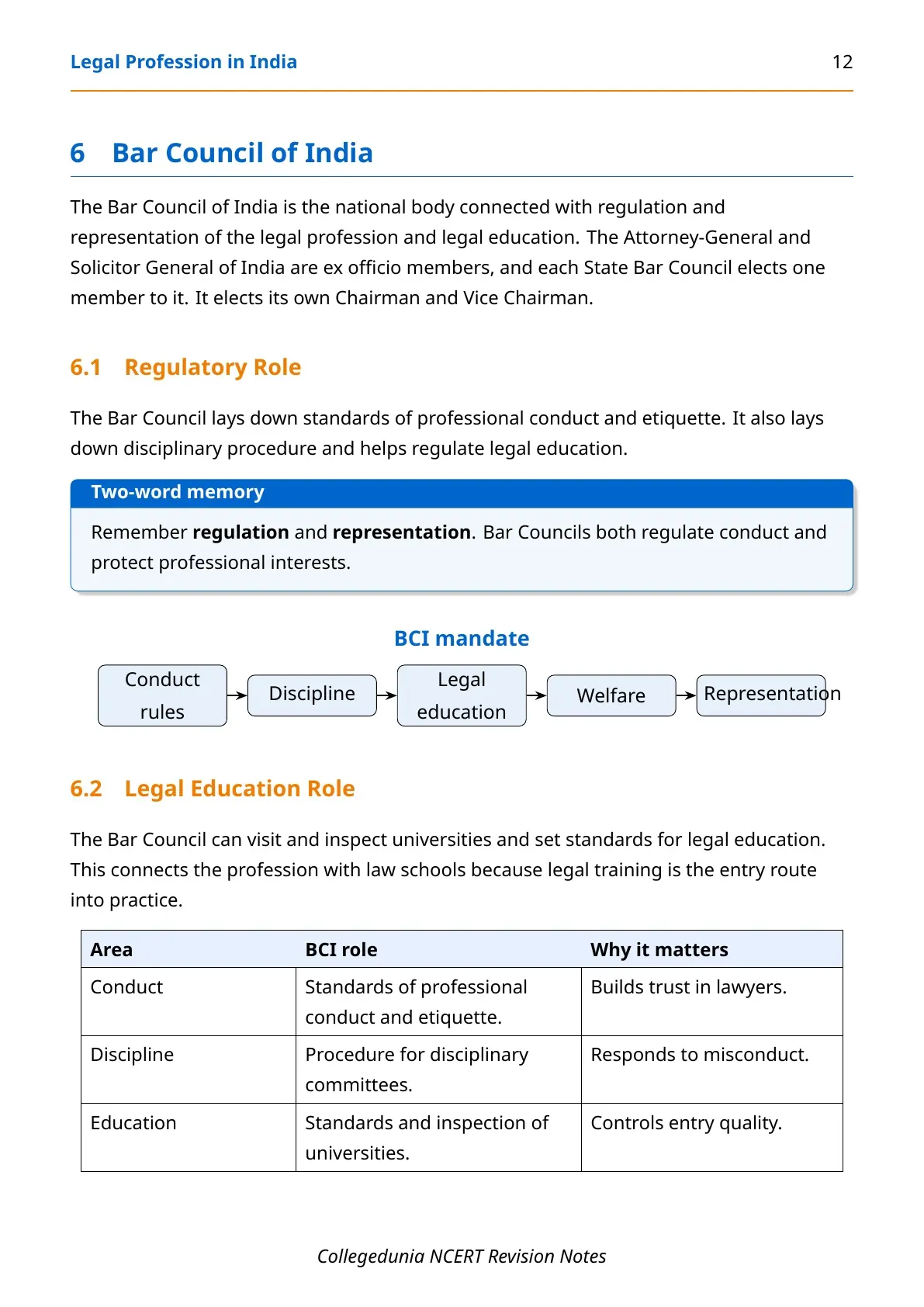
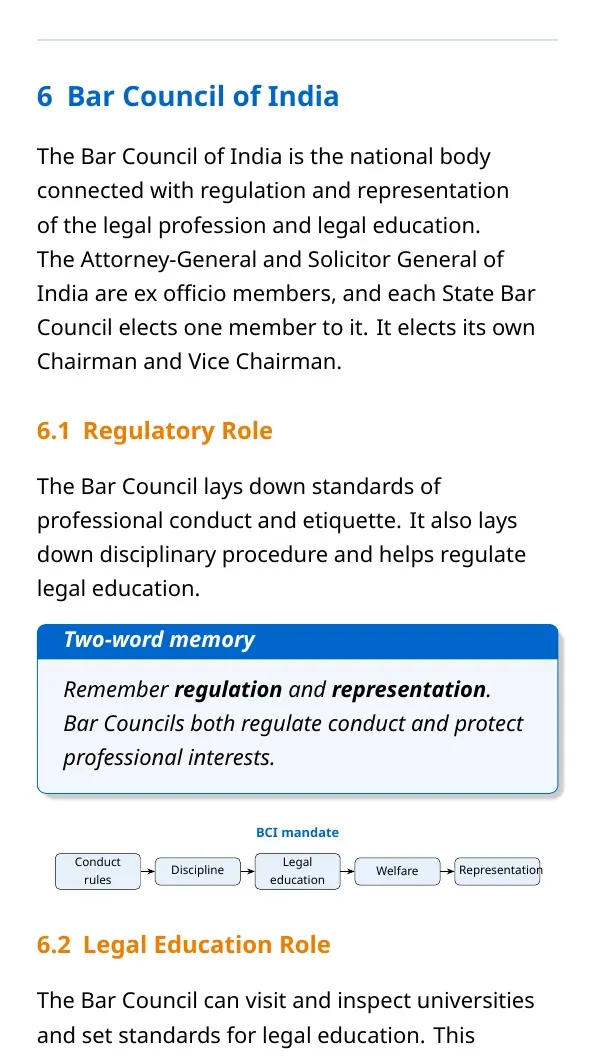
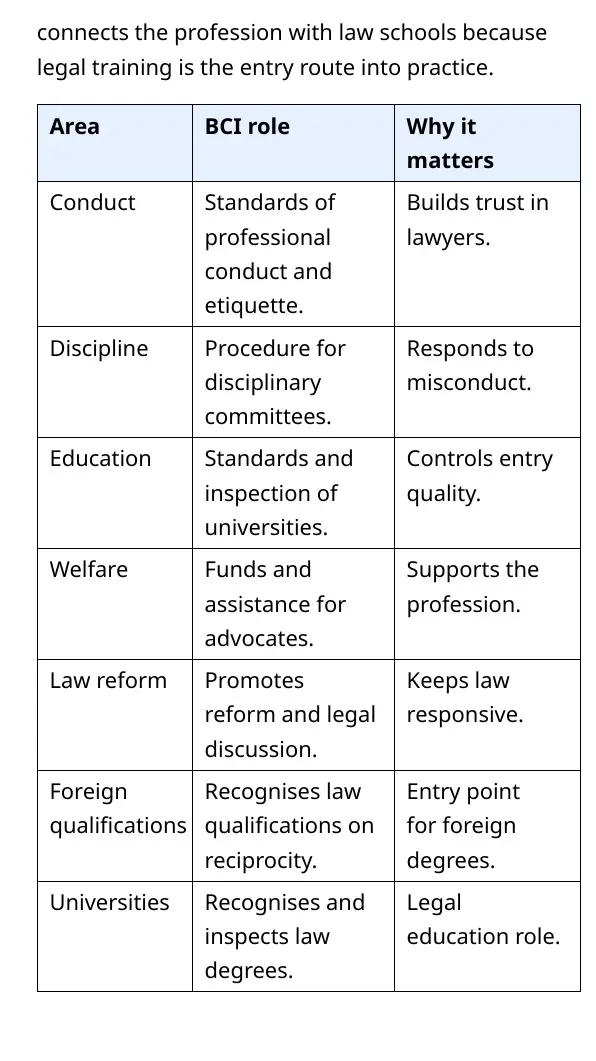
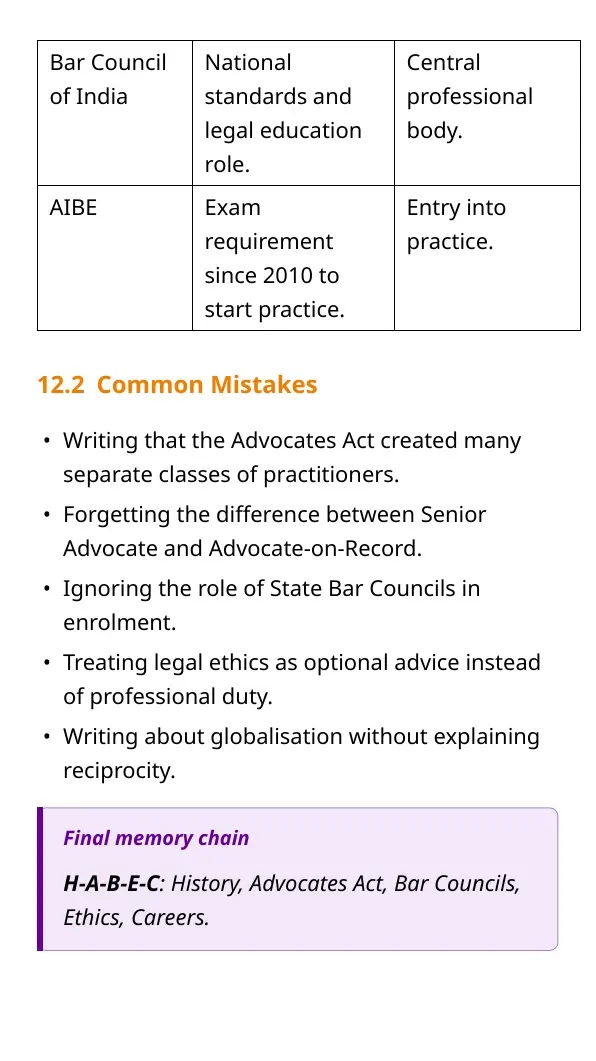
- Bar Council of India: lays down standards of professional conduct, regulates legal education, recognises law degrees and exercises wider supervisory functions.
- Common exam point: BCI functions should be written as regulation of advocates plus regulation of legal education.
- Example answer use: when asked about professional regulation, write the Act first, then the body, then the function.
The State Bar Council is especially important for enrollment because a law graduate becomes an advocate through entry on the state roll. The Bar Council of India has a national role, including recognition of law degrees and rules for professional standards. This difference helps students avoid mixing the two institutions in board answers.
Legal Profession in India Revision Video
Source: Magnet Brains on YouTube
Categories of Advocates and Court Practice
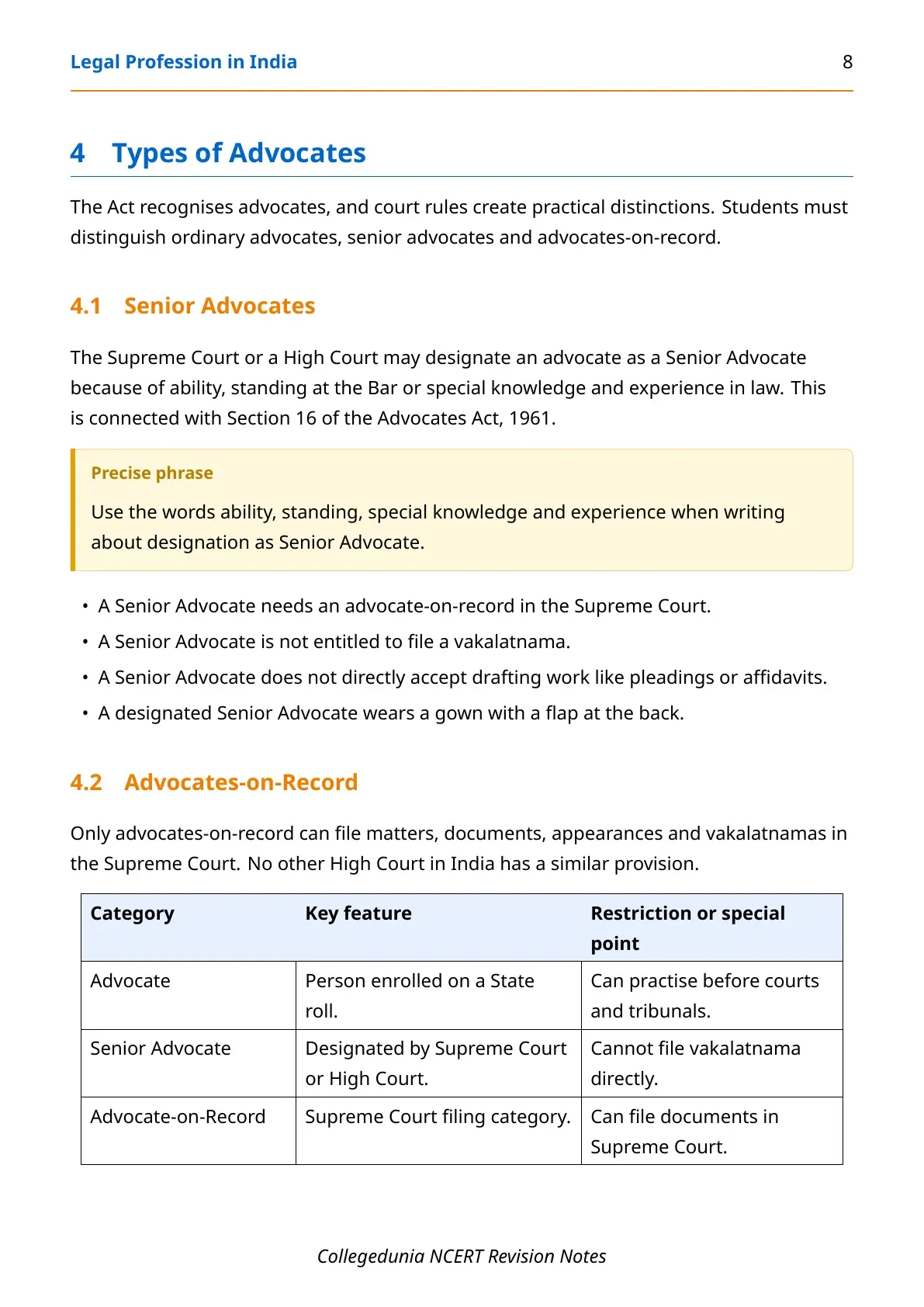
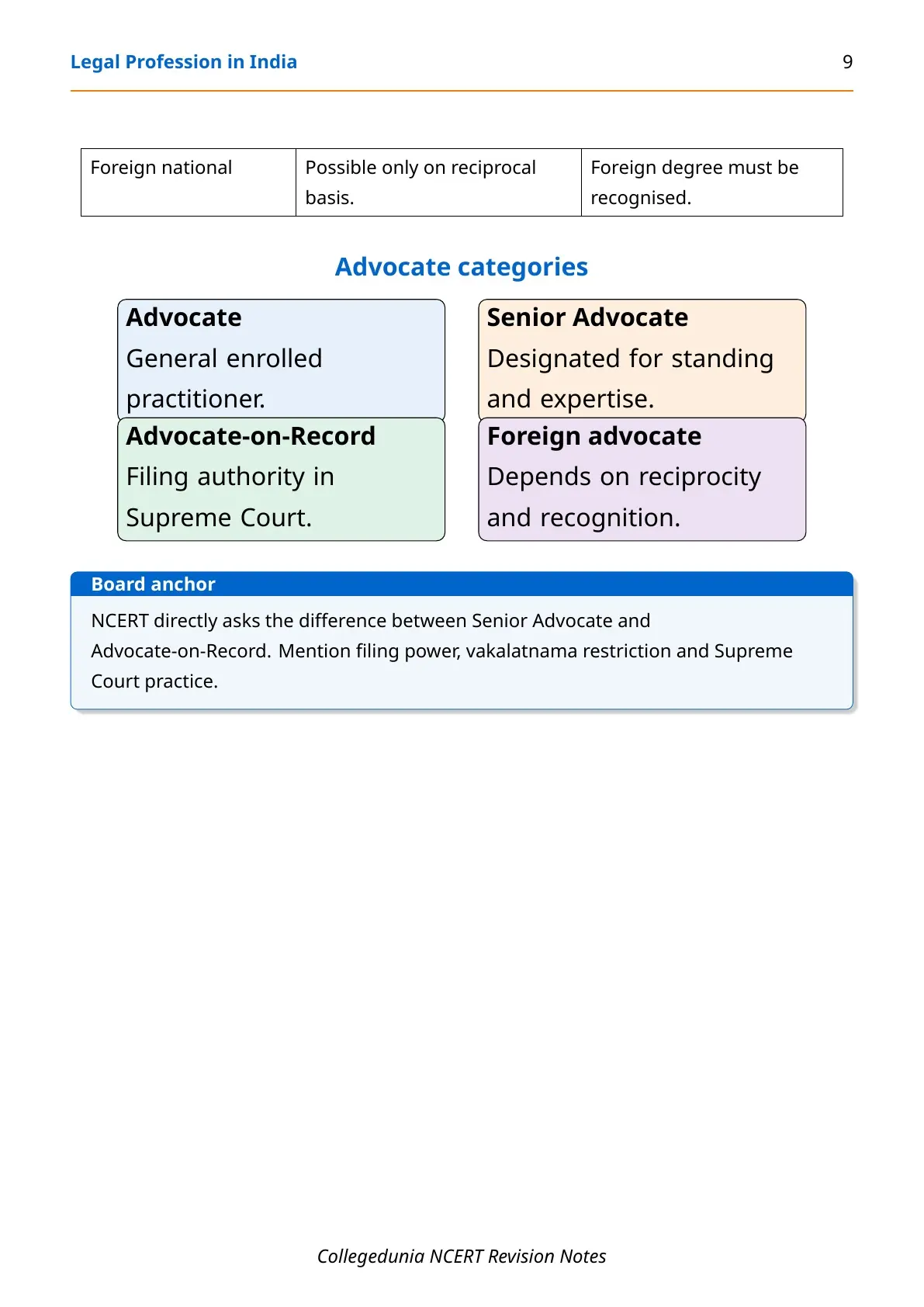
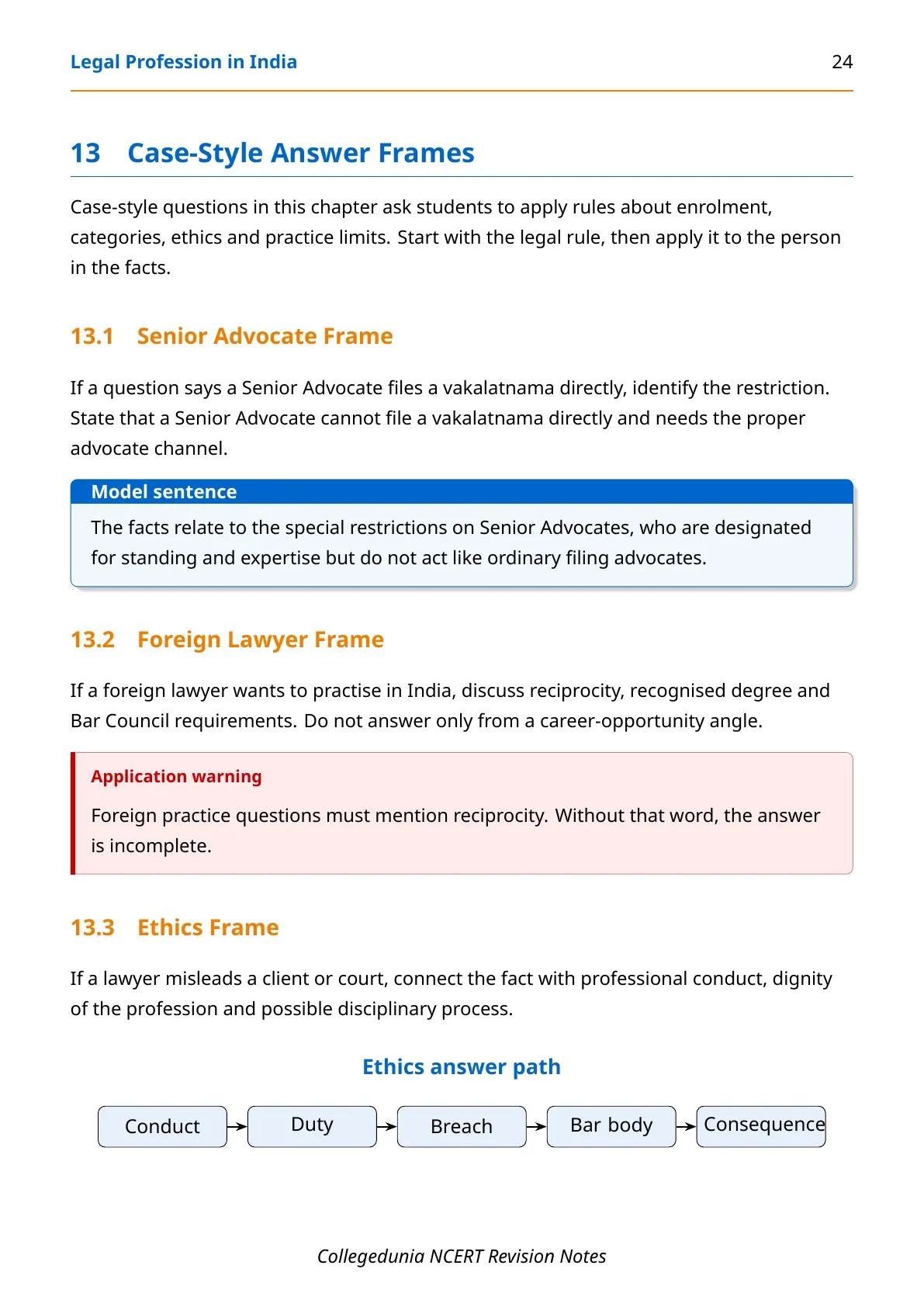
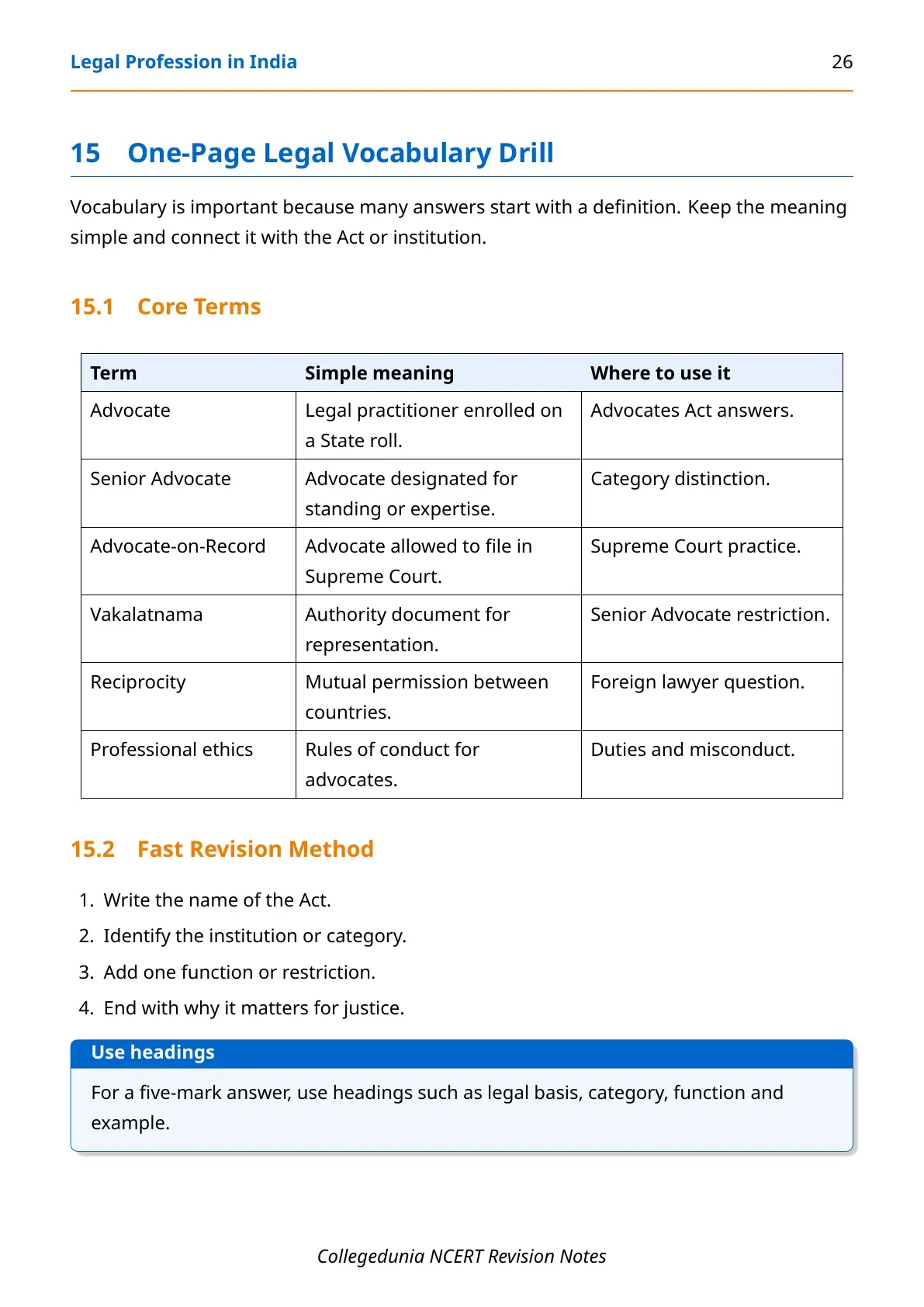
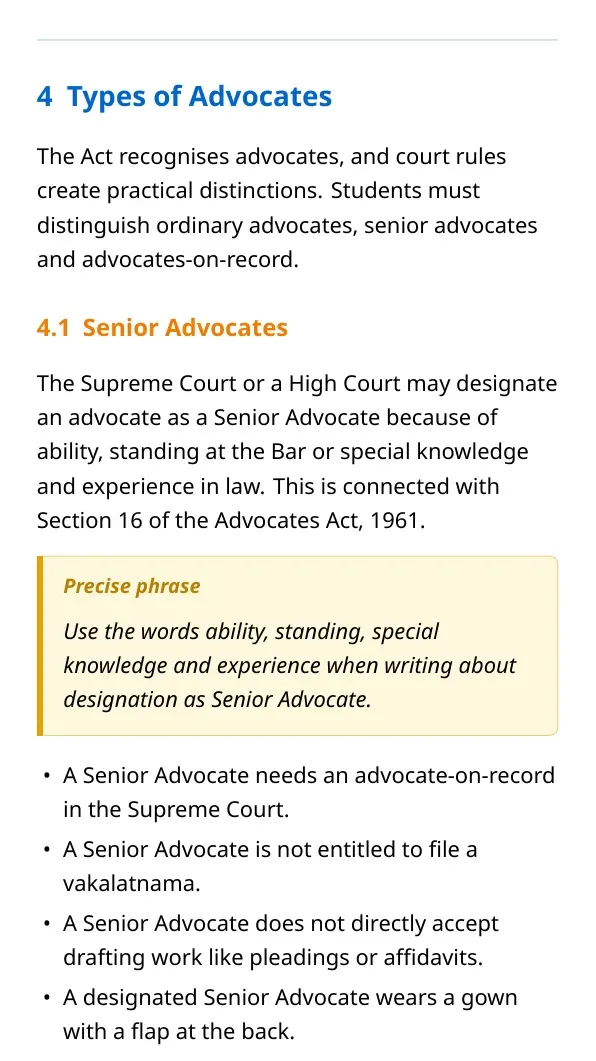
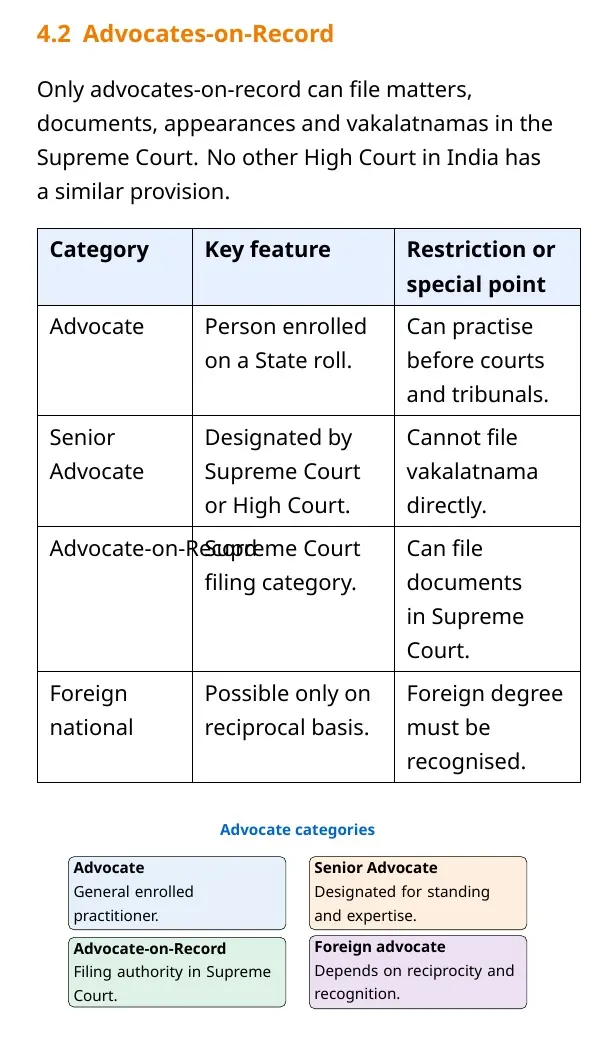
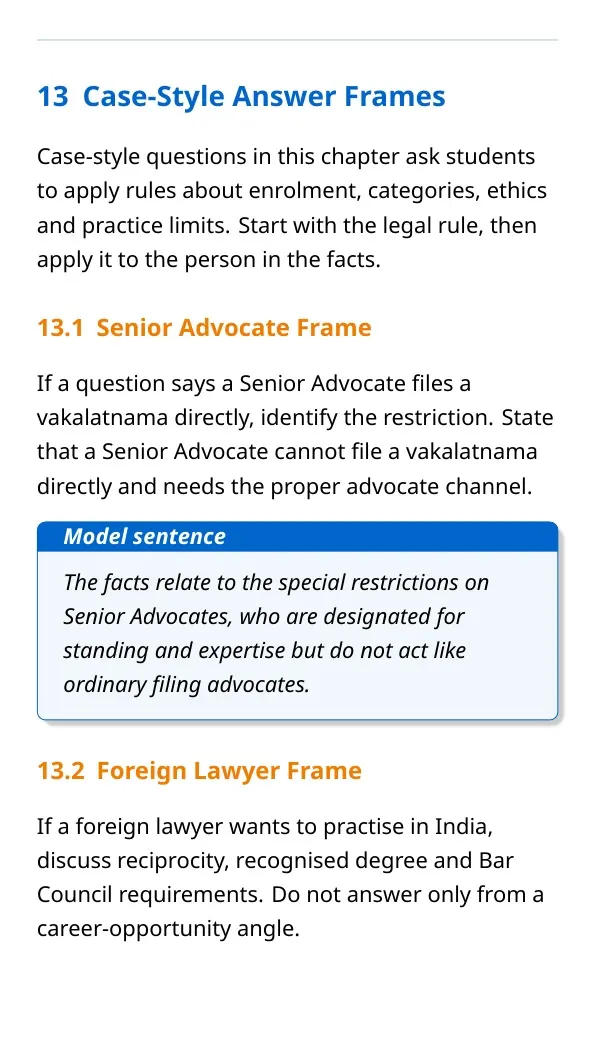
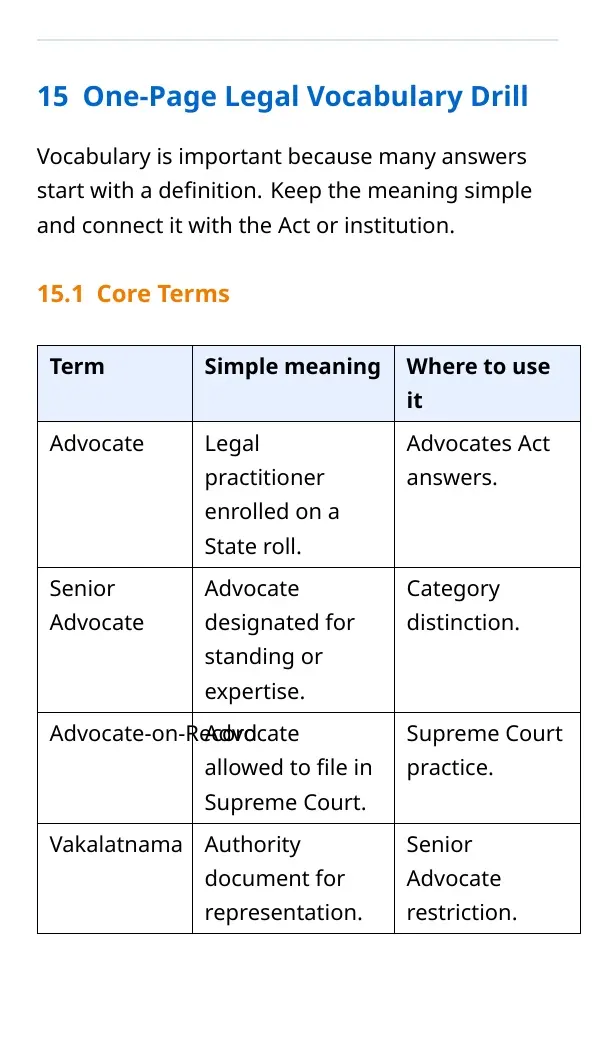
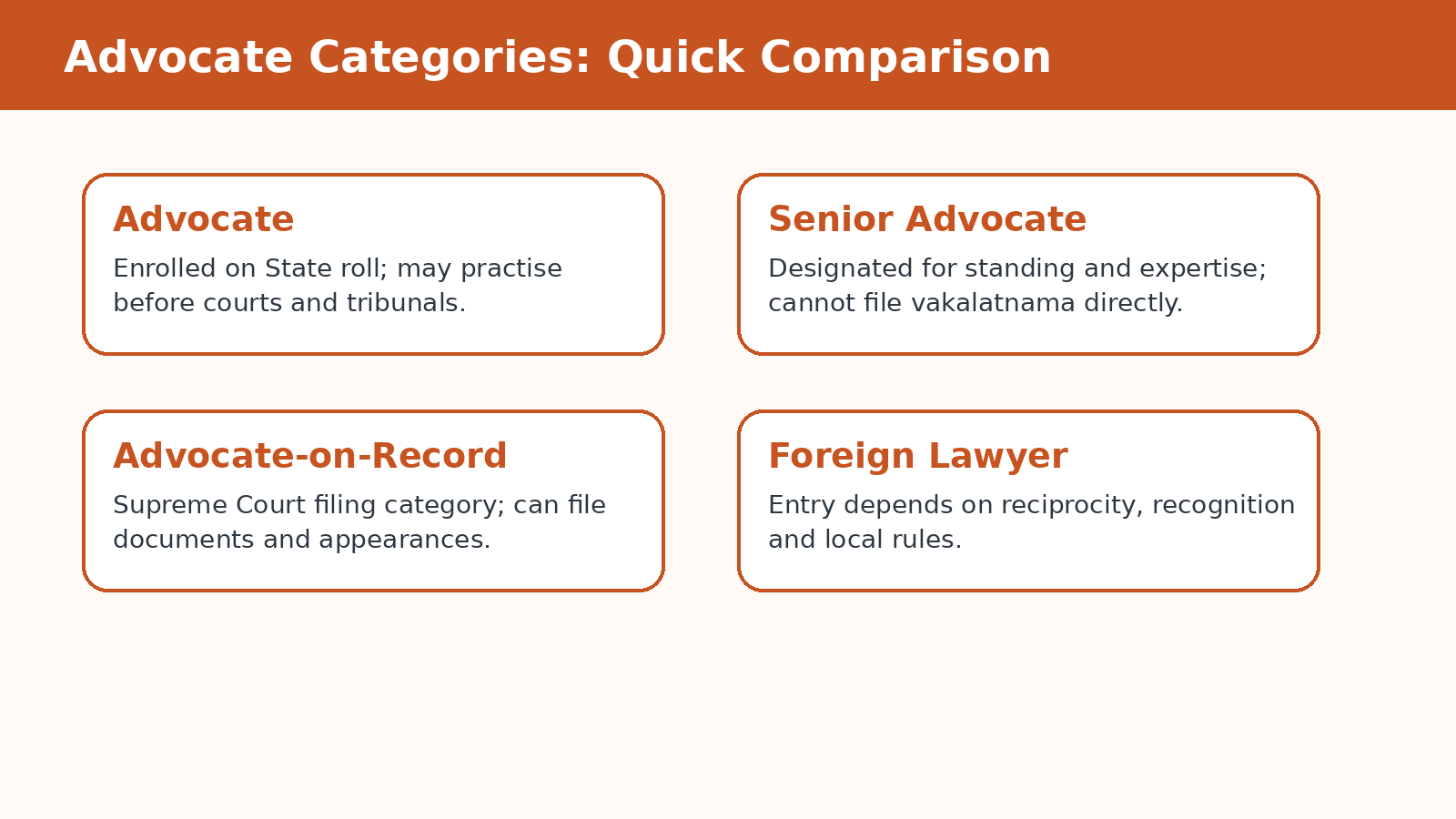
The chapter explains that all advocates do not perform the same courtroom role. Senior Advocates are designated because of standing, ability or special knowledge. Advocates-on-Record are a special category for practice before the Supreme Court. Other advocates practise subject to the rules of the court and their enrollment.
| Category | Meaning | Board Answer Cue |
|---|---|---|
| Advocate | A person enrolled with a State Bar Council and entitled to practise law under the Advocates Act. | Use for the general professional category. |
| Senior Advocate | An advocate designated for special ability, standing or experience. | Mention distinction and restrictions on direct work. |
| Advocate-on-Record | A Supreme Court practice category that can file appearances and documents in that court. | Use for Supreme Court procedure questions. |
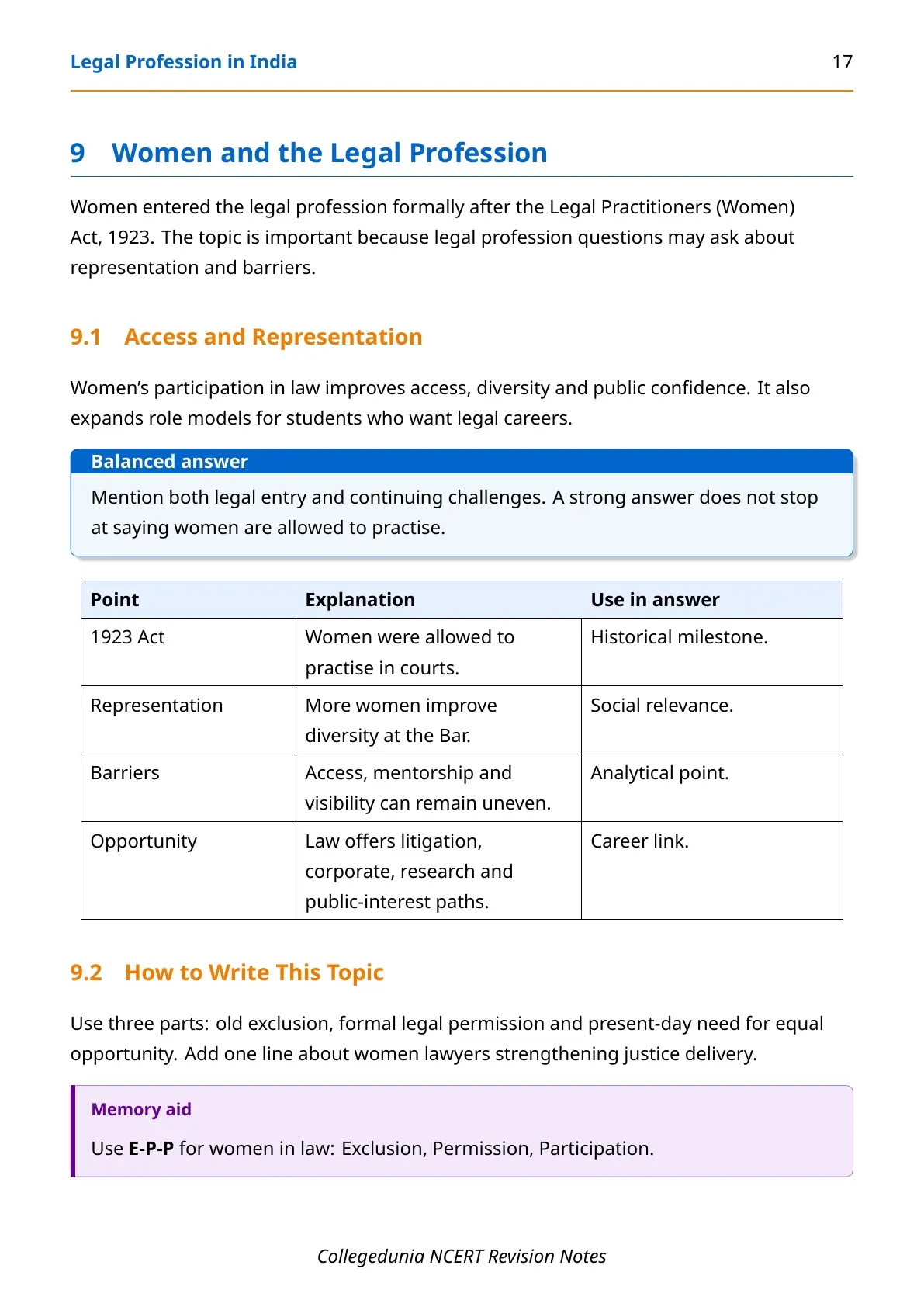
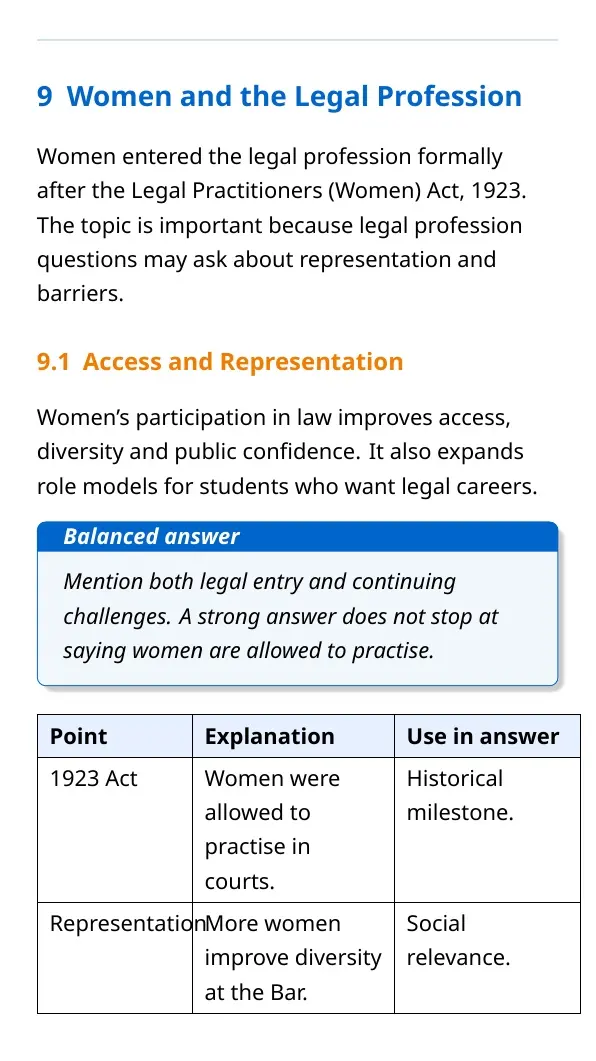
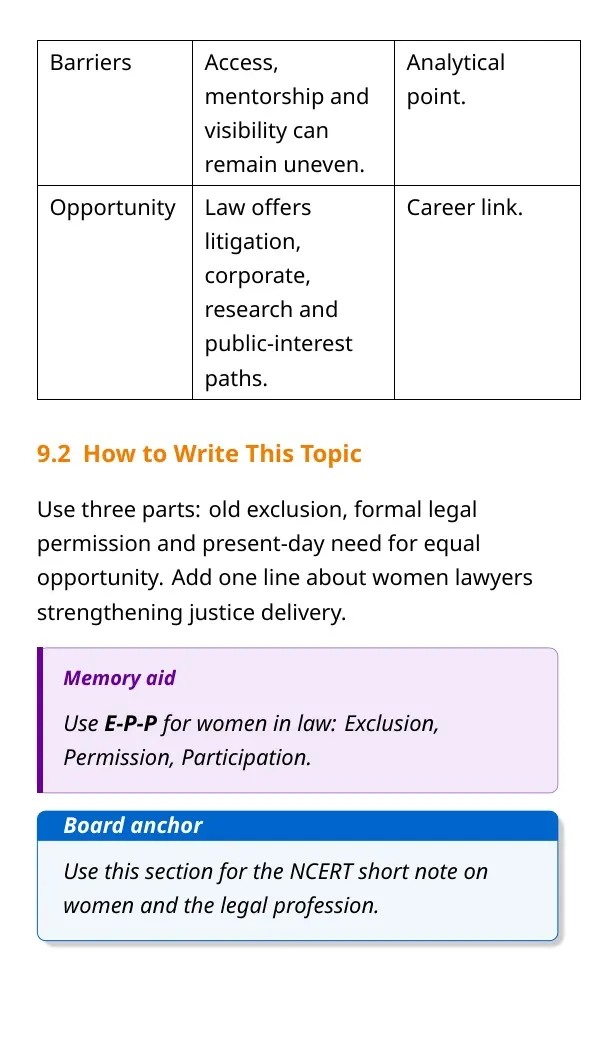
Women in the legal profession should be revised as both a historical and present-day theme. The Legal Practitioners (Women) Act, 1923 was a turning point for formal entry, while modern discussions include representation, workplace barriers and leadership in courts, firms and public service.
Professional Ethics and Advertising Rules
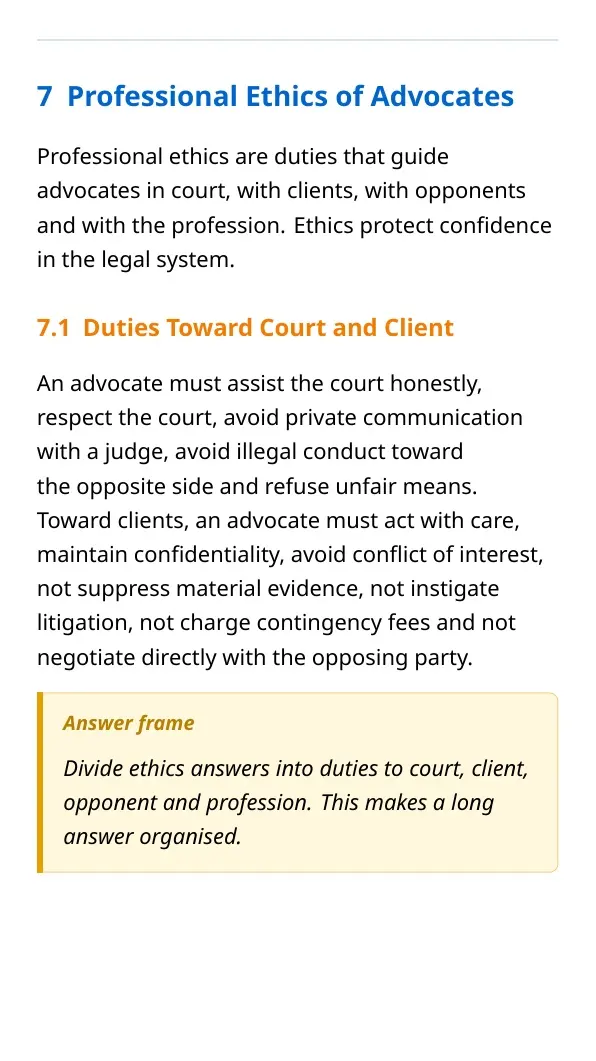
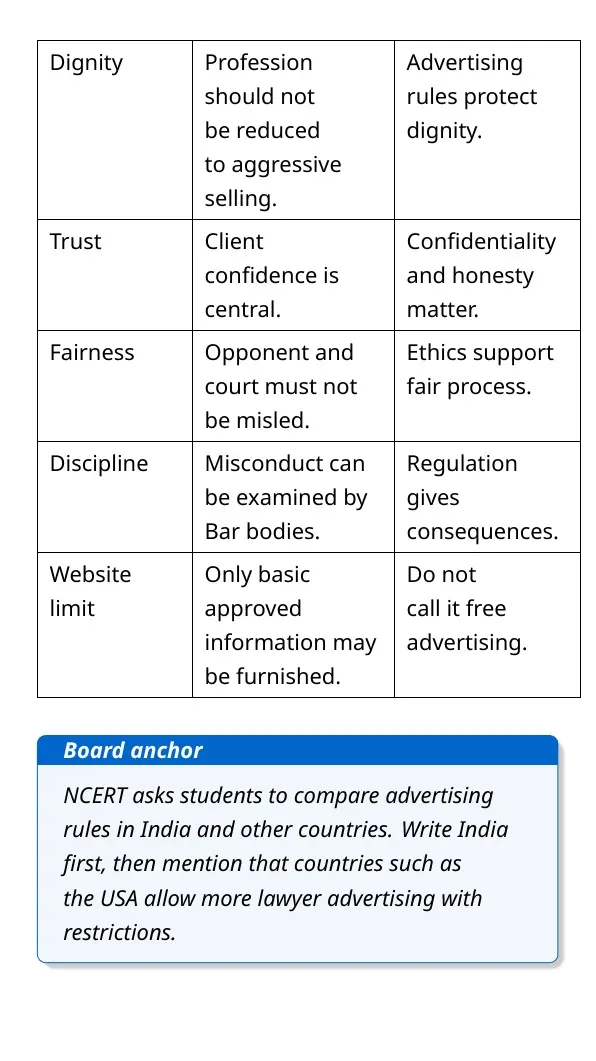
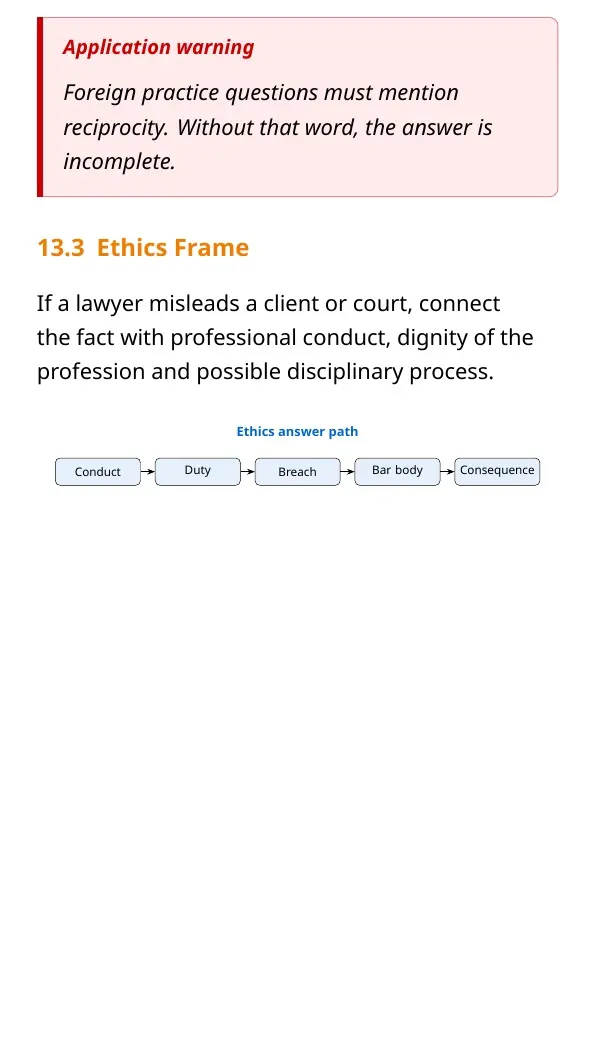
Professional ethics is a scoring part of this chapter because the points are direct and rule-based. Advocates must act with dignity before the court, avoid improper influence, protect client confidentiality, avoid misleading conduct and maintain fairness toward the opposing side. The profession depends on public confidence, so private interest cannot override court duty.
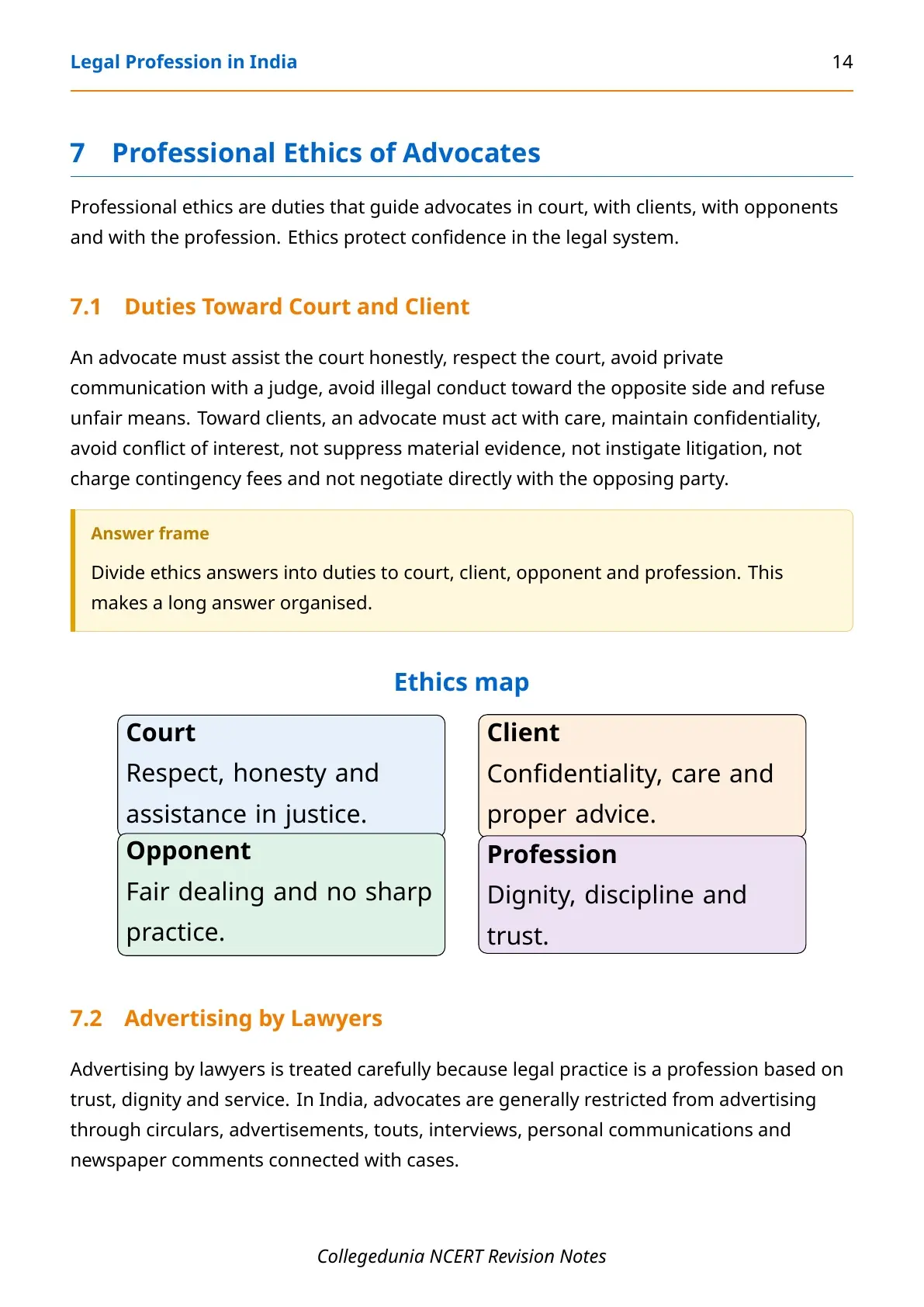
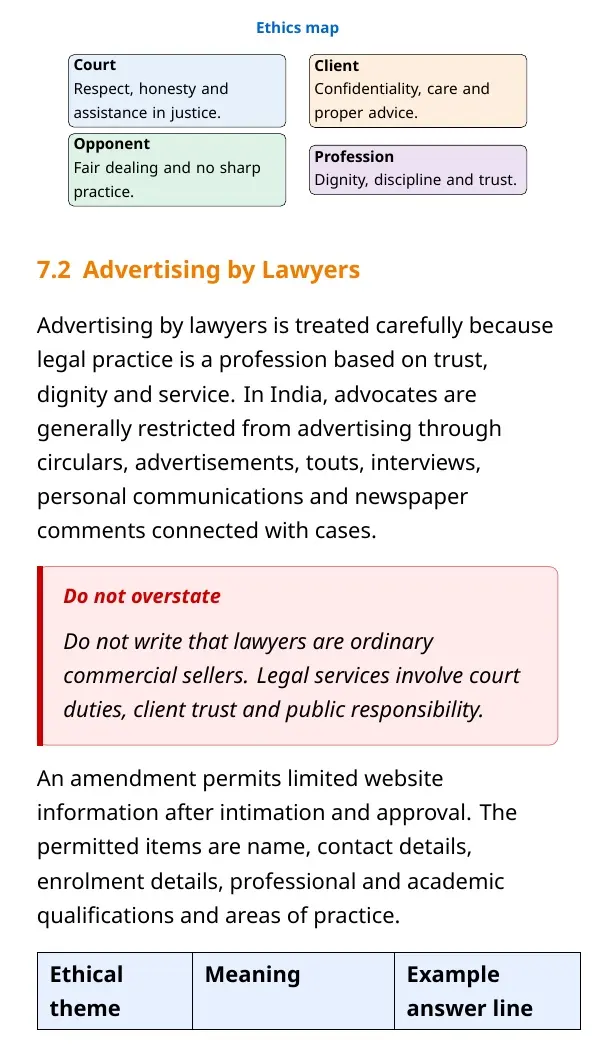
- Duty to court: maintain respect, avoid misleading the court and assist in the administration of justice.
- Duty to client: give honest advice, protect confidential information and avoid conflict of interest.
- Duty to opponent: avoid unfair tactics, illegal conduct and direct negotiation where rules prohibit it.
- Duty to profession: maintain dignity, independence and discipline.
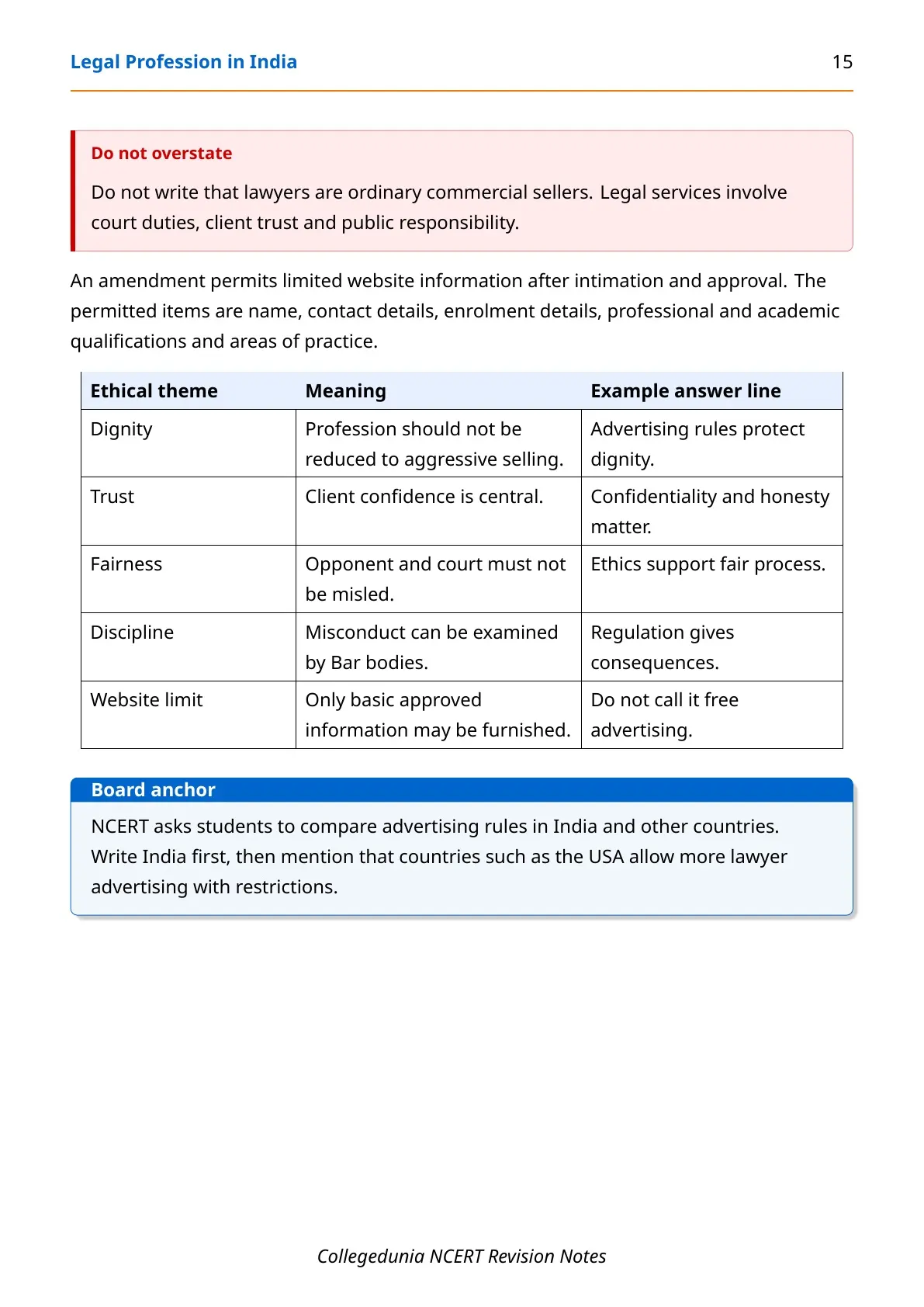
Advertising restrictions are also important. Advocates cannot solicit work like ordinary commercial service providers. Limited website information is allowed in a controlled form, such as name, contact details, qualifications, area of practice and professional information permitted by rules. In an exam answer, write the reason: law practice is connected with justice, so publicity rules protect dignity and prevent unfair solicitation.
Legal Education and Career Opportunities
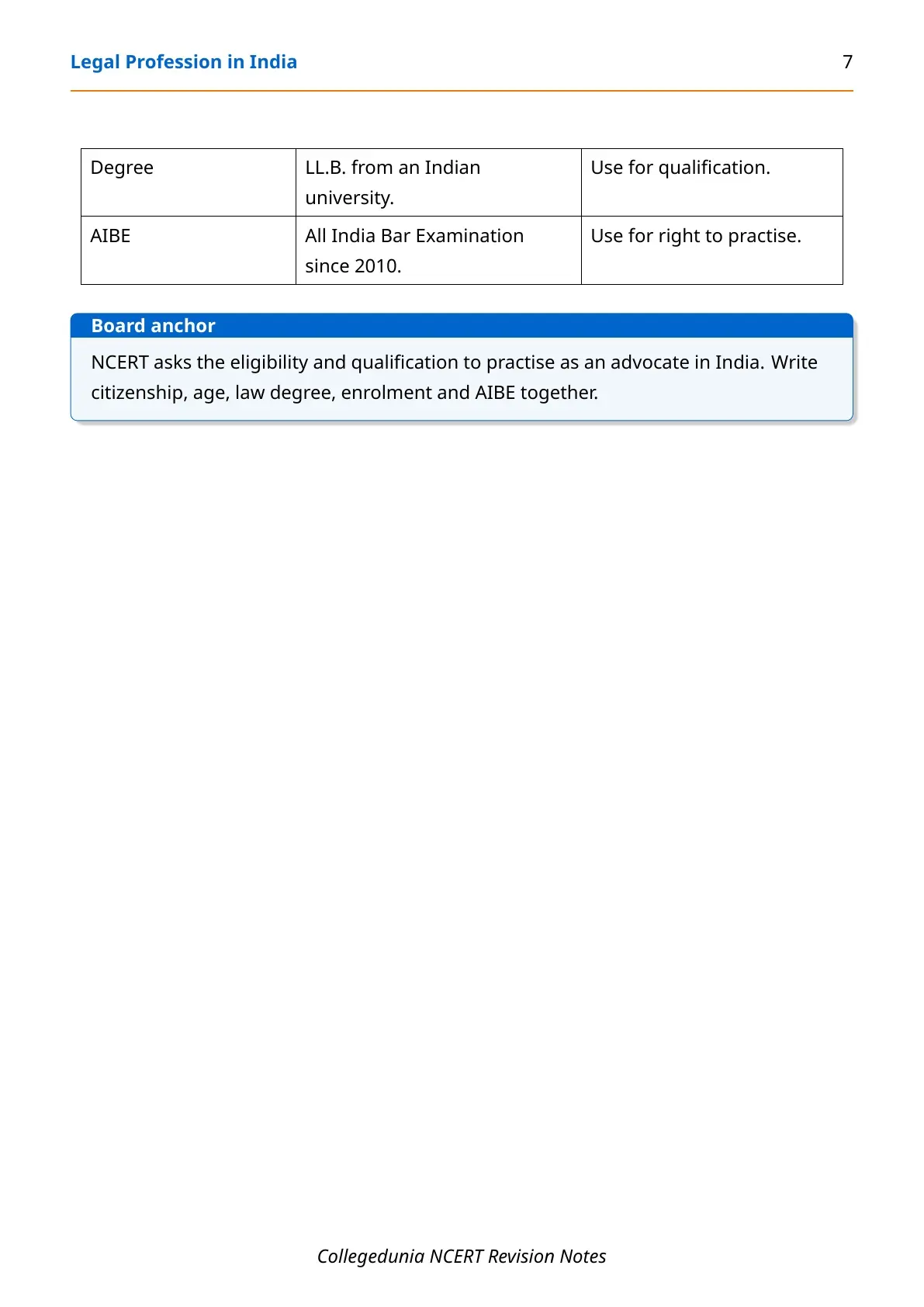
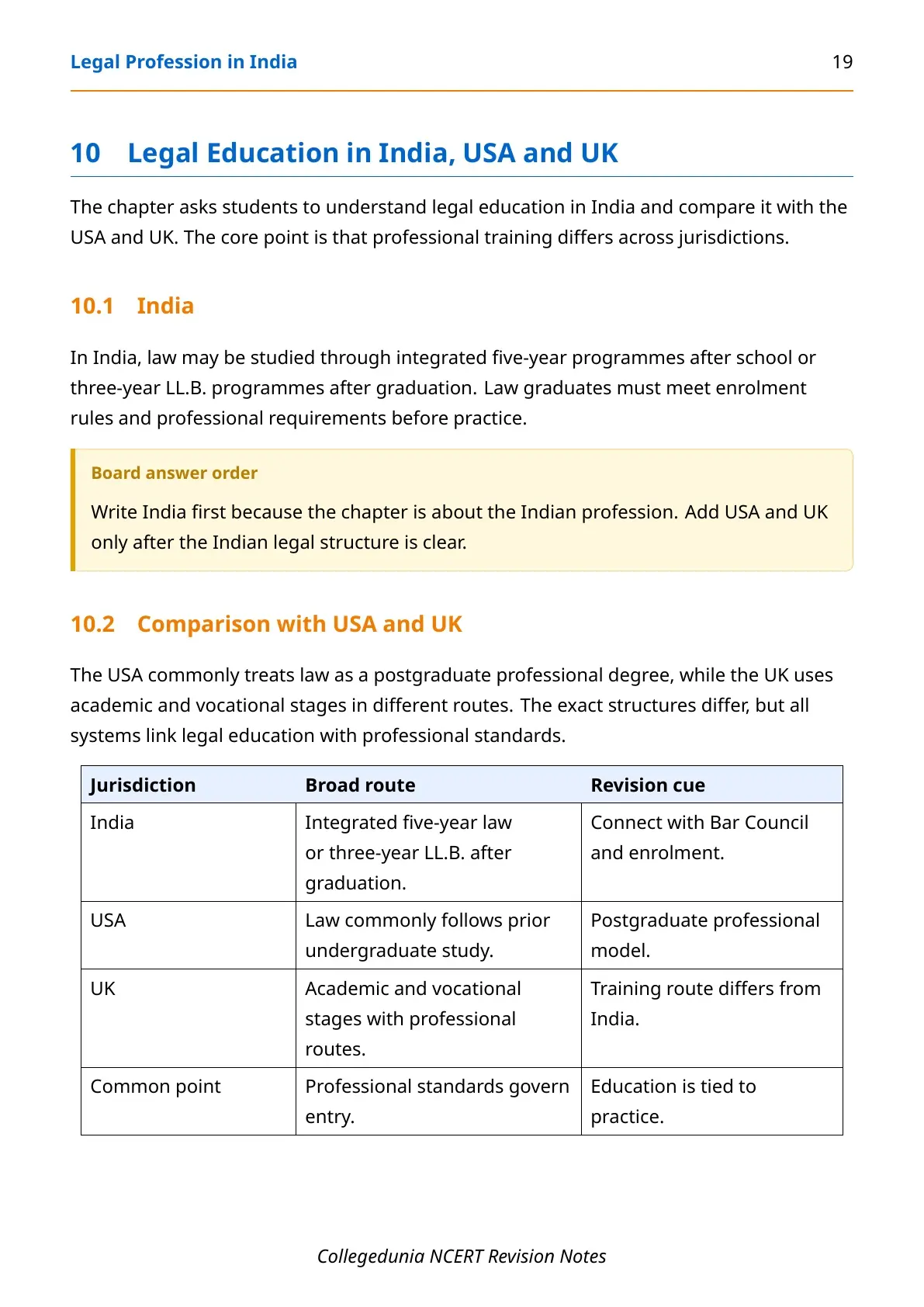
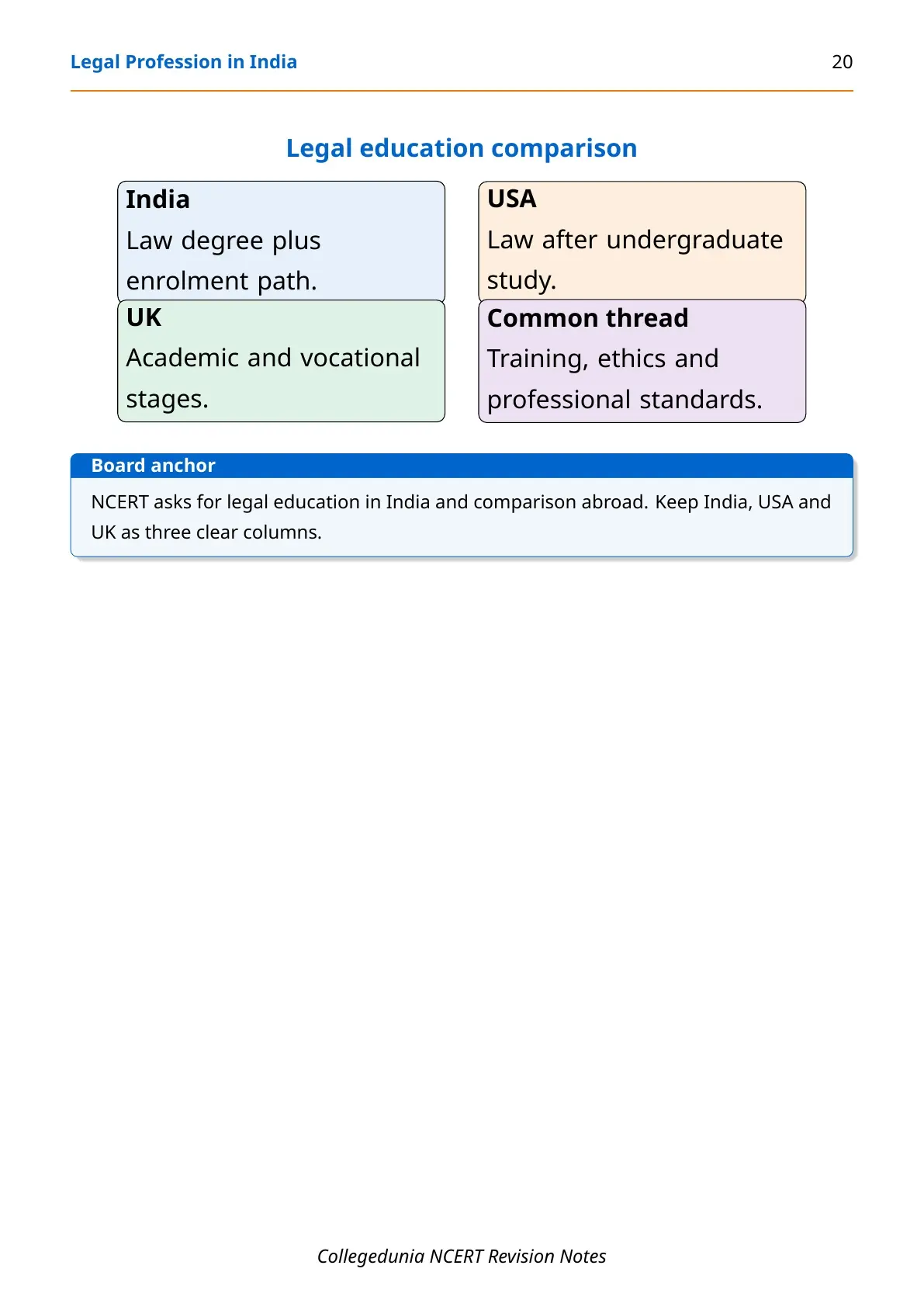
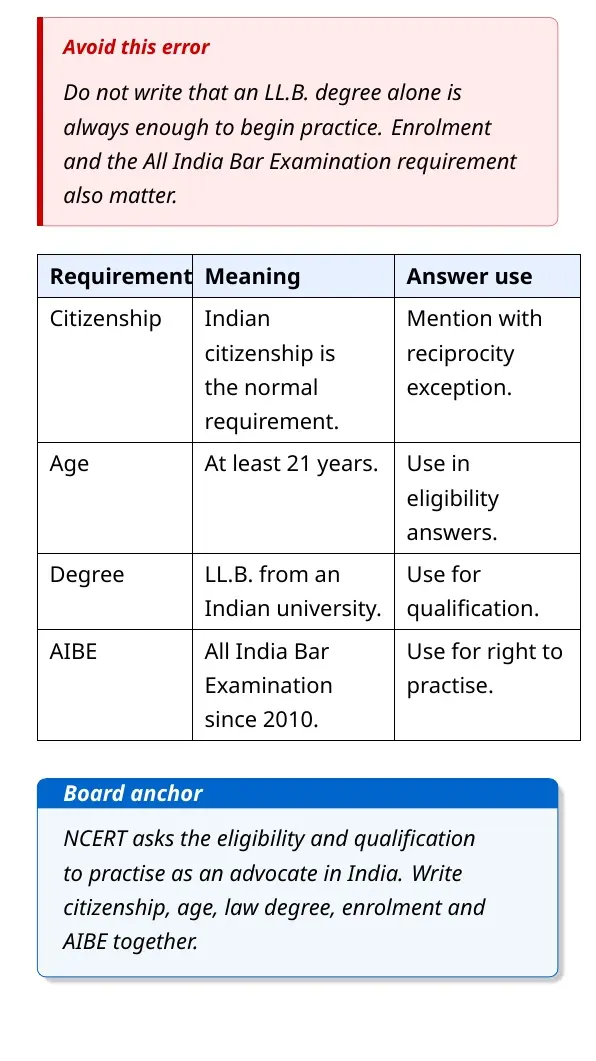
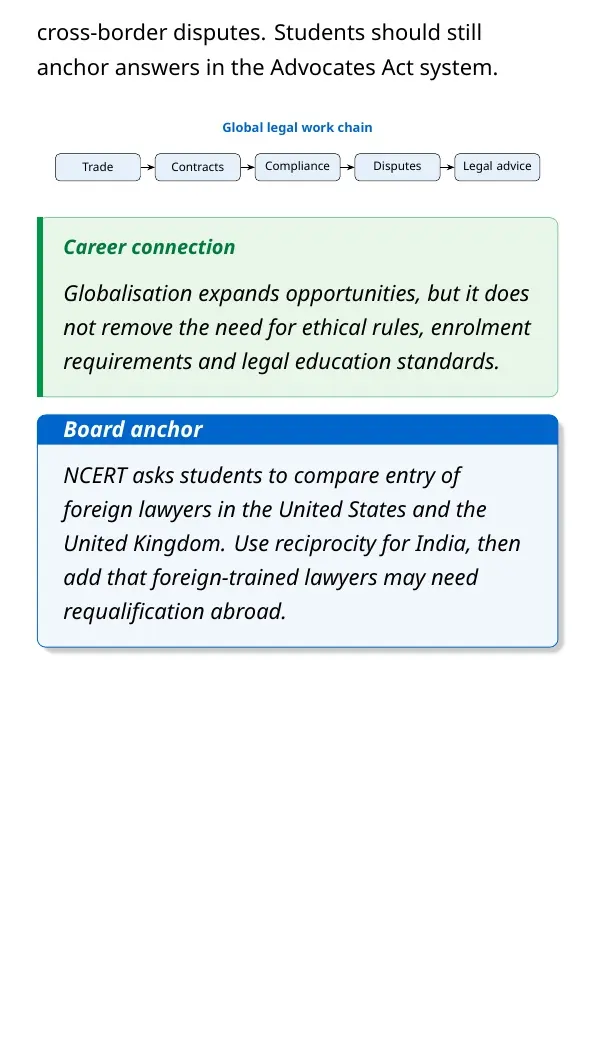
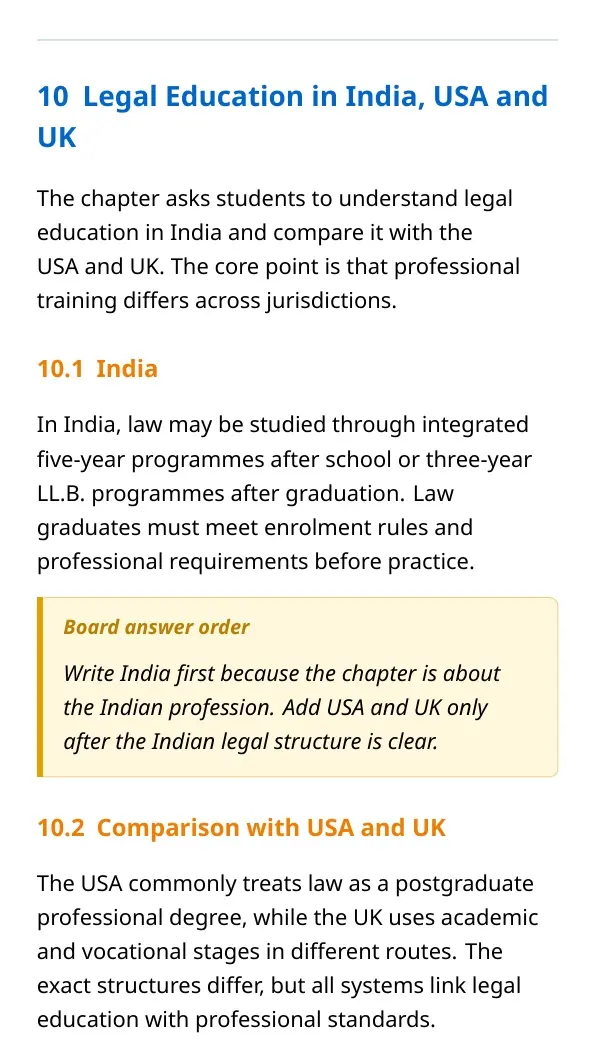
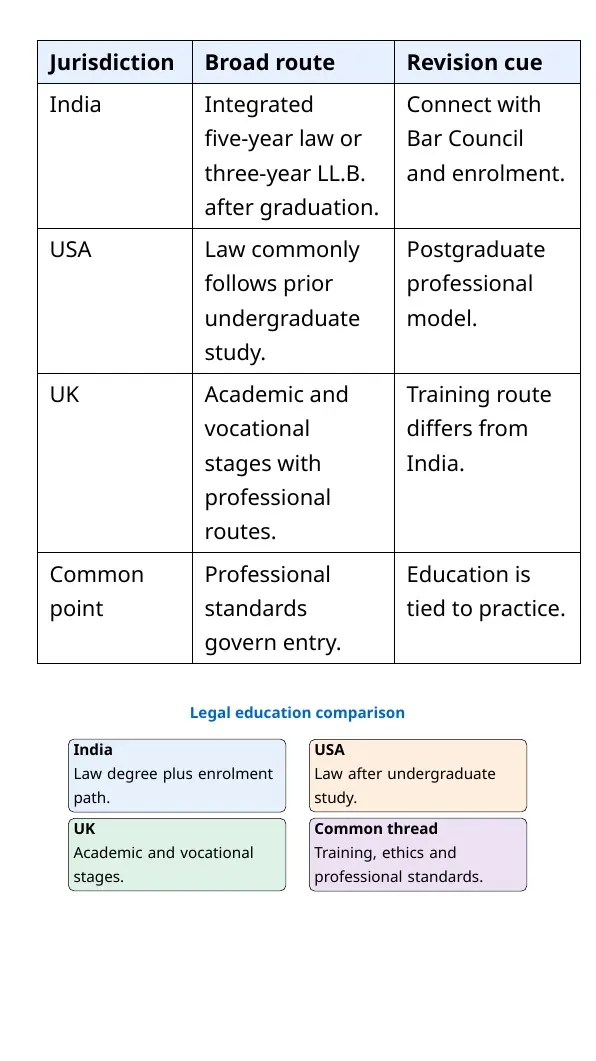
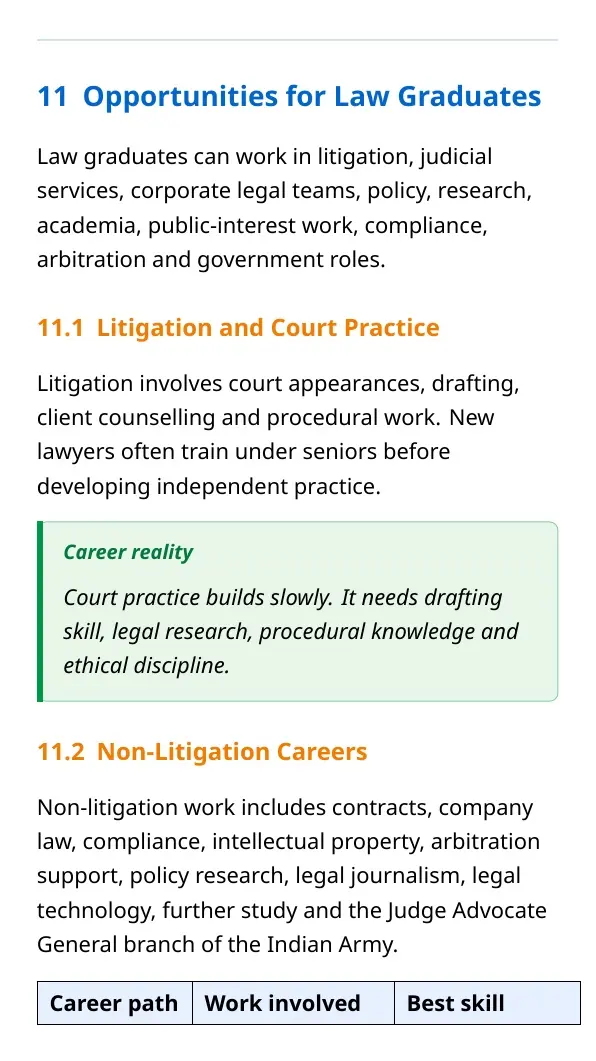
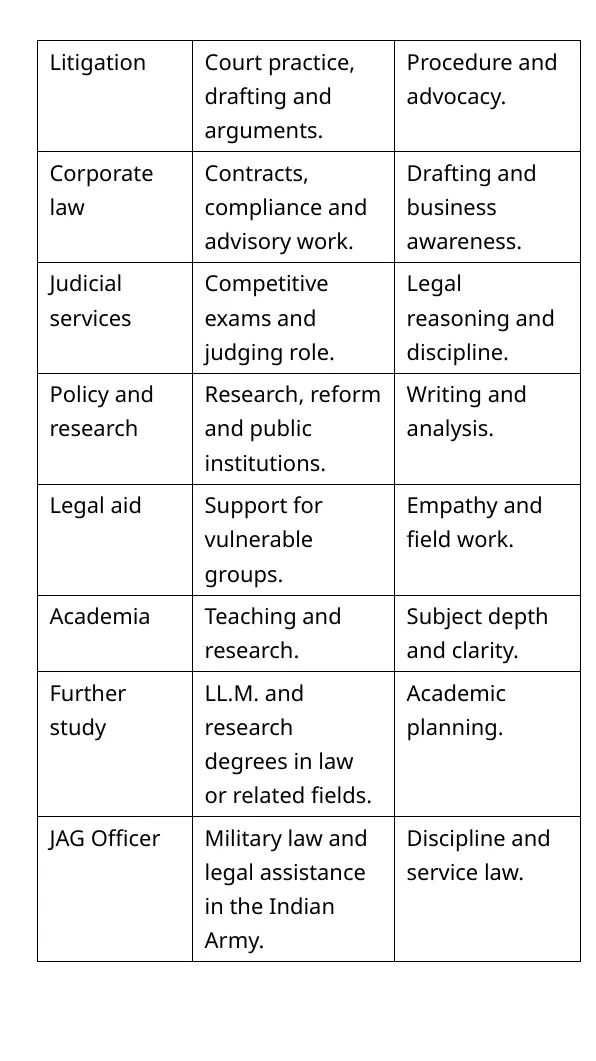
Legal education in India is linked with the Bar Council of India because the BCI recognises degrees that qualify students for enrollment. Students should compare the three-year law degree and the five-year integrated law degree, then connect both with professional entry. The chapter also asks students to look beyond litigation, so career answers should include firms, corporate legal work, public service, legal process work, academics, legal journalism, alternative dispute resolution and legal services.
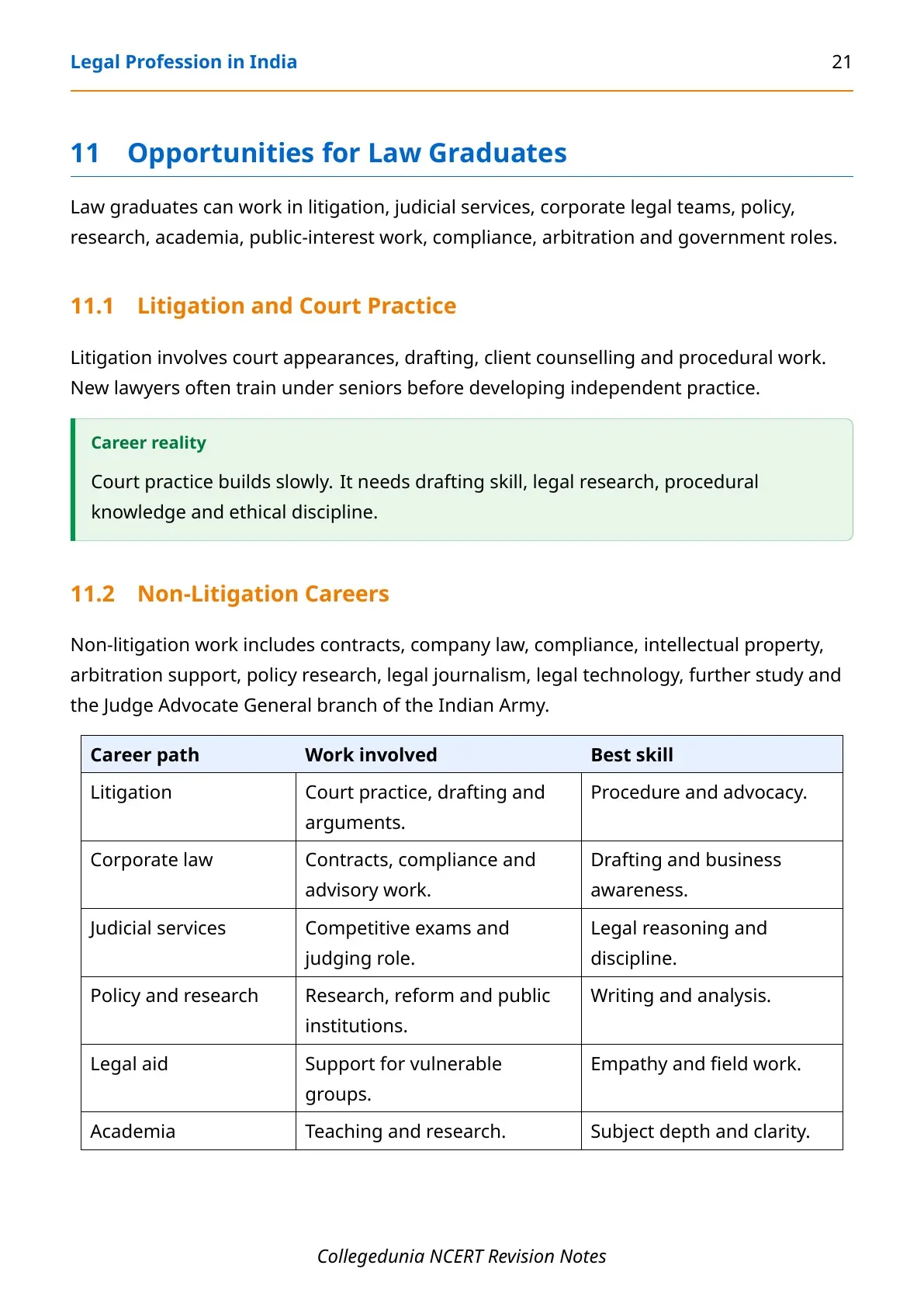
A complete career answer should show that law graduates can work in courts, institutions, companies, public offices and legal-aid spaces. The Judge Advocate General route is also a useful board point because it connects law with the armed forces.
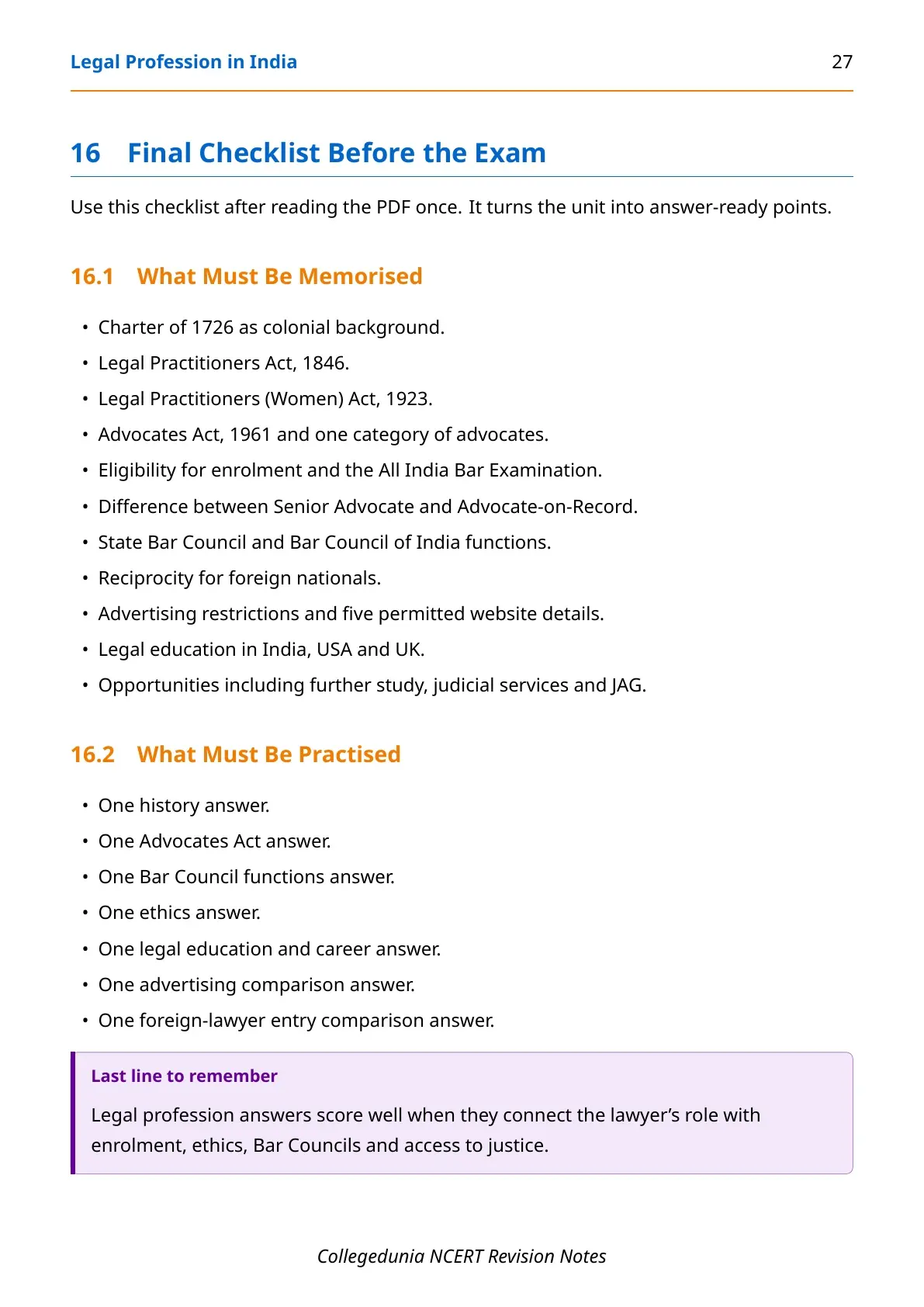
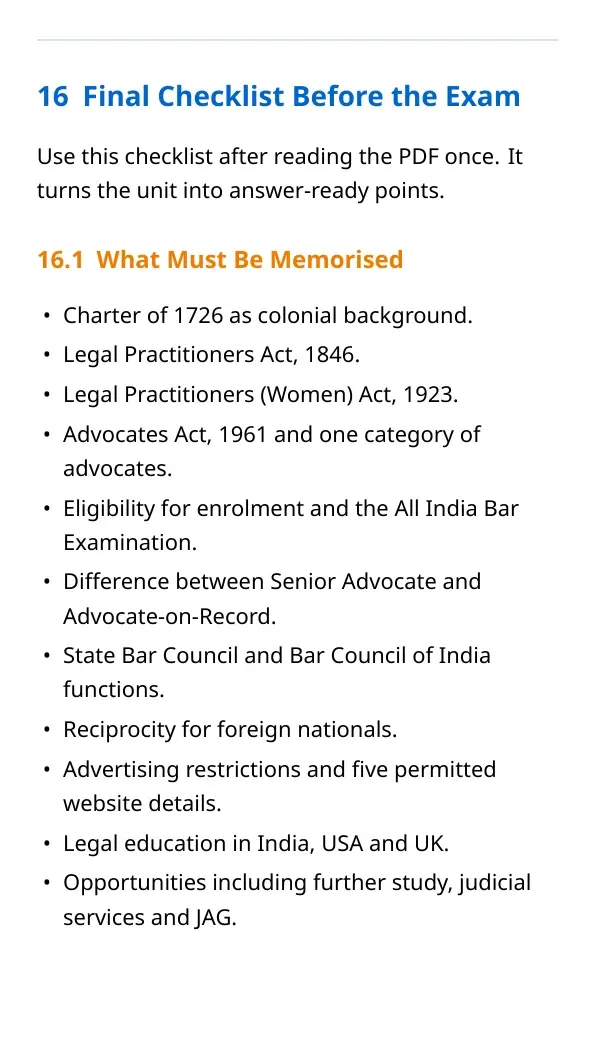
- Revise the Advocates Act and Bar Council functions as the base of the chapter.
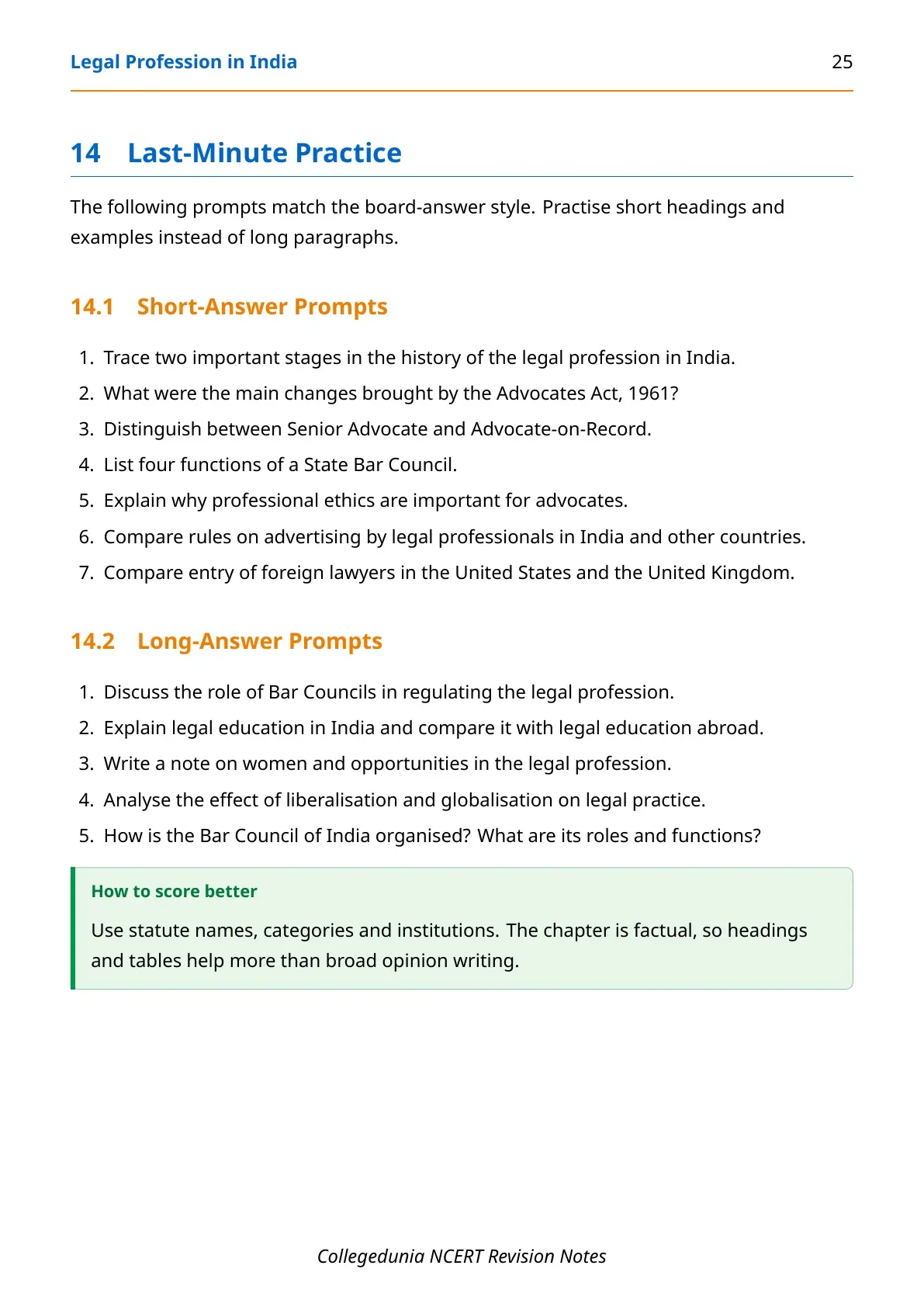
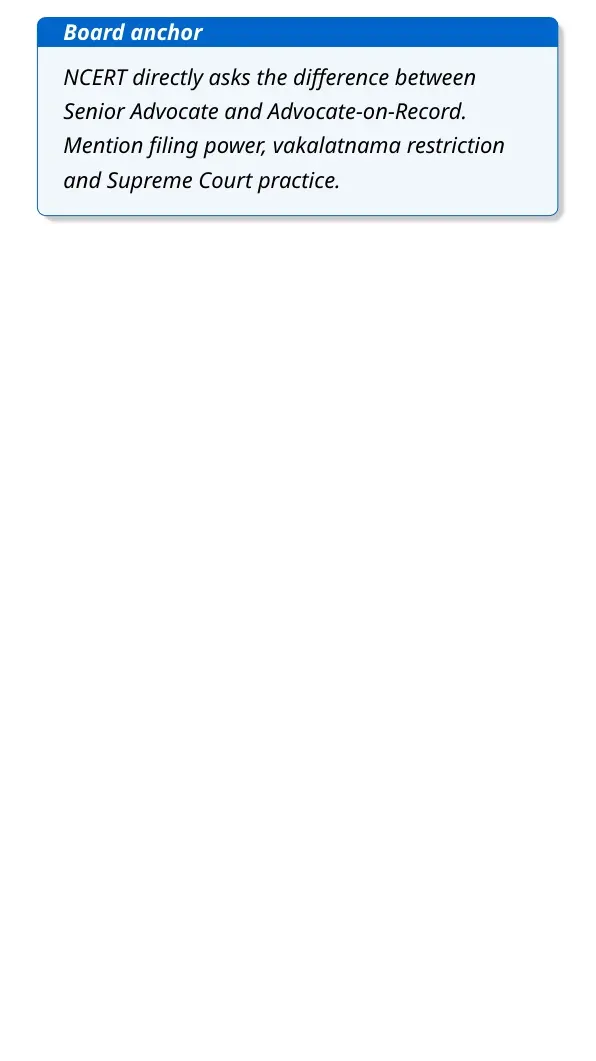
- Prepare a two-column comparison of Senior Advocate and Advocate-on-Record.
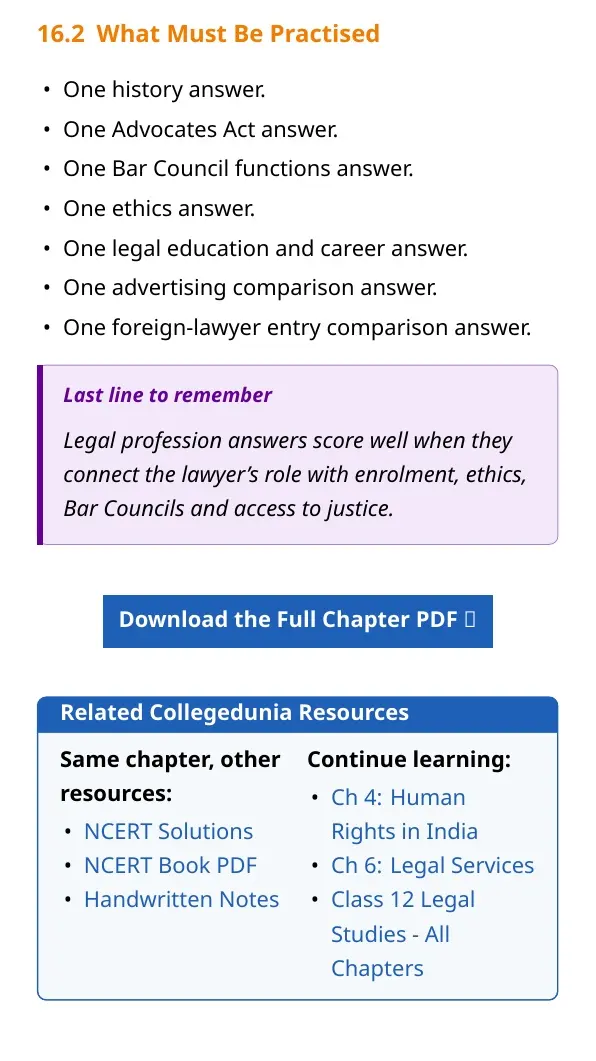
- Write five professional ethics duties from memory.
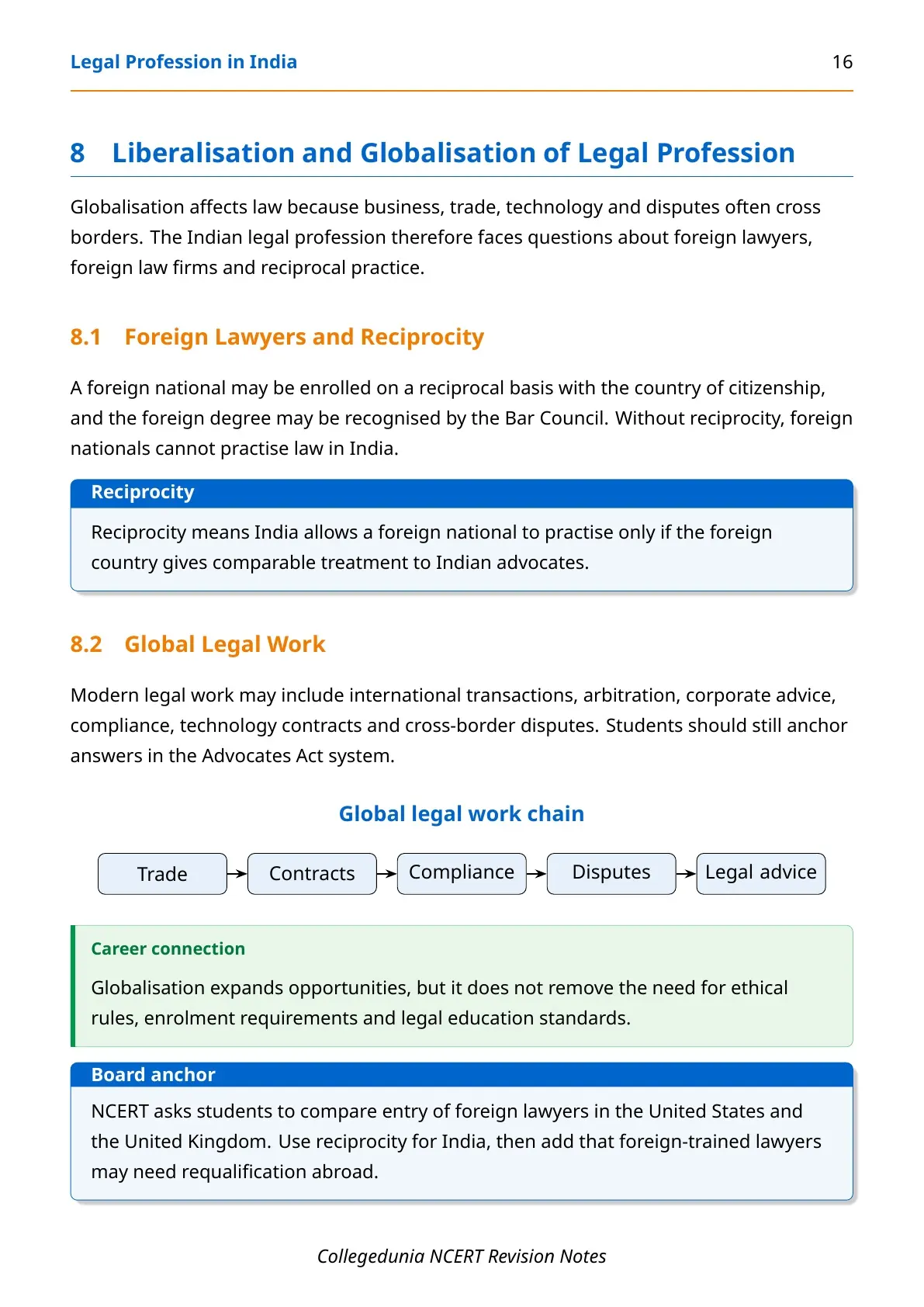
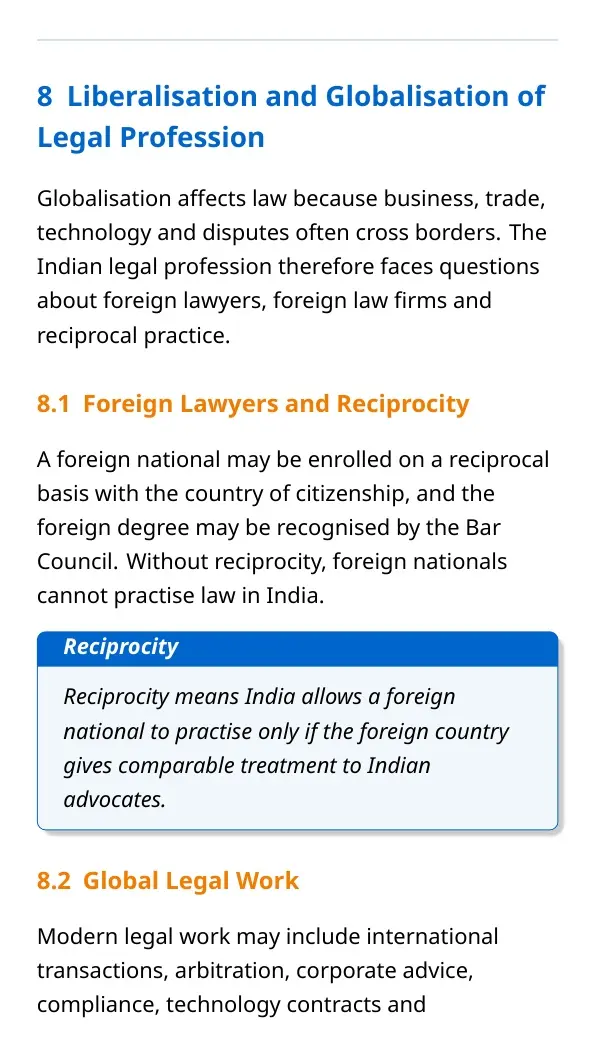
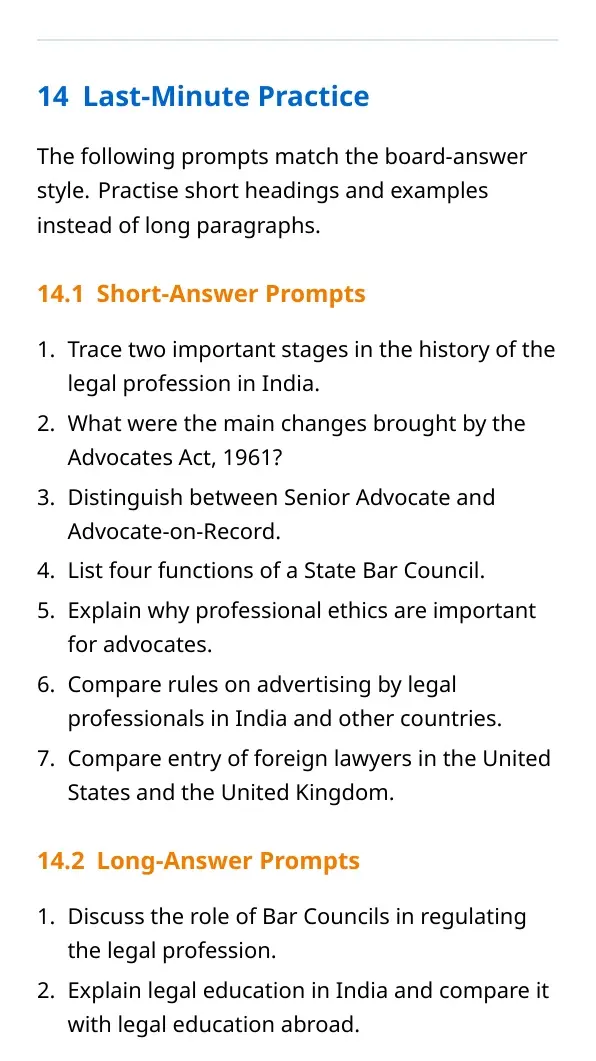
- Prepare short notes on advertising, foreign lawyers and legal education.
Legal Profession in India Related NCERT Resources
| Resource | Class 12 Legal Studies Link |
|---|---|
| NCERT Solutions | Legal Profession in India Class 12 NCERT Solutions |
| NCERT Book PDF | Legal Profession in India Class 12 NCERT Book PDF |
| Handwritten Notes | Legal Profession in India Class 12 Handwritten Notes |
Class 12 Legal Studies Notes for All Chapters
| Chapter | Notes Link |
|---|---|
| Chapter 1 Judiciary | Class 12 Legal Studies Notes |
| Chapter 2 Topics in Law | Class 12 Legal Studies Notes |
| Chapter 3 Family Justice System | Class 12 Legal Studies Notes |
| Chapter 4 Human Rights in India | Class 12 Legal Studies Notes |
| Chapter 5 Legal Profession in India | Current chapter notes |
| Chapter 6 Legal Services | Class 12 Legal Studies Notes |
| Chapter 7 International Context | Class 12 Legal Studies Notes |
Legal Profession in India Class 12 Legal Studies Notes FAQs
Ques. What is covered in Legal Profession in India Class 12 Legal Studies notes?
Ans. The notes cover the Advocates Act, State Bar Councils, Bar Council of India, advocate categories, ethics, advertising rules and legal education for the 2026-27 syllabus.
Ques. Which Bar Council functions are important for board exams?
Ans. Students should revise enrollment, disciplinary control, professional conduct, legal education standards and recognition of law degrees.
Ques. What is the difference between Senior Advocate and Advocate-on-Record?
Ans. A Senior Advocate is designated for standing and ability, while an Advocate-on-Record is a special Supreme Court category allowed to file appearances and documents there.



Comments