




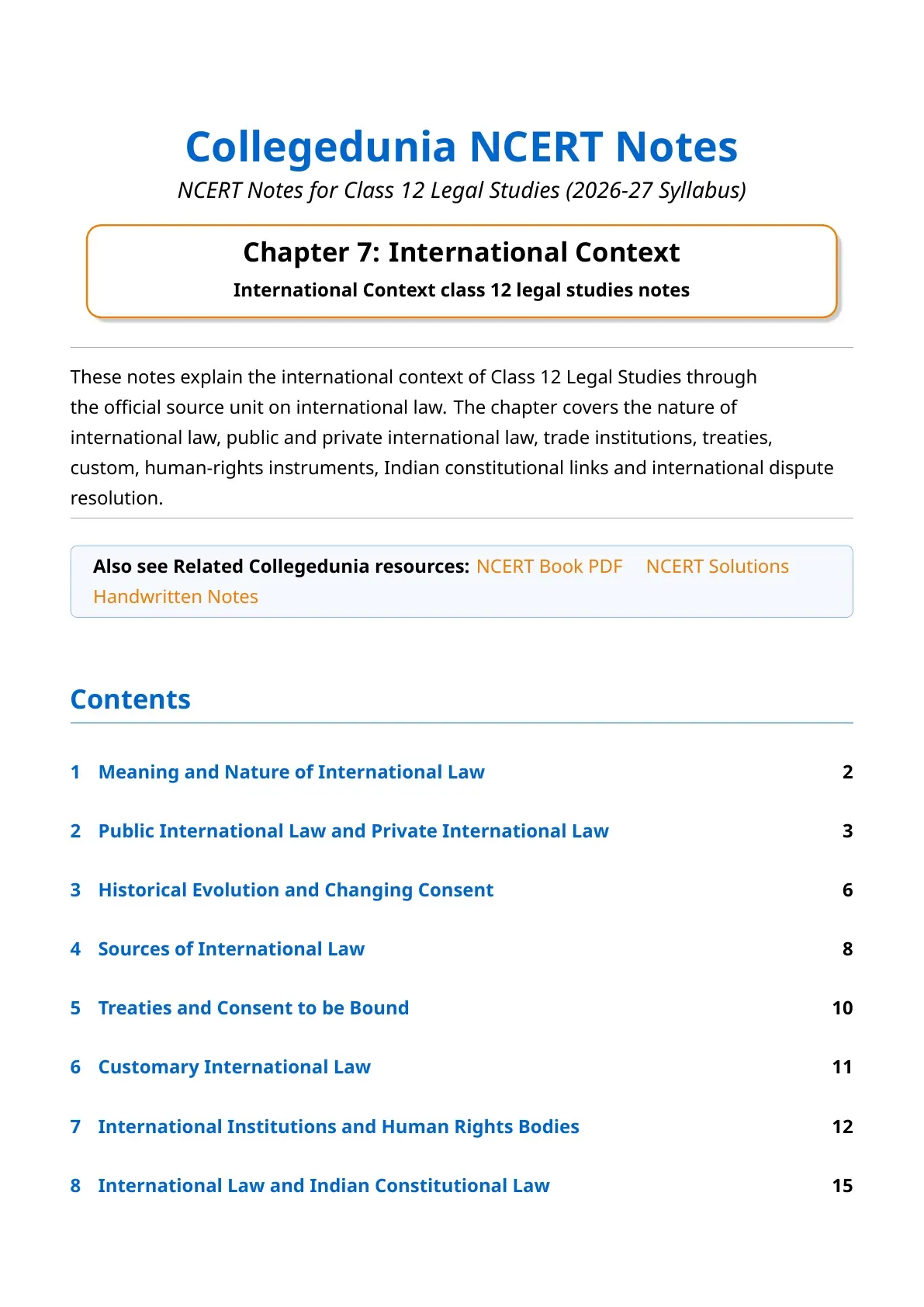
NCERT Notes Class 12 Legal Studies Chapter 7 International Context help students revise international law for the 2026-27 syllabus. The page covers public and private international law, sources, treaties, custom, ICJ, ICC and India's constitutional link before the full PDF.
- Download the 21-page Chapter 7 Legal Studies notes PDF for offline revision.
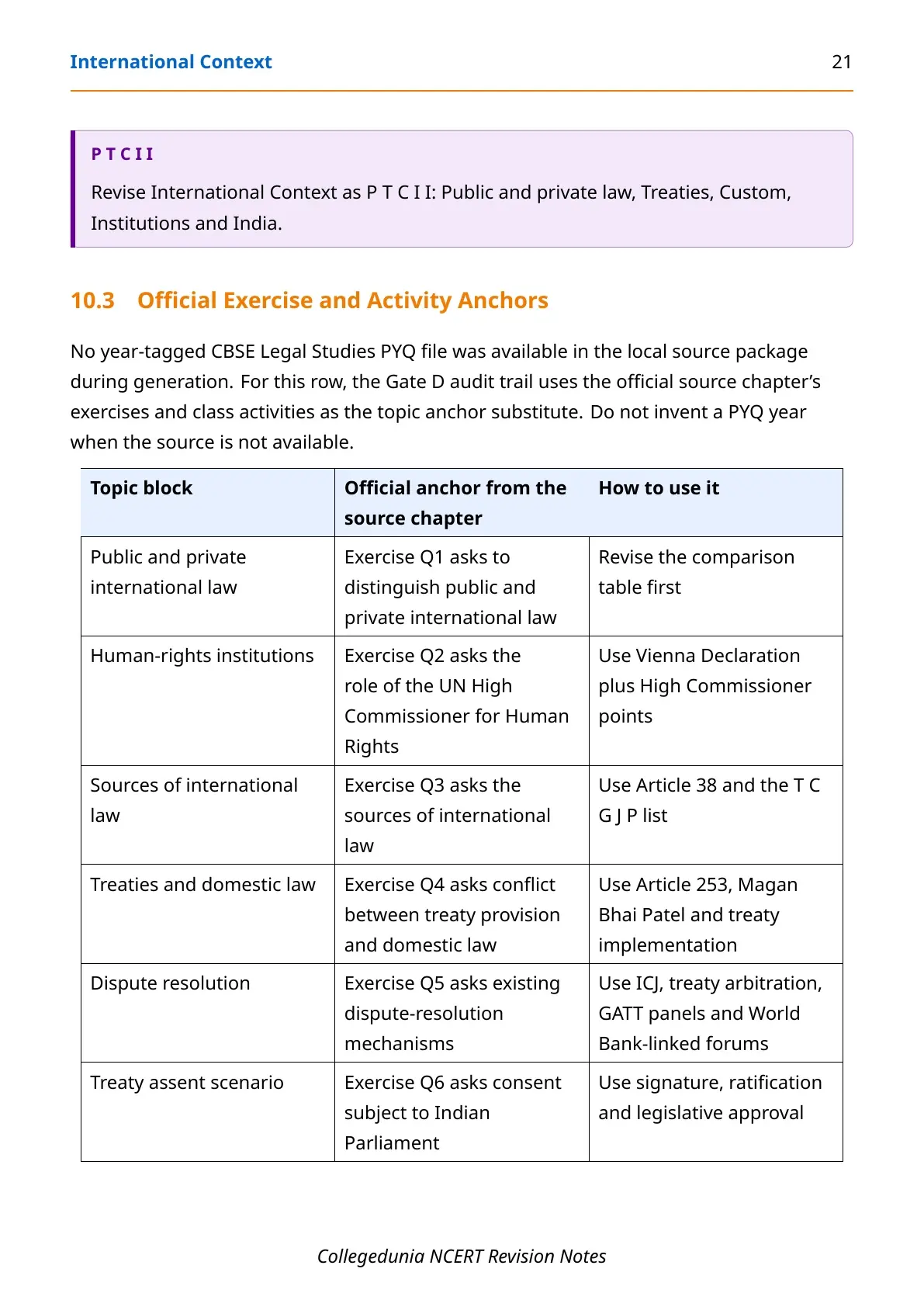
- Revise treaties, custom, general principles, ICJ and ICC through quick tables.
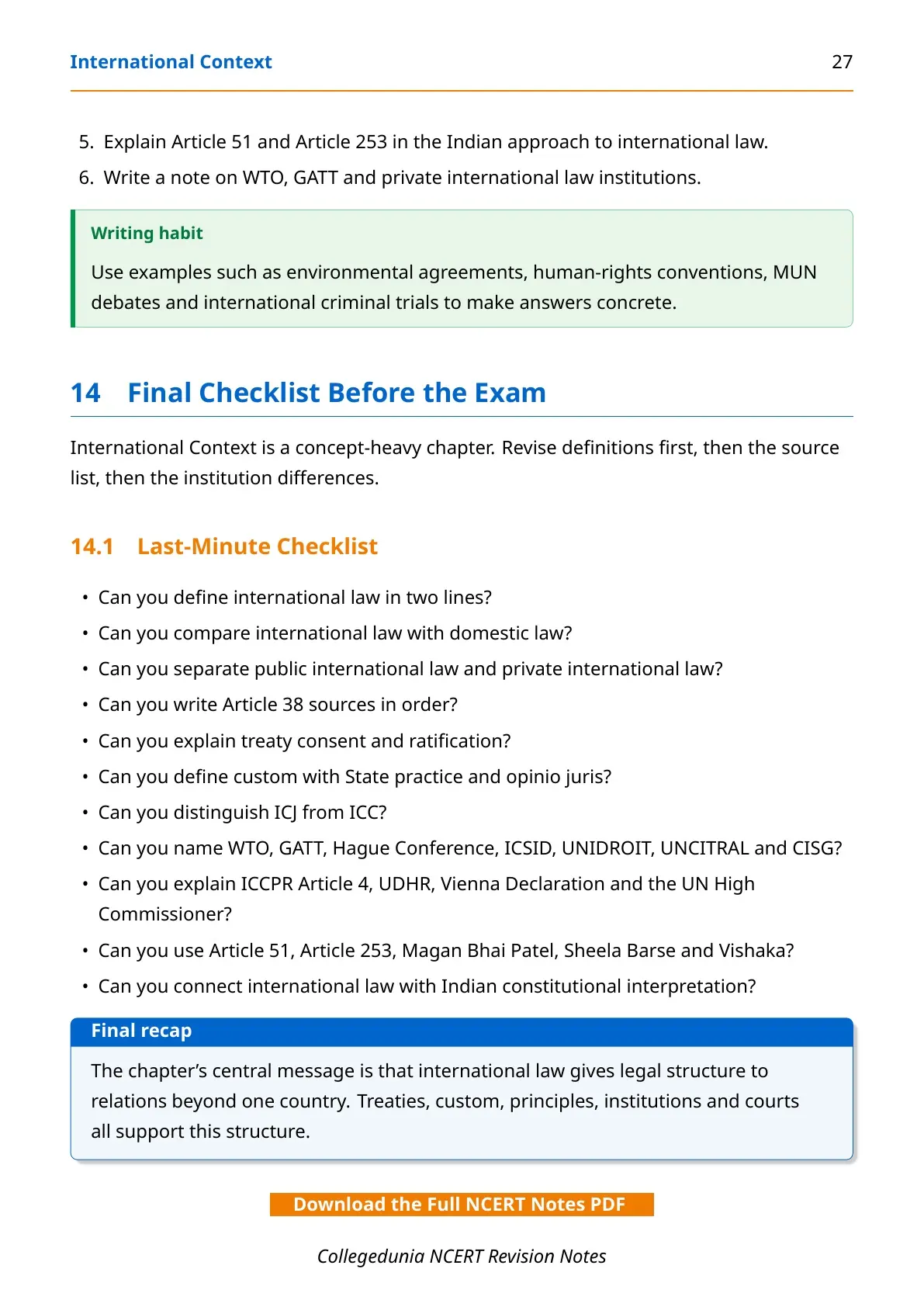
- Exam focus: keep Article 38 sources and ICJ vs ICC differences clear.
Student Feedback on International Context
In a Collegedunia poll of 12,640 Class 12 Legal Studies students before the 2026 boards, 71% said treaty sources and court differences were the most confusing parts of this chapter.
- 68% wanted one source chart for treaty, custom and general principles.
- 6 out of 10 students mixed up the ICJ and ICC in practice answers.
- Article 38 was the most requested revision point.
Source: 2026-27 Class 12 Legal Studies student poll. Sample of 12,640 students from CBSE schools across 14 states.
These Class 12 Legal Studies notes are checked against the official CBSE Academic source unit and written for quick board revision.
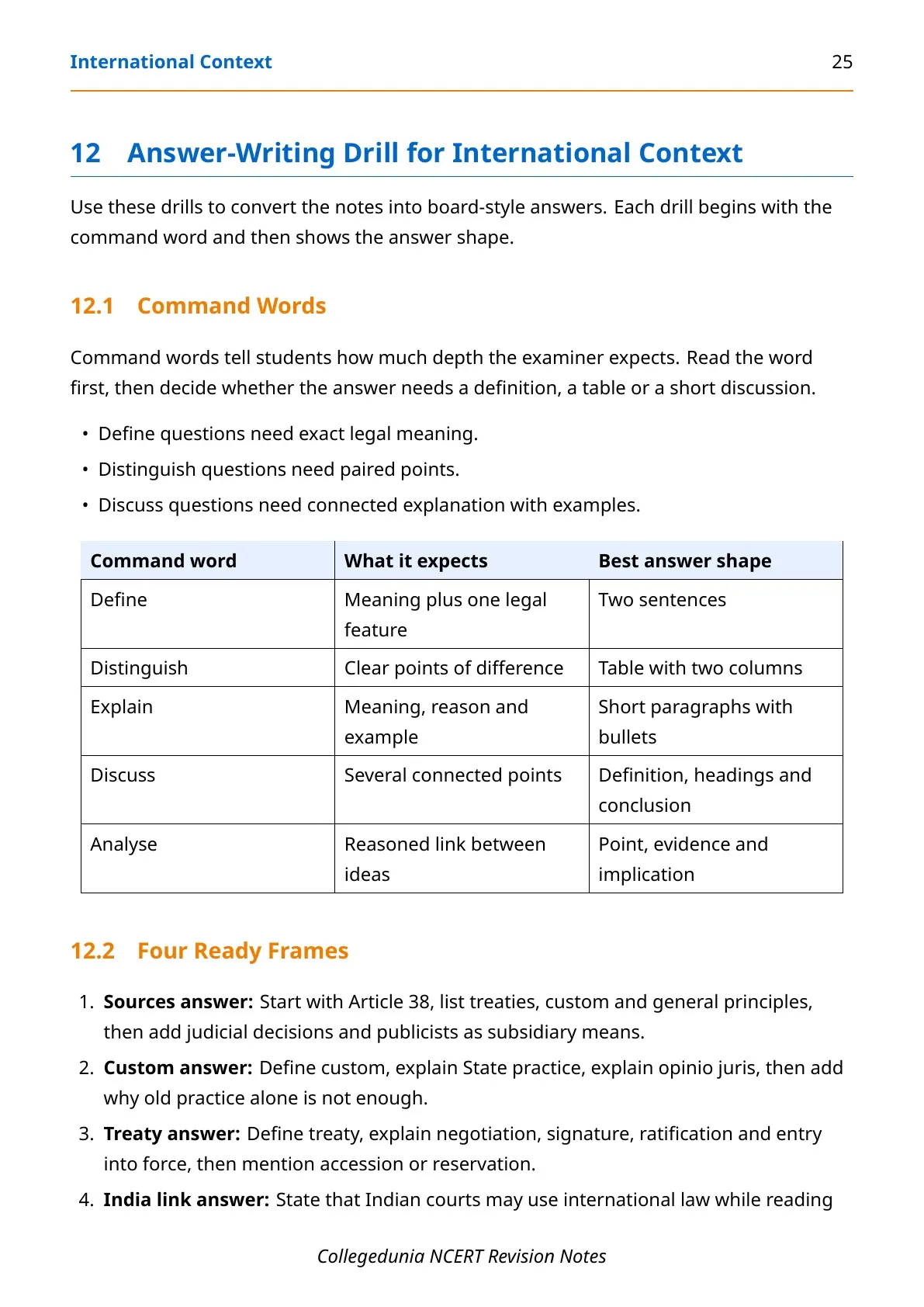
International Context Class 12 Notes: What This Chapter Covers
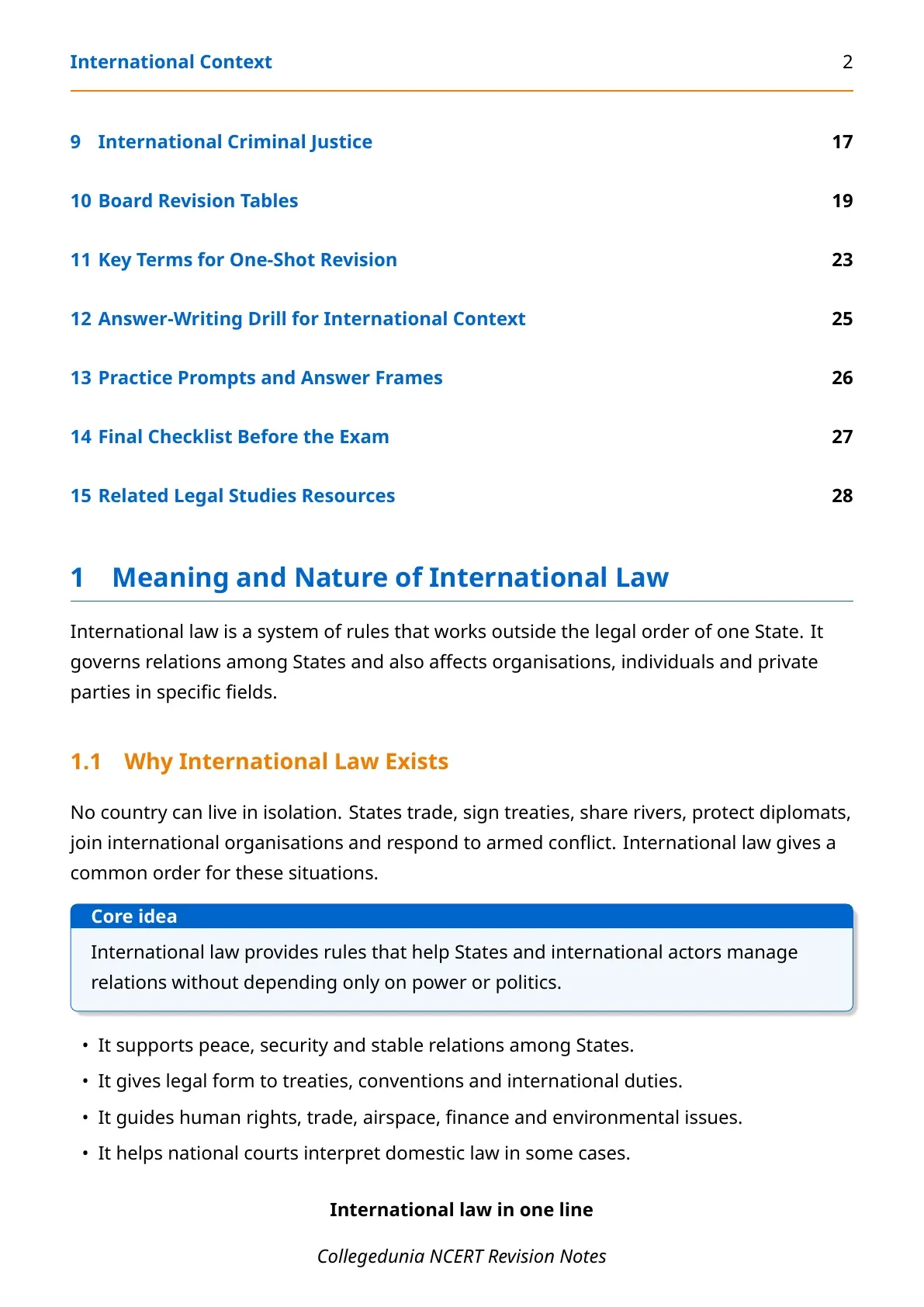
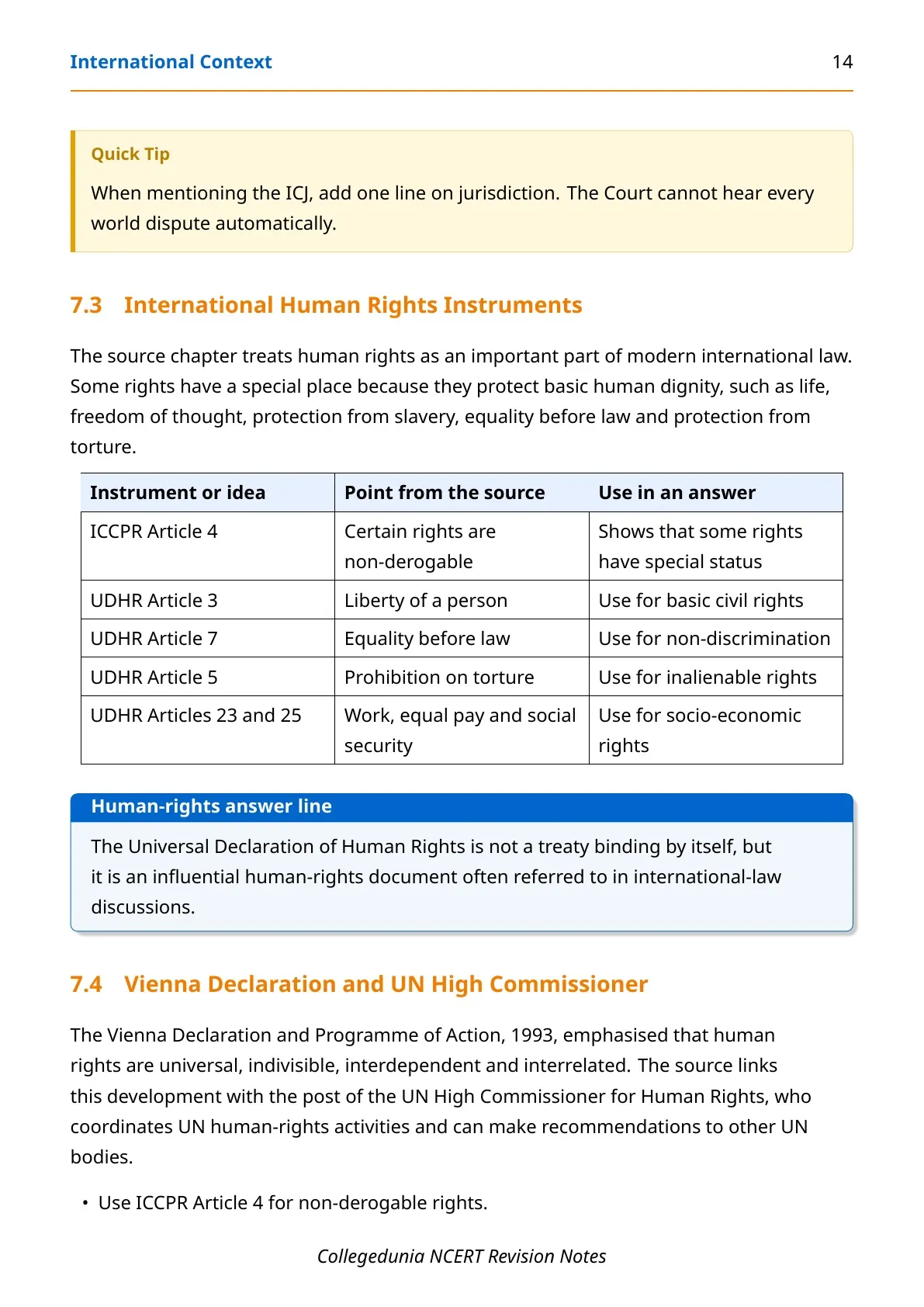
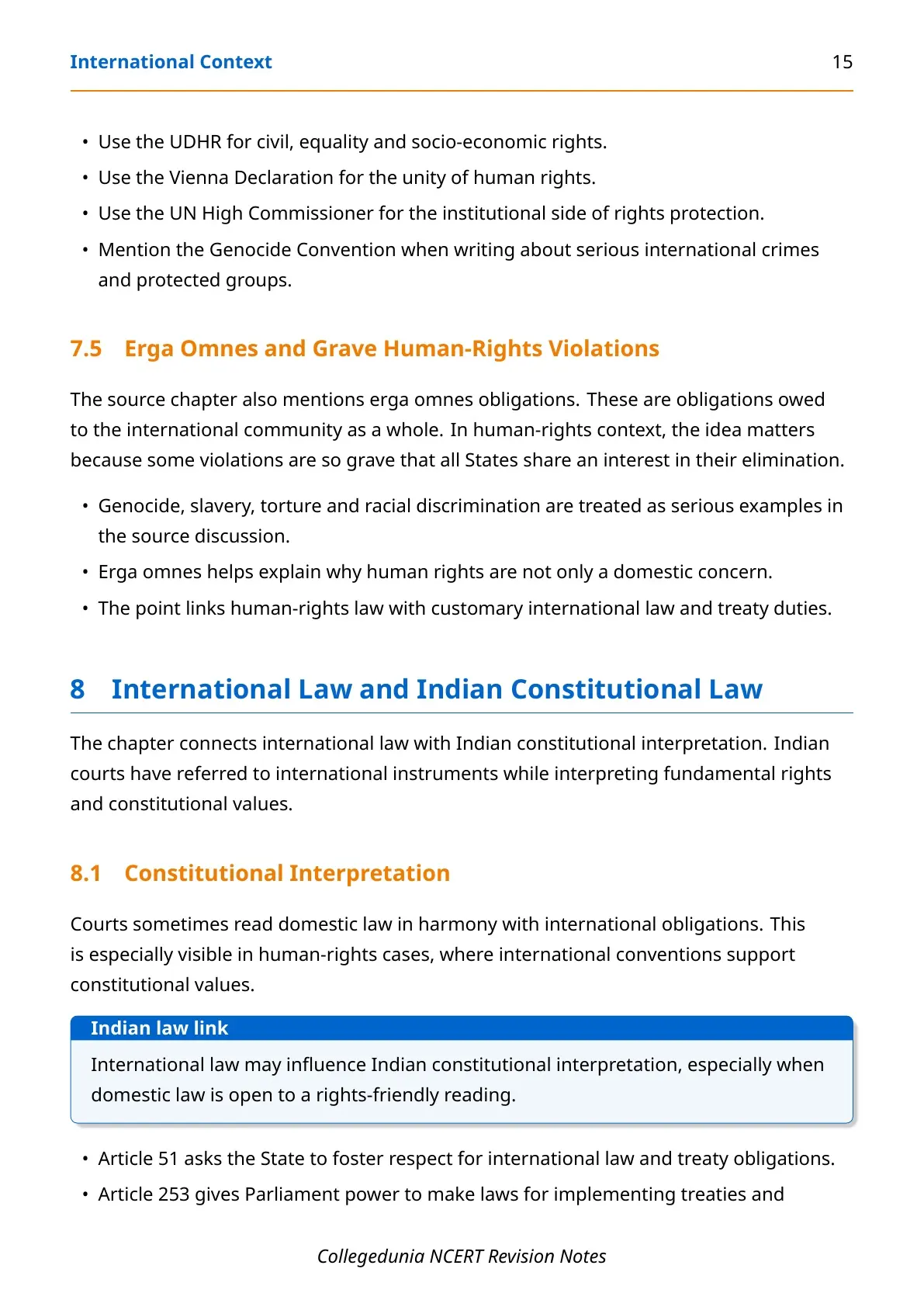
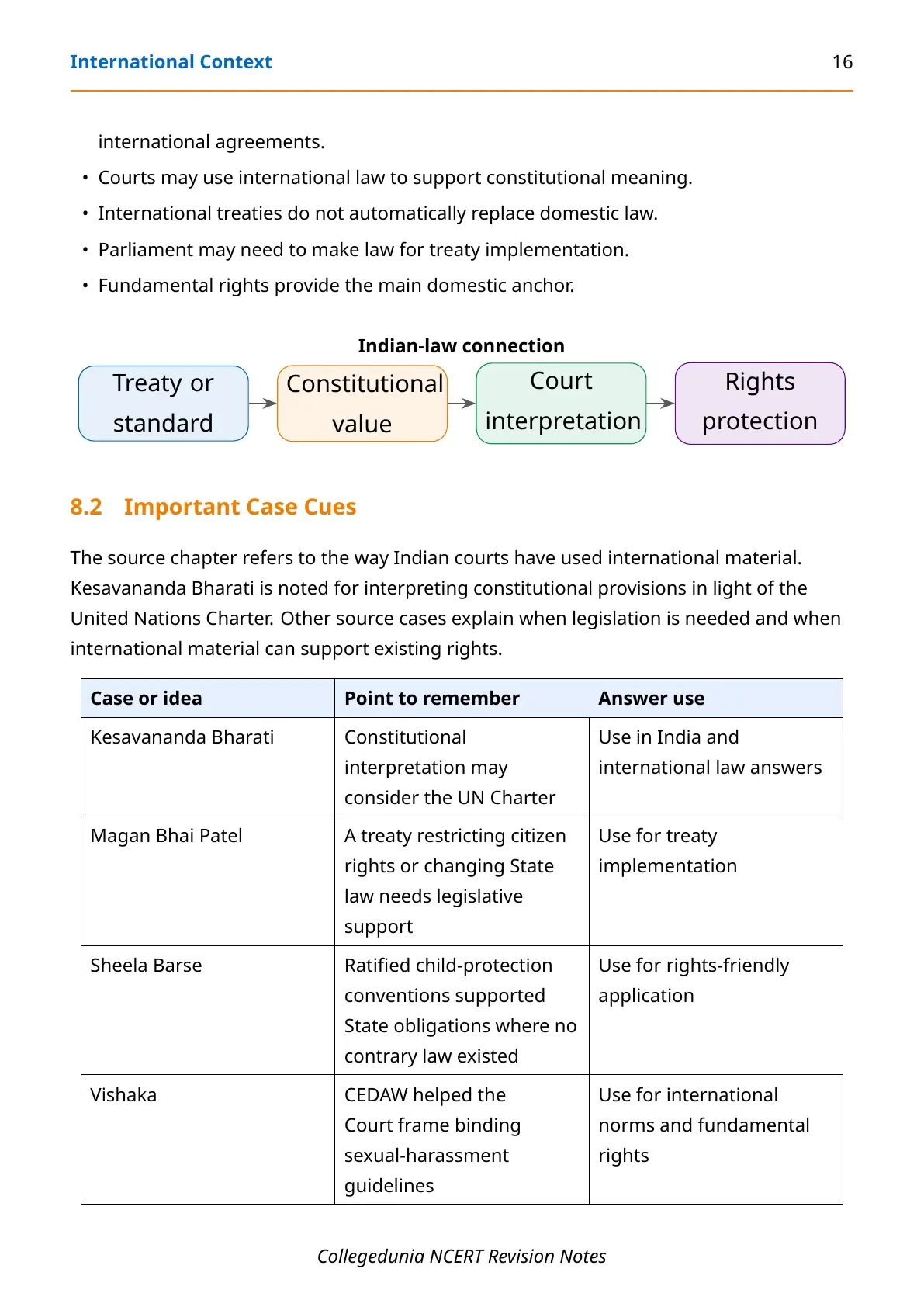
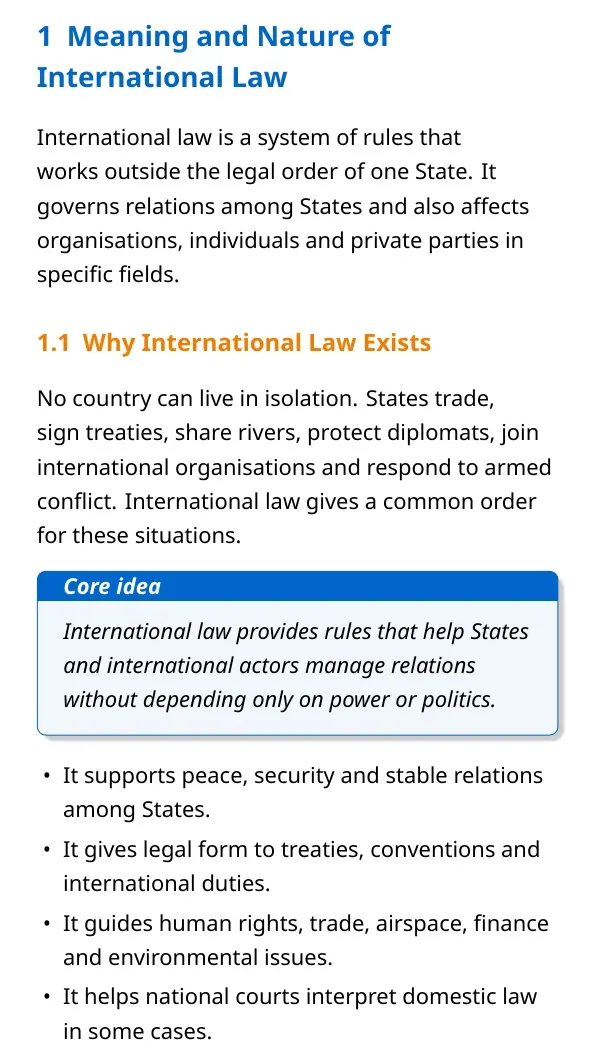
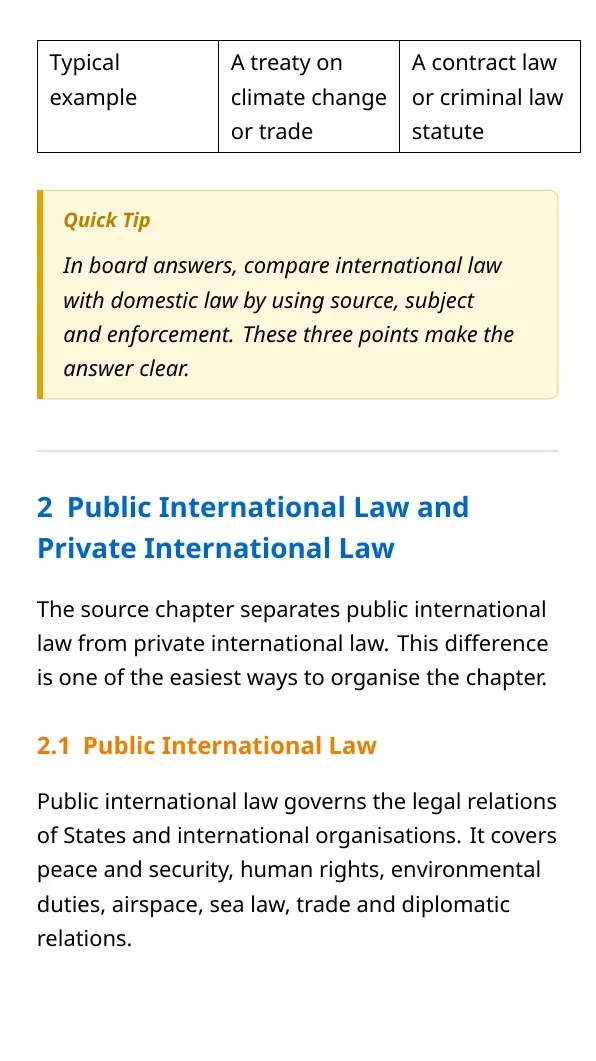
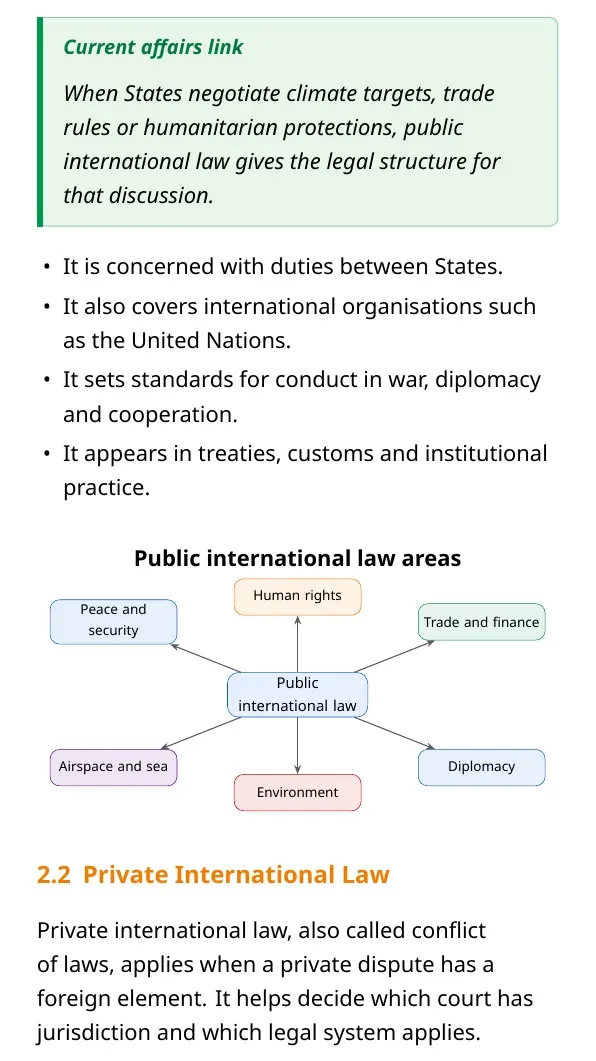
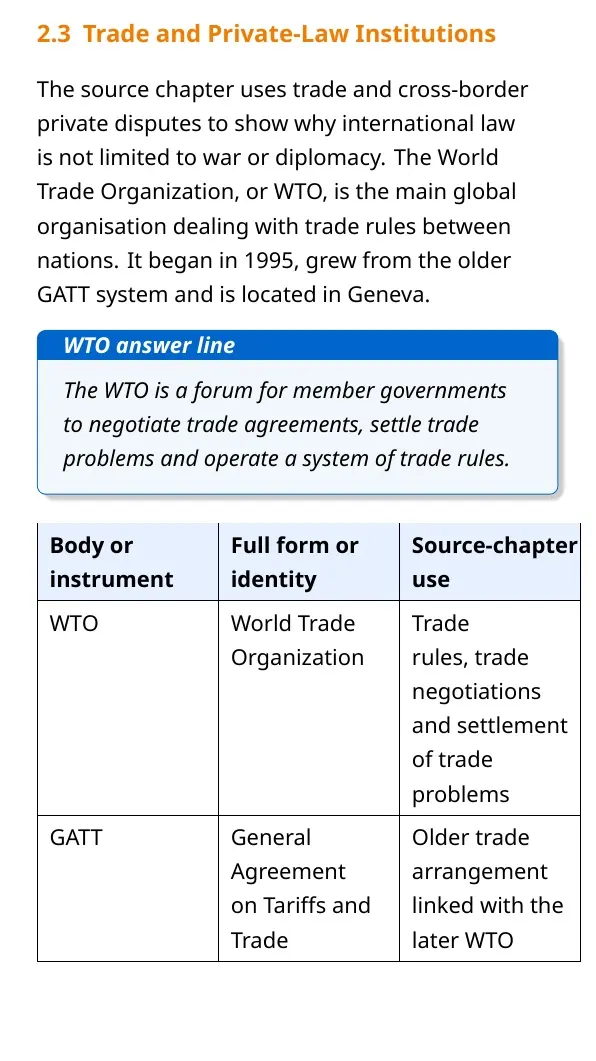
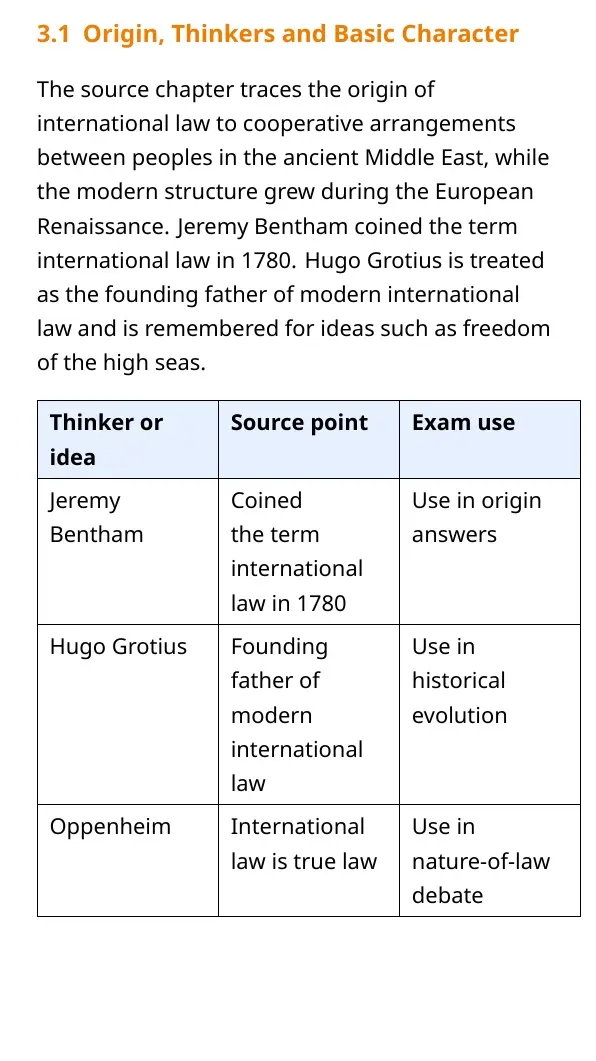
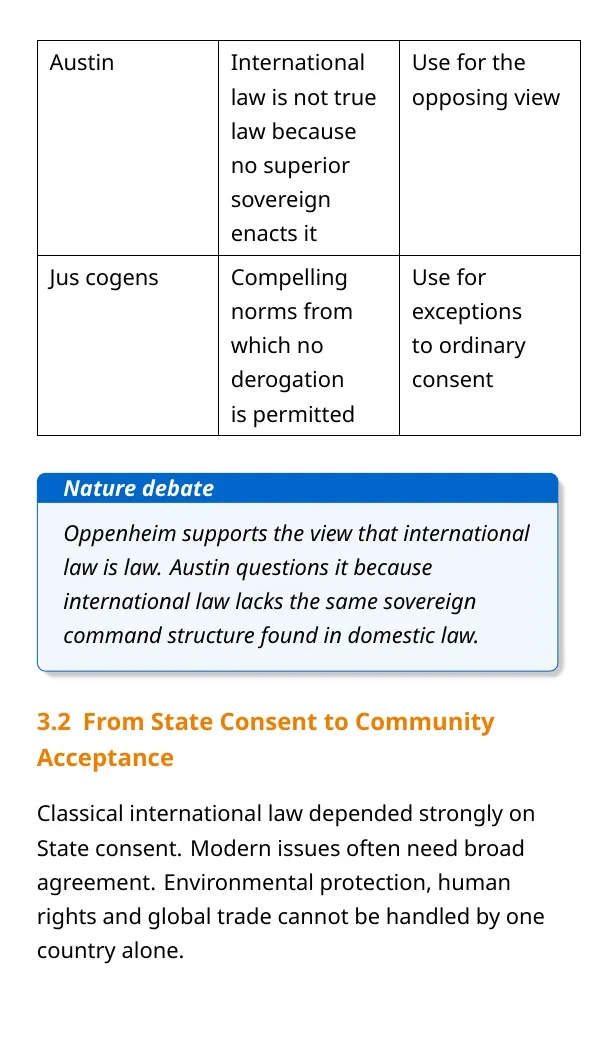
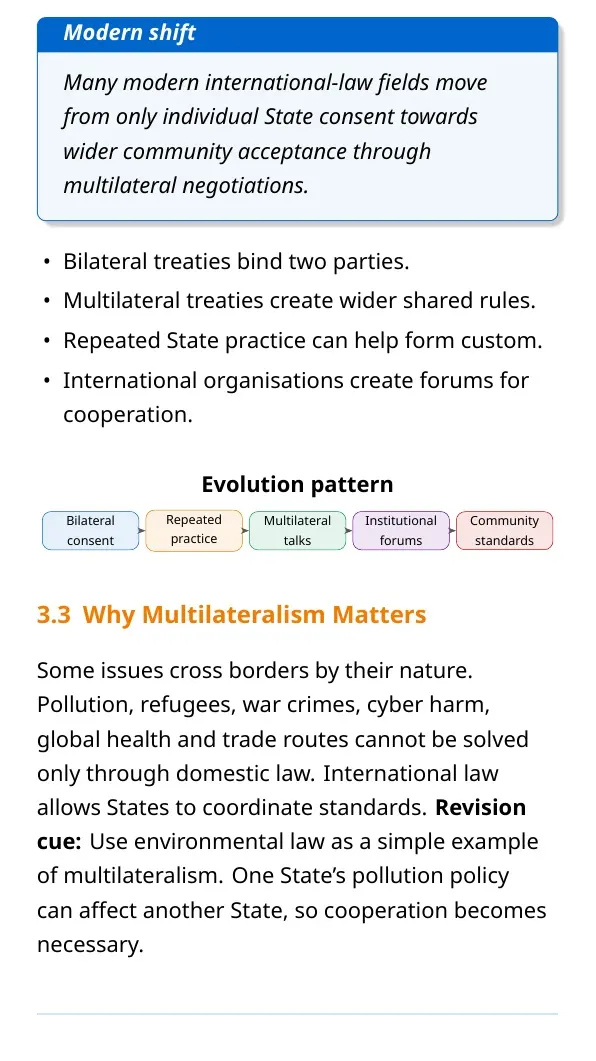
International Context introduces students to international law as a legal order beyond one country. It explains how States, international organisations and private parties use common rules for peace, trade, human rights and criminal justice.
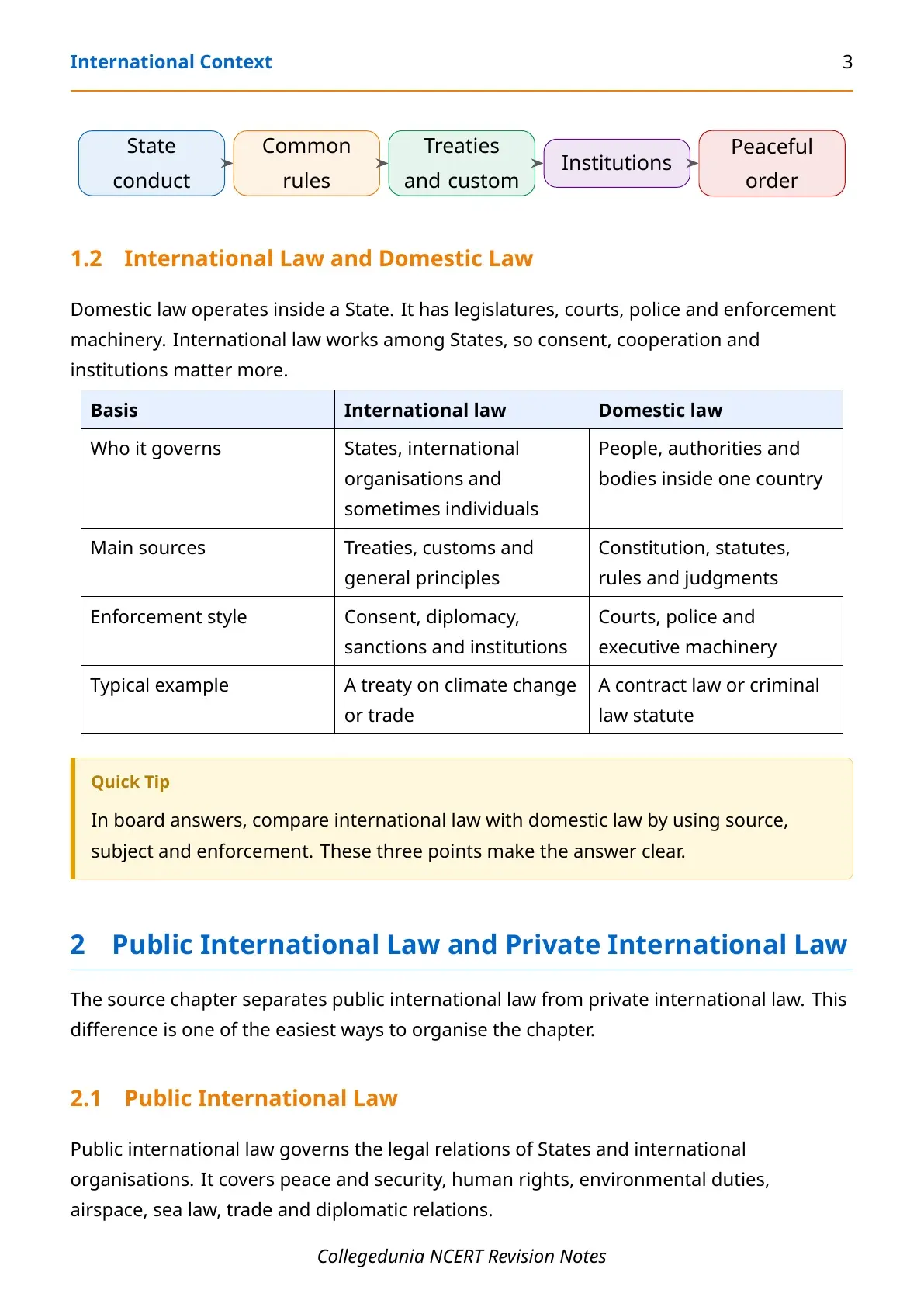
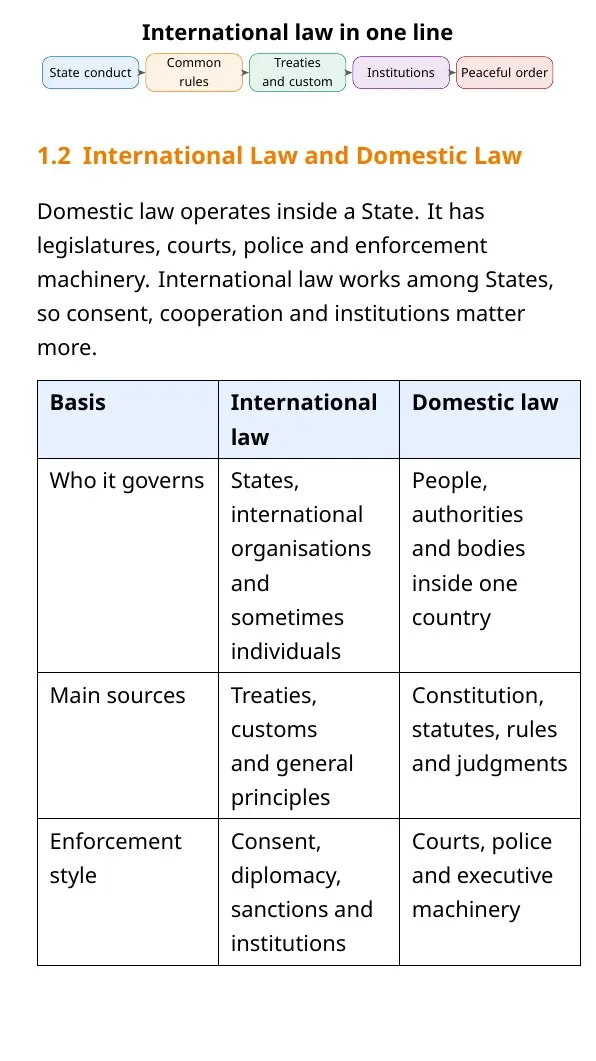
- Public international law governs relations between States and international bodies.
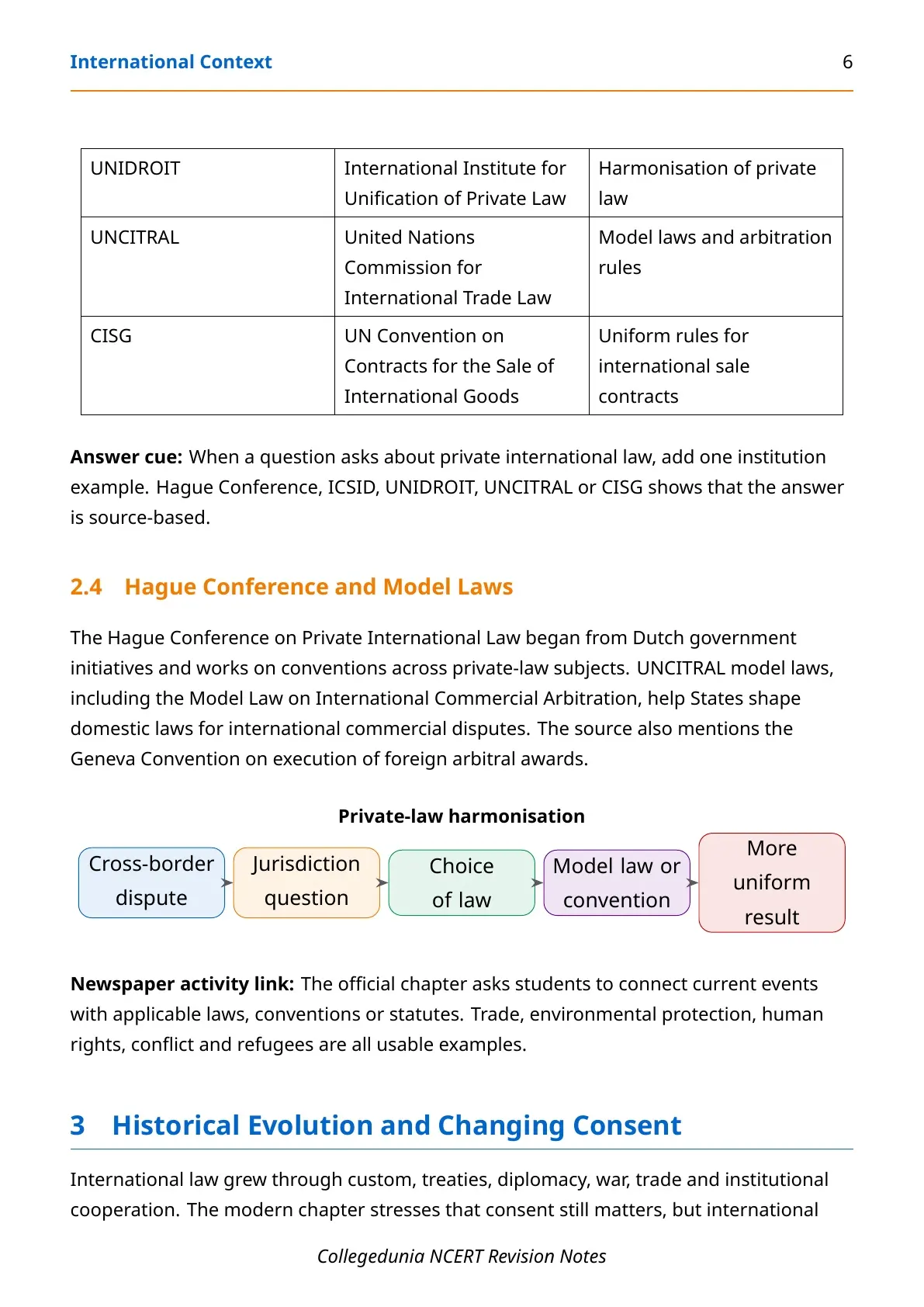
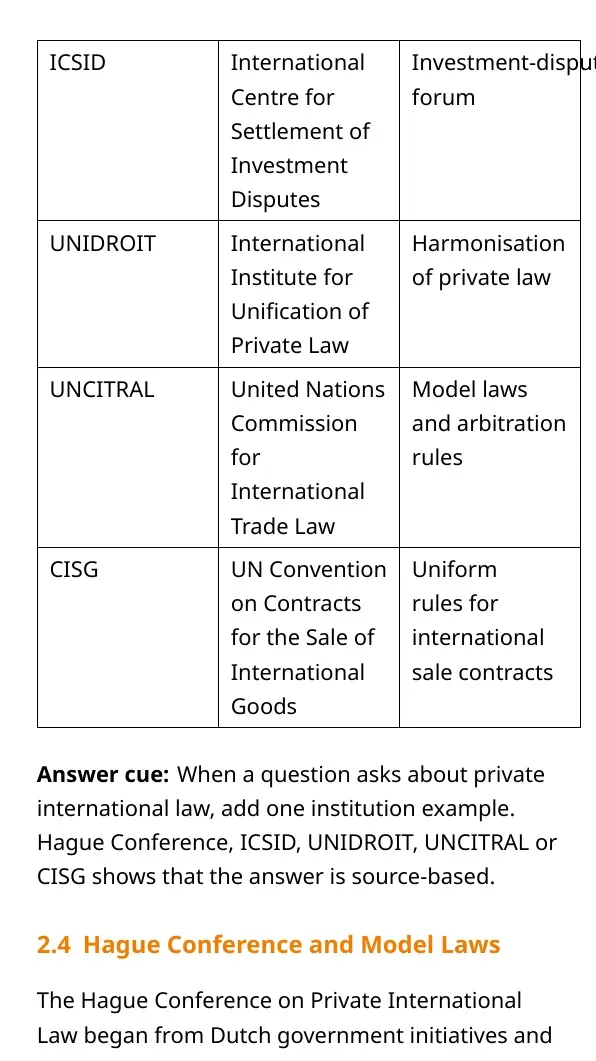
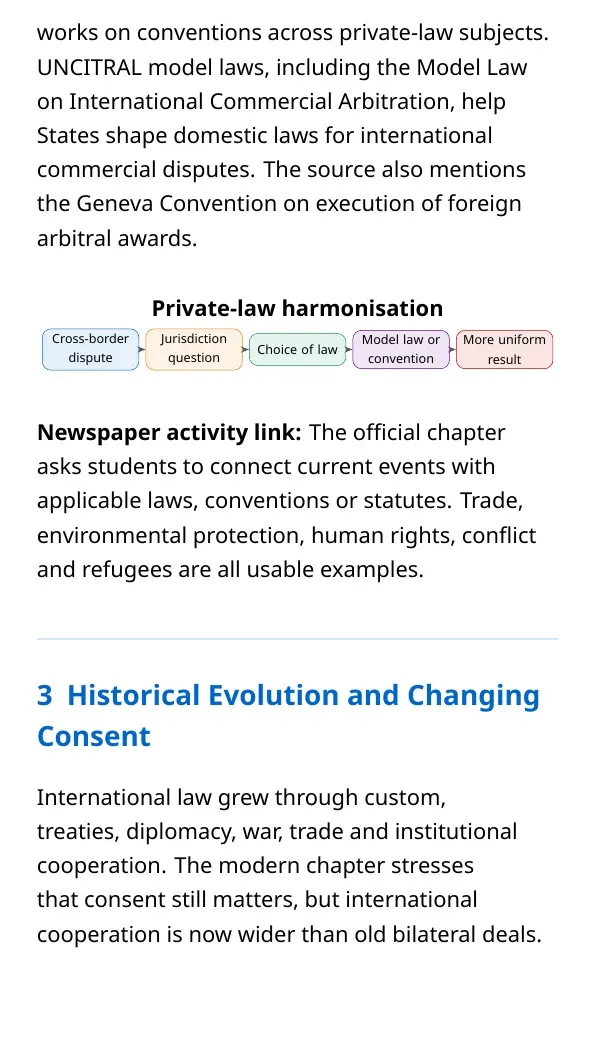
- Private international law handles private disputes with a foreign element.
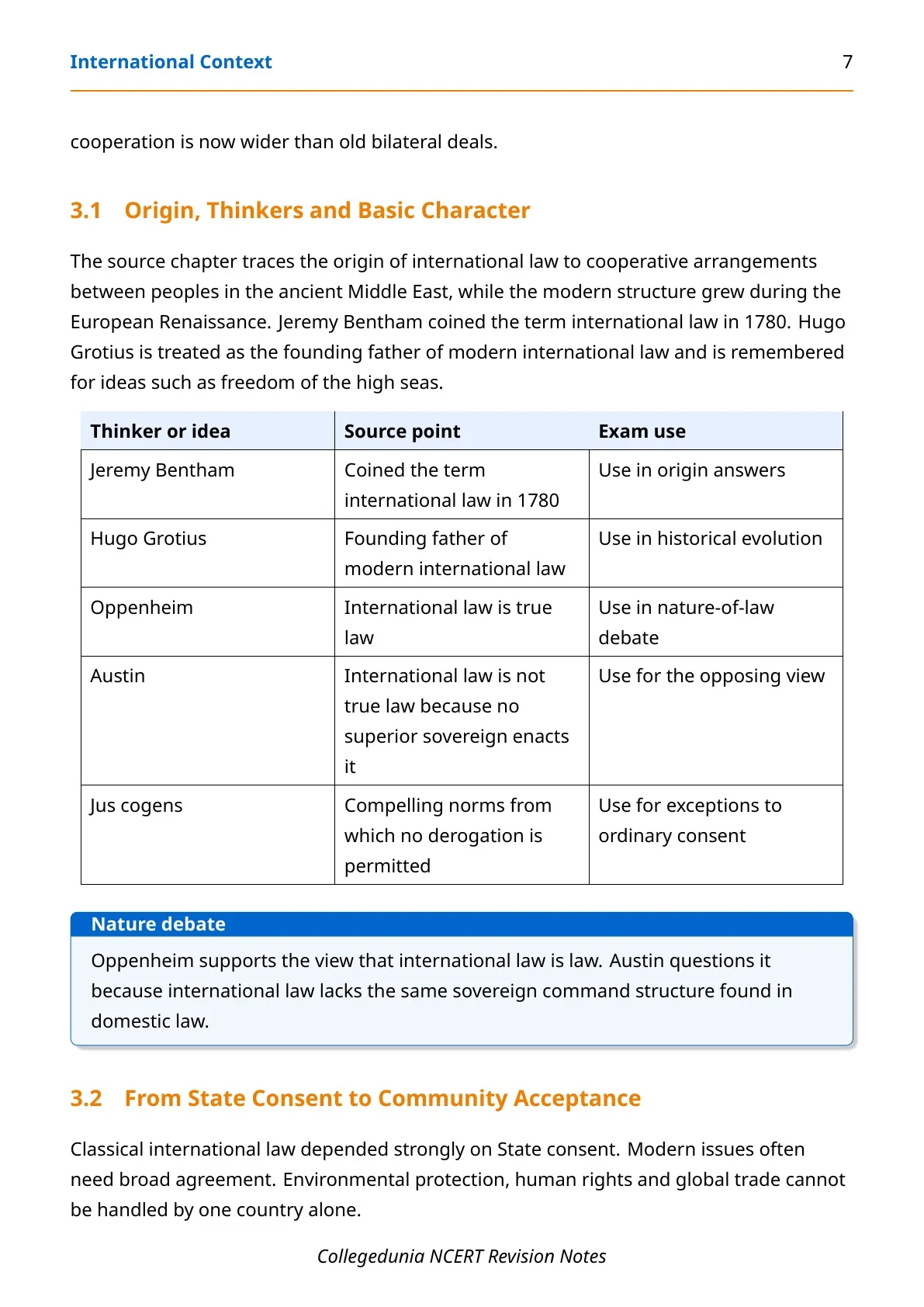
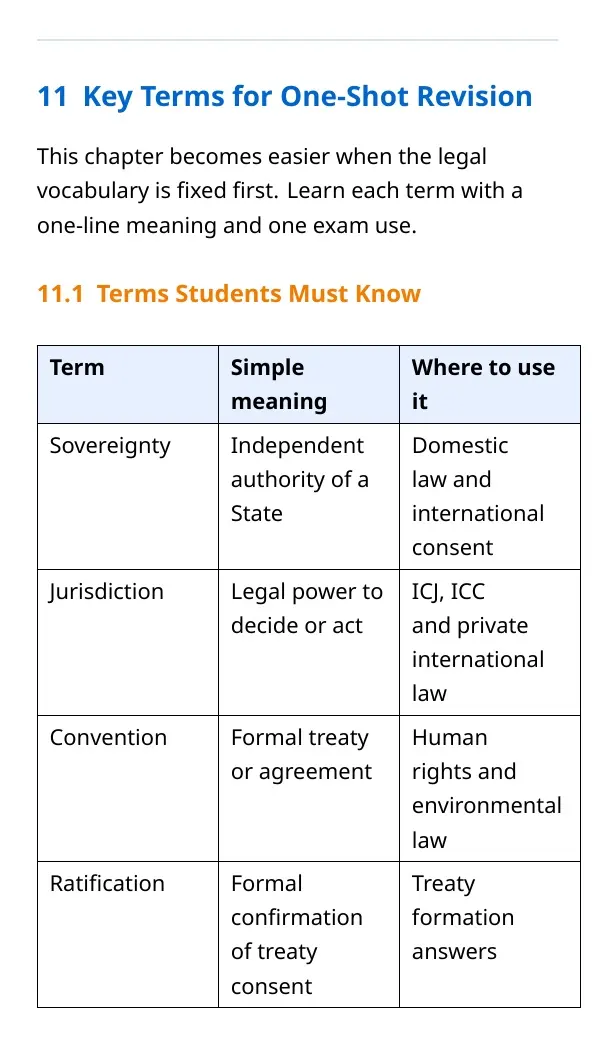
- Treaties and customs are the two source groups students should revise first.
- ICJ and ICC must be kept separate in board answers.
International Context Sources of Law Video
Source: Magnet Brains on YouTube
Sources of International Law in Legal Studies Chapter 7
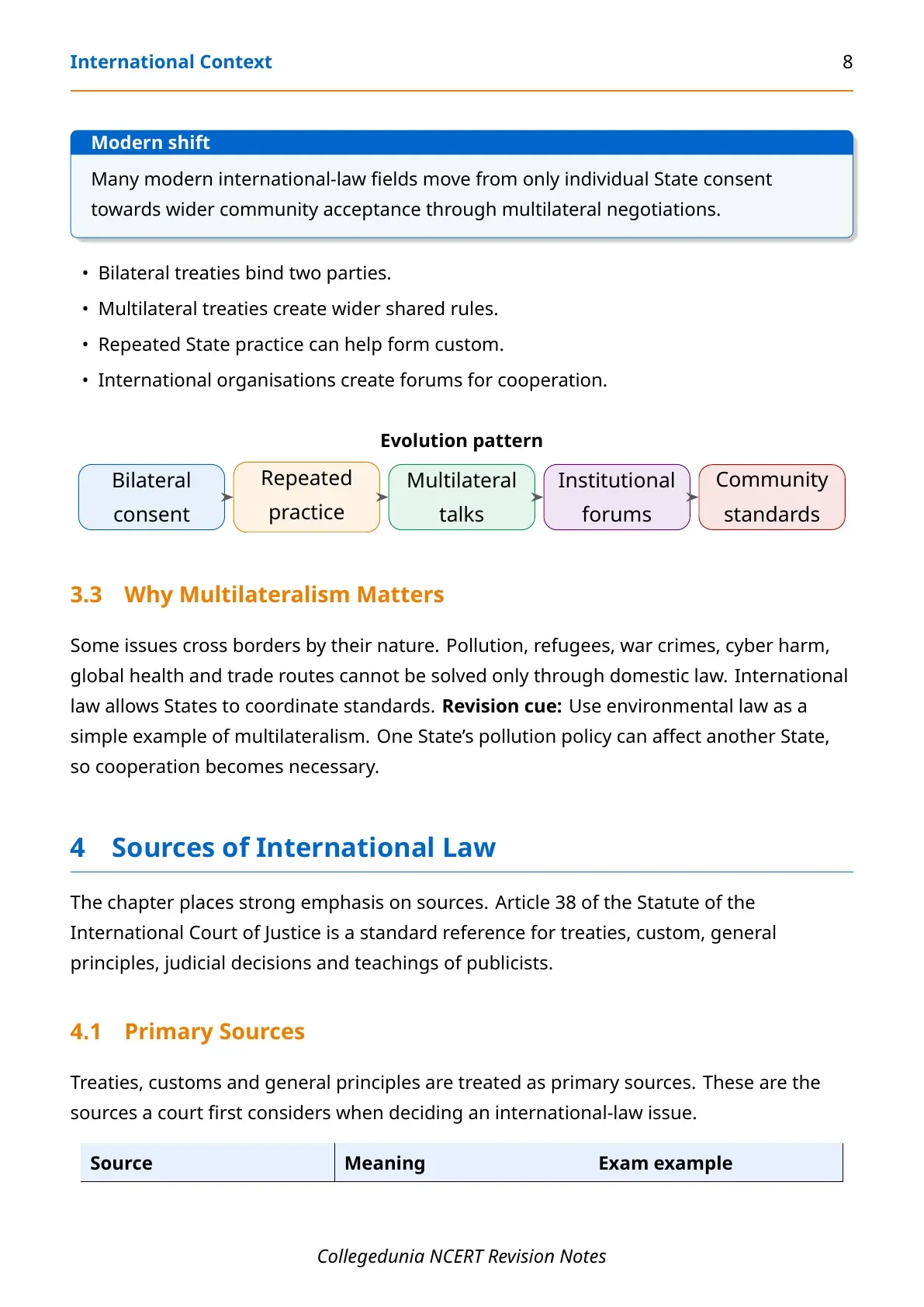
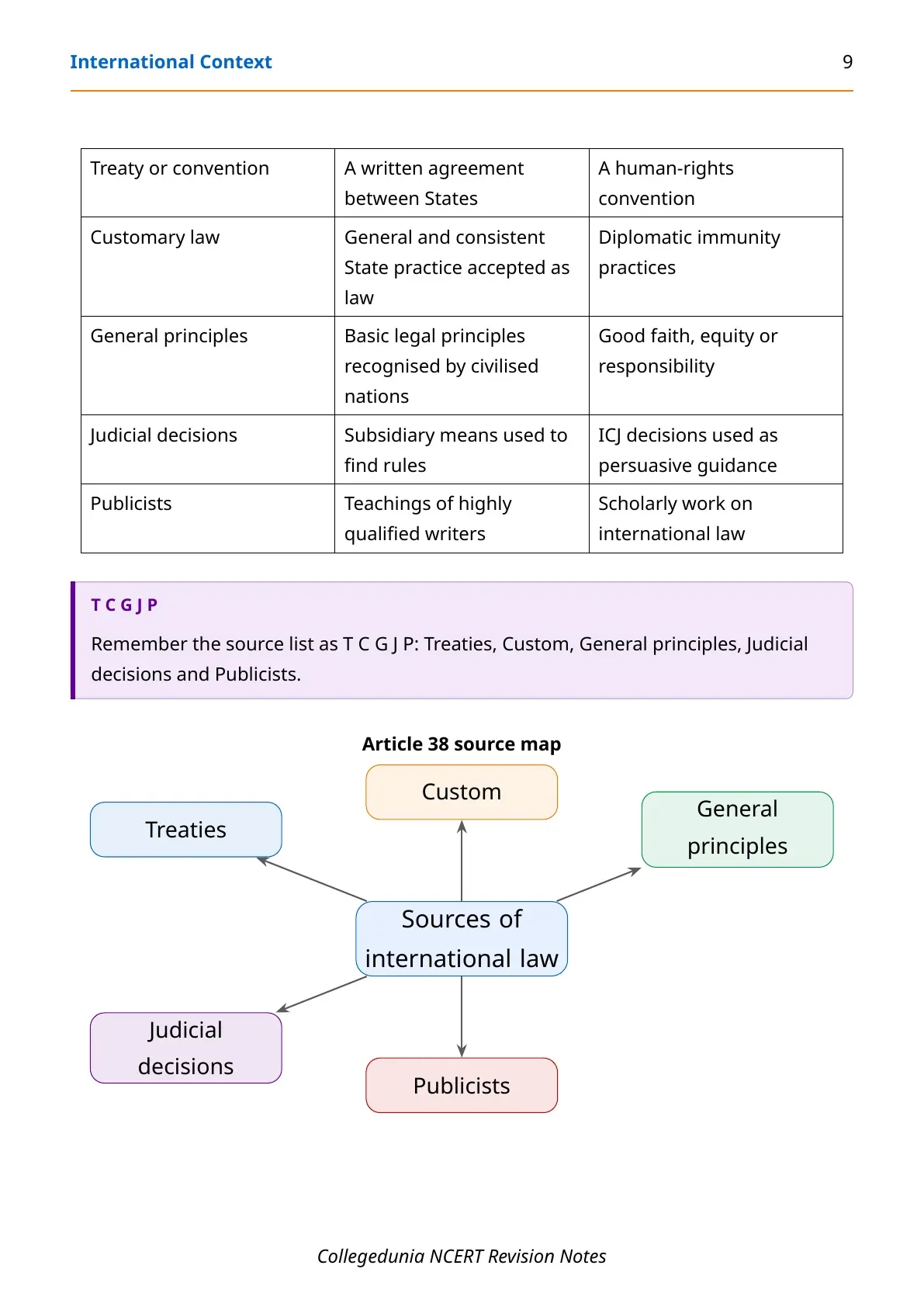
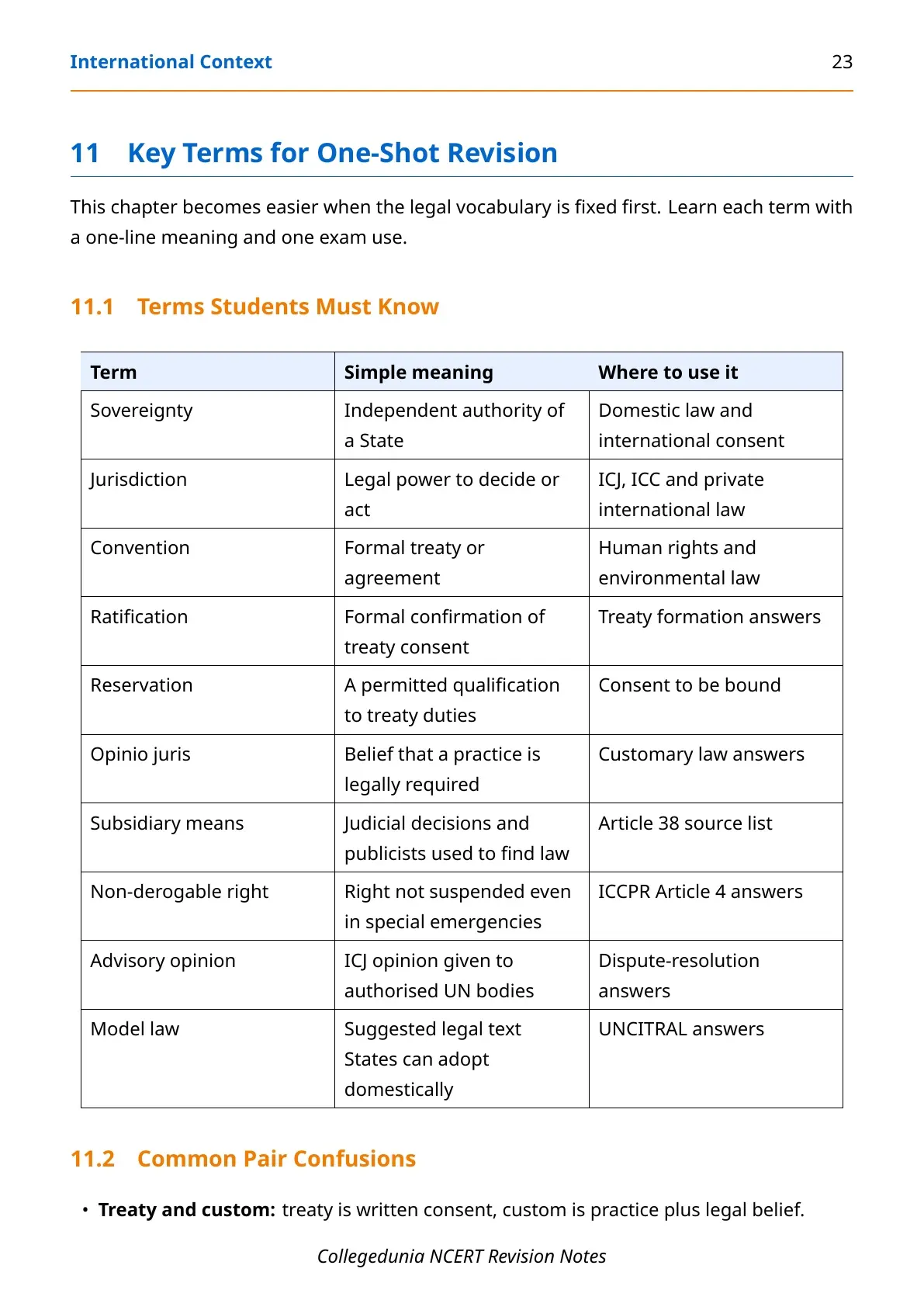
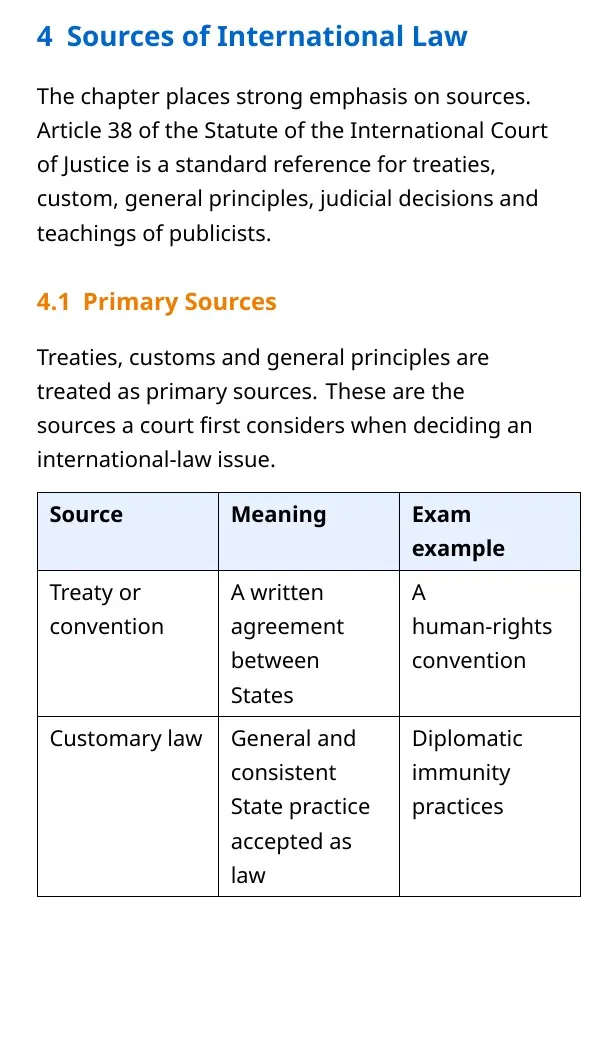
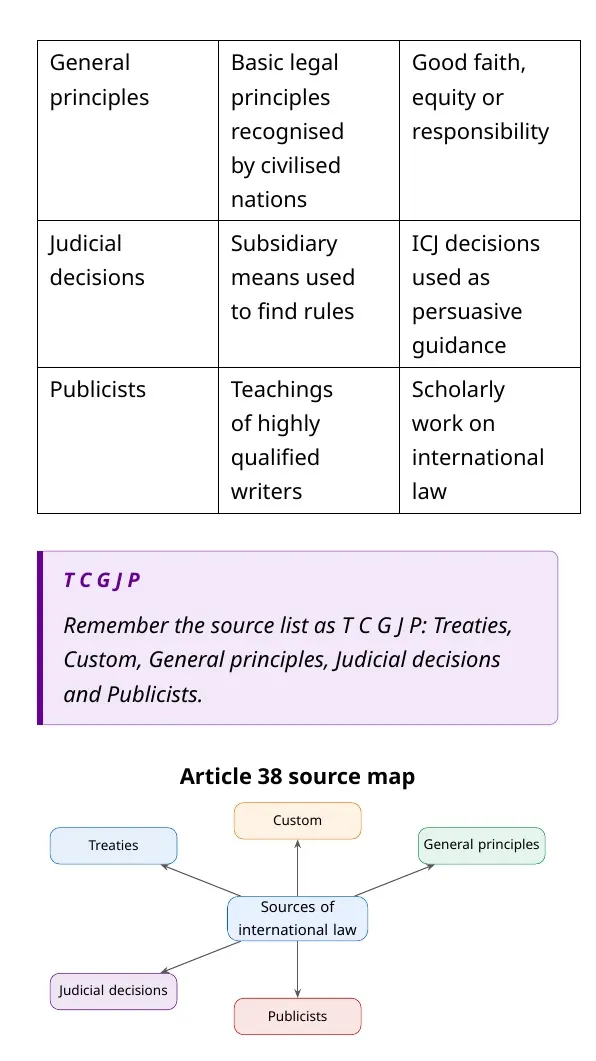
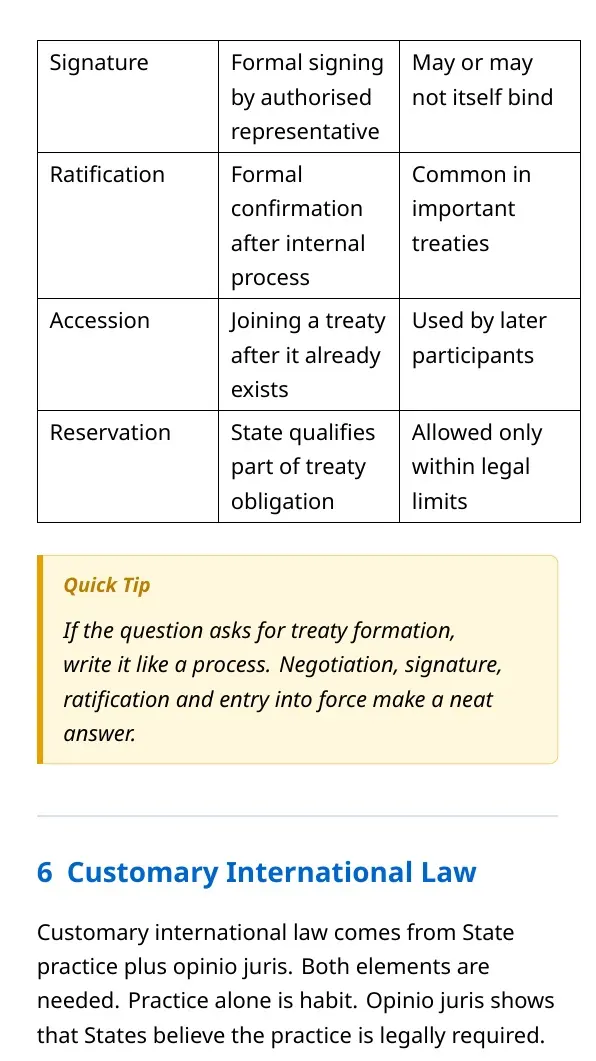
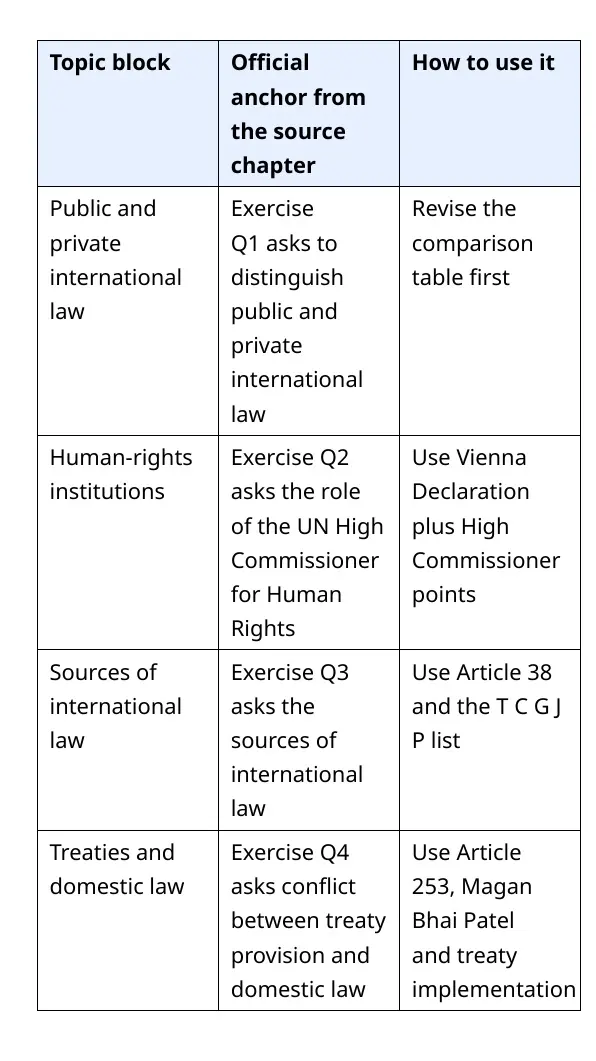
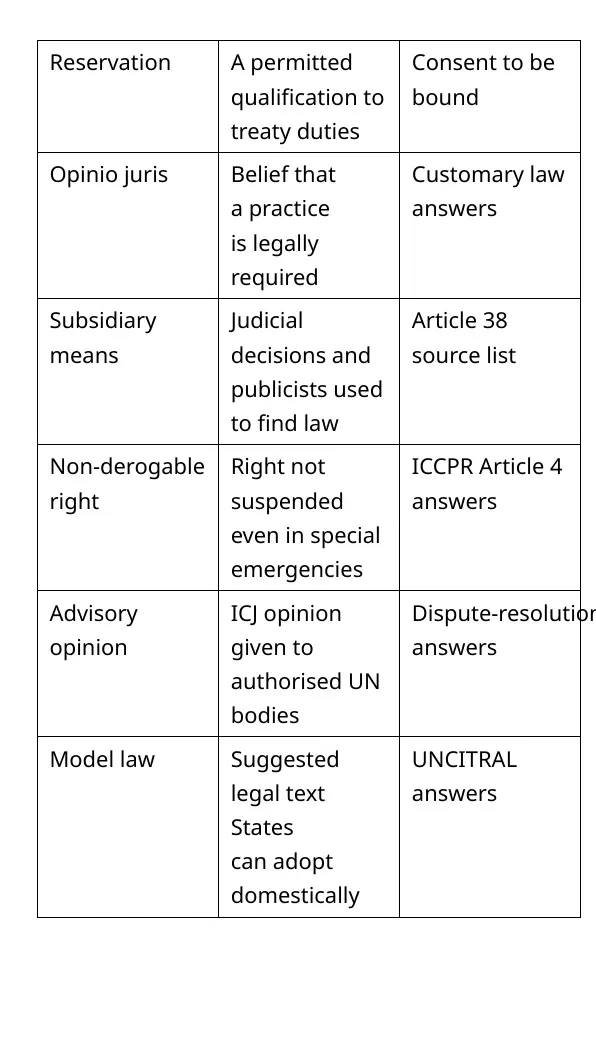
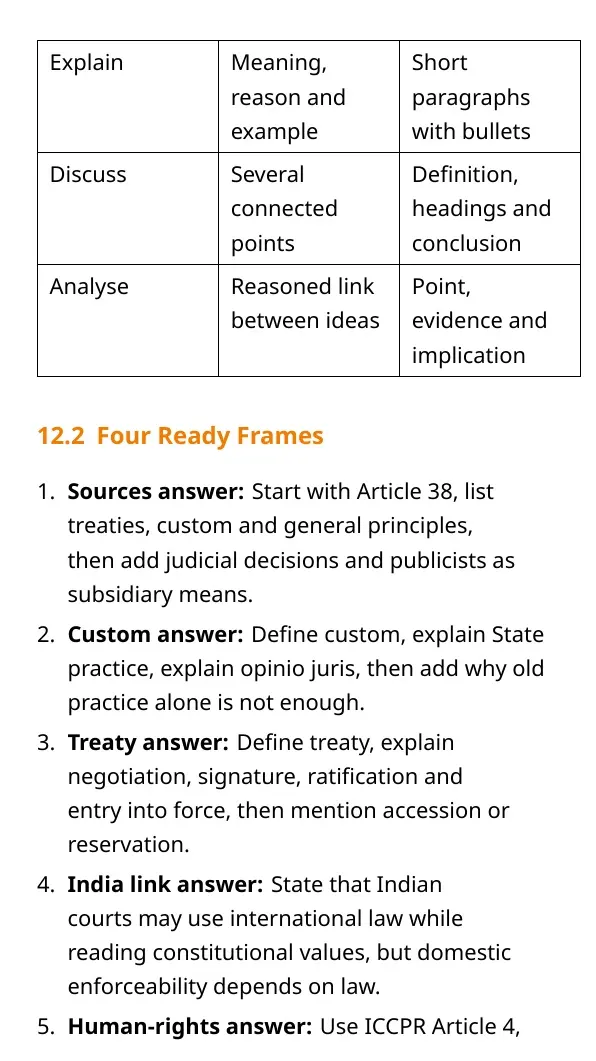
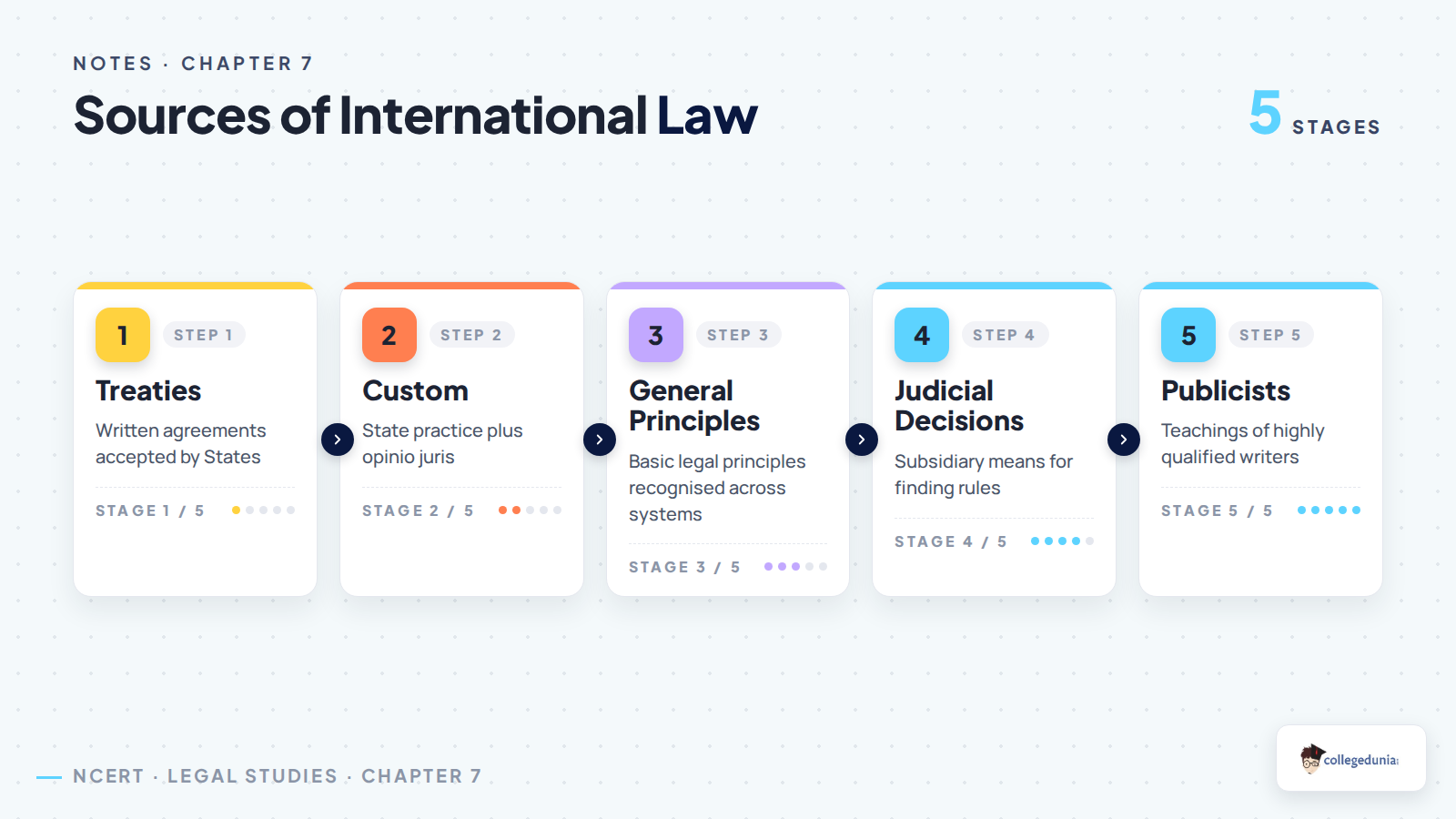
Article 38 of the Statute of the International Court of Justice is the safest way to organise source-based answers. The source list begins with treaties, custom and general principles. Judicial decisions and publicists are used as subsidiary means.
| Source | Meaning | Exam cue |
|---|---|---|
| Treaties | Written agreements accepted by States | Use for conventions and ratification |
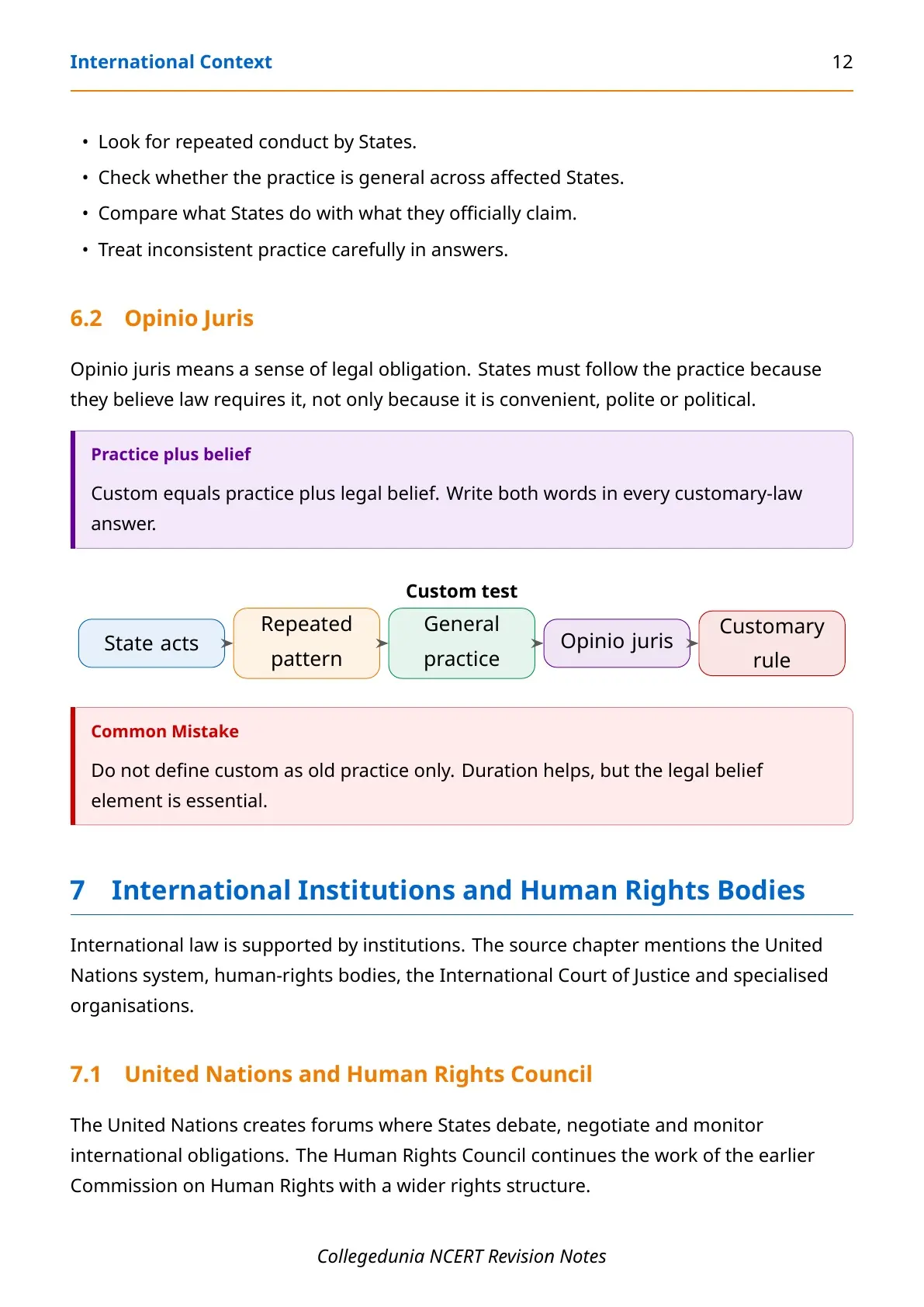
| Custom | State practice plus opinio juris | Write both elements together |
| General principles | Basic legal ideas recognised across systems | Use as the third primary source |
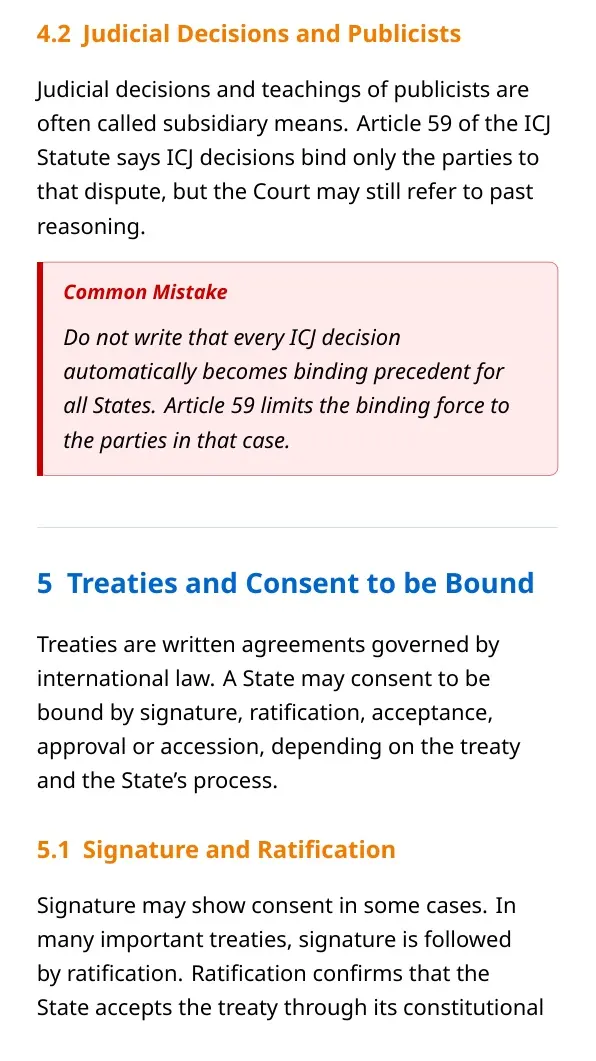
| Judicial decisions | Subsidiary means for finding rules | Do not call every ICJ decision binding on all States |
Public International Law and Private International Law Difference
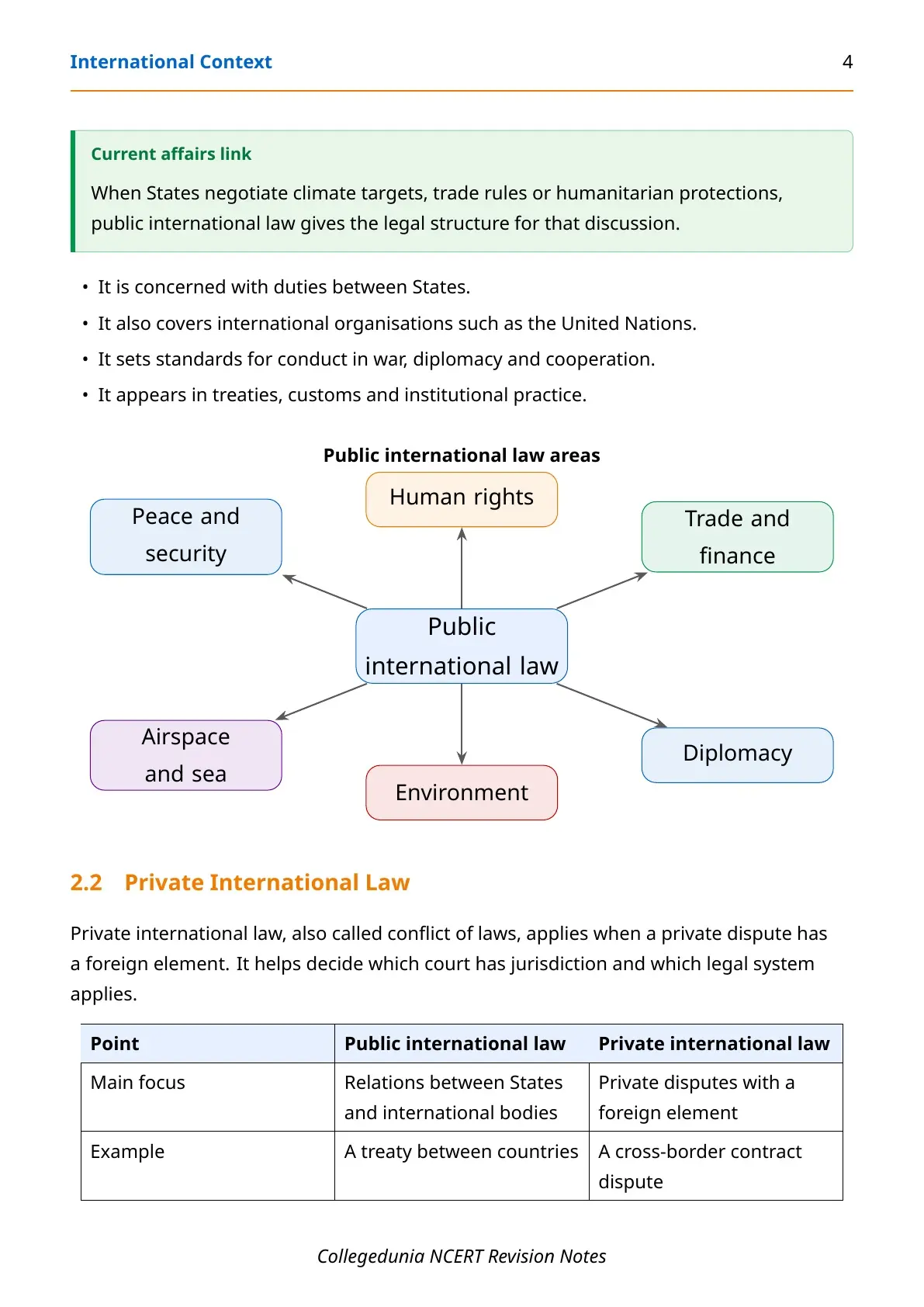
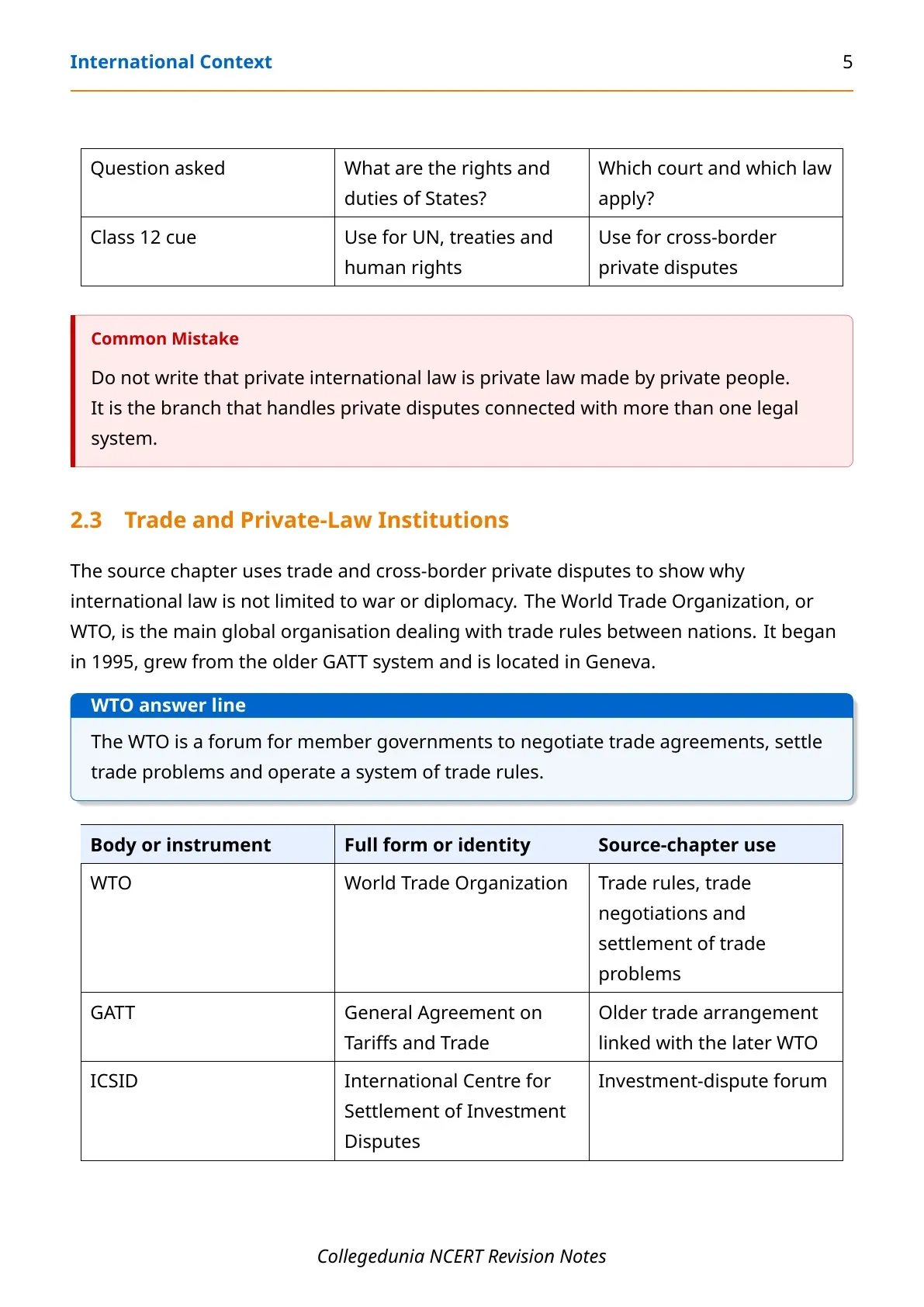
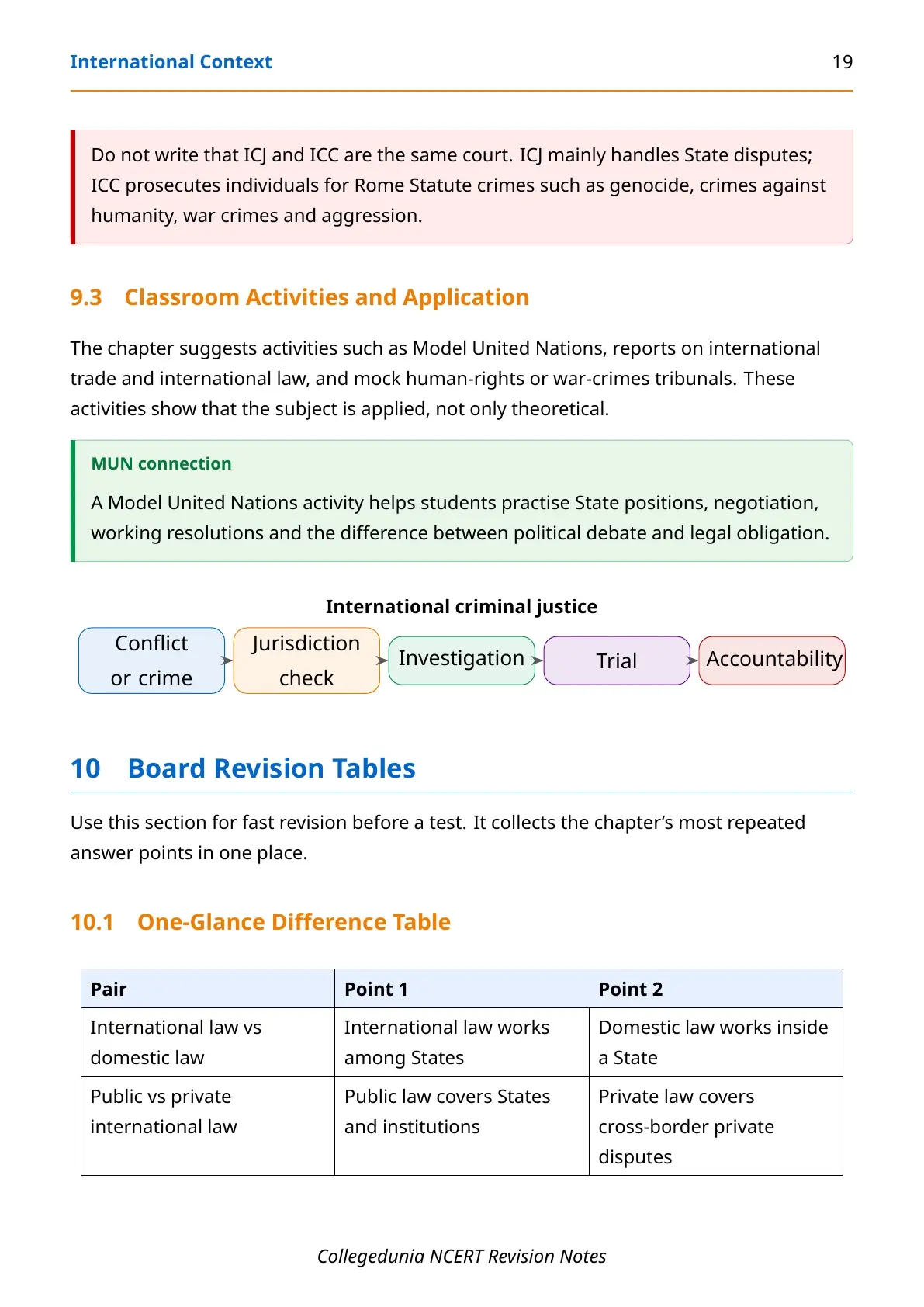
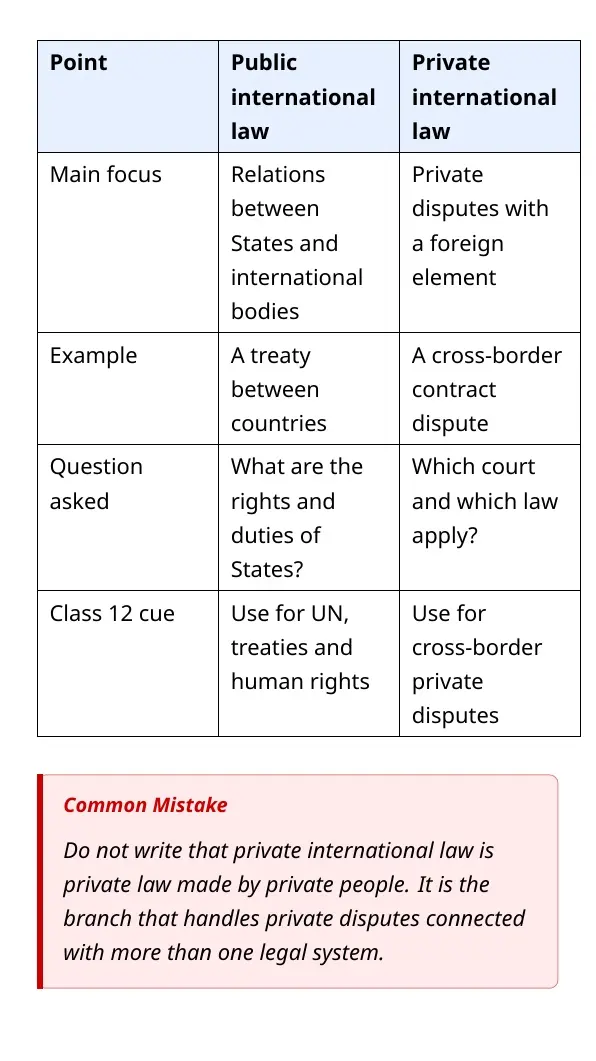
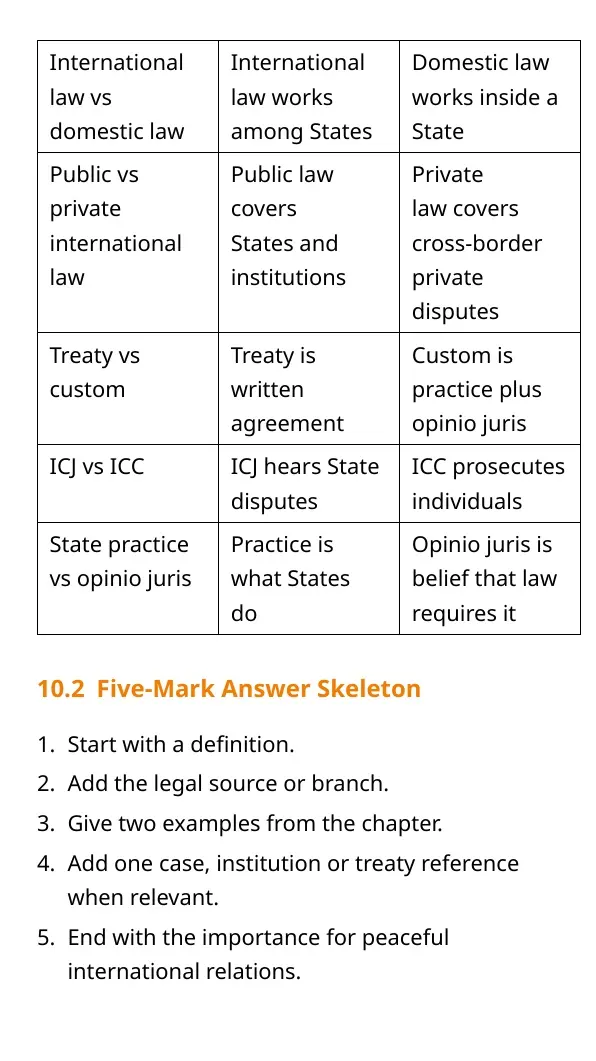
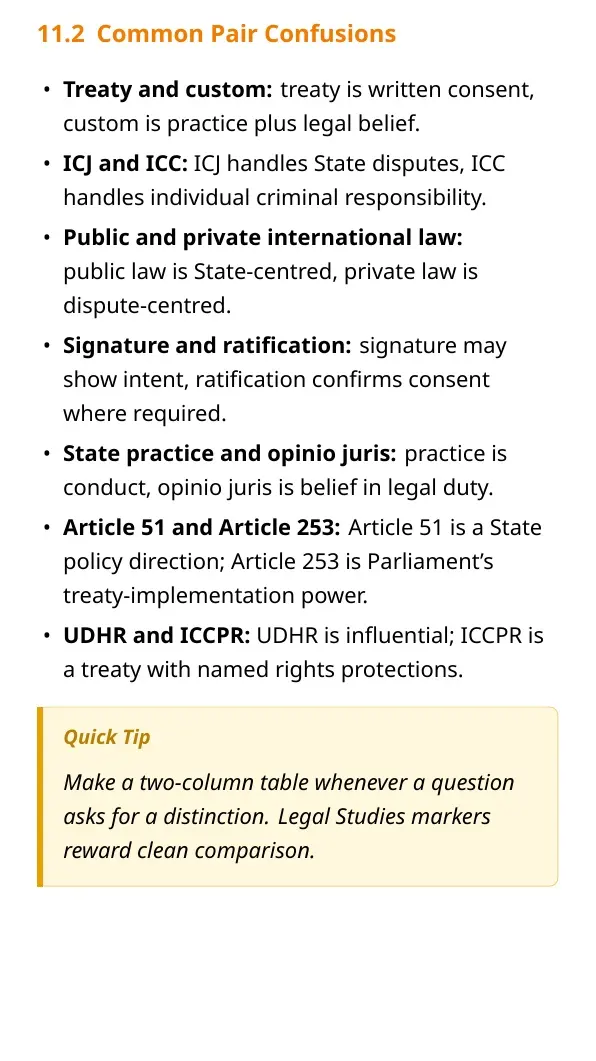
This is one of the easiest distinction questions from the chapter. Public international law is State-centred. Private international law is dispute-centred and applies when a private dispute crosses legal systems.
| Basis | Public international law | Private international law |
|---|---|---|
| Main focus | States and international organisations | Private disputes with a foreign element |
| Question asked | What are the rights and duties of States? | Which court and which law apply? |
| Examples | Human rights treaty, trade treaty, UN Charter | Cross-border contract or family dispute |
ICJ vs ICC in International Context Class 12
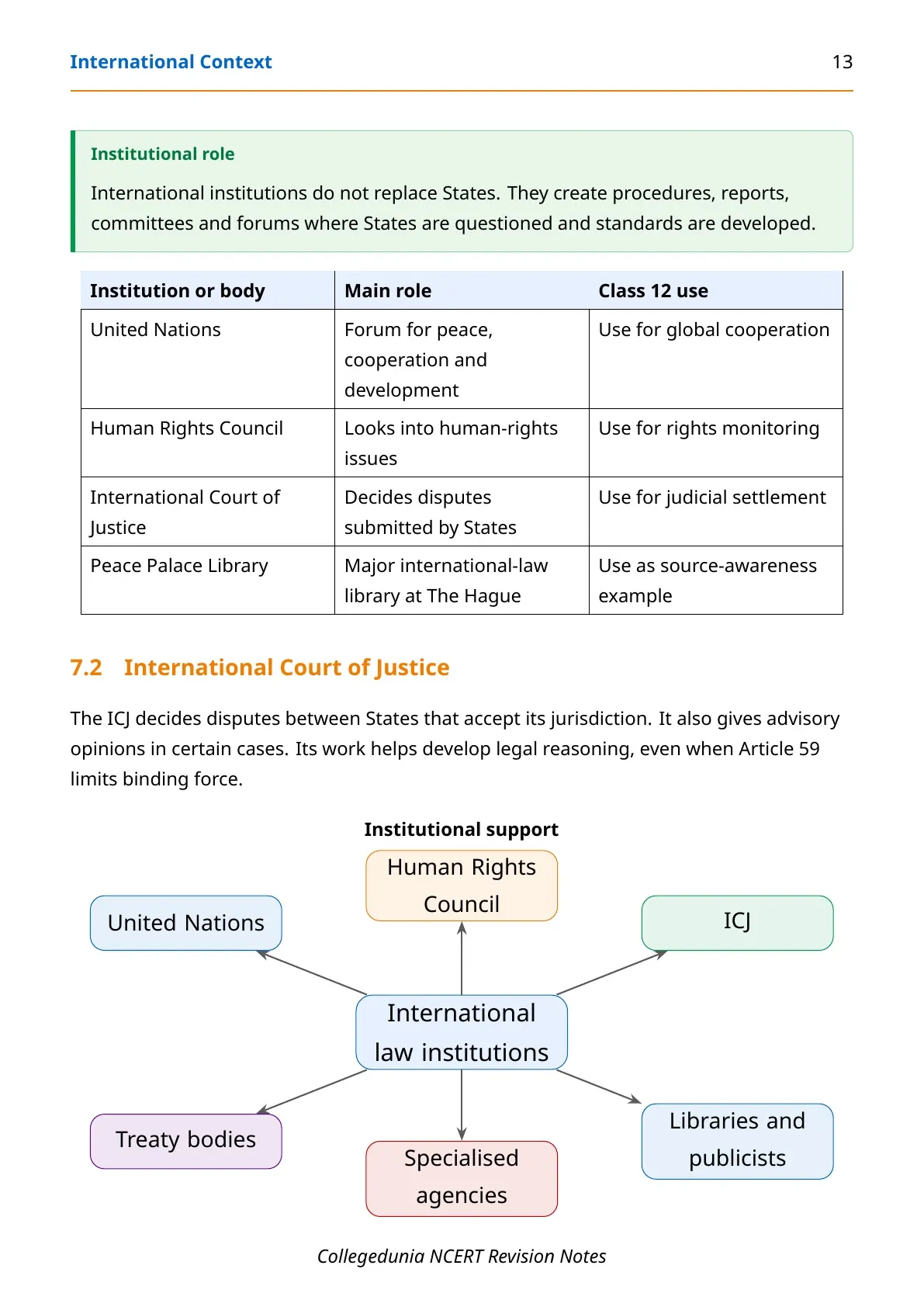
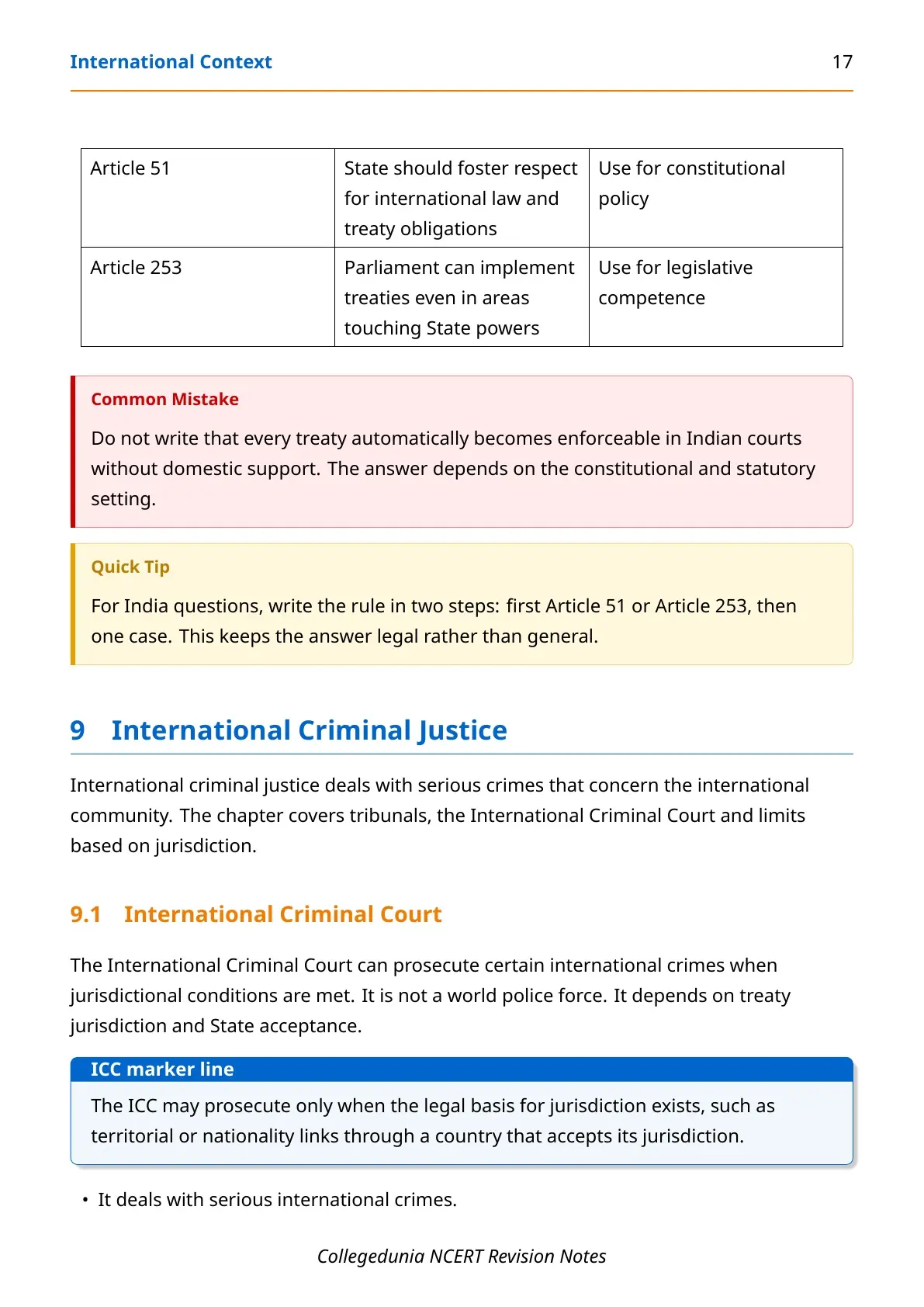
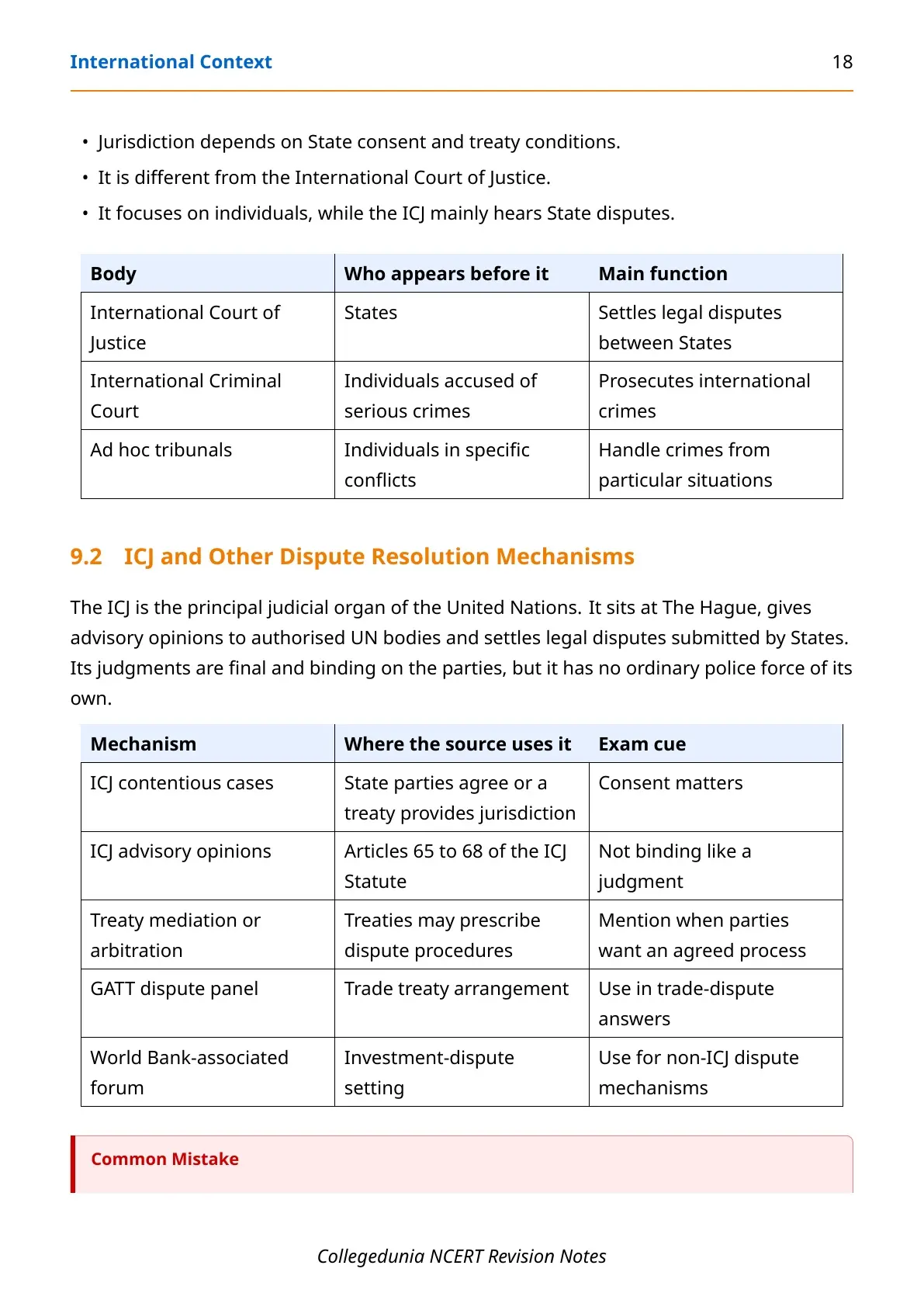
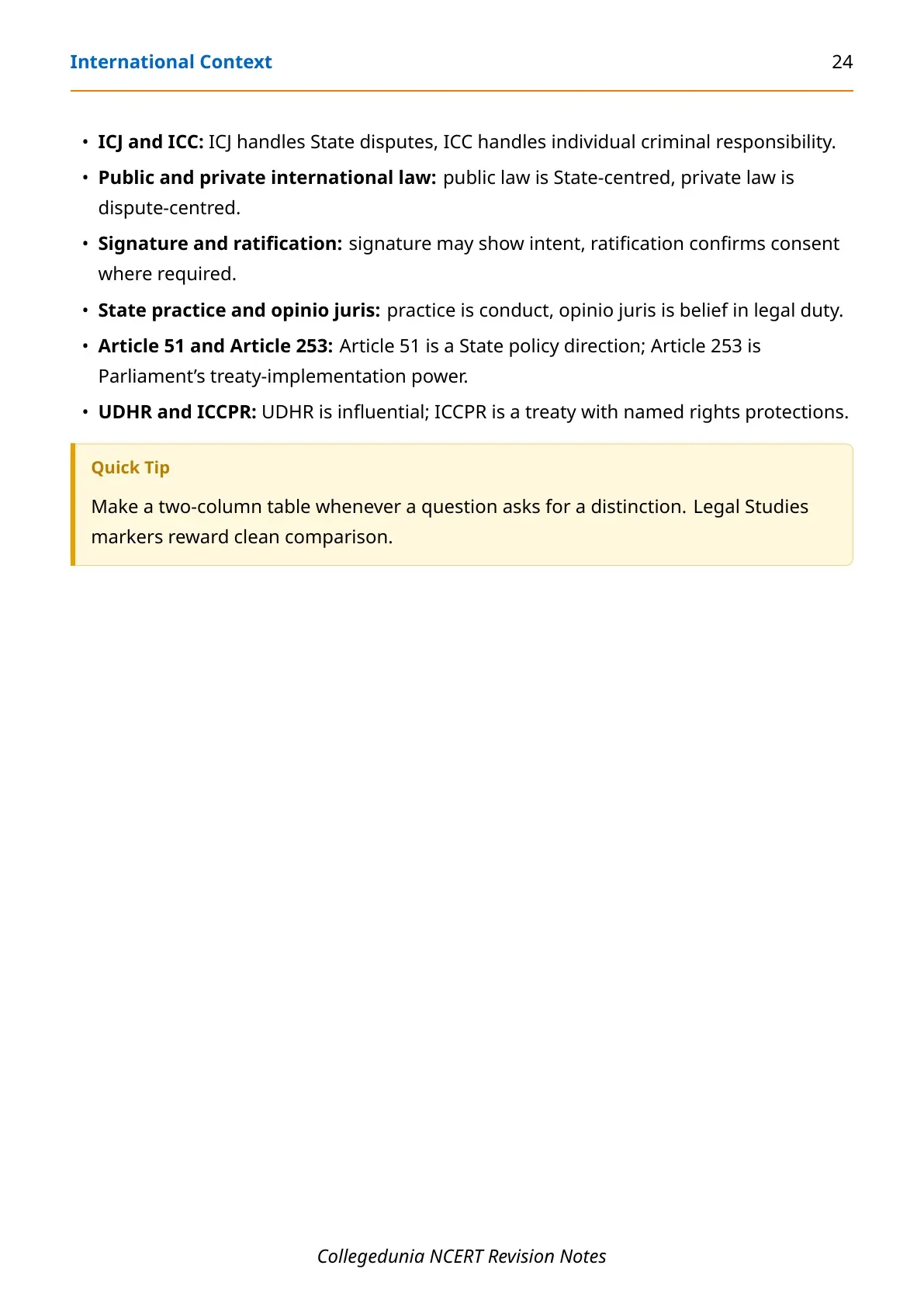
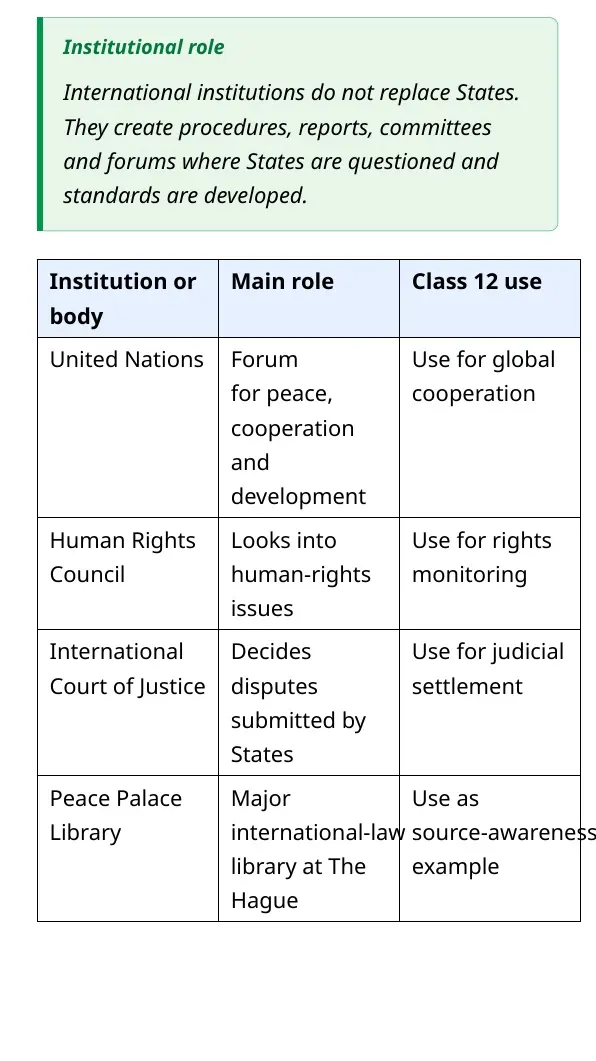
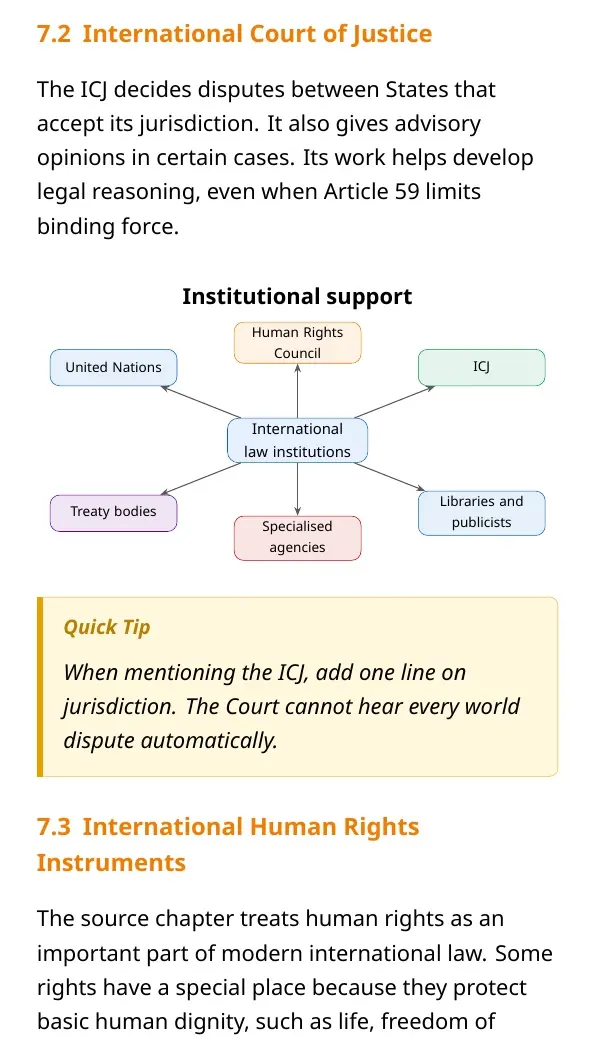
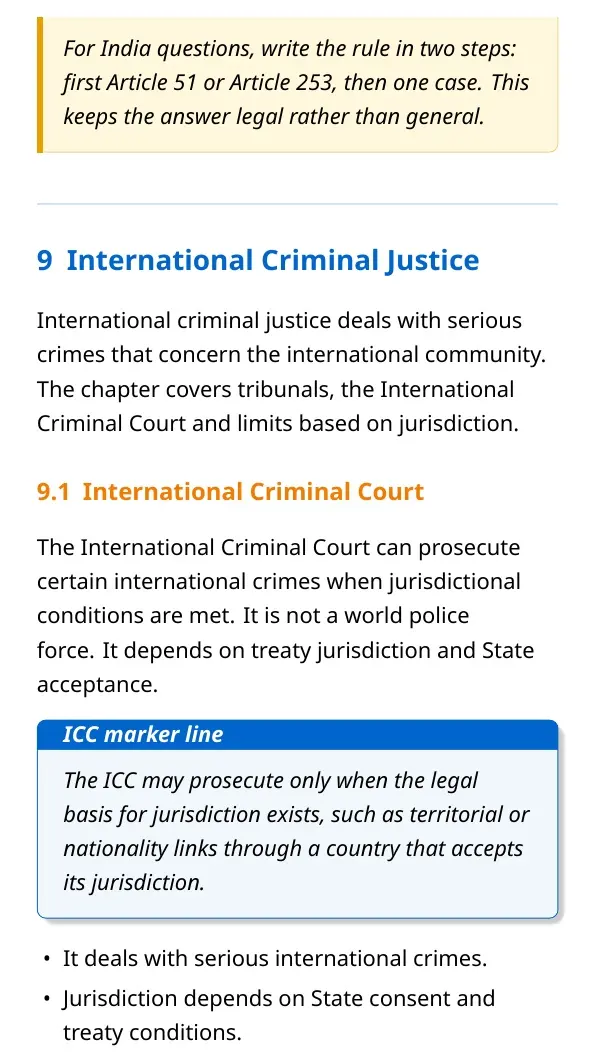
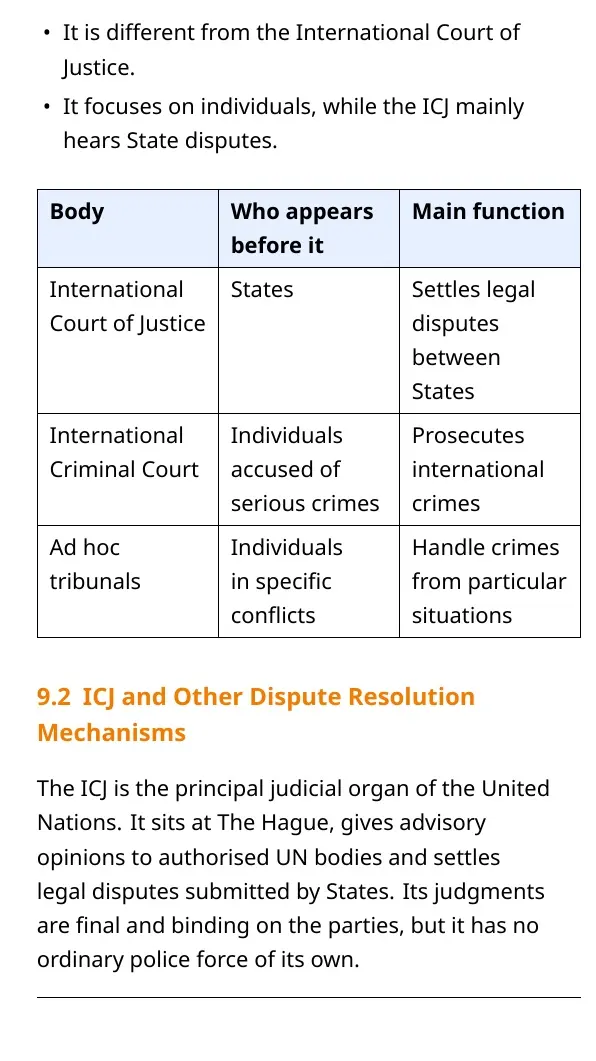
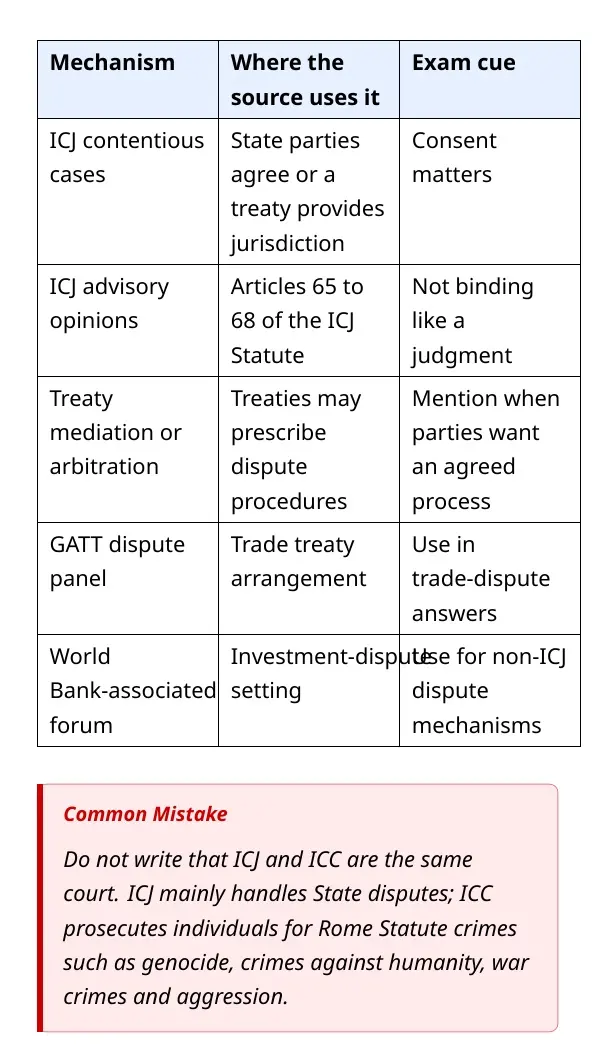
Many students confuse the International Court of Justice with the International Criminal Court. The ICJ mainly handles State disputes, while the ICC prosecutes individuals for serious international crimes.
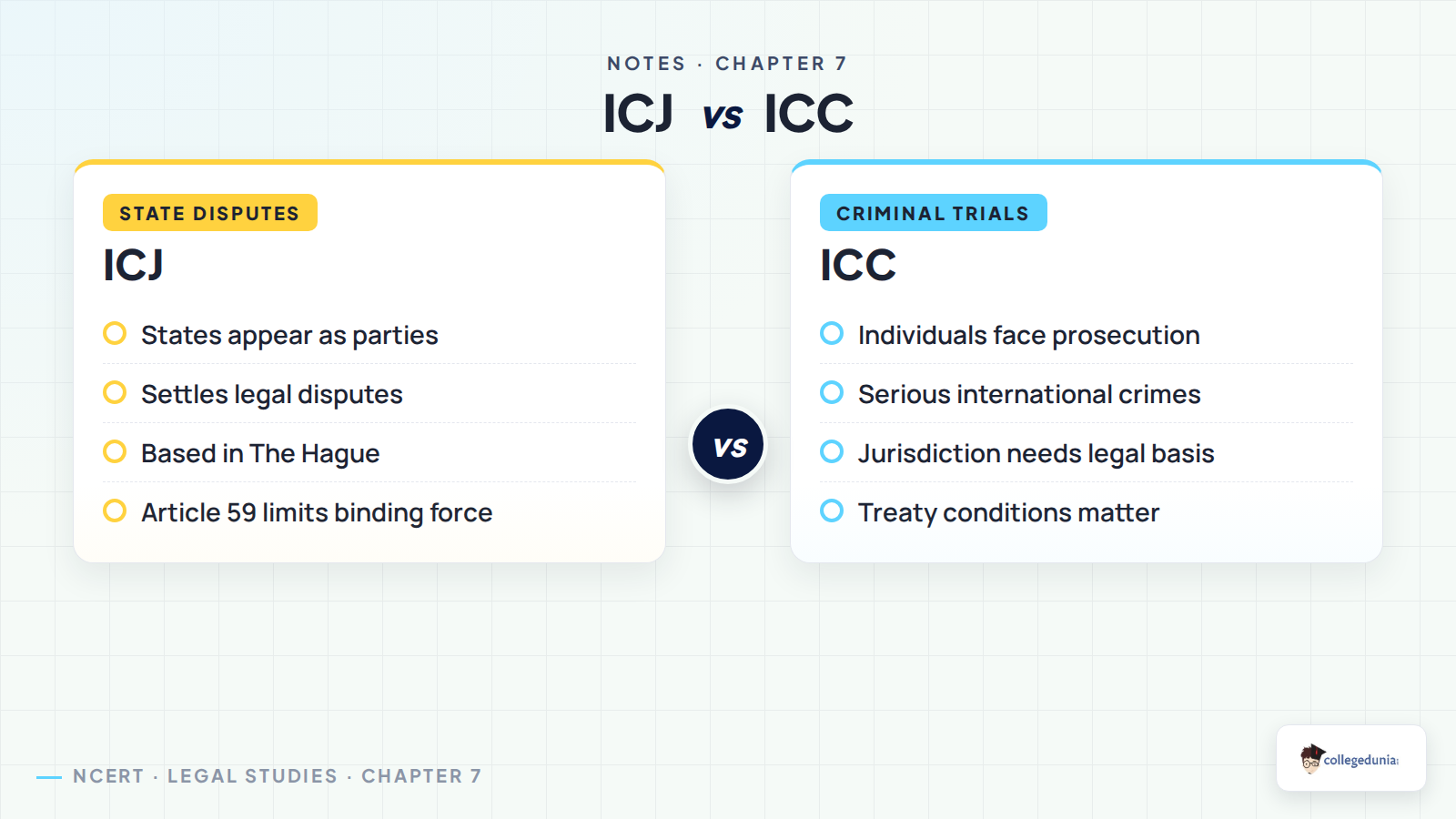
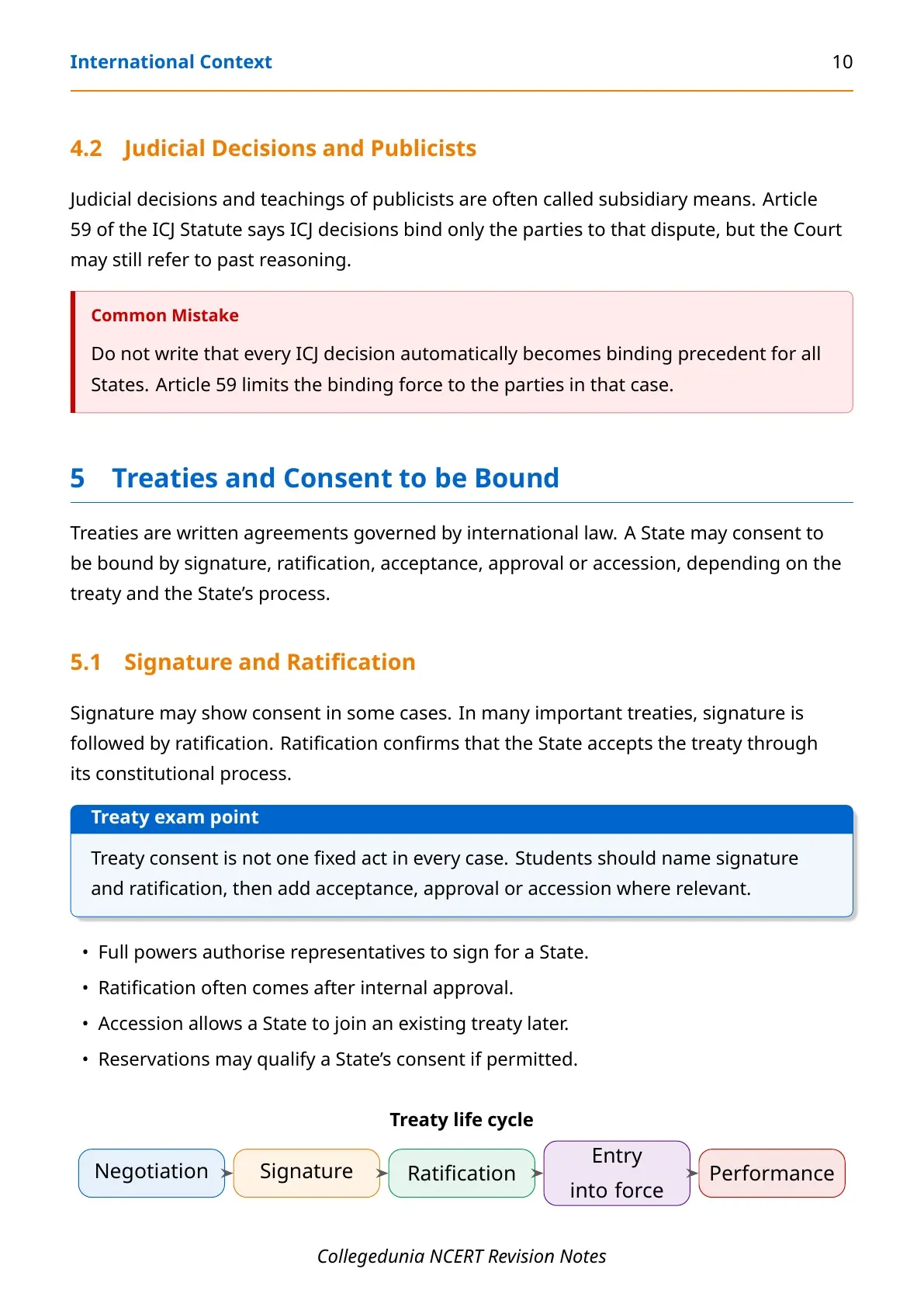
- ICJ: States appear as parties, and Article 59 limits the binding effect to the parties.
- ICC: Individuals may be prosecuted when jurisdictional conditions are met.
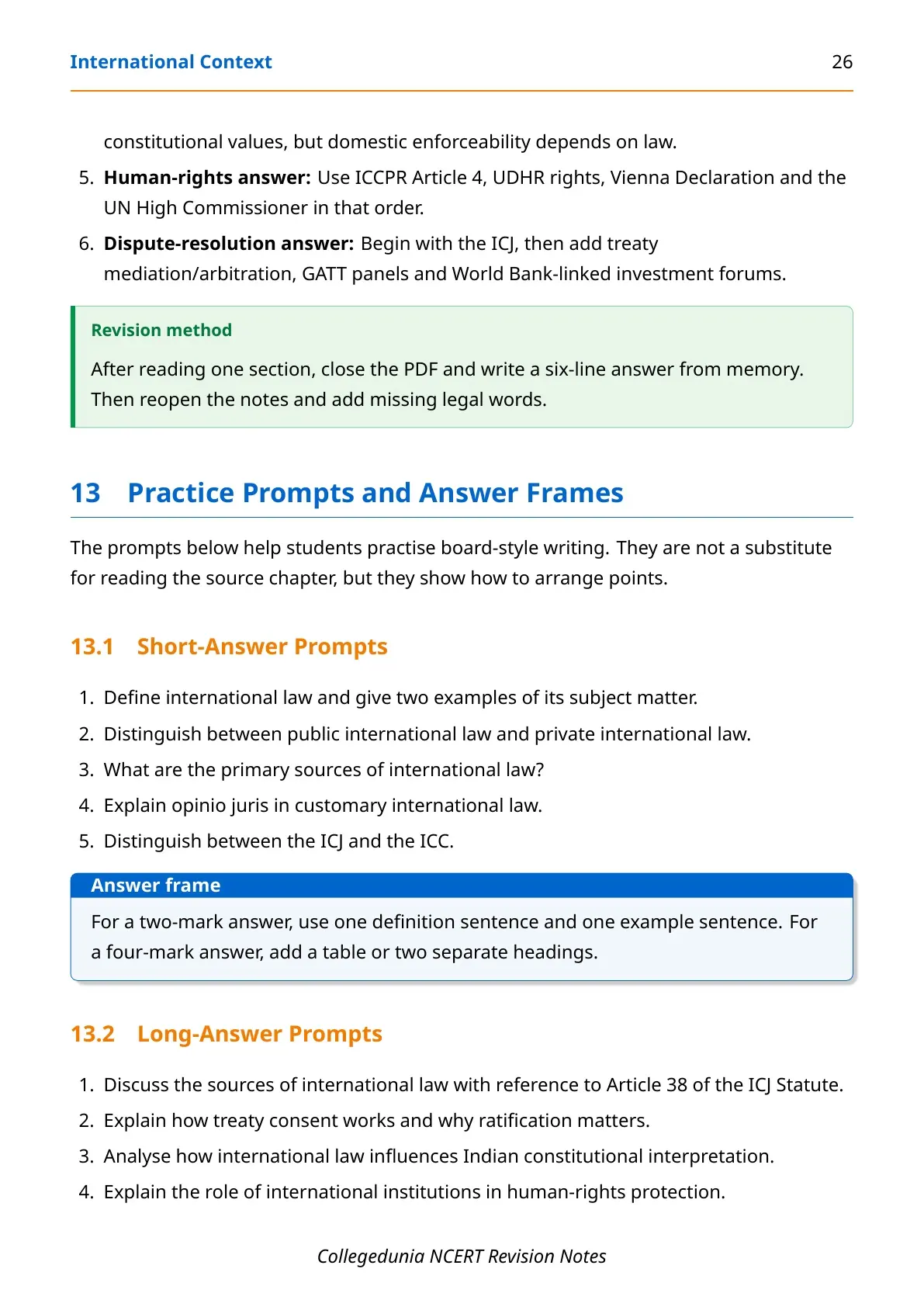
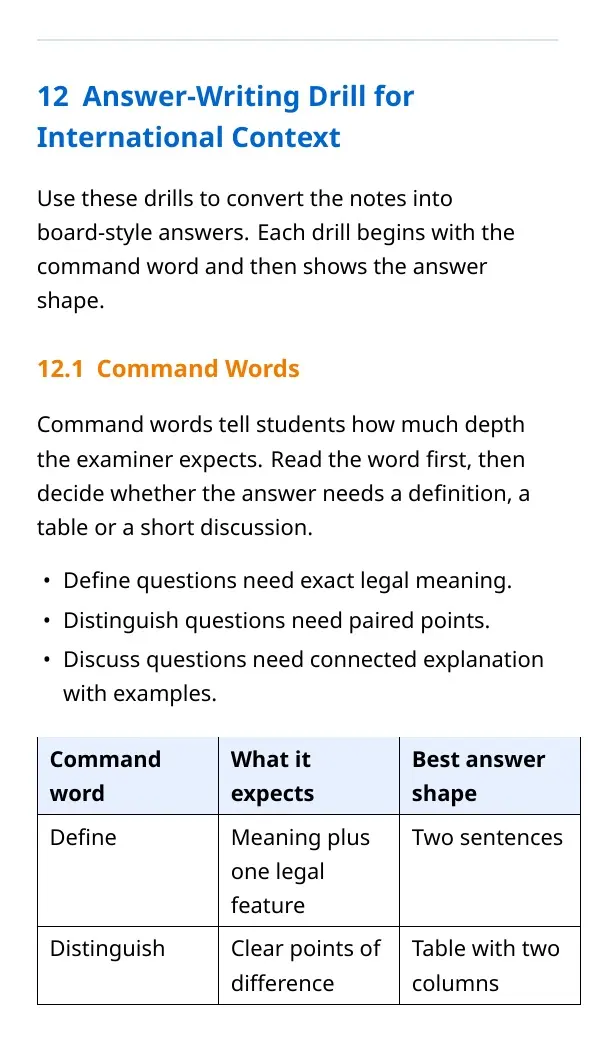
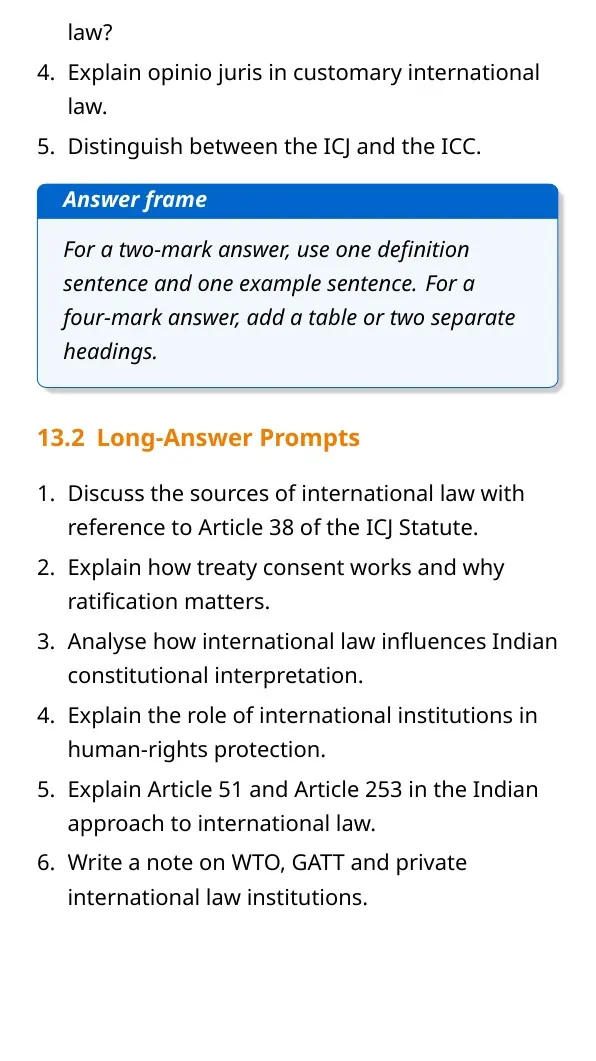
- Answer tip: use a two-column table whenever the question asks for a distinction.
How to Use the International Context Notes PDF
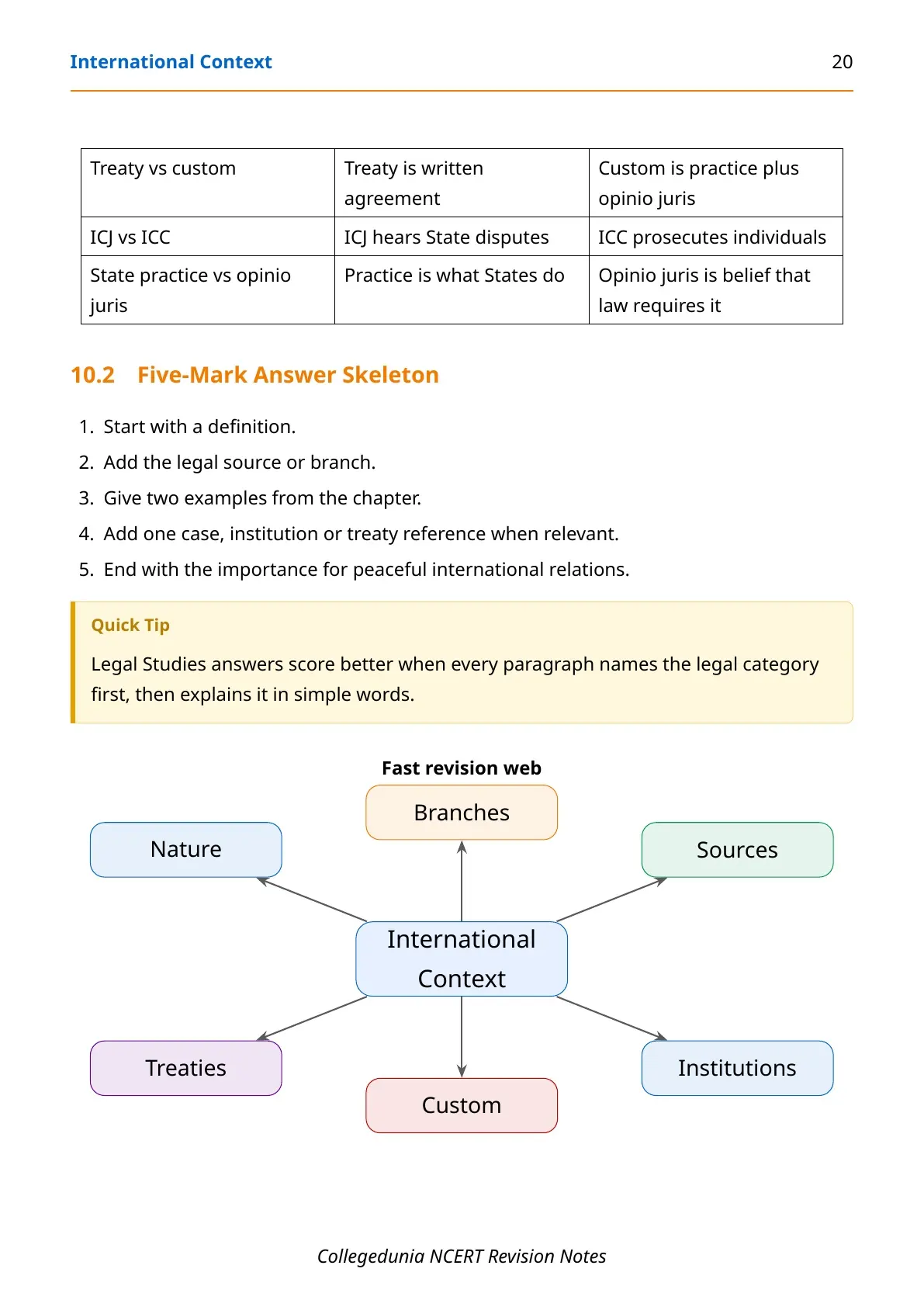
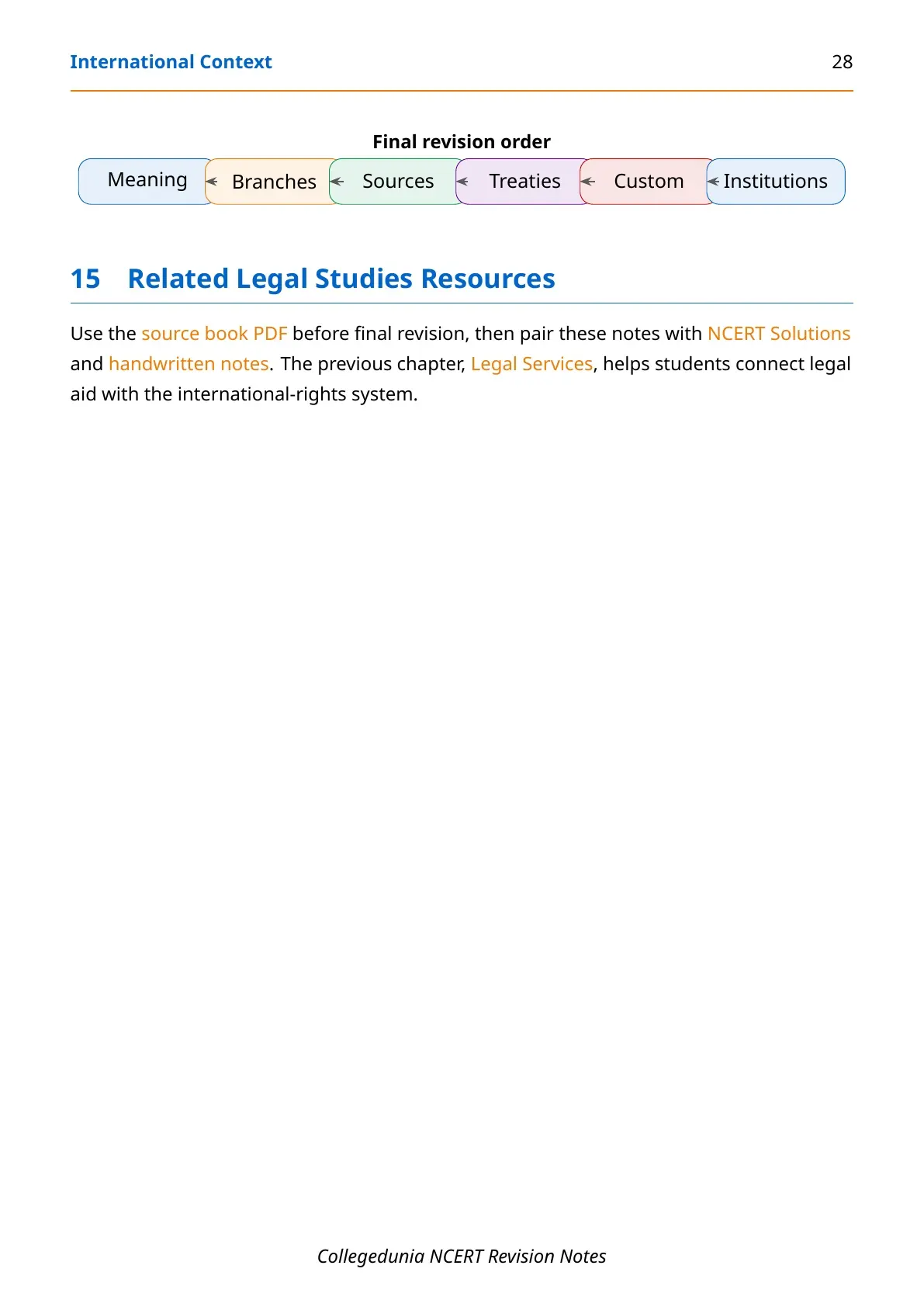
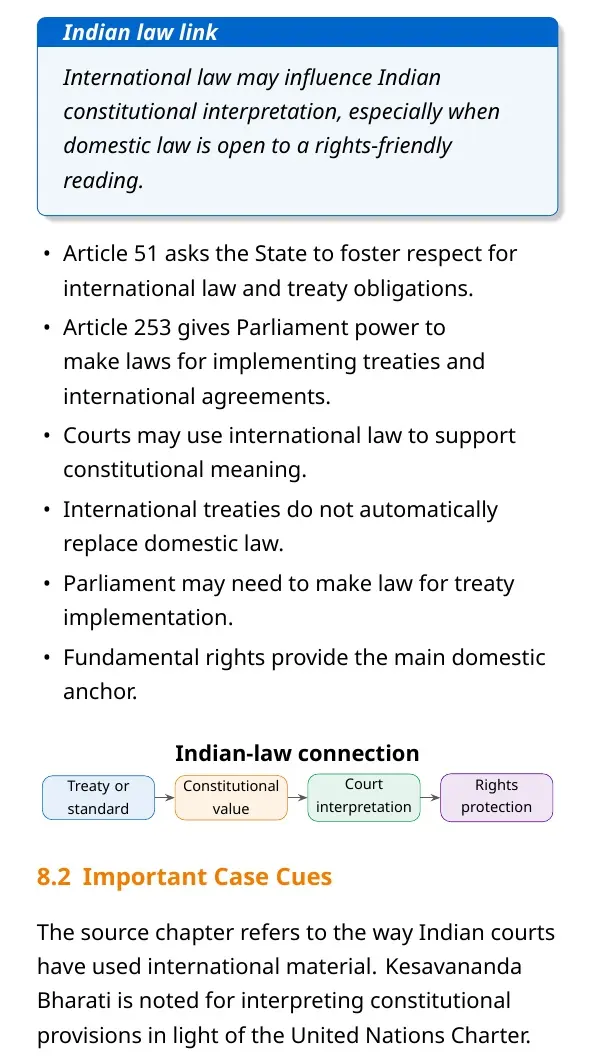
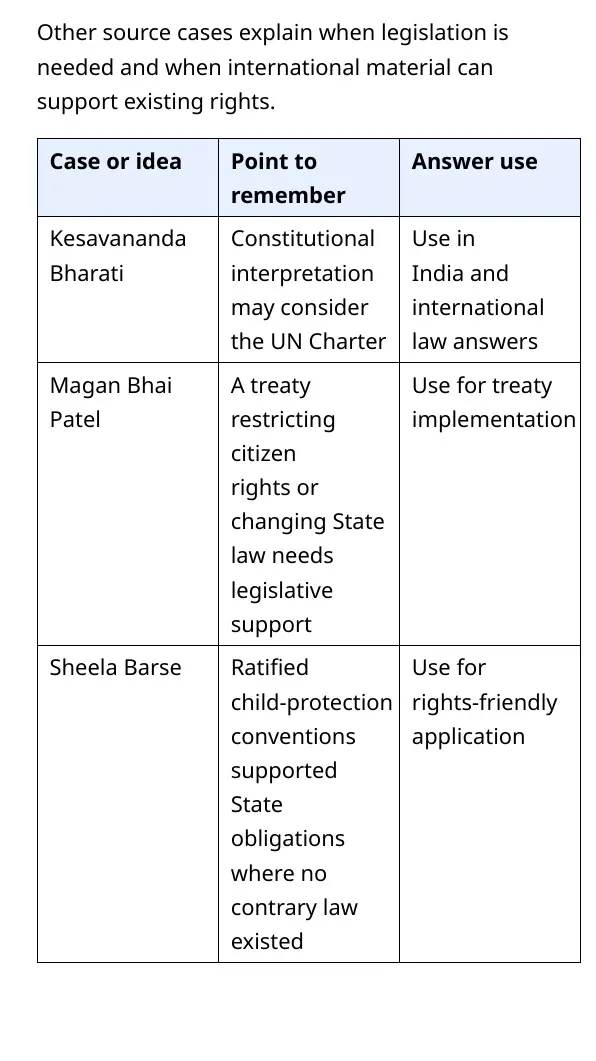
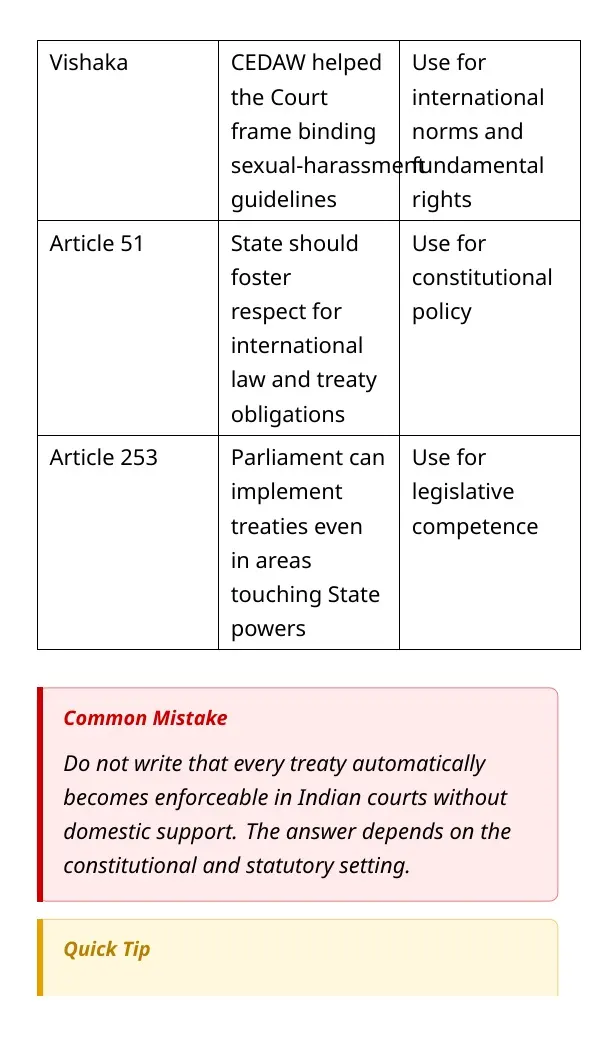
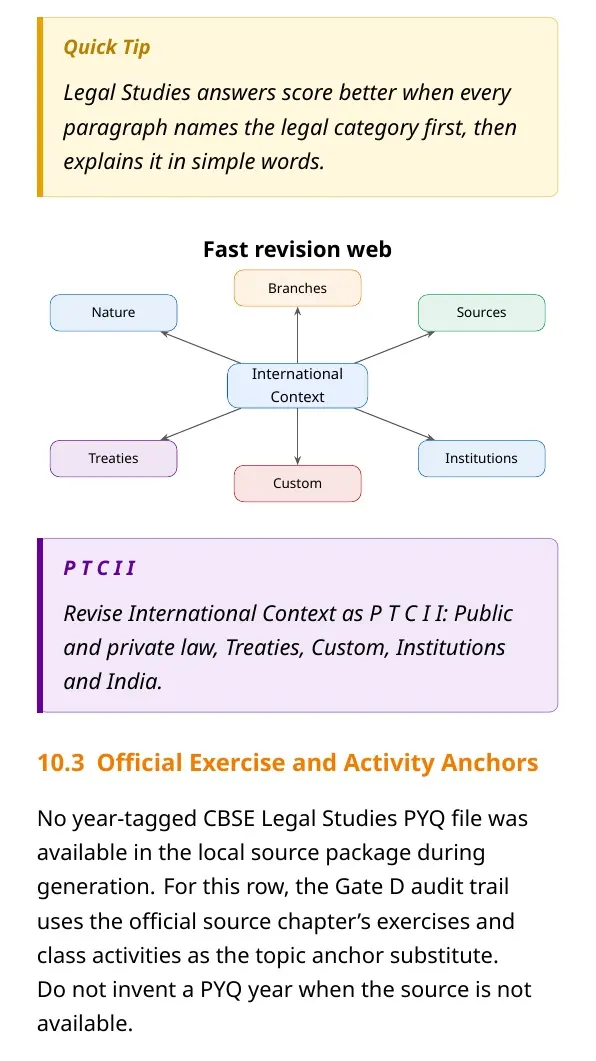
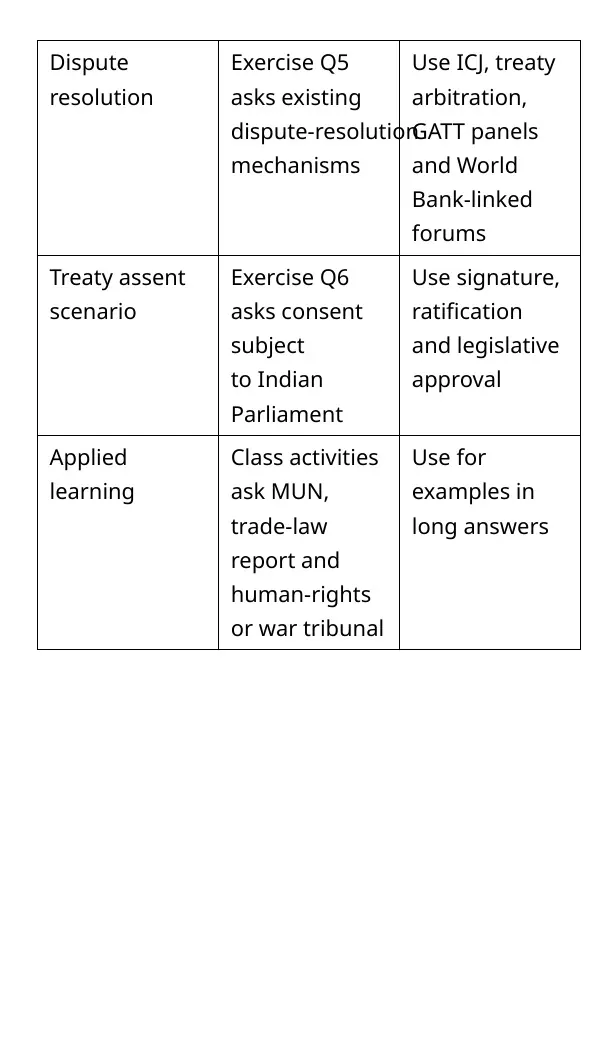
Start with the meaning of international law, then move to the source list. After that, revise treaty consent, customary law, institutions and India's constitutional link.
- Read the source table once before opening the long notes PDF.
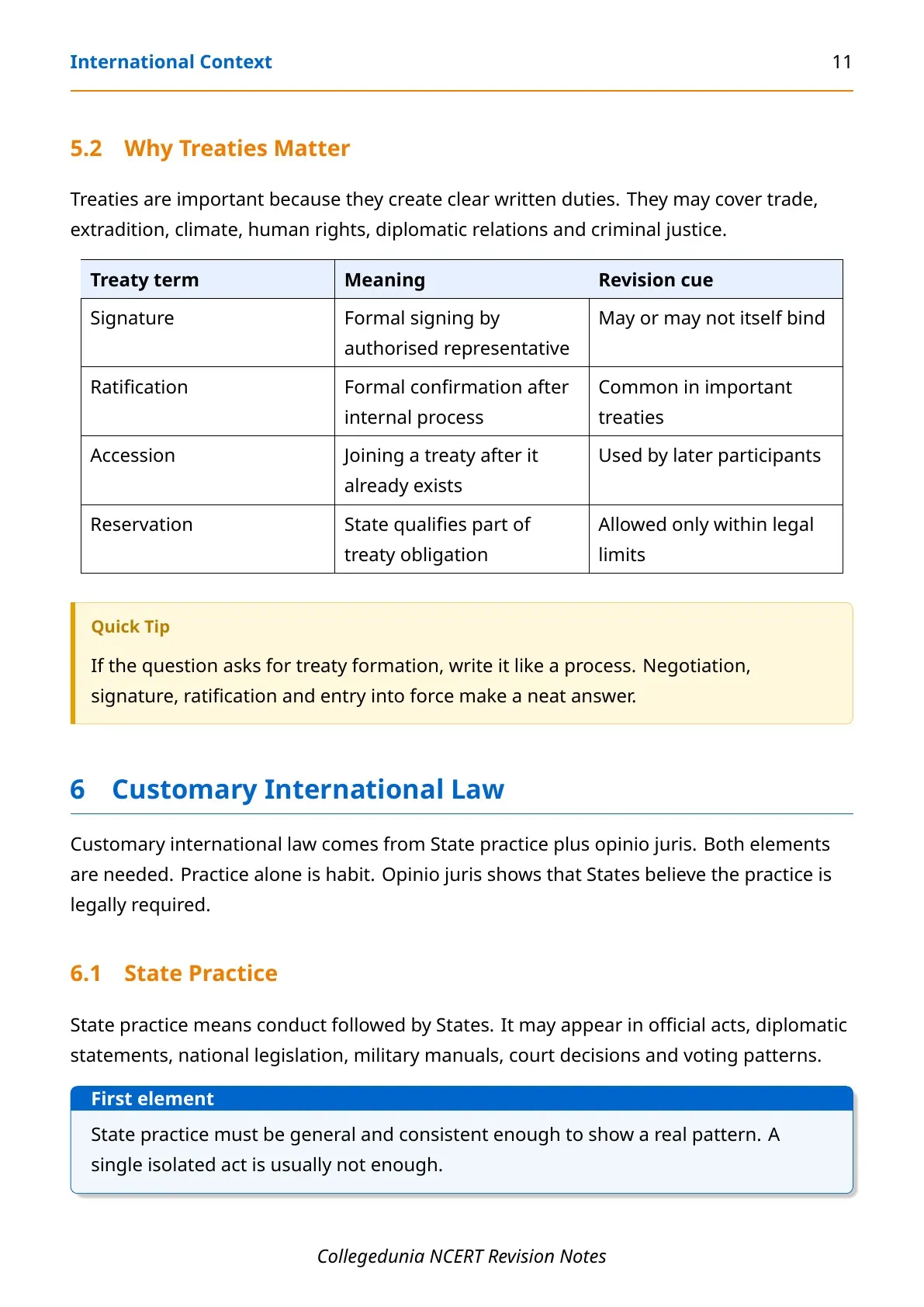
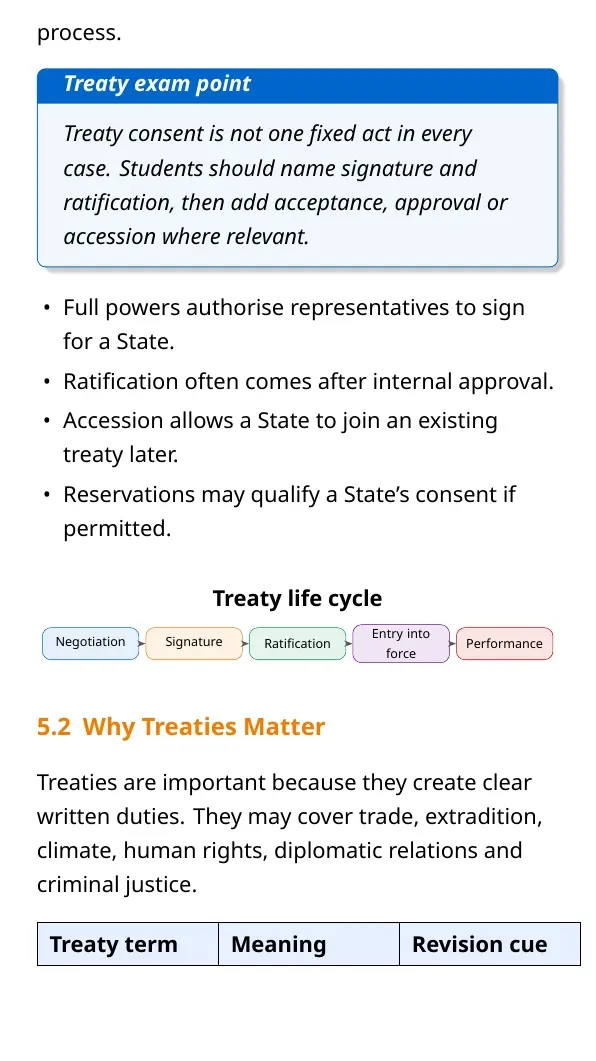
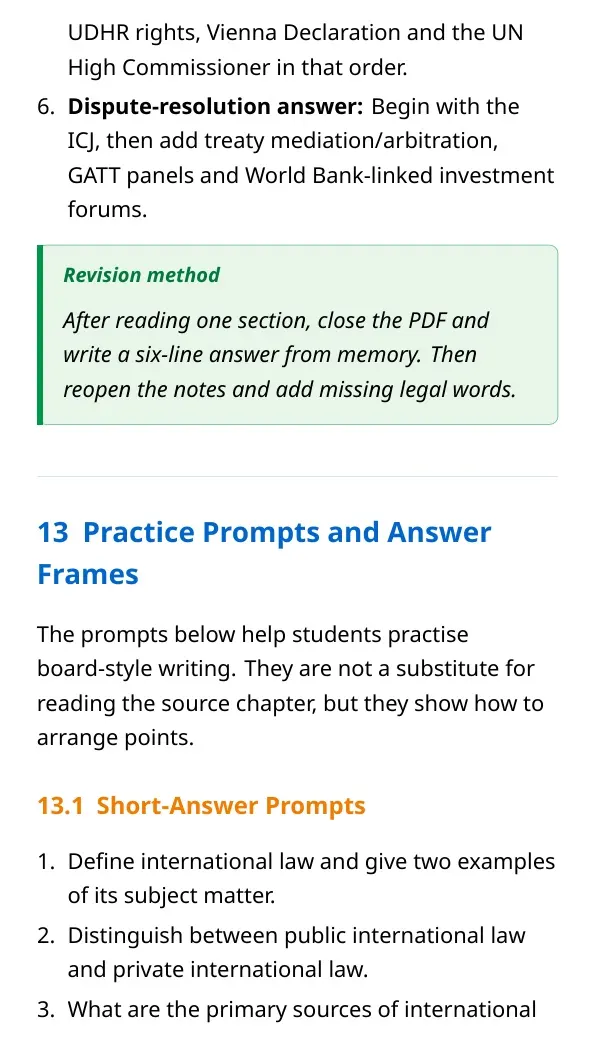
- Write the treaty life cycle from memory: negotiation, signature, ratification and entry into force.
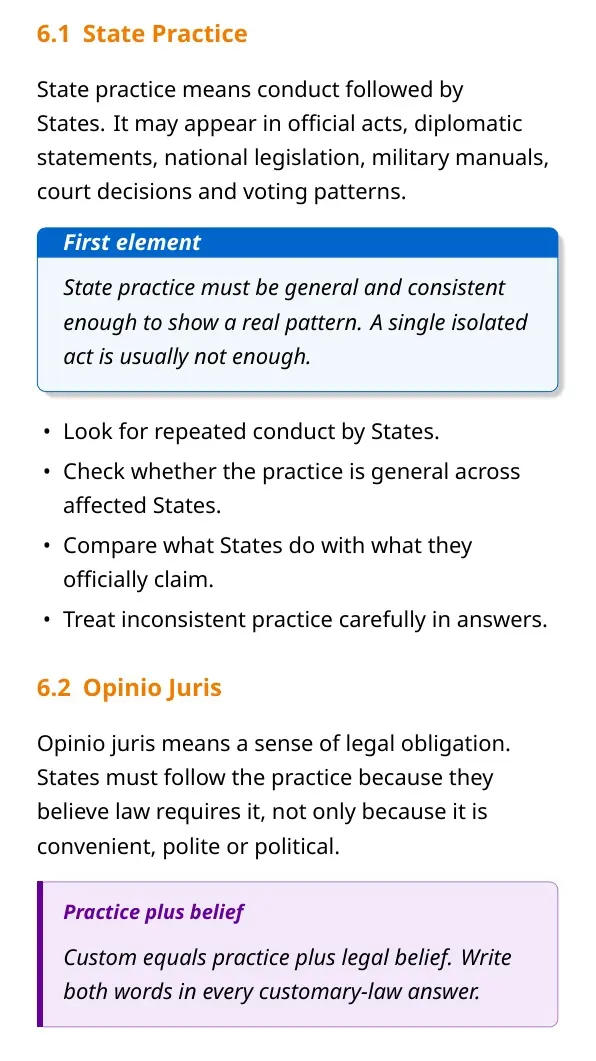
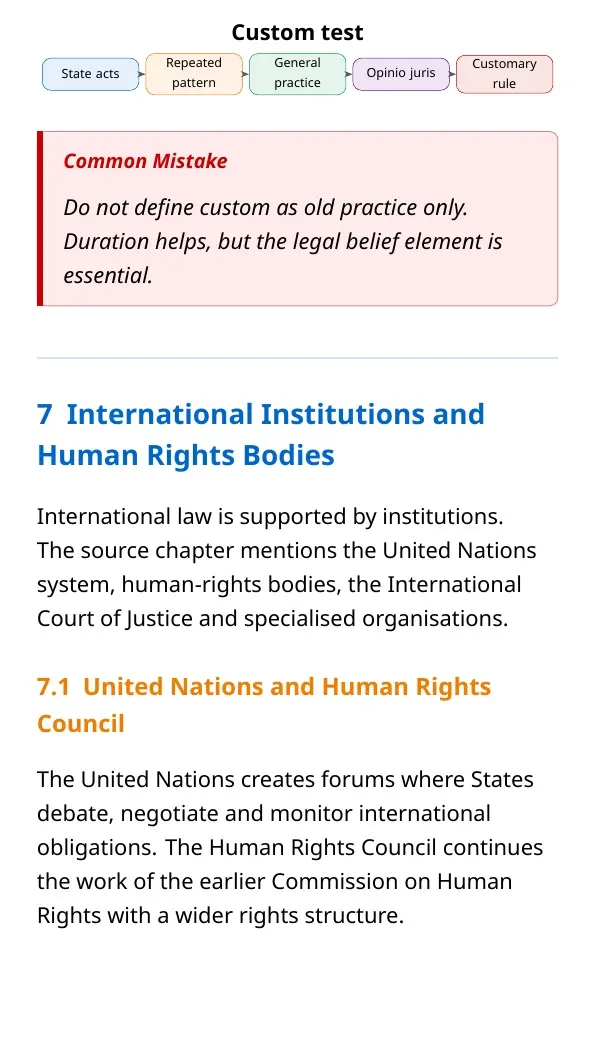
- Revise custom as two elements: State practice and opinio juris.
- End each practice answer with one example, such as environmental law or human rights.
Related Resources for International Context Class 12
| Resource | Use it for | Link |
|---|---|---|
| NCERT Book PDF | Read the official source unit | International Context Book PDF |
| NCERT Solutions | Practise textbook-style answers | International Context NCERT Solutions |
| Handwritten Notes | Use quick visual revision before tests | International Context Handwritten Notes |
All Class 12 Legal Studies Notes Chapters
| Chapter | Title | Notes Link |
|---|---|---|
| Chapter 1 | Judiciary | Open Notes |
| Chapter 4 | Human Rights in India | Open Notes |
| Chapter 5 | Legal Profession in India | Open Notes |
| Chapter 6 | Legal Services | Open Notes |
| Chapter 7 | International Context | You are here |
International Context Class 12 Legal Studies Notes FAQs
Ques. What is covered in International Context Class 12 Legal Studies notes?
Ans. The notes cover international law, public and private international law, treaties, custom, Article 38 sources, ICJ, ICC and India's constitutional link.
Ques. What are the main sources of international law?
Ans. The main sources are treaties, customary international law and general principles. Judicial decisions and teachings of publicists help identify rules.
Ques. What is the difference between ICJ and ICC?
Ans. The ICJ settles legal disputes between States. The ICC prosecutes individuals for serious international crimes when jurisdictional conditions are met.
Ques. How should students revise International Context for boards?
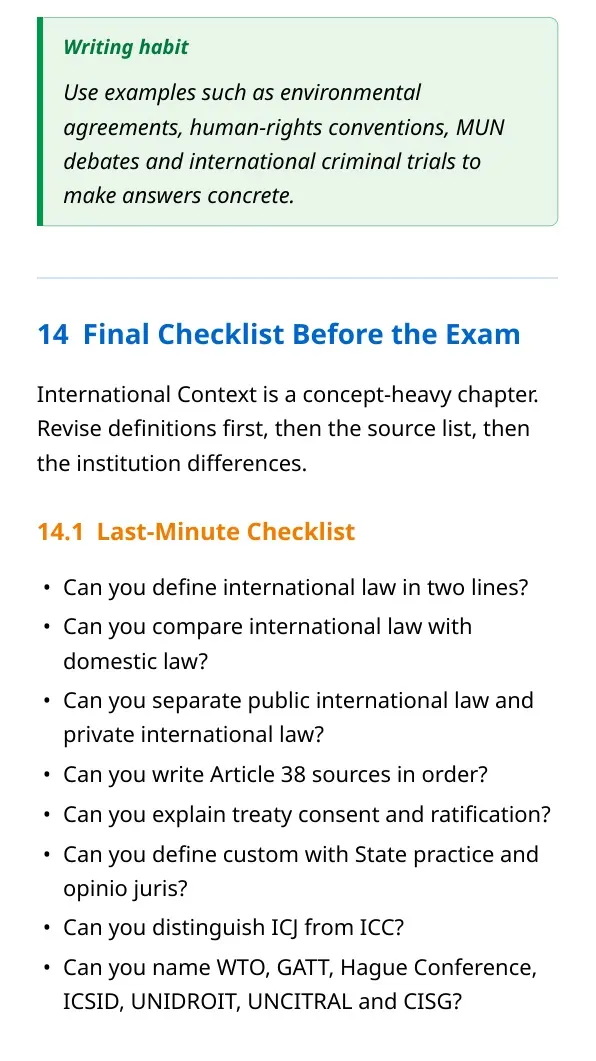
Ans. Students should revise the source table, treaty consent, customary law, public-private international law difference and ICJ vs ICC comparison.



Comments