


In the 2026-27 NCERT print, Class 12 Chemistry Chapter 6 Haloalkanes and Haloarenes consolidates the older Unit 10 with a tighter syllabus that drops polyhalogen compounds beyond uses and keeps the directive-influence discussion to monosubstituted haloarenes only. This page hosts the 25-page Notes PDF, the kept-versus-trimmed map, and the SN1, SN2, E1, E2 mechanism walk-through.
- CBSE Boards: 5 to 7 marks every year, usually one 3-mark mechanism question on SN1 versus SN2 or one comparison-type question on haloalkane and haloarene reactivity.
- JEE Main: 3 to 4% of the Chemistry paper, with 1 to 2 questions per shift on optical activity, Saytzeff rule, Wurtz, and Fittig reactions.
- NEET: 2 to 3 questions per year, mostly on the order of reactivity, carbocation stability, and named reactions like Sandmeyer and Finkelstein.

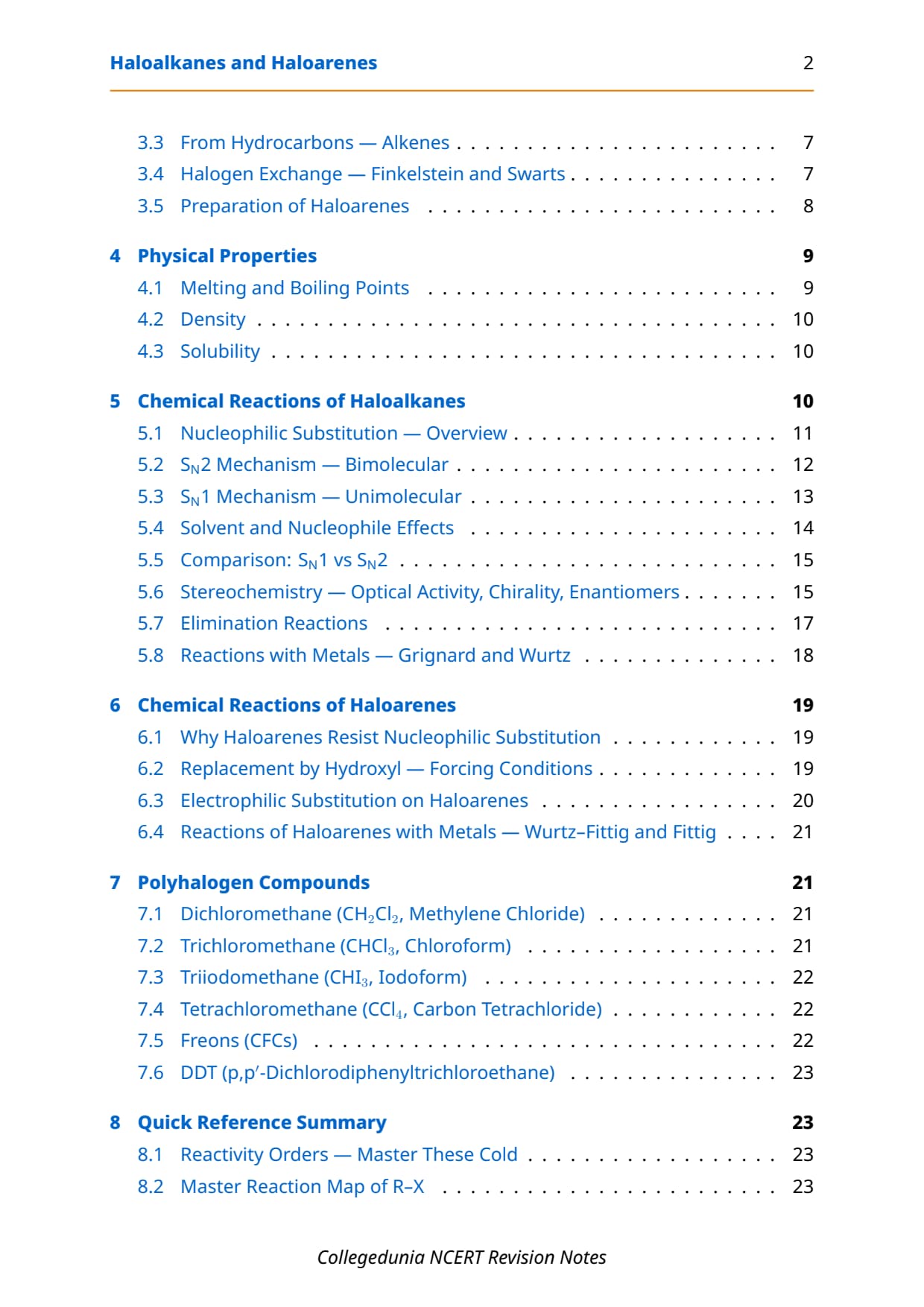
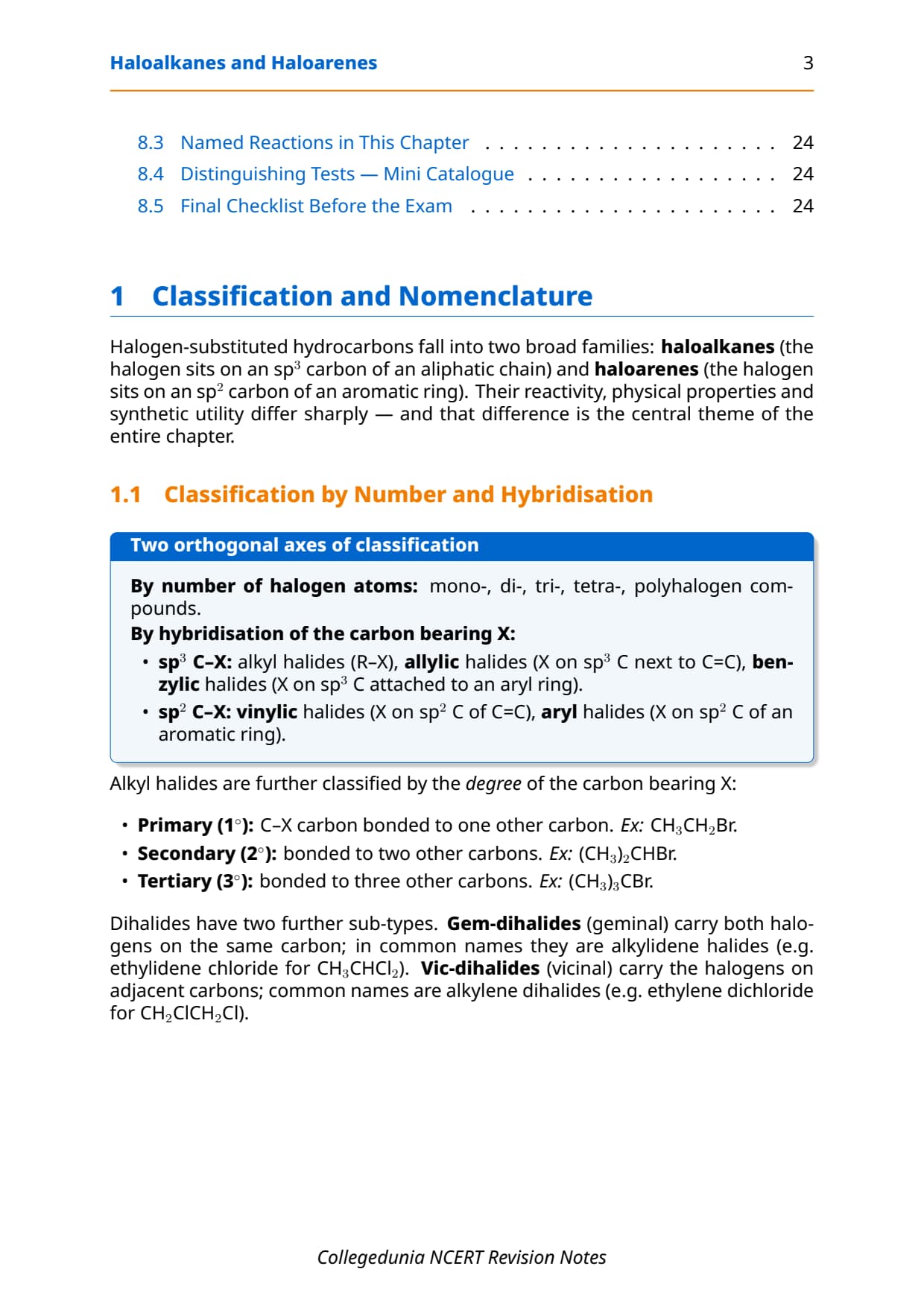
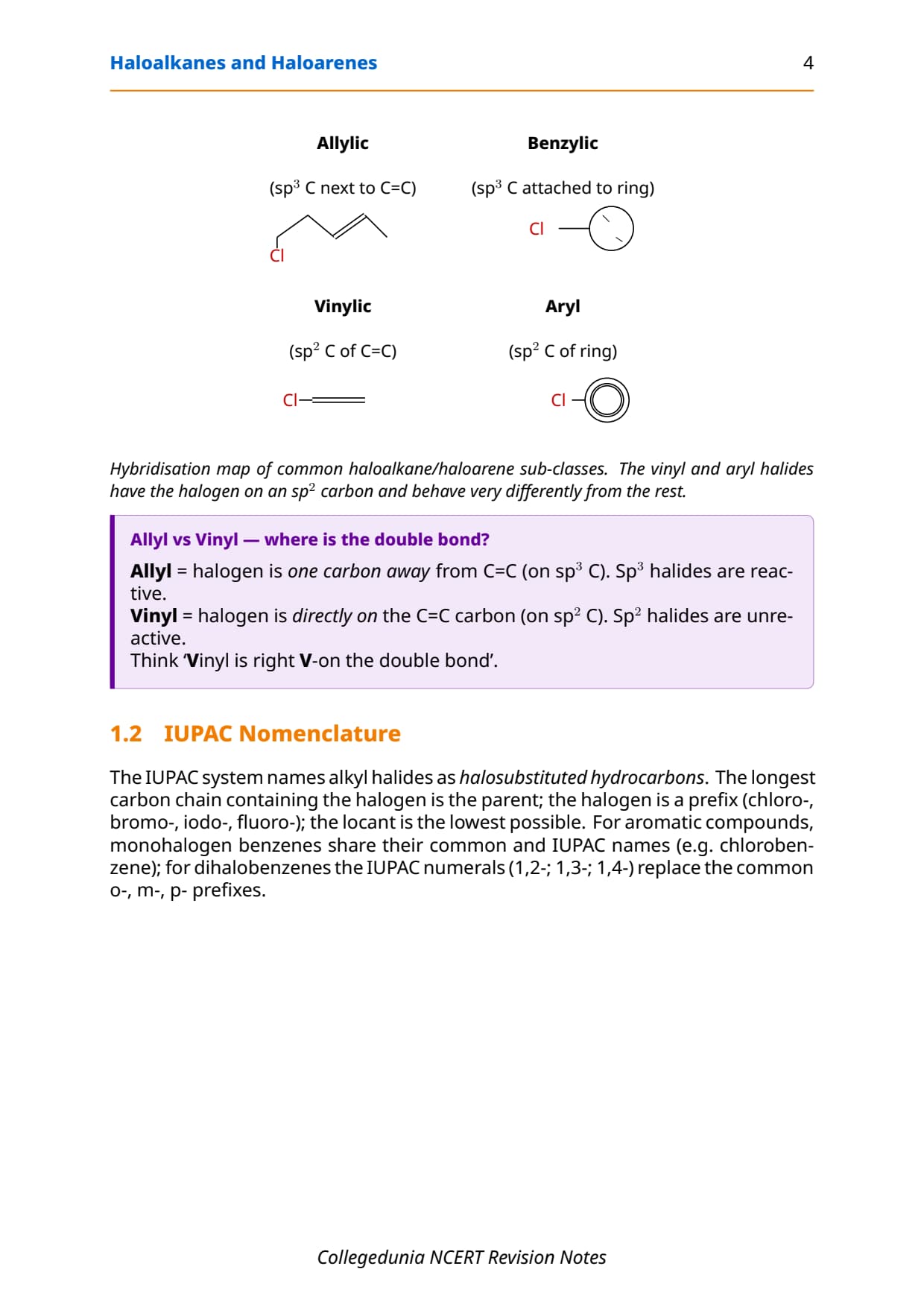
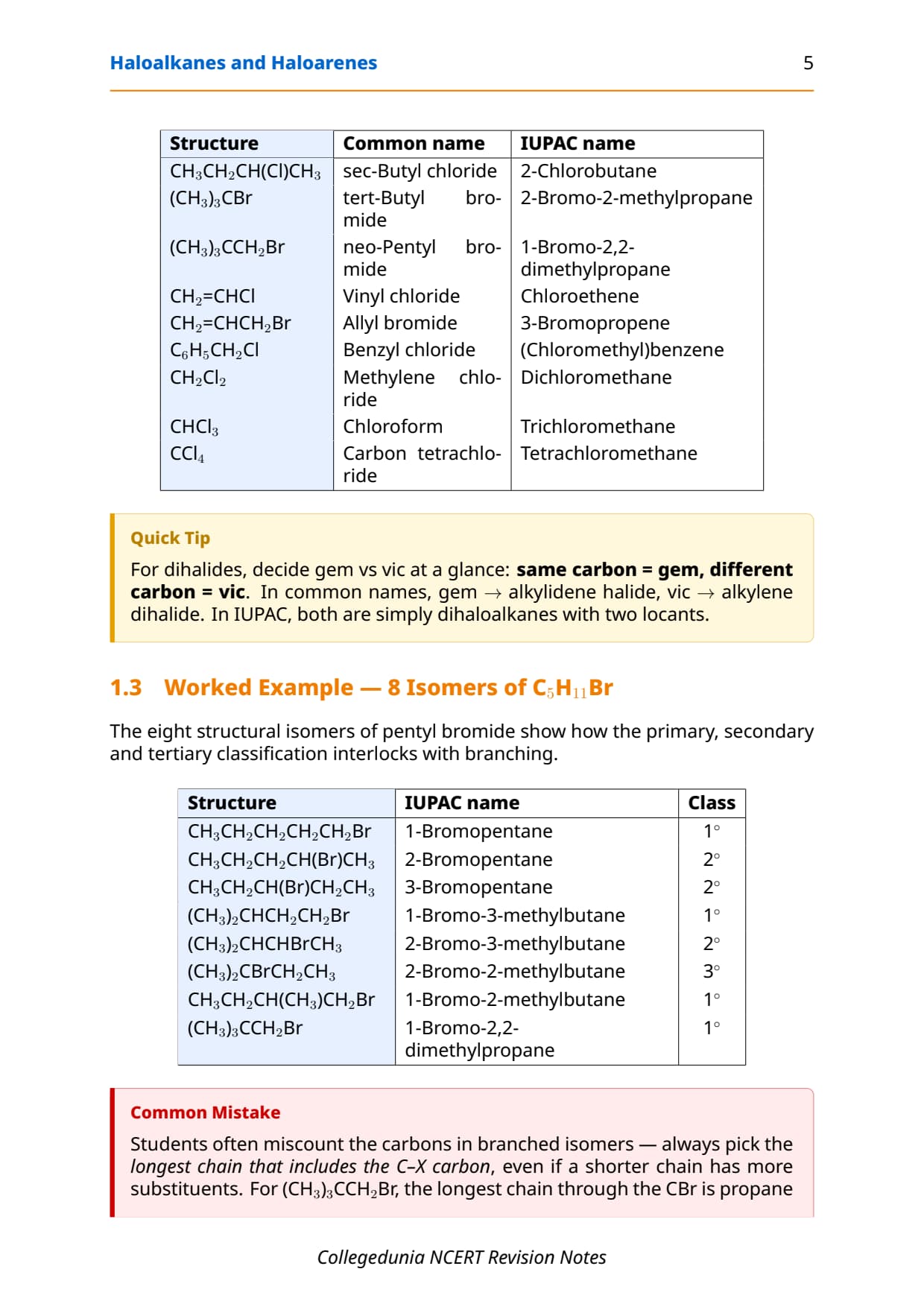
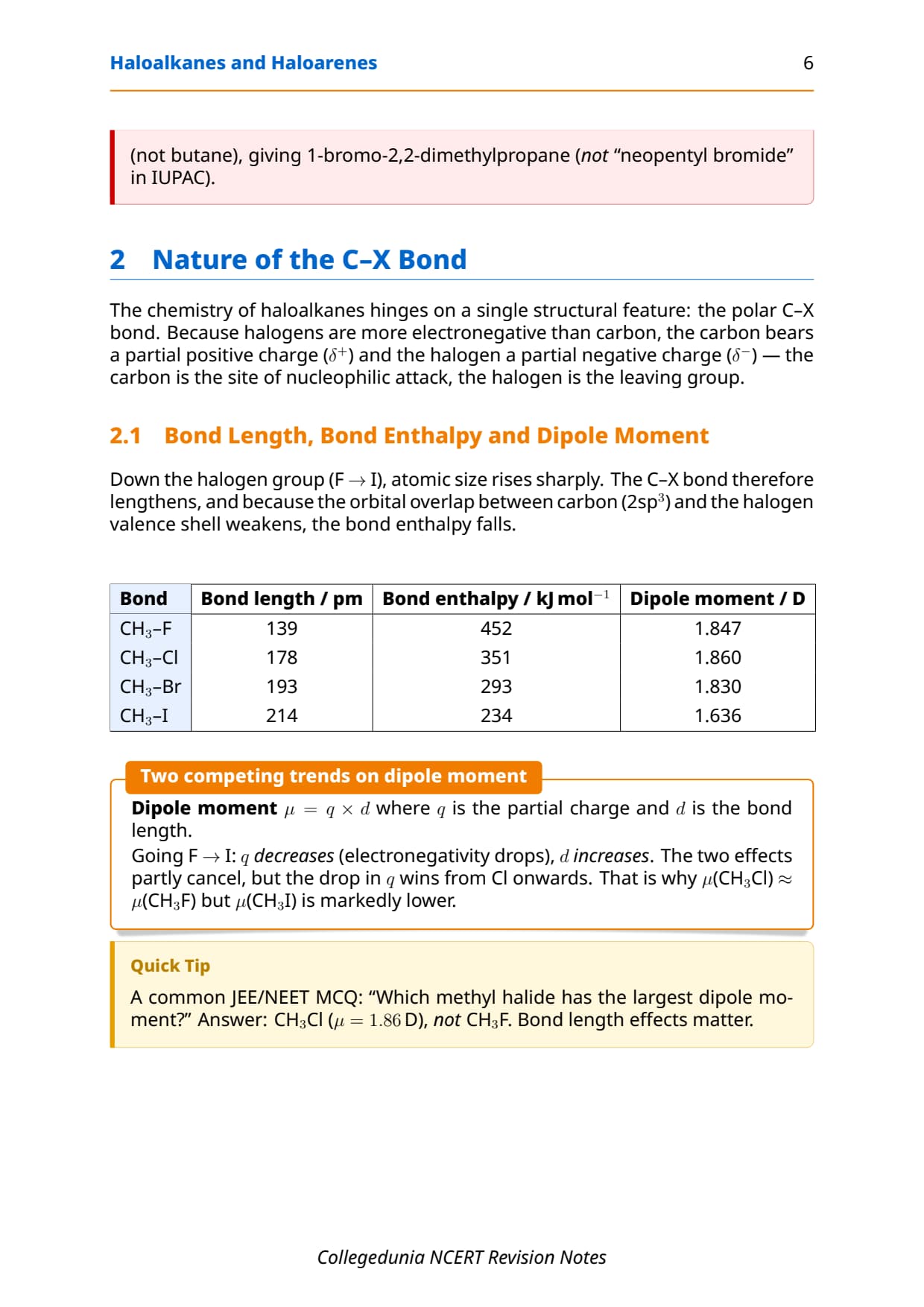
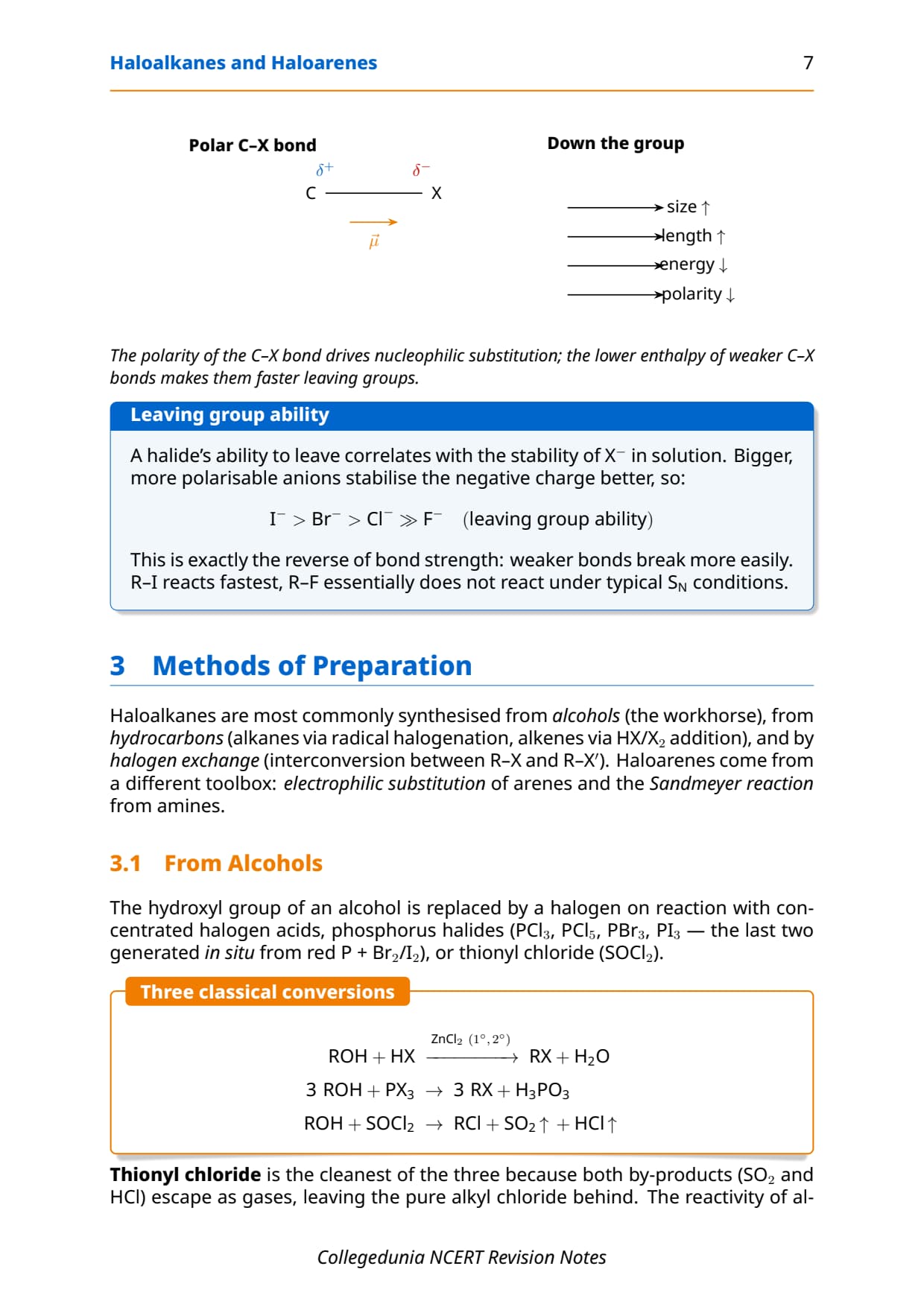
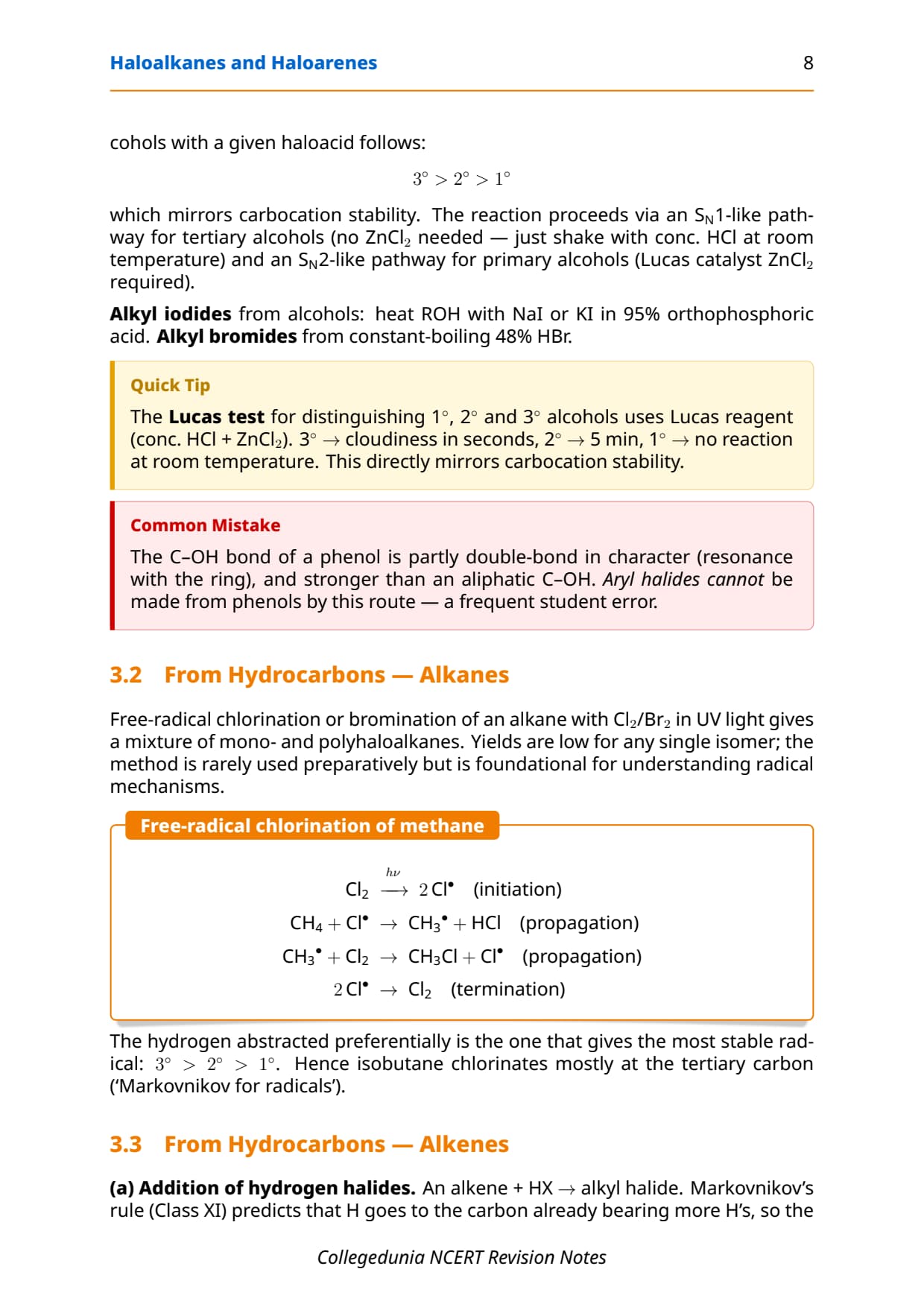
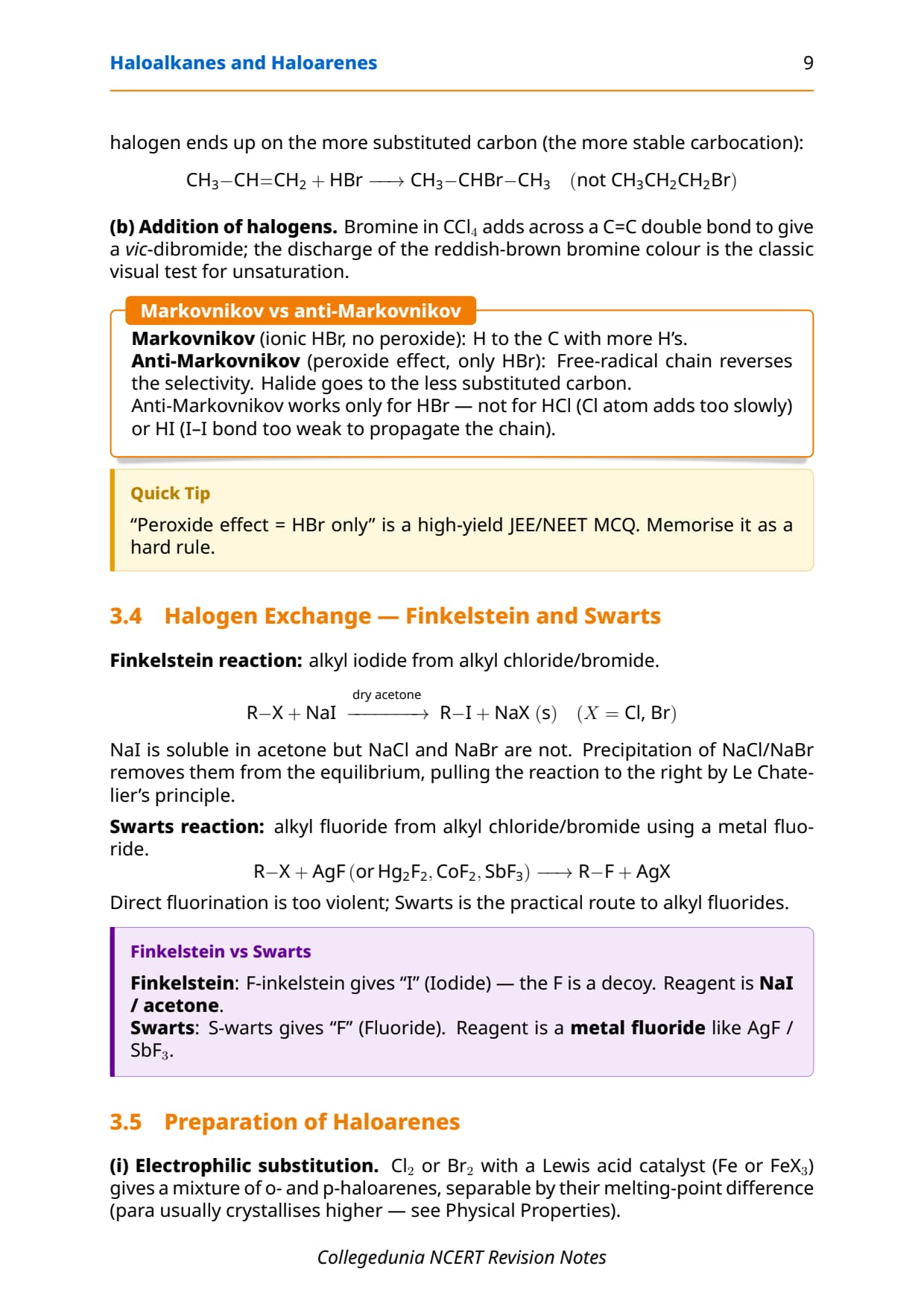

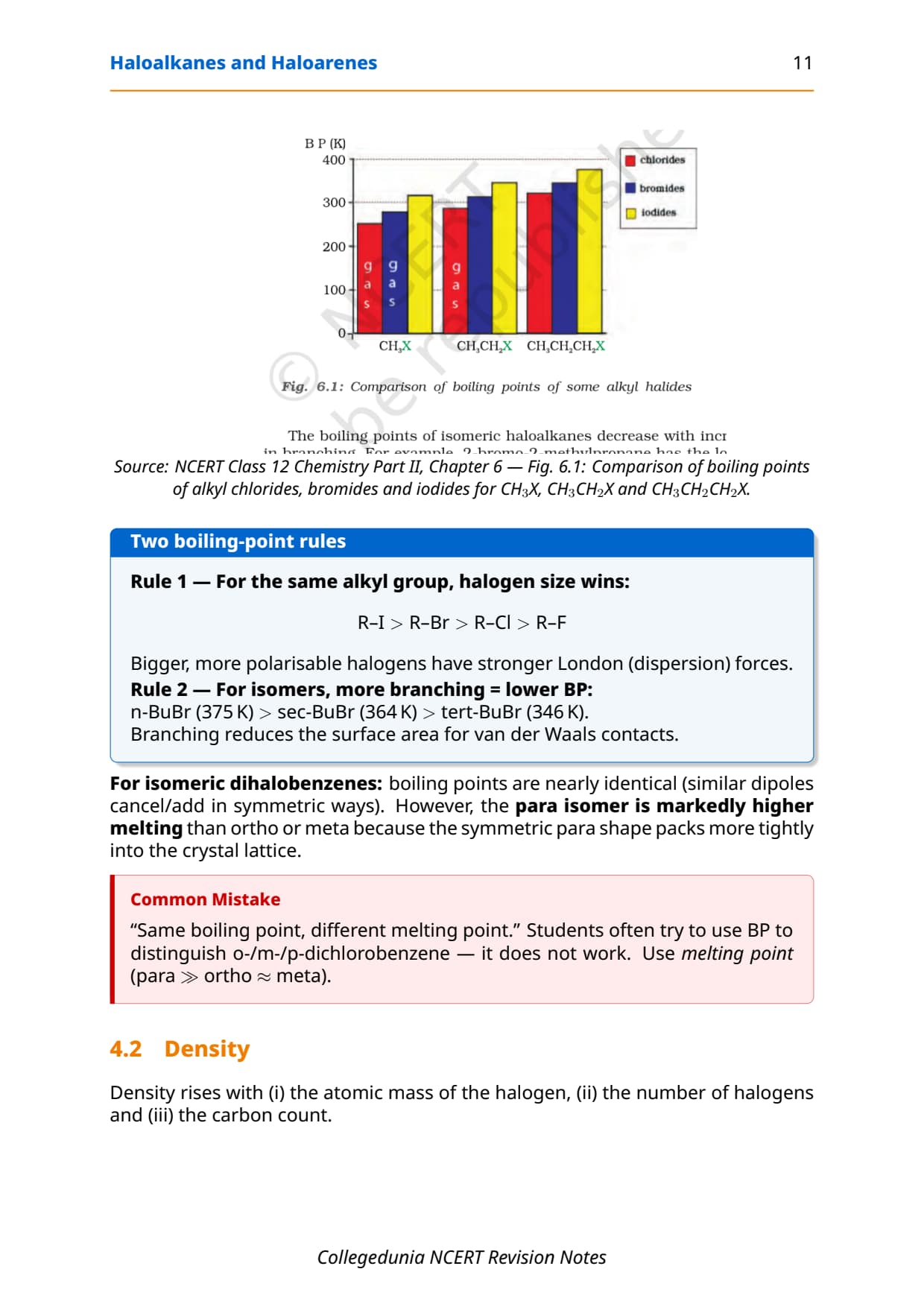
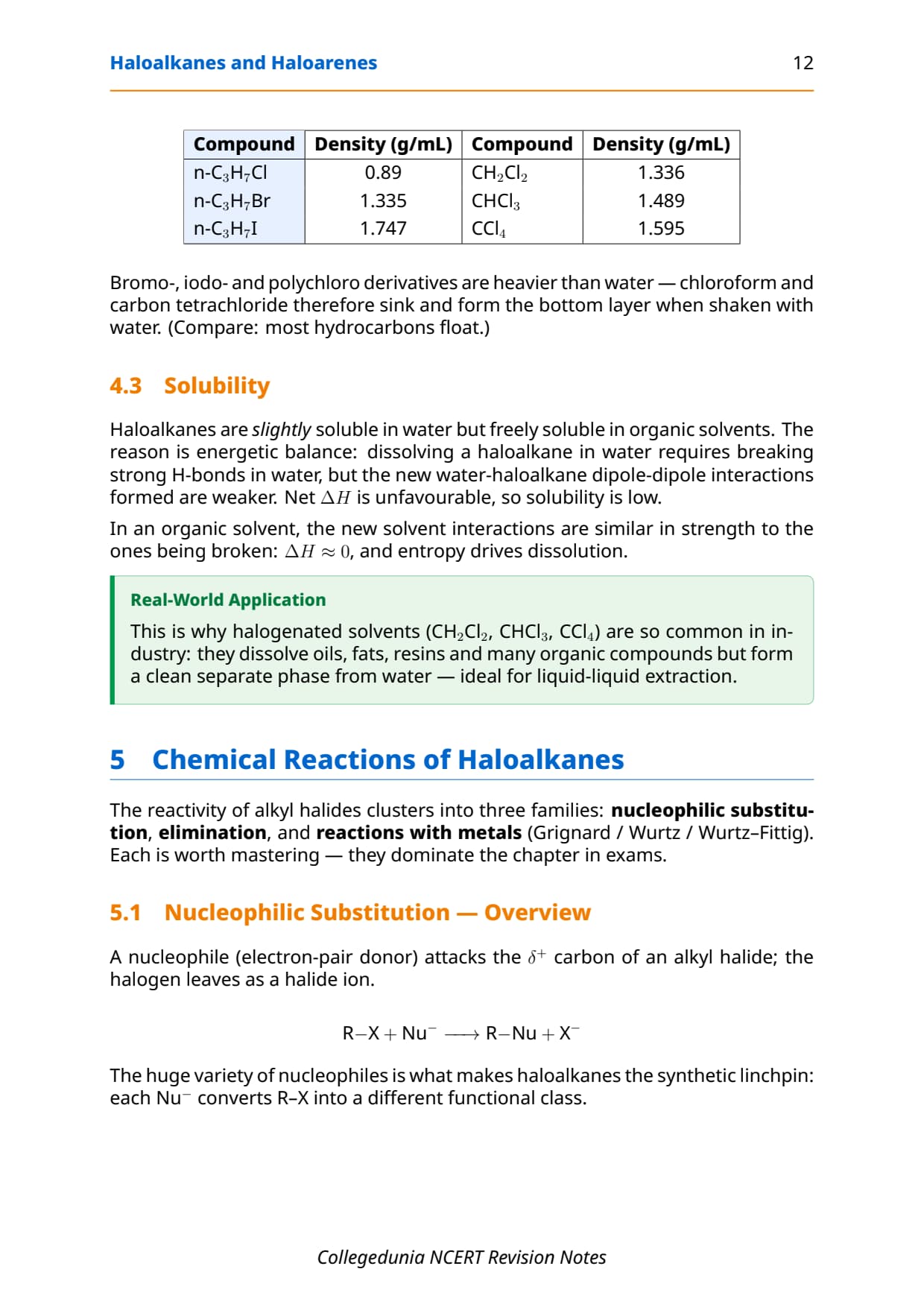
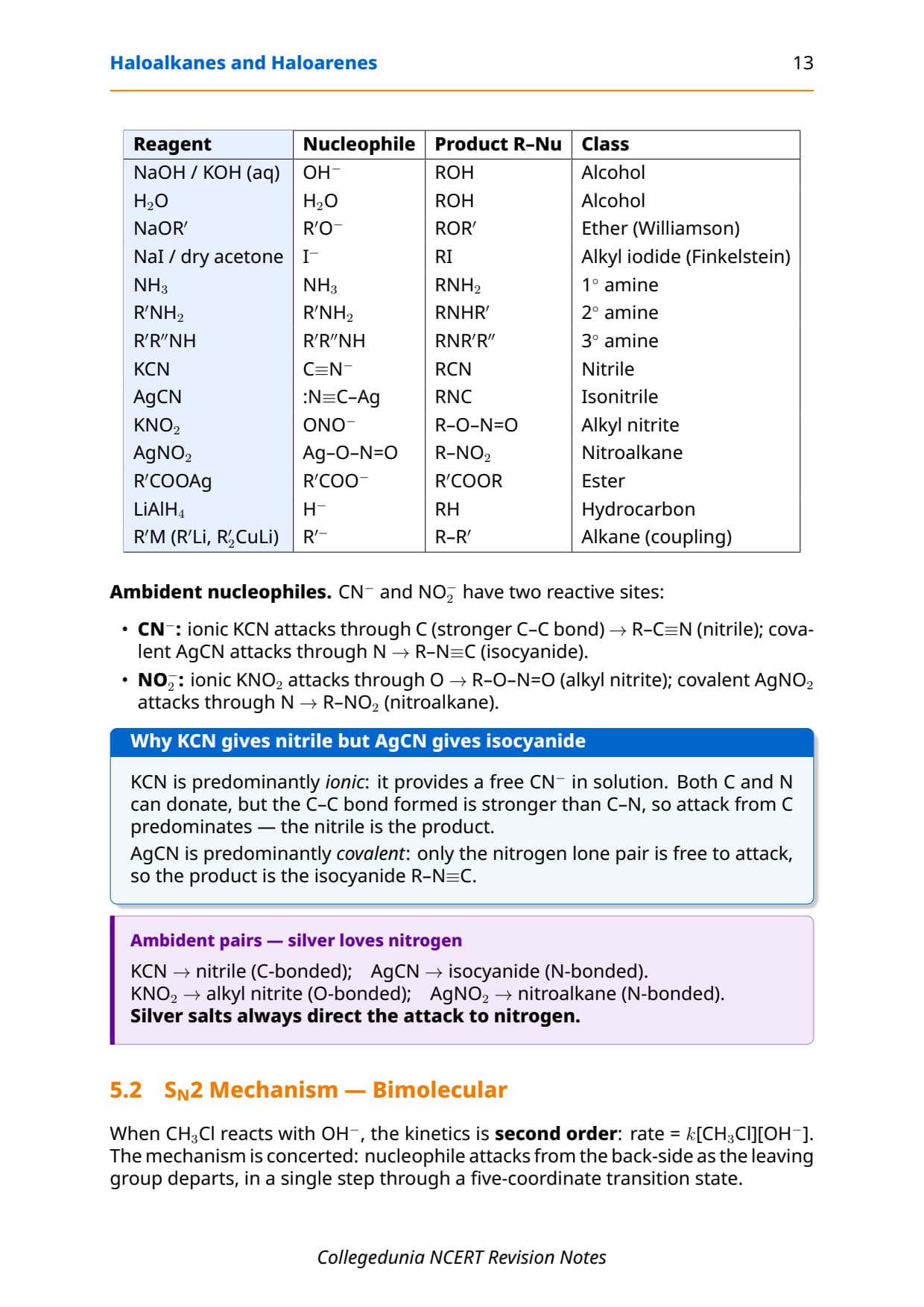

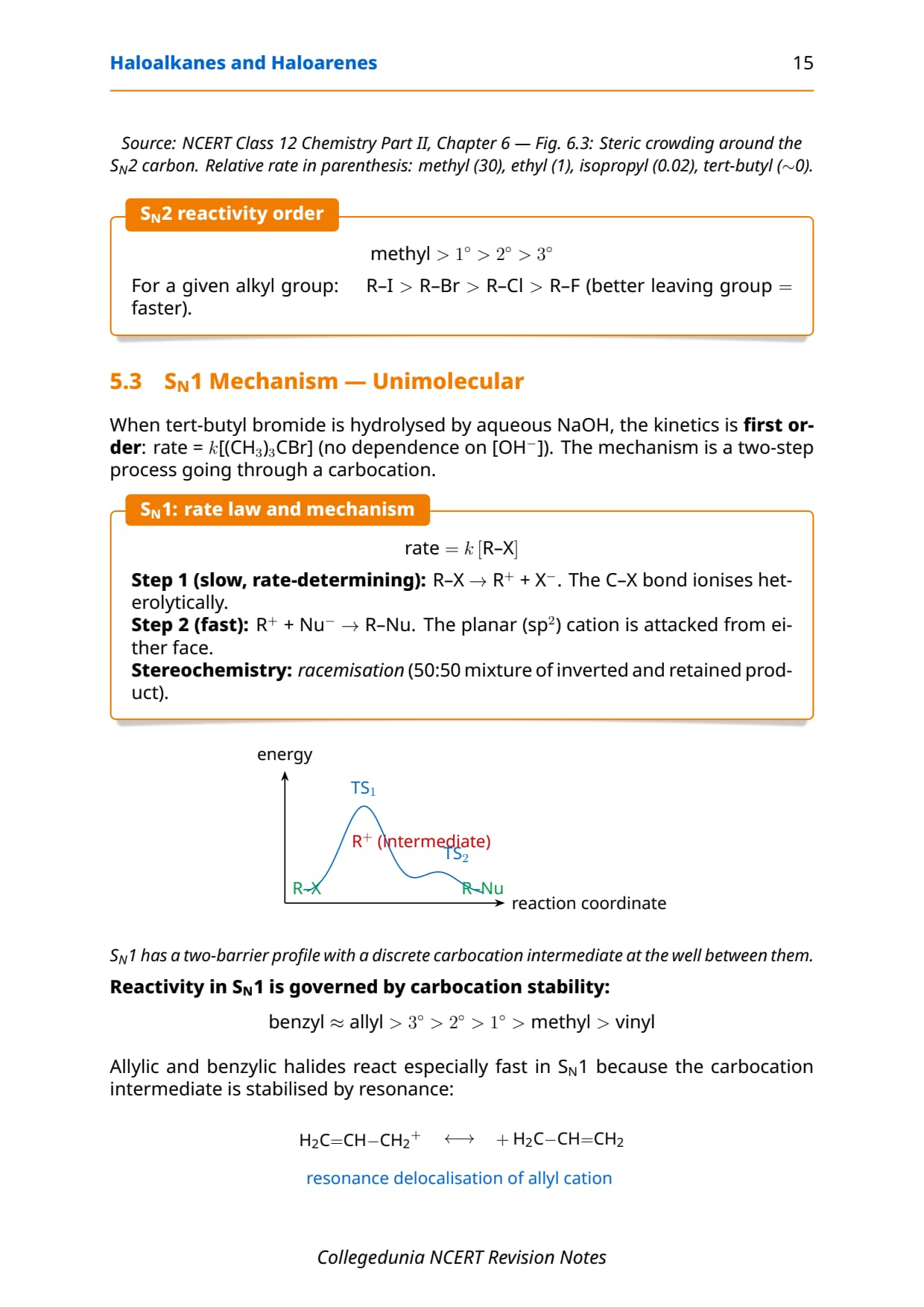
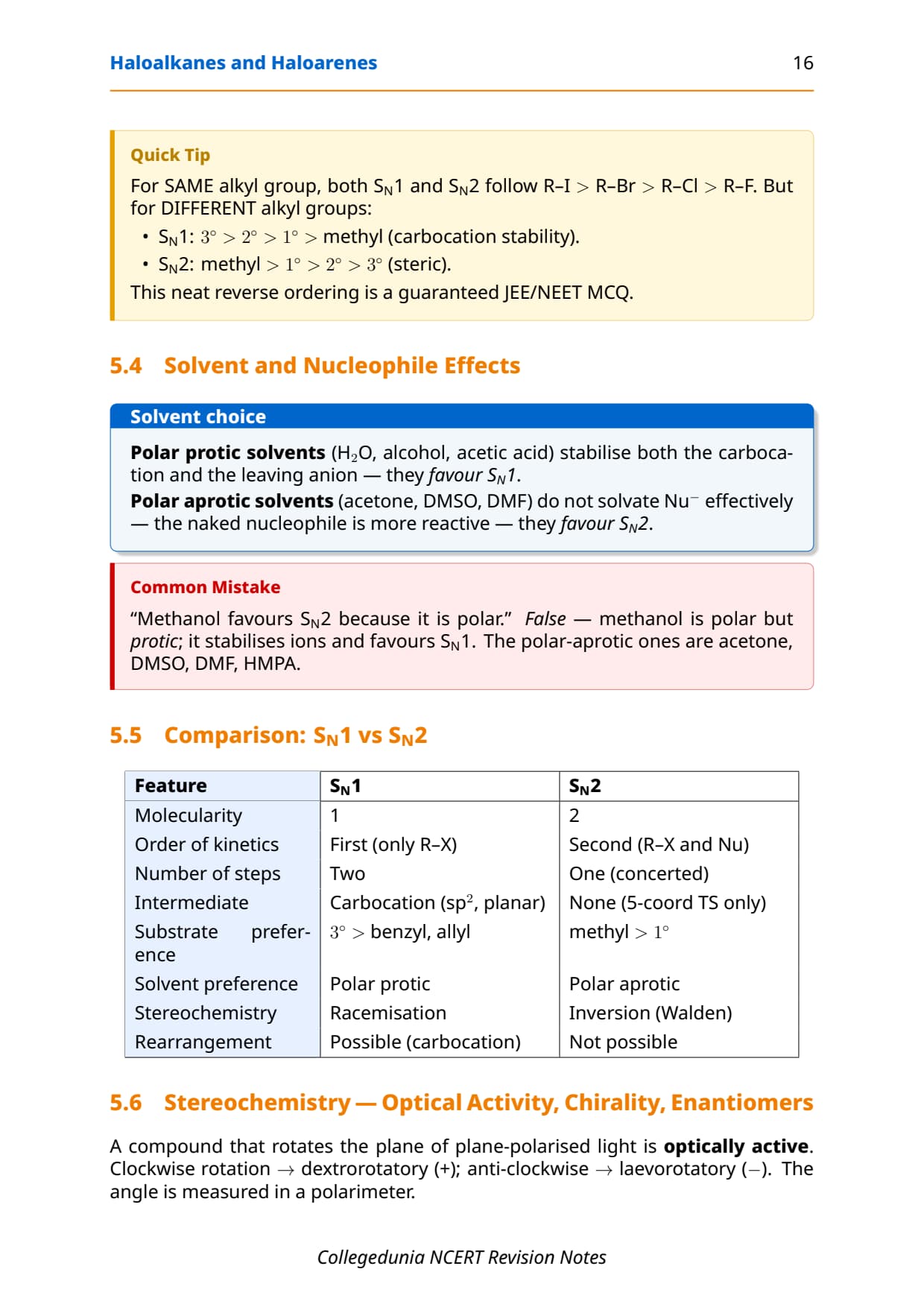
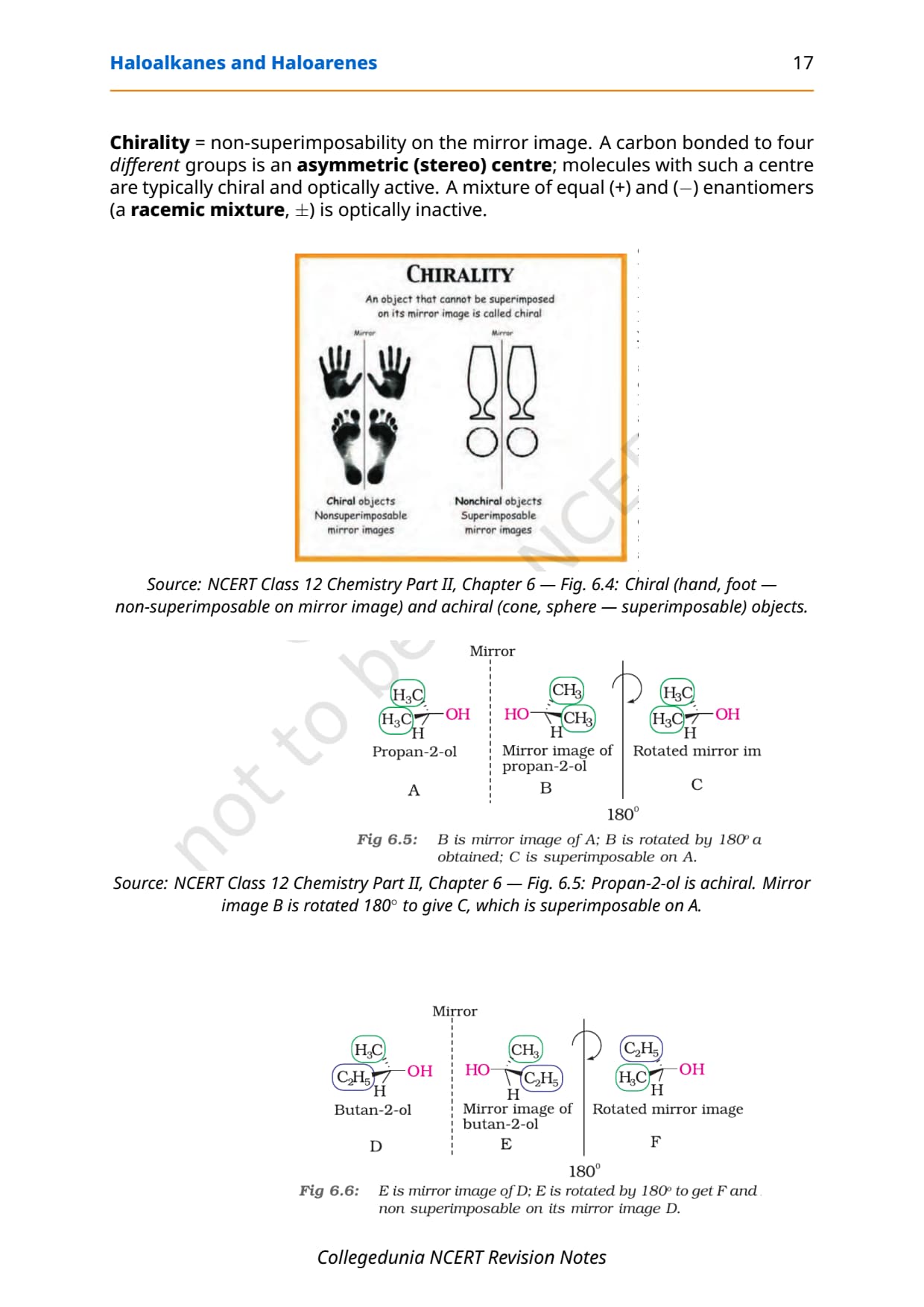
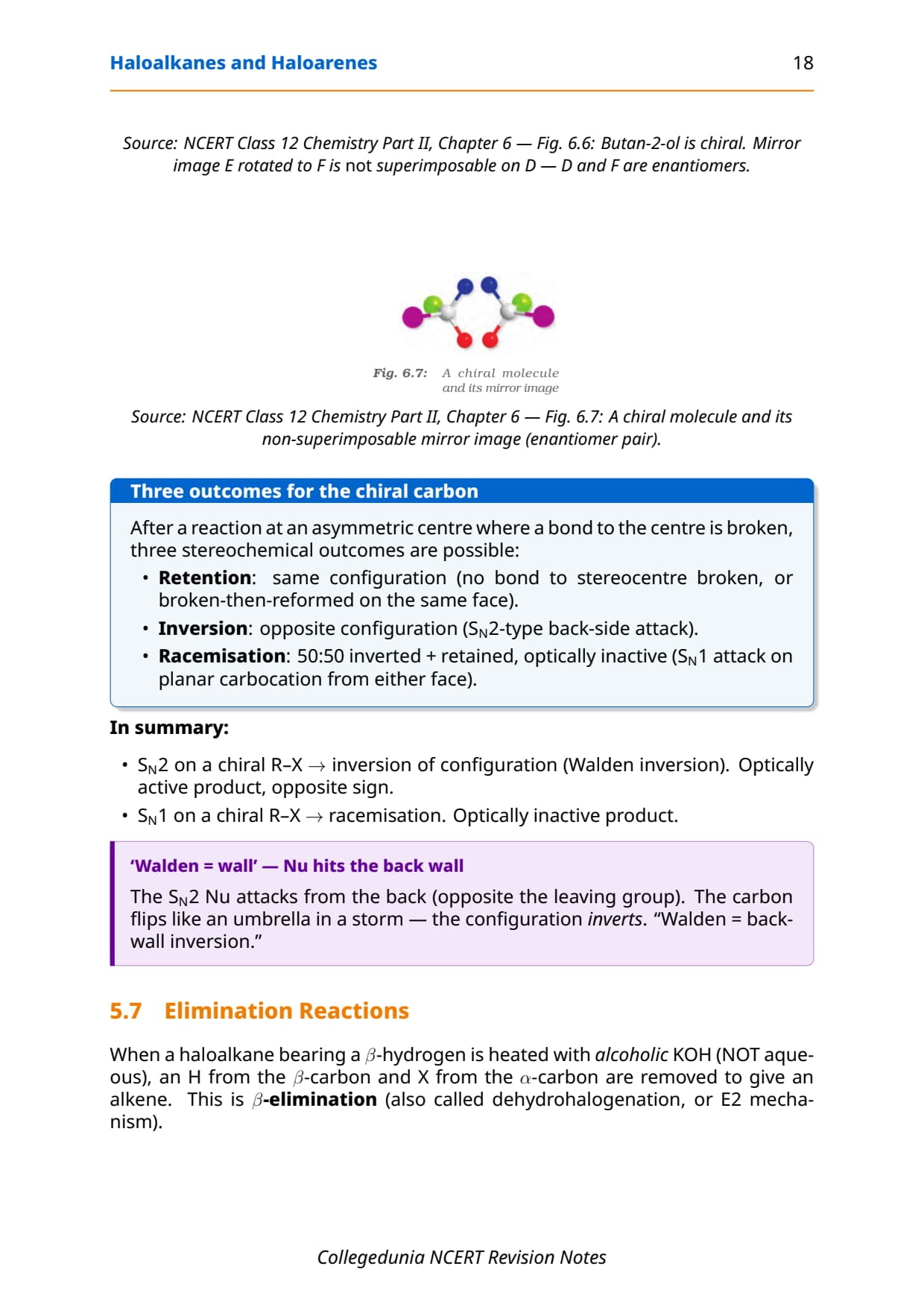
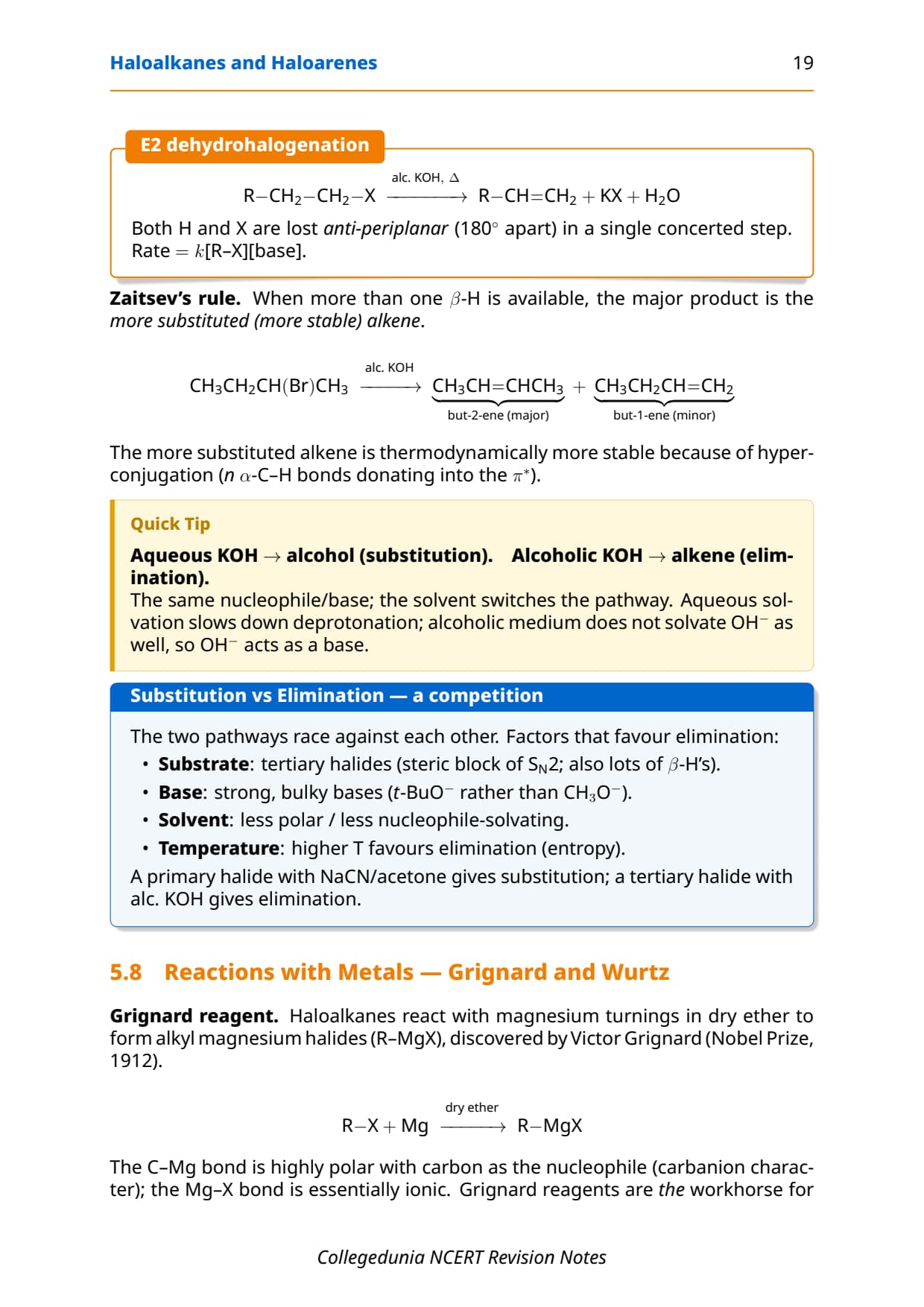
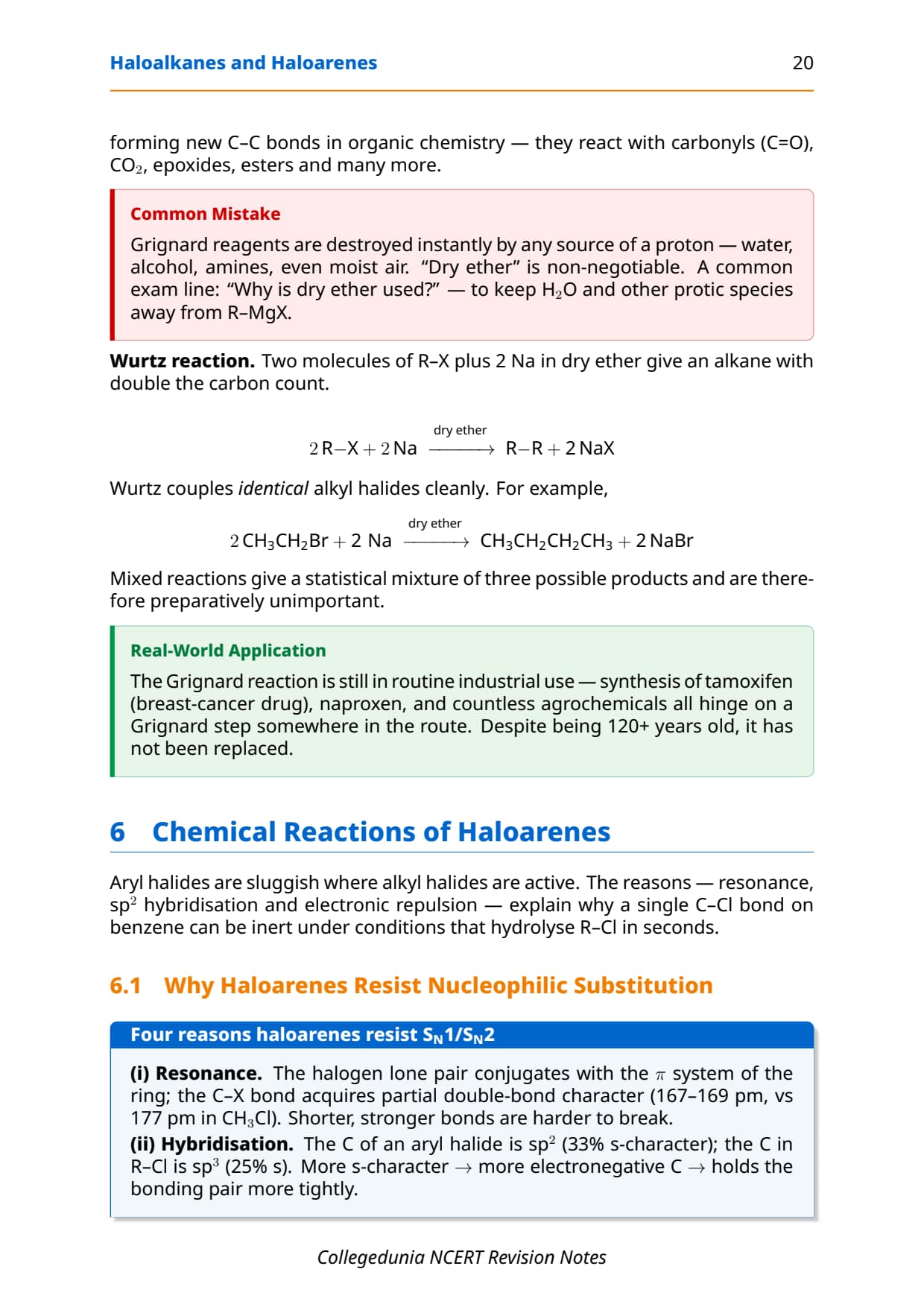
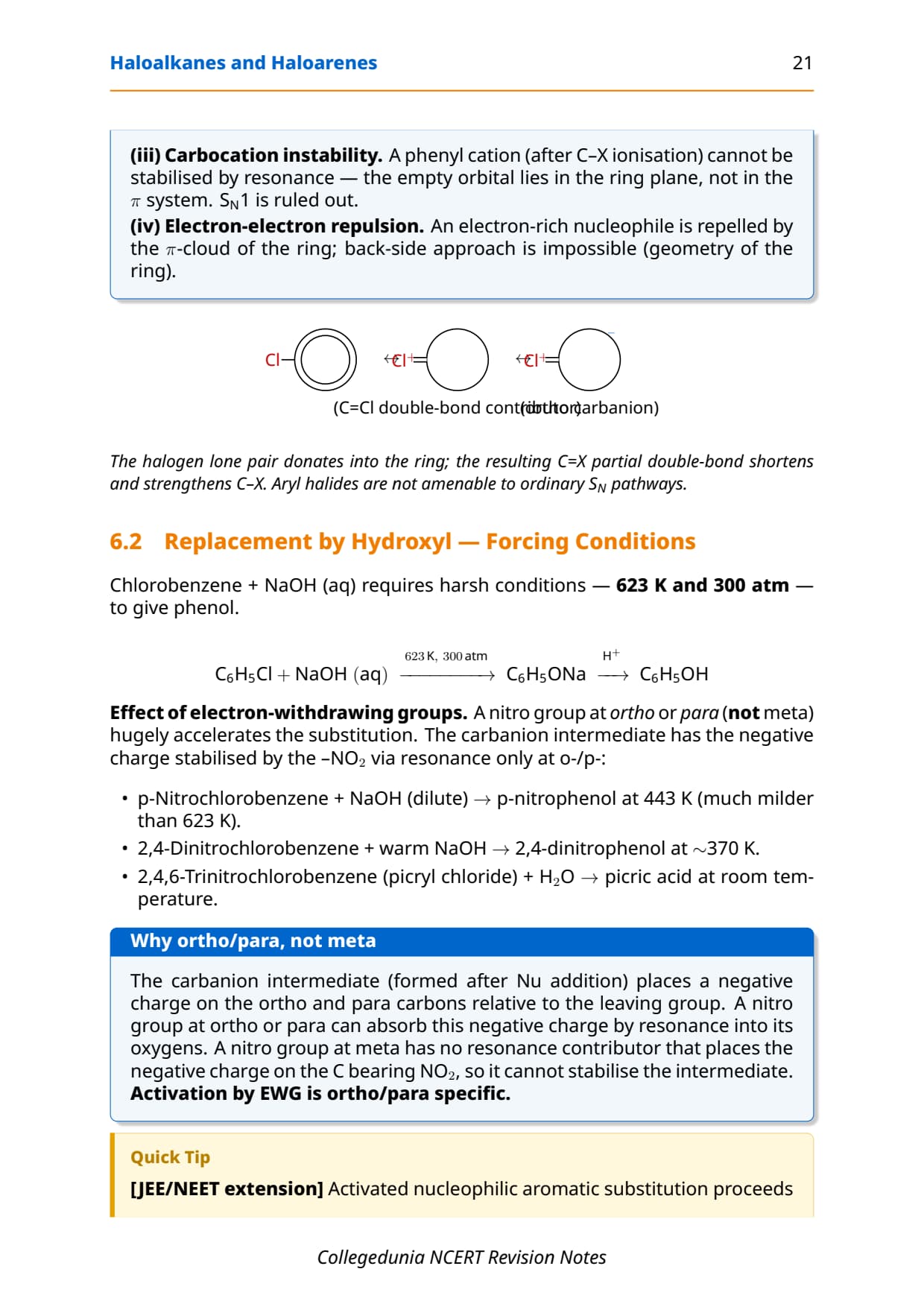
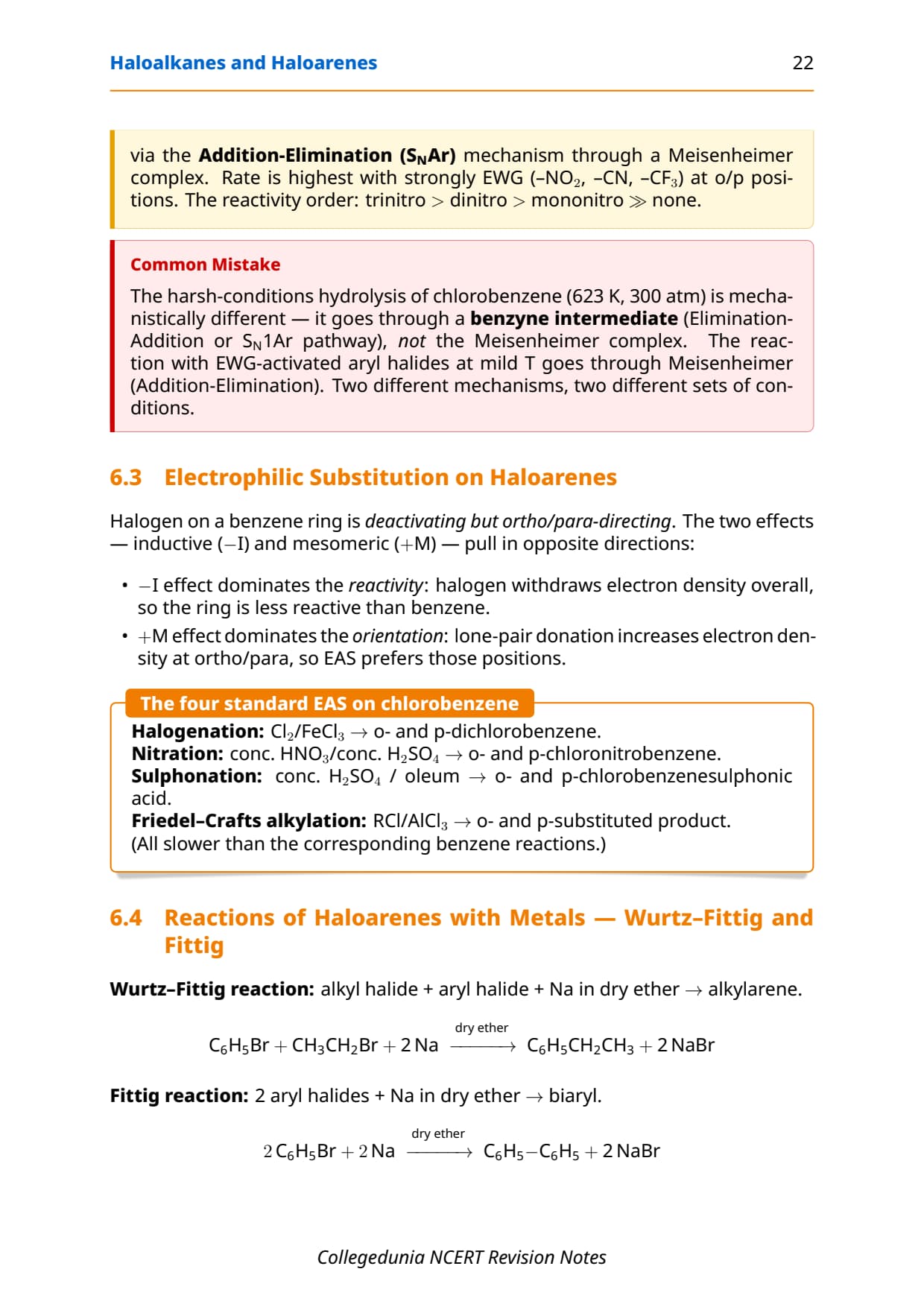


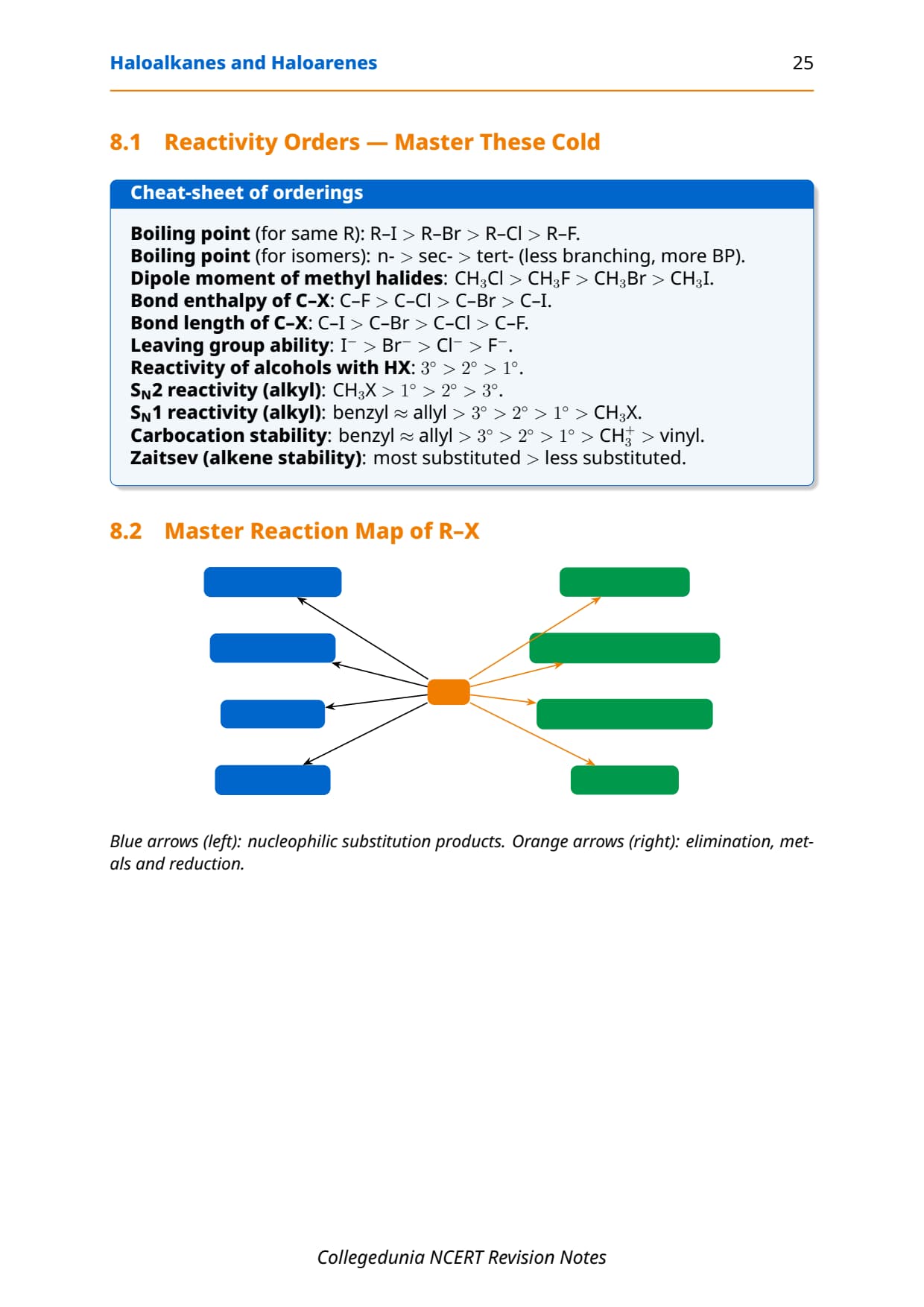

The notes below walk the chapter the way CBSE actually marks it: nomenclature and the C-X bond first, then preparation routes from alcohols and hydrocarbons, then the SN1 and SN2 mechanism contrast with stereochemistry, and finally the haloarene block with the difference in reactivity towards nucleophilic substitution and the named reactions.
These Collegedunia Haloalkanes and Haloarenes notes are curated by subject experts, mapped to the current 2026-27 NCERT print, and refined against the last five years of CBSE Board, JEE Main, and NEET papers.
Also Check:
- Haloalkanes and Haloarenes Class 12 Chemistry NCERT Solutions
- Haloalkanes and Haloarenes Class 12 Chemistry Formula Sheet
- CBSE Class 12 Chemistry Syllabus 2026-27
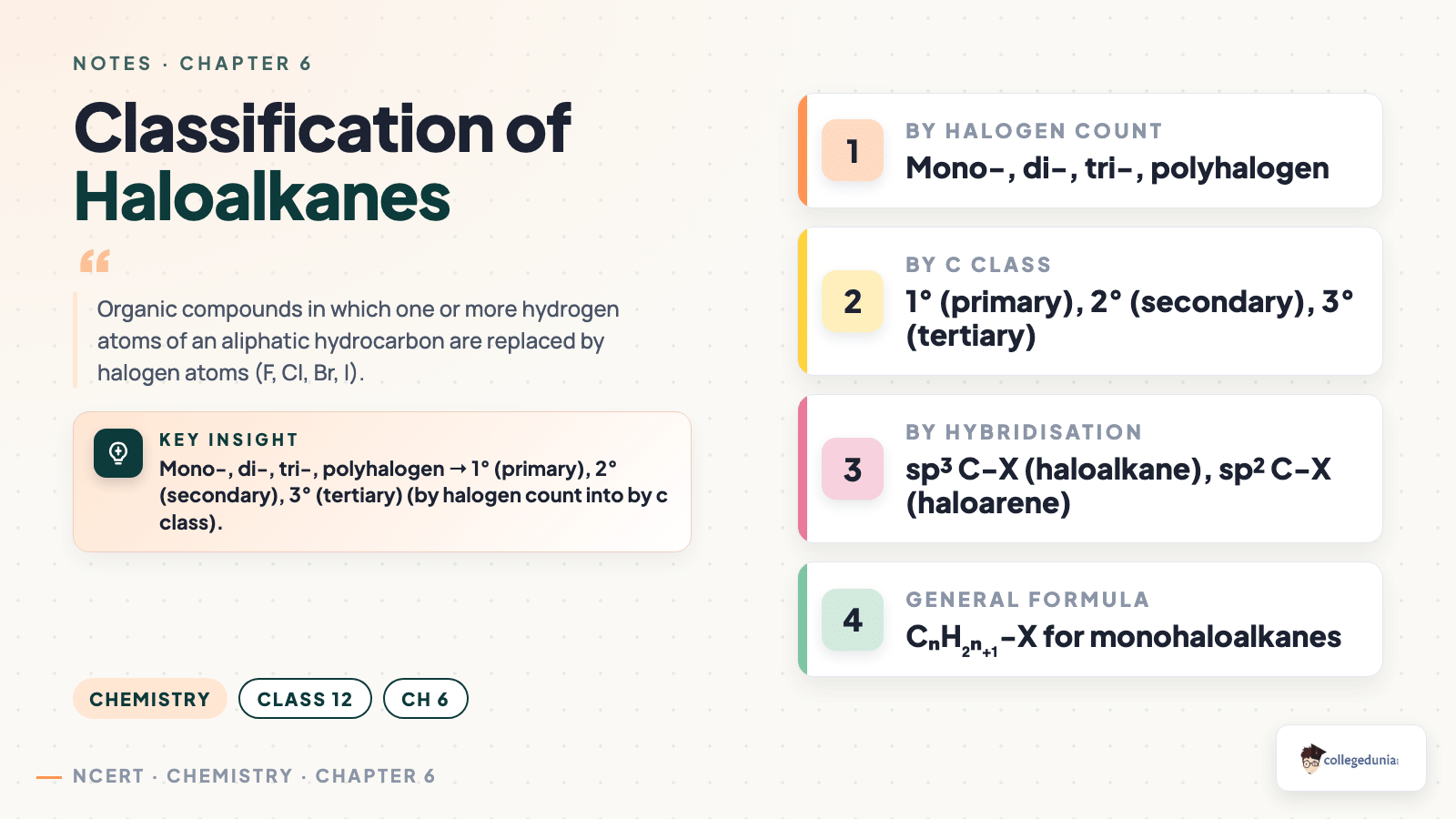
Haloalkanes and Haloarenes Class 12 Chapter at a Glance: Sub-Topic Counts
Before reading the topic notes, scan how the 2026-27 NCERT print distributes the chapter across four buckets.
Haloalkanes and Haloarenes Video Walkthrough
Source: Magnet Brains on YouTube
Haloalkanes and Haloarenes Topic-by-Topic Notes for Class 12 Chemistry
Each sub-section maps to a numbered NCERT section in the 2026-27 print.
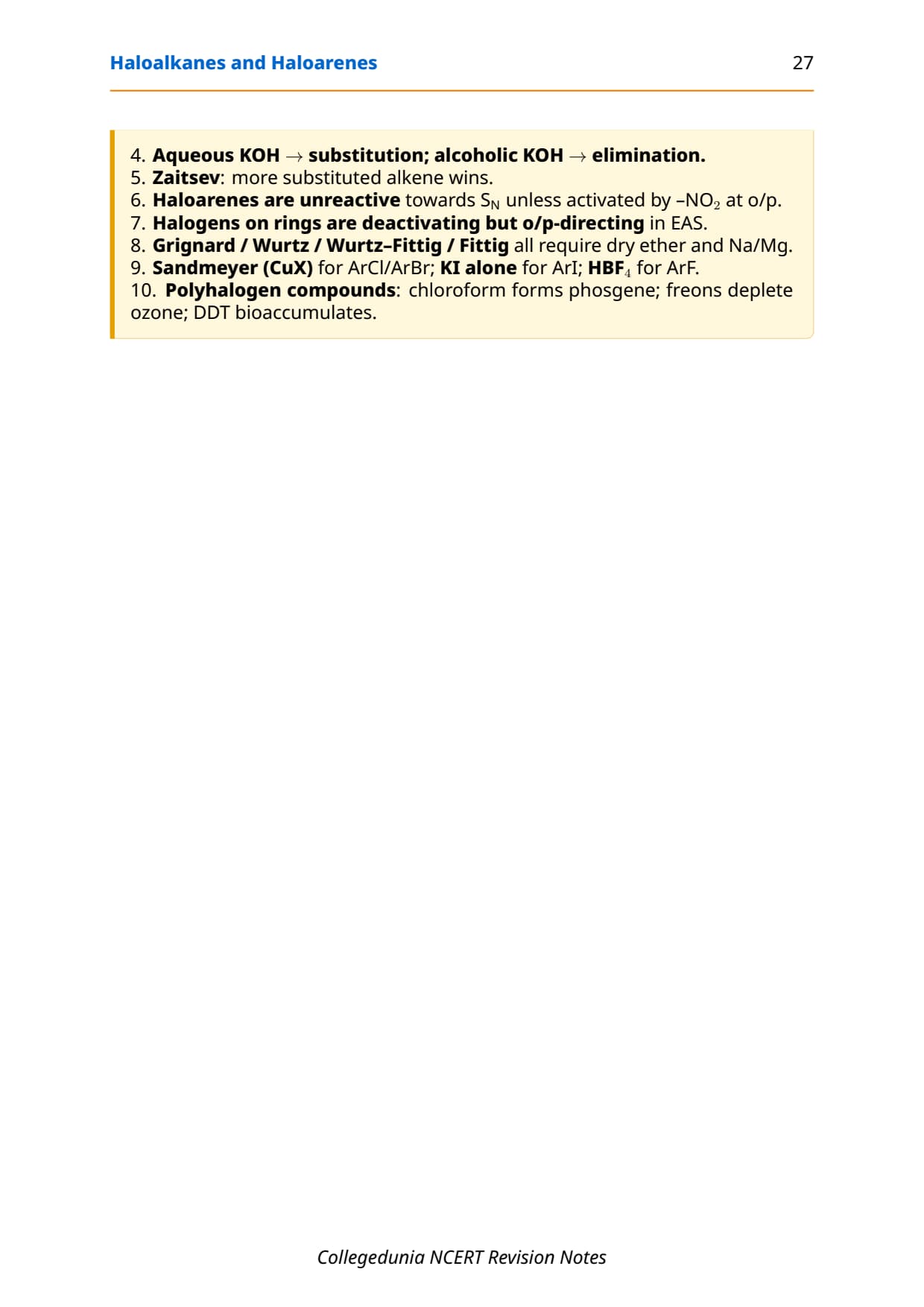
Eight out of every ten board-paper mechanism questions are pulled from sections 6.6 and 6.7, so memorise both reaction trees.
How will Collegedunia's NCERT Notes Help You with Haloalkanes and Haloarenes?
The Collegedunia Notes give you the three things students lose most marks on: a side-by-side SN1 versus SN2 comparison with stereochemistry, an ortho-para directing flowchart for haloarenes with the resonance-versus-induction reasoning, and a named-reaction memory wall covering Wurtz, Fittig, Wurtz-Fittig, Sandmeyer, Gattermann, Finkelstein, Swartz, and Hunsdiecker. The PDF is built for three pass-throughs: a 90-minute first read, a 30-minute pre-mock review, and a 10-minute exam-morning flick.
Most Important Sub-Topics in Haloalkanes and Haloarenes and Their Mark Distribution
The mark distribution below is averaged across CBSE Board, JEE Main, and NEET papers from 2021 to 2025. It tells you which six sub-topics to revise first if you have only three hours left before the exam.
| Sub-Topic | NCERT Section | CBSE Marks | JEE / NEET Question Frequency |
|---|---|---|---|
| SN1 versus SN2 Mechanism | 6.7 | 3 | Very High |
| Nomenclature and C-X Bond | 6.1 - 6.2 | 1 - 2 | High |
| Reactions of Haloalkanes (Wurtz, Grignard) | 6.6 | 2 - 3 | High |
| Reactions of Haloarenes (Sandmeyer, Dow, Wurtz-Fittig) | 6.4, 6.8 | 2 - 3 | High |
| Optical Activity and Stereochemistry | 6.7 | 1 - 2 | Medium |
| Polyhalogen Uses and Environmental Impact | 6.9 | 1 | Low |
Section 6.7 (mechanisms) alone carries roughly 3 marks every year. Skip it and you cannot break 60.
Important Named Reactions in Class 12 Chemistry Chapter 6
Class 12 board examiners frequently ask "Give the equations of the following reactions". The nine named reactions below cover every haloalkane / haloarene synthesis CBSE has asked since 2021.
| Name | Reactants -> Products | Conditions |
|---|---|---|
| Wurtz reaction | 2 R-X + 2 Na -> R-R + 2 NaX | Dry ether |
| Wurtz-Fittig reaction | Ar-X + R-X + 2 Na -> Ar-R + 2 NaX | Dry ether |
| Fittig reaction | 2 Ar-X + 2 Na -> Ar-Ar + 2 NaX | Dry ether |
| Sandmeyer reaction | ArN2+Cl- + CuCl -> Ar-Cl + N2 | HCl |
| Gattermann reaction | ArN2+Cl- + Cu / HCl -> Ar-Cl + N2 | Cu powder |
| Finkelstein reaction | R-Cl + NaI -> R-I + NaCl | Dry acetone |
| Swartz reaction | R-X + AgF -> R-F + AgX | Hg2F2, CoF2 |
| Hunsdiecker reaction | RCOOAg + Br2 -> R-Br + CO2 + AgBr | CCl4, heat |
| Dow's process | C6H5Cl + NaOH -> C6H5OH + NaCl | 623 K, 300 atm |
Notice how seven of the nine reactions need either dry ether or a Cu / Ag catalyst. Memorising the conditions column protects you from the easy 1-mark trap CBSE plants every year.
Common Misconceptions Students Hold in 12th Chemistry Chapter 6
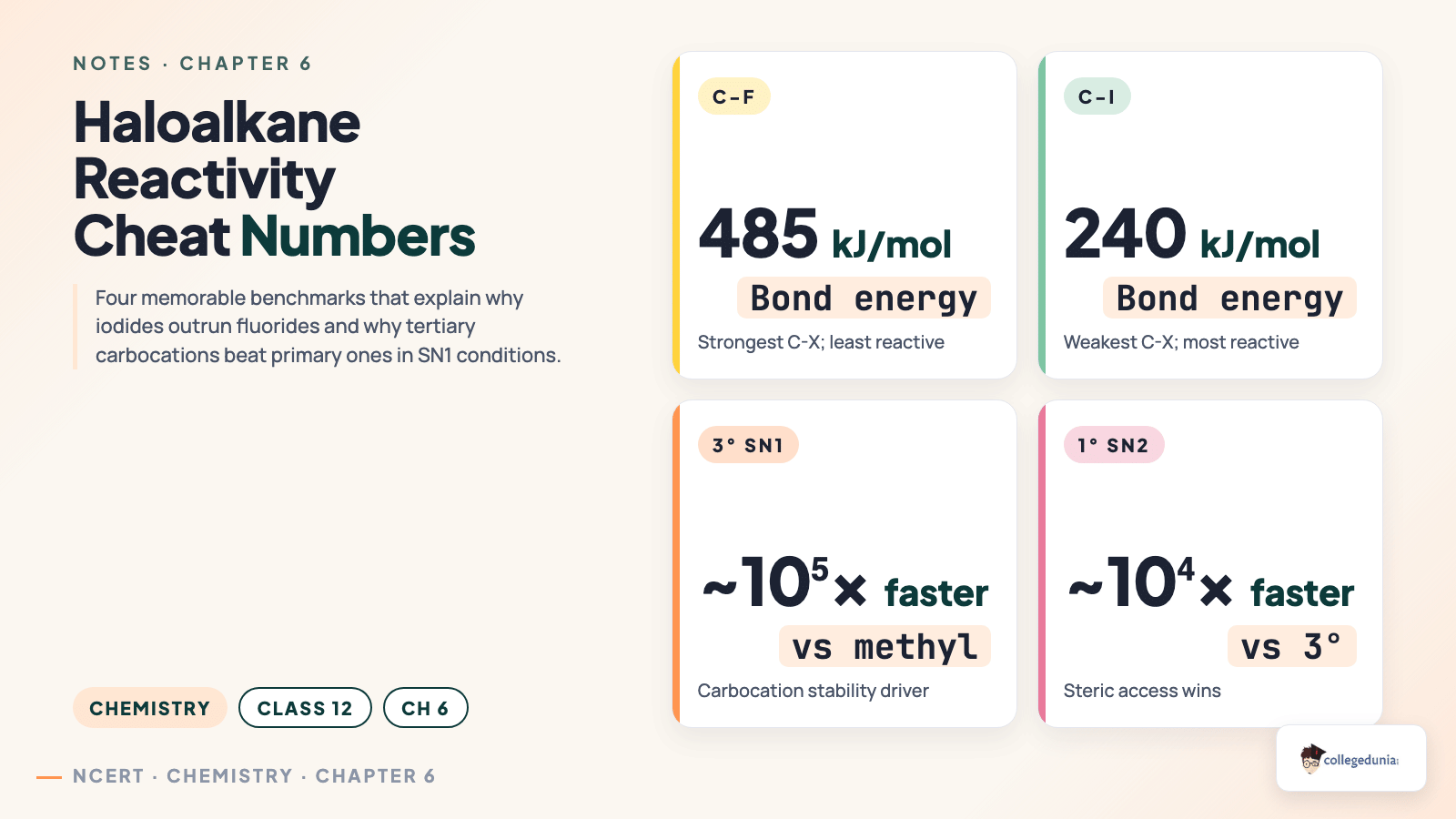
- "Tertiary haloalkanes always react faster." True for SN1, false for SN2 (steric hindrance reverses the order).
- "Haloarenes undergo nucleophilic substitution easily." Wrong. They resist substitution because of resonance.
- "Saytzeff product is always the major elimination product." Bulky bases (potassium tert-butoxide) push it to the Hofmann (less-substituted) alkene.
- "SN1 reactions always give a single product." Chiral SN1 reactions give racemic mixtures.
- "Halogens are deactivating, so they direct meta." They deactivate but still direct ortho-para via lone-pair donation through resonance.
Frequently Asked Haloalkanes Questions in CBSE Board Exams (2021 to 2026)
The CBSE pattern below pulls from the official Board paper grids of 2021, 2022, 2023, 2024, and 2025. The 2026 cell shows the announced trend from the latest sample paper.
| Year | Question Type Asked | Topic |
|---|---|---|
| 2026 (Sample) | 3-mark mechanism + 2-mark reasoning | SN1 vs SN2, haloarene resistance |
| 2025 | 3-mark conversion + assertion-reason MCQ | Wurtz-Fittig, optical activity |
| 2024 | 2-mark naming + 3-mark conditions | IUPAC nomenclature, Sandmeyer |
| 2023 | 3-mark mechanism question | SN2 mechanism with stereochemistry |
| 2022 | 2-mark short answer | Reason why aryl halides are inert |
| 2021 | 3-mark conversion exercise | Alcohol to haloalkane via SOCl2 |
Full year-wise PYQ map: Haloalkanes and Haloarenes Class 12 NCERT Solutions
Haloalkanes Top 5 Formulae for Quick Recall
The mechanisms and equilibrium constants below carry near-certain weight in JEE Main and NEET. Lock them into a single revision card.
- SN2 rate: rate = k[R-X][Nu-] (second order, single transition state)
- SN1 rate: rate = k[R-X] (first order, carbocation intermediate)
- Carbocation stability order: 3o > 2o > 1o > CH3+
- Markovnikov addition: H attaches to the carbon with more H atoms; halogen goes to the more substituted carbon
- Dipole moment trend: CH3Cl (1.86 D) > CH3F (1.85 D) > CH3Br (1.83 D) > CH3I (1.62 D)
Full master sheet: Class 12 Chemistry Haloalkanes and Haloarenes Formula Sheet
Haloalkanes and Haloarenes Class 12: Glossary of Must-Know Terms
- Nucleophile: An electron-rich species (Lewis base) that donates a lone pair to an electrophilic carbon.
- Carbocation: A positively charged carbon intermediate, sp2 hybridised and planar.
- Walden inversion: The flipping of configuration at the reaction centre during an SN2 attack.
- Racemic mixture: A 1:1 mixture of two enantiomers; optically inactive overall.
- Ambident nucleophile: A nucleophile with two donor sites, like CN- (C or N attack) or NO2- (O or N attack).
- Saytzeff rule: In elimination, the major alkene is the more substituted (more stable) one.
- Hofmann rule: With bulky bases (potassium tert-butoxide), the less-substituted alkene becomes the major product.
- Chiral centre identification: A carbon attached to four different groups; common in 2-bromobutane, 2-chloropentane, and many SN1 substrates.
- R/S configuration (CIP): CIP priority rules assign absolute configuration; lowest priority points away, then 1-2-3 clockwise gives R, anti-clockwise gives S.
- Optical isomerism: Enantiomers rotate plane-polarised light in equal and opposite directions; a racemic mixture is optically inactive.
- Kharasch effect: Anti-Markovnikov addition of HBr to alkenes in the presence of peroxides (a free-radical chain mechanism).
Class 12 Chemistry Chapter 6 Weightage Compared Across All Chapters
The CBSE mark contribution of every chapter in the 2026-27 syllabus is shown below. Haloalkanes and Haloarenes sits in the middle band.
The pattern is clear: Chapter 6 carries about 6 marks on average, comfortably above the 4-mark Biomolecules tail and just below the 7-mark heavyweights. Three sub-topics drive almost all of it: SN1/SN2 mechanism, named reactions, and haloarene reactivity.
More Haloalkanes and Haloarenes Chemistry Class 12 Resources
- Haloalkanes and Haloarenes Class 12 Chemistry NCERT Solutions
- Haloalkanes and Haloarenes Class 12 Chemistry Formula Sheet
- NCERT Class 12 Chemistry Chapter 6 Haloalkanes and Haloarenes Book PDF
- Haloalkanes and Haloarenes Class 12 Chemistry Handwritten Notes
- Haloalkanes and Haloarenes Class 12 Chemistry Exemplar Solutions
NCERT Notes for Class 12 Chemistry: All Chapters
Pull the full chapter-set in one place. The current page (Chapter 6) is excluded from the cross-sell table below.
| Chapter | Notes Page |
|---|---|
| Chapter 1 | Solutions Notes |
| Chapter 2 | Electrochemistry Notes |
| Chapter 3 | Chemical Kinetics Notes |
| Chapter 4 | d- and f-Block Elements Notes |
| Chapter 5 | Coordination Compounds Notes |
| Chapter 7 | Alcohols, Phenols and Ethers Notes |
| Chapter 8 | Aldehydes, Ketones and Carboxylic Acids Notes |
| Chapter 9 | Amines Notes |
| Chapter 10 | Biomolecules Notes |
Haloalkanes and Haloarenes Class 12 Notes: Frequently Asked Questions
Q. What is the difference between SN1 and SN2 reactions in haloalkanes?
SN1 is a two-step unimolecular reaction proceeding through a planar carbocation intermediate, favoured by tertiary haloalkanes and polar protic solvents, and gives a racemic mixture. SN2 is a one-step bimolecular reaction with a single transition state, favoured by primary haloalkanes and polar aprotic solvents, and gives inversion of configuration (Walden inversion).
Q. Why are haloarenes less reactive than haloalkanes towards nucleophilic substitution?
The C-X bond in haloarenes has partial double-bond character due to resonance with the aromatic ring, which makes it shorter and stronger than the C-X bond in haloalkanes. The sp2 carbon is also more electronegative and holds the halogen more tightly. Together these factors block nucleophilic attack except under very harsh conditions.
Q. Why is chloroform stored in dark amber-coloured bottles?
Chloroform reacts with atmospheric oxygen in the presence of sunlight to form phosgene (COCl2), an extremely poisonous gas. Storing it in dark amber bottles, completely filled to exclude air, prevents this photo-oxidation.
Q. What is the Sandmeyer reaction and why is it important for Class 12 boards?
The Sandmeyer reaction converts an arenediazonium salt (ArN2+X-) into the corresponding aryl halide using cuprous halide (CuCl, CuBr) at room temperature. It is the most reliable way to introduce -Cl, -Br, or -CN on an aromatic ring at a chosen position. CBSE has asked it as a 2-mark to 3-mark question in three of the last five years.
Q. Which is more reactive, alkyl iodide or alkyl chloride, and why?
Alkyl iodide is more reactive because the C-I bond is the longest and weakest C-X bond, so iodide is the best leaving group among the halides. The bond enthalpy order C-F > C-Cl > C-Br > C-I directly translates into the reactivity order R-I > R-Br > R-Cl > R-F.
Q. What is the difference between Wurtz reaction and Wurtz-Fittig reaction?
The Wurtz reaction couples two alkyl halides with sodium in dry ether to form a symmetrical alkane (2 R-X + 2 Na -> R-R + 2 NaX). The Wurtz-Fittig reaction is the mixed variant: an aryl halide reacts with an alkyl halide and sodium in dry ether to form an alkyl-substituted arene (Ar-X + R-X + 2 Na -> Ar-R + 2 NaX). Fittig alone couples two aryl halides to give a biaryl.
Q. Why does the dipole moment of CH3Cl exceed CH3F?
Even though fluorine is more electronegative, the C-Cl bond is longer than the C-F bond. Dipole moment is the product of charge separation and bond length, and the longer bond in CH3Cl outweighs the smaller charge difference, giving it a slightly higher dipole moment (1.86 D vs 1.85 D for CH3F).
Q. What is the Kharasch (peroxide) effect and when does anti-Markovnikov addition apply?
The Kharasch effect is the anti-Markovnikov addition of HBr to an unsymmetrical alkene in the presence of peroxides (R-O-O-R). The Br radical attaches to the less substituted carbon (the one with more H). The peroxide effect operates only for HBr, not HCl or HI, because only the Br radical chain is energetically favourable. Without peroxides, the regular Markovnikov product dominates.
Q. How are R and S configurations assigned to a chiral centre in haloalkanes?
Rank the four substituents on the chiral C by CIP priority (higher atomic number wins; for ties, look one bond further). Orient the molecule with the lowest-priority group pointing away from you. Trace 1 to 2 to 3: clockwise gives R (rectus); anti-clockwise gives S (sinister). For 2-bromobutane the priority order is Br > CH2CH3 > CH3 > H.
Q. What is the role of anhydrous ZnCl2 in the Lucas test for alcohols?
Anhydrous ZnCl2 + conc. HCl is the Lucas reagent. ZnCl2 behaves as a Lewis-acid catalyst that helps protonate -OH and weaken the C-O bond. Tertiary alcohols give immediate turbidity (the alkyl chloride is insoluble), secondary alcohols turn cloudy in 5-10 minutes, and primary alcohols do not react at room temperature - so the Lucas test distinguishes 1°, 2°, and 3° alcohols.
Q. How is DDT prepared and what makes freons (CFCs) environmentally hazardous?
DDT is made by condensing chlorobenzene with trichloroacetaldehyde (chloral, CCl3CHO) in conc. H2SO4. Freons such as CCl2F2 are made from CCl4 using SbF3/HF (the Swarts reaction). DDT bio-accumulates in fat tissues along the food chain and is banned in most countries. CFCs migrate to the stratosphere where UV light releases Cl radicals that catalytically destroy ozone - hence the Montreal Protocol phase-out.
Q. What is racemization and why does an SN1 reaction give a racemic mixture?
Racemization is the conversion of an optically active substrate into a 1:1 mixture of its (R) and (S) enantiomers (the racemic mixture, optically inactive overall). In SN1 the C-X bond ionises first to give a planar sp2 carbocation. The nucleophile can attack this planar intermediate from either face with equal probability, so equal amounts of (R) and (S) product form, giving net zero rotation.



Comments