




The NCERT notes for Class 12 Chemistry Chapter 10: Biomolecules by Collegedunia are prepared by senior subject-matter experts for one-shot revision, in accordance with the latest 2026-27 CBSE syllabus.
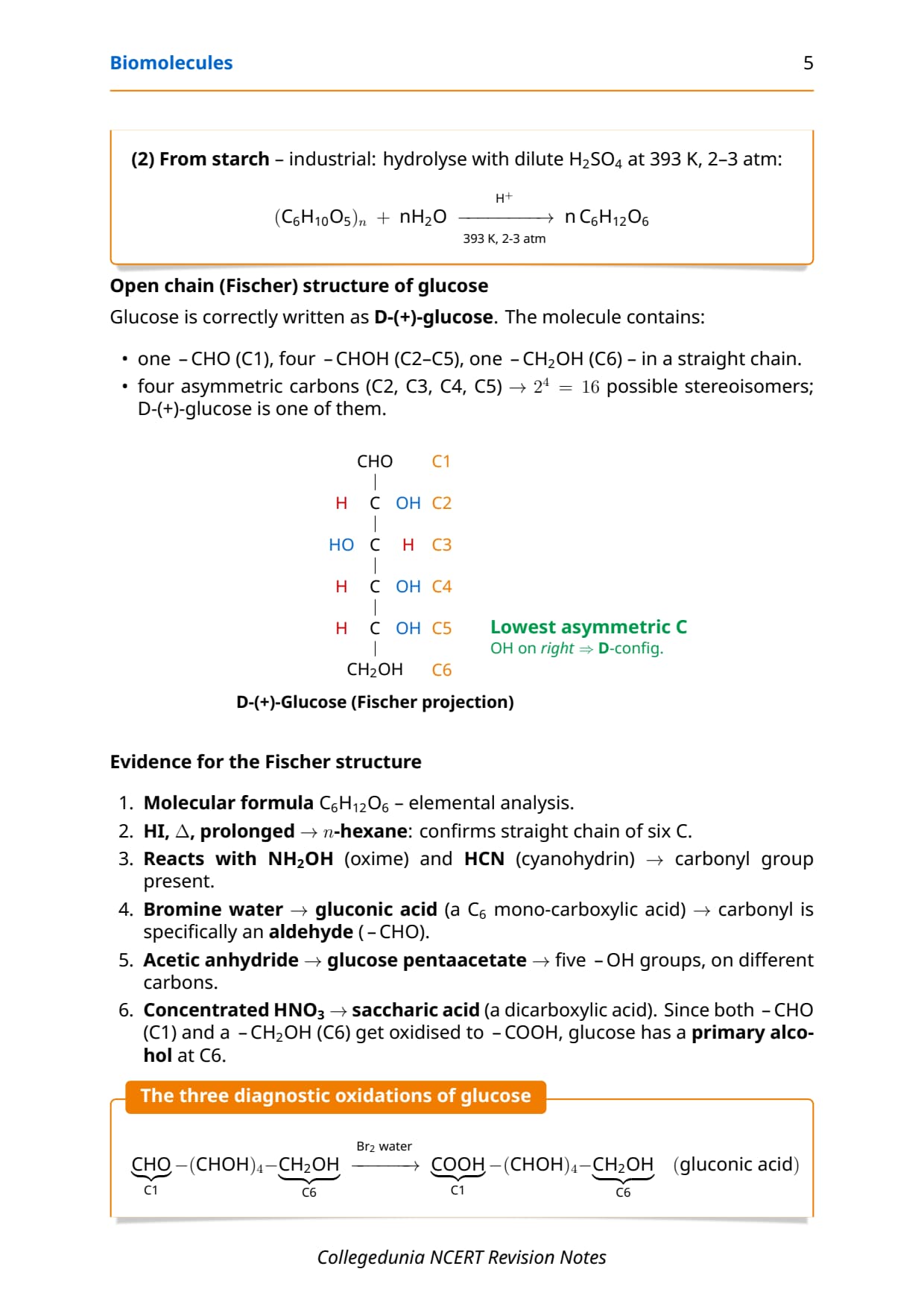
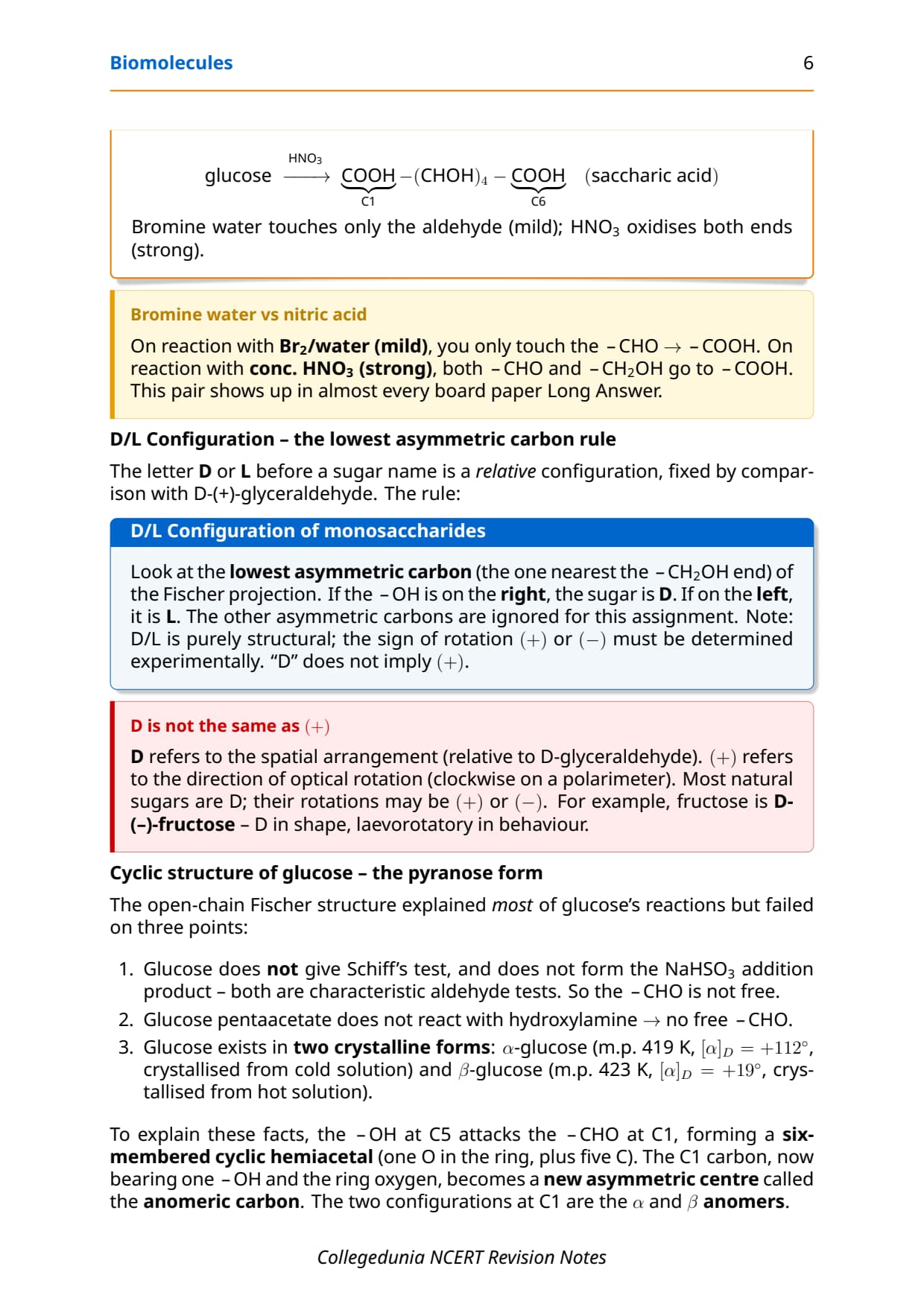
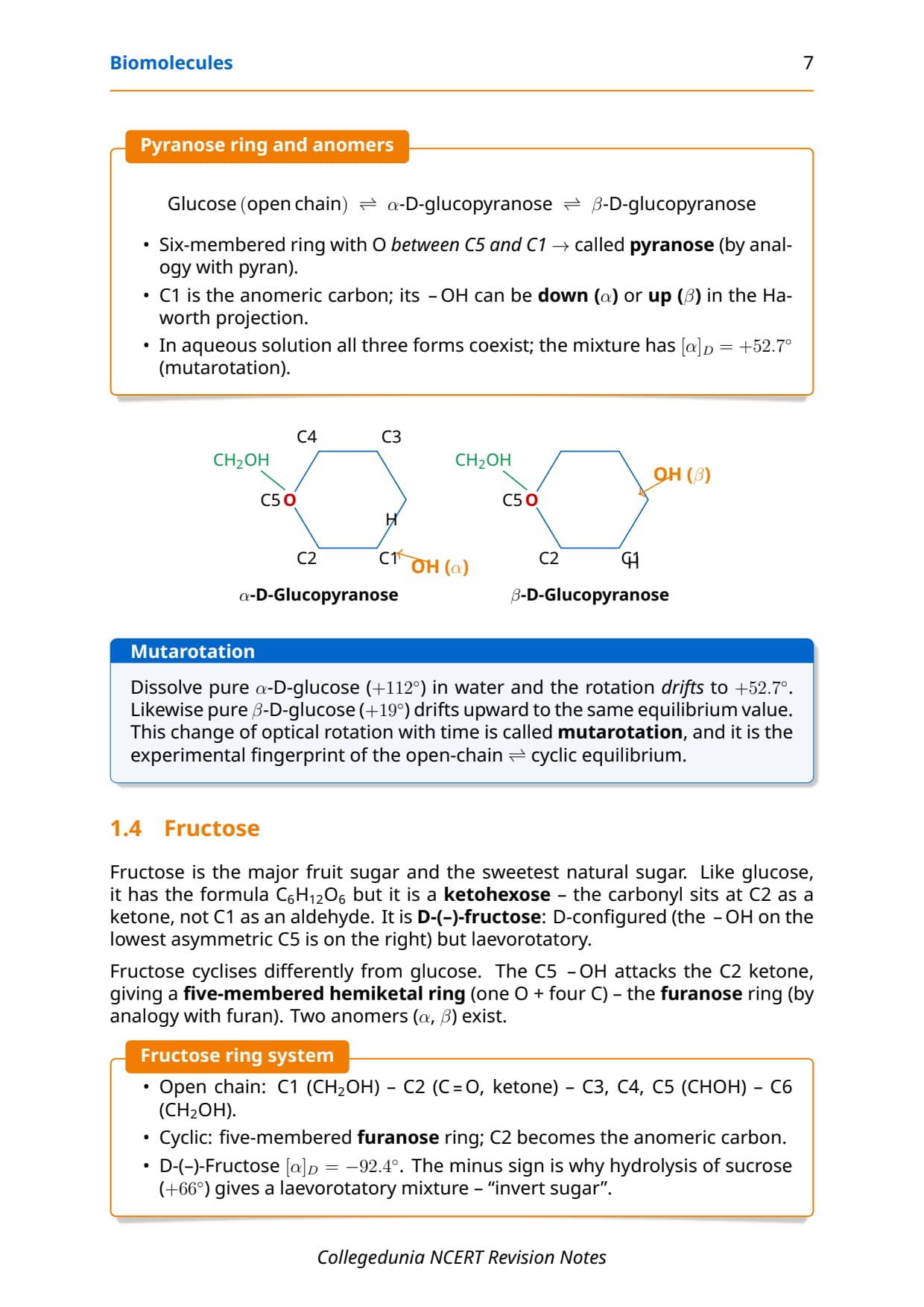
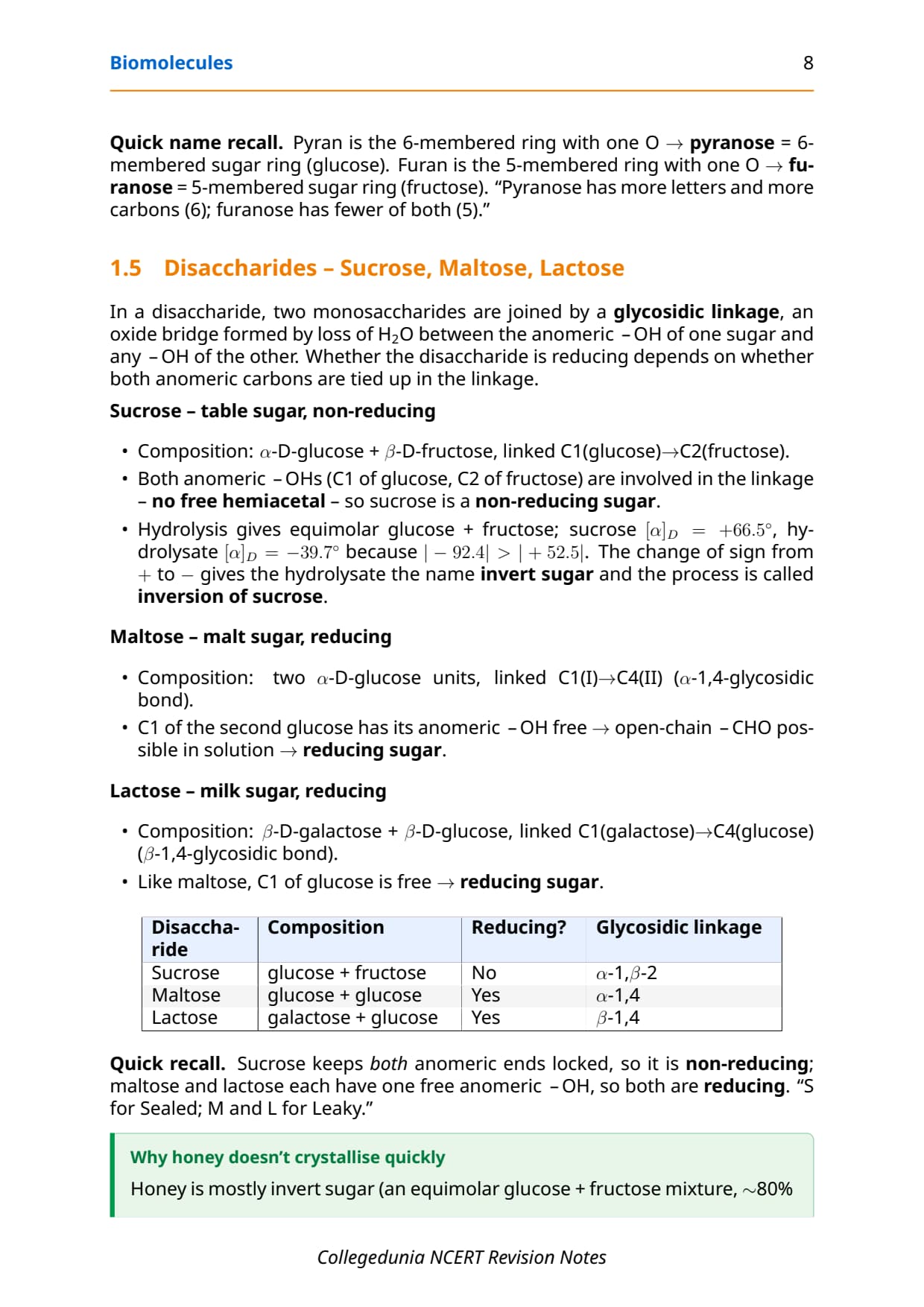
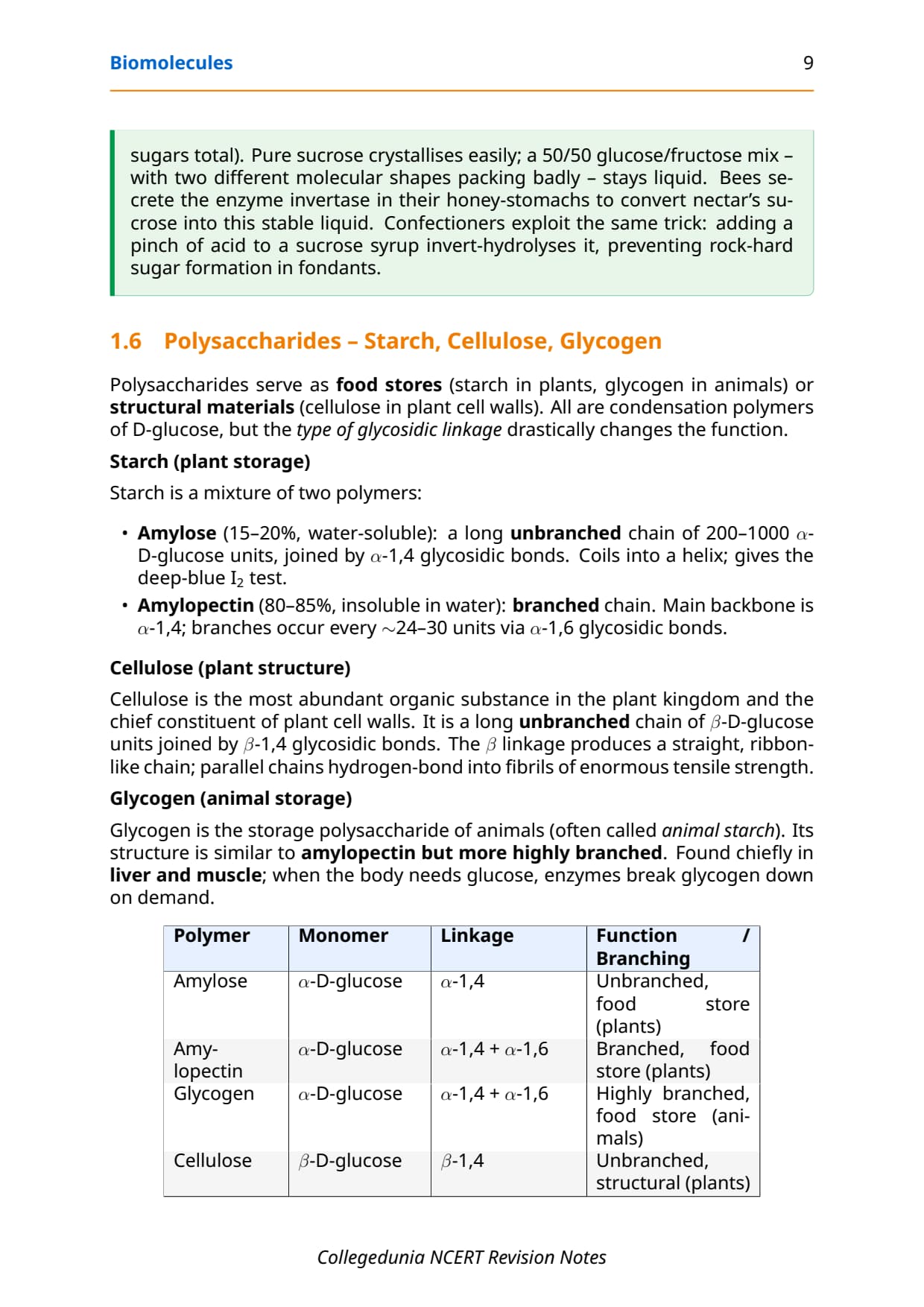
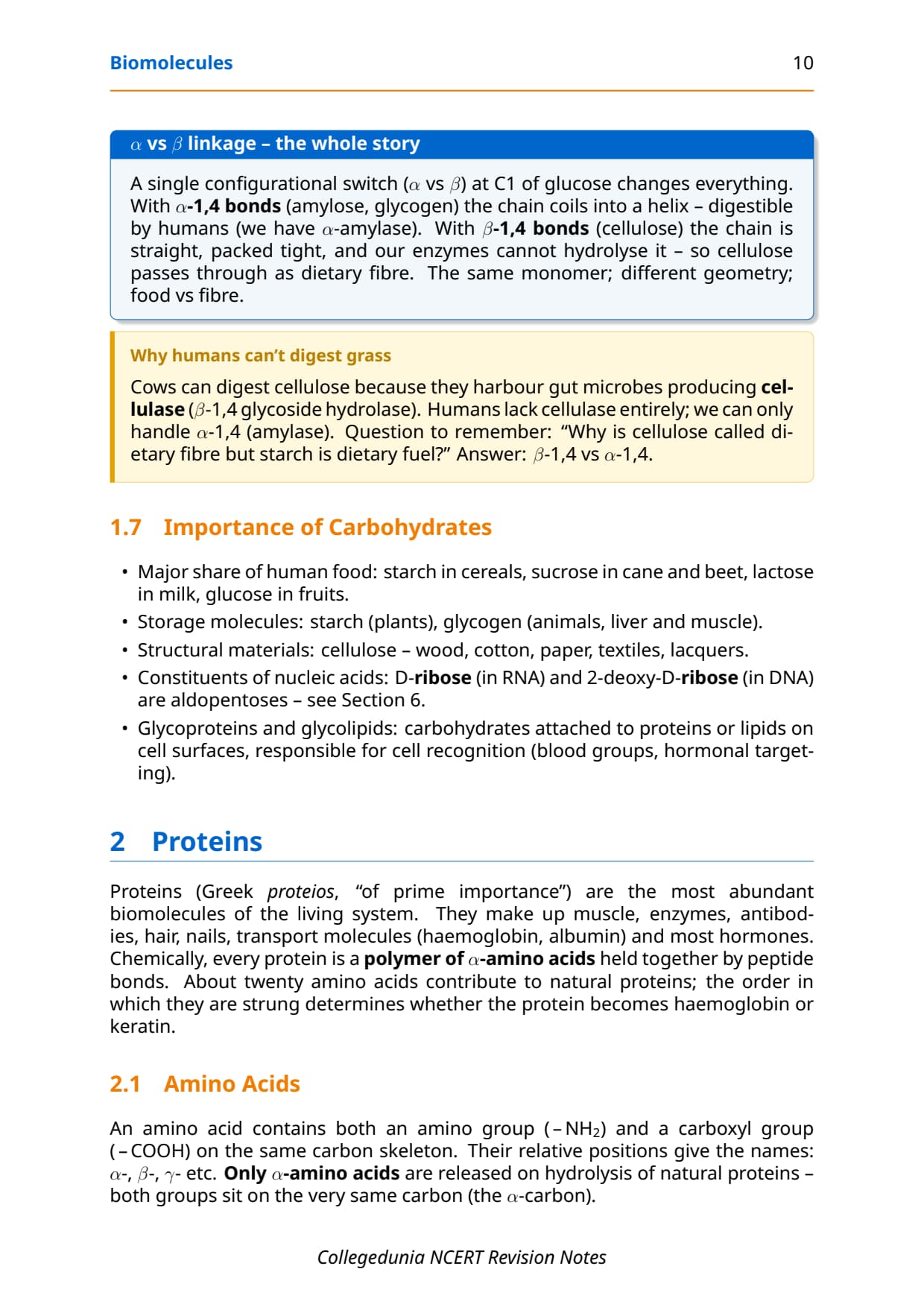
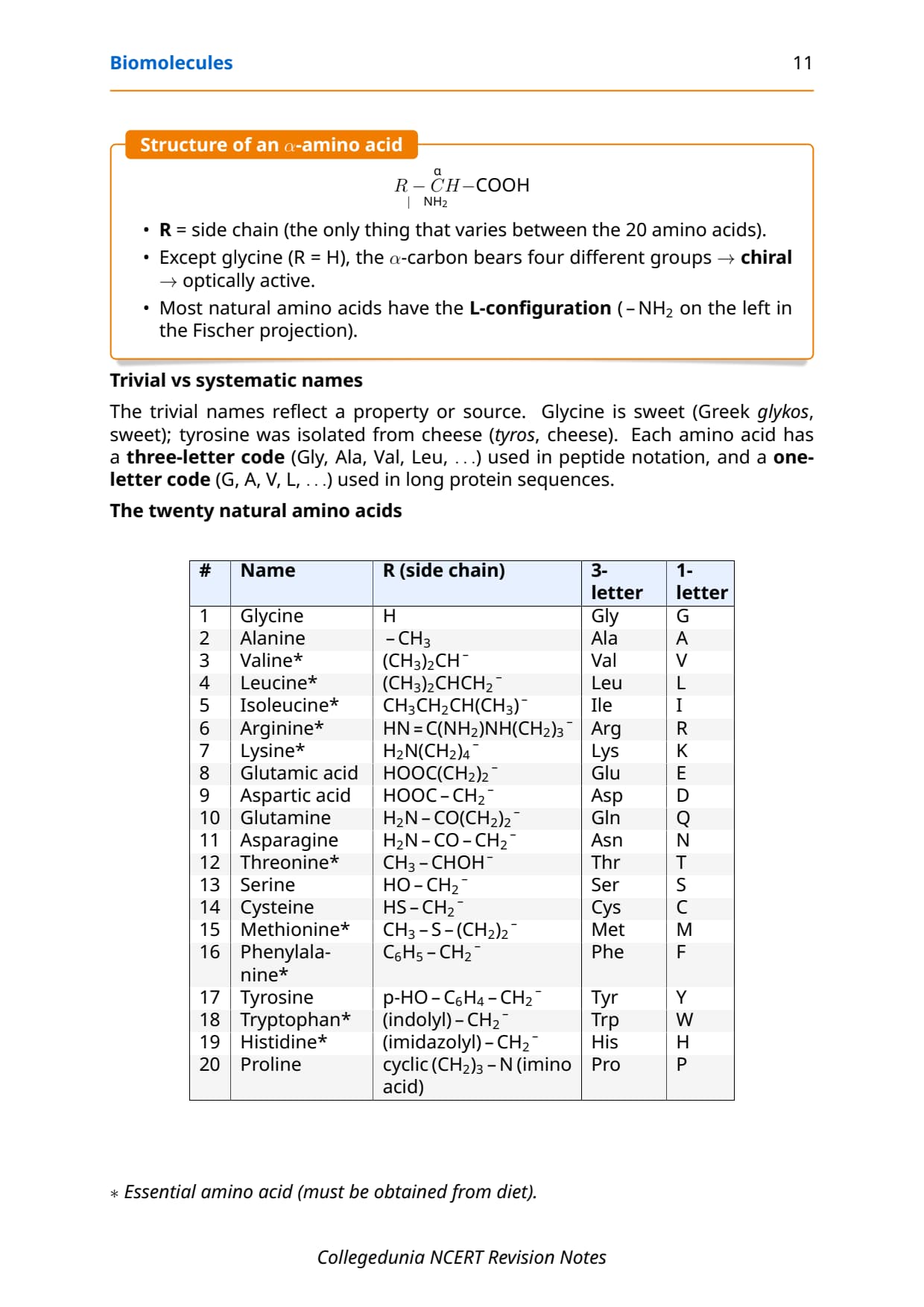
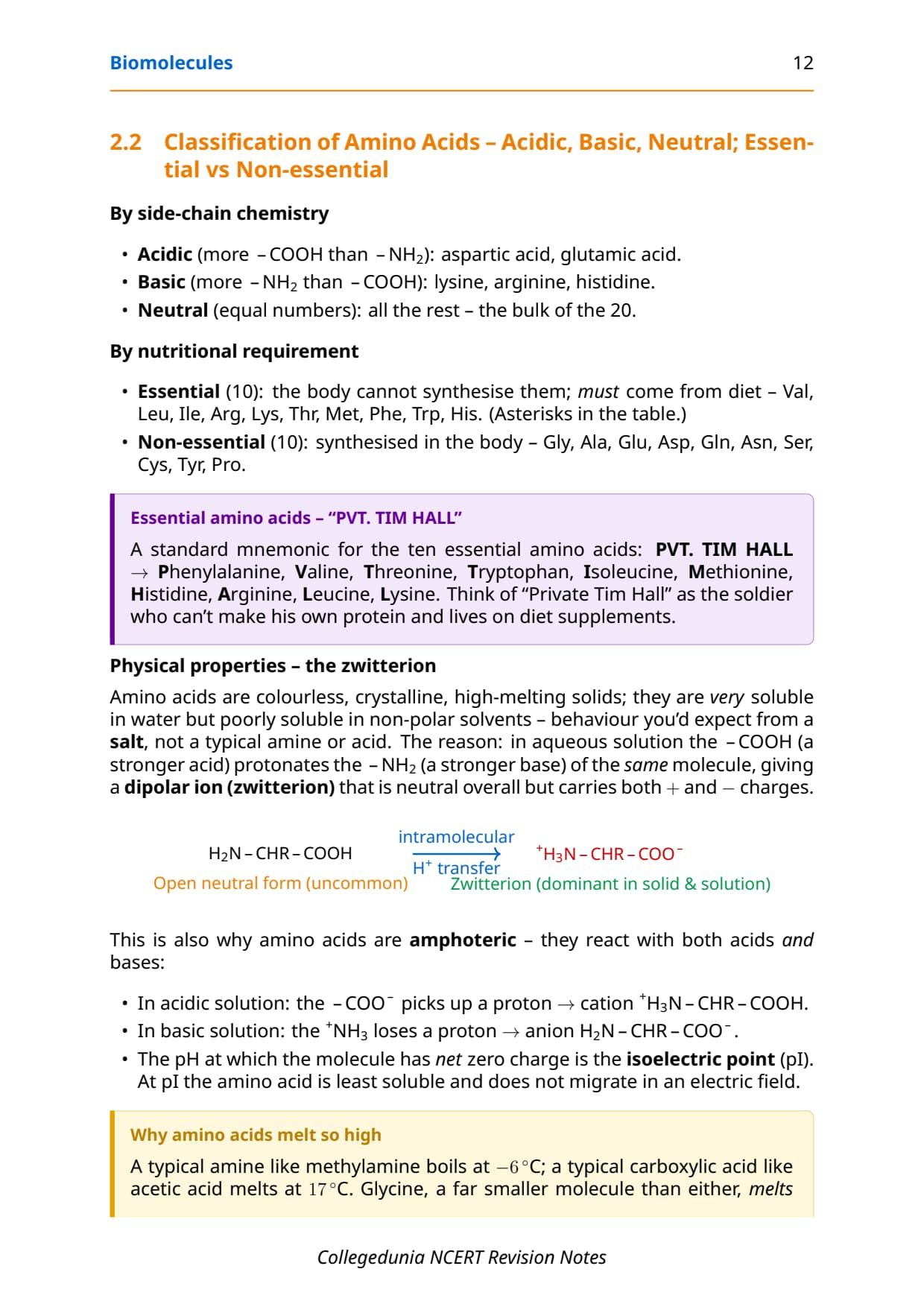
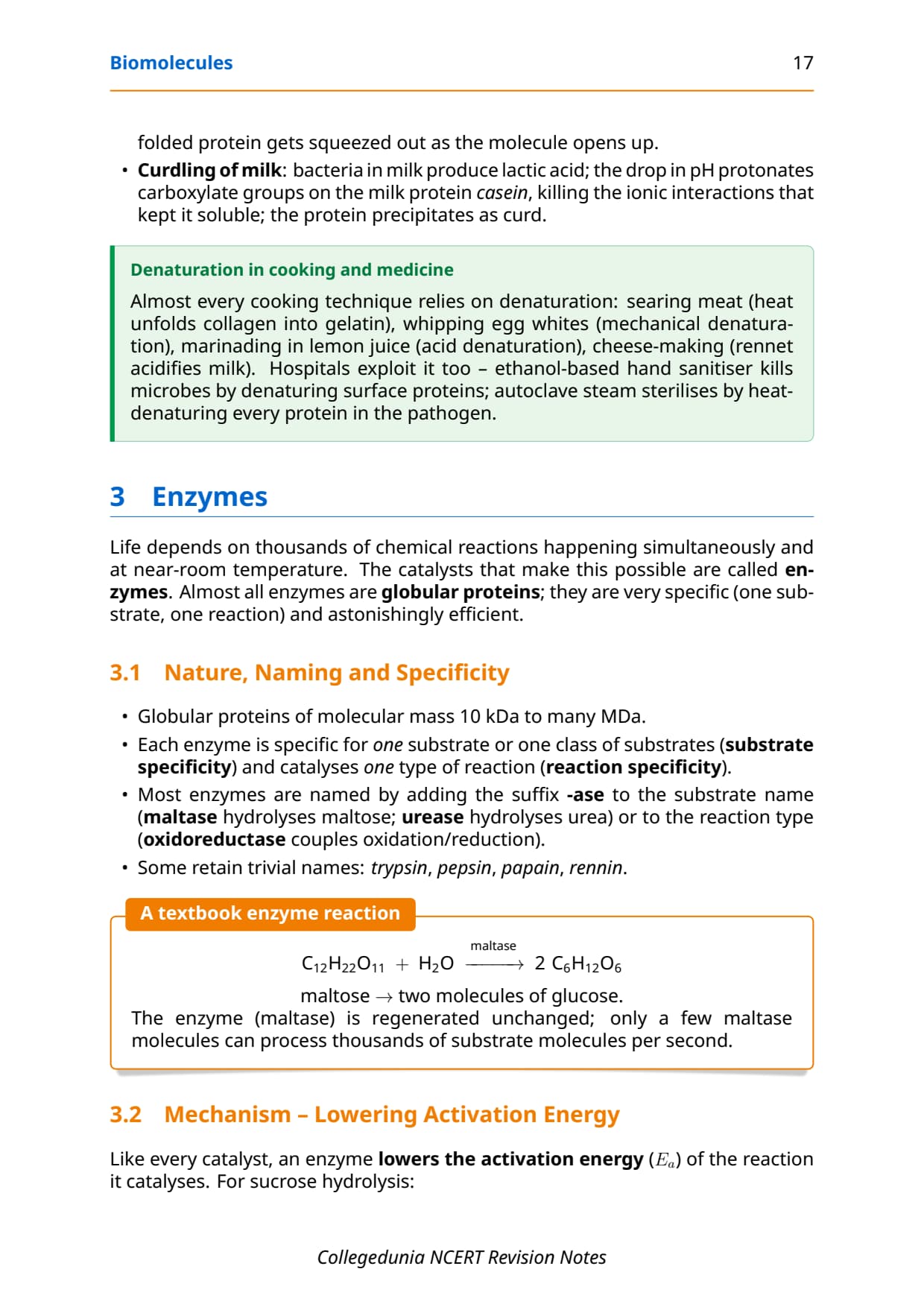
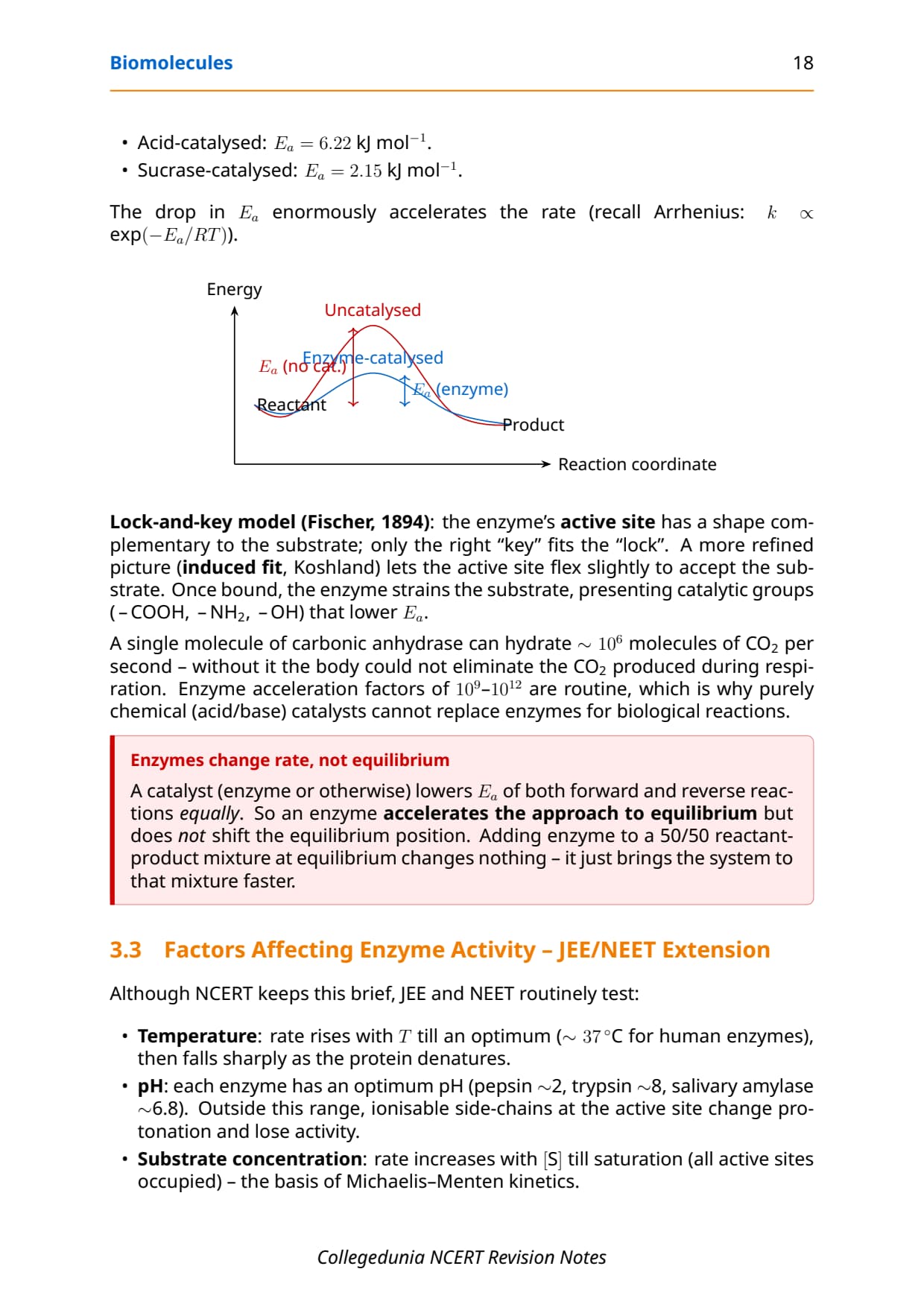
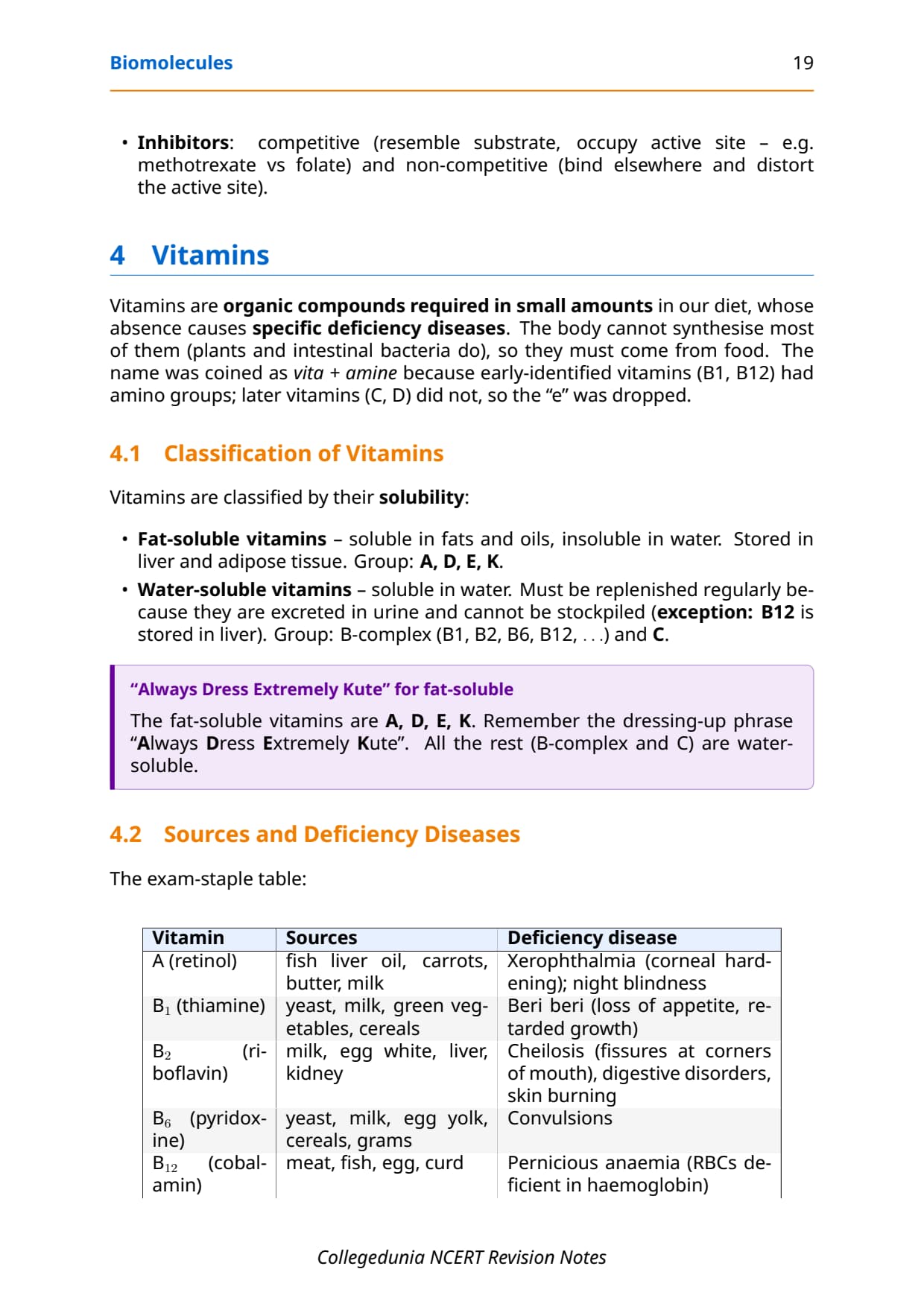
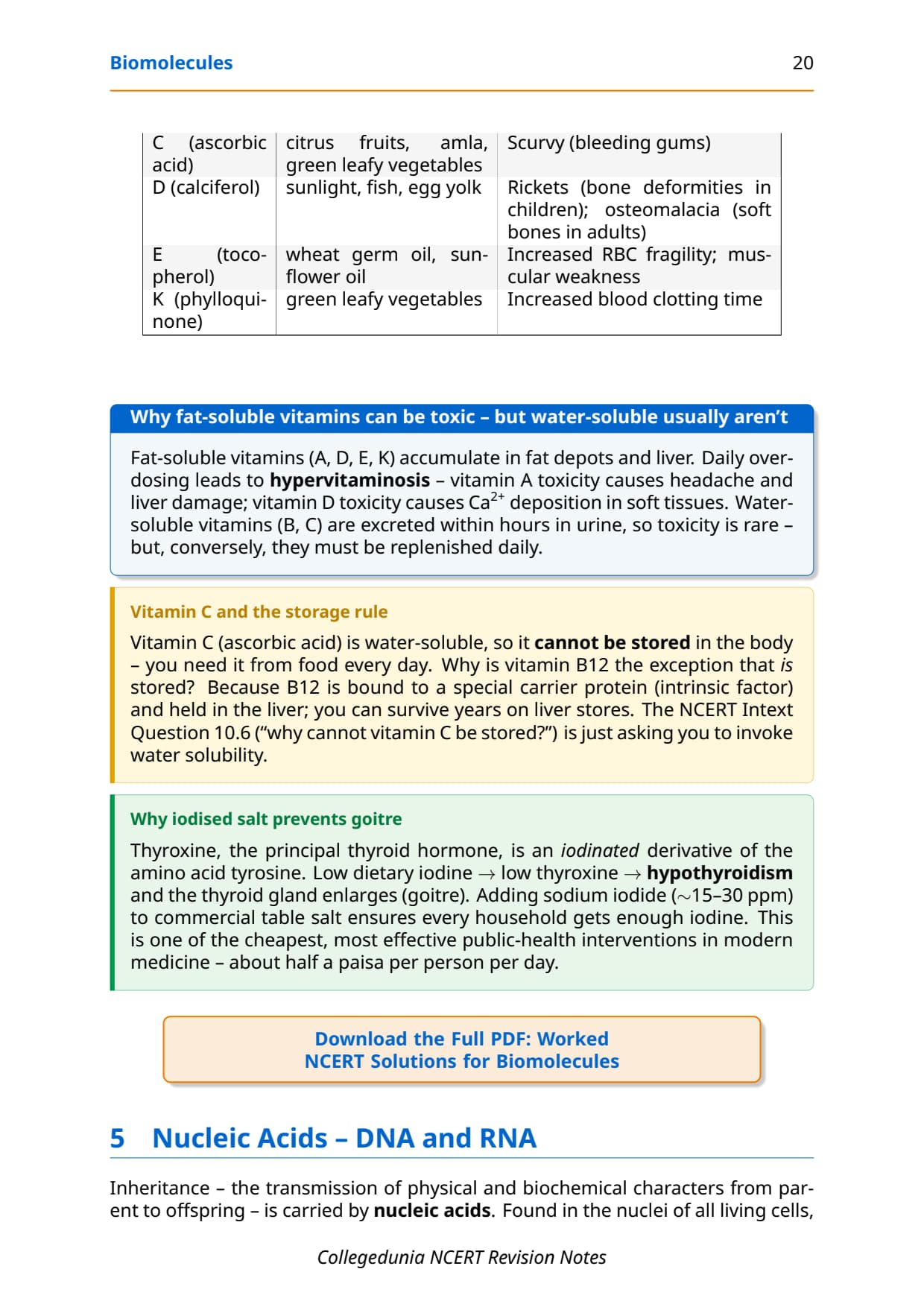
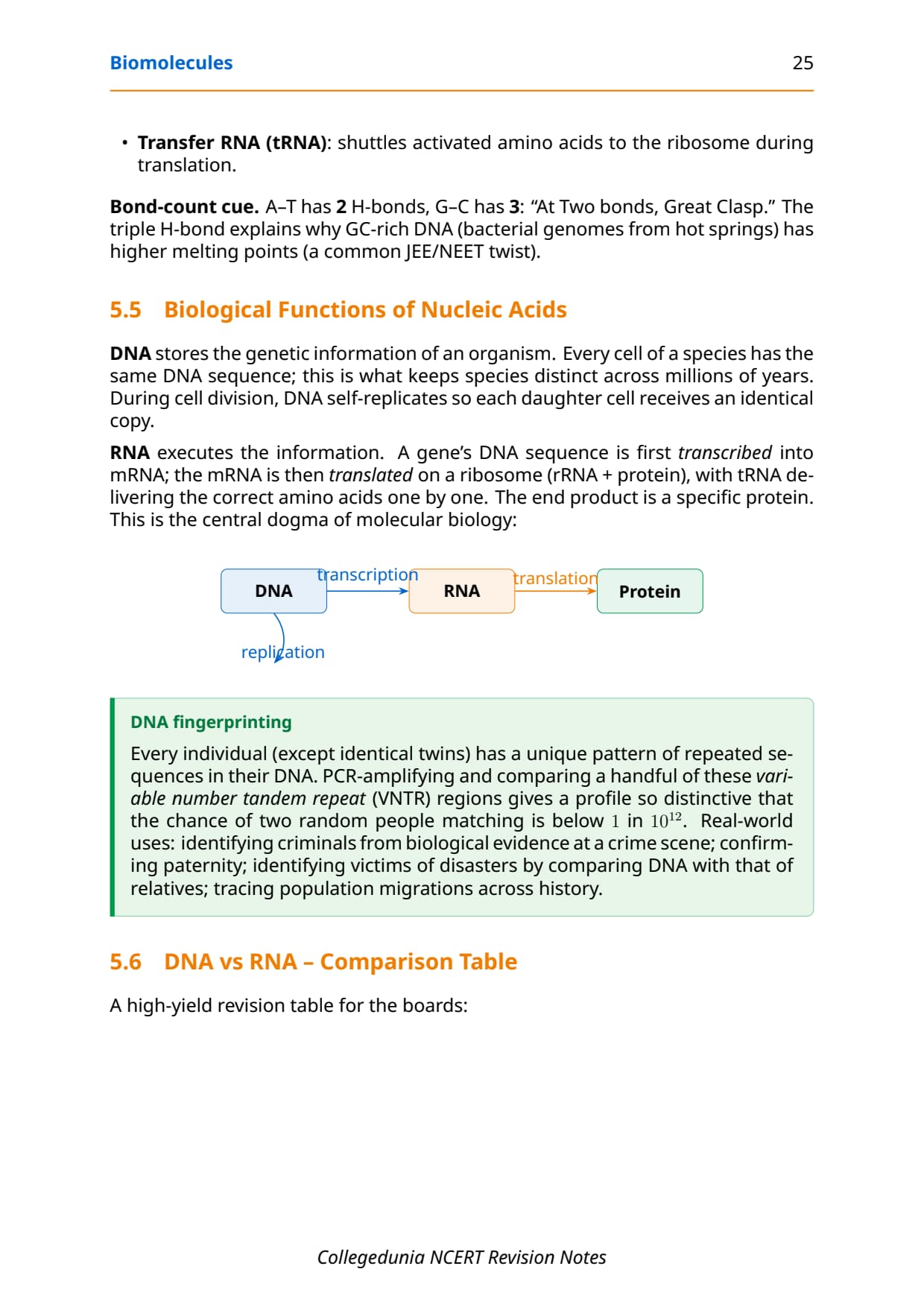
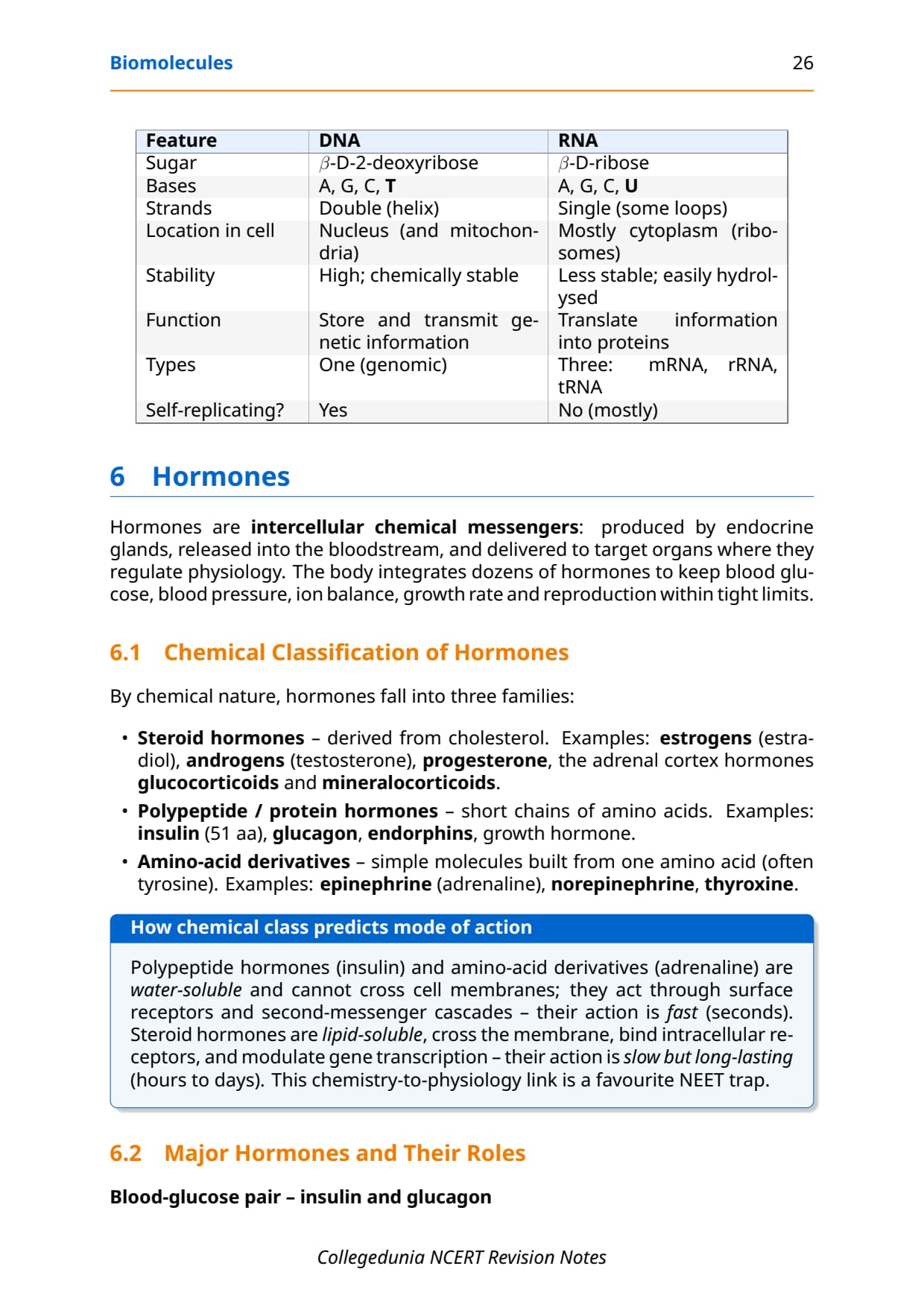
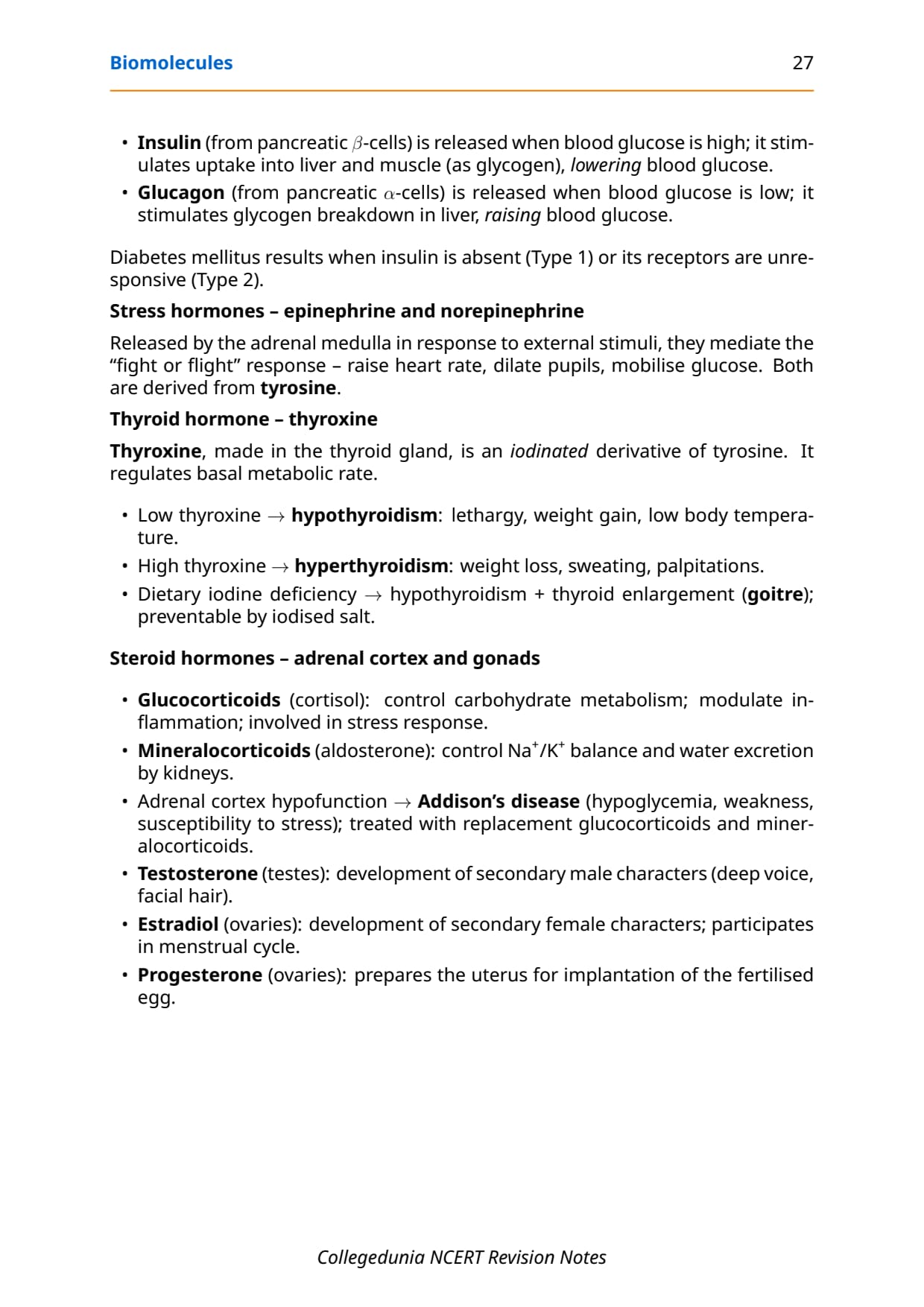
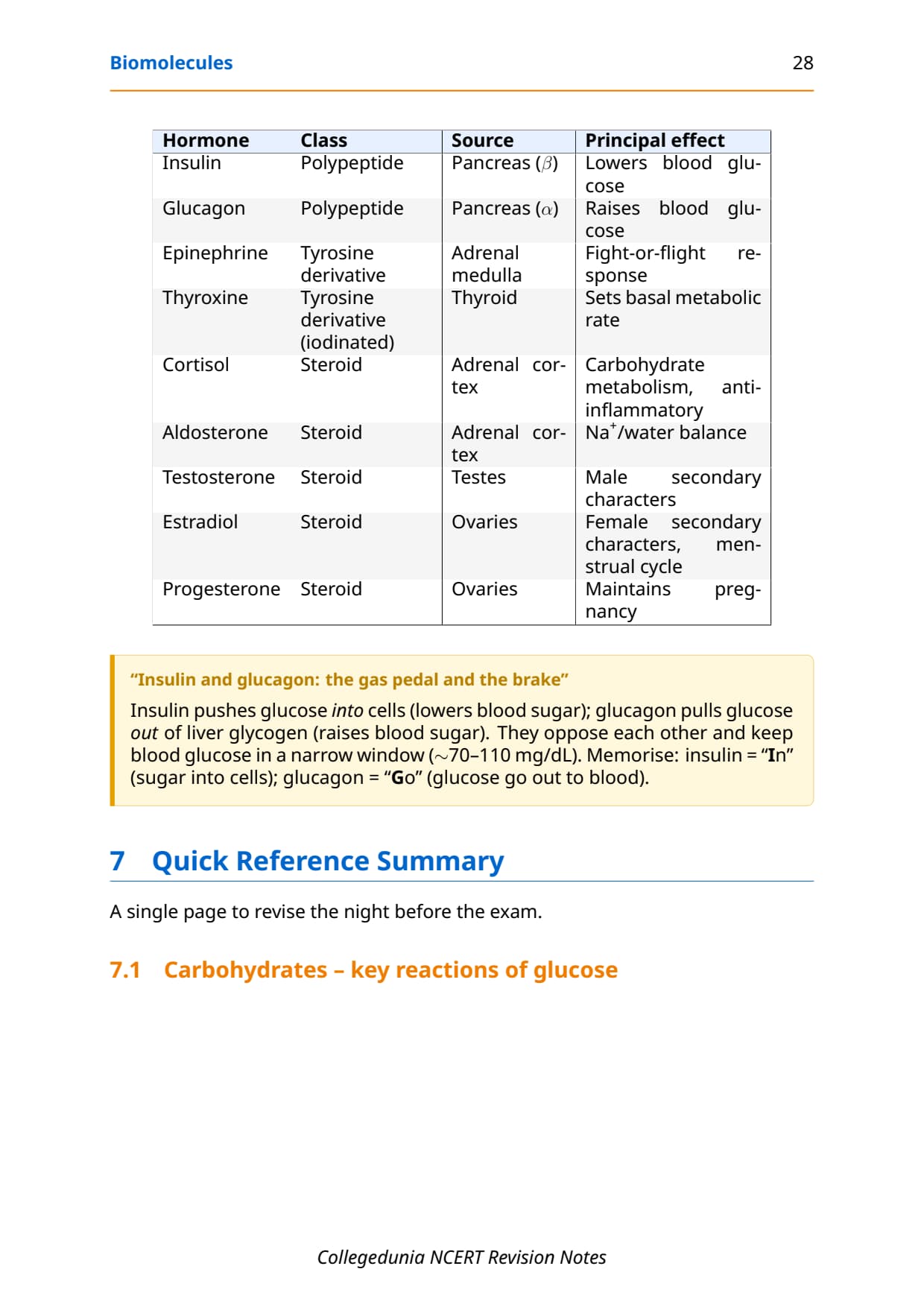
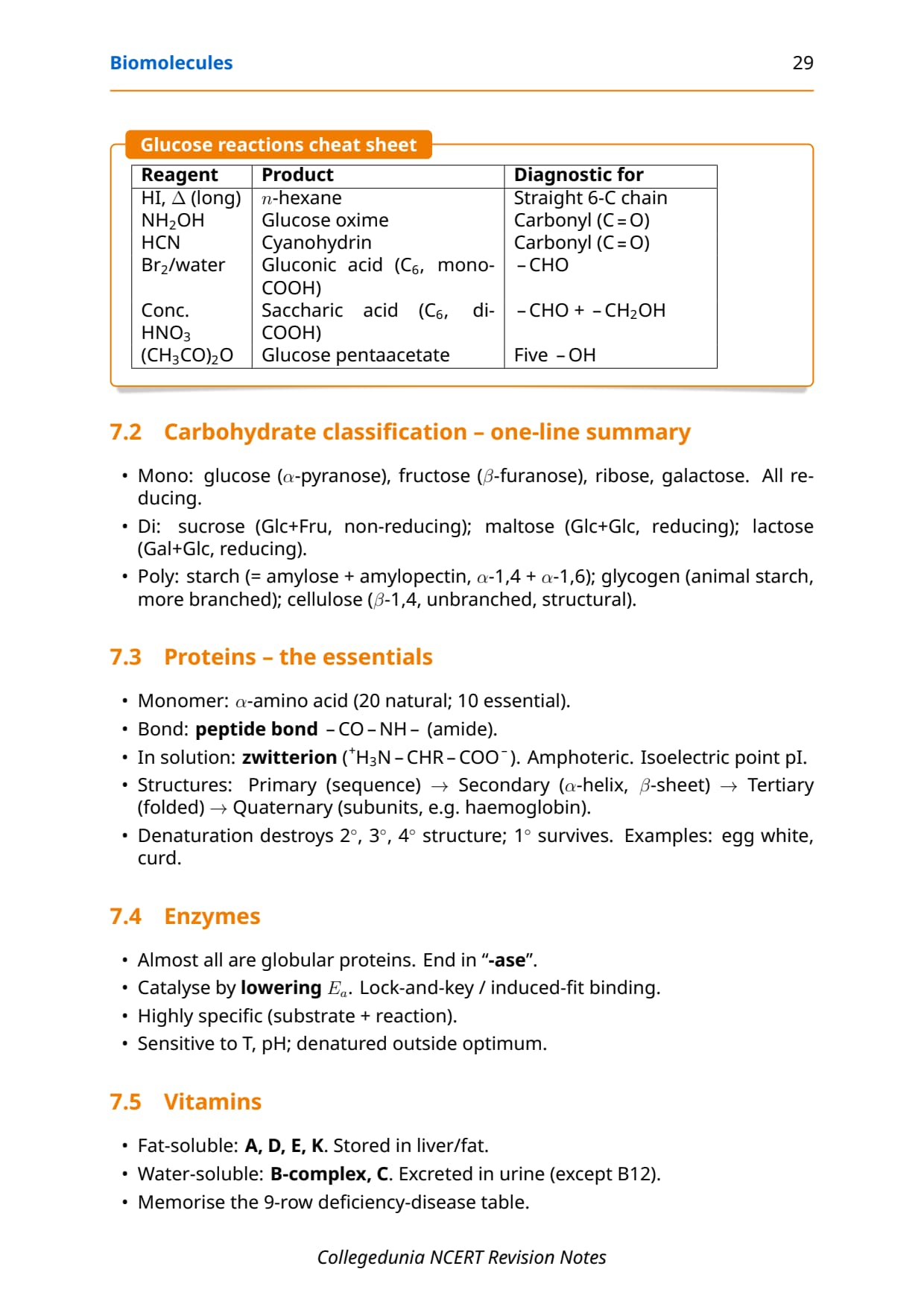
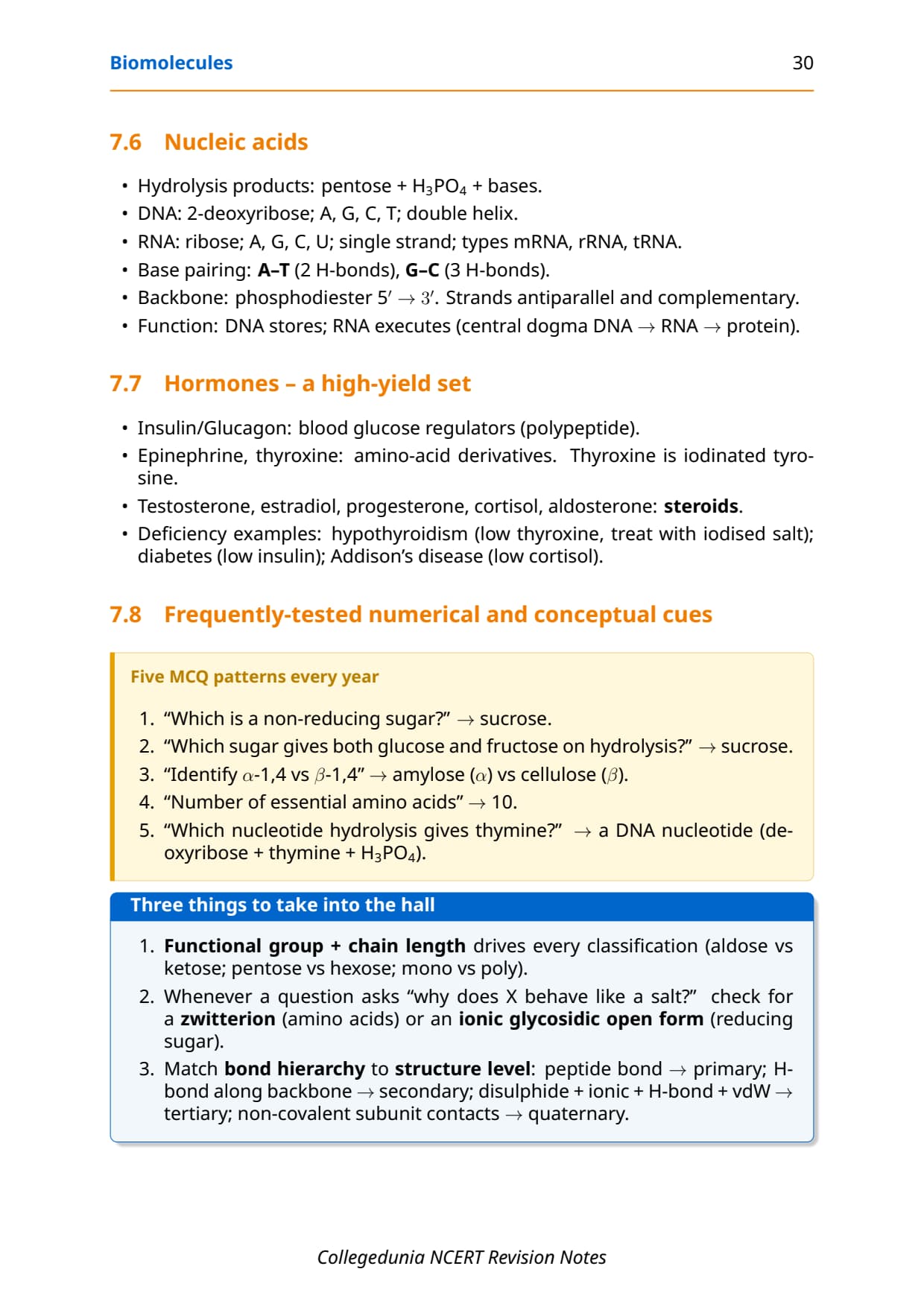
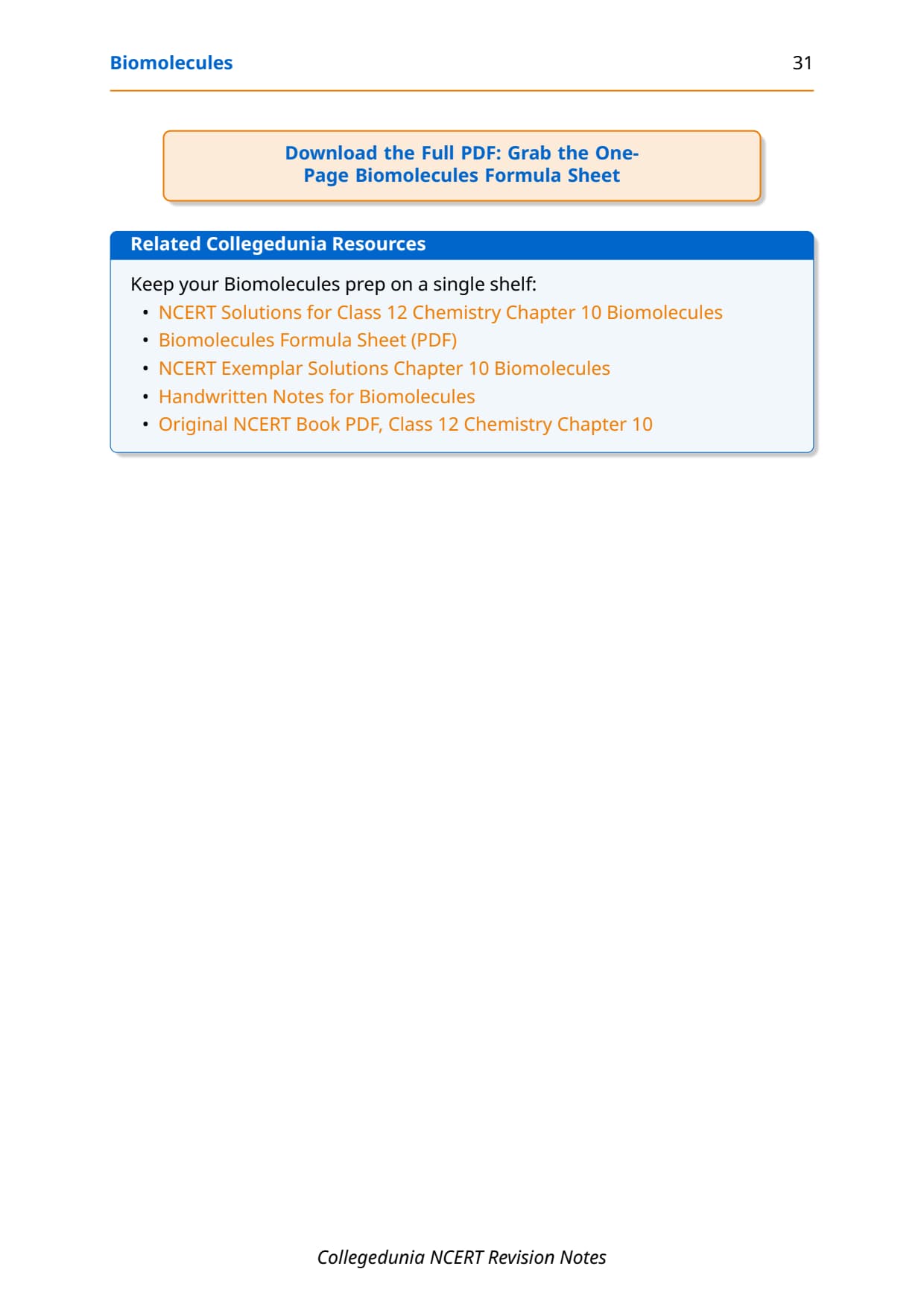
The notes cover all five sections - carbohydrates, proteins, enzymes, vitamins and nucleic acids - with the Haworth projections, the alpha-helix vs beta-sheet comparison, and the DNA / RNA differences that examiners repeat mostly across CBSE Boards, JEE, and NEET exams.
- CBSE Boards: 3 to 5 marks every year, usually one 2-mark structure question plus a classification or DNA-RNA difference problem.
- JEE Main: 1 to 2% of the paper, one question per shift on carbohydrate classification, zwitterions, or base pairing.
- NEET: 3 to 5 questions per year on protein structure, enzymes, vitamin deficiencies, and nucleotides.
The notes below carry the carbohydrate tree, the amino-acid grid, all four protein-structure levels, the vitamin deficiency chart, and the DNA vs RNA wall.
Why Biomolecules Matters for Class 12 Boards, JEE Main, and NEET 2026-27
Biomolecules overlaps Class 11 and 12 Biology, so it is high-yield for NEET aspirants. In 4 of the last 5 NEET papers, at least 3 questions came from this chapter.
Biomolecules Class 12 Chemistry Video Lecture
Source: Magnet Brains on YouTube
Biomolecules Topic-by-Topic Notes for Class 12 Chemistry
Sections 10.1 and 10.5 carry most of the marks; lock them first.
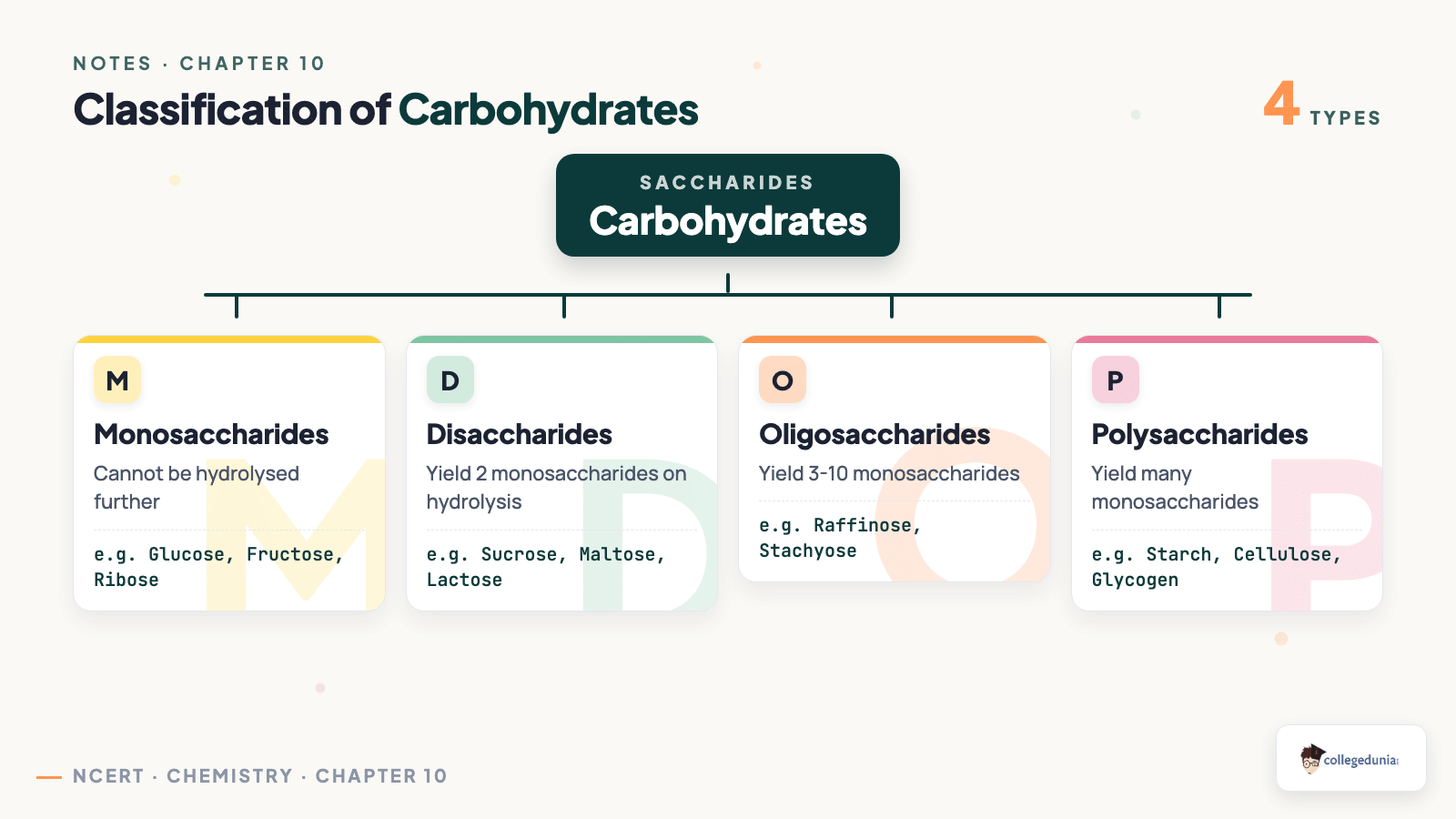
Carbohydrate Classification Tree - Section 10.1 Recall Grid
CBSE has set "classify glucose, sucrose, starch, cellulose" in 3 of the last 5 years.
| Class | Hydrolysis behaviour | NCERT examples | Taste / property |
|---|---|---|---|
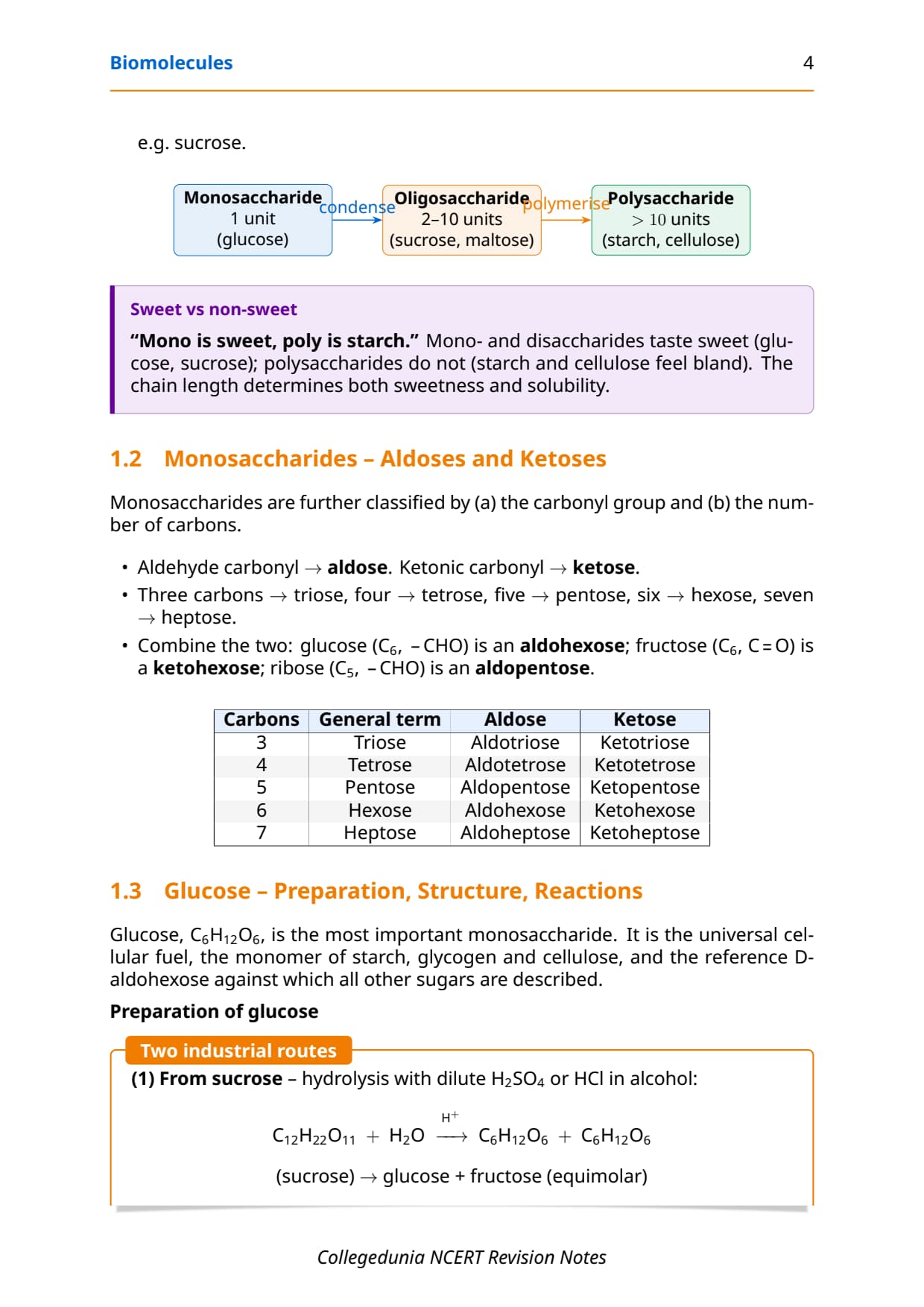
| Monosaccharides | Cannot be hydrolysed further | Glucose (aldohexose), fructose (ketohexose), ribose, galactose | Sweet, water-soluble, all reducing |
| Oligosaccharides (2-10 units) | Hydrolyse to monosaccharides | Disaccharides: sucrose, maltose, lactose | Sweet, soluble; reducing depends on free anomeric -OH |
| Polysaccharides (>10 units) | Hydrolyse to many monosaccharides | Starch (storage in plants), cellulose (structural in plants), glycogen (storage in animals) | Tasteless, water-insoluble, non-reducing |
Alpha-Helix vs Beta-Pleated Sheet - Why the H-Bond Pattern Matters
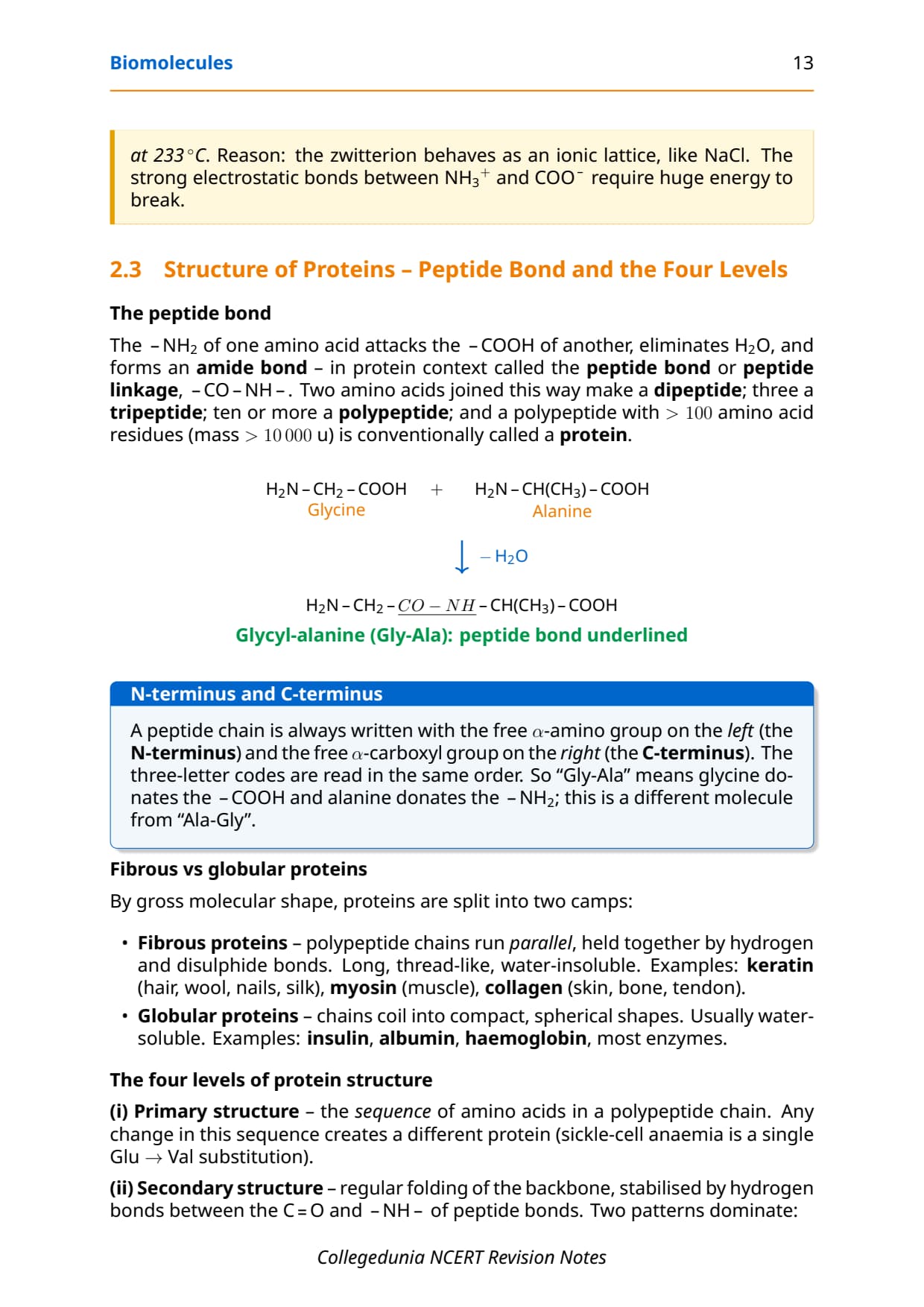
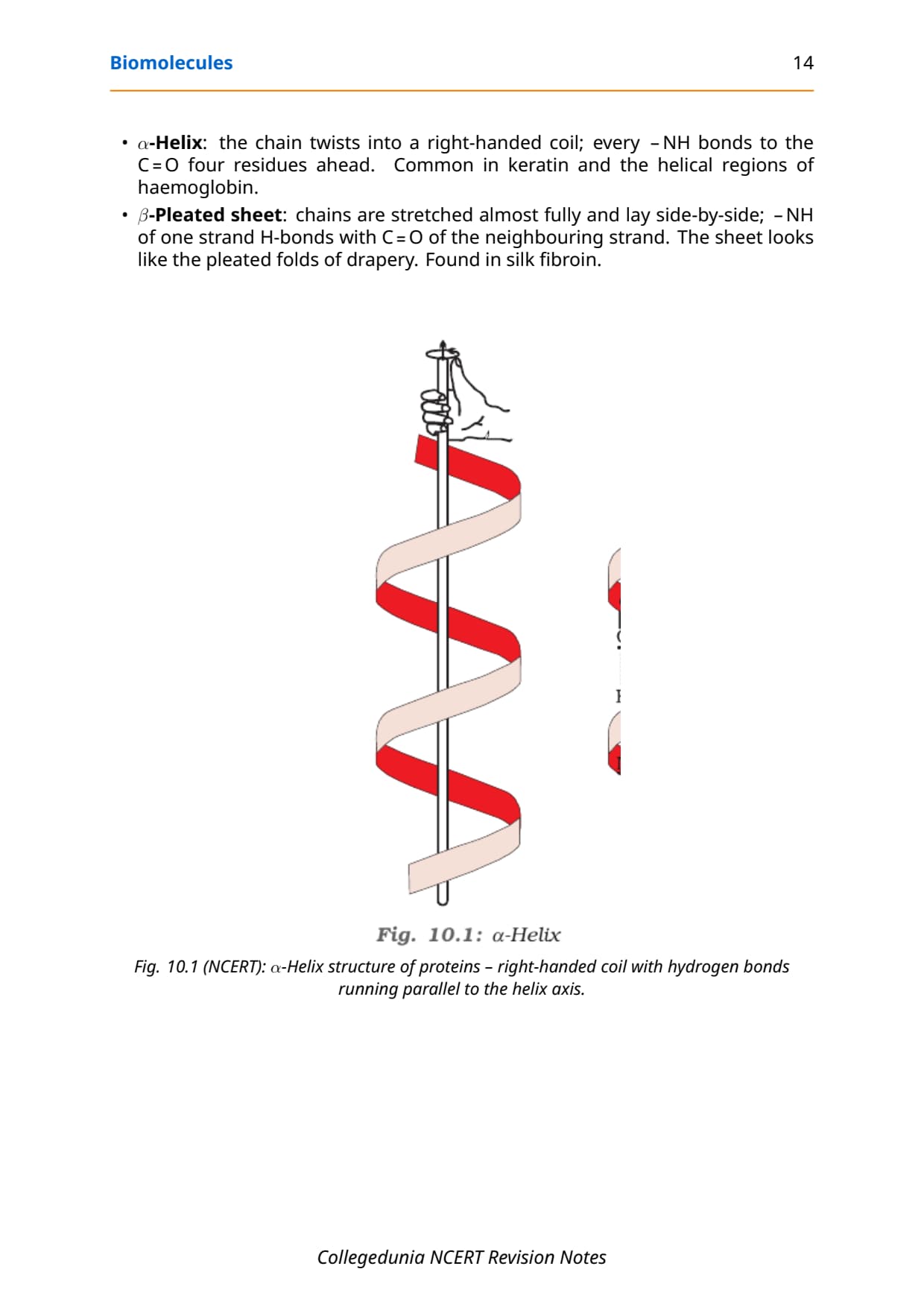
A secondary-structure trap CBSE/NEET asks often. Both use -C=O...-N-H H-bonds, but the pattern differs.
| Feature | Alpha-helix | Beta-pleated sheet |
|---|---|---|
| Coil / sheet | Right-handed coil | Extended pleated strands |
| H-bond direction | Intra-chain (within the same strand) | Inter-chain (between adjacent strands) |
| H-bond rule | -N-H of residue i to -C=O of residue i+4 | -N-H of one strand to -C=O of the next strand |
| Strand orientation | Single chain | Parallel or antiparallel |
| Residues per turn / repeat | 3.6 residues per turn; rise 5.4 angstroms | ~7 angstroms repeat per dipeptide |
| Examples | Keratin (hair, nails), myoglobin, alpha portion of haemoglobin | Silk fibroin, beta-keratin (feathers, scales) |
Vitamins, Sources and Deficiency Diseases - Section 10.4 Recall Strip
NEET asks one vitamin-deficiency MCQ almost every year. The grid below reformats NCERT Table 10.3.
| Vitamin | Solubility | Source | Deficiency disease |
|---|---|---|---|
| A (retinol) | Fat-soluble | Fish liver oil, carrots, butter | Night blindness, xerophthalmia |
| B1 (thiamine) | Water-soluble | Yeast, milk, cereals | Beri-beri |
| B2 (riboflavin) | Water-soluble | Milk, egg white, liver | Cheilosis, glossitis |
| B6 (pyridoxine) | Water-soluble | Yeast, milk, egg yolk | Convulsions, anaemia |
| B12 (cobalamin) | Water-soluble (but stored in liver) | Meat, fish, egg, curd | Pernicious anaemia |
| C (ascorbic acid) | Water-soluble | Citrus fruits, amla, leafy vegetables | Scurvy, bleeding gums |
| D (calciferol) | Fat-soluble | Sunlight, fish, egg yolk | Rickets (children), osteomalacia (adults) |
| E (tocopherol) | Fat-soluble | Wheat germ oil, sunflower oil | RBC fragility, muscular weakness, sterility |
| K (phylloquinone) | Fat-soluble | Green leafy vegetables | Increased blood clotting time |
Purines vs Pyrimidines and the DNA-RNA Difference Wall - Section 10.5
The two ring families of nitrogen bases are a 1-mark MCQ in almost every NEET paper.
- Purines (two rings): Adenine (A), Guanine (G). Mnemonic: "PURe As Gold".
- Pyrimidines (one ring): Cytosine (C), Thymine (T), Uracil (U). Thymine is only in DNA, uracil only in RNA, cytosine in both.
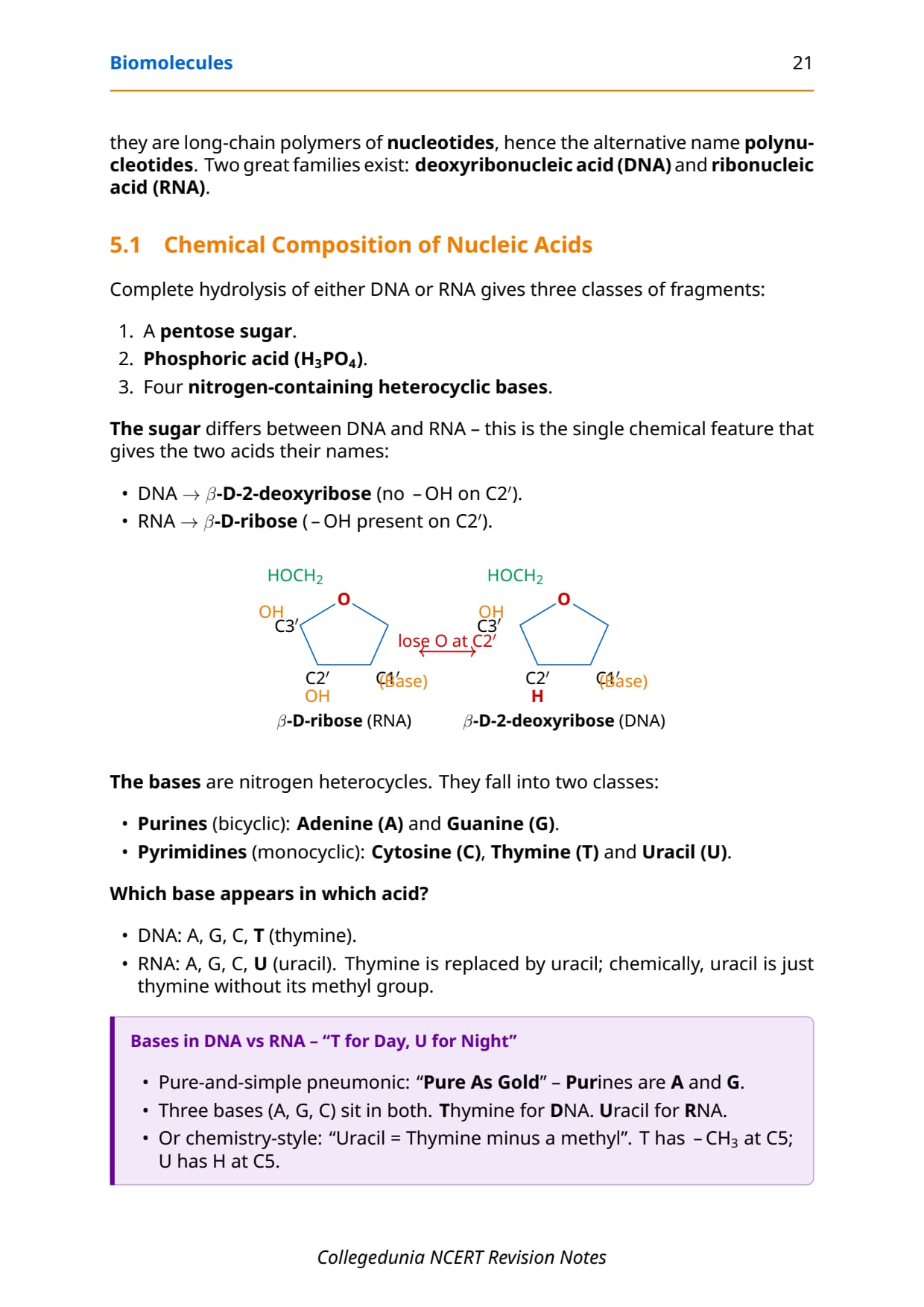
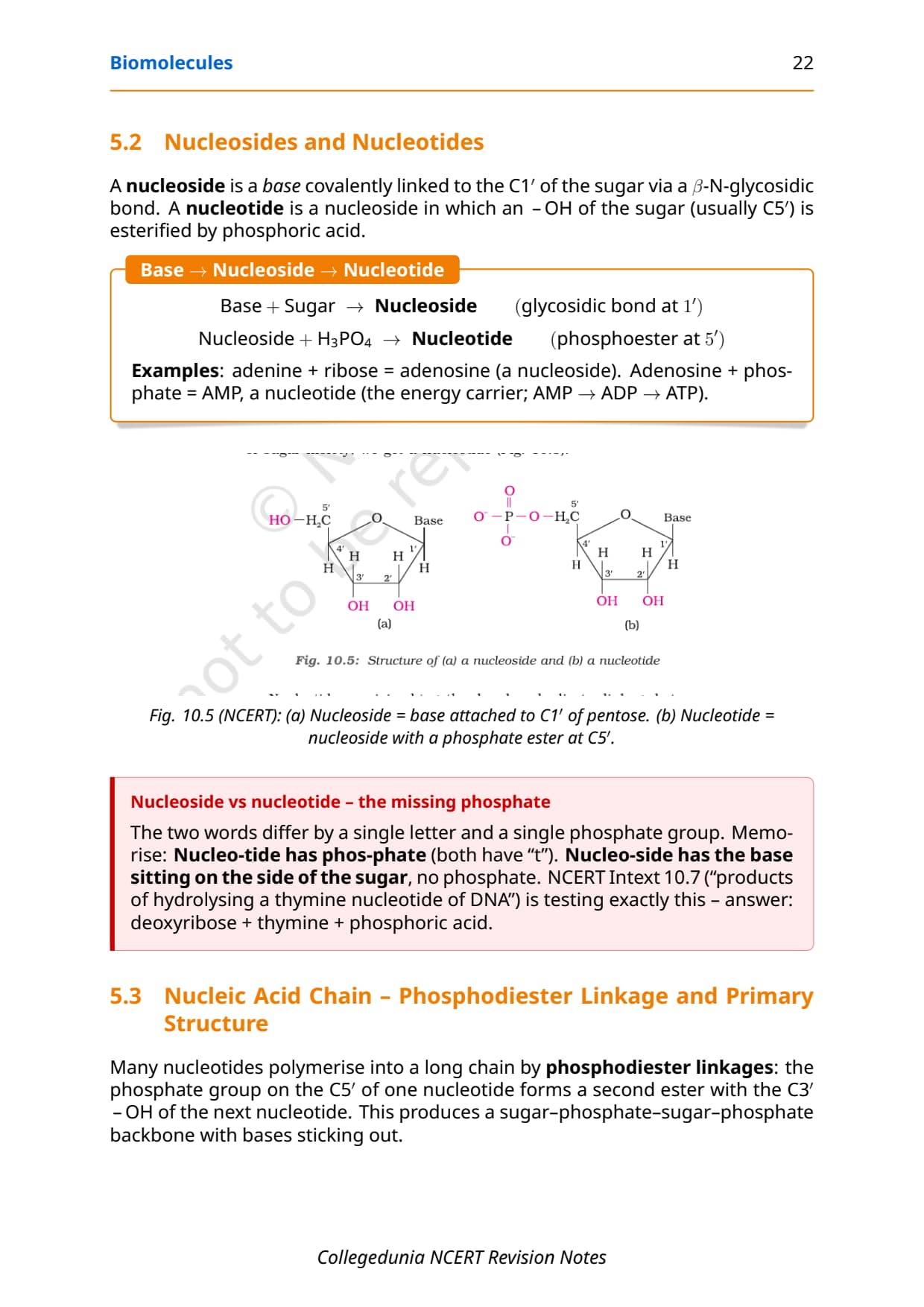
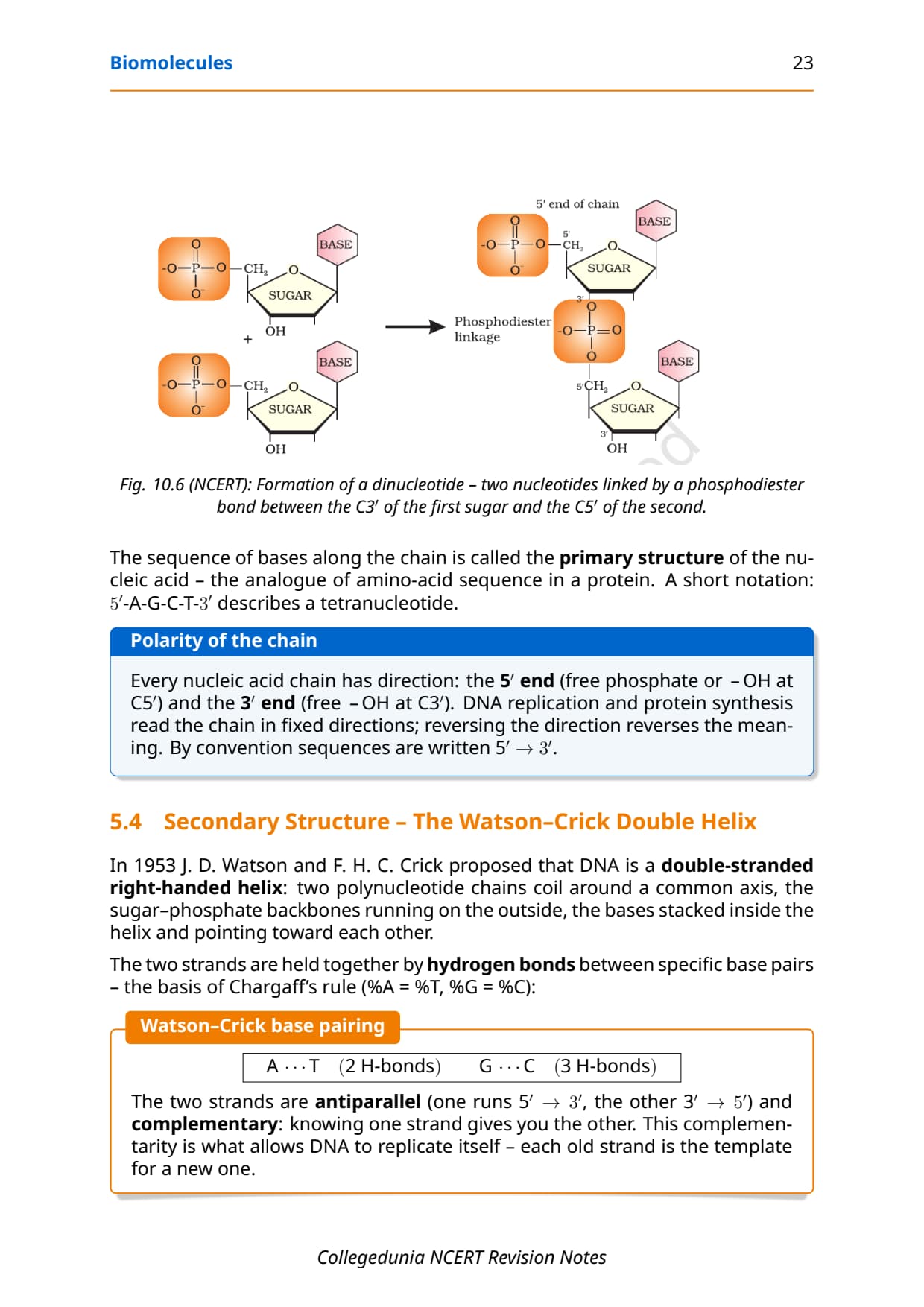
- Nucleoside vs nucleotide: nucleoside = base + sugar; nucleotide adds a phosphate. Only nucleotides polymerise via 5'-3' phosphodiester links.
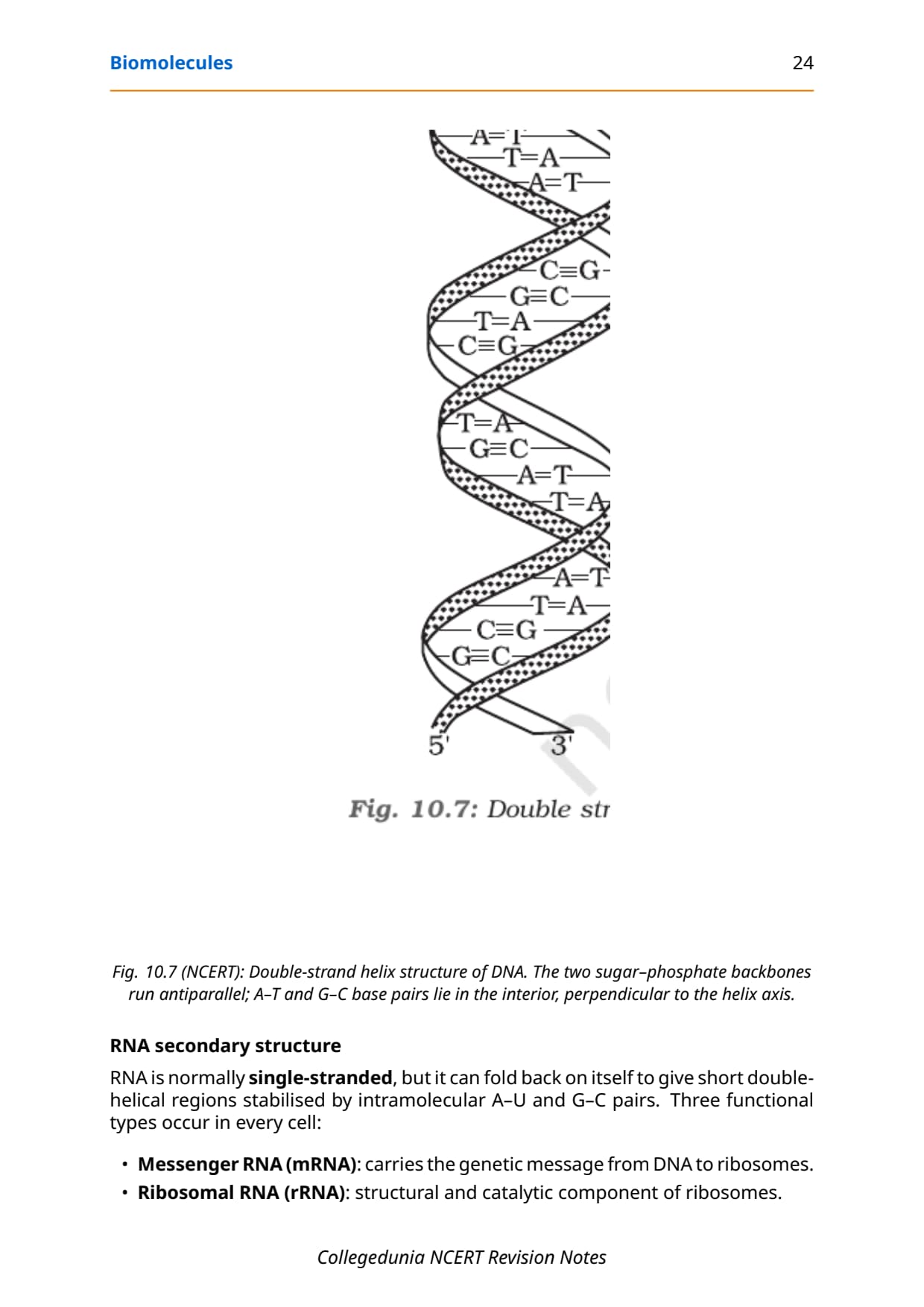
- Base pairing: A-T (2 H-bonds), G-C (3 H-bonds); each pair is one purine + one pyrimidine. Chargaff: A = T, G = C.
- RNA types: mRNA (message), tRNA (amino acids), rRNA (ribosome). All single-stranded.
Biomolecules Class 12 Topic-wise Weightage for CBSE Boards
The marks below average CBSE, JEE Main, and NEET papers, 2021 to 2025.
| Sub-Topic | Section | CBSE Marks | Frequency |
|---|---|---|---|
| Carbohydrate classification & structure | 10.1 | 2 - 3 | Very High |
| DNA vs RNA, base pairing | 10.5 | 2 - 3 | Very High |
| Protein structure (primary to quaternary) | 10.2 | 1 - 2 | High |
| Vitamins & deficiency diseases | 10.4 | 1 - 2 | High |
| Enzymes and catalysis | 10.3 | 1 | Medium |
| Amino acids, zwitterion, isoelectric pt | 10.2 | 1 | Medium |
Biomolecules Important Tests, Structures and Difference Tables for Class 12 Chemistry
The six tests below cover the carbohydrate and protein IDs CBSE asks.
| Test | Reagent | Positive For → Observation |
|---|---|---|
| Molisch test | alpha-naphthol, conc. H2SO4 | All carbohydrates → violet ring |
| Tollens test | [Ag(NH3)2]+OH- | Reducing sugars → silver mirror |
| Fehling test | Cu2+ tartrate, NaOH | Reducing sugars → red Cu2O ppt |
| Benedict test | Cu2+ citrate, Na2CO3 | Reducing sugars → orange-red ppt |
| Iodine test | I2 in KI | Starch → blue-black; glycogen → red-brown |
| Biuret test | NaOH + dilute CuSO4 | Proteins (peptide bonds) → violet colour |
Biomolecules Top 5 Formulae and Facts for Quick Recall
The five facts to memorise first; the full master sheet is on the Formula Sheet.
| # | Concept | Formula / Statement |
|---|---|---|
| 1 | Glucose & Fructose | C6H12O6; glucose = aldohexose, fructose = ketohexose. Both reducing. |
| 2 | Sucrose hydrolysis | Sucrose + H2O → D-glucose + D-fructose; +66o → -20o (invert sugar). |
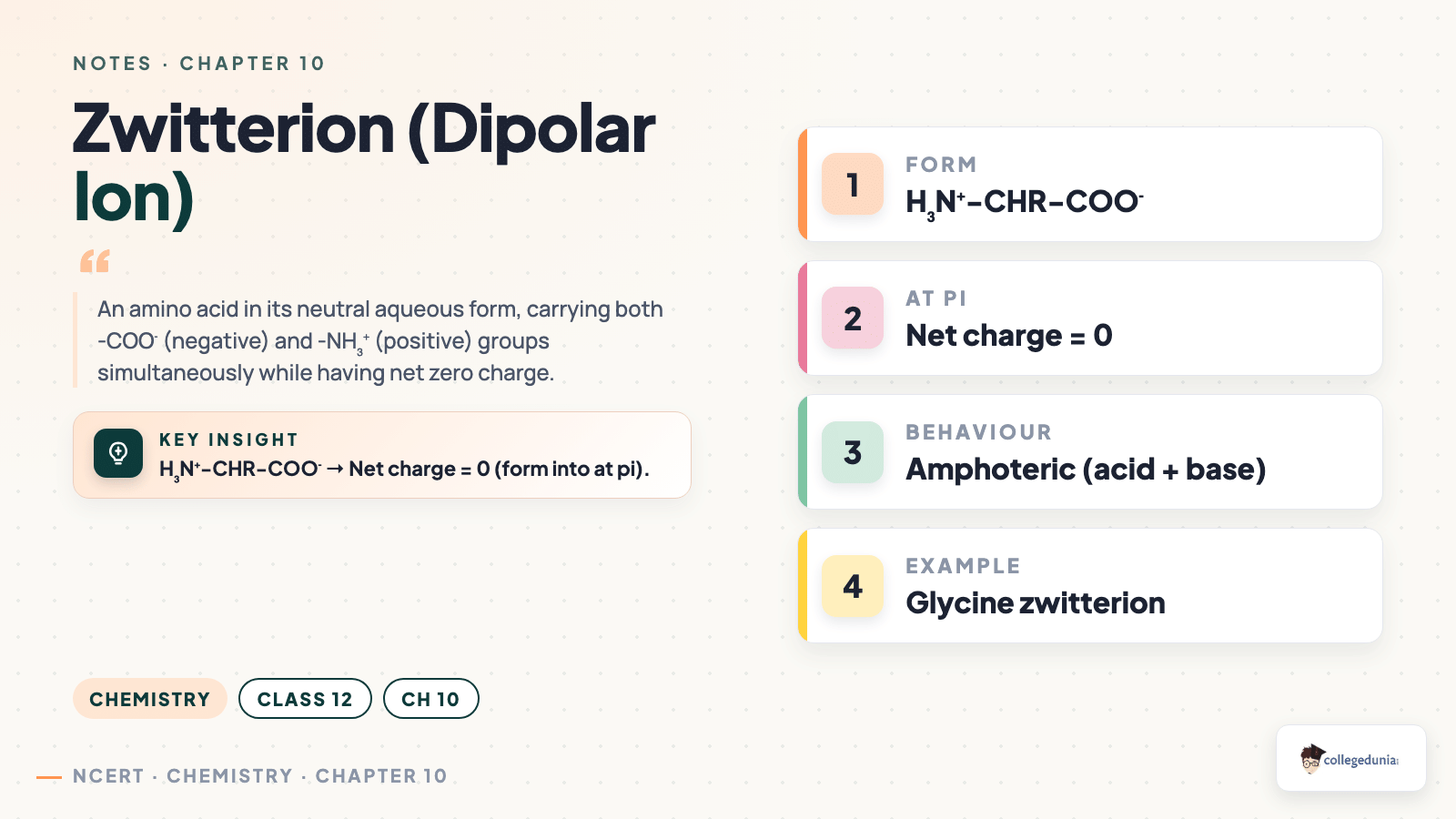
| 3 | Zwitterion | H3N+-CHR-COO-; net charge 0 at isoelectric point (pI). |
| 4 | DNA base pairing | A = T (2 H-bonds), G ≡ C (3 H-bonds); Chargaff: A=T, G=C. |
| 5 | Essential amino acids | 10 total: Val, Leu, Ile, Thr, Lys, Met, Phe, Trp, His, Arg (mnemonic: "PVT TIM HALL" + Arg). |
Full master table: Biomolecules Class 12 Chemistry Formula Sheet
Student Feedback
In a Collegedunia poll of 1,080 Class 12 students, 81% said the DNA vs RNA wall and six-test table were the fastest to revise from, and 4 in 5 NEET aspirants kept the vitamin grid open before the exam.
Other Resources for Biomolecules Class 12 Chemistry
| Resource | Link |
|---|---|
| NCERT Solutions | Biomolecules Class 12 Chemistry NCERT Solutions |
| Formula Sheet | Biomolecules Class 12 Chemistry Formula Sheet |
| NCERT Book PDF | Biomolecules Class 12 Chemistry NCERT Book PDF |
| Handwritten Notes | Biomolecules Class 12 Chemistry Handwritten Notes |
| NCERT Exemplar Solutions | Biomolecules Class 12 Chemistry NCERT Exemplar Solutions |
| NCERT Exemplar Book PDF | Biomolecules Class 12 Chemistry NCERT Exemplar Book PDF |
| Notes | Biomolecules Class 12 Chemistry Notes |
NCERT Notes for Class 12 Chemistry: All Chapters
Jump to any other Class 12 Chemistry chapter's Notes below.
| Chapter | Notes Page |
|---|---|
| Chapter 1 | Solutions Notes |
| Chapter 2 | Electrochemistry Notes |
| Chapter 3 | Chemical Kinetics Notes |
| Chapter 4 | The d- and f-Block Elements Notes |
| Chapter 5 | Coordination Compounds Notes |
| Chapter 6 | Haloalkanes and Haloarenes Notes |
| Chapter 7 | Alcohols, Phenols and Ethers Notes |
| Chapter 8 | Aldehydes, Ketones and Carboxylic Acids Notes |
| Chapter 9 | Amines Notes |
| Chapter 10 | Biomolecules Notes |
Biomolecules Class 12 Chemistry Notes FAQs
Ques. How many marks does Chapter 10 Biomolecules carry in the CBSE Class 12 board exam?
Ans. Chapter 10 Biomolecules carries 3 to 5 marks in the CBSE Class 12 Chemistry board exam, averaged across the last five board papers. The marks usually split as one 2-mark structure or difference question (DNA vs RNA, alpha-helix vs beta-sheet, mutarotation) plus a 2- or 3-mark classification or test question. NEET expands this to 3 to 5 questions per year, making the chapter much higher-value for dual-prep students.
Ques. What is the difference between DNA and RNA?
Ans. Four core differences. Sugar: DNA has deoxyribose (no -OH at C2); RNA has ribose (-OH at C2 - hence less stable). Bases: DNA uses A, G, C, T; RNA replaces thymine with uracil (A, G, C, U). Structure: DNA is a right-handed double helix held by A=T (2 H-bonds) and G≡C (3 H-bonds), antiparallel strands; RNA is normally single-stranded but folds back on itself in tRNA and rRNA. Function: DNA stores hereditary information and replicates; mRNA carries the genetic message, tRNA delivers amino acids, rRNA forms the ribosome.
Ques. Why is sucrose called a non-reducing sugar despite containing both glucose and fructose?
Ans. Reducing sugars must have a free anomeric -OH (the -OH on the carbon that was originally the carbonyl) so they can open back to the aldehyde or ketone form and reduce Tollens or Fehling reagent. In sucrose, the anomeric C1 of alpha-D-glucose is glycosidically linked to the anomeric C2 of beta-D-fructose; neither anomeric -OH is free. Without a free aldehyde/hemiacetal, sucrose cannot reduce Cu(II) or Ag(I). On acid hydrolysis, the two halves separate, each regains a free anomeric -OH, and both products (glucose and fructose) become individually reducing.
Ques. What are the four levels of protein structure?
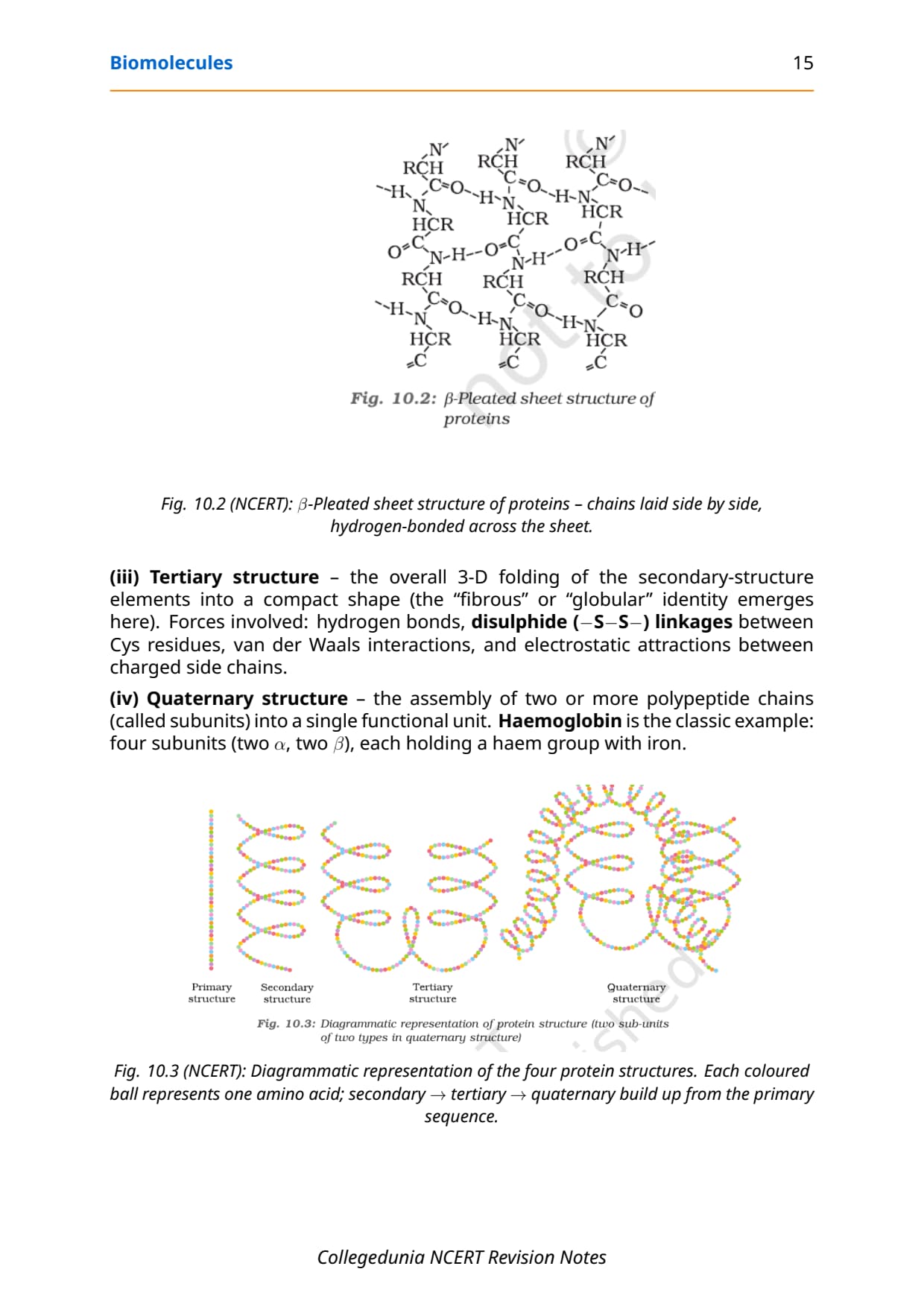
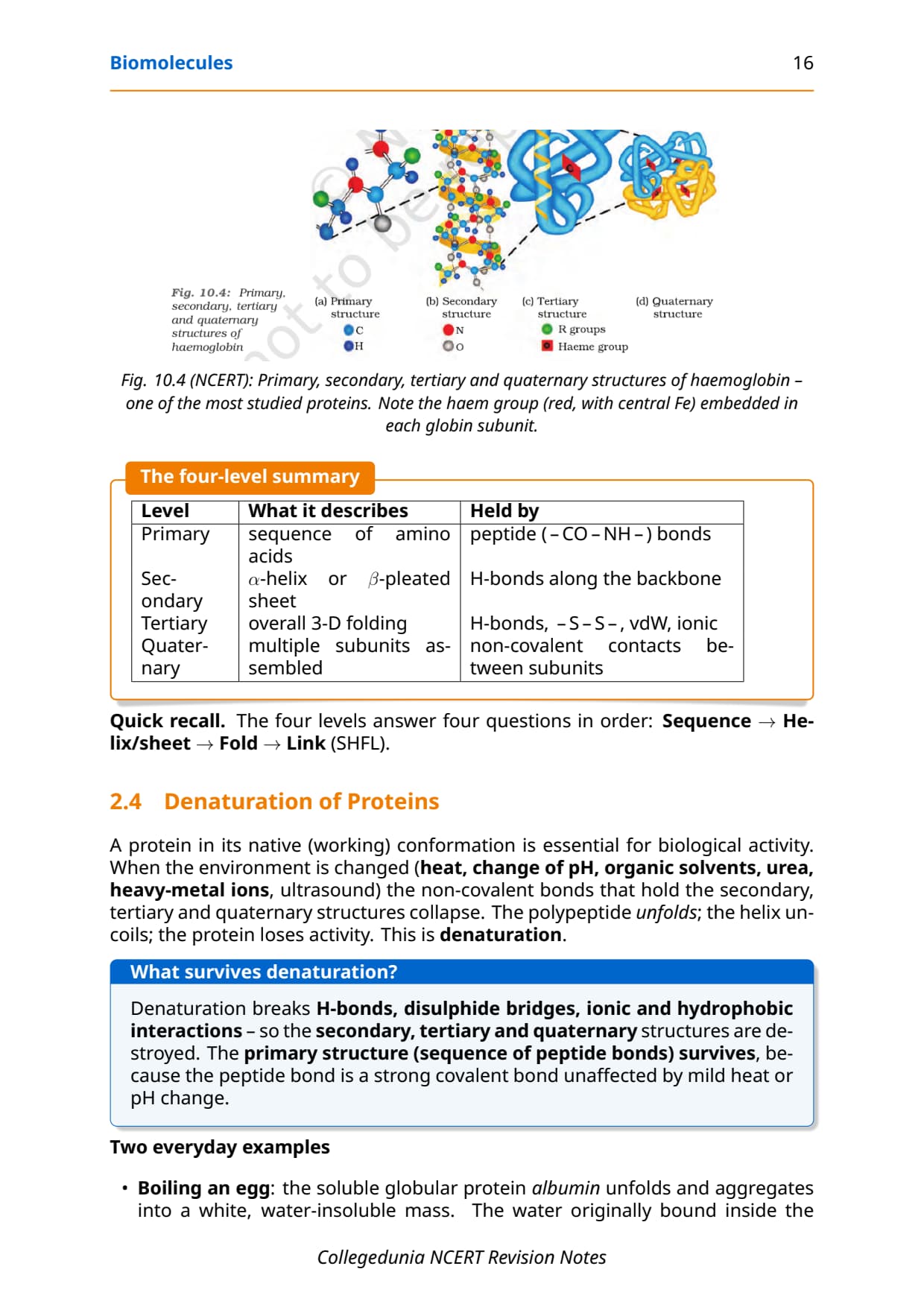
Ans. (i) Primary structure - the exact linear sequence of amino acids joined by peptide bonds (one mistake here can cause sickle-cell anaemia). (ii) Secondary structure - local folding via -C=O...H-N- hydrogen bonds: alpha-helix (right-handed coil, 3.6 residues/turn, in keratin and myoglobin) and beta-pleated sheet (parallel or antiparallel strands, in silk fibroin). (iii) Tertiary structure - overall 3-D fold of one chain, stabilised by disulphide bridges, salt bridges, hydrogen bonds, and van der Waals (myoglobin, lysozyme). (iv) Quaternary structure - assembly of two or more polypeptide subunits (haemoglobin = 2 alpha + 2 beta chains).
Ques. What are essential amino acids? Name them.
Ans. Essential amino acids cannot be synthesised by the human body in sufficient amounts and must come from the diet. There are 10 of them in the standard list followed by NCERT: Valine, Leucine, Isoleucine, Threonine, Lysine, Methionine, Phenylalanine, Tryptophan, Histidine, and Arginine. (Histidine and Arginine are sometimes called semi-essential, since adults can make limited amounts; growing children need them in the diet.) The remaining 10 of the 20 standard amino acids are non-essential and are synthesised in the body.
Ques. What are vitamins and which diseases are caused by their deficiency?
Ans. Vitamins are organic micronutrients required in small amounts for normal metabolism. Fat-soluble vitamins (A, D, E, K) are stored in the liver; water-soluble vitamins (B-complex and C) are not stored. Key deficiency diseases: A - night-blindness, xerophthalmia; B1 - beri-beri; B2 - cheilosis, glossitis; B6 - convulsions, anaemia; B12 - pernicious anaemia; C - scurvy; D - rickets (children), osteomalacia (adults); E - sterility, muscular weakness; K - poor blood clotting.
Ques. Is this Biomolecules Notes PDF aligned with the 2026-27 NCERT?
Ans. Yes. This page reflects the current 2026-27 syllabus for Class 12 Chemistry. The new NCERT edition keeps the full five-section Biomolecules chapter intact - carbohydrates, proteins, enzymes, vitamins, and nucleic acids - while the rationalisation drive removed the Hormones sub-section. All NCERT in-text and exercise questions remain in the 2026-27 print and are covered in our linked Solutions page.
Ques. How many pages is the Class 12th Chemistry Biomolecules Notes PDF?
Ans. The Notes PDF runs approximately 22 pages and covers all five NCERT sections of Chapter 10 Biomolecules: carbohydrates (classification, glucose / fructose structure, glycosidic linkage, starch / cellulose / glycogen), proteins (amino acids, zwitterion, peptide bond, four structure levels, denaturation), enzymes (mechanism, specificity, optimum conditions), vitamins (fat- vs water-soluble, deficiency diseases), and nucleic acids (DNA, RNA, base pairing, double helix, replication). Every structure is illustrated with a colour-coded diagram, and every test (Tollens, Fehling, Molisch, Benedict, iodine, Biuret) is tabulated for easy recall.
Ques. Where can I download the Class 12 Chemistry Chapter 10 Biomolecules notes PDF for free?
Ans. You can download the complete 22-page Class 12 Chemistry Chapter 10 Biomolecules Notes PDF for free from the download card at the top of this page. Both Normal and HD versions are available. The PDF follows the 2026-27 NCERT print and includes the full carbohydrate hierarchy (mono- / oligo- / poly-saccharides), the alpha-amino-acid grid, all four protein-structure levels, the vitamin deficiency chart, the DNA vs RNA difference wall, and the six classical biomolecule tests stacked on a single revision page.
Ques. What are anomers and epimers, and how do they differ from each other?
Ans. Both terms describe stereoisomers of sugars, but they differ in where the chirality switches. Anomers differ only at the anomeric carbon (C1 in aldoses, C2 in ketoses), the new chiral centre created on cyclisation. Alpha- and beta-D-glucopyranose are the canonical anomers (-OH below or above the ring plane at C1). Epimers differ at one non-anomeric chiral centre. Glucose and galactose are C4 epimers; glucose and mannose are C2 epimers. The interconversion of anomers in solution is called mutarotation; the equilibrium mixture for glucose averages to a specific rotation of +52.5 degrees.
Ques. What is the difference between purines and pyrimidines, and which bases are found in DNA and RNA?
Ans. Purines are double-ring nitrogen bases - adenine (A) and guanine (G); mnemonic "PURe As Gold". Pyrimidines are single-ring bases - cytosine (C), thymine (T) and uracil (U). DNA contains A, G, C, and T (uracil is absent in DNA); RNA contains A, G, C, and U (thymine is replaced by uracil). In the DNA double helix the Watson-Crick base pairs are A ··· T (2 H-bonds) and G ··· C (3 H-bonds); each pair is one purine plus one pyrimidine so the ring sizes match perfectly across the helix.
Ques. How is the alpha-helix stabilised in proteins and how does it differ from a beta-pleated sheet?
Ans. The alpha-helix is a right-handed coil with 3.6 amino acid residues per turn, stabilised by intra-chain hydrogen bonds between the -N-H of residue i and the -C=O of residue i+4 along the same strand. The H-bonds run roughly parallel to the helix axis. A beta-pleated sheet is built from extended (not coiled) strands held together by inter-chain hydrogen bonds between the -N-H of one strand and the -C=O of an adjacent strand; the strands can be parallel or antiparallel. Examples - alpha-helix is found in keratin (hair), myoglobin and the alpha-helical portions of haemoglobin; beta-pleated sheets are found in silk fibroin and the beta-keratin of feathers and scales.
Ques. What is insulin and why is it classified as a protein hormone?
Ans. Insulin is a polypeptide hormone produced by the beta-cells of the pancreas. Its primary structure consists of two polypeptide chains - the A chain with 21 residues and the B chain with 30 residues - held together by two inter-chain disulphide (-S-S-) bridges and one intra-chain disulphide bridge within the A chain. Total length is 51 amino acids and molecular mass is about 5,800 u. Although insulin is below the conventional 100-residue boundary that separates polypeptides from proteins, its well-defined three-dimensional fold and dedicated biological function (lowering blood glucose by promoting cellular uptake and storage as glycogen) earn it the status of a protein hormone. It belongs to the polypeptide / protein class of hormones; the other two classes are steroid (cholesterol-derived) and amino-acid-derived (thyroxine, epinephrine).
Ques. How do you remember the vitamin-deficiency pairs quickly?
Ans. Memorise the fat-soluble set first - the four ADEK vitamins are stored in the liver and adipose tissue. Then memorise five disease-vitamin pairs that NCERT highlights: A → night blindness / xerophthalmia; B1 → beri-beri; B12 → pernicious anaemia; C → scurvy; D → rickets / osteomalacia; K → poor blood clotting. NEET has tested at least one of these pairs every year since 2021. The trap CBSE plays - swapping B1 (beri-beri) with B12 (pernicious anaemia) - is easily defused by remembering "1 = beri" and "12 = cobalt-amin = anaemia".



Comments