




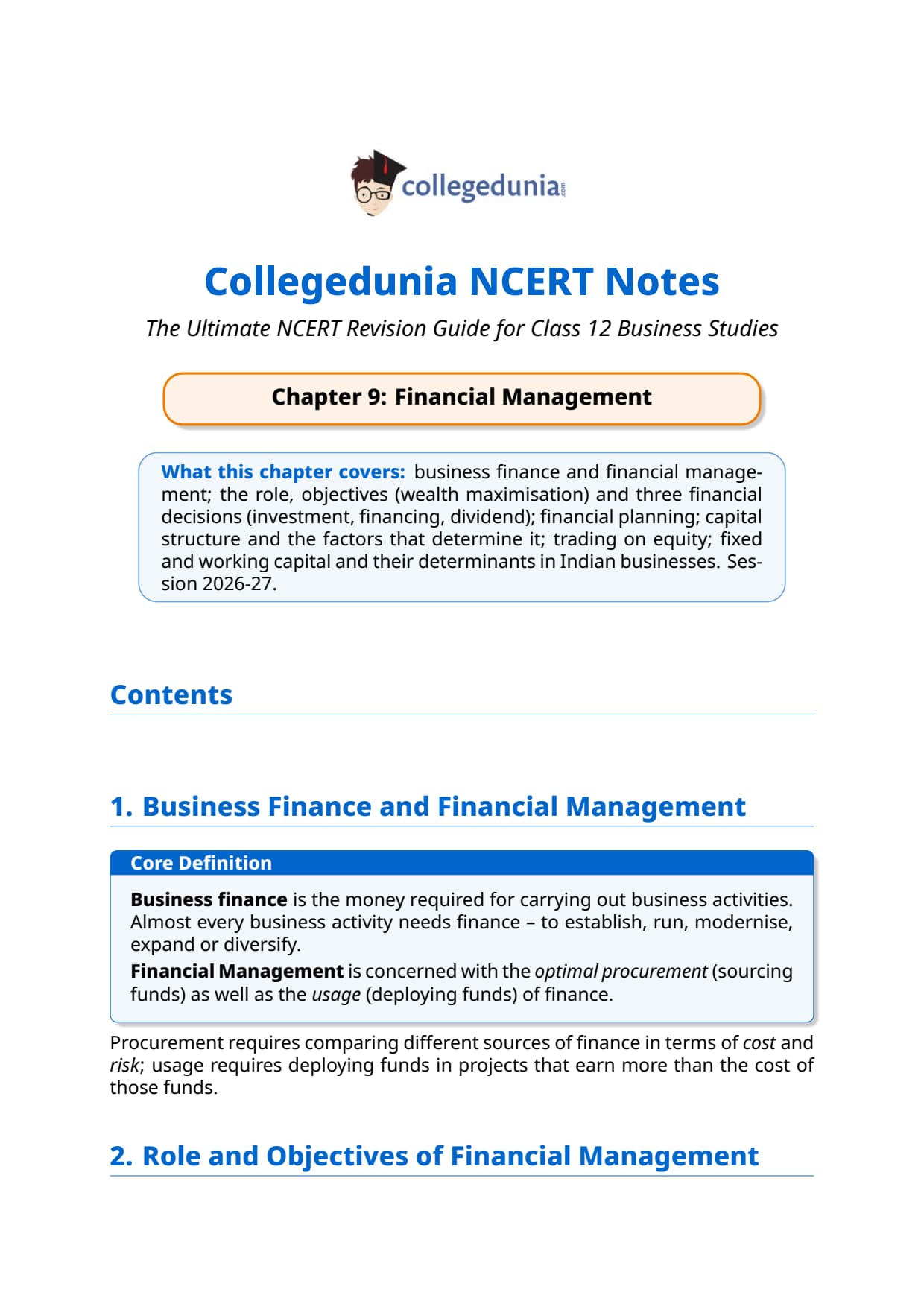
These Financial Management notes for Class 12 are made for fast revision, covering the wealth-maximisation objective, the three financial decisions, capital structure, and fixed vs working capital, in line with the 2026-27 CBSE syllabus.
- CBSE Weightage: 8 to 12 marks (Unit 3, Business Finance and Marketing)
- Sections Covered: 8 concept blocks + 10-point exam-ready summary (decisions, capital structure, trading on equity, WC)
The notes are designed for a Class 12 student covering the chapter for the first time, and for board-exam candidates revising in the last week before the paper. Every concept is presented clearly with definitions, the ROI vs cost-of-debt rule, the NWC formula and one-line takeaways. Mnemonics, quick tips, common-mistake call-outs and CBSE spotter words are placed at the precise points where students typically slip.
Financial Management Class 12 Revision Notes: Section Map
| Section | What is Covered | Why It Matters in the Exam |
|---|---|---|
| 1. Business Finance & FM | Money needed for business; optimal procurement + usage | 1 to 3-mark definition |
| 2. Role & Objectives | Wealth maximisation, three financial decisions | 5 to 6-mark long answer |
| 3. Financial Planning | Blueprint of future operations; two twin objectives | 3 to 5-mark case-study |
| 4. Capital Structure | Debt-equity mix; trading on equity; 14 NCERT factors | 6-mark long answer |
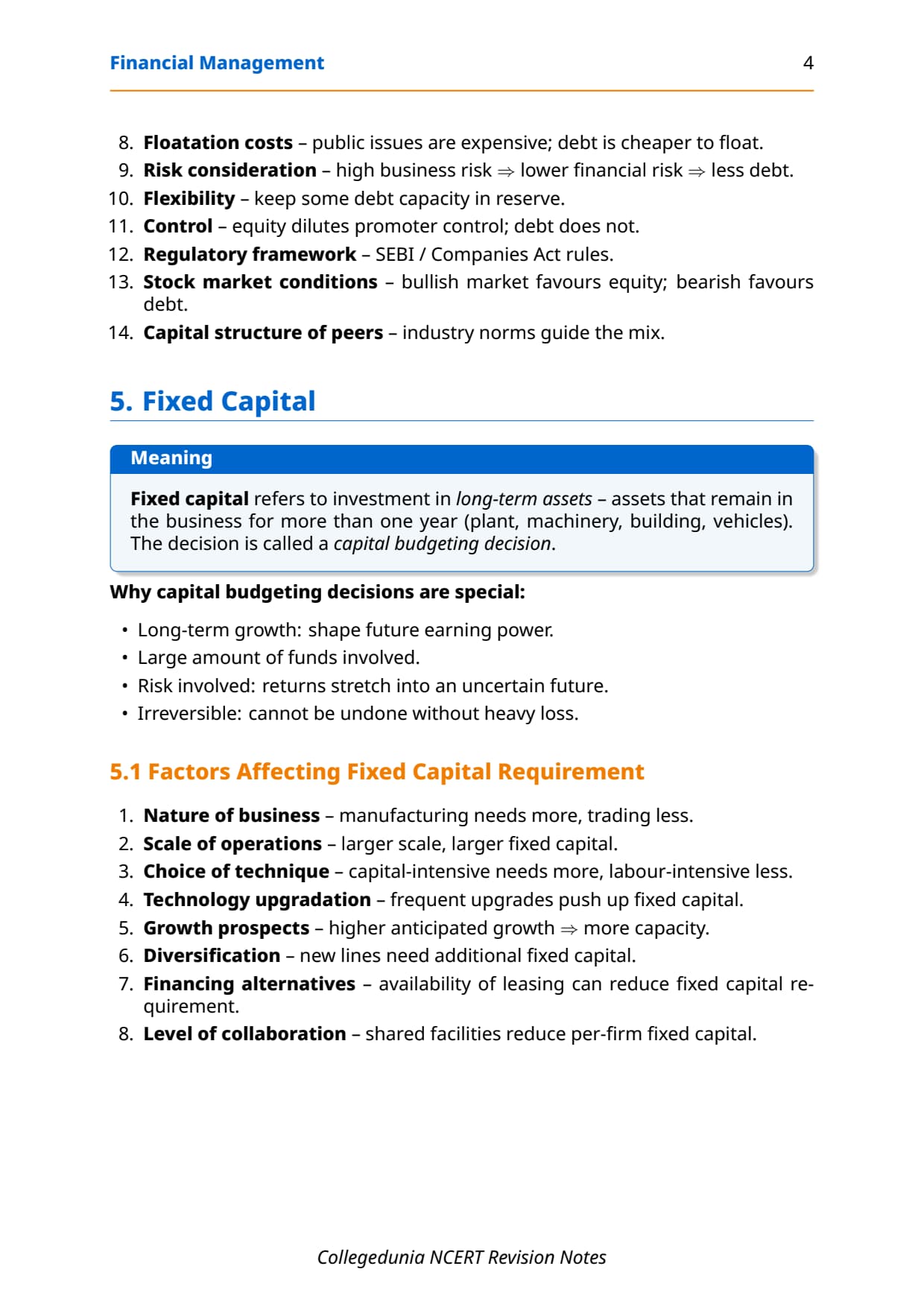
| 5. Fixed Capital | Capital budgeting; 8 determinants | 5-mark long answer |
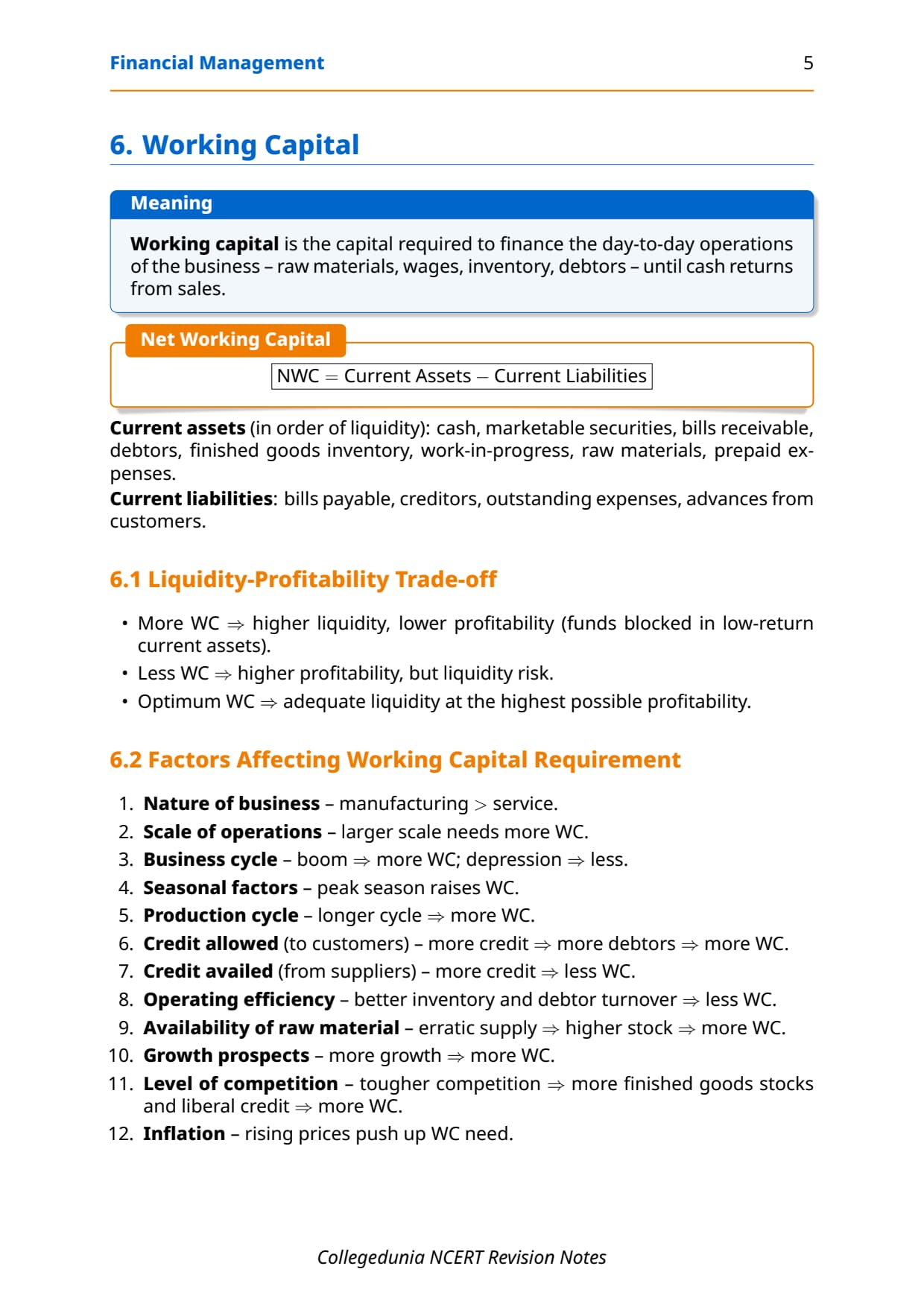
| 6. Working Capital | NWC formula; 12 determinants; liquidity-profitability trade-off | 5 to 6-mark "any five determinants" |
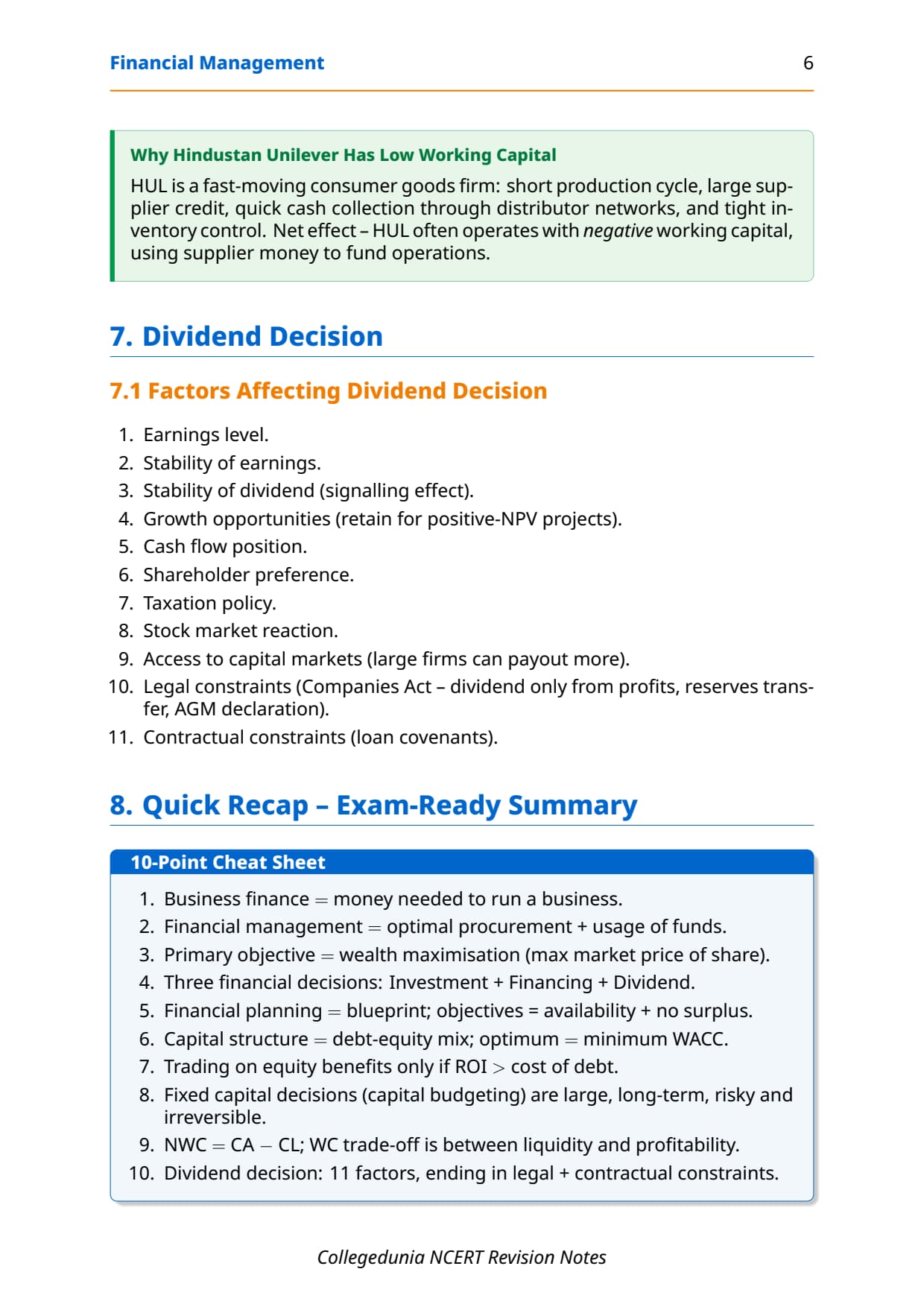
| 7. Dividend Decision | 11 NCERT factors incl. legal & contractual | 5 to 6-mark "any 8 factors" |
| 8. Quick Recap | 10-point cheat sheet + spotter words | Last-minute revision |
Financial Management Video Walkthrough
Source: Magnet Brains on YouTube
What the Class 12 Business Studies Chapter 9 NCERT Notes PDF Contains
- Full chapter coverage mapped to the 2026-27 NCERT Reprint.
- Concept boxes for every core definition (financial management, financial planning, capital structure, trading on equity, fixed/working capital).
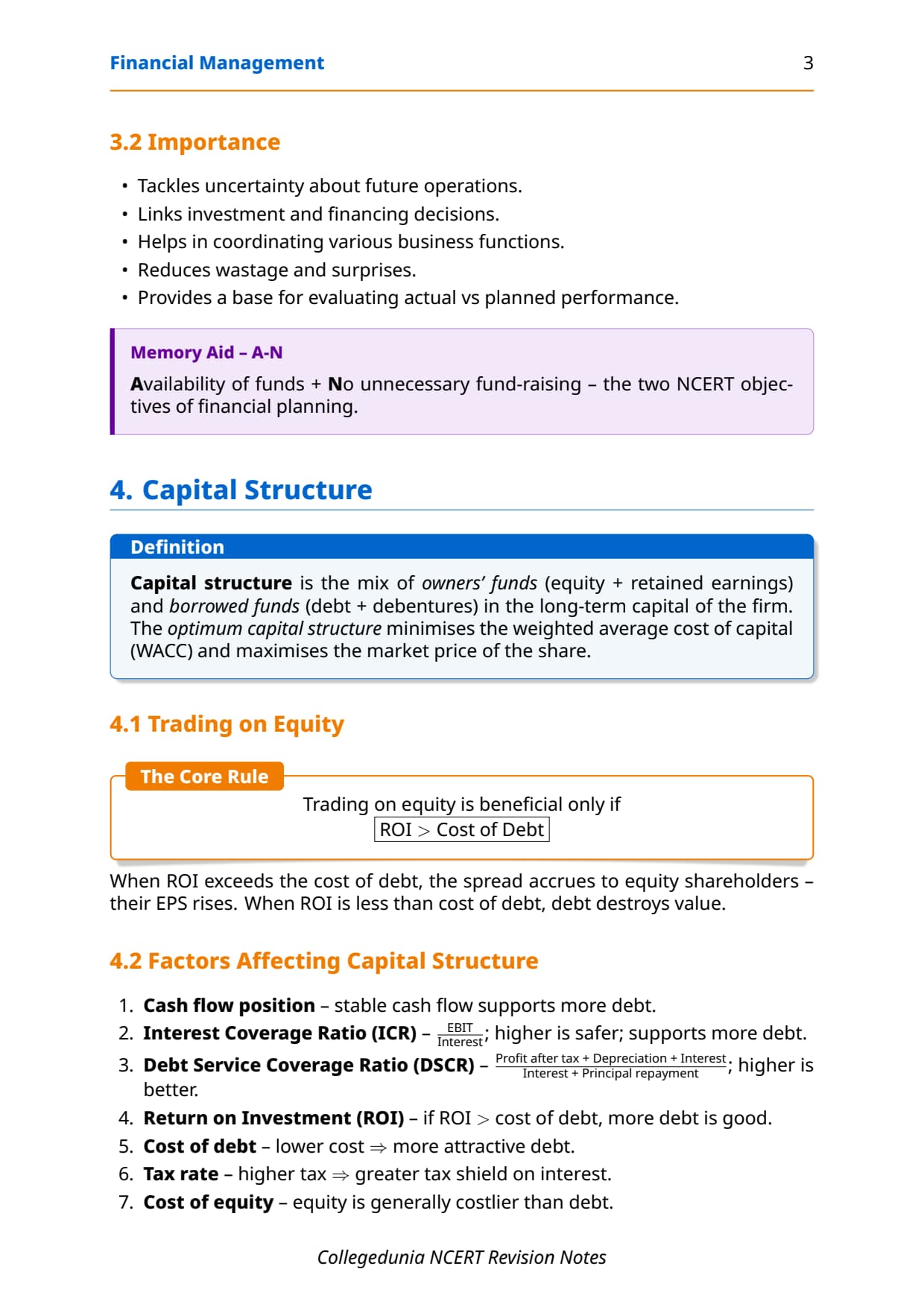
- Formula boxes for the trading-on-equity rule, NWC formula, ICR and DSCR.
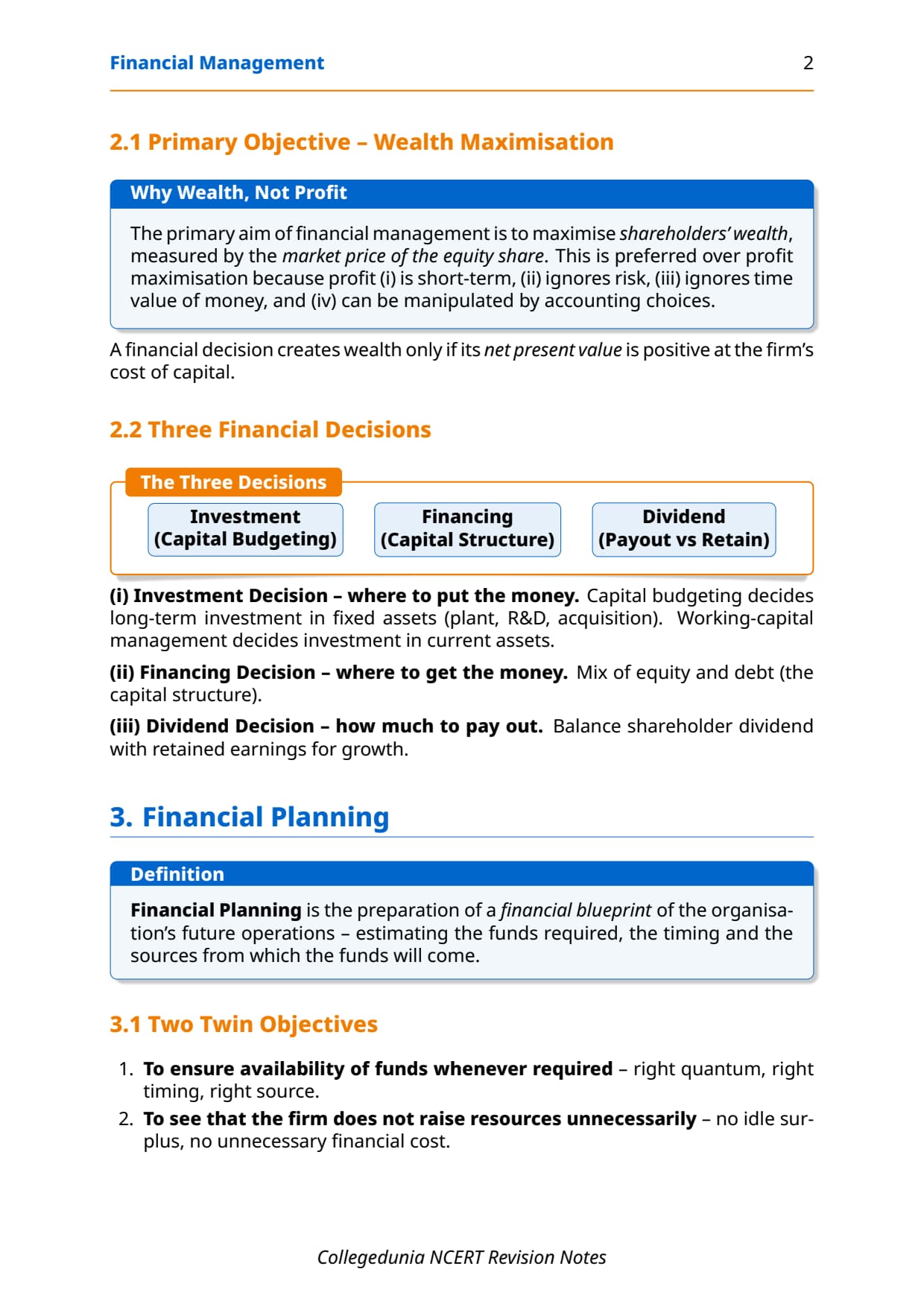
- Three-decisions diagram -- Investment, Financing, Dividend, visualised side-by-side.
- Real-world examples -- e.g., why Hindustan Unilever operates with negative working capital.
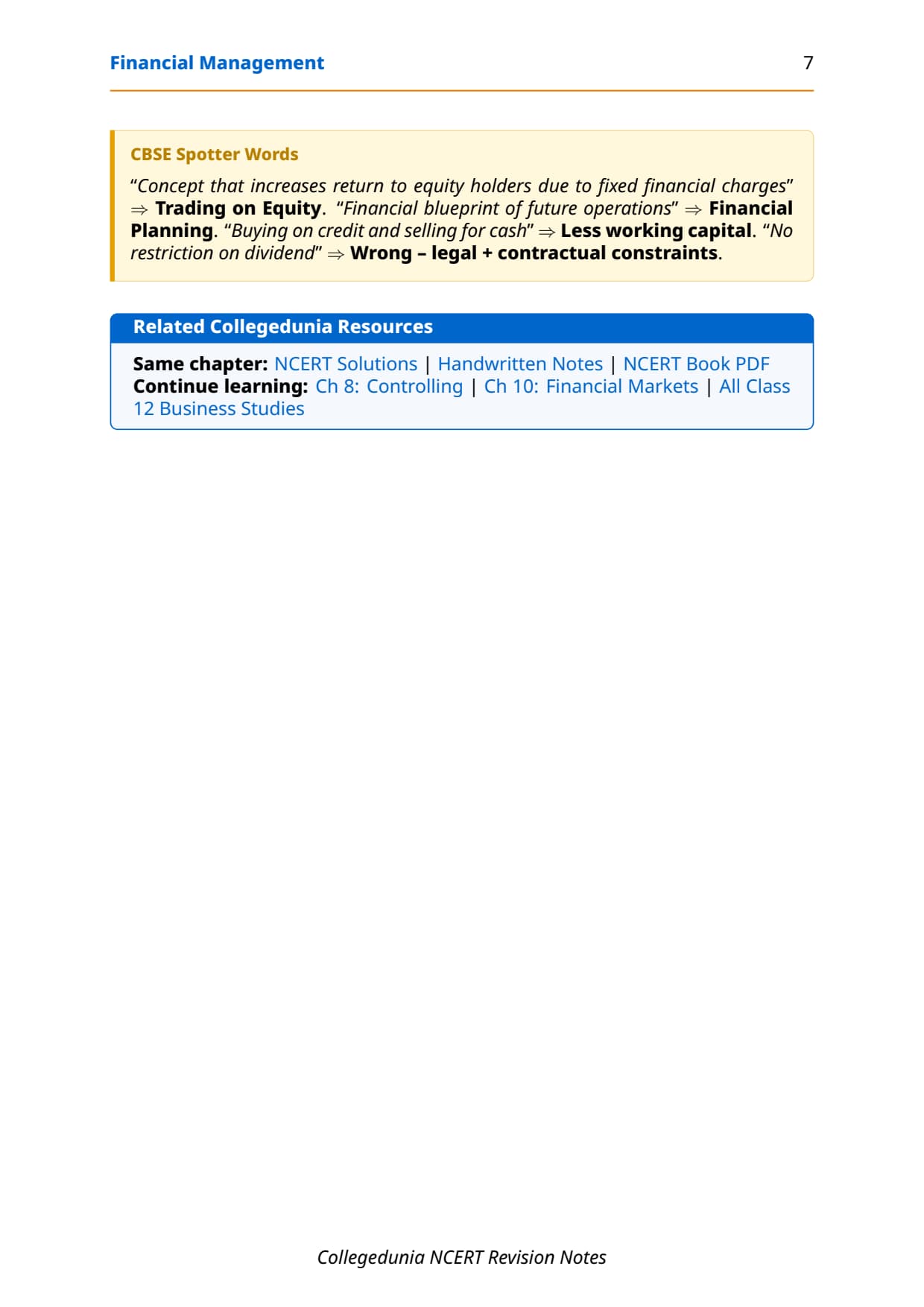
- CBSE spotter words -- ``financial blueprint'' $\Rightarrow$ financial planning; ``fixed financial charges'' $\Rightarrow$ trading on equity.
- Cross-links to Solutions, Handwritten Notes and the NCERT Book PDF for the same chapter.

Continue Learning: More Class 12 Business Studies Chapters
- Ch 8: Controlling Class 12 Notes
- Ch 10: Financial Markets Class 12 Notes
- All Class 12 Business Studies Chapters
Student Feedback
In a Collegedunia poll of 640 Class 12 Commerce students, 82% said the trading-on-equity rule (ROI vs cost of debt) finally clicked after using these Financial Management notes. 3 in 4 said the 10-point quick recap was the part they revised most on exam morning.
Other Resources for Class 12 Business Studies Chapter 9 Financial Management
| Resource | Link |
|---|---|
| NCERT Solutions | Financial Management NCERT Solutions |
| Revision Notes | Financial Management Class 12 Notes |
| Handwritten Notes | Financial Management Handwritten Notes |
| NCERT Book PDF | Financial Management NCERT Book PDF |
Financial Management Class 12 - Frequently Asked Questions
Financial Management Class 12 - Frequently Asked Questions
What is financial management in Class 12 Business Studies Chapter 9?
Financial management is concerned with the optimal procurement and usage of funds. Its primary objective is wealth maximisation of equity shareholders, operationalised through three financial decisions (investment, financing, dividend).
What are the three financial decisions?
The three financial decisions are: (1) Investment decision (capital budgeting + working capital), (2) Financing decision (capital structure - debt-equity mix), and (3) Dividend decision (how much profit to retain vs distribute).
What is the formula for net working capital?
Net Working Capital (NWC) = Current Assets - Current Liabilities. Higher NWC means higher liquidity but lower profitability; lower NWC means higher profitability but more liquidity risk. The financial manager seeks the optimum NWC level.
When is trading on equity beneficial?
Trading on equity is beneficial only when ROI > Cost of Debt. When this condition holds, the spread between ROI and cost of debt accrues to equity holders and EPS rises. If ROI is less than cost of debt, debt actually destroys shareholder value.
Where can I download the Class 12 Business Studies Chapter 9 Financial Management Notes PDF?
You can download the Collegedunia Class 12 Business Studies Chapter 9 Financial Management Notes PDF free of cost from this page. The PDF is aligned to the NCERT Reprint 2026-27 syllabus.



Comments