




Class 12 English Vistas Chapter 5 On the Face of It Handwritten Notes by Collegedunia are notebook-style revision pages built for the last-week refresh before the CBSE Class 12 English Core Board paper. The PDF compresses Susan Hill's one-act radio play into 5 quick-flip pages organised around the three scenes, two main characters, five themes and the play's central tin-leg-versus-burnt-face equation, all aligned to the 2026-27 syllabus.
- CBSE Board Weightage: 6 marks (one 6-mark LA from this chapter is a high-frequency item in Section C)
- Best Use: 20-minute last-pass refresh before the paper; covers all four Reading with Insight questions
- Format: notebook-page layout - one focused topic per page, marked-up keywords, hand-drawn frame boxes around the play's central equation and closing line
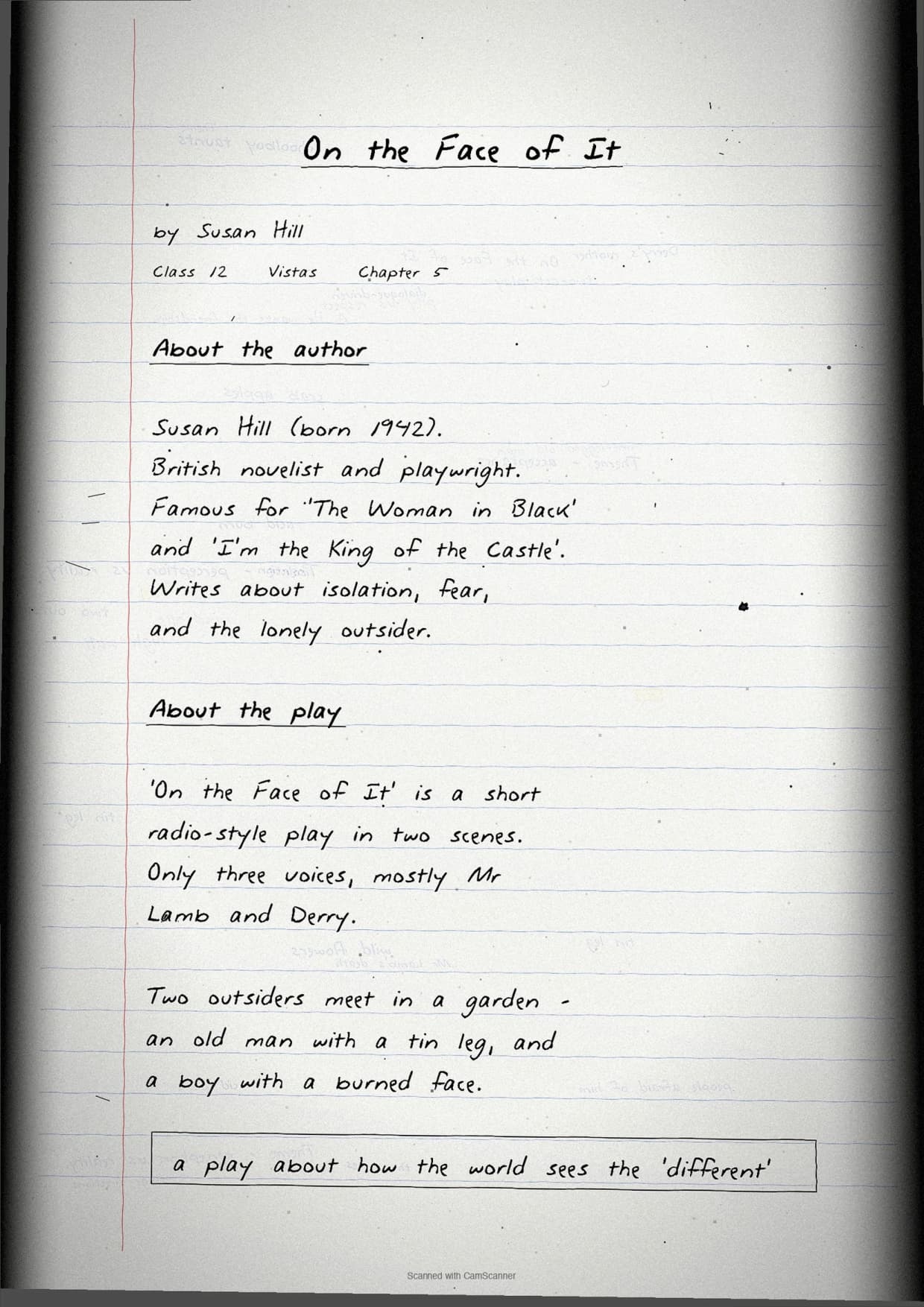
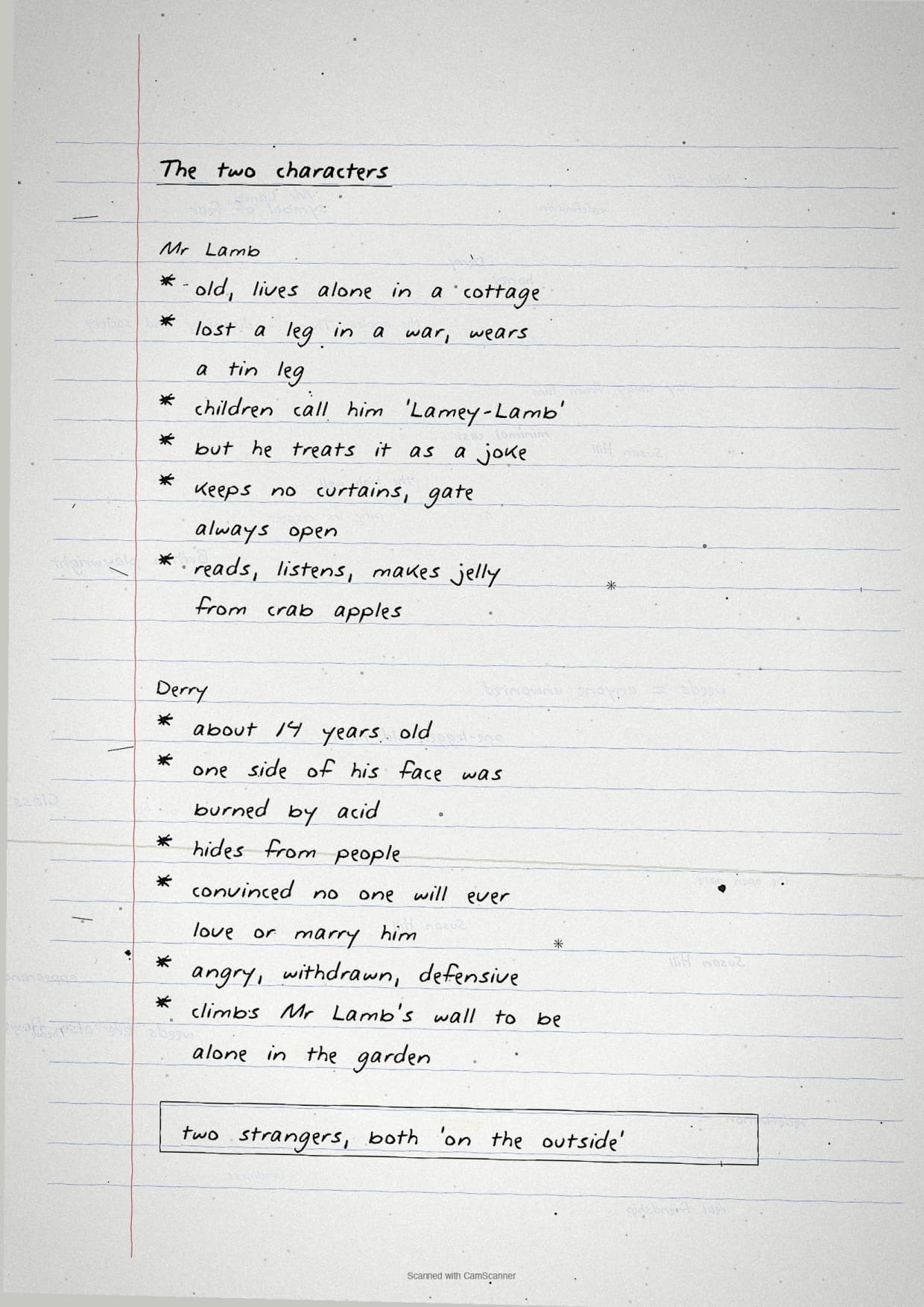
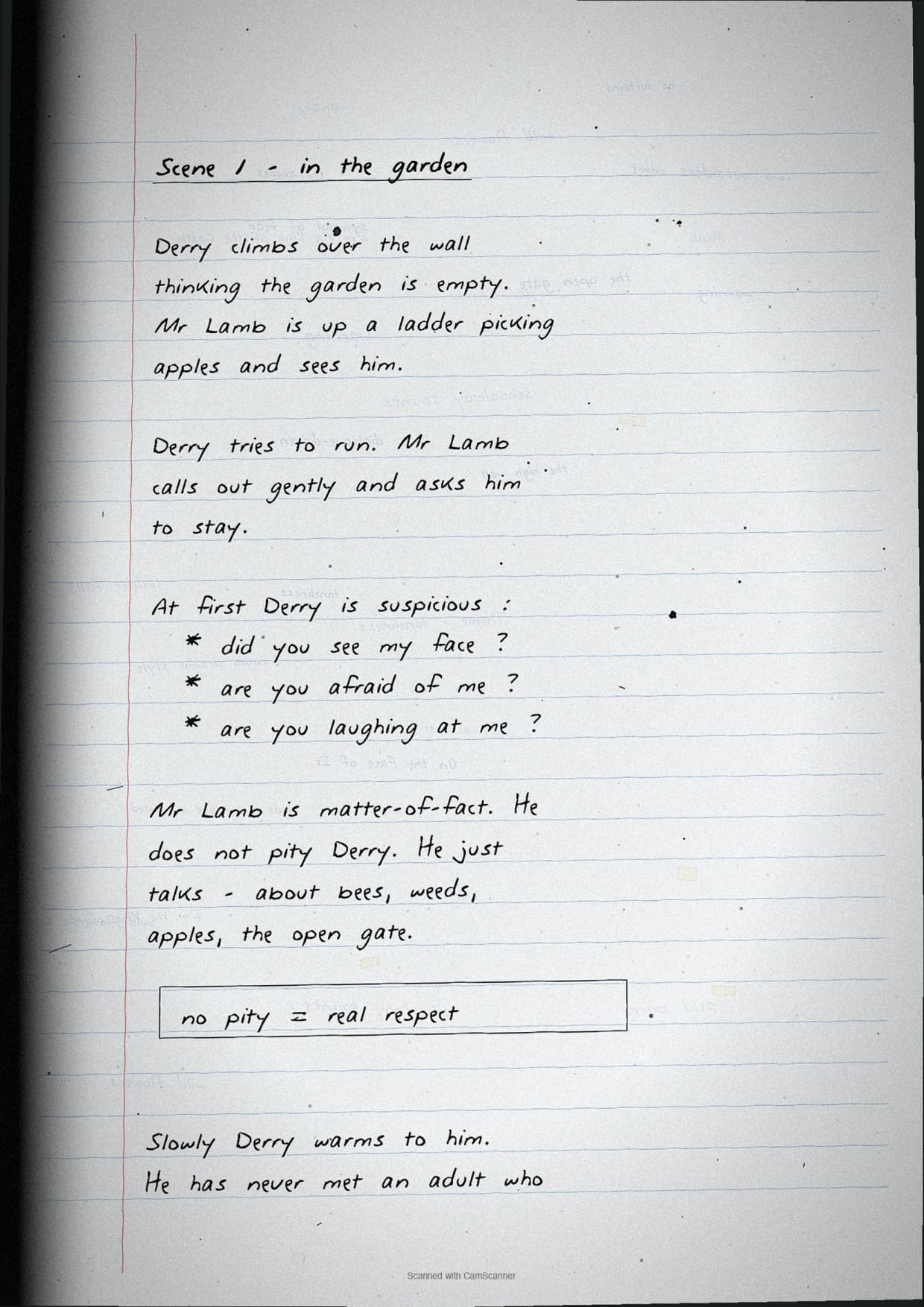

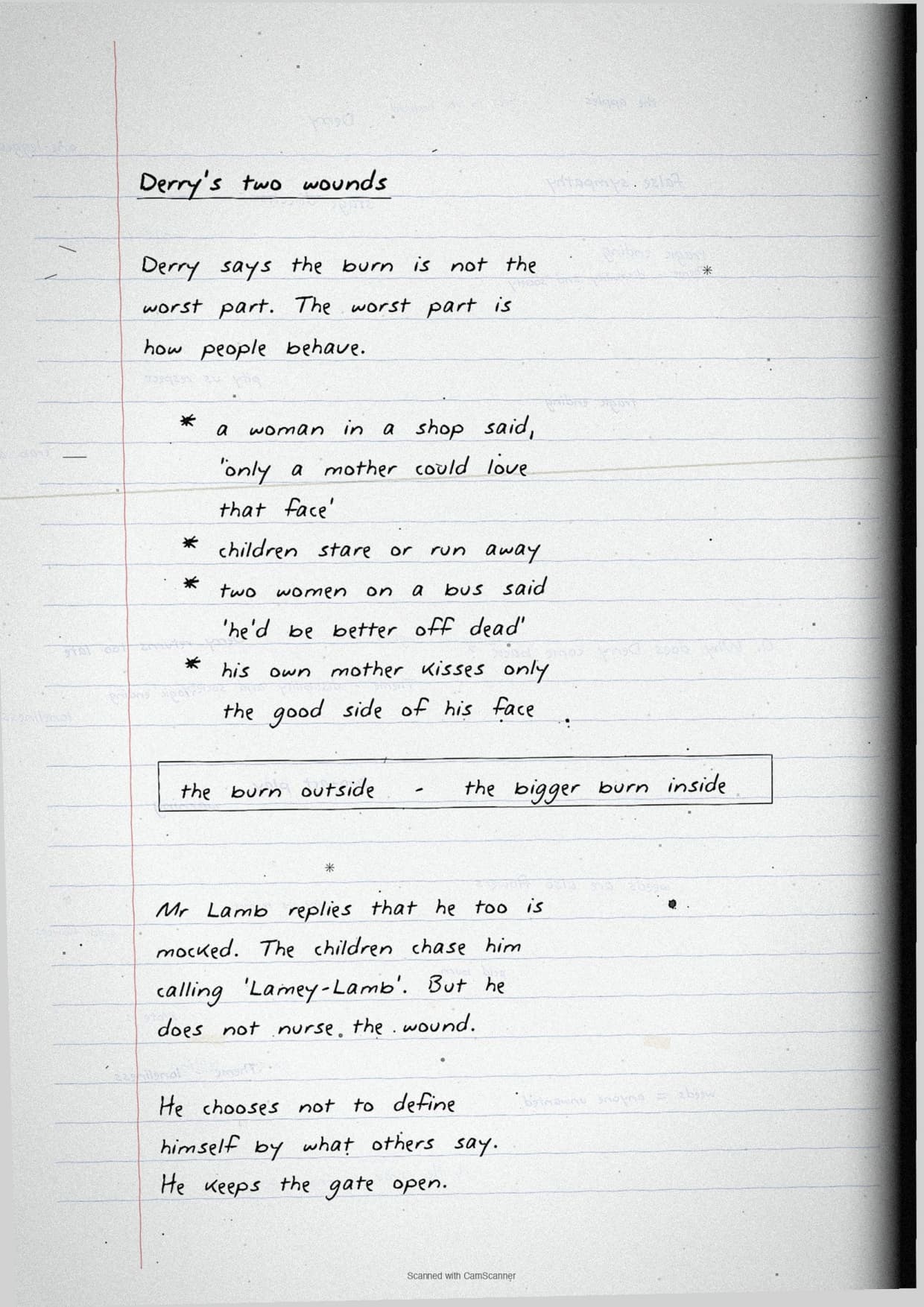

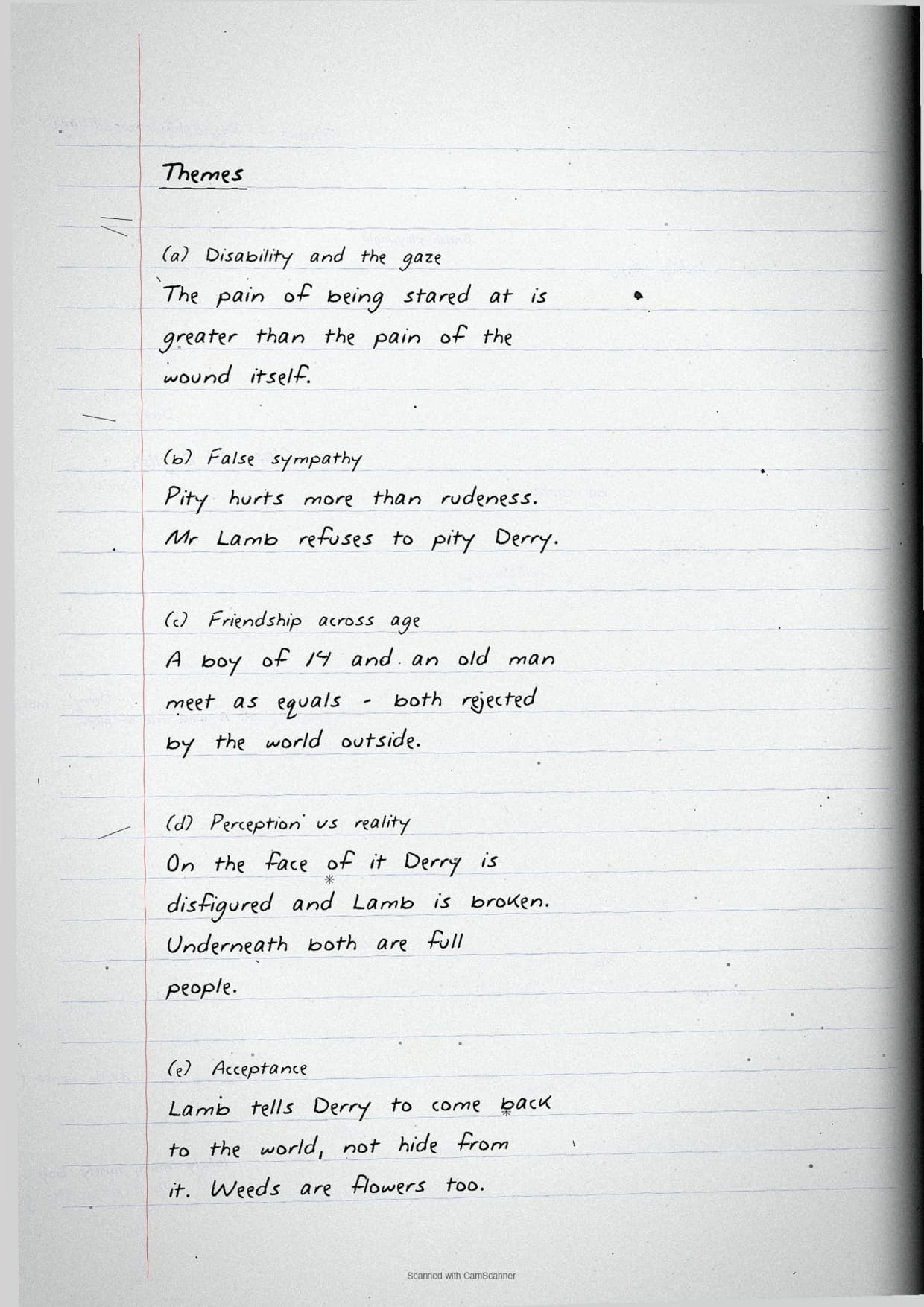
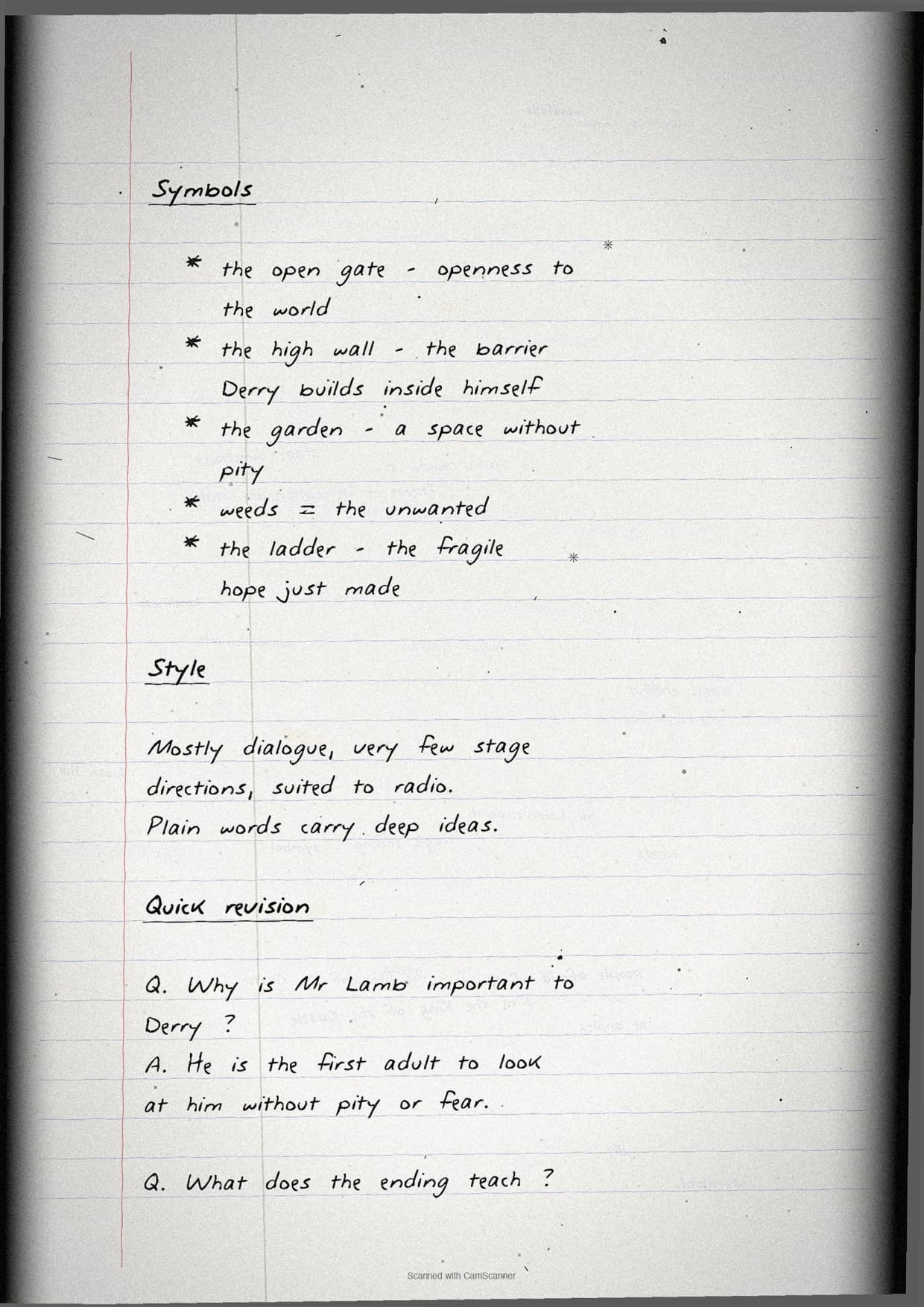
The handwritten-style PDF below contains 5 notebook pages: Title with Setting and Characters, Scene 1 (Meeting in the Garden), Scene 2 (Showdown with Mother), Scene 3 (the Fall and Themes), and Key Quotations with PYQ Map and Common Mistakes.
These handwritten notes are designed by Collegedunia English faculty, mapped to the 2026-27 Vistas chapter, and benchmarked against the last five CBSE Board sittings.
Also Check:
Class 12 English Vistas Chapter 5 Handwritten Notes - Page-by-Page Map
The 5-page handwritten notebook follows the play's three-scene structure with two framing pages (title-setting-characters and quotations-PYQ). The table shows what each notebook page covers.
| Notebook Page | Focus | Why It Matters for Boards |
|---|---|---|
| 1: Title, Setting, Characters | Susan Hill (b. 1942), radio play form, Mr Lamb's garden, Derry's house, the two main characters plus Derry's mother | 1-mark MCQ recall (author, form, year, scene count) |
| 2: Scene 1 - The Meeting in the Garden | "Mind the apples!"; Mr Lamb's four key moves; the burned-face = tin-leg equation | Anchor for Q1 (what draws Derry to Mr Lamb) |
| 3: Scene 2 - The Showdown | Derry's argument with his mother; the play's hinge ("If I don't go back, I'll never go anywhere again") | Evidence-point for Q4 (the open ending) |
| 4: Scene 3 - The Fall and Themes | The ladder crash; Derry's weeping; the five big themes (disability, loneliness, self-image, friendship, nature) | Theme-tagged answers for any 6-mark LA |
| 5: Quotations, PYQ Map, Mistakes | Six must-memorise lines, year-wise PYQ rotation, two common errors to avoid | Direct quotation evidence for Section C answers |
On the Face of It Video Walkthrough
Source: Magnet Brains on YouTube
Setting Map: The Page-1 Skeleton
Page 1 of the notebook draws the setting in two halves - Mr Lamb's garden on the left, Derry's house on the right - with the wall Derry climbs as the connecting arrow. The handwritten note next to the map summarises the four facts that drive the entire play and that CBSE tests in 1-mark MCQs.
Scene-by-Scene Summary: The Page 2-3-4 Three-Beat Walk
Pages 2, 3 and 4 walk the play in its three scenes, with hand-drawn arrows linking each scene to the next: the meeting in the garden (Mr Lamb's "Mind the apples!", the honest "you got burned in a fire" question, the tin-leg equation "Where's the difference?", the "Bees singing. Him talking" line), the showdown with Derry's mother (the hinge line "If I don't go back there, I'll never go anywhere in this world again"), and the fall from the ladder (the crash, Derry's weeping, the closing "Lamey-Lamb. I did... come back."). Memorise the three-beat skeleton and any Long Answer becomes a fill-in-the-blank exercise.
Character Arcs: Pages 1 and 4
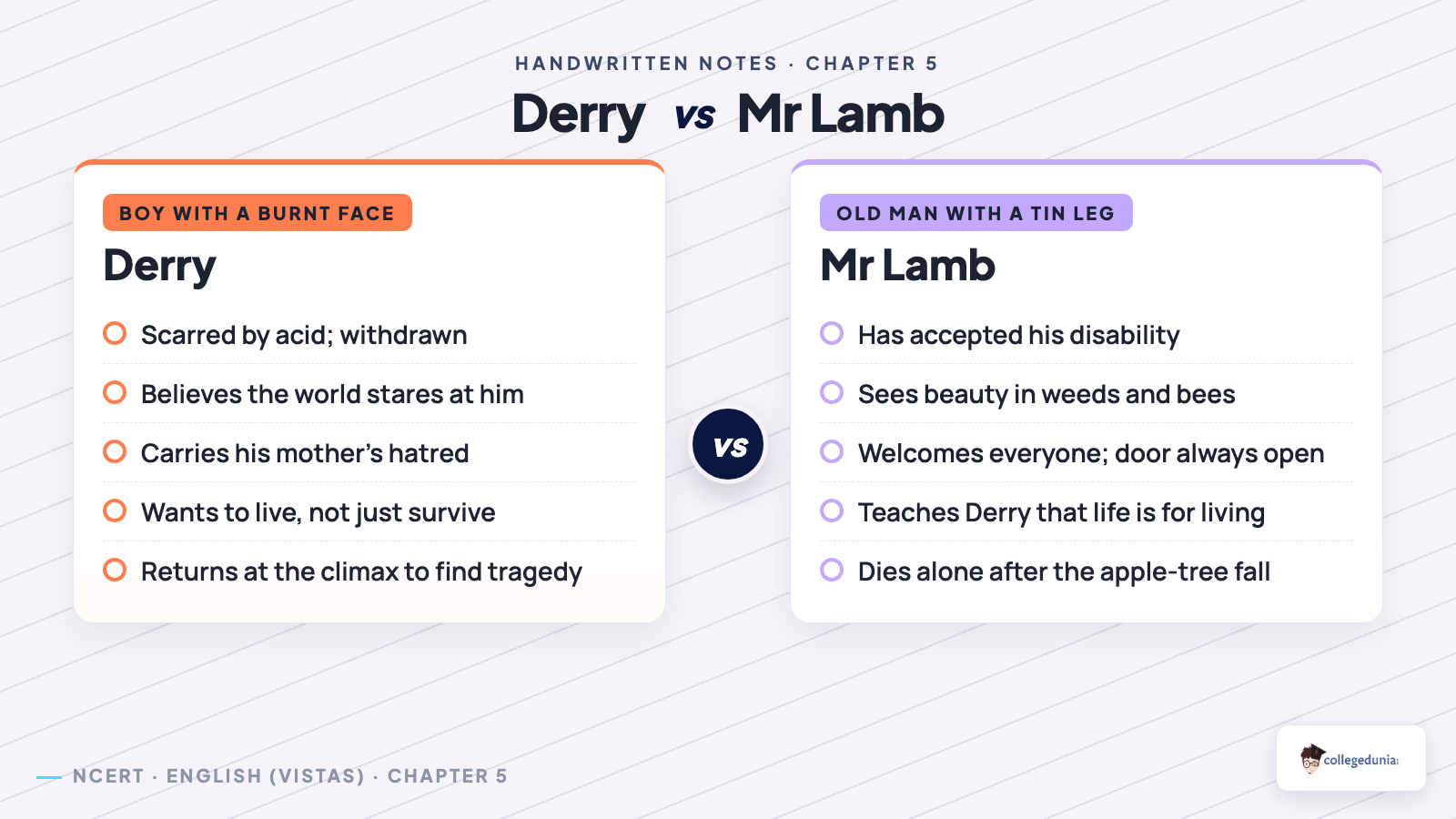
The notebook keeps Derry and Mr Lamb on facing positions across the spread. Derry's arc moves through three textual markers: panic at being seen, recognition through Mr Lamb's tin-leg equation, the decision to defy his mother. Mr Lamb's arc moves through three markers: the open gate and the welcome, the "Where's the difference?" normalising of disability, and the fall. Derry's mother is a small box at the bottom of page 3 - the parent voice that Derry has to defy in Scene 2 to grow.
Themes and Equation: The Page-4 Theme Web
Page 4 maps the five themes (disability, loneliness, self-image and the gaze, friendship across difference, the natural world as comfort) as a small theme web with arrows linking each theme to Mr Lamb's central equation. The "Where's the difference?" line is drawn in a hand-wobbled box at the centre of the web because every theme in the play radiates out from that one sentence.
What Makes Handwritten Notes Different from Regular Notes
- One topic per page. A handwritten notebook page is shorter than a typed note page; the format forces you to pick the single most important idea and lay it out cleanly.
- Hand-drawn boxes around the central equation. Mr Lamb's "Where's the difference?" line is the play's central thesis, drawn in a hand-wobbled box on the page where it appears.
- Marked-up keywords. Every important phrase (Lamey-Lamb, crab apples, tin leg, acid, garden gate) is highlighted in the notebook the way a student would highlight it on the night before the exam.
- Strikethrough corrections. The notebook leaves the small "student errors" visible (with a strike-through over the wrong word) so the revision reads like a real student's working, not a typeset textbook.
- CamScanner-style finish. Edge shadows, page tilt, paper texture - the PDF looks like a phone scan of a real notebook rather than a vector print.
How to Use These Handwritten Notes - the 20-Minute Pre-Board Routine
- Minute 0-3: Open page 1 and recite Susan Hill, radio play, three scenes, Mr Lamb's garden, Derry's house. Two character cards (Derry and Mr Lamb), one secondary (Derry's mother).
- Minute 3-7: Page 2 - walk through Scene 1. Memorise "Mind the apples", the four moves of Mr Lamb (honest question, refusal of "poor boy", weeds question, the equation), and the closing "Come back. I'll be here."
- Minute 7-11: Page 3 - Scene 2. Memorise Derry's self-assertion speech and the hinge line "If I don't go back there, I'll never go anywhere in this world again."
- Minute 11-15: Page 4 - Scene 3 plus the five themes. The ladder crash, Derry's weeping, "Lamey-Lamb. I did... come back." Tag every theme with one line you can quote.
- Minute 15-20: Page 5 - quotation flash cards. Six lines in order. Cover the right side of the page and recite each from memory. Look at the PYQ map and predict which question CBSE is likely to ask this year.
Key Lines to Memorise from On the Face of It
- "Mind the apples!" - Mr Lamb's first line.
- "I got acid all down that side of my face and it burned it all away. It ate my face up." - Derry's account.
- "You've got a burned face, I've got a tin leg. Not important. Where's the difference?" - Mr Lamb's central equation.
- "There's nothing God made that doesn't interest me." - Mr Lamb's philosophy.
- "Bees singing. Him talking. Things nobody else has ever said." - Derry on what draws him back.
- "Lamey-Lamb. I did... come back." - the play's closing line.
PYQ Map: Page-5 Year-Wise CBSE Rotation
Page 5 of the notebook is the year-wise CBSE PYQ map paired with the value-point cheatsheet for the disability-and-alienation prompt. The Long Answer slot rotates predictably between Derry's motivation, Mr Lamb's loneliness, the disability/alienation value question, and the open ending.
| Year | Long Answer Focus | Marks |
|---|---|---|
| 2025 | What draws Derry towards Mr Lamb inspite of himself (Q1) | 6 |
| 2024 | Pain vs alienation in disability; behaviour the person expects (Q3) | 6 |
| 2023 | Mr Lamb's loneliness and the ways he overcomes it (Q2) | 6 |
| 2022 | Will Derry get back to his old seclusion? Open ending (Q4) | 6 |
| 2021 | Susan Hill's central message on disability and friendship | 5 |
Why Handwritten Notes Work for CBSE Vistas
- Visual memory: handwritten text triggers a different memory pathway than typed text; recall is faster.
- Spaced repetition: the notebook's five themed pages mirror the play's natural exam slots so each glance is a small practice session.
- Margin notes: the red margin line carries a sparse set of one-word triggers (LAMEY-LAMB, CRAB APPLES, TIN LEG, ACID, GATE) that you can scan in under thirty seconds.
- Hand-drawn arrows: the three-scene plot map and the tin-leg-equals-burnt-face equation are laid out as connected diagrams, not as paragraphs.
Related Resources for Class 12 English Vistas Chapter 5
FAQs on On the Face of It Class 12 Handwritten Notes
FAQs on On the Face of It Class 12 Handwritten Notes
How long does it take to revise On the Face of It with these handwritten notes?
About 20 minutes for a complete revision. The notebook is built for the last-week refresh - one scene per page, one minute of recital per page. After two passes you should be able to reconstruct the entire chapter from page 1's title block.
Are these handwritten notes aligned to the 2026-27 NCERT Vistas syllabus?
Yes. The 5-page notebook is mapped page-by-page to the current NCERT 2026-27 reprint of Vistas Chapter 5, including every Reading with Insight question. The PYQ map covers the last five CBSE Class 12 English Core Board papers (2021-2025).
Who wrote On the Face of It in Class 12 English Vistas?
On the Face of It was written by Susan Hill (born 1942), a British novelist and playwright best known for The Woman in Black. The chapter is a one-act radio play originally written for BBC radio in the 1970s.
What is the central equation of On the Face of It?
Mr Lamb's line "You've got a burned face, I've got a tin leg. Not important. You're standing there. I'm sitting here. Where's the difference?" is the play's central equation. The handwritten notes draw a hand-wobbled box around this line on page 2.



Comments