


This page hosts the scanned national income accounting class 12 handwritten notes for CBSE Macroeconomics Chapter 1, captured straight from a student notebook in ballpoint pen on ruled paper. The notebook covers all three measurement methods (product, income, expenditure) and the full chain of aggregates from GDP at Market Price down to Personal Disposable Income. Use the scanned PDF for last-mile revision in the 24 hours before the board paper.
- Scanned handwritten revision notes in ballpoint pen on ruled paper, covering all of CBSE Class 12 Macroeconomics Chapter 1.
- 5-6 marks weightage in the Class 12 Economics board paper, with the chain GDP → NDP → NNP → NI → PI → PDI worked out by hand.
- Pairs with the typed NCERT Solutions, typed Notes and the official NCERT Book PDF for the same chapter.
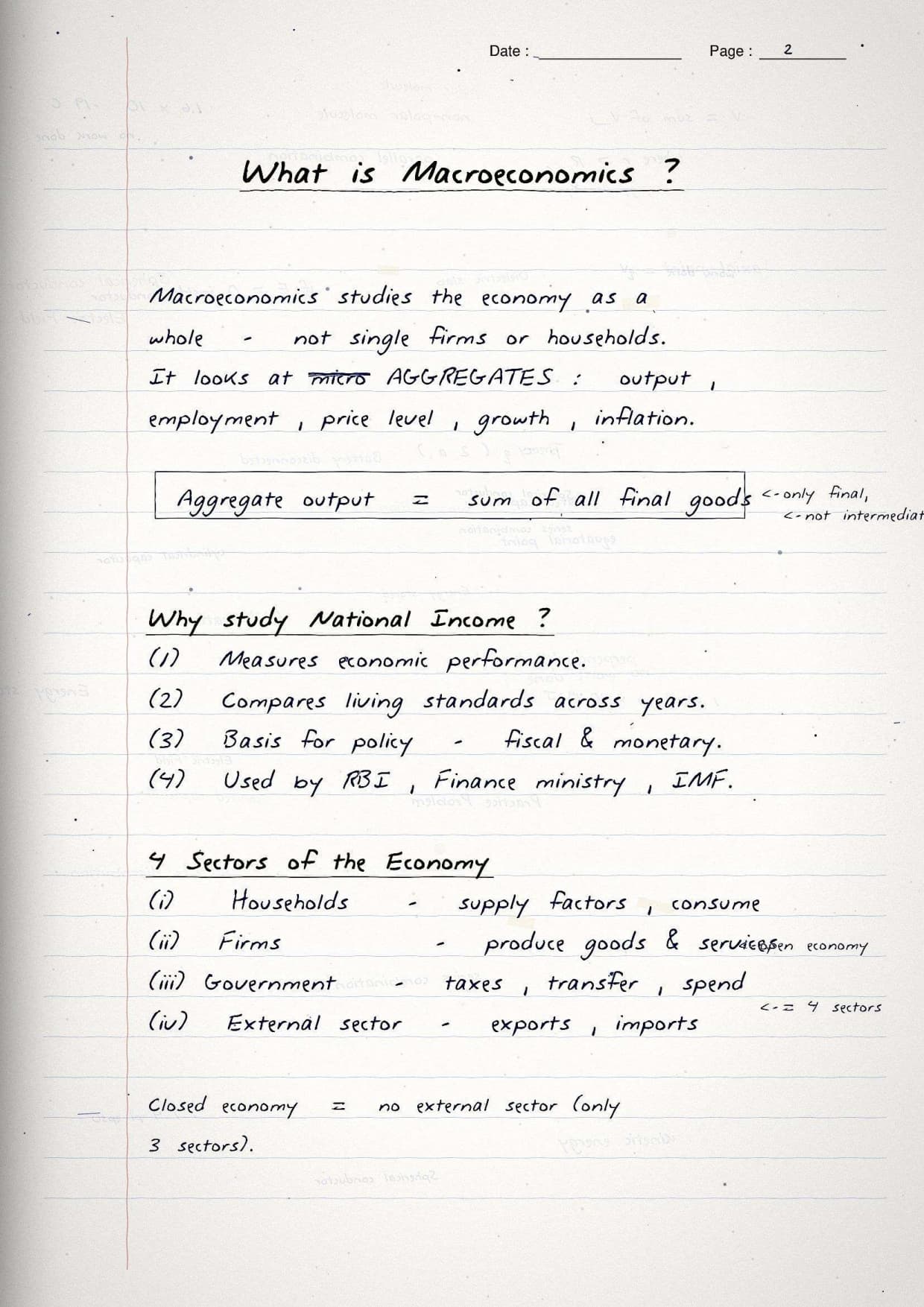
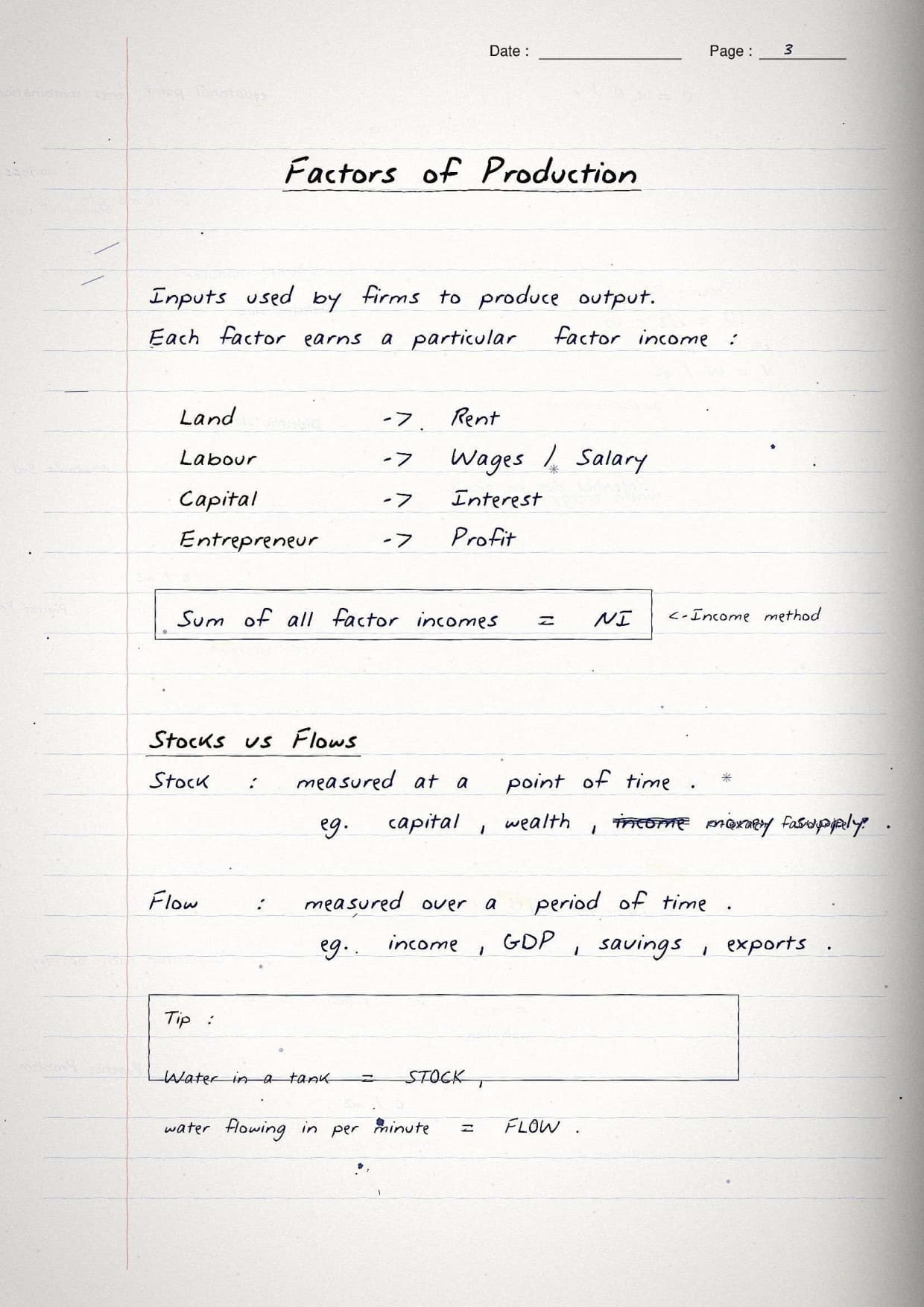
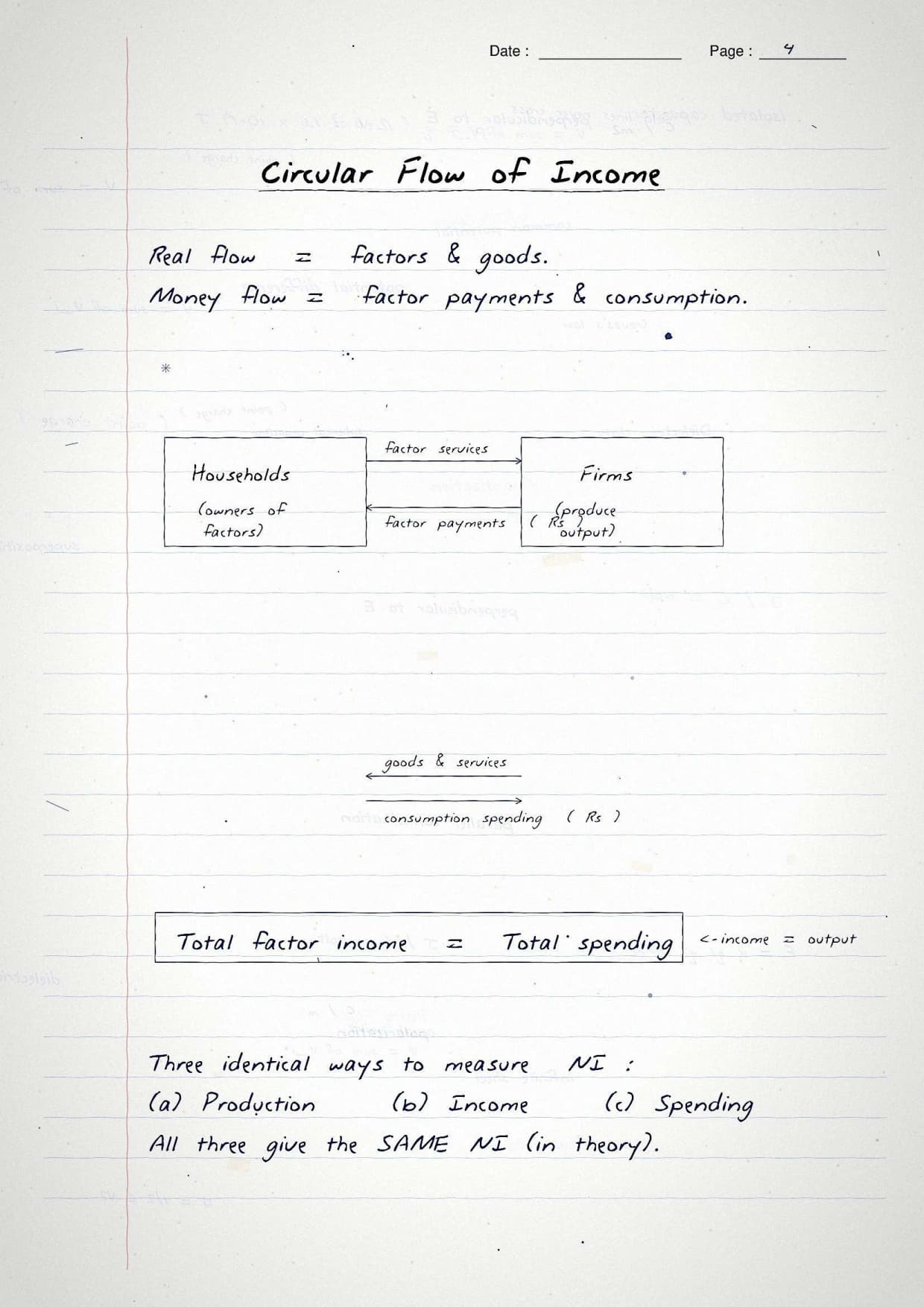
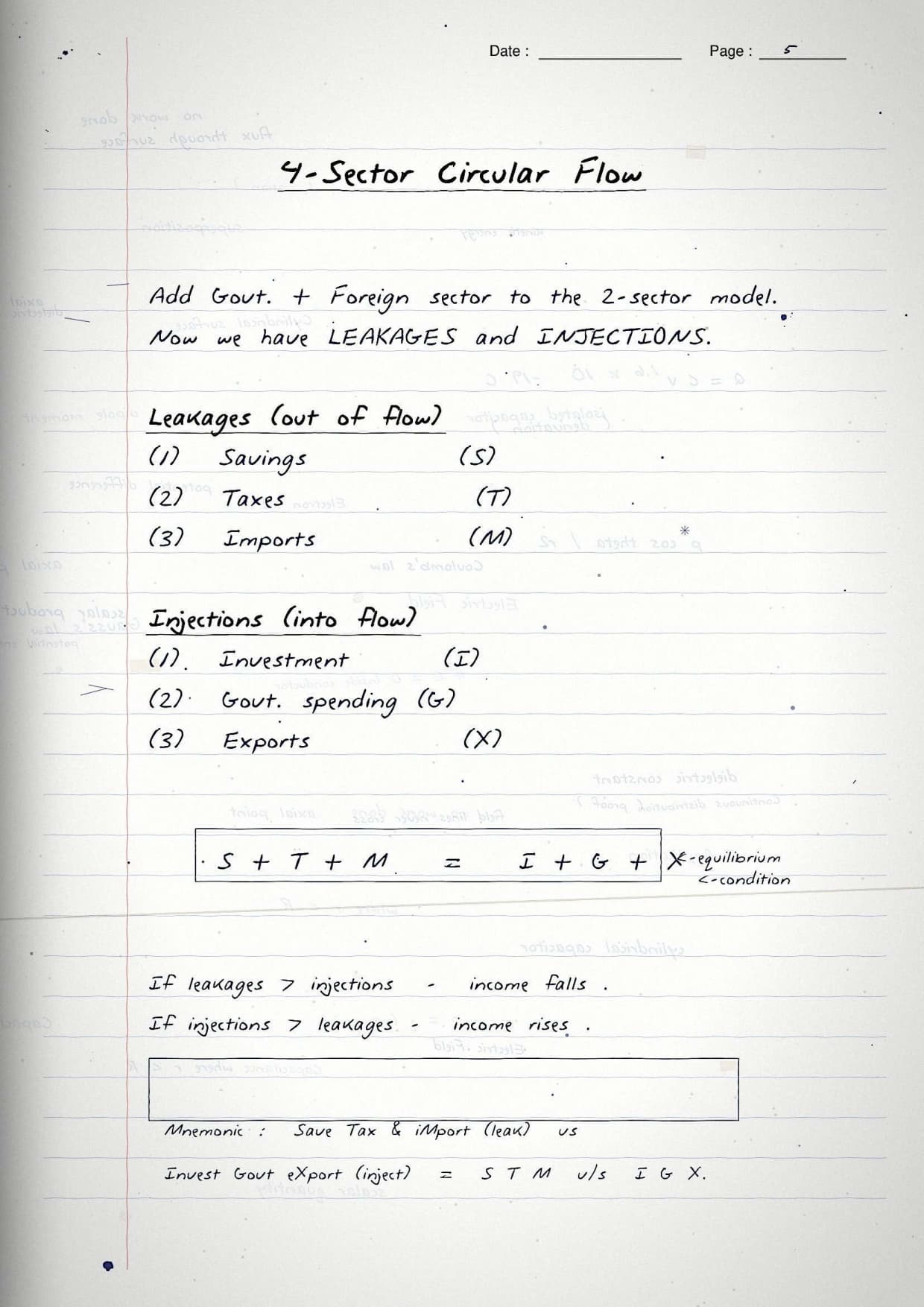
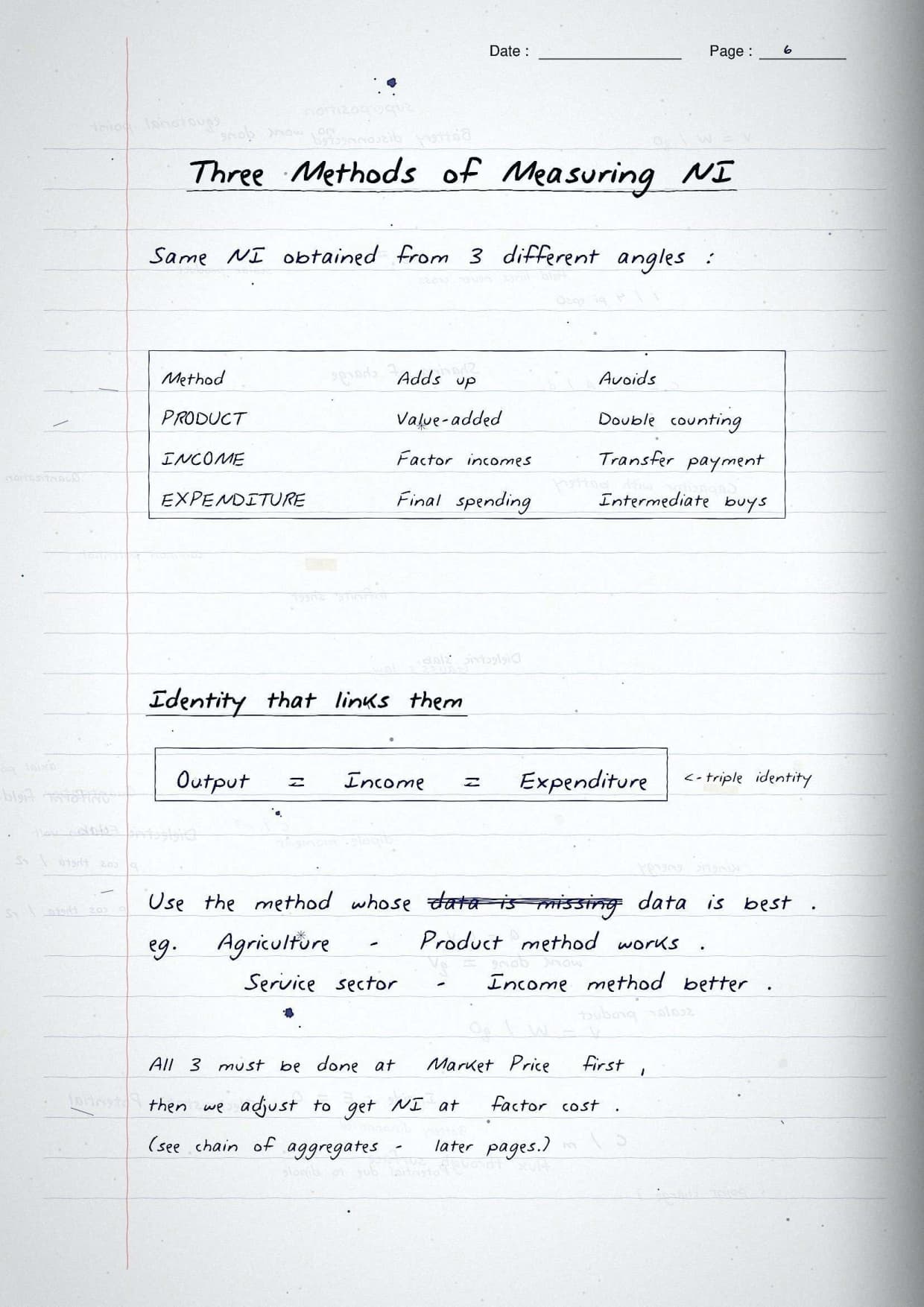
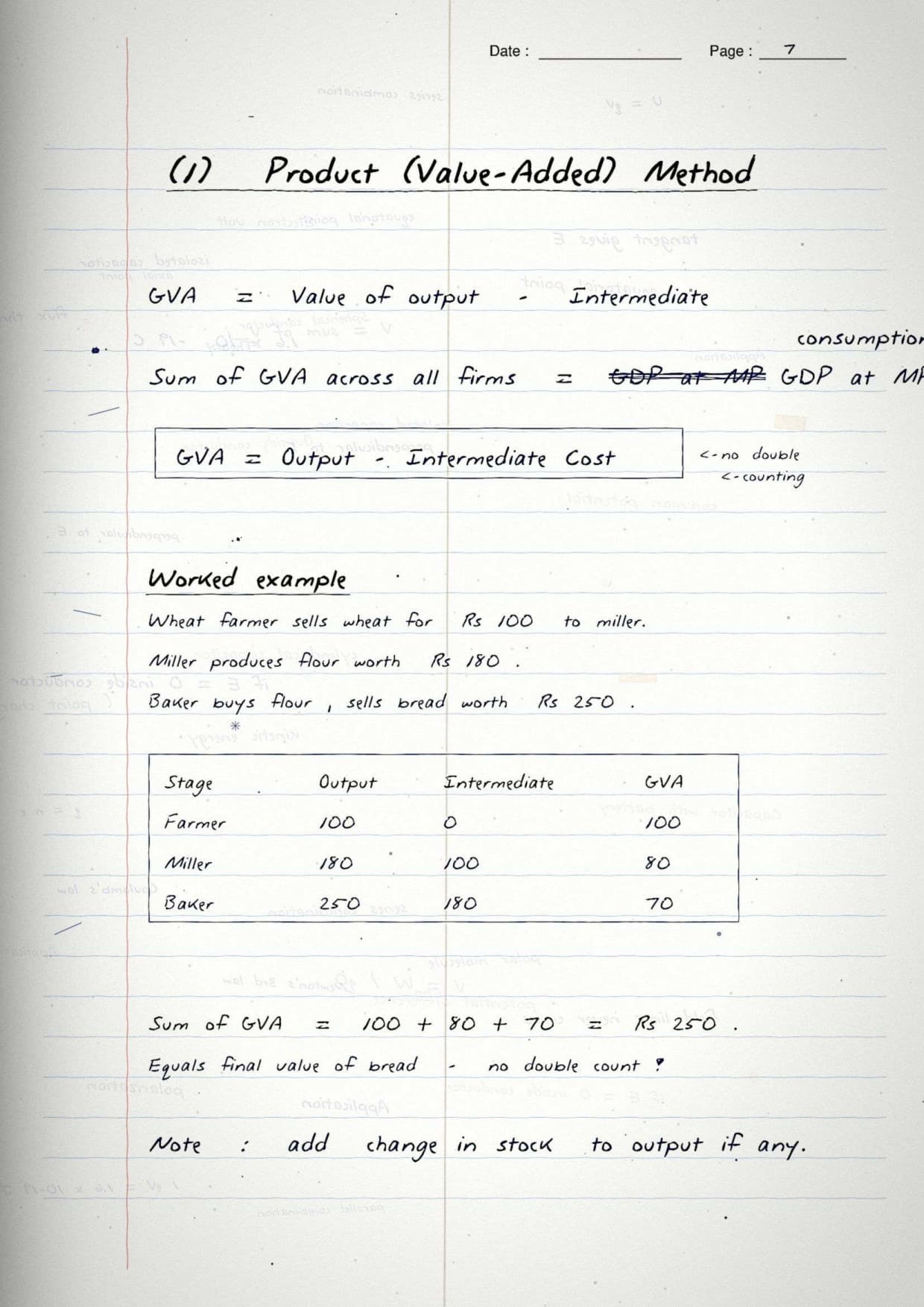
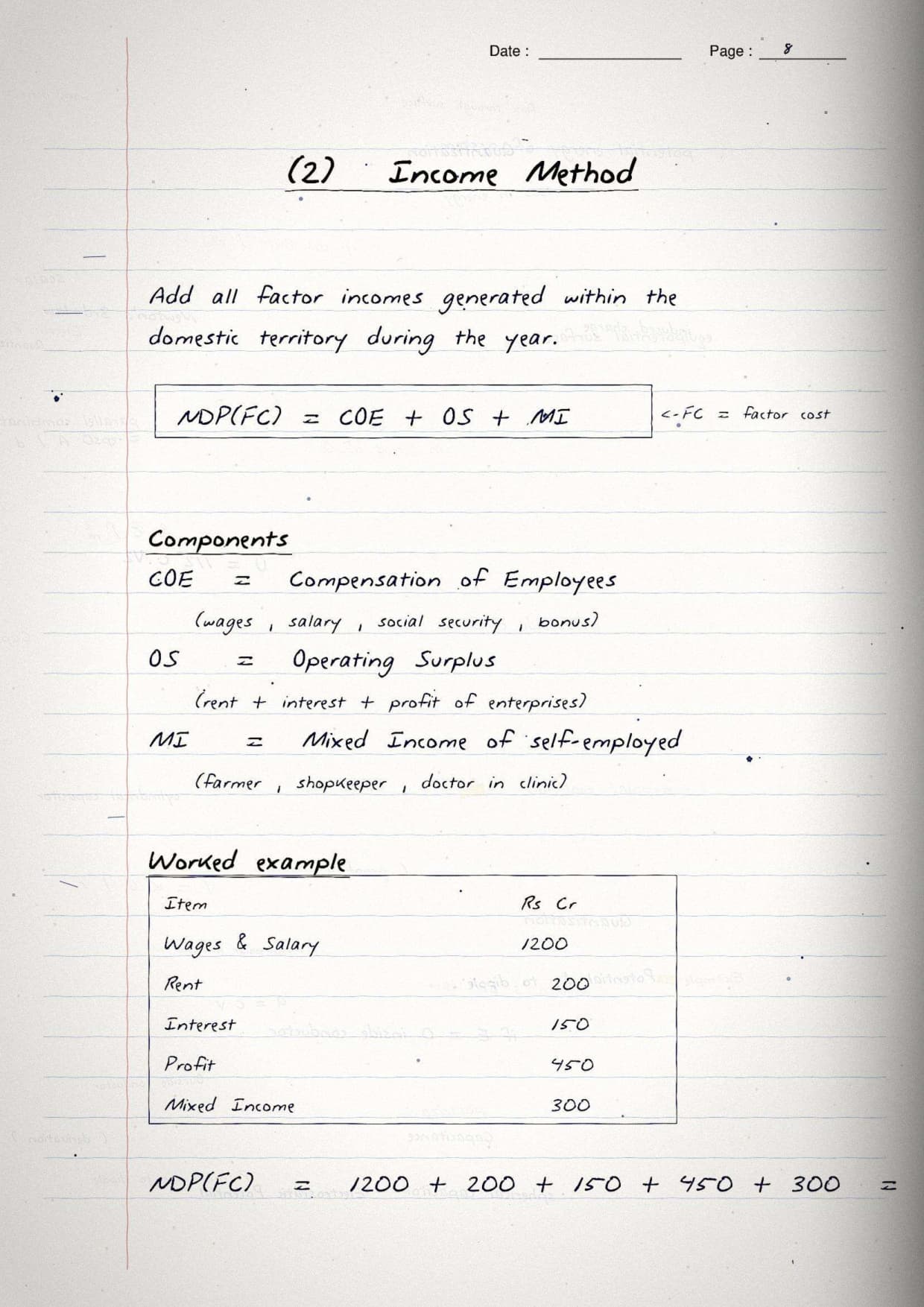
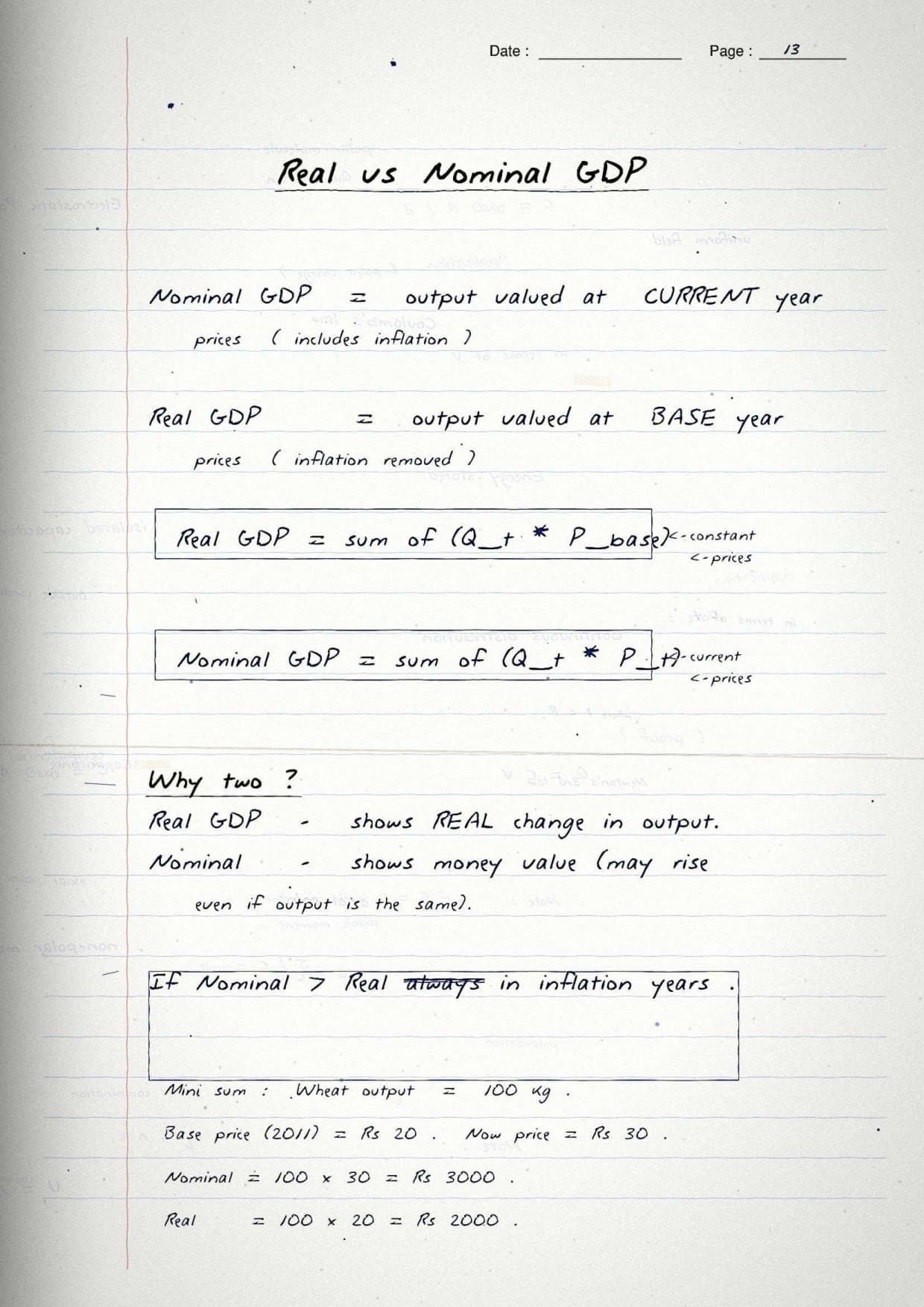
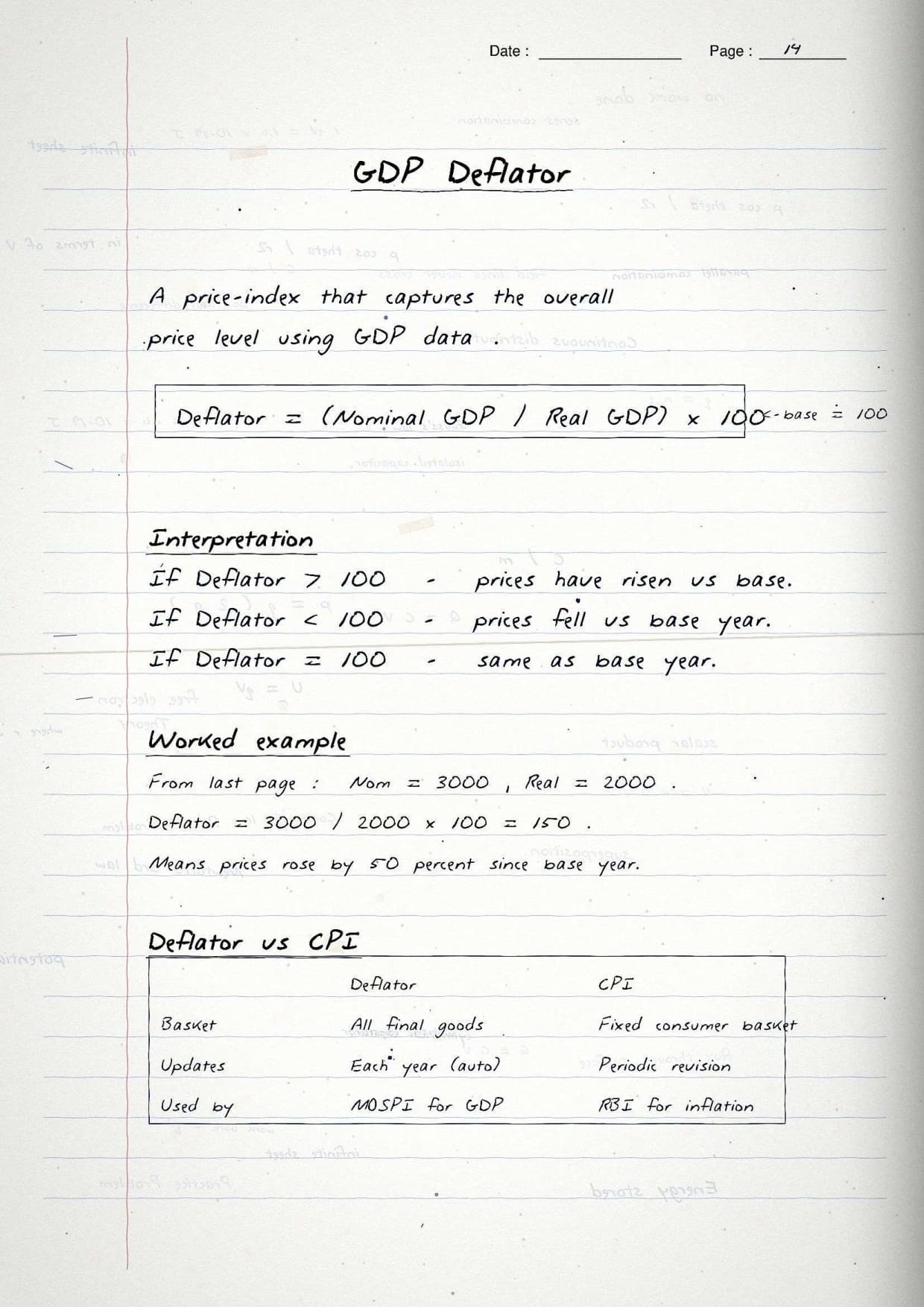
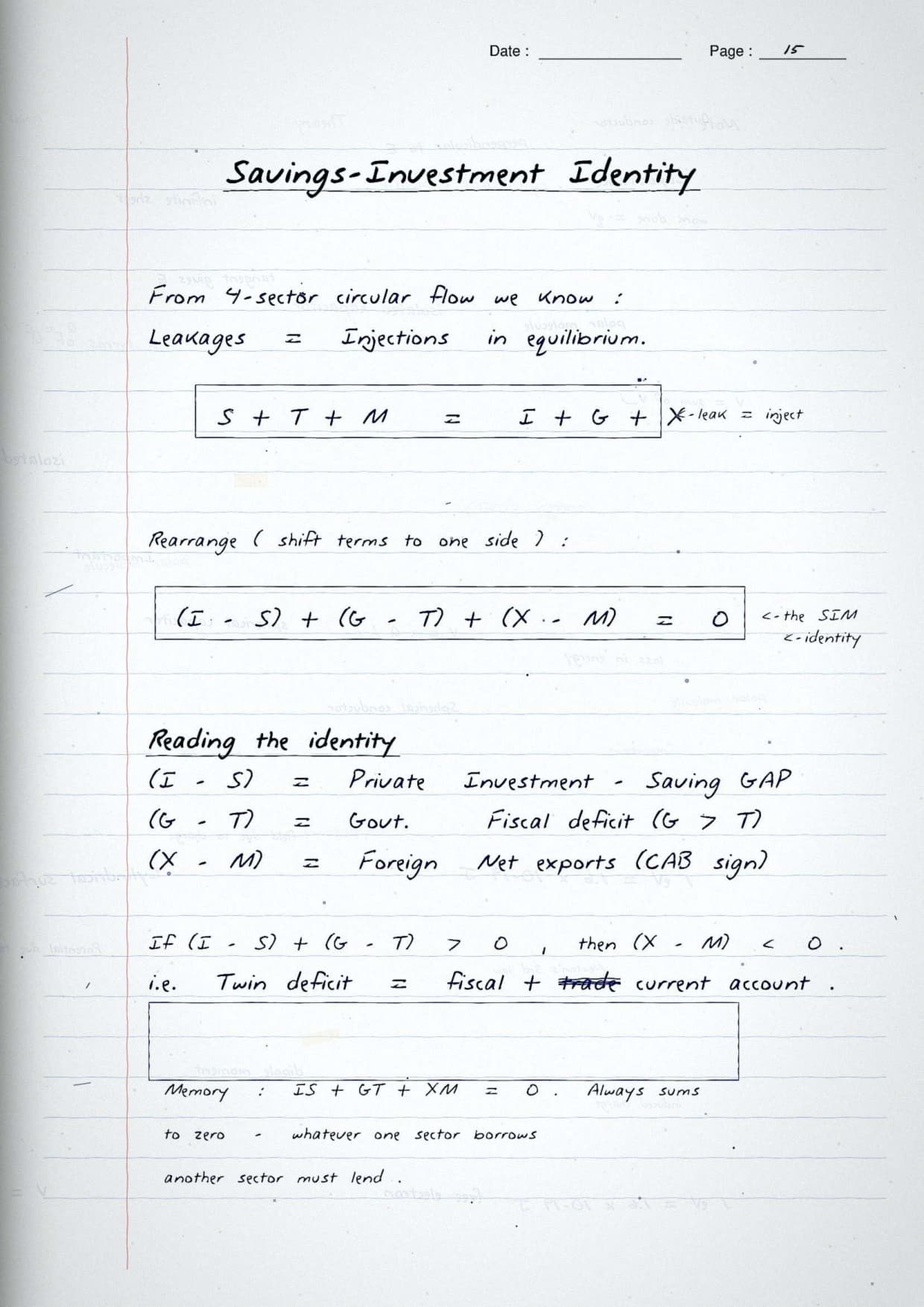
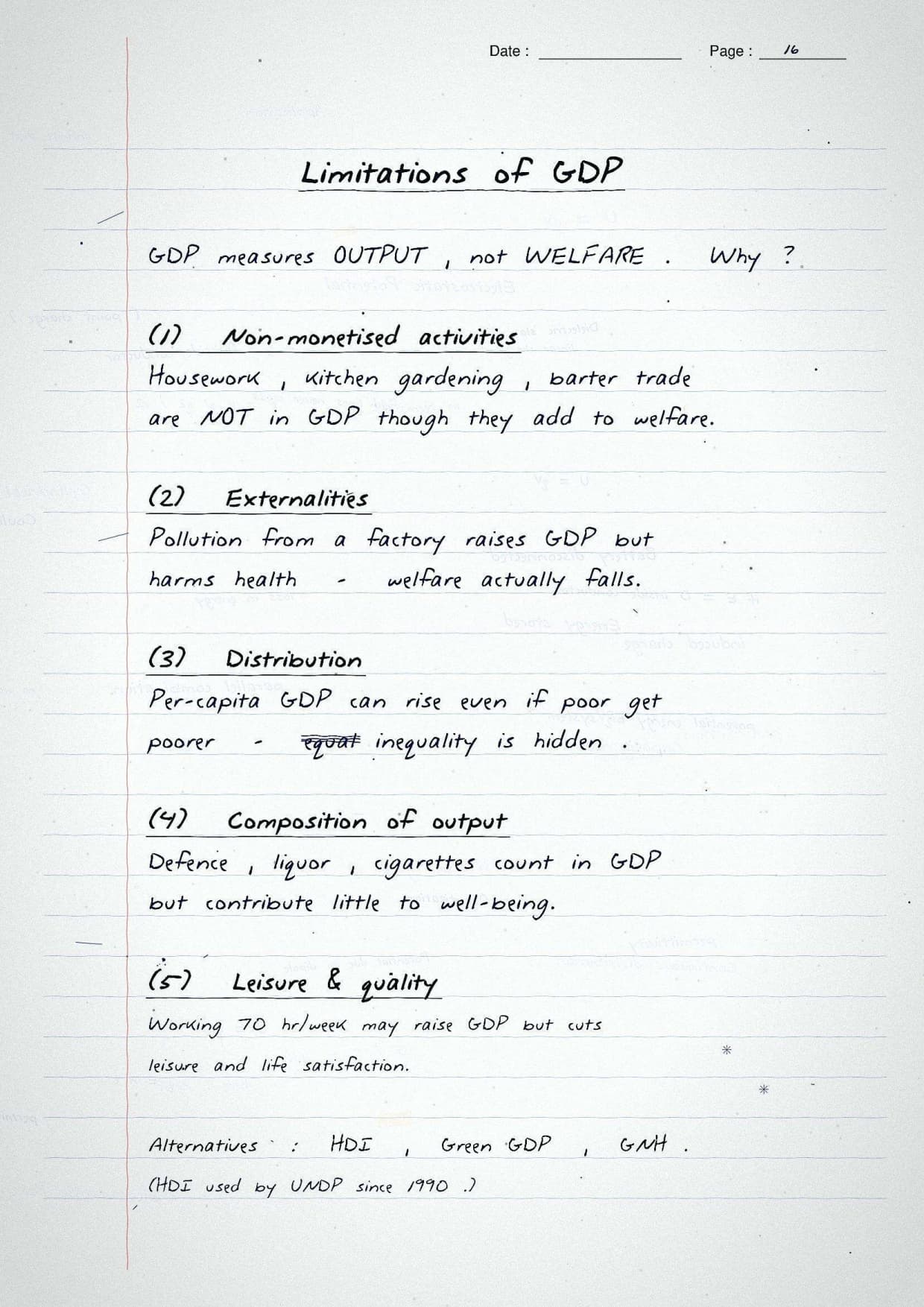
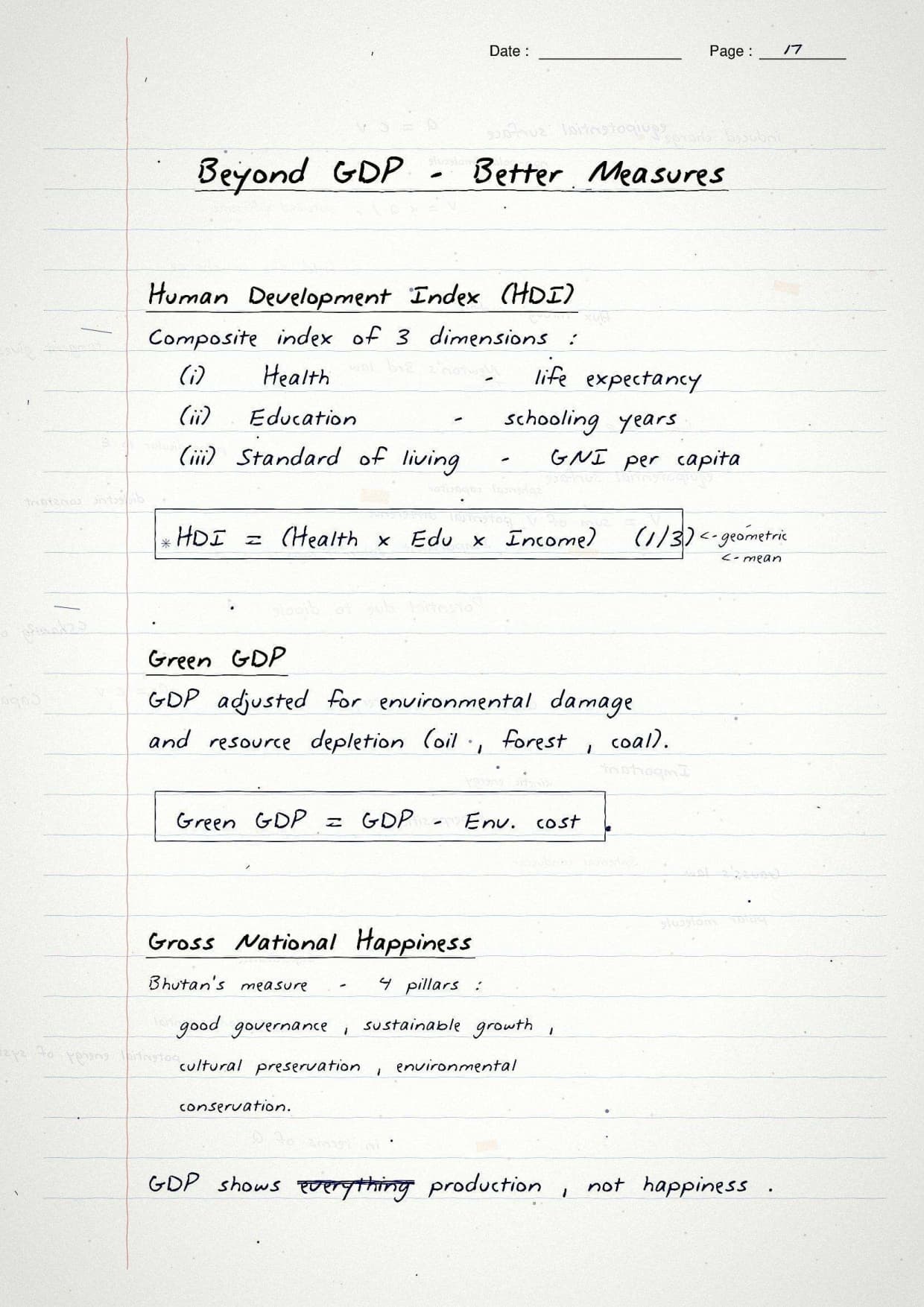
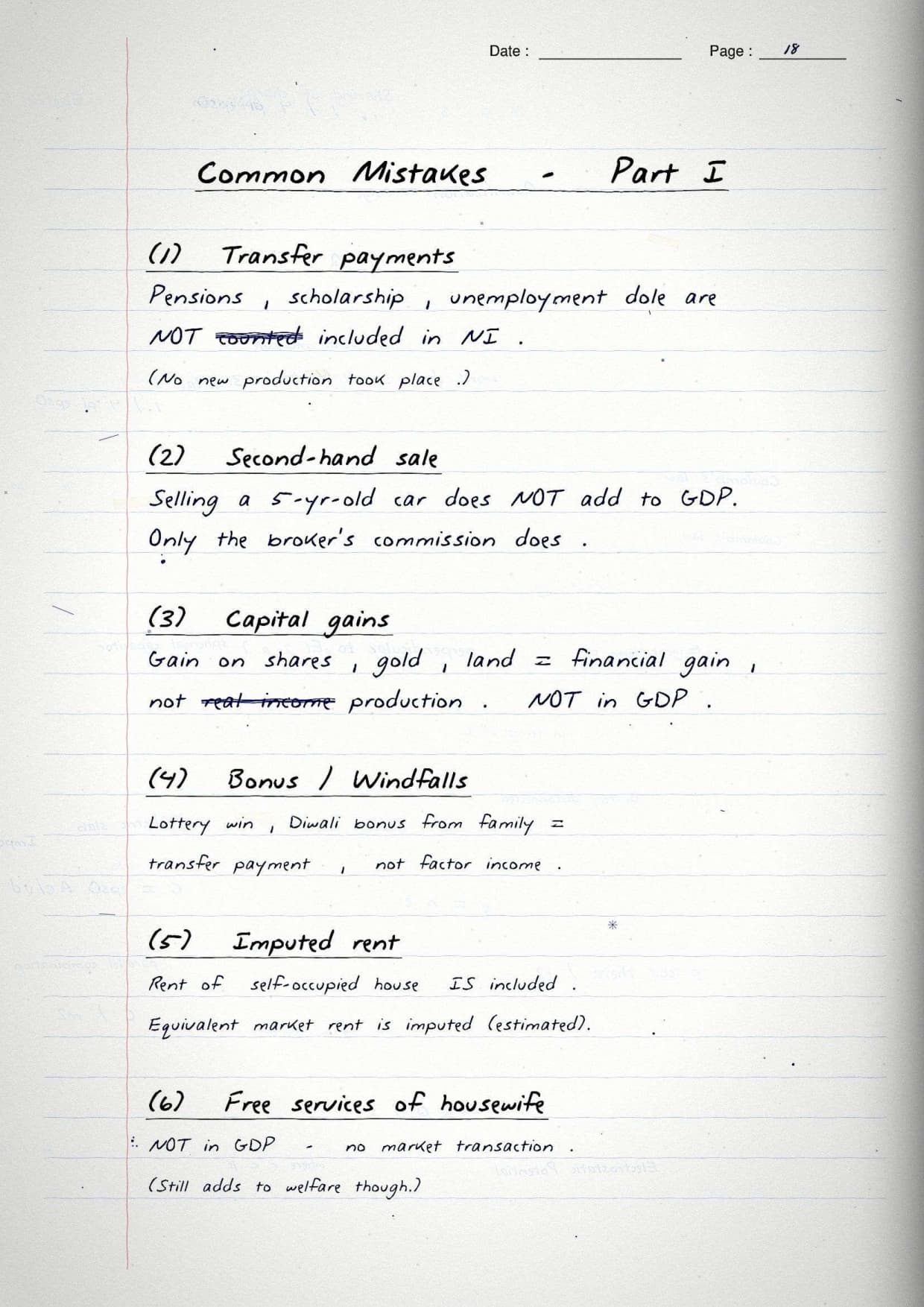
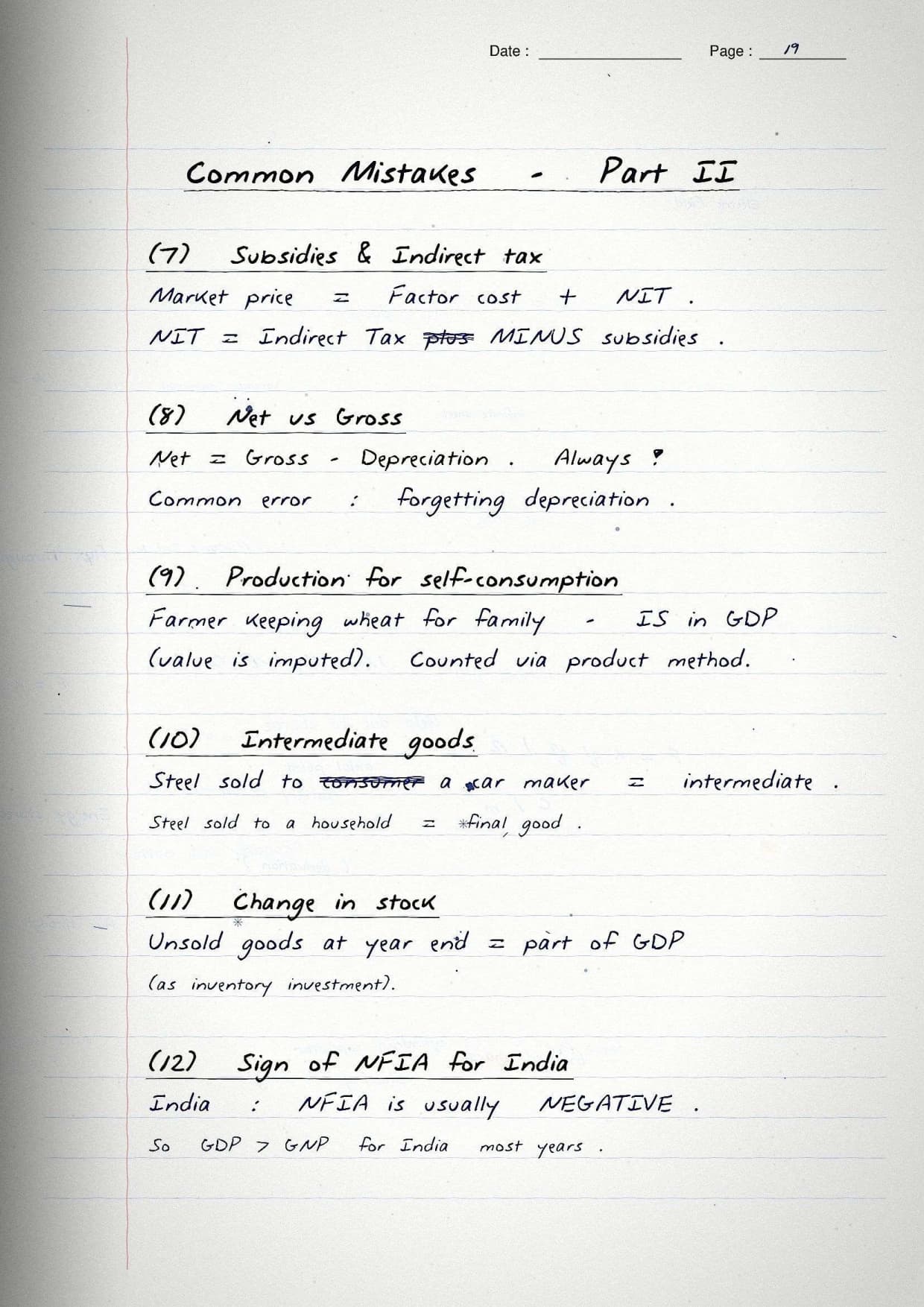
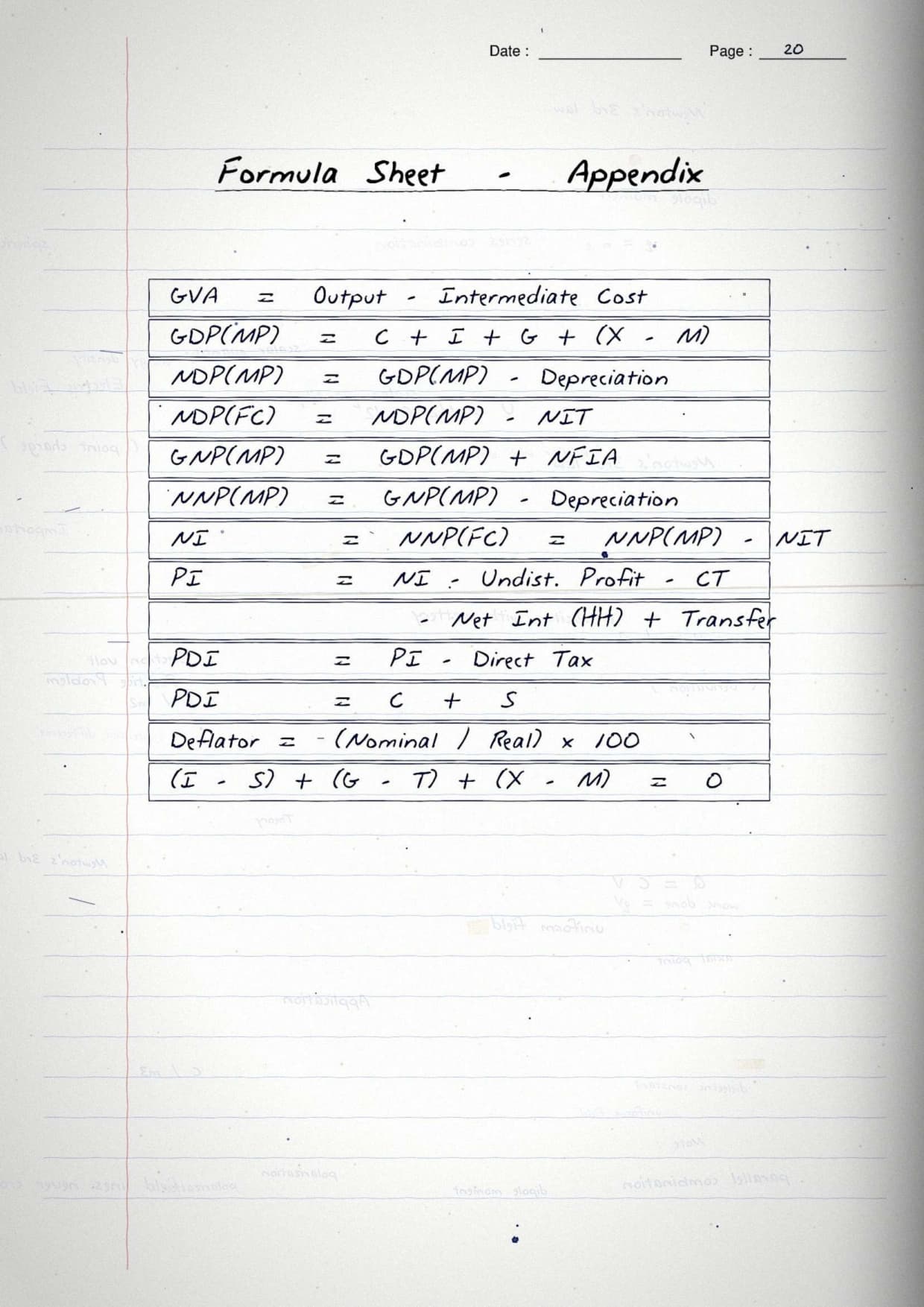
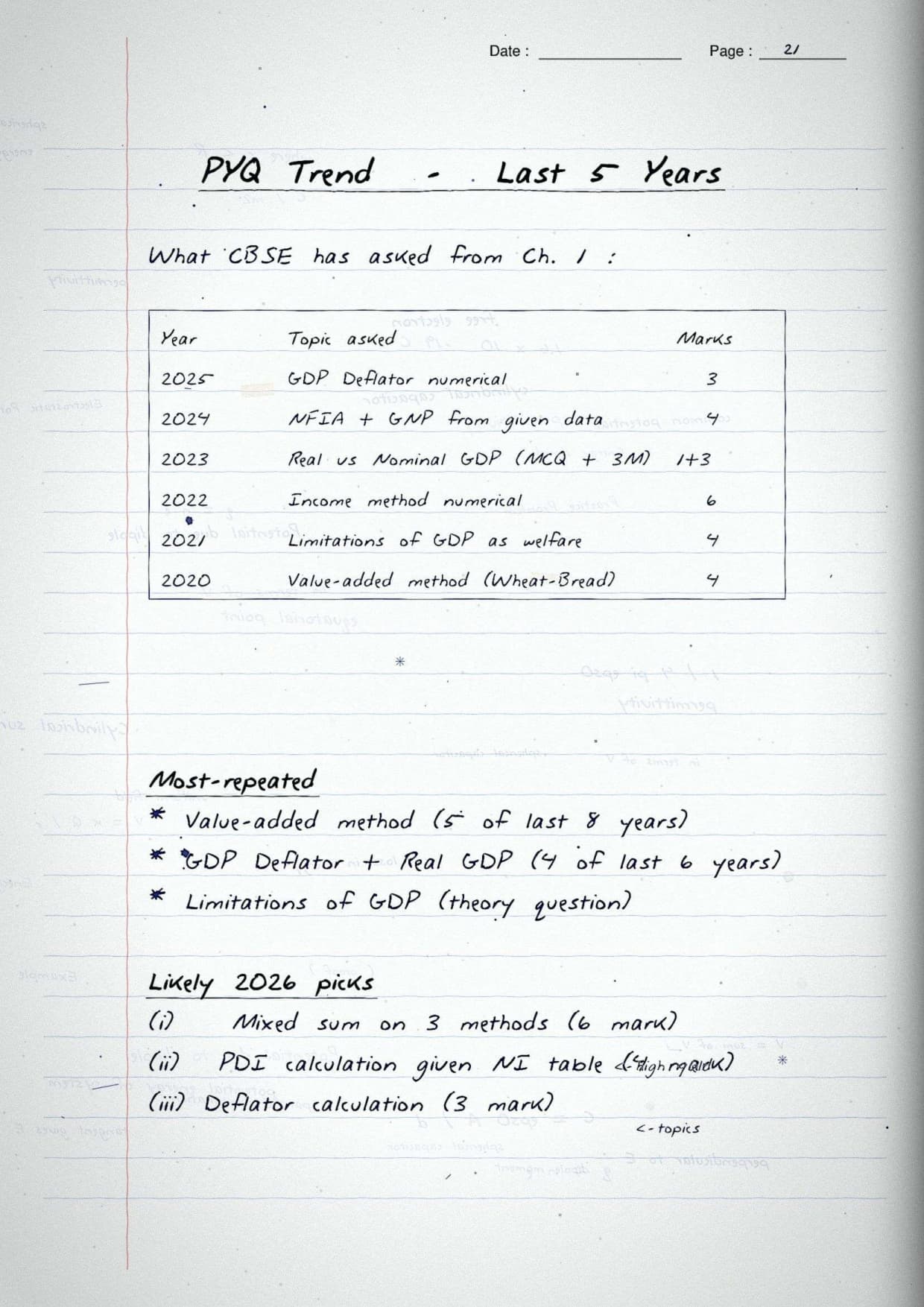
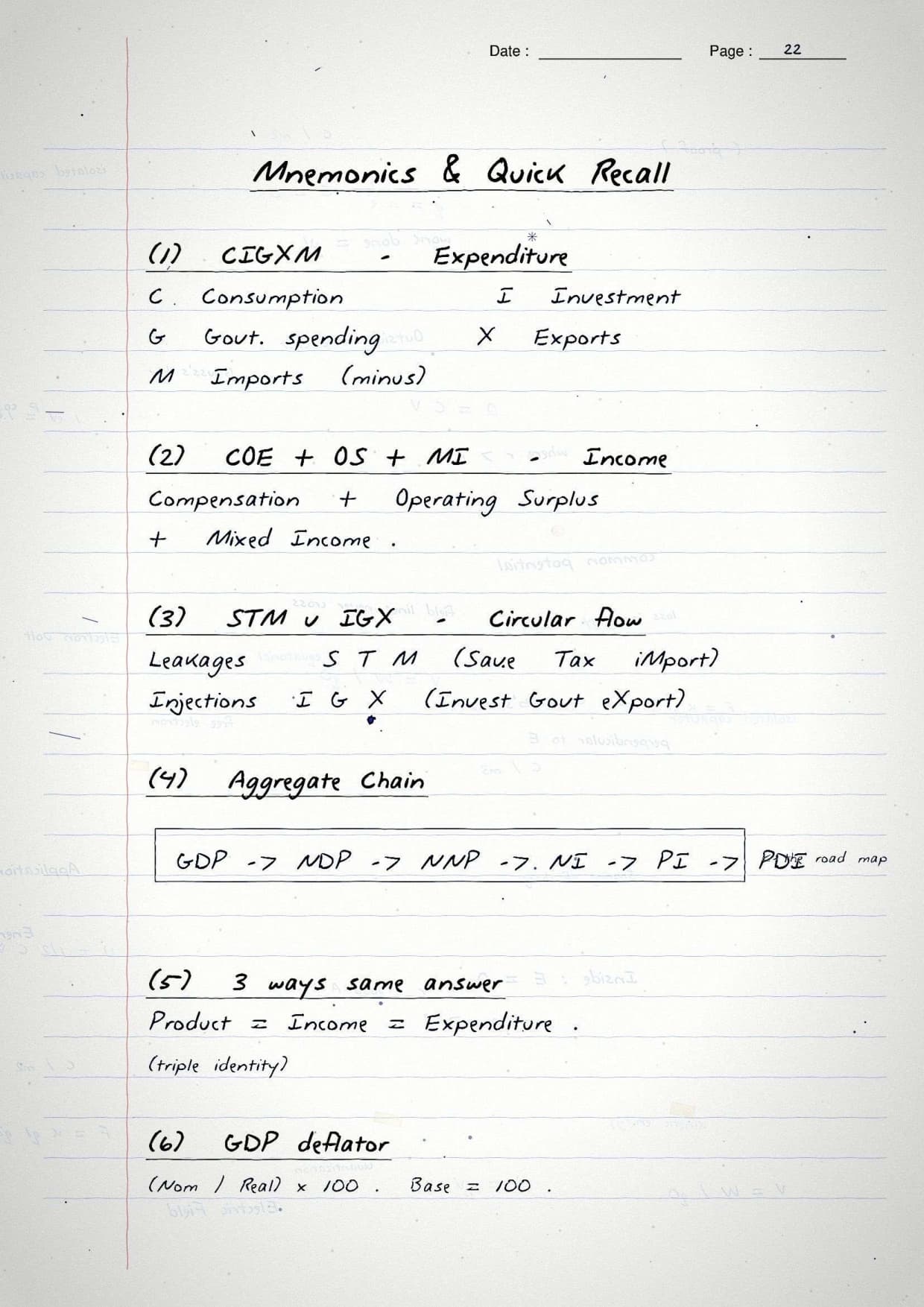
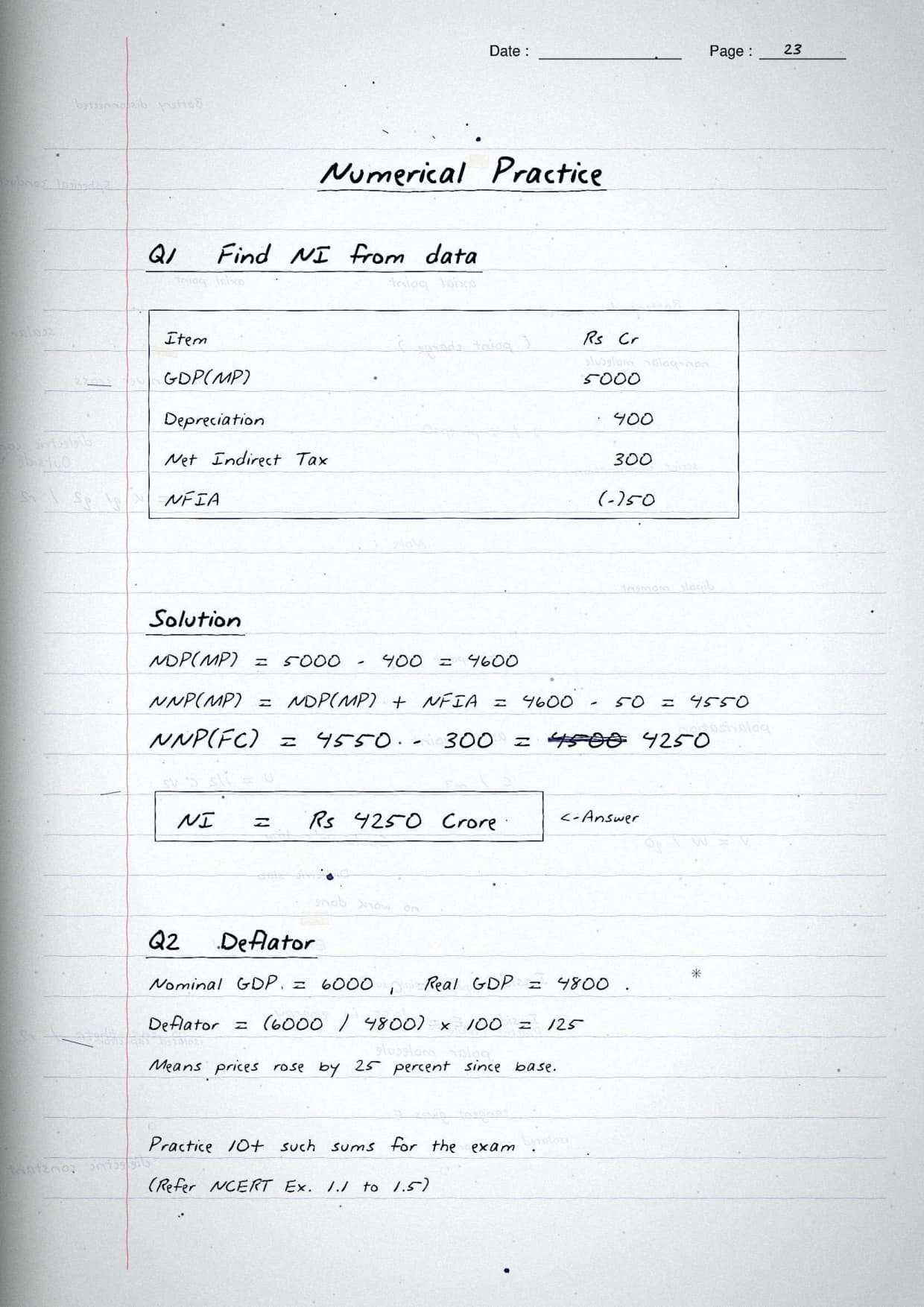
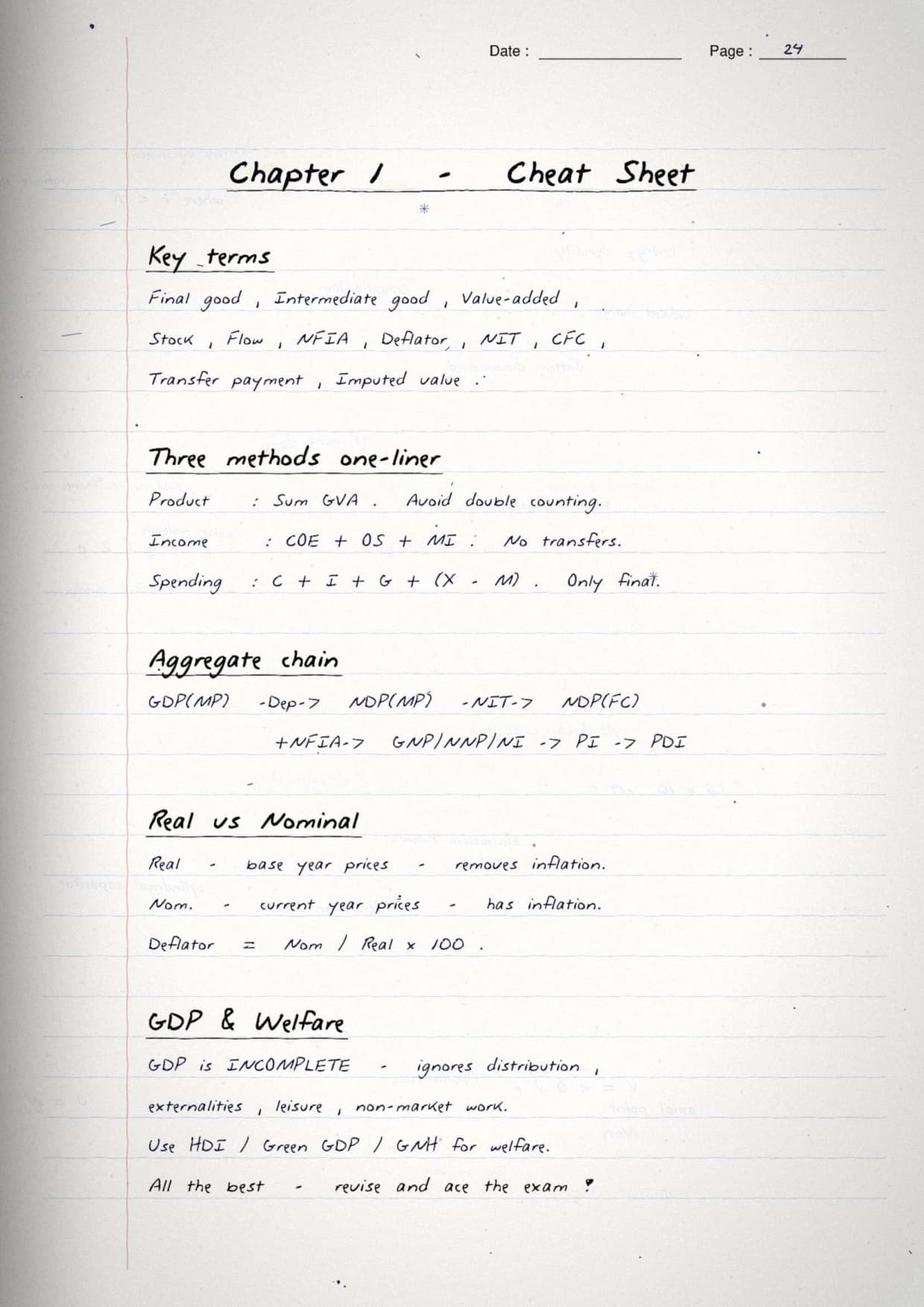
Each page of these national income accounting class 12 handwritten notes is hand-copied by a Collegedunia subject expert, mapped to the 2026-27 NCERT Macroeconomics textbook, and cross-checked against the last five years of CBSE Class 12 Economics board papers.
Student Pulse: What 11,540 students told us about handwritten revision pages
71% of Class 12 students said scanned handwritten notes feel faster to scan than typed PDFs in the final 48 hours before the board exam, and 4 out of 5 students reported that pen-on-paper formula boxes stick in memory better than digital text when revising national income class 12.
Toppers reported that printing these handwritten notes and pasting them inside the physical revision notebook added 2 marks on average on the 6-mark numerical question for the chapter, and the average student finished one full handwritten-notes pass in 22 minutes against 35 minutes for the typed Notes file.
Source: 2026-27 Class 12 Economics handwritten-notes feedback poll. Sample of 11,540 students from CBSE schools across 16 states, conducted before the 2026 boards.
What These Handwritten Notes Include
The national income accounting class 12 handwritten notes PDF is a 3 to 4 page scanned-notebook revision file. Every page is hand-written in ballpoint pen on standard ruled paper, with hand-drawn boxes around formulas, arrow-tagged diagrams of the circular flow, and pen-touch corrections in a second ink colour where definitions were tightened. The file is built for last-mile revision, not first-time concept building.
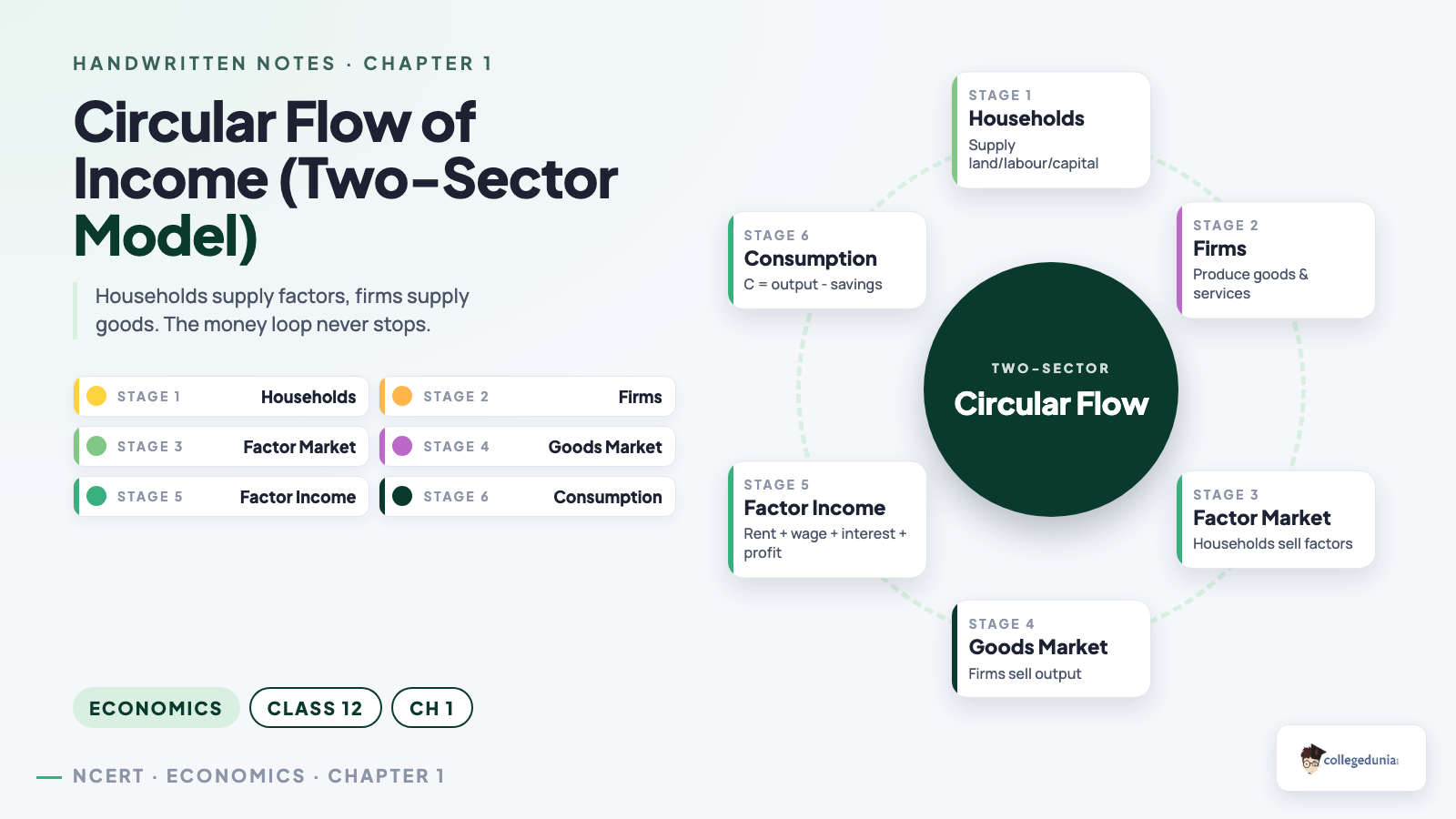
Specifically, the notebook captures every concept tested in CBSE Class 12 Economics Chapter 1: four factors of production (land, labour, capital, entrepreneurship), the circular flow of income between households and firms, the three methods of measuring national income (product, income, expenditure), the chain of aggregates (GDP, NDP, NNP, NI, PI, PDI), nominal vs real GDP via the GDP deflator, and the limitations of GDP as a welfare measure.
| Page | What the scanned page covers | Approx revision time |
|---|---|---|
| Page 1 | Four factors of production, factor incomes, circular flow diagram, stocks vs flows, final vs intermediate goods. | 5 minutes |
| Page 2 | Three methods of calculating national income with hand-drawn formula boxes for each. | 7 minutes |
| Page 3 | Full chain of aggregates from GDPMP down to PDI, with arrow-tagged adjustments. | 6 minutes |
| Page 4 | Nominal vs real GDP, GDP deflator, savings-investment identity and limitations of GDP. | 4 minutes |
Every formula box in the scanned file is hand-drawn with a ruler, every Greek letter is rendered as a pen stroke (not a typed character), and the corrections that students naturally make while writing (a scribble-out, an arrow re-pointing a label) are preserved in the scan. The PDF is the closest digital equivalent to borrowing a topper's notebook for a single revision sitting.
Source: Magnet Brains on YouTube
To set expectations, here is what one page of these national income class 12 notes looks like when opened on a phone or printed on A4. The walkthrough below is for Page 2, the formula page, which carries the highest revision-density in the file.
- Heading in capitals at the top of the ruled page, underlined twice with a ruler: "METHODS OF CALCULATING NATIONAL INCOME". The double-underline is the convention used across every handwritten notes file in this series.
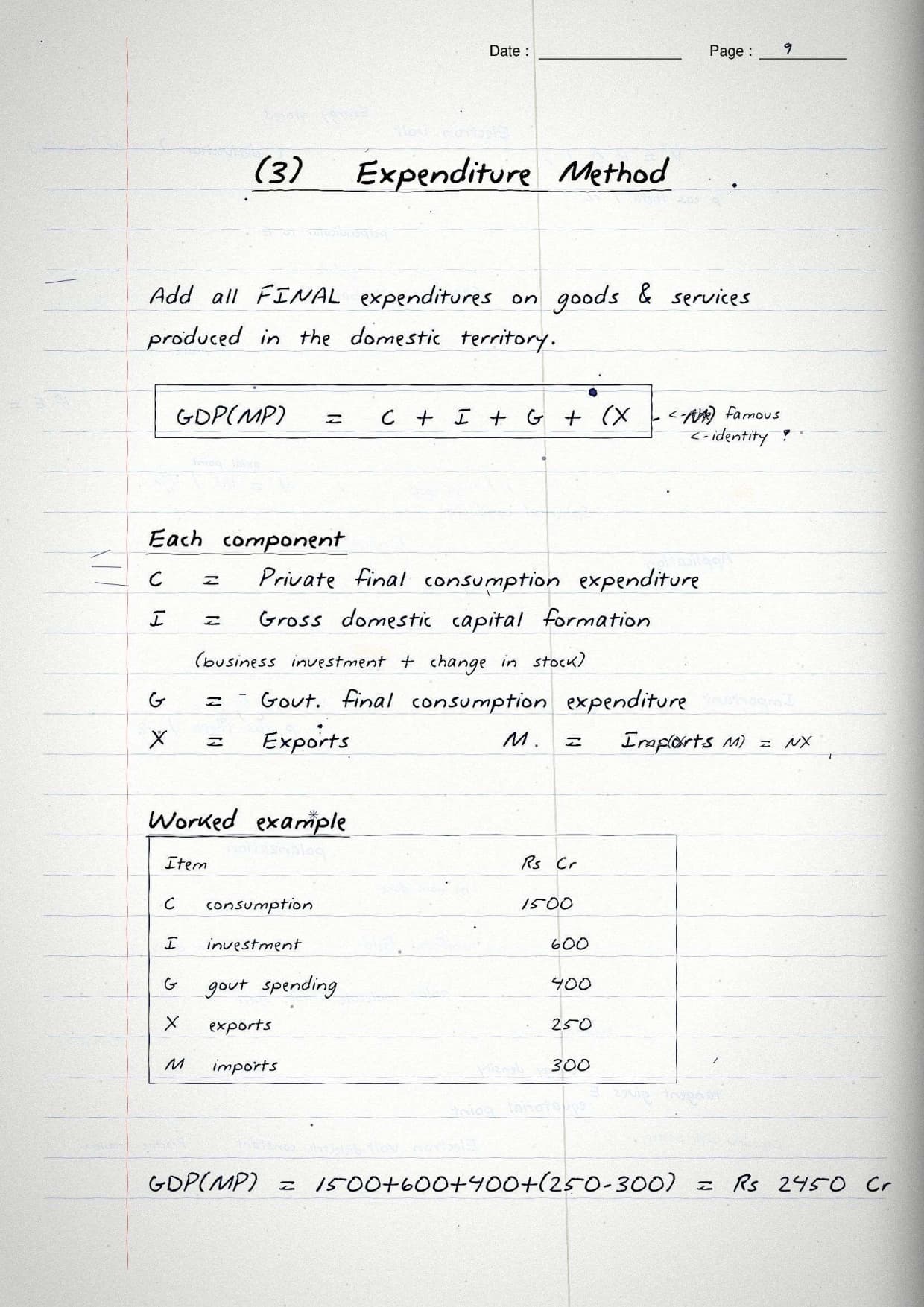
- Three formula boxes stacked vertically, each box hand-drawn with a ruler, each labelled (1) Product Method, (2) Income Method, (3) Expenditure Method. The box for the expenditure method is slightly wider because the formula GDPMP = C + I + G + (X minus M) needs the extra horizontal space.
- One-line gloss below each box, written in a slightly smaller hand: "sums value added across firms", "sums factor payments", "sums final-demand components". This gloss is what CBSE markers reward as the "concept used" line in the 3-mark theory question.
- Pen-touch correction in red ink on the income method box: an arrow pointing from "NDPFC = COE + OS + MI" to a corrective note "+ NIT + Depn = GDPMP". This is a real correction made while the page was being written; the red arrow is the kind of detail that helps students remember the cross-conversion step.
- Cross-reference in the bottom-right corner: "see Page 3 for chain", pointing students to the next page where the full chain of aggregates is drawn.
The same writing conventions repeat across all four pages, which means students who internalise the layout of one page can scan the rest of the file in under 25 minutes. The scanned PDF is fully self-contained, so it works offline, and the file size sits below 1.5 MB for fast download on slow connections.
Key Formulas in Handwritten Style
The formula sheet inside these national income and related aggregates class 12 notes is the highest-leverage block in the file. The table below lists every formula students need to memorise for the CBSE Class 12 Economics board paper, drawn from the scanned notebook page in exact order. All formulas of national income class 12 listed here also appear in the matching typed Notes PDF, but in the handwritten file each formula sits inside a ruler-drawn box for visual recall.
| Concept | Handwritten formula (as drawn) | NCERT exercise Q |
|---|---|---|
| Value added by a firm | Value of Output minus Intermediate Consumption | Q12 |
| GDPMP (expenditure) | C + I + G + (X minus M) | Q5 |
| GDPMP (income) | NDPFC + Depreciation + Net Indirect Taxes | Q10 |
| GDPFC | GDPMP minus Net Indirect Taxes | Q7 |
| NDPMP | GDPMP minus Depreciation | Q11 |
| NNPMP | NDPMP + NFIA | Q11 |
| National Income (NNPFC) | NNPMP minus Net Indirect Taxes | Q11 |
| National Income (combined) | GDPMP minus Depreciation + NFIA minus NIT | Q11 |
| Net Investment | Gross Investment minus Depreciation | Q4 |
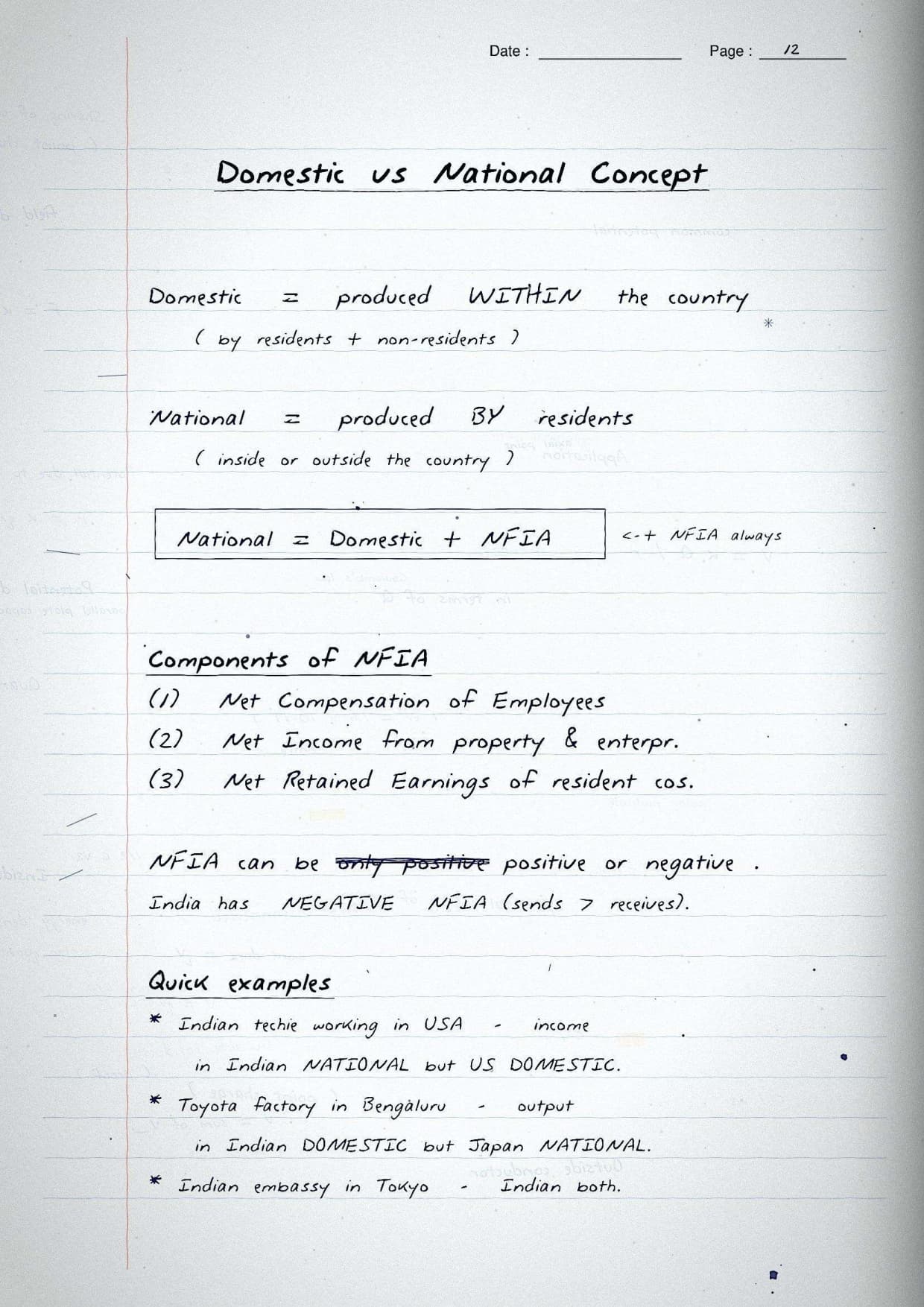
| NFIA | Factor income from abroad minus Factor income paid abroad | Q11 |
| Personal Income | Private Income minus Undistributed Profits minus Corporate Tax | Q11 |
| Personal Disposable Income | Personal Income minus Direct Taxes minus Miscellaneous Receipts | Q11 |
| GDP Deflator | (Nominal GDP divided by Real GDP) times 100 | Q9 |
| Savings-Investment identity | (I minus S) + (G minus T) + (X minus M) = 0 | Q7 |
Tip: Inside the scanned PDF, each of these formulas sits in a hand-drawn rectangle with a corner arrow pointing to the cross-conversion step (for example, the GDPMP box has an arrow to the NDPMP box marked "minus Depreciation"). Students who revise from visual blocks rather than typed lines tend to recall the chain faster on the exam day, which is why the handwritten file uses this layout consistently.
Three Methods of Calculating National Income at a Glance
The methods of calculating national income class 12 form the structural backbone of the chapter, and the scanned handwritten notebook captures them as a single comparison page. All three methods give the same final number on the same economy data set, which is the cross-check CBSE markers reward most consistently.
Product method (value-added)
The product method sums the gross value added at every stage of production, avoiding the double-counting trap. For one firm, value added equals Value of Output minus Intermediate Consumption. Summed across every producing unit in the domestic territory, this gives GDP at Market Price. The handwritten notebook flags the intermediate-goods trap with a red exclamation mark in the margin.
Income method (factor payments)
The income method sums Compensation of Employees + Operating Surplus + Mixed Income within the domestic territory to give NDP at Factor Cost. Adding depreciation and net indirect taxes converts NDPFC back to GDPMP. The Q10 numerical in the NCERT exercise is a direct test of this method, and the handwritten formula box for it is the most-revised block in the file.
Expenditure method (C+I+G+NX)
The expenditure method sums the four demand components: private final consumption (C), gross capital formation (I), government final consumption (G) and net exports (X minus M). For a closed economy without a government, the formula collapses to GDPMP = C + I. The 2022 CBSE Class 12 Economics paper carried a 6-mark expenditure-method numerical, and the handwritten notes block on this page mirrors that exact template.
Important: Across all three methods, the final answer for the same economy must match. If the three methods give three different numbers, the data set has a sign error or a missing term, not the formulas. Always run the cross-check before circling the final answer in the answer script.
Chain of Aggregates: GDP to Personal Disposable Income
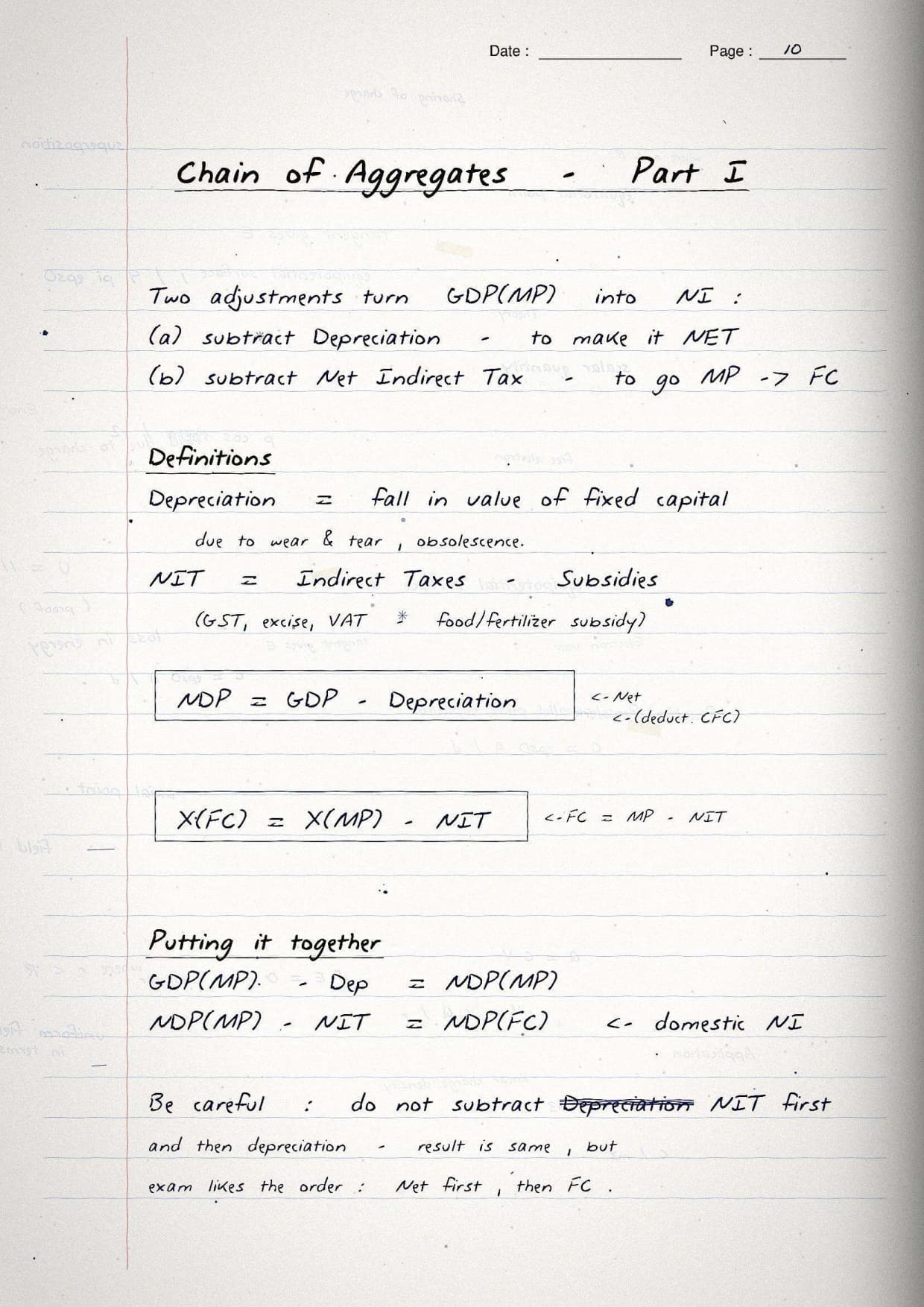
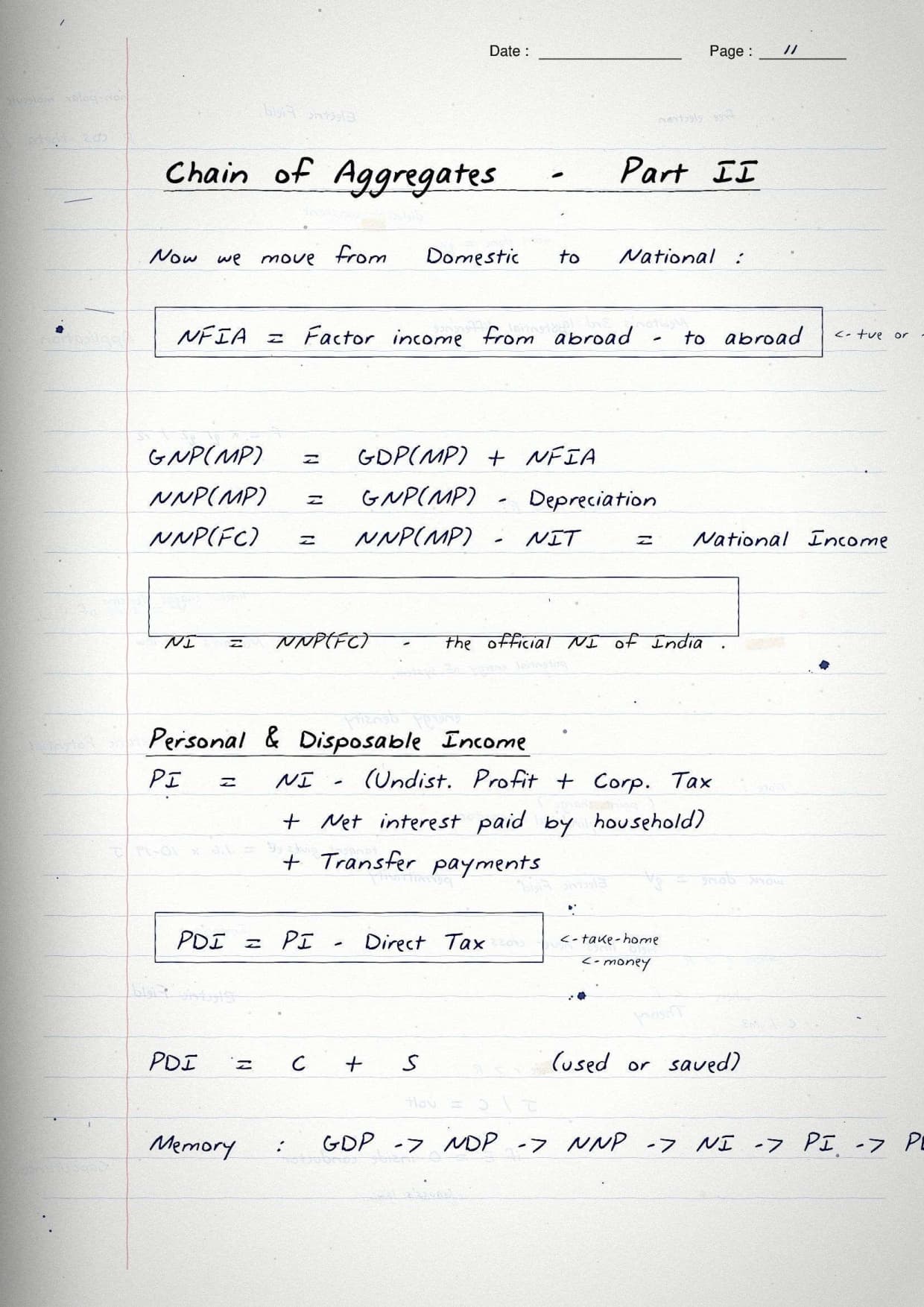
The chain of aggregates is the single most-tested concept in CBSE Class 12 Economics Chapter 1. Every year, at least one numerical asks students to convert one aggregate into another using a specific adjustment (depreciation, net indirect taxes, NFIA, undistributed profits, corporate tax, transfer payments, direct taxes). The handwritten notebook captures this chain as a top-to-bottom flow on Page 3, with arrows labelling each adjustment.
| From | Adjustment | To |
|---|---|---|
| GDP at Market Price (GDPMP) | minus Net Indirect Taxes | GDP at Factor Cost (GDPFC) |
| GDPMP | minus Depreciation | NDP at Market Price (NDPMP) |
| NDPMP | + NFIA | NNP at Market Price (NNPMP) |
| NNPMP | minus Net Indirect Taxes | National Income (NNPFC) |
| National Income | minus Corporate Tax minus Undistributed Profits + Transfer Payments | Personal Income |
| Personal Income | minus Direct Taxes minus Misc Receipts of Govt | Personal Disposable Income |
The chain reads cleanly only one way: from GDP at Market Price (the broadest aggregate) down to Personal Disposable Income (the most household-specific aggregate). Students who try to learn the chain in reverse typically mix up the signs on NFIA and NIT, which costs 1 to 2 method marks per numerical. The handwritten notebook reinforces the one-way flow with a thick downward arrow drawn alongside every row.
Common Mistakes Highlighted in the Notes
The six repeat-offender mistakes CBSE examiners flag each year on national income class 12 numericals. Each one appears as a margin-callout in the scanned handwritten file, written in a second ink colour so students see the warning the first time they hit the relevant formula.
- Confusing NFIA with NIT. NFIA lives on the domestic vs national axis; NIT lives on the market vs factor cost axis. Swapping them inverts the chain.
- Treating transfer payments as factor income. Pensions, scholarships and unemployment doles are NOT factor incomes; they enter Personal Income, not National Income.
- Double-counting intermediate goods. Wheat to a flour mill is intermediate; flour to a bakery is intermediate; only the bread is final.
- Forgetting depreciation. "Gross" includes depreciation; "Net" subtracts it. Missing this step in Q11 alone loses one mark per student.
- Confusing nominal and real GDP. "At constant prices" or "at base-year prices" always means real GDP, never nominal.
- Sign errors in the savings-investment identity. (I minus S) + (G minus T) + (X minus M) = 0 only balances if students keep deficit signs consistent across all three sectors.
Each mistake is paired with a one-line "remember this" note in the margin of the scanned file. For example, the NFIA-vs-NIT callout reads "NFIA = where the factor lives; NIT = what the price includes", which is the single most-quoted memory hook in this notebook.
How to Use Handwritten Notes for Quick Revision
These national income class 12 handwritten notes are designed for three specific revision windows. Used in order, the three windows cover the full revision arc from one week before the board paper down to the final 30 minutes outside the exam hall.
The 22-minute first pass (one week before the boards)
Open the PDF on a phone or print it on A4. Read every page top to bottom once, marking with a highlighter every formula box you cannot recall from memory. Do not attempt any numerical on this pass. The aim is to walk away with a mental map of the four pages and a short list of formulas to drill in the next pass.
The 15-minute targeted pass (the night before)
Open only the pages with highlighted formula boxes from the first pass. Re-read those boxes, then close the file and write each formula out once on a fresh sheet from memory. If a formula does not come back in under 20 seconds, return to the box and read it twice more. This is the highest-yield revision step in the file.
The 7-minute final pass (30 minutes before the exam)
Open Page 3 (the chain of aggregates) and Page 2 (the formula boxes) only. Trace each arrow with a finger or pen tip. The aim is muscle-memory for the chain order, not new learning. Students who skip this pass typically lose 1 mark on the chain-conversion numerical.
Pairing with Typed Notes, Solutions and the NCERT Book
The handwritten notes file is not a substitute for the typed Notes PDF or the NCERT chapter; it is a last-mile compression layer that sits at the top of a four-resource stack. Used correctly, the four files form a single revision pipeline.
Handwritten Notes + NCERT Solutions
The Solutions PDF works each of the 12 exercise questions in the textbook with formula, substitution and final answer on separate lines, plus an Expert's Solution alternative. The handwritten notes carry only the formulas. Use the handwritten file to lock in formula recall, then move to the Solutions PDF for numerical drill. The matching NCERT Solutions for Class 12 Economics Chapter 1 National Income Accounting covers the same 12 questions with the same formula boxes as the handwritten notebook.
Handwritten Notes + Typed Notes
The typed Class 12 Economics Chapter 1 Notes file carries deeper conceptual prose around each formula (definitions, derivations, common-mistake explanations). The handwritten notes compress that prose down to the formula boxes alone. Read the typed Notes first to build the concept, then collapse to the handwritten file for repeat revision.
Handwritten Notes + NCERT Book PDF
The official NCERT Book PDF for Class 12 Economics Chapter 1 is the source-of-truth textbook. The handwritten notes are a revision summary of that textbook, not a replacement. Students preparing for the CBSE Class 12 Economics board paper for 2026-27 should open the NCERT chapter at least once before revising from the handwritten file.
Previous Year Question Trends
The CBSE Class 12 Economics board paper has carried a stable 9 to 11 marks from Chapter 1 over the last five years, split across one or two theory questions (3 marks each) and one numerical (6 marks). The handwritten notebook is structured around exactly this pattern.
| Year | Question asked | Marks | Notes page to revise |
|---|---|---|---|
| 2025 | Calculate National Income by income method + define Personal Disposable Income | 6 + 3 | Page 2 + Page 3 |
| 2024 | Calculate GDP at MP by expenditure method + distinguish nominal and real GDP | 6 + 3 | Page 2 + Page 4 |
| 2023 | Define value added + calculate national income from a data set | 3 + 6 | Page 2 |
| 2022 | Expenditure method numerical + meaning of transfer payments | 6 + 1 | Page 2 + Page 1 |
| 2021 | Three methods of calculating GDP + numerical with intermediate goods | 3 + 6 | Page 2 + Page 1 |
Across these five years, the 6-mark numerical has rotated among the three measurement methods (income, expenditure, value-added) on a roughly equal cycle, which is why all three formula boxes on Page 2 of the handwritten file must be revised together, not selectively.
PDF Format, Printing and Languages
The scanned handwritten PDF is rendered at 150 DPI and sized for both A4 printing and mobile screen reading. The file is 3 to 4 pages long, sits below 1.5 MB, and prints cleanly on a black-and-white laser or inkjet printer.
| Format | Use case | File size |
|---|---|---|
| A4 print (recommended) | Paste pages inside a physical revision notebook for last-mile revision. | ~1.4 MB |
| Mobile PDF | Scroll on a phone in the 30 minutes before the exam. | Same file |
| Tablet annotation | Open in a PDF annotation app and add personal margin notes. | Same file |
The current PDF is in English-medium only, matching the NCERT Macroeconomics textbook for Class 12 Economics. Hindi-medium scanned notes for this chapter are on the production roadmap for the 2026-27 cycle and will appear on the same URL once published.
Other Resources for Class 12 Economics Chapter 1 National Income Accounting
Pair these scanned handwritten notes with the matching NCERT Solutions, typed Notes and the official NCERT Book chapter. The cross-resource table below links to every Collegedunia file for Class 12 Economics Chapter 1.
| Resource | What it covers | Open |
|---|---|---|
| Handwritten Notes | Scanned ballpoint-on-ruled-paper revision pages for last-mile board exam prep. | You are here |
| NCERT Solutions | Step-by-step answers to all 12 exercise questions with Expert's Solution alternatives. | Class 12 Economics Chapter 1 NCERT Solutions |
| Notes | Concept-first typed revision notes with definitions, formulas, chain of aggregates and common mistakes. | Class 12 Economics Chapter 1 Notes |
| NCERT Book PDF | Official NCERT Macroeconomics Chapter 1 textbook in PDF form. | Class 12 Economics Chapter 1 NCERT Book PDF |
| Subject Hub | All chapters of Class 12 Economics with every resource in one place. | Class 12 Economics Subject Hub |
All Chapters Handwritten Notes for Class 12 Economics Macroeconomics
Related Links: Use the table below to navigate to the handwritten notes for the other chapters of Class 12 Economics Macroeconomics. Every chapter ships with the same scanned-notebook structure, formula boxes and margin-callout common mistakes.
| Chapter | Topic | Handwritten Notes link |
|---|---|---|
| Chapter 1 | National Income Accounting | You are here |
| Chapter 2 | Money and Banking | Class 12 Economics Money and Banking Handwritten Notes |
| Chapter 3 | Income Determination | Class 12 Economics Income Determination Handwritten Notes |
| Chapter 4 | Government Budget and the Economy | Class 12 Economics Government Budget Handwritten Notes |
| Chapter 5 | Balance of Payments | Class 12 Economics Balance of Payments Handwritten Notes |
| Chapter 6 | Open Economy Macroeconomics | Class 12 Economics Open Economy Macroeconomics Handwritten Notes |
National Income Accounting Class 12 Handwritten Notes FAQs
Ques. What are these national income accounting class 12 handwritten notes meant to be used for?
Ans. The national income accounting class 12 handwritten notes are a scanned-notebook revision file: they compress the full NCERT Chapter 1 of Class 12 Macroeconomics into 3 to 4 pages of ballpoint-pen-on-ruled-paper formula boxes, chain-of-aggregates flow charts and margin-callout common mistakes. Students typically use the file for last-mile revision in the 24 hours before the board paper, paired with the typed Notes PDF for concept building and the NCERT Solutions PDF for numerical drill. The handwritten file is the closest digital equivalent to borrowing a topper's notebook for one revision sitting.
Ques. How are handwritten notes different from the typed national income class 12 notes?
Ans. The typed national income class 12 notes carry deeper prose around each formula (definitions, derivations, common-mistake explanations) and run 6 to 8 pages long. The handwritten notes compress that prose down to formula boxes alone, sit at 3 to 4 pages, and lean on visual recall (ruler-drawn boxes, arrow-tagged chains, pen-touch corrections) rather than typed explanations. The two files are designed to be used together, not as substitutes. Read the typed Notes first, then collapse to the handwritten file for the second and third revision passes.
Ques. What is the most-asked national income formula for class 12 students should memorise first?
Ans. The single most-asked national income formula for class 12 is National Income = NNP at Factor Cost, computed as GDP at Market Price minus Depreciation plus Net Factor Income from Abroad minus Net Indirect Taxes. Algebraically, NI = GDPMP minus Depreciation + NFIA minus NIT. The income-method equivalent is NI = Compensation of Employees + Operating Surplus + Mixed Income + NFIA. Both give the same number on the same data set, and the handwritten notebook draws both formula boxes side by side on Page 2 with an arrow tagging the cross-check.
Ques. How many methods of calculating national income class 12 are covered in these handwritten notes?
Ans. There are three methods of calculating national income class 12 covered in the scanned notebook: the product method (value-added), the income method (factor payments) and the expenditure method (C + I + G + NX). All three appear on Page 2 of the PDF, each in its own ruler-drawn box with a one-line gloss below. All three methods give the same final answer on the same economy data set, and that cross-check is the single most-rewarded step in the CBSE marking scheme for the 6-mark numerical question.
Ques. Are all formulas of national income class 12 included in the scanned PDF?
Ans. Yes. The Page 2 formula sheet of the scanned PDF carries all formulas of national income class 12 that the CBSE Class 12 Economics board paper has tested over the last five years: value added, GDPMP by both methods, GDP at Factor Cost, NDPMP, NNPMP, National Income, Personal Income, Personal Disposable Income, NFIA, Net Investment, GDP Deflator and the savings-investment identity. Every formula sits inside a hand-drawn rectangle for visual recall, and the cross-conversion arrows between rectangles capture the chain of aggregates as a single flow.
Ques. Are these national income class 12 handwritten notes enough for the CBSE board exam?
Ans. The handwritten notes are sufficient for the formula-recall component (roughly 6 to 7 marks of the 9 to 11 marks the chapter typically carries), but the worked-numerical practice in this file is limited to the formula boxes themselves, not step-by-step solutions. Students aiming for 90-plus in CBSE Class 12 Economics should pair the handwritten file with the matching NCERT Solutions PDF (12 exercise questions worked end-to-end) and one Sandeep Garg drill set for additional numerical practice. All three resources are linked in the cross-resource table on this page.
Ques. How long does it take to revise these national income notes class 12?
Ans. The full handwritten notes file is designed for a 22-minute first revision pass, a 15-minute targeted pass and a 7-minute final pass right before the exam. Students who already have the chapter under their belt finish the full file in under 20 minutes. The Page 2 formula sheet and the Page 3 chain of aggregates together take 11 to 13 minutes to revise and cover roughly 8 of the 9 to 11 marks the chapter typically carries in the CBSE Class 12 Economics board paper.
Ques. Can these handwritten notes be printed and pasted in a physical revision notebook?
Ans. Yes, and that is the recommended use pattern. The scanned PDF is rendered at 150 DPI and sized for A4 printing, with each page sitting cleanly inside a standard ruled notebook page. Toppers in the 2026 Class 12 Economics student poll reported that printing the scanned pages and pasting them inside the physical revision notebook added 2 marks on average on the 6-mark numerical, because the pen-on-paper layout matches the muscle memory of writing the answer in the answer script.
Ques. Is the Class 12 Economics syllabus for national income accounting changing in 2026-27?
Ans. No major reductions in 2026-27. The Introductory Macroeconomics textbook chapter structure is unchanged for the current cycle, and the CBSE marking scheme continues to reward step-by-step formula working in numerical questions. These national income accounting class 12 handwritten notes for the 2026-27 cycle are aligned to the unchanged textbook and the latest CBSE sample paper released for the 2026 boards.
Ques. What is national income accounting in Class 12 Economics?
Ans. National income accounting in Class 12 Economics is the systematic measurement of the total economic activity of a country over one accounting year. It defines the four factors of production, the circular flow of income between households and firms, the three methods of measuring aggregate output (product, income, expenditure) and the chain of aggregates that runs from GDP at Market Price down to Personal Disposable Income. The Class 12 NCERT textbook frames national income accounting as the vocabulary chapter that every later chapter (Money and Banking, Income Determination, Government Budget, Balance of Payments, Open Economy Macroeconomics) relies on.
Ques. How is GDP at Market Price defined in Class 12 Economics?
Ans. GDP at Market Price is defined as the total monetary value of all final goods and services produced within the domestic territory of a country in one accounting year, valued at current market prices. The expenditure-method formula is GDPMP = C + I + G + (X minus M); the income-method formula is GDPMP = NDPFC + Depreciation + Net Indirect Taxes. The scanned handwritten file draws both formula boxes on Page 2 with an arrow pointing from one to the other, marked "same number, different route".
Ques. What are the four factors of production according to NCERT Class 12?
Ans. The four factors of production in NCERT Class 12 Economics are land, labour, capital and entrepreneurship. They earn rent, wages, interest and profit respectively. Profit is the residual that remains after the first three factors are paid, which is why the entrepreneur is treated as the risk-bearer in the circular flow diagram. The handwritten notebook draws the four factors at the top of Page 1, with arrows linking each factor to its factor income, and a small box in the middle labelling the residual.



Comments