




Structure-based questions on Biomolecules are mostly asked in CBSE, JEE, and NEET exams every year. The Handwritten notes on Class 12 Chemistry Chapter 10 Biomolecules will help you understand the definitions, chemical reactions, and structure in a simplified way.
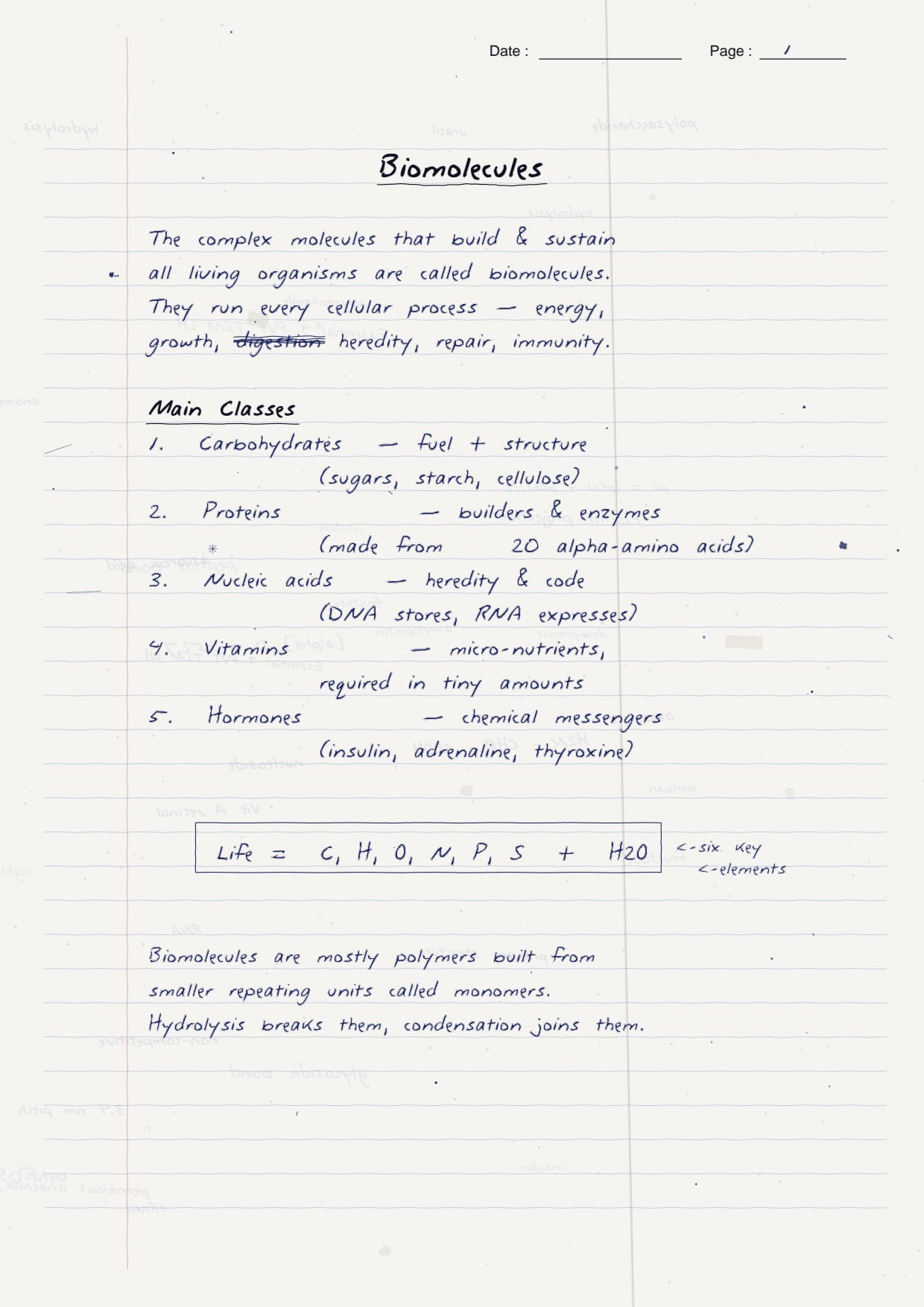
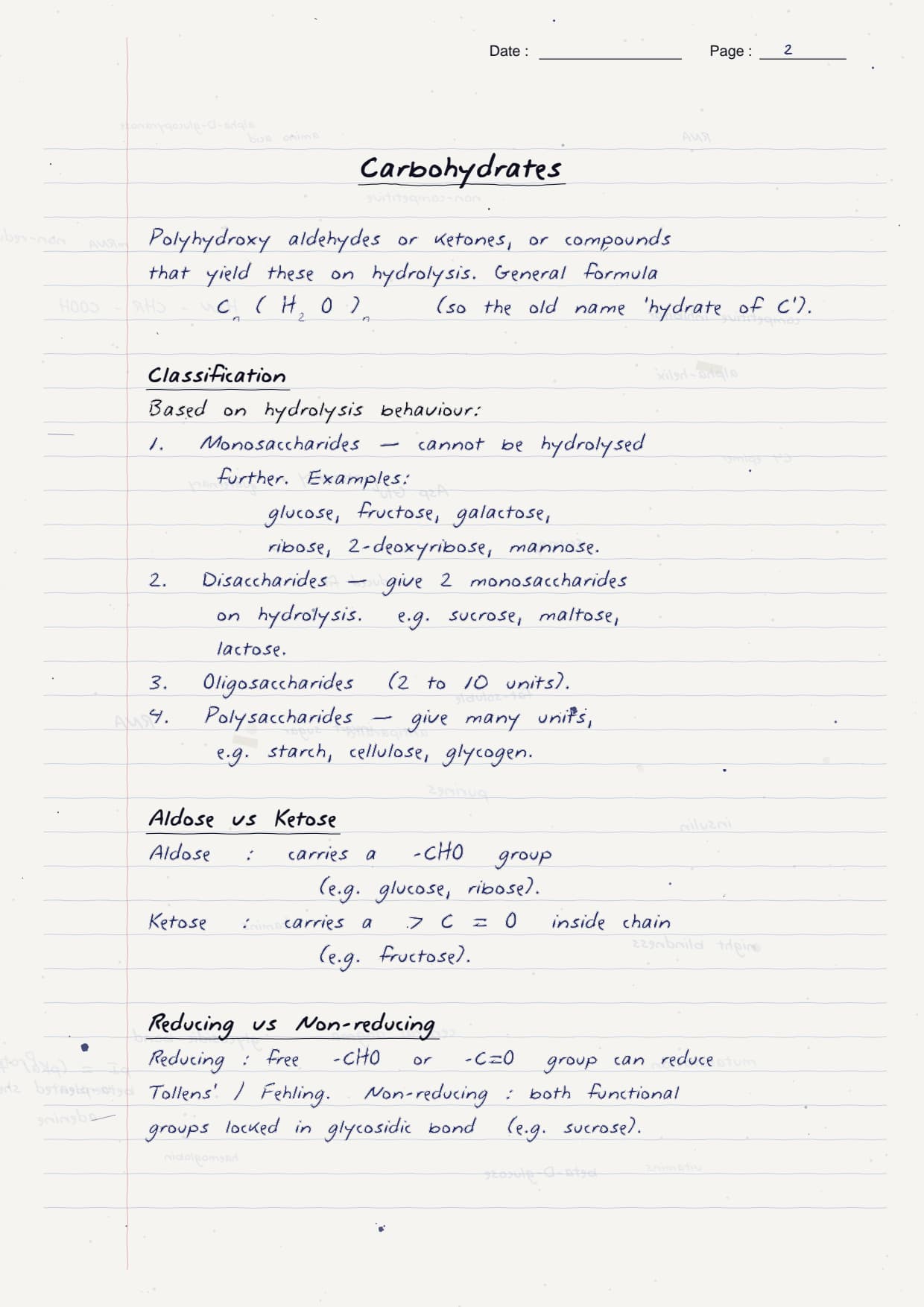
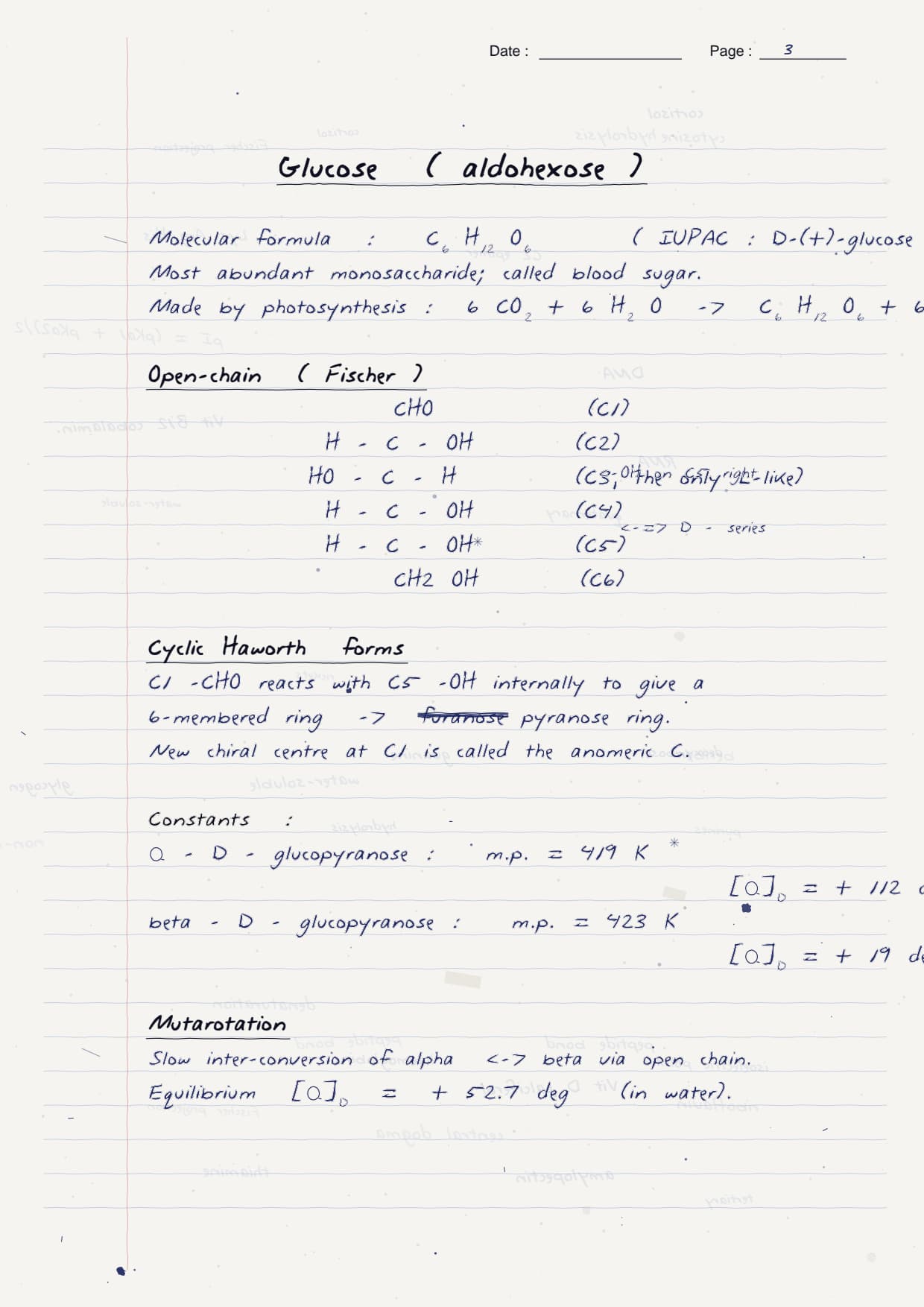
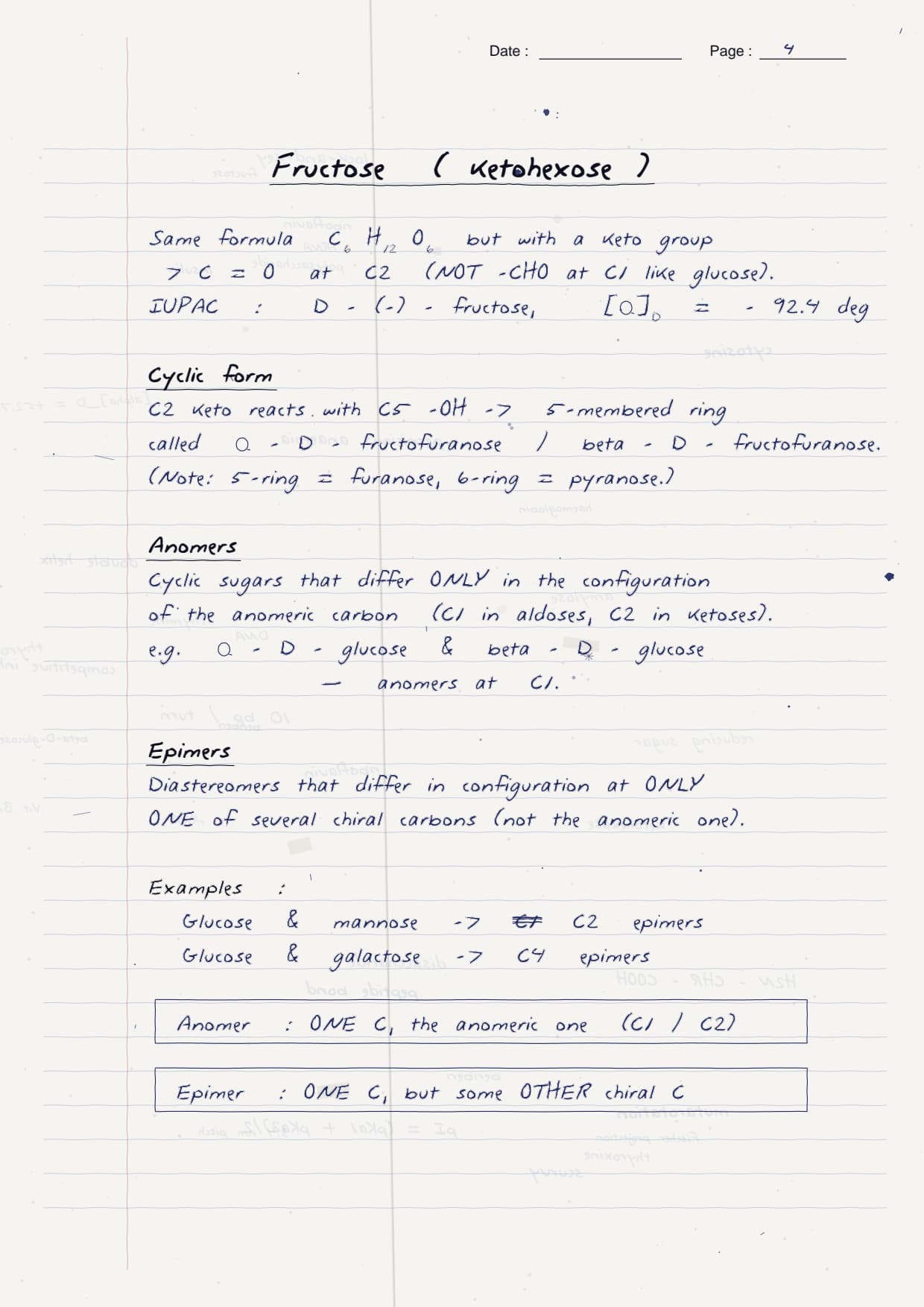
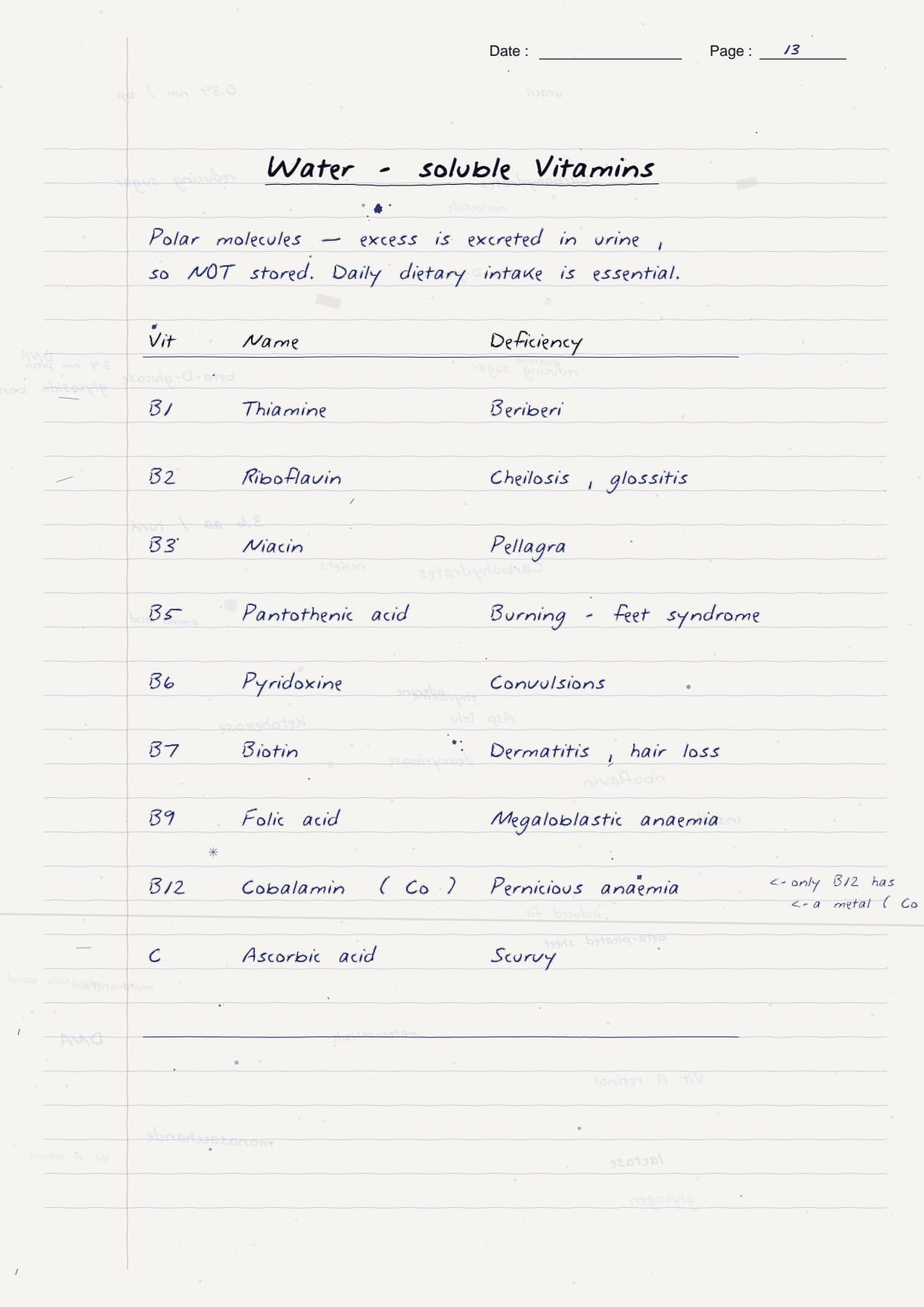
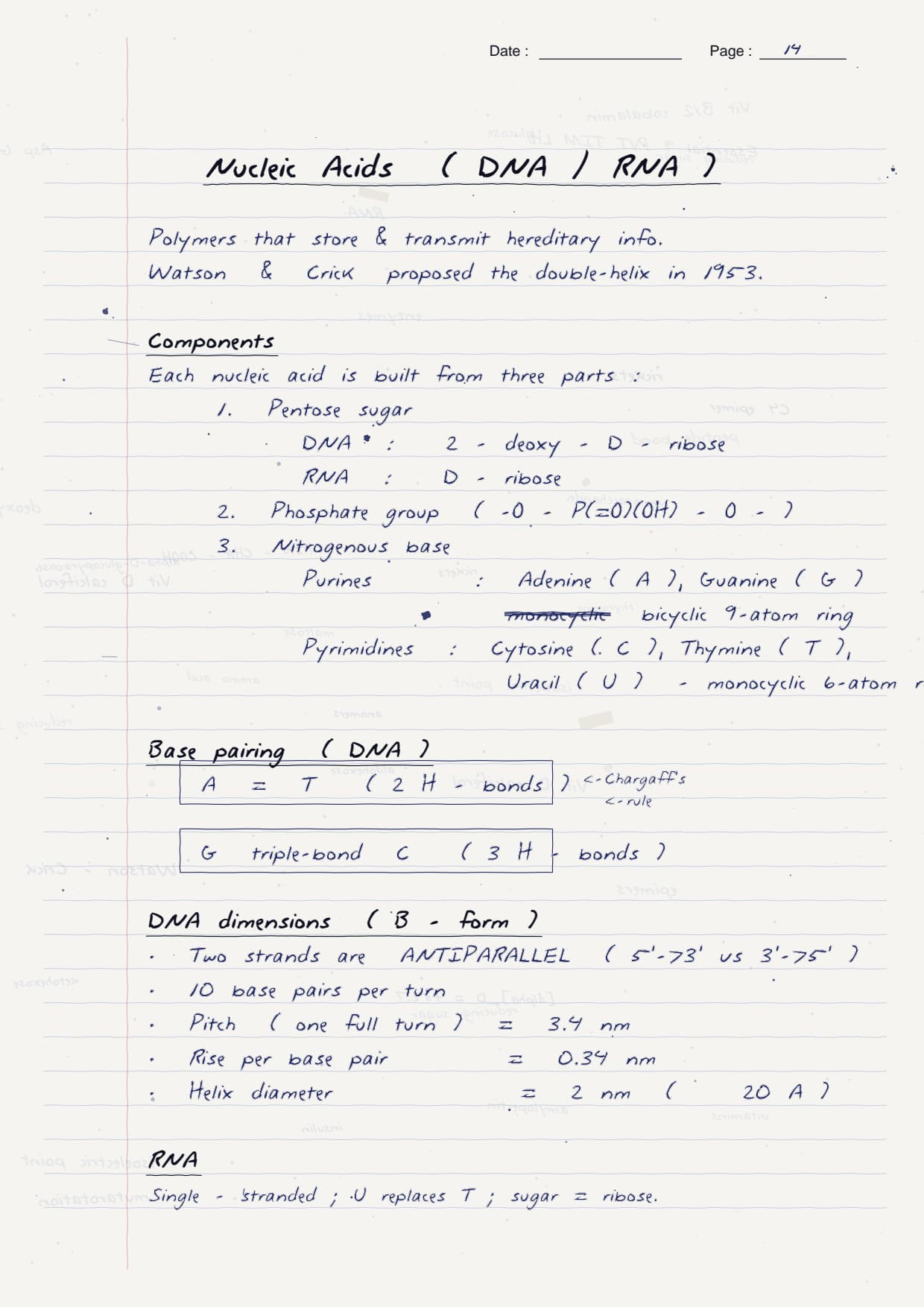
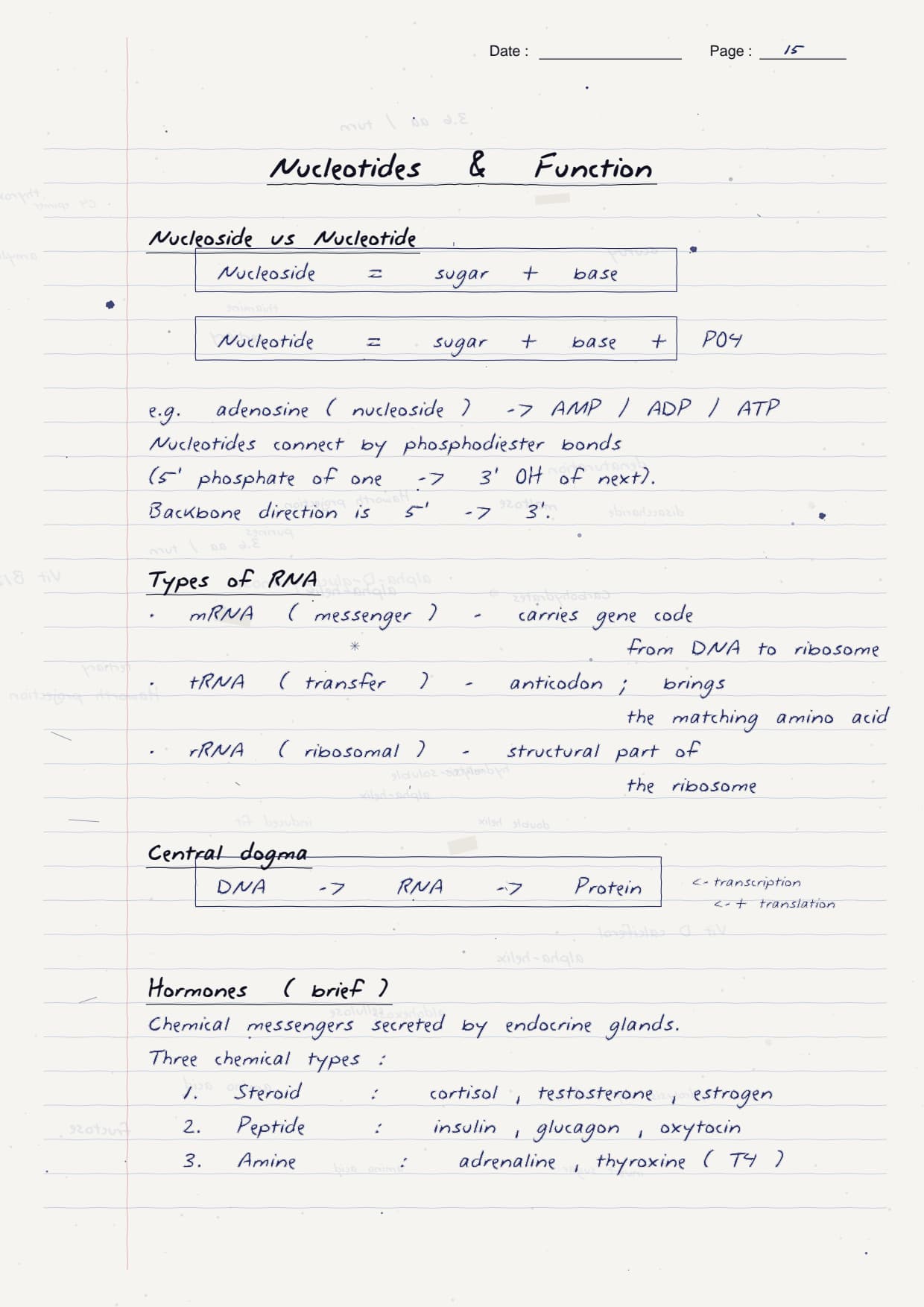
The Collegedunia page includes handwritten projections, peptide bonds, and nucleotide structure for Chapter 10 Biomolecules.
- CBSE Weightage: 3 to 5 marks (a 2-mark distinction or structure question plus a 3-mark function/classification block is the standard CBSE pattern; occasionally a 5-marker on protein structure levels or DNA replication)
- JEE Main Weightage: 1 to 2% (1 question per shift on carbohydrate classification, mutarotation, or vitamin solubility)
- NEET Weightage: 2 to 3 questions per year on amino acid classification, protein structure, nucleic acid base pairing, and enzymes
Scanned from a topper's notebook, cross-checked against the 2026-27 NCERT, and refined against the last five years of CBSE, JEE Main, and NEET papers.
Also Check:
- Biomolecules Class 12 Chemistry Notes
- Biomolecules Class 12 Chemistry NCERT Solutions
- Biomolecules Class 12 Chemistry Formula Sheet
Biomolecules Class 12 Chemistry Explained
Source: Magnet Brains on YouTube
How will Collegedunia's Handwritten Notes Help You with Biomolecules?
Printed PDFs flatten the Haworth ring and the peptide bond geometry into static text; a scanned topper notebook preserves the equatorial-axial -OH positions on glucose, the planar amide linkage, and the colour-coded base-pairing rules for DNA versus RNA. NEET 2025 carried three biomolecules questions; JEE Main January 2025 included one on carbohydrate classification and one on vitamin solubility.
- Sugar stereochemistry shading: -OH groups colour-coded by D vs L and α vs β anomers. Mutarotation arrows in red.
- Amino acid zwitterion panels: NH3+ and COO- drawn in two colours on the same carbon. Isoelectric point logic on the margin.
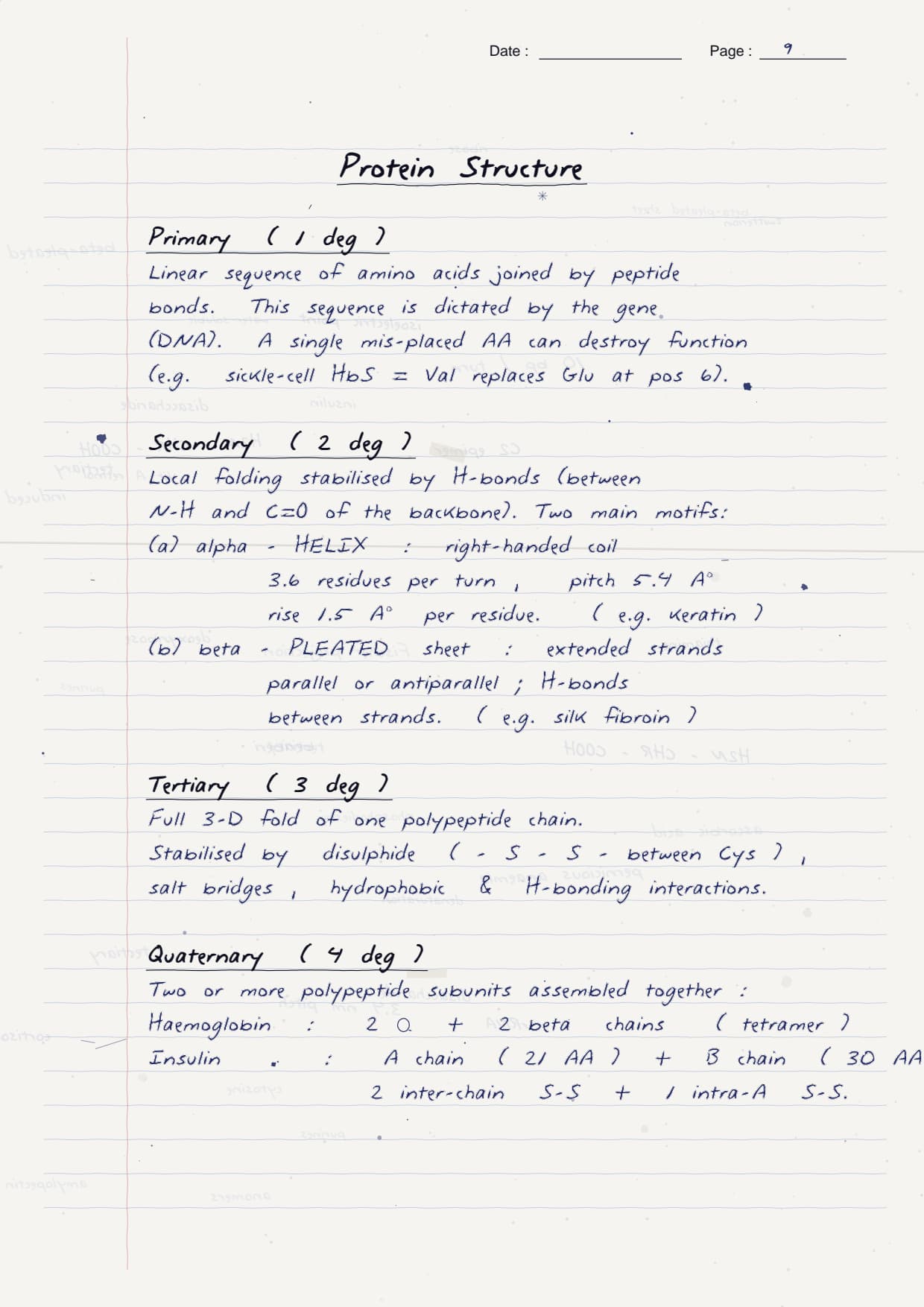
- Protein structure ladder: 1∘, 2∘, 3∘, 4∘ on four facing panels with α-helix and β-sheet hand-sketched.
- Margin mnemonics: Glucose-fructose, sucrose-maltose-lactose, A-T G-C, vitamin solubility - one-line hook each.
Hand-Drawn Figures Indexed in This Notebook
The notebook holds fourteen figures across 22 pages, each paired with the concept the diagram anchors.
| Fig No. | Figure | Page |
|---|---|---|
| Fig 10.1 | Open-chain D-glucose Fischer projection | p. 2 |
| Fig 10.2 | α- and β-D-glucopyranose Haworth structures | p. 3 |
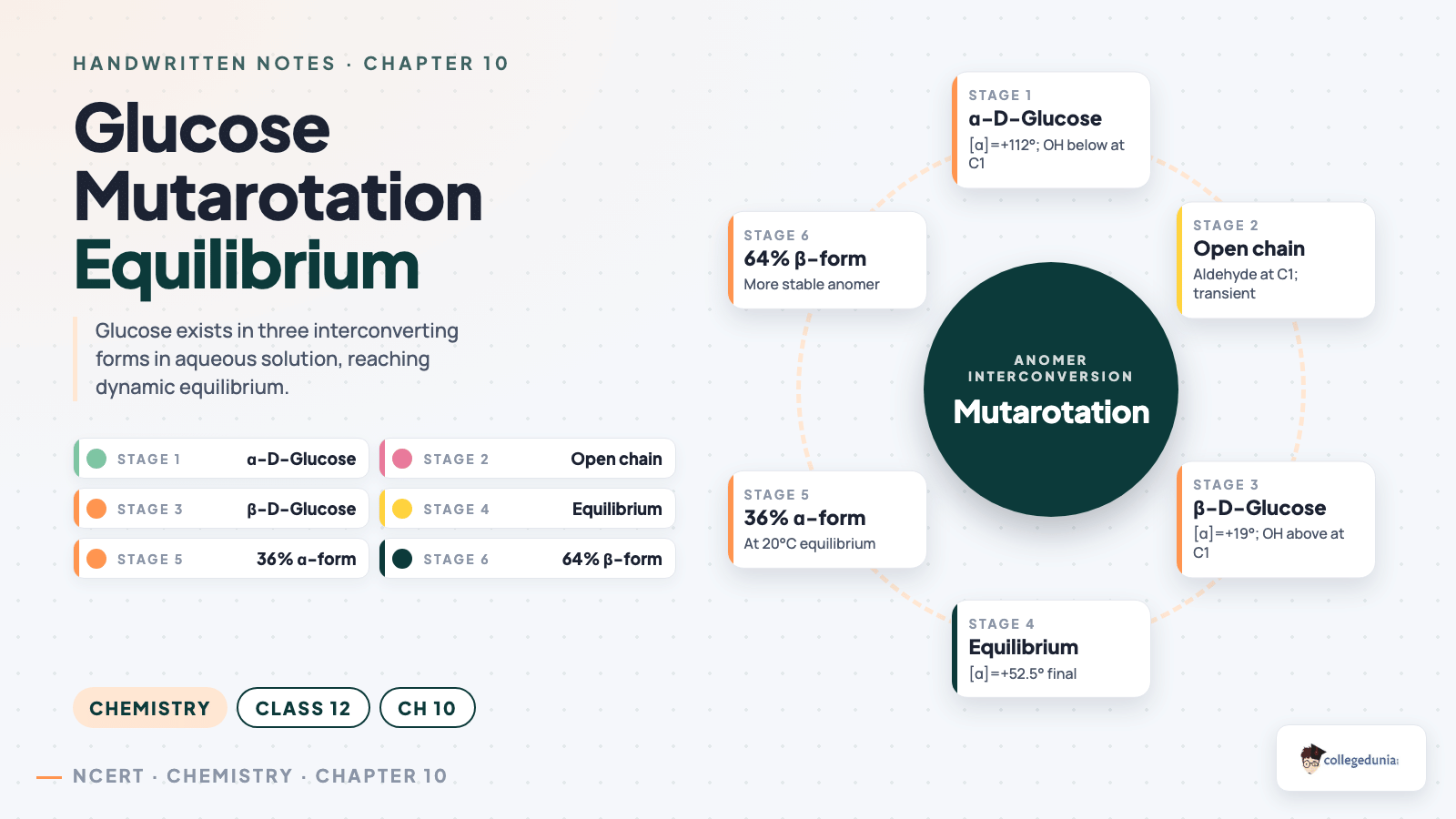
| Fig 10.3 | Mutarotation equilibrium (open chain ↔ α ↔ β) | p. 4 |
| Fig 10.4 | D-fructose furanose ring | p. 5 |
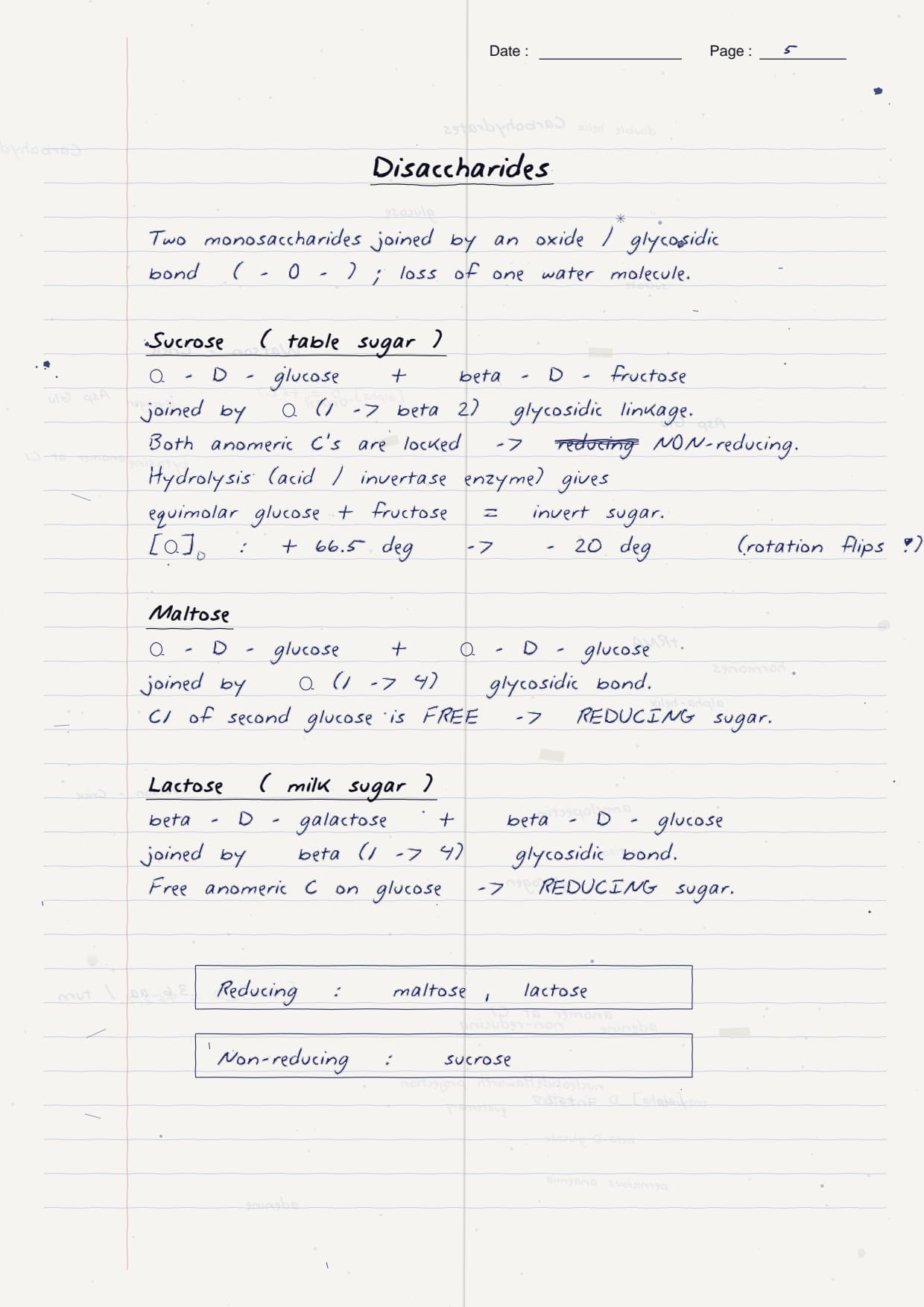
| Fig 10.5 | Sucrose, maltose, lactose glycosidic linkages | p. 6 |
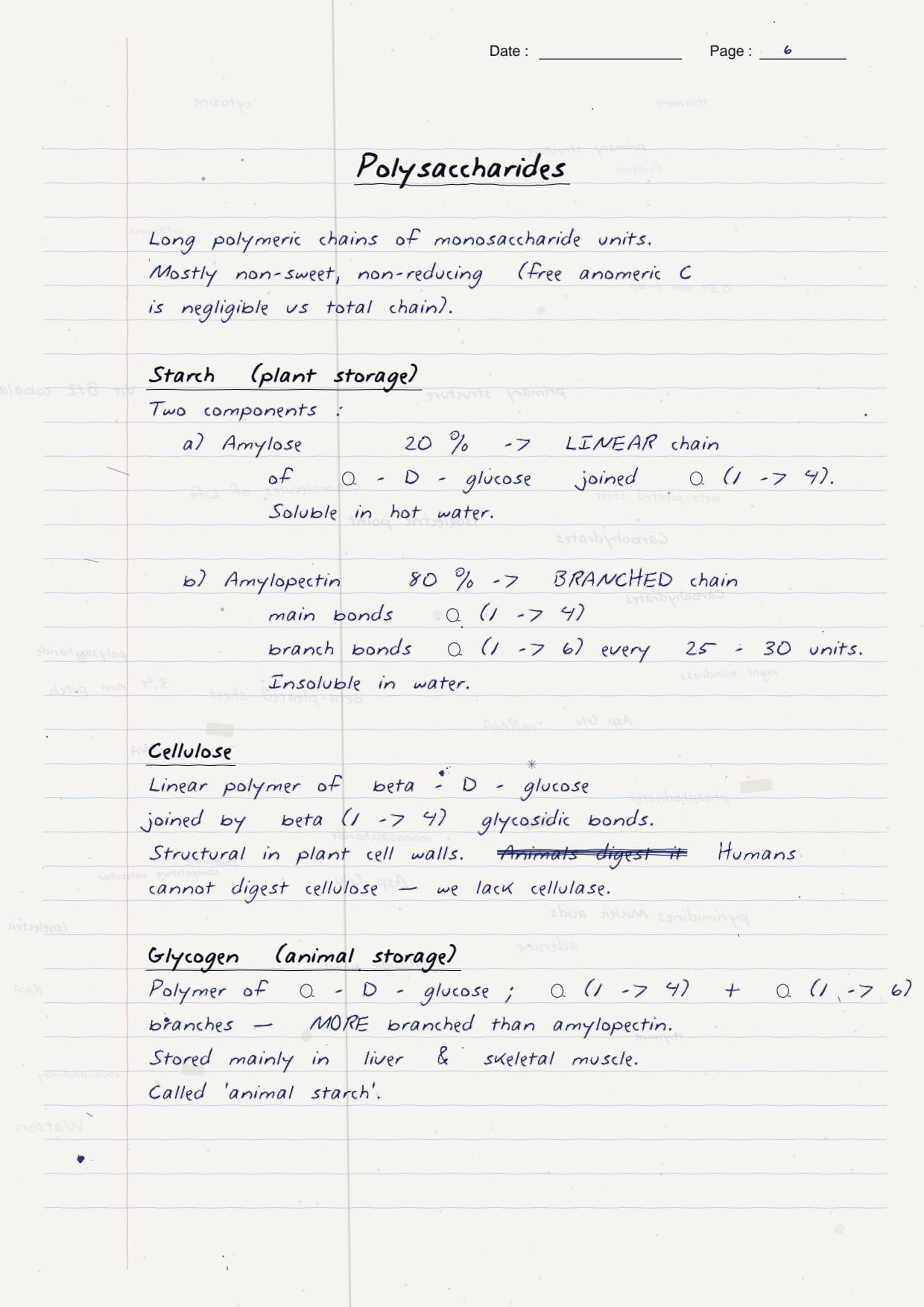
| Fig 10.6 | Starch (amylose, amylopectin) and cellulose comparison | p. 8 |
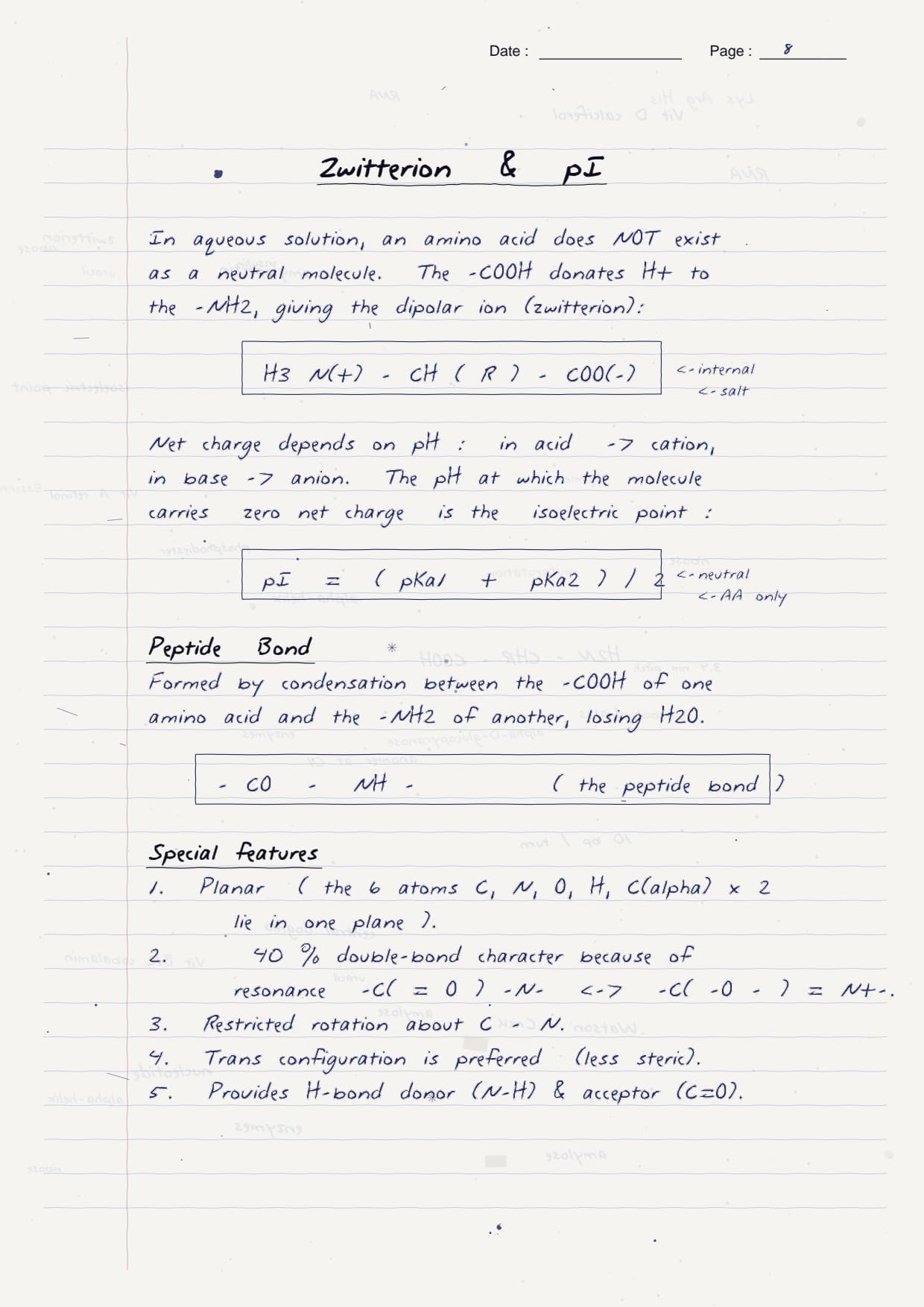
| Fig 10.7 | Amino acid zwitterion at isoelectric point | p. 11 |
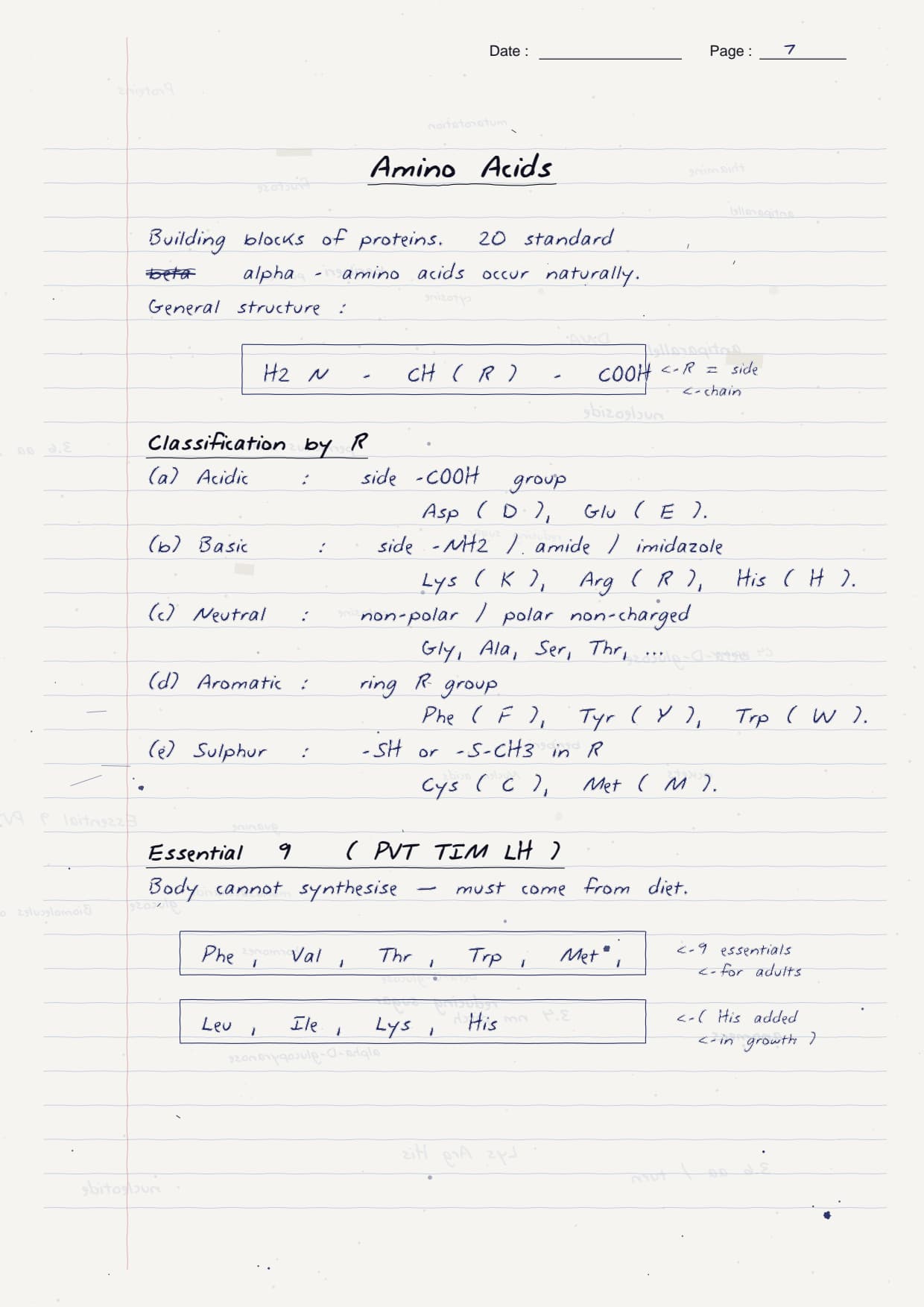
| Fig 10.8 | Essential vs non-essential amino acid table | p. 12 |
| Fig 10.9 | Peptide bond formation (dehydration) | p. 13 |
| Fig 10.10 | Protein 1∘-2∘-3∘-4∘ structural hierarchy | p. 14 |
| Fig 10.11 | α-helix and β-pleated sheet sketch | p. 15 |
| Fig 10.12 | Vitamin classification (fat- vs water-soluble) | p. 17 |
| Fig 10.13 | Nucleoside vs nucleotide labelled diagram | p. 19 |
| Fig 10.14 | DNA double helix with A-T, G-C base pairing | p. 20 |
For 30-minute last-day revision, lock Fig 10.2, 10.5, 10.10, and 10.14. These four cover roughly 70 per cent of the marks CBSE has awarded since 2021.
What's Inside the Biomolecules Handwritten Notes PDF
A 22-page scan with a fixed ink-colour code. Use this page map to jump to your weakest sub-topic.
| Page Block | Topic | Why It Stays |
|---|---|---|
| p. 1-2 | Carbohydrates: classification (mono, di, oligo, poly) | Tree diagram needed once, then never relearned |
| p. 3-5 | Glucose and fructose: open-chain, Haworth, mutarotation | D-L, α-β anomers click only when ring is hand-drawn |
| p. 6-8 | Disaccharides and polysaccharides; reducing vs non-reducing | Glycosidic linkage type decides reducing behaviour |
| p. 9-13 | Amino acids: classification, zwitterion, isoelectric point, peptide bond | Zwitterion sketch and pI logic on one fold |
| p. 14-16 | Proteins: structural hierarchy, denaturation, enzymes | 1∘ to 4∘ on one ladder; α-helix vs β-sheet |
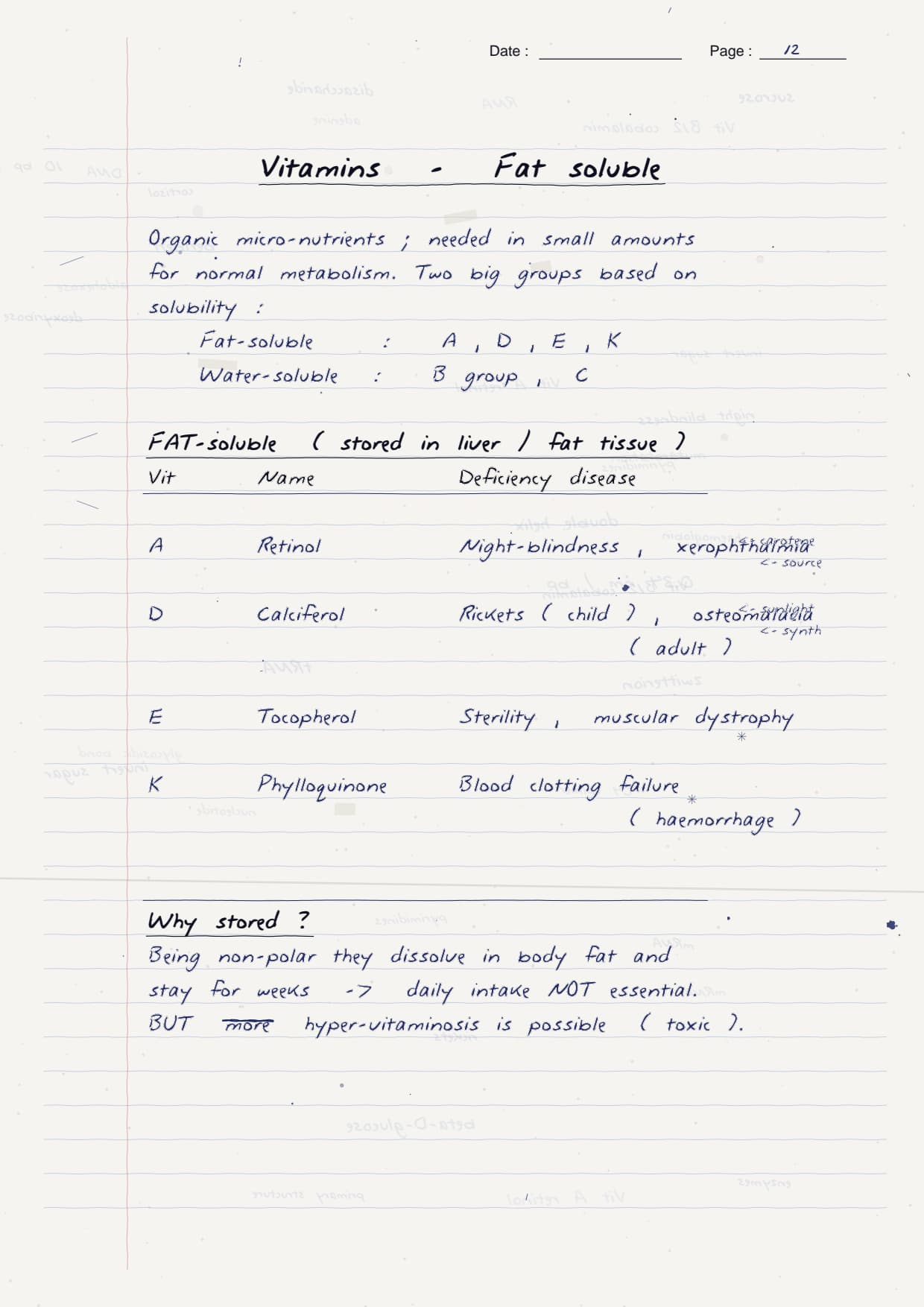
| p. 17-18 | Vitamins: fat-soluble (A, D, E, K) vs water-soluble (B-complex, C); deficiency | Deficiency diseases on the margin for NEET MCQs |
| p. 19-22 | Nucleic acids: nucleoside, nucleotide, DNA double helix, RNA types, replication overview | A-T G-C pairing and sugar difference on a side-by-side |
Best Way to Use These Biomolecules Handwritten Notes
The scan rewards a two-pass read; one read leaves the rings in your eyes but not your memory.
- Pass 1 (60 to 75 min) - structures only: Skip body prose. Look at the 14 figures and the seven page-block panels. The visual layer alone seeds 60 per cent of recall.
- Pass 2 (90 to 120 min) - carbohydrates and nucleic acids: Read the sugar block on pages 3-8; lock the DNA/RNA difference on pages 19-22 last.
- Pass 3 (night before, 30 min): The Last 24-Hour Revision Card above. Eight items, three minutes each.
Where Students Lose Marks in Class 12th Chemistry Chapter 10 Biomolecules
Flagged in red ink in the notebook margins. Roughly 30 per cent of dropped marks trace to four errors.
- Sucrose called reducing: Both anomeric carbons are locked in the C1-C2 linkage, so no free -CHO can form. Maltose and lactose are reducing because each leaves one anomeric -OH free.
- Confusing α-helix and β-sheet H-bonds: α-helix uses intra-chain H-bonds (N-H to C=O four residues ahead); β-sheet uses inter-chain H-bonds (between adjacent strands). Swapping these is a 2-mark hit.
- Vitamin solubility flipped: A, D, E, K are fat-soluble; B-complex and C are water-soluble. Writing vitamin C as fat-soluble loses a 1-marker; on NEET it has appeared twice since 2021.
- DNA replication direction: New strand grows 5′ to 3′; template is read 3′ to 5′. Writing the reverse loses a 3-marker.
Full PYQ map: Biomolecules Class 12 NCERT Solutions carries the full year-wise CBSE, JEE Main, and NEET trend (2021-2026) with the standard 5-marker marks budget.
Student Feedback
In a Collegedunia poll of 900 Class 12 students, 78% said the colour-coded Haworth rings and DNA base-pairing sketches in these Biomolecules notes made mutarotation and A-T G-C pairing far easier to recall in the exam.
Other Resources for Biomolecules Class 12 Chemistry
- Biomolecules Class 12 Chemistry Handwritten Notes
- Biomolecules Class 12 Chemistry Notes
- Biomolecules Class 12 Chemistry NCERT Solutions
- Biomolecules Class 12 Chemistry Formula Sheet
- Biomolecules Class 12 Chemistry NCERT Book PDF
- Biomolecules Class 12 Chemistry Exemplar Solutions
NCERT Handwritten Notes for Class 12 Chemistry: All Chapters
| Chapter | Handwritten Notes |
|---|---|
| Chapter 1 | Solutions Handwritten Notes |
| Chapter 2 | Electrochemistry Handwritten Notes |
| Chapter 3 | Chemical Kinetics Handwritten Notes |
| Chapter 4 | The d- and f-Block Elements Handwritten Notes |
| Chapter 5 | Coordination Compounds Handwritten Notes |
| Chapter 6 | Haloalkanes and Haloarenes Handwritten Notes |
| Chapter 7 | Alcohols, Phenols and Ethers Handwritten Notes |
| Chapter 8 | Aldehydes, Ketones and Carboxylic Acids Handwritten Notes |
| Chapter 9 | Amines Handwritten Notes |
FAQs on Biomolecules Class 12 Handwritten Notes
Q. Are the Biomolecules Class 12 handwritten notes aligned with the 2026-27 syllabus?
Yes. The scanned notebook covers every topic retained in the current 2026-27 NCERT print: carbohydrate classification, glucose and fructose structures (Fischer, Haworth, mutarotation), reducing and non-reducing disaccharides, polysaccharides (starch, cellulose, glycogen), amino acid classification and zwitterions, peptide-bond formation, the four levels of protein structure, denaturation, an introduction to enzymes, vitamins (fat-soluble vs water-soluble plus deficiency diseases), and nucleic acids (nucleoside, nucleotide, DNA double helix, RNA types, and the broad outline of replication and translation). Topics dropped from the rationalised edition (some industrial details and a few specialised hormones) are not in the notebook.
Q. Which biomolecule sub-topics carry the most NEET weight?
NEET historically favours four sub-topics from this chapter: carbohydrate classification (reducing vs non-reducing, glycosidic linkage types), amino acid and protein structure (especially α-helix vs β-sheet H-bonding), vitamin solubility and deficiency diseases, and DNA versus RNA base composition. Across 2014-2025, NEET asked 28 questions distributed roughly 35 per cent on carbohydrates, 30 per cent on proteins and enzymes, 20 per cent on nucleic acids, and 15 per cent on vitamins.
Q. Why is sucrose a non-reducing sugar while maltose and lactose are reducing?
Reducing sugars must be able to open from the ring form back into an open-chain aldehyde or ketone so that the aldehyde end can reduce Fehling's solution or Tollens' reagent. This requires a free anomeric -OH (a hemiacetal). In sucrose, the C1 anomeric carbon of glucose is bonded to the C2 anomeric carbon of fructose through the glycosidic linkage, so both anomeric carbons are locked - neither can open the ring. In maltose and lactose, only one anomeric carbon is engaged in the glycosidic bond, while the other carries a free -OH that can equilibrate with the open-chain aldehyde, making them reducing.
Q. What is the expected CBSE Board weightage for Biomolecules in 2026?
CBSE typically allocates 3 to 5 marks to this chapter, usually as one 2-marker on carbohydrate or protein classification and one 3-marker on protein structure levels, denaturation, or DNA-RNA differences. Occasionally a question is folded into a 5-mark answer combining vitamin deficiencies with their biochemical role. JEE Main carries one question per shift on this chapter and NEET carries two to three per year, making this a guaranteed scorer for medical aspirants.
Q. How do I remember the four levels of protein structure quickly?
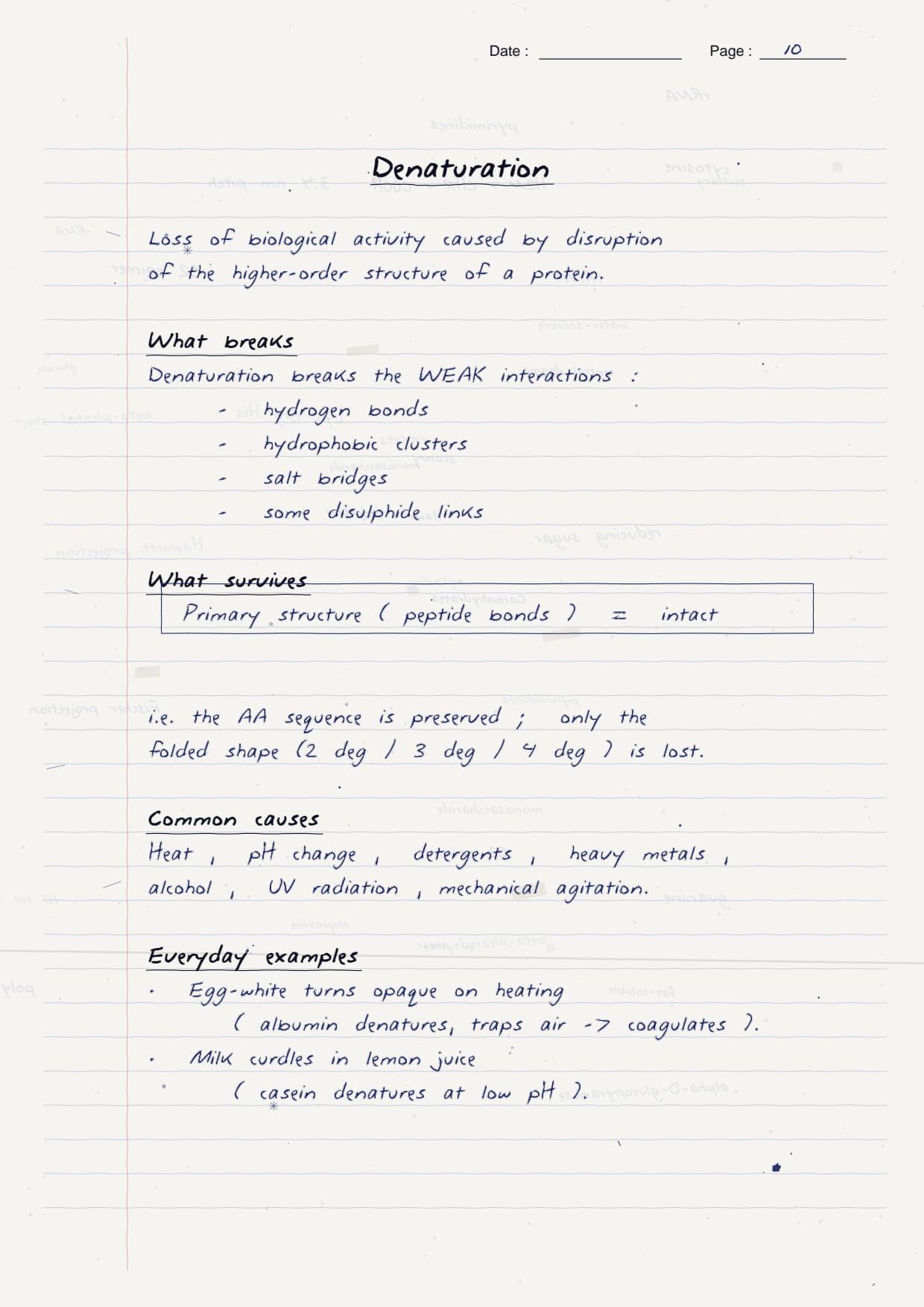
Use the ladder mnemonic on page 14 of the scan: primary is the sequence of amino acids linked by peptide bonds; secondary is the local fold (α-helix stabilised by intra-chain H-bonds N-H to C=O four residues ahead, or β-pleated sheet stabilised by inter-chain H-bonds between adjacent strands); tertiary is the overall three-dimensional shape stabilised by hydrophobic packing, disulfide bridges, hydrogen bonds, and ionic interactions; and quaternary is the assembly of two or more polypeptide subunits, as in hemoglobin's four-chain structure. Denaturation disrupts everything above primary while leaving the peptide bonds of the primary structure intact.
Q. Are these handwritten notes enough to prepare for JEE Main and NEET 2026 questions from this chapter?
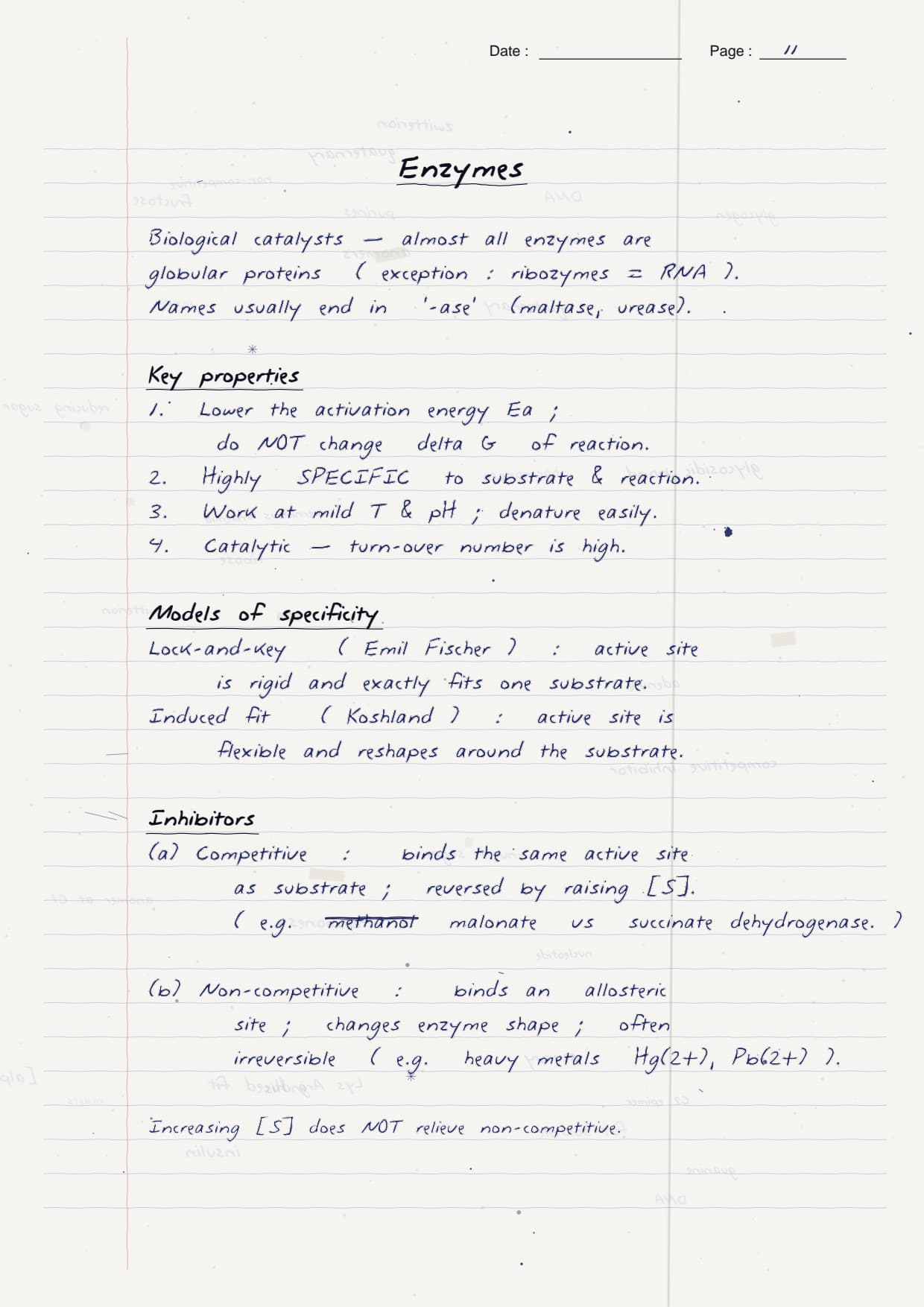
The notebook gives complete conceptual coverage of every NCERT topic with the bio-organic depth that NEET demands, but timed practice on previous-year MCQs is what converts concept into marks. Pair the notes with the Collegedunia NCERT Exemplar Solutions for this chapter and the last five years of JEE Main plus NEET PYQs to convert this chapter into 4 to 8 marks across both exams.
Q. What is the difference between anomers and epimers, and how does mutarotation involve both alpha and beta-D-glucose?
Anomers differ only at the anomeric carbon (C1 in glucose), the new chiral centre created when the open chain cyclises into the pyranose ring; alpha-D-glucopyranose and beta-D-glucopyranose are the two anomers. Epimers differ at one non-anomeric chiral carbon; glucose-galactose are C4 epimers and glucose-mannose are C2 epimers. Mutarotation is the slow change in optical rotation when a pure anomer is dissolved in water and equilibrates with the other anomer via the open-chain aldehyde. For D-glucose, pure alpha has [α] = +112∘, pure beta has +19∘, and the equilibrium mixture has +52.5∘ (about 36% alpha, 64% beta, trace open chain).
Q. Why is haemoglobin used as the textbook example of quaternary protein structure, and how is insulin different?
Haemoglobin is a four-chain assembly - two alpha chains (141 residues each) and two beta chains (146 residues each), each cradling a heme group with a Fe(II) centre, total mass ∼64,500 u. The four subunits cooperate when binding O2 (positive cooperativity), which is the textbook signature of quaternary structure. Insulin is also a multi-chain protein (A chain 21 residues + B chain 30 residues, held by two inter-chain disulphide bridges), but is conventionally still classed as a single protein hormone of two-chain primary structure rather than the quaternary archetype. Insulin's role is hormonal (lowering blood glucose); haemoglobin's role is transport (carrying O2 and CO2).
Q. How do purines differ from pyrimidines and which base appears in RNA but not in DNA?
Purines are double-ring nitrogen bases - adenine (A) and guanine (G); mnemonic "PURe As Gold". Pyrimidines are single-ring bases - cytosine (C), thymine (T), and uracil (U). DNA contains A, G, C, T; RNA contains A, G, C, U. Uracil appears in RNA but not in DNA, and thymine appears in DNA but not in RNA; cytosine is in both. The sugar also differs - DNA carries 2′-deoxyribose, RNA carries ribose with the 2′-OH retained.
Q. Which vitamin deficiency causes scurvy and which causes pernicious anaemia?
Vitamin C (ascorbic acid), a water-soluble vitamin from citrus, amla and leafy vegetables, prevents scurvy - the deficiency disease that shows up as bleeding gums, loose teeth, slow wound healing and skin lesions. Vitamin B12 (cobalamin), a water-soluble vitamin uniquely stored in the liver, prevents pernicious anaemia - a megaloblastic anaemia from impaired red-cell maturation. The NCERT trap to avoid is mixing B1 (thiamine, beri-beri) with B12 (cobalamin, pernicious anaemia).
Q. What is the difference between a nucleoside and a nucleotide?
A nucleoside is a nitrogen base joined to a pentose sugar (no phosphate) - the linkage is an N-glycosidic bond at C1′. A nucleotide is a nucleoside plus a phosphate group attached at C5′. Only nucleotides polymerise to nucleic acids through 5′ to 3′ phosphodiester linkages. Adenosine is a nucleoside; AMP (adenosine monophosphate) is a nucleotide. Mnemonic: nucleoside = NO-side (no phosphate); nucleotide = tide of phosphate.



Comments