




The class 10 economics handwritten notes chapter 3 Money and Credit turn the whole chapter into clean, scanned notebook pages for fast last-minute revision.
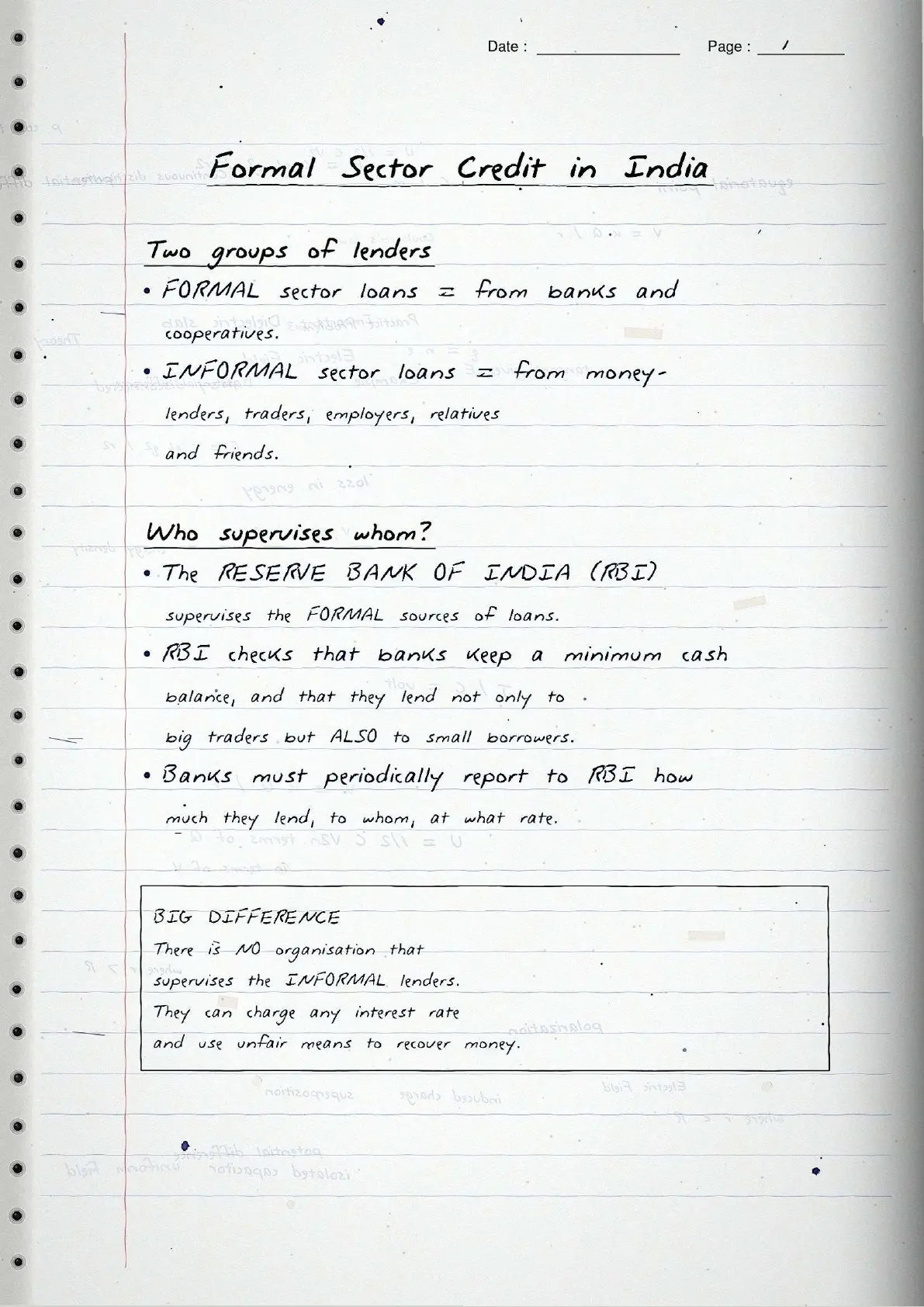
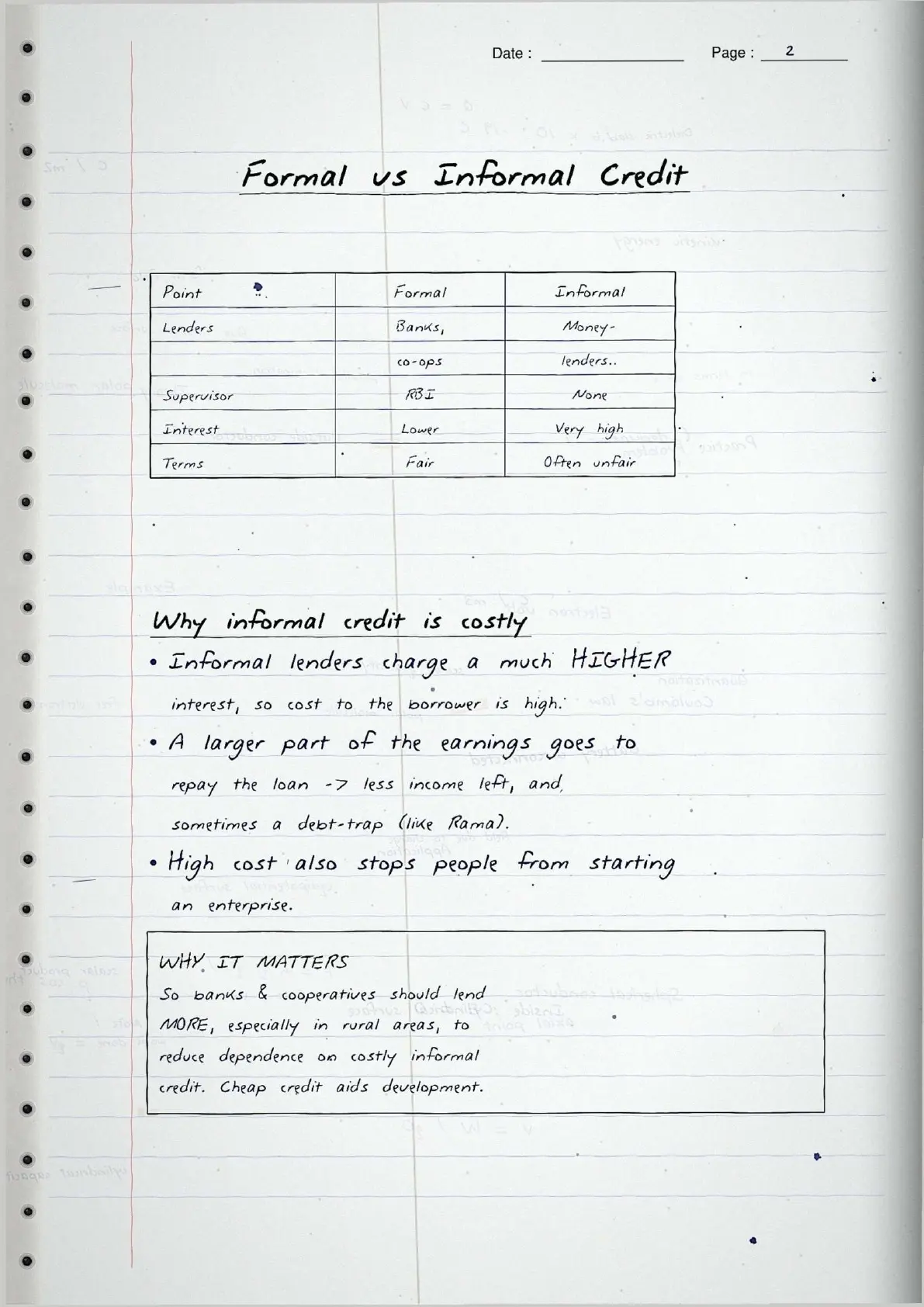
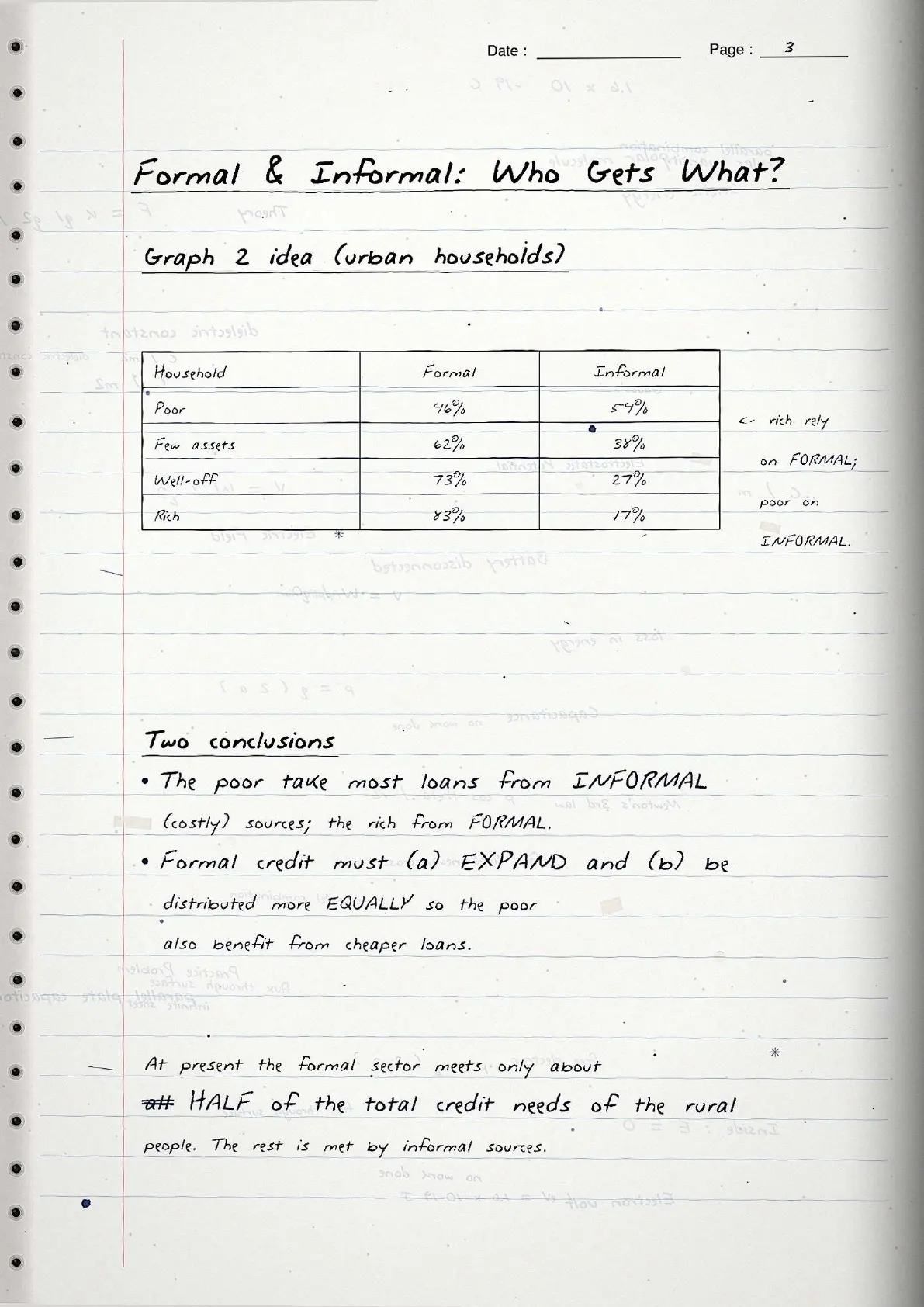
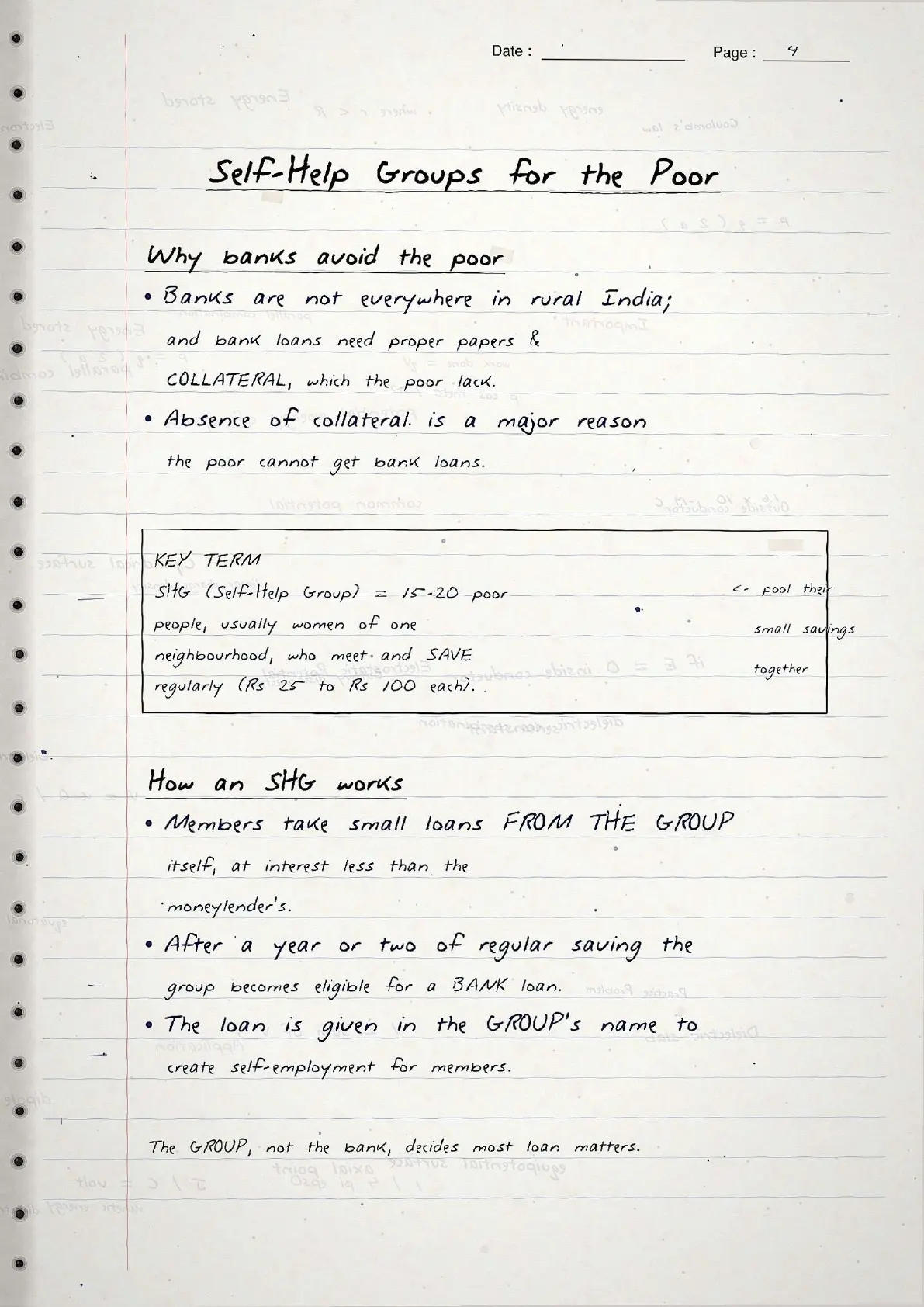
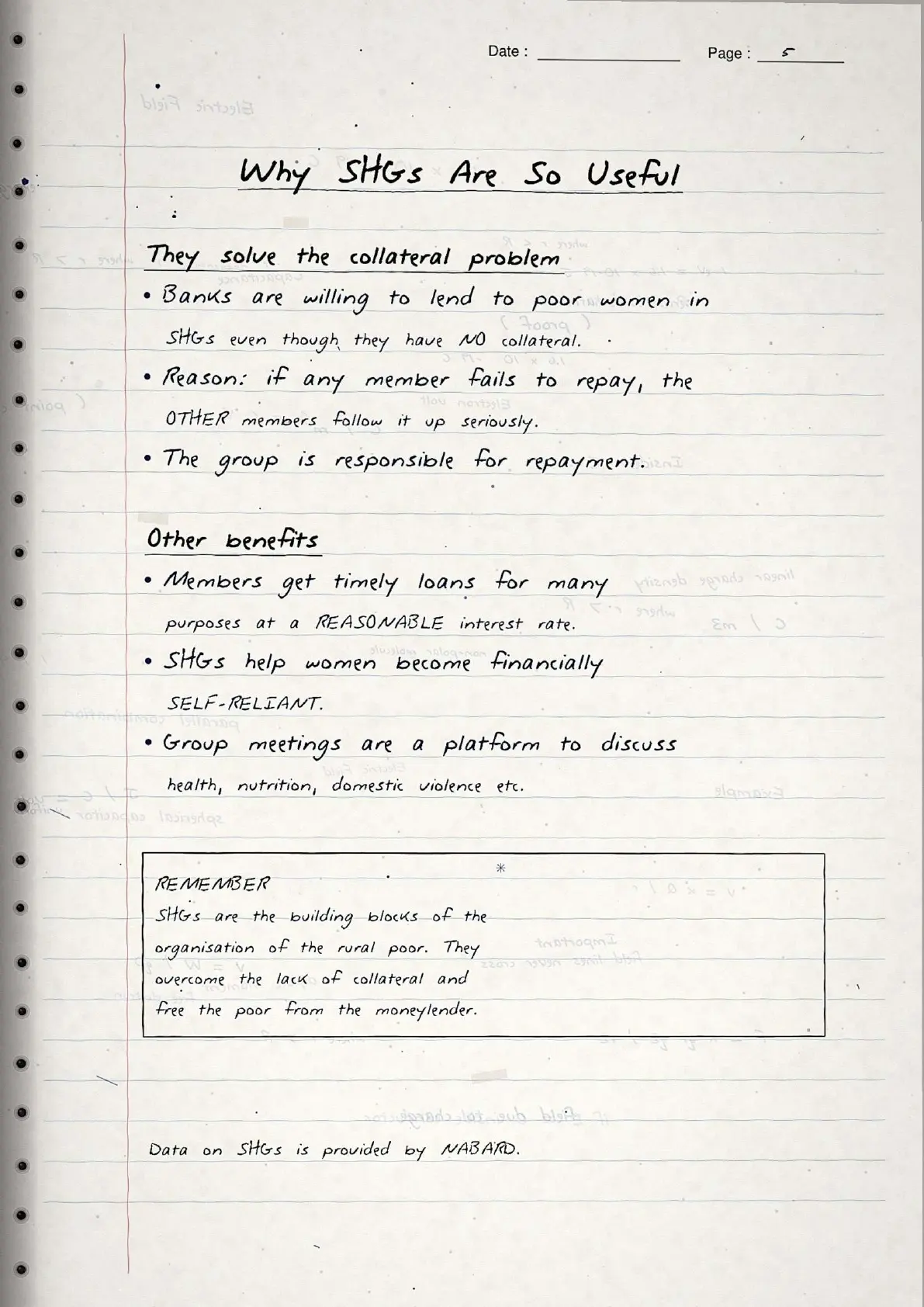
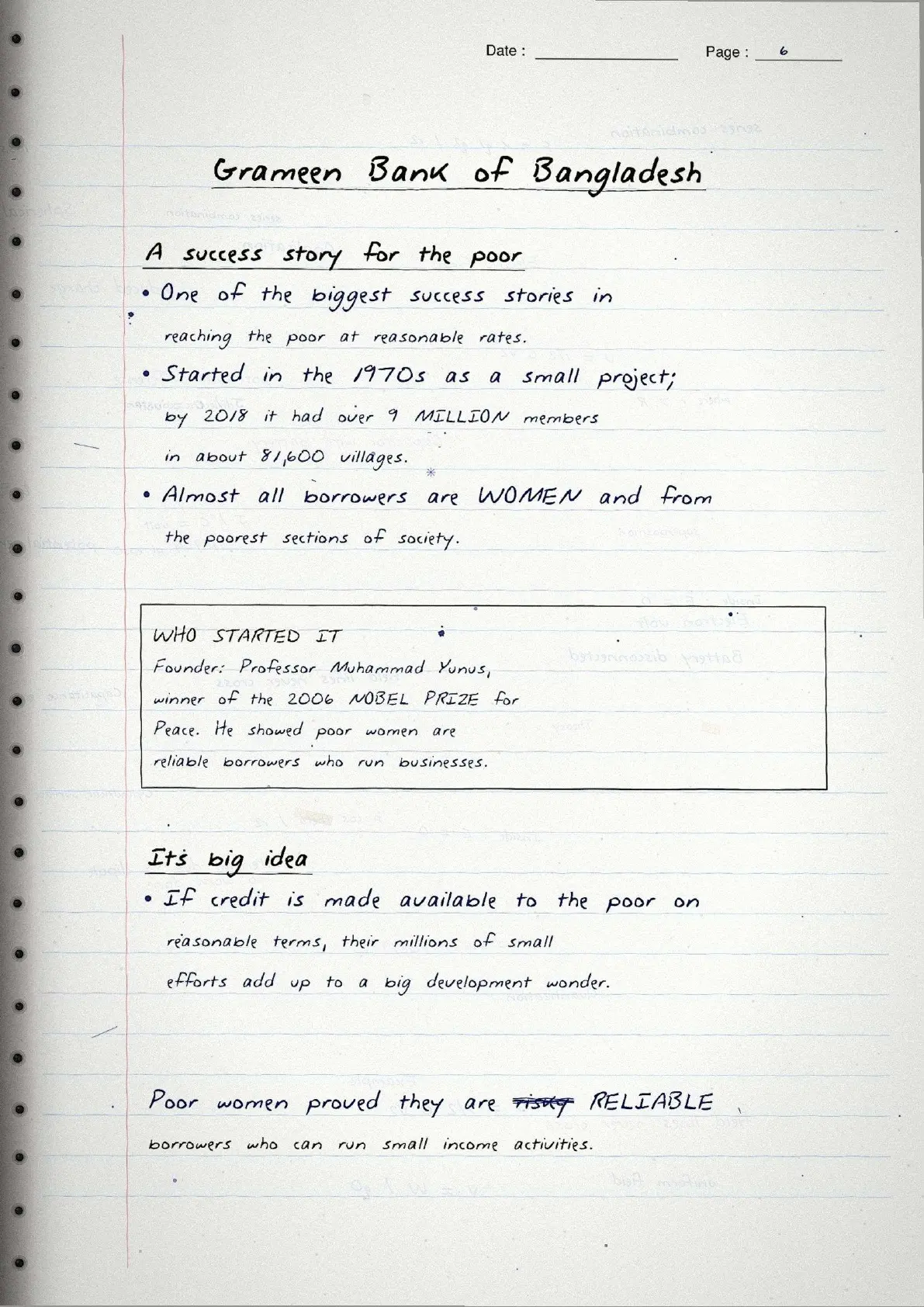
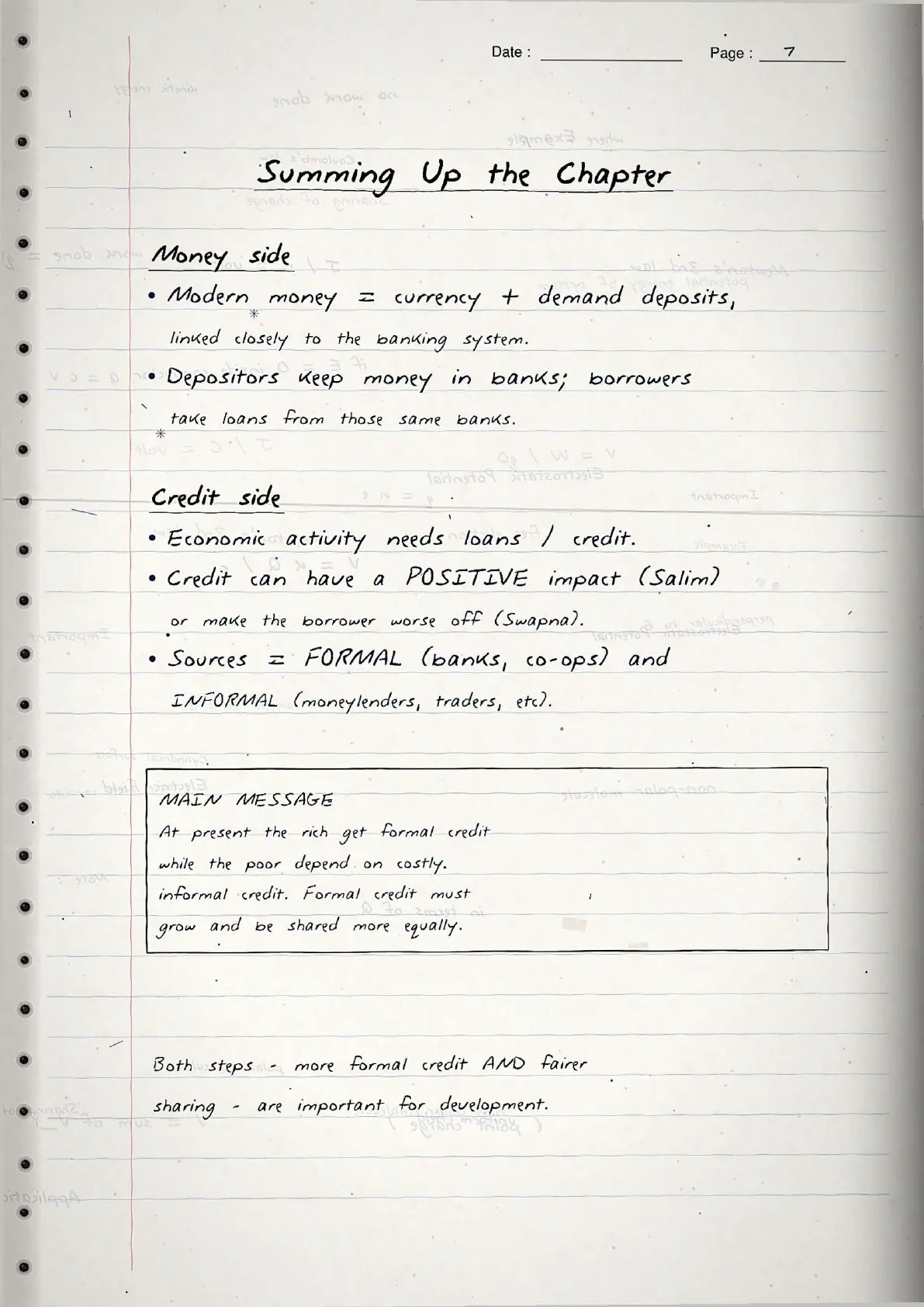
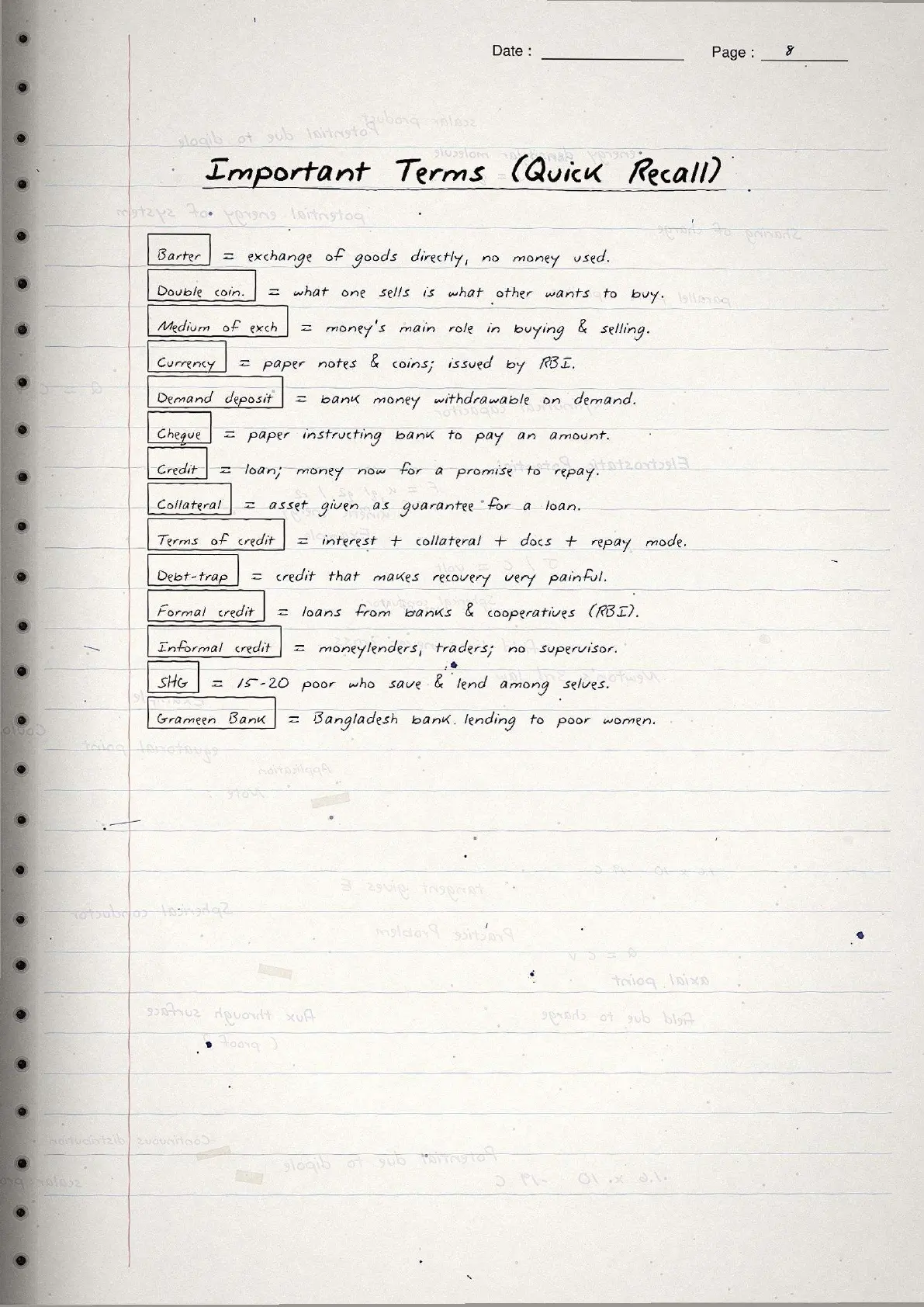
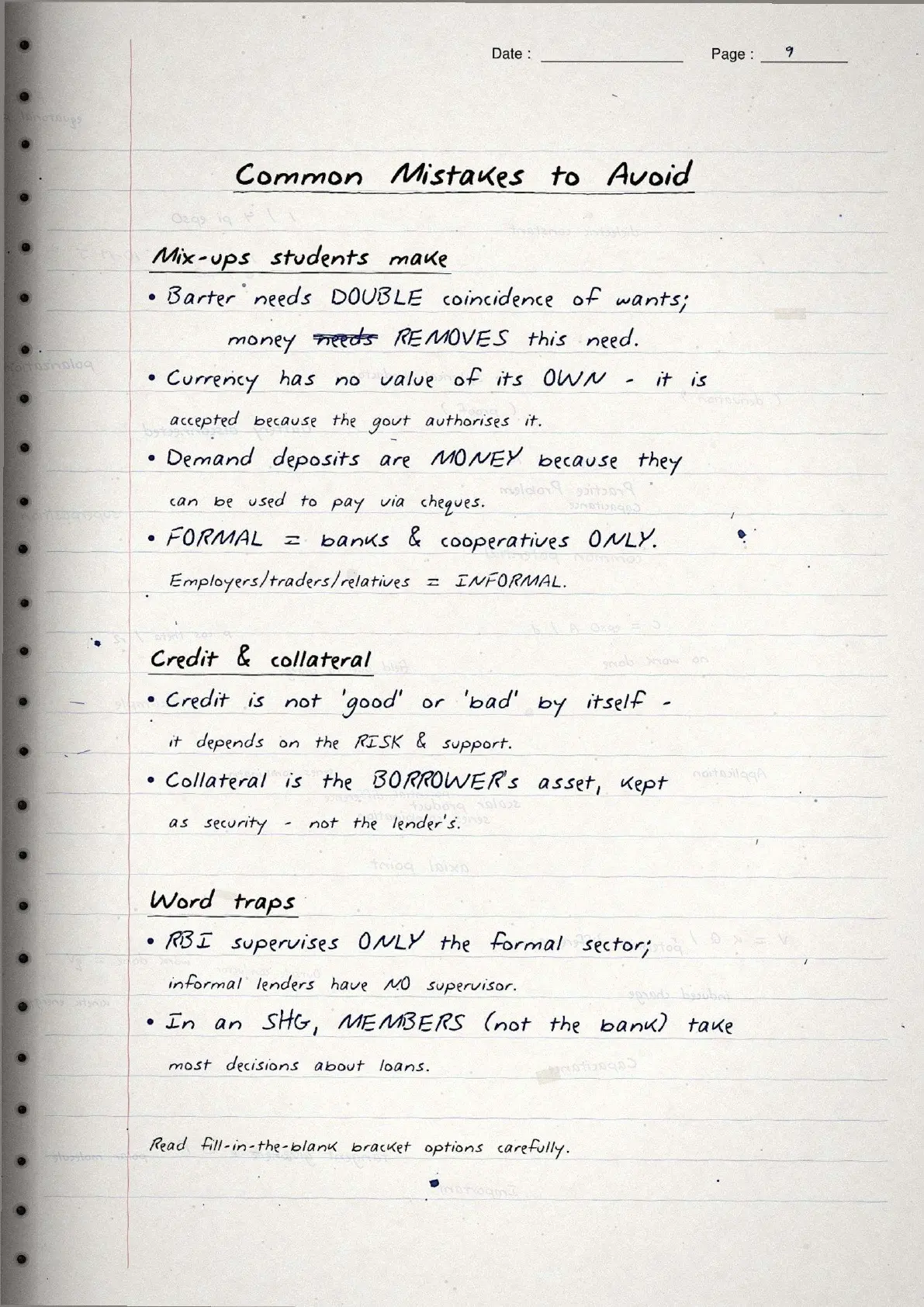
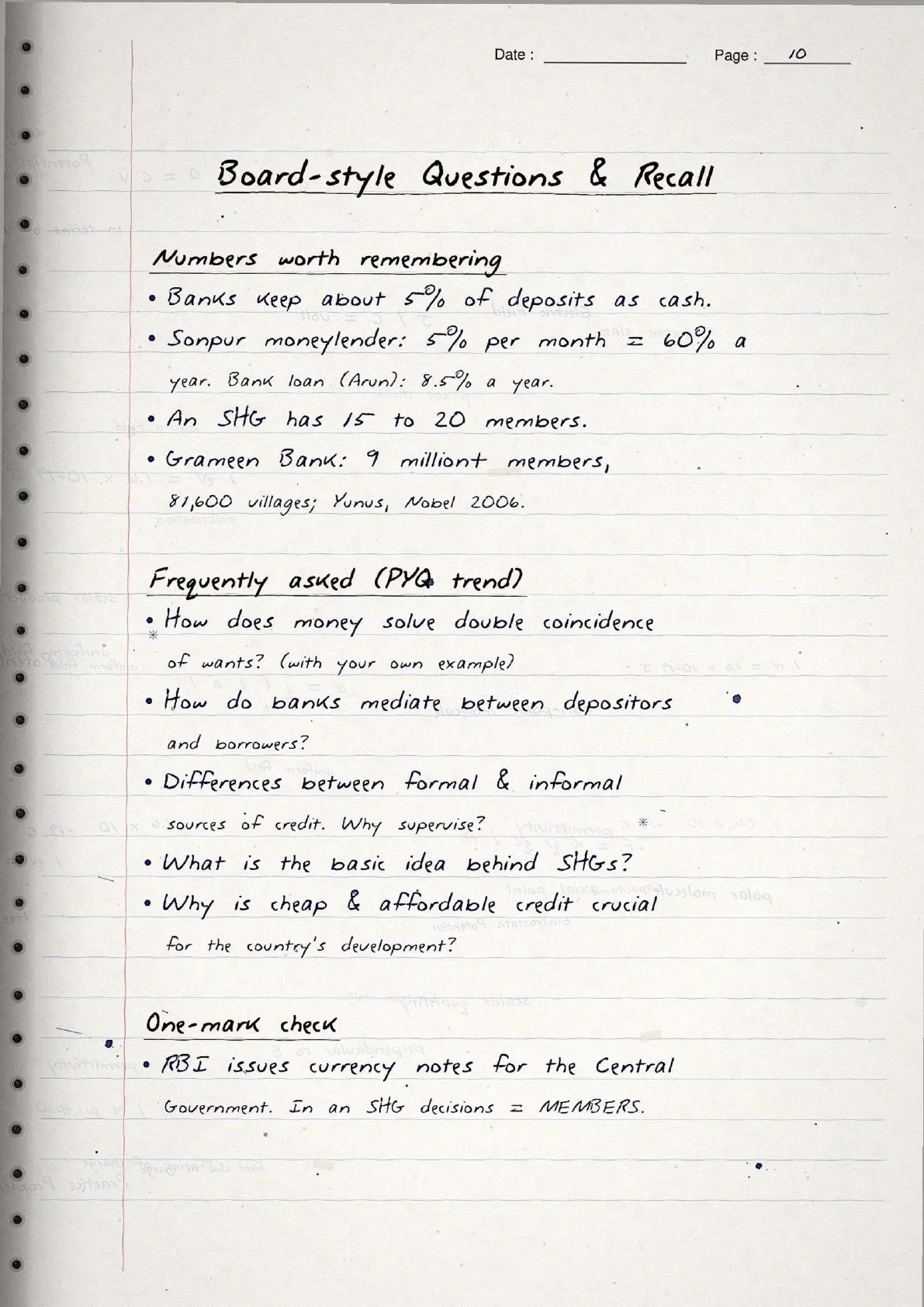
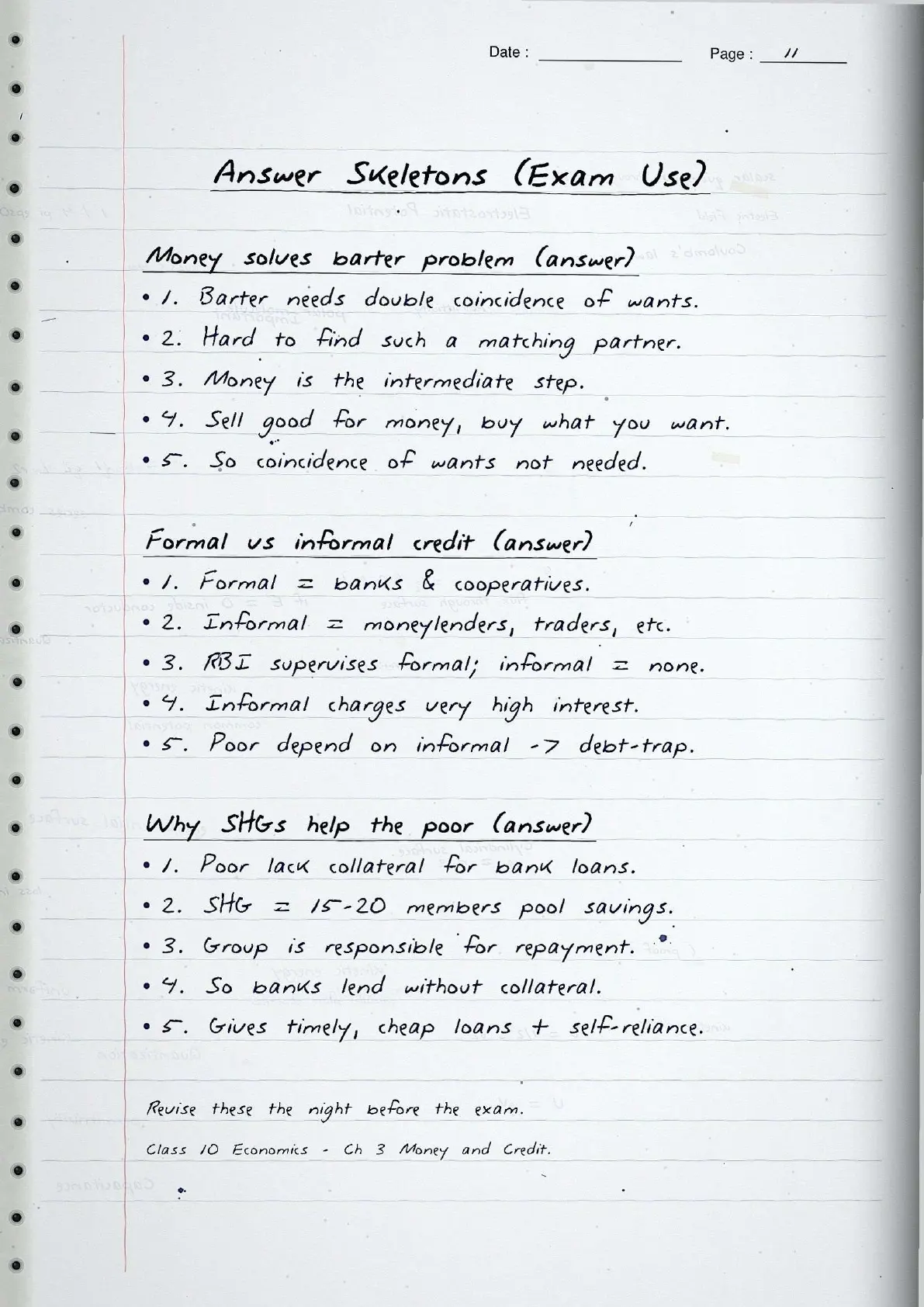
They follow the 2026-27 CBSE syllabus and Chapter 3 of Understanding Economic Development. Students get the role of money, the double coincidence of wants, modern currency and the RBI, bank deposits and cheques, the two sources of credit and the terms of credit in a pen-on-paper format that is easy to skim before a test.
- Handwritten, scanned-style pages with boxed key terms and a colour-coded formal-versus-informal credit chart.
- This Class 10 Economics chapter usually carries 5 to 6 marks in the board paper.
- Pairs with the NCERT Solutions, Notes and Book PDF linked lower on this page.
These Money and Credit handwritten notes are prepared from the official NCERT Understanding Economic Development textbook and checked against the last five years of CBSE board papers.
Student Feedback: In a Collegedunia poll of 6,420 Class 10 Social Science students before the 2026 boards, 78% of students said handwritten, scanned-style notes felt faster to revise from than printed text for this chapter. Most students used the boxed formal-versus-informal credit chart to recall the terms-of-credit answer in the exam.
Source: 2026-27 Class 10 Social Science student poll. Sample of 6,420 students from CBSE schools across 11 states.
What These Handwritten Notes Include
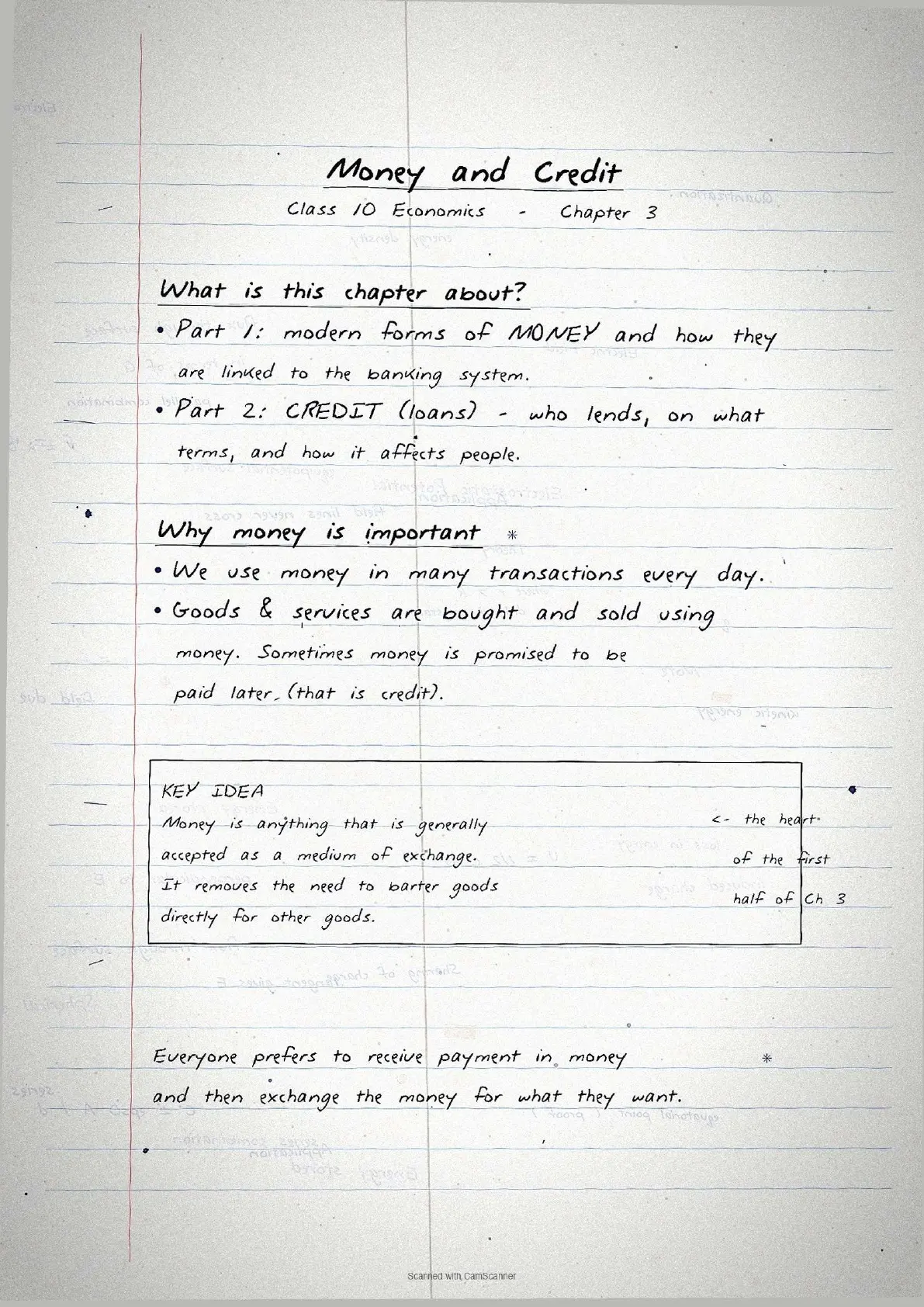
Money and Credit is the third chapter of Understanding Economic Development. It studies how money removes the need for barter, how modern currency and bank deposits work, and how credit can help or harm a borrower. These notes condense the chapter into pages a student can read in one sitting.
Every page is built around three big ideas:
- Money as a medium of exchange covers barter, the double coincidence of wants, modern currency and the RBI.
- Bank deposits and credit covers demand deposits, cheques and the two sources of loans.
- Terms of credit and fairness covers interest, collateral, documentation, repayment and Self Help Groups.
Because the notes are handwritten, key terms sit in boxes and important points are underlined, so the eye jumps straight to them. That makes them ideal for a last revision. Match each loan to a formal or informal source, list its terms of credit, and the whole chapter falls into place. The notes follow the 2026-27 CBSE syllabus.
Money and Credit Class 10 Video Lesson
Source: Magnet Brains on YouTube
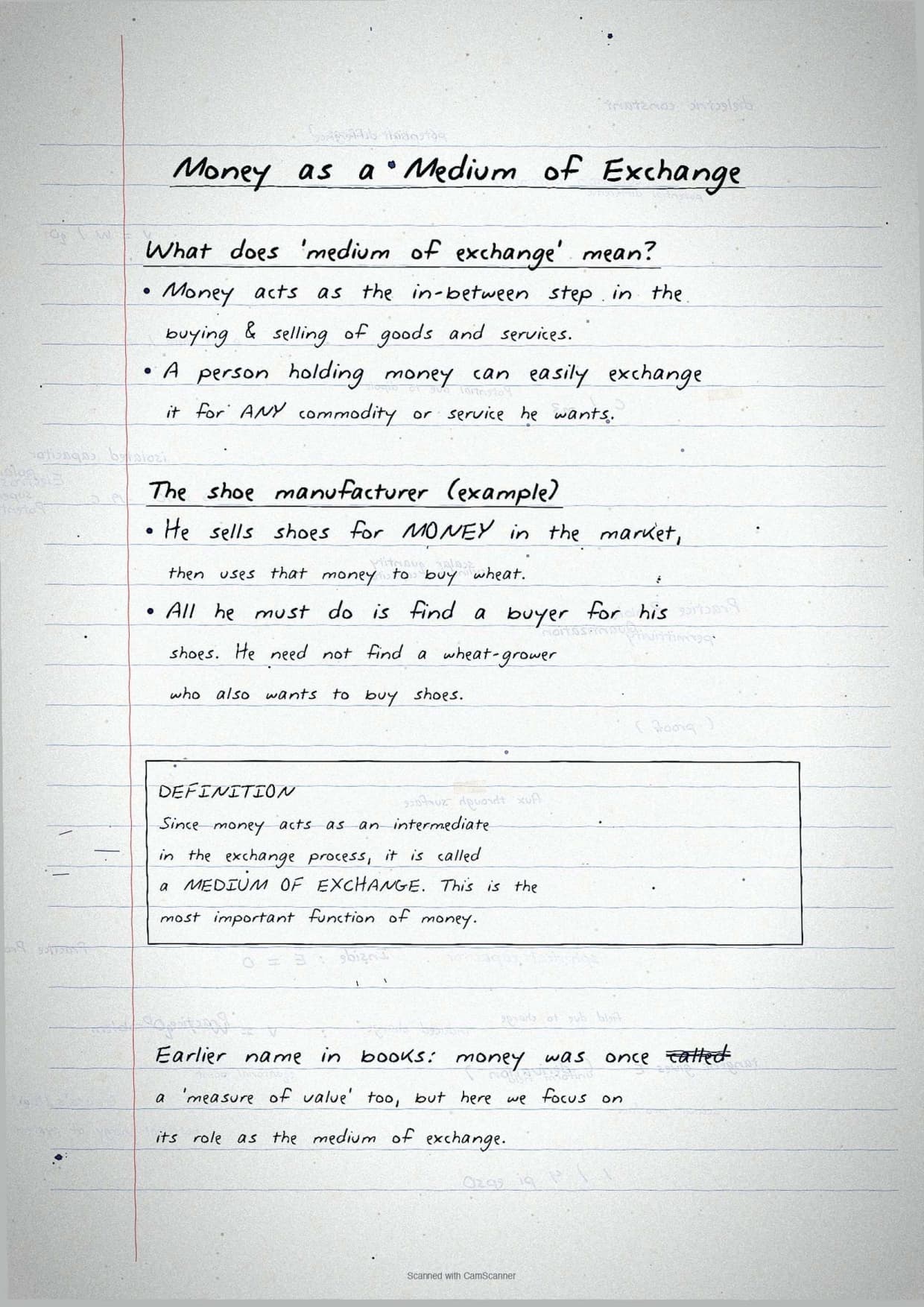
Money as a Medium of Exchange Pages
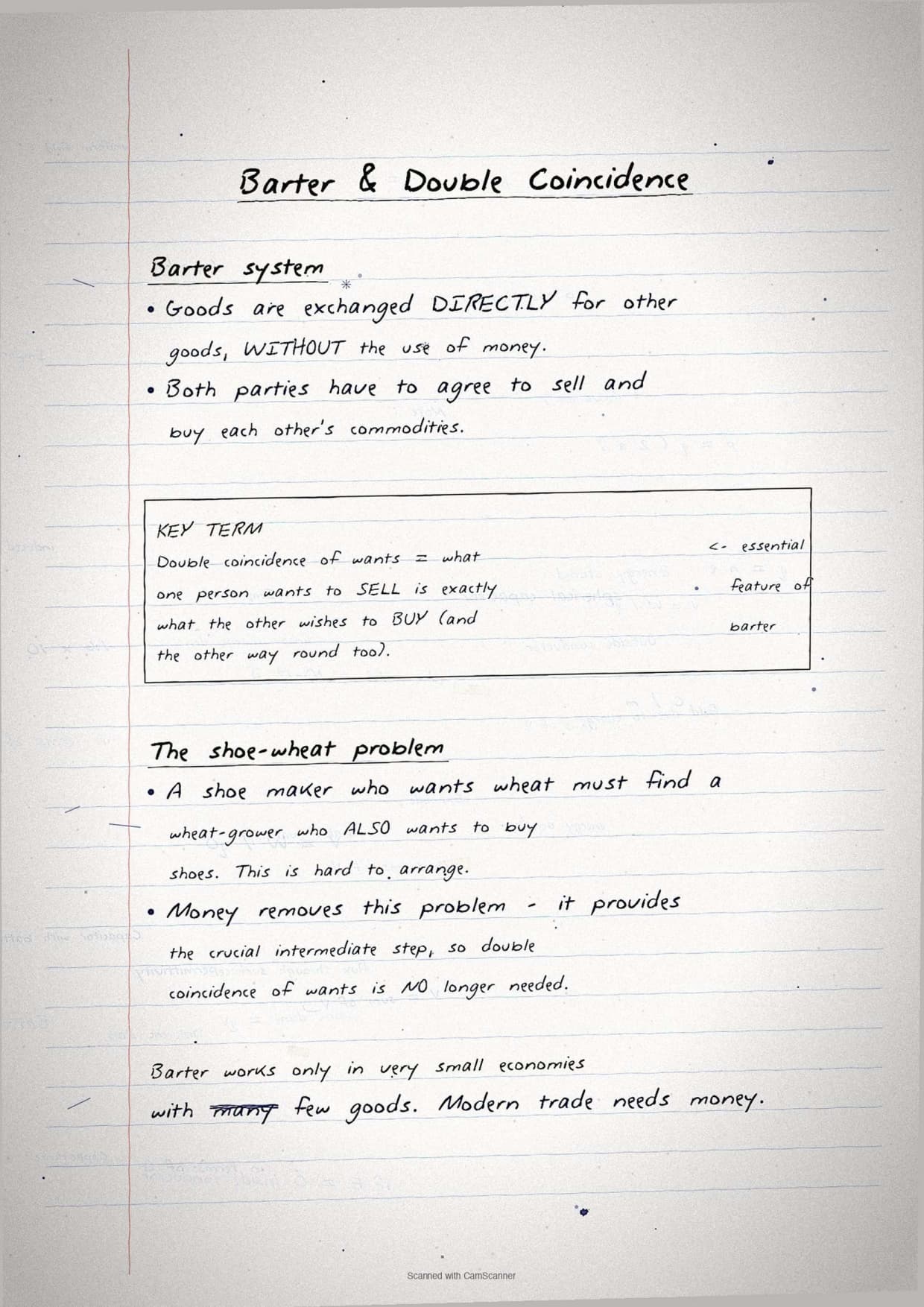
These pages explain why money exists, because the most common one-mark question asks for the meaning of the double coincidence of wants. The notes give one boxed example and underline the keyword.
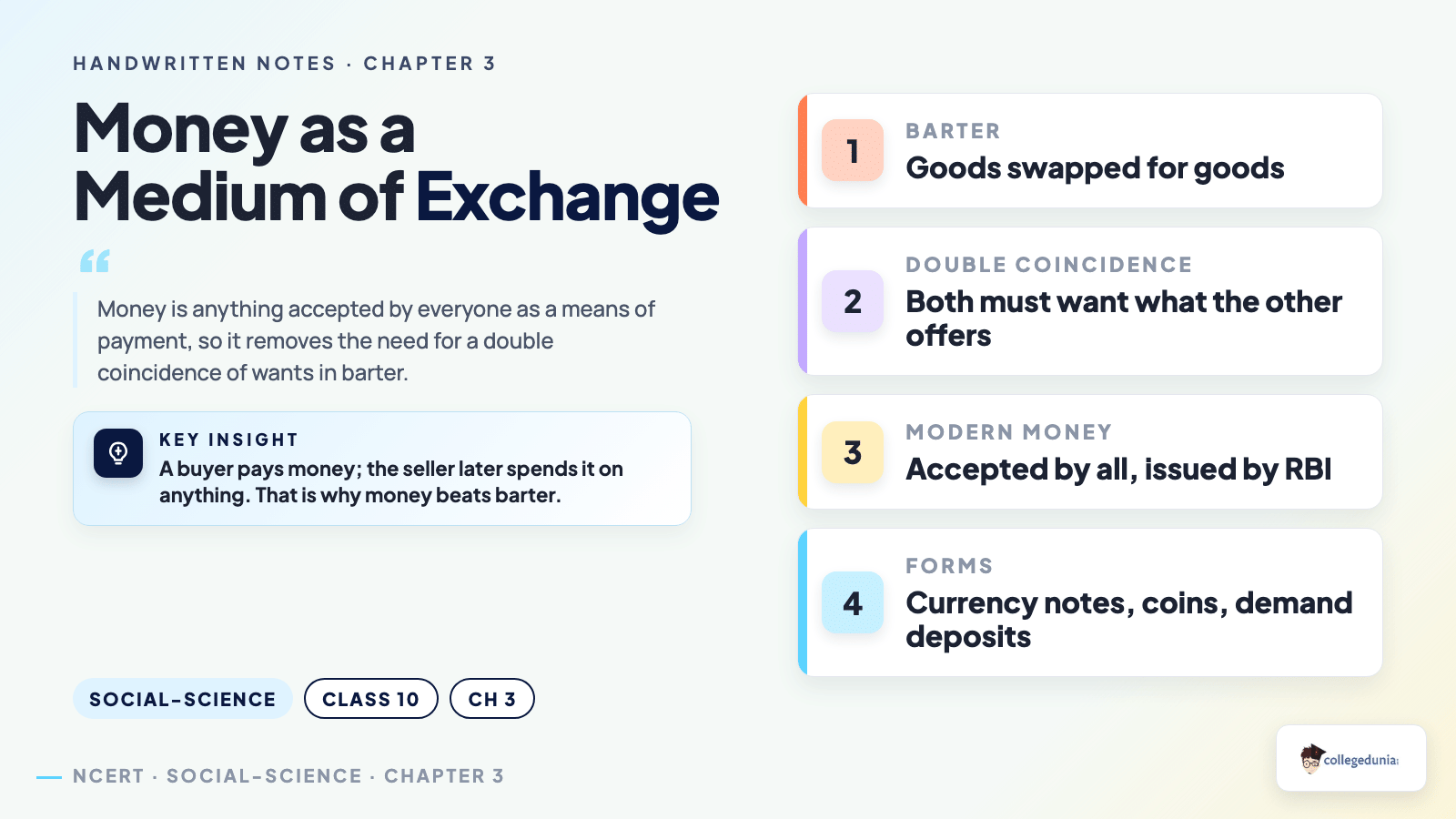
- Barter system: goods are swapped directly for goods, with no money in between.
- Double coincidence of wants: both people must want exactly what the other is willing to give, which makes barter slow.
- Money as a medium of exchange: money removes that problem because a buyer pays cash and the seller later uses it to buy anything.
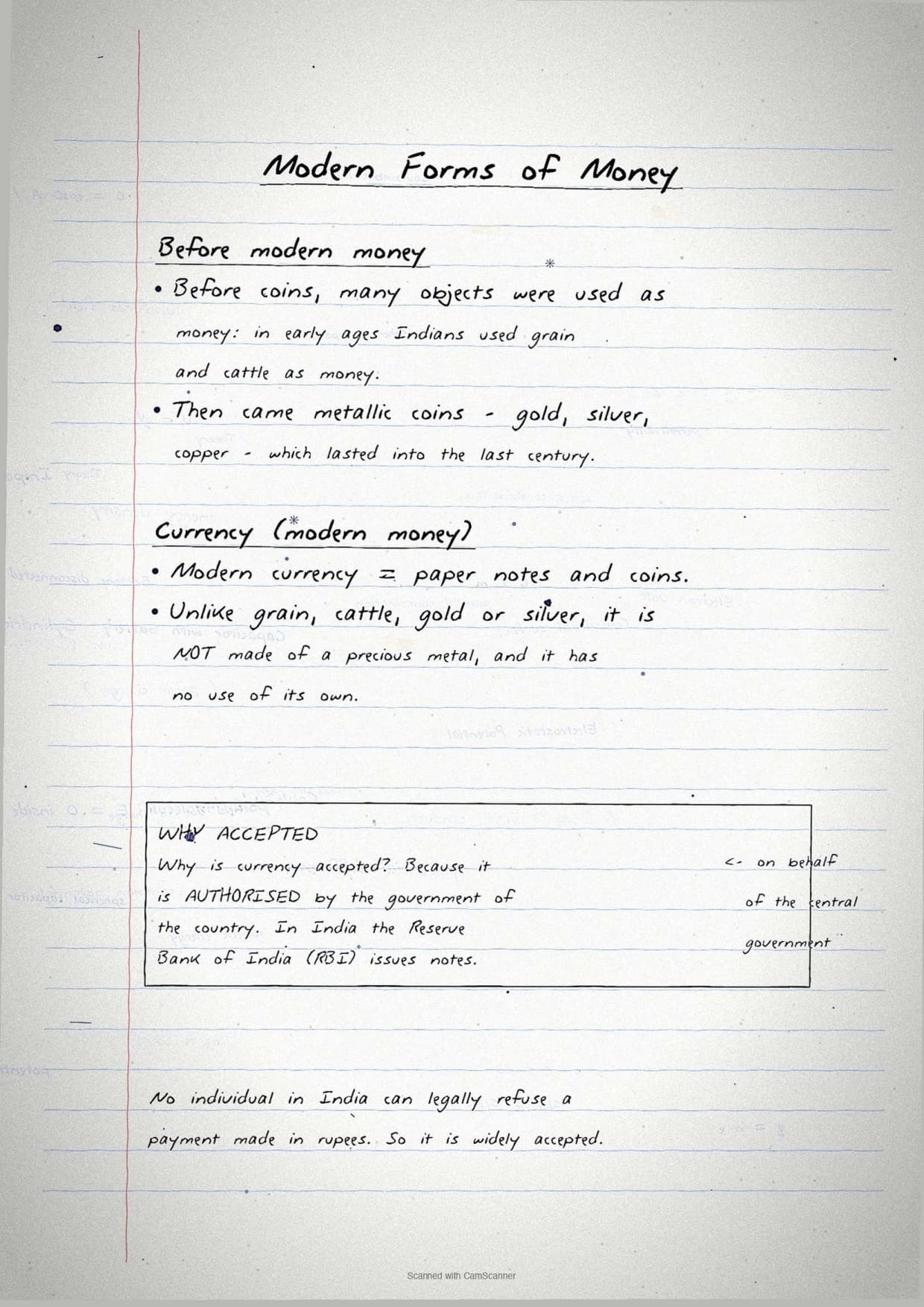
The pages box the sharpest point in red ink: money acts as a medium of exchange because it is accepted by everyone as a means of payment. A small arrow links barter to its drawback and modern currency to its cure, so students never mix them up. Knowing this contrast turns an average answer into a full-marks one.
| Form of money | Key point |
|---|---|
| Modern currency | Notes and coins have no value of their own; they are accepted as money because the law backs them. |
| Issuing authority | In India the Reserve Bank of India issues currency notes on behalf of the central government. |
| Legal tender | No one can legally refuse Indian rupee notes and coins as payment in India. |
Bank Deposits and Modern Forms of Money Pages
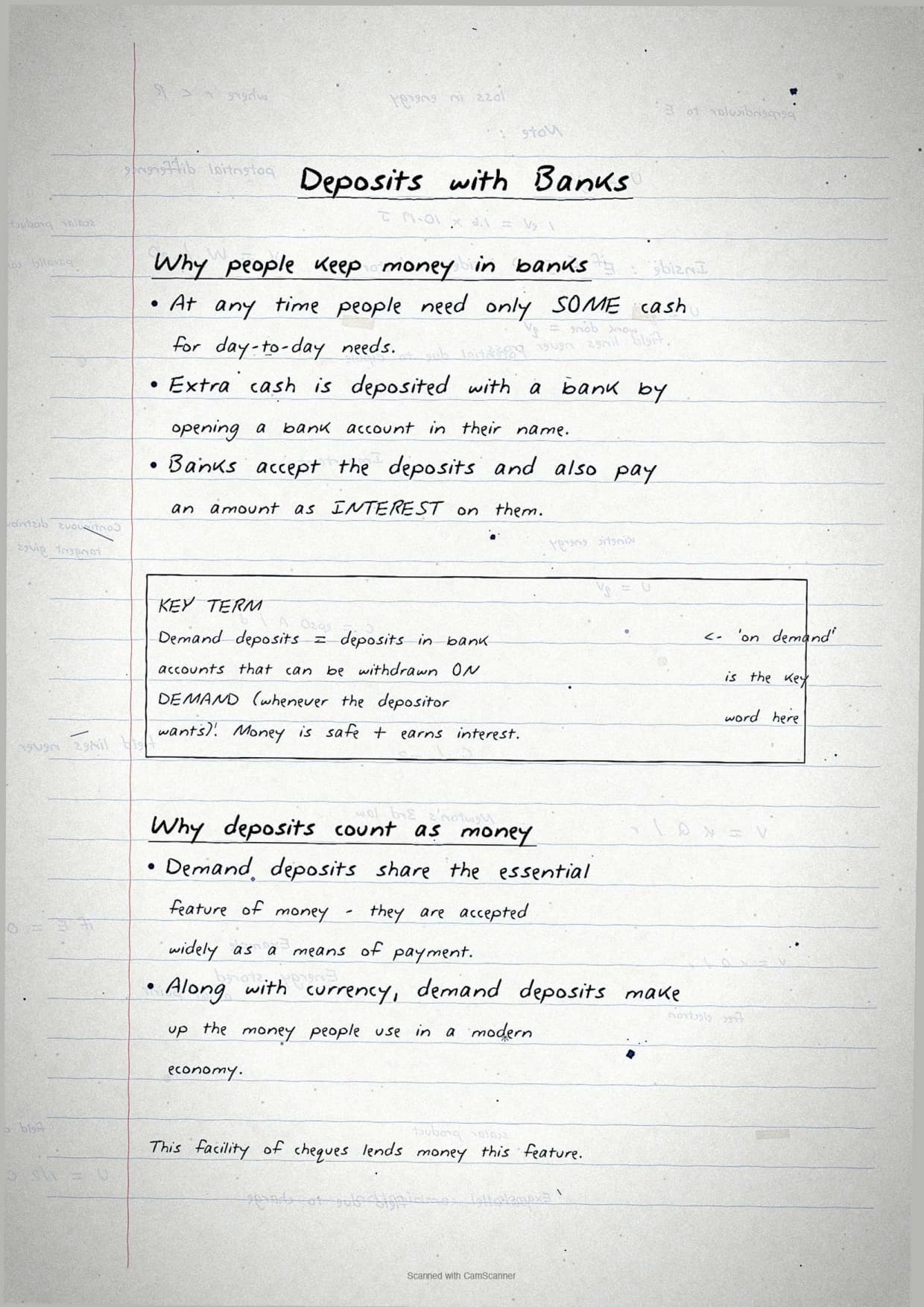
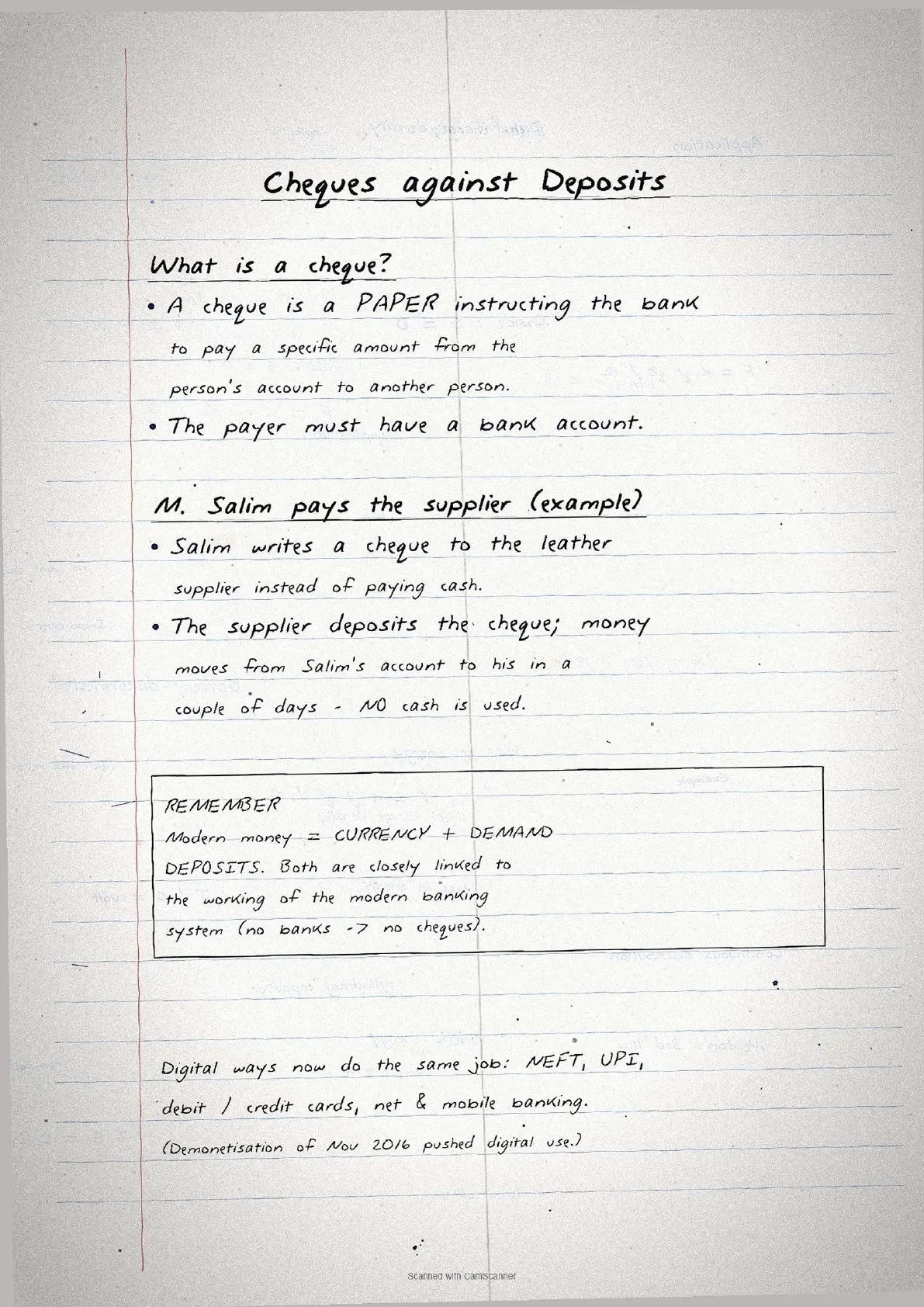
These pages explain how money sits safely in a bank and still works as payment. The notes keep the definition of a demand deposit in a box and add a simple cheque idea.
- Demand deposits are the money people keep in bank accounts that can be withdrawn on demand.
- Because they are accepted as payment, demand deposits count as modern money too.
- A cheque is a paper that tells the bank to pay a stated amount from the writer's account.
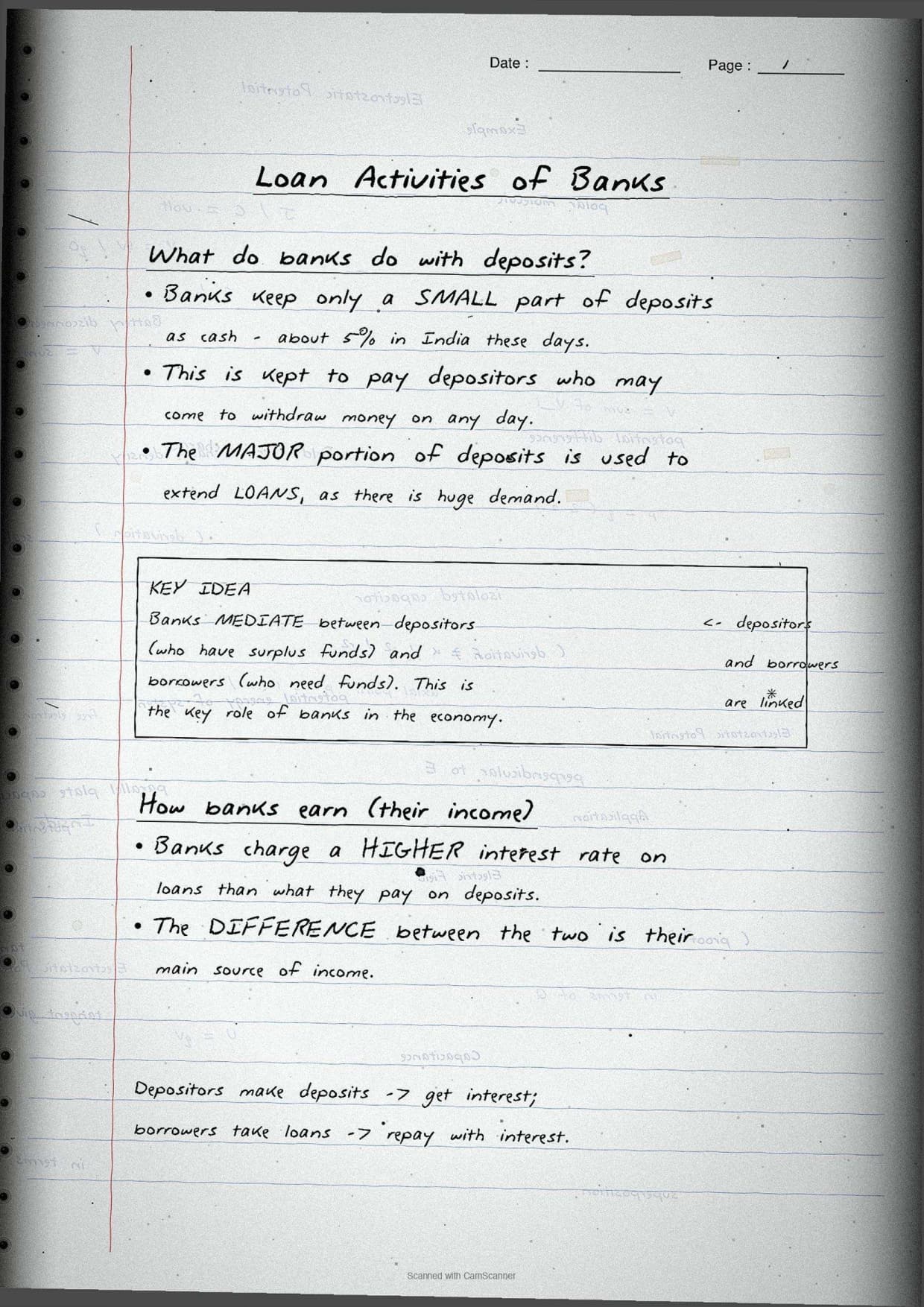
- Banks keep only a small part of deposits as cash and lend the rest, mostly as credit to those who need loans.
The margin note underlines the line the exam loves: banks keep only about 15 percent of deposits as cash and use the rest to extend loans, which is how they earn and how credit reaches borrowers. A hand-drawn arrow ties deposits to loans to interest, so students see how a bank works in one picture.
Credit, Terms of Credit and Two Sources Pages
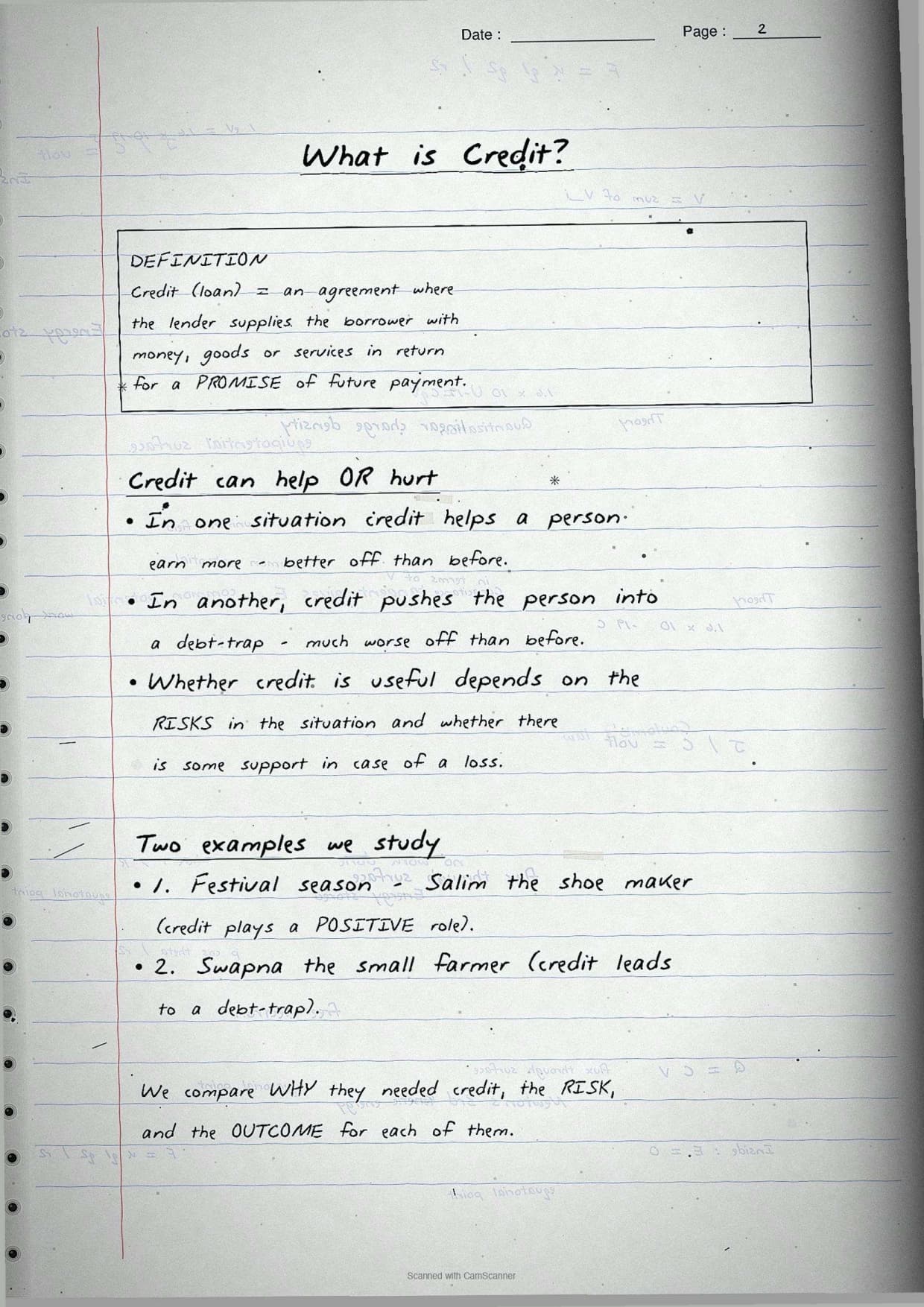
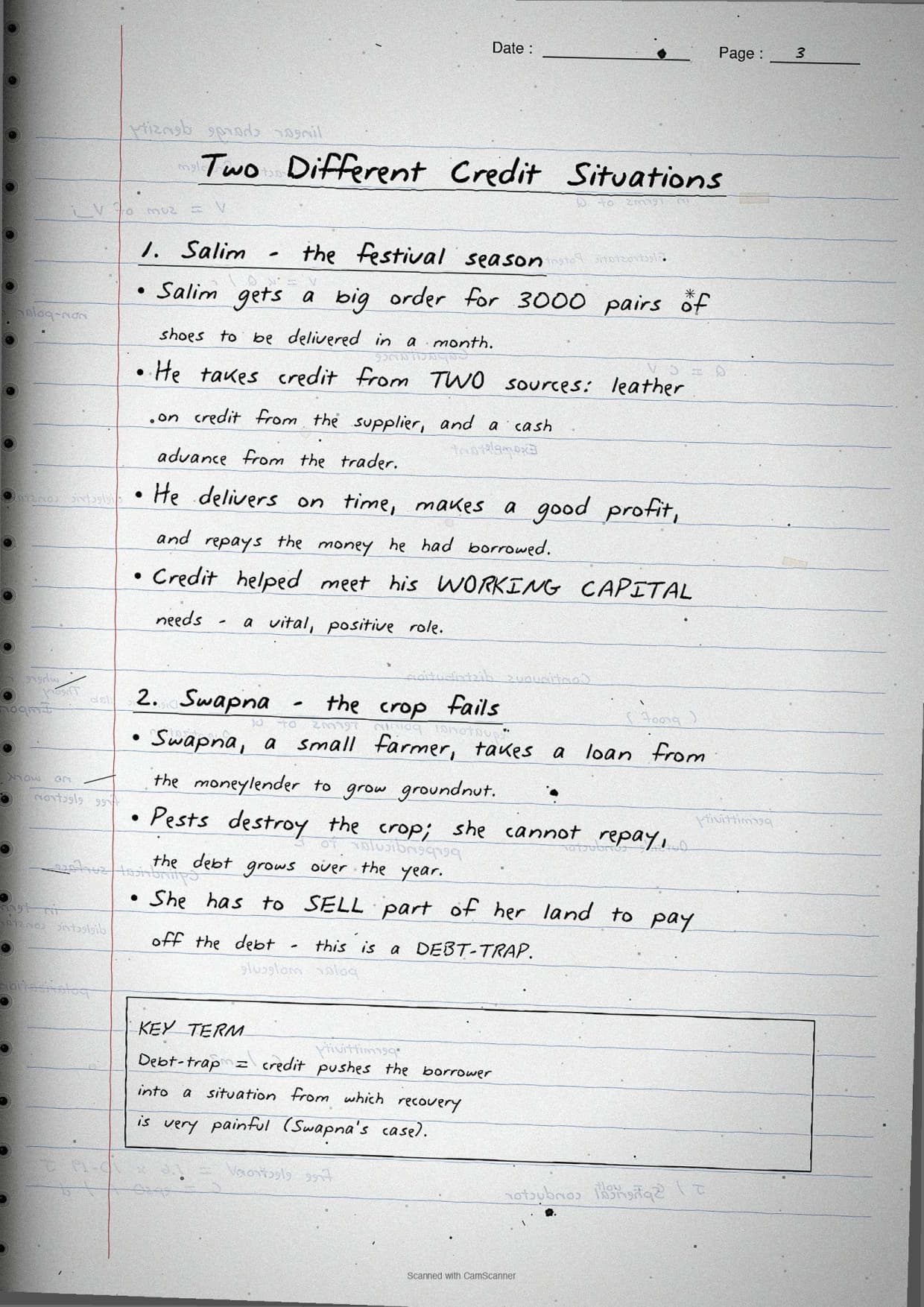
These pages keep the two sides of credit next to each other, because the board often asks whether a loan helped or trapped the borrower. The notes give one boxed example of each.
- Credit: an agreement where the lender gives money, goods or services in return for a promise of future payment.
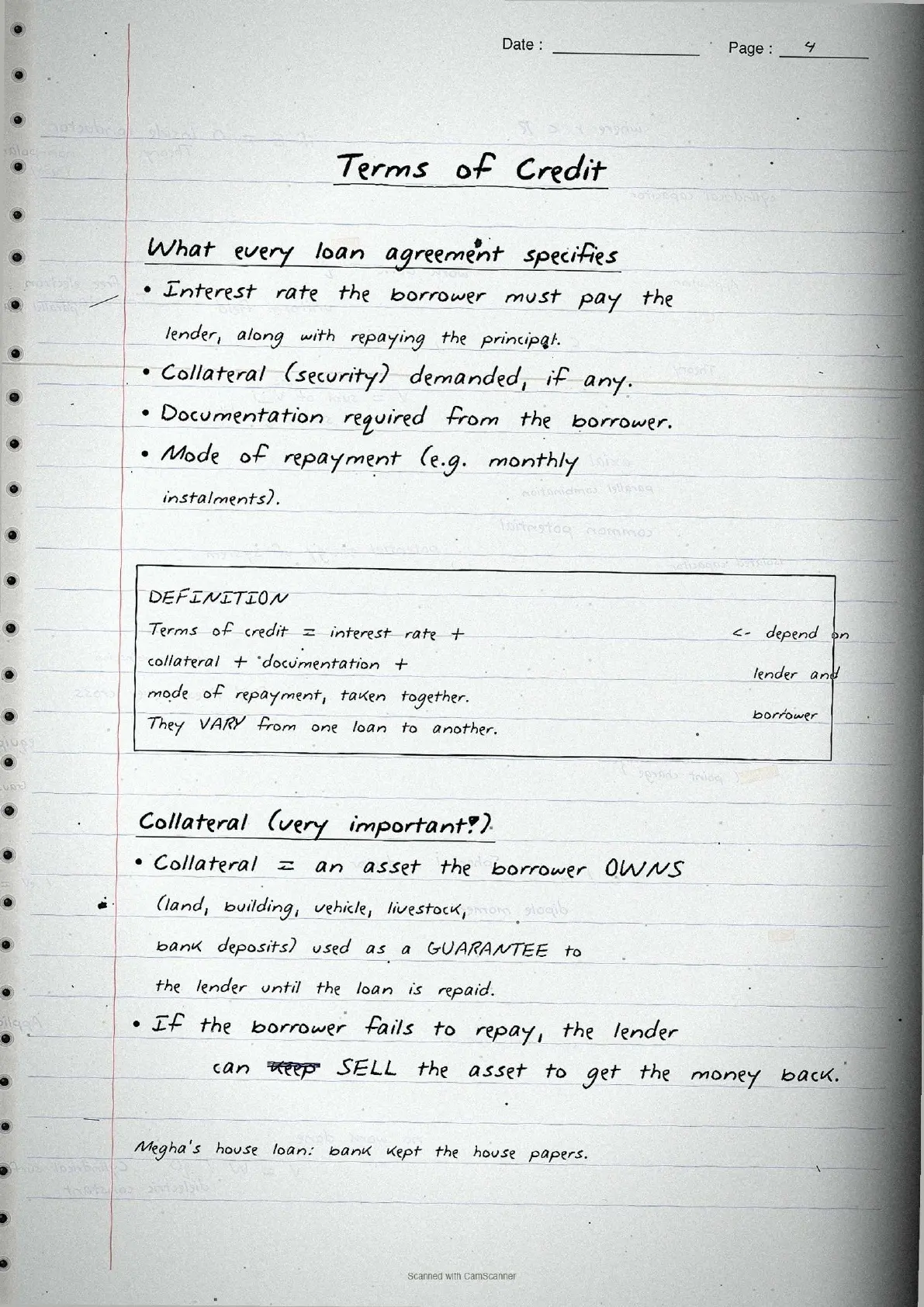
- Terms of credit: the interest rate, collateral, documentation and mode of repayment together form the terms of every loan.
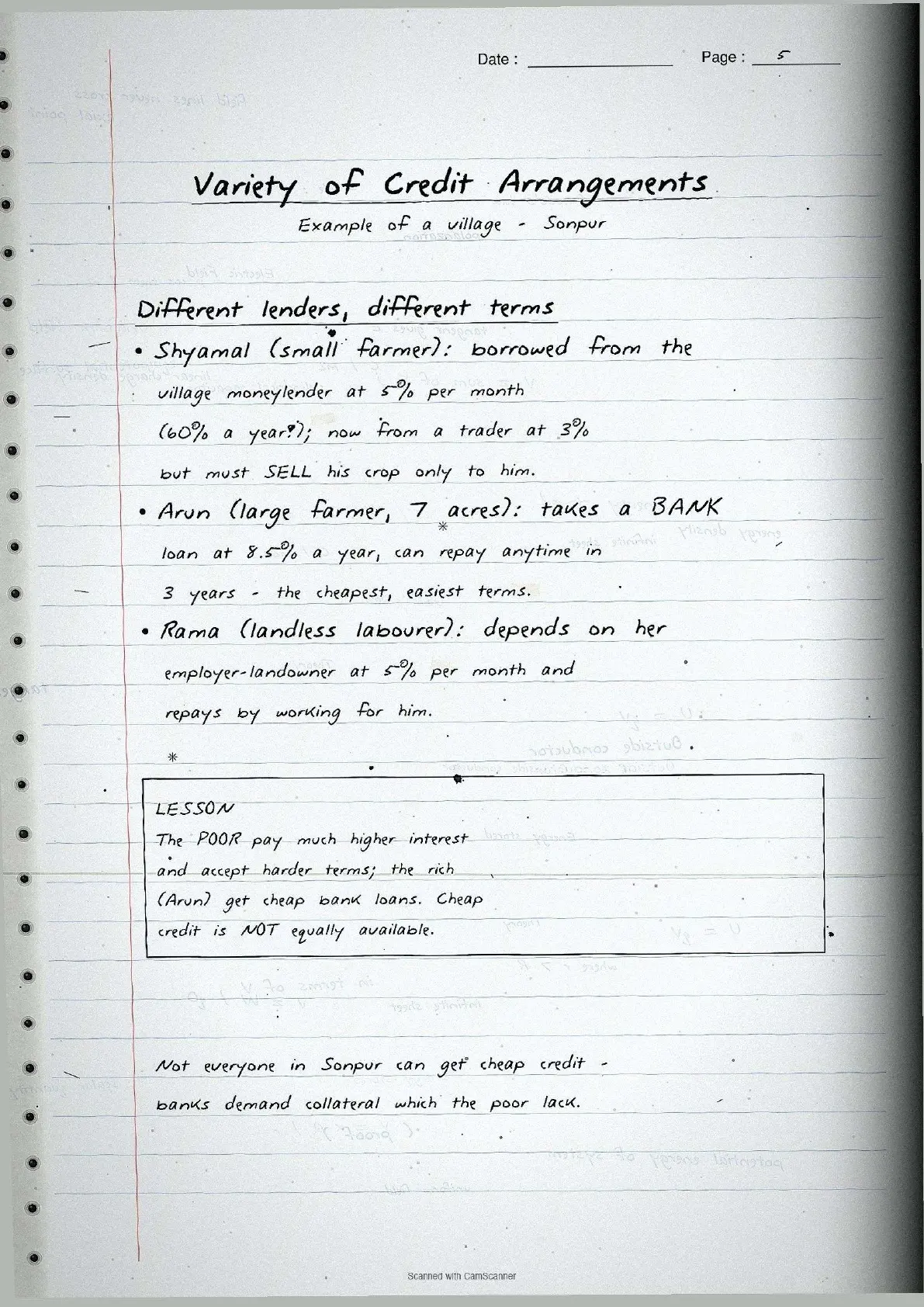
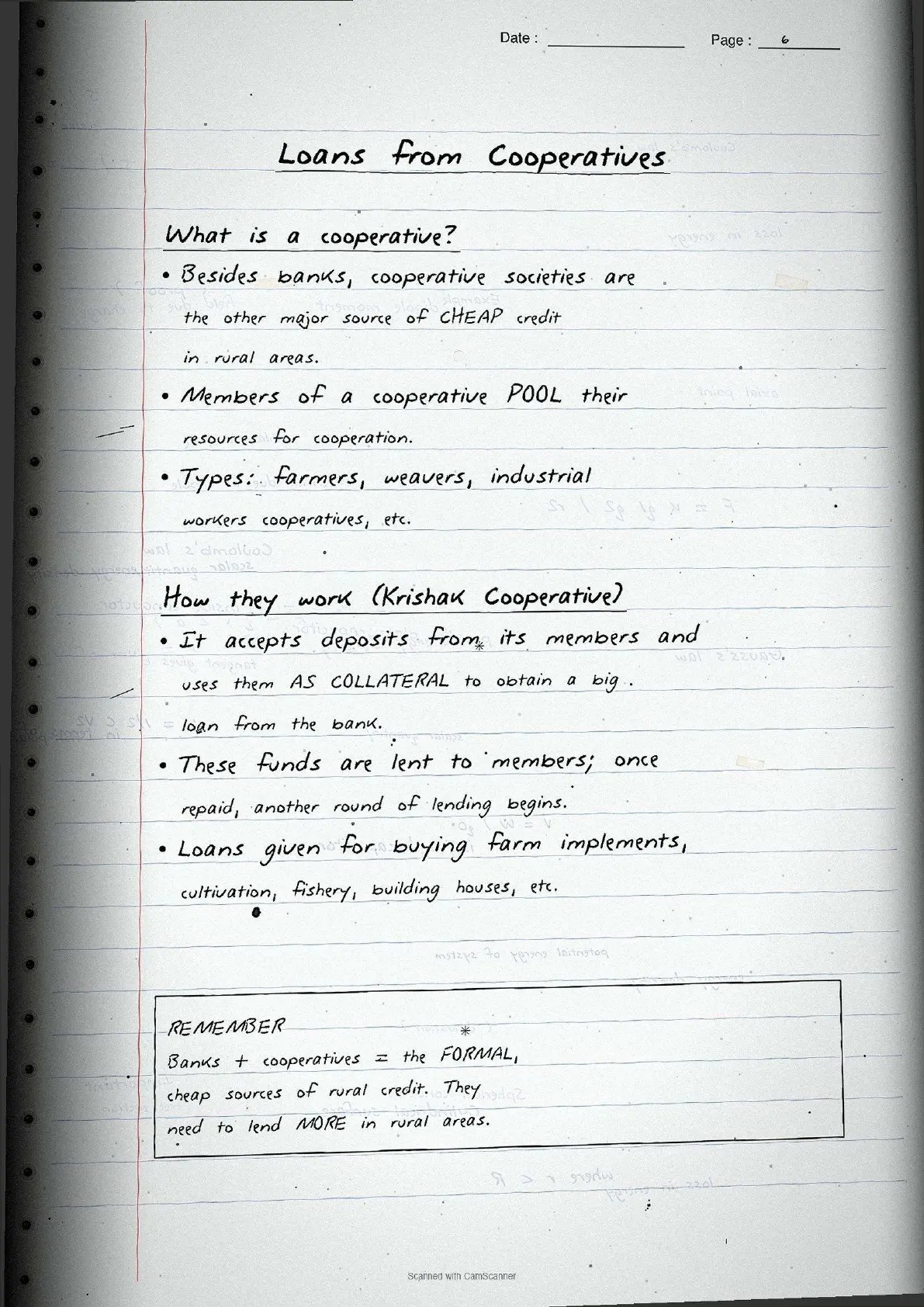
- Formal sources: banks and cooperatives, supervised by the RBI, charge lower interest.
- Informal sources: moneylenders, traders and friends, with no supervision and often very high interest.
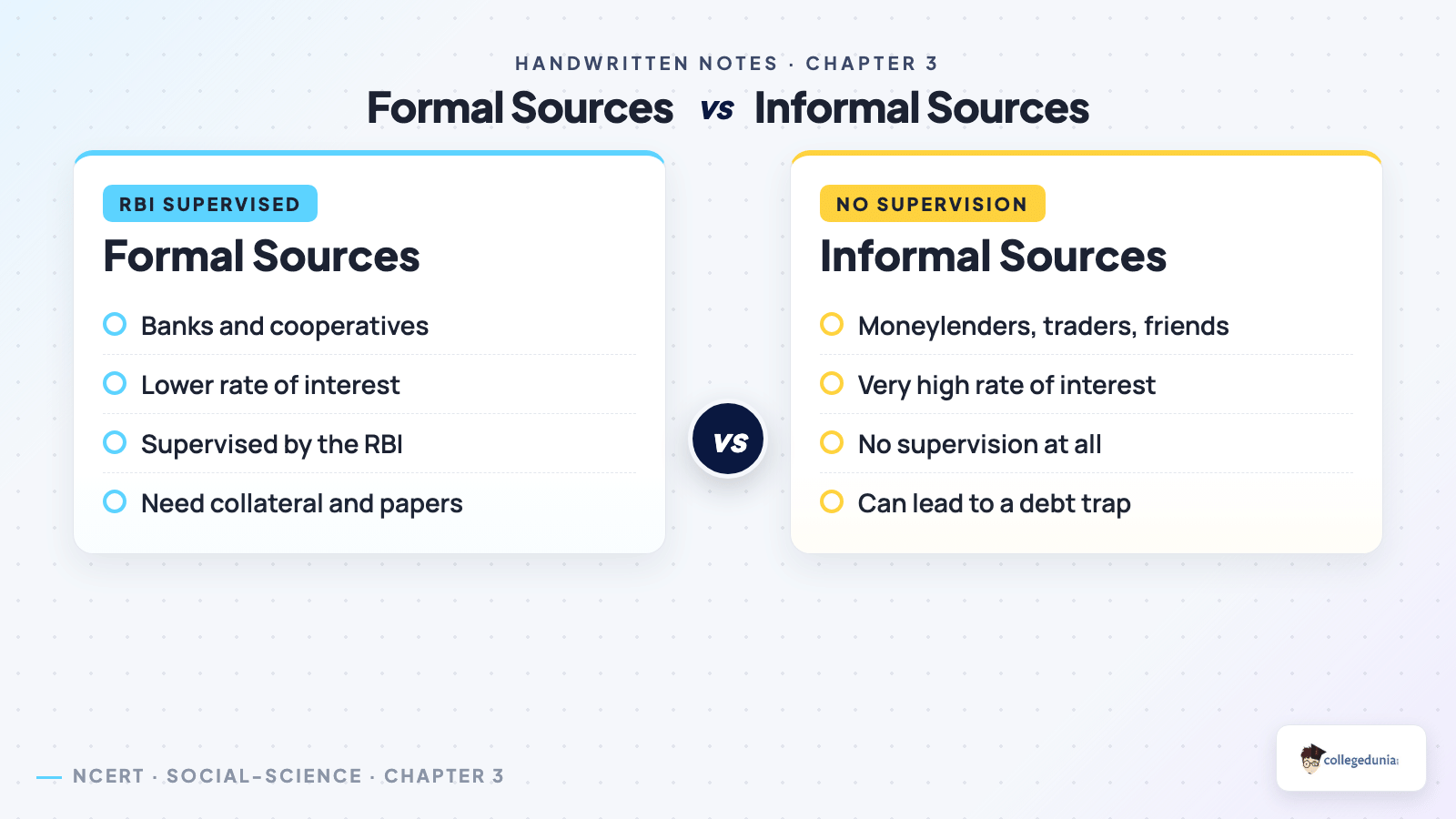
The pages box the most-tested fairness point in the margin: collateral is an asset the borrower owns, such as land or a house, that is used as a guarantee until the loan is repaid. A linking arrow ties high informal interest to the idea of a debt trap, where a borrower has to borrow again just to repay an earlier loan. This fairness angle, along with Self Help Groups and the Grameen Bank model that lend to the poor without collateral, is the point examiners reward in the long-answer question.
How to Use These Handwritten Notes
Handwritten notes work best as a final layer of revision, not as your first read. The plan below helps students get the most out of these notes before the board exam.
- First pass: read the notes once, following the money, deposits and credit order.
- Active recall: cover the boxed examples and try to state the double coincidence of wants from memory.
- Source practice: sort each loan into a formal or informal source and list its terms of credit without looking.
- Self-test: attempt a short class 10 economics chapter 3 mcq drill to check the small facts.
Because the pages are scanned, students can save them on a phone and revise offline on the way to the exam centre. Pair these pages with the full solutions to check your written answers against model points.
Common Mistakes These Notes Help You Avoid
A few errors cost marks in this chapter every year, mostly from mixing up the sources of credit or forgetting what counts as money. The notes flag each soft point in the margin.
- Saying barter has no problem - its drawback is the double coincidence of wants.
- Calling all credit harmful - credit helps when it raises income and harms only when it leads to a debt trap.
- Confusing formal with informal sources - formal sources like banks are supervised by the RBI, informal ones are not.
- Forgetting that demand deposits and cheques also count as modern money, not just notes and coins.
- Writing that everyone gets bank loans easily - the poor often lack collateral, which is where Self Help Groups help.
Students who fix these five points usually move from average to high marks. The exam rewards a clear contrast, so always name the source and its terms of credit before you judge a loan.
How These Notes Pair with the Solutions and Book PDF
These handwritten notes are a revision layer. Use them with the other resources for the same chapter, linked in the table below. Read the notes, test yourself with the solutions, and open the book PDF for the original text and the SHG case study.
| Resource | Best used for |
|---|---|
| Money and Credit NCERT Solutions | Step-by-step answers to all the back-exercise questions |
| Money and Credit Class 10 Notes | Quick chapter summary with money, deposits, credit and key terms in one place |
| Money and Credit NCERT Book PDF | Reading the original NCERT chapter text, examples and the SHG case study |
Tip: use the handwritten formal-versus-informal chart to memorise which source charges what, then write the full answer in your own words.
All Class 10 Economics Handwritten Notes by Chapter
The table links the handwritten notes for every chapter in Class 10 Economics, so students can move across the course in one click. Money and Credit is highlighted.
| Chapter | Handwritten Notes |
|---|---|
| Understanding Economic Development | |
| Chapter 1 | Development |
| Chapter 2 | Sectors of the Indian Economy |
| Chapter 3 | Money and Credit |
| Chapter 4 | Globalisation and the Indian Economy |
| Chapter 5 | Consumer Rights |
Money and Credit Class 10 Handwritten Notes Common Questions
Ques. Where can I download the class 10 economics handwritten notes chapter 3 Money and Credit PDF?
Ans. You can download the Money and Credit handwritten notes PDF directly from this page. It is free, follows the 2026-27 NCERT, and gives the chapter as clean scanned notebook pages with boxed terms and a colour-coded formal-versus-informal credit chart.
Ques. Are handwritten notes good enough for the class 10 economics board exam?
Ans. Yes, for revision. Handwritten notes are best used as a final layer after you have read the chapter and practised the solutions. They make money, the double coincidence of wants, bank deposits and the two sources of credit quick to recall in the exam.
Ques. What is the double coincidence of wants in this chapter?
Ans. The double coincidence of wants is a situation in the barter system where both people must want exactly what the other is willing to give before a swap can happen. Money removes this problem because it is accepted by everyone as a medium of exchange, so a buyer pays cash and the seller later spends it on anything.
Ques. What is the difference between formal and informal sources of credit?
Ans. Formal sources are banks and cooperatives that are supervised by the Reserve Bank of India and charge lower interest, while informal sources are moneylenders, traders and friends with no supervision and often very high interest. The notes box both sources separately so students never confuse them, and they highlight how high informal interest can lead to a debt trap.
Ques. How should I use these notes for quick revision?
Ans. Read the pages once in the money, deposits and credit order, cover the boxed examples and state the double coincidence of wants from memory, sort each loan into a formal or informal source, then attempt a short class 10 economics chapter 3 mcq drill to test the small facts.



Comments