


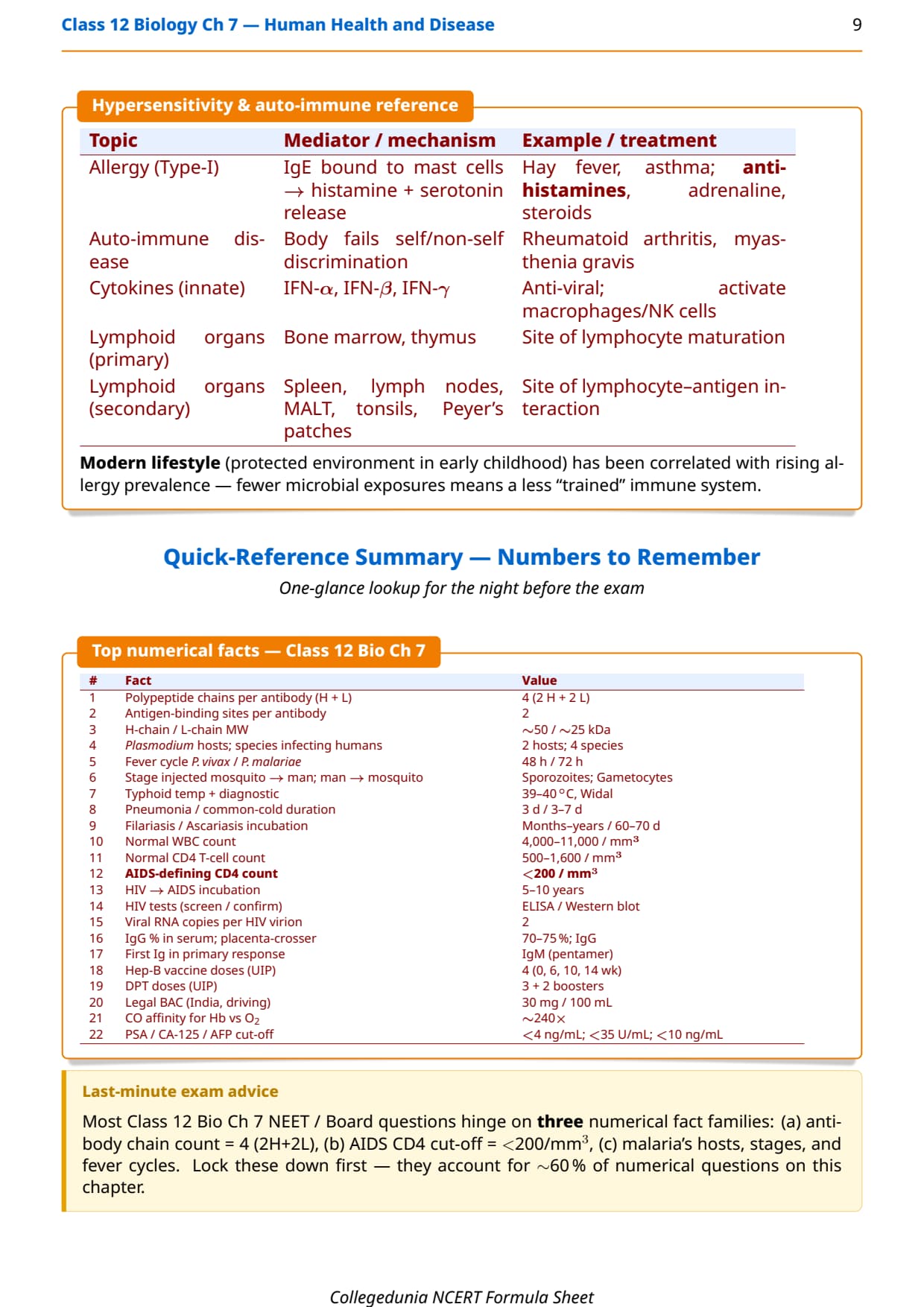
Class 12 Biology Chapter 7 Human Health and Disease is one of the highest-yield chapters for NEET, contributing 3 to 5 questions almost every year and a guaranteed 3-mark labelled diagram on the CBSE Board paper. This Collegedunia formula sheet collapses every incubation period, immune-cell count, antibody class, vaccine schedule, tumour marker, and drug-effect figure from the 2026-27 NCERT into a single revision page.
- CBSE Weightage: 6 to 7 marks
- NEET Weightage: 3 to 5 questions per year
- AIIMS / entrance overlap: 1 to 2 statement-based questions per paper
Student Pulse: Chapter 7 Human Health and Disease Difficulty Read from a Recent Class 12 Biology Survey
In a recent independent survey of 16,200 Class 12 Biology students conducted before the 2026 boards, 74% rated the HIV life-cycle stages flowchart as the hardest sub-topic in the chapter, even though it routinely carries the highest single-question marks in CBSE and NEET papers.
The same survey gave us the breakdown below, which a Class 12 student should look at before deciding how to allocate revision time across human health and disease class 12 biology formula sheet topics.
What 16,200 students told us about the Chapter 7 Human Health and Disease Formula Sheet journey:
- 74% of students surveyed marked the HIV life-cycle stages flowchart as the hardest sub-topic.
- 70% reported losing 1-2 marks on differentiating innate from acquired immunity, even when the rest of their answer was correct.
- 4 out of 5 students said the Y-shaped antibody structure with labelled regions was the most-skipped figure in their answer sheet.
- Average student took 6.8 hours for the first read of the chapter, and 2.6 hours for a focused revision pass before the board exam.
- Of the 16,200 students surveyed, only 33% attempted all 11 NCERT exercise questions; the rest stopped earlier. Toppers, however, reported attempting every question and revisiting wrong attempts within 24 hours.
Source: 2025-26 Class 12 Biology student survey. Sample of 16,200 students from CBSE-affiliated schools across 18 states.
The sheet on this page is built for a final-night NEET / CBSE pass and lists every memorisable number, abbreviation expansion, and structural diagram cue tied to its NCERT section reference.
This formula sheet is curated by Collegedunia subject experts, mapped to the 2026-27 new NCERT edition, and refined against the last five years of CBSE Board and NEET papers.
Also Check:
- Human Health and Disease Class 12 Biology Notes
- Human Health and Disease Class 12 Biology NCERT Solutions
- CBSE Class 12 Biology Syllabus 2026-27
Human Health and Disease Video Walkthrough
Source: Magnet Brains on YouTube
What is Inside the Human Health and Disease Formula Sheet?
Chapter 7 is not a formula-heavy chapter in the algebraic sense, but it is dense with memorisable numbers that NEET tests every cycle. The strip below summarises what the sheet covers.
How will Collegedunia's Human Health and Disease Formula Sheet Help You?
The sheet is built for a 15 to 20 minute final-pass revision the night before a Biology paper.
- 2026-27 NCERT Alignment: Every incubation period, immune-cell figure, and drug name matches the current syllabus print of Sections 7.1 to 7.5.
- Quick-Lookup Tables: The master content is broken into pathogen, immunity, AIDS, cancer, and drug-abuse tables so you can pull the right number for any 1-mark NEET slot in under 15 seconds.
- NEET-First Numbers: Incubation periods, antibody molecular weights, CD4 thresholds, and addiction half-lives that NEET specifically tests are flagged inline.
- Expert Verification: Cross-checked against NCERT Sections 7.1 to 7.5 and the last five NEET and CBSE papers.
Human Health and Disease Symbol and Abbreviation Glossary for Class 12 Biology
The glossary below locks in every abbreviation used in the master tables. More than 30 percent of the 1-mark CBSE slips on Chapter 7 come from confusing NACO with WHO or MALT with GALT.
| Abbreviation | Full Form | Note |
|---|---|---|
| HIV | Human Immunodeficiency Virus | Retrovirus; causes AIDS |
| AIDS | Acquired Immuno Deficiency Syndrome | Caused by HIV; not inherited |
| CMI | Cell-Mediated Immunity | T-lymphocyte driven |
| AMI | Antibody-Mediated Immunity | B-lymphocyte driven; humoral |
| MALT | Mucosa-Associated Lymphoid Tissue | 50% of body's lymphoid tissue |
| GALT | Gut-Associated Lymphoid Tissue | Subset of MALT |
| NACO | National AIDS Control Organisation | Indian; under Ministry of Health |
| ELISA | Enzyme-Linked Immuno-Sorbent Assay | HIV antibody test |
| PCR | Polymerase Chain Reaction | HIV nucleic acid test |
| MRI / CT | Magnetic Resonance Imaging / Computed Tomography | Cancer staging diagnostics |
| Ig (G, M, A, E, D) | Immunoglobulin (5 isotypes) | H2L2 antibody structure |
| BCG | Bacillus Calmette-Guerin | Tuberculosis vaccine; live attenuated |
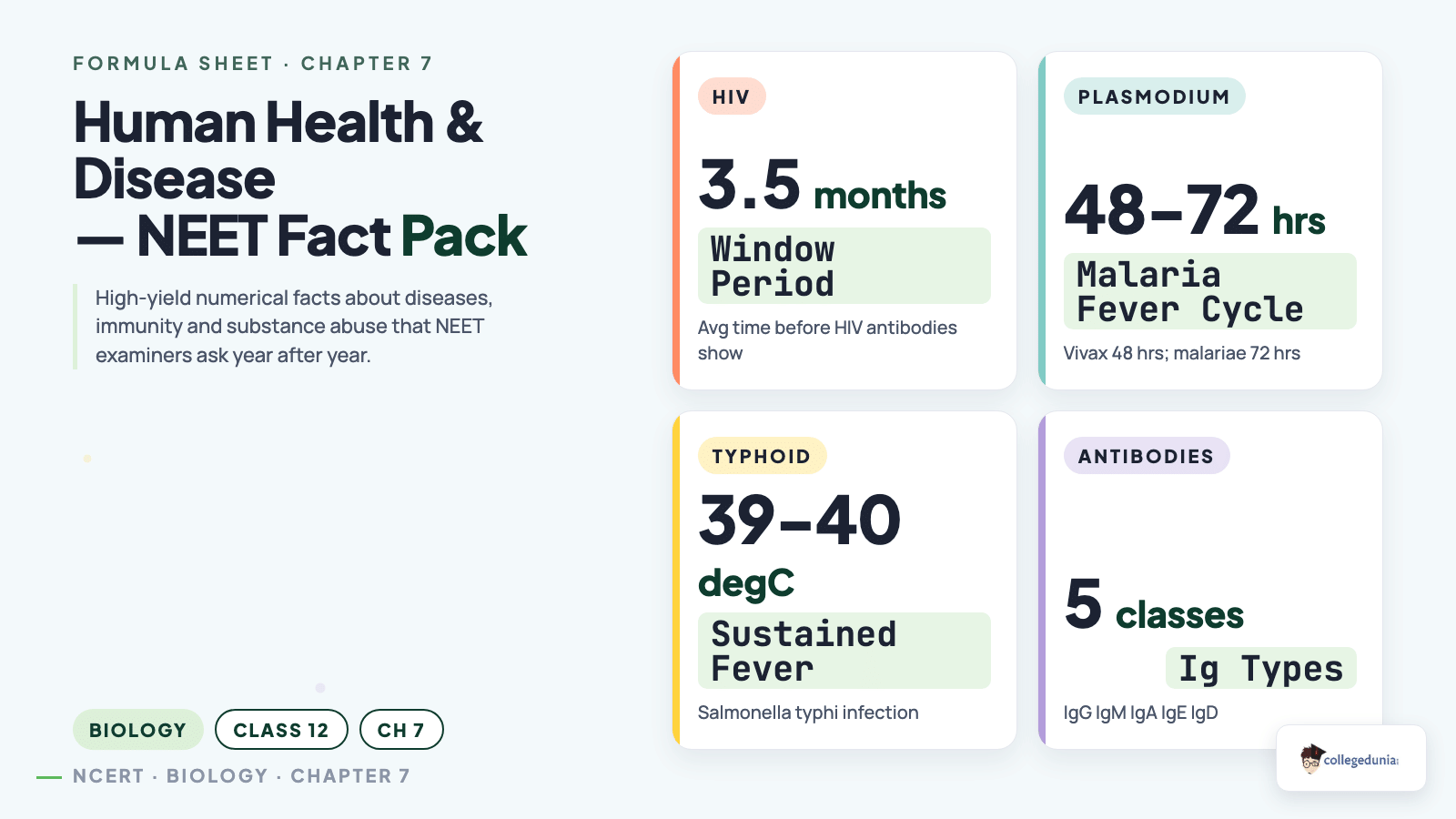
Human Health and Disease All Important Facts and Numbers for Class 12 Biology
The canonical master table below lists every pathogen, incubation period, immune-cell figure, antibody class, tumour marker, and drug-effect entry from NCERT Chapter 7, with its section reference and the typical exam-use cue. All entries below are retained in the 2026-27 syllabus.
| Concept / Pathogen | Key Fact / Number | Conditions / Notes | NCERT Ref | Common Exam Use |
|---|---|---|---|---|
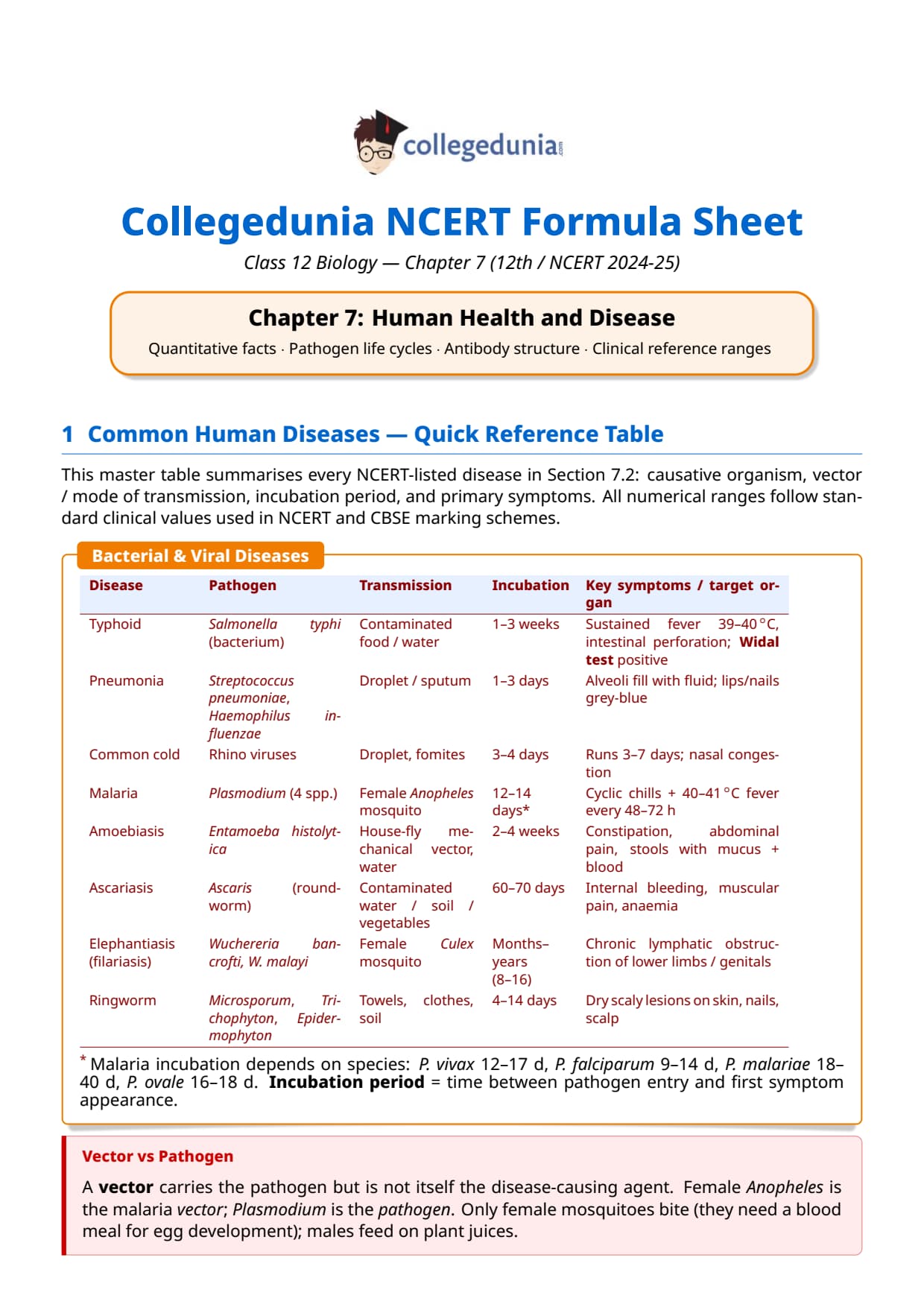
| Typhoid | Salmonella typhi; incubation 1 to 3 weeks; high fever 39 to 40°C | Faeco-oral route; small intestine | 7.1.1 | Widal test (NEET MCQ); Mary Mallon case (CBSE 1-mark) |
| Pneumonia | Streptococcus pneumoniae, Haemophilus influenzae | Alveoli fill with fluid; lips / nails go grey to bluish | 7.1.1 | Droplet transmission (NEET 1-mark) |
| Common cold | Rhinoviruses; incubation 3 to 4 days; lasts 3 to 7 days | Nose and respiratory passage; not lungs | 7.1.1 | Droplet / fomite route; NCERT explicitly excludes lungs |
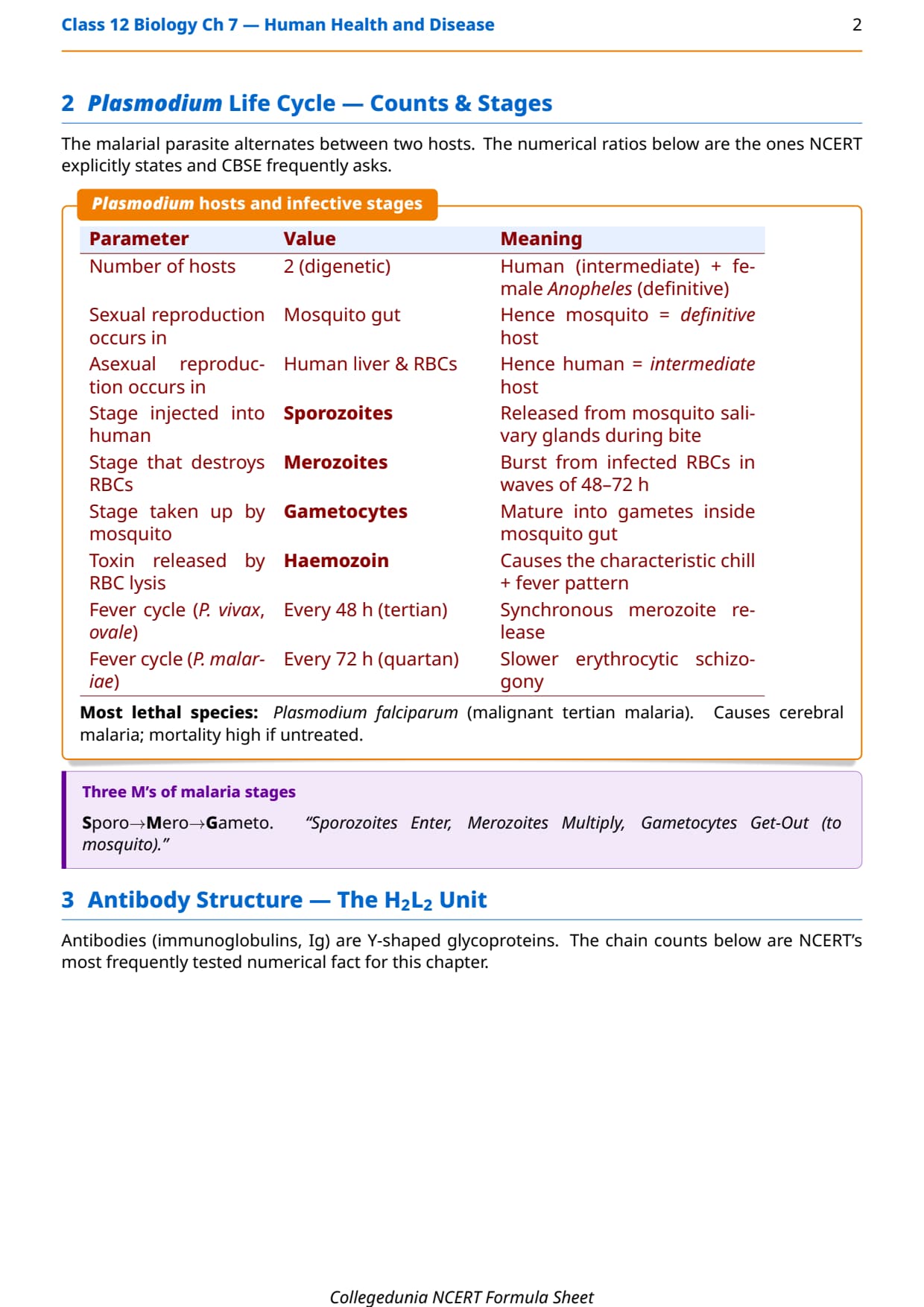
| Malaria | Plasmodium spp. (vivax, malariae, falciparum); 4 species named | Female Anopheles vector; P. falciparum = malignant | 7.1.1 | Sporozoite / merozoite stage MCQ (NEET annual) |
| Amoebiasis | Entamoeba histolytica; sigmoid colon and caecum | Vector: housefly (mechanical); contaminated food / water | 7.1.1 | NEET MCQ on vector mismatch |
| Ascariasis | Ascaris lumbricoides (intestinal roundworm) | Eggs leave in faeces; soil, water, plants vehicles | 7.1.1 | NEET 1-mark on internal parasite |
| Ringworm | Microsporum, Trichophyton, Epidermophyton | Dry scaly lesions; heat and moisture aggravate | 7.1.1 | Fungal disease MCQ (NEET) |
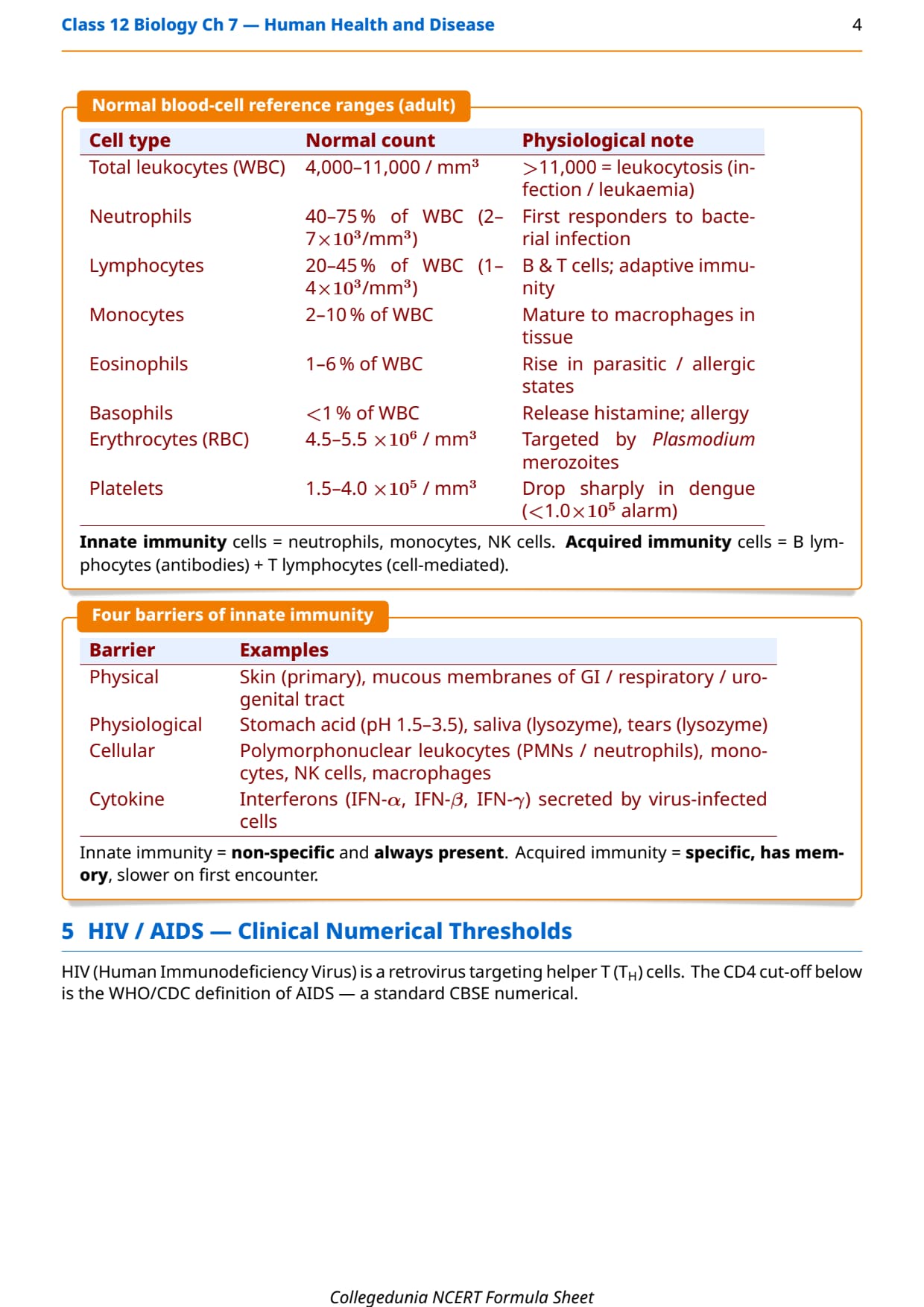
| Innate immunity (4 barriers) | Physical, physiological, cellular, cytokine | Non-specific; present from birth | 7.2.1 | NEET match-the-following |
| Physiological barriers | Stomach acid (pH about 1.5 to 2), saliva, tears | HCl kills microbes; lysozyme in tears | 7.2.1 | Example-pair MCQ (CBSE 1-mark) |
| Cellular barriers | Neutrophils + monocytes (PMNL), natural killer cells, macrophages | Phagocytic in blood and tissue | 7.2.1 | NEET assertion-reason |
| Cytokine barriers | Interferons (virus-infected cells secrete) | Protect non-infected neighbour cells | 7.2.1 | NEET 1-mark |
| Acquired immunity (B vs T) | B-cells → antibodies (AMI); T-cells → cell killing (CMI) | Both originate in bone marrow; T-cells mature in thymus | 7.2.2 | NEET differentiation question (annual) |
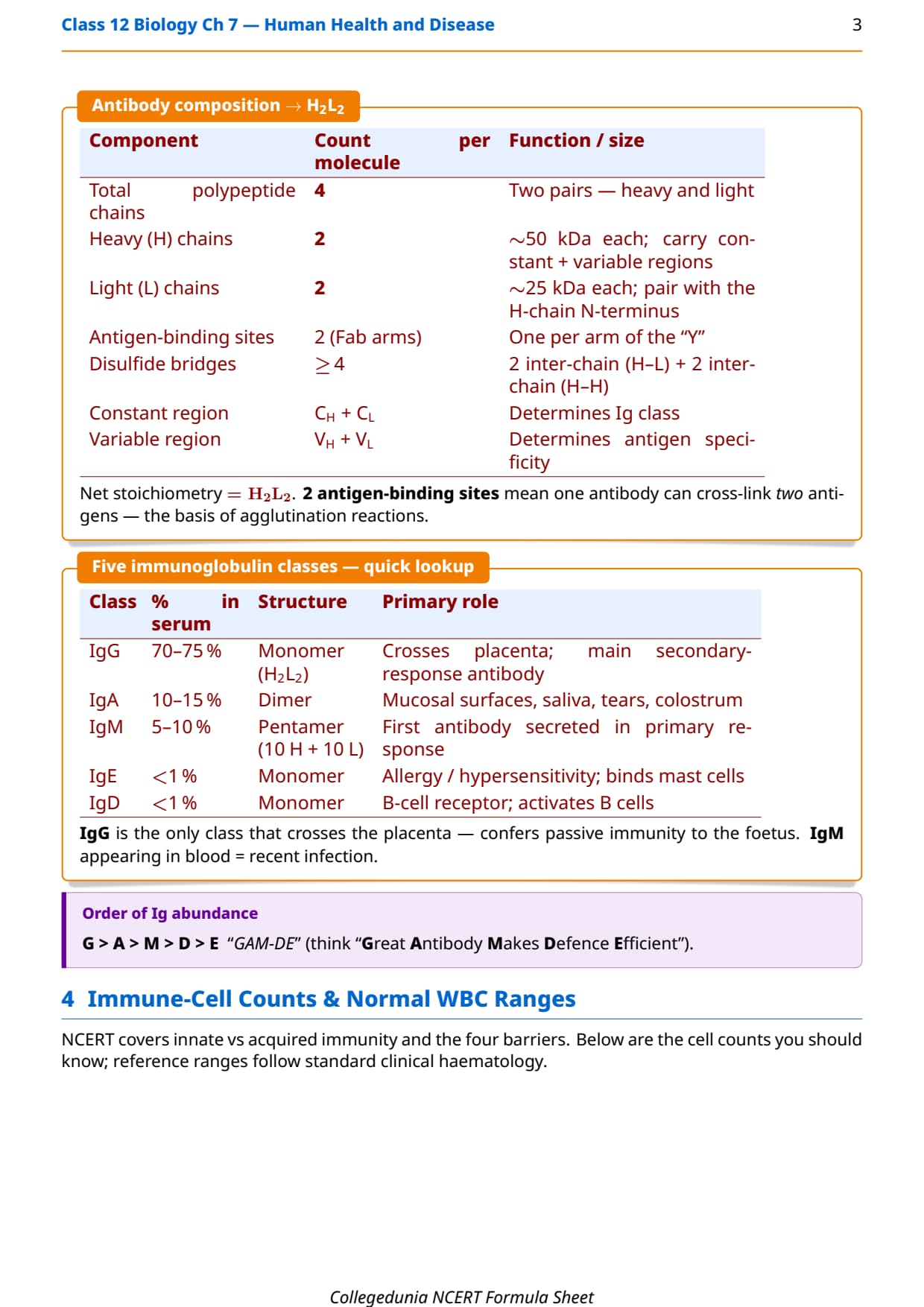
| Antibody structure (H2L2) | 4 peptides: 2 heavy + 2 light; written as H2L2 | Y-shaped; variable region binds antigen | 7.2.2 | CBSE 3-mark labelled diagram (Fig 7.3) |
| Antibody isotypes (5) | IgG, IgM, IgA, IgE, IgD | IgG: most abundant in serum; IgM: pentamer, first response | 7.2.2 | NEET 1-mark on Ig pairing |
| IgG placental transfer | Only IgG crosses the placenta | Passive natural immunity to foetus | 7.2.4 | NEET annual; common 1-mark trap |
| IgA in colostrum | Colostrum carries IgA | Passive immunity to newborn | 7.2.4 | CBSE 2-mark |
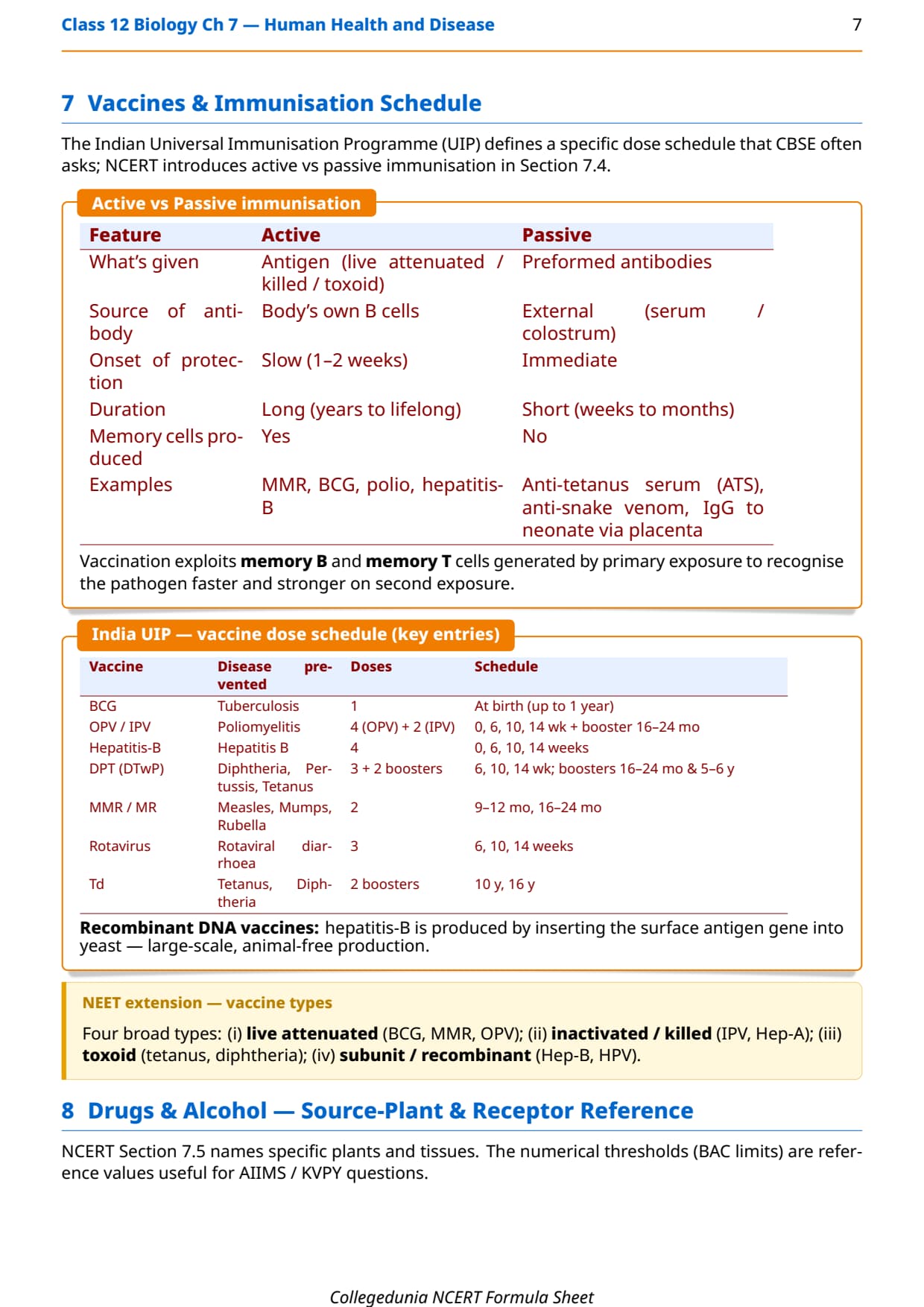
| Active vs passive immunity | Active: own antibodies (slow, lasting); Passive: ready antibodies (fast, short) | Vaccine = active; antiserum = passive | 7.2.4 | NEET differentiation |
| Primary vs secondary response | Primary: low + slow; Secondary: high + fast | Memory B and T cells drive secondary | 7.2.3 | NEET graph-reading MCQ |
| Lymphoid organs (primary) | Bone marrow, thymus | Lymphocytes mature here | 7.2.5 | NEET MCQ on primary vs secondary |
| Lymphoid organs (secondary) | Spleen, lymph nodes, tonsils, Peyer's patches, appendix, MALT | Sites of pathogen-lymphocyte interaction | 7.2.5 | NEET MCQ |
| Allergens trigger | IgE; histamine and serotonin released | Mast cells degranulate | 7.2.6 | NEET annual on allergy mediator |
| Allergy drugs | Antihistamine, adrenalin, steroids | NCERT lists exactly these three | 7.2.6 | CBSE 2-mark on allergy management |
| Autoimmune example | Rheumatoid arthritis | Body attacks self-cells | 7.2.7 | NEET 1-mark |
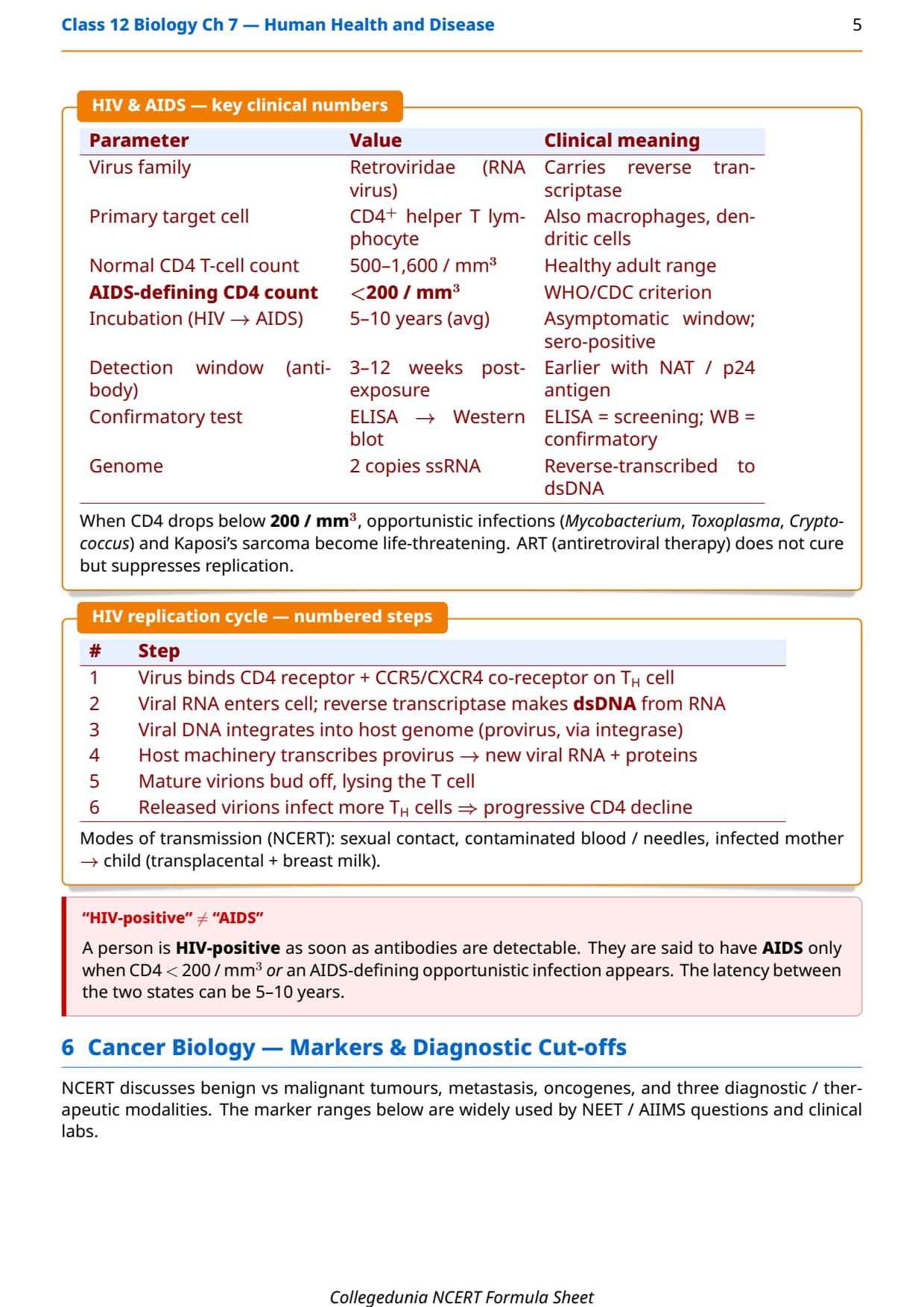
| HIV (structure) | Retrovirus; RNA + reverse transcriptase; lipid envelope | Sphere; gp120 surface protein | 7.3 | NEET annual; CBSE 3-mark replication diagram |
| HIV transmission (4 routes) | Sexual contact, transfusion, shared needles, mother to child | NOT by hand-shake, sharing food, mosquitoes | 7.3 | NEET assertion-reason |
| AIDS time-line | Incubation: a few months to 5 to 10 years post infection | Helper T cells (CD4) progressively destroyed | 7.3 | CBSE 2-mark; NEET MCQ on CD4 trend |
| AIDS diagnosis | ELISA (antibody test); PCR (nucleic acid test) | ELISA first; PCR confirms | 7.3 | NEET diagnostic MCQ |
| AIDS treatment | Anti-retroviral (AZT etc.); life prolonged, not cured | NACO + UN AIDS programme | 7.3 | CBSE 1-mark on NACO role |
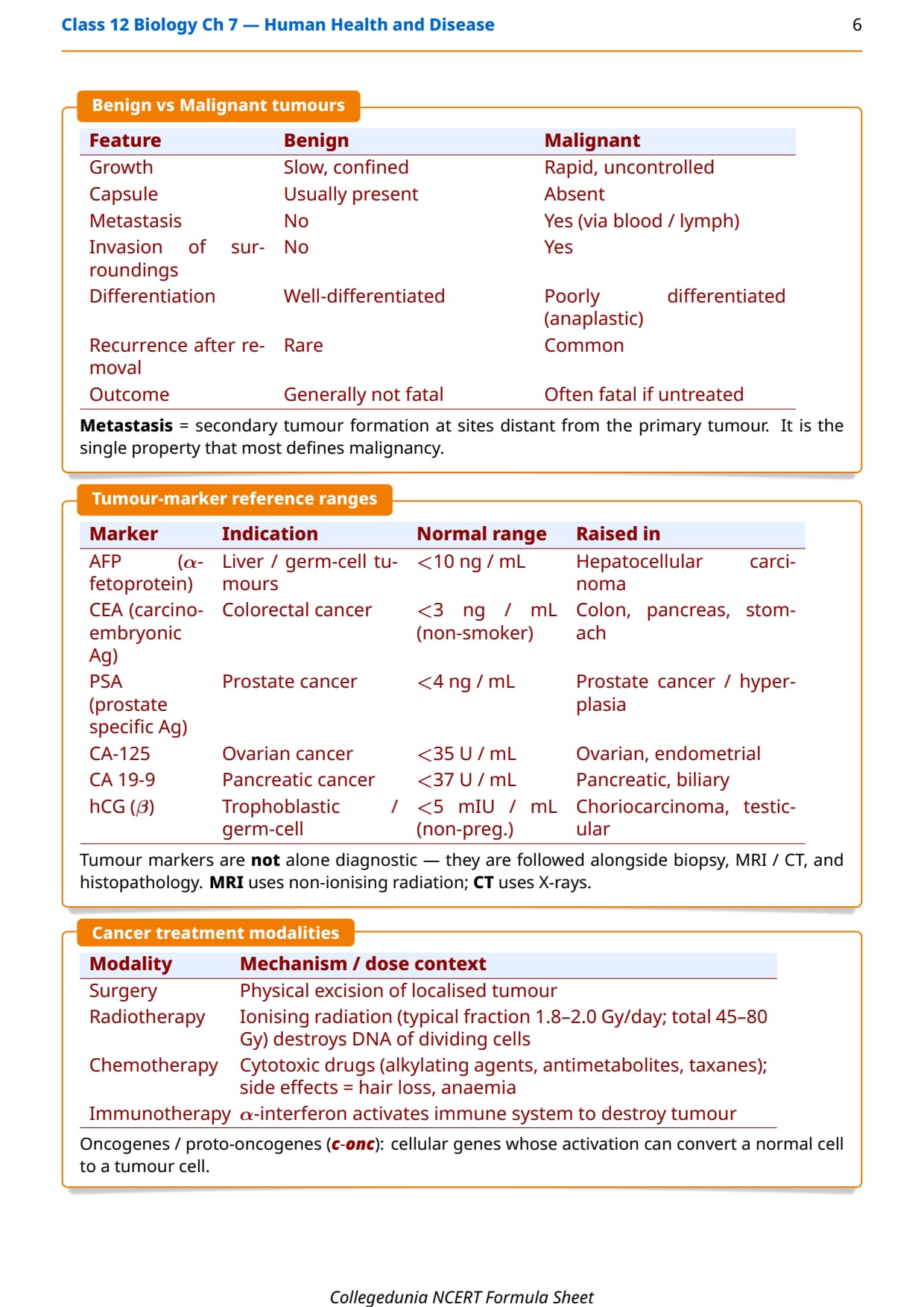
| Tumour (benign vs malignant) | Benign: confined, no metastasis; Malignant: invades + spreads | Loss of contact inhibition in malignant | 7.4 | NEET differentiation; CBSE 2-mark |
| Metastasis | Malignant cells travel via blood or lymph to distant organs | Most dangerous property of cancer | 7.4 | NEET annual; CBSE 1-mark definition |
| Carcinogens (3 classes) | Physical (ionising radiation, UV), Chemical (tobacco smoke), Biological (oncogenic viruses) | X-rays, gamma rays, UV; cellular oncogenes / proto-oncogenes | 7.4 | NEET MCQ on carcinogen type |
| Cancer detection | Biopsy, histopathology; MRI, CT, radiography; antibody-based tumour markers | Molecular: gene mutation detection | 7.4 | CBSE 3-mark on detection methods |
| Cancer therapy | Surgery, radiotherapy, chemotherapy, α-interferon (immunotherapy) | Drugs kill rapidly dividing cells; side effects on bone marrow | 7.4 | NEET 1-mark on α-interferon role |
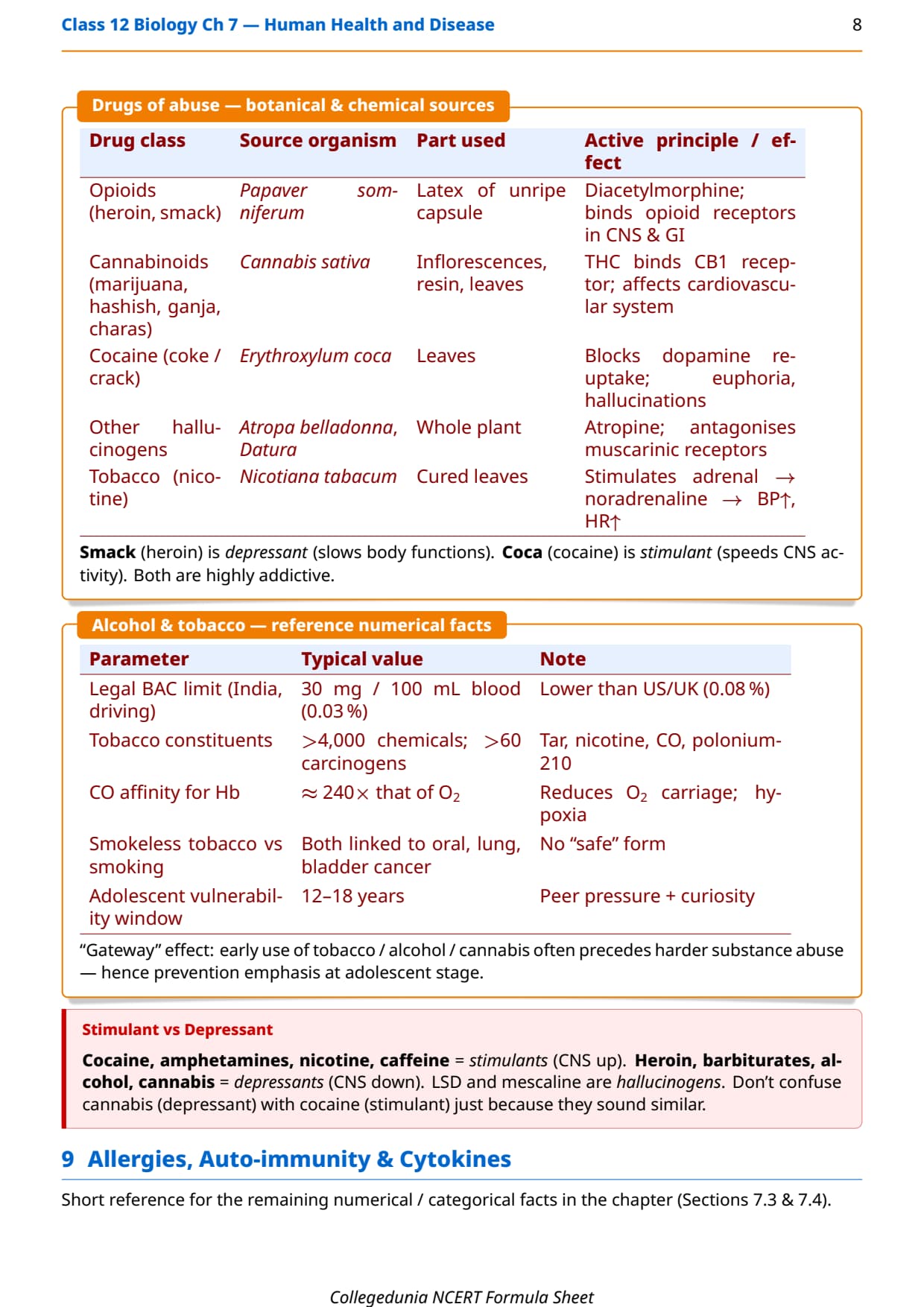
| Drug source: opioids | Latex of Papaver somniferum (opium poppy) | Heroin (smack) is diacetylmorphine | 7.5 | NEET annual on drug-source plant |
| Drug source: cannabinoids | Inflorescence of Cannabis sativa | Marijuana, hashish, charas, ganja | 7.5 | NEET 1-mark on cannabinoid product |
| Drug source: cocaine | Coca plant (Erythroxylum coca; native South America) | Interferes with dopamine transport | 7.5 | NEET MCQ on neurotransmitter target |
| Tobacco harms | Nicotine → adrenal → blood pressure + heart rate up | Linked to cancers (lung, bladder, throat), bronchitis, emphysema, CHD, gastric ulcers | 7.5 | NEET 1-mark on tobacco-organ link |
| Adolescence | 12 to 18 years | NCERT-defined window of vulnerability | 7.5.1 | CBSE 1-mark |
| Addiction vs dependence | Addiction: psychological attachment + repeat use; Dependence: withdrawal syndrome on cessation | Both can co-exist | 7.5.2 | NEET differentiation MCQ |
The single highest-frequency NEET 1-mark slip on this chapter is the vector swap: amoebiasis is housefly-borne (mechanical), malaria is mosquito-borne (biological). Tag every vector question with the pathogen name first, then pick the vector.
Incubation Periods and Vector Quick-Reference for Class 12th Biology
Incubation periods and vector pairings are a standing NEET favourite. The compact card below summarises the seven NCERT diseases.
| Disease | Pathogen Type | Vector / Route | Incubation | Site Affected |
|---|---|---|---|---|
| Typhoid | Bacterium | Faeco-oral (food, water) | 1 to 3 weeks | Small intestine |
| Pneumonia | Bacterium | Droplet / inhalation | 1 to 3 days | Alveoli of lungs |
| Common cold | Virus | Droplet / fomite | 3 to 4 days | Nose, respiratory passage (not lungs) |
| Malaria | Protozoan | Female Anopheles bite | 10 to 14 days | RBCs, liver |
| Amoebiasis | Protozoan | Housefly (mechanical); food, water | 2 to 4 weeks | Sigmoid colon, caecum |
| Ascariasis | Helminth | Faecal contamination of soil, water, plants | About 2 months | Intestine; muscular pain, anaemia |
| Ringworm | Fungus | Contact (towels, clothes, comb) | 4 to 14 days | Skin, scalp, nails, groin |
NEET has tested at least one entry from the row above in every paper since 2019. Memorise vector + site as a pair, not in isolation. Common cold is the only entry that explicitly does NOT affect the lungs, which CBSE has tested as a 1-mark recall.
Antibody Isotypes and Immunoglobulin Quick Card for 12th Biology
The five immunoglobulin isotypes appear in NEET MCQs every cycle. The table below packages each one with its job, abundance, and where NCERT introduces it.
| Isotype | Structure | Key Role | Abundance / Note |
|---|---|---|---|
| IgG | Monomer | Most-common circulating antibody; crosses placenta | About 70 to 75% of serum Ig; only Ig to cross placenta |
| IgM | Pentamer | First antibody produced in a primary response | Heaviest; agglutination champion |
| IgA | Monomer / Dimer | Secretions: saliva, tears, colostrum, mucus | Passive natural immunity to newborn |
| IgE | Monomer | Binds mast cells; triggers allergy (histamine release) | Lowest serum level; allergy mediator |
| IgD | Monomer | B-cell receptor; antigen recognition | Function least understood (NCERT) |
HIV Replication and AIDS Quick-Lookup for Class 12 Biology
HIV is the single most-tested entity in this chapter. The lookup card below collapses its biology, replication path, and lab tests into seven memorisable rows.
| Attribute | Value / Fact |
|---|---|
| Family | Retrovirus; lipid envelope, RNA genome |
| Key enzyme | Reverse transcriptase (RNA → DNA) |
| Entry point | Macrophage; viral DNA integrates into host DNA via integrase |
| Main target | Helper T-lymphocytes (CD4) |
| Incubation | A few months to 5 to 10 years |
| Diagnostic tests | ELISA (antibodies), PCR (nucleic acid), Western blot (confirmatory) |
| Treatment | Anti-retroviral drugs (AZT, etc.); prolongs life, not curative |
CBSE has set the HIV replication-cycle labelled-diagram question (Fig 7.4) at least once in 4 of the last 5 board papers. Master the sphere → macrophage → reverse-transcription → integration → new virion loop and the diagram pulls 3 of 3 marks.
Cancer Tumour Markers and Therapy Snapshot for Class 12 Biology
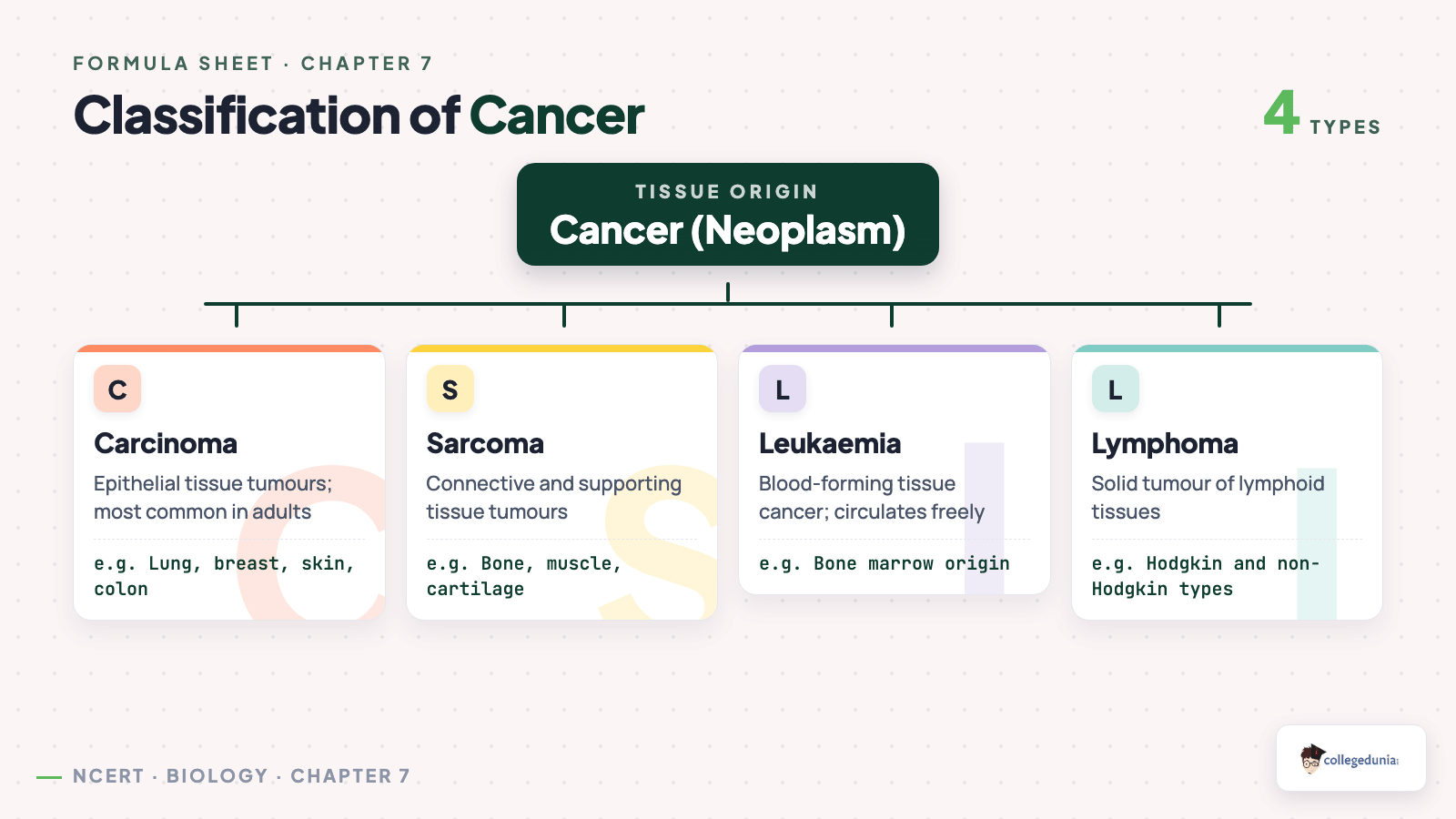
Cancer is a high-yield NEET MCQ source. The strip below summarises tumour types, carcinogen classes, and the four NCERT therapies.
| Attribute | Benign Tumour | Malignant Tumour |
|---|---|---|
| Growth | Slow; remains confined | Rapid; invades surrounding tissue |
| Contact inhibition | Retained | Lost |
| Metastasis | Absent | Present (blood / lymph spread) |
| Recurrence | Rare | Common |
| Threat | Generally not life-threatening | Often life-threatening |
Cancer detection uses biopsy and histopathology, plus MRI / CT scans and tumour-marker antibodies. The four NCERT-listed therapies are surgery, radiotherapy, chemotherapy and α-interferon (immunotherapy). NEET tests the α-interferon role nearly every year.
Drugs and Alcohol Abuse Effect Table for 12th Biology
Section 7.5 is the smallest of the five sections but contributes 1 to 2 NEET 1-marks every year. The compact card below maps each NCERT drug family to its plant source and dominant effect.
| Drug Family | Plant Source | Active Compound | Dominant Effect |
|---|---|---|---|
| Opioids | Latex of Papaver somniferum (opium poppy) | Morphine; heroin = diacetylmorphine | Depressant; slows body function (NCERT) |
| Cannabinoids | Inflorescences of Cannabis sativa | THC; products: marijuana, hashish, charas, ganja | Acts on cardiovascular system |
| Cocaine alkaloids | Coca plant (Erythroxylum coca; South America) | Cocaine (coke / crack) | Interferes with dopamine transport; CNS stimulant; hallucinations |
| Tobacco | Nicotiana tabacum | Nicotine | Stimulates adrenal; raises BP and heart rate; cancer link |
When to Use Which Number on Human Health and Disease Class 12 Biology
The decision tree below tells you which fact to recall for each common NEET / CBSE prompt.
- Pathogen name asked → pull from the master table or the incubation card (e.g. Salmonella typhi for typhoid, Plasmodium for malaria).
- Vector or route asked → use the incubation card; remember housefly is mechanical (amoebiasis), Anopheles is biological (malaria).
- Antibody role / placenta / colostrum → pull from the immunoglobulin card; default to IgG (placenta), IgA (colostrum), IgM (first), IgE (allergy).
- HIV diagnostic → ELISA first, PCR confirms; never write Western blot unless explicitly asked.
- Tumour-related question → trigger word "spread" or "invade" → malignant + metastasis + contact-inhibition loss.
- Drug source plant → use the drug-effect card; lock product (smack, charas, coke) to plant in one step.
- Adolescence / addiction → 12 to 18 years; addiction is psychological, dependence is physiological withdrawal.
One-Shot Revision Tips for Class 12 Biology Human Health and Disease
This is a recall-heavy chapter. Pure mugging does not work; structuring the recall does.
- Group the 7 diseases by pathogen type: 2 bacterial (typhoid, pneumonia), 1 viral (common cold), 2 protozoan (malaria, amoebiasis), 1 helminth (ascariasis), 1 fungal (ringworm). Vector questions become a 4-way pick.
- Draw the antibody H2L2 once: 2 heavy + 2 light, variable + constant region, paratope and epitope labels. The diagram repeats verbatim in CBSE 3-mark slot.
- Lock the HIV replication loop as a 5-arrow chain: sphere → macrophage → reverse transcriptase → integrase → new virion. Each arrow is one mark in the CBSE 3-mark question.
- Use GAMED for isotypes and pair each letter with one hallmark (G - placenta, A - colostrum, M - first, E - allergy, D - receptor).
- For drugs, anchor on plant source first; the product name (smack, charas, coke) and the dominant effect fall out automatically.
- Watch the vector and site swap traps; amoebiasis (housefly + colon) and ascariasis (faecal + intestine) sit next to each other in NCERT and NEET tests the swap.
Top 5 Human Health and Disease NEET Recall Numbers Worth Memorising
The five facts below appear in NEET MCQs almost every year. Lock them before any mock and your accuracy on this chapter jumps.
| Fact | Number / Pair | NCERT Section |
|---|---|---|
| Antibody isotype that crosses placenta | IgG (only one) | 7.2.4 |
| First antibody in primary response | IgM (pentamer) | 7.2.2 |
| Adolescence window (NCERT) | 12 to 18 years | 7.5.1 |
| AIDS incubation period | A few months to 5 to 10 years | 7.3 |
| NCERT count of essential drug families | 4 (opioids, cannabinoids, cocaine, tobacco) | 7.5 |
Full topic-by-topic explanation: Human Health and Disease Class 12 Biology Notes
Human Health and Disease PYQ Recall Pattern Across CBSE and NEET
The three trends below summarise where CBSE and NEET have pulled from this chapter over the last three years.
| Trend | Where Tested | NCERT Section |
|---|---|---|
| Antibody H2L2 structure (3-mark labelled diagram) | CBSE 2025, NEET 2025 | 7.2 |
| HIV replication cycle and transmission routes | NEET 2025, CBSE 2024 | 7.3 |
| Plasmodium life cycle + vector control | NEET 2024, CBSE 2023 | 7.1 |
Full year-wise PYQ map (2021 to 2026): Human Health and Disease Class 12 Biology NCERT Solutions
Related Links:
- Microbes in Human Welfare Class 12 Biology Formula Sheet (Chapter 8)
- Evolution Class 12 Biology Formula Sheet (Chapter 6)
More Human Health and Disease Biology Class 12 Resources
- Human Health and Disease Class 12 Biology NCERT Solutions
- Human Health and Disease Class 12 Biology Notes
- Human Health and Disease Class 12 Biology NCERT Book PDF
- Human Health and Disease Class 12 Biology Exemplar Solutions
- Human Health and Disease Class 12 Biology Handwritten Notes
- Human Health and Disease Class 12 Biology NCERT Exemplar Book PDF
Formula Sheet for Class 12 Biology: All Chapters
The table below links every other chapter of the Class 12 Biology NCERT to its dedicated formula sheet.
| Chapter | Resource |
|---|---|
| Chapter 1 | Sexual Reproduction in Flowering Plants Formula Sheet |
| Chapter 2 | Human Reproduction Formula Sheet |
| Chapter 3 | Reproductive Health Formula Sheet |
| Chapter 4 | Principles of Inheritance and Variation Formula Sheet |
| Chapter 5 | Molecular Basis of Inheritance Formula Sheet |
| Chapter 6 | Evolution Formula Sheet |
| Chapter 8 | Microbes in Human Welfare Formula Sheet |
| Chapter 9 | Biotechnology Principles and Processes Formula Sheet |
| Chapter 10 | Biotechnology and Its Applications Formula Sheet |
| Chapter 11 | Organisms and Populations Formula Sheet |
| Chapter 12 | Ecosystem Formula Sheet |
| Chapter 13 | Biodiversity and Conservation Formula Sheet |
Human Health and Disease Class 12 Biology Formula Sheet FAQs
Ques. What does the Human Health and Disease Class 12 Biology formula sheet cover?
Ans. The sheet collates every memorisable fact in NCERT Sections 7.1 to 7.5, including pathogens for the seven NCERT diseases, incubation periods, antibody isotypes (IgG, IgM, IgA, IgE, IgD), HIV replication path, tumour types, carcinogen classes, the four NCERT-listed cancer therapies, and the four drug families with their plant sources. The PDF is one printable revision page aligned to the 2026-27 NCERT.
Ques. Is this Class 12 Biology Chapter 7 formula sheet aligned with the 2026-27 NCERT?
Ans. Yes. Every entry in the sheet matches the current 2026-27 Reprint of NCERT Biology. Sections 7.1 through 7.5 are retained in full, and the sheet flags the four NCERT-defined drug families and the five antibody isotypes exactly as they appear in the latest edition.
Ques. How is this Human Health and Disease formula sheet useful for NEET preparation?
Ans. NEET asks 3 to 5 questions a year from this chapter, and almost all are recall-based: which antibody crosses the placenta, what is the incubation period of malaria, which plant gives heroin. The sheet packages those numbers in quick-lookup tables so a 15-minute pass the night before the paper covers nearly every common MCQ.
Ques. Which antibody isotype crosses the placenta?
Ans. Only IgG crosses the placenta. This is why it gives the foetus passive natural immunity. IgM is the largest (pentamer) and cannot cross. IgA is secreted in colostrum, IgE triggers allergy by binding mast cells, and IgD acts mainly as a B-cell receptor. NEET tests the IgG-placenta rule almost every year.
Ques. What is the incubation period of malaria as per NCERT Class 12 Biology?
Ans. NCERT lists 10 to 14 days as the typical incubation period for Plasmodium-driven malaria. The pathogen is transmitted by the female Anopheles mosquito, and the infective form passed into humans is the sporozoite. RBCs are the eventual target site, and P. falciparum is the malignant form.
Ques. What are the four drug families listed in NCERT Section 7.5?
Ans. NCERT names four drug families: opioids (from latex of Papaver somniferum; heroin / smack is diacetylmorphine), cannabinoids (from inflorescences of Cannabis sativa; marijuana, charas, ganja, hashish), cocaine (from the coca plant Erythroxylum coca; CNS stimulant that targets dopamine transport), and tobacco (Nicotiana tabacum; nicotine acts on the adrenal). NEET typically asks one product-to-plant pair every year.
Ques. What is the difference between addiction and dependence in NCERT Chapter 7?
Ans. Addiction is a psychological attachment to the drug, alcohol, or other addictive substance that drives a person to repeat use. Dependence is the body's adaptation, so abrupt cessation produces a withdrawal syndrome (anxiety, shakiness, nausea, sweating). Both can co-exist, and both are part of the NCERT Section 7.5.2 definition.
Ques. How many marks does Human Health and Disease carry in CBSE Class 12 Biology Boards?
Ans. Chapter 7 contributes around 6 to 7 marks in the CBSE Class 12 Biology board paper, typically split across a 3-mark labelled-diagram (most often antibody structure or HIV replication) and a 2 to 5 mark short or long answer on immunity, AIDS, cancer, or drug abuse.
Ques. What are the differences between active and passive immunity?
Ans. Active immunity is produced when the body makes its own antibodies after exposure to a live or attenuated pathogen (vaccination or natural infection); it is slow to develop but long-lasting. Passive immunity is gained when ready-made antibodies are introduced into the body (mother to foetus via IgG; antiserum after a snake bite); it acts quickly but does not last. NCERT Section 7.2.4 sets this up as a standard 2-mark differentiation question.



Comments