


The 2026-27 NCERT Exemplar renumbers Haloalkanes and Haloarenes from legacy Chapter 10 to current Chapter 6 of the Class 12 Chemistry book, and packs 33 HOTS problems across MCQ-I, MCQ-II, short-answer, matching, assertion-reason and long-answer formats into a single 14-page PDF. The chapter rewards mechanism-arrow practice over rote.
- CBSE Weightage: 3 to 5 marks (Class 12 Chemistry Boards)
- JEE Main Weightage: 2 to 3% (around 1 to 2 questions per shift drawn from this chapter)
- NEET Weightage: 2 to 3 question(s) per year

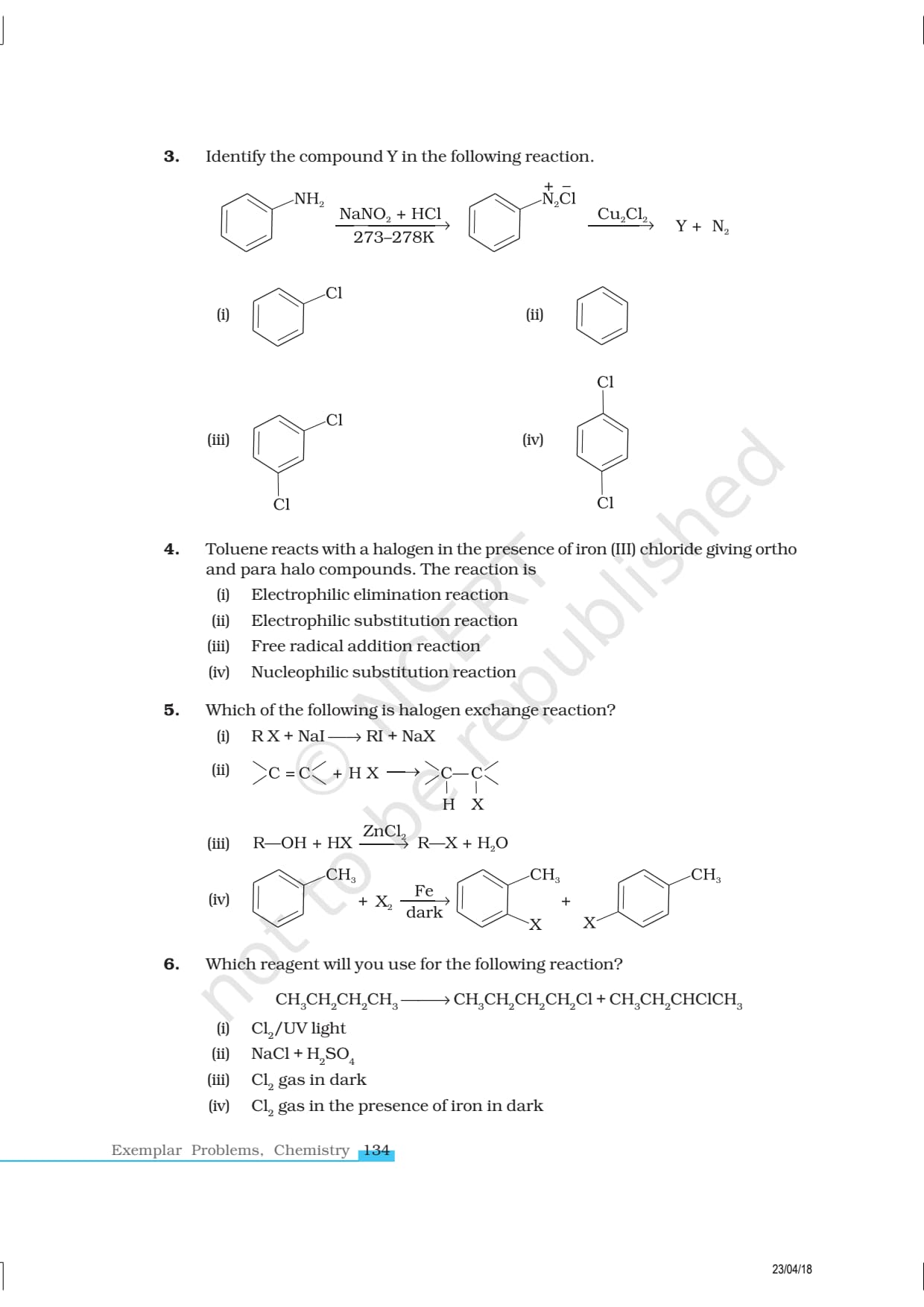
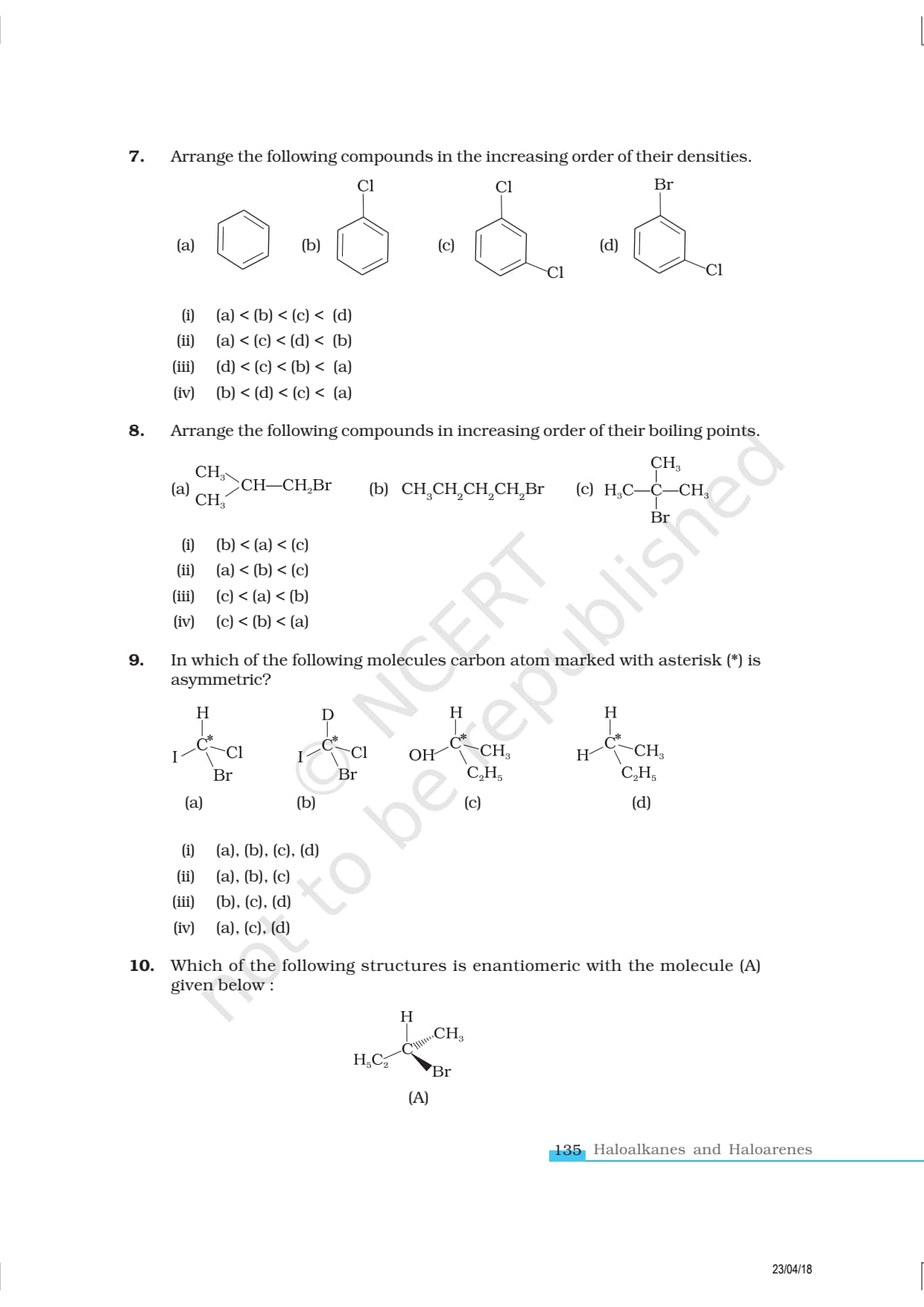
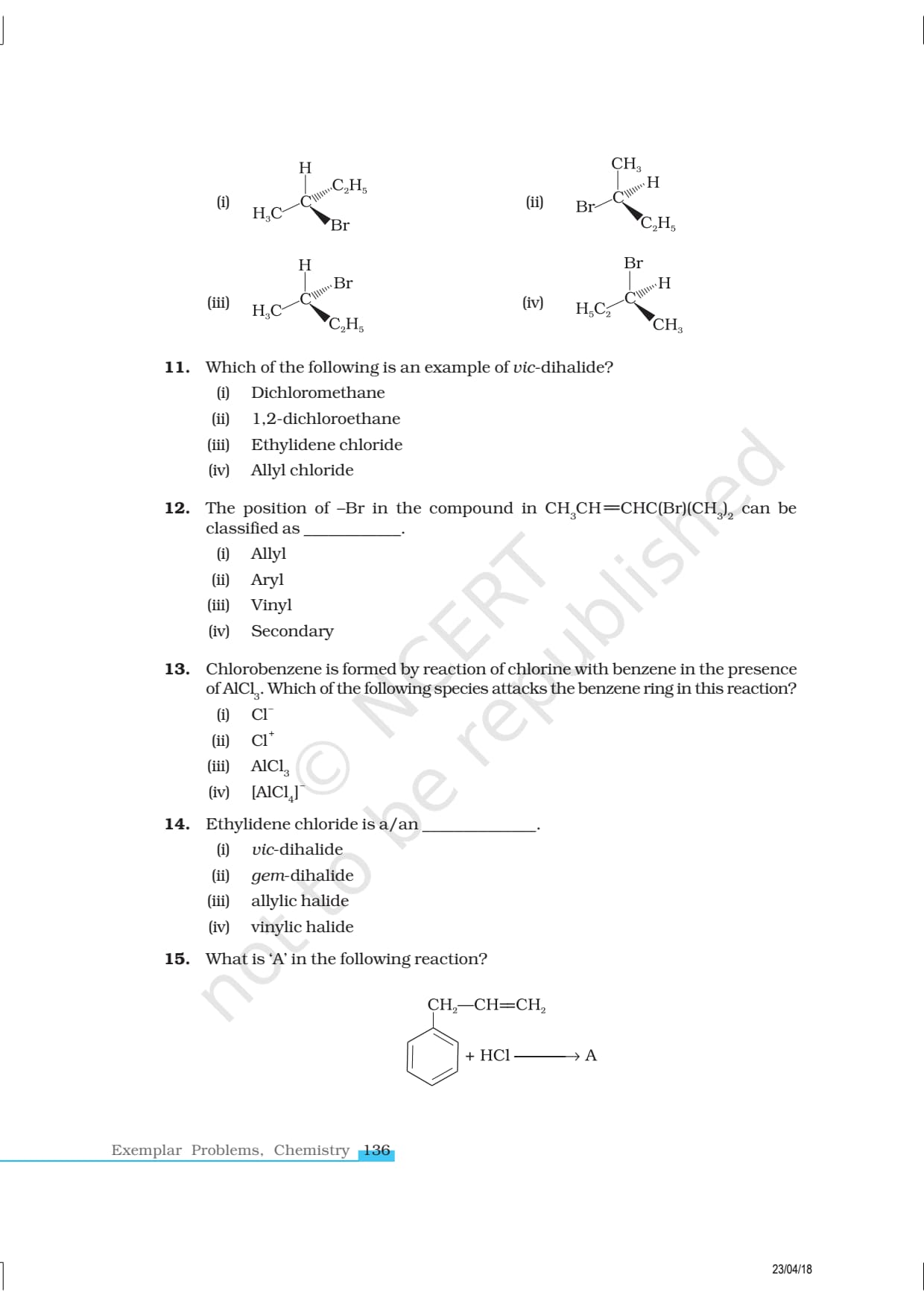
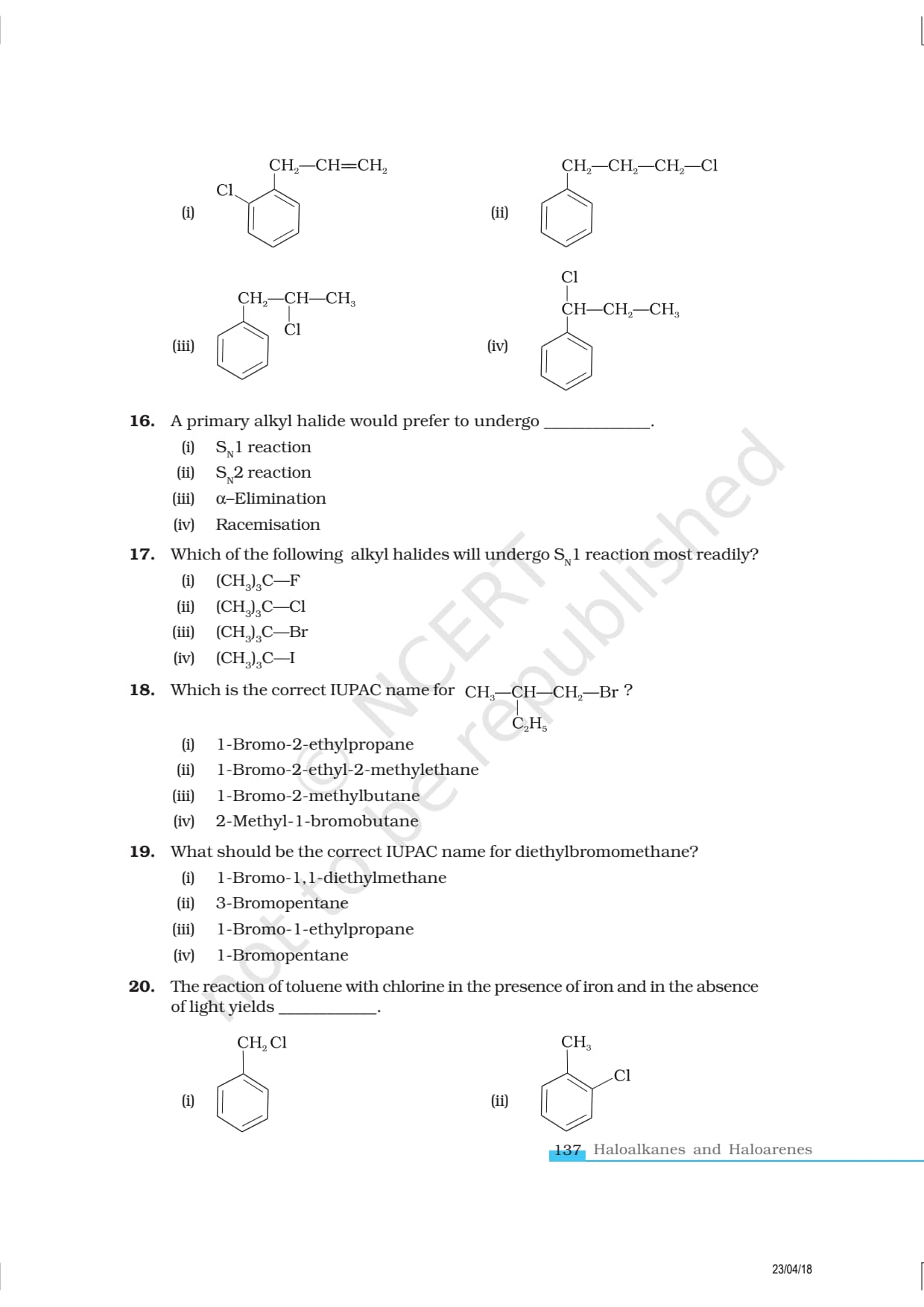

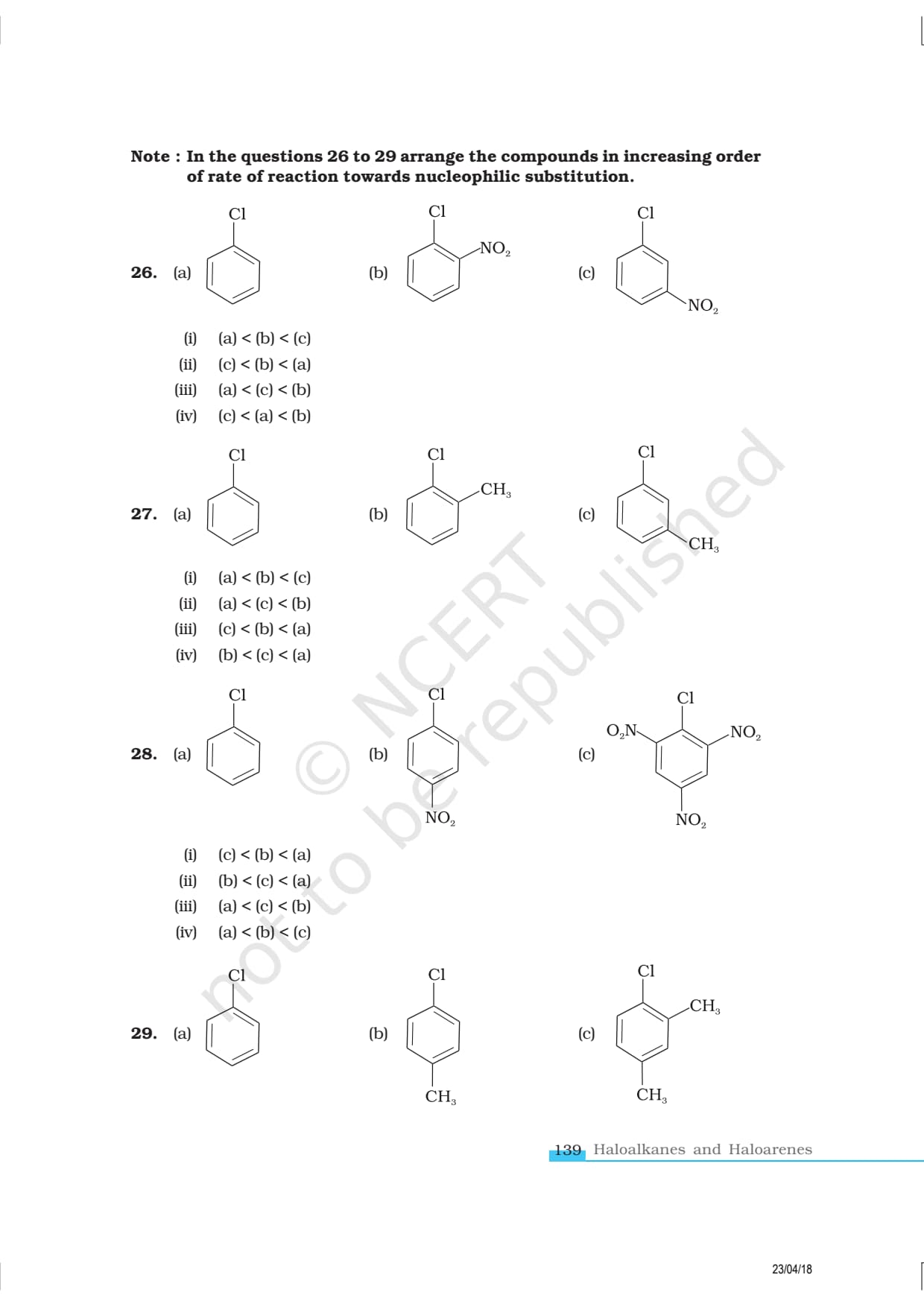
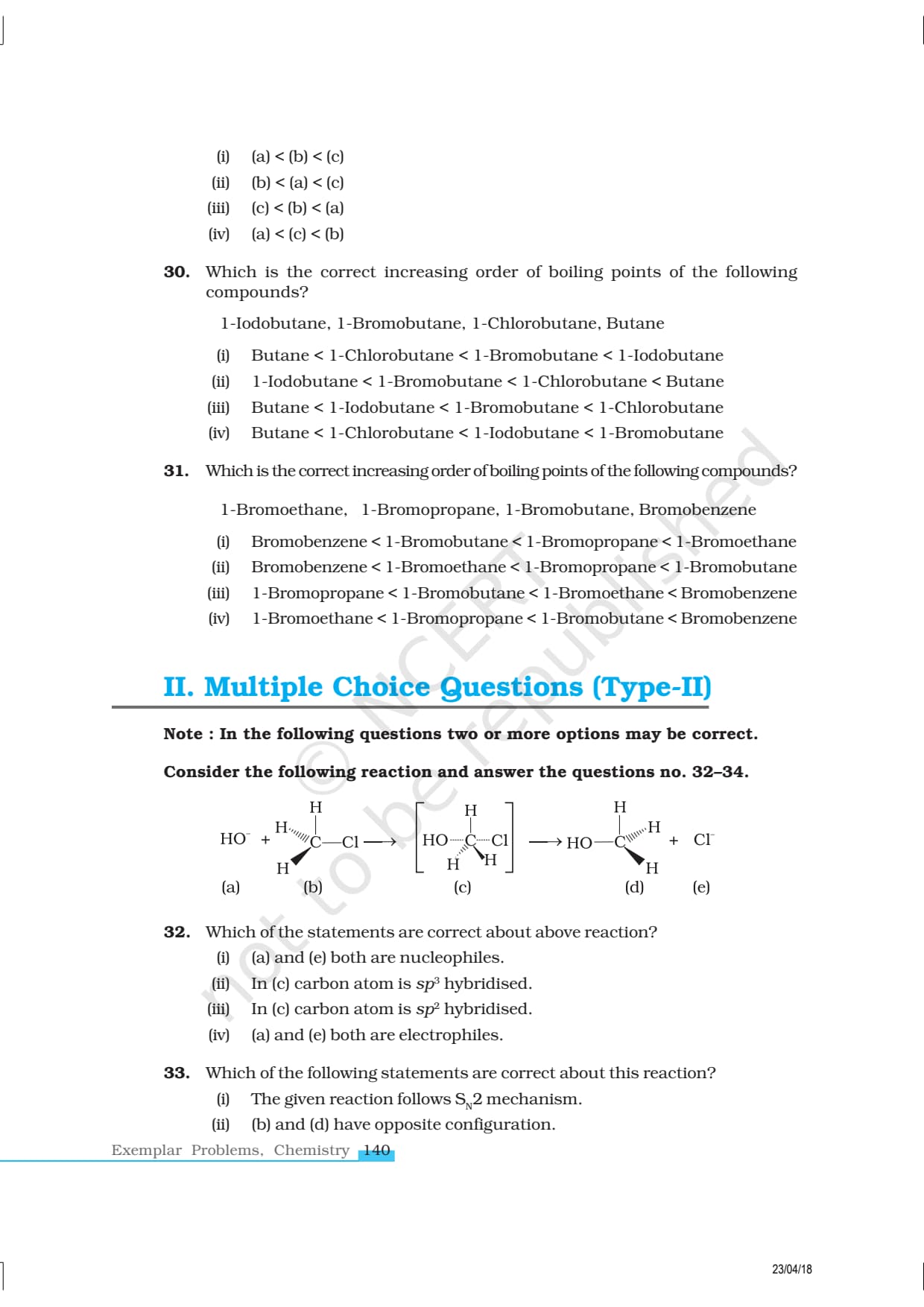
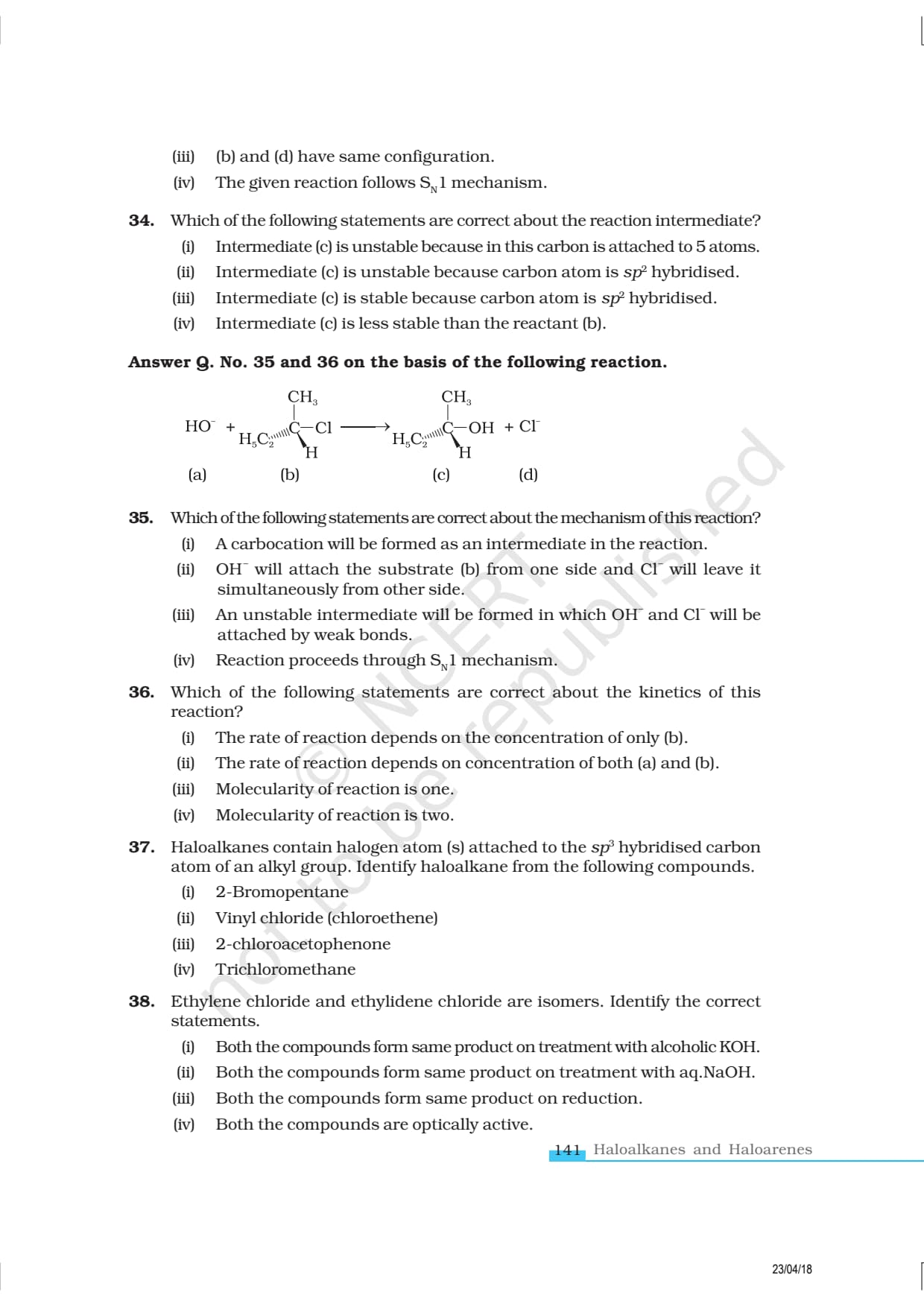
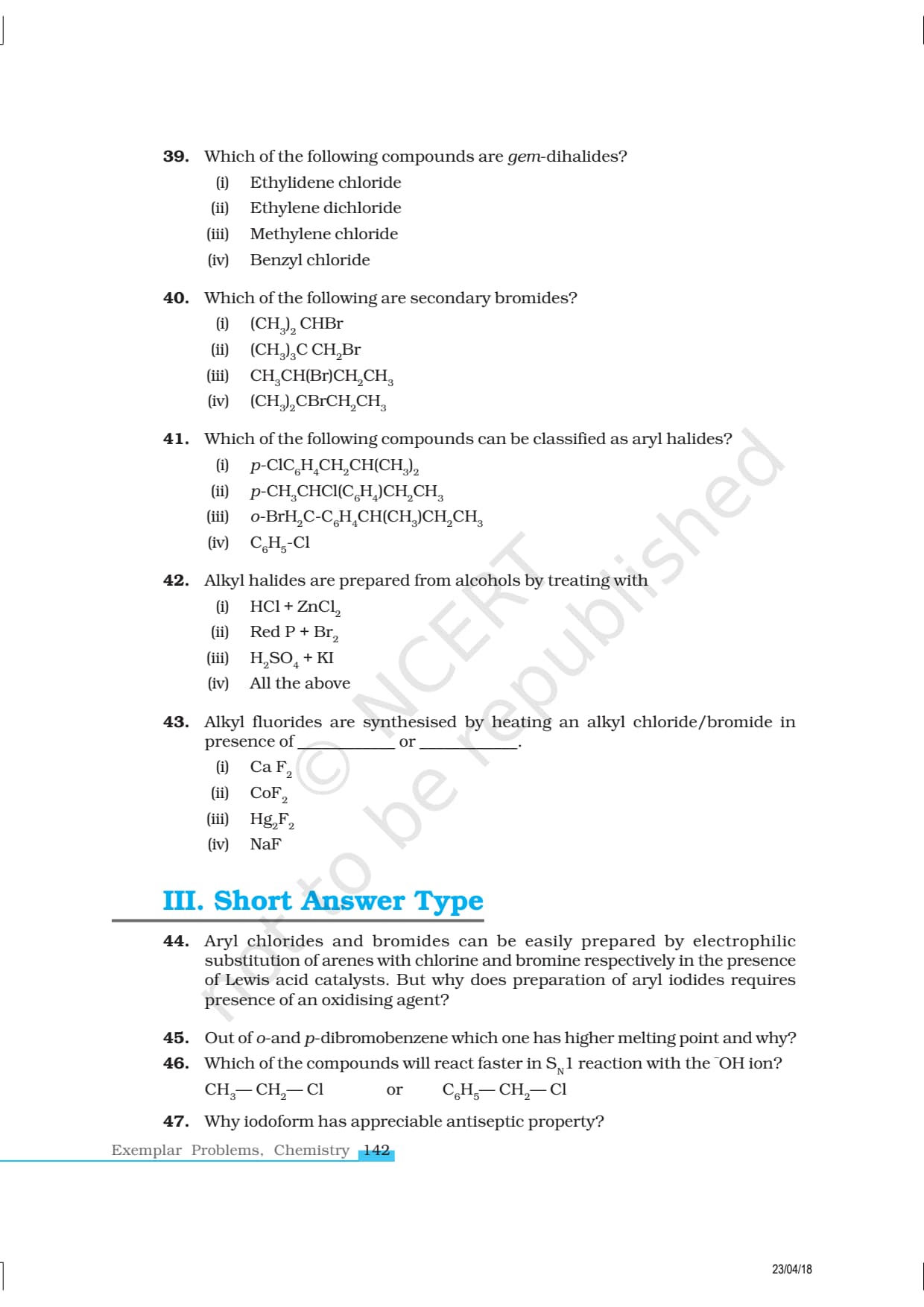
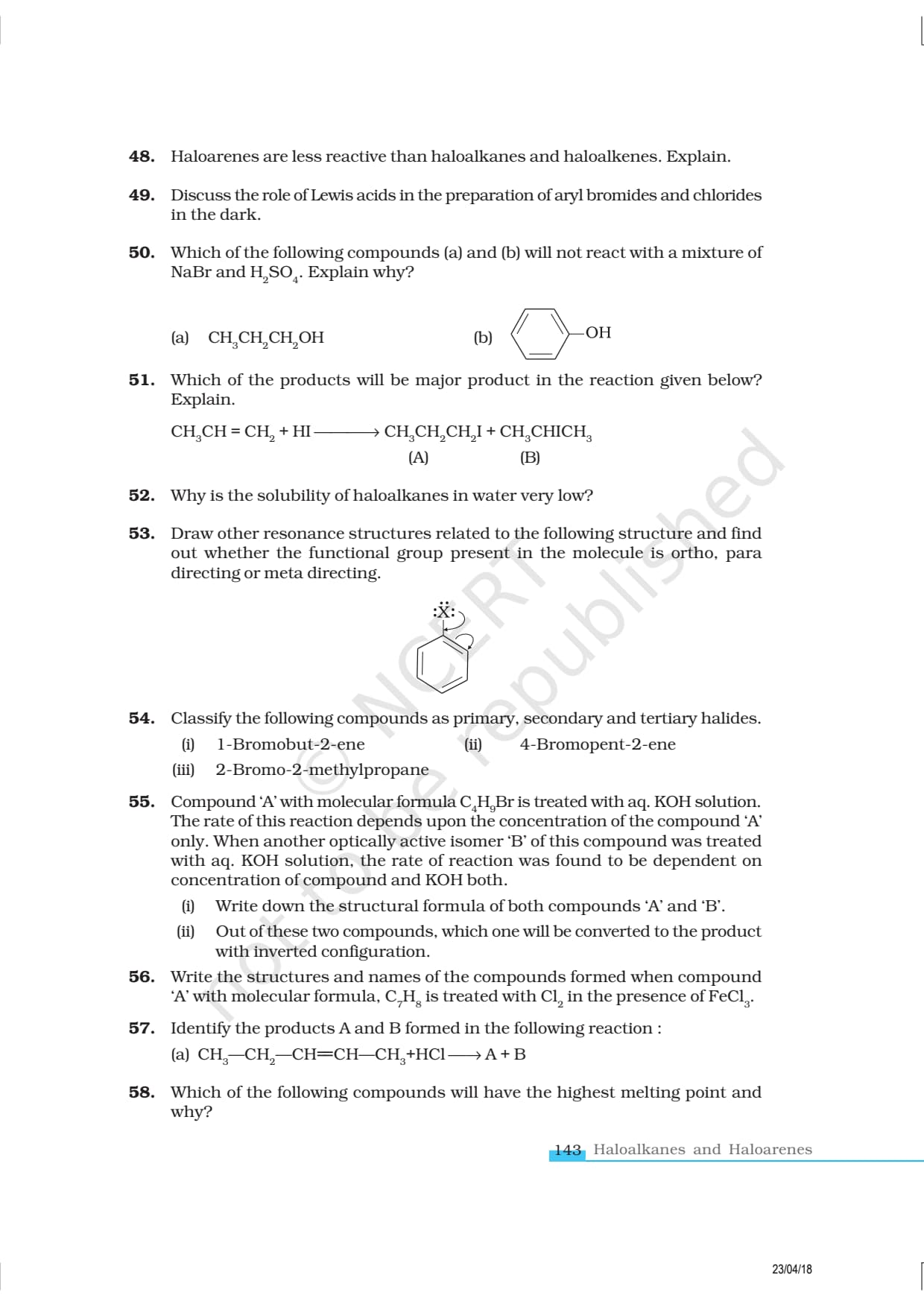
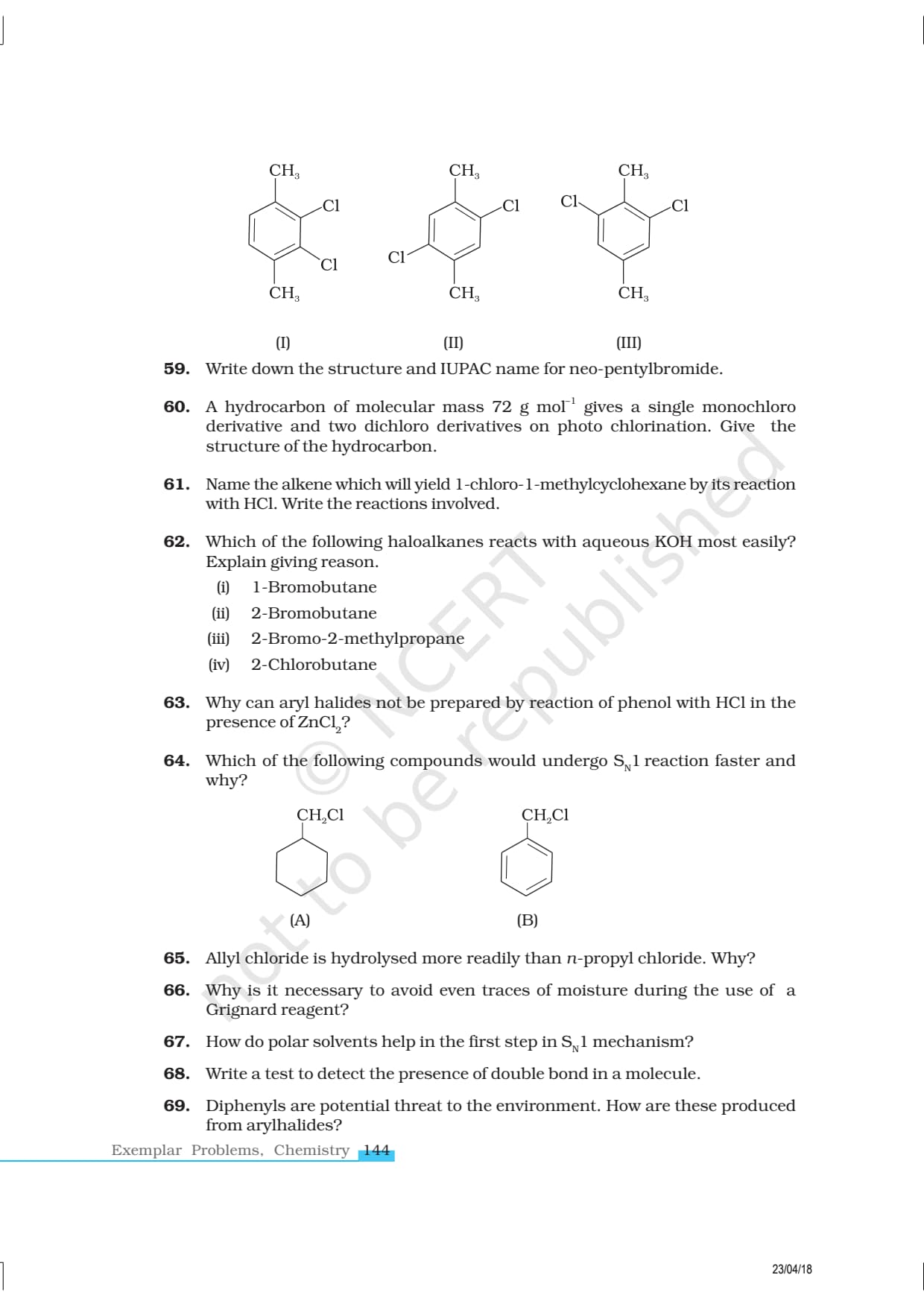
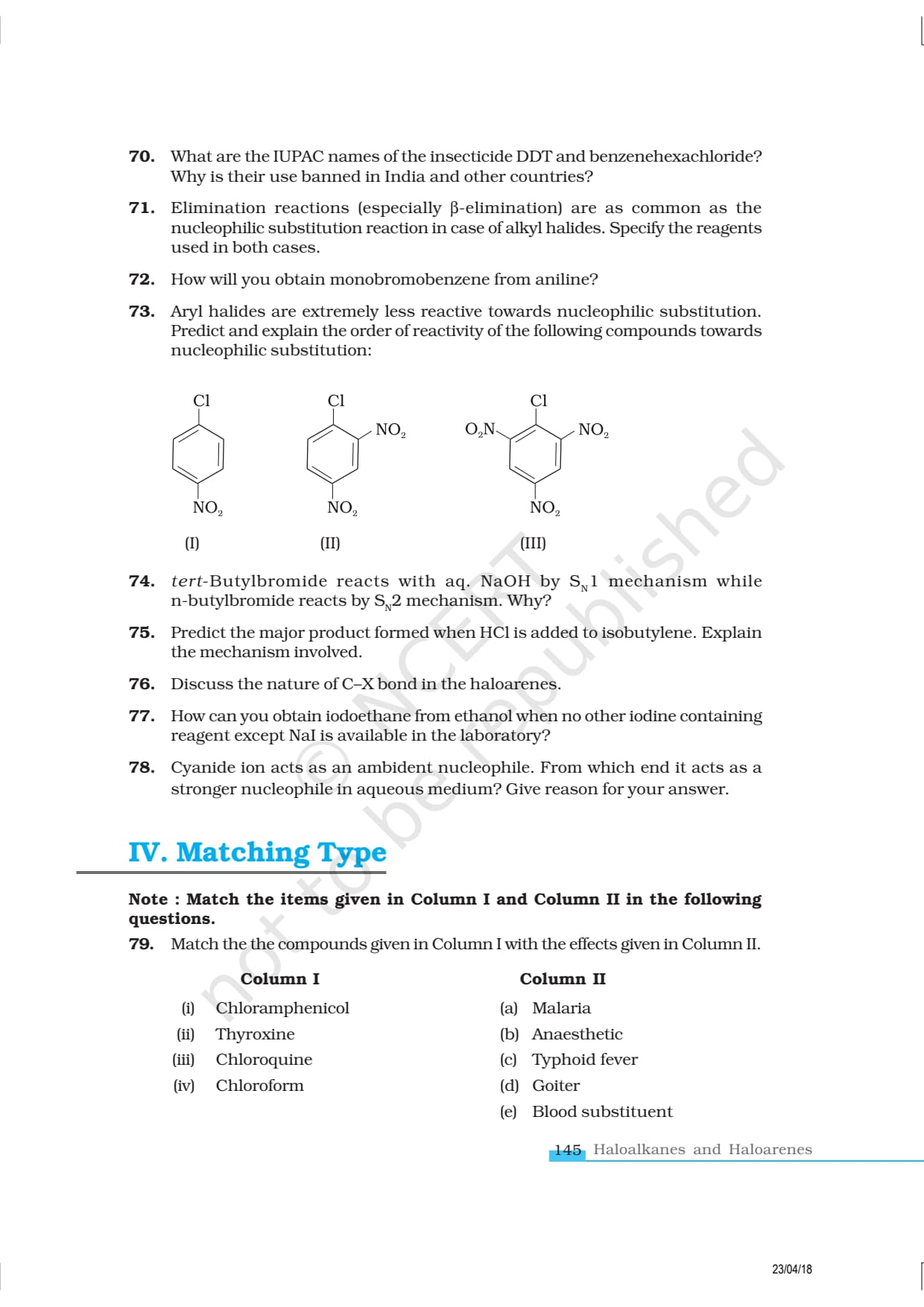
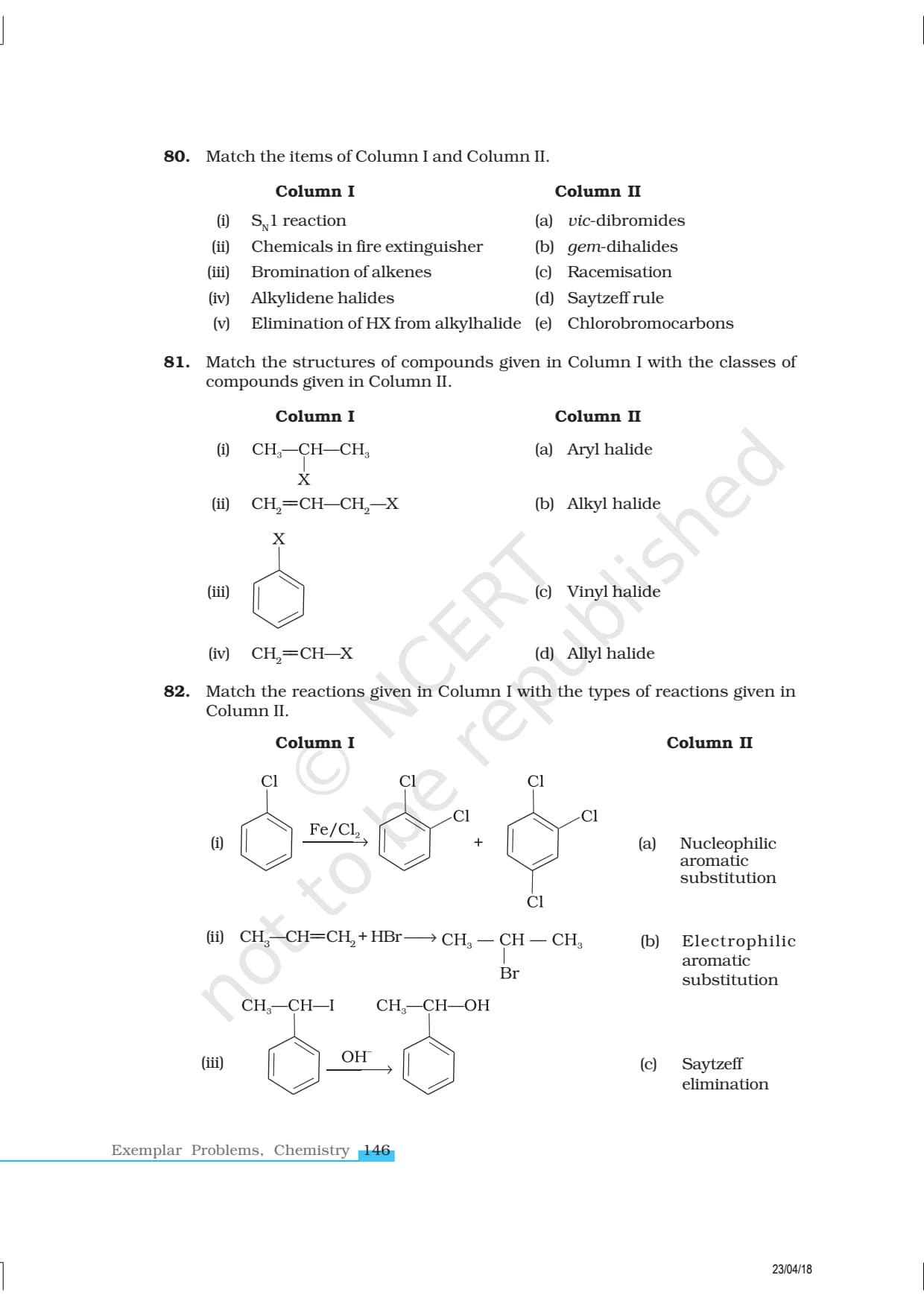
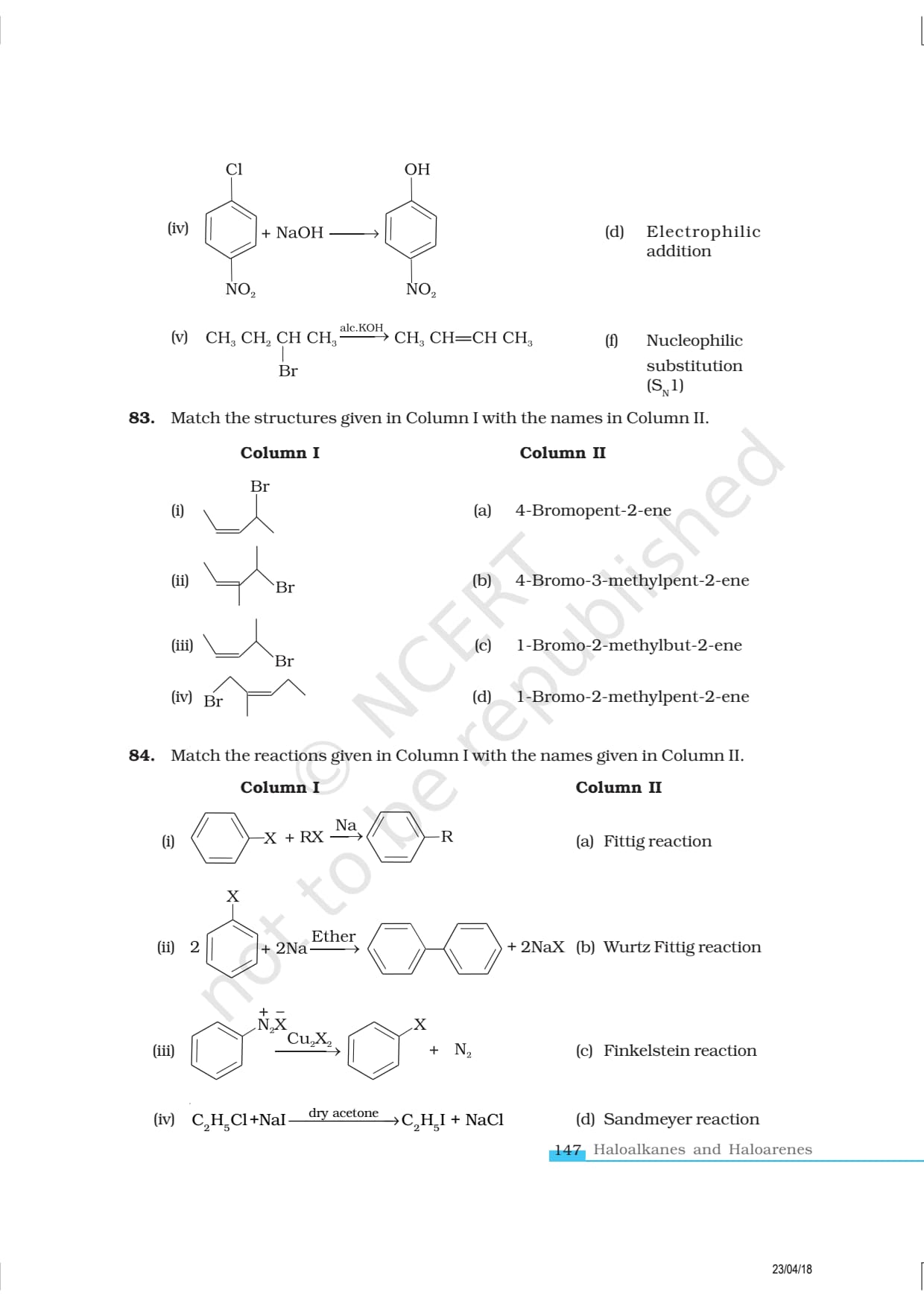
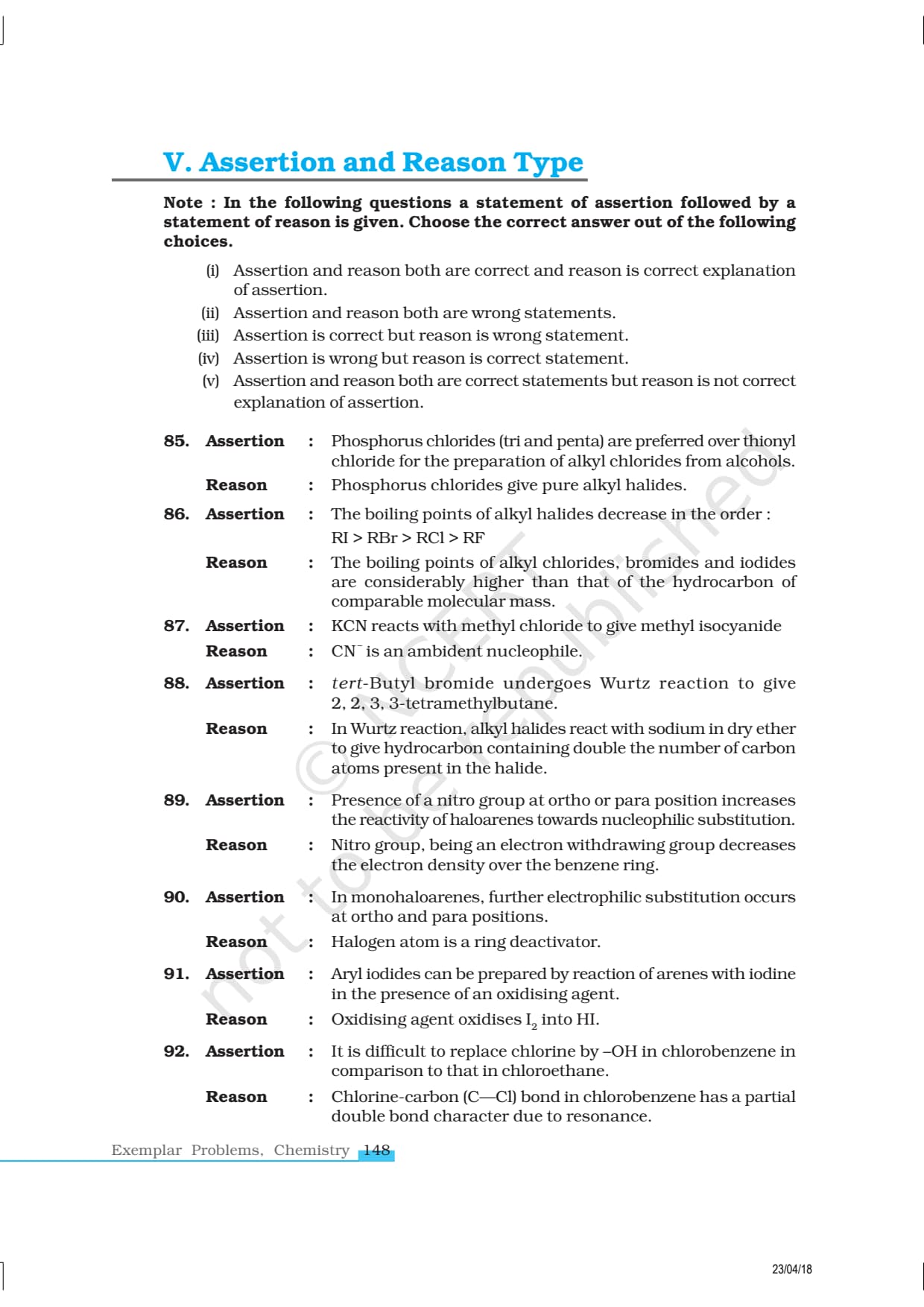
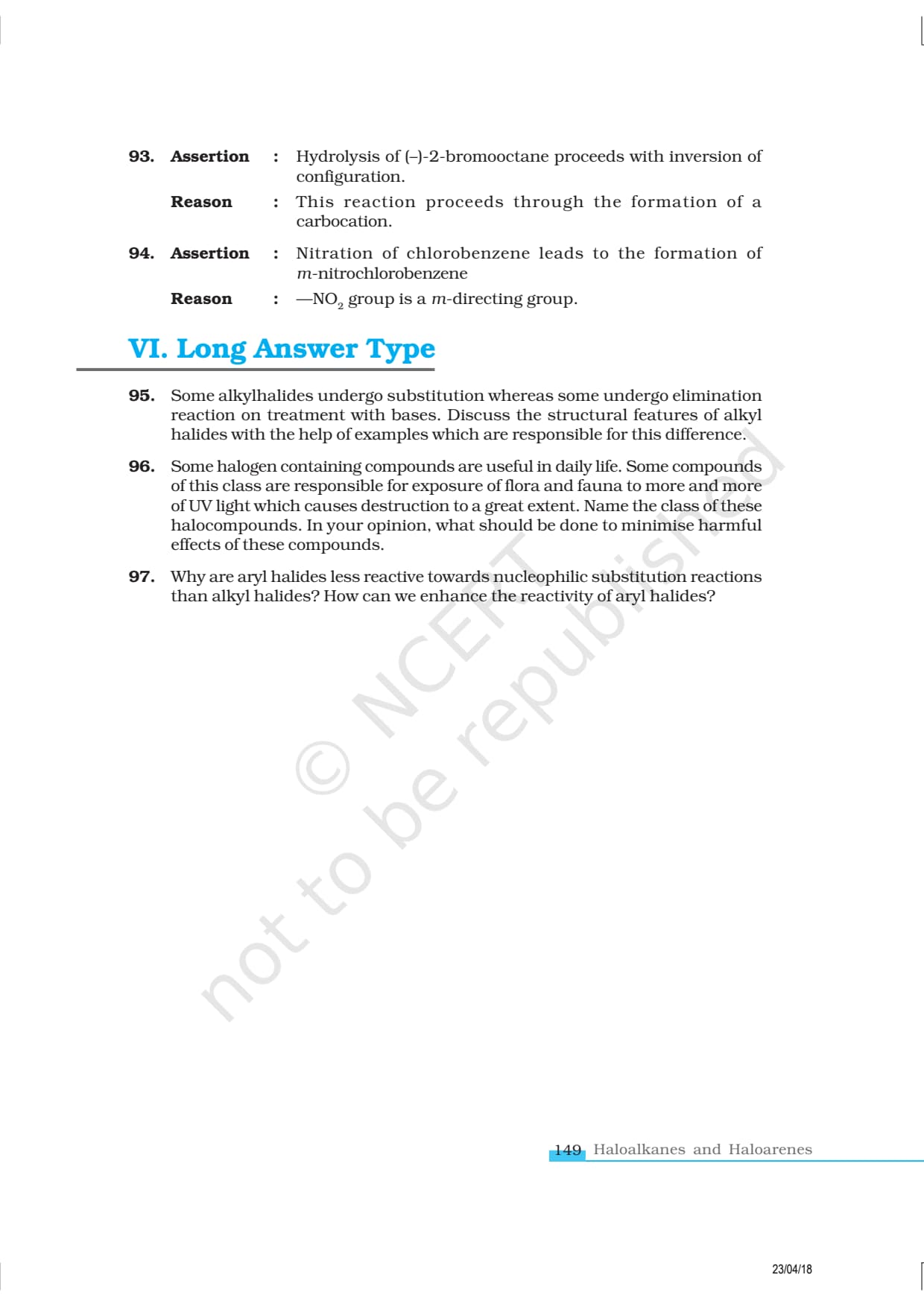
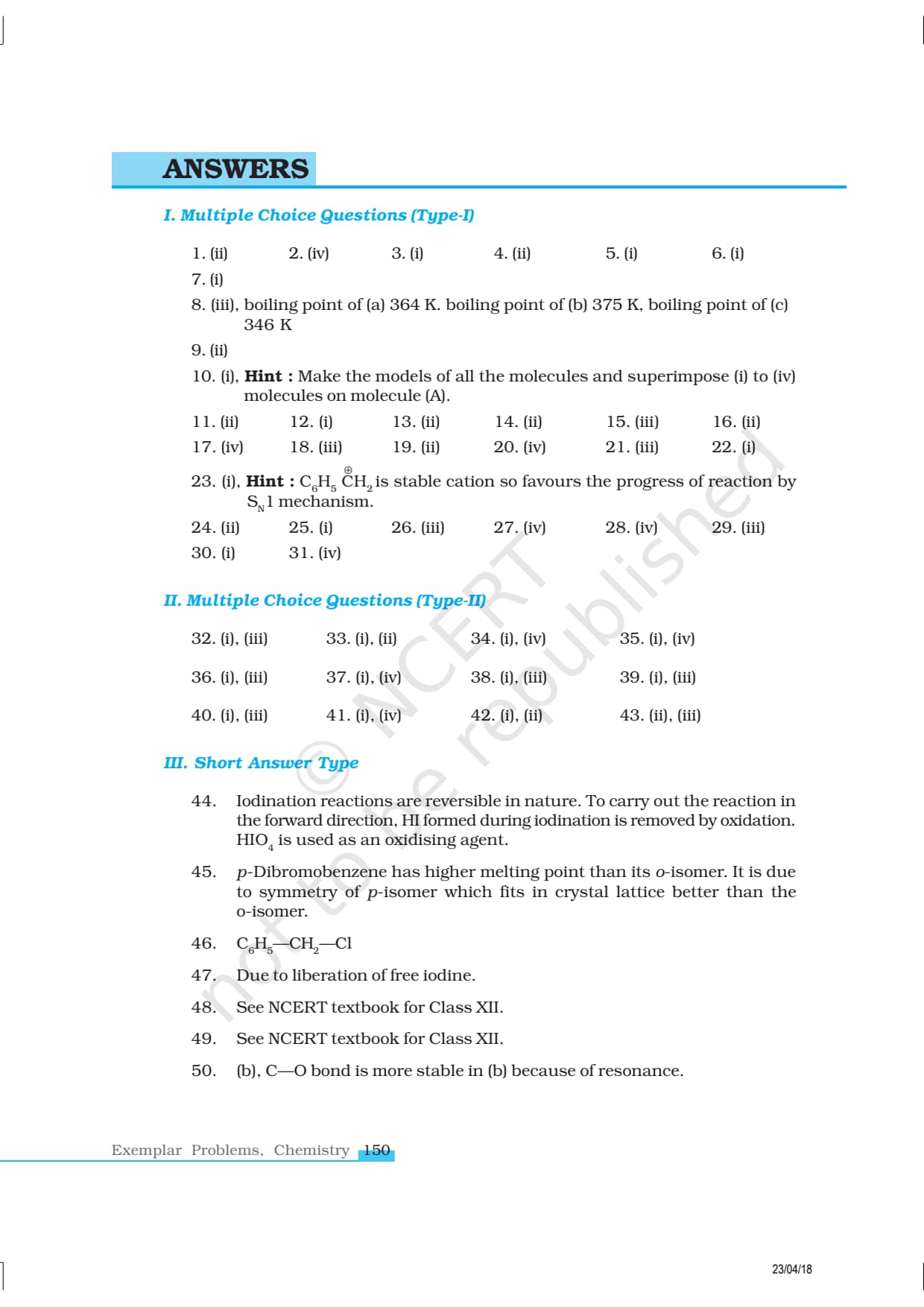
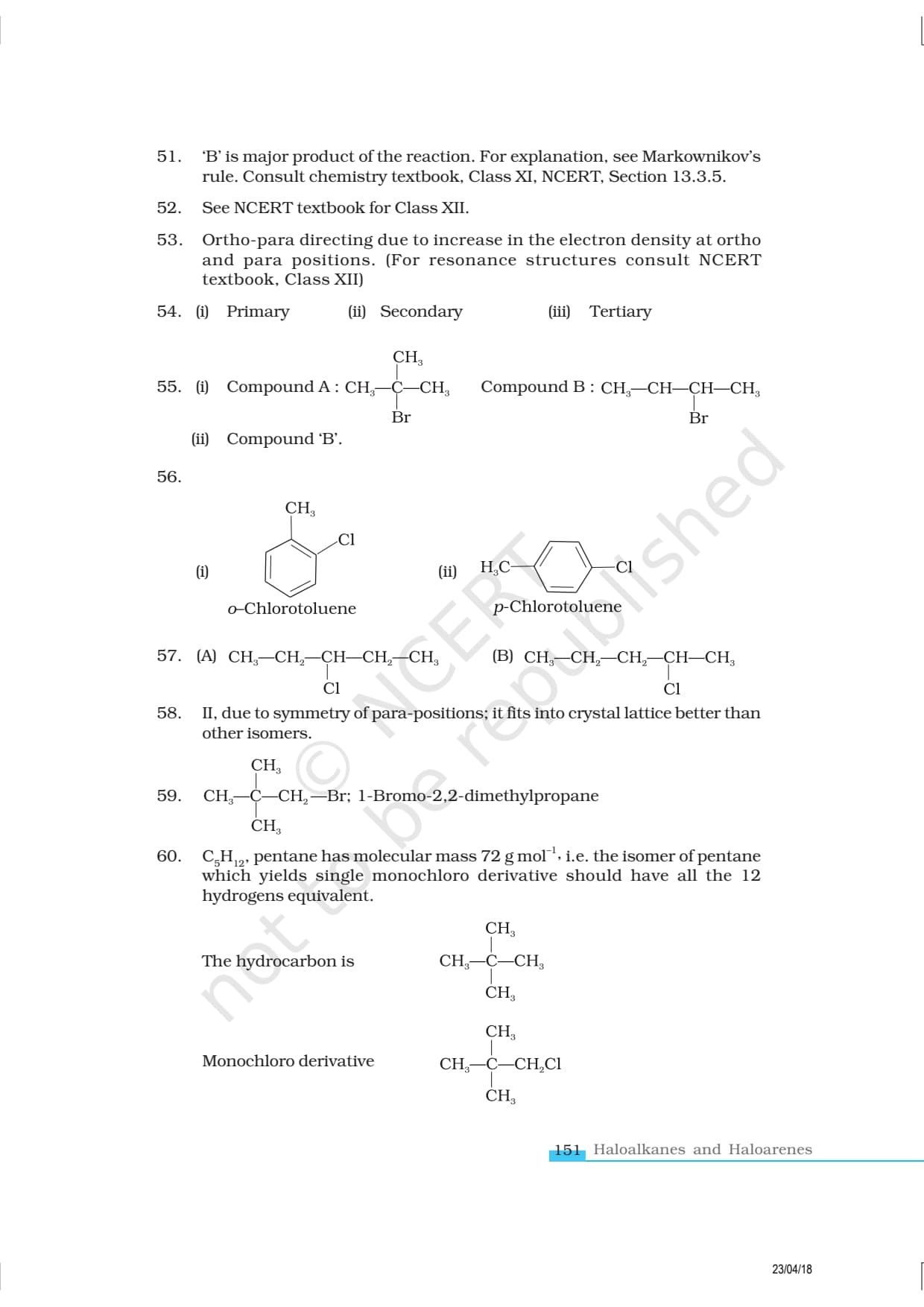
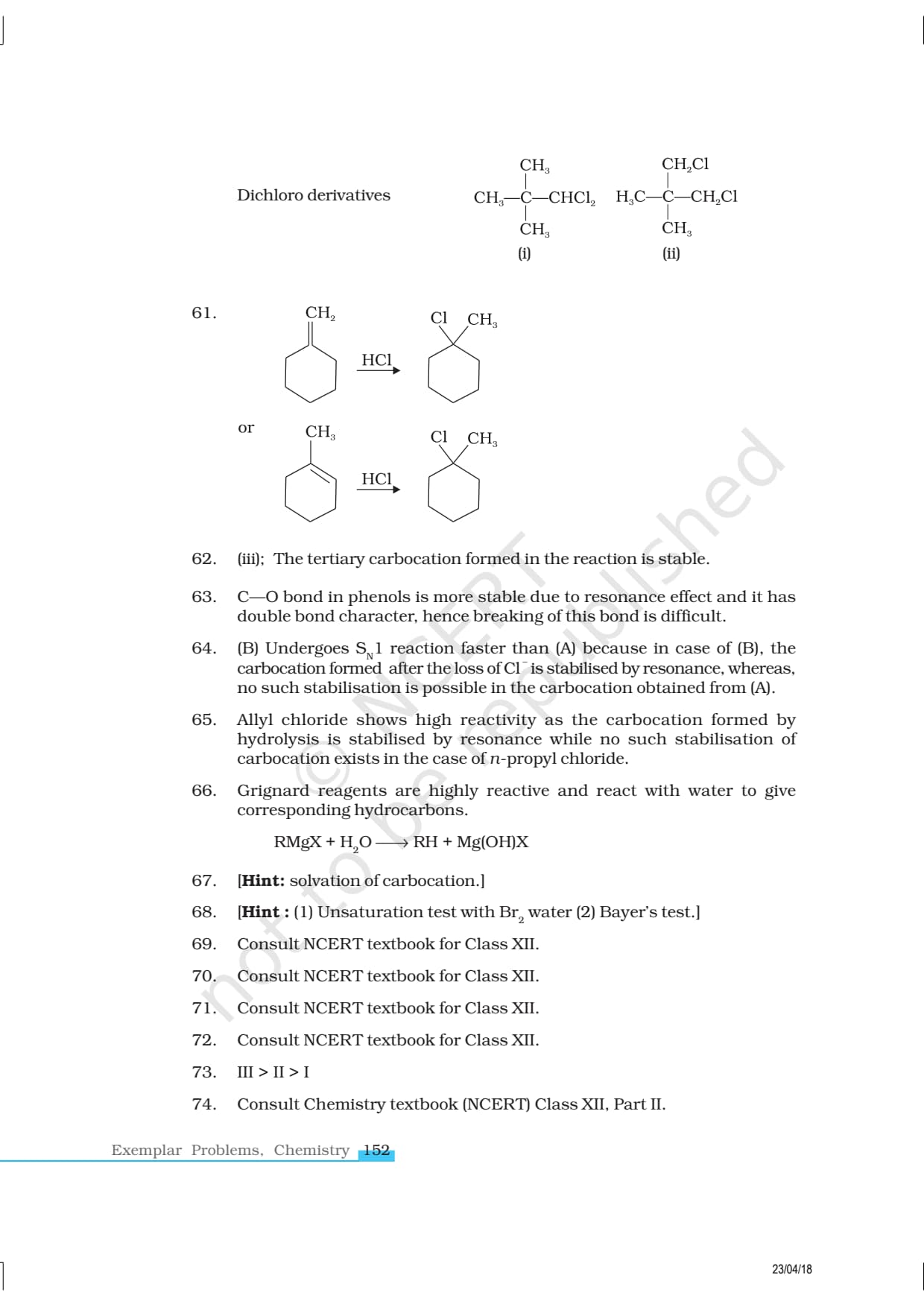

The article below covers the Haloalkanes and Haloarenes Class 12 Chemistry Exemplar Book PDF, the question-type split, and a parallel-track study plan that fits alongside the main textbook chapter.
Curated by Collegedunia subject experts, mapped to the 2026-27 NCERT print, and cross-referenced with the last two sittings of CBSE Boards, JEE Main, and NEET.
Also Check:
- Haloalkanes and Haloarenes Class 12 Chemistry NCERT Exemplar Solutions
- Haloalkanes and Haloarenes Class 12 Chemistry NCERT Book PDF
- Haloalkanes and Haloarenes Class 12 Chemistry NCERT Solutions
Haloalkanes and Haloarenes CBSE Marks Weightage Compared Across Class 12 Chemistry Chapters
Before drilling the Exemplar, place the chapter in the wider Boards landscape. The visual below maps the typical CBSE Board marks distribution across all 10 chapters of the current 2026-27 NCERT Class 12 Chemistry book, averaged over the last five board papers. Haloalkanes and Haloarenes sits in the lower-middle band at 5 marks, on par with Amines.
Haloalkanes and Haloarenes NCERT Exemplar Video Walkthrough
Source: JEE Wallah on YouTube
How will Collegedunia's NCERT Exemplar Book PDF Help You with Haloalkanes and Haloarenes?
The Exemplar is a separate publication from the main NCERT textbook, and most students underuse it. This page wraps the official PDF with the navigation aids that the raw print does not carry.
- 2026-27 NCERT Alignment: Chapter 6 here matches the legacy Exemplar Chapter 10 with the same 33 HOTS problems; nothing has been dropped, only the chapter number changed.
- Question-Type Split: The breakdown table further down separates the 33 problems by format (MCQ-I, MCQ-II, short answer, etc.) so you can pick a type and drill it in one sitting.
- Parallel-Track Plan: The plan below tells you exactly which Exemplar problems to attempt after each NCERT textbook section, so the two PDFs reinforce each other rather than compete for your time.
- Cross-Reference to Companion Resources: Every problem-type cluster is linked to the matching worked-solution page and to the textbook section that backs it.
What's Inside the Haloalkanes and Haloarenes Class 12 Chemistry Exemplar PDF
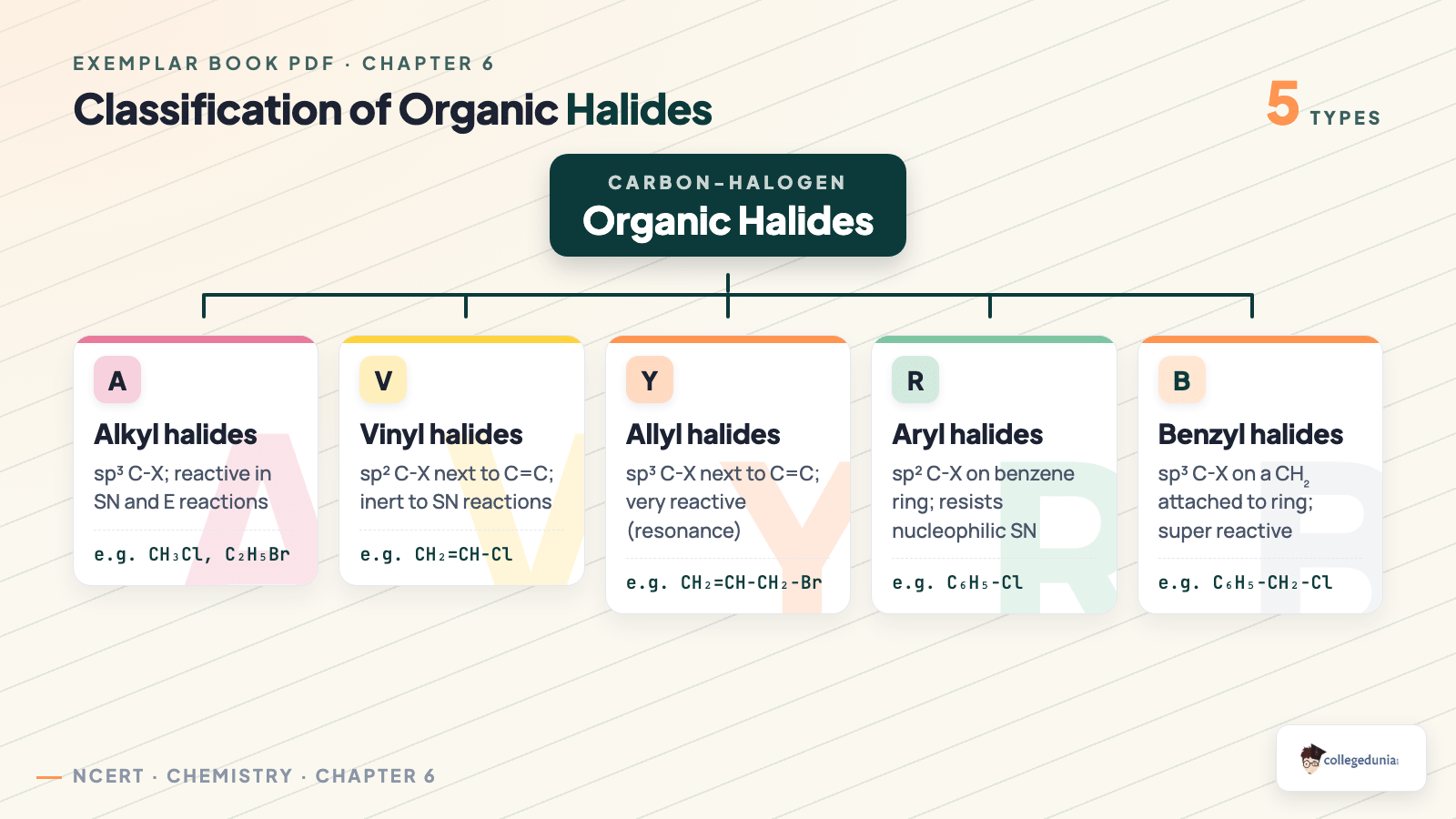
The Exemplar chapter is short on prose and long on questions. The PDF opens with a half-page topical introduction (carbon-halogen bond and reactivity classes), then jumps straight into 33 numbered problems with no intermediate exposition.
- ~14 pages of question-only content with no worked-out theory blocks
- One short topical intro per the standard Exemplar template
- 33 HOTS problems split across MCQ-I, MCQ-II, short-answer, matching, assertion-reason, and long-answer formats
- Answers appear in a separate Exemplar Solutions PDF; this PDF is the question paper
- No diagrams of mechanisms, students are expected to draw their own (which is the point)
Haloalkanes and Haloarenes NCERT Exemplar Question-Type Breakdown
The 2026-27 Exemplar print splits Chapter 6 (legacy Chapter 10) across six question types. The table below tells you how many of each kind you face and the indicative mark value used in the Exemplar's own scheme.
| Question type | Count | Indicative marks | Typical content |
|---|---|---|---|
| MCQ-I (single correct) | 11 | 1 each | Reactivity order, leaving group, product of named reactions |
| MCQ-II (multiple correct) | 5 | 1 to 2 each | SN1 vs SN2 selection, polar/non-polar solvent effect |
| Short Answer (SA) | 10 | 2 to 3 each | Mechanism arrow-pushing, optical-activity outcomes, conversions |
| Matching | 2 | 2 to 4 each | Match reagent to product / mechanism class |
| Assertion-Reason | 3 | 1 to 2 each | Aryl halide low reactivity, dipole moment trends |
| Long Answer (LA) | 2 | 5 each | Full mechanism with stereochemistry, multi-step conversion |
Haloalkanes and Haloarenes Exemplar vs NCERT Textbook: Difficulty Comparison
The Exemplar problems sit one or two notches above the textbook exercises in cognitive load. The table below maps the comparison.
| Dimension | NCERT Textbook Ch 6 | NCERT Exemplar Ch 6 |
|---|---|---|
| Problem count | 10 intext + 30 exercises = 40 | 33 (no intext) |
| Cognitive level | Apply (mostly direct recall + 1-step mechanism) | Analyse / evaluate (multi-step + reasoning) |
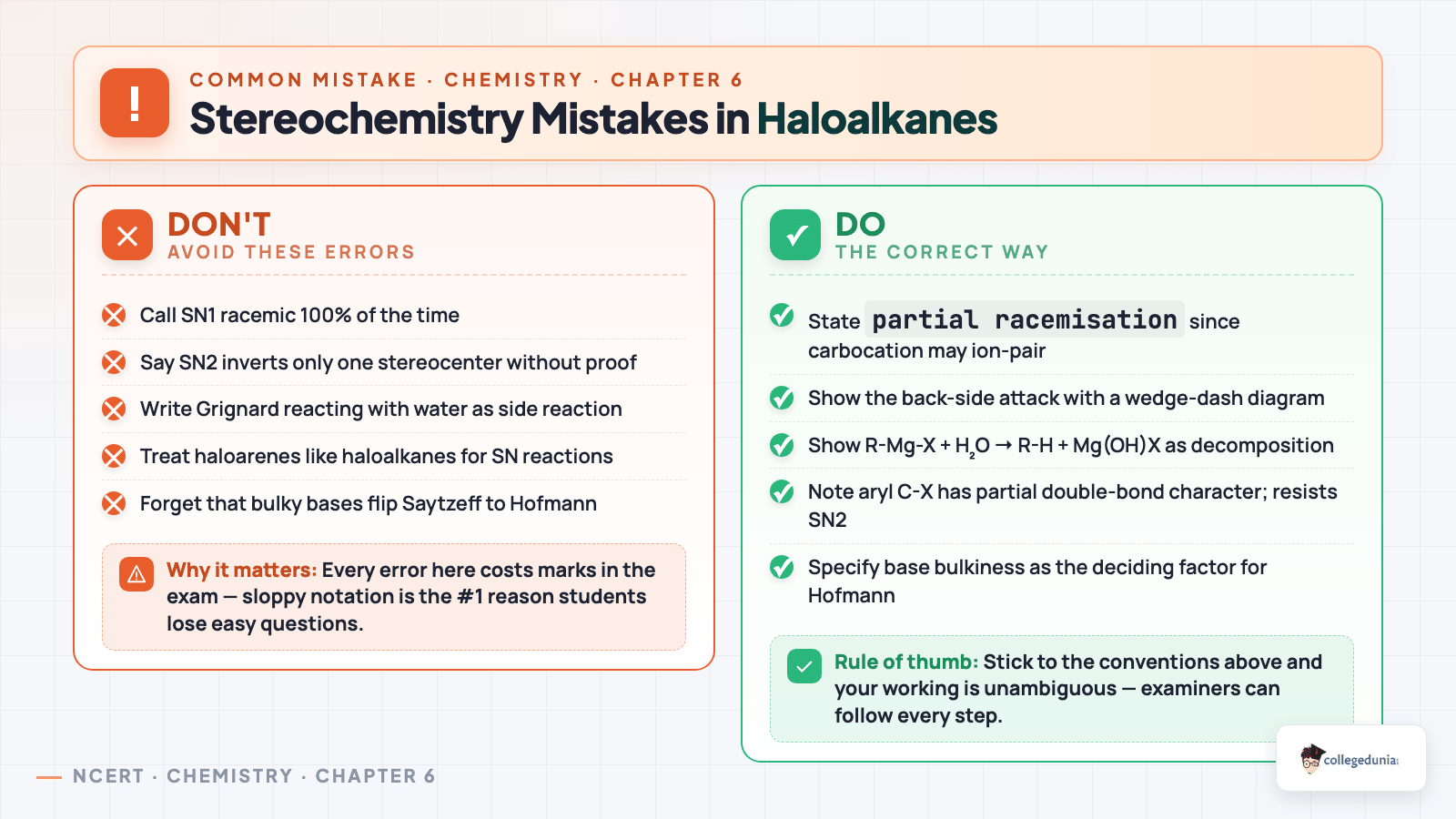
| Stereochemistry depth | Walden inversion shown for one case | Asked for full SN2 trajectory + outcome |
| Mechanism arrow drawing | Sample arrows printed | Student must draw arrows from scratch |
| Exam relevance | CBSE Boards core | CBSE HOTS + JEE Main + NEET |
2026-27 Syllabus Status of Haloalkanes and Haloarenes Exemplar Problems
The current 2026-27 NCERT renumbered the Exemplar chapter from legacy 10 to current 6, but the 33 problems were retained verbatim. The only sub-topic where the Exemplar question now sits slightly outside the trimmed NCERT print is the extended discussion of freons and DDT environmental chemistry.
- Problems retained as-is: 31 of 33 problems map cleanly to current textbook sections 6.1 through 6.8.
- Problems on trimmed content: 2 short-answer items on freon / DDT environmental impact now sit just outside the current syllabus, but remain useful for JEE Main general-awareness MCQs.
- Numbering change: What used to be "Exemplar Ch 10 Q5" is now referenced as "Exemplar Ch 6 Q5" in CBSE marking schemes from 2024 onwards.
Why the NCERT Exemplar Matters for JEE Main and NEET Haloalkanes and Haloarenes Prep
JEE Main 2025 and NEET 2025 each carried a HOTS item on this chapter whose stem mirrored an Exemplar problem almost verbatim. The Exemplar is the resource entrance-paper setters use to draft organic HOTS questions, because the textbook exercises are too direct.
An Exemplar problem that asks "Why does chlorobenzene resist nucleophilic substitution but undergo electrophilic substitution easily?" reappeared as a JEE Main 2024 multi-correct MCQ with the same options shuffled.
JEE Main and NEET Haloalkanes and Haloarenes Questions Inspired by the Exemplar
The pattern is consistent: when JEE or NEET need a mechanism-heavy organic stem, they reach for the Exemplar. Here are the five Exemplar problems whose stems have shown up in entrance papers in the last three sittings.
| Exemplar problem | Topic | Where it reappeared |
|---|---|---|
| Q3 (MCQ-I) | Reactivity order in SN2 | JEE Main 2025 (Jan shift) |
| Q12 (MCQ-II) | SN1 vs SN2 solvent selection | JEE Main 2024 (Apr shift) |
| Q19 (SA) | Walden inversion in 2-bromobutane hydrolysis | NEET 2025 |
| Q24 (Assertion-Reason) | Low reactivity of chlorobenzene to SN | JEE Main 2025 (Apr shift) |
| Q31 (LA) | Mechanism of Wurtz coupling with stereochem | NEET 2024 (mechanism MCQ derivative) |
Time-per-Question Budget for the Haloalkanes and Haloarenes Exemplar
The 33 problems are not equally weighted; budget time accordingly when you sit the chapter as a single test.
- MCQ-I (11 Qs): 1.5 minutes each — total 17 minutes
- MCQ-II (5 Qs): 2.5 minutes each — total 12 minutes
- Short Answer (10 Qs): 4 minutes each — total 40 minutes
- Matching (2 Qs): 4 minutes each — total 8 minutes
- Assertion-Reason (3 Qs): 2 minutes each — total 6 minutes
- Long Answer (2 Qs): 10 minutes each — total 20 minutes
- Total full-chapter Exemplar test: ~100 minutes
Haloalkanes and Haloarenes Top Reactions and Formulae to Memorise Before Attempting the Exemplar
These five short rules cover the reasoning core of more than half the 33 Exemplar problems. The complete reaction map with full mechanism arrows lives on the dedicated Collegedunia Formula Sheet.
| Rule / Reaction | What to remember |
|---|---|
| SN2 reactivity order | 1° > 2° > 3° (steric crowding) |
| SN1 reactivity order | 3° > 2° > 1° (carbocation stability) |
| Solvent rule | SN1 needs polar protic; SN2 needs polar aprotic |
| Saytzeff rule | More substituted alkene is major in E1/E2 |
| Aryl halide rule | +R from ring; ortho/para directing in EAS |
Full master sheet: Haloalkanes and Haloarenes Class 12 Chemistry Formula Sheet
More Haloalkanes and Haloarenes Class 12 Chemistry Resources
| Resource | Link |
|---|---|
| NCERT Solutions | Haloalkanes and Haloarenes Class 12 Chemistry NCERT Solutions |
| Notes | Haloalkanes and Haloarenes Class 12 Chemistry Notes |
| Formula Sheet | Haloalkanes and Haloarenes Class 12 Chemistry Formula Sheet |
| NCERT Book PDF | Haloalkanes and Haloarenes Class 12 Chemistry NCERT Book PDF |
| Exemplar Solutions | Haloalkanes and Haloarenes Class 12 Chemistry NCERT Exemplar Solutions |
| Handwritten Notes | Haloalkanes and Haloarenes Class 12 Chemistry Handwritten Notes |
NCERT Exemplar Book PDF for Class 12 Chemistry: All Chapters
| Chapter | NCERT Exemplar Book PDF |
|---|---|
| Chapter 1 | Solutions NCERT Exemplar Book PDF |
| Chapter 2 | Electrochemistry NCERT Exemplar Book PDF |
| Chapter 3 | Chemical Kinetics NCERT Exemplar Book PDF |
| Chapter 4 | The d- and f-Block Elements NCERT Exemplar Book PDF |
| Chapter 5 | Coordination Compounds NCERT Exemplar Book PDF |
| Chapter 7 | Alcohols, Phenols and Ethers NCERT Exemplar Book PDF |
| Chapter 8 | Aldehydes, Ketones and Carboxylic Acids NCERT Exemplar Book PDF |
| Chapter 9 | Amines NCERT Exemplar Book PDF |
| Chapter 10 | Biomolecules NCERT Exemplar Book PDF |
Haloalkanes and Haloarenes Class 12 Chemistry NCERT Exemplar Book PDF - FAQs
Q. Is the Class 12 Chemistry NCERT Exemplar Chapter 6 the same as the legacy Chapter 10?
Yes. The 2026-27 NCERT renumbered the Exemplar chapter from legacy 10 to current 6, but the 33 HOTS problems were retained without changes. CBSE and Collegedunia now reference the same problems under the new numbering.
Q. How many problems does the Haloalkanes and Haloarenes Exemplar chapter contain?
The chapter has 33 problems split across MCQ-I (11), MCQ-II (5), Short Answer (10), Matching (2), Assertion-Reason (3), and Long Answer (2). No intext problems, all formats are end-of-chapter.
Q. Is the NCERT Exemplar harder than the NCERT textbook for this chapter?
Yes. The Exemplar problems sit one to two notches above the textbook exercises on cognitive level, with multi-step mechanism reasoning, full Walden inversion stereochemistry, and student-drawn arrow-pushing replacing the printed examples in the textbook.
Q. Does JEE Main or NEET use Exemplar problems from Haloalkanes and Haloarenes?
Yes, frequently. JEE Main 2024, 2025 and NEET 2024, 2025 each carried at least one HOTS item whose stem mirrors an Exemplar problem from this chapter. The MCQ-II block on SN1 vs SN2 solvent selection is the most-mined cluster.
Q. How long should I take to attempt the full Exemplar Chapter 6 as a test?
Budget roughly 100 minutes for the full 33-problem run-through: 17 minutes on MCQ-I, 12 minutes on MCQ-II, 40 minutes on short-answer items, 8 minutes on matching, 6 minutes on assertion-reason, and 20 minutes on the two long-answer problems.
Q. Where do I find the worked solutions for the Haloalkanes and Haloarenes Exemplar?
The worked solutions live on the Collegedunia NCERT Exemplar Solutions page for Class 12 Chemistry Chapter 6, linked from the Related Resources block on this page.
Q. Which Exemplar problems should a board-only student attempt?
A board-only student should prioritise the 11 MCQ-I items and 10 short-answer items, plus the two long-answer mechanism problems. The MCQ-II and matching clusters target JEE / NEET and are less essential for CBSE Boards alone.



Comments