




The Aldehydes, Ketones and Carboxylic Acids PYQ set covers every question type CBSE asks from this chapter: named-reaction equations, reactivity-order MCQs, distinguishing tests, conversions and full 5-mark mechanism answers.
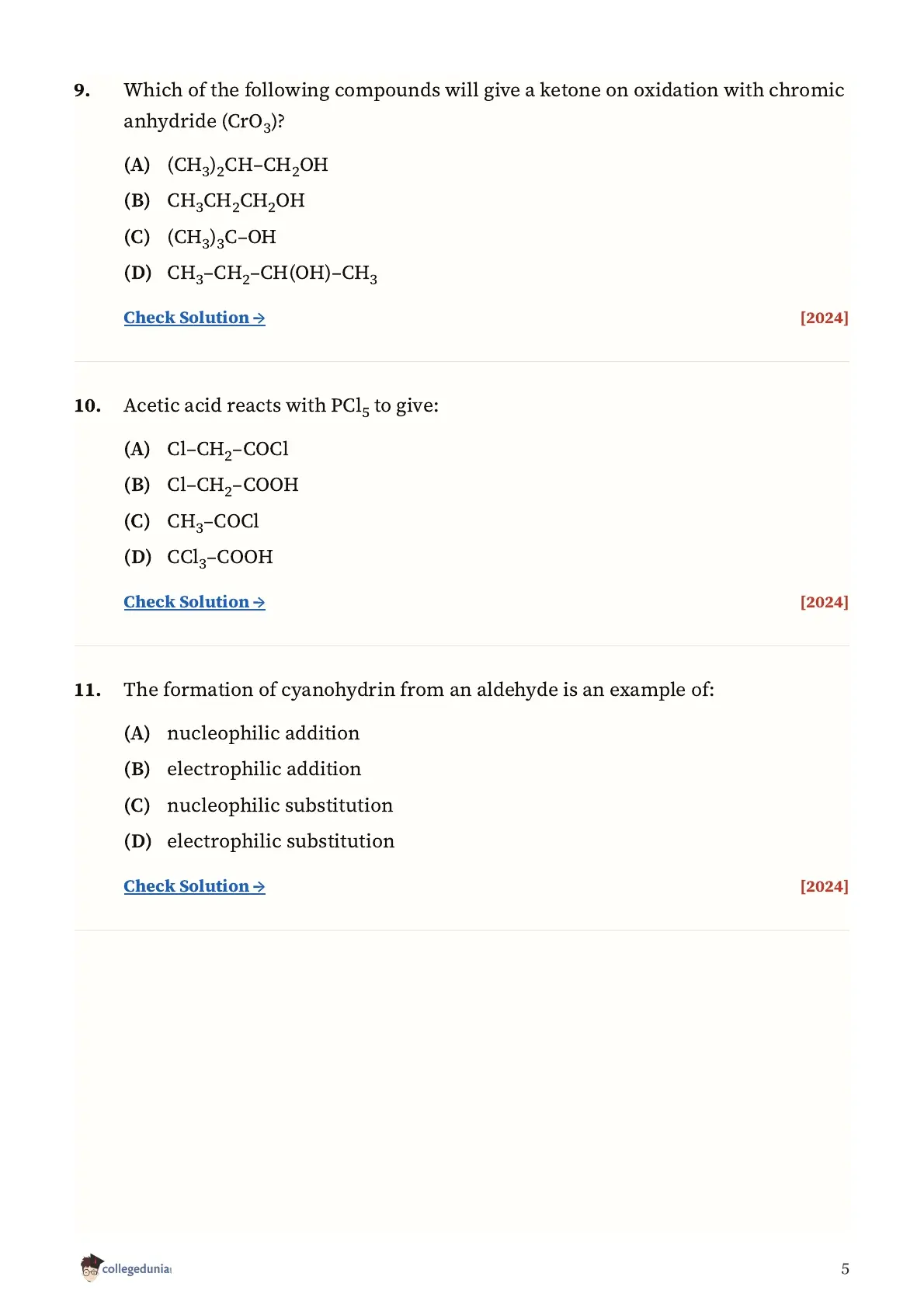
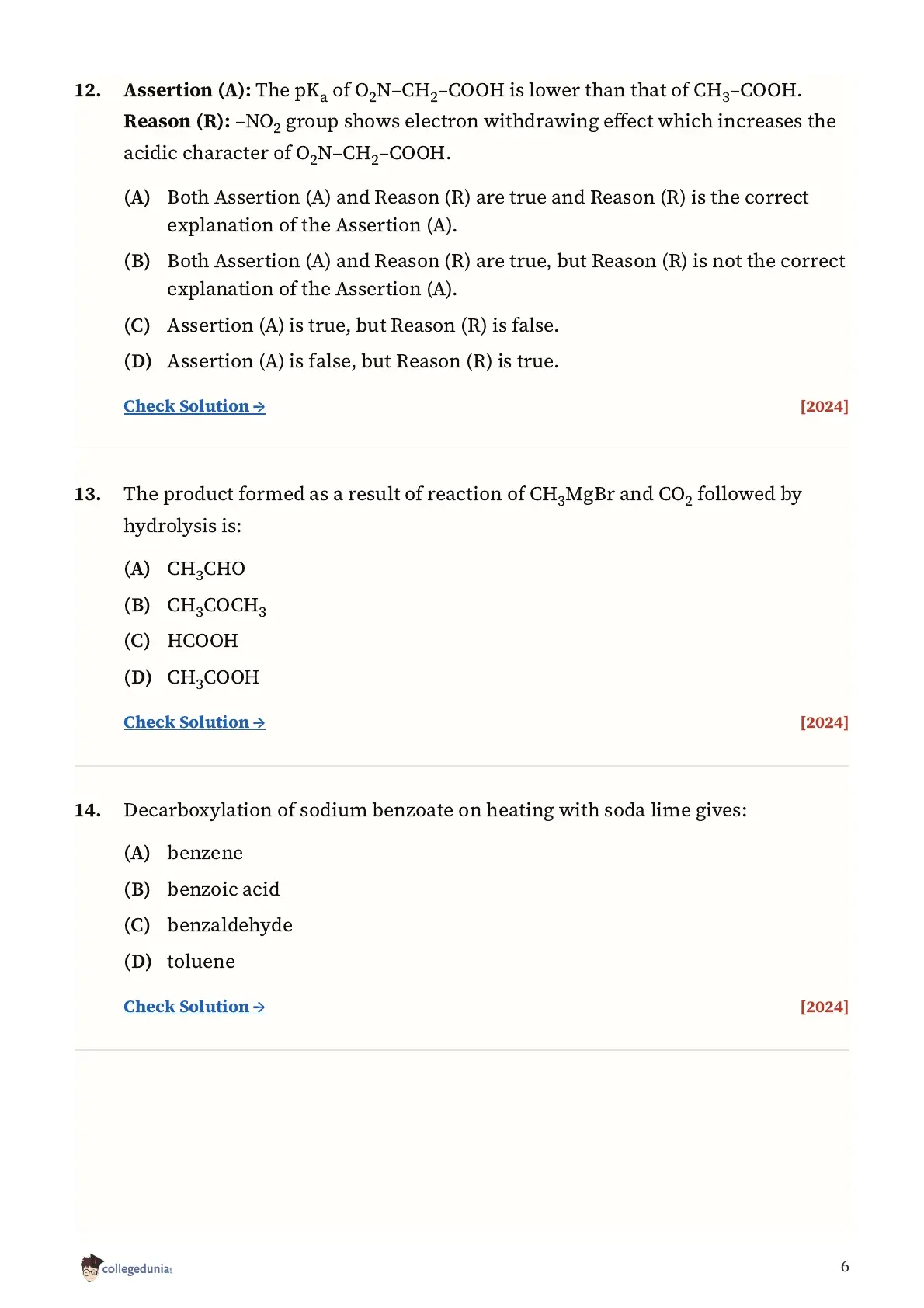
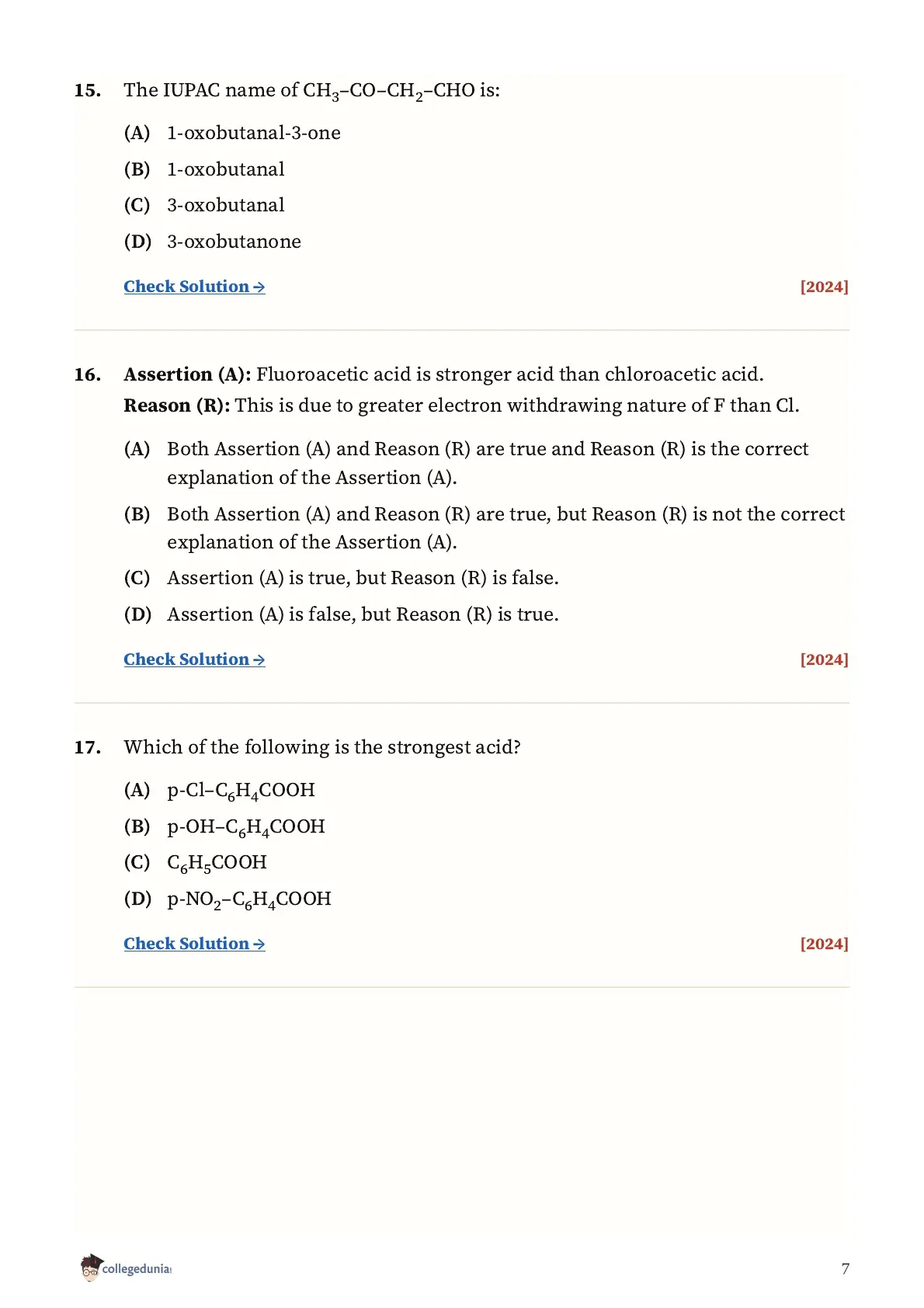
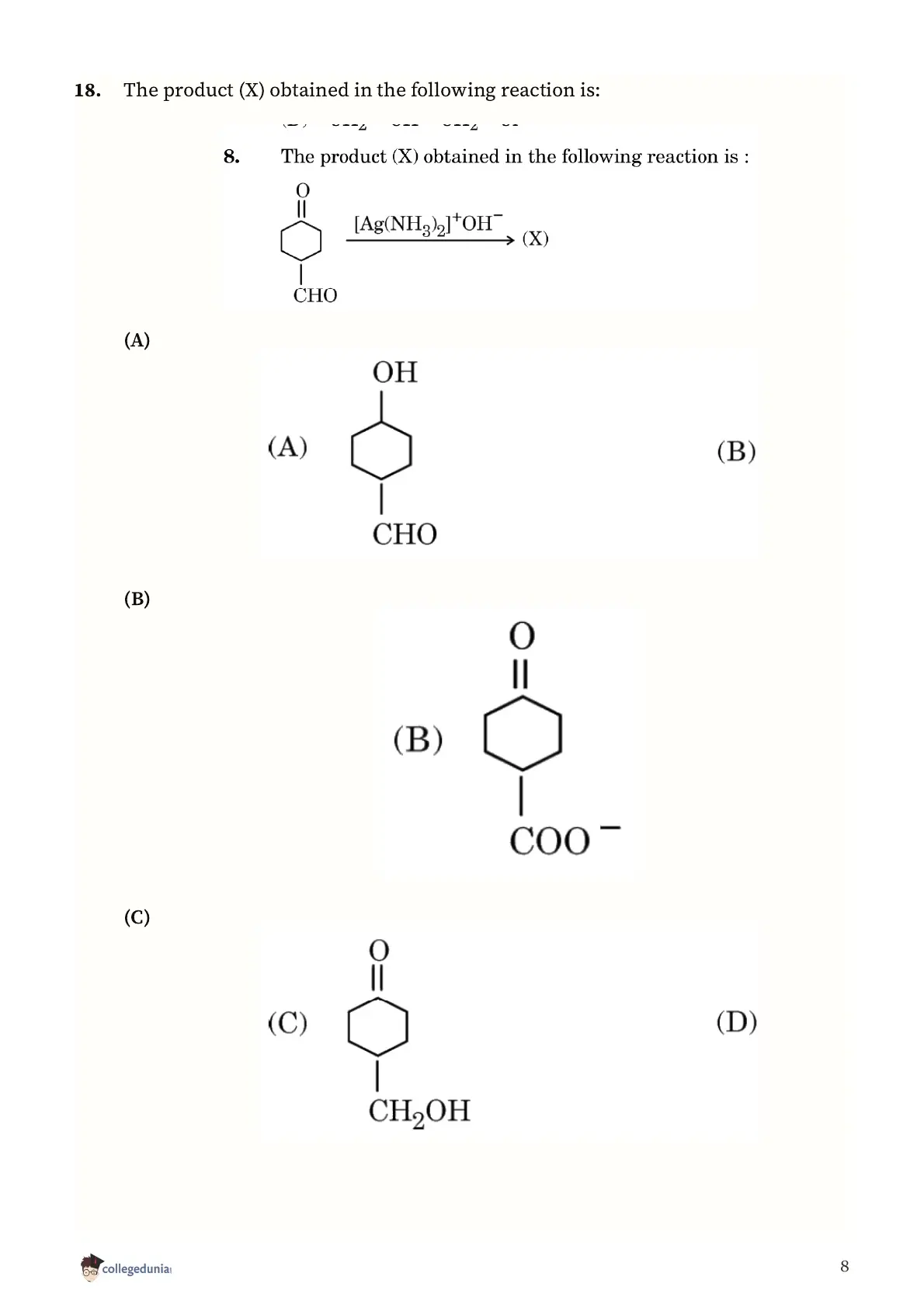
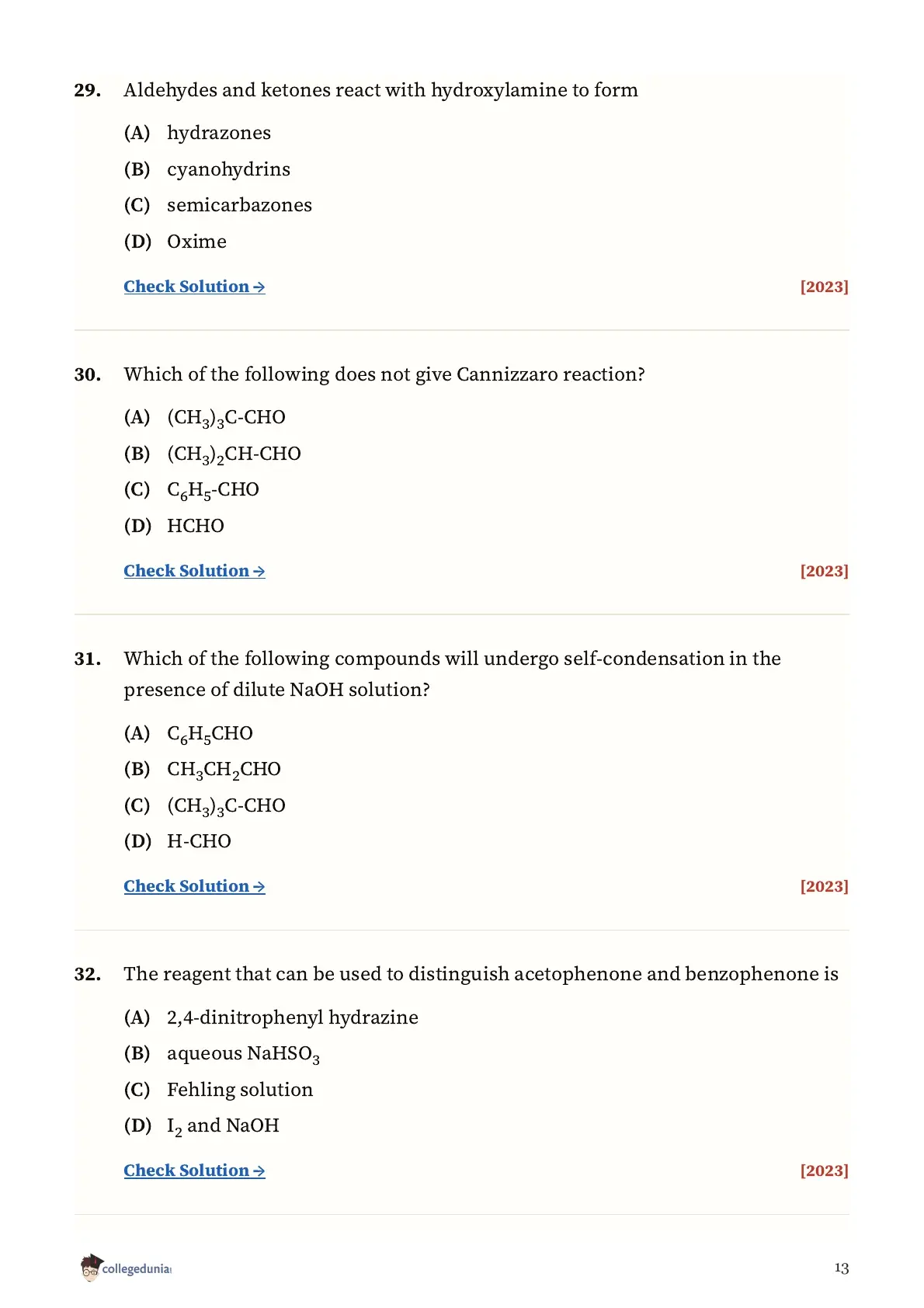
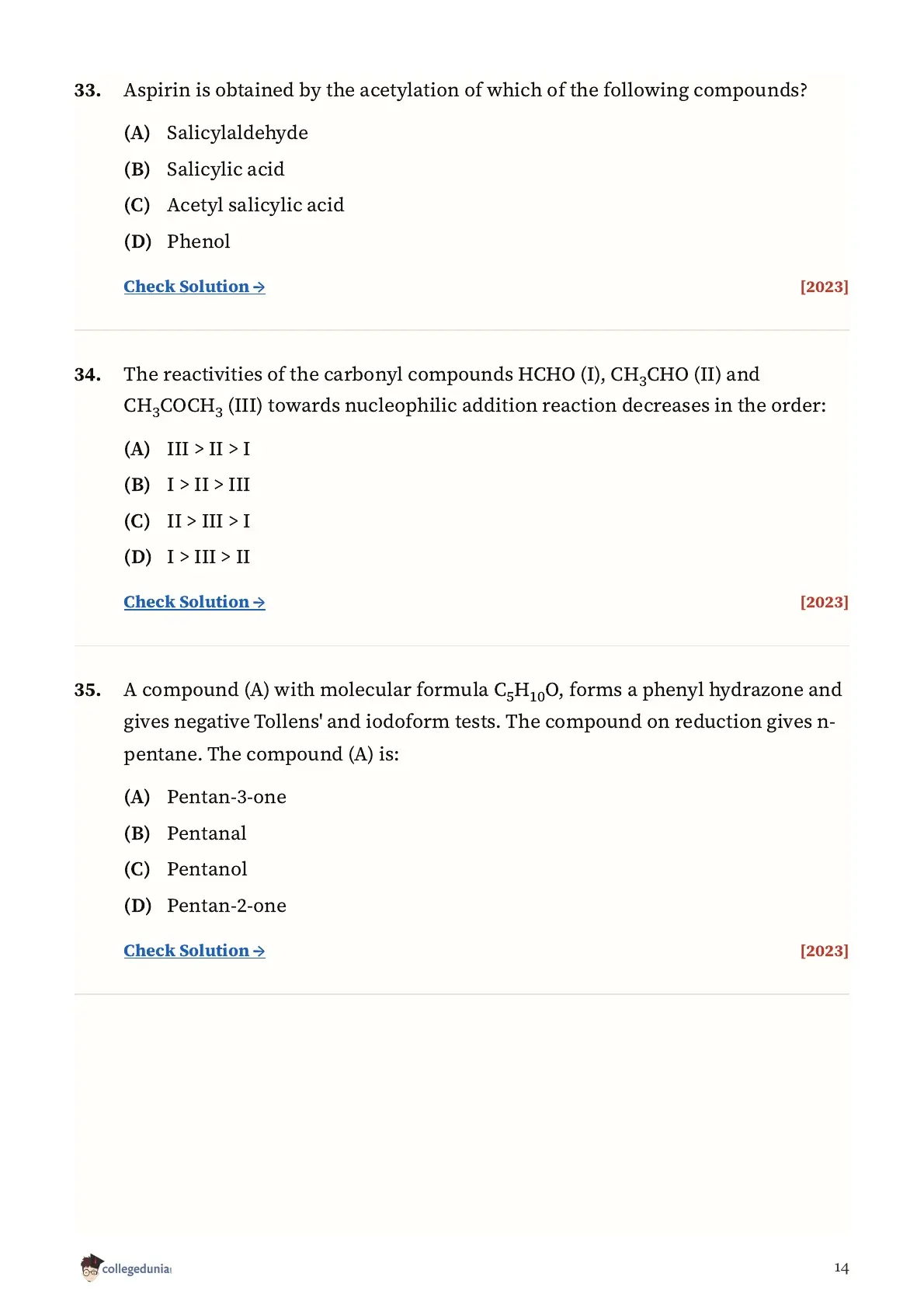
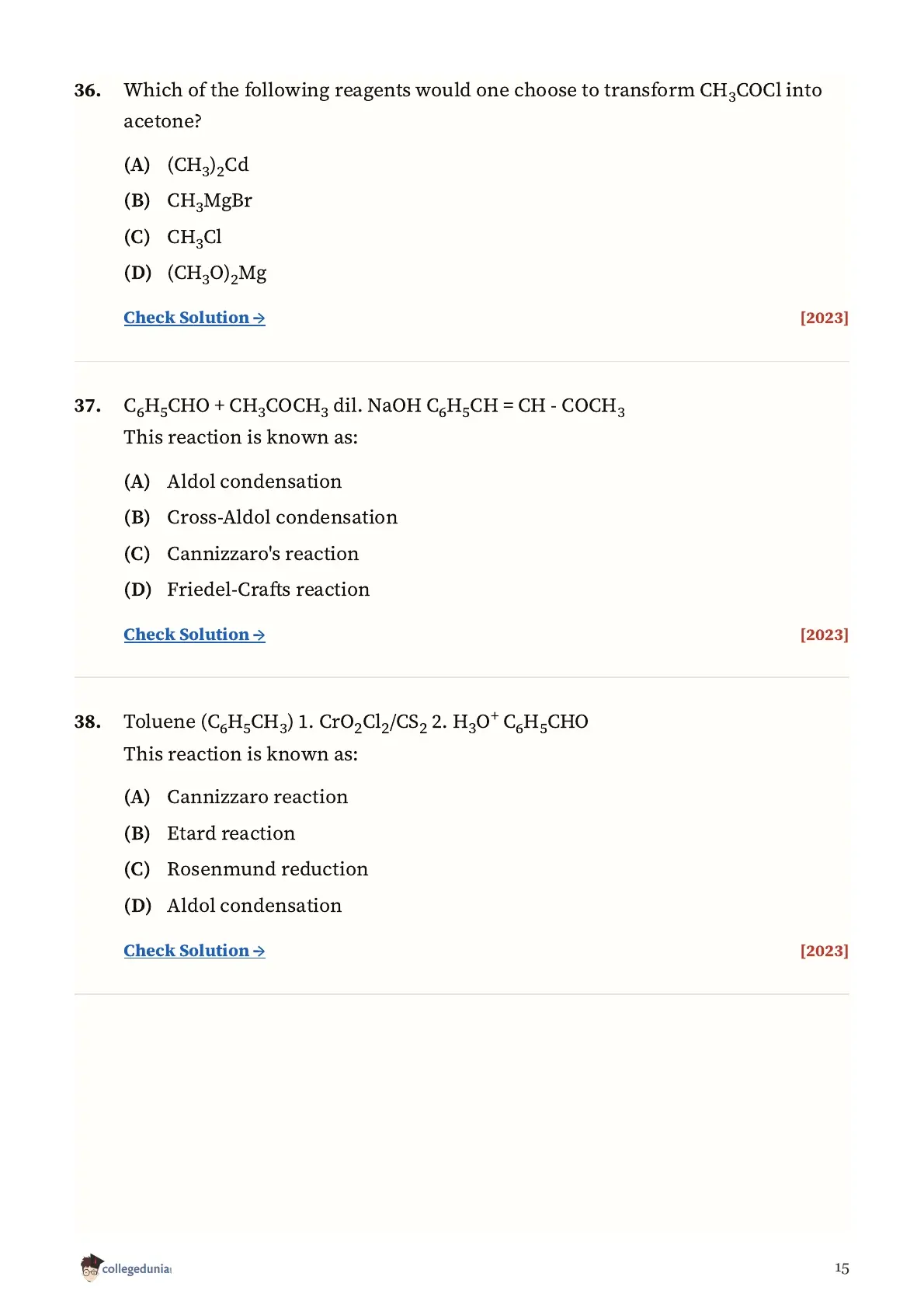
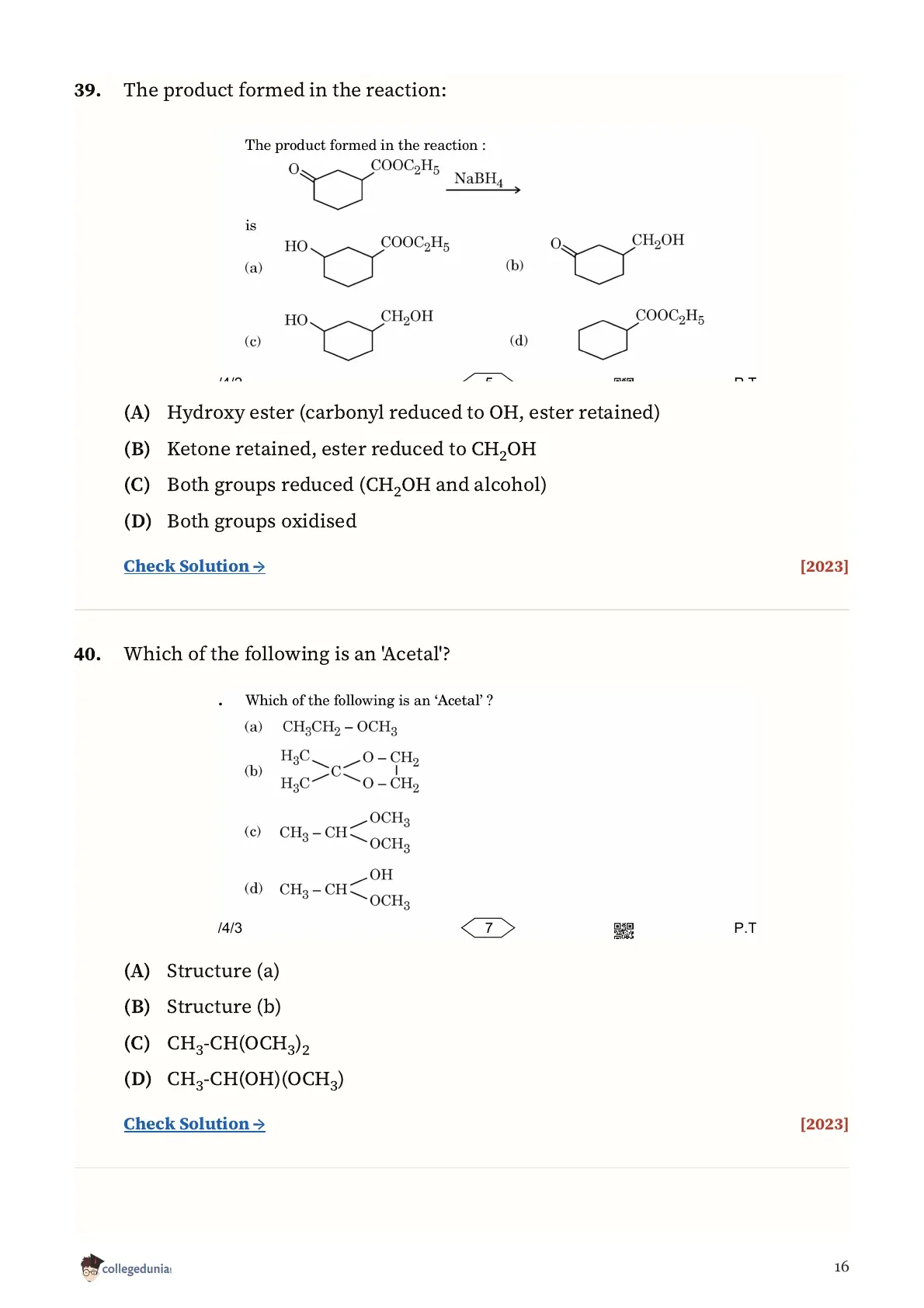
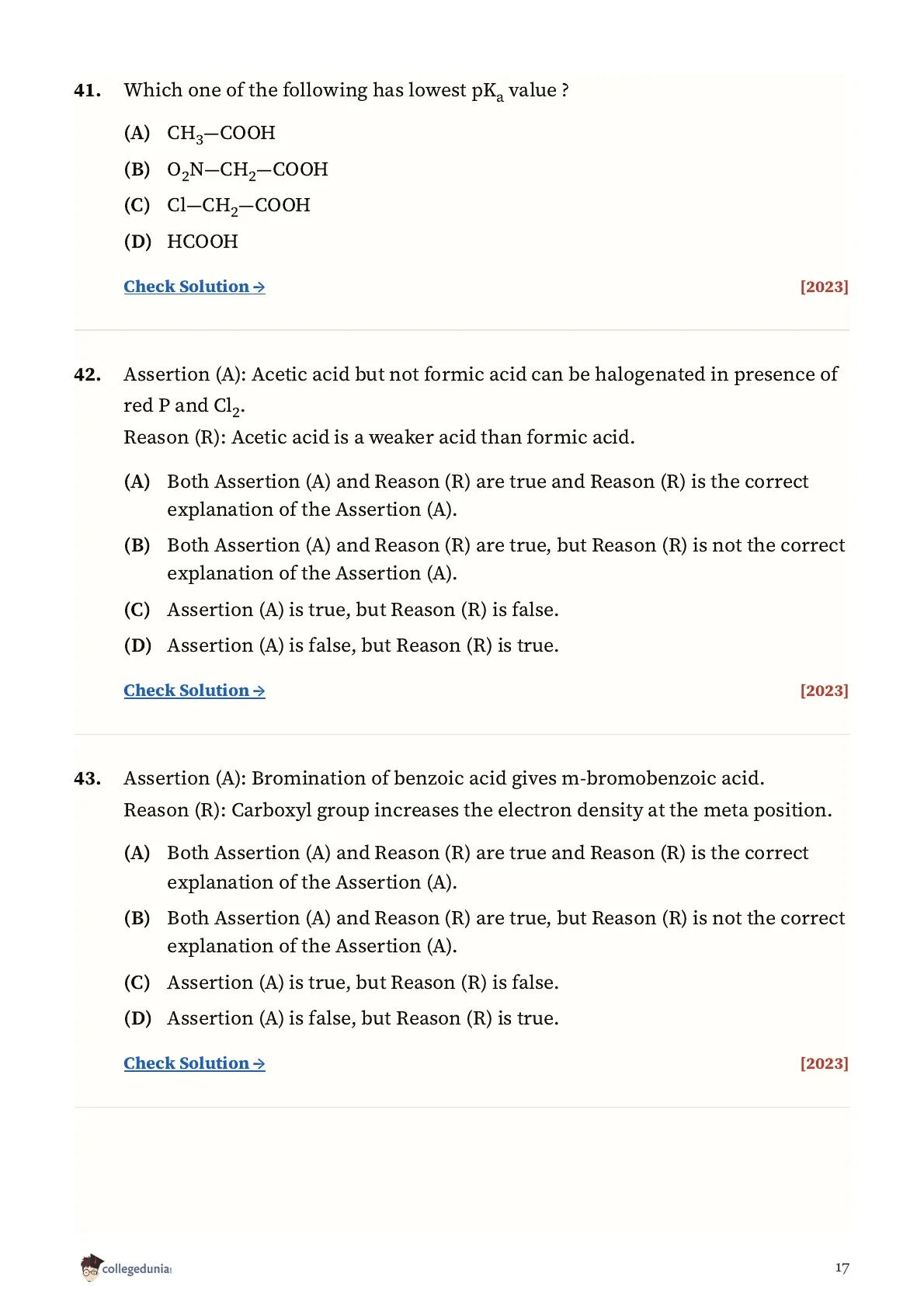
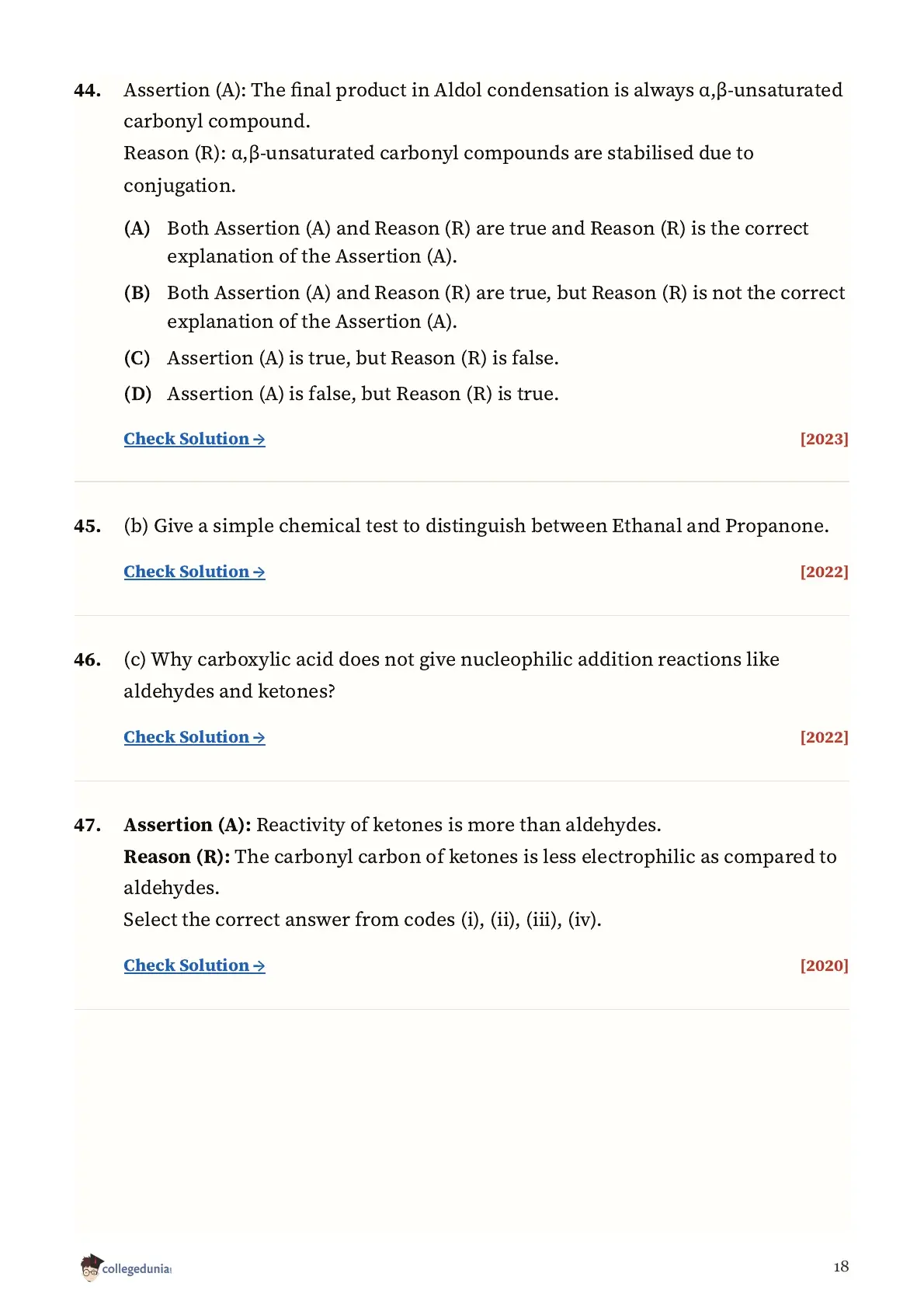
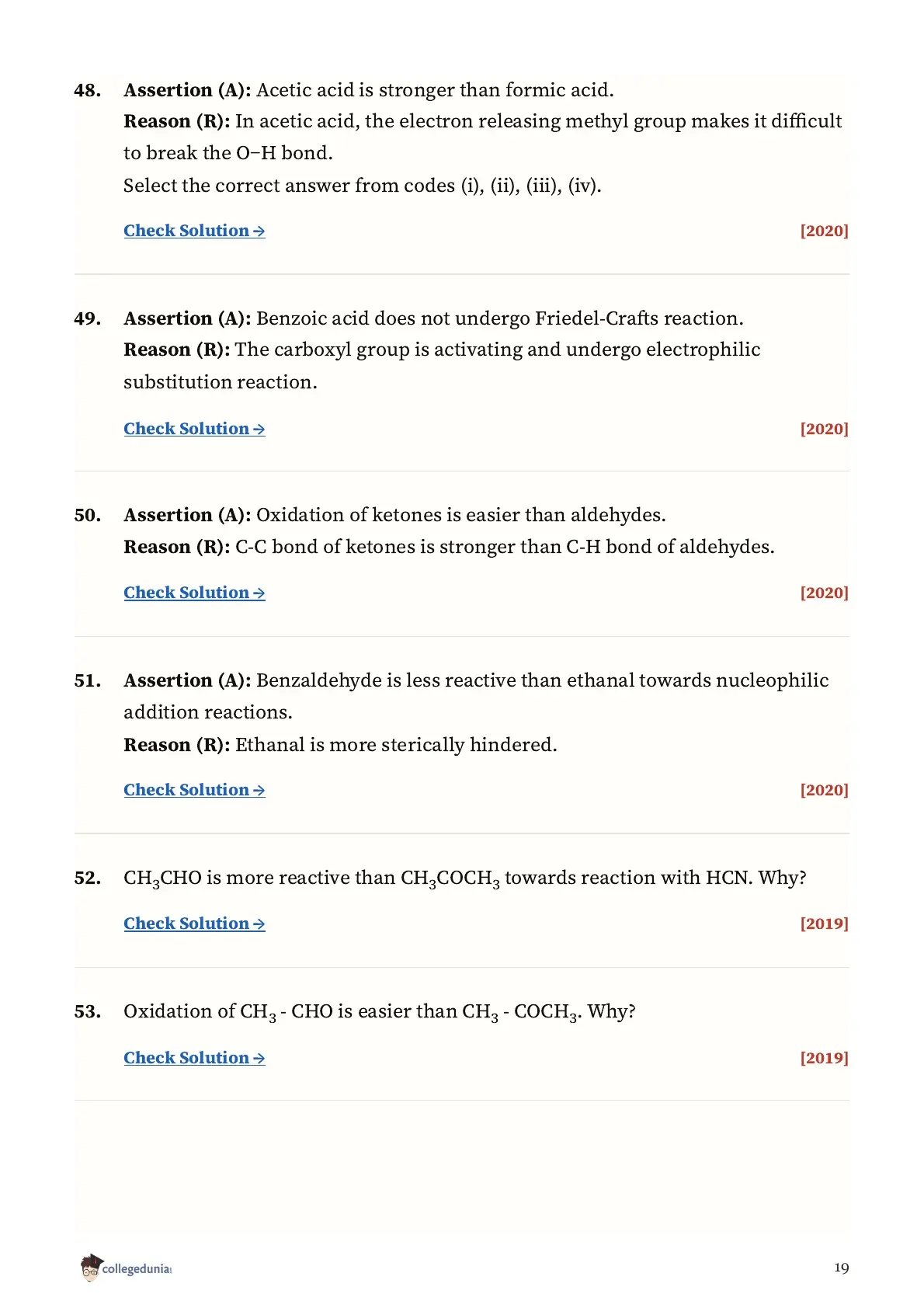
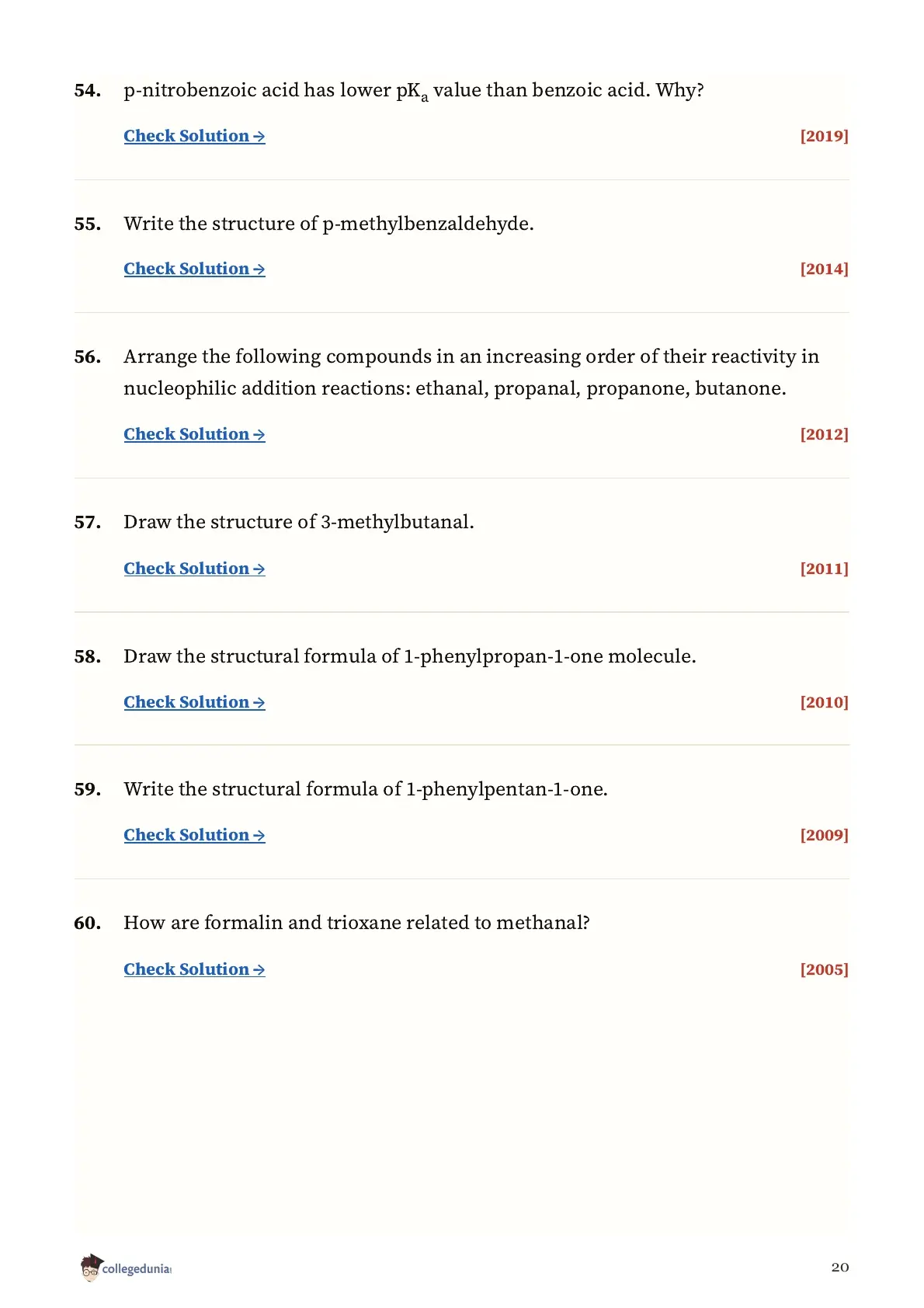
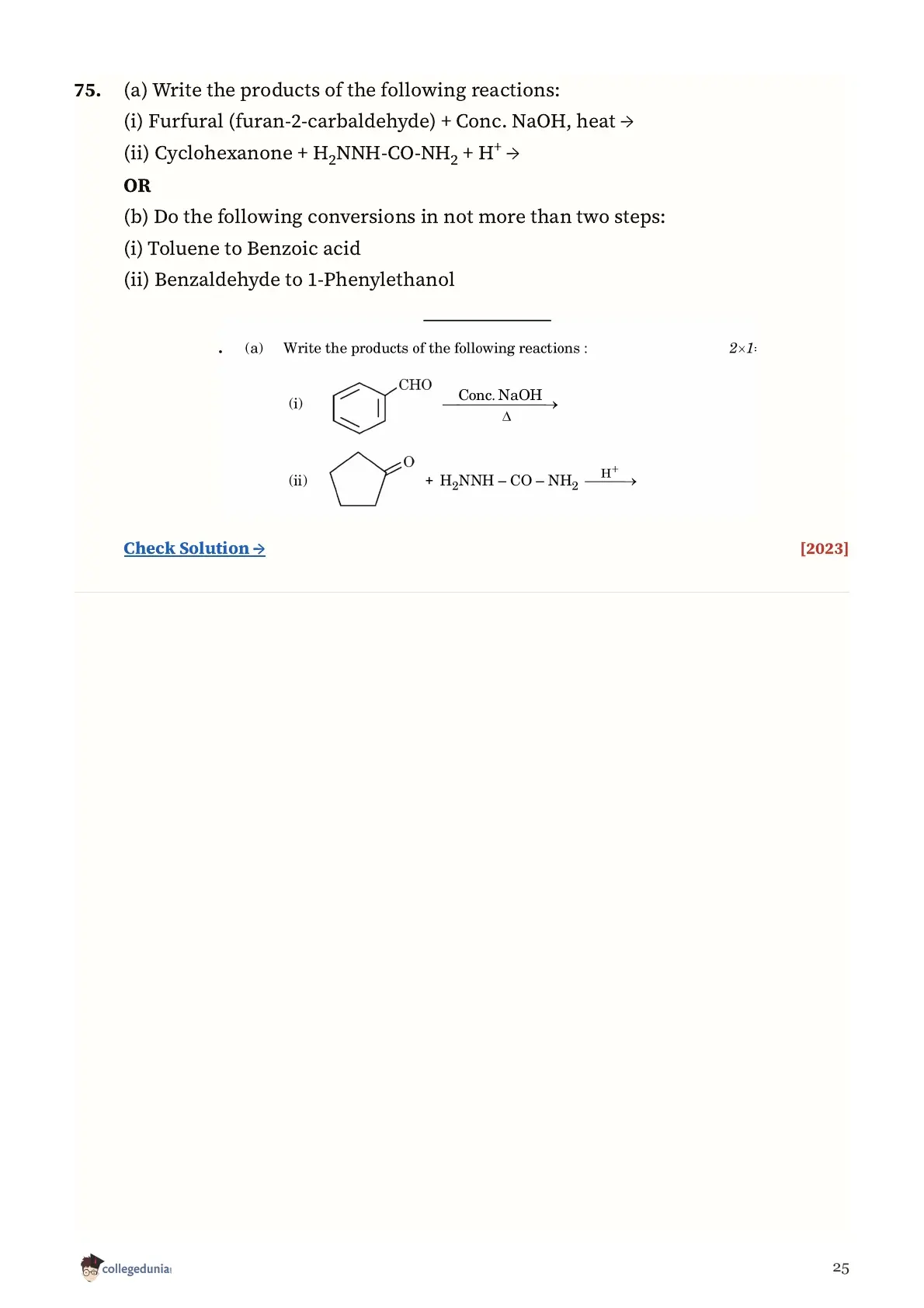
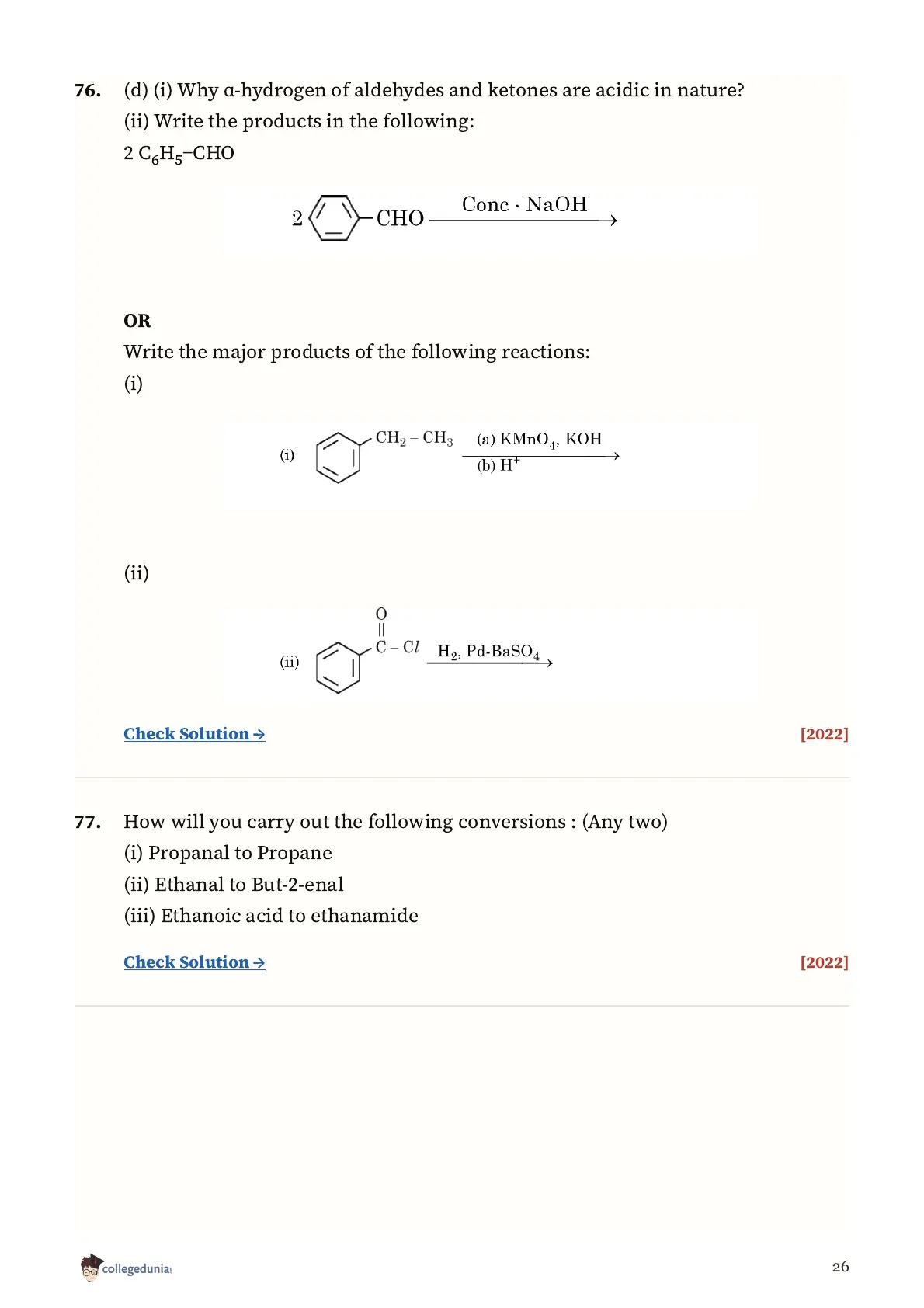
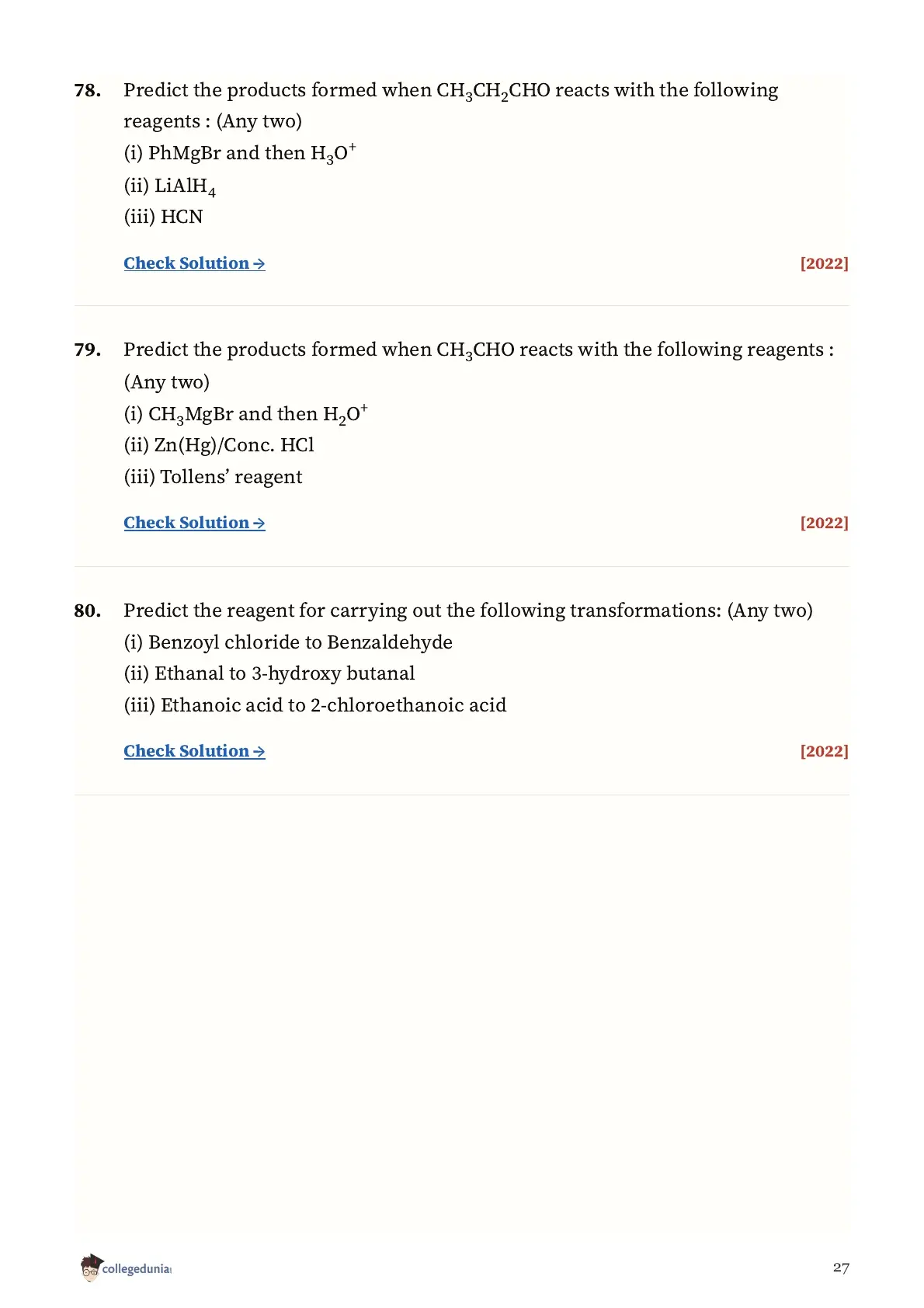
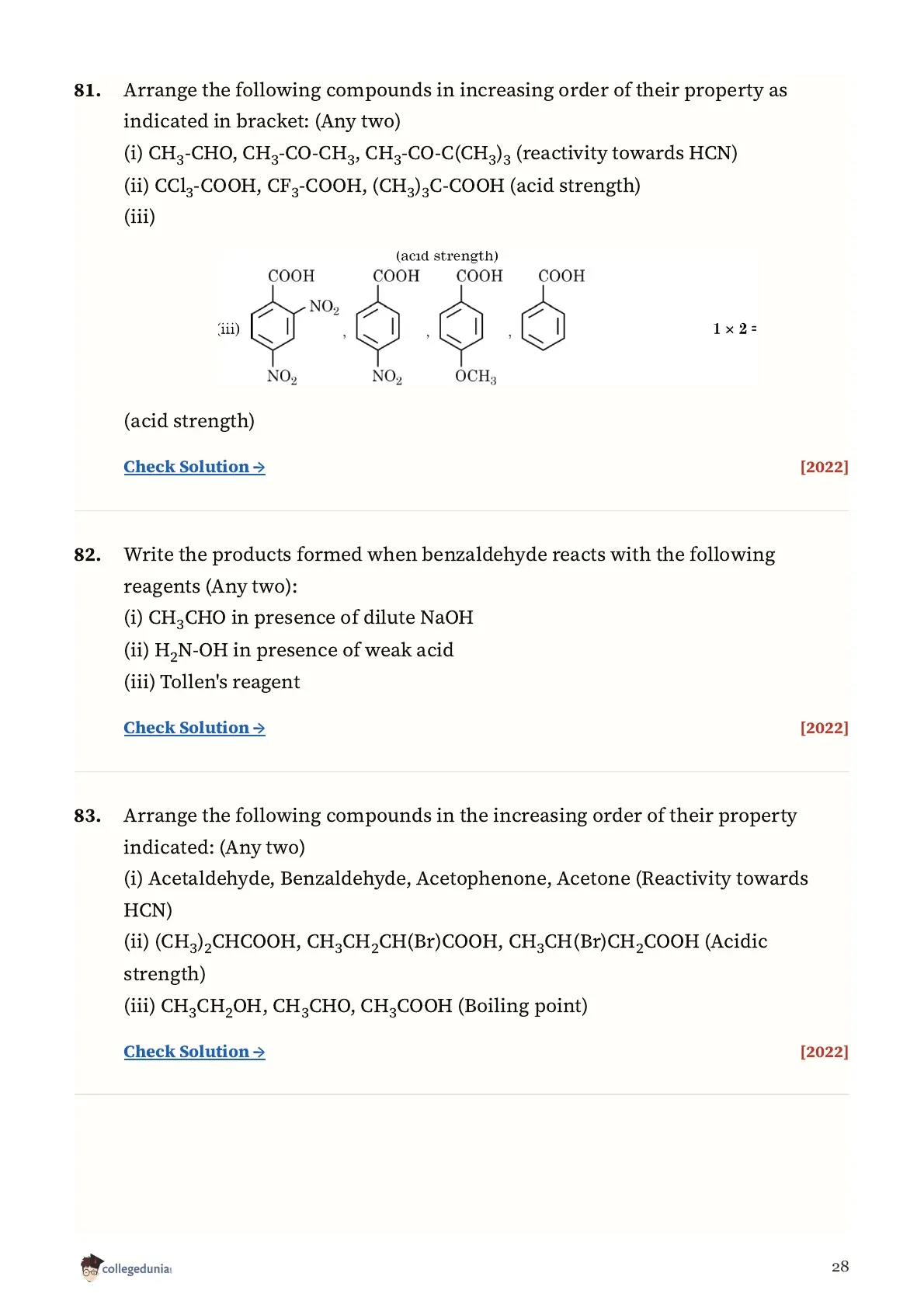
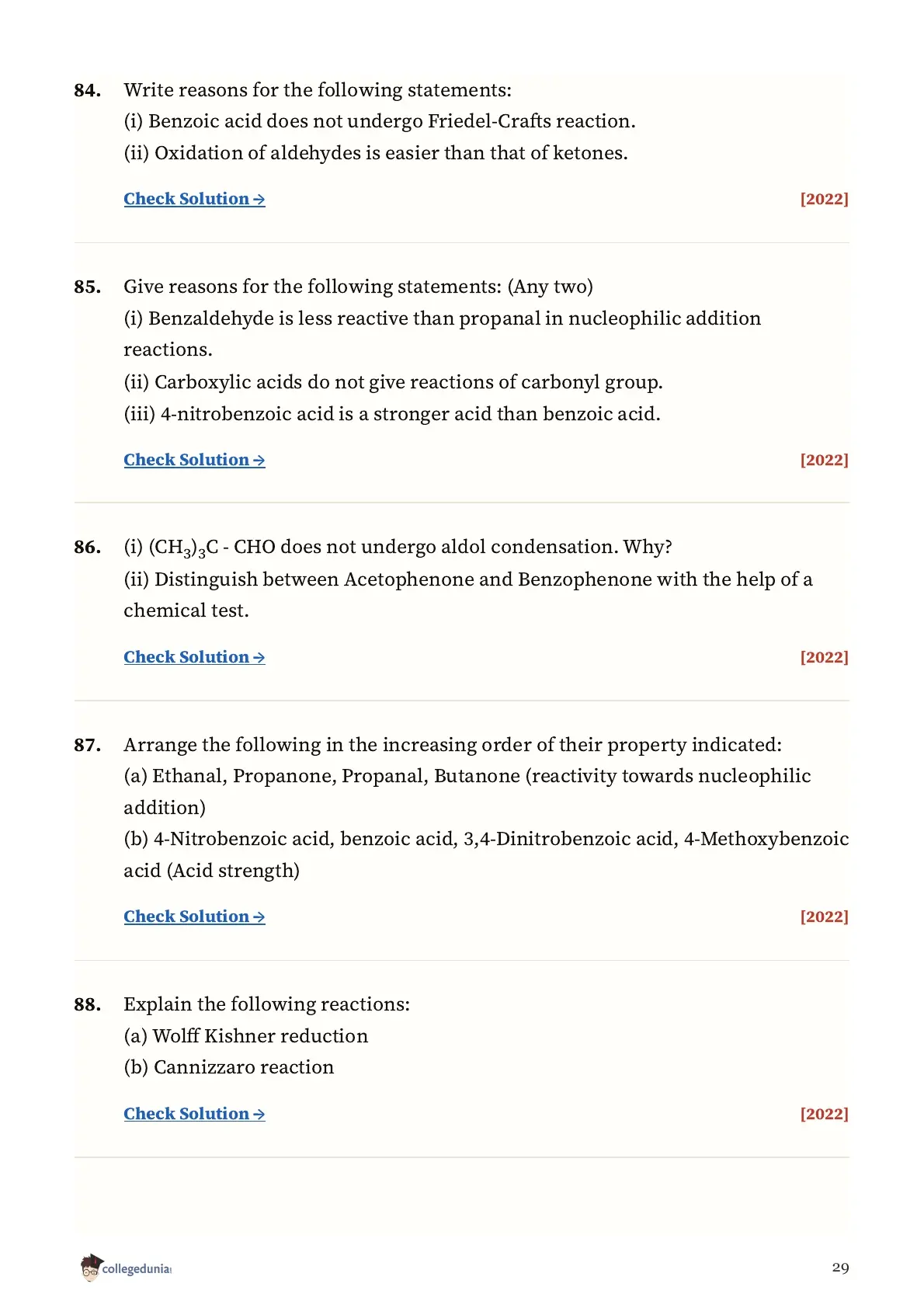
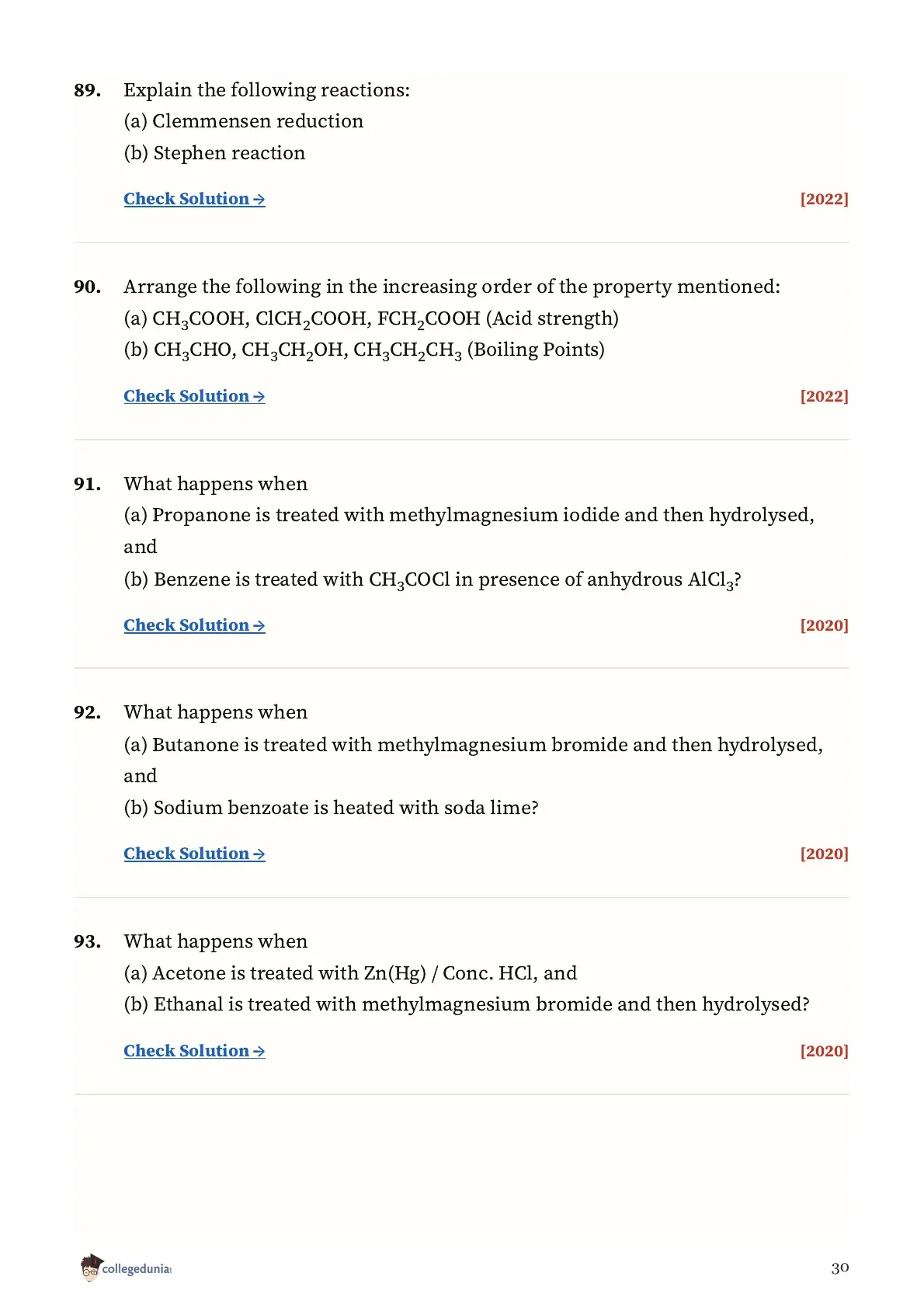
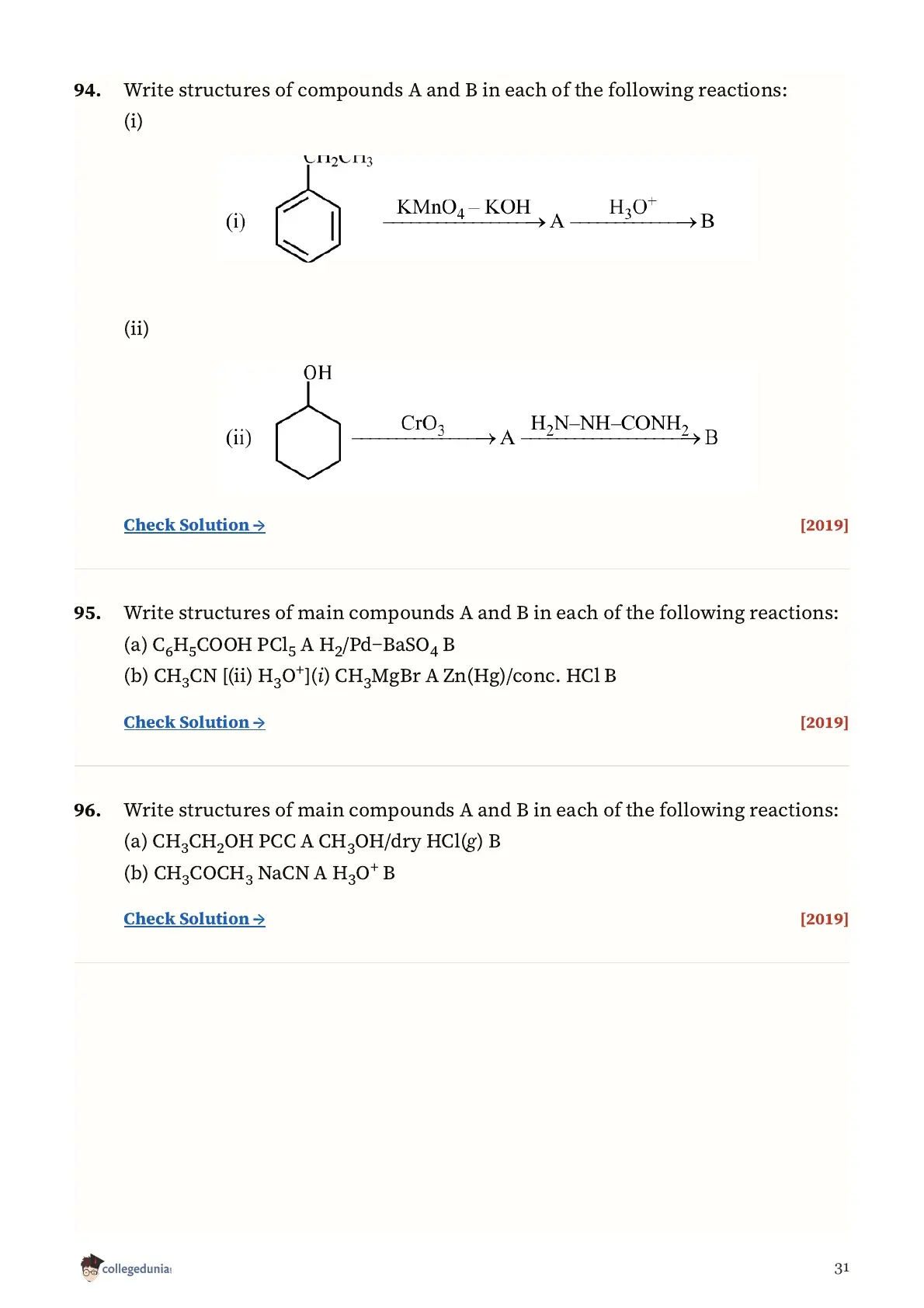
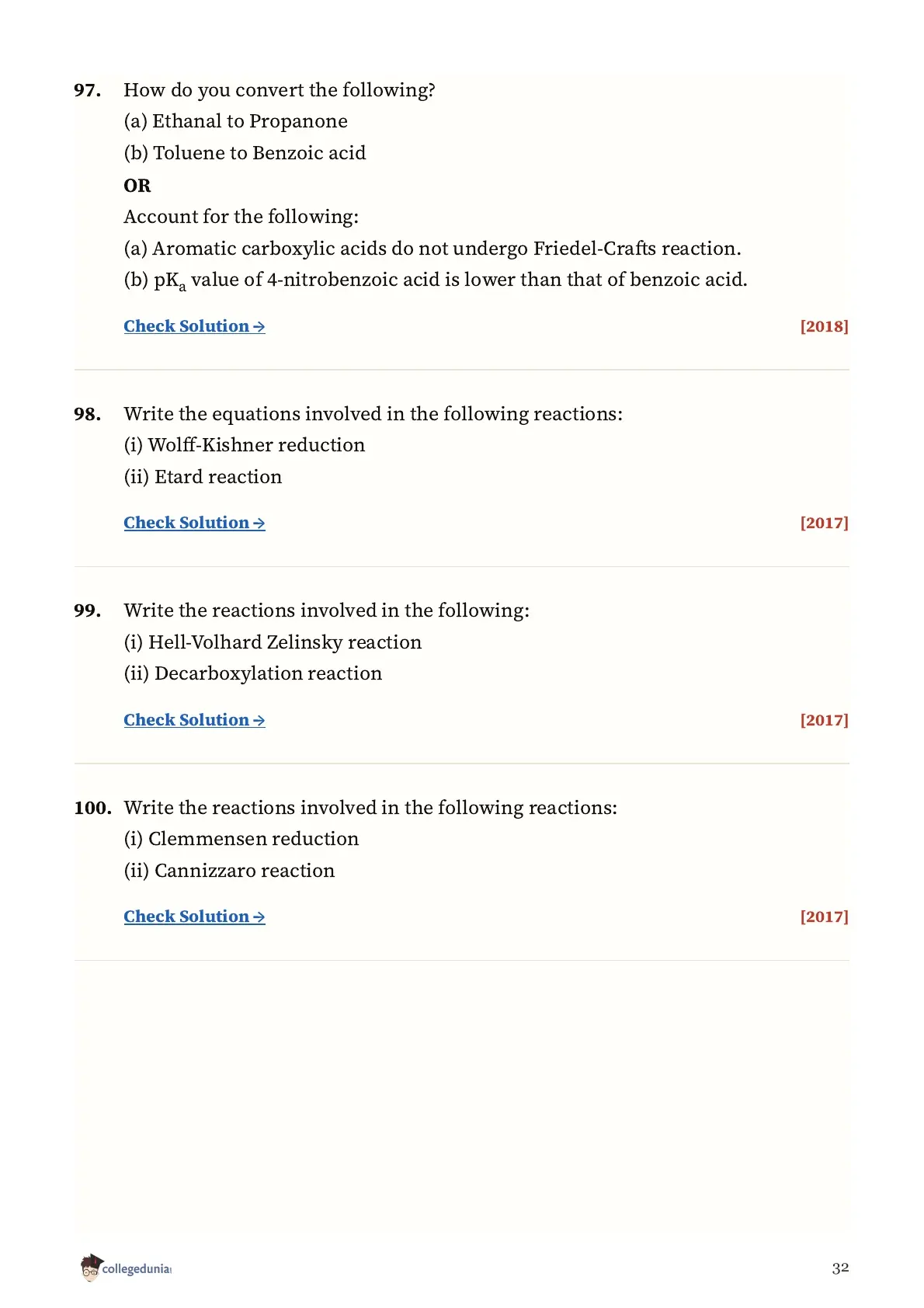
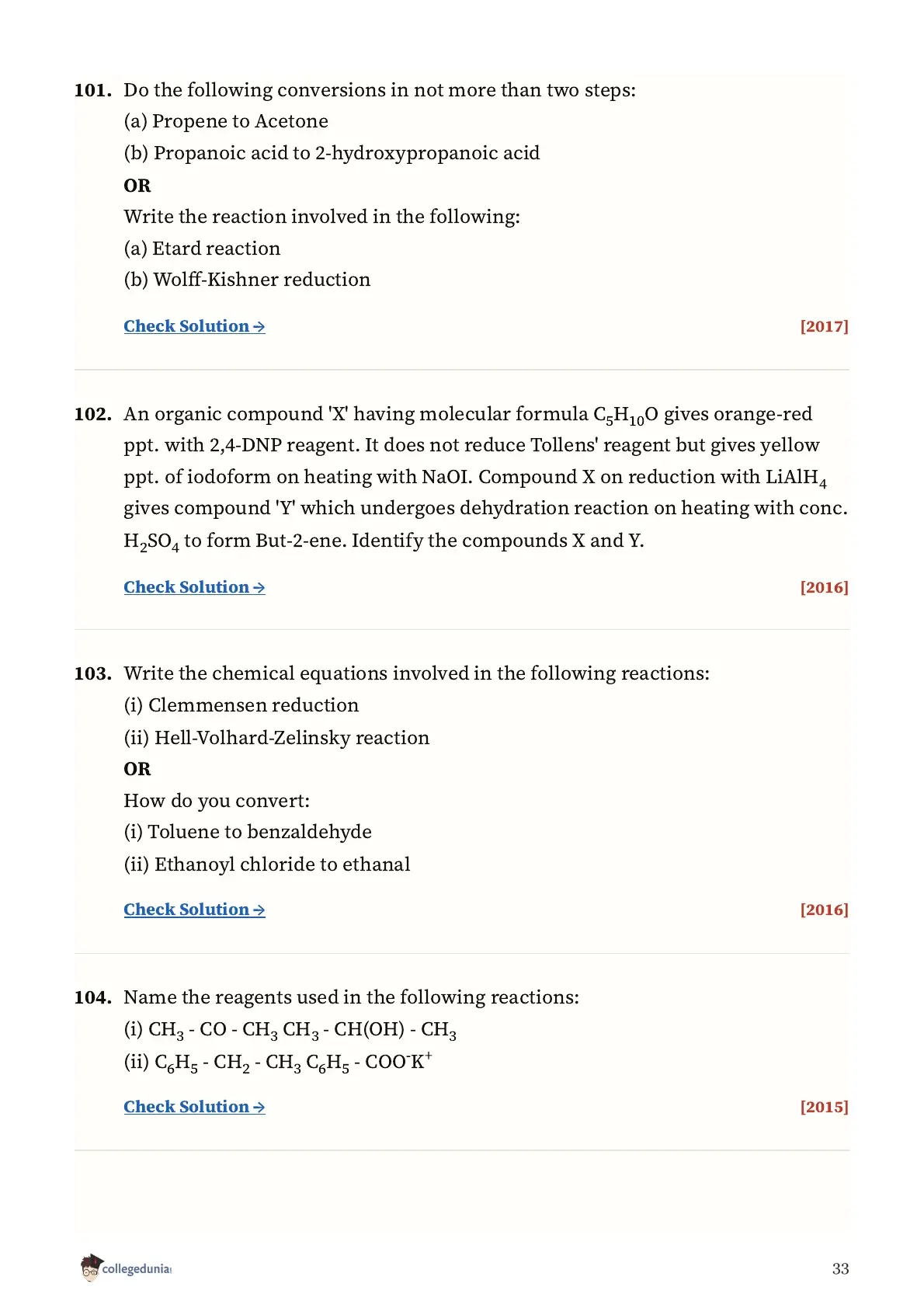
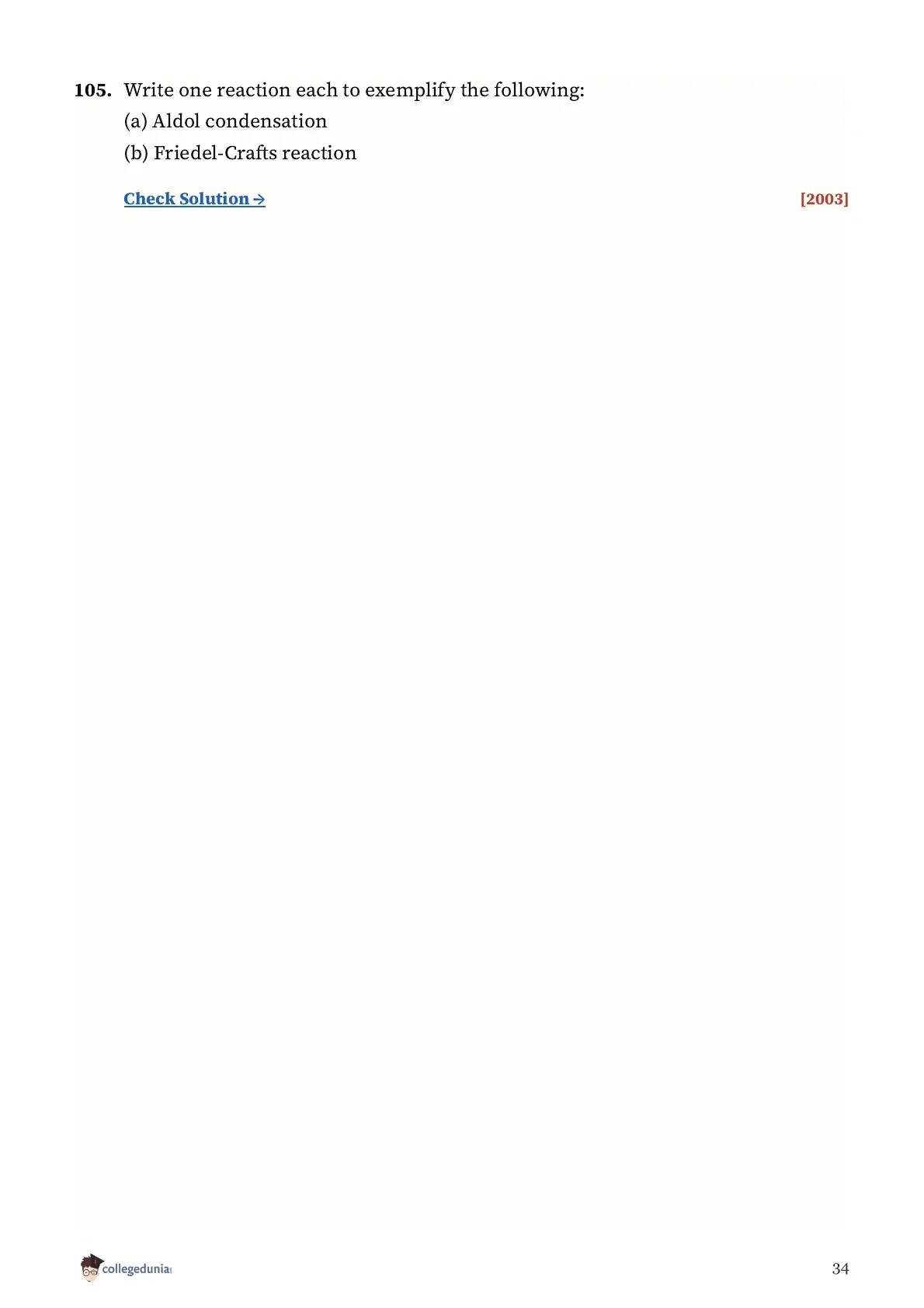
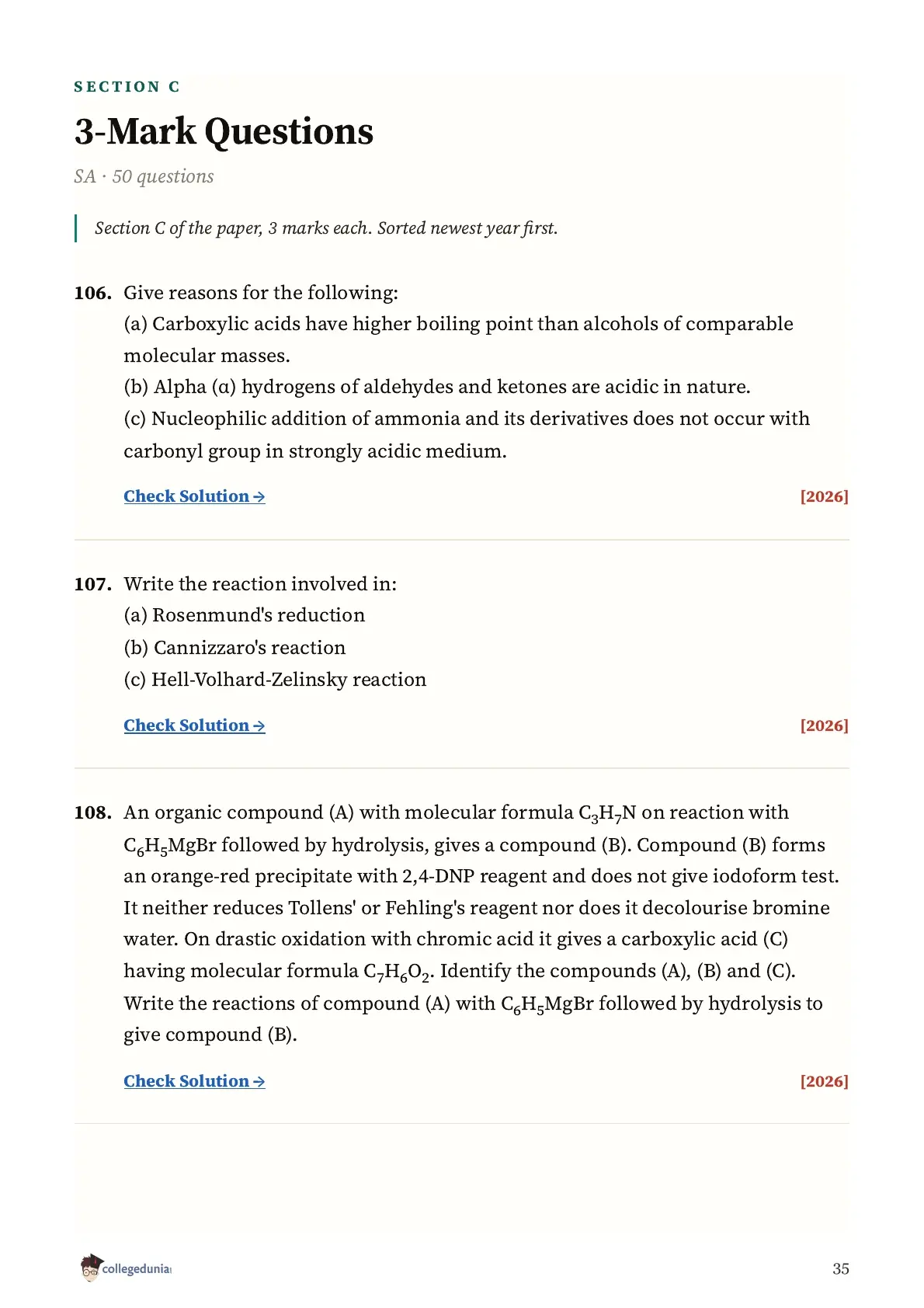
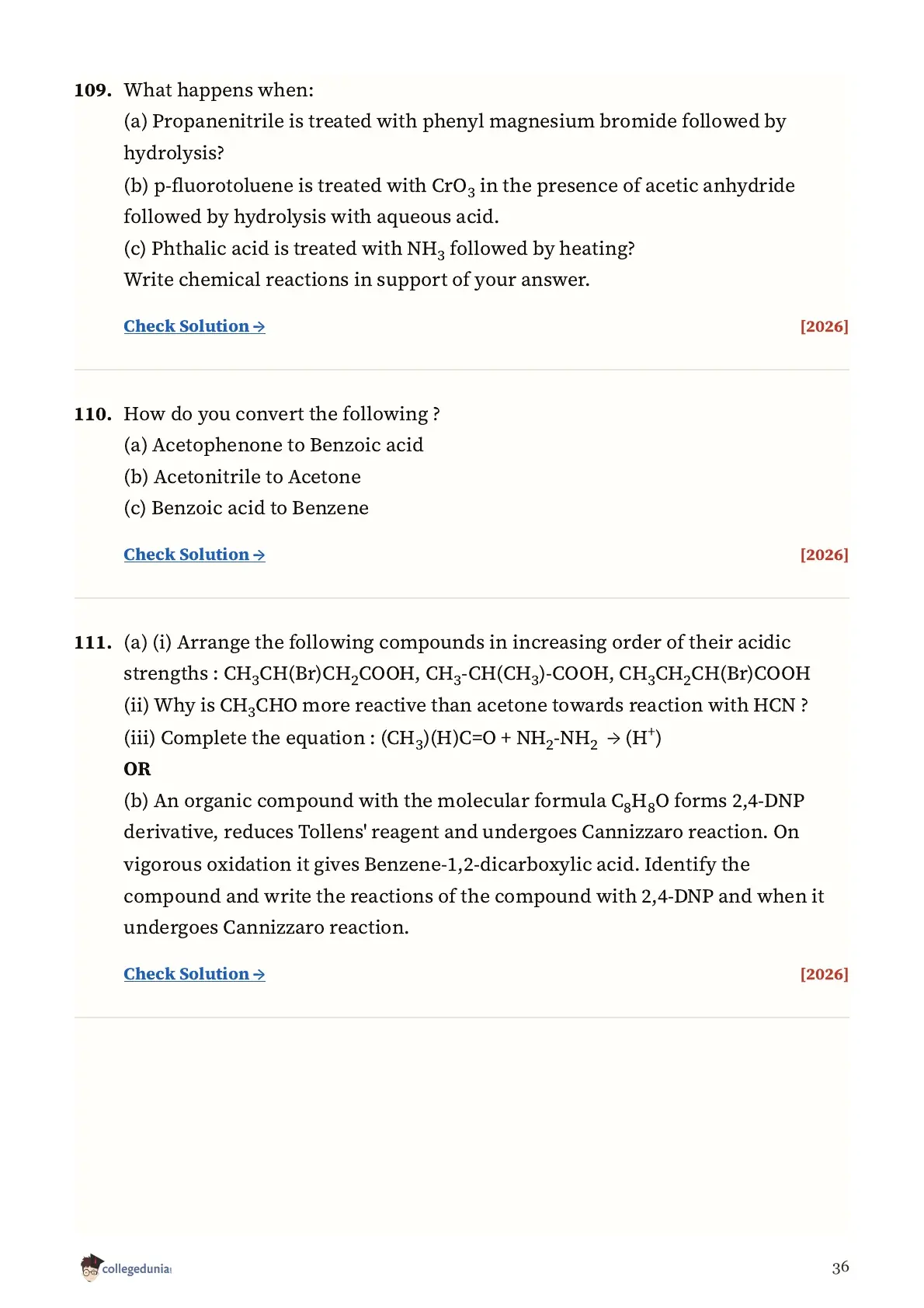
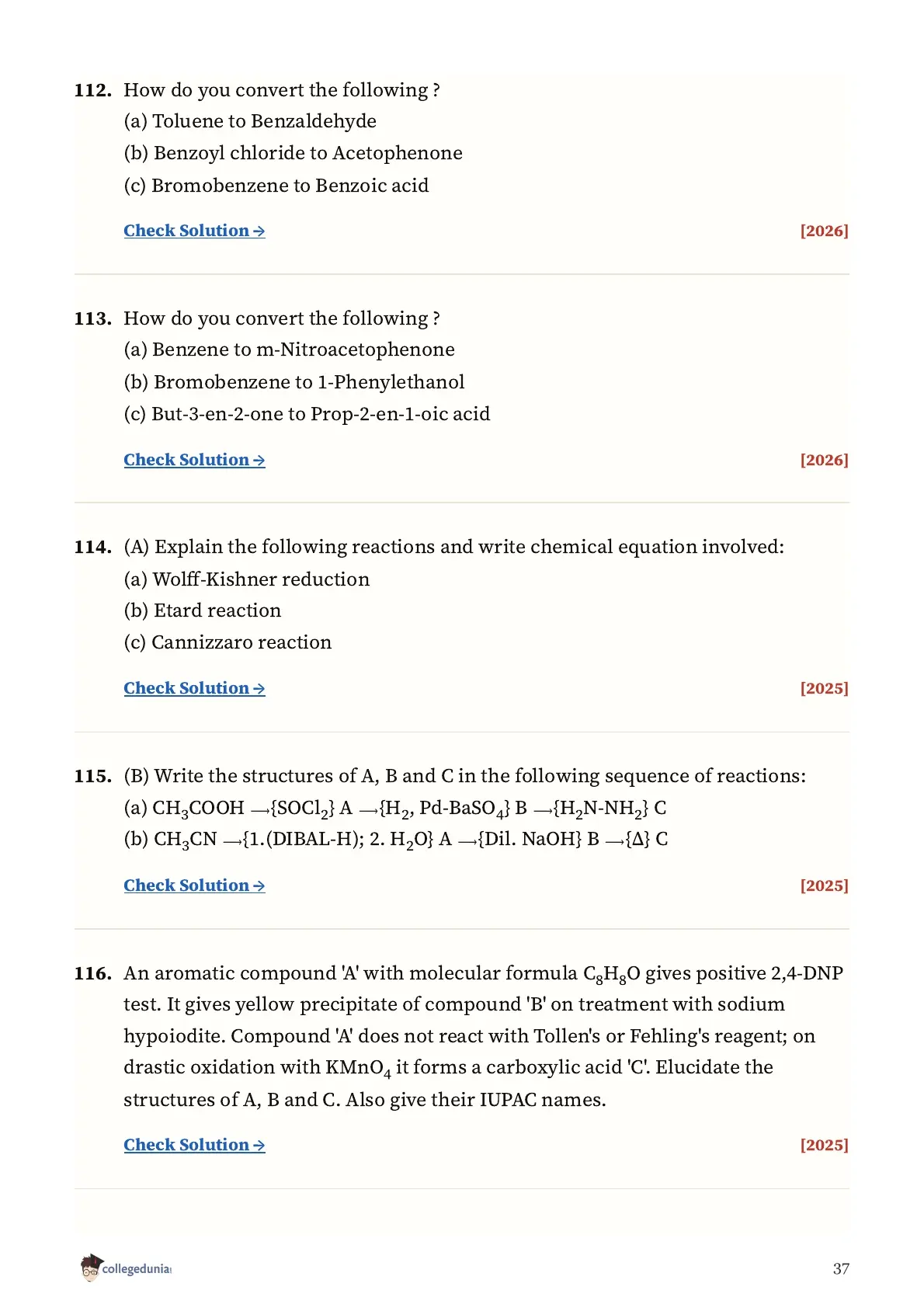
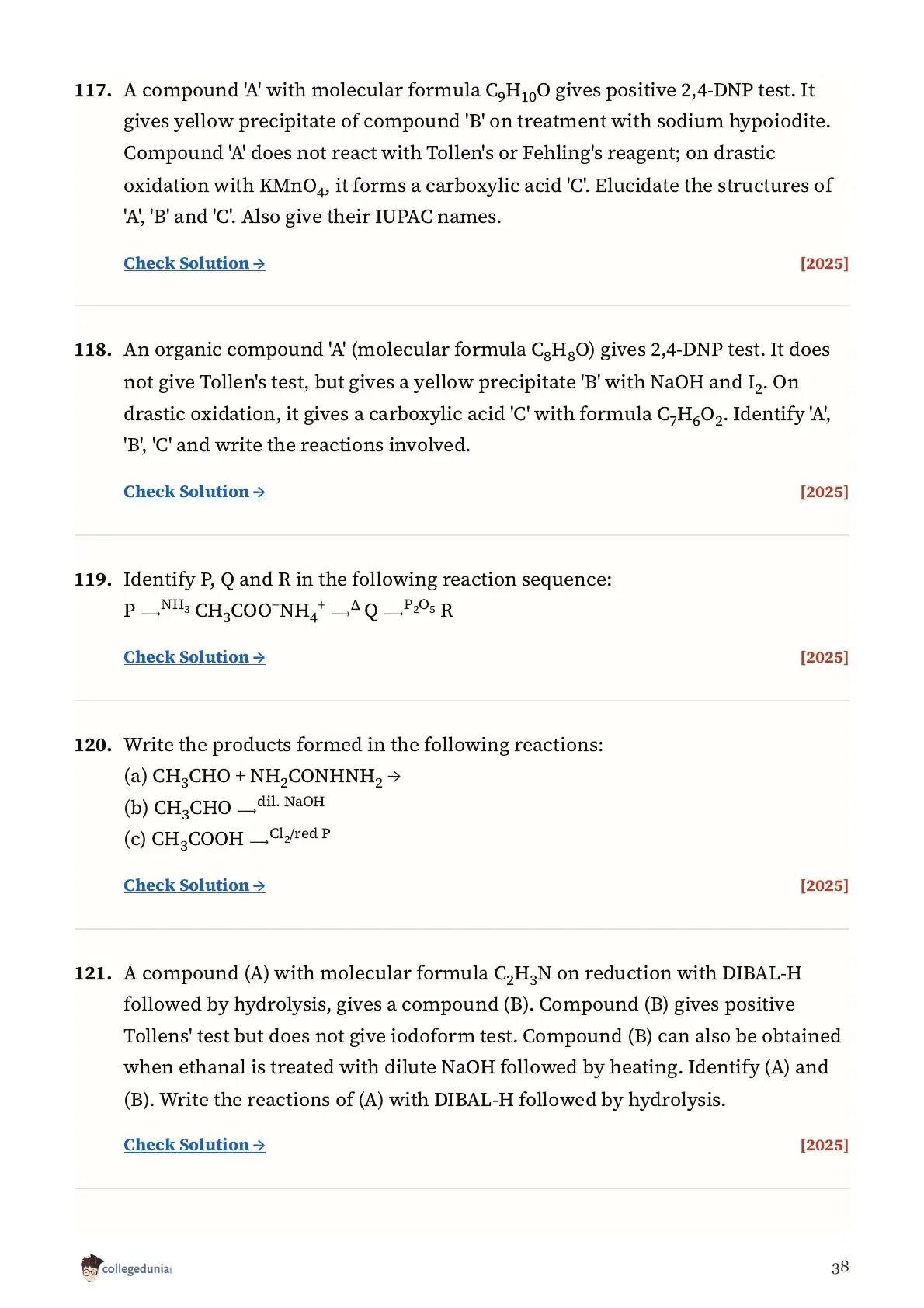
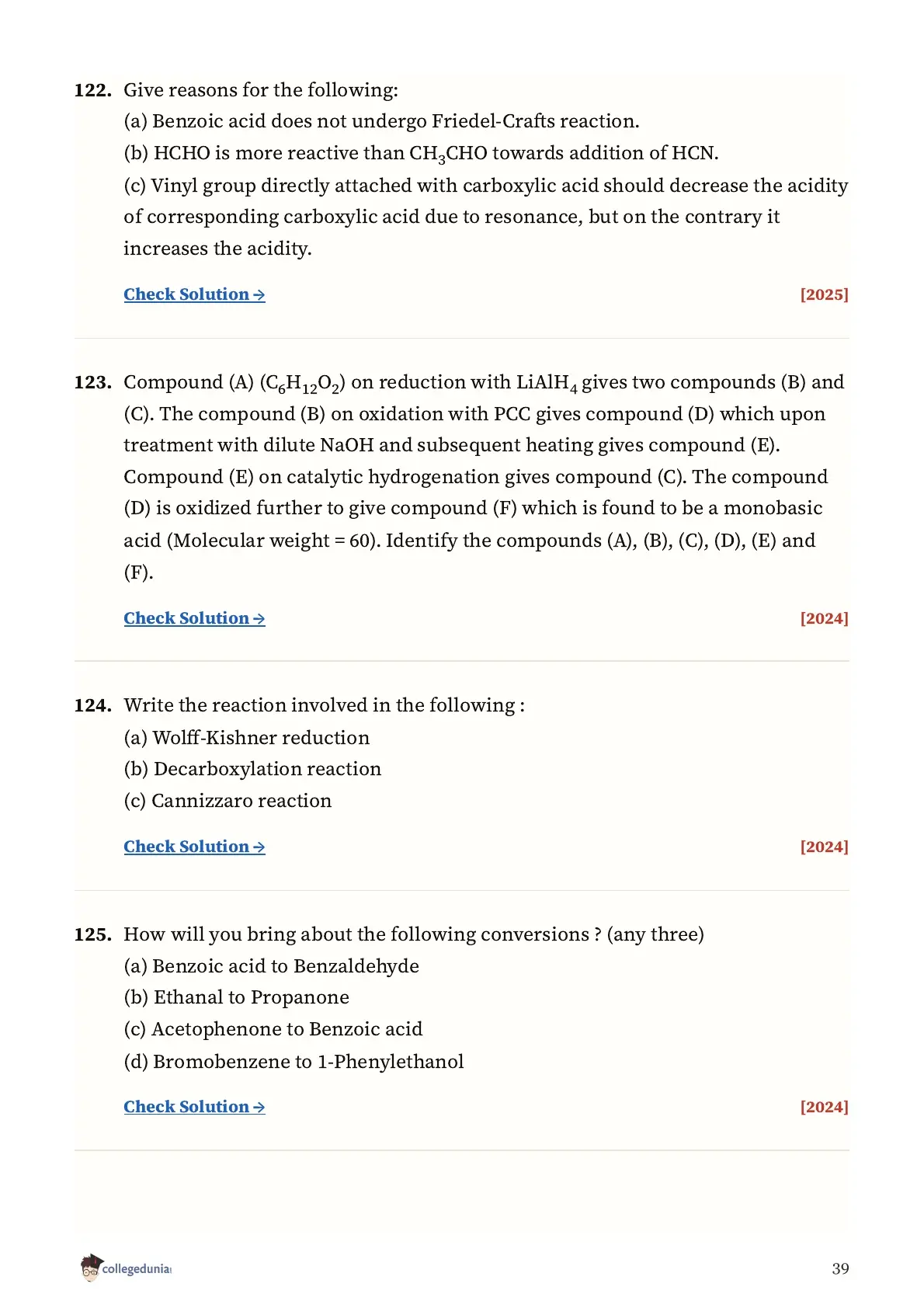
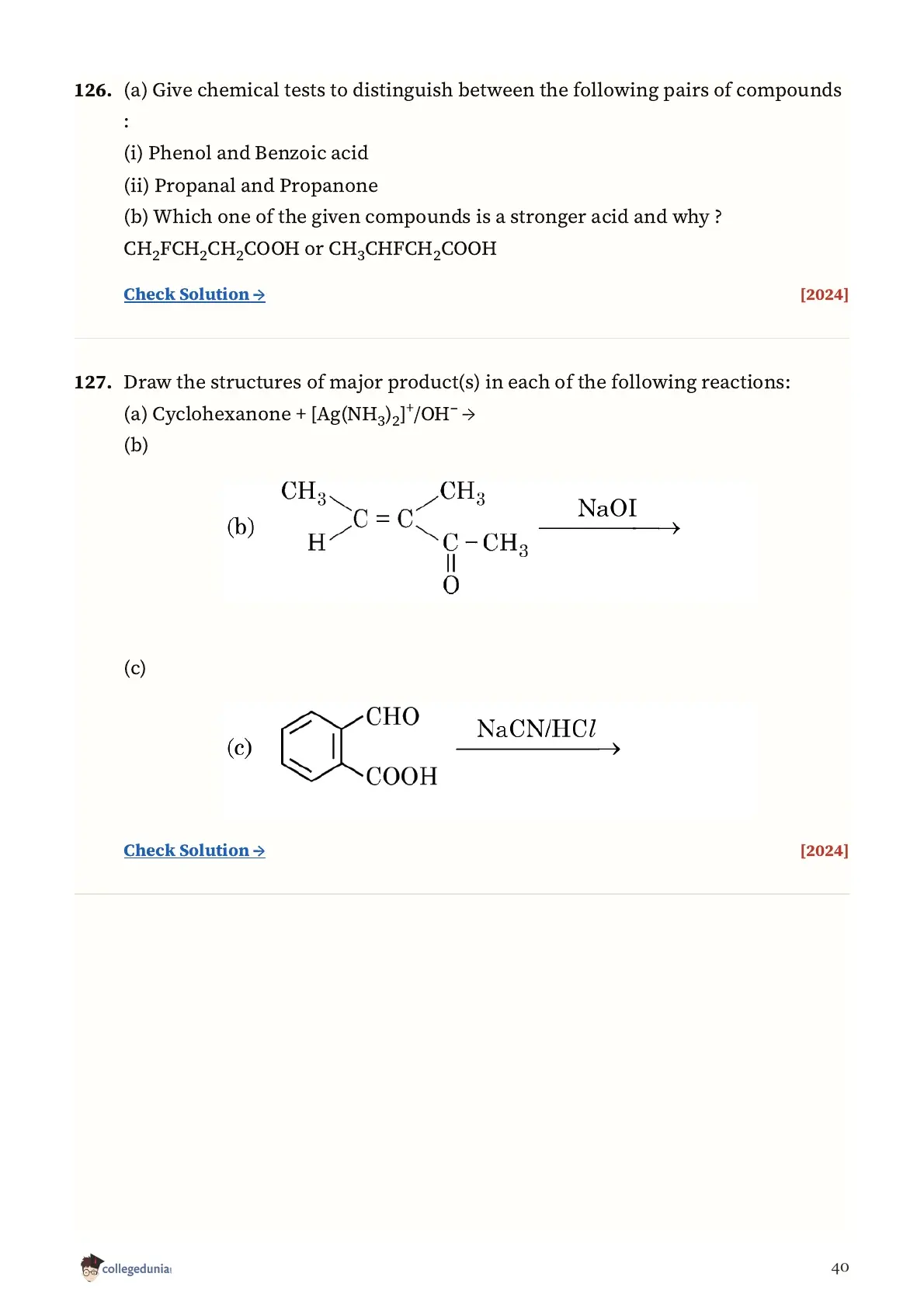
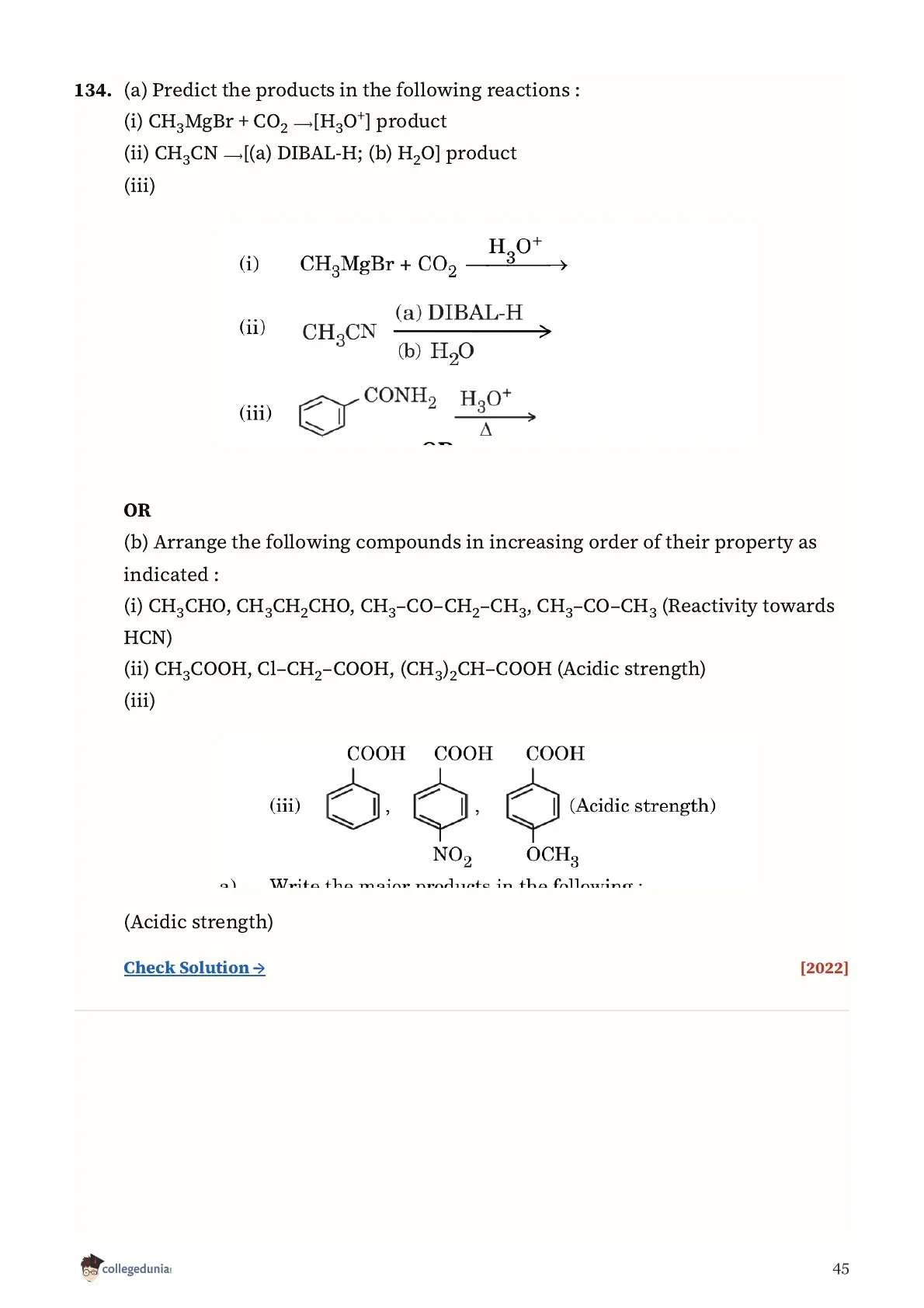
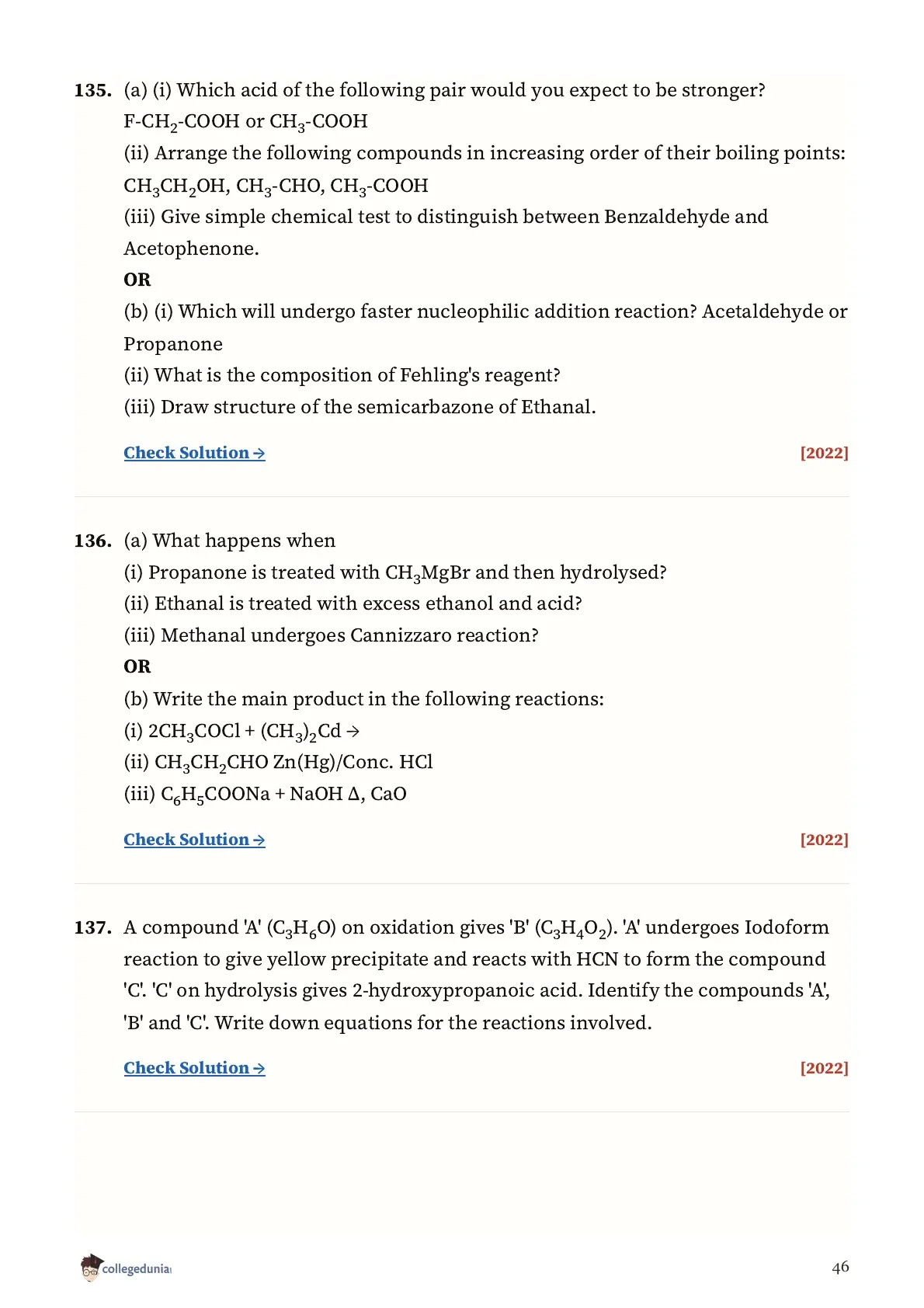
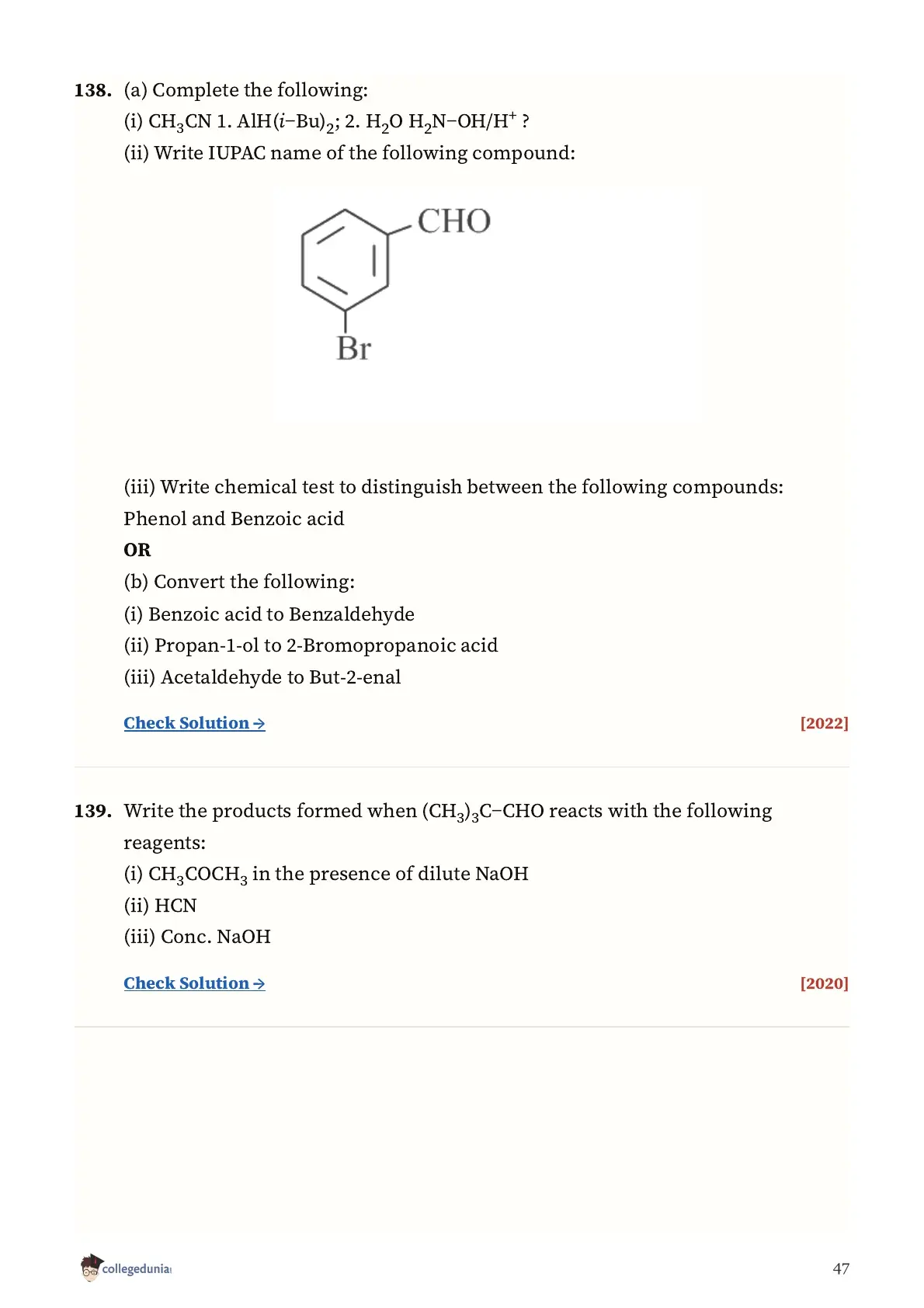
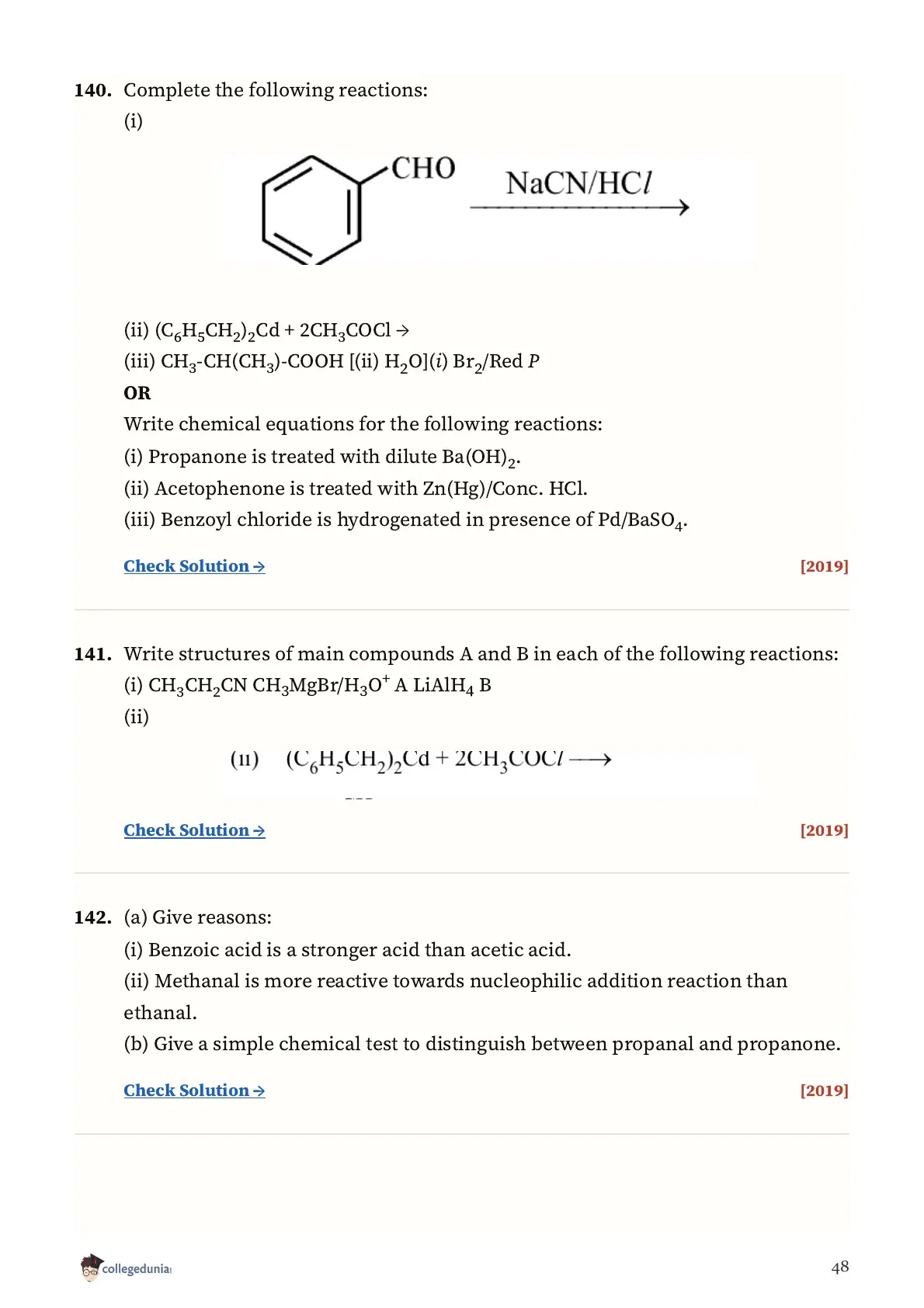
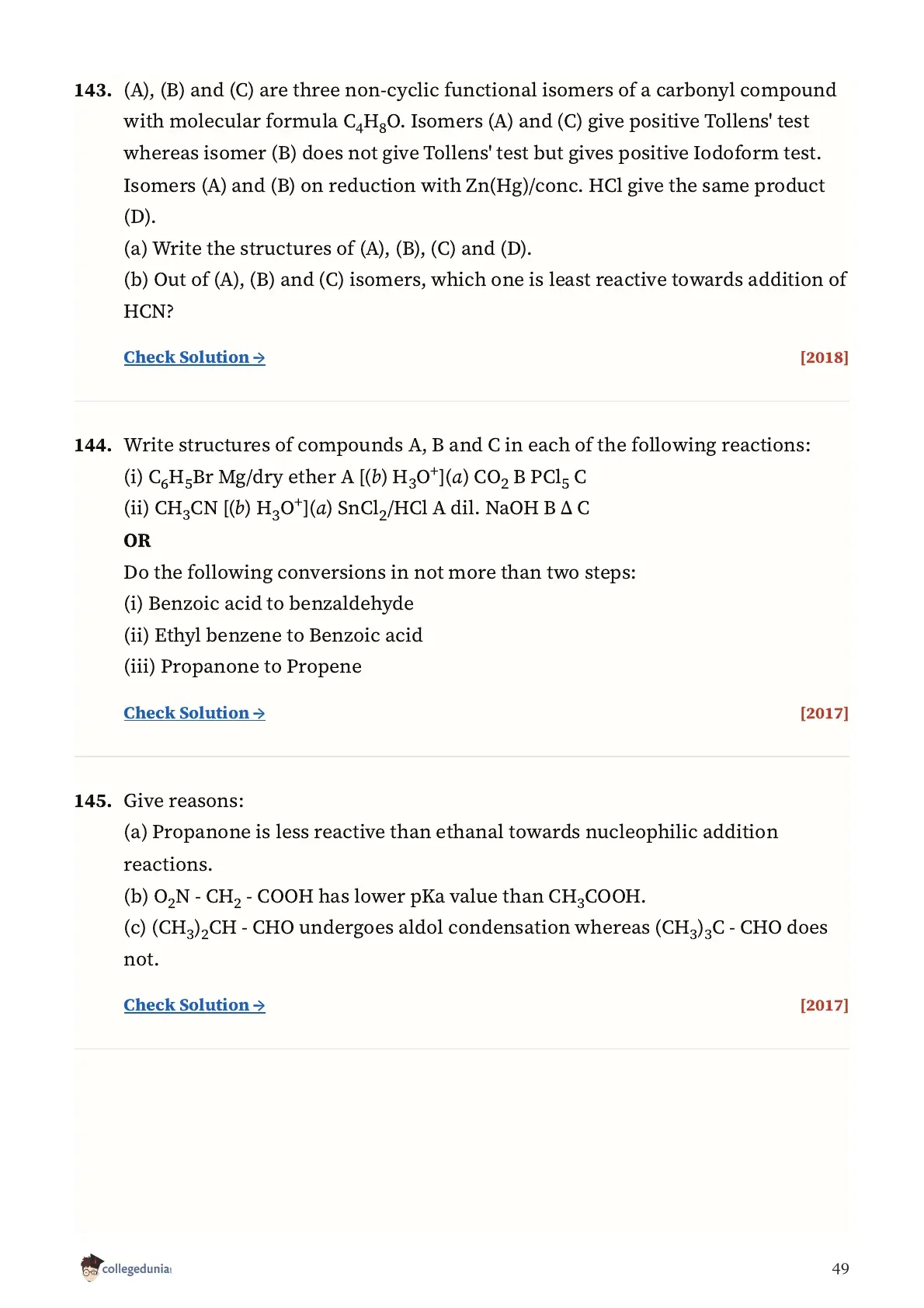
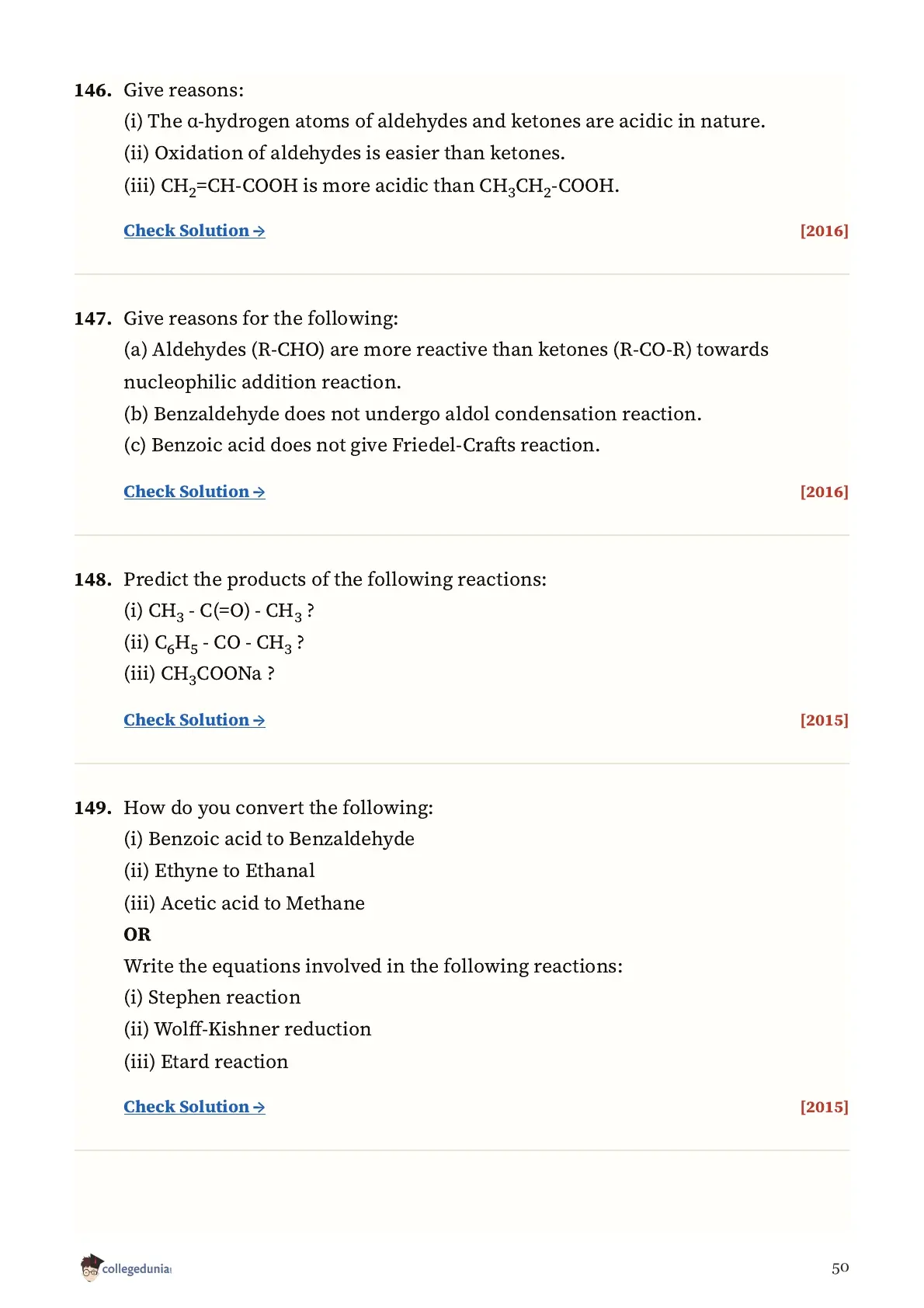
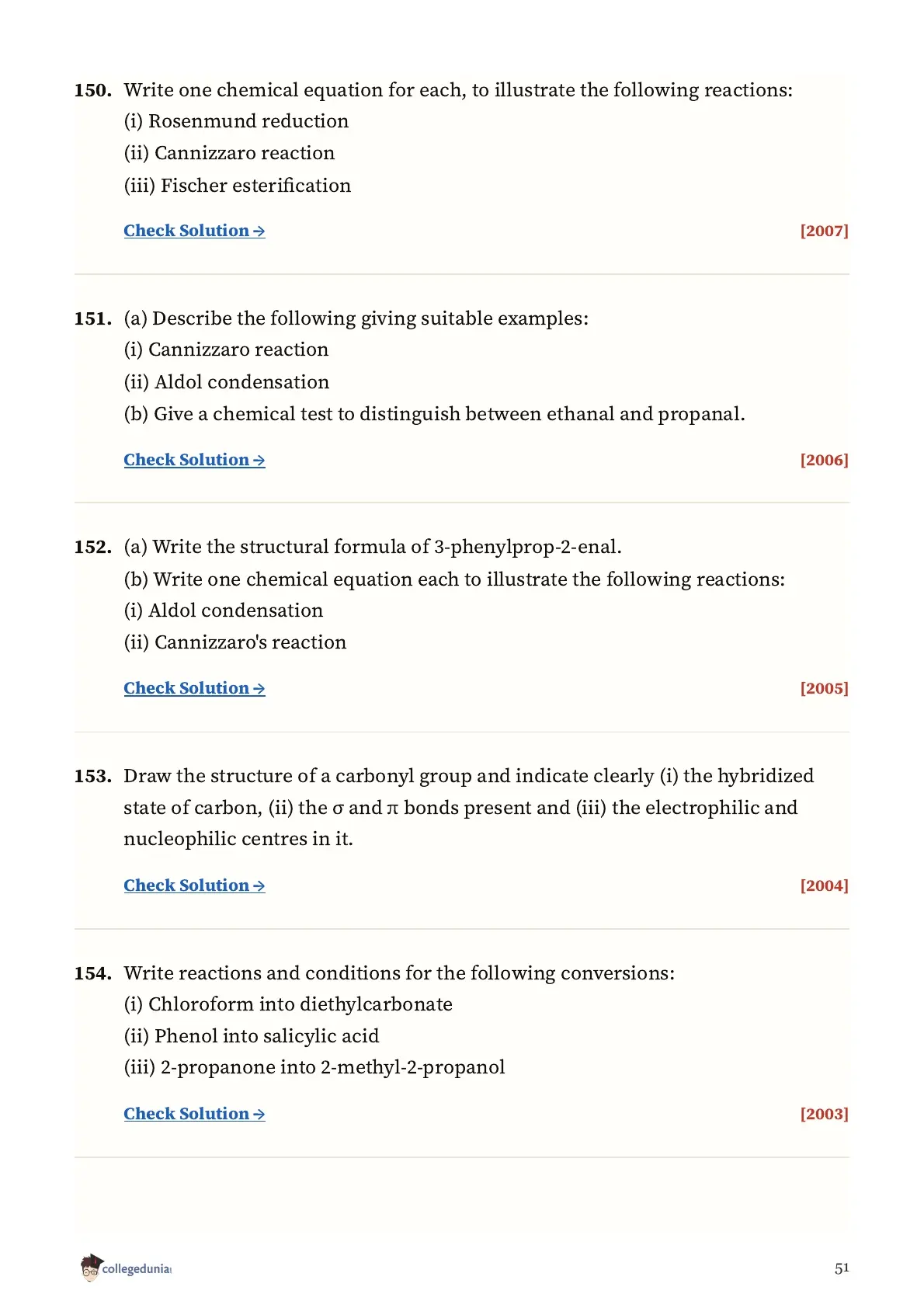
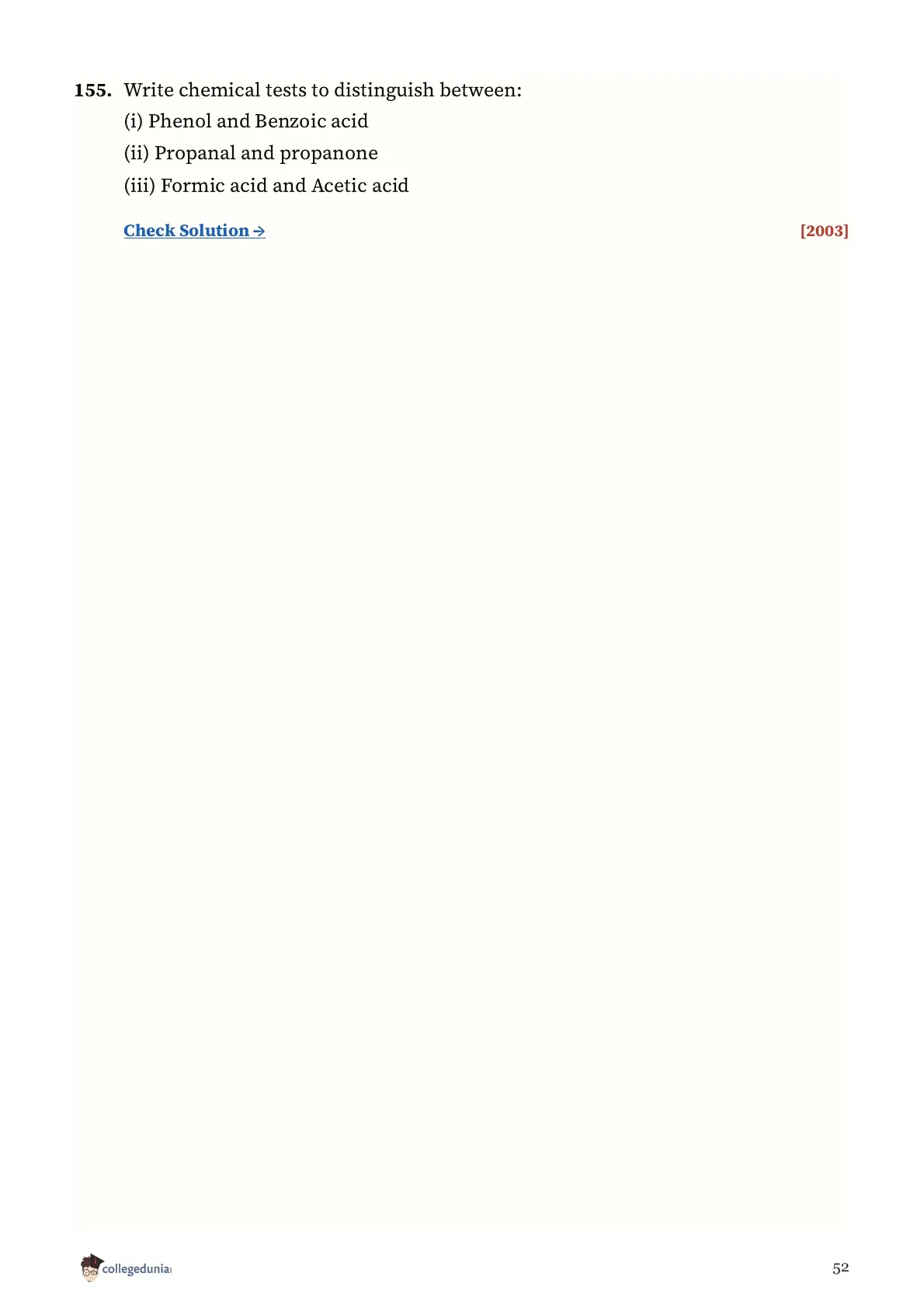
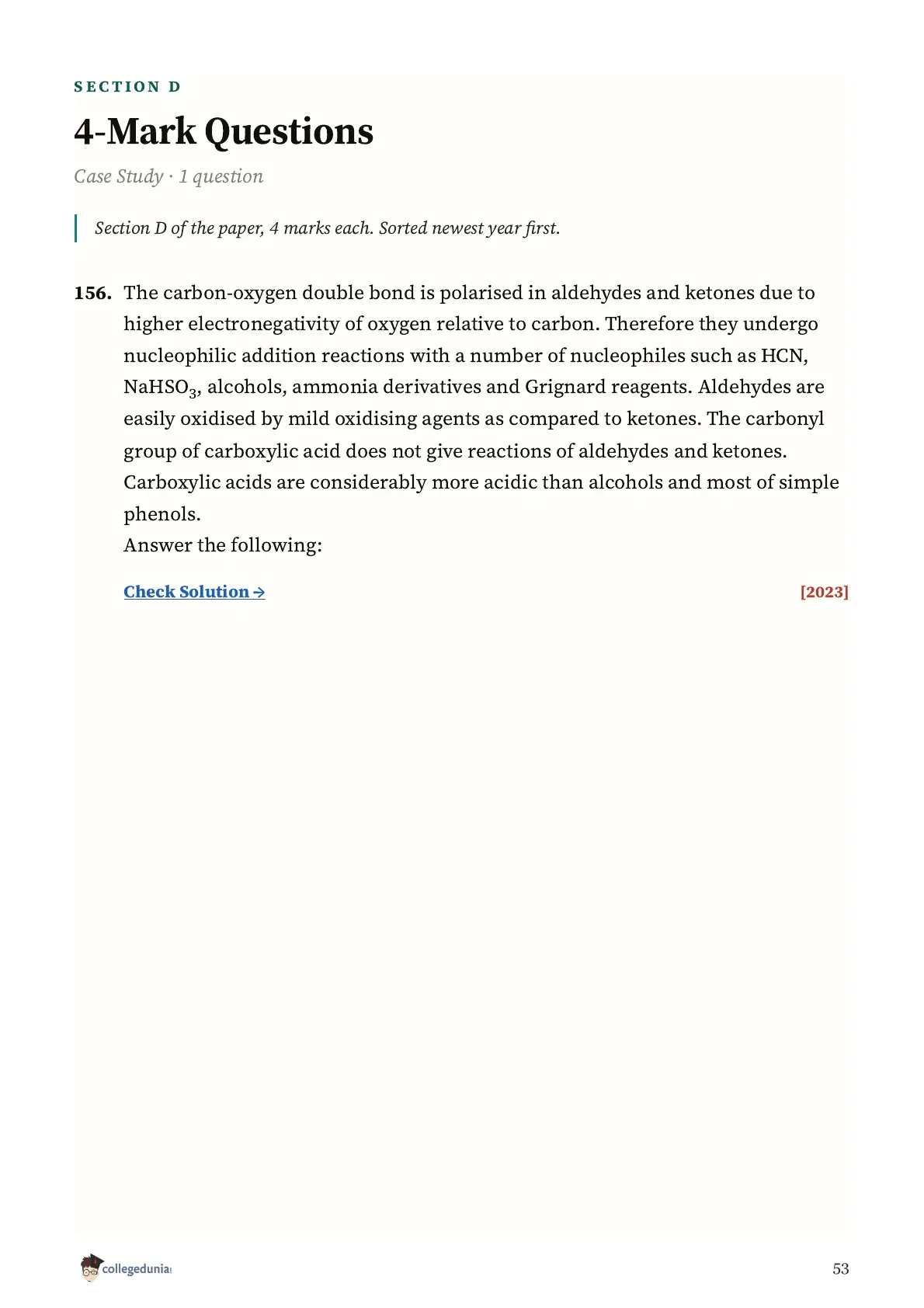
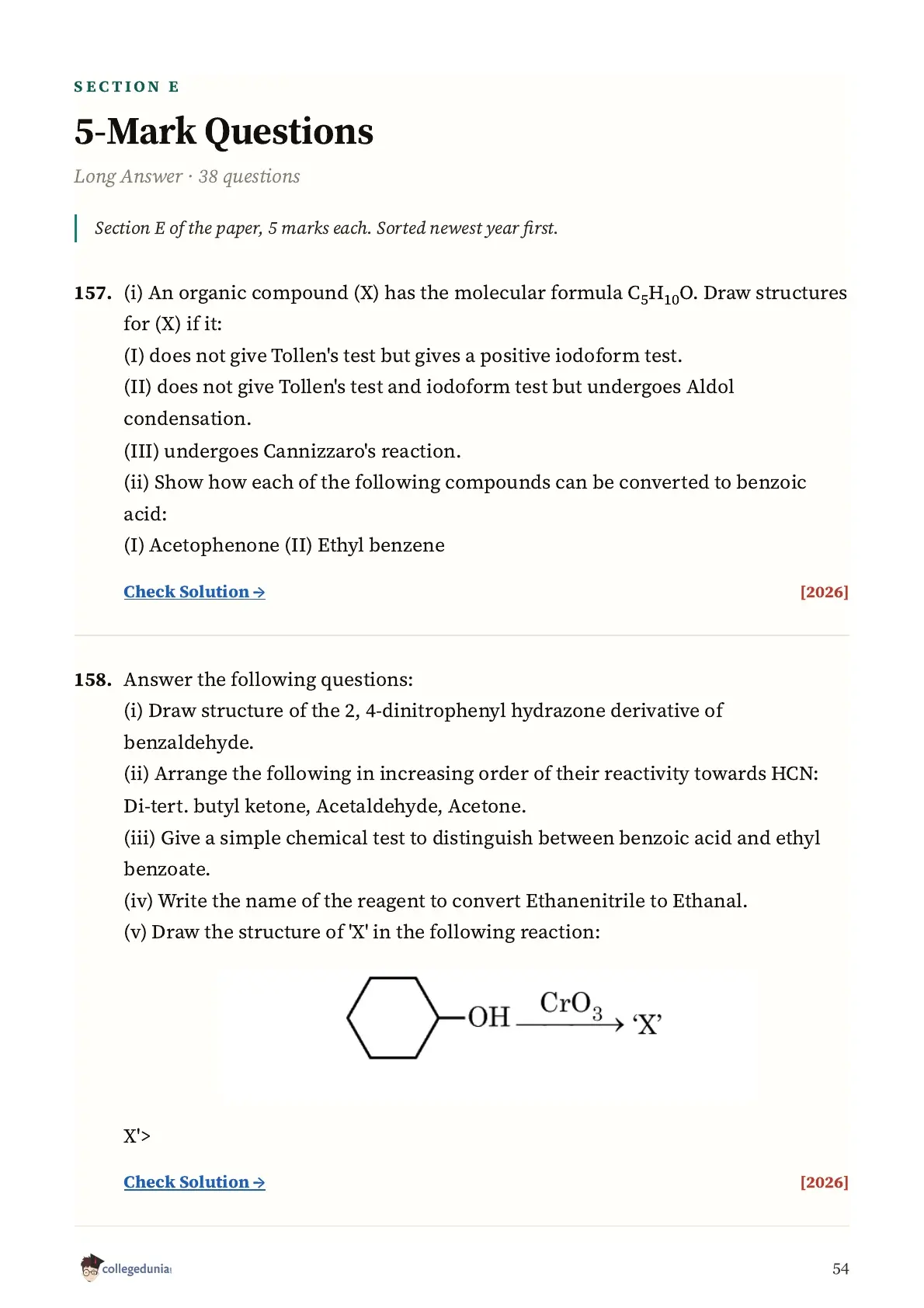
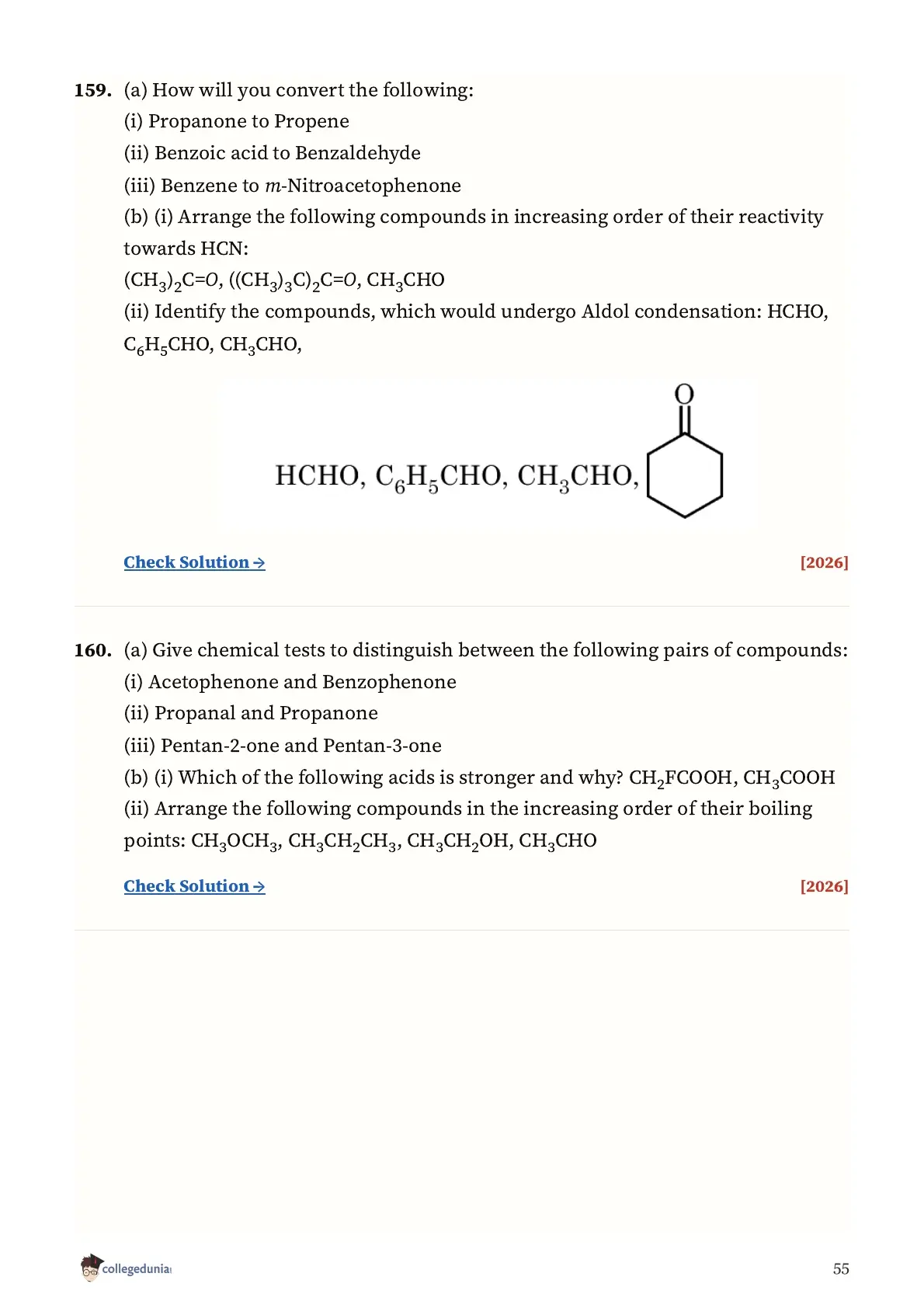
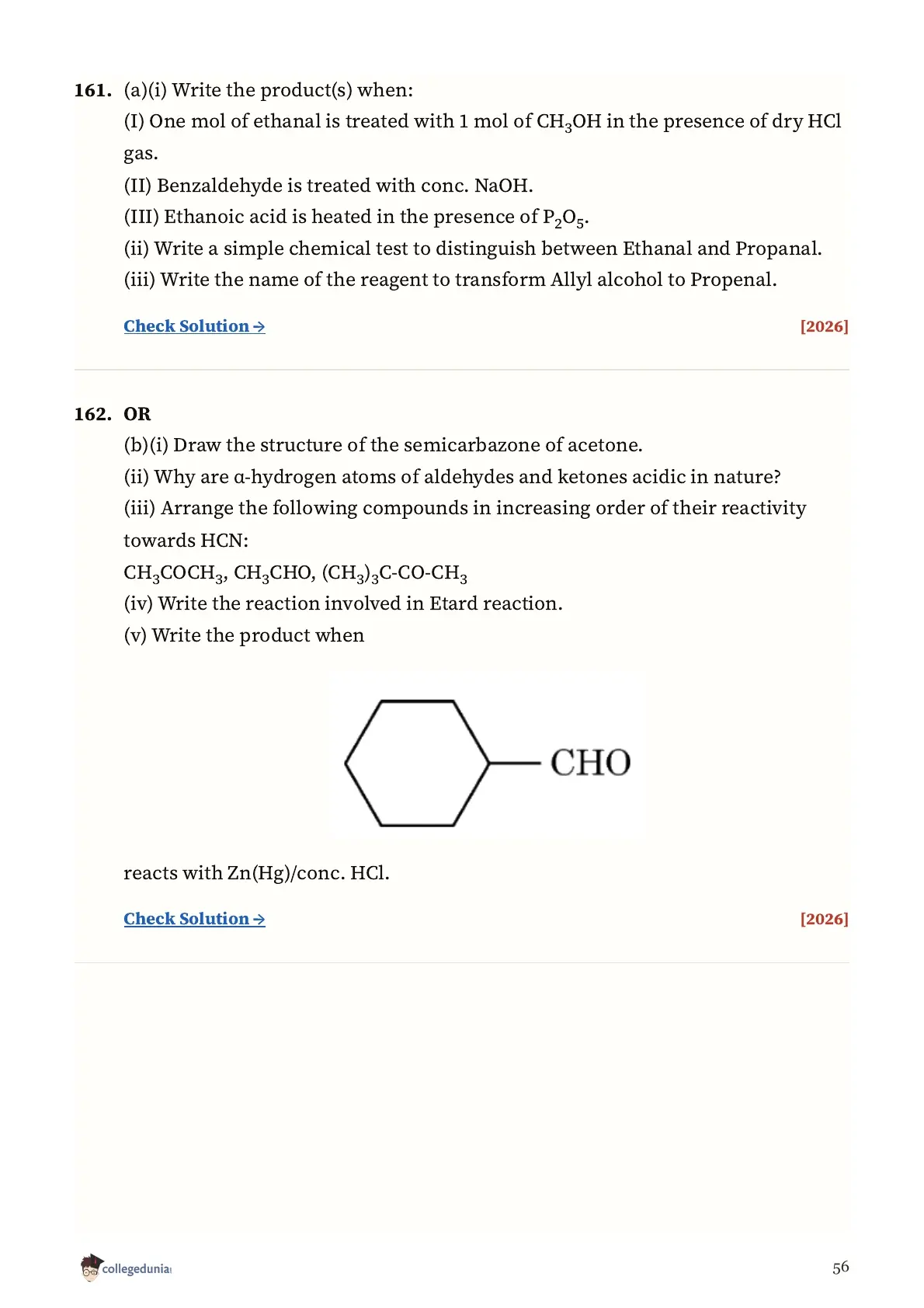
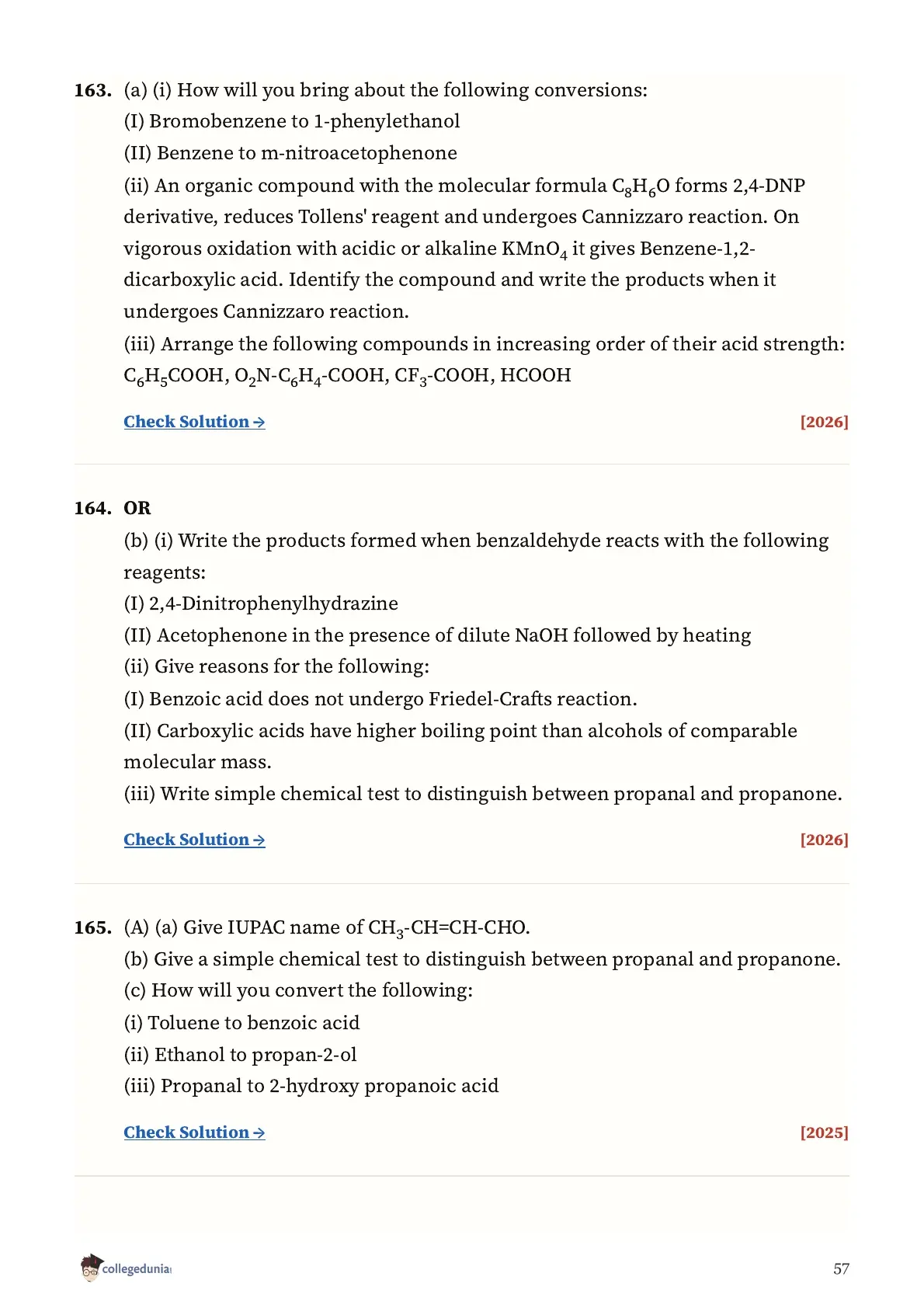
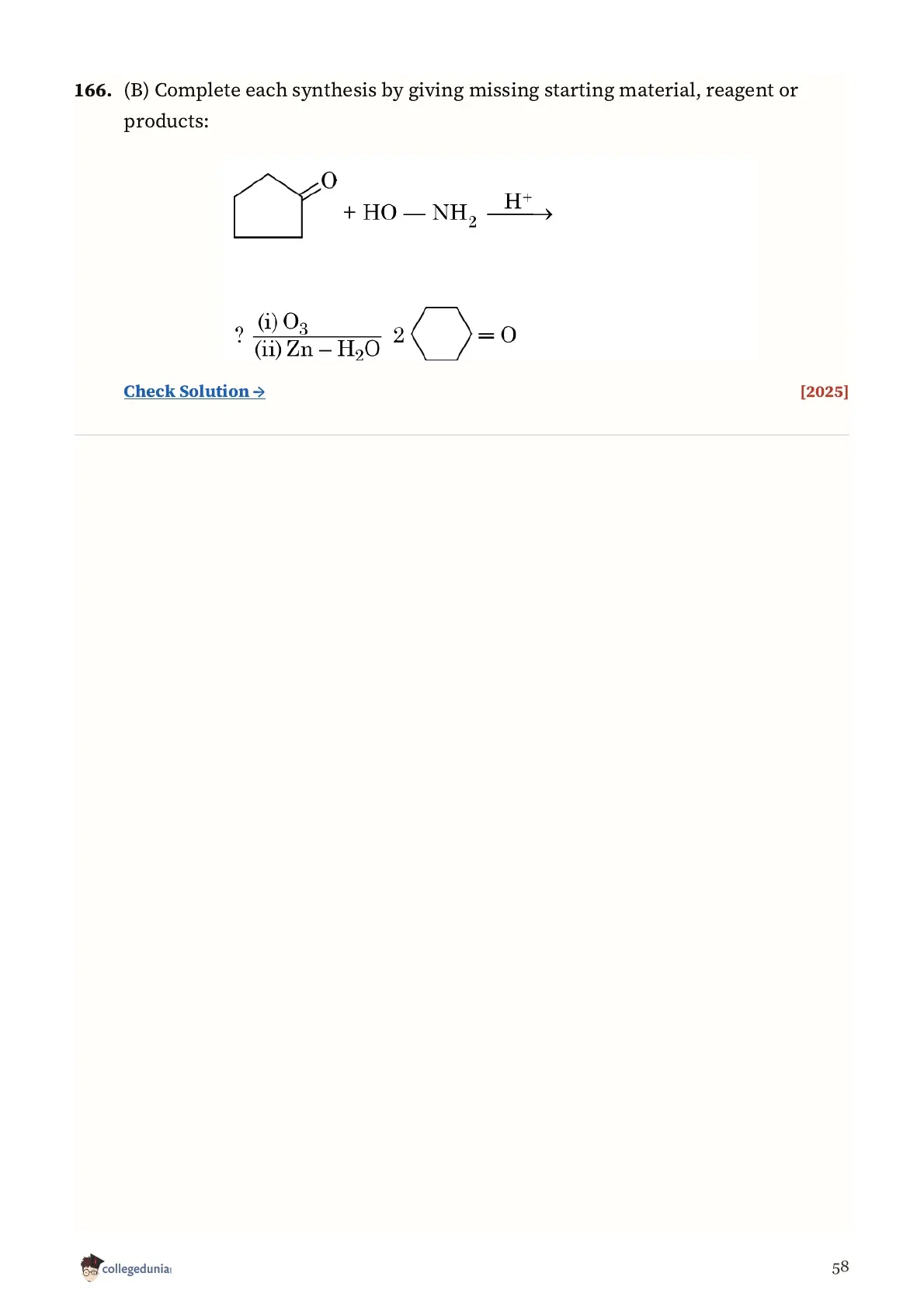
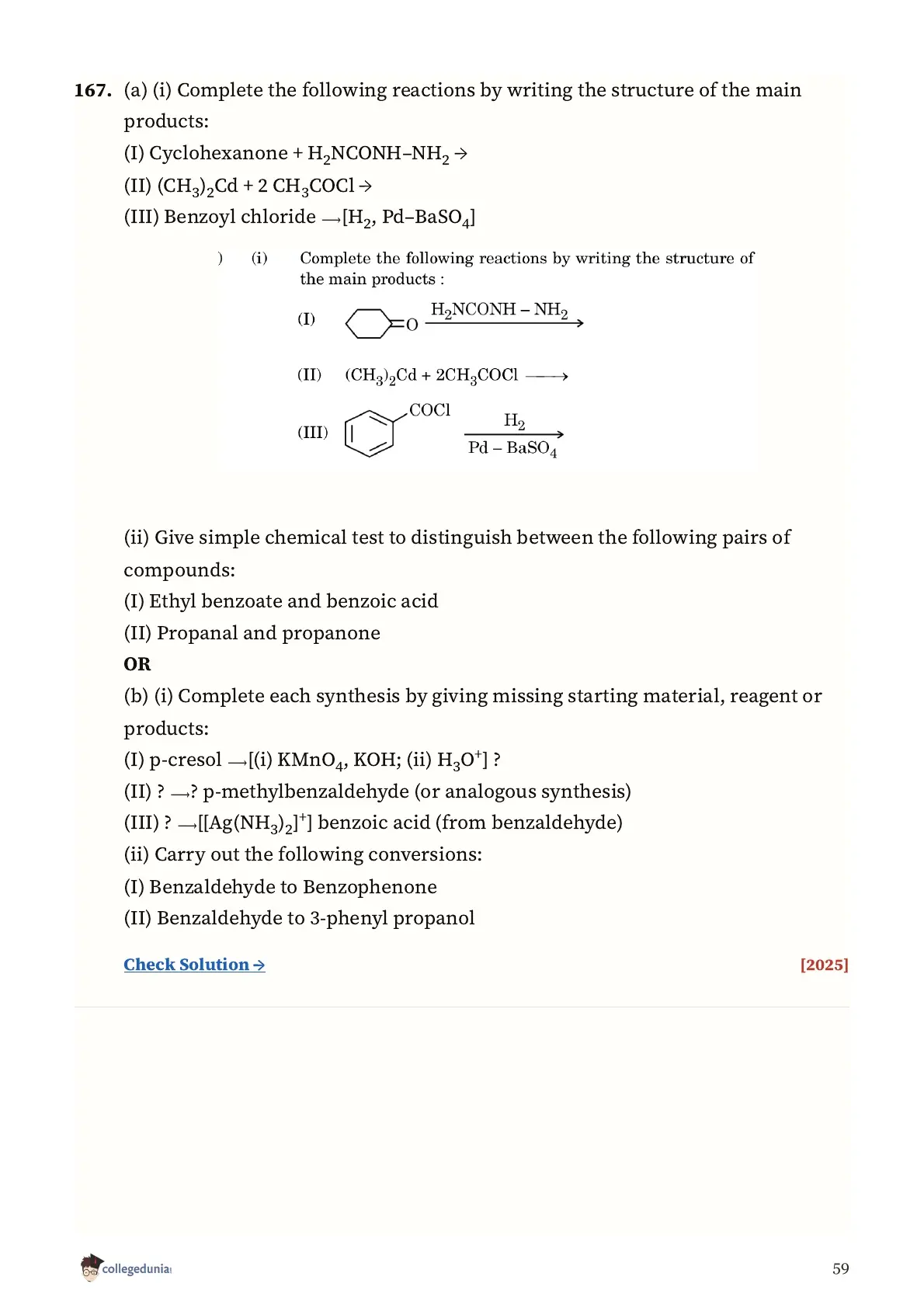
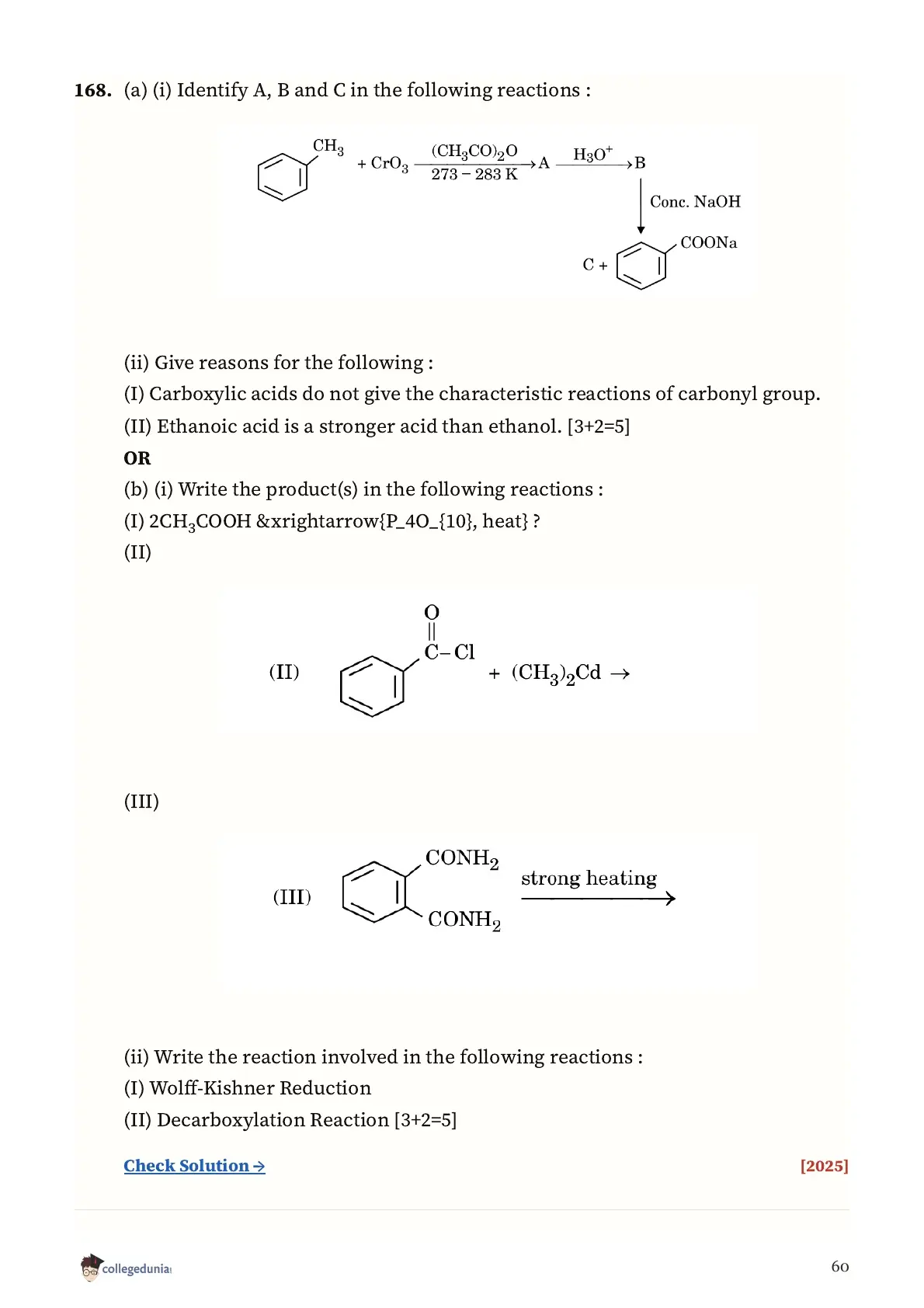
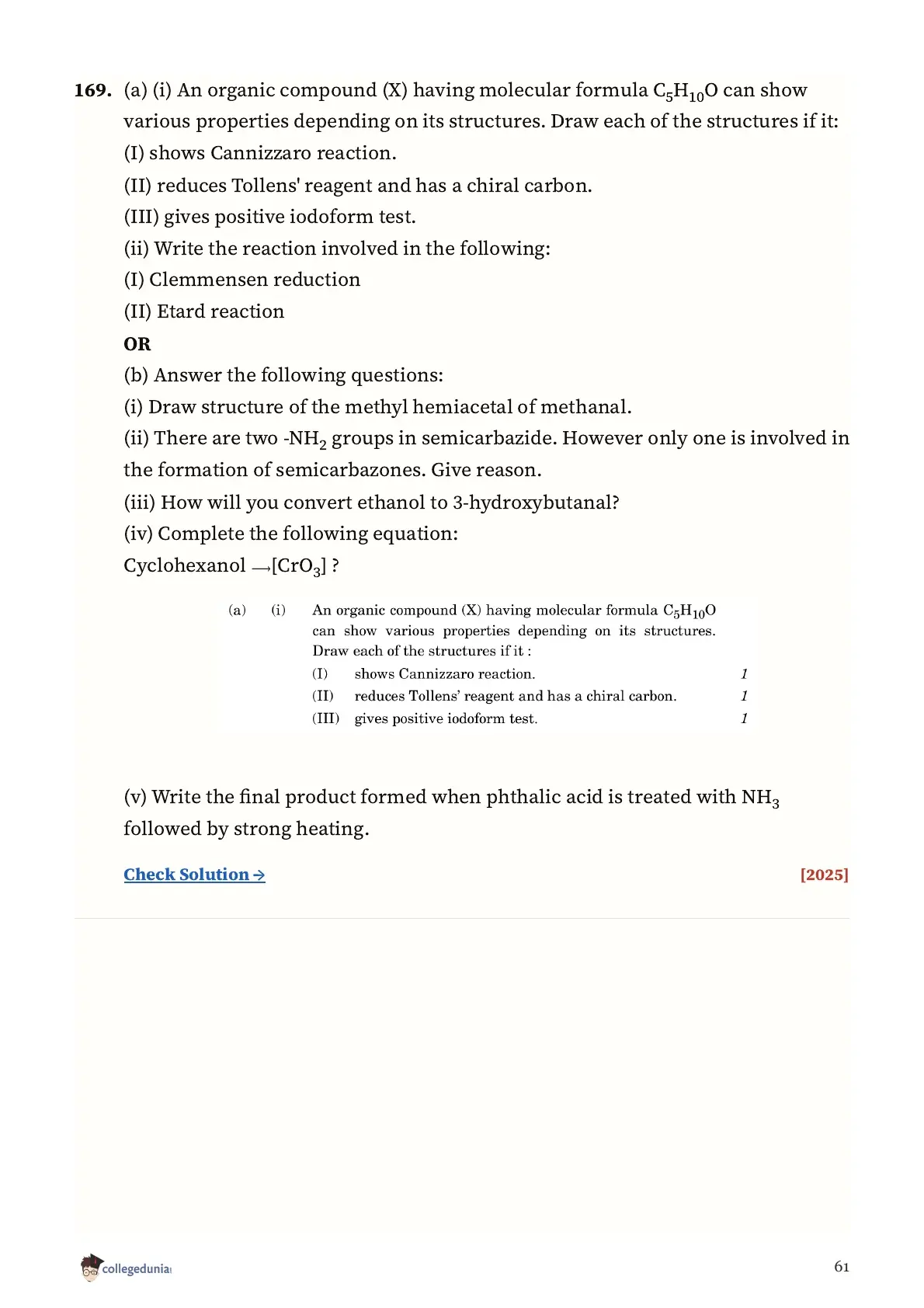
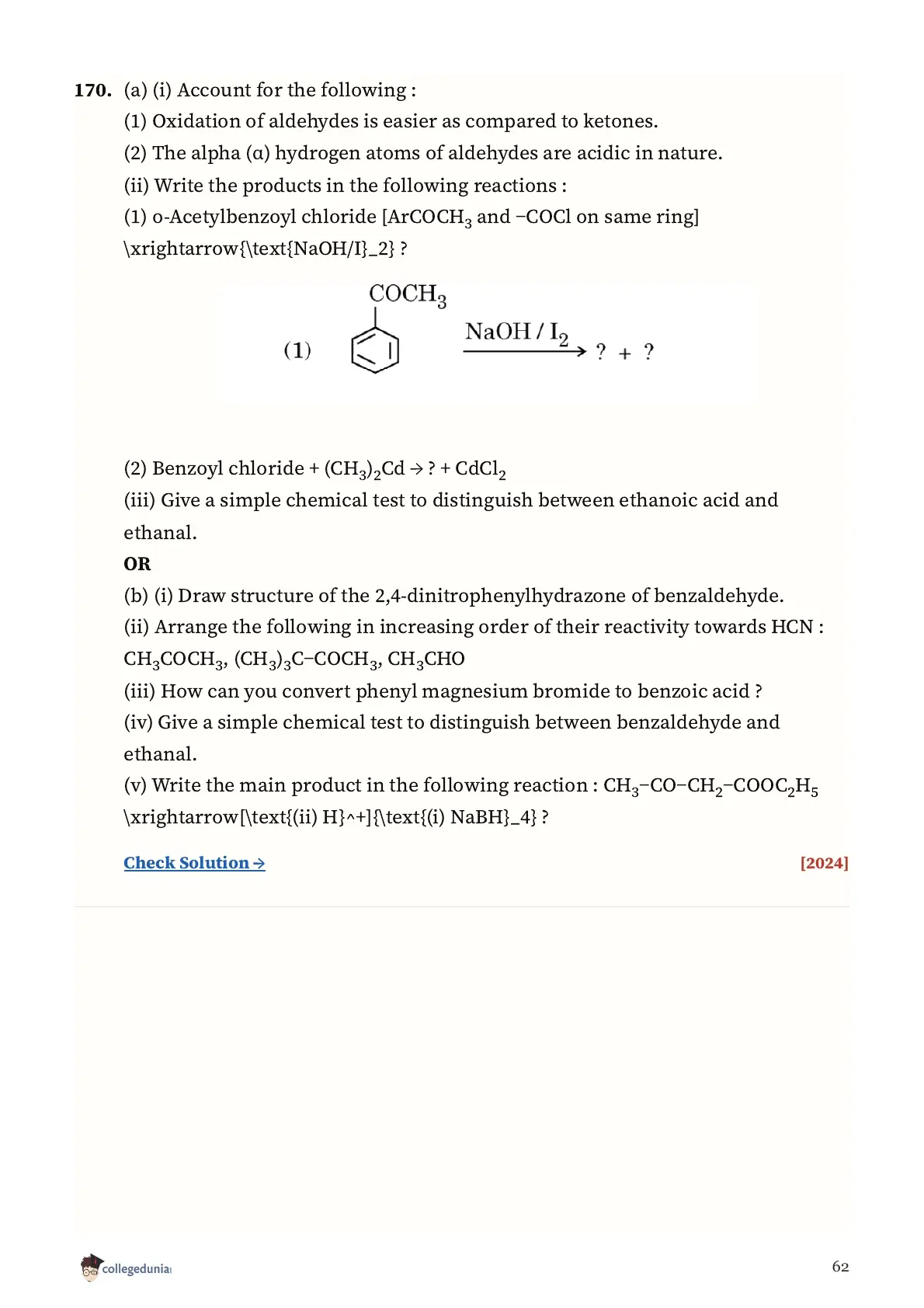
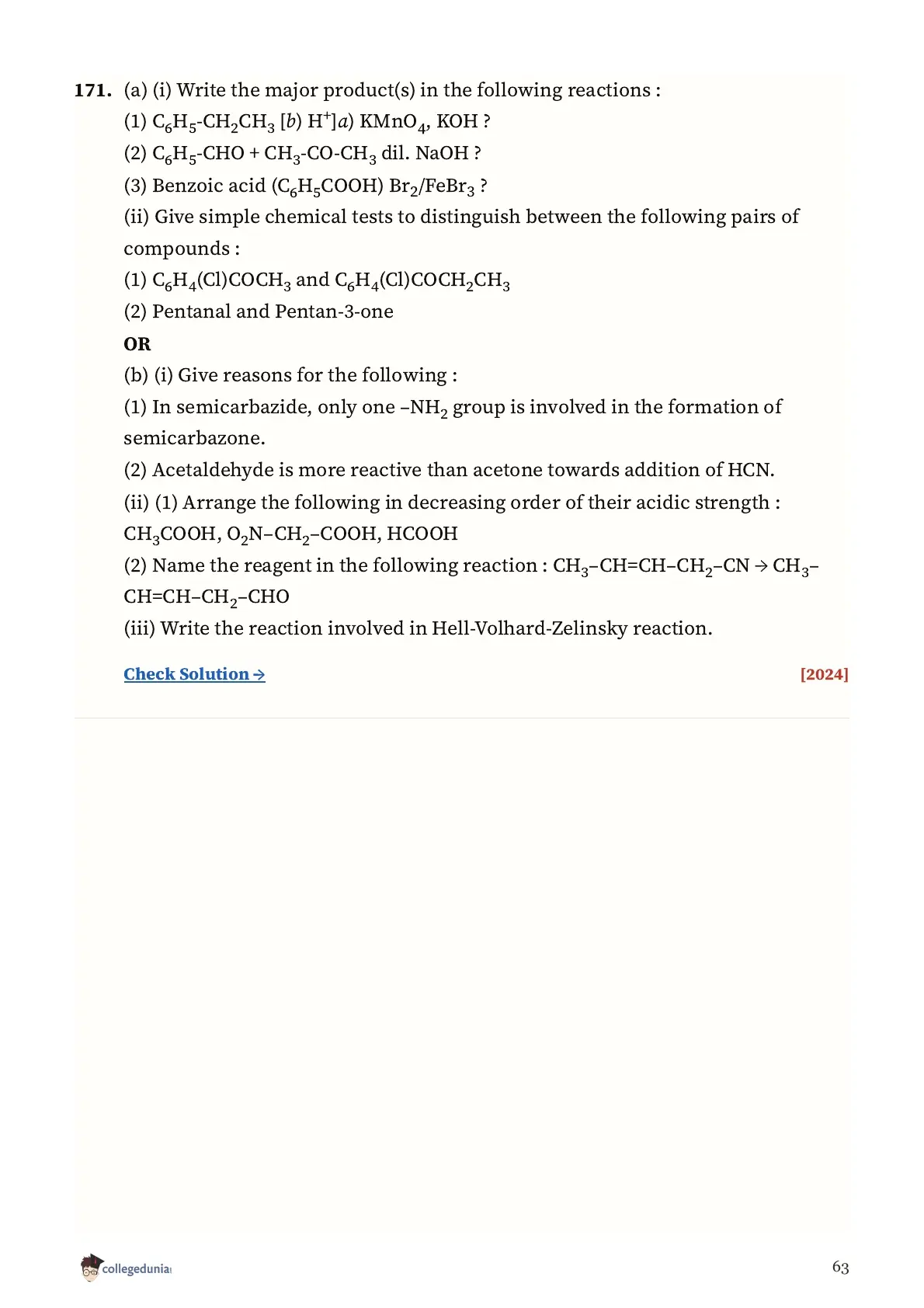
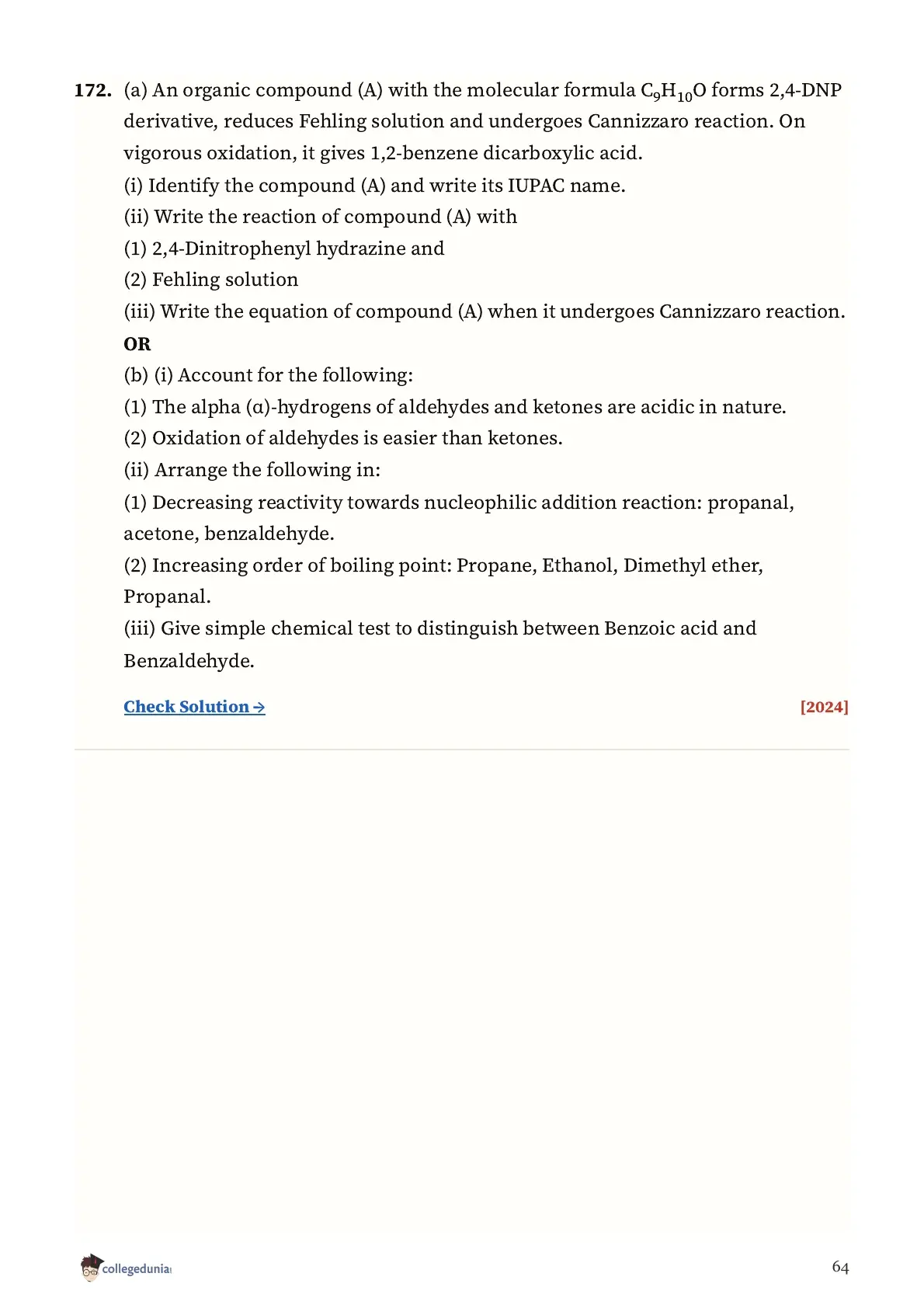
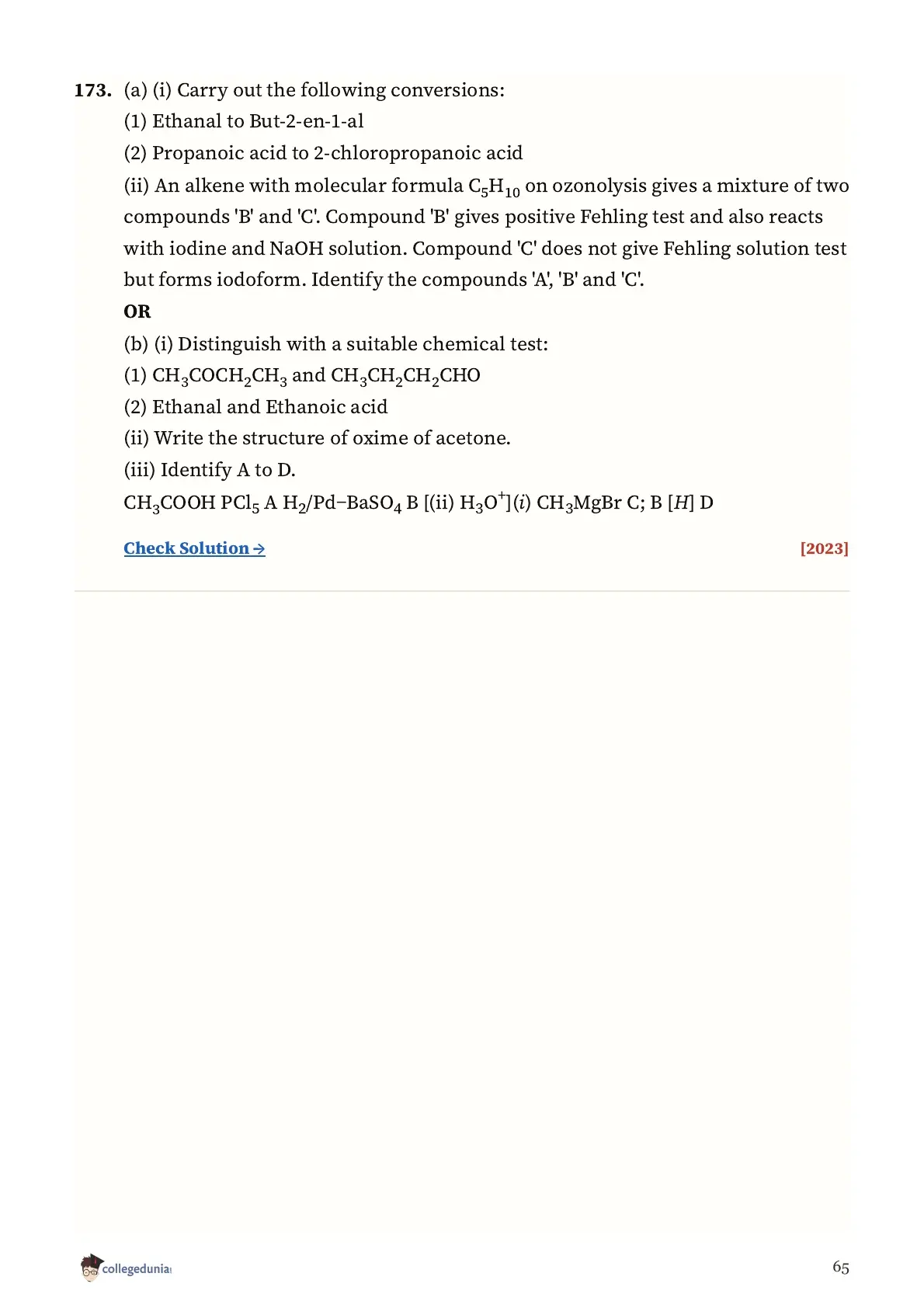
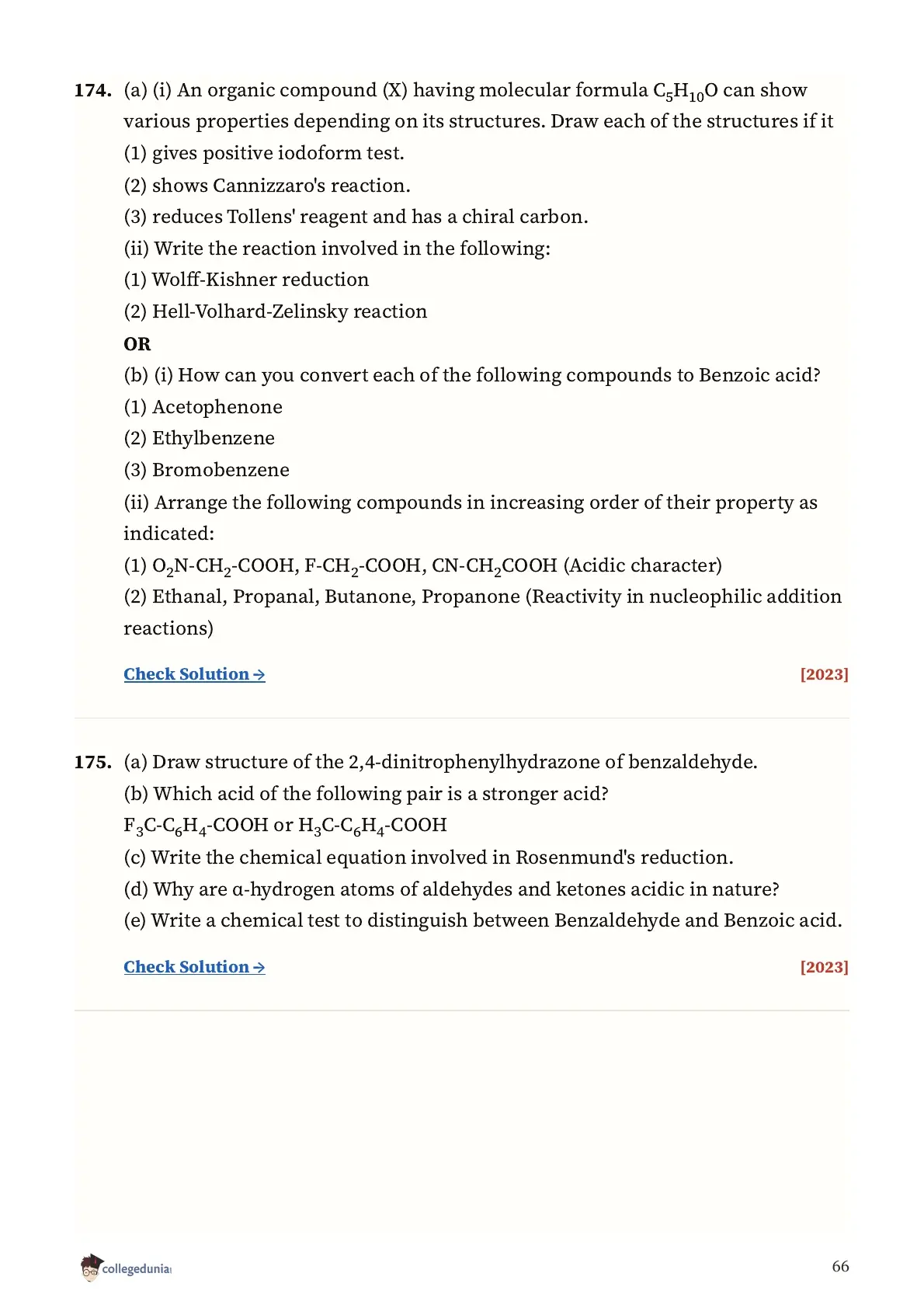
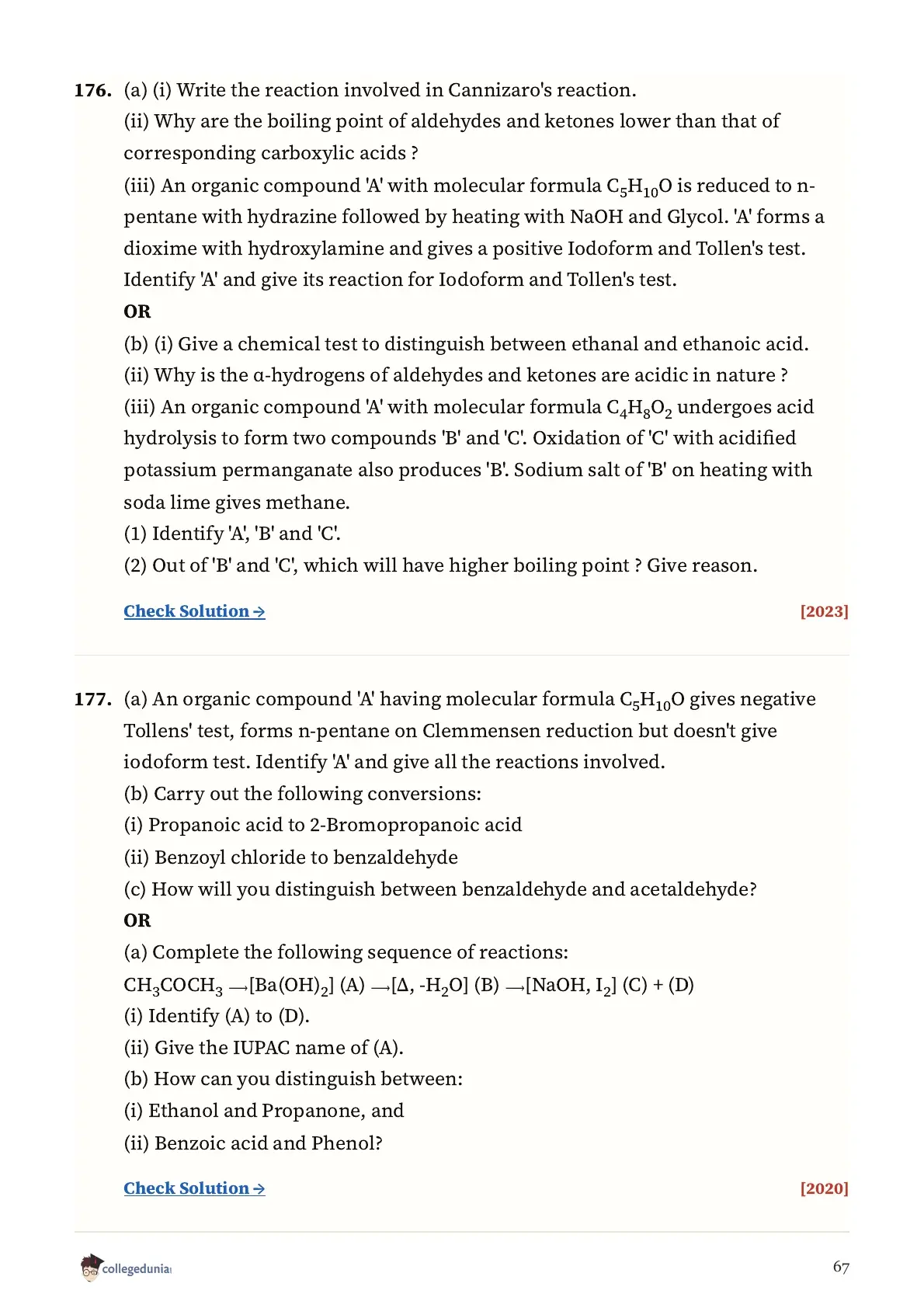
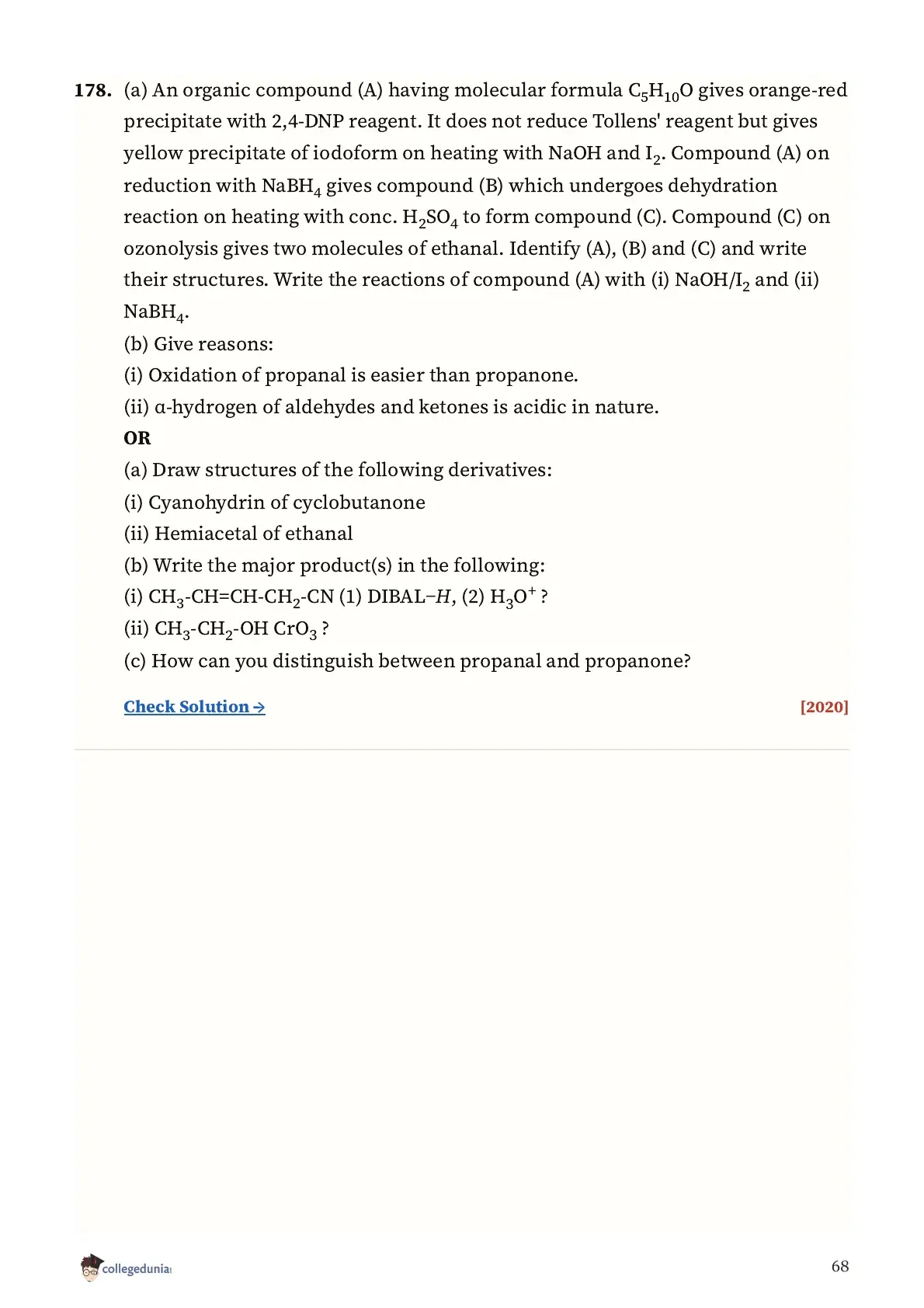
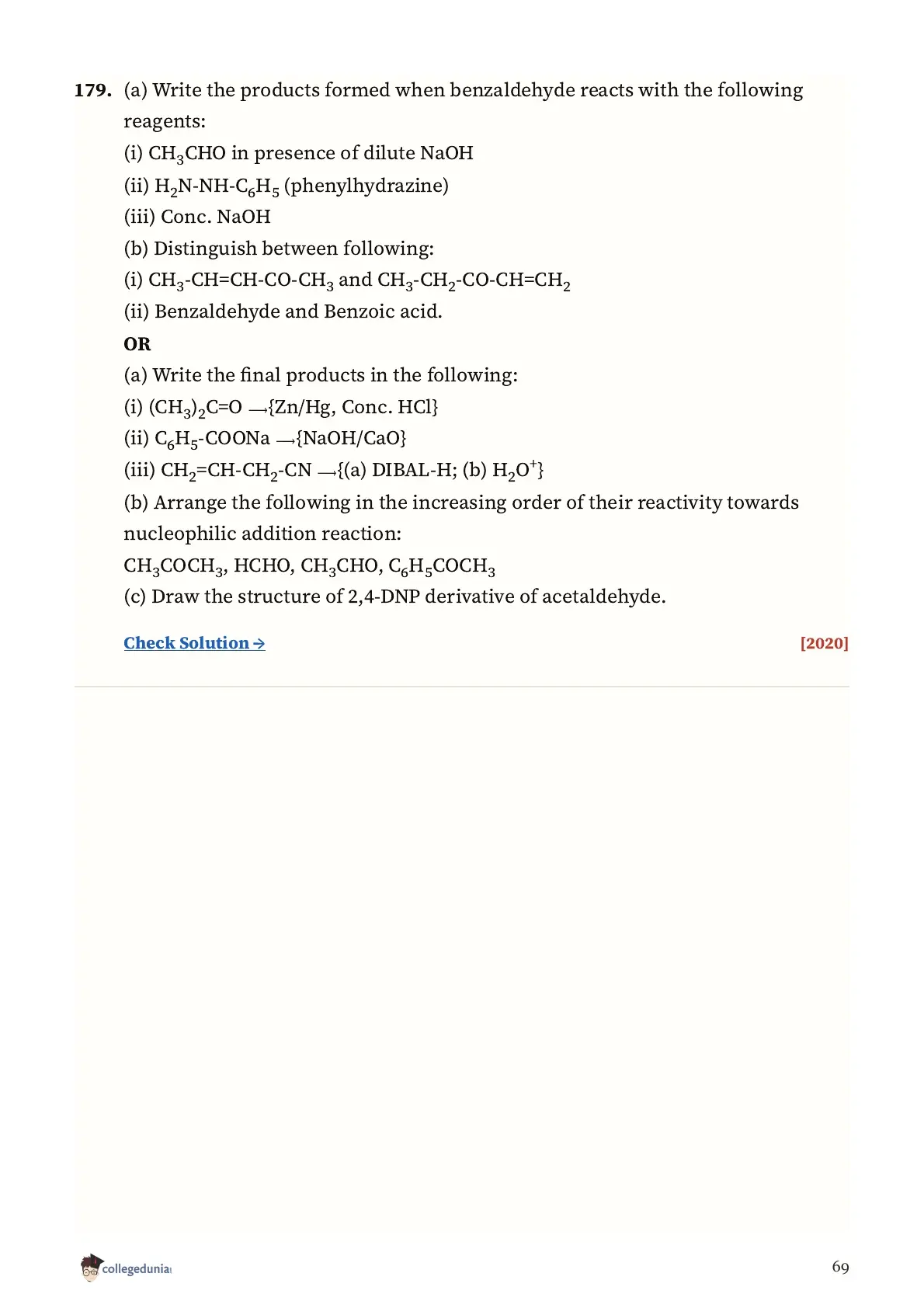
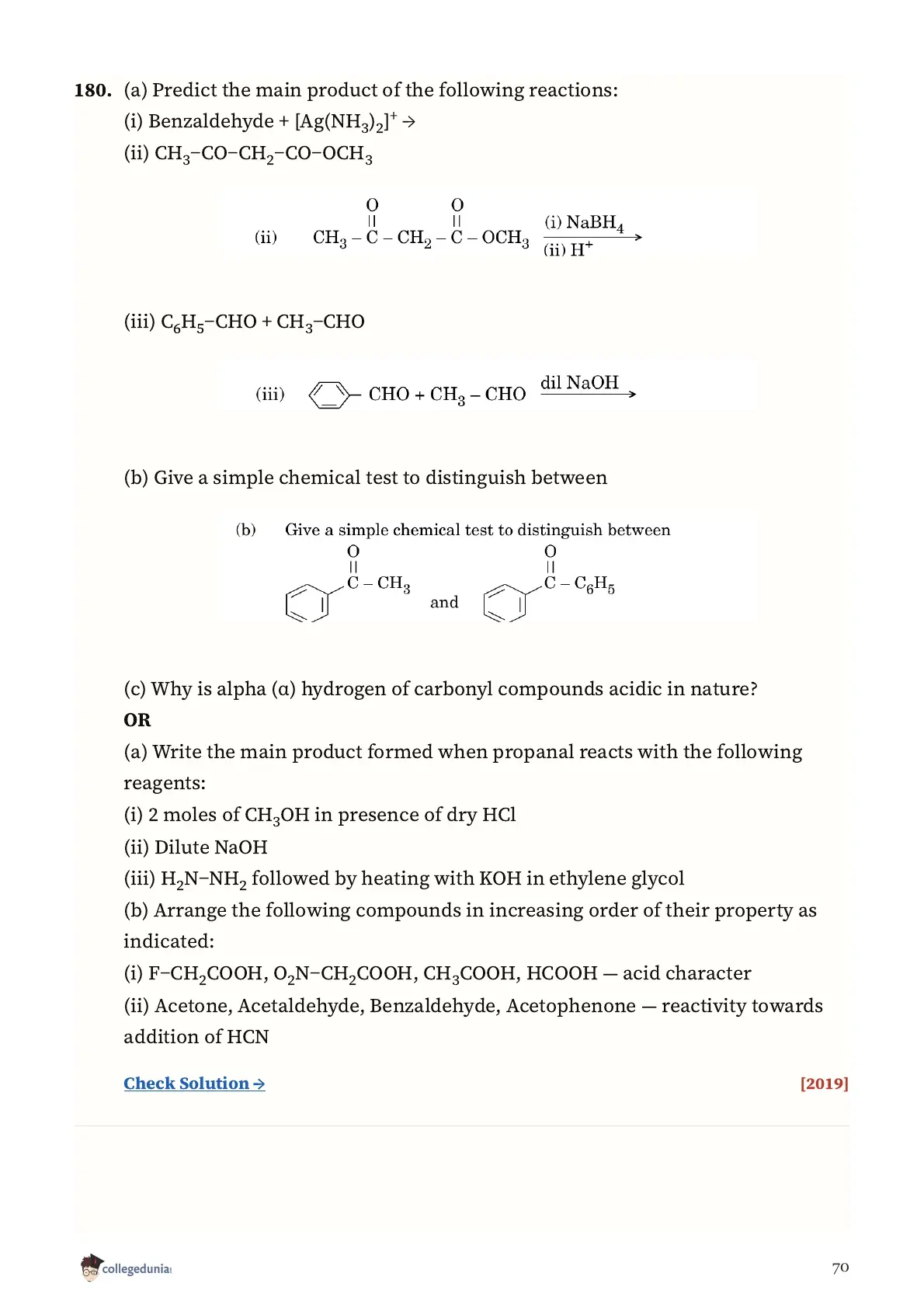
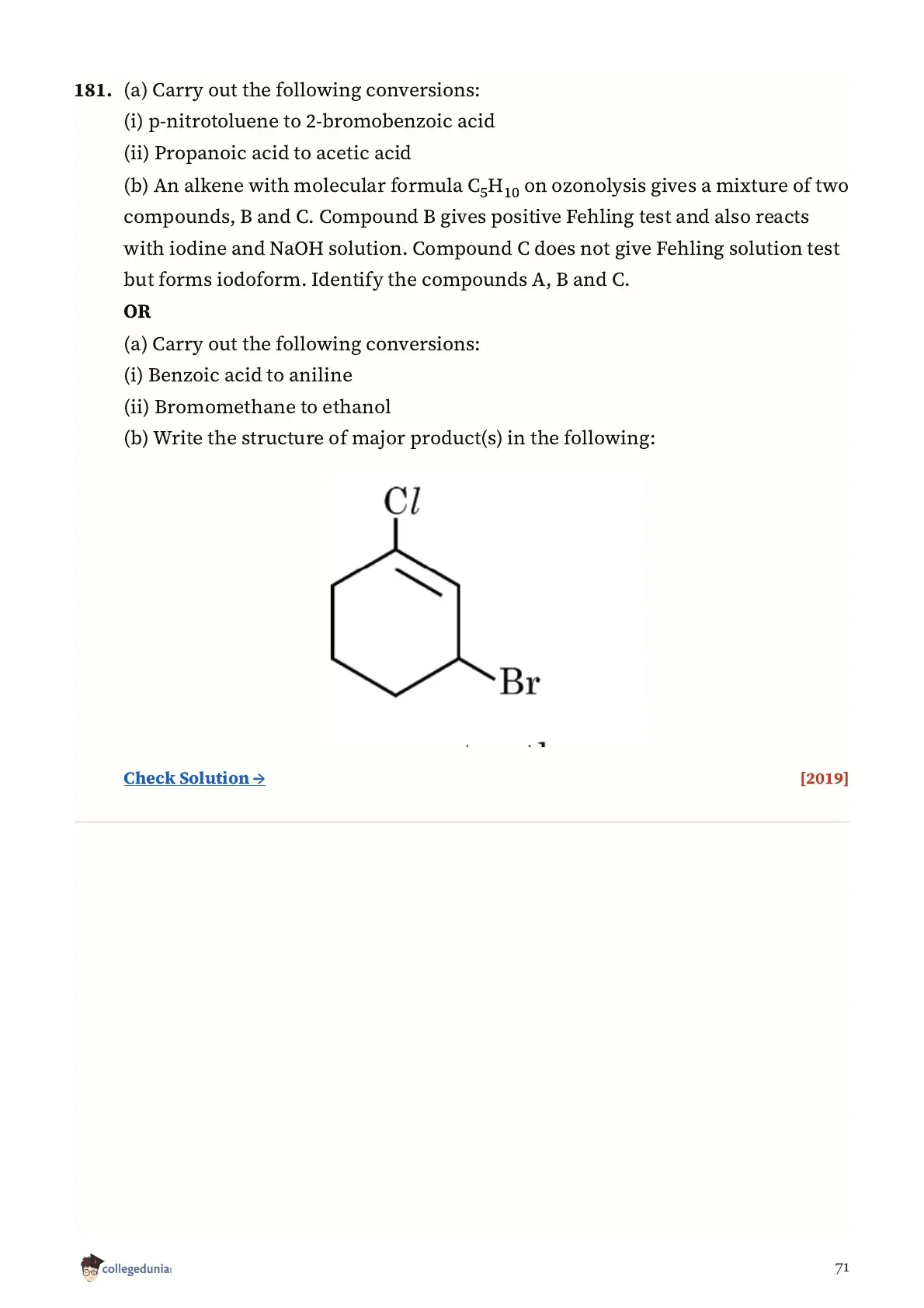
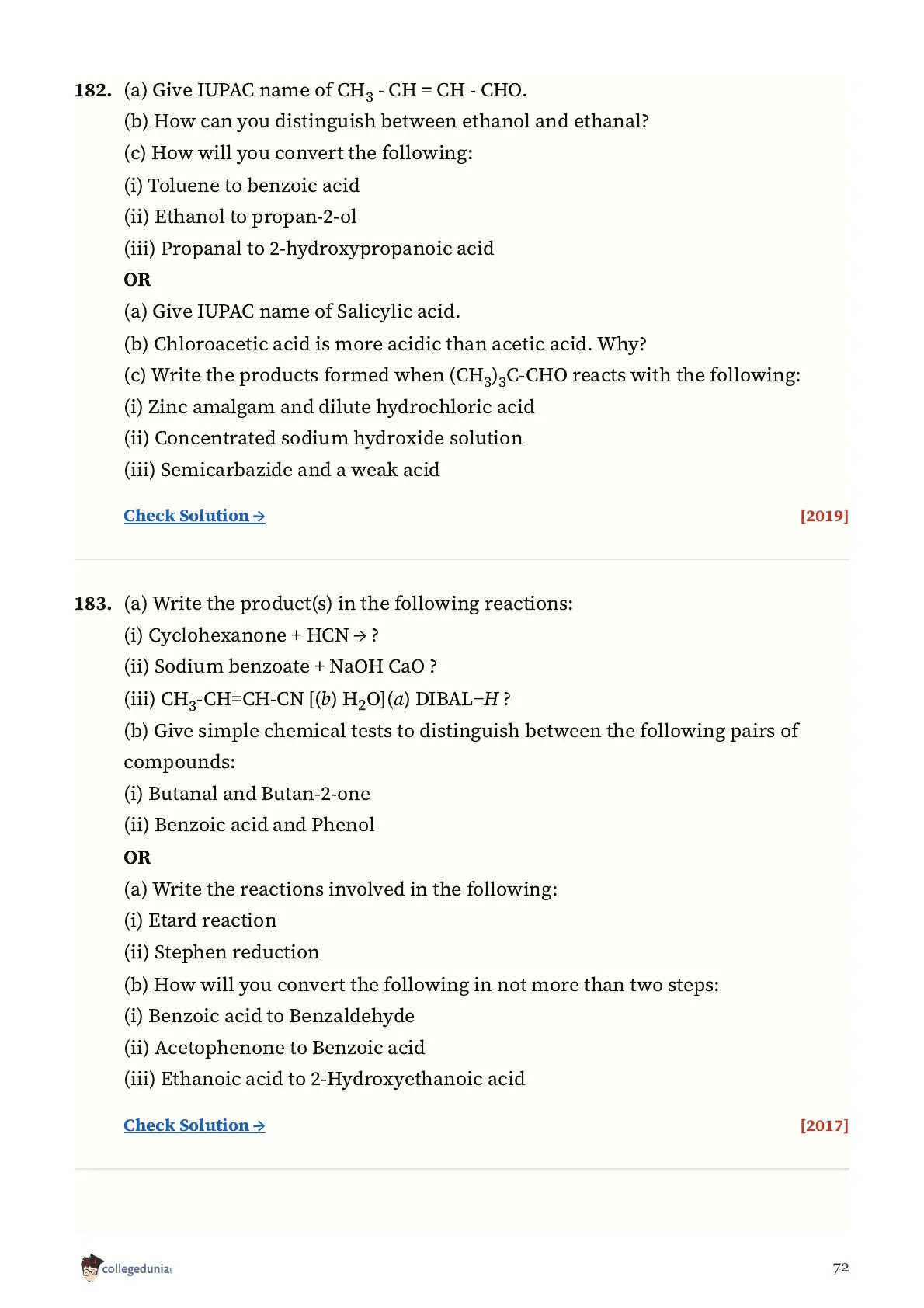
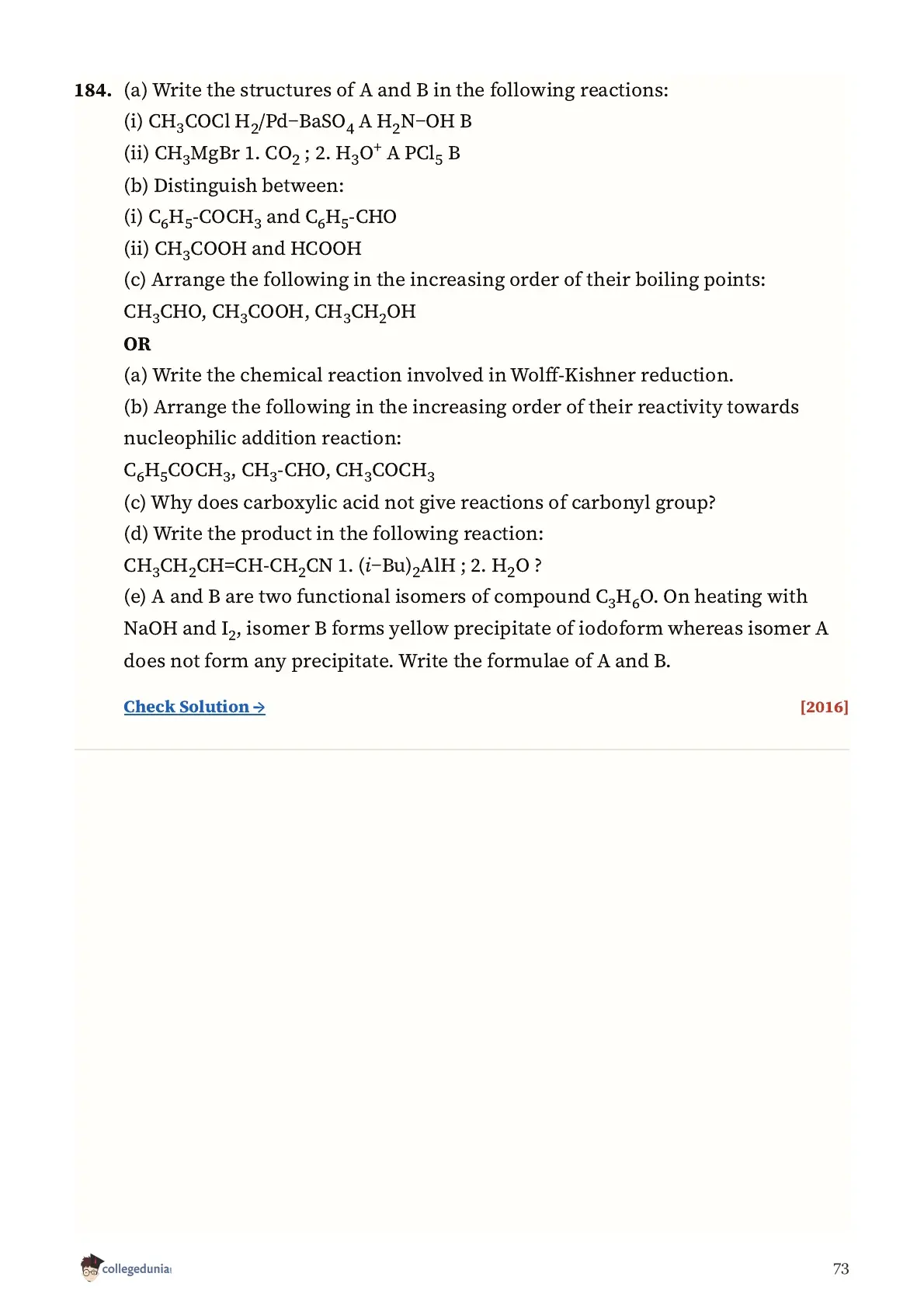
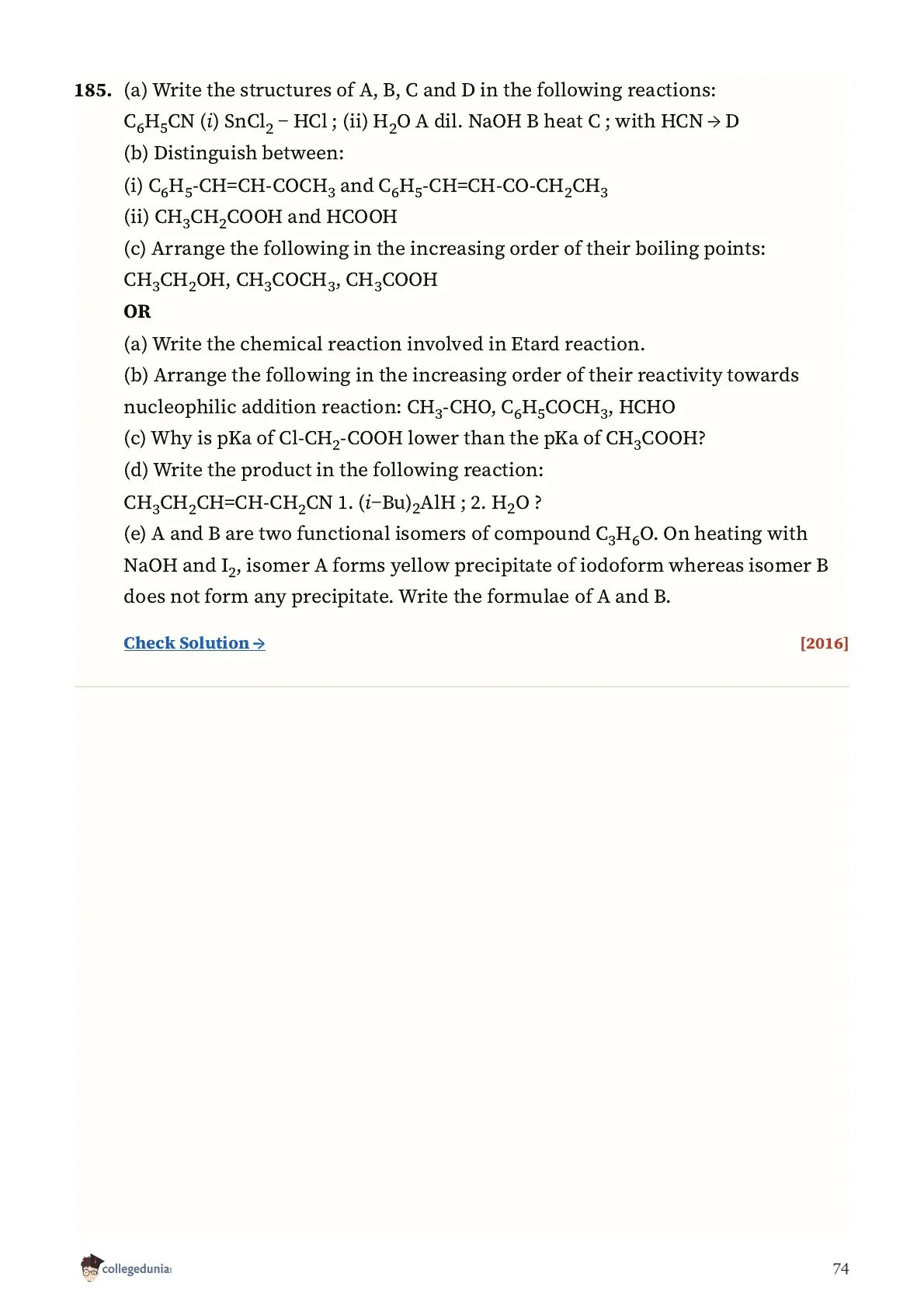
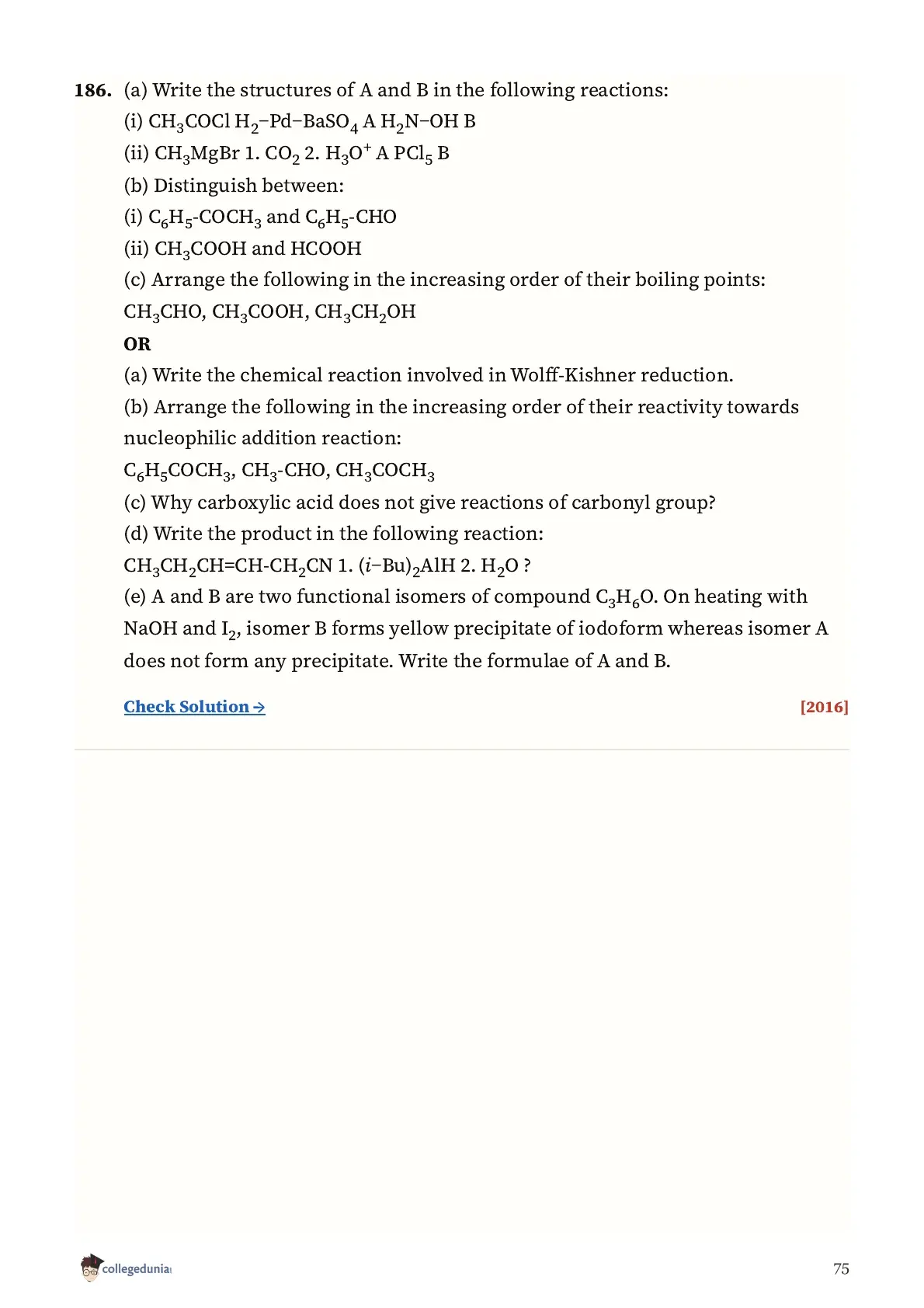
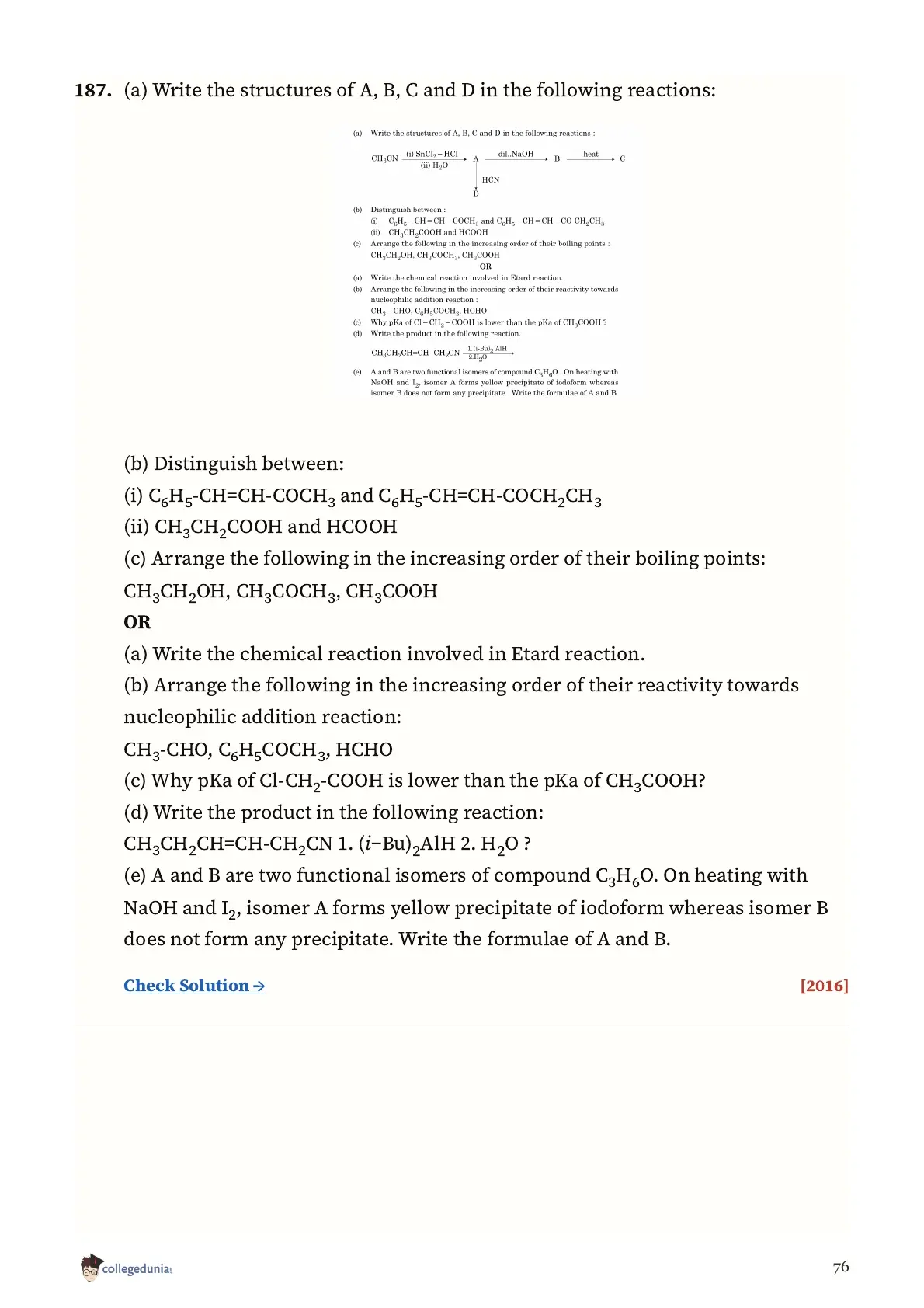
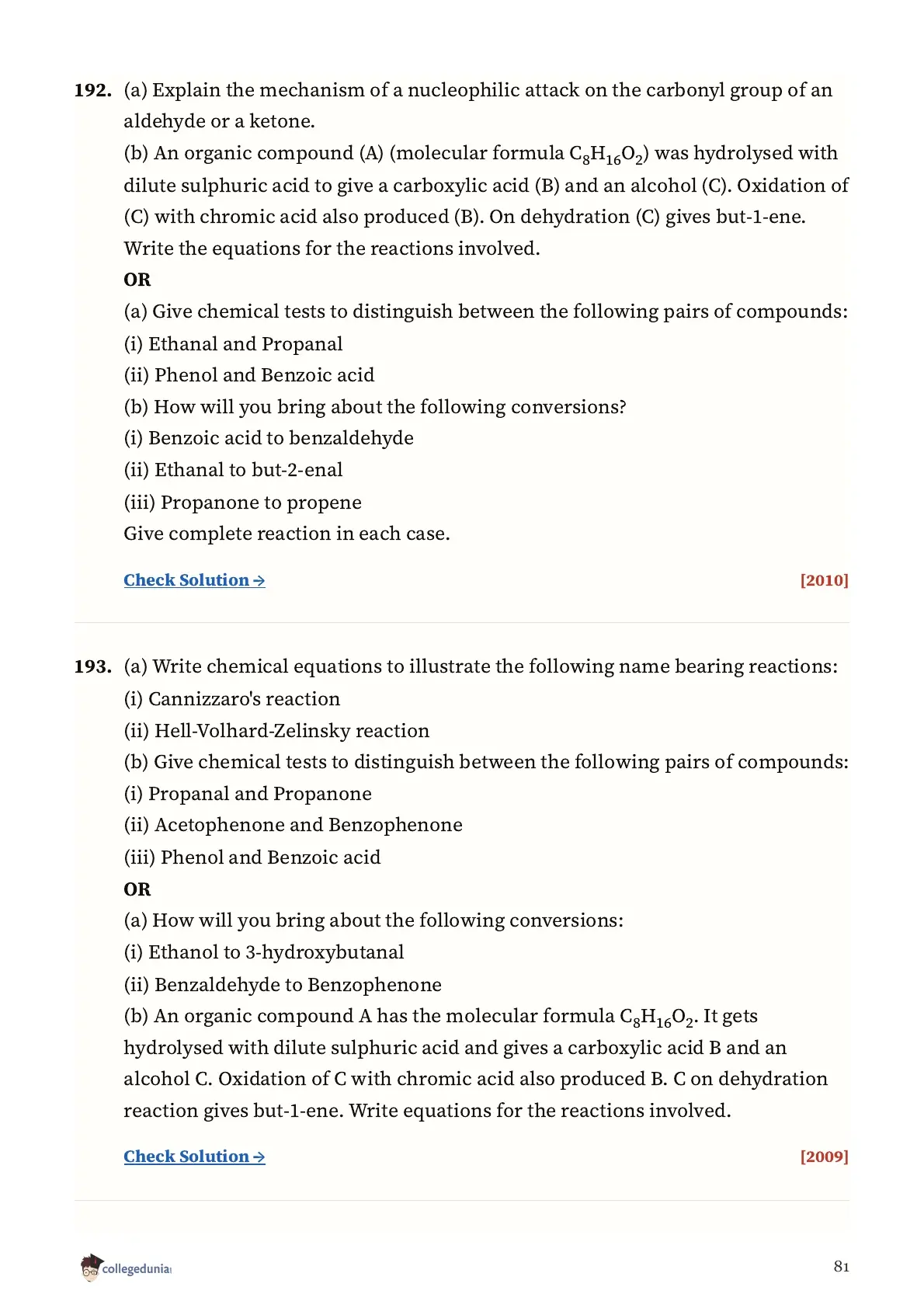
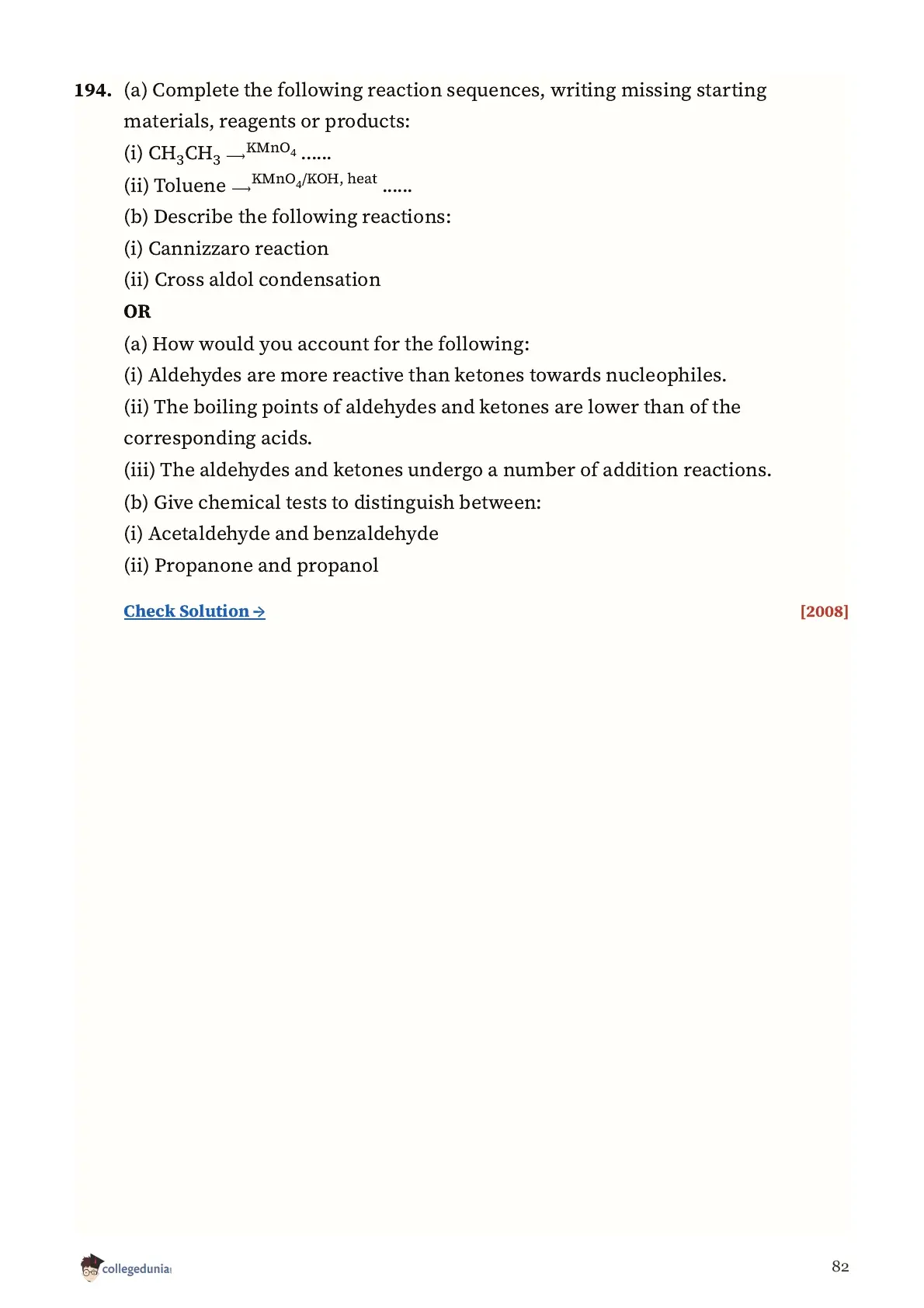
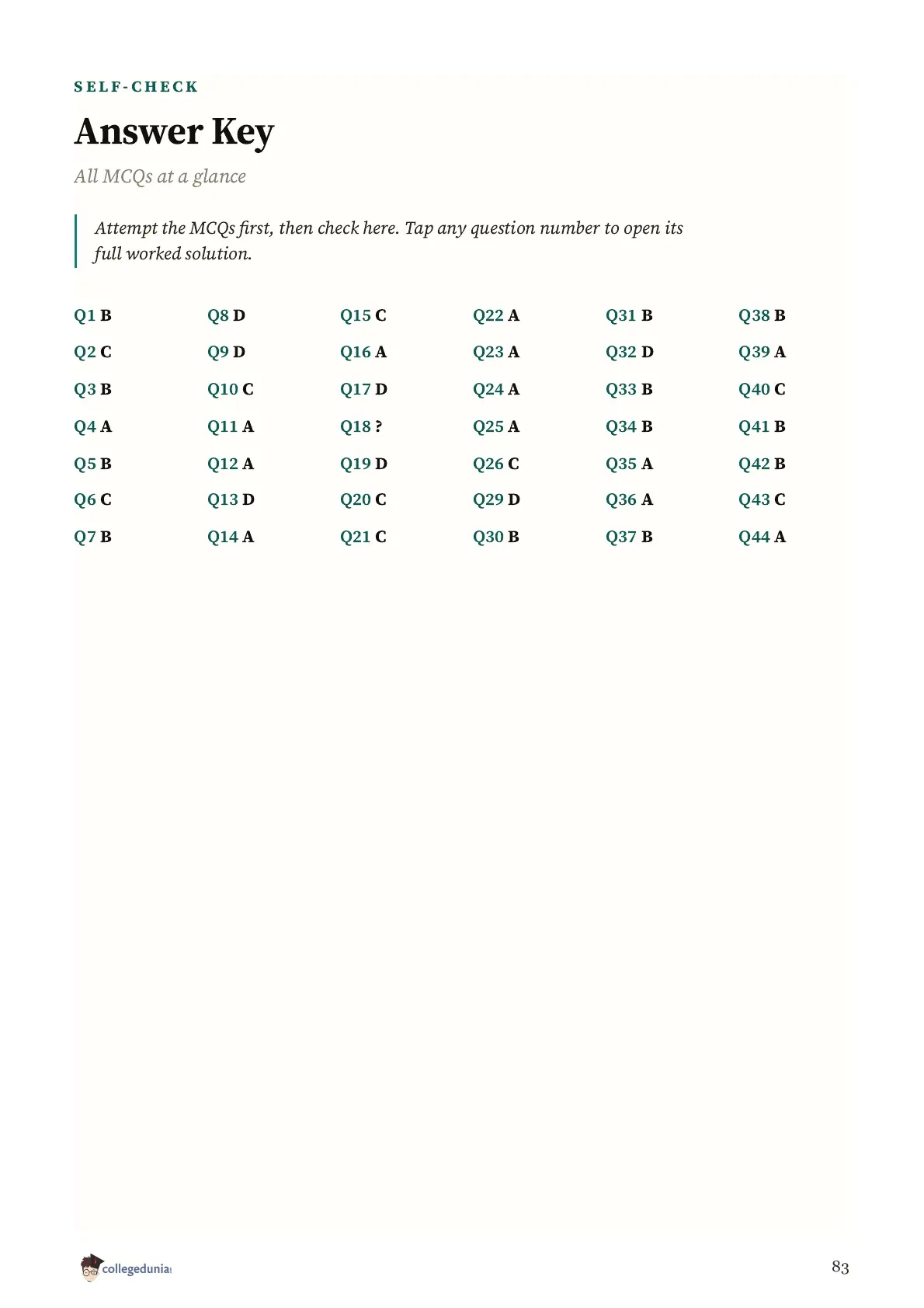
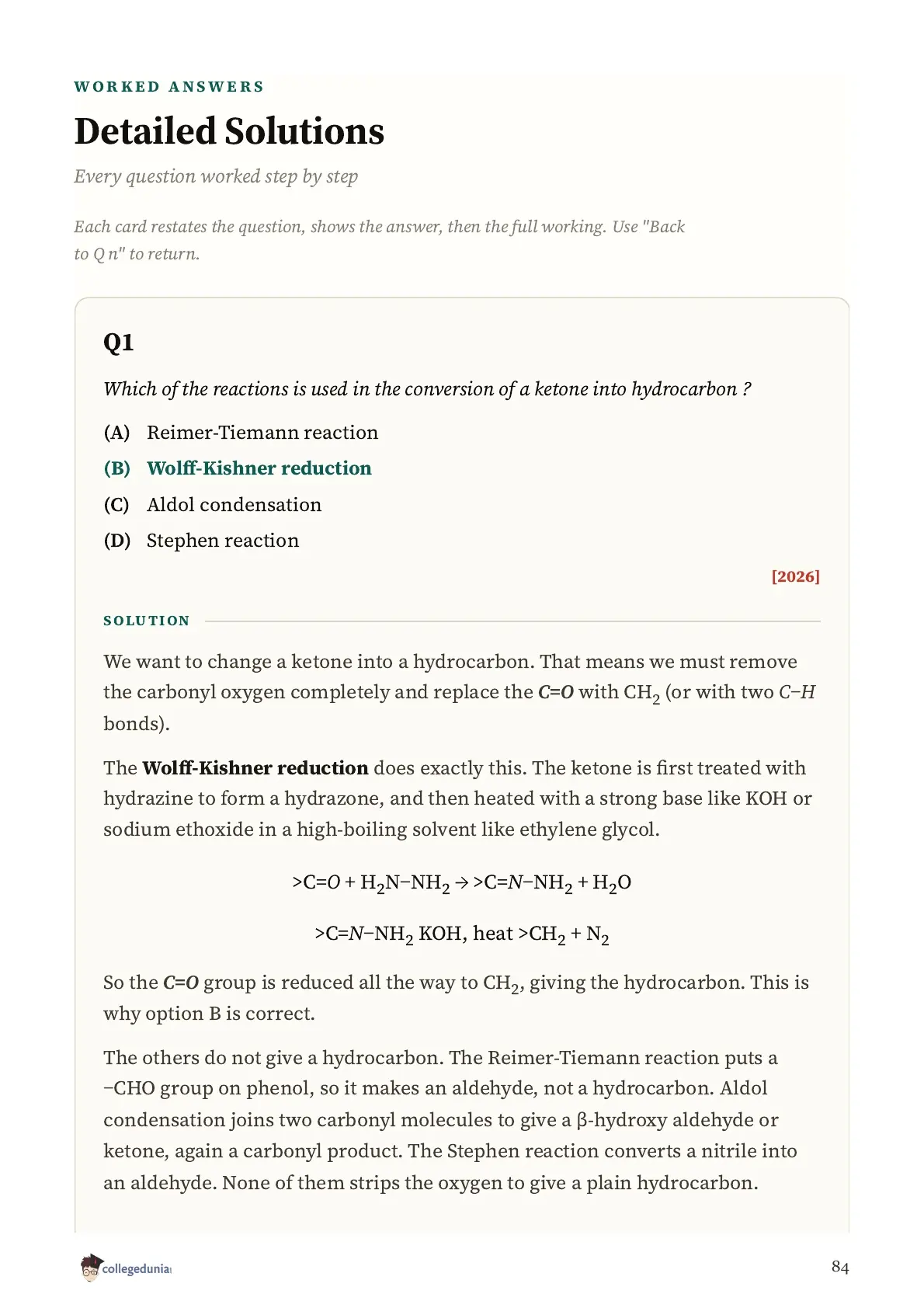
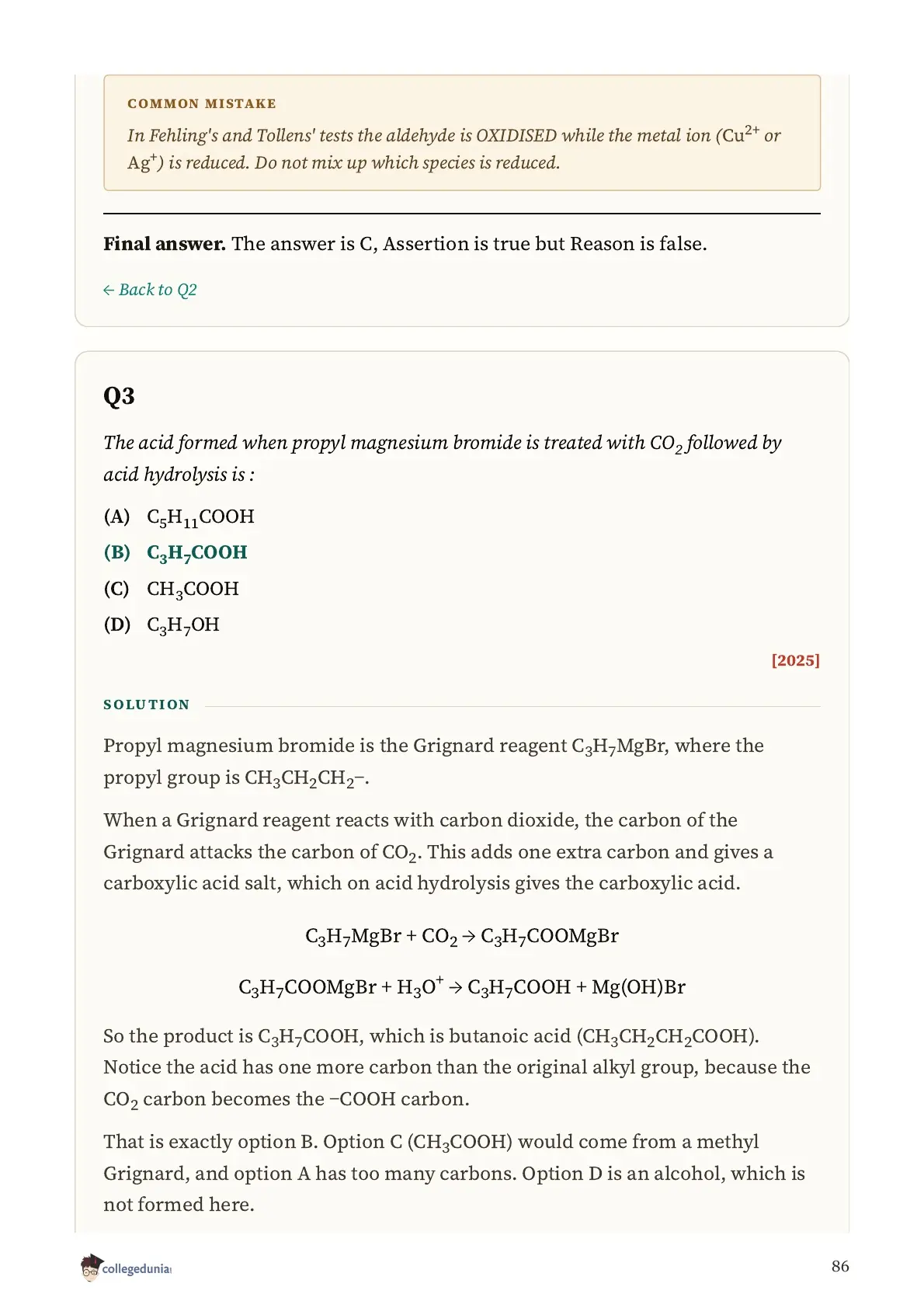
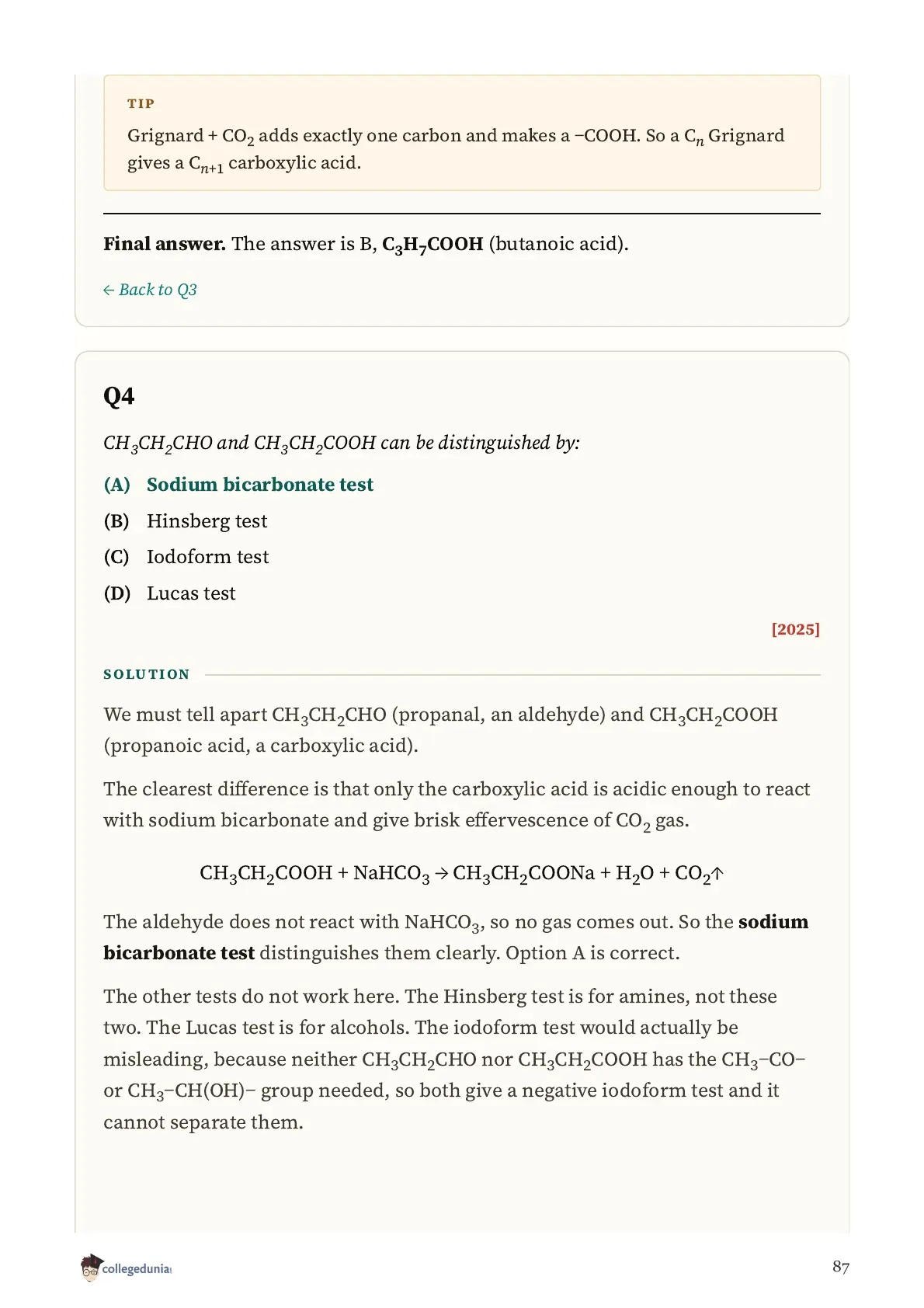
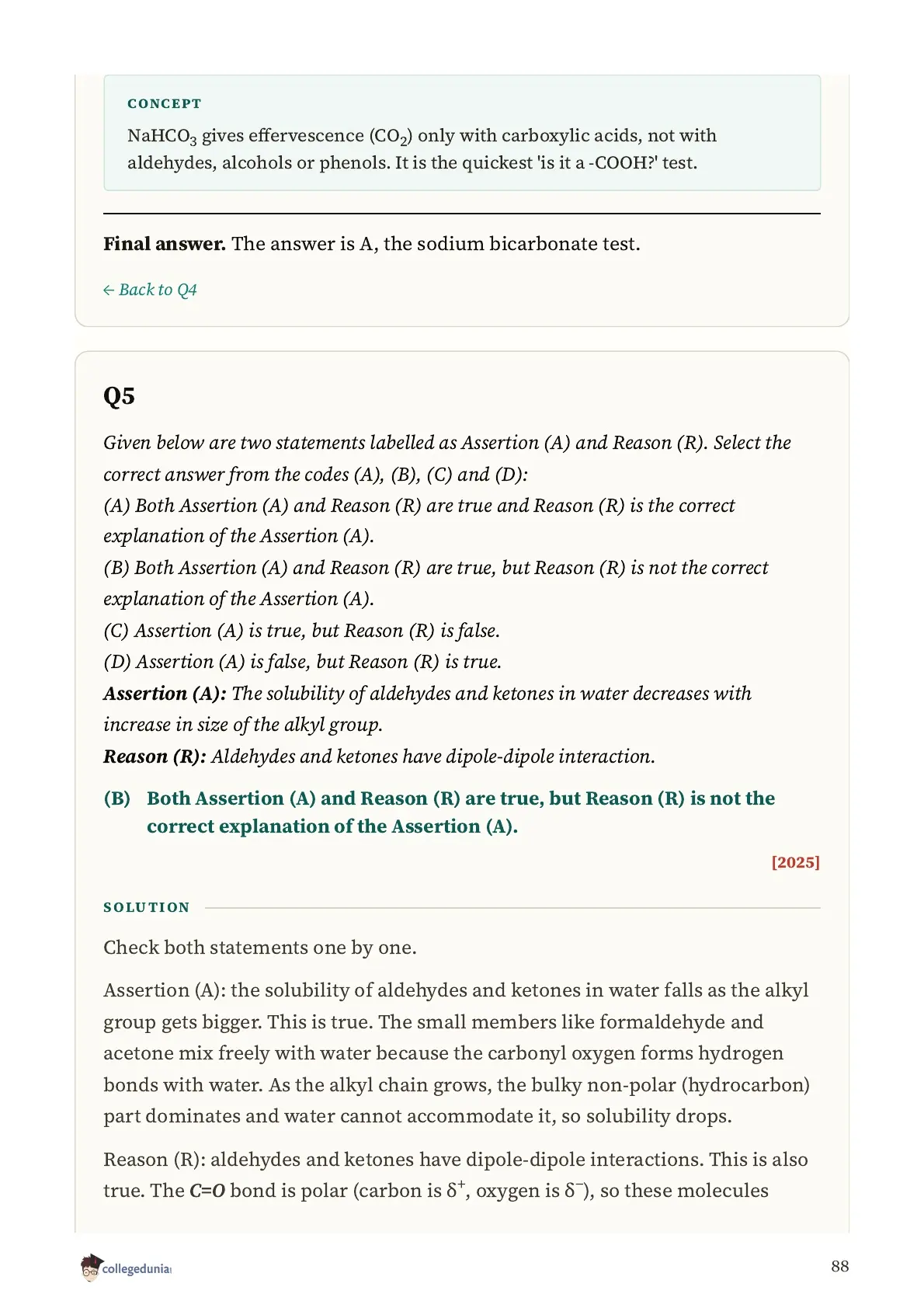
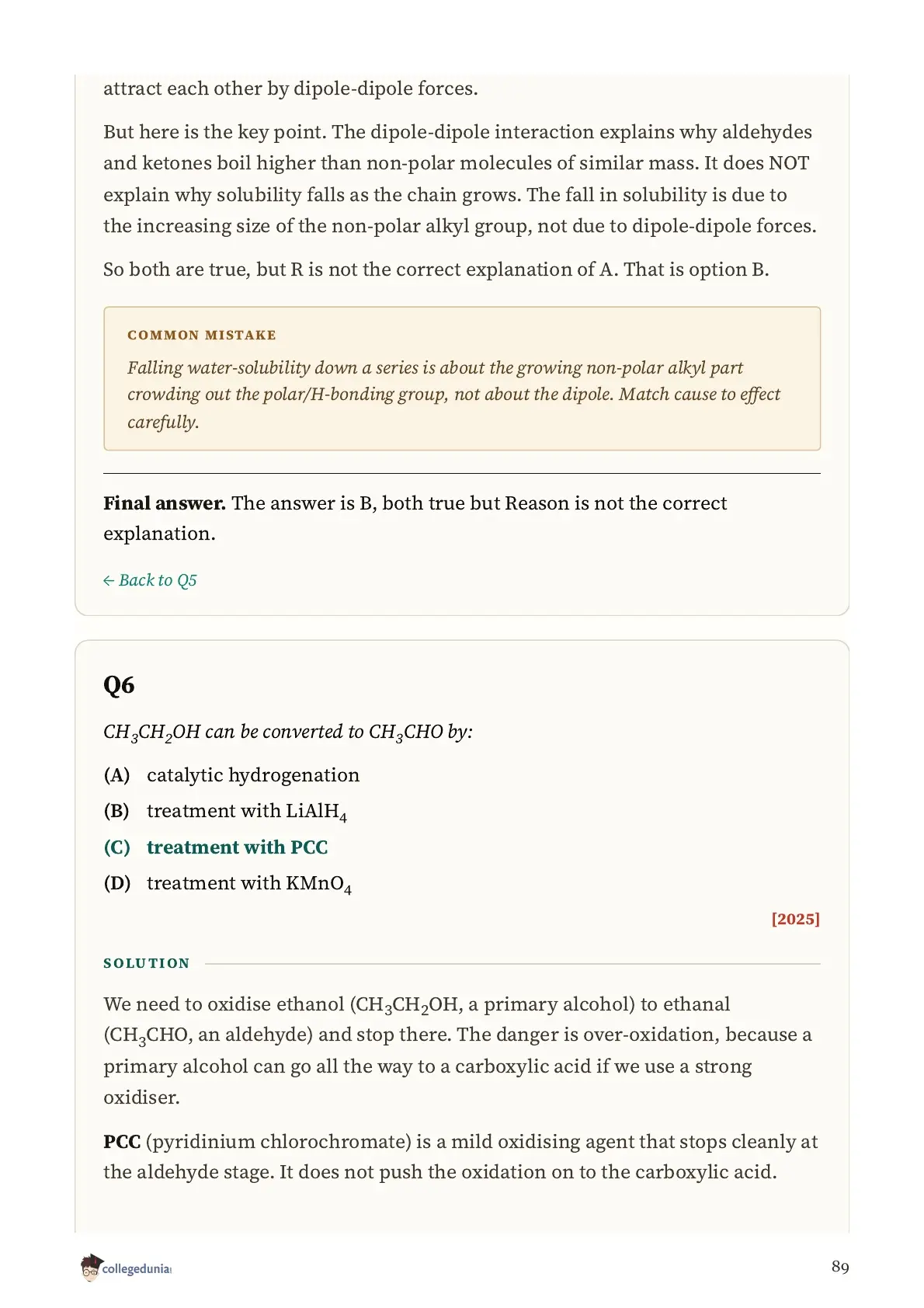
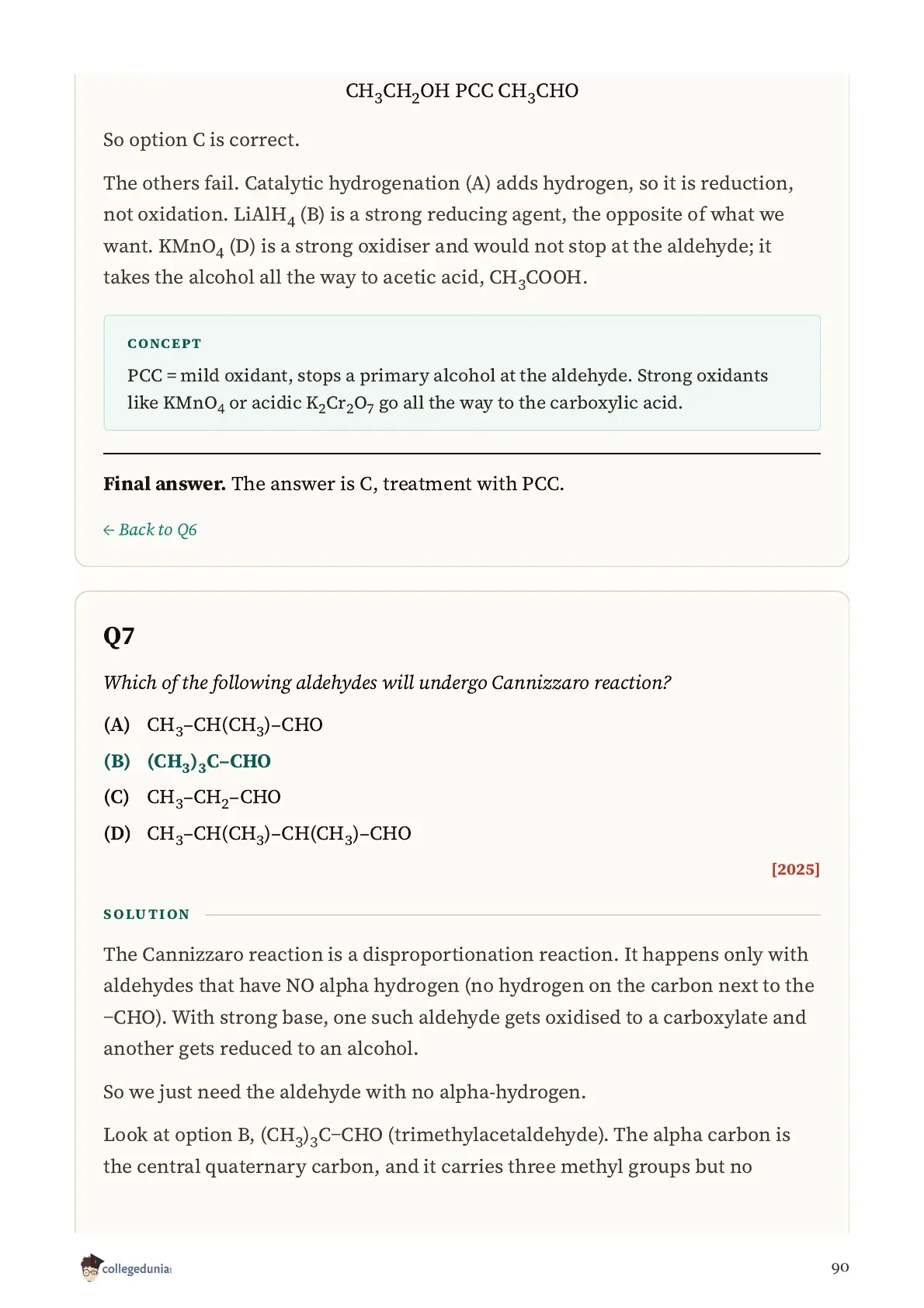
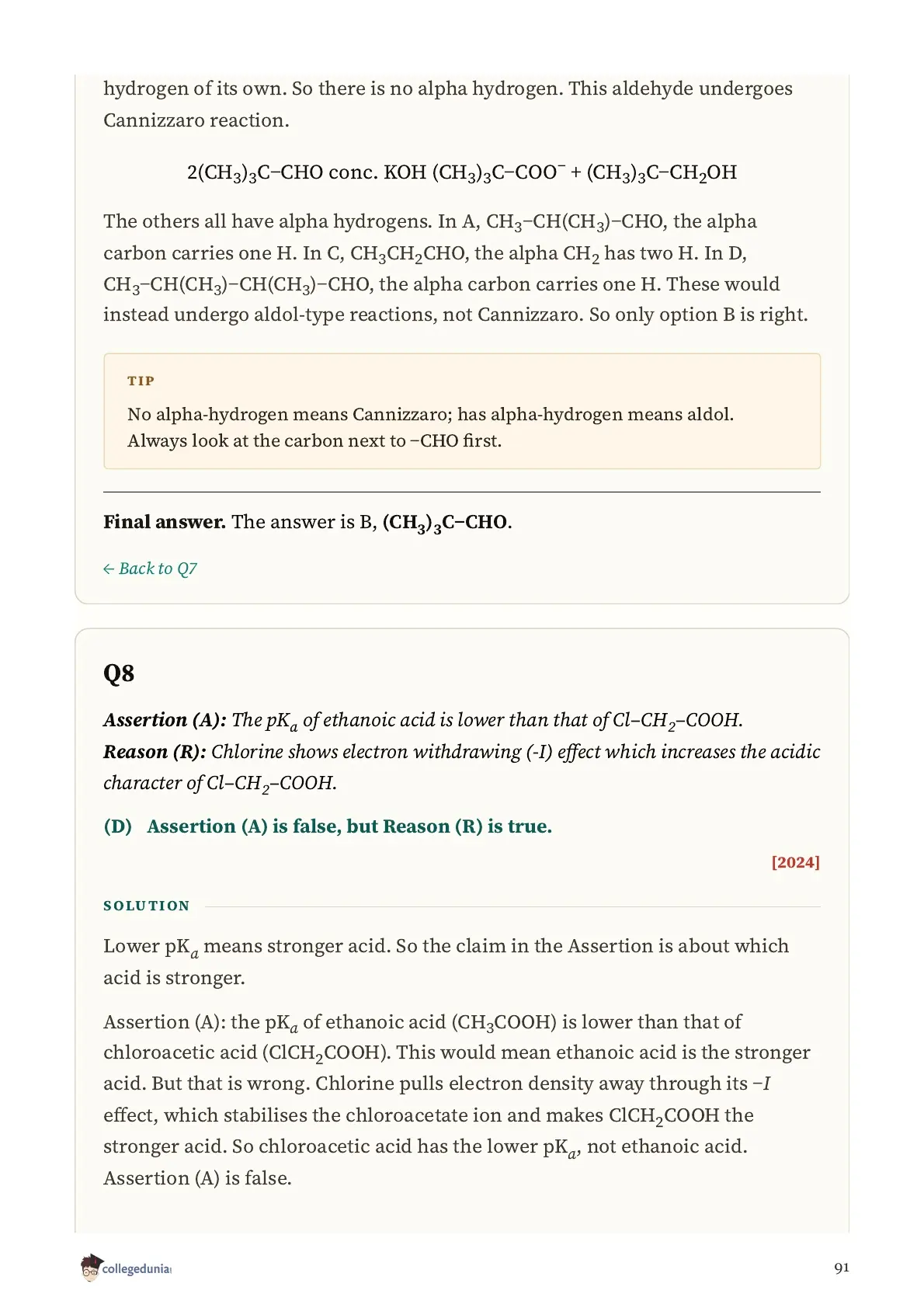
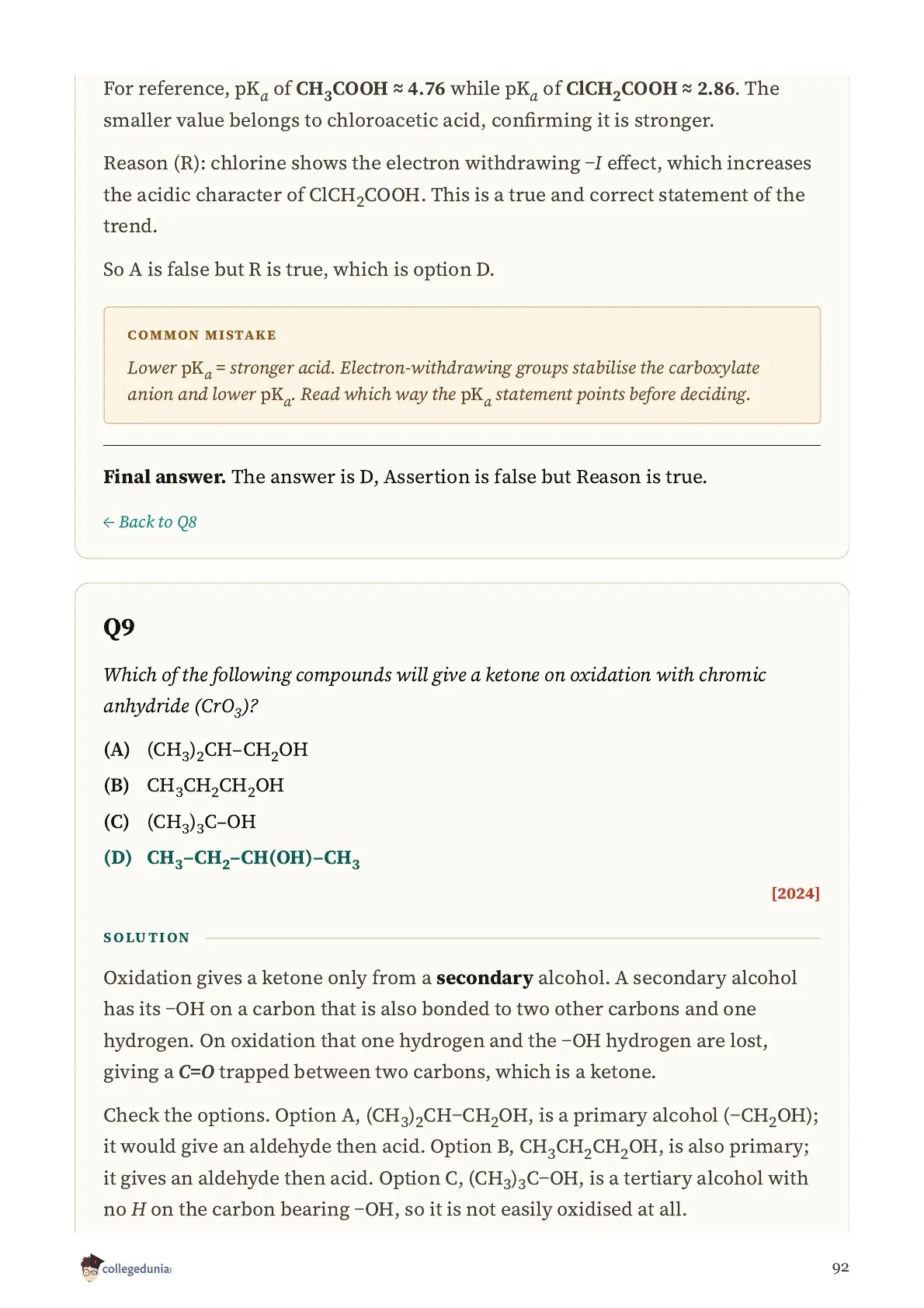
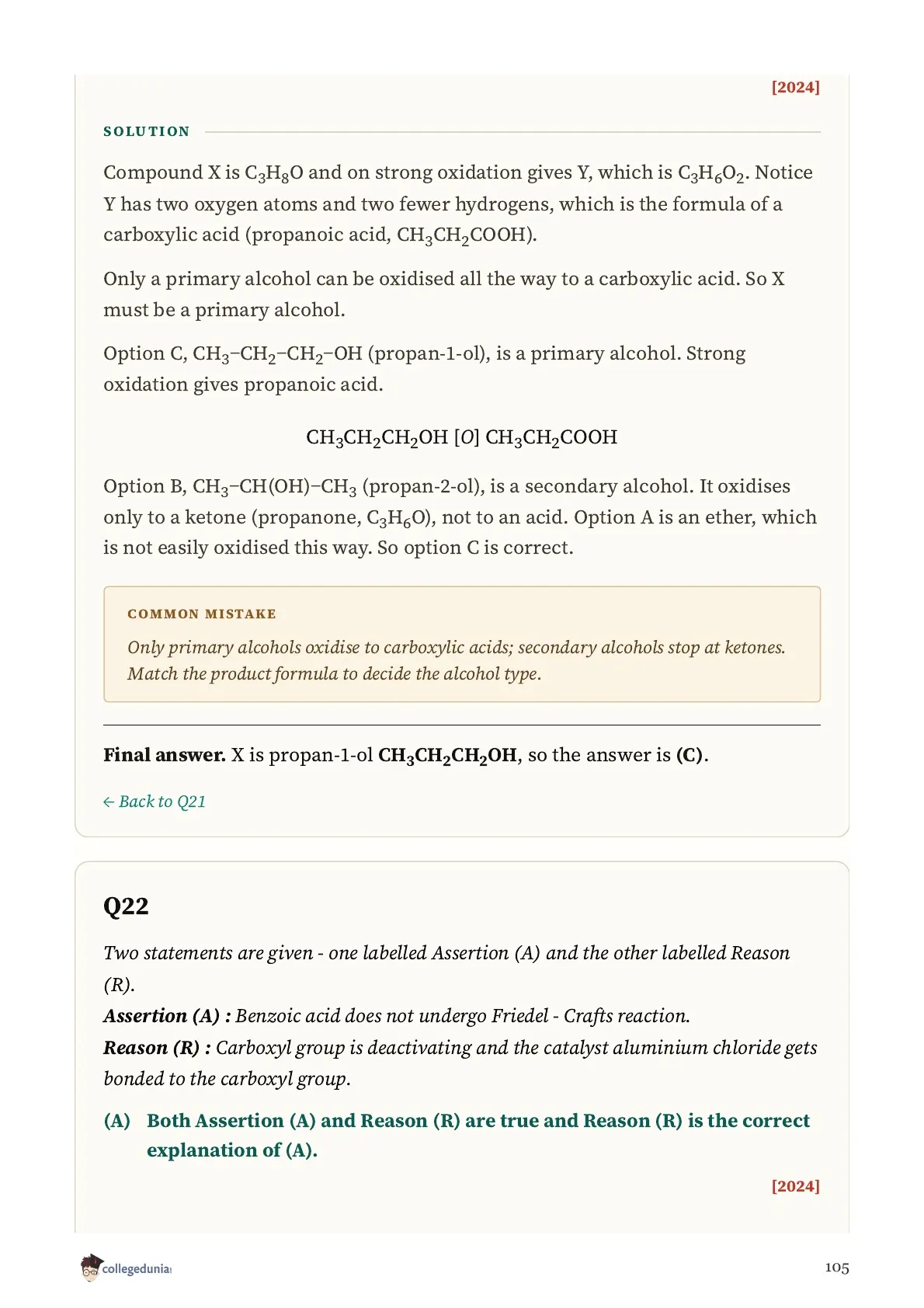
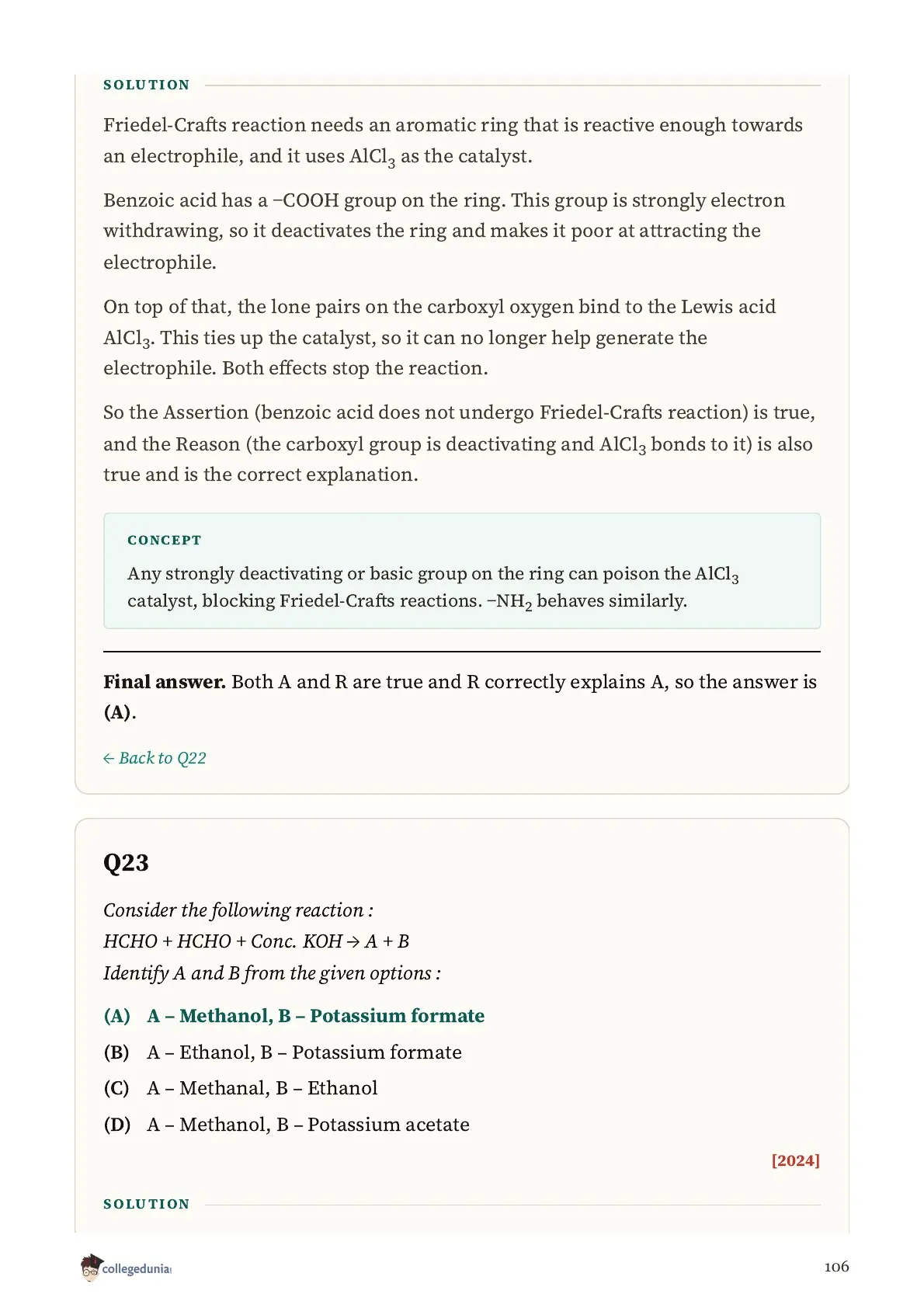
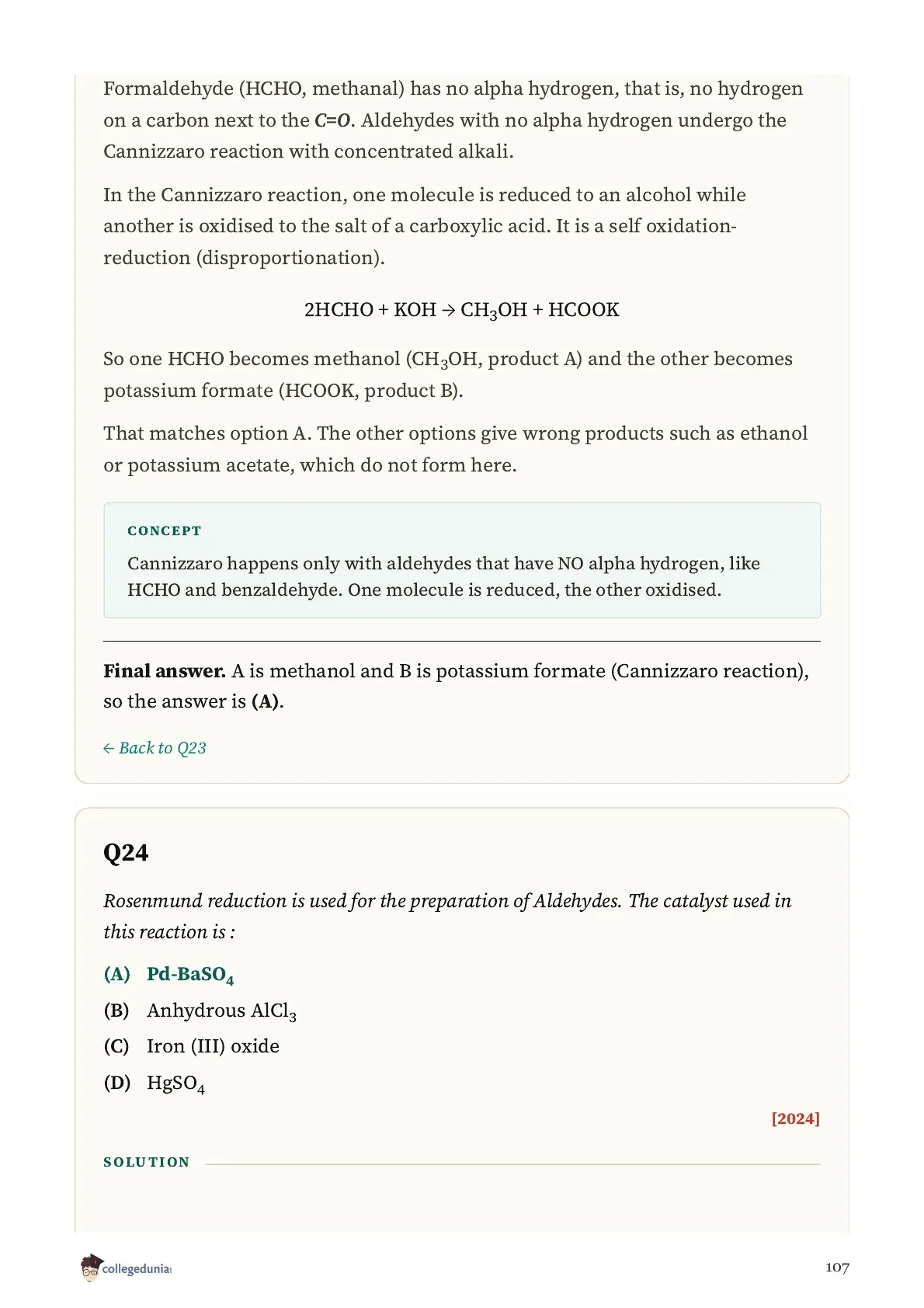
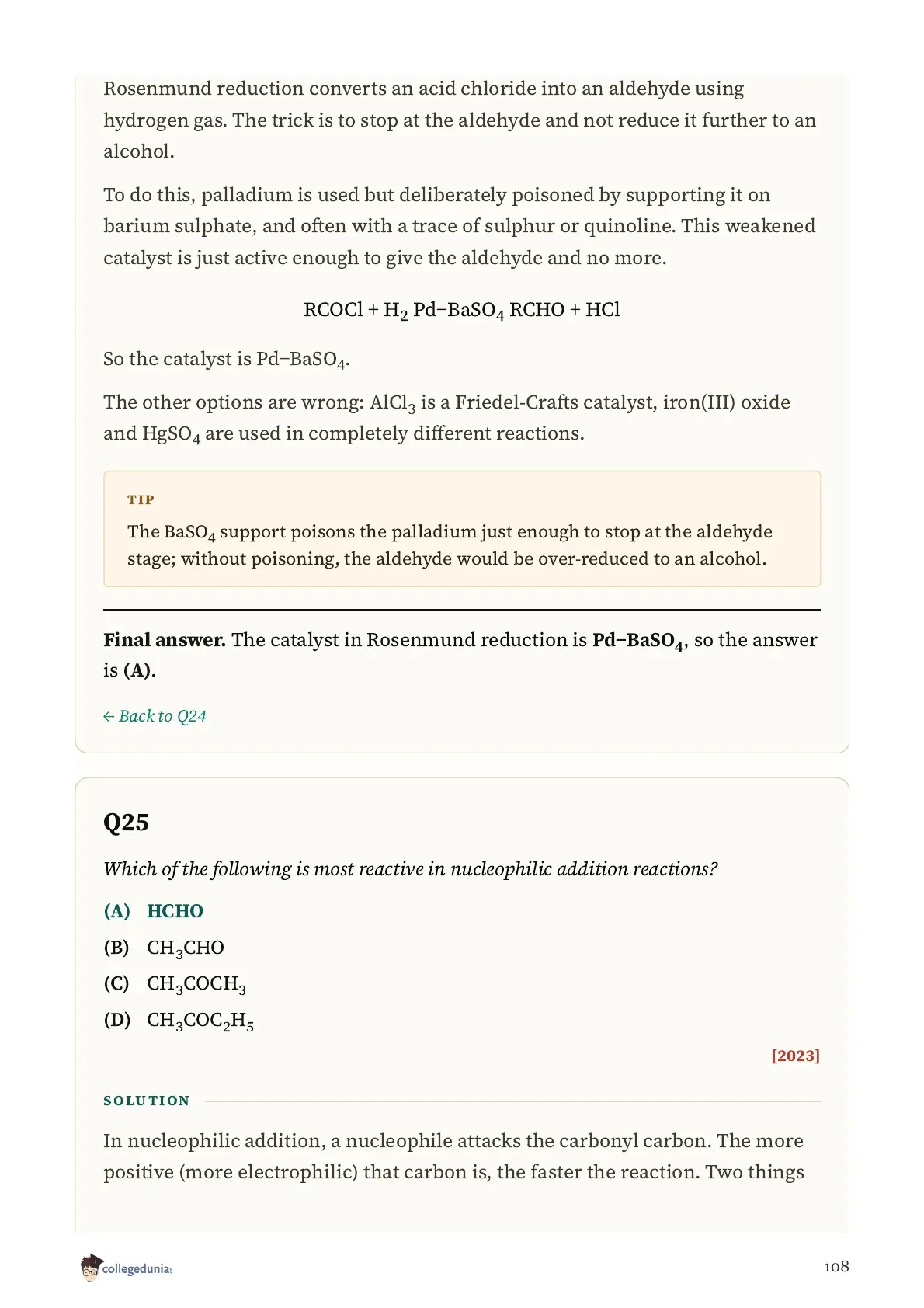
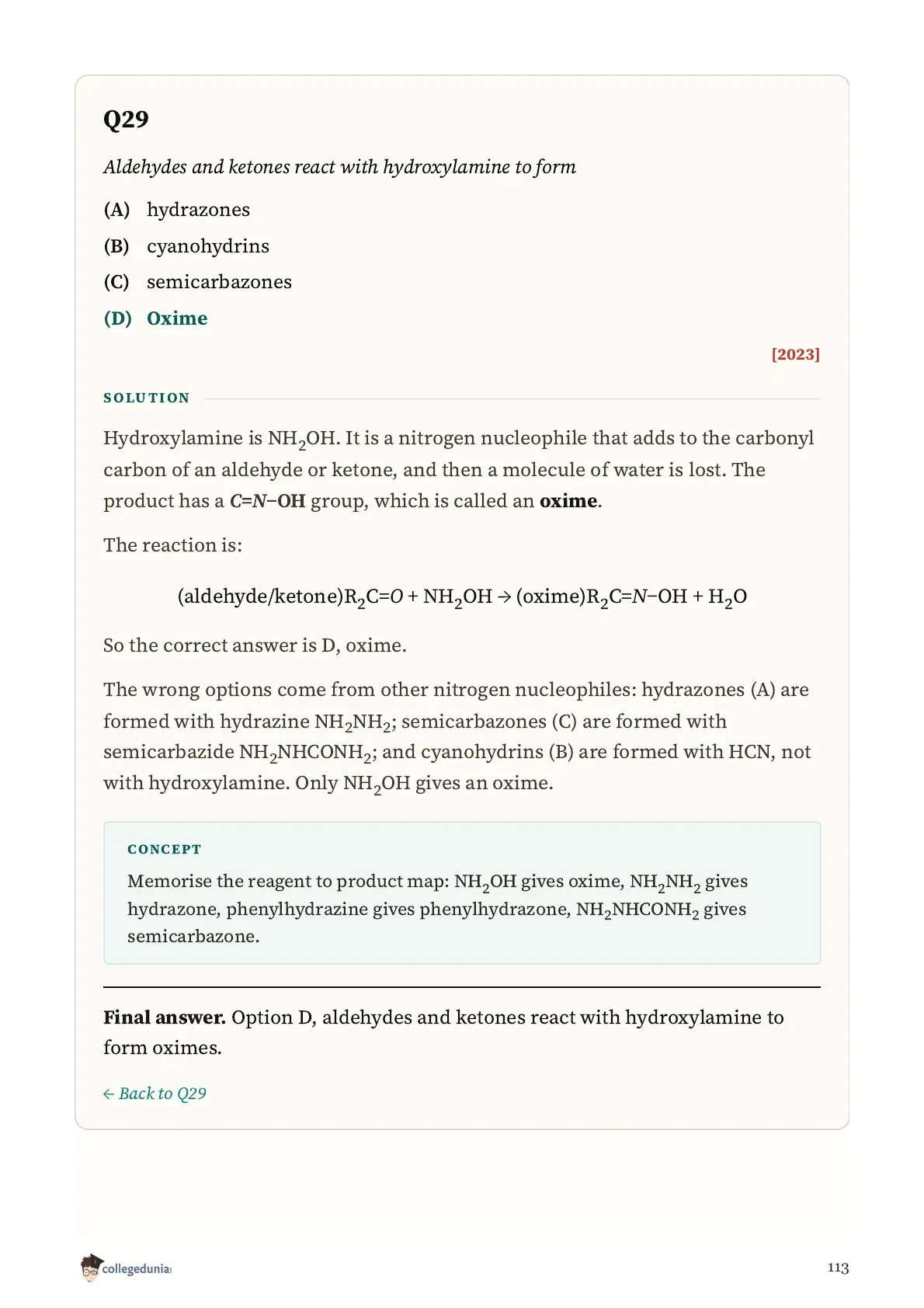
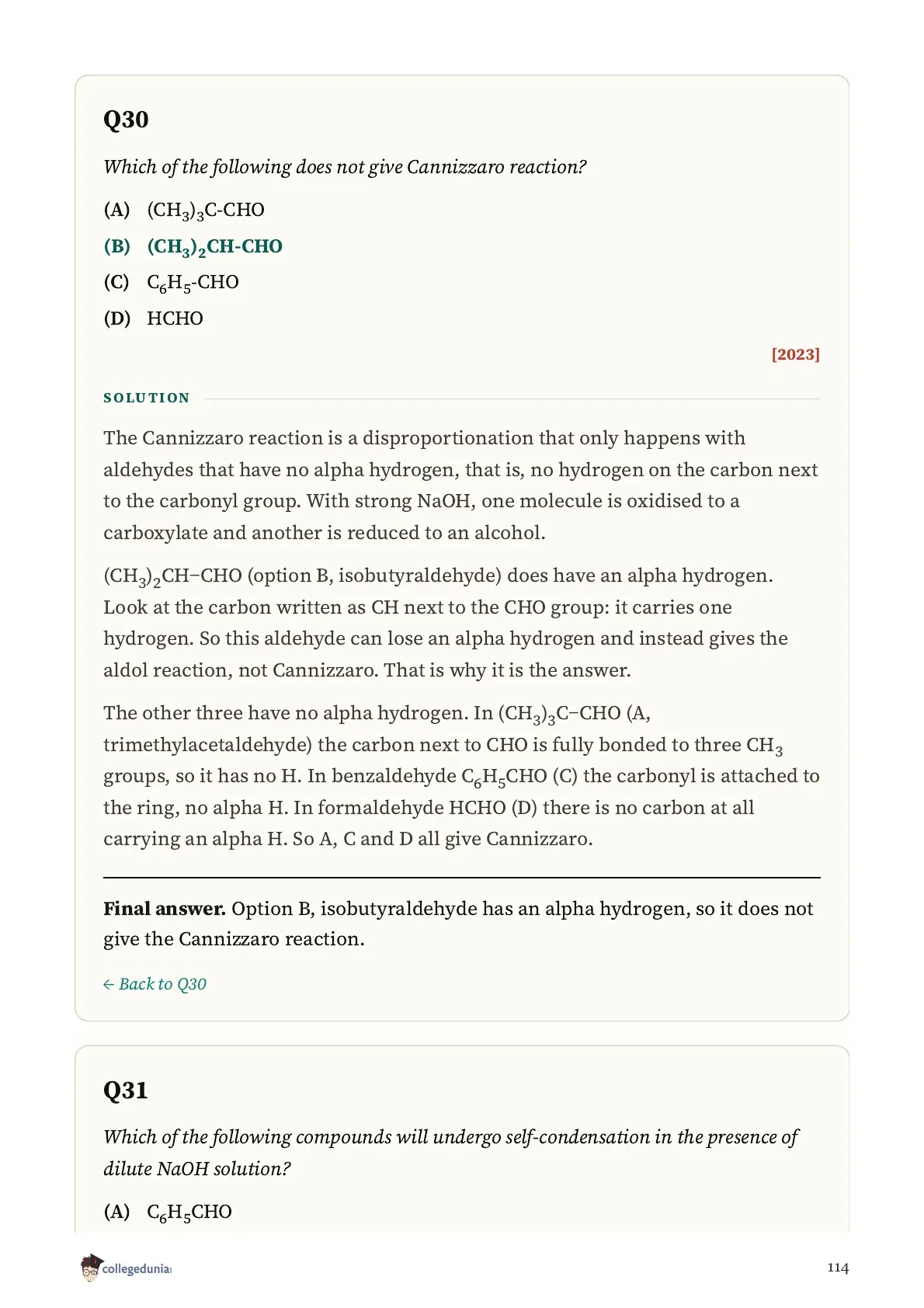
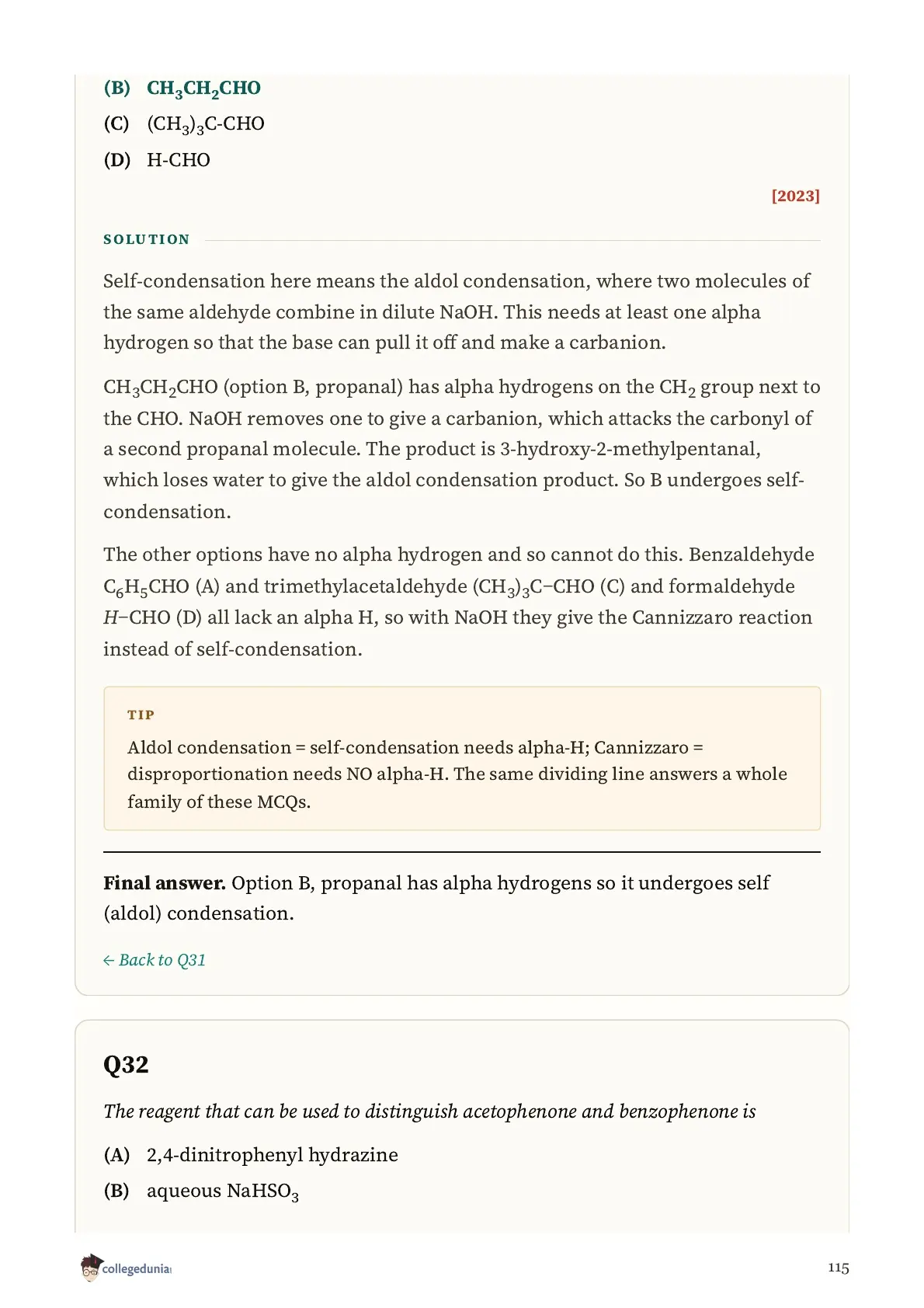
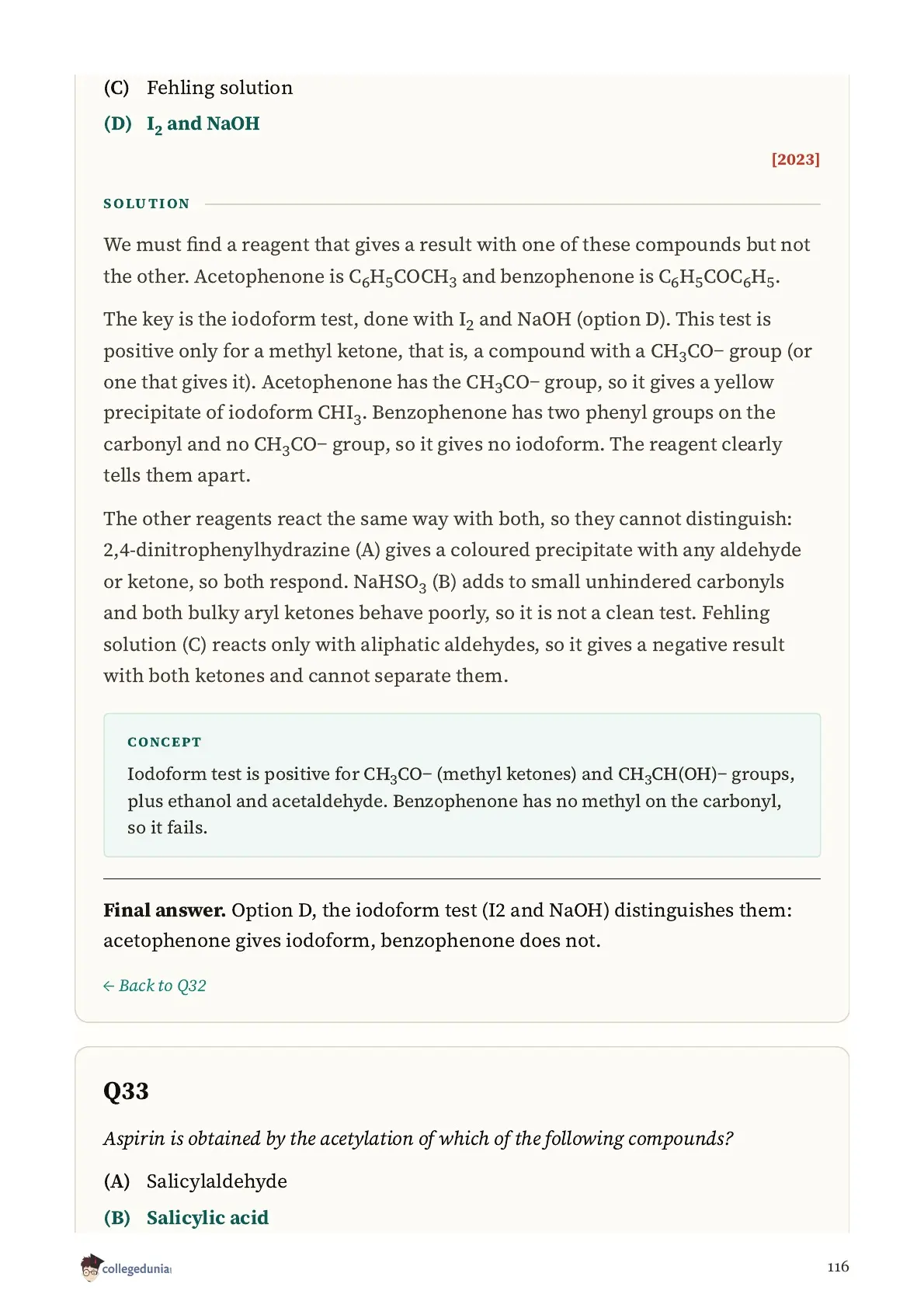
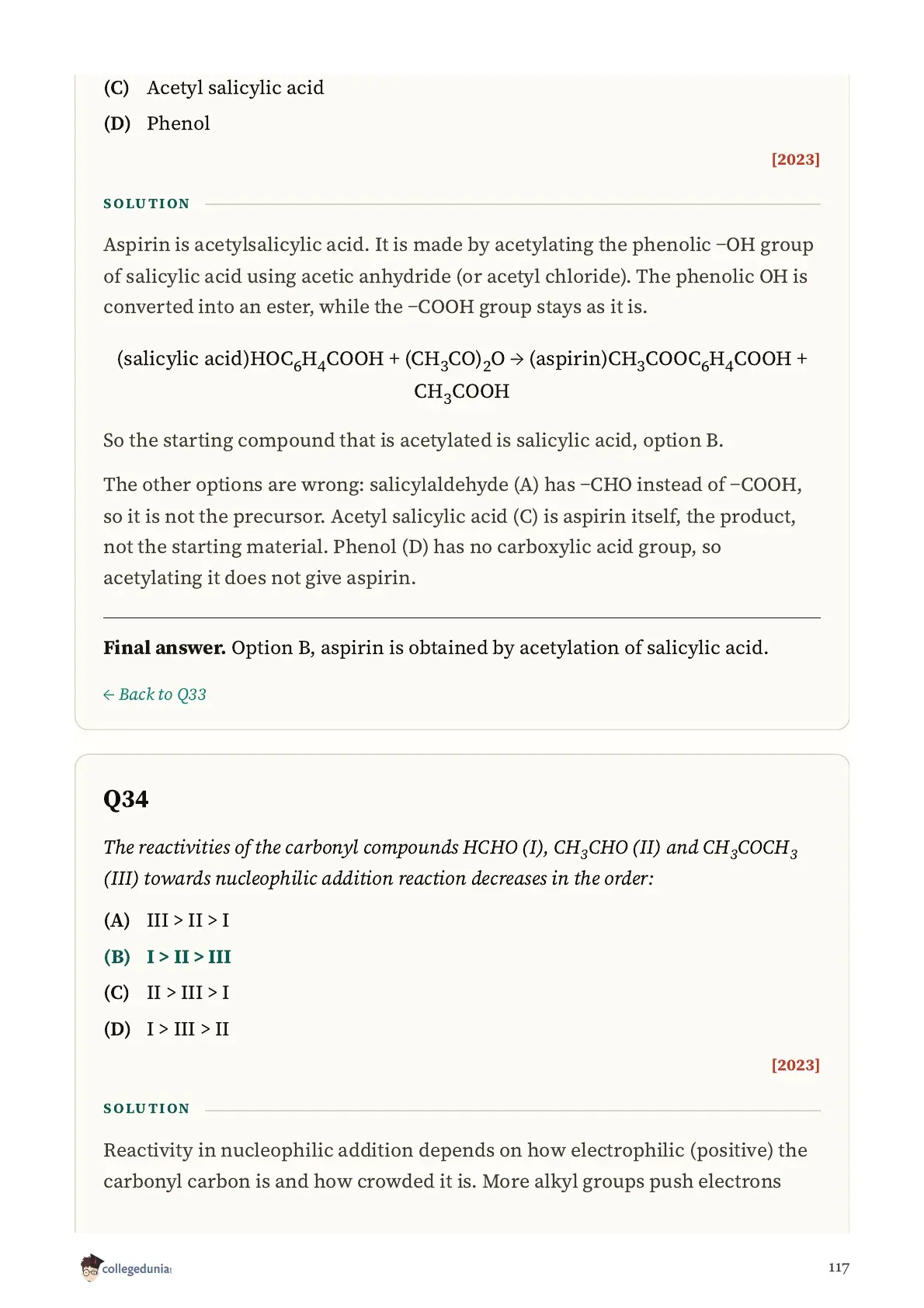
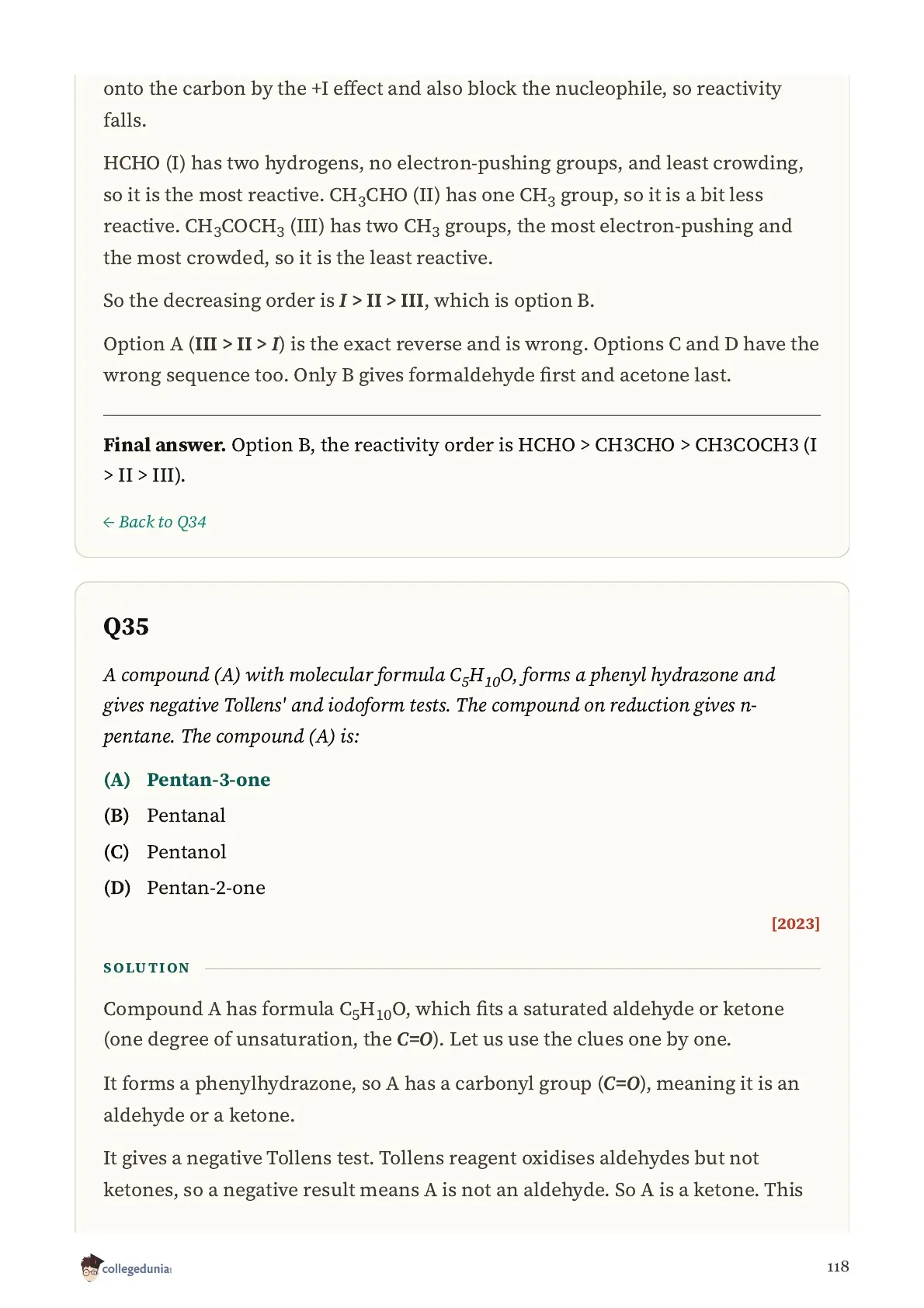
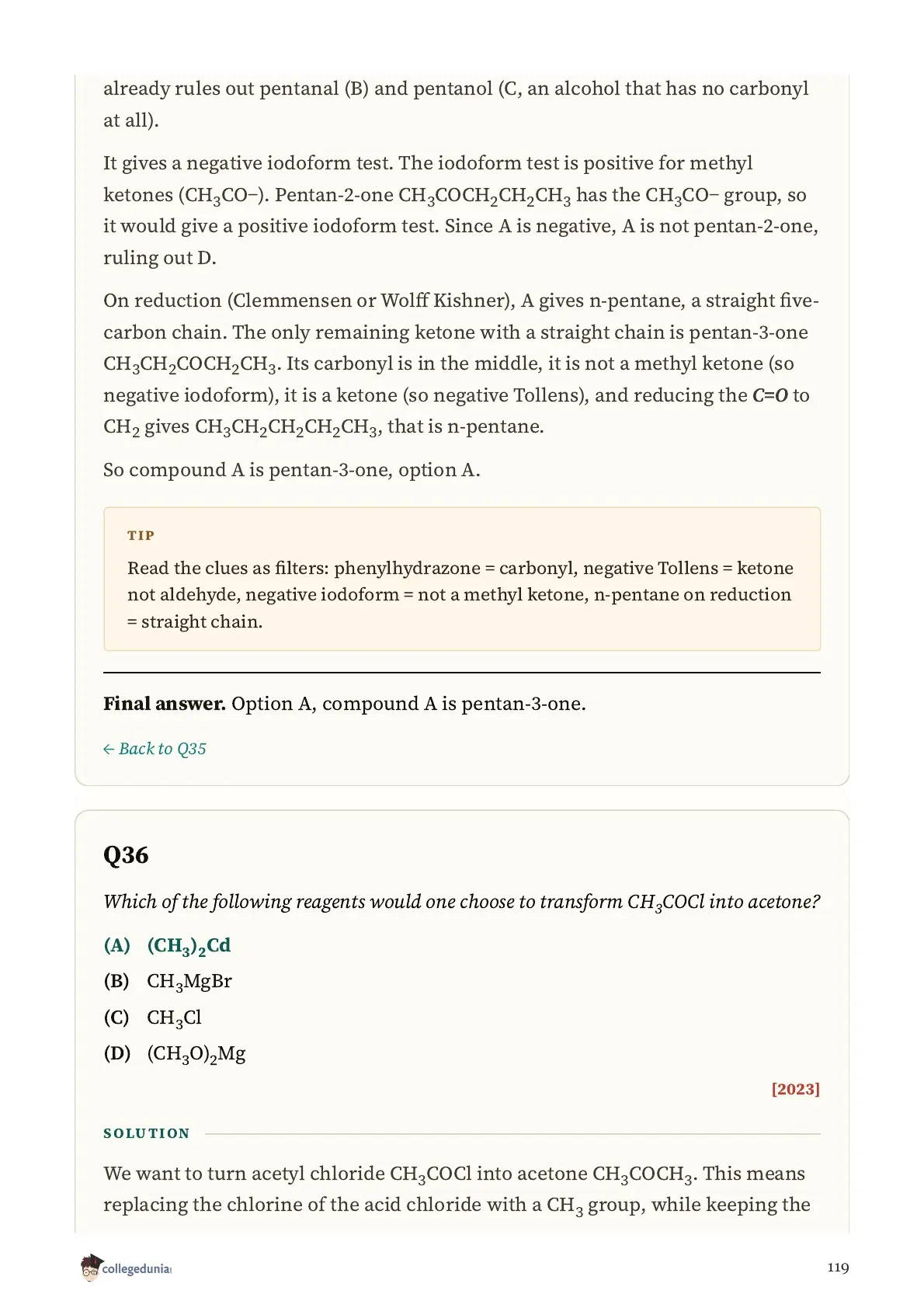
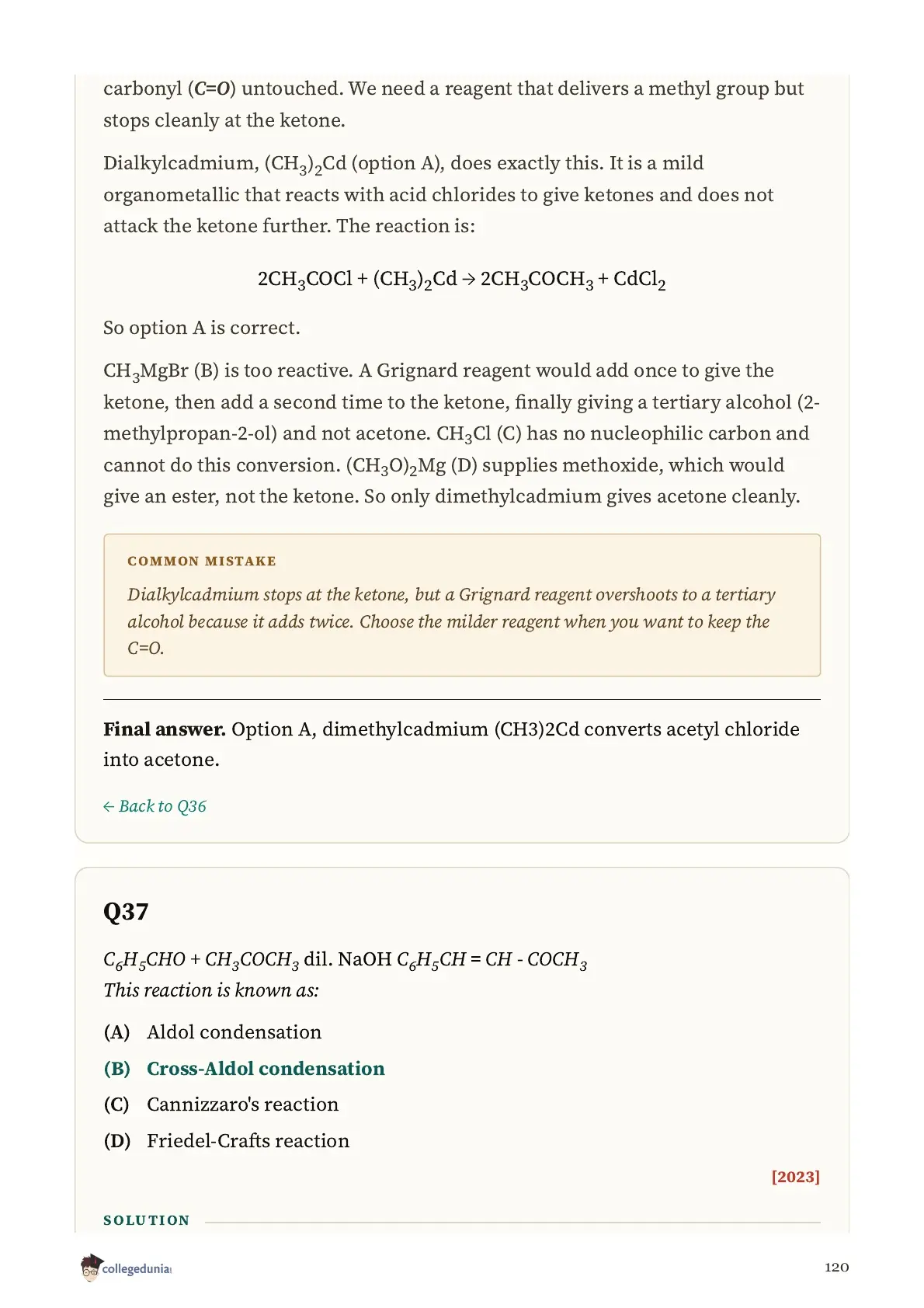
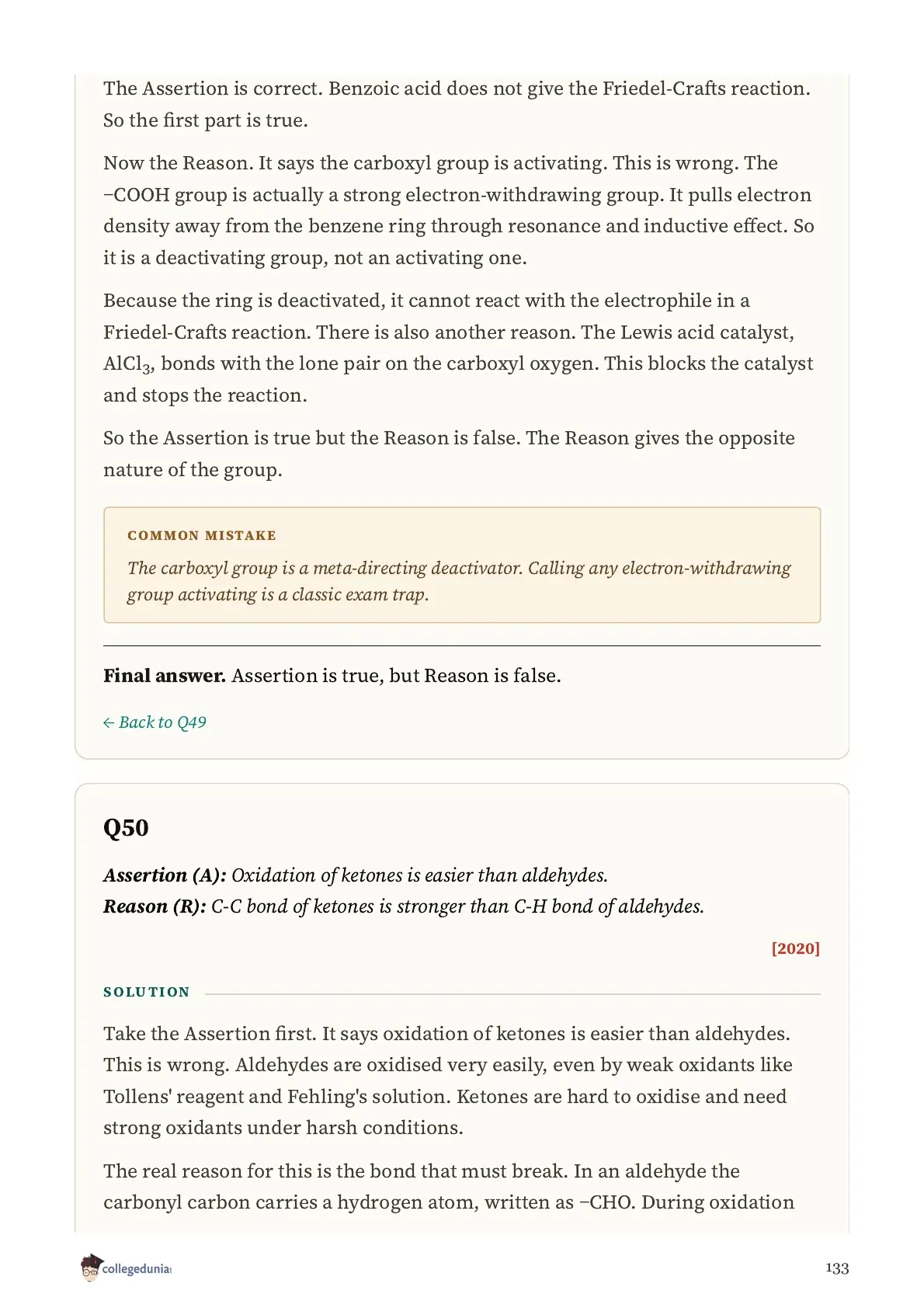
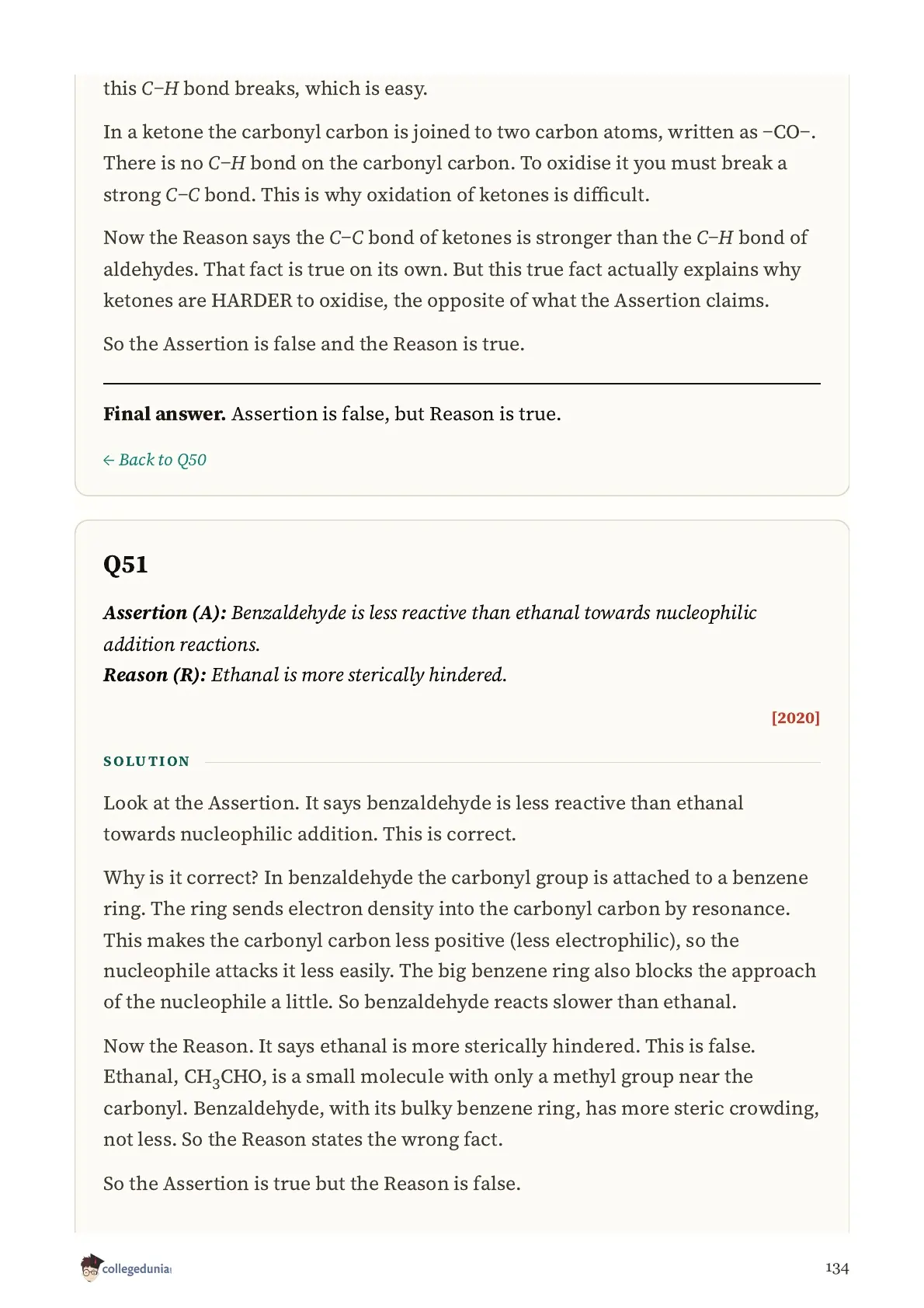
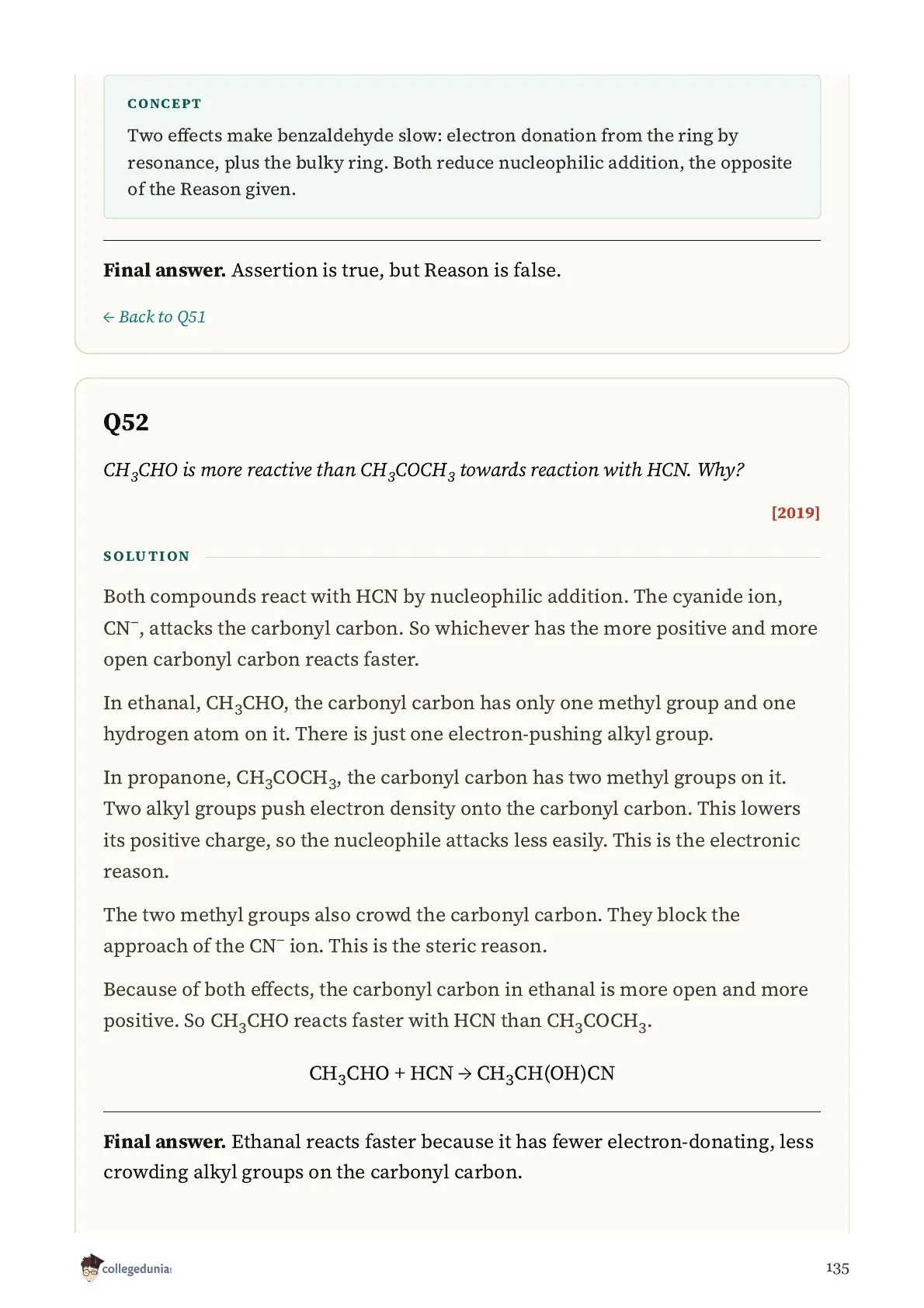
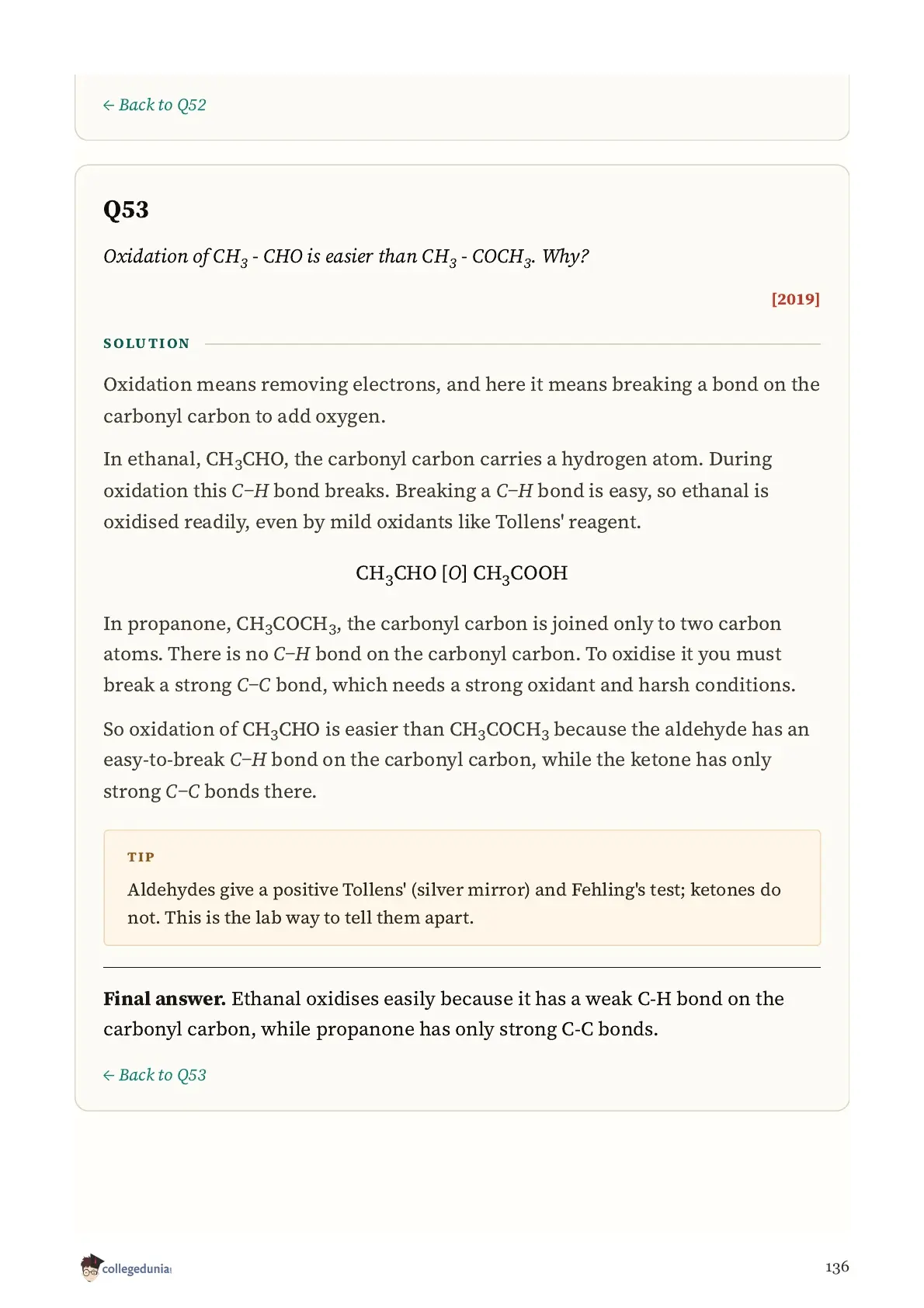
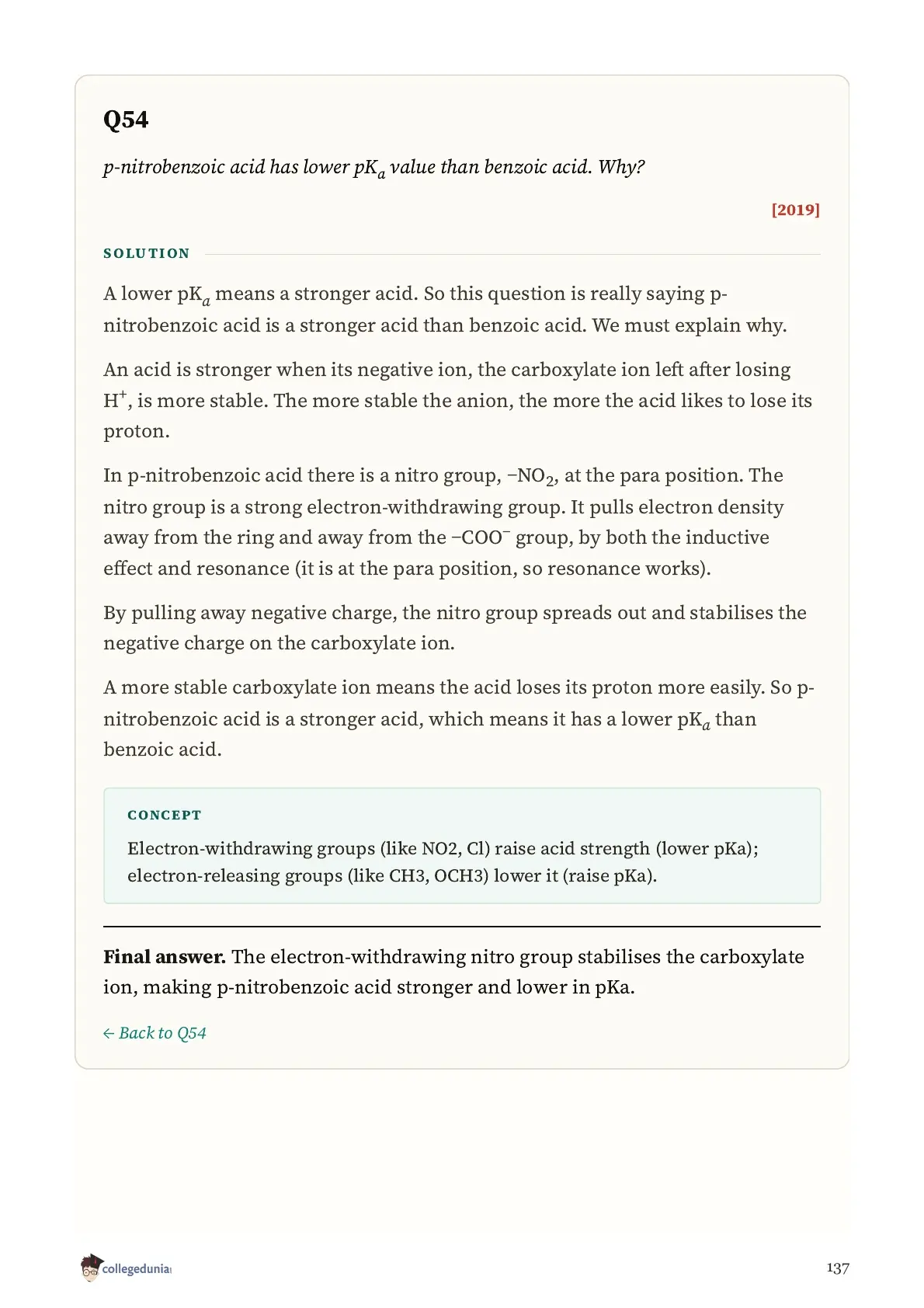
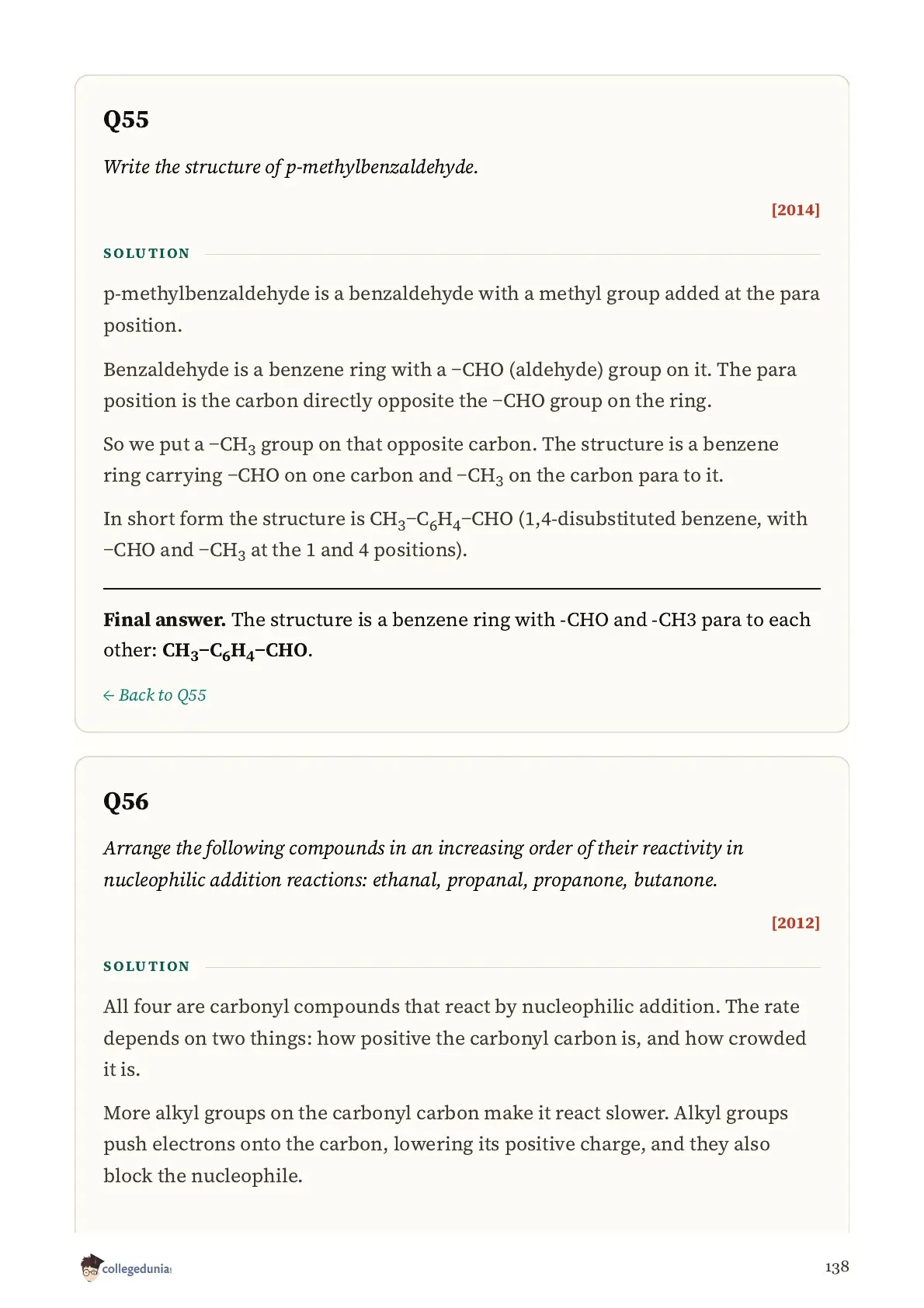
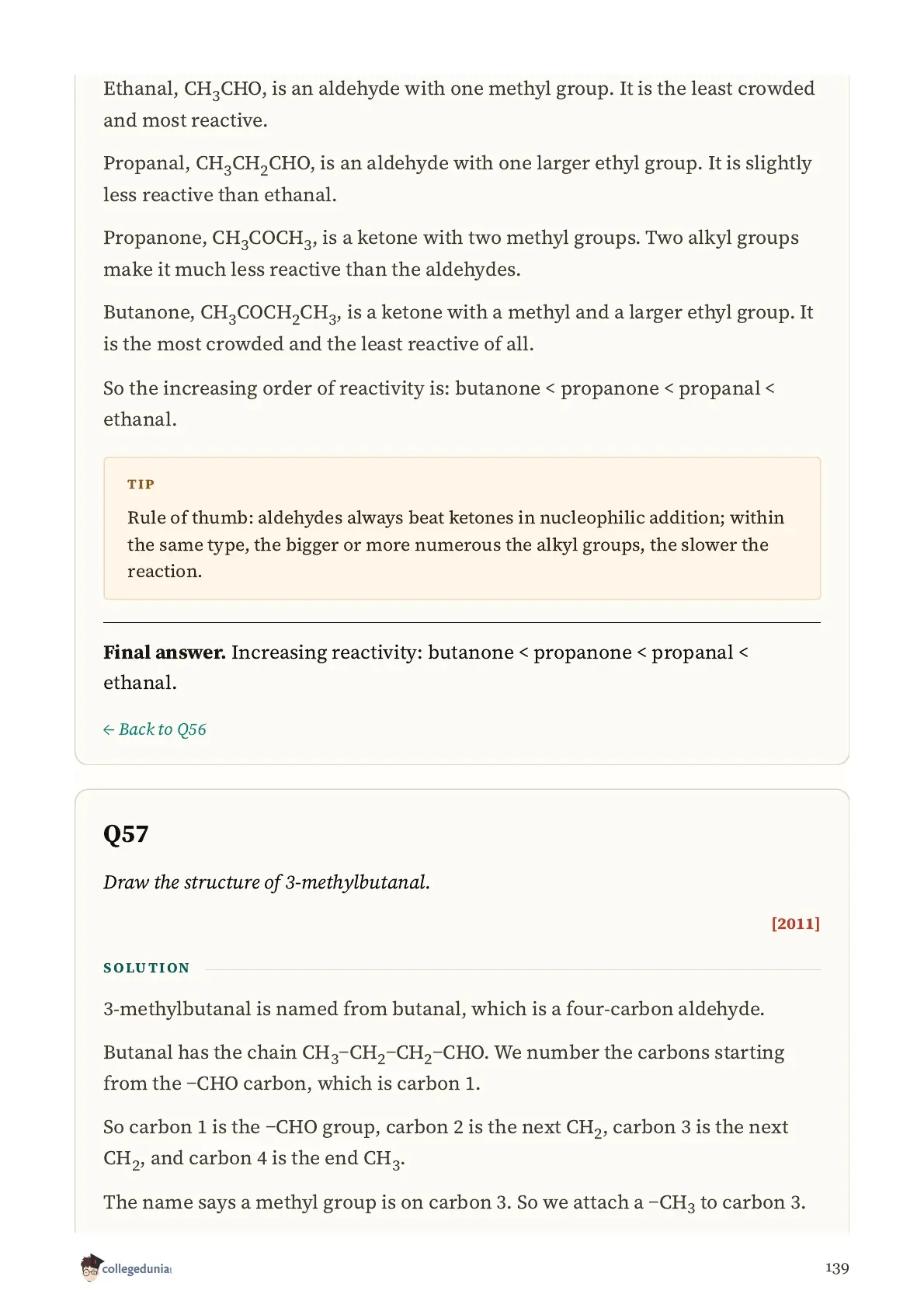
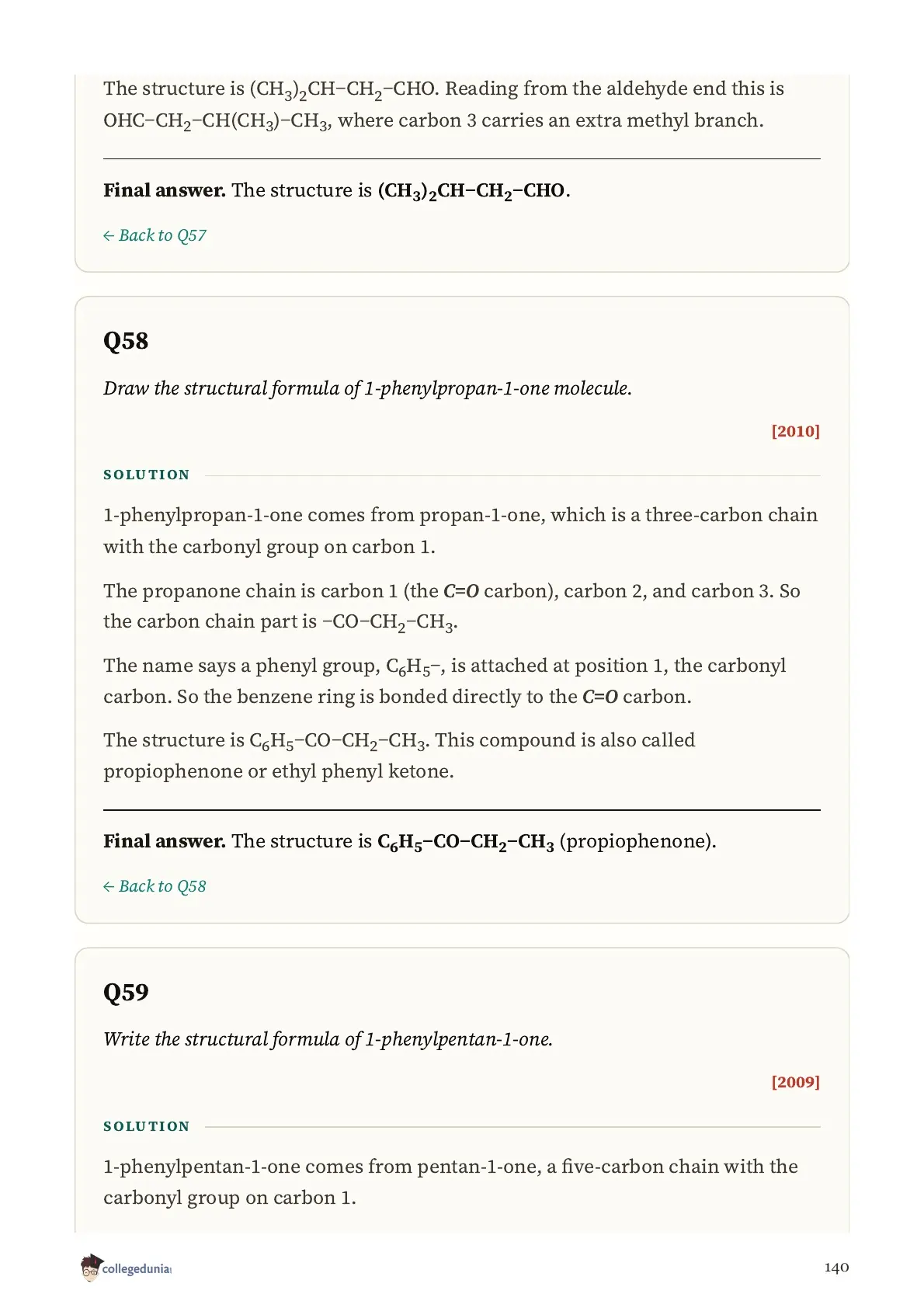
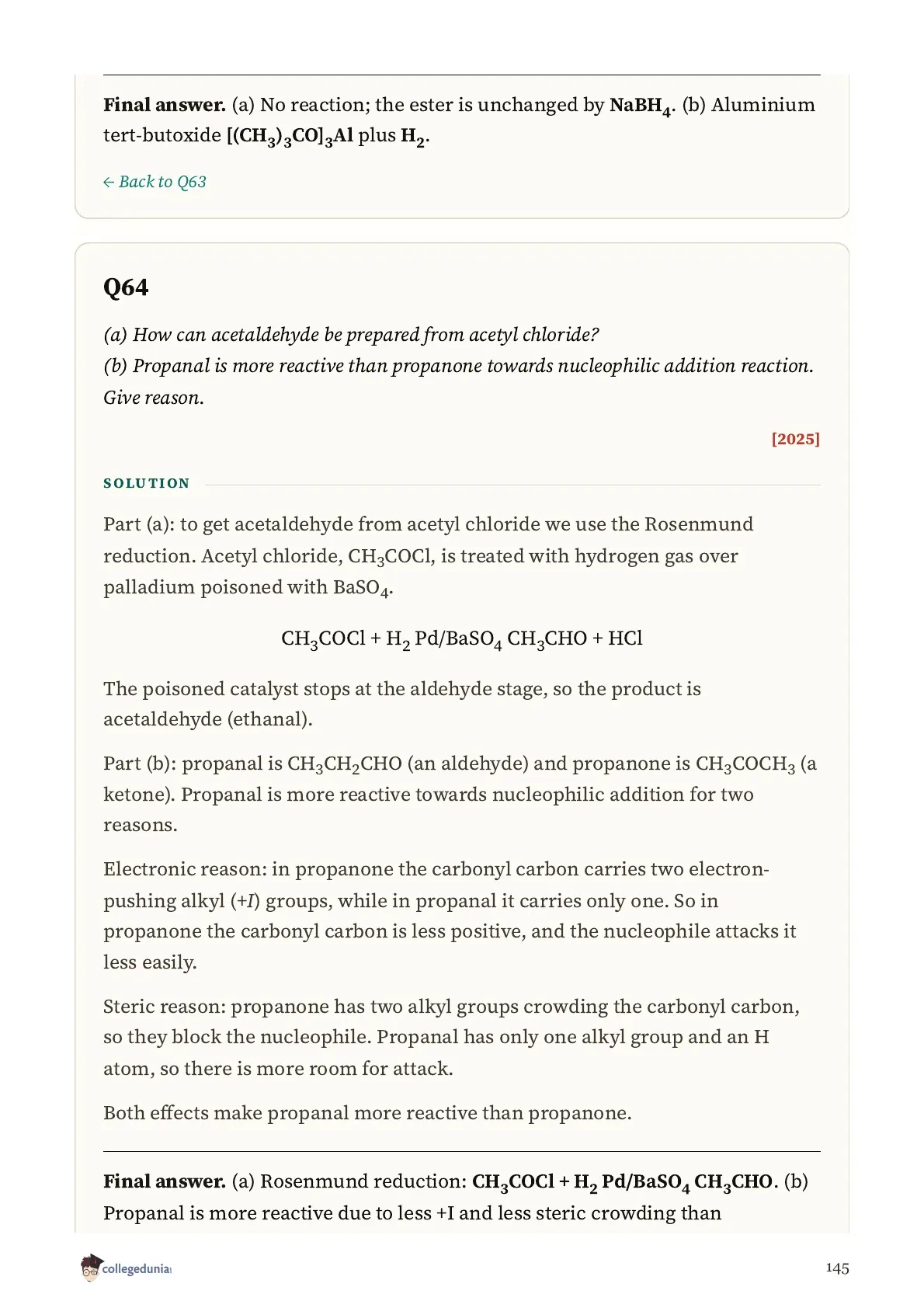
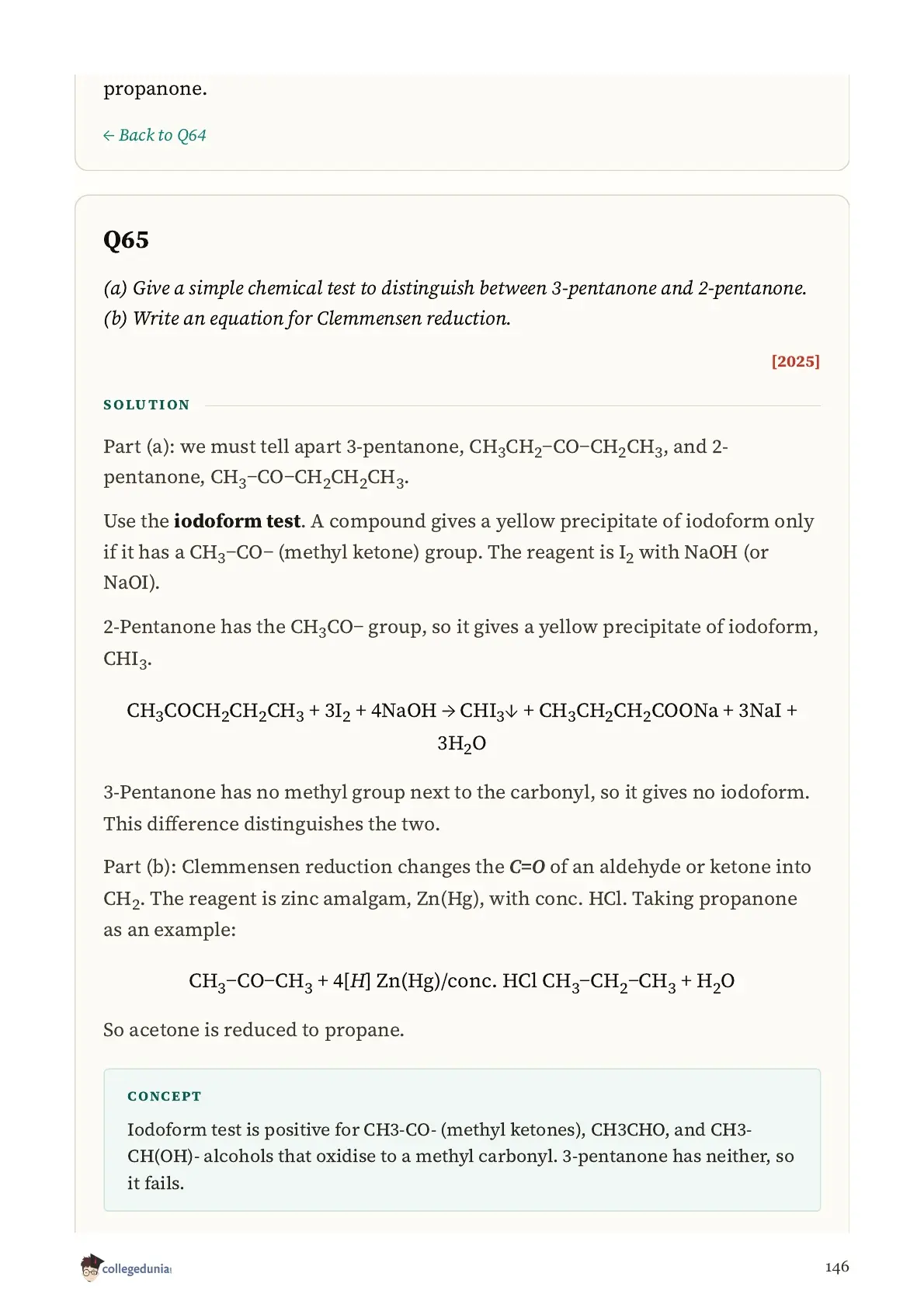
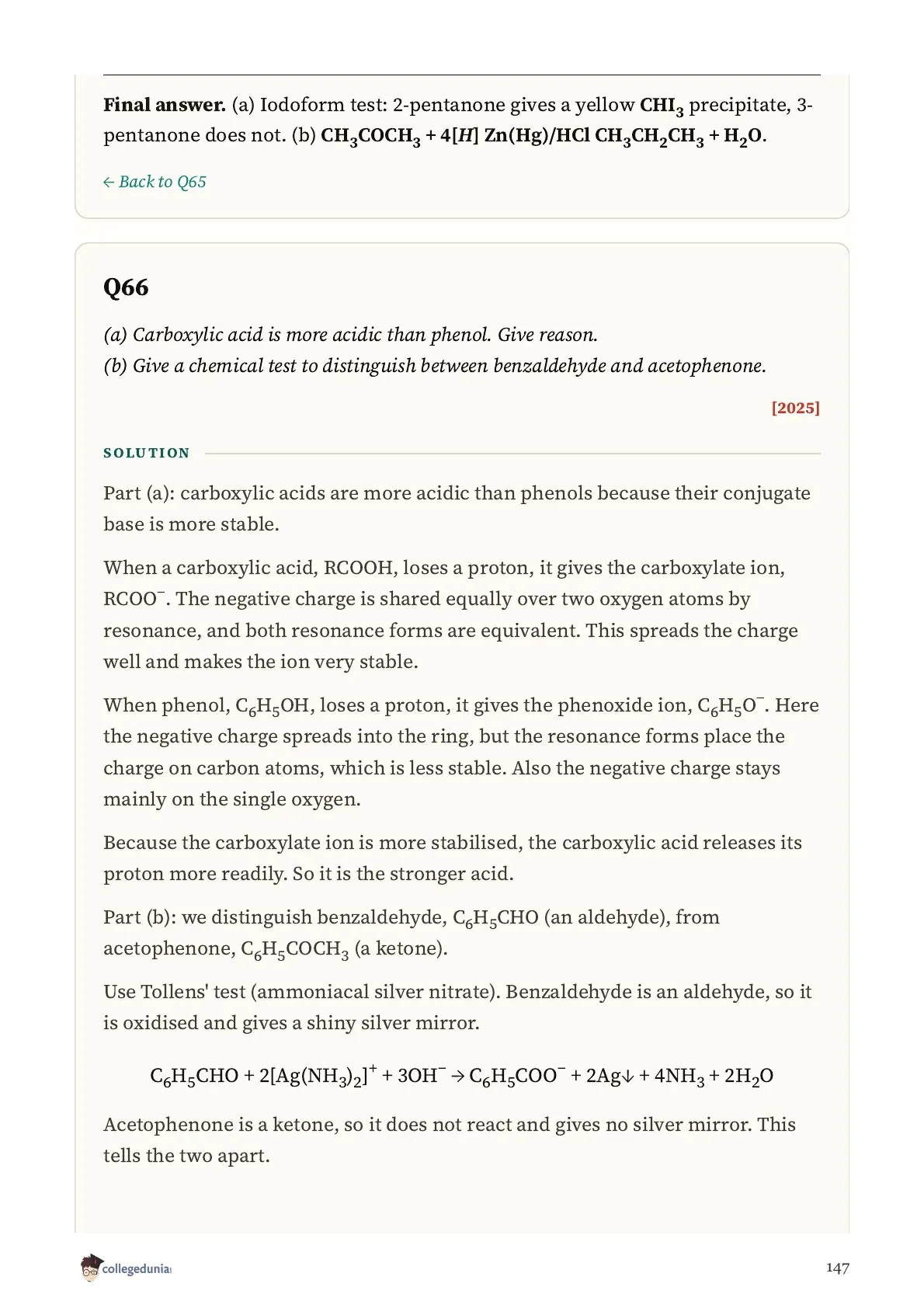
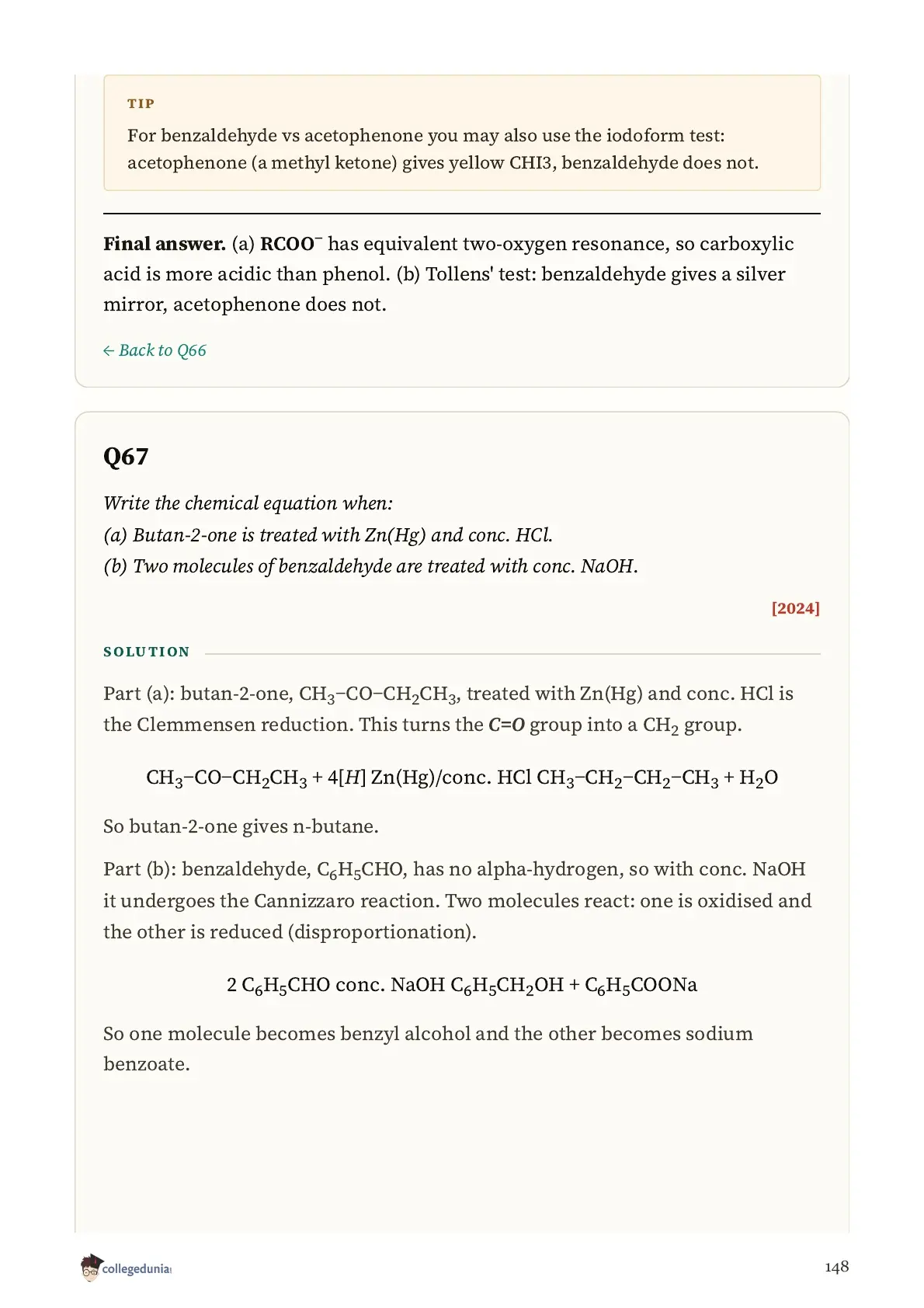
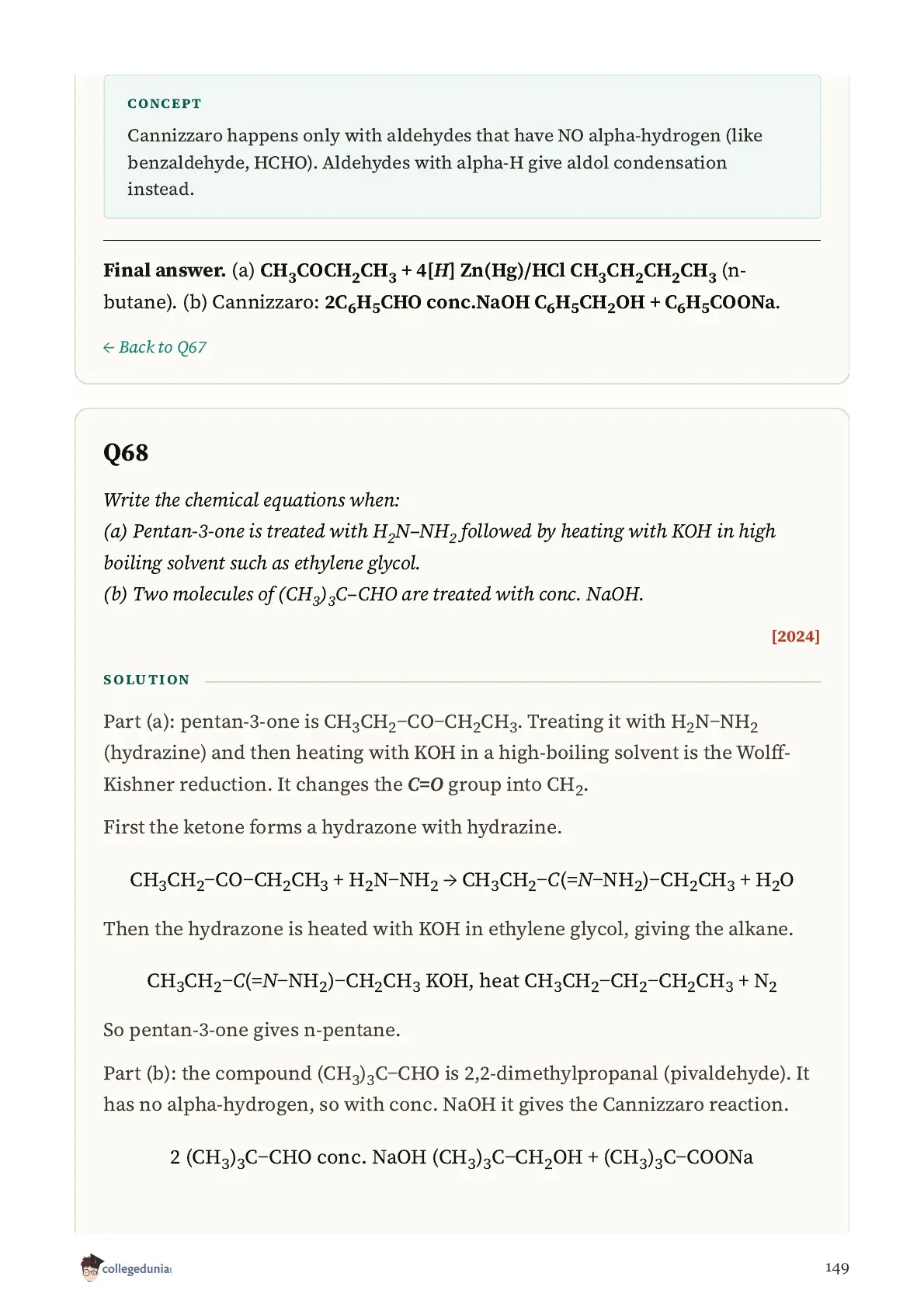
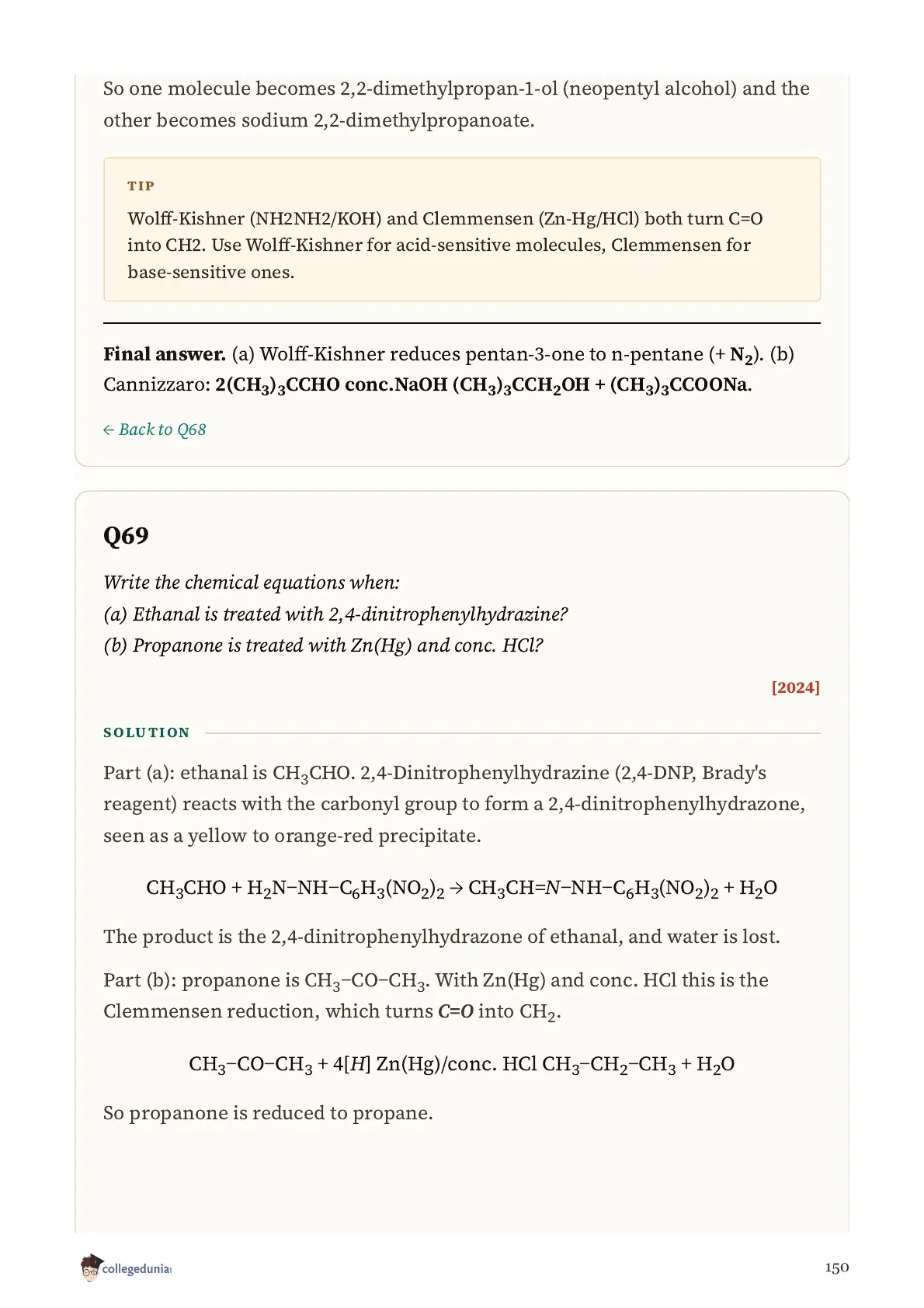
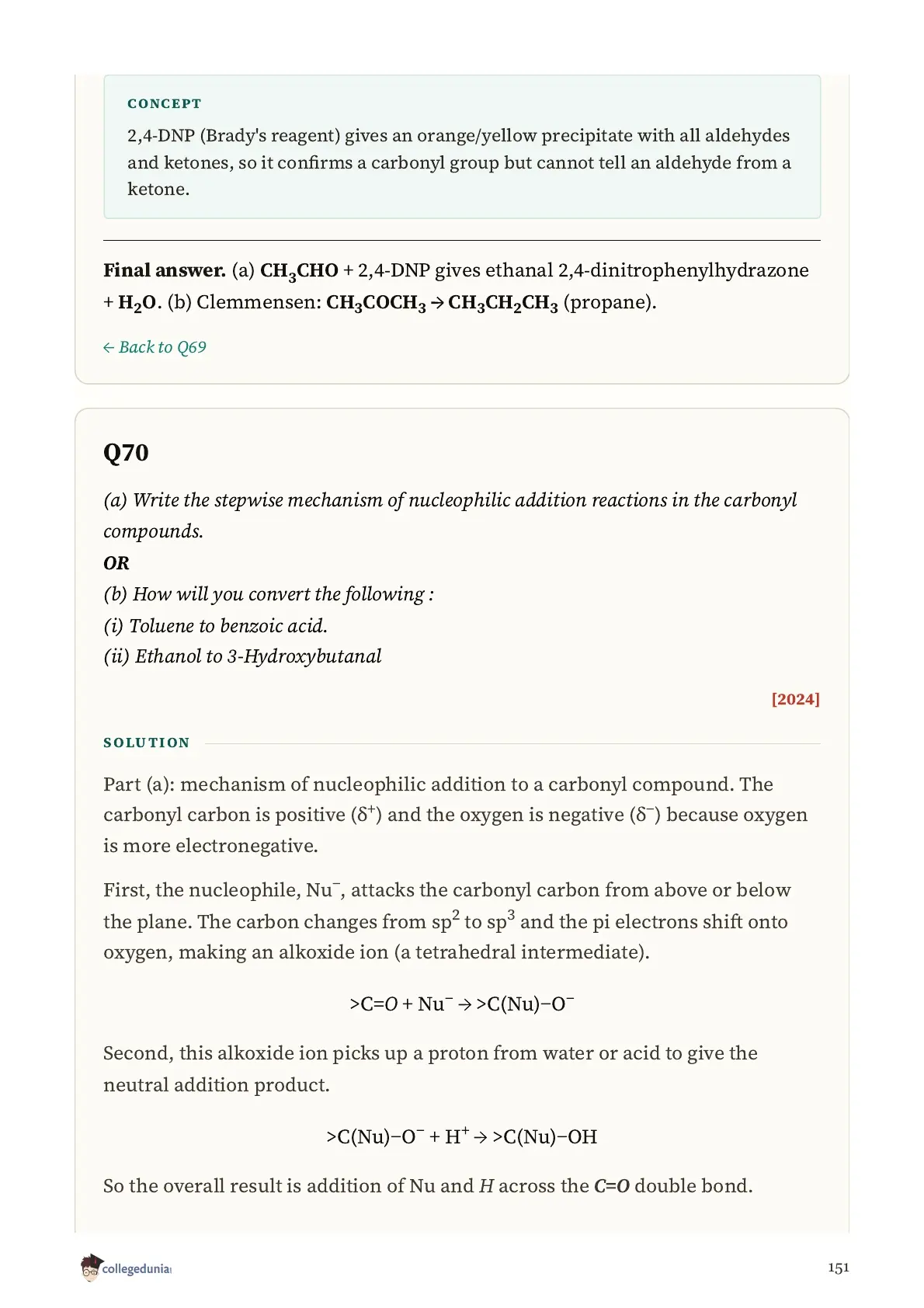
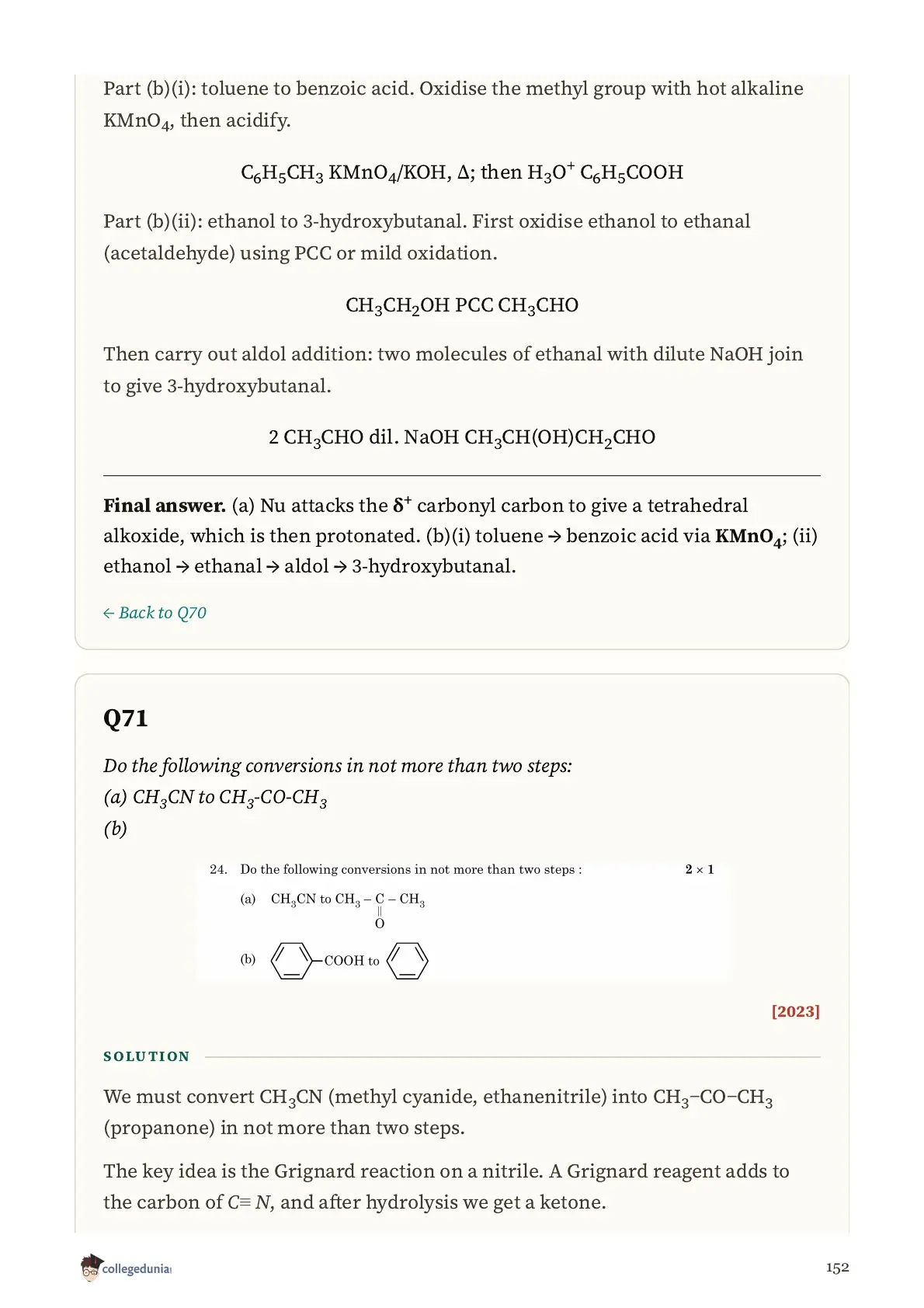
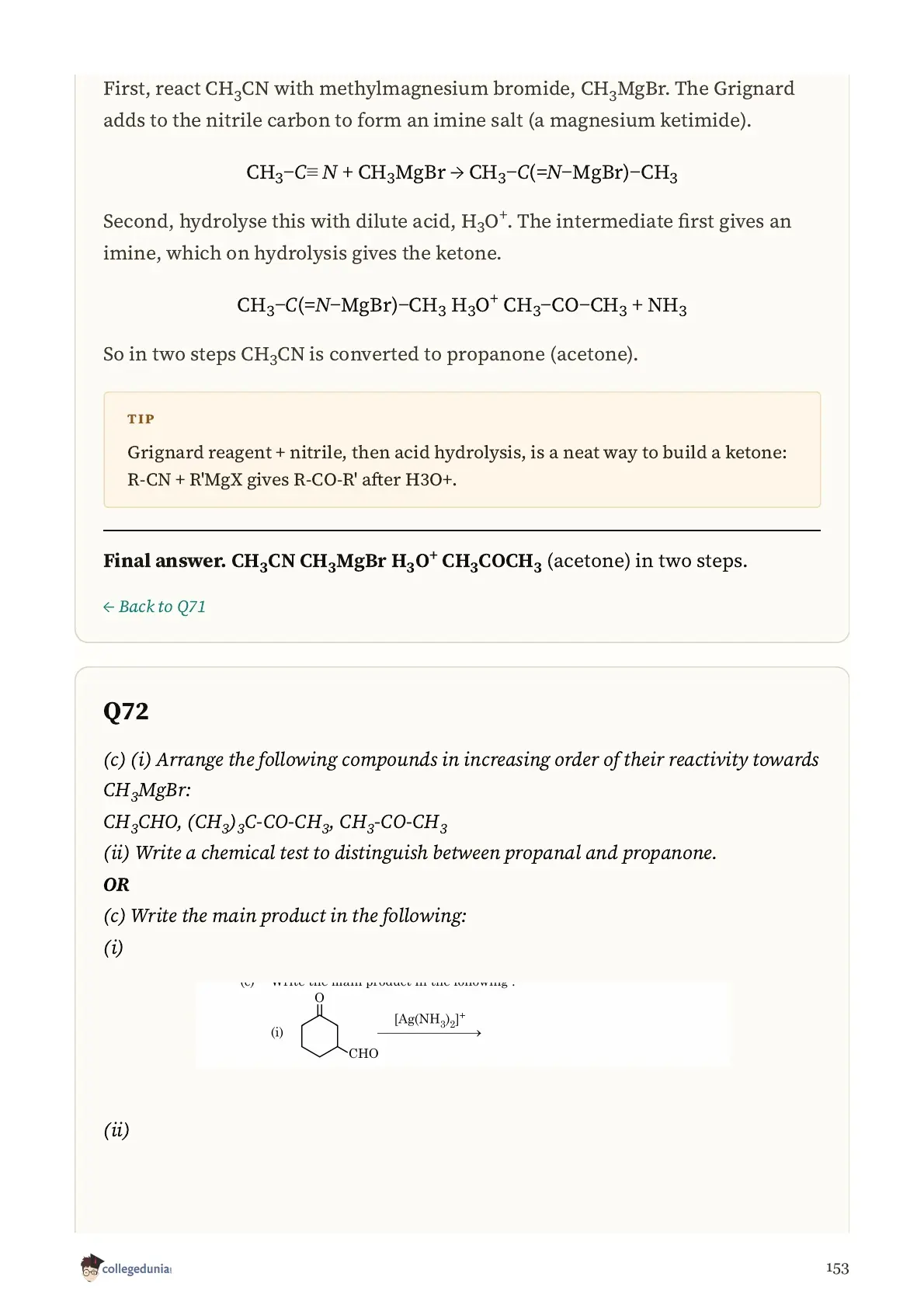
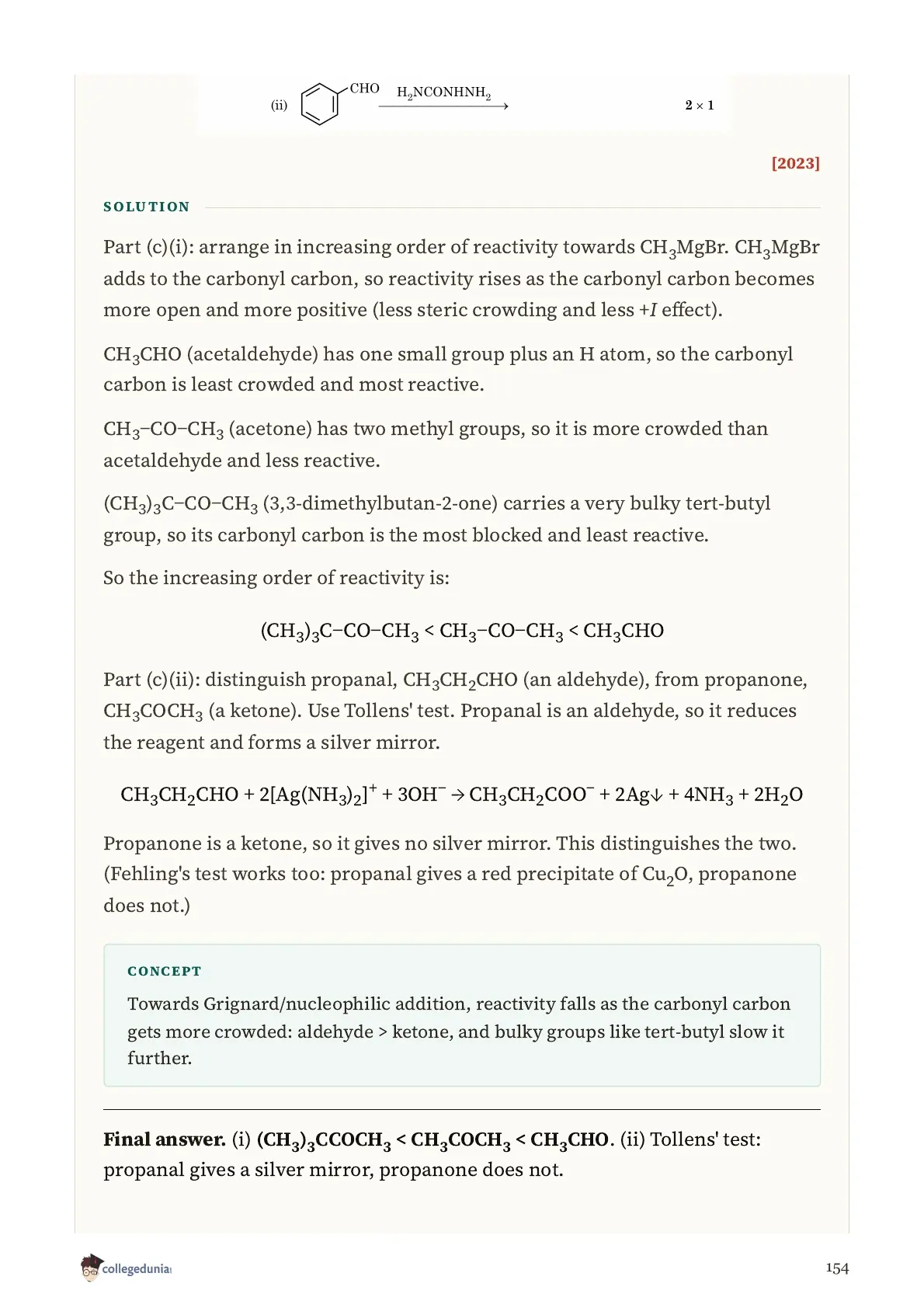
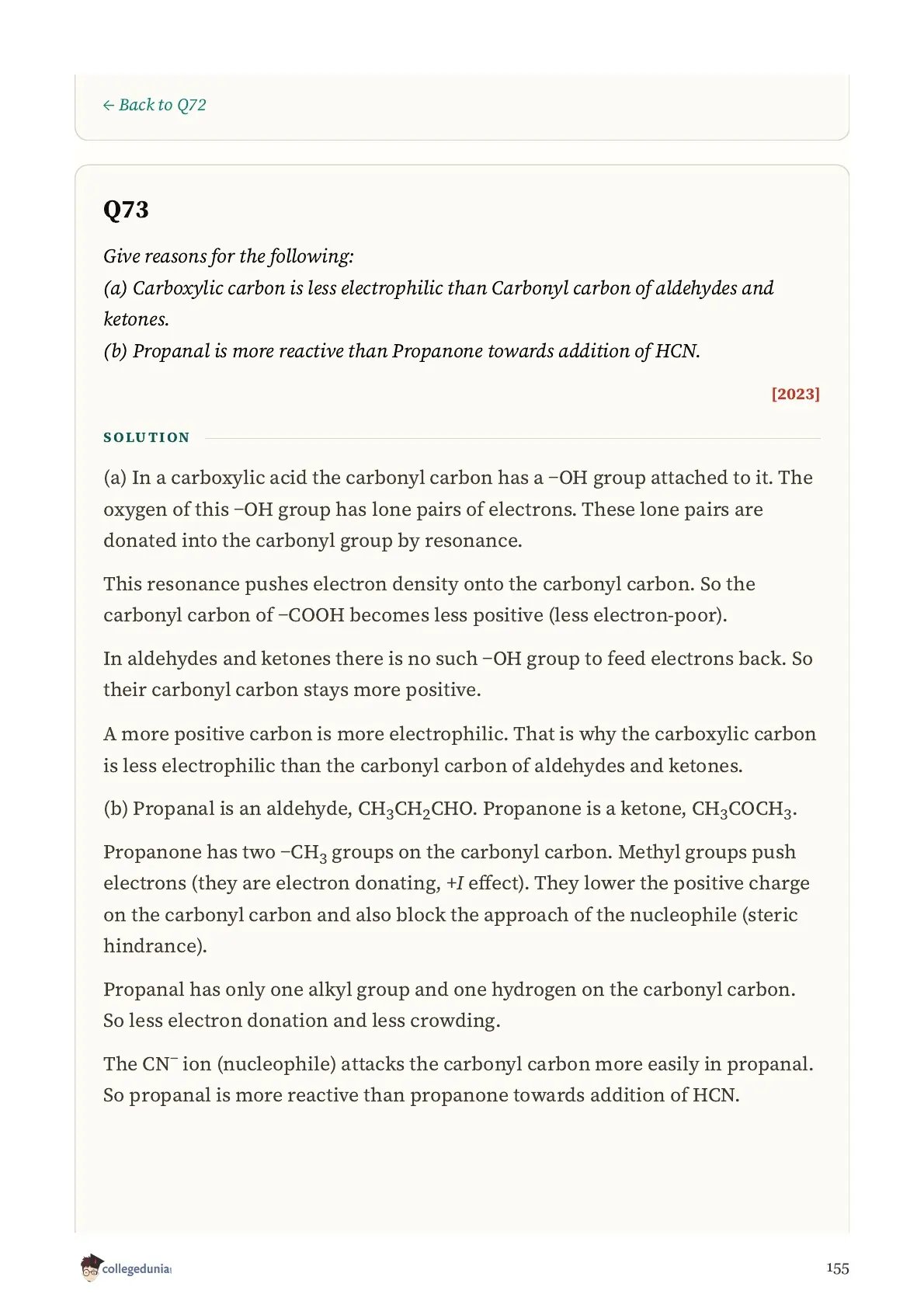
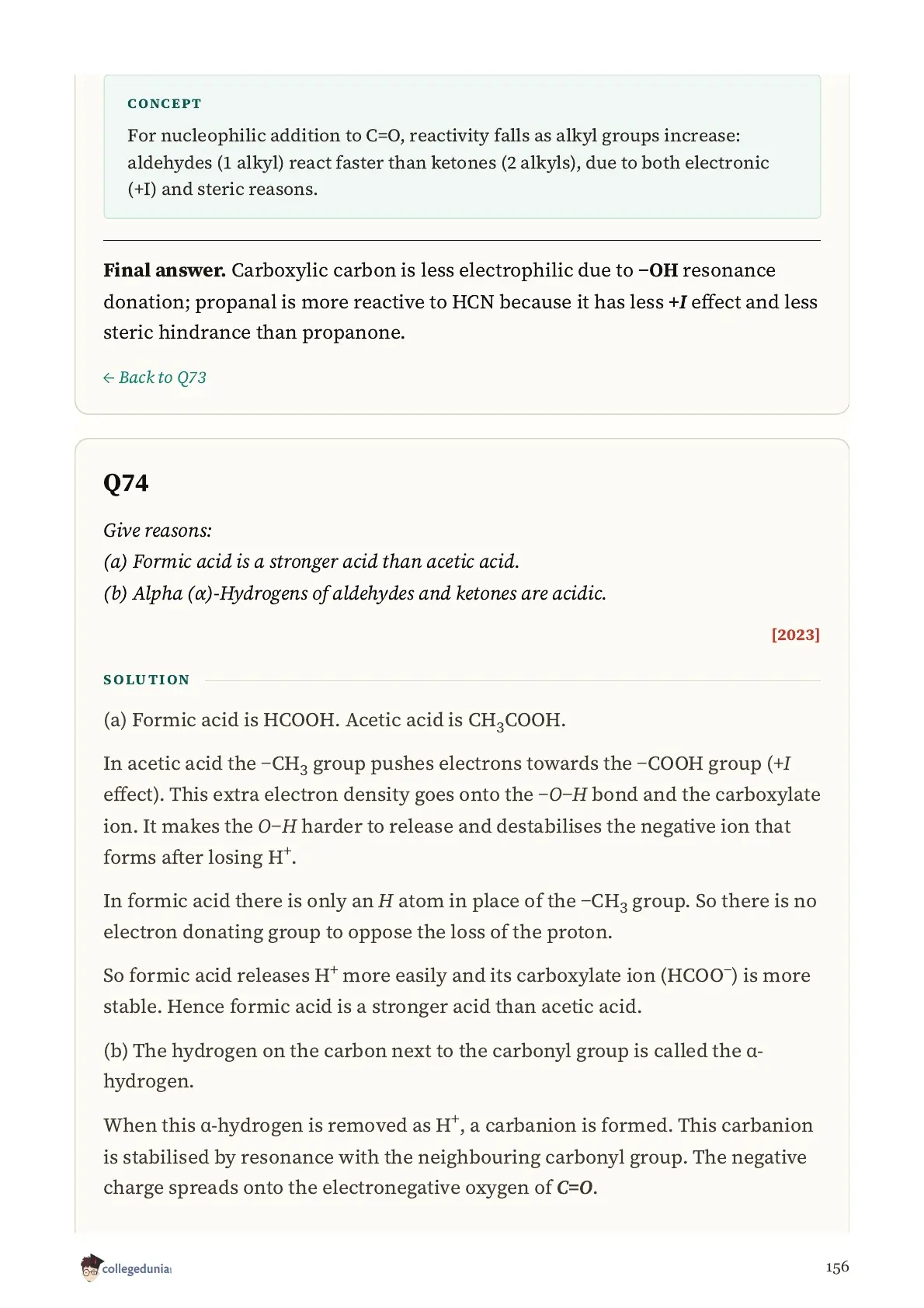
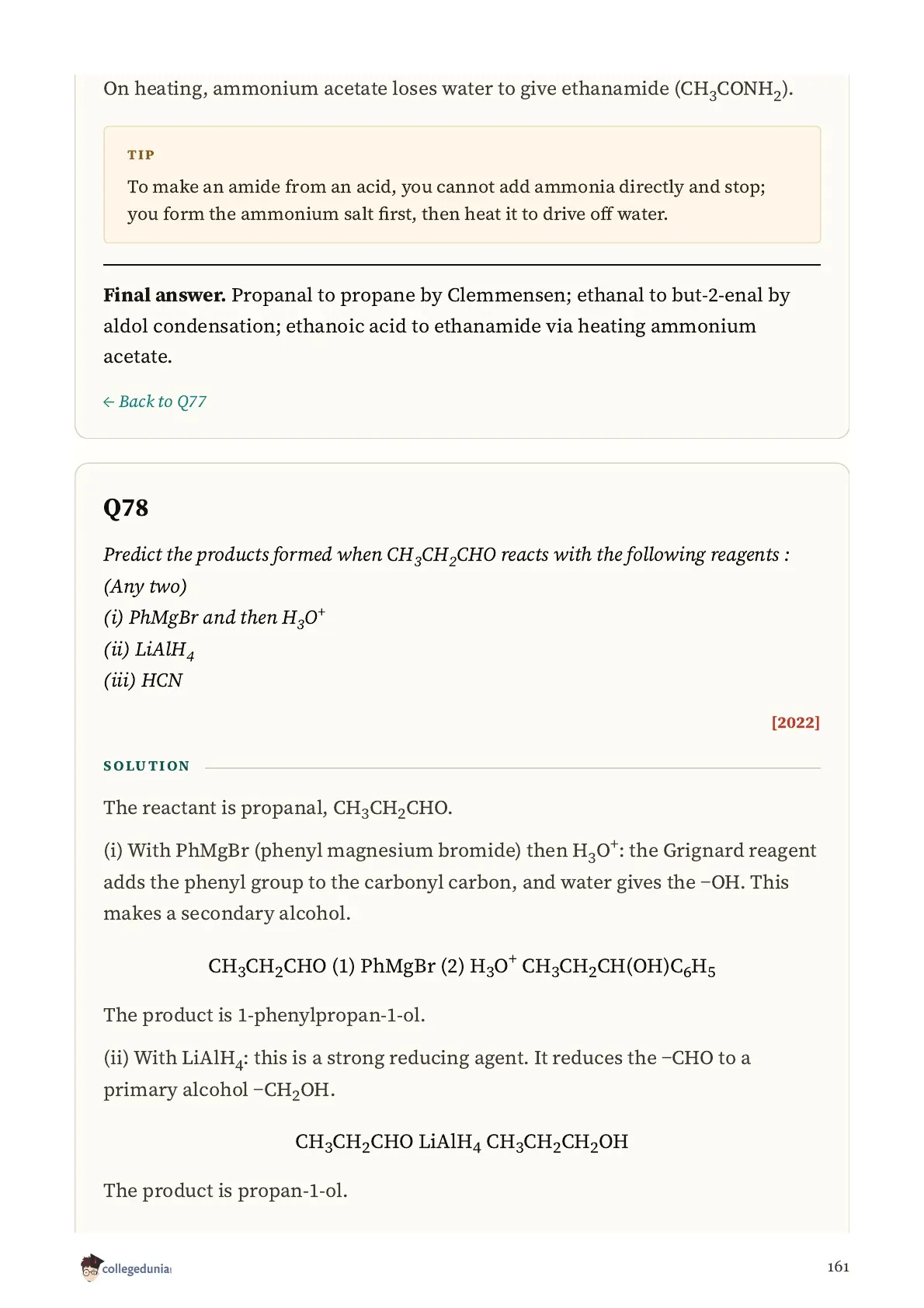
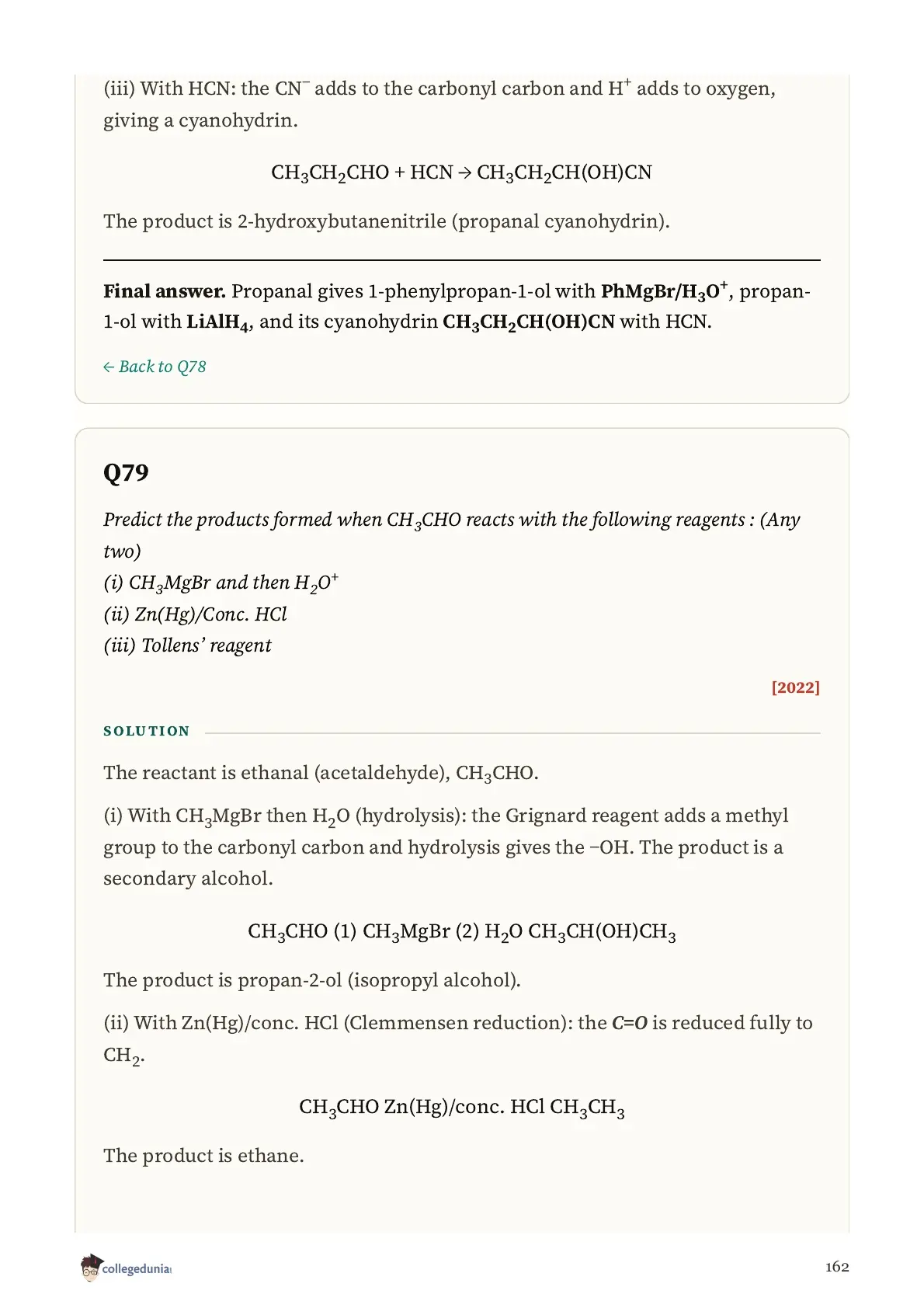
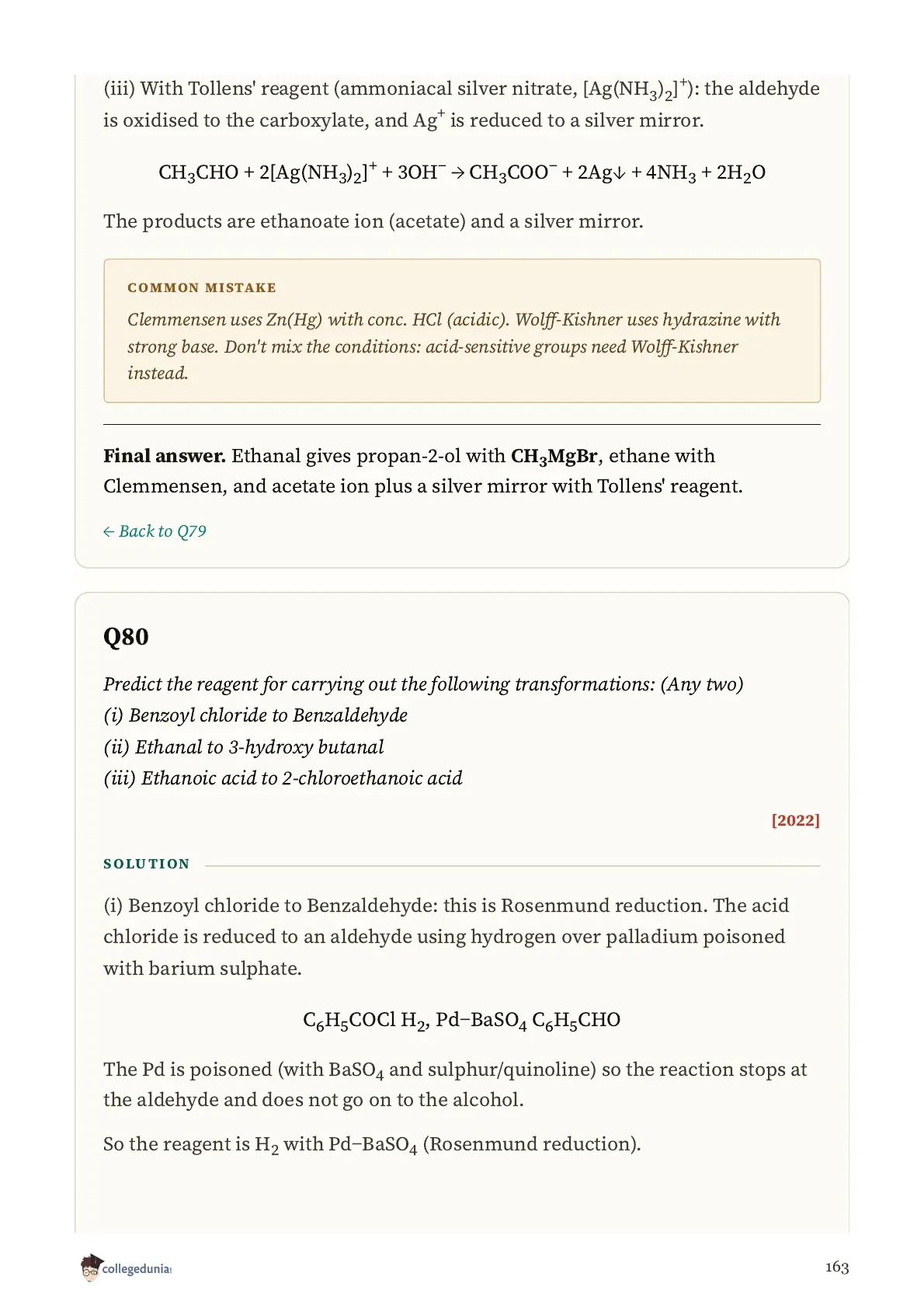
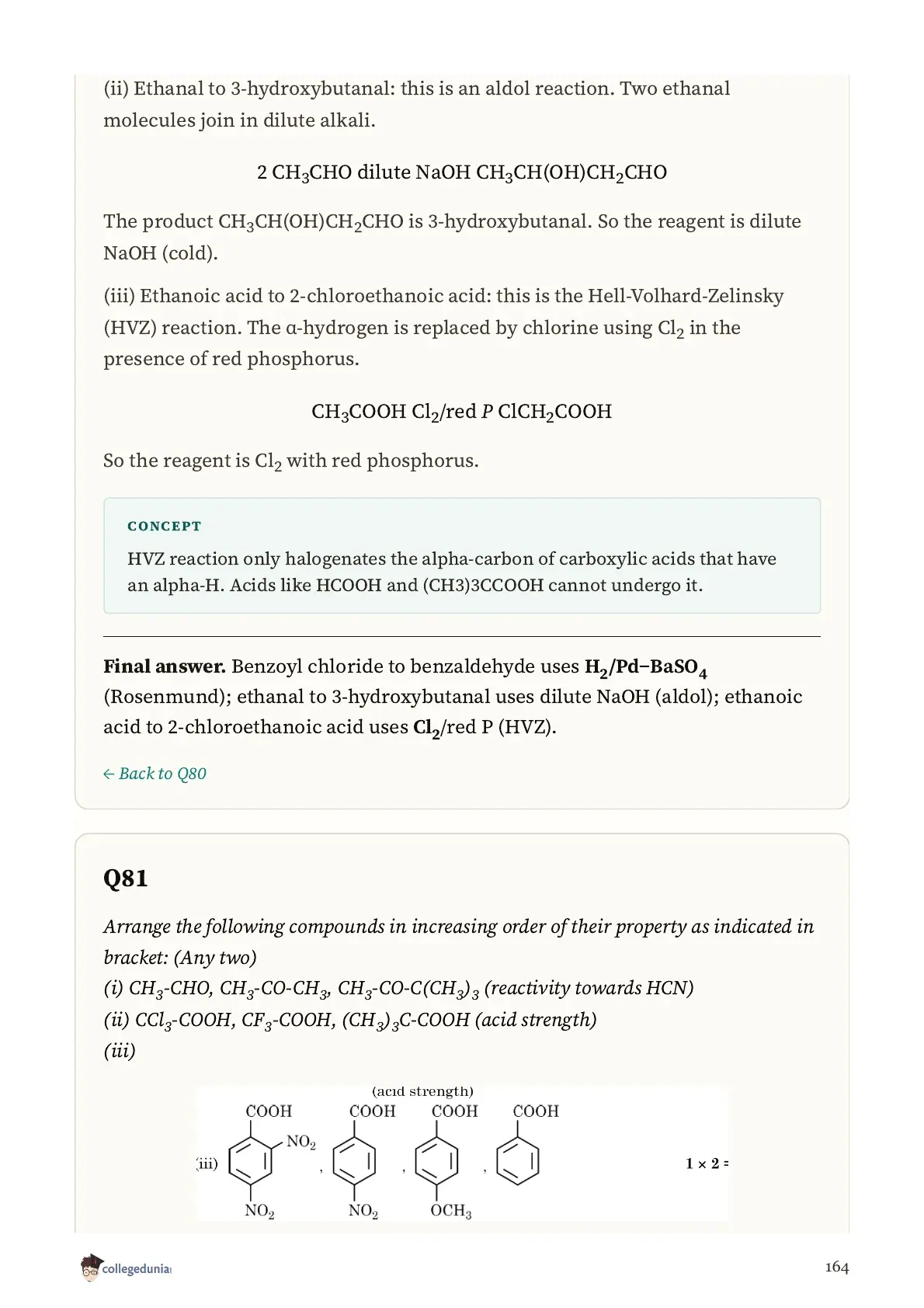
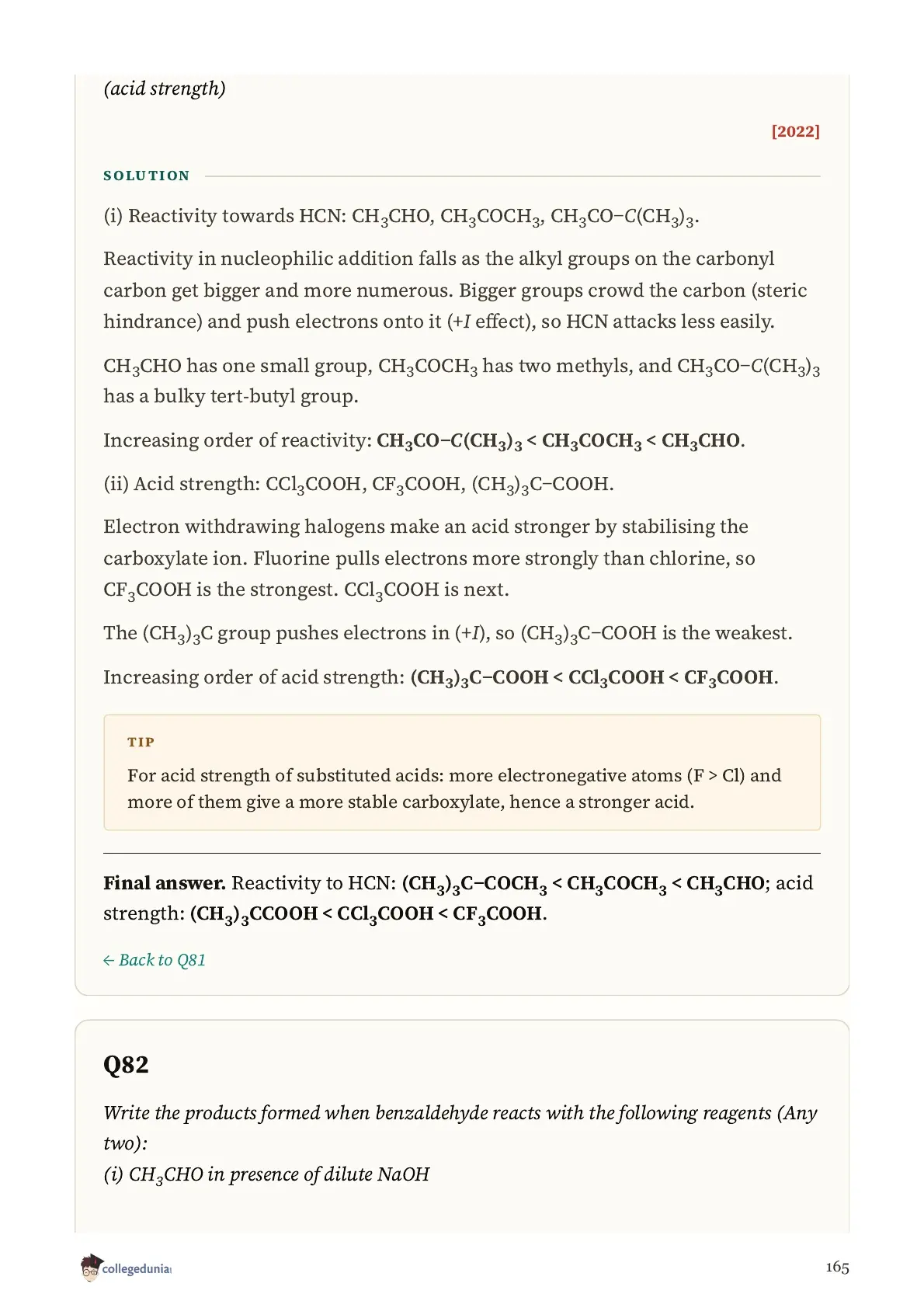
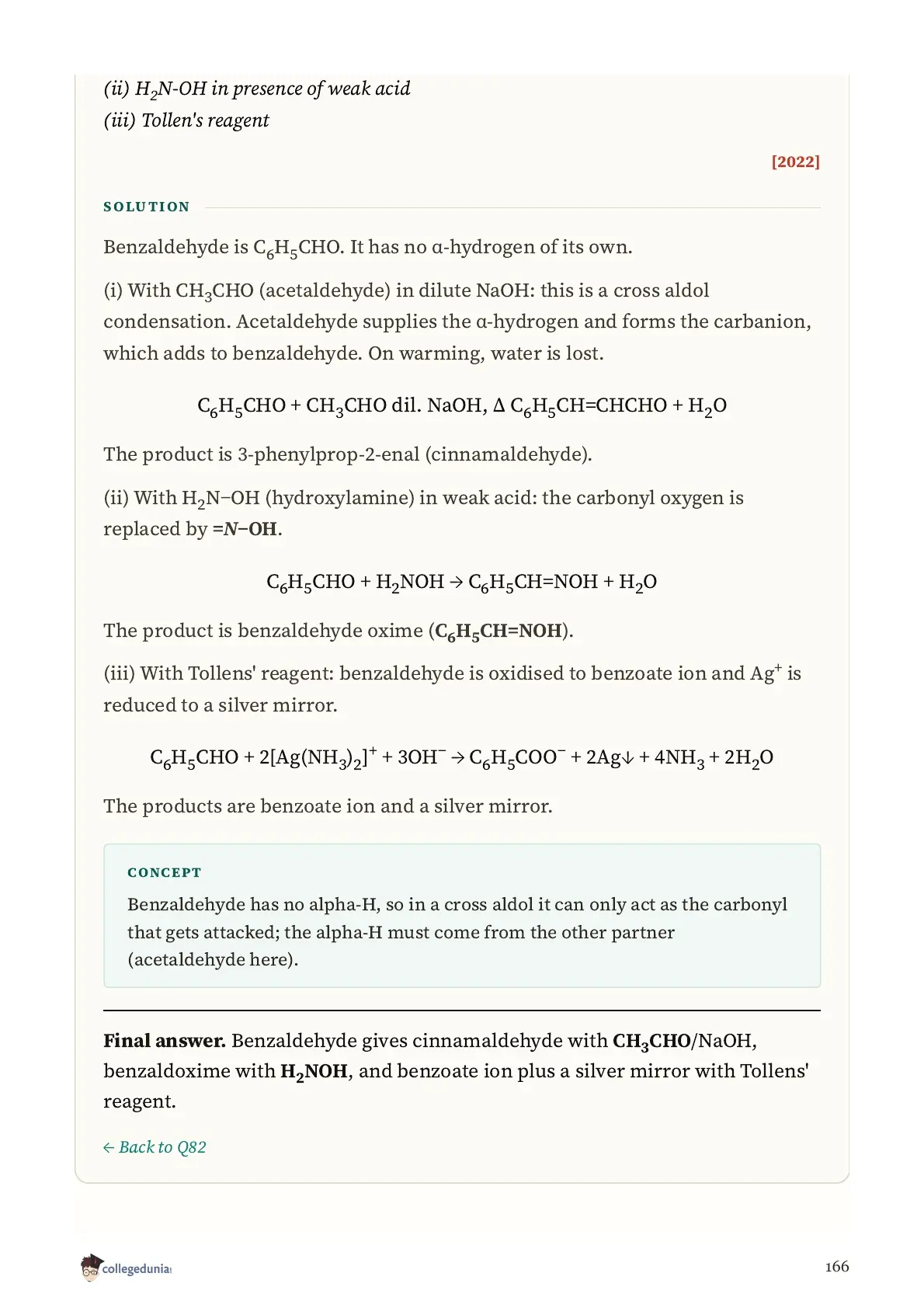
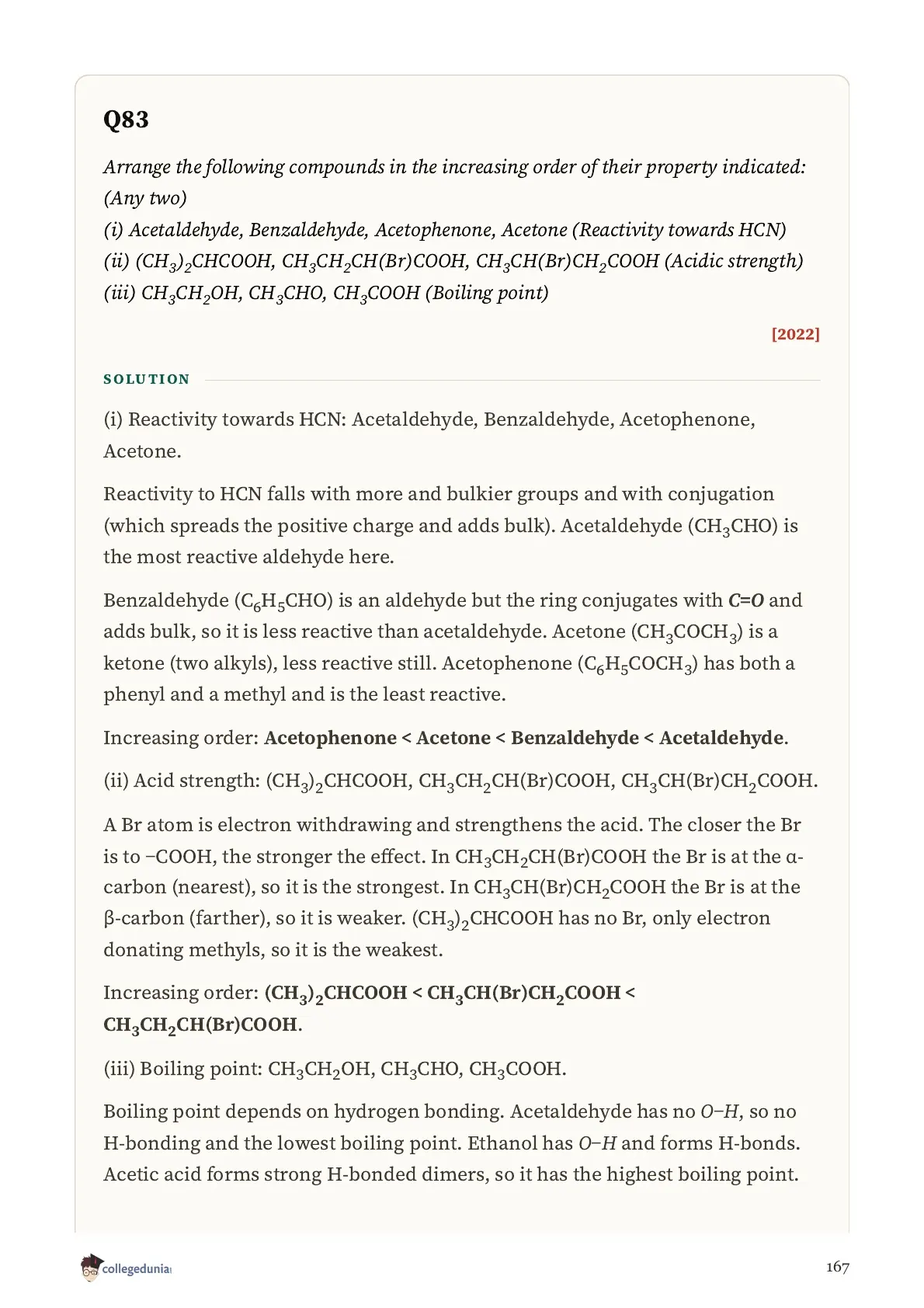
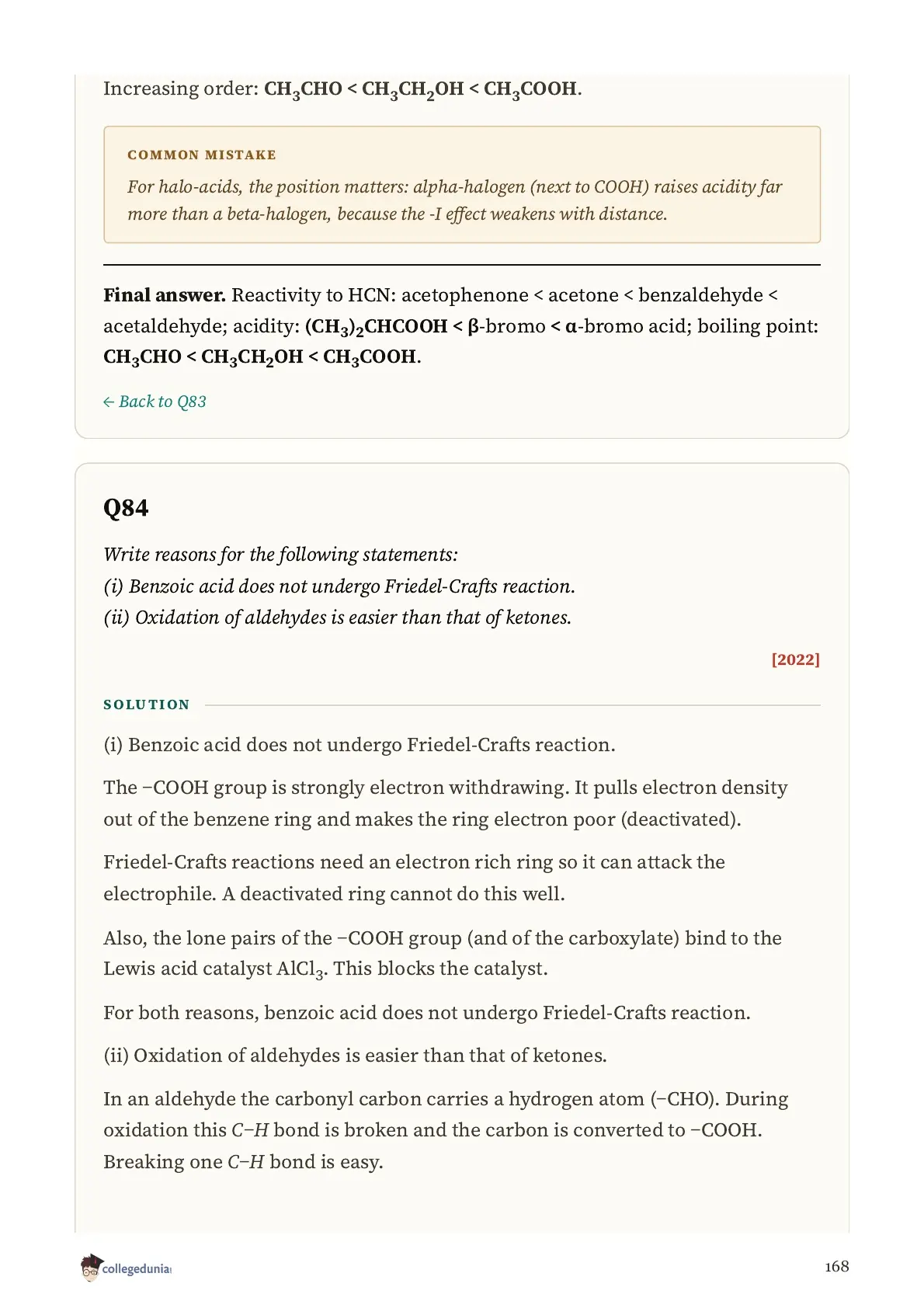
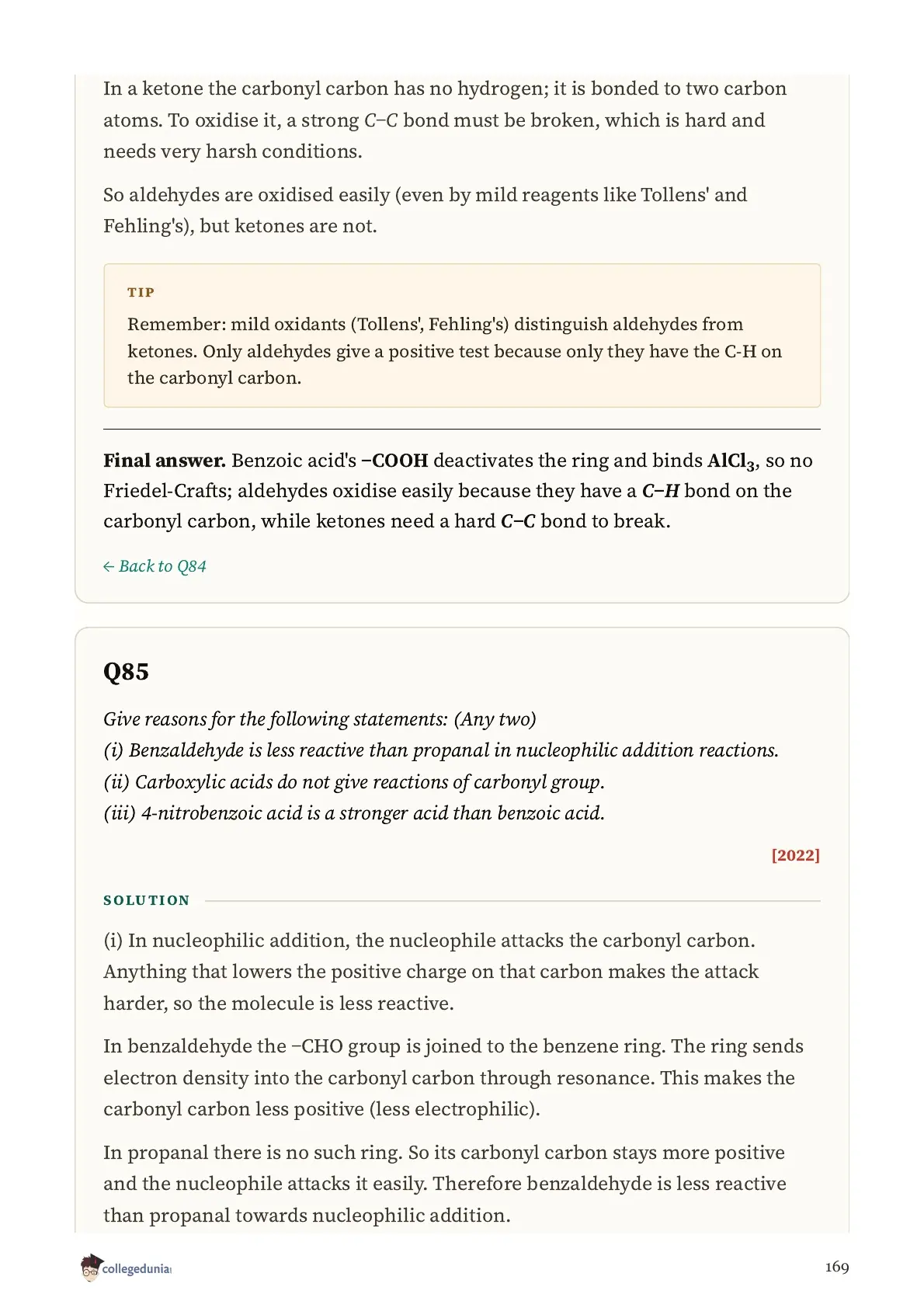
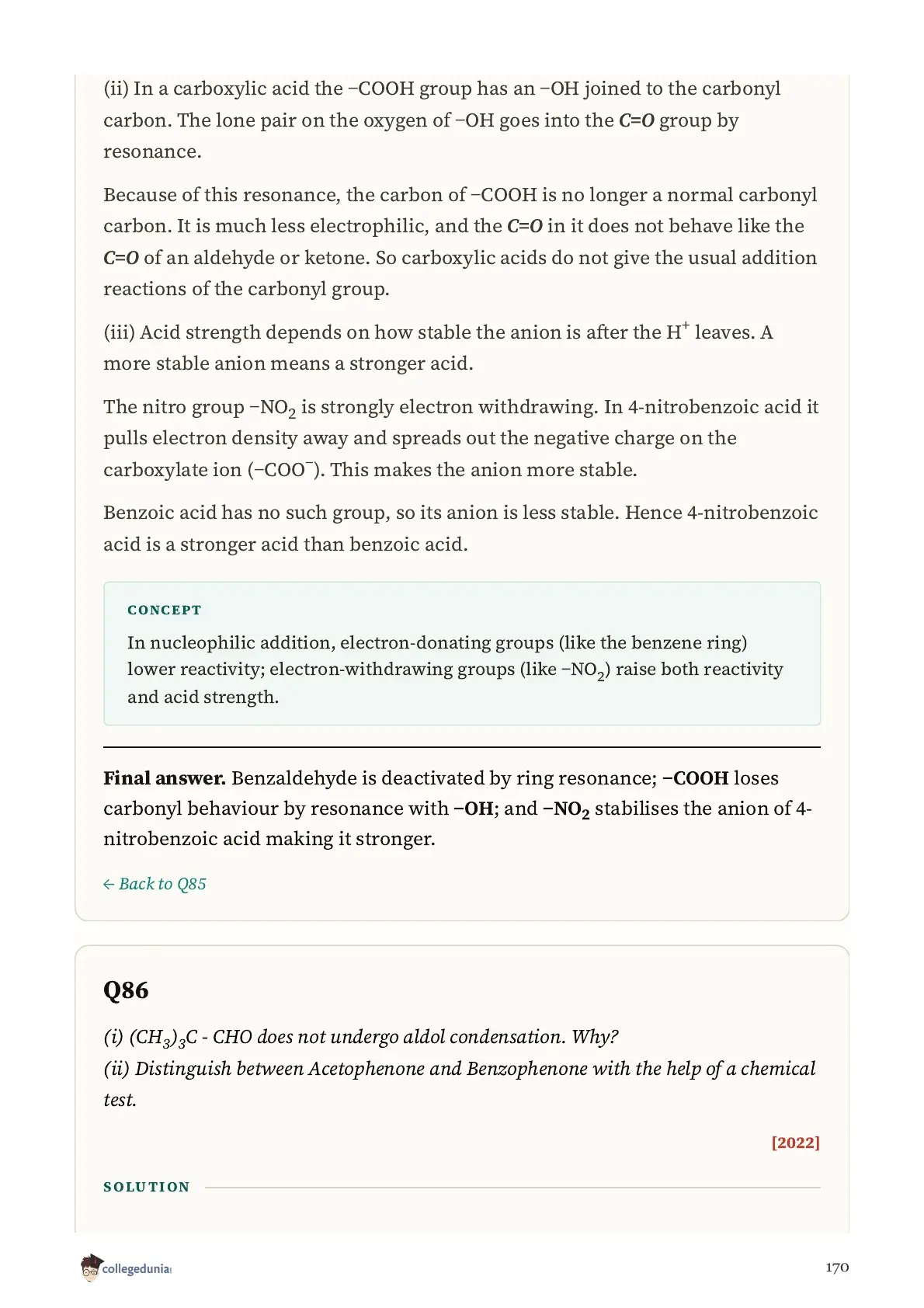
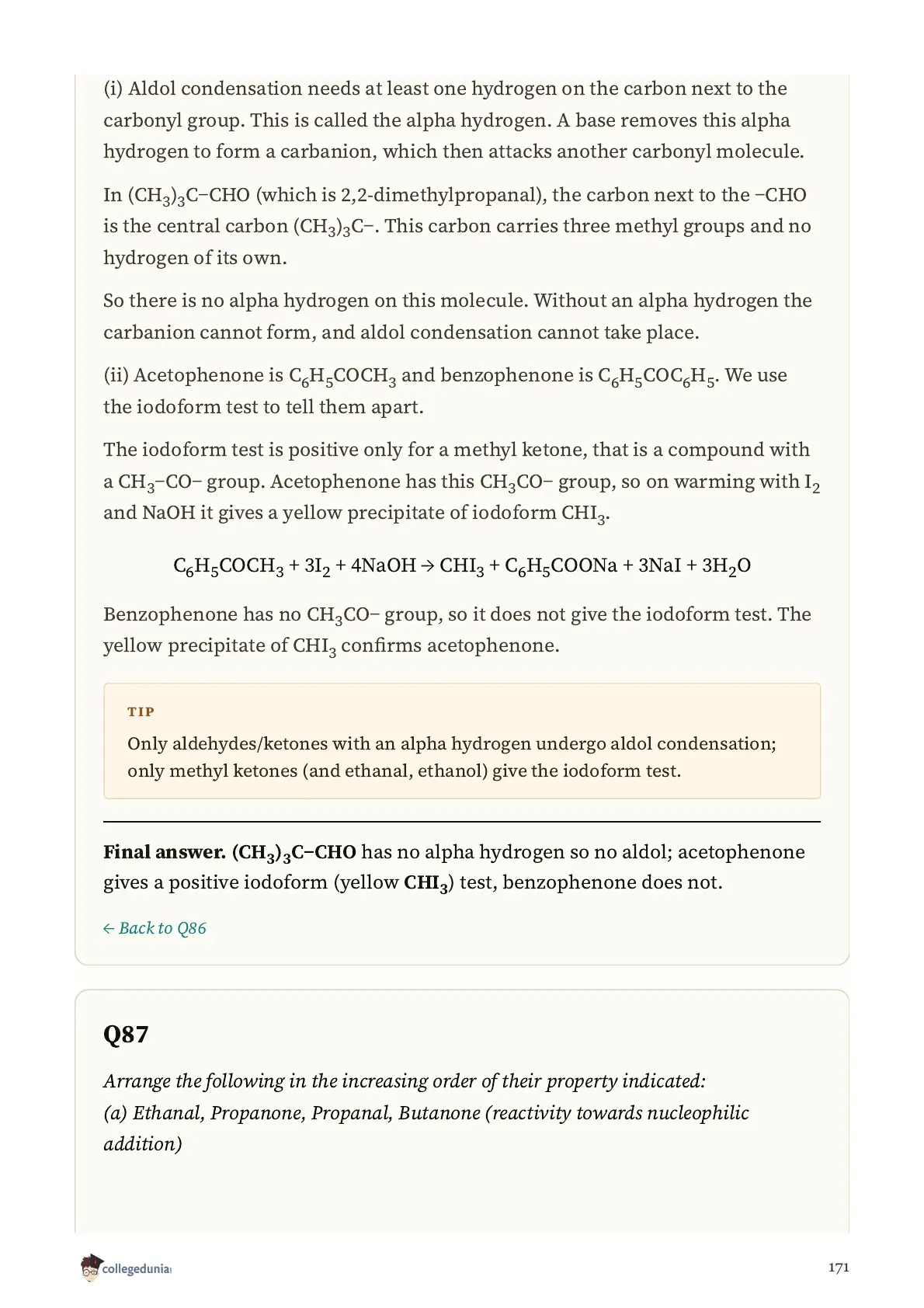
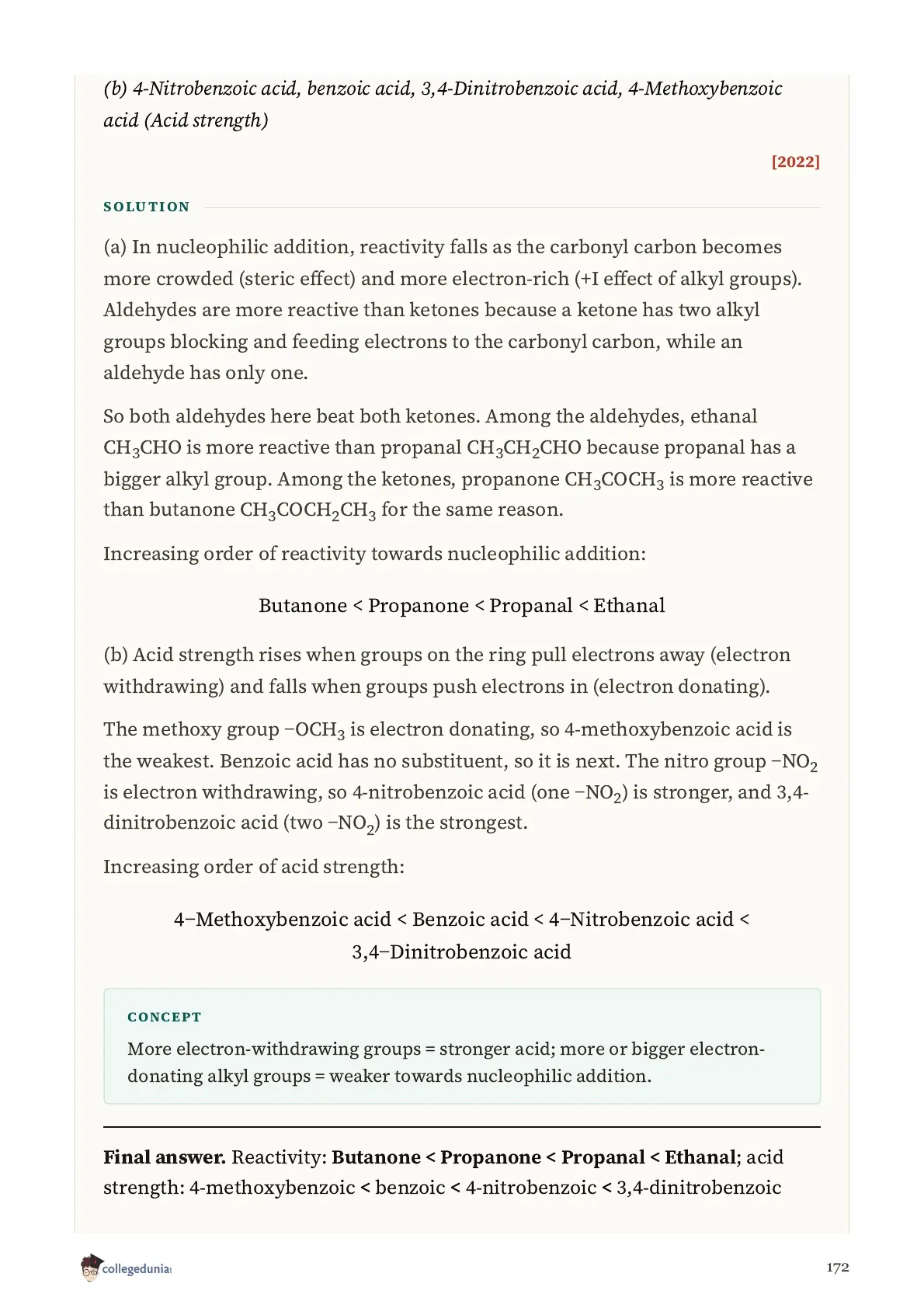
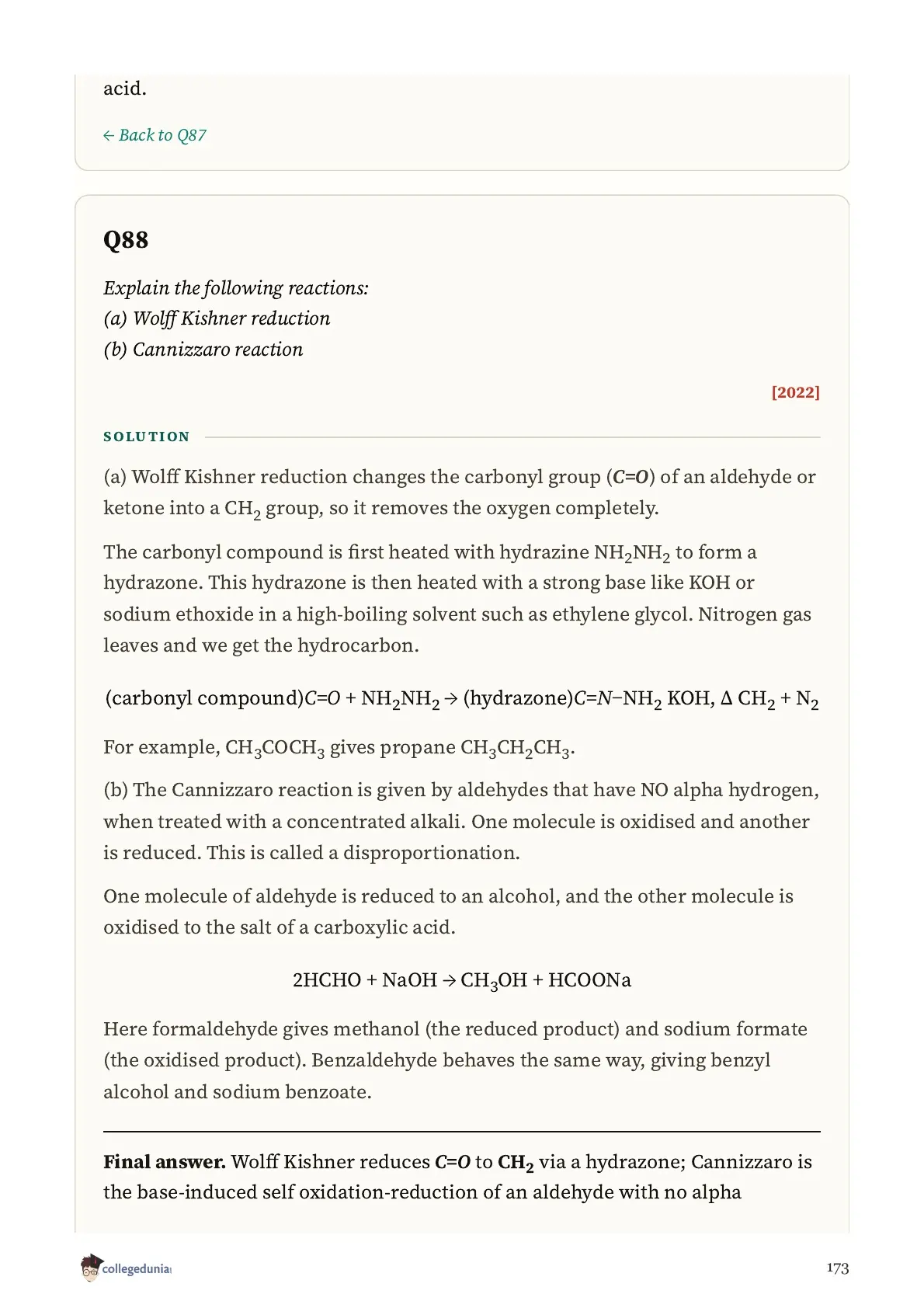
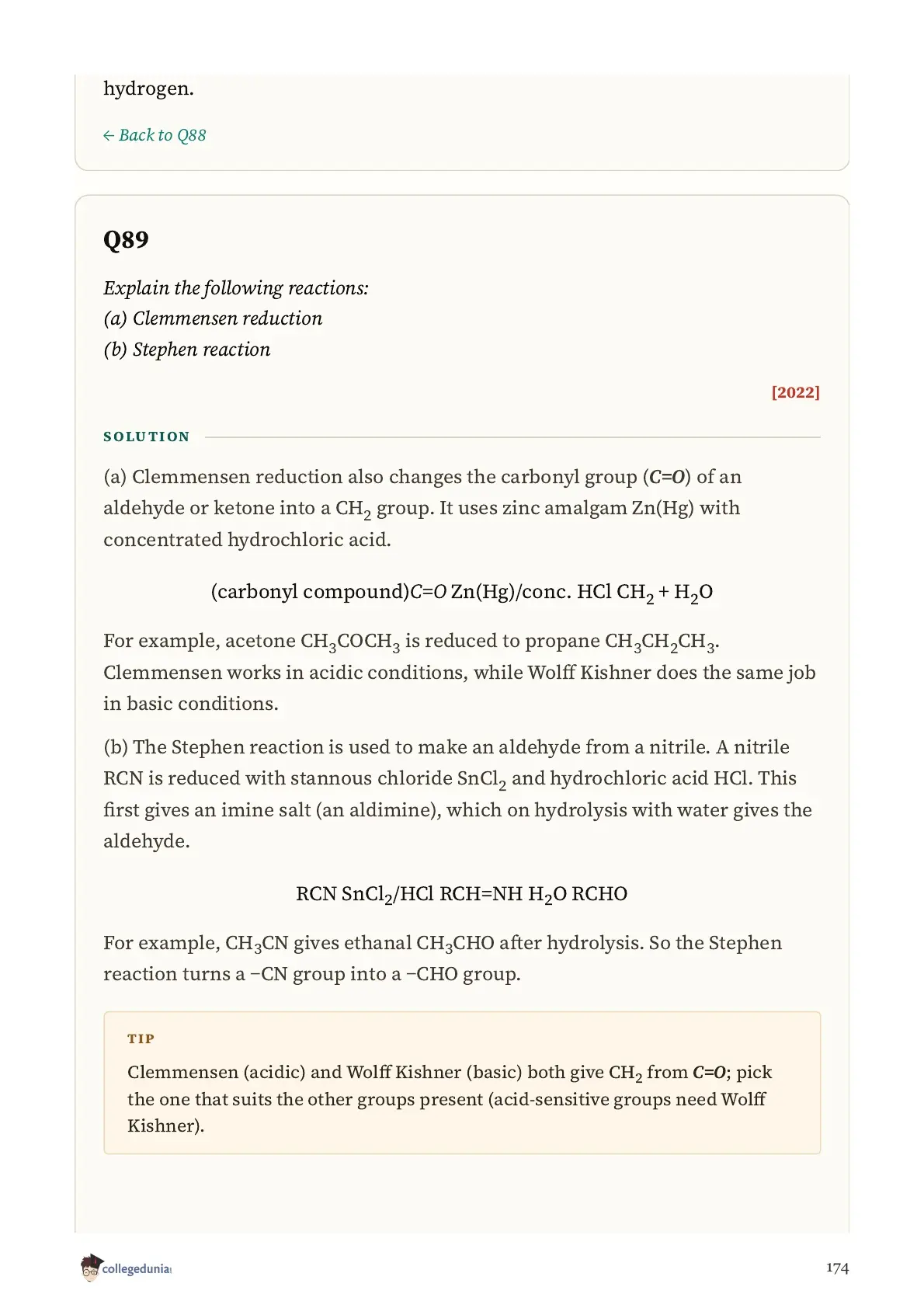
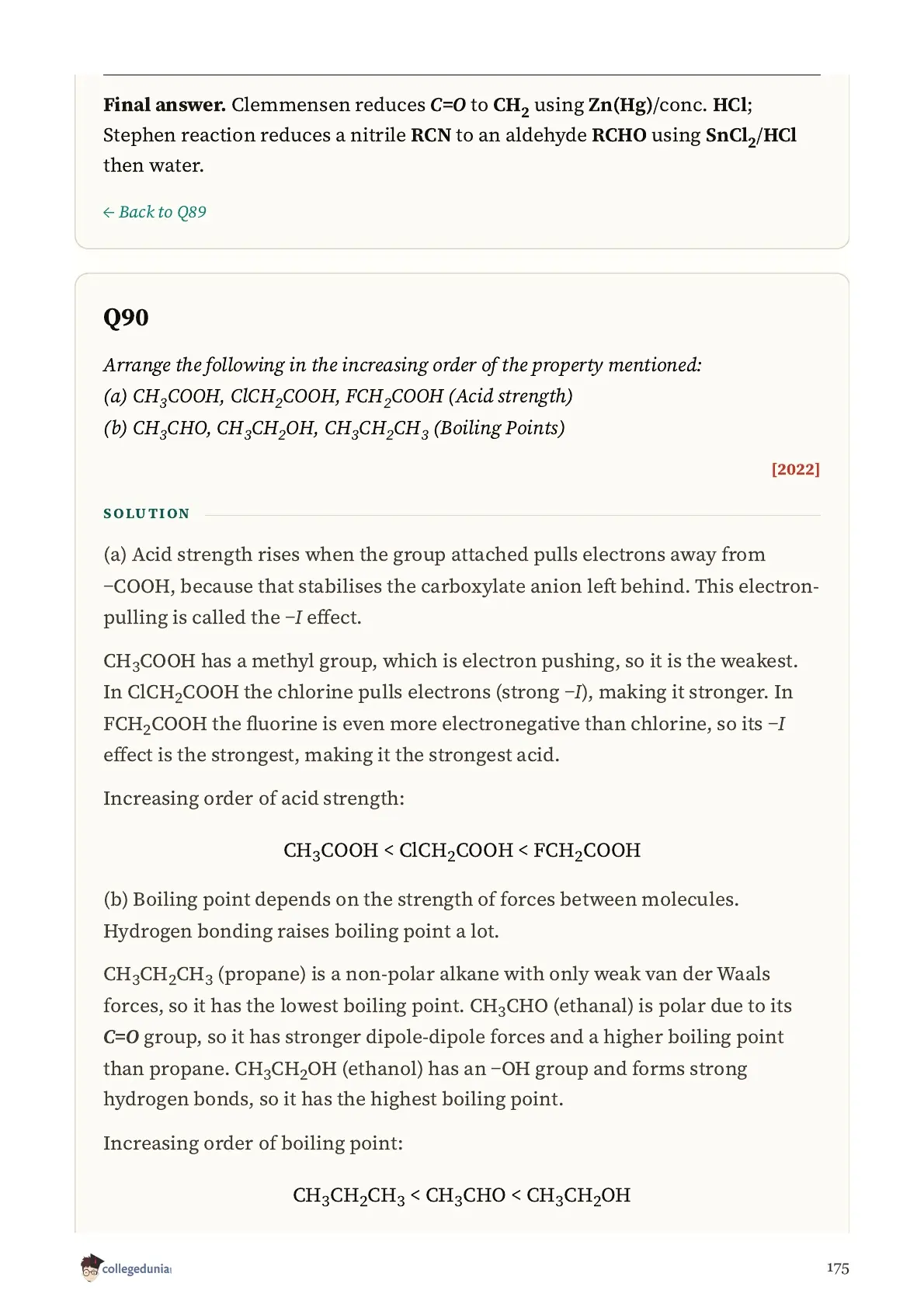
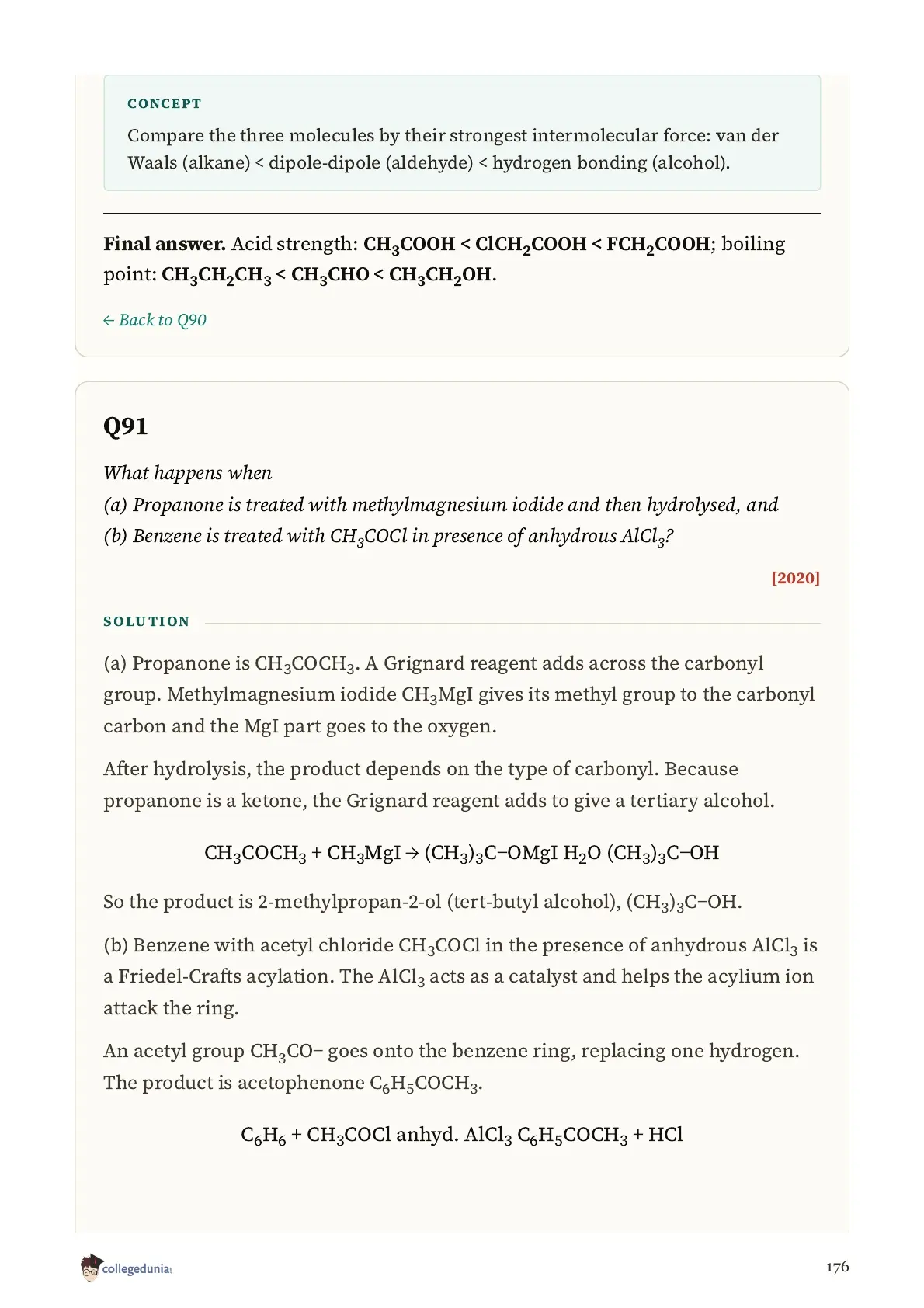
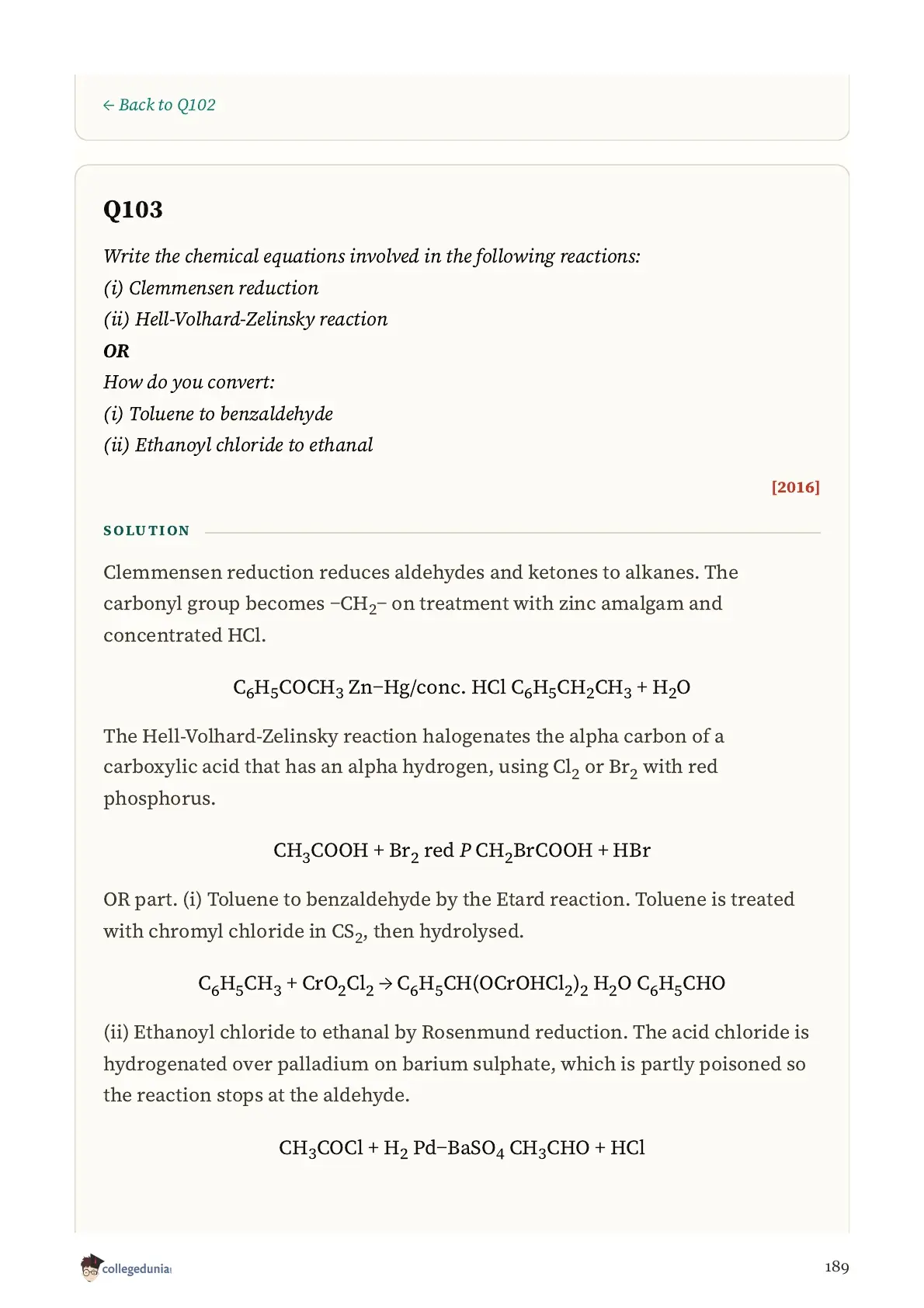
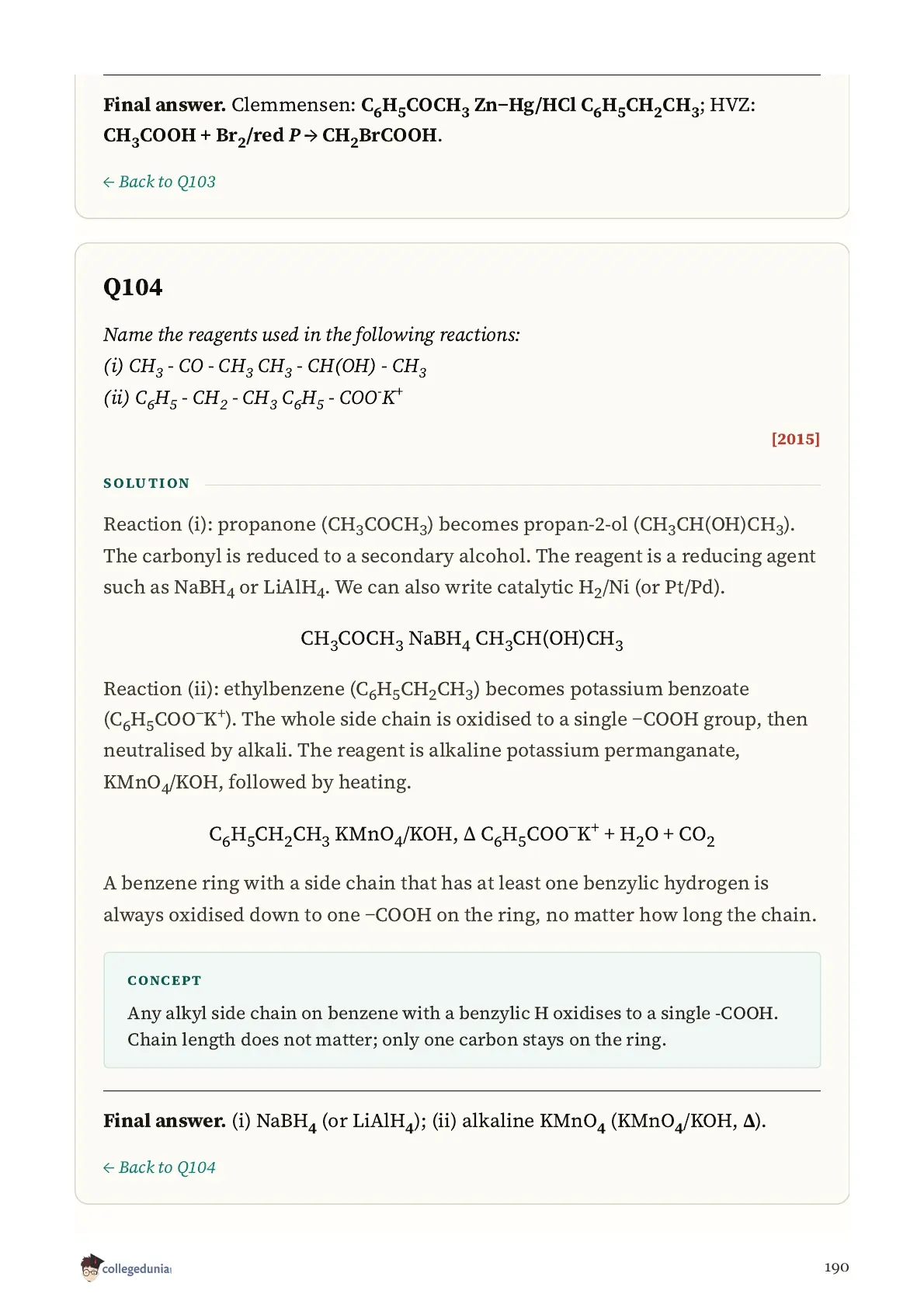
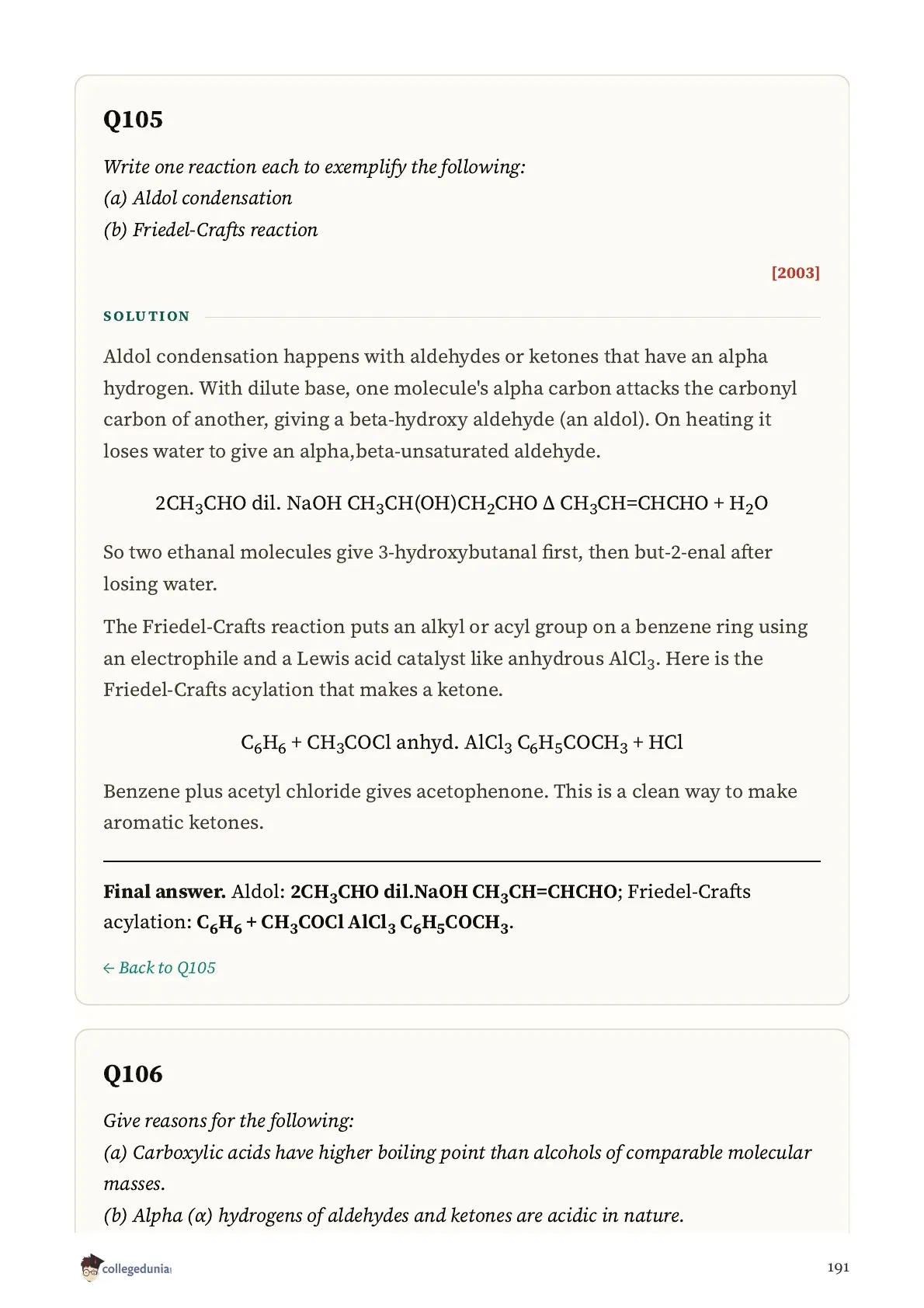
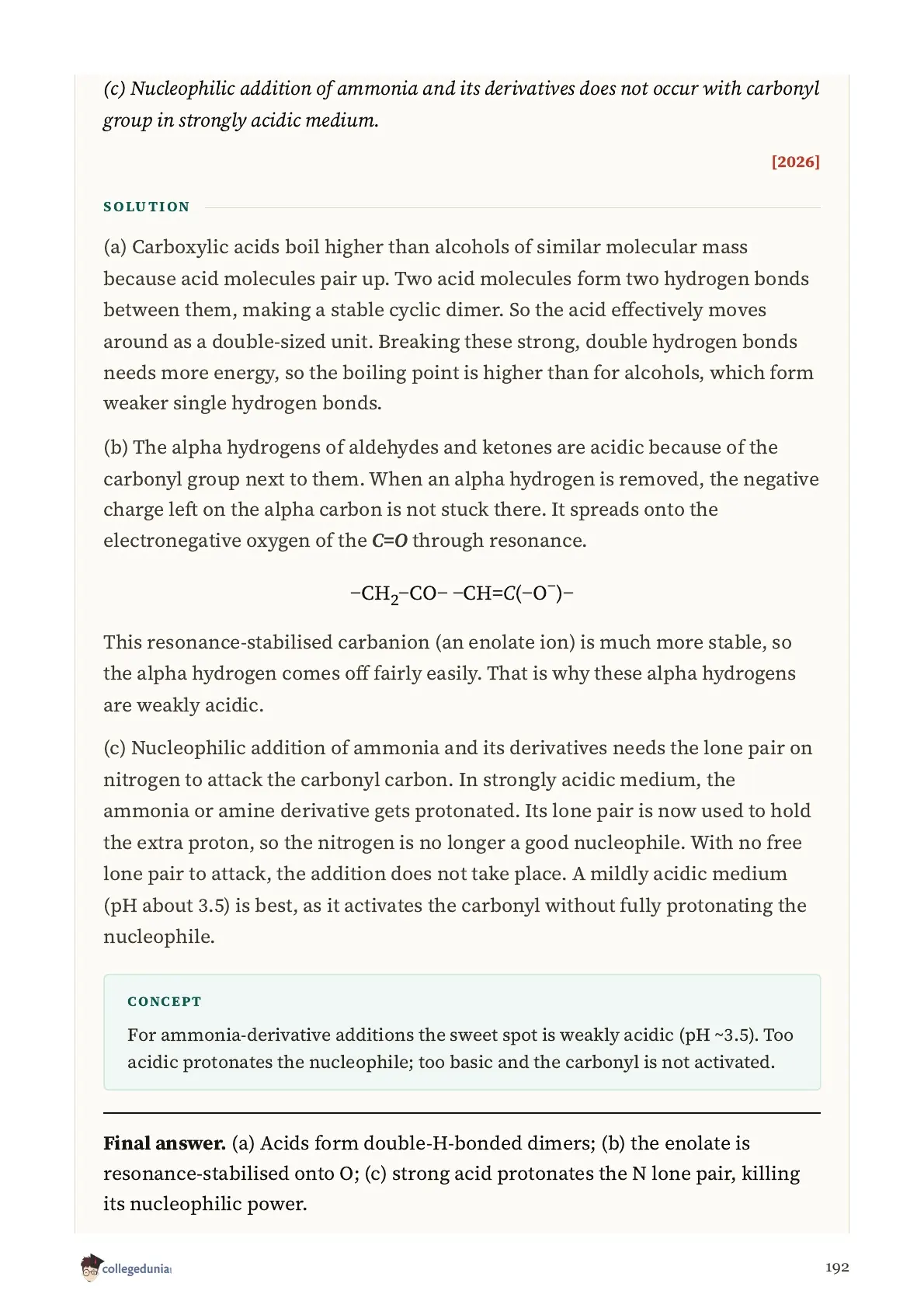
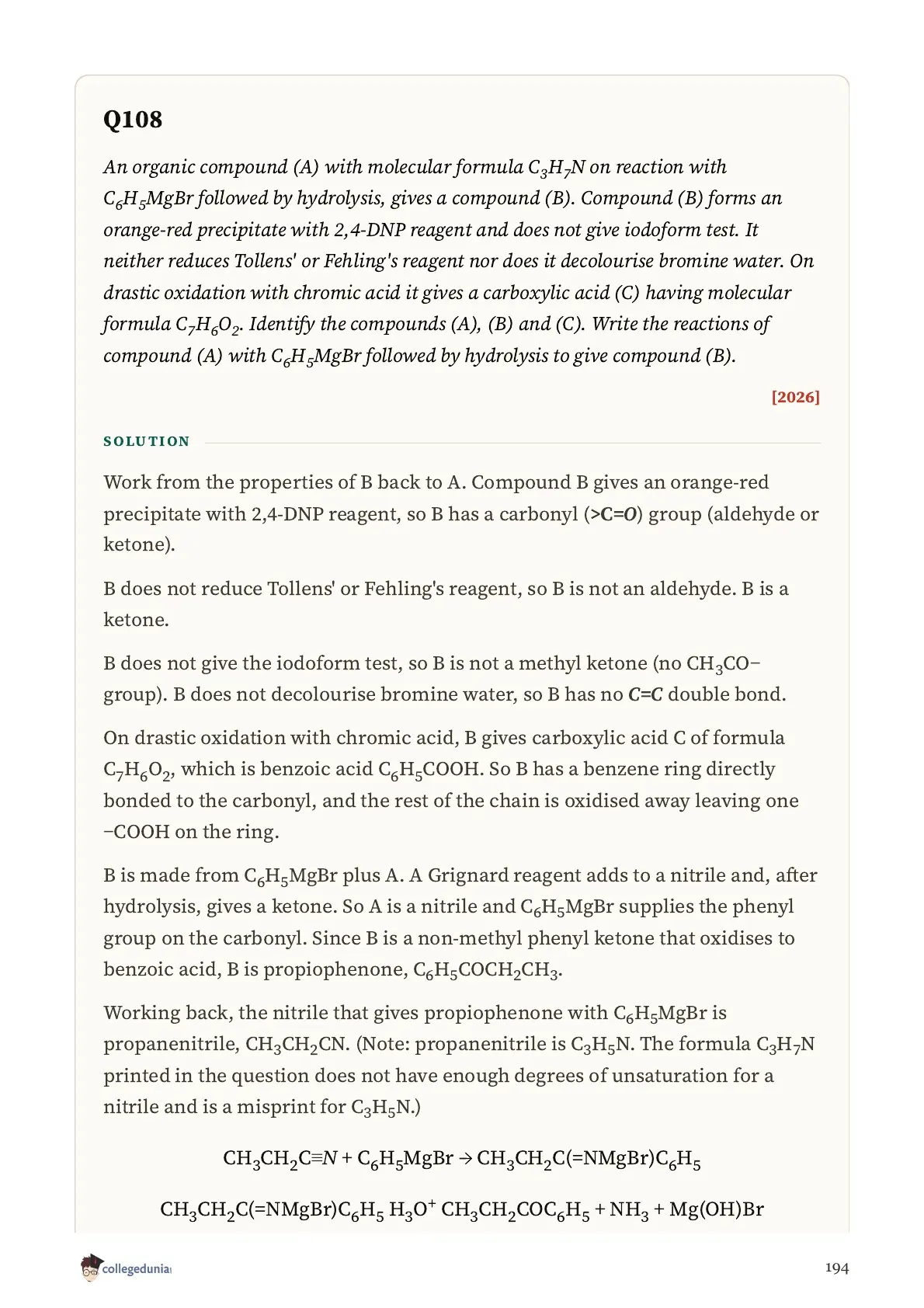
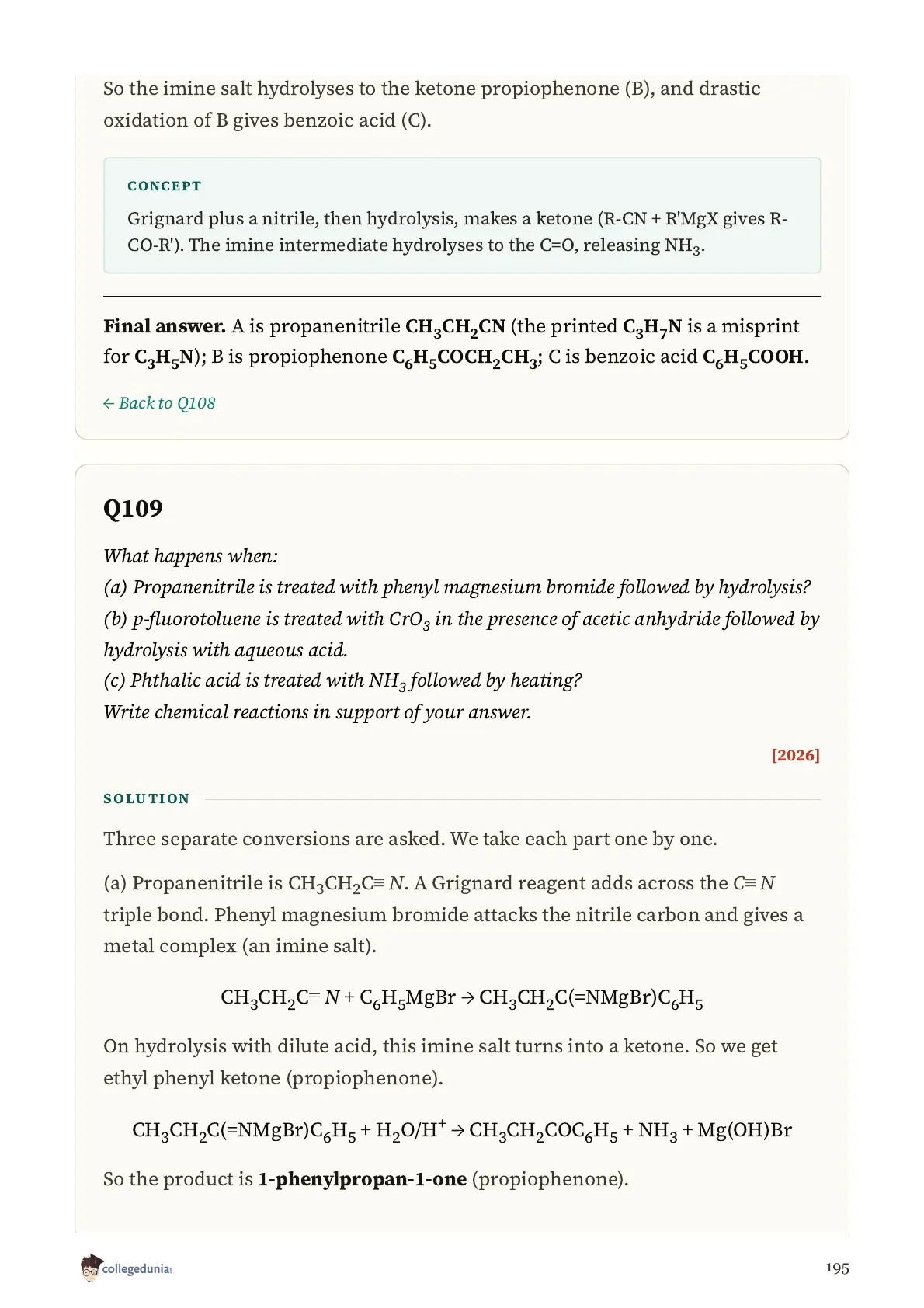
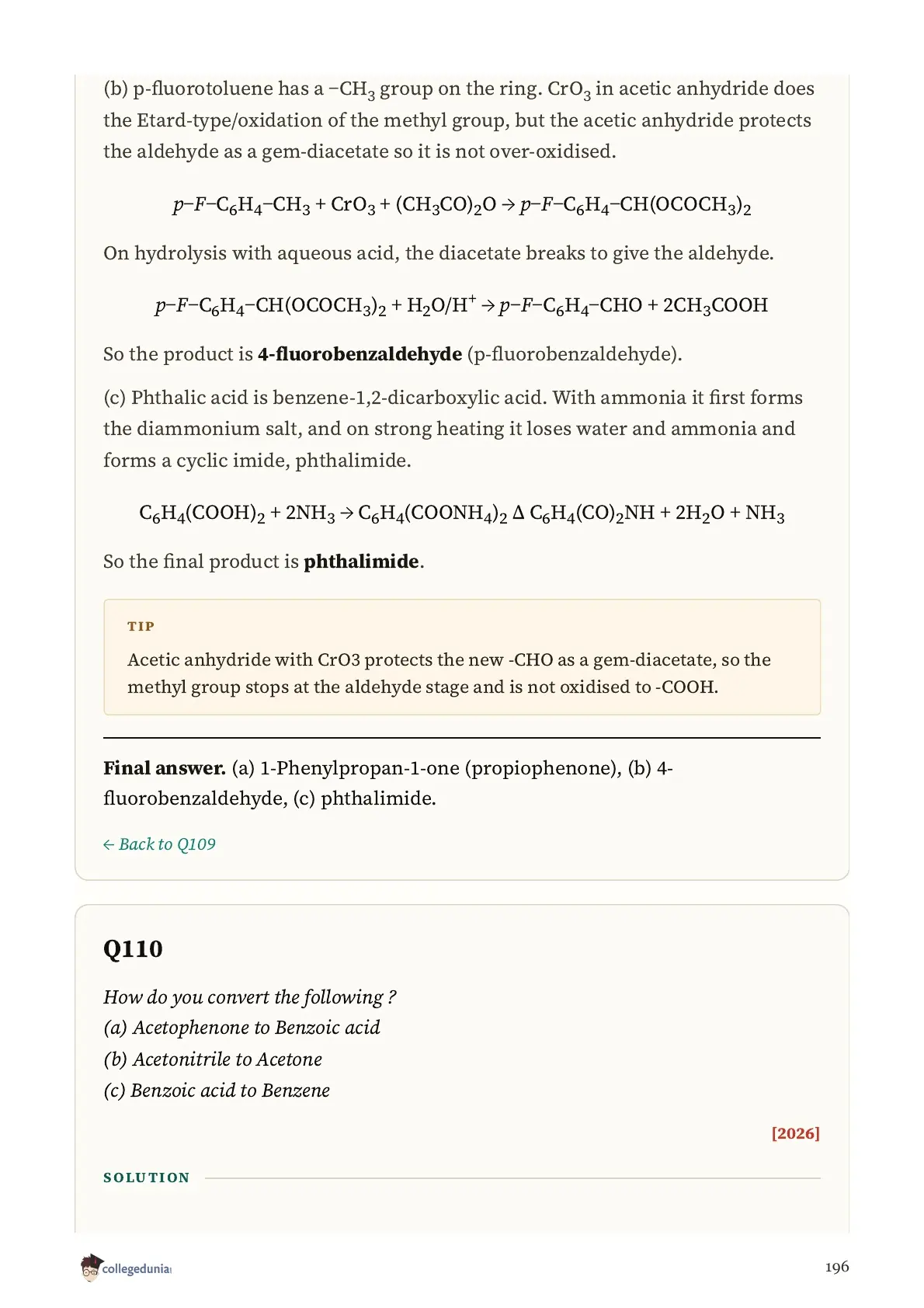
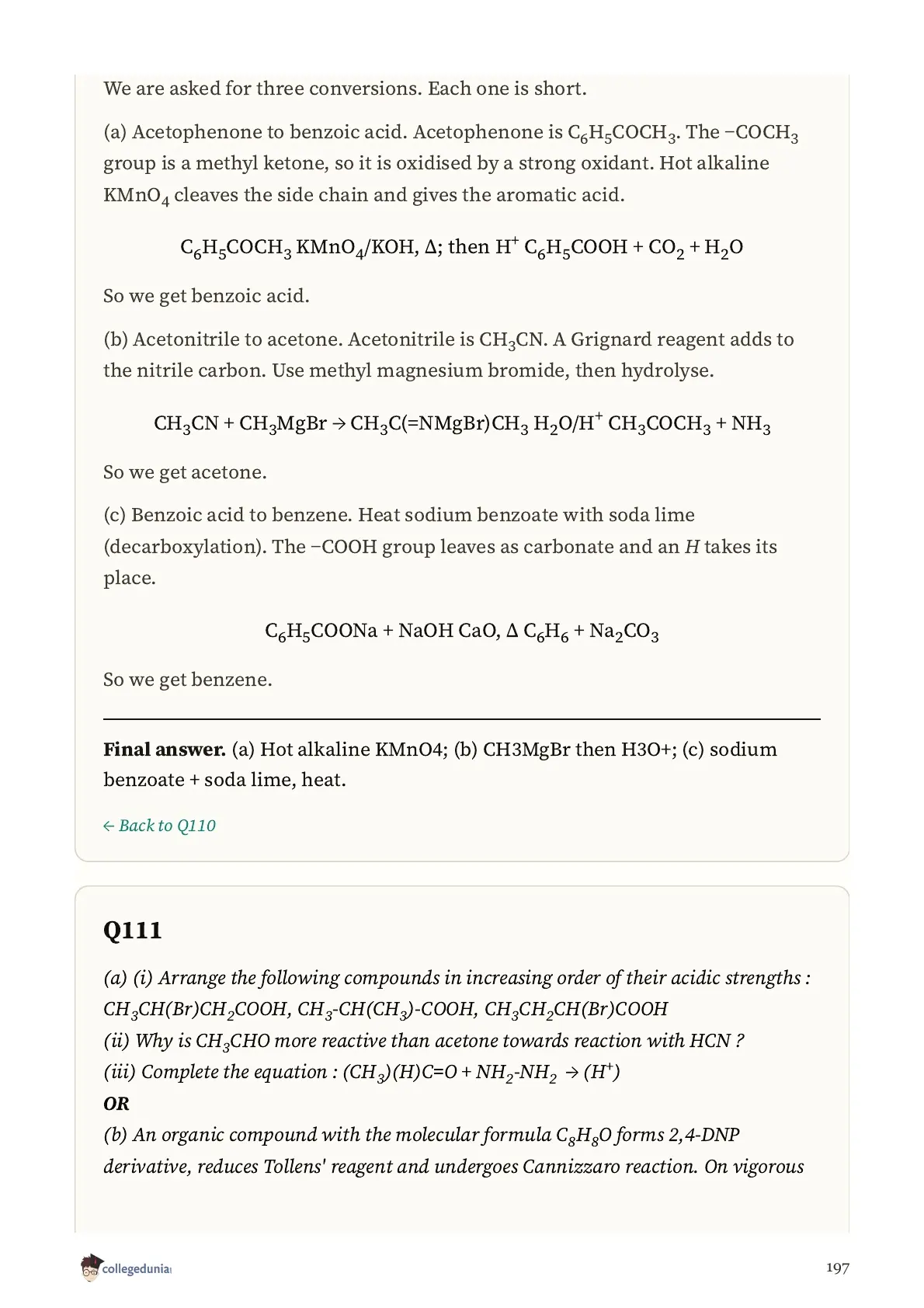
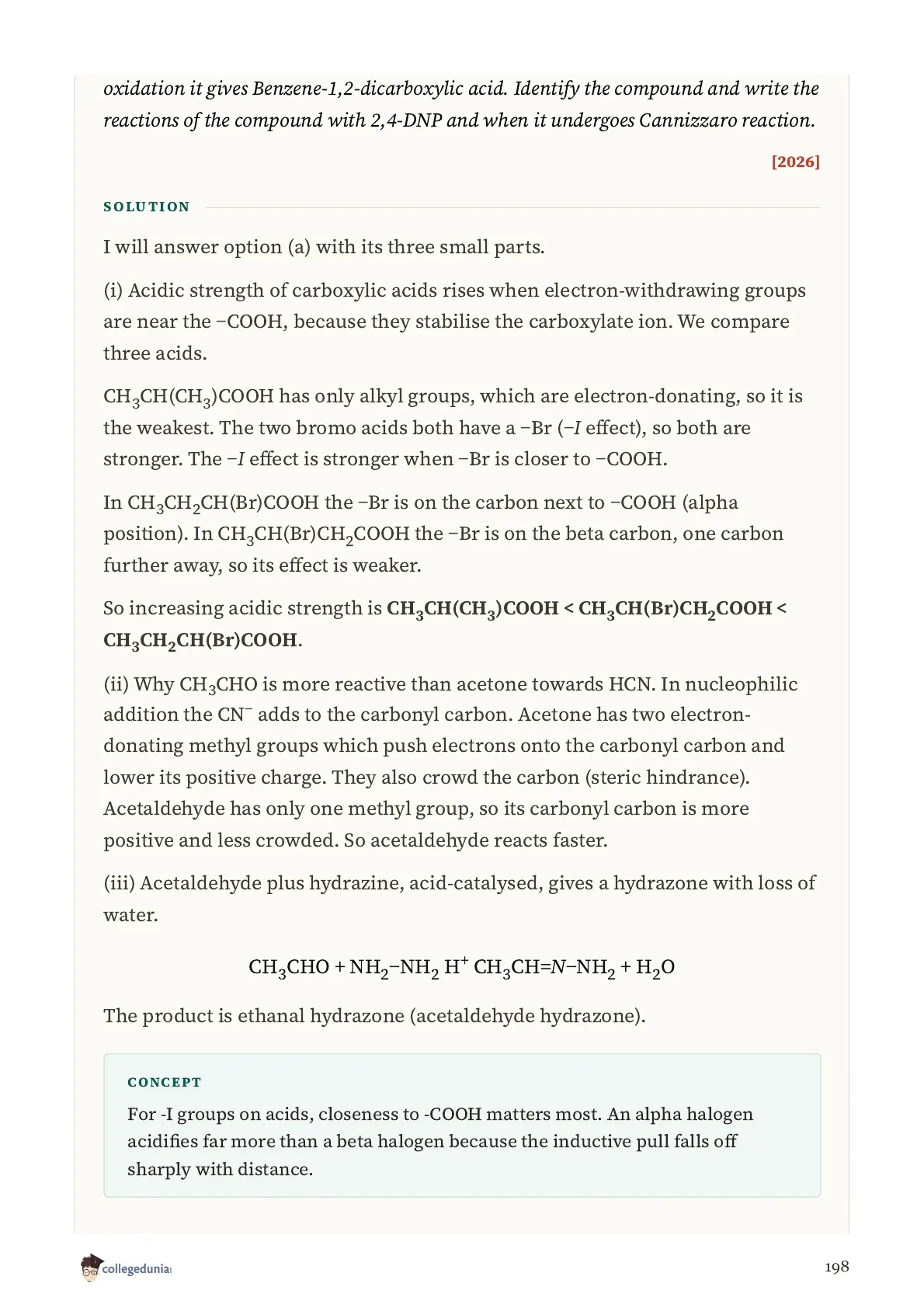
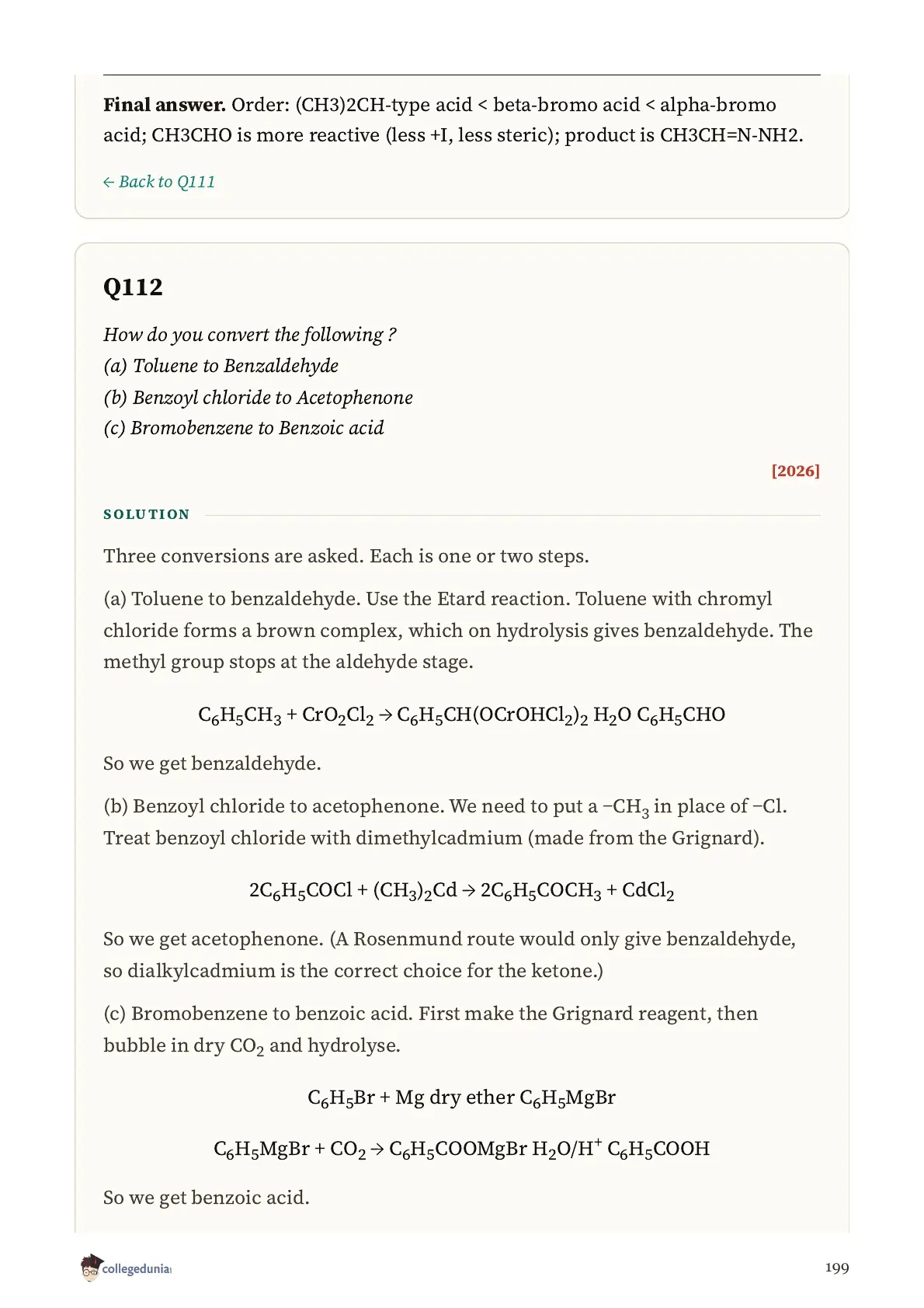
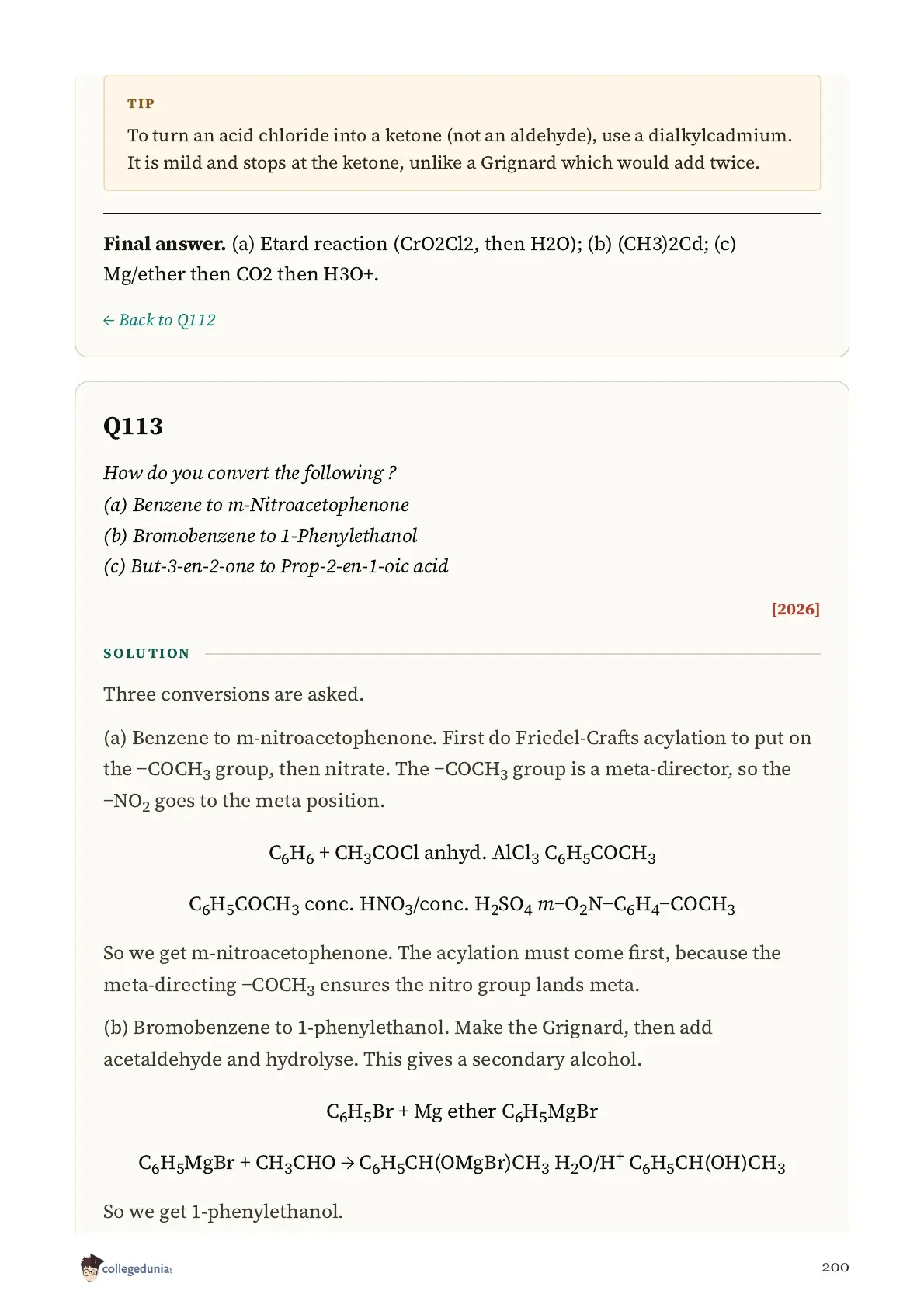
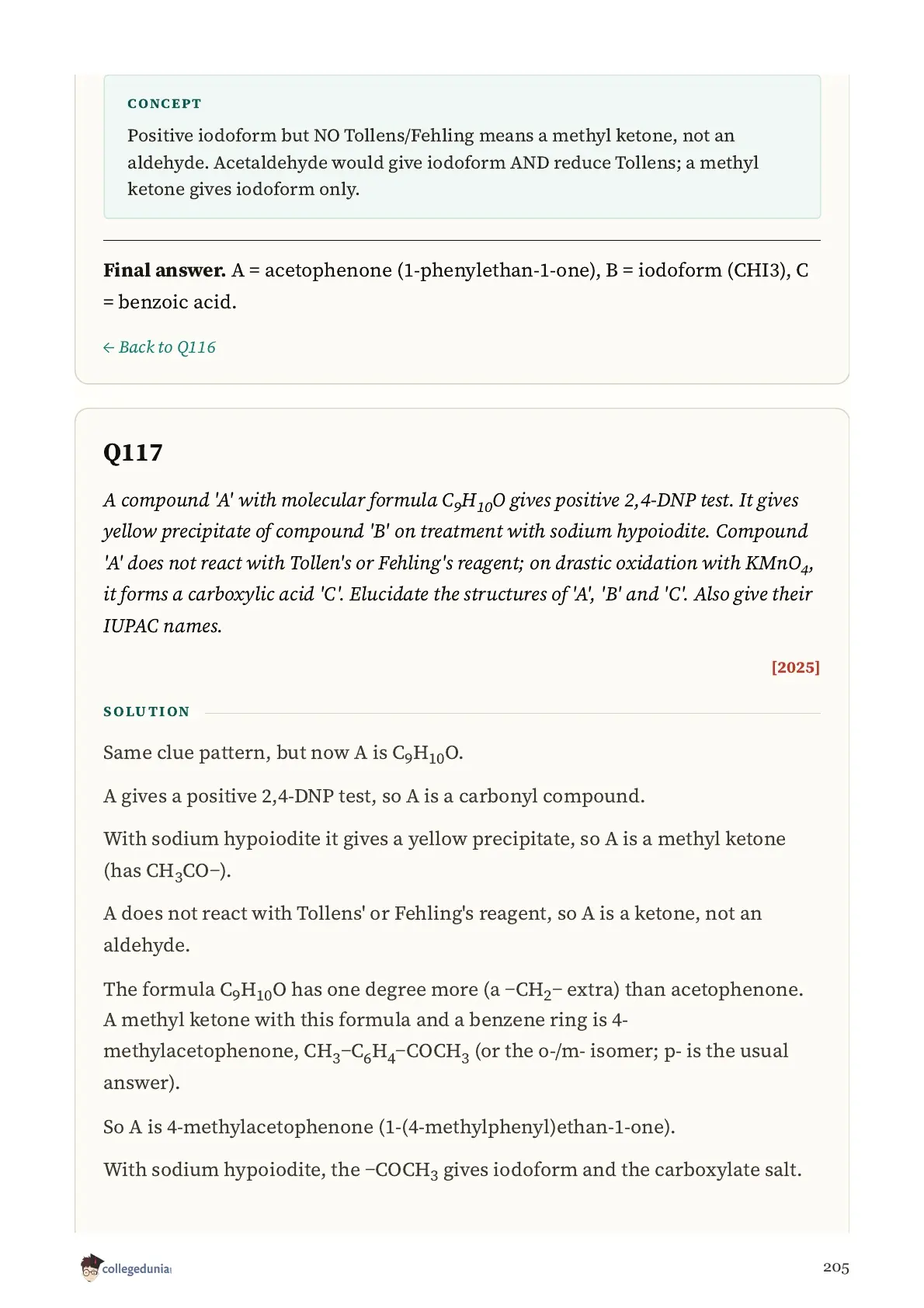
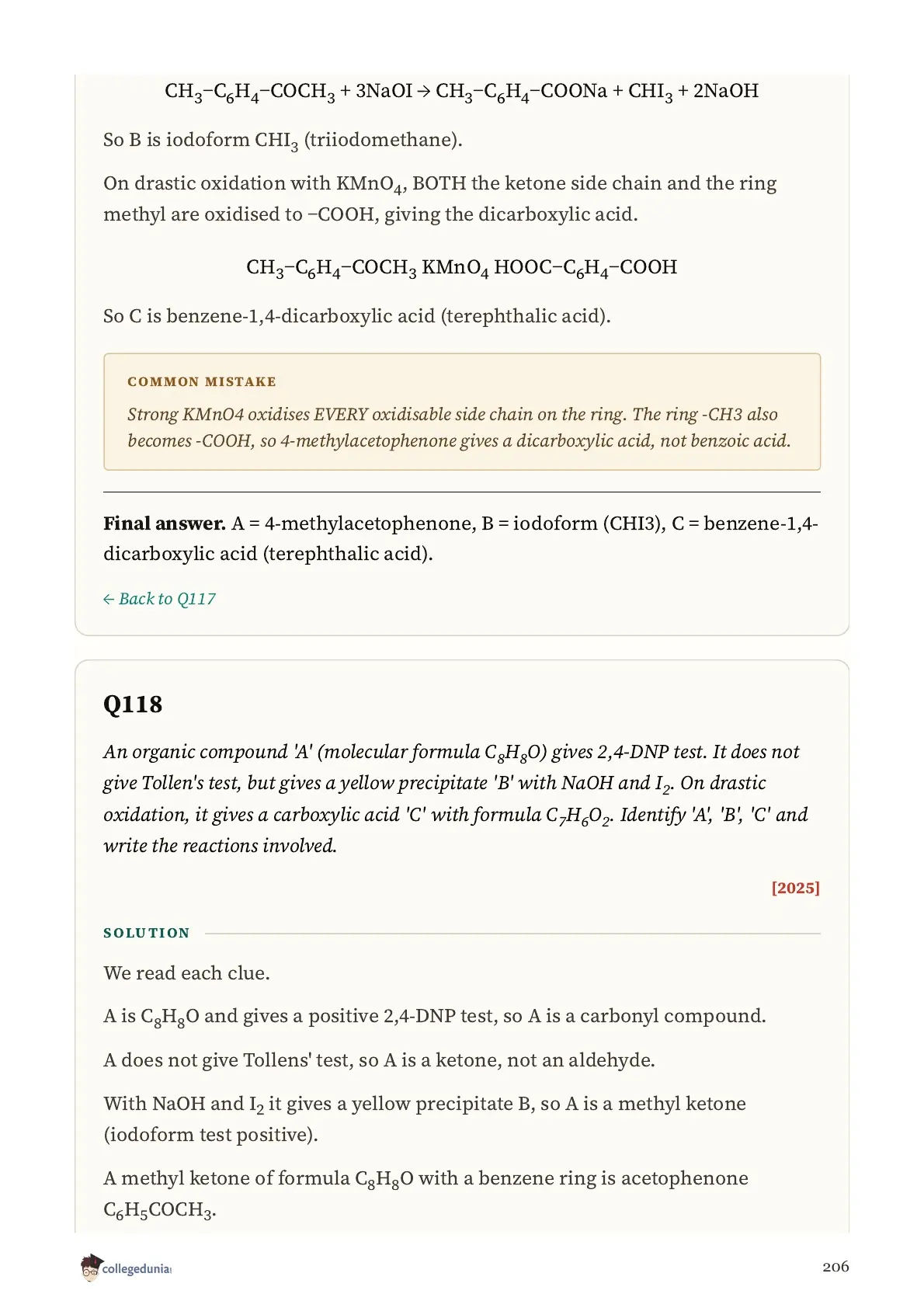
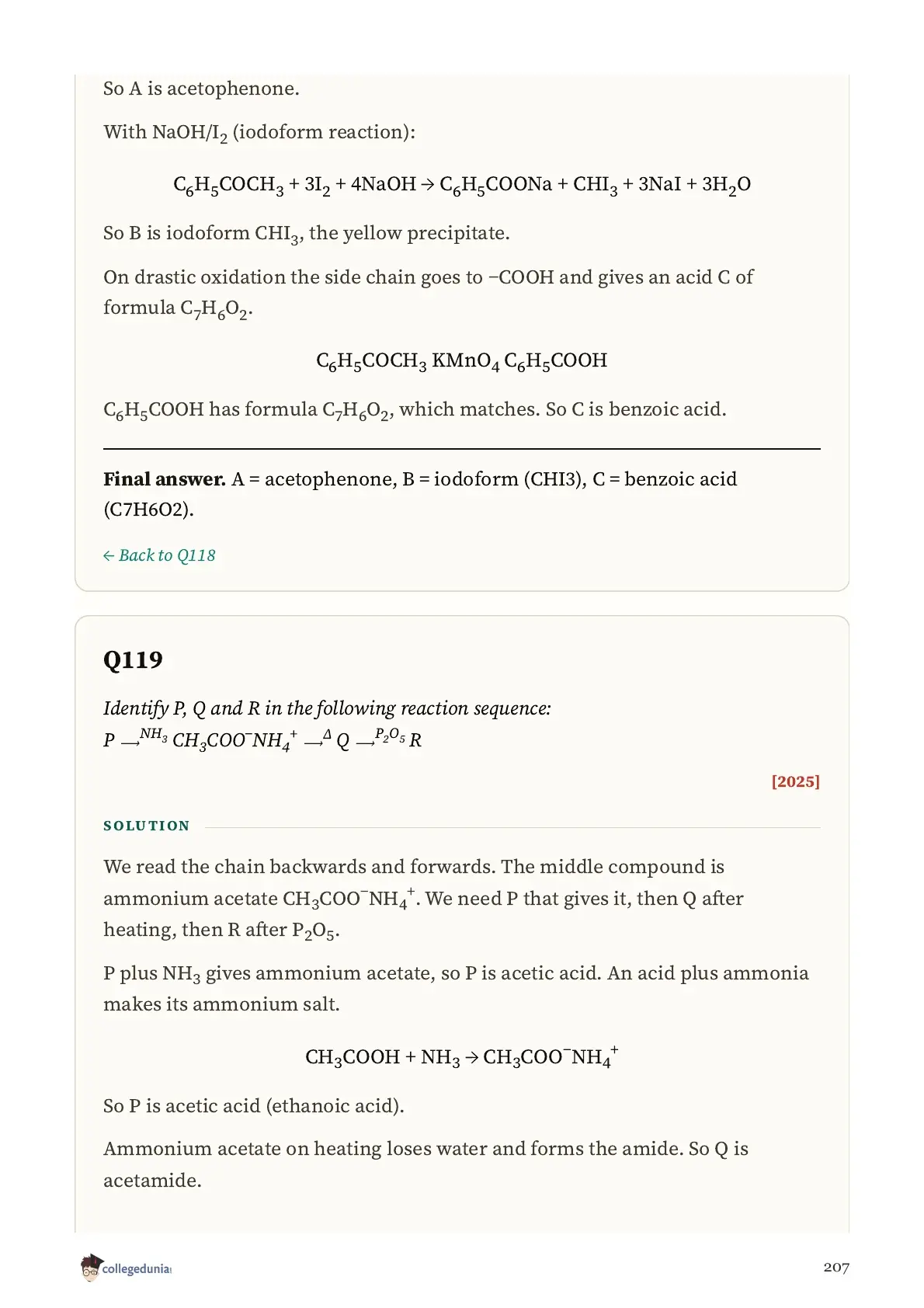
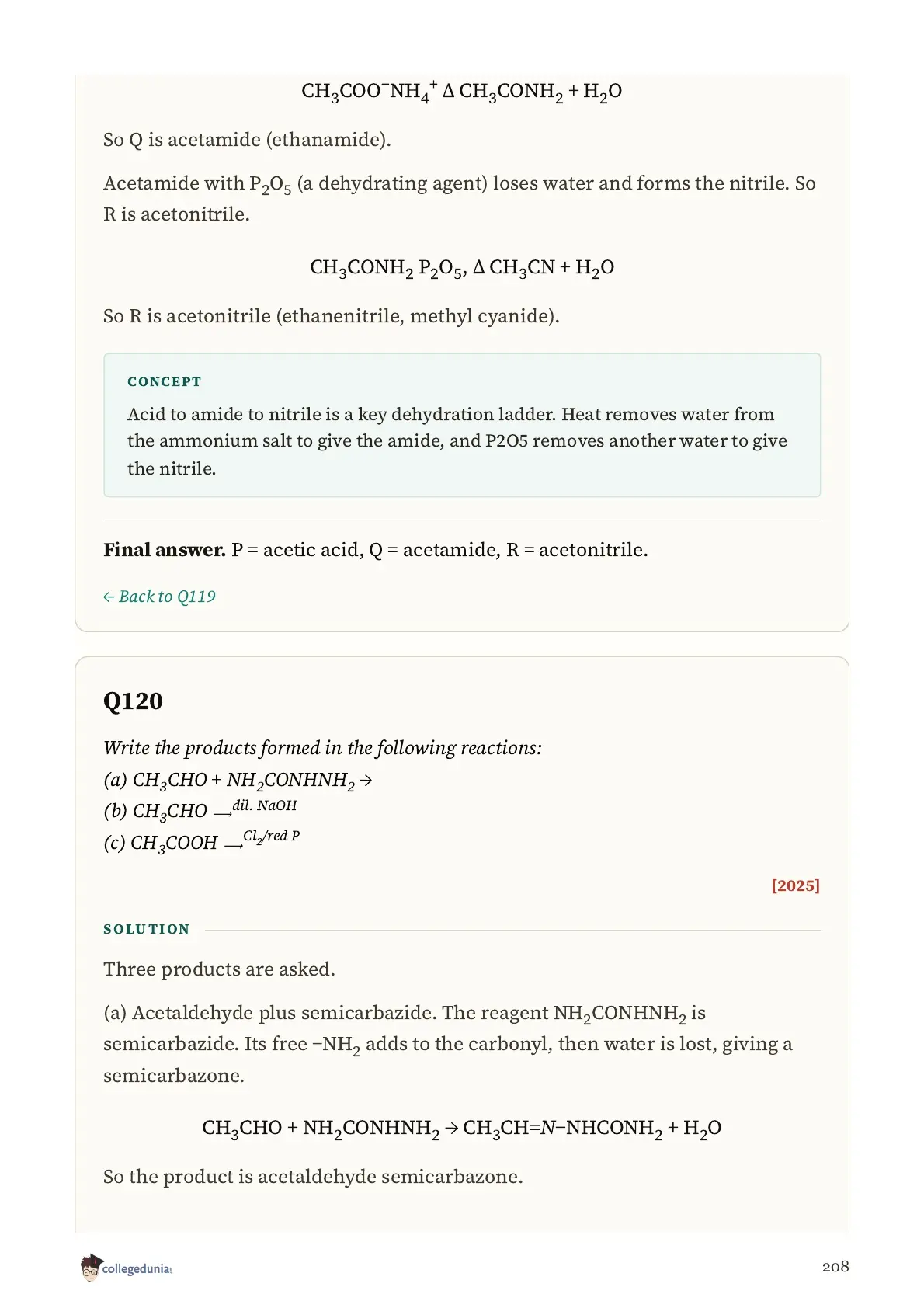
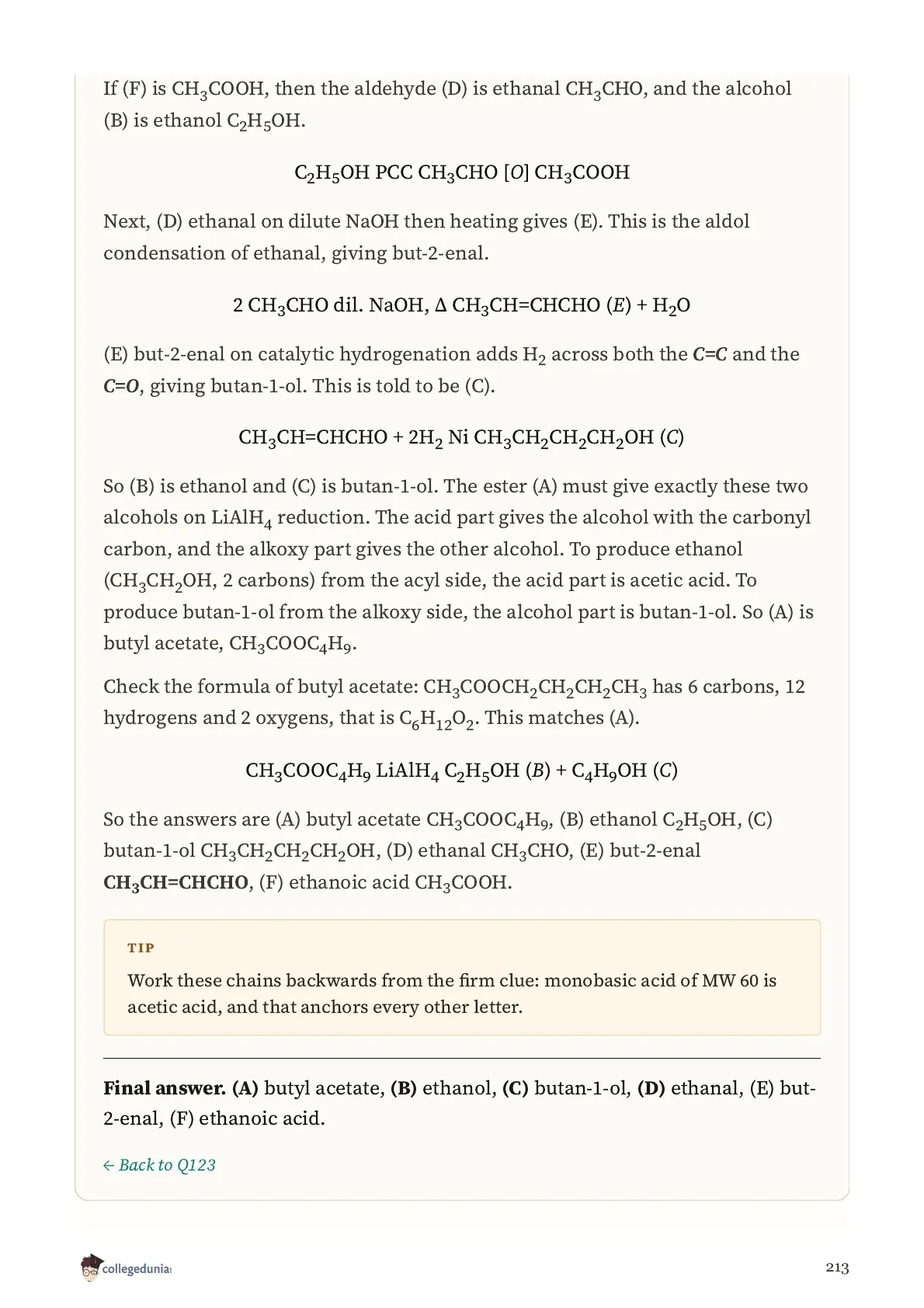
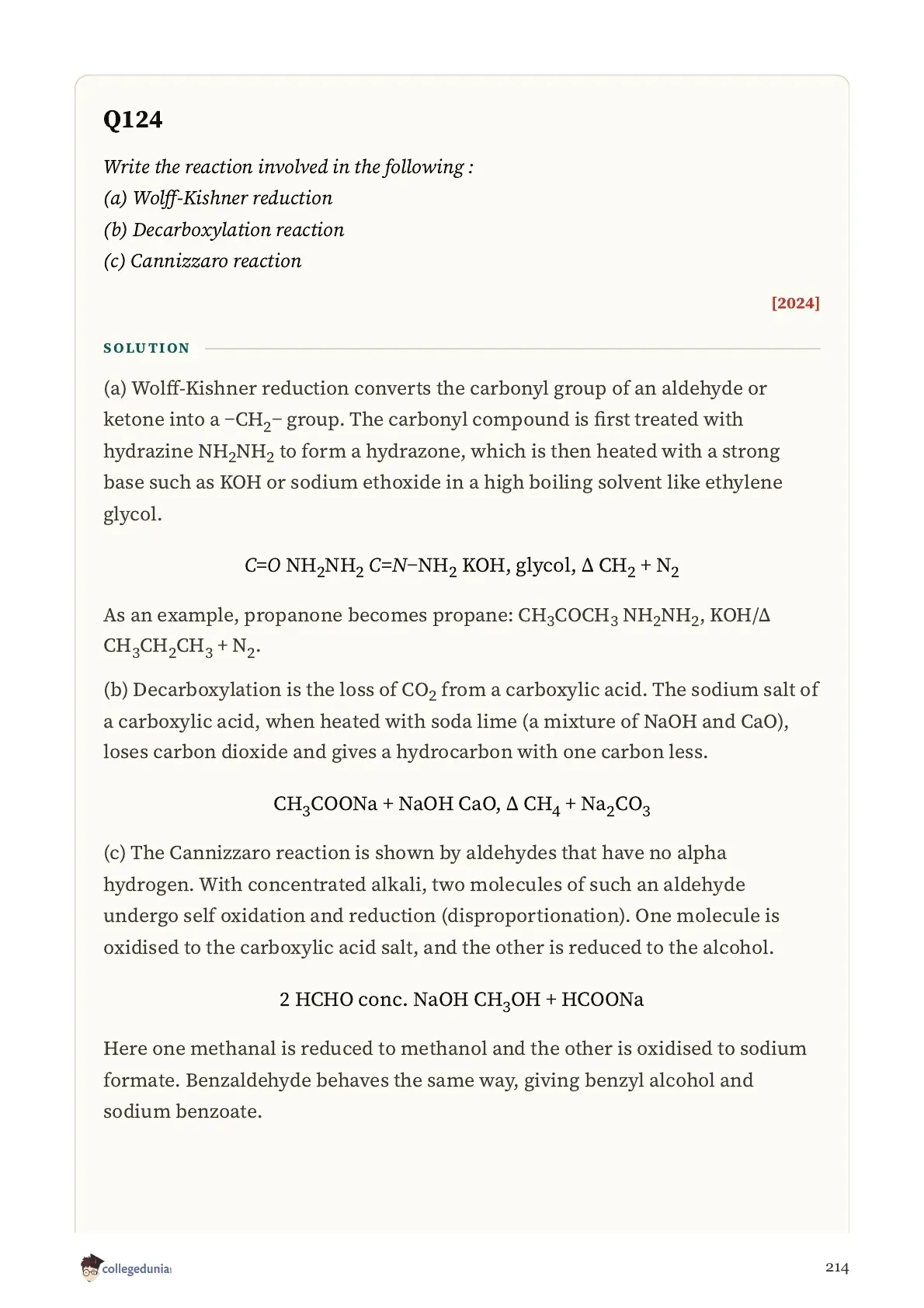
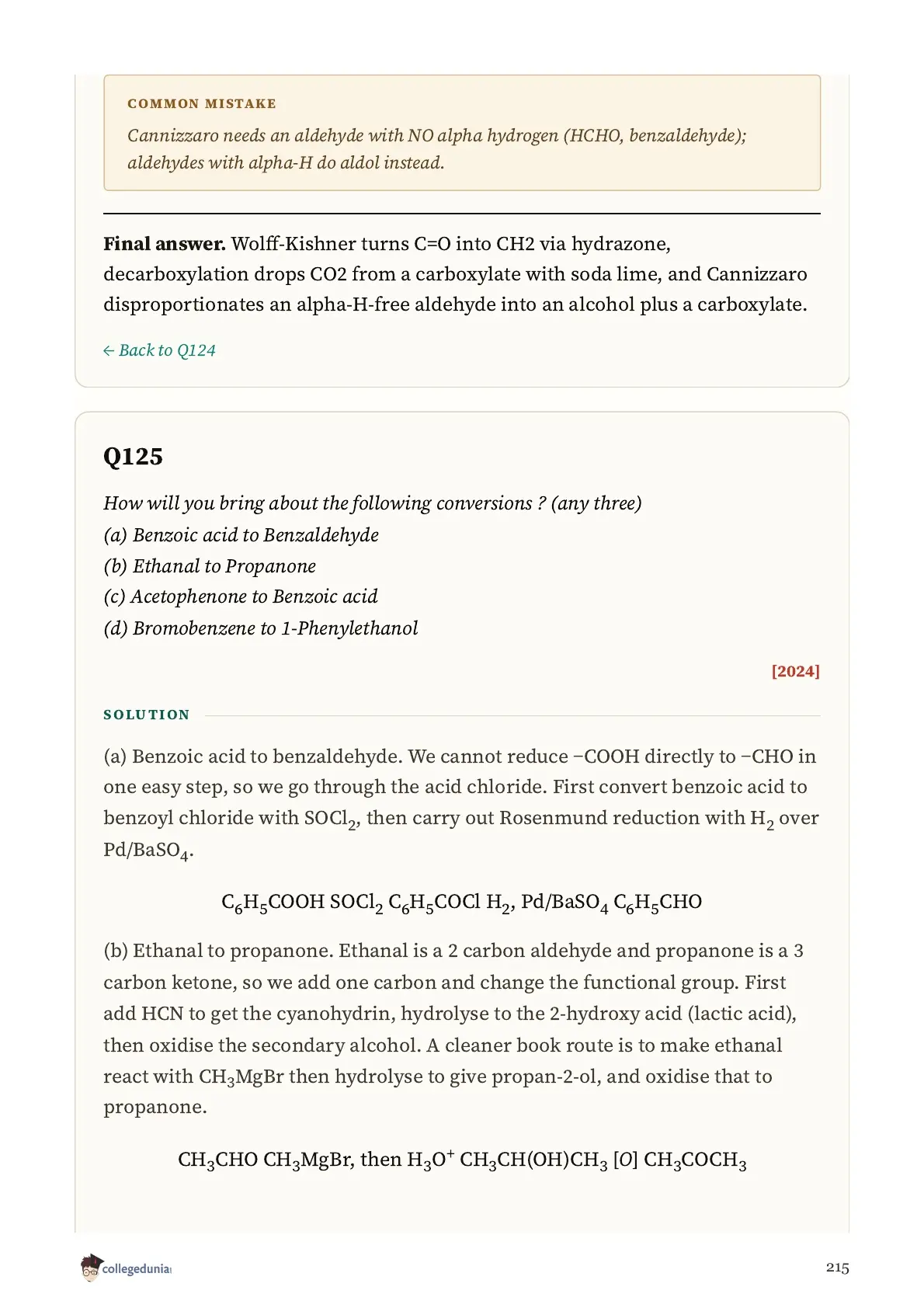
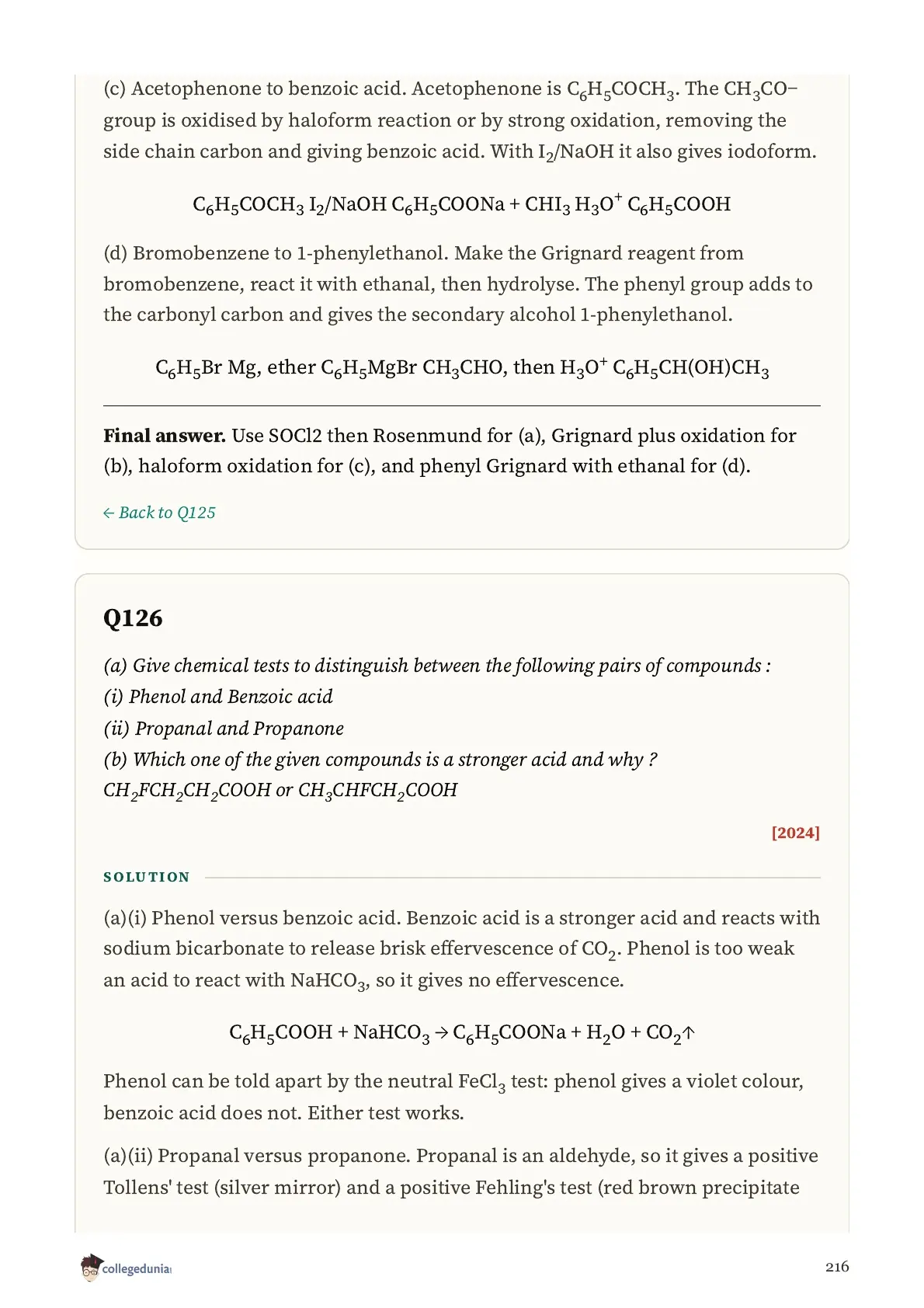
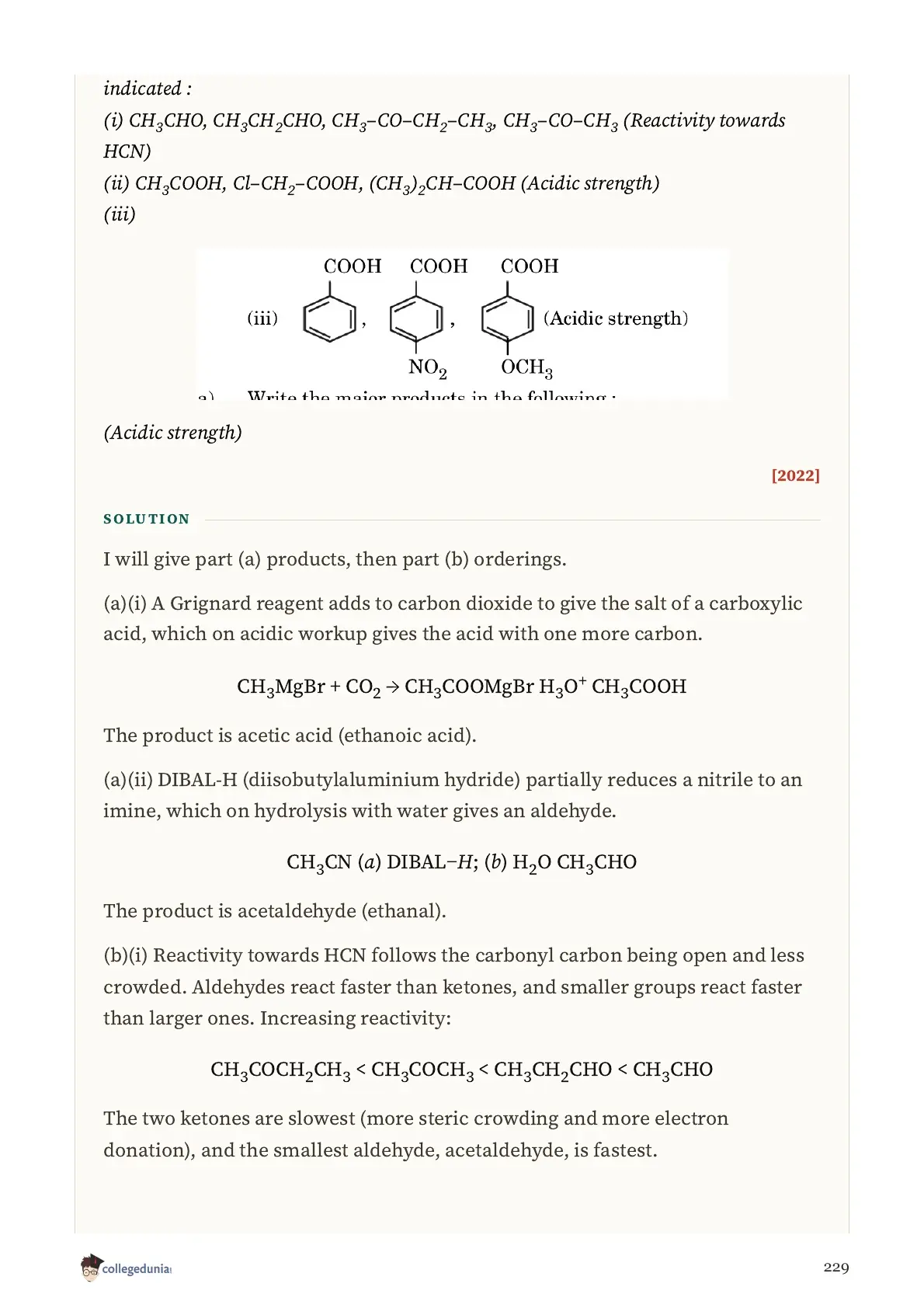
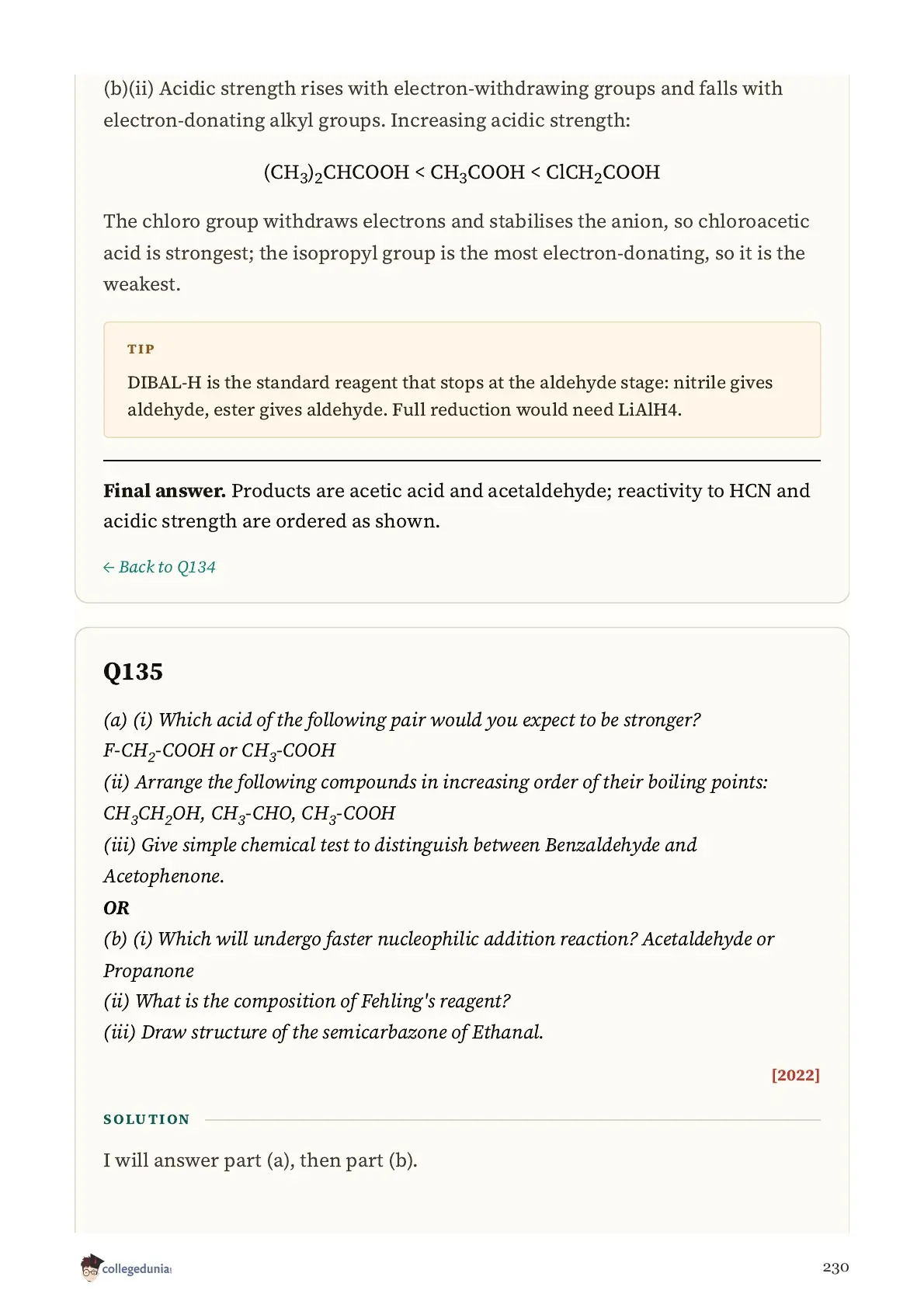
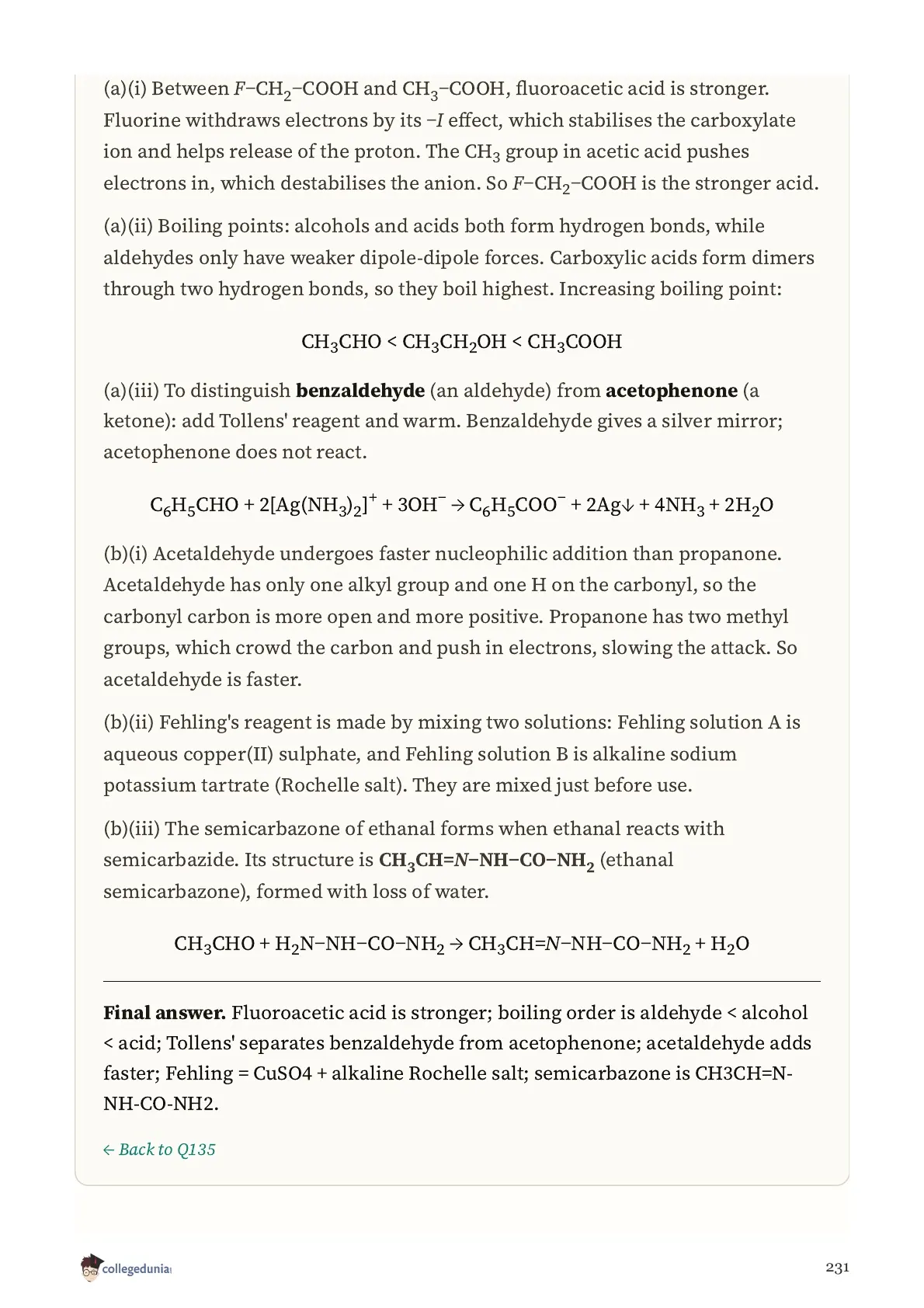
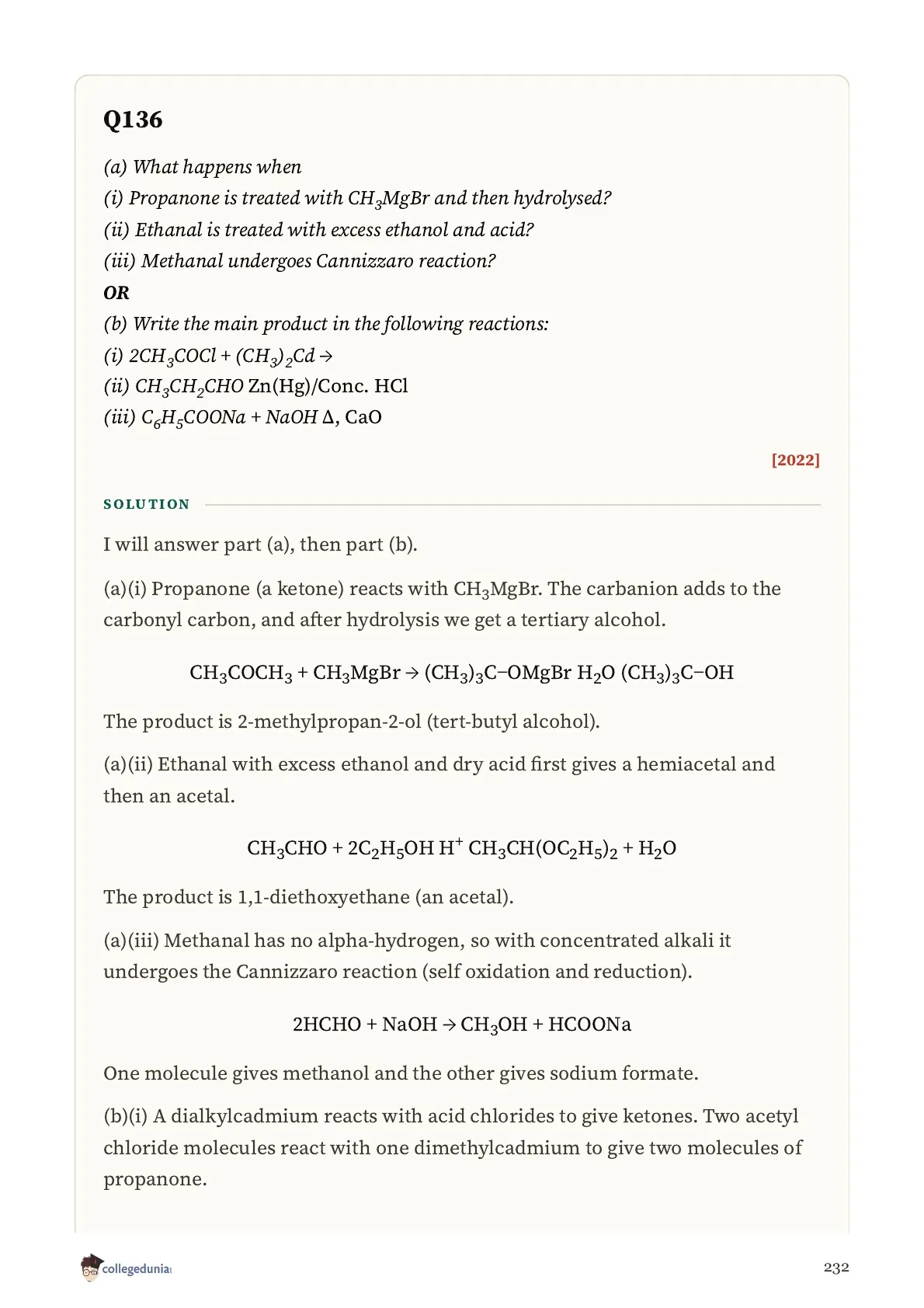
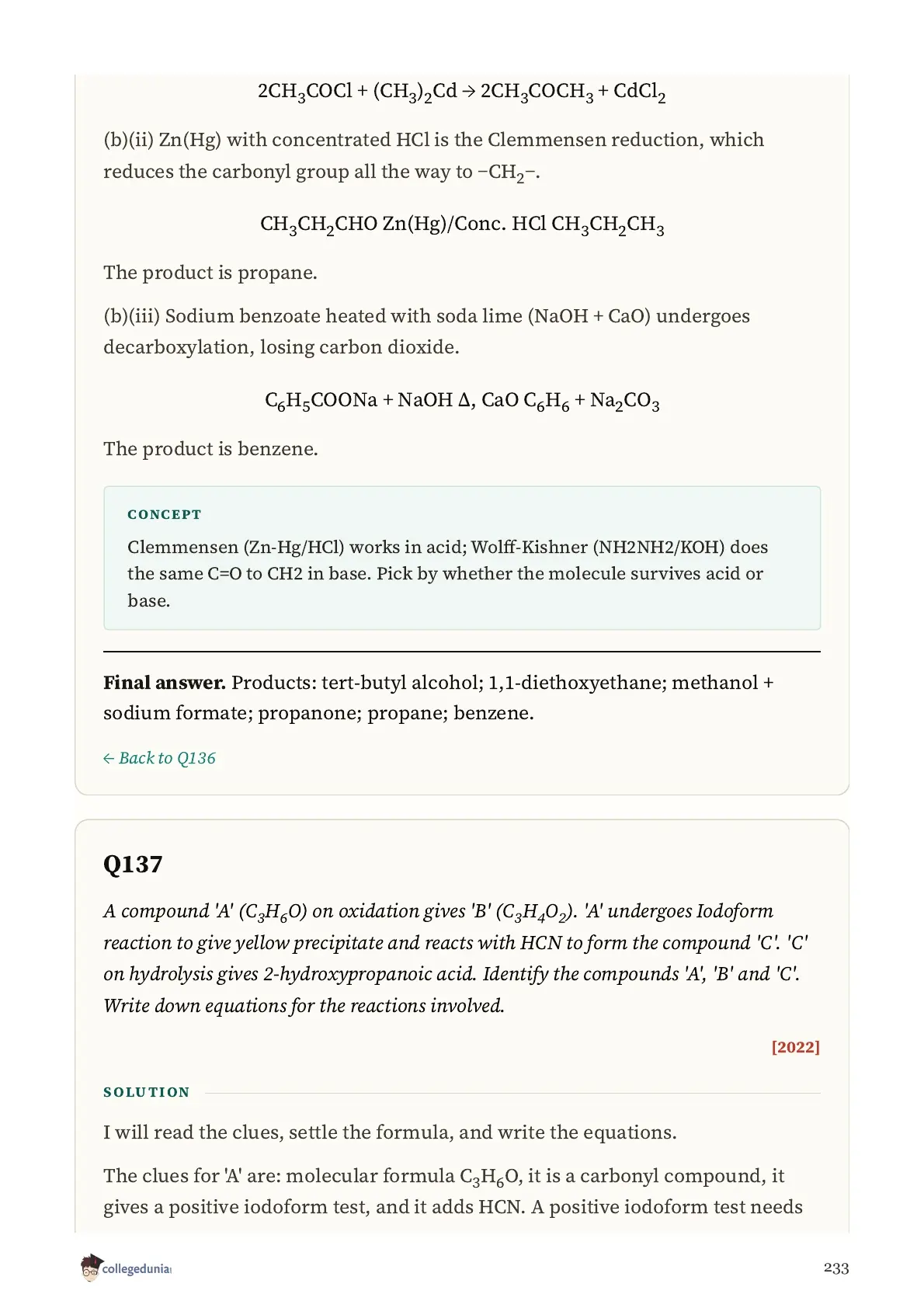
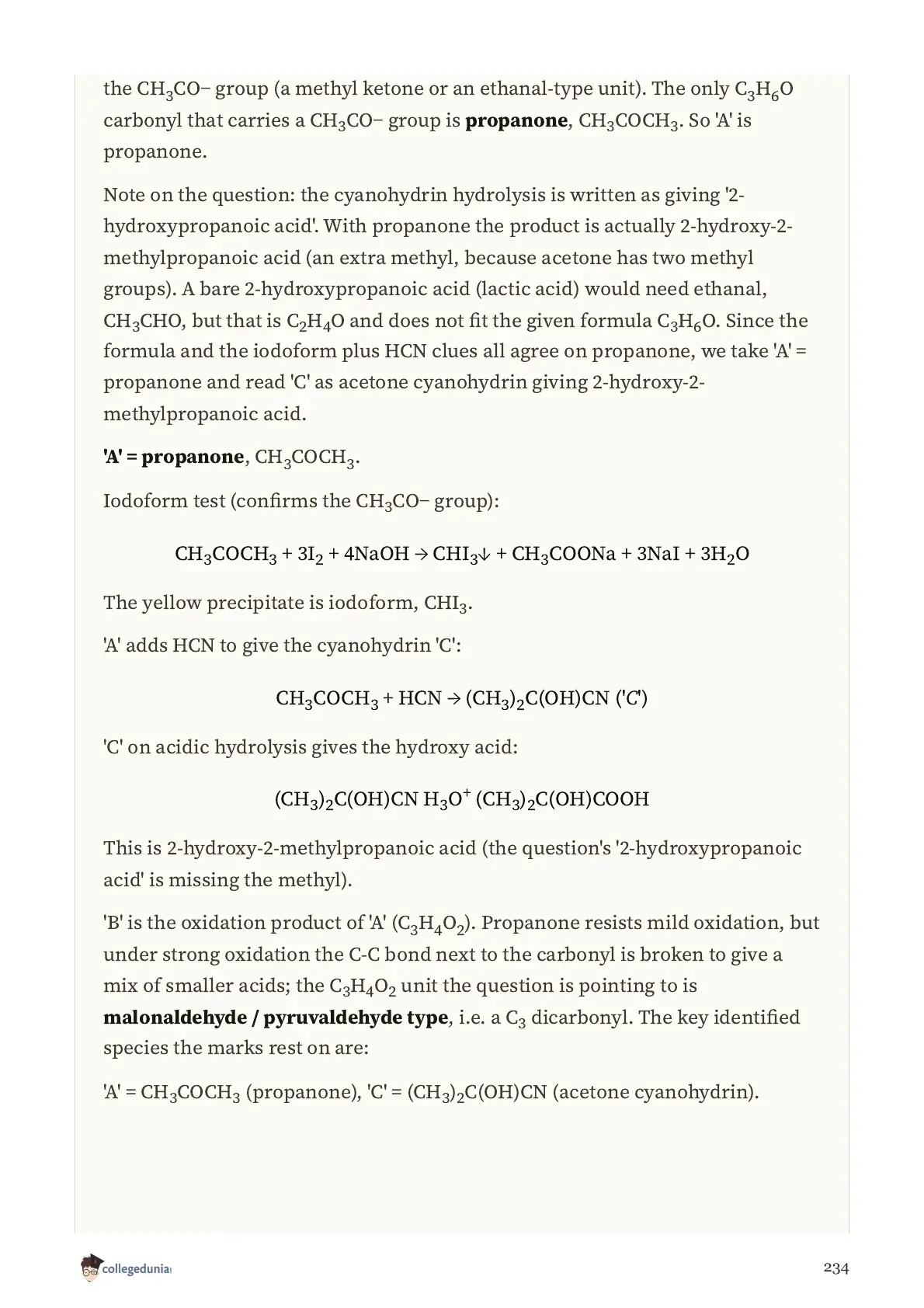
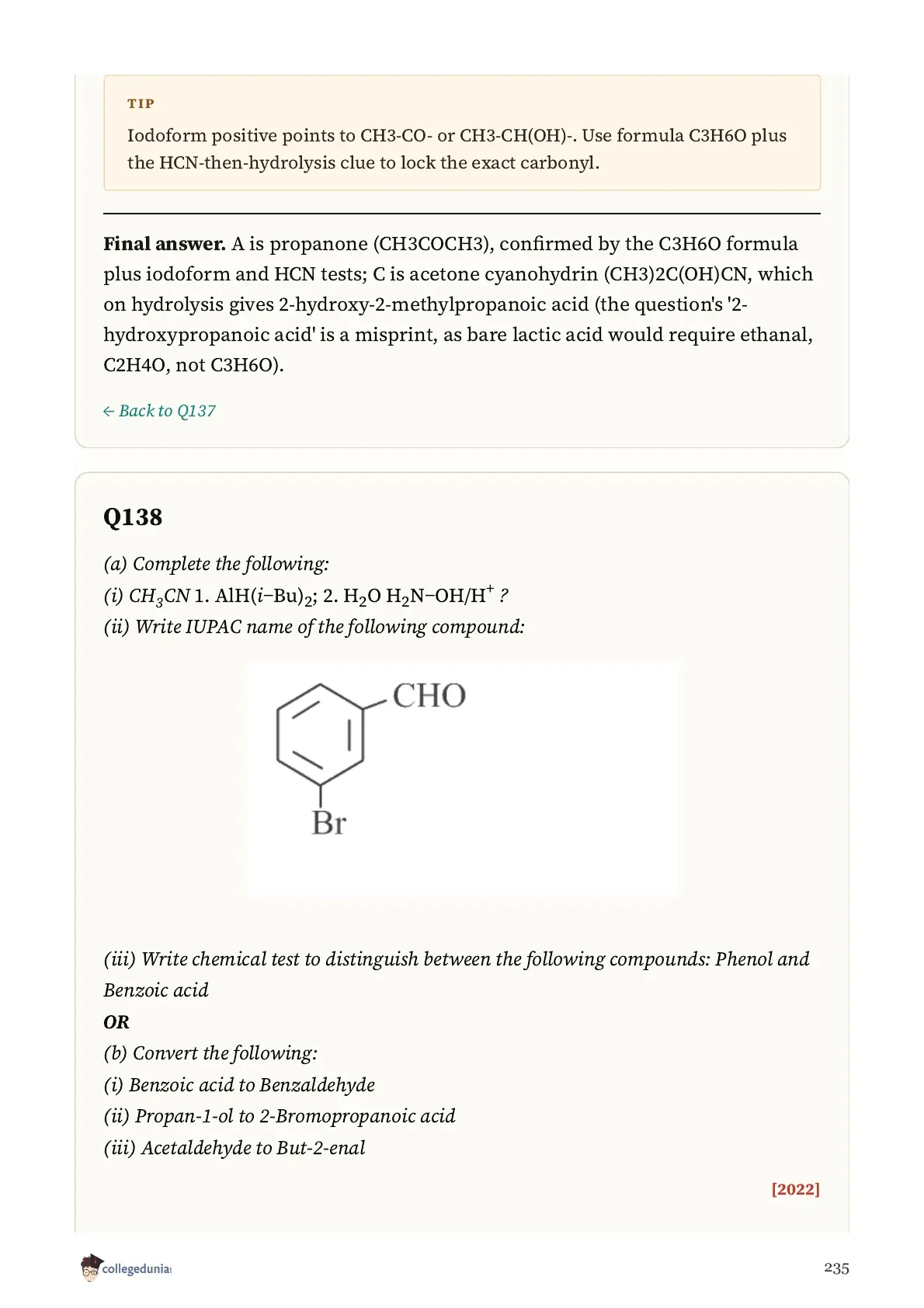
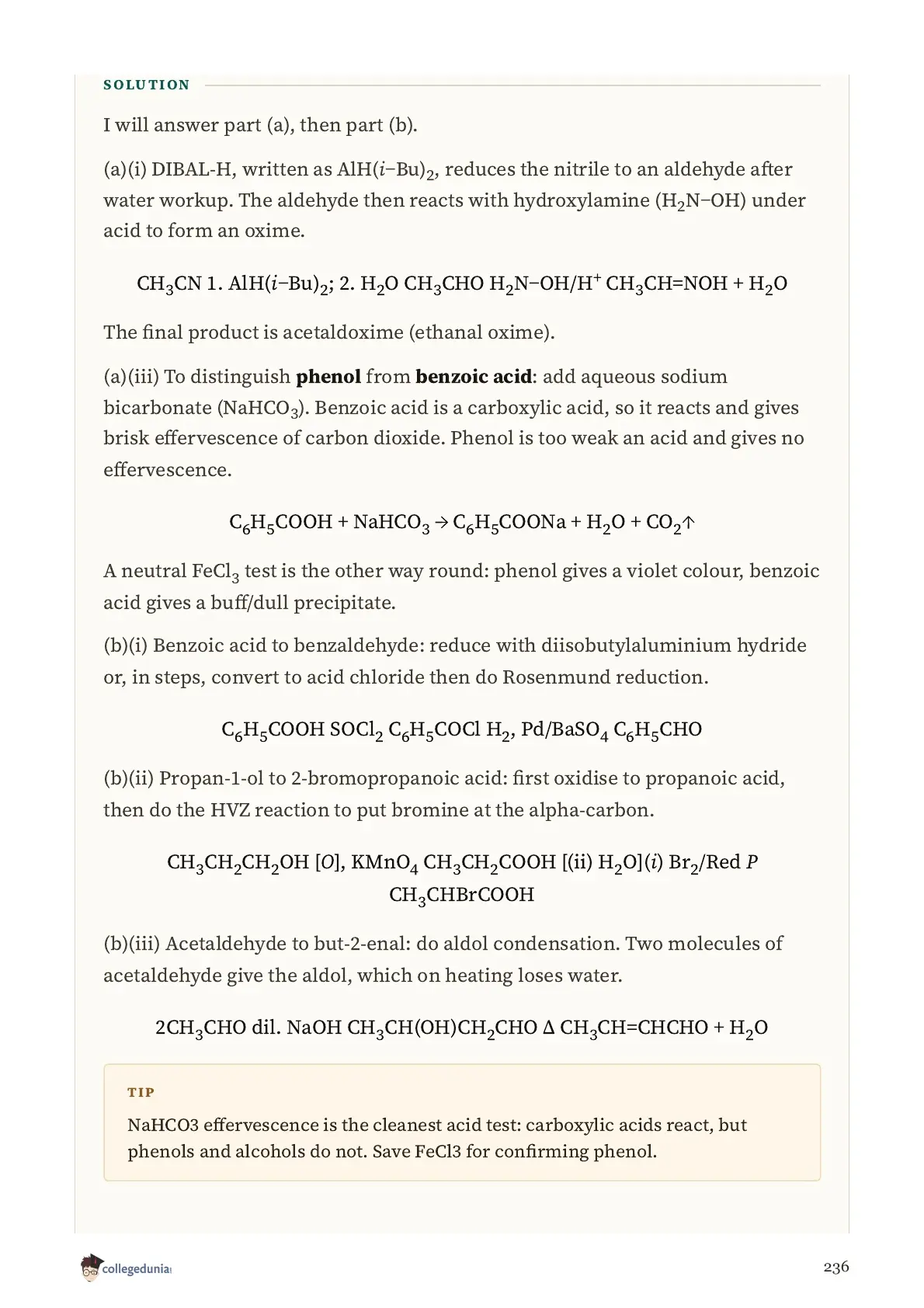
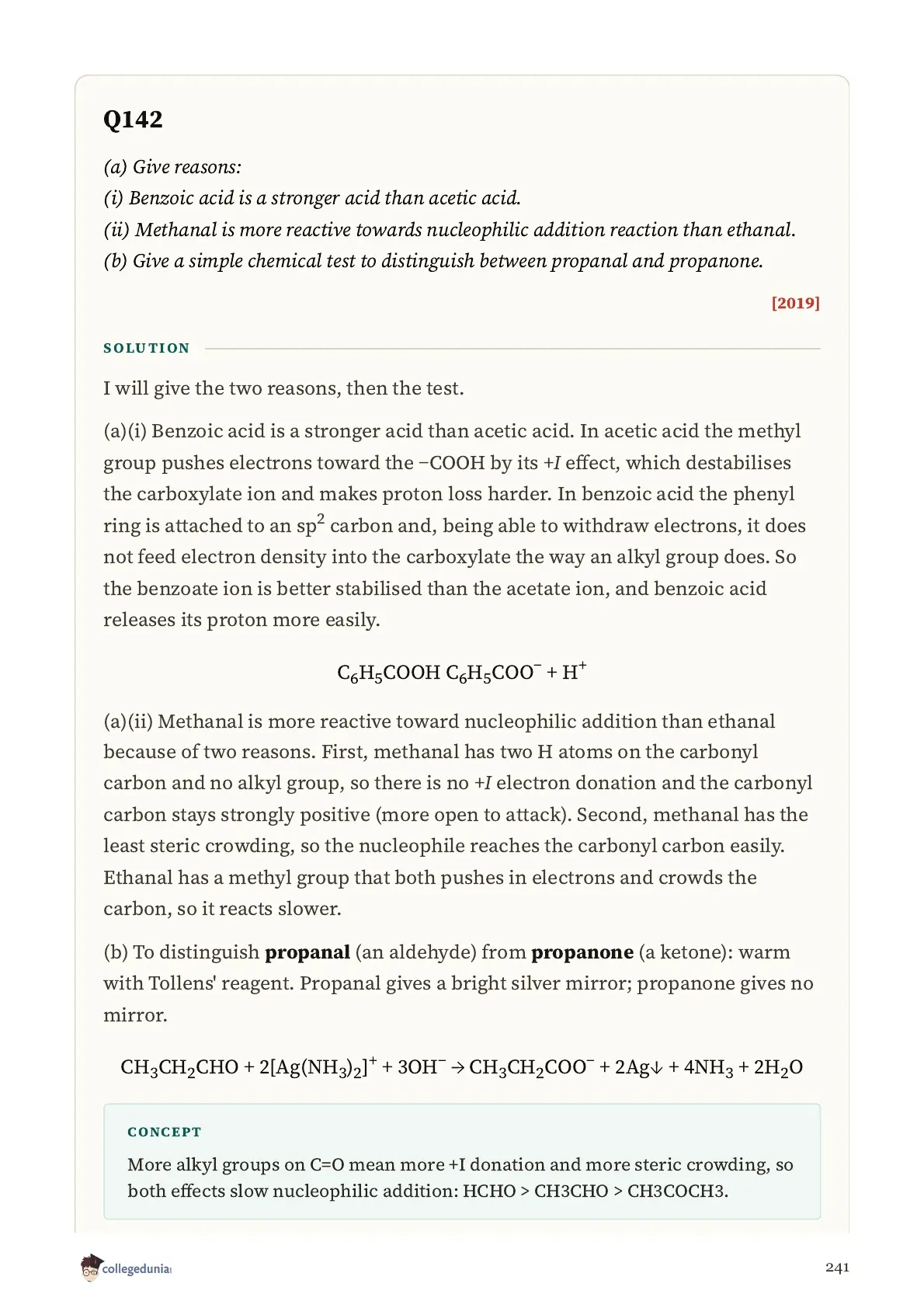
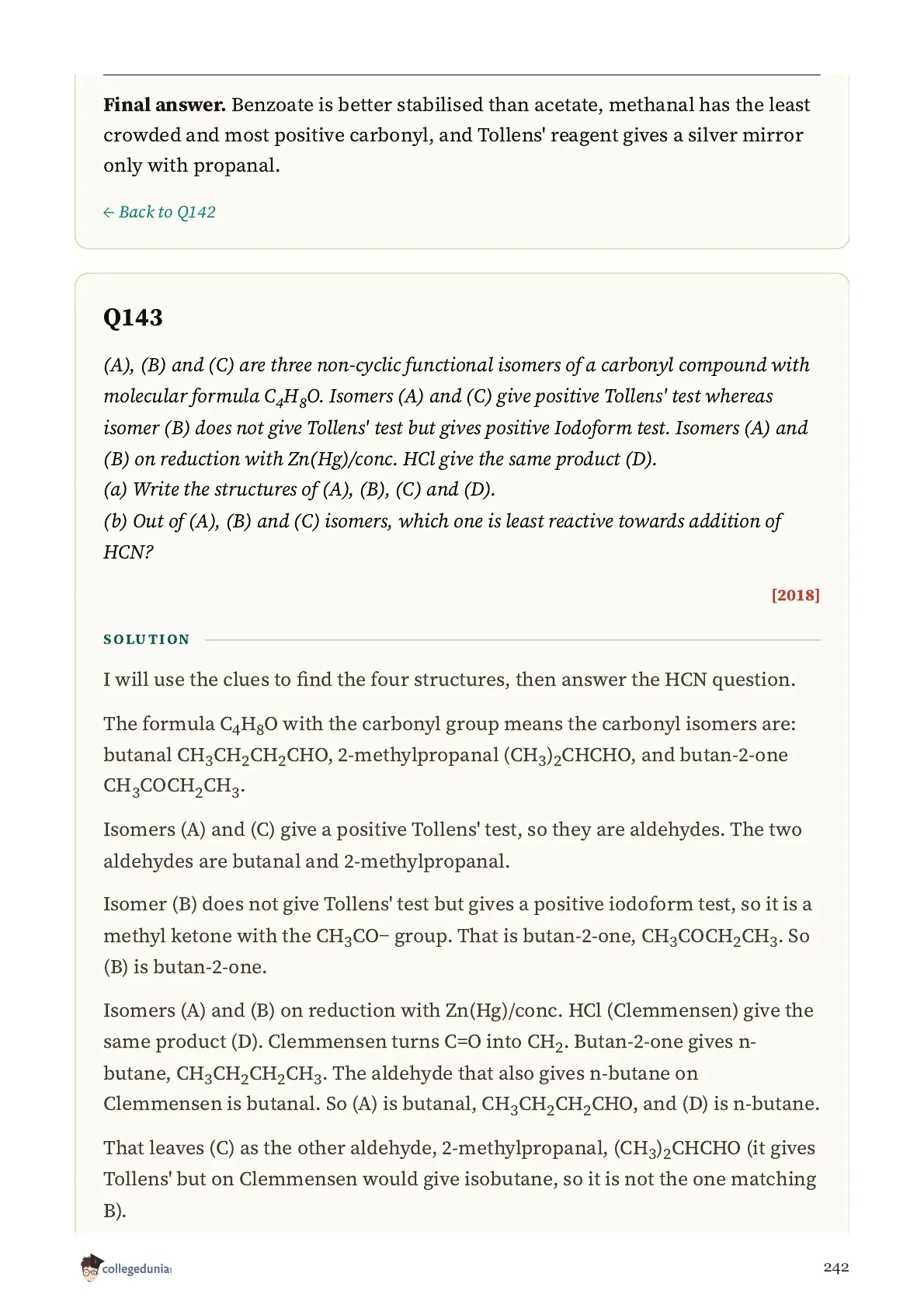
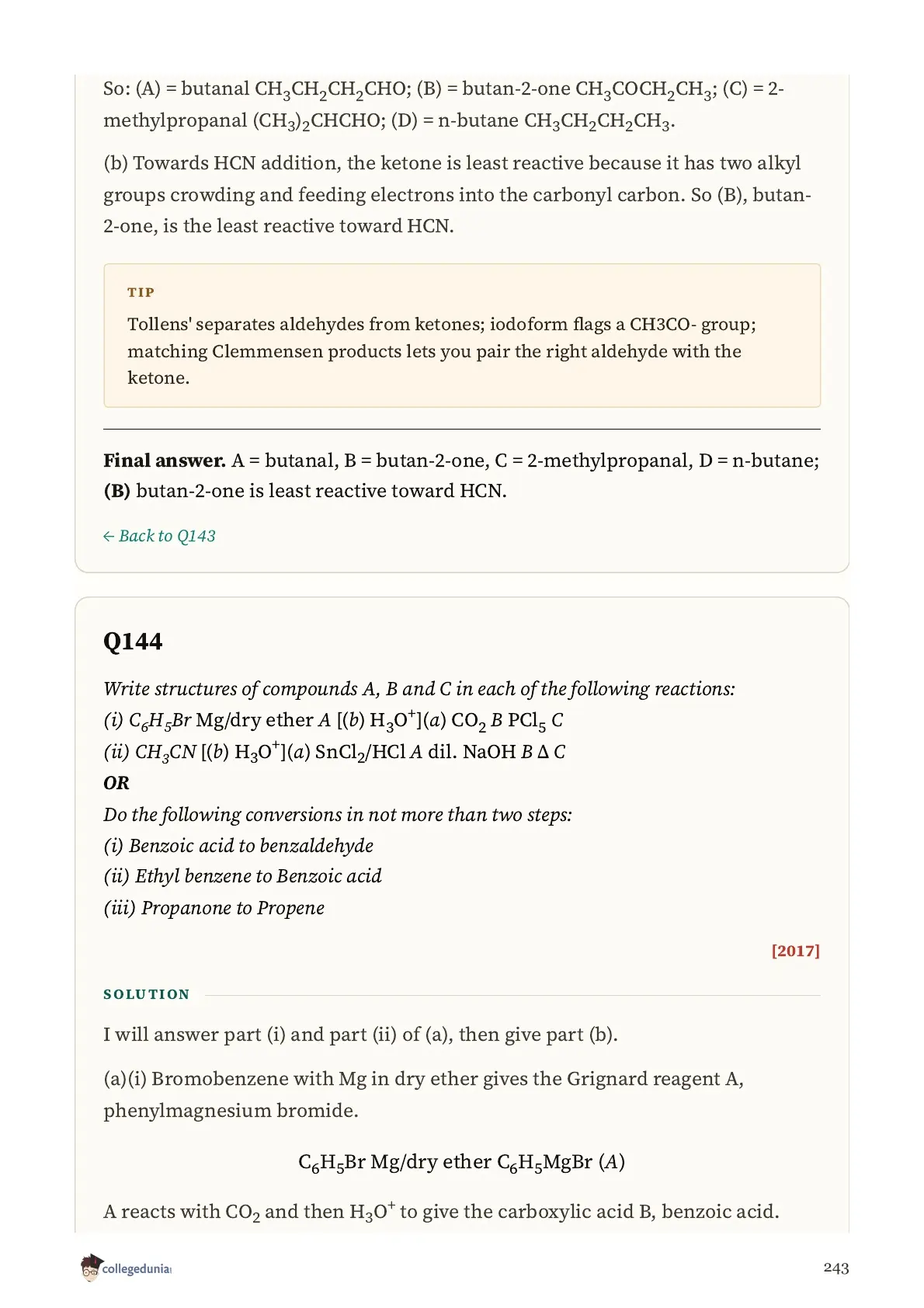
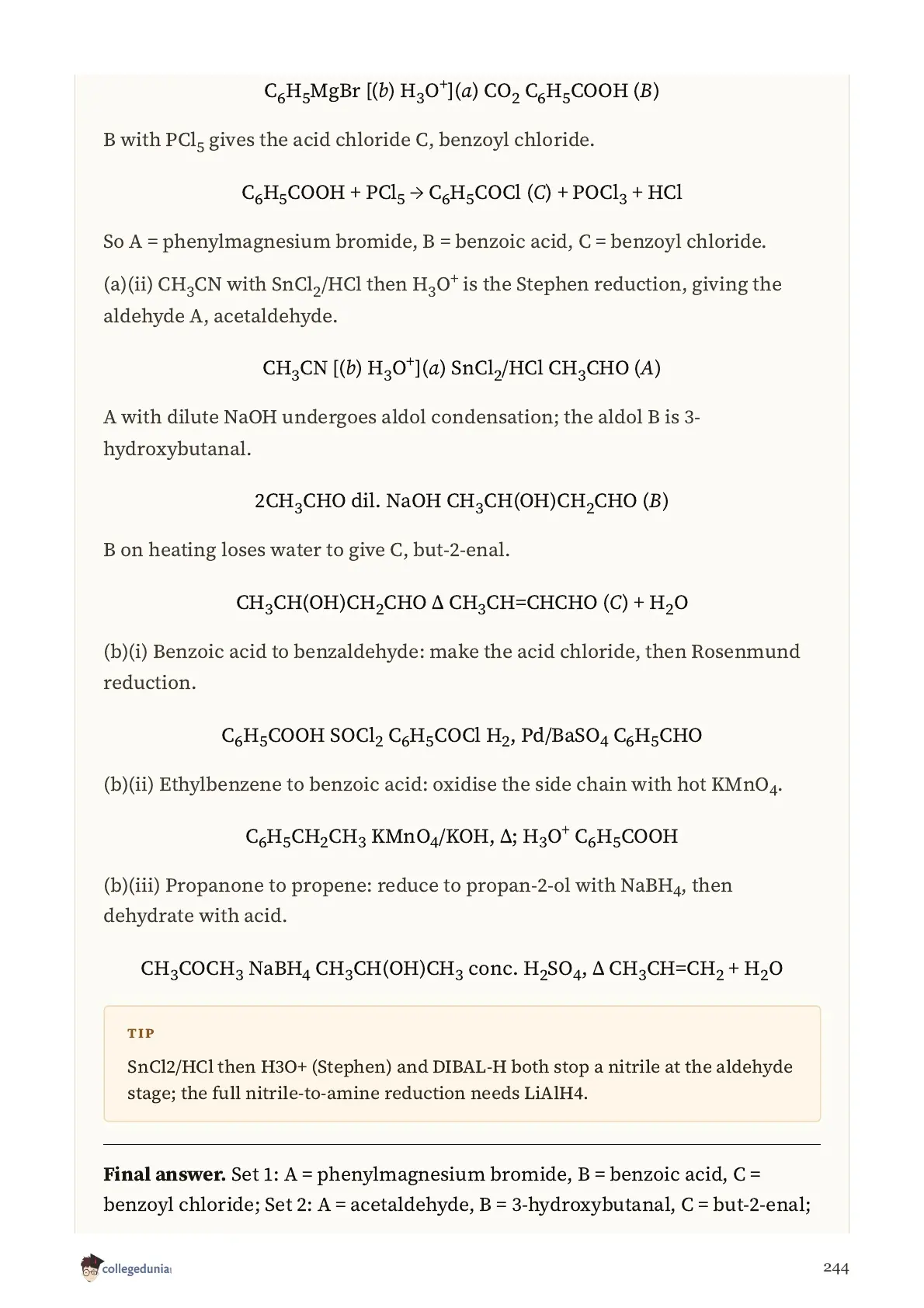
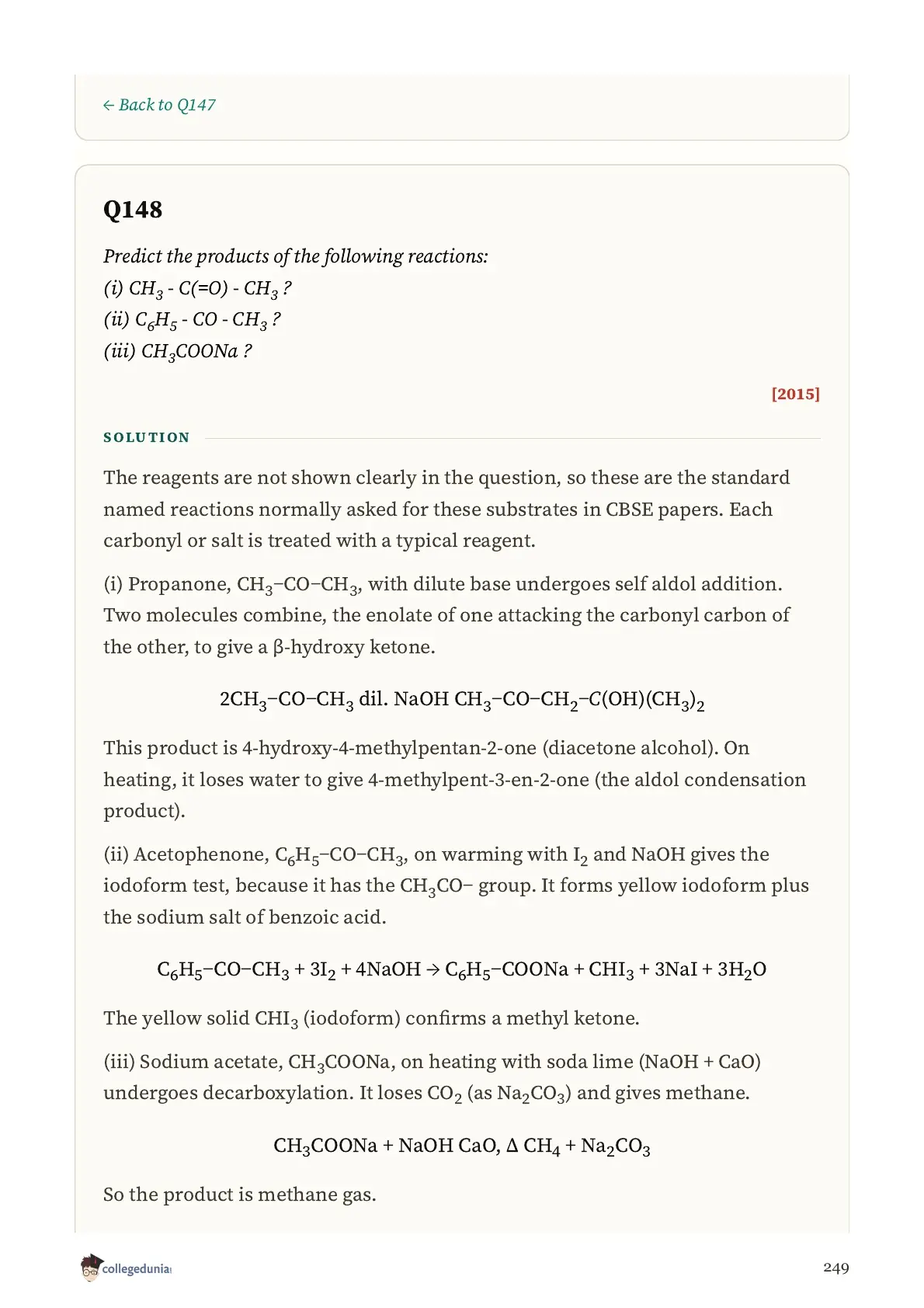
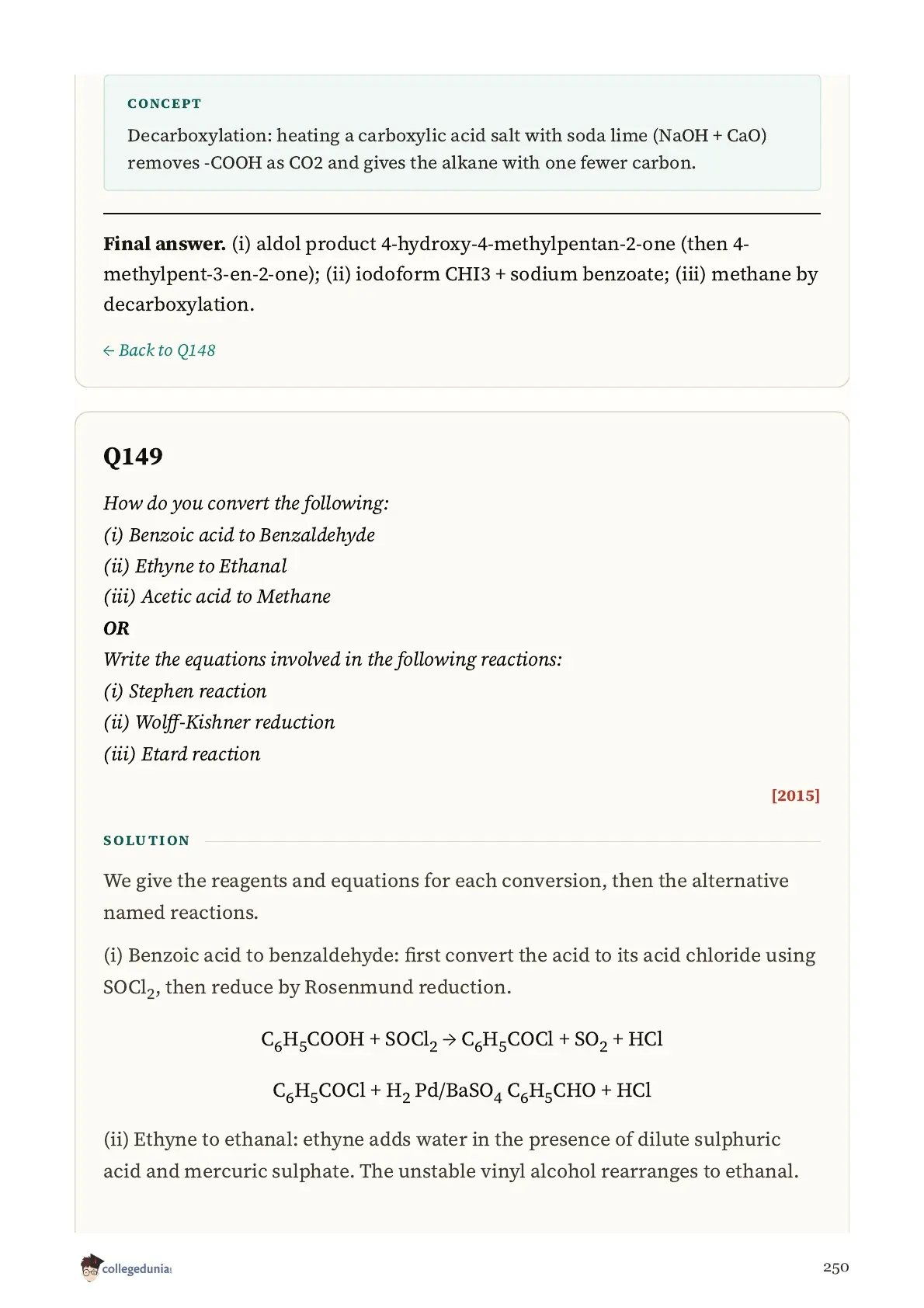
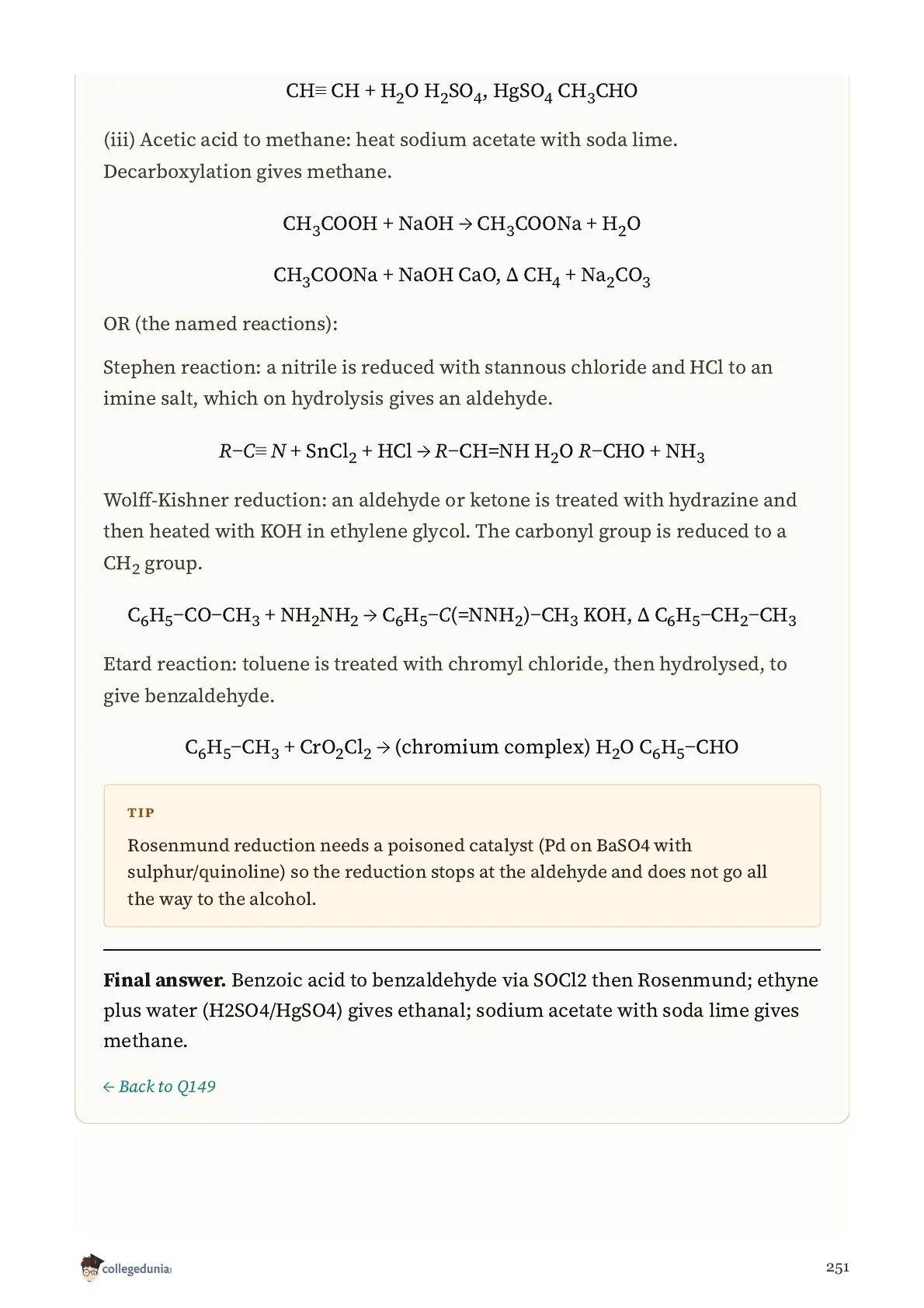
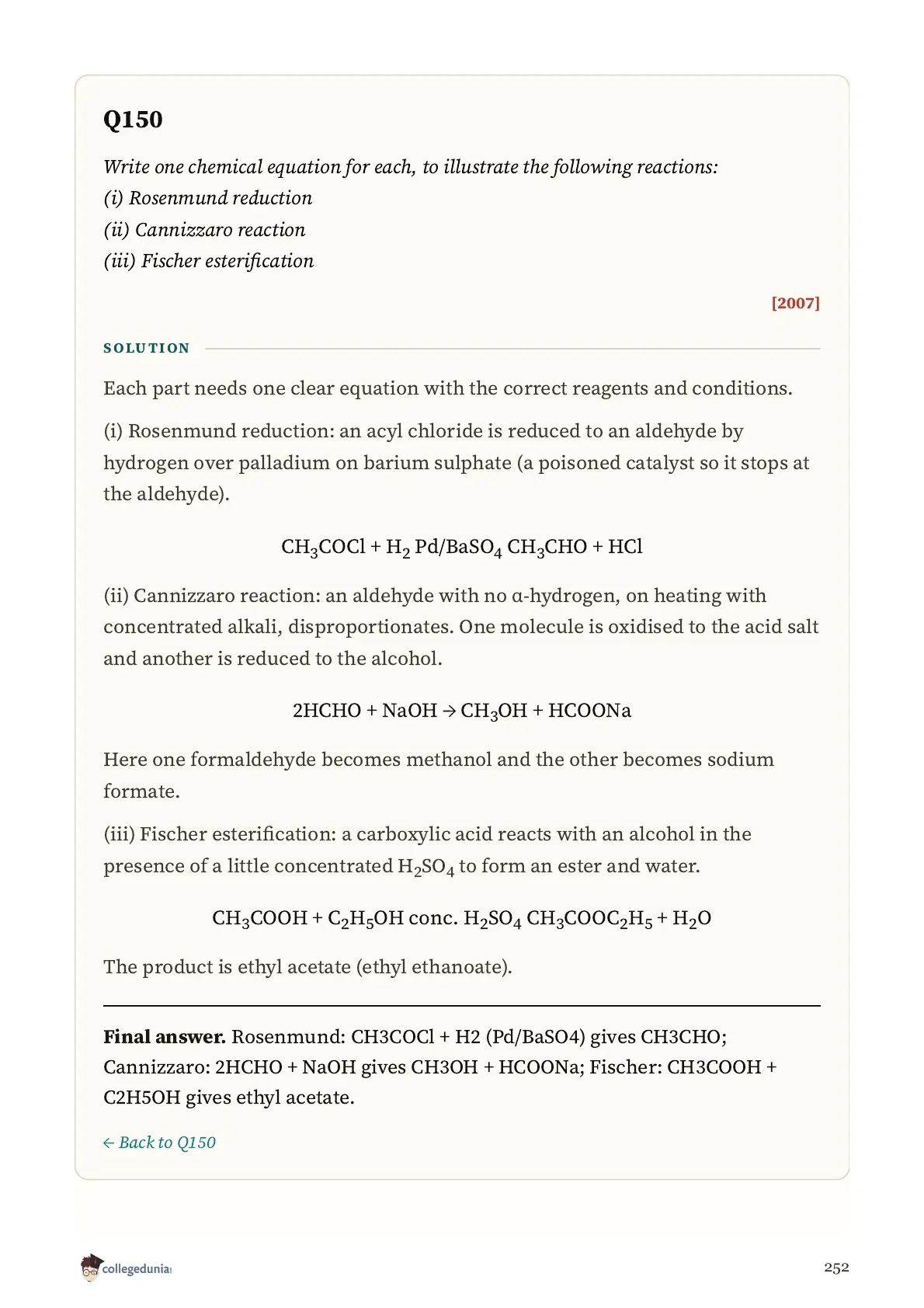
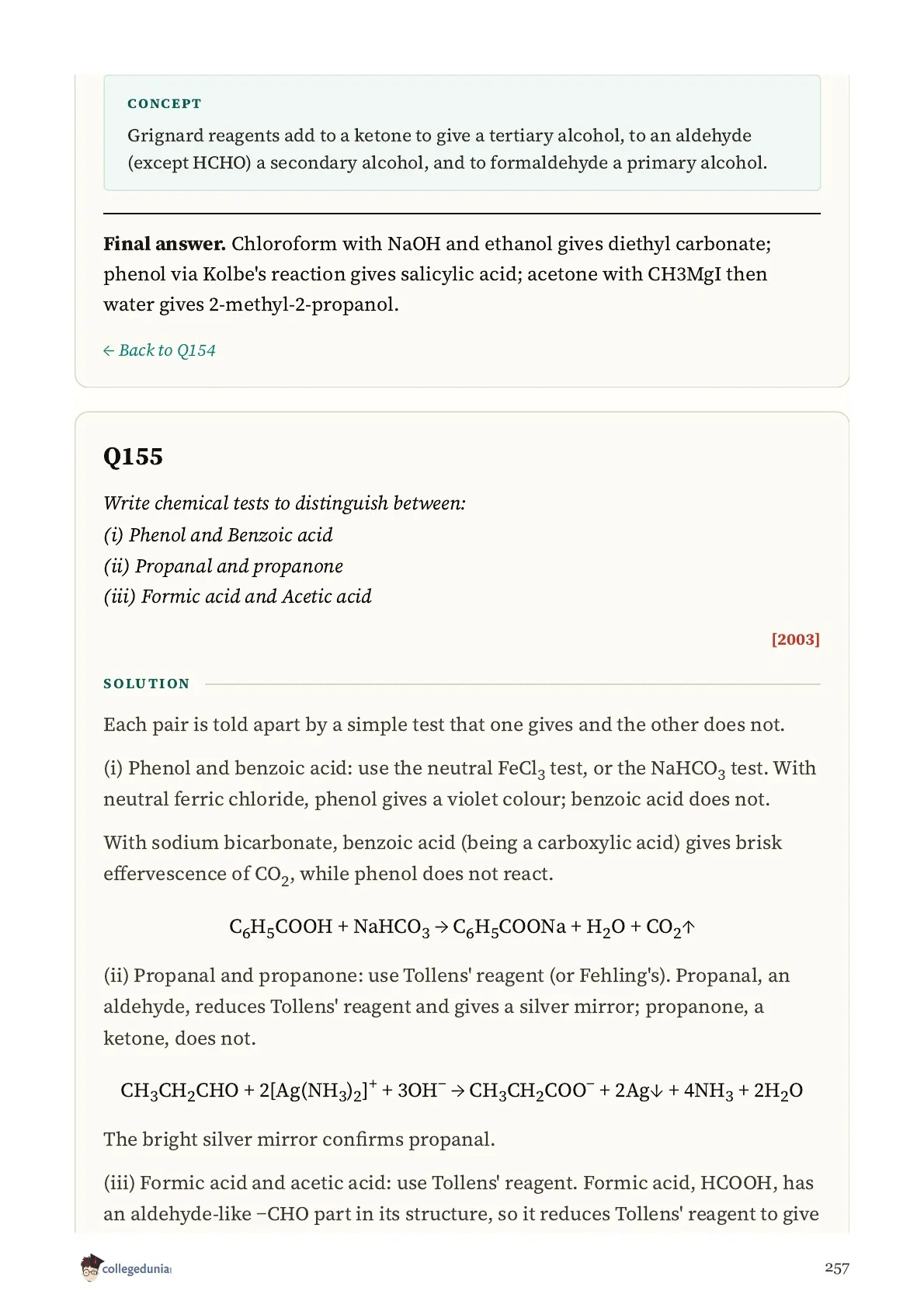
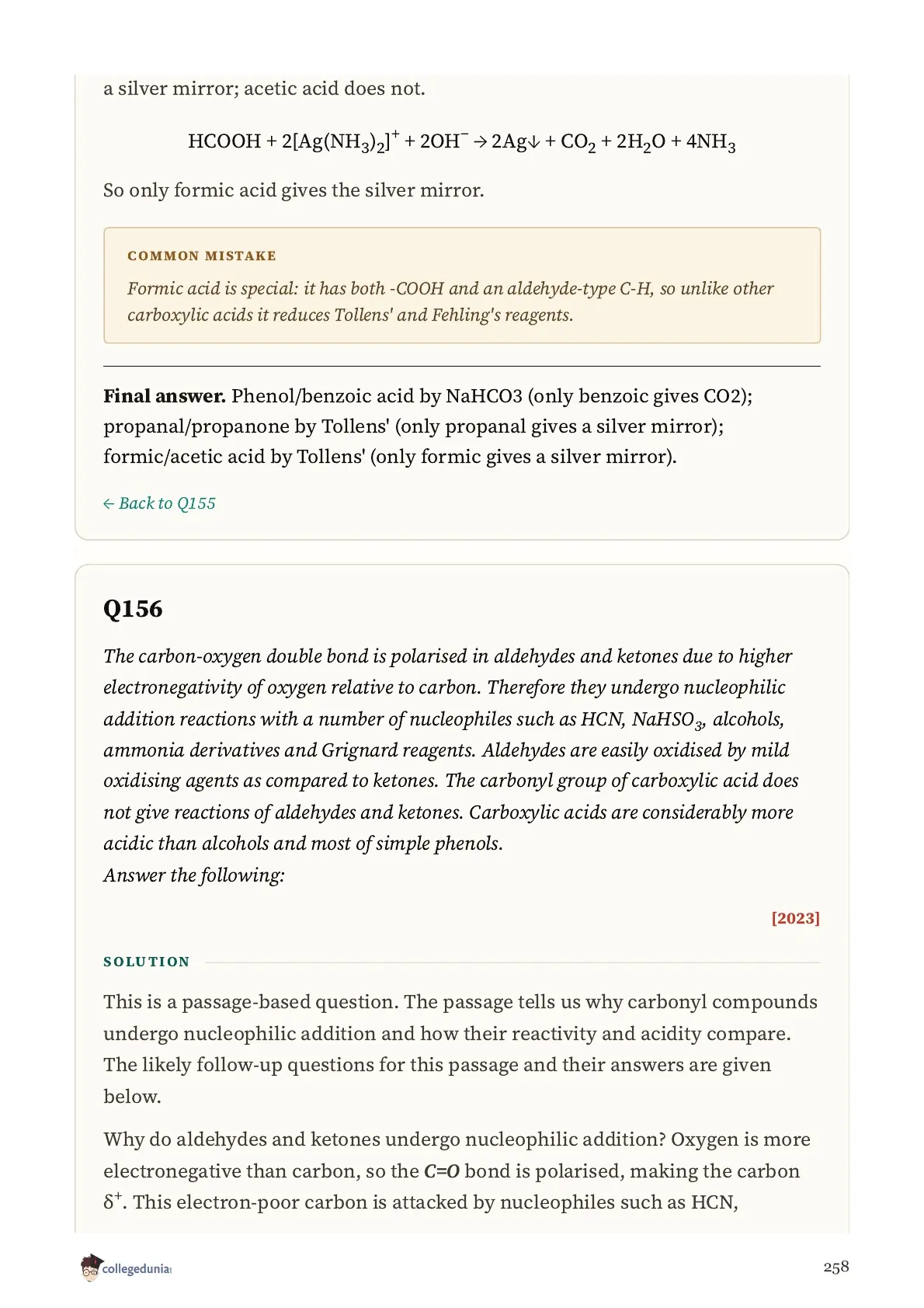
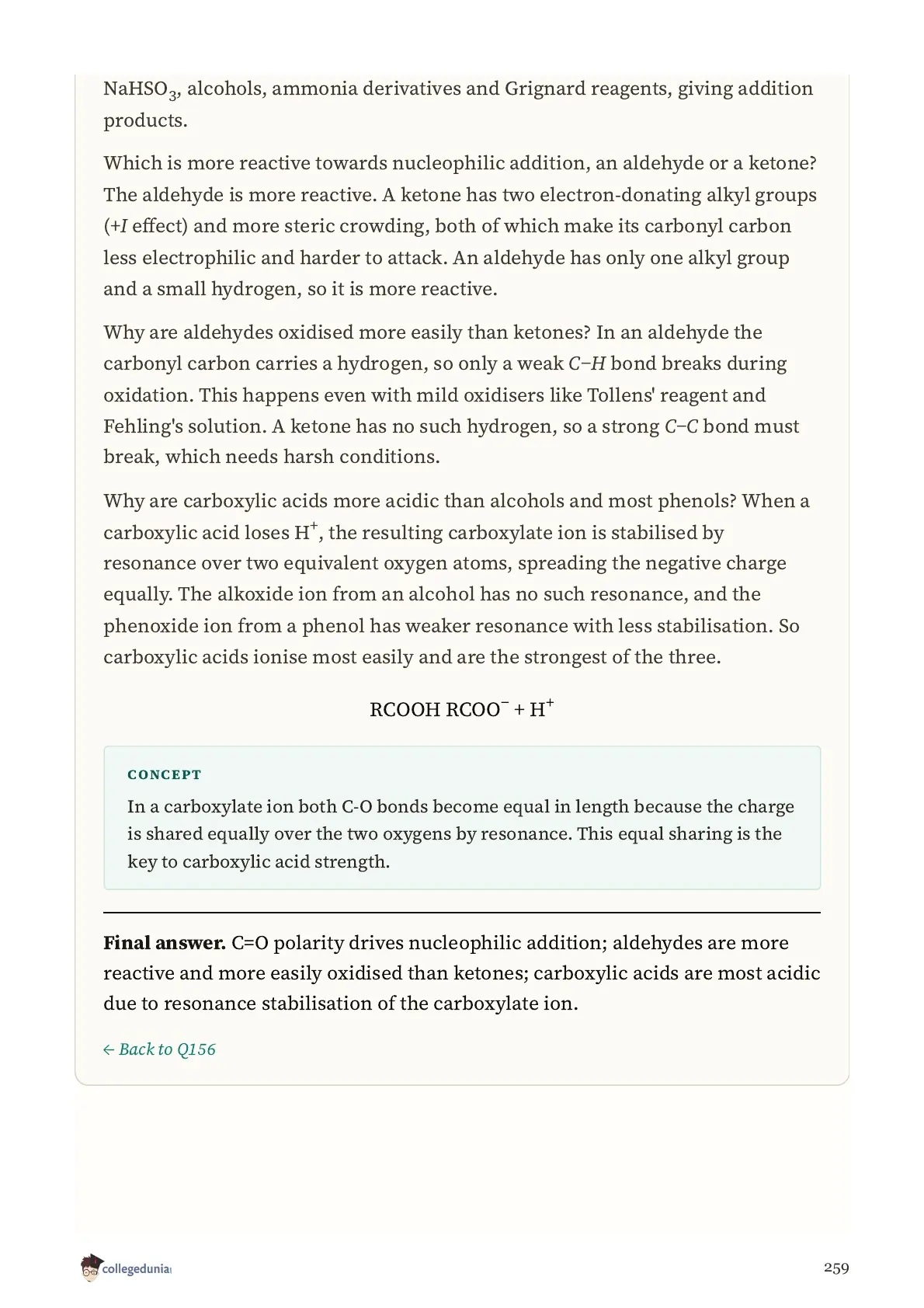
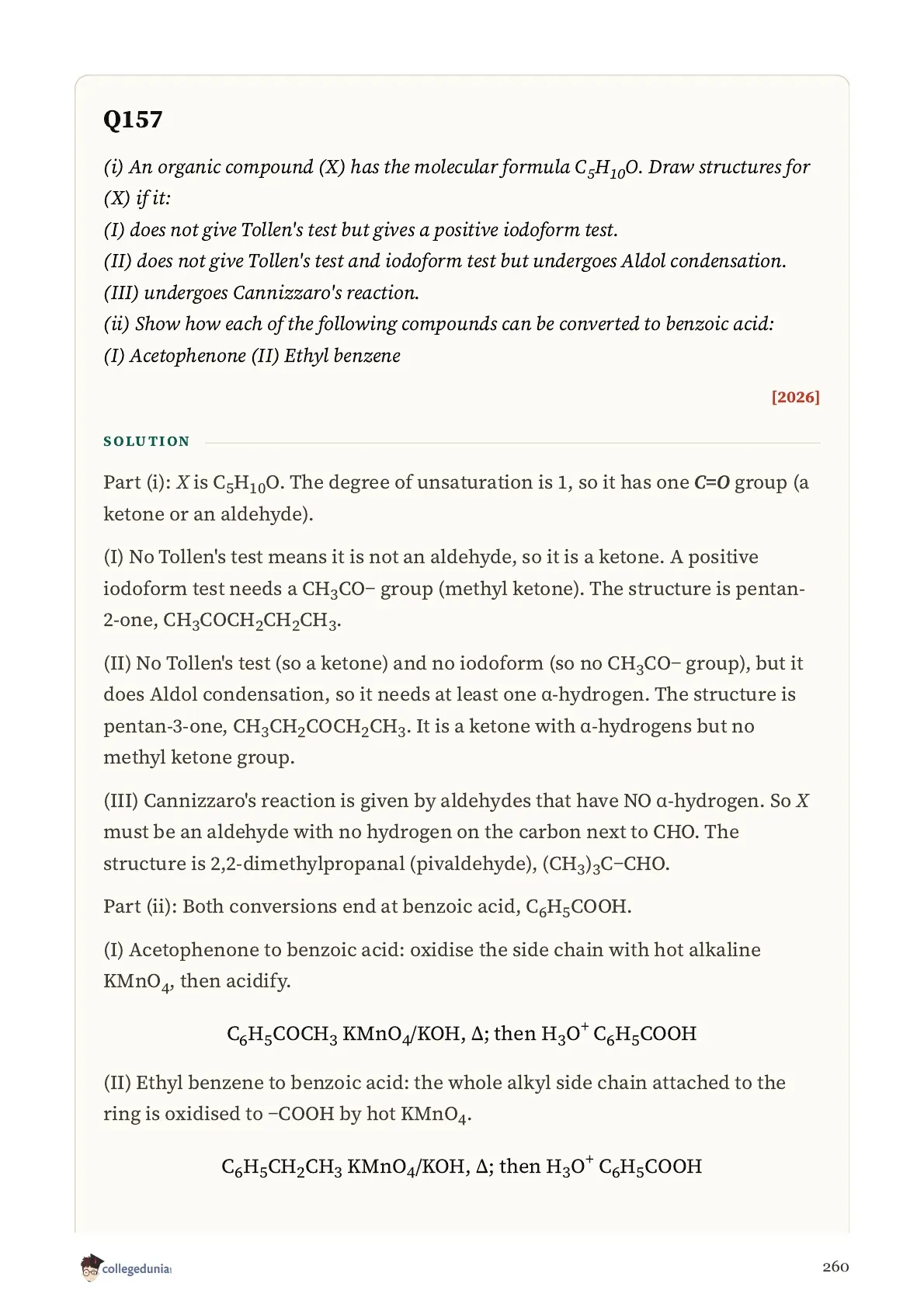
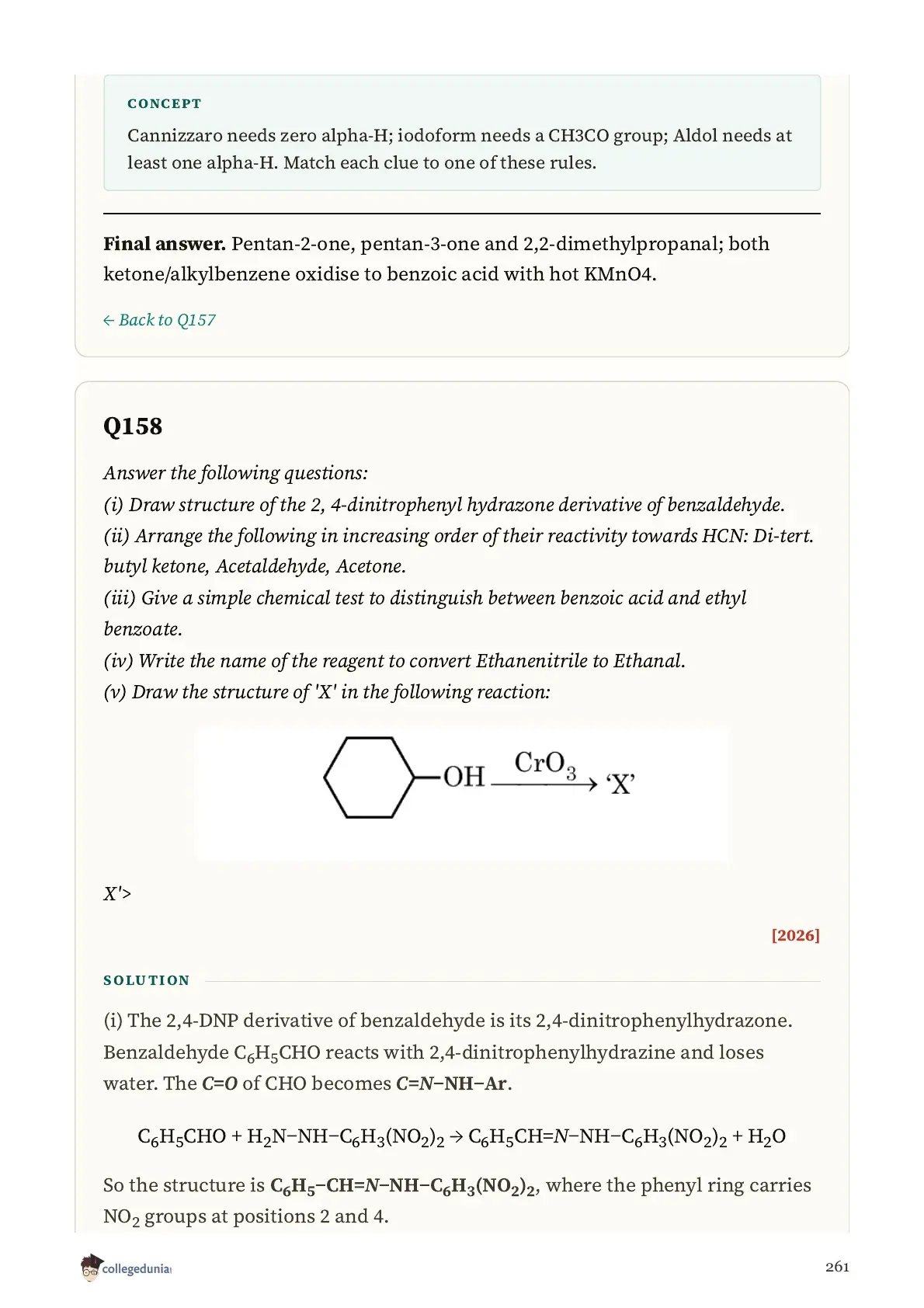
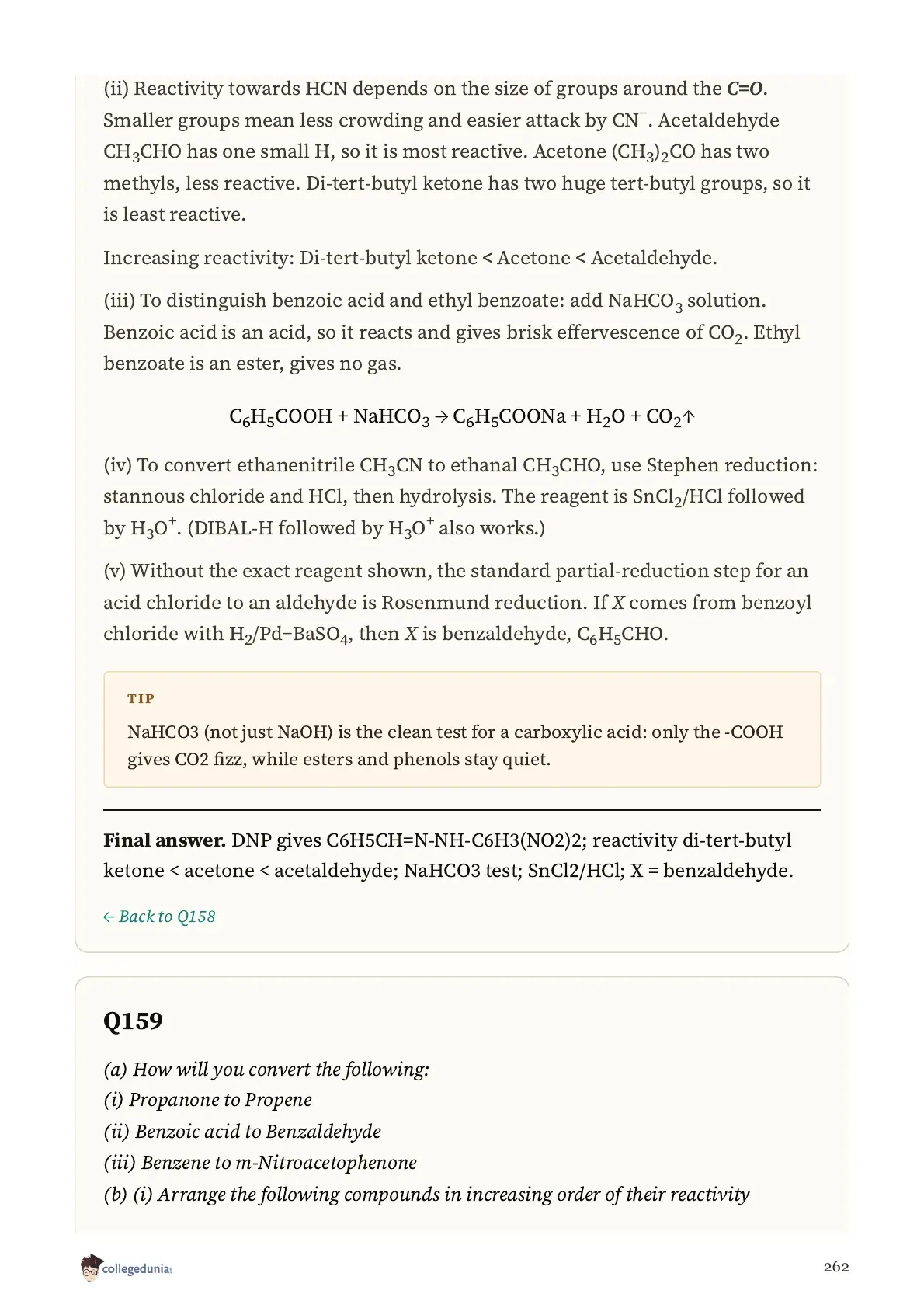
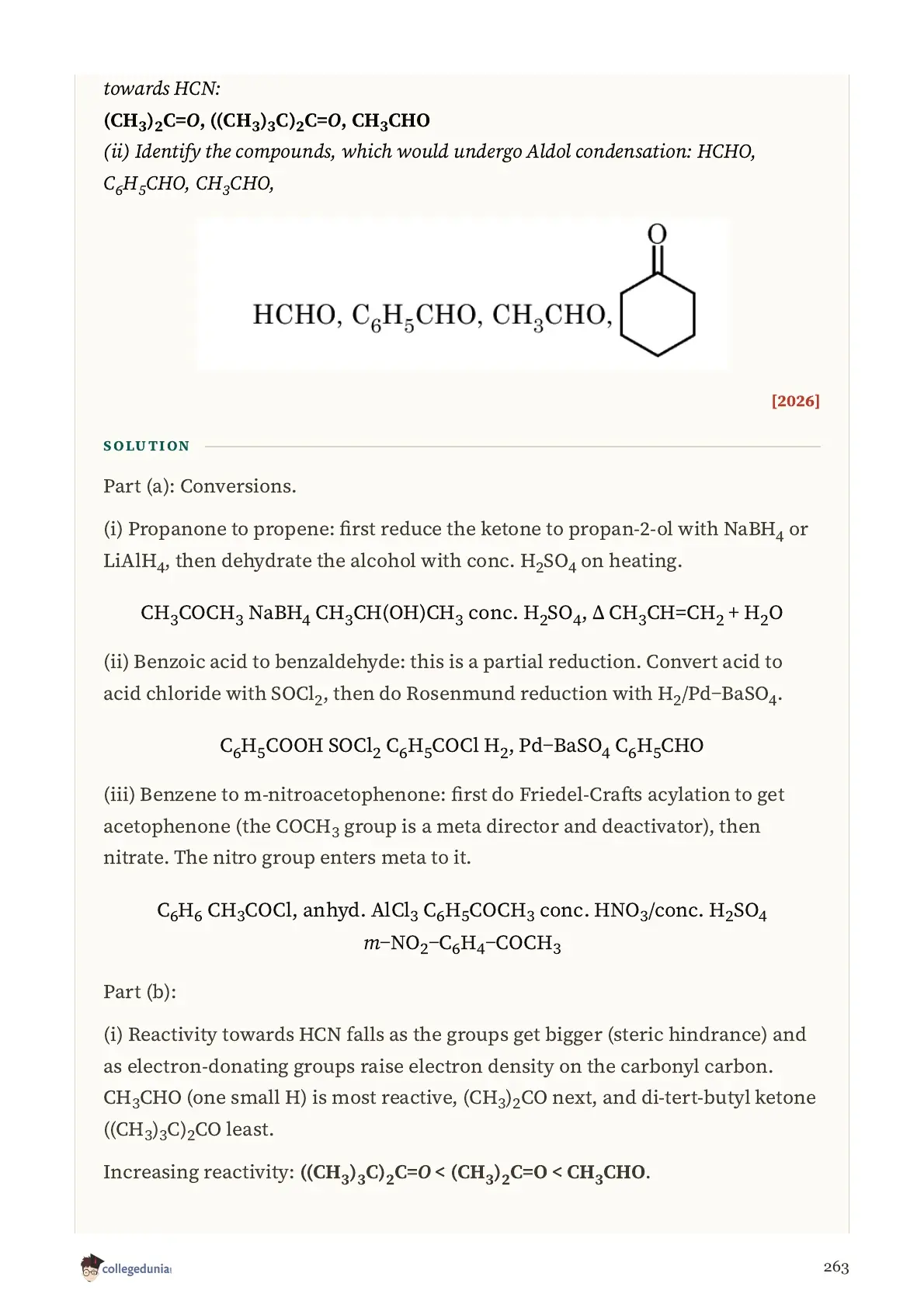
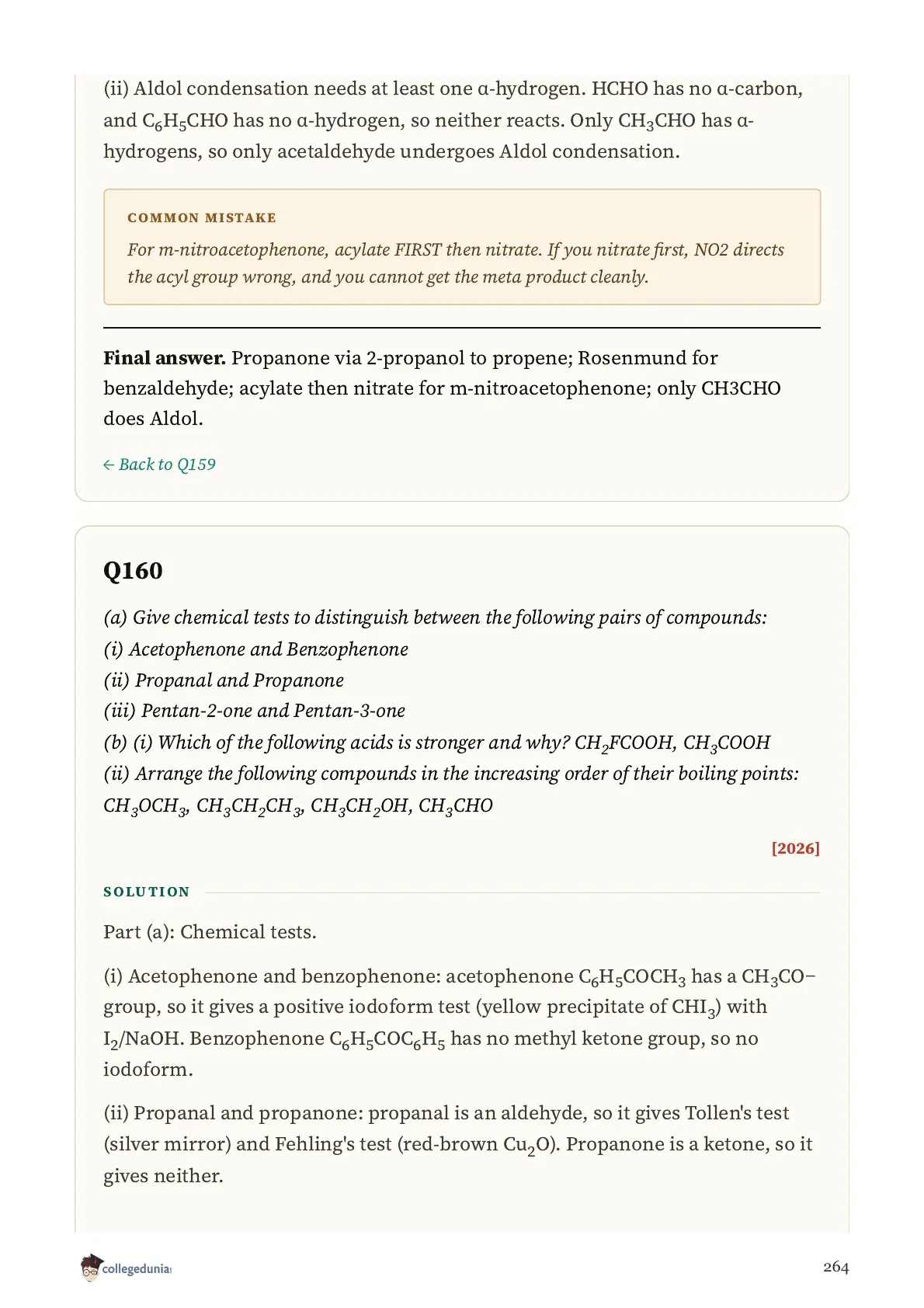
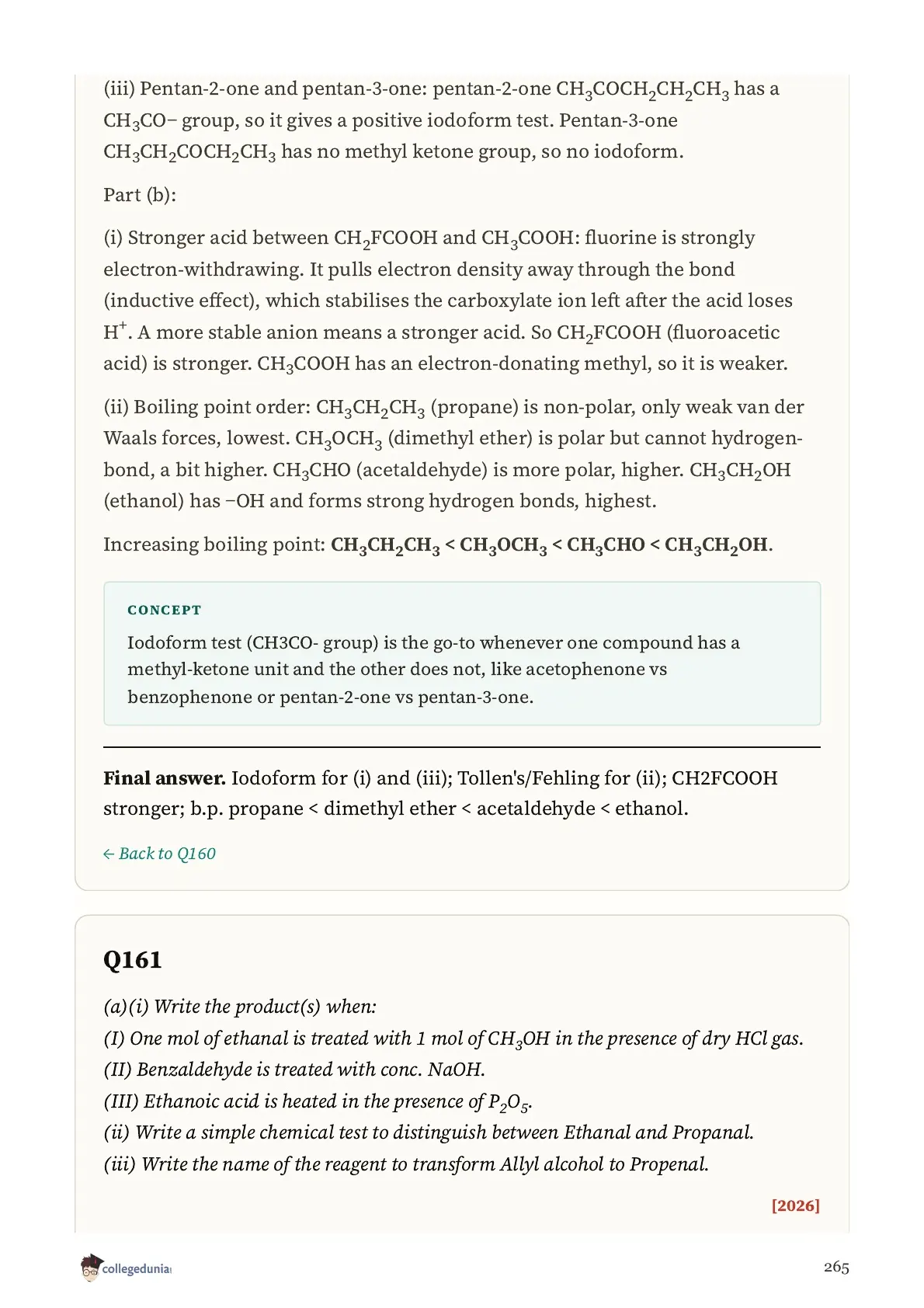
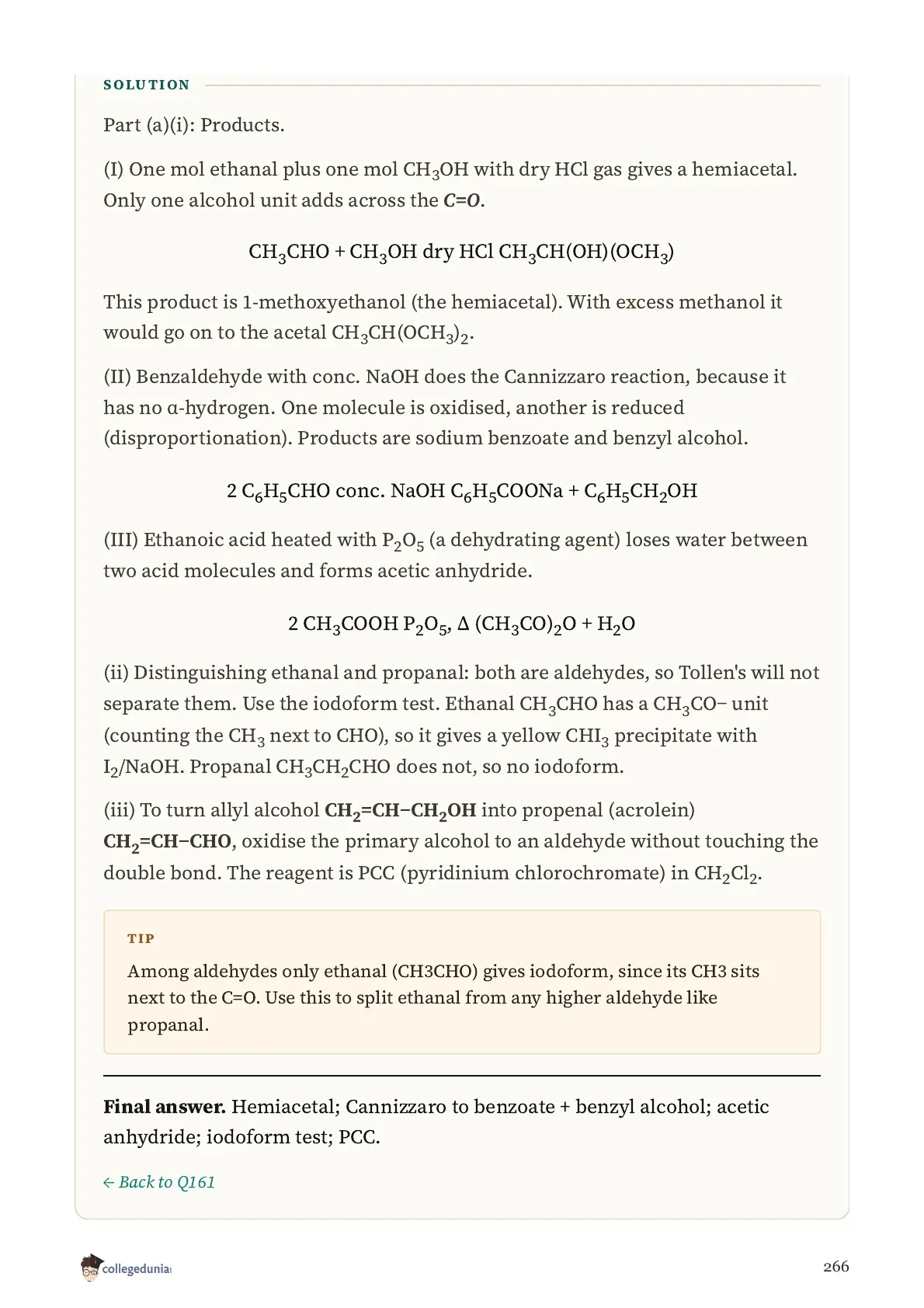
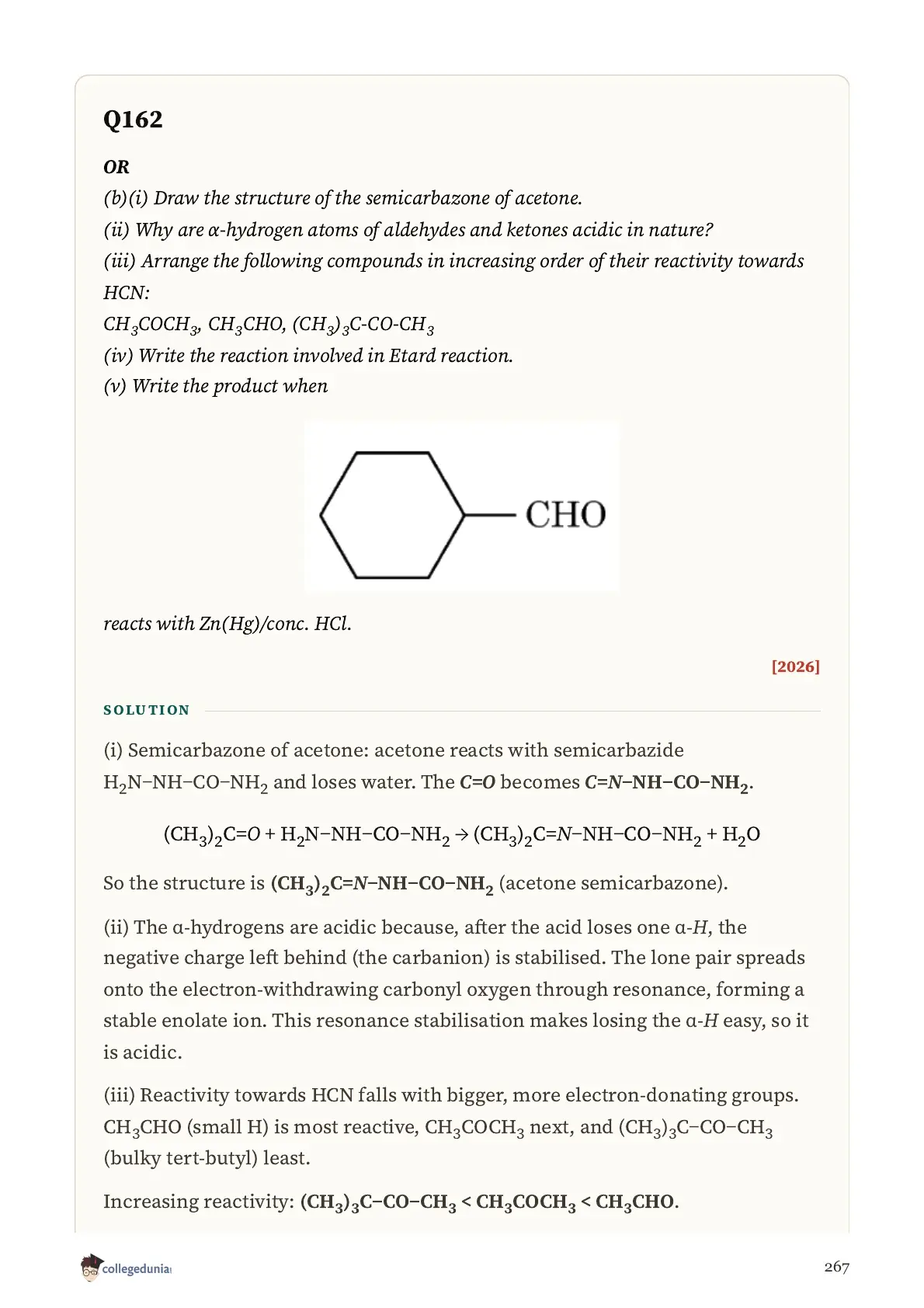
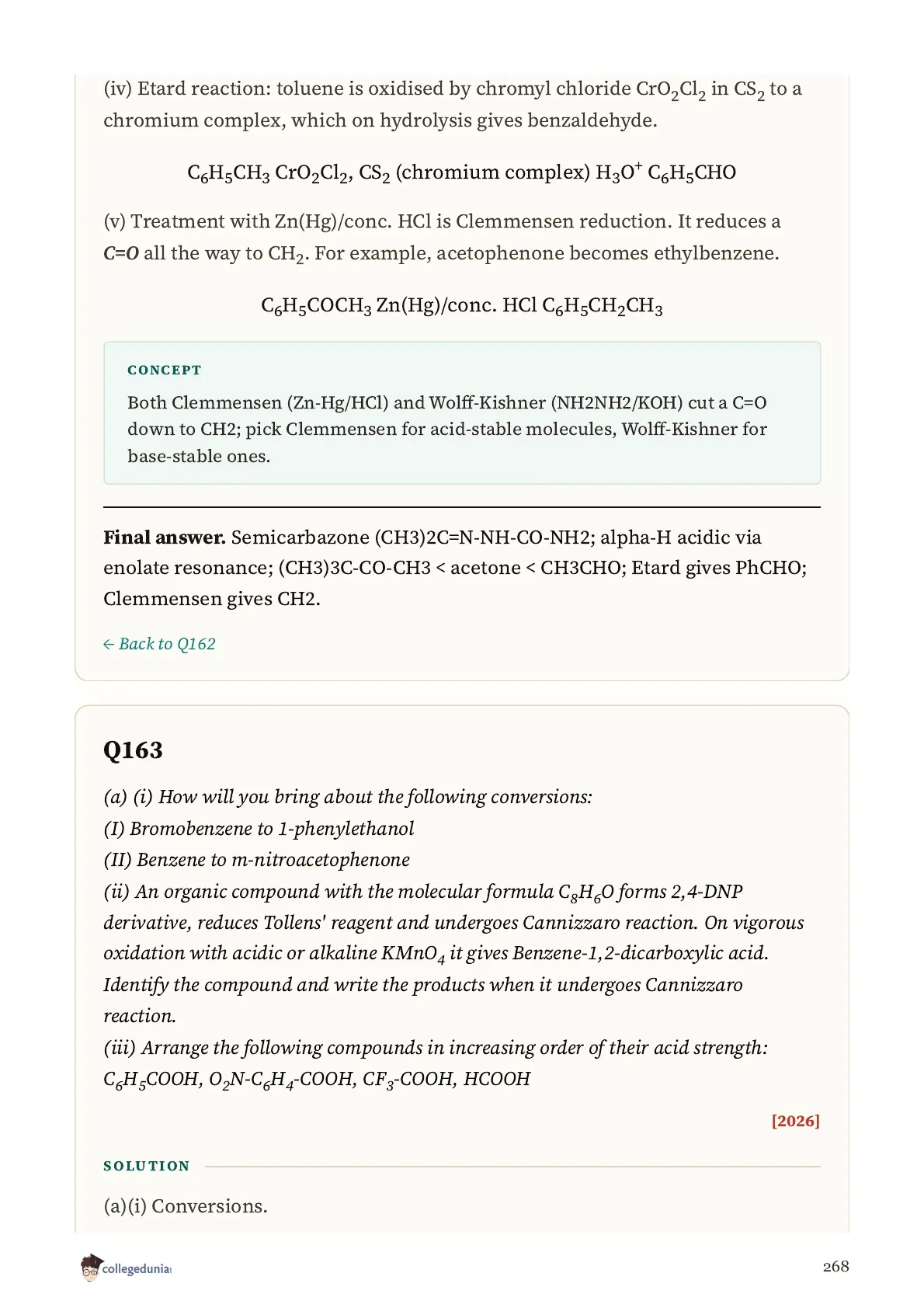
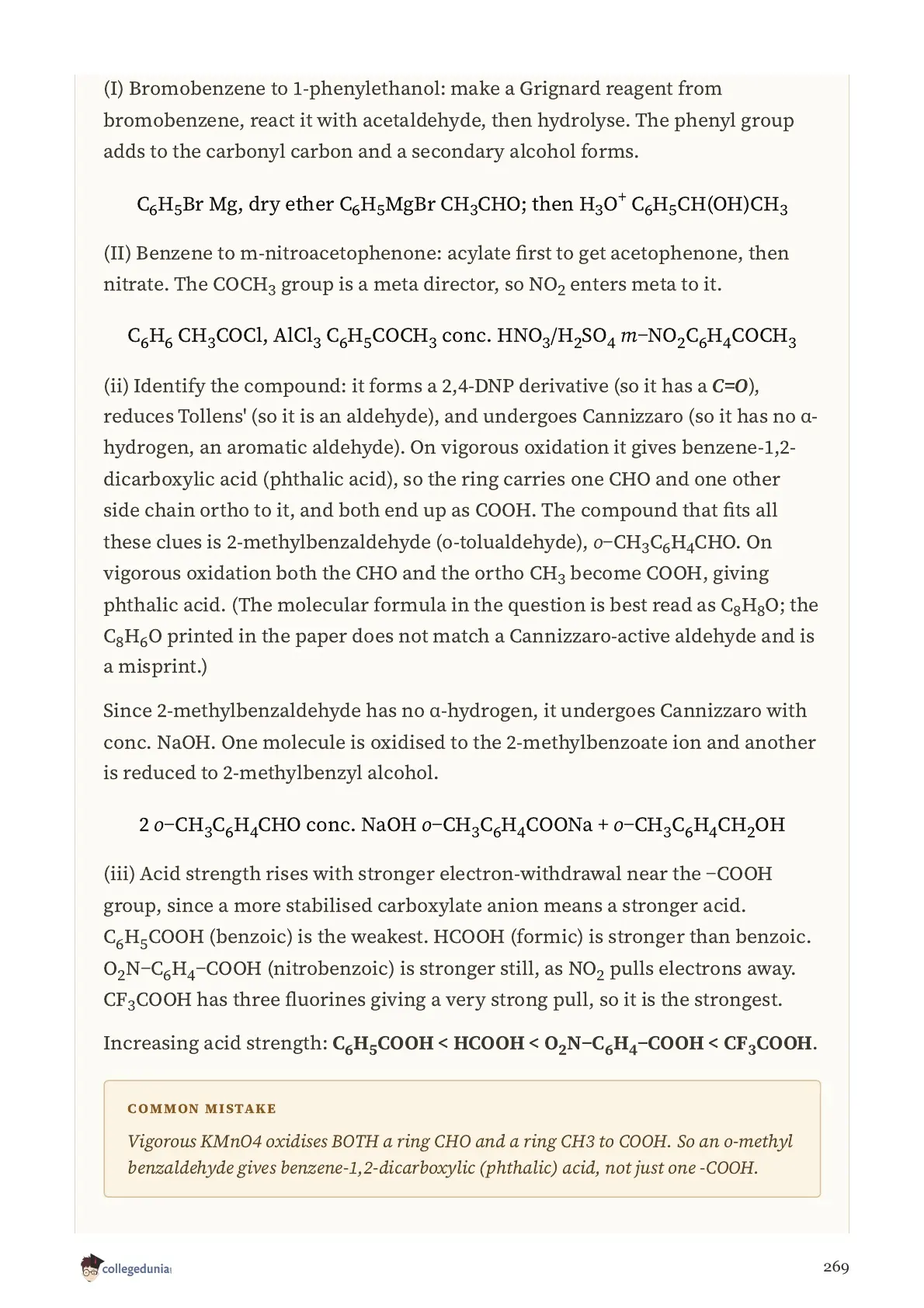
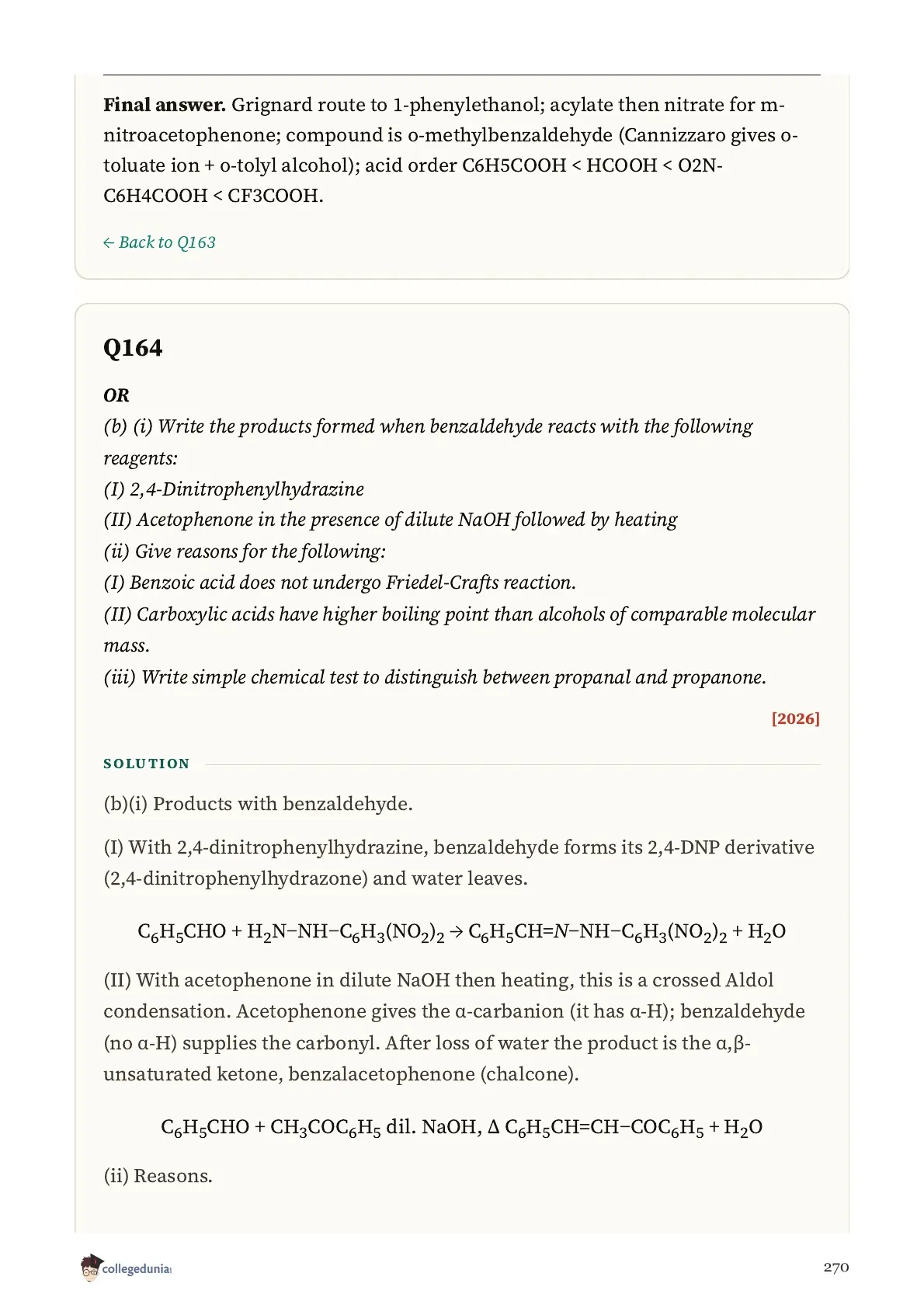
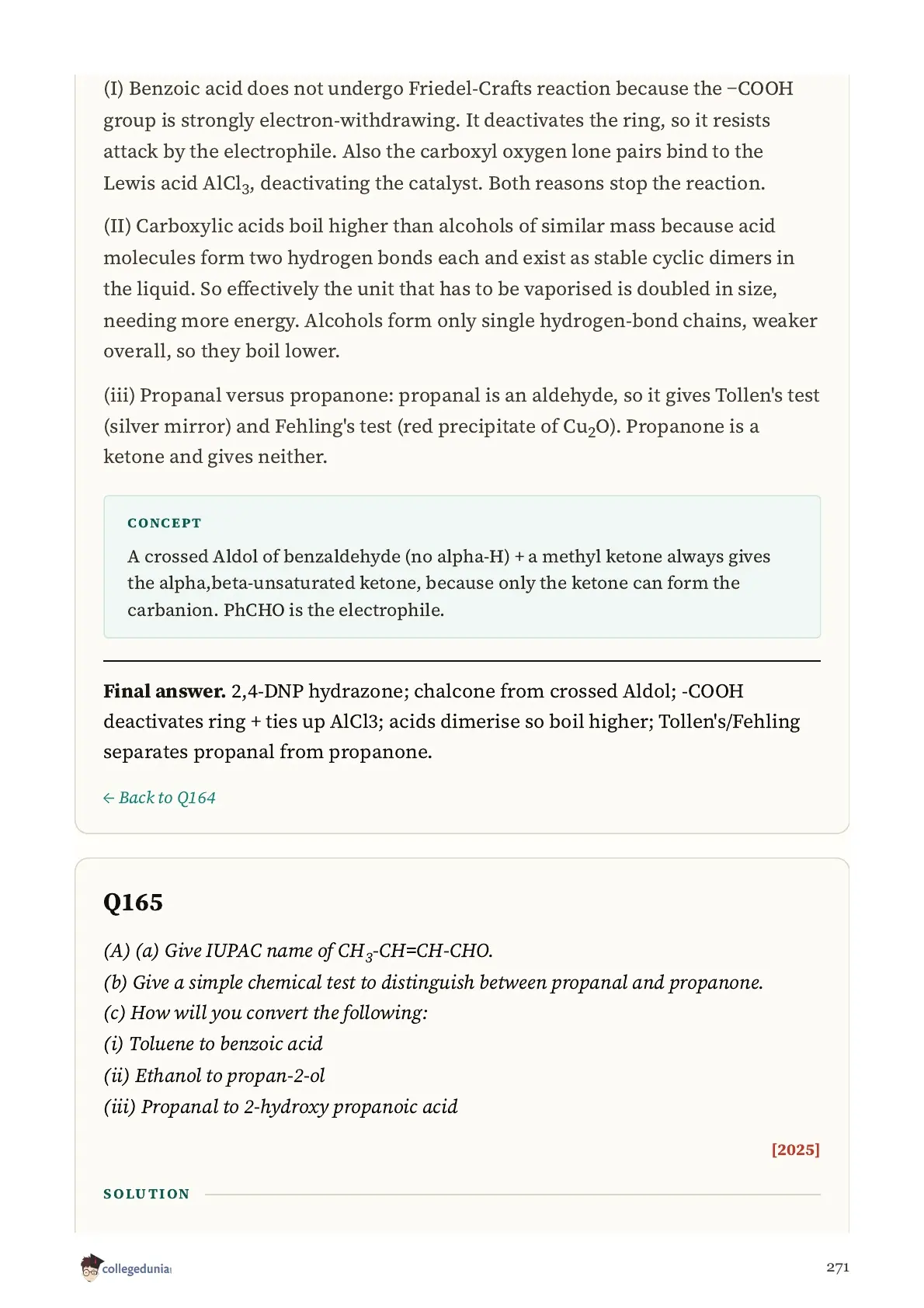
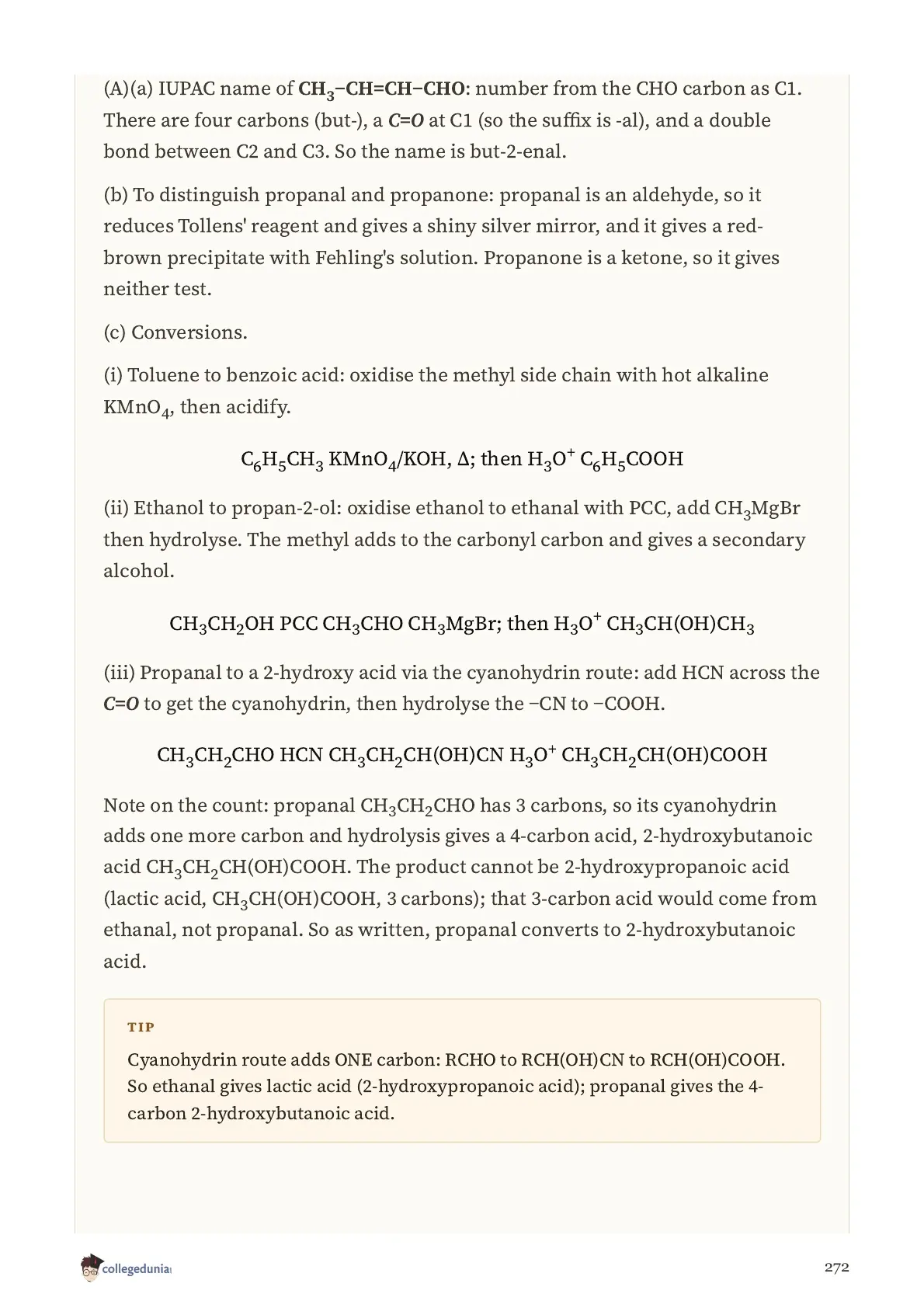
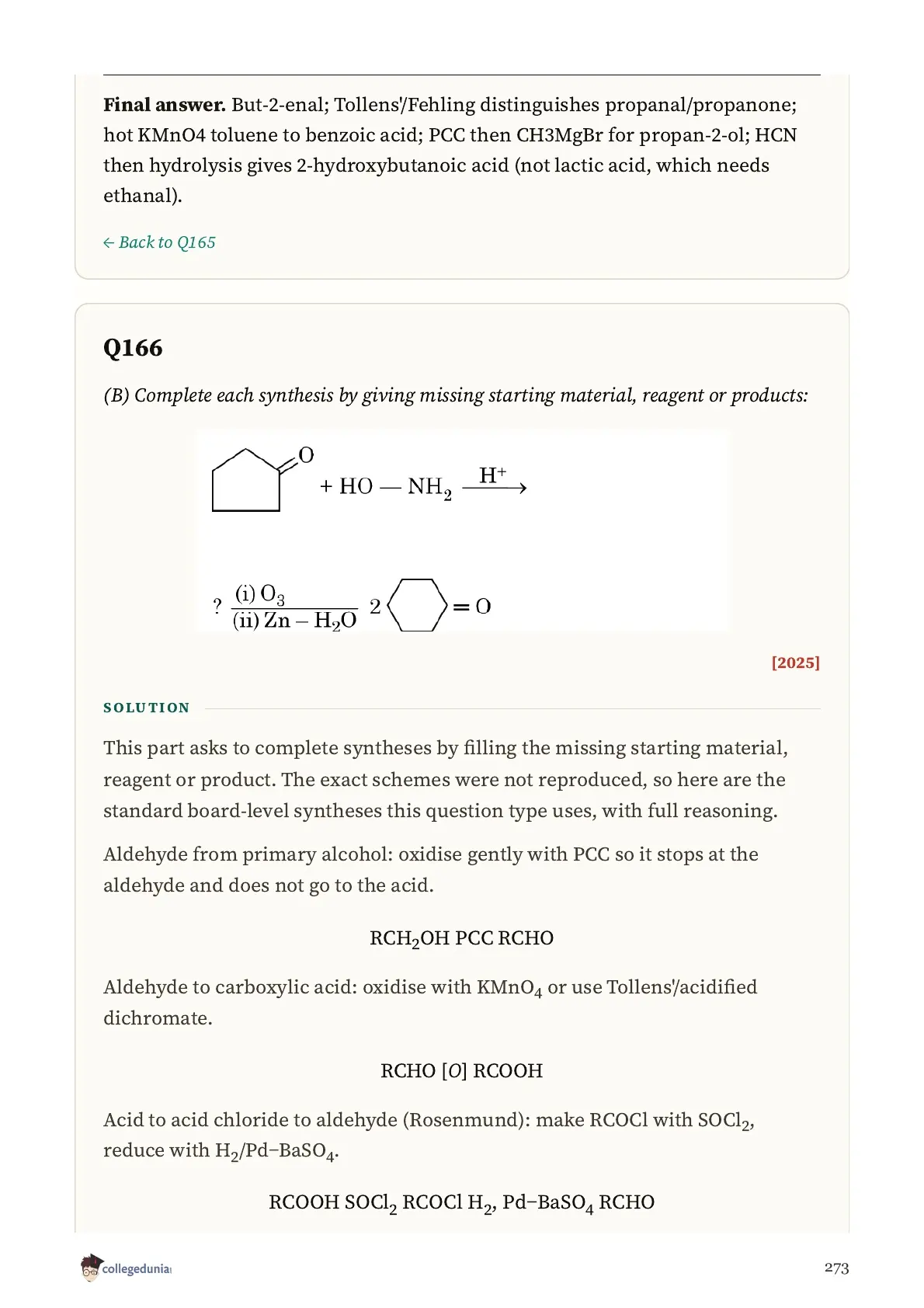
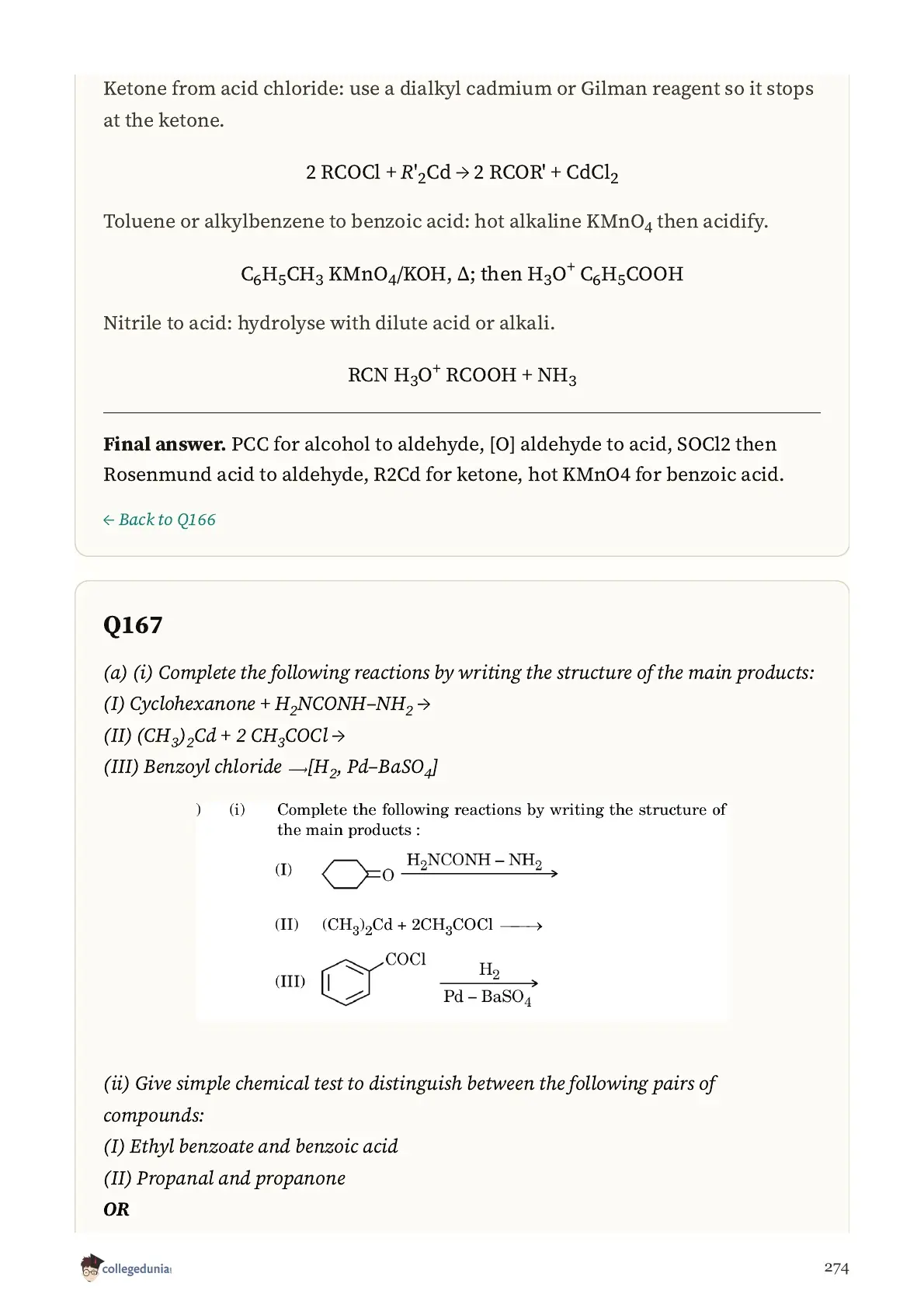
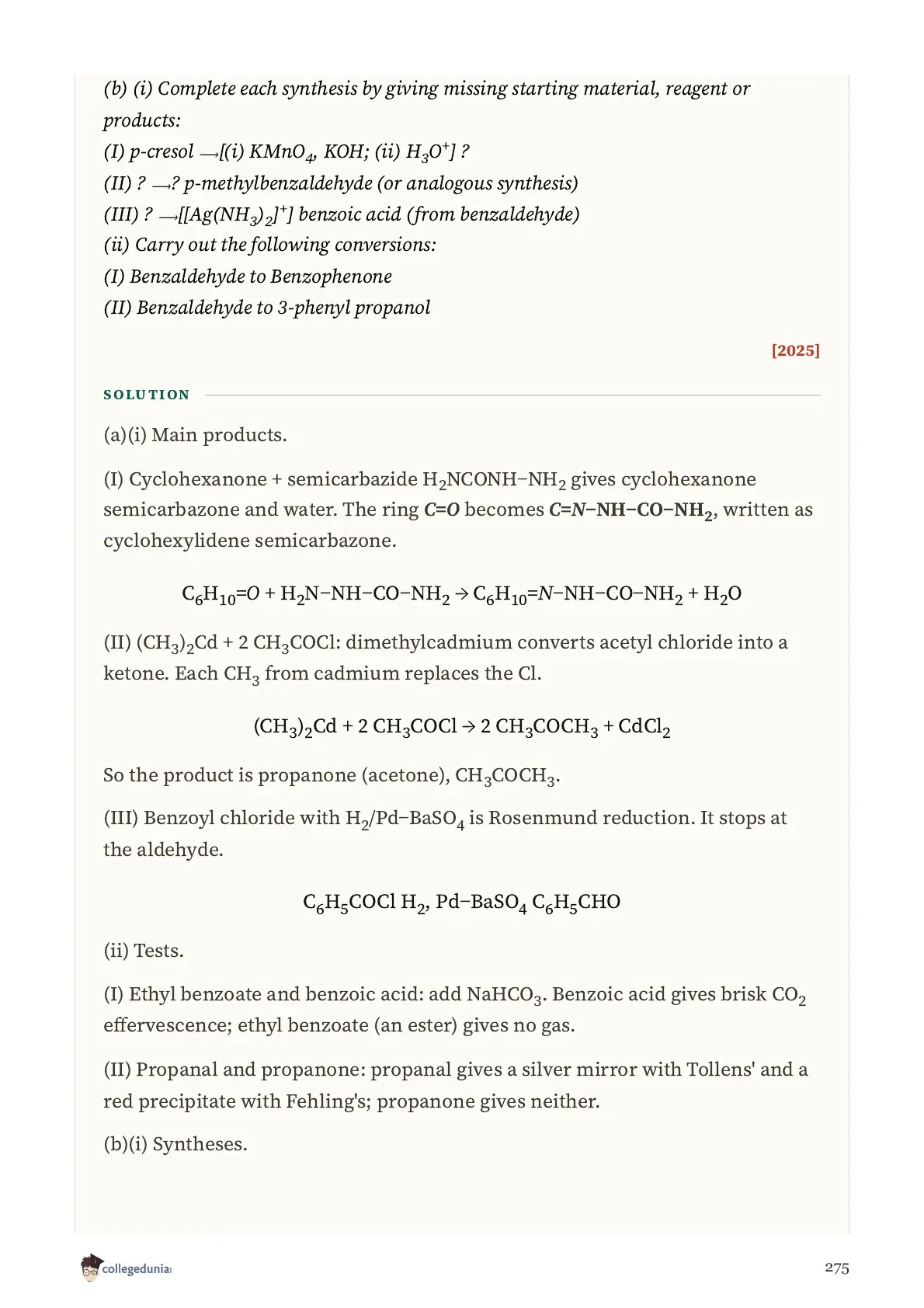
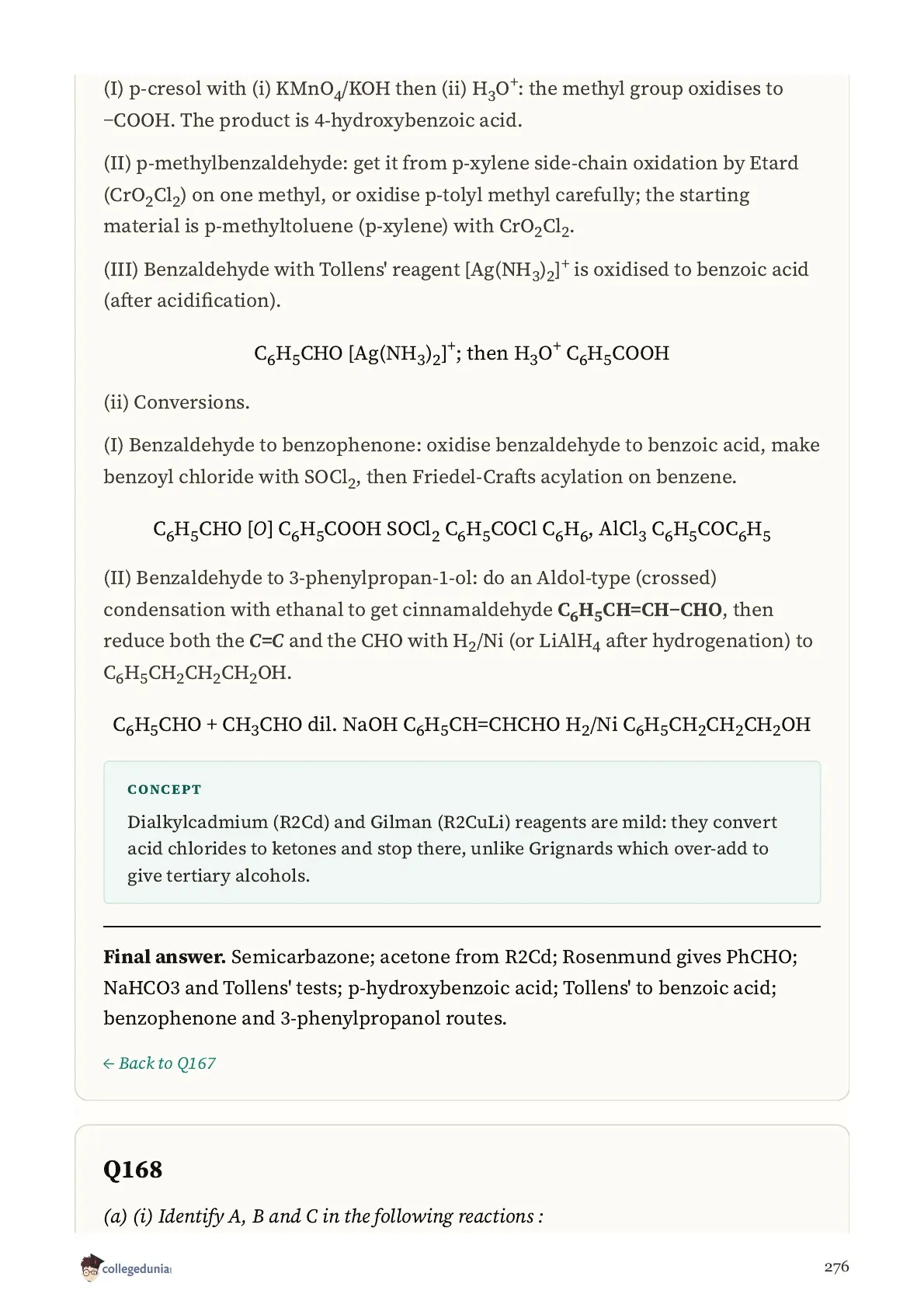
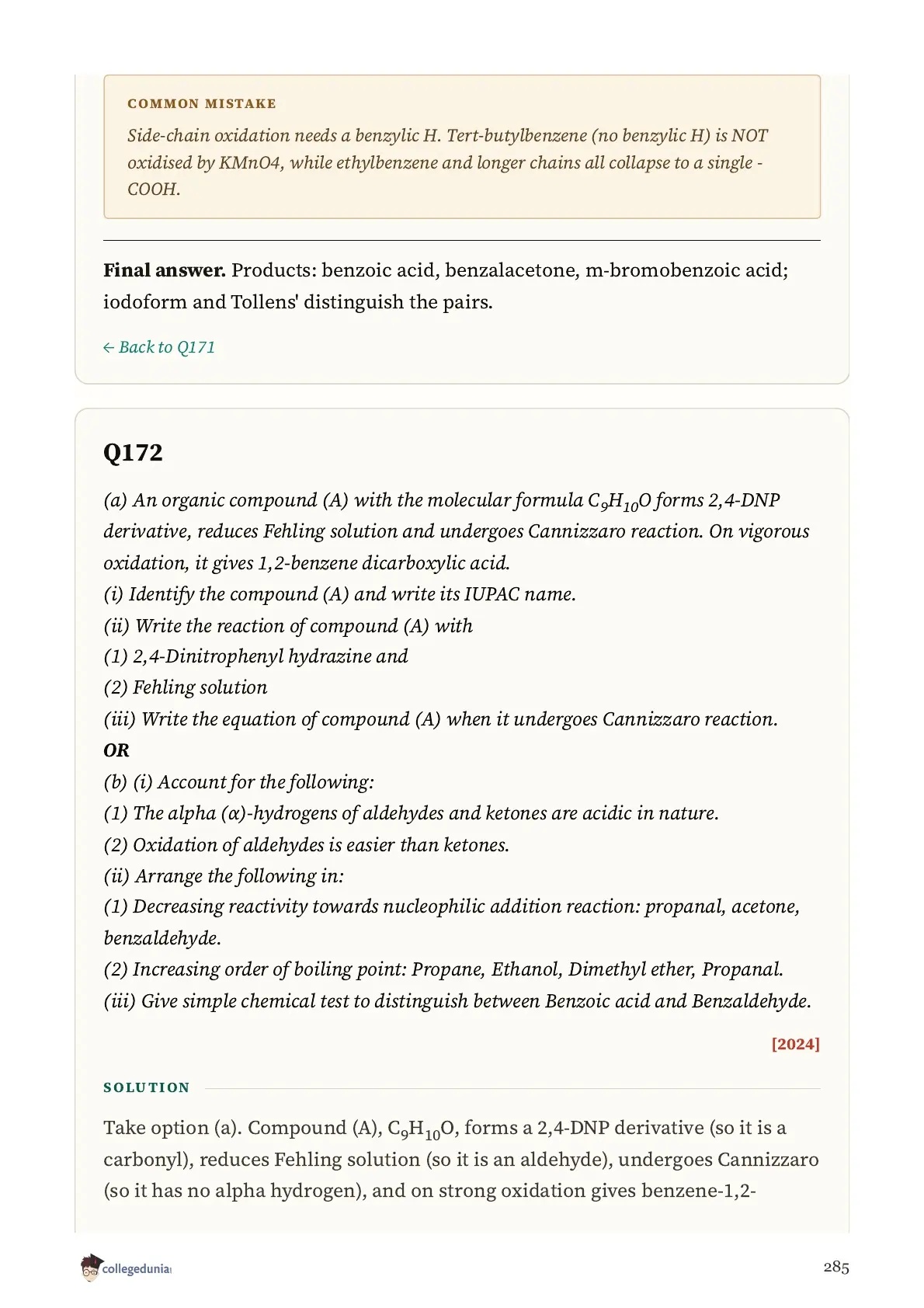
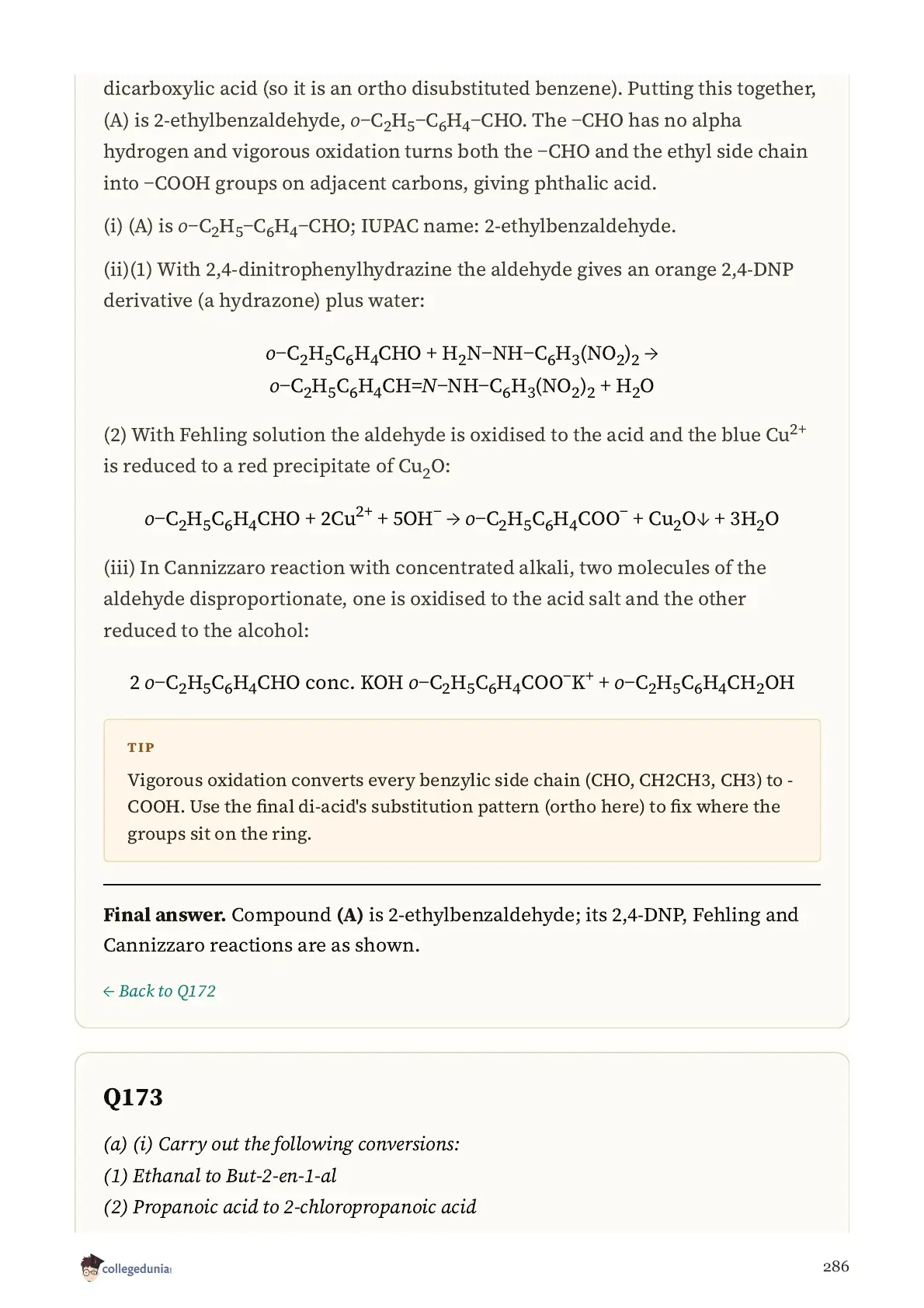
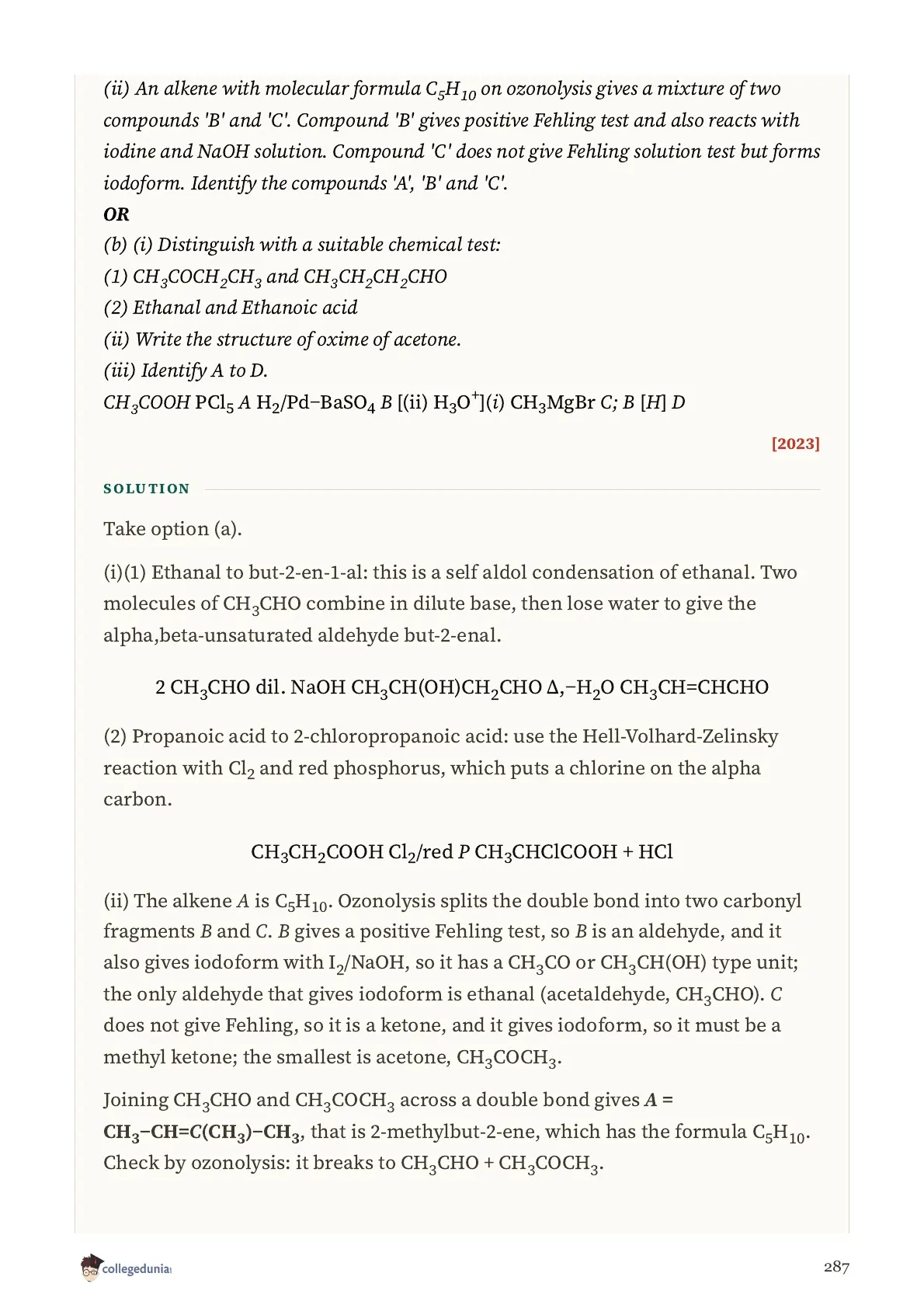
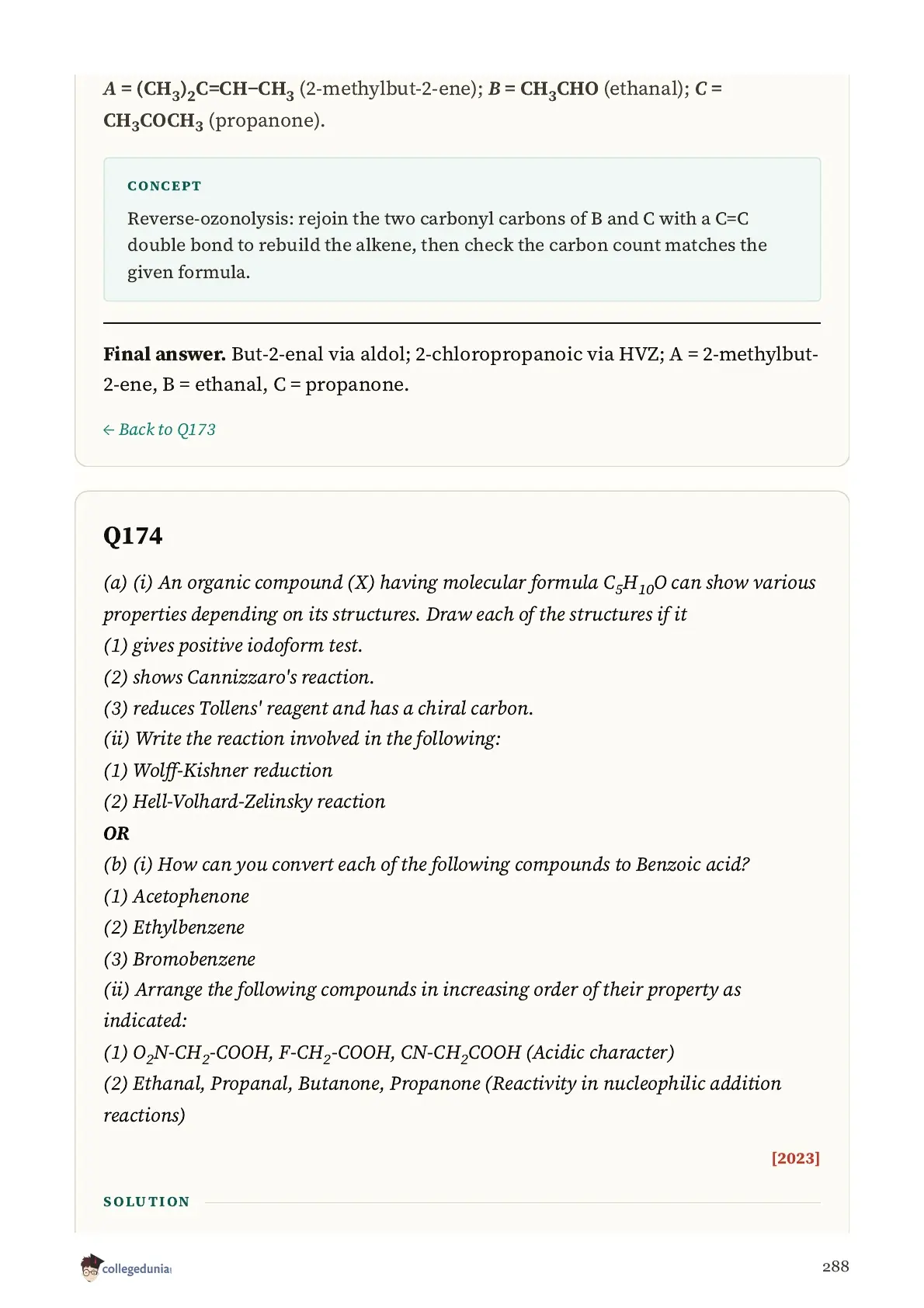
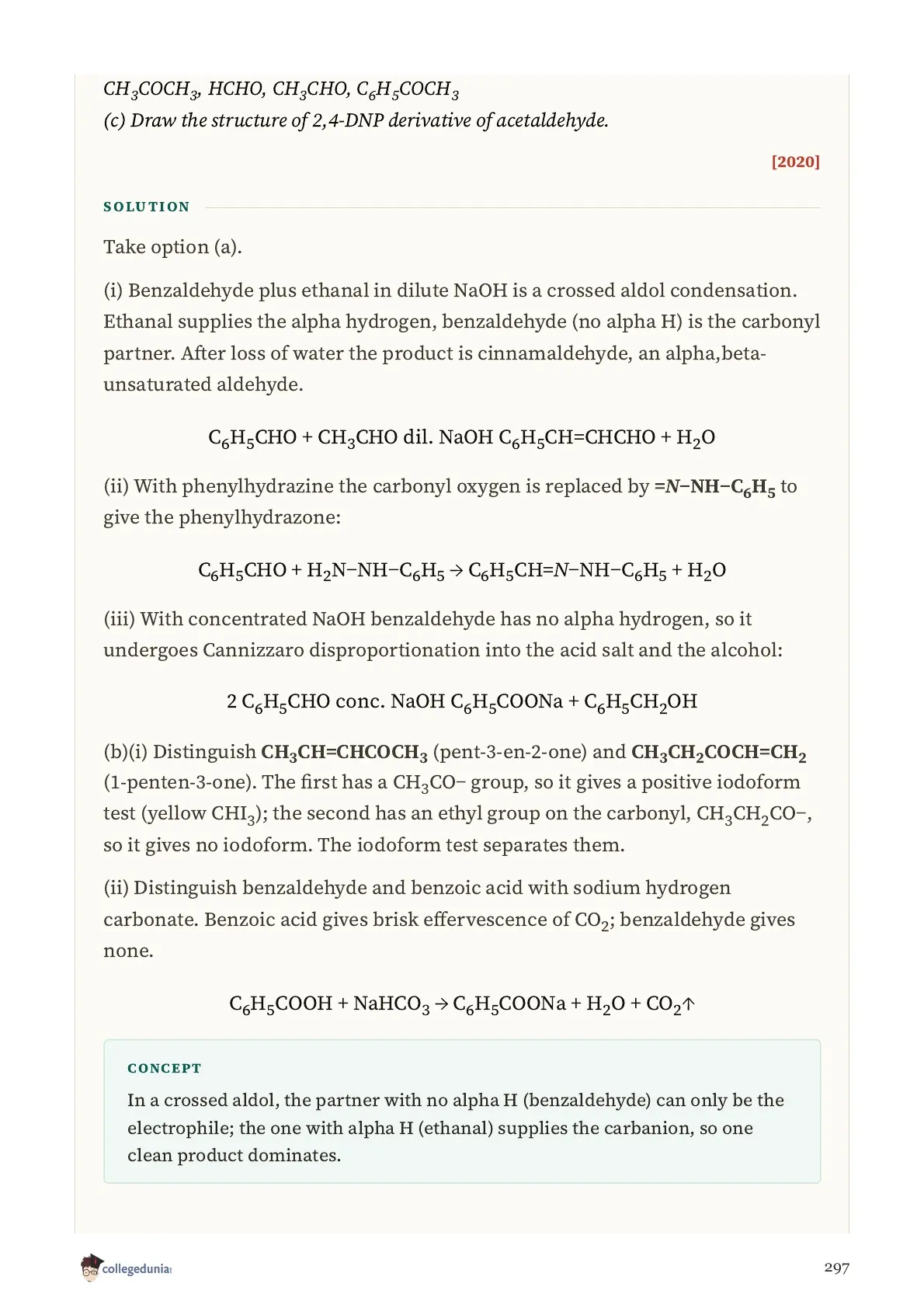
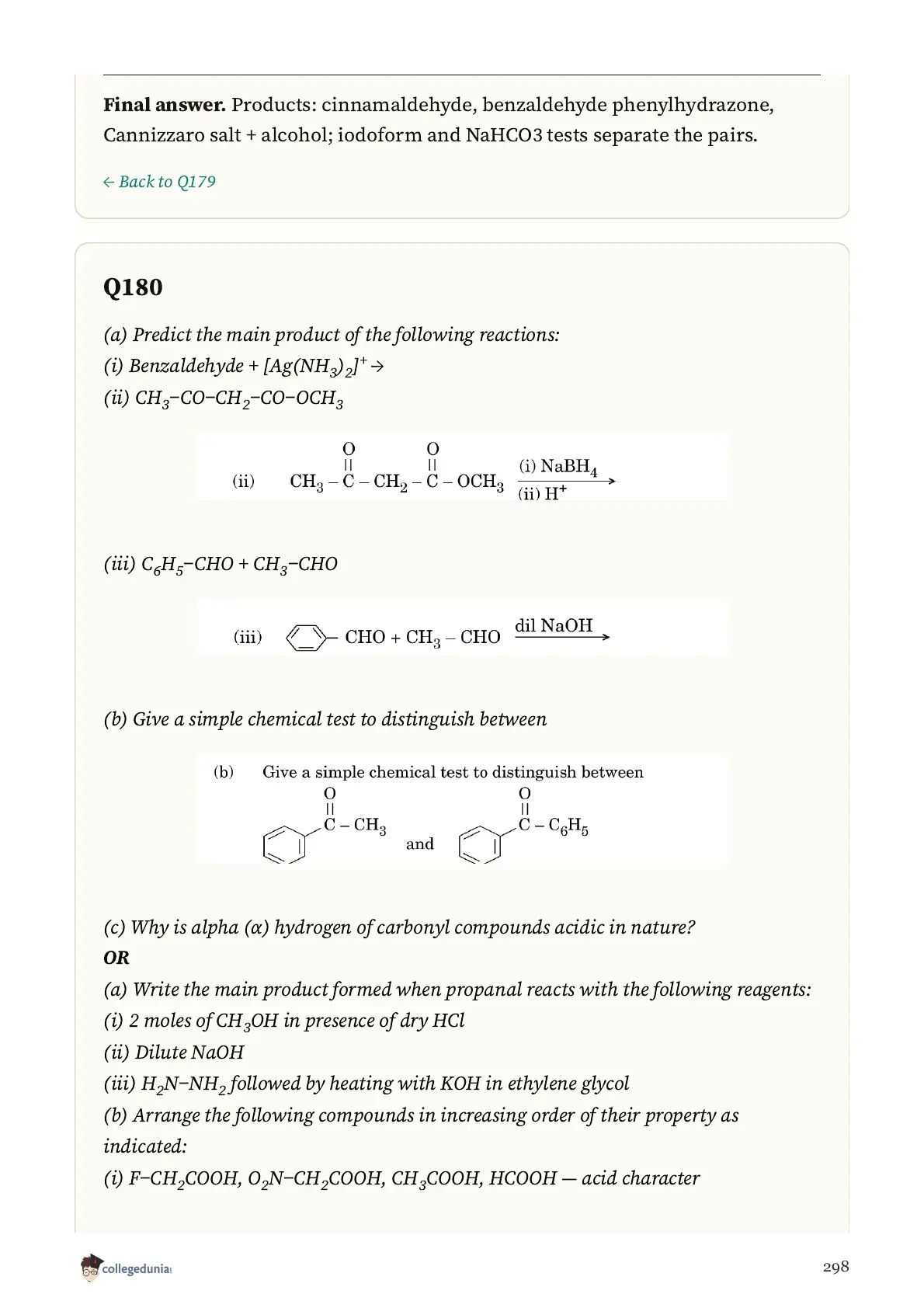
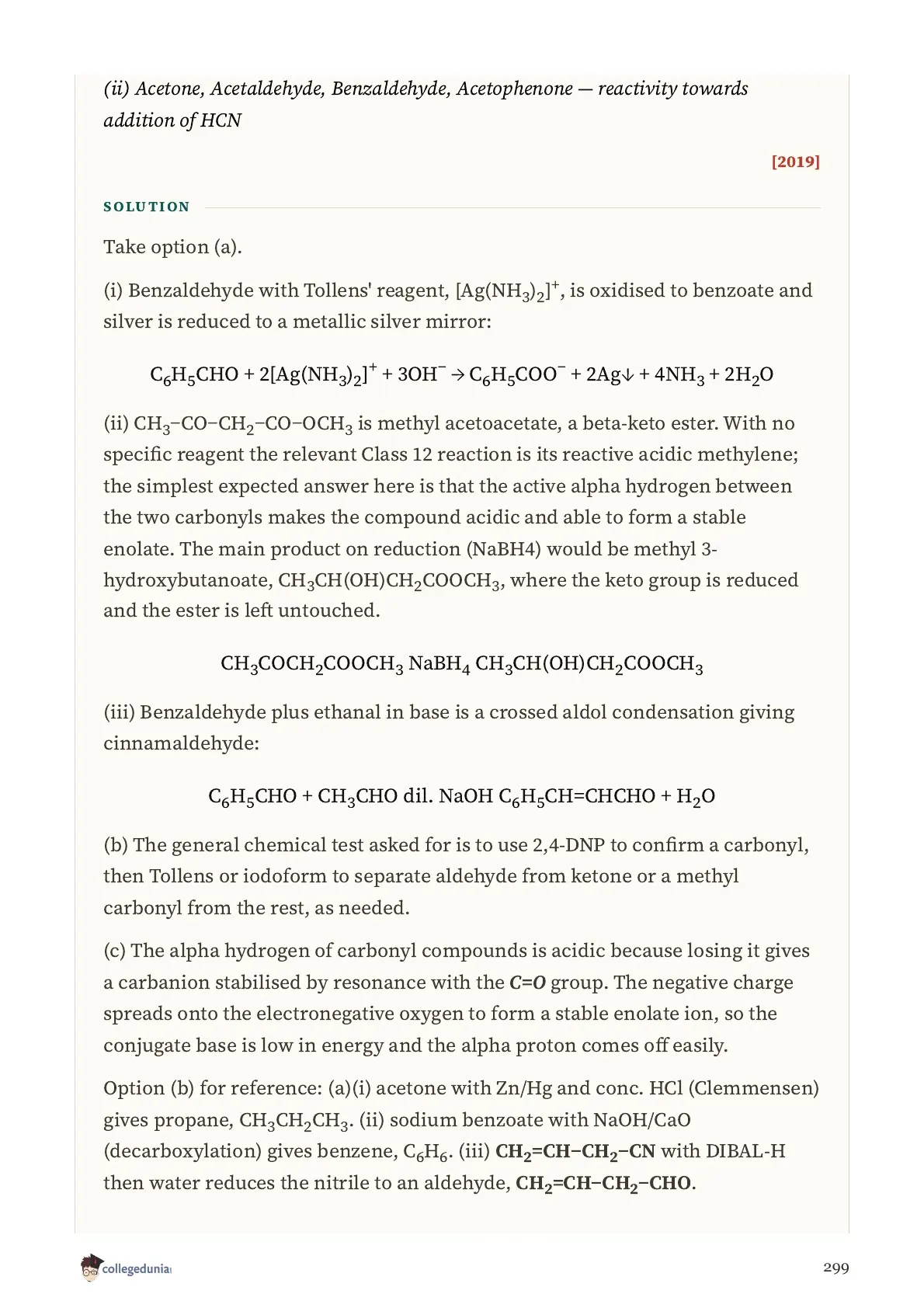
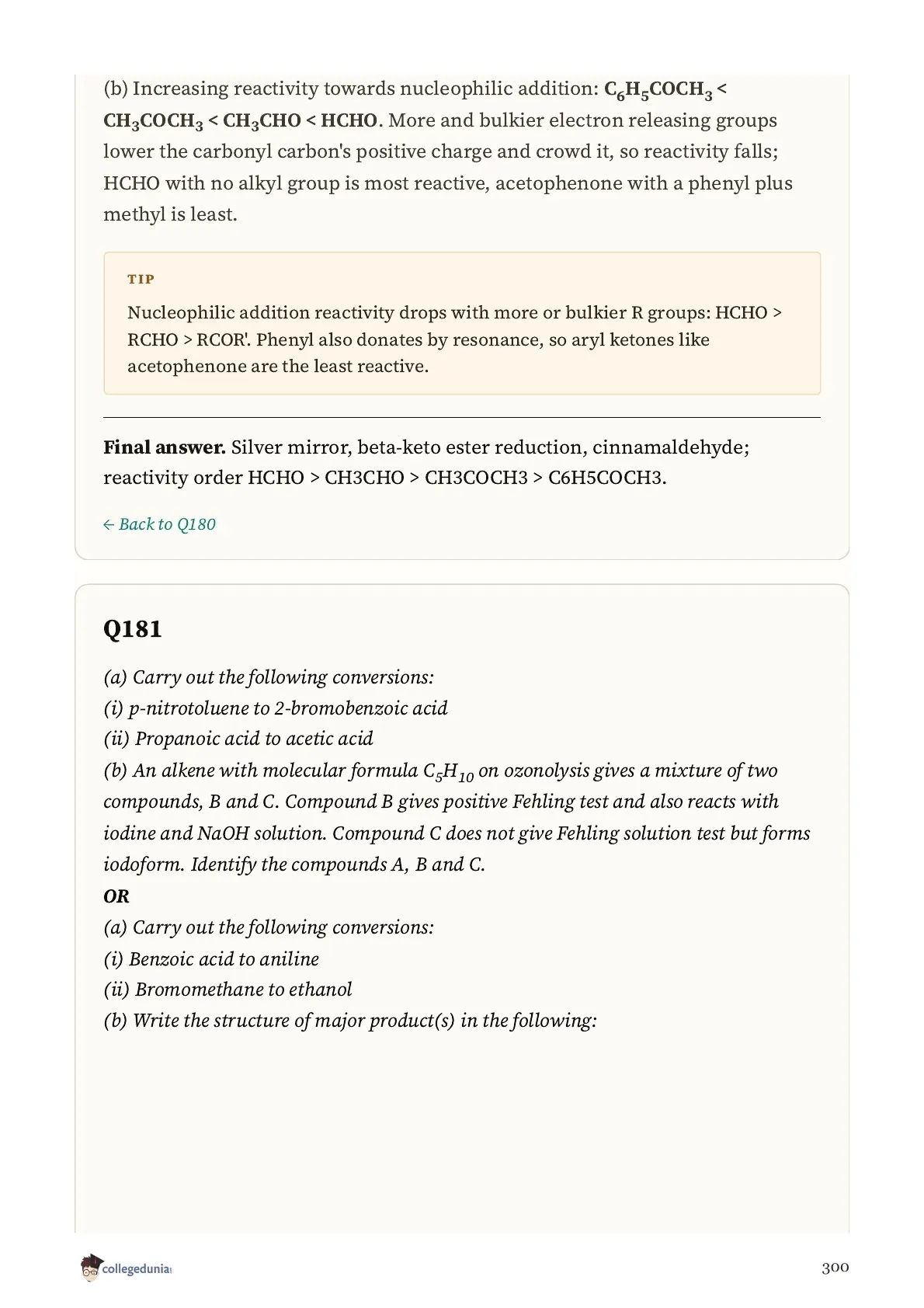
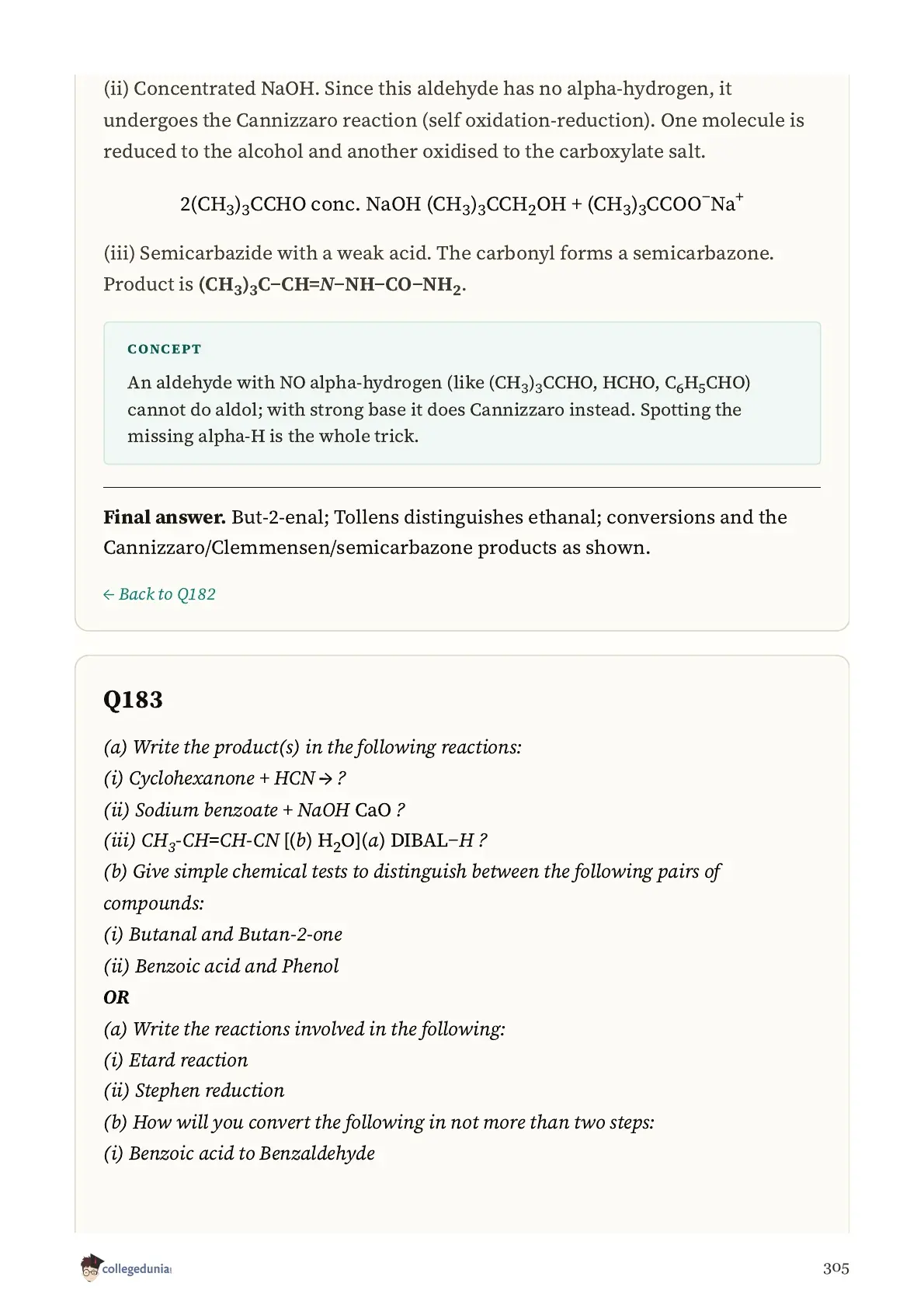
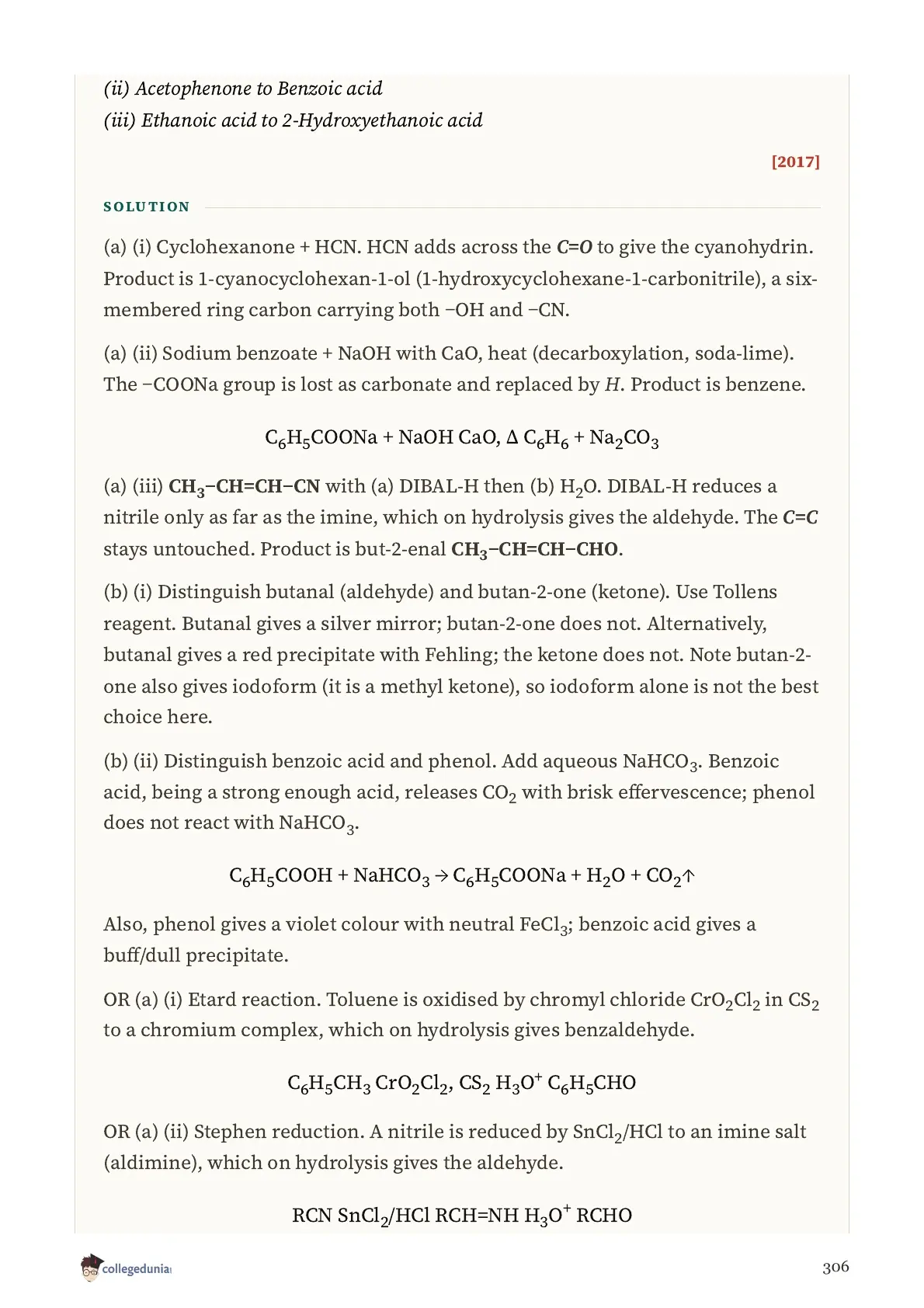
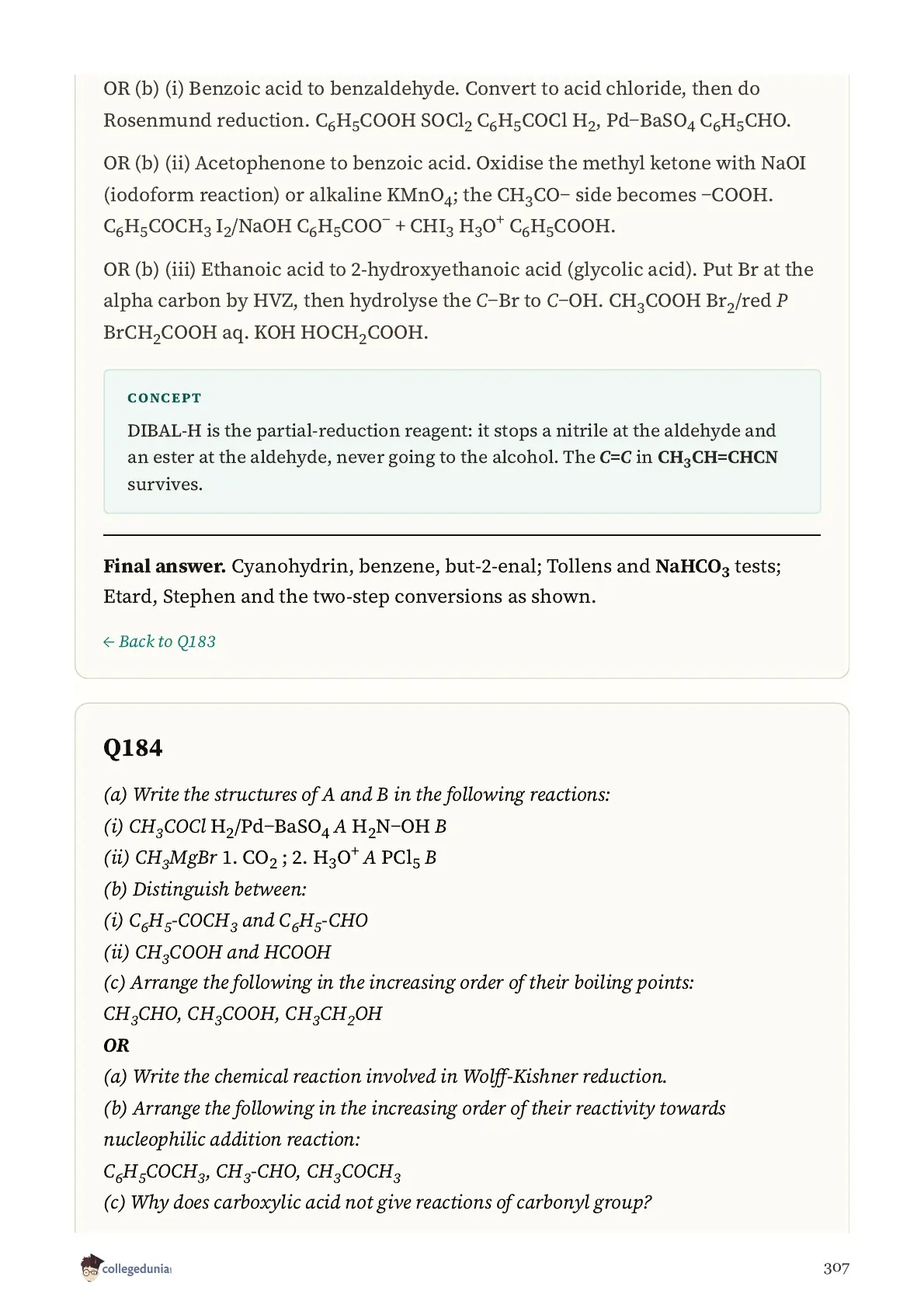
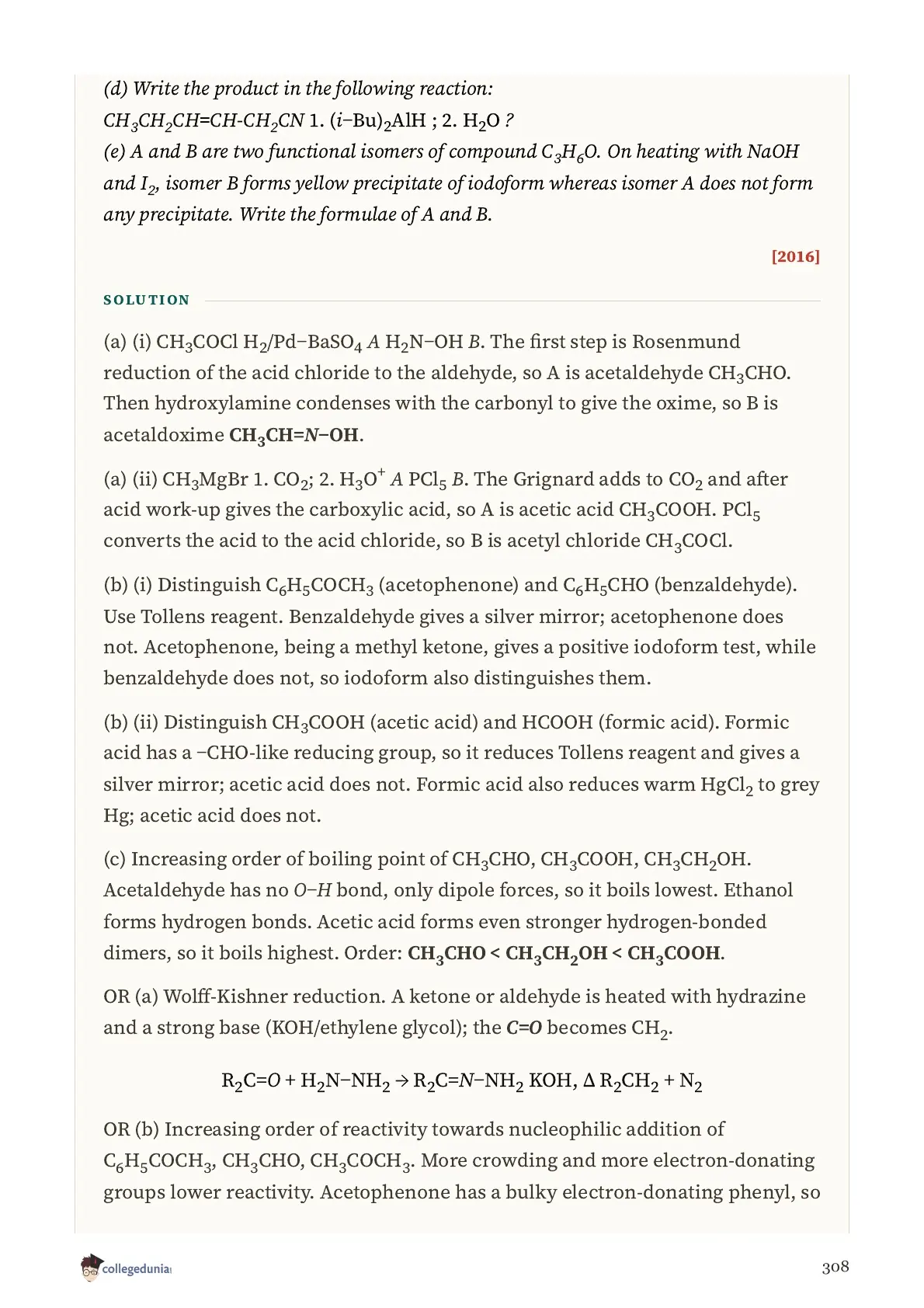
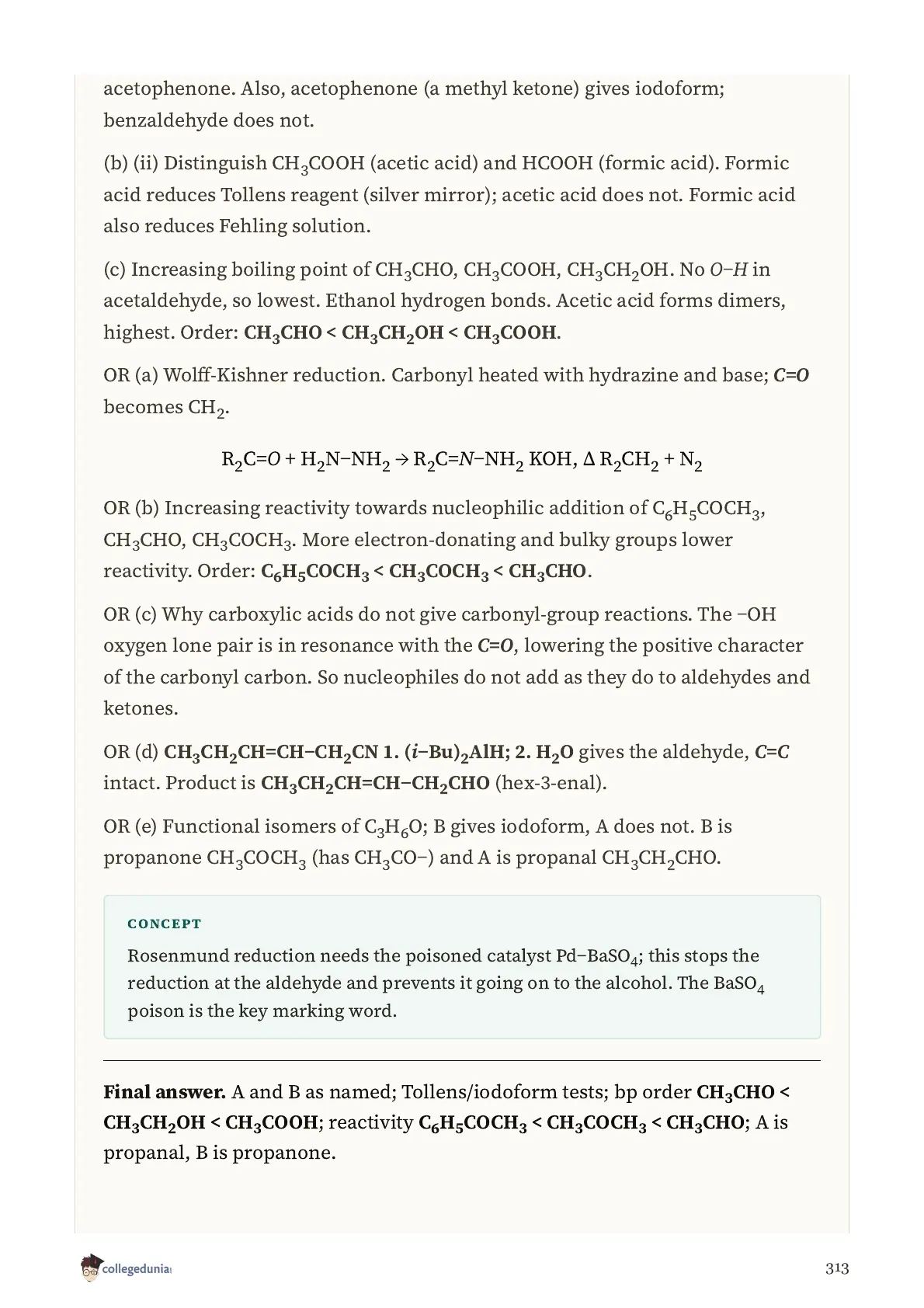
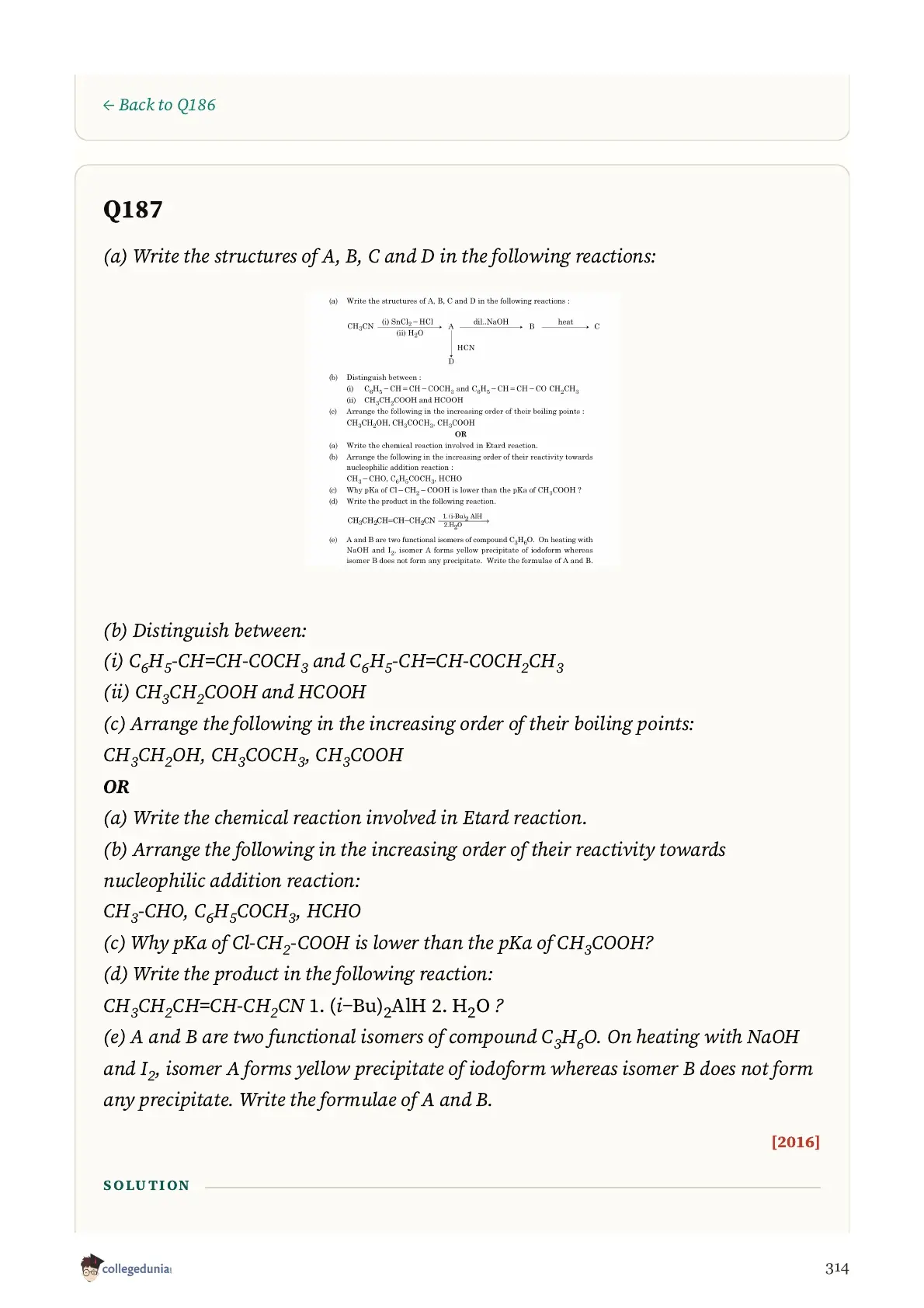
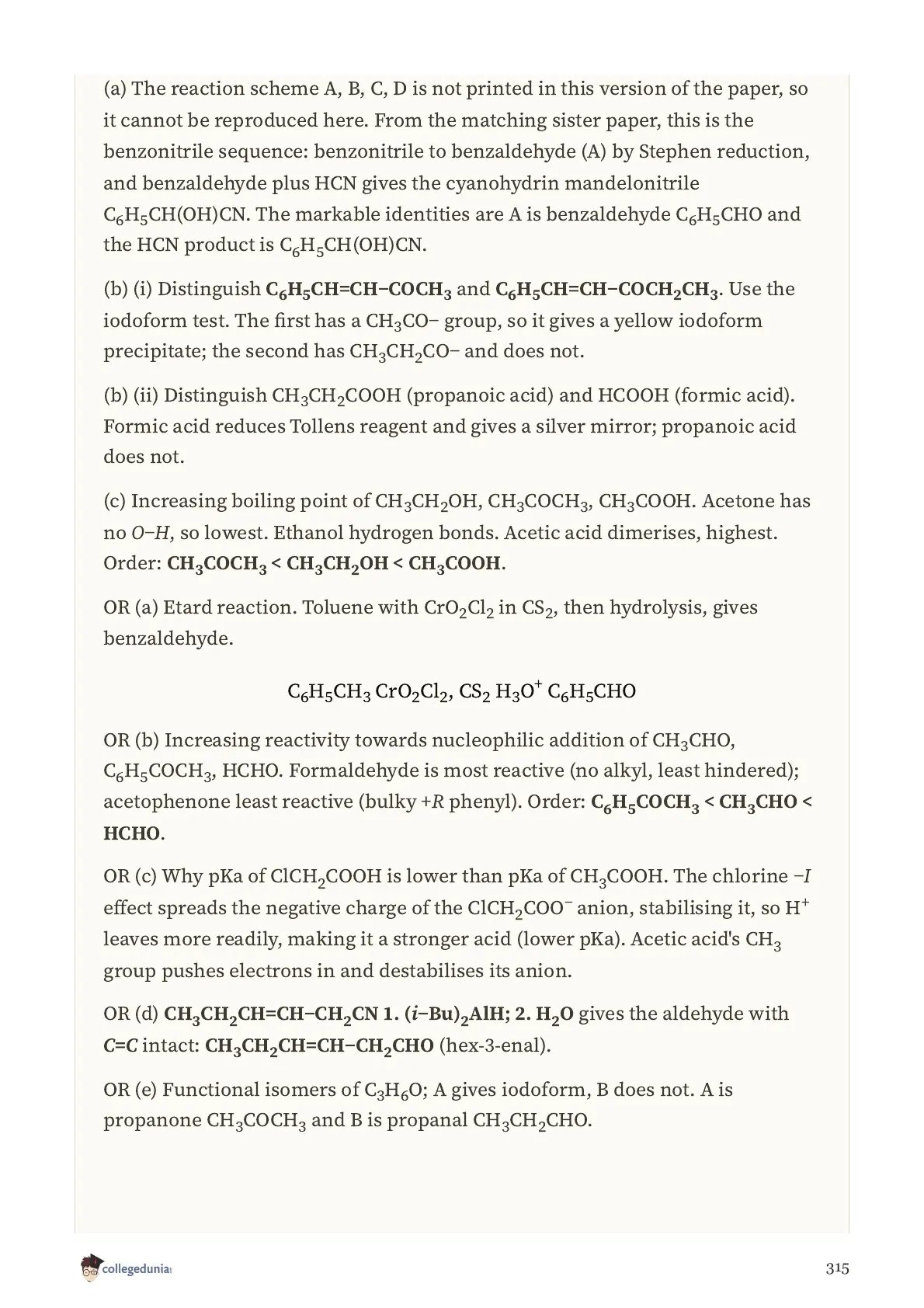
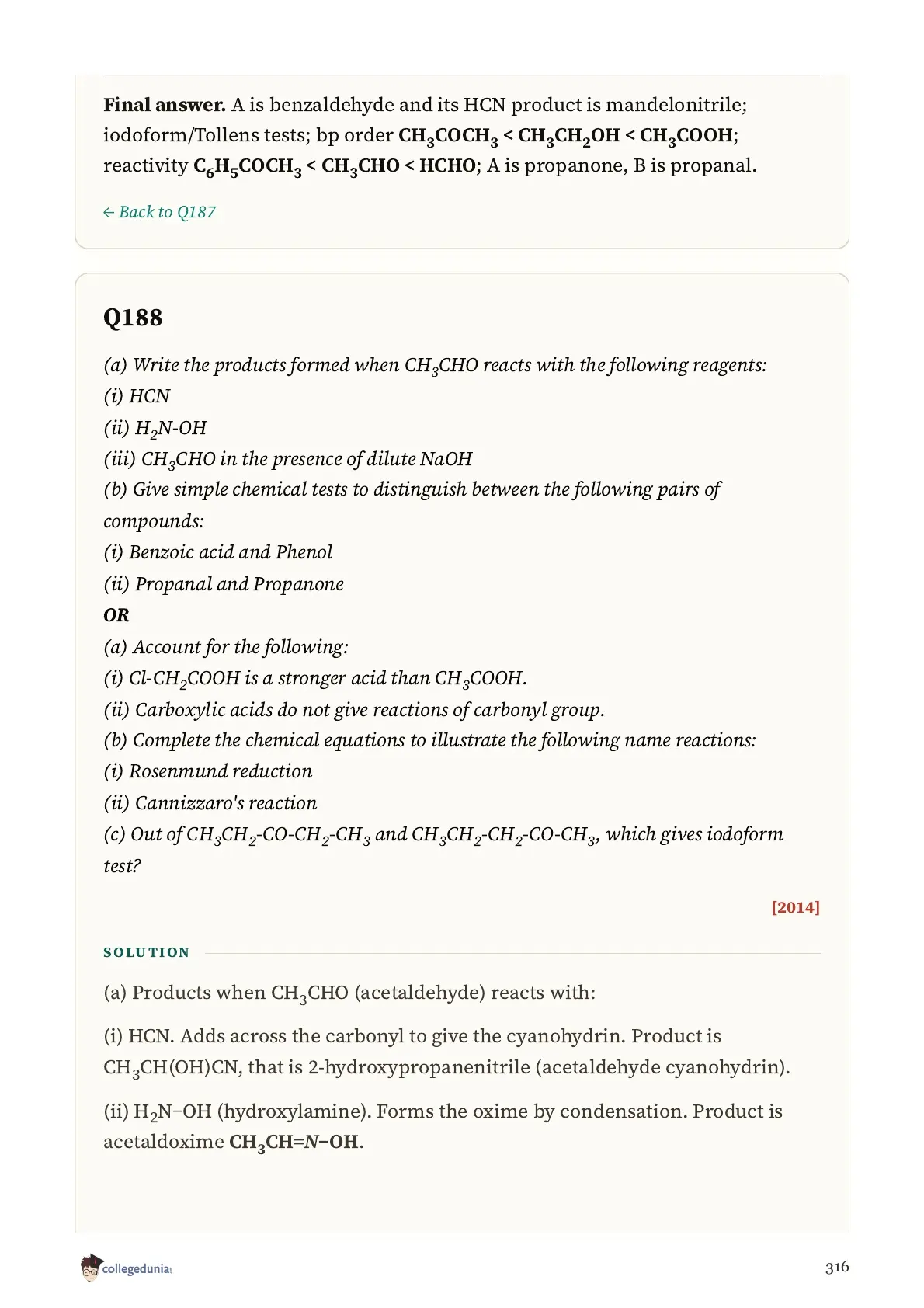
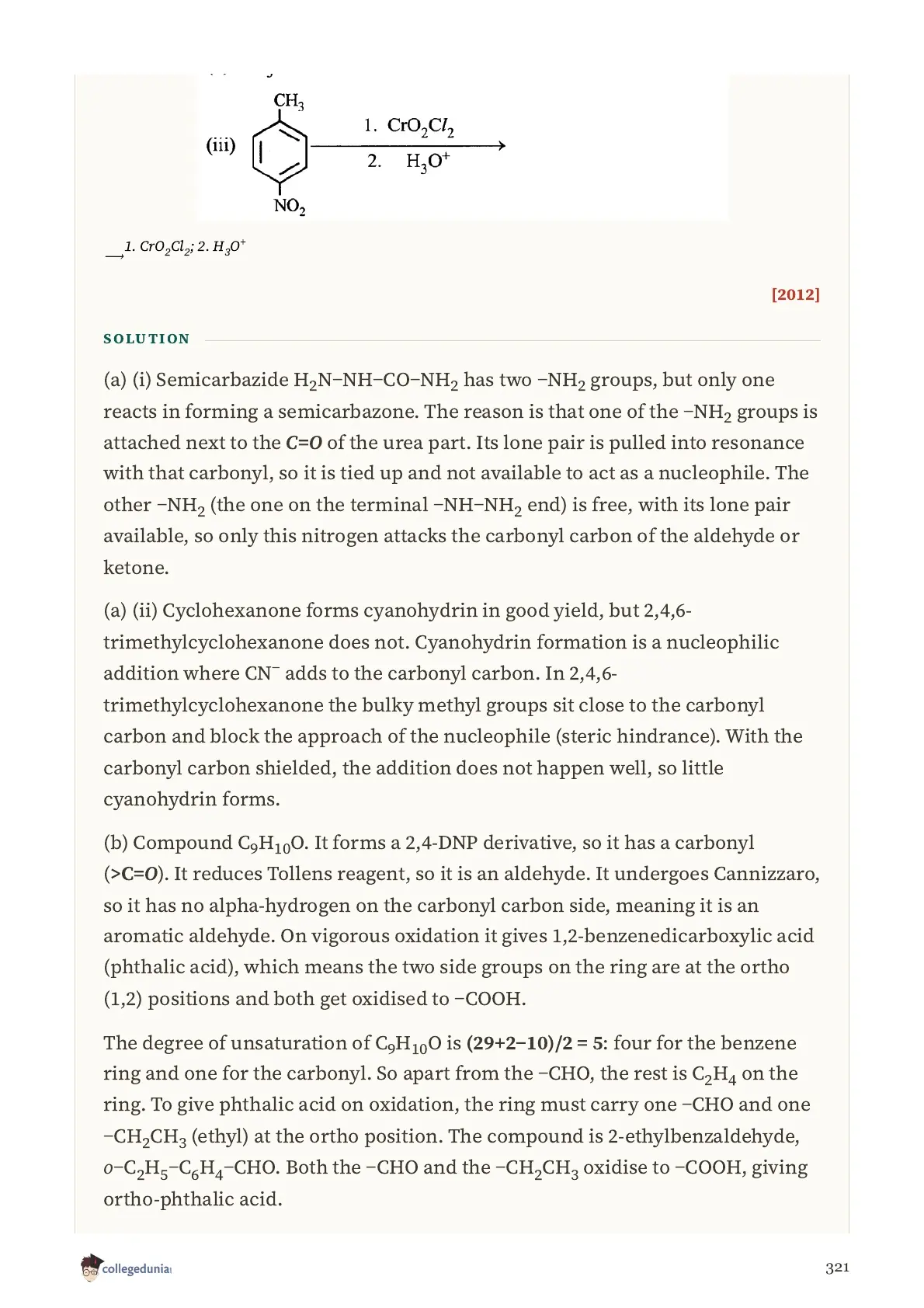
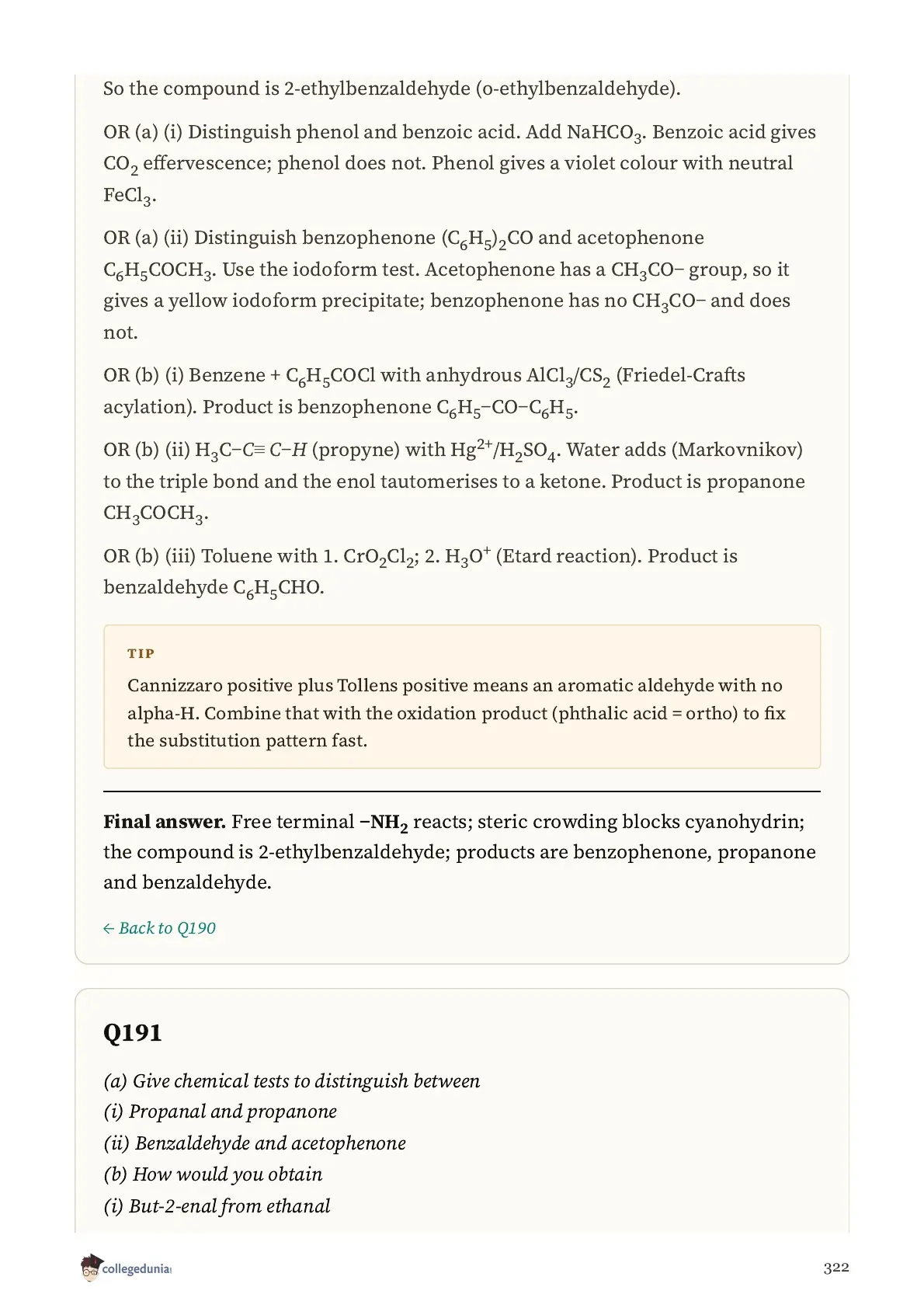
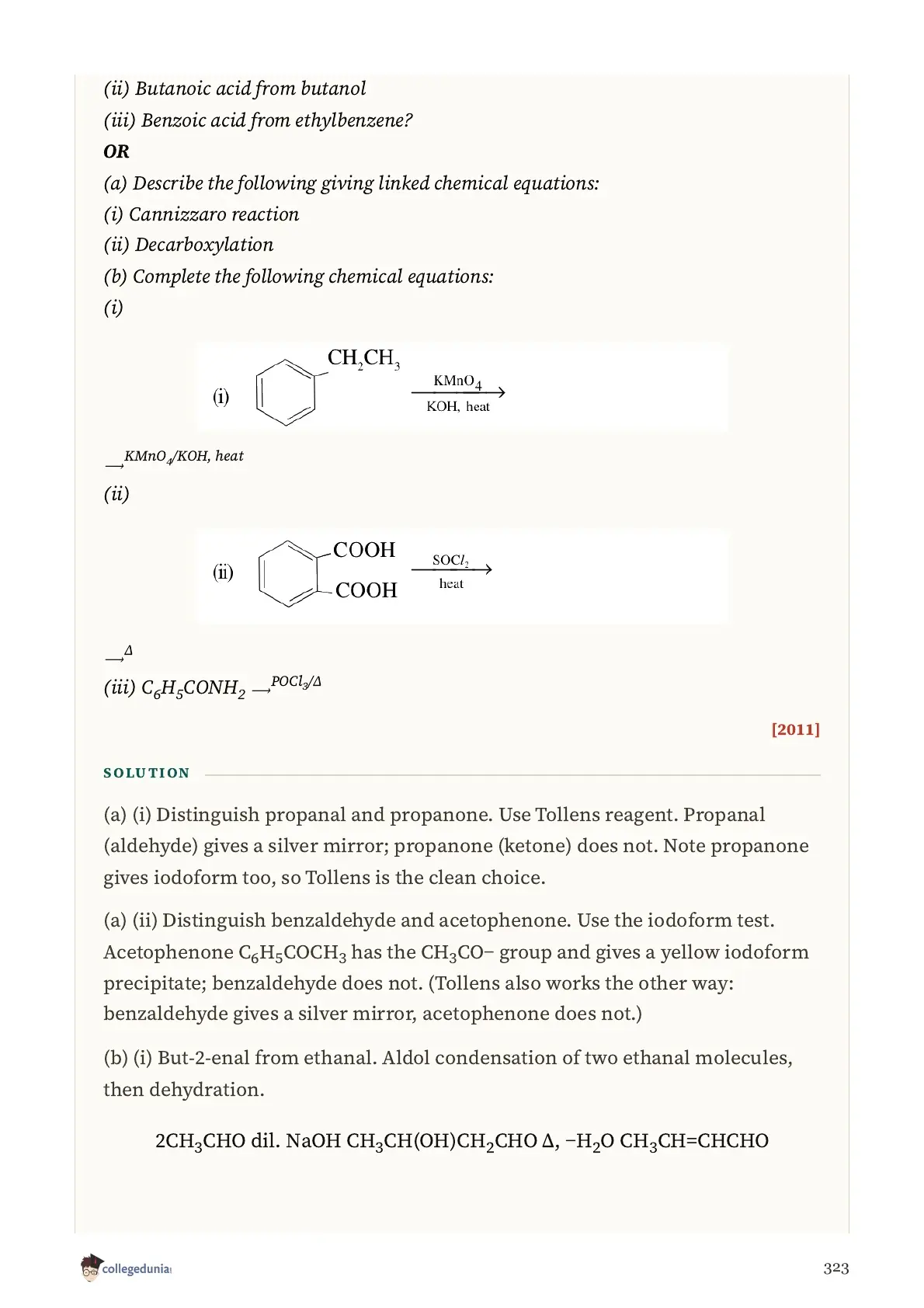
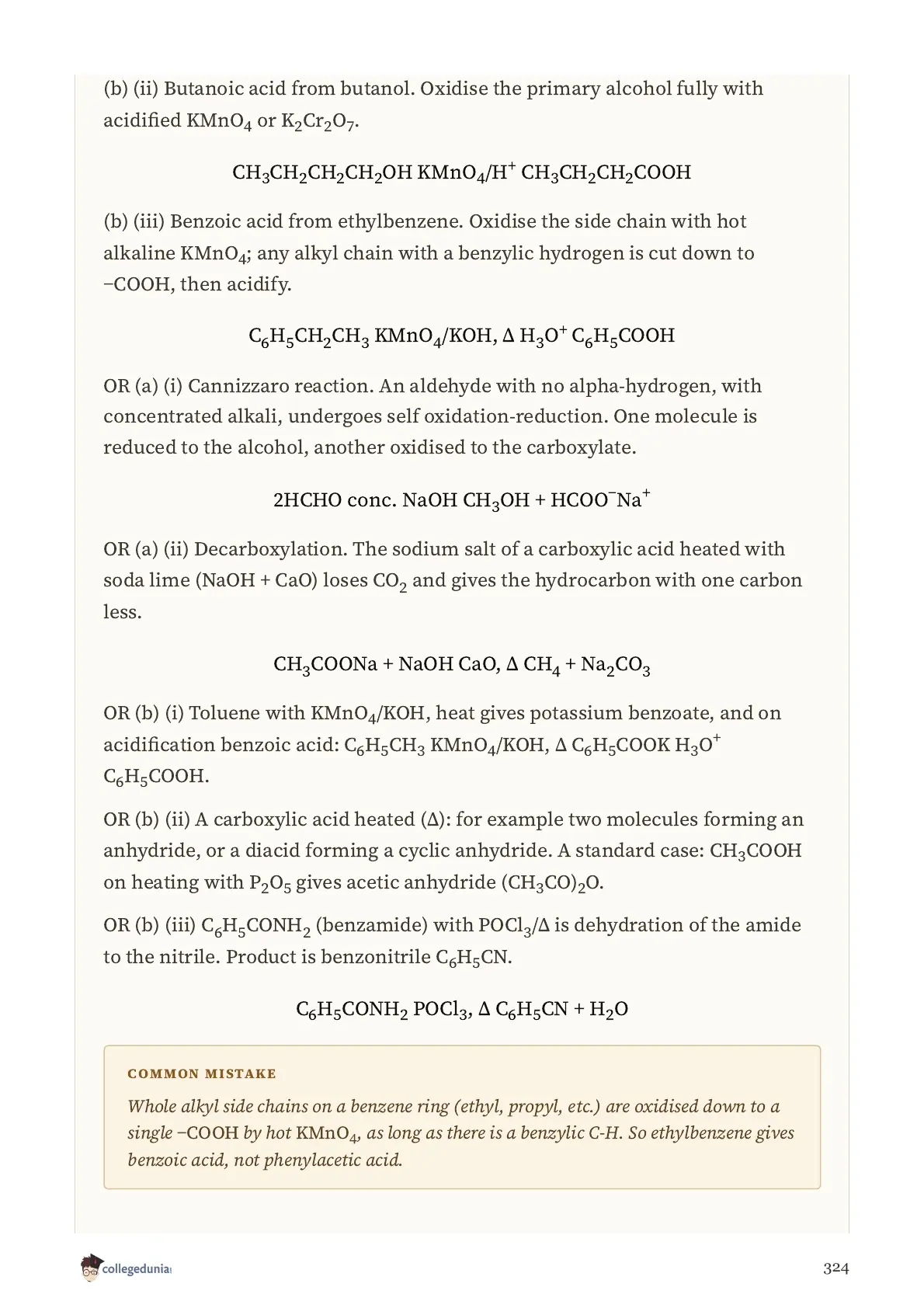
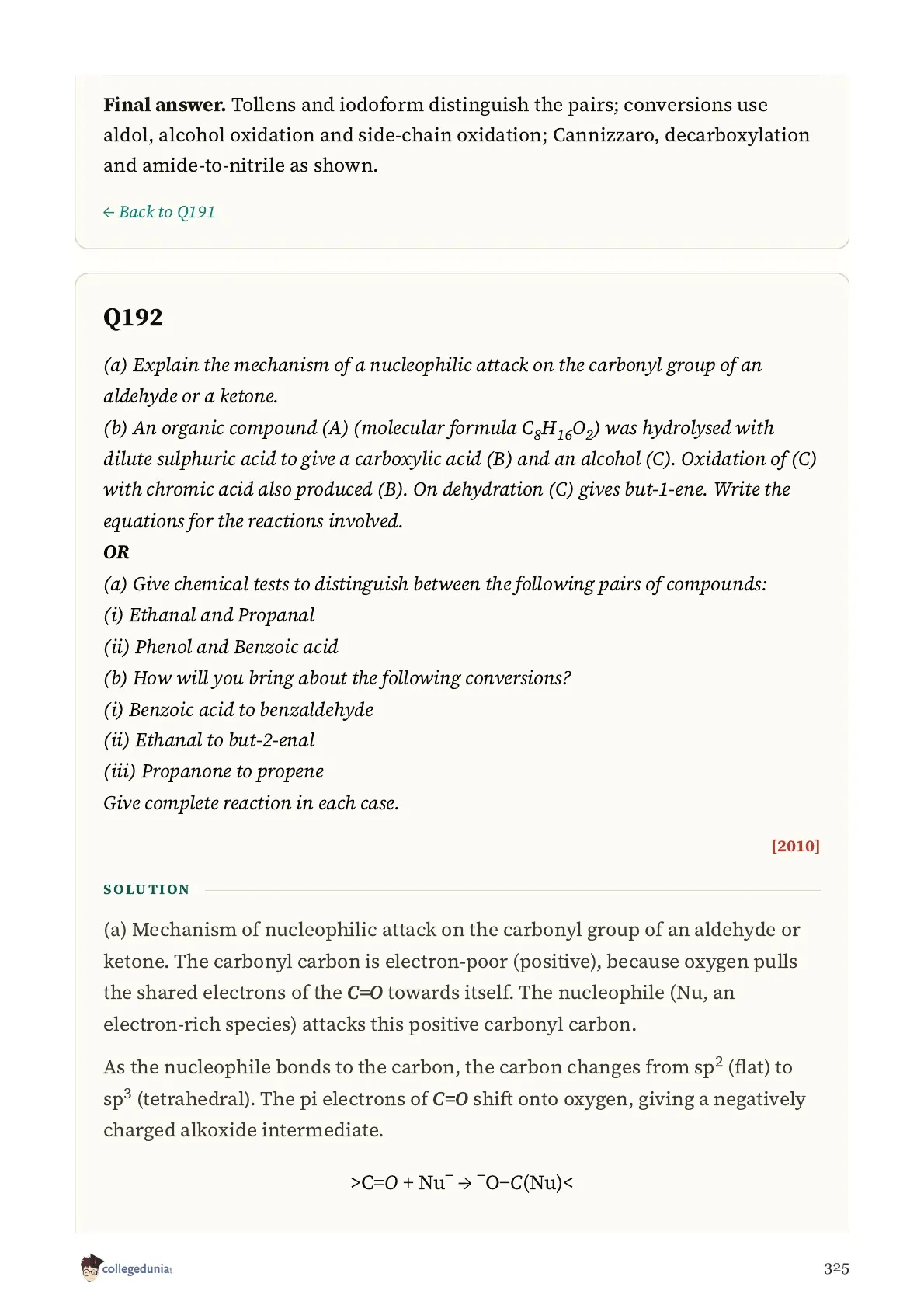
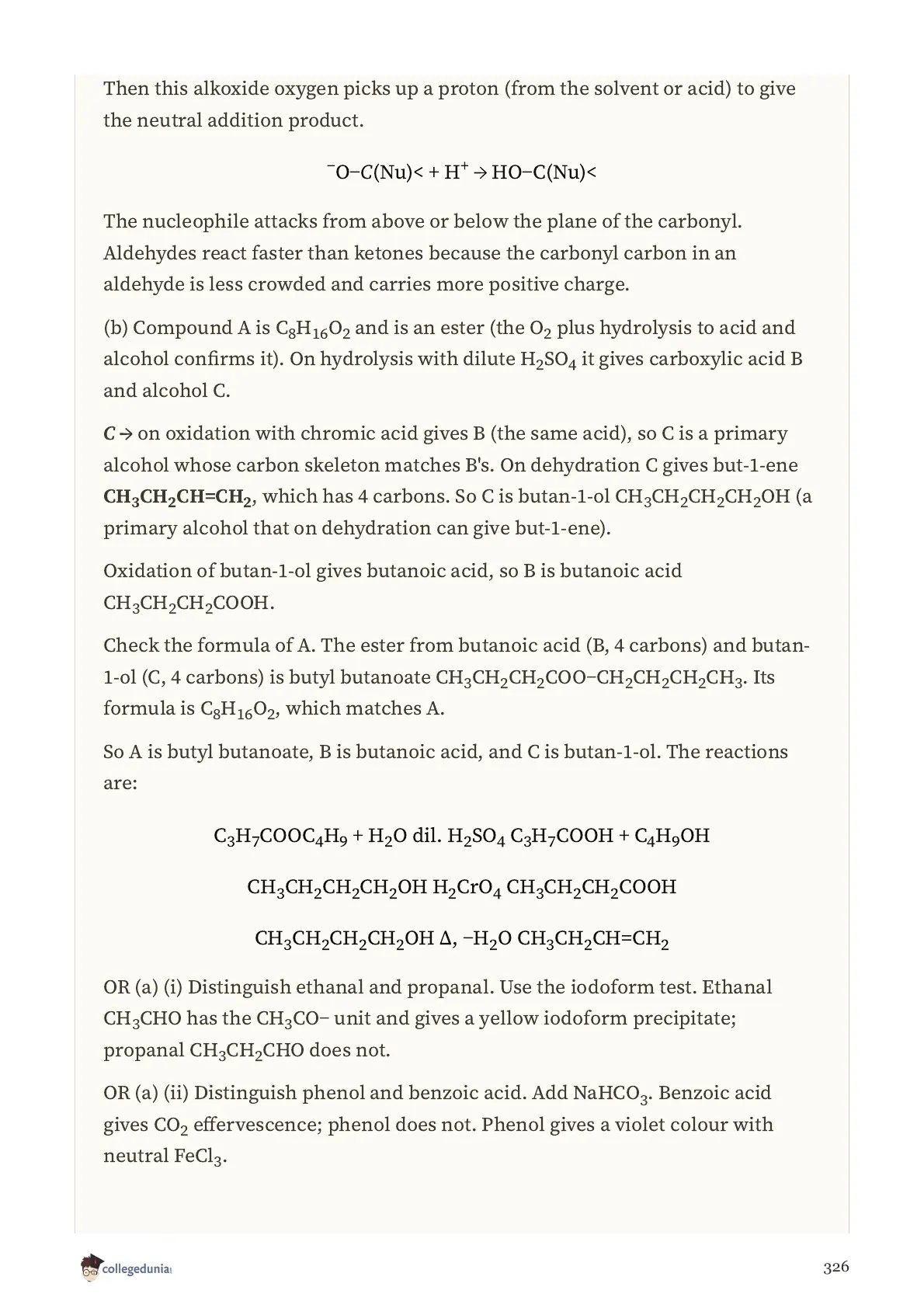
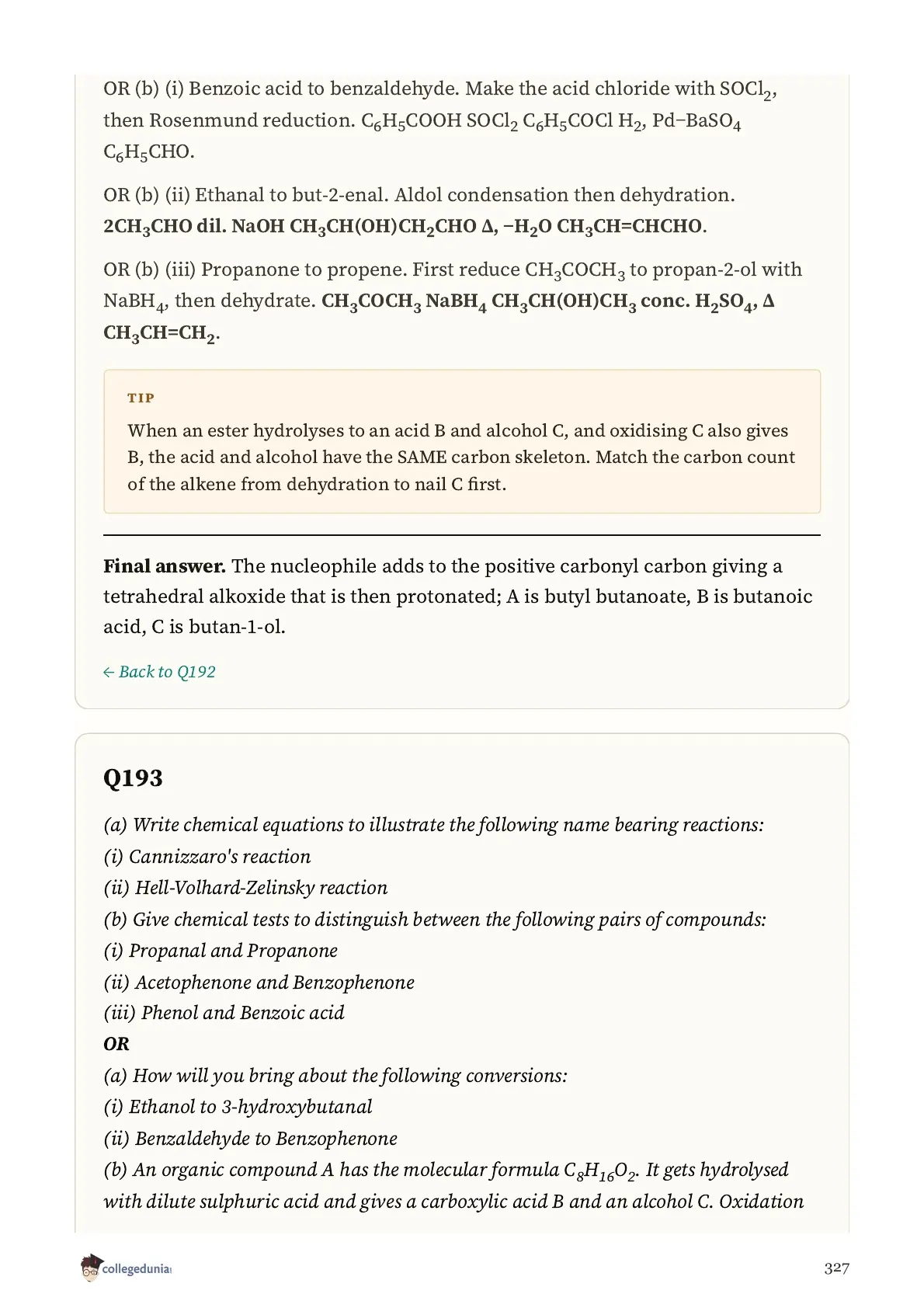
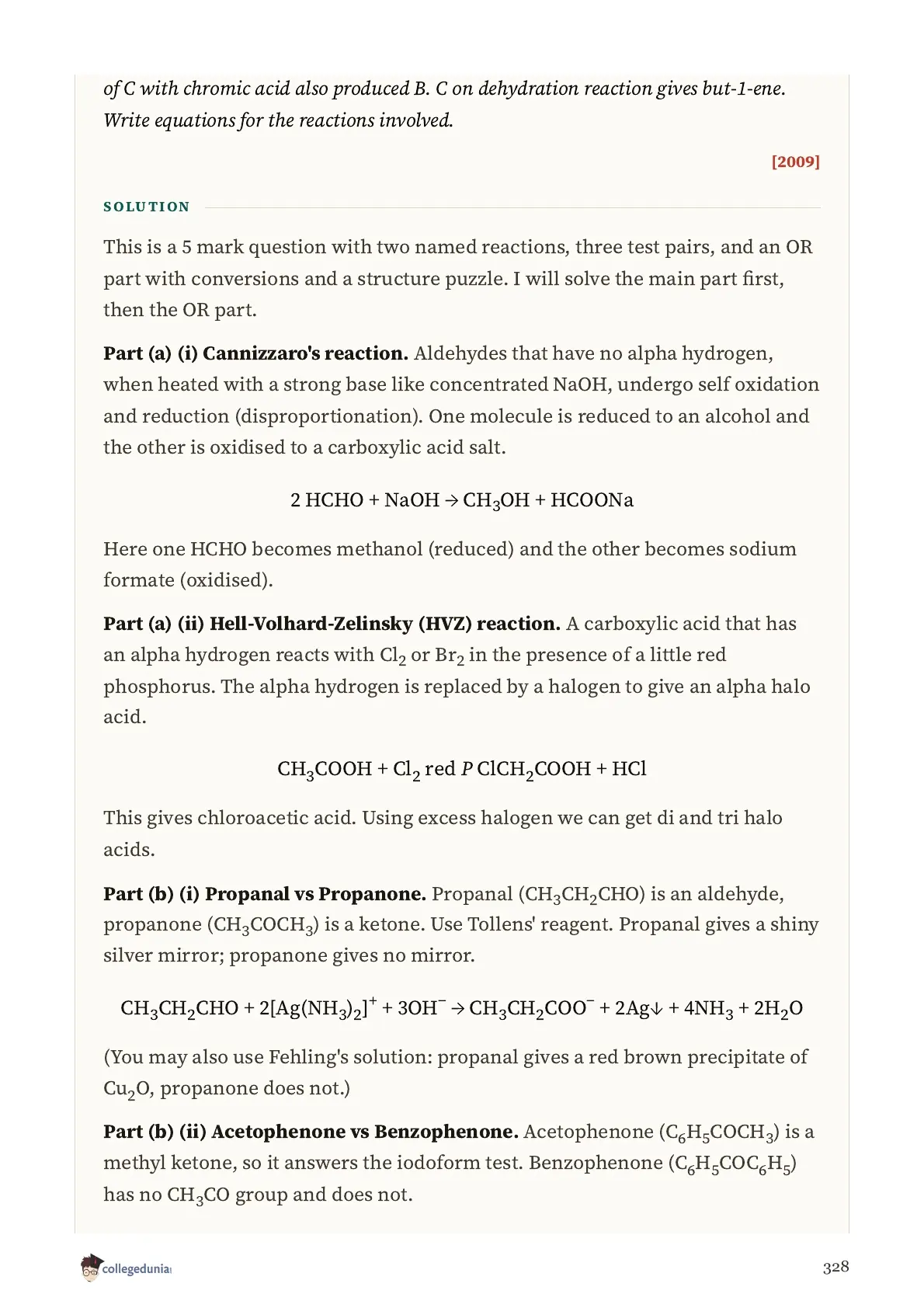
- 1-mark questions: 60 questions, mostly MCQ and assertion-reason on named reactions, reactivity order and chemical tests.
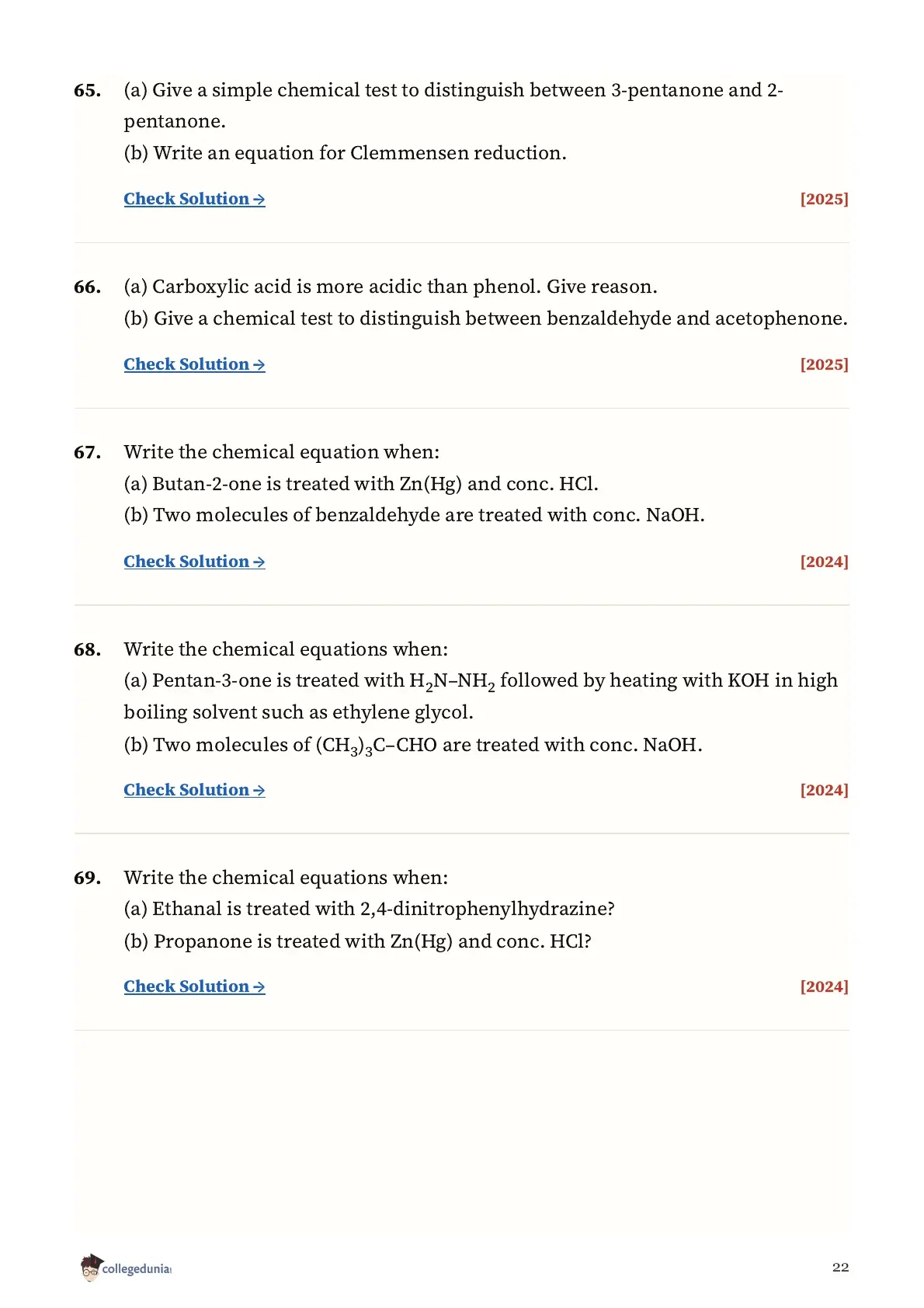
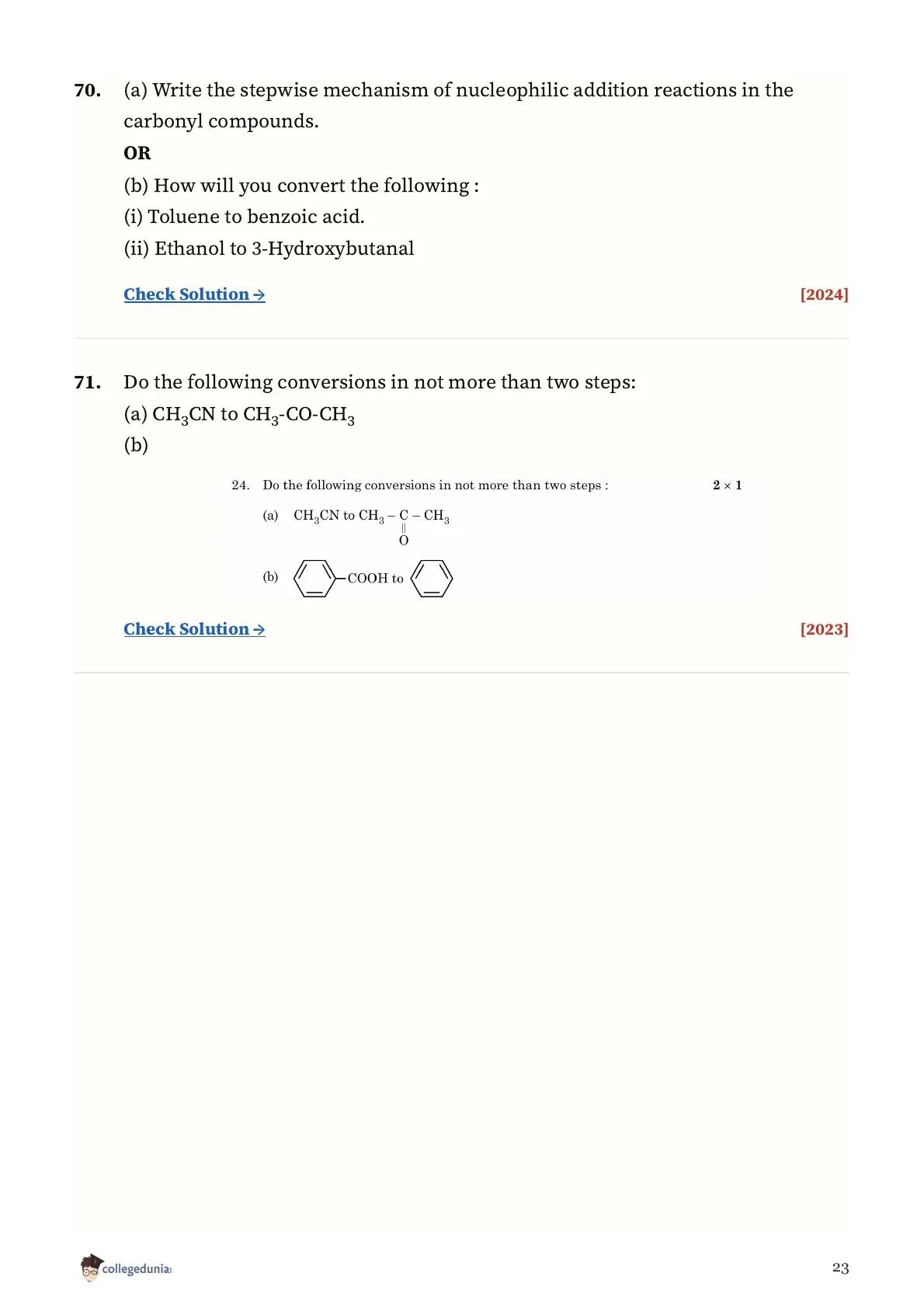
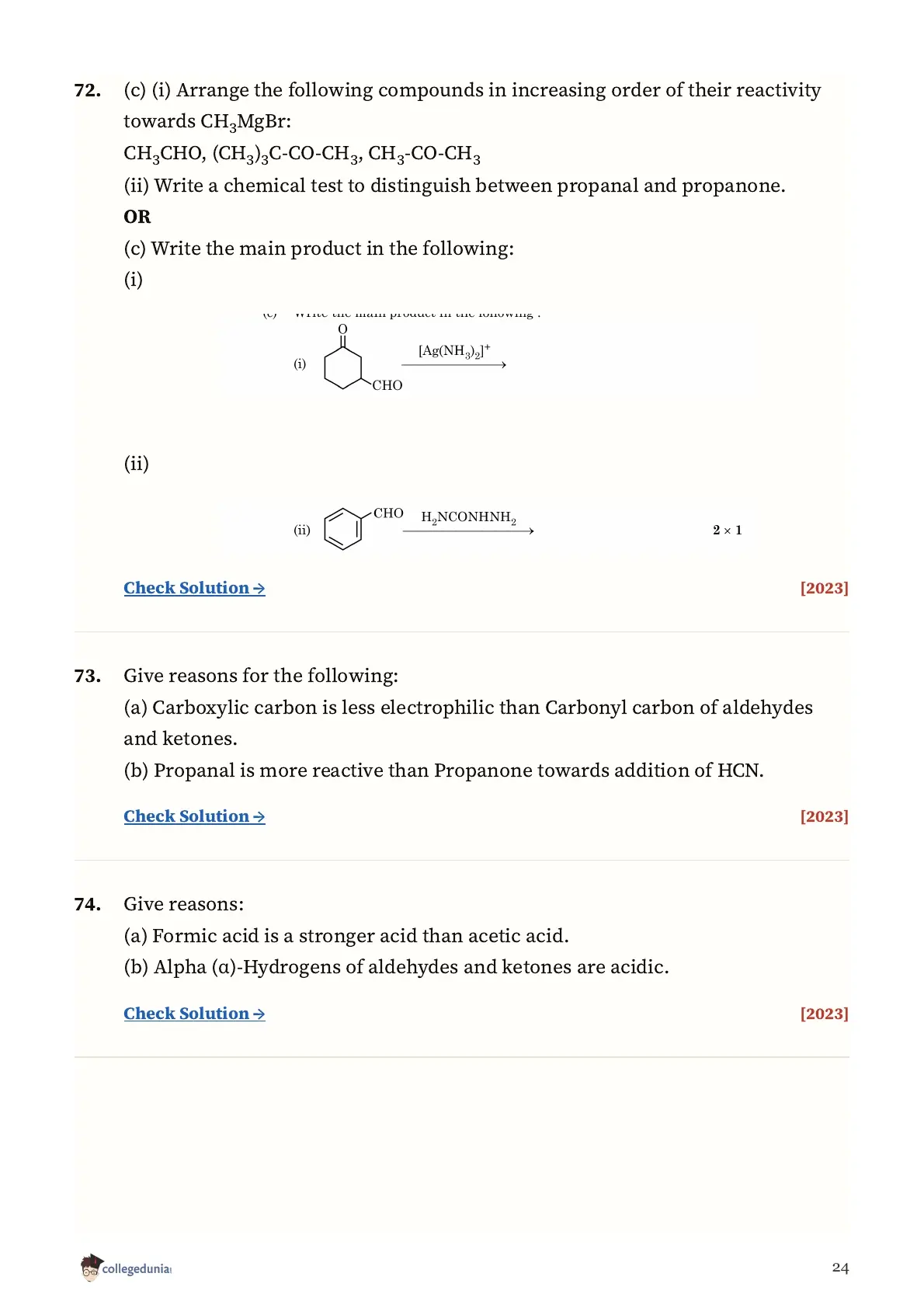
- 2 and 3-mark questions: 45 and 49 questions, built around reaction completions, conversions and distinguishing tests.
- 4 and 5-mark answers: 1 and 36 questions, where a named-reaction set is usually paired with a Cannizzaro or aldol reasoning part.
It pulls together 191 board-paper questions across 2003 to 2026, sorted by marks and then by year. This is the most balanced organic chapter, with strong weight in every marks band.
Every question in this Class 12 Chemistry Aldehydes, Ketones and Carboxylic Acids PYQ compilation is sourced from CBSE board papers (Delhi, Outside Delhi, Foreign and Compartment) and cross-checked against the official mark scheme, with near-duplicate questions removed.
What the Aldehydes, Ketones and Carboxylic Acids Previous Year Questions Cover
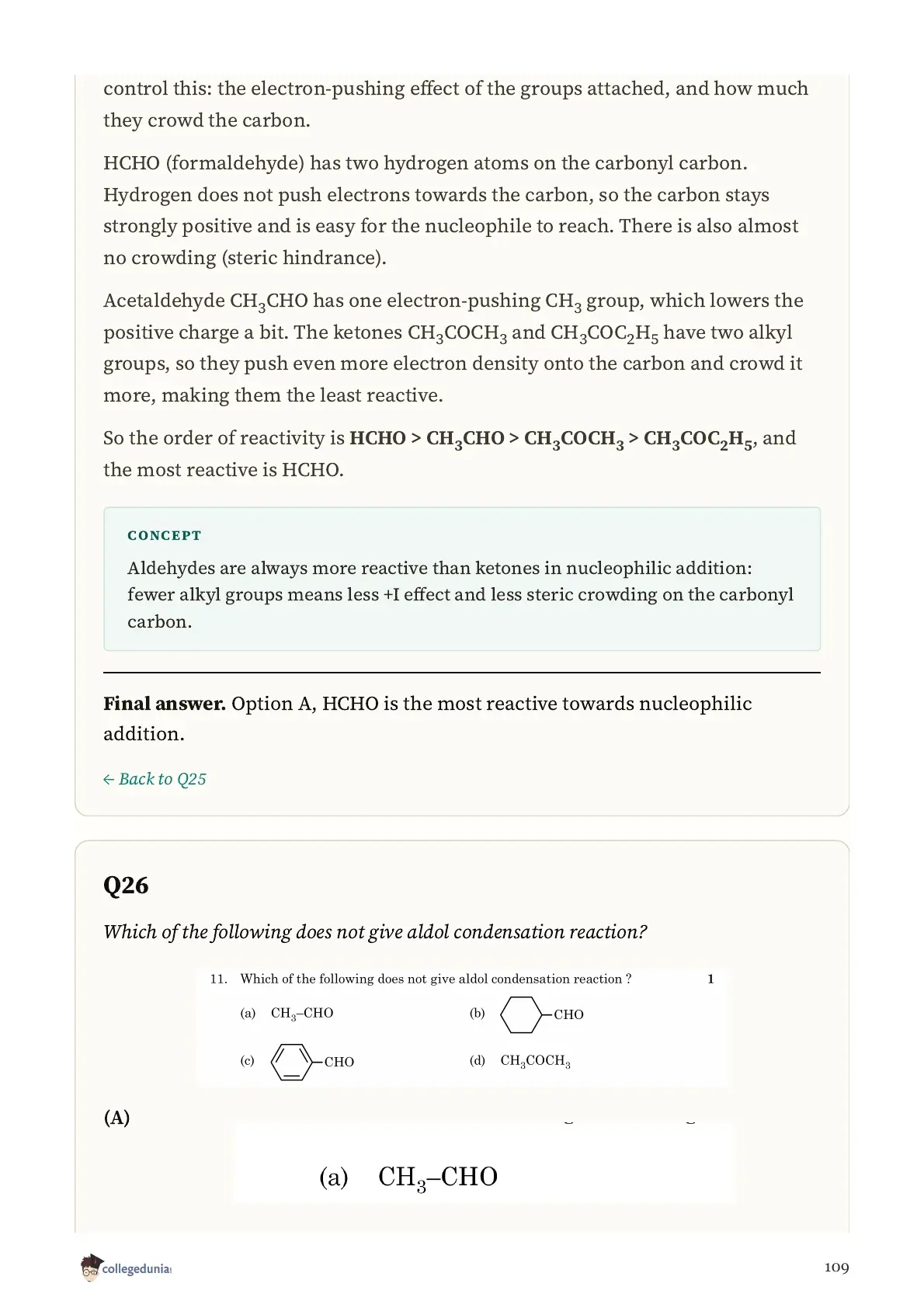
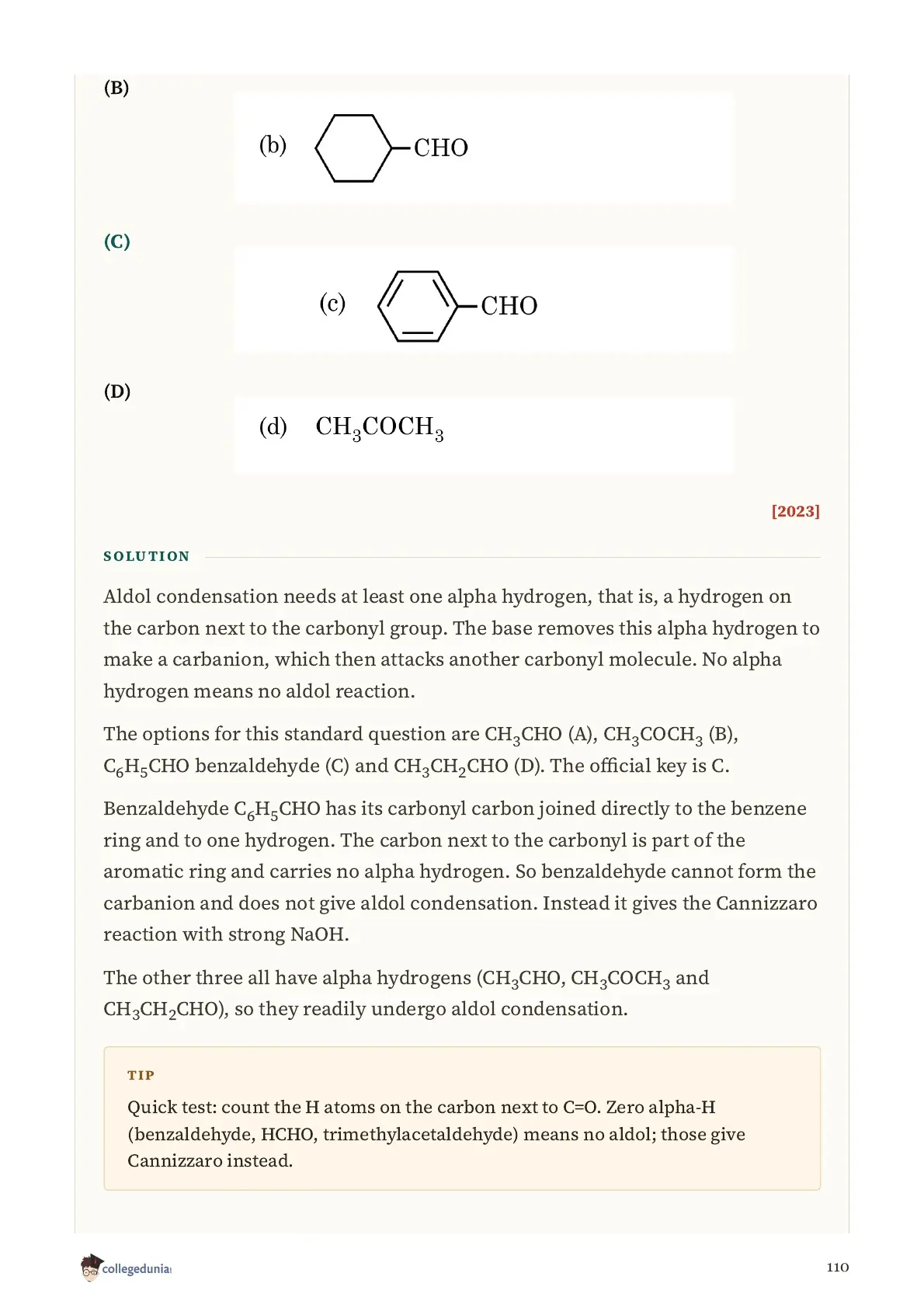
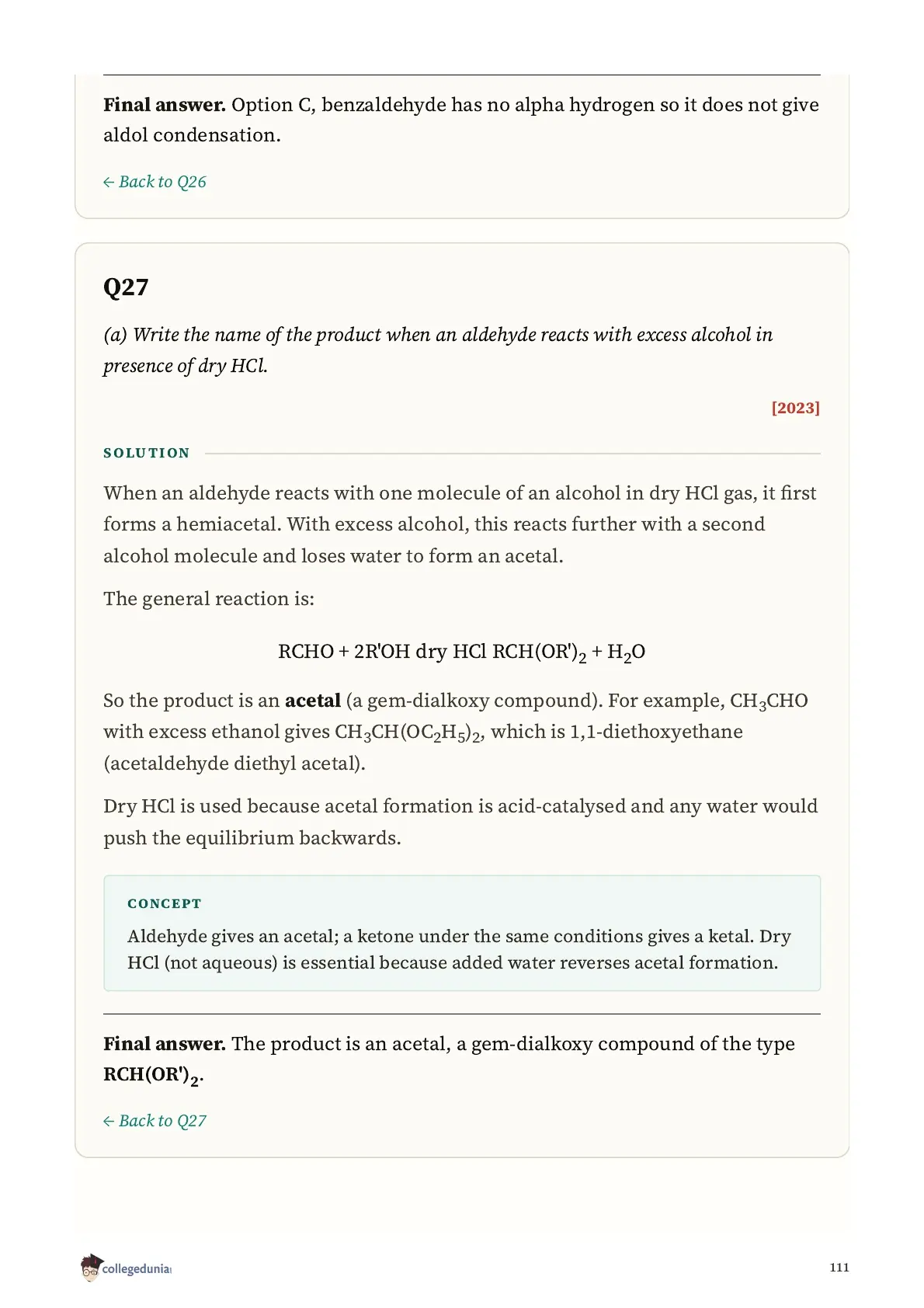
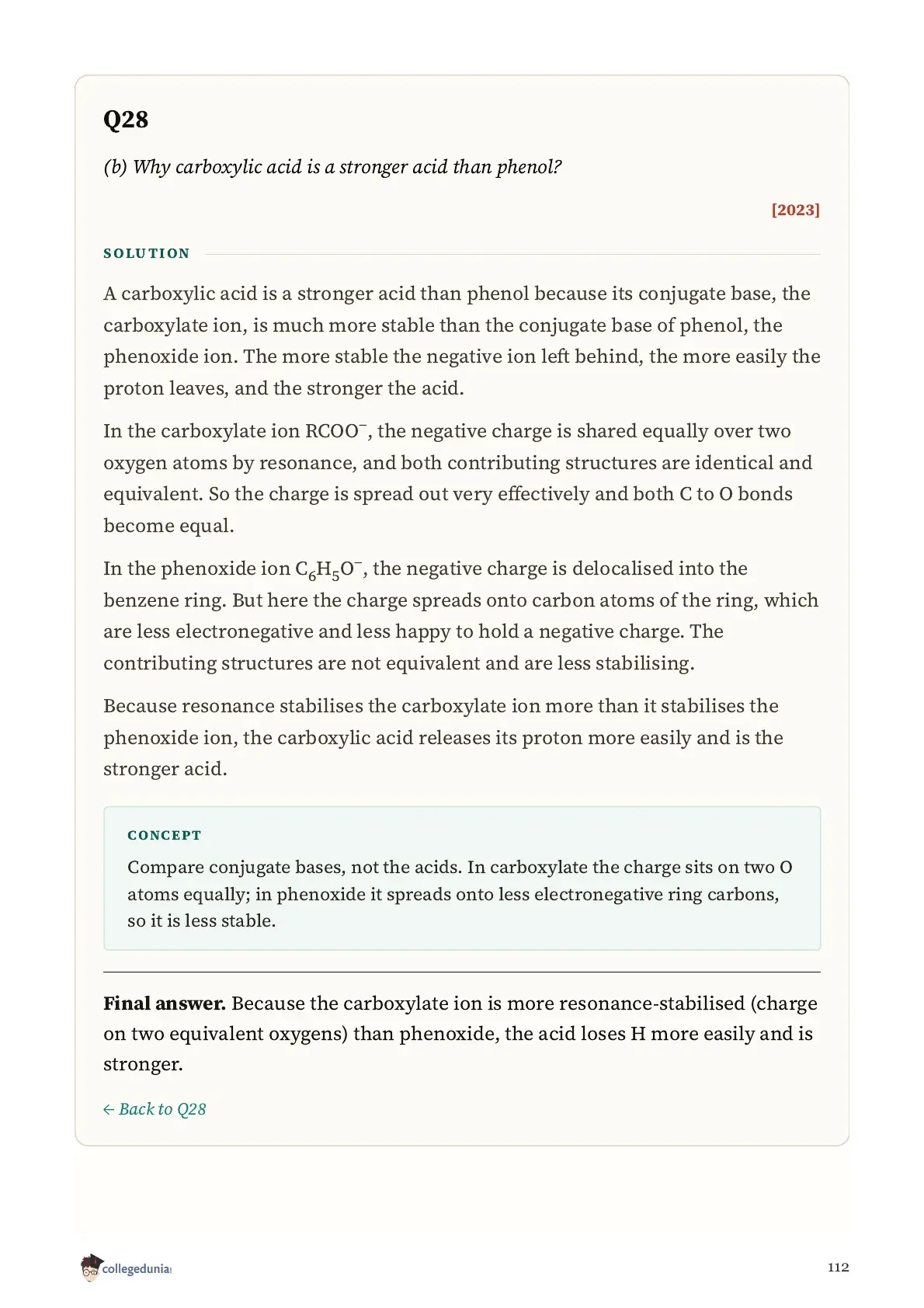
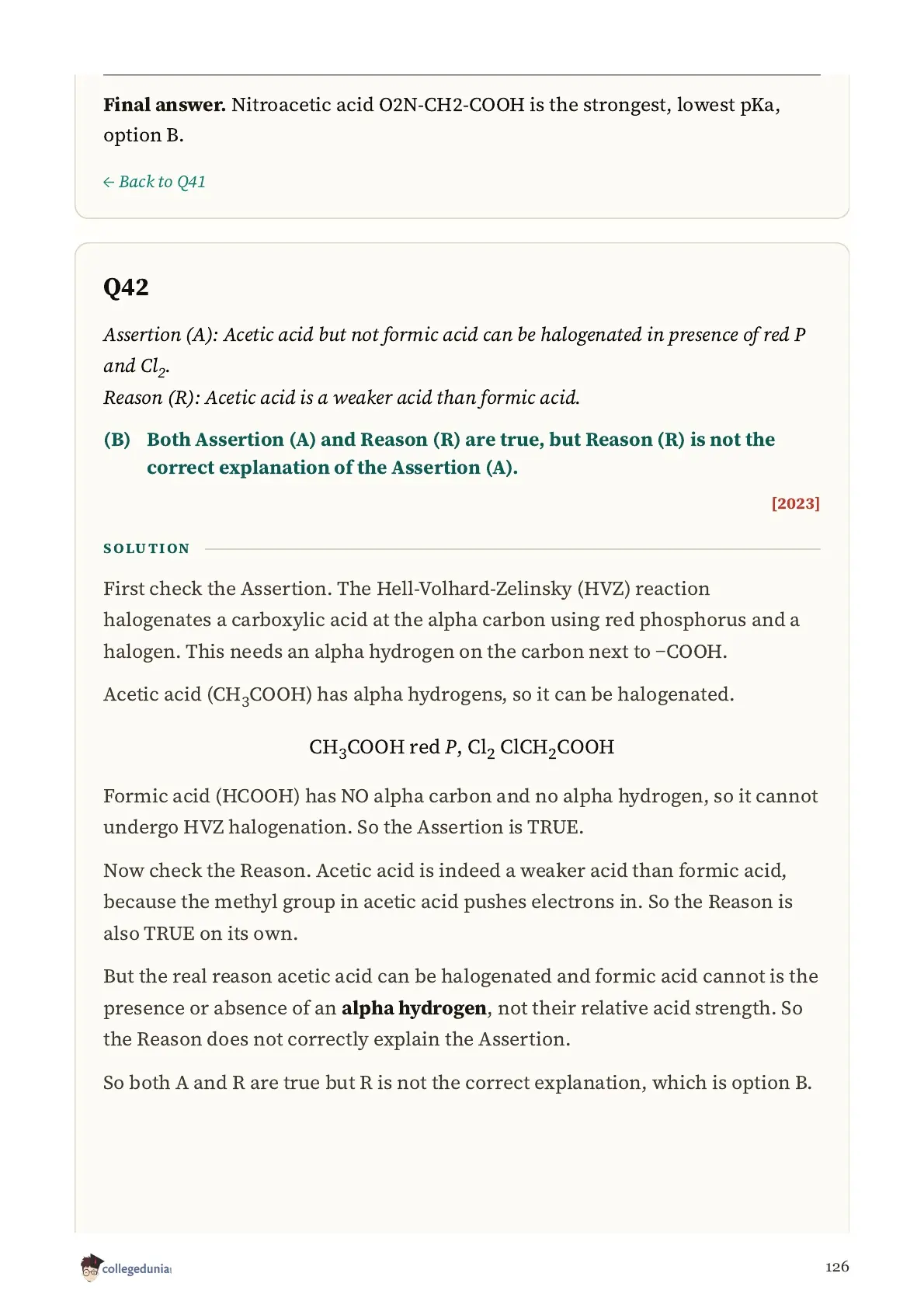
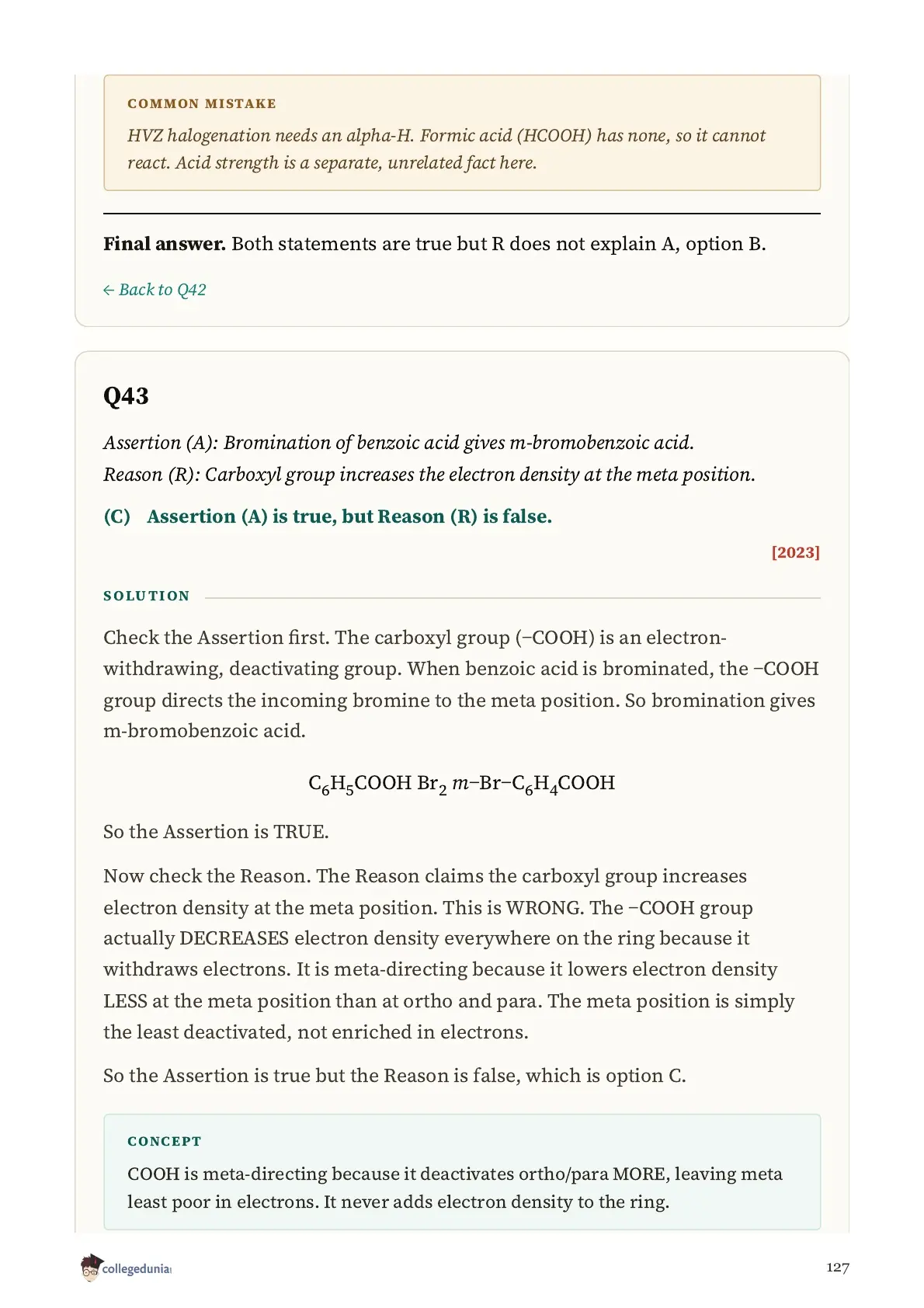
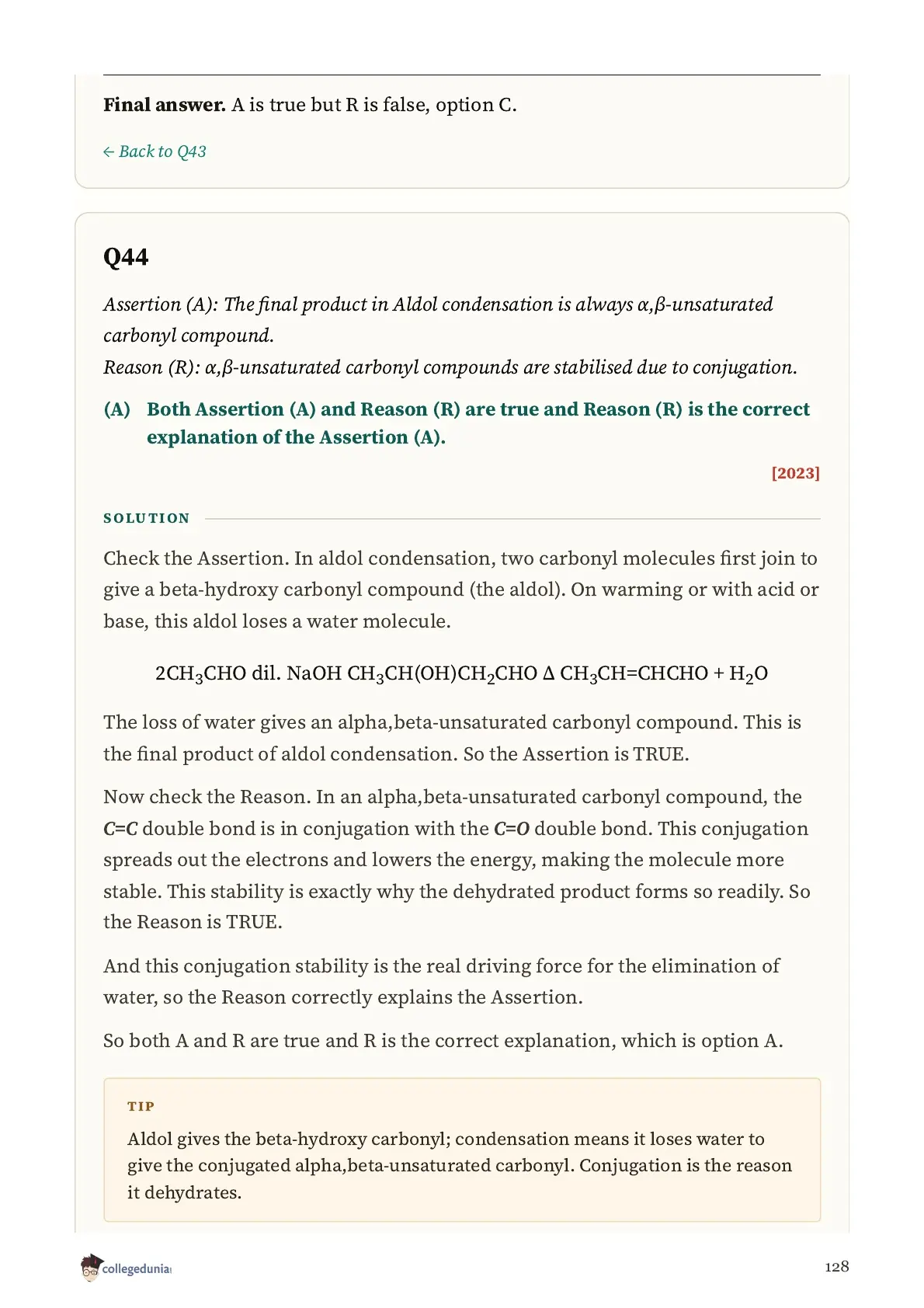
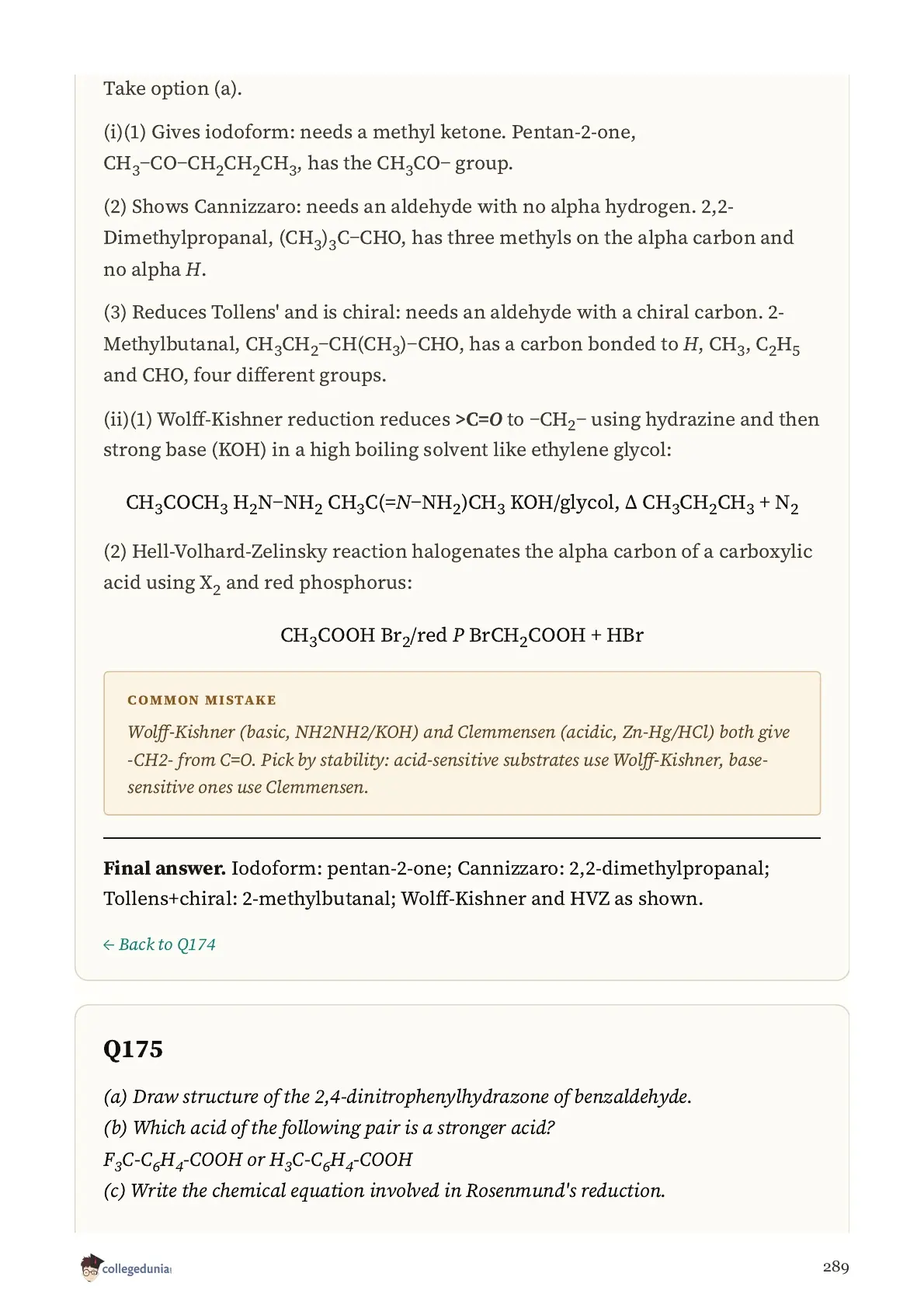
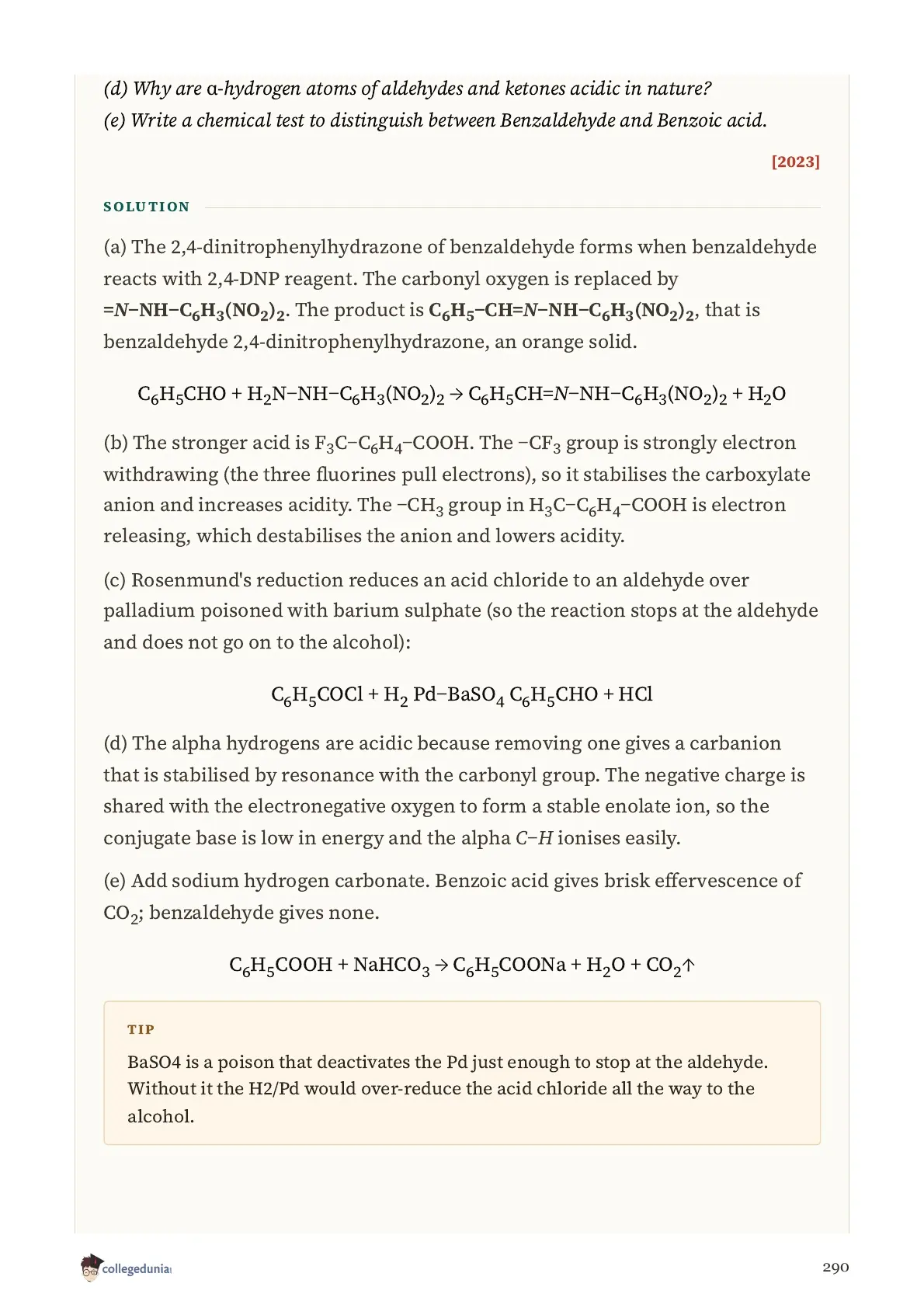
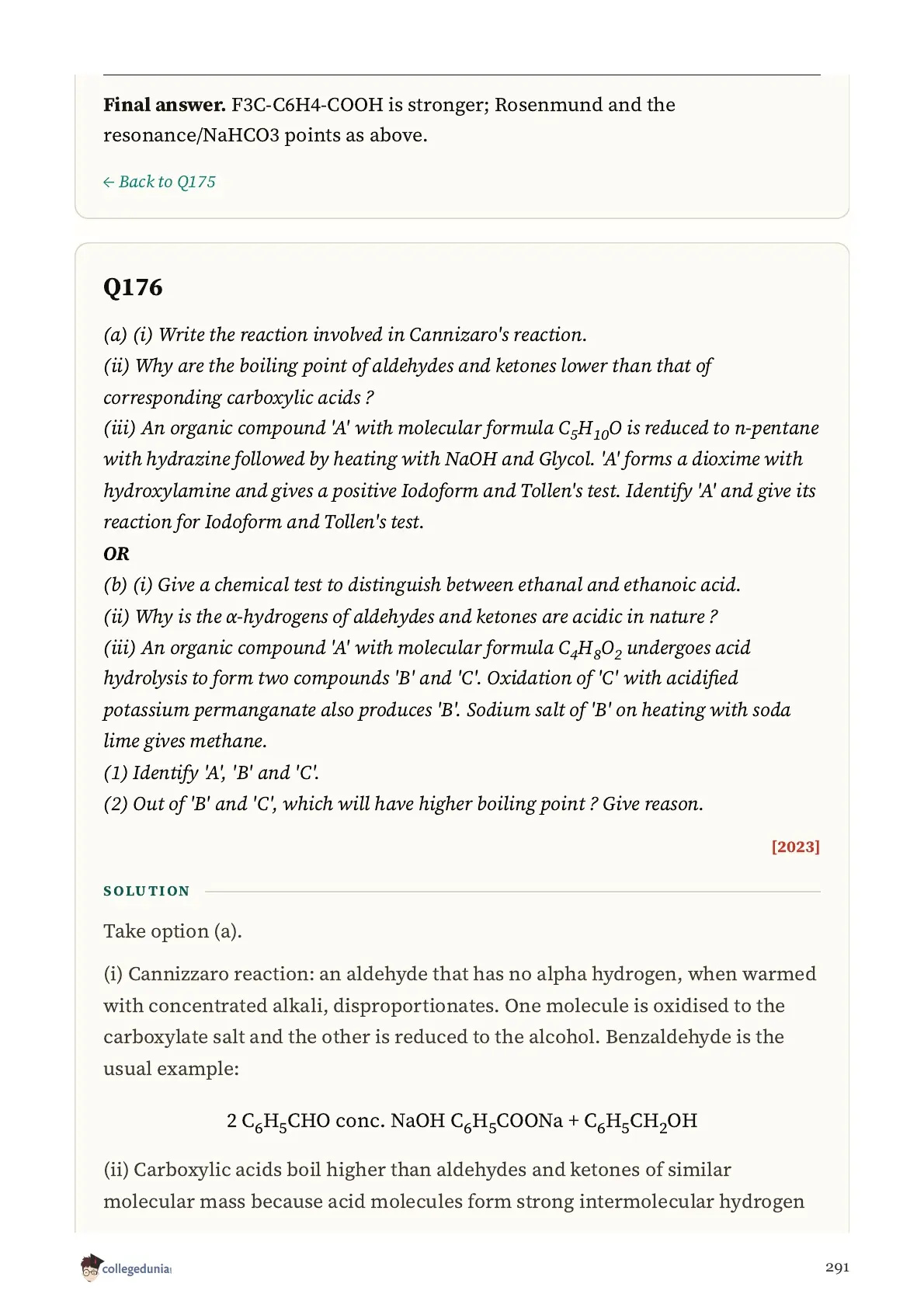
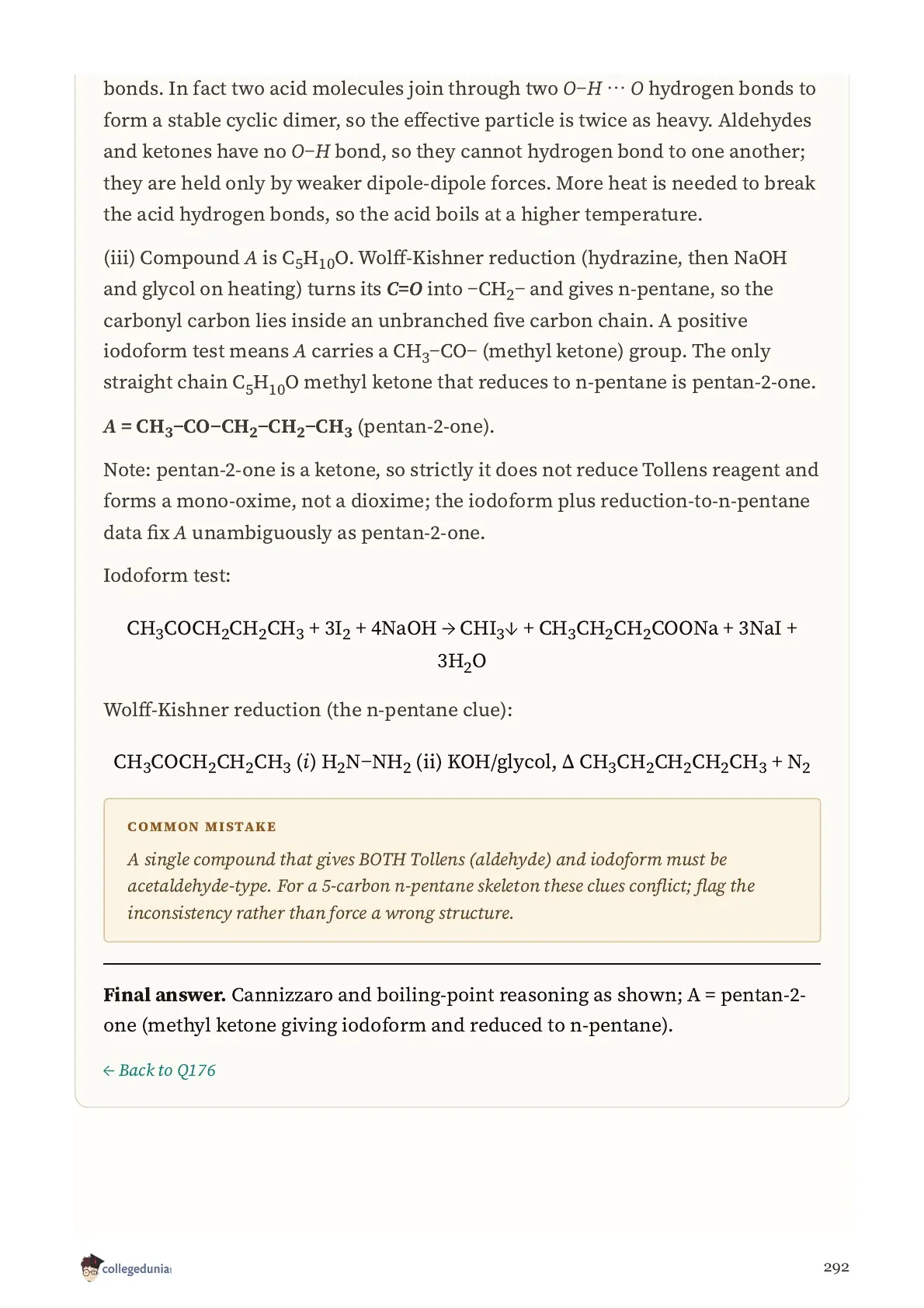
The 191-question set covers the full reaction map of the chapter. Named reactions like Cannizzaro, aldol condensation, Rosenmund reduction and Hell-Volhard-Zelinsky drive most of the 3 and 5-mark answers. Reactivity towards nucleophilic addition and the structure of the carbonyl group carry the reasoning MCQs. Short chemical tests to distinguish aldehydes from ketones and conversions fill the 1 and 2-mark bands, while Fischer esterification appears in the long answers.
Marks-wise Distribution of the Aldehydes, Ketones and Carboxylic Acids PYQs
The table below shows how the 191 questions split across the CBSE marks bands. Use it to decide how much revision time each band deserves.
| Marks | Questions | Total Marks | CBSE Section | Type |
|---|---|---|---|---|
| 1 mark | 60 | 60 | Section A | MCQ / Assertion-Reason |
| 2 mark | 45 | 90 | Section B | VSA (Very Short Answer) |
| 3 mark | 49 | 147 | Section C | SA (Short Answer) |
| 4 mark | 1 | 4 | Section D | Case Study |
| 5 mark | 36 | 180 | Section E | Long Answer |
Year-wise Spread of Class 12 Chemistry Aldehydes, Ketones and Carboxylic Acids PYQs
The compilation spans more than 20 CBSE board years. About 53% of the questions come from 2023 onwards, but this chapter keeps a heavy long-answer tail, so older 5-mark questions still matter.
- 2026: Rosenmund, Cannizzaro and Hell-Volhard-Zelinsky in one 3-mark part, a Wolff-Kishner MCQ on ketone to hydrocarbon, and a benzoyl chloride to aldehyde conversion.
- 2023 to 2025: Large contribution years, with MCQ banks on reactivity order, named reactions and the carbonyl structure.
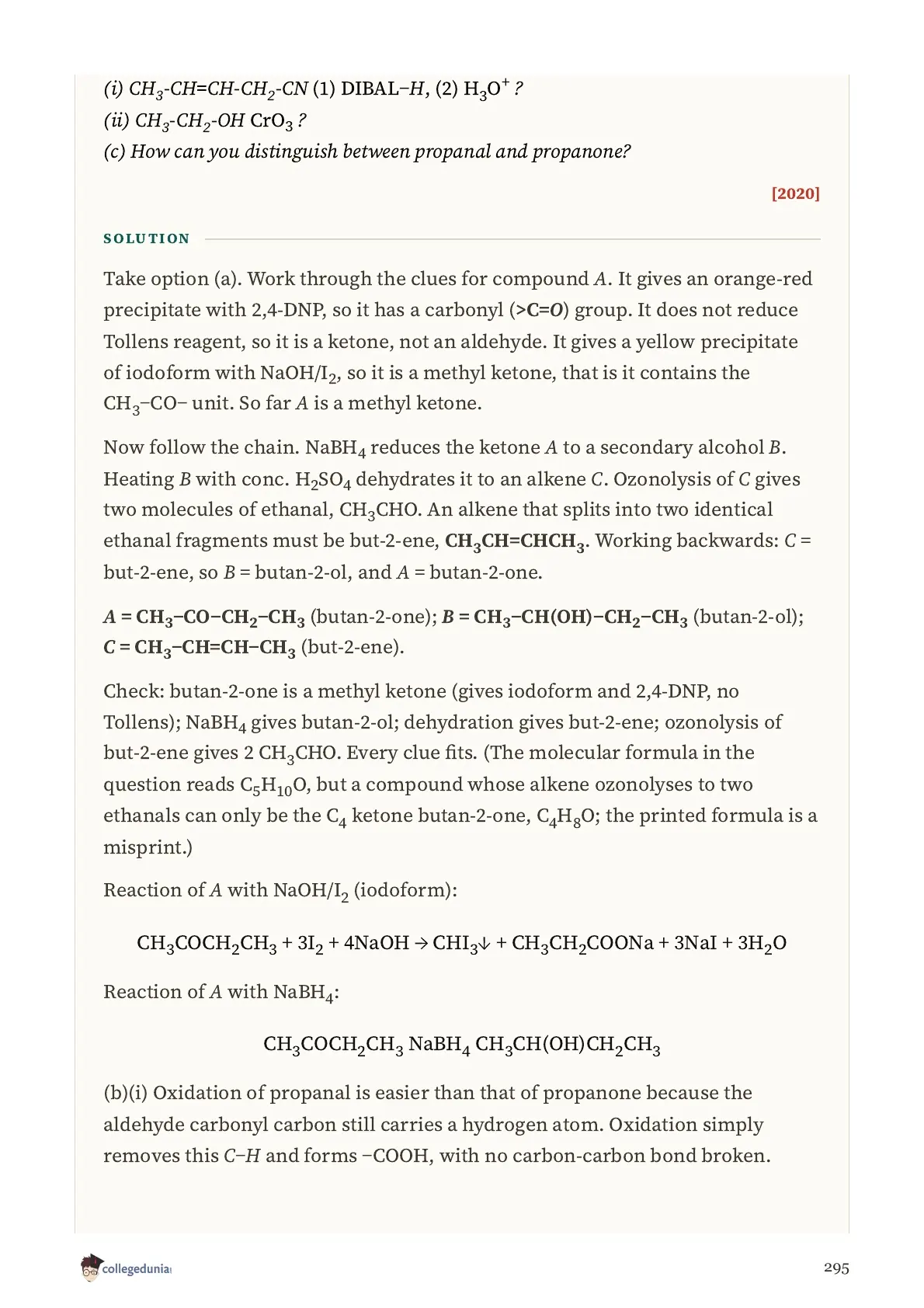
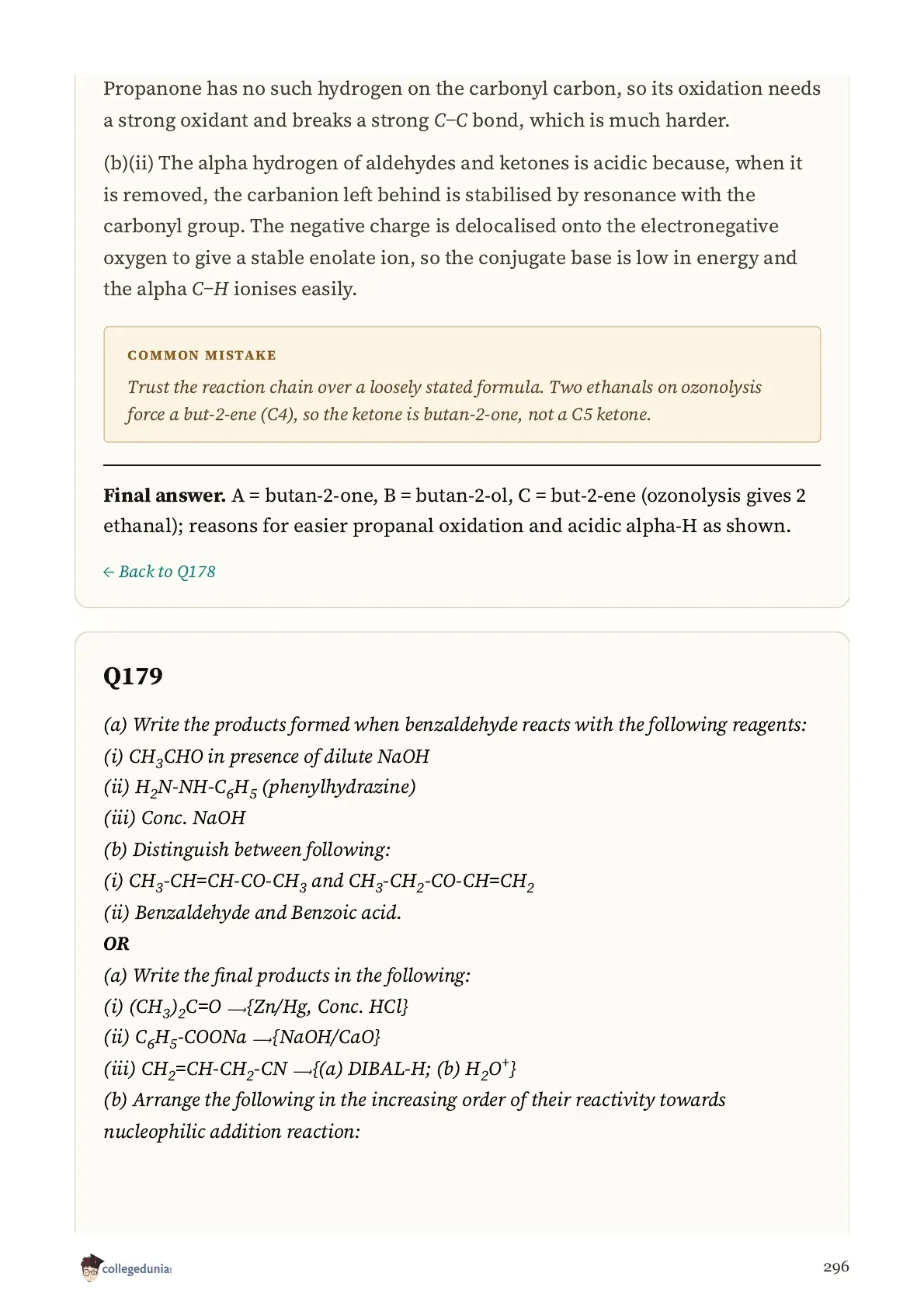
- 2020 to 2022: Mixed-syllabus papers, but Cannizzaro, aldol and distinguishing tests still appear regularly.
- 2003 to 2019: Heritage long answers on Cannizzaro versus aldol, Rosenmund reduction and Fischer esterification, all still relevant today.
Topic Frequency in the Aldehydes, Ketones and Carboxylic Acids Board Paper Questions
The 191 questions cluster into the six topic buckets below, ranked by how often CBSE has set them between 2003 and 2026.
| Rank | Topic Cluster | Frequency | Typical Marks Band |
|---|---|---|---|
| 1 | Named reactions (Cannizzaro, aldol condensation, Rosenmund, HVZ, Clemmensen) | ~25 per cent | 3 and 5 mark |
| 2 | Conversions and reaction completions (aldehyde, ketone and acid routes) | ~20 per cent | 2, 3, 5 mark |
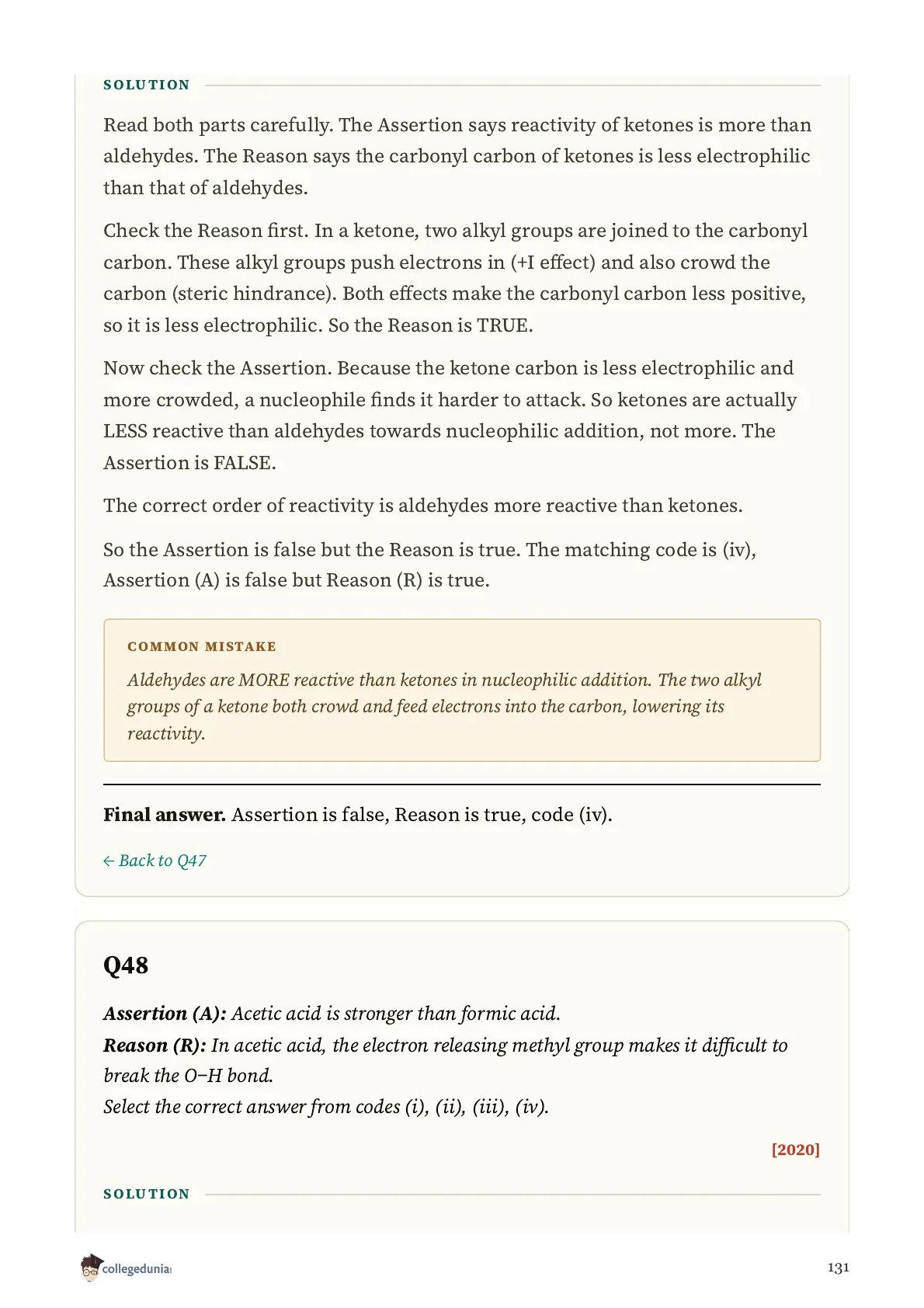
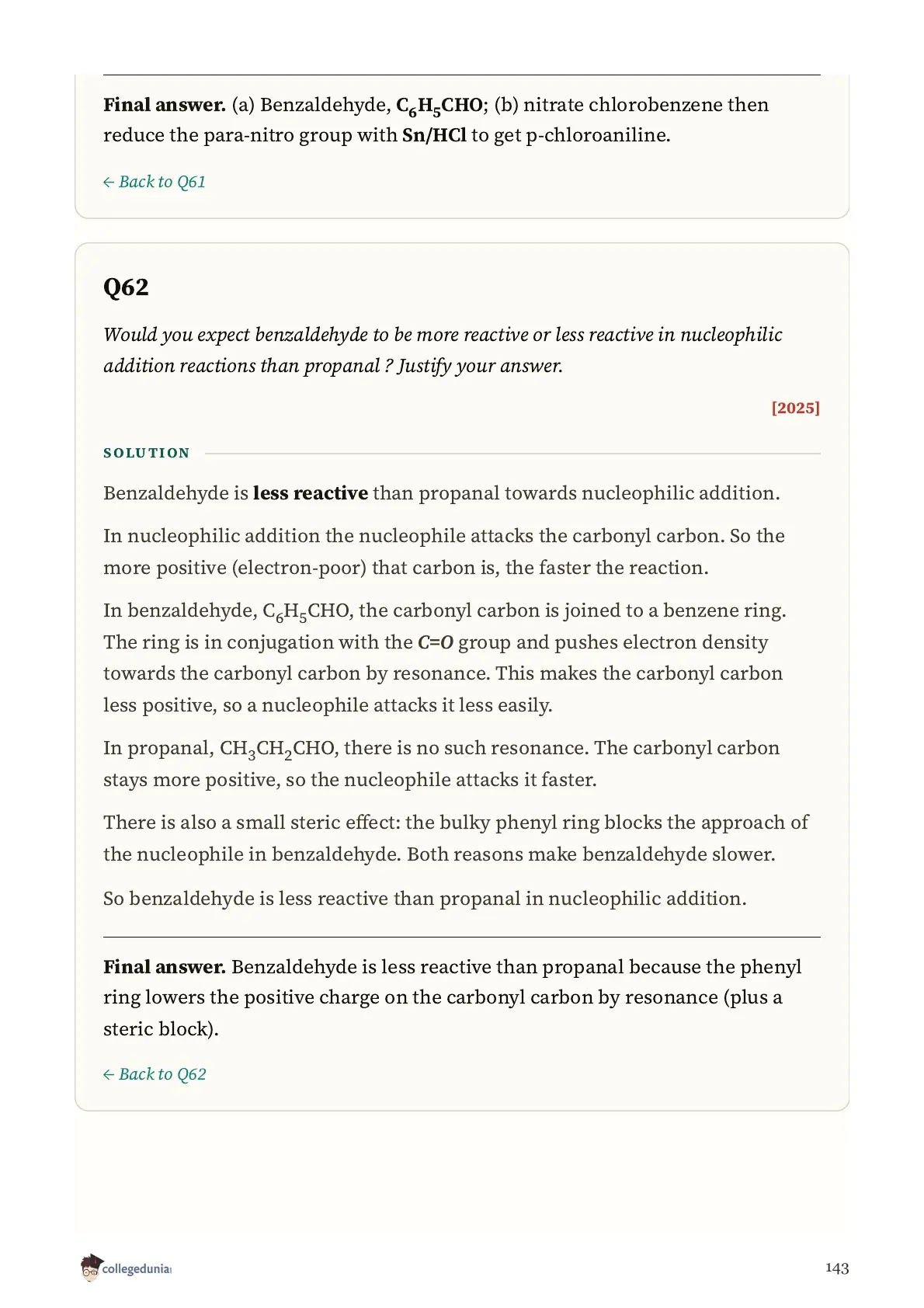
| 3 | Reactivity towards nucleophilic addition (order, carbonyl structure reasoning) | ~17 per cent | 1, 2, 3 mark |
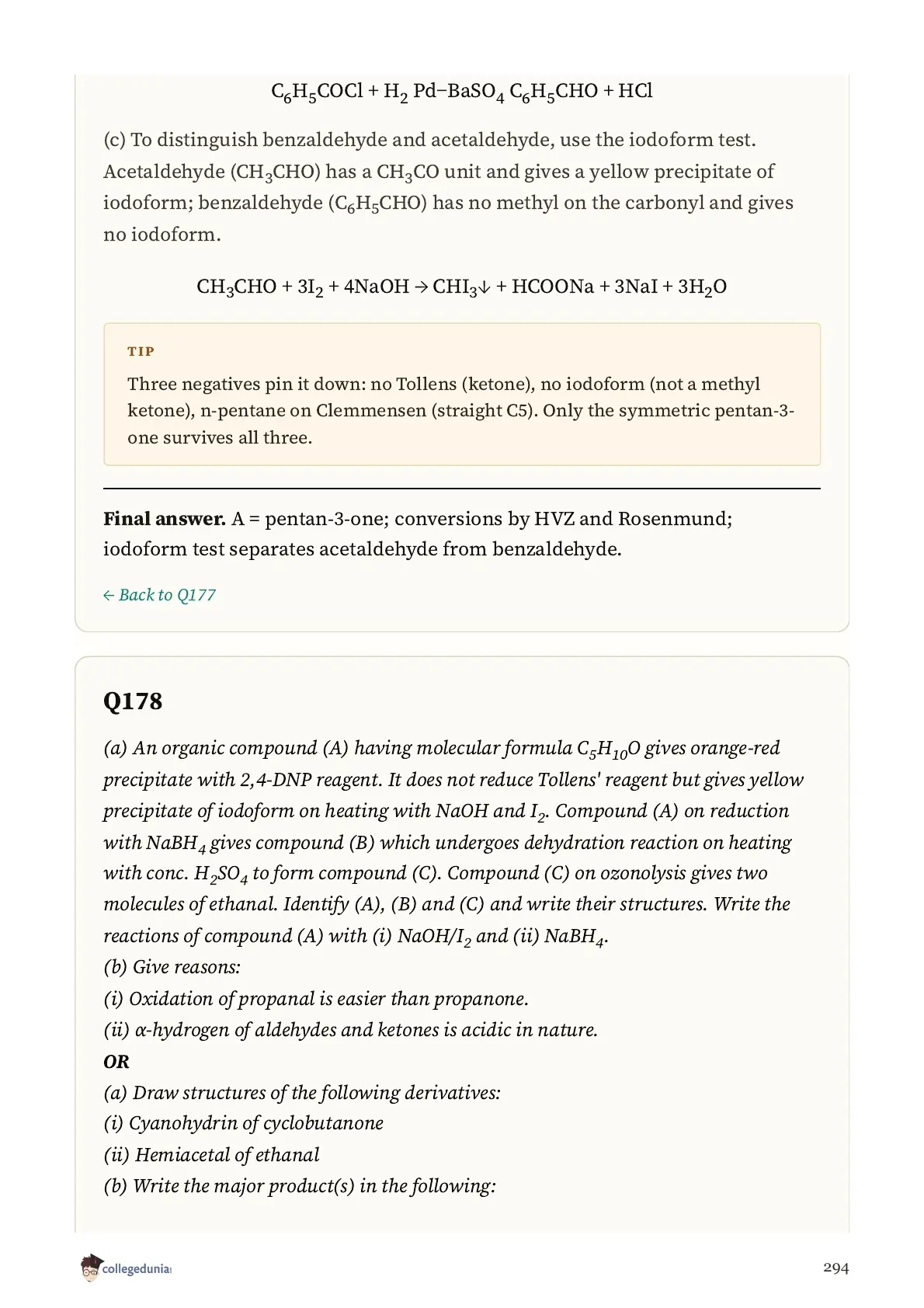
| 4 | Chemical tests and distinguishing pairs (Tollens, Fehling, iodoform) | ~15 per cent | 1, 2, 3 mark |
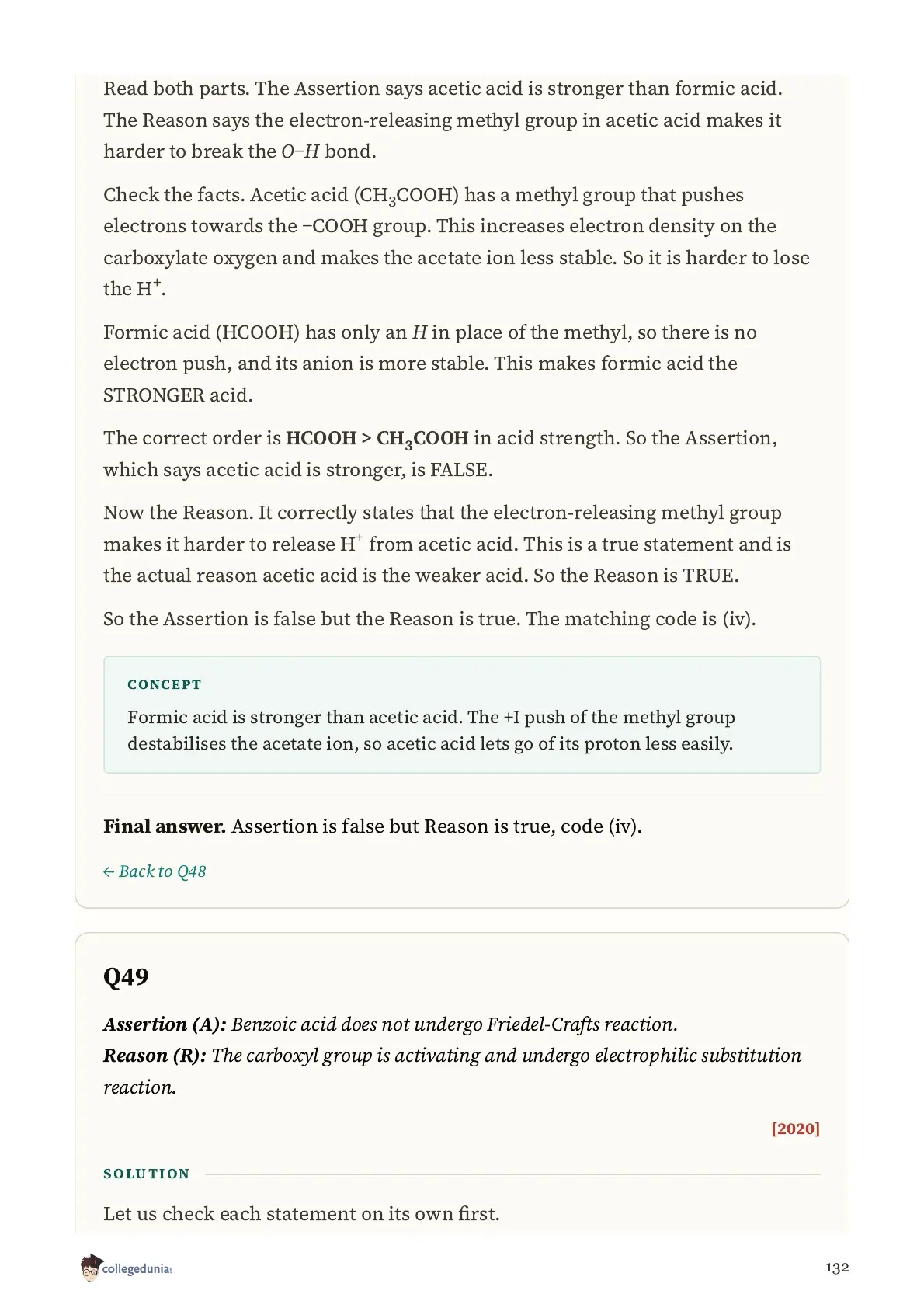
| 5 | Acidity of carboxylic acids (acidity order, effect of substituents) | ~13 per cent | 1, 2, 3 mark |
| 6 | Esterification and acid derivatives (Fischer esterification, conversions) | ~10 per cent | 2 and 5 mark |
Marks-Band Attempt Strategy for the Aldehydes, Ketones and Carboxylic Acids PYQs
The 191 PYQs are arranged marks-ascending inside the PDF so you can attempt them in the same order the CBSE paper presents them.
- 1-mark MCQs: Spend no more than 45 seconds each. Many test which reaction converts a ketone into a hydrocarbon or the reactivity order.
- 2-mark questions: One reaction completion plus a short conversion or a distinguishing test. Aim for 3 minutes.
- 3-mark questions: Usually a three-named-reaction set such as Rosenmund, Cannizzaro and HVZ. Write the full balanced equation, not just the product.
- 5-mark long answers: A named-reaction set plus a Cannizzaro or aldol reasoning part. Allocate 12 to 15 minutes.
Recent CBSE Trend: 2024 to 2026 Pattern Shift in Aldehydes, Ketones and Carboxylic Acids
Three things have changed in the recent CBSE cycles that the Aldehydes, Ketones and Carboxylic Acids previous year questions now reflect:
- Section A (MCQ and assertion-reason) now carries a fixed block of 1-mark questions. The compilation includes 60 such questions, most from 2023 onwards.
- 3-mark questions increasingly bundle three named reactions in one part, as in the 2026 Rosenmund, Cannizzaro and Hell-Volhard-Zelinsky question, so you must recall several at once.
- 5-mark questions almost always carry an OR alternative, and this chapter has the largest 5-mark stock at 36 questions, so the PDF keeps both branches.
Sample Previous Year Questions from Aldehydes, Ketones and Carboxylic Acids
Here are a few real previous year questions from the Aldehydes, Ketones and Carboxylic Acids board papers, taken straight from the compilation. The full set is in the downloadable PDF.
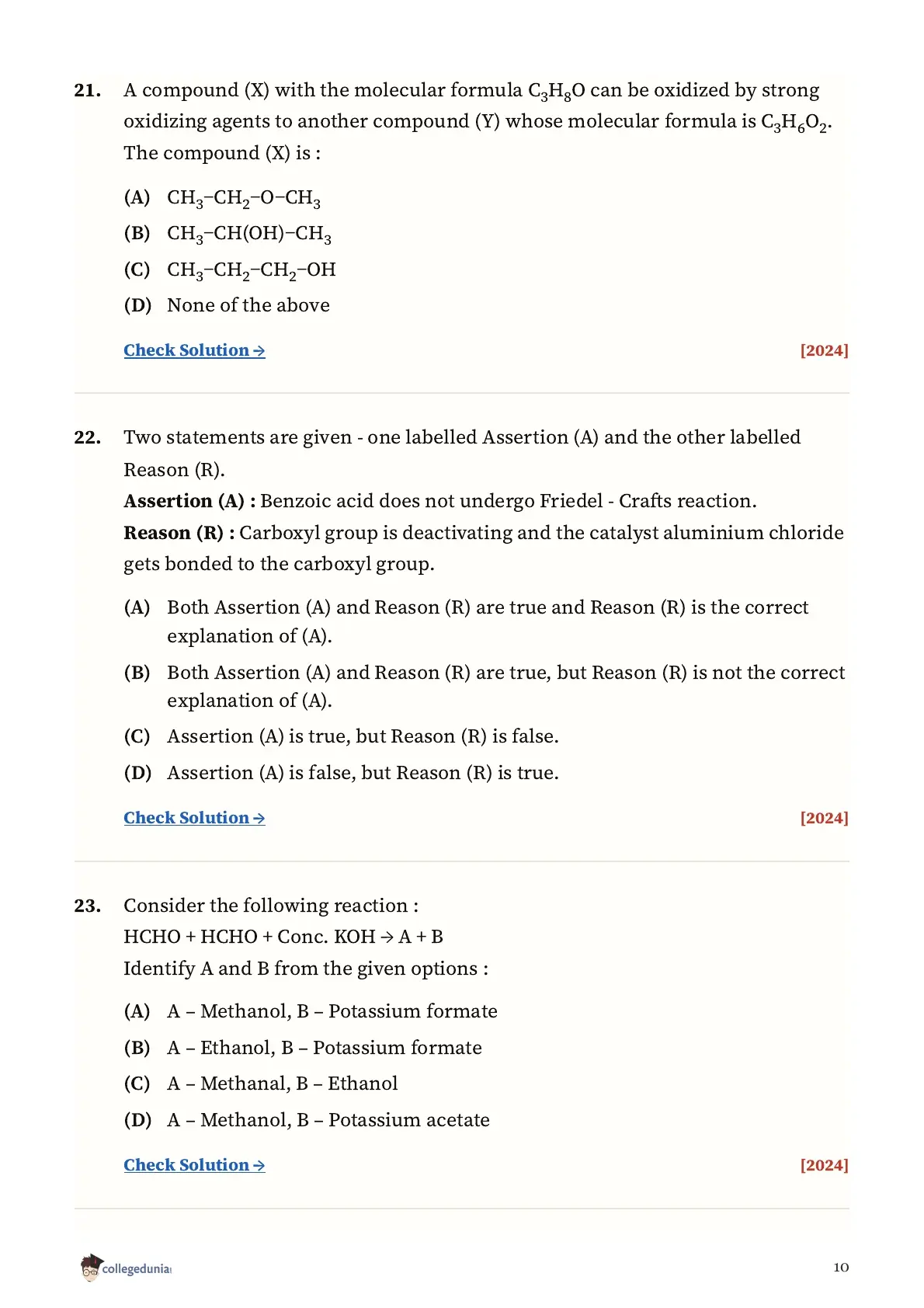
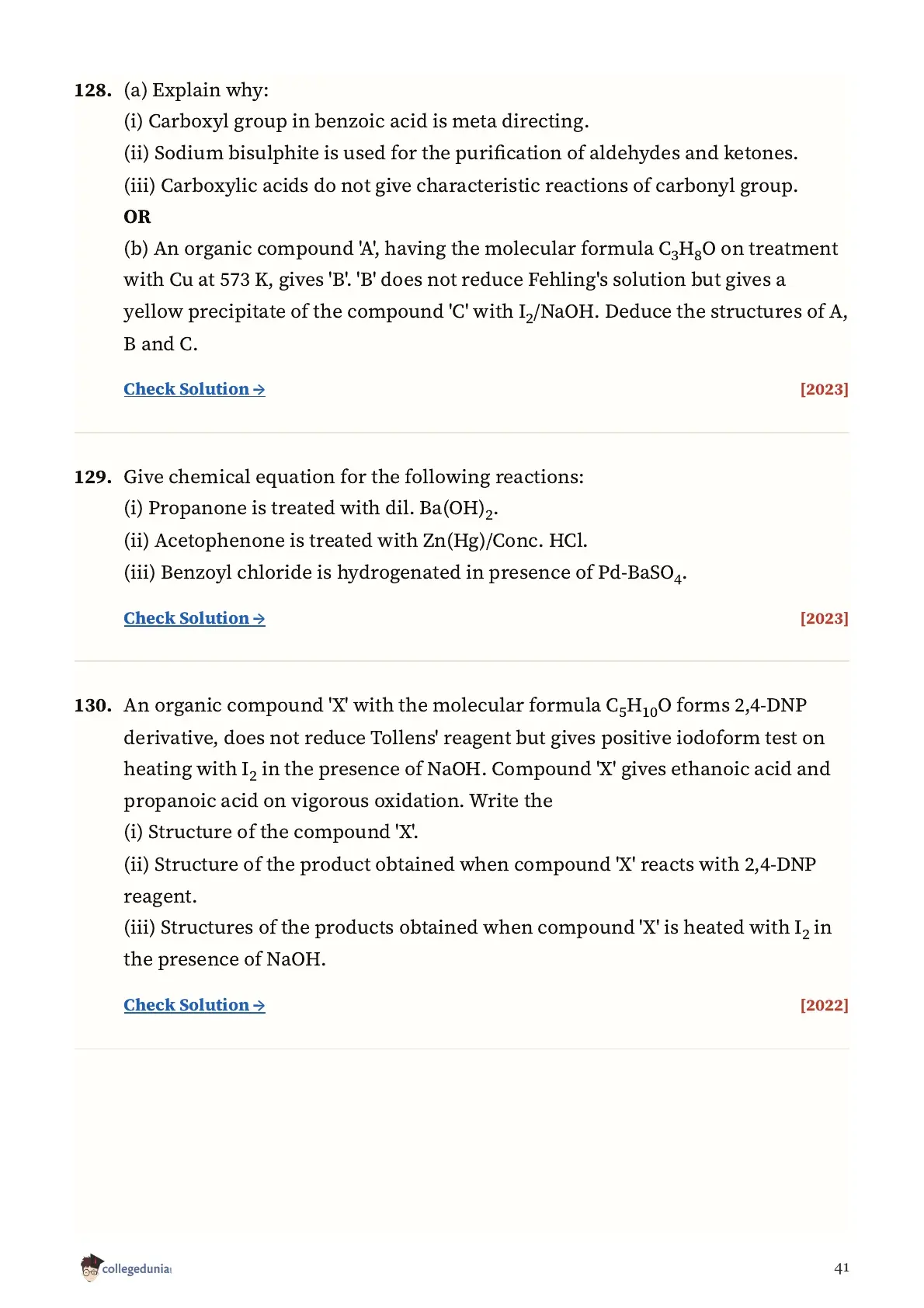
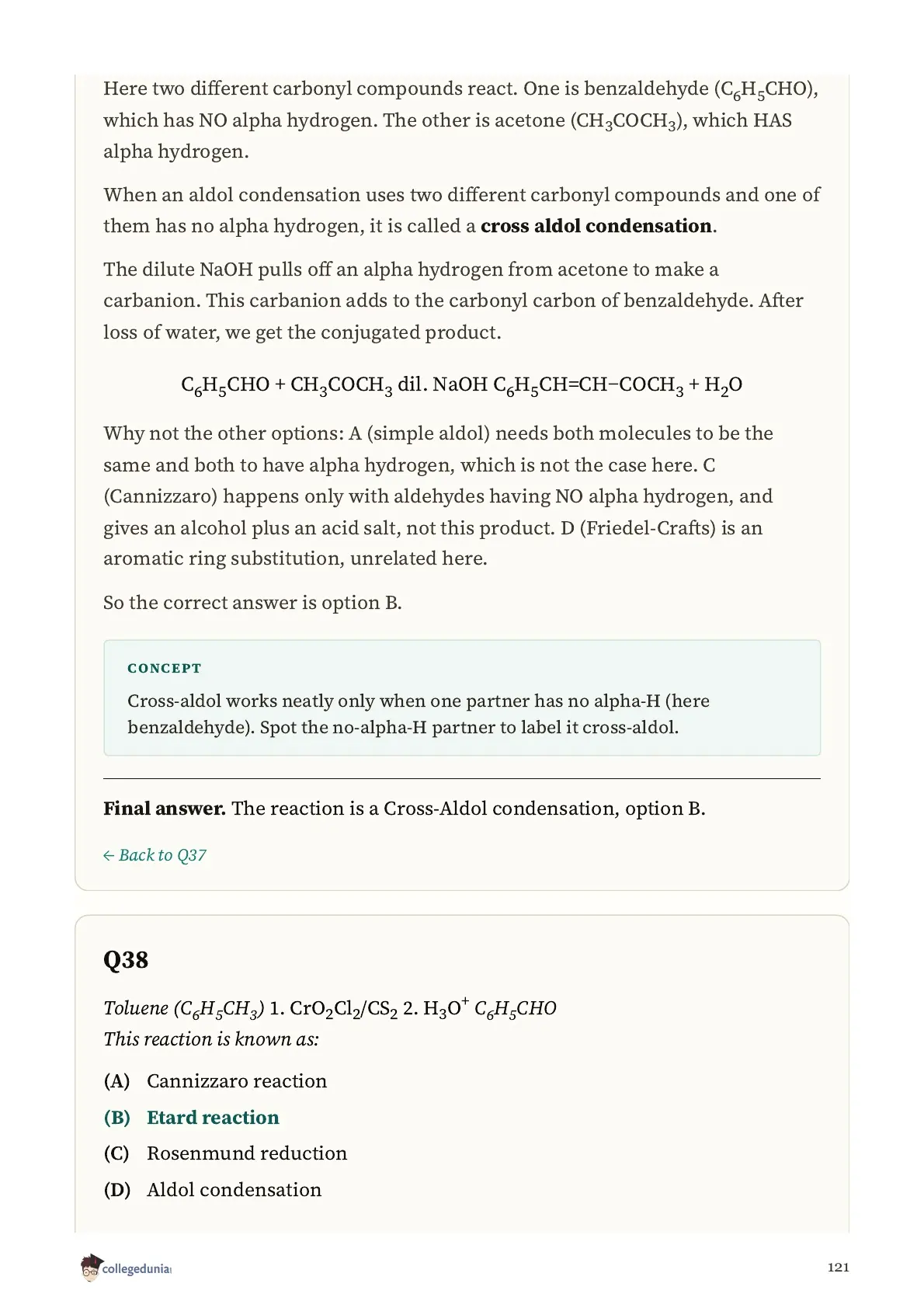
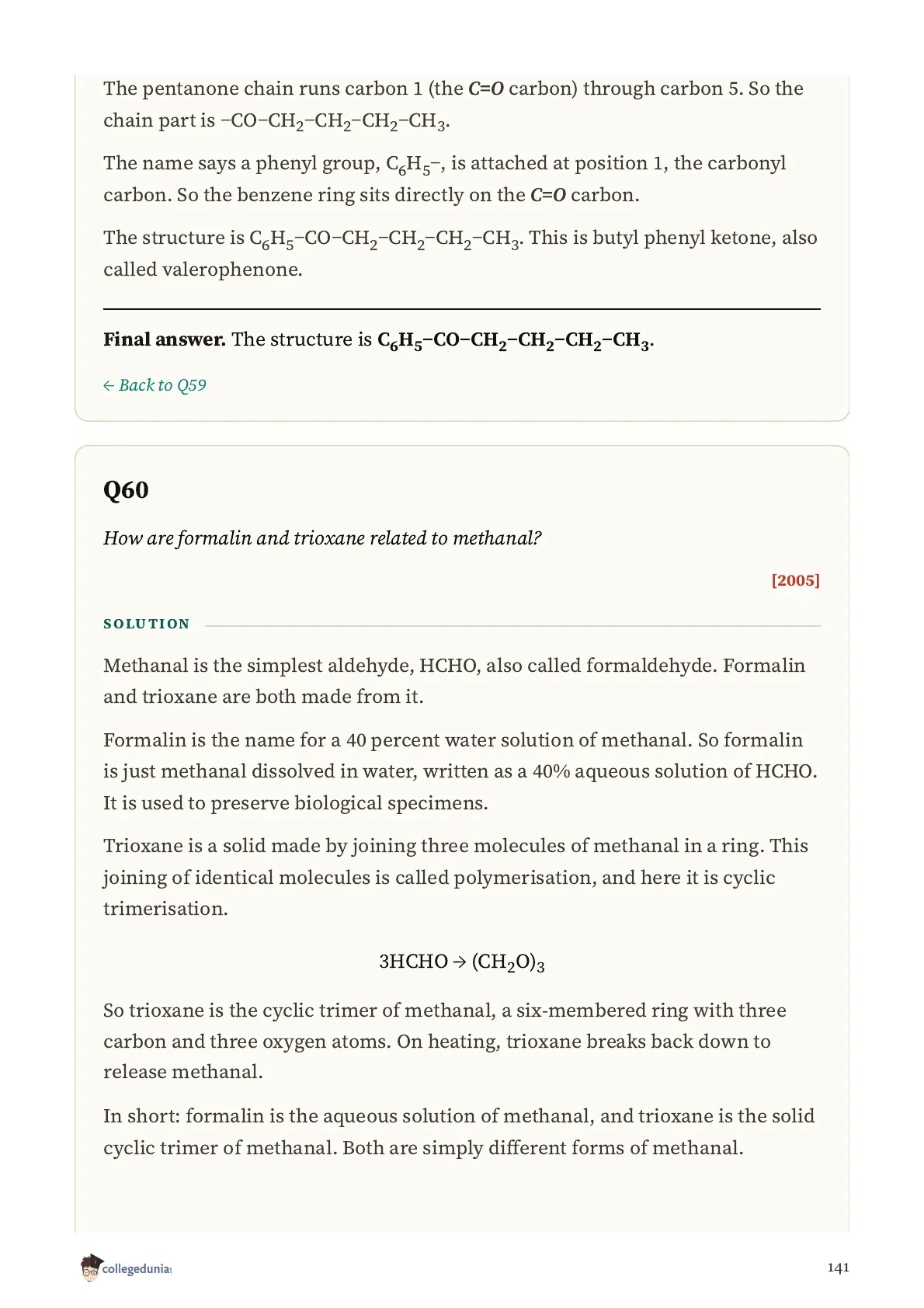
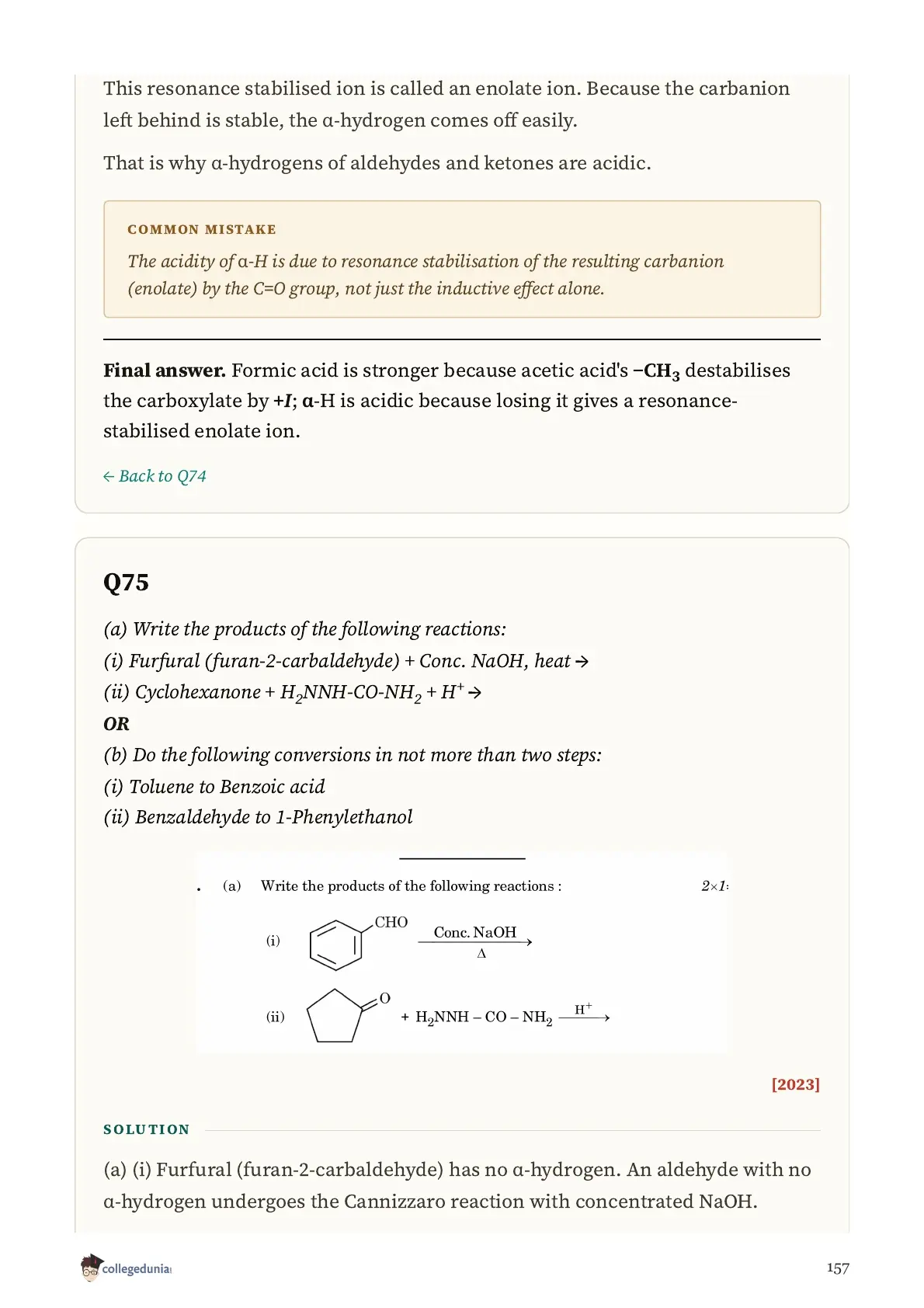
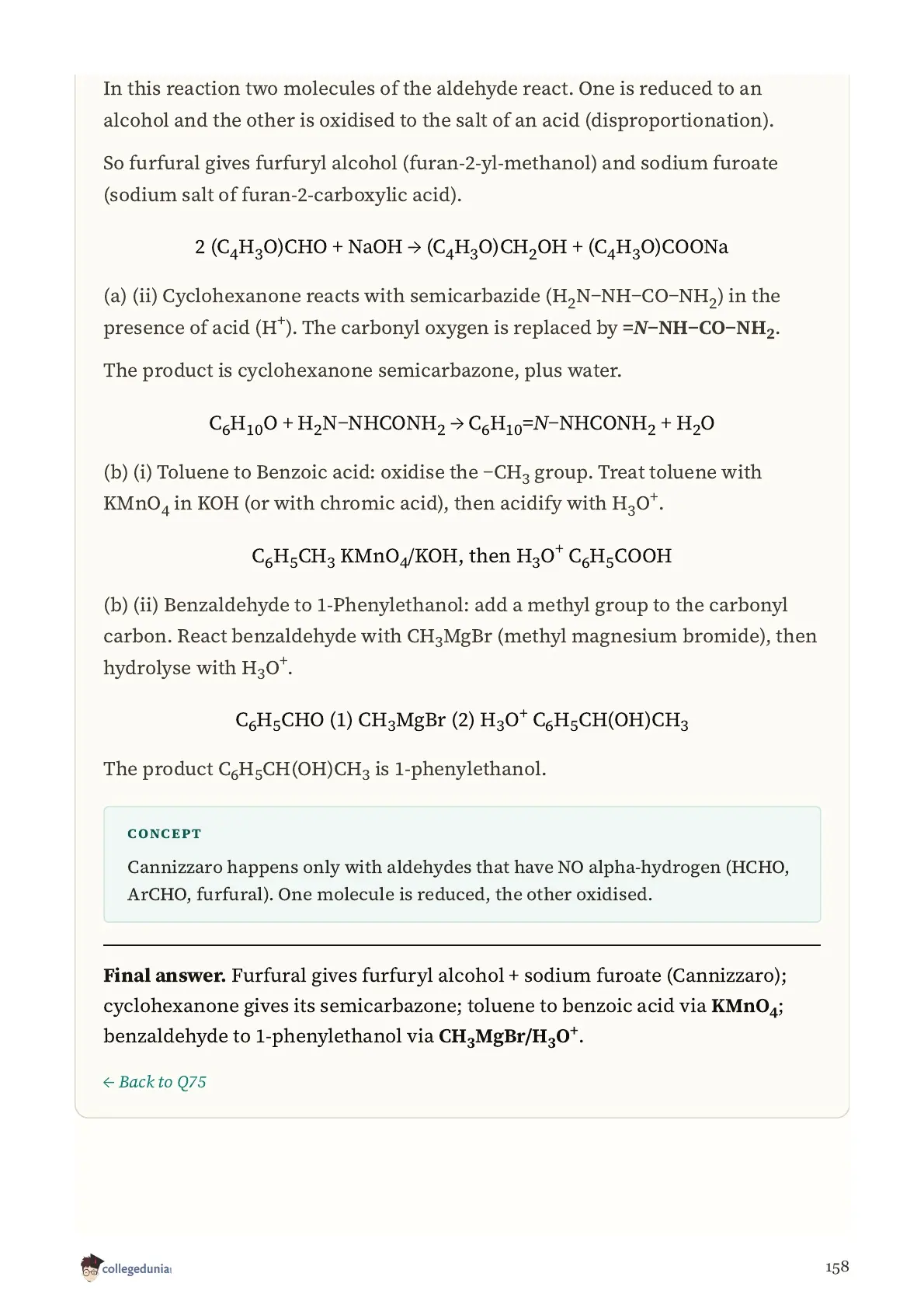
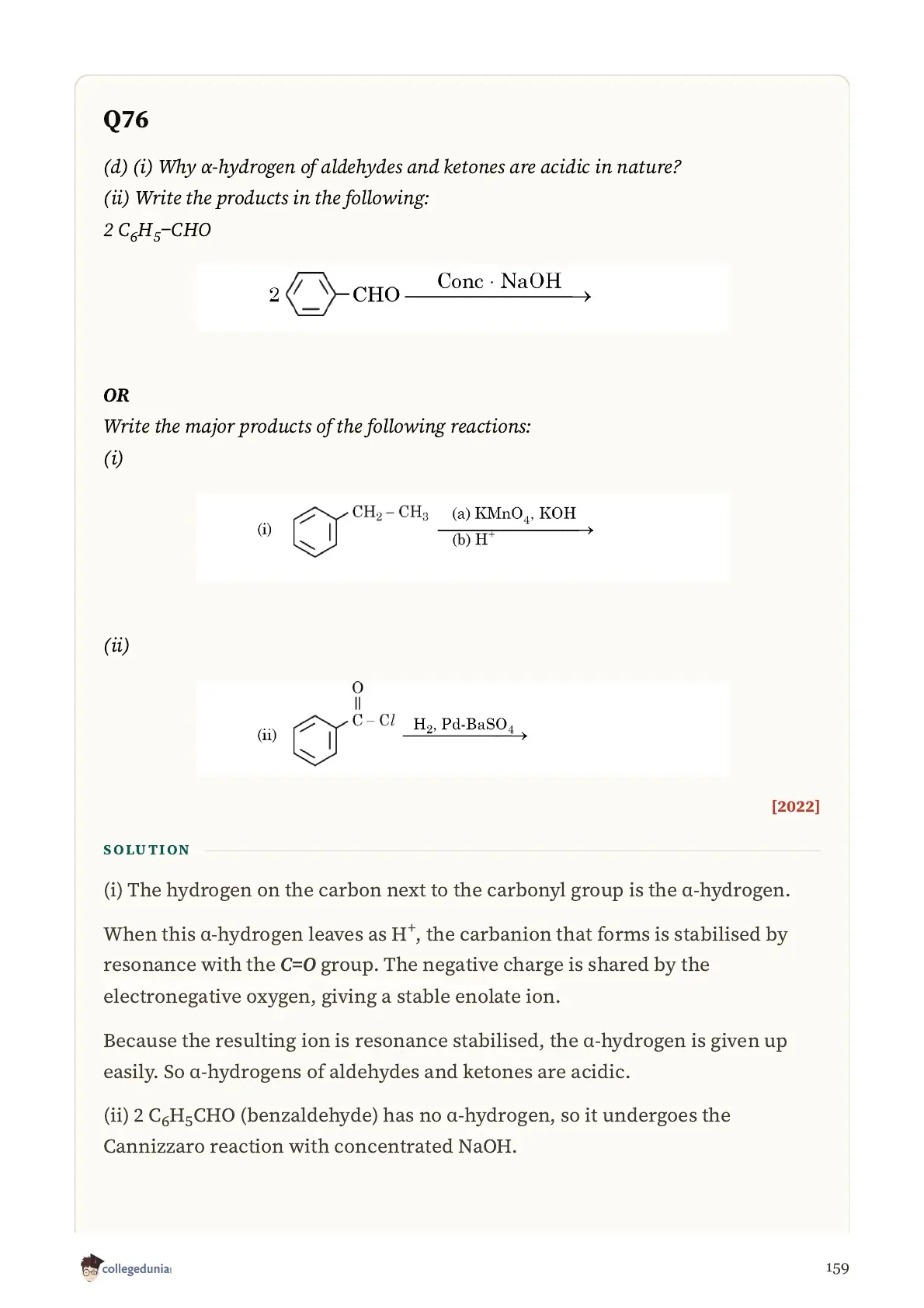
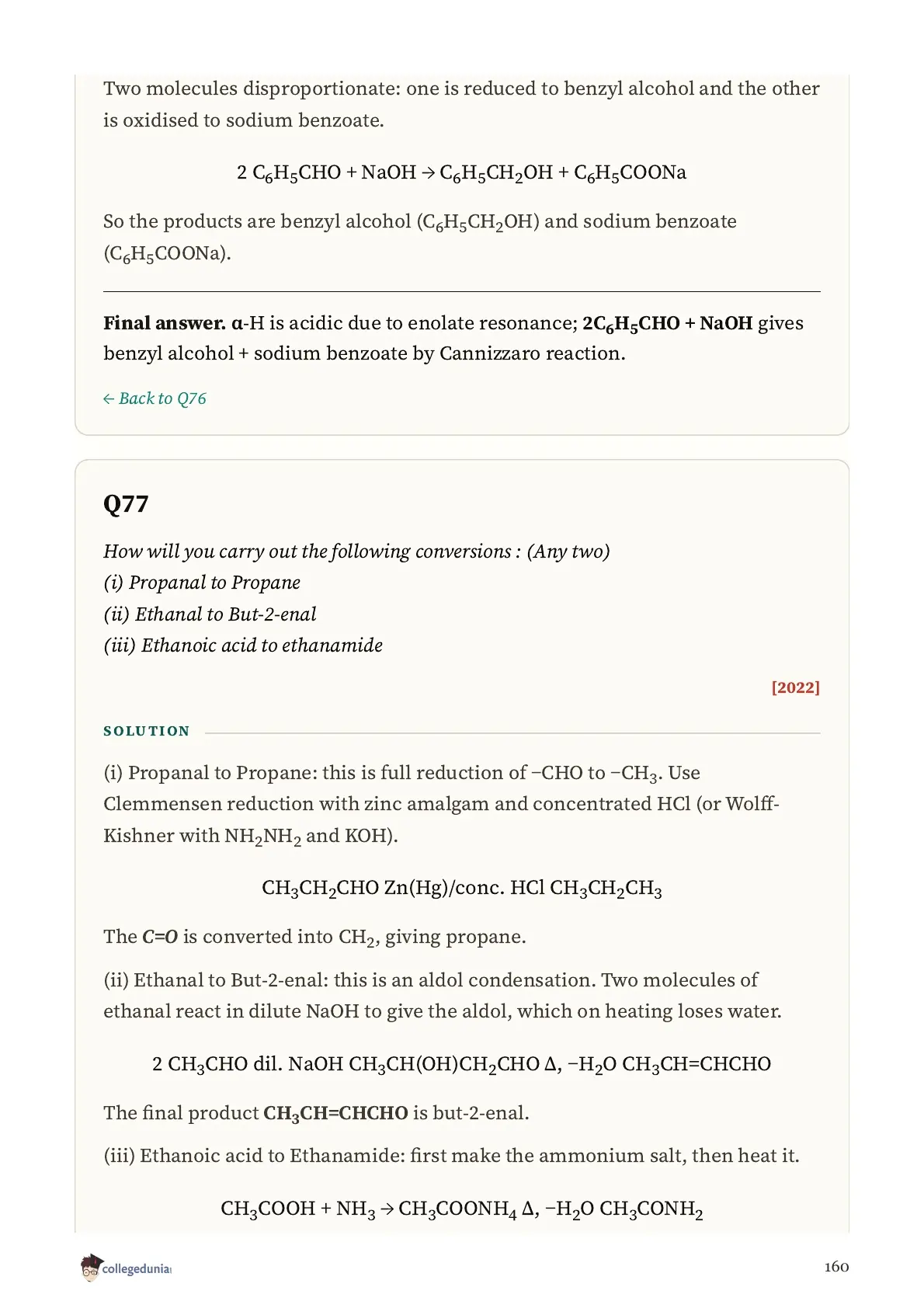
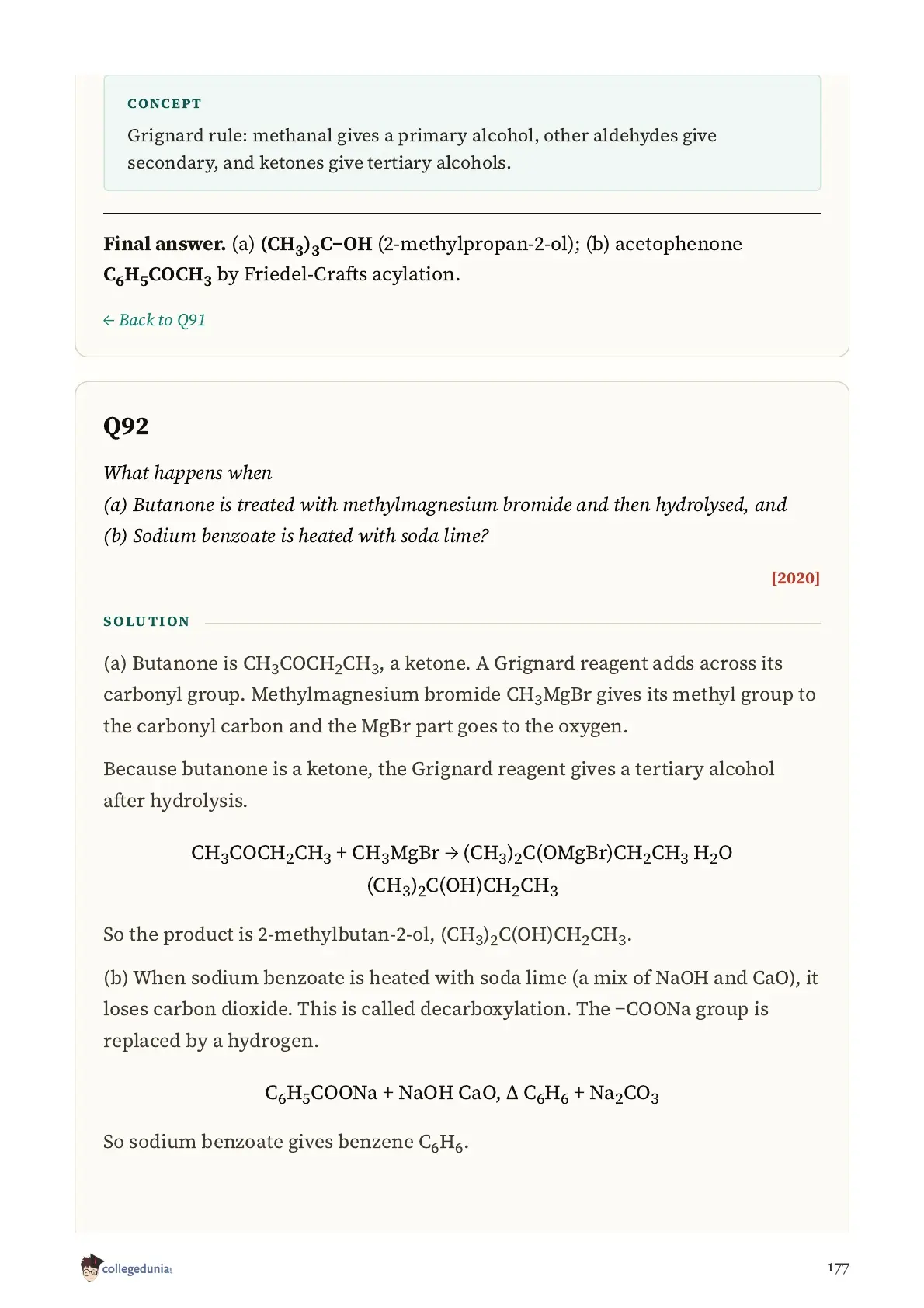
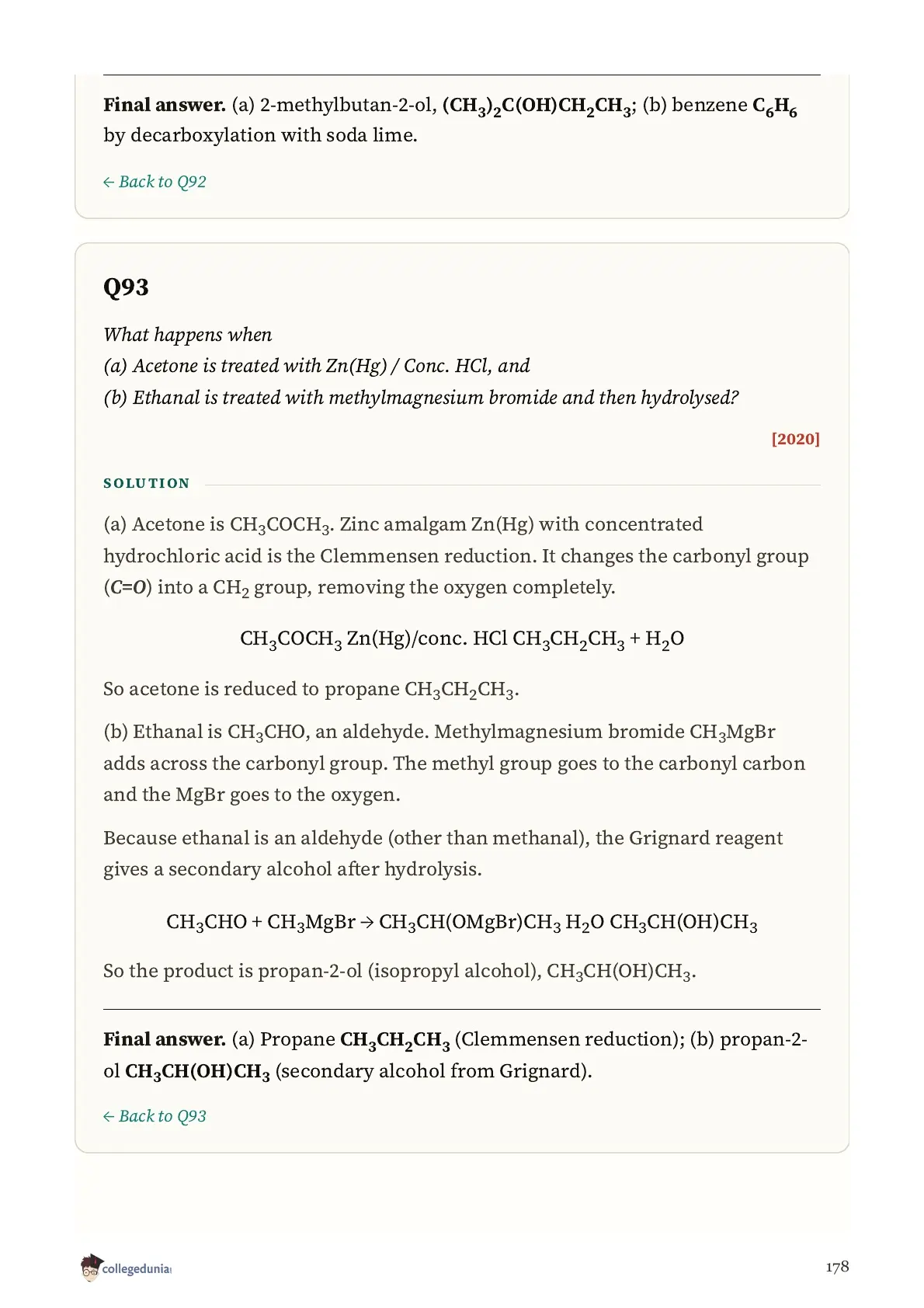
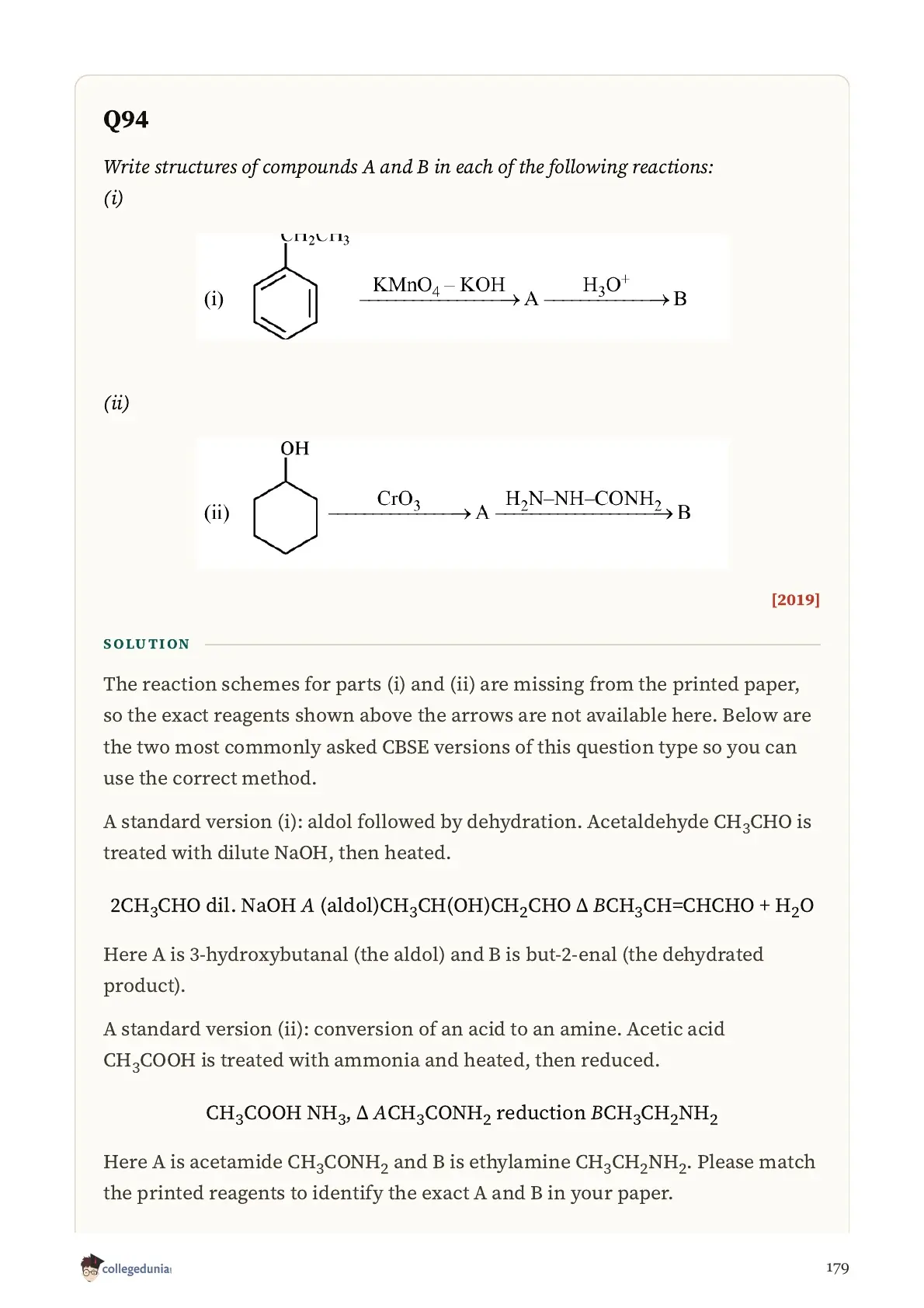
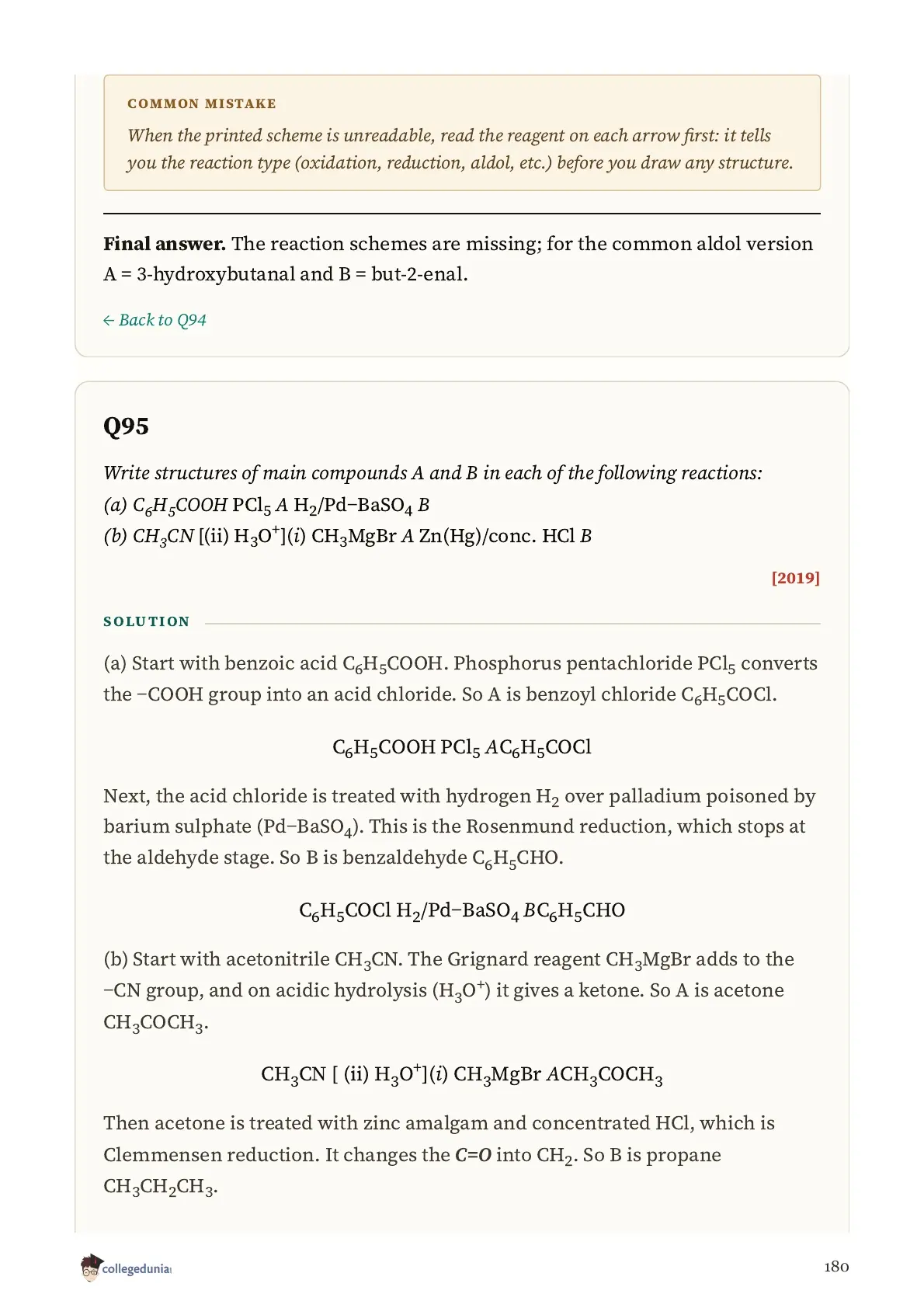
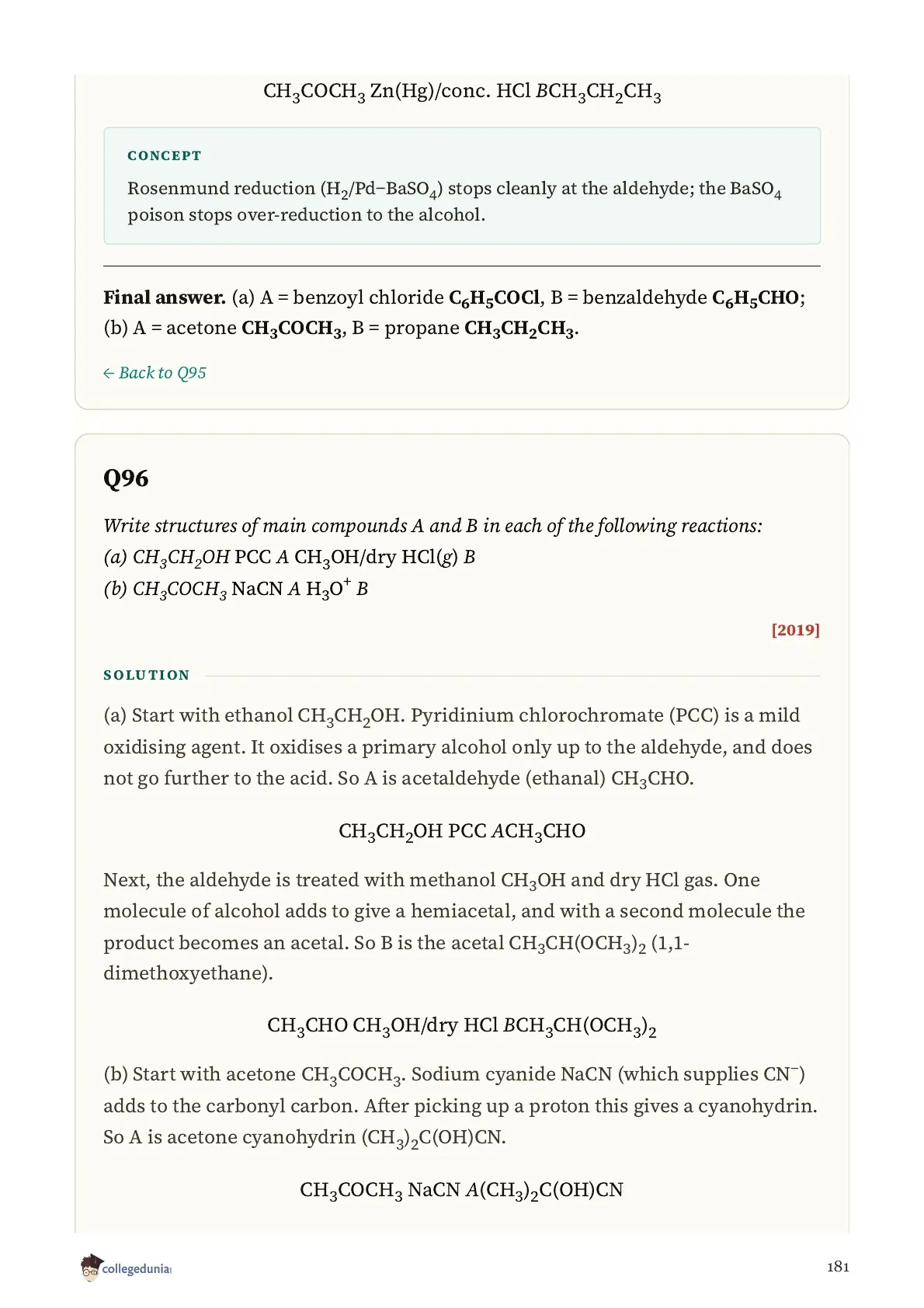
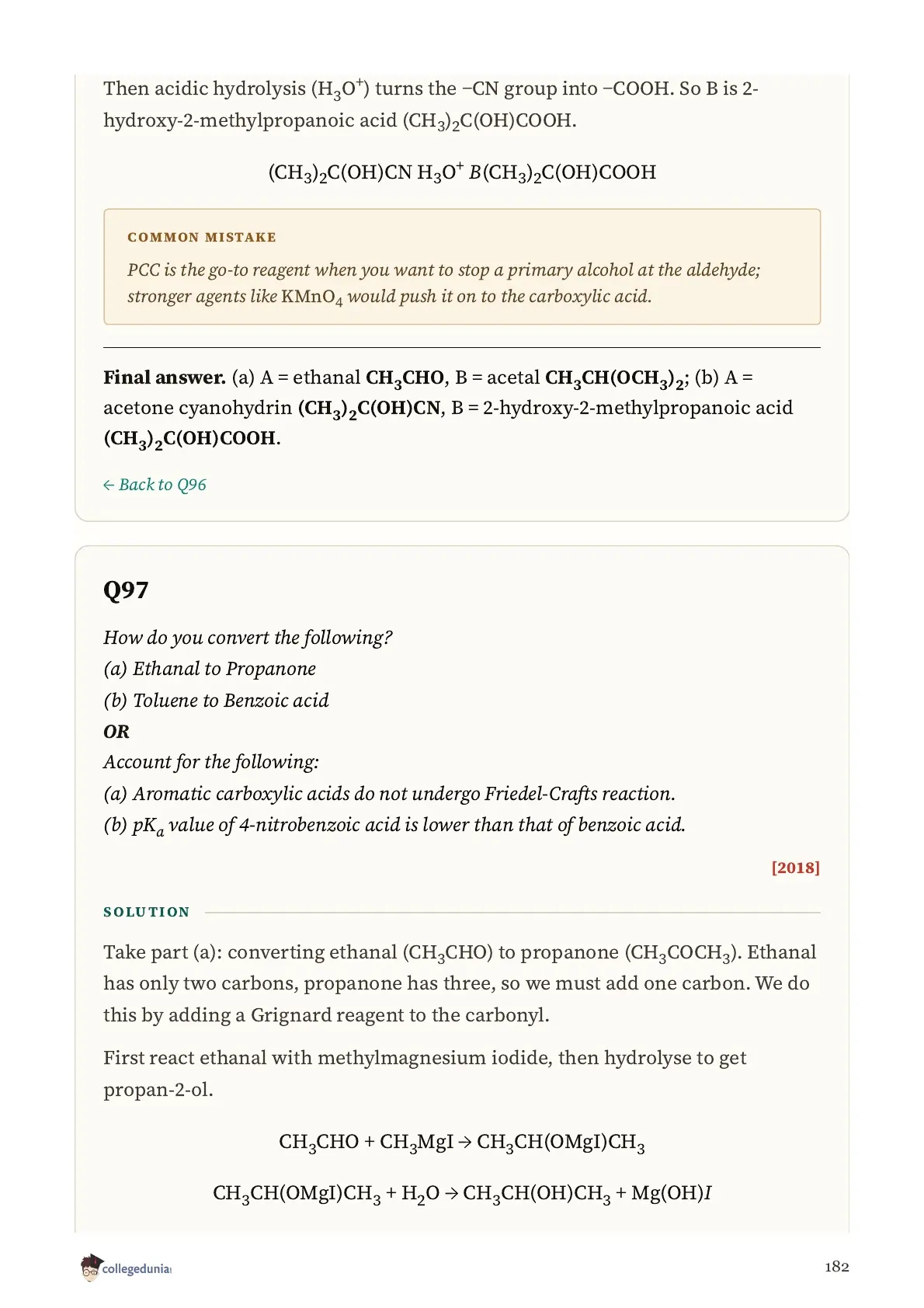
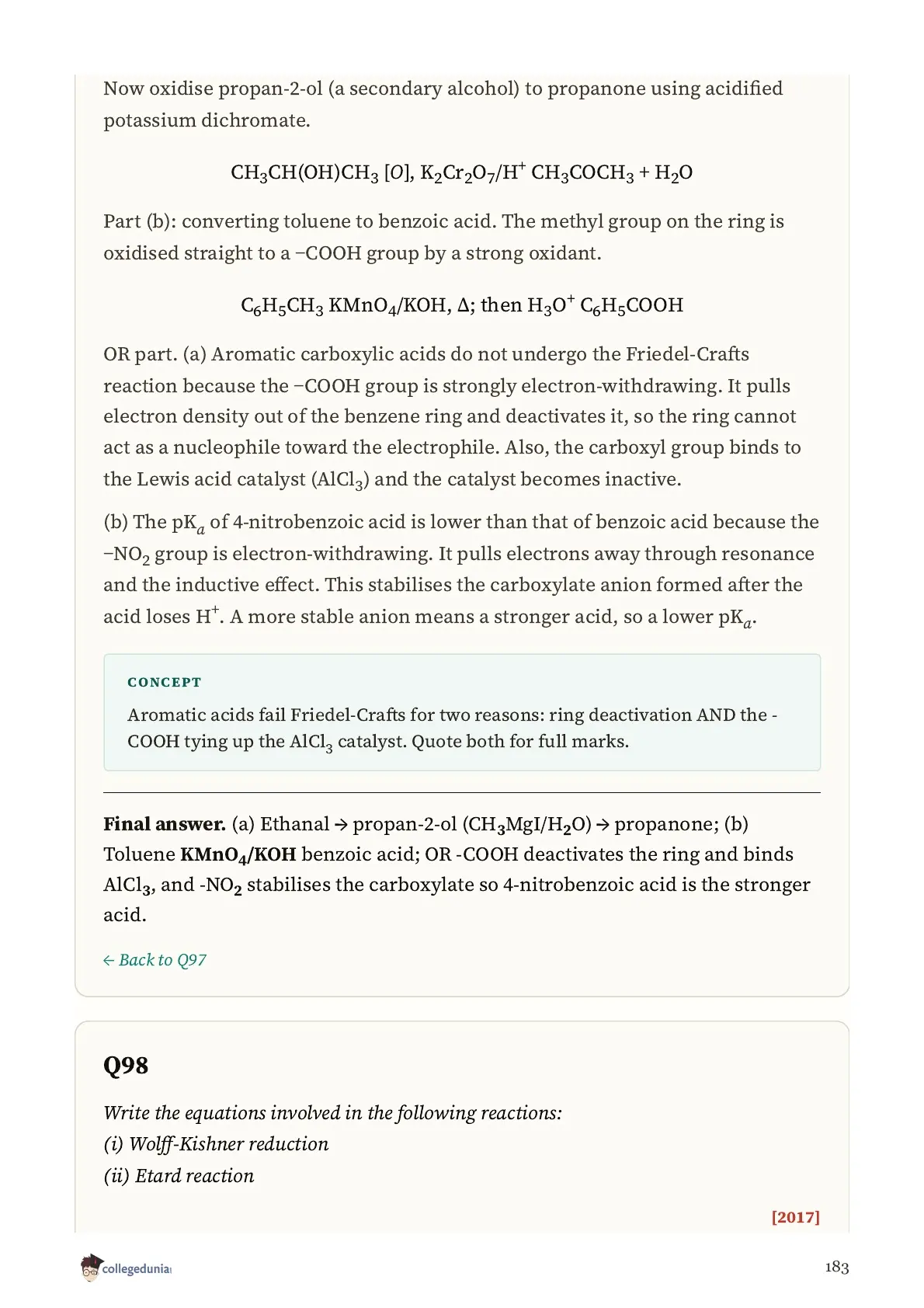
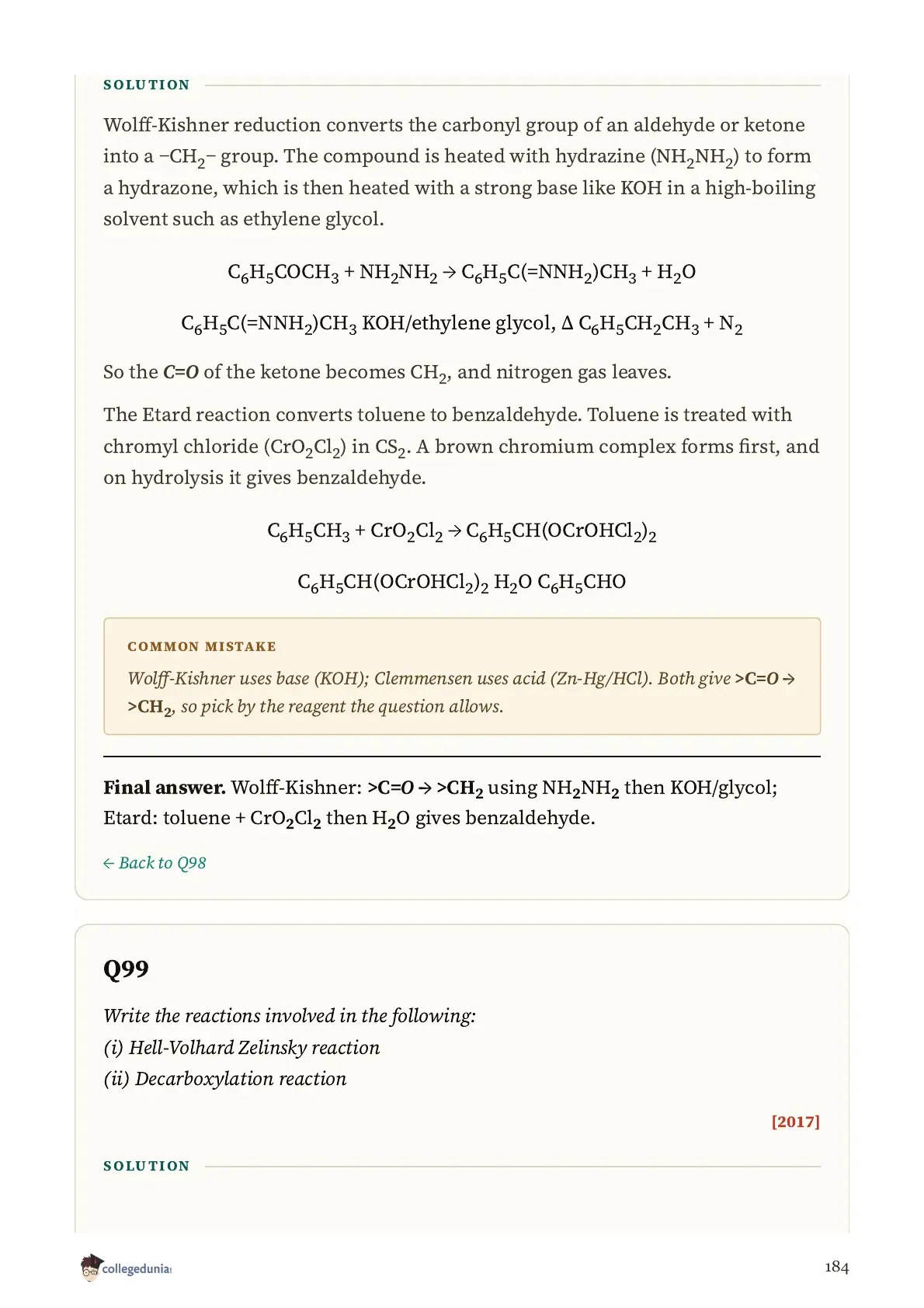
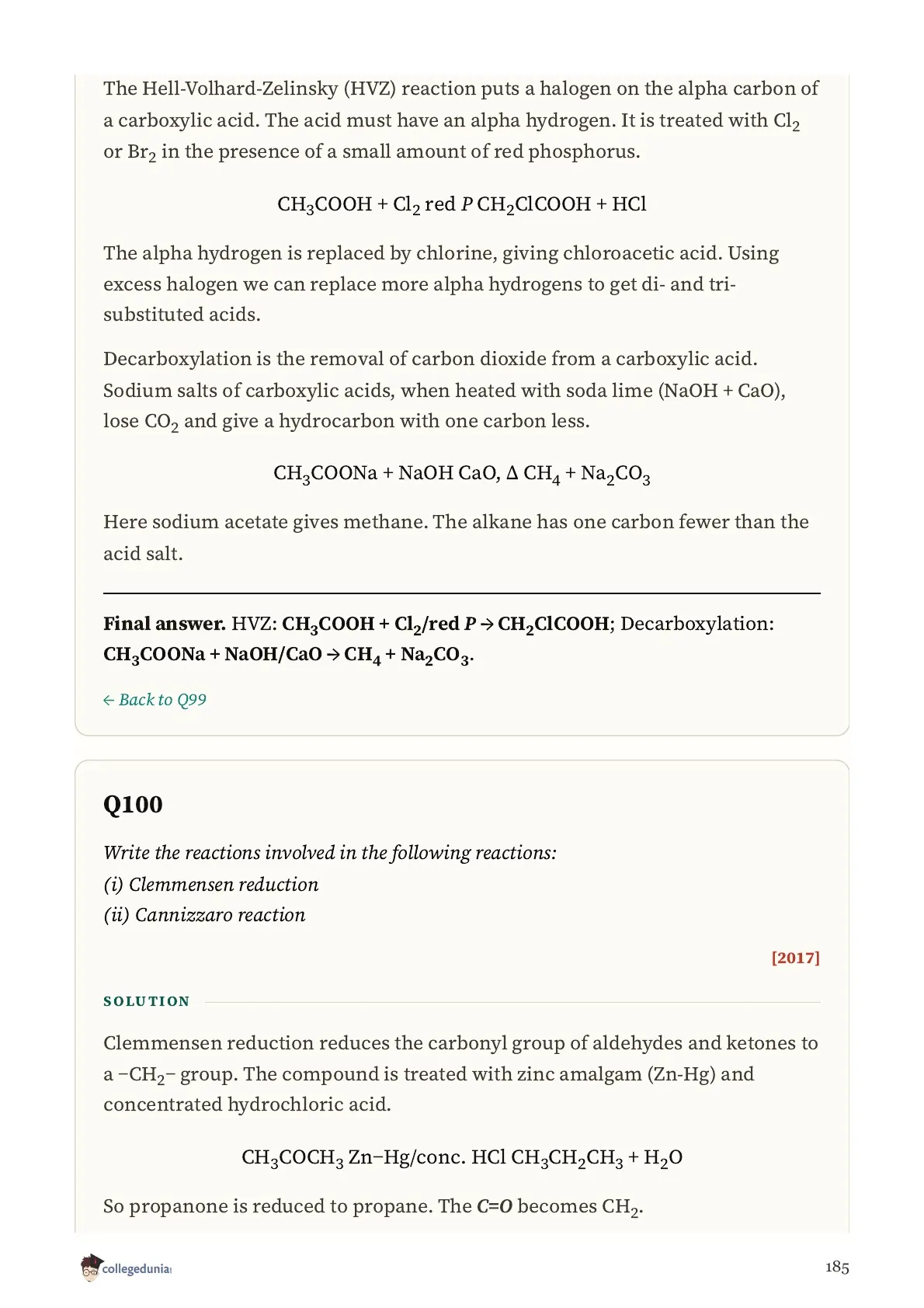
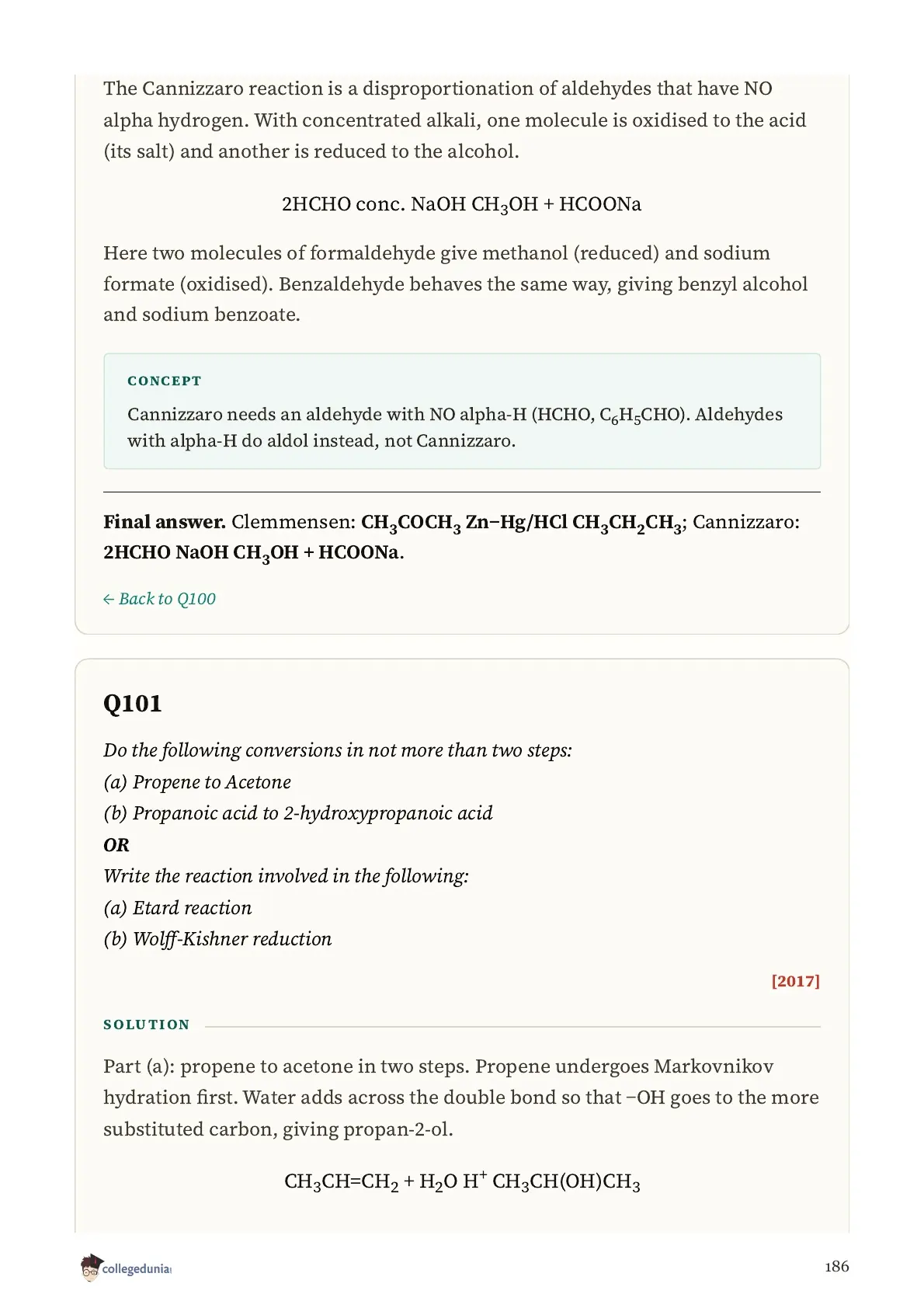
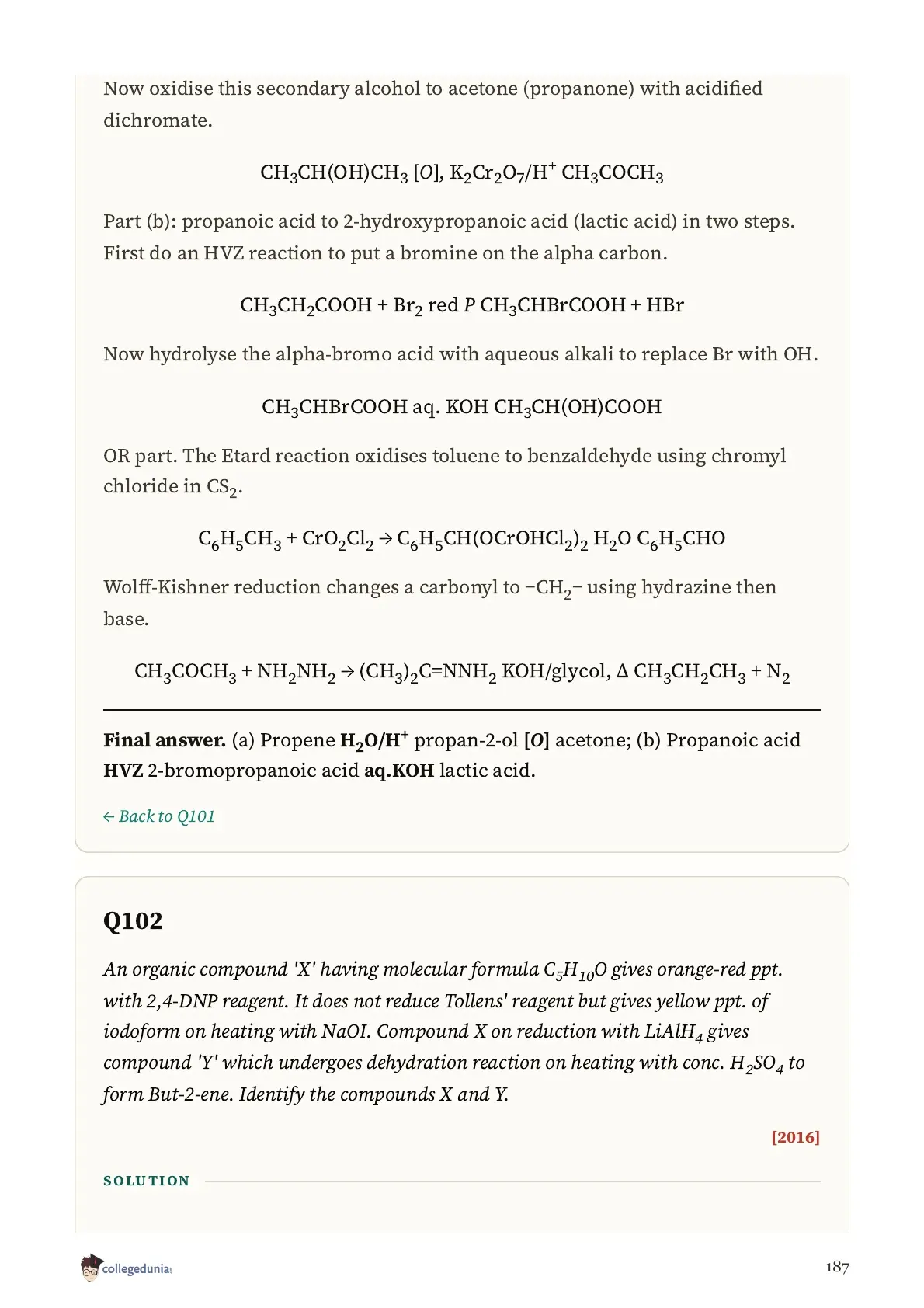
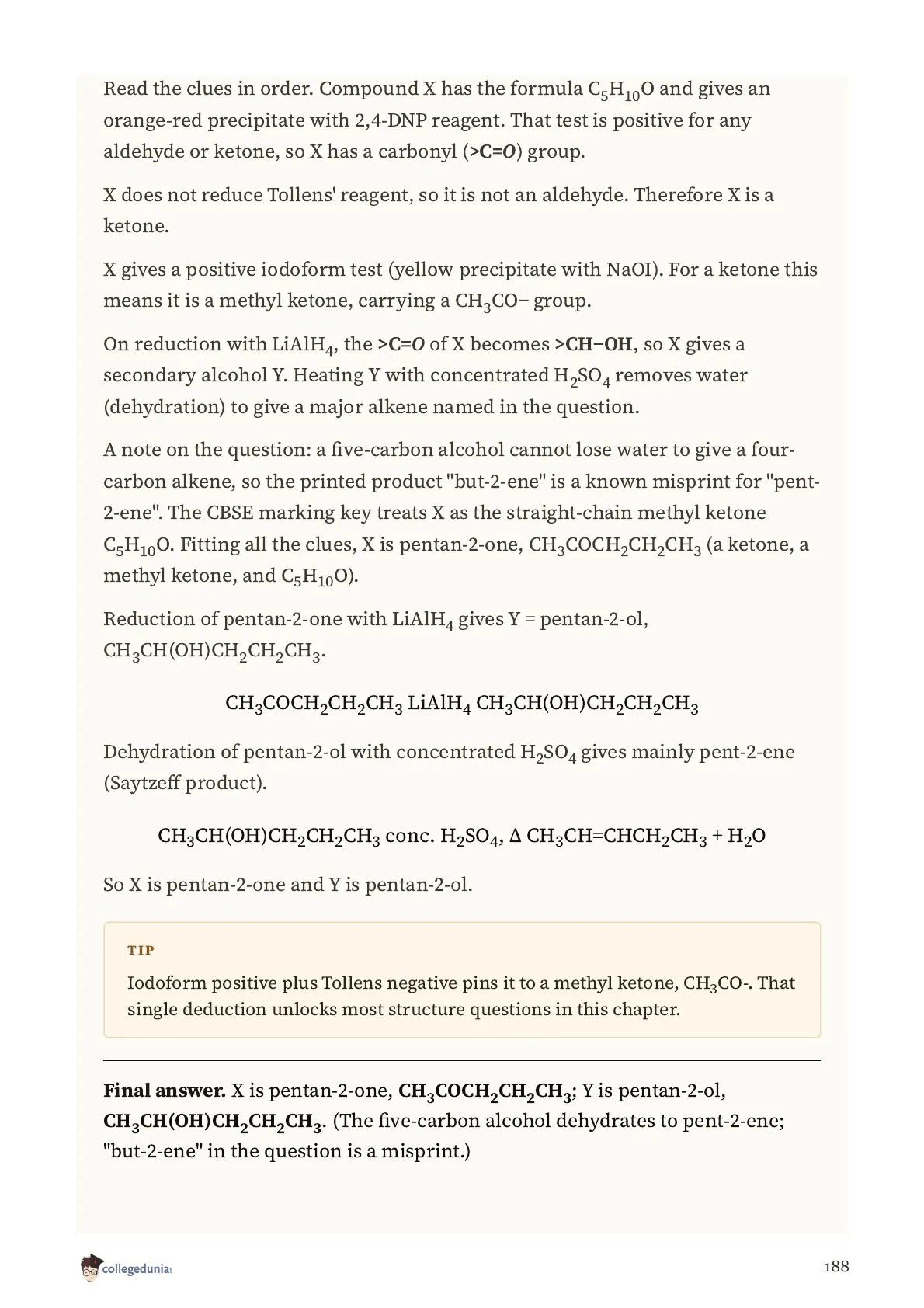
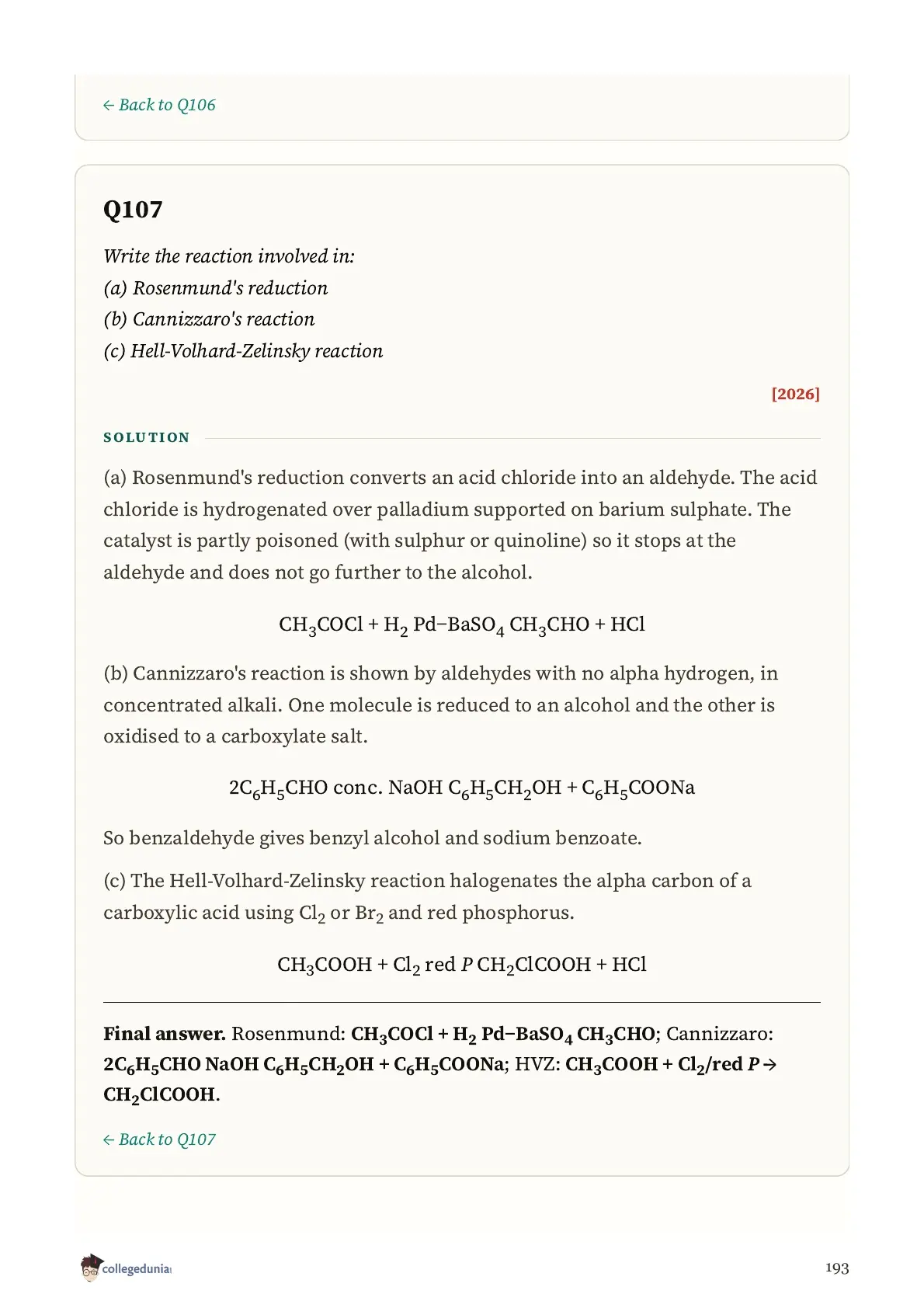
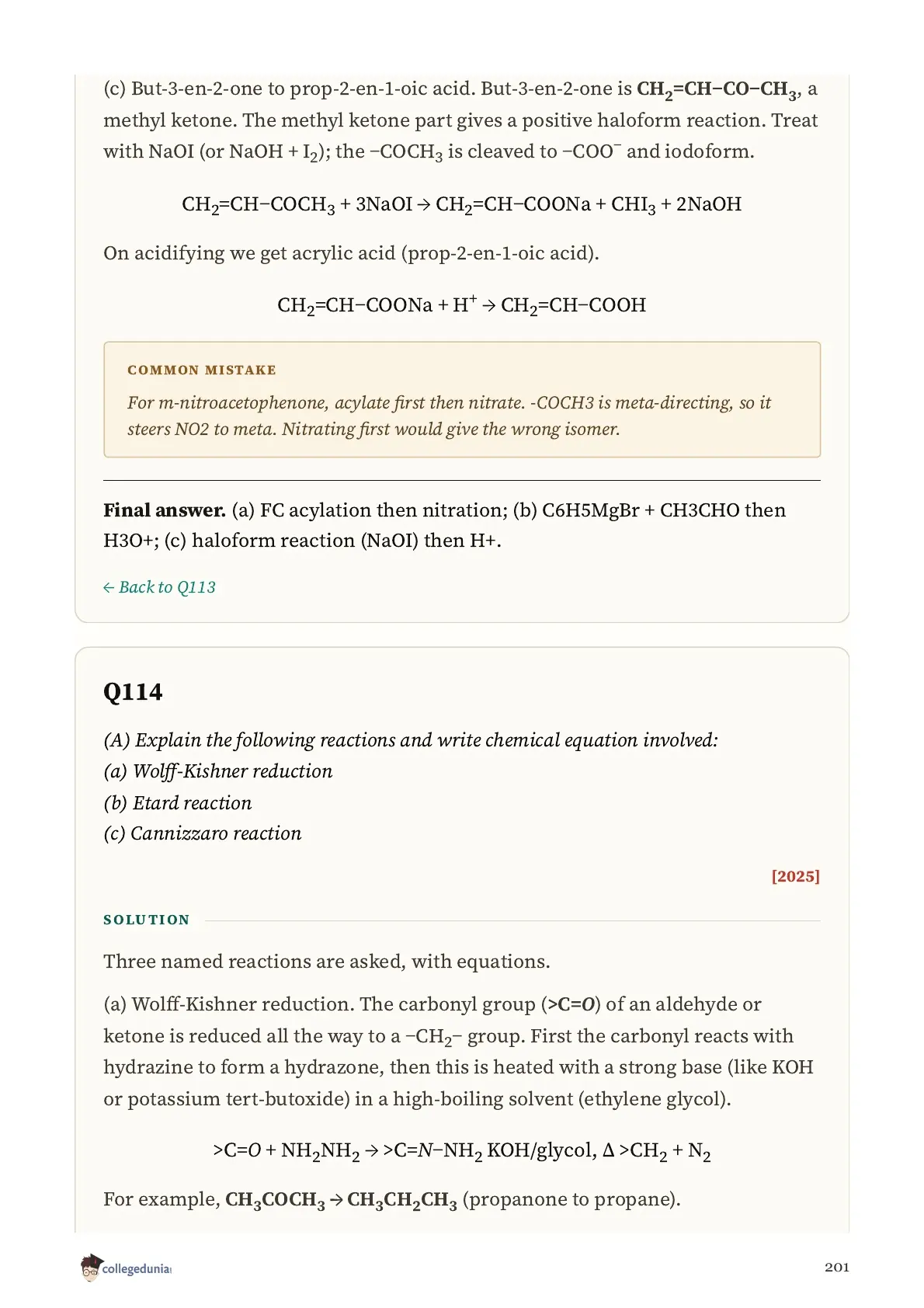
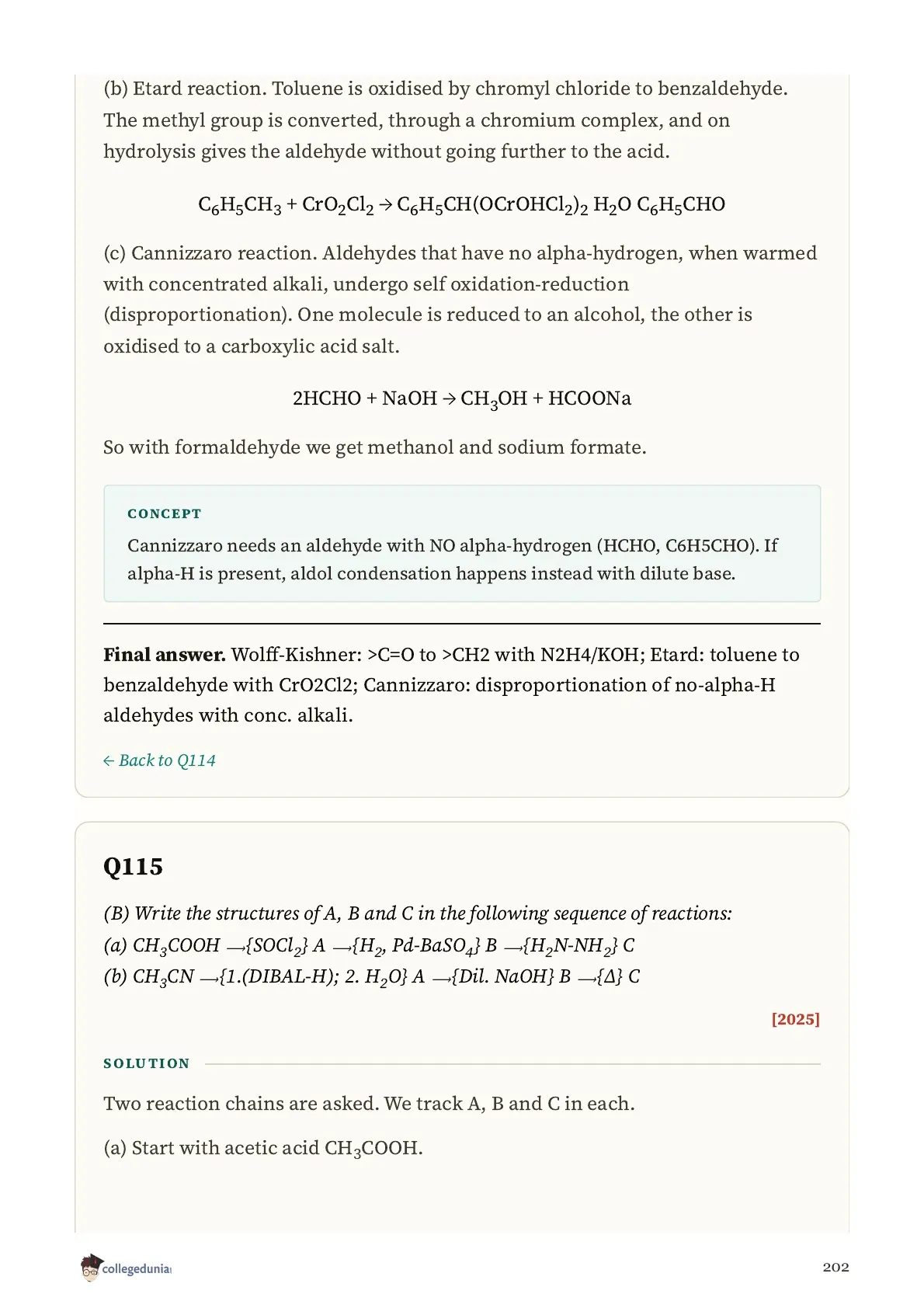
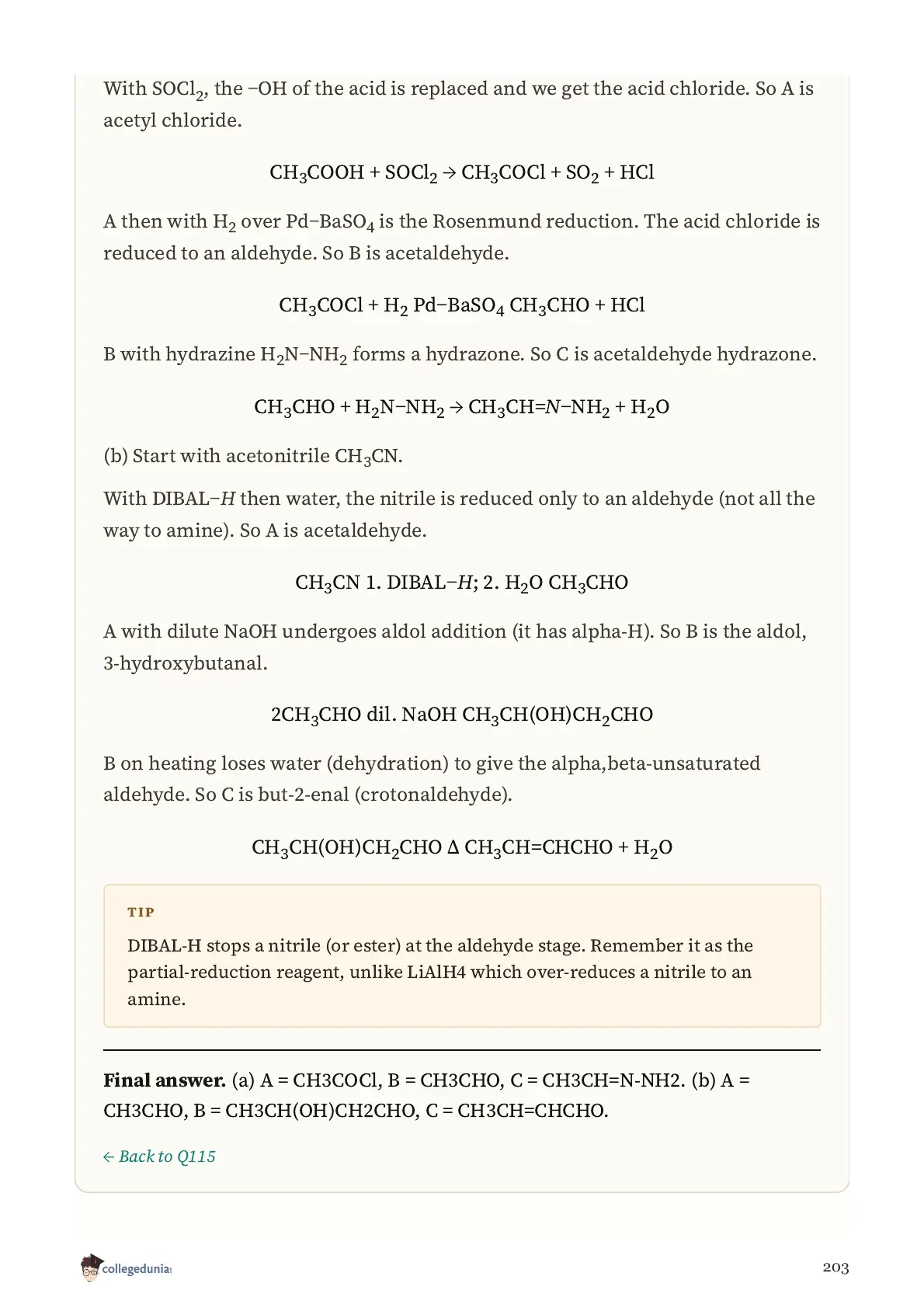
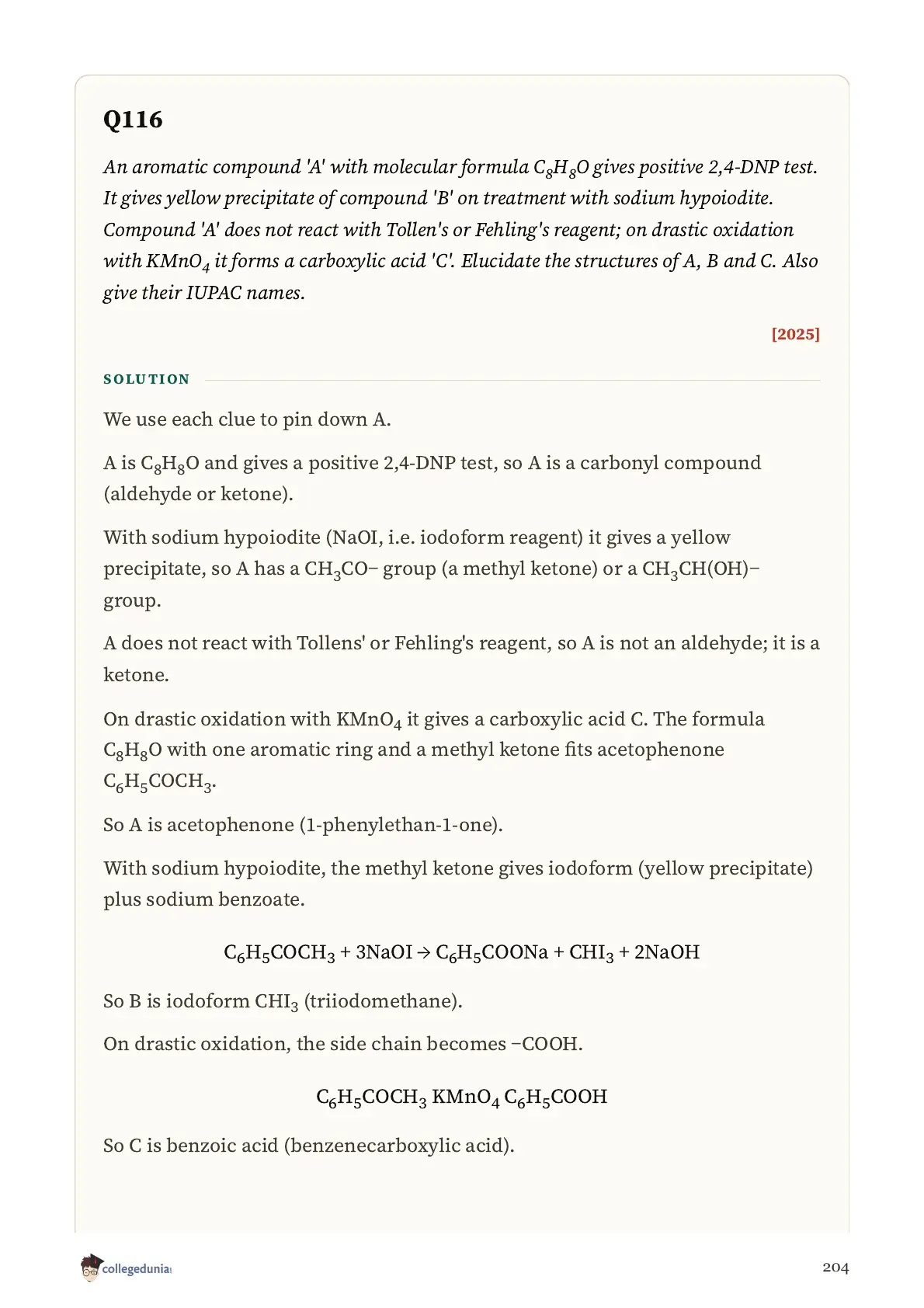
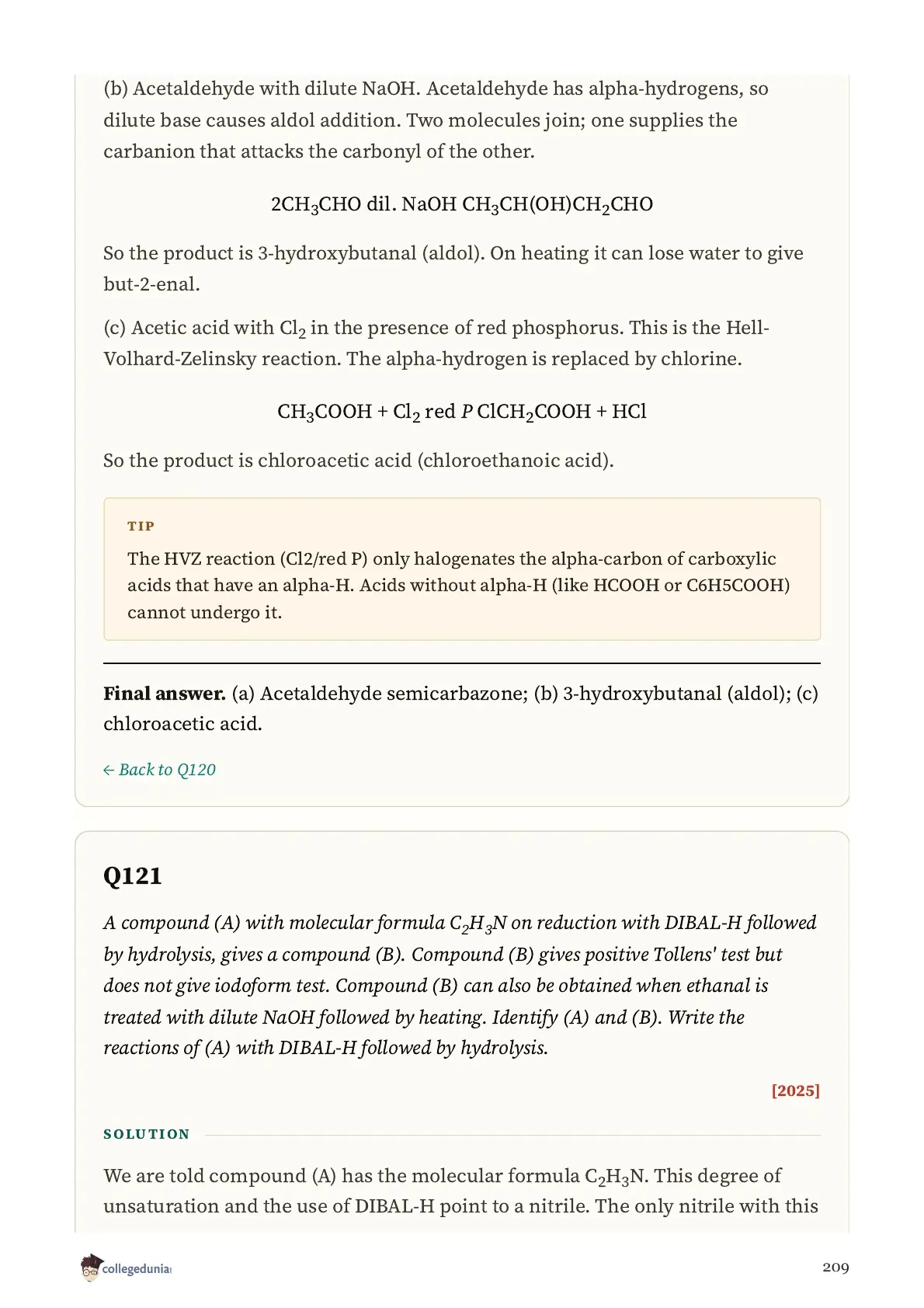
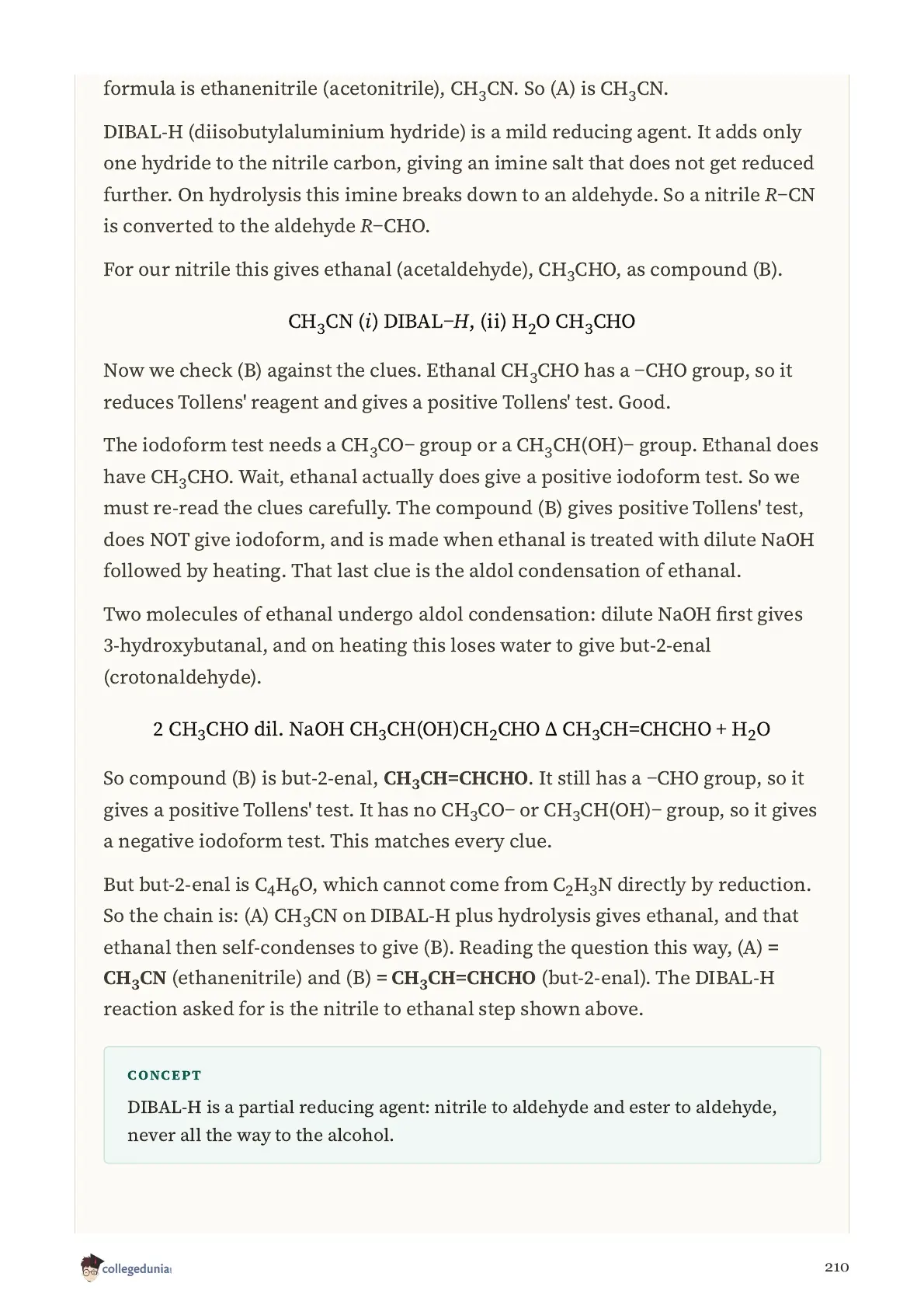
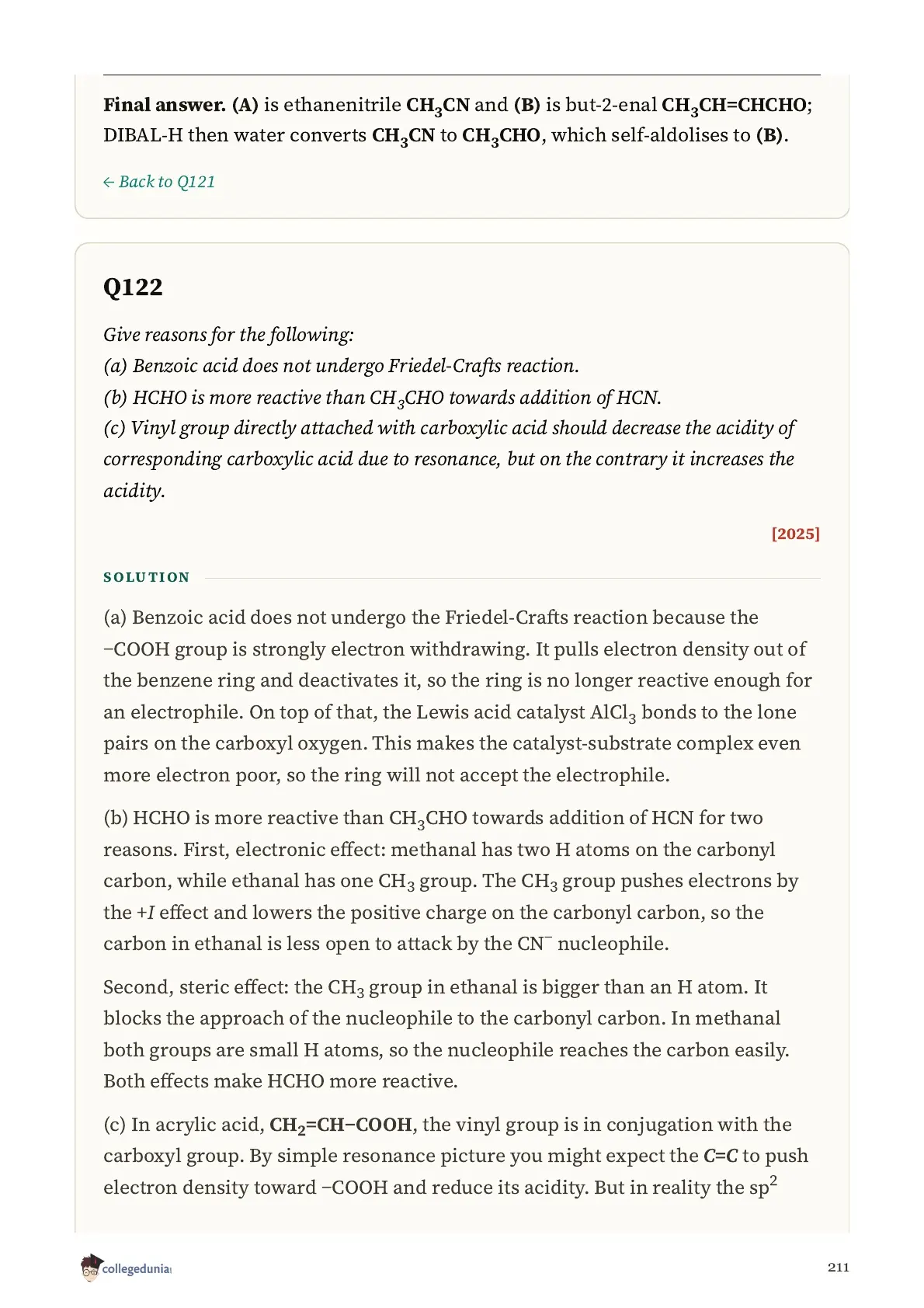
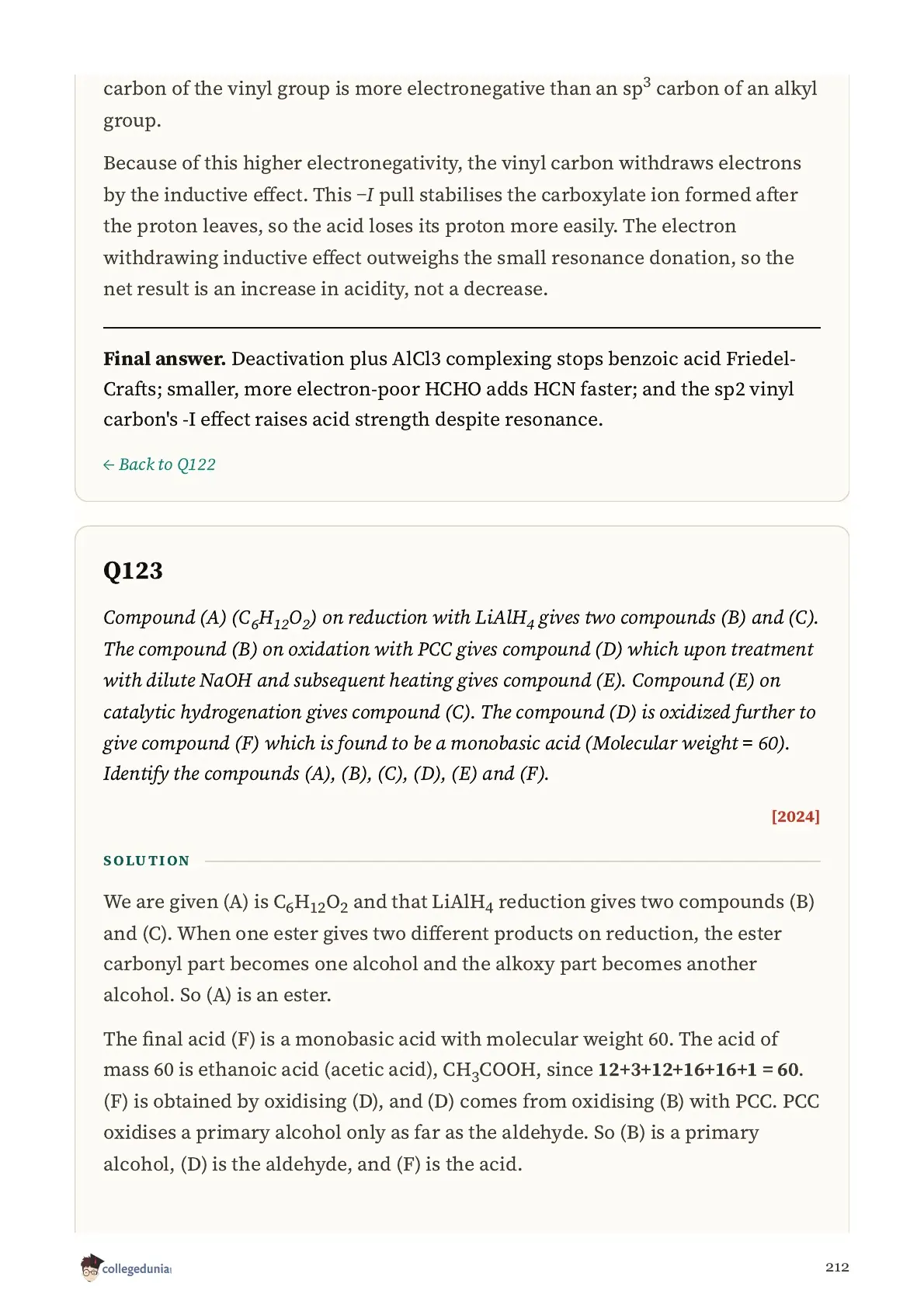
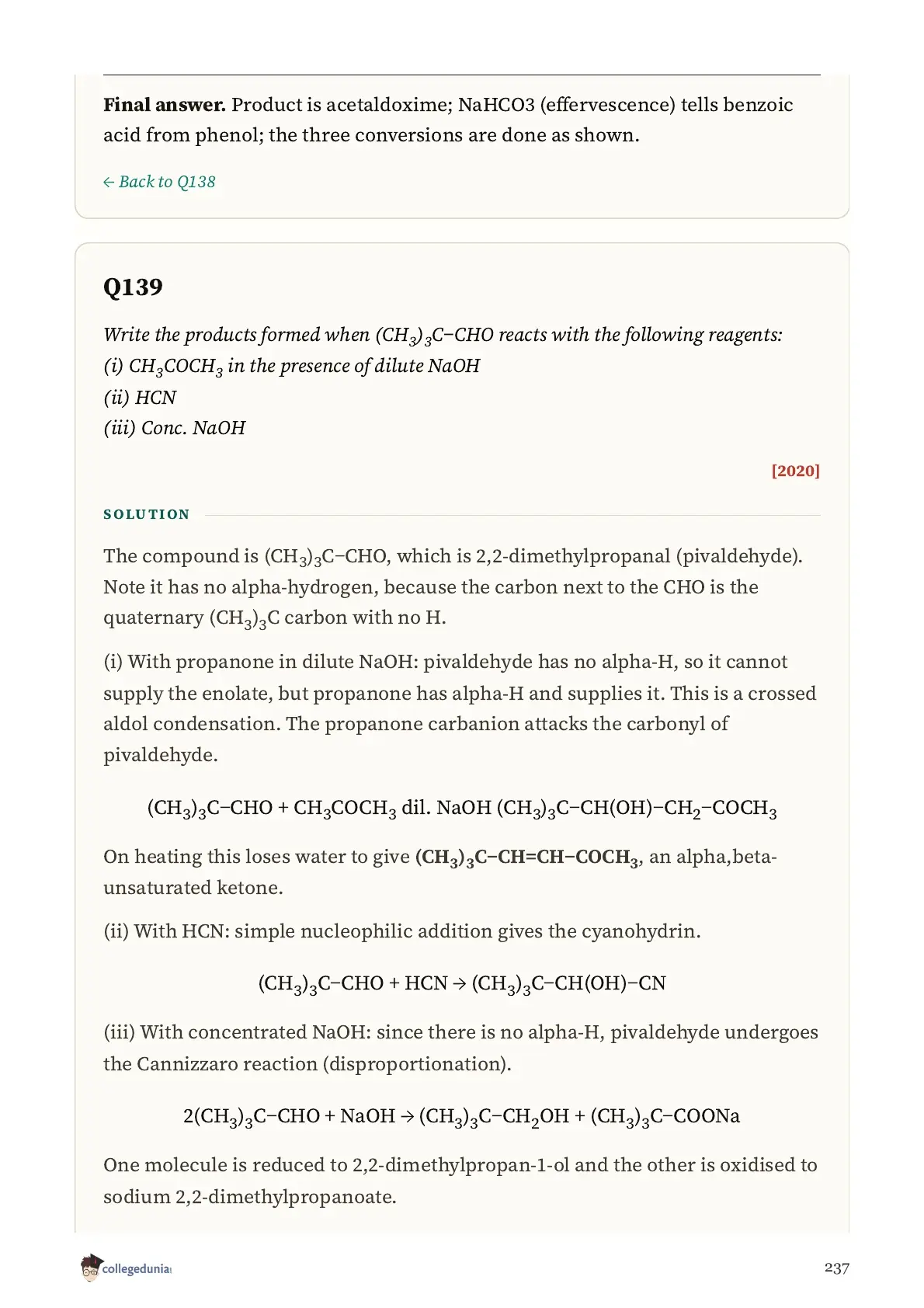
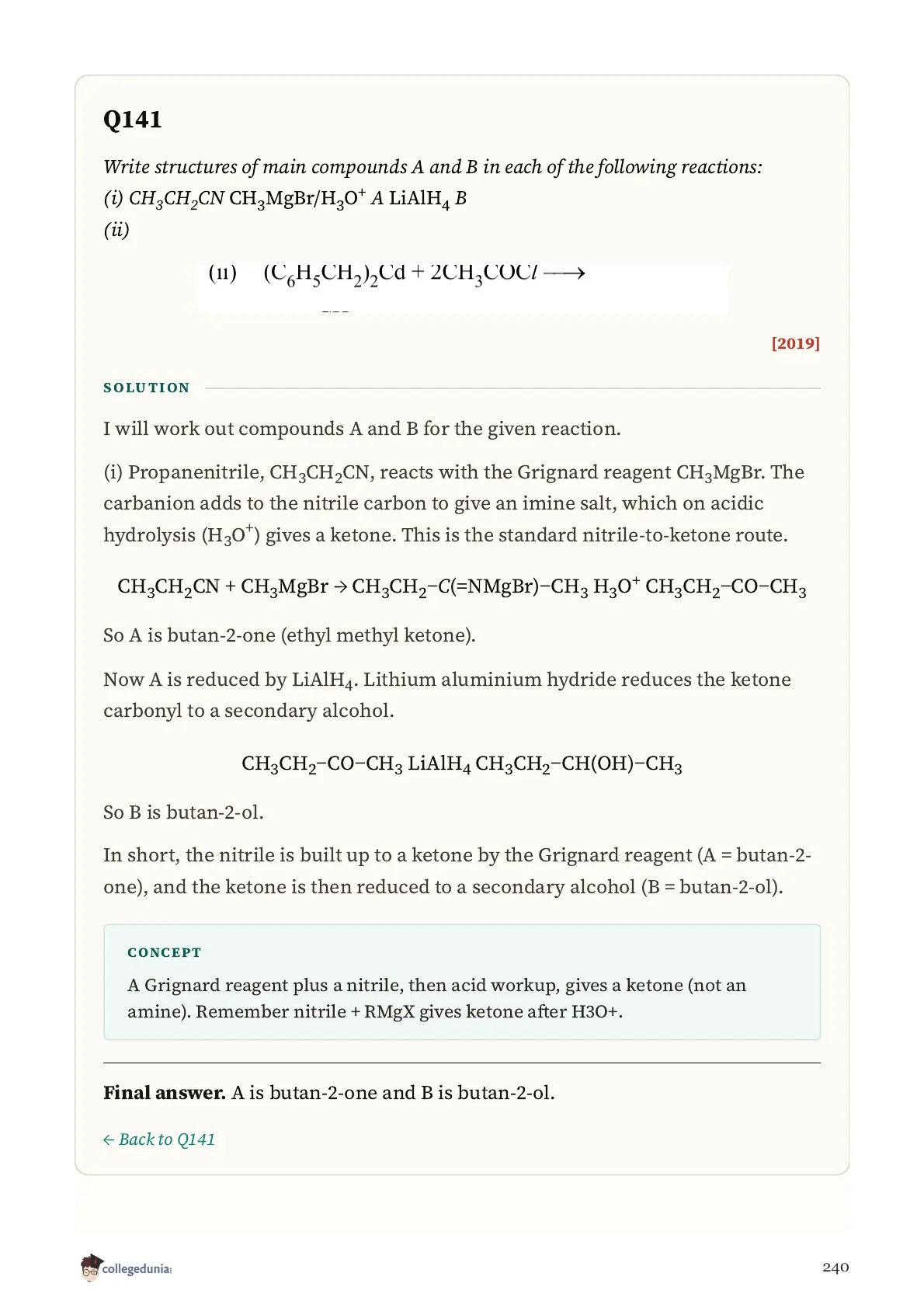
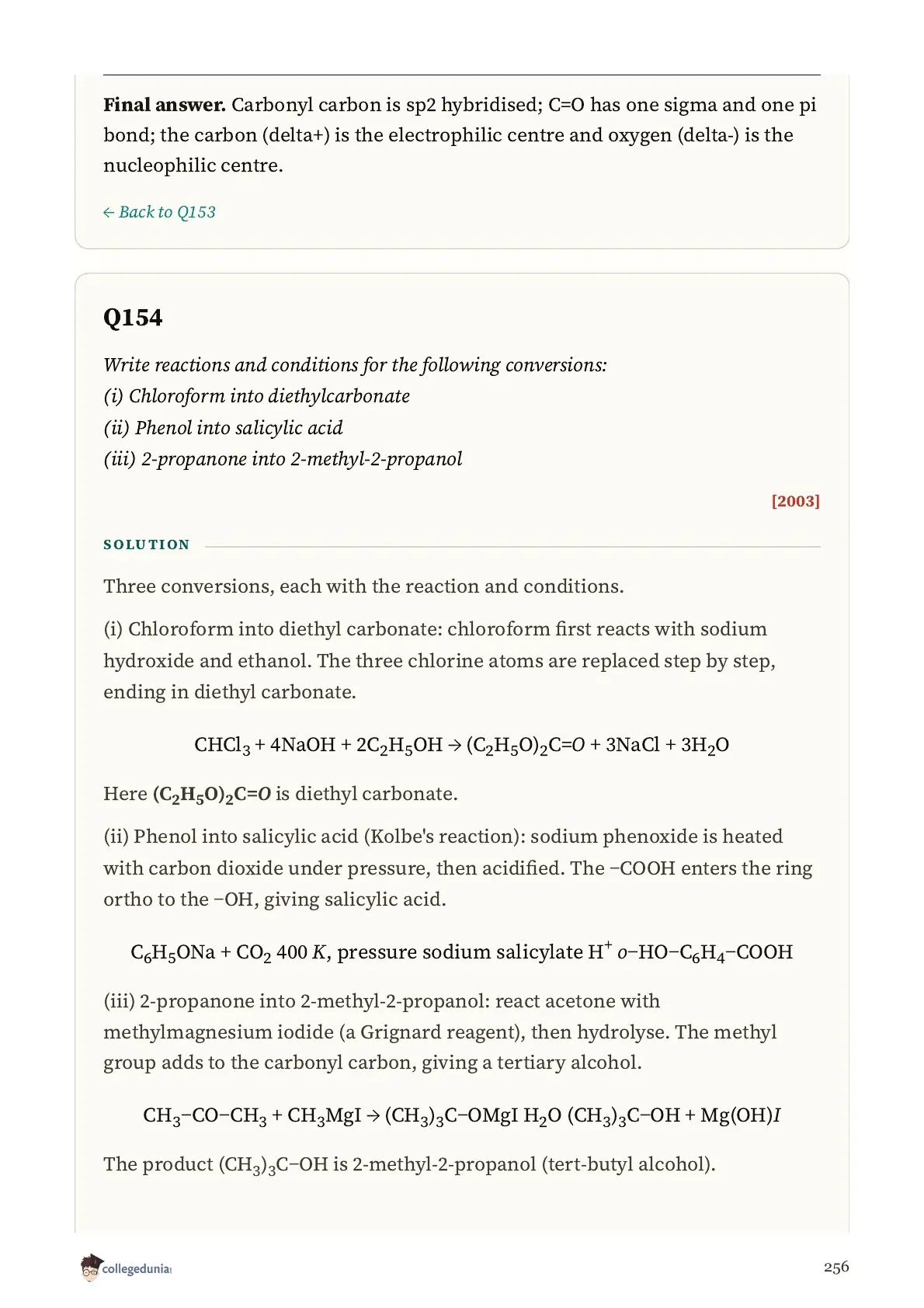
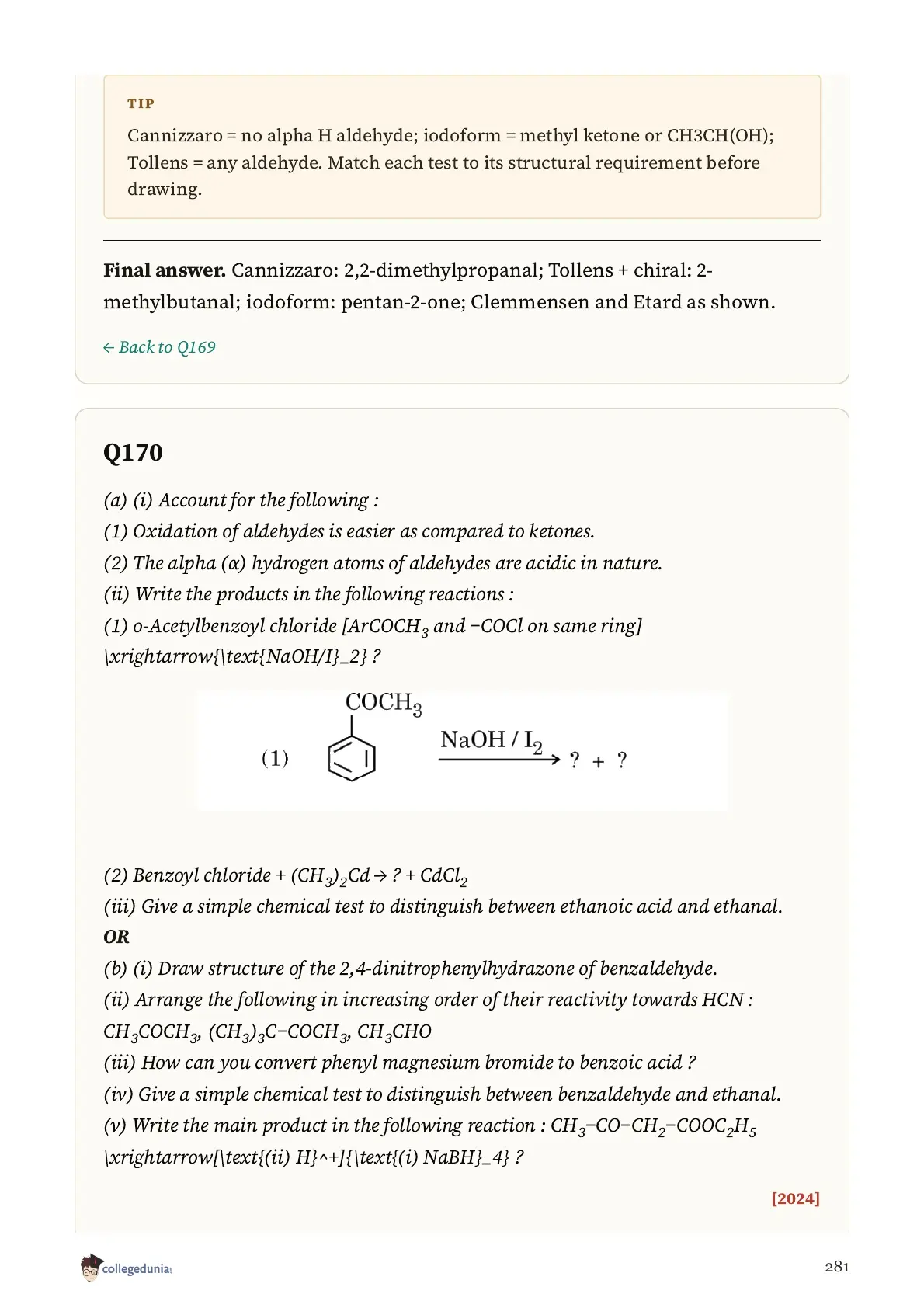
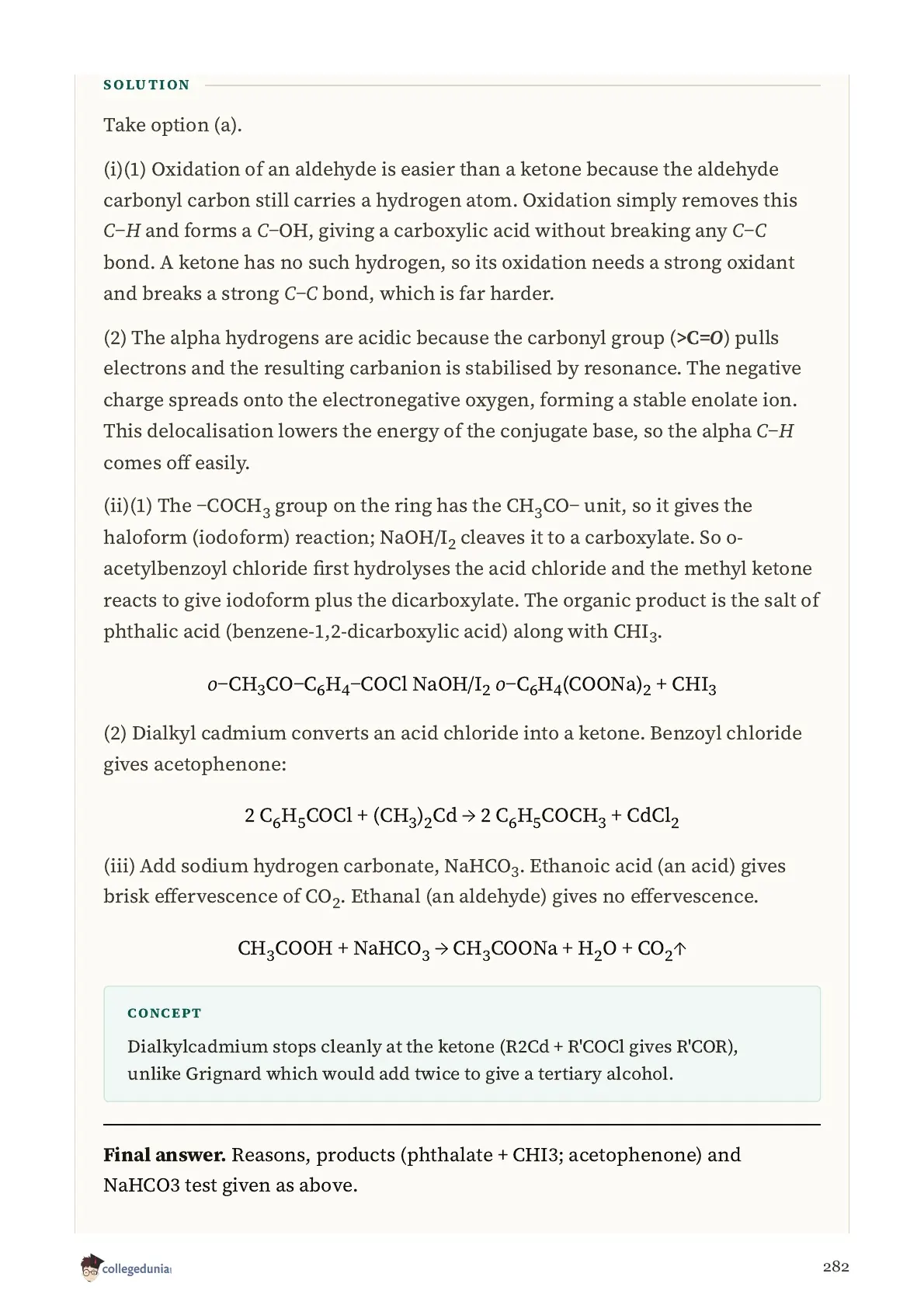
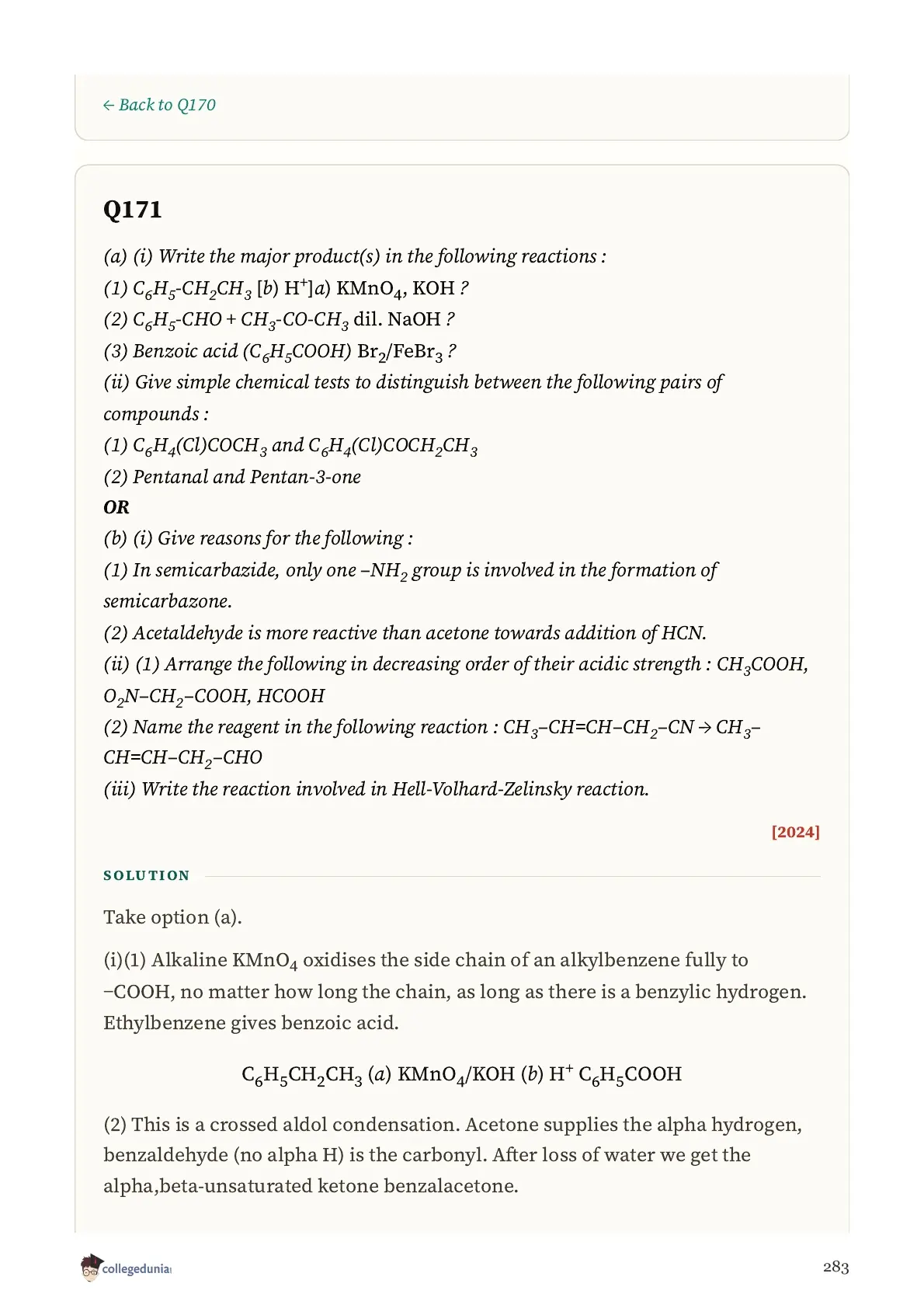
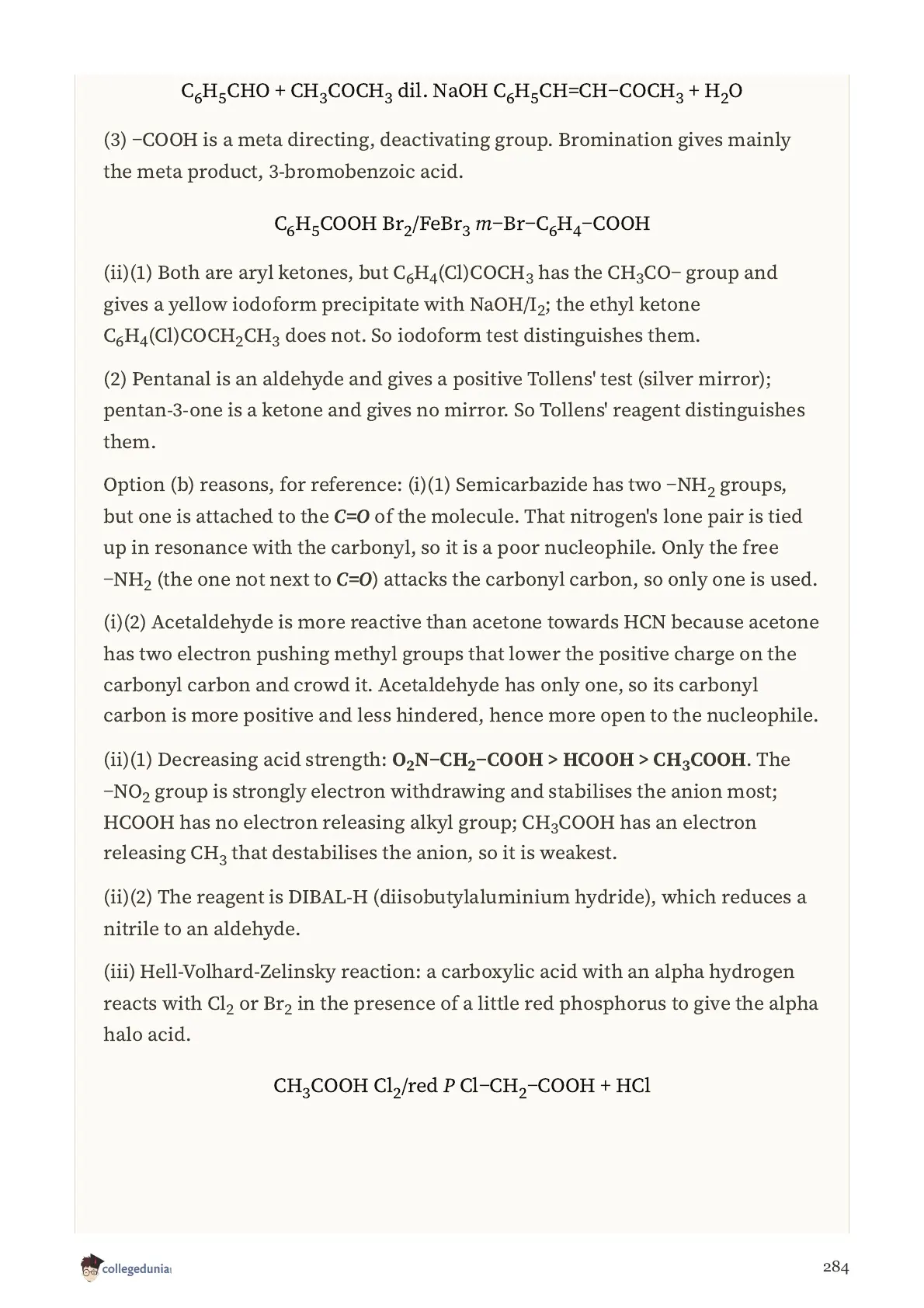
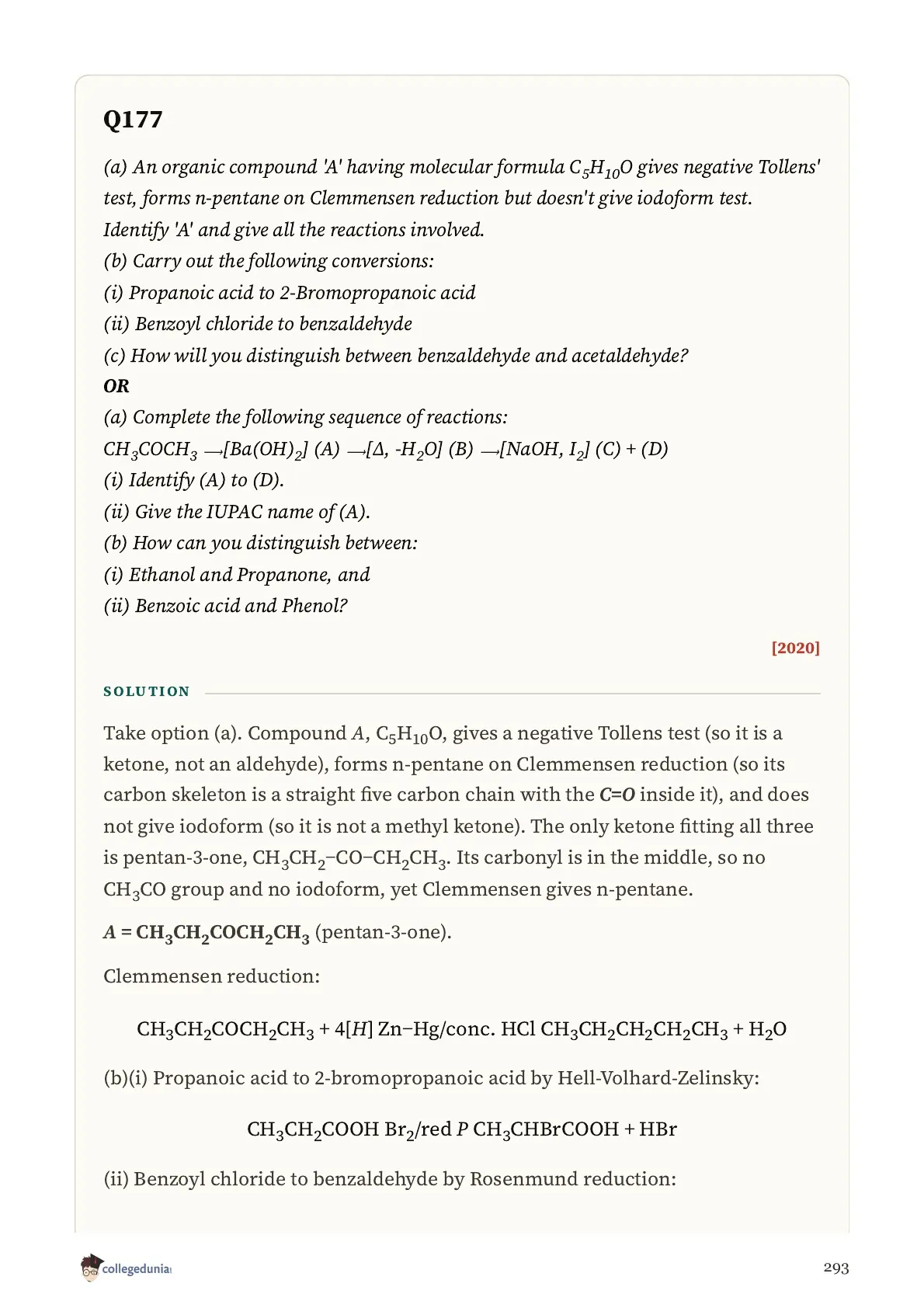
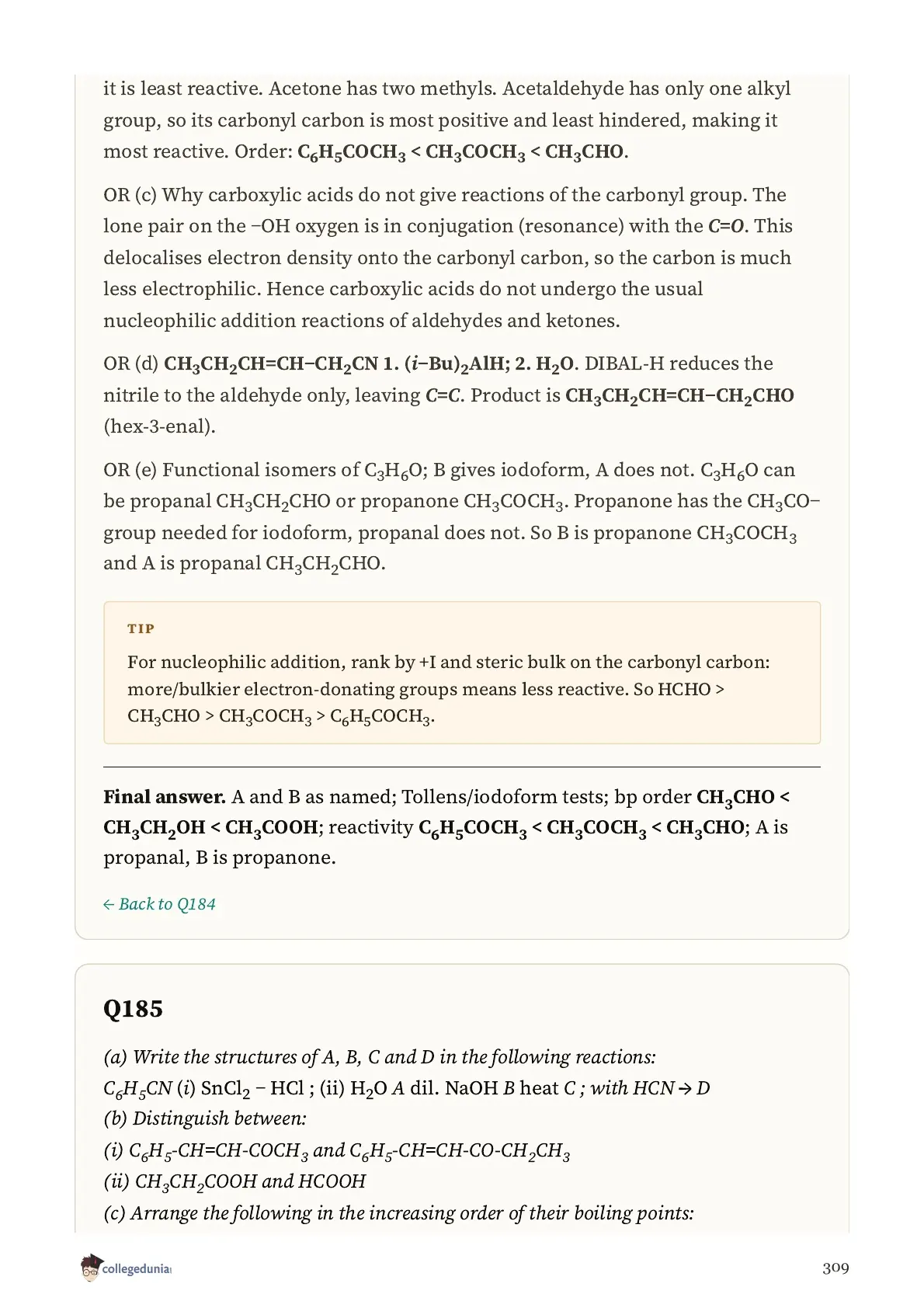
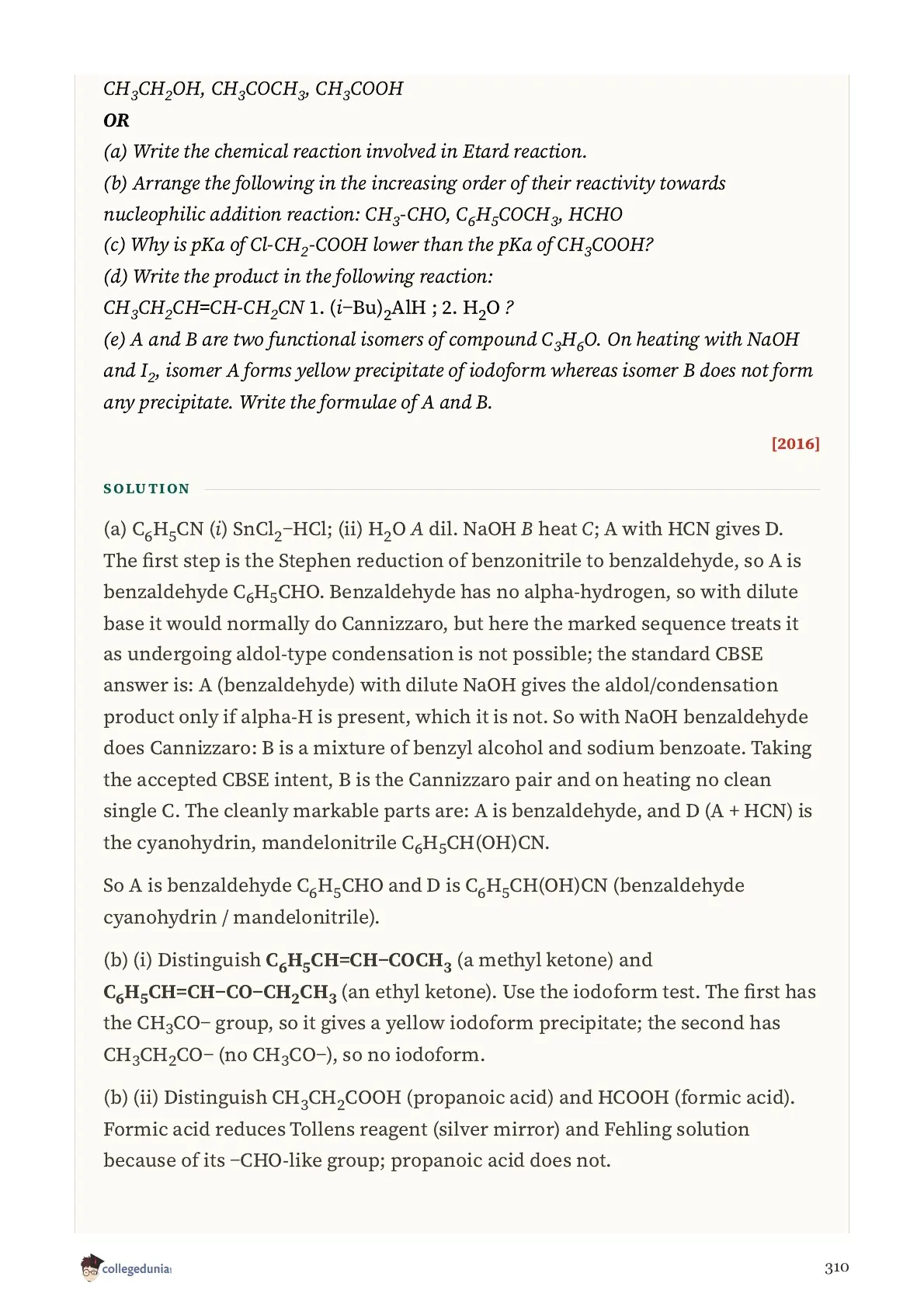
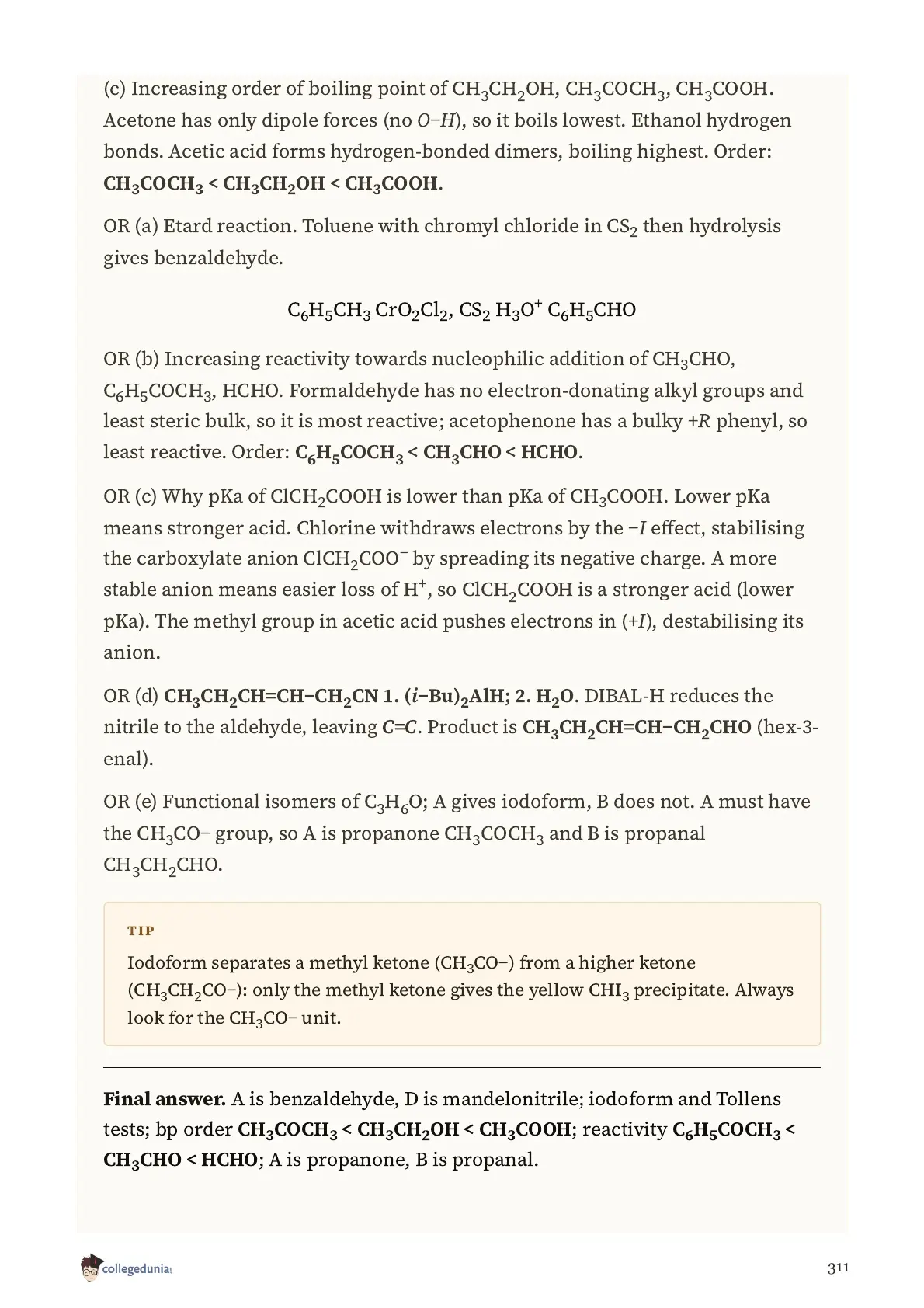
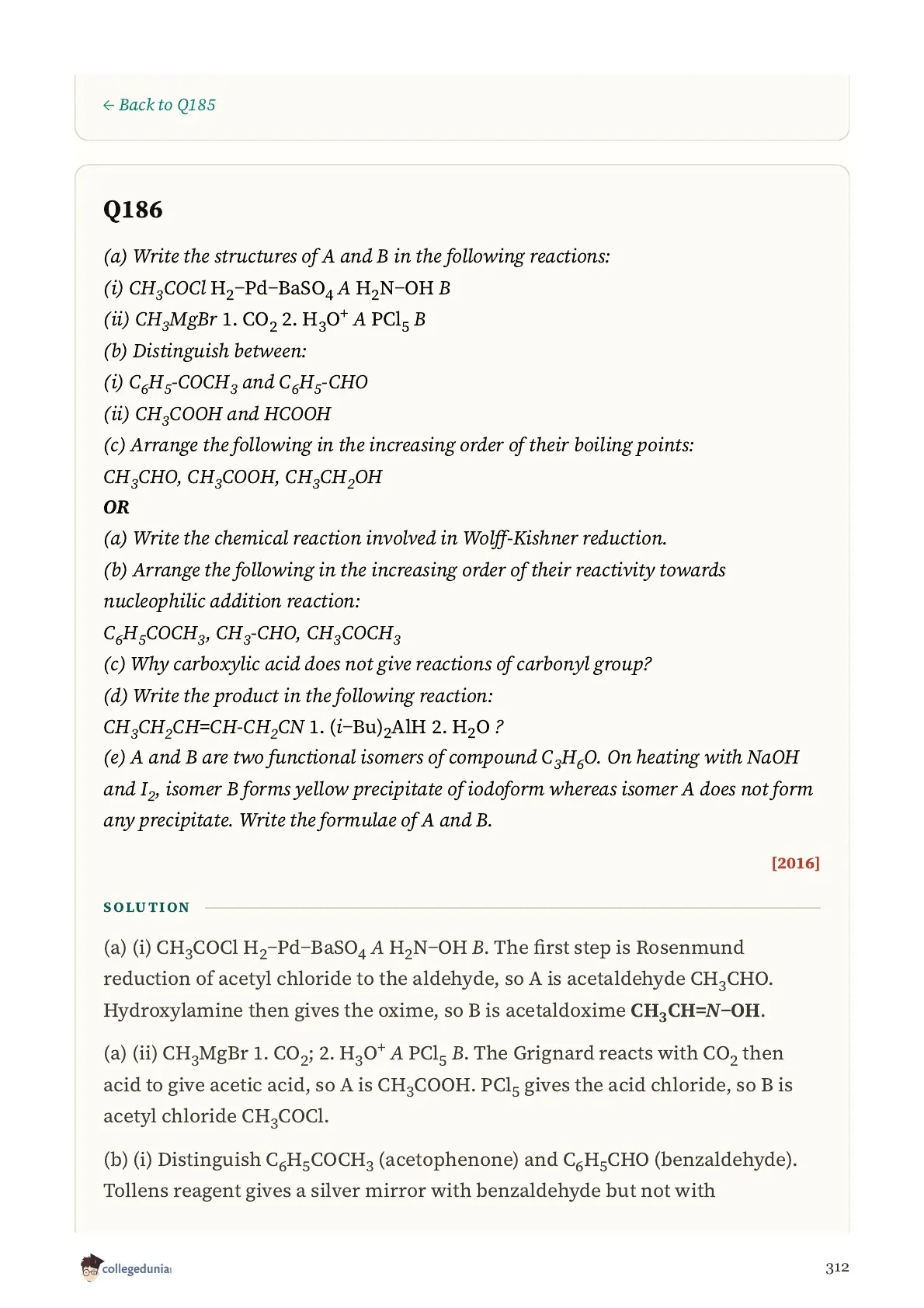
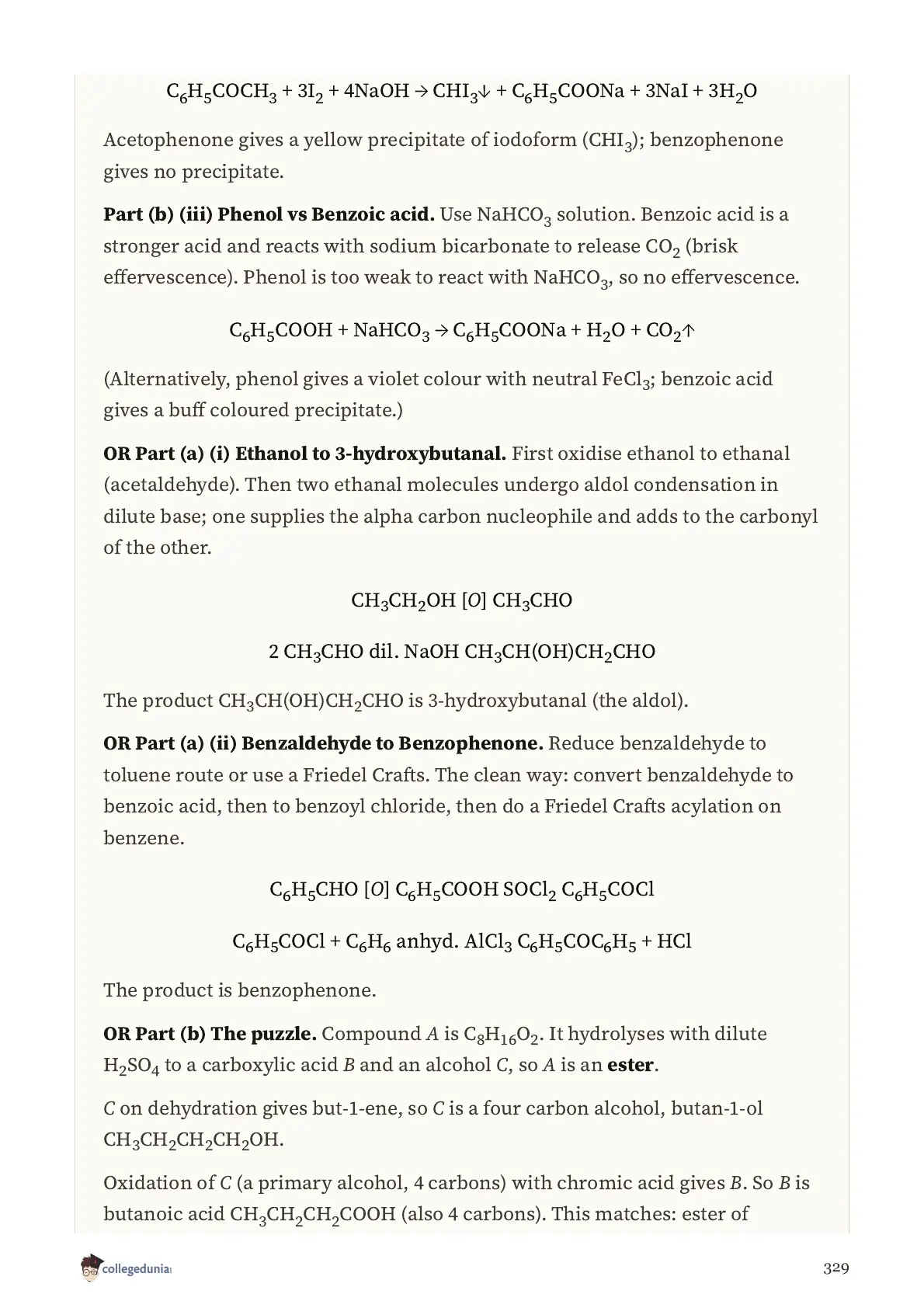
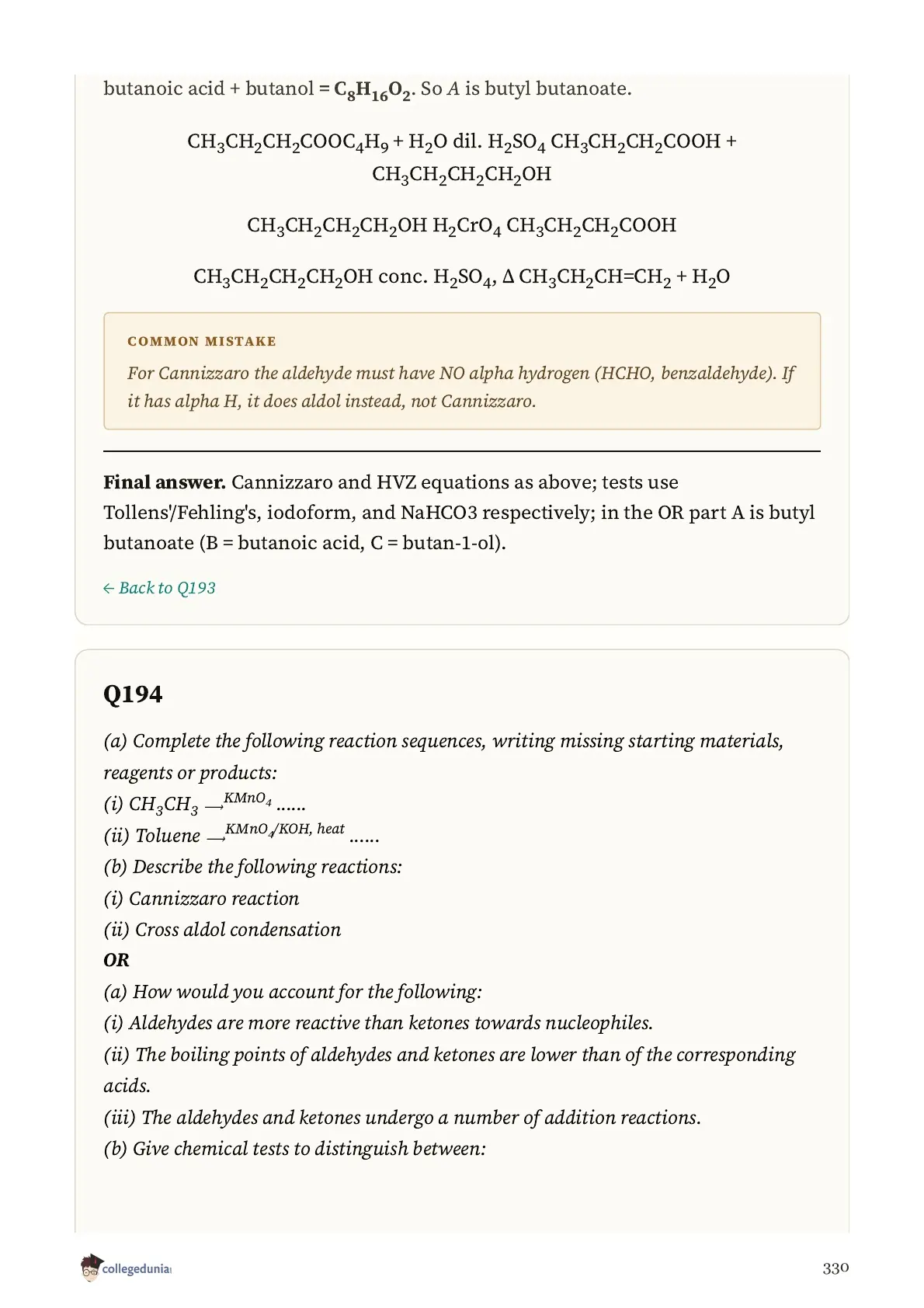
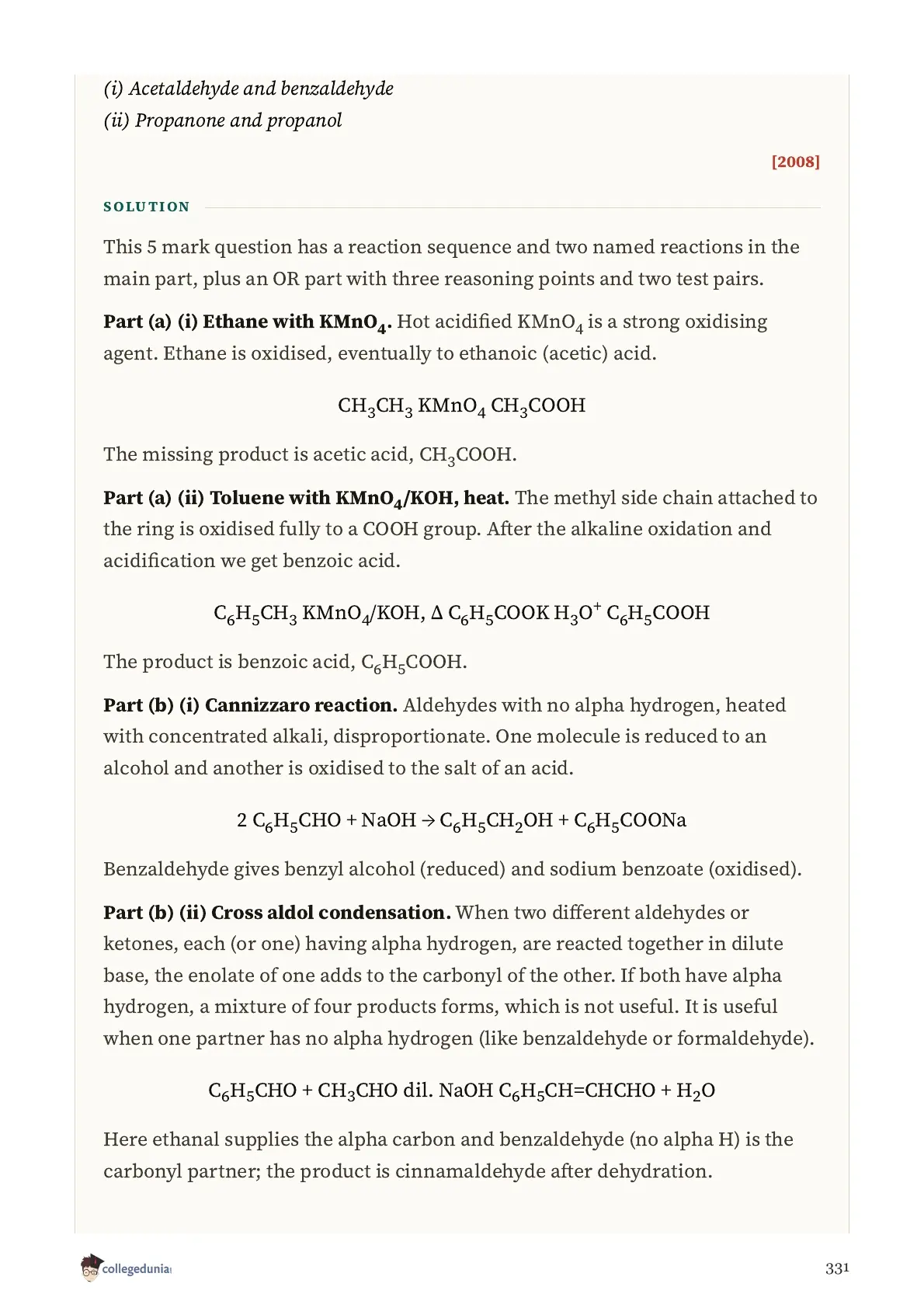
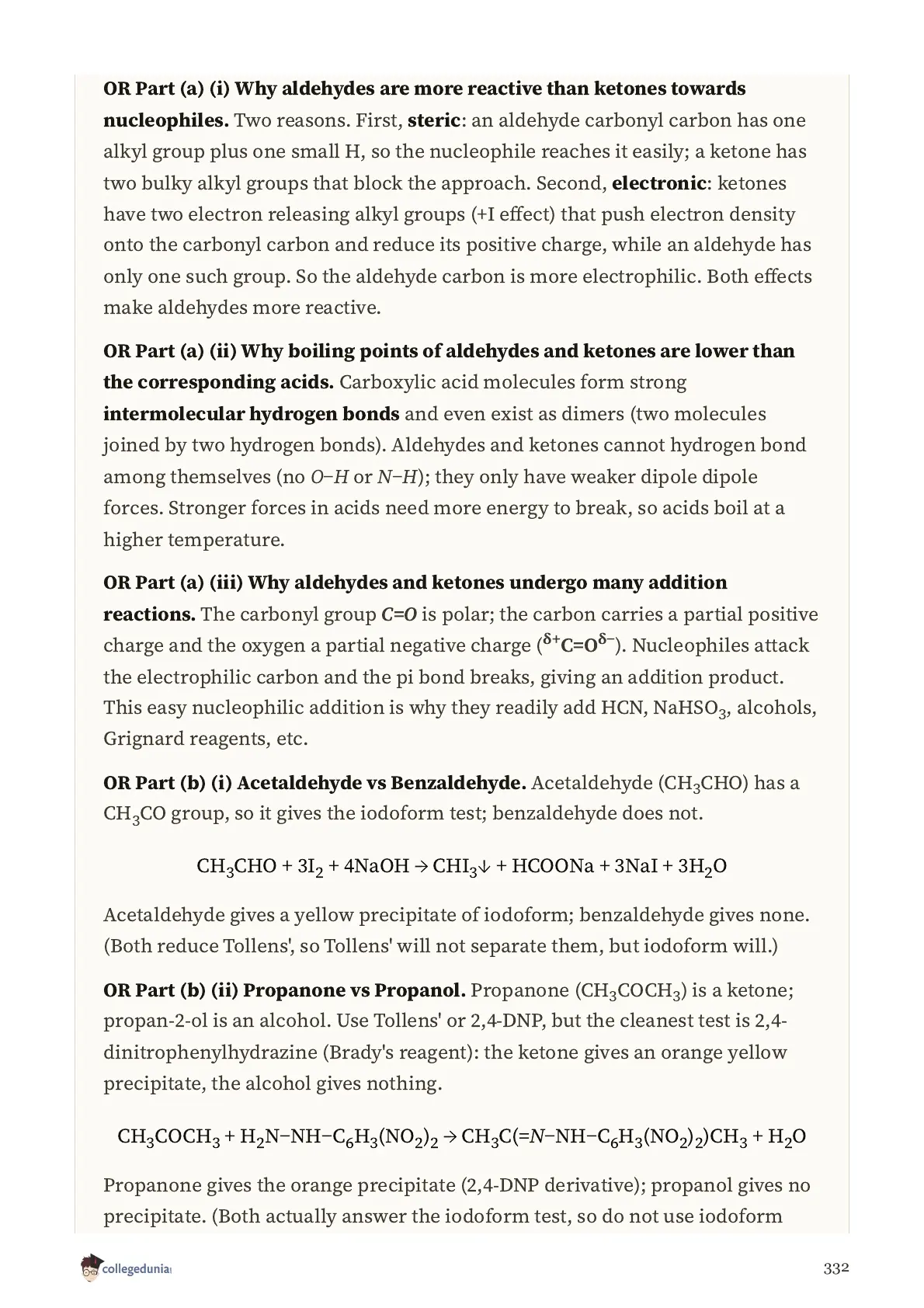
Write the reaction involved in: (a) Rosenmund's reduction (b) Cannizzaro's reaction (c) Hell-Volhard-Zelinsky reaction
[2026 • 3 mark]
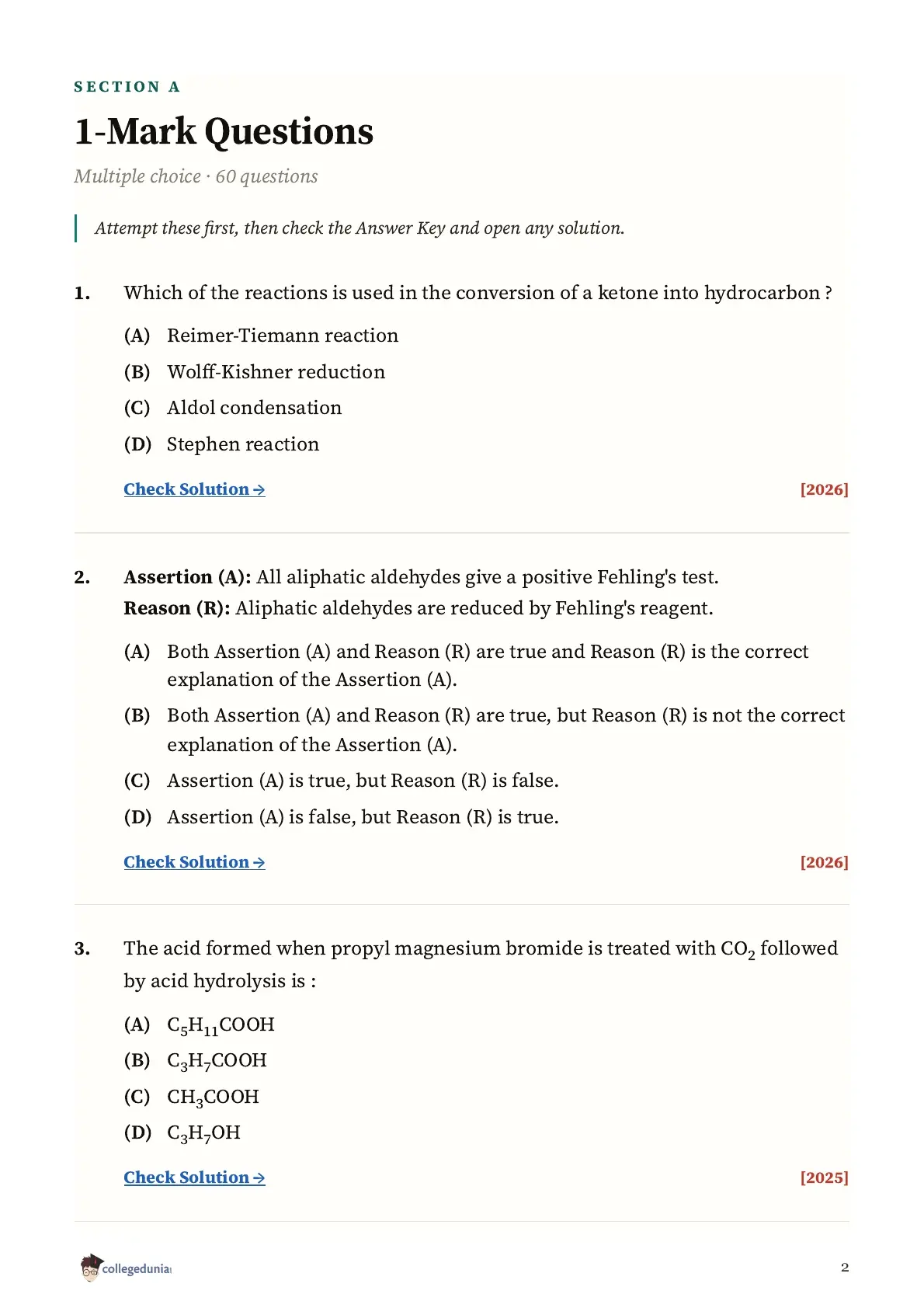
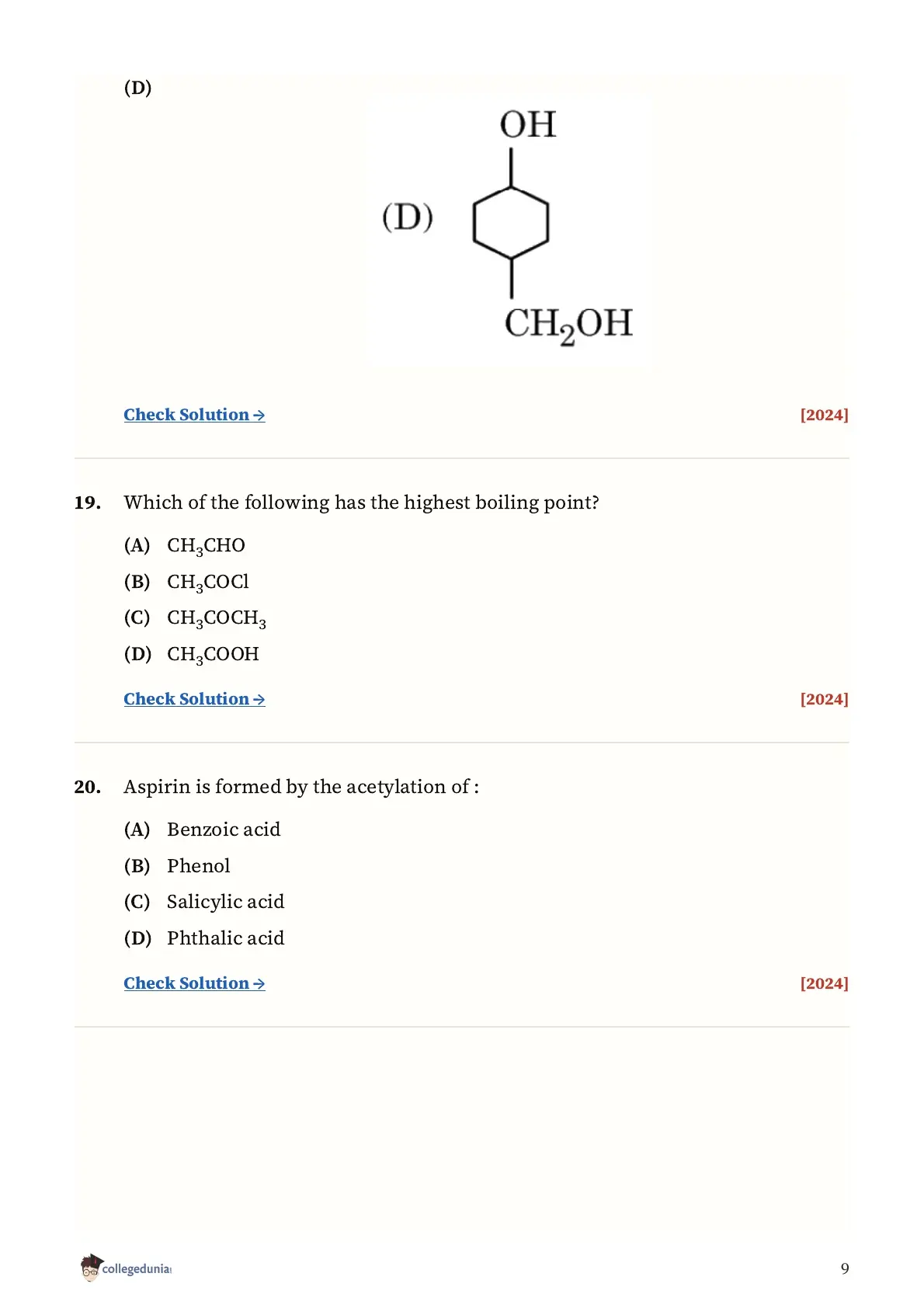
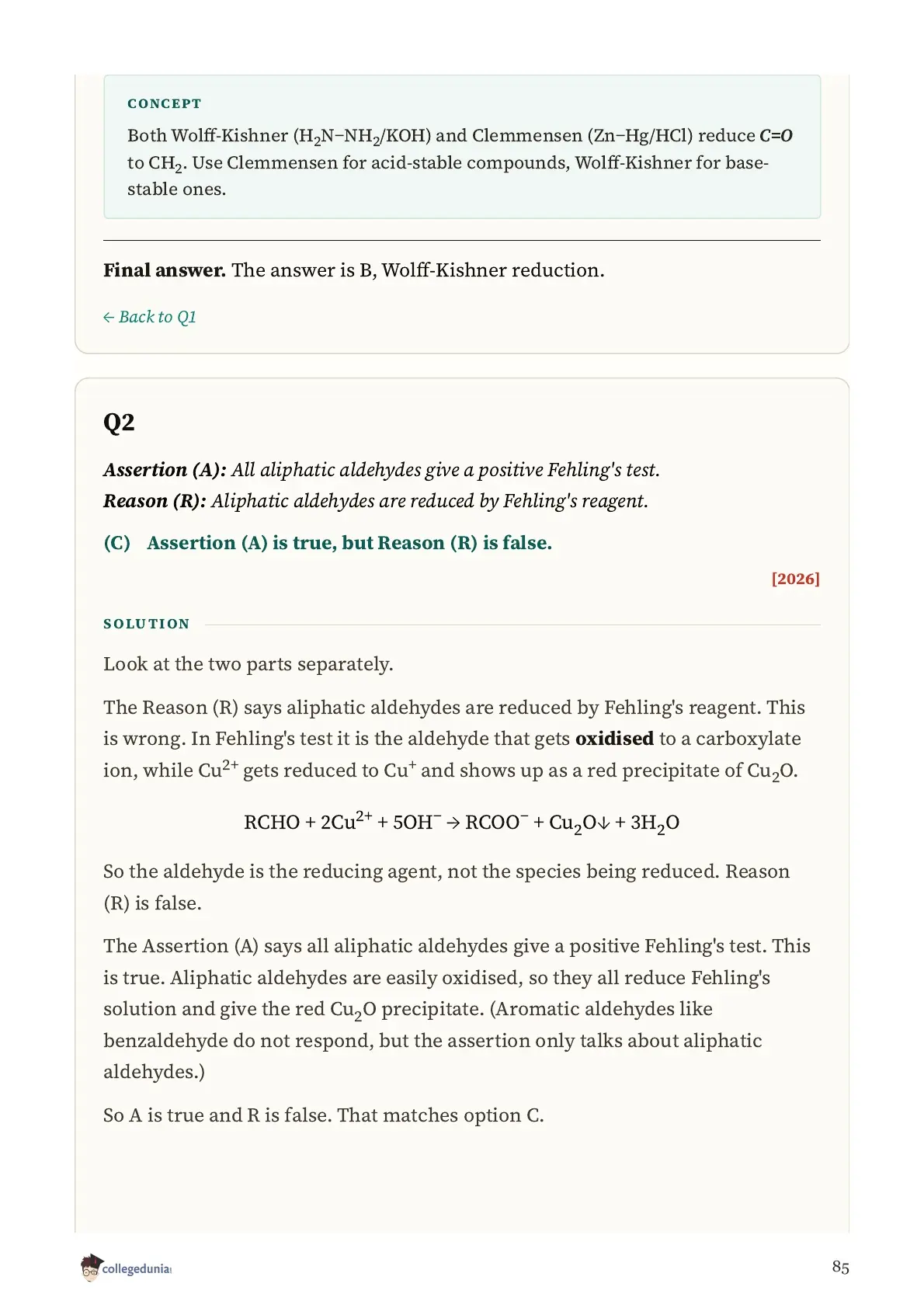
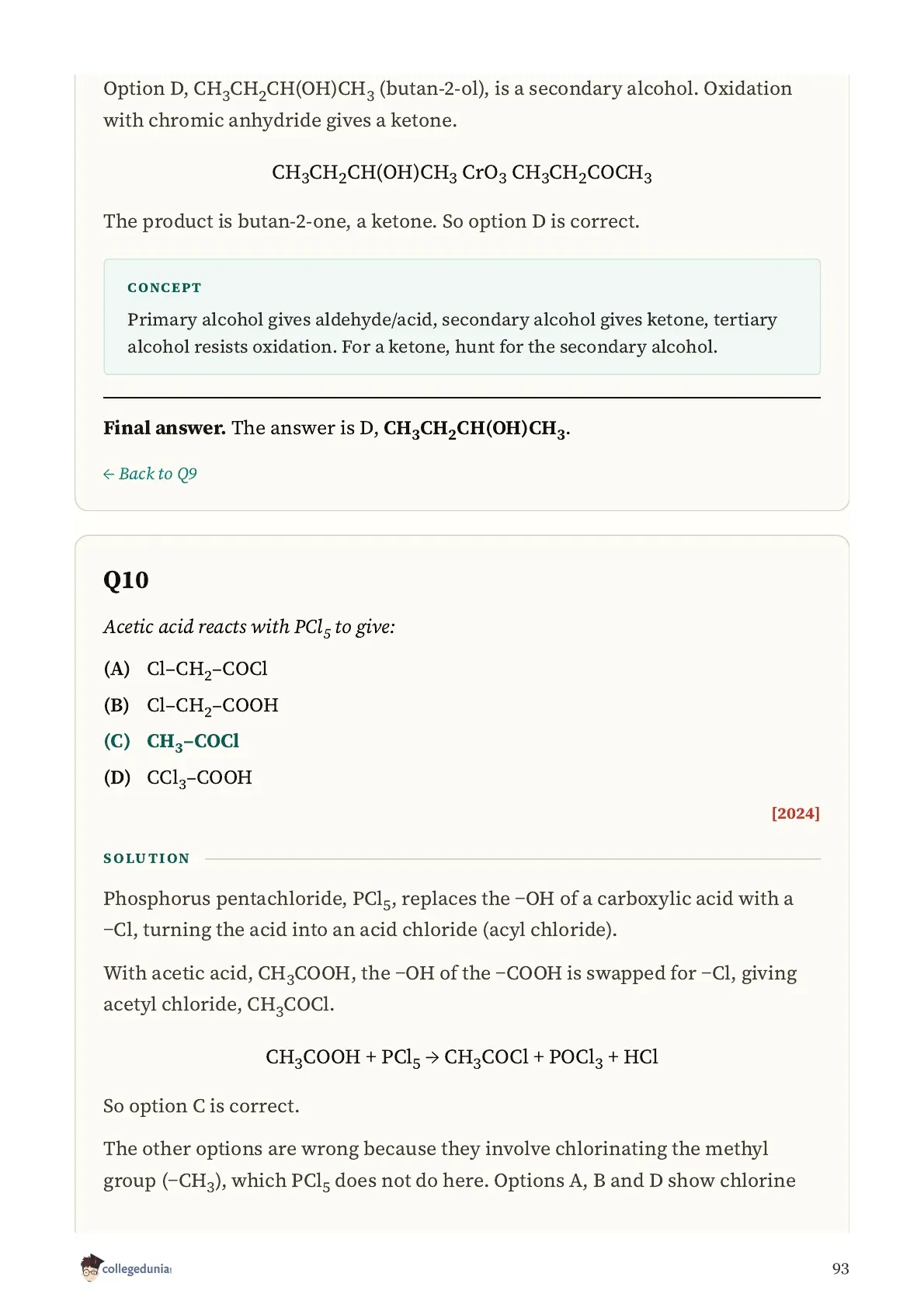
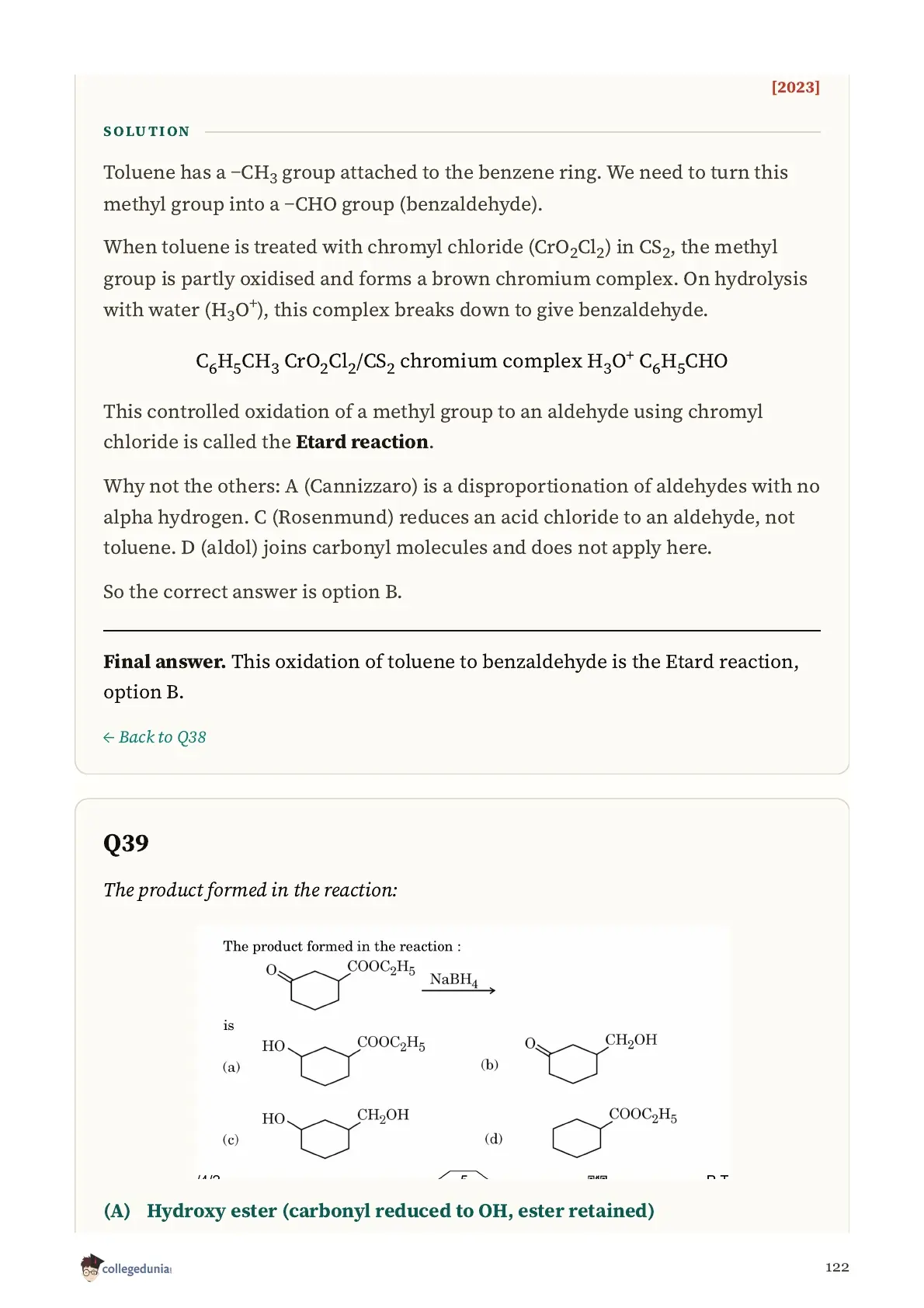
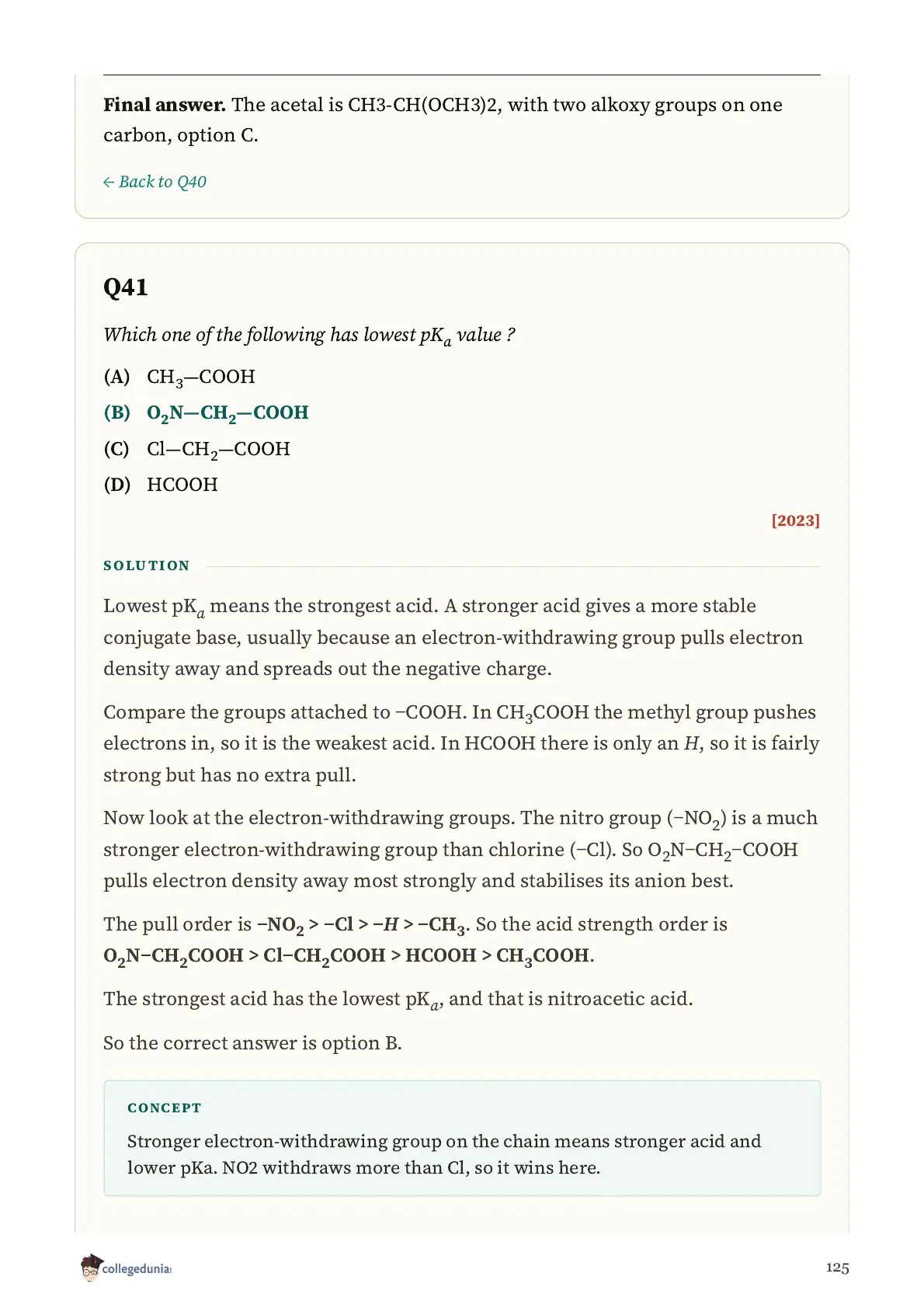
Which of the reactions is used in the conversion of a ketone into hydrocarbon ?
- Reimer-Tiemann reaction
- Wolff-Kishner reduction
- Aldol condensation
- Stephen reaction
[2026 • 1 mark]
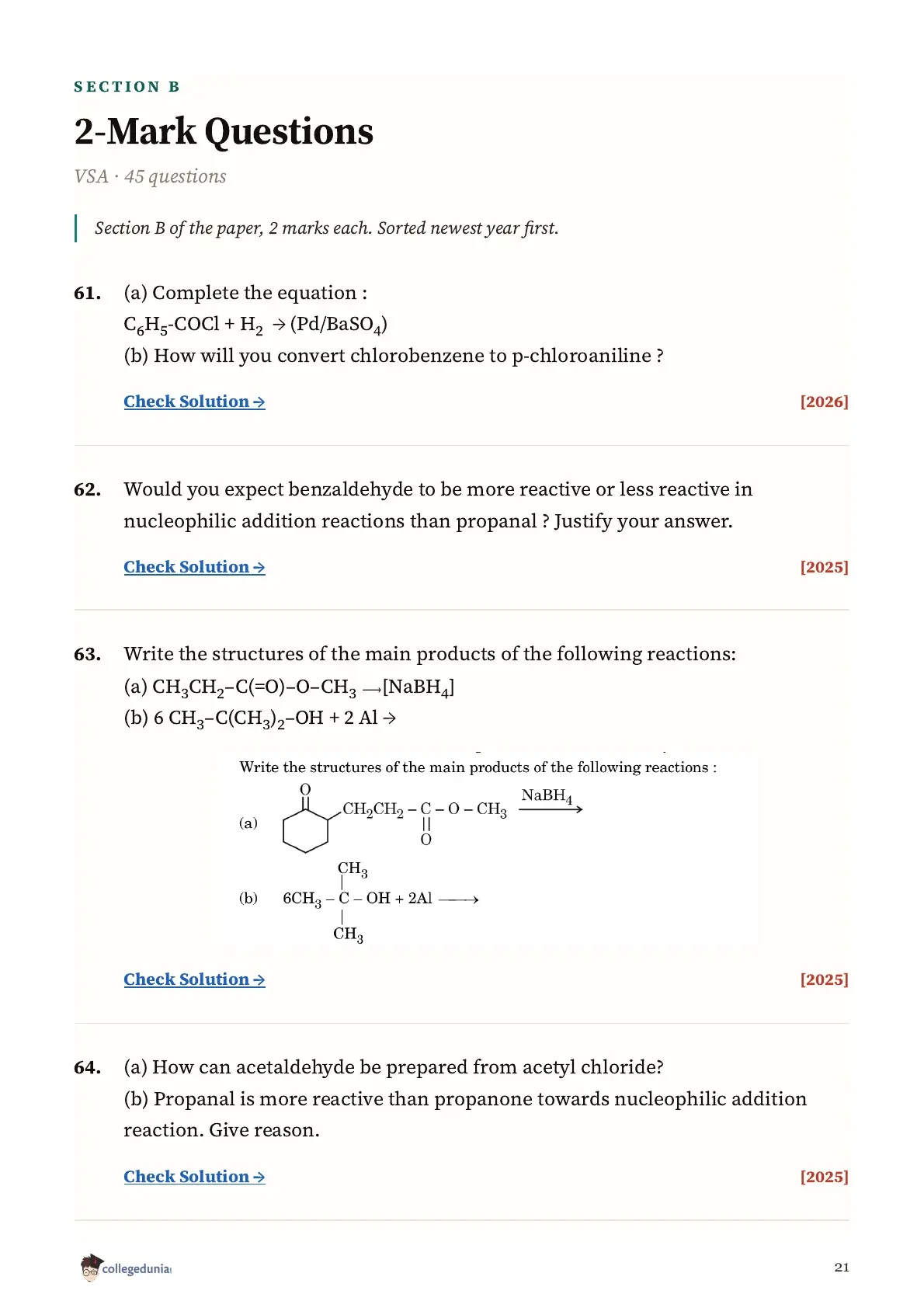
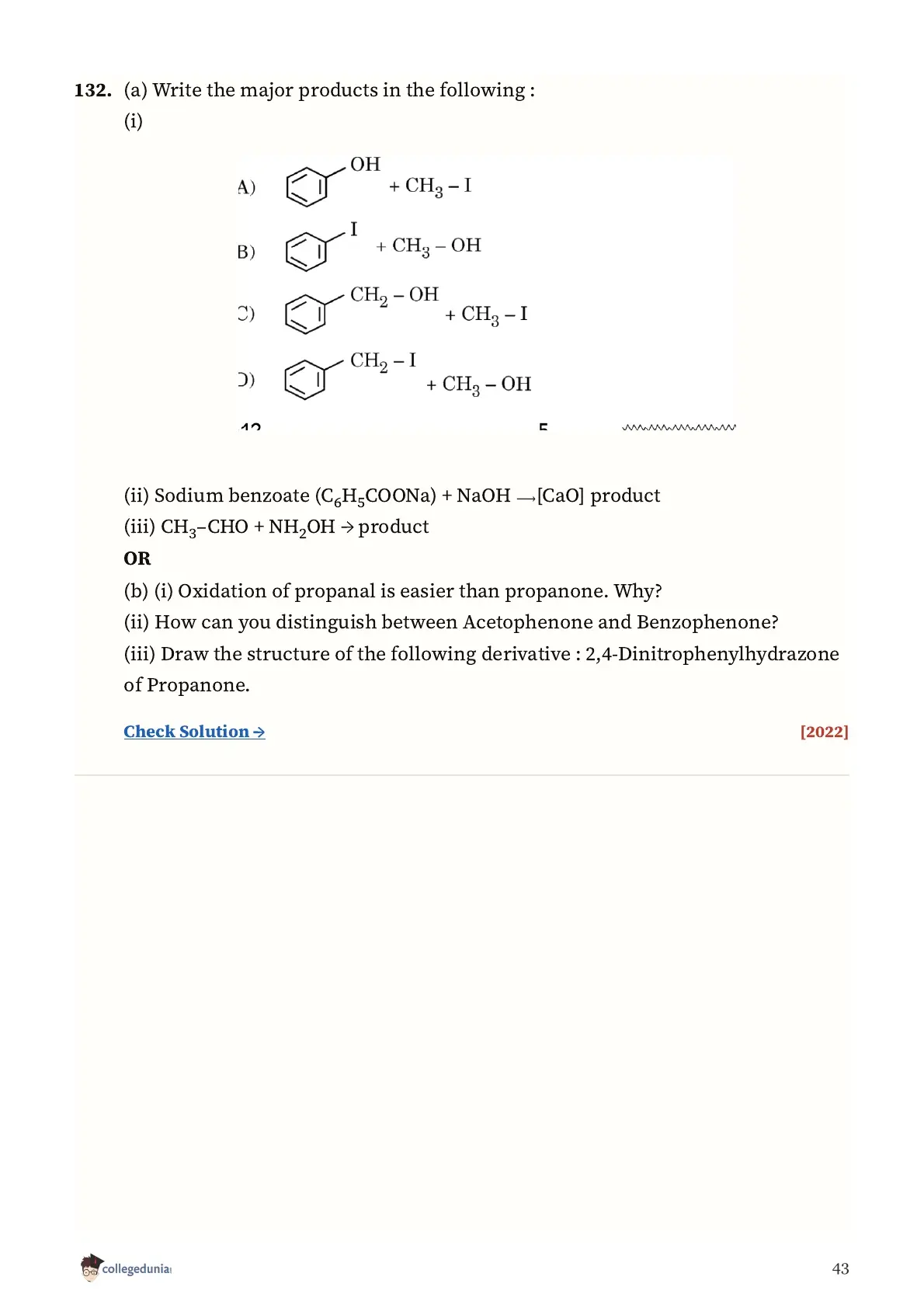
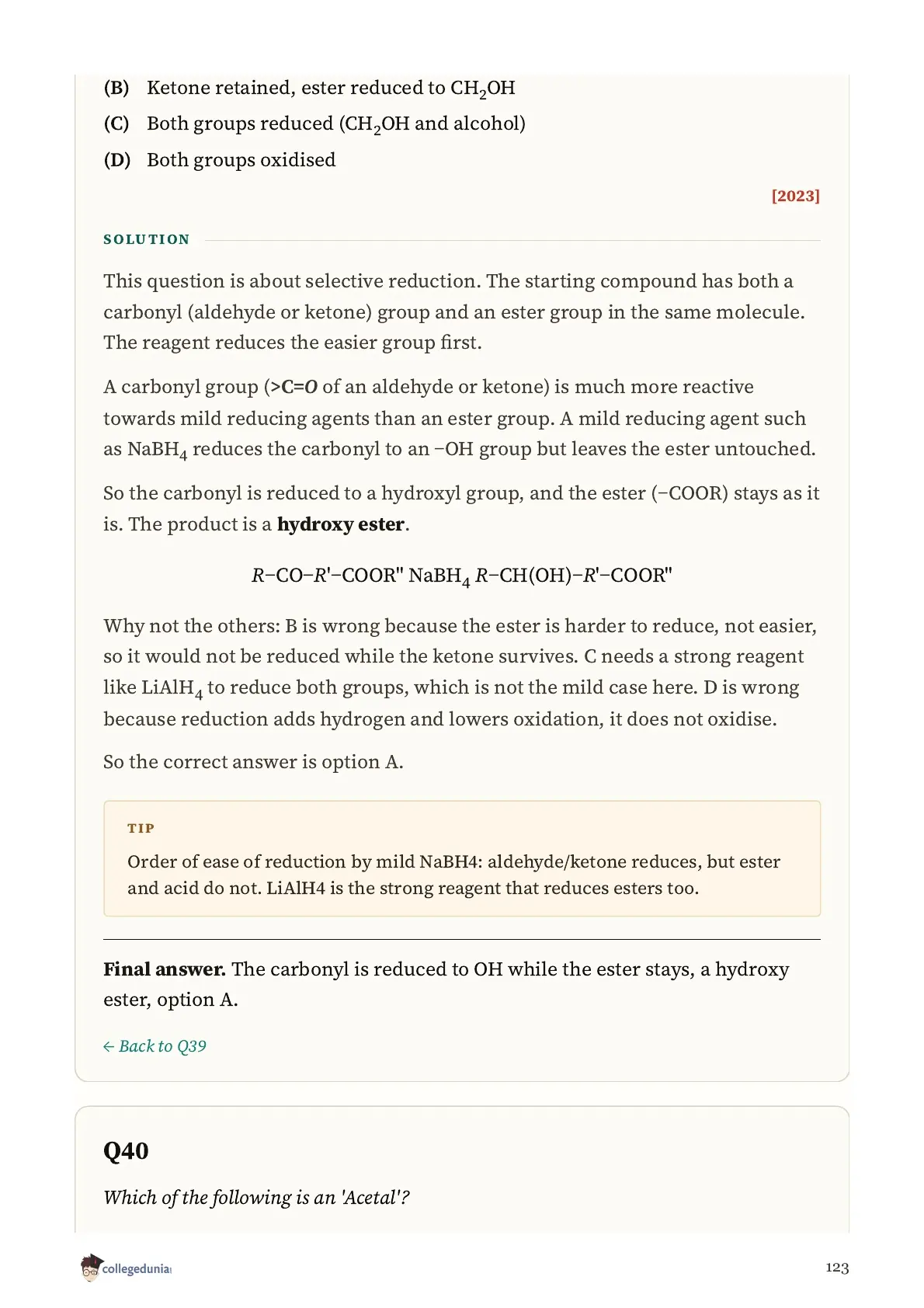
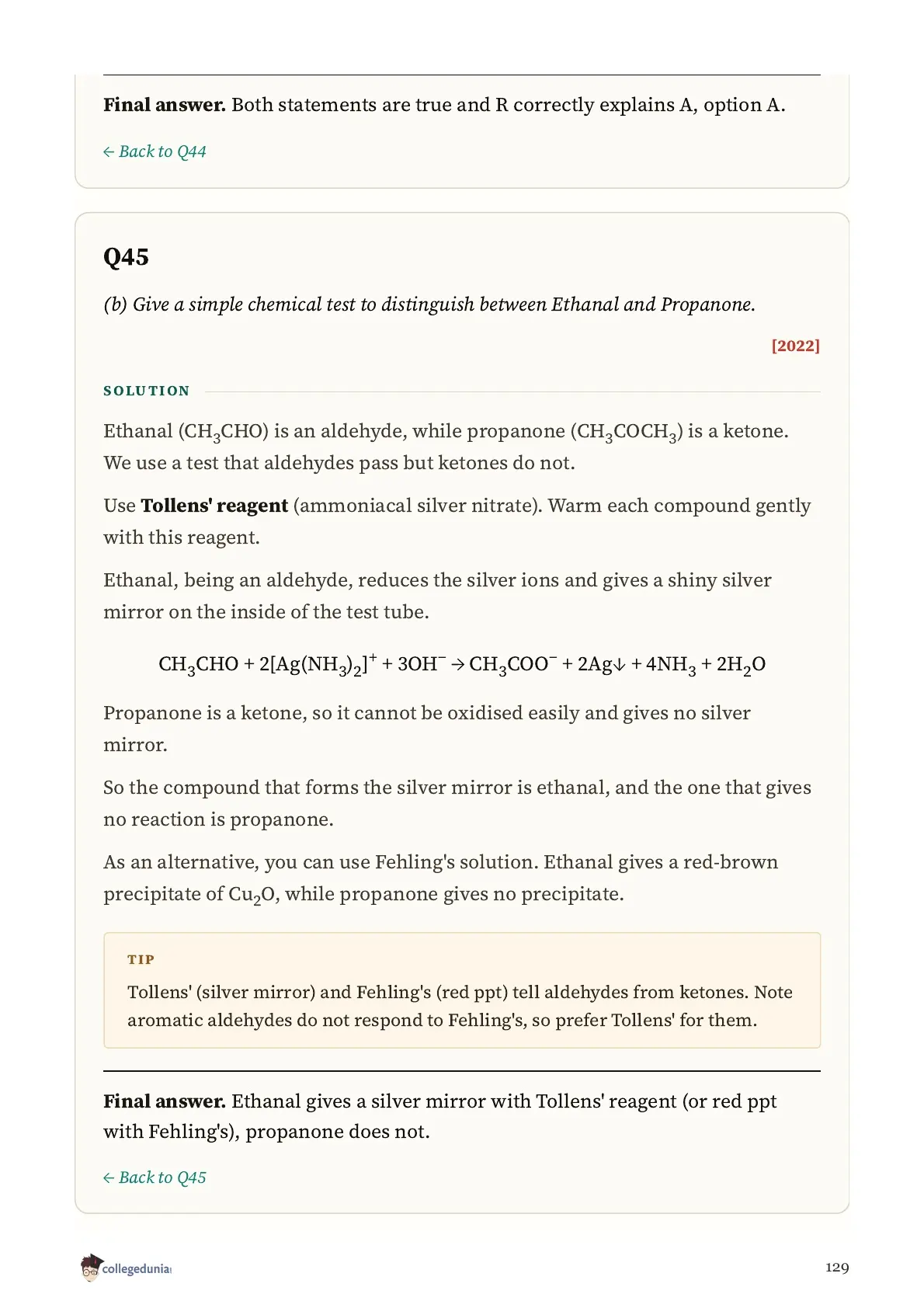
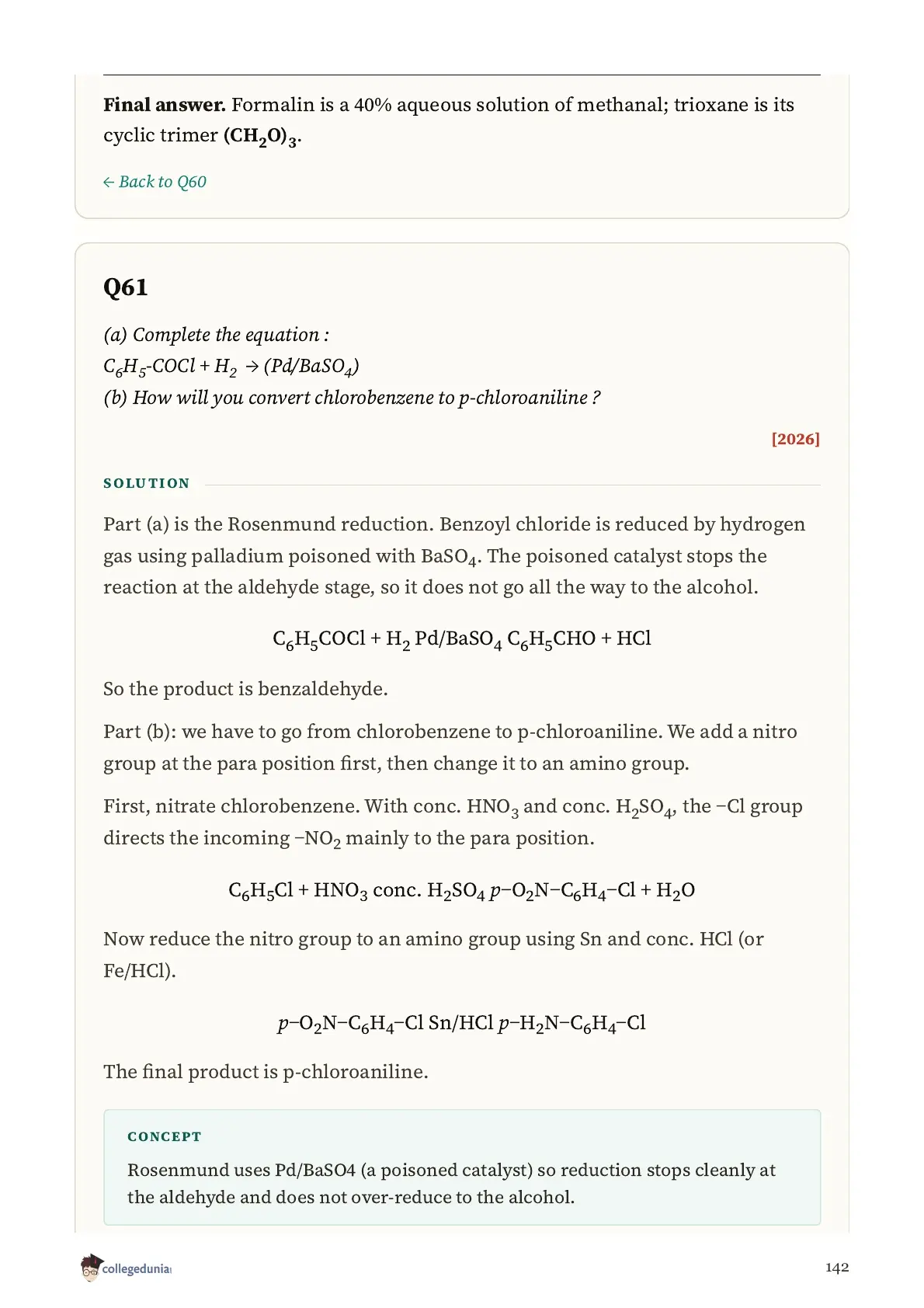
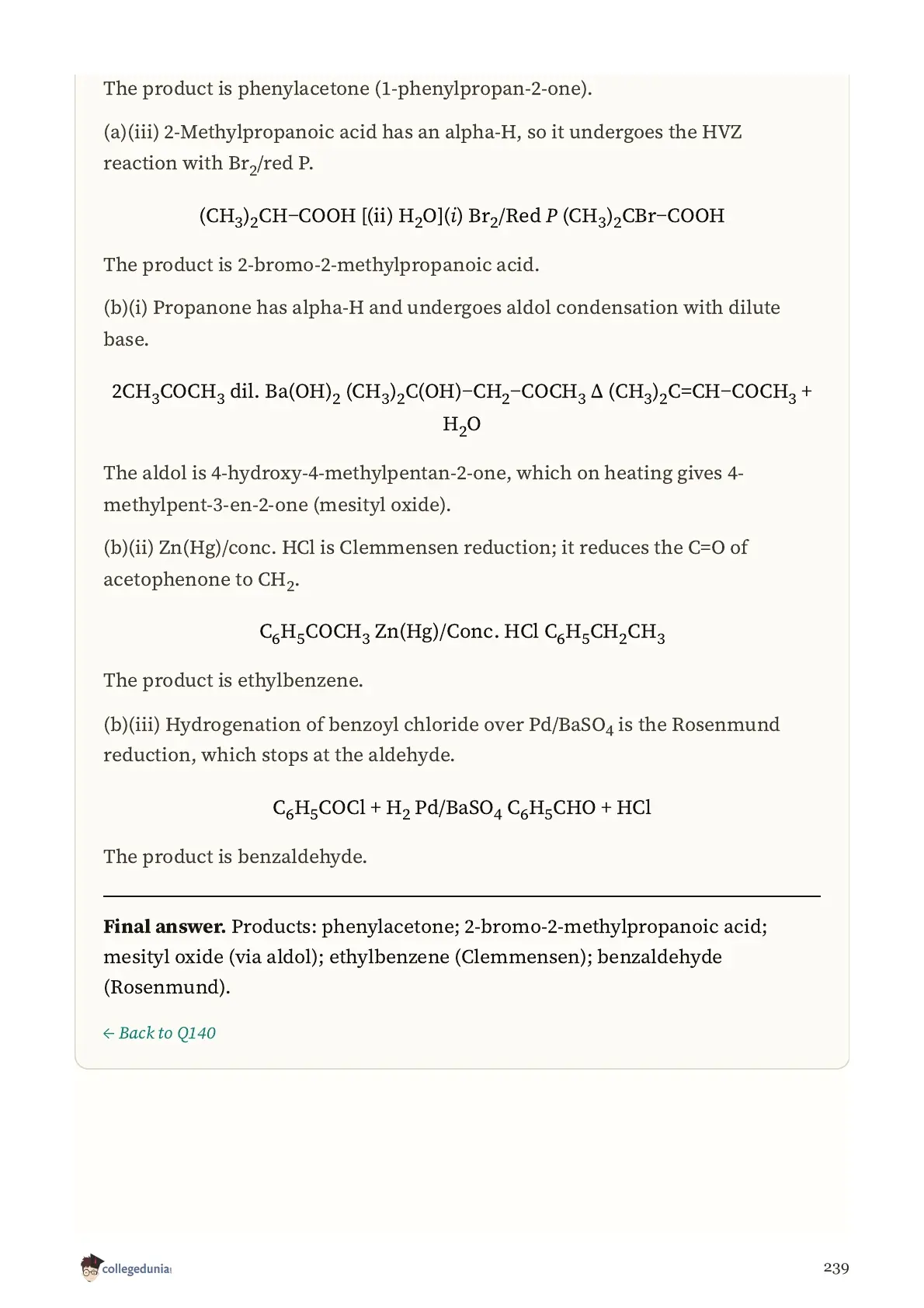
(a) Complete the equation : C 6 H 5 -COCl + H 2 → (Pd/BaSO 4 ) (b) How will you convert chlorobenzene to p-chloroaniline ?
[2026 • 2 mark]
Common Mistakes in the Aldehydes, Ketones and Carboxylic Acids Board Questions
- Writing the wrong reactivity order towards nucleophilic addition by ignoring steric and electronic effects.
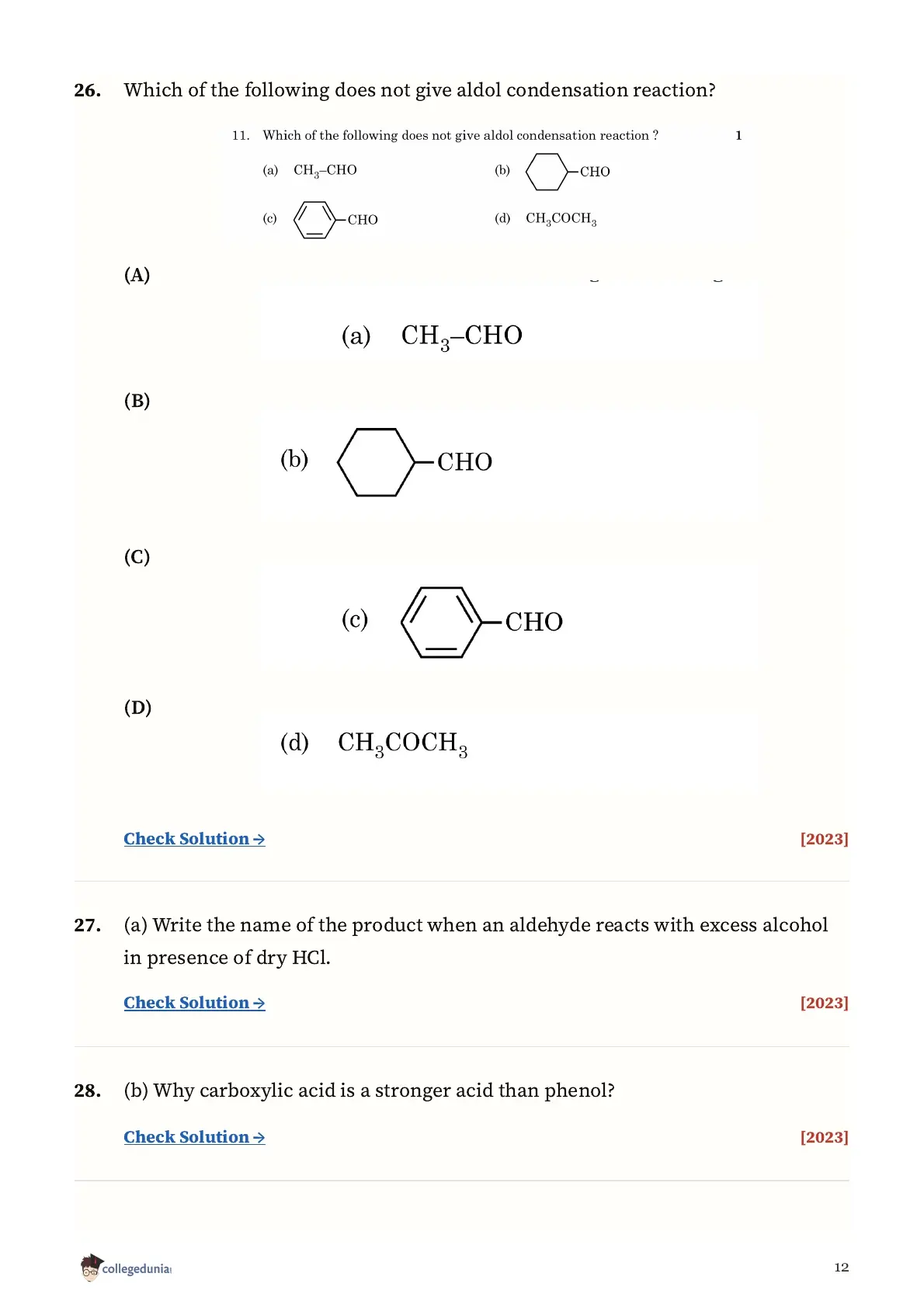
- Confusing Cannizzaro with aldol condensation, since one needs an alpha-hydrogen and the other does not.
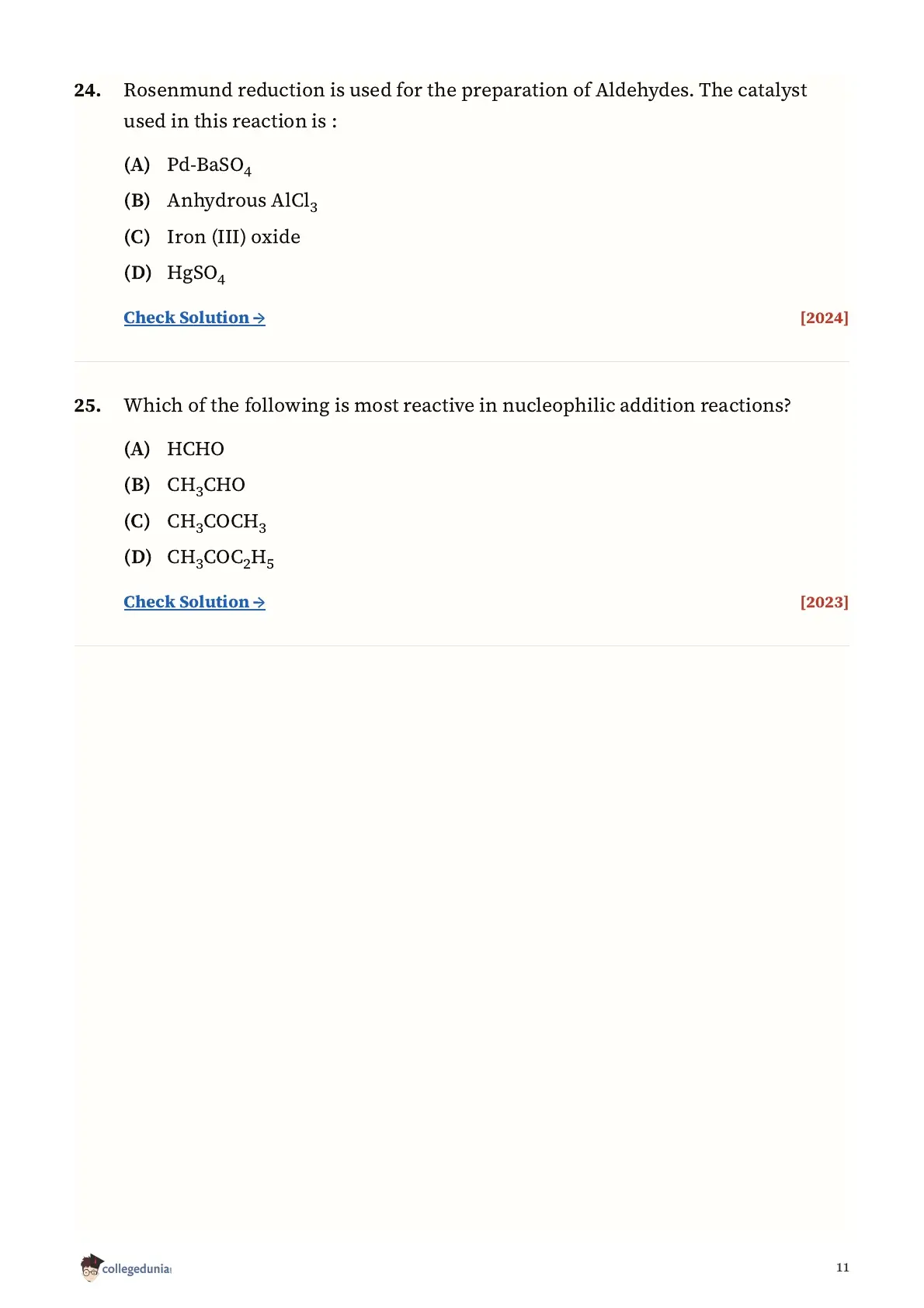
- Giving the wrong reagent in Rosenmund reduction and skipping the poisoned catalyst Pd-BaSO4.
- Missing the correct distinguishing test, for example using Tollens for an aldehyde-ketone pair when the iodoform test is needed.
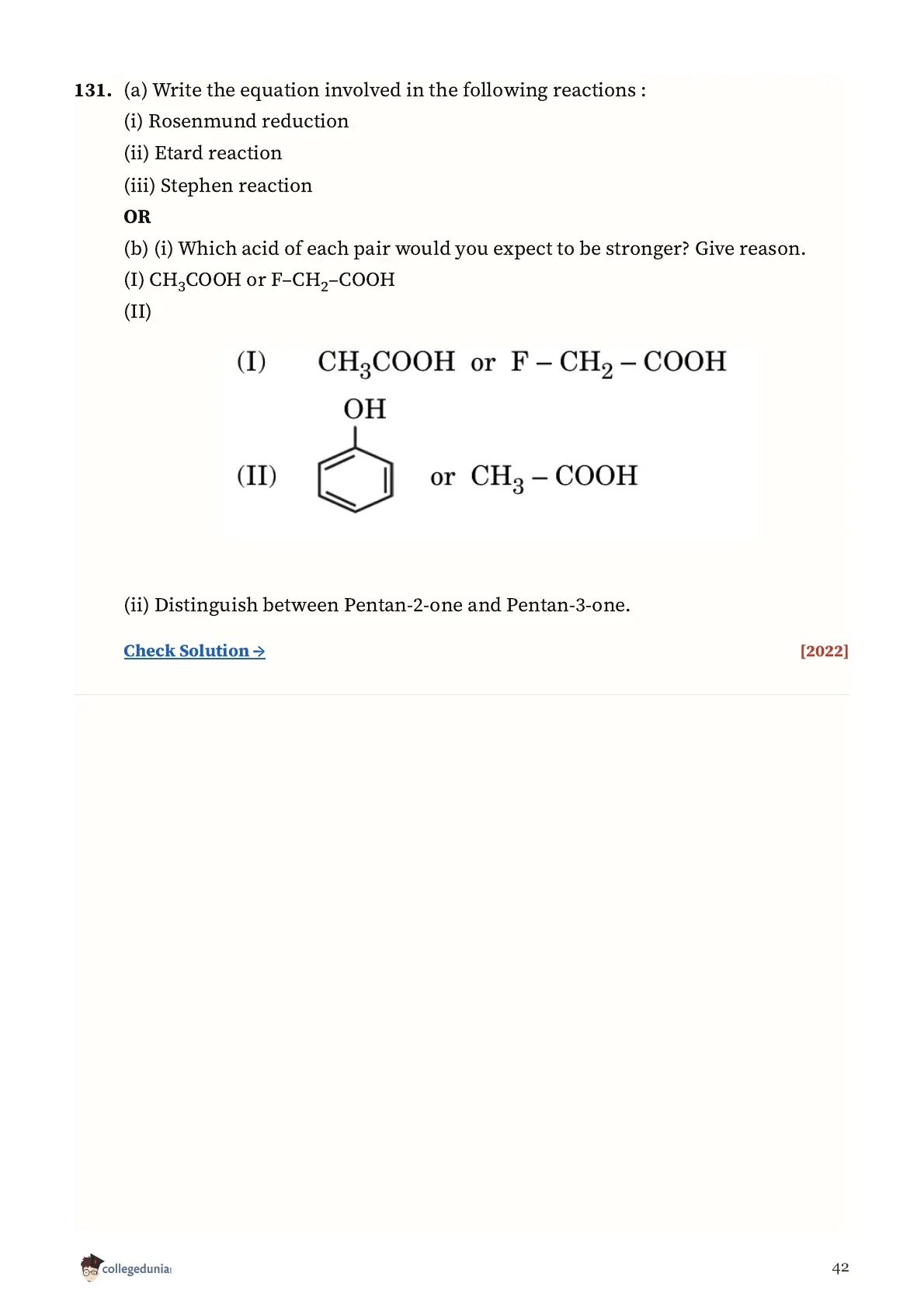
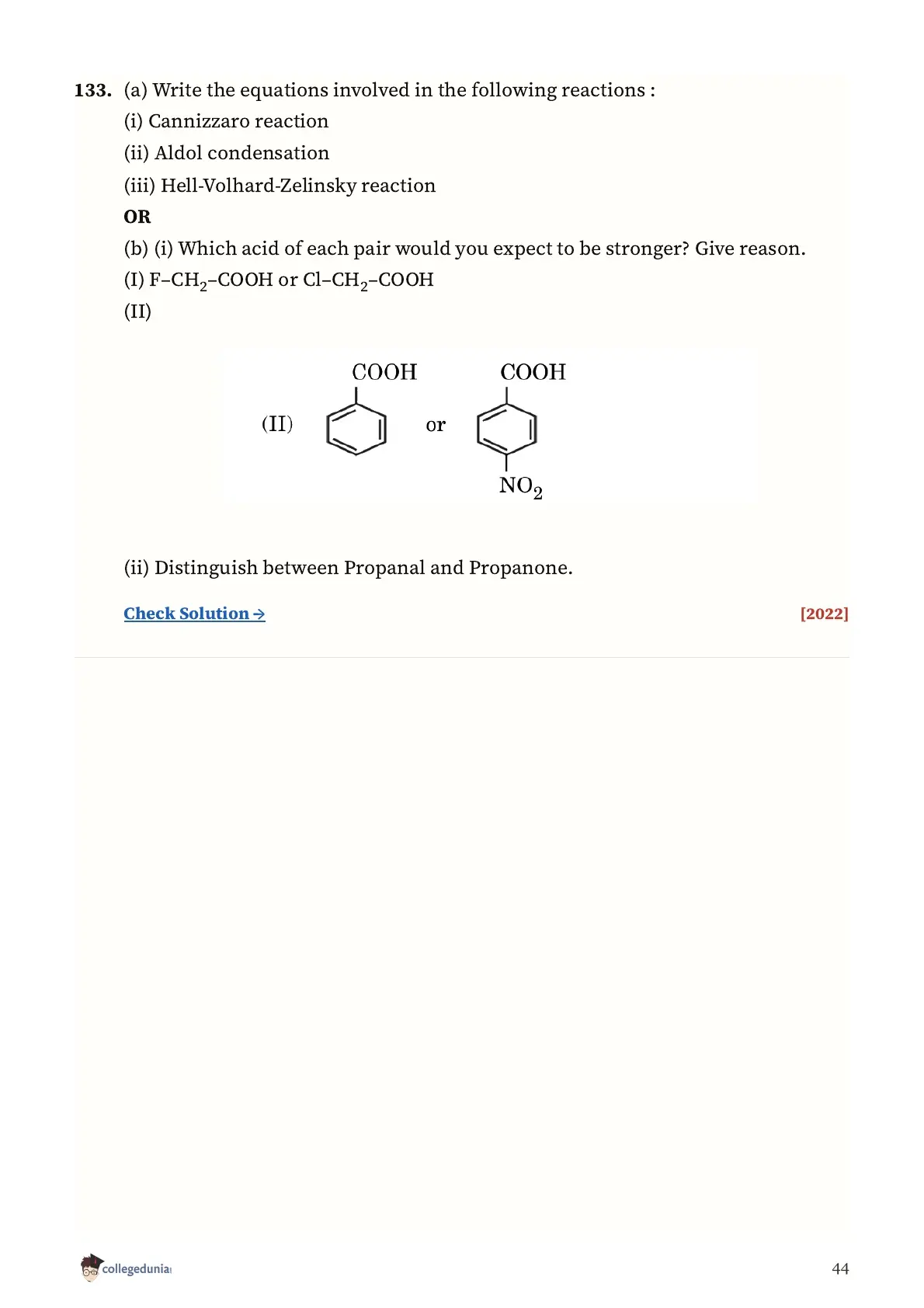
- Stating the wrong acidity order of carboxylic acids by forgetting the electron-withdrawing effect of nearby halogens.
Student Feedback on Aldehydes, Ketones and Carboxylic Acids PYQ Practice
- 73 per cent said named-reaction questions were the hardest part of the 3 and 5-mark bands.
- 60 per cent reported gaining 4 to 6 marks after solving all 36 five-mark PYQs from this PDF before the boards.
- 49 per cent said a Cannizzaro or aldol reasoning question appeared in their actual 2026 paper.
- Average time to finish all 191 PYQs: about 16 hours across 8 study sessions.
How These PYQs Pair with the Other Aldehydes, Ketones and Carboxylic Acids Resources
Solving previous year questions alone gives you only half the prep. Pair the PYQ PDF with the matching concept, formula and solution resources for Aldehydes, Ketones and Carboxylic Acids.
| Resource | What It Gives You | Open |
|---|---|---|
| NCERT Solutions | Step-by-step worked answers to every NCERT back-exercise question of Aldehydes, Ketones and Carboxylic Acids | NCERT Solutions for Aldehydes, Ketones and Carboxylic Acids |
| Notes | Concept revision notes covering every topic in the Aldehydes, Ketones and Carboxylic Acids chapter | Aldehydes, Ketones and Carboxylic Acids Class 12 Notes |
| Formula Sheet | All key formulas and results of Aldehydes, Ketones and Carboxylic Acids on one page for last-day revision | Aldehydes, Ketones and Carboxylic Acids Formula Sheet |
| Handwritten Notes | Scanned handwritten notes of Aldehydes, Ketones and Carboxylic Acids for quick one-shot revision | Aldehydes, Ketones and Carboxylic Acids Handwritten Notes |
| Exemplar Solutions | NCERT Exemplar problems of Aldehydes, Ketones and Carboxylic Acids solved in full for extra practice | NCERT Exemplar Solutions for Aldehydes, Ketones and Carboxylic Acids |
| NCERT Book | Official NCERT Aldehydes, Ketones and Carboxylic Acids chapter PDF for free download | Aldehydes, Ketones and Carboxylic Acids NCERT Book PDF |
| Exemplar Book | NCERT Exemplar Aldehydes, Ketones and Carboxylic Acids problem book PDF for free download | Aldehydes, Ketones and Carboxylic Acids Exemplar Book PDF |
How to Use the Aldehydes, Ketones and Carboxylic Acids PYQ PDF Most Effectively
The 191 questions are sequenced for a three-pass revision plan:
- Pass 1 (Day 1 to 2): Attempt all 60 one-mark MCQs. Mark every wrong answer and re-read the relevant NCERT reaction.
- Pass 2 (Day 3 to 5): Solve the 45 two-mark and 49 three-mark questions. Time yourself: 3 minutes per 2-mark, 5 minutes per 3-mark.
- Pass 3 (Day 6 to 10): Work through the 36 five-mark long answers, writing the full named-reaction equations and the reasoning part each time.
All Class 12 Chemistry Chapter PYQ PDFs
Every Class 12 Chemistry chapter has its own PYQ compilation built the same way, sorted by marks and tagged by year.
| Chapter | Topic | Previous Year Questions |
|---|---|---|
| Chapter 1 | Solutions | PYQ PDF |
| Chapter 2 | Electrochemistry | PYQ PDF |
| Chapter 3 | Chemical Kinetics | PYQ PDF |
| Chapter 4 | The d- and f-Block Elements | PYQ PDF |
| Chapter 5 | Coordination Compounds | PYQ PDF |
| Chapter 6 | Haloalkanes and Haloarenes | PYQ PDF |
| Chapter 7 | Alcohols, Phenols and Ethers | PYQ PDF |
| Chapter 8 | Aldehydes, Ketones and Carboxylic Acids | PYQ PDF |
| Chapter 9 | Amines | PYQ PDF |
| Chapter 10 | Biomolecules | PYQ PDF |
Also Check: NCERT Solutions for Class 12 Chemistry
Class 12 Chemistry Aldehydes, Ketones and Carboxylic Acids PYQ FAQs
Ques. How many previous year questions are in the Class 12 Chemistry Aldehydes, Ketones and Carboxylic Acids PYQ PDF?
Ans. The PDF has 191 previous year questions from CBSE board papers between 2003 and 2026, sorted by marks (1 to 5) and then by year, latest first. Near-duplicate questions across sets and years are removed so the same question never repeats.
Ques. Are the Aldehydes, Ketones and Carboxylic Acids PYQs based on the 2026-27 CBSE syllabus?
Ans. Yes. Every question follows the 2026-27 CBSE Class 12 Chemistry syllabus. Older long-form questions are kept because the named reactions (Cannizzaro, aldol, Rosenmund, HVZ, Fischer esterification) are unchanged in the current syllabus.
Ques. Which topics of Aldehydes, Ketones and Carboxylic Acids appear most often in CBSE board papers?
Ans. From the 191-question set: named reactions (about 25 per cent), conversions and reaction completions (about 20 per cent), reactivity towards nucleophilic addition (about 17 per cent), chemical tests and distinguishing pairs (about 15 per cent), and acidity of carboxylic acids (about 13 per cent).
Ques. How is this PYQ PDF different from a CBSE sample paper?
Ans. A sample paper gives you one paper. This PDF stitches together more than 20 years of questions across every set and region (Delhi, Outside Delhi, Foreign and Compartment) for Aldehydes, Ketones and Carboxylic Acids alone, so you can see which named reactions CBSE repeats and how each is usually phrased.
Ques. Does the Aldehydes, Ketones and Carboxylic Acids PYQ PDF include MCQs?
Ans. Yes. 60 of the 191 questions are 1-mark questions, mostly MCQ and assertion-reason from 2023 onwards, when CBSE introduced the Section A objective block.
Ques. Where can I download the Aldehydes, Ketones and Carboxylic Acids Class 12 PYQ PDF for free?
Ans. The full Aldehydes, Ketones and Carboxylic Acids PYQ PDF is free to download from the PDF button at the top of this page. No sign-up is needed.
Ques. How should I use these PYQs to revise Aldehydes, Ketones and Carboxylic Acids in the last 10 days?
Ans. Use the three-pass plan: Day 1 to 2 attempt all 60 MCQs, Day 3 to 5 solve the 2 and 3-mark questions, Day 6 to 10 attempt all 36 long answers under a 12-minute timer. Always write the full balanced equation for every named reaction.
Ques. Does the PDF give answers or only the questions?
Ans. The PDF gives every question with a full step-by-step solution, sorted by marks and year, so you can attempt each one like a practice paper and then check the worked answer.
Ques. Are named reactions important for the CBSE Aldehydes, Ketones and Carboxylic Acids exam?
Ans. Very. Named reactions make up about a quarter of all the questions and dominate the 36 five-mark answers. Cannizzaro and aldol condensation are the two most repeated, so master them first.
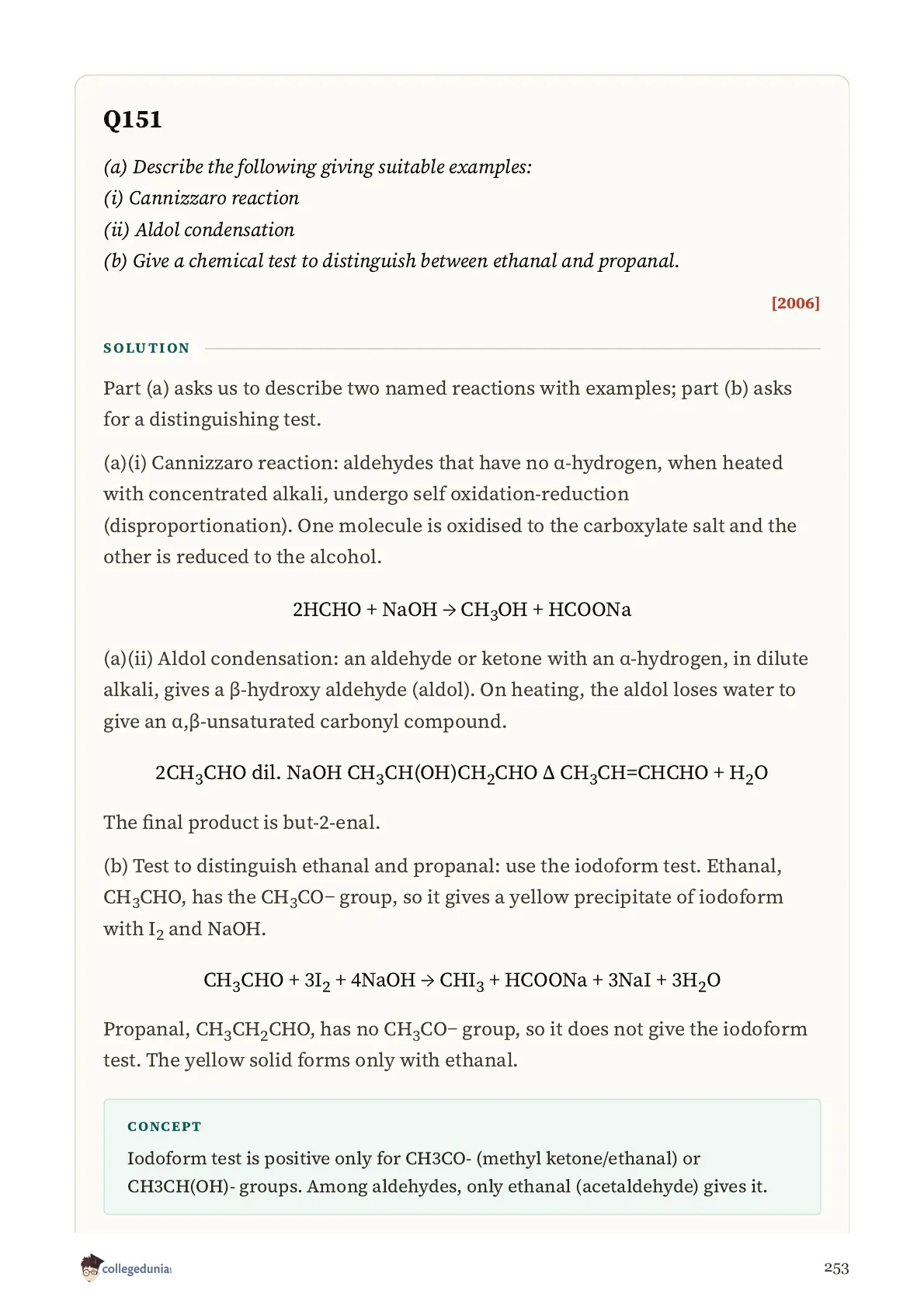
Ques. What is the Cannizzaro reaction?
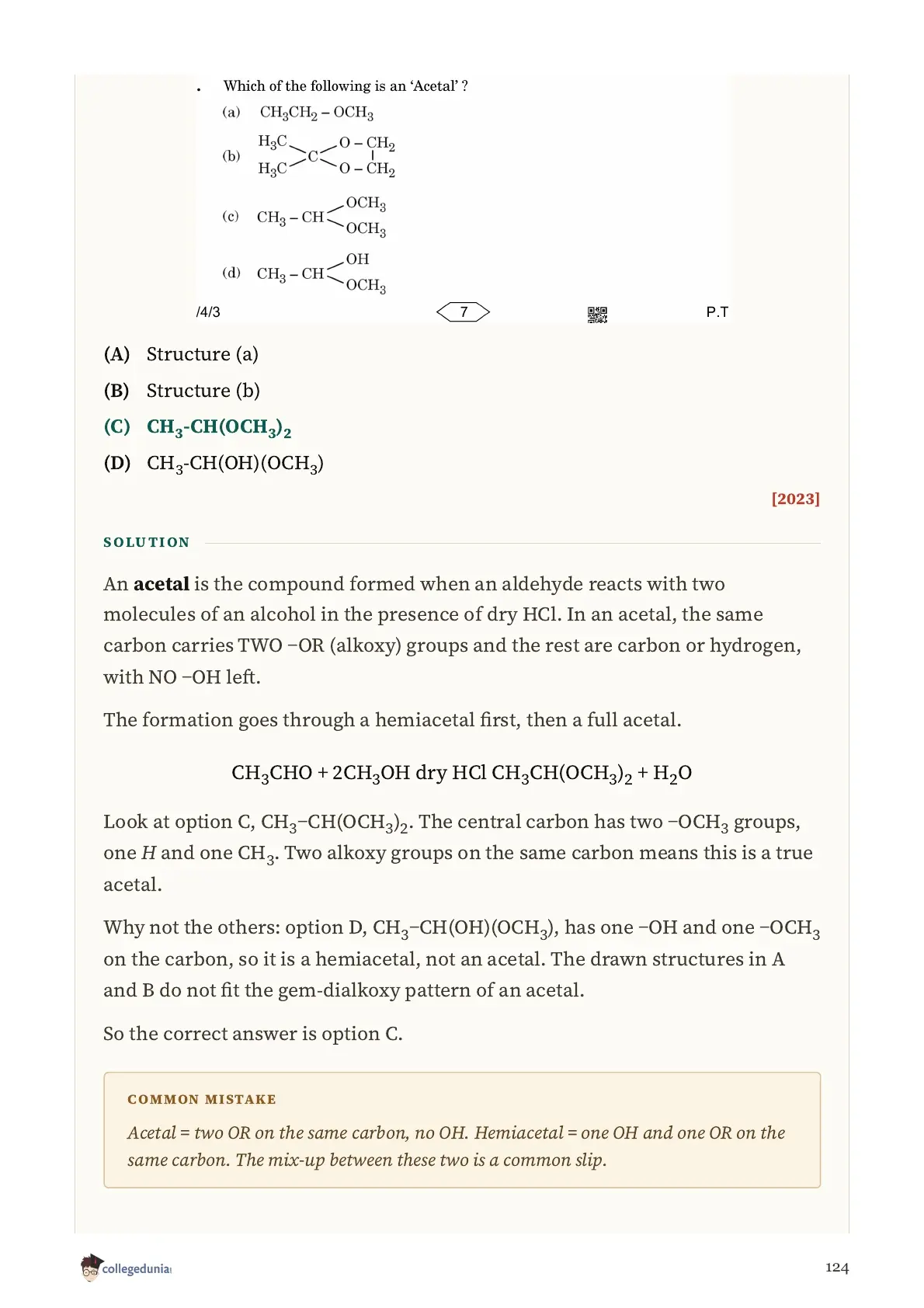
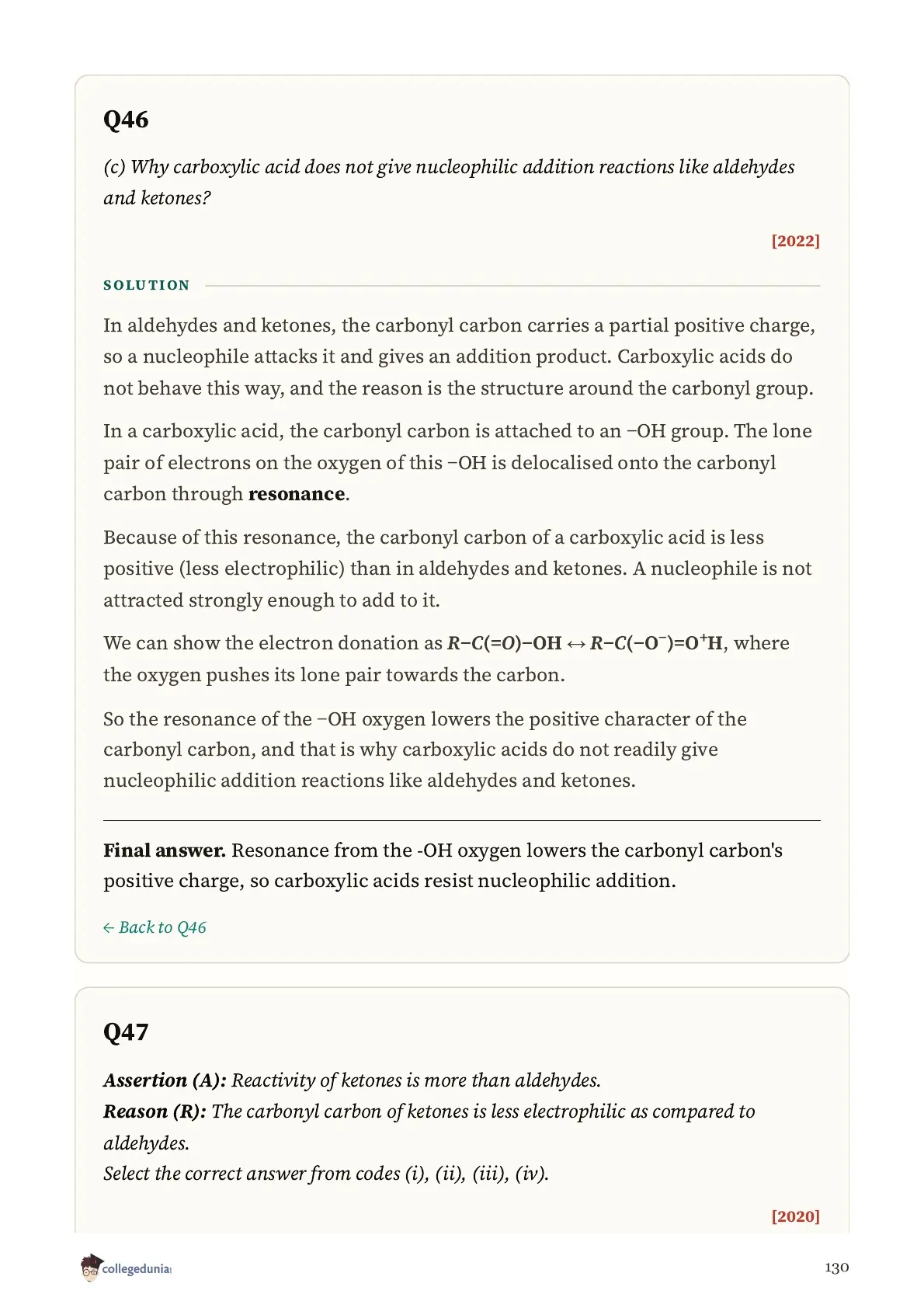
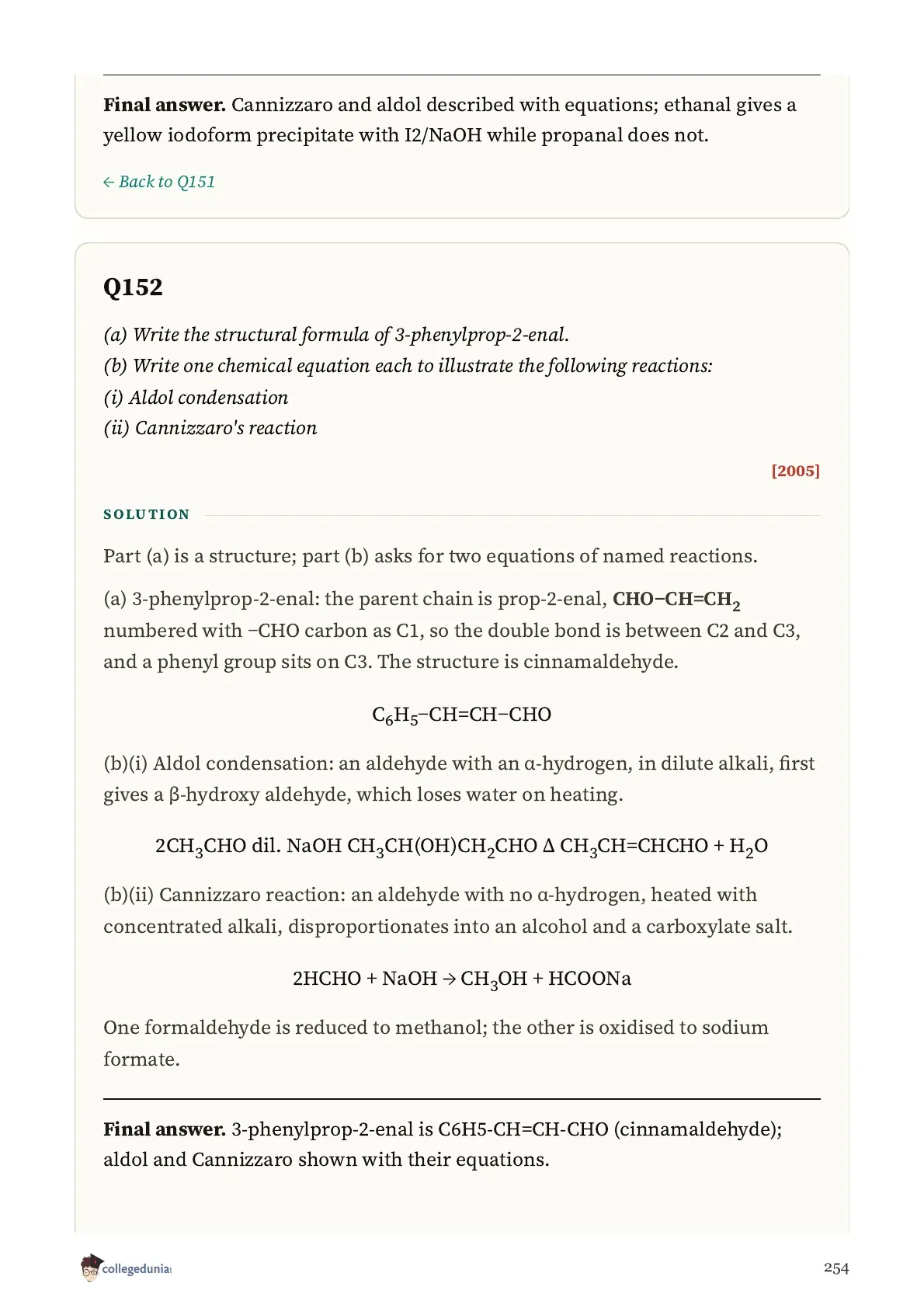
Ans. The Cannizzaro reaction is a disproportionation of an aldehyde that has no alpha-hydrogen, such as benzaldehyde or formaldehyde. With concentrated alkali, one molecule is oxidised to the carboxylate salt and another is reduced to the alcohol.
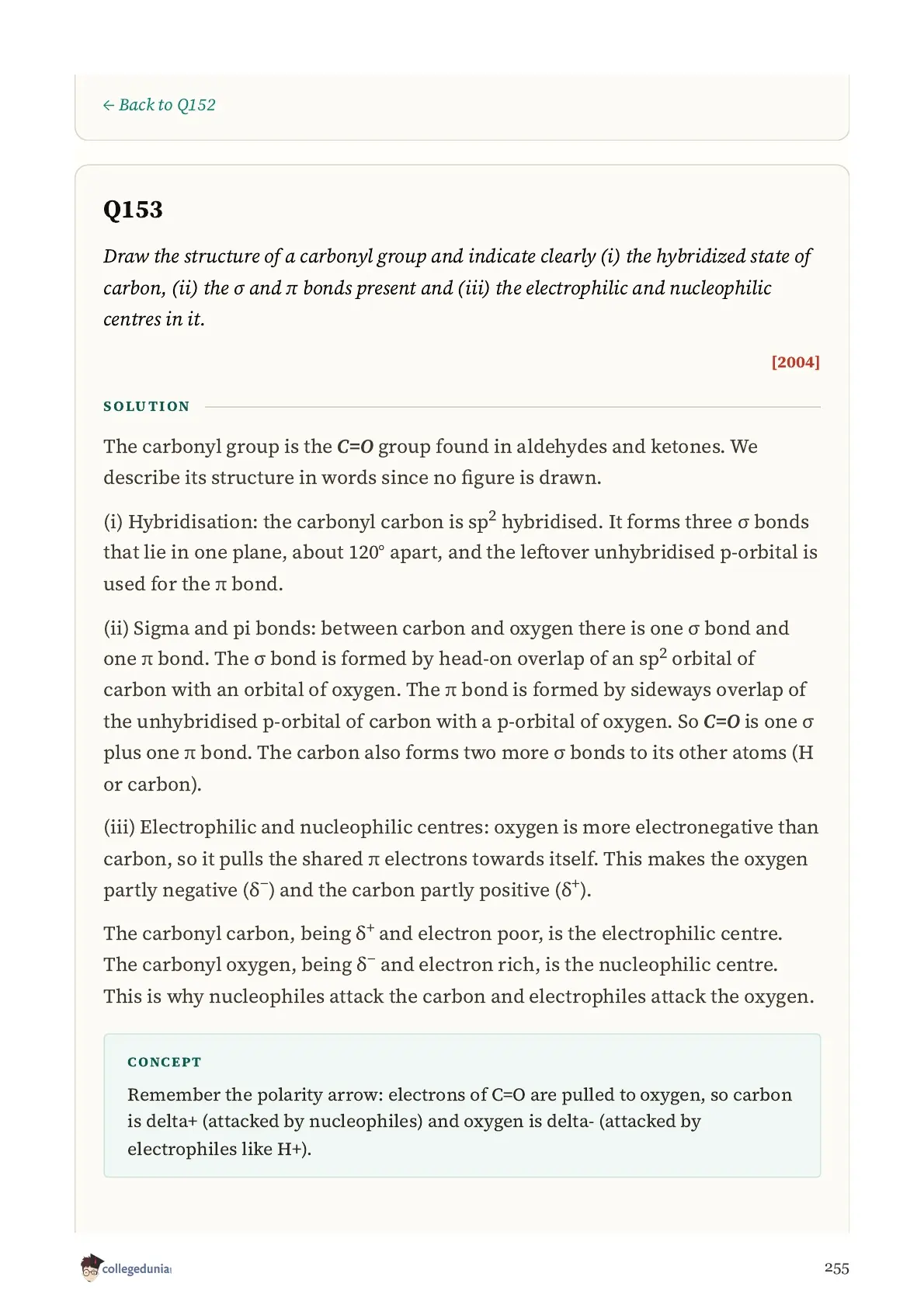
Ques. How is a carbonyl group defined?
Ans. A carbonyl group is a carbon atom double-bonded to an oxygen atom (>C=O). The carbon is electrophilic and the oxygen is nucleophilic, which is why carbonyl compounds undergo nucleophilic addition. It is the key functional group in aldehydes and ketones.
Ques. What is the aldol condensation?
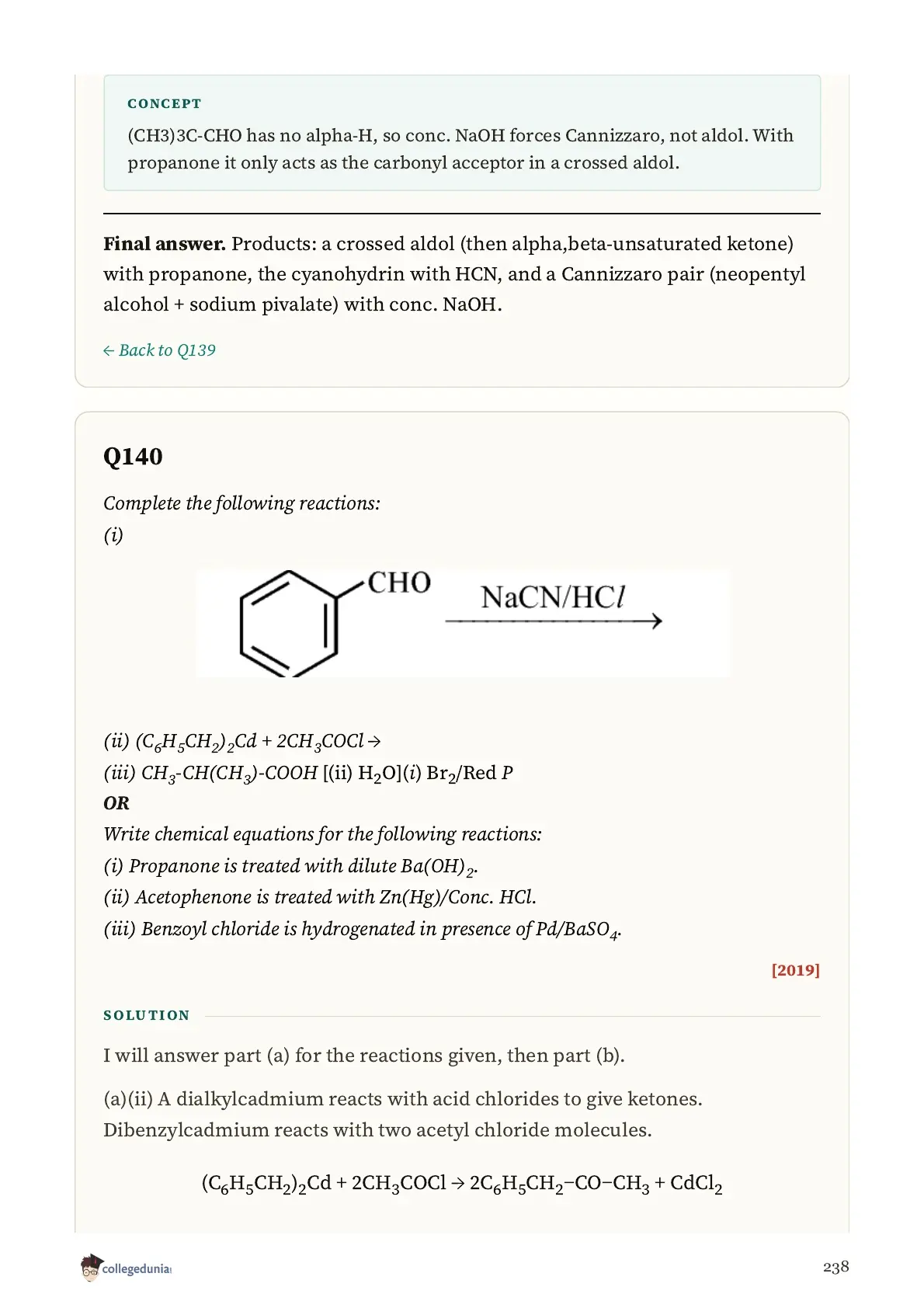
Ans. Aldol condensation happens between two aldehyde or ketone molecules that have an alpha-hydrogen. Dilute base gives a beta-hydroxy carbonyl compound (the aldol), which on heating loses water to form an alpha, beta-unsaturated carbonyl compound.



Comments