





University of Kent admissions run on the UCAS platform for undergraduate courses and a fee-free direct route for taught postgraduate degrees, with Class XII at 65 percent forming the standard UG floor and a bachelor’s at UK 2:2 (around 55 percent) forming the PG floor.
- Next live deadline: January 2027 direct-entry PGT and UG applications close 27 November 2026; the September 2027 primary intake is already open via UCAS.
- Base tuition: from GBP 20,700 (around INR 26.73 Lakhs) per year for popular PG courses; direct applications to Kent carry no application fee.
- Eligibility: UG needs Class XII at 65 percent minimum; PG needs a bachelor’s at UK 2:2 (55 percent) with a minimum of IELTS 6.0 (5.5 in each band).
- Acceptance rate: estimated at 70 to 80 percent based on Kent’s access-oriented admissions; the university does not publish an official institutional figure.
Popular courses for Indian students include MSc Business Analytics, the Kent MBA, MSc Psychology, and BSc Business and Management, with Kent Business School holding triple accreditation from AMBA, EQUIS, and AACSB. Recent Indian cohorts describe the University of Kent as a Canterbury-based option with strong law and psychology programmes and a lower cost profile than London.
Table of Contents
- University of Kent Application Deadlines for 2027 Intakes
- Kent Eligibility for Indian Students and English Waivers
- University of Kent PG Programs and English Scores
- Kent UG Programs and A-Level Equivalents
- University of Kent MBA Rounds and Interview
- UoK PhD Admissions and Funding
- University of Kent Application Process Step by Step
- Documents Required for Kent Admissions
- Kent Acceptance Rate for Indian Applicants
- UK Student Visa Process for Kent Students
- Tips and Checklist for University of Kent Applicants
- University of Kent Admissions FAQs
University of Kent Application Deadlines for 2027 Intakes
Kent runs two live cycles for Indian applicants right now: the January 2027 intake, with direct-entry applications closing 27 November 2026, and the September 2027 intake, where UCAS undergraduate applications opened on 1 September 2026 and direct postgraduate applications are being accepted on a rolling basis. Dates below are per the University of Kent international admissions page.
| Intake | Level | App Opens | Deadline | Portal |
|---|---|---|---|---|
| January 2027 | PG Research | Rolling | 1 October 2026 (Closing Soon) | Kent direct |
| January 2027 | PG Taught and UG | Rolling | 27 November 2026 | Kent direct |
| September 2027 (Primary intake) | UG via UCAS | 1 September 2026 | 29 January 2027 (UCAS equal consideration) | UCAS |
| September 2027 (Primary intake) | UG (Direct) and PGT | Rolling from October 2026 | 24 August 2027 (indicative, per prior cycle) | Kent direct |
Kent’s primary intake for Indian students is September — most programmes open here and every UG programme starts in September.
Planning note: Kent works to fixed cycle windows, not rolling admissions in the North-American sense. The 27 November 2026 date is the last day PGT and UG direct-entry January 2027 applications will be considered, not a soft target.
University of Kent Eligibility for Indian Students and English Waivers
Kent publishes India-specific academic thresholds separately from its global entry criteria. Standard XII marks and bachelor’s percentages below are the institution-wide floor; specific programmes such as LLB Law or MSc Data Science may set a higher bar.
- UG direct entry (Stage 1): Standard XII with a minimum average of 65 percent; 70 percent for Engineering or Allied Health diplomas.
- UG foundation year: Standard XII at 50 percent (New Delhi Board), 45 percent (West Bengal Board), 55 percent (other boards).
- PG for UK 2:2 requirement: bachelor’s with 55 percent or GPA 5.5 in the final year.
- PG for UK 2:1 requirement: bachelor’s with 60 to 65 percent, depending on the awarding institution.
- Mathematics floor: Standard X at 50 percent or Standard XII at 40 percent (equivalent to GCSE Grade 4).
Kent classifies English requirements by three CEFR bands. Most PG taught courses need the Good band (B2), the MBA and psychology PG need Very Good, and Law LLB needs Excellent.
| Test | Good (B2) | Very Good | Excellent (C1) |
|---|---|---|---|
| IELTS Academic | 6.0 (5.5 each) | 6.5 (5.5 each) | 7.0 (7.0 each) |
| TOEFL iBT (pre-Jan 2026) | 80 | 87 | 95 |
| PTE Academic | 63 (59 each) | 67 (59 each) | 76 (76 each) |
| Duolingo English Test | 110 | 120 | 130 |
University of Kent IELTS Waiver for Indian Students
Kent accepts a Medium of Instruction (MOI) waiver for Indian applicants whose bachelor’s or higher degree was taught and assessed in English. You must supply your degree certificate, an official MOI letter from your institution, and an Ecctis UKVI assessment statement confirming the qualification maps to the required CEFR band. The Ecctis fee is refunded on enrolment if the assessment meets Kent’s threshold.
Note: Programme-specific entry requirements, fees, and intake availability may differ from the institution-wide minimums shown above. Always confirm on the official University of Kent page for your chosen programme before applying.
University of Kent PG Programs and English Scores
PG base tuition at Kent for international students starts around GBP 20,700 (INR 26.73 Lakhs) per year for taught masters like MSc Business Analytics; refer to the detailed fee breakdown for programme-wise figures. English minimums below reflect each programme’s own entry page.
| Programme | Duration | Minimum Eligibility | English Req. Min. |
|---|---|---|---|
| MSc Business Analytics | 1 year | Bachelor’s at UK 2:2 (55%+) in any subject | IELTS 6.0 |
| MSc International Business and Management | 1 year | Bachelor’s at UK 2:2 (55%+) in any subject | IELTS 6.0 |
| MSc Finance and Management | 1 year | Bachelor’s at UK 2:2 (55%+) in any subject | IELTS 6.0 |
| MSc Organisational and Business Psychology | 1 year | Bachelor’s at UK 2:1 (60%+) in psychology or related | IELTS 6.5 |
| MSc Architecture and Sustainable Environment | 1 year | Bachelor’s at UK 2:2 (55%+) in a relevant field | IELTS 6.5 |
| LLM (Master of Laws) | 1 year | Bachelor’s at UK 2:2 (55%+) in Law | IELTS 7.0 |
Insider note: Kent’s PG applications are direct through the university portal, not via a national platform. There is no application fee, and there is no fixed round system — early submission (before December) improves your chances of accommodation allocation for September starts.
University of Kent UG Programs and A-Level Equivalents
UG international tuition at Kent starts around GBP 23,500 (INR 30.35 Lakhs) per year for BSc Psychology; other undergraduate rates vary by faculty. Kent maps Standard XII scores to A-level bands: A-level Grade B corresponds to Standard XII at 70 percent for CBSE and ISC (New Delhi Board), 65 percent for West Bengal, and 75 percent for other state boards.
| Programme | Duration | Minimum Eligibility | English Req. Min. |
|---|---|---|---|
| BSc Psychology | 3 years | Class XII at 65%+, GCSE Grade 4 equivalent in English and Maths | IELTS 6.0 |
| BSc Business and Management | 3 years | Class XII at 65%+ in any stream | IELTS 6.0 |
| BSc Accounting and Finance | 3 years | Class XII at 65%+ with Mathematics | IELTS 6.0 |
| BSc Computer Science | 3 years | Class XII at 70%+ with Mathematics | IELTS 6.0 |
| LLB Law | 3 years | Class XII at 75%+ in any stream | IELTS 7.0 |
Planning note: If your Class XII average sits at 55 to 64 percent, apply to Kent’s International Foundation Programme instead of direct Stage 1 entry. Successful completion feeds into most Kent undergraduate degrees.
University of Kent MBA Rounds and Interview
The Kent MBA runs a single September intake at the Canterbury campus and takes one year full-time or two to three years part-time. Applications are direct through the Kent Business School portal without GMAT or GRE. Applications received after 31 July are considered on a case-by-case basis if places remain, so September 2027 applicants should aim to submit by June 2027.
Kent MBA Eligibility and Experience Floor
- Academic: honours bachelor’s degree in any discipline (UK 2:1 or Indian equivalent of 60 percent+).
- Work experience: minimum three years of appropriate leadership experience post-degree.
- No-degree route: senior managers with ten or more years of leadership experience are considered without an honours degree.
- English: IELTS 6.5 overall with 5.5 in each component (Very Good band), or PTE 67.
Kent MBA Interview Format
An individual online interview forms part of the selection process. Kent shortlists on the strength of your CV, personal statement, and work-experience letters; the interview covers leadership scenarios and cohort fit. Deferrals to the next September cycle are considered on request. Scholarships for the MBA are listed on the funding options for Indian students page.
University of Kent PhD Admissions and Funding
Kent accepts PhD applications year-round for both January and September starts, with a dedicated 1 October 2026 deadline for the January 2027 postgraduate research cohort. Applicants apply direct to the relevant academic school after informally approaching a prospective supervisor.
Kent PhD Application Steps
- Identify supervisor: browse the target school’s research pages and email a shortlist of supervisors with a one-page research summary.
- Research proposal: submit a 1,500 to 2,000-word proposal covering research question, methodology, and literature gap.
- Academic reference: two academic references, ideally from your master’s supervisors.
- English proficiency: IELTS 6.5 (5.5 each) minimum for most PhDs, IELTS 7.0 for humanities disciplines.
Kent PhD Funding for Indian Students
Kent offers competitive doctoral studentships that typically cover full tuition plus a maintenance stipend aligned to the UKRI rate for the 2026-27 academic year. Faculty-specific studentships and GTA (Graduate Teaching Assistant) roles are advertised each January and February on the school pages. External funding routes like Commonwealth Scholarships are common for Indian PhD entrants.
University of Kent Application Process Step by Step
Kent uses two routes for undergraduate applicants and a direct-only route for postgraduates. Choose one route per UG cycle — international applicants who file via UCAS cannot also file directly to Kent in the same cycle.
- Choose your route: Indian UG applicants can apply through the UCAS platform (the 2027 cycle opened 1 September 2026) or file direct to Kent — direct is fee-free. PG applicants file only via Kent’s direct portal.
- Register and start the form: create your account on Kent’s application portal or on UCAS.com and pick your programme and intake.
- Draft the personal statement: Kent’s direct application asks five prompts of 200 words each covering motivation, choice of Kent, relevant experience, module interest, and career goals.
- Attach documents: upload transcripts, degree certificate, English test score or MOI letter, and references (see documents section below).
- Pay the fee, if applicable: no application fee for direct Kent applications; UCAS collects its own platform fee for UG applicants routing via UCAS.
- Submit and complete ID check: Kent triggers an Admissions ID check request after submission; upload your passport bio-page and supporting docs when prompted.
Kent Admission Decisions Timeline
Offers for direct PGT applications typically arrive within four to six weeks of submission. Unconditional Firm acceptance for the January 2027 intake must be logged by 11 December 2026, and the international deposit is due by 23 November 2026. CAS letters for visa applications are issued on 18 December 2026 for January starters.
Documents Required for University of Kent Admissions
Kent’s Admissions ID check runs after submission but before the offer is finalised. Have every document ready in PDF form before you begin the application — missing paperwork is the most common cause of offer delay for Indian applicants.
- Passport bio-page: current passport valid at least six months past your intake date.
- Class X and XII mark sheets: certified copies with board seal.
- Bachelor’s transcripts and provisional or final degree certificate: required for PG applicants; interim transcripts if still studying.
- English proficiency evidence: IELTS, TOEFL, PTE, Duolingo, or LanguageCert score report; alternatively an MOI letter plus Ecctis assessment.
- Personal statement: five 200-word responses for direct applications; single 4,000-character statement for UCAS.
- Academic references: two letters for PG and PhD; one for direct-entry UG.
- CV: mandatory for MBA, PhD, and executive PG programmes.
- Work-experience letters: for MBA applicants, on company letterhead with dates and role scope.
- Financial proof: requested at CAS stage, not at application; keep 28-day-old bank statements ready.
University of Kent Acceptance Rate for Indian Applicants
Kent does not publish an official institutional acceptance rate. Third-party estimates place the offer rate around 70 to 80 percent, based on Kent’s access-oriented admissions policy — meaning most applicants who meet the stated Class XII or bachelor’s threshold receive an offer. Selectivity climbs sharply for LLB Law, MBA, and MSc Business Analytics, where competition is tighter.
What Drives an Offer at Kent
Academic thresholds are the first filter: 65 percent in Class XII for UG, 55 percent bachelor’s for PG. Beyond that, the personal statement carries real weight — Kent’s five-prompt format is designed to see how well you understand the specific programme, so a copy-pasted statement across five universities rarely lands well.
Kent Offer Rate by Programme Cluster
Business analytics, finance, and computer science PG programmes tend to run high offer rates for Indian applicants who clear the 60 percent bachelor’s mark. LLB Law and psychology UG are the toughest calls, with Class XII at 75 percent and IELTS 7.0 the effective floors. Kent’s ranking band — QS 415 for 2027 and THE Law top 100 — sets the tone for law and psychology intake standards.
Insider note: Kent’s admissions team prefers applicants who name specific modules or research groups they want to join. This tells them you have read past the course brochure and are a lower flight-risk after enrolment.
UK Student Visa Process for University of Kent Students
Indian students confirmed by Kent apply for the UK Student Visa (formerly Tier 4) via the UK Home Office. Kent issues the Confirmation of Acceptance for Studies (CAS) once you have paid the international deposit and accepted your unconditional Firm offer. For January 2027 starters, Kent issues CAS letters on 18 December 2026; September 2027 starters receive CAS from mid-July 2027.
Steps: pay the visa application fee of GBP 524 (around INR 67,669), pay the Immigration Health Surcharge of GBP 776 (around INR 100,213) per year of study, complete the online Student Visa form, book biometrics at your nearest VFS Global centre, and attend the appointment with passport, CAS, financial proof, and TB test certificate. Financial proof must show tuition plus GBP 1,483 (around INR 191,515) per month for Canterbury living costs, held for 28 consecutive days.
2026 update: The UK Graduate Route remains open, letting Indian graduates stay in the UK for two years post-study (three for PhD holders) to work or seek work. Kent’s Careers and Employability Service supports Graduate Route applications during the final term.
Tips and Application Checklist for University of Kent
The following tips and steps are drawn from Indian-applicant patterns at Kent over the last two cycles. They mix strategic advice with timeline-anchored actions.
- Front-load your English test: book IELTS or PTE at least 12 weeks before the deadline; Kent accepts test scores taken within two years of your intake start.
- Order Ecctis assessment early: if using the MOI waiver, apply for Ecctis eight weeks before submission — turnaround is 15 to 20 working days.
- Tailor each of the five prompts: Kent’s admissions team reads all five separately; generic answers hurt more than at UCAS-format unis.
- Submit direct to skip fees: international UG applicants save the UCAS platform fee by filing directly to Kent.
- Six months out: lock passport validity, order transcripts, and identify referees.
- Ten weeks out: complete IELTS or MOI evidence and draft the personal statement.
- Four weeks post-offer: pay the international deposit to trigger CAS issuance.
- Two weeks post-CAS: file the UK Student Visa and pay the IHS in the same session.
Explore additional Kent-specific funding options for Indian students before your deposit date to maximise fee reduction.
University of Kent admissions favour Indian applicants who plan around the September cycle, verify eligibility against the India-specific 65 percent Class XII or 55 percent bachelor’s floor, and submit direct to Kent to avoid fees. Track the January 2027 window if you missed September 2026, and treat the 27 November 2026 date as fixed rather than aspirational.
University of Kent Admissions: Frequently Asked Questions
Ques. Is there an application fee for the University of Kent?
Ans. Direct applications to Kent, including all PG and international UG direct submissions, carry no application fee. UG applicants routing via the UCAS platform pay UCAS’s own platform fee, which is billed by UCAS and not Kent.
Ques. What is the minimum IELTS score for Kent’s postgraduate programmes?
Ans. Most PG taught programmes need IELTS 6.0 overall with 5.5 in each component (the Good B2 band). MBA, psychology PG, and architecture need IELTS 6.5, while LLM Law requires IELTS 7.0 with 7.0 in each component.
Ques. Can Indian students get an IELTS waiver at Kent?
Ans. Yes, Kent accepts a Medium of Instruction waiver if your bachelor’s or higher degree was taught and assessed in English. You must supply the degree certificate, an MOI letter, and an Ecctis UKVI assessment confirming the qualification meets the required CEFR band.
Ques. What Class XII percentage do I need for direct UG entry at Kent?
Ans. Kent’s institution-wide minimum for direct Stage 1 UG entry is Class XII at 65 percent. Selective programmes such as BSc Computer Science need 70 percent and LLB Law needs 75 percent. Applicants at 50 to 64 percent should apply for the International Foundation Programme.
Ques. What are Kent’s intake options for Indian students?
Ans. Kent offers September as its primary intake for both UG and PG. Postgraduate taught, undergraduate direct-entry, and postgraduate research cohorts also have a smaller January intake. Undergraduate courses via UCAS are September-only.
Ques. Is the September 2027 intake at Kent open now?
Ans. Yes. UCAS applications for 2027 UG entry opened for submission on 1 September 2026. Kent’s direct PGT and direct UG applications for September 2027 are being accepted on a rolling basis; the equal consideration UCAS deadline is 29 January 2027.
Ques. Does Kent require GMAT or GRE for the MBA?
Ans. No, the Kent MBA does not require GMAT or GRE. Selection is based on your bachelor’s degree, minimum three years of leadership work experience, CV, personal statement, and a mandatory individual online interview.
Ques. What is the deposit for international students at Kent?
Ans. Kent requires an international tuition deposit before it issues a CAS letter for visa purposes. The deposit is paid via Kent’s online store. For January 2027 starters, the deposit must clear by 23 November 2026 to keep the CAS issuance timeline on track.
Ques. How long does it take to receive an admission decision at Kent?
Ans. Direct PGT applications typically get a decision within four to six weeks of submission. UG UCAS applicants receive offers on the UCAS timeline. PhD decisions depend on supervisor availability and can take eight to 12 weeks after the school interview.
Ques. Can I apply to Kent through both UCAS and direct?
Ans. No. International UG applicants must choose one route per cycle. Kent will not consider a direct application if you also have a live UCAS application in the same cycle, and vice versa.
Ques. What English tests does Kent accept besides IELTS?
Ans. Kent accepts TOEFL iBT, PTE Academic, Duolingo English Test, and LanguageCert (SELT, Academic, and General versions). Score minimums vary by CEFR band; PTE 63, TOEFL 80, or Duolingo 110 meet the standard Good level required for most PG taught courses.
Ques. Does Kent offer scholarships to Indian students?
Ans. Yes. Kent offers the Kent International Scholarship, Kent Business School bursaries, and various programme-specific awards for Indian applicants. Amounts typically range from GBP 3,000 to GBP 6,000 (around INR 3.87 Lakhs to INR 7.75 Lakhs) toward tuition, applied automatically or via a short scholarship form after offer.
College Student Profiles

University of Kent Program Fees & Deadlines
| Program | Important Dates | Fees | Application Fees | Eligibility | Financial Aid |
|---|---|---|---|---|---|
MBA 1 year | USD 35,775 /Yr GBP 26,500 /Yr | - | IELTS- 6.5, TOEFL- 87, PTE- 67, Duolingo- 120 | ||
MSc Business Analytics 1 year | Application Deadline For January 2027 Intake (8th Dec 2026) | USD 27,945 /Yr GBP 20,700 /Yr | - | IELTS- 6.0, TOEFL- 80, PTE- 63, Duolingo- 110 | |
MSc Computer Science 1 year | Application Deadline For January 2027 Intake (8th Dec 2026) | USD 31,725 /Yr GBP 23,500 /Yr | - | IELTS- 6.0, TOEFL- 80, PTE- 63, Duolingo- 110 | |
PhD Socio legal Studies 3 years | Application Deadline For January 2027 Intake (8th Dec 2026) | USD 26,055 /Yr GBP 19,300 /Yr | - | IELTS- 6.5, TOEFL- 87, PTE- 67, Duolingo- 120 | |
Application Deadline For January 2027 Intake (8th Dec 2026) | USD 26,055 /Yr GBP 19,300 /Yr | - | IELTS- 6.5, TOEFL- 87, PTE- 67, Duolingo- 120 | ||
BA Ancient History 3 years | USD 26,055 /Yr GBP 19,300 /Yr | 29 | IELTS- 6.0, TOEFL- 80, PTE- 63, Duolingo- 110 | ||
BSc Chemistry 3 years | USD 31,725 /Yr GBP 23,500 /Yr | - | IELTS- 6.0, TOEFL- 80, PTE- 63, Duolingo- 110 |
Do you think the Dates are wrong ? Report Here


Course Finder - Search from 50K+ courses
Popular Streams:
Reviews
Most Popular Tags
7 Reviews Found
Likes
- I really likes that they delivered on there promise of education and provided full support on academic requirements.
- Facilities, labs, library, wrok opportunity, etc. was really good.
Dislikes
- The departmental accounts was really poor.
Likes
- The university is big and faculties are welcoming.
- Professors were polite and helpful. I remember few of my friends told me that they were facing cold gestures from their professors.
- My classes never got disturbed or suspended due to strike which was good thing.
Dislikes
- It is far from city centre. You will have to take a bus or walk 40 minutes for cheap grocery shopping.
- Canterbury is very isolated place. You will only find old people there.
- University is huge but most of the time its empy. You will feel depressed because of not so many students there.
Scholarship
- No, not at this university because I applied late. I will suggest applying around November if someone wants to get a good scholarship. I got a scholarship in university of Essex and East Anglia of £5000, because I didn't like their modules, I didn't go there.
- Yes few of my friends receive £5000.
- Most of the students get the early bird discount of £2000.

Likes
- Great diversity in modules and the option to choose 2 optional modules from the list.
- Triple-accredited Business School.
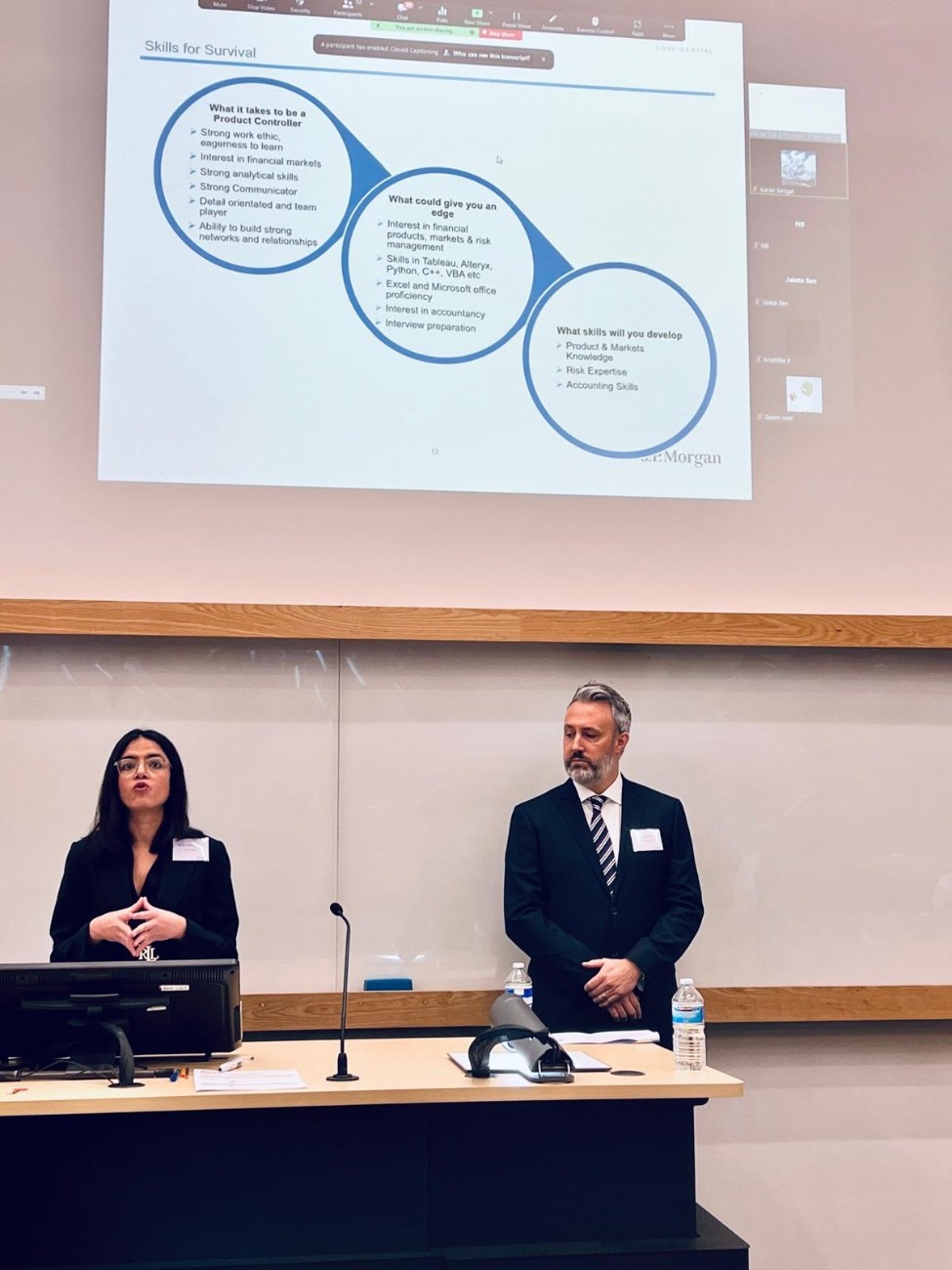
- In the second semester, PWC and JP Morgan visited the campus for an event where students could connect directly with their team.
Dislikes
- There should be more companies or Banks that visit the campus.
- I feel these should be a 50:50 assessment for the modules based on assignments and written exams, as compared to what, at the moment, was 20:80.
- The library should have more updated and relevant books for our course modules.
Scholarship
- Yes, there are multiple scholarships available based on merit, nationality, and a few other factors. You just need to go through the university and try to apply a bit early to ensure a better chance of getting it.
- I got a hardship scholarship of £3000 in addition to the early bird of £2000. My friend also received a £2000 scholarship, and there is no such criterion for this one; you just need to have an offer and have paid the booking amount for the admission, and you have to write an application in detail justifying your hardship to the university.




Likes
- The academics and faculty are amazing and super helpful.
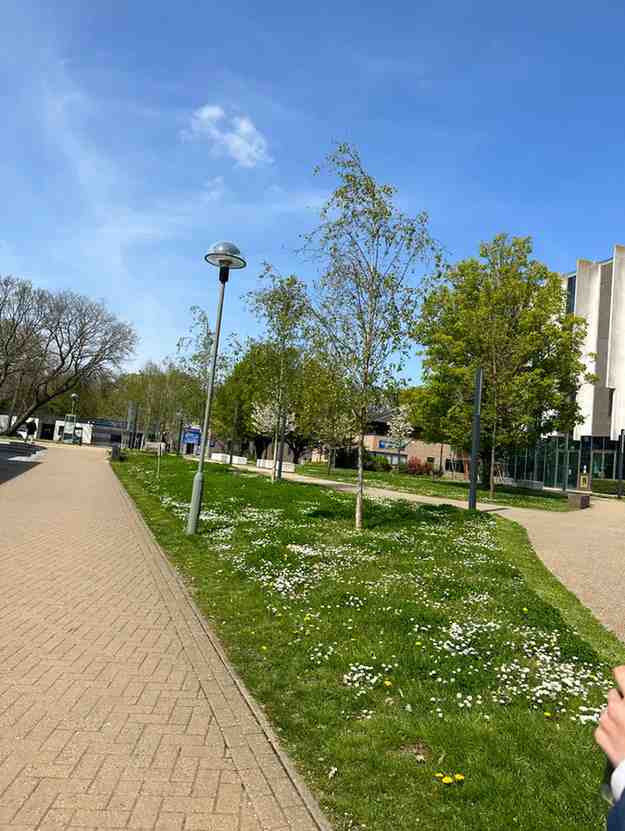
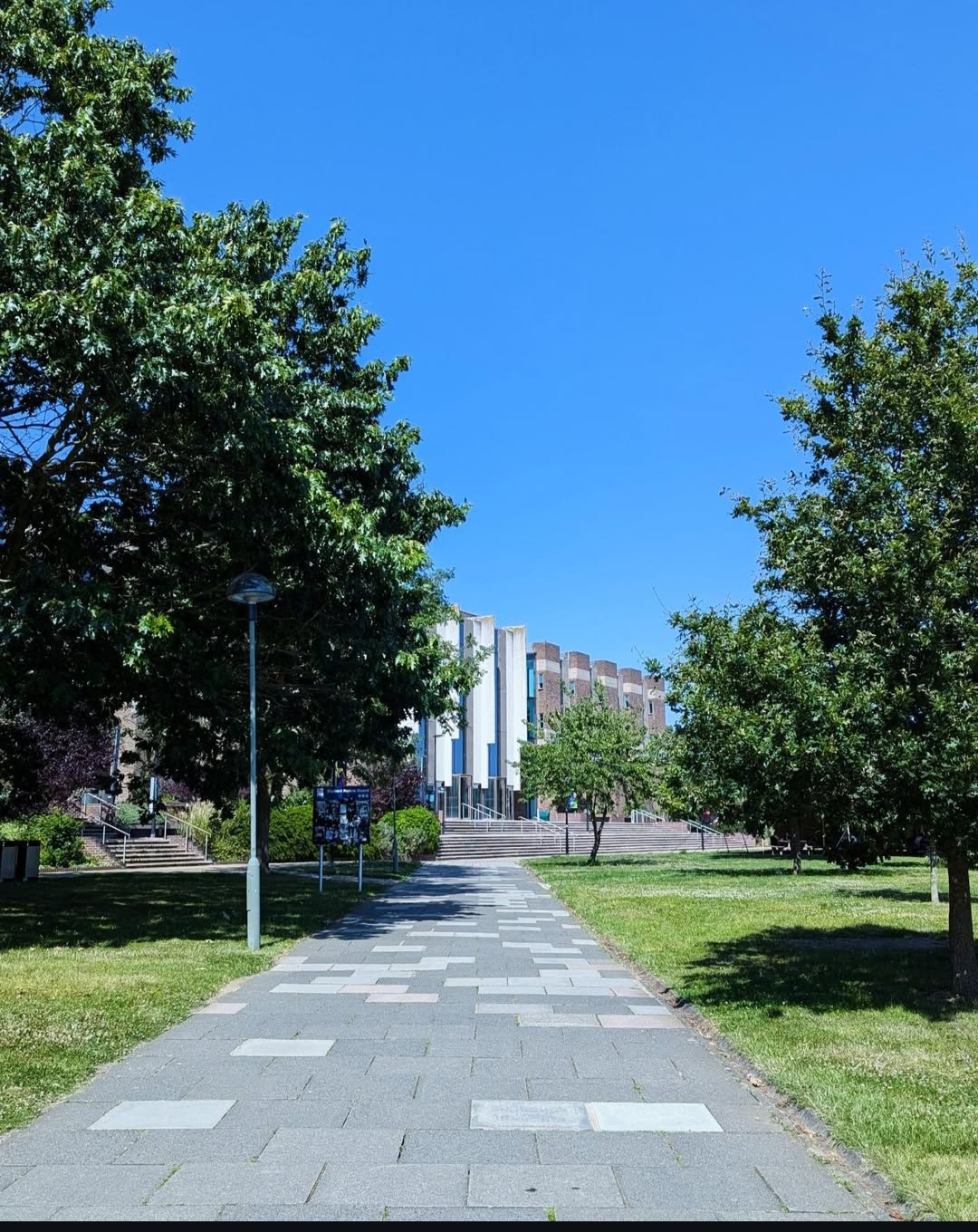
- The campus is very green and beautiful.
- There are plenty of Restaurants and a club on campus.
Dislikes
- The accommodation is very expensive in comparison to other universities.
Likes
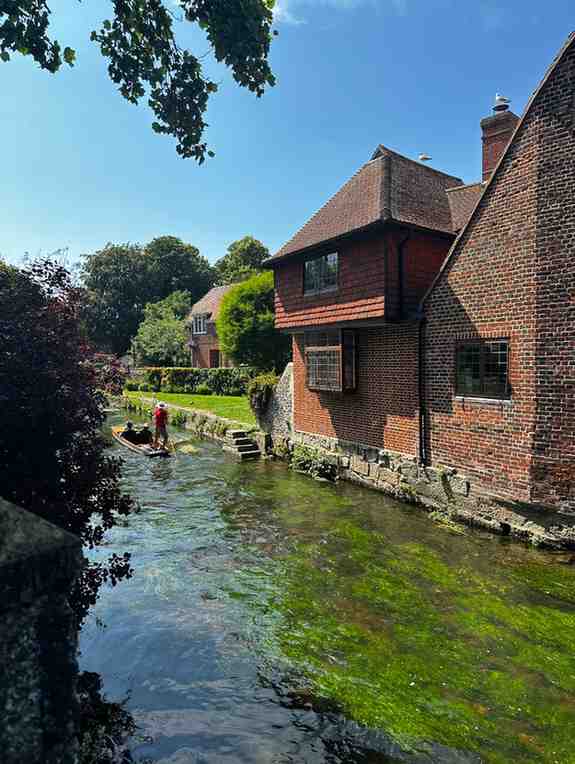
- Campus is situated at top hill location, from where we can see the beautiful view of Canterbury town.
- Library is accessible 24*7 with cafe facilities and vending machines.
- Engineering labs are well equipped with proper safety measures.
Dislikes
- EDA department of university only have 1 dedicated lab/common study room for masters students.
- Cafeteria doesn't offer any Indian snacks and food
- Common kitchens in hostel doesn't have the separate drinking water tap.
Scholarship
- Scholarships are based on the merit basis, and it can vary every academic session. Aspiring students can visit the university website for more information on this.
- I didn't get the scholarship but some of my fellow students got scholarships worth £5000 and £10000.
- Names of Scholarship are-
-Kent Future Students India Scholarships
-Postgraduate Taught - £5000
-Chevening Scholarships- full tuition fee waiver.
Likes
- Campus life is what was the best as it was peaceful.
- Teacher catering to all your doubts made it easier for students.
- Availability of campus security making students feel safe
Dislikes
- The nearby stores were expensive
- The food provided is bland(tasteless)
- Assignment submission of all modules overlapping made it difficult to cope up with.
Overview
Forensic science is a course which intrigues me and due to a personal walk in crime scene investigation. My interest in the field increased even more. I personally think this subject is now becoming demanding.
interested in this College ?
Follow & Share this college to get information about admission.



Comments