



Education Journalist | Study Abroad Lead
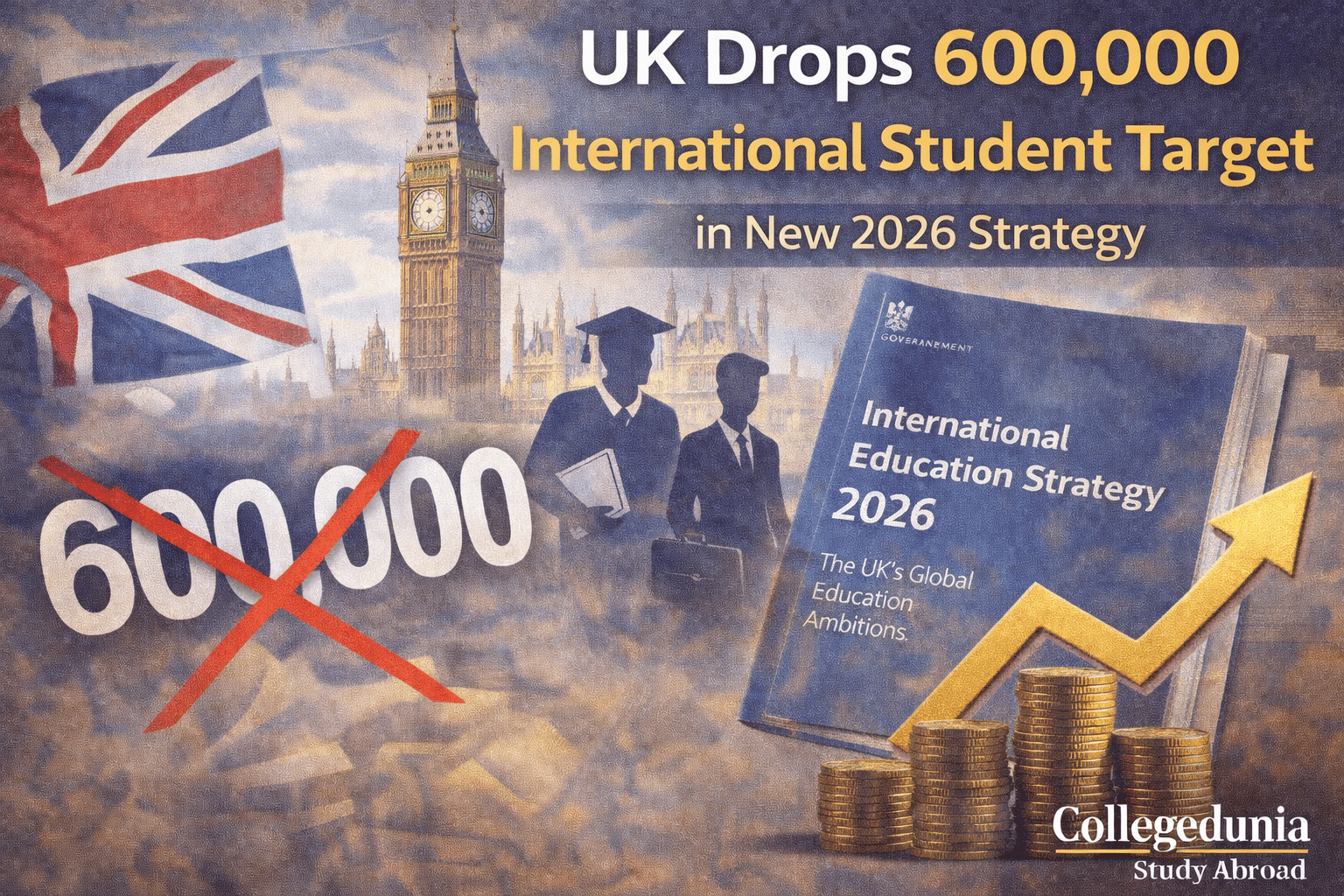
The UK government has launched “The UK’s International Education Strategy 2026”, confirming it has removed the earlier numeric target for international student recruitment and will instead prioritise growing UK education delivered overseas and boosting education exports to £40 billion a year by 2030. The strategy and an accompanying government press release were published on January 20, 2026.
For Indian students planning UK admissions in 2026–27, the change signals a policy pivot: the UK says it will continue to welcome international students, but it is simultaneously tightening expectations on universities’ compliance—warning that providers failing tougher standards could face recruitment caps or licence revocation.
Key Changes Announced
No new “international student number” target
The government press release explicitly states that unlike the 2019 strategy, the 2026 strategy removes targets on international student numbers in the UK and shifts focus toward expanding UK education overseas.
This is a departure from the earlier strategy framework, which set a goal to increase international student numbers choosing UK higher education to 600,000 per year by 2030. The older “International education strategy: supporting recovery and growth” collection page now notes it has been superseded by the 2026 strategy.
Bigger push for overseas delivery and partnerships
The new strategy frames education as a core part of UK “global engagement,” with an emphasis on transnational education (TNE)—including overseas campuses, partnerships and distance learning—alongside recruitment.
The government says it will help providers “remove red tape” to expand internationally, and it announced an Education Sector Action Group to support overseas growth.
What the Strategy Says About International Students?
Although the UK has dropped a single headline number target, the policy paper still lists “sustainably recruit high-quality international higher education students from a diverse range of countries” as one of its core ambitions.
At the same time, the government press release states it is taking “new government action” to ensure those coming to study are “genuine students,” and it flags toughened compliance standards for universities.
Impact on Indian Students
1) Mixed signals: “welcome” messaging, but tighter compliance
For Indian applicants, the practical takeaway is that UK policy is trying to balance two priorities:
sustaining international enrolments, and
increasing scrutiny of institutions and recruitment practices.
In practice, that can mean more stringent checks at the provider level (CAS issuance, attendance/engagement monitoring, agent practices) and potential downstream effects if a provider’s sponsor status is restricted.
2) More UK degrees delivered abroad could expand options
The strategy’s push to scale UK education overseas could increase India-relevant pathways over time—through partnerships, articulation routes, and campus delivery outside the UK—though the strategy does not list India-specific student-number commitments.
3) Expect more emphasis on “responsible recruitment”
The policy paper repeatedly links recruitment to “student experience, quality outcomes, and responsible recruitment,” which may reinforce universities’ insistence on strong academic/financial documentation and clearer intent-to-study signals.
Next Steps for 2026 Applicants
Check your institution’s UKVI sponsor status and track record before paying major deposits (especially for lesser-known providers).
Treat extra university document requests as normal: institutions are under pressure to meet tighter compliance expectations.
If you’re comparing destinations, watch for how UK universities expand offshore pathways (1+1, 2+1, branch campuses, partner delivery) under the new export-led approach.
The prior UK international education strategy model included two headline ambitions: £35 billion in education exports and 600,000 international students per year by 2030. The 2026 strategy refresh keeps an export ambition—now £40 billion per year by 2030—but drops the numeric student recruitment target and reframes growth through overseas expansion.



Comments