



Education Journalist | Study Abroad Lead
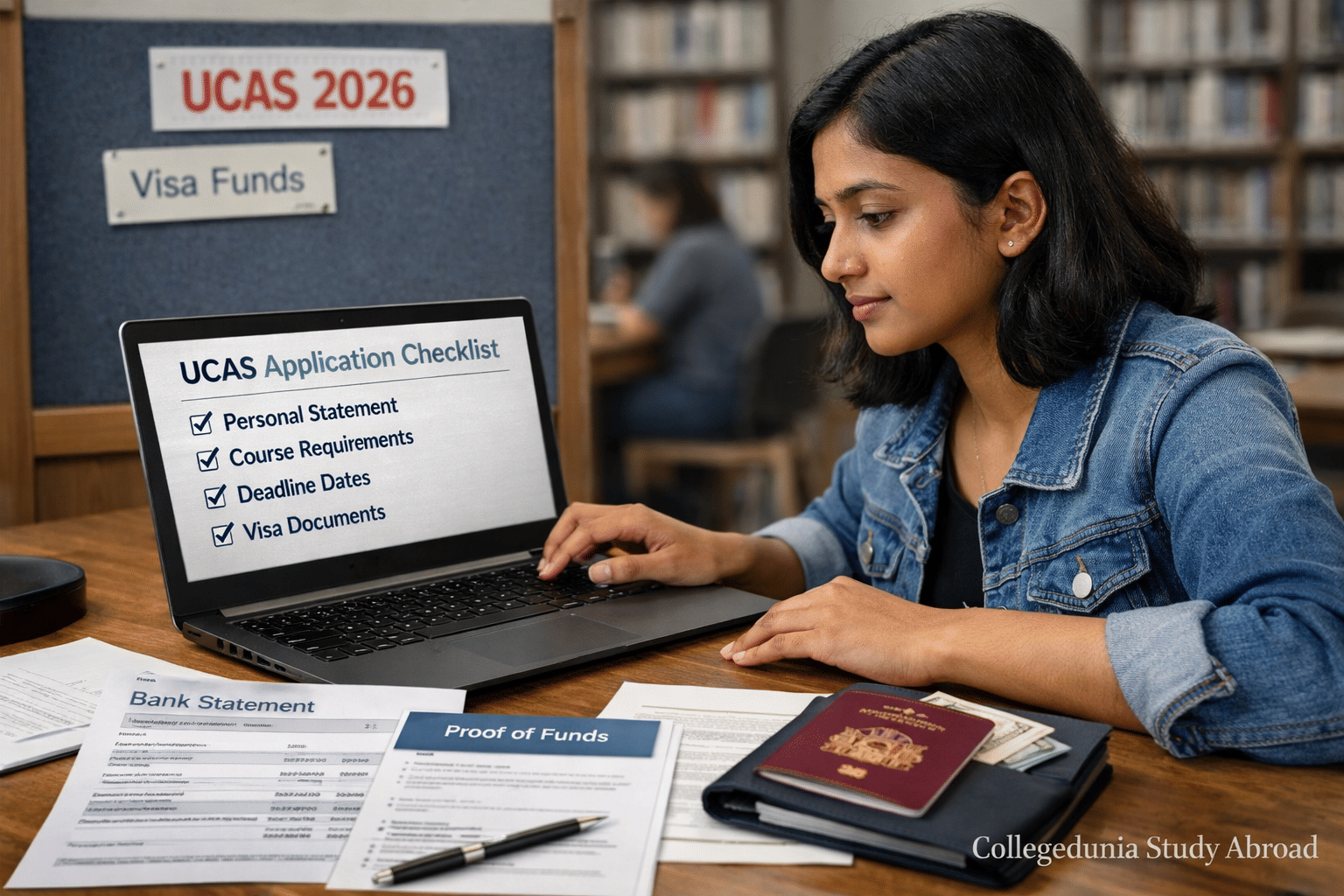
With UK admissions for 2026 entry underway, Indian students need to plan around course-level entry rules, shifting UCAS timelines and personal statement format, and visa realities like financial proof, dependant restrictions, and a confirmed change to post-study work length from 2027.
Check: Top UK Universities List for Indian Students in 2026
Key Changes Announced
1) Entry requirements are course-specific, not “university-wide”
In the UK, universities and colleges set entry requirements for each course, and these can vary by subject, programme and provider. That means two courses at the same university can have different subject prerequisites, English test scores, portfolios, interviews or admissions tests.
What to do now
- Check the exact course page (not just the “International admissions” page).
- Note any portfolio/tests (common for design, medicine, law pathways).
- Confirm whether your Indian qualification needs a foundation year/pathway.
2) UCAS is tightening for 2026 entry — and the personal statement has changed
If you’re applying for undergraduate courses, UCAS’ equal consideration deadline for 2026 entry is 14 January 2026 (6pm UK time). UCAS has also listed 13 May 2026 as the “reject by default” deadline for universities to decide on on-time applications.
Separately, UCAS has rolled out a new personal statement format for 2026 entry, moving from one long essay to a more structured format.
What to do now
- If you’re late, you may still apply, but equal consideration no longer applies after the deadline.
- Start drafting your statement early in the new UCAS format.
3) Scholarships and funding aren’t only “big headline awards”
For 2026–27, the British Council confirms that GREAT Scholarships applications are open (for eligible countries and participating universities).
Also note: scholarship timelines differ widely.
Chevening publishes an official application timeline for the cycle leading to studies beginning in Sept/Oct 2026.
The Commonwealth Scholarship Commission (CSC) states its Commonwealth Master’s Scholarships for 2026/27 are closed (so students should plan alternates or future cycles).
What to do now
- Apply to multiple options: university bursaries, tuition discounts, departmental awards, and national schemes.
- Track deadlines per university (GREAT is university-linked).
4) Post-study work: Graduate Route duration is officially changing from 2027
GOV.UK now clearly states the Graduate visa duration will be:
- 2 years if you apply on or before 31 December 2026
- 18 months if you apply on or after 1 January 2027
- 3 years for PhD/doctoral qualifications
What to do now
If post-study work time is central to your ROI calculation, factor this into intake and graduation planning.
5) Student visa: money rules, dependants, and work limits must be planned early
Financial proof (maintenance) on GOV.UK currently requires:
- £1,529/month (up to 9 months) for courses in London
- £1,171/month (up to 9 months) for courses outside London
Funds must be held for 28 consecutive days, ending within 31 days of applying.
Dependants: GOV.UK says dependants may be allowed for some postgraduate courses, but if your postgraduate course starts on/after 1 January 2024, it must be a PhD/doctorate or a research-based higher degree (unless you’re government-sponsored).
Working while studying: many UK universities advise Student visa holders are usually limited to up to 20 hours/week in term time (and more during official vacations), depending on visa conditions.
Quick Snapshot for Indian Applicants (2026)
| Item | What to note | Official source |
|---|---|---|
| UCAS equal consideration (UG) | 14 Jan 2026, 6pm UK time | UCAS |
| UCAS “Reject by Default” | 13 May 2026 | UCAS |
| UCAS personal statement | 3 questions, 4,000 chars total, min 350 chars each | UCAS |
| Visa maintenance (monthly) | £1,529 London / £1,171 outside + 28-day rule | GOV.UK |
| Dependants (most taught Master’s) | Restricted from 1 Jan 2024; research degrees eligible | GOV.UK |
| Graduate Route duration | 2 years (apply by 31 Dec 2026) → 18 months (from 1 Jan 2027) | GOV.UK |
Impact on Indian Students
Applicants who rely on rankings alone risk mismatching course requirements and missing programme-specific prerequisites.
Students targeting the Graduate Route should plan intakes with the 2027 rule change in mind.
Families planning to travel together must confirm whether the programme is classified as research-based for dependant eligibility.
Visa refusals often come down to financial evidence timing and documentation discipline, not academics.
Next Steps
- Shortlist by course fit first (modules, accreditation, prerequisites), then brand/rankings.
- Create a funding tracker: GREAT + university bursaries + department awards.
- Build a visa calendar around CAS issuance and the 28-day funds rule.
- If post-study work is key, align your timeline with the Graduate Route duration change.
- Validate “real life” with official events/resources (Study UK guidance and university open days).



Comments