


Goutham
Reviewed on Oct 30, 2025(Enrolled 2017)What Students Say
Likes
- The Masters programme provided access to diverse courses which can be taken other than the main courses mandatory as part of the Masters Programme. This provided an opportunity to explore other fields by taking the courses and learning more. Although there the programmes are structured the students have the chance to explore a lot which is different from some of the education systems in the world with fixed programmes. This might be overwhelming for students who come from an education system where everything is planned and provided to the students
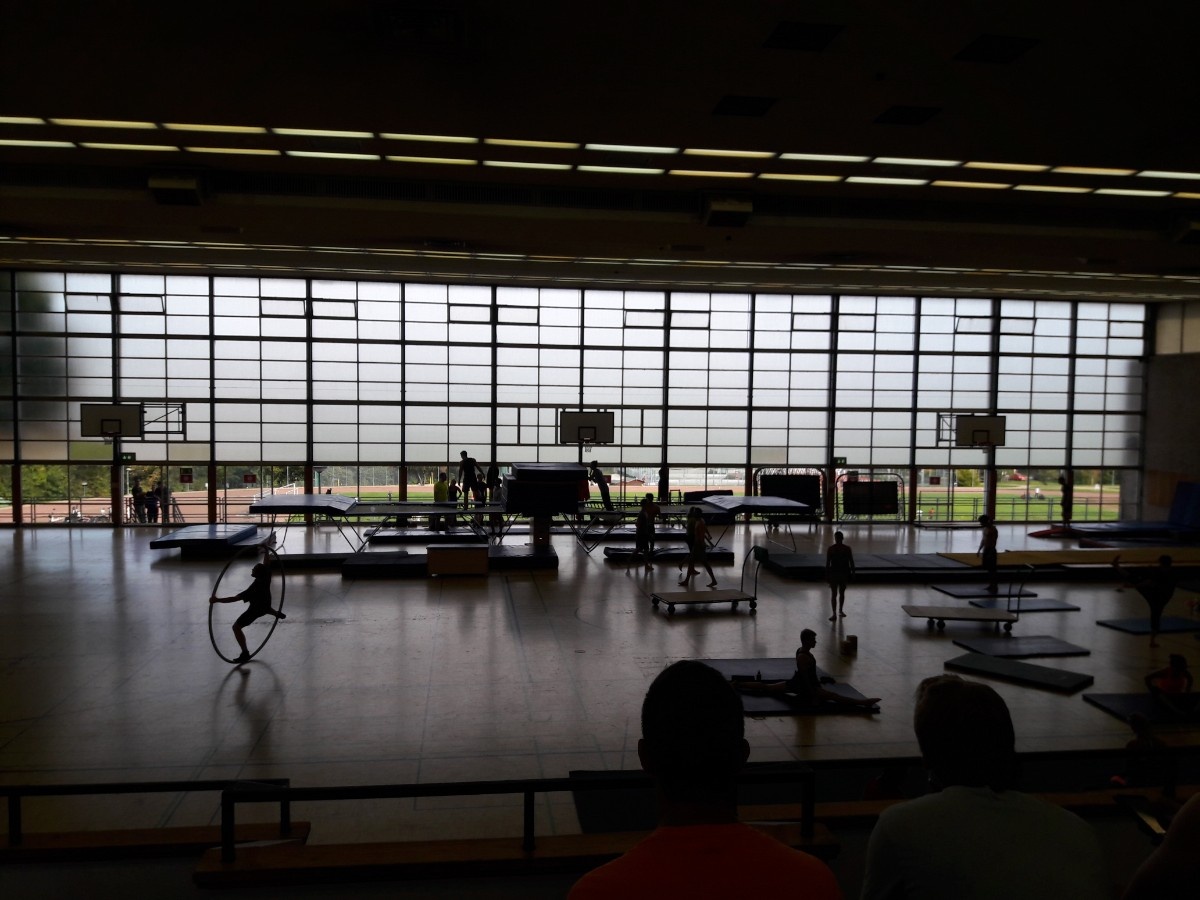
- The university provides various sports and extracurricular facilities for students to explore and actively pursue them
- The university provides language learning courses which can be very well planned within the courses schedule not disturbing the daily lecture plans
Dislikes
- There is a lot of competition among the available opportunities like research assistant positions and projects among the large number of students in the university
- The sports and extracurricular options are also difficult to get due to large number of students applying for it
- Although there are Student Dorms available, getting a place in the student dorm is really difficult with waiting times sometimes upto 1 year or even more
Course Curriculum
8
- The Masters Programme was structured with varied courses offering different specialisations. If a student wants to specialise in a specific stream, then as a part of this Programme, they have to put in extra efforts to complete the mandatory courses outside their field of interest. But it offers different courses for students to understand and then take a decision later to decide which field they would like to specialise in. It is both an advantage and a disadvantage depending on the students' outlook.
- The education and examination system is different compared to India. One has to put in a lot of effort to be successful in academics.
- The lecture timings vary depending on what one chooses. The mandatory courses have to be completed by the end of the master's programme and can be completed in any semester. Some courses are prerequisites to other courses to be completed in the programme; hence, they have to be completed in a specific order.
- Generally the lecture timings are from 8am to 6pm. But generally it would not be a complete day but instead there would be breaks in between for a few hours without any Lectures.
- Depending on the courses which the students opt for, the courses with huge demand might have up to 200 students and courses with less demand might have up to 10 students.
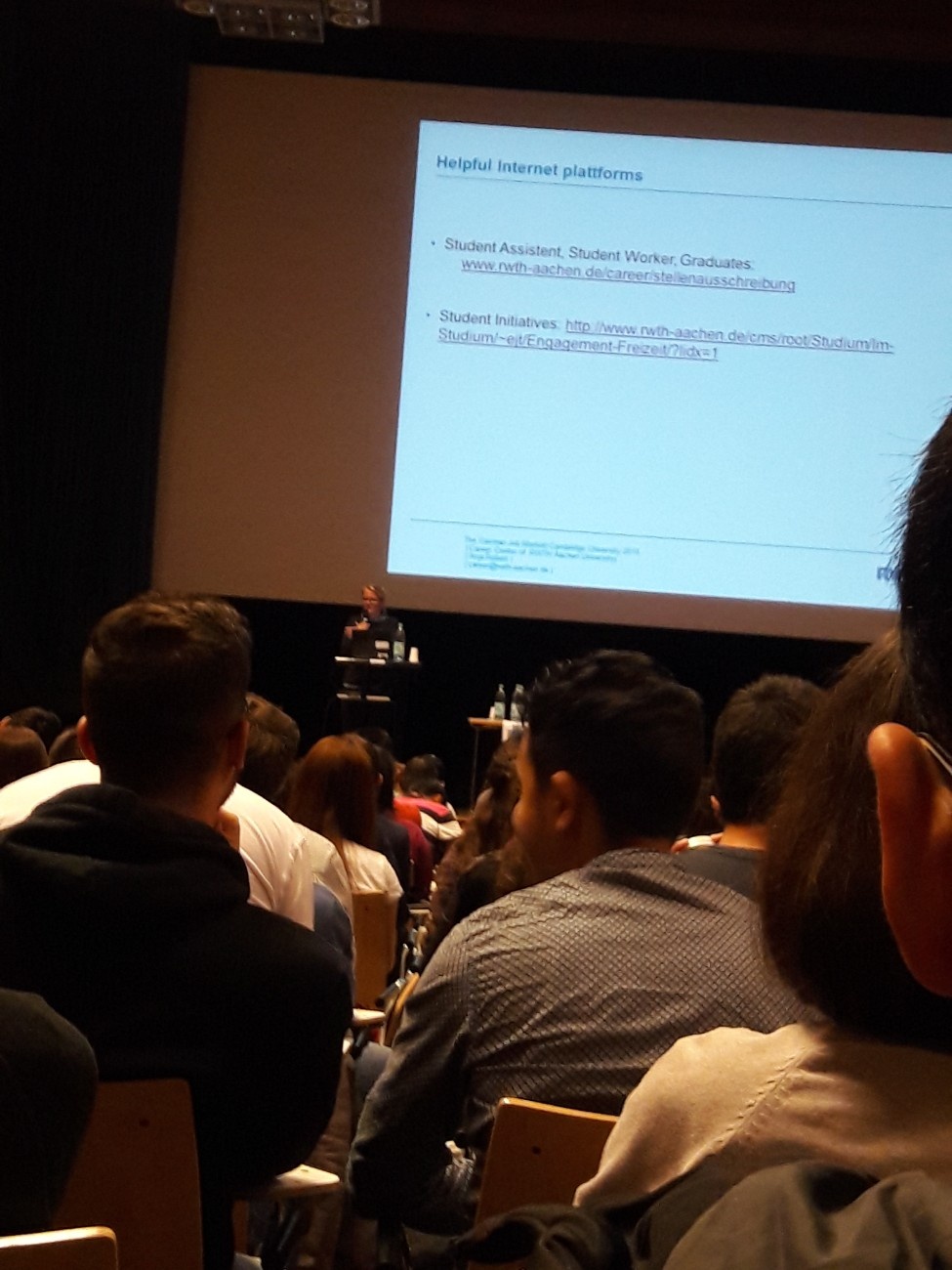
- There are also lectures with up to 500 students in auditoriums.
- On a day a student can plan up to 5 lectures depending on their interest. Generally each lecture spans up to 1.5 hours. The number of lectures can be planned by students before choosing the courses at the beginning of the semester.
- Many of the courses in the Masters Programme have up to 70 Students out of which up to 60 Students are Indians.
- Majority of the students are Indians due to increased visa restrictions in the USA and the setting up of University offices in India. The offices in India promote education at RWTH offering summer courses to attract students even before the master's programme in Germany.
Admission Experience
-
Applied to around 20 colleges in Germany. Got a lot of rejections due to language requirements and high competition. Some colleges required specific academic qualifications, like graduating from IIT or already having completed a master's degree, to qualify for their master's degree.
- RWTH Aachen University • Aachen
- FH Aachen - University of Applied Sciences • Aachen
- University of Applied Sciences Ansbach • Ansbach
- Augsburg University of Applied Sciences Augsburg
- HTW Berlin - University of Applied Sciences Berlin
- Beuth University of Applied Sciences Berlin • Berlin
- Berlin University of Technology • Berlin
- University of Bremen • Bremen
- University of Applied Sciences Bremerhaven • Bremerhaven
- Technische Universität Chemnitz • Chemnitz
- Brandenburg University of Technology Cottbus-Senftenberg • Cottbus
- Anhalt University of Applied Sciences • Dessau
- Anhalt University of Applied Sciences • Dessau-Roßlau
- TU Dortmund University • Dortmund
- Dortmund University of Technology • Dortmund
- Technische Universität Dresden • Dresden
- University of Applied Sciences Emden/Leer • Emden
- FAU Erlangen-Nürnberg • Erlangen
- Esslingen University of Applied Sciences • Esslingen am Neckar
- University of Freiburg •Freiburg im Breisgau
- Leibniz Universität Hannover • Garbsen
- Munich University of Technology • Garching
- University of Applied Sciences Cologne • Gummersbach
- Hamburg University of Technology • Hamburg
- Technische Hochschule Ingolstadt • Ingolstadt
- Kaiserslautern University of Applied Sciences •Kaiserslautern
- Rhine-Waal University of Applied Sciences • Kamp-Lintfort
- University of Kassel • Kassel
- Kiel University of Applied Sciences • Kiel
- Rhine-Waal University of Applied Sciences • Kleve
- Cologne University of Applied Sciences • Köln
- Hochschule Landshut \ Hochschule für angewandte Wissenschaften • Landshut
- Ostwestfalen-Lippe University of Applied Sciences • Lemgo
- Luebeck University of Applied Sciences • Lübeck
- Technische Universität München • München
- Kaiserslautern University of Applied Sciences • Pirmasens
- University of Rostock • Rostock
- Bonn-Rhein-Sieg University of Applied Sciences • Sankt Augustin
- University of Siegen • Siegen
- University of Stuttgart • Stuttgart
- Ravensburg-Weingarten University of Applied Sciences Weingarten
- EBS University of Business and Law • Wiesbaden
- Ostfalia University of Applied Sciences (Braunschweig/Wolfenbüttel campuses) • Wolfsburg
- The master's programme aligned very much to my area of interest and also was one of the leading university in Germany
- Admission process requires IELTS, German Language, Good Academic records. Preferable work experience, Preferable GRE score, GATE score for some courses, Statement of purpose, Letter of Recommendation
- The application process was long requiring many documents and attestations.
- Many universities also required pre-certification from Uni-assist
- Applied for Winter 2017 Intake was by March 2017 and received the results much before any other university by June.
- Admission had to be confirmed by paying the fees. Course started from October and there were also beginner German courses offered for students without any German language knowledge
- The course of interest to me, and the college ranking for very high, as I found from my internet research
- There were also ample research opportunities ongoing in the university.
Faculty
8
- Faculty-to-student ratio varies from one course to the other course. Some courses/lectures might have hundreds of students, while others might have 10 students. Students can get their doubts clarified either during the lectures or after the lectures. Sometimes there are specific lecture hours dedicated as exercise hours and sometimes the professors offer to set up an appointment with them if the students have questions. The culture of asking questions is very prevalent here and one can always ask questions.
- The teaching methodology is mostly theoretical, as the University if focused more on research rather than preparing a student for an industrial environment. A Student has to put in extra efforts by taking up projects at the university and also additional research assistant jobs to gain experience and be able to secure of job after studies. The Masters programme also requires a mandatory internship, which gives an opportunity to gain experience in the field of interest and test out to know if the field of interest is actually something the student wants to pursue in the long term.
- Faculty generally don't involve themselves to assist students in finding a job (part-time or full-time). In some cases, the institute of the faculty requires students for a research assistant job; they do announce the positions but it happens very rarely. Students have to proactively approach various institutes to find out if there are any opportunities available. After having worked with some professors at the university and establishing a good relationship with the department, there might be a chance for referrals by the institute among their network.
- The Faculty for Numerical methods course was always very patient and took extra efforts in answering questions. He was very down-to-earth.
Campus Life
8
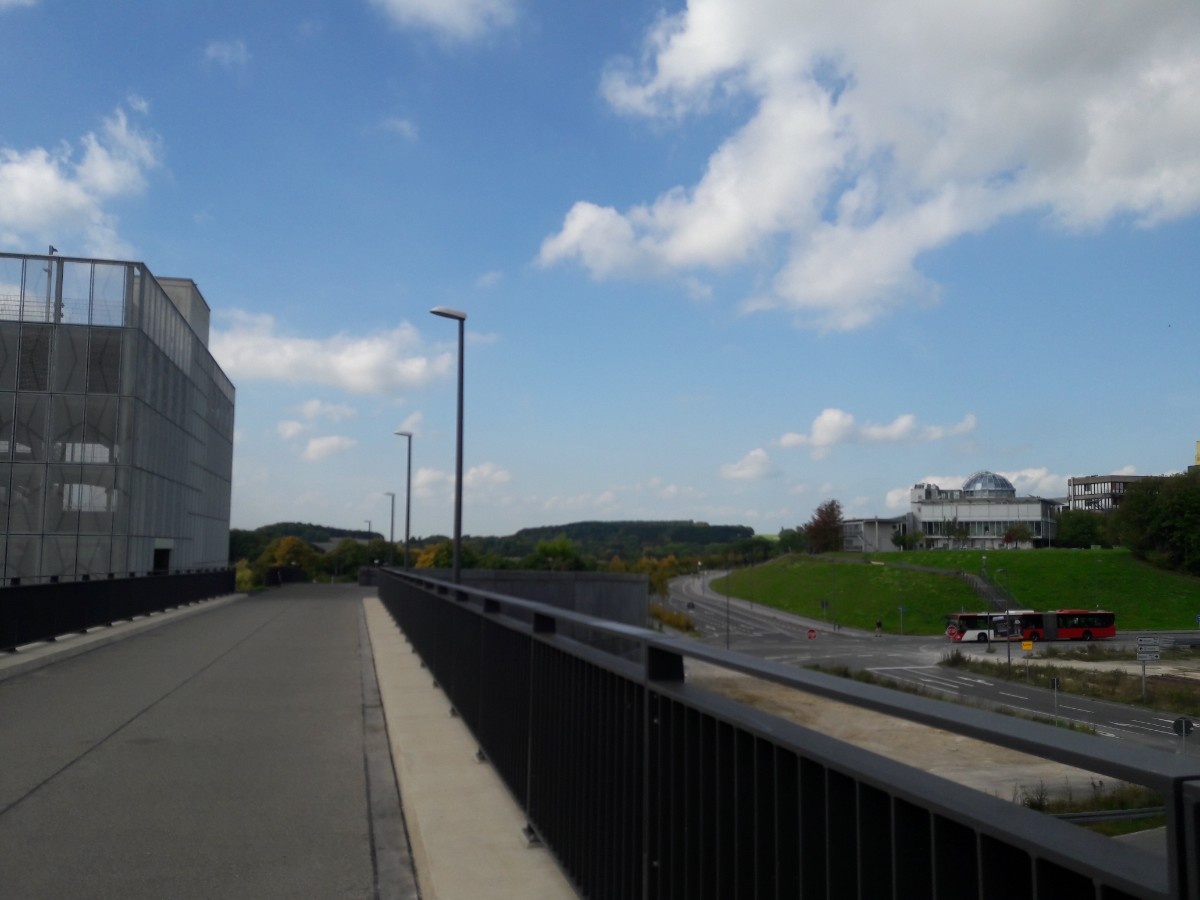
- There are two campuses: Campus Mitte and Campus Melaten.
- Campus Melaten is the new campus with more new infrastructure facilities
- There are libraries situated in Campus mitte and sports facilities located close to campus mitte.
- The university sports centre offers a huge range of activities one can pursue, even including martial arts and other forms of arts.
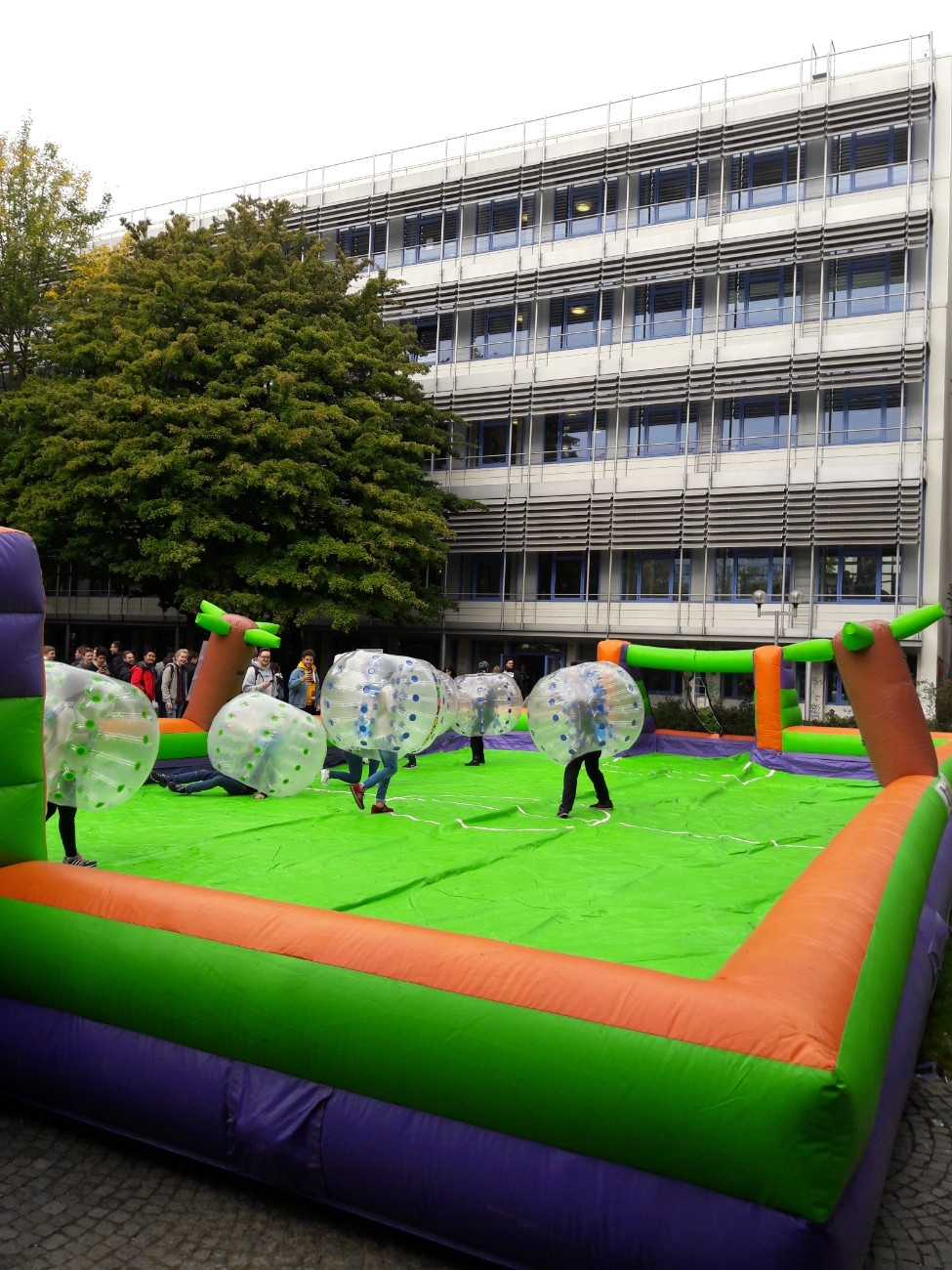
- University organises incoming festival every year for Bachelors students and also sometimes for master's students.
- Various student organisations present organise various cultural events in which students can voluntarily take part as per their individual interests.
Part Time Jobs
- It's very variable but maybe up to 10 students got a research assistant job at various institutes in the university after trying on their own.
- Pay for different positions depends on the contract hours. The contract hours can be decided by the institute and the student taking the position. Students were allowed to work for 120 full working days or 240 half working days. Students were allowed to work for a maximum of 20 hours per week.
- Some positions may offer up to 450 Eur and some may also be more depending on the number of hours and the per-hour pay rate (13 Eur/hour to 16 Eur/hour).
- On-campus part-time jobs are not so easy and have huge competition due to the large number of students.
- Some Indian students got positions as Student assistants in institutes. But the majority just focused on their studies, as a master's at RWTH is really tough and one does not have enough free time if one aims to complete the master's programme in the optimal period of 2.5 or 3 years. Some students worked outside, either in restaurants or warehouses. There are a few consultancy companies who provide part-time job options but they are physically demanding. If one knows the German language well, one can find more options to work in local places. There are many different jobs which open up if a student is able to speak the language very well. Most offer a basic wage salary depending on the number of hours you work.
Placement
6
- The number of students who secure a full-time job after the master's programme within 6 months is very low. Different students complete their Masters at different timelines
- Due to heavy competition and not well-informed international students, some companies offer below-average salaries to international students, as they don't negotiate much. Average salary might range between 40000 EUR and 60000 EUR starting salary depending on small or bigger cities.
- Students have to search for jobs on their own through job fairs and online applications. University does organise one or two job fairs on the university campus but the majority of positions are taken by local German students, as companies prefer locals who speak the German language.
- There are also possibilities where one can register with an employment agency for assistance with a job search with extra courses or German language courses.
- Finding a job without good German language is extremely difficult and one has to start applying much before completing the master's degree. Multiple internships, Research assistant in projects and multiple project experiences are crucial to finding a job in Germany. Most companies don't consider experience outside the EU as relevant job experience for the jobs in Germany.
- No companies directly hire graduates from the master's programme. Students have to apply themselves for various positions at multiple companies in and around Germany.
Accommodation
Off Campus
6
- There are student dorms available in the university. But due to the large number of students indians rarely get a place in the dorms. Firstly, there are a large number of students looking for student dorms and the dorms try to maintain diversity in the student dorm, avoiding too many students from one country in the dorm. Due to these regulations and the large number of indians applying for student dorms, it becomes extremely difficult to find a place at the student dorm. One has to be on the waitlist for almost a year and may still not get a place in the student dorm.
- There are student associations to help in searching for accommodation but one has to search oneself. Associations or others can just provides leads or answer queries to some questions and cannot provide any concrete accommodation options
- For student dorms rent ranges from 250 Eur to 500 Eur. Some student dorms also provide accommodations for students with families, which might be a little expensive but way lower in cost compared to private apartments.
- I would suggest registering for the student dorm waiting list already when one makes the application for the course and keeping renewing it every month without fail. Once the waitlist number reaches single digits, approach the specific student dorm and ask for available options.
- The student dorms are spread out all over the city and not concentrated in a particular area.
- A strong suggestion would be to find an accommodation as close to the university as possible in the same city and not in the neighbouring city. Living far away might make you not get involved in the ongoing campus events and lose out on the opportunities to experience university life.
- Beware of scams asking to transfer money as a caution deposit and rent before having a look at the apartment and signing the contract. Transfer the money only after signing the contract and meeting the landlord in person or someone meets on your behalf. Talk with the prospective flatmates to be sure that the advertisement is legitimate. There are a lot of scams done by people taking advantage of the accommodation crisis in Germany.
Exams
- Required: IELTS, German Language certification through standard exams
- Recommended: GRE, GATE
- Documents: SOP, LOR, Resume, Work experience certificates, Certificates of achievements in Projects and other extracurricular activities
- There was no interview process involved. The whole application process was online and needed to upload the documents.
- Once the admission is confirmed the fees has to be paid much before the college begins
Fees
-
Total Tuition Fees: For International academy 3500 Eur x 4 Semesters (Planned) + Semester fees to the university around 300 Eur
- Beyond the 4th semester: International academy 500 Eur per semester + Semester fees to the university around 300 Eur
- Fees is supposed to be paid every semester
- Student Dorms cost 300 Eur to 500 Eur
- Shared apartments cost 350 Eur to 600 Eur
- Monthly living expenses cost from 200 Eur to 500 Eur
- Medical Insurance monthy around 100 Eur
Scholarship
- There are some scholarships available and one has to apply to them. More information can be found on the websites.
- A few of my batchmates got some scholarships
- There are multiple scholarships. Some are for women in engineering (25% reduction) and some are for best in class, depending on the academic performances.
- Scholarships for the German language are also available. After completing B1 level at the university, the German course fee is refunded on providing the course completion certificate from the university language institute


