



Content Curator
Ketogenesis is a metabolic pathway that builds up ketone bodies, which provides an alternative form of energy for the body. The body constantly produces small amounts that can make up 22 ATP (Adenosine Triphosphate) each in normal conditions, and it is regulated mainly by insulin. In the state of ketosis, ketone body production is increased when there is a decreasing number of carbohydrates or increasing fatty acids. However, ketoacidosis can take place if too many ketone bodies gather, such as in the case of uncontrolled diabetes.
| Table of Content |
Also Read: Microbiology
Key Takeaways: Ketogenesis, Ketone Bodies, ATP, Mitochondria, Ketosis
Ketogenesis
[Click Here for Sample Questions]
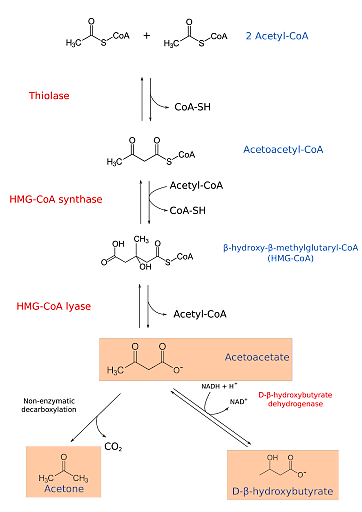
Ketogenesis produces acetone, acetoacetate and beta-hydroxybutyrate molecules by breaking off fatty acids. The ketones are water-soluble lipid molecules made up of two R-groups attached to a carbonyl group (C=O). This is because they are soluble in water, and do not require lipoproteins for transportation. Of the three, acetoacetate and beta-hydroxybutyrate are acidic in nature, having pKa values of 3.6 and 4.7 respectively.
Ketogenesis
Not having enough level of ketogenesis could result in hypoglycemia and overproduction of ketone bodies leads to a condition called ketoacidosis. Ketoacidosis releases ketones when fats are broken down in order for the formation of energy. There are different ways of releasing ketones such as through urination and exhaling acetone. Ketones have a sweet smell on the breath.
Read More:
Ketone Bodies
[Click Here for Sample Questions]
Ketone bodies are water-soluble molecules produced by the liver from fatty acids during low food or fasting. They are produced when the body experiences starvation, a carbohydrate-restricted diet and prolonged intense exercises. Ketone bodies are mainly manufactured in absence of glucose. It is easy to detect the presence of ketone bodies in our body.

Ketone Bodies Metabolism
Ketone bodies include -
- Acetone
- Acetoacetic acid
- Beta-hydroxybutyrate
- Beta-keto pentanoate
- Beta-hydroxypentanoate
We can use ketone bodies as fuels for the brain, heart and muscles. They are the energy source for the brain during starvation.
Also Read:
Ketogenesis Mechanism
[Click Here for Sample Questions]
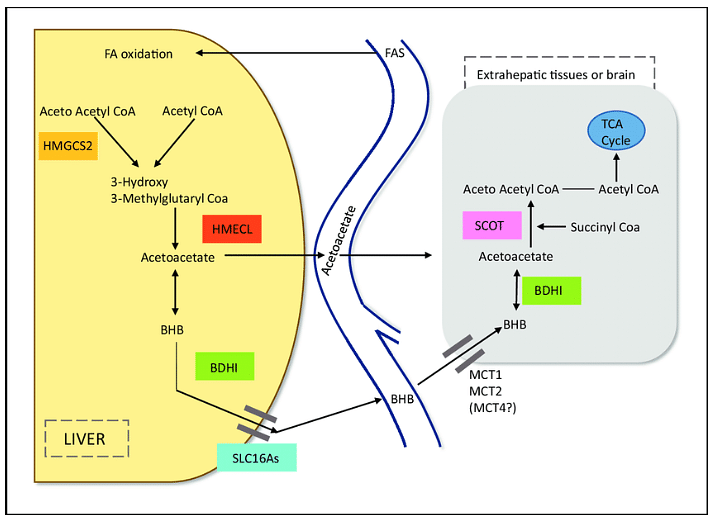
Ketogenesis mainly occurs in the mitochondria of liver cells. Fatty acids are brought into the mitochondria via carnitine palmitoyltransferase (CPT-1) and broken down into acetyl-CoA via beta-oxidation. Two acetyl-CoA molecules are converted into acetoacetyl-CoA via enzyme thiolase, this is also called acetyl coenzyme A acetyltransferase (ACAT). Then, acetoacetyl-CoA is converted into HMG-CoA via an enzyme called HMG-CoA synthase. HMG-CoA lyase is converted into acetoacetate. After that, acetoacetate will be converted into either acetone through non-enzymatic decarboxylation or to beta-hydroxybutyrate via beta-hydroxybutyrate dehydrogenase.
Ketogenesis Mechanism
Acetoacetate and beta-hydroxybutyrate are two ketone bodies used by the body for energy. Once they reach extrahepatic tissues, beta-hydroxybutyrate is converted to acetoacetate via enzyme beta-hydroxybutyrate, dehydrogenase and acetoacetate is then converted back to acetyl-CoA via enzyme beta-ketoacyl-CoA transferase.
Ketogenic Diet
[Click Here for Sample Questions]
Ketogenic diet is mainly lower in carbohydrates, higher in fat and moderate in protein. In a ketogenic diet, the body has a low level of insulin which is responsible for various health benefits to the body. It helps in losing weight. It will help lose fat while preserving muscle mass. It also helps in reducing high blood pressure. Ketogenic diet mainly helps in significantly reducing the level of cholesterol in the blood. It improves the condition of arteries, which also improves the arterial system in the body. It improves health and function of the brain.

Keto Diet
A ketogenic meal always includes natural fats like butter, coconut oil and olive oil, a small amount of protein and some green leafy vegetables. It also helps in the treatment of epilepsy in children and adults. This type of diet helps in altering the growth of cancer cells and improves the quality of life of patients suffering from cancer.
Read More:
Functions of Ketogenesis
[Click Here for Sample Questions]
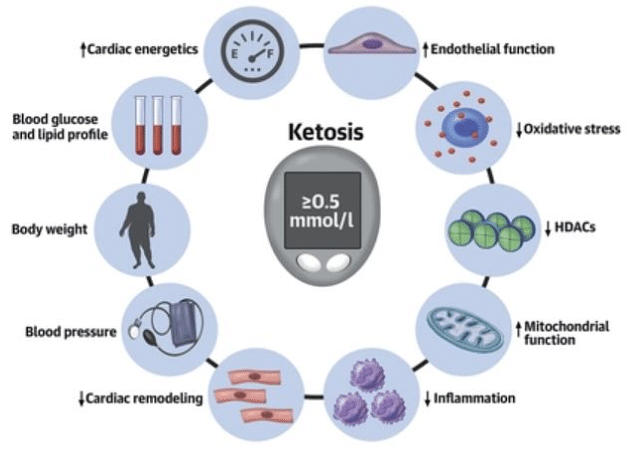
The body continuously makes a small number of ketones to be used by the body for energy. In times of fasting, overnight while sleeping, the level of ketone bodies in blood increases. The normal pathways to create energy involve either stored carbohydrate or non-carbohydrate substances.
Functions of Ketogenesis
When ample carbohydrate stores are available, the pathway used is glycogenolysis. When carbohydrate stores significantly decrease or fatty acid concentration increases, there will be an upregulation of the ketogenic pathway and increases the production of ketone bodies. Many organs and tissues use ketone bodies as an alternative source of energy.
Read More:
Things to Remember
[Click Here for Sample Questions]
- Ketosis is a normal physiological condition which is characterized by elevated serum ketones and normal blood glucose.
- Diabetic patients are affected by ketoacidosis because insulin hormones are the main regulator of the process.
- In ketoacidosis condition, the kidney excrete extra ketone bodies with water resulting in fluid loss.
- Level of ketone bodies present in the body can be tested by blood serum or urine sample analysis.
- The ketogenic diet is mainly used these days to lose weight.
Also Read:
Sample Questions
Ques. Why are ketone bodies formed? (3 Marks)
Ans. When there is an increase in glucose level of the body, the body is busy storing excess fats, building proteins and in growing. This state is called an absorptive state. When humans starve and have fast, the glucose level of the body decreases. This triggers the body to enter in the postabsorptive state. In this type of state, the body starts converting fat back into fatty acids, glycogen into glucose and breaking down amino acids for energy. Hence, the liver releases ketone bodies along with glucose, into the bloodstream to feed the brain.
Ques. Explain the regulation in ketogenesis. (3 Marks)
Ans. Ketogenesis can be regulated by hormones such as glucagon, cortisol, catecholamines, thyroid hormones by causing breakdown of free fatty acids, hence increasing the amount available to be used in the ketogenic pathway. Therefore, insulin is the primary hormonal regulator for this process. Insulin regulates many enzymes in the ketogenic pathway. A low insulin level leads to -
- Increased free fatty acids
- Increased intake of free fatty acids into the mitochondria.
- Increased production of ketone bodies
Ques. What are the similarities between ketosis and ketogenesis? (3 Marks)
Ans. Similarities between ketosis and ketogenesis are -
- Fatty acids take part in both the processes.
- Both processes supply alternate energy to the brain.
- Both processes occur in situations such as carbohydrate restriction, fasting, excessive exercise etc.
- Both processes produce ketone bodies.
Ques. What is the clinical significance of Ketogenesis? (3 Marks)
Ans. An increase of ketone bodies due to increase in ketogenesis can cause a problem due to their acidic nature. Diabetic ketoacidosis(DKA) is an example which involves overproduction of ketone bodies. It can happen when there is an absence of or resistance to insulin. Due to absence of glucose by insulin, cells started to produce glucose via gluconeogenesis. This process, with existing glucose that cannot be brought with insulin, increases serum glucose level. Once carbohydrate stores become depleted and gluconeogenesis cannot occur anymore, ketogenesis is increased and a larger number of ketone bodies are produced.
Ques. State the differences between Glycogenolysis and Gluconeogenesis. (5 Marks)
Ans.
| Glycogenolysis | Gluconeogenesis |
|---|---|
| It is the production of glucose 6-phosphate by splitting up a glucose monomer | It is a metabolic process from which glucose is formed from non- carbohydrate precursors in the liver. |
| In this, a low amount of ATP (Adenosine Triphosphate) is consumed. | In this, six ATPs (ATP (Adenosine Triphosphate) are required in the production of one glucose molecule. |
| Glycogenolysis is a catabolic process. | Gluconeogenesis is an anabolic process. |
| Glycogenolysis occurs in the liver. | Gluconeogenesis occurs in the liver as well as in the tissues where there is a high demand of glucose. |
| In this, breakdown of glycogen takes place in the liver. | In this, amino acids and lactic acids are used in the manufacturing of glucose. |
Ques. Explain the differences between Ketosis and Ketogenesis. (5 Marks)
Ans.
| Basis of Comparison | Ketosis | Ketogenesis |
|---|---|---|
| Definition | It is a metabolic process which is characterized by elevated levels of ketone bodies in the blood or urine. | It is a biochemical process where organisms produce ketone bodies by breaking down fatty acids and ketogenic amino acids. |
| Blood Glucose | Normal blood glucose is there. | Blood glucose level decreases in conditions like insufficient gluconeogenesis. |
| Blood and Lymph | There is no involvement of blood and lymph in Ketosis. | There is an active involvement of blood and lymph in Ketogenesis. |
| Blood pH | Normal blood pH level is there. | Blood pH level lowers in conditions like insufficient gluconeogenesis. |
| Causing Diseases | Ketosis does not cause diseases. | Ketogenesis causes diseases like non diabetic ketoacidosis in some conditions as in the case of insufficient gluconeogenesis. |
Ques. What are symptoms of Ketogenesis? (3 Marks)
Ans. Symptoms of ketogenesis are -
- Confusion
- Frequent urination
- Nausea with or without vomiting
- Stomachache
- Excessive thirst
- Fruity smelling breath or nail polish remover like breath
- Body weakness and a feeling of fatigue
- Shortness of breath or rapid breathing
Ques. How are ketones metabolized? (2 Marks)
Ans. For a ketone to be metabolized, it needs to undergo synthesis and breakdown. When the body undergoes fasting, the liver switches to fatty acid oxidation and ketone body production. The ketone bodies made in the liver enter the bloodstream and will be used by other organs like heart, brain, kidney cortex and skeletal muscles.
Also Read:



Comments