
Select Goal &
City
Select Goal
Explore
Explore More

![Andhra Mahila Sabha Arts and Science College for Women - [AMSASCW]](https://image-static.collegedunia.com/public/college_data/images/logos/1395642589Andhra Mahila Sabha Arts and Science College for Women (AMS).png?h=71.7&w=71.7&mode=stretch)
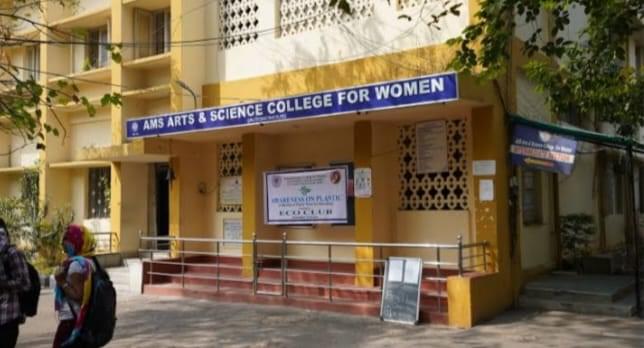
Andhra Mahila Sabha Arts and Science College for Women Hyderabad Reviews on Placements, Faculty and Facilities
What Students Say
Likes
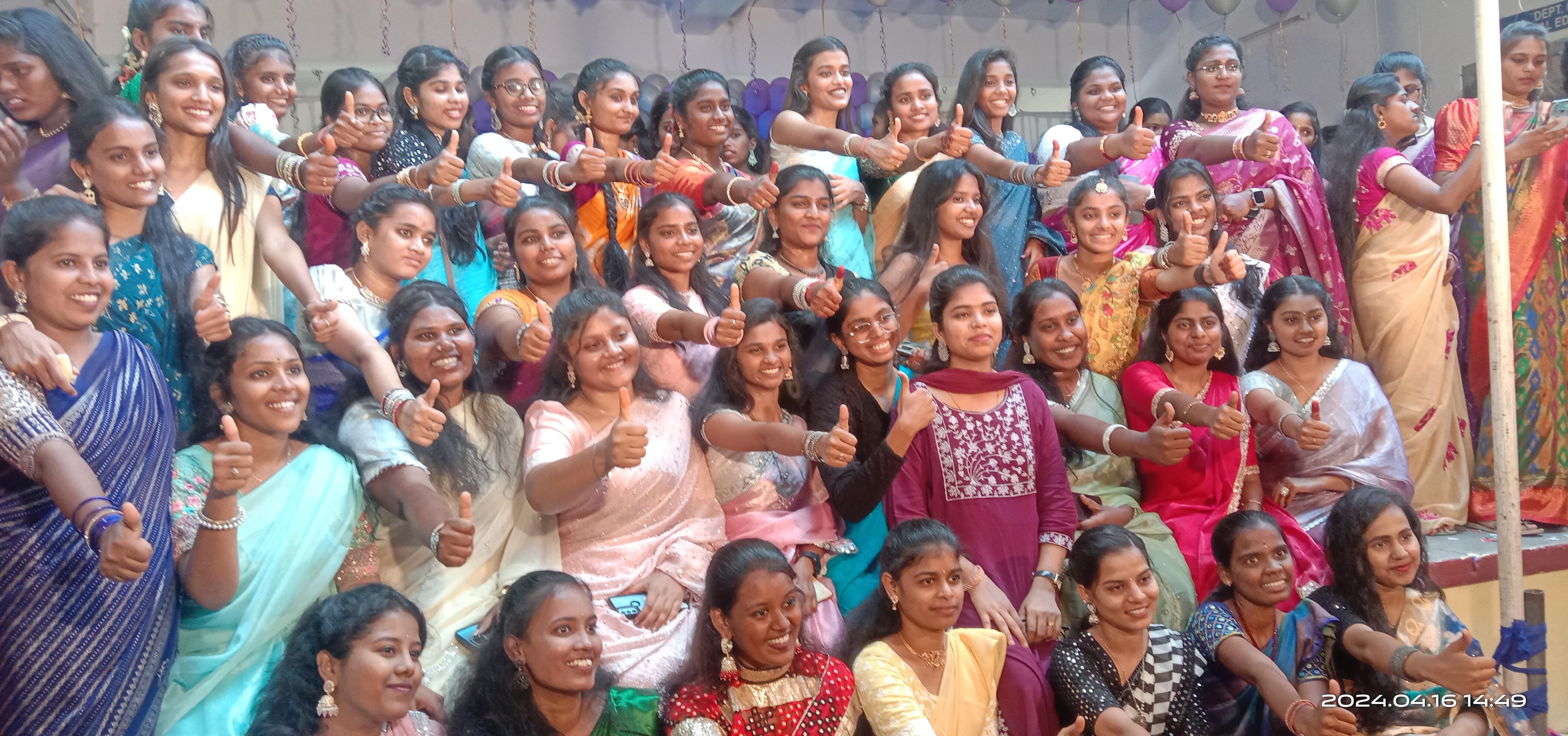
- *the college will also celebrate every festival like bathukamma,diwali,holi etc.
- I applied to this college the founder of the college is the great freedom fighter durga bhai deshmukh.
- I have studied bipc in intermediate after completion of intermediate i have applied for this college in dost online website to bsc btzc and college admission is successful and college is very good and nice
Dislikes
- Classroom benches are a bit uncomfortable because single student they carry there own chair and table .
- Lack some cleanliness in campus and surrounding
- Management response will be bit late in some issues related to exam fees
These insights are automatically extracted from student reviews
Why To Join Andhra Mahila Sabha Arts and Science College for Women Hyderabad - Reviews & Rating
Most Popular Tags
Reset All Filter

Likes
- The campus is so peaceful as its near to osmania university
- The library has very good old collection
- The area is near to the everything to the necessities
Dislikes
- The faculty is not trained well to teach the students
- the books are not kept avaliable for the studies to study academically
- The placements are not been improved they can atleast they can try for avaerage number of placements
Course Curriculum Overview:
The aspects which influenced me were the uniqness of the course as business analytics is the emerging course which has many options for future that attracted me to take up this course but i feel this course is not been thought to be work pratically as there was no lab for second and third year which is big challenge for real world scenario
1
0
Reply
Report
Likes
- As it is womens college,The college environment was highly comfortable for womens.
- The faculty was always been a great support to the students by effectively explaining the concepts.
- There was placement opportunities conducted in the college for the students.The infrastructure was always been monitoring by the management.
Dislikes
- Canteen
Student Snaps:


Course Curriculum Overview:
I choosed the course business analytics because as it focuses on data mainly and by which we can learn system relations a lot during the course.The course also stands first in real time projects.It deals with lab works so that students can understand things and concepts better in a practical way.In the current generation every student has to know about the analysis methods.The improvements which I suggest is let students spend more time in labs.
0
0
Reply
Report
Likes
- The campus area is good and has greenery. Campus life is good.
- Well labs are equipped properly, teaching skills too are at point.
- Labs are conducted regularly especially for chemistry department. The course and curriculum is also very good and easy.
Dislikes
- Classrooms are not more in number, very less.
Course Curriculum Overview:
The Curriculum is desinged in such a way that it is basic and easy to learn.
Every semester, new things can be learmed, we cover each and every part of the subject.
Exams paper pattern is also easy to understand.
Exam is of 3 hours.
0
0
Reply
Report

Likes
- Andhra Mahila Sabha Women's College (MSc in Organic Chemistry) Faculty Expertise: Professors were highly knowledgeable and approachable, offering excellent mentorship and guidance. Course Curriculum: The curriculum was well-structured and provided a
Dislikes
- Andhra Mahila Sabha Women's College Placement Services: Limited support for placements and career guidance in specialized fields like organic chemistry. Infrastructure: While the labs were functional, some needed modernization to match industry stand
Course Curriculum Overview:
Aspects of the Curriculum That Influenced My Decision
Specialization in Organic Chemistry: The focus on organic chemistry aligned with my academic interests and career aspirations.
Comprehensive Syllabus: The curriculum covered essential topics like reaction mechanisms, spectroscopy, and synthetic methodologies, providing a strong theoretical base.
Lab-Oriented Learning: The inclusion of practical experiments and techniques, such as chromatography and spectroscopy, appealed to my desire for hands-on learning.
Reputation of the Program: The college's reputation for delivering quality education in organic chemistry was a significant factor.
Preparation for Real-World Applications and Academic Pursuits
Practical Application: The lab sessions were instrumental in building technical skills applicable to industries like pharmaceuticals and research labs.
Research Orientation: The curriculum encouraged exploring current developments in organic chemistry, preparing students for further studies or research roles.
Analytical Skills: The rigorous training in problem-solving and data interpretation proved beneficial for real-world scenarios.
Suggested Areas for Improvement
Industry Integration:
Improvement: Incorporate more case studies, guest lectures by industry experts, and industrial visits.
Reason: To help students understand the application of theoretical concepts in real-world settings.
Research Opportunities:
Improvement: Increase opportunities for research projects and collaborations with external institutions.
Reason: To better prepare students for academic and professional research roles.
Teaching Methods:
Improvement: Adopt modern teaching tools like virtual labs, simulations, and online learning resources.
Reason: To make learning more interactive and accessible.
Frequency and Timing of Exams
Exam Frequency:
Two main exams per semester: midterms and end-semester exams. Additional internal assessments were conducted periodically.
0
0
Reply
Report

Likes
- Good environment is seen in our college one can really feel refreshed
- Placements are good and package will be in average of 3 lakhs around
Dislikes
- Classroom benches are a bit uncomfortable because single student they carry there own chair and table .
- Lack some cleanliness in campus and surrounding
- Management response will be bit late in some issues related to exam fees
Placement Experience:
From final year 6th sem students become eligible for placements and there are campus placement the Mela will be taken place where students were interviewed by interviewer and those names are science companies and many numbers of offers are made
Highest package is 4 lakhs per annum
Average package is 3 lakhs per annum
Least package is 2 lakhs per annum
Depends on the company.
0
0
Reply
Report

Likes
- Environment, Faculty And Their Explanation
- Subject Explanation, Lab Maintenance And Lab Equipment
- Class Rooms, Hostel Maintenance, Library Maintenance
Dislikes
- Teachers are not regular to your college
- There is not drinking water in your college
Course Curriculum Overview:
I studied MPC in intermediate after Intermediate public examinations, I had applied for a this MSCs course as I was interested in statistics so that I choose this course rather than BSc (MPCs) physical science.
0
0
Reply
Report
Likes
- Classroom hostel maintenance library maintenance
- Subject explanation lab maintenance and lab
- Environment faculty and their explanation
Course Curriculum Overview:
I study MPC in intermediate after intermediate public examinations I have applied by this BBA course as I was interested in business and also internship purpose rather than BA .and gained alot from this course
0
0
Reply
Report
Likes
- Environment faculty and their explanation
- Classrooms hostel maintenance library maintenance
- Subject explanation slab maintenance and lab equipment
Course Curriculum Overview:
I studies season intermediate after intermediate publication had applied for become CA course as I was interested in computer application sold at I choose this group brother then b.com.by joining bcom cA I gained so much knowledge in cA
0
0
Reply
Report
Likes
- environment faculty and their explanation
- classroom hostel maintenance and library maintenance
- subject explanation lab maintenance and lab equipment
Course Curriculum Overview:
I studied she is in intermediate after intermediate public exams I was applied for this BCom computer application course as I was interested in commerce and computer applications rather than other computer courses
0
0
Reply
Report
Likes
- Environment, faculty and their explanations
- Class rooms,hostel maintainance,library maintainance
- Subjects explanation,labs maintainance and leb equipment
Course Curriculum Overview:
I studied Bipc in intermediate after intermediate public examinations ,I had applied for this BSC(BtZC) course as I was interested in biotechnology so that I choose this course rather than BSC(BZC) botanical science.
0
0
Reply
Report
Do you think the data is wrong ? Report Here
Important Updates
Andhra Mahila Sabha Arts and Science College for Women Hyderabad Latest News
OU Time Table 2025 (Released) @osmania.ac.in; Check UG & PG Regular, Revised Schedule, Exam Notification

Written ByCollegedunia Teamon May 3, 2025

Osmania University Opens Phase 2 Admission of ODL Courses, Apply Before March 31

Written ByVarun Shuklaon Feb 12, 2025

Osmania University Ph.D. Admissions 2025 Open; Apply by March 1

Written ByShashank Mishraon Jan 31, 2025

Discover More Colleges




Raja Bahadur Venkat Rama Reddy Women's College Hyderabad
Nimboliadda, Hyderabad
4.2(38)
₹38385Total Fees




Other Colleges in the Same Group
AMS School of Informatics Hyderabad
Hyderabad, Telangana

News


.jpeg?h=72&w=72&mode=stretch)
Faculties
Dr.K. Karuna Devi
Lecturer and Head, Department of Arts
Dr. K. Manjula Rani
Lecturer and Head, Department of Arts
Smt. Shaaradha
Lecturer and Head, Department of Arts
Learn More About Courses
Student Also Visited

St Francis College for Women Hyderabad
4.3(67 Reviews)
B.Sc - Bachelor of Science
₹57550 First year Fees


Kasturba Gandhi Degree and PG College for Women Secunderabad
4.1(39 Reviews)
B.Sc - Bachelor of Science
₹21780 Total Fees


University College of Science, Osmania University Saifabad Hyderabad
4(33 Reviews)
B.Sc - Bachelor of Science
₹21780 Total Fees

Backstage Pass Institute of Gaming and Technology Hyderabad
3.9(8 Reviews)
B.Sc - Bachelor of Science
₹200000 First year Fees

Keshav Memorial Institute of Commerce and Sciences Hyderabad
4.2(49 Reviews)
B.Sc - Bachelor of Science
₹30140 Total Fees

Nava Chaithanya Degree & P.G. College Narayanguda Hyderabad
4.5(3 Reviews)
B.Sc - Bachelor of Science
₹21780 Total Fees

Sarojini Naidu Vanita Mahavidyalaya Hyderabad
4.6(8 Reviews)
B.Sc - Bachelor of Science
₹21780 Total Fees


Raja Bahadur Venkat Rama Reddy Women's College Hyderabad
4.2(38 Reviews)
B.Sc - Bachelor of Science
₹38385 Total Fees


SUBSCRIBE TO OUR NEWS LETTER
COLLEGE NOTIFICATIONSEXAM NOTIFICATIONSNEWS UPDATES
Download the Collegedunia app on 



© 2026 Collegedunia Web Pvt. Ltd. All Rights Reserved
Comments