



Education Journalist | Study Abroad Lead
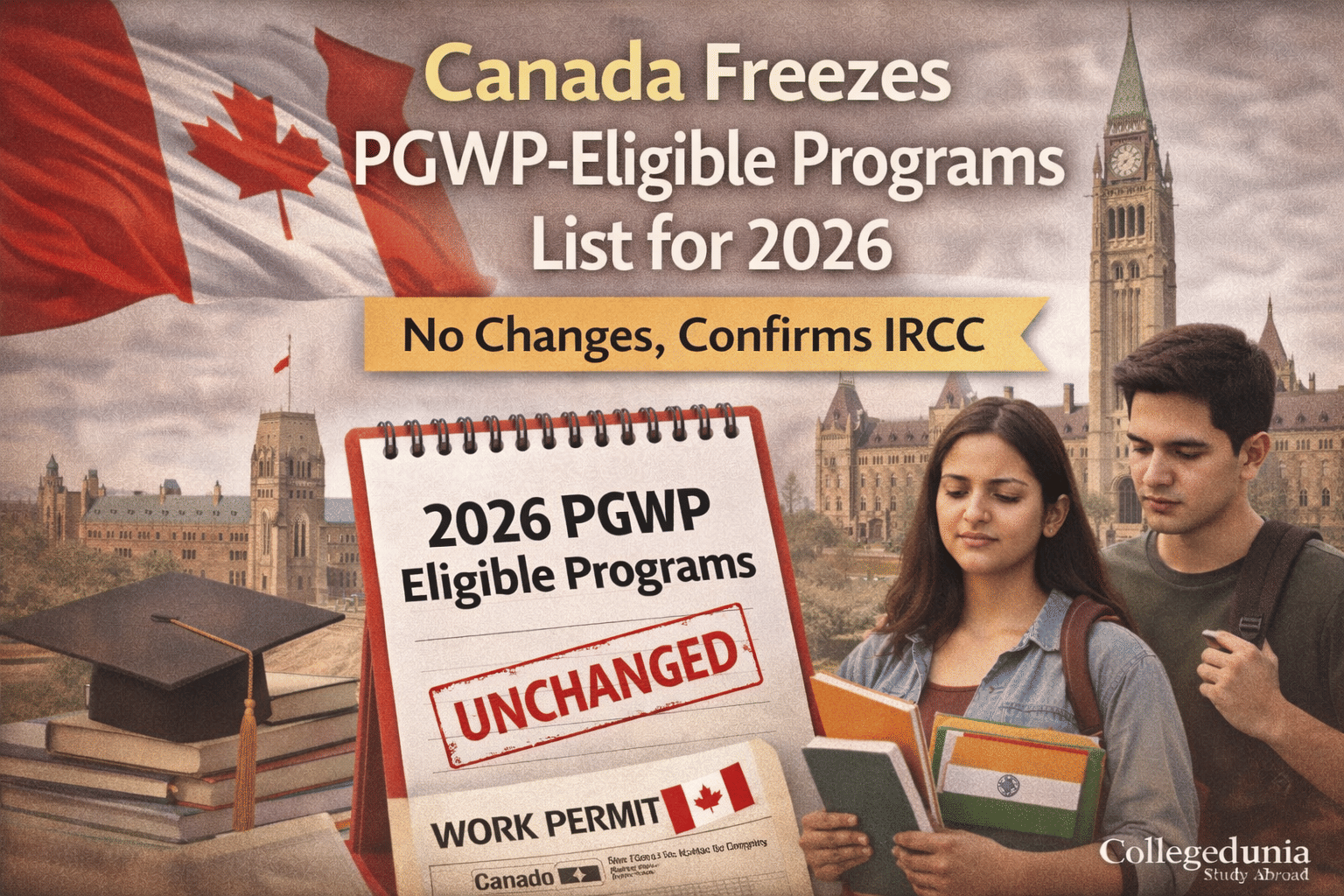
Canada’s immigration department has confirmed that the list of academic programs eligible for the Post-Graduation Work Permit (PGWP) will remain unchanged throughout 2026, offering long-awaited clarity to international students planning to study and work in the country.
Immigration, Refugees and Citizenship Canada (IRCC) announced the decision in an update published on its official website on January 15, stating that no new fields of study will be added or removed from PGWP eligibility for the rest of the year. The confirmation effectively freezes the current framework, covering 1,107 approved programs.
Why this matters for students?
The announcement removes a key source of uncertainty for international students, particularly those enrolling in college-level, non-degree programs, where PGWP eligibility depends on field-of-study rules. With the list now locked for 2026, students can make enrolment decisions knowing that eligibility criteria will not shift mid-course.
The PGWP is an open work permit that allows eligible graduates to gain Canadian work experience after completing their studies. This experience is widely considered a critical pathway toward permanent residence through programs such as Express Entry and Provincial Nominee streams.
Check: Top Universities in Canada
Background: Field-of-study rules
In 2024, IRCC introduced a requirement linking PGWP eligibility to specific fields of study aligned with long-term labour shortages. The rule applies primarily to non-degree programs, such as certificates and diplomas.
Students graduating with a bachelor’s, master’s, or doctoral degree remain exempt, regardless of discipline.
In June 2025, IRCC revised the eligibility list by adding 119 new programs and removing 178 others. The removals were later paused, allowing all affected programs to remain PGWP-eligible through 2025. With the 2026 freeze now confirmed, those programs will continue to qualify throughout the year.
What programs are currently eligible?
As of 2026, the PGWP-eligible list includes 1,107 programs across sectors such as healthcare, social services, education, skilled trades, agriculture, science and technology, and transport. The total reflects an expansion from 920 programs prior to the 2025 revisions.
Students enrolled in non-degree programs must still ensure that their course aligns with an approved Classification of Instructional Programs (CIP) code, a six-digit identifier used by IRCC to assess eligibility.
What students should do now?
For students planning to begin studies in 2026, the freeze provides regulatory stability but does not remove the need for due diligence. Those pursuing diplomas or certificates should verify PGWP eligibility before accepting an offer of admission, while degree-level students continue to benefit from automatic exemption from field-of-study restrictions.
While IRCC has not indicated when the next overhaul will take place, the 2026 decision signals a pause in frequent policy shifts, giving students and institutions a clearer planning window.

1791978705.png?tr=w-305,h-145,c-force?h=40&w=40&mode=stretch)



Comments