



Education Journalist | Study Abroad Lead | Updated On - May 1, 2026
Indian students planning to study in Canada could soon face a country-specific study permit cap, a higher financial threshold beyond the current CAD $22,895 (~₹15.78 lakh) requirement, and tighter restrictions on post-graduation work rights — if a sweeping set of parliamentary recommendations tabled in April 2026 is adopted by the government.
Canada's Standing Committee on Citizenship and Immigration (CIMM) released a 10-point reform report titled Reconstituting Canada's International Student Program, which explicitly names India as the top source of asylum claims among study permit holders — 4,256 in 2024 and 3,815 in 2025 — and recommends a separate permit cap for countries with high overstay or asylum claim rates.
India is Canada's single largest source of international students, with approximately 5 lakh Indian study permit holders.
These are proposals, not enacted policy. IRCC is not obligated to implement any of them. But every major restriction Canada has imposed on Indian students since 2024 — the national study permit cap, the cancellation of the Student Direct Stream, the PGWP field-of-study requirement — was preceded by exactly this kind of parliamentary committee report. For Indian students whose share of new Canadian study permits has already collapsed from 51.6% in 2023 to just 8.1% by September 2025, the direction of travel is clear.

All 10 CIMM Recommendations — What Each Means for Indian Students
The CIMM report was published in April 2026 following a study conducted between September and November 2025. All 10 recommendations are addressed to IRCC. Here is what each one means in practice:
| Recommendation | Impact on Indian Students |
|---|---|
| Raise the cost-of-living threshold beyond annual Statistics Canada updates | The current requirement of CAD $22,895 (~₹15.78 lakh) — already 129% higher than the pre-2024 threshold of CAD $10,000 — could rise further. |
| Random audits and clear penalties for Designated Learning Institutions (DLIs) issuing misleading documents | Colleges and universities that issue fraudulent or misleading offer letters face formal penalties. Strengthens scrutiny of private colleges — the primary source of integrity concerns flagged in the report. |
| Country-specific caps on study permits for nations with high asylum claim or overstay rates | India is named directly. IRCC data cited in the report shows India ranked #1 for asylum claims among study permit holders in both 2024 (4,256) and 2025 (3,815). A separate India cap would sit on top of the existing 408,000 national cap. |
| Stricter monitoring of language proficiency requirements at the study permit stage | Tighter verification of IELTS and TOEFL scores. Applications with borderline scores or inconsistencies between language test results and academic history face a higher refusal risk. |
| Publish plain-language rules on costs, housing realities, and PR pathways — including that permanent residence is competitive, not guaranteed | Directly addresses the PR pathway expectations that drove Indian student numbers between 2019 and 2023. IRCC and DLIs would be required to formally communicate that the study-to-PR route is not assured. |
| Deeper consultation with provinces and territories on long-term planning for the international student programme | Provinces would have greater say in how study permit allocations are distributed. Could affect which provinces remain accessible for Indian students depending on regional labour market priorities. |
| Expedite study permit renewals for graduate students | A positive recommendation for Indian students. Master's and PhD students already in Canada would receive faster permit renewals — reducing the processing delays that have left many in limbo between permit expiry and renewal. |
| Align PGWP eligibility with provincial labour market needs | Post-graduation work permits could become programme- and province-specific. Business, general management, and humanities graduates are most at risk of losing PGWP access if their field is not tied to a regional labour shortage. |
| Fund a Centre for Excellence for International Education to consolidate data and support evidence-based policymaking | Indirect impact. Improves the government's ability to track student outcomes and make data-driven decisions — which could work in favour of genuine students if it leads to more targeted, less blunt policy corrections. |
| Instruct the Parliamentary Budget Officer to analyse the economic impact of study permit caps on enrolment, housing, research, and regional growth | Signals that the government is open to recalibrating if caps are found to have overcorrected. A comprehensive economic analysis could support arguments for easing restrictions on high-value student cohorts. |
Why India Is Named — The Asylum Claim Data Explained
The country-cap recommendation is the most consequential for Indian applicants, and the CIMM report is specific about the data behind it.
- According to IRCC figures provided directly to the committee, India ranked first among all nationalities for asylum claims made while holding a study permit or study permit extension — in both 2024 (4,256 claims) and 2025 (3,815 claims).
- Nigeria ranked second in both years.
- The report does not suggest that most Indian students misuse the system. It acknowledges that these numbers represent a small fraction of the total Indian study permit population.
- But the committee's position is that the concentration of asylum claims from a single source country creates a systemic integrity risk that justifies a separate permit cap — a measure that would sit on top of the existing national cap of 408,000 study permits for 2026.
The frustration for genuine Indian applicants is real. The CIMM report itself acknowledges that the 2024 reforms have already been described by witnesses as an "overcorrection" that damaged Canada's reputation and caused enrolment to fall well below targets. India's share of new Canadian study permits has already collapsed from 51.6% in 2023 to 8.1% by September 2025 — a reduction that happened before any country-specific cap was introduced. A further India-specific cap would compound a decline that is already severe.
The Financial Threshold — Before, Now, and What Could Come Next
The cost-of-living requirement for Canadian study permit applicants has already risen sharply — and CIMM is recommending it go higher still.
- Before January 2024, the threshold had been fixed at CAD $10,000 for over two decades.
- IRCC raised it to CAD $20,635 in January 2024, then to CAD $22,895 from September 1, 2025 — a 129% increase in under two years.
- The CIMM report recommends a further increase beyond the annual Statistics Canada adjustment, with no ceiling specified.
| Period | Cost-of-Living Requirement (Single Student) | Approx. INR (at ₹68.93/CAD, April 28, 2026) |
|---|---|---|
| Pre-January 2024 | CAD $10,000 | ~₹6.89 lakh |
| January 2024 – August 2025 | CAD $20,635 | ~₹14.22 lakh |
| From September 1, 2025 (current) | CAD $22,895 | ~₹15.78 lakh |
| Proposed (if Rec. 1 adopted) | Above CAD $22,895 — amount unspecified | TBD |
This figure covers living expenses only. It excludes tuition fees — typically CAD $15,000–$35,000 per year at Canadian universities — and return travel costs. The total funds an Indian student must demonstrate at the time of application already run to CAD $40,000–$60,000 (~₹27.6–41.4 lakh) for a one-year programme. A further increase to the living expense threshold would push this higher, pricing out a significant portion of middle-income Indian applicants. For a full breakdown of what documents are required to prove funds, see the Canada student visa documents checklist for Indian students 2026.
What Indian Students Applying Now Must Do?
The CIMM recommendations are not the law. The government must respond to the report within 120 days — by August 2026. Implementation, if it happens, would require IRCC to issue new ministerial instructions or regulatory changes. For students applying for Fall 2026 or Winter 2027 intakes, the current rules apply. But students planning for 2027 and beyond should treat this report as a credible preview of what is coming.
- Show funds well above the current CAD $22,895 threshold. If a higher threshold is adopted before your application is processed, having a buffer reduces refusal risk. Aim to demonstrate CAD $25,000–$28,000 in living expense funds where possible, in addition to full tuition proof.
- Choose a public university over a private college. The CIMM report singles out private colleges and low-quality diploma programmes as the primary integrity concern. Applications from students enrolled at public universities face materially lower scrutiny than those from private colleges.
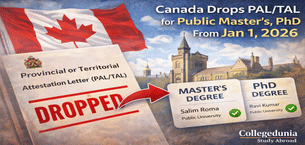
- Graduate students are in the strongest position. CIMM's Recommendation 7 calls for expedited renewals for graduate students, and Master's and PhD students are already exempt from the national cap and PAL requirement from January 2026. PhD applicants now receive study permits in 2 weeks under IRCC's fast-track. The committee's overall direction strongly favours graduate-level study over college diplomas.
- Do not plan around PR as a guaranteed outcome. CIMM's Recommendation 5 explicitly calls for IRCC and DLIs to communicate that permanent residence pathways are competitive, not guaranteed. Build your Canada plan around the education and work experience — not the PR pathway alone.
- Watch for IRCC's formal response by August 2026. That response will confirm which recommendations IRCC intends to implement and on what timeline. Any new country cap or financial threshold change will be announced through IRCC's official ministerial instructions — monitor canada.ca/en/immigration-refugees-citizenship directly.
The CIMM report is, in part, a self-indictment. It traces how Canada's own policies — uncapped study permits, aggressive PR pathway marketing, and underfunded provincial education systems — created the conditions for rapid, poorly regulated growth that peaked at nearly one million international students in 2023. The correction since 2024 has been sharp: study permit holders fell from over one million to 722,000 by the end of 2025, a 21% reduction in under two years.
For Indian students, the cumulative picture is of a destination that has fundamentally changed its terms of engagement. The era of high-volume, college-pathway, PR-linked study in Canada is over. What is replacing it — if the CIMM recommendations are adopted — is a smaller, more selective system that prioritises graduate students, research contributions, and regional labour market alignment over volume. That system may still be worth pursuing for the right applicant. But it will cost more, require stronger credentials, and offer fewer guarantees than the Canada that Indian students were applying to three years ago. The government's response, due by August 2026, will determine how quickly that shift becomes official policy.









Comments