




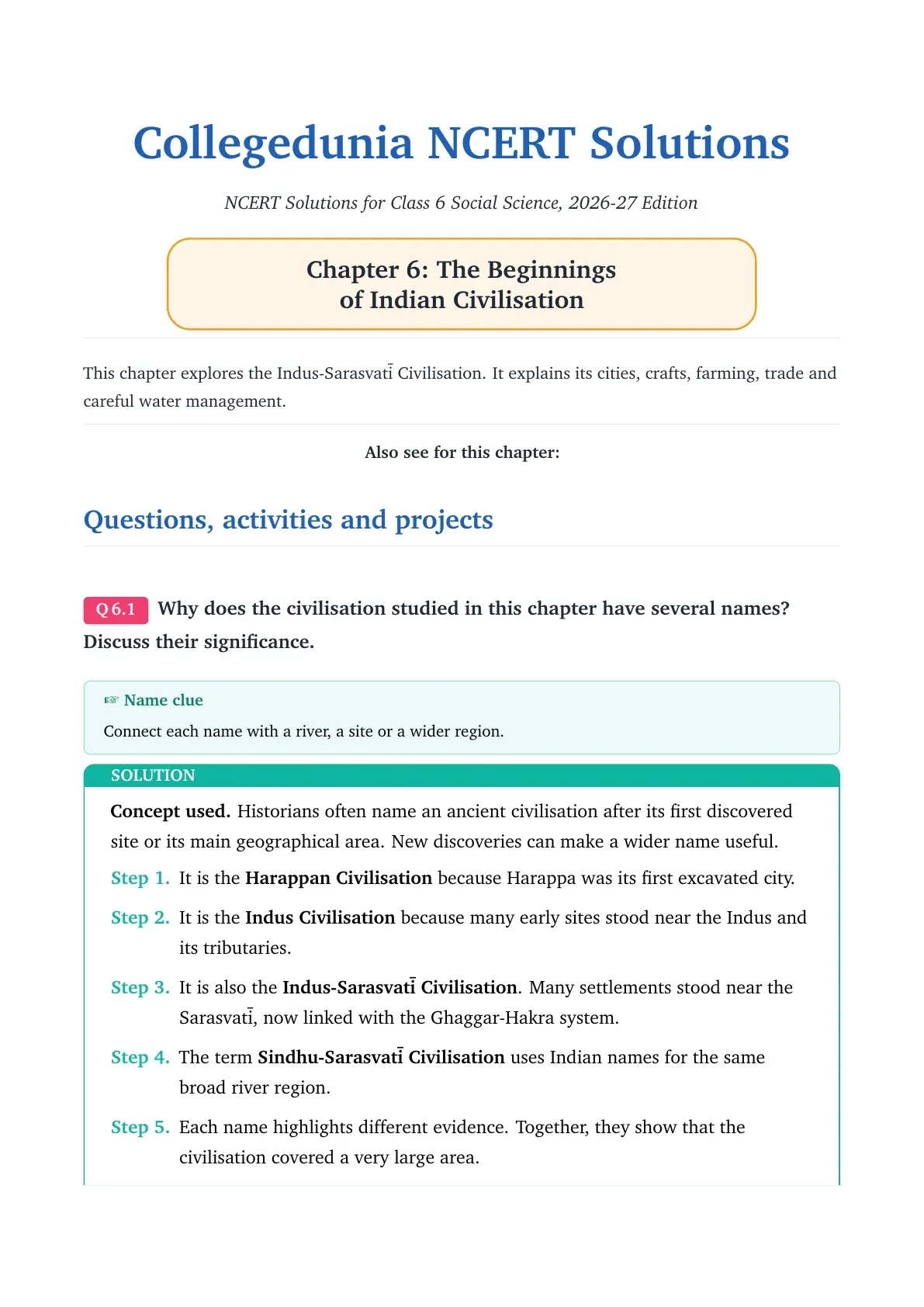
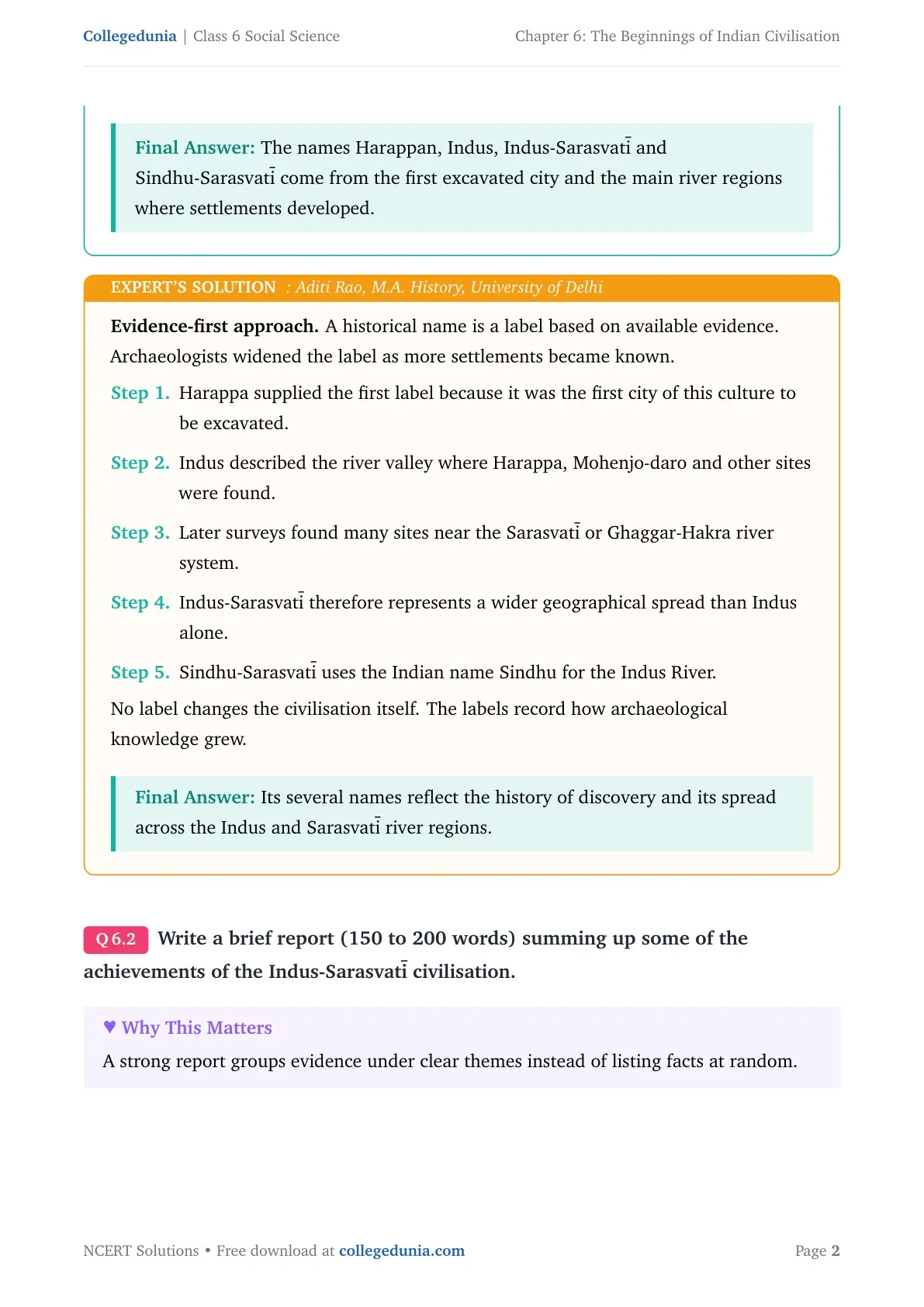
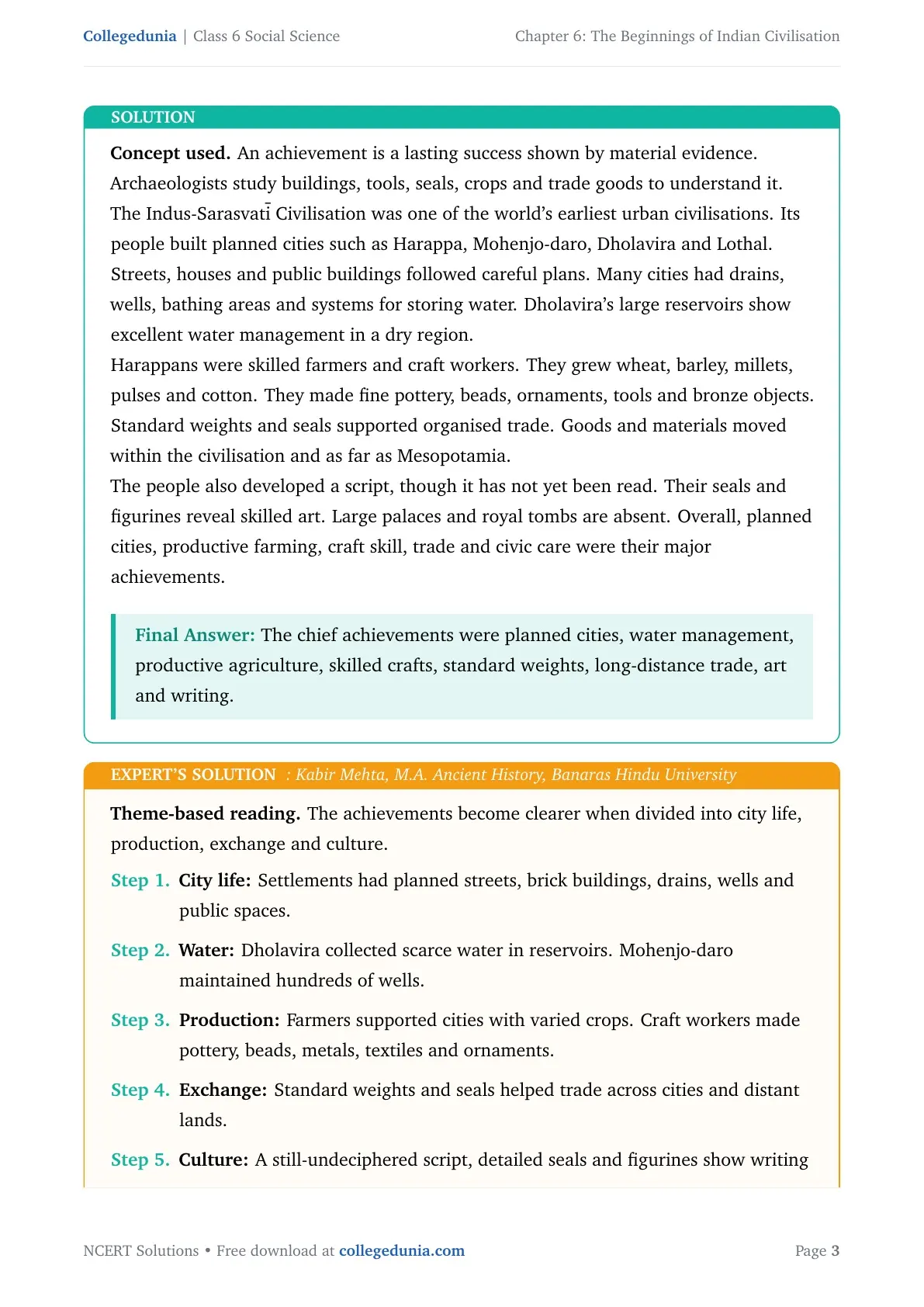
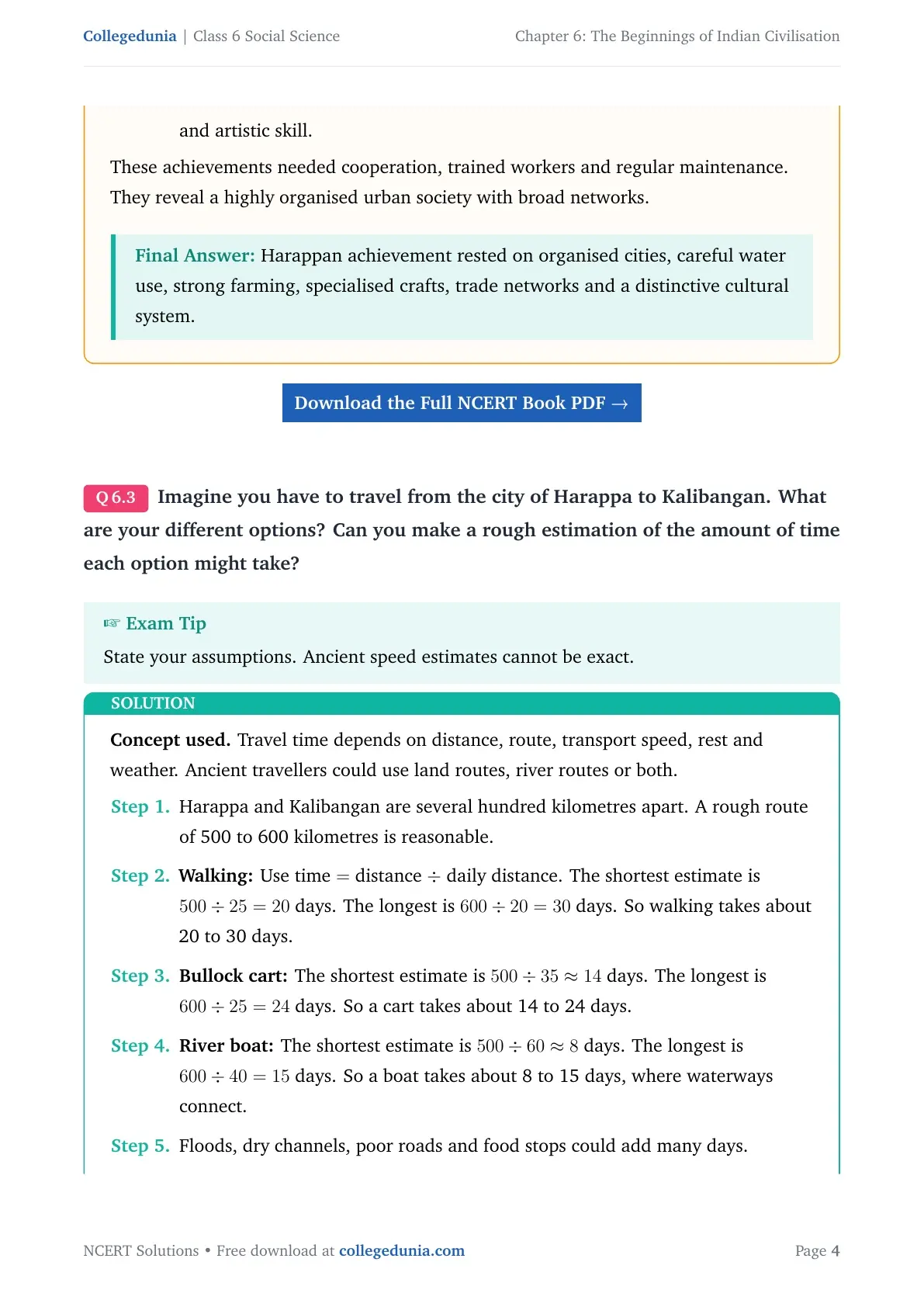
The NCERT Solutions for Class 6 Social Science Chapter 6 The Beginnings of Indian Civilisation answer every textbook question for the 2026-27 session. The answers explain early settlements, Harappan cities, crafts, trade and daily life in simple language.
- Main idea: farming villages slowly developed into planned cities.
- Source skill: use buildings, seals, tools and pottery as evidence.
- Answer practice: link each claim to a clear chapter example.
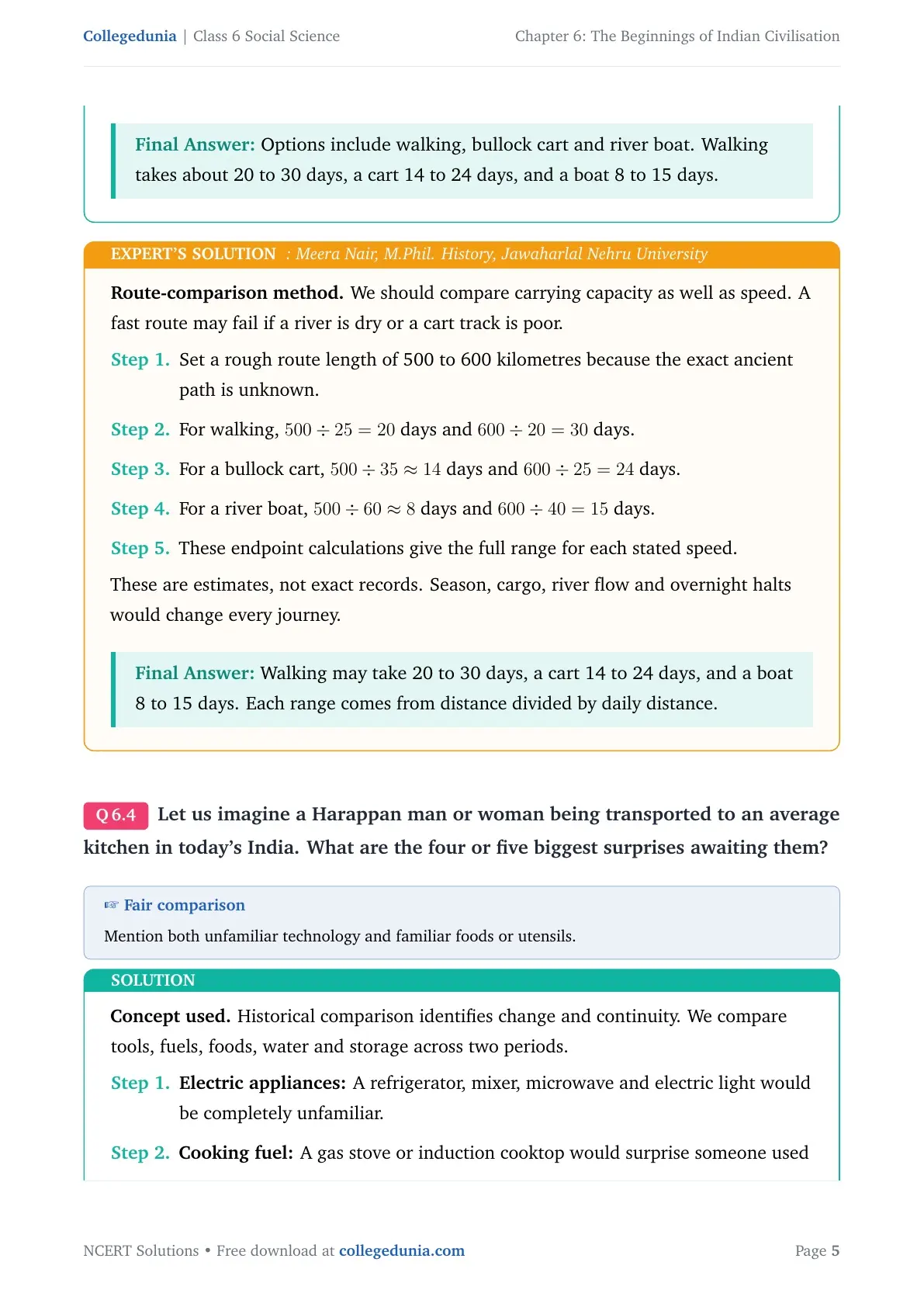
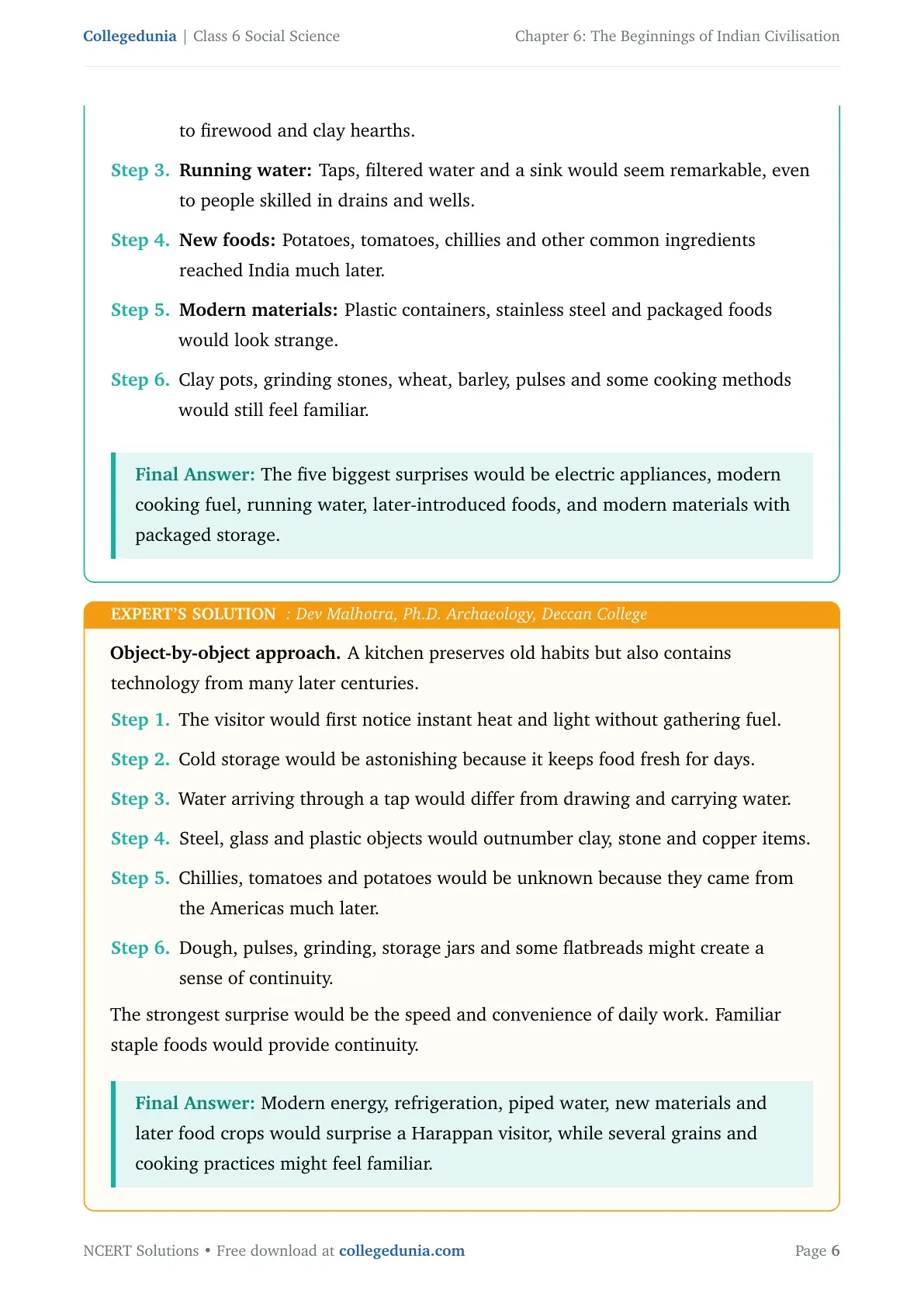
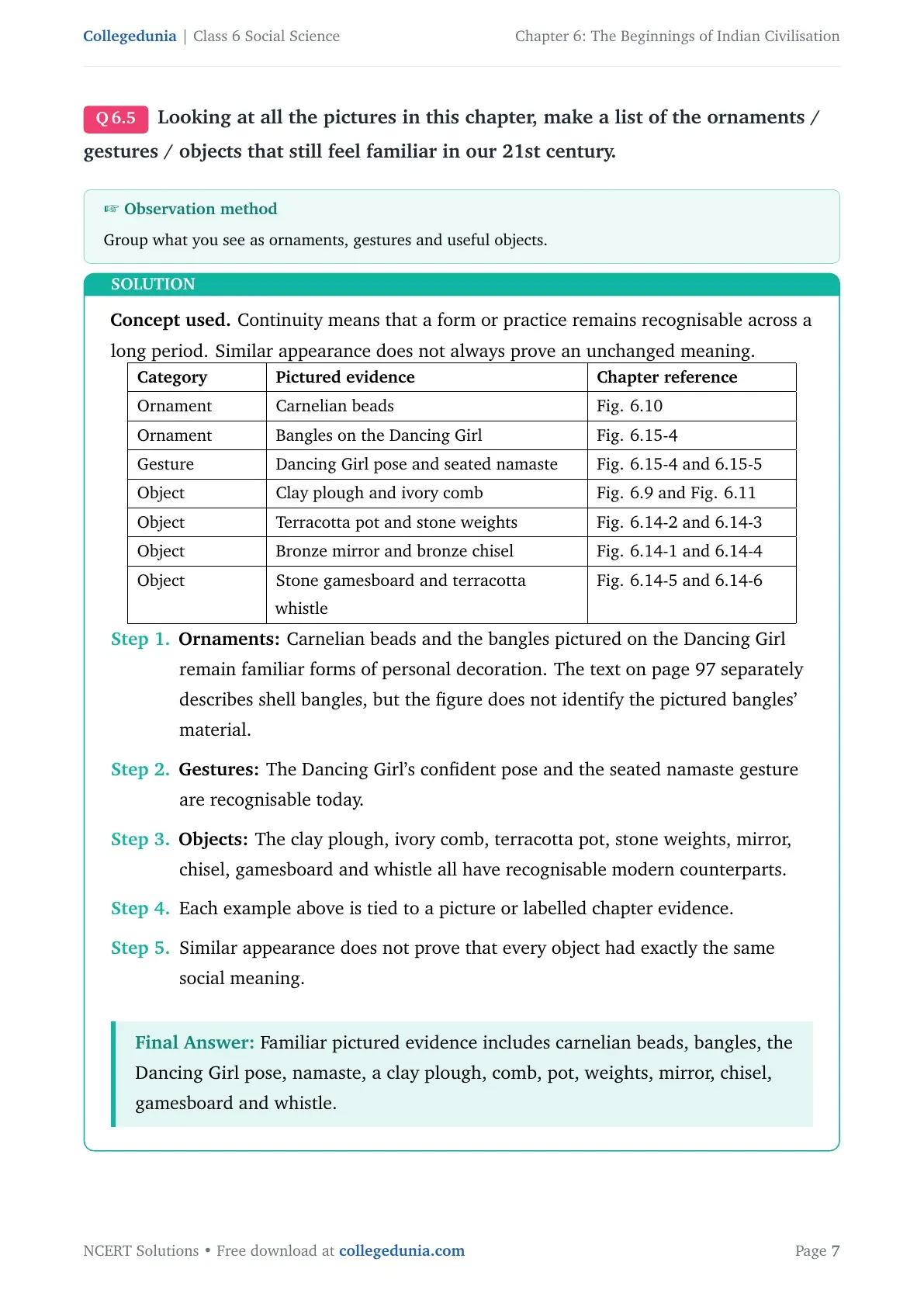
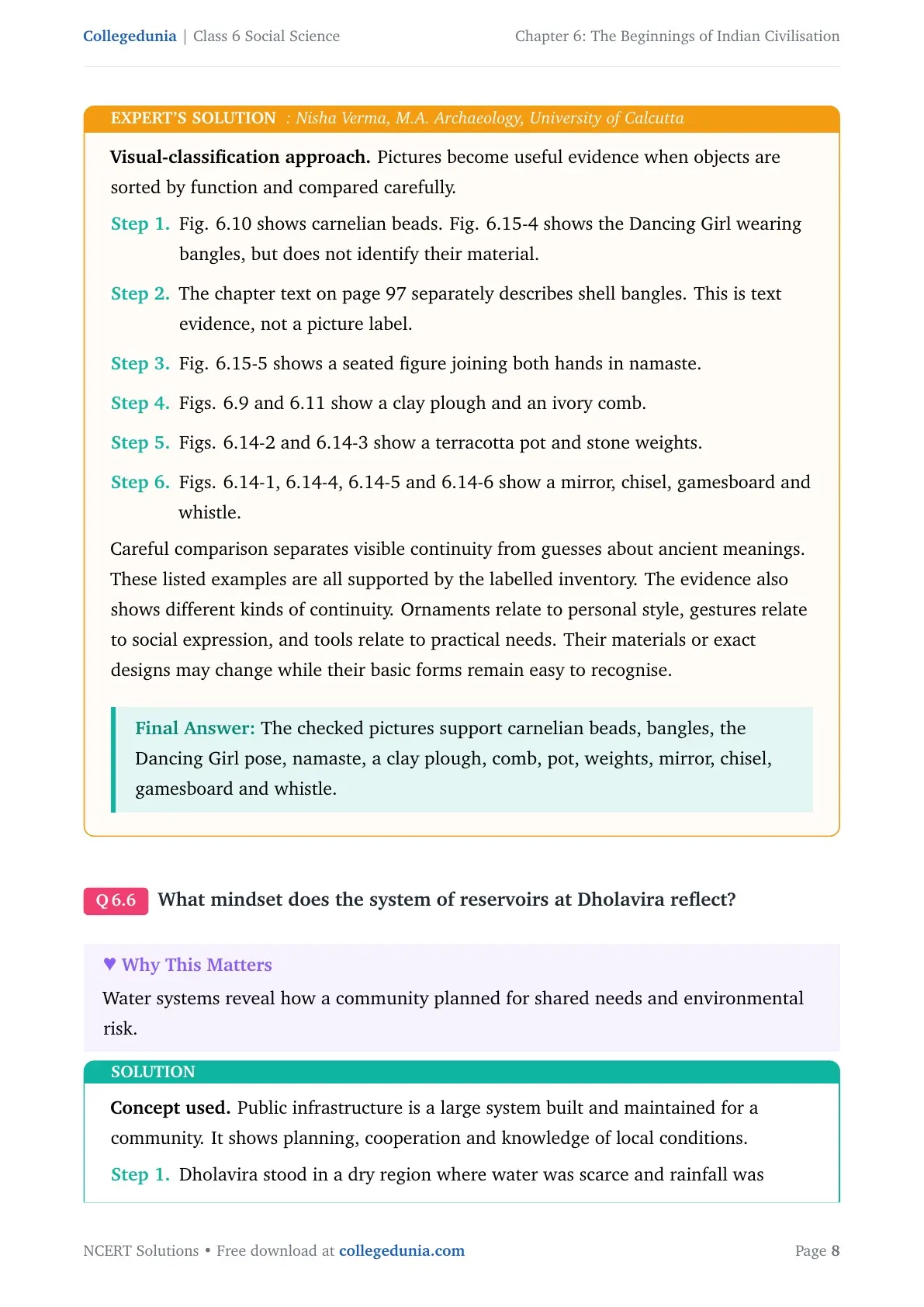
Each solution follows the 2026-27 NCERT chapter and uses clear language for Class 6 students.
Student Feedback
In a Collegedunia study poll of 10,420 students before the 2026 school exams, most students found the city-planning table useful.
|
Table of Contents |
The Beginnings of Indian Civilisation Concepts Used in the Solutions
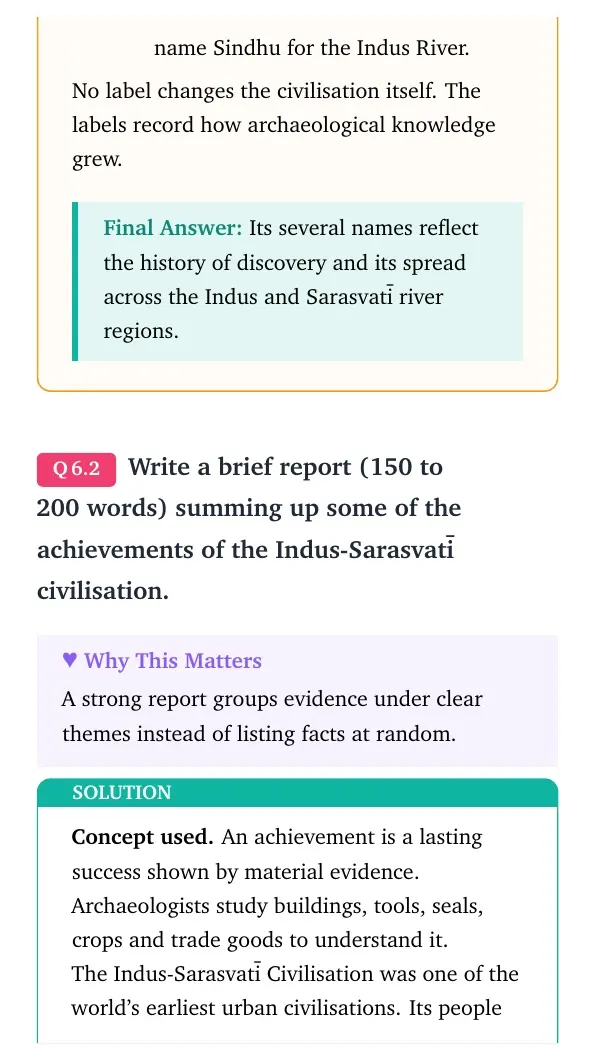
The chapter studies how early communities became towns and cities. Archaeologists learn about them through objects and ruins. The Harappan civilisation grew in north-western parts of the Indian subcontinent.
| Evidence | What it shows | Example |
|---|---|---|
| Buildings | Town planning and public work | Streets, drains and reservoirs |
| Seals | Symbols, animals and trade links | Steatite seals |
| Craft objects | Special skills and materials | Beads, pottery and metal tools |
| Food remains | Crops and diet | Wheat, barley and animal bones |
Archaeological evidence helps us understand people who left no readable written history.
Harappan Civilisation Quick Revision
Source: Magnet Brains on YouTube
How Villages Grew into Harappan Cities
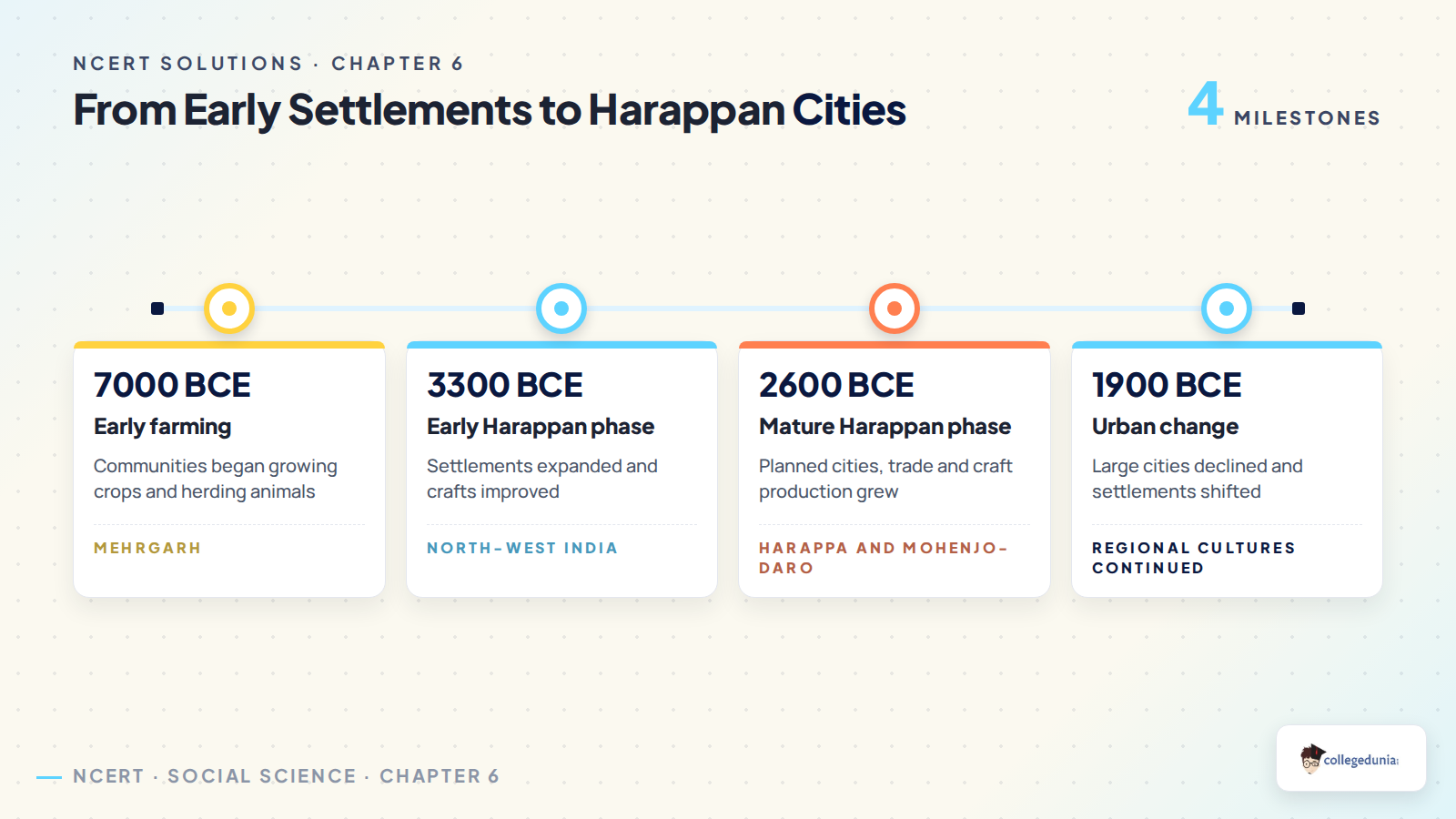
Early farmers settled near land and water. Food surpluses supported craft workers and traders. Larger settlements then needed streets, drainage, storage and shared rules.
- Farming gave communities a steadier food supply.
- Craft workers made pottery, tools, beads and cloth.
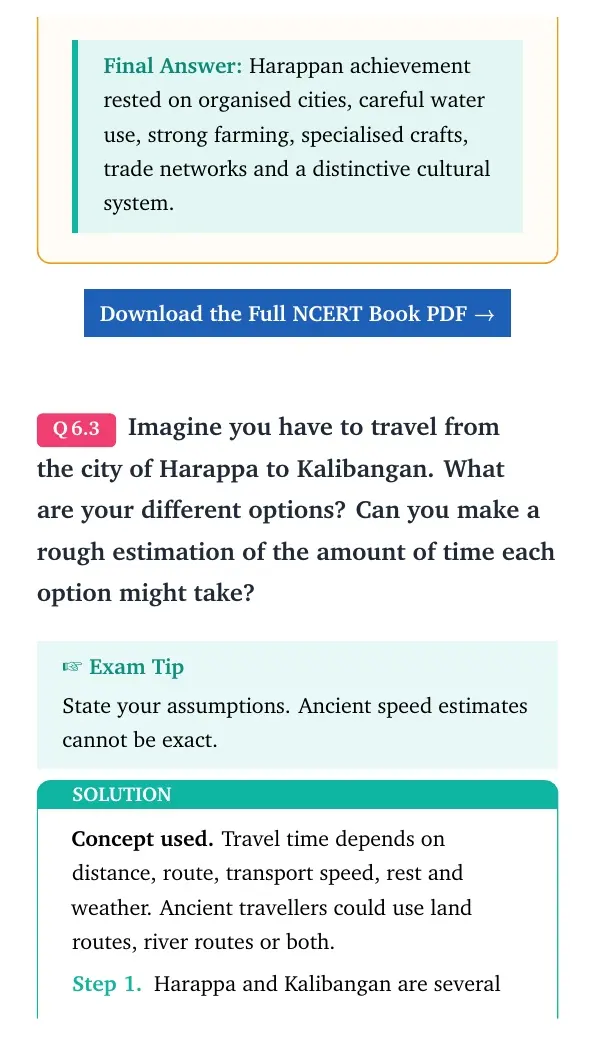
- Traders carried goods between distant regions.
- City planners organised streets, drains and water systems.
Harappan cities were connected by shared styles of bricks, weights, seals and crafts.
What Harappan City Planning Tells Us
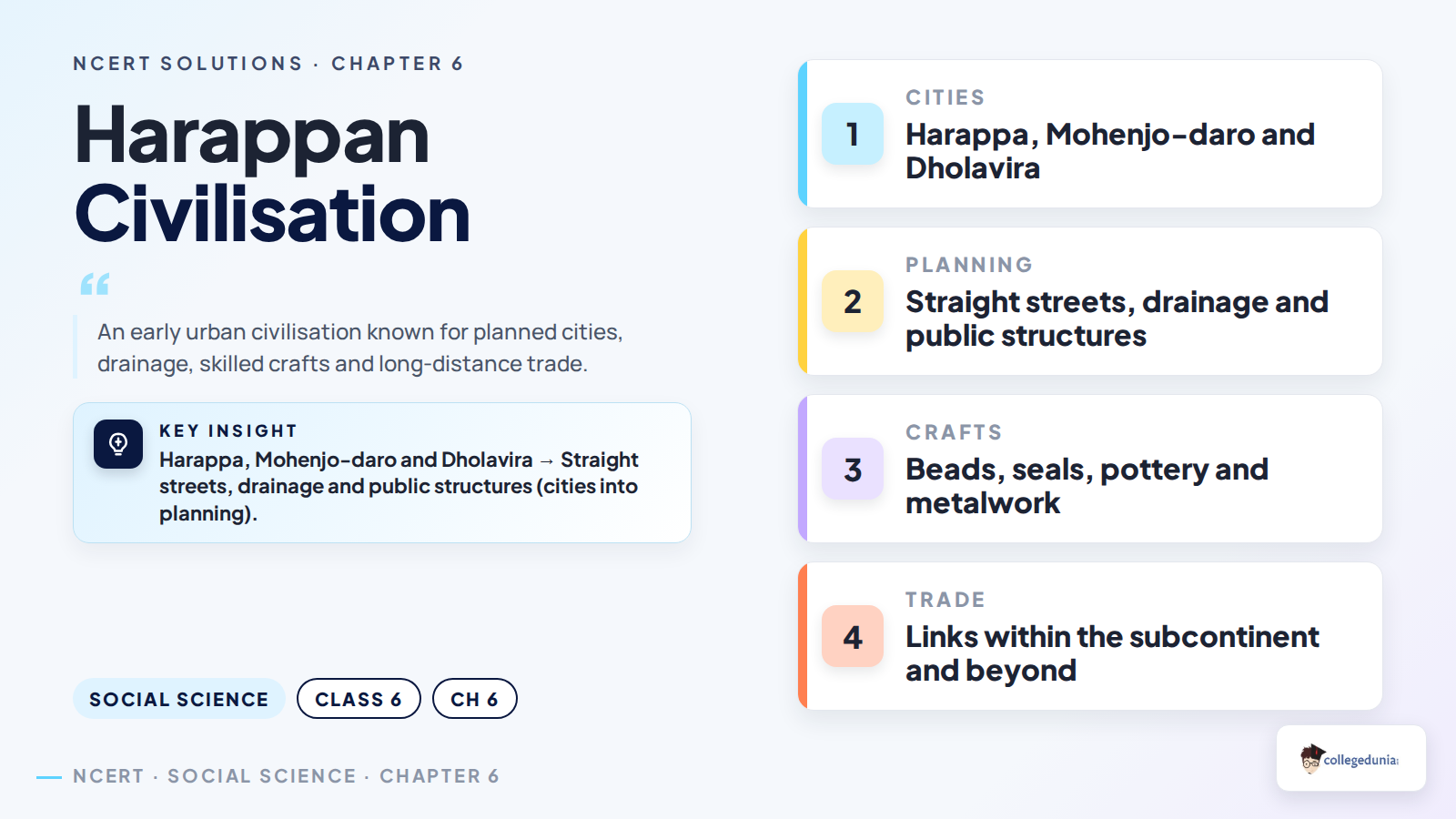
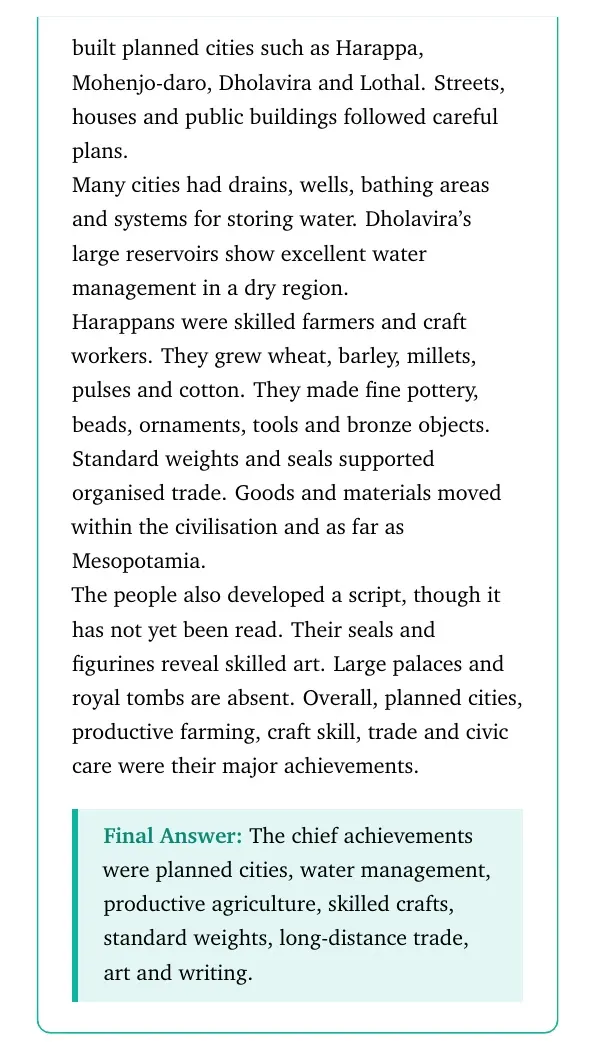
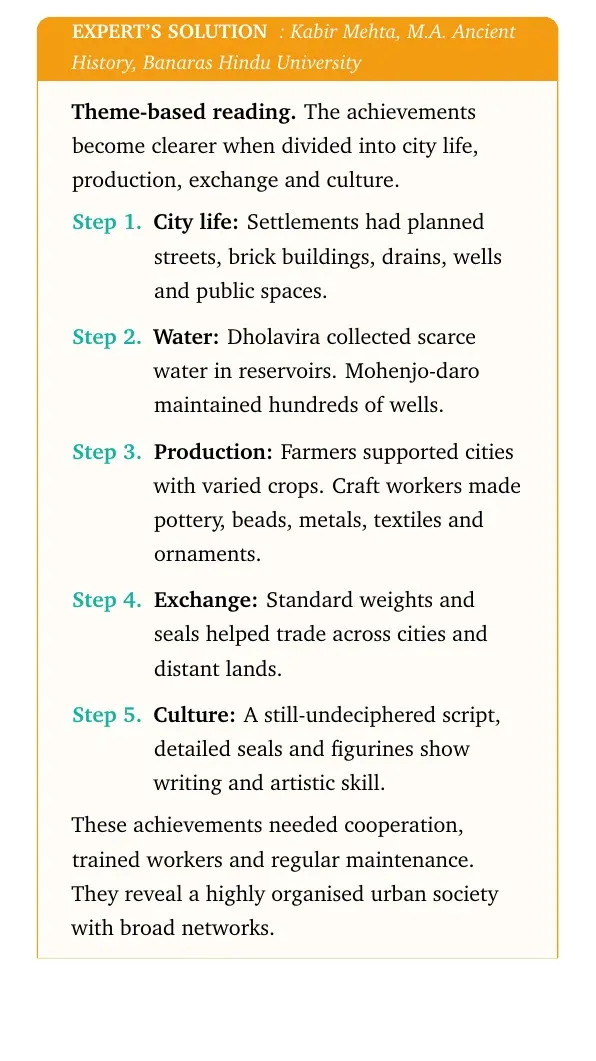
Many settlements had straight streets and covered drains. Dholavira used large reservoirs to collect water. Standard brick sizes suggest careful planning and shared knowledge.
| Feature | What students should infer |
|---|---|
| Drainage | People planned sanitation and water flow |
| Reservoirs | Communities stored scarce water |
| Standard bricks | Builders followed common measurements |
| Work areas | Craft production was organised |
How to Write Strong Civilisation Answers
Start with a direct answer. Add one piece of evidence. Then explain what that evidence tells us about Harappan life.
- Name the site, object or feature.
- Describe it in one clear line.
- State what historians can learn from it.
- Use dates only when the question asks for them.
- Do not turn an inference into a certain fact.
Common Mistakes in Harappan Civilisation Answers
- Do not call Harappan symbols a fully decoded script.
- Do not say every Harappan settlement had the same layout.
- Do not confuse an archaeological clue with written proof.
- Do not describe urban change as a single sudden event.
- Do not miss the role of farmers and craft workers.
Study Plan for The Beginnings of Indian Civilisation
- First round: learn the main dates and settlement stages.
- Second round: match evidence with what it reveals.
- Third round: compare Harappa, Mohenjo-daro and Dholavira.
- Final check: answer each textbook question without opening the PDF.
Related Class 6 Indian Civilisation Resources
Use the textbook for chapter reading. Use notes for a shorter recap before answering questions.
| Resource | Best use |
|---|---|
| The Beginnings of Indian Civilisation NCERT Book PDF | Read the full chapter and activities |
| The Beginnings of Indian Civilisation Notes | Revise sites, evidence and city features |
| The Beginnings of Indian Civilisation Handwritten Notes | Complete a quick final recap |
All Class 6 Social Science NCERT Solutions
Continue with chapter-wise solutions to revise geography and history in textbook order.
| Chapter | NCERT Solutions |
|---|---|
| 3 | Landforms and Life |
| 4 | Timeline and Sources of History |
| 5 | India, That Is Bharat |
| 6 | The Beginnings of Indian Civilisation |
| 7 | India's Cultural Roots |
All The Beginnings of Indian Civilisation Questions with Step-by-Step Solutions
Open Collegedunia's question-wise page for textbook answers, expert explanations and revision tabs.
View all The Beginnings of Indian Civilisation questions with step-by-step solutions
The Beginnings of Indian Civilisation Social Science NCERT Solutions FAQs
Ques. What was the Harappan civilisation?
Ans. It was an early urban civilisation known for planned settlements, drainage, crafts, trade and shared forms of material culture.
Ques. How do archaeologists study Harappan life?
Ans. They study buildings, tools, pottery, seals, food remains, burials and other objects found during excavation.
Ques. Why was Dholavira important?
Ans. Dholavira had carefully planned areas and a large system of reservoirs that stored water in a dry region.
Ques. What do Harappan drains show?
Ans. The drains show that people planned water flow and sanitation while building streets and houses.
Ques. Can the Harappan script be read today?
Ans. No. Scholars have found many short inscriptions, but the signs have not yet been securely deciphered.
Ques. Where can I find Chapter 6 NCERT Solutions?
Ans. The solved textbook questions and downloadable PDF are available on this page for the 2026-27 session.



Comments