




The NCERT Book for Class 10 Science Chapter 7 How do Organisms Reproduce? is the official CBSE textbook chapter, free to read and download for the 2026-27 session. This chapter explains why living things reproduce, how asexual reproduction works in simple organisms, and how sexual reproduction works in flowering plants and in human beings.
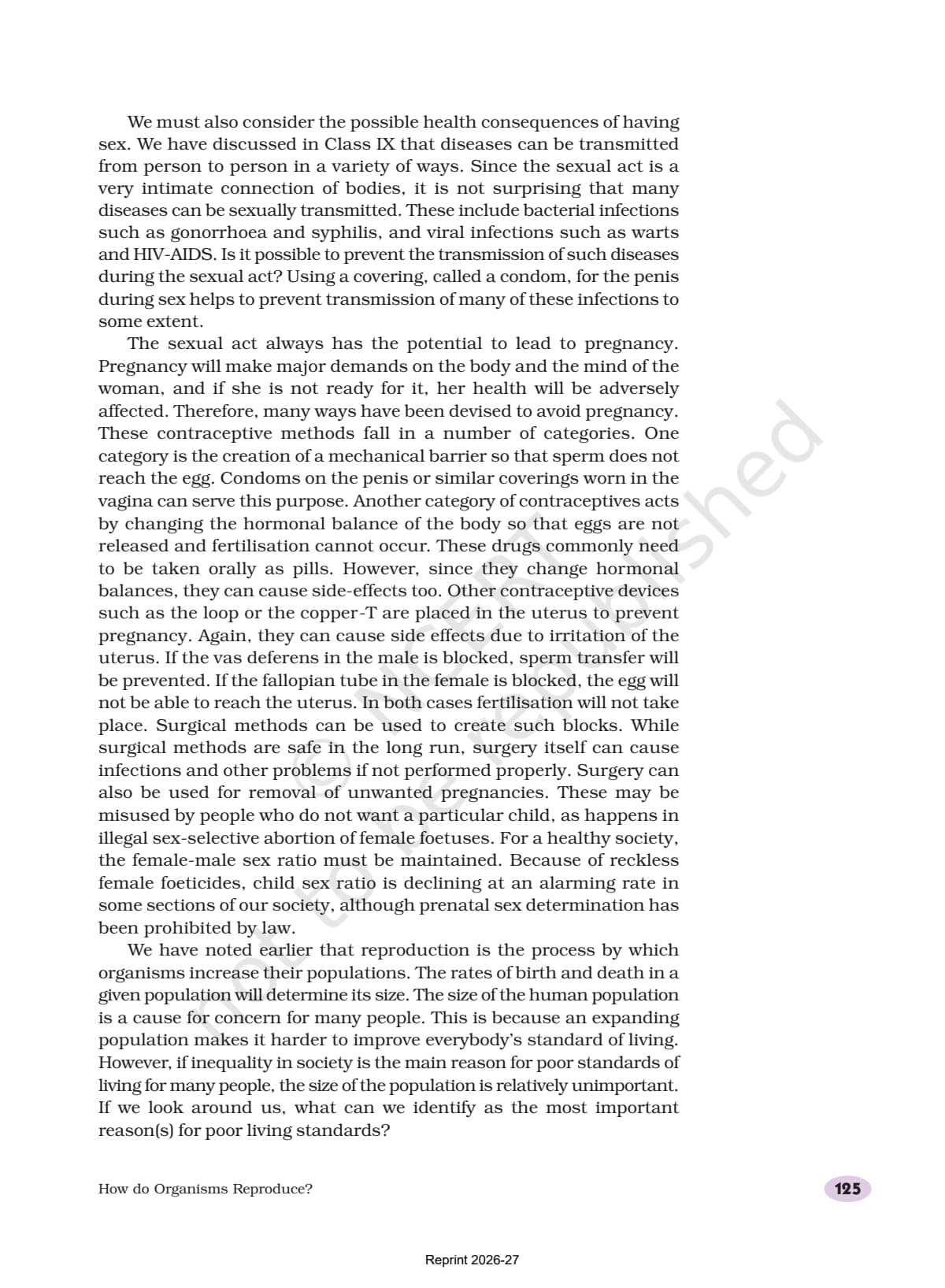
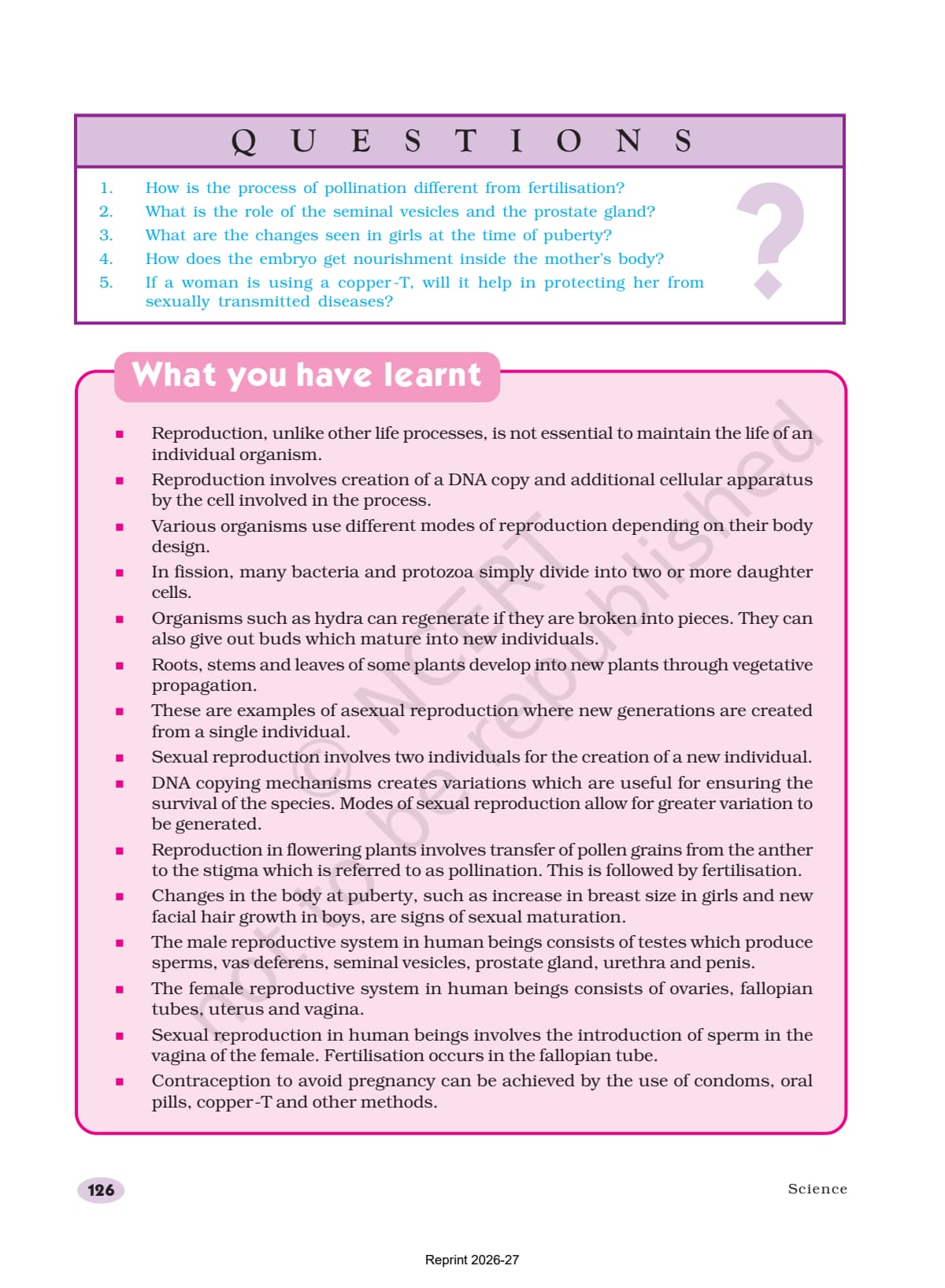
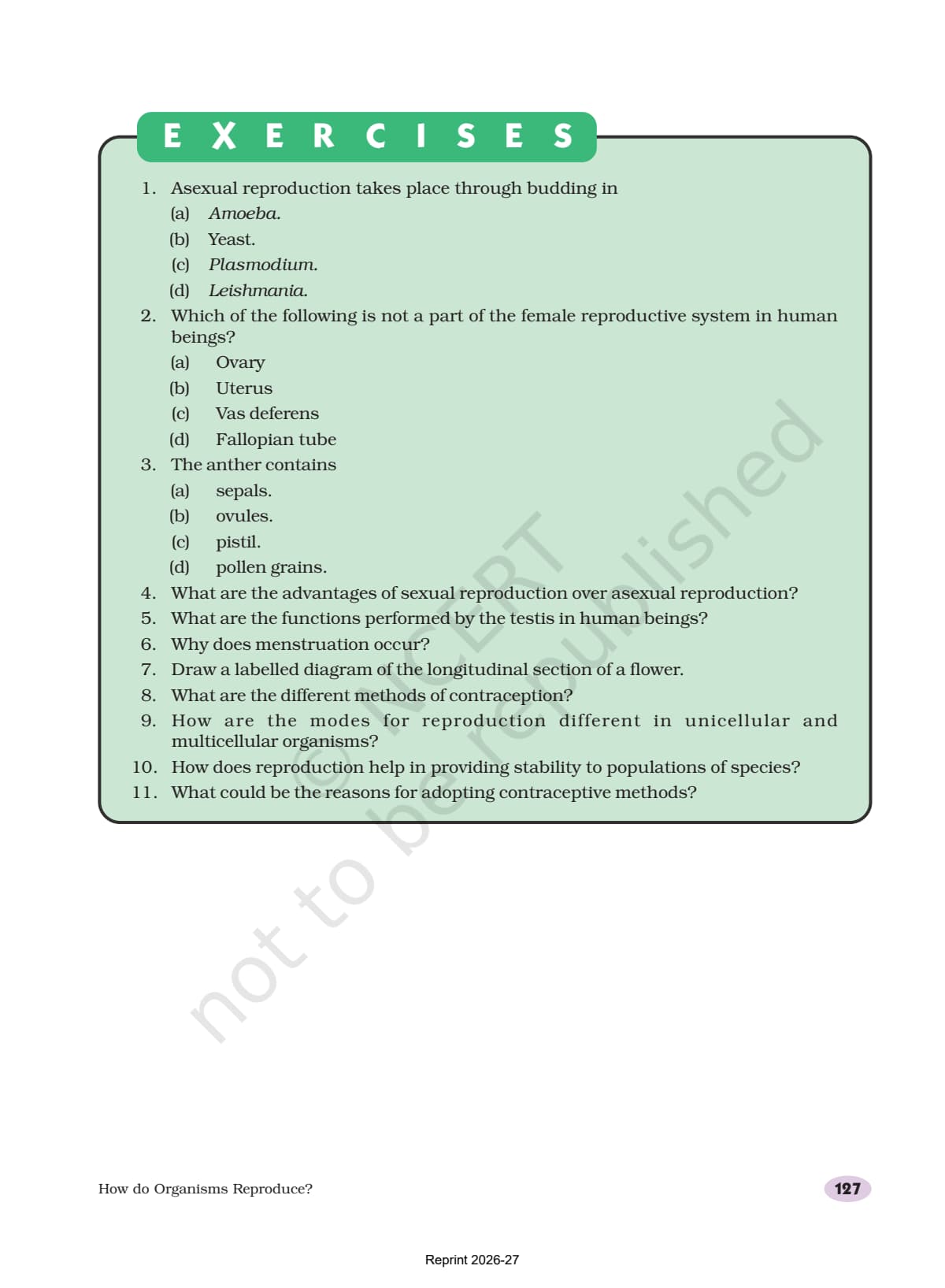
- Official NCERT textbook PDF of Chapter 7, with every activity, figure, in-text question and exercise exactly as printed.
- Covers DNA copying and variation, the asexual modes (fission, fragmentation, regeneration, budding, vegetative propagation and spore formation), reproduction in flowering plants, the human reproductive systems, menstruation and reproductive health.
- Aligned with the 2026-27 CBSE Class 10 Science syllabus, useful for board exam revision and as the base text for the solutions and notes.
This page hosts the official NCERT Class 10 Science textbook chapter, mapped to the 2026-27 CBSE syllabus and checked page by page against the printed How do Organisms Reproduce chapter.
Student Feedback: What 12,900 students told us about this chapter
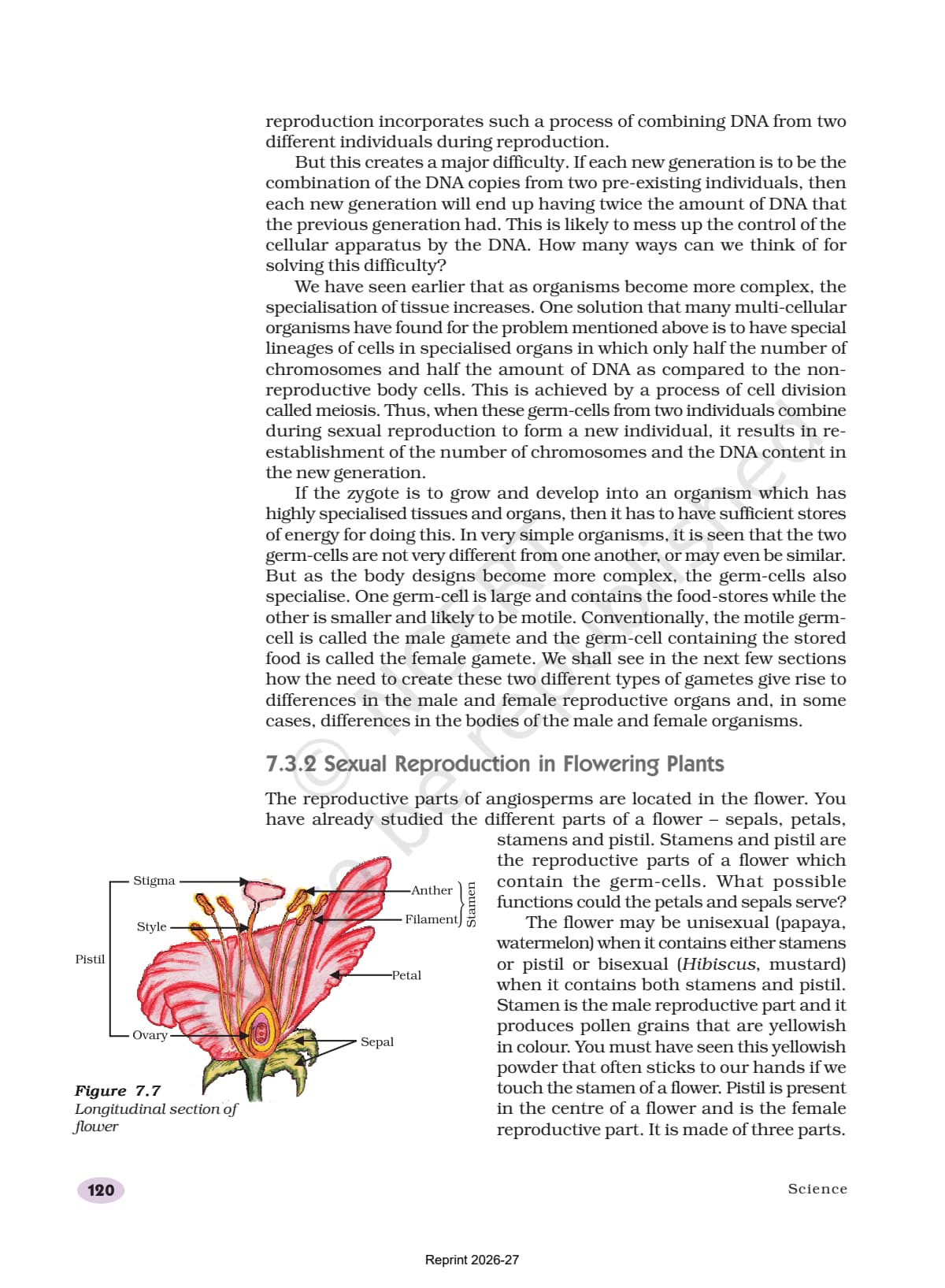
76% of Class 10 students said the parts they mixed up most were the longitudinal section of a flower (Fig. 7.7), the human male and female reproductive systems (Fig. 7.10 and 7.11), and the difference between self-pollination and cross-pollination. 3 out of 5 students told us that labelling the official NCERT diagrams themselves, instead of just reading them, was what finally made the chapter stick.
Students reported spending on average 5 to 6 hours on the full chapter across the first read and revision, and toppers said reading the official book diagrams for the flower and the reproductive organs stopped them from naming the wrong part in the board exam.
Source: 2026-27 Class 10 Science student poll. Sample of 12,900 students from CBSE schools across 13 states, taken before the 2026 board exams.
What the NCERT Book for Class 10 Science Chapter 7 How do Organisms Reproduce Covers
The PDF above is the complete official NCERT chapter, as printed in the 2026-27 textbook. It begins with why organisms reproduce at all, then builds to the asexual modes used by simple organisms, before turning to sexual reproduction in flowering plants and humans.
- DNA copying and variation: how reproduction is at heart the copying of DNA, and why variations matter for a species.
- Asexual reproduction: fission, fragmentation, regeneration, budding, vegetative propagation and spore formation.
- Sexual reproduction in plants: parts of a flower, pollination, fertilisation, and how a flower becomes a fruit.
- Reproduction in humans: puberty, the reproductive systems, the path of egg and sperm, menstruation and reproductive health.
How do Organisms Reproduce Class 10 Science Full Chapter Video
Source: Magnet Brains on YouTube
Why do Organisms Reproduce and the Role of DNA in Class 10 Science Chapter 7
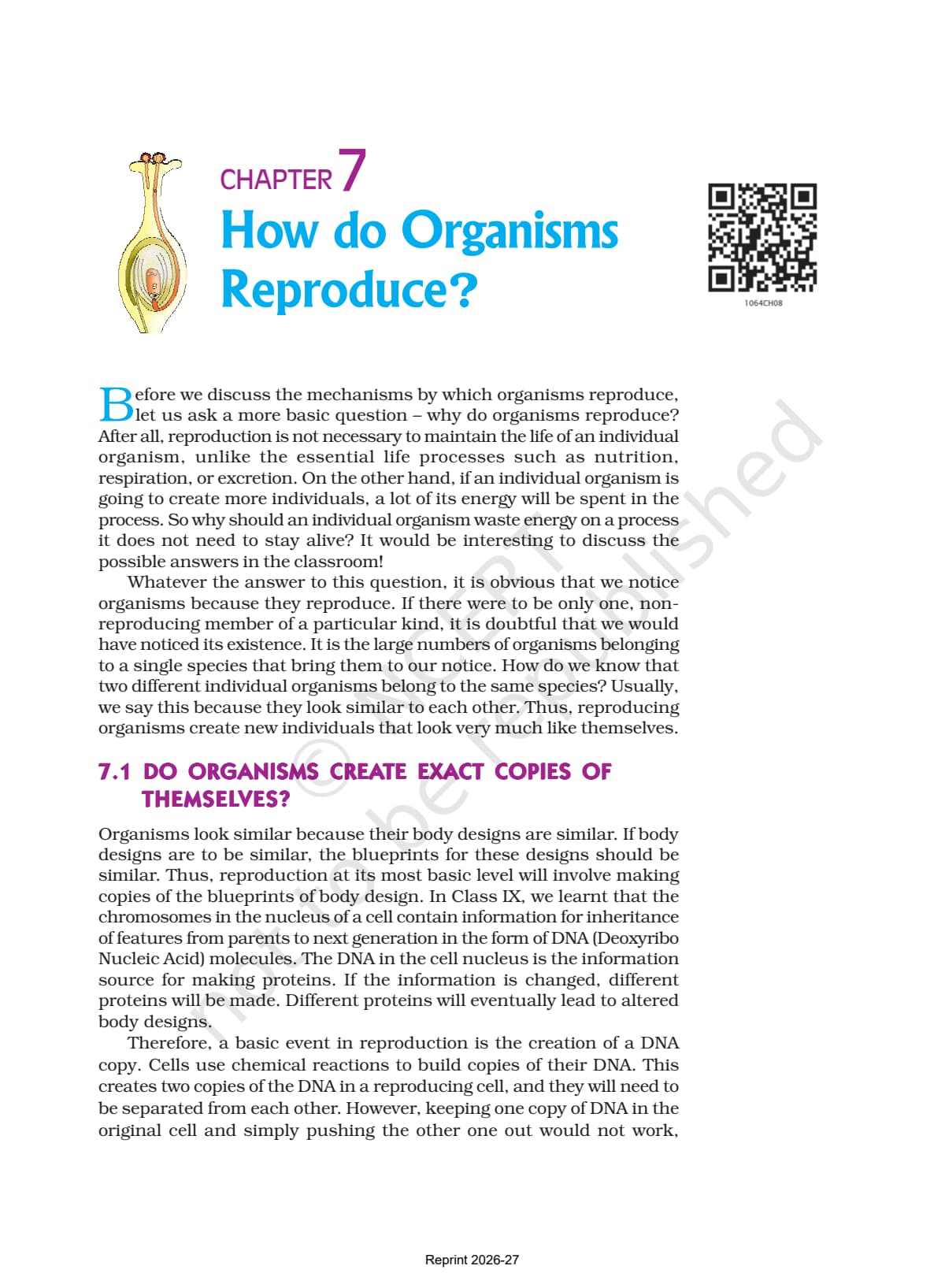
The chapter opens with a question: reproduction is not needed to keep a single organism alive, so why spend energy on it? The textbook answers that organisms reproduce so their kind continues from one generation to the next. Reproduction at its most basic level is the making of a DNA copy, because the DNA in the cell nucleus is the information source for building the body, and a similar blueprint gives a similar body design.
A variation may not help the individual that carries it, but in a whole population, variations are useful for the survival of the species over time. The classic example is bacteria in warm water: if global warming heats the water, most die, but the few heat-resistant variants survive and grow further. Variation is beneficial to the species but not necessarily to the individual is a high-frequency board line.
Asexual Reproduction in Single Organisms in Class 10 Science
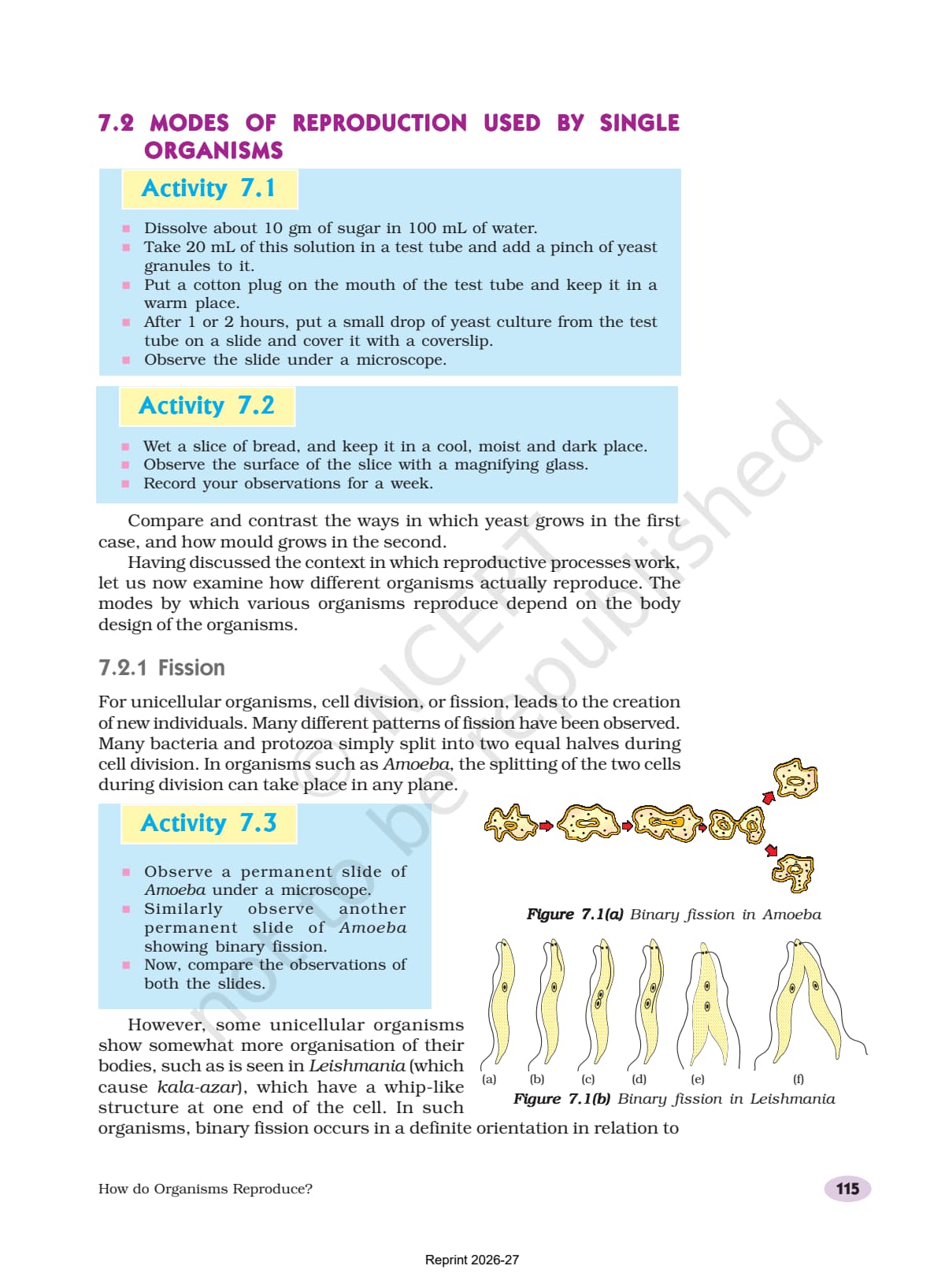
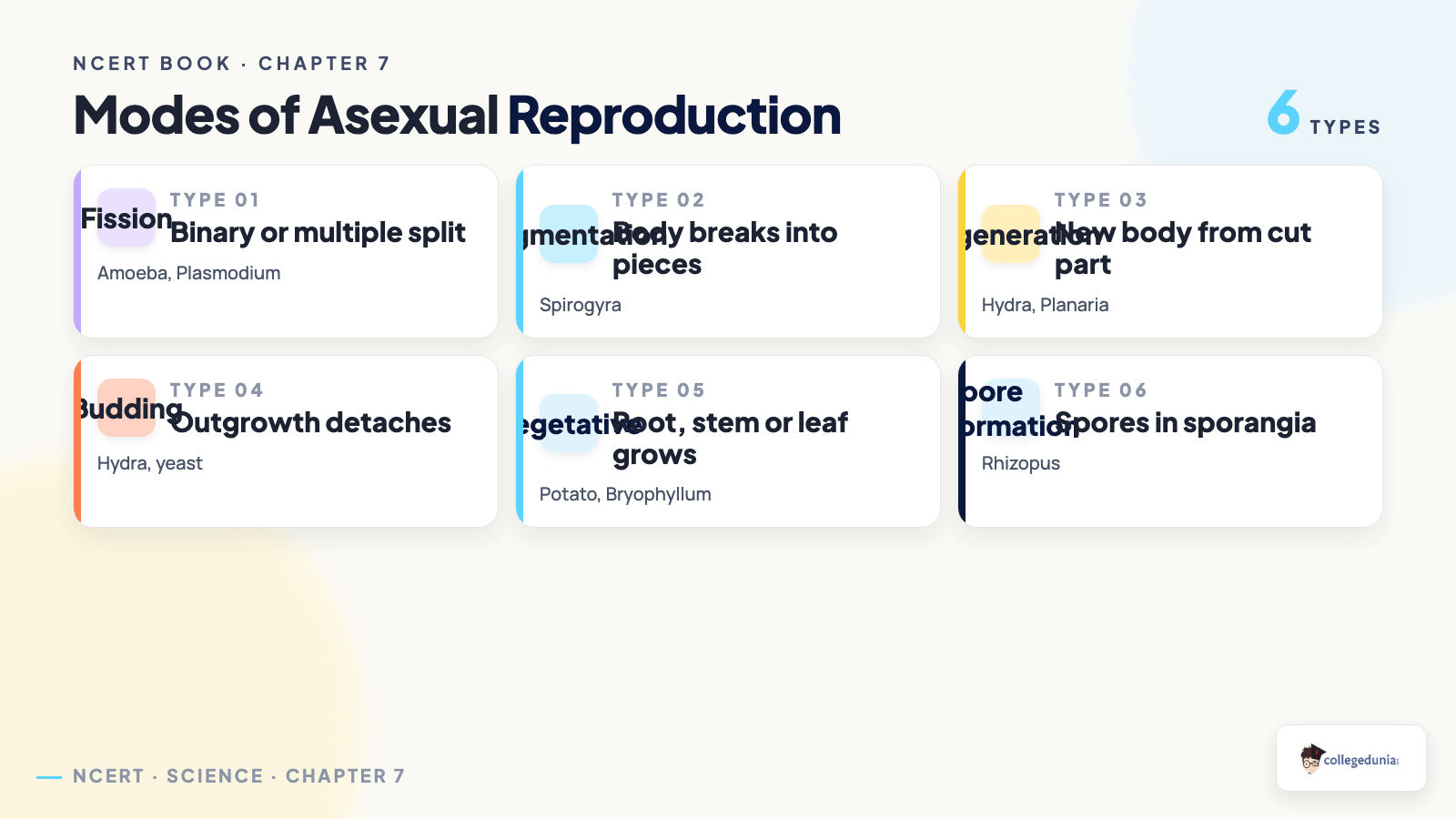
Section 7.2 looks at the modes single organisms use, all needing only one parent and grouped as asexual reproduction. For unicellular organisms, cell division or fission makes new individuals, while simple multicellular organisms can use fragmentation, regeneration, budding, vegetative propagation or spore formation.
| Mode | How it works | Example |
|---|---|---|
| Binary fission | The cell splits into two equal halves | Amoeba (any plane), Leishmania (definite plane) |
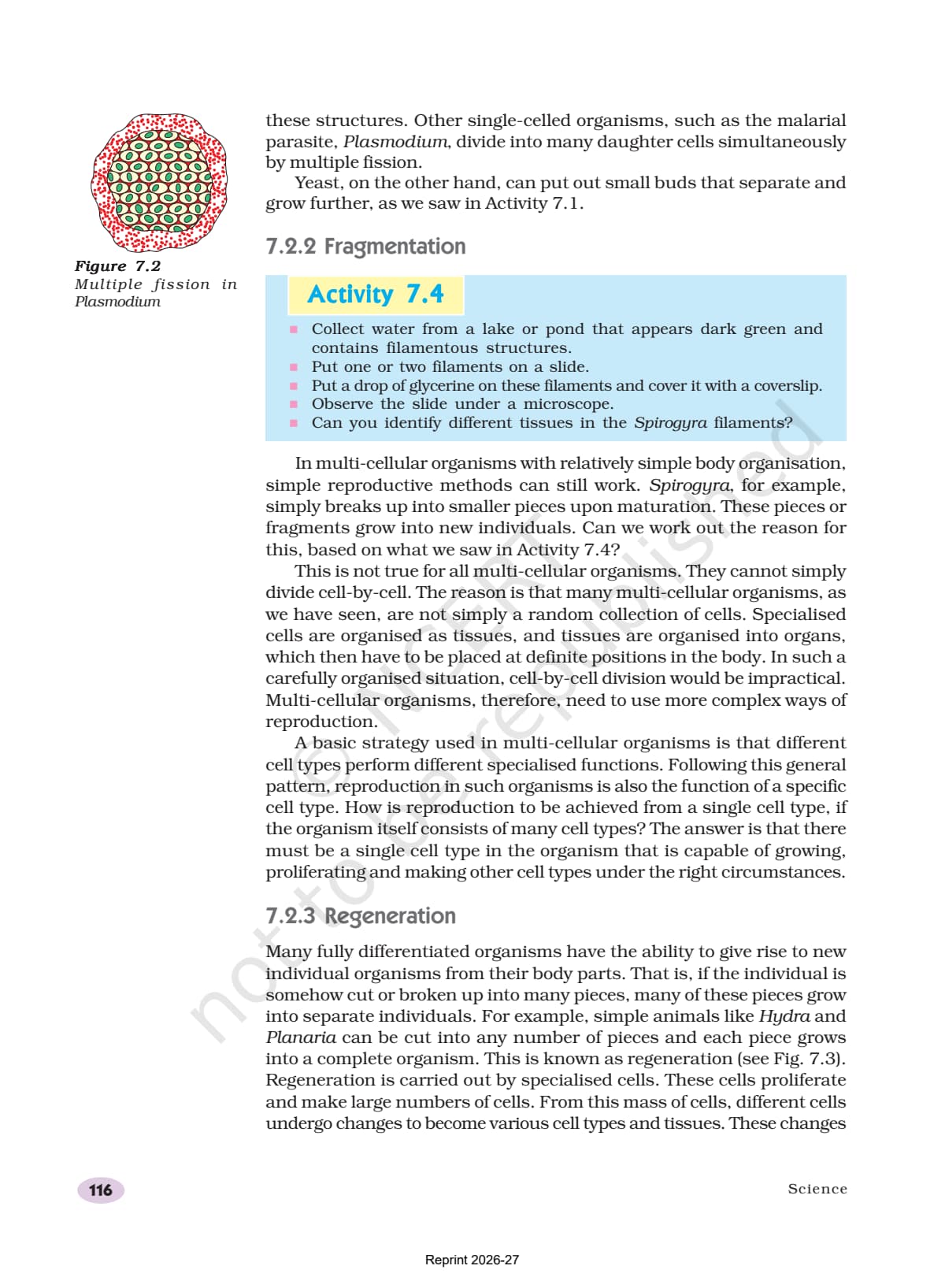
| Multiple fission | The cell divides into many daughter cells at once | Plasmodium (malarial parasite) |
| Fragmentation | The body breaks into pieces that each grow into a new individual | Spirogyra |
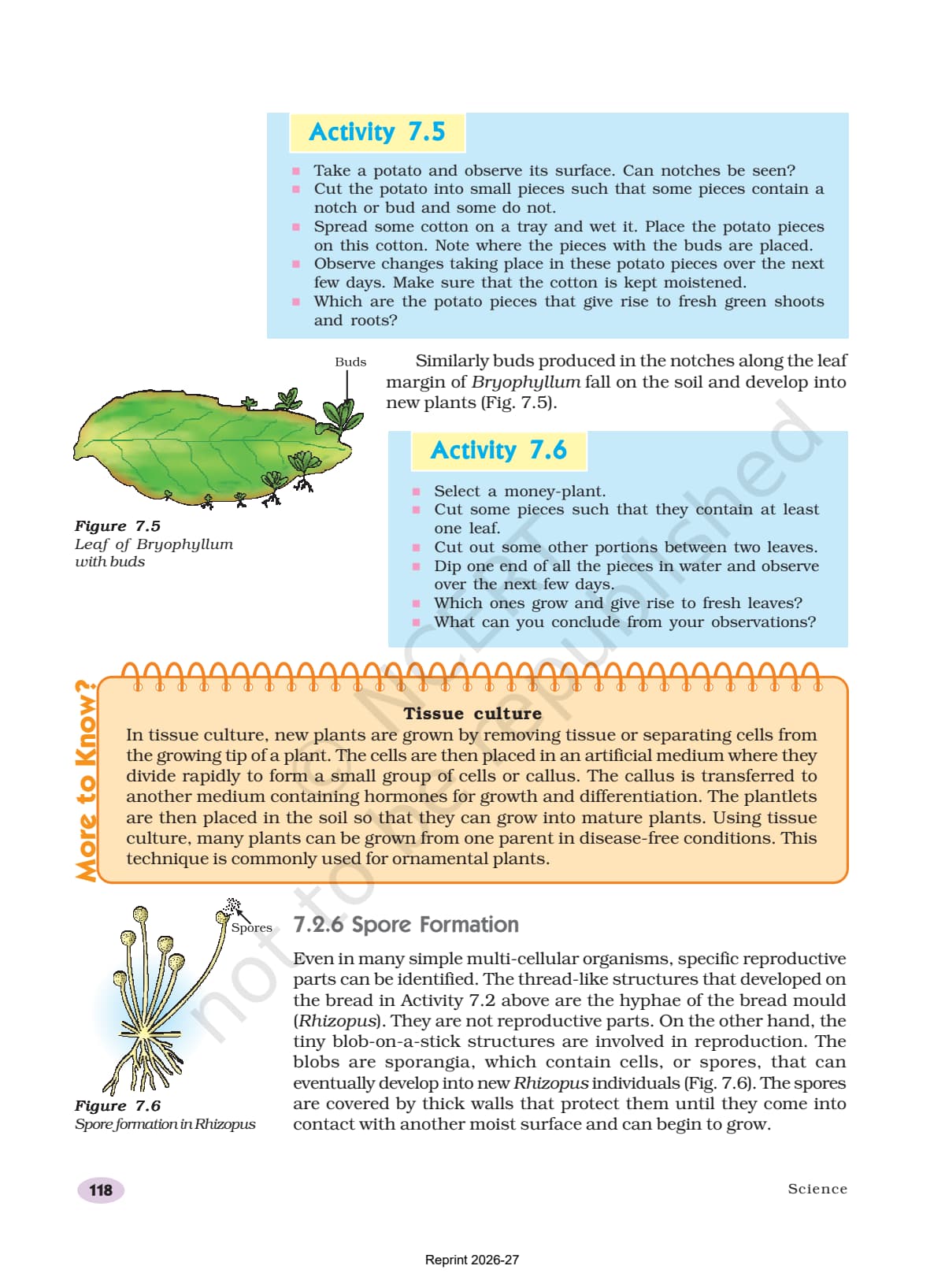
| Spore formation | Spores in sporangia spread and grow on a moist surface | Rhizopus (bread mould) |
In fission a single cell divides, so it suits unicellular organisms, while fragmentation needs a simple multicellular body that can survive being broken into pieces. A complex organism cannot just break apart, because its cells are organised into tissues and organs in fixed positions. Tie each mode to its named organism, since the board often asks for the organism.
Regeneration, Budding and Vegetative Propagation in Class 10 Science
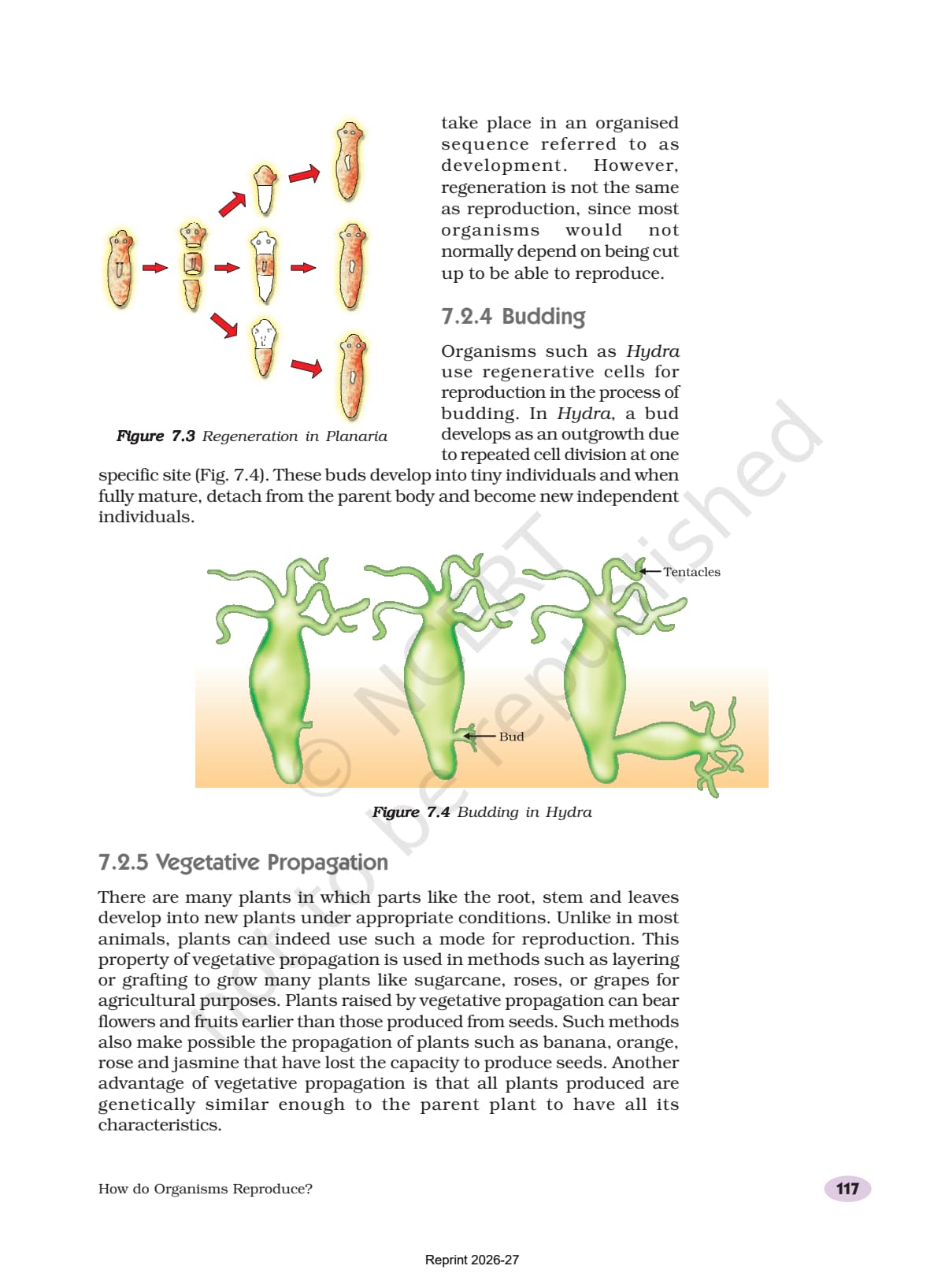
Three more asexual modes are used by simple animals and plants. In regeneration, simple animals like Hydra and Planaria, if cut into pieces, can grow each piece into a complete organism, using specialised cells. Regeneration is not the same as normal reproduction, because most organisms do not depend on being cut up to reproduce.
| Mode | How it works | Example |
|---|---|---|
| Regeneration | A cut piece of the body grows into a full new organism | Hydra, Planaria |
| Budding | A bud grows as an outgrowth, then detaches as a new individual | Hydra, yeast |
| Vegetative propagation | A root, stem or leaf grows into a new plant | Potato, sugarcane, Bryophyllum |
In budding, Hydra forms a bud that later detaches. In vegetative propagation, plant parts like the root, stem or leaf grow into new plants. All new plants are genetically similar to the parent, and plants like banana, orange and jasmine that cannot make seeds can still be grown this way. Note: Hydra's everyday method is budding, not regeneration.
Sexual Reproduction and Why it Matters in Class 10 Science Chapter 7
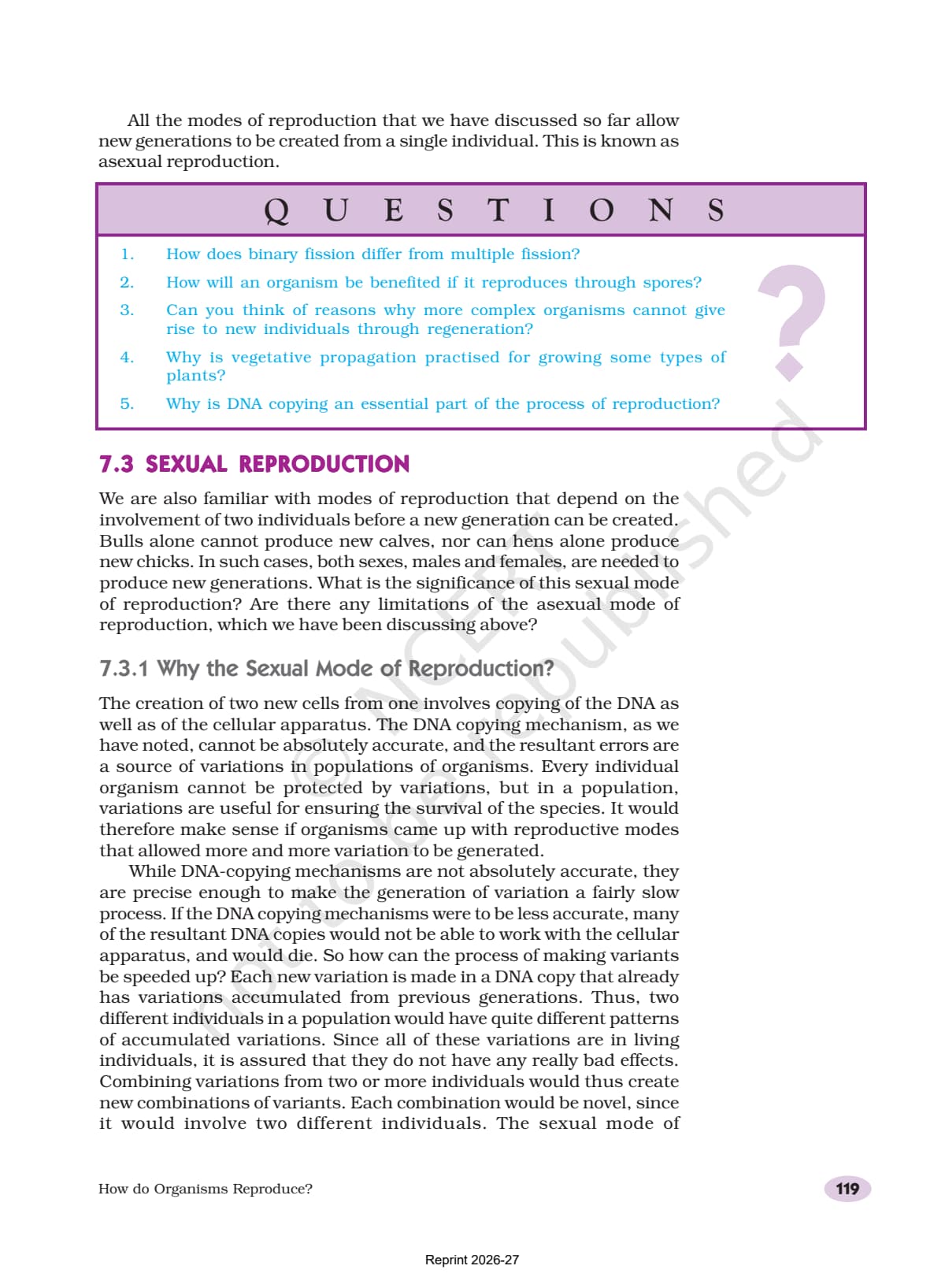
Section 7.3 turns to sexual reproduction, the mode that needs two individuals. Both a male and a female are needed, and the reason nature uses this slower method comes back to variation. Sexual reproduction combines DNA from two individuals, mixing their variations into fresh combinations, which speeds up variant-making compared with asexual copying. To stop the DNA doubling each generation, organisms make gametes with half the chromosomes by a cell division called meiosis. When two gametes fuse during fertilisation, the normal chromosome number is restored.
The zygote needs an energy store, so the female gamete is large and food-rich, while the male gamete is small and motile so it can travel to fuse with it. This split shapes the male and female reproductive organs in both plants and animals.
Sexual Reproduction in Flowering Plants in Class 10 Science
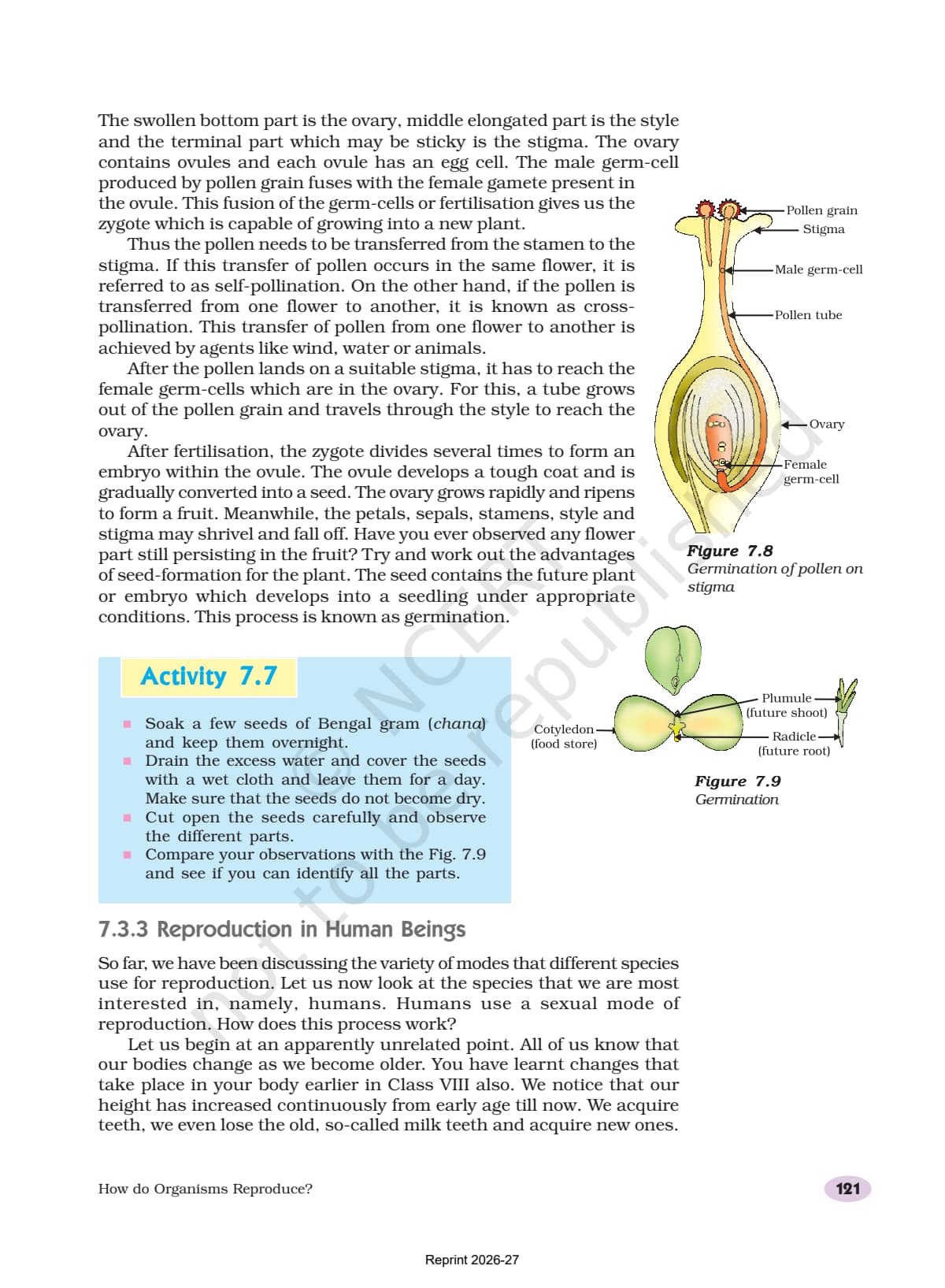
Section 7.3.2 covers reproduction in flowering plants (angiosperms), whose reproductive parts sit in the flower, which has four whorls: sepals, petals, stamens and pistil. The stamen is the male part and makes pollen grains; the pistil is the female part, made of the stigma, style and ovary, with the ovary holding the ovules, each with an egg cell.
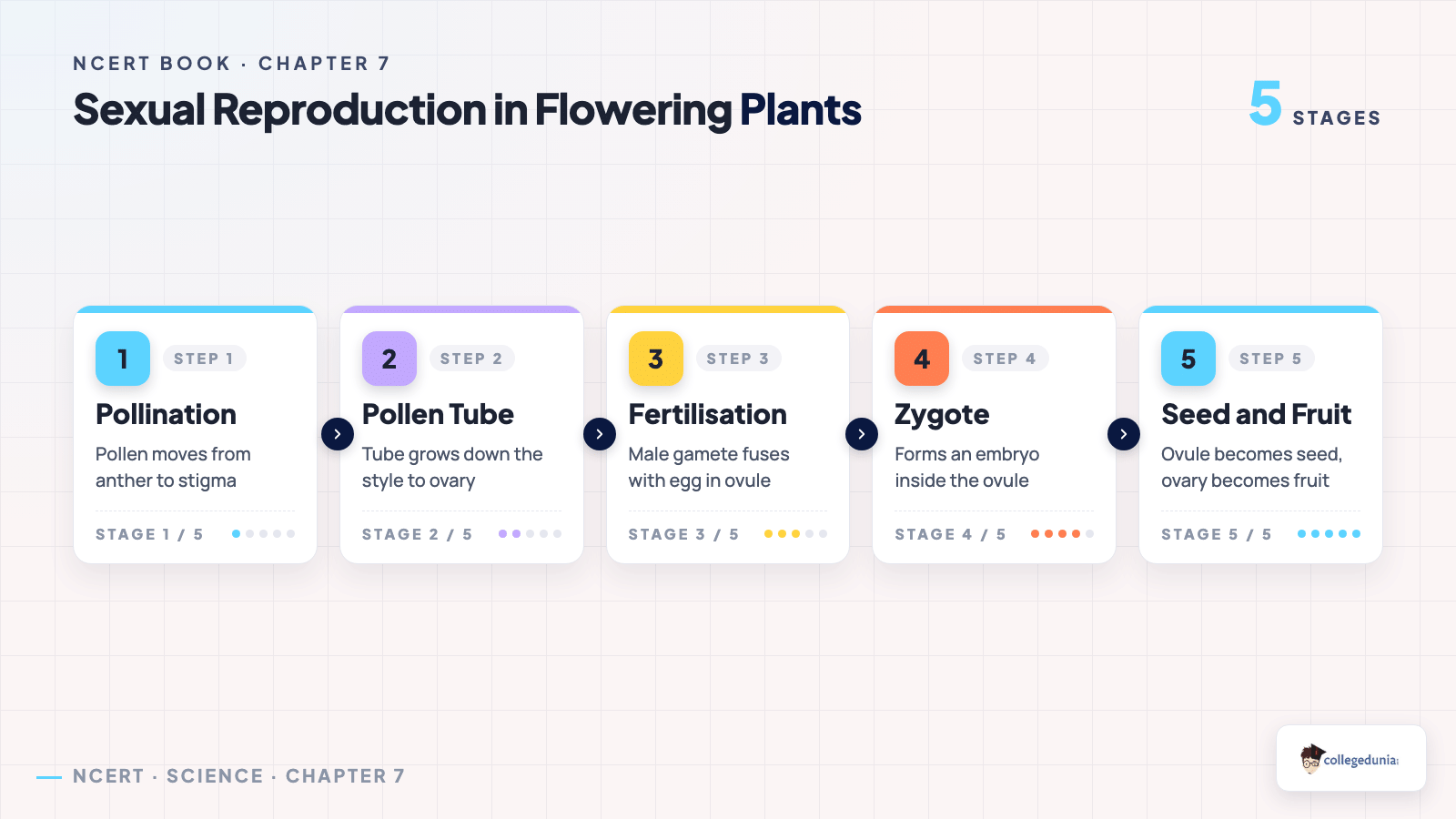
A flower can be unisexual (papaya, watermelon) or bisexual (Hibiscus, mustard). Reproduction begins with pollination, the transfer of pollen to the stigma: self-pollination on the same flower, or cross-pollination to another flower, carried by wind, water or animals.
A pollen tube grows from the pollen grain, passes through the style to the ovary, and the male germ-cell travels down it to fuse with the egg in the ovule, which is fertilisation. The zygote divides to form an embryo inside the ovule. The ovule becomes the seed, the ovary becomes the fruit, and the seed later germinates. After fertilisation the petals, sepals, stamens, style and stigma usually dry up and fall off, a favourite one-mark board question.
Reproduction in Human Beings and Puberty in Class 10 Science
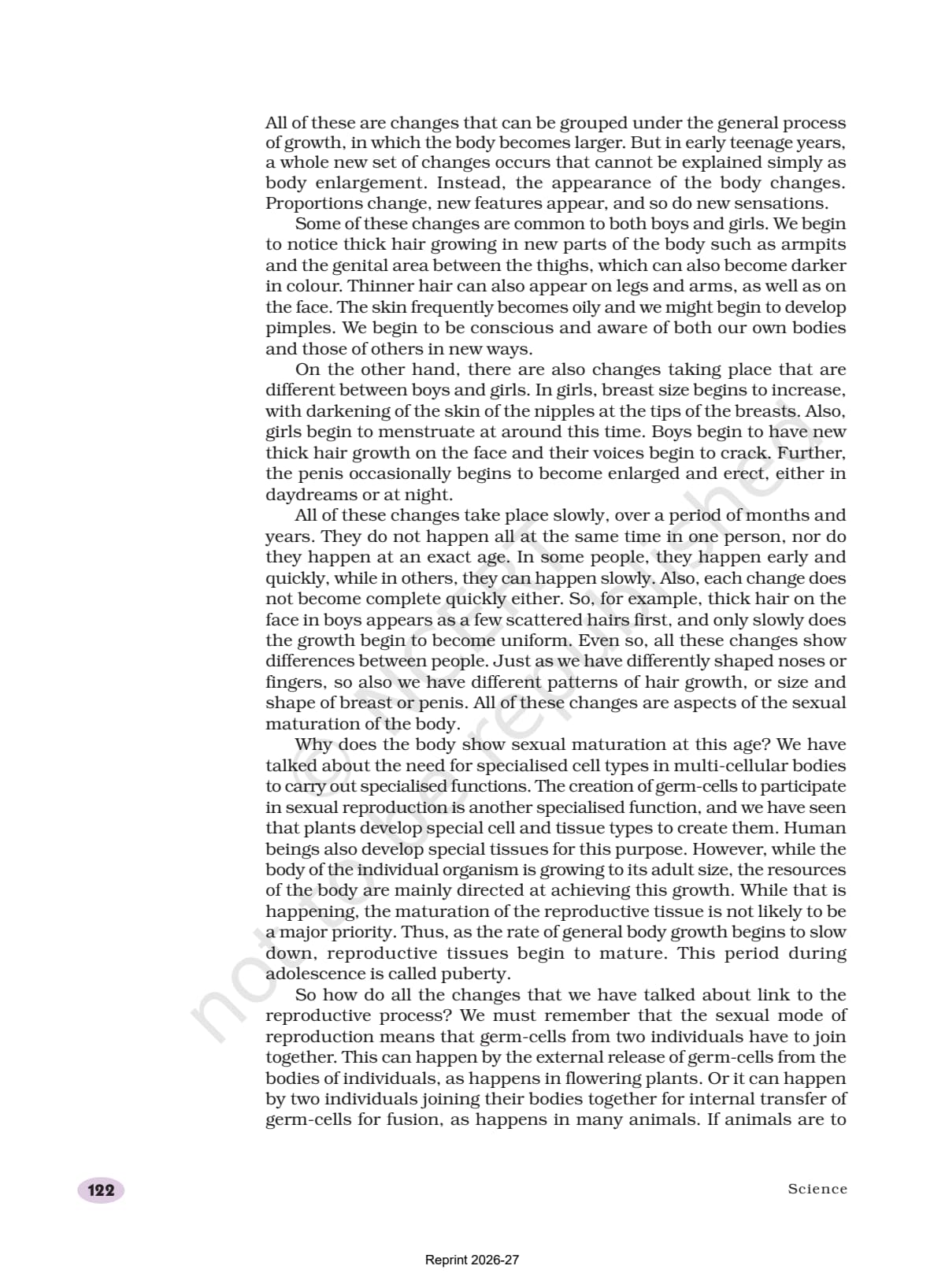
Section 7.3.3 covers reproduction in human beings. It starts with puberty, when the body slows general growth and the reproductive tissues mature. Some changes are common to boys and girls (new hair, oily skin), while others differ between the sexes and signal the body is becoming able to reproduce.
| Organ | System | Main function |
|---|---|---|
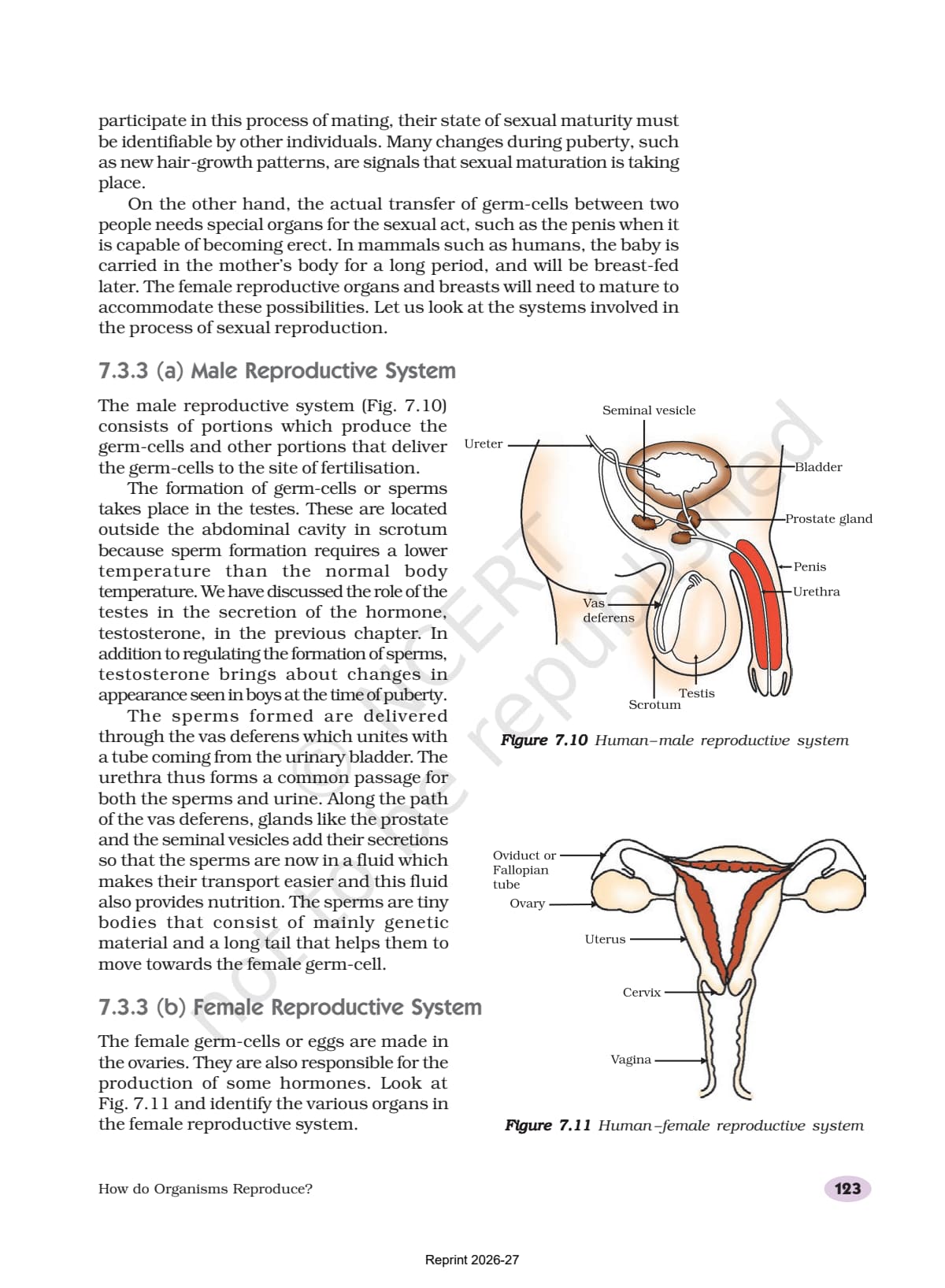
| Testes | Male | Make sperms; lie in the scrotum where it is cooler than the body |
| Vas deferens | Male | Carries sperms to the urethra; prostate and seminal vesicles add fluid |
| Ovaries | Female | Make eggs and some hormones; release one egg each month |
| Oviduct (fallopian tube) | Female | Carries the egg toward the uterus; the site where fertilisation usually happens |
| Uterus | Female | The womb where the embryo implants and the baby develops |
Sperms enter through the vagina, travel up to the oviduct, and one sperm fuses with the egg to form the zygote, which divides and implants in the lining of the uterus. The embryo gets food, oxygen and waste removal through the placenta, and is born after about nine months. Note: fertilisation happens in the oviduct, not the uterus.
Menstruation and Reproductive Health in Class 10 Science Chapter 7
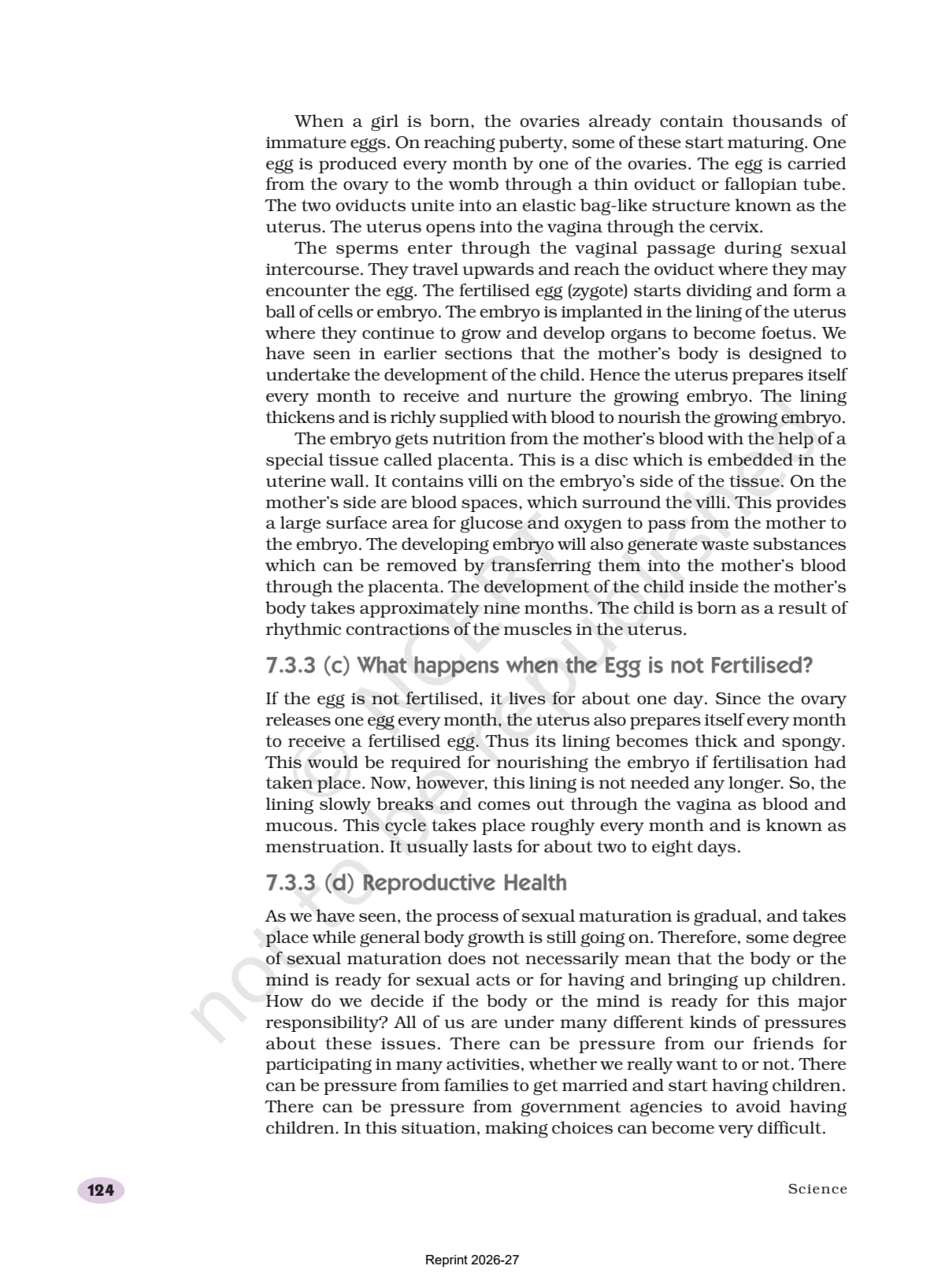
The chapter ends with what happens when the egg is not fertilised, and with reproductive health. Each month one ovary releases an egg, and the uterus prepares a thick, spongy, blood-rich lining to nourish an embryo. If the egg is not fertilised, it lives for about a day, and the lining is no longer needed. The unused lining breaks down and slowly leaves through the vagina as blood and mucous, a cycle called menstruation that lasts about two to eight days. The textbook also stresses that sexual maturity is gradual, so students should think carefully about these choices.
How to Use the NCERT Book PDF for Board Revision
Read the chapter in two passes: first the why of reproduction and the asexual modes with their named organisms, then sexual reproduction in plants and humans with the flower diagram (Fig. 7.7) and the reproductive-system diagrams (Fig. 7.10 and 7.11). Label the figures yourself rather than just reading them, the single drill the board rewards most.
Other Resources for Class 10 Science Chapter 7 How do Organisms Reproduce
Read the official NCERT Book chapter above, then revise with the matching NCERT Solutions, revision notes, formula sheet and handwritten notes. All resources for Class 10 Science Chapter 7 How do Organisms Reproduce are linked in the table below.
| Resource | What it covers | Open |
|---|---|---|
| NCERT Book PDF | Official Class 10 Science Chapter 7 textbook, with every activity, figure and exercise. | You are here |
| NCERT Solutions | Step-by-step answers to all in-text and exercise questions of the chapter. | Class 10 Science Chapter 7 NCERT Solutions |
| Notes | Concept-first revision notes on DNA copying, asexual modes and sexual reproduction. | Class 10 Science Chapter 7 Notes |
| Formula Sheet | Quick reference of key terms, modes, diagrams and definitions for fast revision. | Class 10 Science Chapter 7 Formula Sheet |
| Handwritten Notes | Scanned-style handwritten pages for last-minute board revision. | Class 10 Science Chapter 7 Handwritten Notes |
NCERT Book for Class 10 Science: All Chapters
Related Links: Use the table below to open the official NCERT Book PDF for the other chapters of Class 10 Science. Every chapter ships with the same official textbook PDF, chapter overview, and board-ready FAQ.
| Chapter | NCERT Book PDF link |
|---|---|
| Chapter 1 | Chemical Reactions and Equations NCERT Book PDF |
| Chapter 2 | Acids, Bases and Salts NCERT Book PDF |
| Chapter 3 | Metals and Non-metals NCERT Book PDF |
| Chapter 4 | Carbon and its Compounds NCERT Book PDF |
| Chapter 5 | Life Processes NCERT Book PDF |
| Chapter 6 | Control and Coordination NCERT Book PDF |
| Chapter 7 | How do Organisms Reproduce NCERT Book PDF (You are here) |
| Chapter 8 | Heredity NCERT Book PDF |
| Chapter 9 | Light Reflection and Refraction NCERT Book PDF |
| Chapter 10 | The Human Eye and the Colourful World NCERT Book PDF |
| Chapter 11 | Electricity NCERT Book PDF |
| Chapter 12 | Magnetic Effects of Electric Current NCERT Book PDF |
| Chapter 13 | Our Environment NCERT Book PDF |
NCERT Book Class 10 Science Chapter 7 How do Organisms Reproduce FAQs
Ques. What does Chapter 7 How do Organisms Reproduce cover in the Class 10 Science NCERT Book?
Ans. Chapter 7 of the Class 10 Science NCERT Book covers how living things make new individuals of their kind. It begins by asking why organisms reproduce and explains that reproduction is at heart the copying of DNA, with small variations that matter for the survival of a species. It then covers asexual reproduction, where one parent is enough, through fission, fragmentation, regeneration, budding, vegetative propagation and spore formation, each with its example. The chapter goes on to sexual reproduction, first in flowering plants with the parts of a flower, pollination and fertilisation, and then in human beings, covering puberty, the male and female reproductive systems, the placenta, menstruation and reproductive health. The chapter is aligned with the 2026-27 CBSE syllabus.
Ques. Why is variation beneficial to a species but not necessarily to the individual in Class 10 Science Chapter 7?
Ans. Variation arises because DNA copying during reproduction is never perfectly accurate, so the new DNA is similar but not always identical. A single variation may not help the individual that carries it, but across a whole population, the variety it creates means that if the environment changes, at least a few individuals are likely to survive. The textbook gives the example of bacteria living in warm water: if the water gets hotter due to global warming, most die, but the few heat-resistant variants survive and grow further. So variation keeps the species going through changing conditions, even though it offers no guaranteed benefit to the individual.
Ques. What is the difference between binary fission and multiple fission?
Ans. Both are kinds of asexual reproduction in single-celled organisms, but they differ in how many new cells form. In binary fission, the parent cell divides into two equal daughter cells; in Amoeba this can happen in any plane, while in Leishmania it happens in a definite orientation because of its whip-like structure. In multiple fission, the parent cell divides into many daughter cells at the same time, as in the malarial parasite Plasmodium. So the key difference is that binary fission gives two cells from one, while multiple fission gives many daughter cells from one at once.
Ques. What are the advantages of vegetative propagation in Class 10 Science Chapter 7?
Ans. Vegetative propagation is a form of asexual reproduction in which a part of the plant, such as the root, stem or leaf, grows into a new plant, as in potato, sugarcane and Bryophyllum. It has several advantages. Plants grown this way are genetically similar to the parent, so they keep all the parent's useful features. They can bear flowers and fruits earlier than plants grown from seeds. It also lets us grow plants such as banana, orange, rose and jasmine that have lost the ability to make seeds. Methods like layering, grafting and tissue culture use this property to grow many identical plants for farming and for ornamental use.
Ques. How does sexual reproduction take place in flowering plants?
Ans. In flowering plants the reproductive parts are in the flower. The stamen is the male part and makes pollen grains, while the pistil is the female part, made of the stigma, style and ovary, with ovules inside the ovary. Reproduction begins with pollination, the transfer of pollen from the stamen to the stigma, which is self-pollination within the same flower or cross-pollination between flowers carried by wind, water or animals. After pollination, a pollen tube grows from the pollen grain down the style to the ovary, and the male germ-cell fuses with the egg in the ovule, which is fertilisation. The fertilised egg becomes an embryo, the ovule becomes the seed, and the ovary ripens into the fruit.
Ques. Where does fertilisation take place in the human female body in Class 10 Science?
Ans. In human beings, fertilisation takes place in the oviduct, also called the fallopian tube, not in the uterus. One ovary releases an egg each month, and this egg is carried into the oviduct. During sexual intercourse the sperms enter through the vagina, travel upwards, and reach the oviduct where one sperm may fuse with the egg to form the zygote. The fertilised egg then divides into a ball of cells and moves to the uterus, where it implants in the thick lining and grows into an embryo and then a foetus. So the meeting of the egg and sperm happens in the oviduct, while the baby develops in the uterus over about nine months.
Ques. What is menstruation and why does it happen in Class 10 Science Chapter 7?
Ans. Each month one of the ovaries releases an egg, and the uterus prepares itself by growing a thick, spongy lining that is richly supplied with blood, ready to nourish an embryo if fertilisation happens. If the egg is not fertilised, it lives for about one day, and the prepared lining is no longer needed. The lining then breaks down slowly and is removed from the body through the vagina as blood and mucous. This monthly cycle is called menstruation, and it usually lasts about two to eight days. So menstruation is the shedding of the unused uterus lining when the released egg has not been fertilised.
Ques. Is the Class 10 Science Chapter 7 NCERT Book PDF free to download for 2026-27?
Ans. Yes. The official NCERT Book PDF for Class 10 Science Chapter 7 How do Organisms Reproduce is free to read and download on this page for the 2026-27 session. It is the complete chapter as printed in the CBSE textbook, including every activity, figure, in-text question and end-of-chapter exercise. You can pair the book with the linked NCERT Solutions and revision notes for the same chapter so that you read the textbook and revise from one place before the board exam.



Comments