



These Psychological Disorders Class 12 Notes give a quick, exam-ready summary of abnormal behaviour, the classification of disorders and the main disorder groups, set to the 2026-27 CBSE syllabus. The notes pull together every key term, criterion and symptom from Chapter 4 of Class 12 Psychology. Students can use them for a fast revision the night before a test or to fix the main ideas before they attempt the Review Questions.
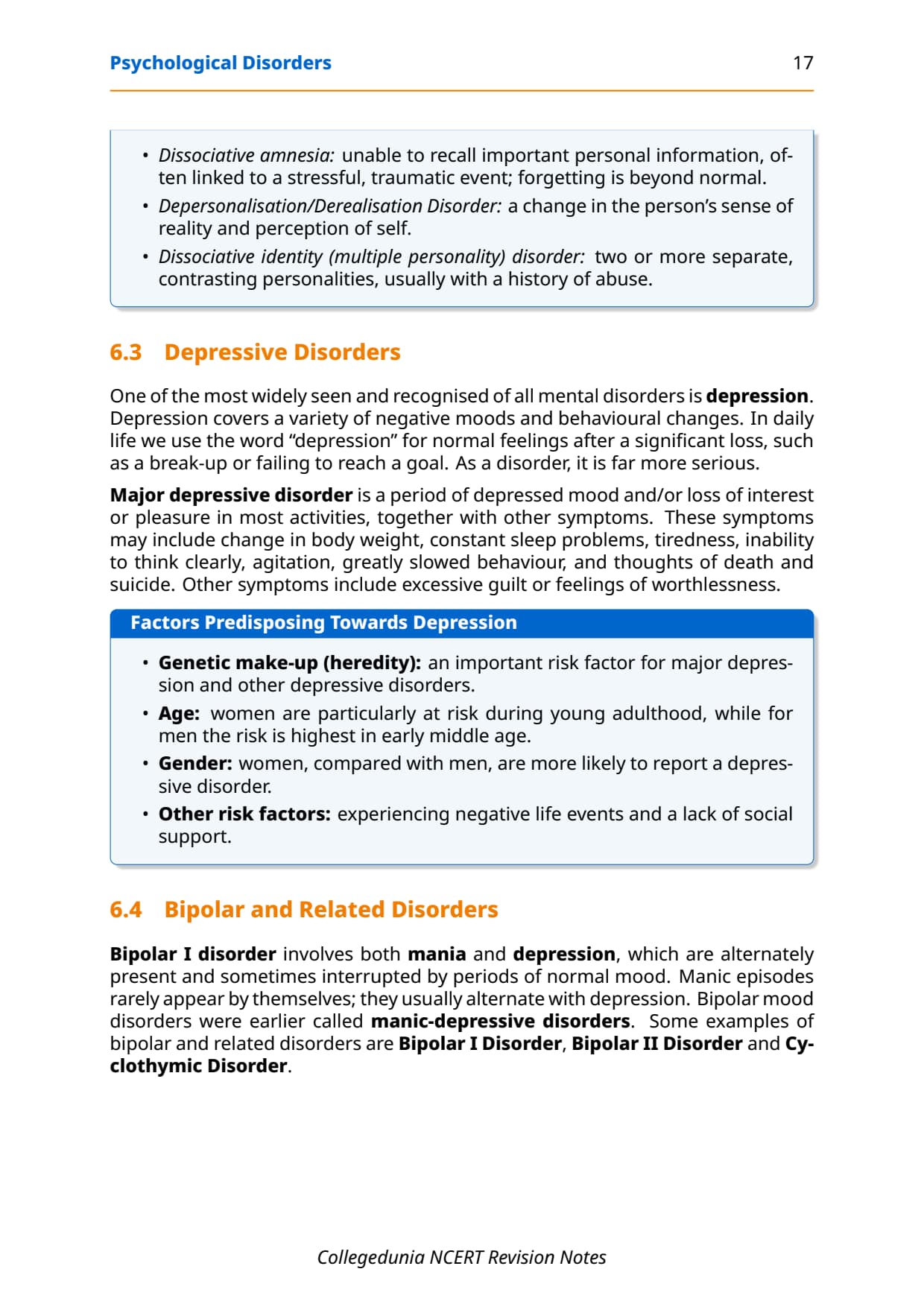
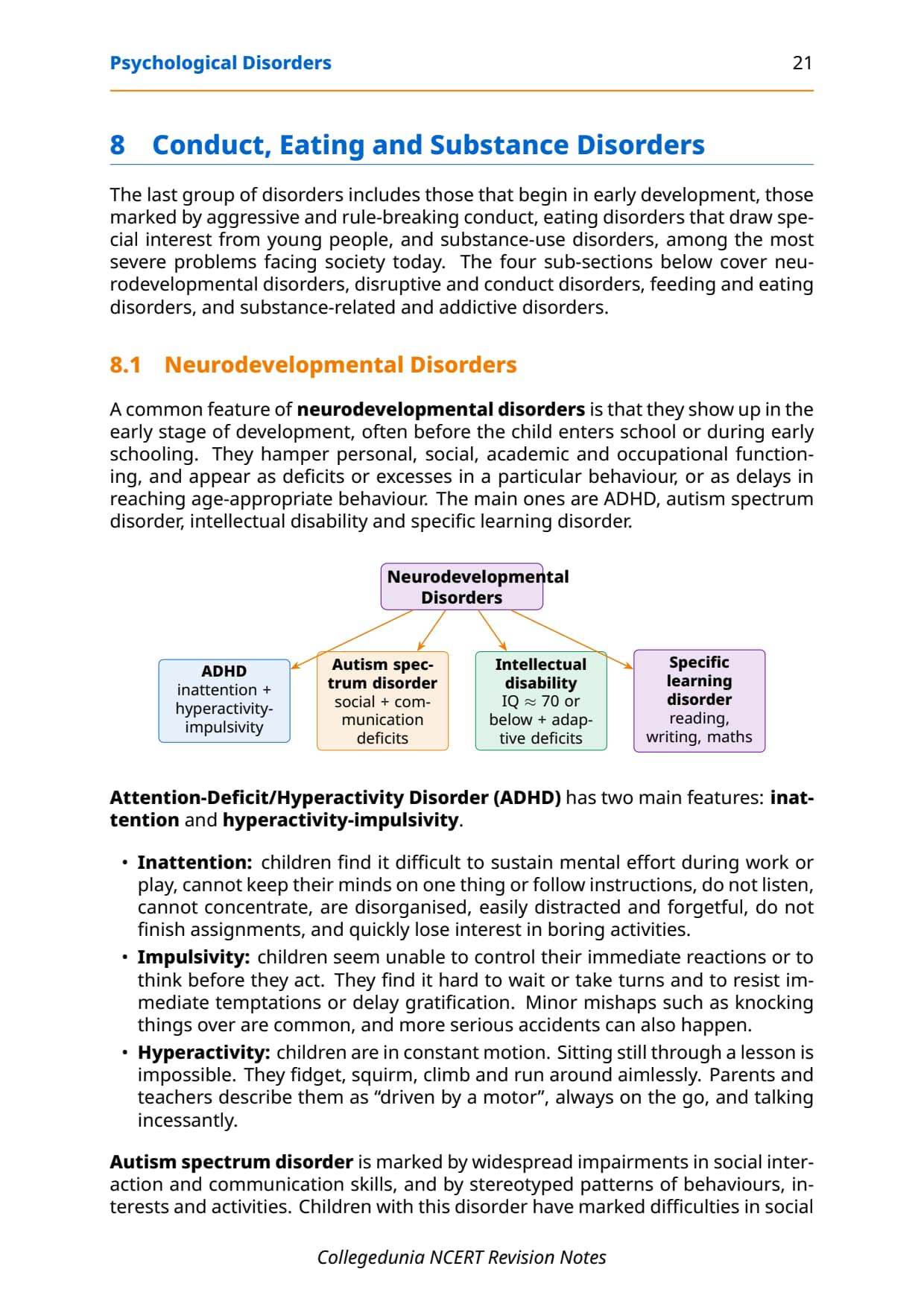
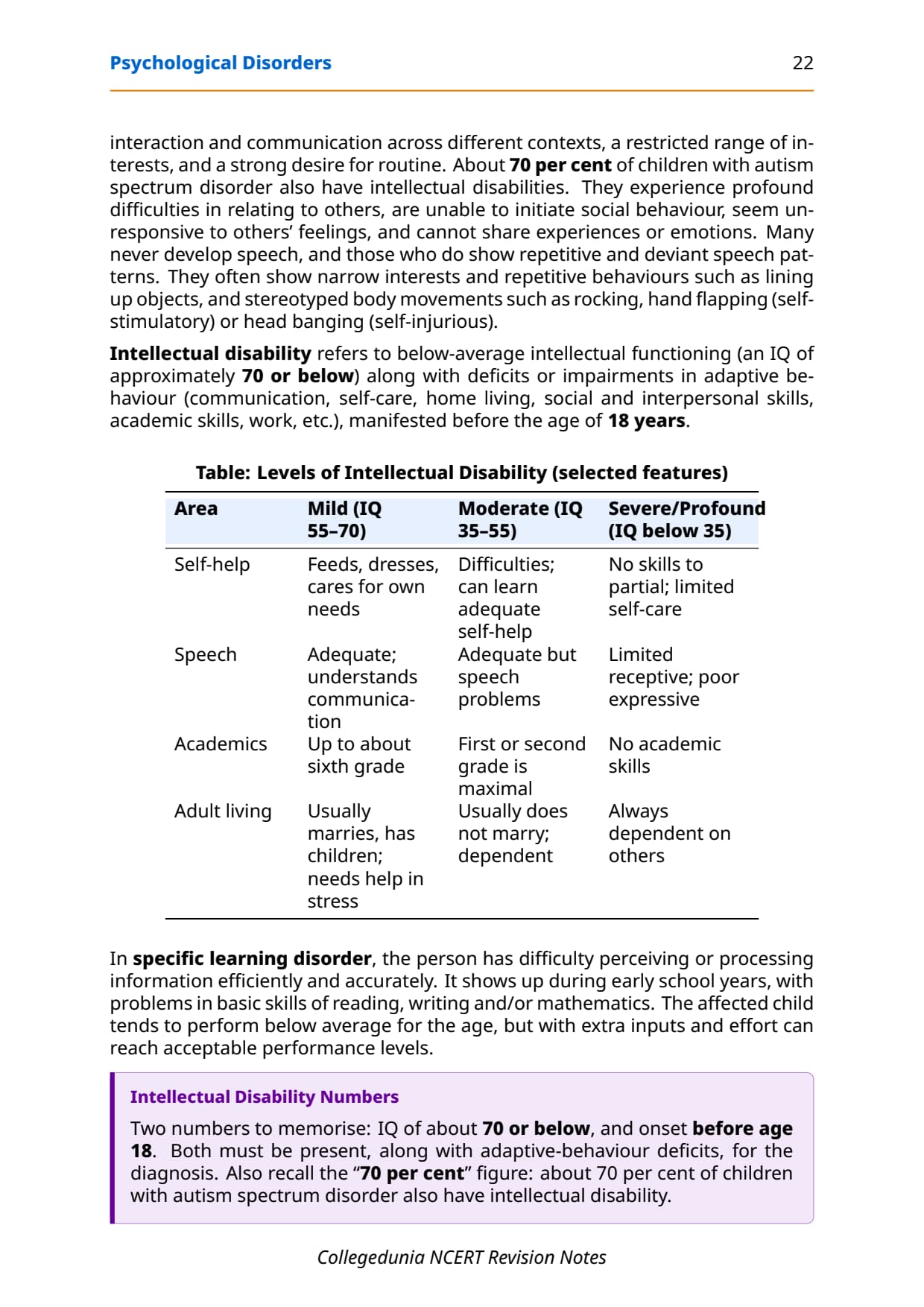
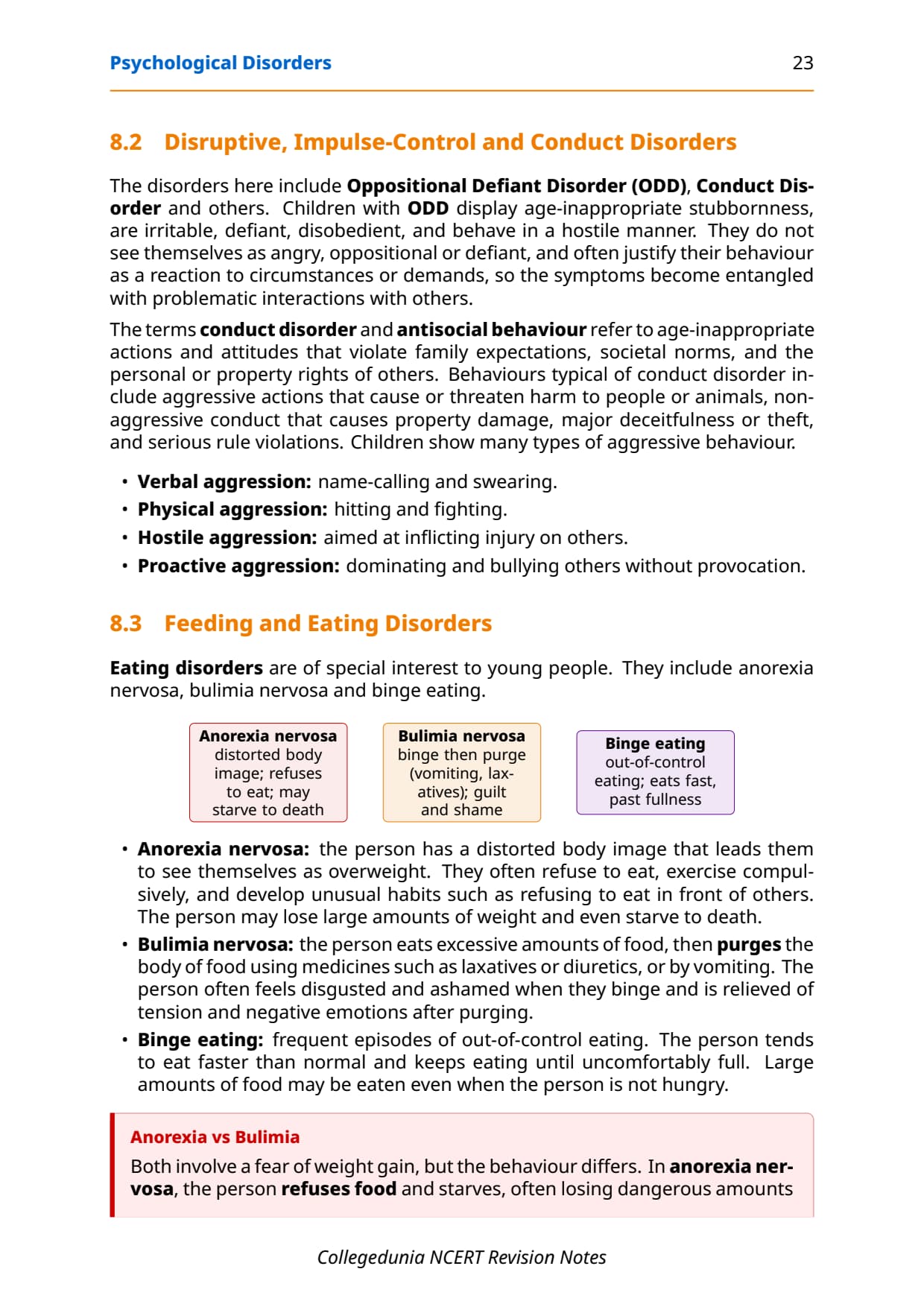
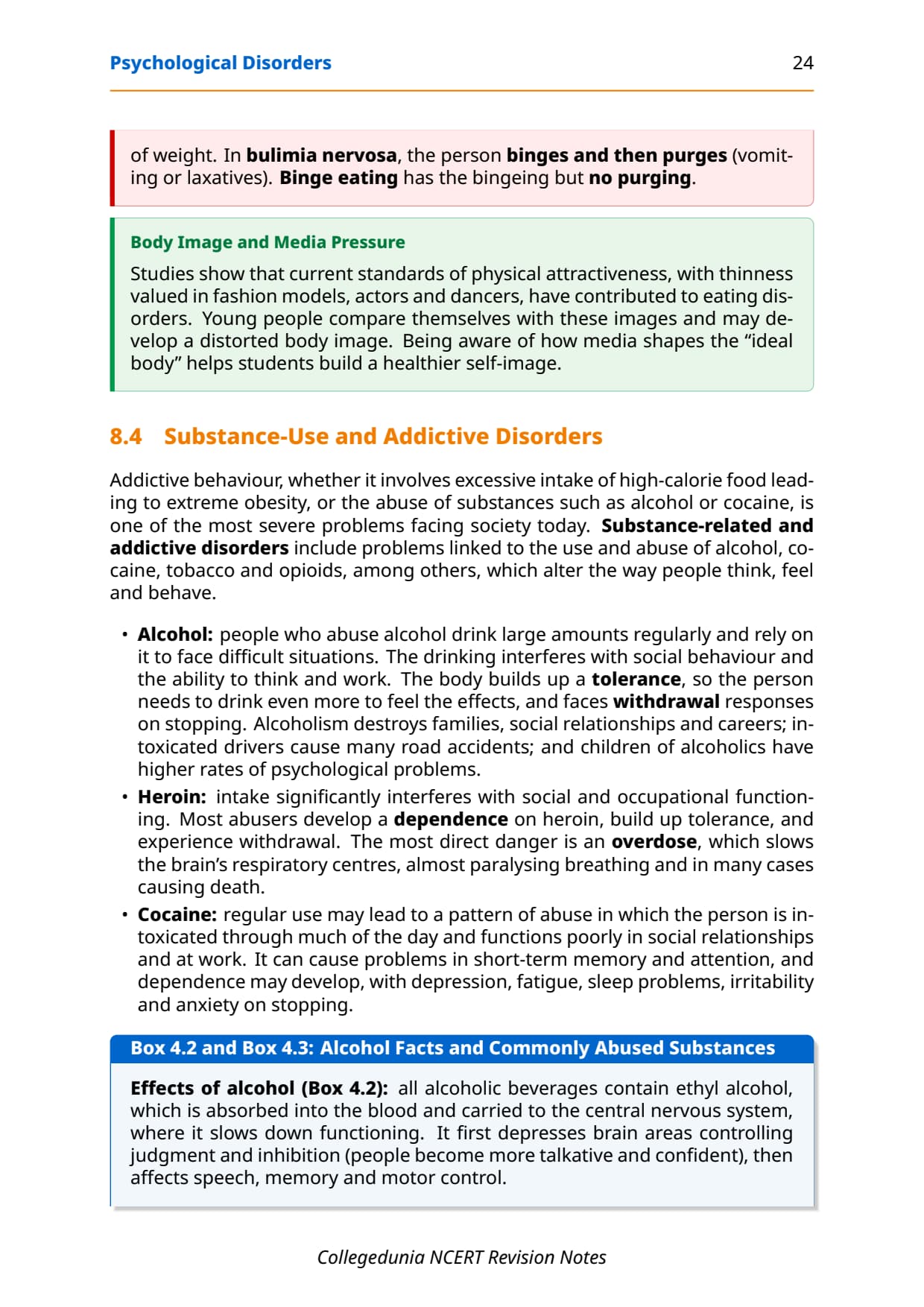
- Covers abnormality, the four D criteria, ICD and DSM, and every major disorder group in one place.
- This Class 12 Psychology chapter usually carries 6 to 7 marks in the board paper.
- Pairs with the NCERT Solutions, Handwritten Notes and Book PDF linked lower on this page.
These Psychological Disorders Class 12 notes are written from the official NCERT Psychology textbook and checked against the last five years of CBSE board papers.
Student Feedback: In a Collegedunia poll of 8,420 Class 12 Psychology students taken before the 2026 boards, 72% of students said short, point-wise notes on the disorder groups and their symptoms were the fastest way to revise this chapter. Most students kept the four D criteria and the disorder list on a single sheet for last-minute recall.
Source: 2026-27 Class 12 Psychology student poll. Sample of 8,420 students from CBSE schools across 12 states.
What the Psychological Disorders Notes Cover
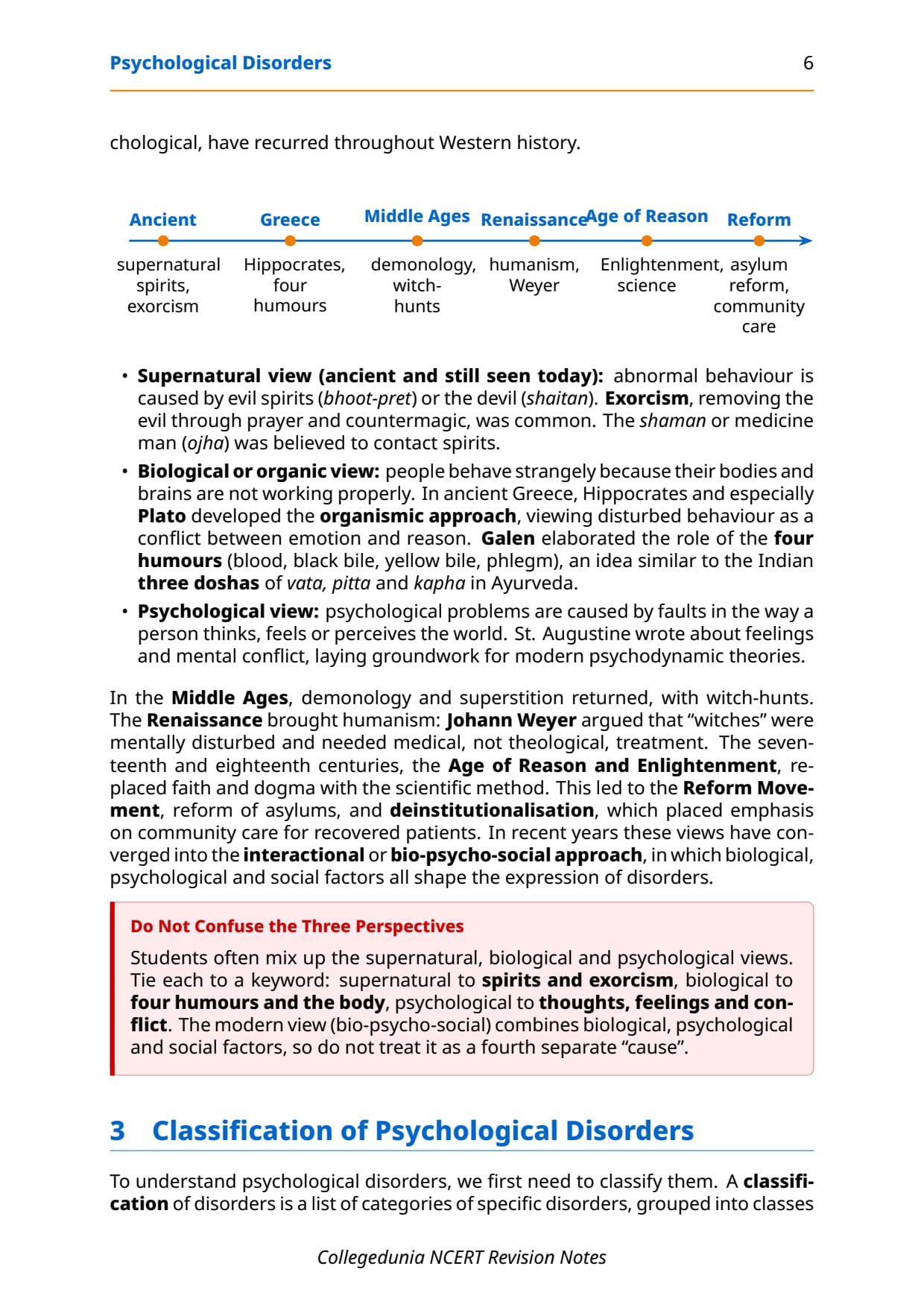
Psychological Disorders is the fourth chapter of Class 12 Psychology. It studies what counts as abnormal behaviour, how mental disorders are classified, and the symptoms of the main disorder groups. Before the disorders, the notes fix how psychologists decide that behaviour is abnormal at all.
The easiest way to organise your revision is to split the chapter into three threads:
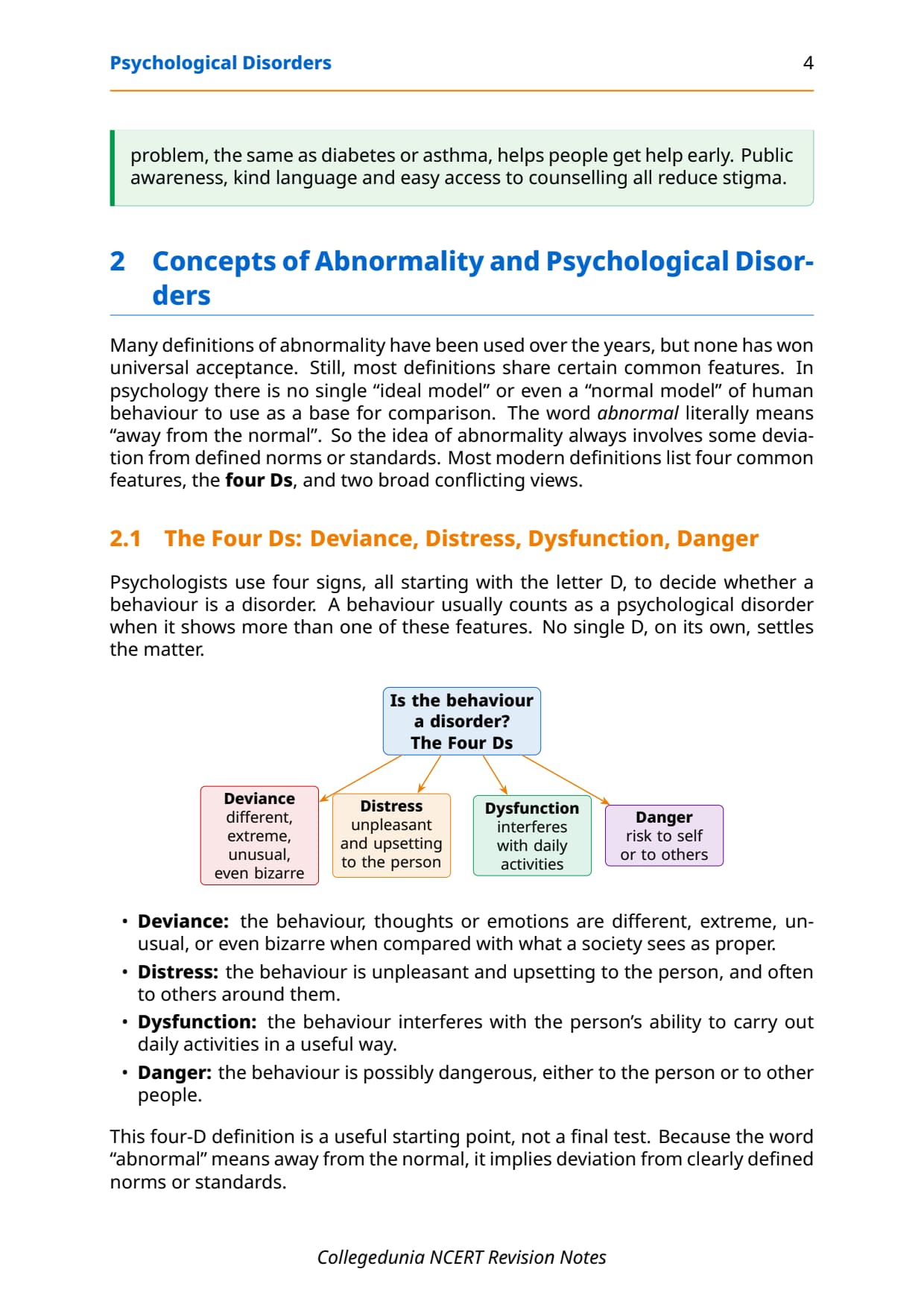
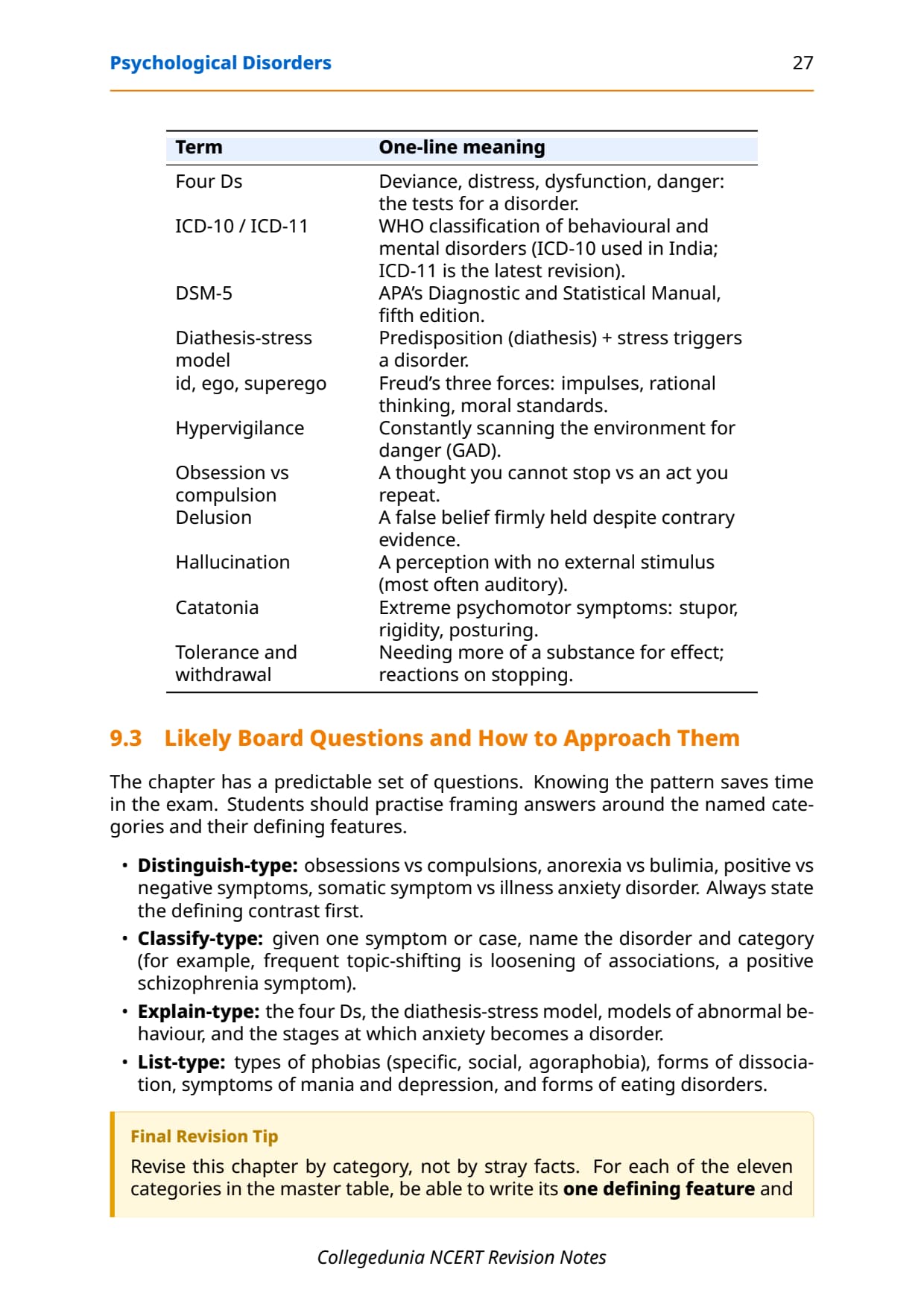
- What is abnormal: the four D criteria of deviance, distress, dysfunction and danger.
- How it is classified: the ICD and DSM systems used to name and group disorders.
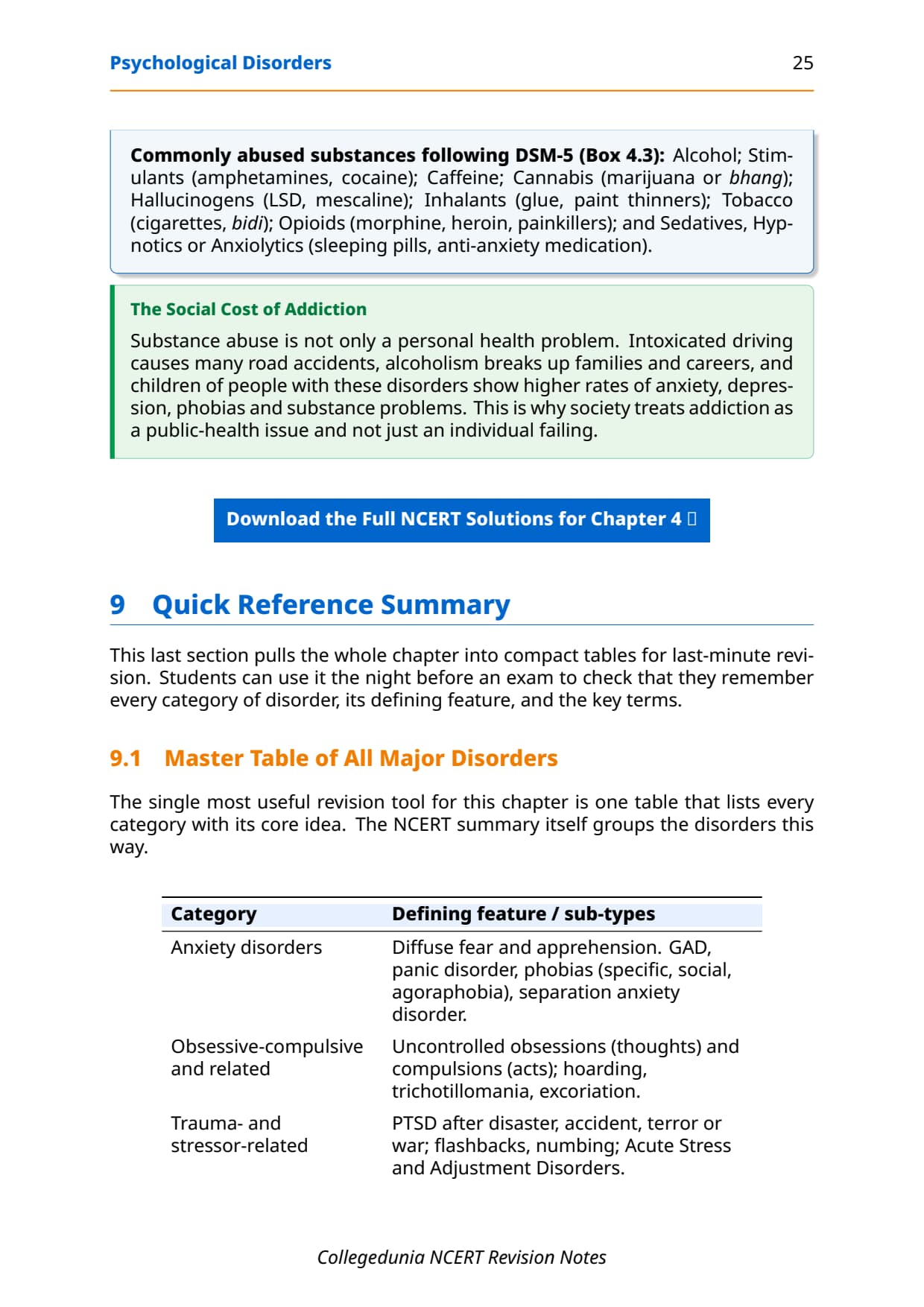
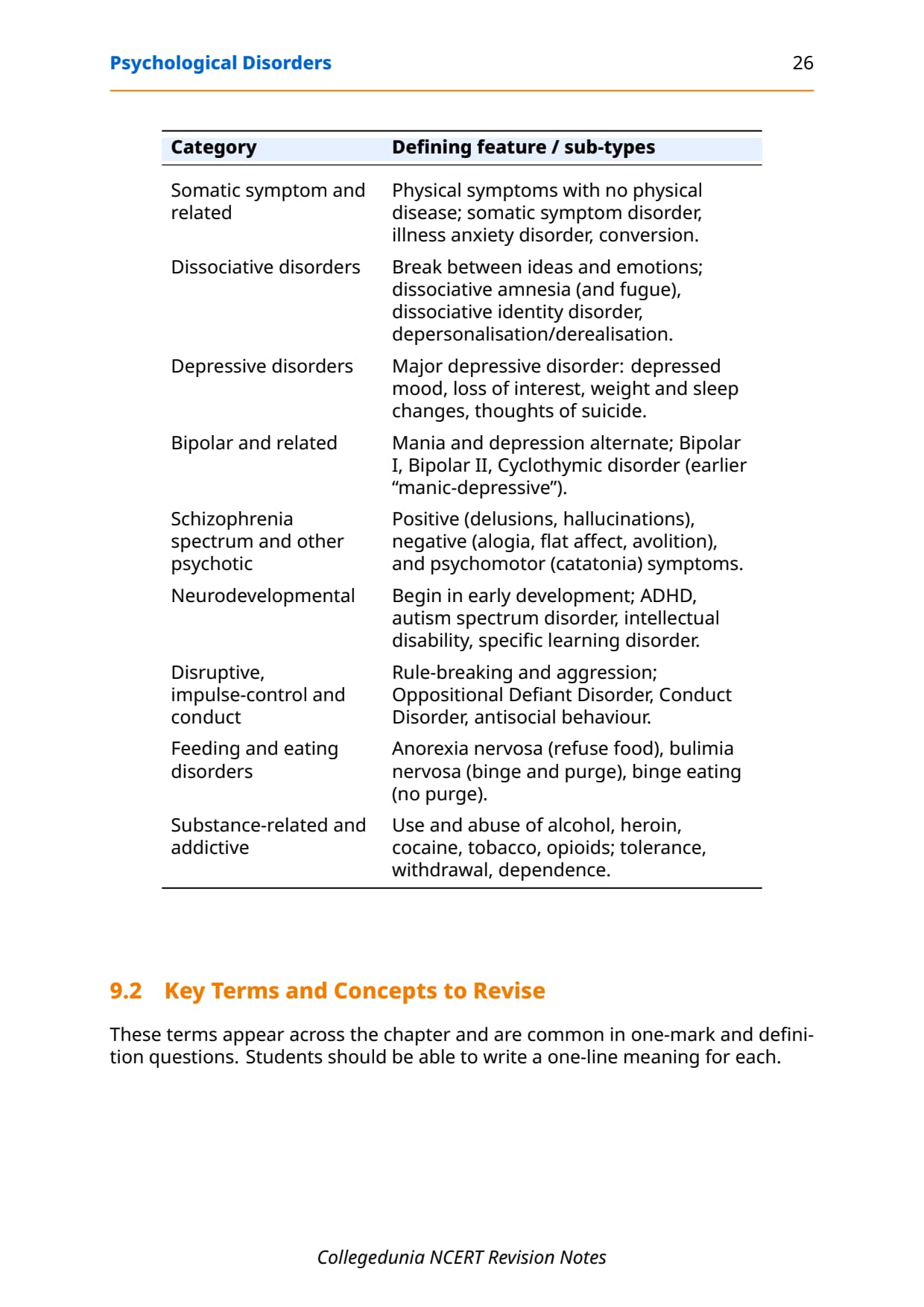
- The disorders: anxiety, mood, schizophrenic, dissociative, somatic, eating and substance-use.
So these notes are really a map of mental health. If you sort each fact under abnormality, classification or the disorder itself first, almost every question in Psychological Disorders class 12 becomes easier to answer. Keep this three-part frame at the top of your revision sheet and slot each new detail into one of the boxes as you read.
Abnormality and the Four D Criteria
The chapter opens with what makes behaviour abnormal. There is no single test, so learn the markers as a boxed list you can copy straight onto the answer sheet. Each one matters for the "is this abnormal" type of question.
- Deviance: the behaviour differs from what society sees as normal.
- Distress: it causes pain or unhappiness to the person.
- Dysfunction: it stops normal work, study or relationships.
- Danger: it may put the person or others at risk.
The point examiners test most is that no single criterion is enough on its own. A deviant pattern is called abnormal only when it is also distressing, dysfunctional or dangerous, and is judged in context. Keep this balance ready, because the abnormality question turns on it.
Classification and Diagnosis of Disorders
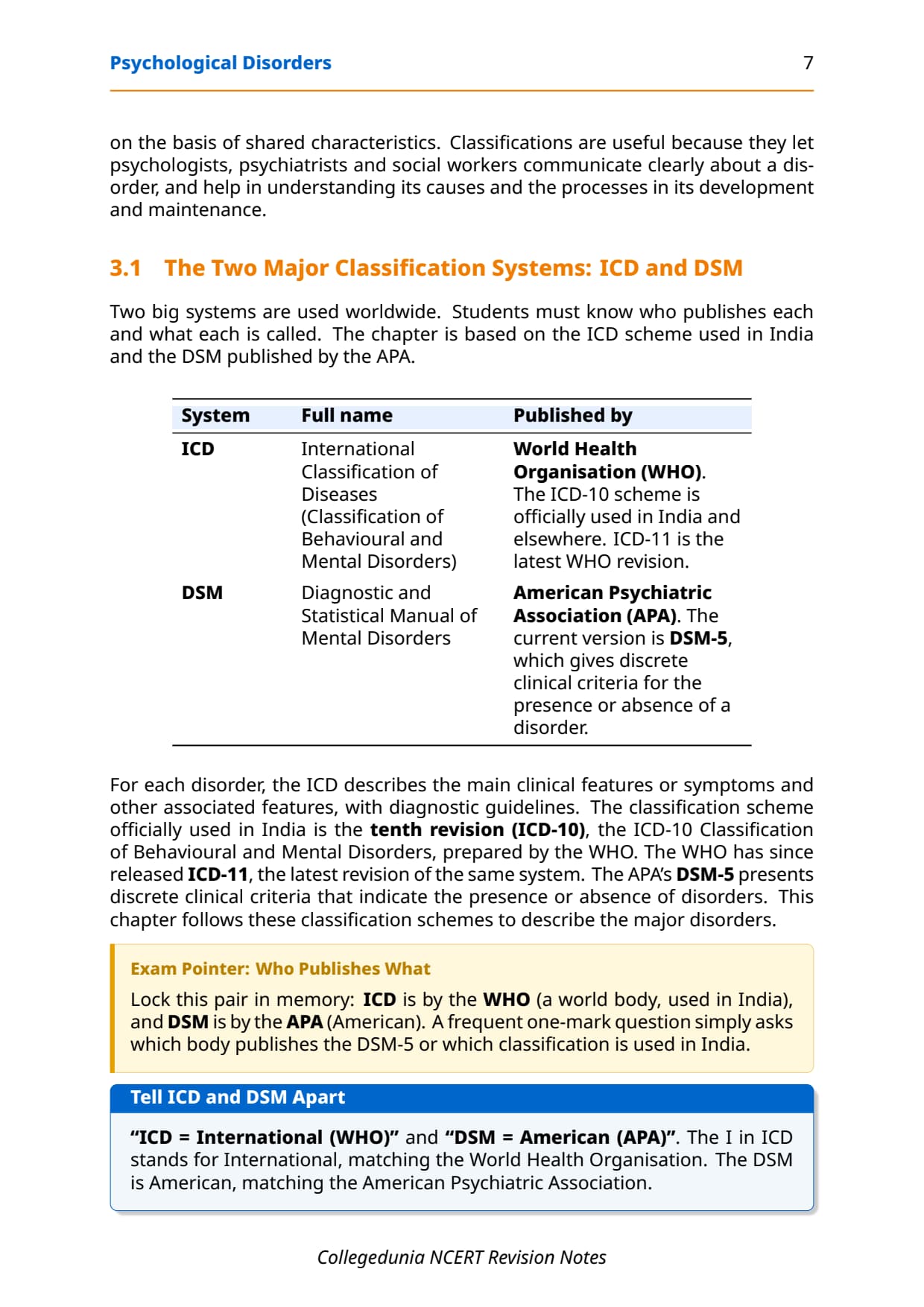
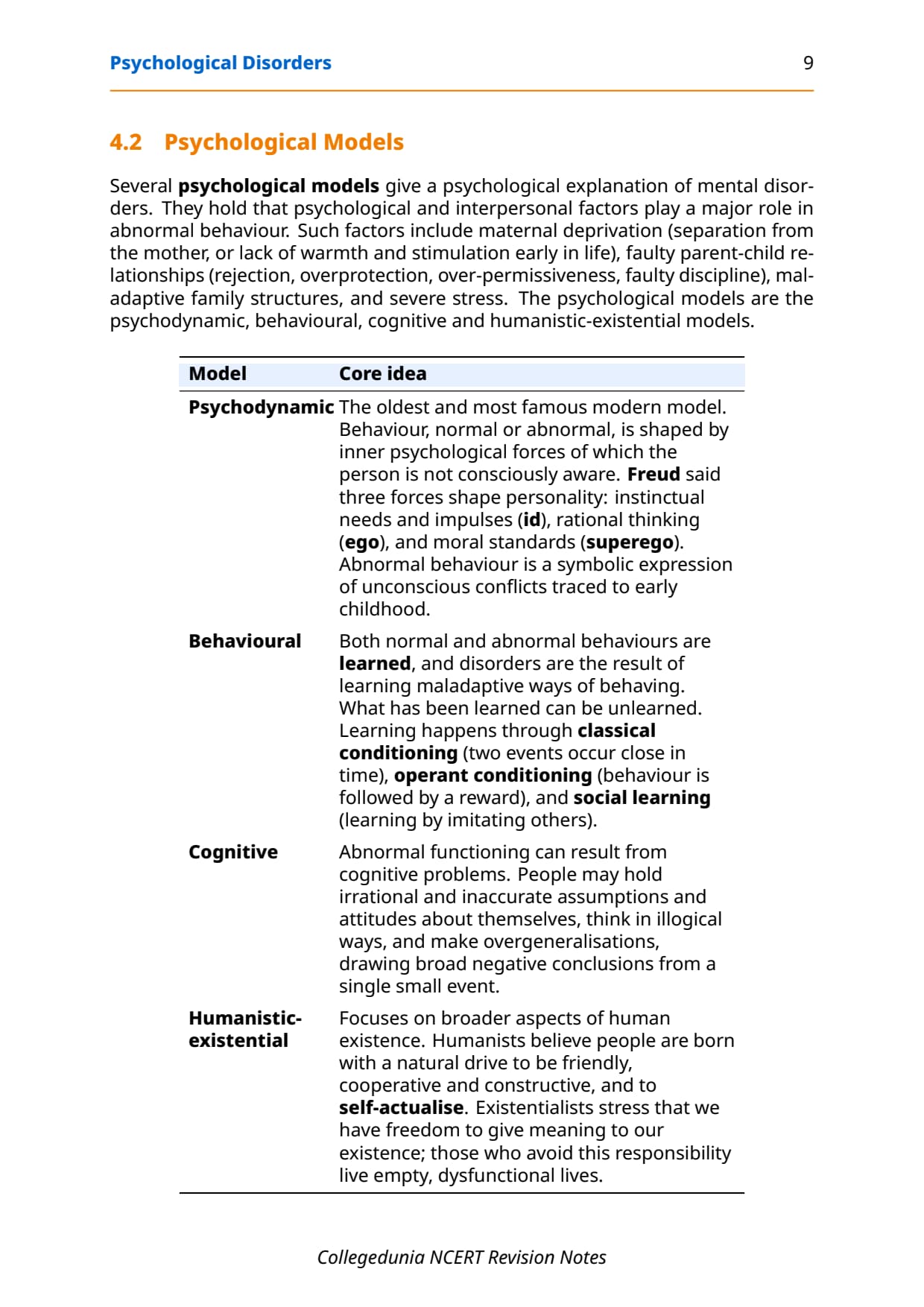
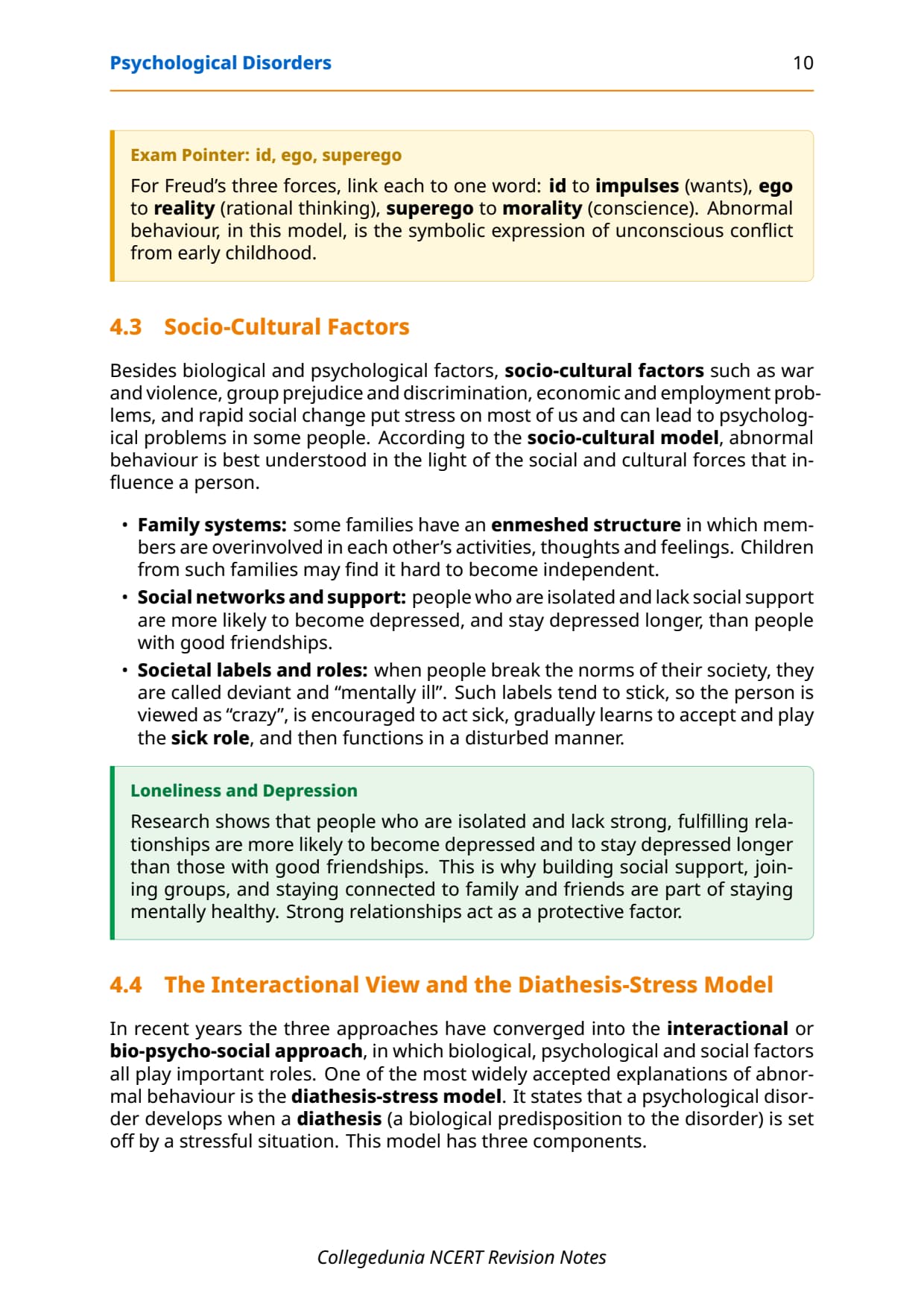
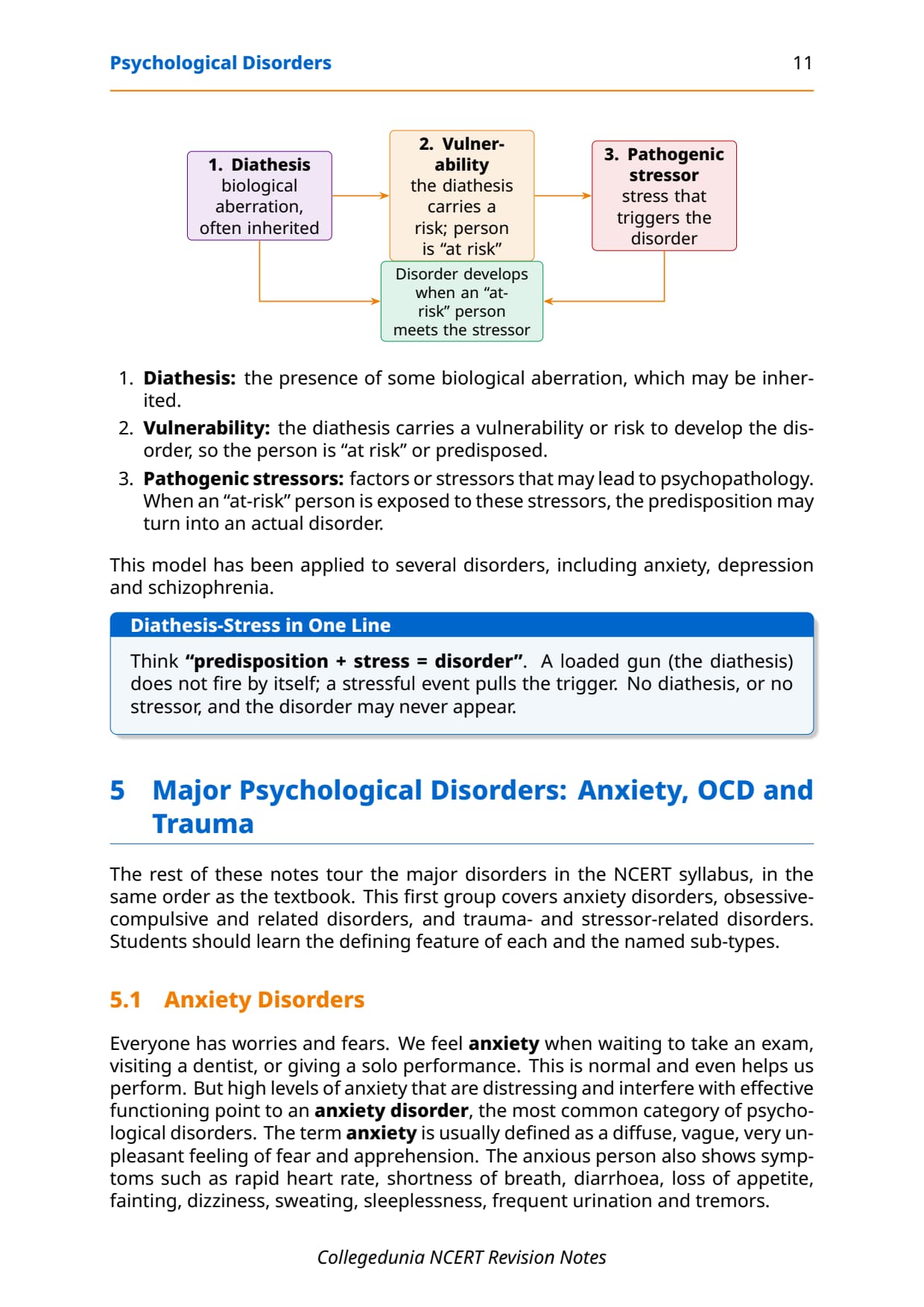
Once abnormality is defined, the next step is to group and name disorders. The notes keep the two systems and the diagnosis steps as a table, because a regular question asks how disorders are diagnosed when there is no physical test.
| System or step | What it means |
|---|---|
| ICD | The World Health Organisation system for naming and coding disorders, used worldwide. |
| DSM | The American classification manual used to diagnose mental disorders. |
| Symptoms over time | Diagnosis rests on a pattern of behaviour and feelings, not a single physical sign. |
| Interview and observation | The psychologist gathers history, observes behaviour and rules out other causes. |
The one-line takeaway for your sheet is that psychological disorders are diagnosed from a pattern of symptoms, not from physical signs. Unlike a physician who looks for a fever, a psychologist studies behaviour and thoughts against the ICD or DSM criteria. Keep this difference clear, since it is a common exam trap.
Anxiety and Mood Disorders
These two groups carry heavy marks, and students often mix up their symptoms. The notes keep their definitions side by side so you can describe each cleanly in the exam. Learn the core feeling behind each group first.
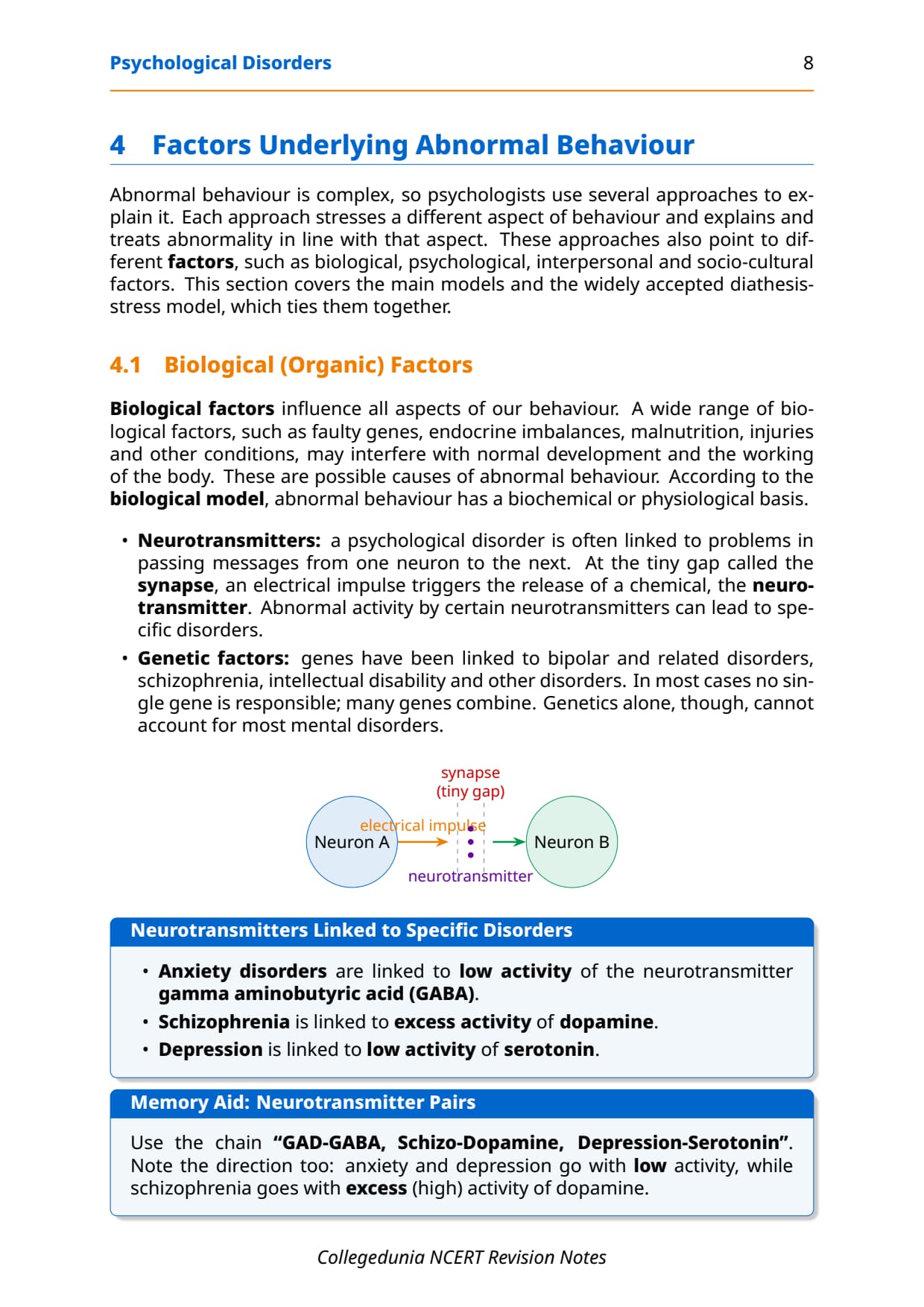
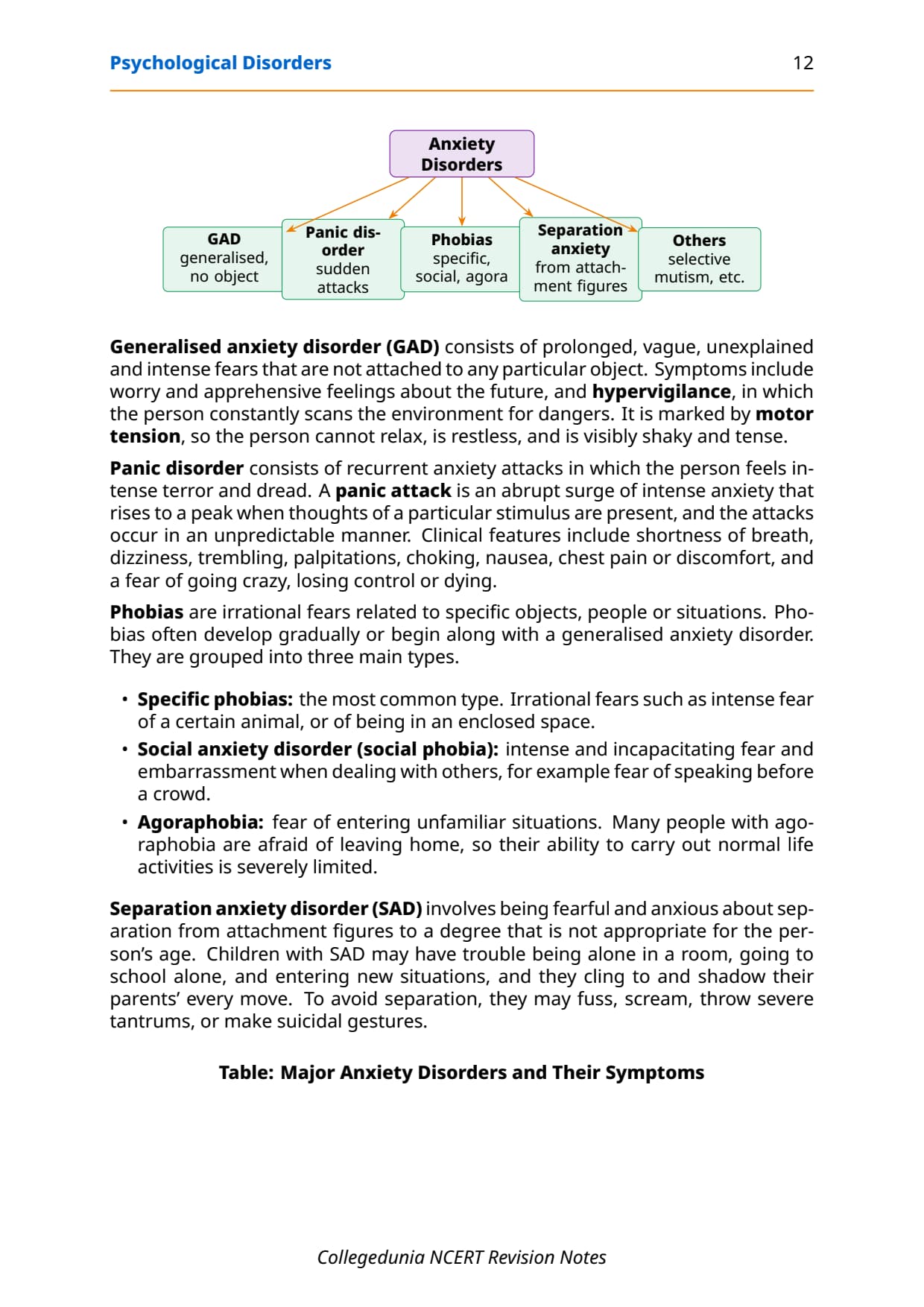
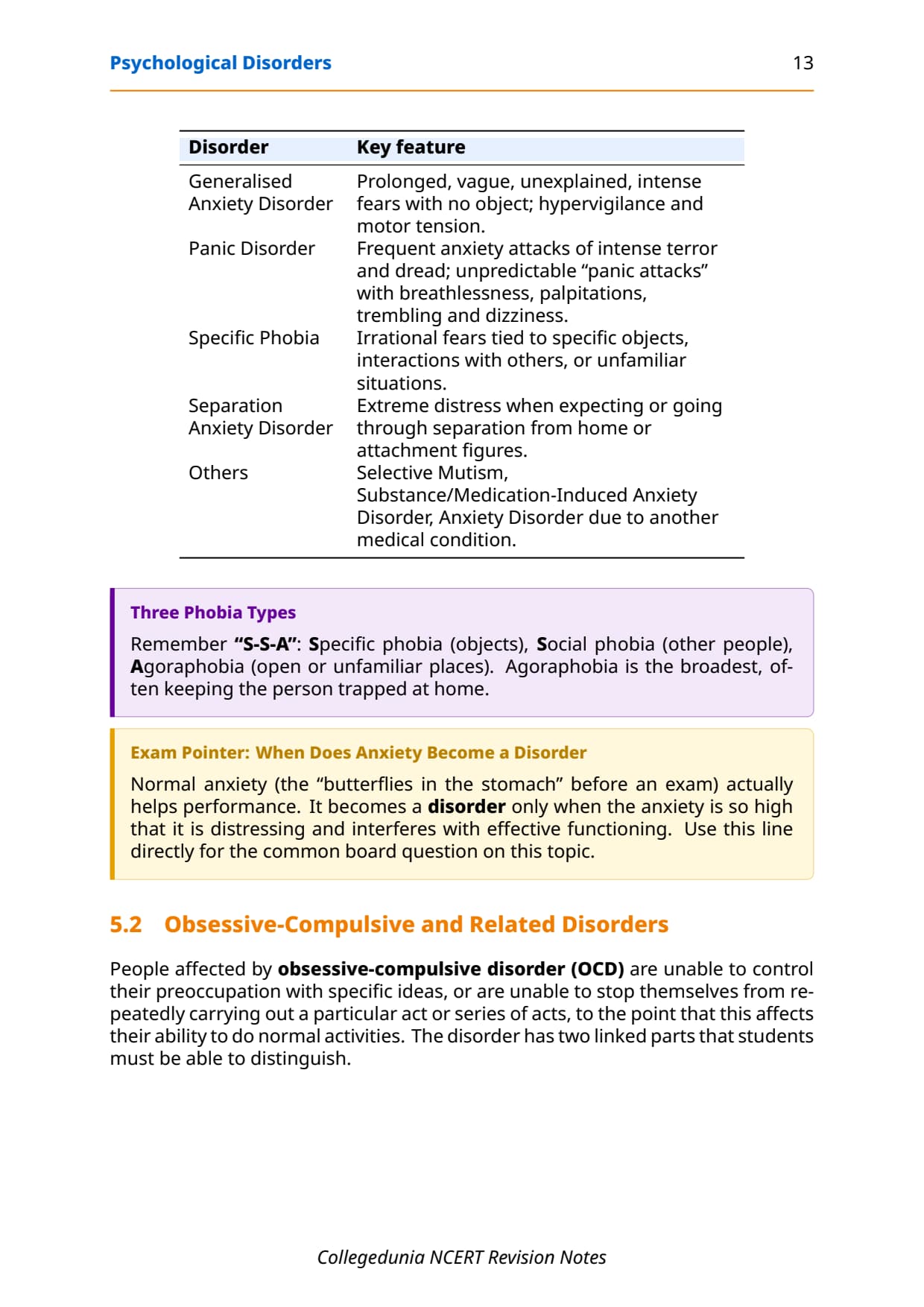
- Generalised anxiety: constant, free-floating worry with no fixed object.
- Phobia: an intense, irrational fear of a specific object or situation.
- Panic and OCD: sudden attacks of terror, and unwanted thoughts with repeated acts.
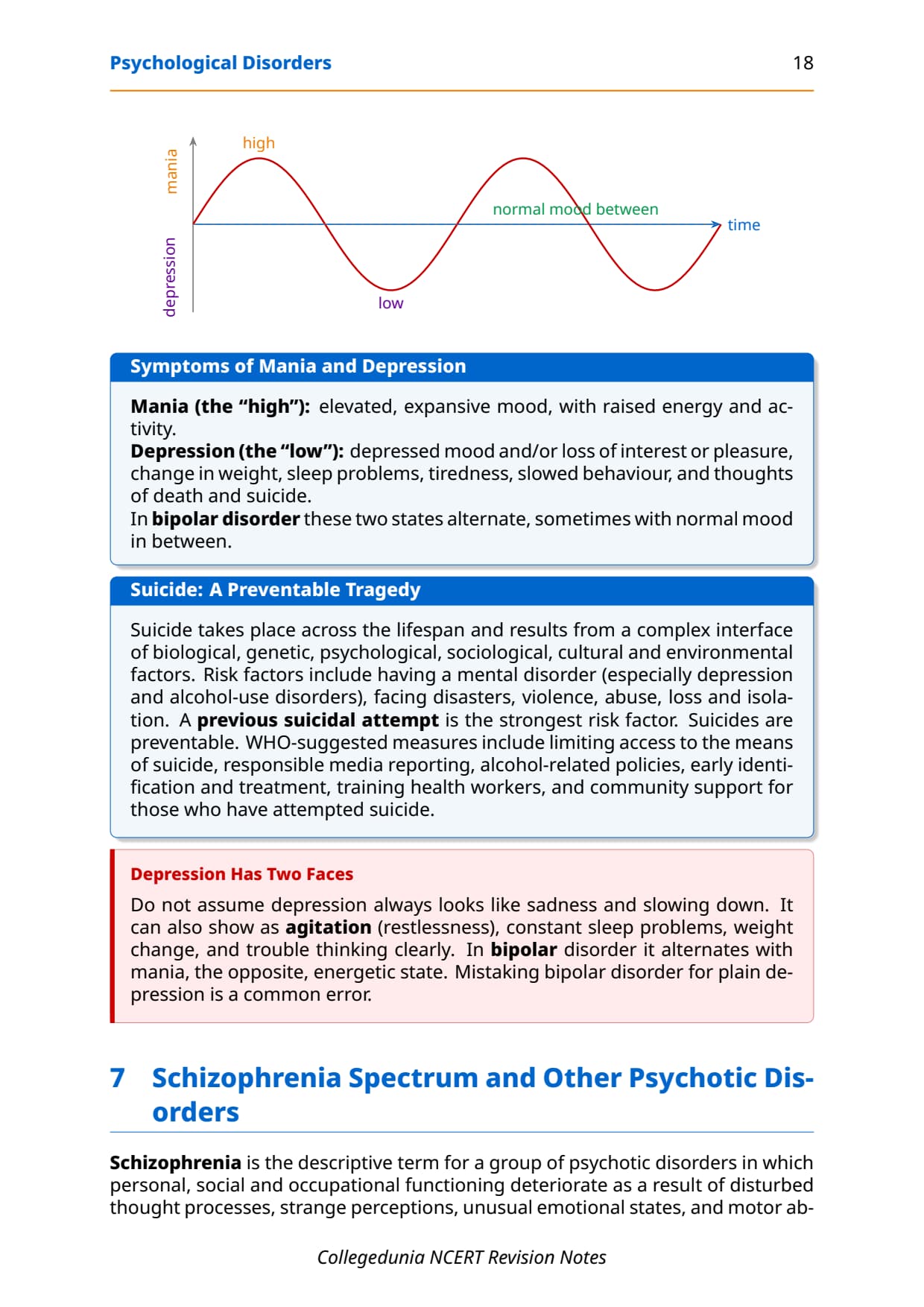
- Mood disorders: depression (low mood, loss of interest) and mania (high energy), which combine in bipolar disorder.
The honest revision line is that anxiety is normal until it becomes constant, intense and stops daily life. At that stage it is a disorder, and its types are generalised anxiety, phobia, panic and obsessive-compulsive disorder. Tie each type to its core feeling so the long answer writes itself.
Schizophrenia and Other Disorders
Schizophrenia is the highest-value topic, so the notes split its symptoms into two clear boxes. The other groups (dissociative, somatic, eating and substance-use) get one core idea each for the short answers.
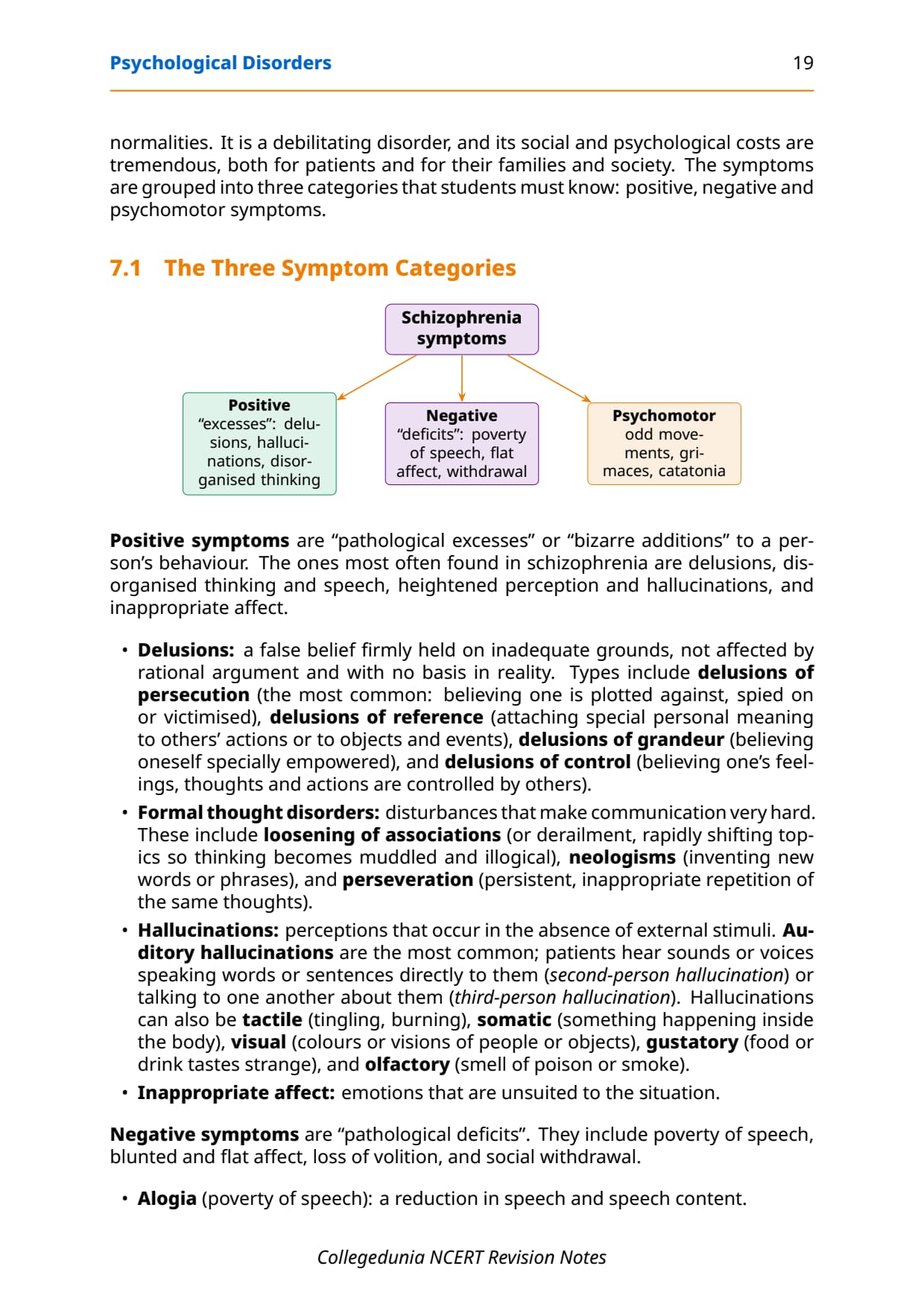
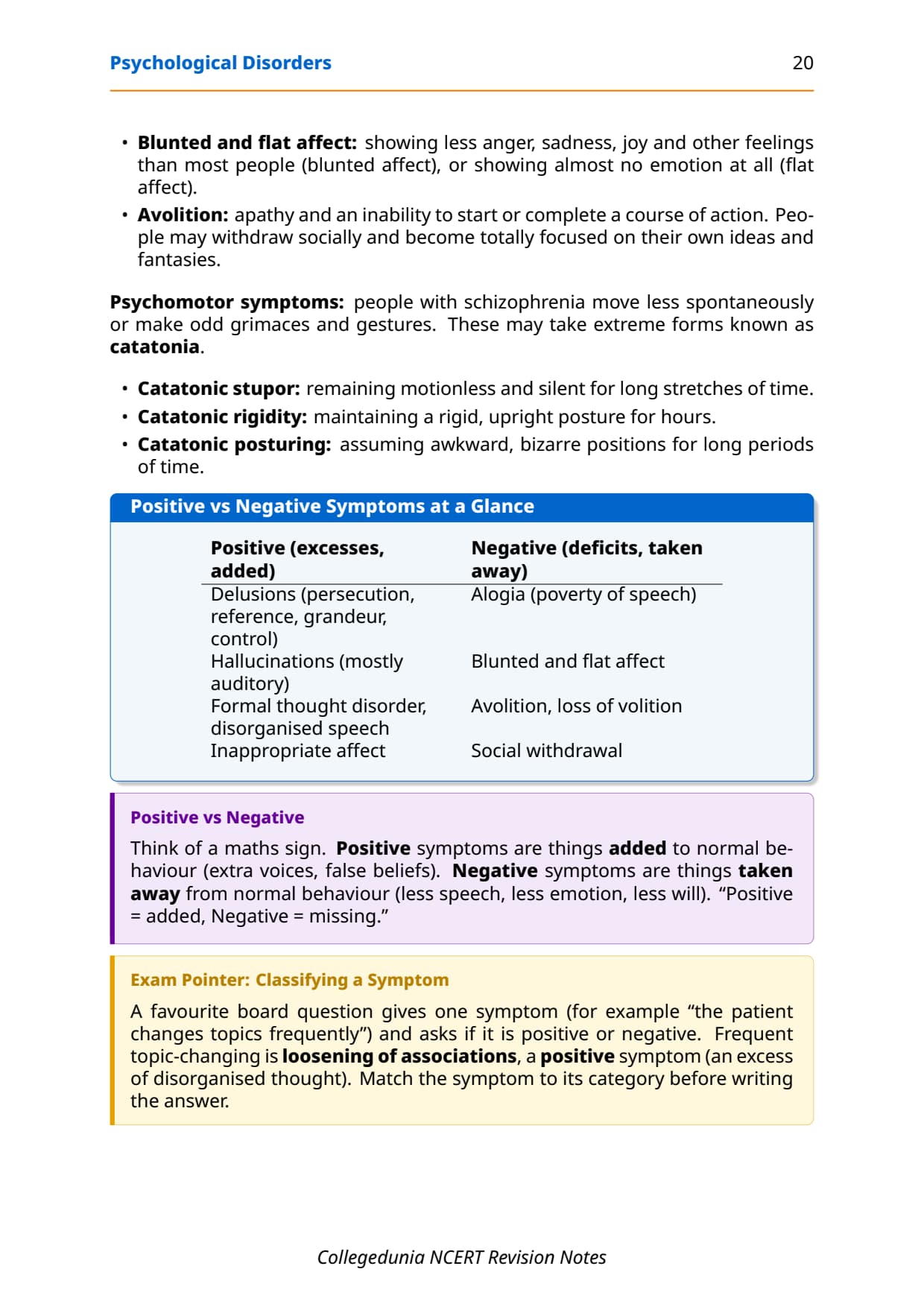
- Positive symptoms: delusions, hallucinations and disorganised speech, an excess of behaviour.
- Negative symptoms: flat emotion, poverty of speech and social withdrawal, a loss of behaviour.
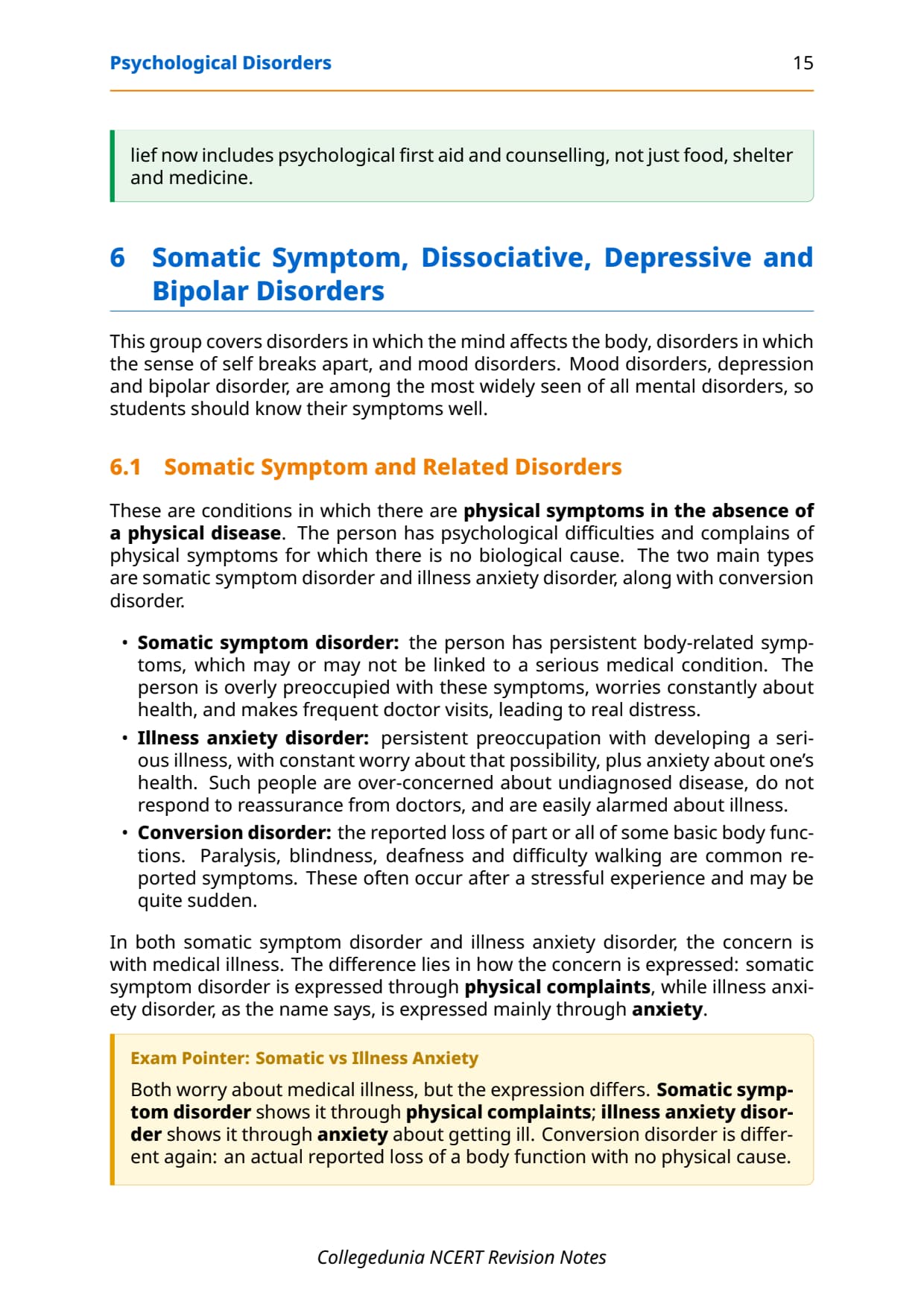
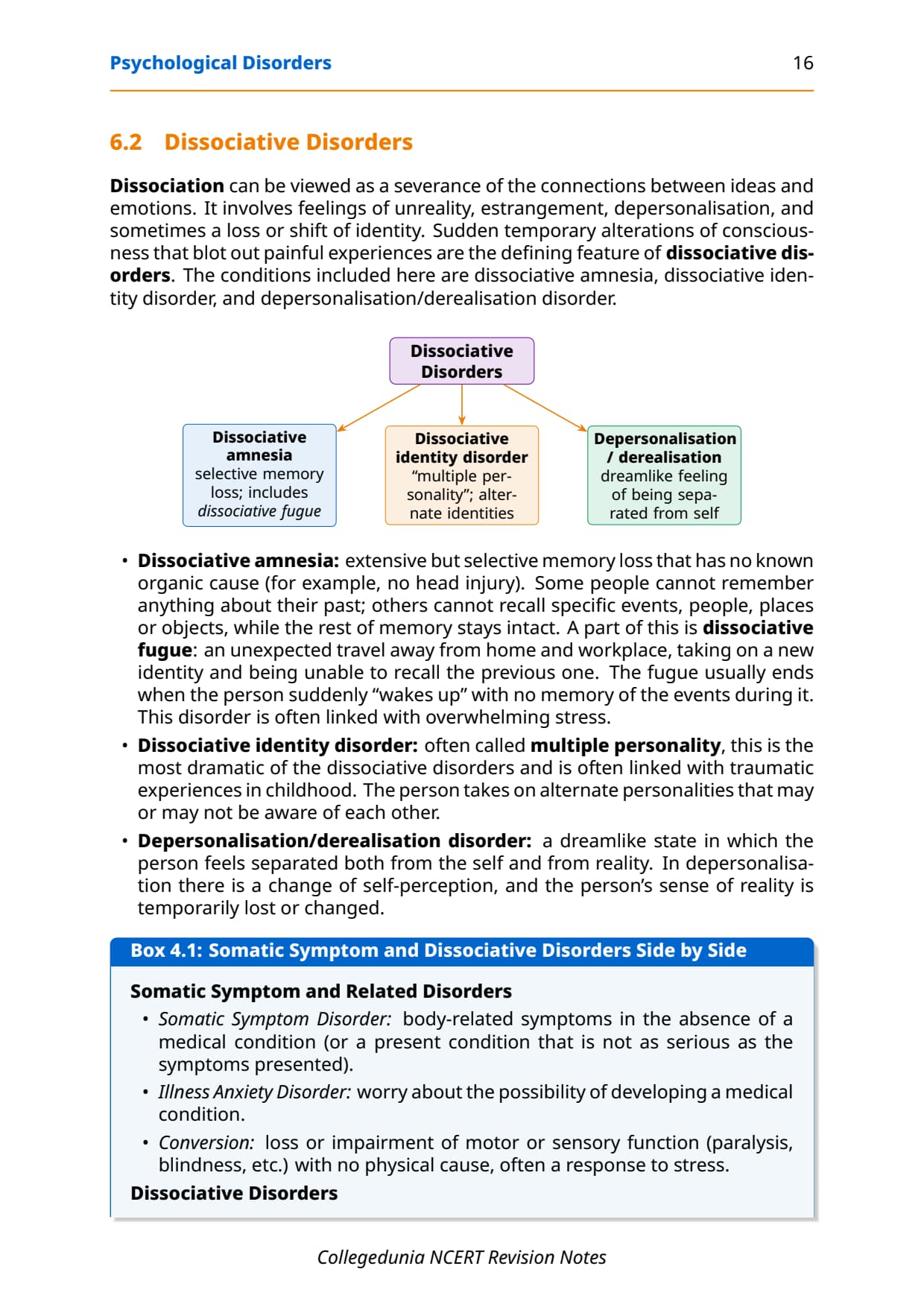
- Dissociative and somatic: a split in memory or identity, and physical complaints with no medical cause.
- Eating and substance-use: anorexia and bulimia tied to body image, and dependence on alcohol or drugs.
The judgement to remember is that changing topics often while speaking is a positive symptom, not a negative one. A positive symptom is an excess, a negative symptom is a loss, so keep the two boxes apart. With these split clearly, the schizophrenia long answer is one of the easiest big-mark questions in the chapter.
Psychological Disorders Important Questions and Exam Pointers
CBSE sets a steady mix of short and long answers from this chapter. Knowing the pattern helps students decide how much to write and which topics to revise first. A focused list of Psychological Disorders important questions saves a lot of time before the board exam.
- Long answer (4 to 6 marks): symptoms of schizophrenia, or types of anxiety disorders.
- Short answer (2 to 3 marks): obsessions versus compulsions, or forms of dissociation.
- Case-based: a short situation that asks students to spot the disorder and its symptoms.
- Objective: the four D criteria, ICD and DSM, and positive versus negative symptoms.
For quick recall, students often practise a short class 12 psychology chapter 4 question answer drill and a list of Psychological Disorders class 12 important questions. The most repeated items are the schizophrenia symptoms and the anxiety types, so keep those points ready in your own words. Reading these notes once, then writing the key lists from memory, is the fastest way to lock the chapter in.
Common Mistakes Students Make in This Chapter
A few errors cost marks every year. Most come from mixing up disorder groups or confusing positive and negative symptoms. Fixing these five points is the quickest way to lift a score, so add them to the end of your revision sheet.
- Calling disorganised speech a negative symptom of schizophrenia. It is a positive symptom.
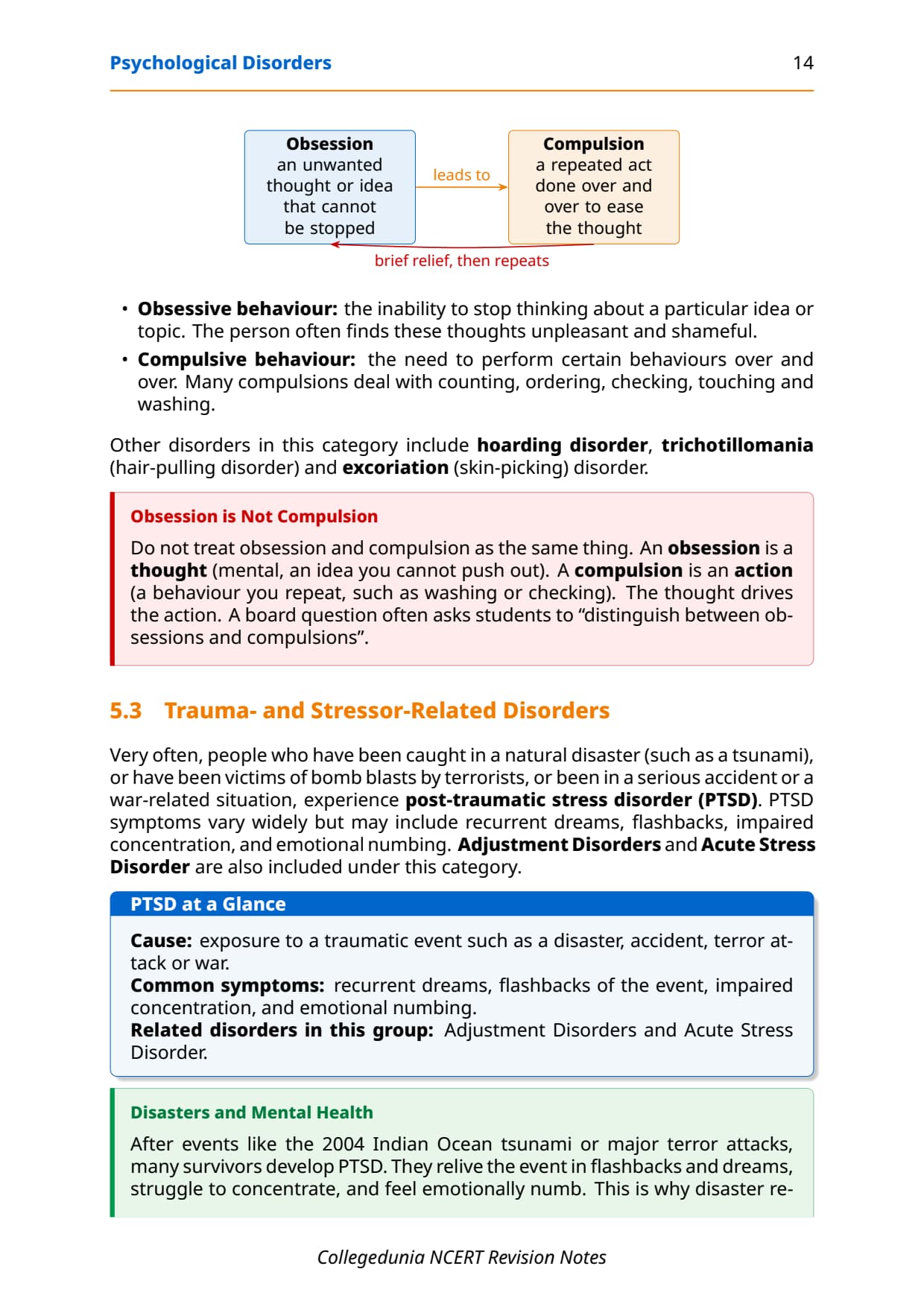
- Confusing obsessions (thoughts) with compulsions (acts). Keep the two clearly separate.
- Saying disorders are diagnosed from physical signs. They rest on a pattern of behaviour.
- Treating any deviant behaviour as abnormal, without checking distress, dysfunction or danger.
- Listing only health effects of addiction, leaving out work, family and mental costs.
Students who fix these five points usually move from average to high marks. The exam rewards precise terms, so always name the disorder group and its key symptom before you describe it. These notes flag each soft point so you can phrase it safely on the answer sheet.
How These Notes Pair with the Solutions and Book PDF
These revision notes summarise the chapter. To prepare fully, students should use them alongside the other resources for the same chapter, all linked in the table below. Read the notes first, then test yourself with the solutions, and open the book PDF whenever you need the original text and case examples.
| Resource | Best used for |
|---|---|
| Psychological Disorders NCERT Solutions | Point-wise answers to all 11 Review Questions |
| Psychological Disorders Handwritten Notes | Last-minute, one-shot revision in a scanned notebook style |
| Psychological Disorders NCERT Book PDF | Reading the original NCERT chapter text and case examples |
Tip: read these notes first, then attempt the solutions on your own, and only then check the model answers. That order builds memory faster than copying answers straight away.
All Class 12 Psychology Notes by Chapter
The table links the revision notes for every chapter in Class 12 Psychology, so students can move across the course in one click. Psychological Disorders is highlighted.
| Chapter | Notes |
|---|---|
| Chapter 1 | Variations in Psychological Attributes |
| Chapter 2 | Self and Personality |
| Chapter 3 | Meeting Life Challenges |
| Chapter 4 | Psychological Disorders |
| Chapter 5 | Therapeutic Approaches |
| Chapter 6 | Attitude and Social Cognition |
| Chapter 7 | Social Influence and Group Processes |
FAQs on Psychological Disorders Class 12 Notes
Psychological Disorders Class 12 Psychology Notes Common Questions
Ques. Where can I download the Psychological Disorders Class 12 notes PDF?
Ans. You can download the Psychological Disorders Class 12 Psychology notes PDF directly from this page. It is free, follows the 2026-27 NCERT, and covers abnormality, classification and every disorder group in a short, point-wise format.
Ques. What does Psychological Disorders chapter cover for Class 12?
Ans. It covers what makes behaviour abnormal (the four D criteria), the ICD and DSM systems, and anxiety, mood, schizophrenic, dissociative, somatic, eating and substance-use disorders along with their symptoms.
Ques. What is the difference between obsessions and compulsions?
Ans. An obsession is a recurring, unwanted thought the person cannot stop. A compulsion is a repeated act done to ease the anxiety of that thought. Both appear together in obsessive-compulsive disorder, one of the anxiety disorders.
Ques. Why is Psychological Disorders important for the board exam?
Ans. Because it is a high-scoring chapter with frequent long answers on schizophrenia and anxiety. The symptoms of schizophrenia, the types of anxiety and the four D criteria appear almost every year, so revising these notes well secures both objective and long-answer marks.
Ques. How should I use these notes to revise quickly?
Ans. Read the notes once under the abnormality, classification and disorders frame, keep the four D criteria and the disorder list on one sheet, then write the key lists from memory. Finish by attempting a short class 12 psychology chapter 4 question answer drill to test the small facts.



Comments