




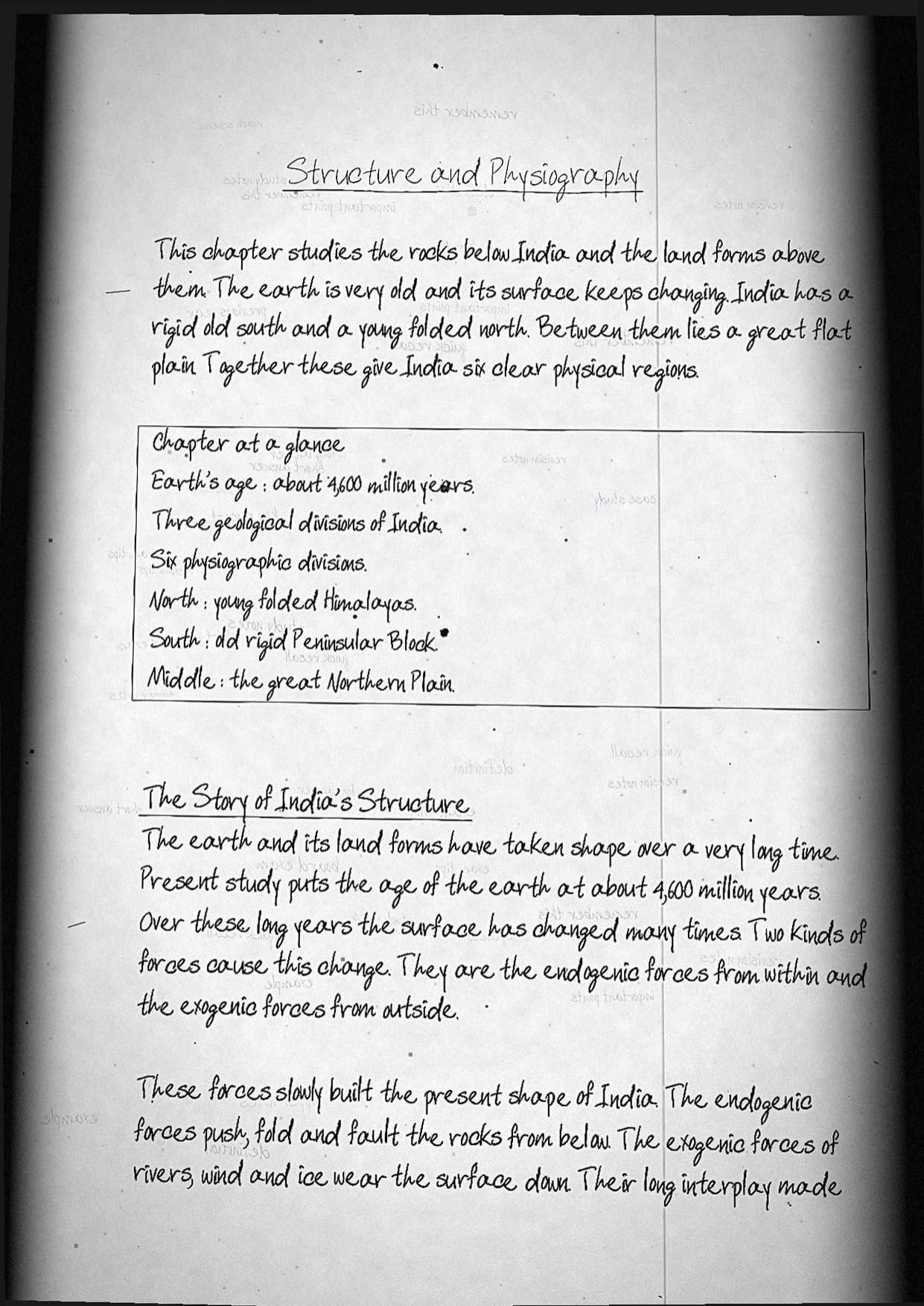
The 2026-27 NCERT keeps Class 11 Geography Chapter 16 Structure and Physiography in full for the CBSE course. These class 11 geography handwritten notes chapter 16 Structure and Physiography follow the 2026-27 NCERT and cover age of the earth and the moving indian plate, three geological divisions of india, six physiographic divisions. This page hosts the notes PDF,.
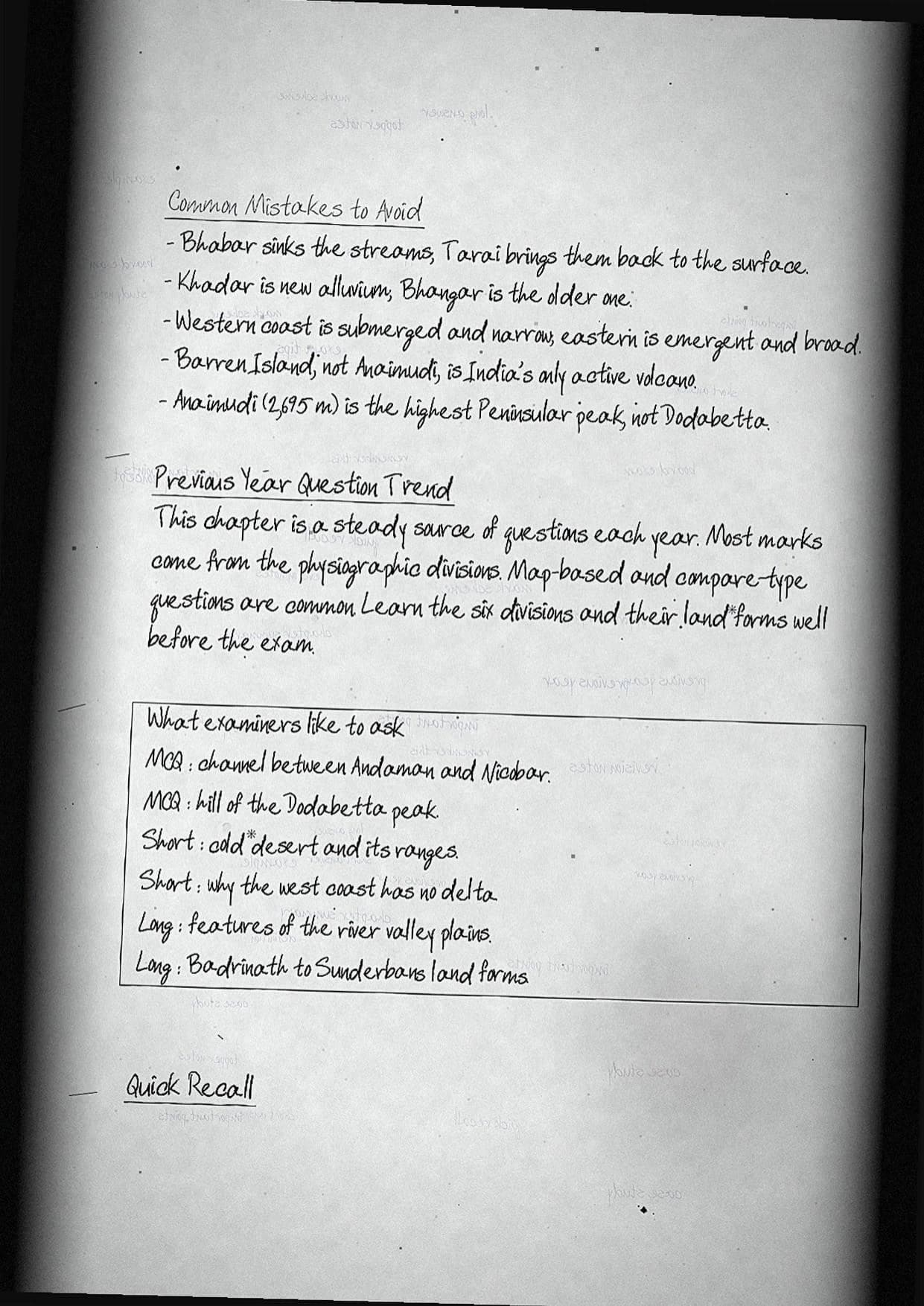

- CBSE Class 11 Weightage: a scoring chapter in the Geography paper, asked in short and long answers.
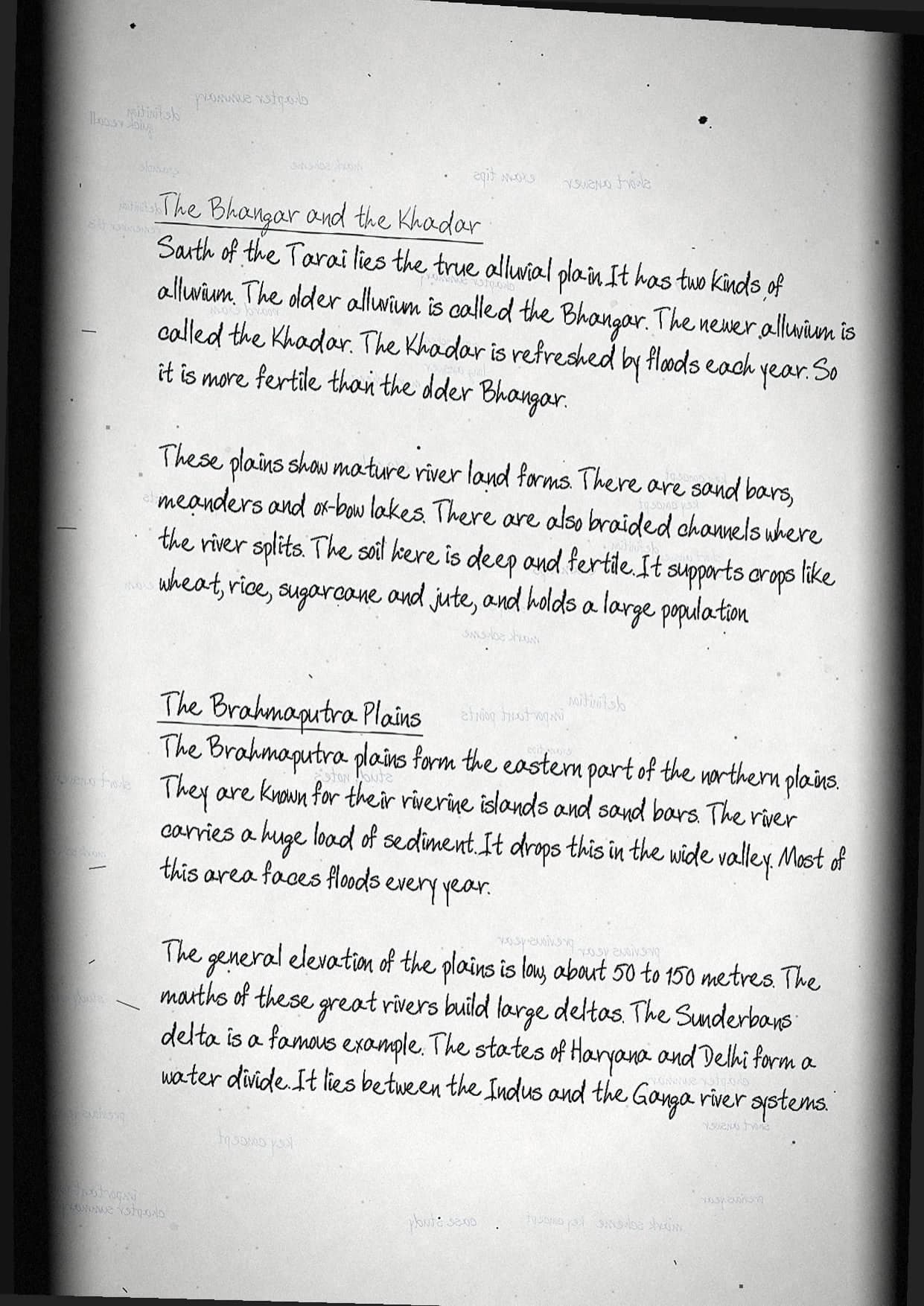
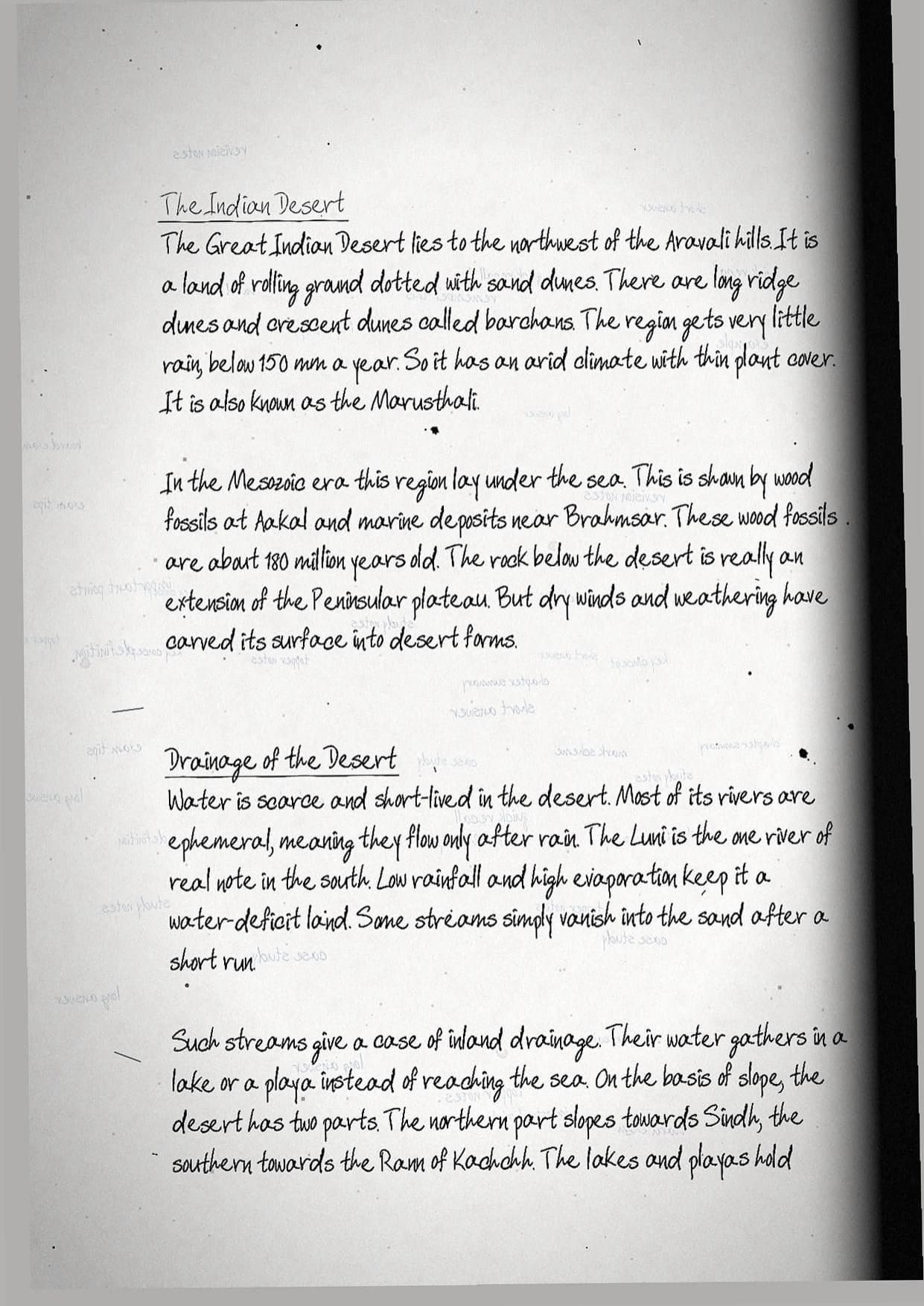
- What the notes cover: age of the earth and the moving indian plate, three geological divisions of india, six physiographic divisions, northern plain: bhabar, tarai, bhangar, khadar.
- Best for: quick revision before Class 11 exams and a base for CUET later.
You can read the complete class 11 geography handwritten notes for Structure and Physiography, with key terms, boxed definitions, and quick revision points, in the PDF below.
These handwritten notes are written by subject teachers, mapped to the 2026-27 NCERT, and checked against the last five years of CBSE Class 11 Geography papers.
Structure and Physiography Topic-wise Weightage for CBSE Class 11 Geography
Some parts of this chapter are asked more often than others. The table below shows which sub-topics to revise first, based on recent CBSE Class 11 question trends.
| Sub-topic | Weightage | CBSE Frequency |
|---|---|---|
| Physiographic divisions overview | High | asked most years |
| Northern Plain belts (Bhabar/Tarai/Khadar) | High | frequent long answer |
| Peninsular Plateau and Ghats | Medium | compare-type questions |
| Coastal Plains contrast | Medium | short and long |
| Islands of Bay and Arabian Sea | Low | MCQ and compare |
What the Structure and Physiography Handwritten Notes Cover
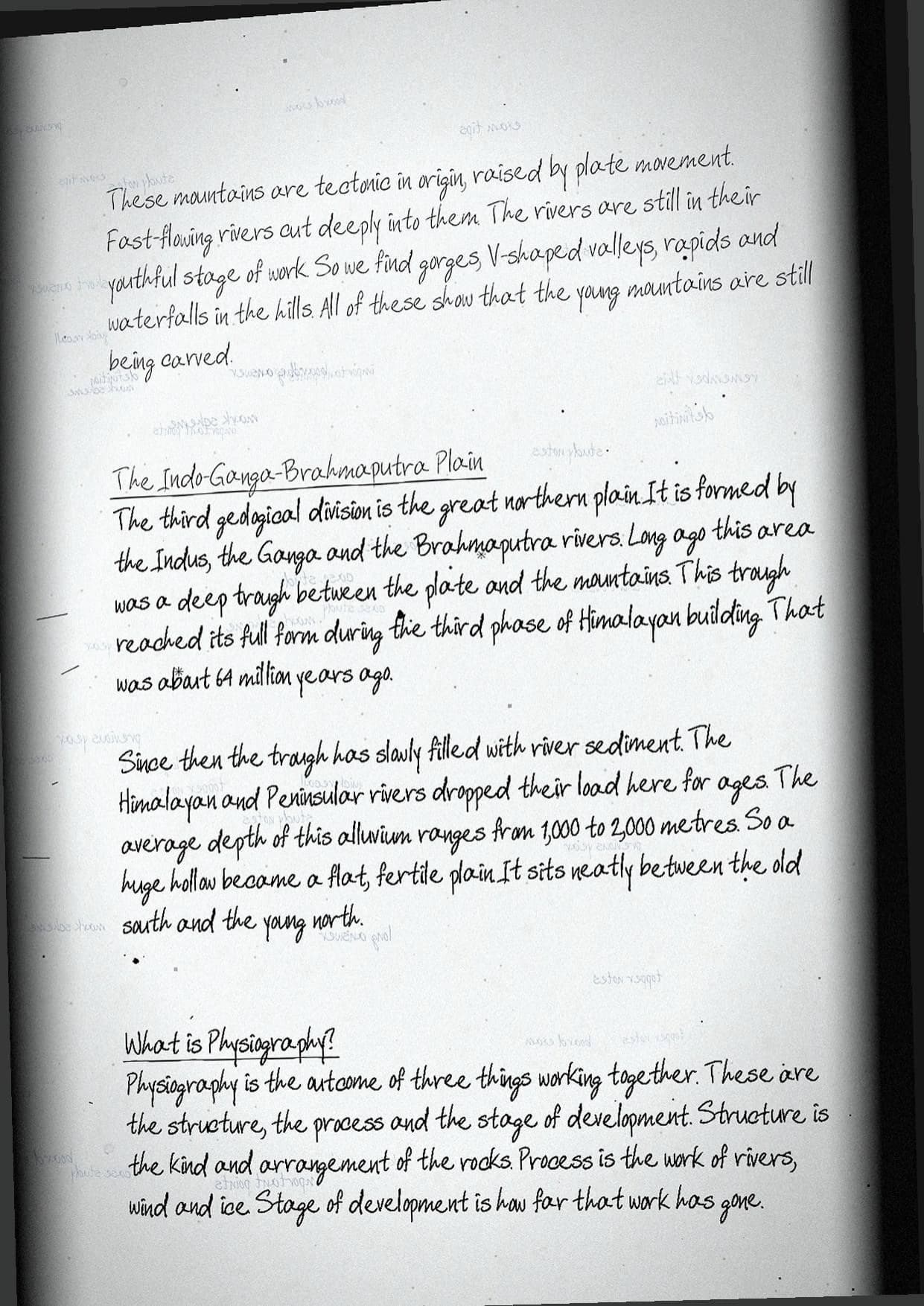
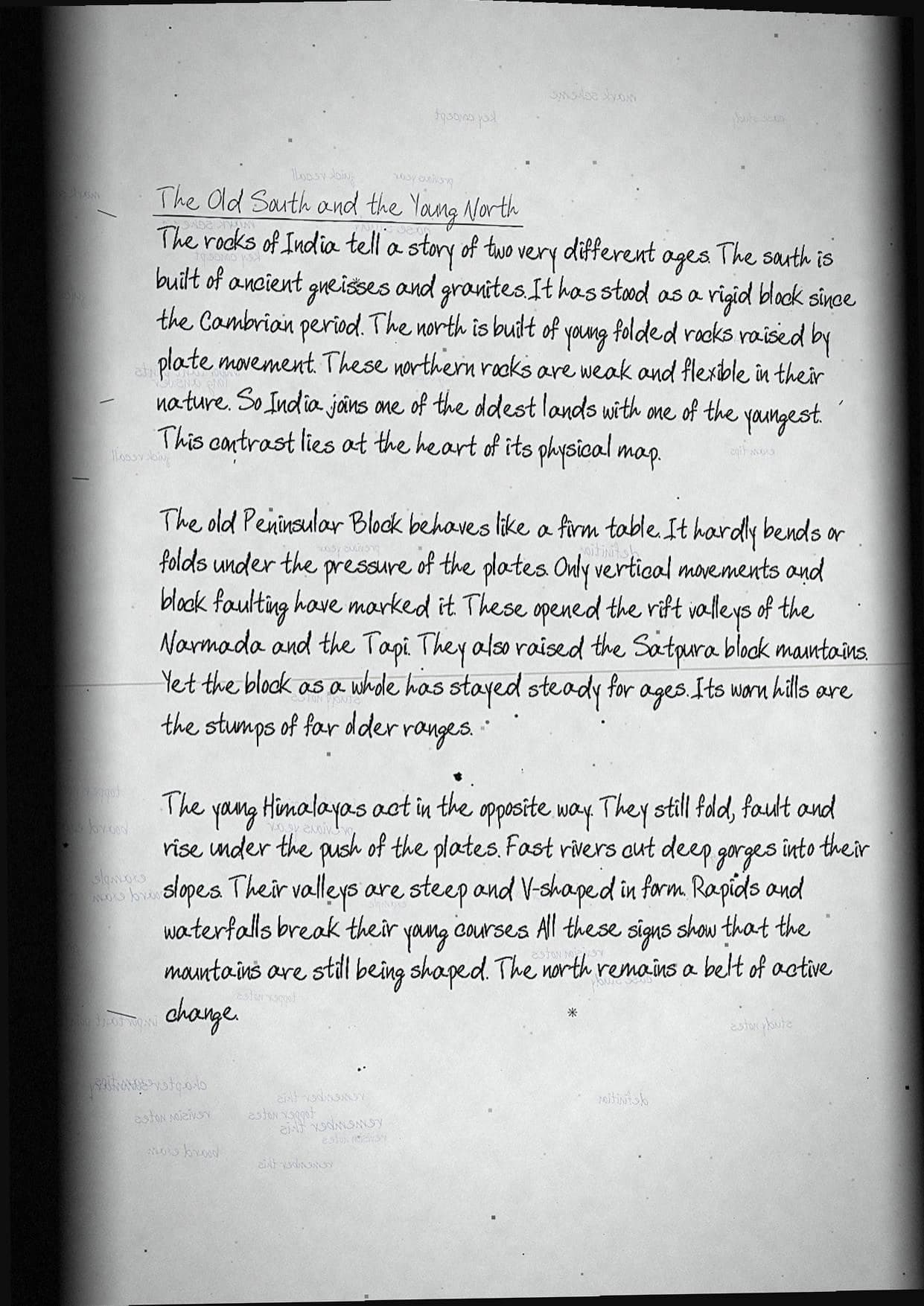
India has an old rigid Peninsular south and a young folded Himalayan north, with a great plain between them. This chapter traces the rocks below and the land forms above. It divides India into three geological and six physical regions.
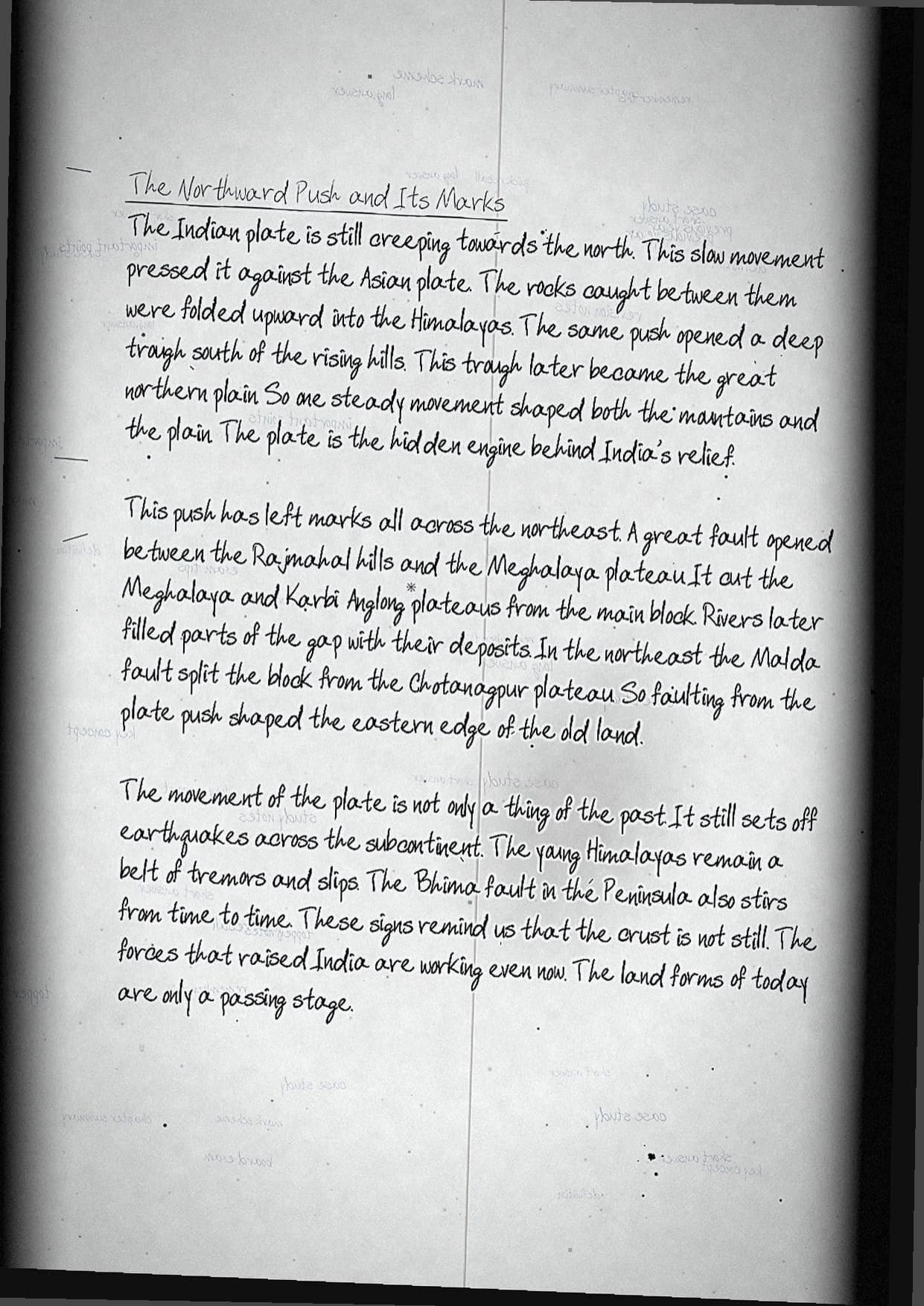
- Age of the earth and the moving Indian plate
- Three geological divisions of India
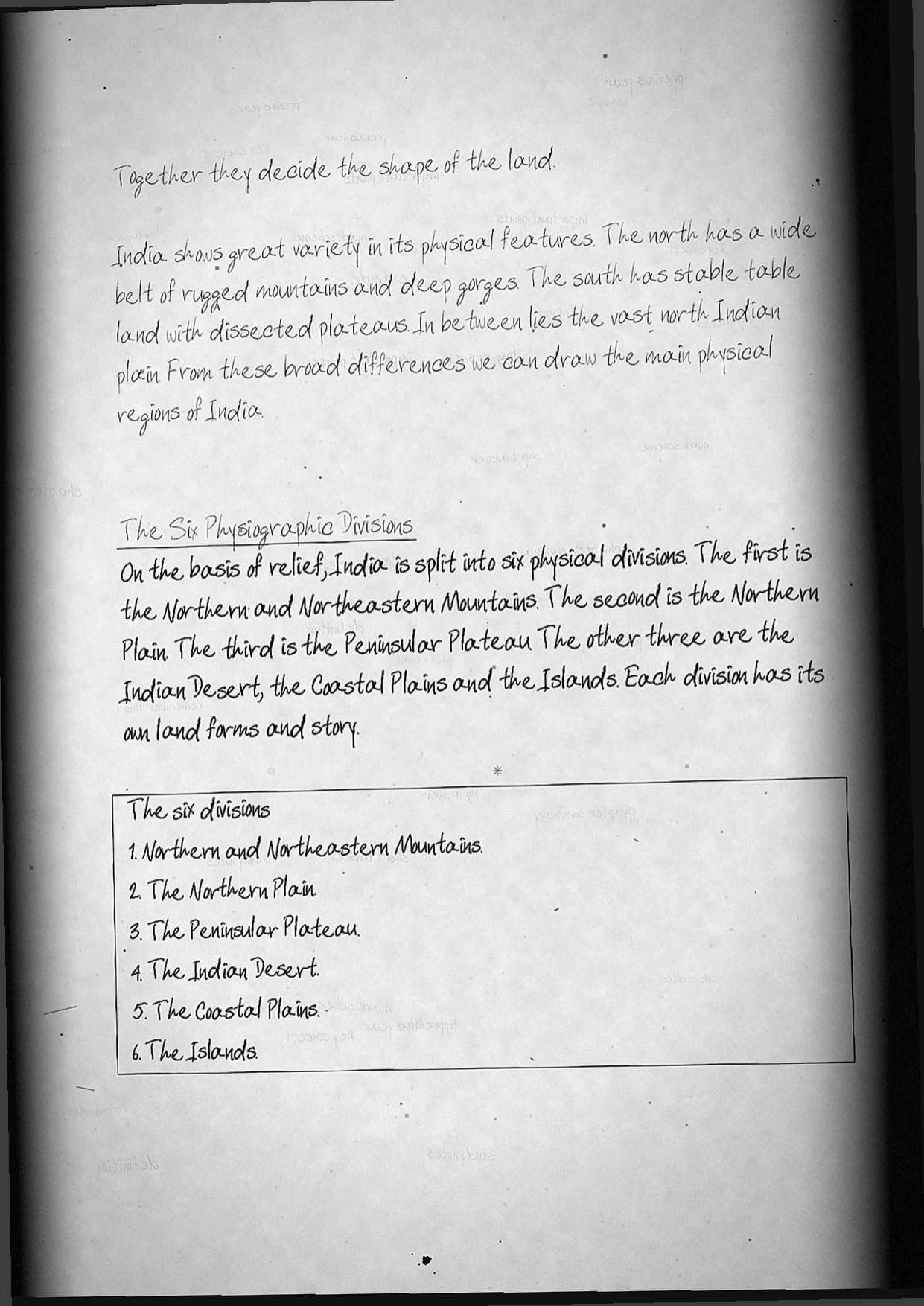
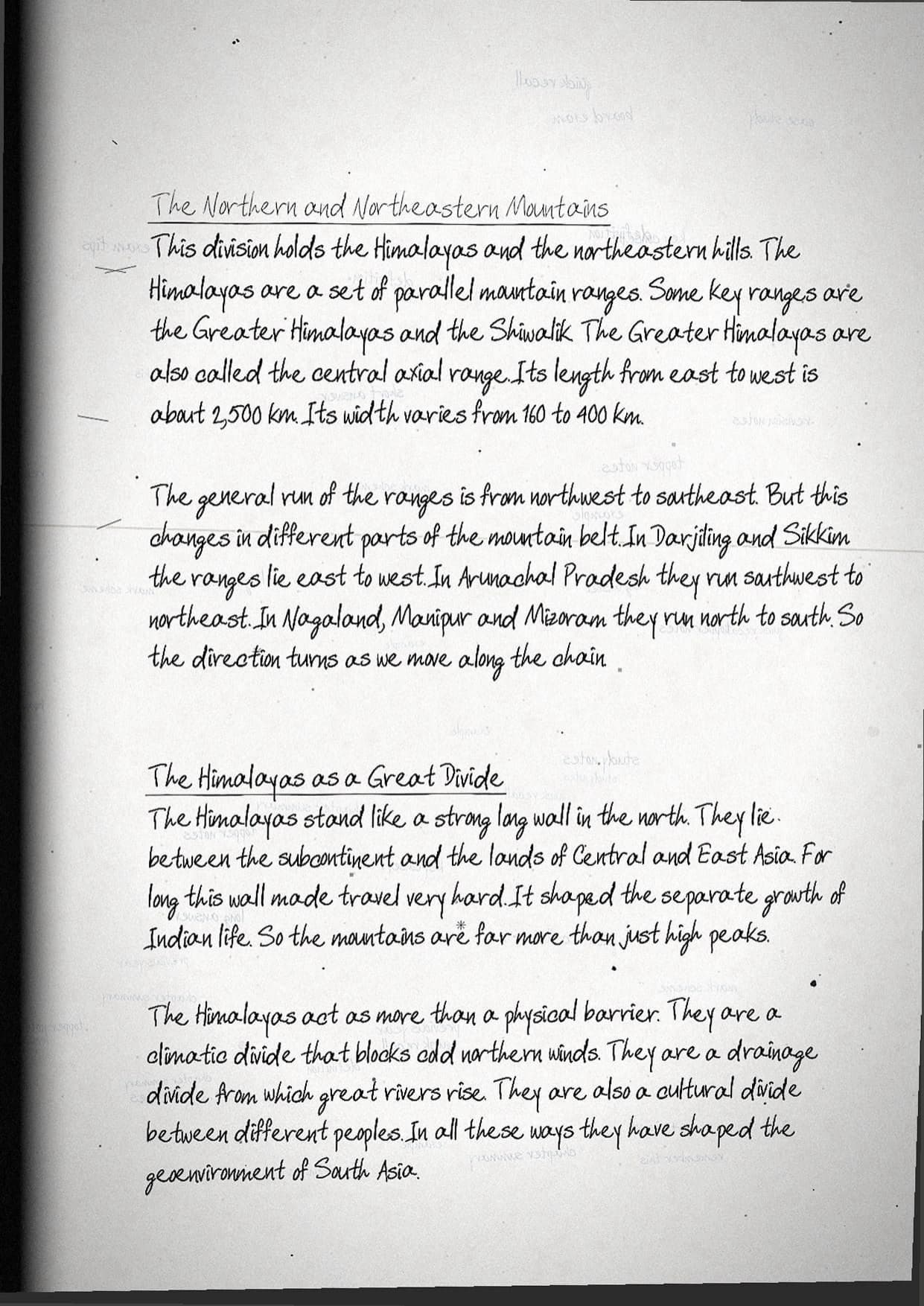
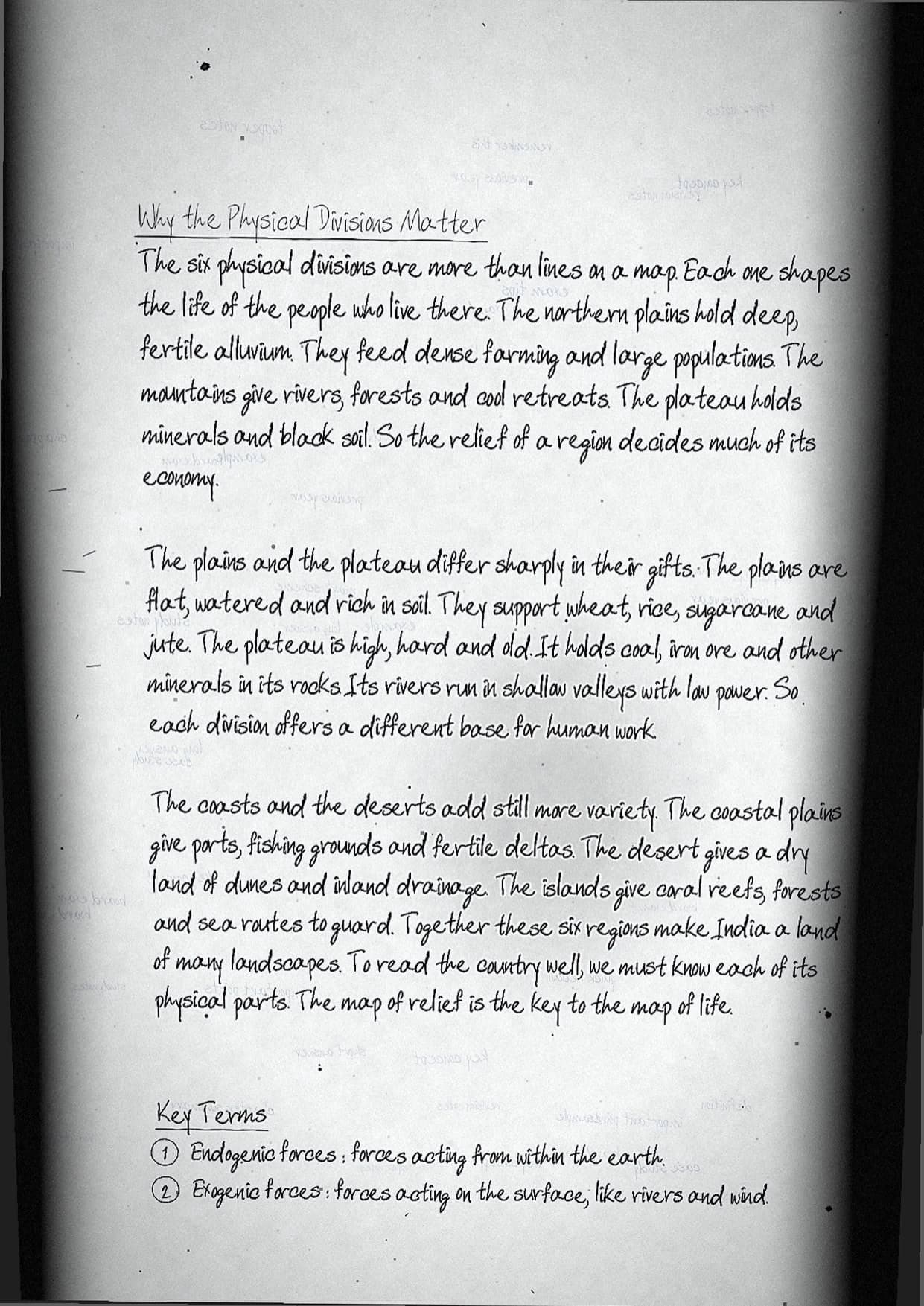
- Six physiographic divisions
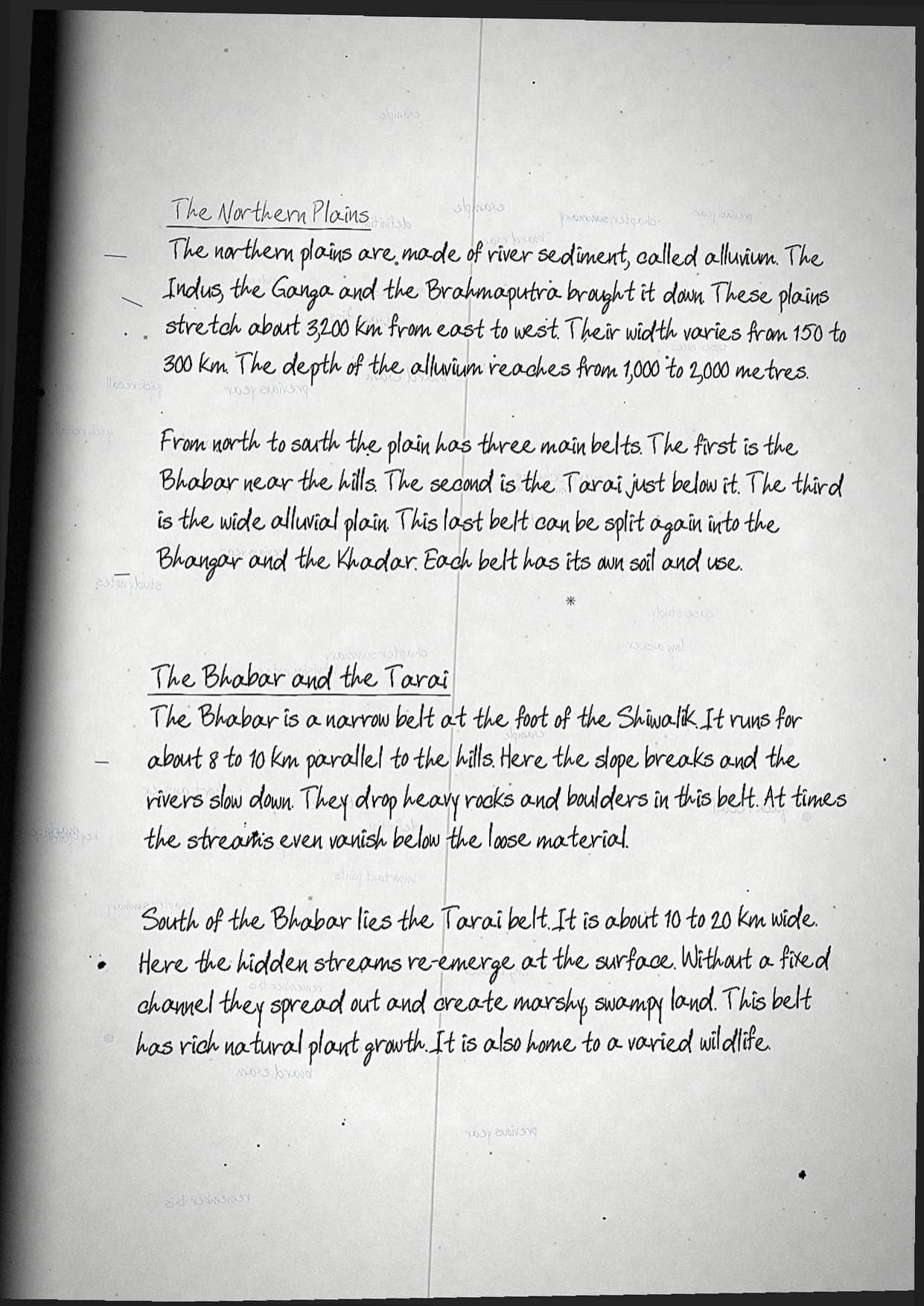
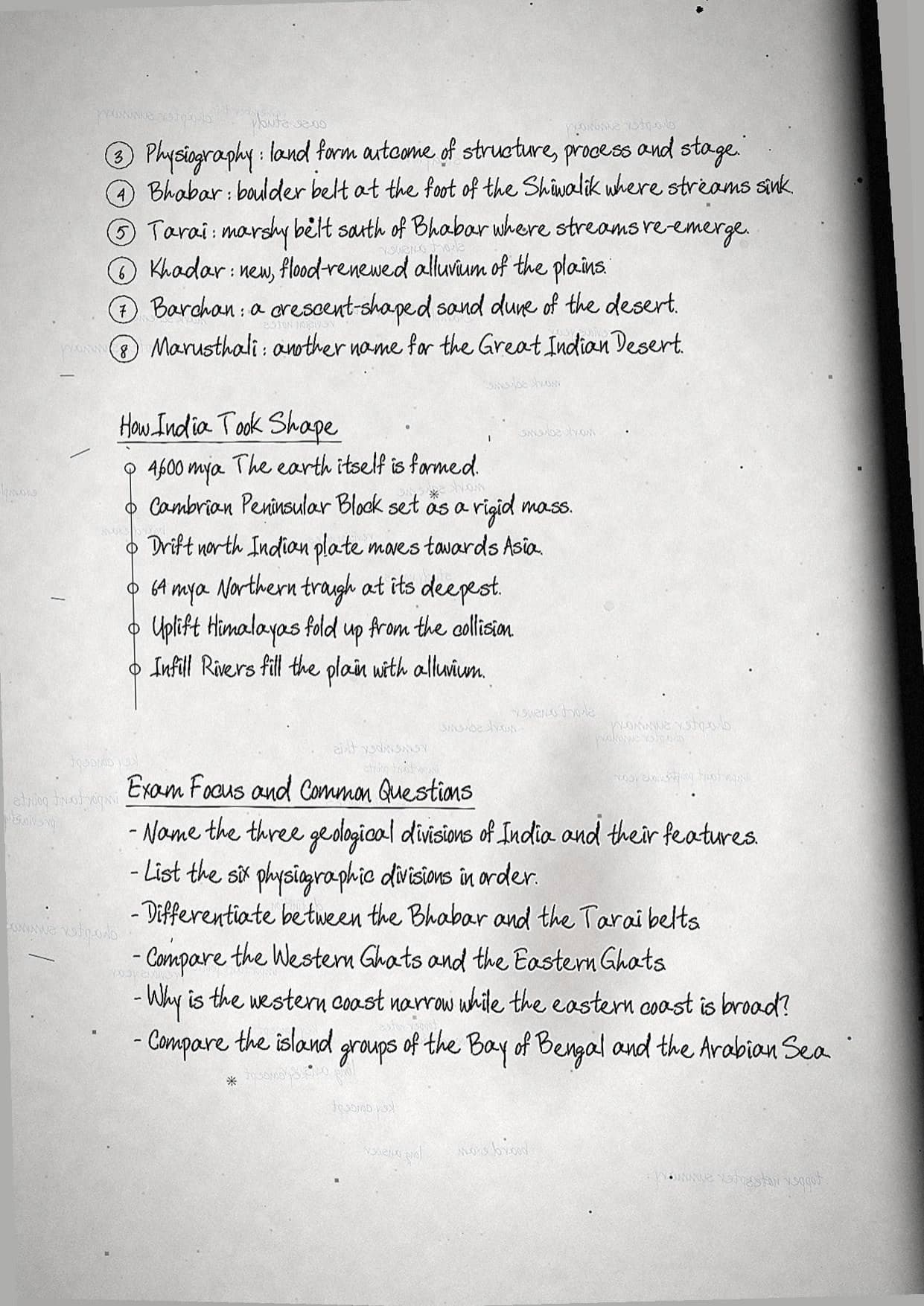
- Northern Plain: Bhabar, Tarai, Bhangar, Khadar
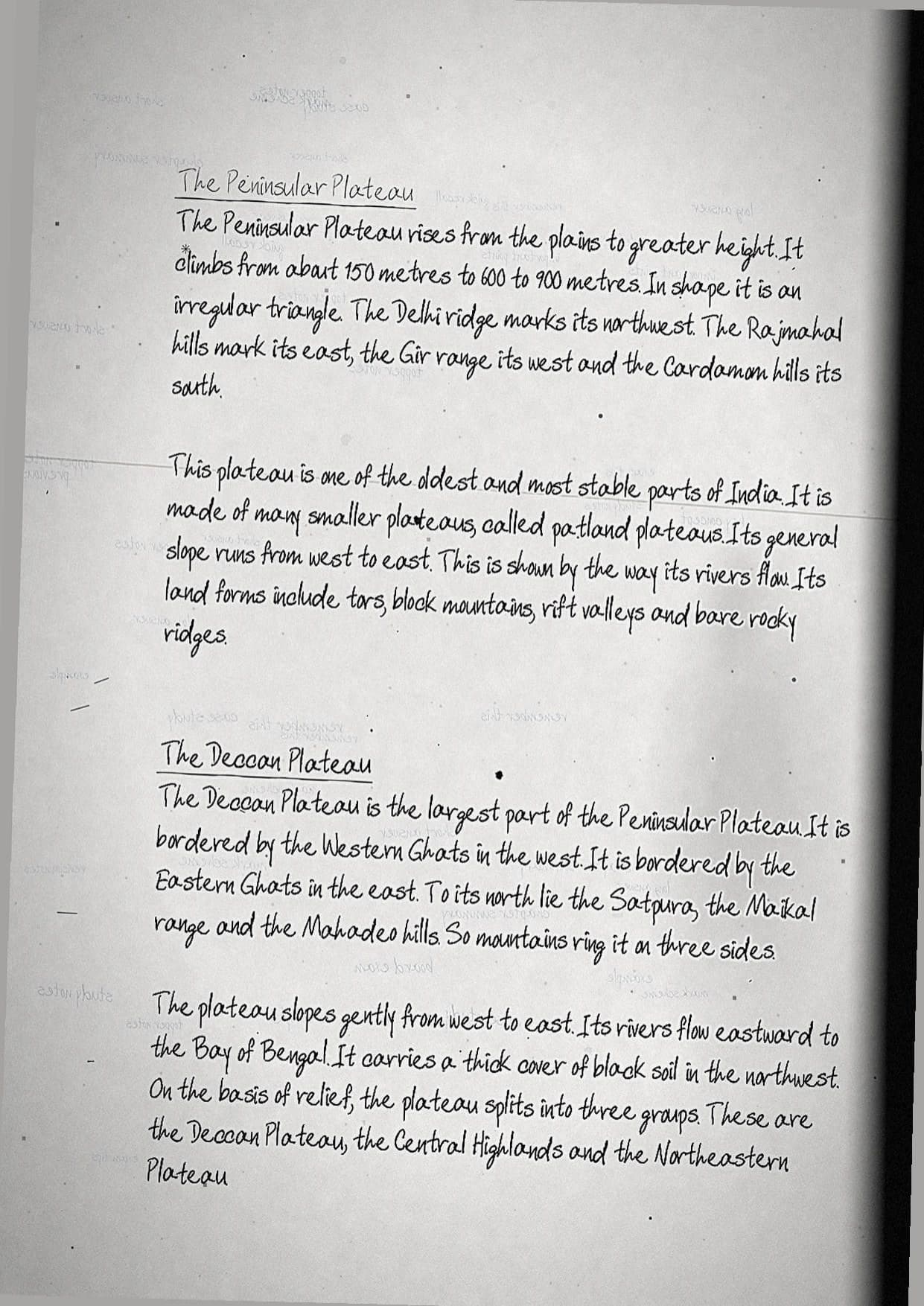
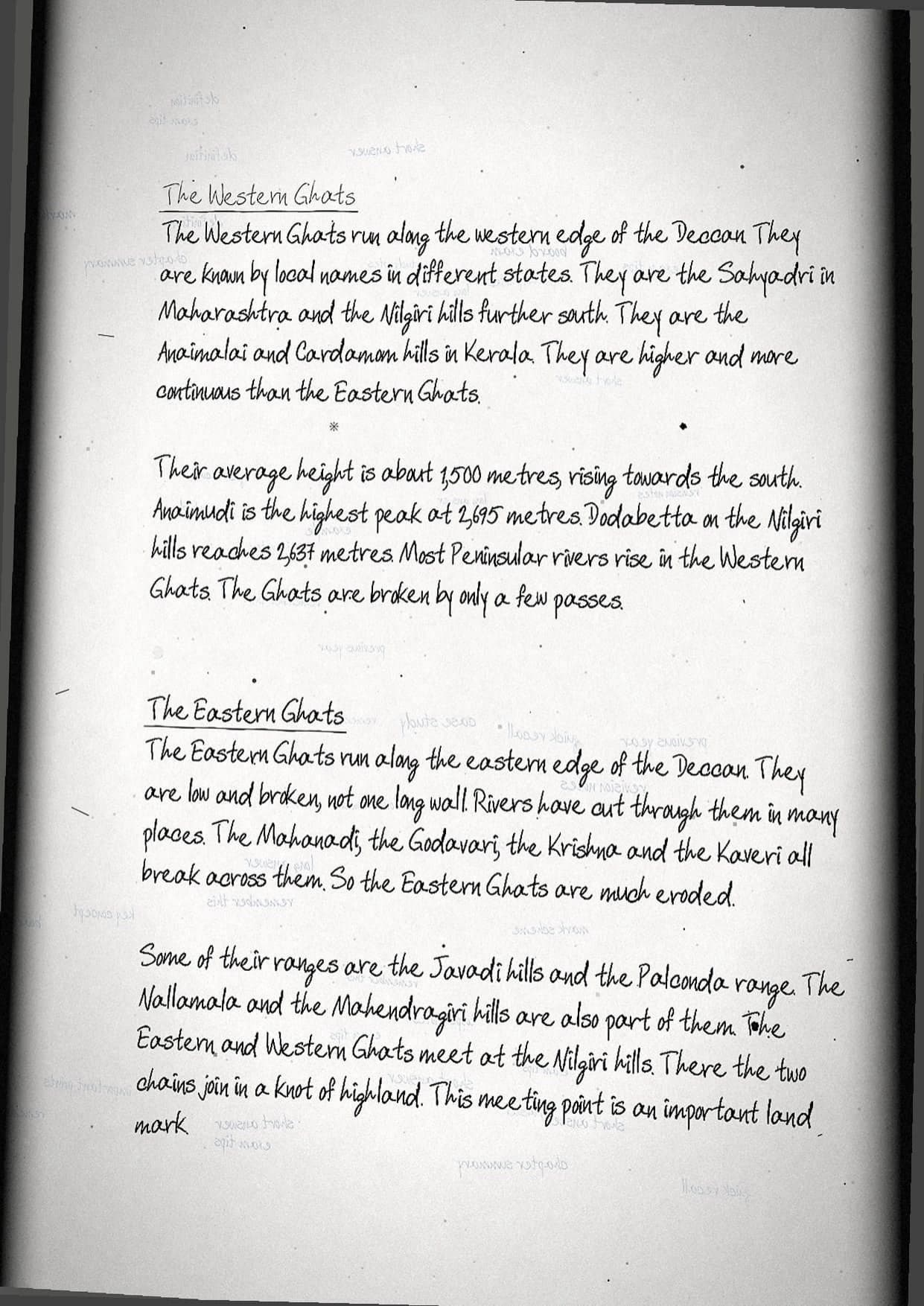
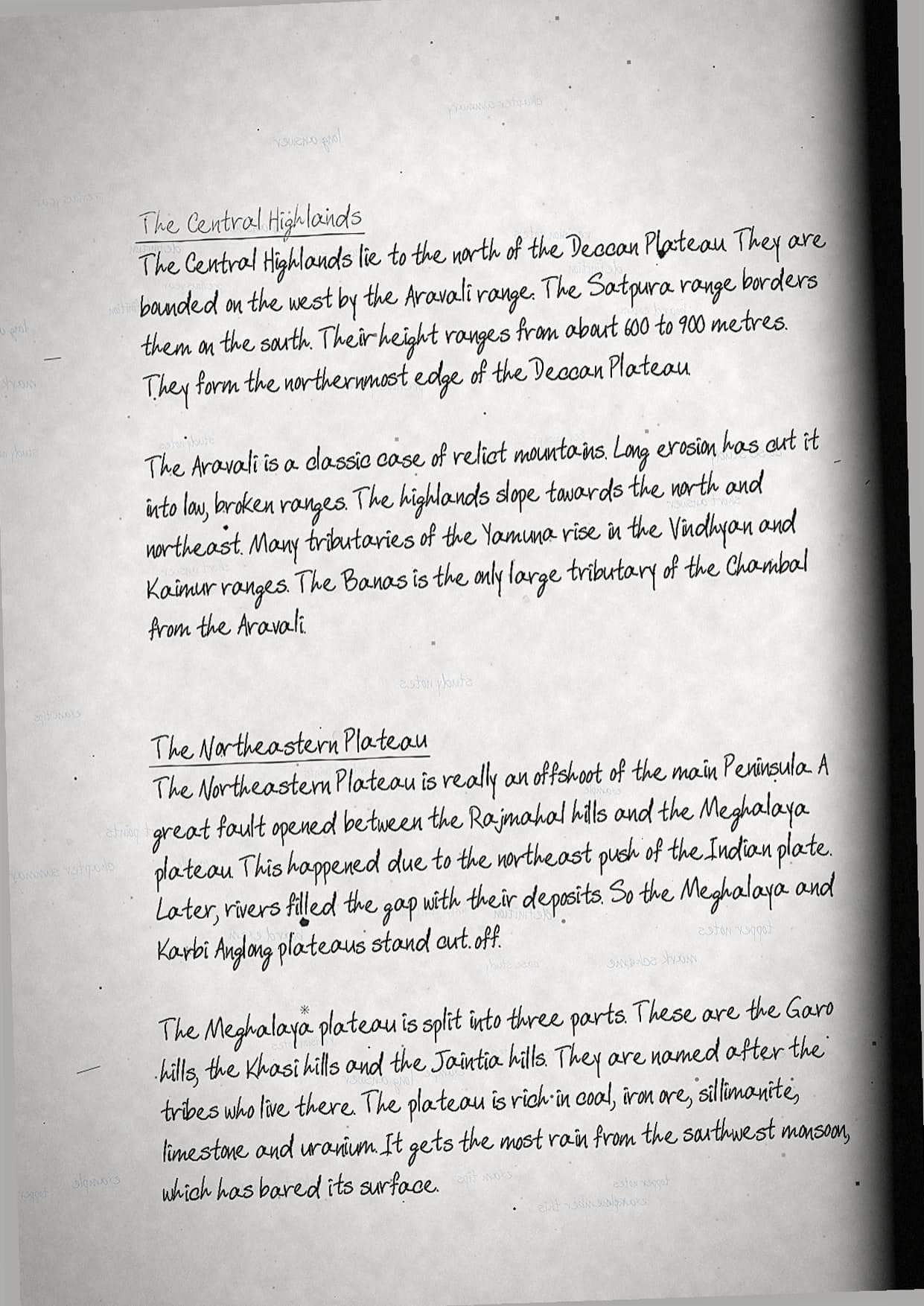
- Peninsular Plateau and the two Ghats
- Indian Desert and inland drainage
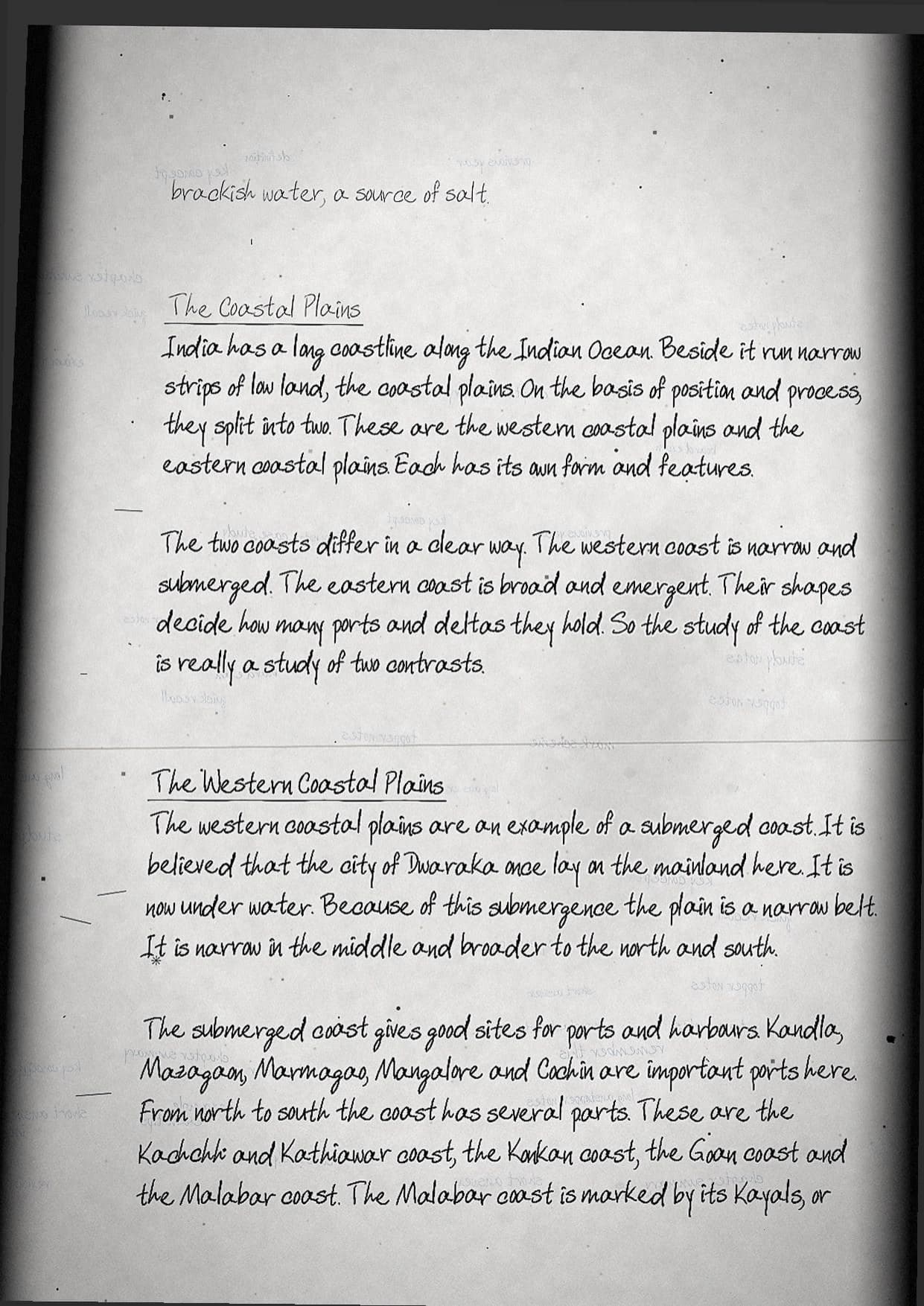
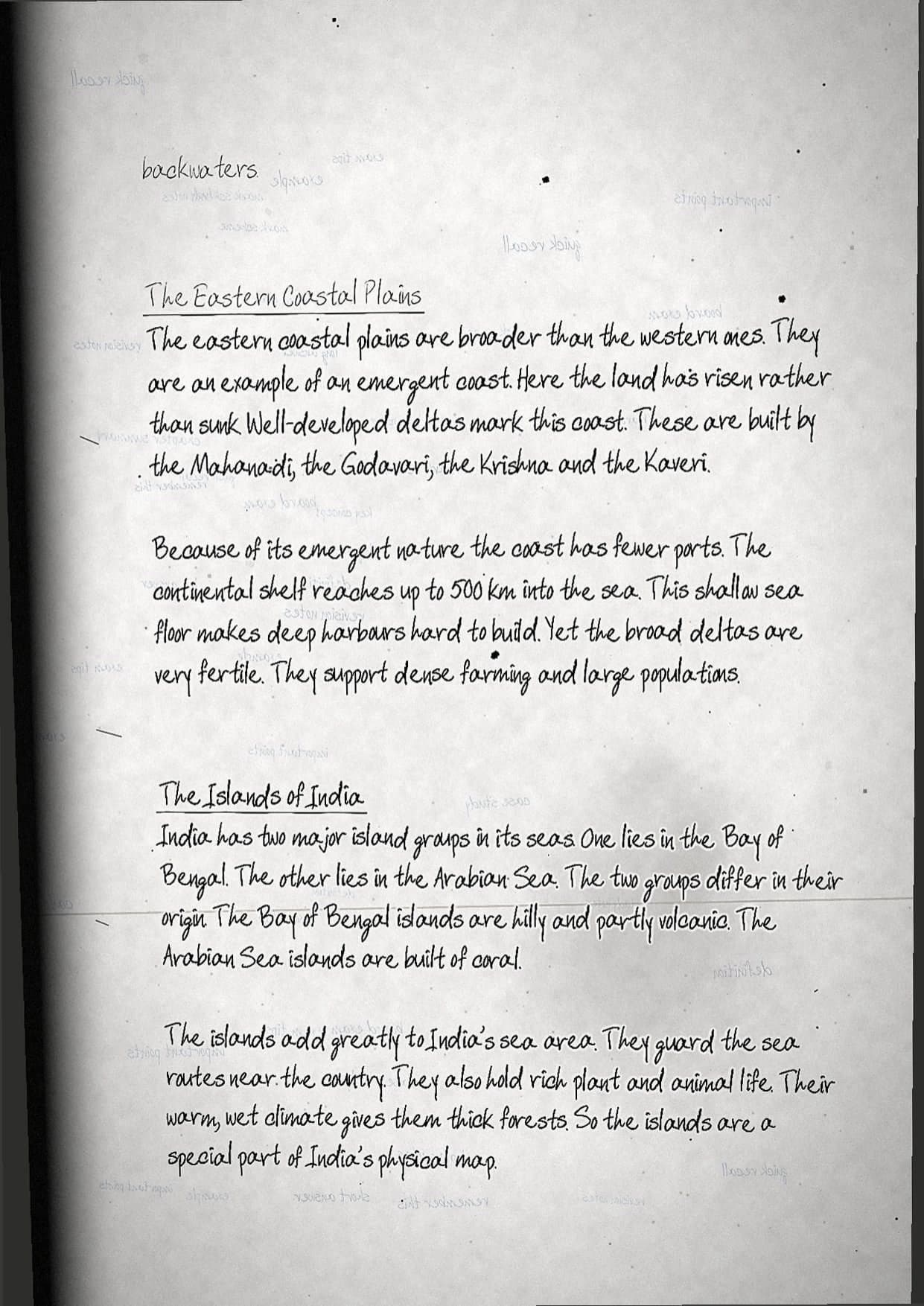
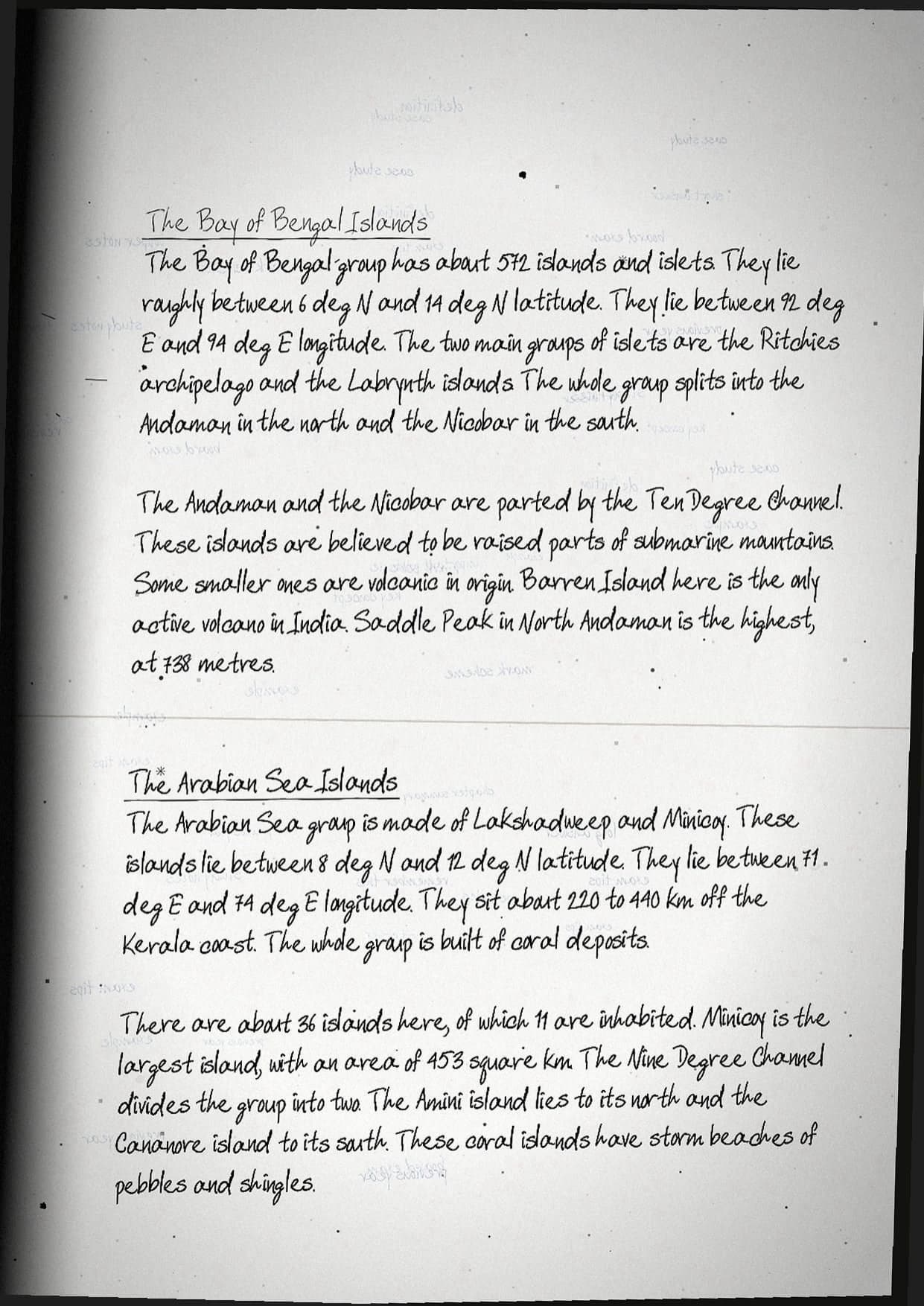
- Coastal Plains and the two island groups
Key Terms and Ideas in Structure and Physiography
These are the terms and ideas the exam asks about most. Learn each one so you can define it and use it in your answers.
| Term / Idea | What it means |
|---|---|
| Earth's age | About 4,600 million years, shaped by inner and outer forces. |
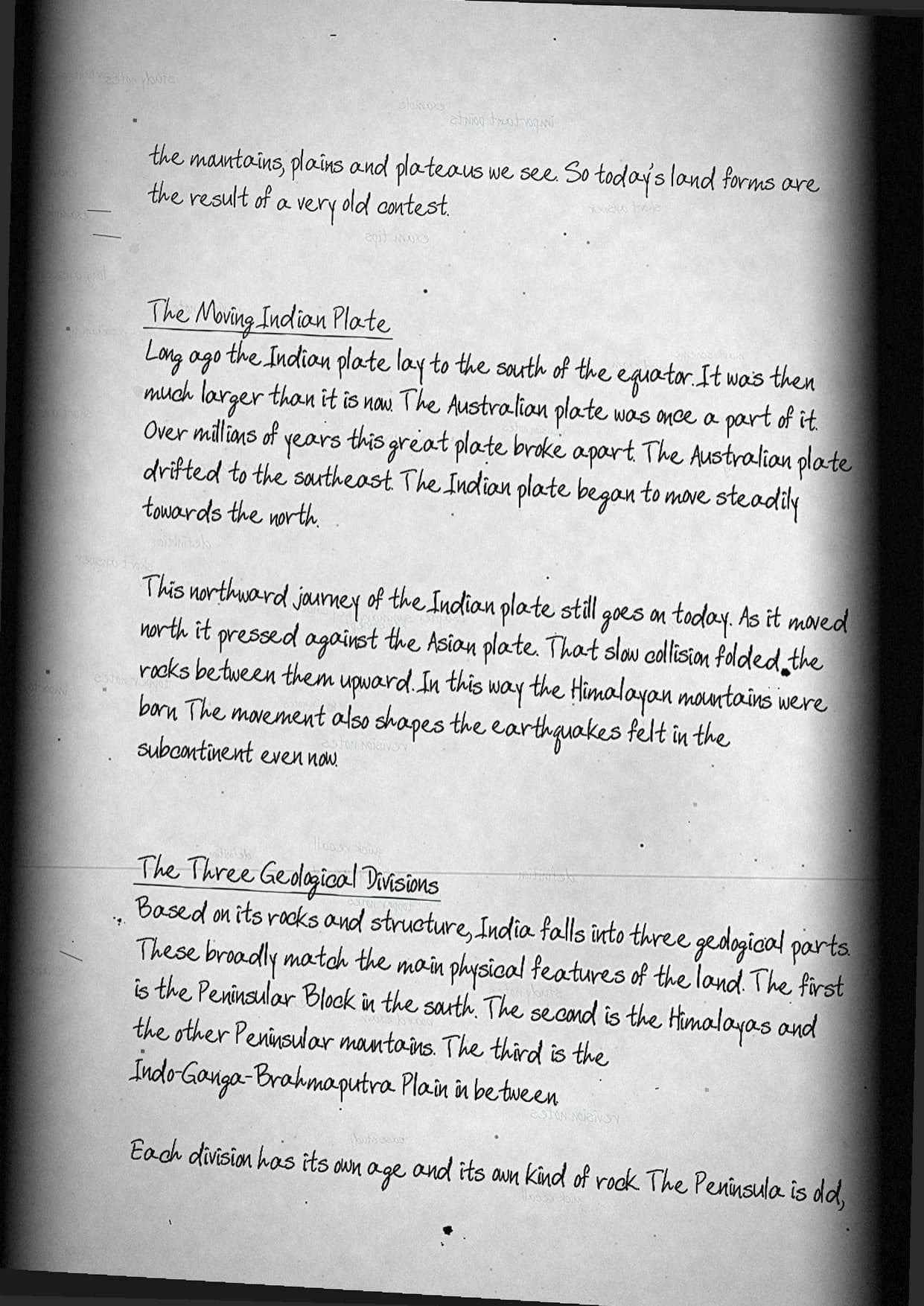
| Indian plate | Drifted north, collided with Asia, raised the Himalayas. |
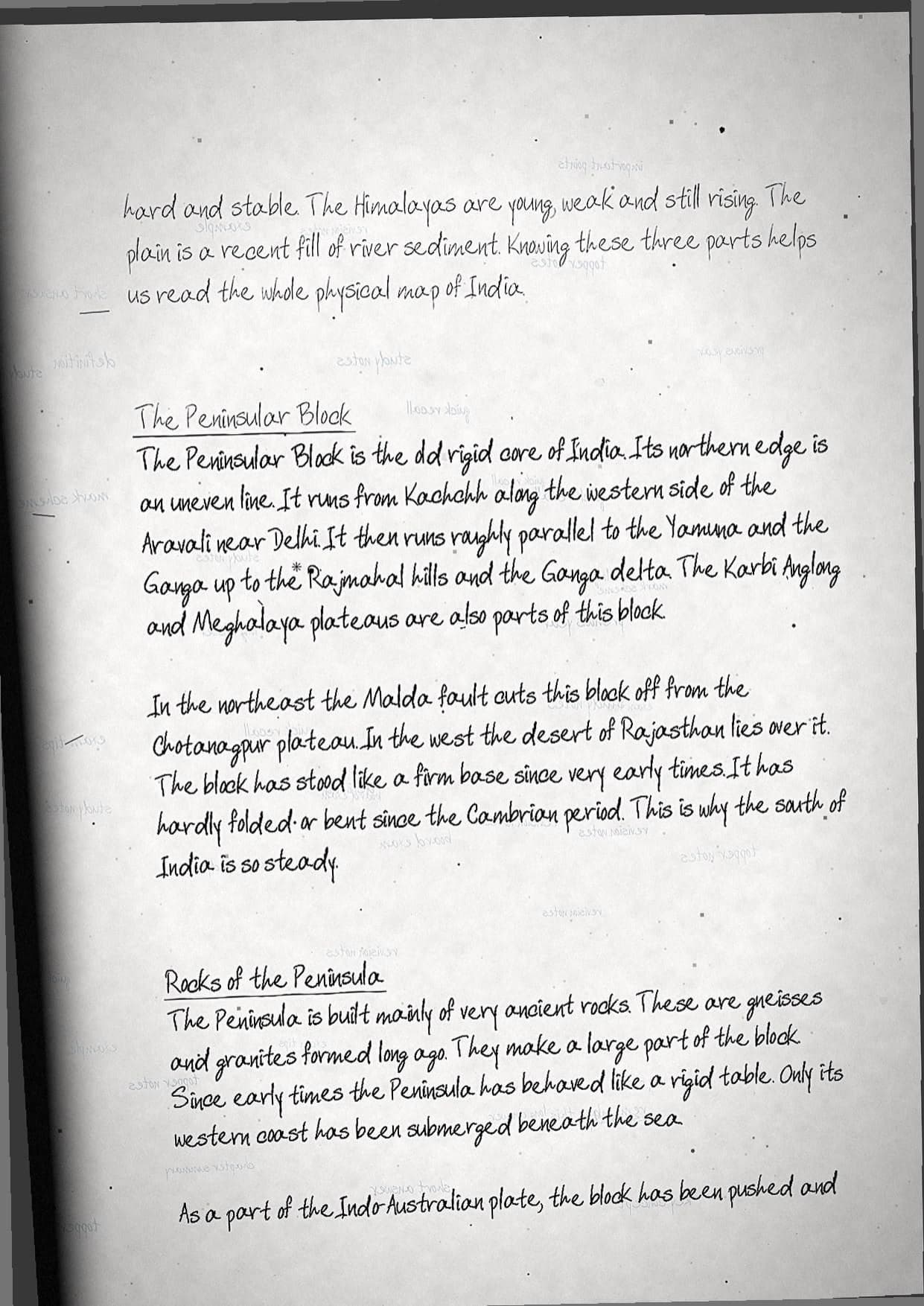
| Geological divisions | Peninsular Block, Himalayas and mountains, and the plain. |
| Six physical divisions | Mountains, plain, plateau, desert, coasts and islands. |
| Northern Plain belts | Bhabar, Tarai, and alluvium of Bhangar and Khadar. |
| Highest Peninsular peak | Anaimudi at 2,695 m on the Western Ghats. |
| Coasts | Western is narrow and submerged, eastern is broad and emergent. |
| Islands | Bay group is hilly and volcanic, Arabian group is coral. |
How Collegedunia's Handwritten Notes Help You Revise Structure and Physiography
These notes are made for the night before the exam. They keep the facts short and easy to scan. Collegedunia maps every point to the 2026-27 NCERT.
- Clear handwriting: each topic is written in neat, easy-to-read handwriting.
- Boxed key terms: the main terms and definitions are boxed by hand for fast recall.
- Diagrams and tables: simple hand-drawn tables and charts make ideas clear.
- Colour-coded headings: new sub-topics stand out, so you find any section in seconds.
Structure and Physiography Self-Assessment Quiz
Try these quick questions after you read the notes. Tap each question to check your answer. They cover the points CBSE asks most often.
Which water body separates the Andaman from the Nicobar?
(a) 11 Degree Channel (b) Gulf of Mannar (c) Ten Degree Channel (d) Andaman Sea
Answer: (c) correct - the Ten Degree Channel separates Andaman and Nicobar.
On which hill range is the Dodabetta peak situated?
(a) Nilgiri hills (b) Anaimalai hills (c) Cardamom hills (d) Nallamala hills
Answer: (a) correct - Dodabetta (2,637 m) lies on the Nilgiri hills.
Which is the only active volcano in India?
(a) Saddle Peak (b) Barren Island (c) Anaimudi (d) Mount Thuiller
Answer: (b) correct - Barren Island in the Andaman group is the only active volcano.
How many physiographic divisions is India divided into?
(a) three (b) four (c) five (d) six
Answer: (d) correct - India has six physiographic divisions.
Which belt lies just at the foot of the Shiwalik where streams sink?
(a) Tarai (b) Khadar (c) Bhabar (d) Bhangar
Answer: (c) correct - the Bhabar is the boulder belt where streams disappear.
How to Use These Handwritten Notes for Class 11 Geography Revision
Use these class 11 geography handwritten notes in two passes. Read them slowly once for the full chapter. Then, near the exam, read only the boxes and key terms for a fast recall.
- Read the notes once with the NCERT chapter open beside you.
- Say each key term and idea in your own words.
- Practise one long-answer question from a past paper.
- On the last day, revise only the key terms and the boxes.
Class 11 Geography Handwritten Notes for All Chapters
The table below links the class 11 geography handwritten notes for every chapter. Use it to jump to any other chapter's notes.
Structure and Physiography Class 11 Geography Handwritten Notes FAQs
Ques. Where can I download Structure and Physiography Class 11 Geography Handwritten Notes PDF?
Ans. You can download the Structure and Physiography Class 11 Geography Handwritten Notes PDF directly from this page. Both the Normal and HD versions are free.
Ques. Are these handwritten notes aligned with the 2026-27 NCERT?
Ans. Yes. These notes follow the current 2026-27 syllabus for Class 11 Geography. Why is the western coastal plain devoid of any delta?
Ques. How many pages is the Class 11 Geography Structure and Physiography Handwritten Notes PDF?
Ans. The notes run about 22 pages. They cover the full chapter with key terms, hand-drawn boxes, and a short self-assessment quiz.
Ques. What is the main idea of the 11th standard Geography chapter Structure and Physiography?
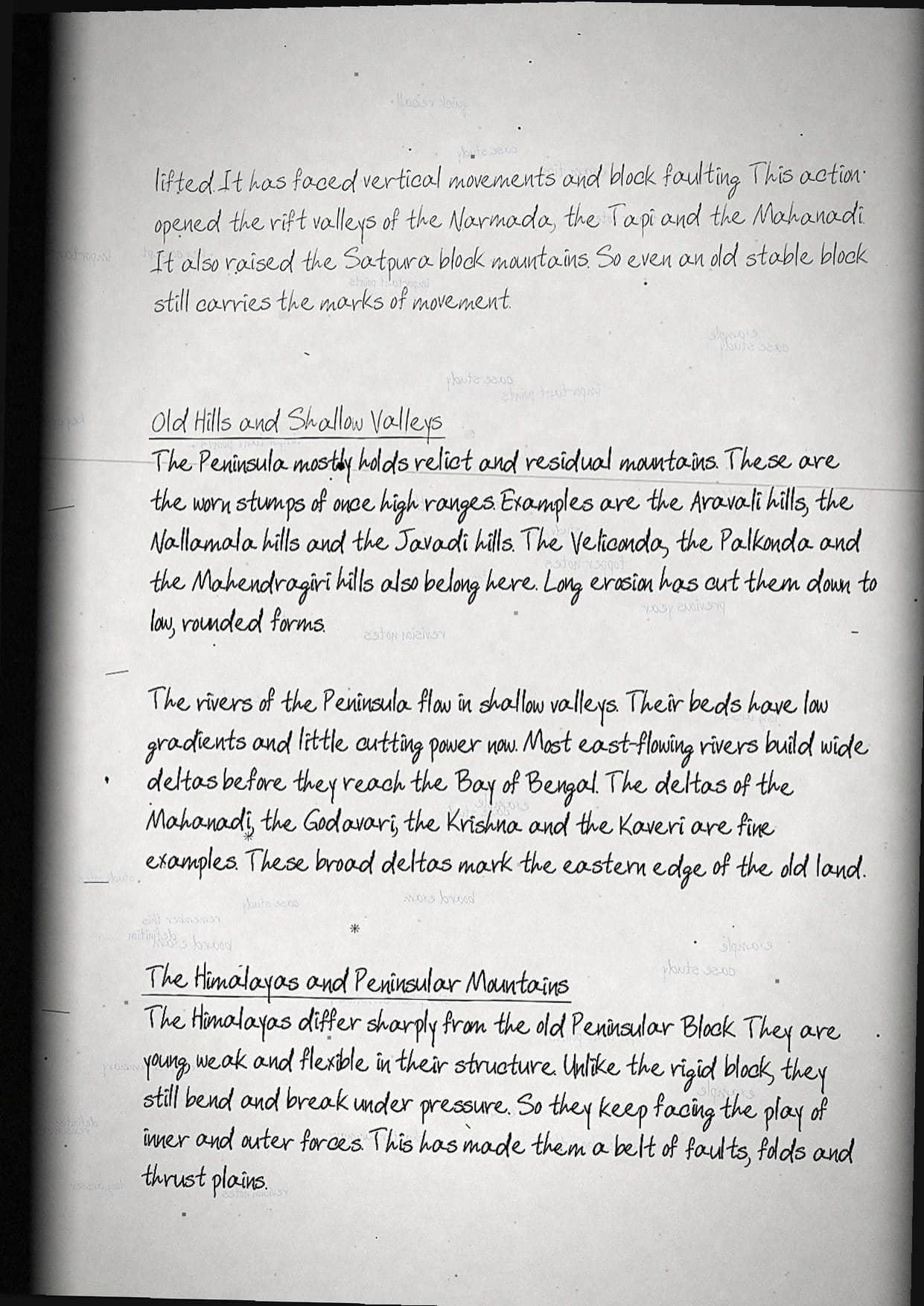
Ans. The western coast is a submerged and narrow coast, and its rivers are short and fast without room to drop sediment. So they do not build deltas, unlike the broad emergent eastern coast where the Mahanadi, Godavari, Krishna and Kaveri form large deltas.
Ques. Are these Structure and Physiography notes enough for the CBSE Class 11 exam?
Ans. Yes, for revision. The Collegedunia handwritten notes cover every key point and exam term. Read them with the NCERT chapter and practise past questions.



Comments