




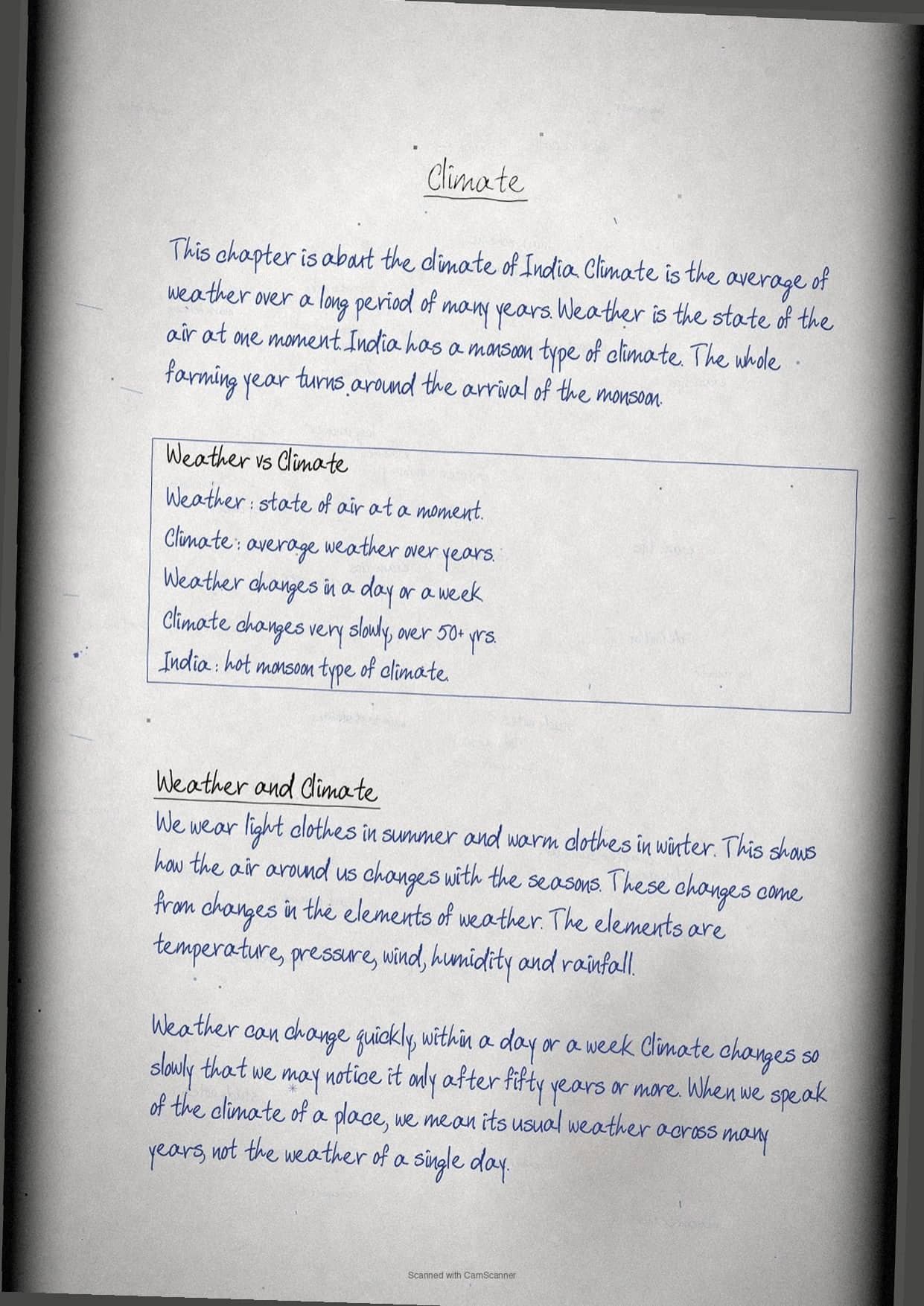
The seasonal reversal of winds around the shifting ITCZ drives India's monsoon, giving a yearly cycle of four seasons and very uneven rainfall. Class 11 Geography Chapter 18 Climate builds this idea step by step. These class 11 geography handwritten notes chapter 18 Climate follow the 2026-27 NCERT and cover weather versus climate and the meaning of monsoon,.
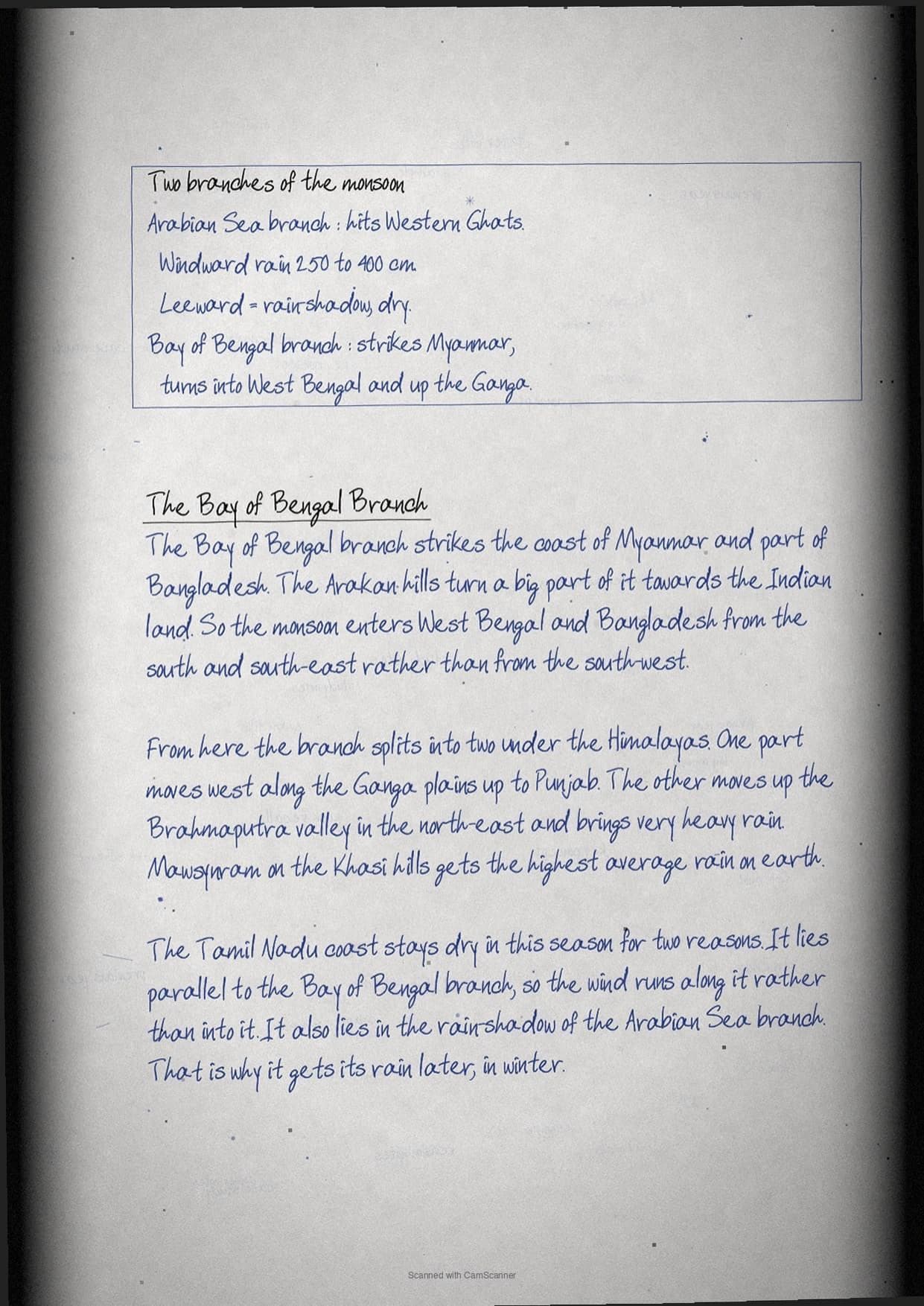
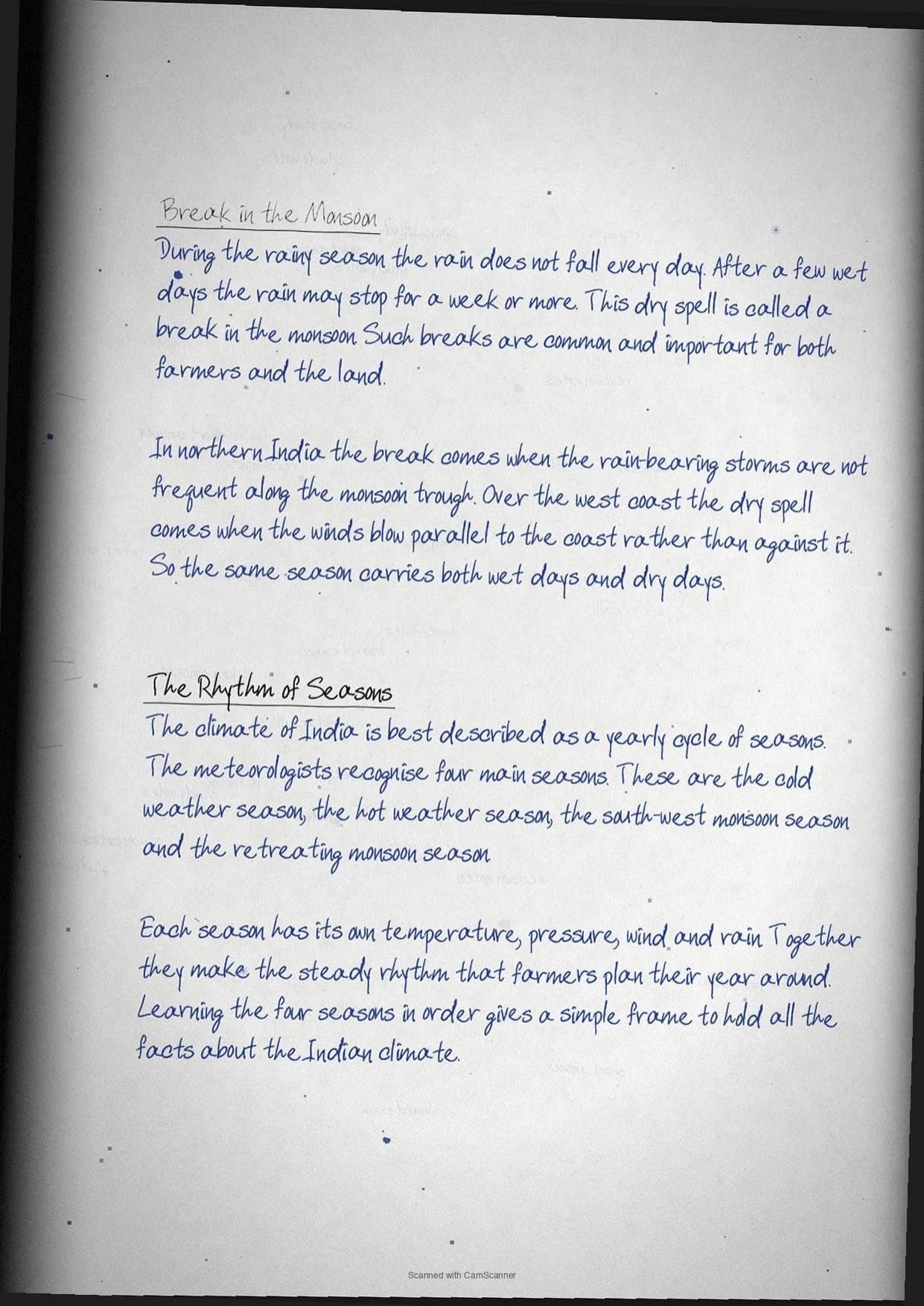
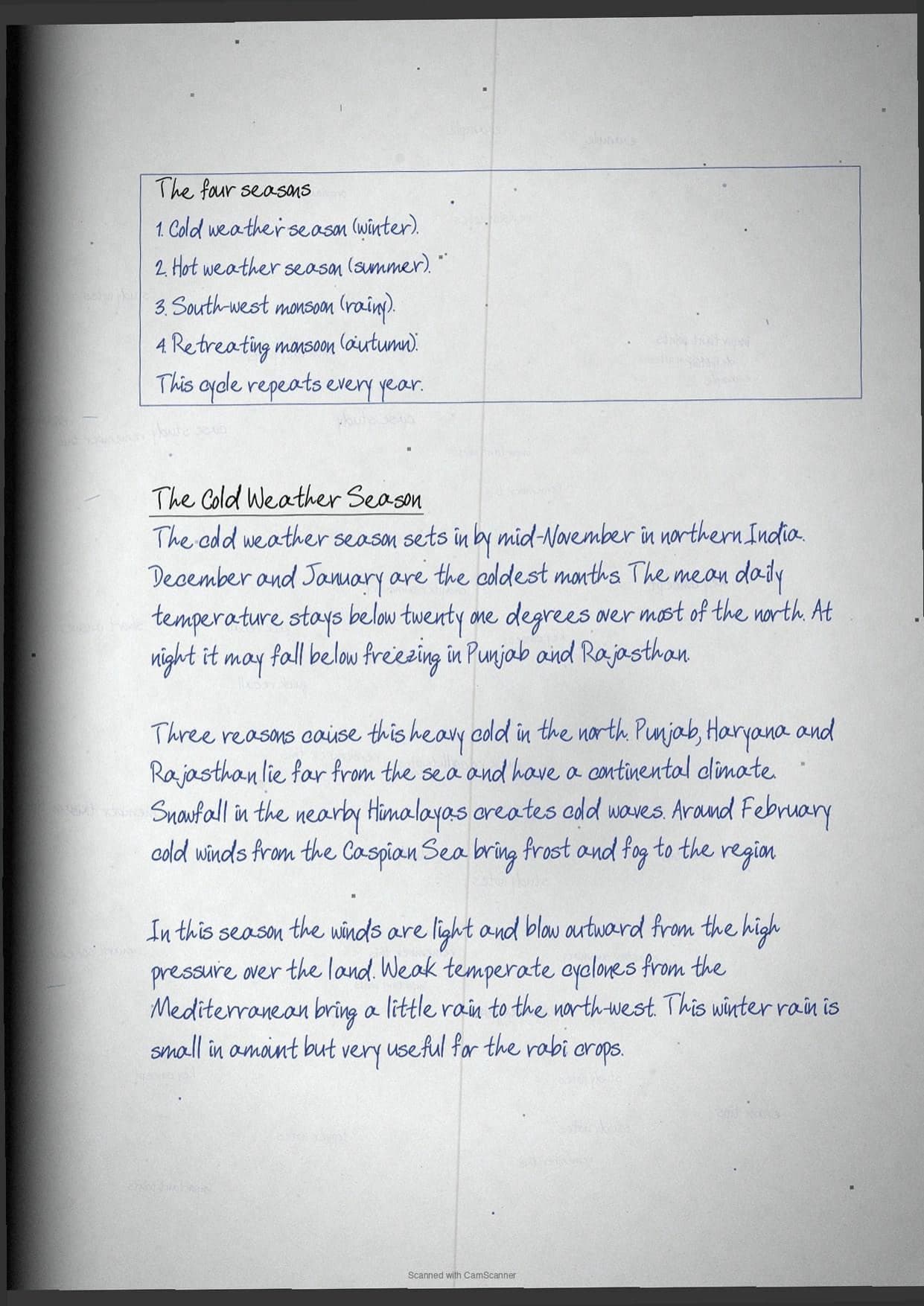
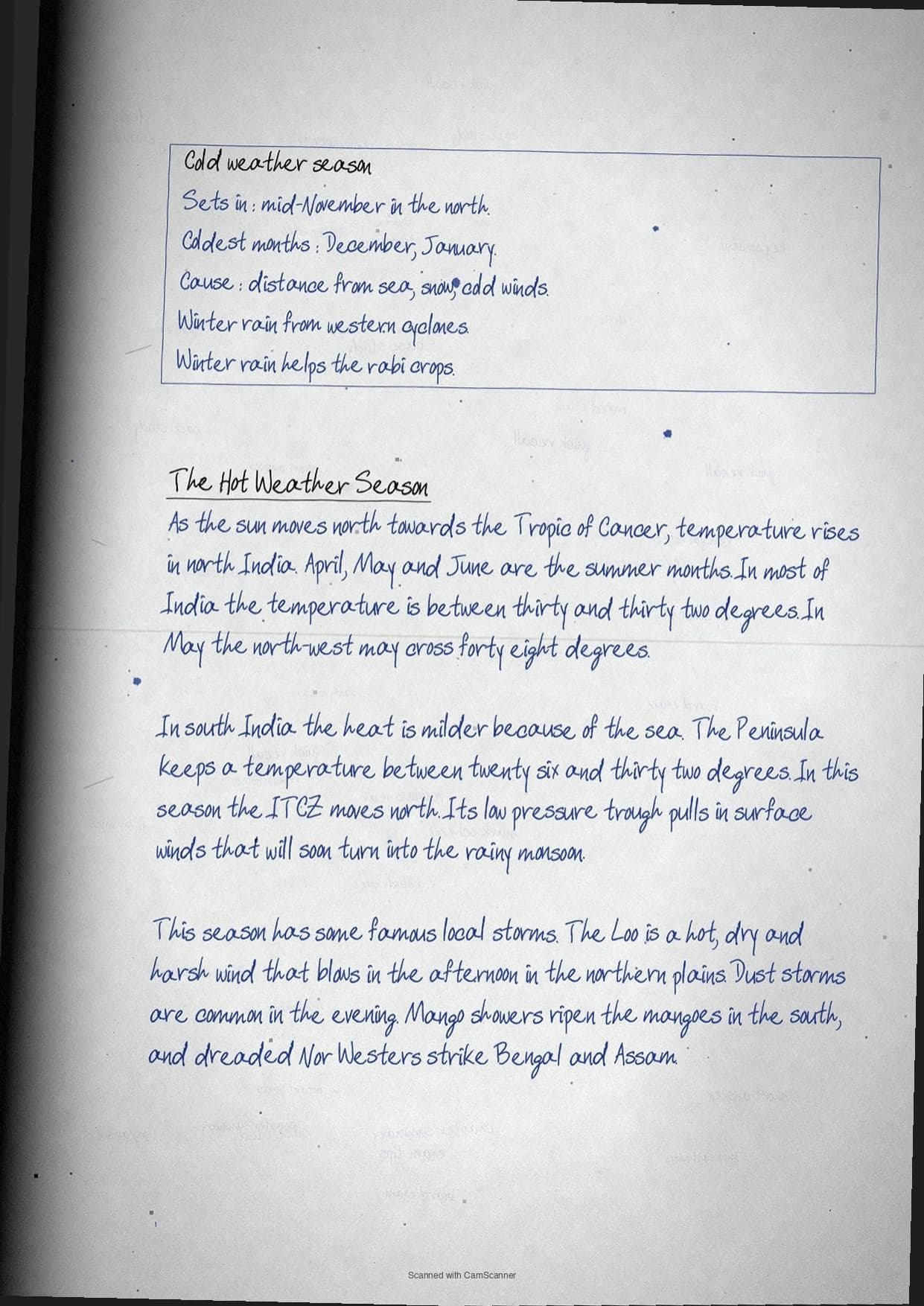
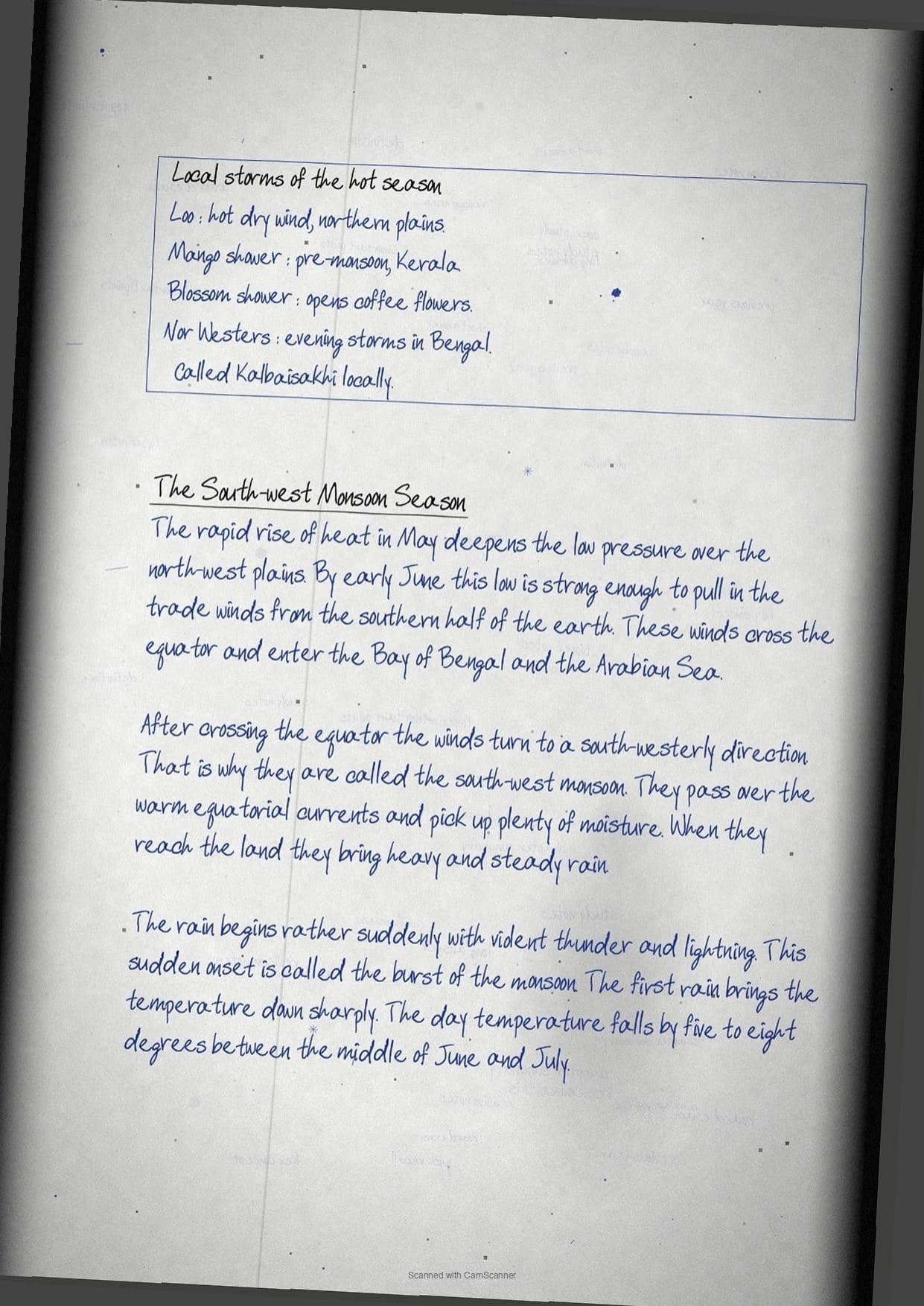
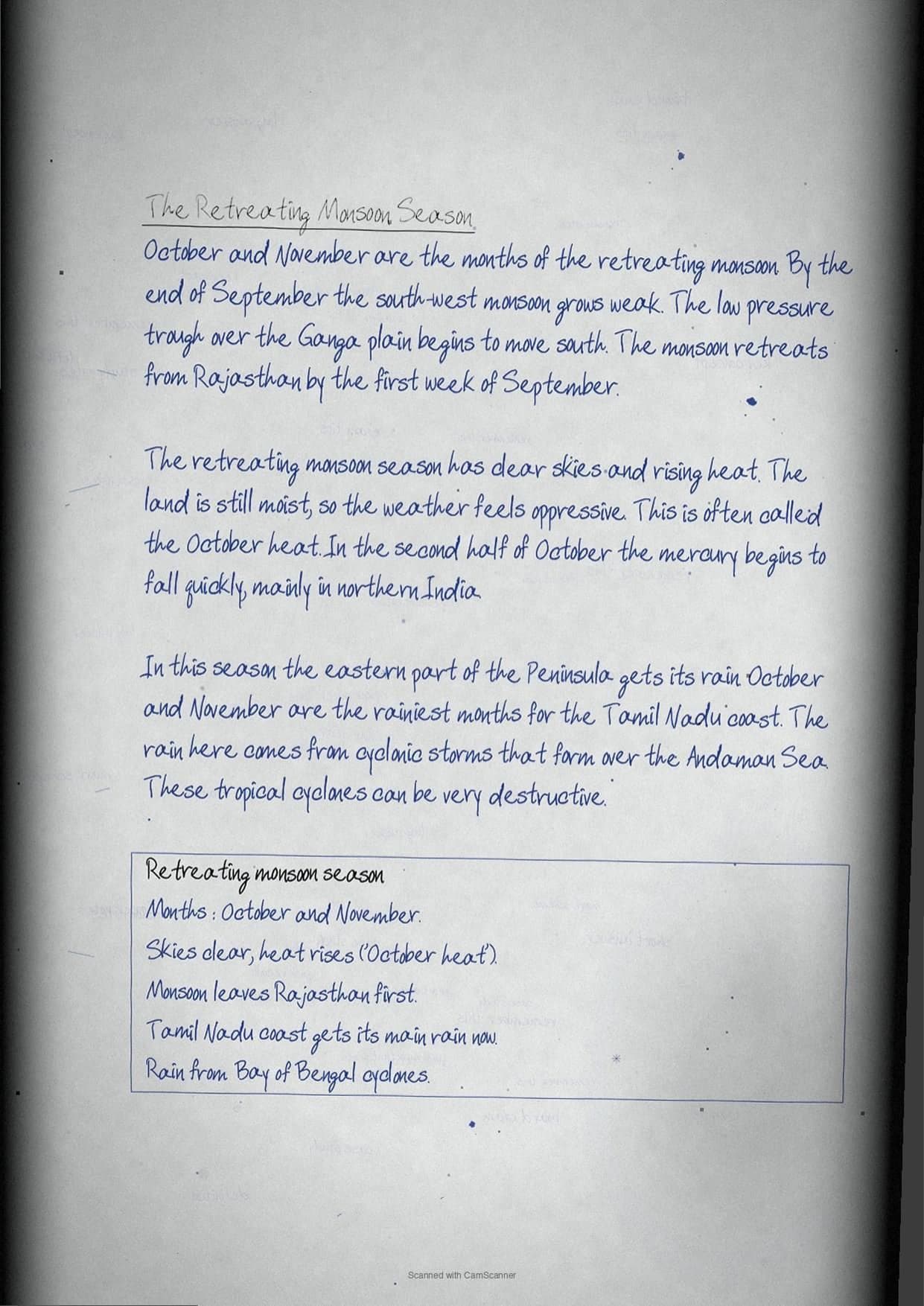
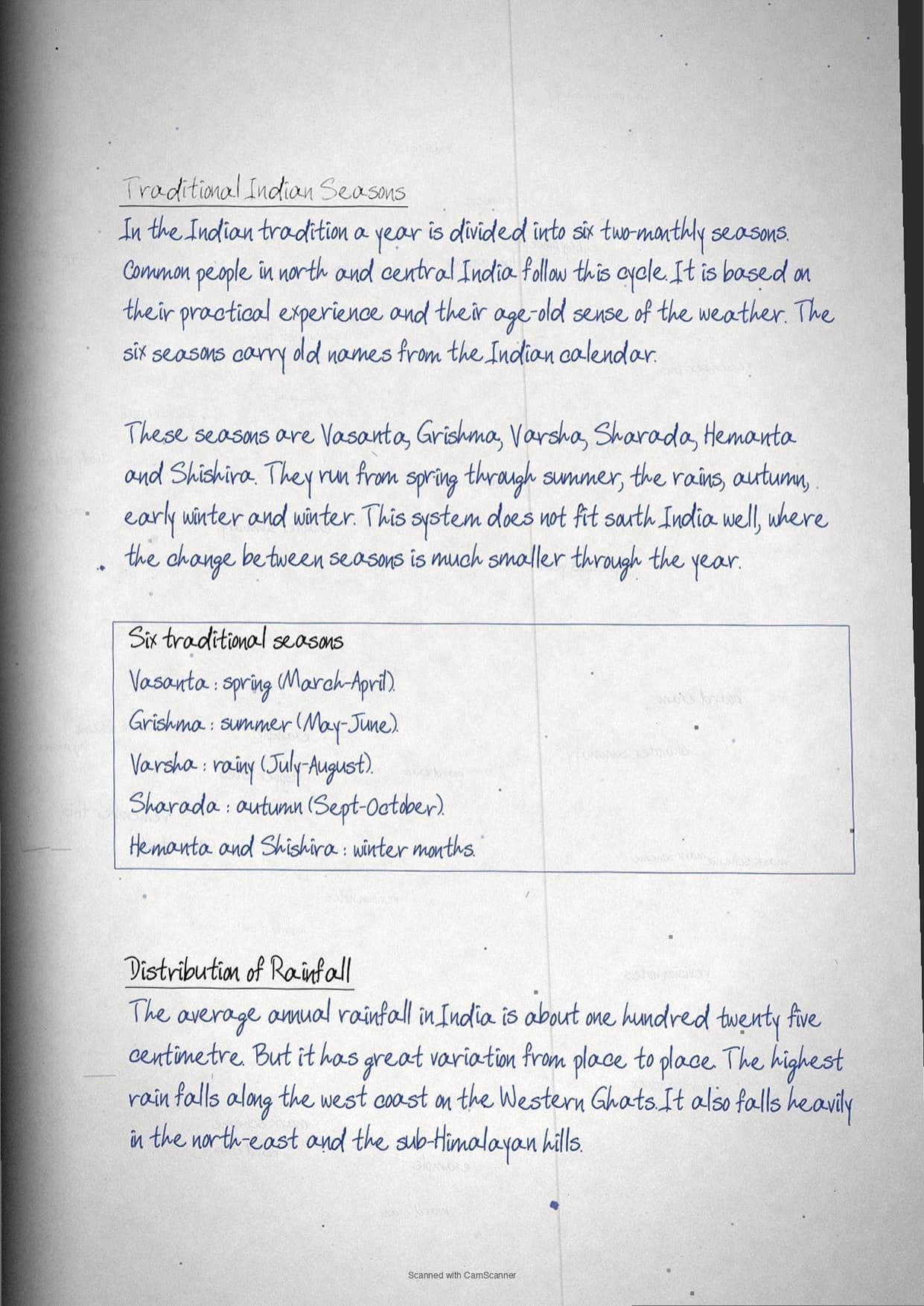
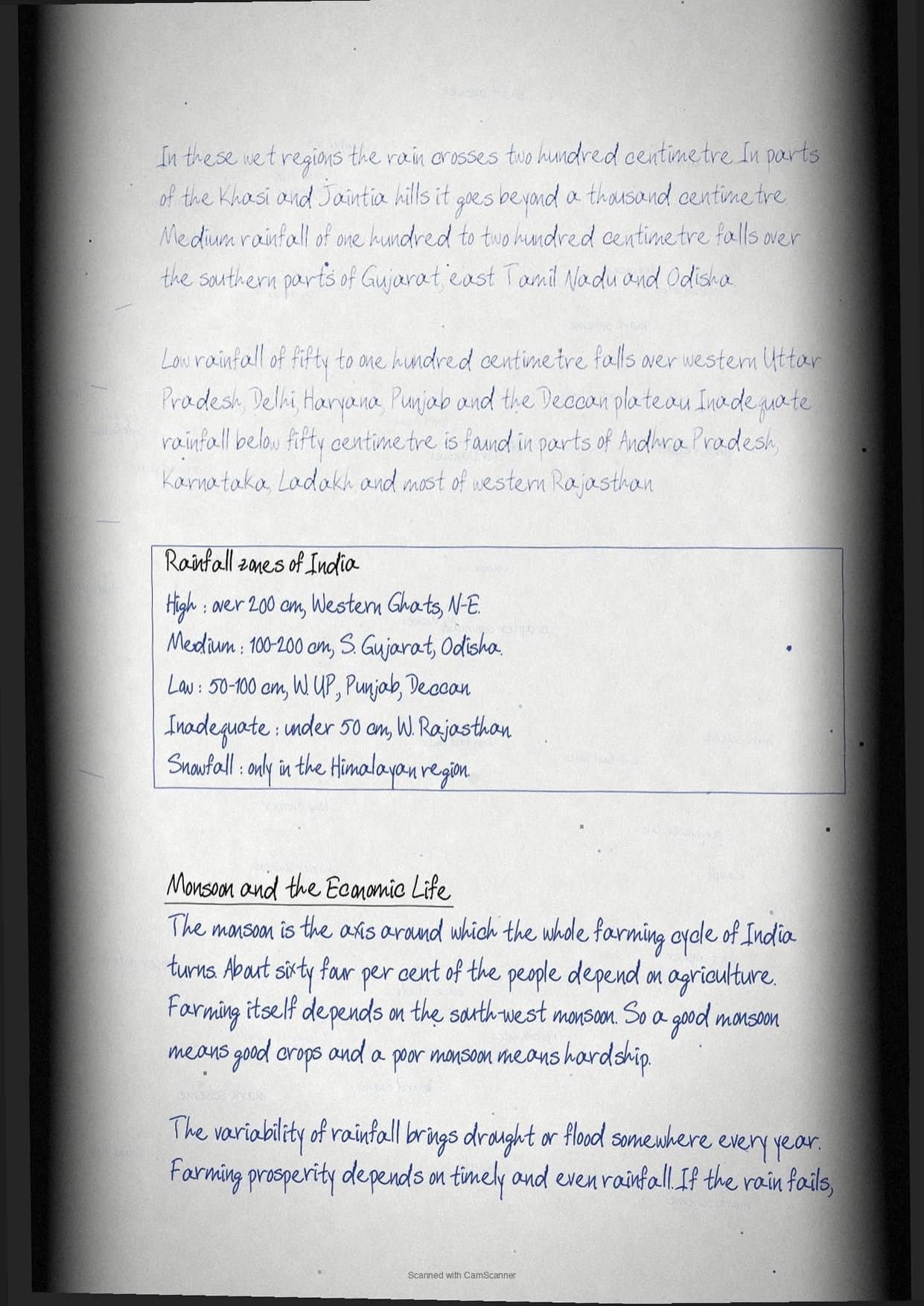
- CBSE Class 11 Weightage: a scoring chapter in the Geography paper, asked in short and long answers.
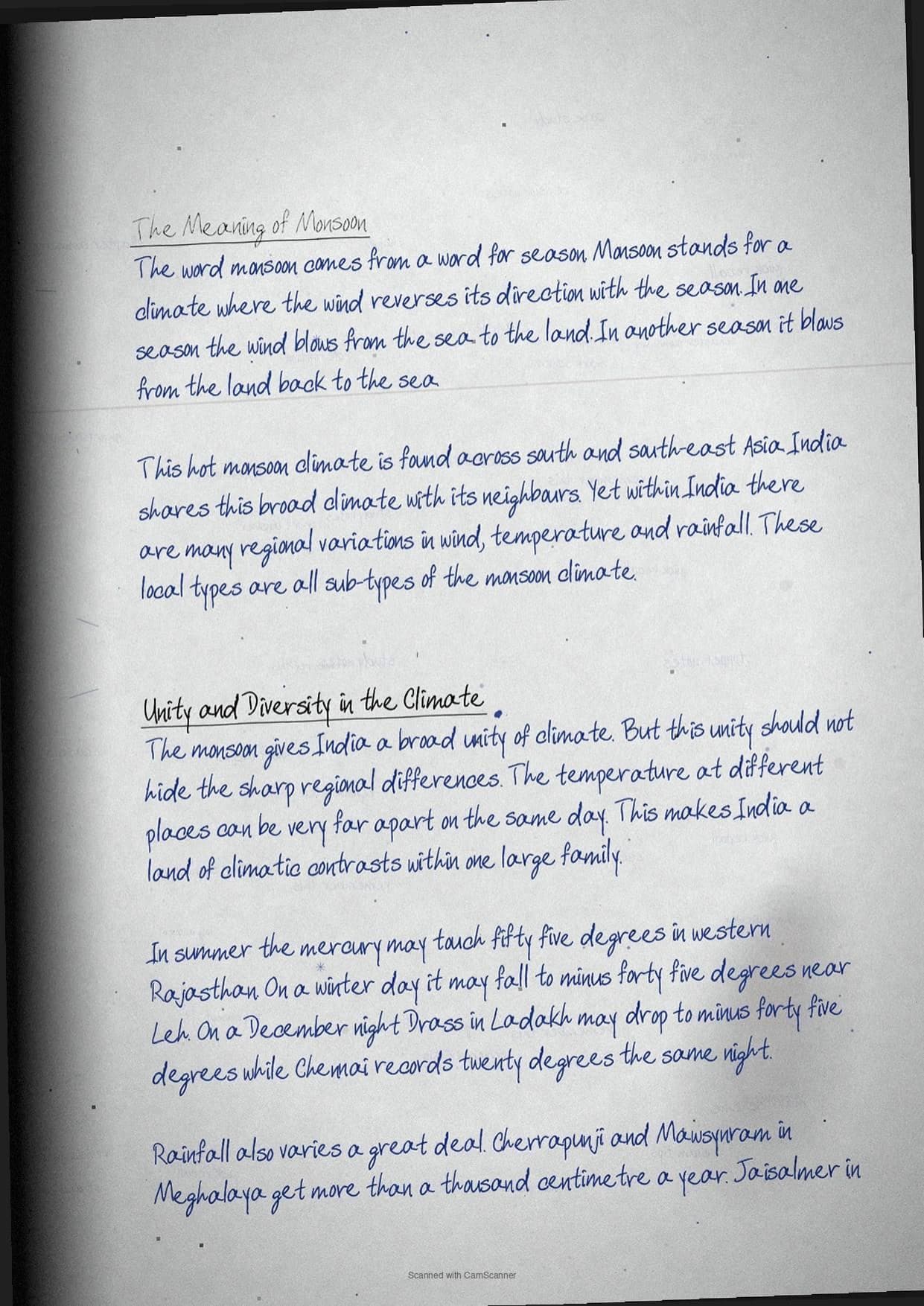
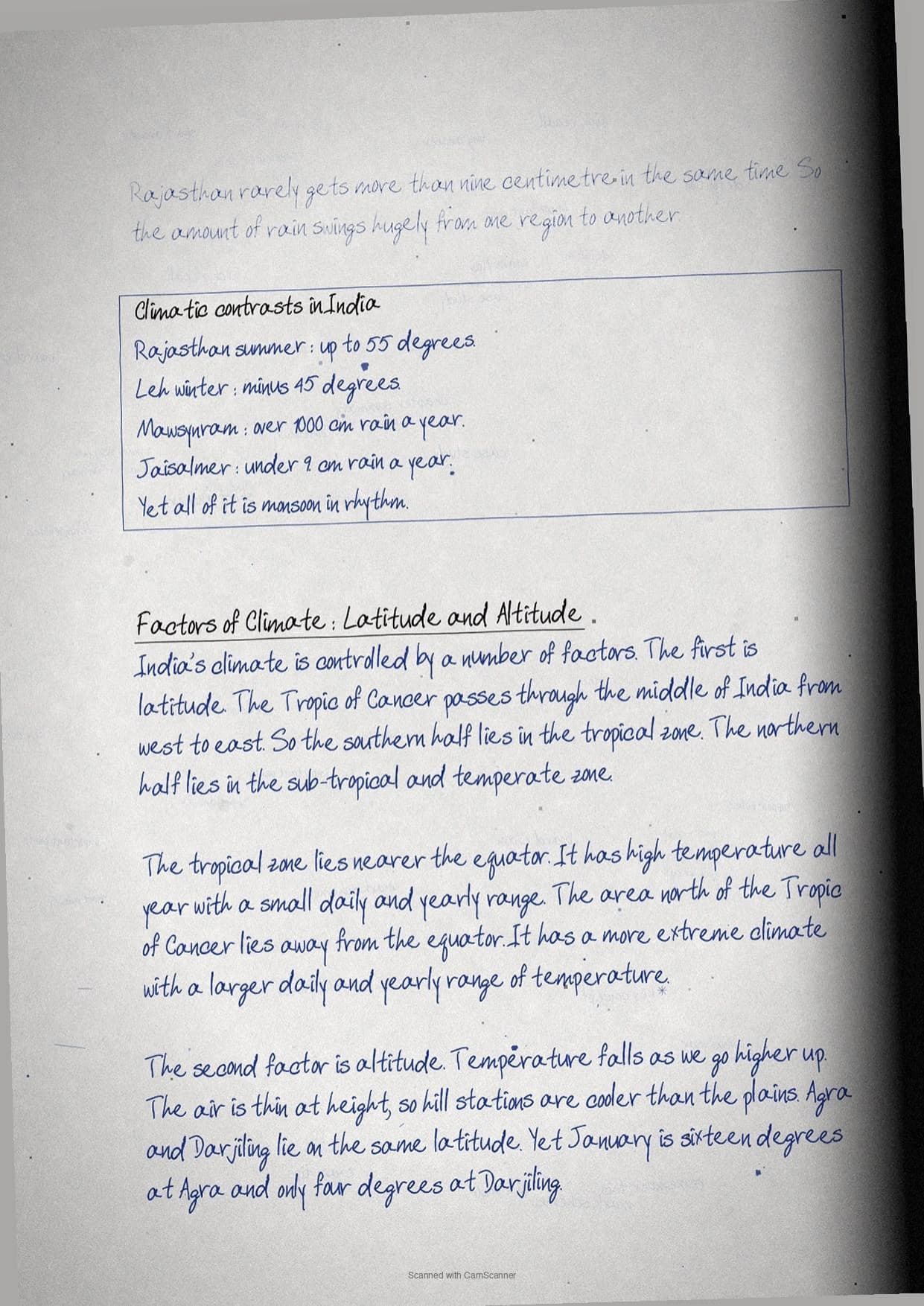
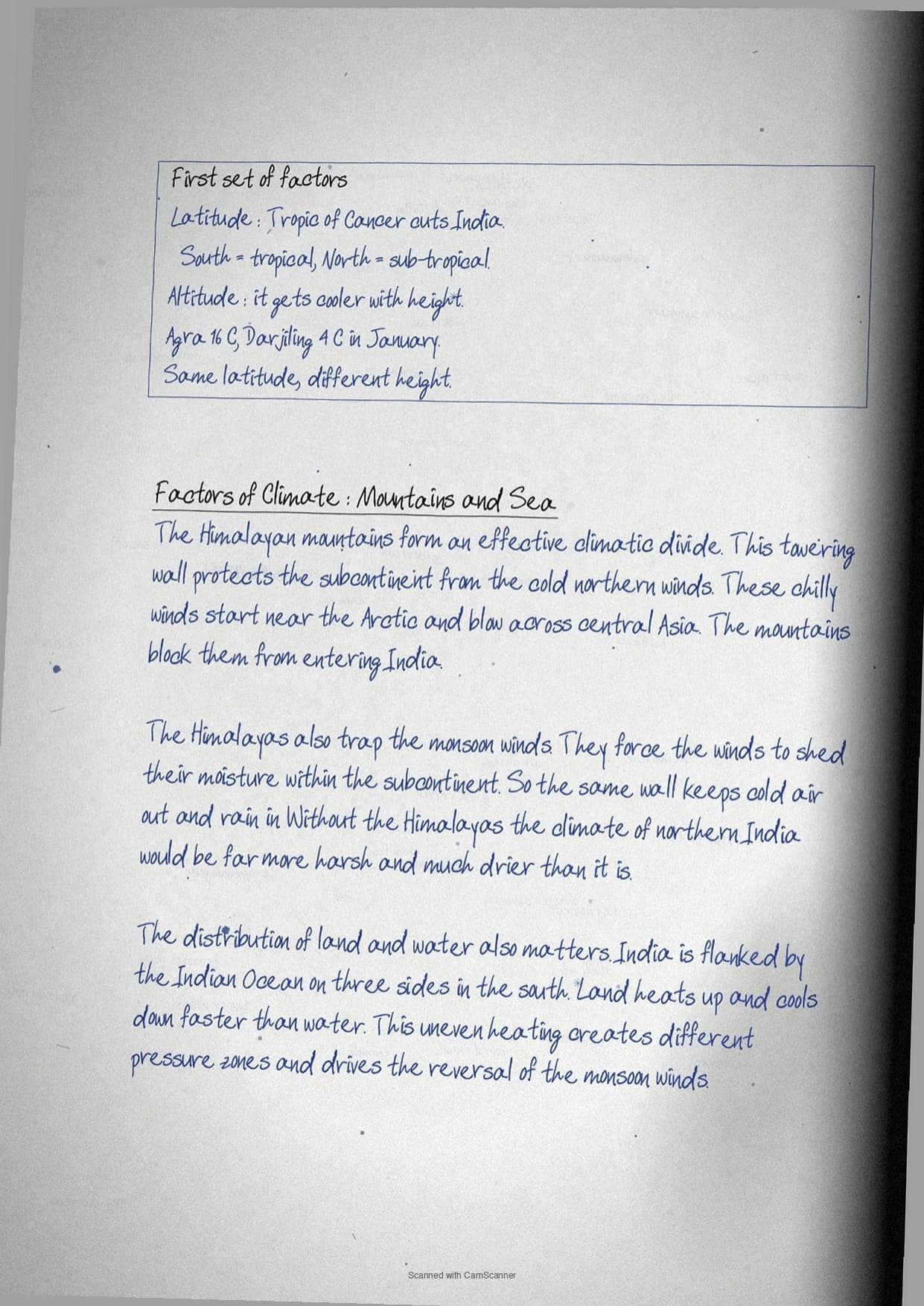
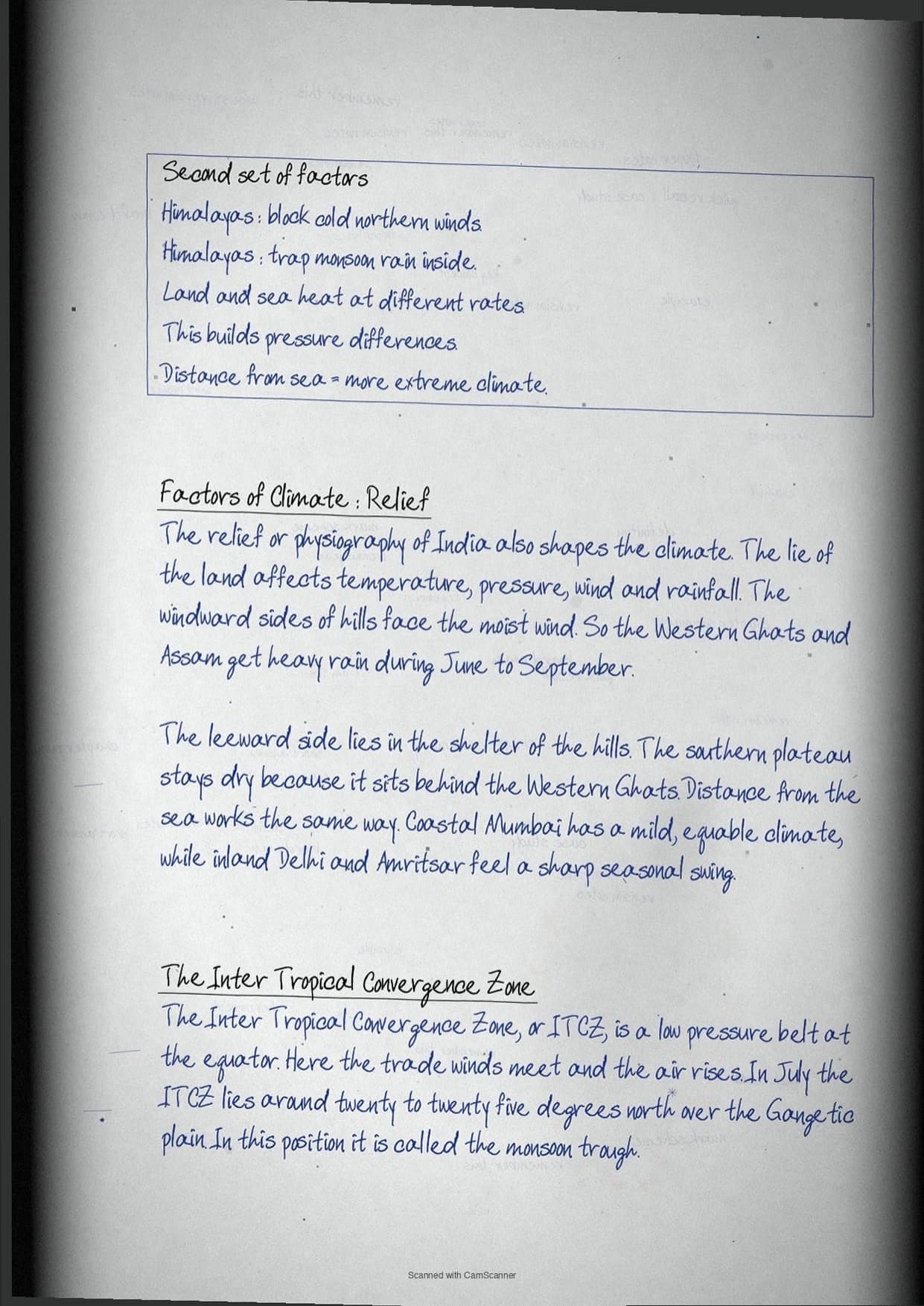
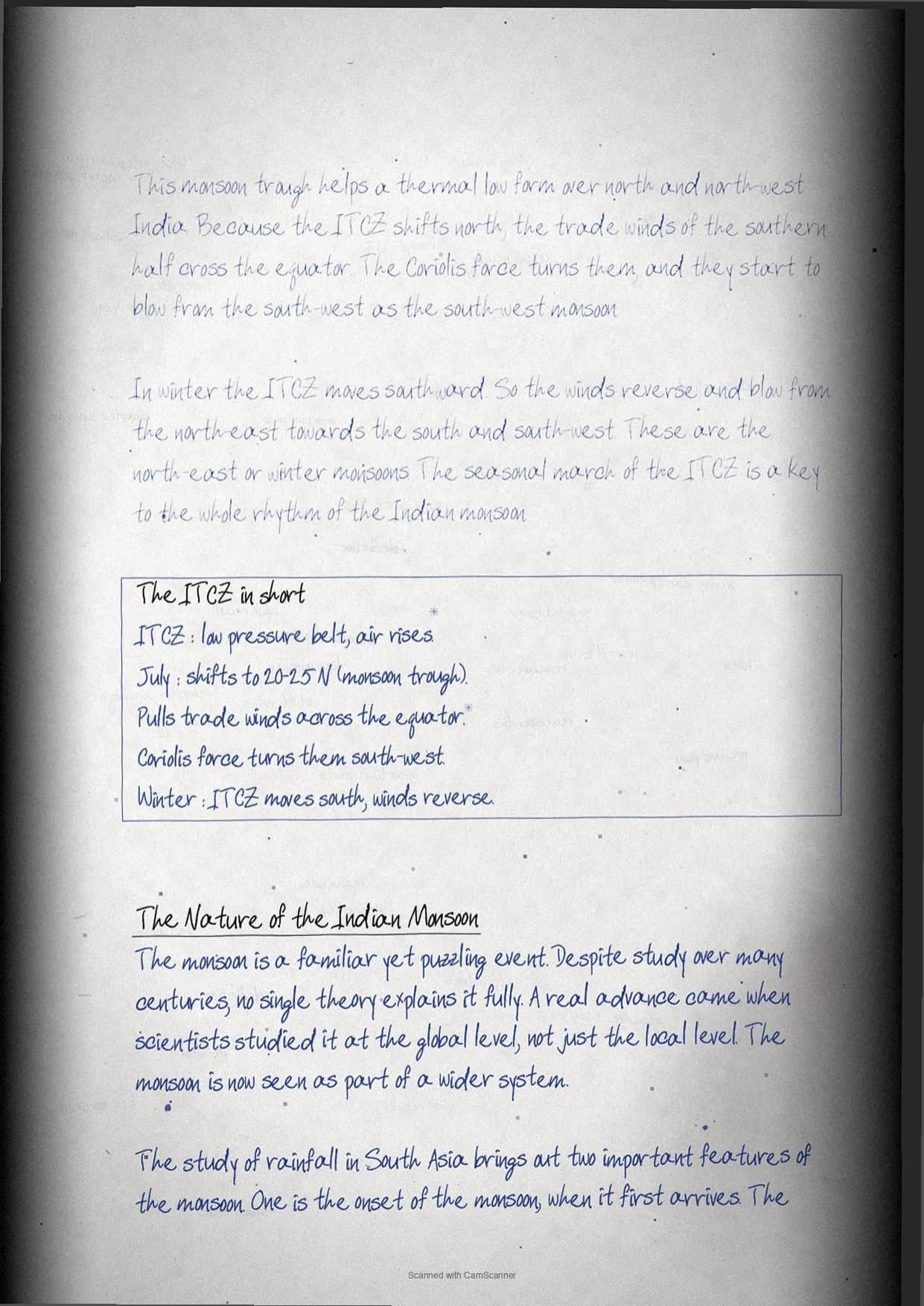
- What the notes cover: weather versus climate and the meaning of monsoon, six factors that control india's climate, the itcz and the mechanism of the monsoon, onset, break and retreat of the monsoon.
- Best for: quick revision before Class 11 exams and a base for CUET later.
You can read the complete class 11 geography handwritten notes for Climate, with key terms, boxed definitions, and quick revision points, in the PDF below.
These handwritten notes are written by subject teachers, mapped to the 2026-27 NCERT, and checked against the last five years of CBSE Class 11 Geography papers.
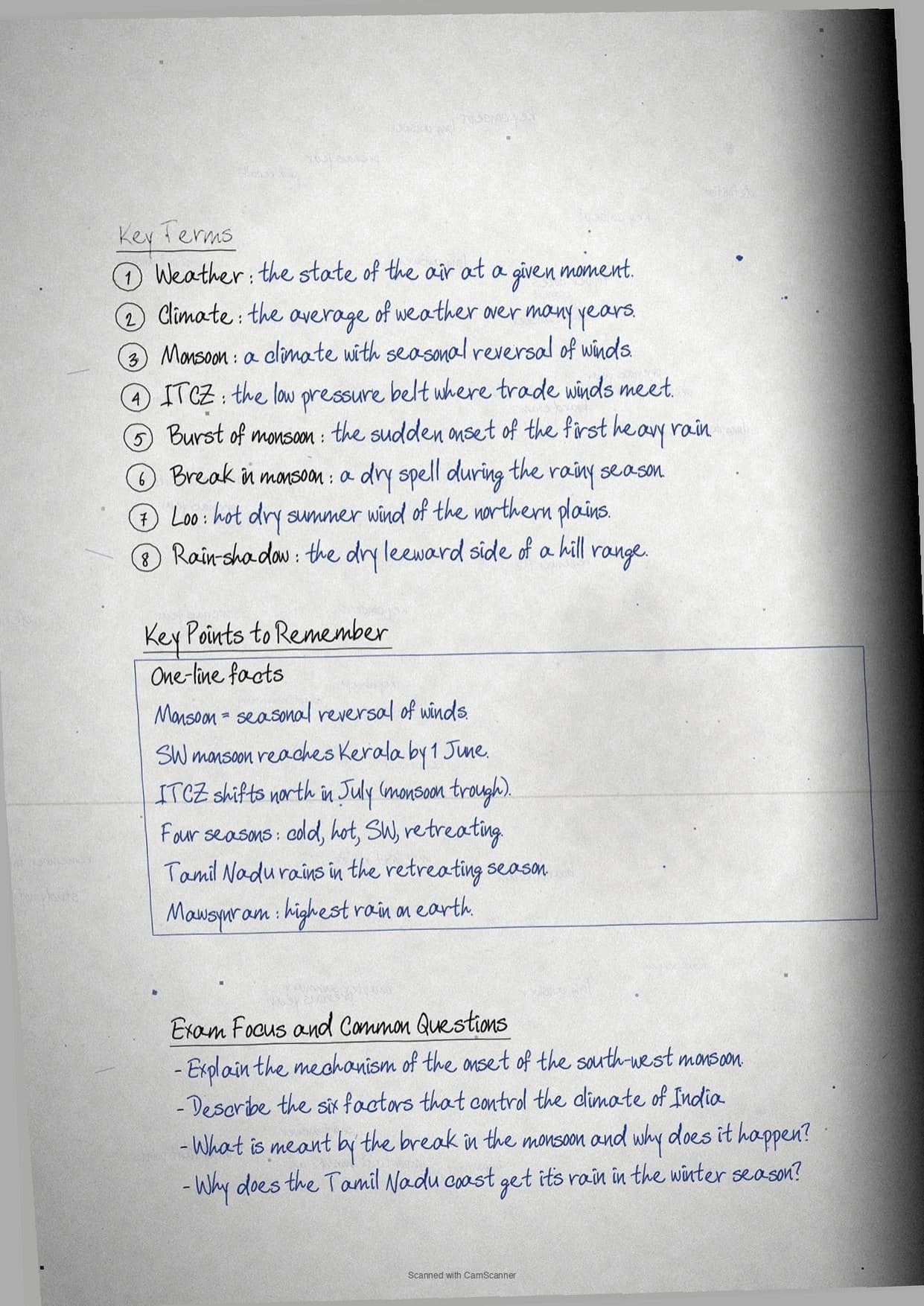
Key Terms and Ideas in Climate
These are the terms and ideas the exam asks about most. Learn each one so you can define it and use it in your answers.
| Term / Idea | What it means |
|---|---|
| Monsoon | climate marked by the seasonal reversal of wind direction |
| ITCZ | low pressure belt that shifts north in July as the monsoon trough |
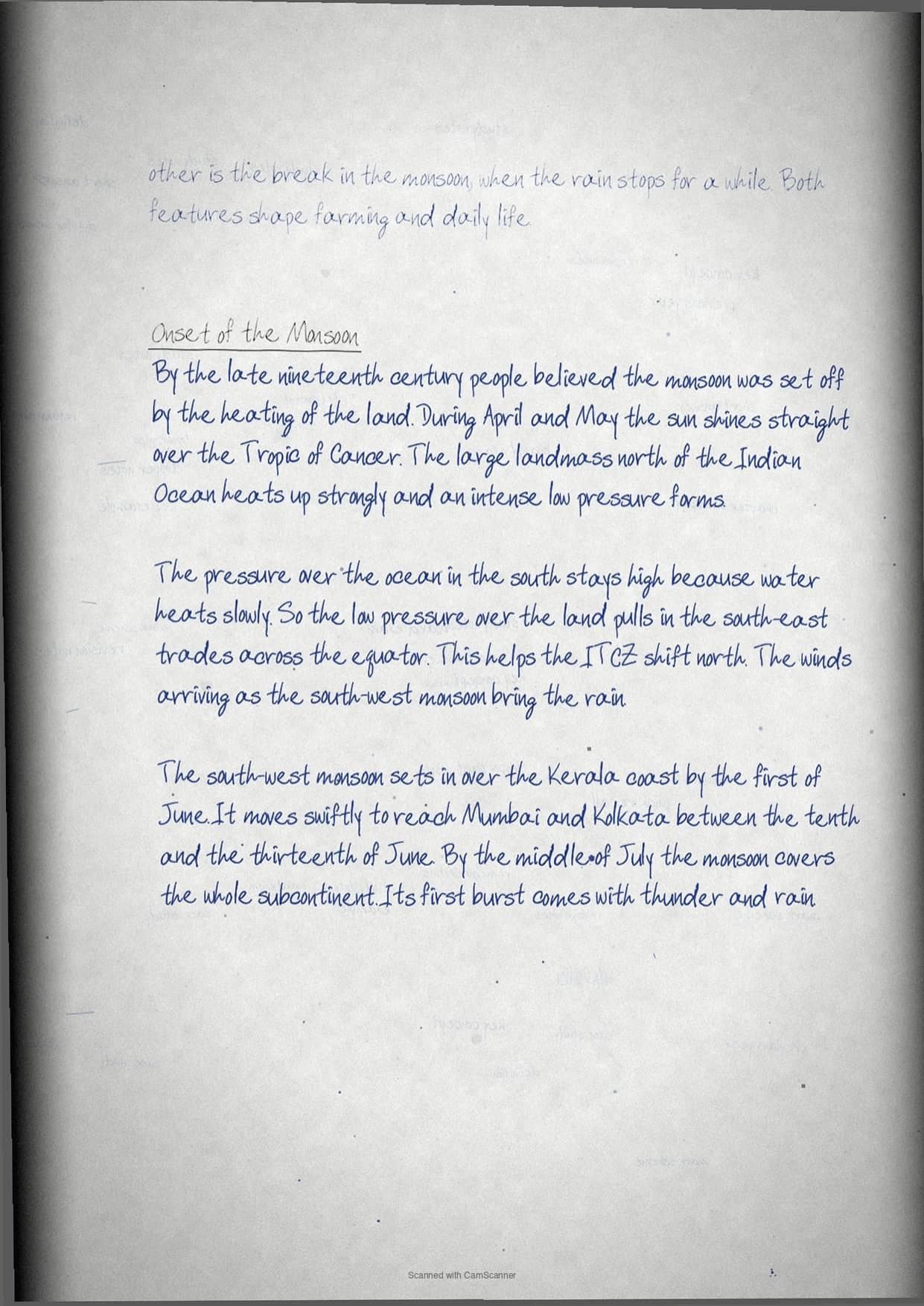
| Onset | south-west monsoon reaches the Kerala coast about 1 June |
| Burst | sudden violent onset of the first heavy monsoon rain |
| Break | dry spell during the rainy season when rain fails for days |
| Loo | hot dry afternoon wind of the northern plains in summer |
| Retreating monsoon | October-November season that rains over Tamil Nadu |
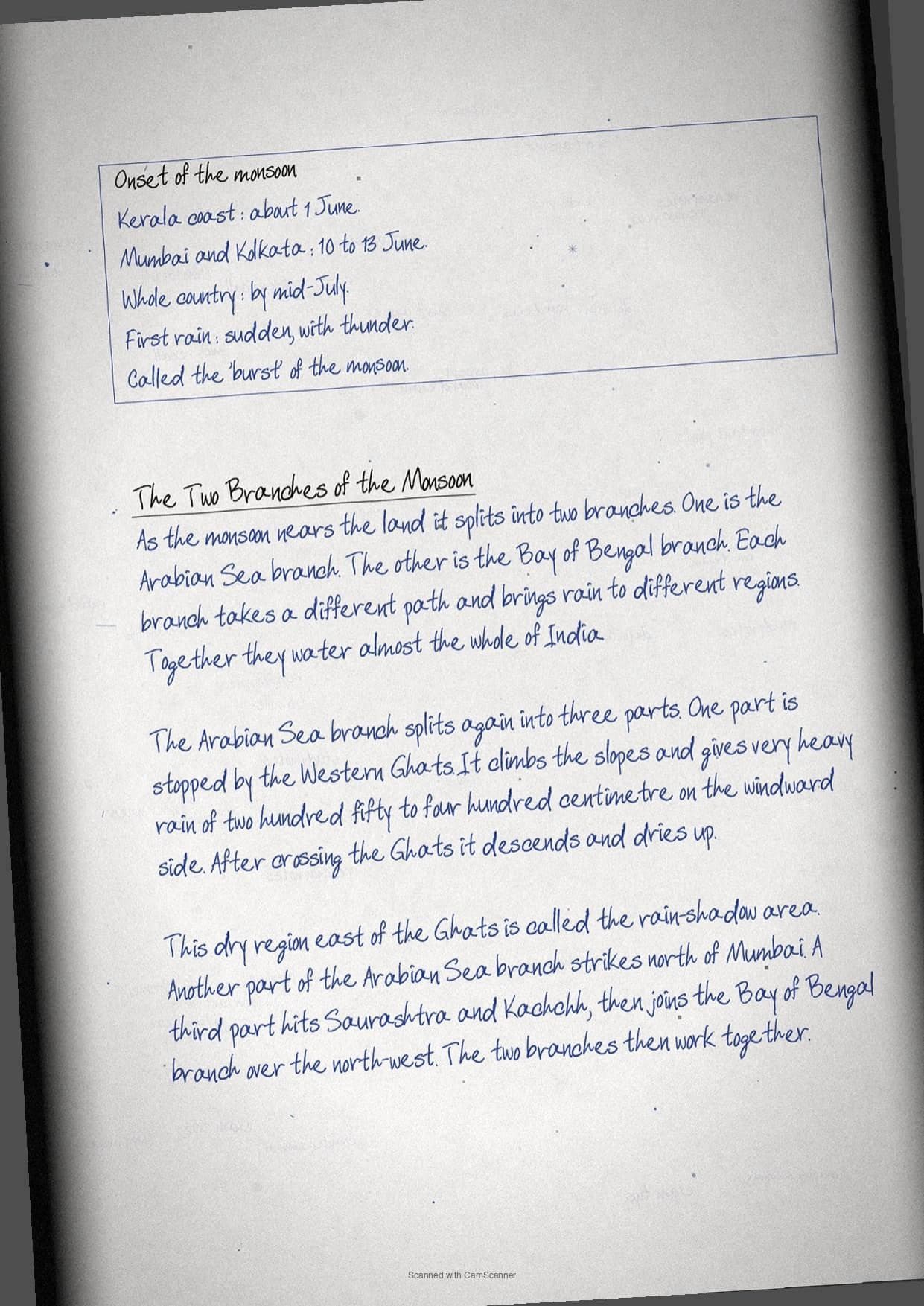
| Rain-shadow | dry leeward side east of the Western Ghats |
What the Climate Handwritten Notes Cover
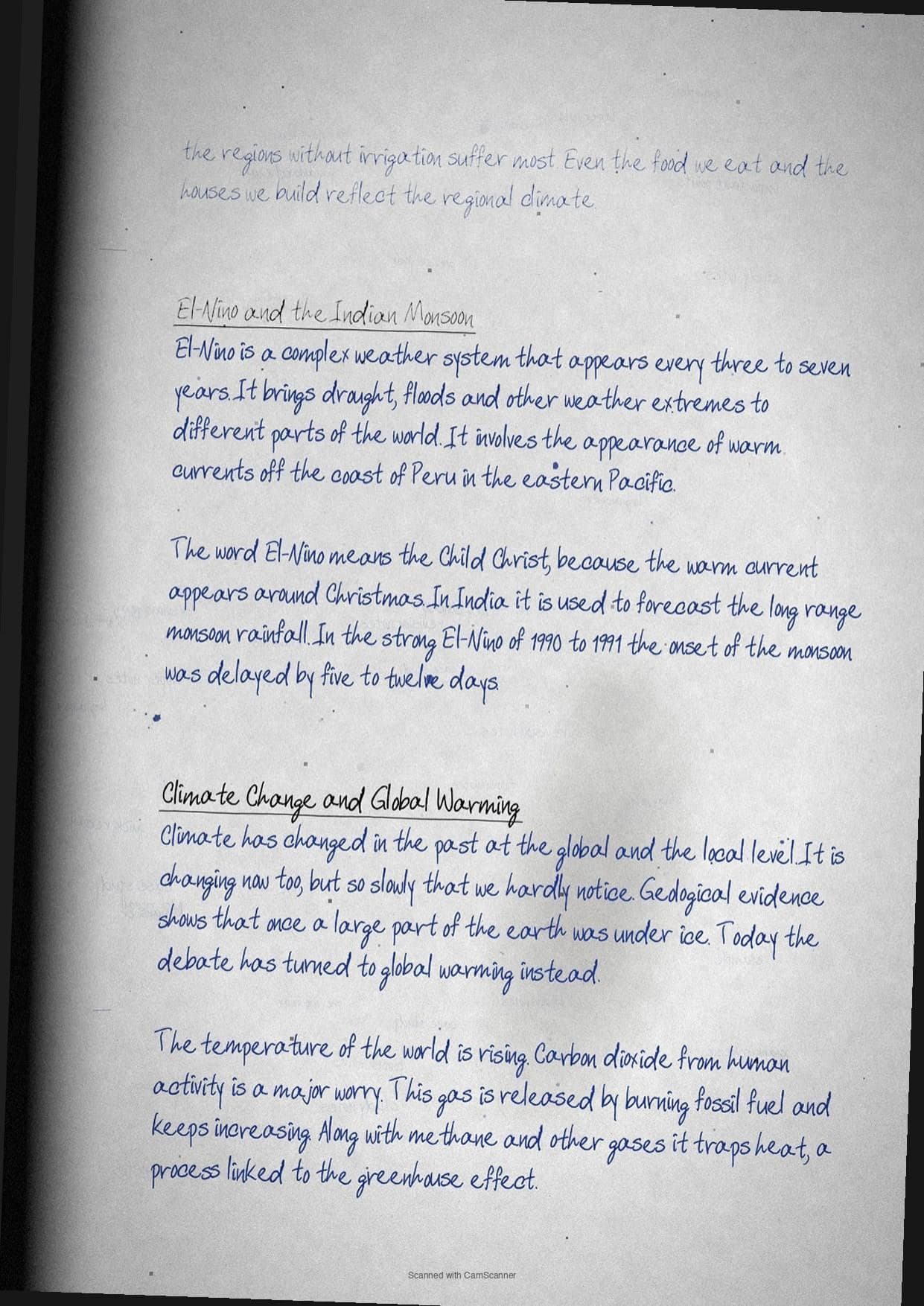
Climate is the average of weather over a long period, and India has a monsoon type of climate marked by the seasonal reversal of winds. This chapter explains the factors that control India's climate, the mechanism of the monsoon and the yearly cycle of seasons. It ends with the distribution of rainfall and the link between the monsoon and economic life.
- Weather versus climate and the meaning of monsoon
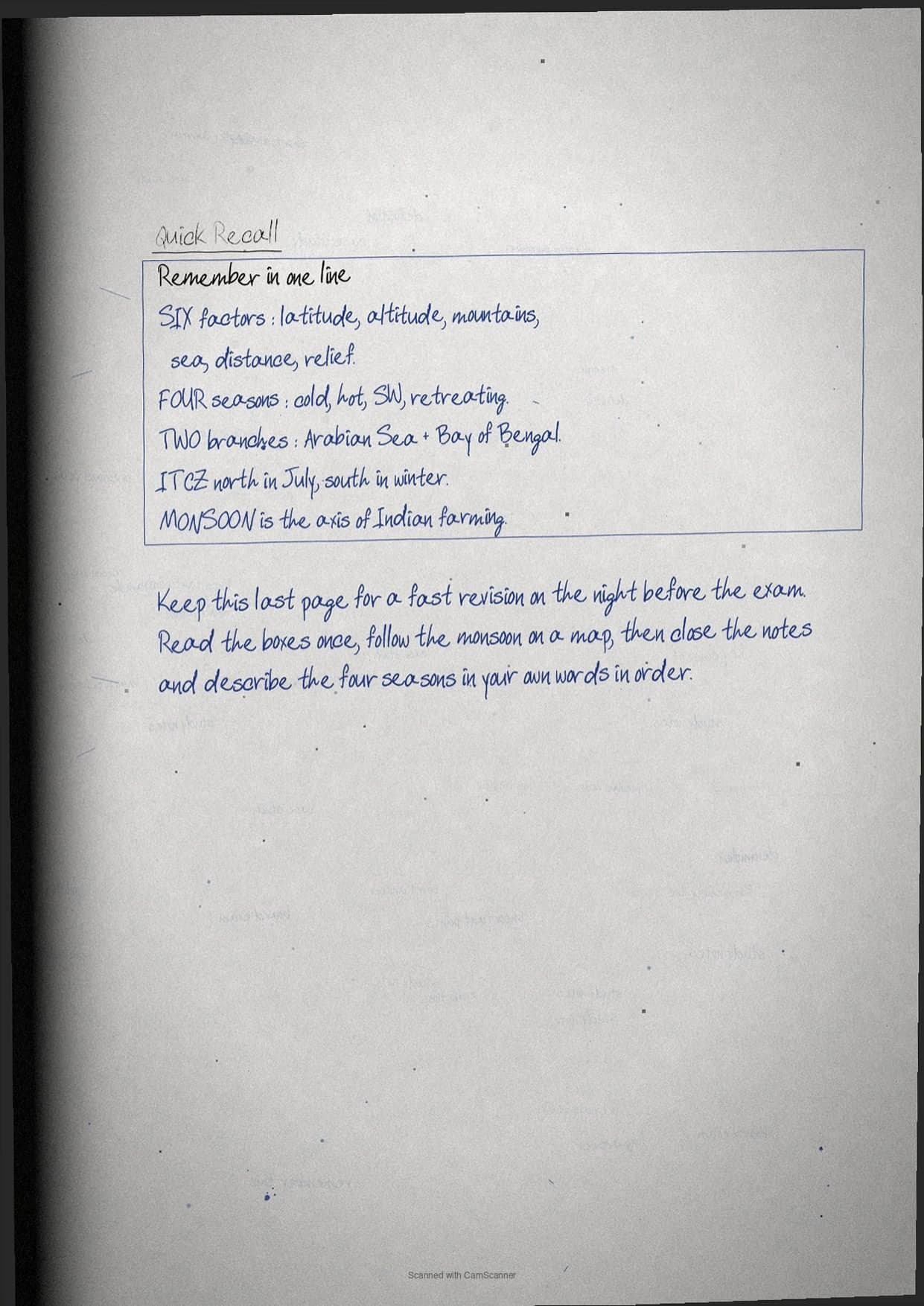
- Six factors that control India's climate
- The ITCZ and the mechanism of the monsoon
- Onset, break and retreat of the monsoon
- Two branches: Arabian Sea and Bay of Bengal
- The four seasons of the Indian year
- Distribution of rainfall and El-Nino
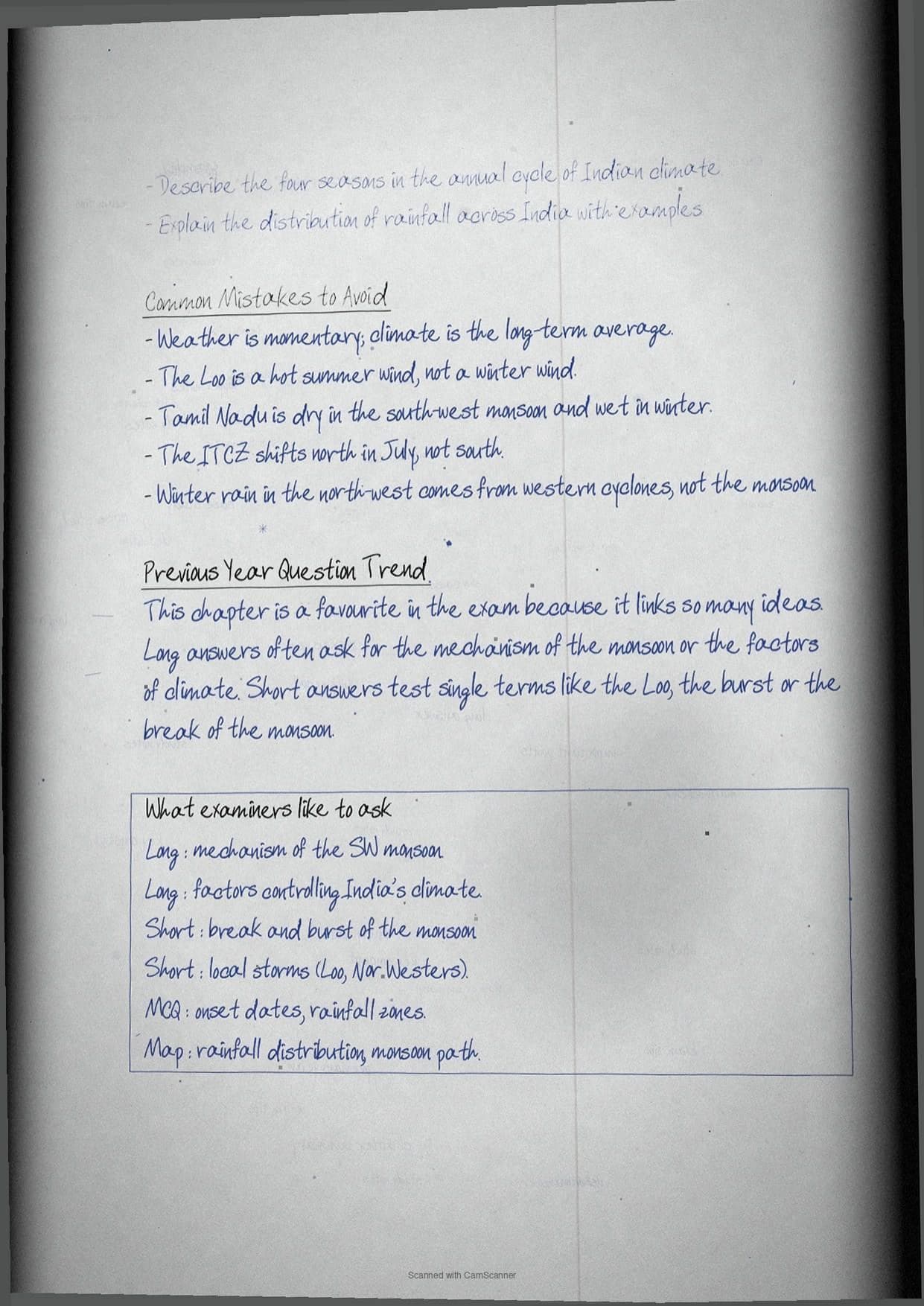
Climate Topic-wise Weightage for CBSE Class 11 Geography
Some parts of this chapter are asked more often than others. The table below shows which sub-topics to revise first, based on recent CBSE Class 11 question trends.
| Sub-topic | Weightage | CBSE Frequency |
|---|---|---|
| Mechanism and nature of the monsoon | High | very frequent |
| Factors controlling India's climate | High | frequent |
| Four seasons of the year | High | frequent |
| Distribution of rainfall | Medium | common |
| El-Nino and global warming | Low | occasional |
How Collegedunia's Handwritten Notes Help You Revise Climate
These notes are made for the night before the exam. They keep the facts short and easy to scan. Collegedunia maps every point to the 2026-27 NCERT.
- Clear handwriting: each topic is written in neat, easy-to-read handwriting.
- Boxed key terms: the main terms and definitions are boxed by hand for fast recall.
- Diagrams and tables: simple hand-drawn tables and charts make ideas clear.
- Colour-coded headings: new sub-topics stand out, so you find any section in seconds.
Climate Self-Assessment Quiz
Try these quick questions after you read the notes. Tap each question to check your answer. They cover the points CBSE asks most often.
What does the word 'monsoon' mainly refer to?
(a) heavy rain (b) seasonal reversal of winds (c) a cyclone (d) a dry wind
Answer: (b) seasonal reversal of winds correct - monsoon comes from a word for season and means wind reversal.
When does the south-west monsoon normally reach the Kerala coast?
(a) 1 May (b) 1 June (c) 15 July (d) 1 October
Answer: (b) 1 June correct - it then reaches Mumbai and Kolkata by 10 to 13 June.
The hot dry wind of the northern plains in summer is called the?
(a) Loo (b) Nor Wester (c) Mango shower (d) Kalbaisakhi
Answer: (a) Loo correct - it blows in the afternoon and is strongest between Delhi and Patna.
Why is the Tamil Nadu coast dry during the south-west monsoon?
(a) it is a desert (b) it lies parallel to the Bay branch and in a rain-shadow (c) too cold (d) no wind
Answer: (b) correct - it runs parallel to the Bay of Bengal branch and sits in the Arabian Sea branch rain-shadow.
In July the ITCZ over India shifts to about?
(a) the equator (b) 20-25 N over the Gangetic plain (c) 40 N (d) south of India
Answer: (b) 20-25 N correct - here it is called the monsoon trough and helps draw in the monsoon winds.
How to Use These Handwritten Notes for Class 11 Geography Revision
Use these class 11 geography handwritten notes in two passes. Read them slowly once for the full chapter. Then, near the exam, read only the boxes and key terms for a fast recall.
- Read the notes once with the NCERT chapter open beside you.
- Say each key term and idea in your own words.
- Practise one long-answer question from a past paper.
- On the last day, revise only the key terms and the boxes.
Class 11 Geography Handwritten Notes for All Chapters
The table below links the class 11 geography handwritten notes for every chapter. Use it to jump to any other chapter's notes.
Climate Class 11 Geography Handwritten Notes FAQs
Ques. Where can I download Climate Class 11 Geography Handwritten Notes PDF?
Ans. You can download the Climate Class 11 Geography Handwritten Notes PDF directly from this page. Both the Normal and HD versions are free.
Ques. Are these handwritten notes aligned with the 2026-27 NCERT?
Ans. Yes. These notes follow the current 2026-27 syllabus for Class 11 Geography. How the south-west monsoon forms and arrives
Ques. How many pages is the Class 11 Geography Climate Handwritten Notes PDF?
Ans. The notes run about 20 pages. They cover the full chapter with key terms, hand-drawn boxes, and a short self-assessment quiz.
Ques. What is the main idea of the 11th standard Geography chapter Climate?
Ans. In summer the land north of the Indian Ocean heats up and forms an intense low pressure, while the ITCZ shifts north as the monsoon trough. This low pulls the south-east trade winds across the equator, where the Coriolis force turns them south-westerly to arrive as the moisture-laden south-west monsoon.
Ques. Are these Climate notes enough for the CBSE Class 11 exam?
Ans. Yes, for revision. The Collegedunia handwritten notes cover every key point and exam term. Read them with the NCERT chapter and practise past questions.



Comments