




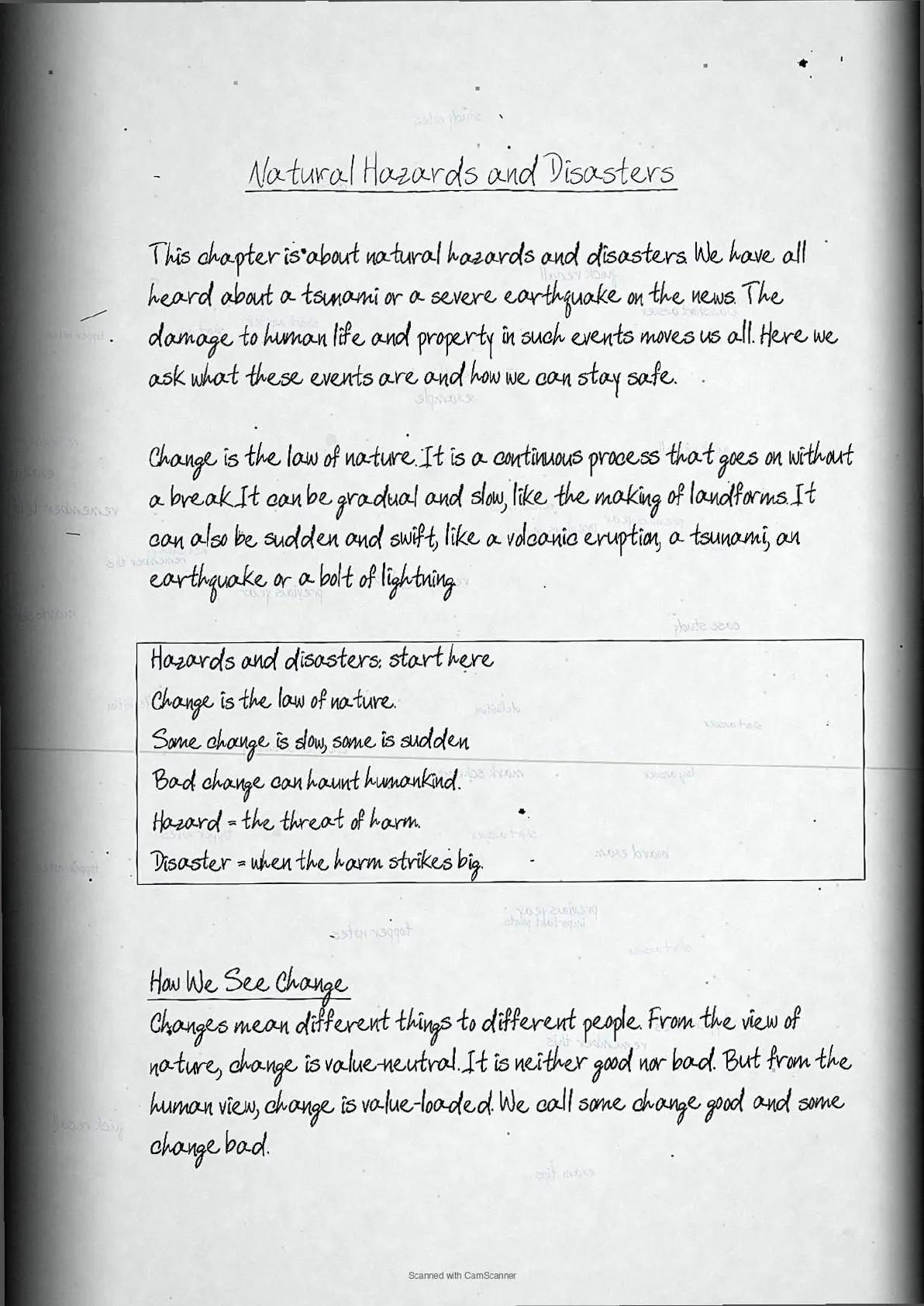
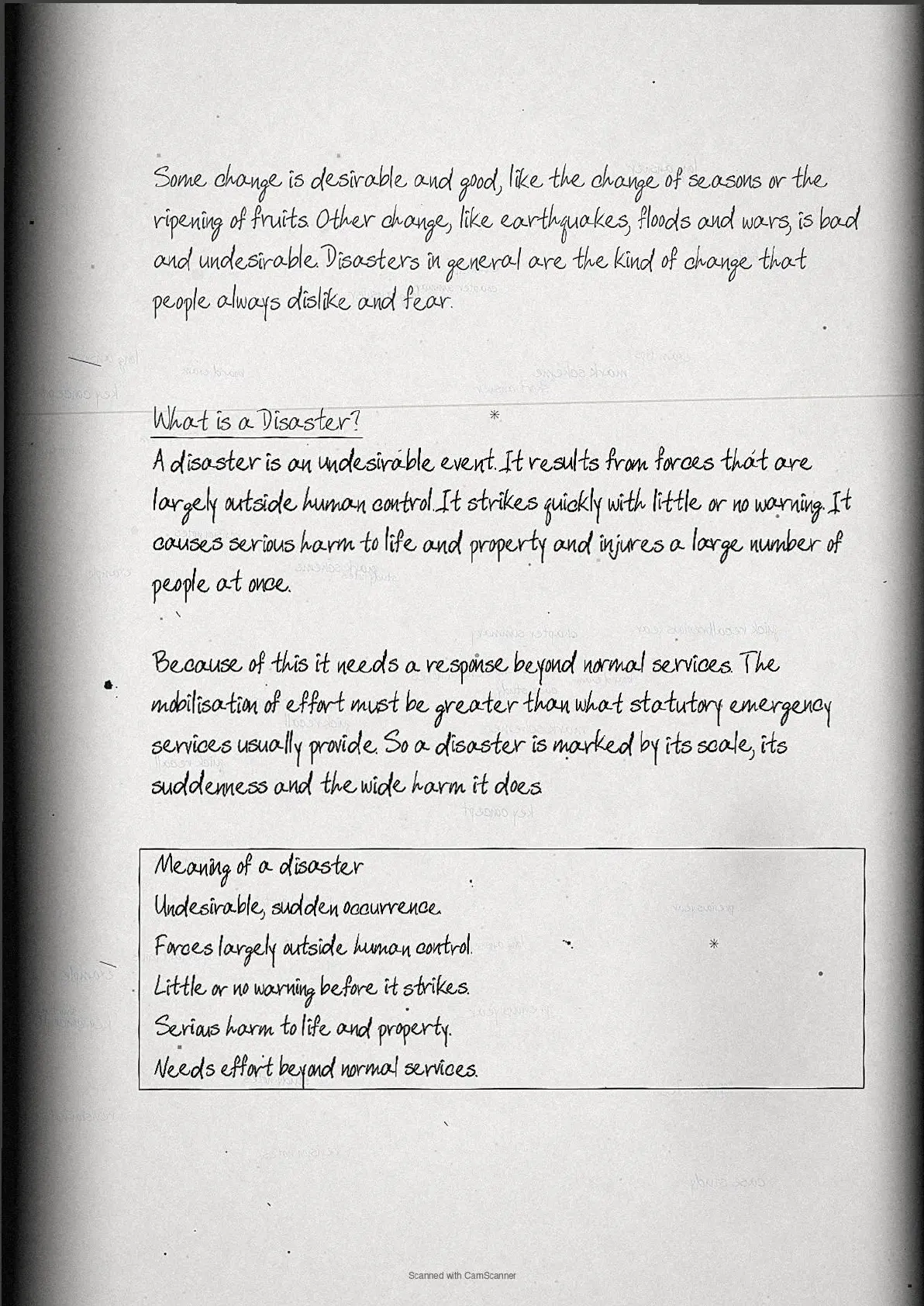
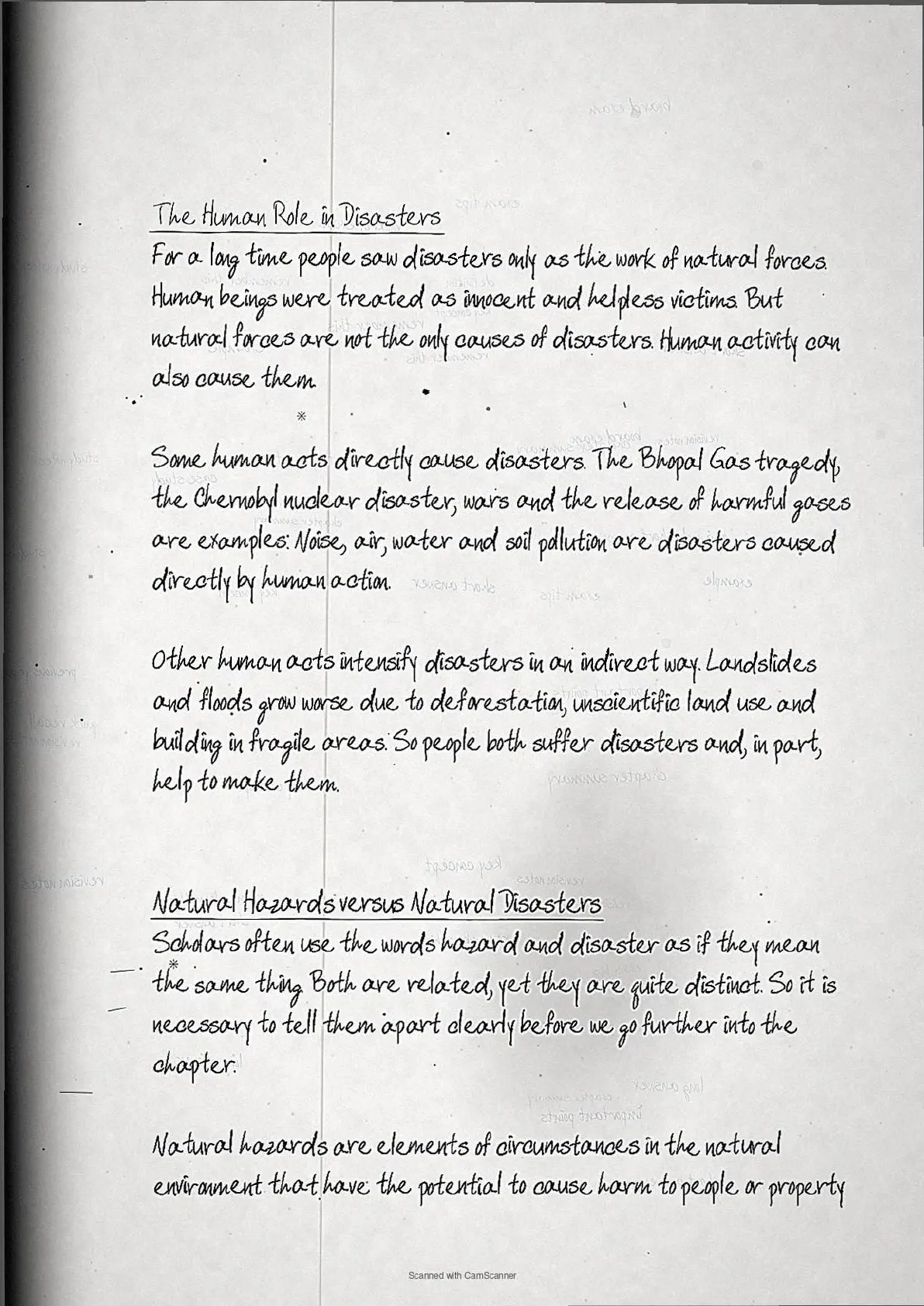
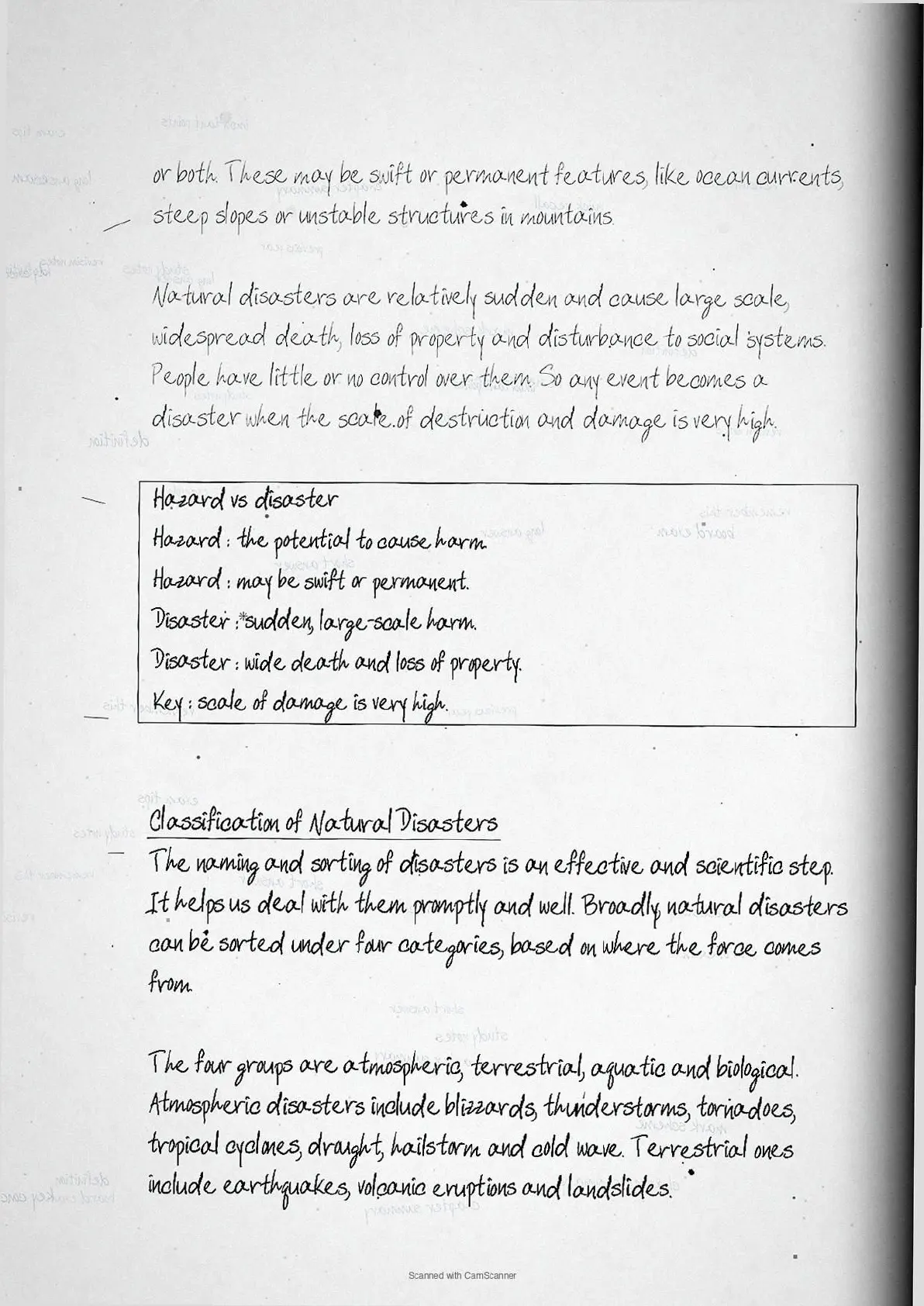
The 2026-27 NCERT keeps Class 11 Geography Chapter 20 Natural Hazards and Disasters in full for the CBSE course. These class 11 geography handwritten notes chapter 20 Natural Hazards and Disasters follow the 2026-27 NCERT and cover hazard versus disaster, classification of natural disasters, earthquakes and tsunamis in india. This page hosts the notes PDF, key terms, and.
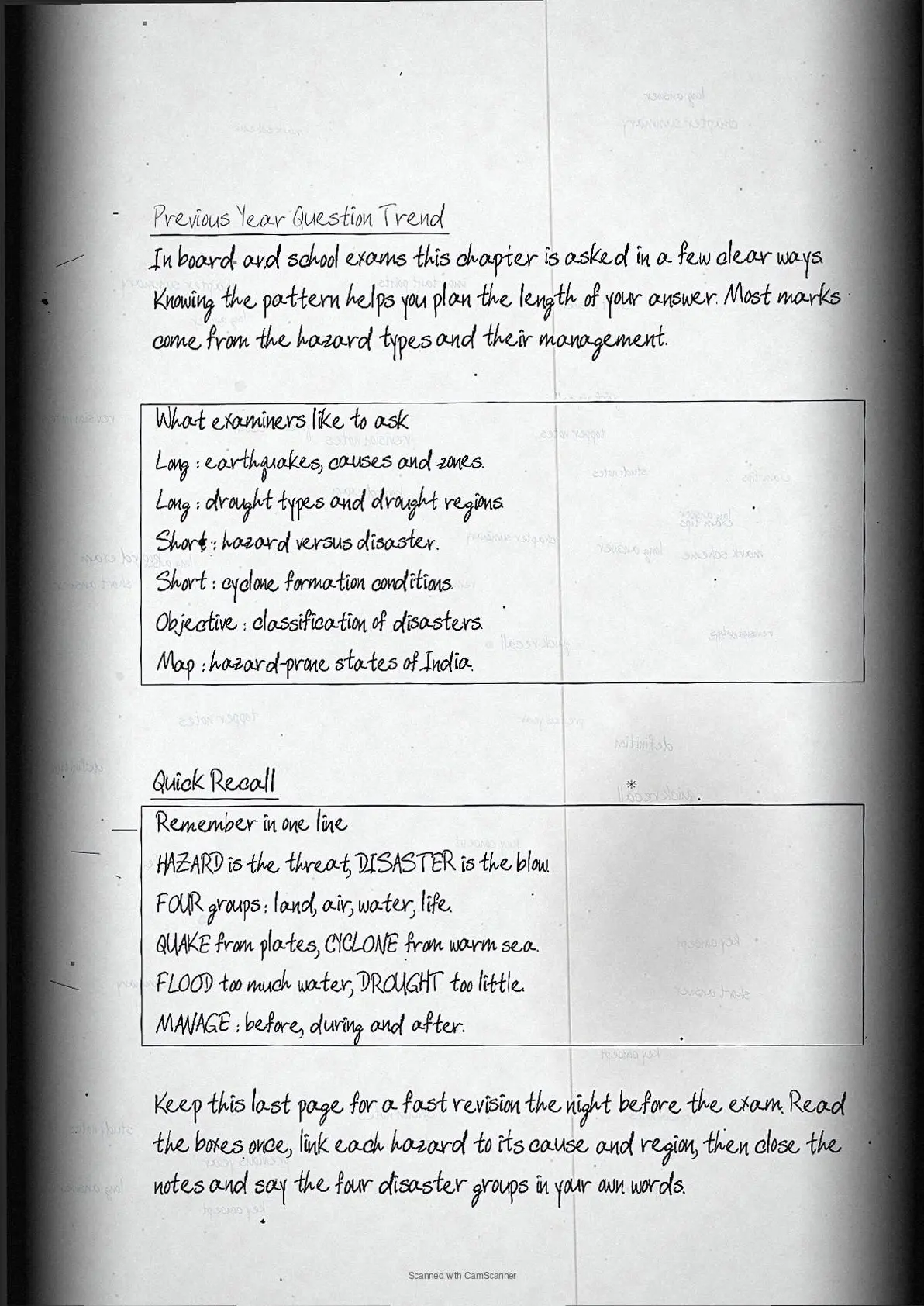
- CBSE Class 11 Weightage: a scoring chapter in the Geography paper, asked in short and long answers.
- What the notes cover: hazard versus disaster, classification of natural disasters, earthquakes and tsunamis in india, tropical cyclones and storm surges.
- Best for: quick revision before Class 11 exams and a base for CUET later.
You can read the complete class 11 geography handwritten notes for Natural Hazards and Disasters, with key terms, boxed definitions, and quick revision points, in the PDF below.
These handwritten notes are written by subject teachers, mapped to the 2026-27 NCERT, and checked against the last five years of CBSE Class 11 Geography papers.
Natural Hazards and Disasters Topic-wise Weightage for CBSE Class 11 Geography
Some parts of this chapter are asked more often than others. The table below shows which sub-topics to revise first, based on recent CBSE Class 11 question trends.
| Sub-topic | Weightage | CBSE Frequency |
|---|---|---|
| Earthquakes and zones | High | very frequent |
| Droughts and types | High | frequent |
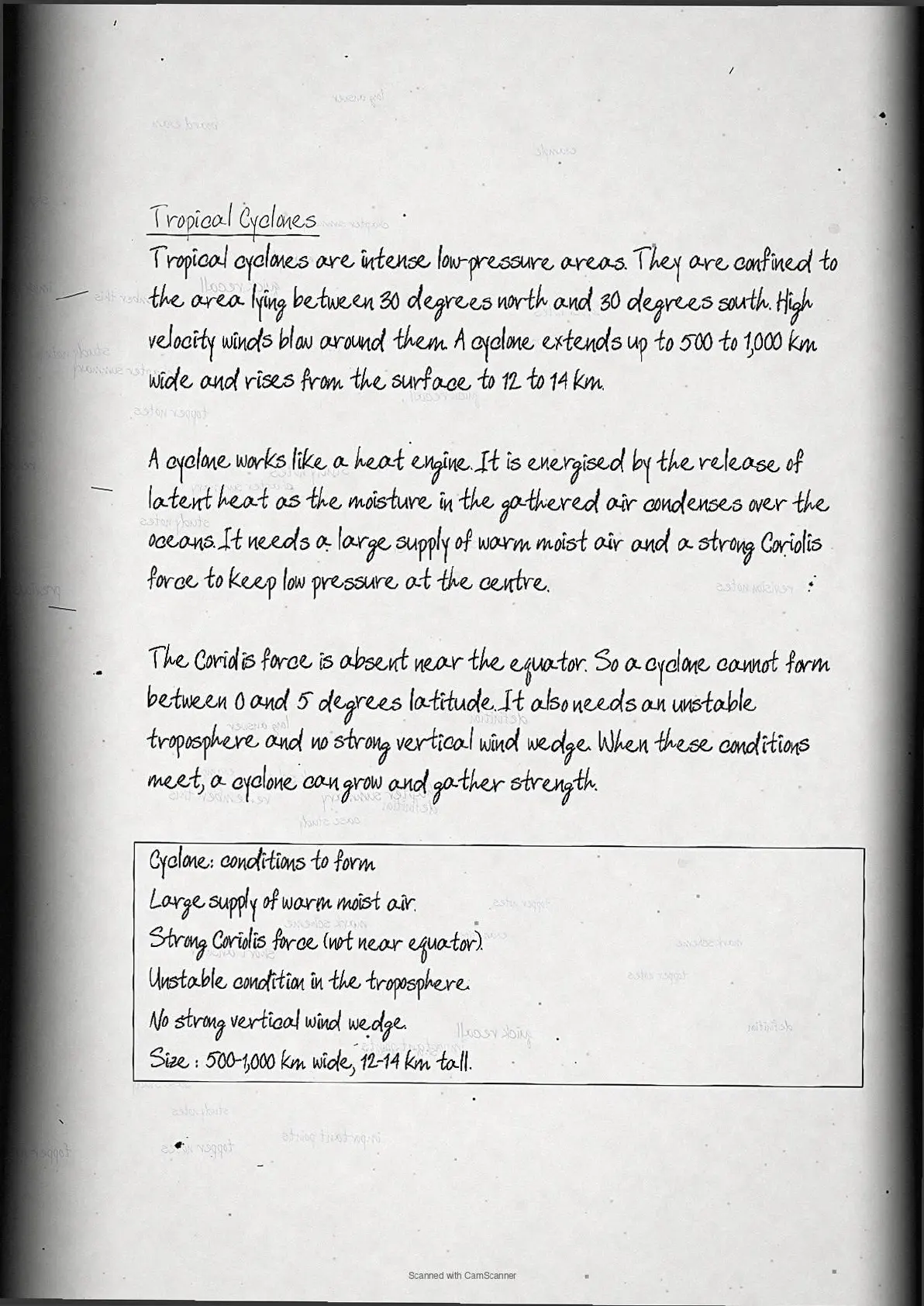
| Tropical cyclones | Medium | frequent |
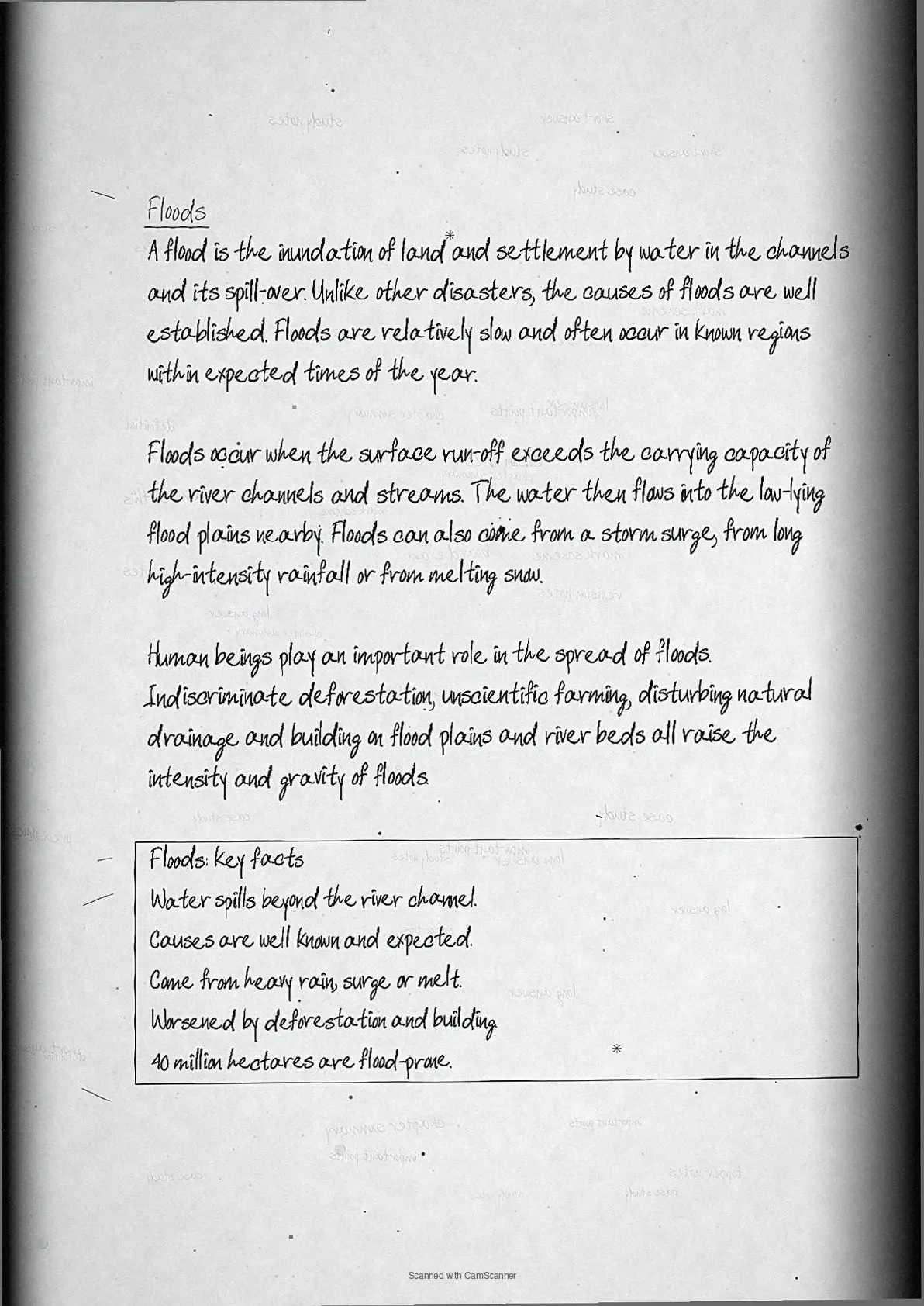
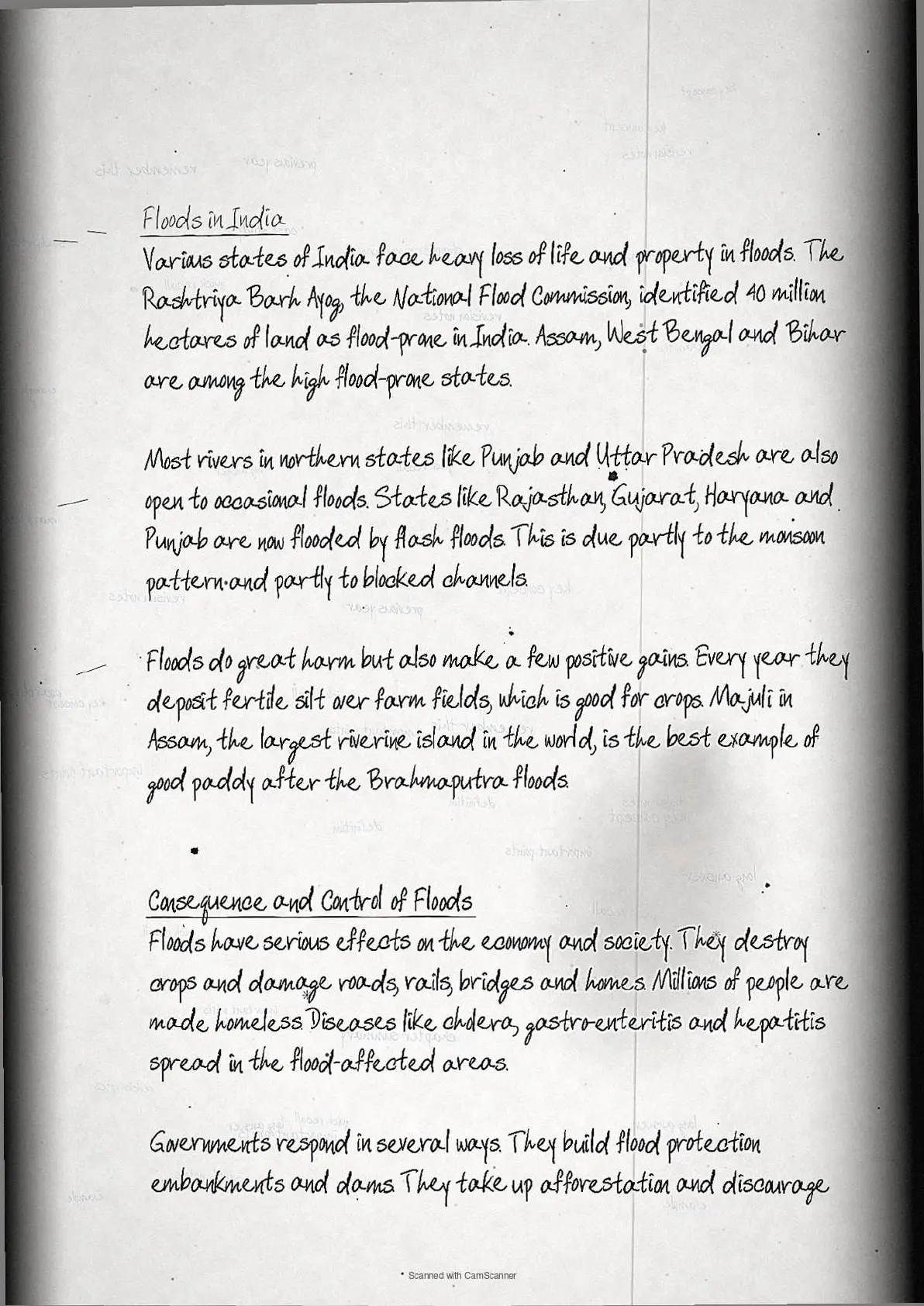
| Floods and control | Medium | frequent |
| Landslides and disaster management | Medium | occasional |
What the Natural Hazards and Disasters Handwritten Notes Cover
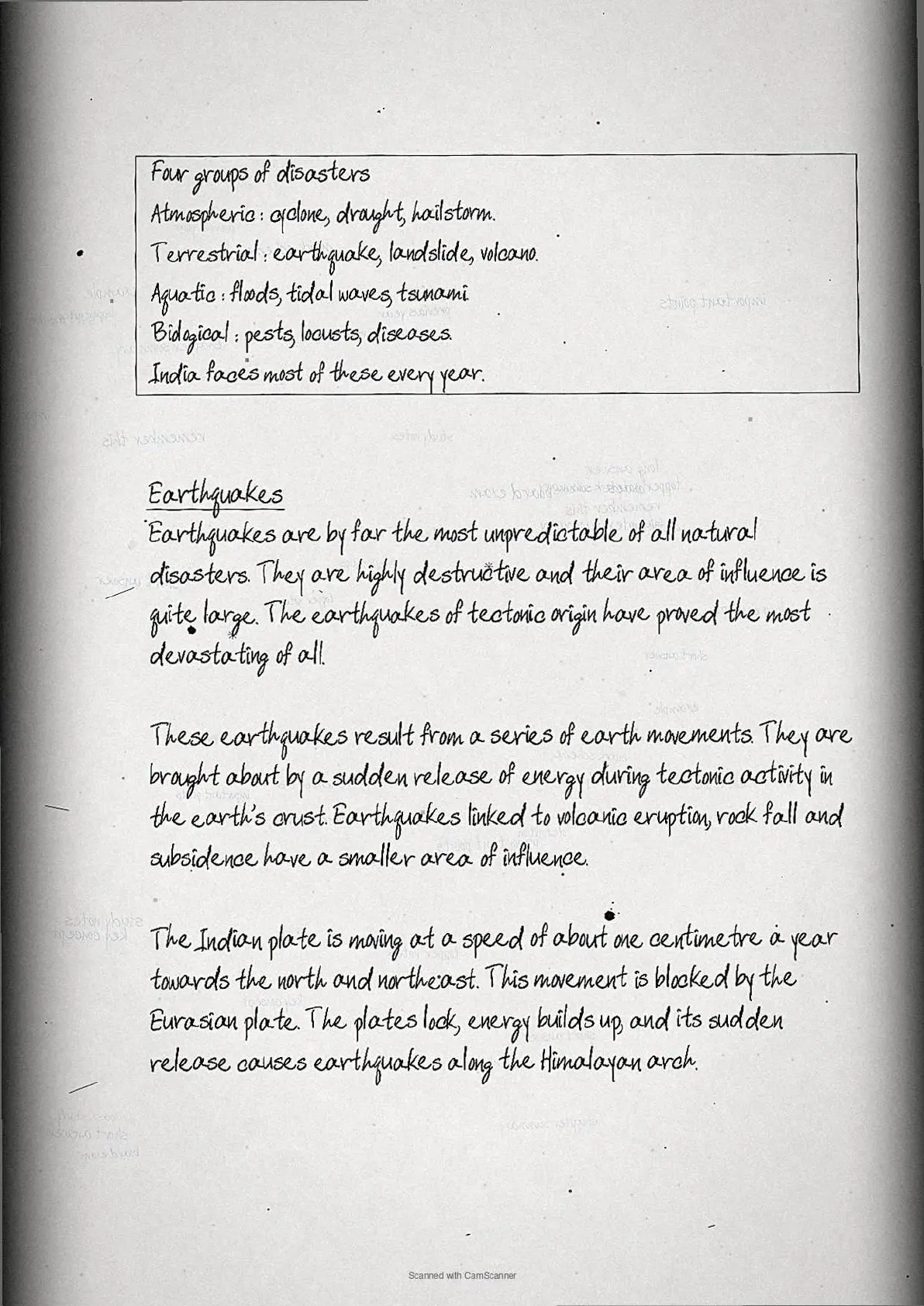
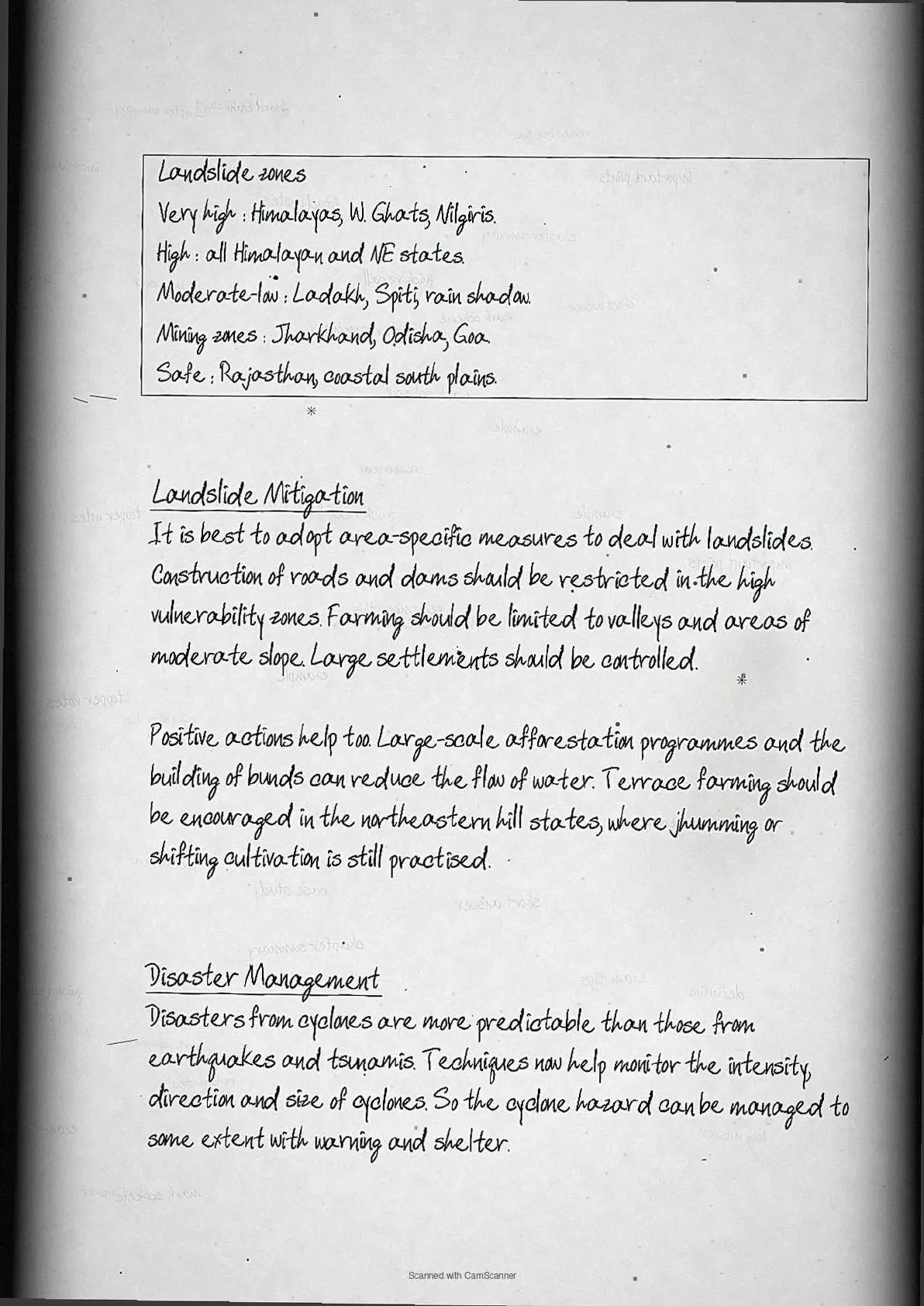
A hazard is the threat of harm from nature, while a disaster is the large-scale harm when it strikes. This chapter separates the two and sorts disasters into four groups. It then studies earthquakes, tsunamis, cyclones, floods, droughts and landslides in India, with their causes and management.
- Hazard versus disaster
- Classification of natural disasters
- Earthquakes and tsunamis in India
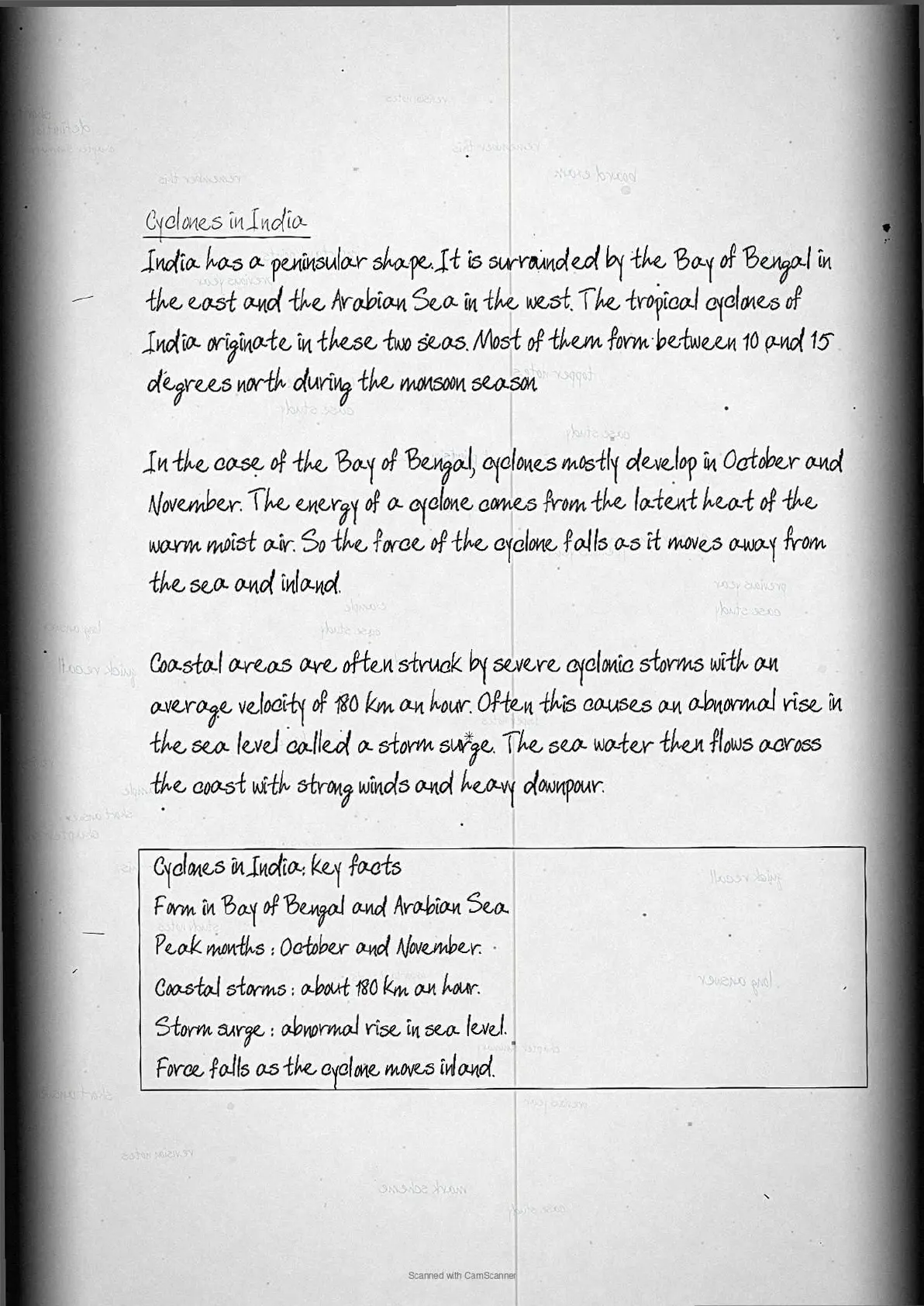
- Tropical cyclones and storm surges
- Floods and their control
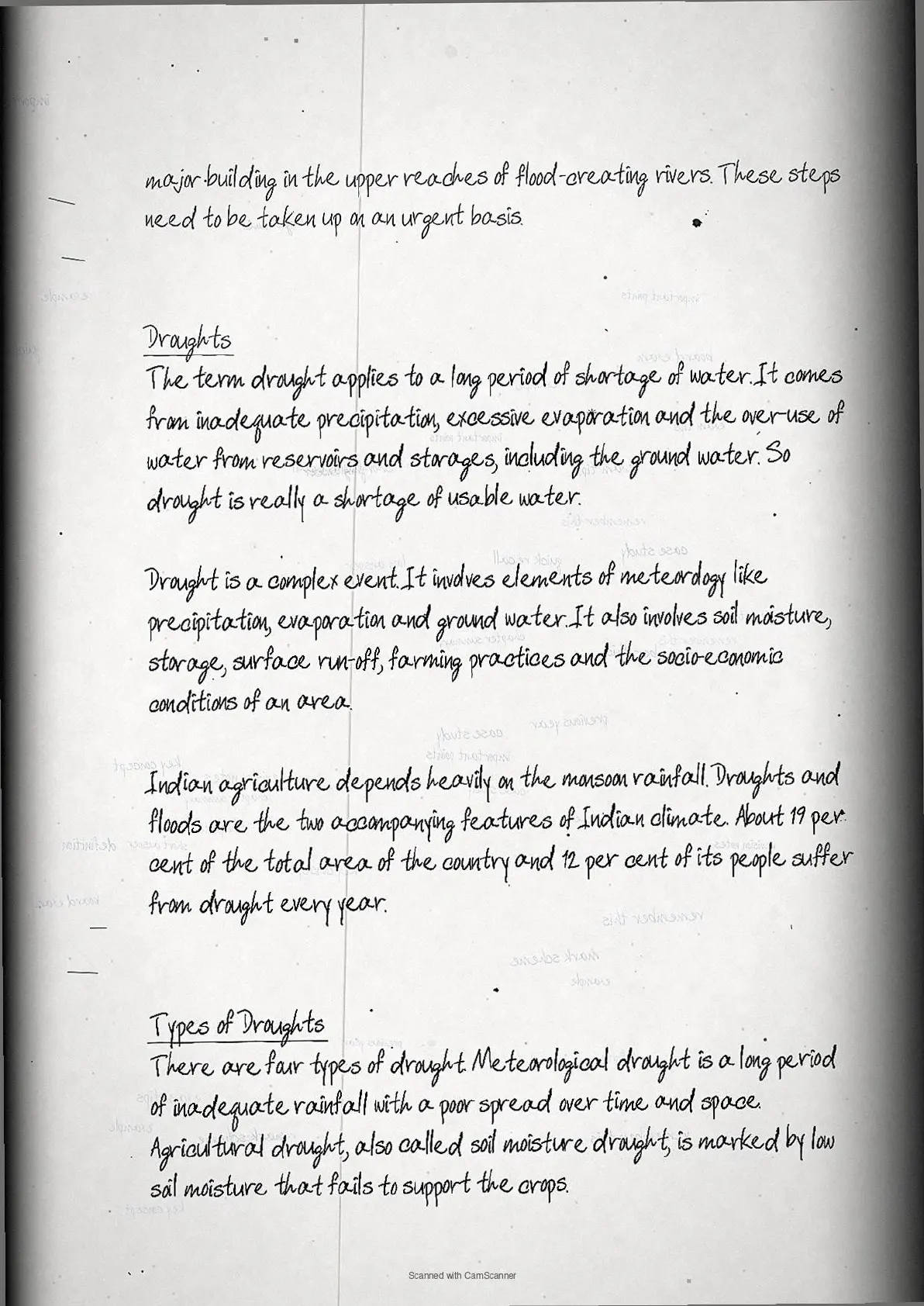
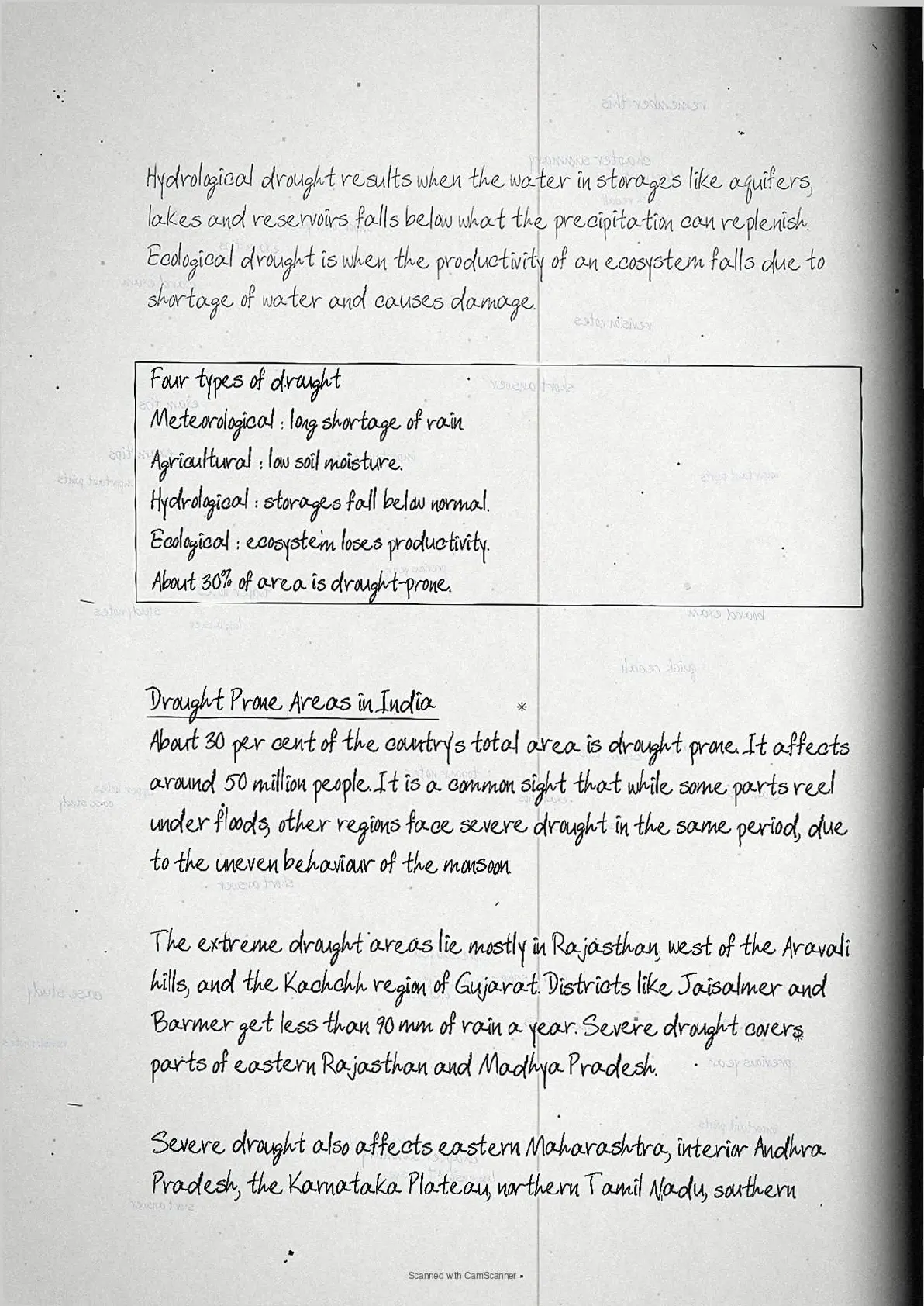
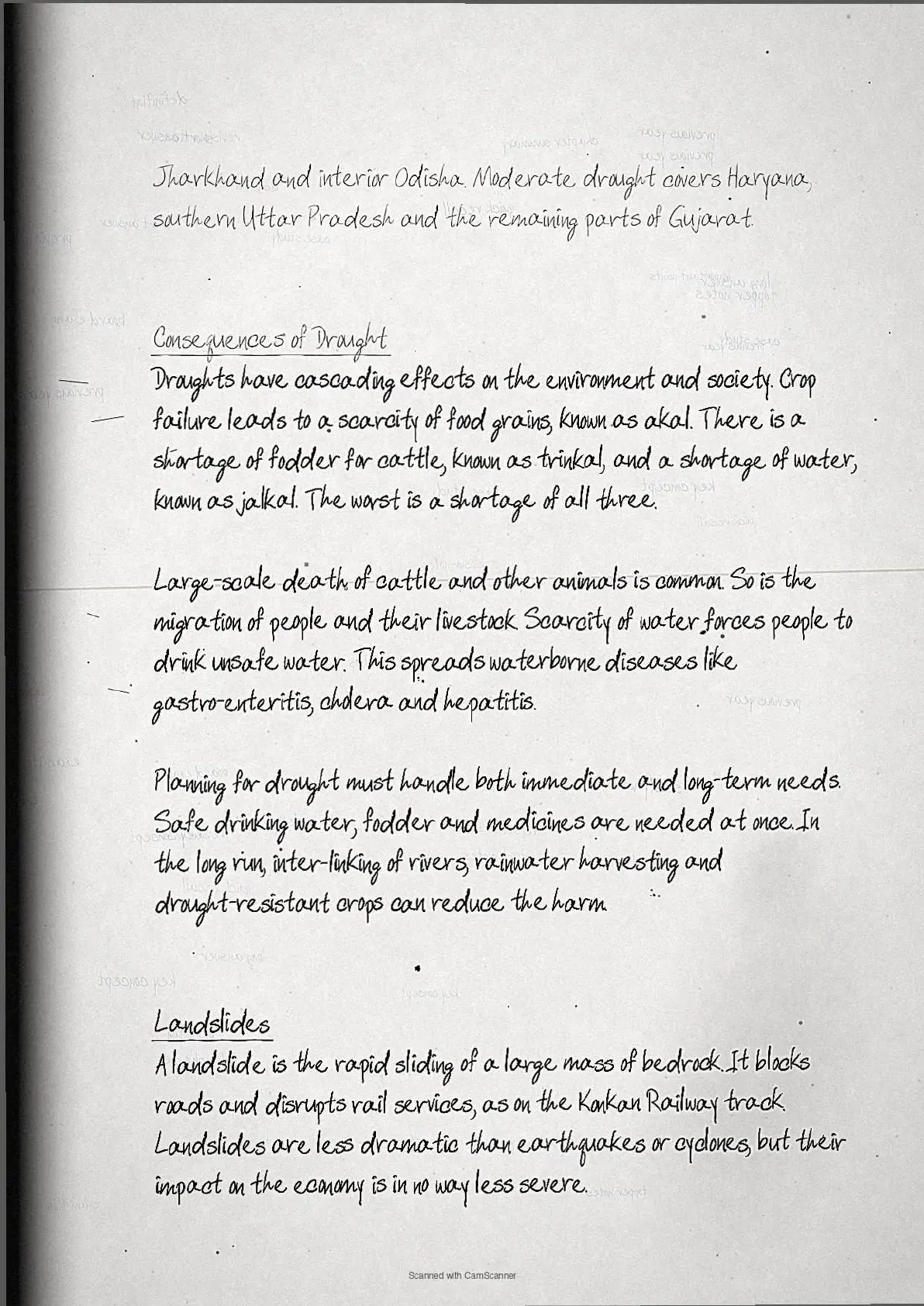
- Droughts and drought-prone areas
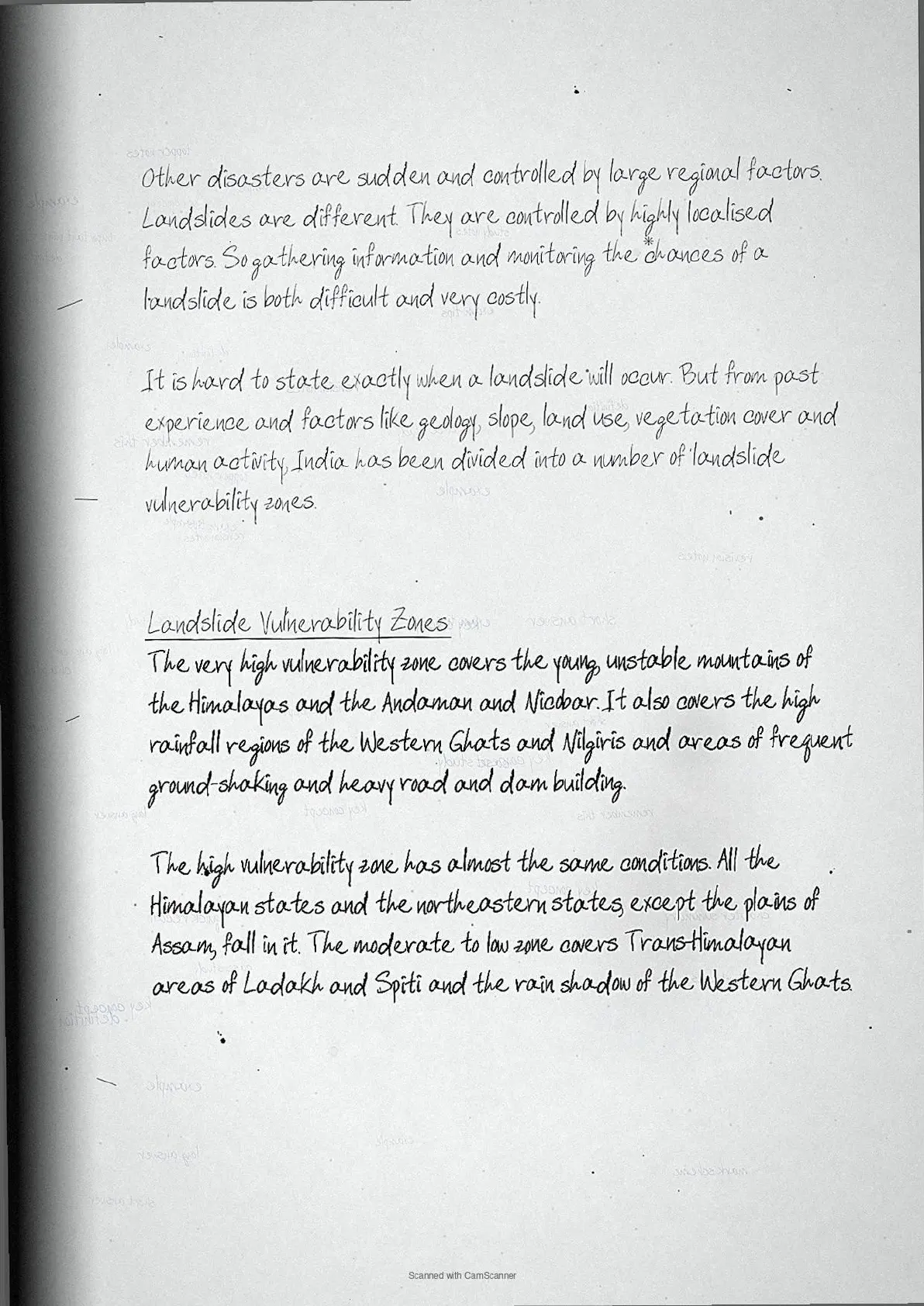
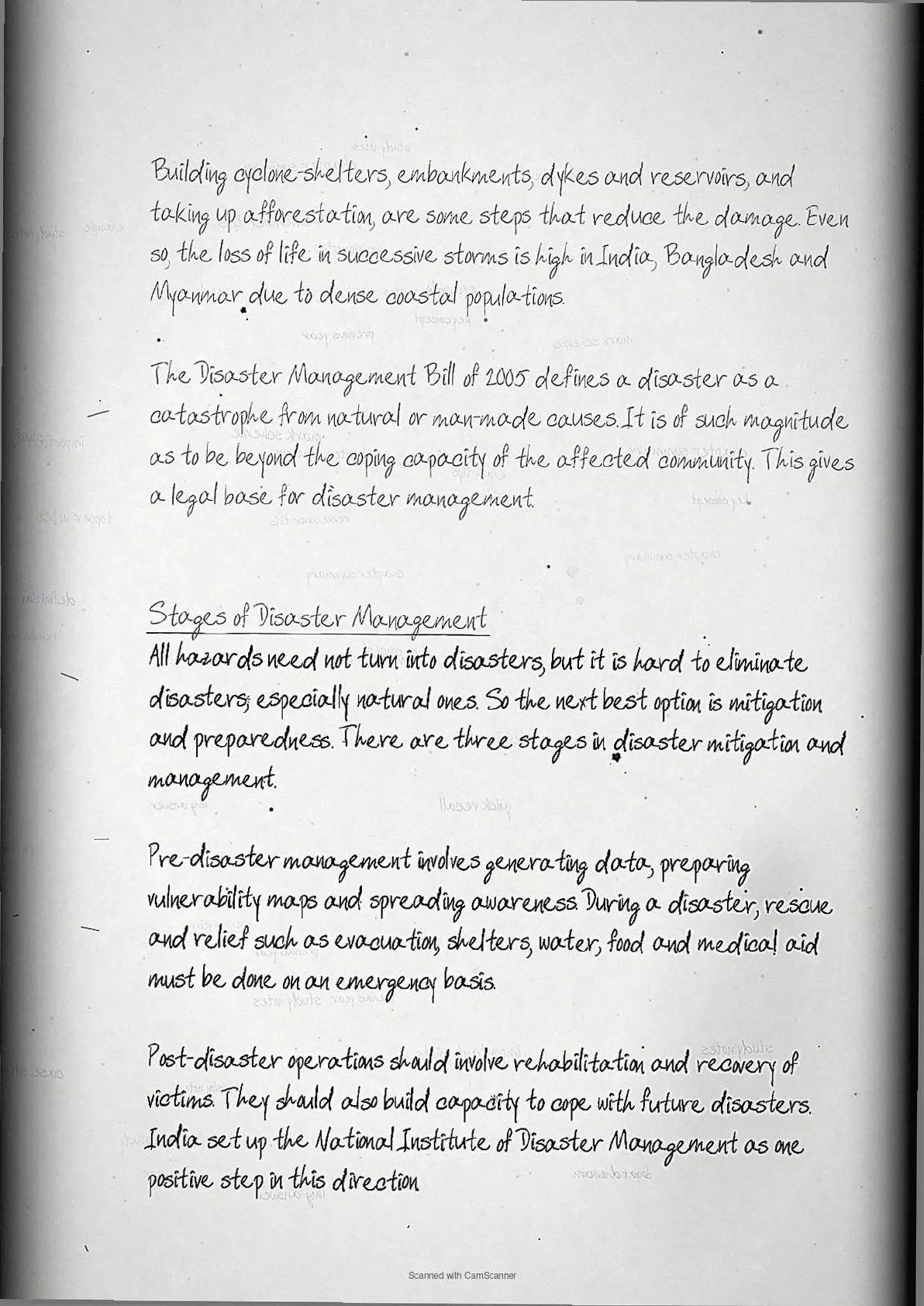
- Landslides and disaster management
Key Terms and Ideas in Natural Hazards and Disasters
These are the terms and ideas the exam asks about most. Learn each one so you can define it and use it in your answers.
| Term / Idea | What it means |
|---|---|
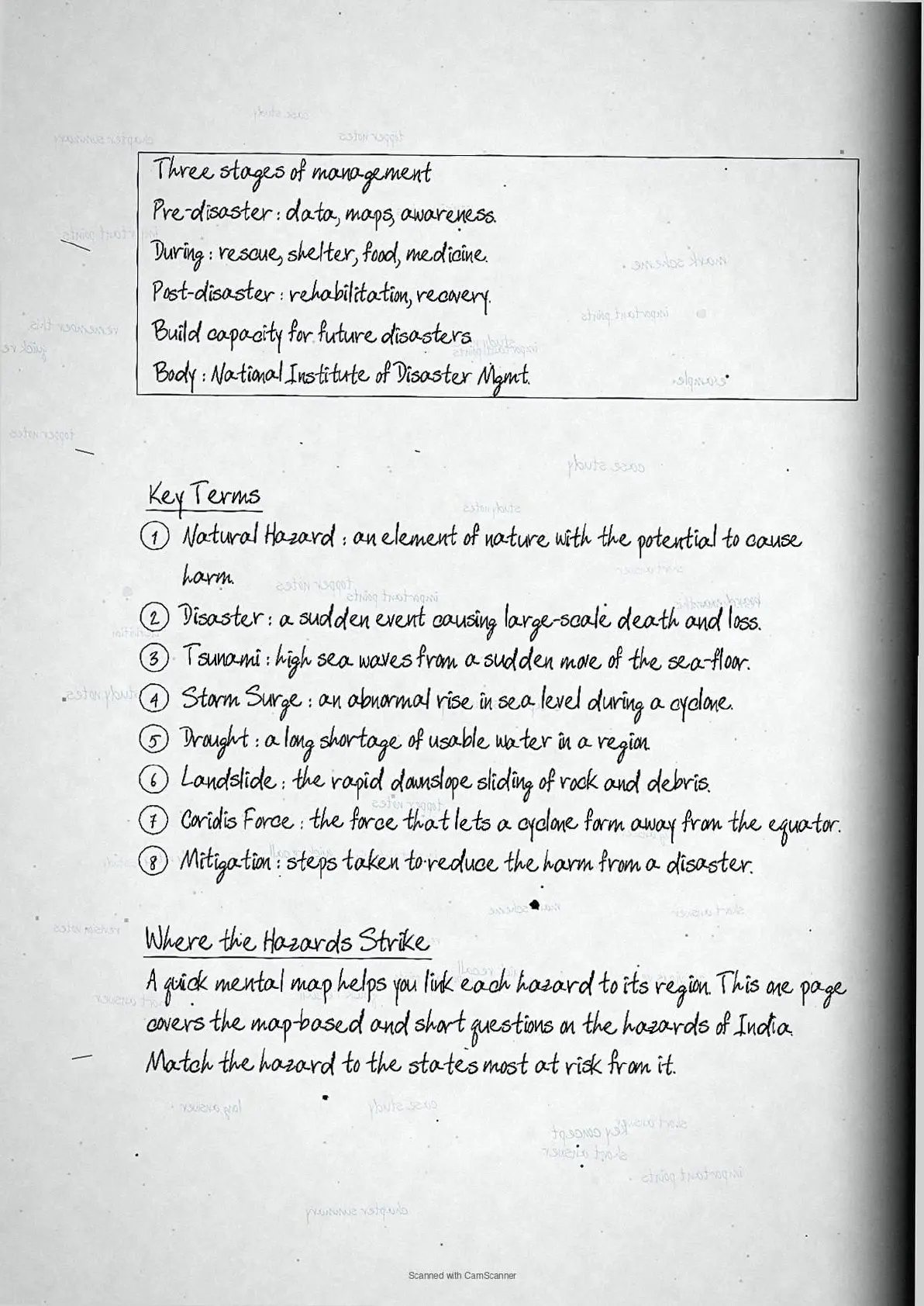
| Natural hazard | an element of nature with the potential to cause harm |
| Disaster | sudden, large-scale death and loss beyond human control |
| Four groups | atmospheric, terrestrial, aquatic and biological |
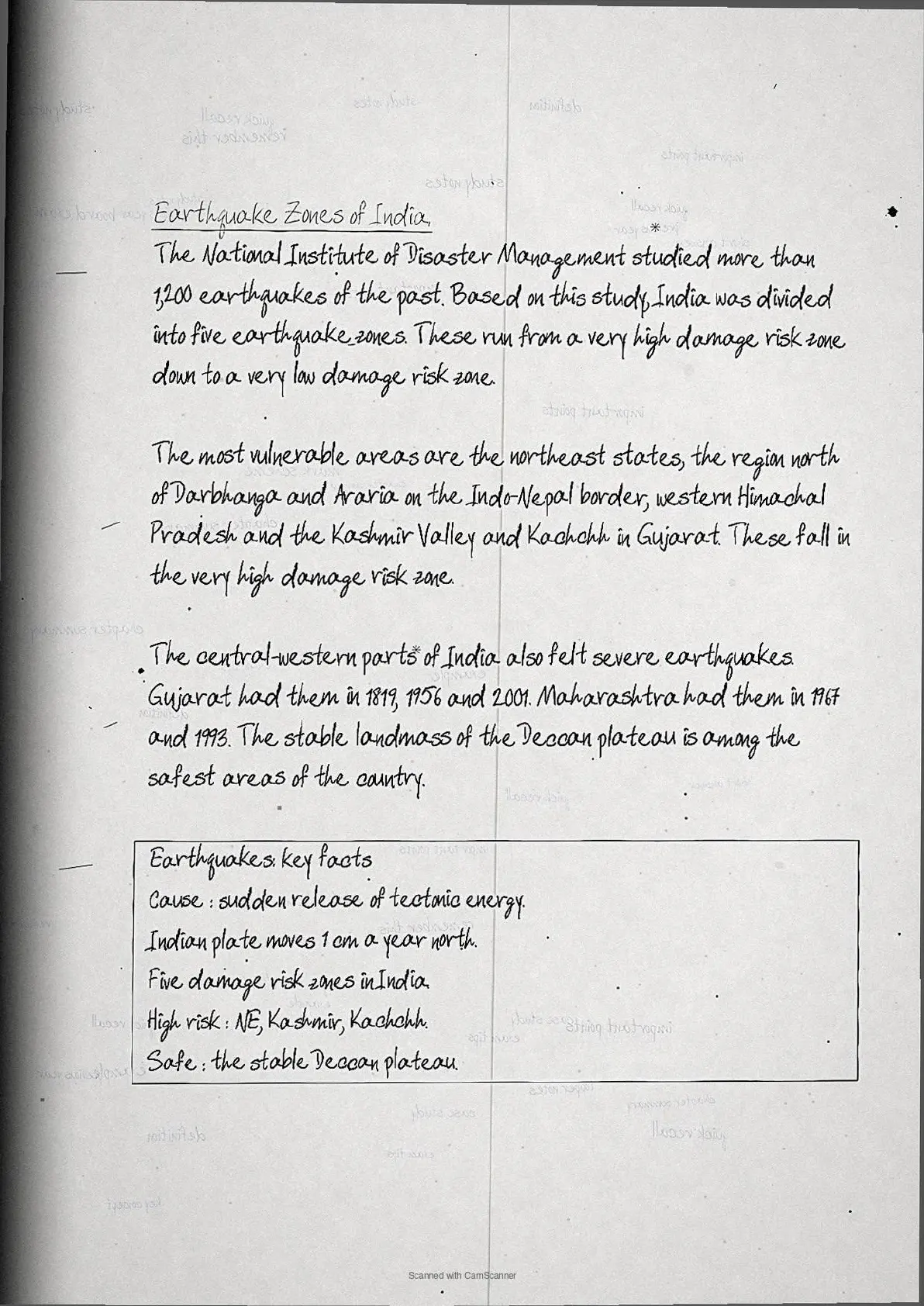
| Earthquake | sudden release of tectonic energy along plate boundaries |
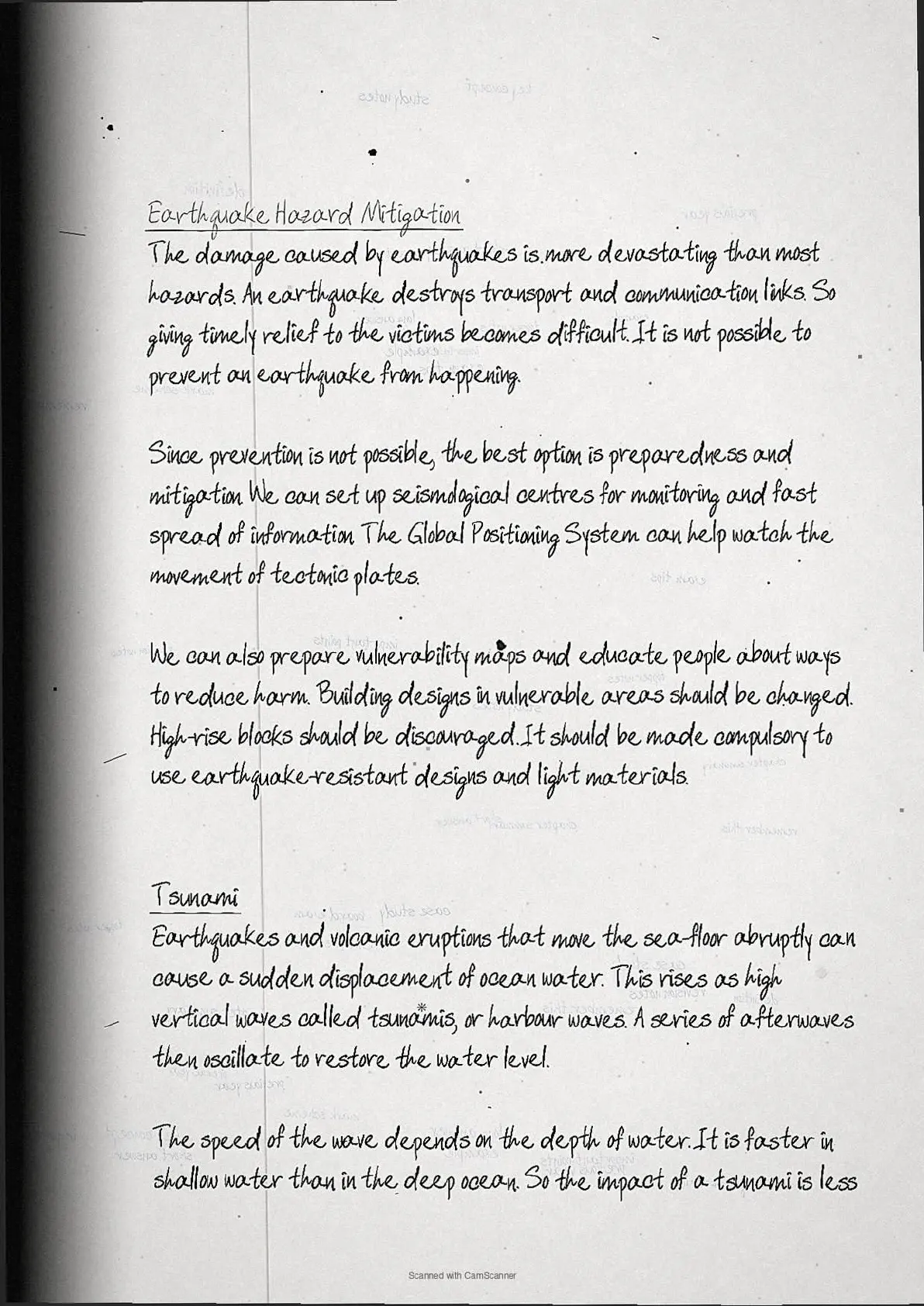
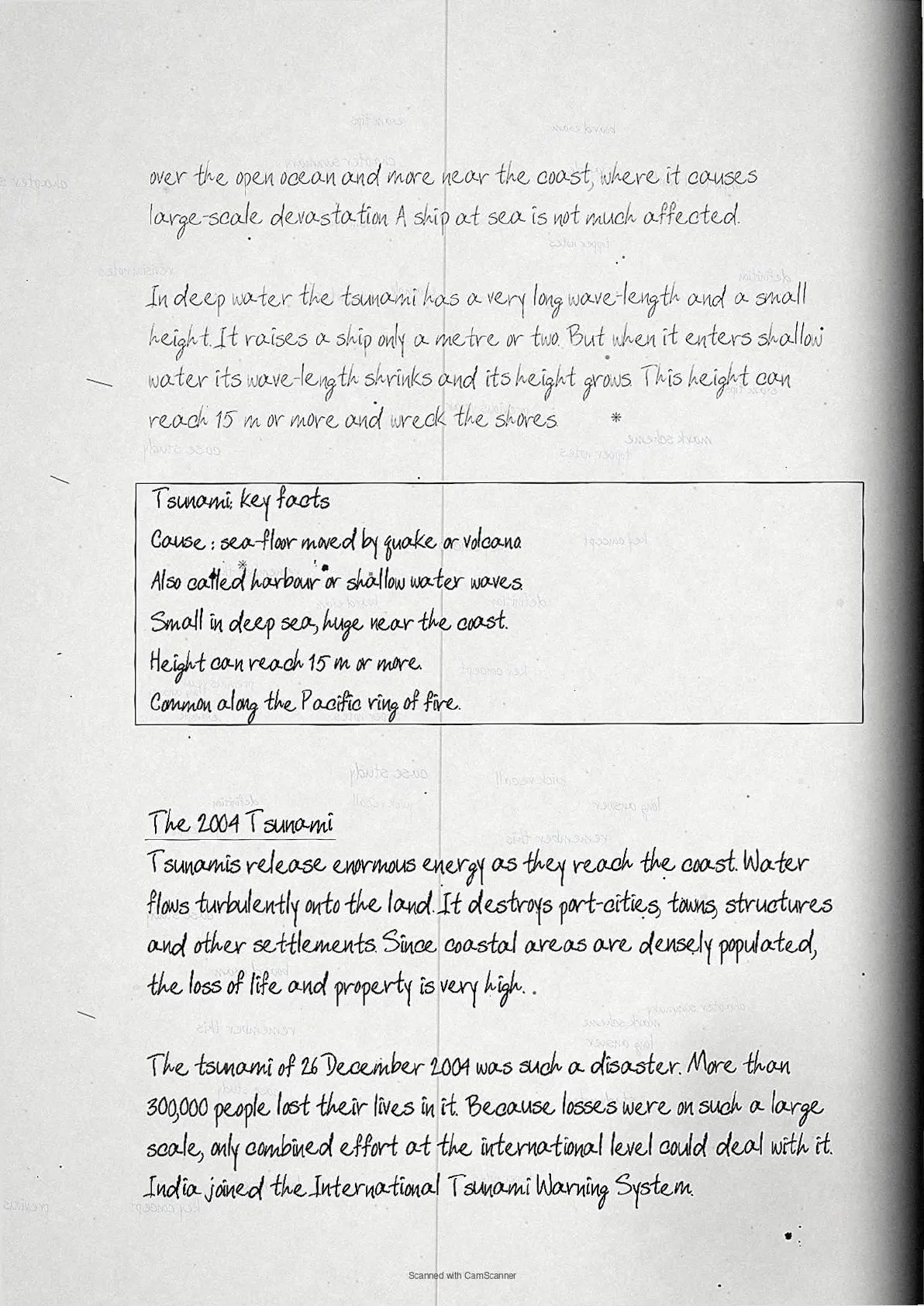
| Tsunami | high sea waves from a sudden move of the sea-floor |
| Cyclone | intense low-pressure storm energised by latent heat |
| Drought | long shortage of usable water; four types |
| Disaster management | three stages: before, during and after |
How Collegedunia's Handwritten Notes Help You Revise Natural Hazards and Disasters
These notes are made for the night before the exam. They keep the facts short and easy to scan. Collegedunia maps every point to the 2026-27 NCERT.
- Clear handwriting: each topic is written in neat, easy-to-read handwriting.
- Boxed key terms: the main terms and definitions are boxed by hand for fast recall.
- Diagrams and tables: simple hand-drawn tables and charts make ideas clear.
- Colour-coded headings: new sub-topics stand out, so you find any section in seconds.
Natural Hazards and Disasters Self-Assessment Quiz
Try these quick questions after you read the notes. Tap each question to check your answer. They cover the points CBSE asks most often.
Which state experiences floods most frequently?
(a) Bihar (b) West Bengal (c) Assam (d) Uttar Pradesh
Answer: (c) Assam - it is among the highest flood-prone states, hit by the Brahmaputra.
Under which group do blizzards come?
(a) Atmospheric (b) Aquatic (c) Terrestrial (d) Biological
Answer: (a) Atmospheric - blizzards, cyclones and drought are atmospheric disasters.
Cyclones cannot form near the equator because of weak
(a) rainfall (b) Coriolis force (c) latent heat (d) pressure
Answer: (b) Coriolis force - it is absent near 0-5 degrees, so no cyclone forms there.
The Majuli river island is situated in the
(a) Ganga (b) Brahmaputra (c) Godavari (d) Indus
Answer: (b) Brahmaputra - Majuli is the largest riverine island in the world.
Which zone is safest from earthquakes?
(a) Northeast (b) Kachchh (c) Deccan plateau (d) Kashmir Valley
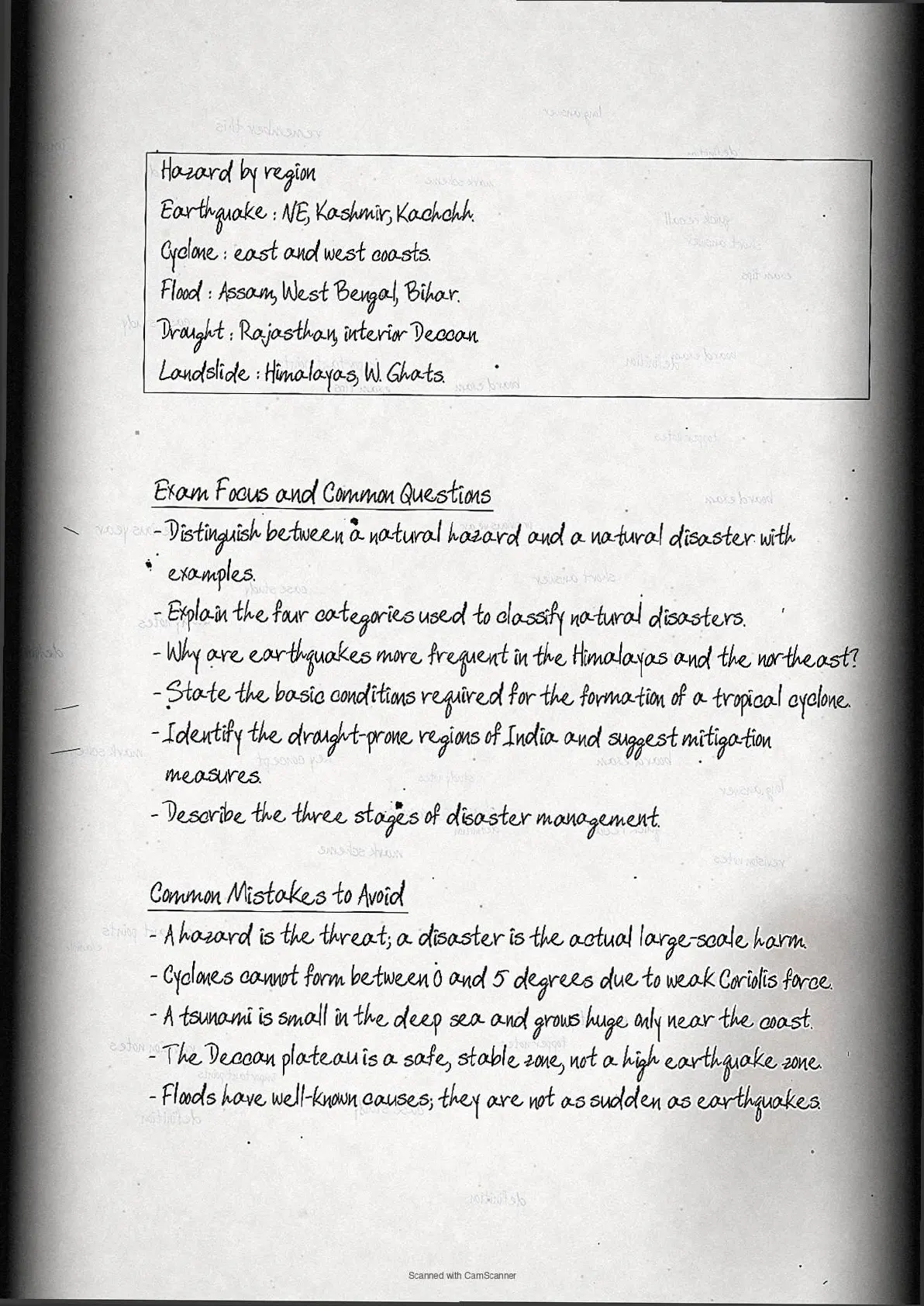
Answer: (c) Deccan plateau - it is a stable, mature landmass with low risk.
How to Use These Handwritten Notes for Class 11 Geography Revision
Use these class 11 geography handwritten notes in two passes. Read them slowly once for the full chapter. Then, near the exam, read only the boxes and key terms for a fast recall.
- Read the notes once with the NCERT chapter open beside you.
- Say each key term and idea in your own words.
- Practise one long-answer question from a past paper.
- On the last day, revise only the key terms and the boxes.
Class 11 Geography Handwritten Notes for All Chapters
The table below links the class 11 geography handwritten notes for every chapter. Use it to jump to any other chapter's notes.
Natural Hazards and Disasters Class 11 Geography Handwritten Notes FAQs
Ques. Where can I download Natural Hazards and Disasters Class 11 Geography Handwritten Notes PDF?
Ans. You can download the Natural Hazards and Disasters Class 11 Geography Handwritten Notes PDF directly from this page. Both the Normal and HD versions are free.
Ques. Are these handwritten notes aligned with the 2026-27 NCERT?
Ans. Yes. These notes follow the current 2026-27 syllabus for Class 11 Geography. When can a hazard become a disaster?
Ques. How many pages is the Class 11 Geography Natural Hazards and Disasters Handwritten Notes PDF?
Ans. The notes run about 20 pages. They cover the full chapter with key terms, hand-drawn boxes, and a short self-assessment quiz.
Ques. What is the main idea of the 11th standard Geography chapter Natural Hazards and Disasters?
Ans. A hazard becomes a disaster when it strikes an area of high population and causes damage on a large scale. The loss of life and property must be so great that it goes beyond the coping capacity of the affected community.
Ques. Are these Natural Hazards and Disasters notes enough for the CBSE Class 11 exam?
Ans. Yes, for revision. The Collegedunia handwritten notes cover every key point and exam term. Read them with the NCERT chapter and practise past questions.



Comments