




The Private, Public and Global Enterprises Class 11 notes explain how NCERT compares private sector, public sector, global enterprises, joint ventures and PPP projects. These notes follow the 2026-27 NCERT syllabus and help students revise ownership, control, public accountability, 1991 reforms and global business links before opening the full PDF.
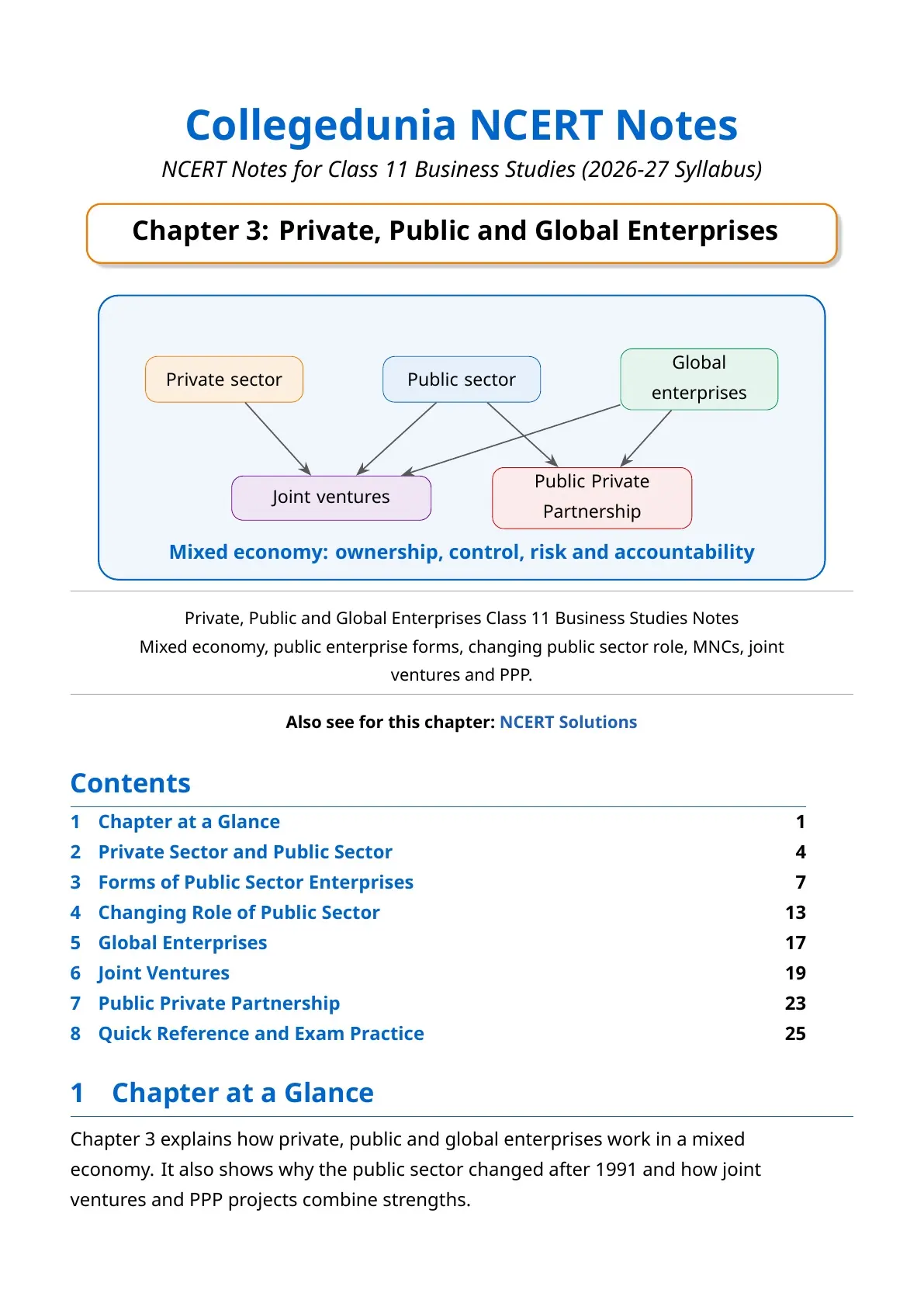
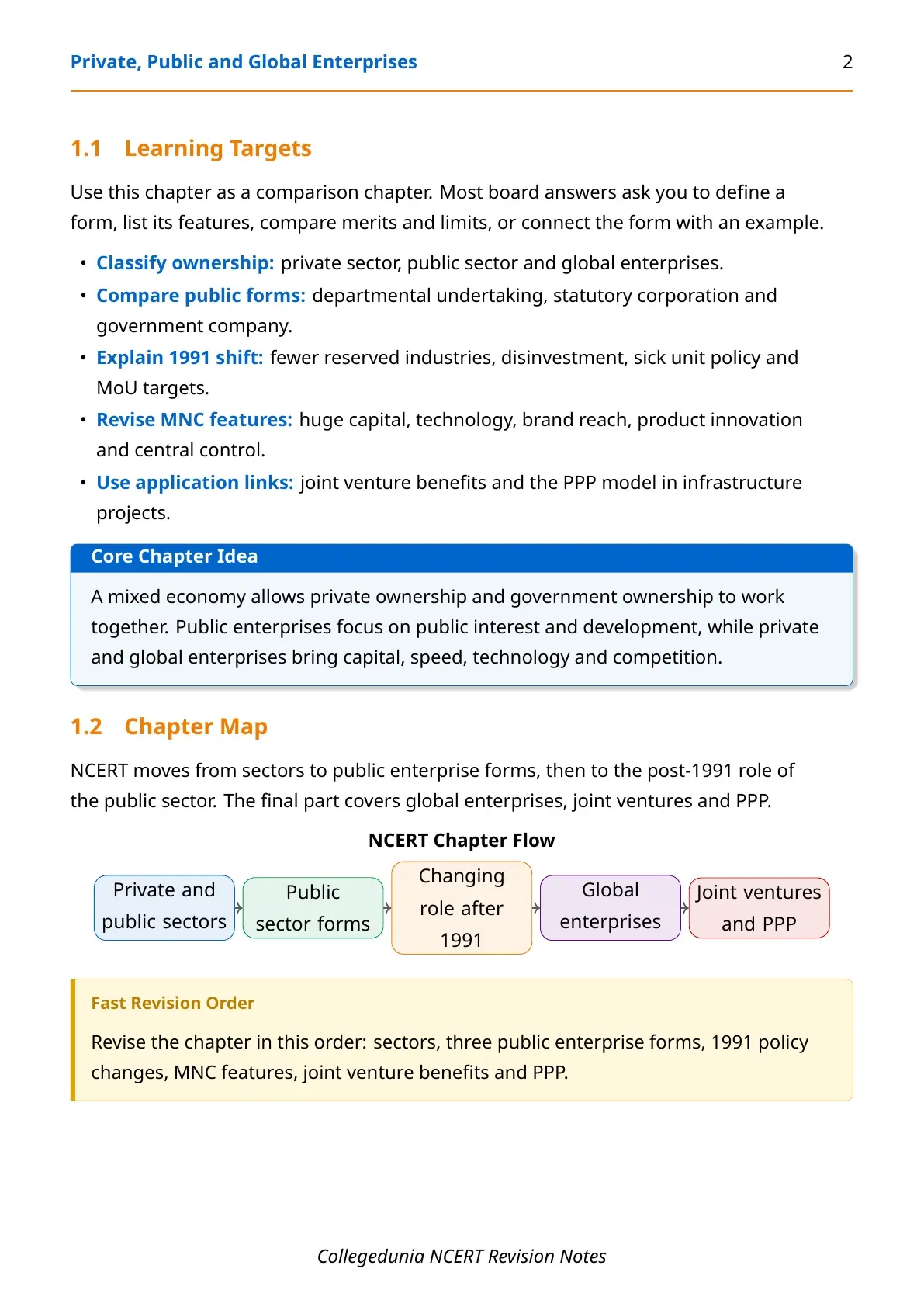
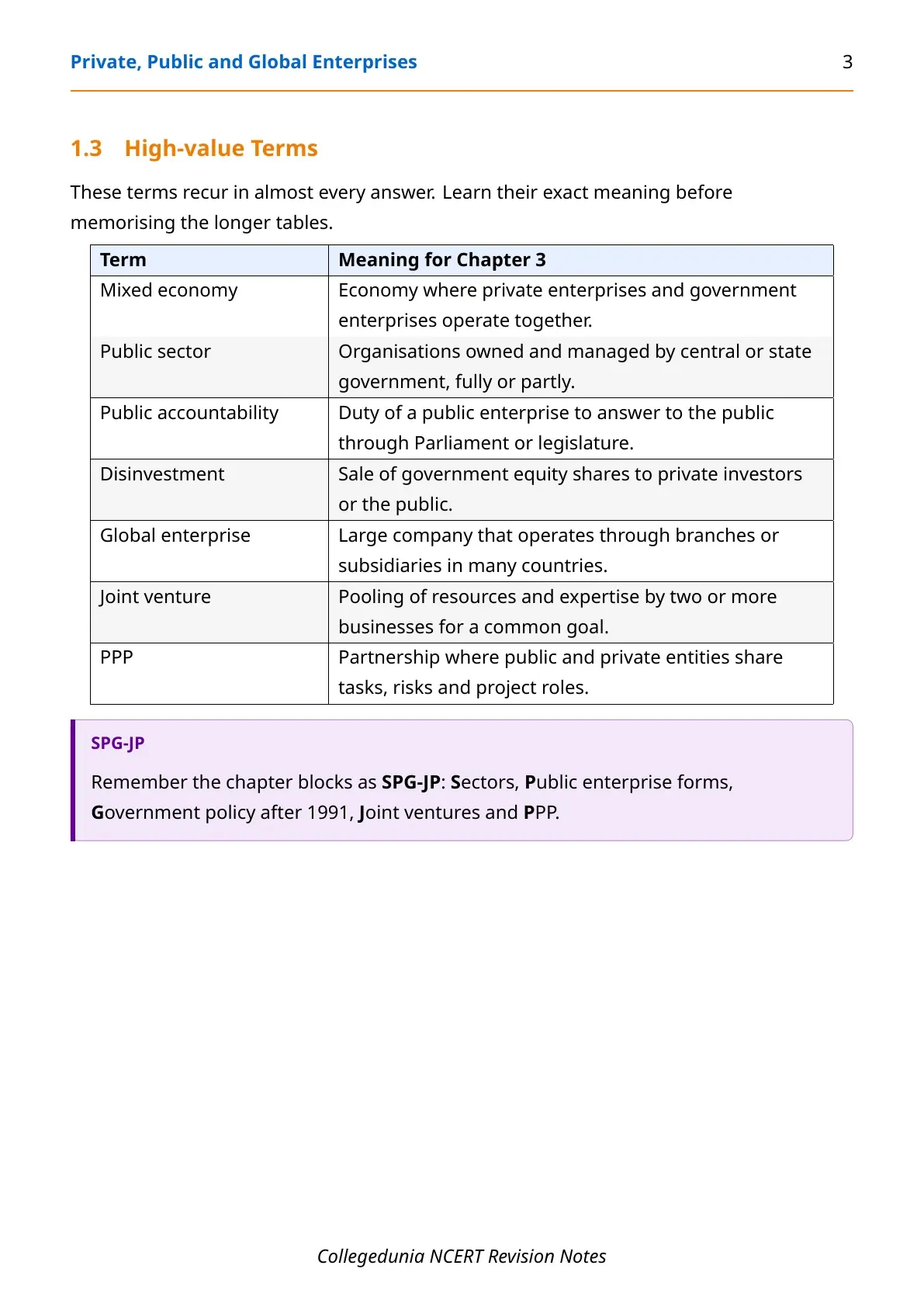
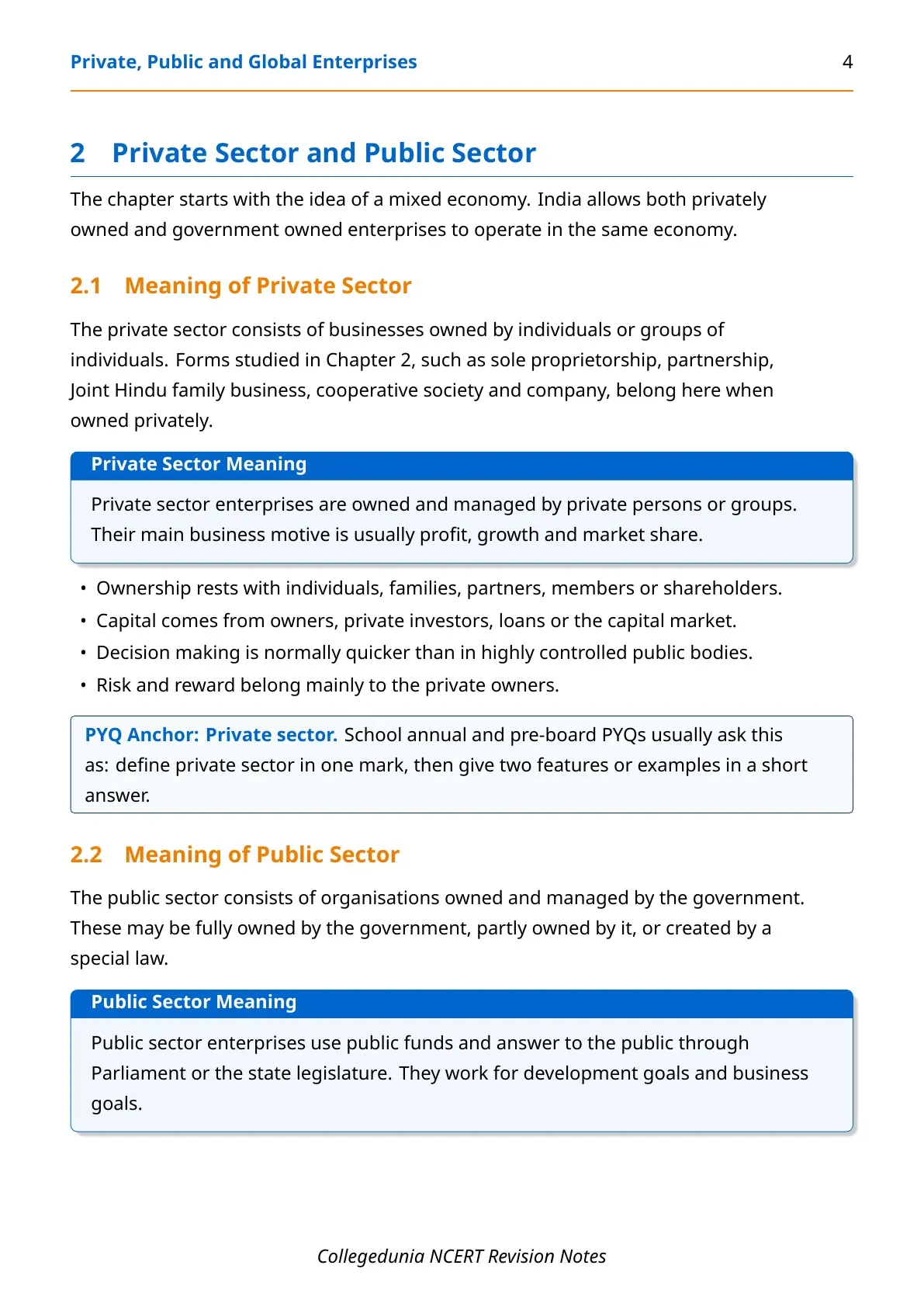

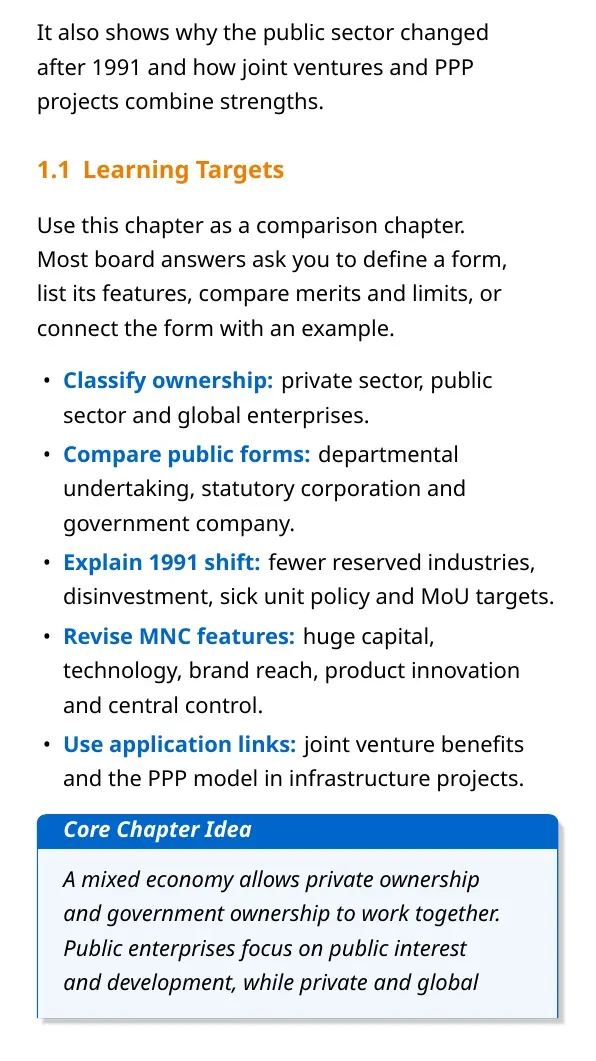
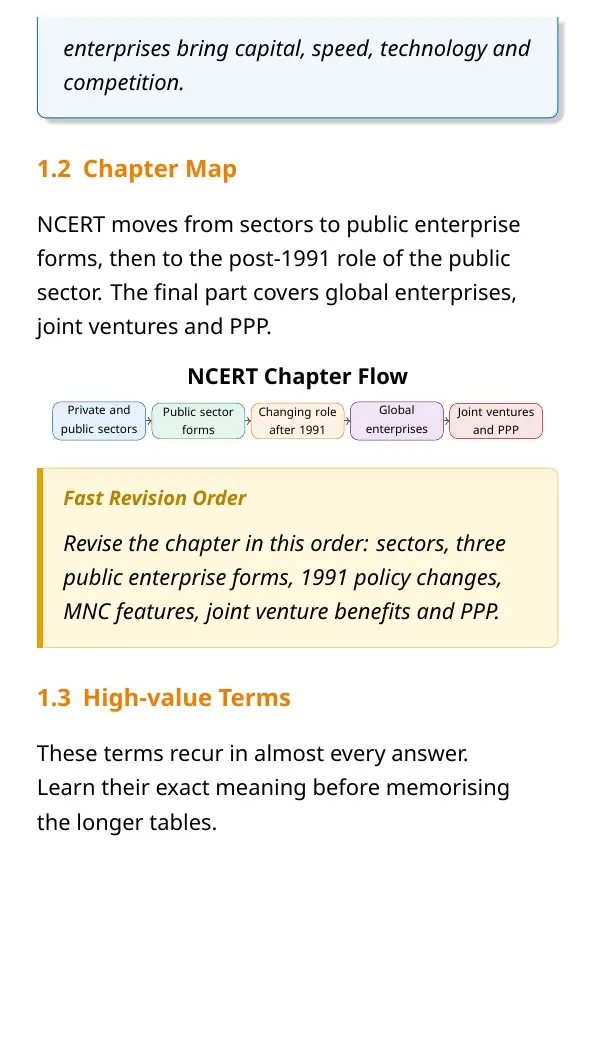
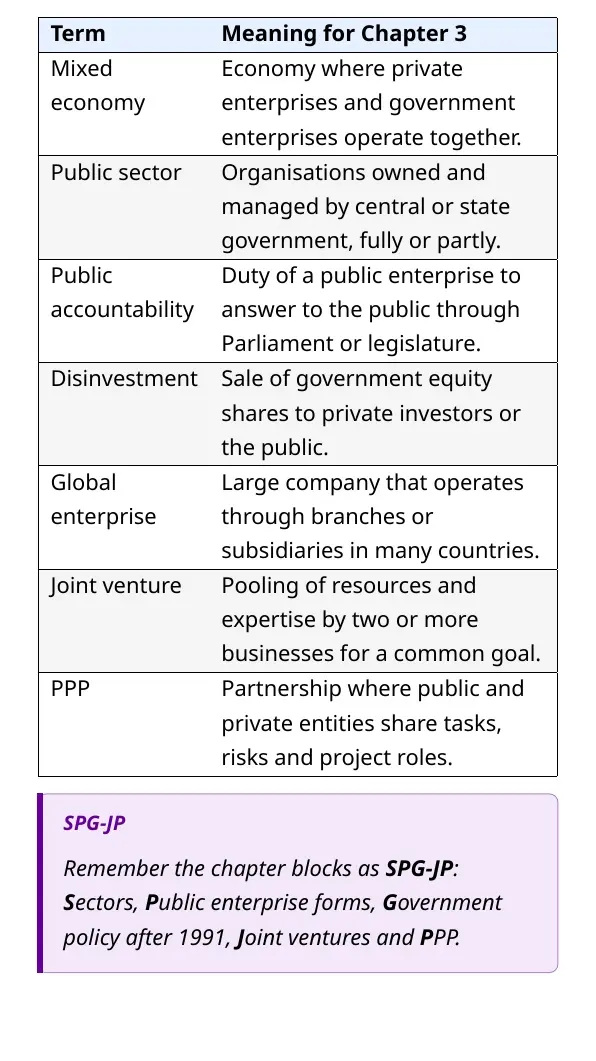
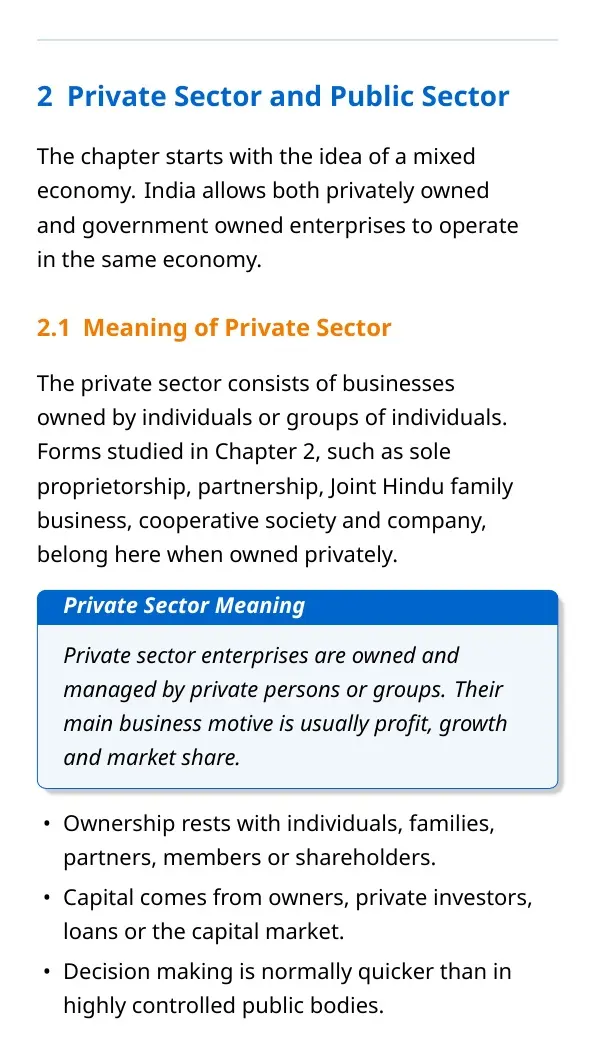
- Download the 28-page Chapter 3 Business Studies notes PDF for quick revision.
- Revise departmental undertakings, statutory corporations, government companies, MNCs, joint ventures and PPP in one place.
- Student focus: compare public enterprise forms and separate joint venture from PPP before writing case answers.
Student Feedback on Private, Public and Global Enterprises
In a Collegedunia poll of 11,840 Class 11 Commerce students before the 2026 exams, many students said this chapter became easier after they used one table for public enterprise forms and one cue chart for PPP.
- 74% wanted a short way to separate departmental undertakings, statutory corporations and government companies.
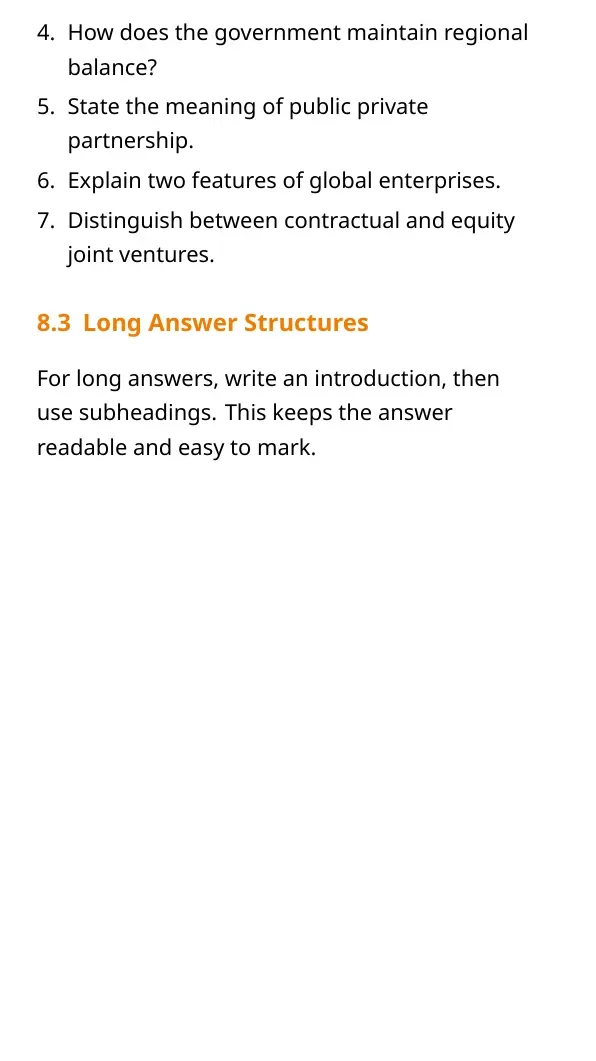
- 61% confused joint ventures with PPP in case questions.
- 58% needed extra help with the 1991 public-sector changes. These notes turn the reforms into a four-point revision frame.
Source: 2026-27 Class 11 Commerce student poll. Sample of 11,840 students from CBSE schools across 14 states.
These Class 11 Business Studies notes are checked against the official 2026-27 NCERT chapter and written for quick board-style revision.
Private, Public and Global Enterprises Chapter 3 Quick Map
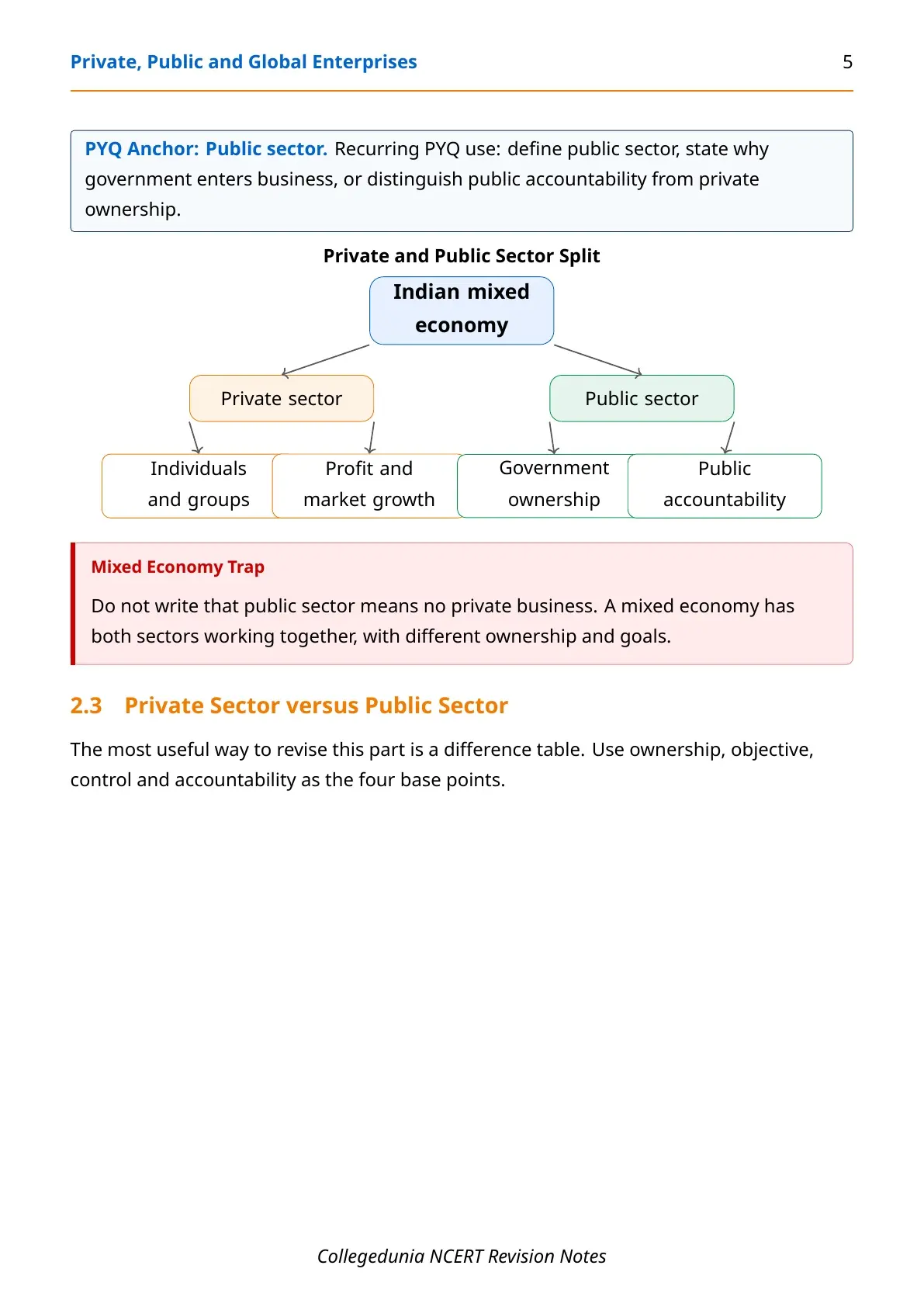
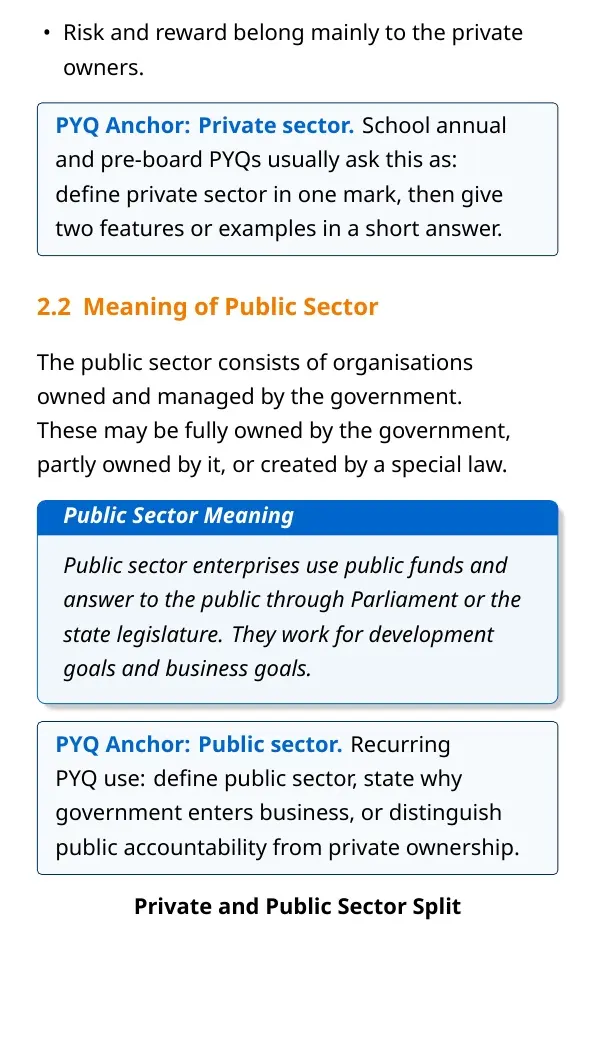
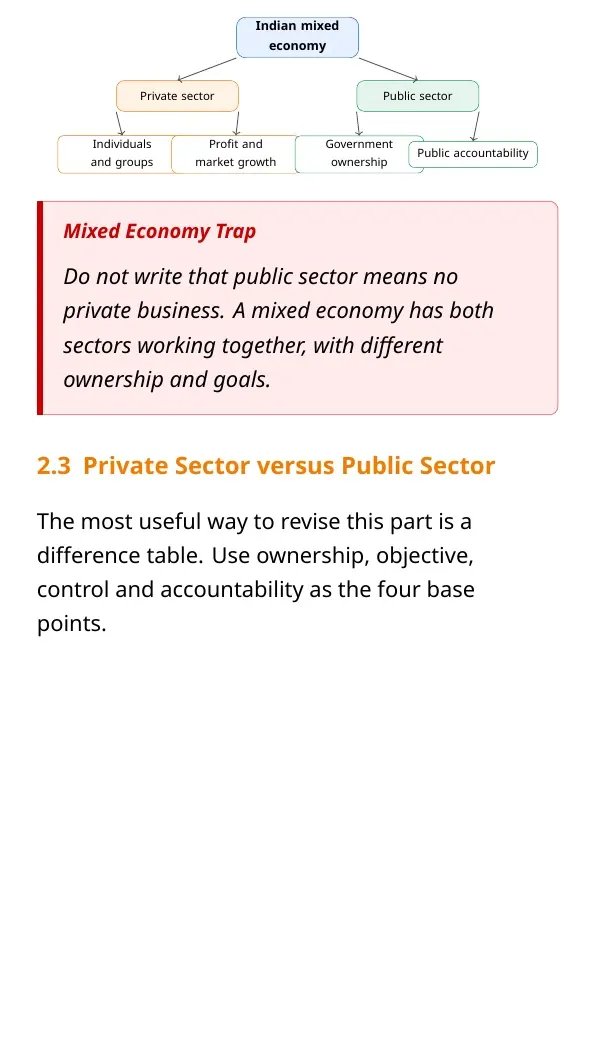
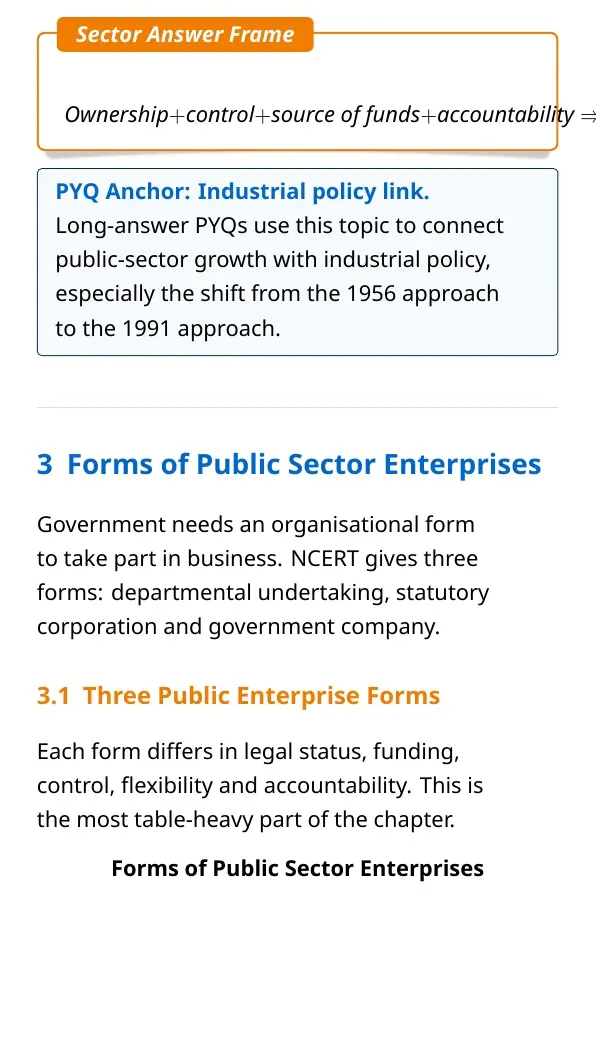
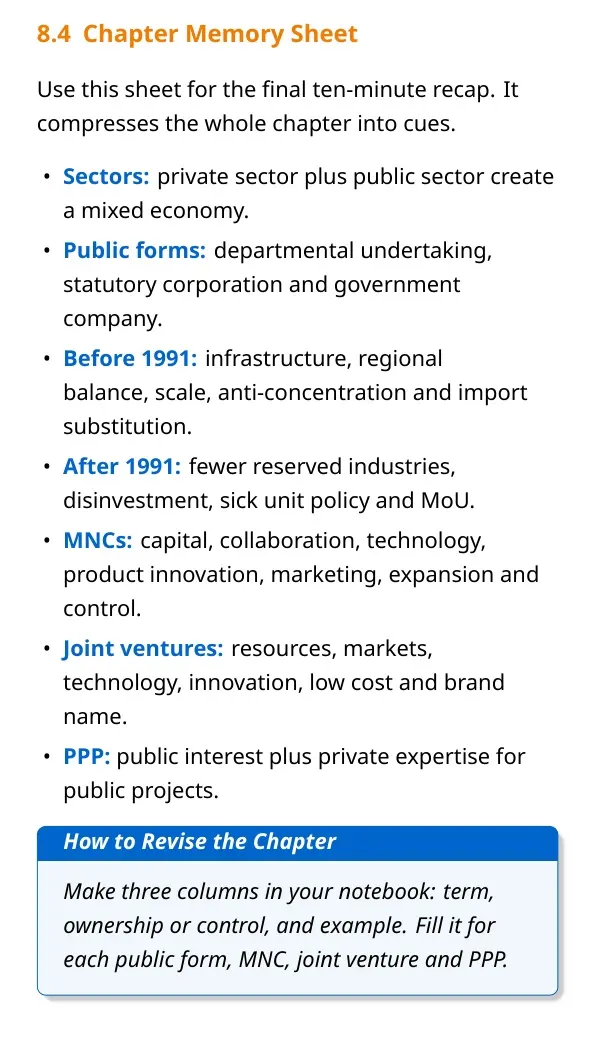
NCERT uses this chapter to show how different enterprise groups work together in a mixed economy. The private sector brings private ownership and profit motive, the public sector brings government ownership and public accountability, and global enterprises bring international capital, technology and market reach.
- Sector idea: classify enterprises by ownership, control and accountability.
- Public enterprise idea: compare departmental undertaking, statutory corporation and government company.
- Policy idea: explain how the public sector changed after the 1991 industrial policy.
- Collaboration idea: revise global enterprises, joint ventures and PPP as different partnership routes.
Private and Public Sector Difference in Class 11 Business Studies
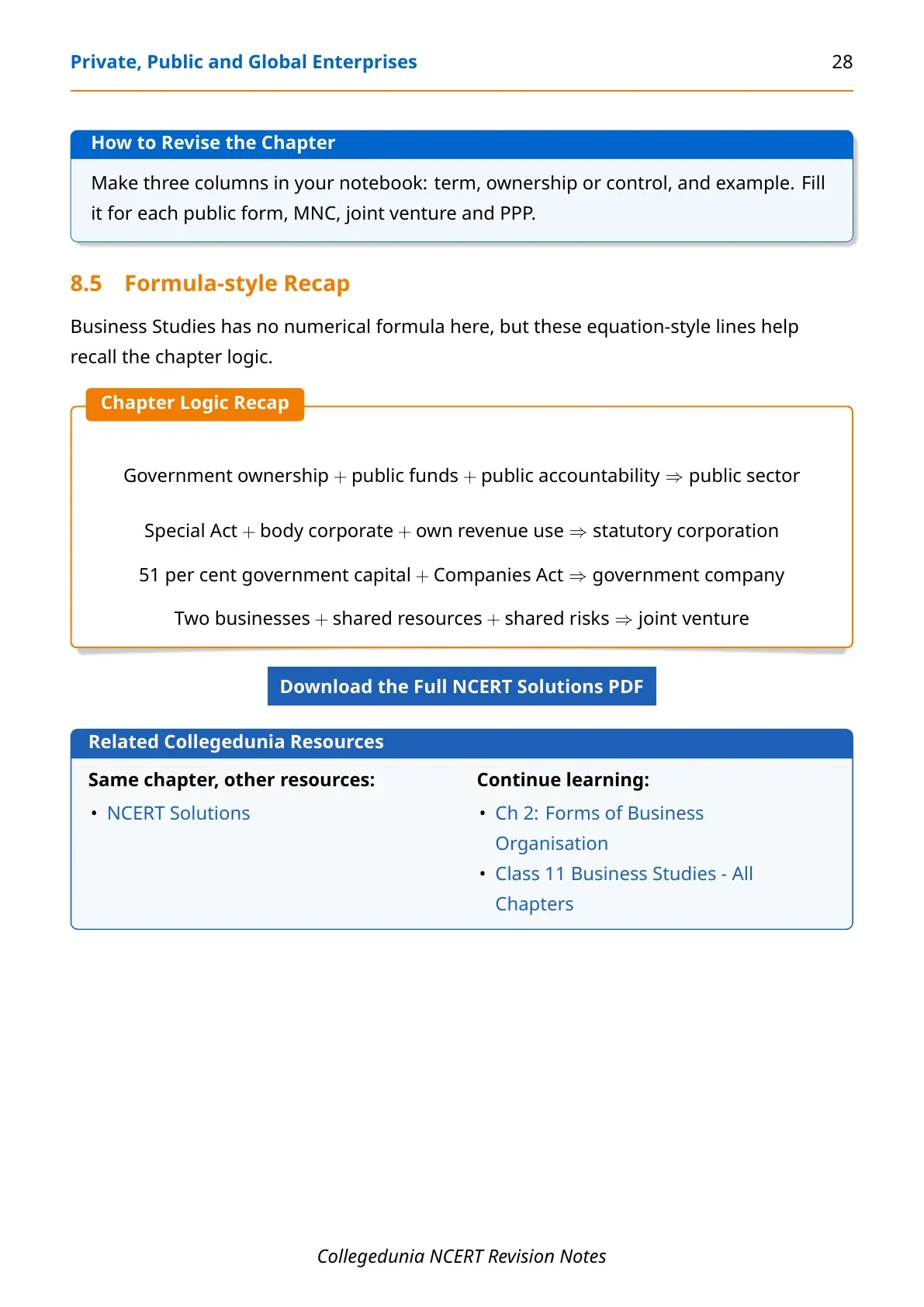
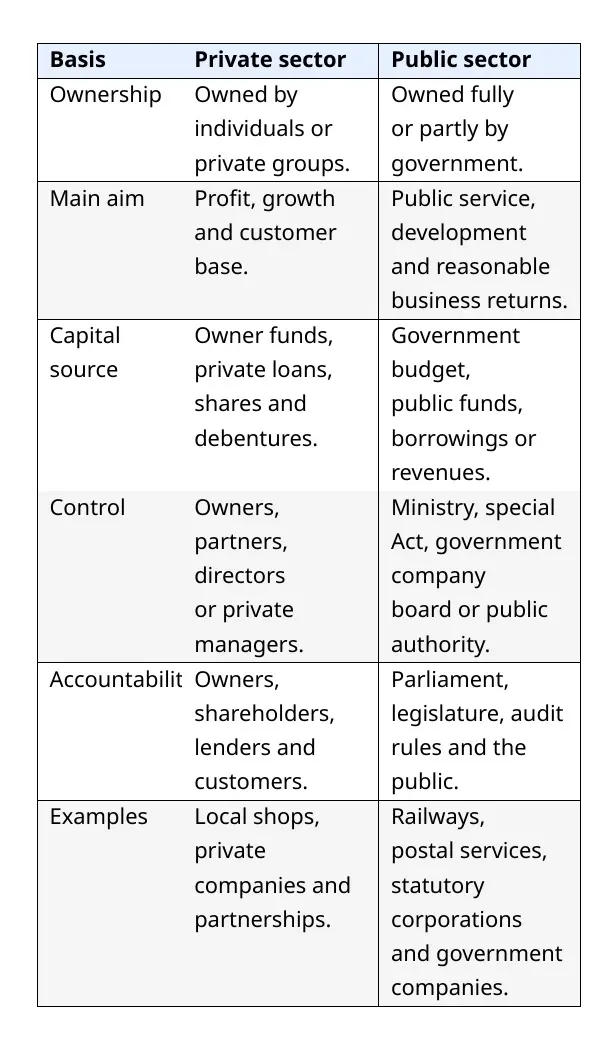
The private sector includes businesses owned by individuals or private groups. The public sector includes organisations owned fully or partly by government. A mixed economy needs both, but each sector works with a different main aim.
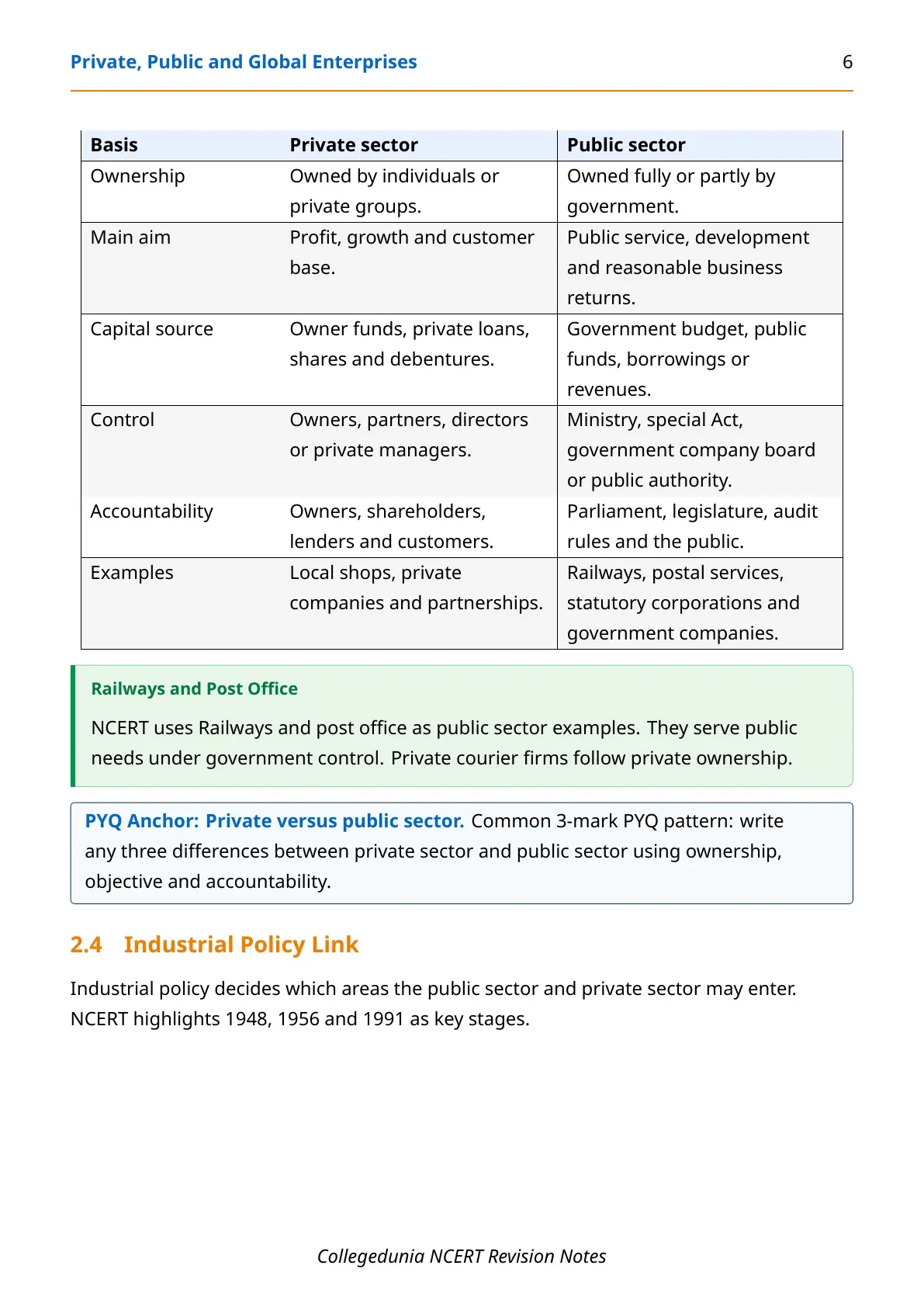
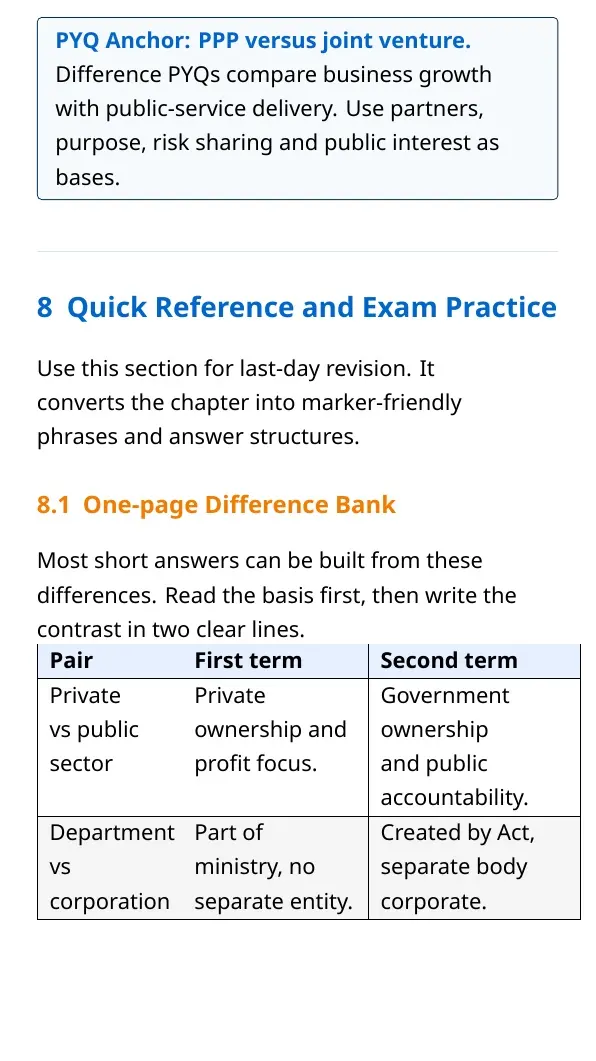
| Basis | Private Sector | Public Sector |
|---|---|---|
| Ownership | Owned by individuals or private groups | Owned fully or partly by government |
| Main aim | Profit, growth and market share | Public service, development and reasonable returns |
| Control | Owners, partners, directors or private managers | Ministry, special Act, board or public authority |
| Accountability | Owners, shareholders, lenders and customers | Parliament, legislature, audit rules and the public |
Exam cue: write differences using ownership, objective, control and accountability. This frame also helps in case questions where the example mentions Railways, post office, private courier firms or private companies.
Private, Public and Global Enterprises Video Recap
Source: Magnet Brains on YouTube
Forms of Public Sector Enterprises in Chapter 3
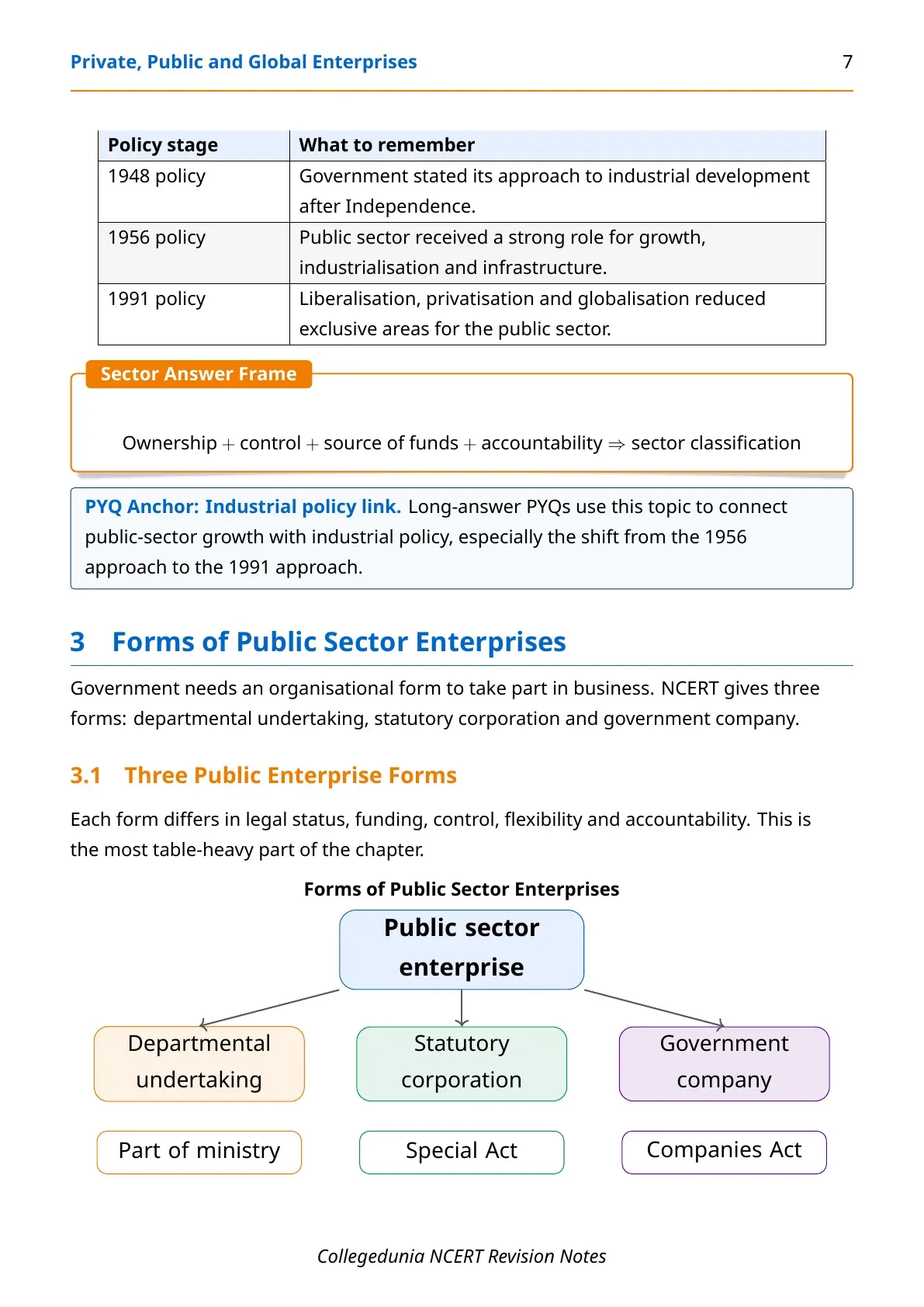
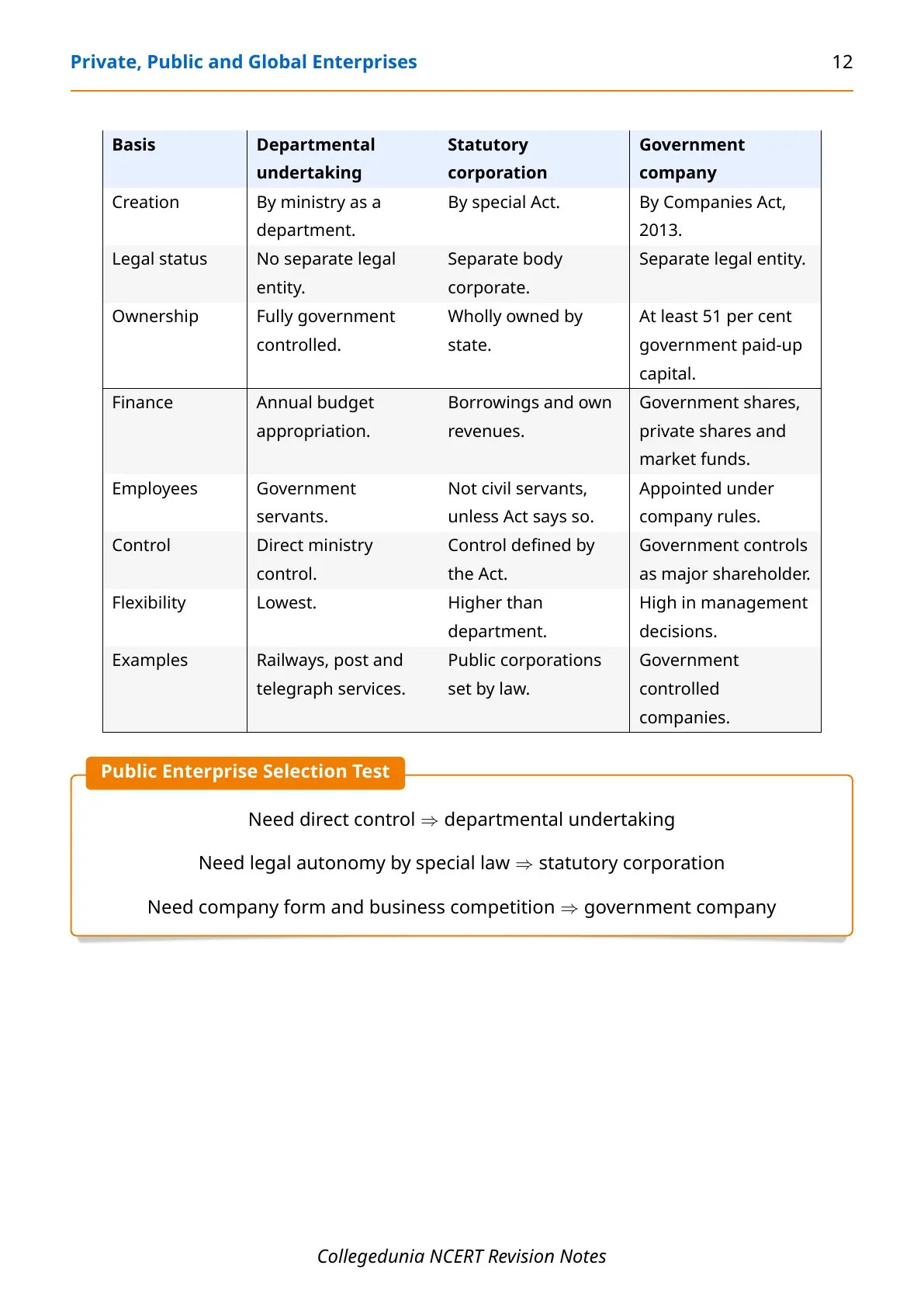
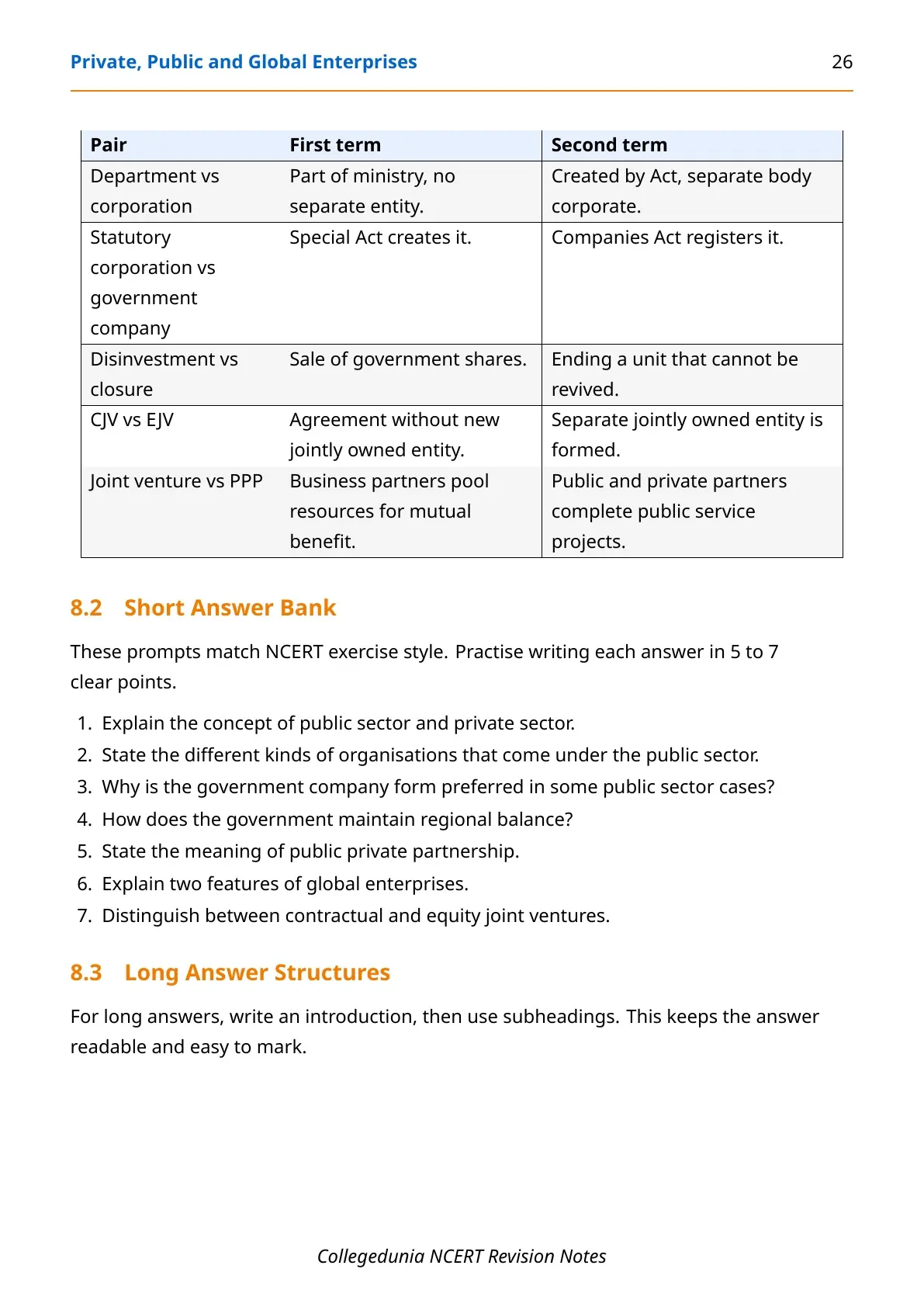
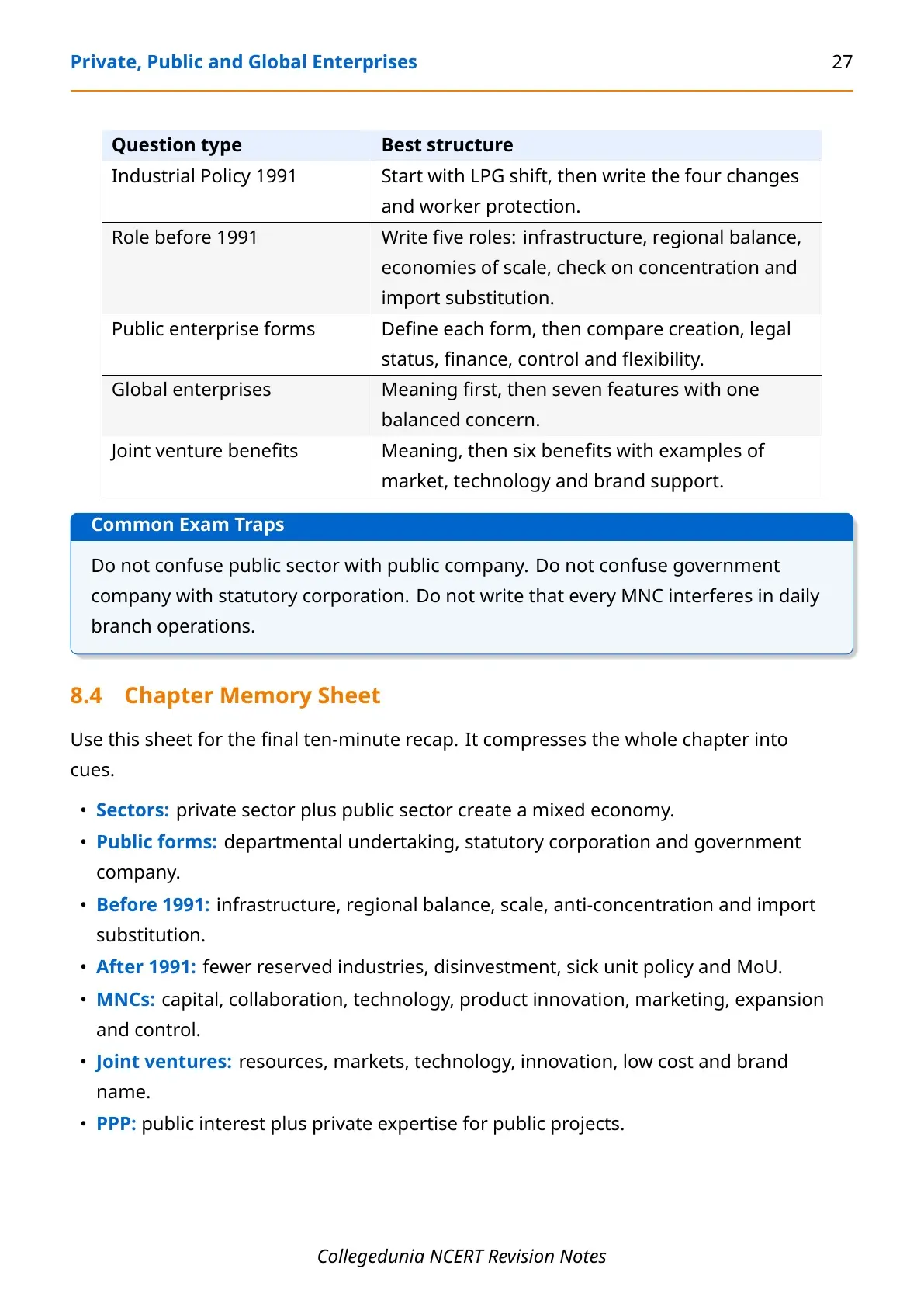
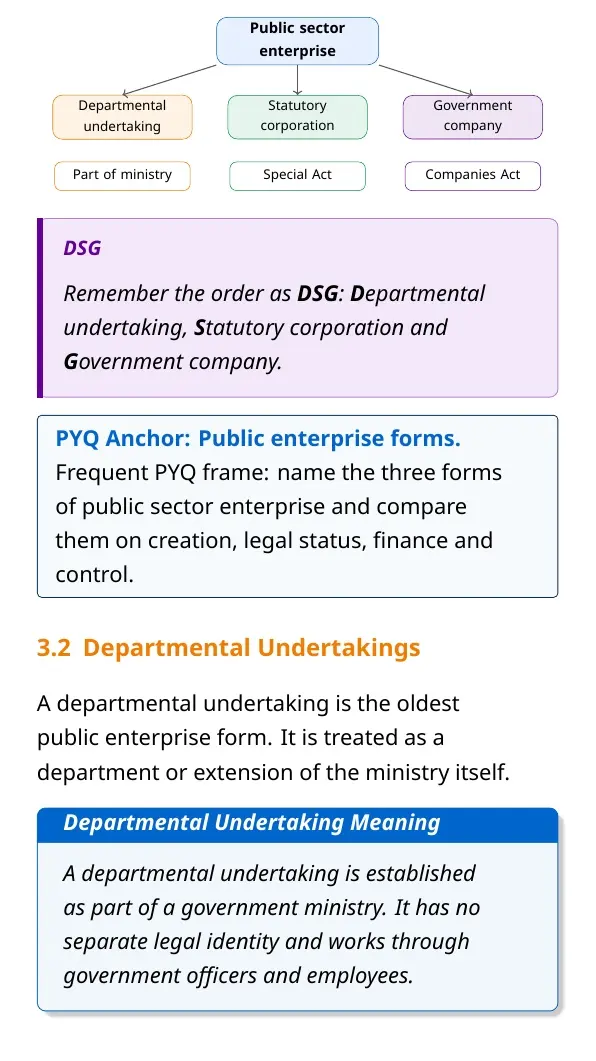
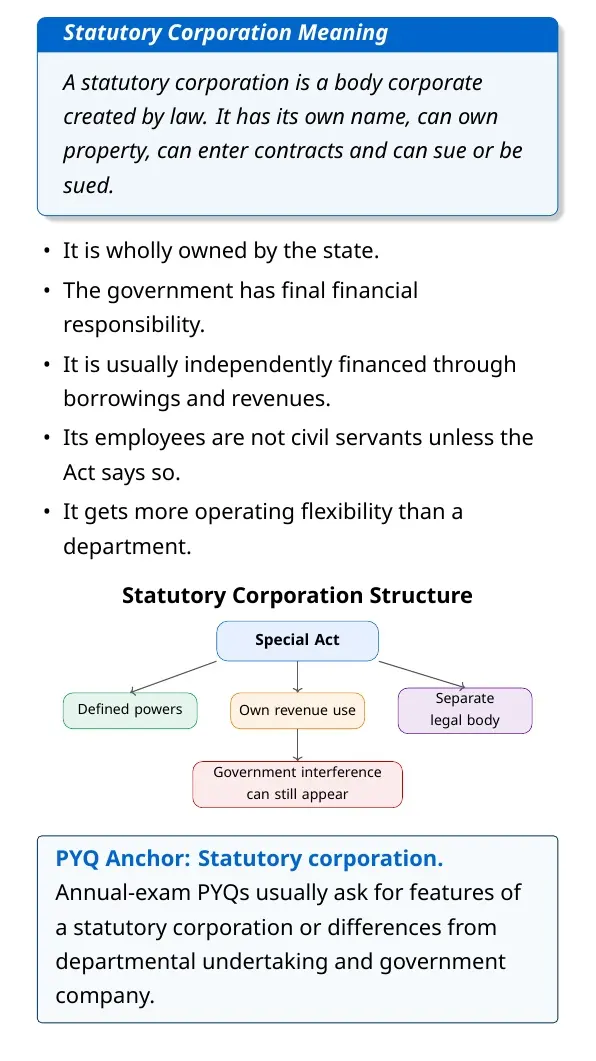
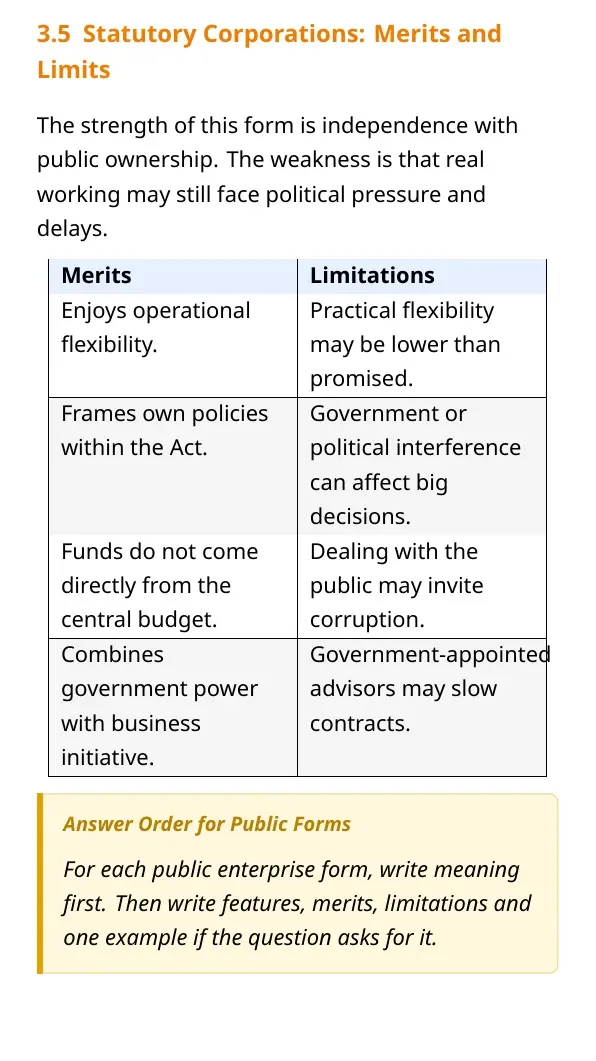
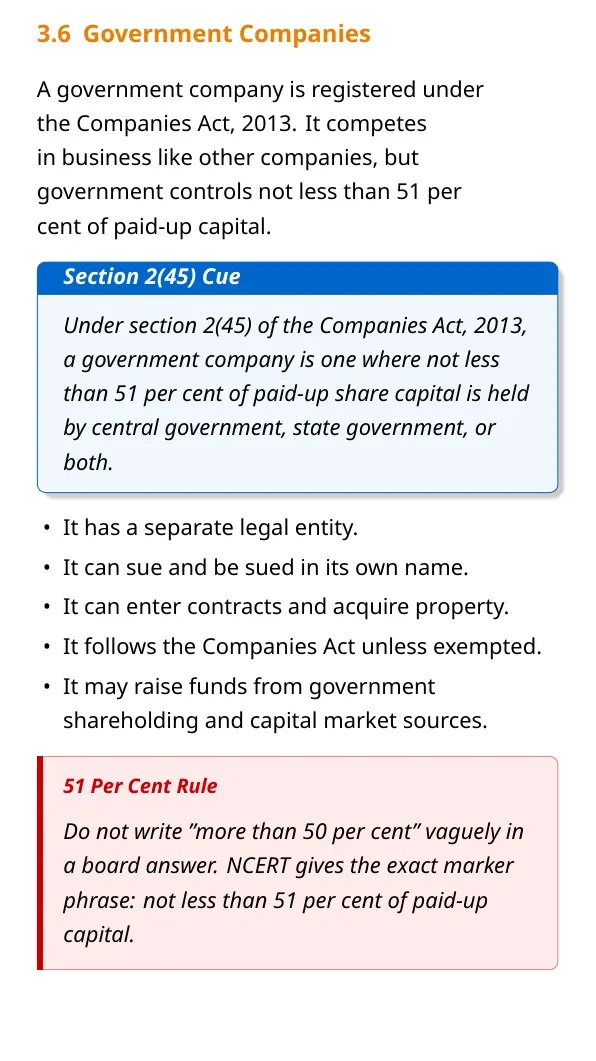
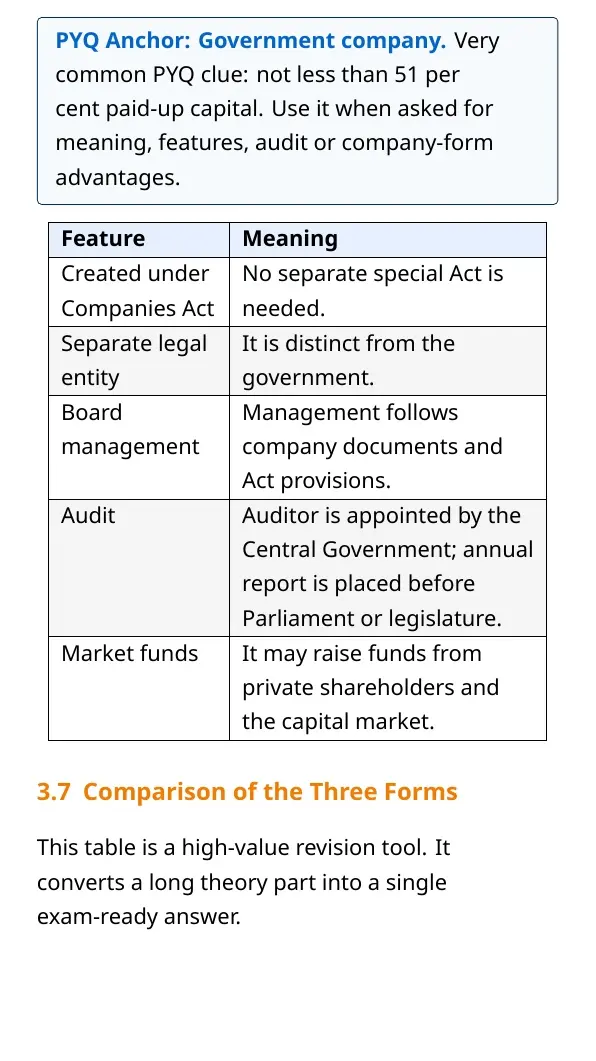
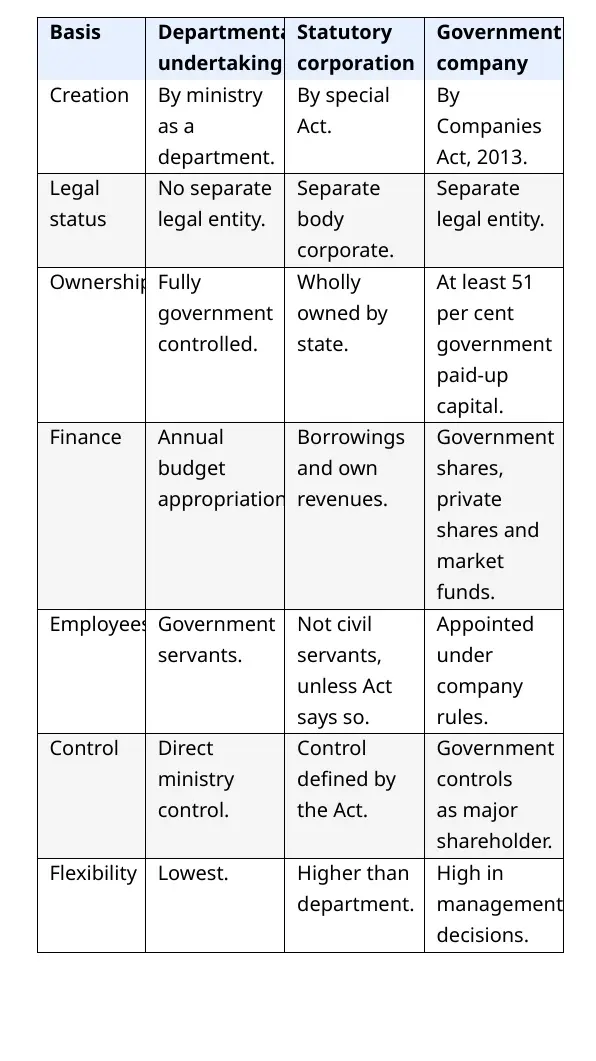
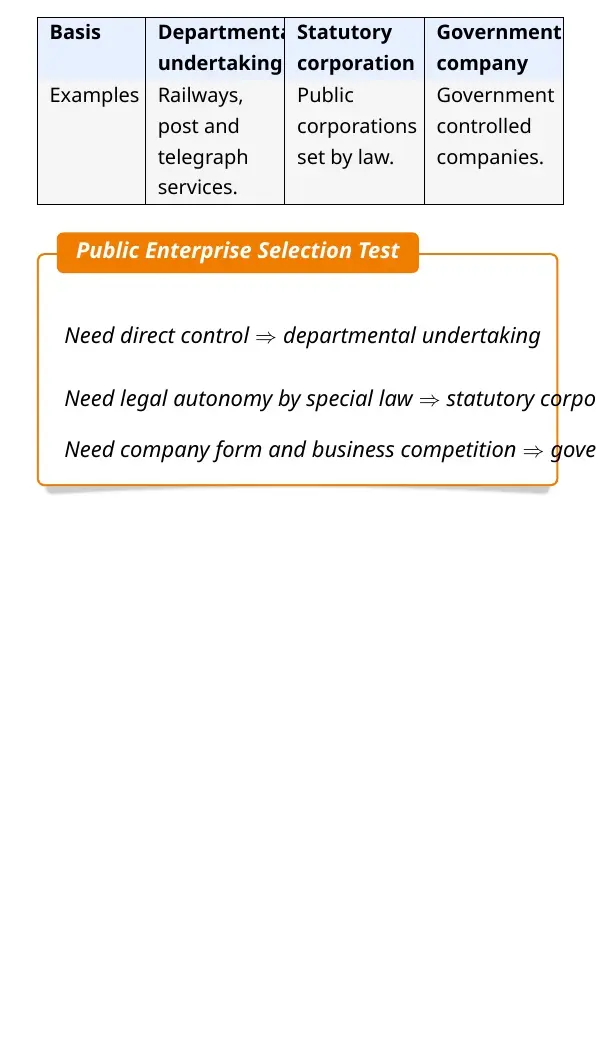
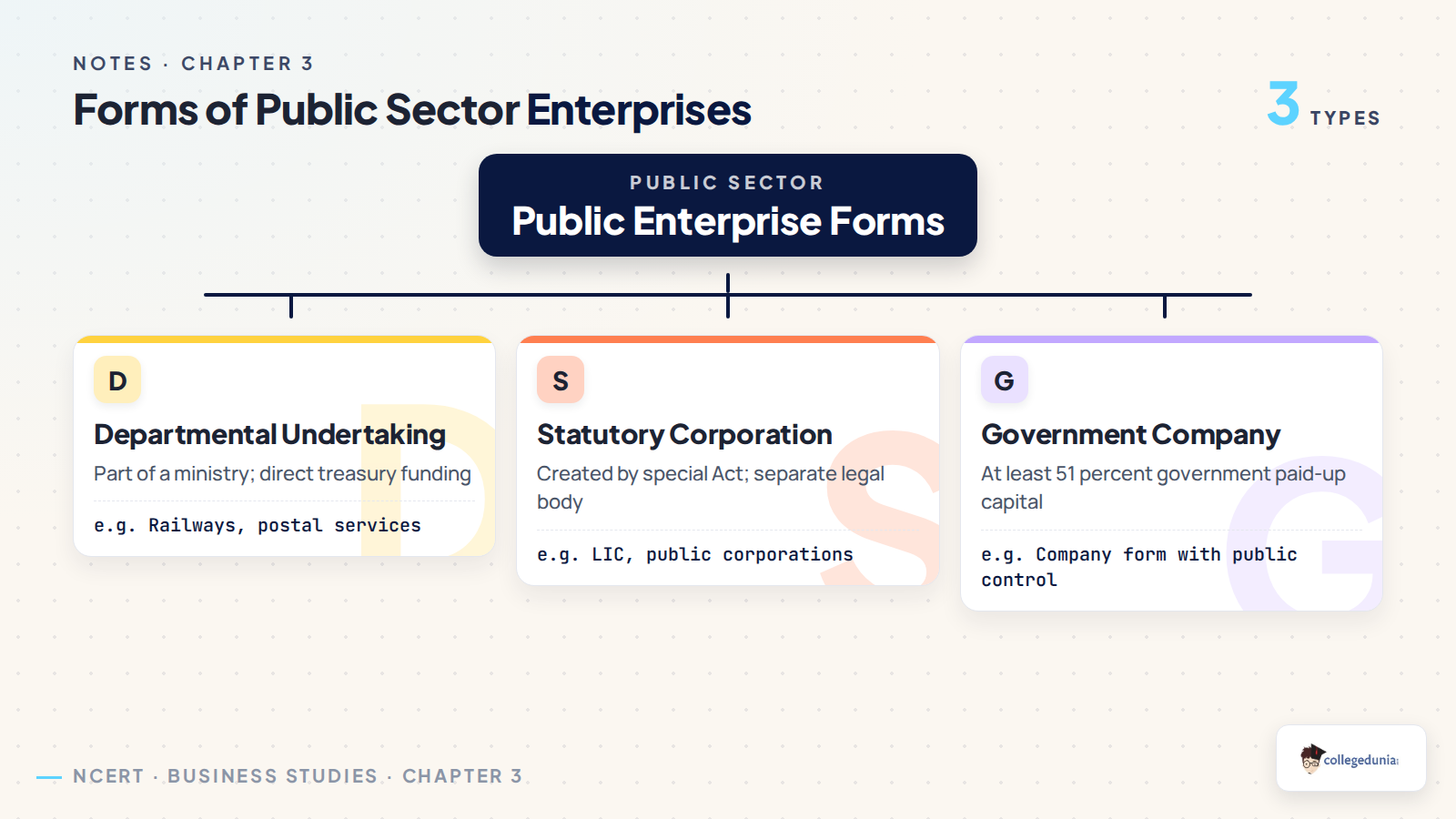
NCERT gives three forms of public sector enterprises: departmental undertaking, statutory corporation and government company. Learn them as a comparison topic, because most answers ask for features, merits, limitations or differences.
| Form | Core Meaning | High-value Point |
|---|---|---|
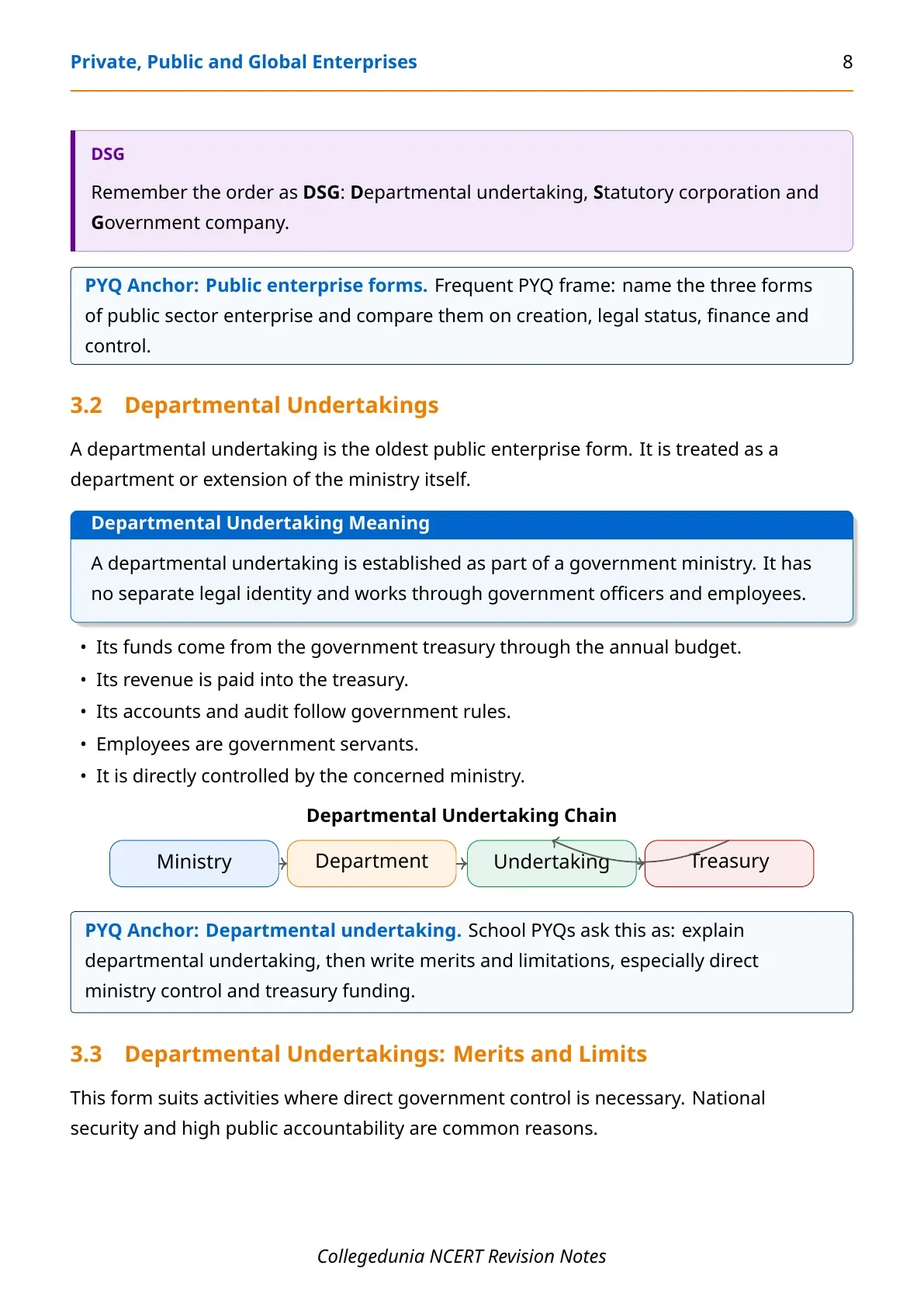
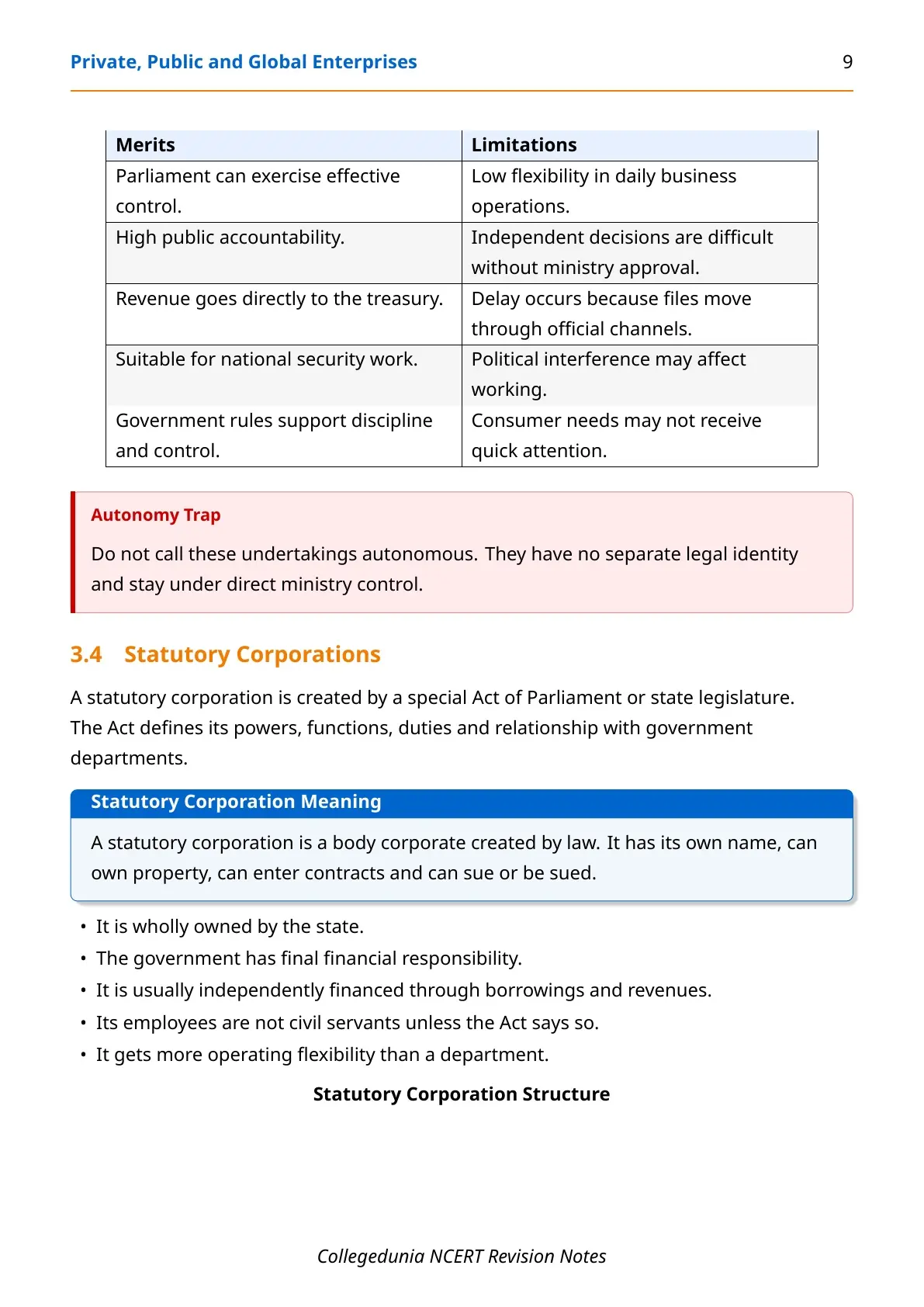
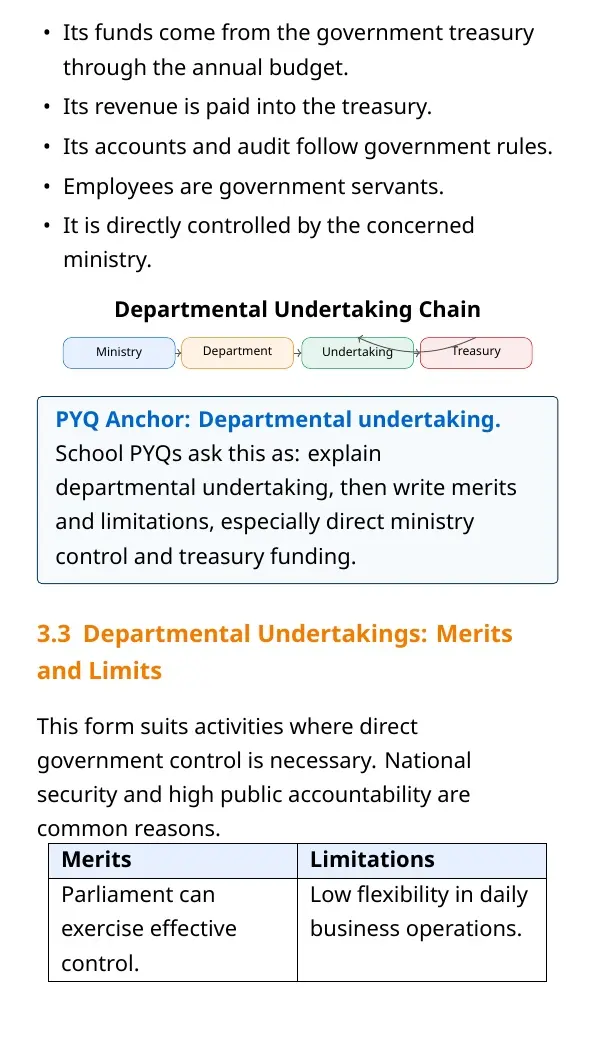
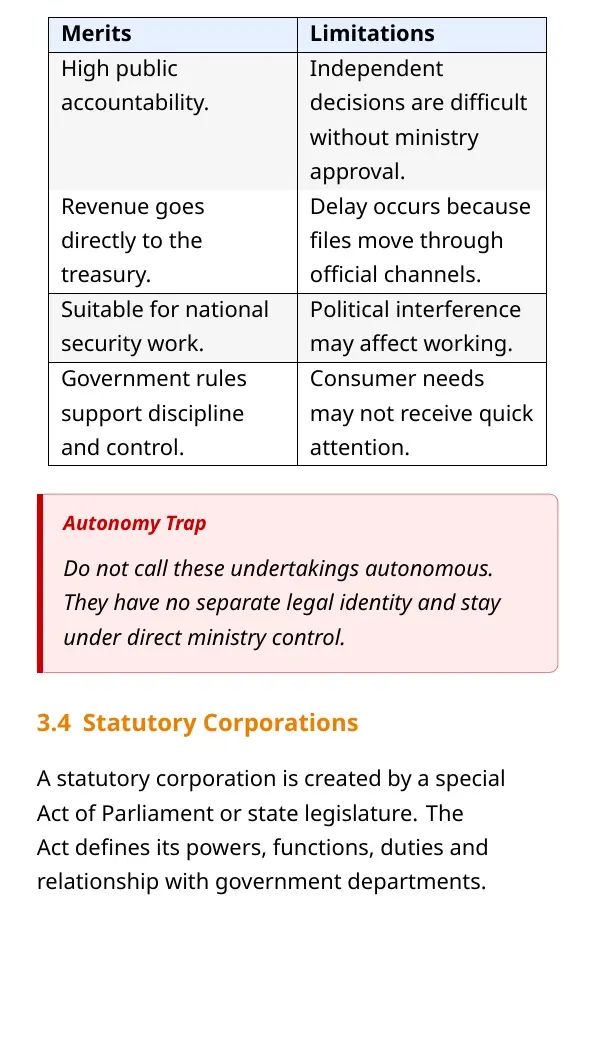
| Departmental undertaking | Part of a government ministry | No separate legal identity, direct ministry control and treasury funding |
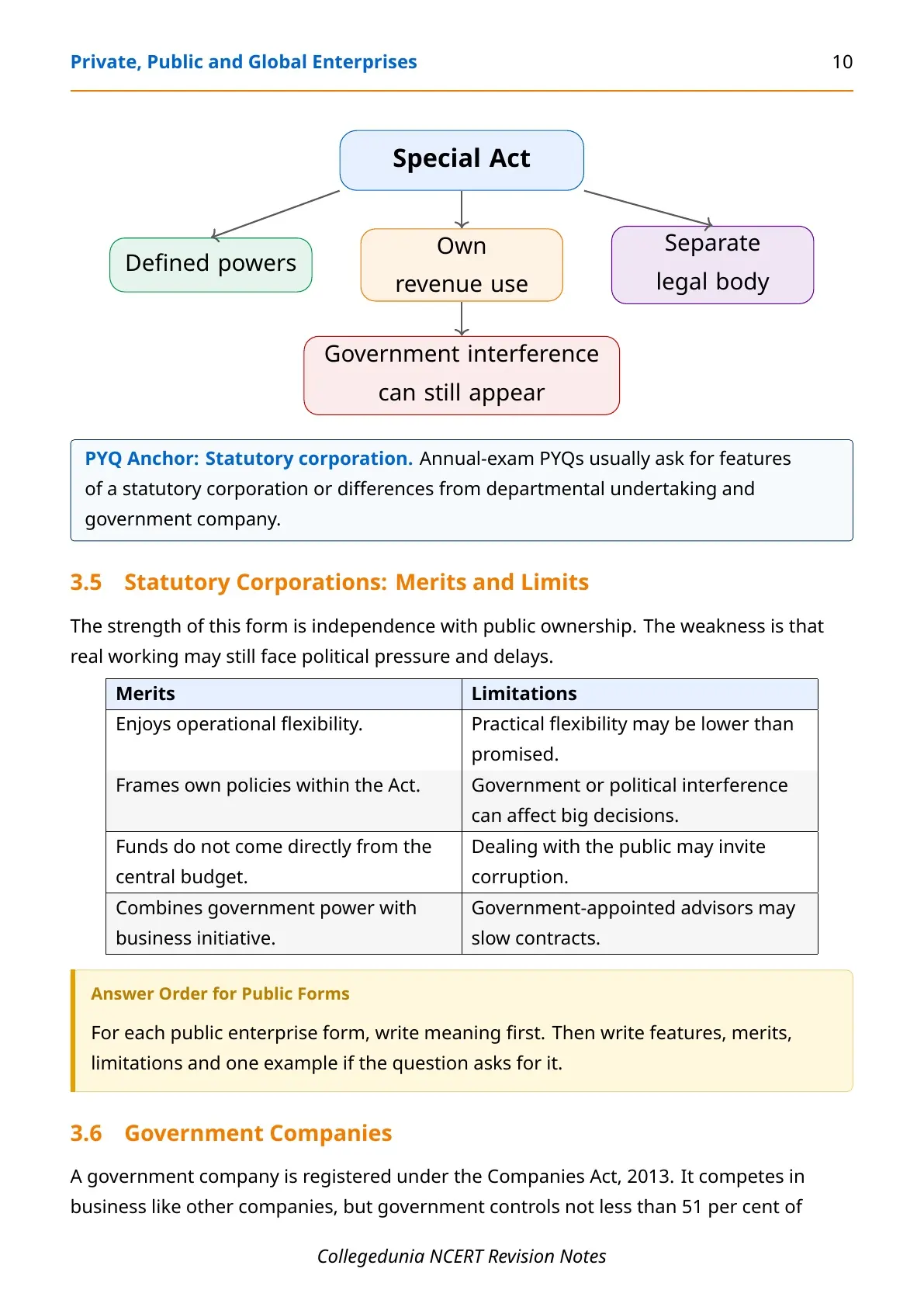
| Statutory corporation | Created by a special Act | Separate legal body with powers and duties defined by law |
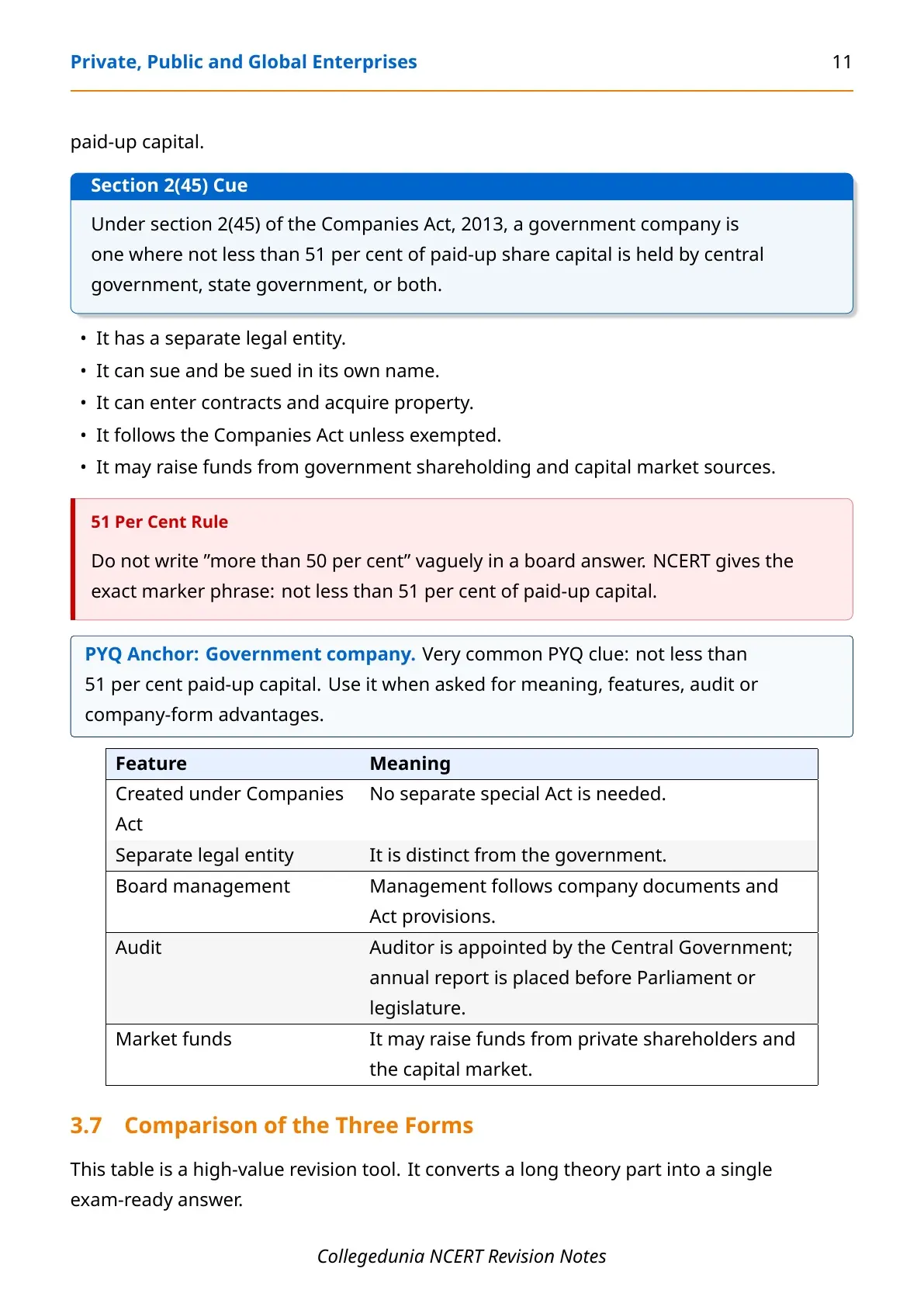
| Government company | Registered under the Companies Act | Not less than 51 percent paid-up capital is held by government |
- Departmental undertaking suits work where direct government control and public accountability are important.
- Statutory corporation gives more flexibility than a department but still works under a law.
- Government company uses the company form while keeping government control through ownership.
Changing Role of Public Sector After 1991
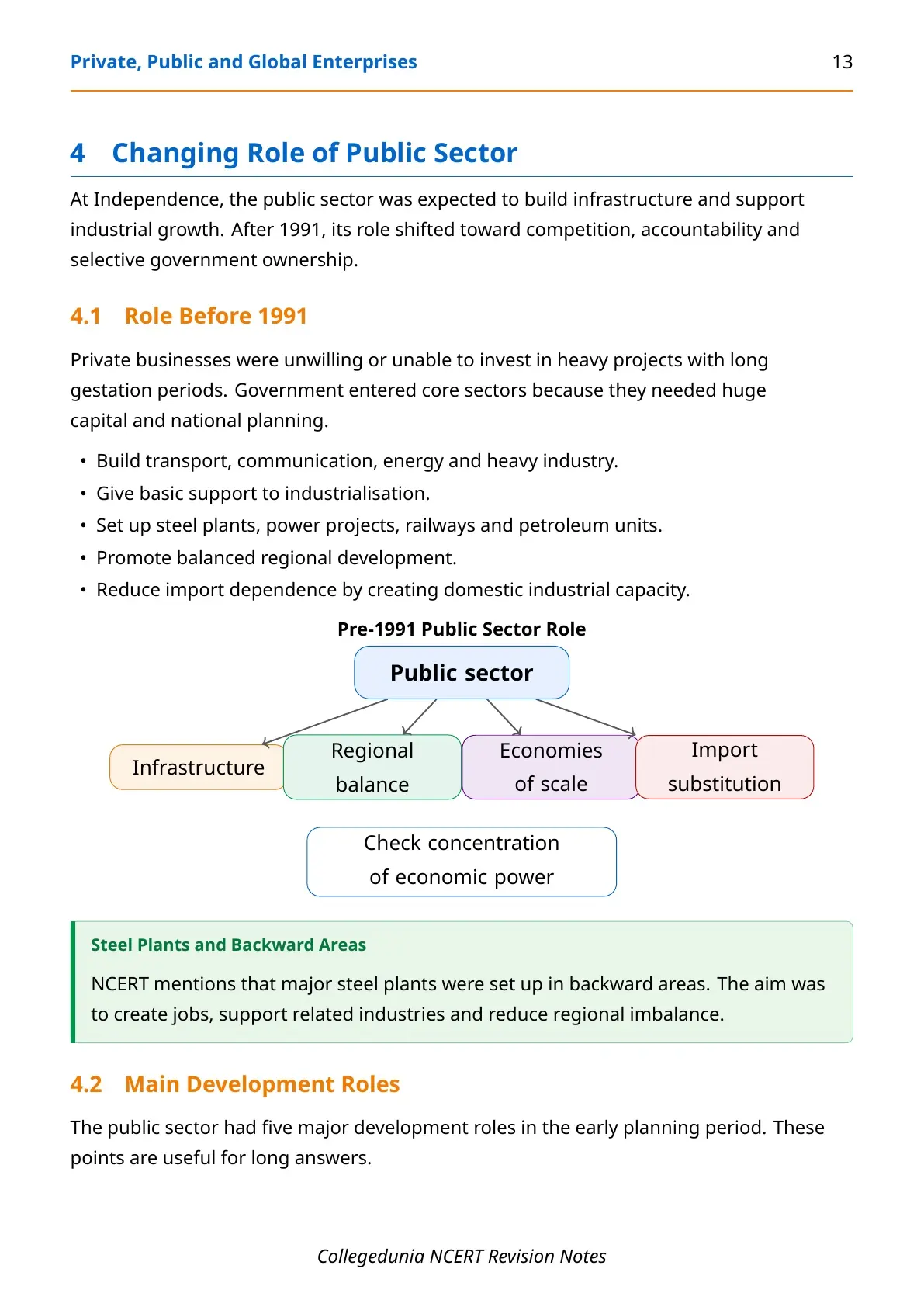
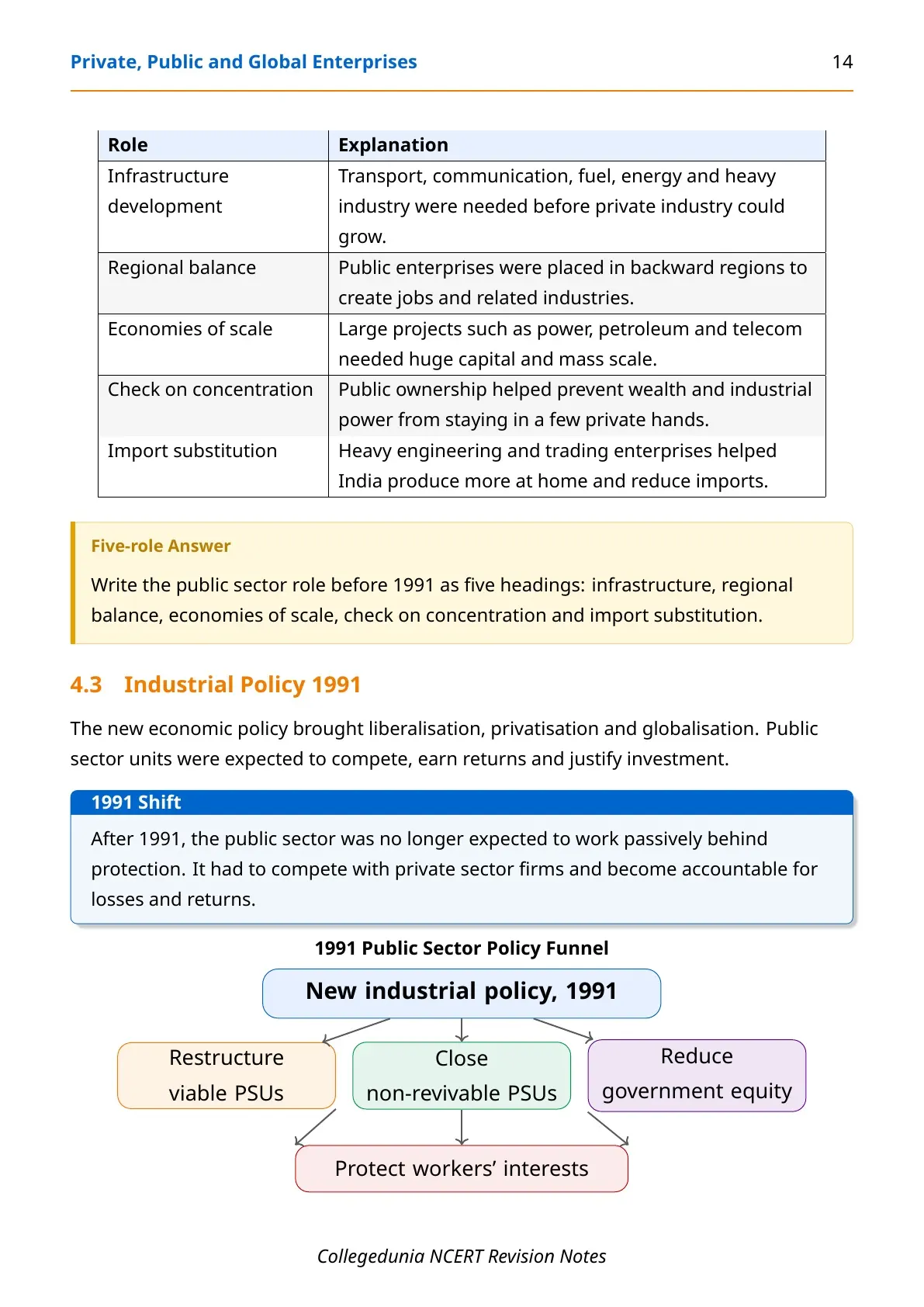
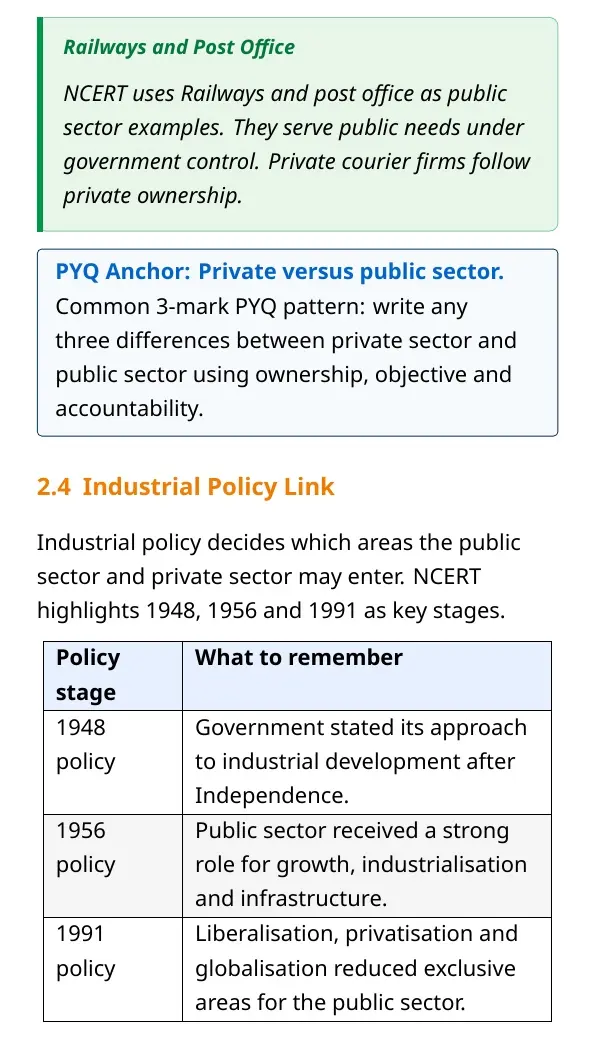
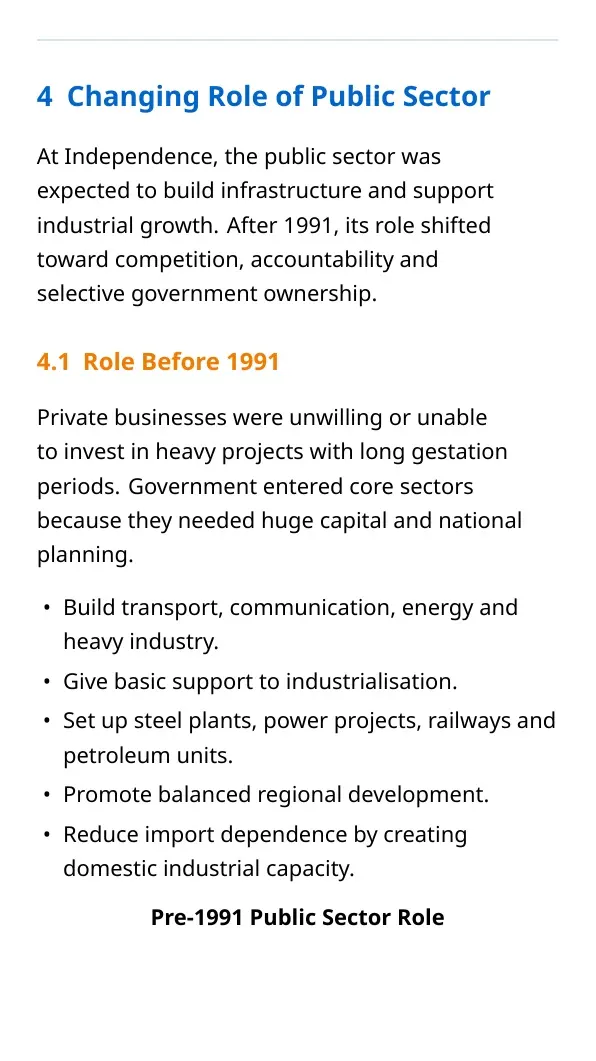
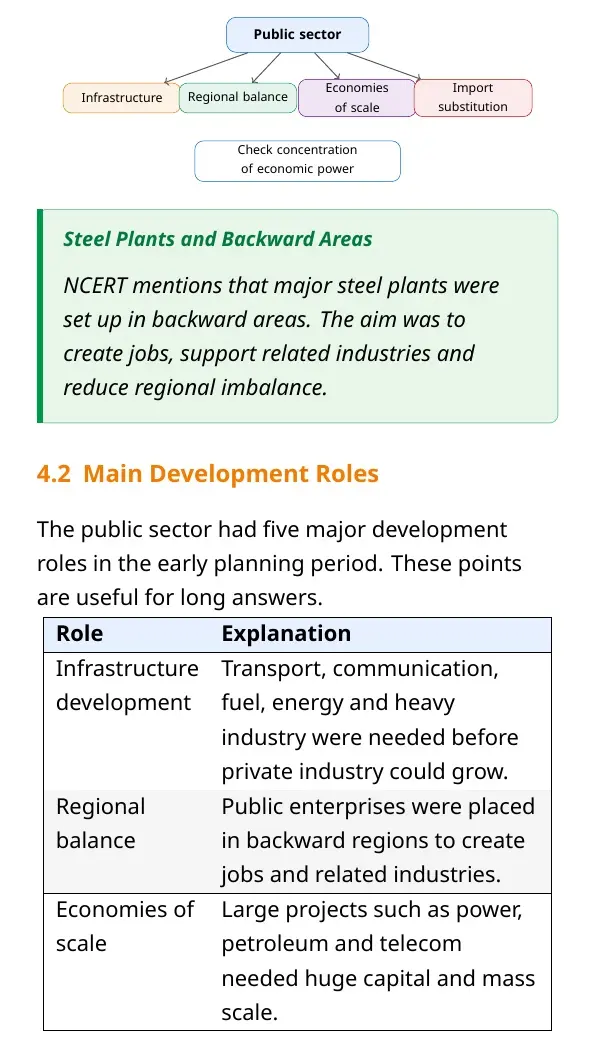
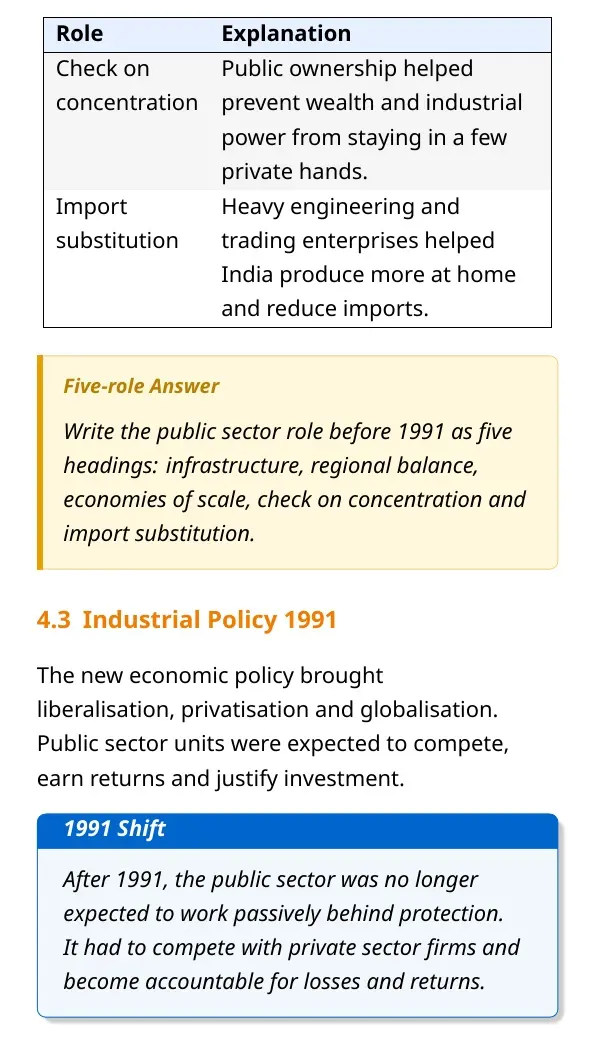
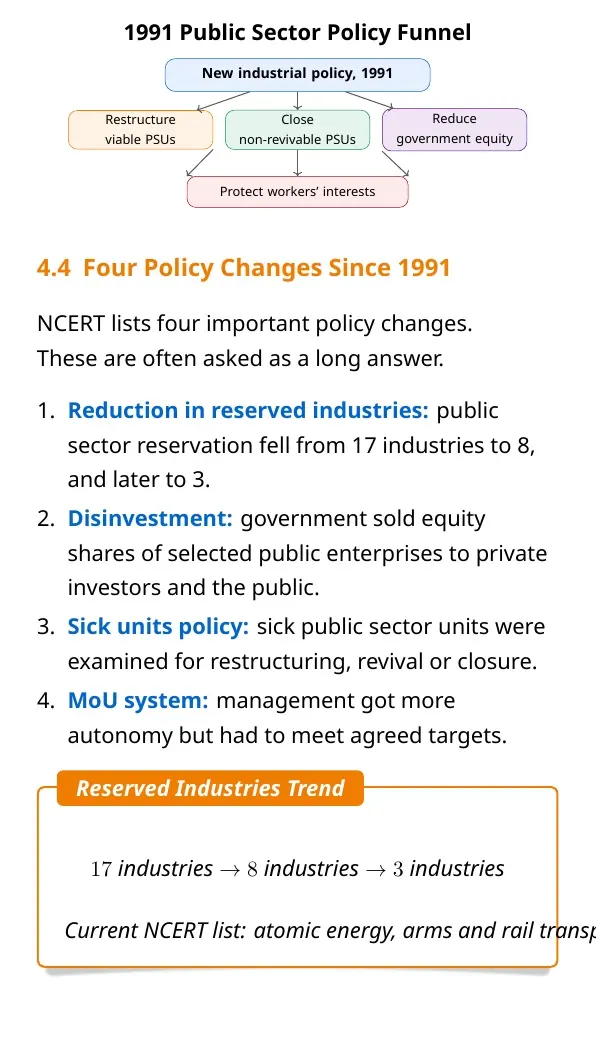
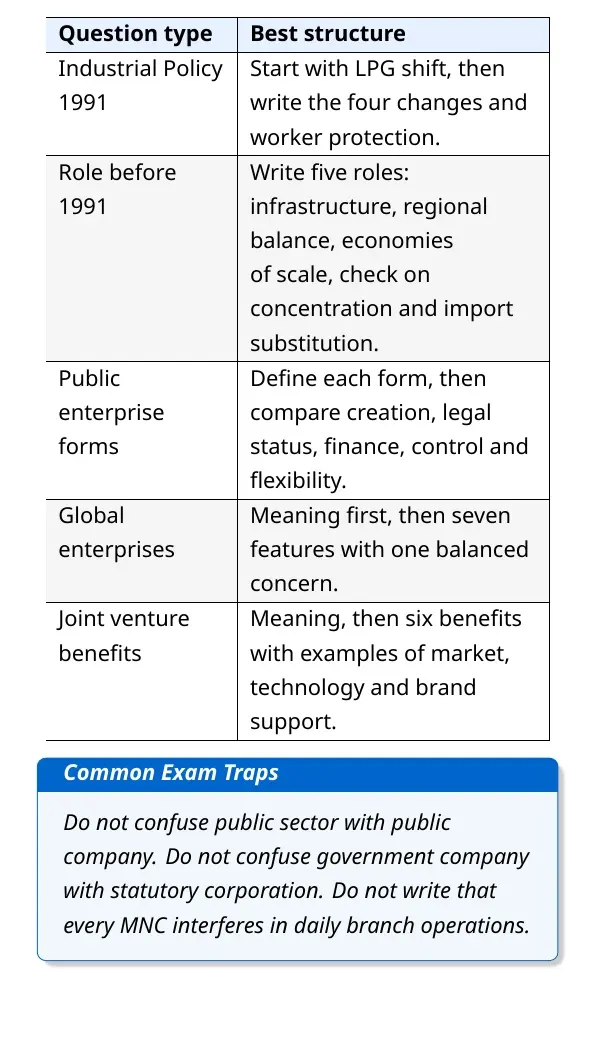
Before 1991, the public sector was expected to build infrastructure, support heavy industry, reduce regional imbalance and check concentration of economic power. After liberalisation, privatisation and globalisation, the public sector had to become more selective, accountable and competitive.
| Policy Change | What Students Should Remember |
|---|---|
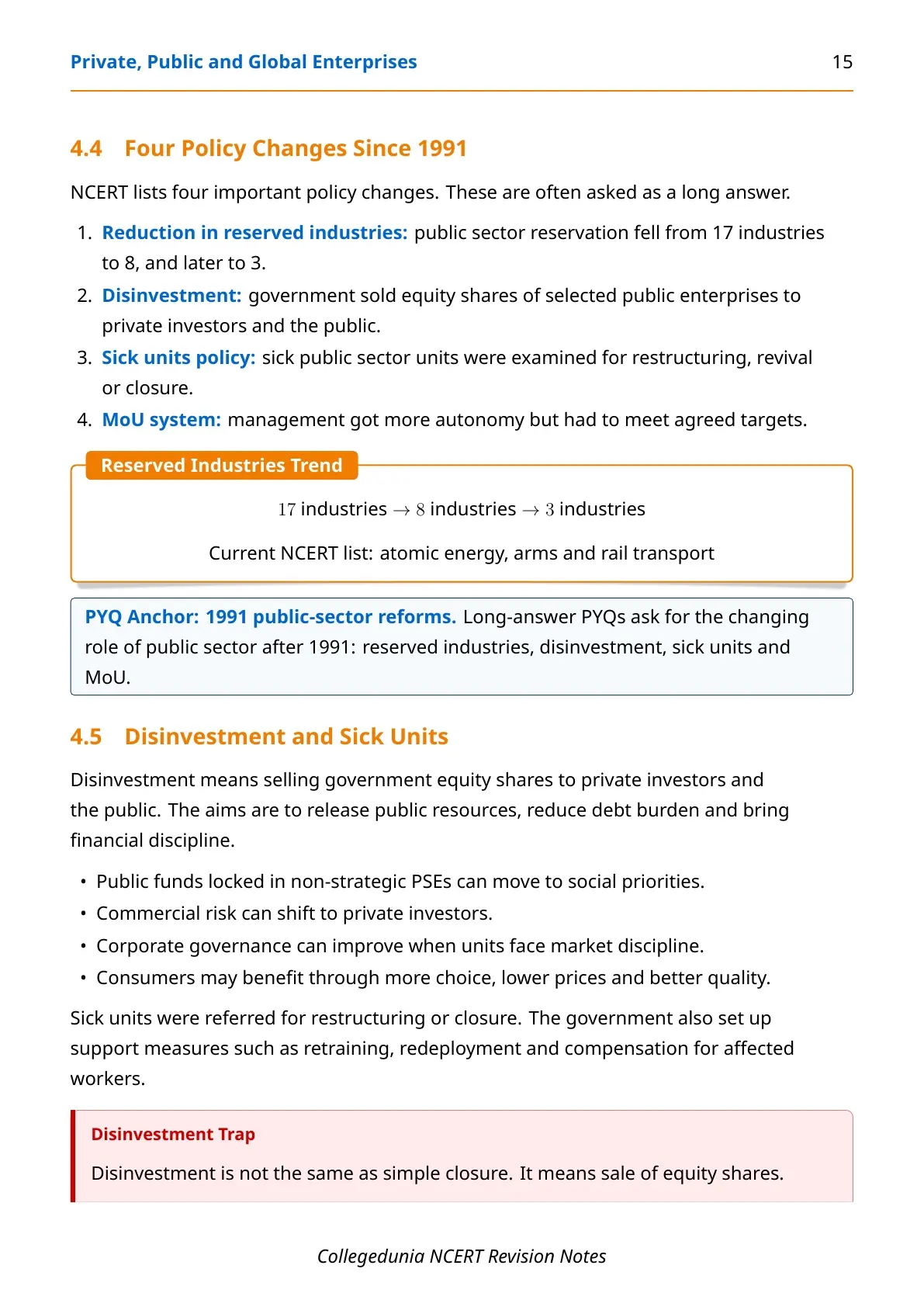
| Reduction in reserved industries | Public sector reservation fell from 17 industries to 8 and later to 3. |
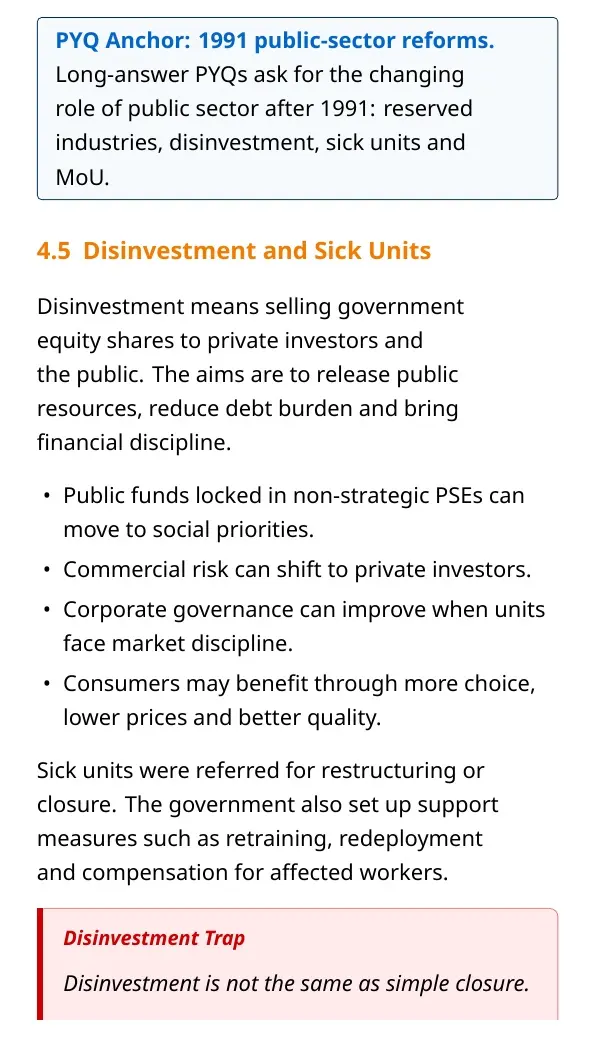
| Disinvestment | Government sold equity shares of selected public enterprises to private investors or the public. |
| Sick units policy | Sick public sector units were examined for restructuring, revival or closure. |
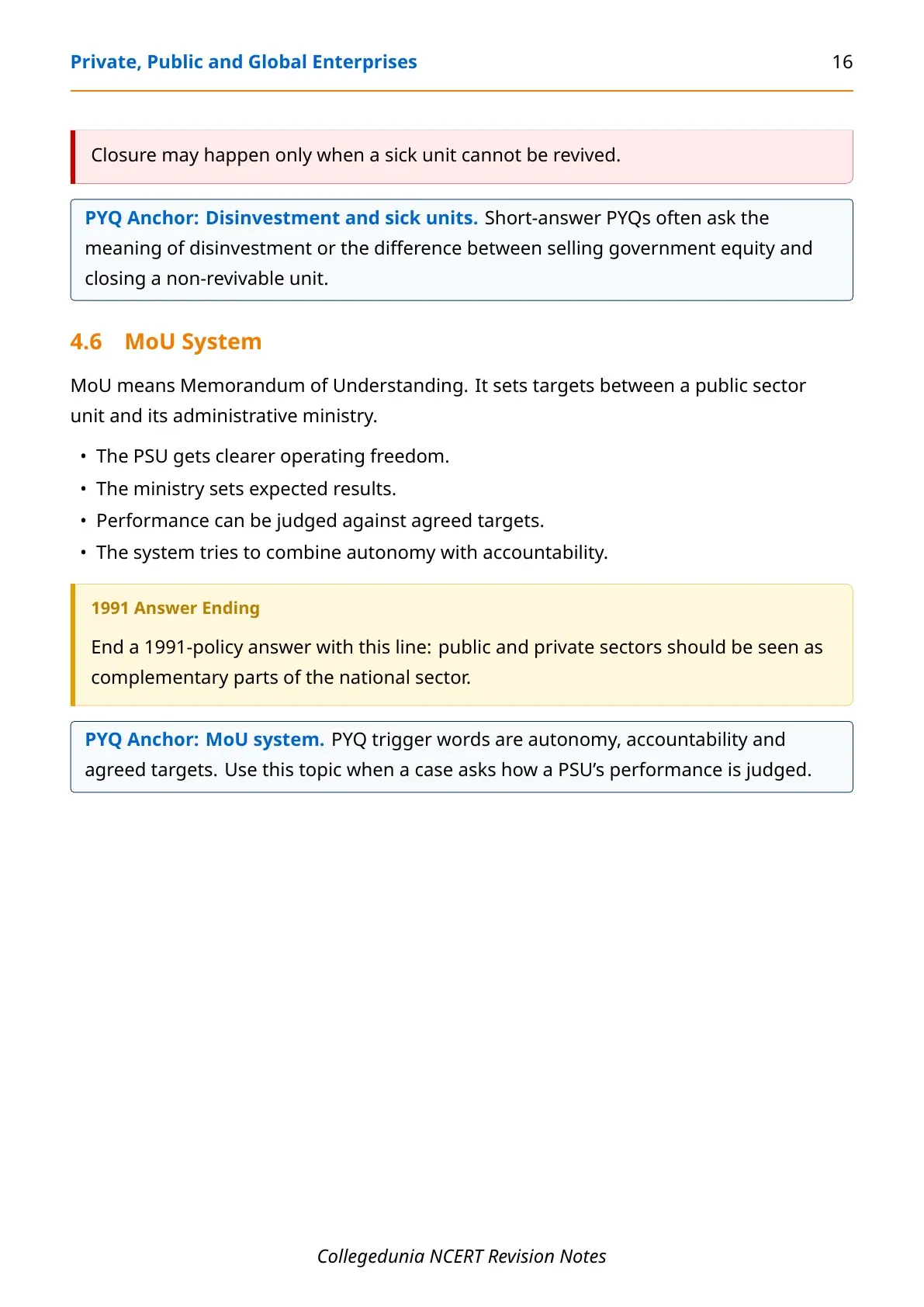
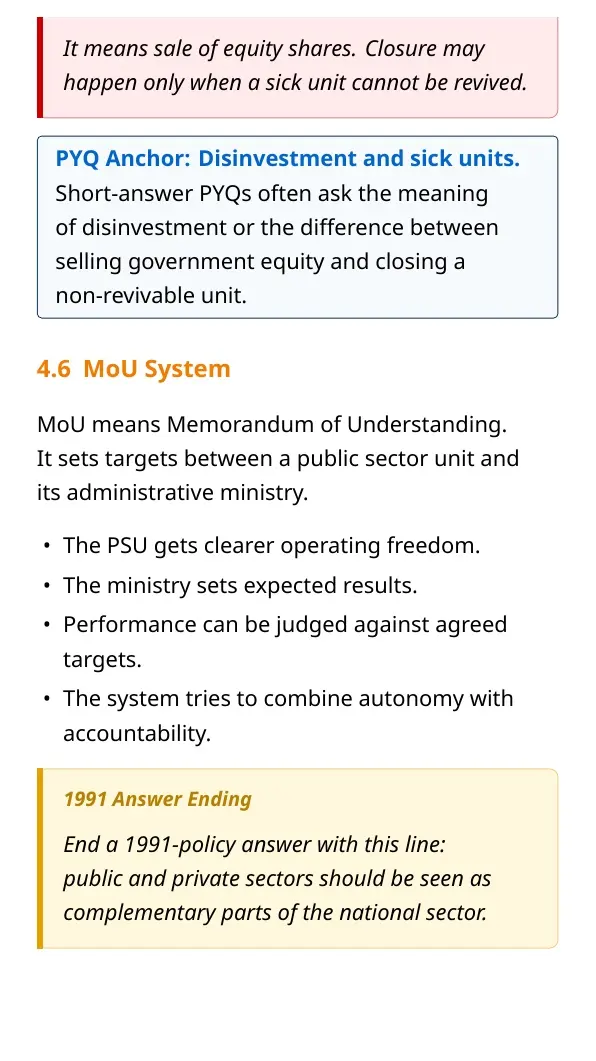
| MoU system | Management received more autonomy but had to meet agreed targets. |
Current NCERT list: the three reserved industries are atomic energy, arms and rail transport. Use this exact line in long answers on the changing role of the public sector.
Global Enterprises and MNC Features
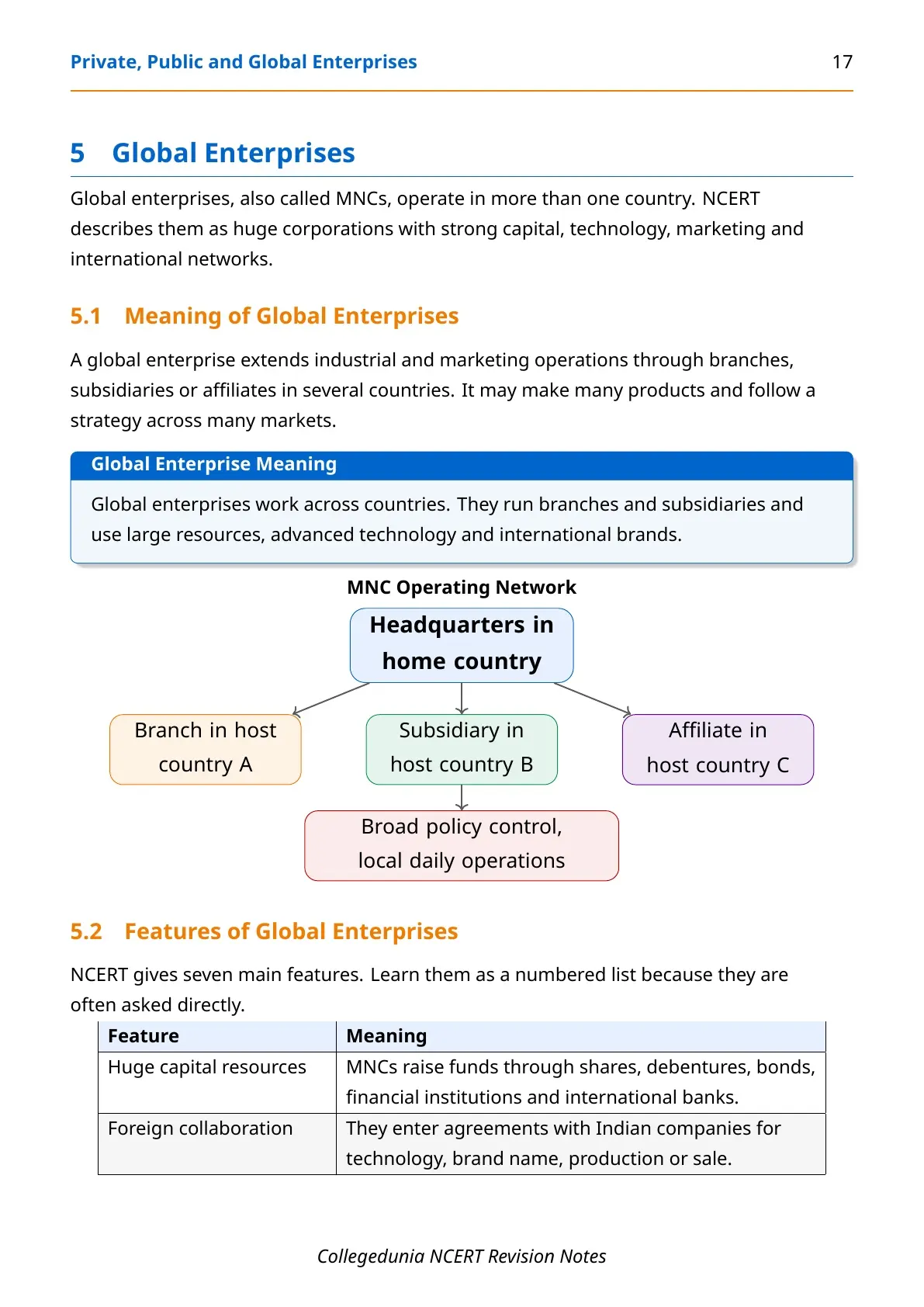
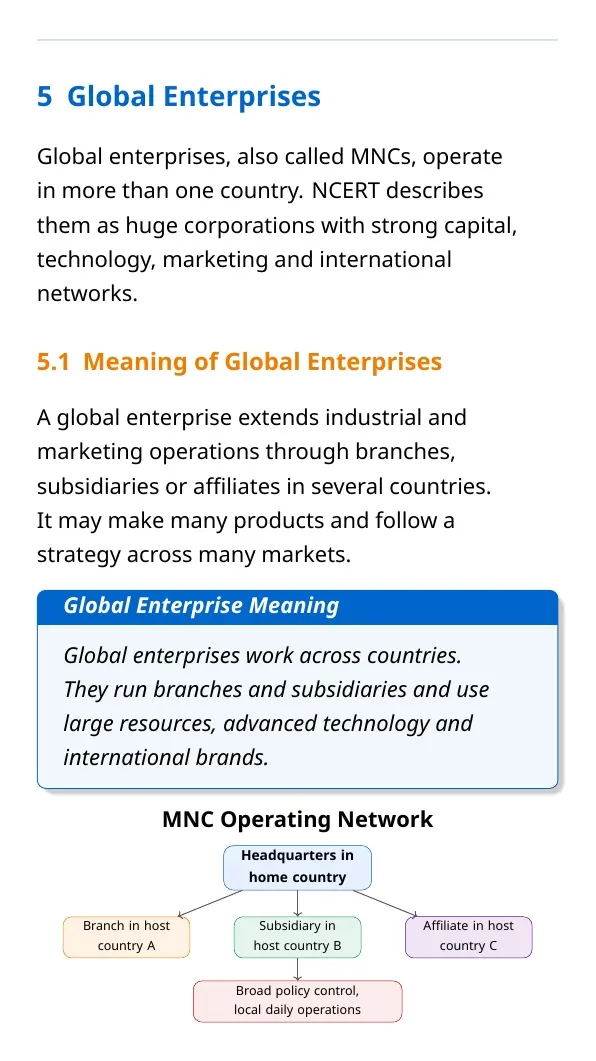
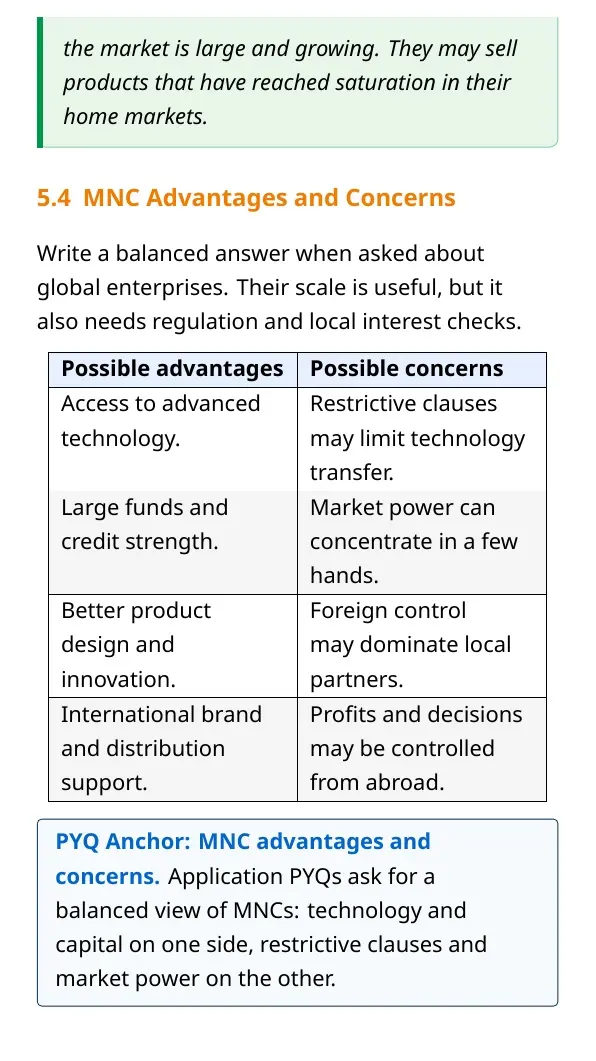
Global enterprises, also called MNCs, operate in more than one country through branches, subsidiaries or affiliates. NCERT describes them as large corporations with huge capital, advanced technology, international brands and centralised policy control.
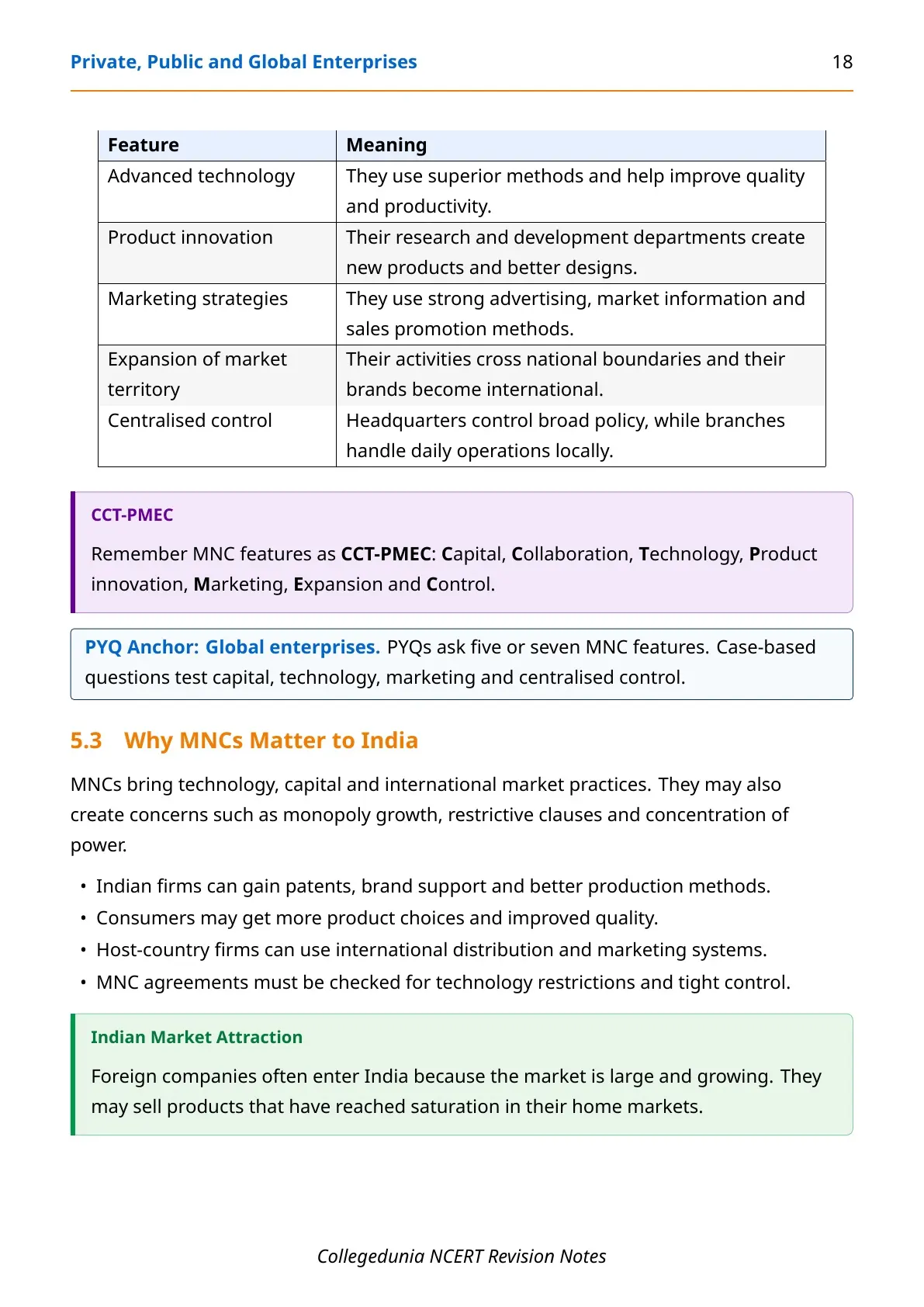
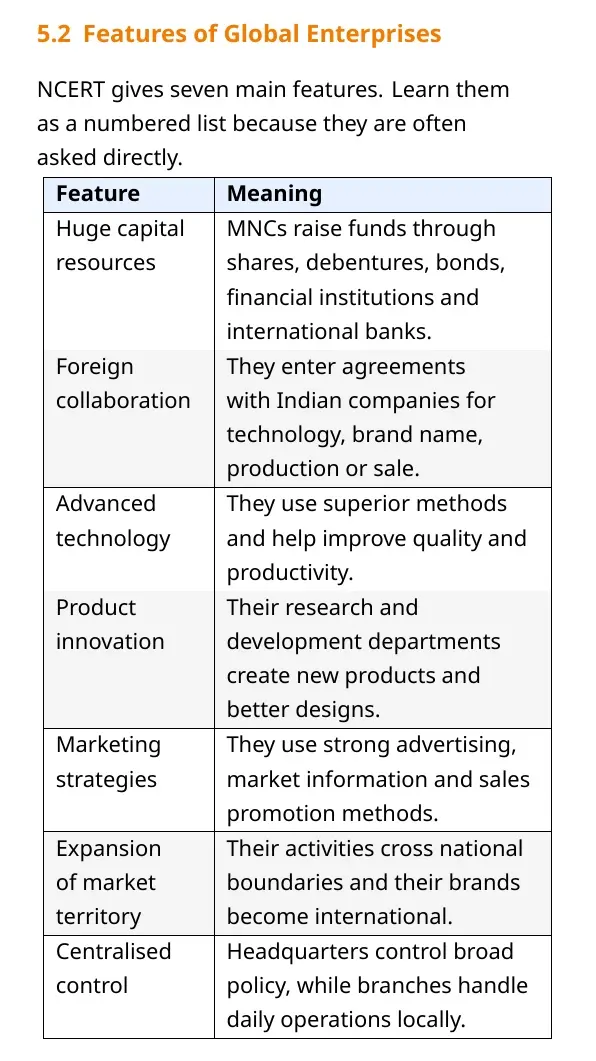
- Capital resources: MNCs can raise large funds from many markets and institutions.
- Foreign collaboration: they enter agreements for technology, brand name, production or sale.
- Advanced technology: better methods can improve quality and productivity.
- Product innovation: research and development teams create improved products.
- Centralised control: headquarters controls broad policy, while branches handle daily work.
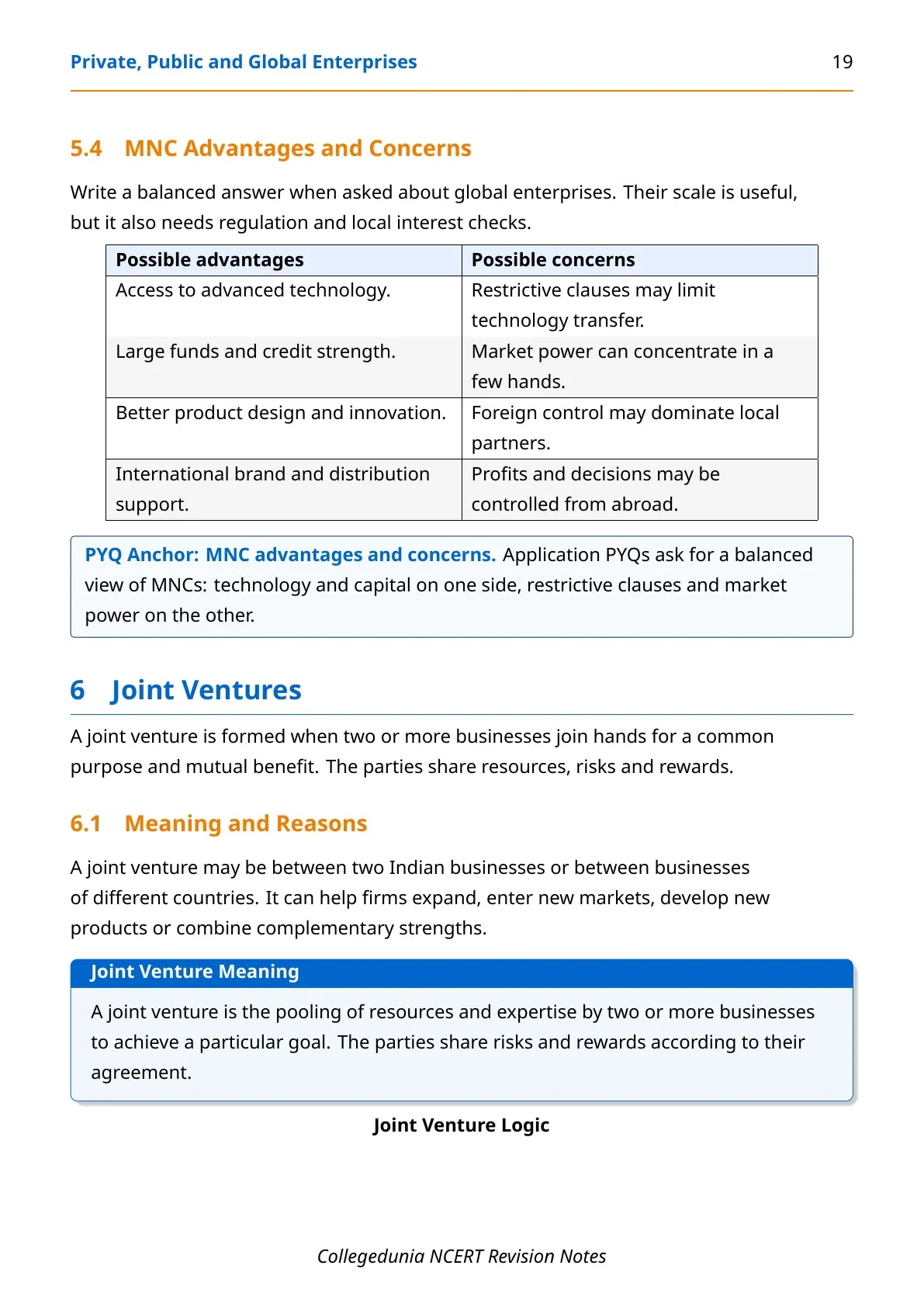
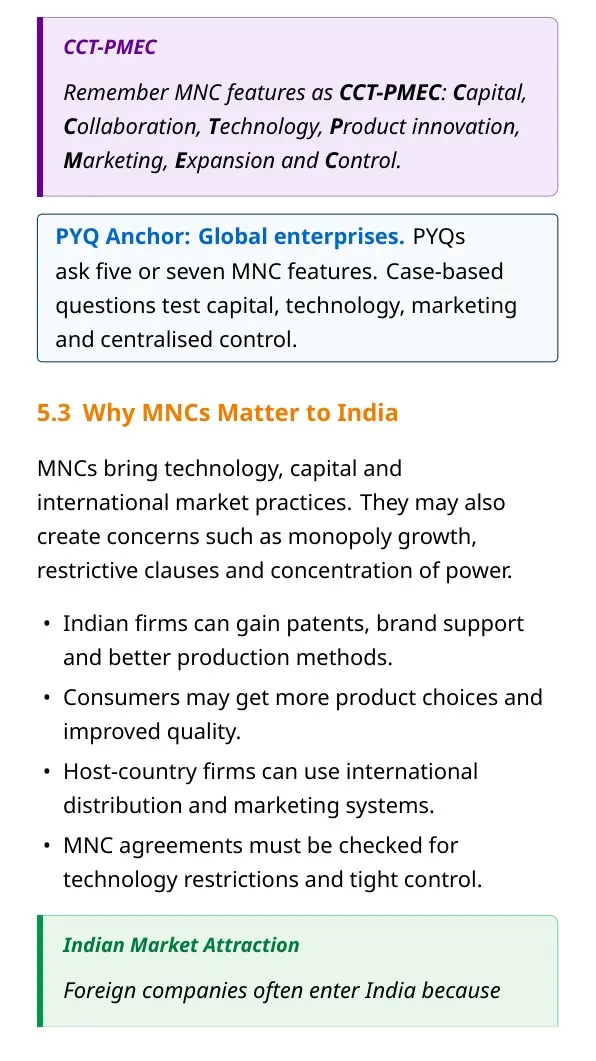
A balanced answer should also mention concerns. Restrictive clauses, market power and foreign control can affect local partners if agreements are not checked carefully.
Joint Venture and PPP Difference
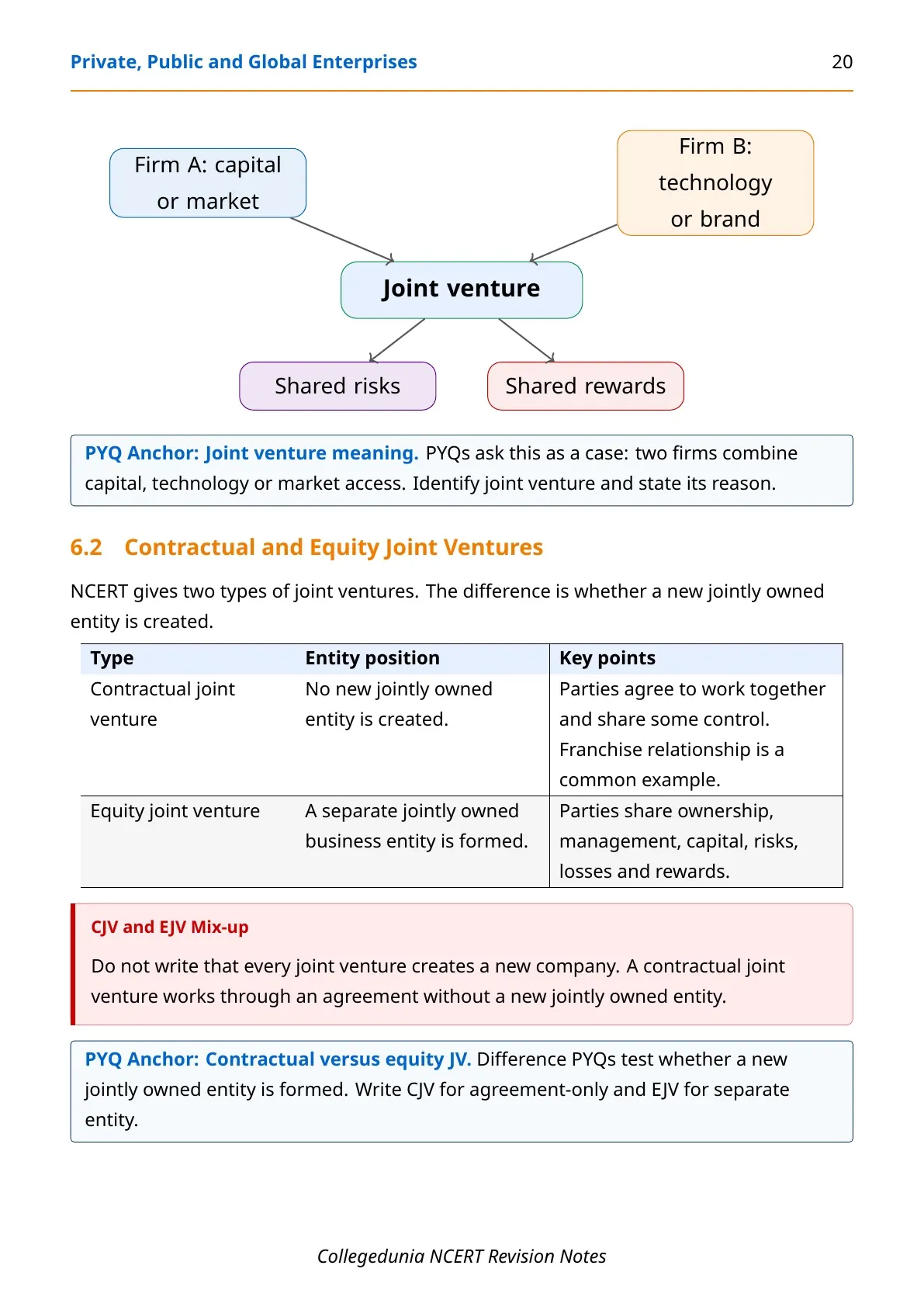
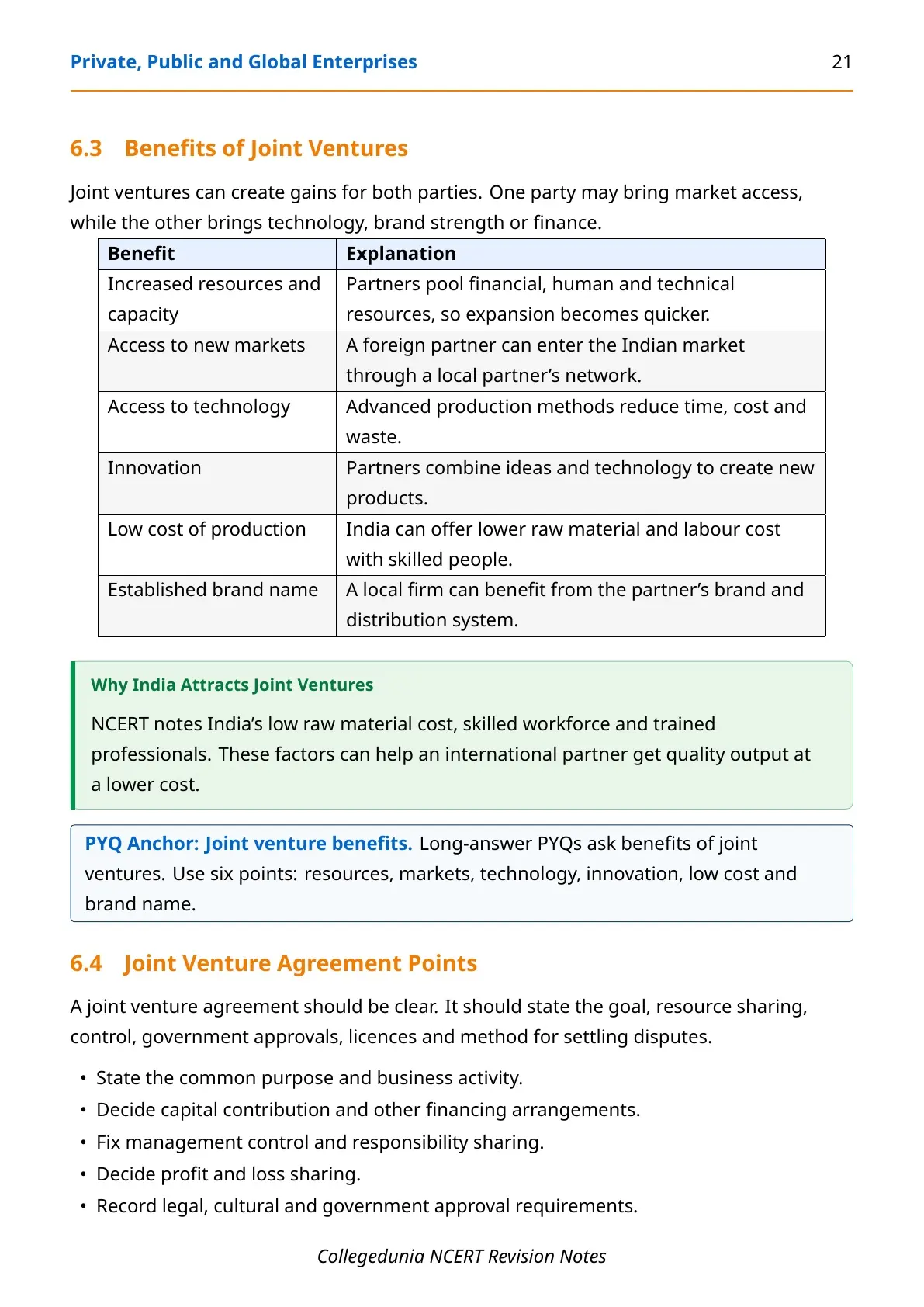
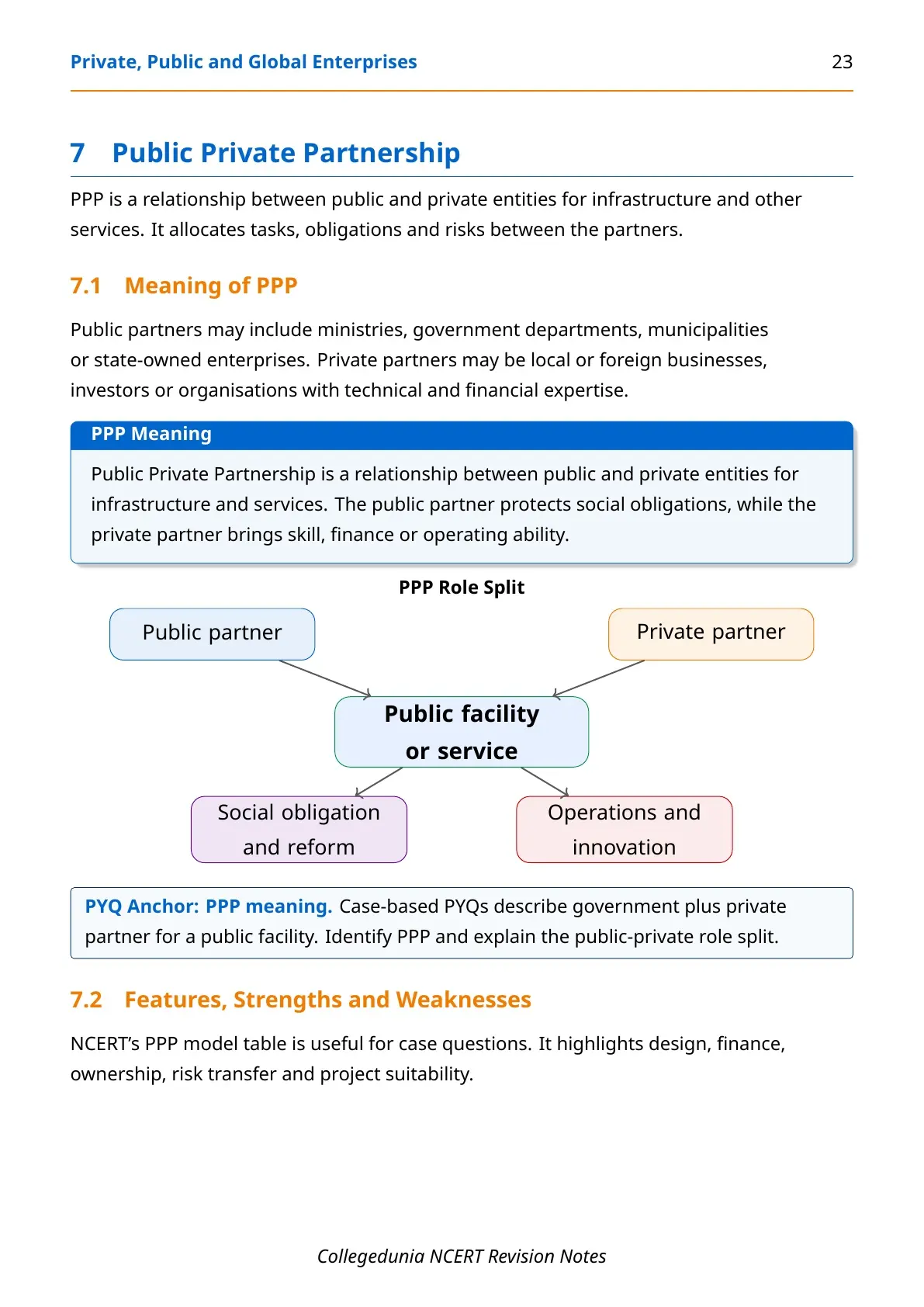
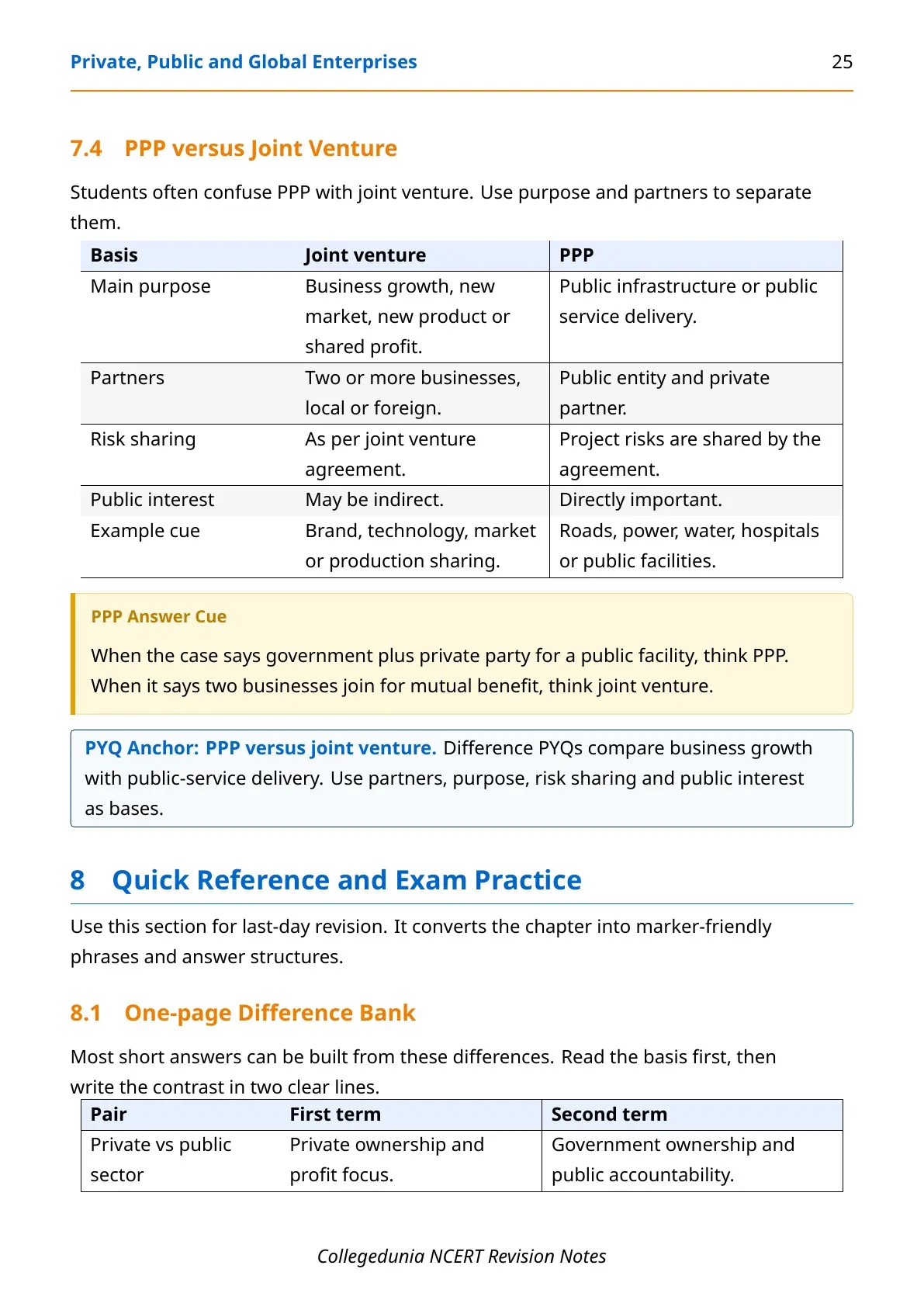
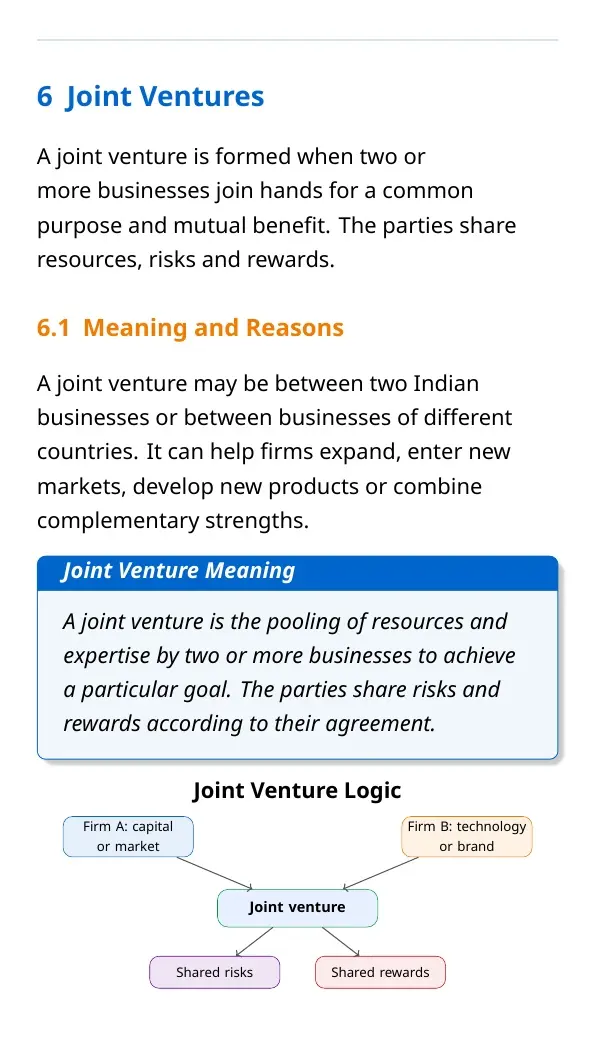
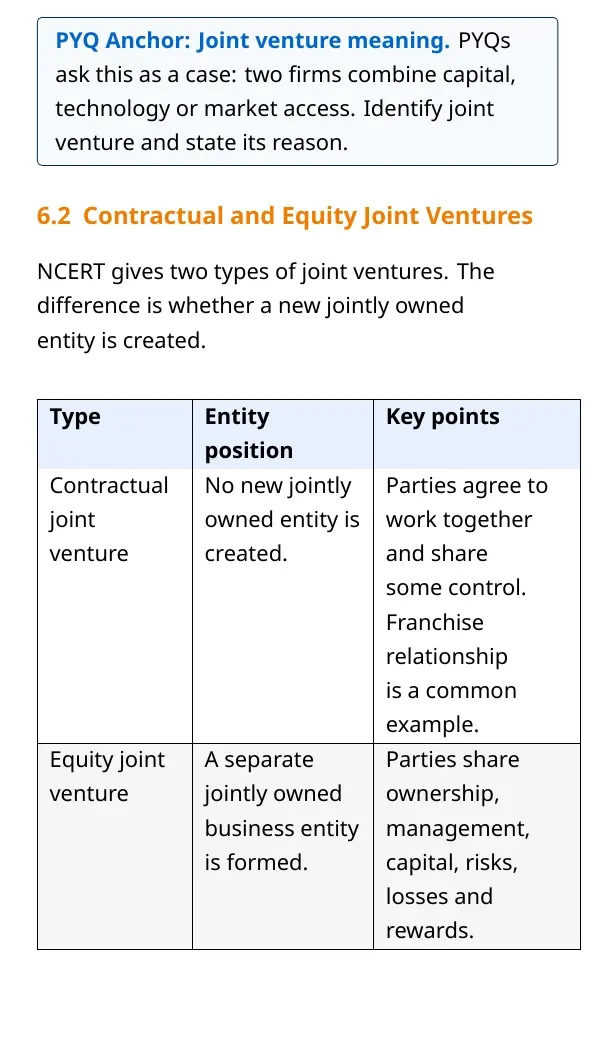
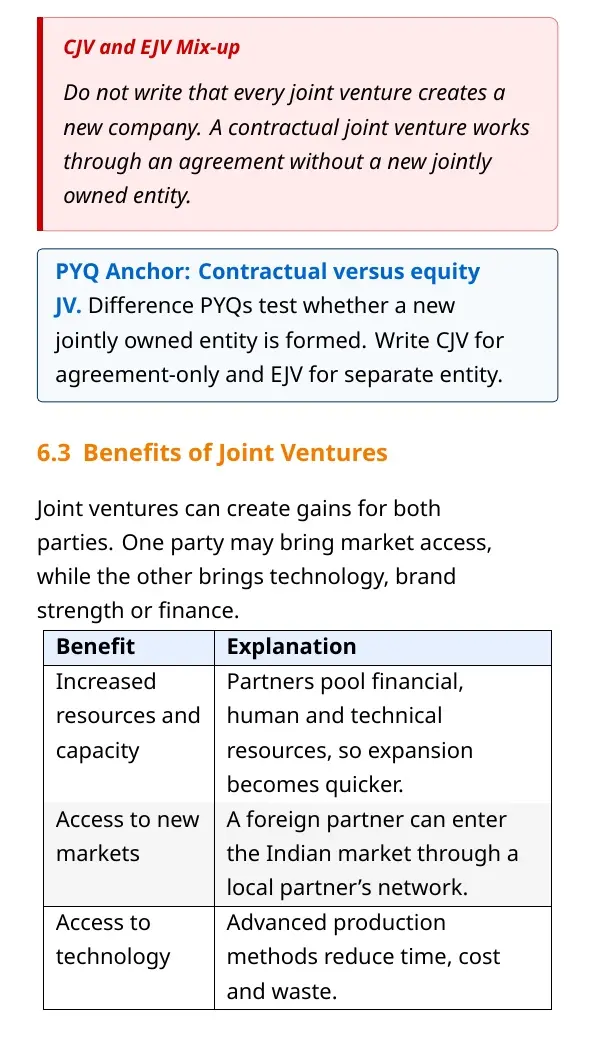
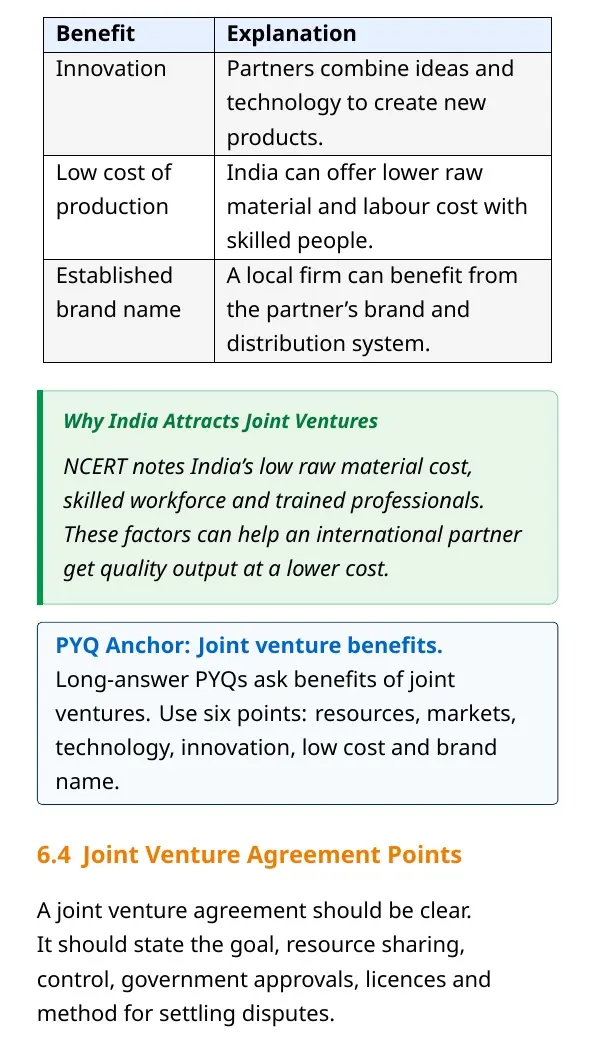
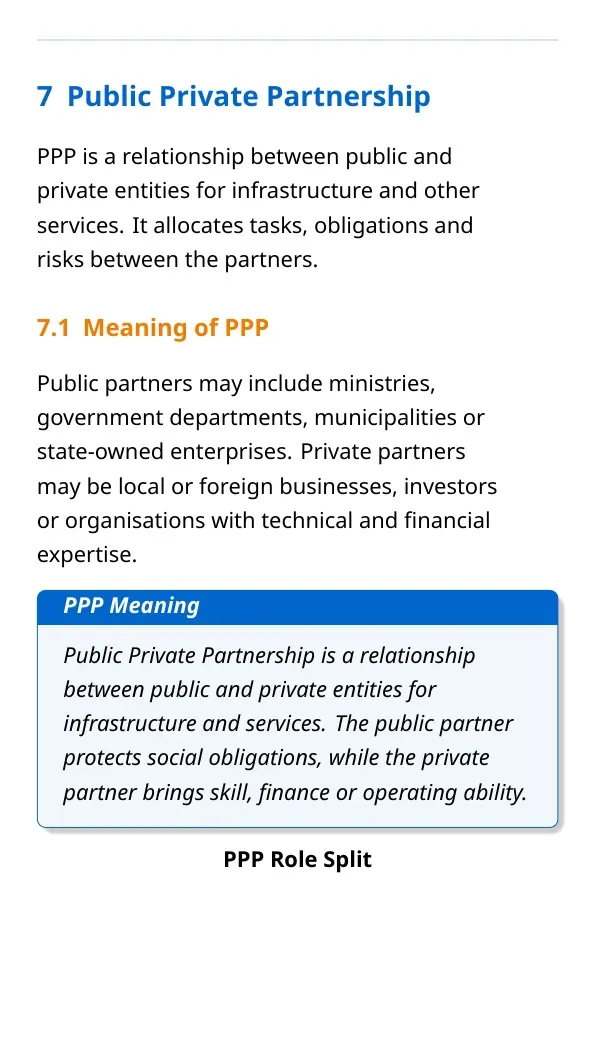
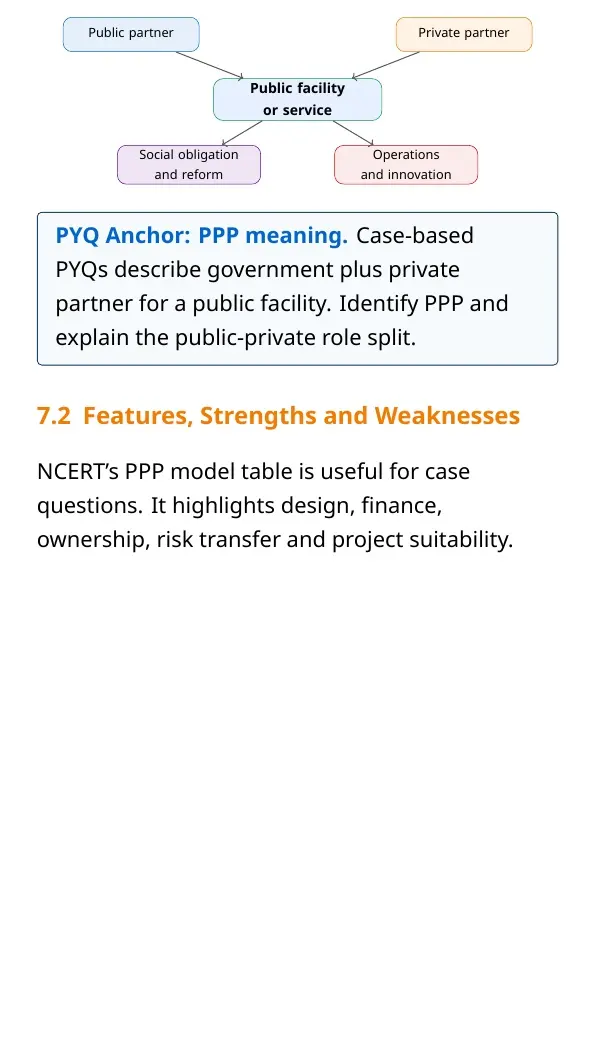
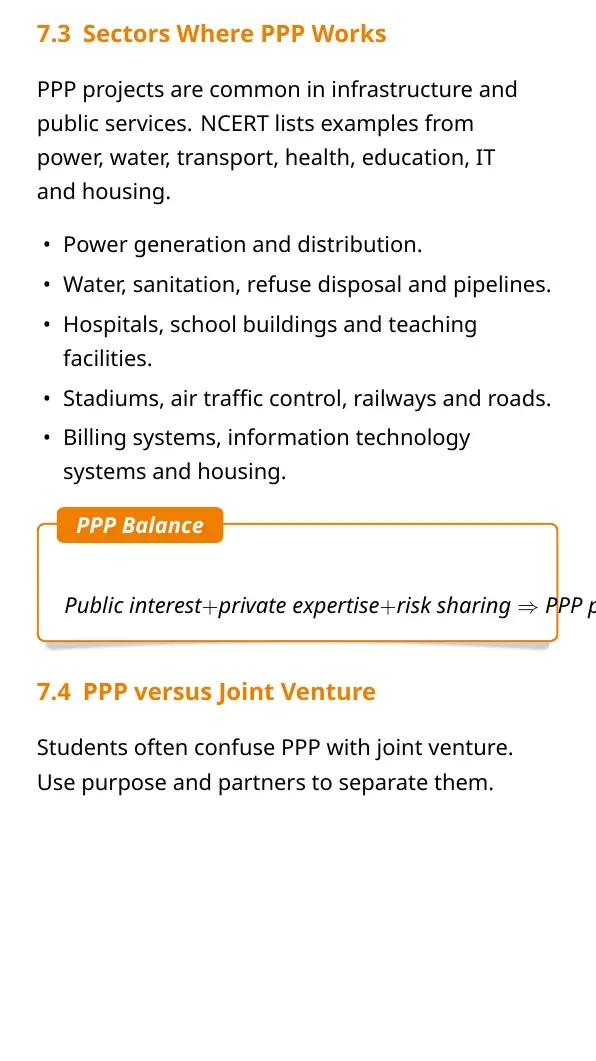
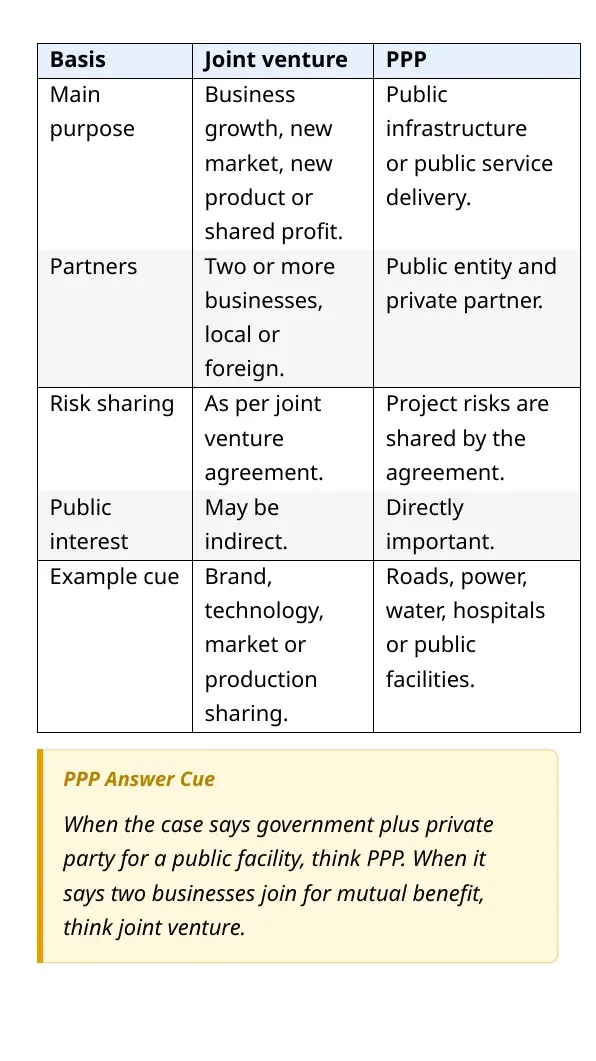
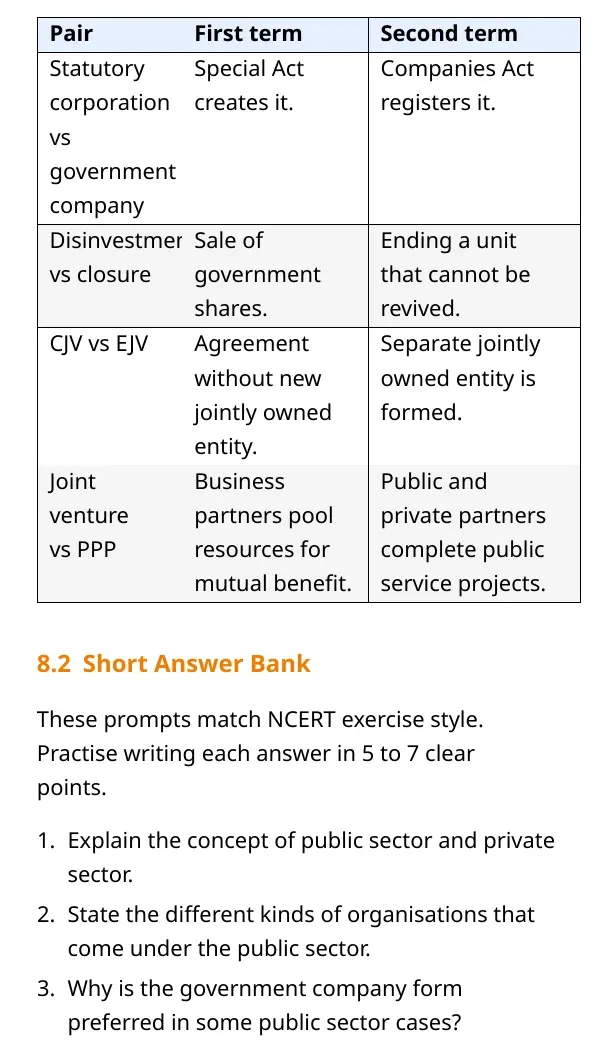
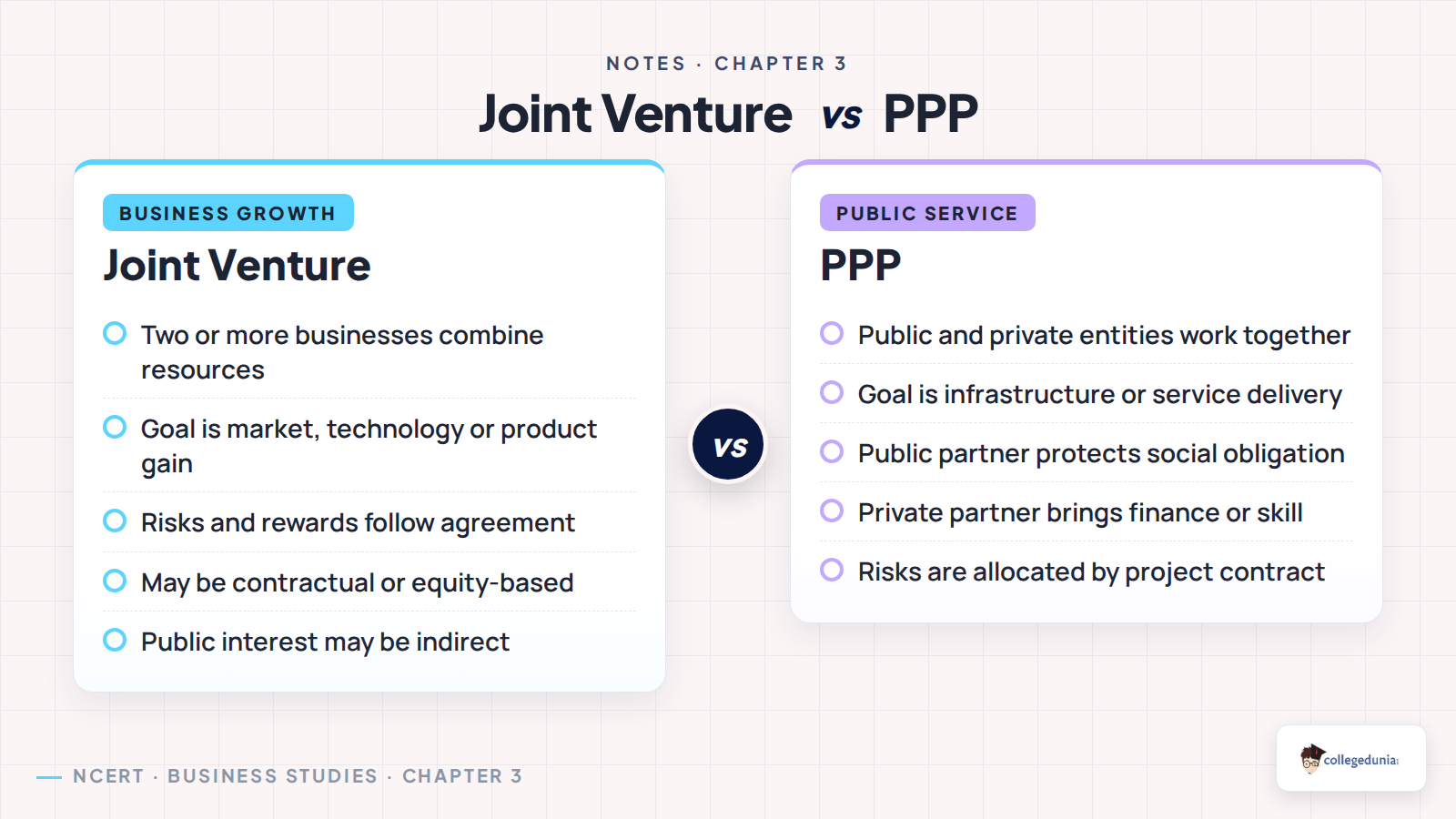
Joint ventures and PPP both combine strengths, but they are not the same. A joint venture is mainly a business arrangement for growth, market access, technology, brand support or shared production. A PPP is mainly a public-service arrangement for infrastructure or services.
| Basis | Joint Venture | PPP |
|---|---|---|
| Main purpose | Business growth, new market, new product or shared profit | Public infrastructure or public service delivery |
| Partners | Two or more businesses, local or foreign | Public entity and private partner |
| Risk sharing | As per joint venture agreement | Project risks are shared by the contract |
| Public interest | May be indirect | Directly important |
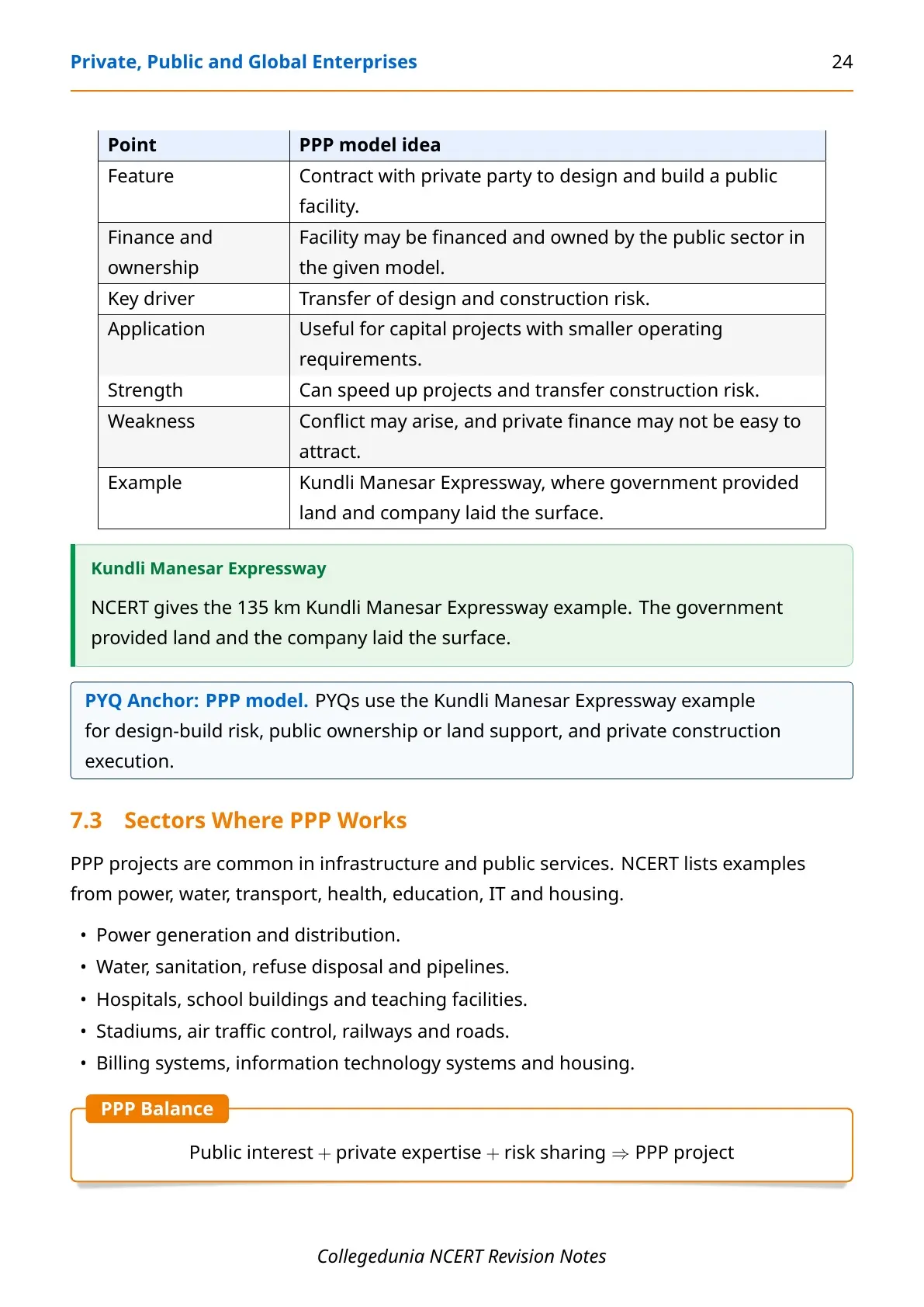
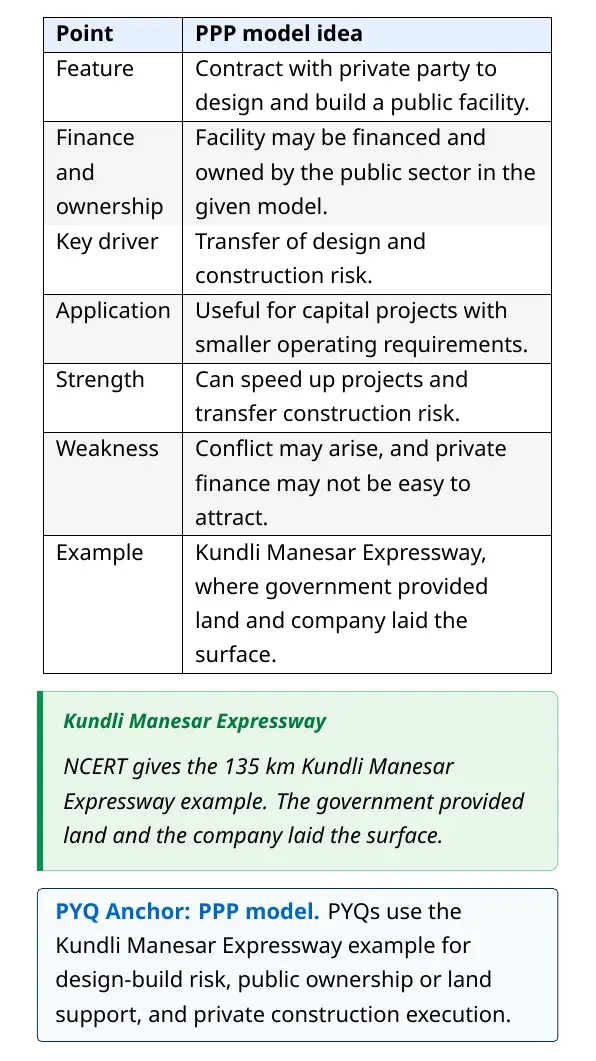
PPP example: NCERT gives the 135 km Kundli Manesar Expressway, where the government provided land and the company laid the surface.
Related Resources for Private, Public and Global Enterprises
| Resource | Use it for | Link |
|---|---|---|
| NCERT Solutions | Full answers to textbook questions | Open NCERT Solutions |
| Handwritten Notes | Topper-style last-minute revision | Open Handwritten Notes |
| NCERT Book PDF | Read the official NCERT chapter | Open Book PDF |
| Chapter Notes PDF | Use this page for revision notes | Open Chapter Notes |
All Class 11 Business Studies Notes Chapters
| Chapter | Title | Notes Link |
|---|---|---|
| Chapter 1 | Business, Trade and Commerce | Open Notes |
| Chapter 2 | Forms of Business Organisation | Open Notes |
| Chapter 3 | Private, Public and Global Enterprises | You are here |
| Chapter 4 | Business Services | Open Notes |
| Chapter 5 | Emerging Modes of Business | Open Notes |
Private, Public and Global Enterprises Class 11 Notes FAQs
Ques. What does Class 11 Business Studies Chapter 3 cover?
Ans. It covers private sector, public sector, forms of public sector enterprises, changing role of public sector, global enterprises, joint ventures and PPP.
Ques. What are the three forms of public sector enterprises?
Ans. The three forms are departmental undertaking, statutory corporation and government company.
Ques. What changed in the public sector after 1991?
Ans. After 1991, public sector policy focused on fewer reserved industries, disinvestment, review of sick units and MoU-based performance targets.
Ques. How should students revise joint venture and PPP?
Ans. Students should revise purpose, partners, risk sharing and public interest. Joint venture is mainly for business growth, while PPP is mainly for public infrastructure or service delivery.



Comments