




The handwritten notes on Class 11 Applied Mathematics Chapter 6 Permutations and Combinations have been carefully prepared for quick revision, according to the latest 2026-27 CBSE syllabus. The PDF covers factorials, counting rules, permutations, combinations, circular arrangements, repeated objects and restriction methods.
- Best for one-shot revision: counting formulas and model choices stay in one handwritten PDF.
- Aligned to 2026-27: follows the current Class 11 Applied Mathematics algebra scope.
- Exam ready: block method, gap method and order checks are placed close to examples.
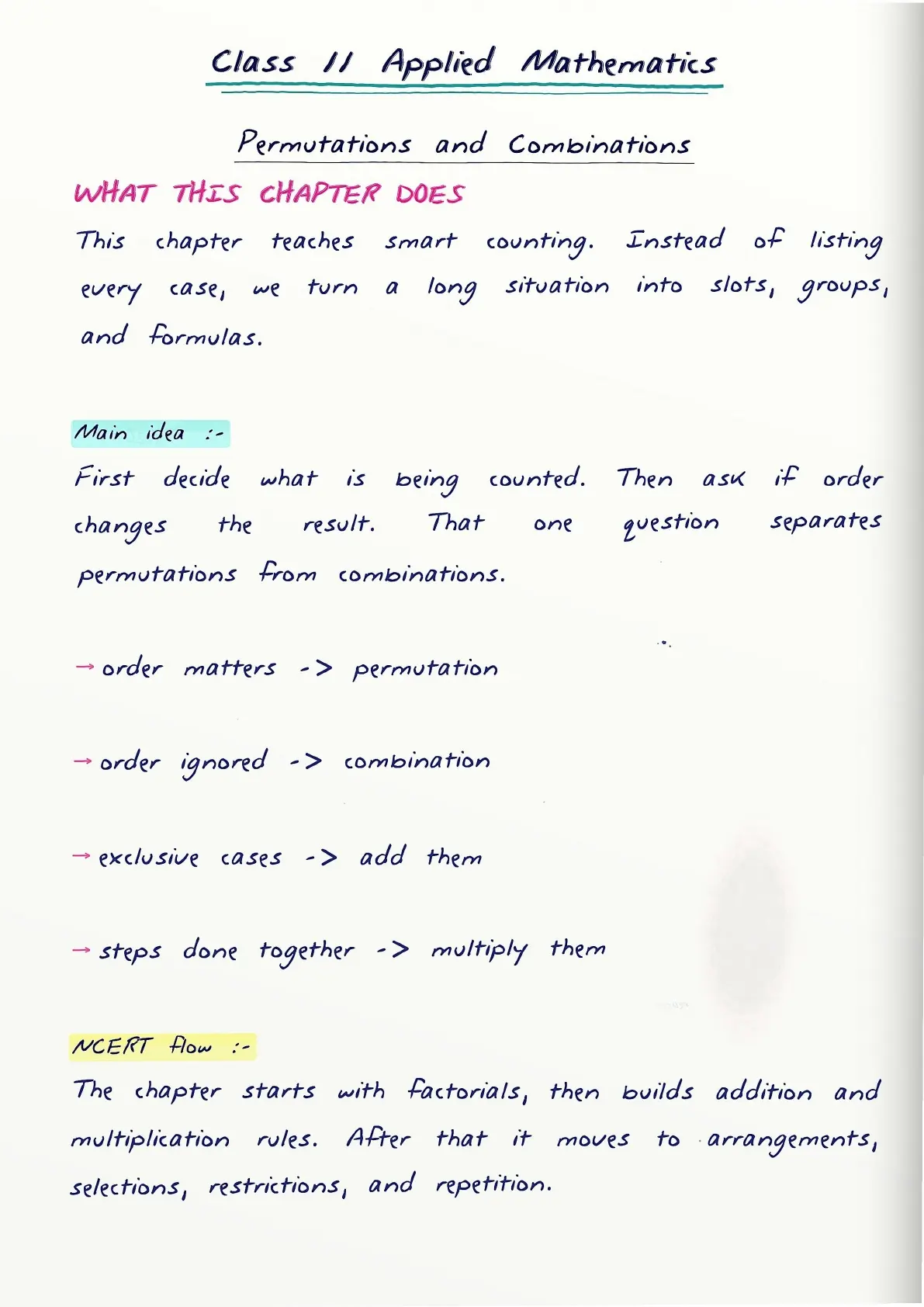
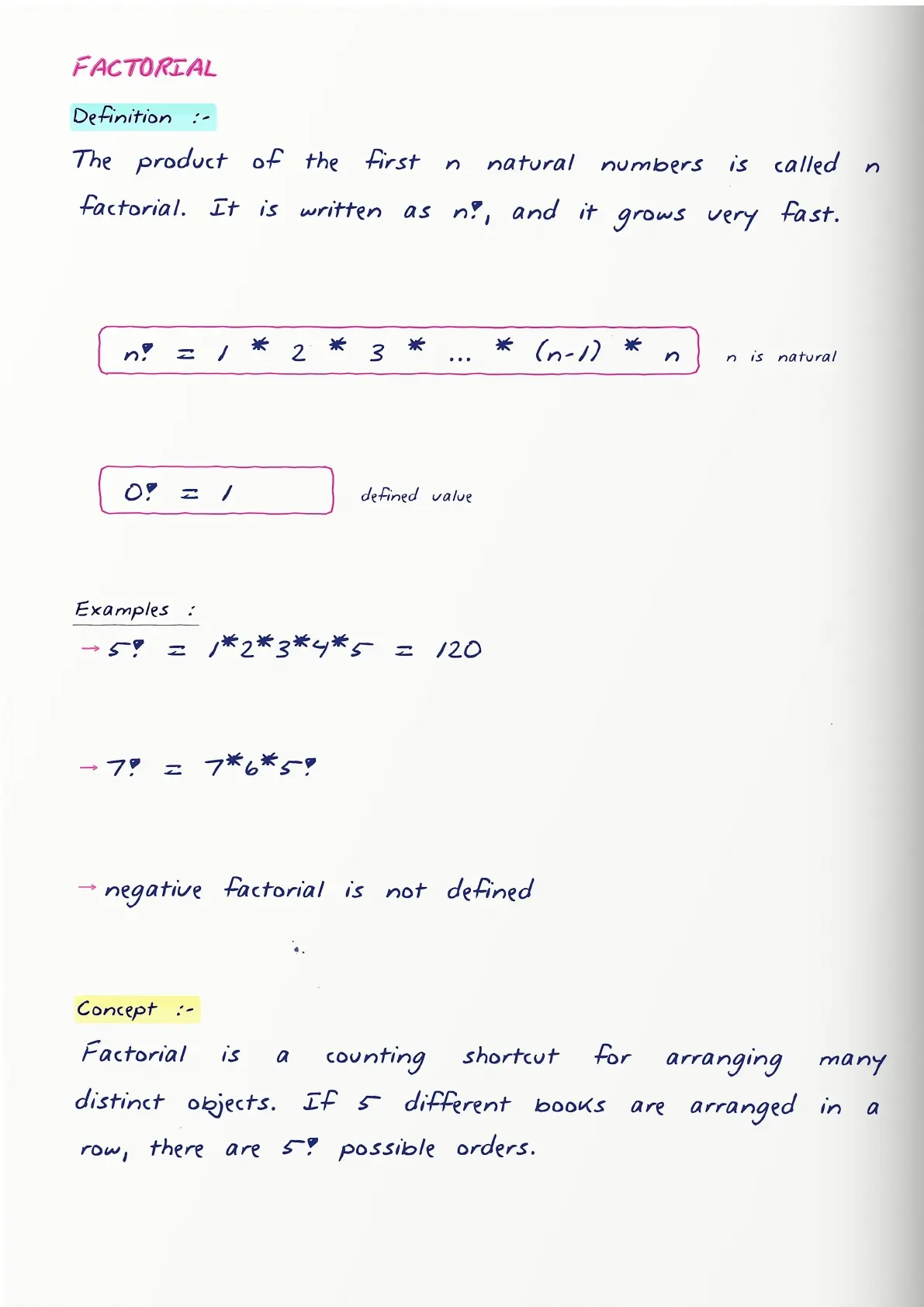
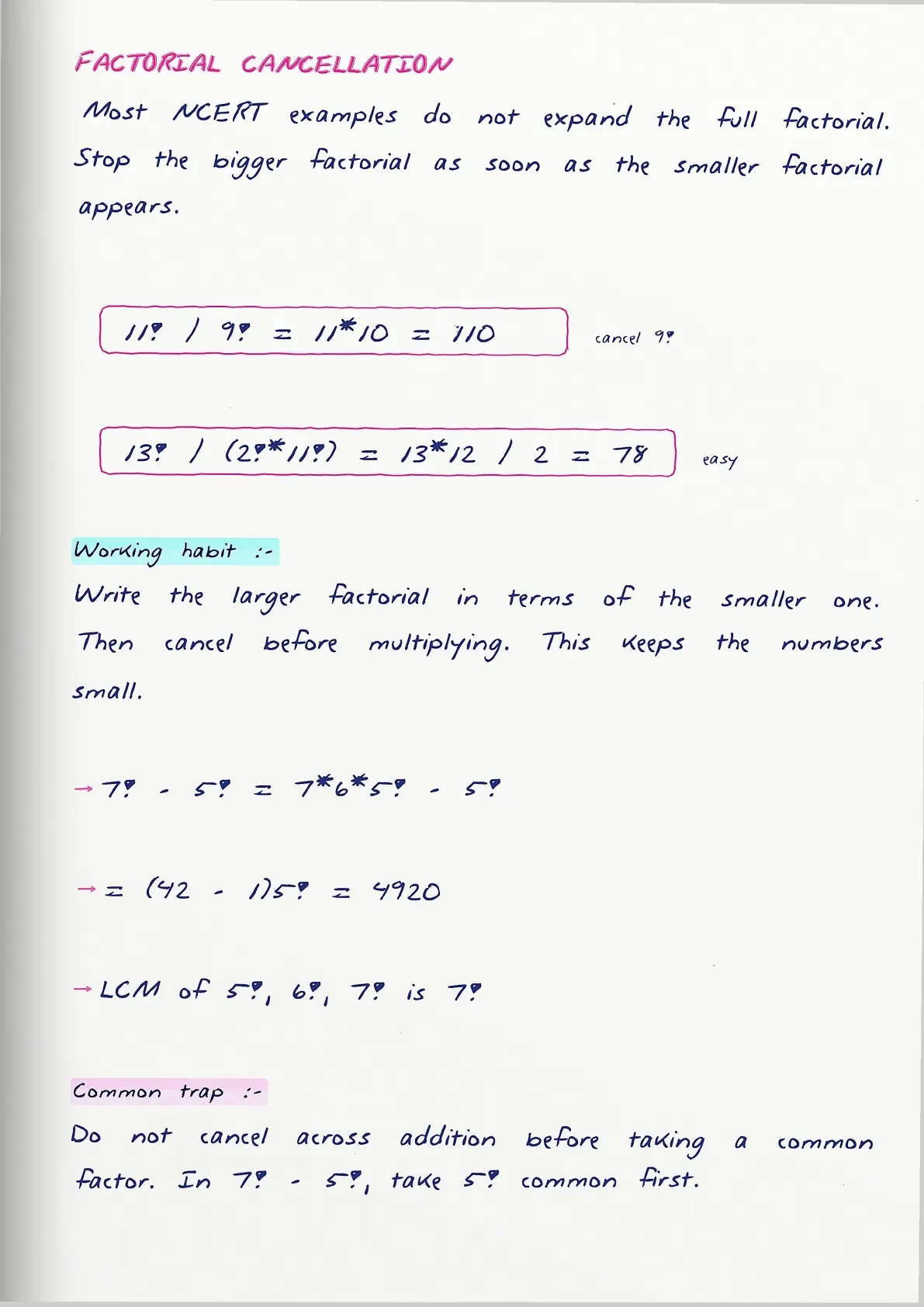
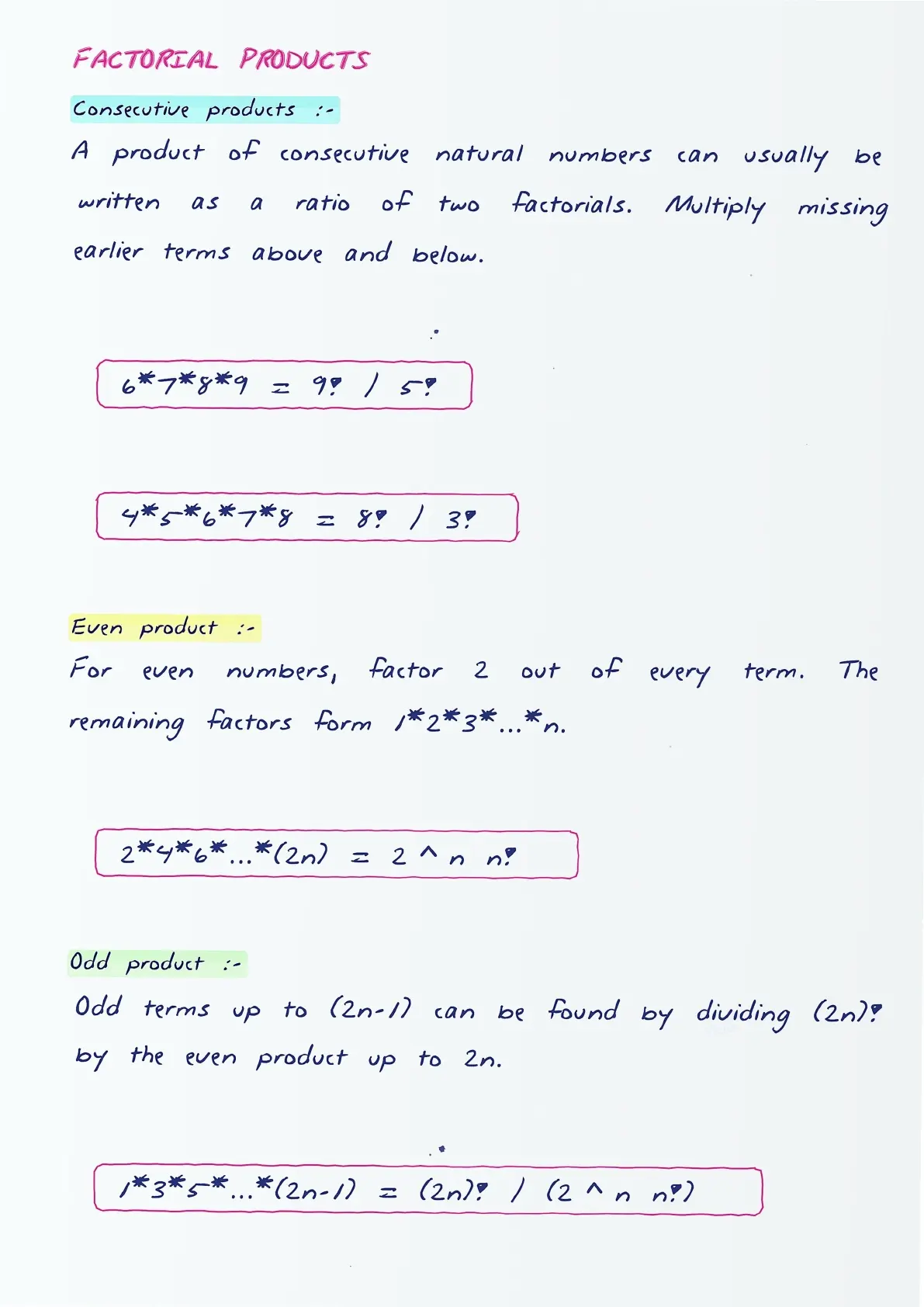
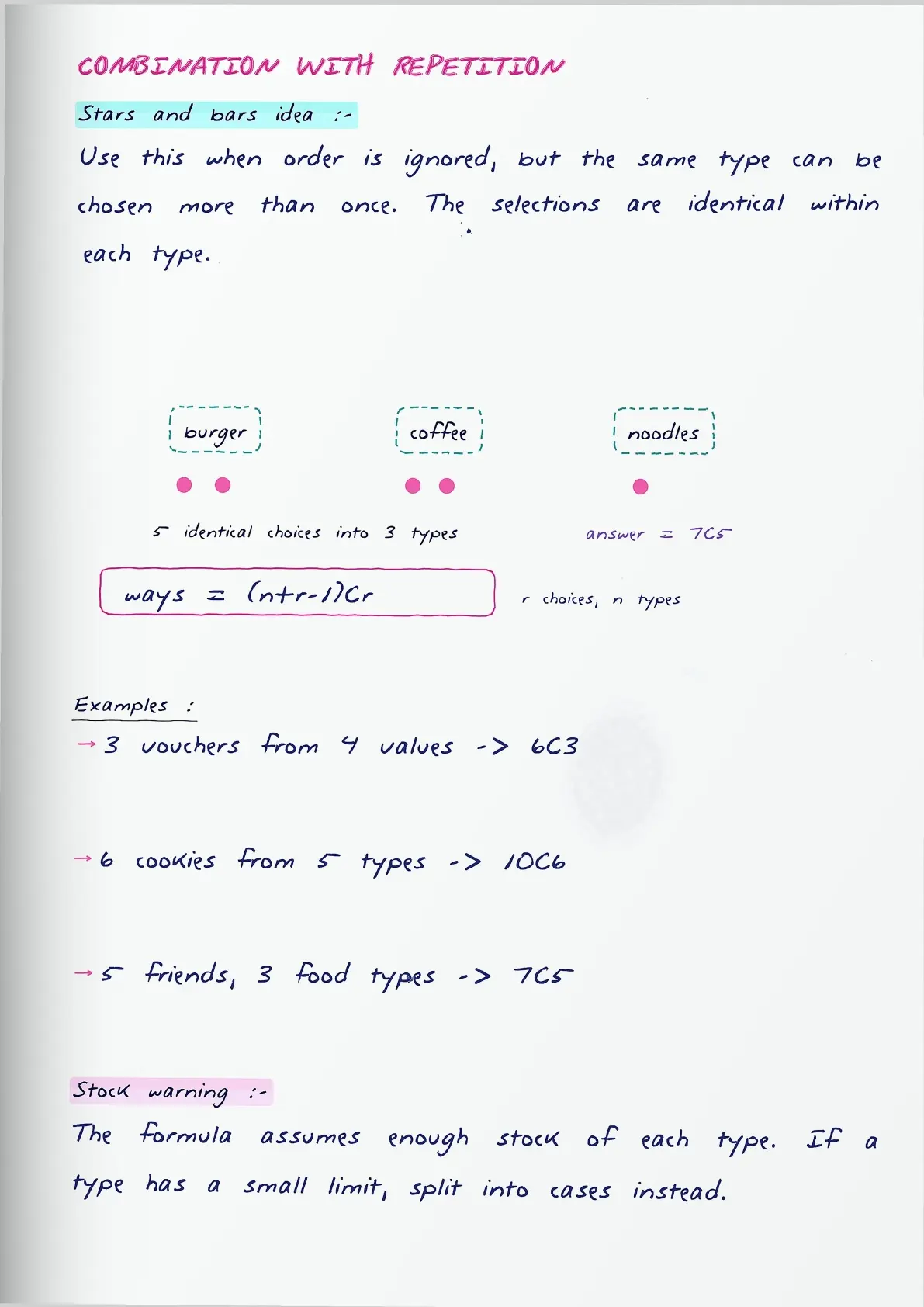
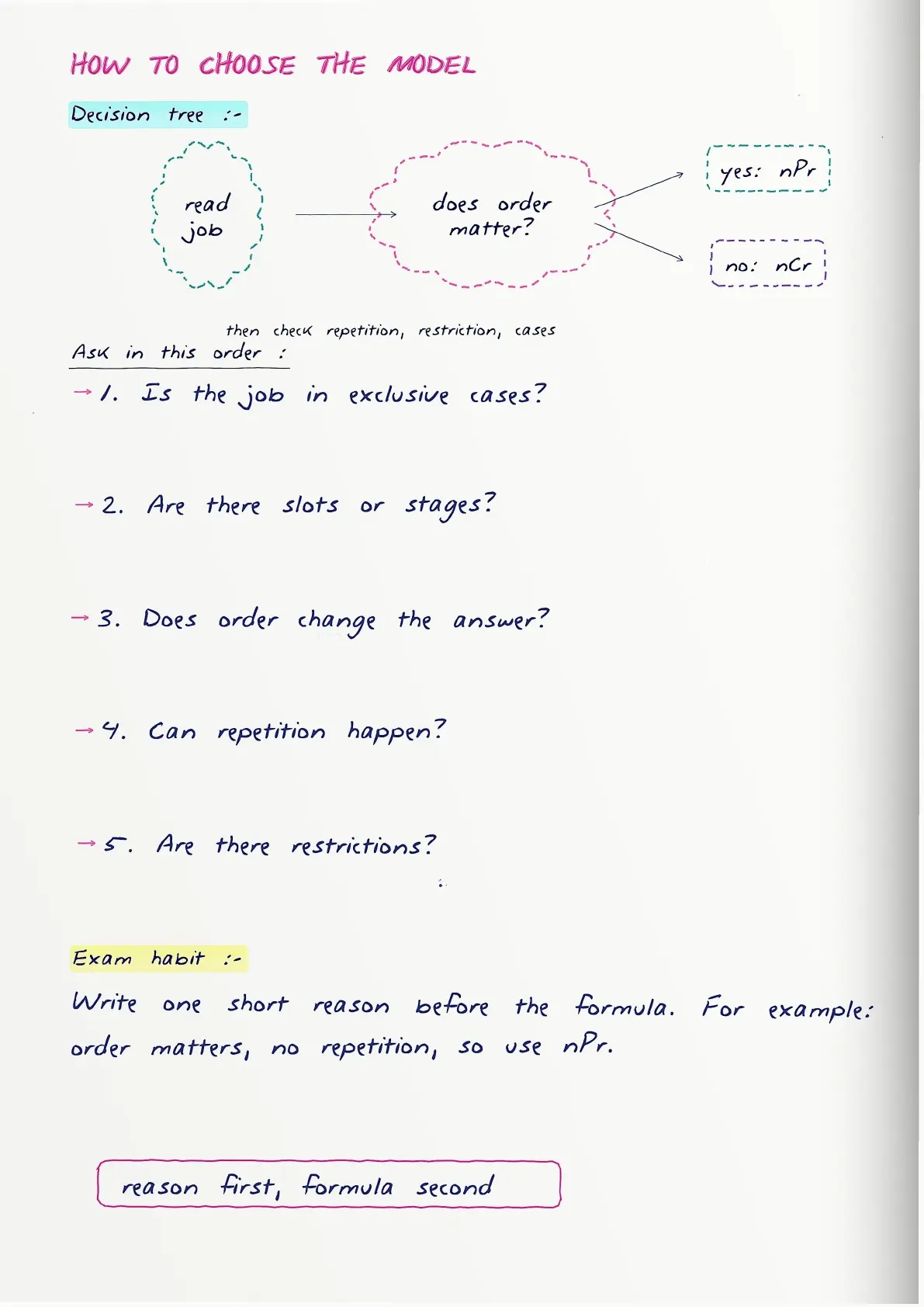
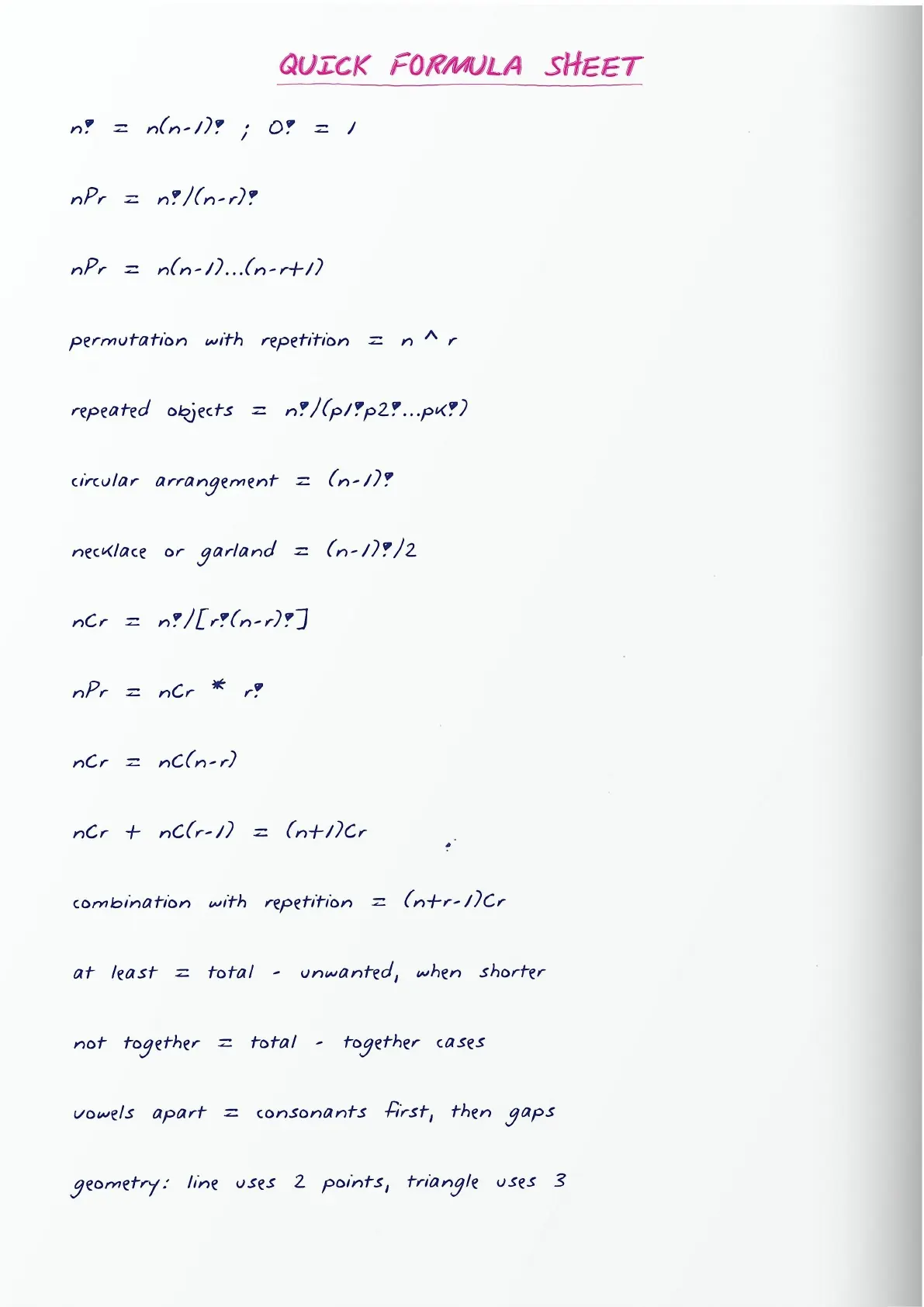
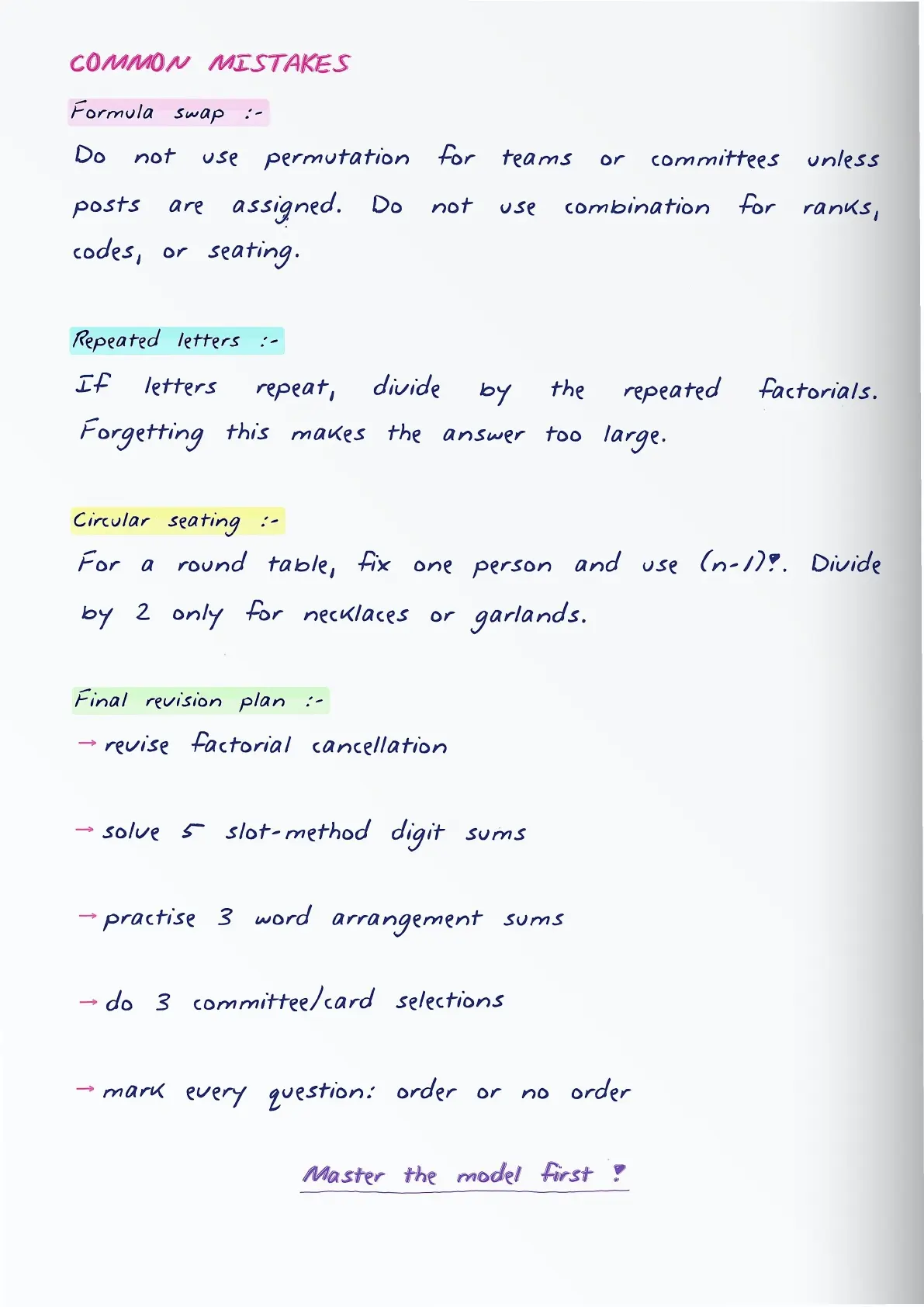
Each Permutations and Combinations handwritten note in this Collegedunia PDF is written for Class 11 revision and follows the 2026-27 NCERT Applied Mathematics scope.
Student Feedback: In a Collegedunia poll of 10,000+ students, most students said Permutations and Combinations felt easier when order, repetition and restriction checks were revised before formulas.
Permutations and Combinations Handwritten Notes: What the PDF Covers
Permutations and Combinations starts with a simple counting question: how many choices are possible? These notes keep the rule, condition and example close together so students can revise without switching between multiple pages.
| Block | What students revise | Quick check |
|---|---|---|
| Factorials | Meaning of n!, cancellation and zero factorial | Cancel before multiplying large numbers |
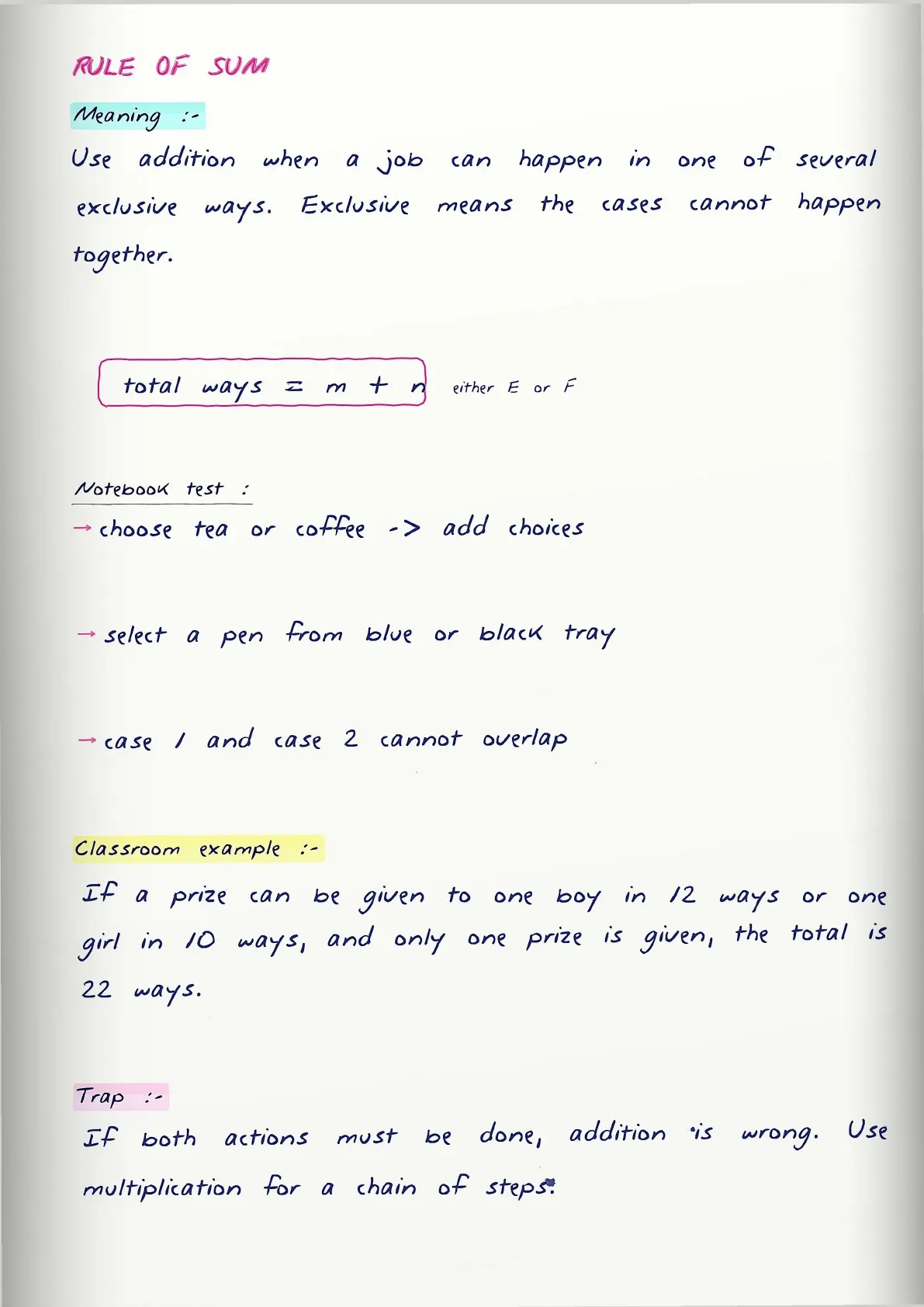
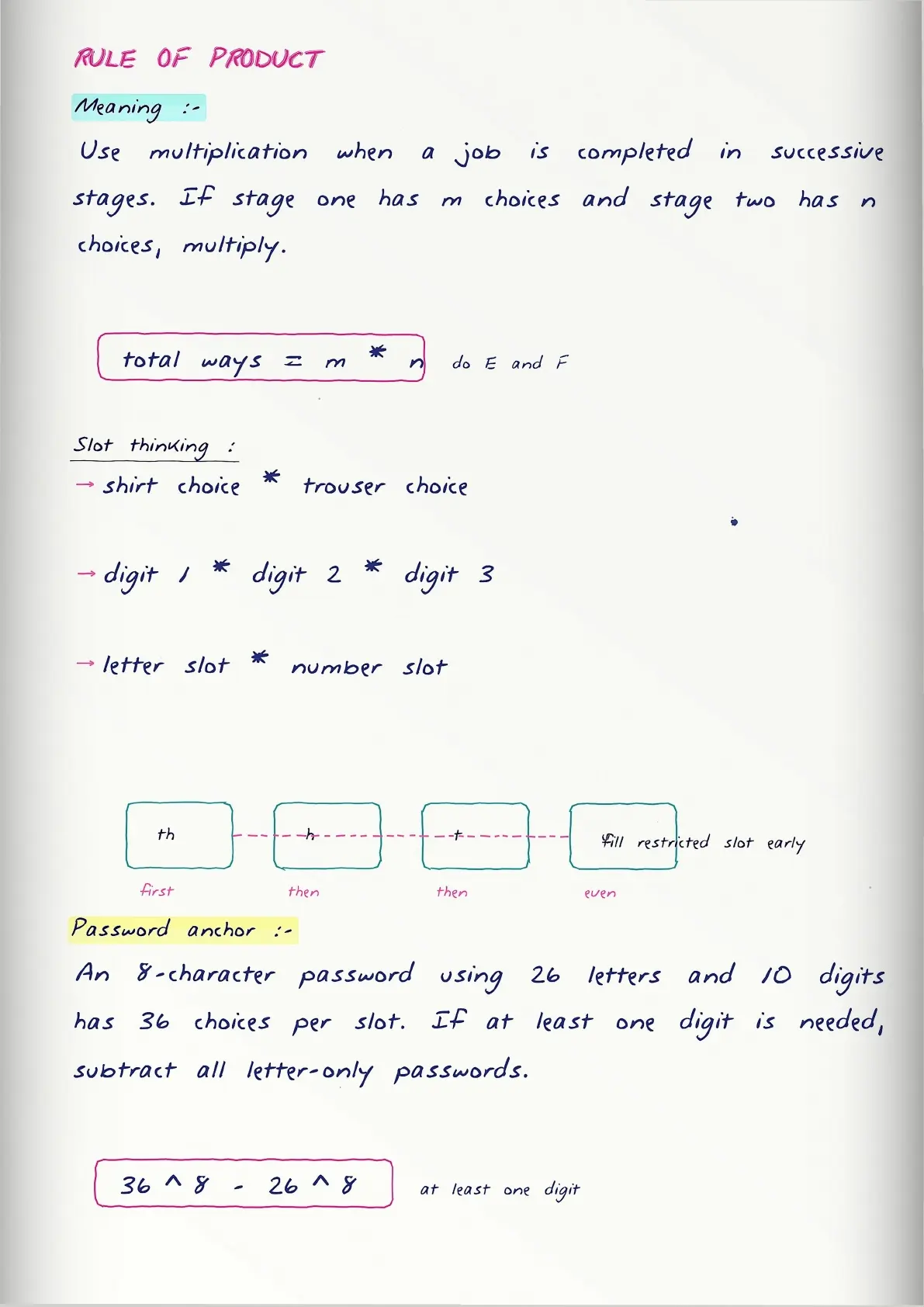
| Counting rules | Rule of sum and rule of product | Add cases, multiply stages |
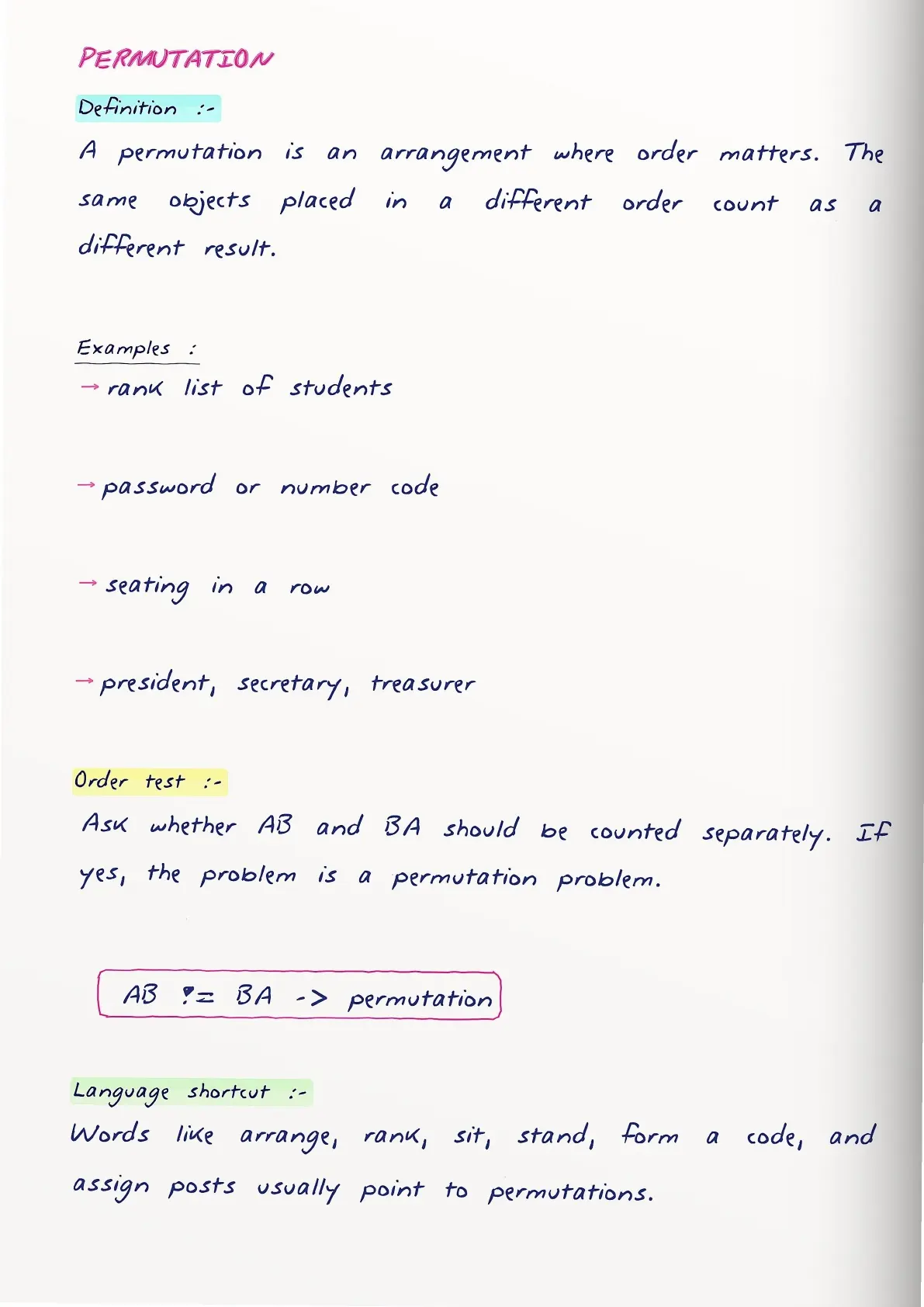
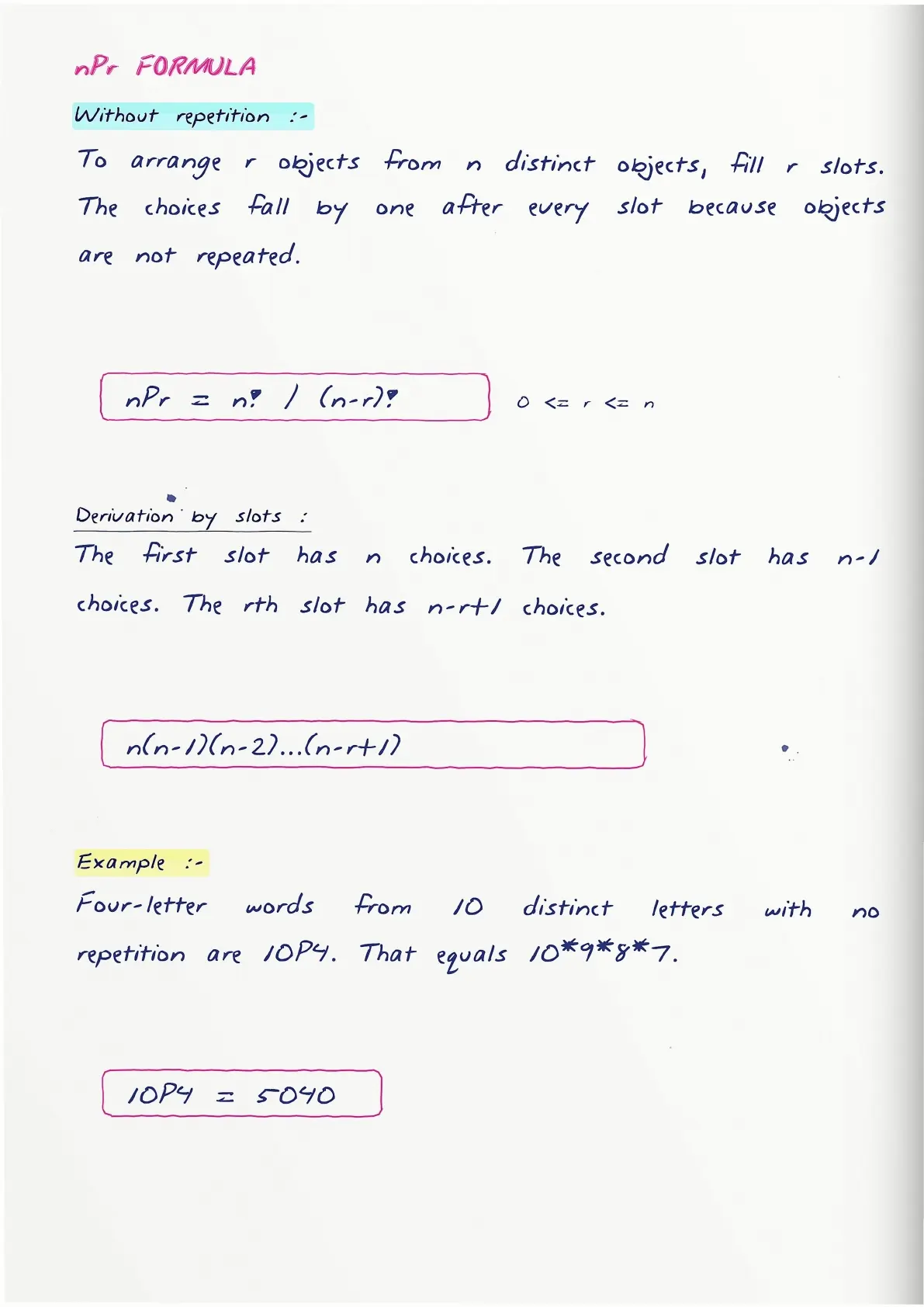
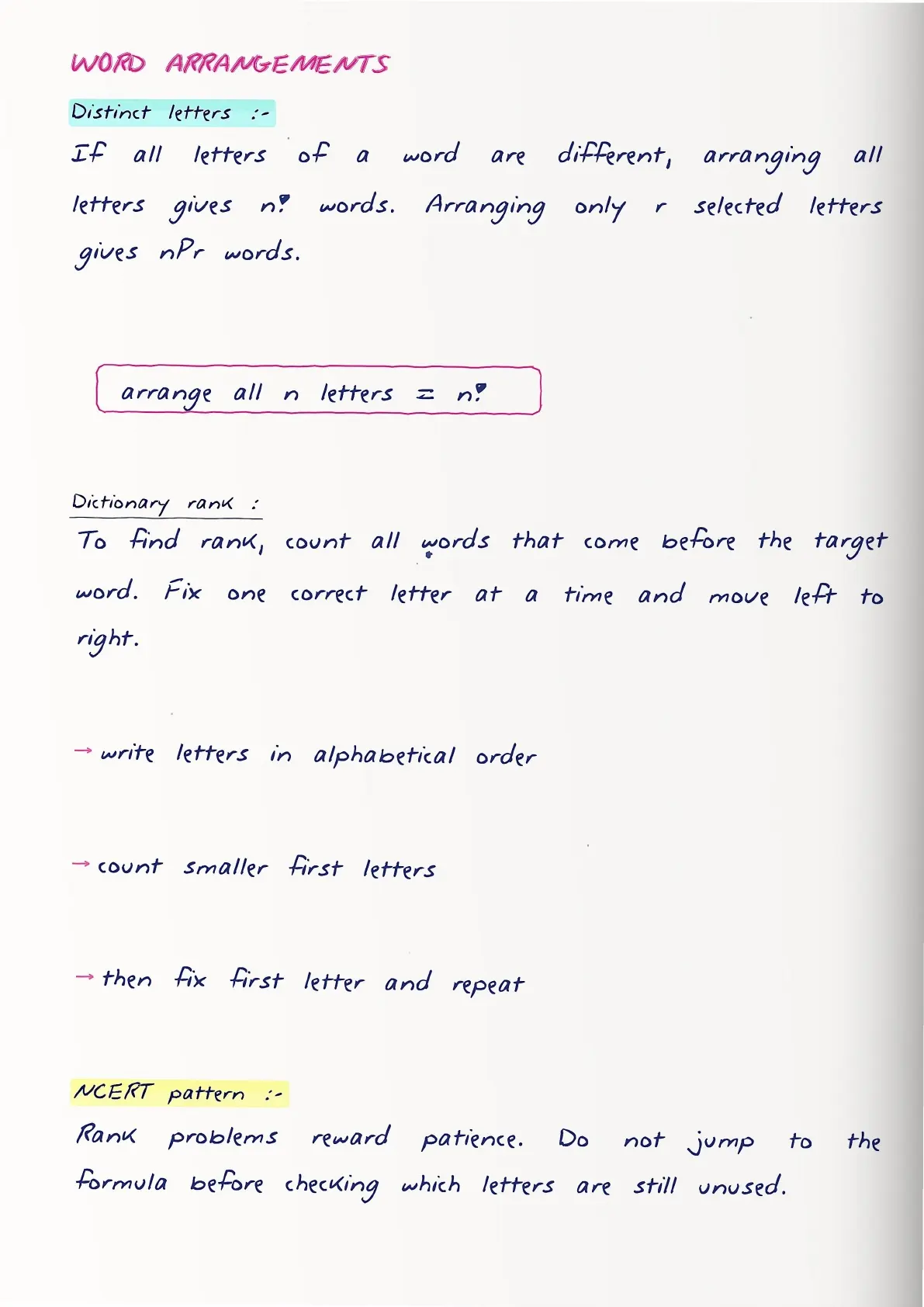
| Permutations | Arrangements, nPr and repeated letters | Order matters |
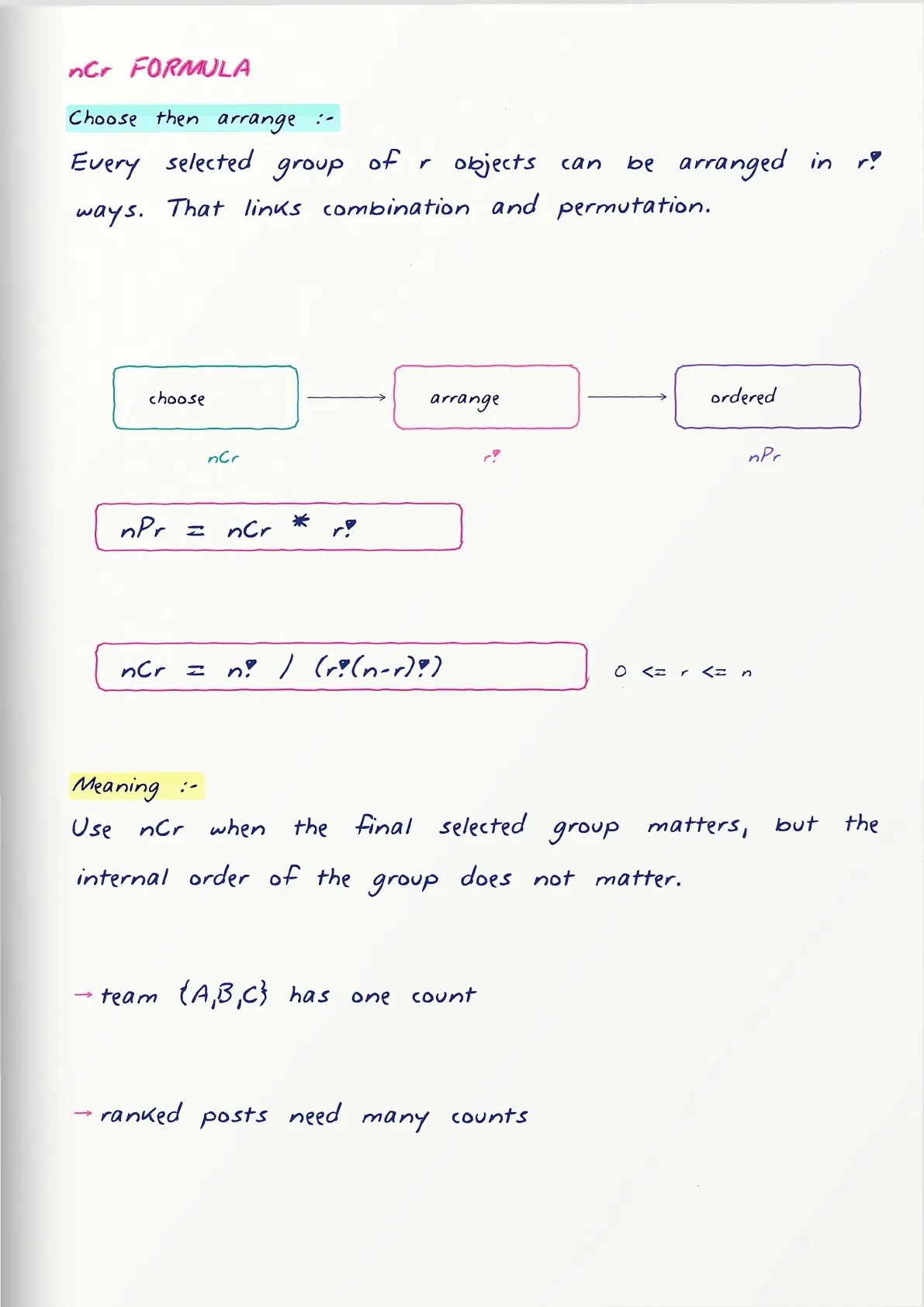
| Combinations | Selections, nCr and committee-type cases | Order is ignored |
Permutation and Combination Difference for Class 11
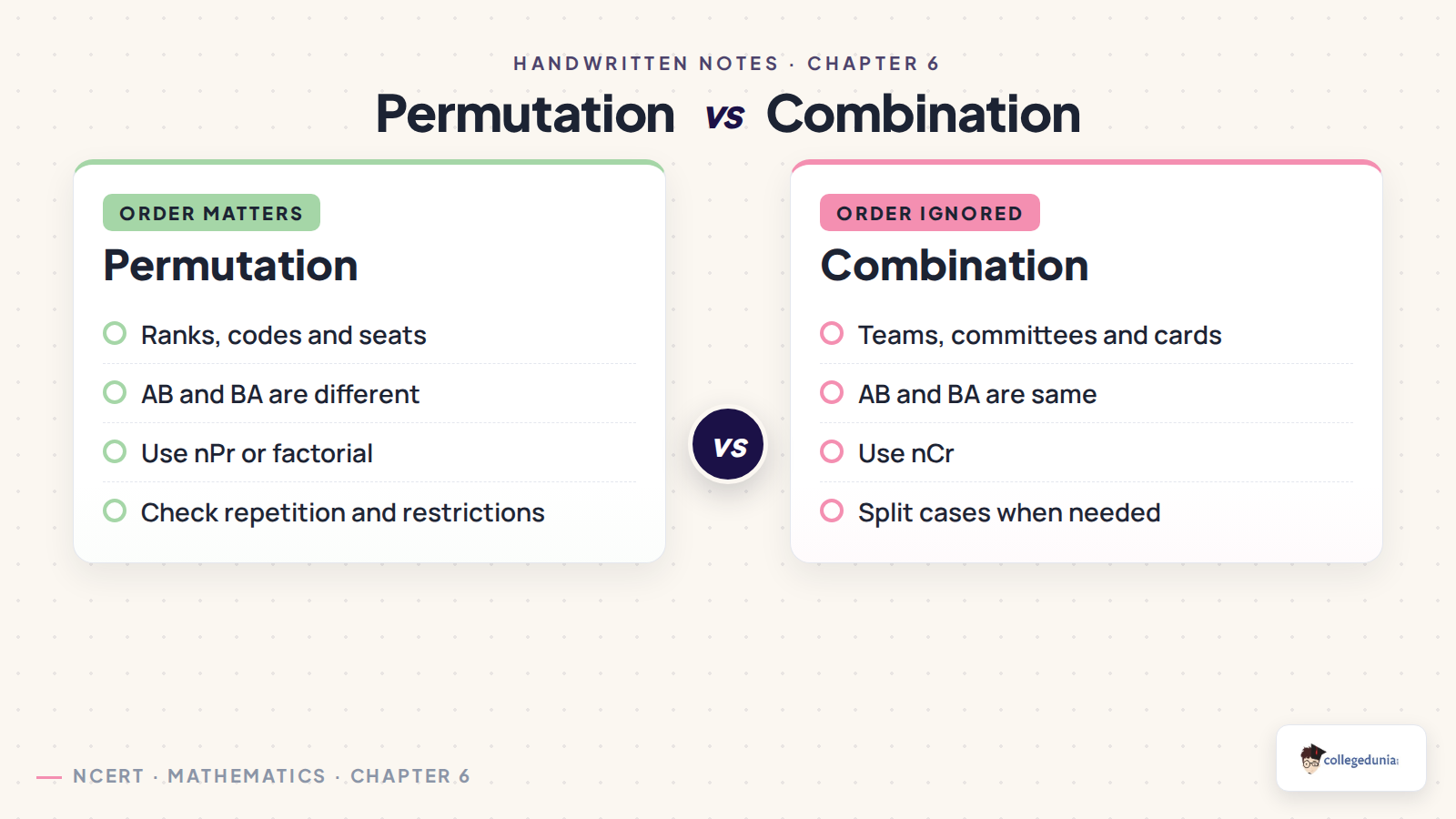
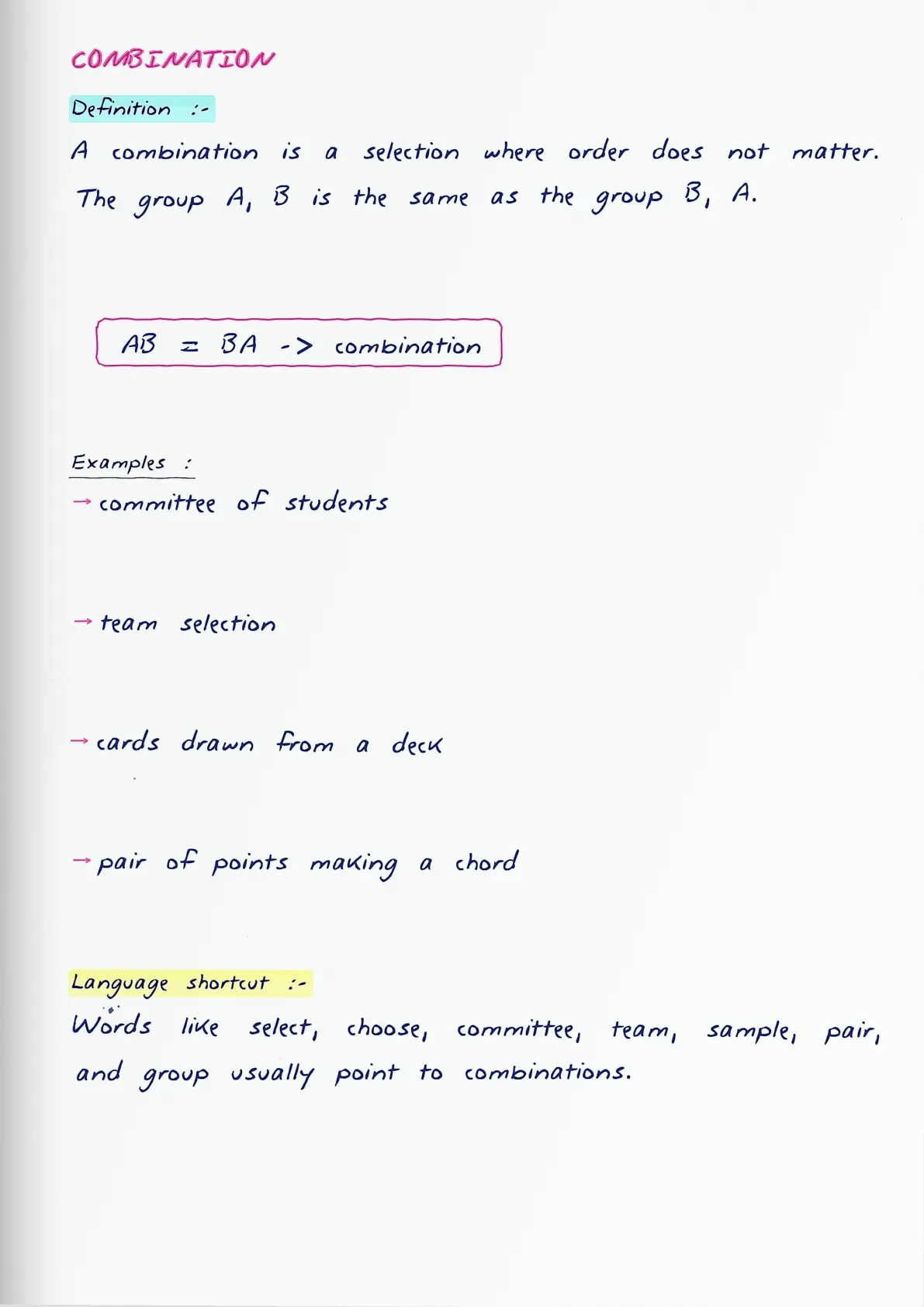
A permutation is an arrangement. A combination is a selection. This is the first decision in most chapter questions. If AB and BA count as different outcomes, the model is a permutation. If AB and BA mean the same group, the model is a combination.
- Use permutation for ranks, passwords, seating and codes.
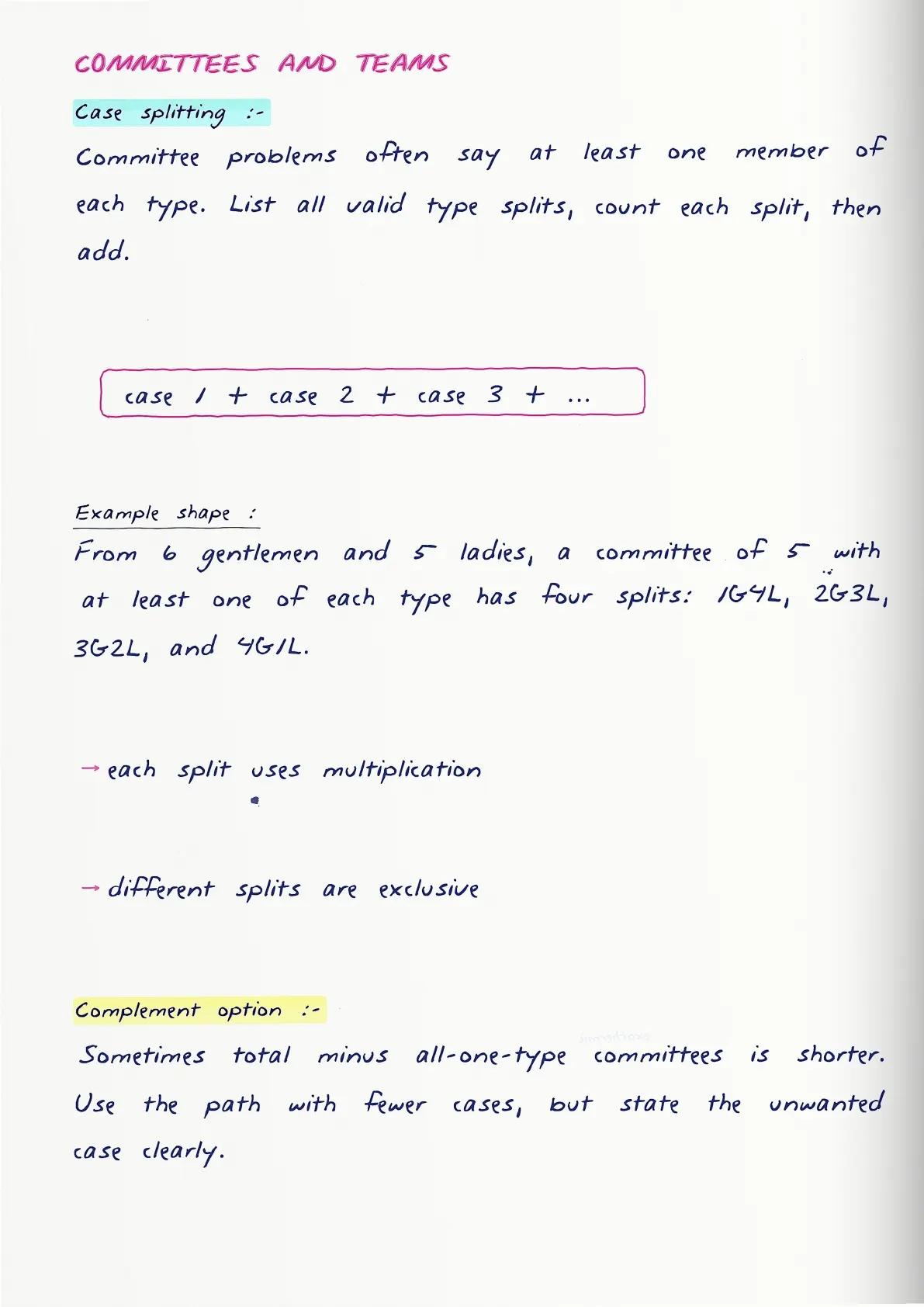
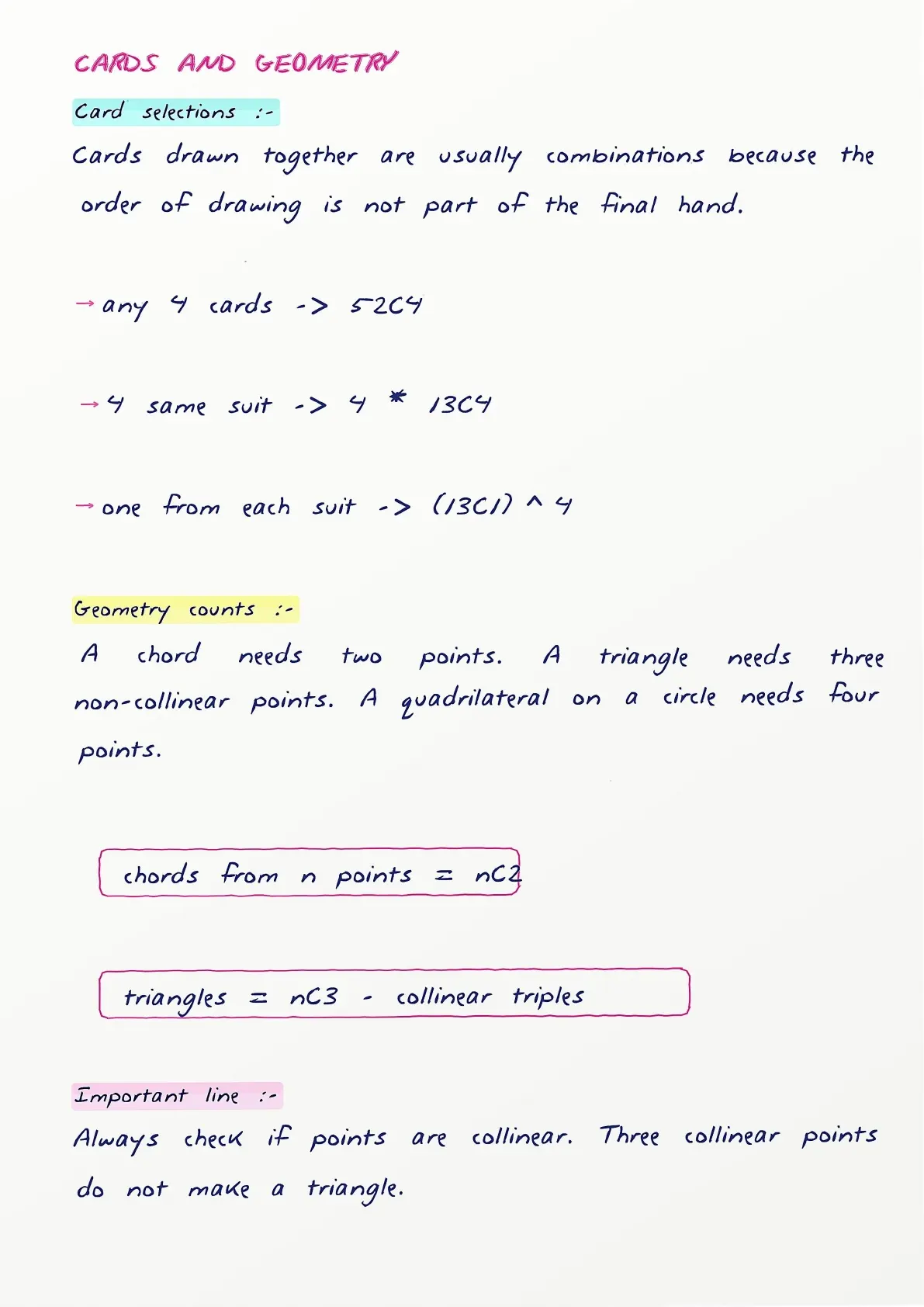
- Use combination for teams, committees, card selections and groups.
- Do not apply a formula before checking whether order matters.
Permutations and Combinations Quick Revision for Class 11
Source: Magnet Brains on YouTube
Counting Model Checklist for Permutations and Combinations
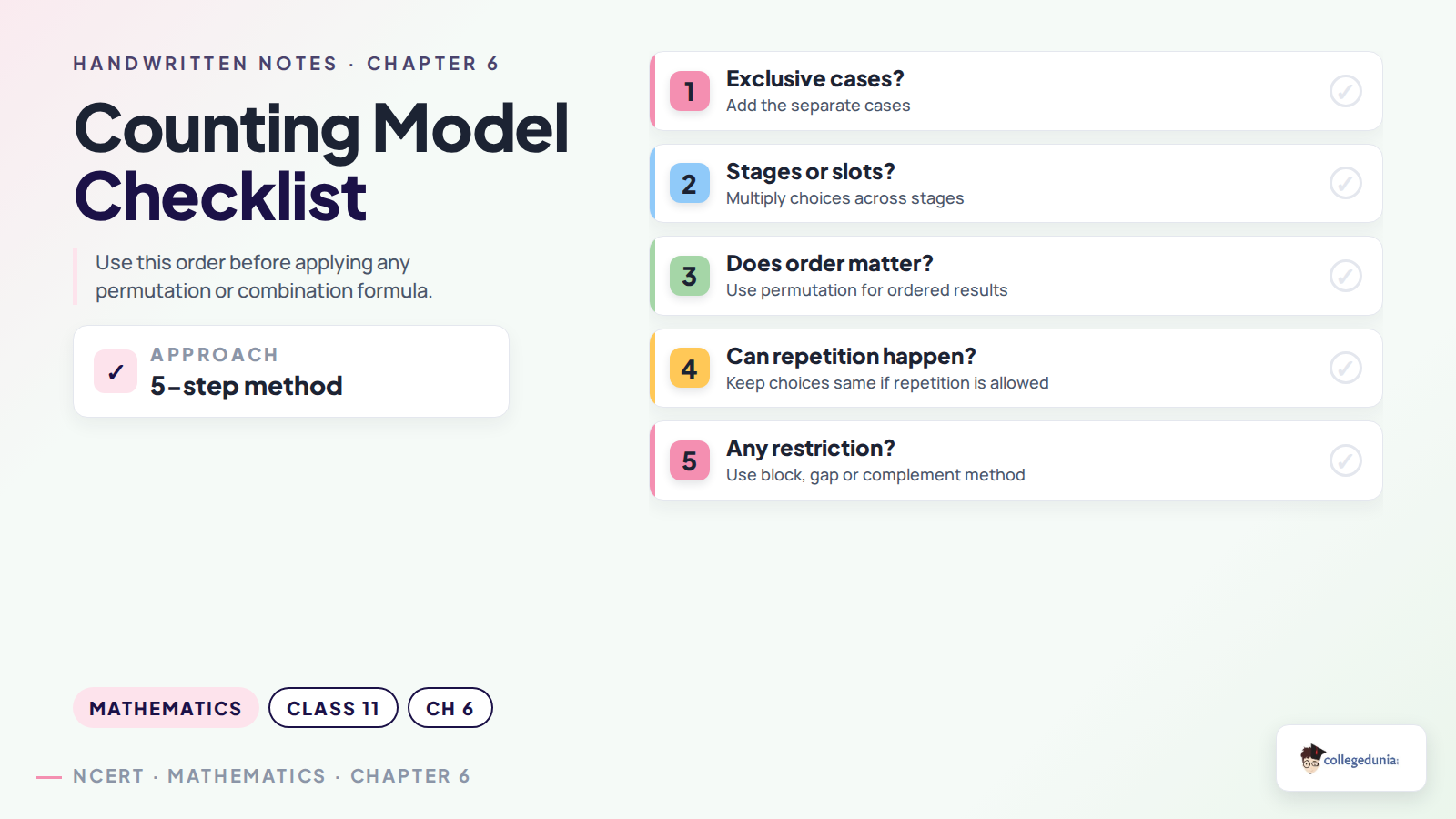
Most mistakes in this chapter happen because students rush to nPr or nCr too early. The handwritten notes use a short decision route: first split cases, then choose add or multiply, then decide whether order matters.
- If cases cannot happen together, add the answers.
- If choices happen stage by stage, multiply the choices.
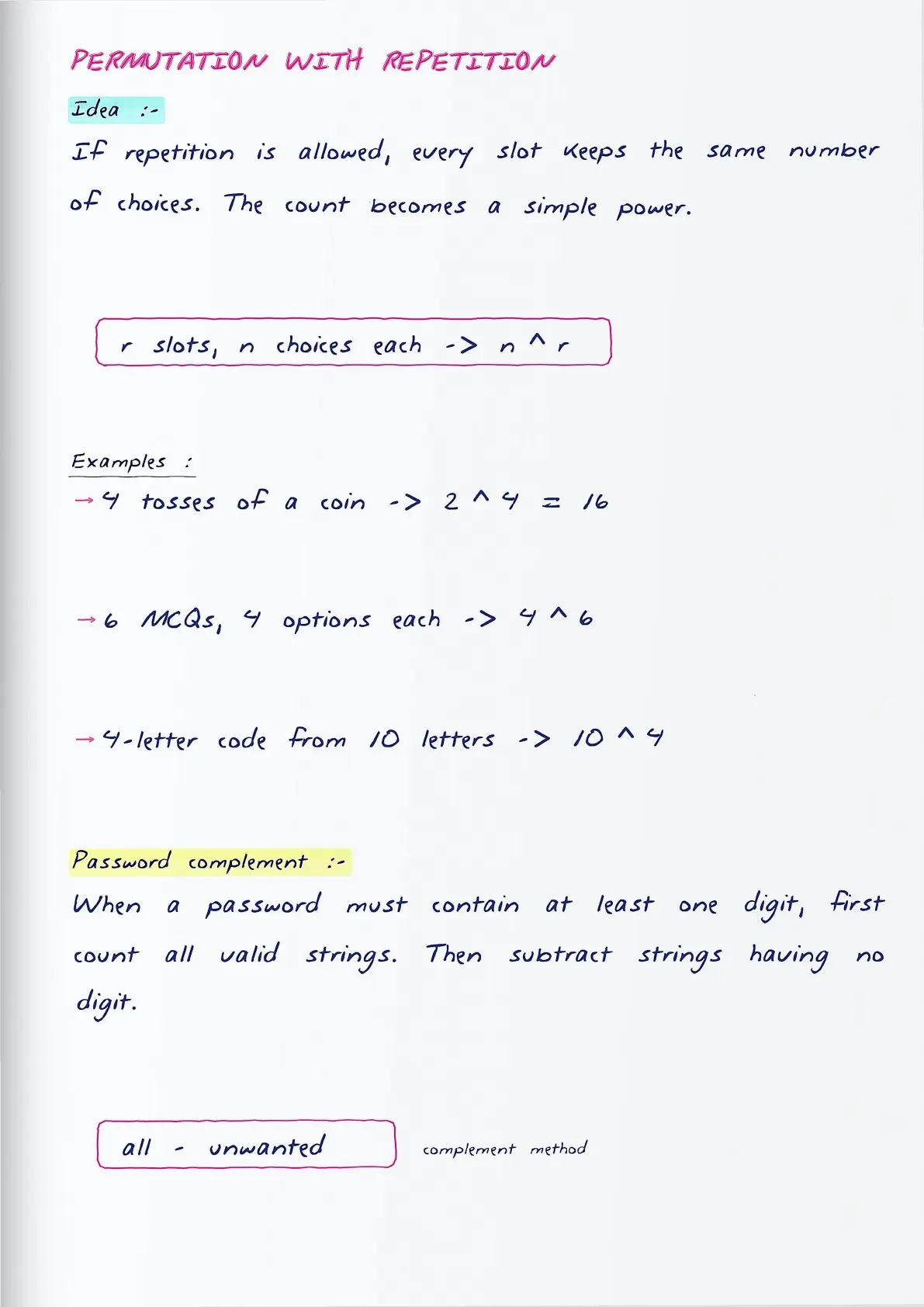
- If repetition is allowed, keep the choice count open for the next slot.
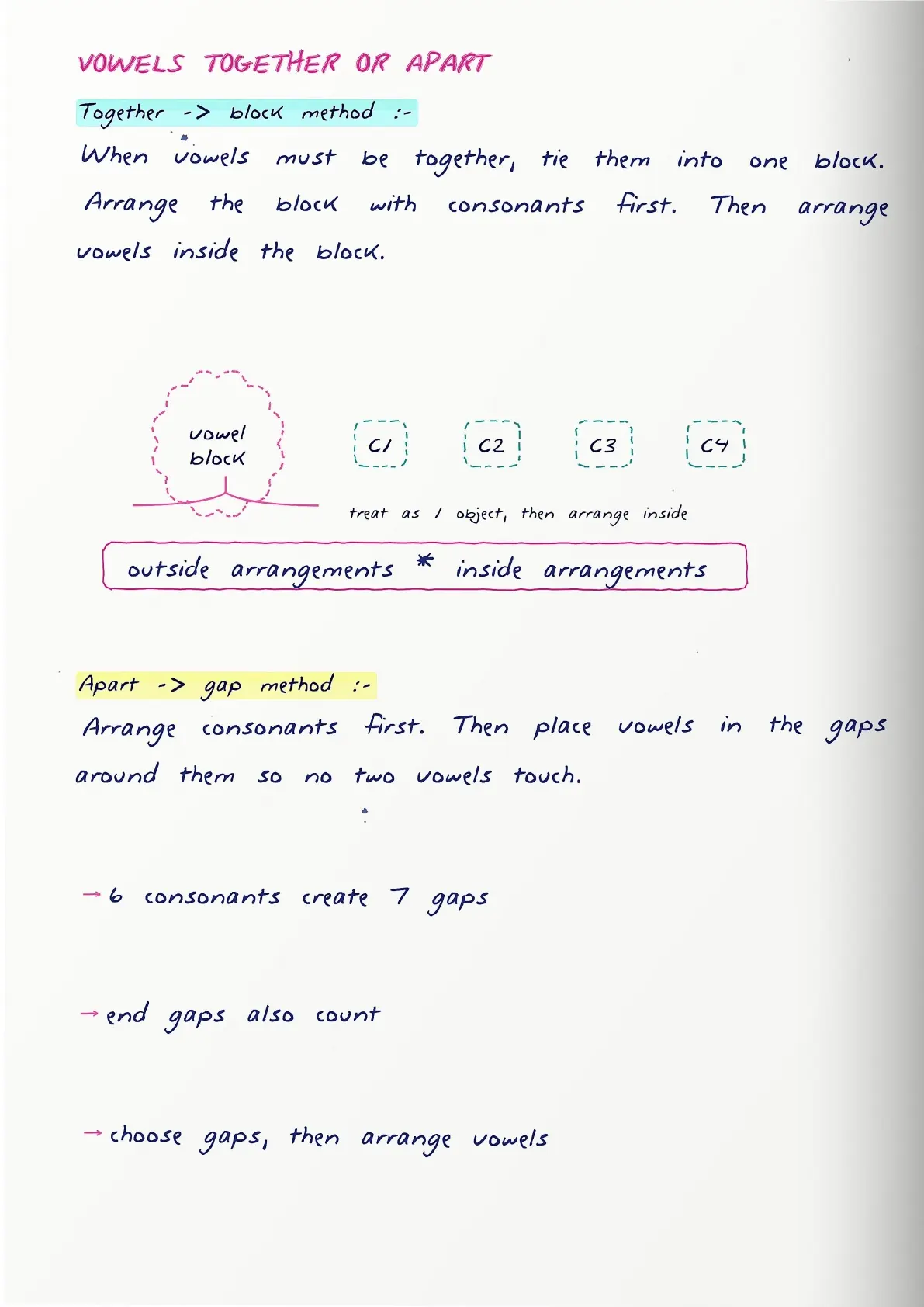
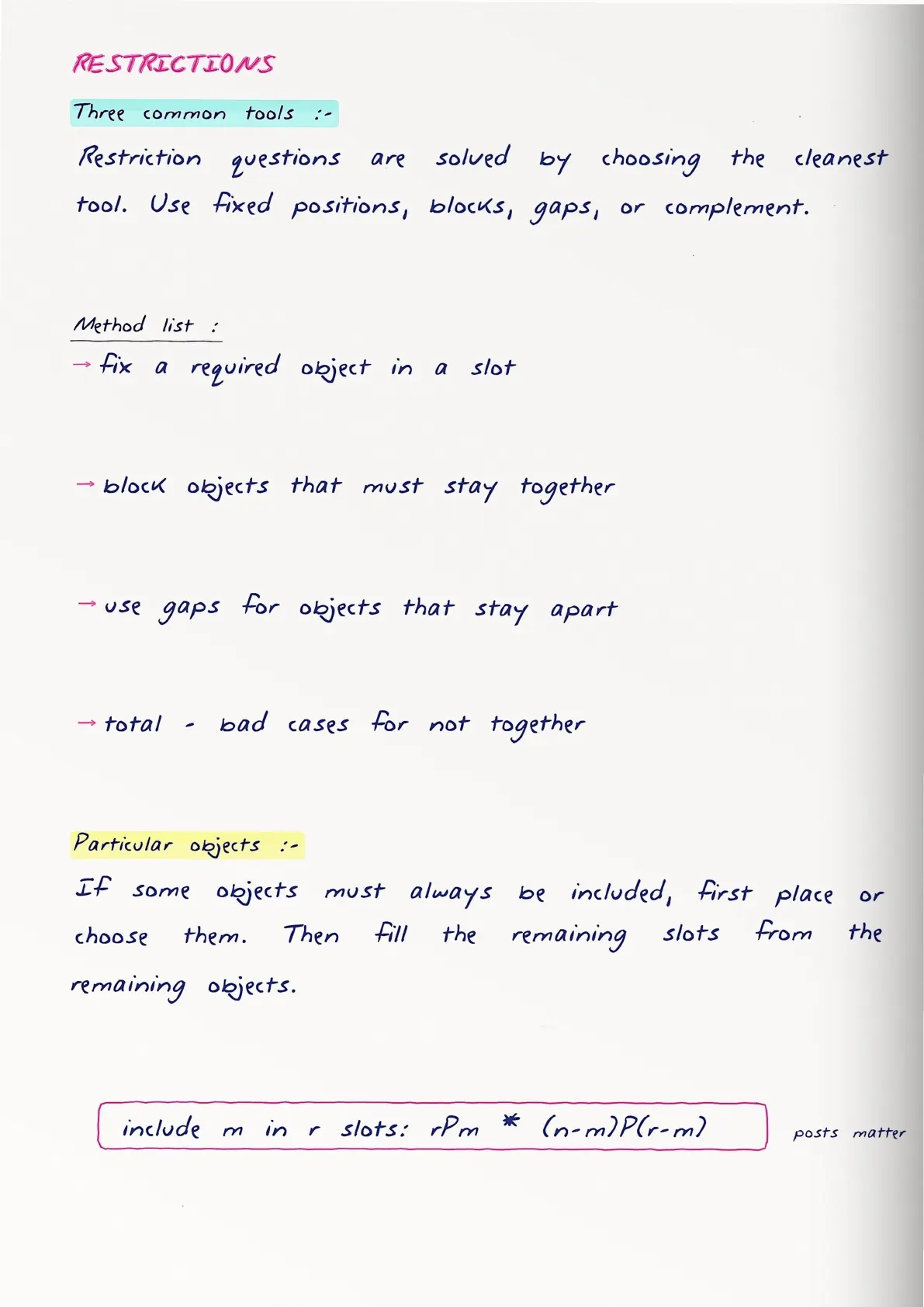
- If a restriction is given, try block, gap or complement method.
Formula Conditions Students Must Check
The formula sheet page inside the handwritten PDF keeps important conditions beside each formula. This helps students catch the small details that decide the correct answer in short-answer questions.
| Formula area | Use this when | Common mistake |
|---|---|---|
| nPr = n!/(n-r)! | r ordered objects are chosen from n distinct objects | Using it for unordered selections |
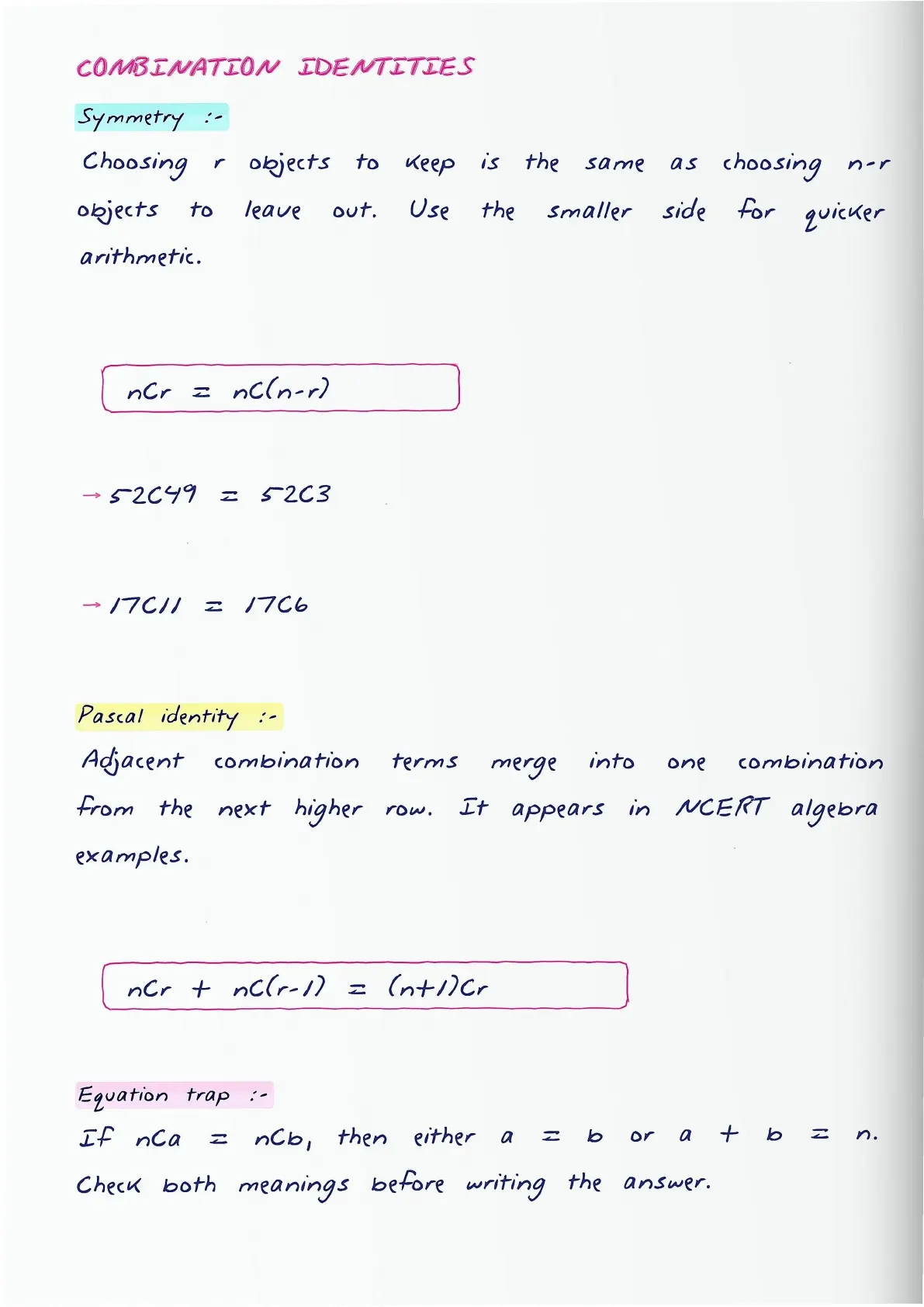
| nCr = n!/(r!(n-r)!) | r unordered objects are chosen from n distinct objects | Forgetting that nCr equals nC(n-r) |
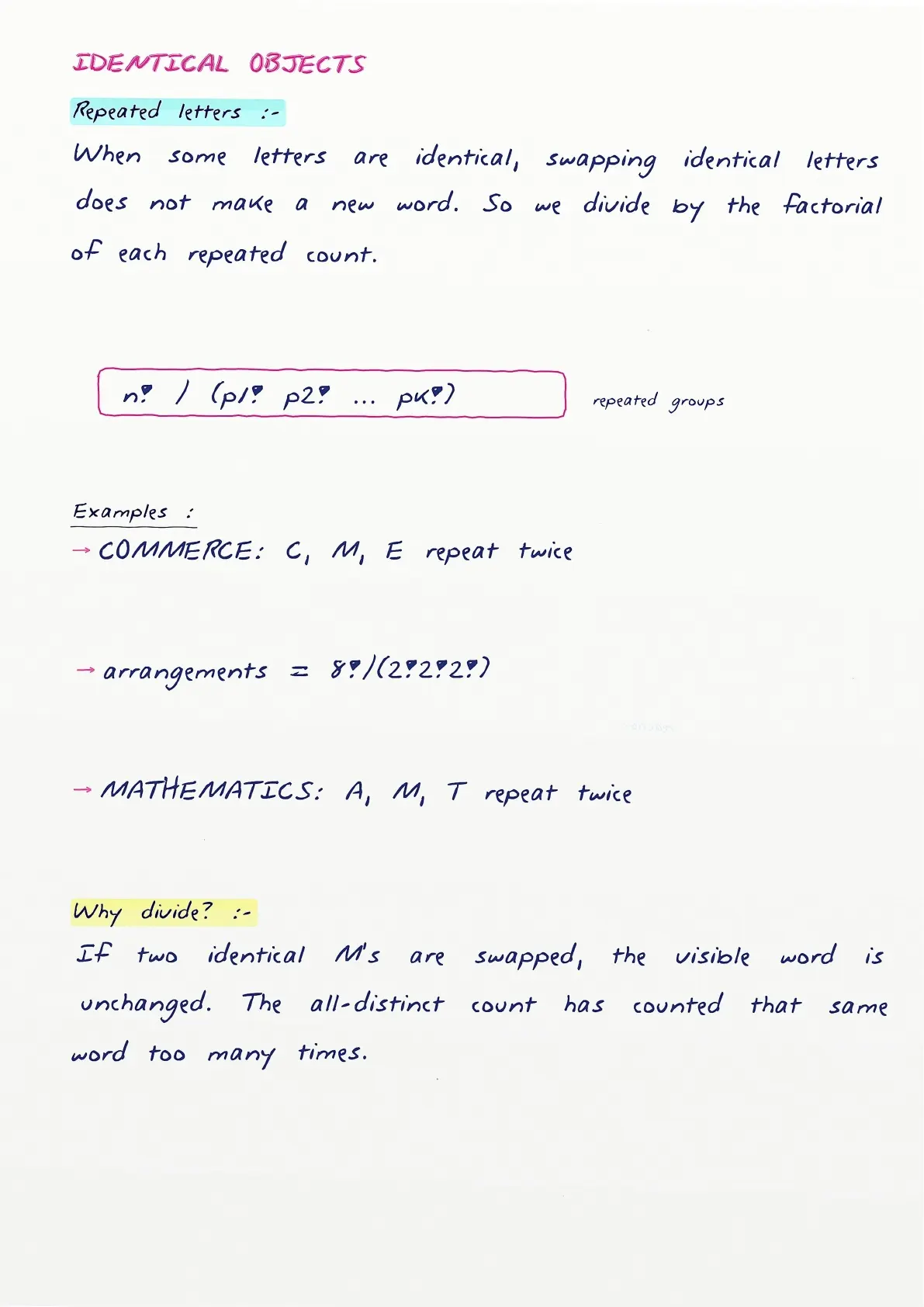
| Repeated letters | Some objects are identical | Not dividing by repeated factorials |
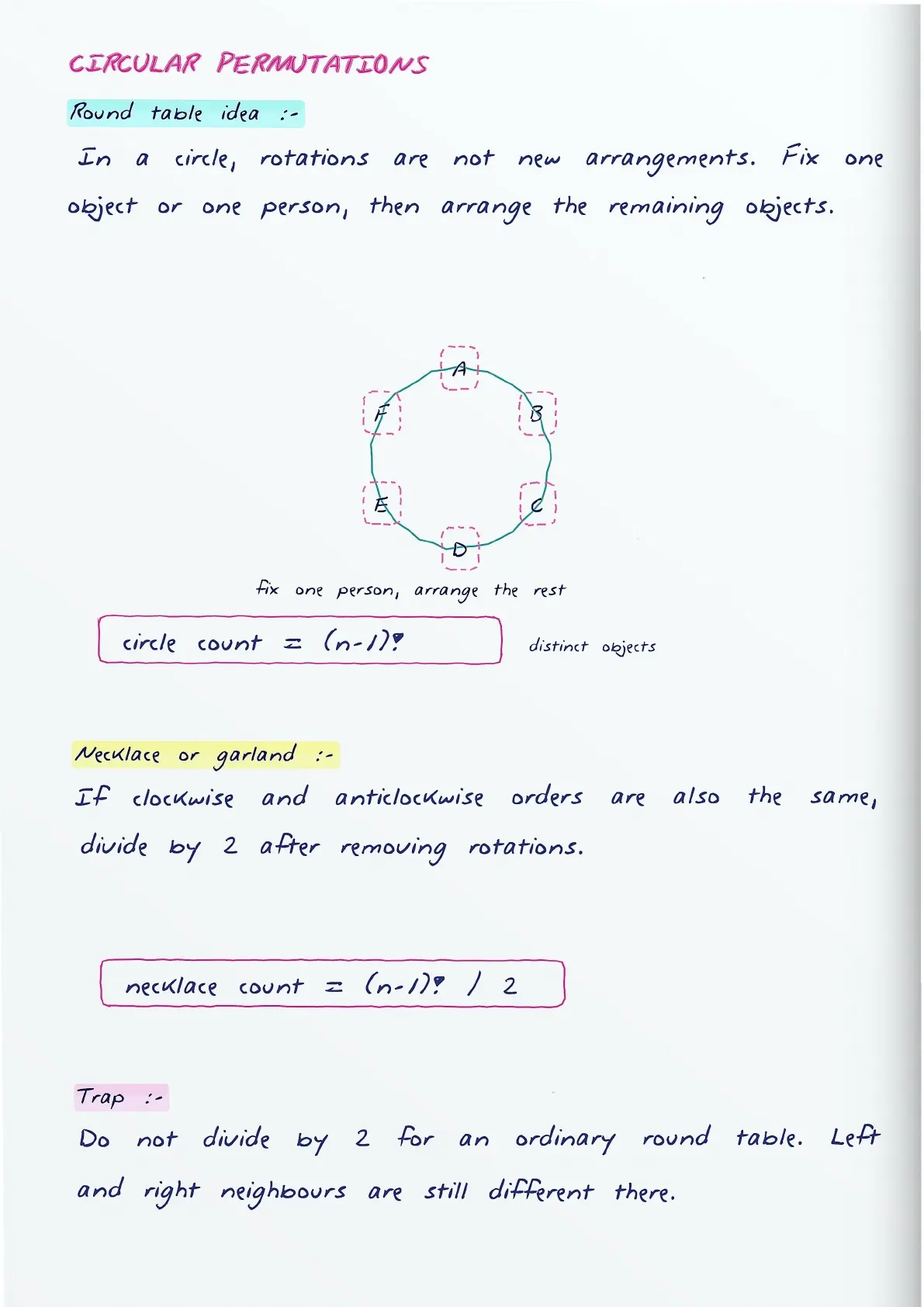
| Circular arrangements | Only relative order around a circle matters | Counting rotations more than once |
How to Revise Permutations and Combinations Before Class Tests
Use the Permutations and Combinations handwritten notes in two passes. First, revise the formula page and model checklist. Second, solve one example each from arrangements, selections, repeated letters and circular seating.
- Write whether the question is ordered or unordered before solving.
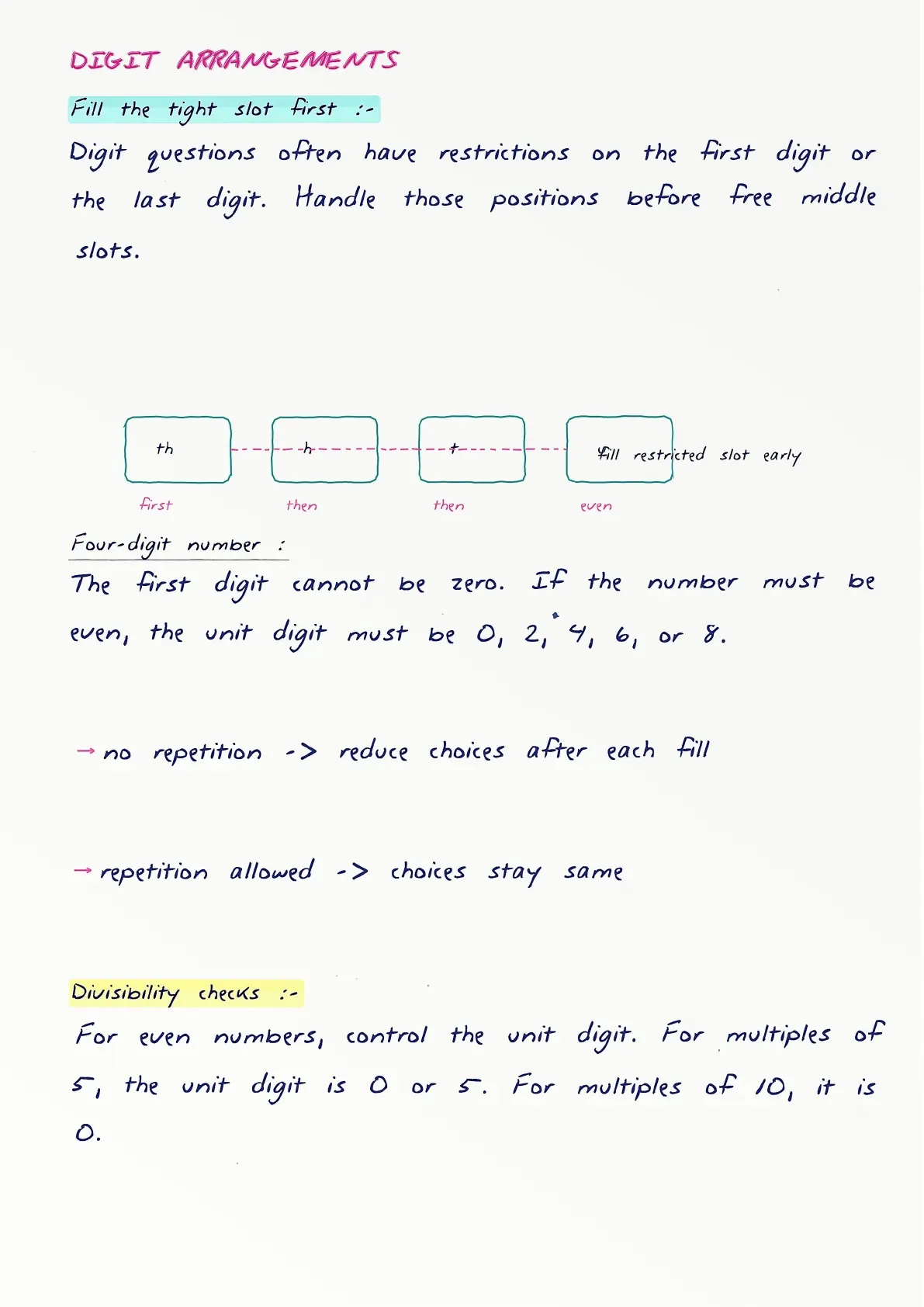
- Underline restrictions such as together, not together, fixed place or repeated digits.
- For word arrangement questions, count repeated letters before applying factorials.
- Use the final common-mistakes page for a five-minute check before submission.
Related Resources for Permutations and Combinations Class 11
| Resource | Use it for | Link |
|---|---|---|
| NCERT Book PDF | Official theory and exercise prompts | Permutations and Combinations Class 11 NCERT Book PDF |
| NCERT Notes | Typed explanation with tables and examples | Permutations and Combinations Class 11 Notes |
| NCERT Solutions | Step-by-step answers for textbook questions | Permutations and Combinations Class 11 NCERT Solutions |
| Formula Sheet | Formula-only revision before practice | Permutations and Combinations Class 11 Formula Sheet |
Applied Mathematics Handwritten Notes for All Chapters
| Chapter | Handwritten Notes |
|---|---|
| Chapter 1 | Numbers and Quantification Class 11 Handwritten Notes |
| Chapter 2 | Numerical Applications Class 11 Handwritten Notes |
| Chapter 3 | Set Class 11 Handwritten Notes |
| Chapter 4 | Relations Class 11 Handwritten Notes |
| Chapter 5 | Sequences and Series Class 11 Handwritten Notes |
| Chapter 6 | Permutations and Combinations Class 11 Handwritten Notes |
| Chapter 7 | Mathematical and Logical Reasoning Class 11 Handwritten Notes |
Permutations and Combinations Class 11 Applied Mathematics Handwritten Notes FAQs
Ques. What is covered in Class 11 Applied Mathematics Chapter 6 Permutations and Combinations handwritten notes?
Ans. The handwritten notes cover factorials, rule of sum, rule of product, permutations, combinations, circular arrangements, repeated objects, restriction methods and quick formula revision.
Ques. What is the main difference between permutation and combination?
Ans. A permutation is used when order matters, such as ranks or seating. A combination is used when order does not matter, such as teams or committees.
Ques. When should students use nPr in Permutations and Combinations?
Ans. Students should use nPr when r objects are selected from n distinct objects and arranged in order. The formula is nPr = n!/(n-r)!
Ques. When should students use nCr in Permutations and Combinations?
Ans. Students should use nCr when r objects are selected from n distinct objects and order is ignored. It is commonly used for groups, teams and committees.
Ques. Are these Permutations and Combinations handwritten notes aligned with the 2026-27 syllabus?
Ans. Yes. The notes follow the current 2026-27 Class 11 Applied Mathematics scope for Permutations and Combinations under algebra.



Comments