




The handwritten notes on Class 11 Applied Mathematics Chapter 7 Mathematical and Logical Reasoning are prepared for quick revision according to the latest 2026-27 CBSE syllabus. The PDF covers statements, truth values, negation, connectives, implications, validation methods, syllogism, coding, blood relations and odd one out reasoning.
- Best for one-shot revision: logic rules, truth tables and reasoning shortcuts stay in one handwritten PDF.
- Aligned to 2026-27: follows the current Class 11 Applied Mathematics reasoning scope.
- Exam ready: statement checks, proof methods and applied reasoning examples are placed close together.
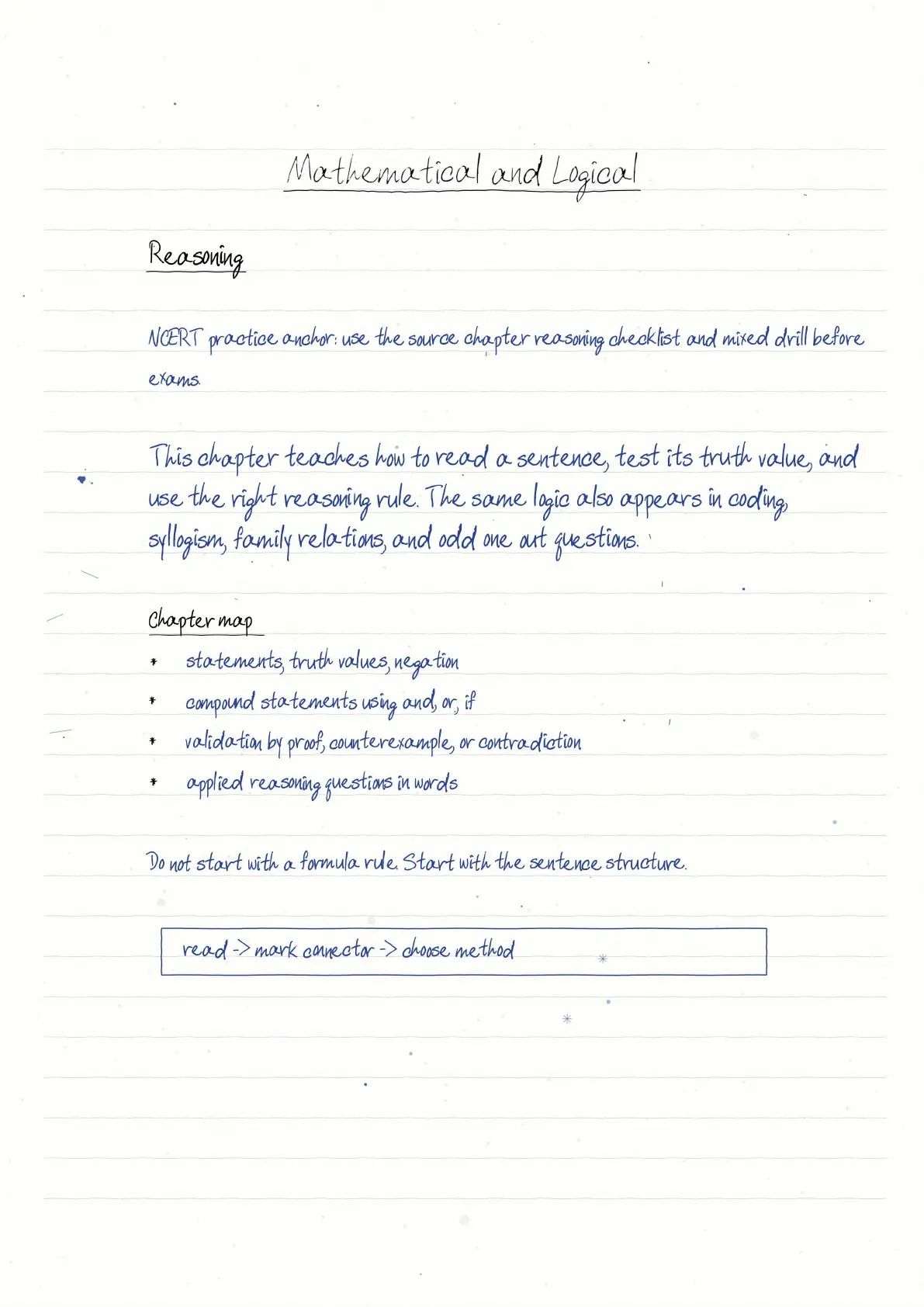
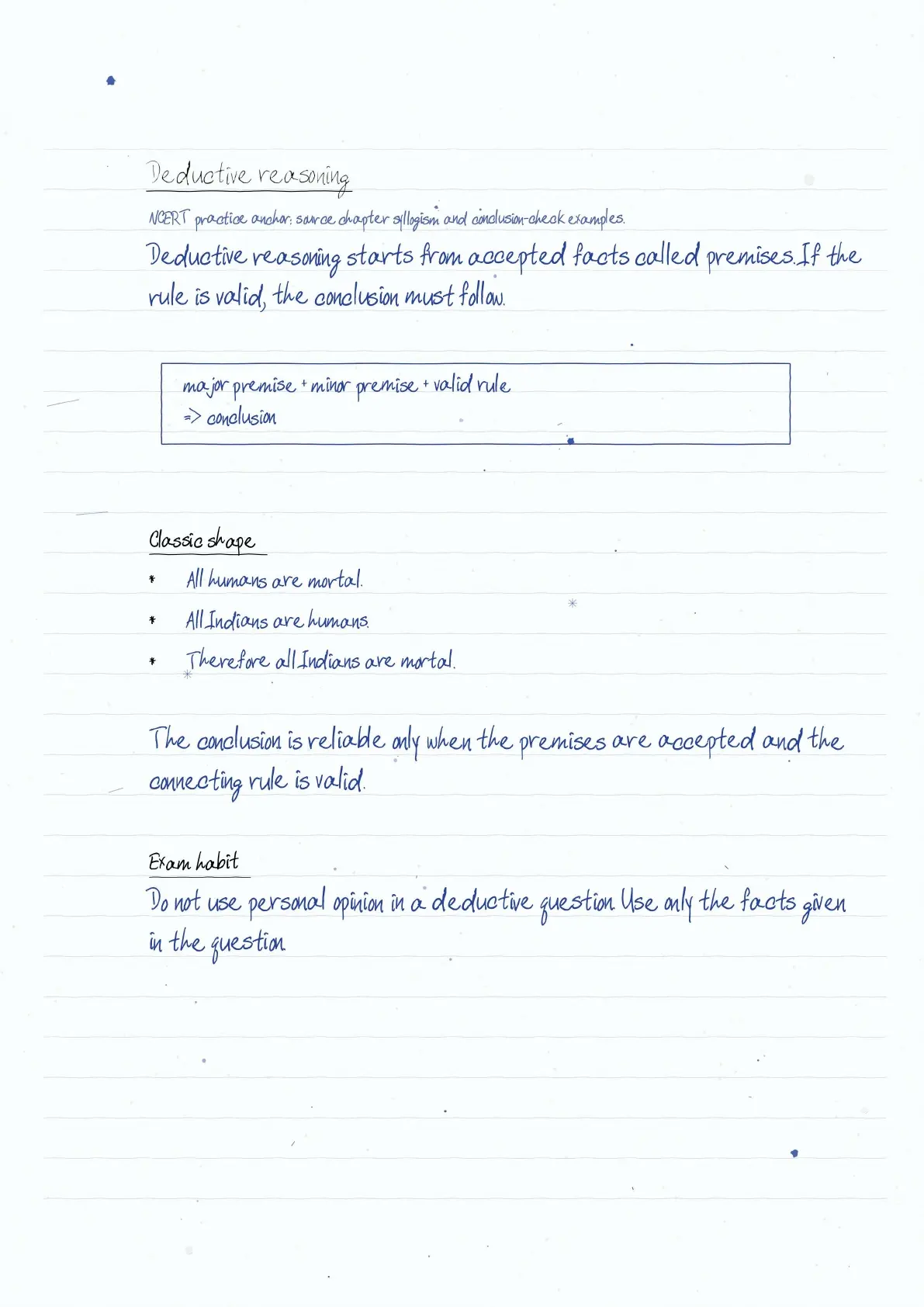
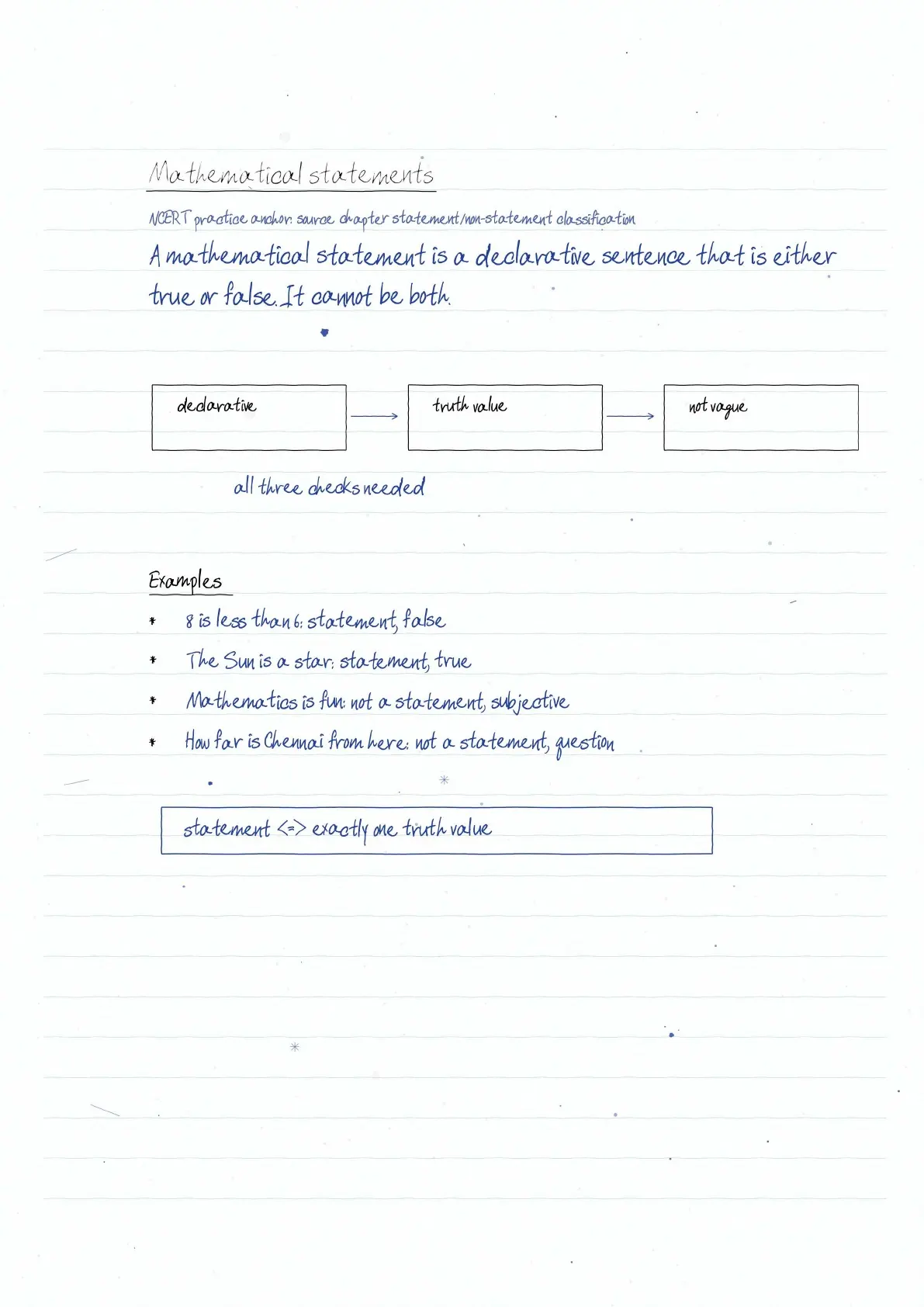
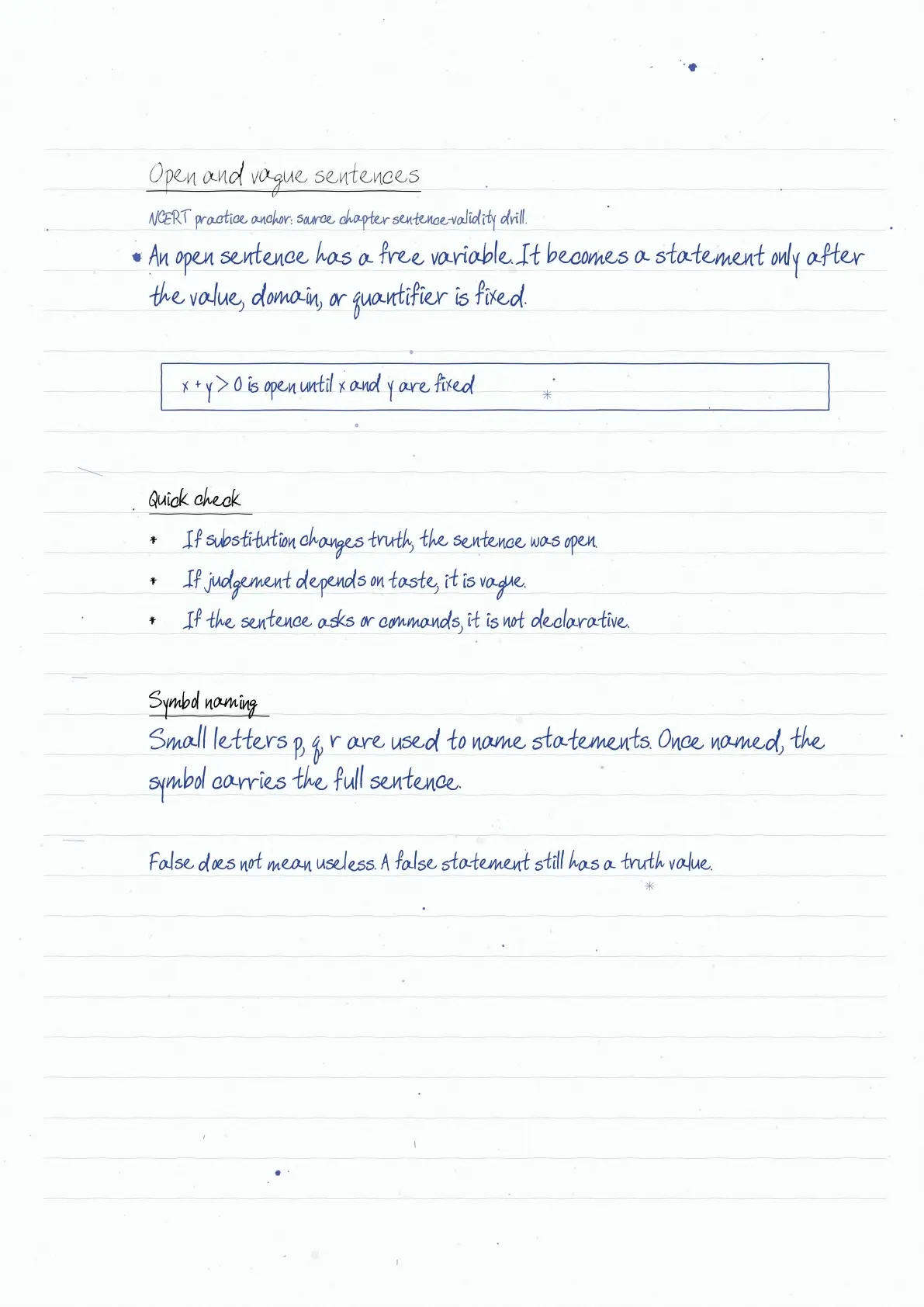
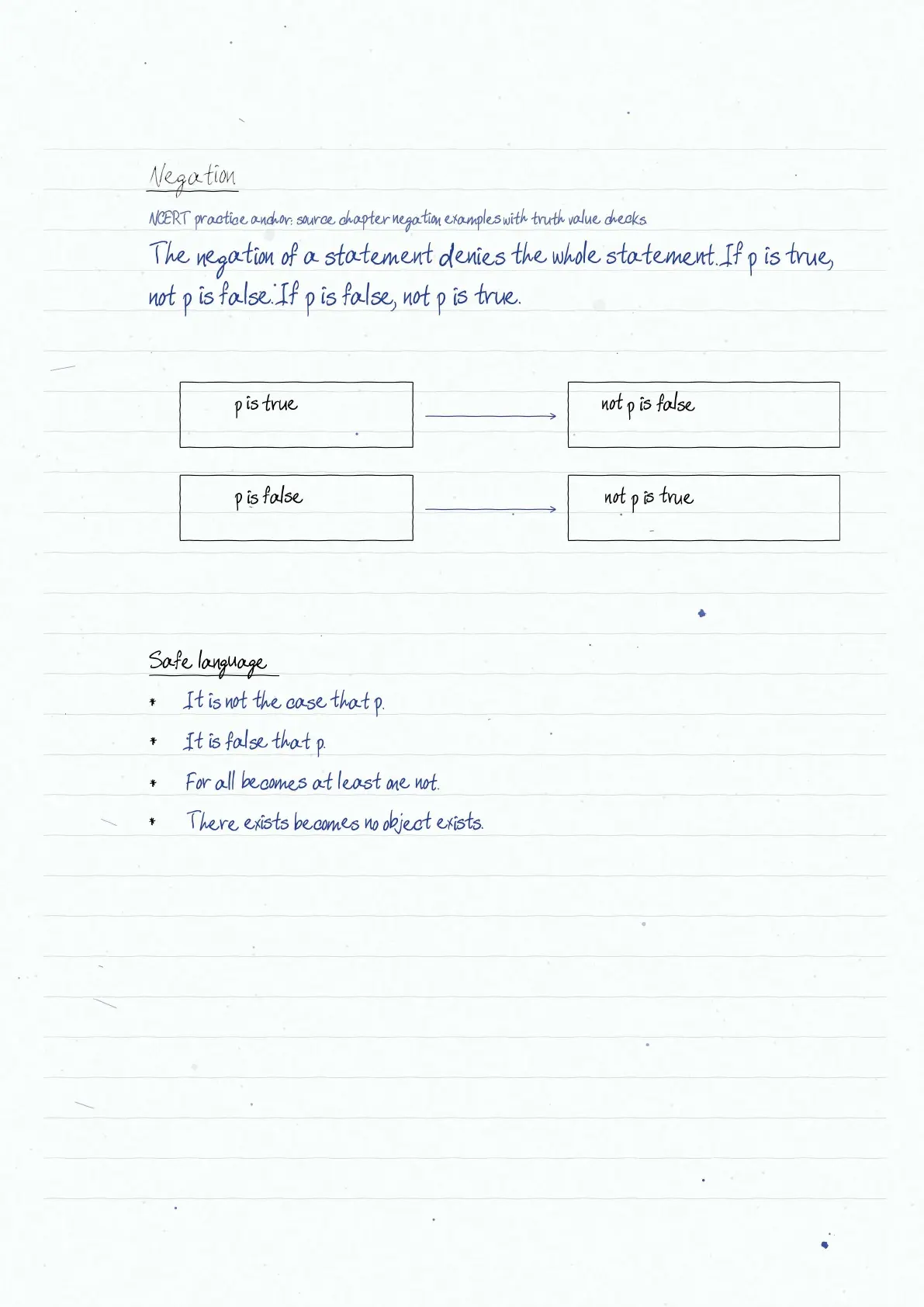
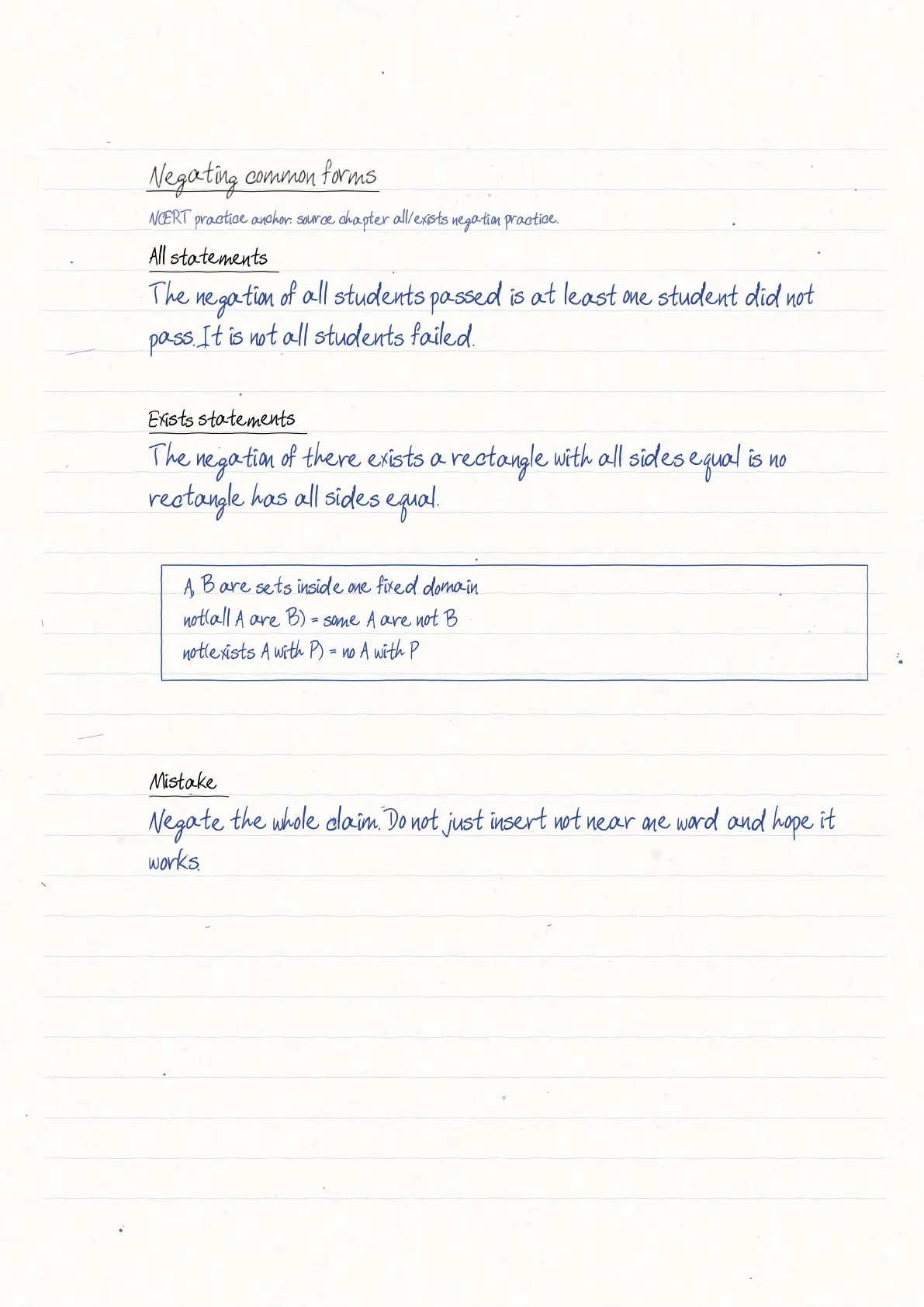
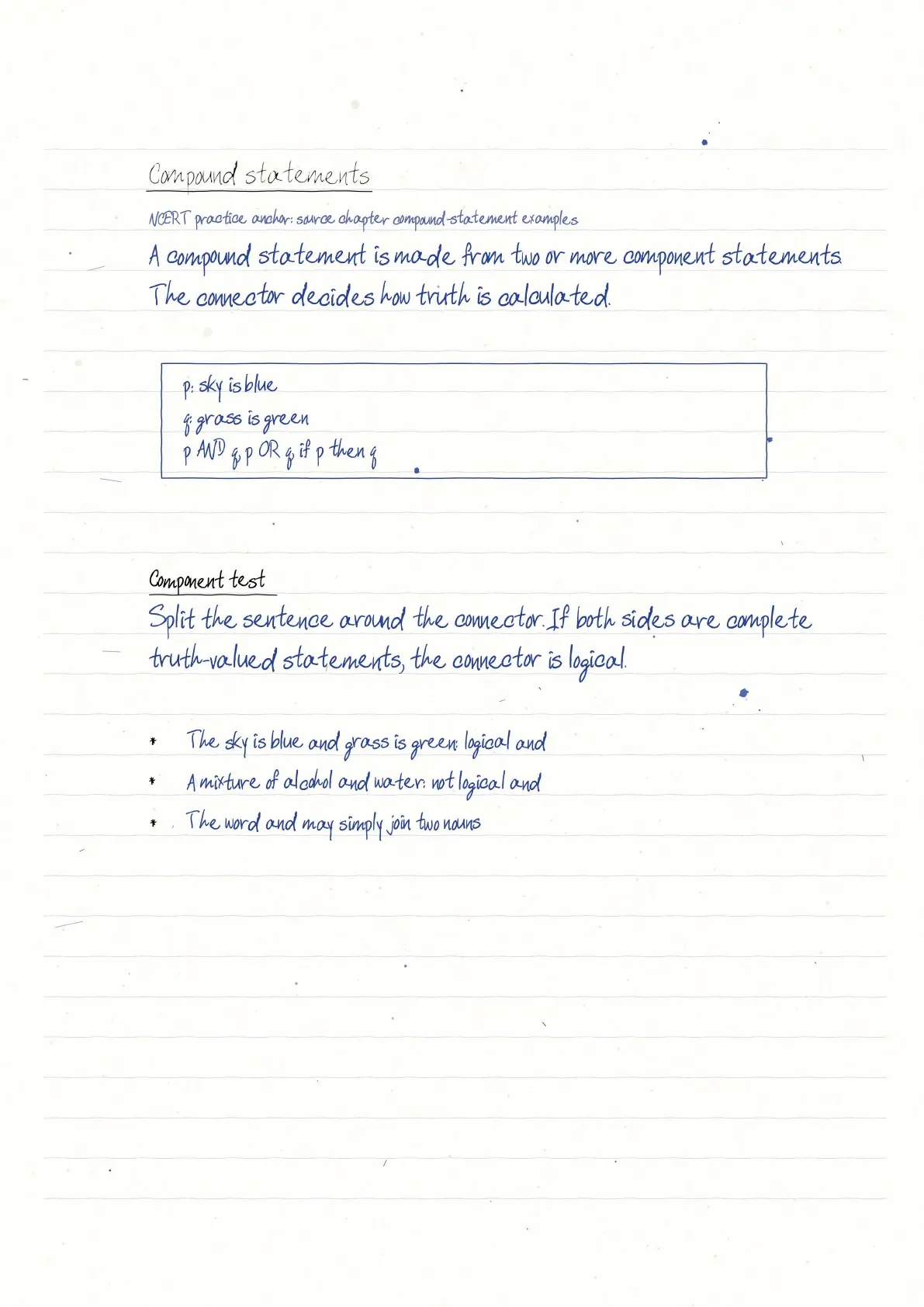
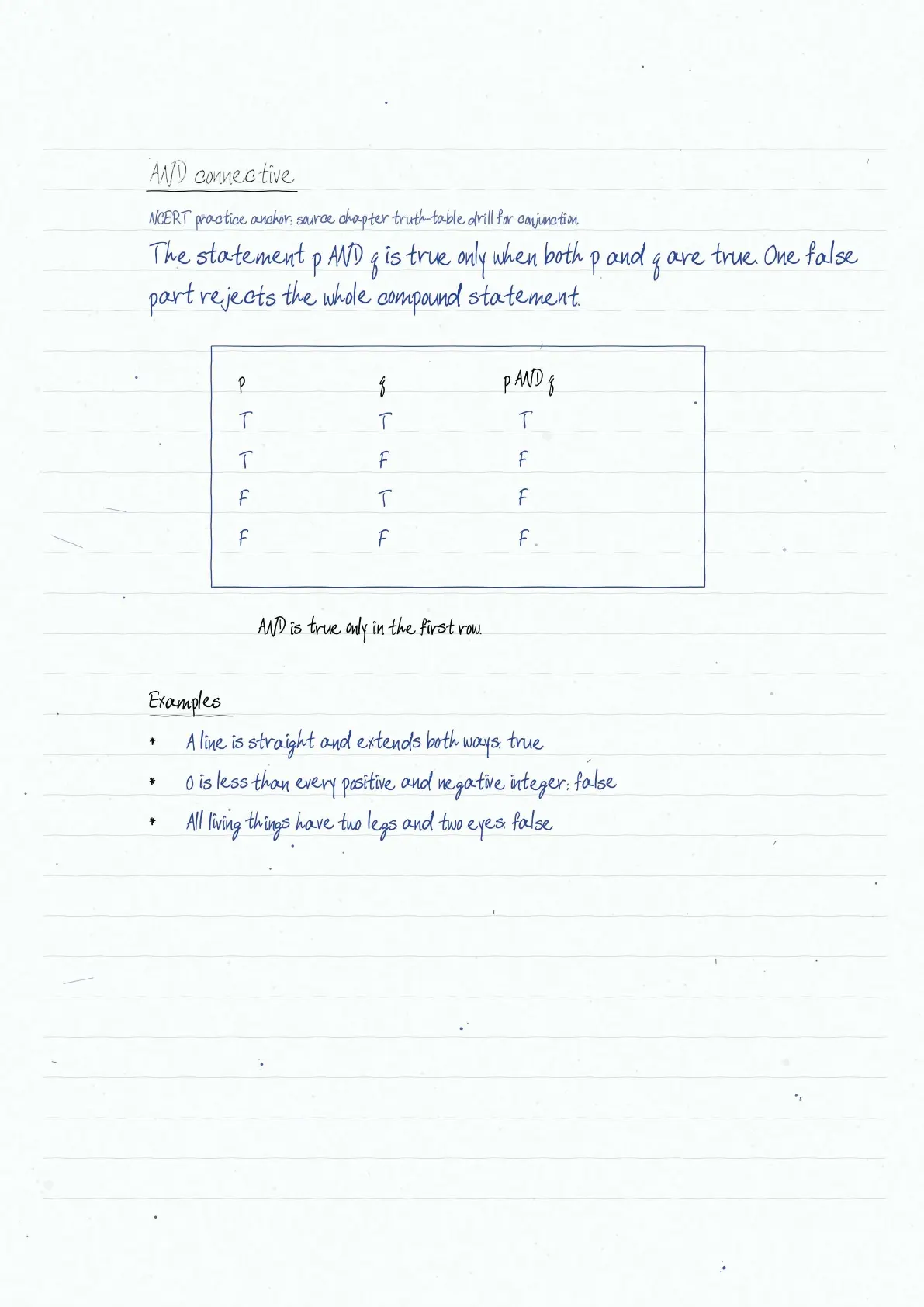
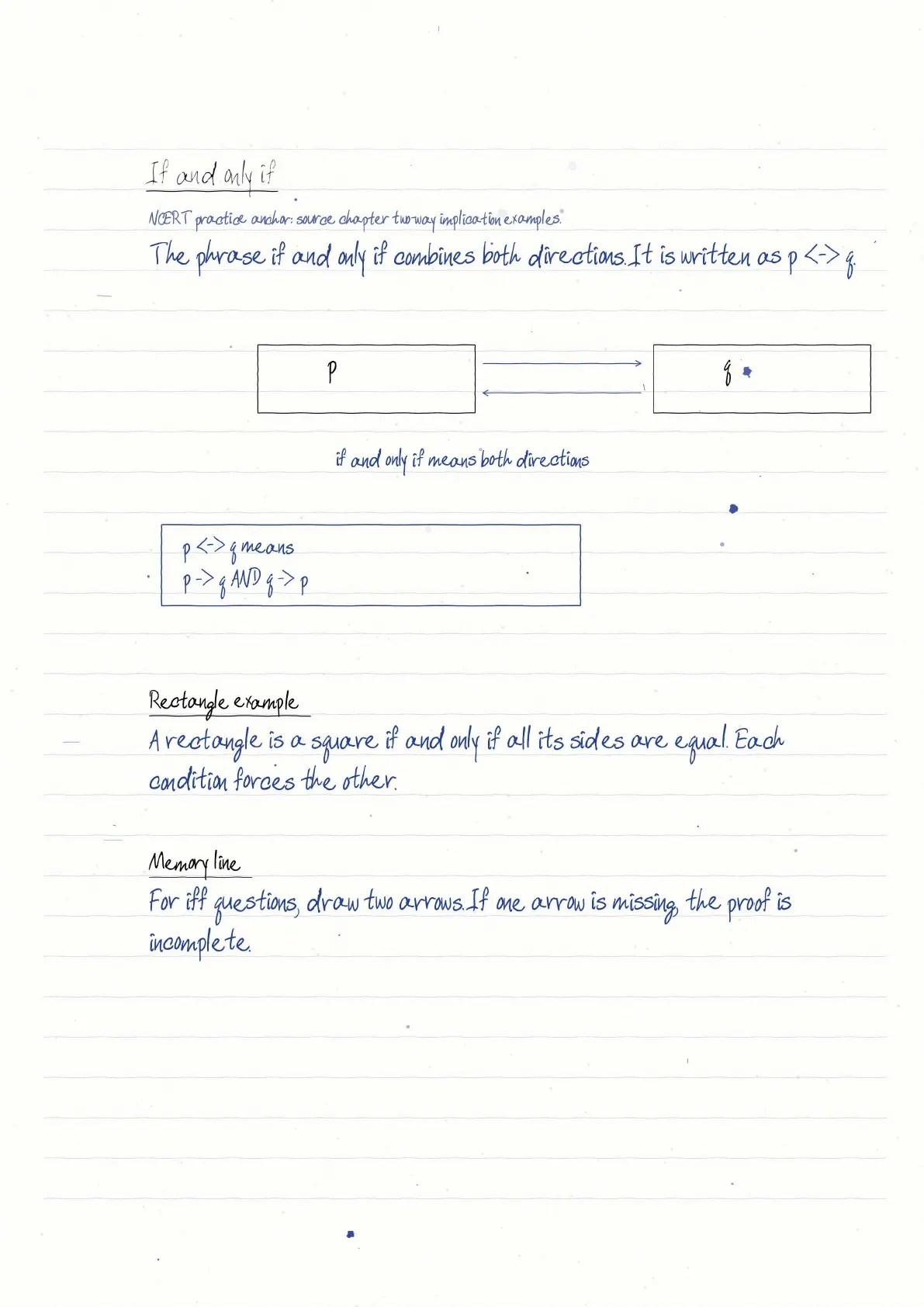
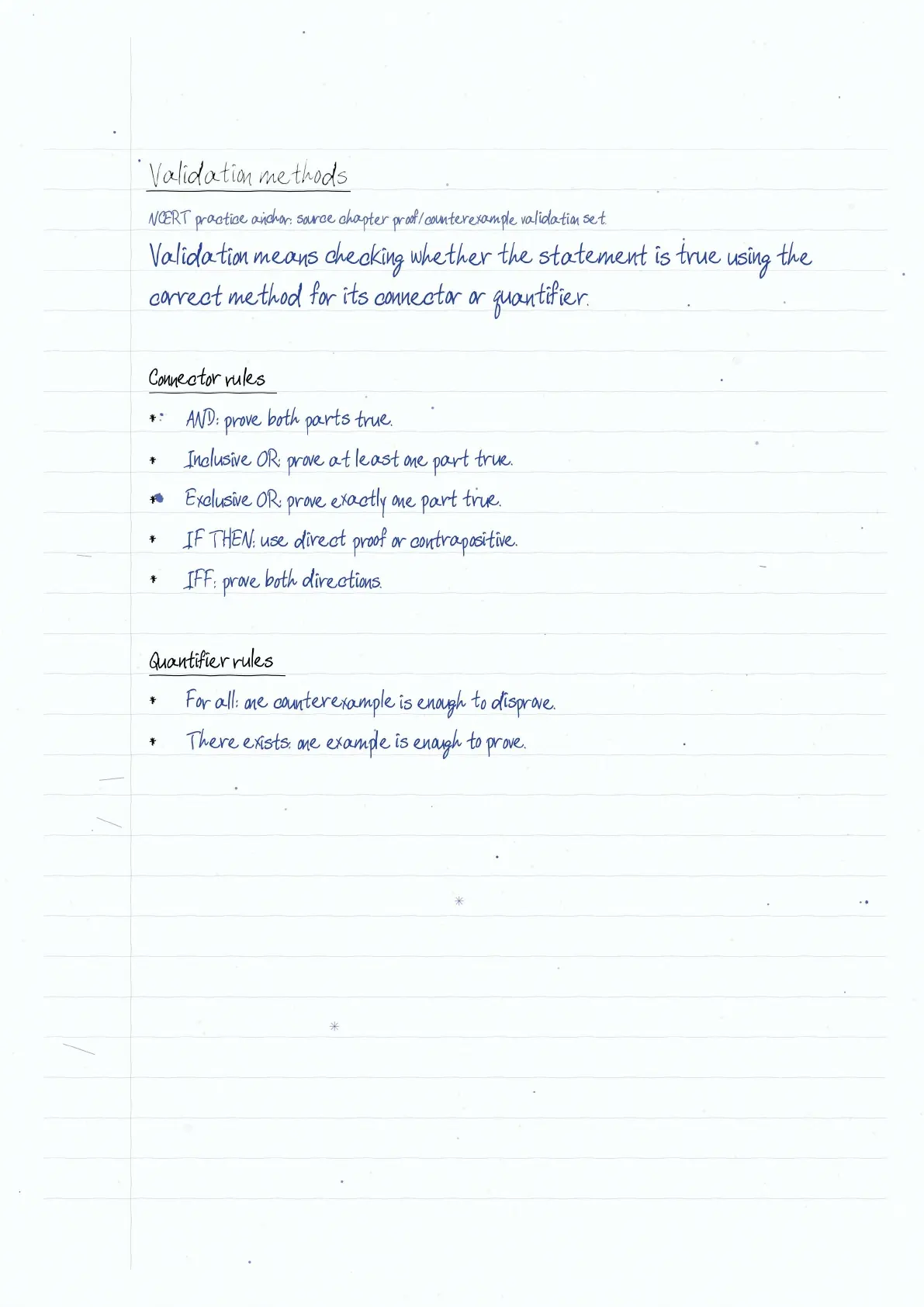
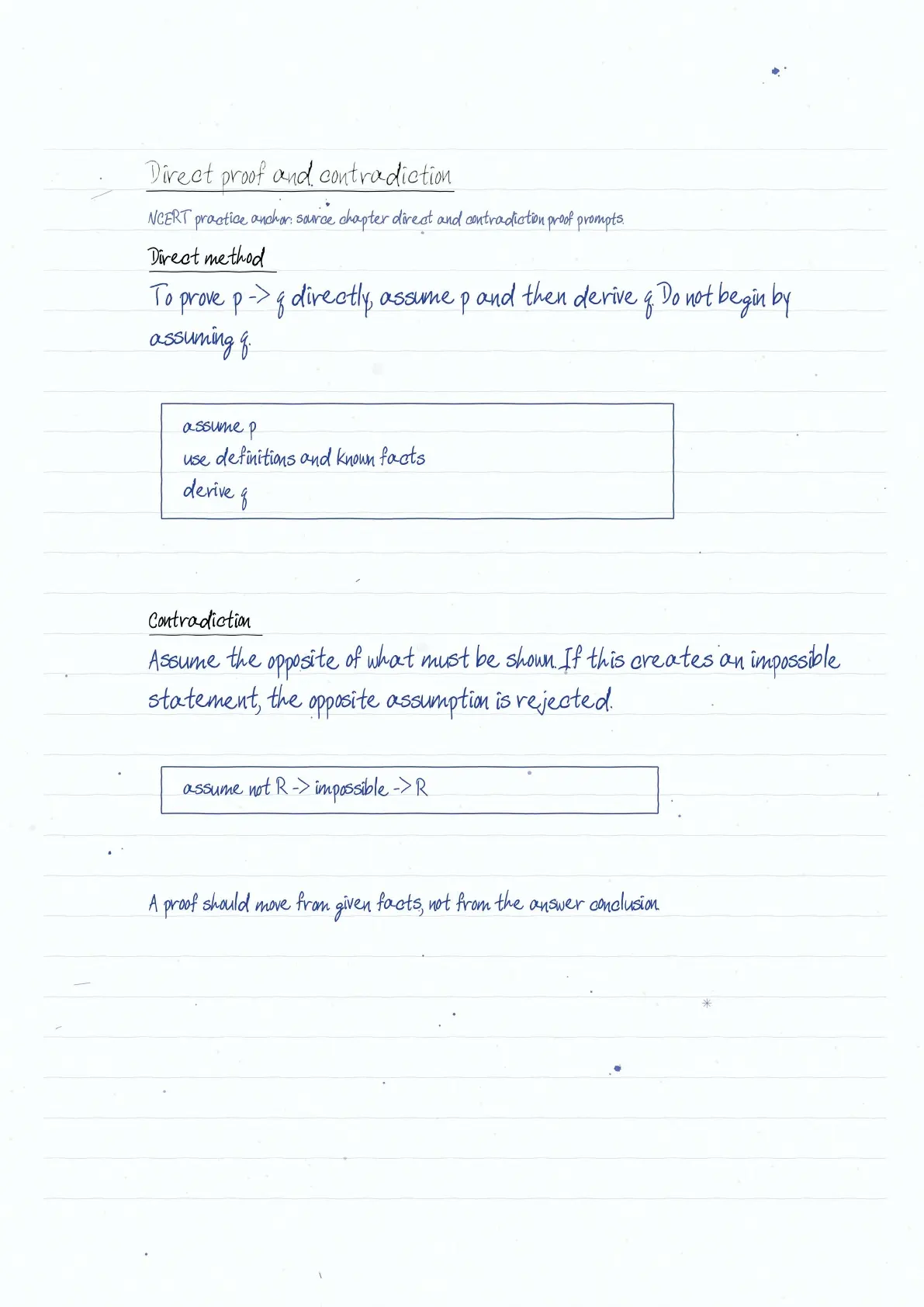
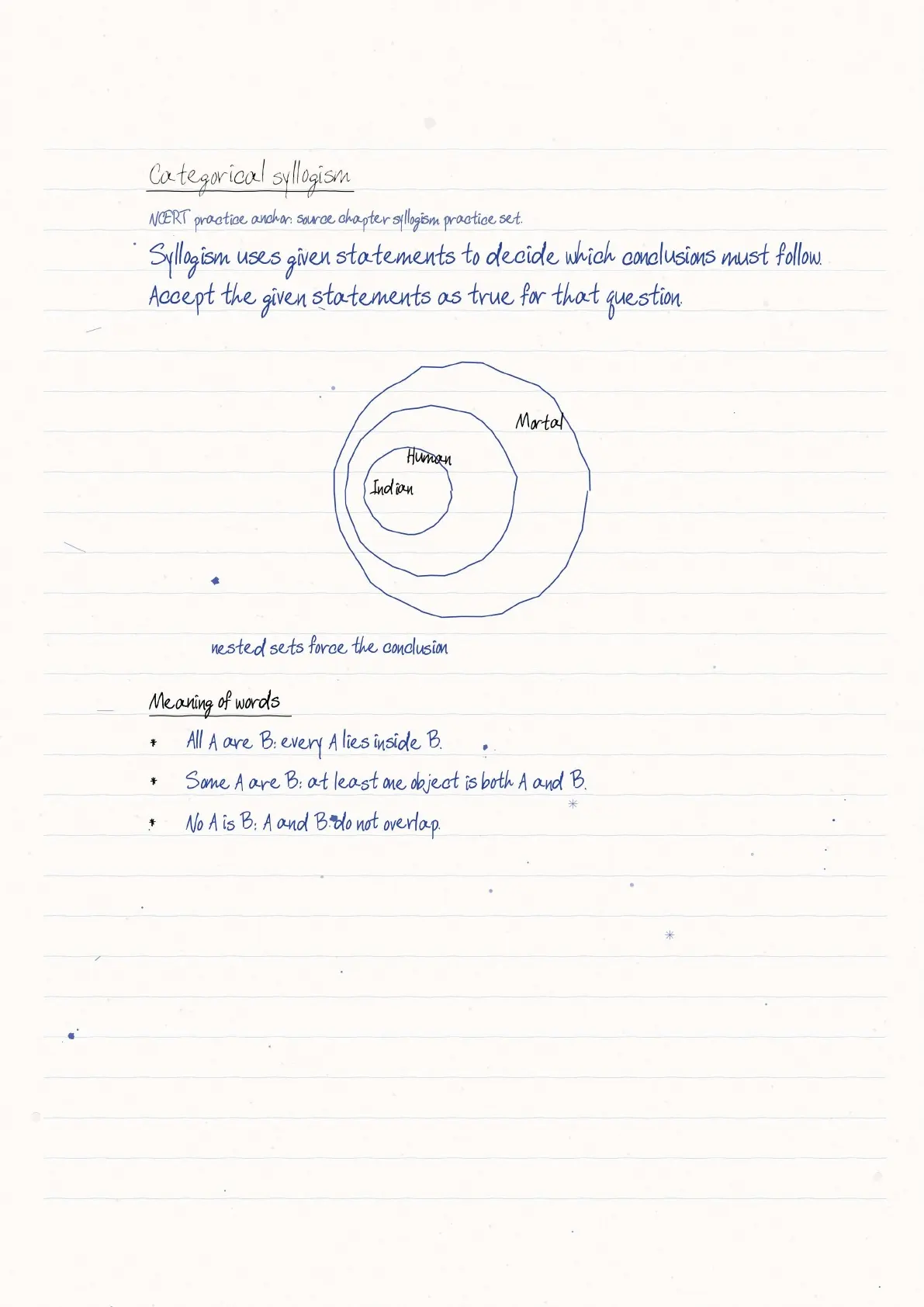
Each Mathematical and Logical Reasoning handwritten note in this Collegedunia PDF is written for Class 11 revision and follows the 2026-27 NCERT Applied Mathematics scope.
Student Feedback: In a Collegedunia poll of 10,000+ students, most students said Mathematical and Logical Reasoning felt easier when connector rules, converse, contrapositive and syllogism diagrams were revised before practice questions.
Mathematical and Logical Reasoning Handwritten Notes: What the PDF Covers
Mathematical and Logical Reasoning starts with a simple question: can a sentence be judged true or false? These notes keep the rule, example and exam-use case close together so students can revise without switching between different sources.
| Block | What students revise | Quick check |
|---|---|---|
| Statements | Declarative sentences, truth values and open sentences | A false sentence can still be a statement |
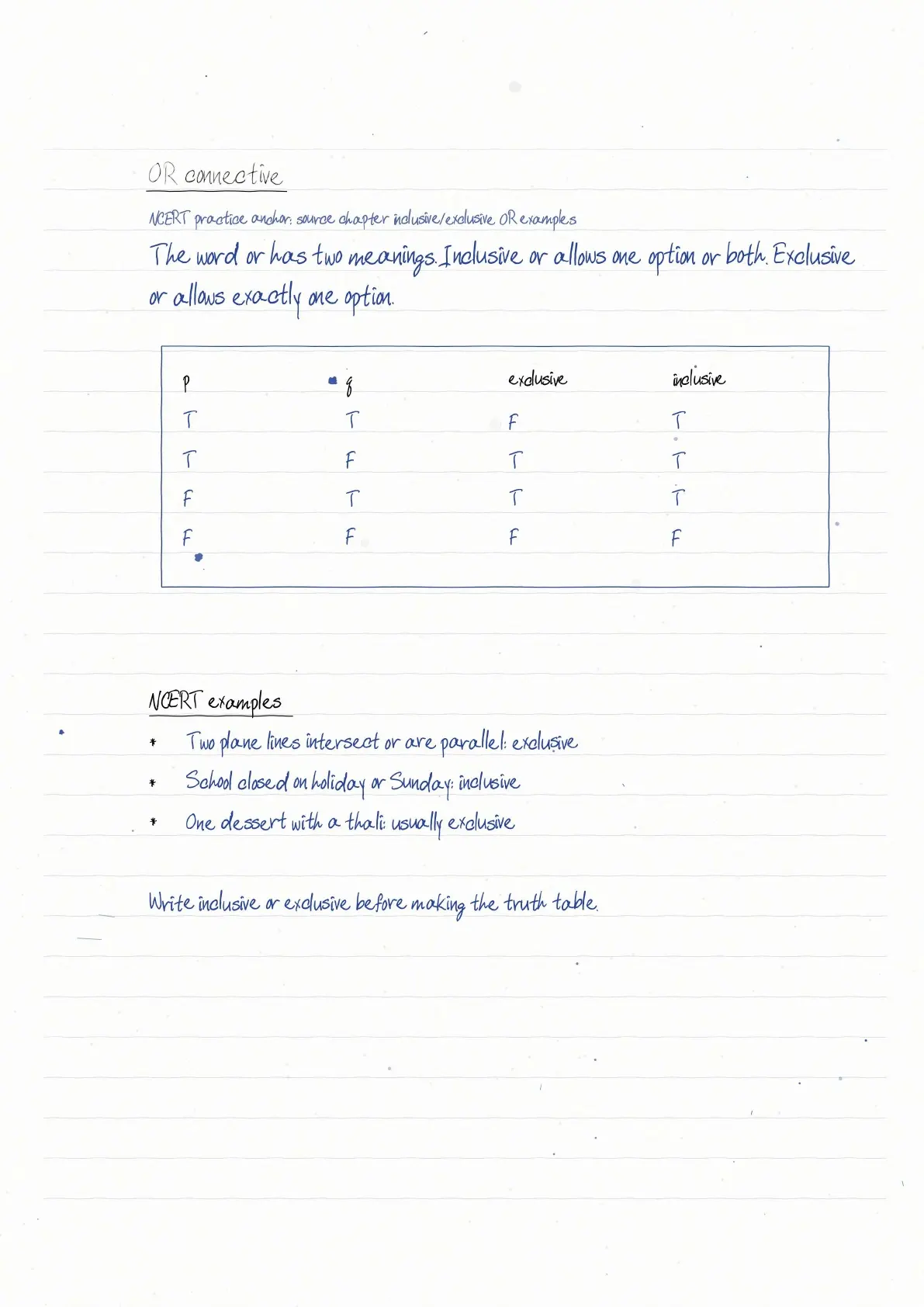
| Connectives | Negation, and, inclusive or, exclusive or | Mark the connector first |
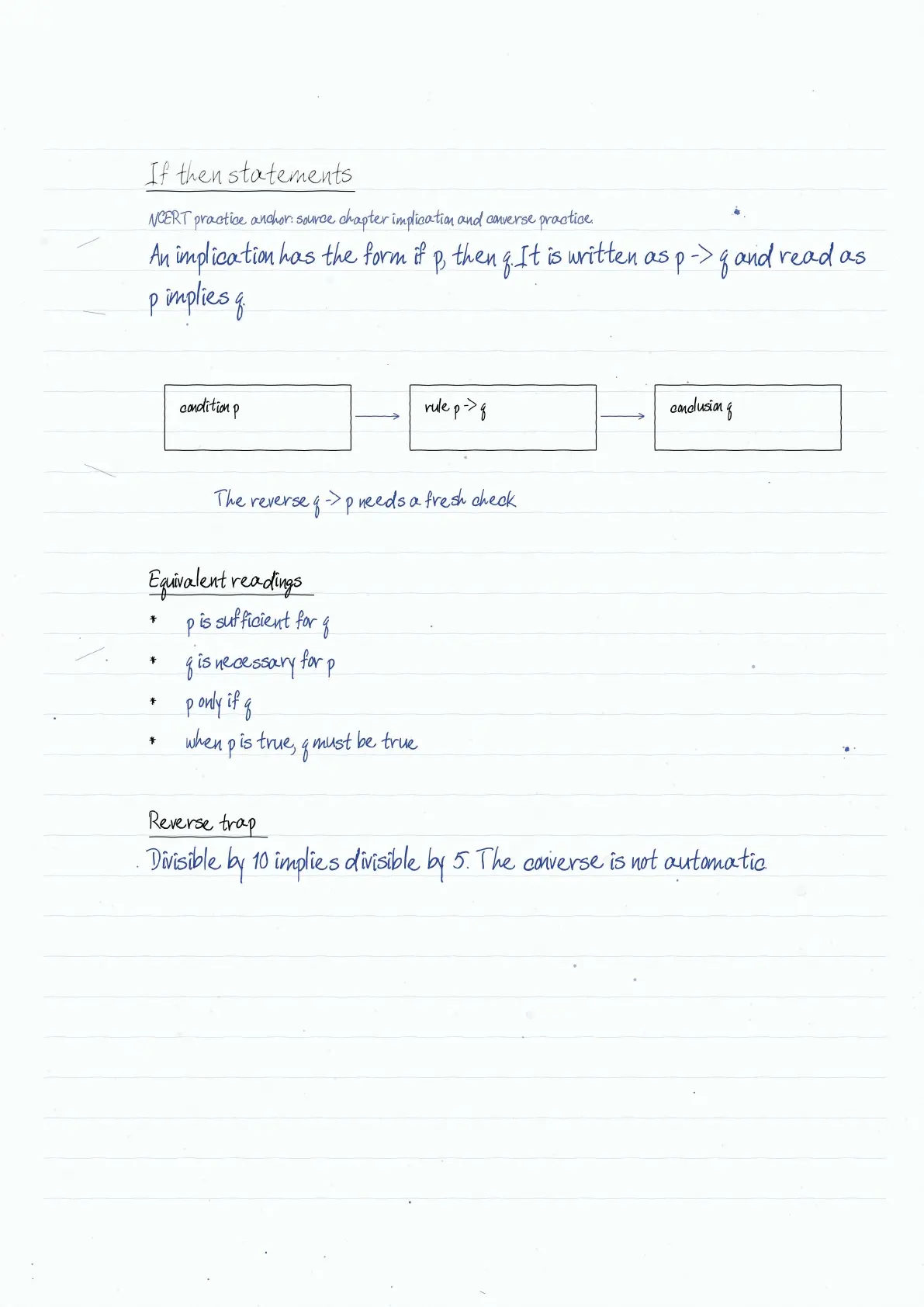
| Implications | If then, converse, contrapositive and iff | Reverse is not automatic |
| Applications | Syllogism, coding, blood relations and classification | Draw or list the rule before answering |
Statement Logic Flow for Class 11 Applied Mathematics
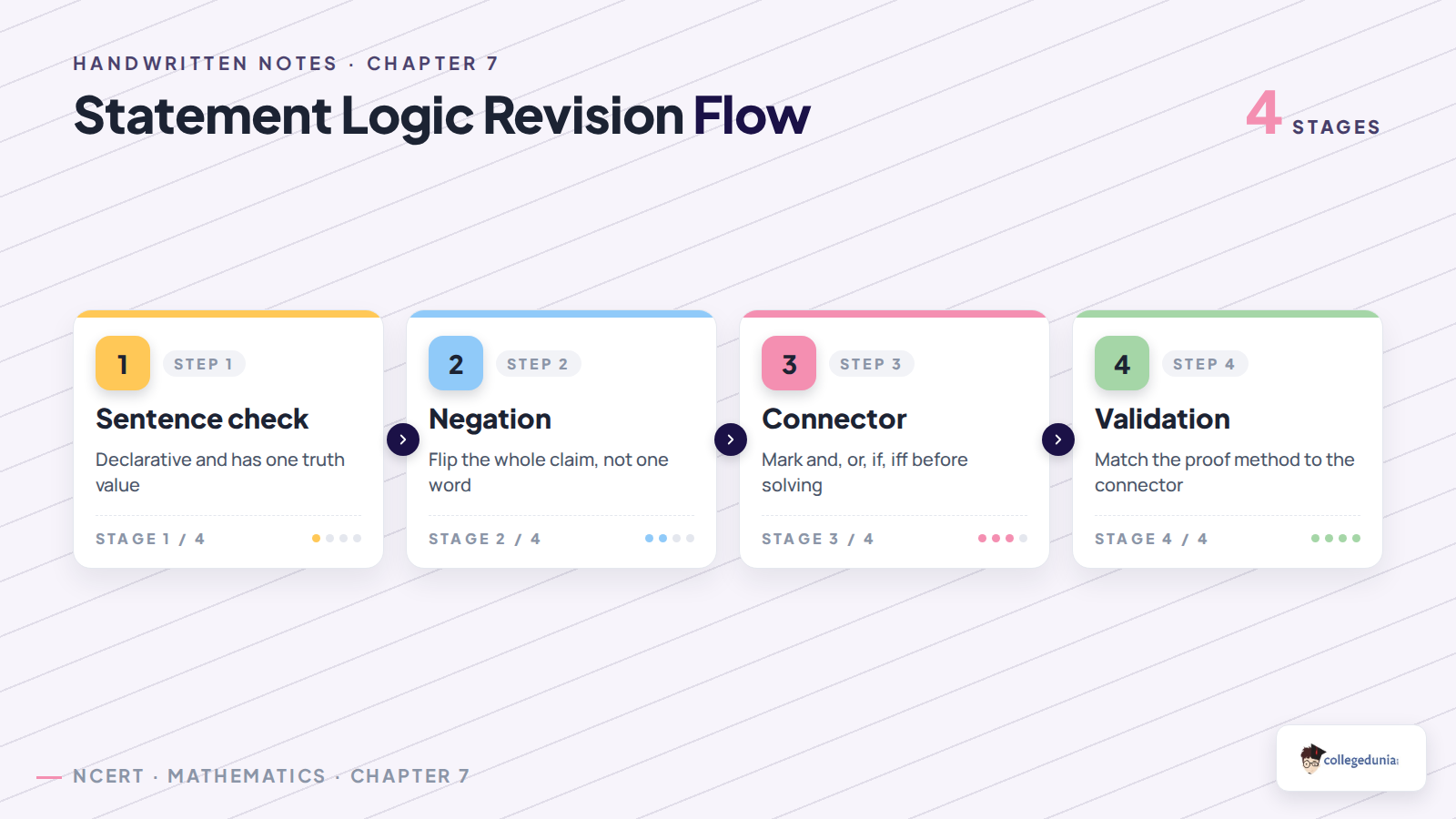
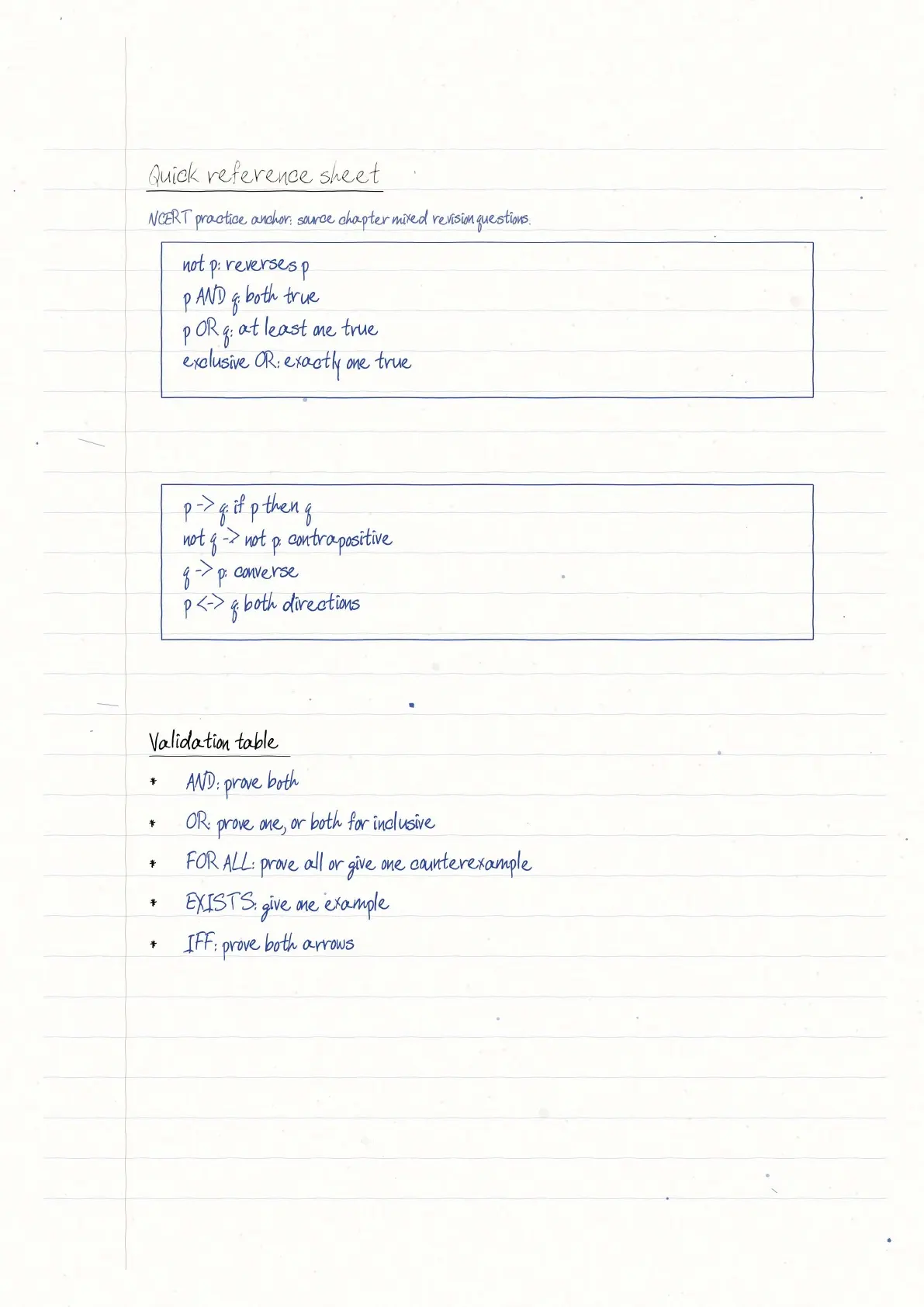
The first revision step is to test the sentence. A mathematical statement must be declarative and must have exactly one truth value. After that, students should mark negation, and, or, if then, or if and only if before choosing a proof method.
- Use negation to deny the whole claim, not just one word.
- Use and only when both component statements must be true.
- Use inclusive or when one or both choices may work.
- Use exclusive or when exactly one choice is allowed.
Logical Reasoning Syllogism Video Revision
Source: Magnet Brains on YouTube
Implication and Proof Method Checklist
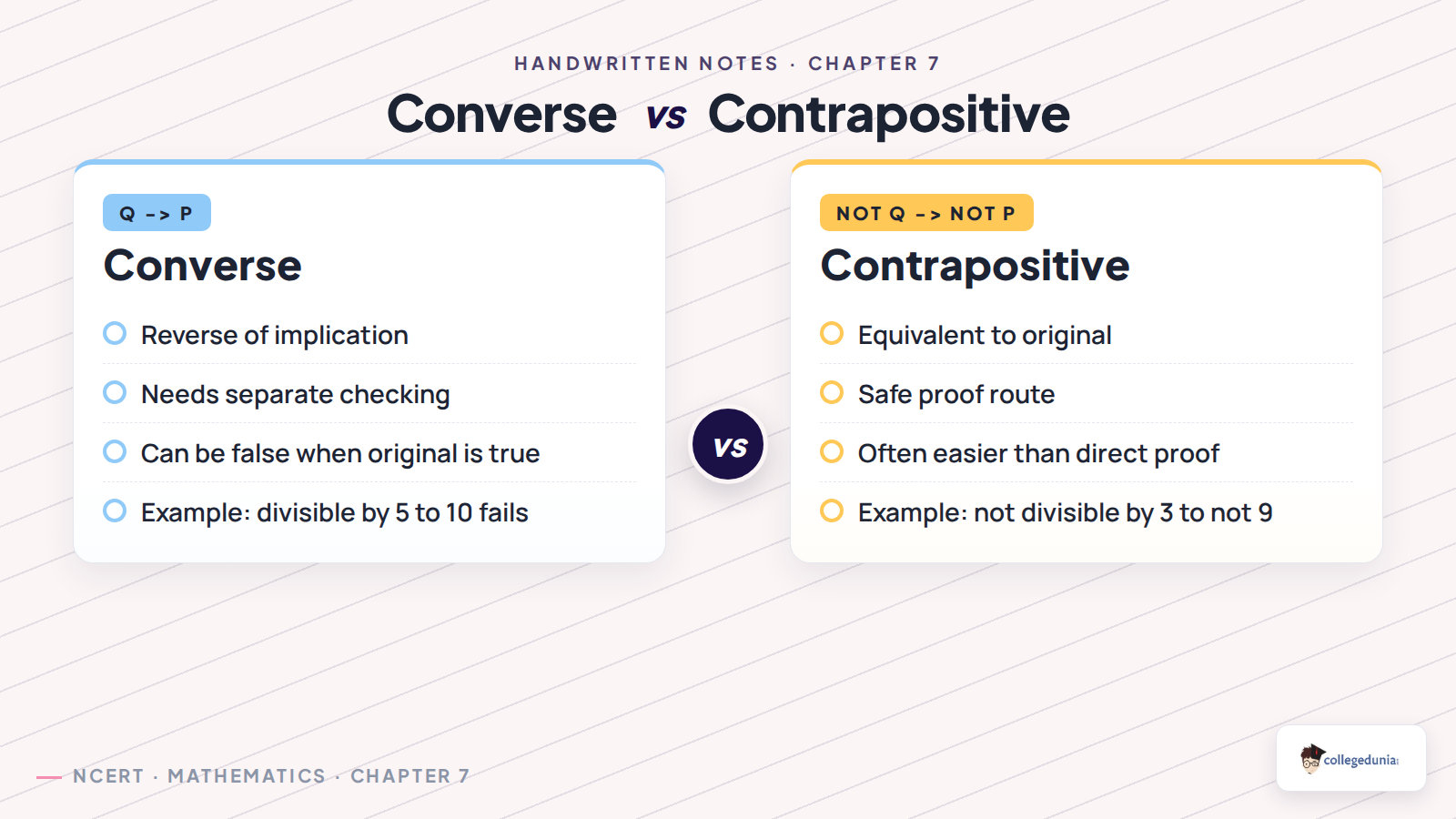
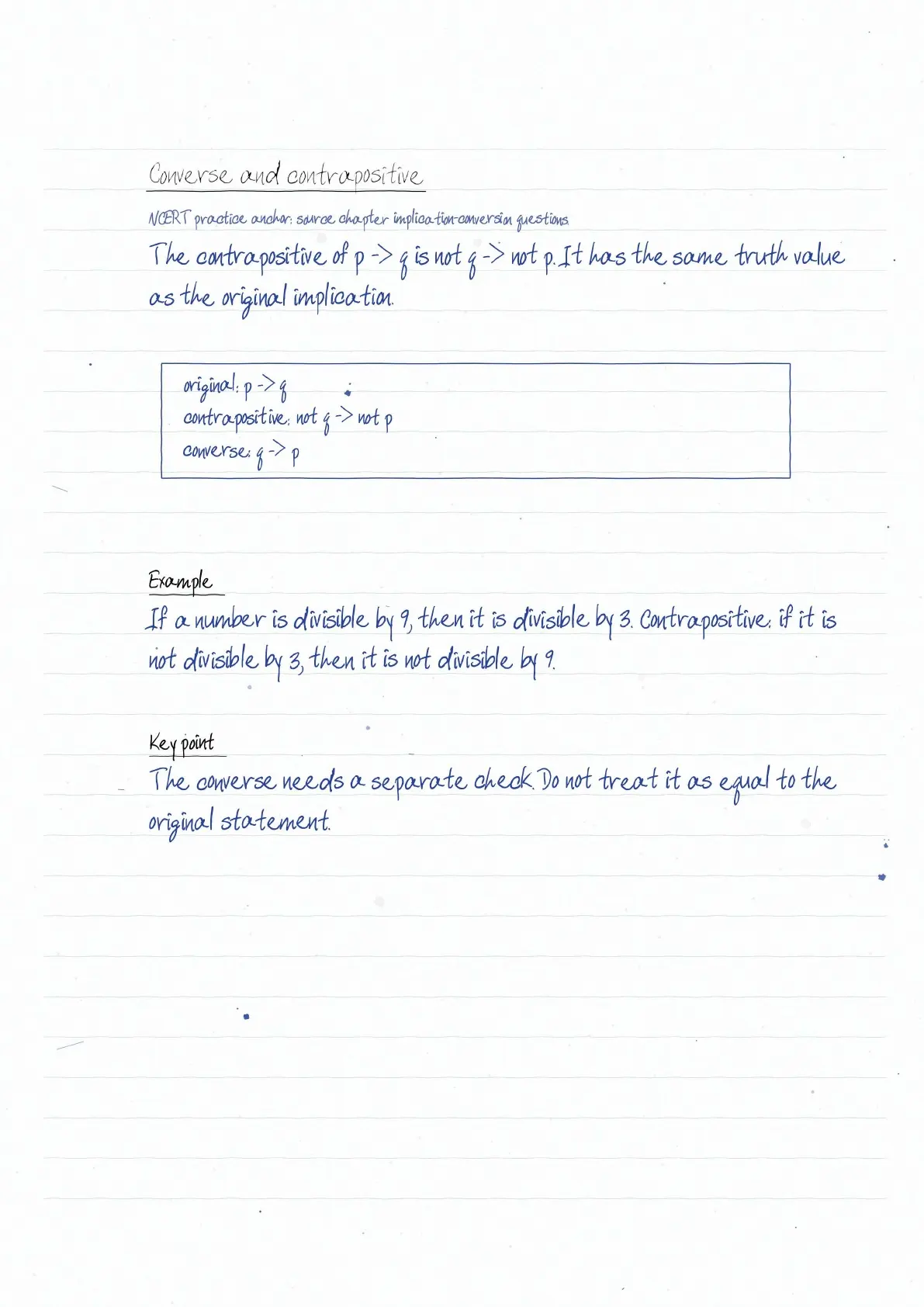
Implication questions are common because students often reverse the statement without checking. The handwritten notes separate the original statement, converse and contrapositive so the correct proof route is visible.
| Form | Meaning | Use in revision |
|---|---|---|
| Original | p implies q | Start from p and derive q |
| Converse | q implies p | Check separately, it may be false |
| Contrapositive | not q implies not p | Equivalent to original and often easier |
| If and only if | Both directions are true | Prove p implies q and q implies p |
Reasoning Practice Blocks in the Handwritten Notes
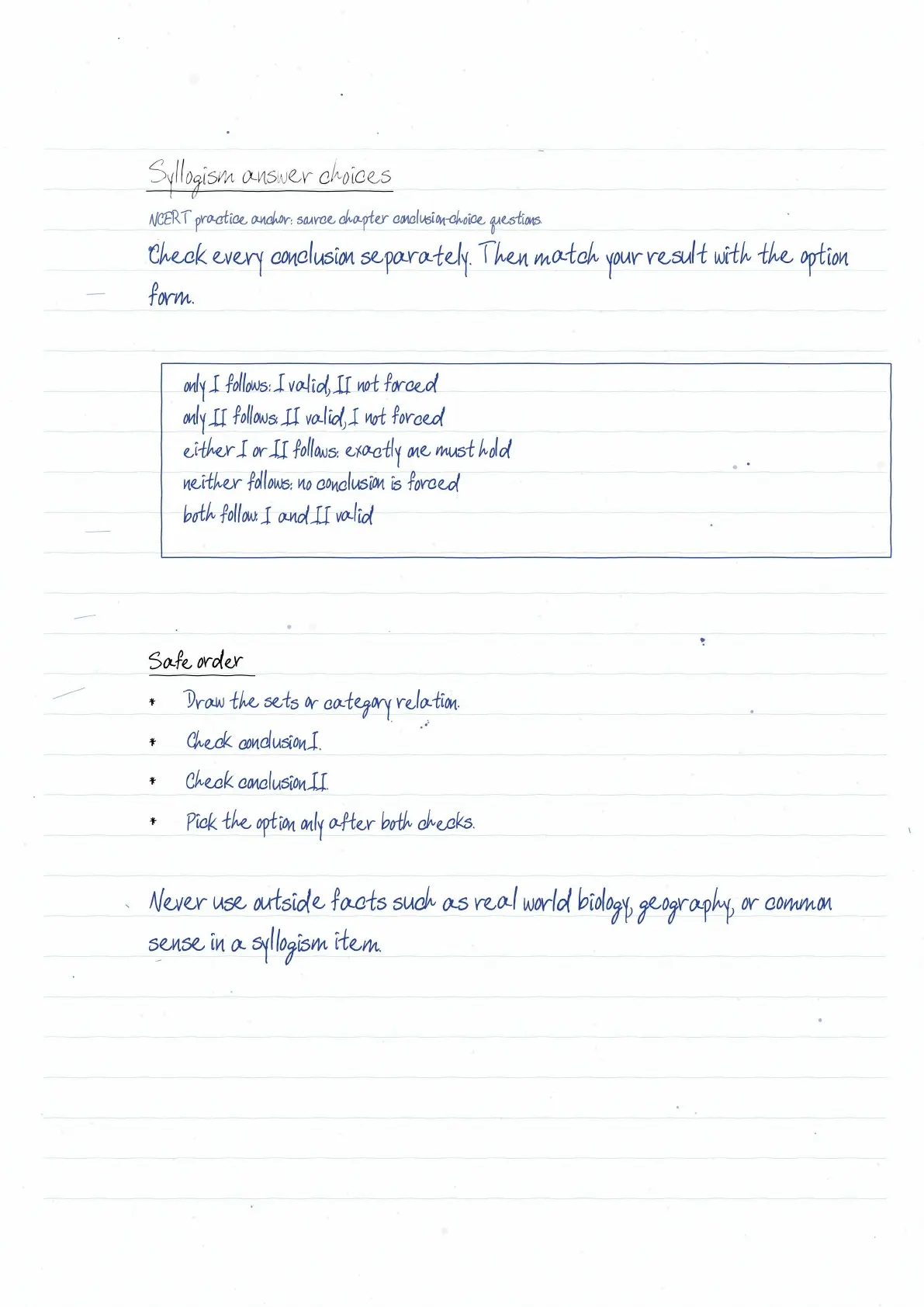
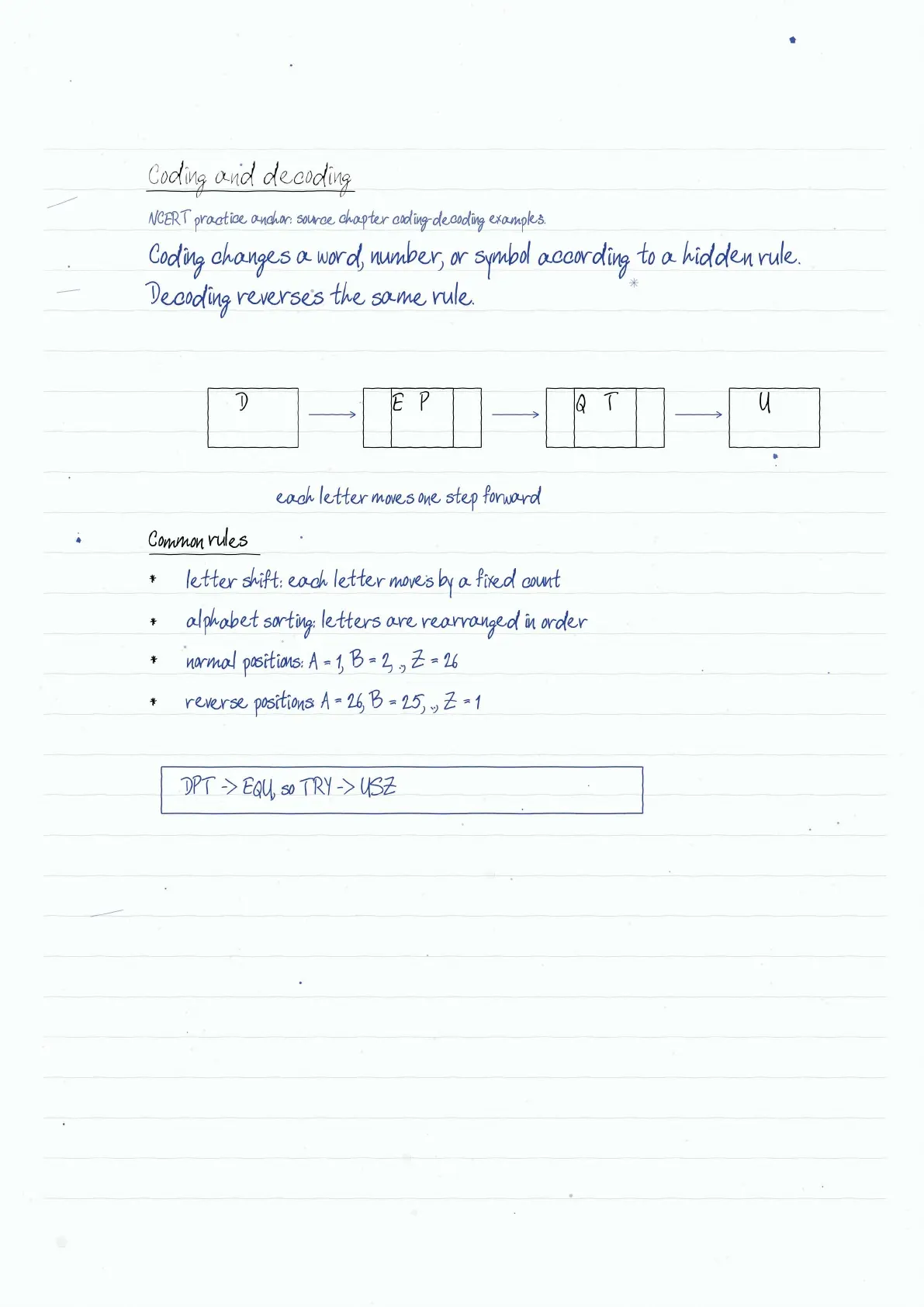
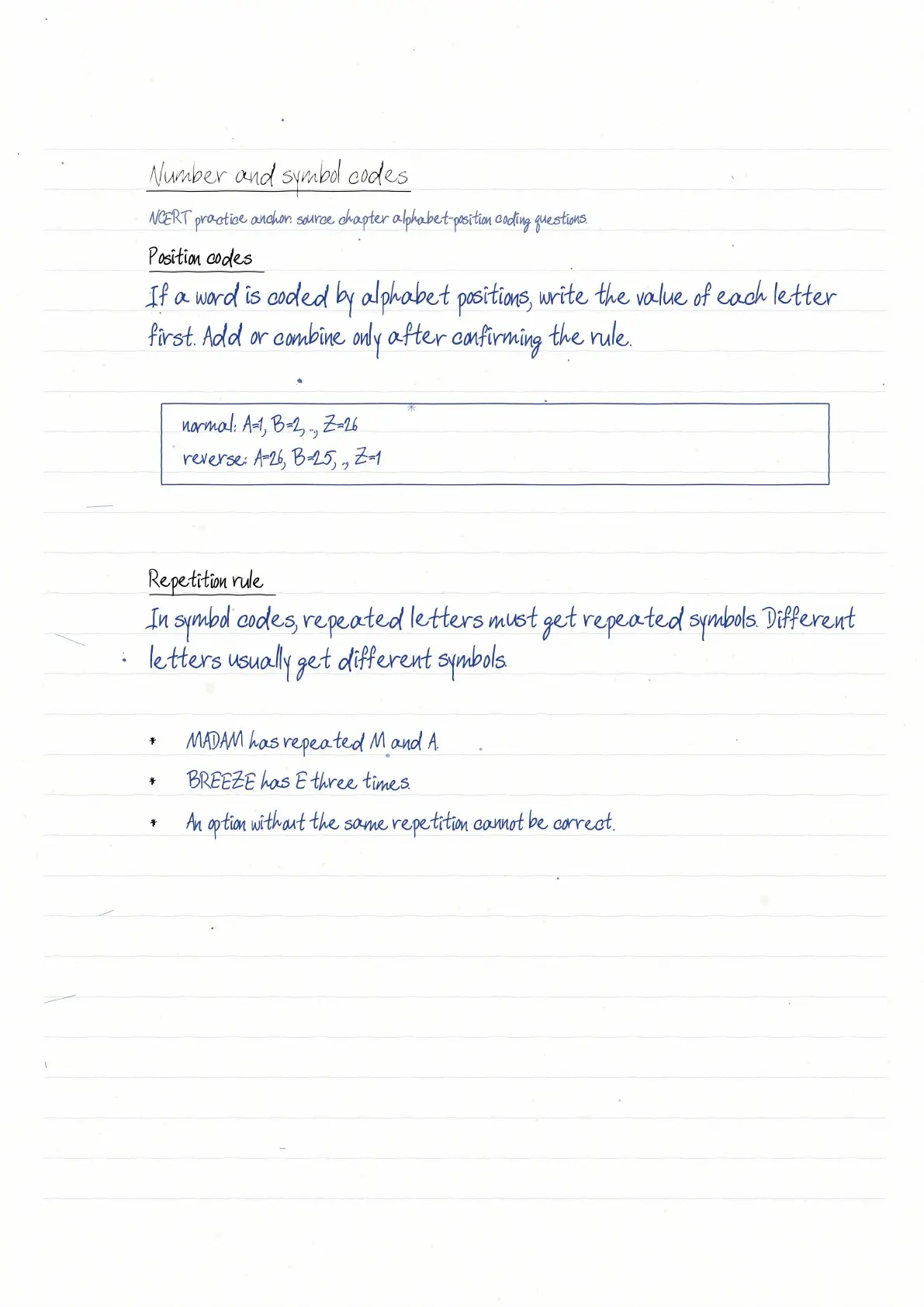
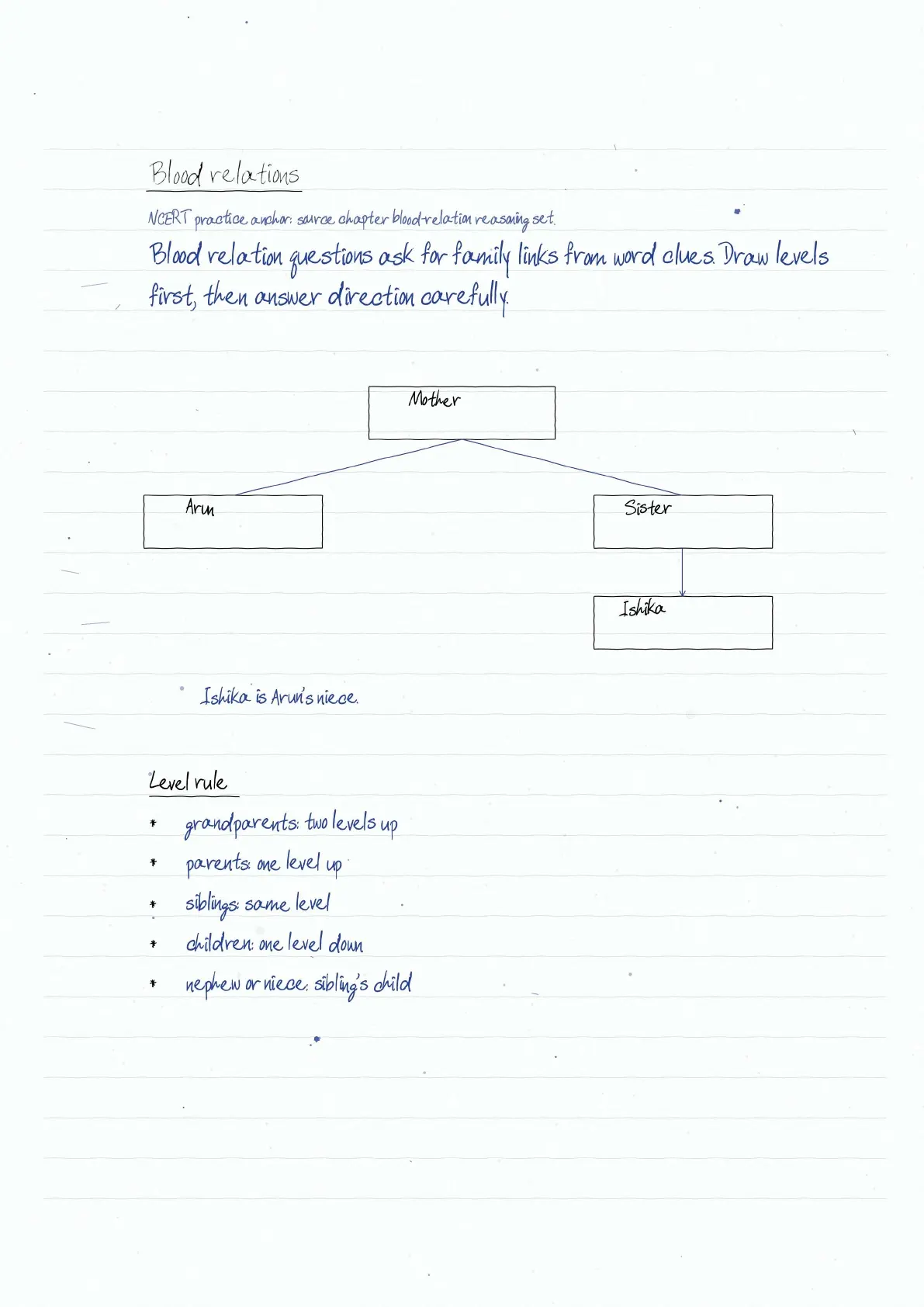
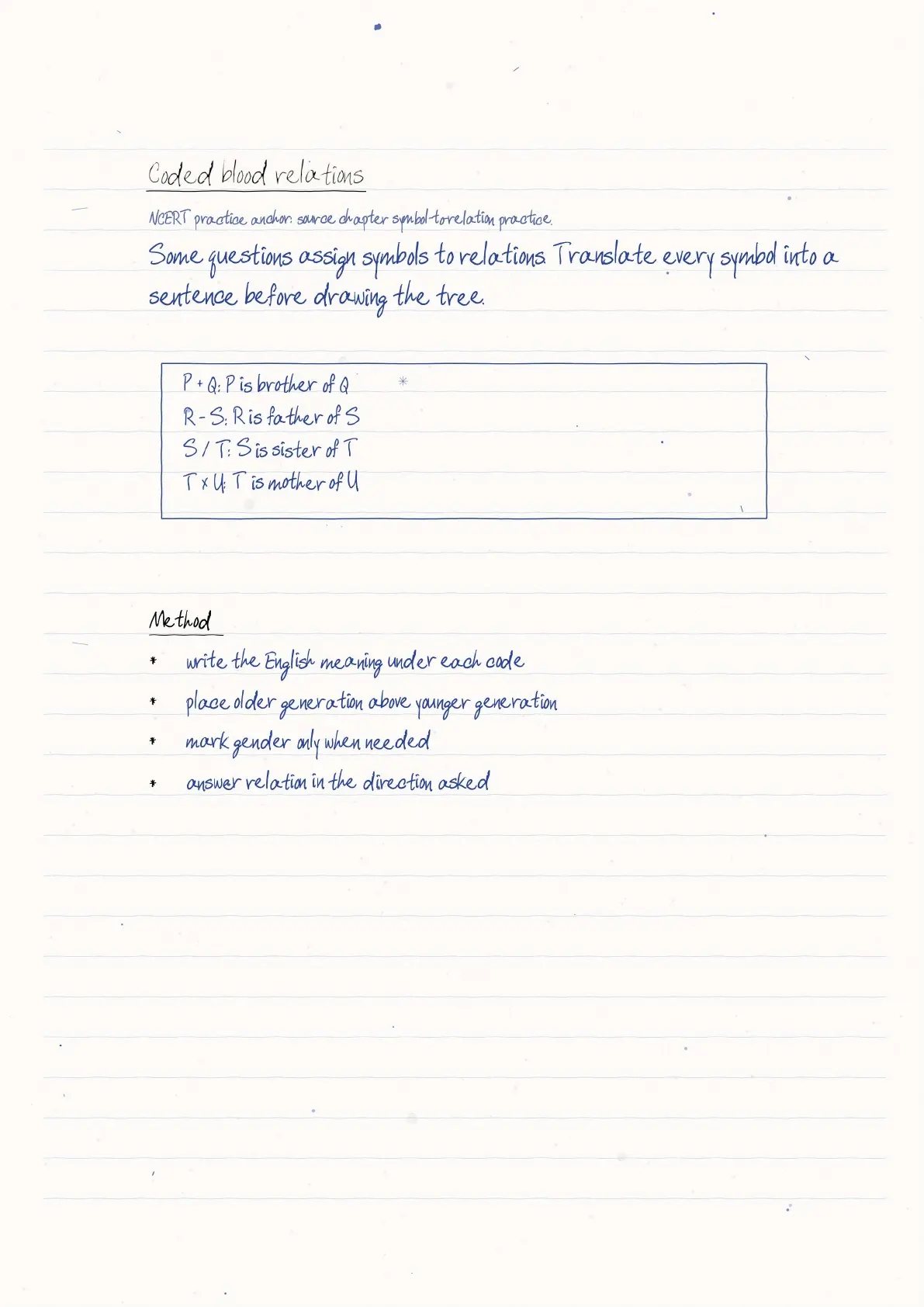
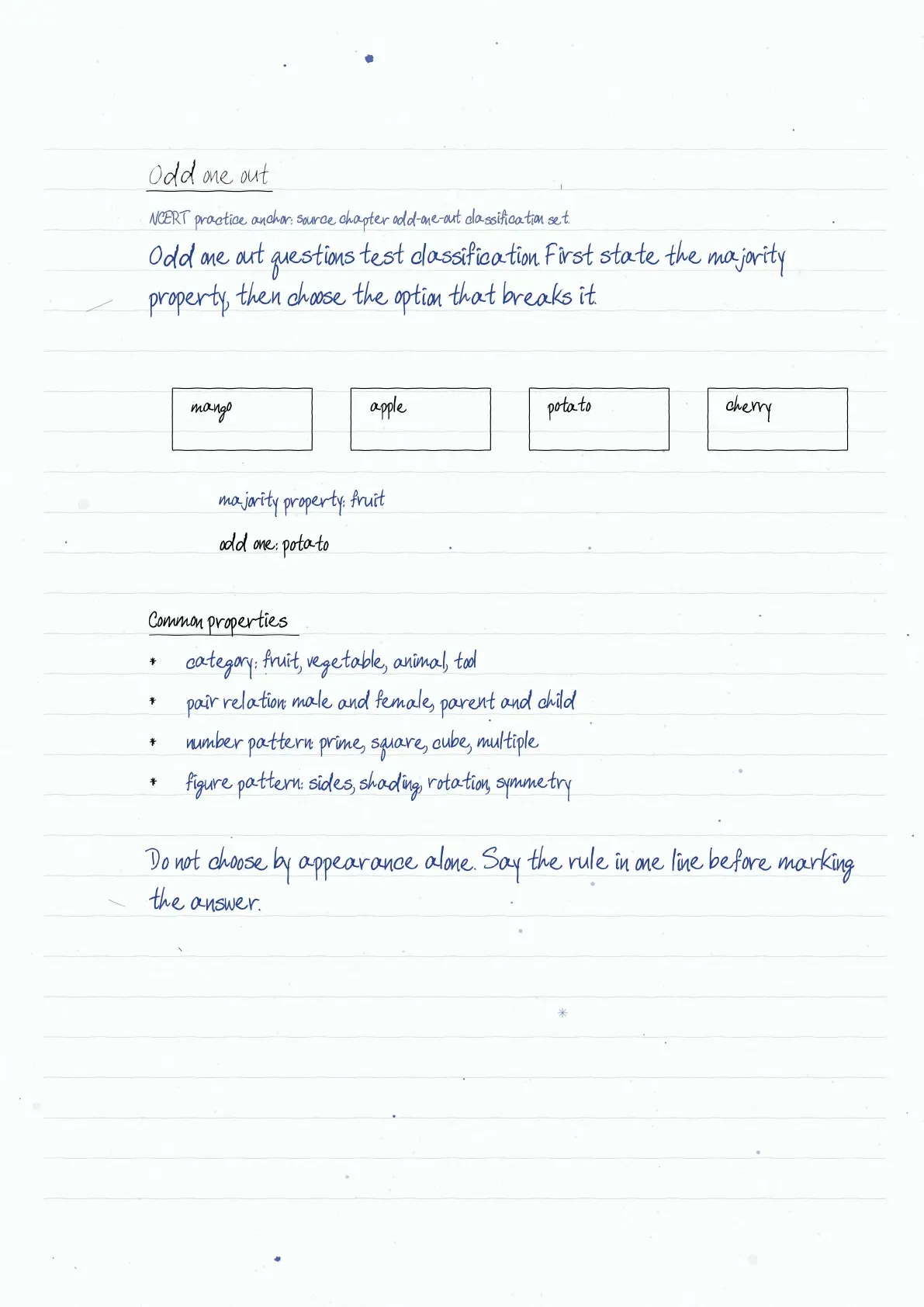
The PDF moves from formal logic to applied reasoning so students can connect the rules with actual question styles. Syllogism questions use set thinking. Coding questions use pattern detection. Blood relation questions use family-tree levels. Odd one out questions use a majority property.
- For syllogism, accept the given premises and ignore outside facts.
- For coding, verify the rule on every given letter or number before applying it.
- For blood relations, draw generations on separate levels.
- For odd one out, say the common property before selecting the exception.
How to Revise Mathematical and Logical Reasoning Before Class Tests
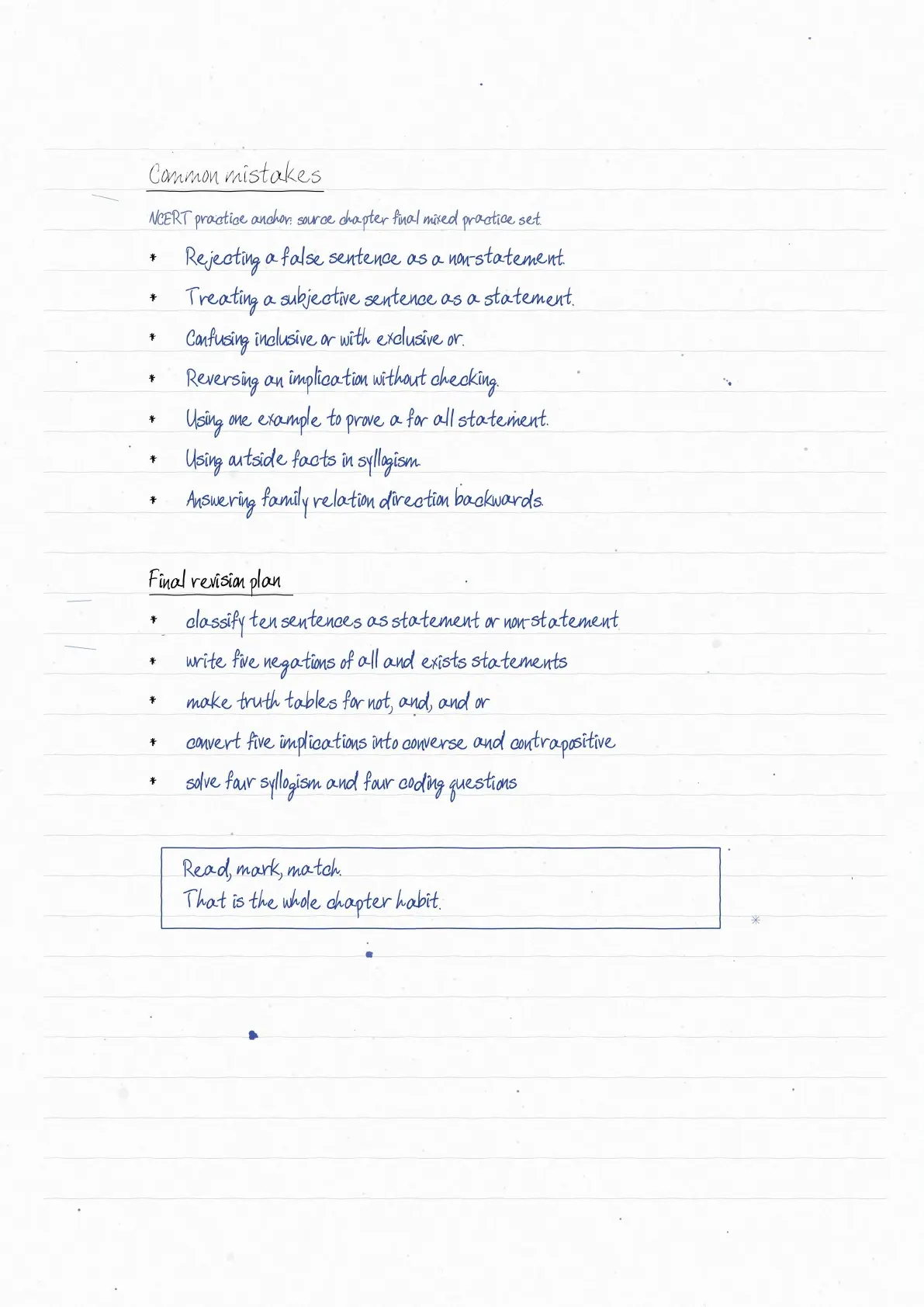
Use the Mathematical and Logical Reasoning handwritten notes in two passes. First, revise the statement rules and truth tables. Second, solve one example each from implication, syllogism, coding, blood relation and classification.
- Underline the connector or quantifier before solving any logic question.
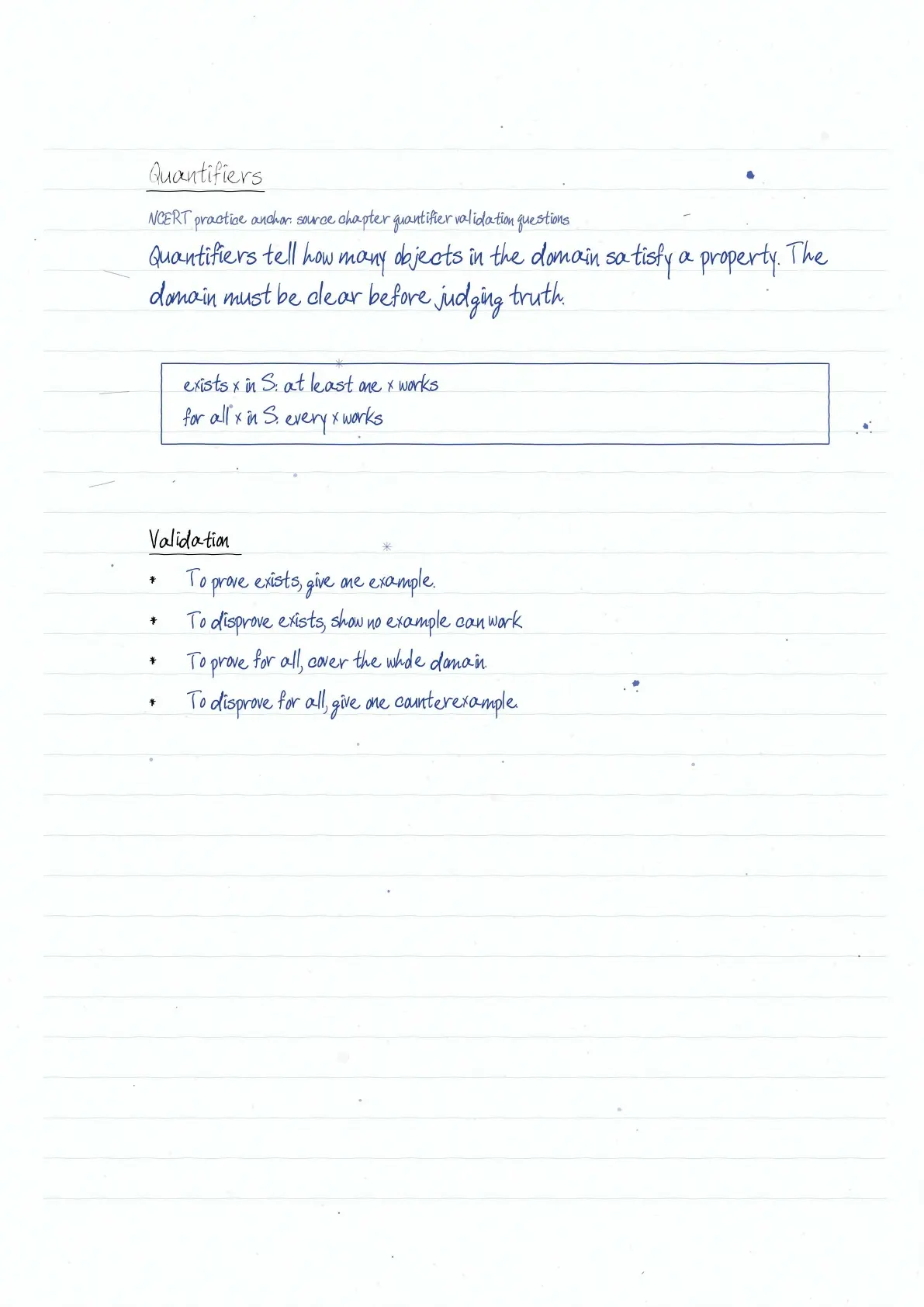
- Write the negation carefully for all and exists statements.
- Do not use one example to prove a for all statement.
- Use the final common-mistakes page for a five-minute check before submission.
Related Resources for Mathematical and Logical Reasoning Class 11
| Resource | Use it for | Link |
|---|---|---|
| NCERT Book PDF | Official theory and source examples | Mathematical and Logical Reasoning Class 11 NCERT Book PDF |
| NCERT Notes | Typed explanation with tables and diagrams | Mathematical and Logical Reasoning Class 11 Notes |
| NCERT Solutions | Step-by-step answers for textbook questions | Mathematical and Logical Reasoning Class 11 NCERT Solutions |
| Formula Sheet | Connector rules and proof-method revision | Mathematical and Logical Reasoning Class 11 Formula Sheet |
Applied Mathematics Handwritten Notes for All Chapters
| Chapter | Handwritten Notes |
|---|---|
| Chapter 1 | Numbers and Quantification Class 11 Handwritten Notes |
| Chapter 2 | Numerical Applications Class 11 Handwritten Notes |
| Chapter 3 | Set Class 11 Handwritten Notes |
| Chapter 4 | Relations Class 11 Handwritten Notes |
| Chapter 5 | Sequences and Series Class 11 Handwritten Notes |
| Chapter 6 | Permutations and Combinations Class 11 Handwritten Notes |
| Chapter 7 | Mathematical and Logical Reasoning Class 11 Handwritten Notes |
Mathematical and Logical Reasoning Class 11 Applied Mathematics Handwritten Notes FAQs
Ques. What is covered in Class 11 Applied Mathematics Chapter 7 Mathematical and Logical Reasoning handwritten notes?
Ans. The handwritten notes cover statements, truth values, negation, and, or, implication, converse, contrapositive, validation methods, syllogism, coding, blood relations and odd one out questions.
Ques. What is a mathematical statement in this chapter?
Ans. A mathematical statement is a declarative sentence with exactly one truth value. It may be true or false, but it cannot be both.
Ques. What is the difference between converse and contrapositive?
Ans. For p implies q, the converse is q implies p and must be checked separately. The contrapositive is not q implies not p and is equivalent to the original implication.
Ques. How should students revise syllogism questions?
Ans. Students should draw the category relation, accept the given premises as true, check each conclusion separately and avoid using outside facts.
Ques. Are these Mathematical and Logical Reasoning handwritten notes aligned with the 2026-27 syllabus?
Ans. Yes. The notes follow the current 2026-27 Class 11 Applied Mathematics scope for Mathematical and Logical Reasoning.



Comments