




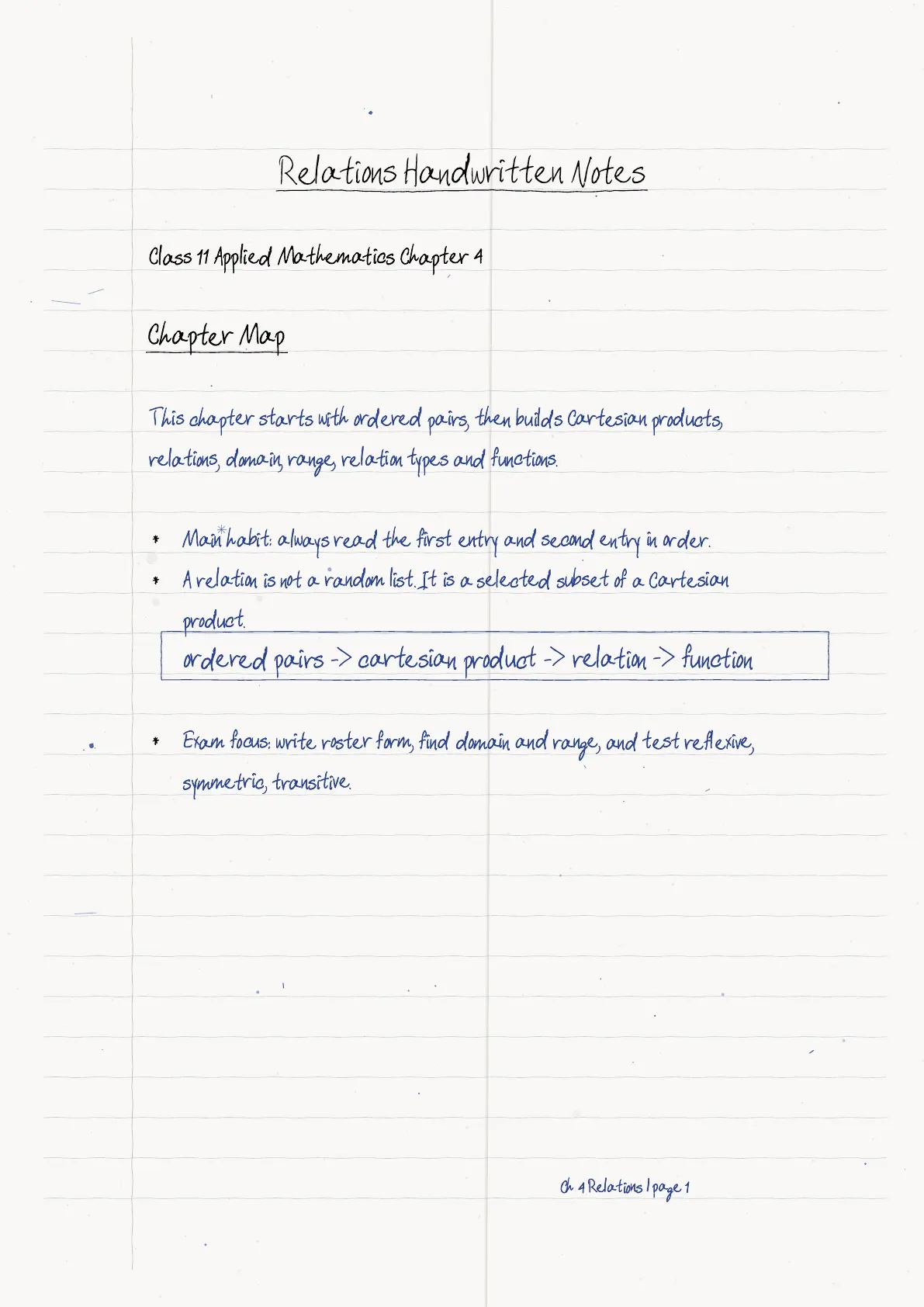
The handwritten notes on Class 11 Applied Mathematics Chapter 4 Relations have been carefully prepared for quick revision, according to the latest 2026-27 CBSE syllabus. The PDF covers ordered pairs, Cartesian products, relations, domain, range, equivalence relation tests and functions.
- Best for one-shot revision: ordered-pair rules, relation properties and function tests stay in one PDF.
- Aligned to 2026-27: follows the current Class 11 Applied Mathematics Unit 2 scope.
- Exam ready: proof checks for reflexive, symmetric and transitive relations are placed close to examples.
Student Feedback: In a Collegedunia poll of 10,000+ students, most students said Relations becomes easier when ordered pairs, domain, range and function checks are revised together before practice.
|
Table of Contents |
Relations Handwritten Notes: What the PDF Covers
Relations starts with the idea that order matters. The chapter first explains ordered pairs, then uses them to build Cartesian products and relations between two sets.
| Block | What students revise | First check |
|---|---|---|
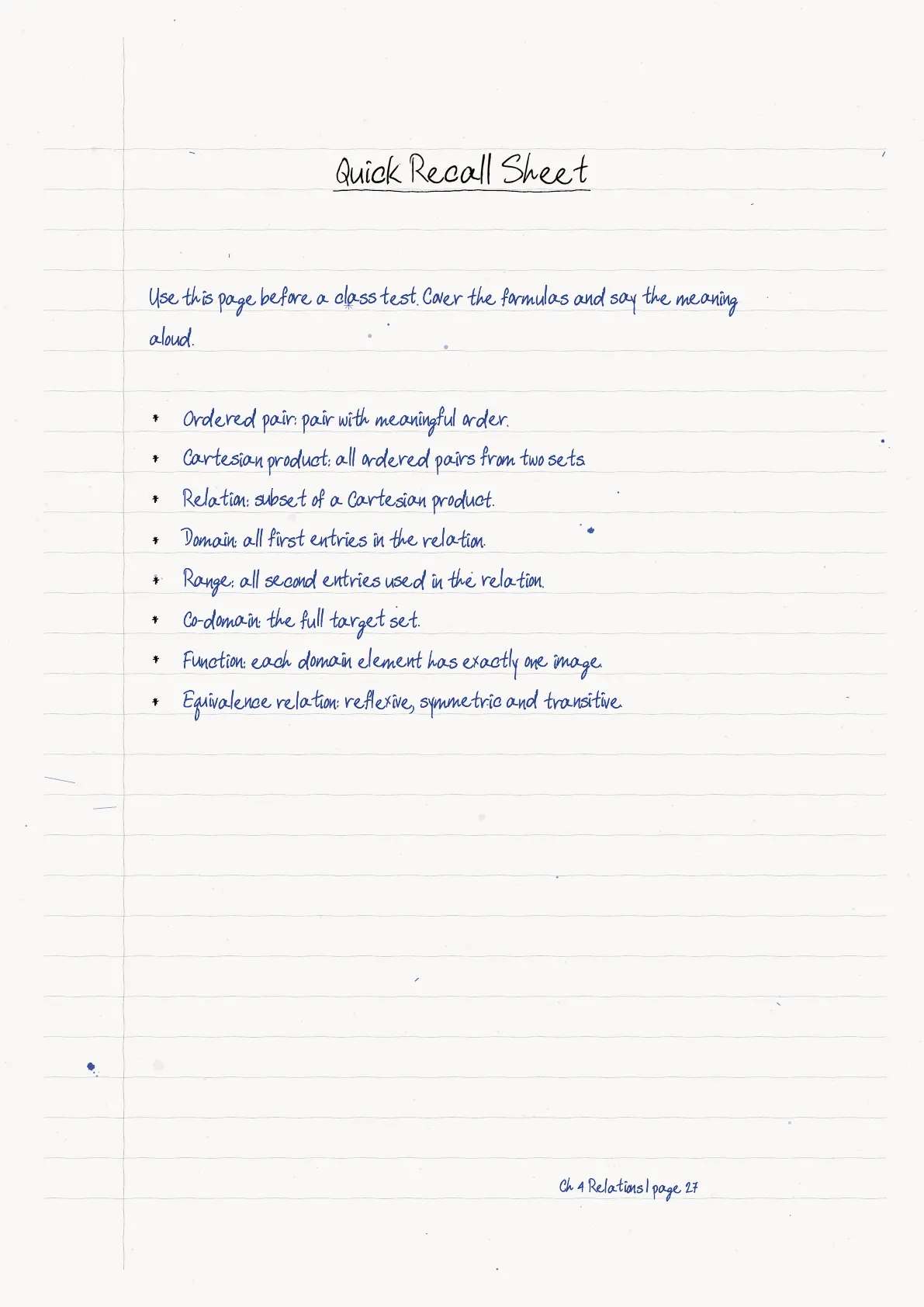
| Ordered pair | Meaning of first and second entry | (a, b) is not {a, b} |
| Cartesian product | All possible ordered pairs from two sets | n(A x B) = n(A) x n(B) |
| Relation | Subset of A x B based on a rule | List only pairs that follow the rule |
| Function | Special relation with one image per input | Every domain element gets exactly one image |
Ordered Pair and Cartesian Product in Relations
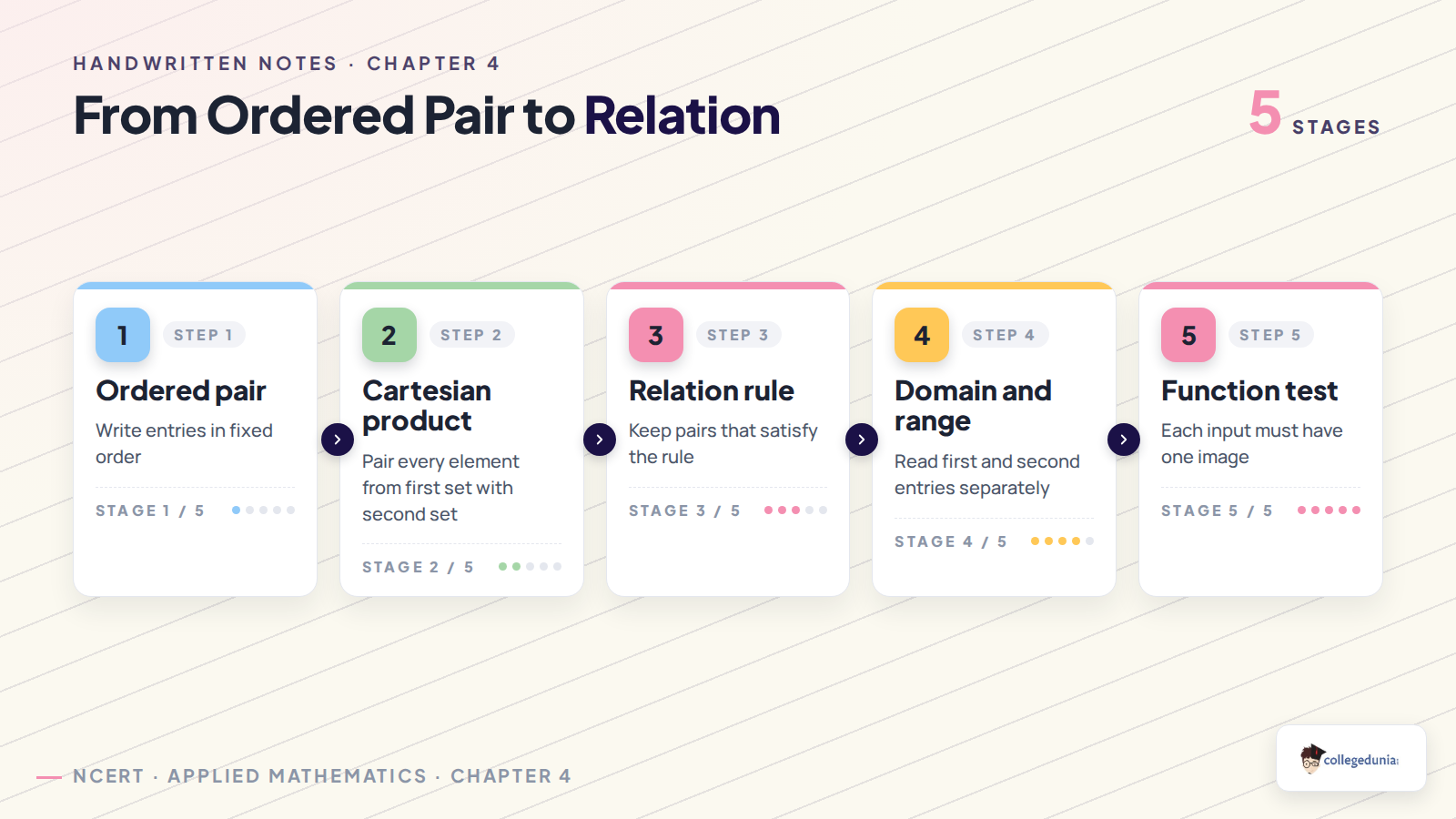
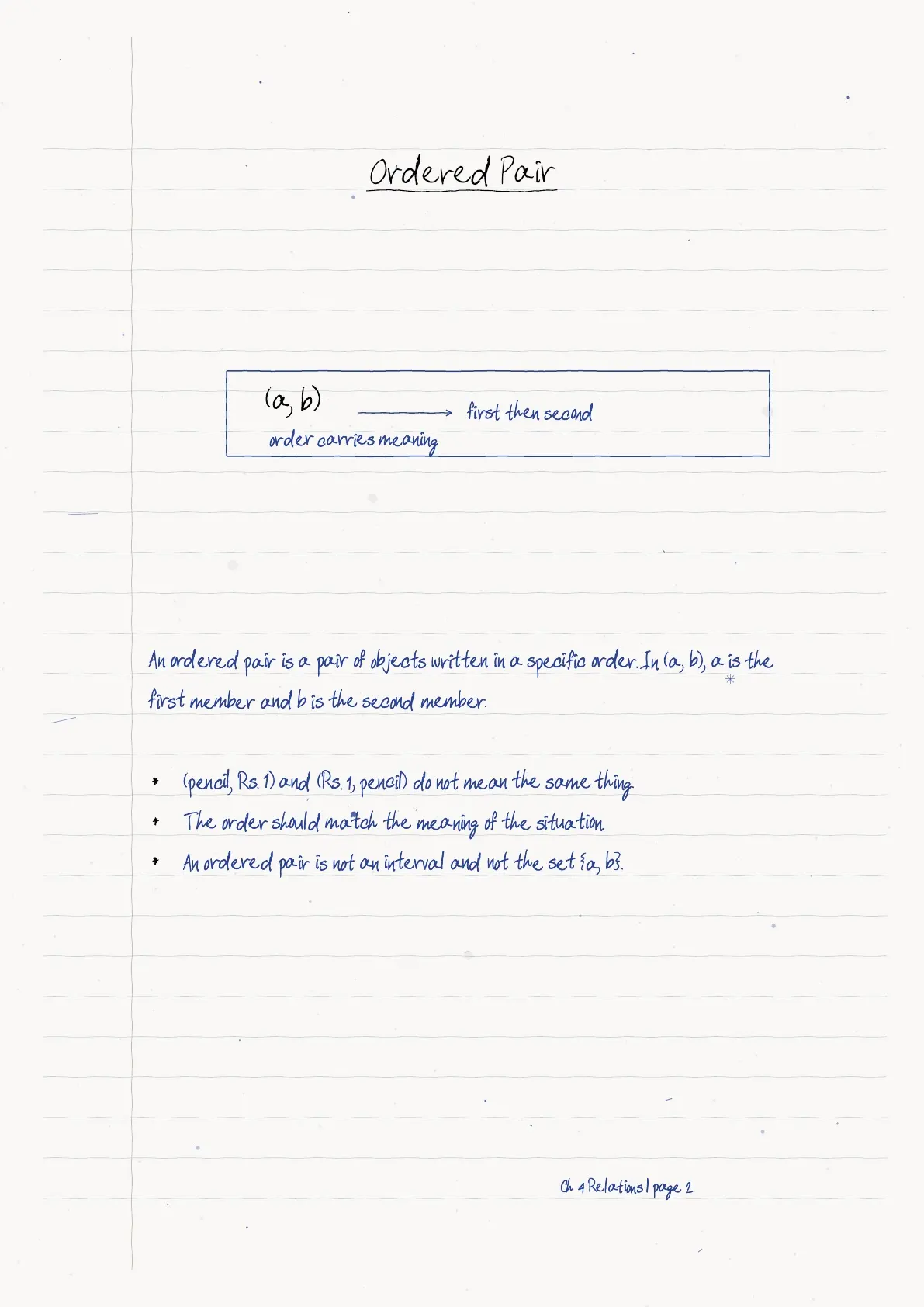
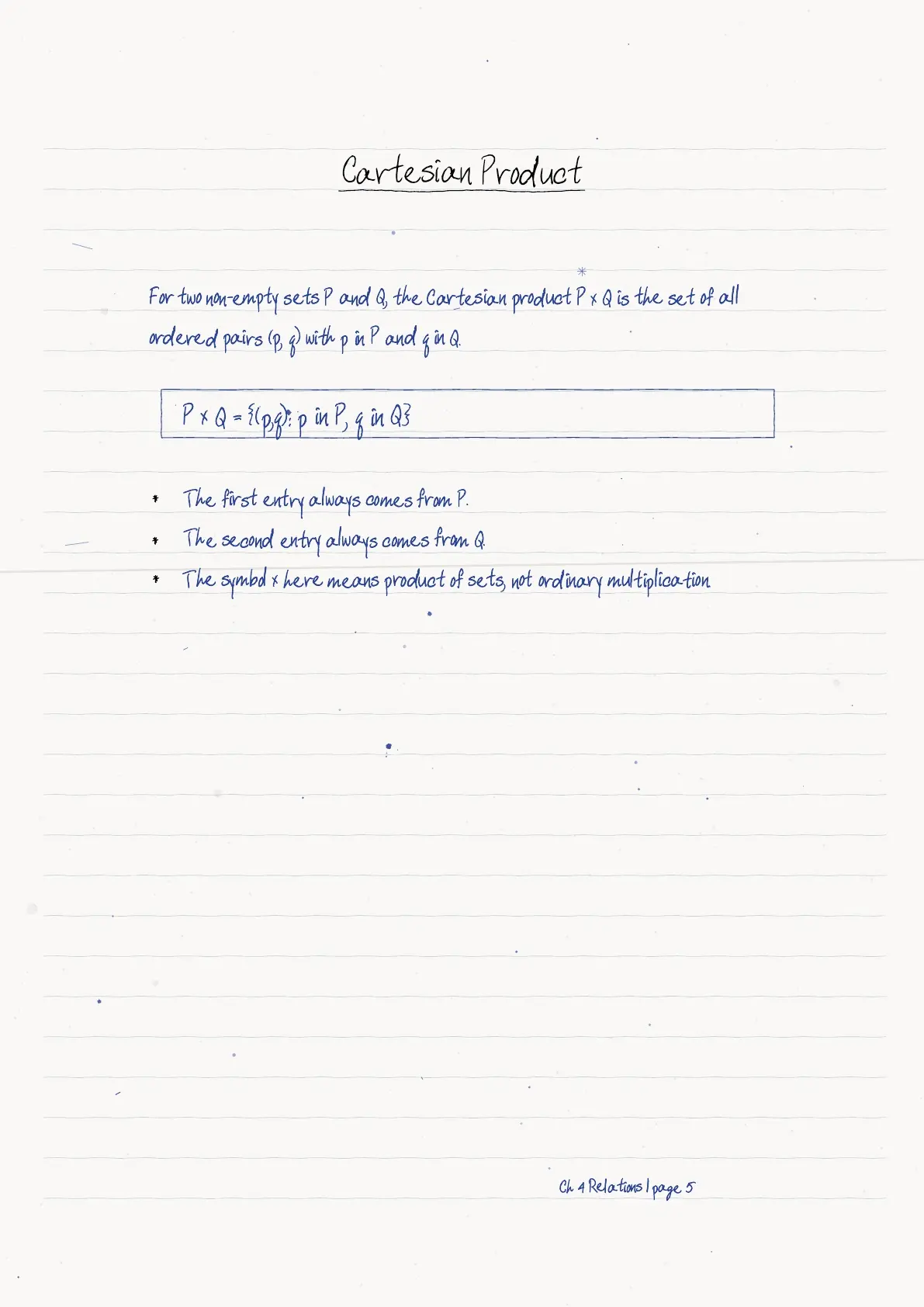
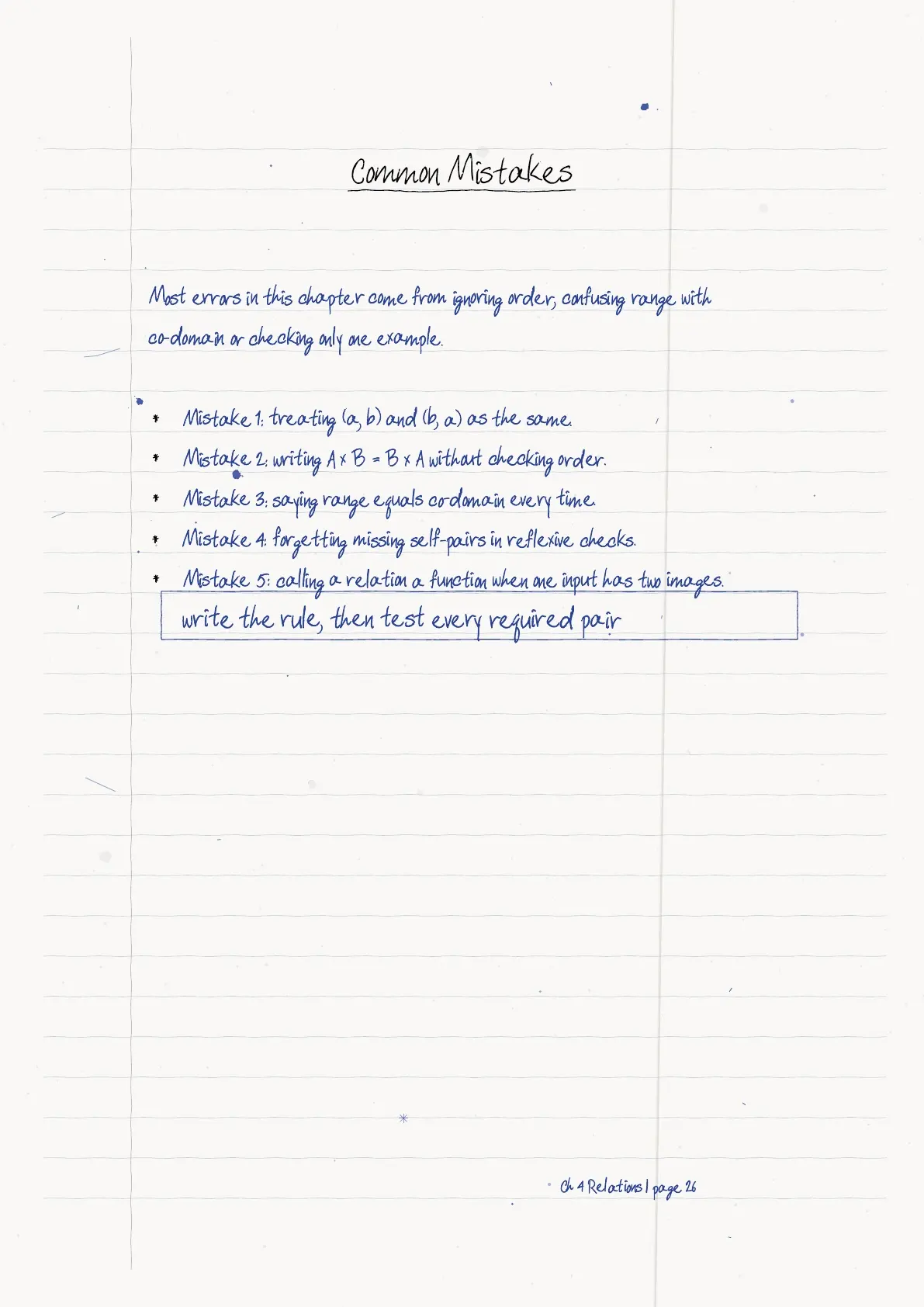
An ordered pair is written as (a, b), where a is the first member and b is the second member. The order carries meaning, so (pencil, Rs. 1) is different from (Rs. 1, pencil).
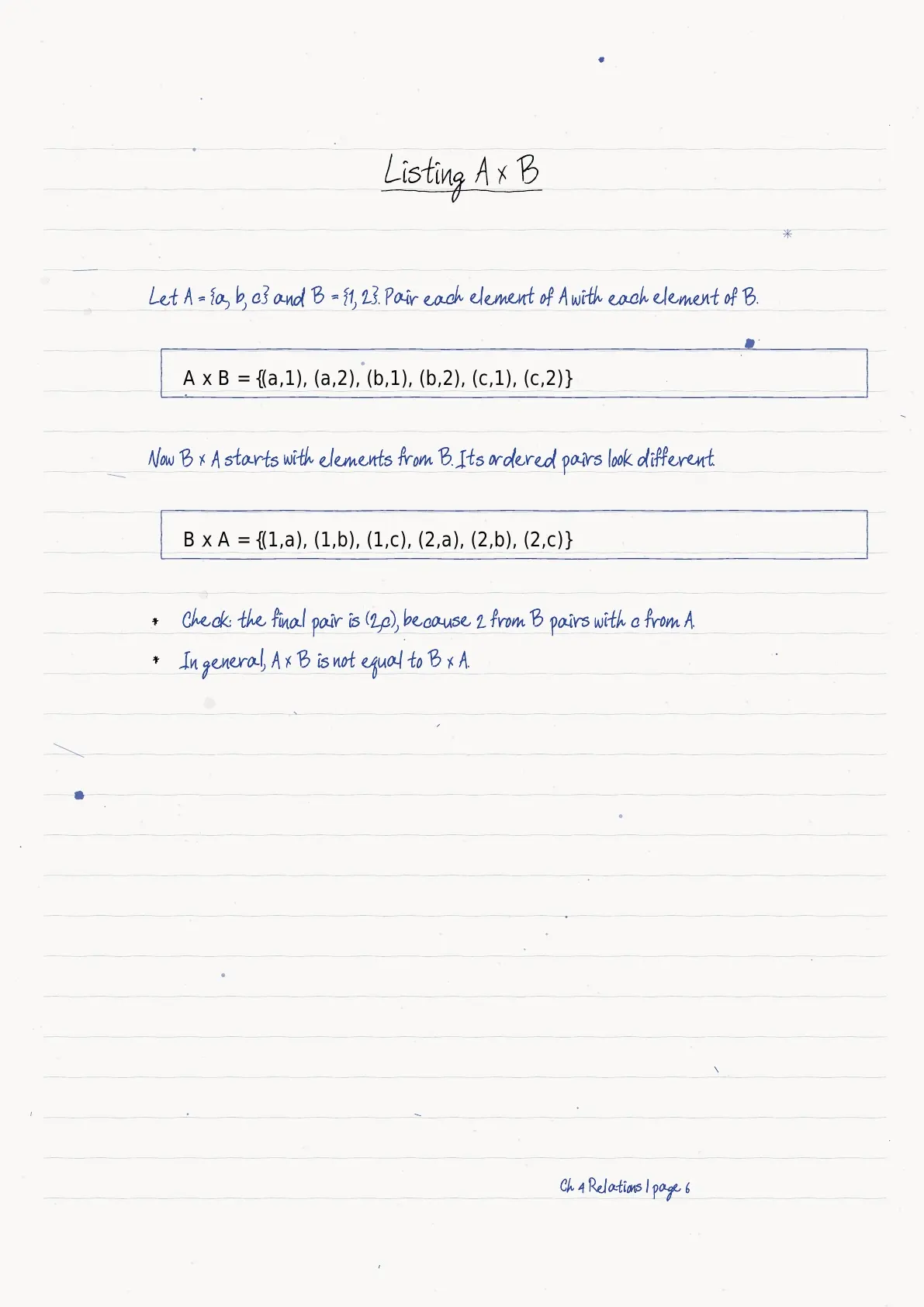
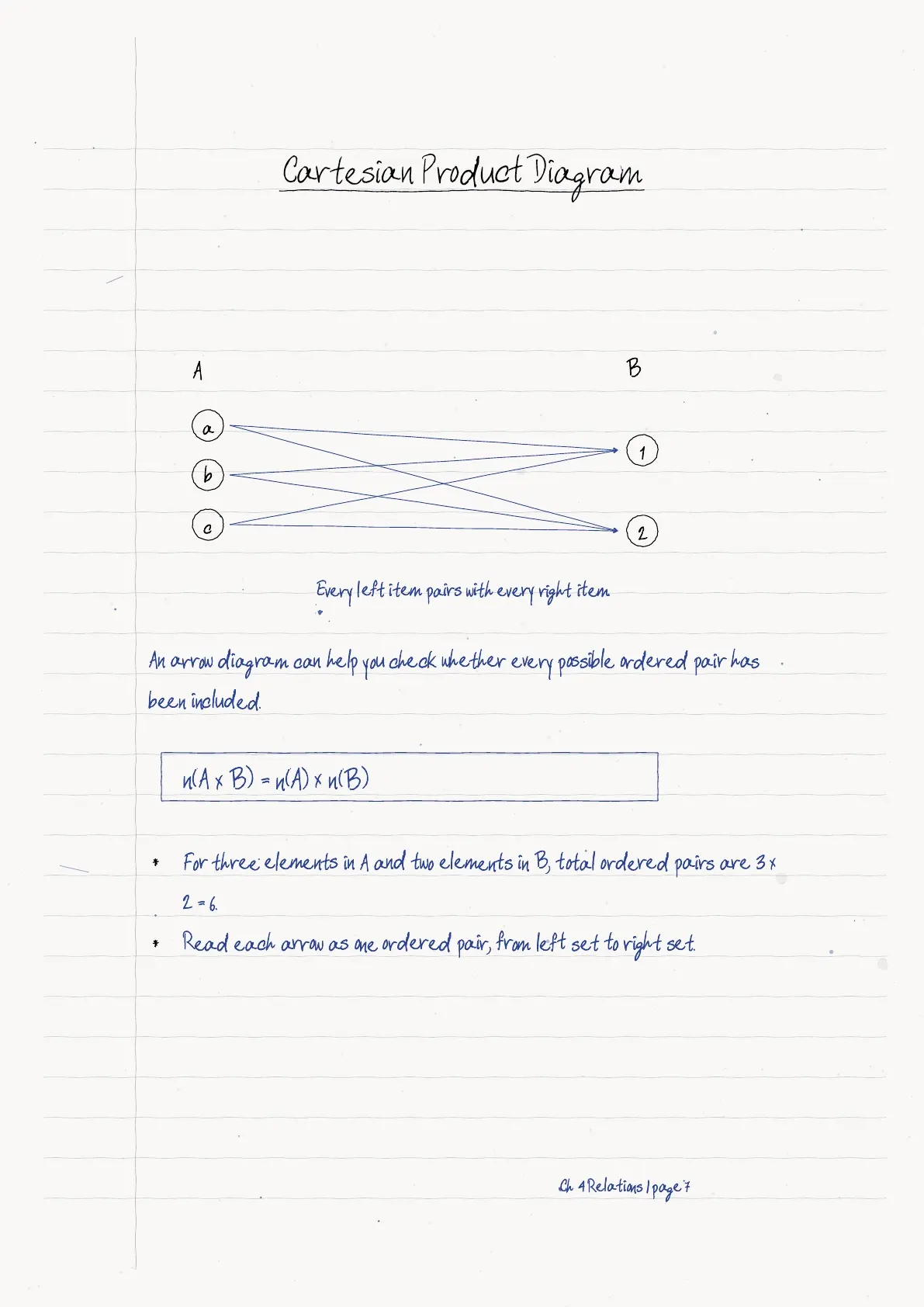
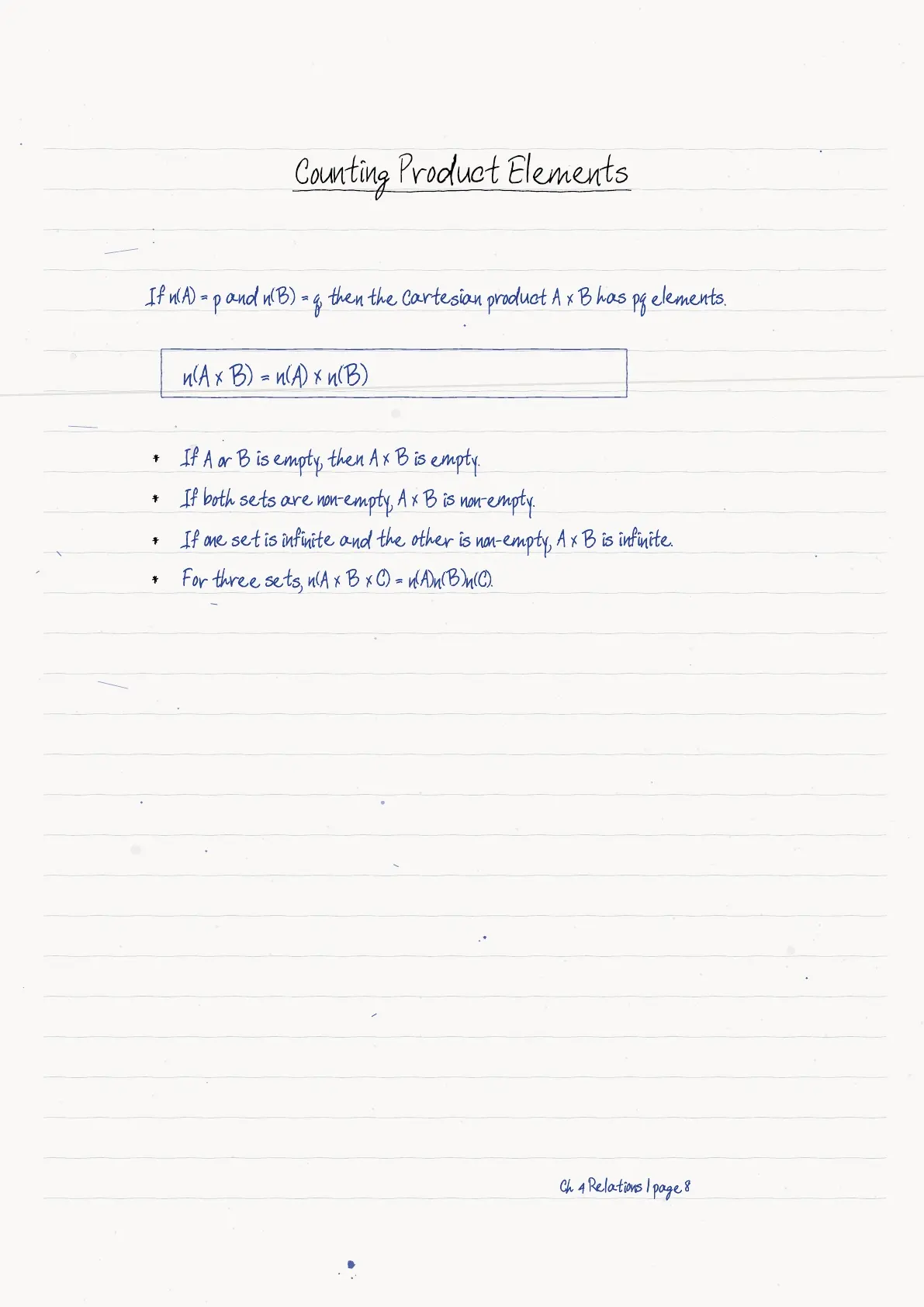
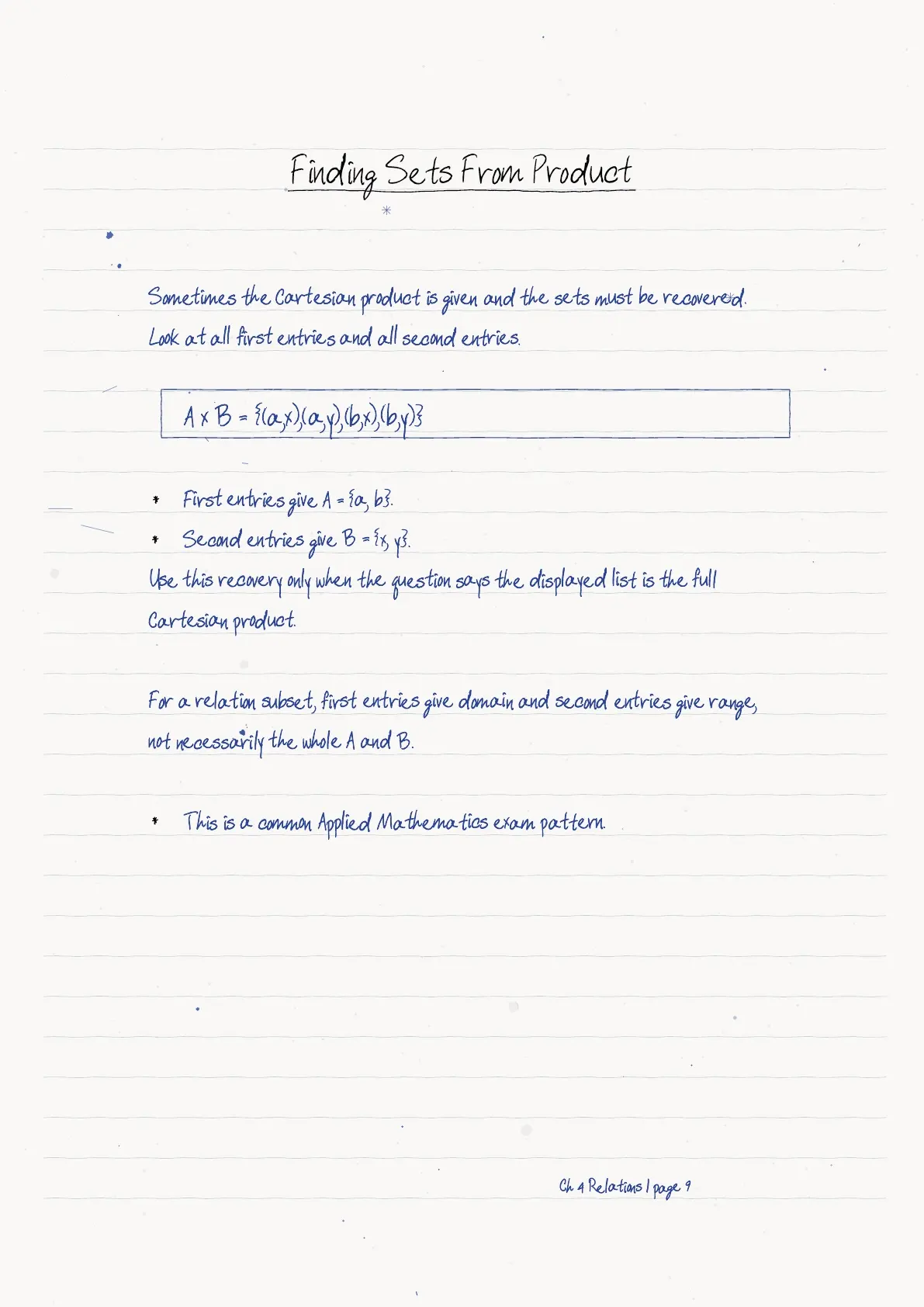
The Cartesian product A x B lists every possible pair with first entry from A and second entry from B. A x B is usually not the same as B x A. Count the pairs by multiplying the number of elements in the two sets.
- If A = {a, b, c} and B = {1, 2}, then A x B has 6 pairs.
- If one set is empty, the Cartesian product is empty.
- For three sets, use ordered triplets such as (a, b, c).
Relations and Functions Quick Revision for Class 11
Source: Magnet Brains on YouTube
Domain, Range and Co-Domain in Relations
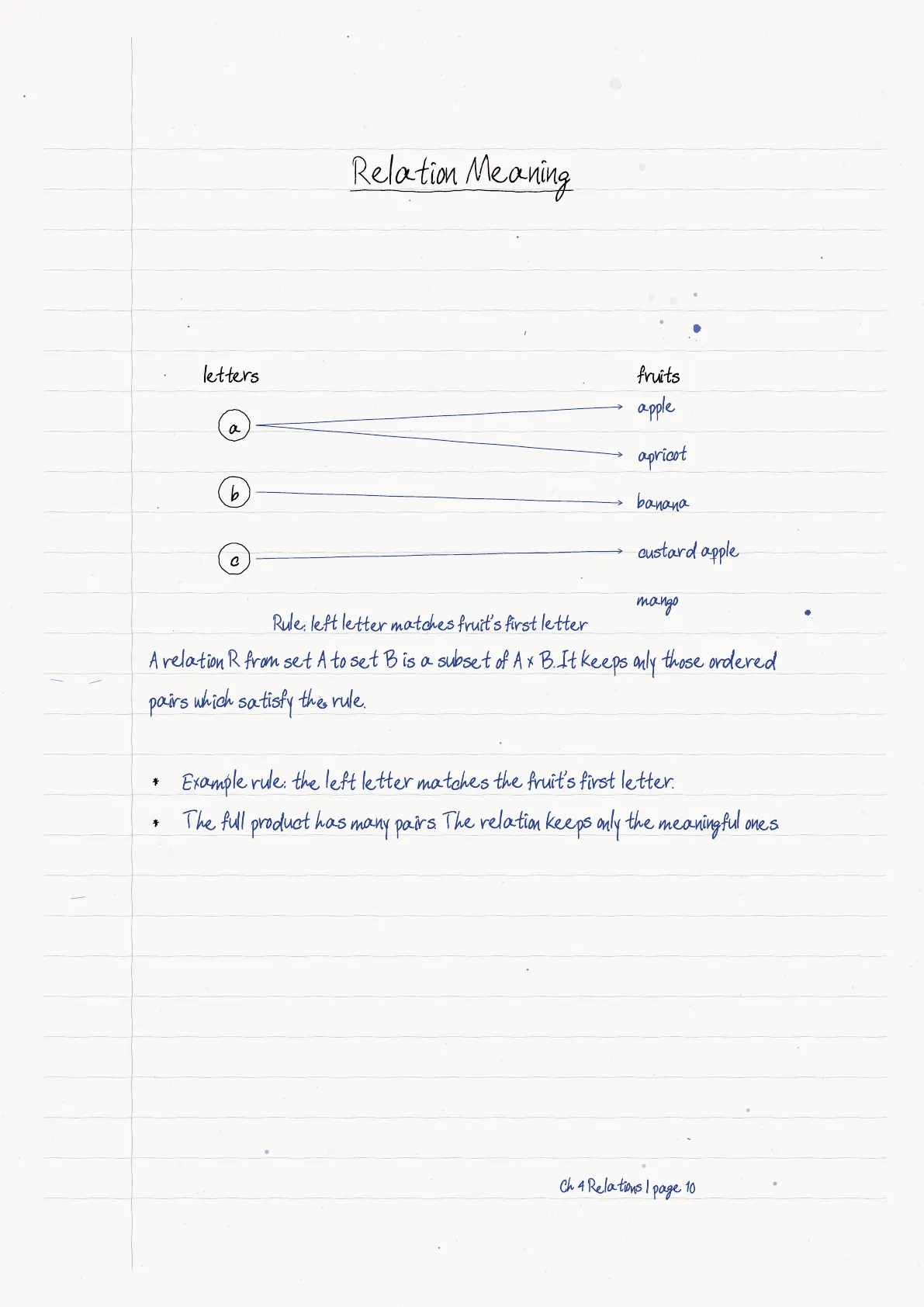
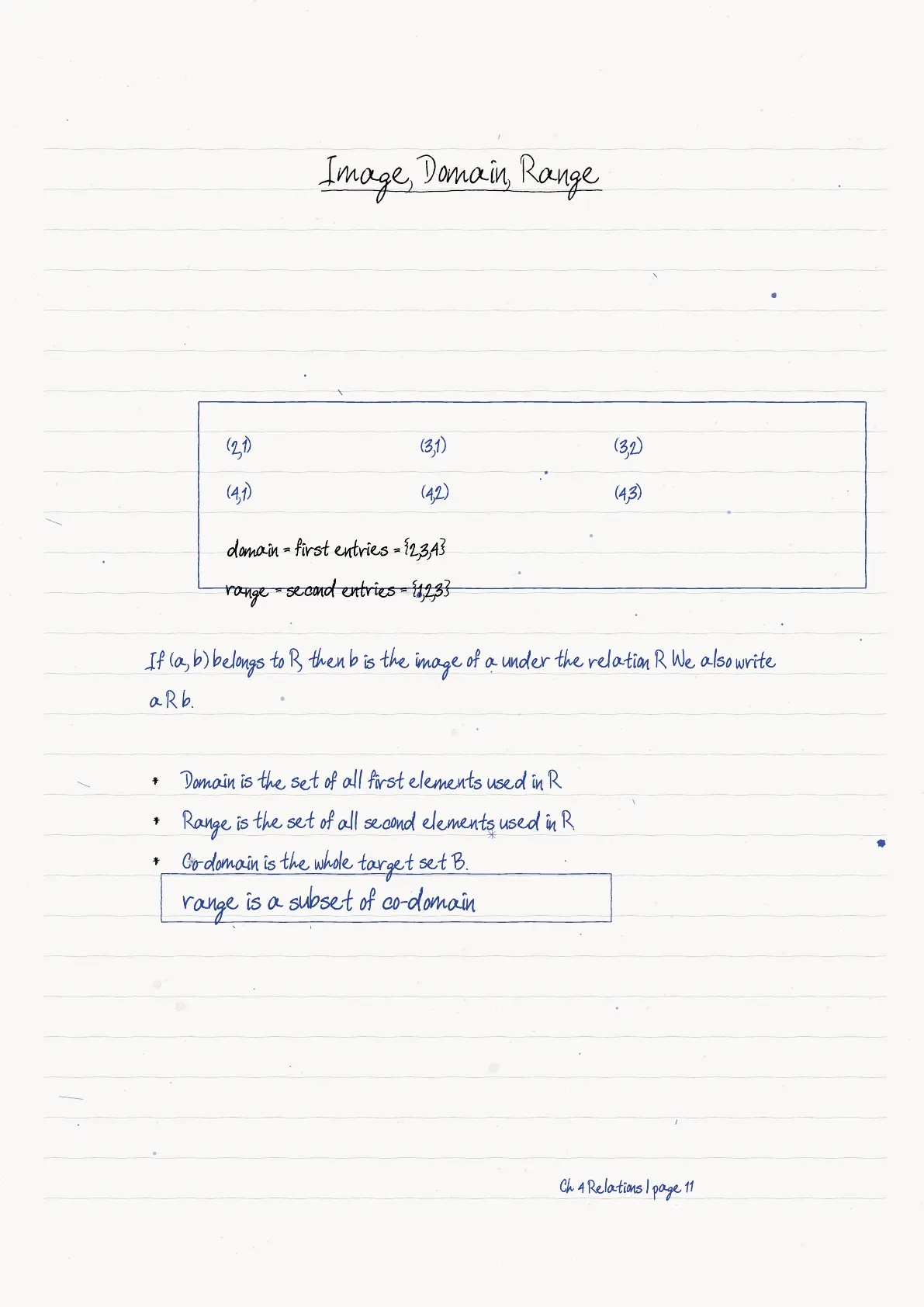
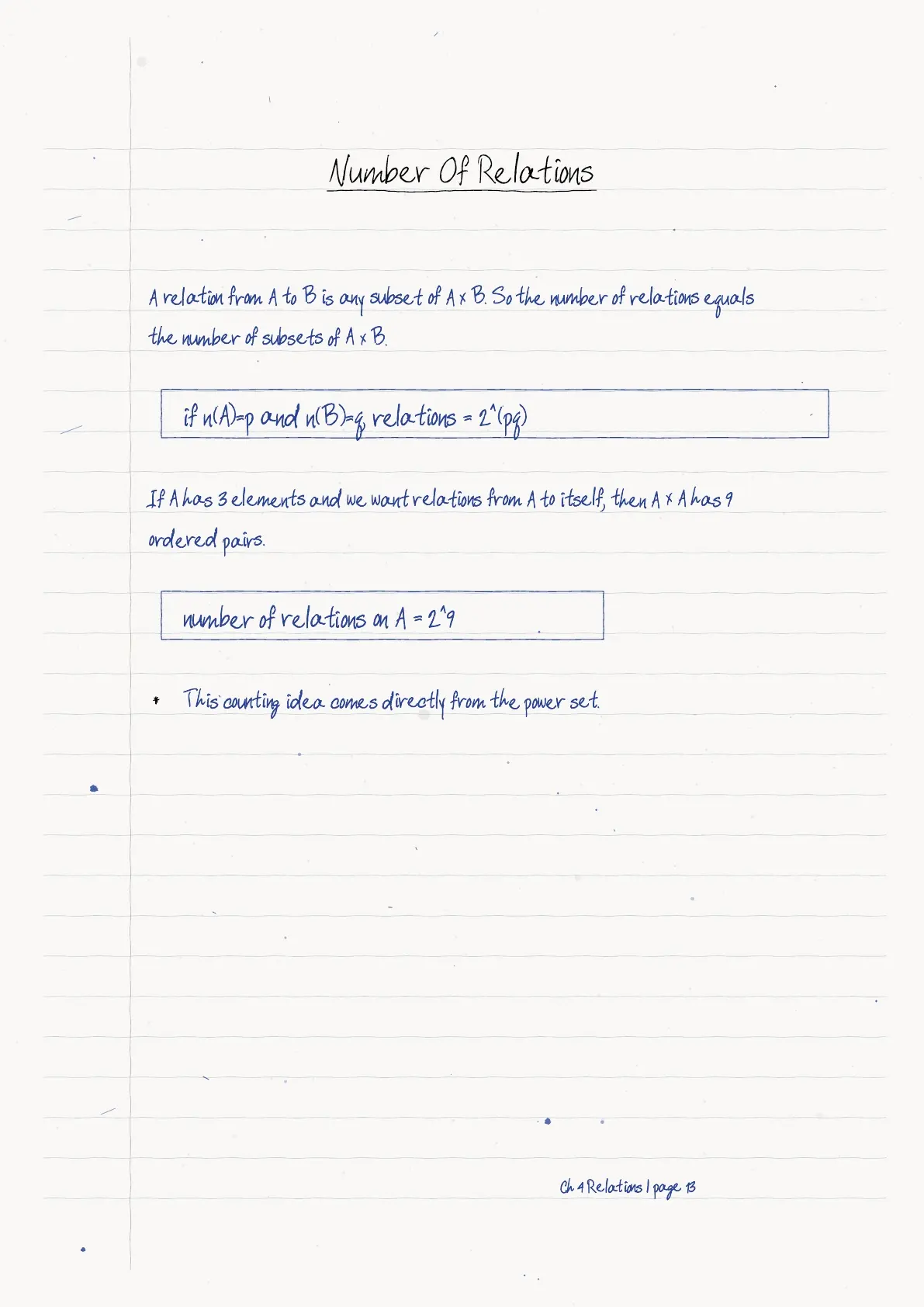
A relation R from set A to set B is a subset of A x B. If (a, b) belongs to R, then b is the image of a under R. Students can write this as a R b.
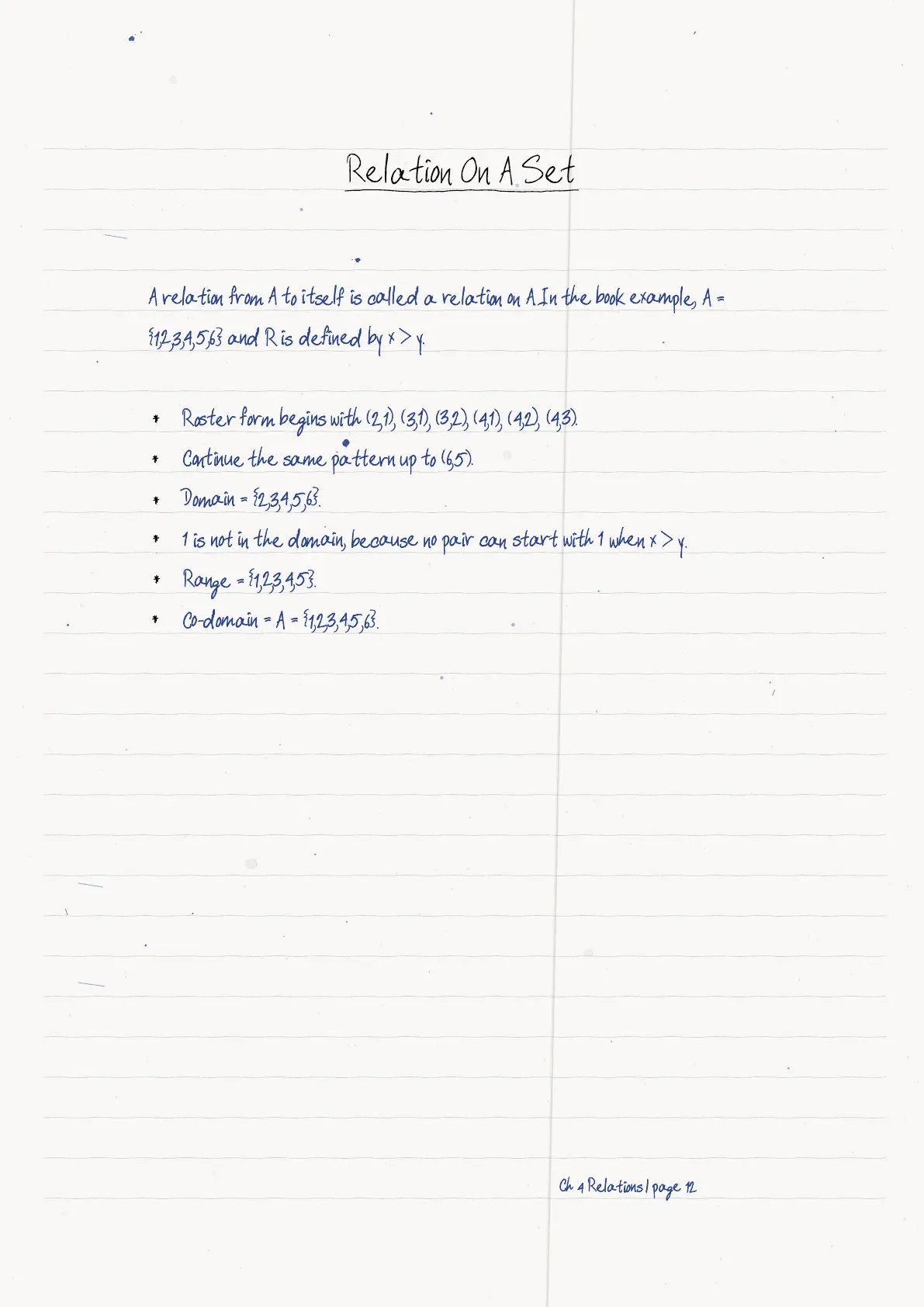
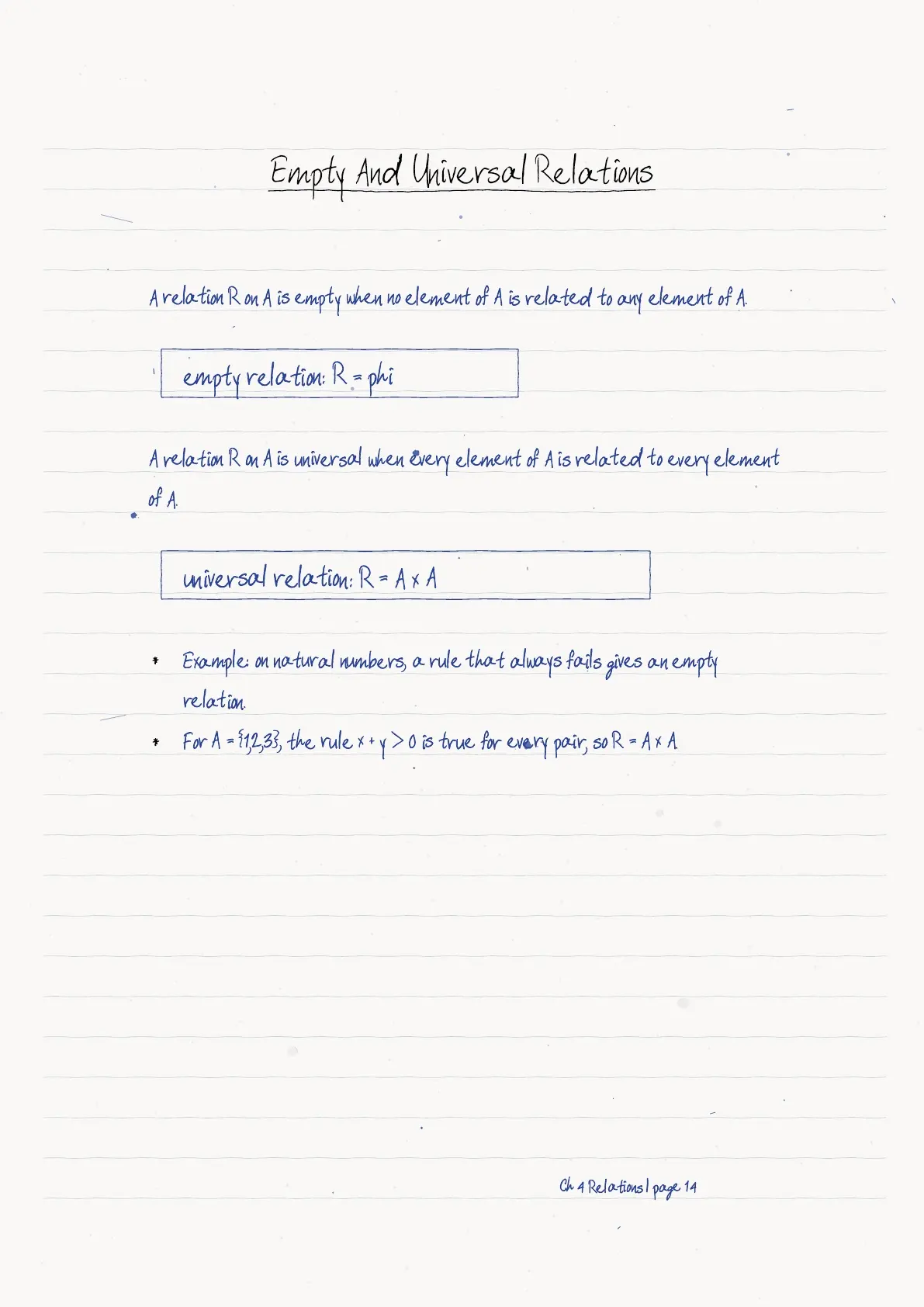
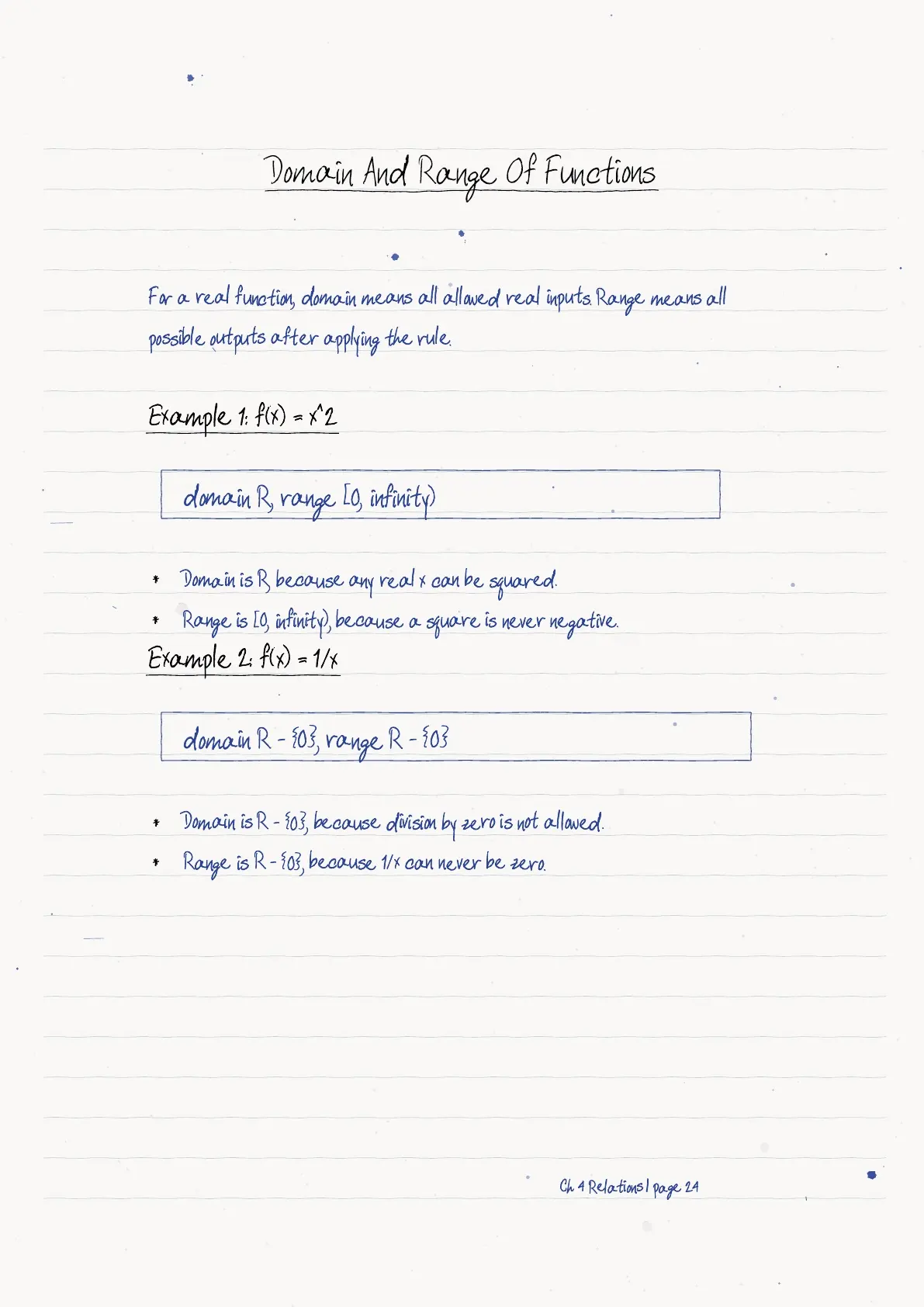
Domain means all first entries used in the relation. Range means all second entries used in the relation. Co-domain means the full target set B, so the range is always a subset of the co-domain.
| Term | Meaning | Quick example |
|---|---|---|
| Domain | All first entries | {2, 3, 4, 5, 6} |
| Range | All second entries used | {1, 2, 3, 4, 5} |
| Co-domain | Whole target set | A = {1, 2, 3, 4, 5, 6} |
Reflexive, Symmetric and Transitive Relation Tests
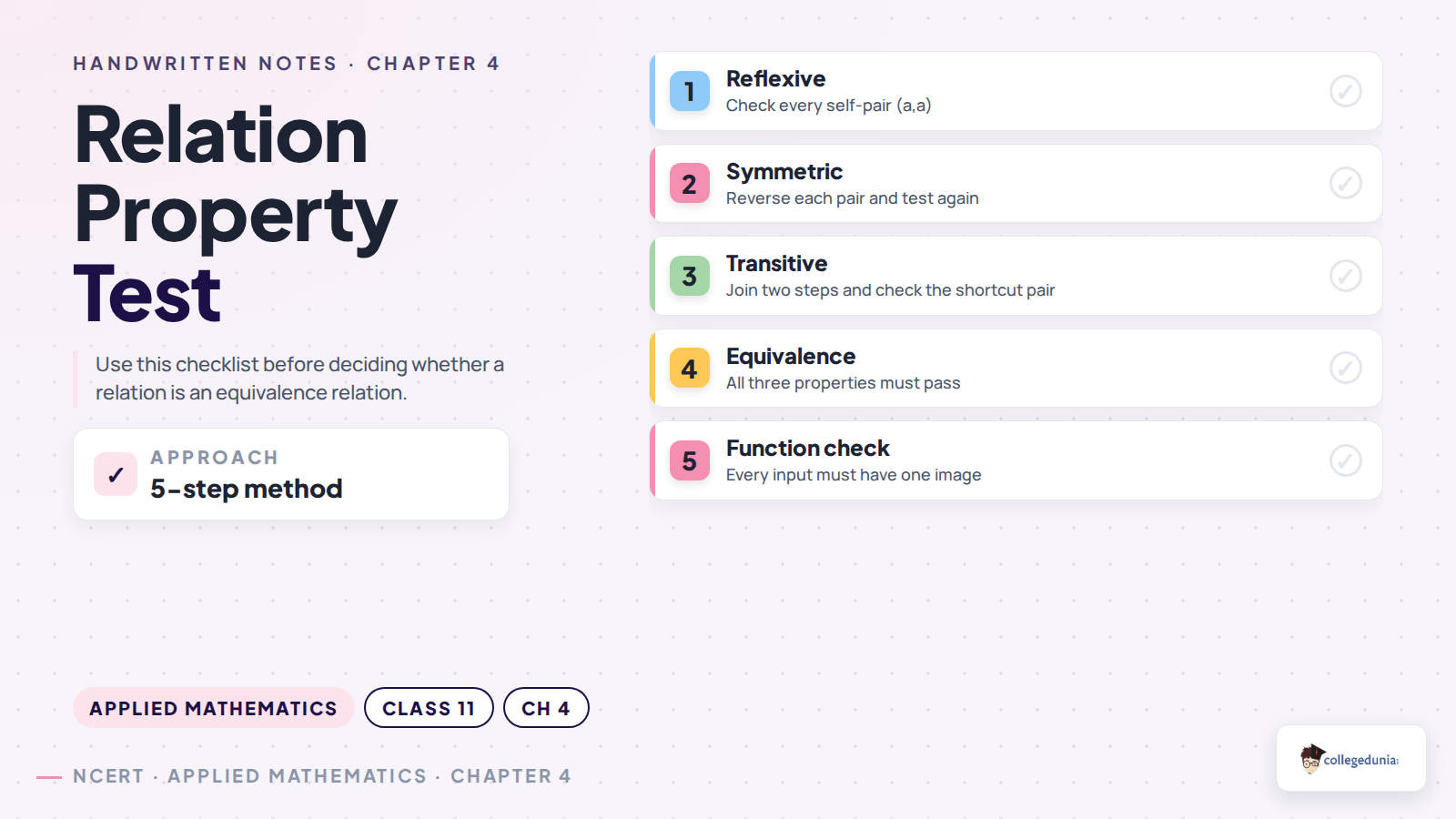
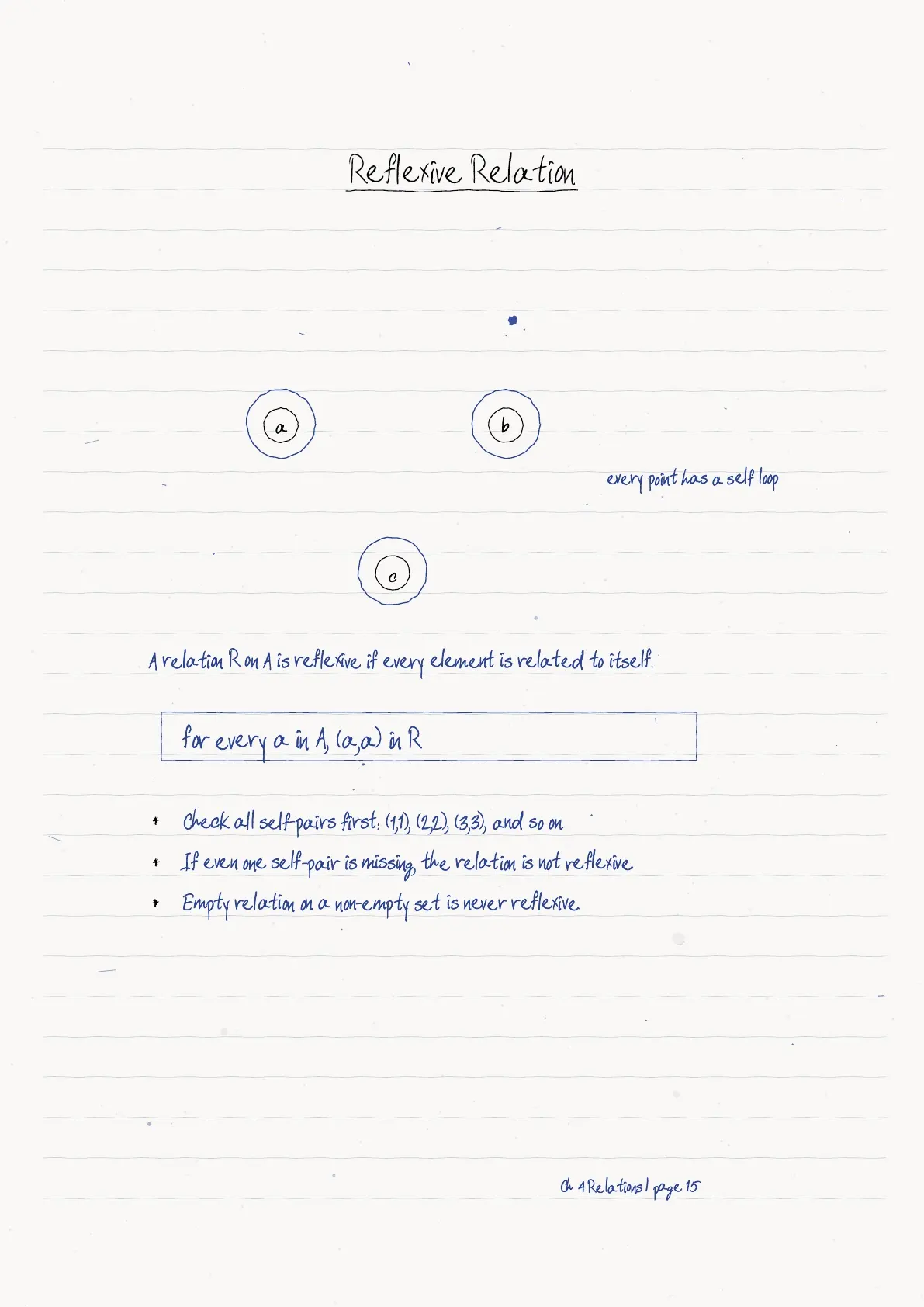
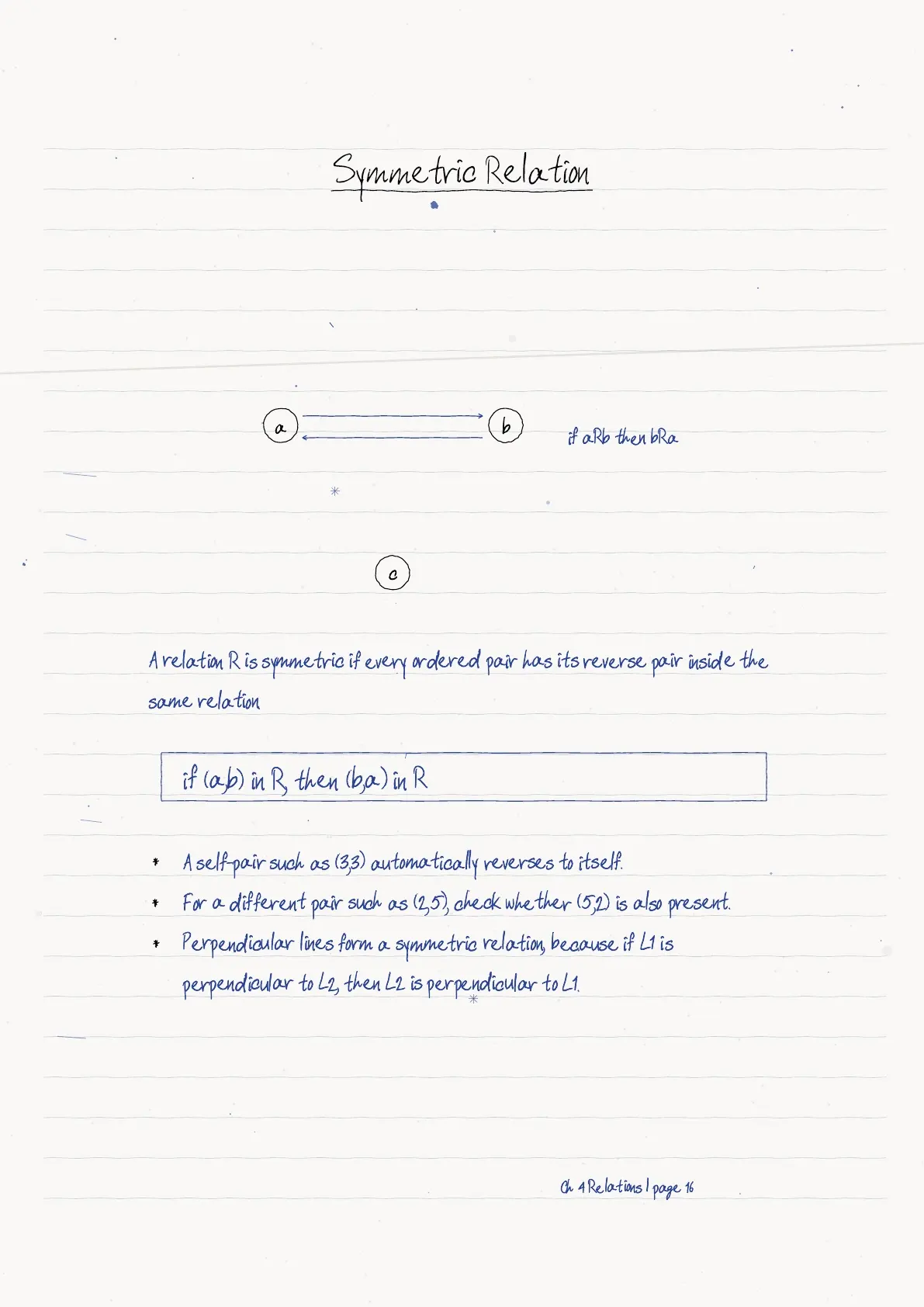
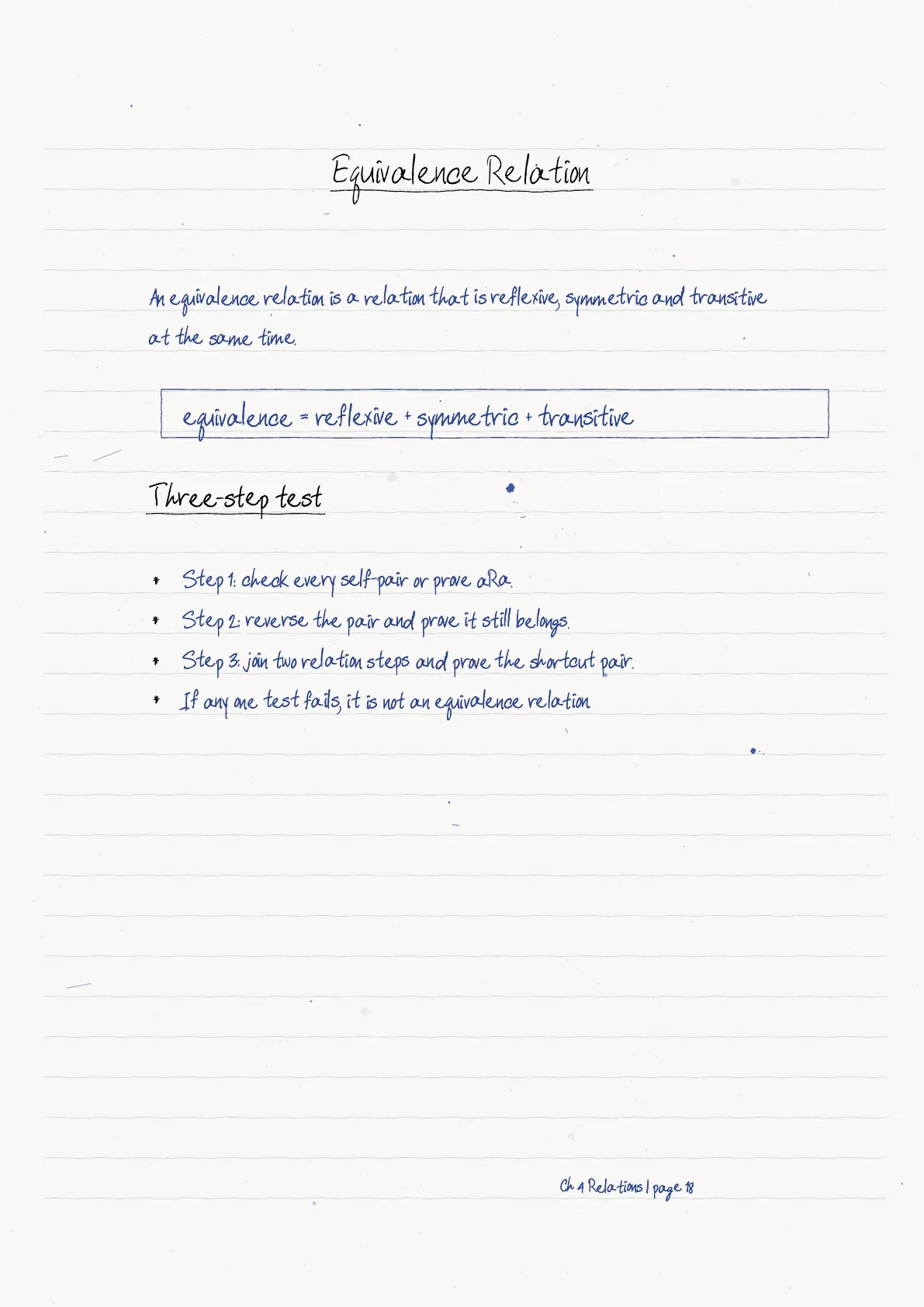
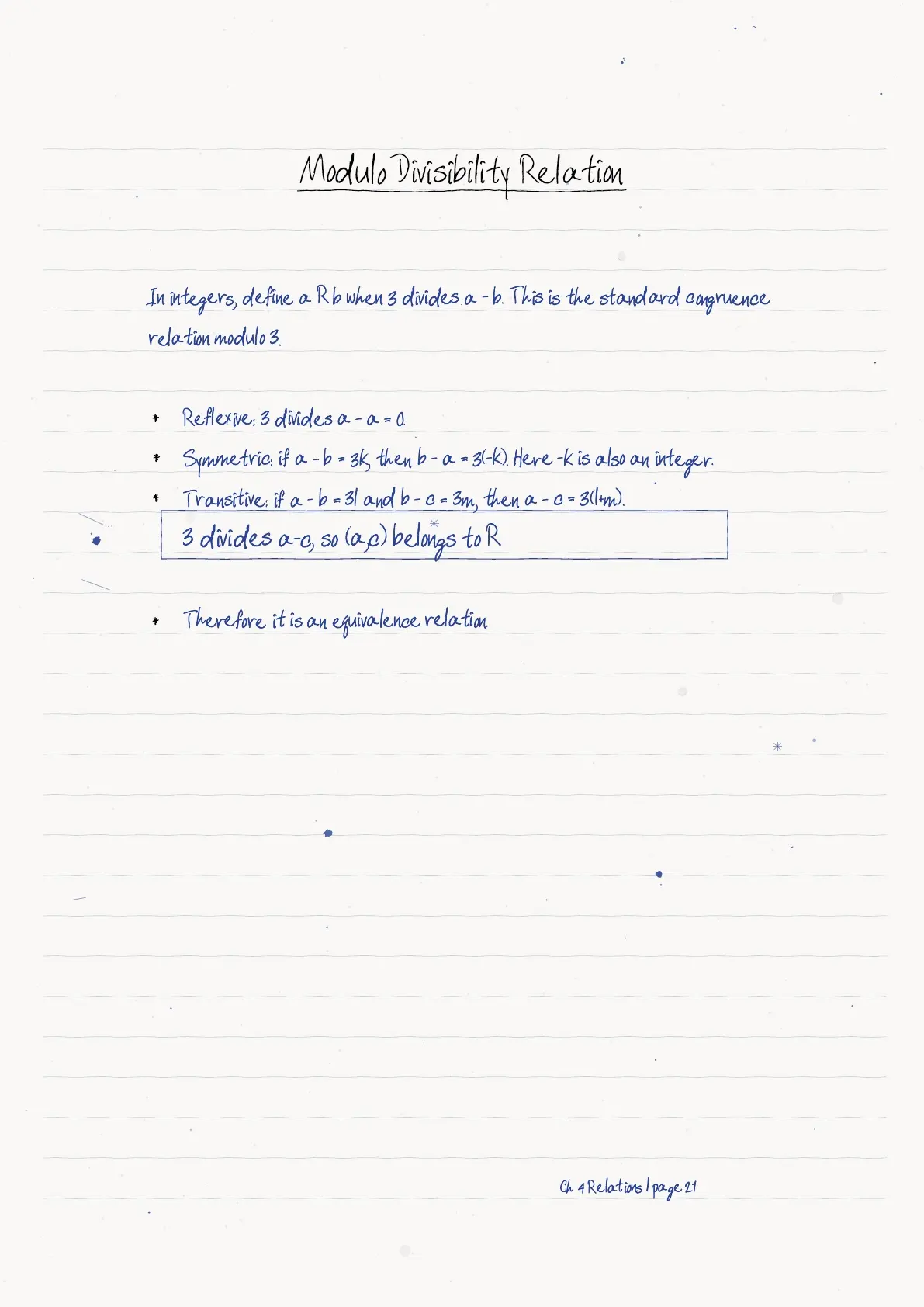
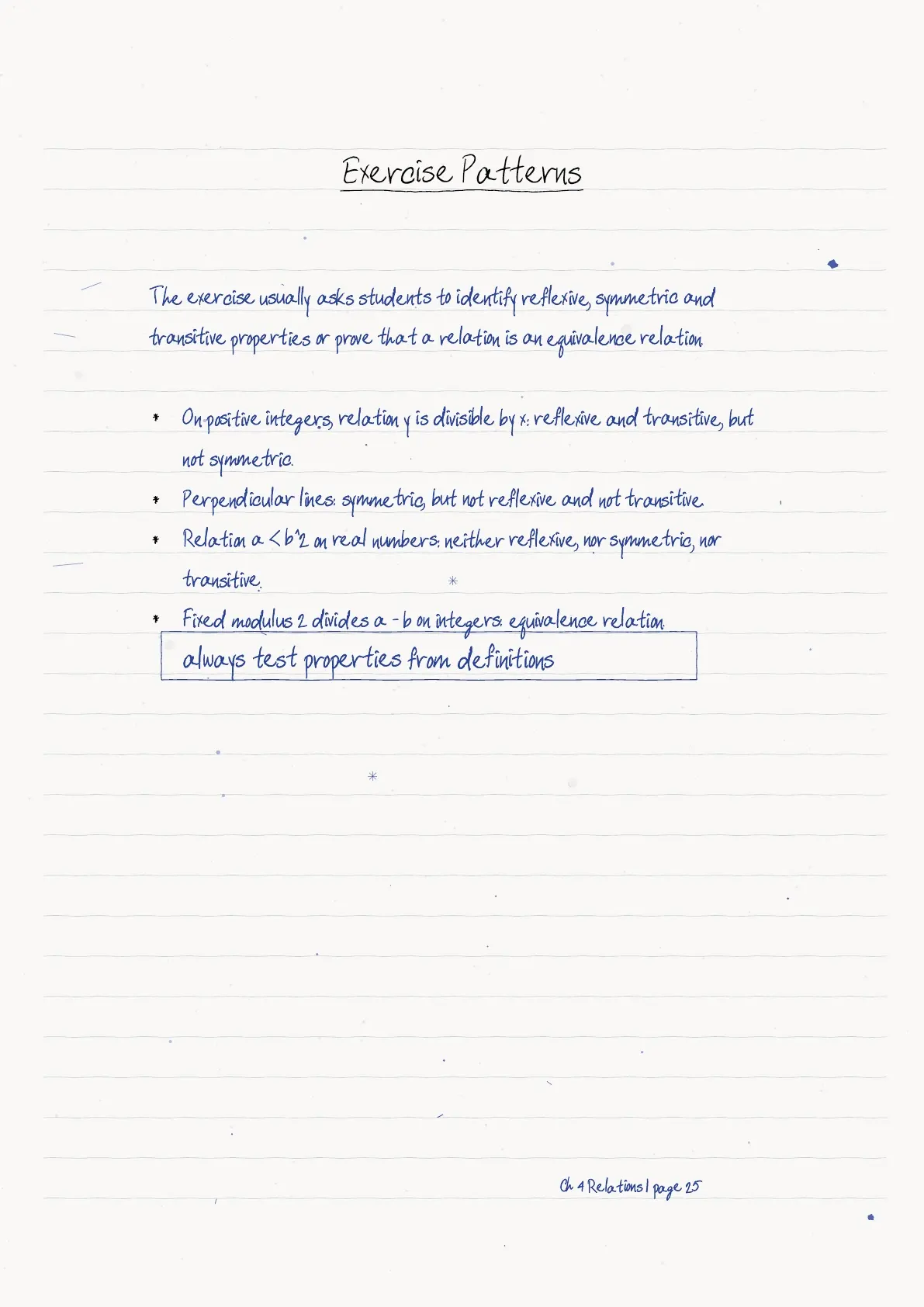
Relation-property questions need a definition-by-definition check. A relation is reflexive when every self-pair (a, a) is present. It is symmetric when every pair has its reverse pair.
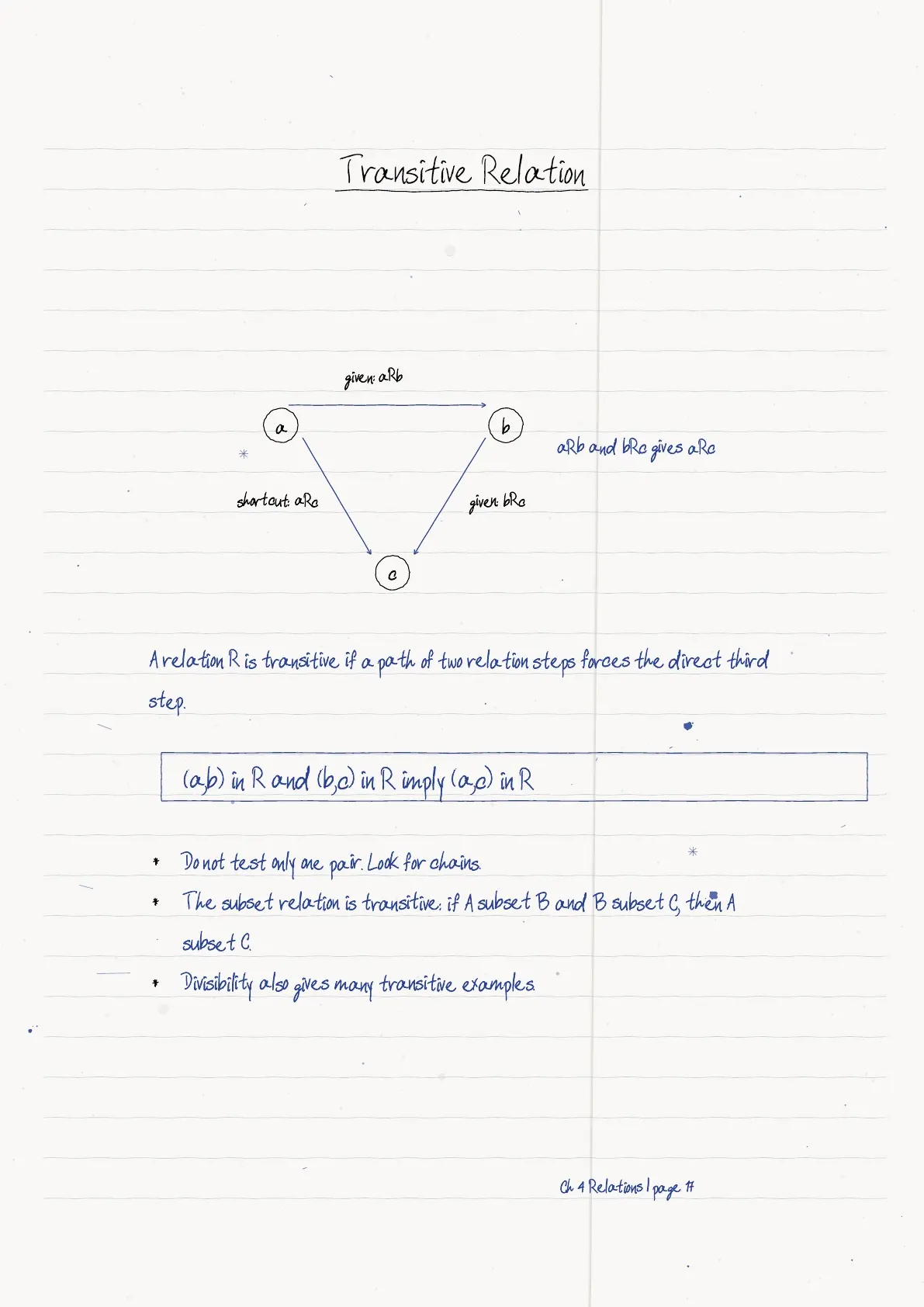
A relation is transitive when (a, b) and (b, c) force (a, c). An equivalence relation must pass all three tests. If even one test fails, it is not an equivalence relation.
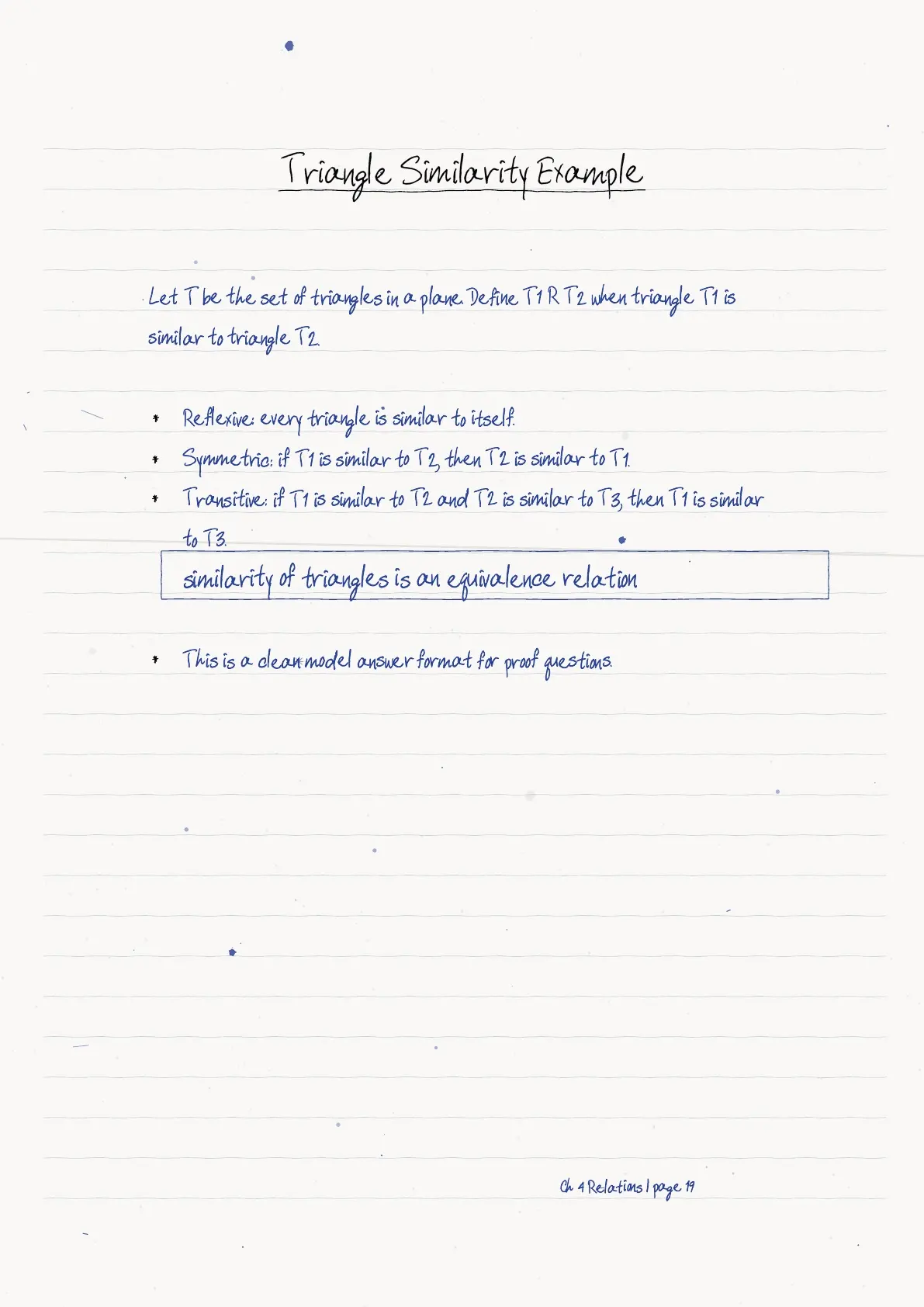
- Triangle similarity is reflexive, symmetric and transitive.
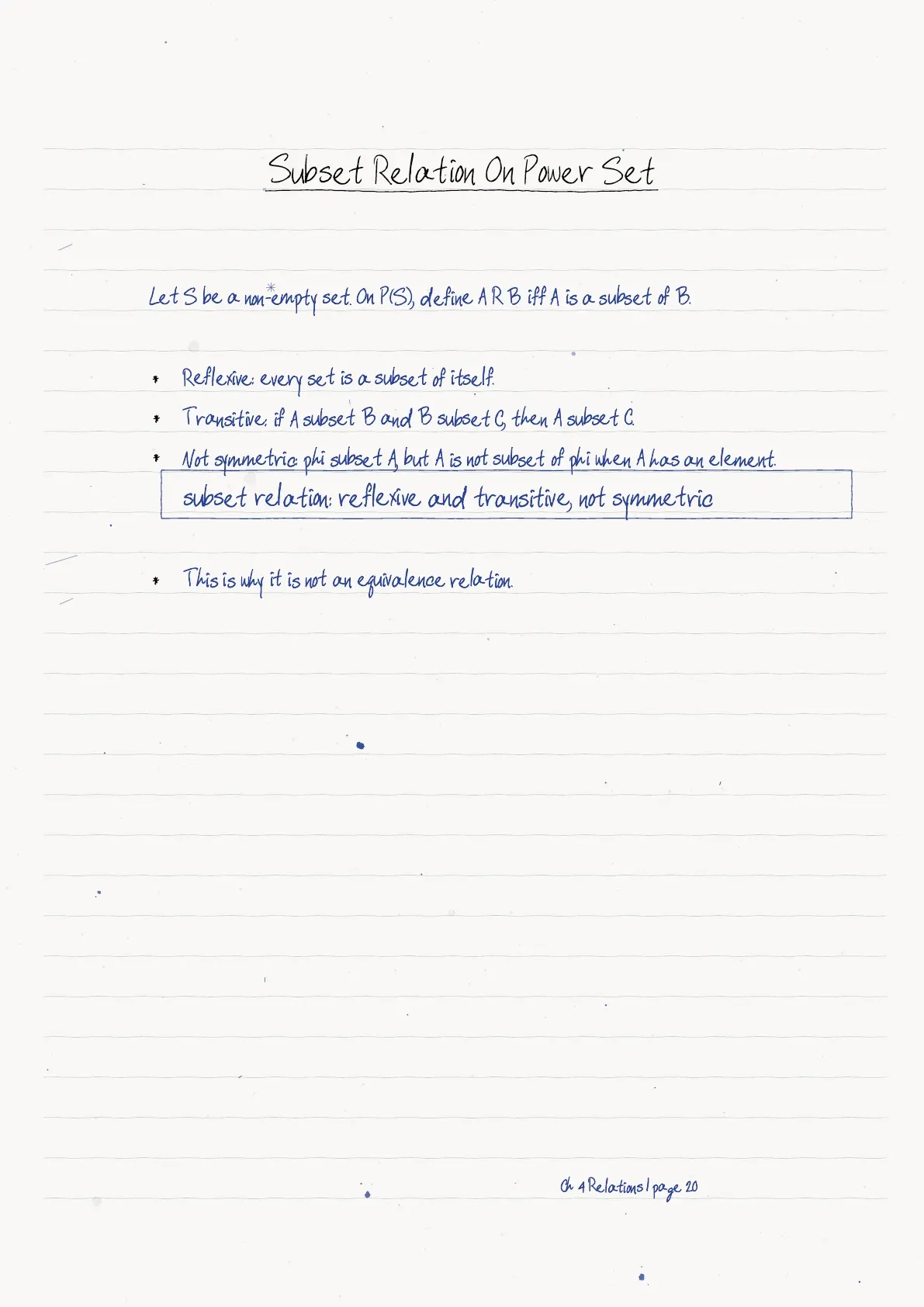
- The subset relation is reflexive and transitive, but not symmetric.
- The relation 3 divides a - b on integers is an equivalence relation.
Functions as Special Relations in Class 11 Applied Mathematics
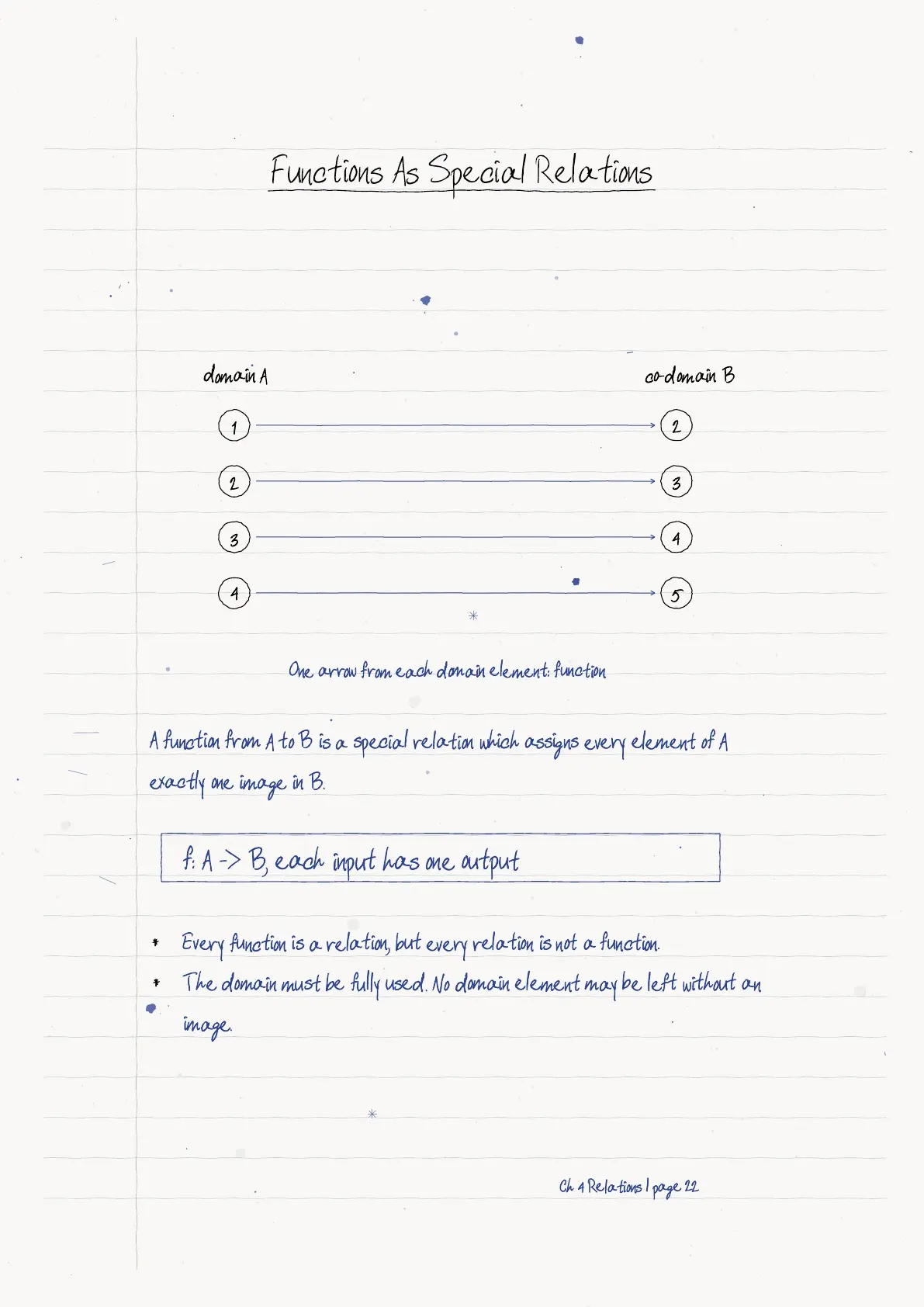
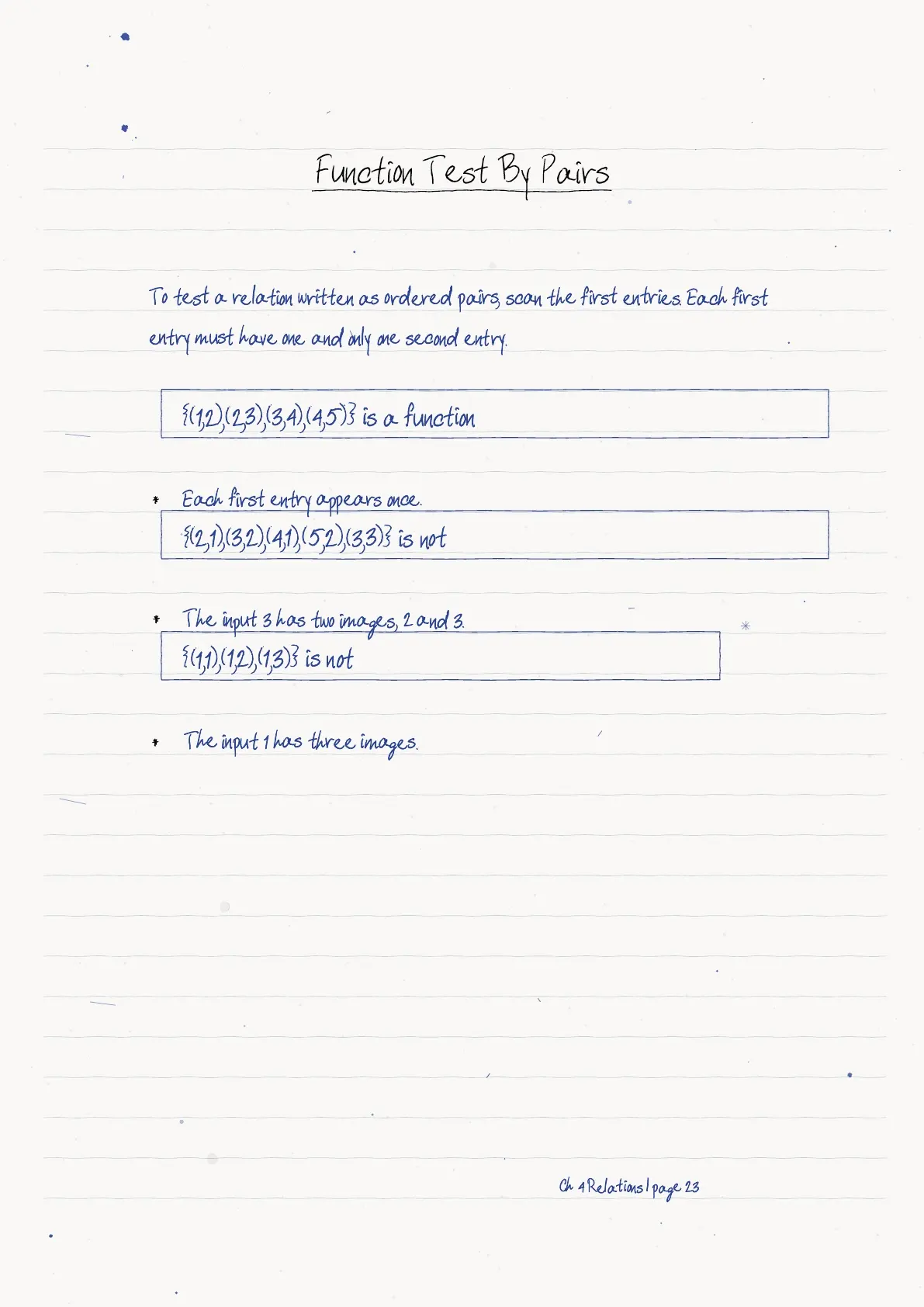
A function from A to B is a special relation where every element of A has exactly one image in B. This is the easiest test: scan the first entries and check whether any input gets two outputs.
For example, {(1, 2), (2, 3), (3, 4), (4, 5)} is a function. The relation {(1, 1), (1, 2), (1, 3)} is not a function because the input 1 has three images.
- Every function is a relation.
- Every relation is not a function.
- Domain must be fully used in a function from A to B.
How to Revise Relations Before Class Tests
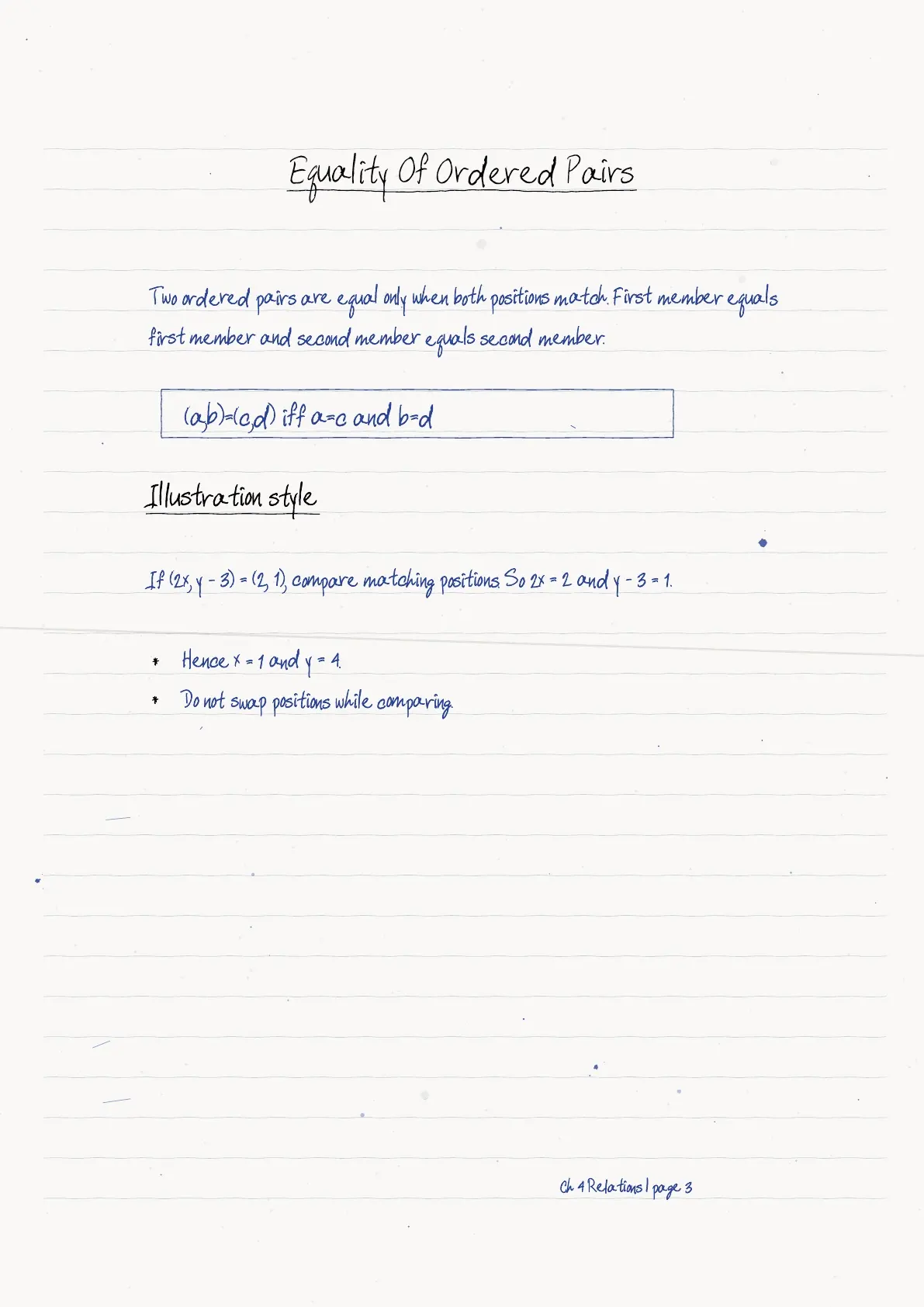
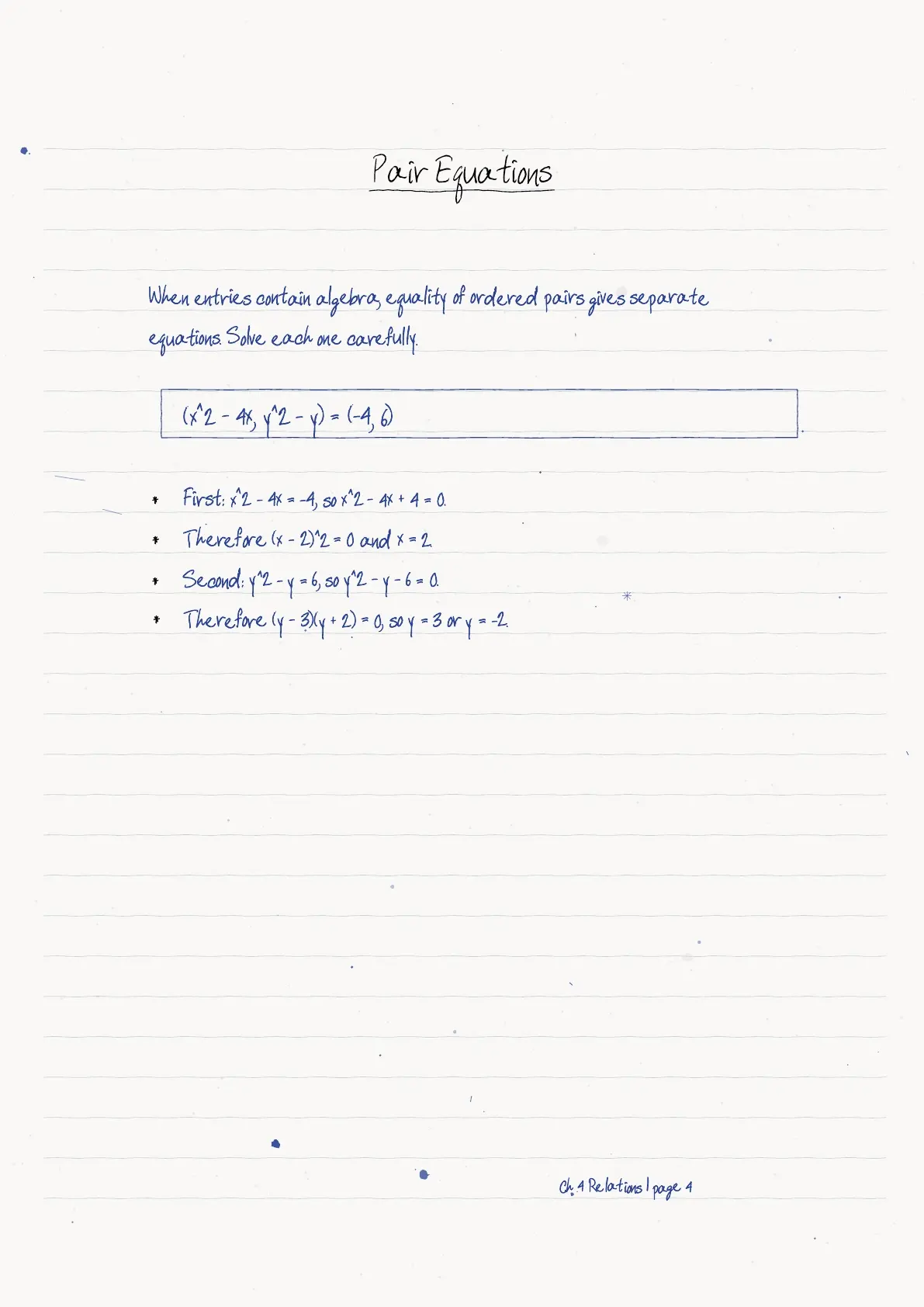
Use the Relations handwritten notes in two passes. First, revise definitions and examples. Second, practise one question each on ordered-pair equality, Cartesian-product listing, domain-range finding and relation-property testing.
- Write the equality rule for ordered pairs once.
- List A x B and B x A for a small example.
- Circle first entries for domain and second entries for range.
- Test reflexive, symmetric and transitive properties separately.
- Finish with one function-or-not-a-function question.
Related Resources for Relations Class 11
| Resource | Use it for | Link |
|---|---|---|
| NCERT Book PDF | Official explanation and exercise prompts | Relations Class 11 NCERT Book PDF |
| NCERT Notes | Typed explanation with tables and examples | Relations Class 11 Notes |
| NCERT Solutions | Step-by-step answers for chapter questions | Relations Class 11 NCERT Solutions |
| Formula Sheet | Formula-only revision before practice | Relations Class 11 Formula Sheet |
Applied Mathematics Handwritten Notes for All Chapters
| Chapter | Handwritten Notes |
|---|---|
| Chapter 1 | Numbers and Quantification Class 11 Handwritten Notes |
| Chapter 2 | Numerical Applications Class 11 Handwritten Notes |
| Chapter 3 | Set Class 11 Handwritten Notes |
| Chapter 5 | Sequences and Series Class 11 Handwritten Notes |
| Chapter 6 | Permutations and Combinations Class 11 Handwritten Notes |
| Chapter 7 | Mathematical and Logical Reasoning Class 11 Handwritten Notes |
Relations Class 11 Applied Mathematics Handwritten Notes FAQs
Ques. What is covered in Class 11 Applied Mathematics Chapter 4 Relations handwritten notes?
Ans. The handwritten notes cover ordered pairs, Cartesian product, relation as a subset of A x B, domain, range, co-domain, relation types, equivalence relation and functions.
Ques. What is the difference between range and co-domain?
Ans. Range contains the second entries that are actually used by the relation. Co-domain is the full target set, so range is a subset of co-domain.
Ques. How do students test an equivalence relation?
Ans. Check reflexive, symmetric and transitive properties separately. A relation is an equivalence relation only when all three tests pass.
Ques. When is a relation also a function?
Ans. A relation is a function when every input in the domain has exactly one image in the co-domain. One input cannot have two images.
Ques. Are these Relations handwritten notes aligned with the 2026-27 syllabus?
Ans. Yes. The notes follow the current 2026-27 Class 11 Applied Mathematics scope for Relations under Unit 2 Algebra.



Comments