




The Enemy class 12 english handwritten notes from Collegedunia give you a 10-page scanned notebook covering the 1942 wartime Japan setting, the four-act plot, the Sadao and Hana character arcs, the five embedded markers (the gun wound, the ether cone, the private assassins, the sunset torch-flash signal, the Korean fishing boat), and the high-frequency value-points that examiners build the Vistas Section C question around for the 2026-27 CBSE English Core paper.
- CBSE Weightage: 6 marks per Vistas Long Answer in Section C, drawn from the eight Reading with Insight questions
The notebook runs 10 ruled pages with a faded red margin line, blue ballpoint strokes, and hand-drawn arrows that mirror the way a topper would condense the chapter on the night before the paper.
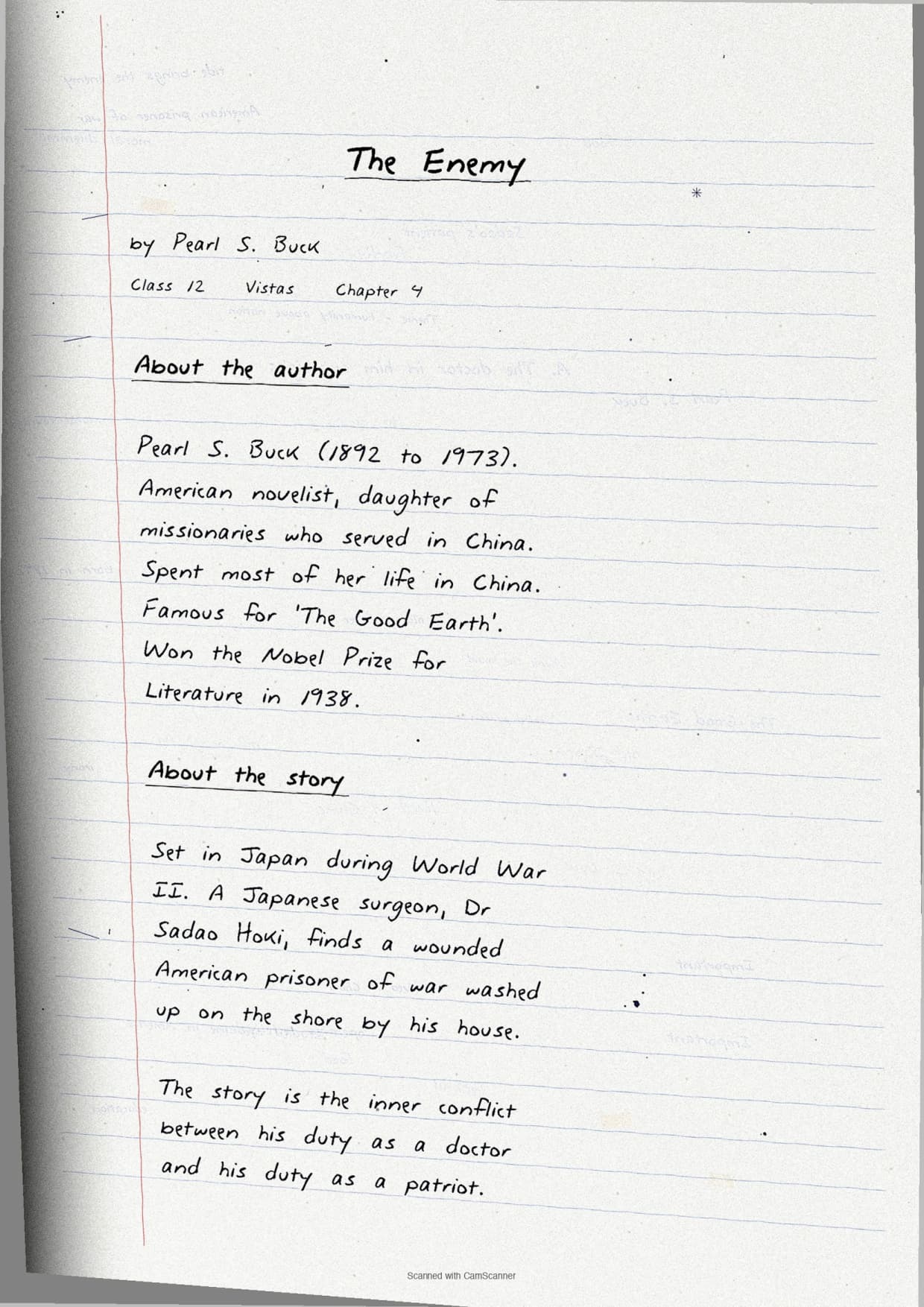
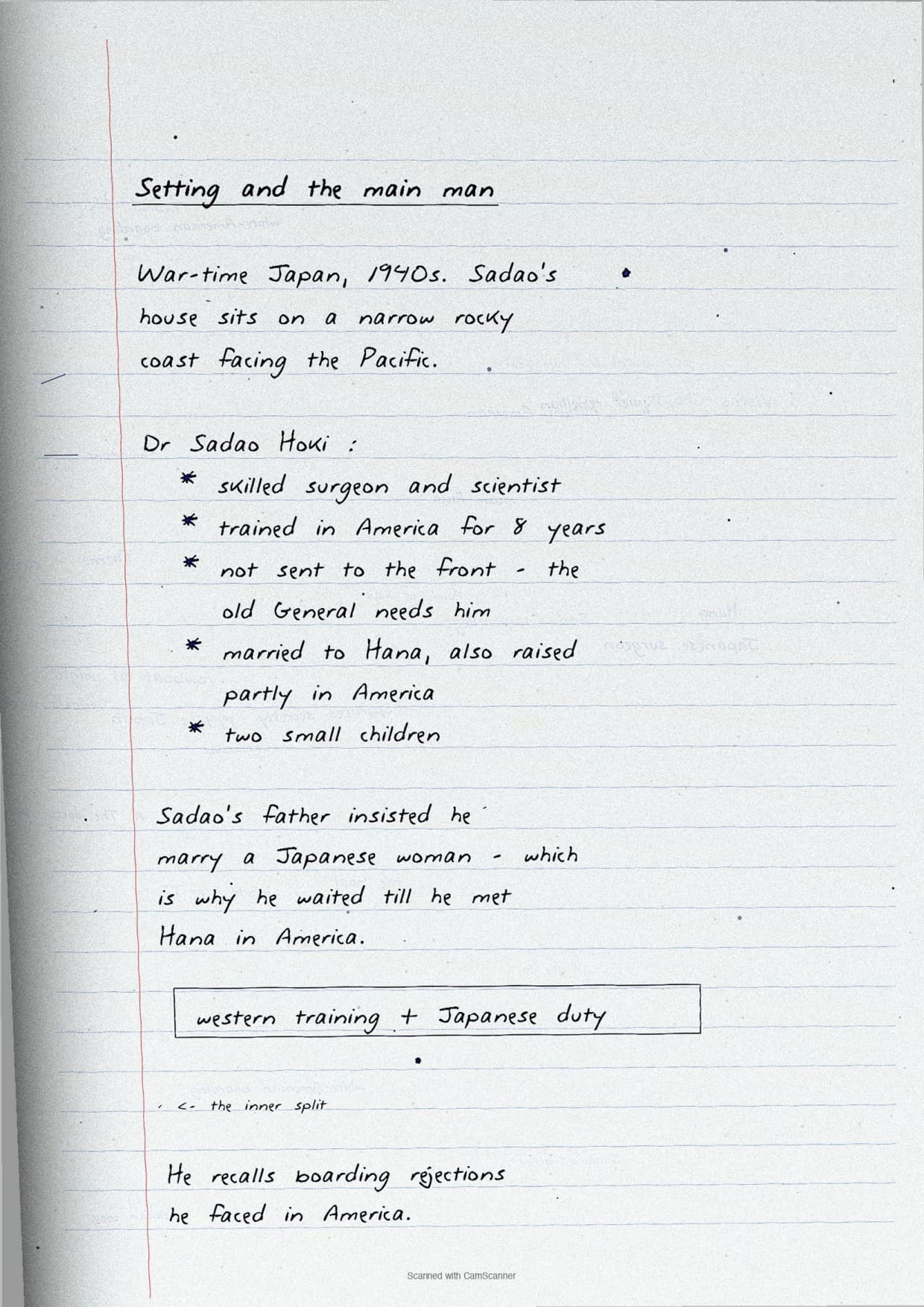
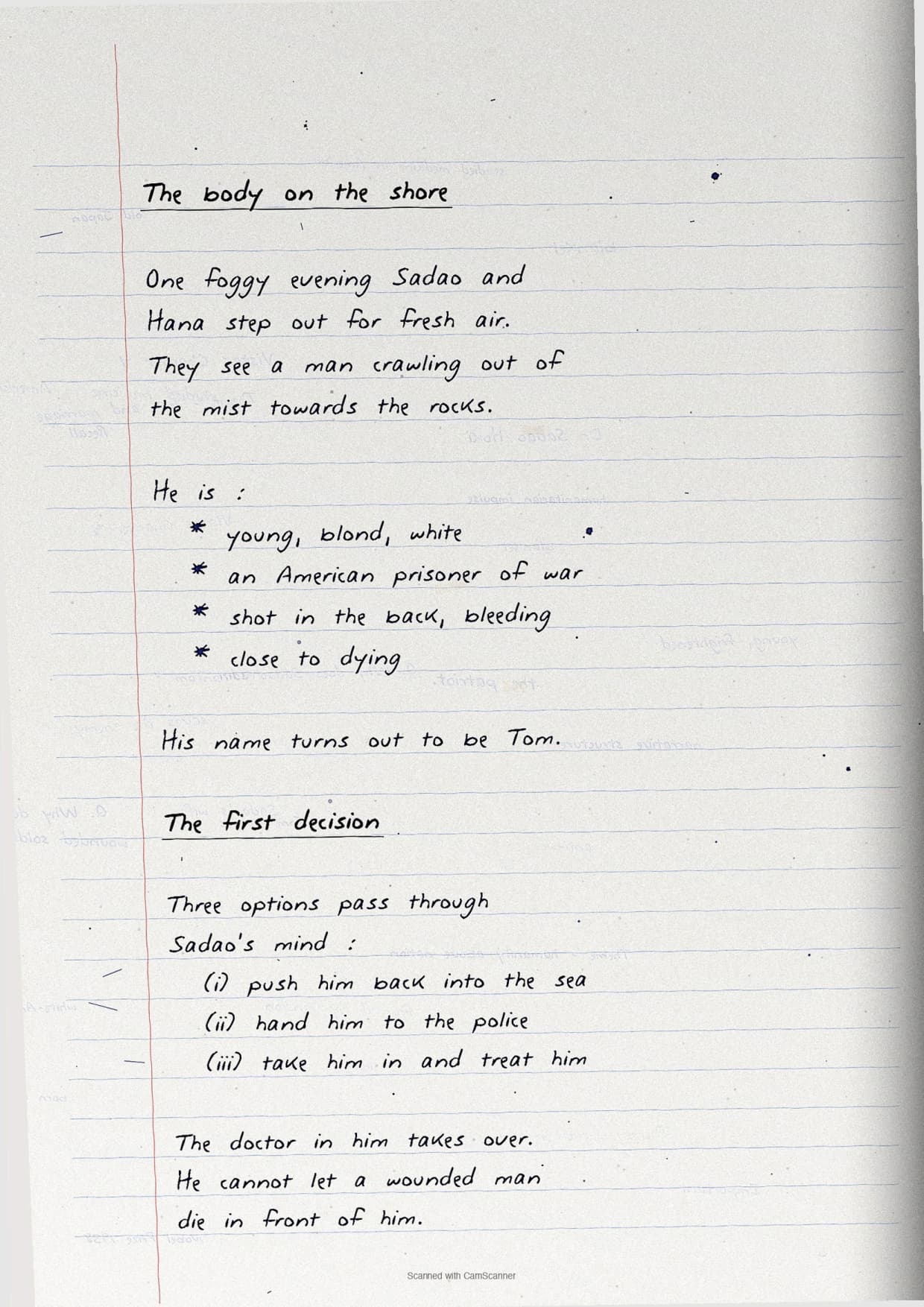
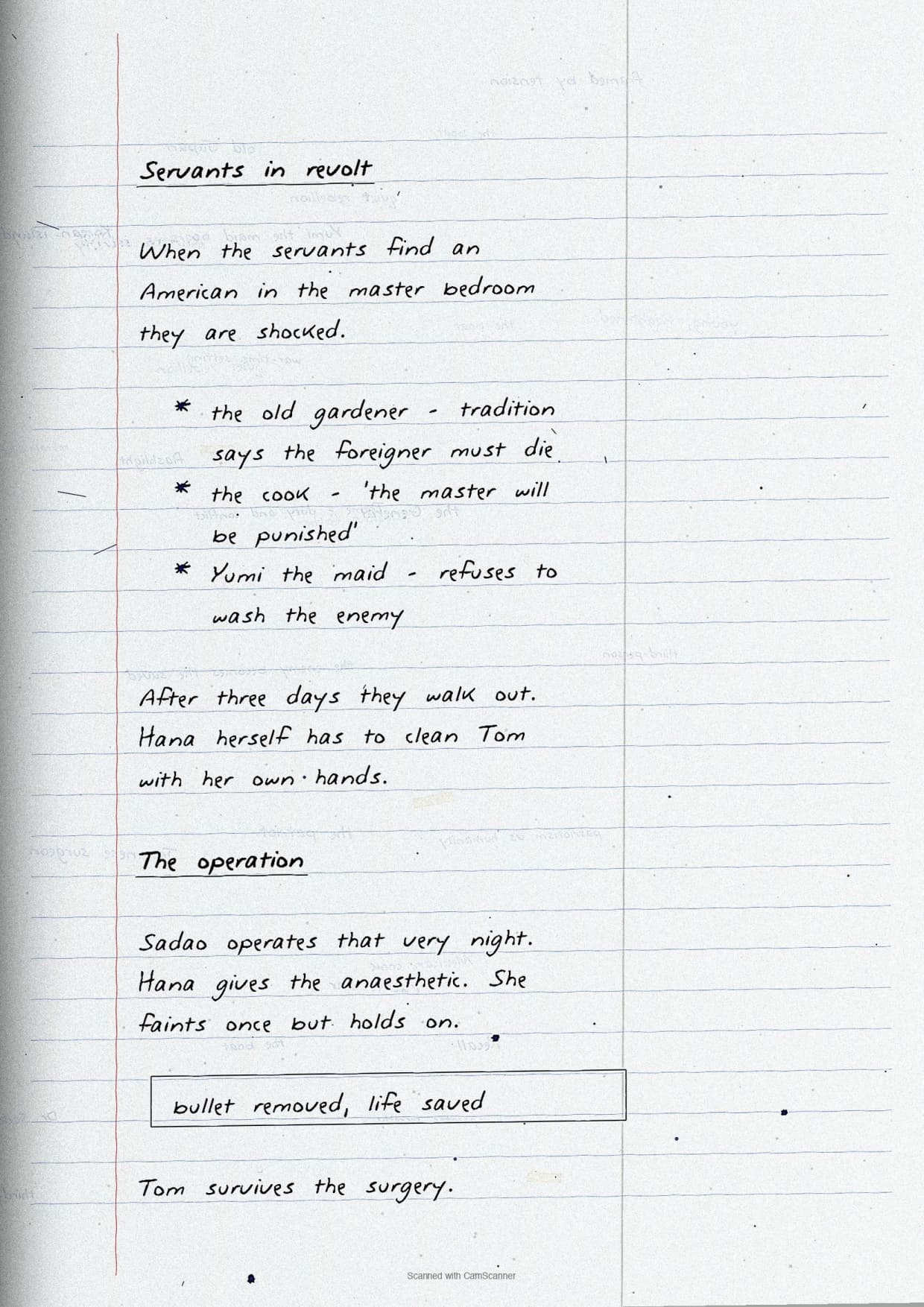
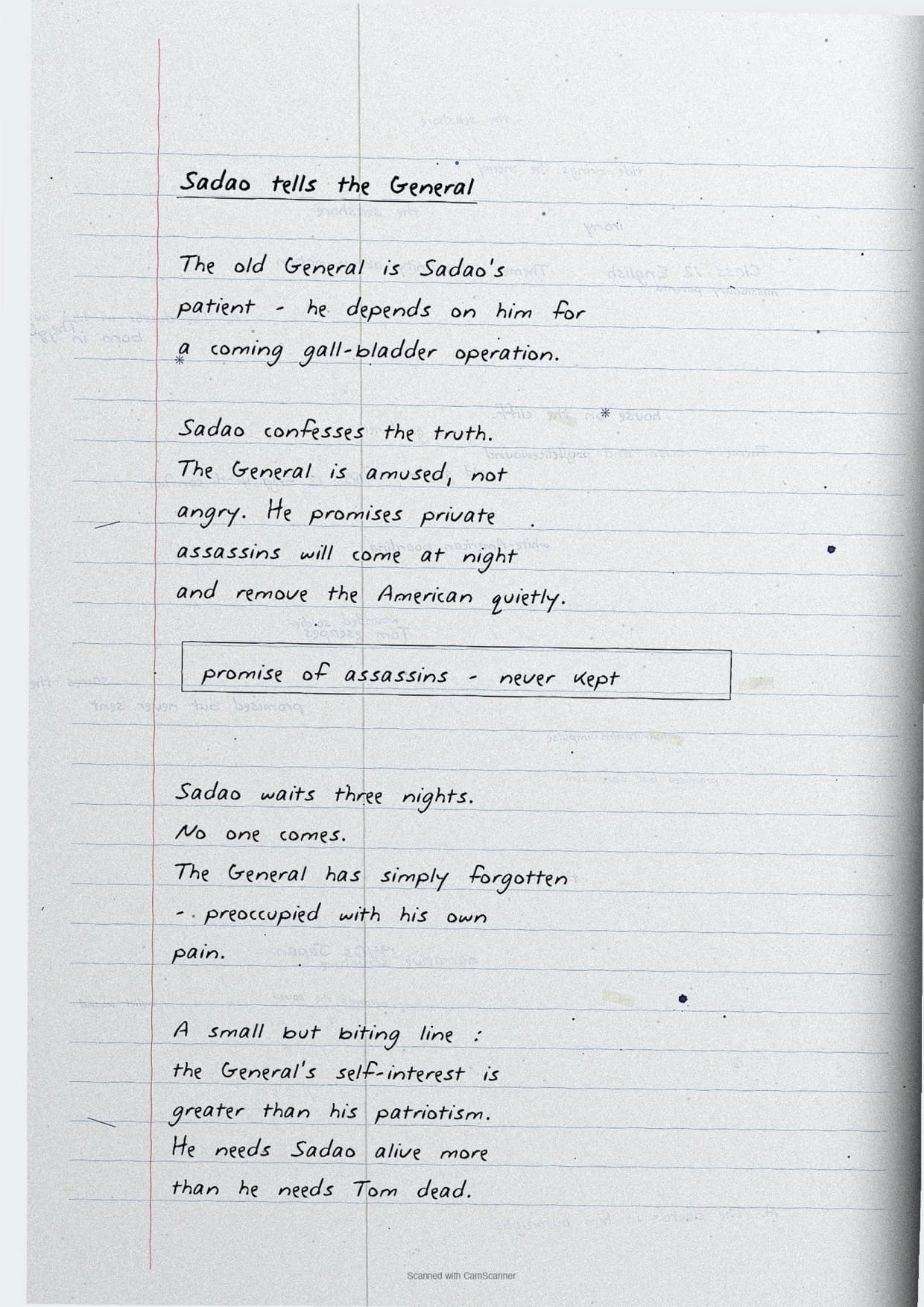
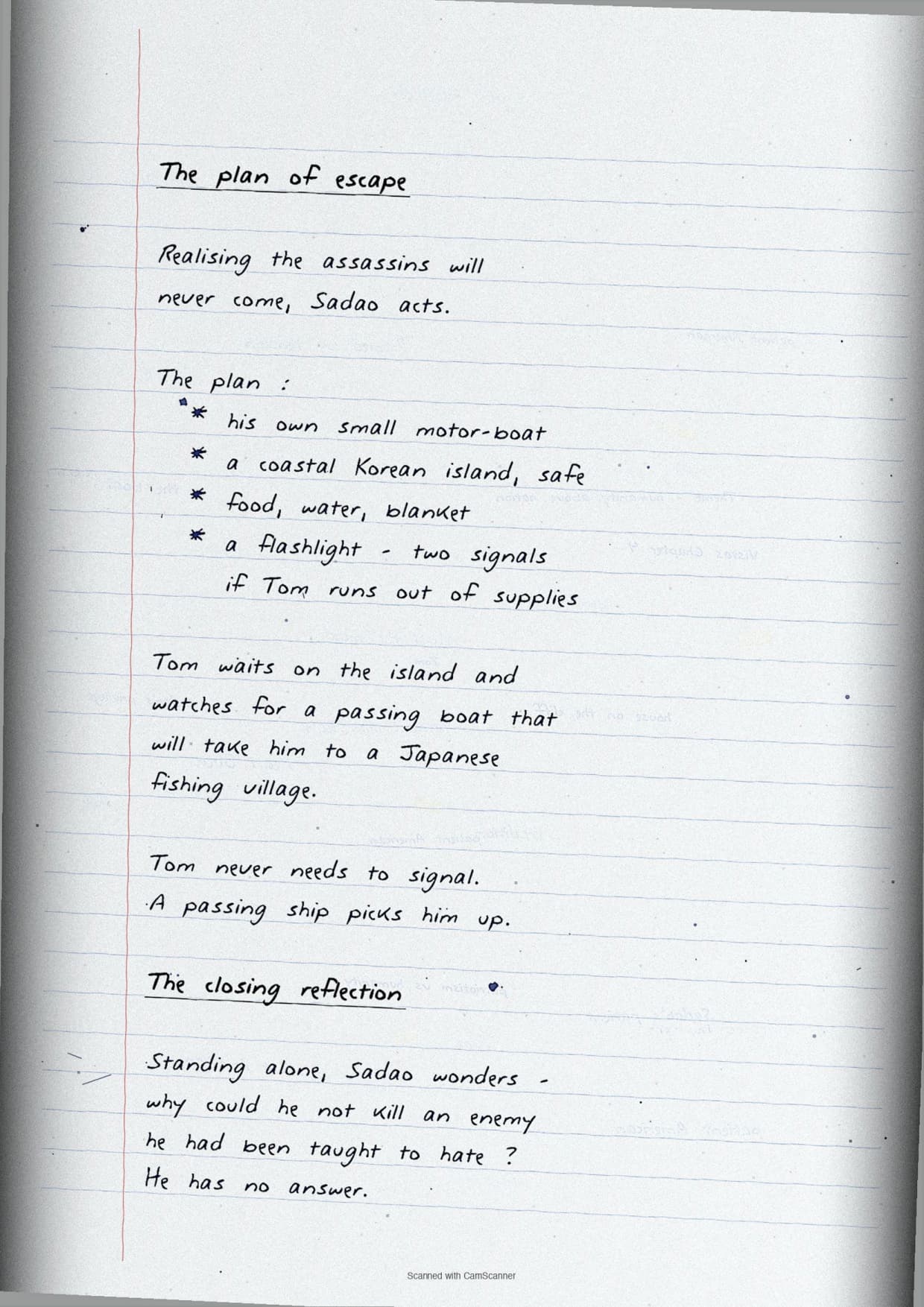
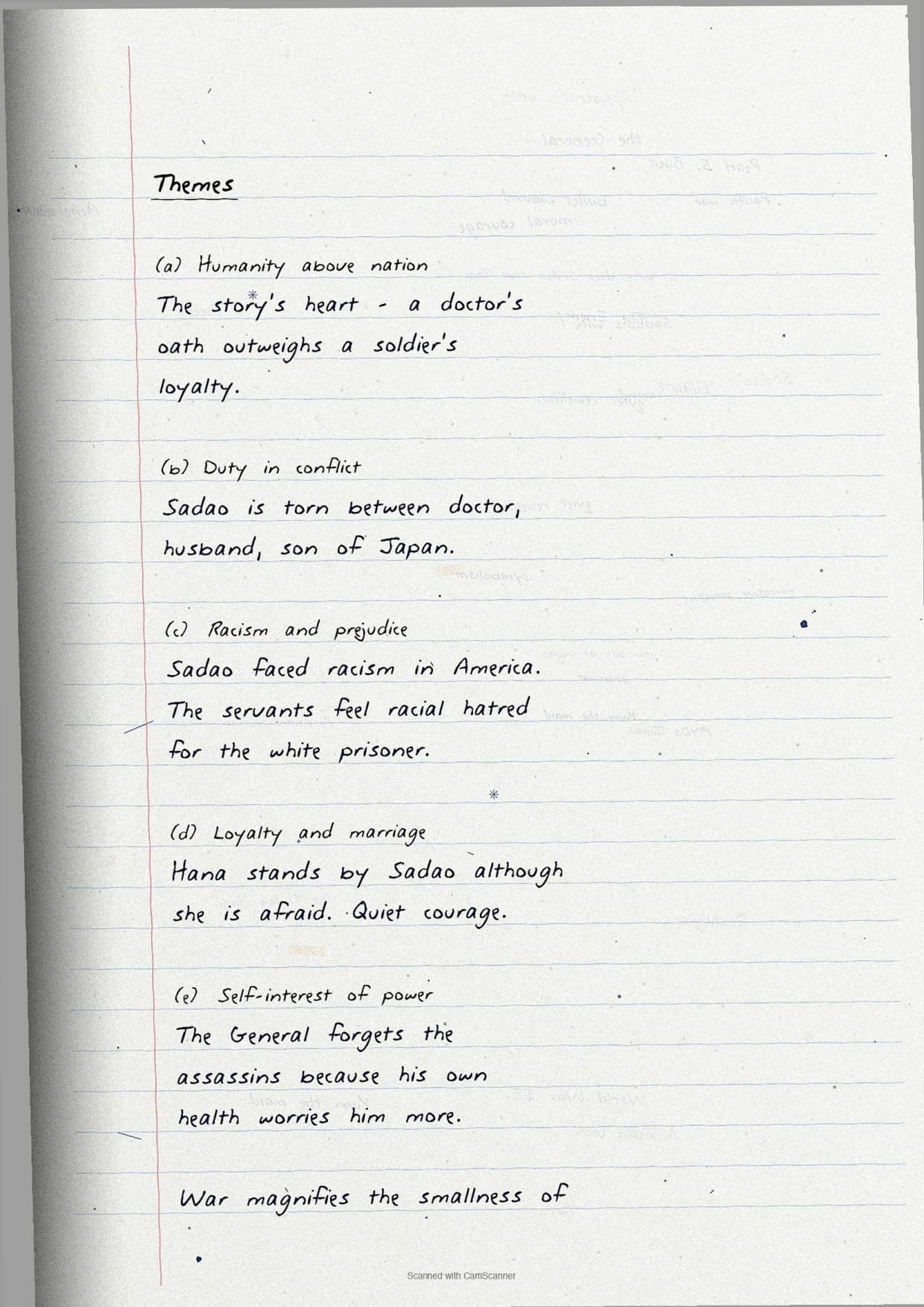
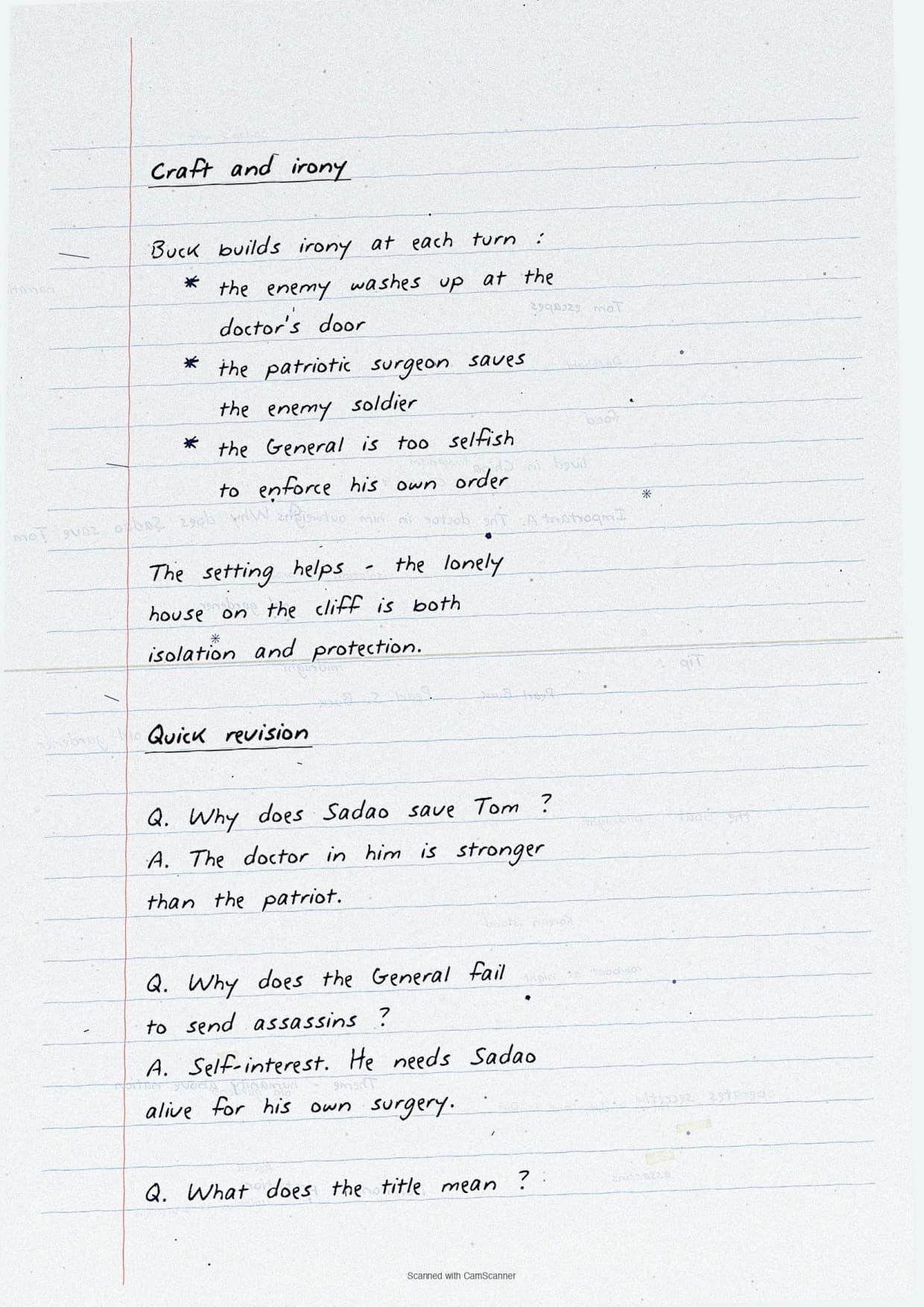
Every page mirrors a question slot you will actually face: the setting + author on page 1, the four-act summary on page 2, the Sadao character arc on page 3, the Hana character arc on page 4, the five-symbol table on page 5, the theme tags on page 6, the key quotations on page 7, the PYQ + value-point cheatsheet on page 8, the rising-above-prejudice three-mechanism spread on page 9, and the last-week recall strip on page 10. Read in that order on the morning of the exam and you carry the chapter end-to-end in fifteen minutes.
Also Check:
The Enemy Class 12 English Handwritten Notes: What the 10 Pages Cover
The Enemy class 12 english handwritten notes are structured as ten themed pages, each anchored on one question slot. Use the strip below as a contents map before you flip the PDF open.
| Page | Focus | What you copy onto your rough sheet first |
|---|---|---|
| Page 1 | Setting + author | 1942 wartime Japan / American POW named Tom; Pearl S. Buck (1892-1973), 1938 Nobel; five-word anchor BEACH - BULLET - HANA - GENERAL - ISLAND. |
| Page 2 | Four-act summary | Discovery on the beach, the operation, the General's promise, the escape to the offshore island with the Korean fishing boat. |
| Page 3 | Sadao character arc | From "first reflex clinical" to the anatomy teacher's "Ignorance of the human body is the surgeon's cardinal sin" to "Strange, I wonder why I could not kill him?". |
| Page 4 | Hana character arc + servants | Moral hinge; washes Tom herself; holds the ether cone; retches in the garden and returns; "Is this anything but a man? And a wounded helpless man!"; the servants leave on the seventh day. |
| Page 5 | Five-marker table | The reopened gun wound, the ether cone, the private assassins, the sunset torch-flash signal, the Korean fishing boat - one line of meaning each. |
| Page 6 | Theme tags | Duty vs loyalty, wartime prejudice, personal honour, humanism above borders, the unheroic ending. |
| Page 7 | Key quotations | "Ignorance of the human body is the surgeon's cardinal sin"; "Is this anything but a man? And a wounded helpless man!"; "I thought of nothing but myself"; "Strange, I wonder why I could not kill him?" |
| Page 8 | PYQ map + value points | 2020-2025 long-answer rotations; Indian extensions (1971 Bangladesh War doctors, Kargil prisoner care, Red Cross neutrality). |
| Page 9 | Rising-above-prejudice spread | The three mechanisms - vocation older than the war, lived cross-cultural memory, personal honour - in one notebook spread. |
| Page 10 | Last-week recall strip | Four 1-mark MCQ facts; three 4-mark SA prompts; four 6-mark LA prompts. |
The Enemy Video Walkthrough
Source: Magnet Brains on YouTube
Setting Map: The Page-1 Skeleton
Page 1 of the notebook draws the setting in two halves - 1942 wartime Japan on the left, the American POW (who later names himself Tom) washed up on the beach on the right - with Sadao's cliff-top house as the connecting box. The handwritten note next to the map summarises the four facts that drive the entire chapter and that CBSE tests in 1-mark MCQs.
Four-Act Summary: The Page-2 Walk
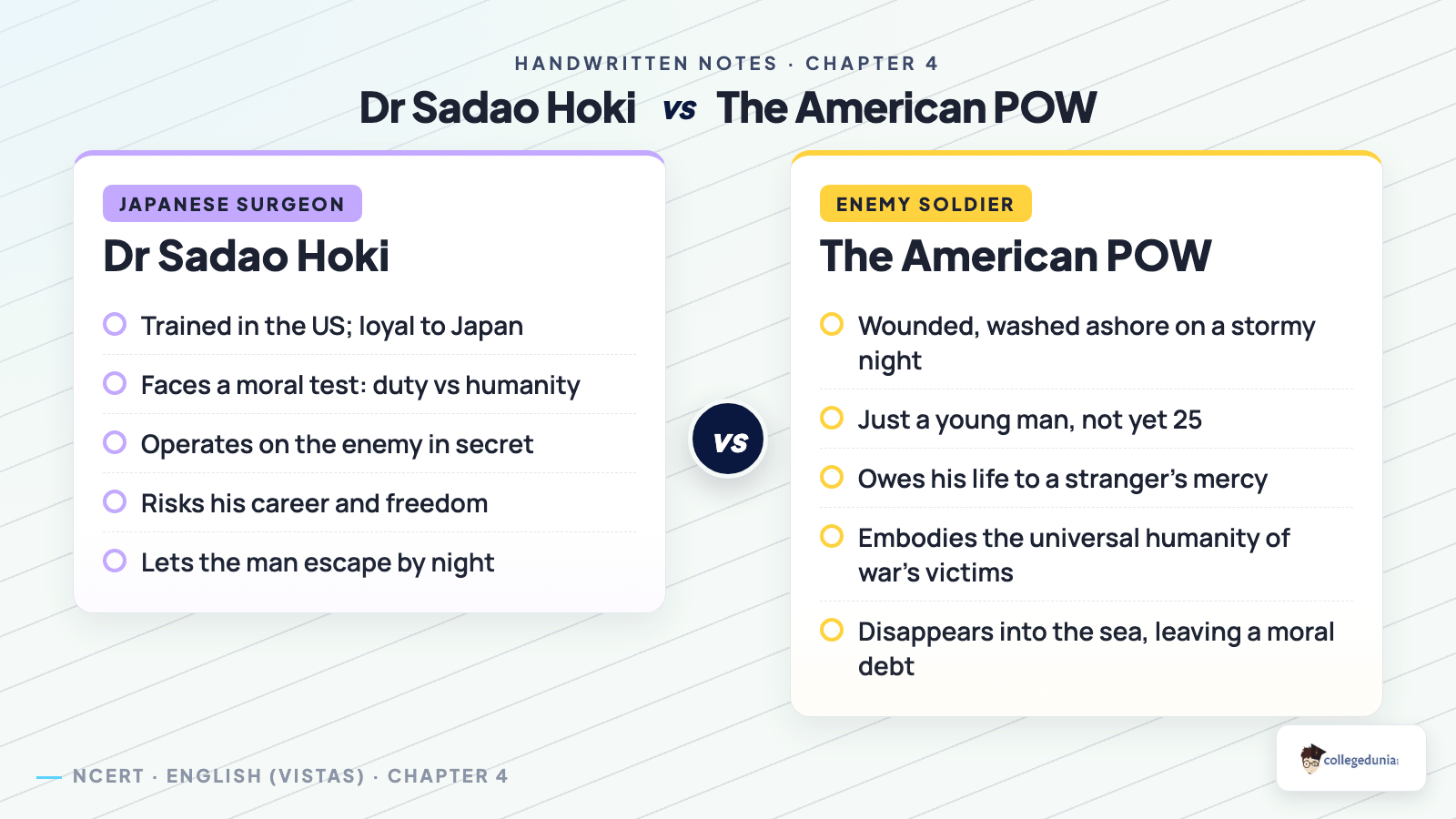
Page 2 is the most reproduced spread in the notebook. It walks the chapter in four acts with hand-drawn arrows linking each act to the next: discovery on the beach (the wounded man flung up by the breakers, the reopened gun wound on the right side of his lower back), the operation (servants refuse, Hana takes over, Sadao removes the bullet with "the cleanest and most precise of incisions" while his anatomy teacher's voice - "Ignorance of the human body is the surgeon's cardinal sin" - thunders back at him), the General's promise (private assassins offered, never sent, the General confessing "I thought of nothing but myself"), and the escape (food, boat, sunset torch-flash signal, Korean fishing boat). Memorise the four-act skeleton and any Long Answer becomes a fill-in-the-blank exercise.
Character Arcs: Pages 3 and 4
Pages 3 and 4 give the three-marker arcs for Sadao and Hana respectively, with a small box at the bottom of page 4 for the three rebellious servants and the old General. The handwritten notebook deliberately keeps each arc on one page so the reader can flip from arc to arc without losing the thread.
Five-Symbol Table: The Page-5 Cheatsheet
The five embedded markers in the chapter - the reopened gun wound, the ether cone, the General's private assassins, the sunset torch-flash signal, and the Korean fishing boat - are the chapter's evidence box. The handwritten notebook tags each marker with its surface image and its meaning, in a single line per marker.
Themes and Quotations: Pages 6 and 7
Page 6 maps the five themes (duty vs loyalty, wartime prejudice, personal honour, humanism above borders, the unheroic ending) as a small theme web with arrows linking each theme to the central choice. Page 7 carries the four top-mark quotations the marker expects to see - "Ignorance of the human body is the surgeon's cardinal sin", "Is this anything but a man? And a wounded helpless man!", "I thought of nothing but myself", "Strange, I wonder why I could not kill him?".
PYQ Map and Value Points: Page 8
Page 8 of the notebook is the year-wise CBSE PYQ map (2020-2025) paired with the value-point cheatsheet for the rising-above-prejudice prompt. The Indian-context value points (1971 Bangladesh War doctors, Kargil soldiers carrying wounded Pakistani prisoners, Red Cross neutrality) are the difference between a 4-mark and a 6-mark answer.
Rising Above Prejudice: The Page-9 Three-Mechanism Spread
Page 9 is the dedicated spread for the chapter's highest-value Long Answer slot. The three mechanisms Buck names - vocation older than the war, lived cross-cultural memory, personal honour - are laid out as three boxed columns with one textual anchor in each (the anatomy teacher's thundered "Ignorance of the human body is the surgeon's cardinal sin", the years in America, the inability to do harm with one's own hands). Carry this spread mentally into the exam hall.
Last-Week Recall Strip: Page 10
Page 10 is the one-page exam-morning recall strip. Four 1-mark MCQ facts, three 4-mark SA prompts, four 6-mark LA prompts - each with the skeleton of an ideal answer. Carry this page into the exam hall as your final lap revision.
Why Handwritten Notes Work for CBSE Vistas
- Visual memory: handwritten text triggers a different memory pathway than typed text; recall is faster.
- Spaced repetition: the notebook's ten themed pages mirror the chapter's natural exam slots so each glance is a small practice session.
- Margin notes: the red margin line carries a sparse set of one-word triggers (BEACH, BULLET, HANA, GENERAL, ISLAND) that you can scan in under thirty seconds.
- Hand-drawn arrows: the four-act plot map and the five-symbol table are laid out as connected diagrams, not as paragraphs.
FAQs on The Enemy Class 12 Handwritten Notes
FAQs on The Enemy Class 12 Handwritten Notes
How many pages is the The Enemy Handwritten Notes PDF?
The Collegedunia handwritten notes for The Enemy run 10 ruled notebook pages, scanned-style, covering the 1942 wartime Japan setting, four-act plot (with the American named Tom), character arcs of Sadao and Hana (Yumi is the baby's nursemaid, not a nurse), the five embedded markers including the sunset torch-flash signal, themes, key quotations including the anatomy teacher's "Ignorance of the human body is the surgeon's cardinal sin", year-wise PYQ map, the three-mechanism rising-above-prejudice spread and a last-week recall strip.
Are these handwritten notes different from the typeset notes?
Yes. The handwritten notes are designed as a scanned student notebook with blue ballpoint strokes, faded red margin line and hand-drawn arrows. The typeset notes are a longer 12-page revision PDF with detailed prose explanations. Use the handwritten notes for last-week revision and the typeset notes for first-read study.
Are these notes aligned to the 2026-27 NCERT syllabus?
Yes. The notes are line-by-line aligned to the 2026-27 NCERT Vistas reprint of Chapter 4 The Enemy. All eight Reading with Insight questions are mapped to themes in the notebook's page 6 and PYQ slot in page 8.
What is the recommended way to use the handwritten notes?
Read the typeset notes (long-form) for first-time study, then use the handwritten notes for revision the week before the exam. The ten pages are designed to be read in fifteen minutes, with page 10's recall strip carried into the exam hall as the final pass.



Comments