




These Fabrics Around Us handwritten notes turn the whole fifth chapter into clean, handwritten pages for fast last-minute revision. They follow the 2026-27 NCERT syllabus and Chapter 5 of Class 11 Home Science. Students get the diversity of fabrics, the classification tree of natural and man-made fibres, the fibre to yarn to fabric flow, spinning stages, fabric construction by weaving, knitting and non-woven methods, the properties of each fibre group, and how to select textiles for an end use, all in a pen-on-paper format that is easy to skim before a test.
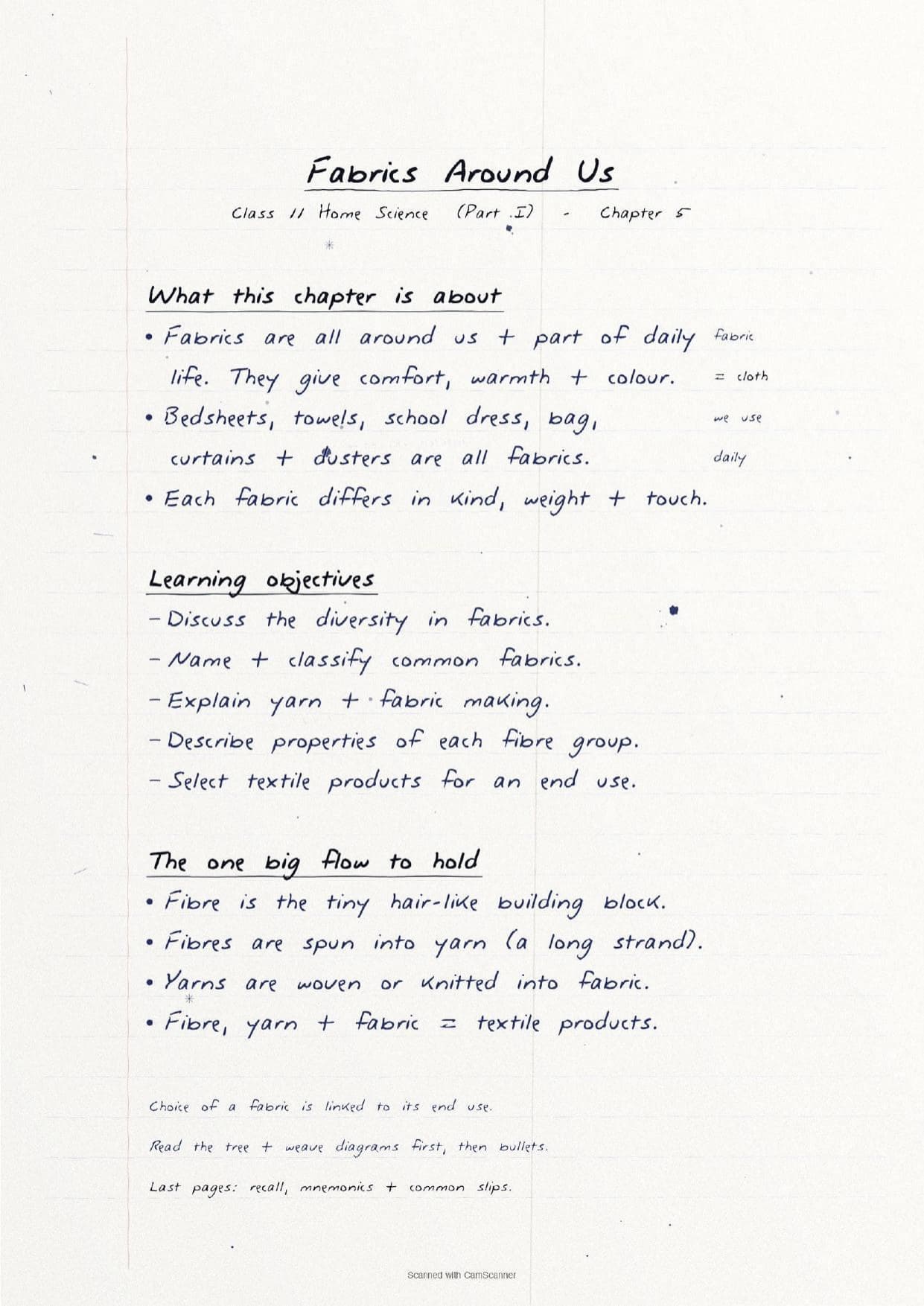
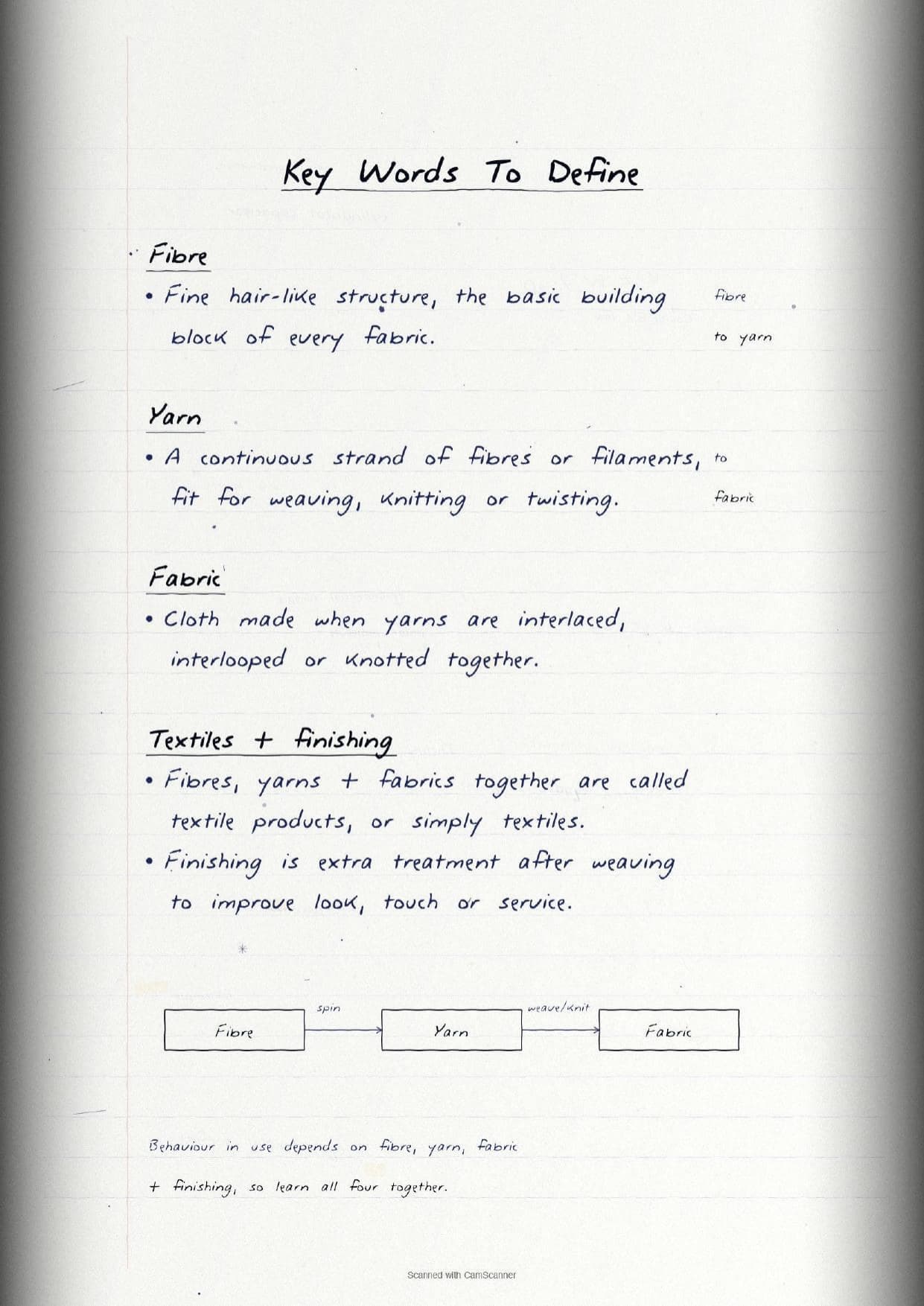
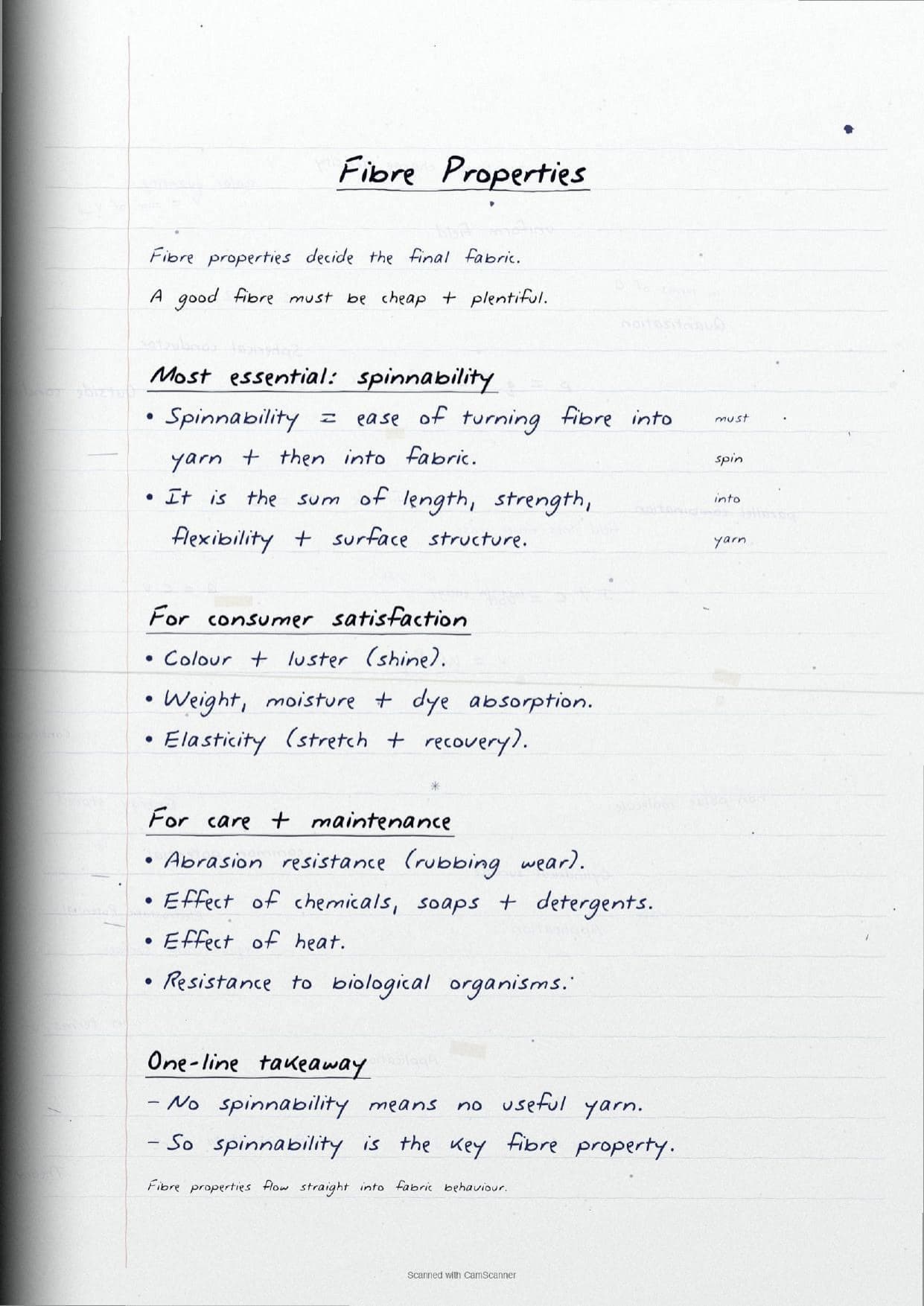
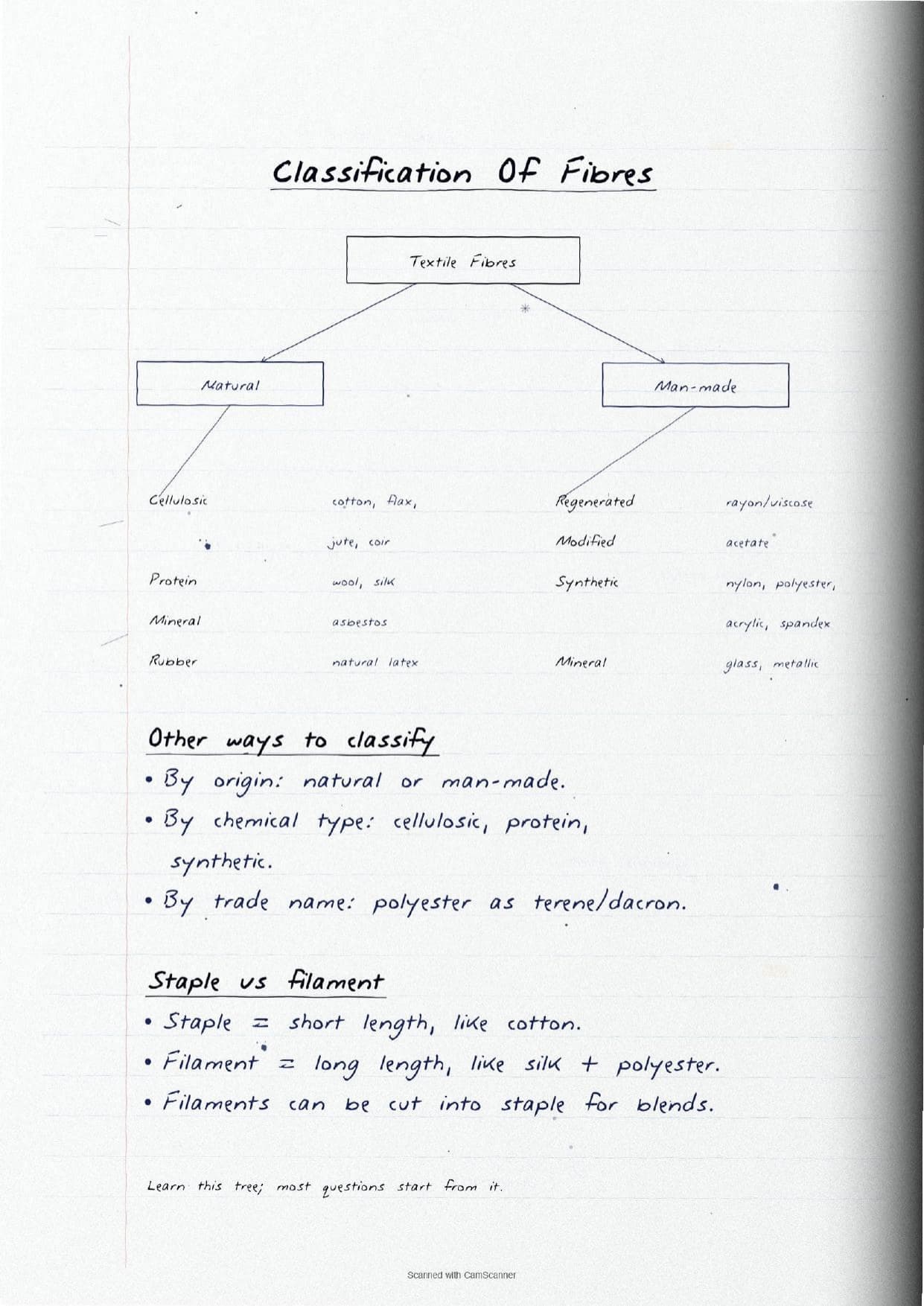
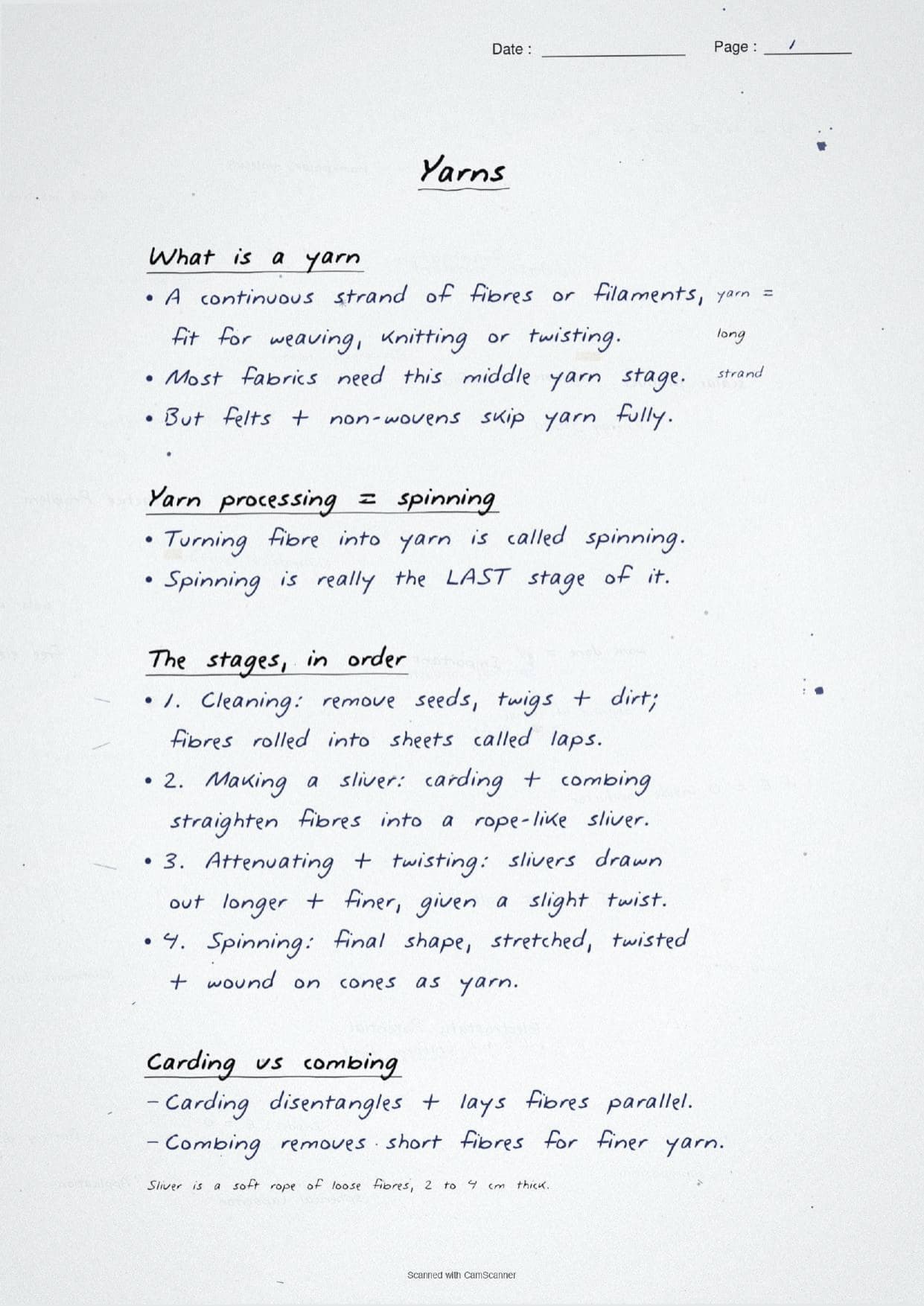
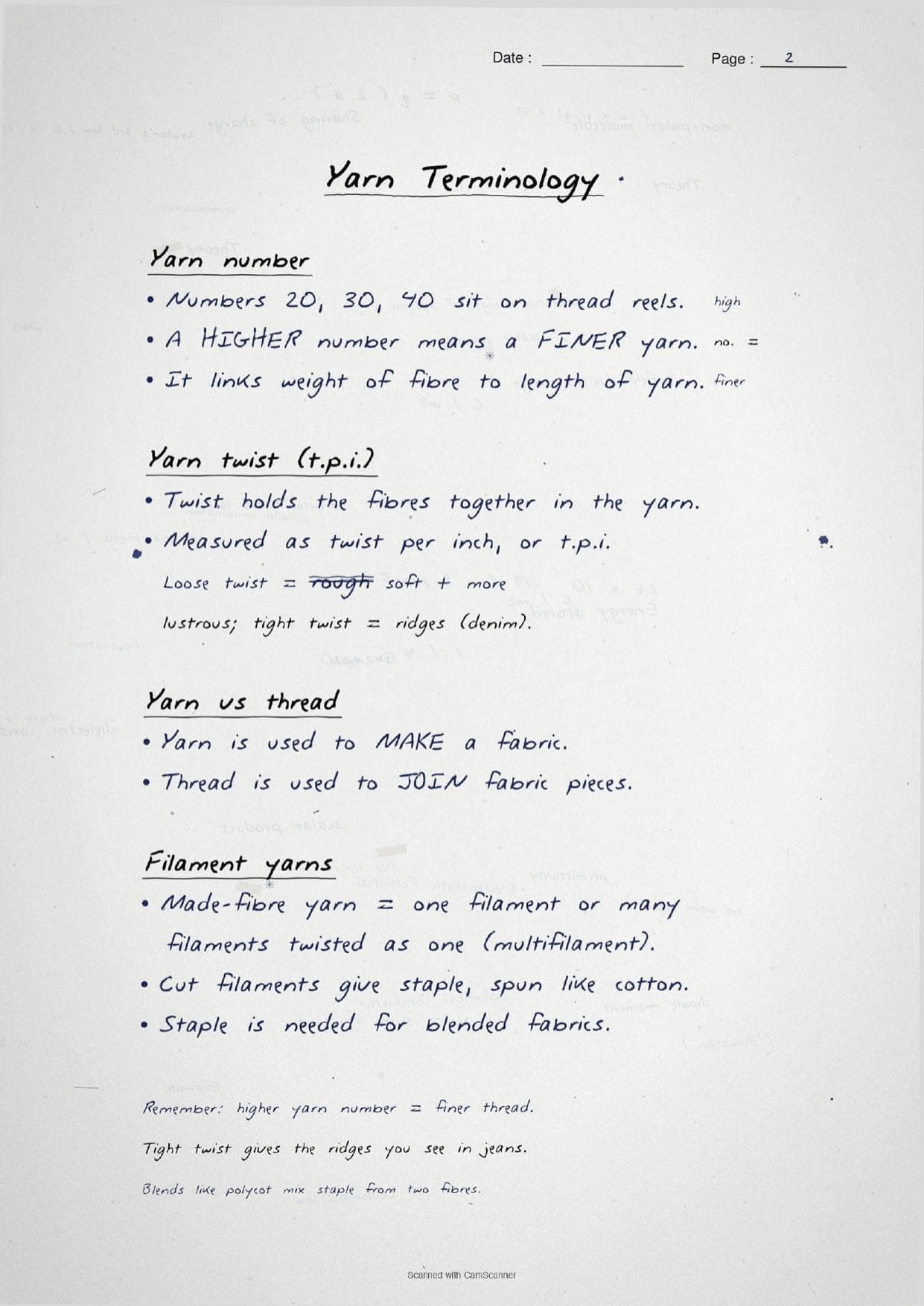
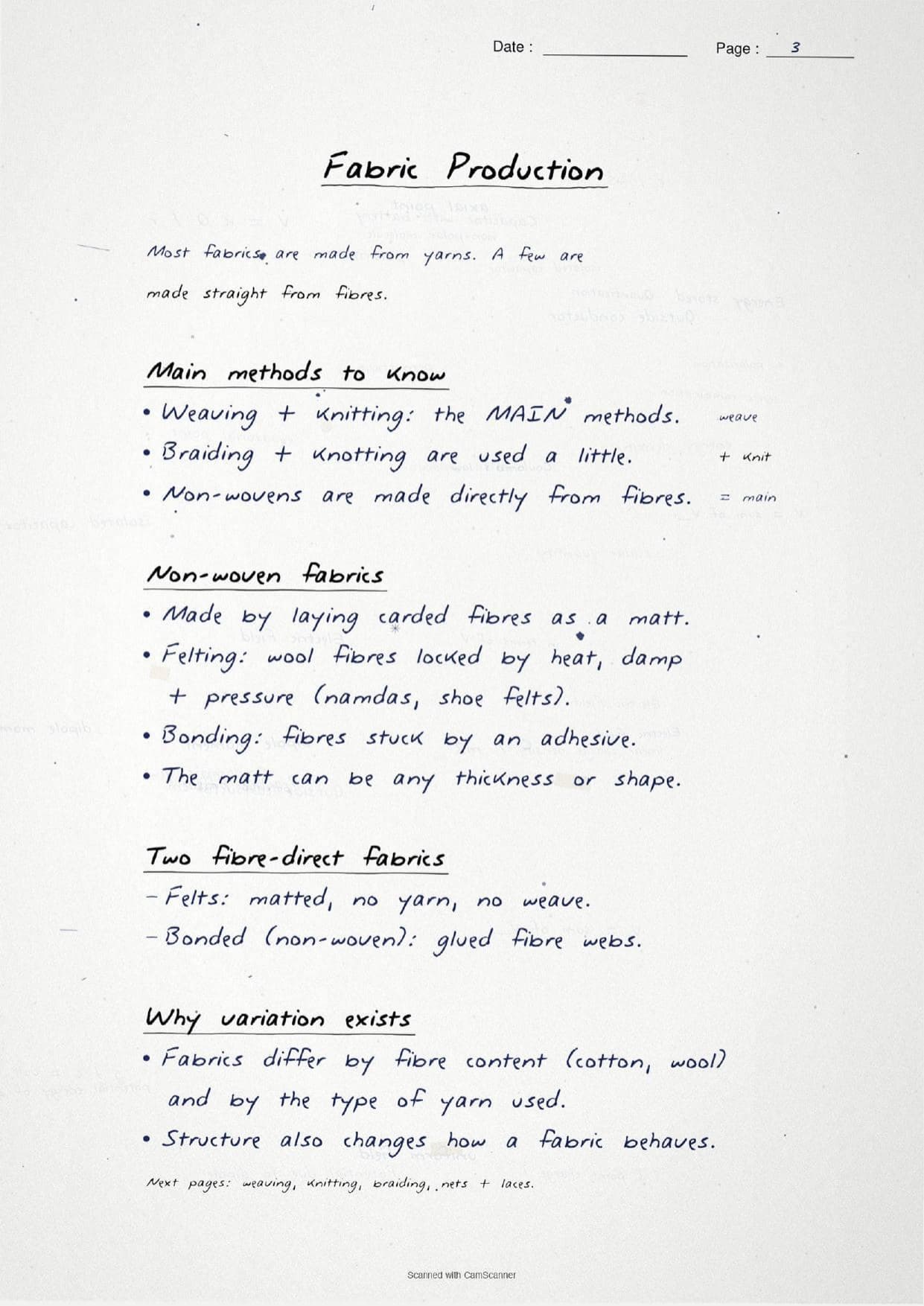
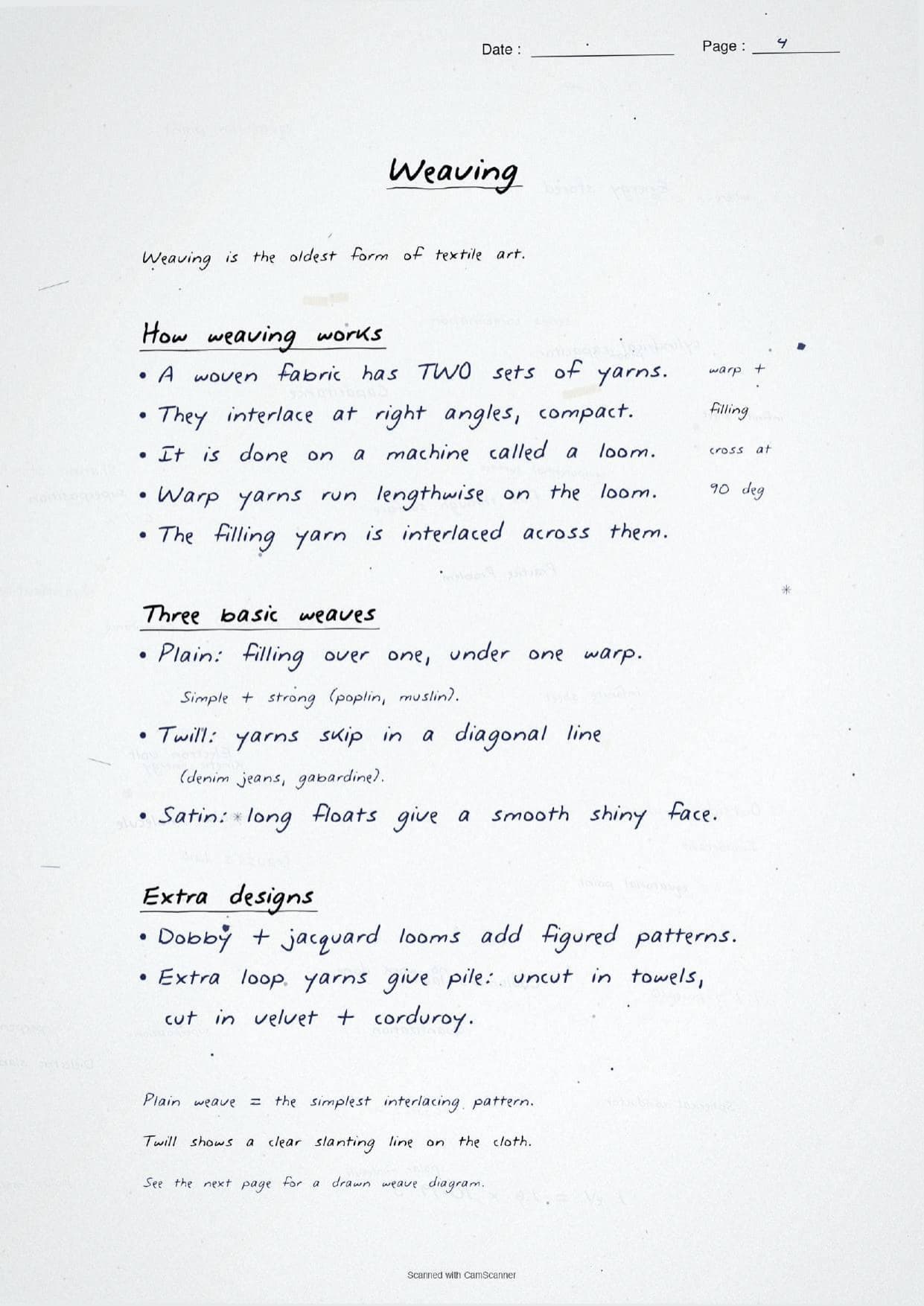
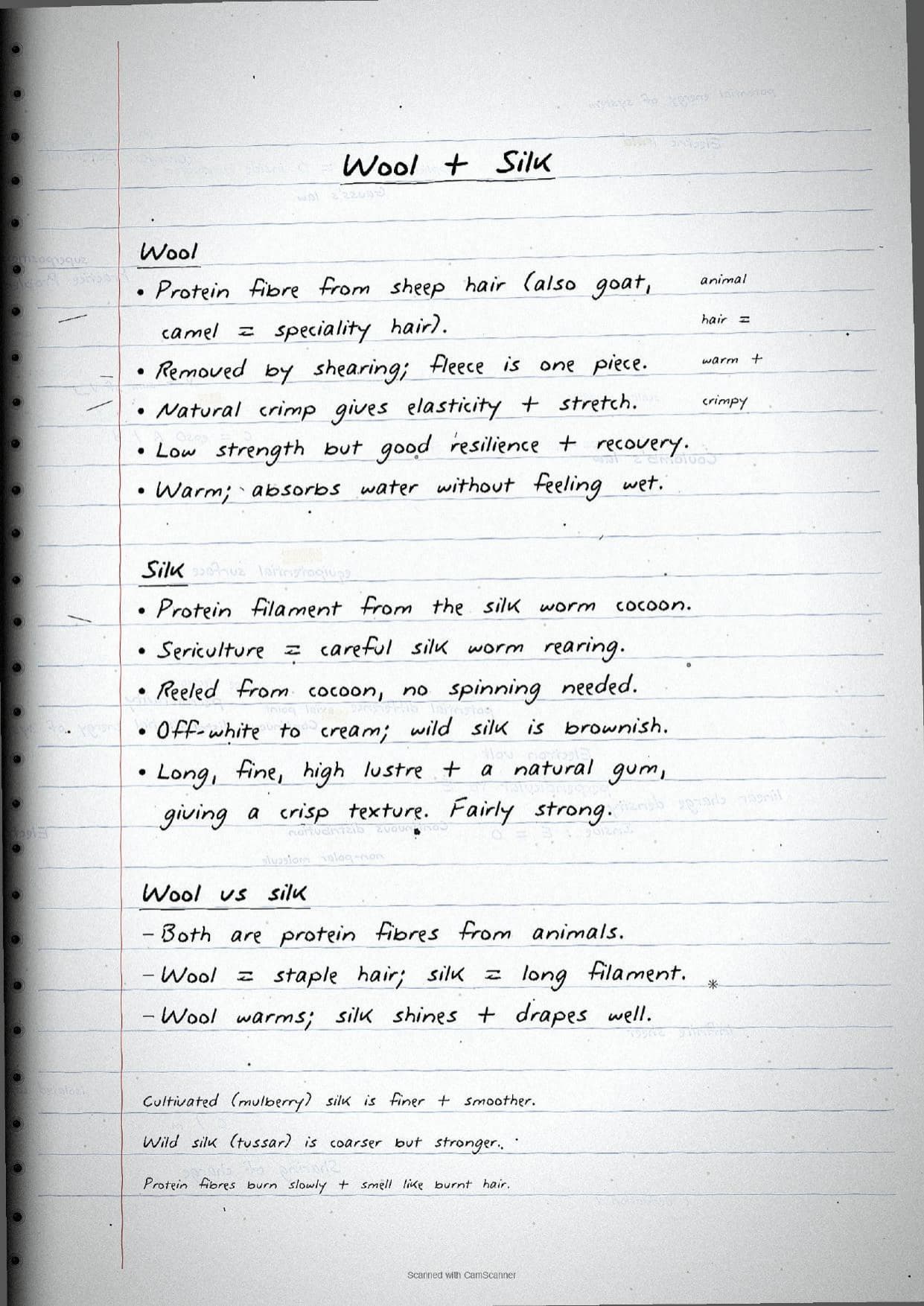
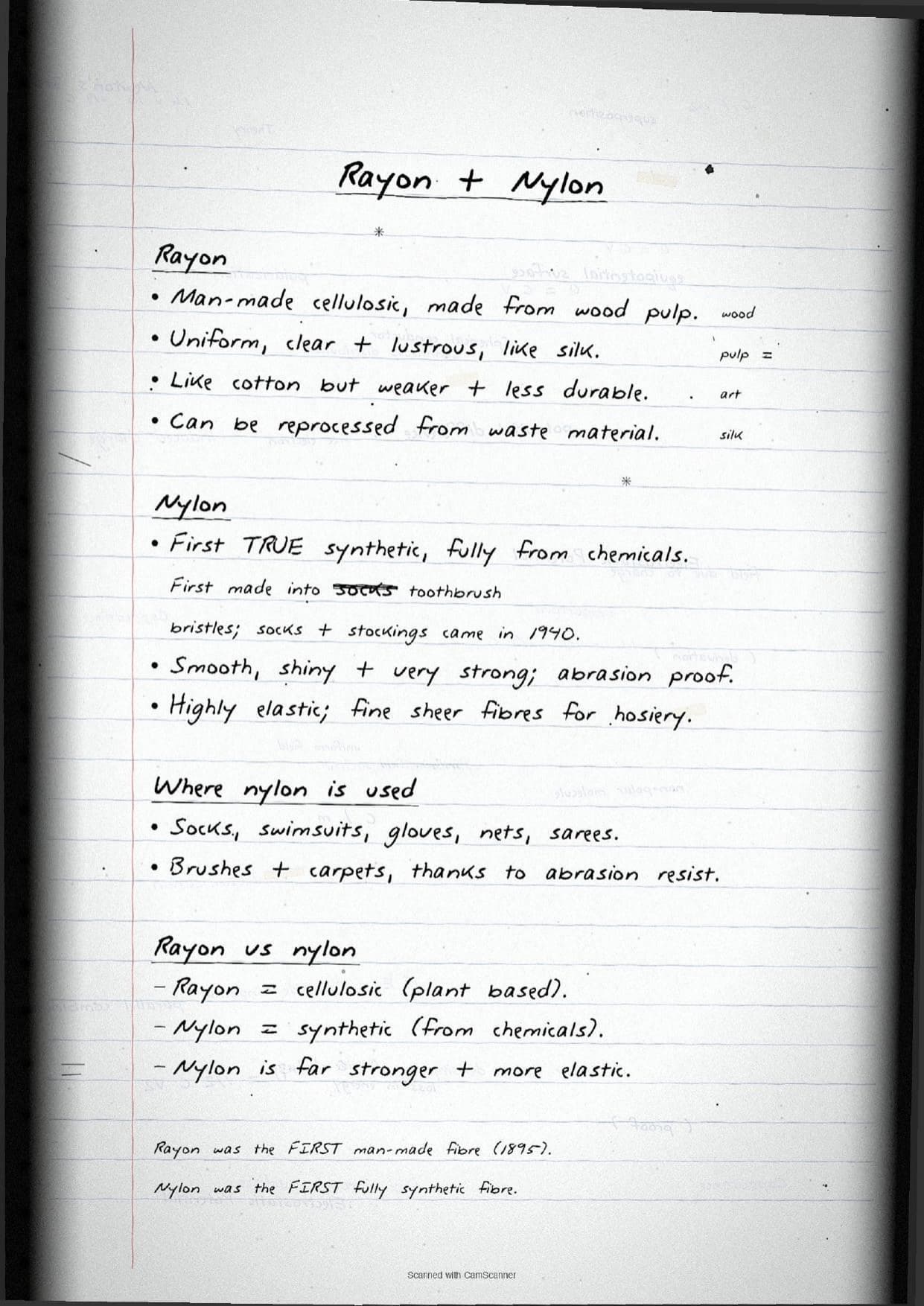
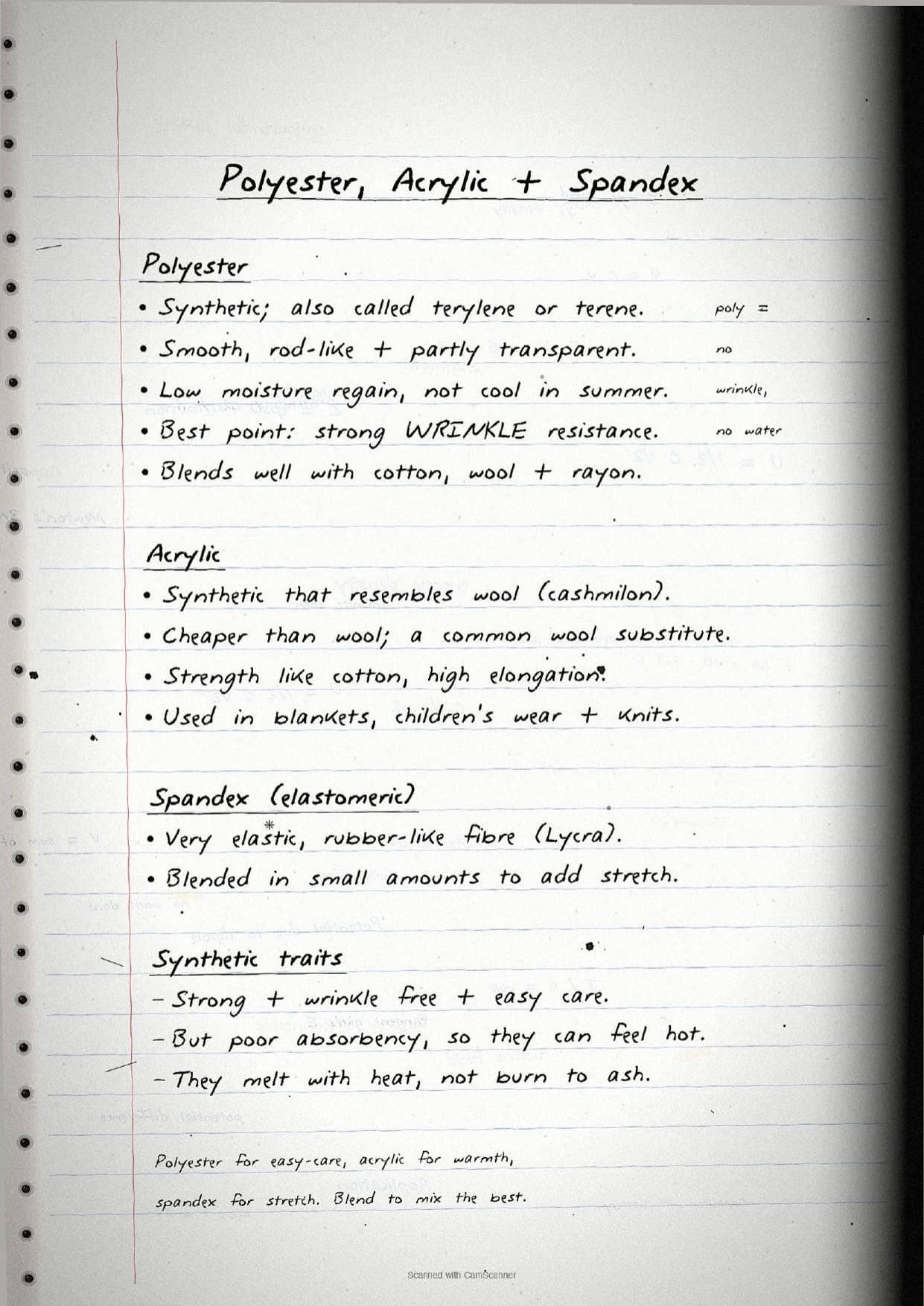
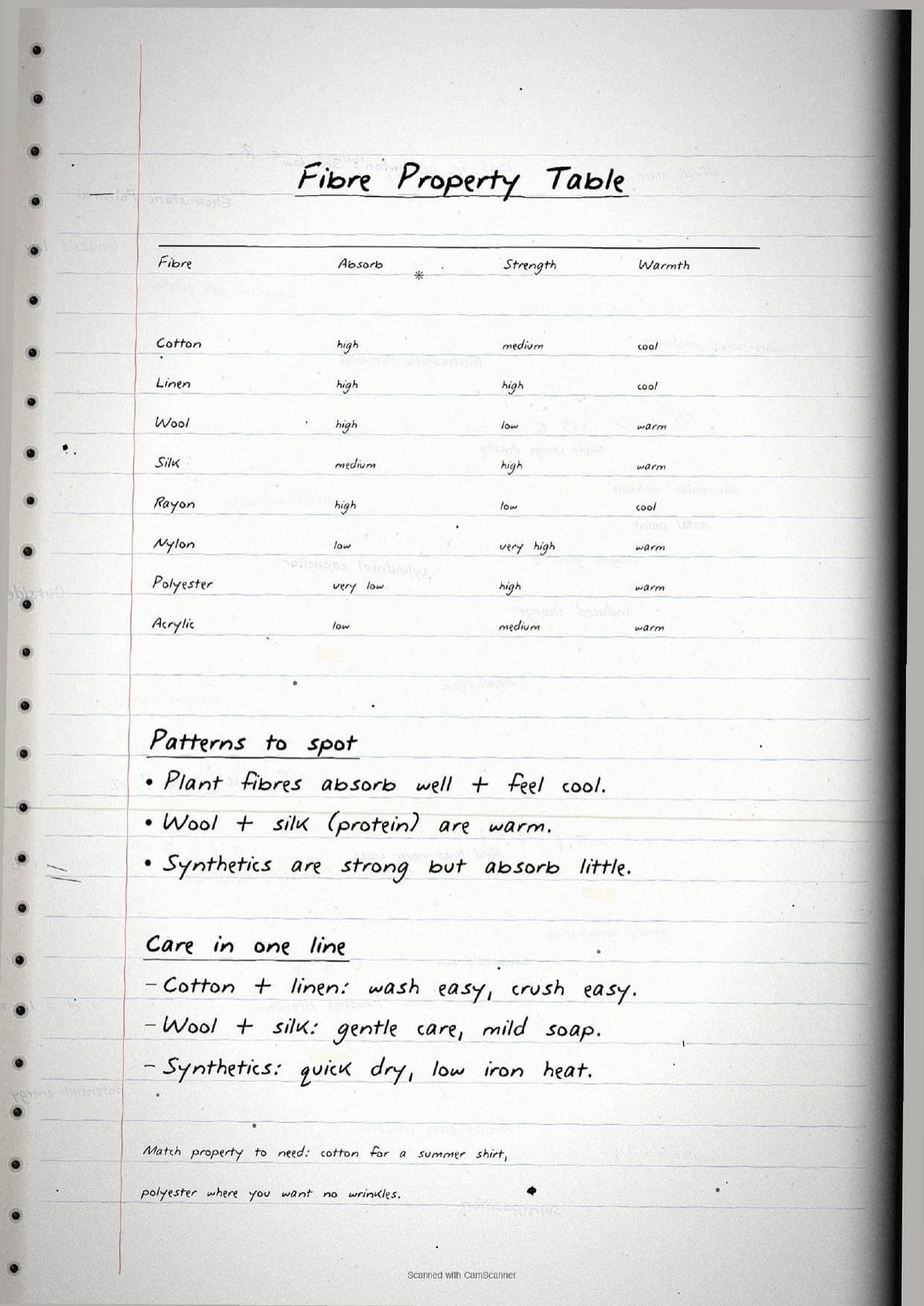
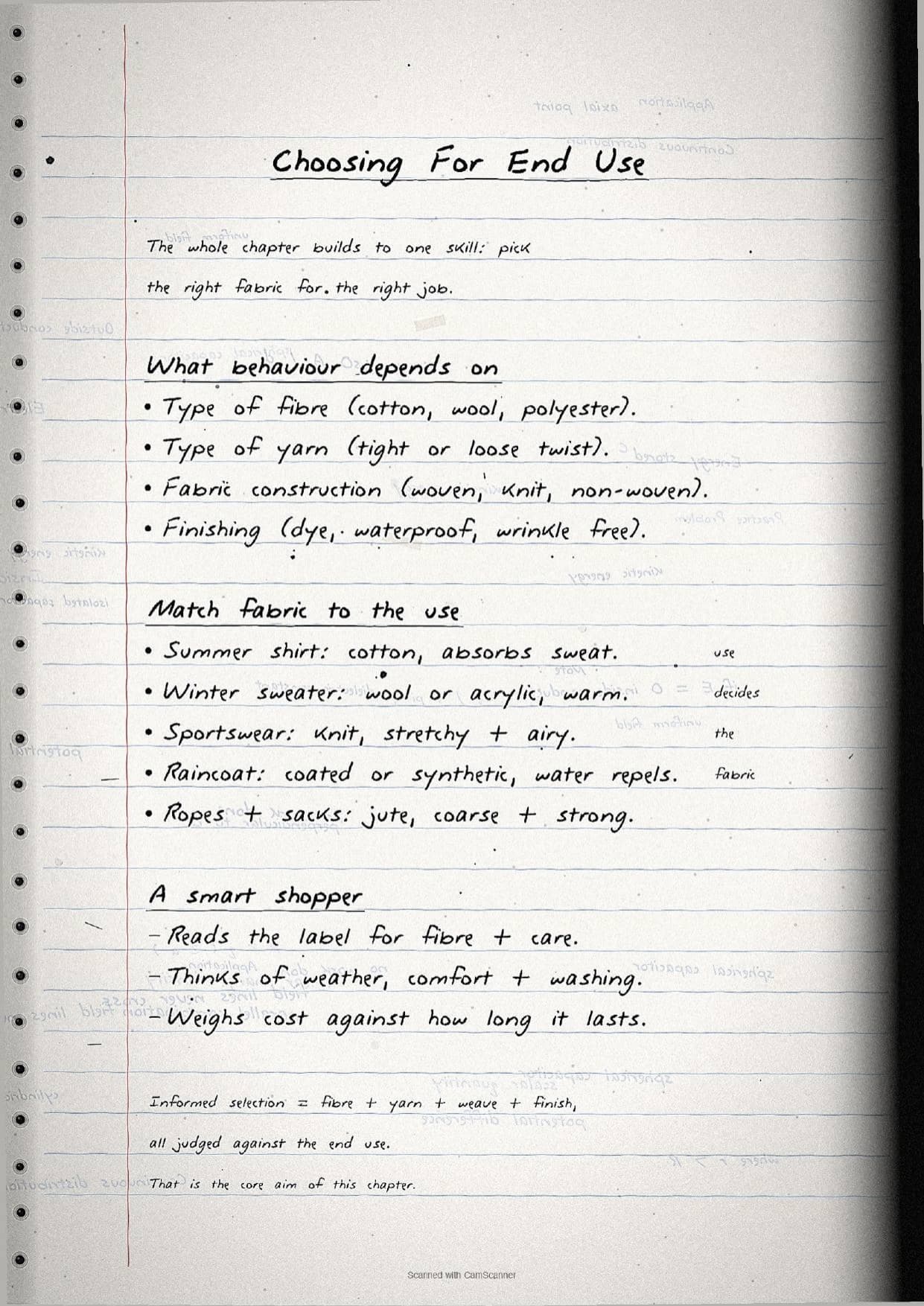
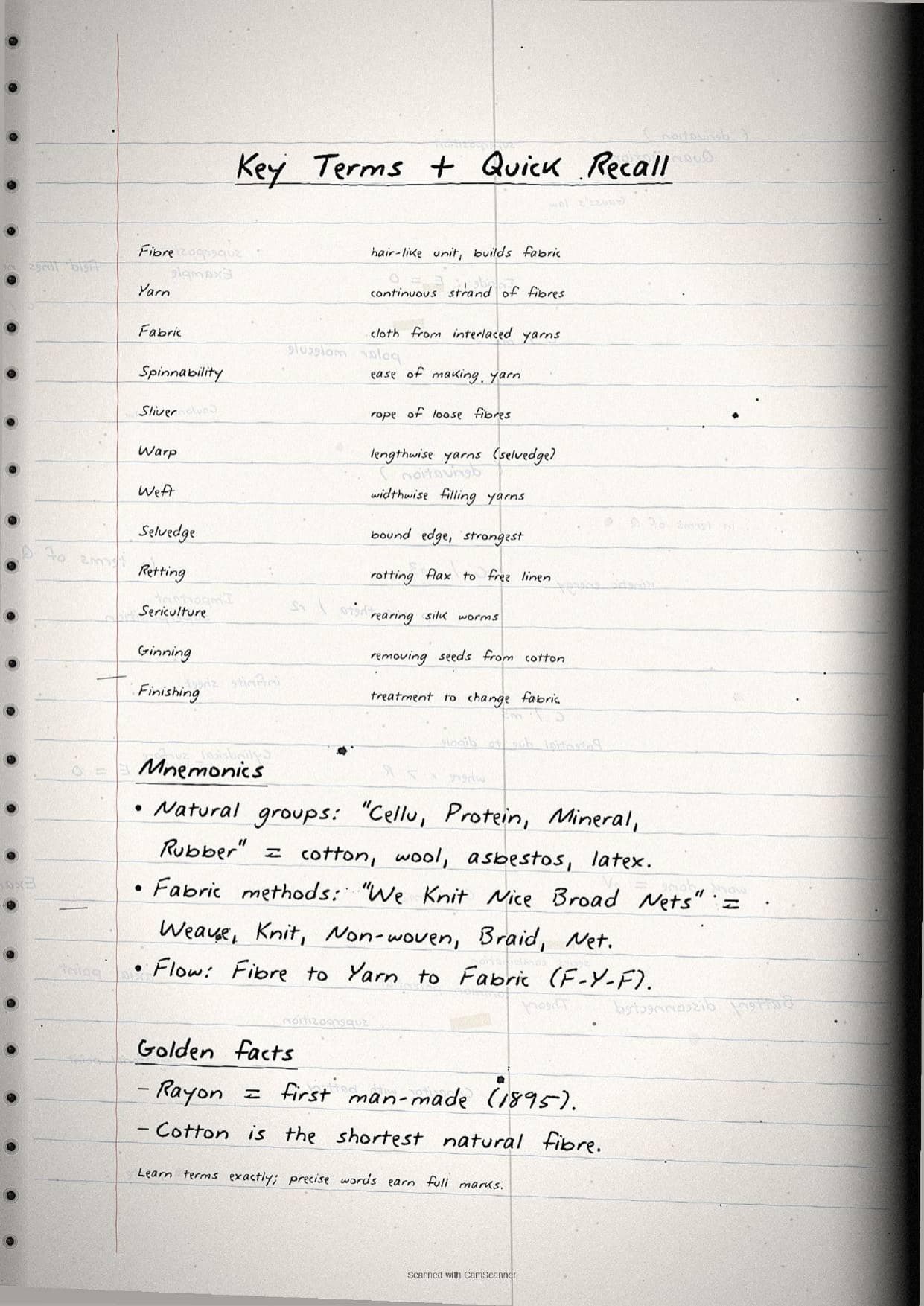
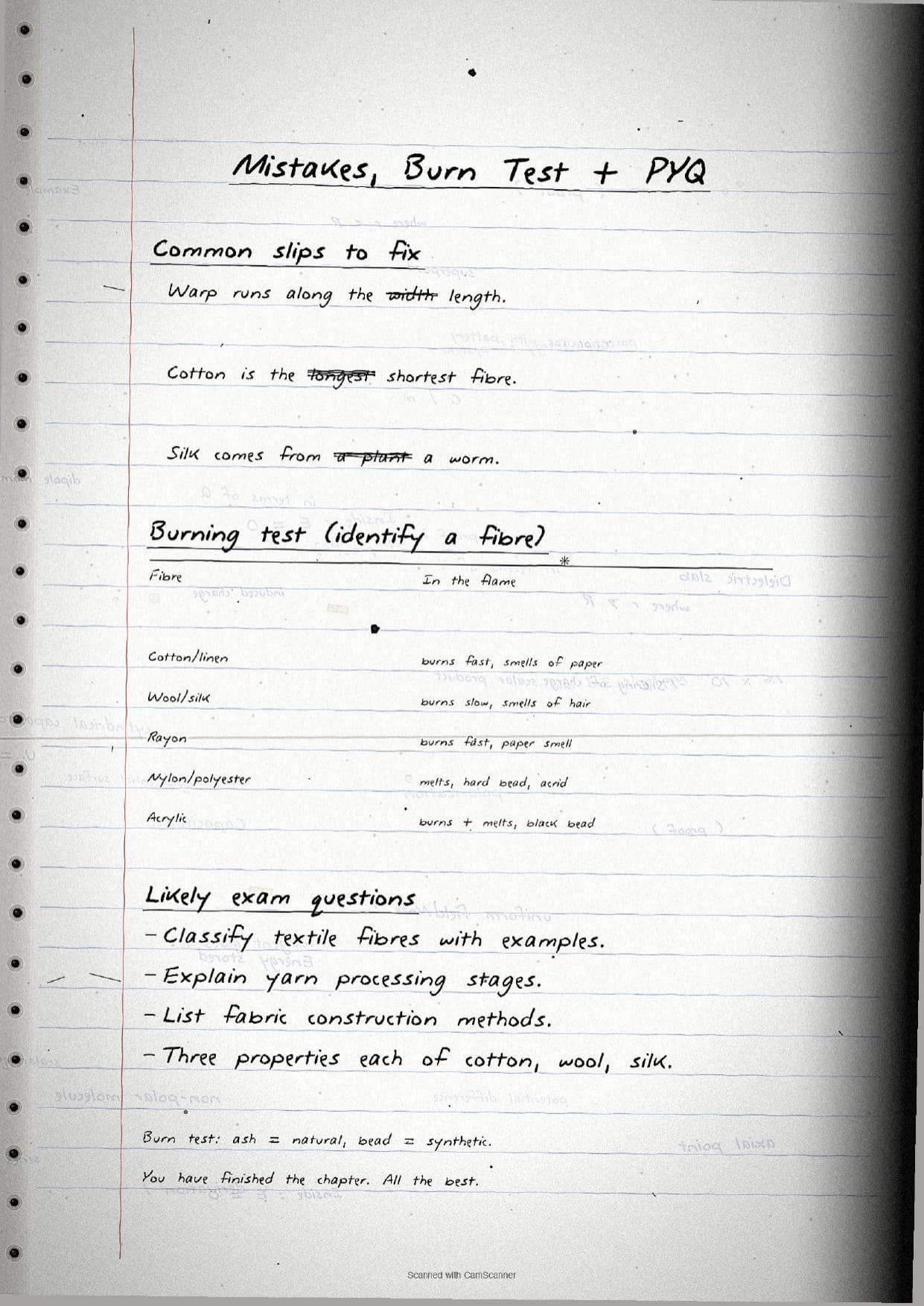
- Handwritten pages with a boxed fibre classification tree, a fibre-to-fabric flow strip, drawn plain and twill weave diagrams, and a fibre property comparison table.
- This is a core textile chapter of Class 11 Home Science, so its fibre and weave terms set up the later apparel and fabric-care chapters.
- Pairs with the NCERT Solutions, Notes and Book PDF linked lower on this page.
These Fabrics Around Us handwritten notes are prepared from the official NCERT Home Science (Human Ecology and Family Sciences) textbook and checked against recent CBSE Class 11 question papers.
Student Feedback: In a Collegedunia poll of 4,630 Class 11 Home Science students, 76% of students said the handwritten pages helped them recall the fibre classification tree and the three basic weaves faster than printed text, because the drawn weave grids and the fibre-to-fabric arrows made the ideas stick.
Source: 2026-27 Class 11 Home Science student poll. Sample of 4,630 students from CBSE schools across 9 states.
What These Fabrics Around Us Handwritten Notes Contain
Fabrics Around Us is the fifth chapter of Class 11 Home Science. It explains how a tiny fibre becomes the cloth we use every day, how fibres are classified, and how the right fabric is chosen for a job. These handwritten notes condense the chapter into handwritten pages that read like a topper's own notebook.
The notes are organised under three threads, each on its own set of pages:
- The building blocks: what fibre, yarn, fabric and finishing mean, and the classification of textile fibres into natural and man-made groups.
- The making: the spinning stages that turn fibre into yarn, and the ways fabric is built by weaving, knitting and non-woven methods.
- The choice: the properties of cotton, linen, wool, silk, rayon, nylon, polyester and acrylic, and how those properties guide an informed selection.
Because the pages are handwritten, the key ideas sit in boxed trees, arrows and drawn weave grids rather than long paragraphs. A student can flip through the Fabrics Around Us class 11 pages in a few minutes and still pick up the fibre groups, the three weaves and the fibre properties before walking into the exam.
Classification of Fibres and the Fibre to Fabric Flow
The opening pages settle the vocabulary. A fibre is the fine hair-like building block of every fabric. Fibres are spun into a yarn, a continuous strand fit for weaving or knitting, and yarns are interlaced into fabric. Together fibres, yarns and fabrics are called textiles, and any extra treatment after weaving is called finishing. The single flow to hold is fibre to yarn to fabric, drawn as a labelled arrow strip on the page.
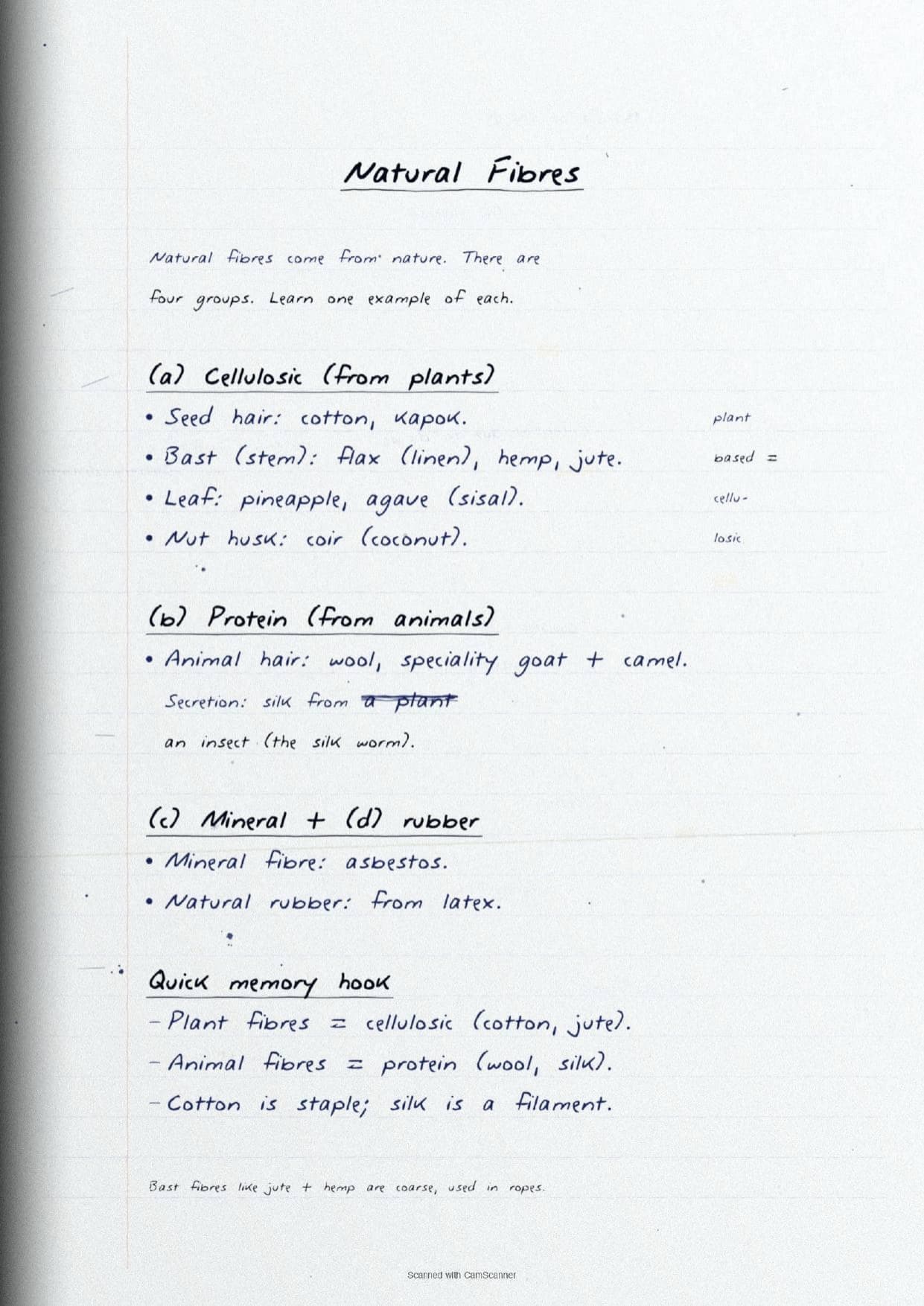
The heart of this section is the classification tree, which the notes box so the whole branch structure sits in one glance. The table below shows how textile fibres are grouped.
| Group | Sub-type and examples on the page |
|---|---|
| Natural cellulosic | From plants: cotton and kapok (seed), flax, hemp, jute (bast), coir (nut husk). |
| Natural protein | From animals: wool and speciality hair, plus silk from the silk worm. |
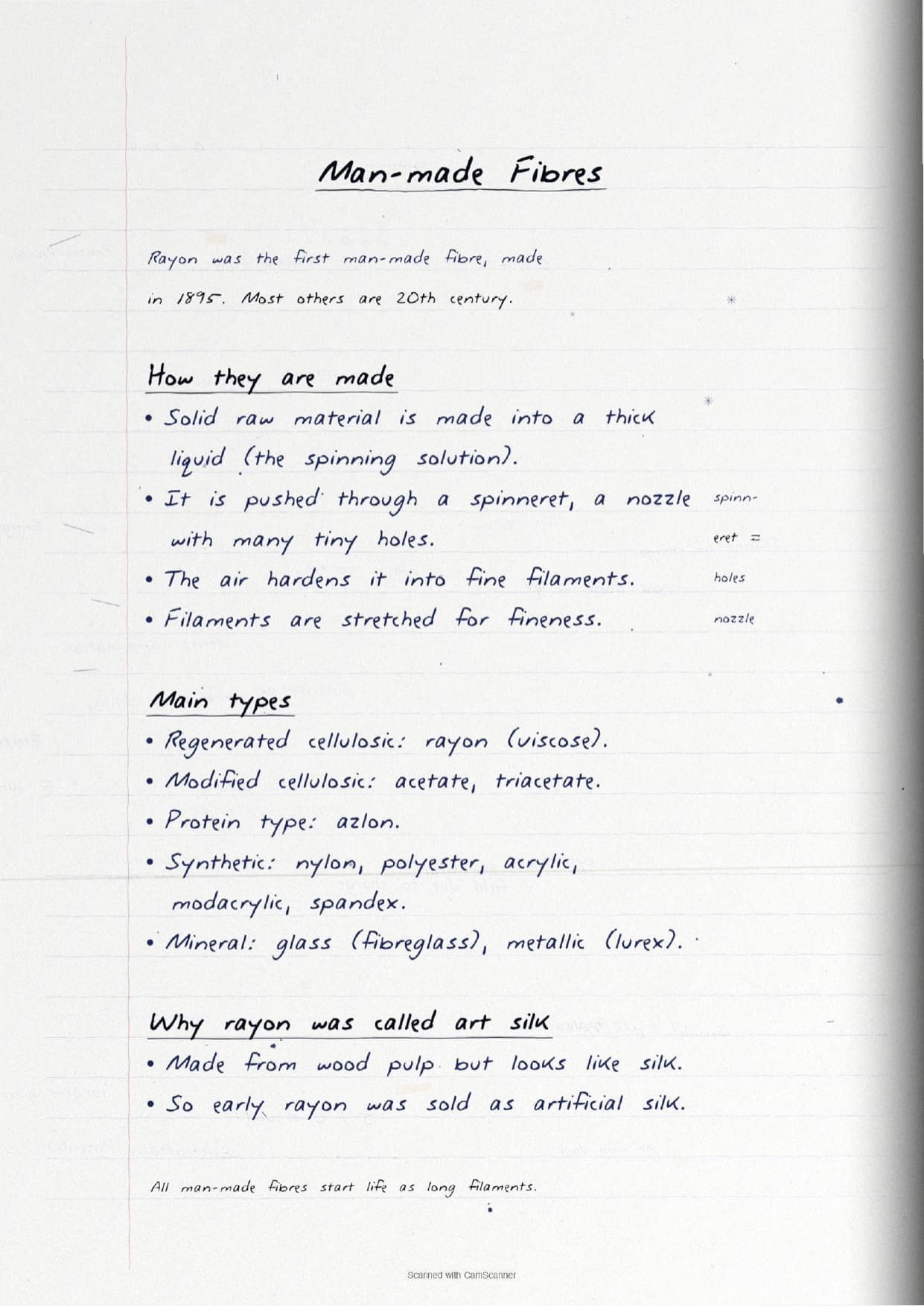
| Man-made regenerated | Rayon or viscose from wood pulp, and modified cellulosic like acetate. |
| Man-made synthetic | Fully from chemicals: nylon, polyester, acrylic and spandex. |
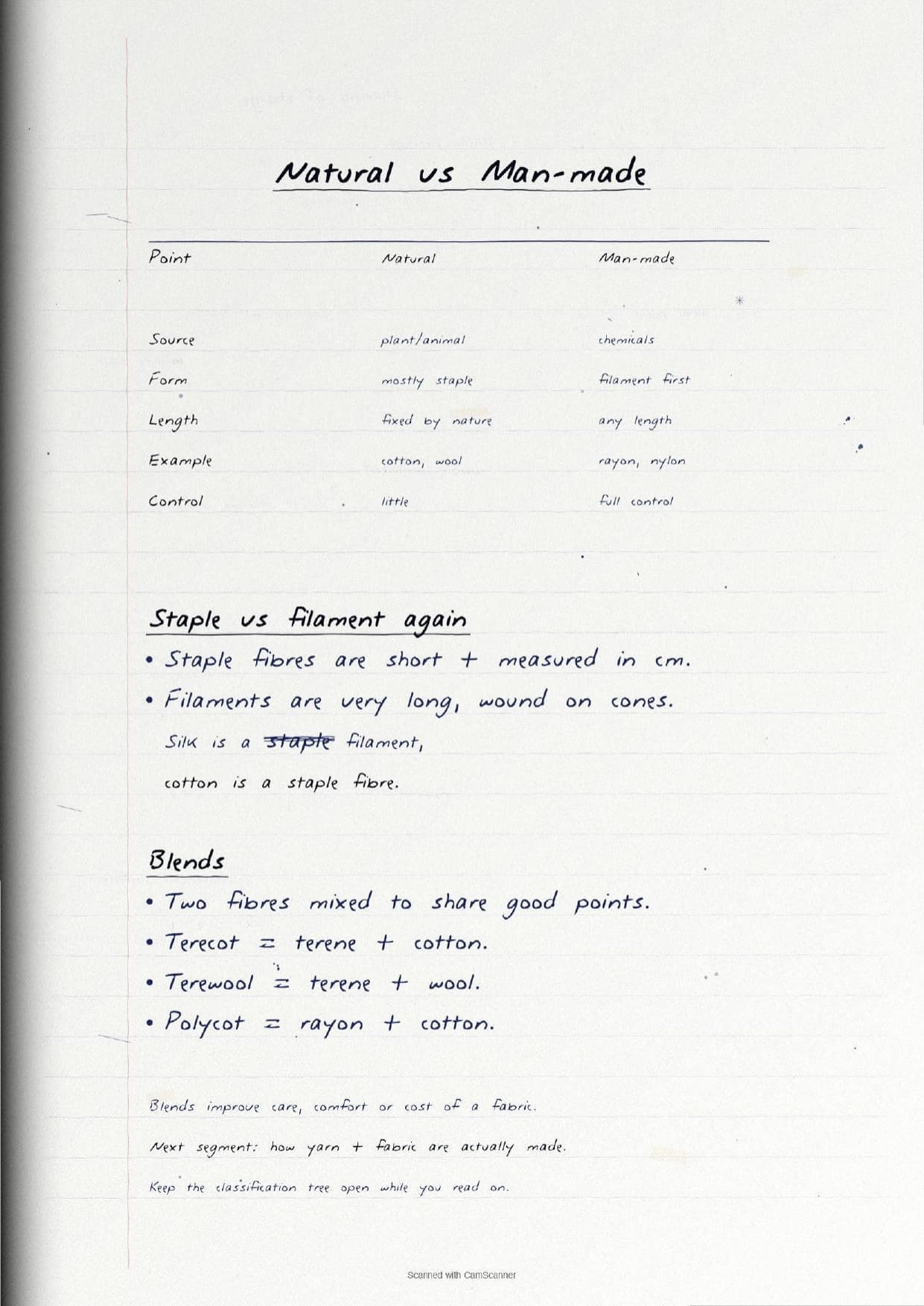
The pages also separate staple fibres, which are short like cotton, from filaments, which are very long like silk and polyester. A key property is spinnability, the ease of turning a fibre into yarn, which depends on length, strength, flexibility and surface. The notes remind students that rayon was the first man-made fibre, made from wood pulp, which is why early rayon was sold as artificial silk.
Fabric Construction and Fibre Properties in the Pages
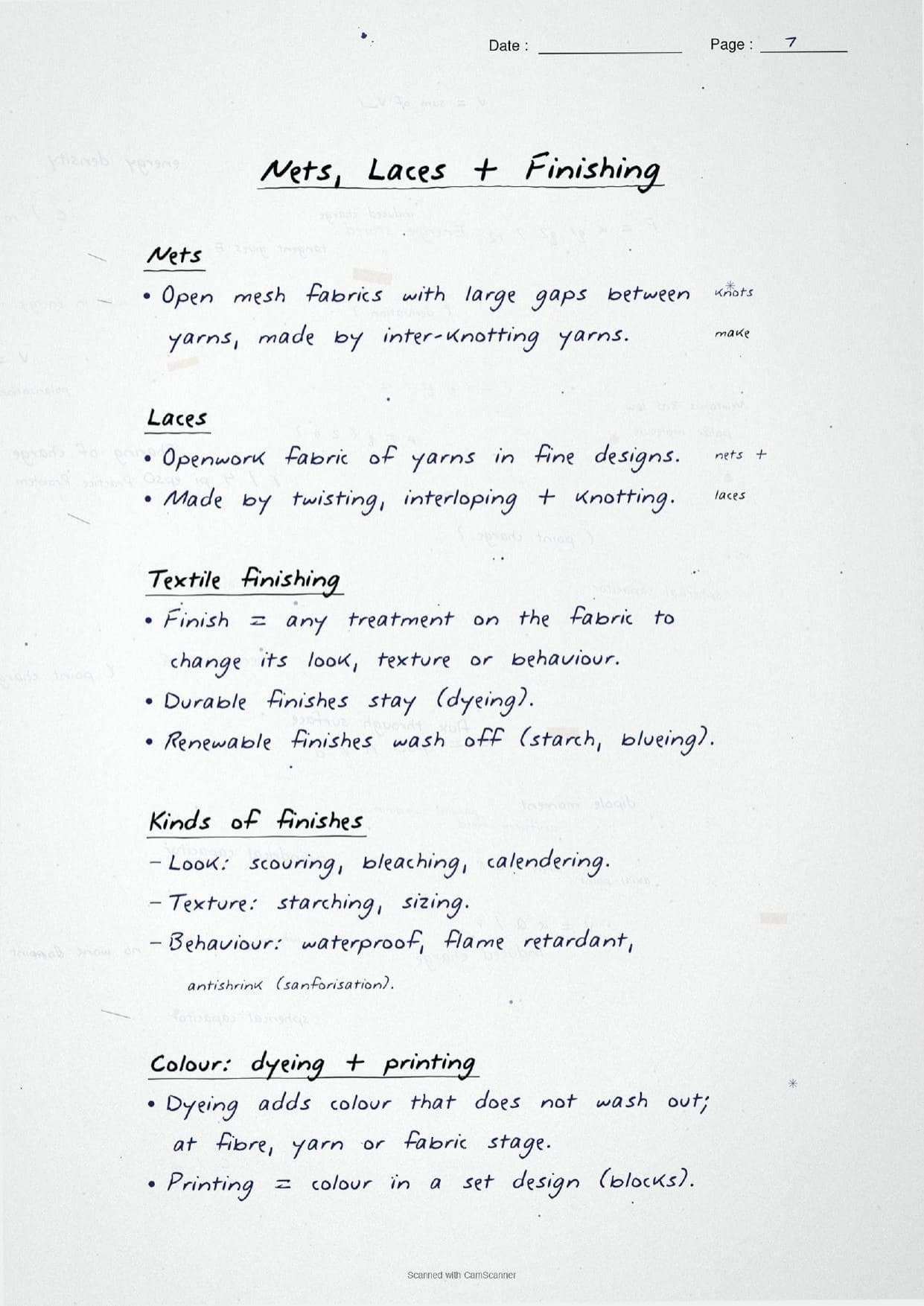
The middle pages move from fibre to finished cloth. Yarn is made by spinning, which runs through cleaning, making a sliver by carding and combing, attenuating and twisting, and a final spin. A higher yarn number means a finer yarn, and twist per inch holds the fibres together. From yarn, fabric is built by three main routes, drawn clearly on the page.
| Method | How the page shows it |
|---|---|
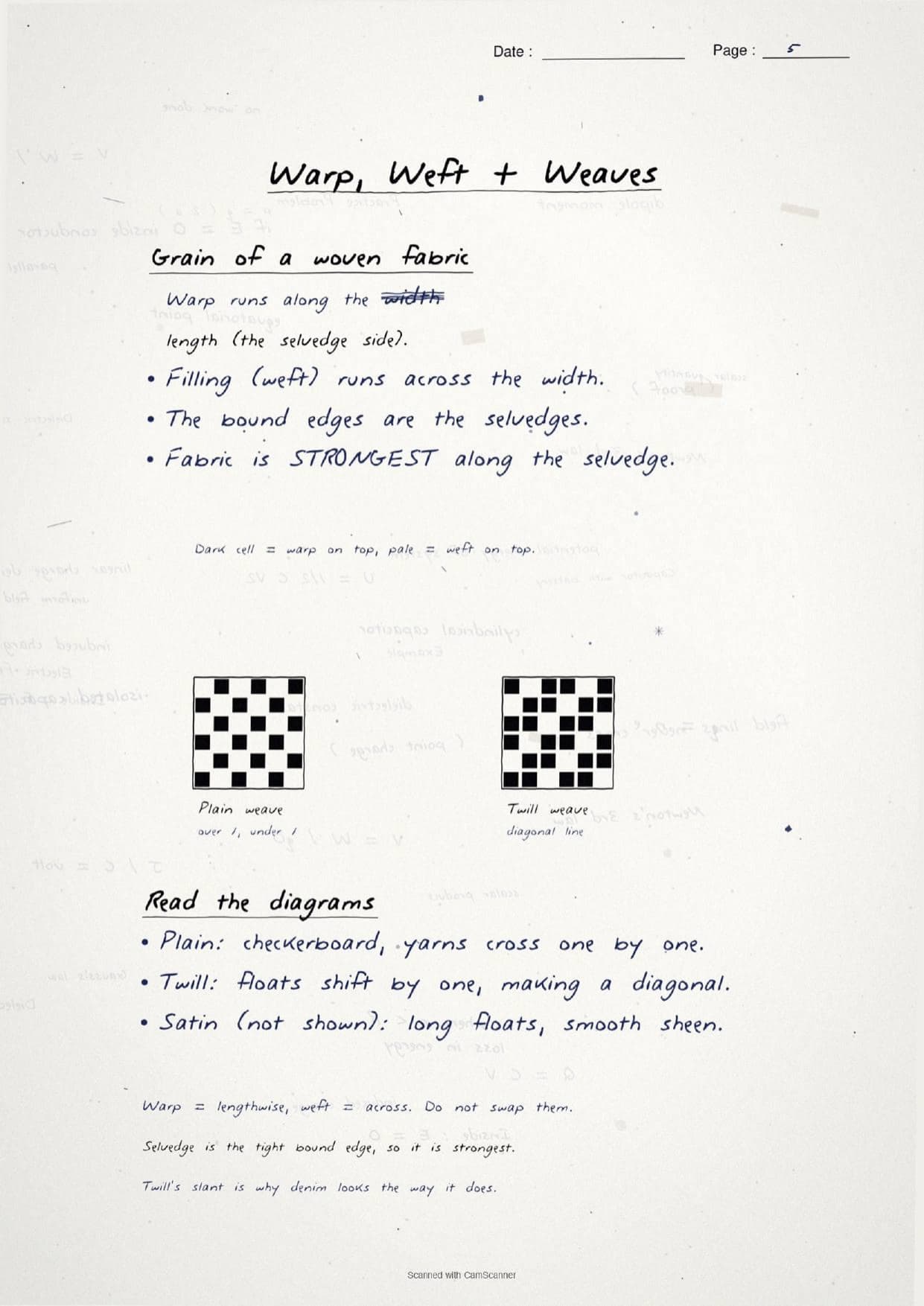
| Weaving | Warp and weft interlace at right angles on a loom; plain, twill and satin weaves are drawn as grids. |
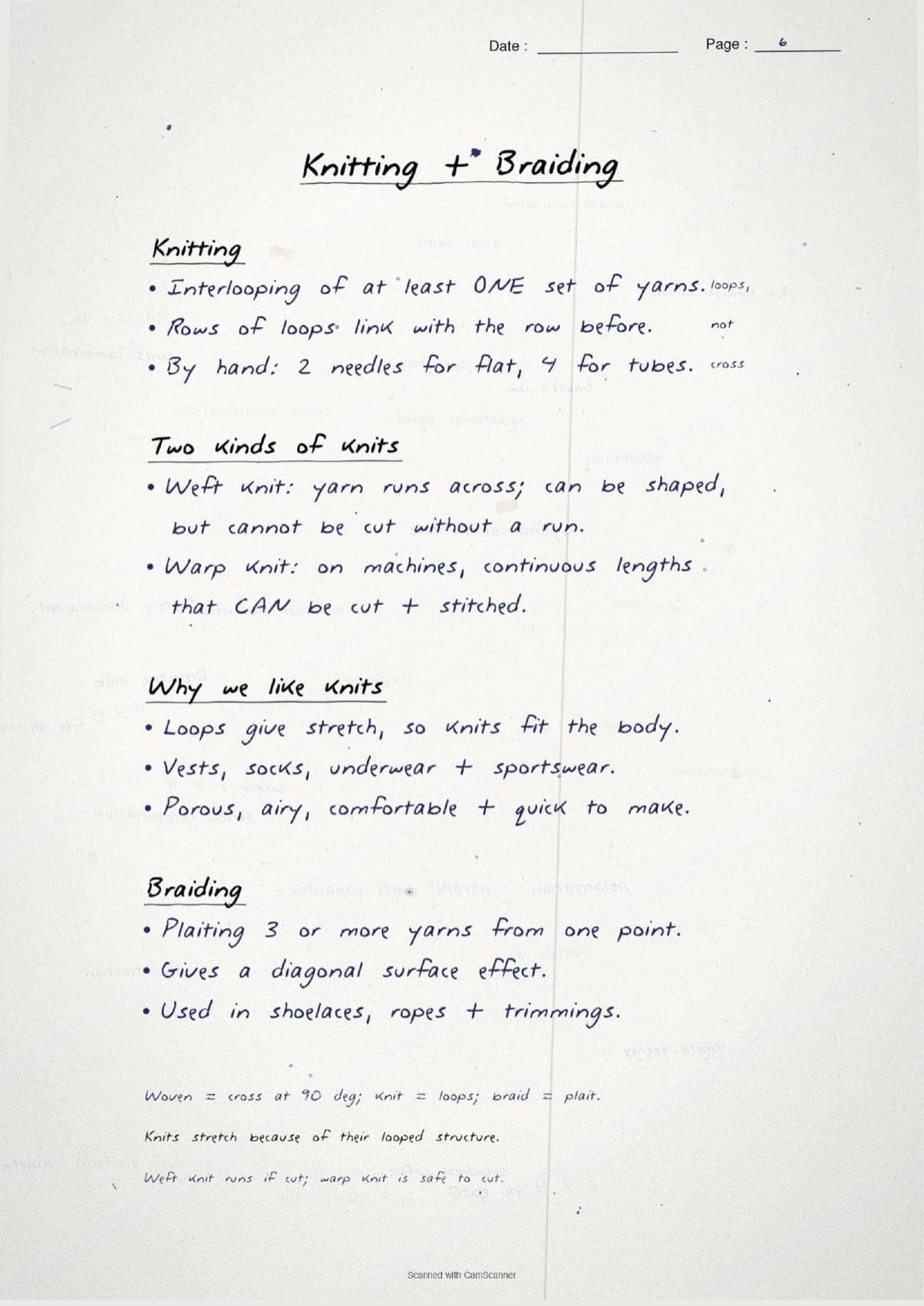
| Knitting | Interlooping of yarn gives stretch; weft knit runs if cut, warp knit is safe to cut. |
| Non-woven | Made straight from fibres by felting (wool locked by heat and pressure) or bonding with an adhesive. |
The notes stress that warp runs lengthwise along the selvedge and the fabric is strongest along that bound edge, while weft runs across the width. The last pages turn to fibre properties, boxed as a comparison table so students can spot the pattern that plant fibres absorb well and feel cool, protein fibres like wool and silk are warm, and synthetics are strong but absorb little.
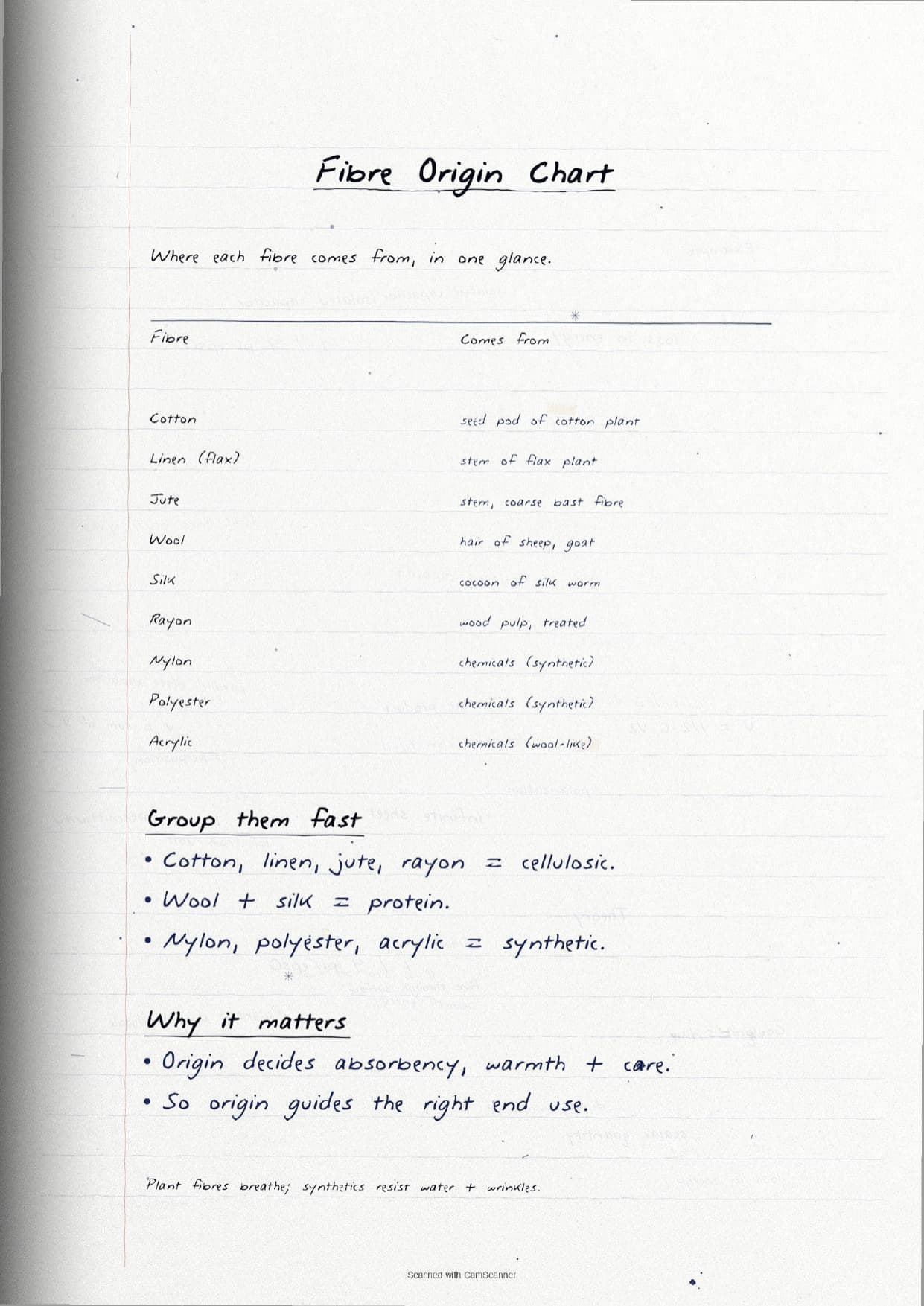
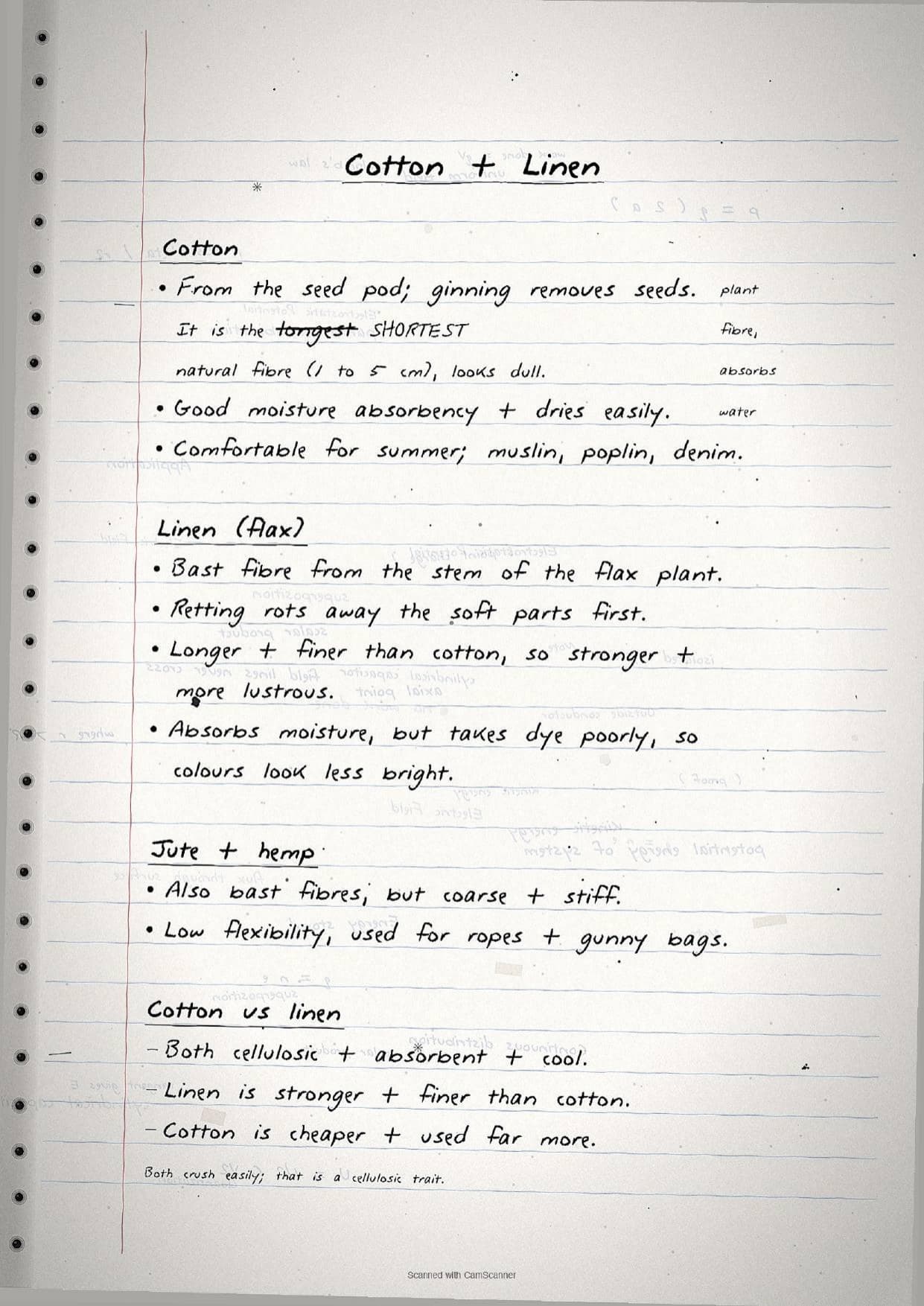
- Cotton and linen: cellulosic, absorbent and cool, but crush easily; linen is stronger and finer.
- Wool and silk: protein fibres; wool is a warm crimpy staple, silk is a lustrous long filament.
- Rayon, nylon, polyester, acrylic: nylon is very strong, polyester resists wrinkles, acrylic mimics wool, rayon is a plant-based man-made fibre.
How to Use These Handwritten Notes
Handwritten notes work best as a final-revision tool, not a first read. The steps below show how to get the most out of the Fabrics Around Us handwritten notes in the last days before a test.
- Download: tap the download card above to save the handwritten pages to your device.
- First read: read the printed Notes once so the handwritten pages act as a refresher, not a first source.
- Recall drill: cover the page and try to redraw the fibre classification tree and name the three basic weaves from memory.
- Night before: flip through the boxed fibre property table for a quick last-minute recall of which fibre suits which end use.
Many students search for class 11 home science chapter 5 notes on their phone the night before a test, so a saved set of handwritten pages means you can revise offline. Use the handwritten notes for speed, then check the solutions to confirm you have the answer points right. The same fibre and weave terms return in the apparel and fabric-care chapters, so a firm grip here pays off later, including for CUET preparation.
Common Mistakes These Notes Help You Avoid
A few errors cost marks every year. The handwritten notes flag each one in the margin so you can fix it before the exam. These five are the most common.
- Swapping warp and weft. Warp runs along the length by the selvedge, weft runs across the width.
- Calling cotton the longest natural fibre. Cotton is actually the shortest staple fibre, only 1 to 5 cm long.
- Saying silk comes from a plant. Silk is a protein filament reeled from the cocoon of the silk worm.
- Confusing rayon with a synthetic. Rayon is a regenerated cellulosic from wood pulp, not a fully synthetic fibre like nylon.
- Mixing up the weaves. Plain is over one under one, twill shows a diagonal line, and satin has long smooth floats.
Students who fix these five points usually move from average to high marks. The handwritten notes box the classification tree and draw each weave in full, so the soft points are hard to miss when you revise.
How These Handwritten Notes Pair with the Solutions and Book PDF
These handwritten notes are a fast revision tool. To prepare fully, students should use them alongside the other resources for the same chapter, all linked in the table below. Read the printed Notes, test yourself with the solutions, then use these pages for a final recall.
| Resource | Best used for |
|---|---|
| Fabrics Around Us NCERT Solutions | Step-by-step answers to all the chapter review questions |
| Fabrics Around Us Class 11 Notes | Quick chapter summary with the fibre tree and weave types in one place |
| Fabrics Around Us NCERT Book PDF | Reading the original NCERT chapter text and figures |
Tip: read the printed Notes first, then attempt the solutions, and keep these handwritten pages for the final night-before flip. Using them for recall, not for the first read, builds memory faster.
All Class 11 Home Science Handwritten Notes by Chapter
The table links the handwritten notes for every chapter in Class 11 Home Science, so students can move across the course in one click. Fabrics Around Us is highlighted.
| Chapter | Handwritten Notes |
|---|---|
| Chapter 1 | Human Ecology and Family Sciences |
| Chapter 2 | Understanding the Self |
| Chapter 3 | Food, Nutrition, Health and Fitness |
| Chapter 4 | Management of Resources |
| Chapter 5 | Fabrics Around Us |
| Chapter 6 | Media and Communication Technology |
| Chapter 7 | Concerns and Needs in Diverse Contexts |
| Chapter 8 | Nutrition, Health and Well-being |
| Chapter 9 | Our Apparel |
| Chapter 10 | Financial Management and Planning |
| Chapter 11 | Care and Maintenance of Fabrics |
FAQs on Fabrics Around Us Handwritten Notes
Fabrics Around Us Class 11 Home Science Handwritten Notes Common Questions
Ques. Where can I download the Fabrics Around Us handwritten notes PDF?
Ans. You can download the Fabrics Around Us Class 11 Home Science handwritten notes PDF directly from this page. It is free, follows the 2026-27 NCERT, and presents the fibre classification tree, the fibre-to-fabric flow, the three weaves and the fibre properties as handwritten pages.
Ques. How are textile fibres classified in Class 11 Chapter 5?
Ans. Textile fibres are first split into natural and man-made. Natural fibres are cellulosic like cotton and jute or protein like wool and silk. Man-made fibres are regenerated cellulosic like rayon or fully synthetic like nylon, polyester and acrylic. The handwritten notes box this whole tree so it is easy to recall.
Ques. What topics do these handwritten notes cover?
Ans. They cover the diversity of fabrics, the meaning of fibre, yarn, fabric and finishing, the classification of fibres, the fibre to yarn to fabric flow, the spinning stages, fabric construction by weaving, knitting and non-woven methods, warp and weft, the properties of cotton, linen, wool, silk, rayon, nylon, polyester and acrylic, and how to select a fabric for its end use.
Ques. What is the difference between weaving and knitting?
Ans. Weaving interlaces two sets of yarns, warp and weft, at right angles on a loom, giving a firm fabric. Knitting interloops yarn into rows of loops, which gives stretch and makes knits fit the body. The handwritten notes draw both so students can see the crossing versus the looping structure.
Ques. Are handwritten notes good for revising Class 11 Home Science Chapter 5?
Ans. Yes. Handwritten notes are best for fast, last-minute revision because the boxed fibre tree, the drawn weave grids and the property table make the ideas easy to skim. Use them after a first read of the printed Notes, not as your only source.



Comments