




The handwritten notes on Class 11 Applied Mathematics Chapter 9 Probability have been carefully prepared for quick revision, according to the latest 2026-27 CBSE syllabus. The PDF covers sample space, events, conditional probability, total probability and Bayes theorem with short examples.
- Best for quick revision: definitions, formulas, examples and common mistakes stay in one PDF.
- Aligned to 2026-27: follows the current Class 11 Applied Mathematics probability scope.
- Exam ready: Bayes theorem and total probability are revised through route-table examples.
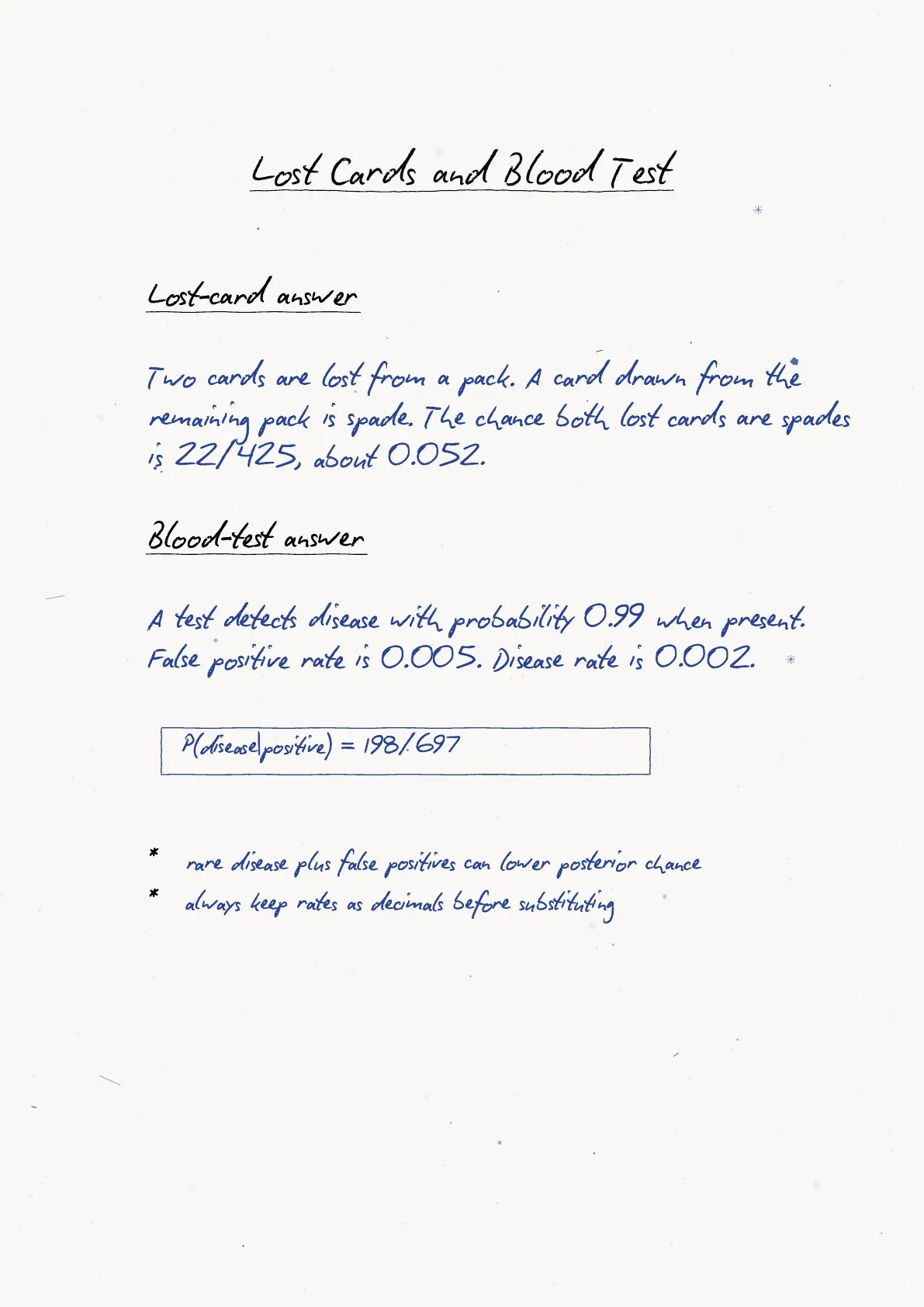
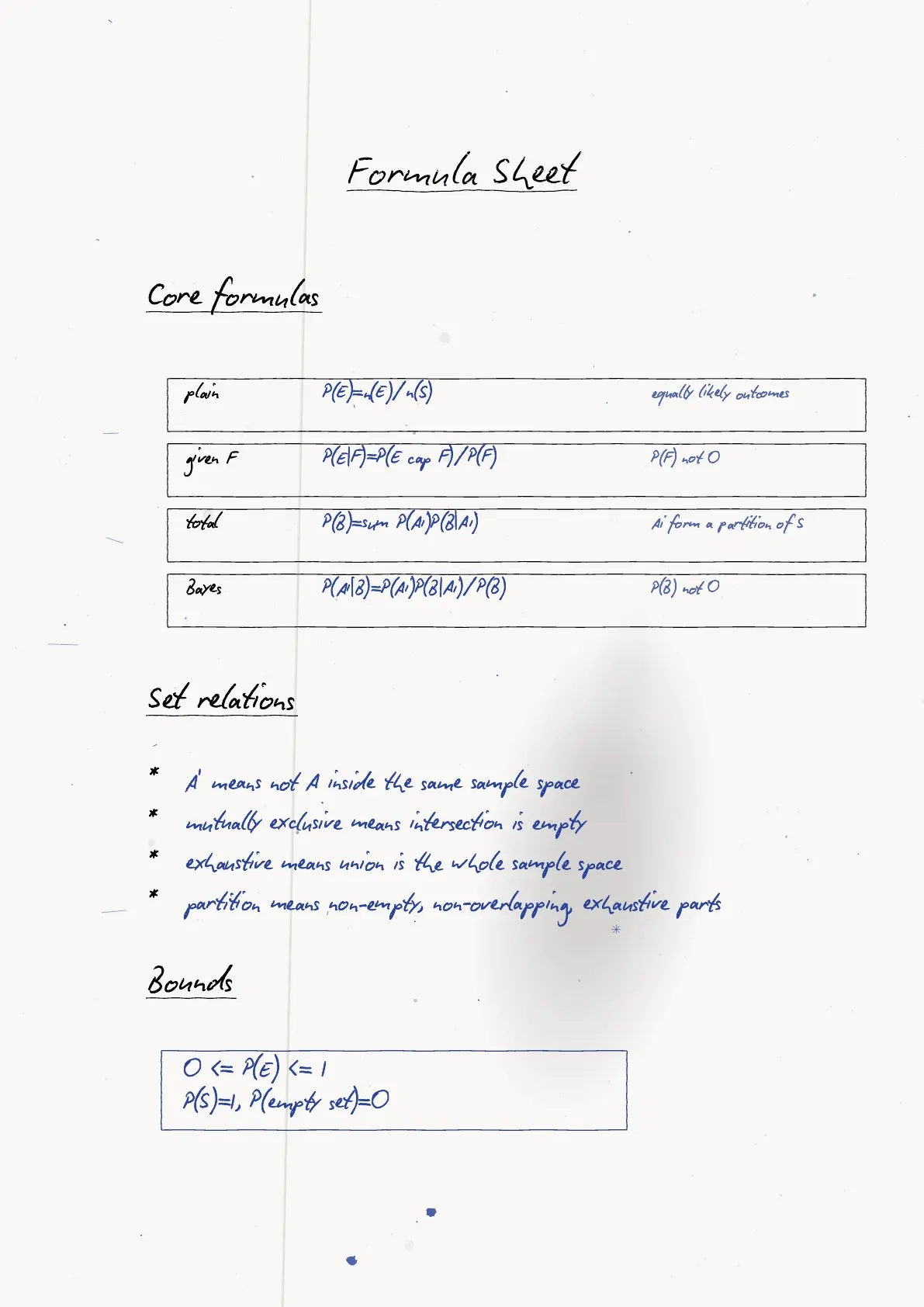
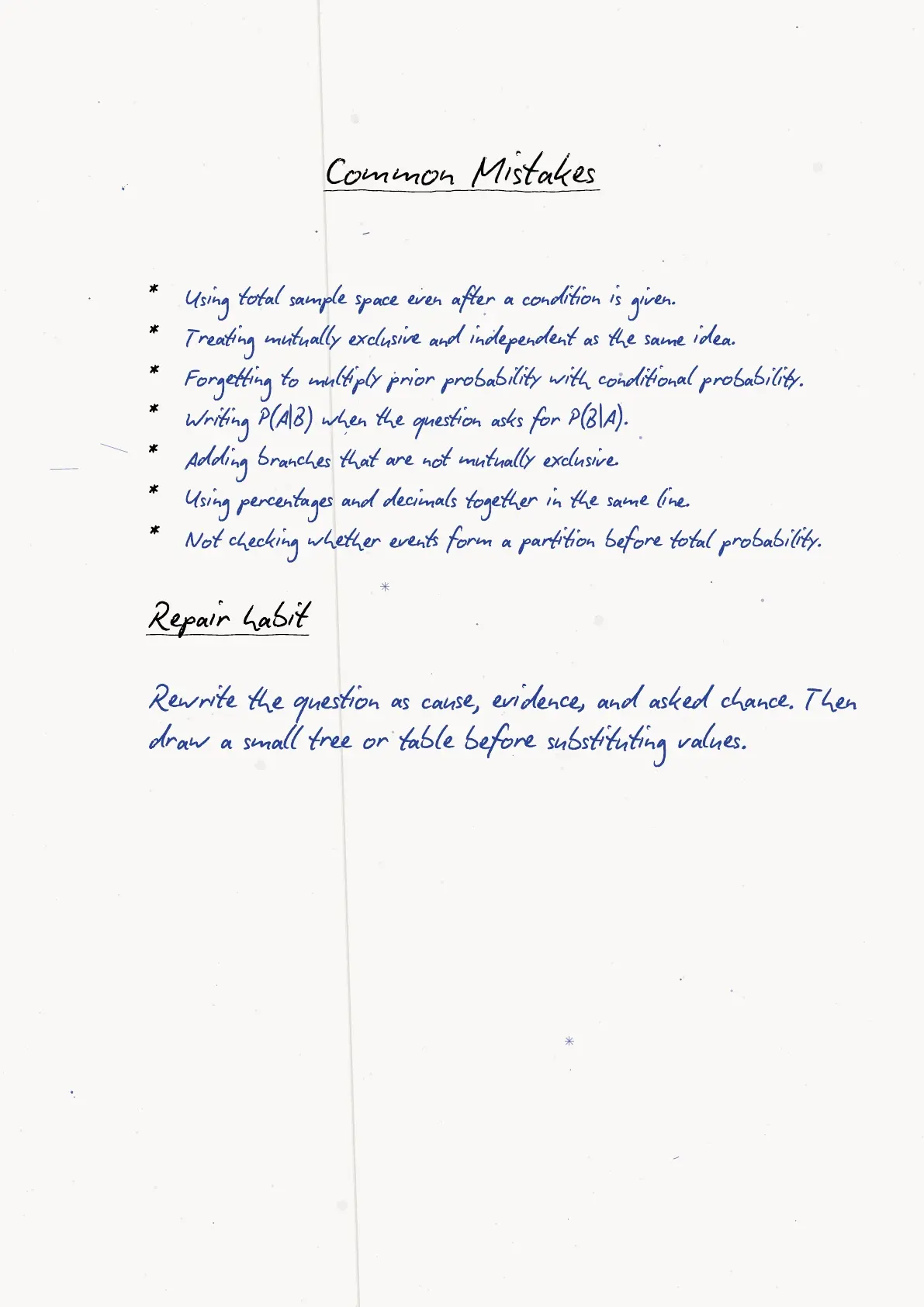
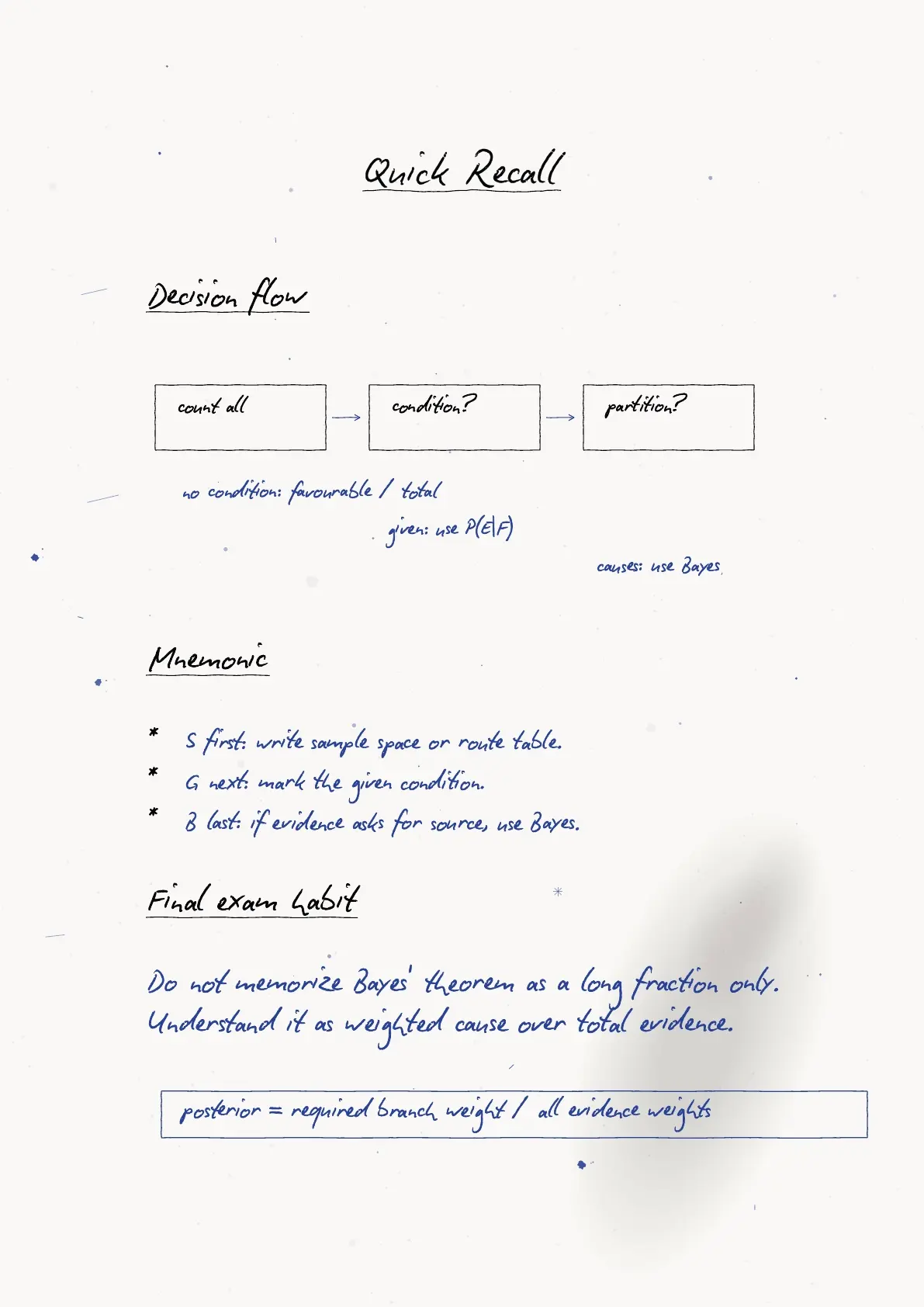
Each Class 11 Applied Mathematics Probability handwritten notes PDF is checked against the 2026-27 NCERT chapter for formulas, examples and revision flow.
Student Feedback: In a Collegedunia poll of 11,640 students conducted before the 2026 boards, most students said Probability became easier after drawing branch tables for total probability and Bayes theorem.
Probability Handwritten Notes PDF Contents
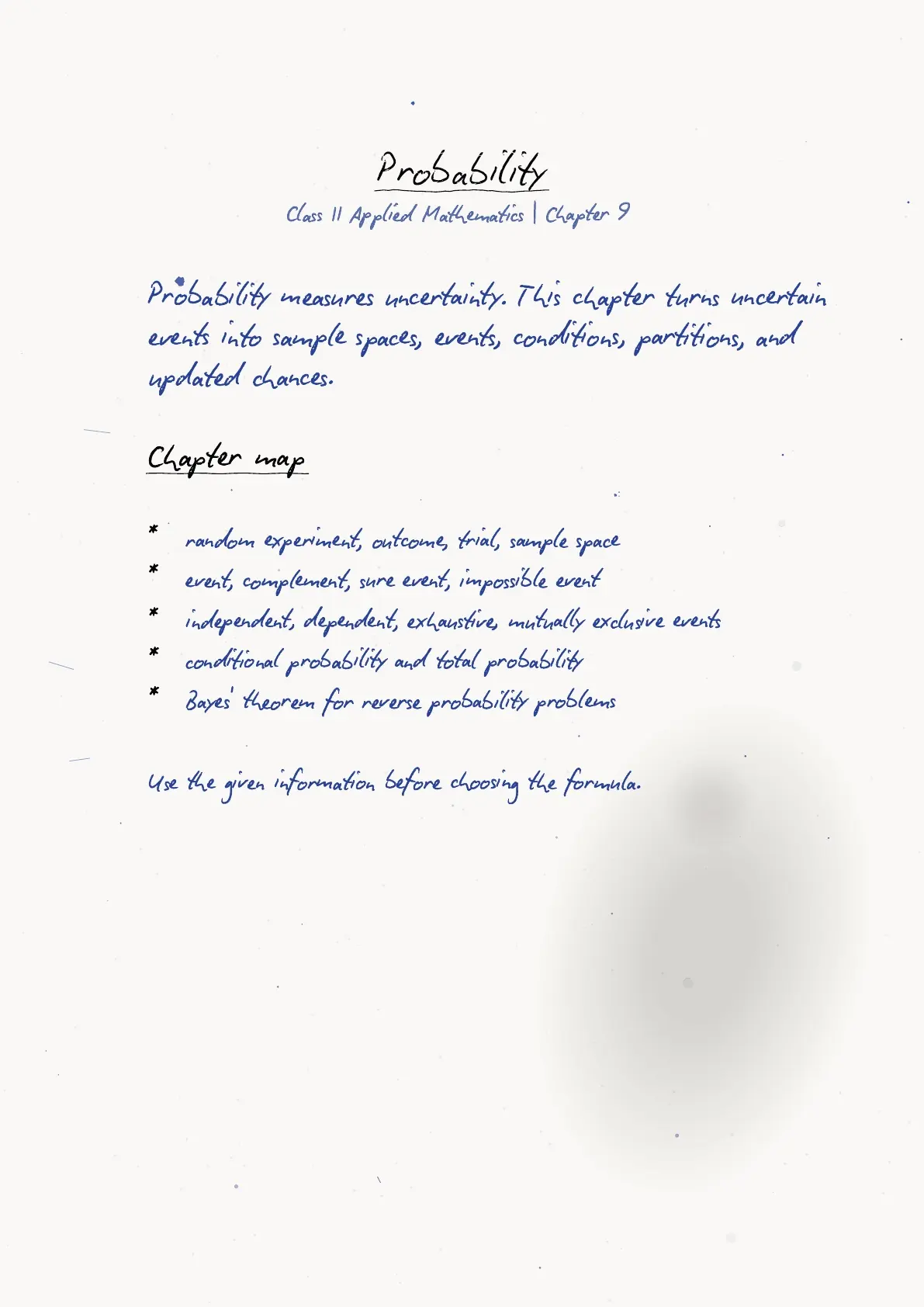
Probability starts with uncertain experiments and ends with reverse-probability questions. These notes keep the flow simple: write the sample space, mark the event, apply the given condition and then choose the right formula.
| Block | What students revise | Quick check |
|---|---|---|
| Sample space | All possible outcomes of a random experiment | Define the outcome first |
| Events | Subset of the sample space | Count favourable outcomes |
| Conditional probability | Chance of one event after another is known | Use the reduced sample space |
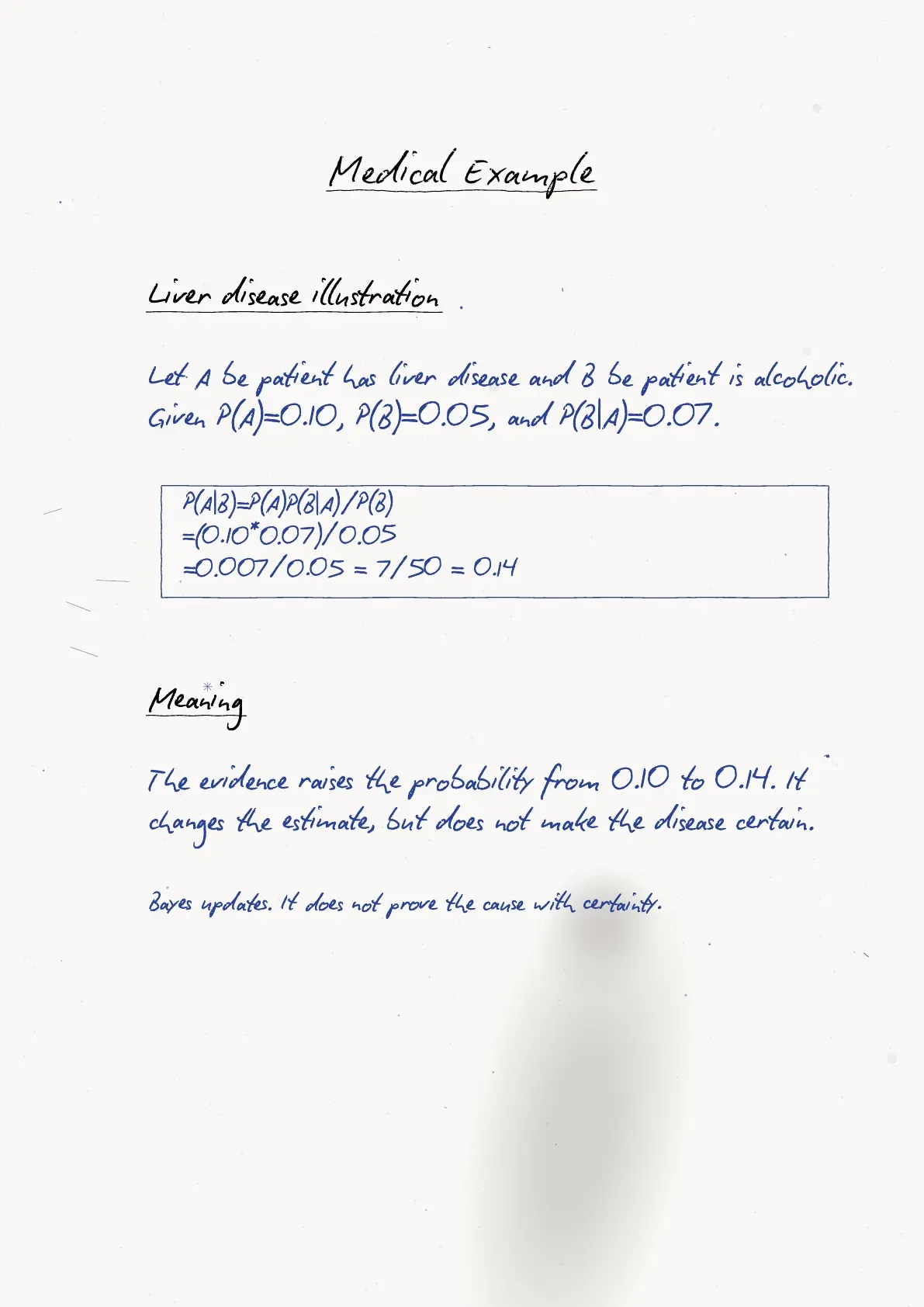
| Bayes theorem | Chance of a cause after evidence is known | Use branch weights |
Probability Bayes Theorem Video for Class 11
Source: Vedantu JEE on YouTube
Probability Sample Space and Event Basics
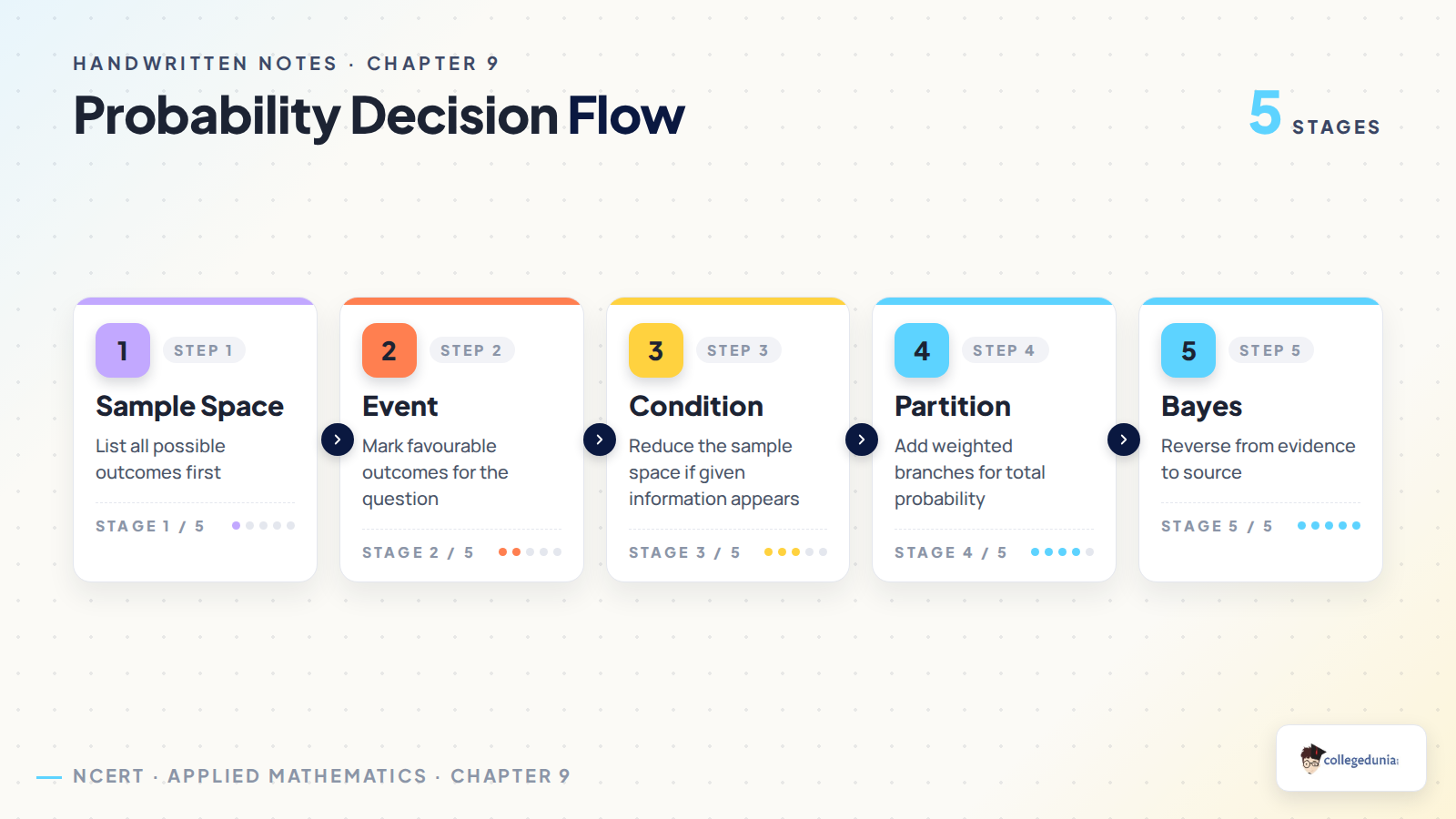
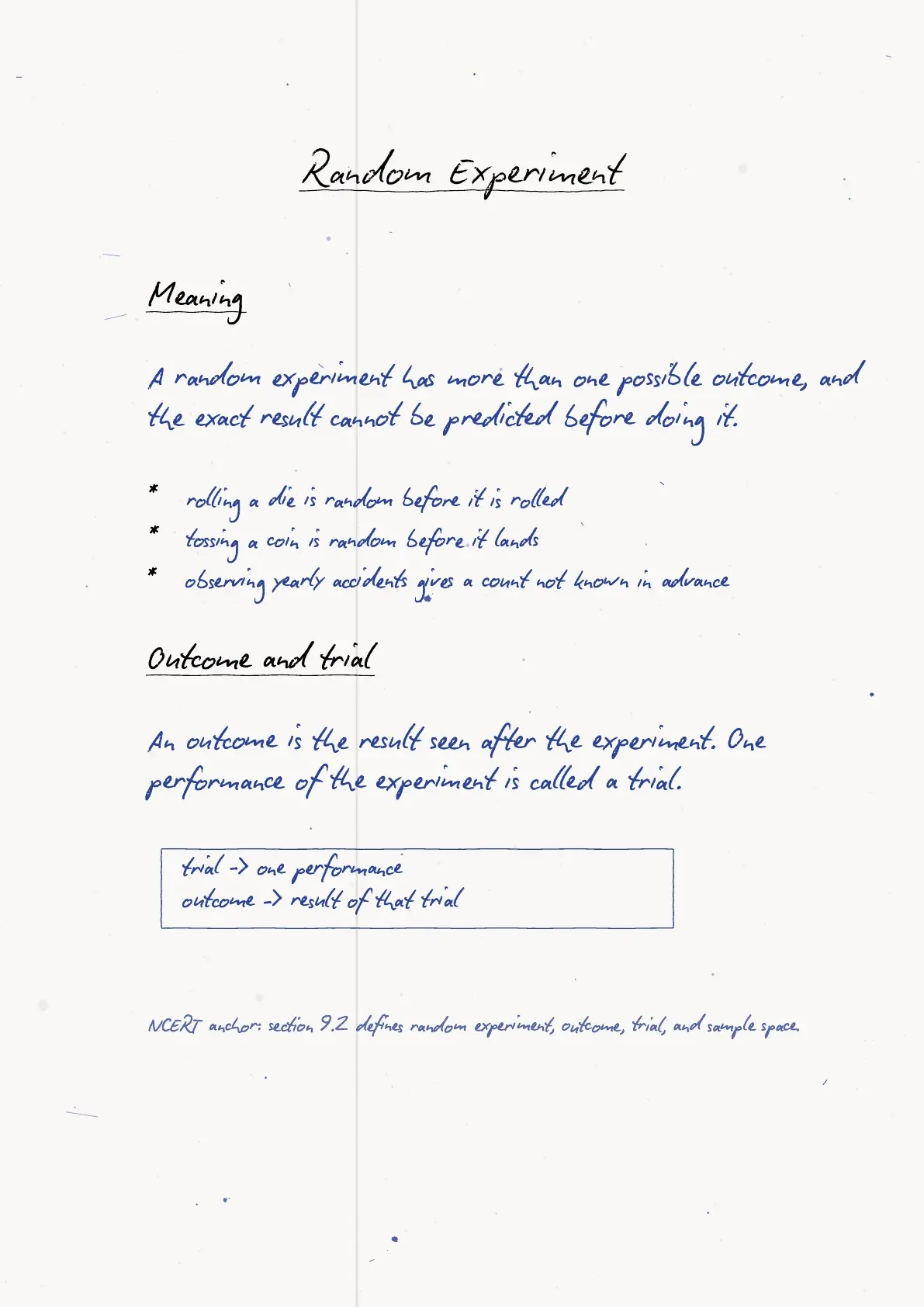
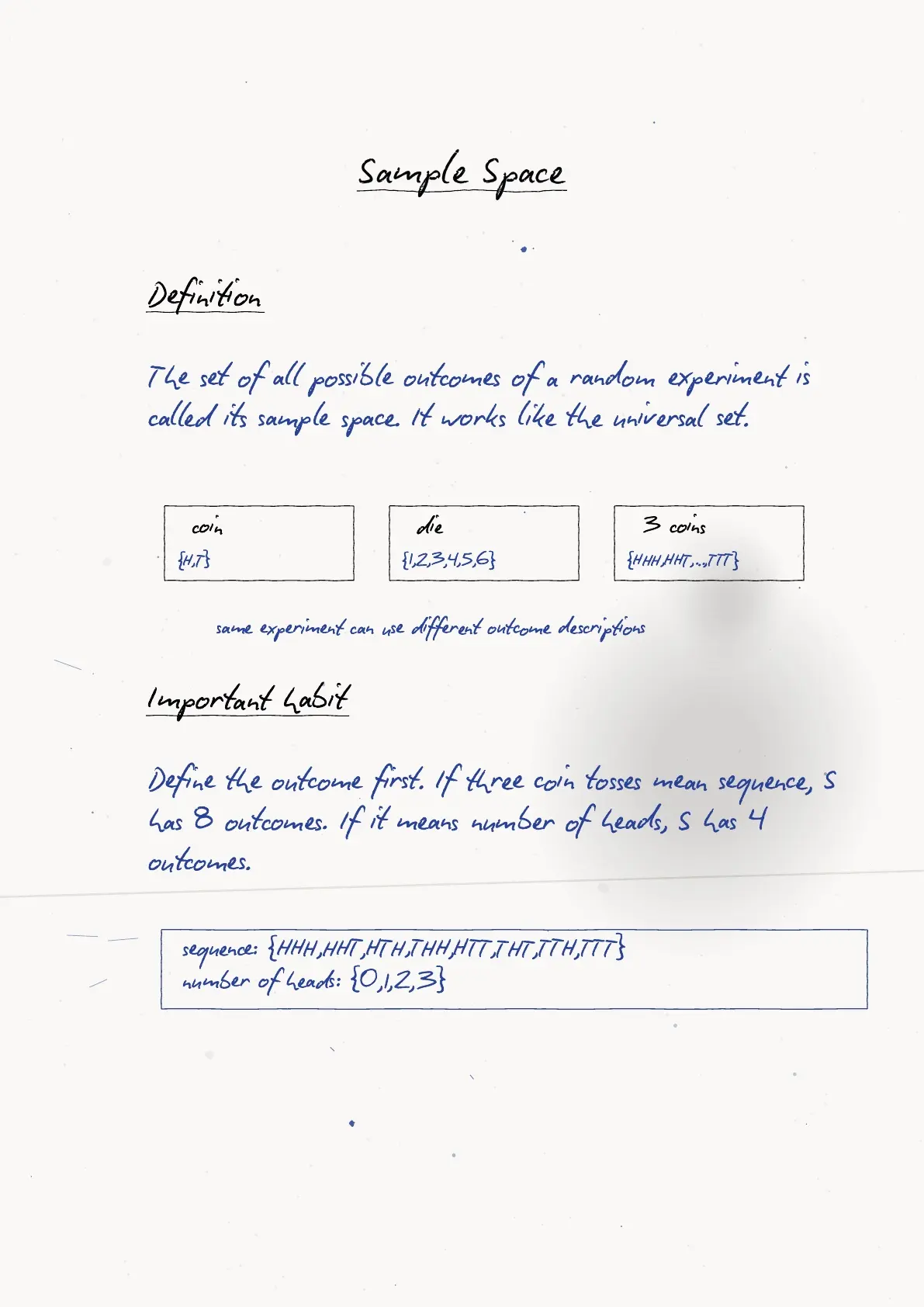
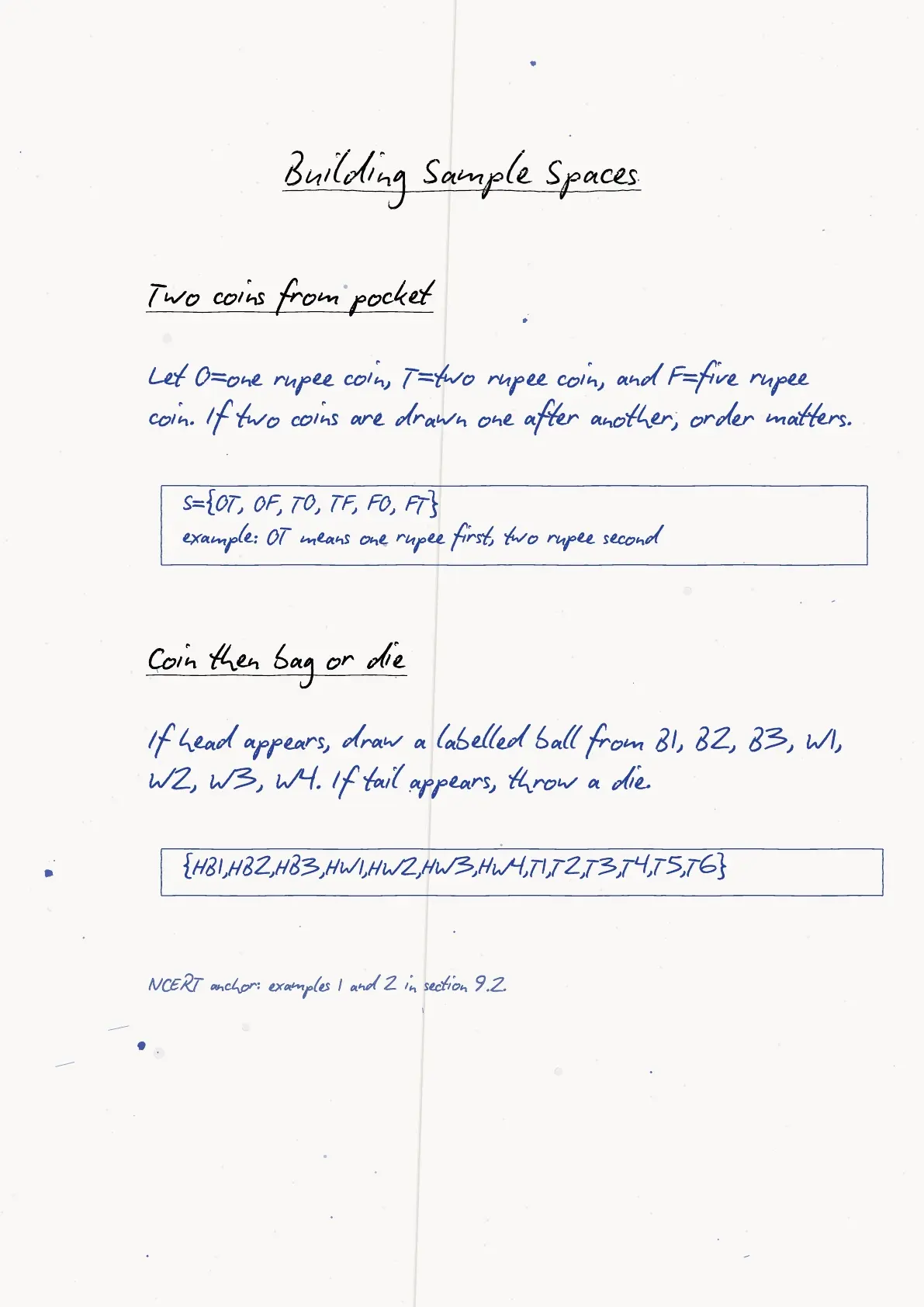
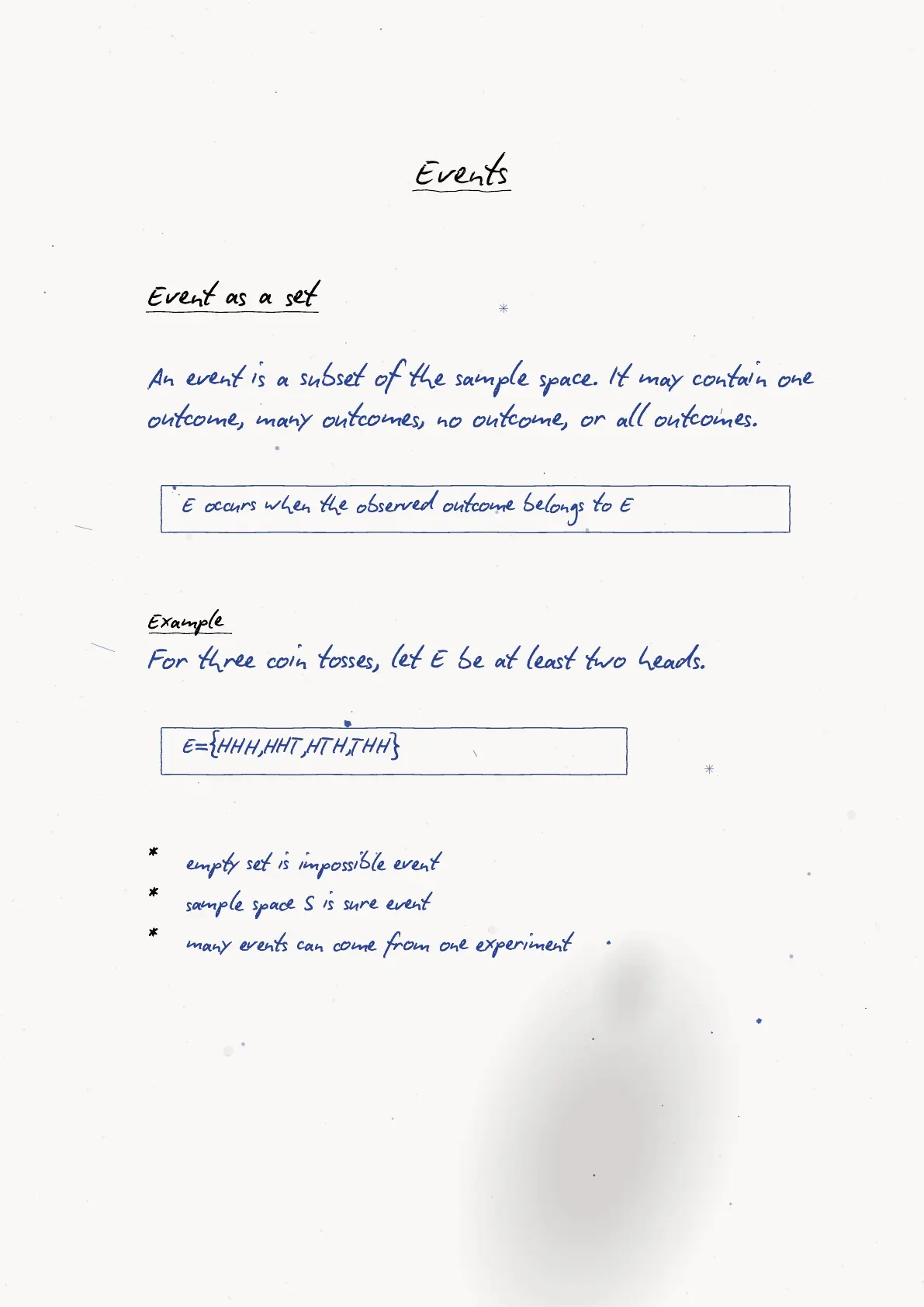
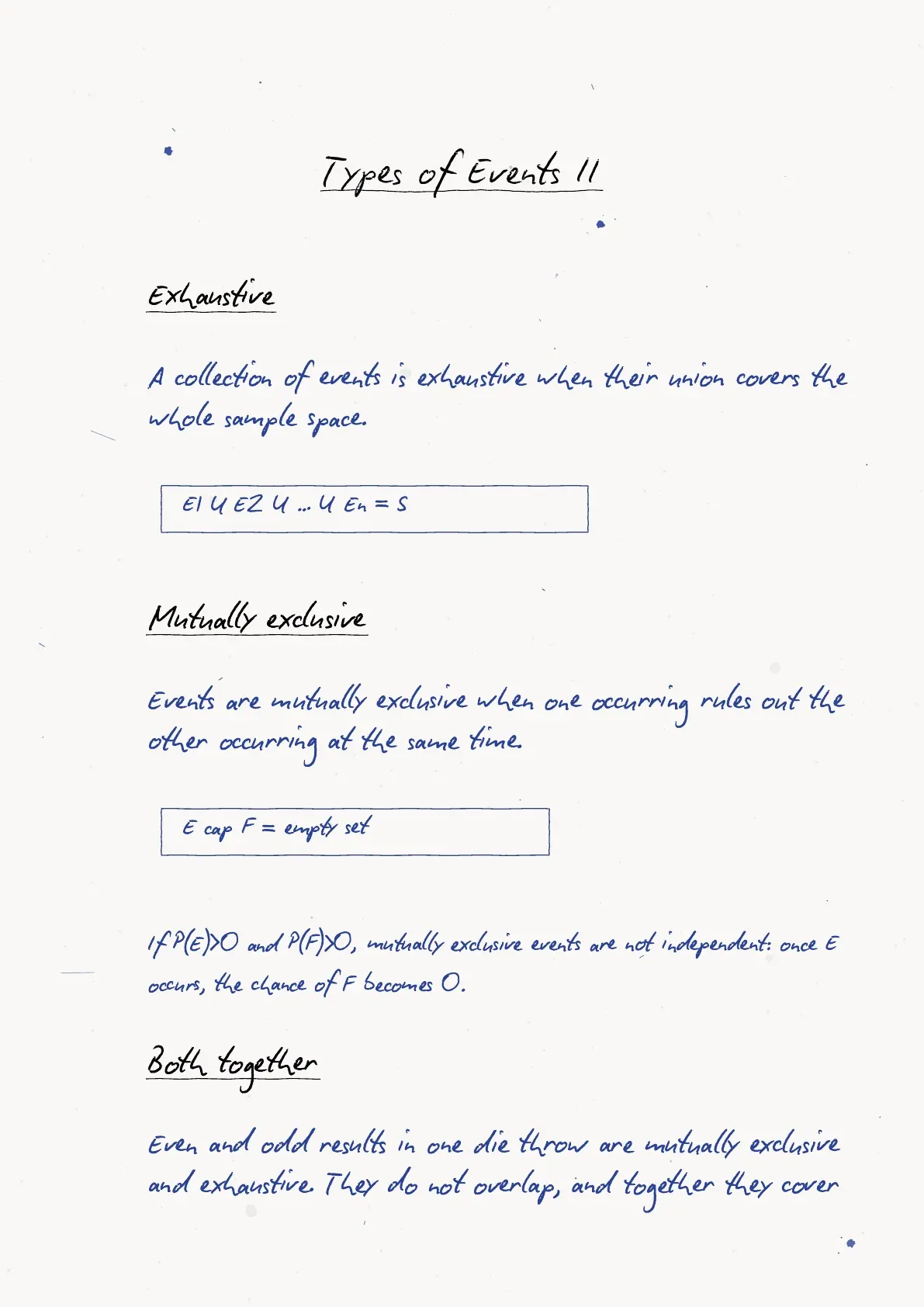
A random experiment has more than one possible result. The set of all possible results is the sample space. An event is any part of that sample space.
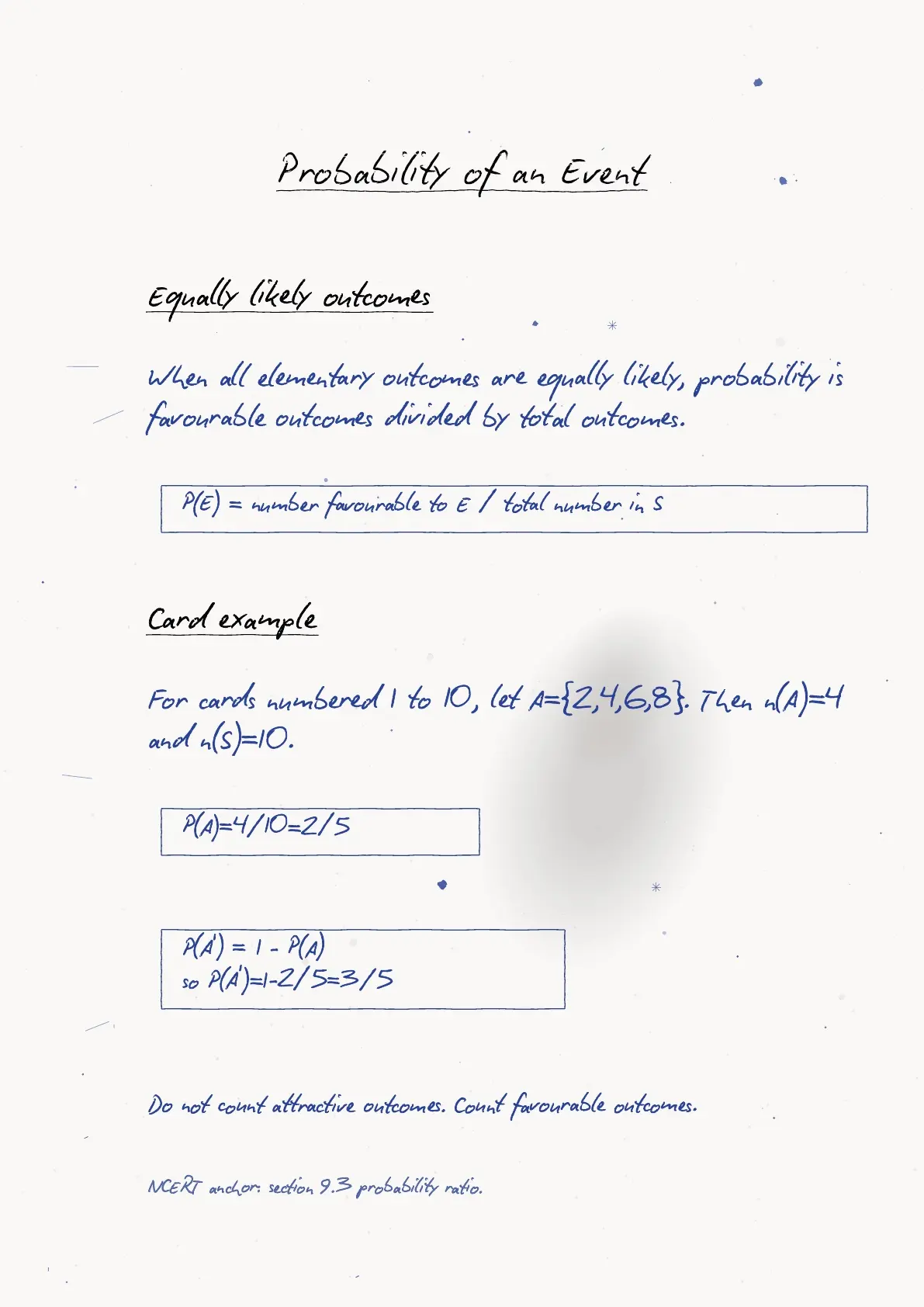
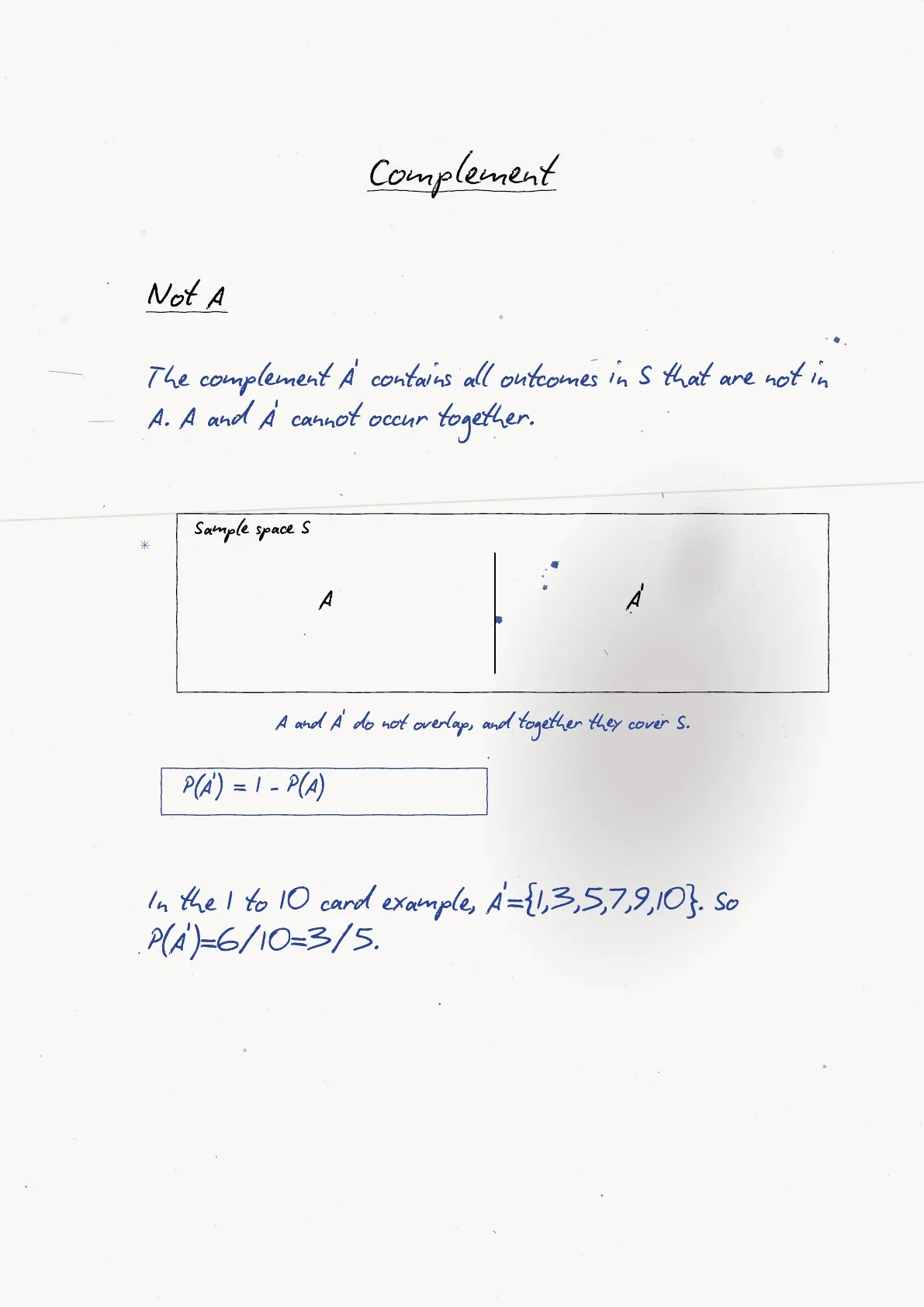
For equally likely outcomes, use P(E) = favourable outcomes divided by total outcomes. If A is an event, A prime means not A inside the same sample space.
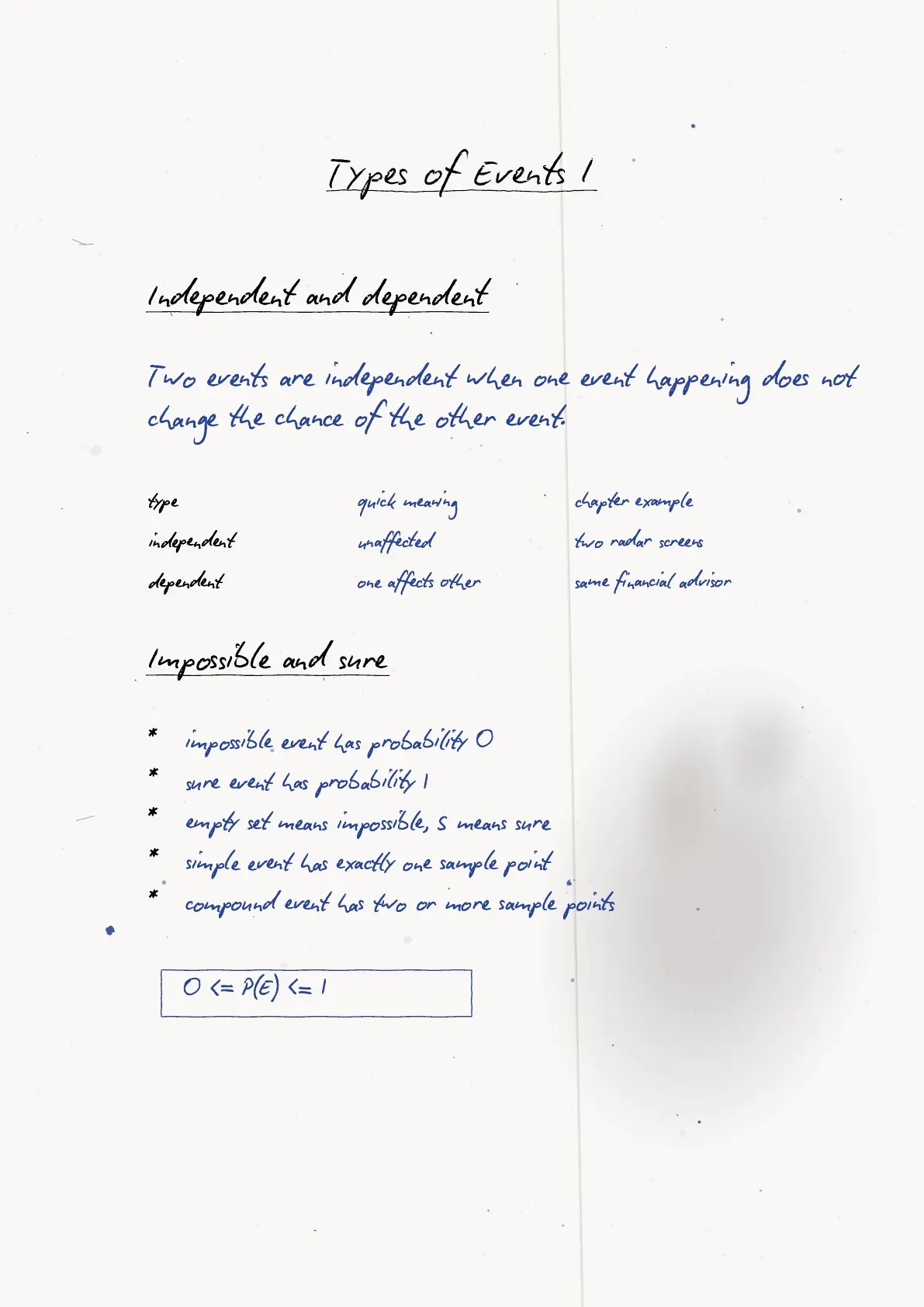
- Impossible event has probability 0.
- Sure event has probability 1.
- Mutually exclusive events do not occur together.
- Exhaustive events cover the full sample space.
Conditional Probability and Bayes Theorem in Probability
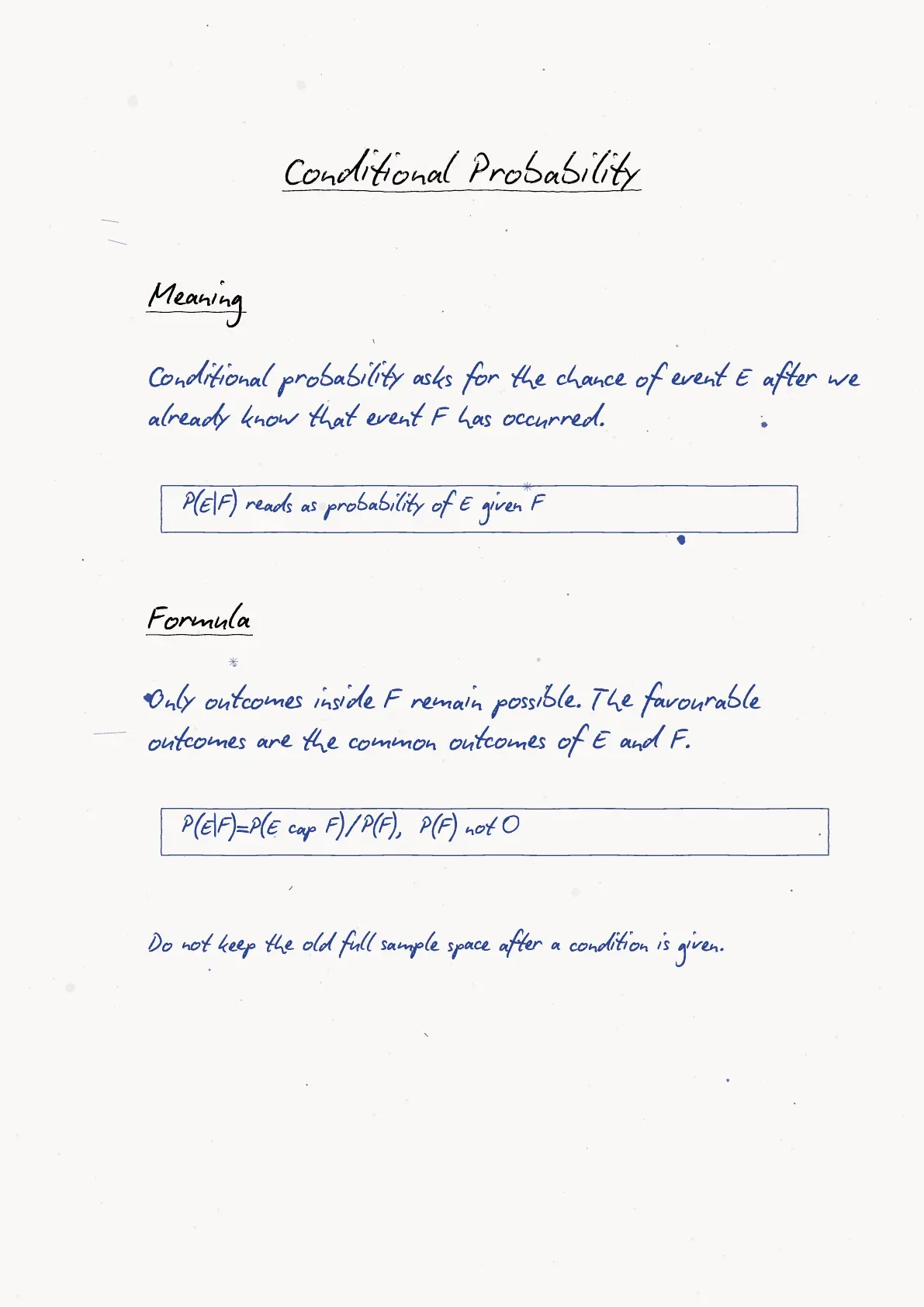
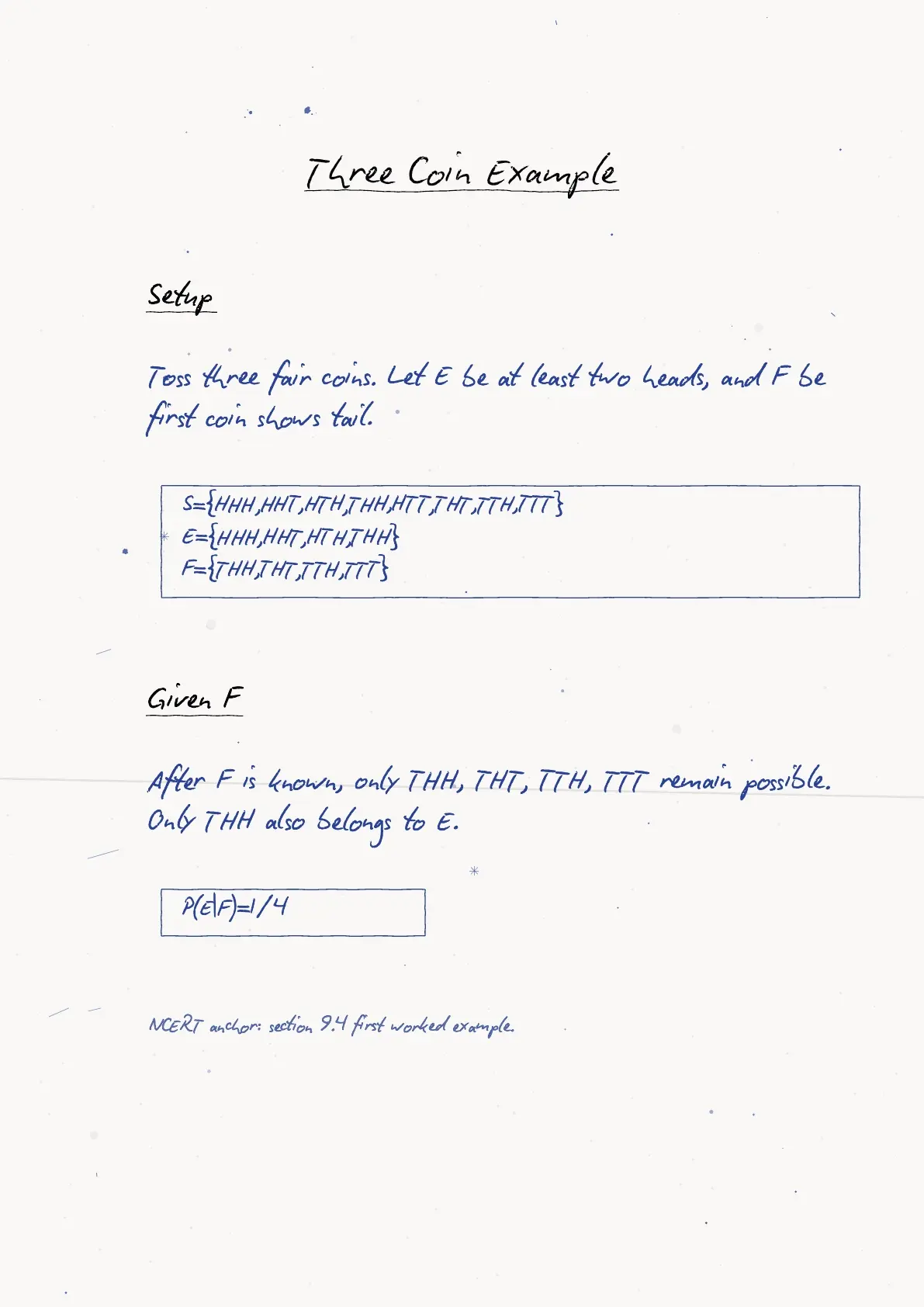
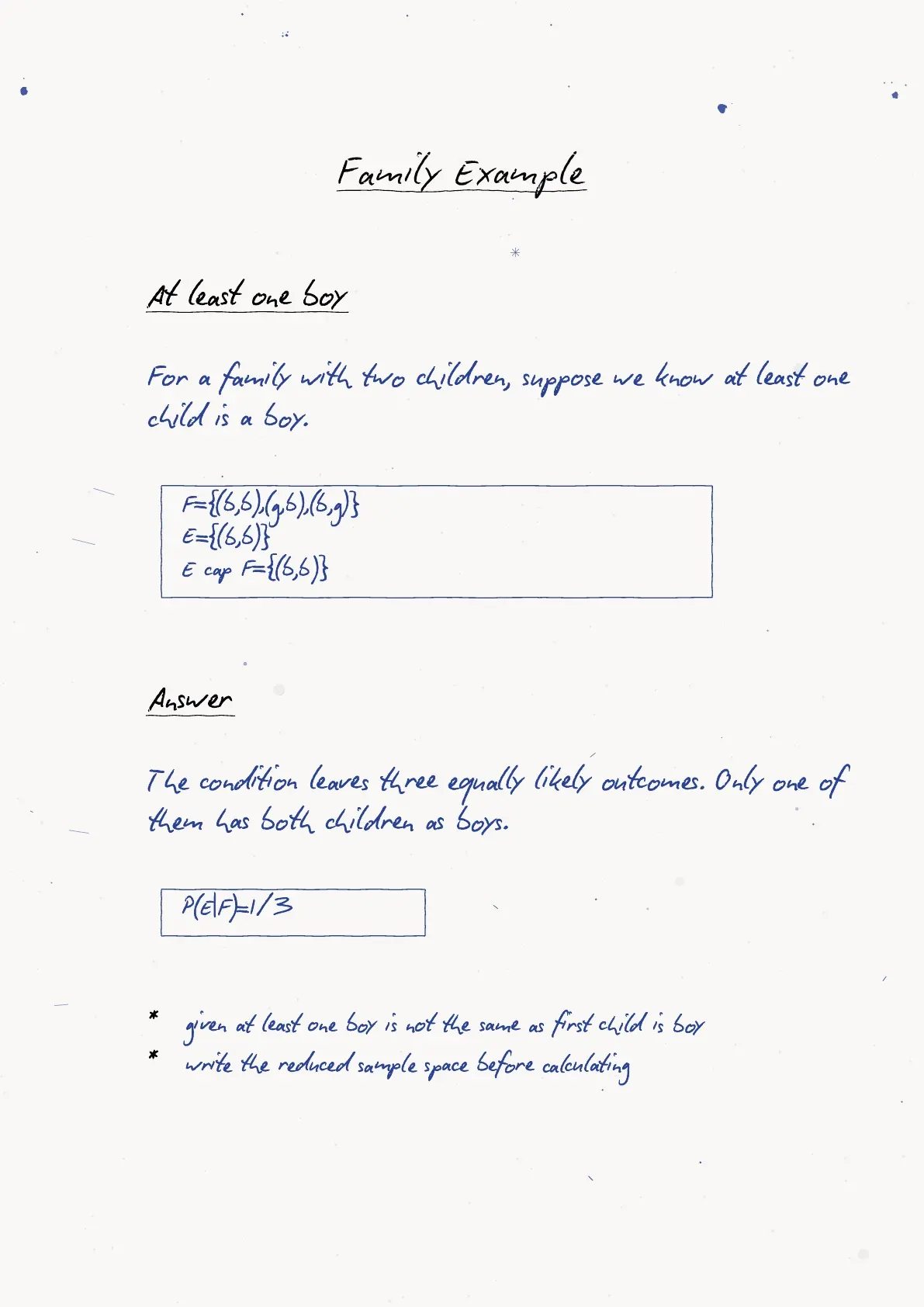
Conditional probability asks for P(E given F). Once F is known, only outcomes inside F remain possible. That is why the formula divides by P(F).
| Formula | Use it when | Meaning |
|---|---|---|
| P(E given F)=P(E and F)/P(F) | One event is already known | Reduce the sample space to F |
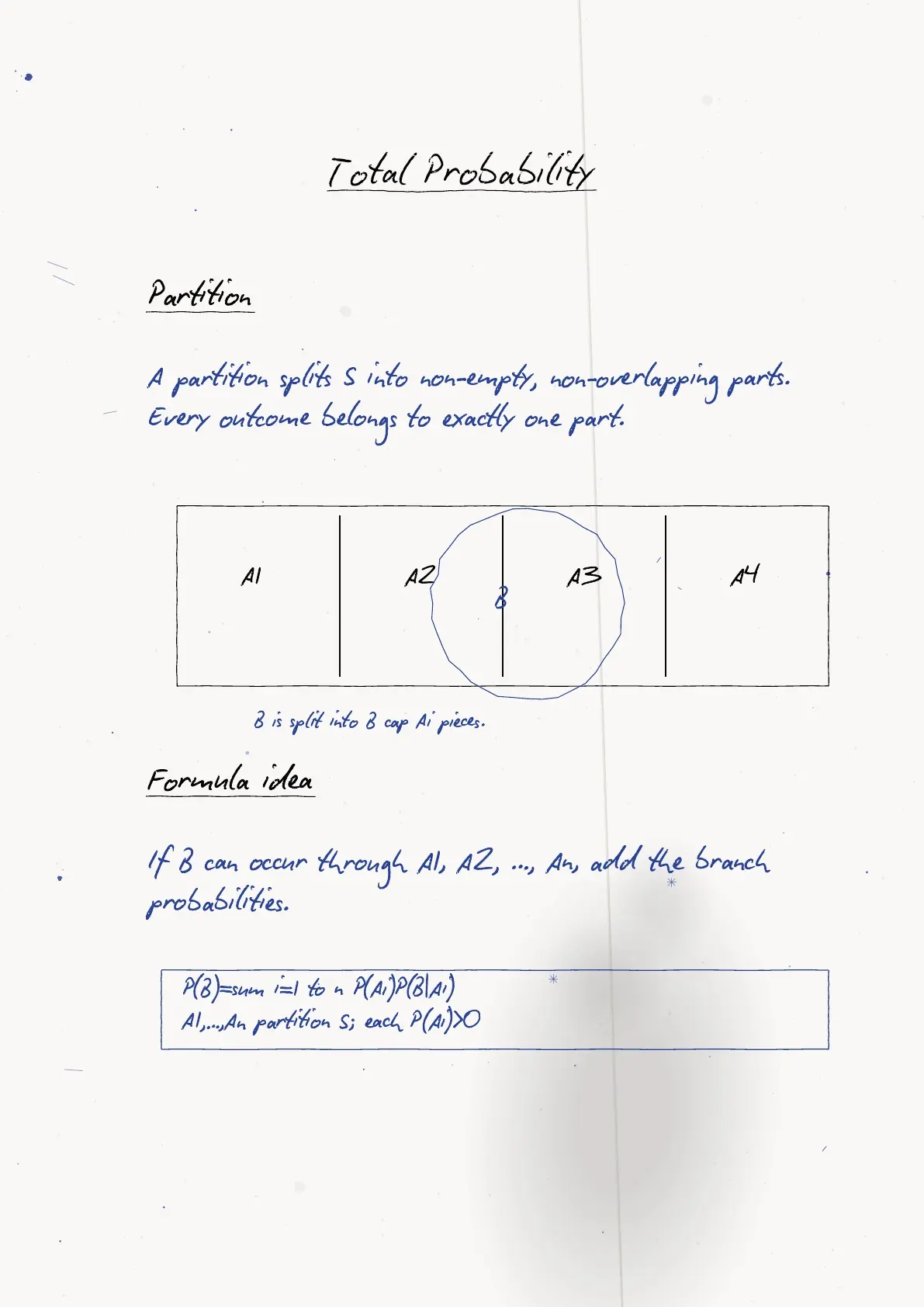
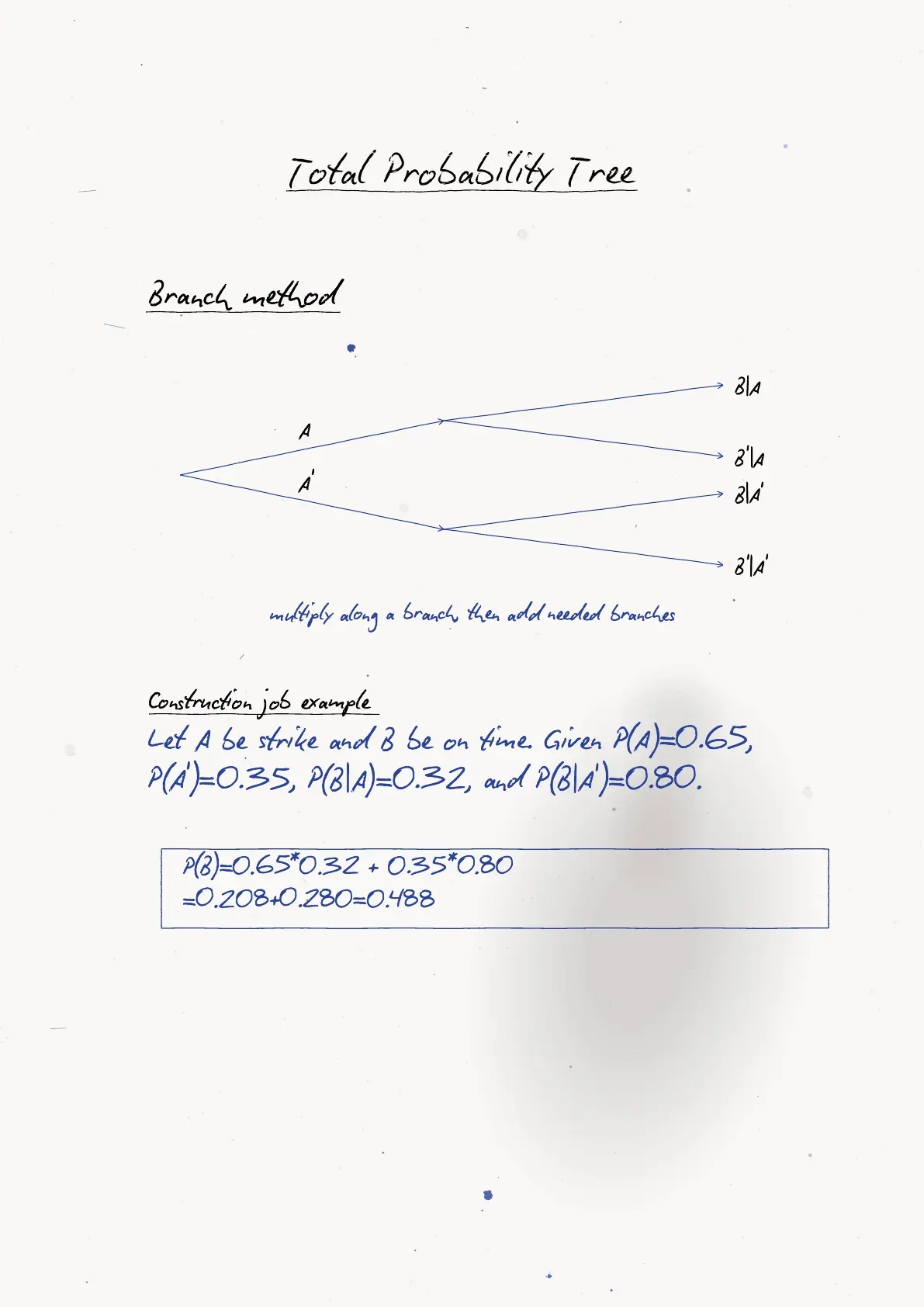
| P(B)=sum P(Ai)P(B given Ai) | B can happen through many causes | Add all weighted routes |
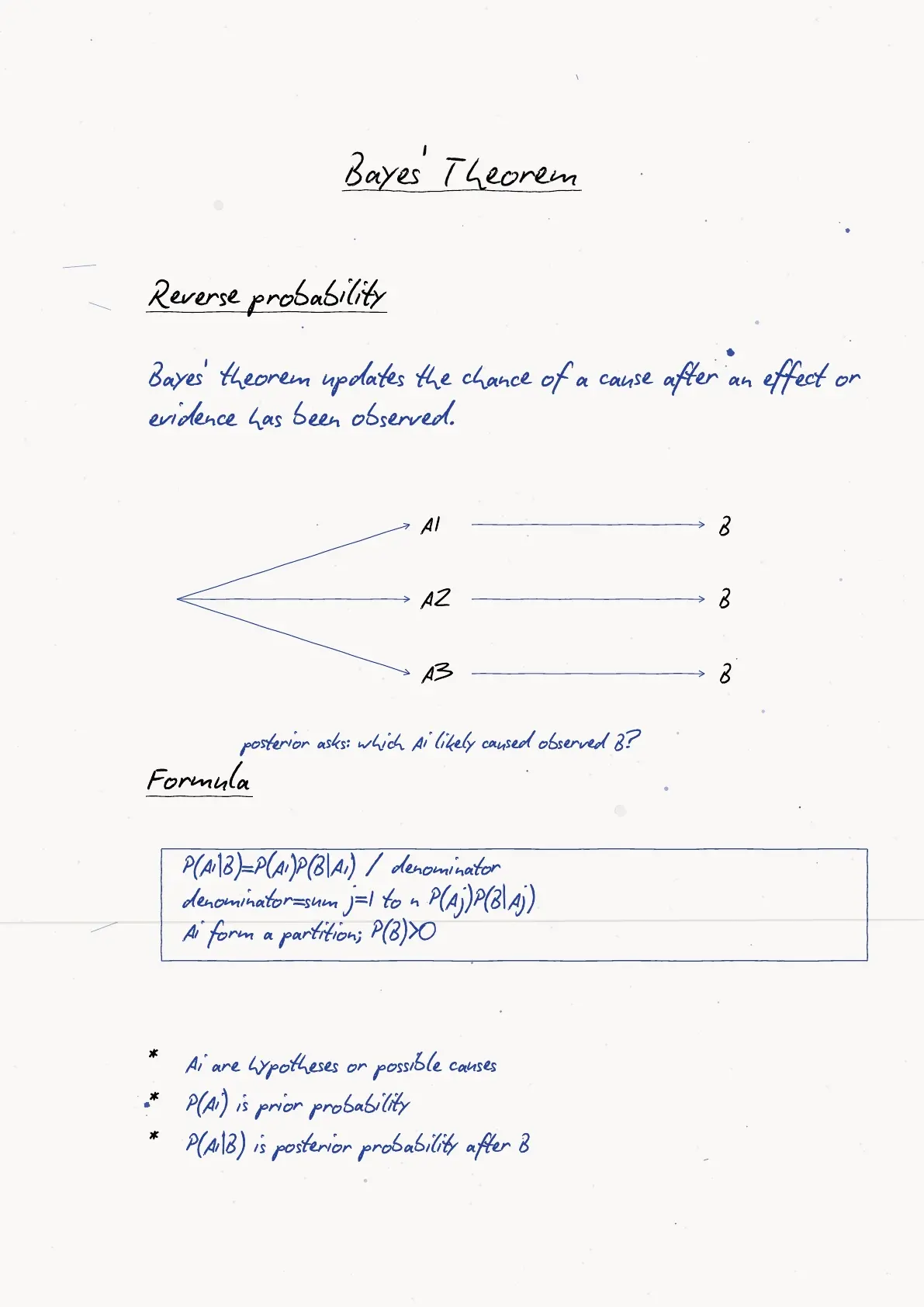
| P(Ai given B) | Evidence B is known | Find which cause is more likely |
Total Probability and Bayes Theorem Examples
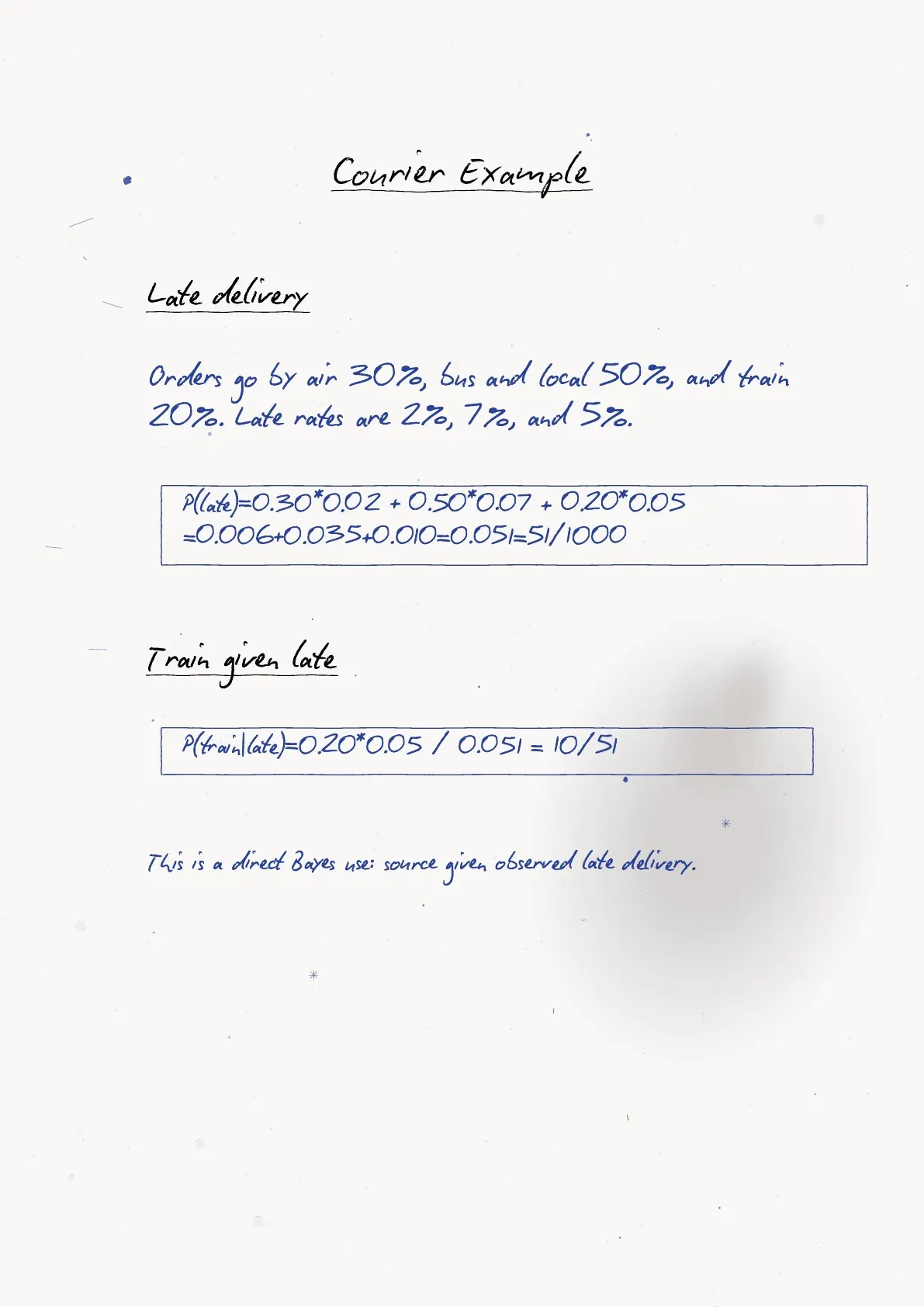
The total probability theorem works when events A1, A2, and A3 split the sample space. Each route gives one branch weight. Add the required route weights to get the final chance.
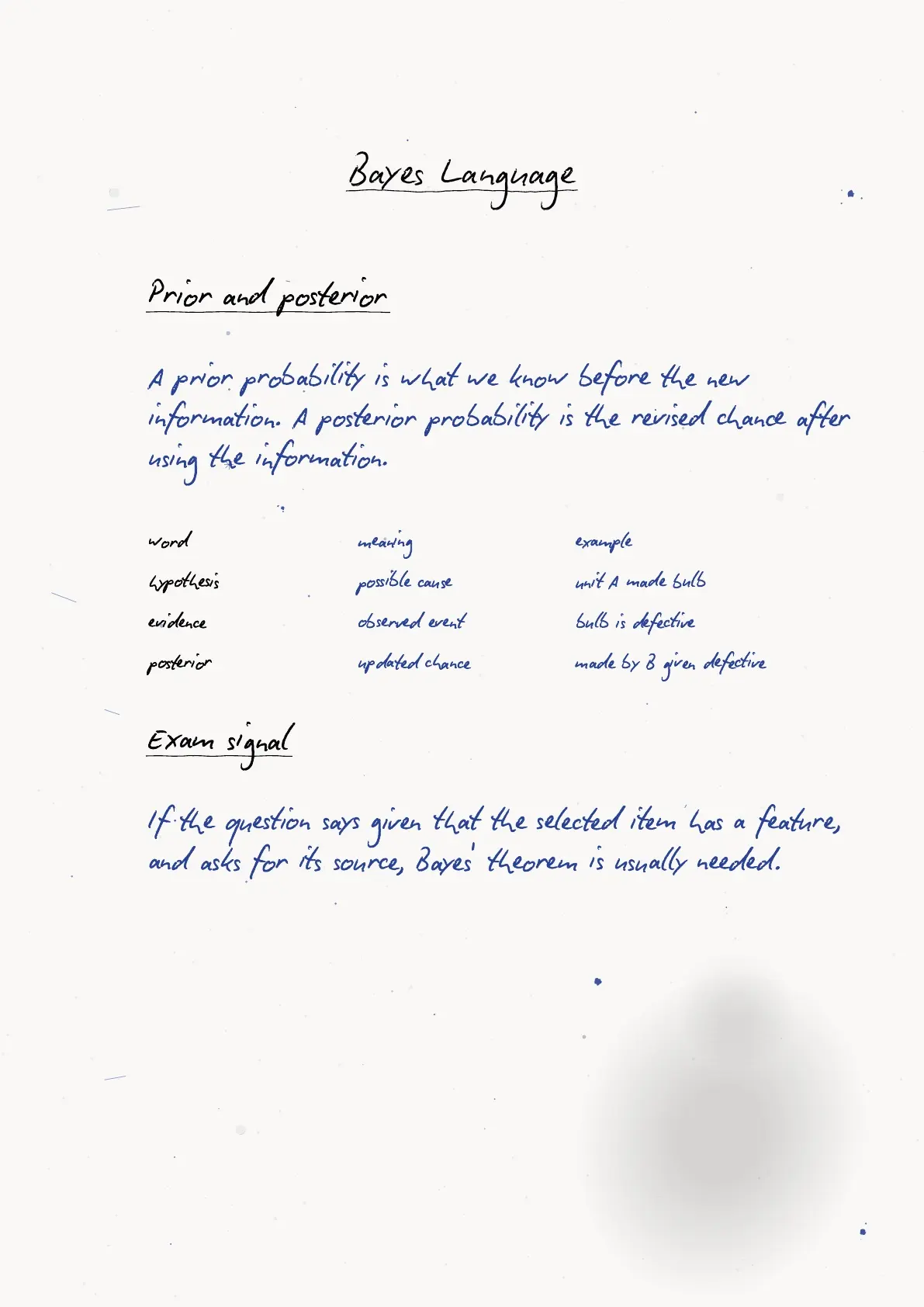
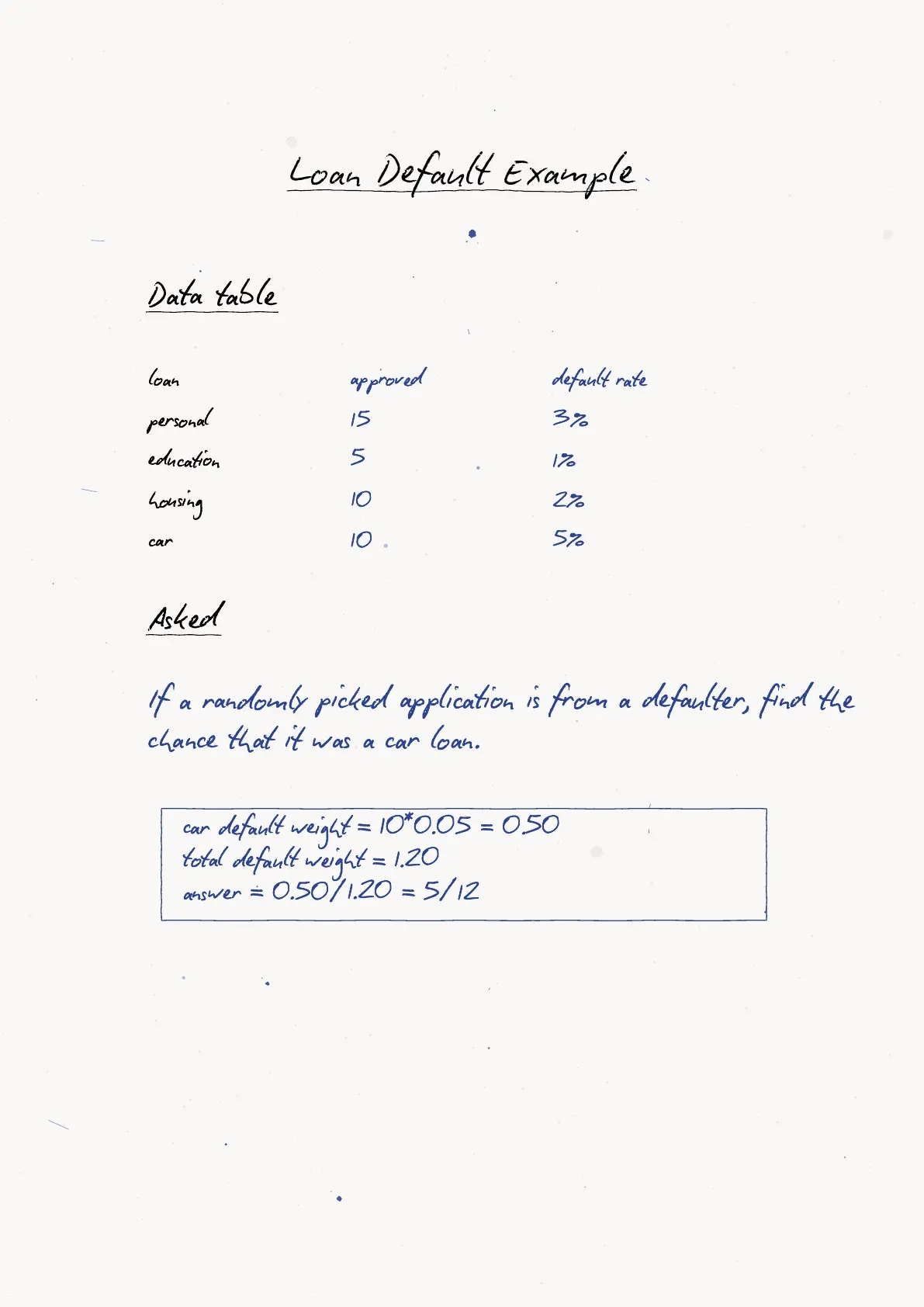
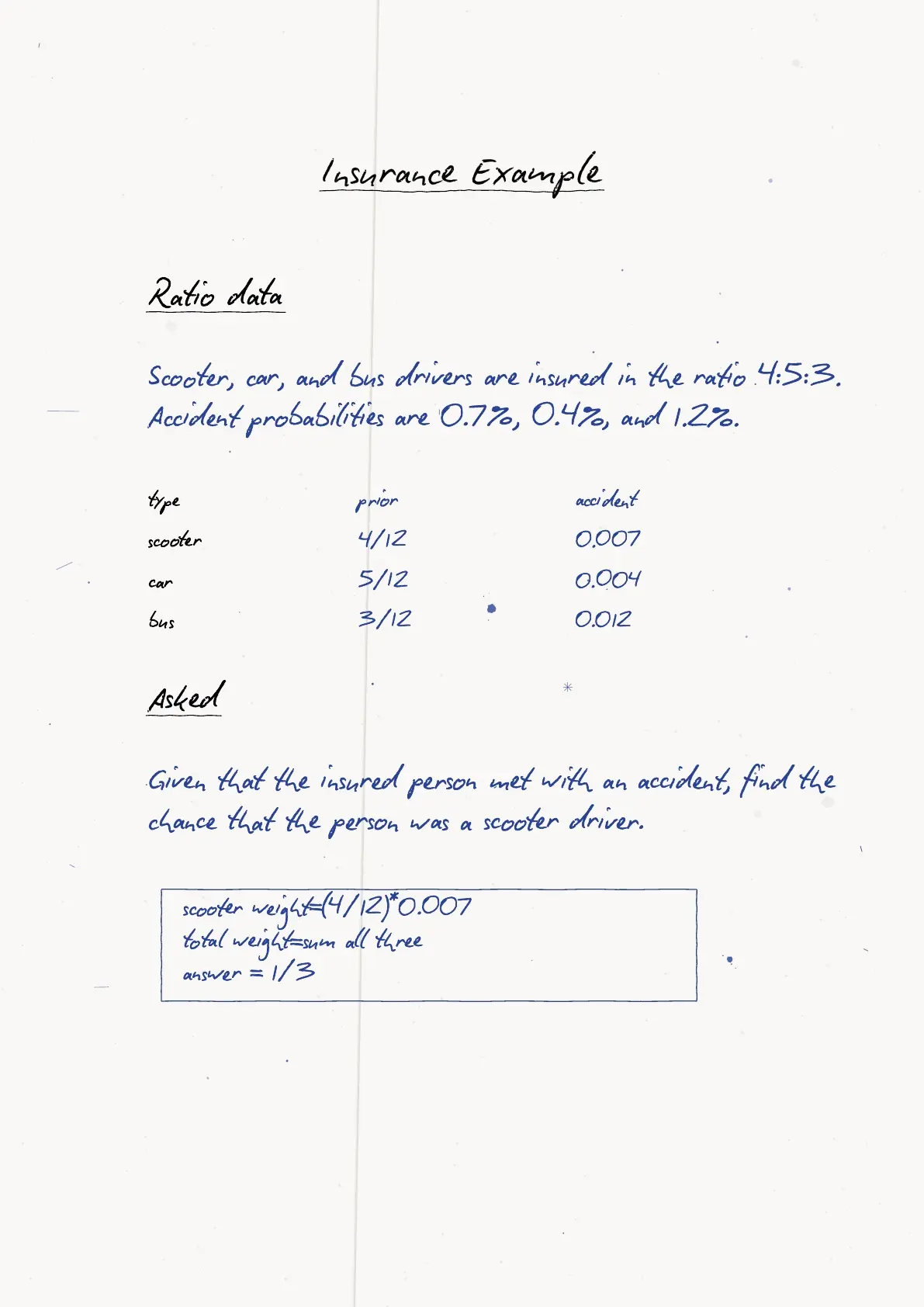
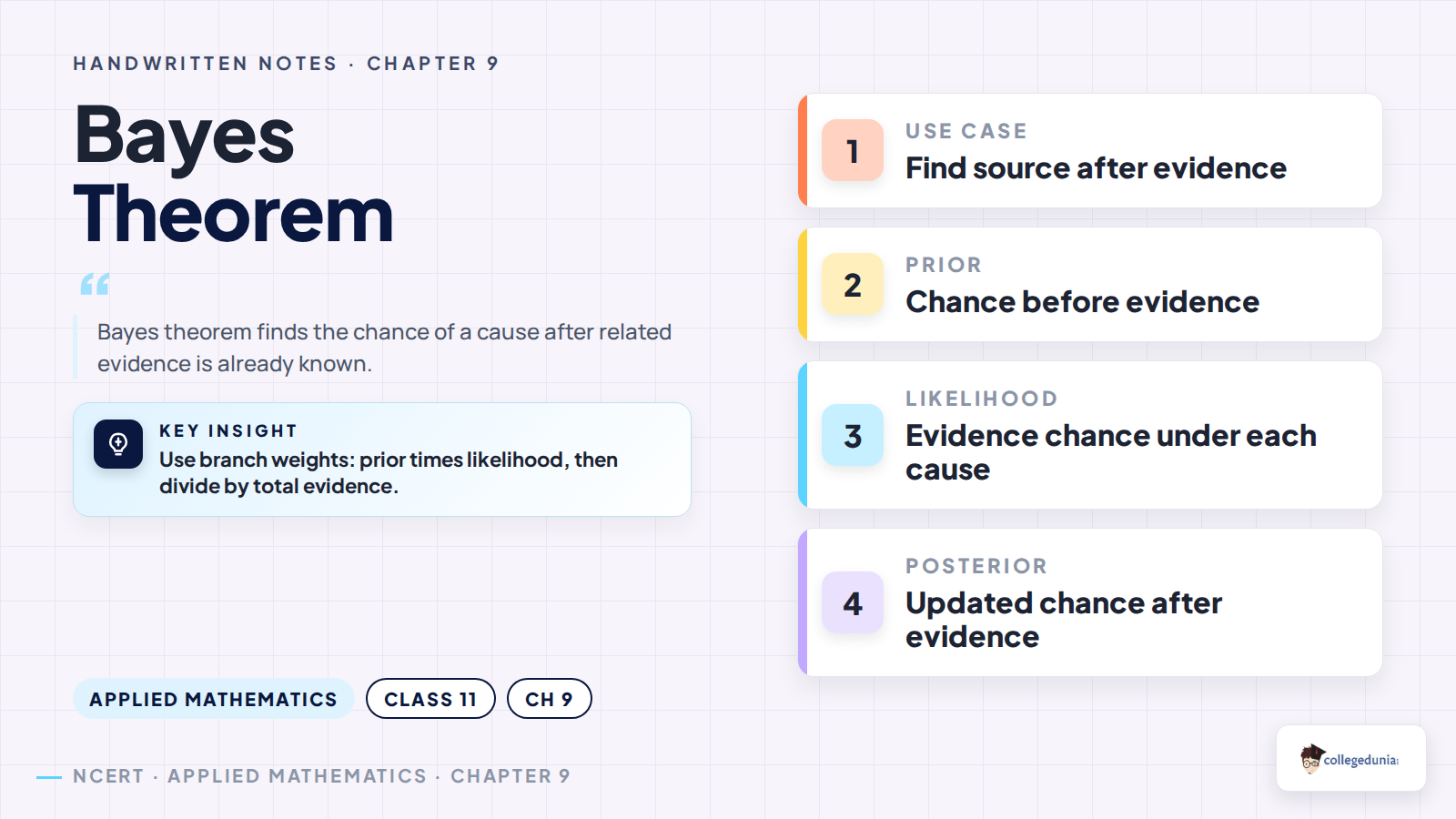
Bayes theorem reverses the question. If a defective bulb is found, the question may ask which unit made it. The answer is the needed branch weight divided by all defect branch weights.
- Loan-default example: car loan answer is 5/12.
- Courier example: late delivery answer is 51/1000.
- Train given late delivery answer is 10/51.
- Insurance example: scooter driver answer is 1/3.
How to Use Probability Handwritten Notes Before Tests
Use the Probability handwritten notes in three short passes. First revise definitions. Then solve one route-table example. Finally, write Bayes theorem in words before writing the formula.
Quick tip: Do not use Bayes theorem until evidence is already given. If the question only asks for total chance, total probability is enough.
- Write S before counting any event.
- Circle the given condition in the question.
- Use a tree when the data has causes and evidence.
- Keep all percentages in decimal form before substitution.
Related Resources for Probability Class 11
| Resource | Use it for | Link |
|---|---|---|
| NCERT Book PDF | Official theory and examples | Probability Class 11 NCERT Book PDF |
| NCERT Notes | Typed explanation and formula tables | Probability Class 11 Notes |
| NCERT Solutions | Step-by-step answers for exercises | Probability Class 11 NCERT Solutions |
| Formula Sheet | Formula-only revision before practice | Probability Class 11 Formula Sheet |
Applied Mathematics Handwritten Notes for All Chapters
| Chapter | Handwritten Notes |
|---|---|
| Chapter 1 | Numbers and Quantification Class 11 Handwritten Notes |
| Chapter 4 | Relations Class 11 Handwritten Notes |
| Chapter 5 | Sequences and Series Class 11 Handwritten Notes |
| Chapter 6 | Permutations and Combinations Class 11 Handwritten Notes |
| Chapter 8 | Calculus Class 11 Handwritten Notes |
| Chapter 9 | Probability Class 11 Handwritten Notes |
Probability Class 11 Applied Mathematics Handwritten Notes FAQs
Ques. What is covered in Class 11 Applied Mathematics Chapter 9 Probability handwritten notes?
Ans. The handwritten notes cover random experiments, sample space, events, event types, conditional probability, total probability, Bayes theorem and NCERT-style examples.
Ques. What is the formula for conditional probability?
Ans. Conditional probability is P(E given F)=P(E and F)/P(F), where P(F) is not zero. It means the event F is already known.
Ques. How is Bayes theorem used in Probability?
Ans. Bayes theorem is used when evidence is known and the question asks for the likely cause. It compares branch weights using prior chance and likelihood.
Ques. Are these Probability handwritten notes aligned with the 2026-27 syllabus?
Ans. Yes. The notes follow the current 2026-27 Class 11 Applied Mathematics chapter scope for Probability.



Comments