




The Control and Coordination Class 10 Science handwritten notes are scanned, boxed and built for fast last-minute revision, fully matched to the 2026-27 CBSE syllabus. They cover the nervous system, the neuron, reflex action, the human brain, plant movements and hormones, and the human endocrine system, all in clear ruled-page form with labelled diagrams.
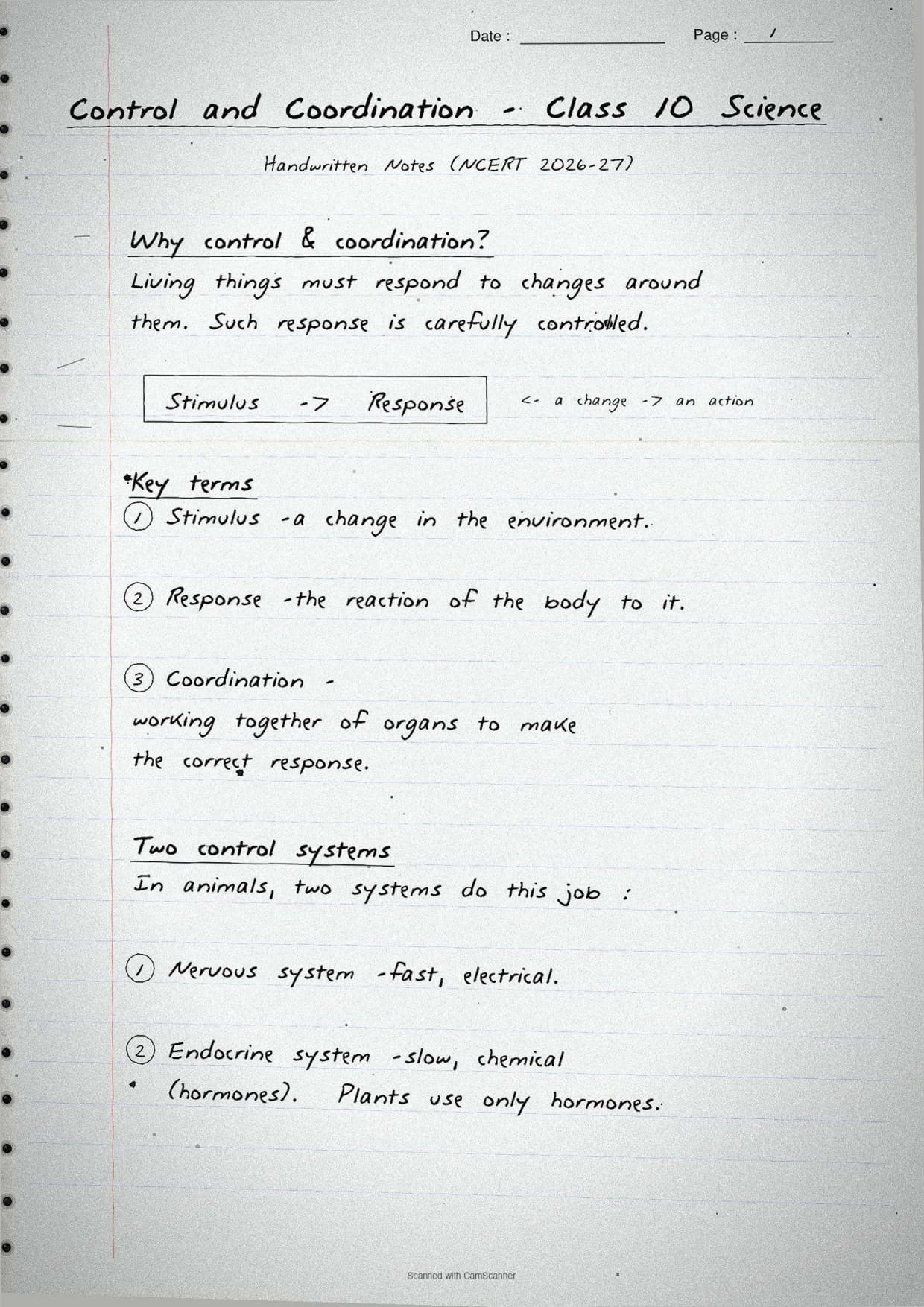
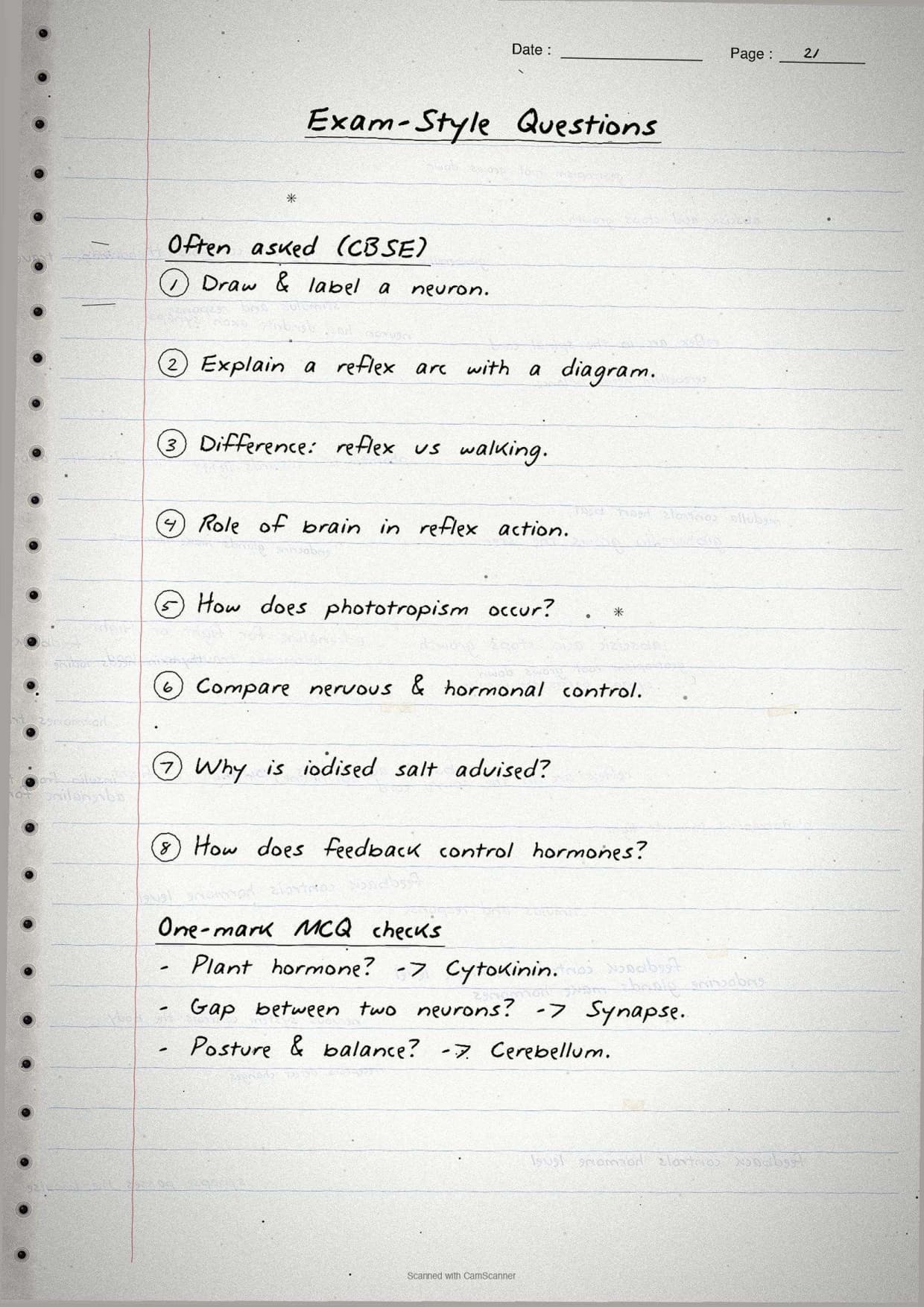
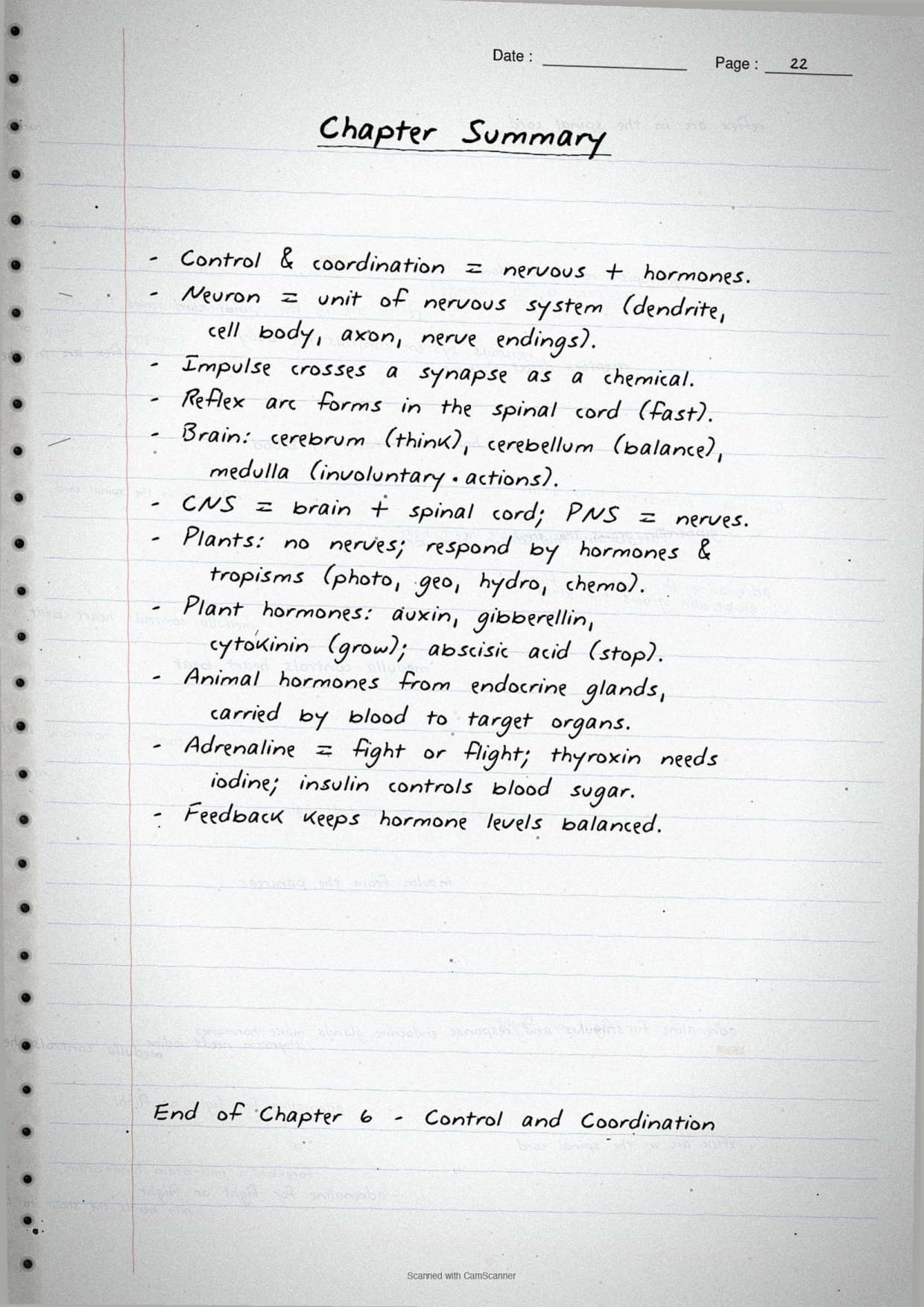
- CBSE Weightage: 6 to 8 marks from the World of the Living unit, often as 3-mark and 5-mark diagram questions on the neuron, reflex arc and human brain.
- Boxed definitions and a labelled diagram for every structure, hormone and pathway the board paper asks about.
- Pairs with the NCERT Solutions, Notes and Book PDF linked lower on this page.
These Control and Coordination handwritten notes are prepared from the official NCERT Science textbook and matched to the 2026-27 CBSE syllabus.
Student Feedback: In a Collegedunia poll of 11,400 Class 10 Science students before the 2026 boards, 83% of students said the labelled neuron and reflex arc diagrams were the fastest way to revise this chapter. Most students copied the hand-drawn diagrams straight onto practice answer sheets.
Source: 2026-27 Class 10 Science student poll. Sample of 11,400 students from CBSE schools across 16 states.
Solved by Collegedunia: Every diagram and definition in these Control and Coordination handwritten notes is checked by Collegedunia's Class 10 Science team against the latest 2026-27 NCERT textbook, so what you revise matches exactly what the CBSE board paper expects.
What These Control and Coordination Handwritten Notes Include
These Control and Coordination handwritten notes condense the chapter into 22 scanned pages of ruled paper, every diagram hand-drawn and every key term underlined, ideal for a fast recap before the board exam. They are built around the threads the CBSE paper tests:
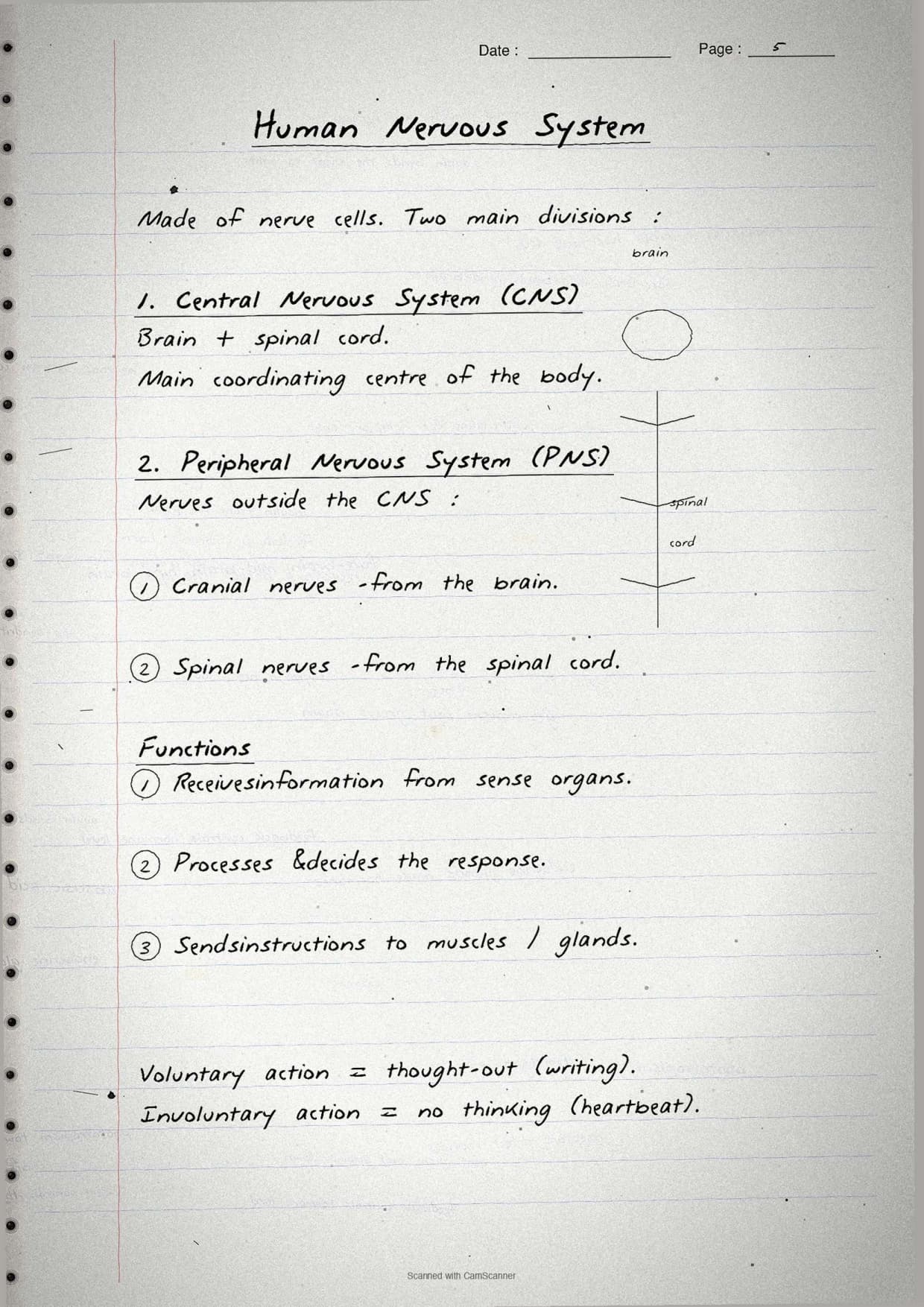
- The nervous system: the structure of a neuron, how a nerve impulse travels, and the synapse.
- Reflex action and the brain: the reflex arc, the human brain and its parts, and the spinal cord.
- Coordination by chemicals: plant movements and hormones, plus the human endocrine glands and their hormones.
Control and Coordination Class 10 Science Video Lecture
Source: Magnet Brains on YouTube
The Nervous System and the Neuron: The First Pages
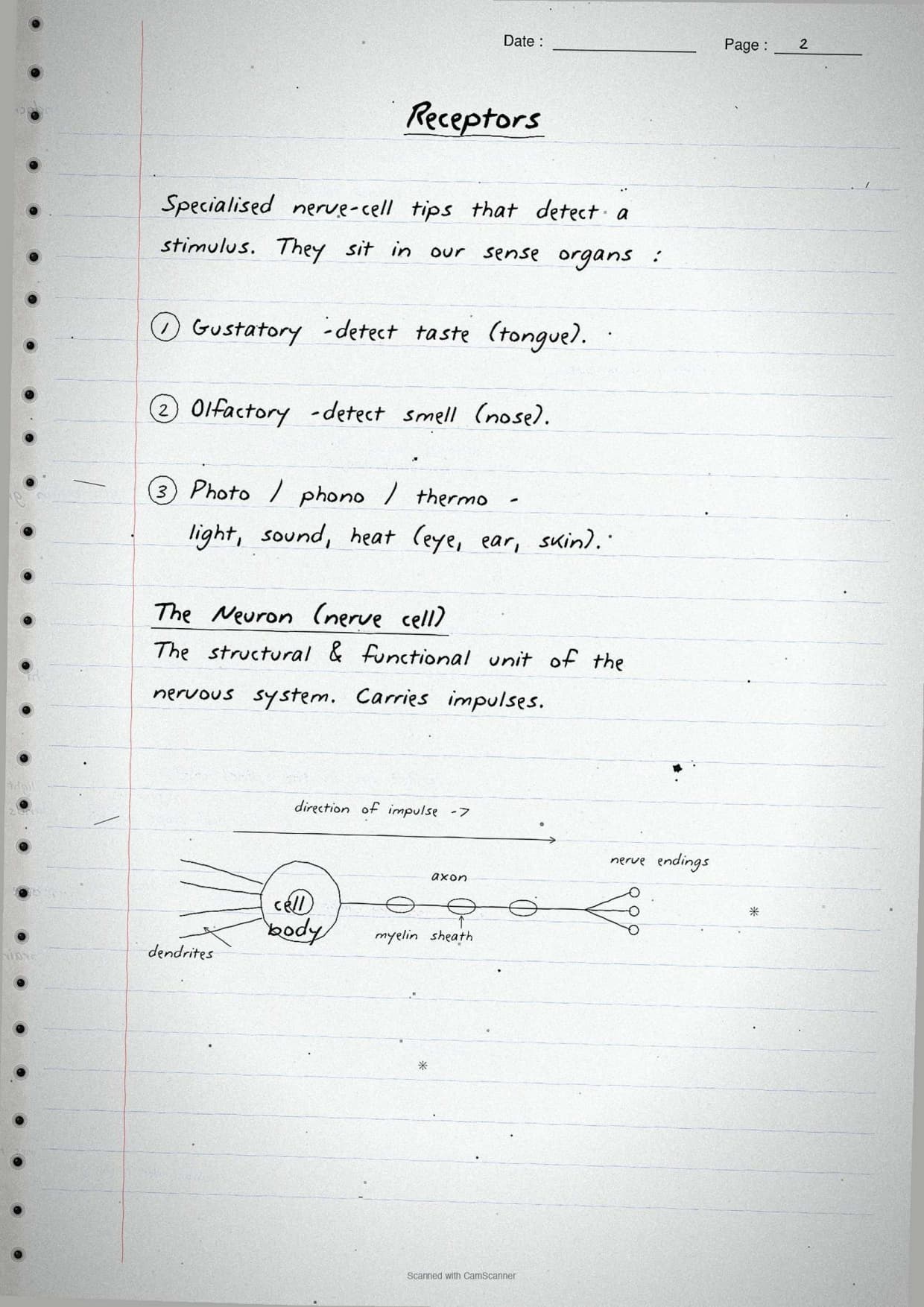
The opening pages settle the basic board question: how the body senses a change and responds. Control and coordination is the way an organism senses changes and reacts usefully. The neuron is the working unit; its parts, in the order an impulse passes through them:
- Dendrite: the branched end that picks up the stimulus and starts the impulse.
- Cell body and axon: the impulse travels through the cell body and along the long axon as an electrical signal.
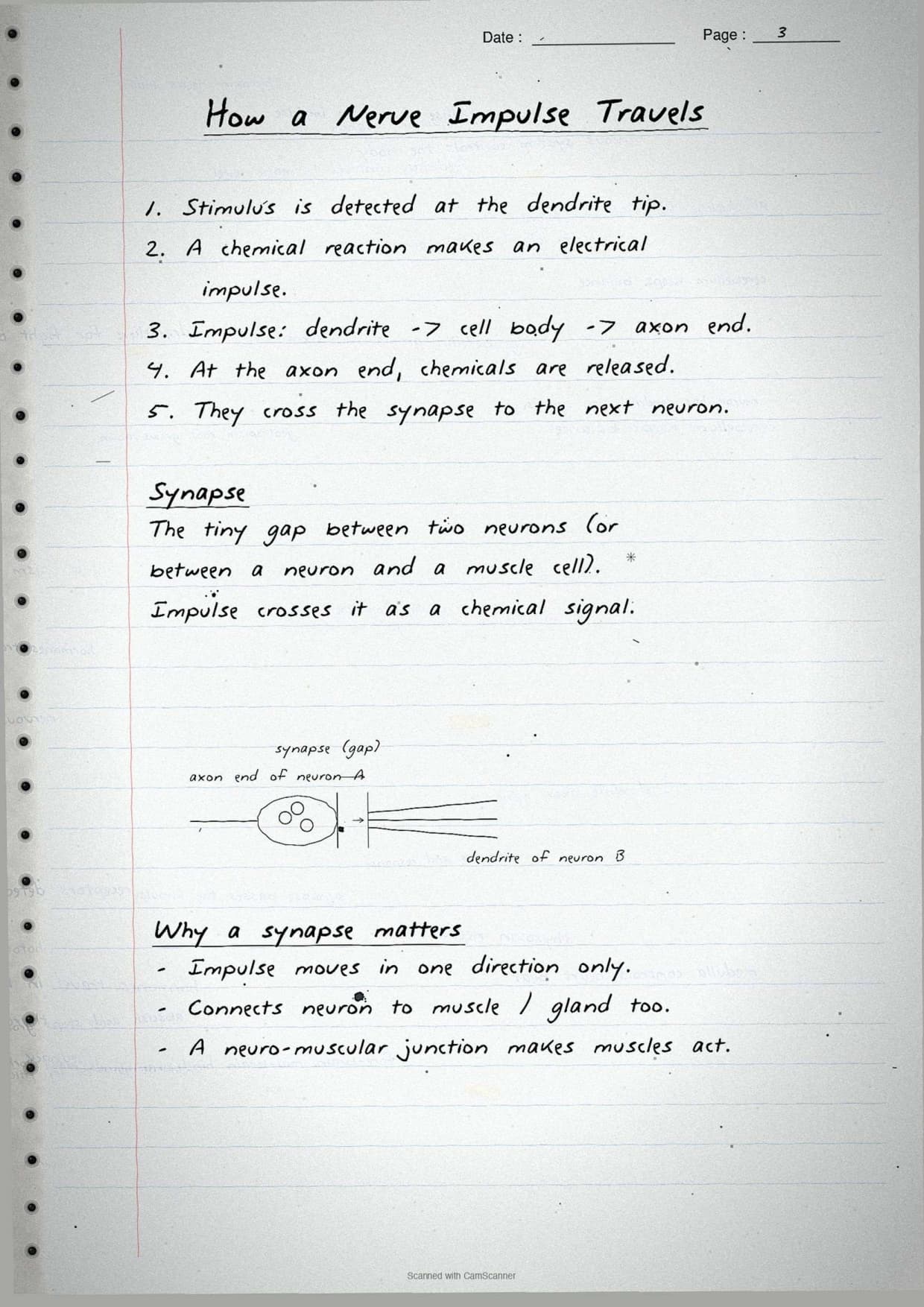
- Nerve ending and synapse: at the axon tip the signal crosses a tiny gap, the synapse, using chemicals.
Information travels as an electrical impulse inside a neuron, but as a chemical signal across the synapse, a guaranteed 2-mark answer.
Reflex Action and the Reflex Arc Every Class 10 Student Must Know
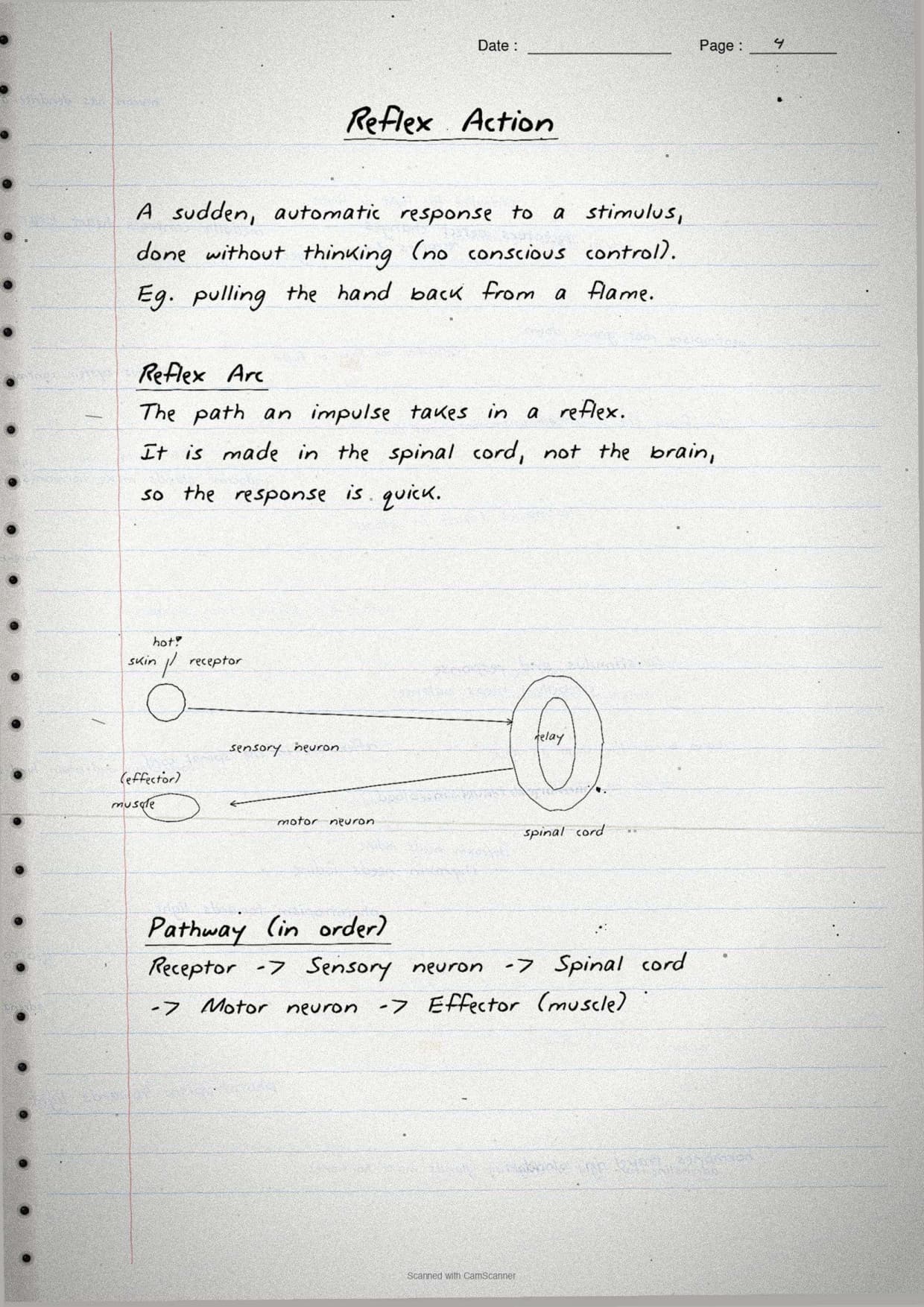
The reflex arc is the most asked 3-mark to 5-mark question in this chapter. The table below traces the path from skin to muscle:
| Step | Part involved | What it does |
|---|---|---|
| 1. Stimulus | Receptor (skin) | Detects the change |
| 2. Carry in | Sensory neuron | Impulse to spinal cord |
| 3. Process | Spinal cord | Passes signal to motor neuron |
| 4. Carry out | Motor neuron | Impulse to the muscle |
| 5. Response | Effector (muscle) | Pulls the hand away |
The point students miss: a reflex action is sudden, automatic and does not wait for the brain. It is dealt with by the spinal cord. The two terms the paper asks students to define:
- Reflex action: a quick, automatic response to a stimulus that protects the body from harm.
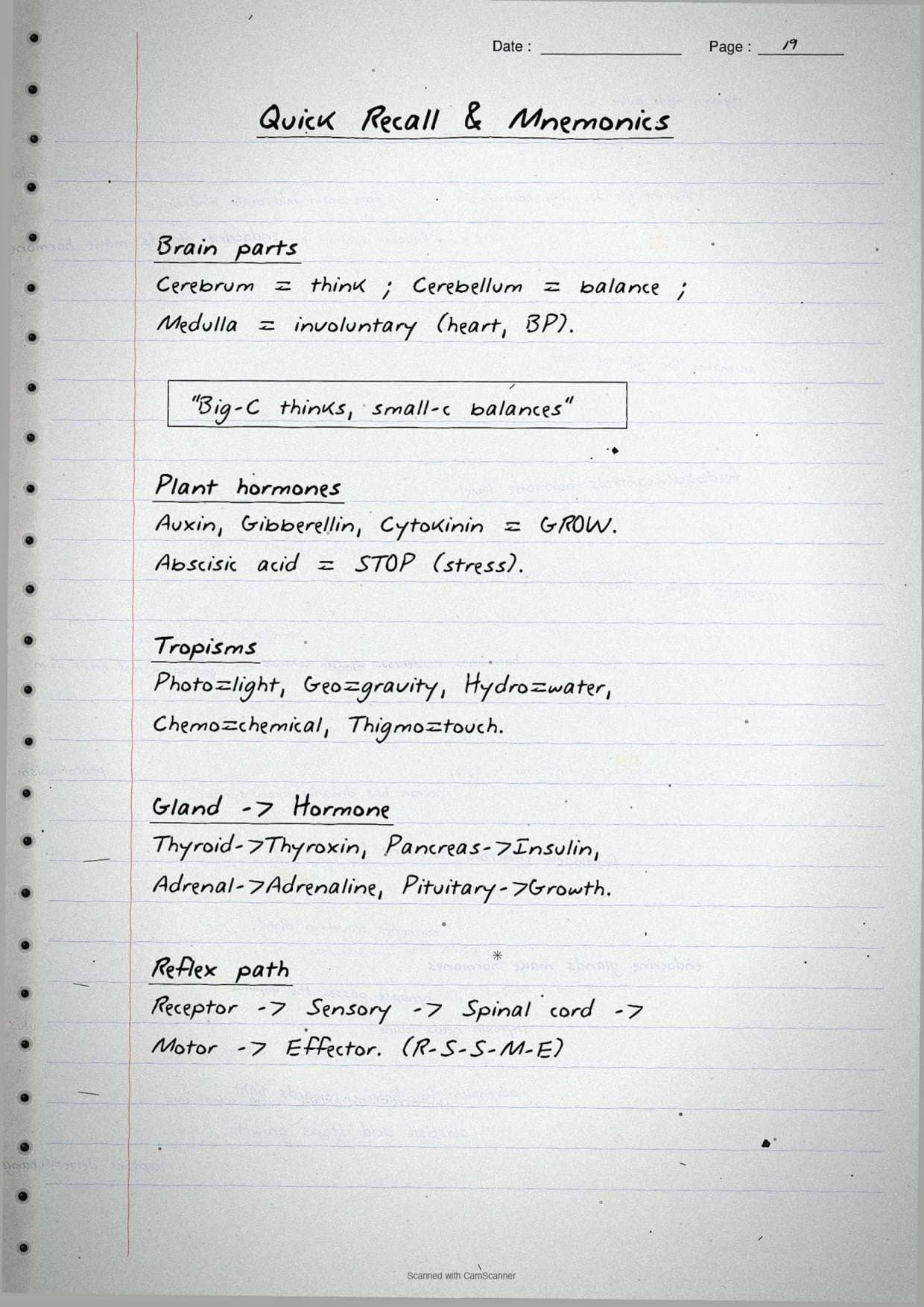
- Reflex arc: the path the impulse takes, from receptor to sensory neuron to spinal cord to motor neuron to effector.
The Human Brain and Spinal Cord in the Notes
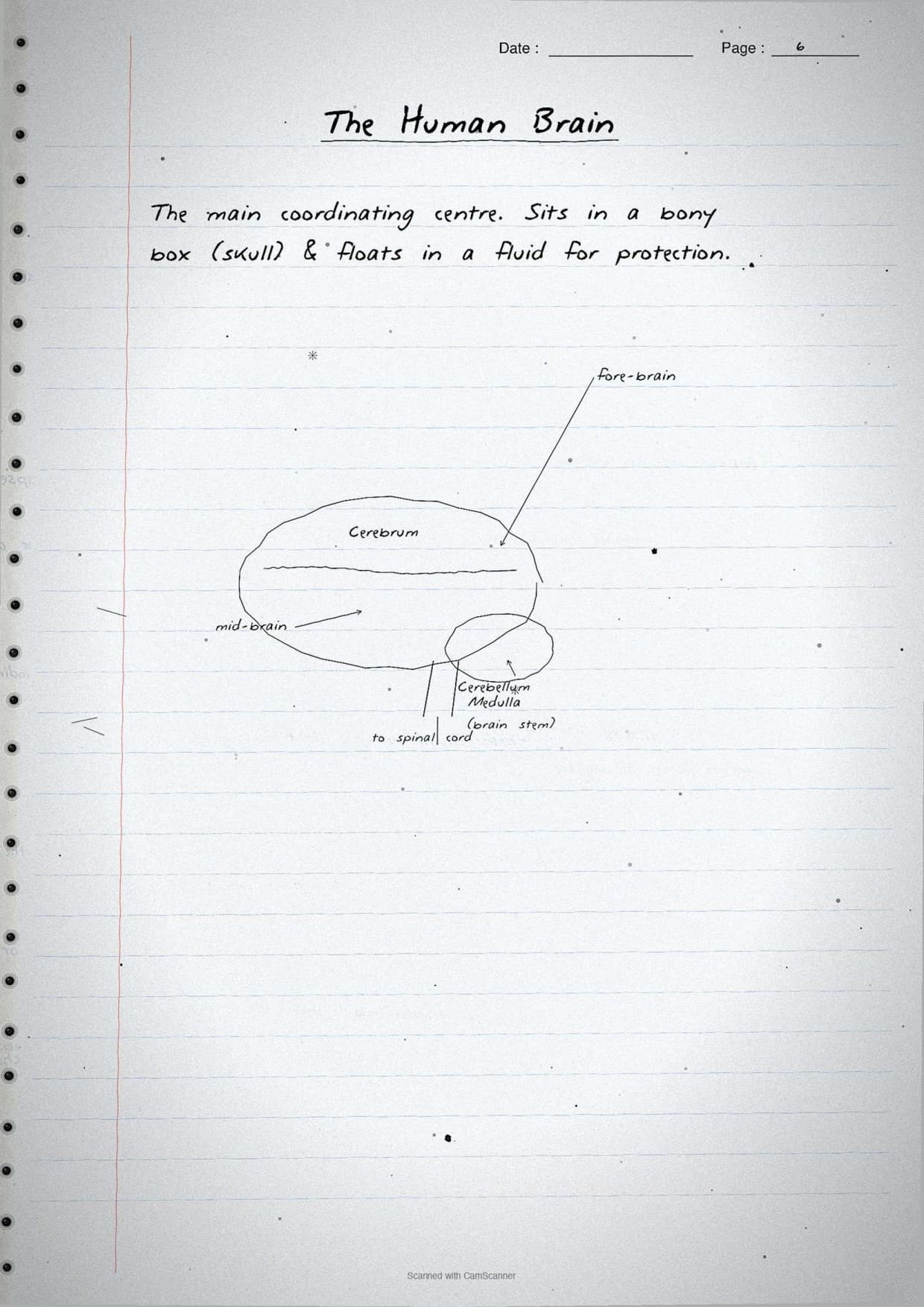
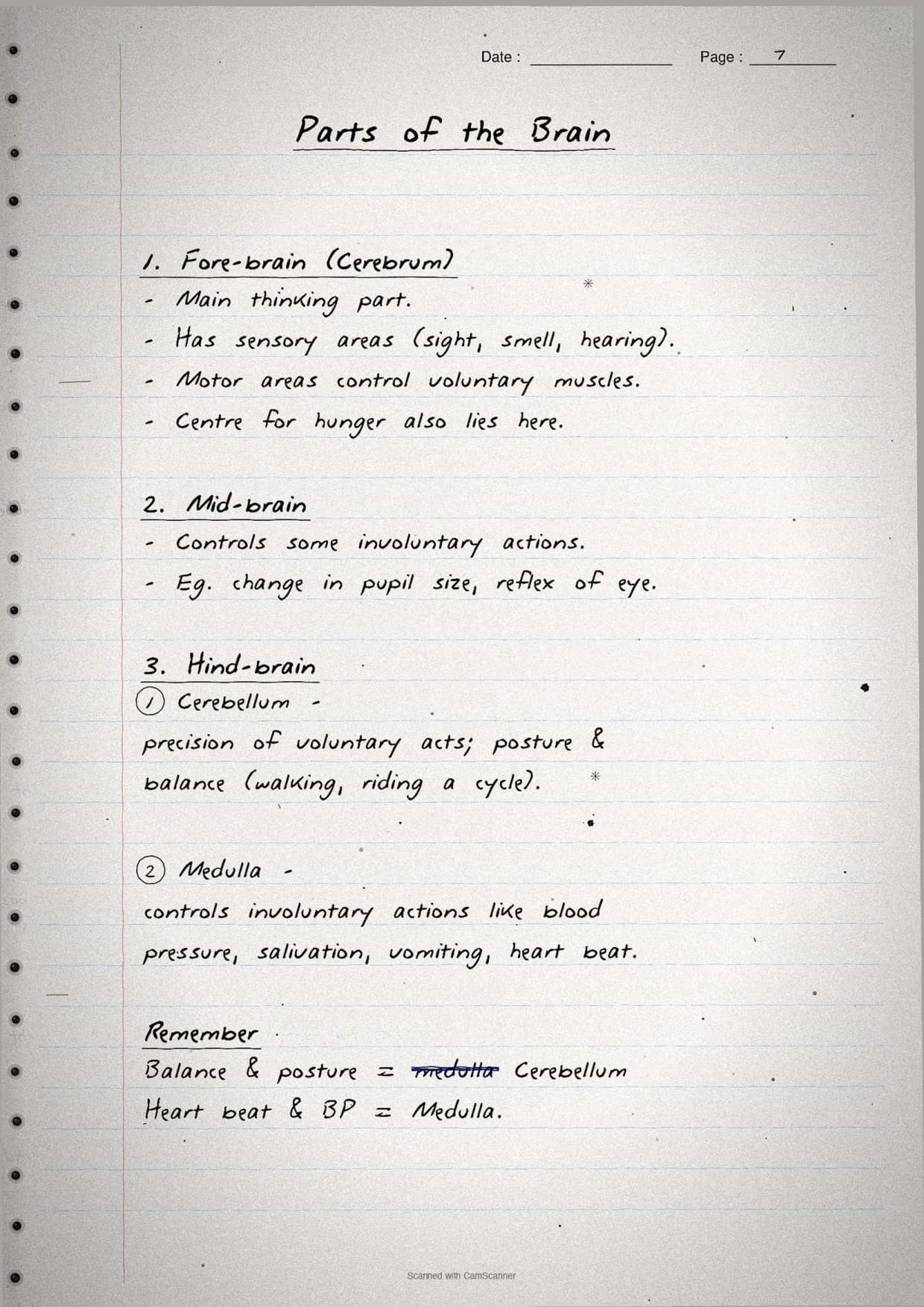
The labelled brain is a top 5-mark diagram. The brain is divided into three parts that the paper asks students to compare:
- Fore-brain (cerebrum): the thinking part; it controls voluntary actions, memory, reasoning and the sense organs.
- Mid-brain and hind-brain: the cerebellum in the hind-brain controls posture and balance, so we can ride a bicycle or walk straight.
- Medulla (in the hind-brain): controls involuntary actions like heartbeat, breathing, blood pressure and vomiting.
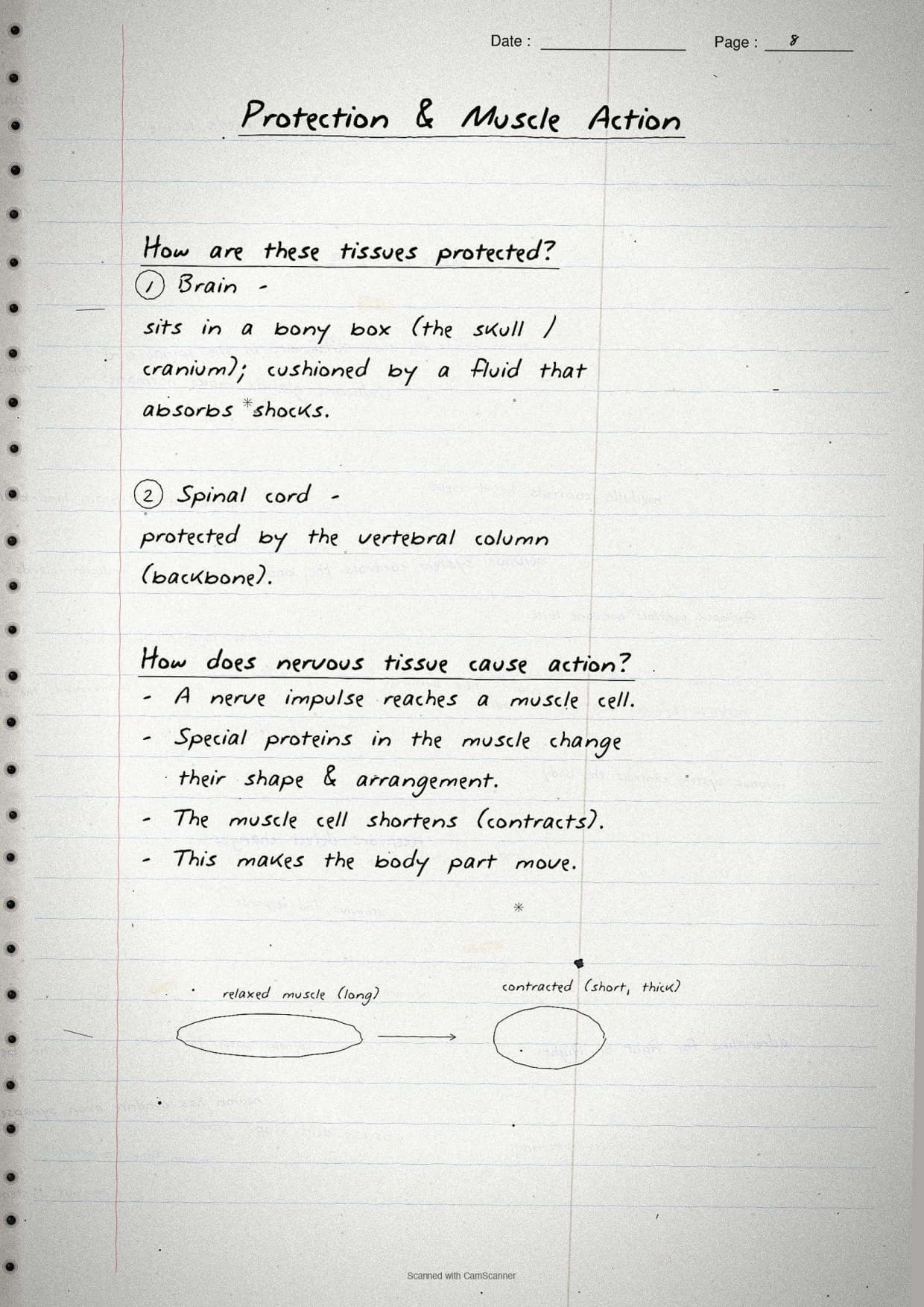
The brain sits inside a bony box, the cranium (skull), and the spinal cord runs inside the backbone, both cushioned by a fluid. The brain and spinal cord together make the central nervous system, while the nerves spread through the body make the peripheral nervous system.
Coordination in Plants: Movements and Plant Hormones
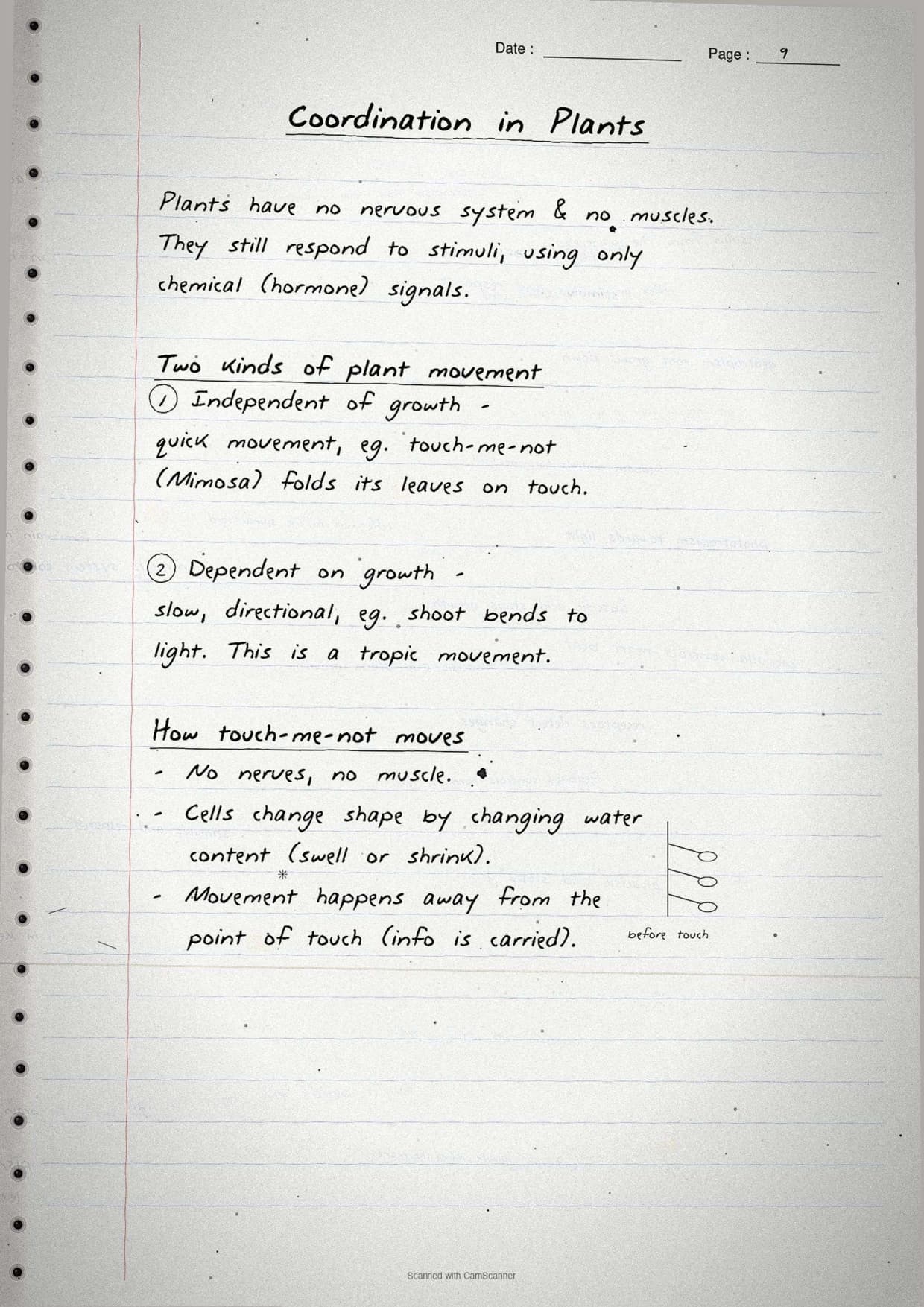
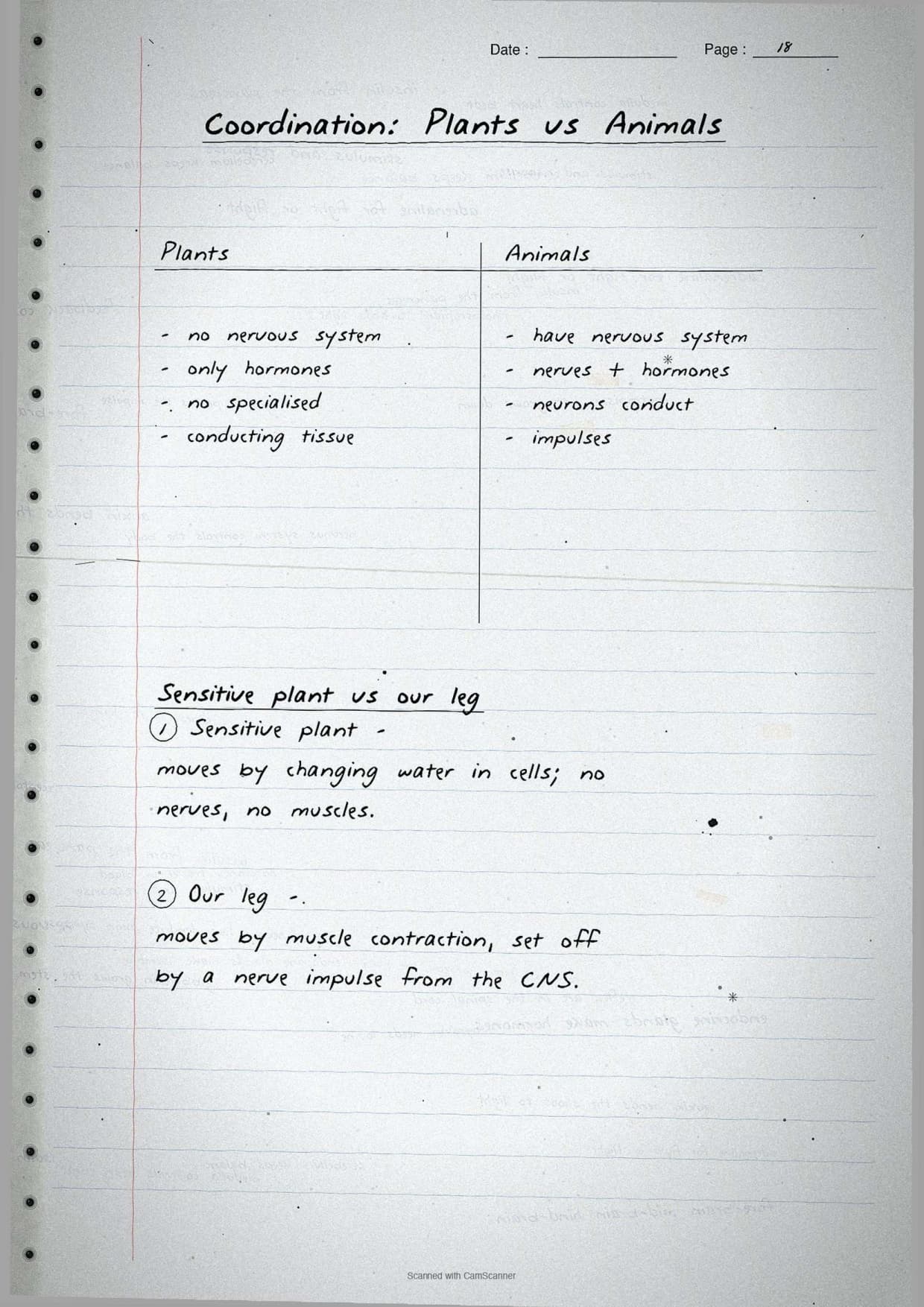
Plants respond without a nervous system, using growth and chemicals only, since they have no nerves or muscles. The two types of movement the paper names:
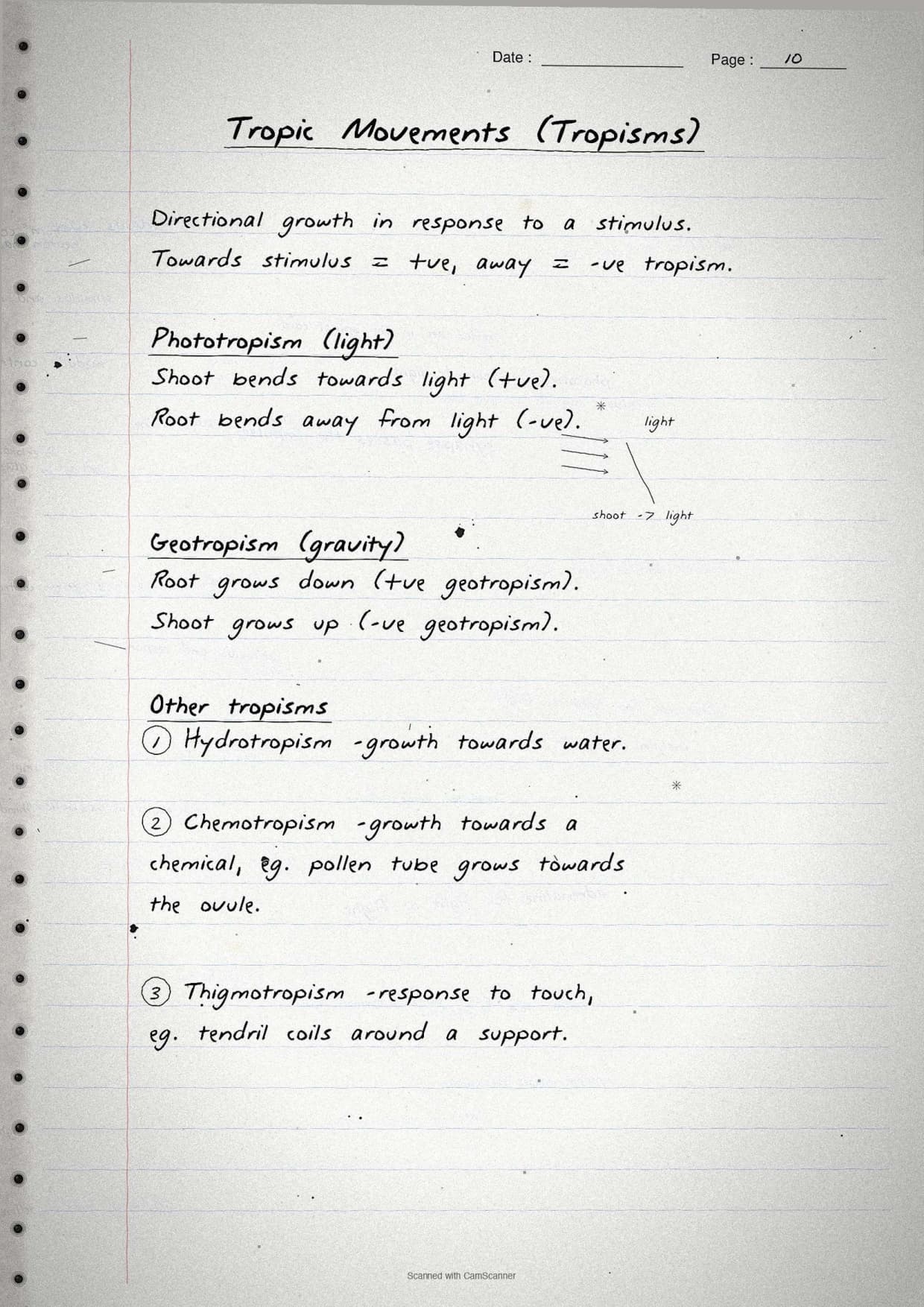
- Tropic movement: directional growth towards or away from a stimulus, like a shoot bending to light (phototropism).
- Nastic movement: a quick, non-directional movement, like Mimosa (touch-me-not) leaves folding when touched.
- Key tropisms: phototropism (light), geotropism (gravity), hydrotropism (water), chemotropism (chemicals).
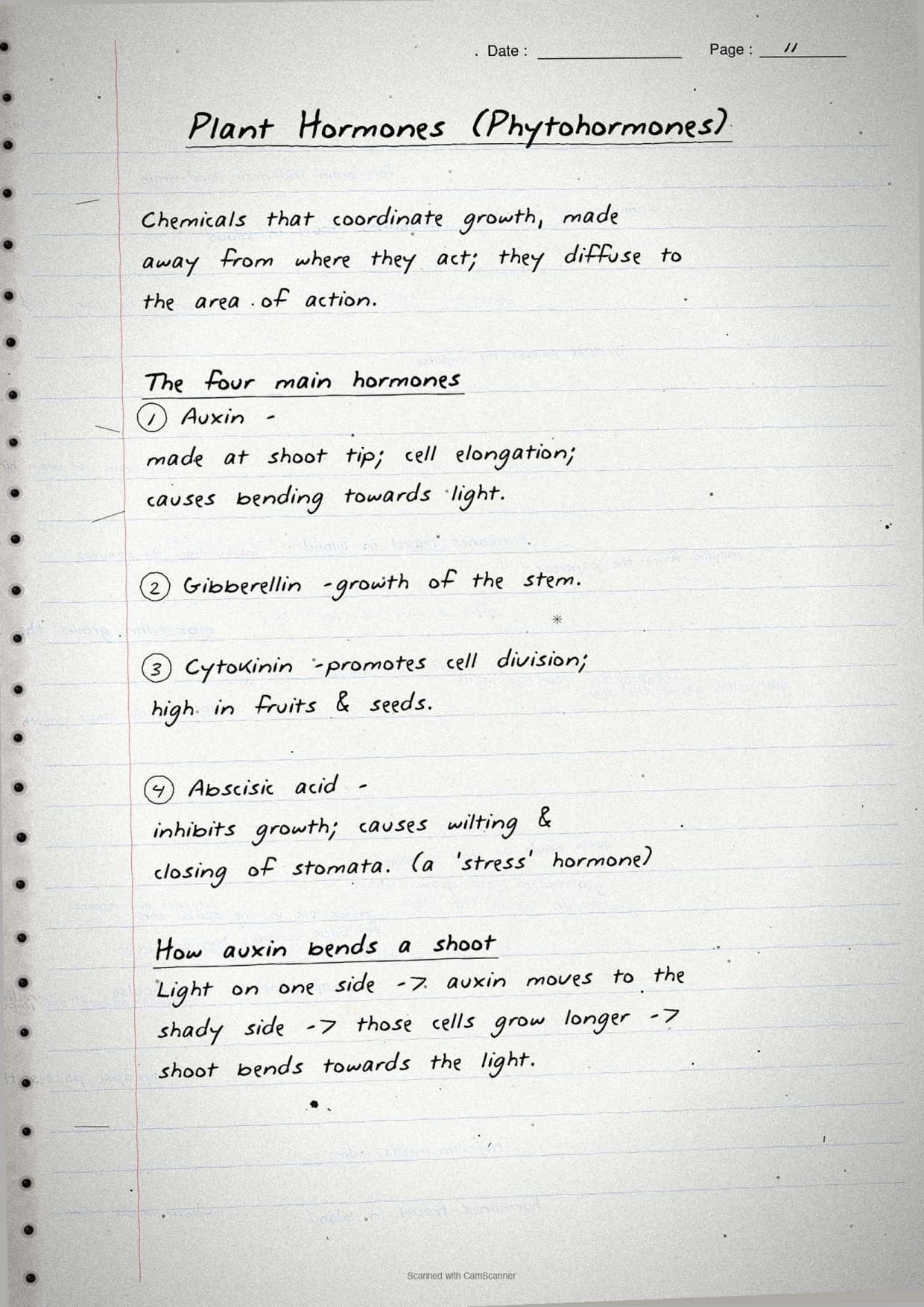
The four plant hormones the board paper asks students to match:
| Plant hormone | Main job |
|---|---|
| Auxin | Helps the shoot grow and bend towards light |
| Gibberellin | Helps the stem grow taller |
| Cytokinin | Promotes cell division, plenty in fruits and seeds |
| Abscisic acid | Slows growth; causes wilting and leaf fall (a stress hormone) |
The favourite exam line: auxin gathers on the shaded side of a shoot, making that side grow faster, so the shoot bends towards the light. This explains phototropism completely, a guaranteed 3-mark answer.
The Human Endocrine System and Hormones
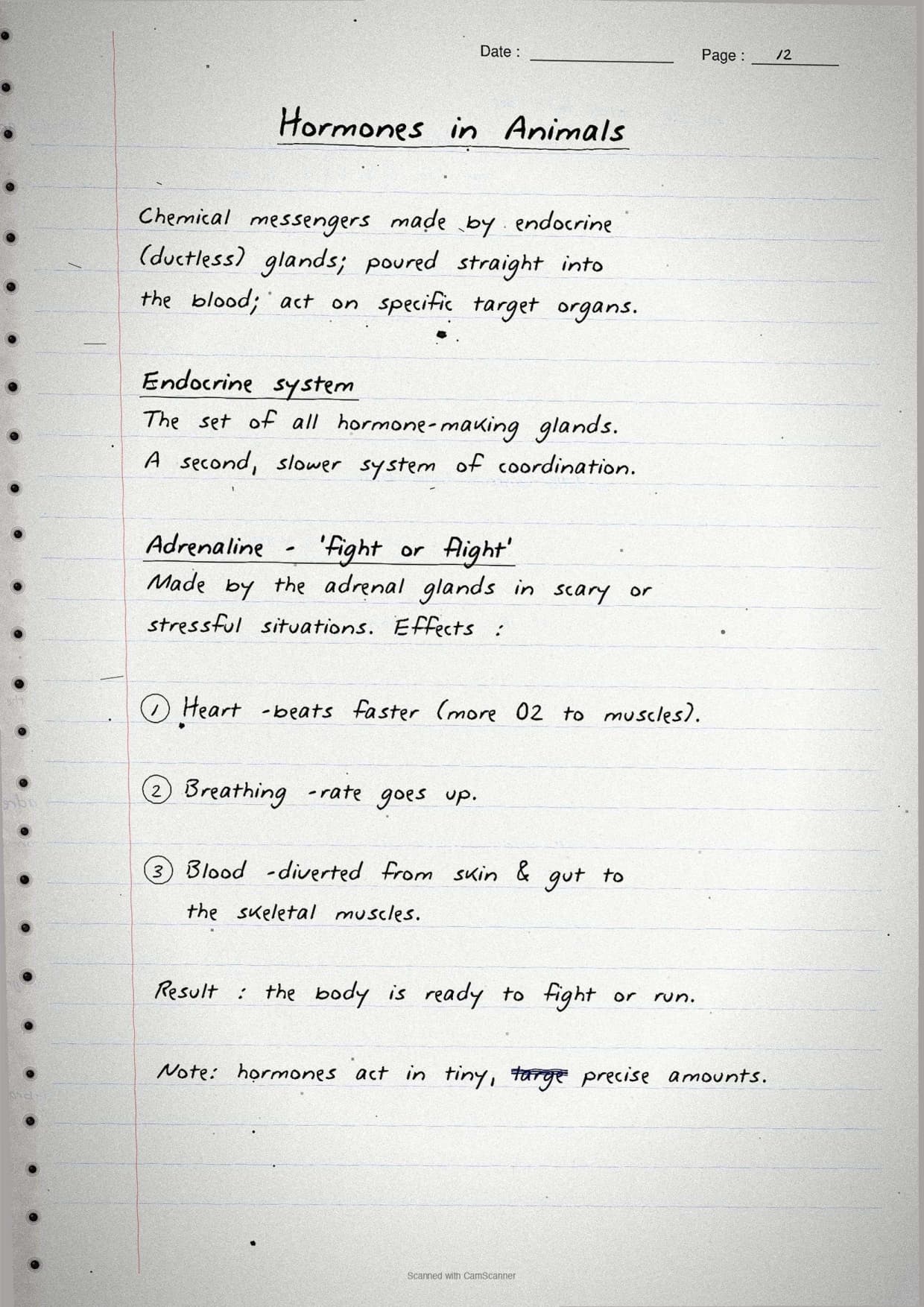
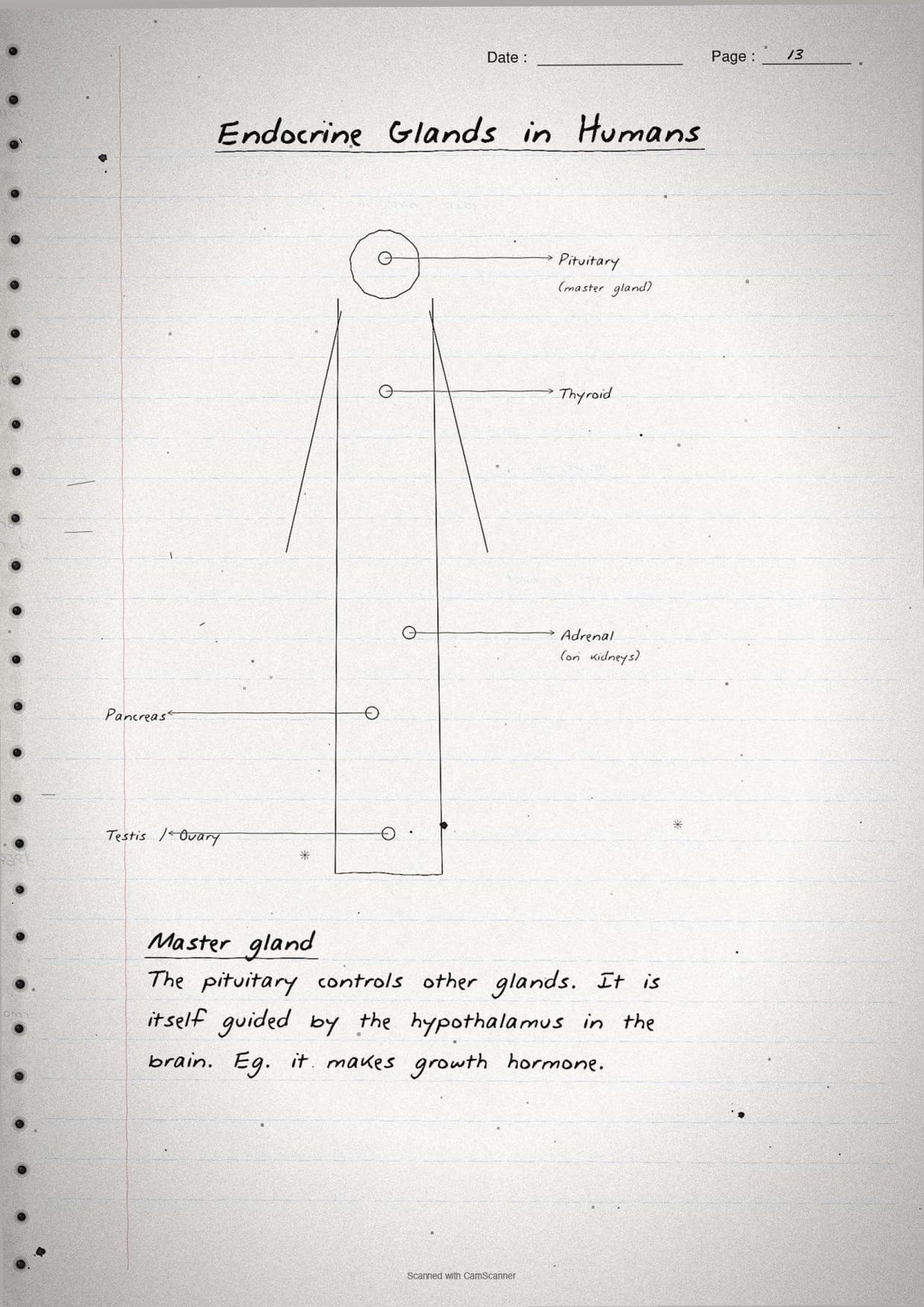
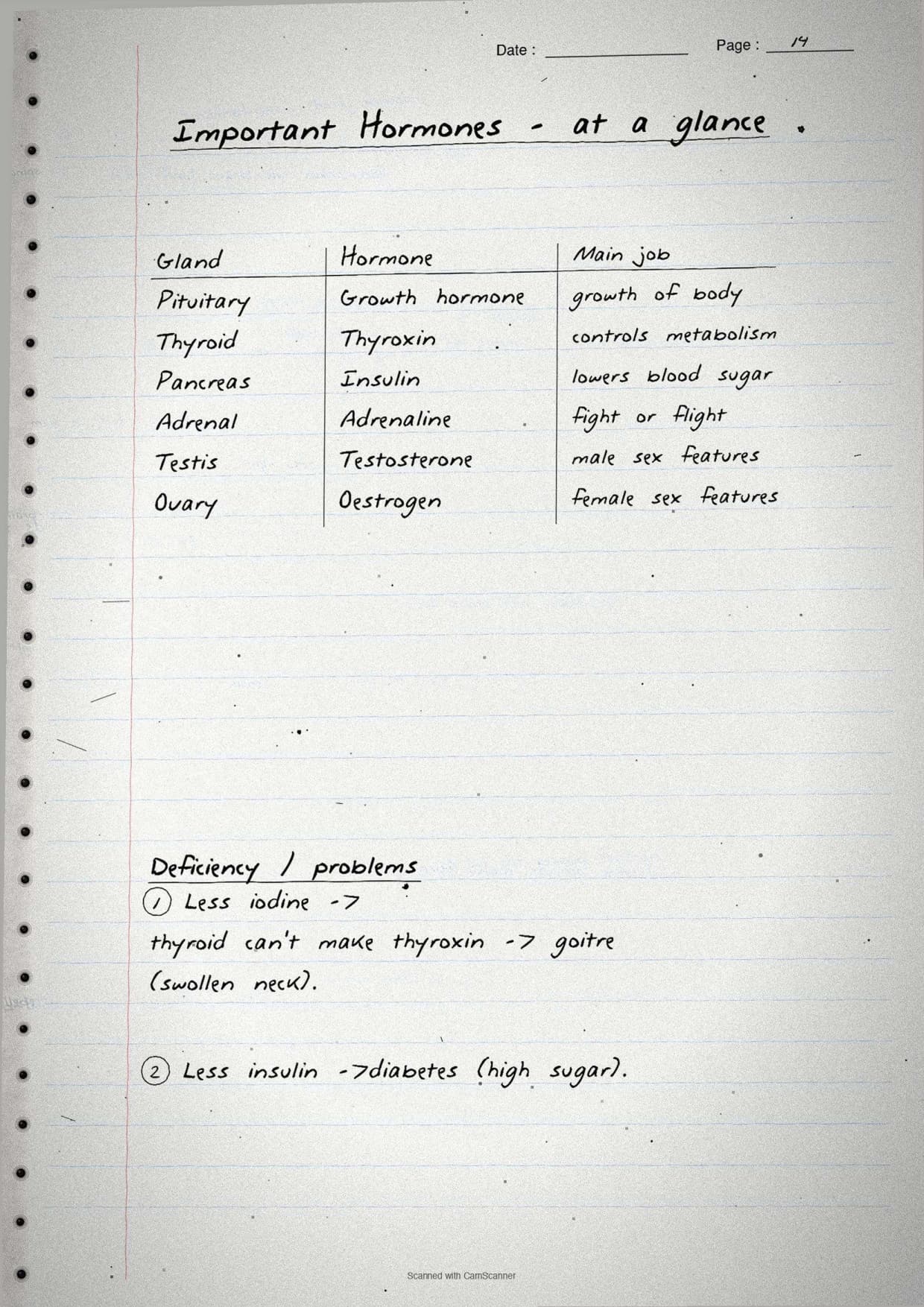
Chemical coordination in animals works through the endocrine glands. Hormones are chemical messengers made by glands, carried by the blood to act on a distant target. The gland-hormone-function match is a guaranteed table question:
| Gland | Hormone | Main job |
|---|---|---|
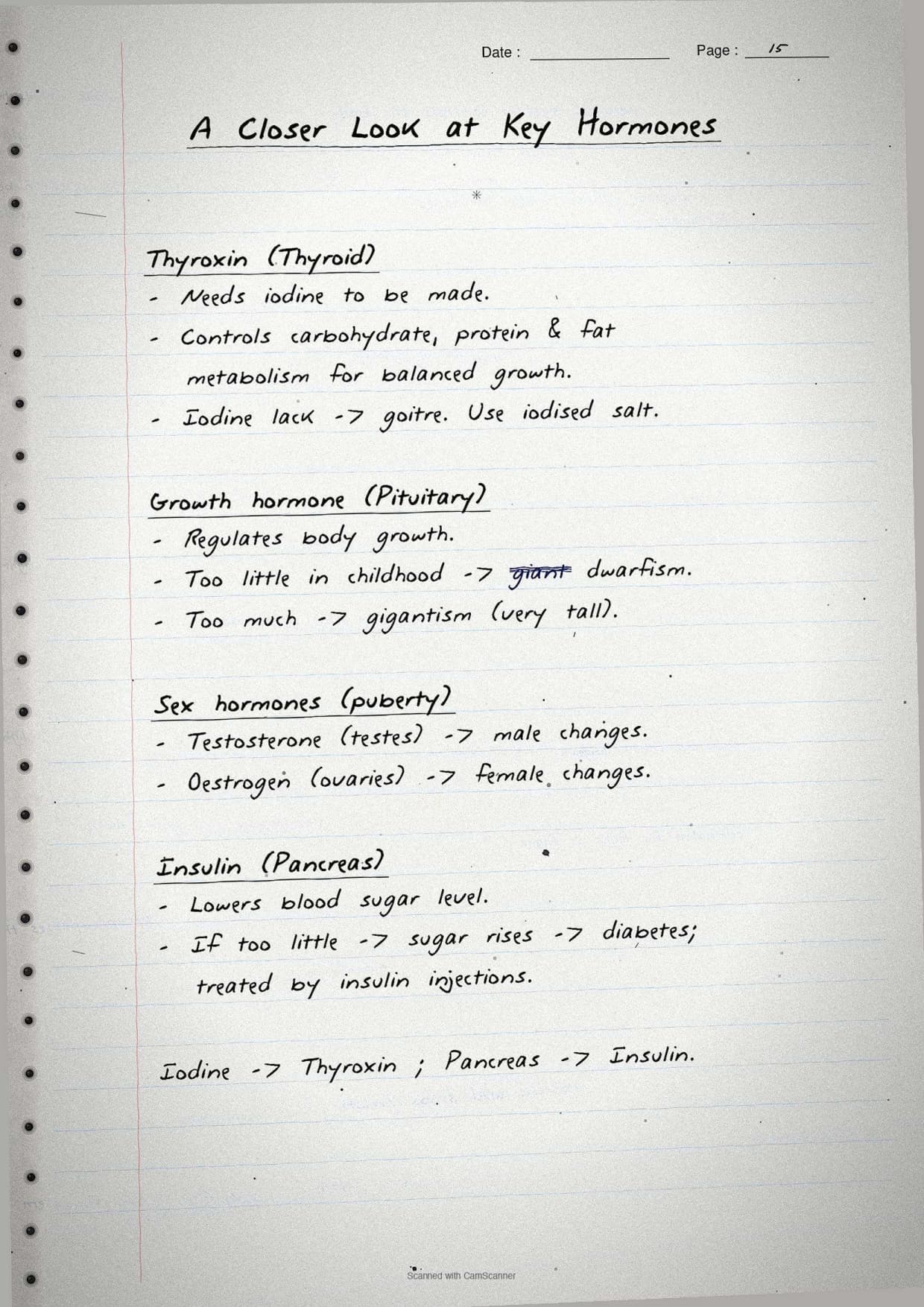
| Thyroid | Thyroxine | Controls metabolism; needs iodine (lack causes goitre) |
| Pancreas | Insulin | Lowers blood sugar (lack causes diabetes) |
| Adrenal | Adrenaline | The "fight or flight" hormone in fear or anger |
| Pituitary | Growth hormone | Controls growth of the body |
| Testes / Ovary | Testosterone / Oestrogen | Bring about changes at puberty |
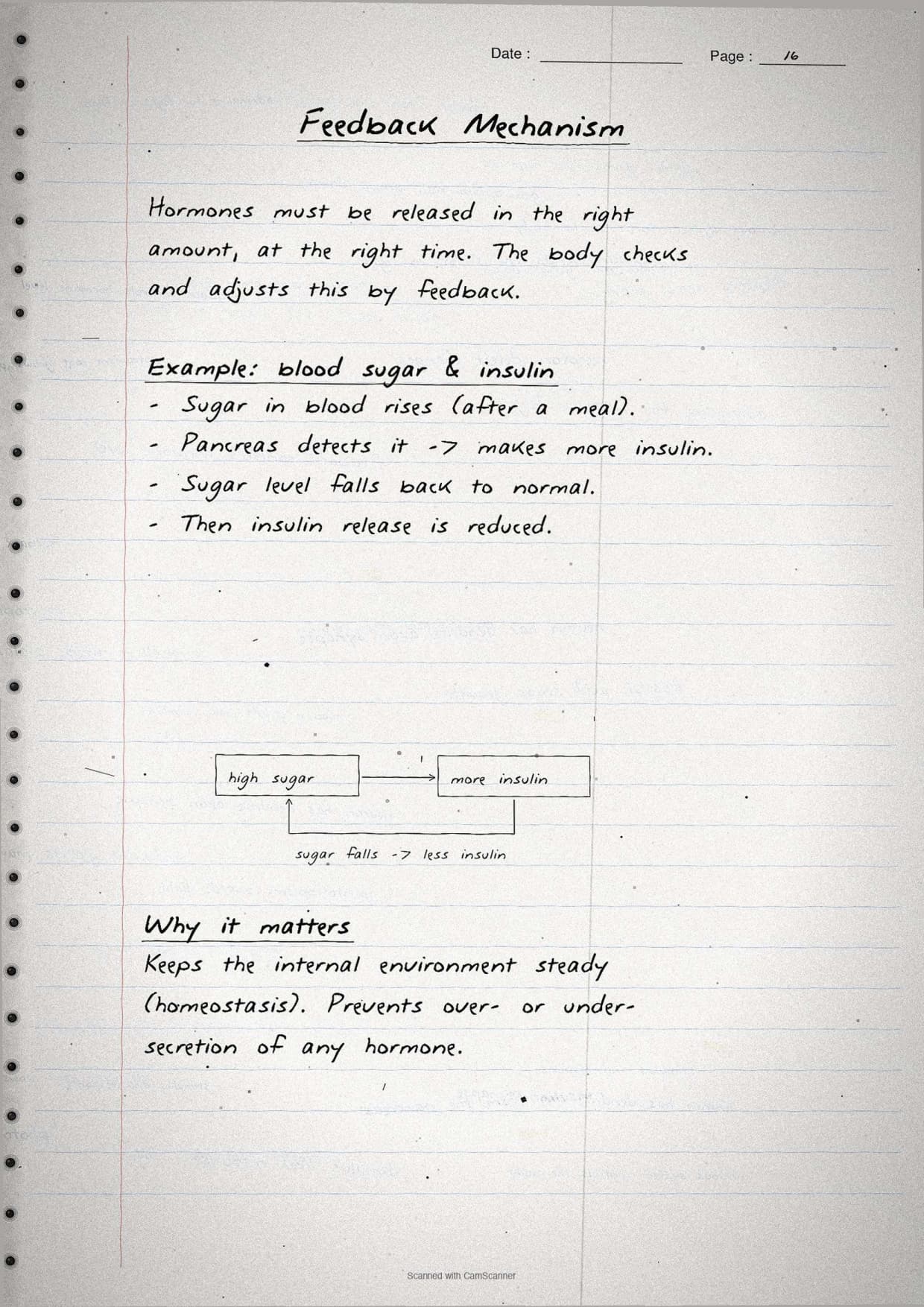
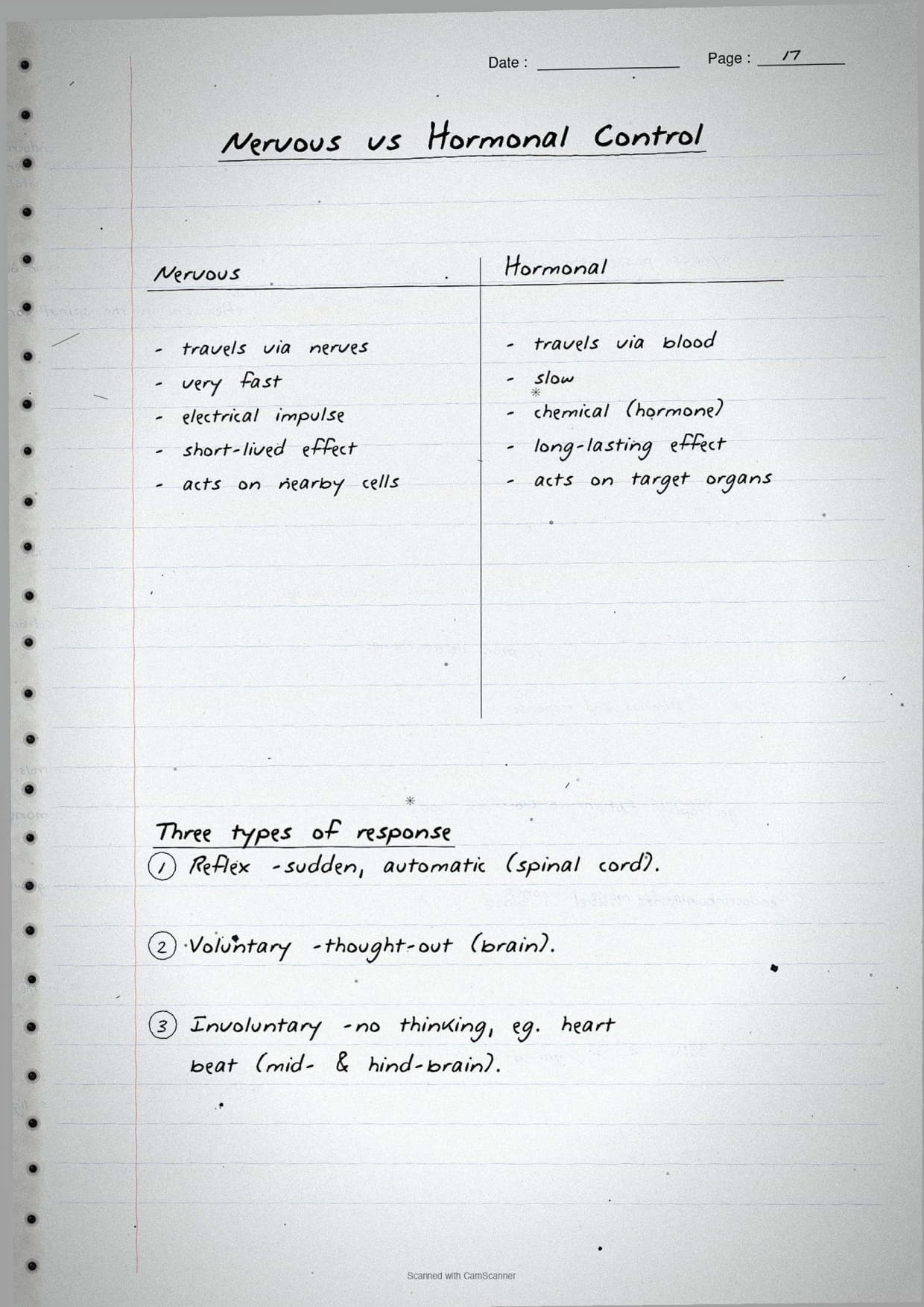
One more idea the paper loves: feedback control keeps hormone levels just right. When blood sugar rises, the pancreas makes more insulin; when it falls, less. The key contrast: the nervous system acts fast but briefly, while hormones act slowly but for longer, a common 2-3 mark answer.
How to Use These Handwritten Notes Effectively
Handwritten notes work best as a final layer of revision. Use the Control and Coordination handwritten notes like this before the board exam:
- First pass: read the pages in order, the neuron, then reflex action, then the brain, then plants and hormones.
- Active recall: cover the boxed diagrams and redraw the neuron, reflex arc and human brain from memory.
- Label drill: practise labelling each diagram, because the paper often gives marks for correct labels alone.
- Self-test: attempt a short drill to check the small facts.
Common Mistakes These Notes Help You Avoid
A few errors cost marks every year, mostly from mixing up parts or matching the wrong hormone to a gland:
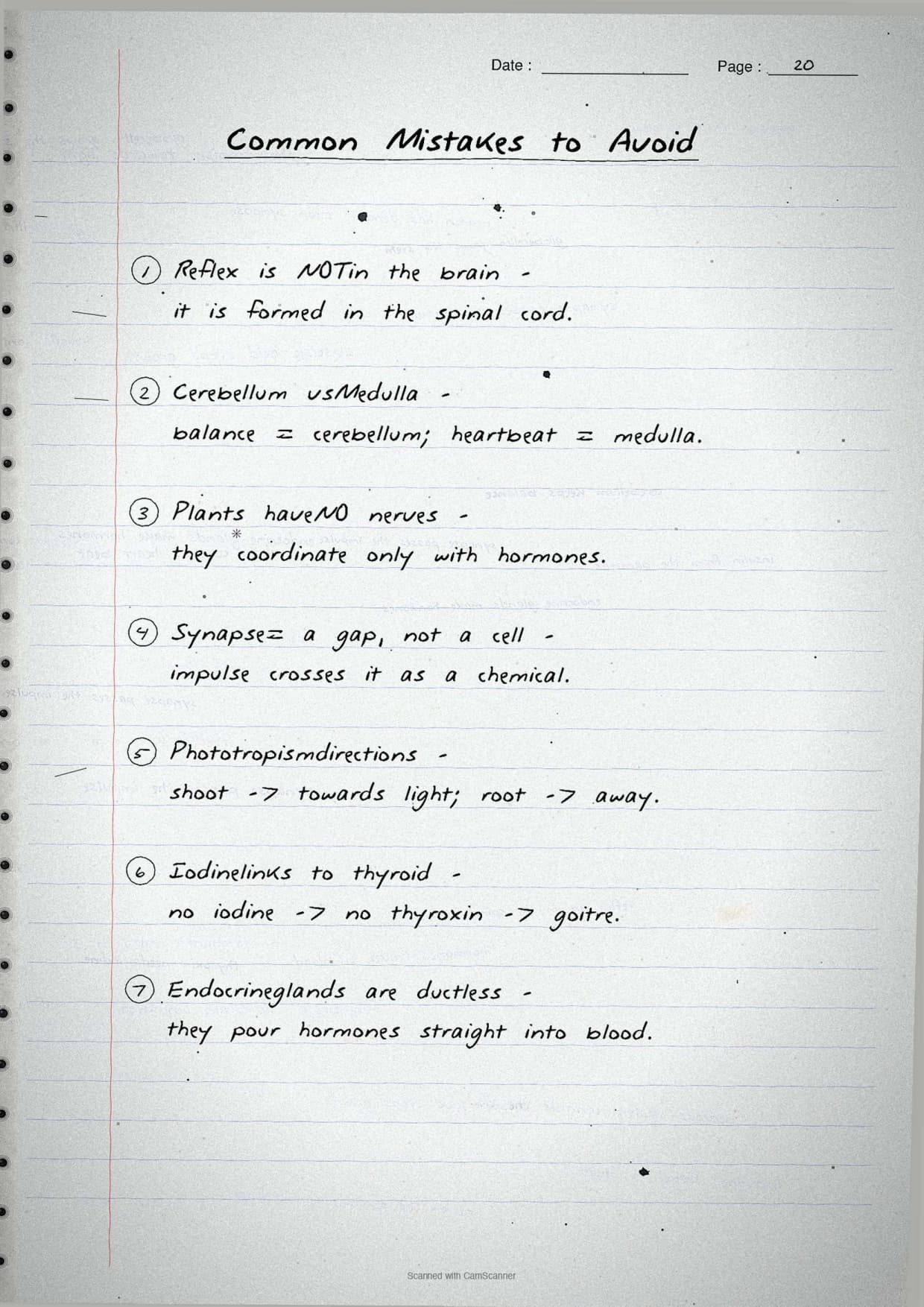
- Saying a reflex is controlled by the brain. It is dealt with by the spinal cord.
- Matching the wrong hormone. Insulin is from the pancreas, not the thyroid.
- Mixing up movement. Tropic is directional growth; nastic is quick and non-directional.
- Forgetting the impulse becomes a chemical signal at the synapse, not electrical.
- Confusing the cerebrum (thinking) with the cerebellum (balance).
The exam rewards exact terms and correctly labelled diagrams, so always name the part, state its job and label every line.
How These Notes Pair with the Solutions and Book PDF
These handwritten notes are a revision layer. Use them with the other resources for the same chapter, linked below.
| Resource | Best used for |
|---|---|
| Control and Coordination NCERT Solutions | Step-by-step answers for every in-text and back-exercise question |
| Control and Coordination Class 10 Notes | Quick typed summary with every part, hormone and diagram in one place |
| Control and Coordination Formula Sheet | One-page quick reference of the key definitions, glands and hormones |
| Control and Coordination NCERT Book PDF | Reading the original NCERT chapter text from the textbook |
All Class 10 Science Handwritten Notes by Chapter
The table links the handwritten notes for every chapter in Class 10 Science. Control and Coordination is highlighted.
| Chapter | Handwritten Notes |
|---|---|
| Chapter 1 | Chemical Reactions and Equations |
| Chapter 2 | Acids, Bases and Salts |
| Chapter 3 | Metals and Non-metals |
| Chapter 4 | Carbon and its Compounds |
| Chapter 5 | Life Processes |
| Chapter 6 | Control and Coordination |
| Chapter 7 | How do Organisms Reproduce? |
| Chapter 8 | Heredity |
| Chapter 9 | Light - Reflection and Refraction |
| Chapter 10 | The Human Eye and the Colourful World |
| Chapter 11 | Electricity |
| Chapter 12 | Magnetic Effects of Electric Current |
| Chapter 13 | Our Environment |
FAQs on Control and Coordination Handwritten Notes
Control and Coordination Class 10 Science Handwritten Notes Common Questions
Ques. Are these class 10 science chapter 6 Control and Coordination handwritten notes free to download?
Ans. Yes. The Control and Coordination handwritten notes are free to download as a PDF from this page. They follow the 2026-27 NCERT syllabus and cover the full chapter across 22 scanned, hand-drawn-diagram pages for quick revision.
Ques. What does Chapter 6 Control and Coordination cover in Class 10 Science?
Ans. The notes cover the nervous system and the neuron, reflex action and the reflex arc, the human brain and spinal cord, coordination in plants (tropic and nastic movements and plant hormones), and the human endocrine system with its glands and hormones, all of which the CBSE board paper tests directly.
Ques. What is the difference between a reflex action and the reflex arc?
Ans. A reflex action is the quick, automatic response itself, such as pulling your hand off a hot plate. The reflex arc is the path the impulse takes to make that happen, from the receptor to the sensory neuron, the spinal cord, the motor neuron and finally the effector muscle.
Ques. What is the difference between nervous and hormonal coordination?
Ans. Nervous coordination uses electrical impulses through neurons, acts very fast and its effect is short-lived. Hormonal coordination uses chemical messengers carried by the blood, acts more slowly but its effect lasts much longer. Both work together to keep the body in control.
Ques. Are these notes enough for the class 10 science chapter 6 board exam?
Ans. They are a strong final revision layer. For full preparation, pair them with the NCERT Solutions linked on this page so you can write out complete answers and labelled diagrams for every in-text and back-exercise question and check them against model answers.



Comments