




The Life Processes Class 10 Science handwritten notes are scanned, boxed and built for fast last-minute revision, fully matched to the 2026-27 CBSE syllabus. They cover nutrition, respiration, transportation and excretion, the human digestive, respiratory, circulatory and excretory systems, plus transport in plants, all in clear ruled-page form with labelled diagrams.
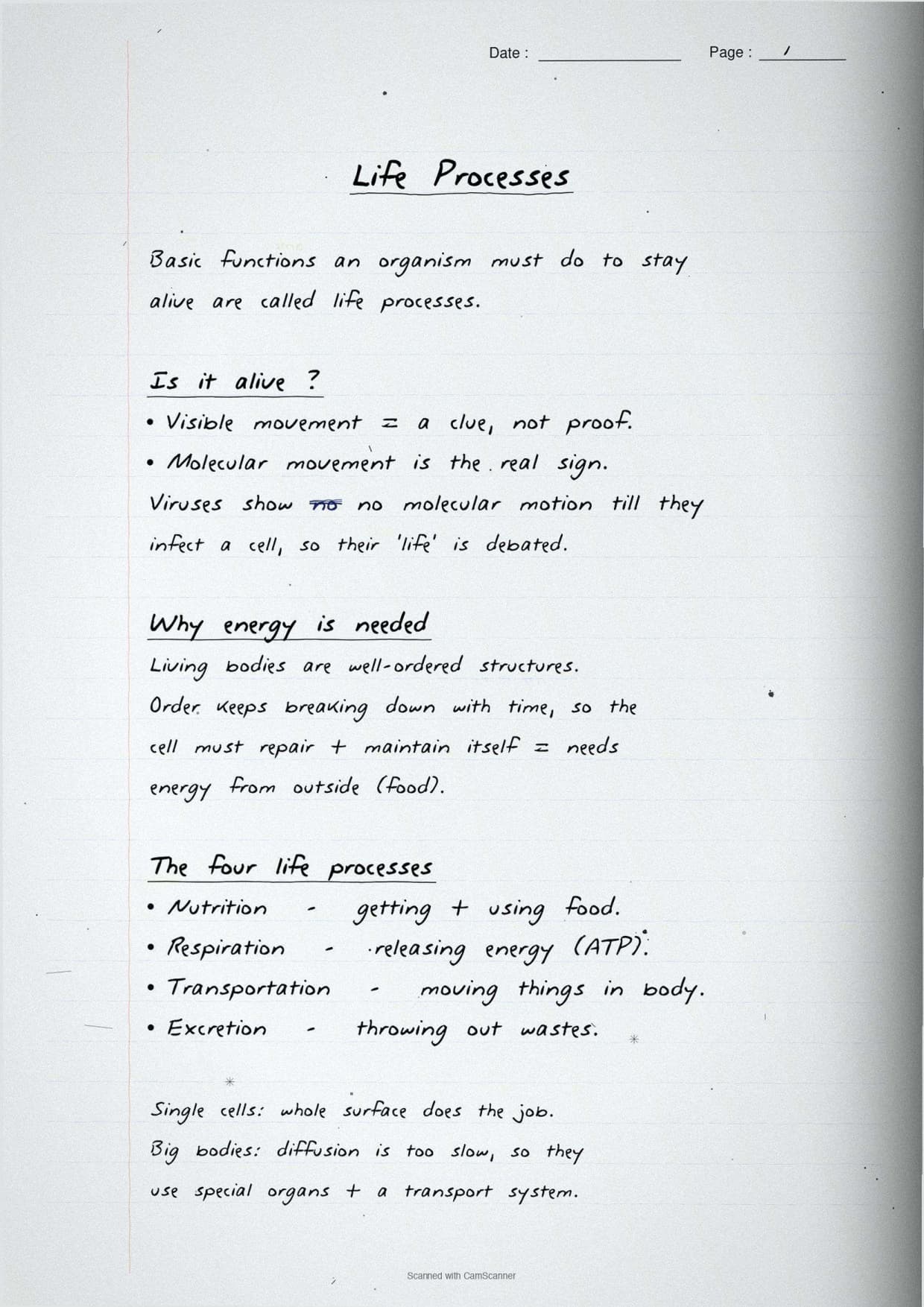
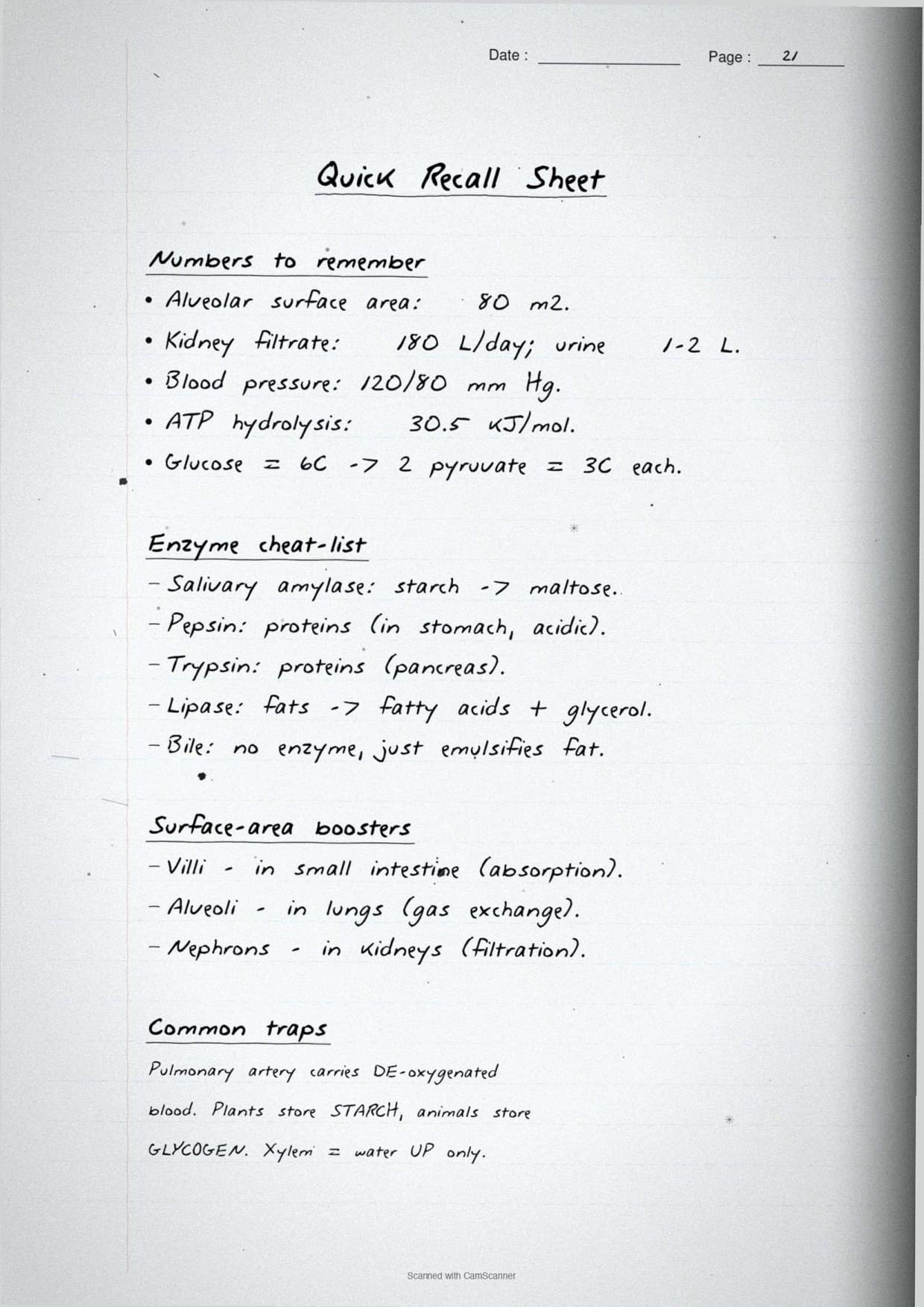
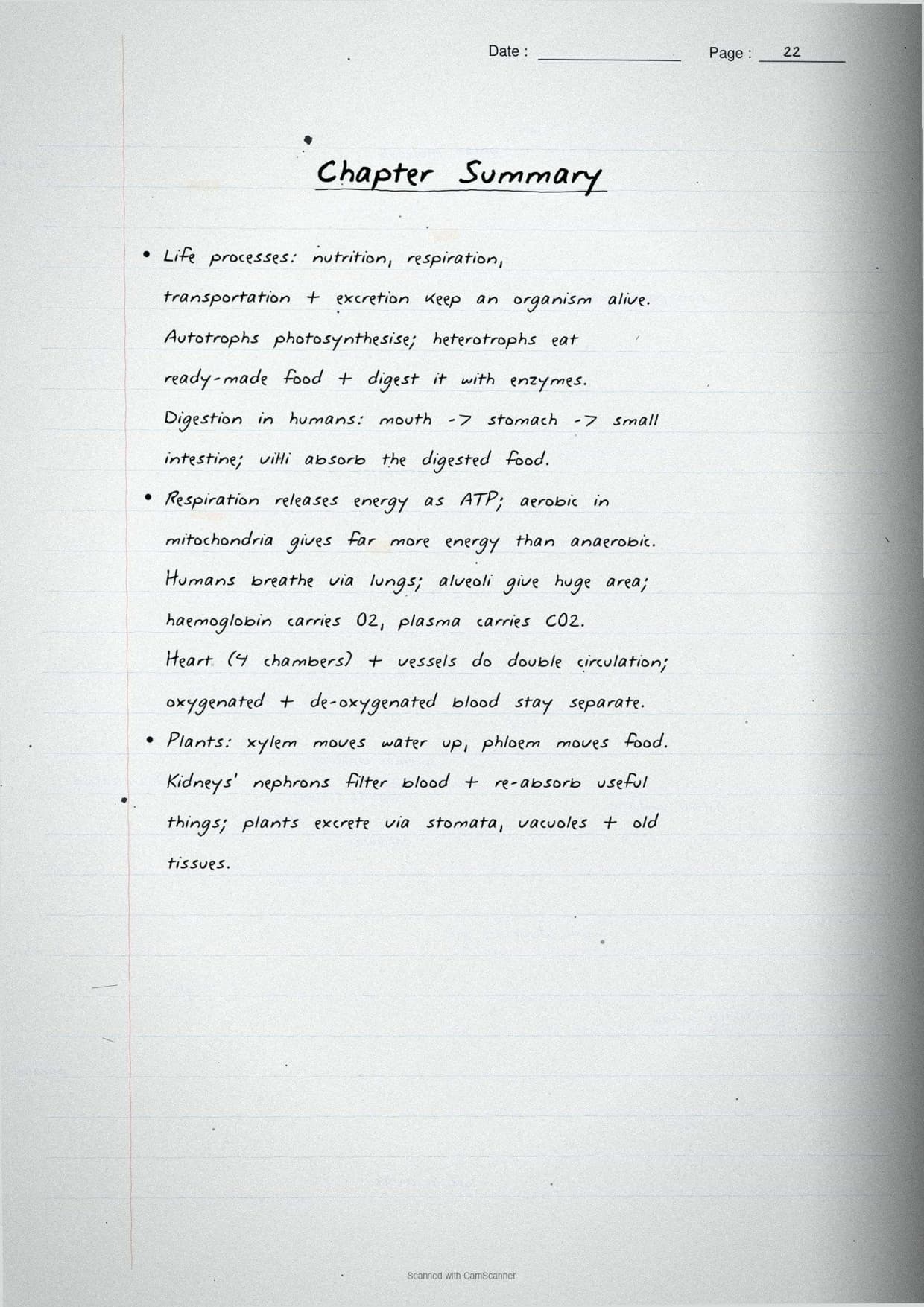
- CBSE Weightage: 6 to 8 marks from the World of the Living unit, often as 3-mark and 5-mark diagram questions on the heart, nephron and digestive system.
- Boxed definitions and a labelled diagram for every life process, organ and pathway the board paper asks about.
- Pairs with the NCERT Solutions, Notes and Book PDF linked lower on this page.
These Life Processes handwritten notes are prepared from the official NCERT Science textbook and matched to the 2026-27 CBSE syllabus.
Student Feedback: In a Collegedunia poll of 11,600 Class 10 Science students before the 2026 boards, 81% of students said the labelled heart and nephron diagrams were the fastest way to revise this chapter. Most students copied the hand-drawn diagrams straight onto practice answer sheets.
Source: 2026-27 Class 10 Science student poll. Sample of 11,600 students from CBSE schools across 16 states.
Solved by Collegedunia: Every diagram and definition in these Life Processes handwritten notes is checked by Collegedunia's Class 10 Science team against the latest 2026-27 NCERT textbook, so what you revise matches exactly what the CBSE board paper expects.
What These Life Processes Handwritten Notes Include
These Life Processes handwritten notes condense the chapter into 26 scanned pages of ruled paper, with every diagram hand-drawn and every key term underlined. They are built around the four life processes the CBSE board paper tests:
- Nutrition: how organisms get food, the steps of photosynthesis, and the human digestive system from mouth to anus.
- Respiration and transportation: aerobic and anaerobic respiration, the human respiratory system, and the double circulation of blood through the heart.
- Excretion: how the kidney and the nephron filter blood, plus how plants get rid of waste.
Life Processes Class 10 Science Video Lecture
Source: Magnet Brains on YouTube
Nutrition: Autotrophic, Heterotrophic and the First Pages
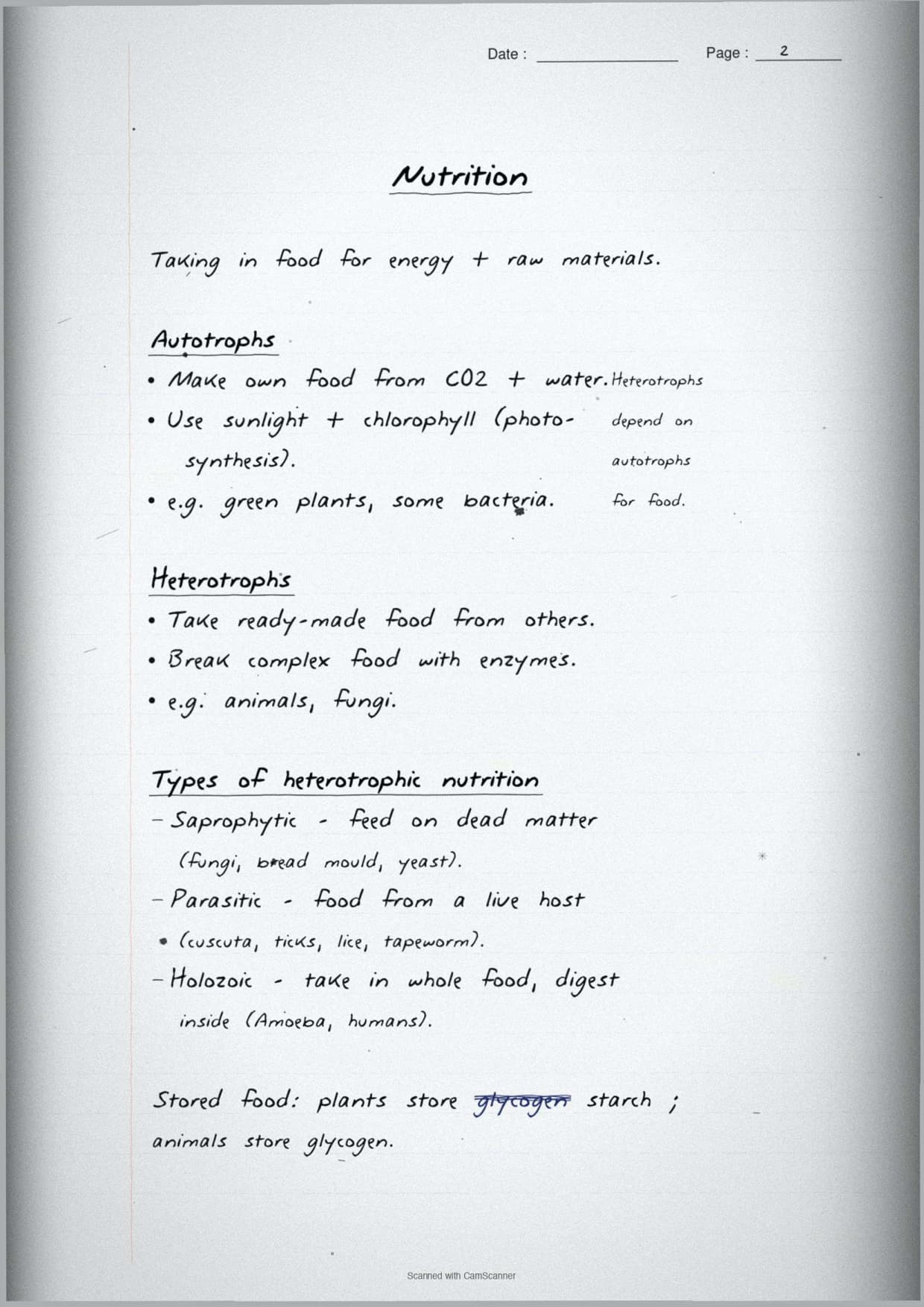
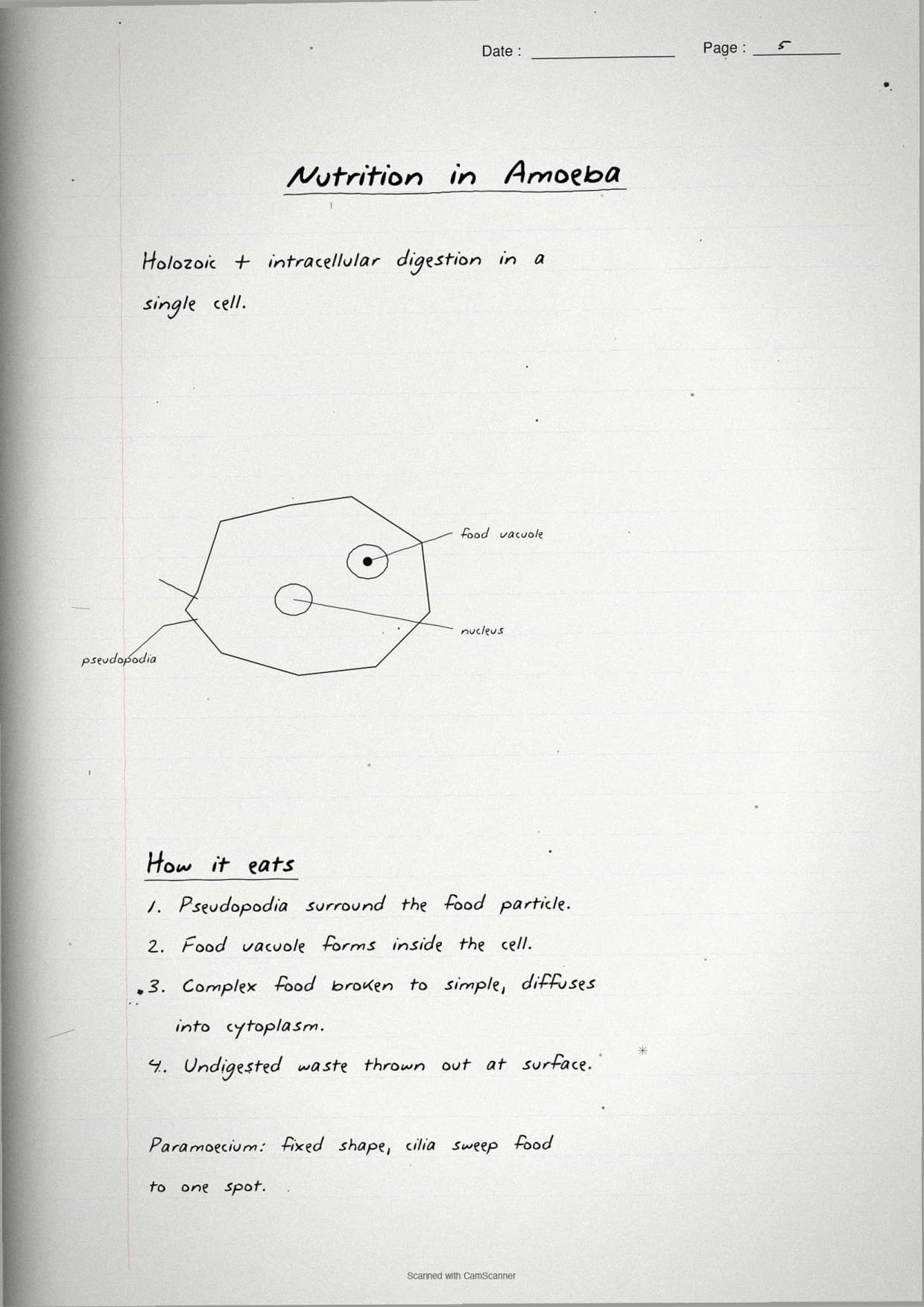
A life process is a basic function an organism carries out to maintain and continue life. Nutrition splits into two types:
- Autotrophic: green plants make food from carbon dioxide and water using sunlight, through photosynthesis.
- Heterotrophic: animals and fungi take in food made by others; holozoic, saprophytic or parasitic.
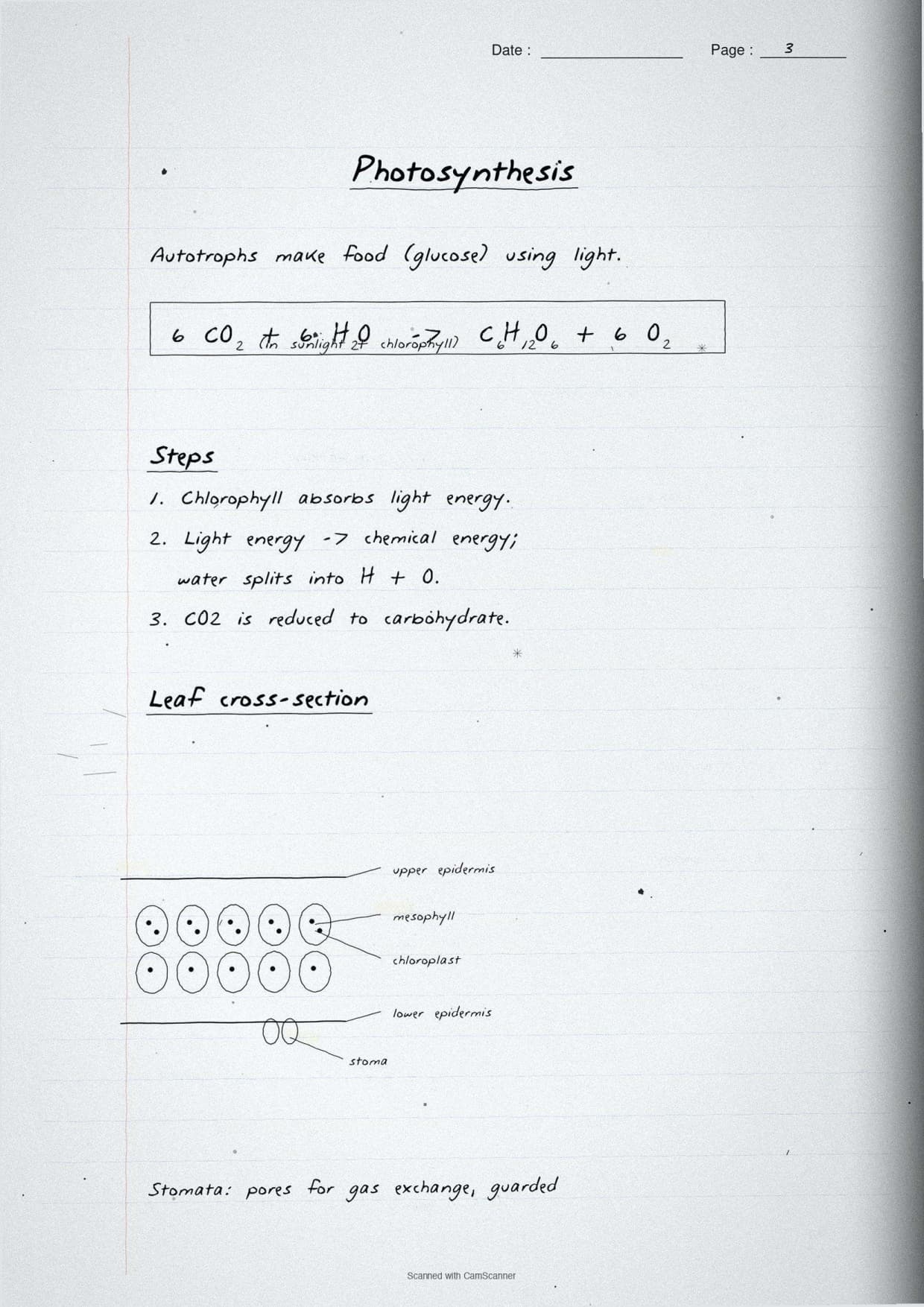
The photosynthesis equation, which students should write under exam pressure:
The three events of photosynthesis, in order:
- Absorption: chlorophyll absorbs light energy.
- Conversion: light energy becomes chemical energy and water is split into hydrogen and oxygen.
- Reduction: carbon dioxide is reduced to glucose, and oxygen is released.
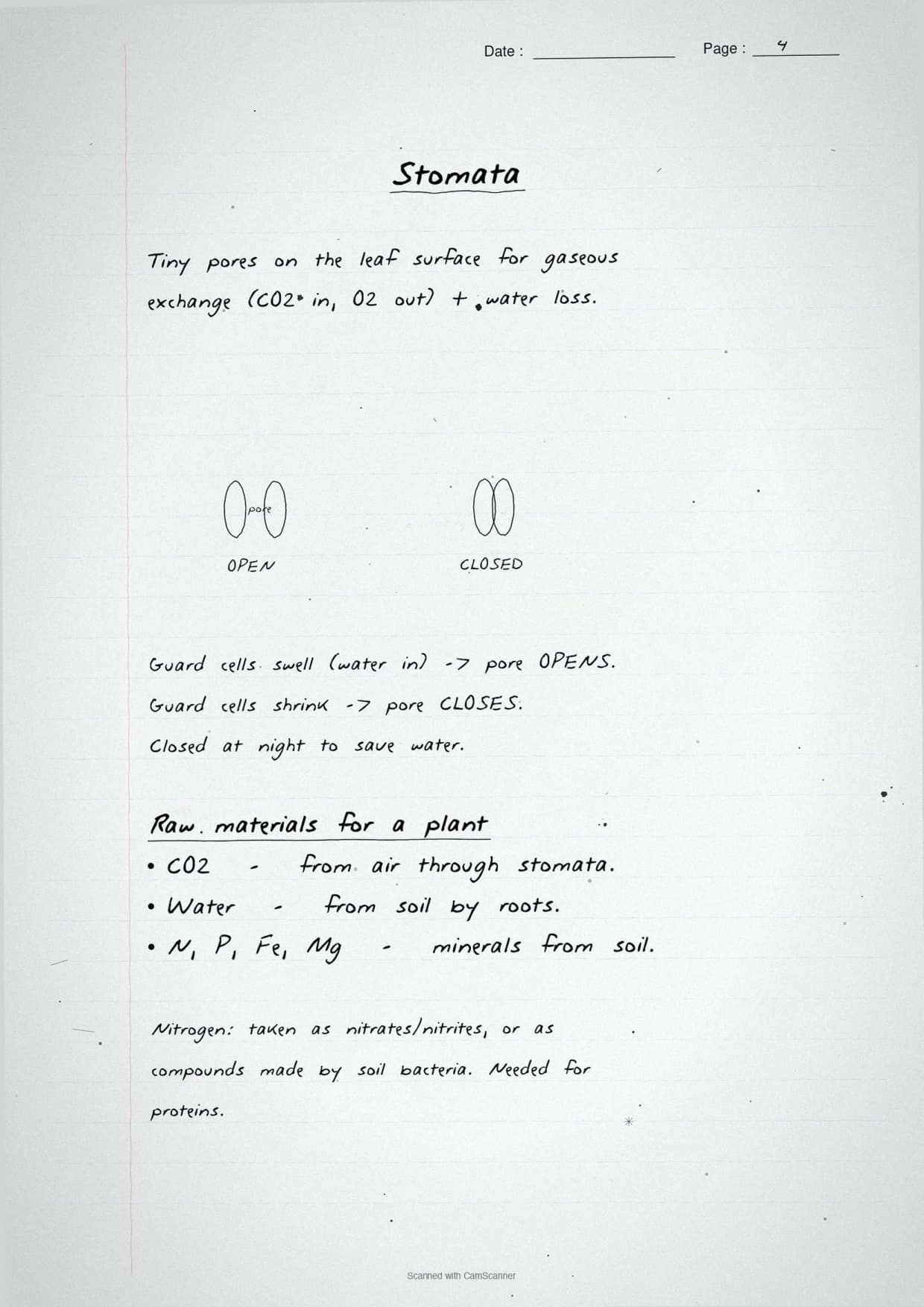
Note: stomata are the tiny leaf pores that let gases move in and out, guarded by guard cells. A guaranteed 1-mark to 2-mark answer.
The Human Digestive System Every Class 10 Student Must Know
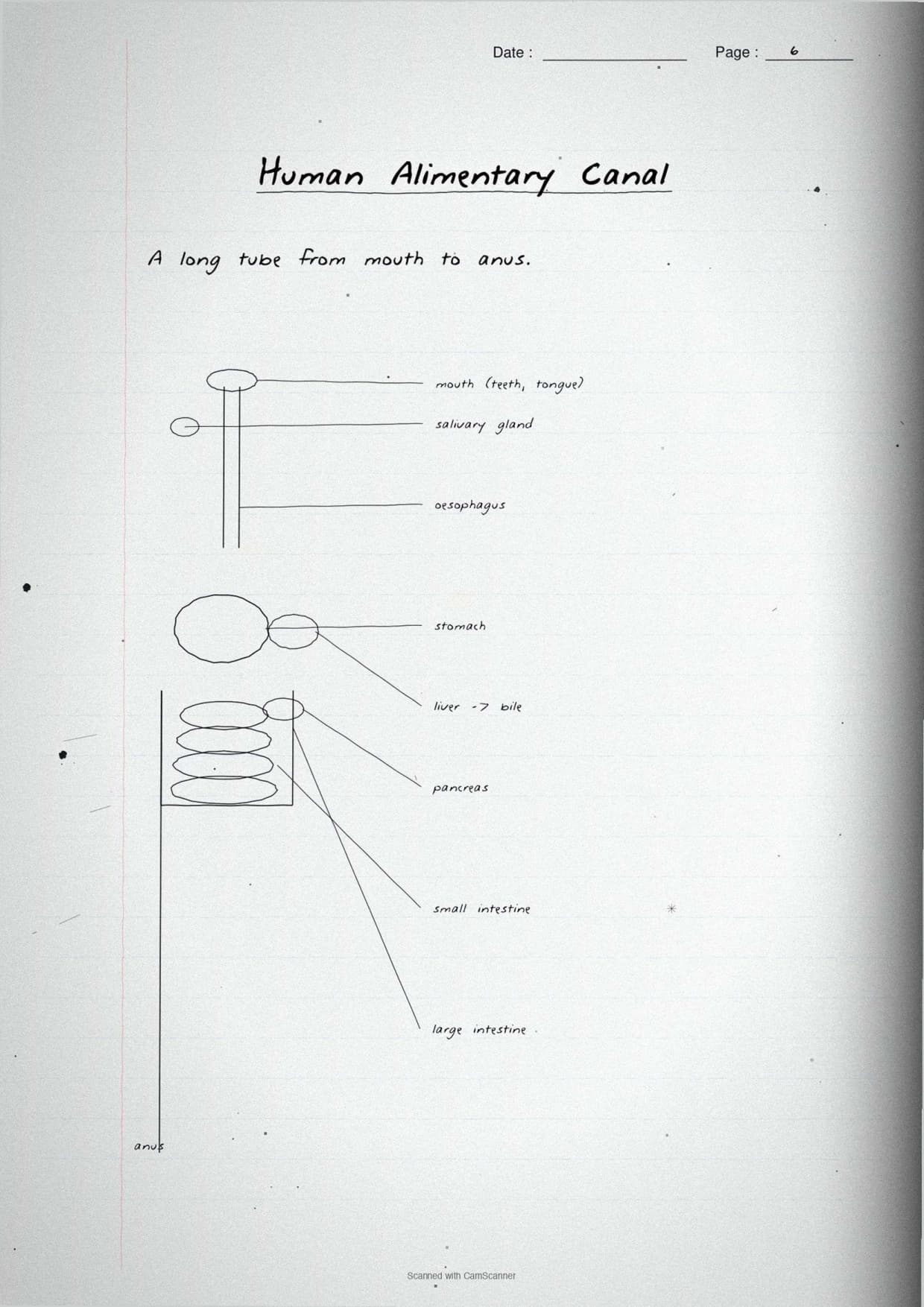
One spread draws the human digestive system as a labelled tube from mouth to anus, the most asked 5-mark diagram. The table below mirrors the boxed pathway, showing where each enzyme acts.
| Organ | What happens | Key enzyme or juice |
|---|---|---|
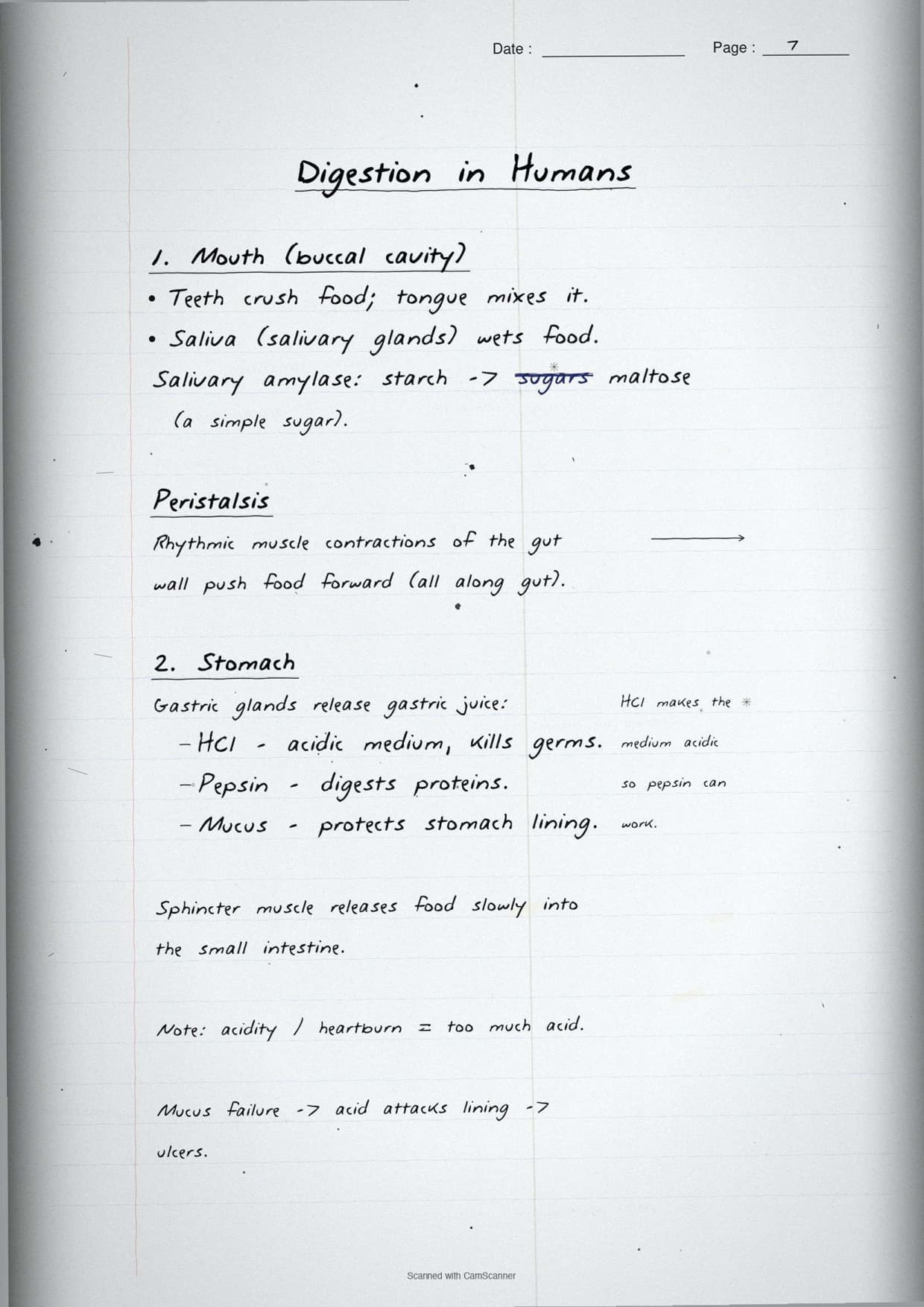
| Mouth | Starch begins to break into sugar | Salivary amylase (ptyalin) |
| Stomach | Proteins are broken down; food is churned | Pepsin and hydrochloric acid |
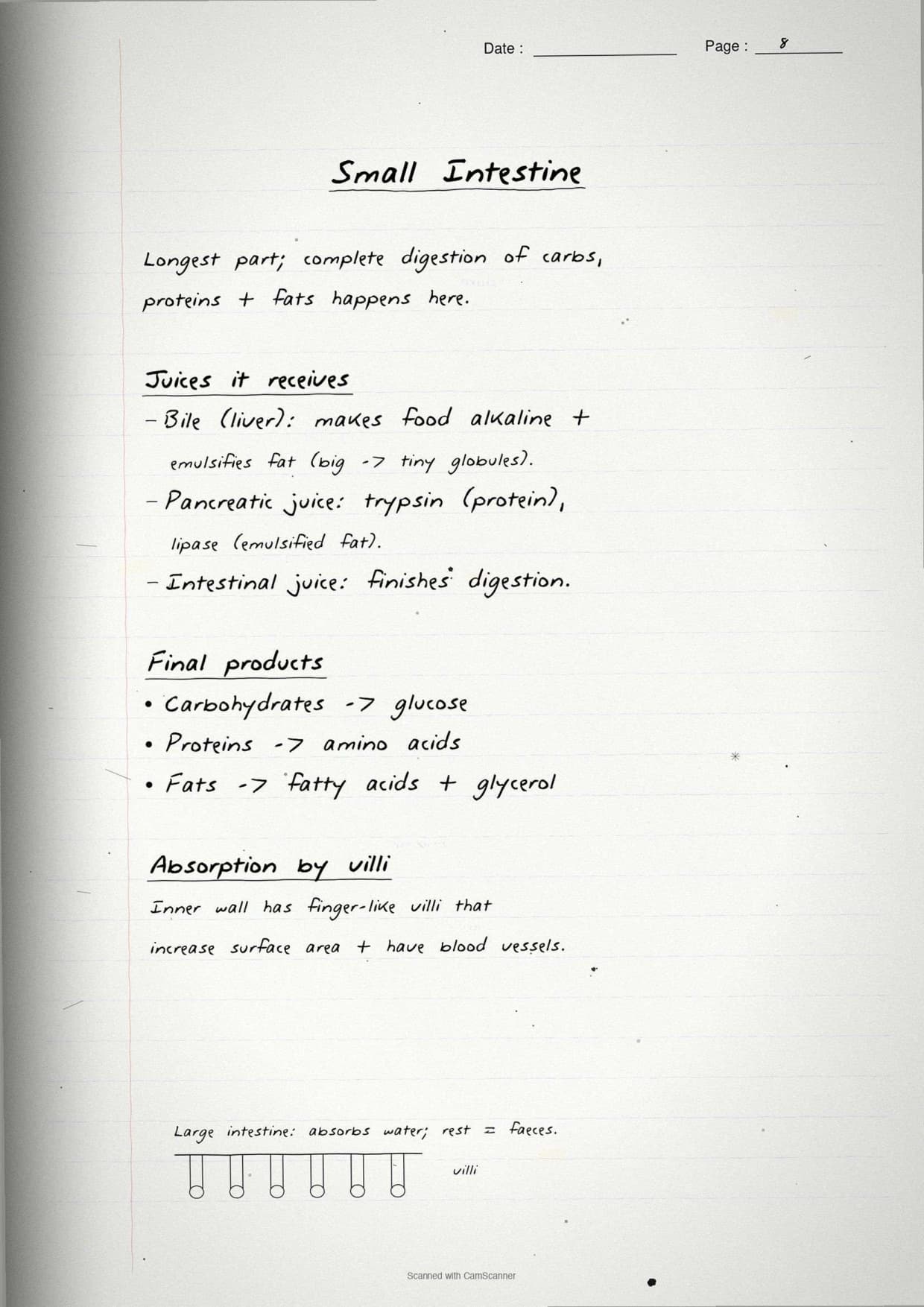
| Small intestine | Complete digestion and absorption of food | Bile, pancreatic juice, intestinal juice |
| Large intestine | Water is absorbed; waste is left behind | No digestive enzymes |
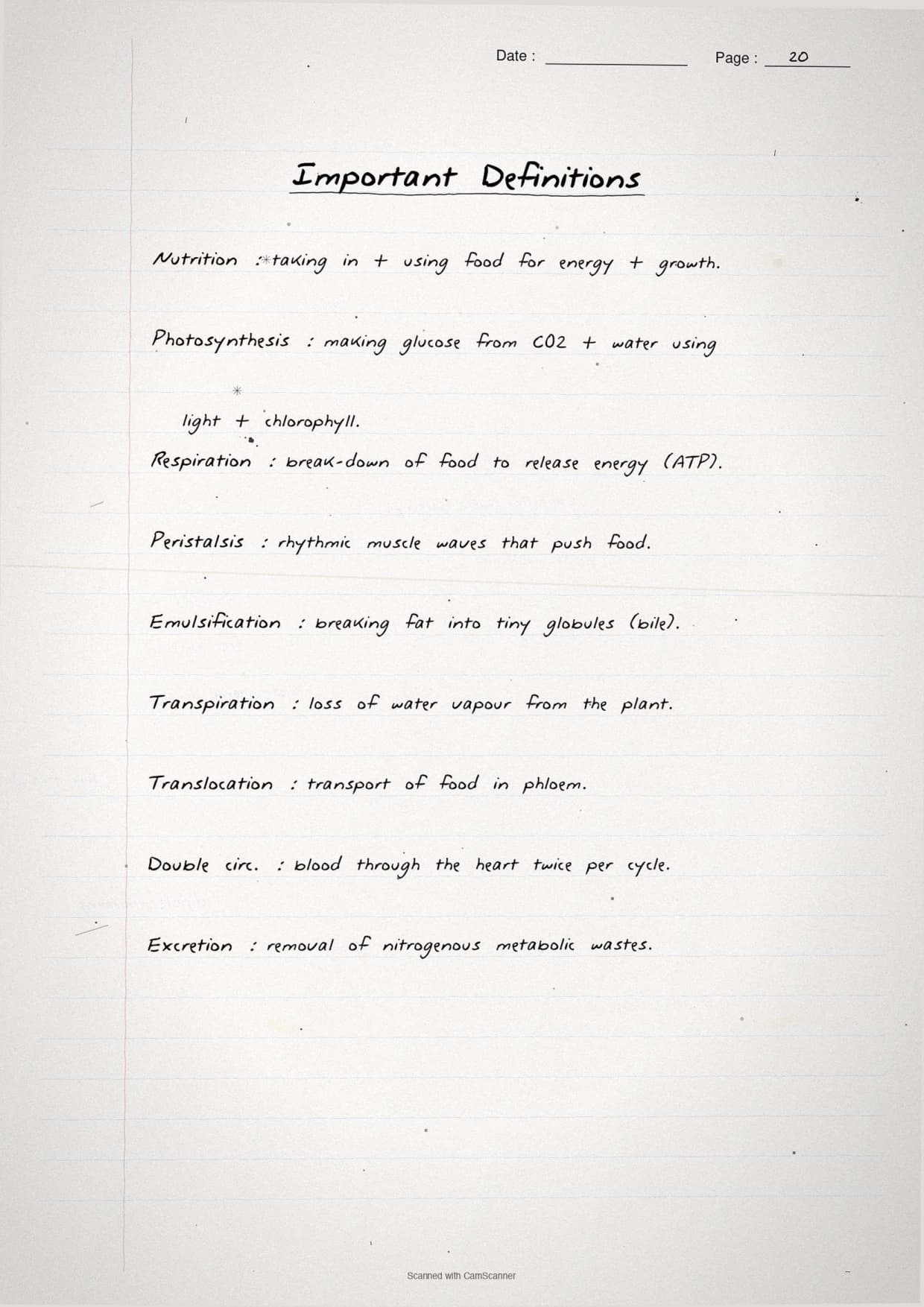
Bile from the liver breaks large fat drops into small ones so enzymes act faster, a process called emulsification. Two terms the paper asks students to define:
- Peristalsis: the wave-like muscle movement that pushes food along the gut.
- Villi: the finger-like folds in the small intestine that hugely increase the surface area for absorption.
Respiration and the Human Respiratory System in the Notes
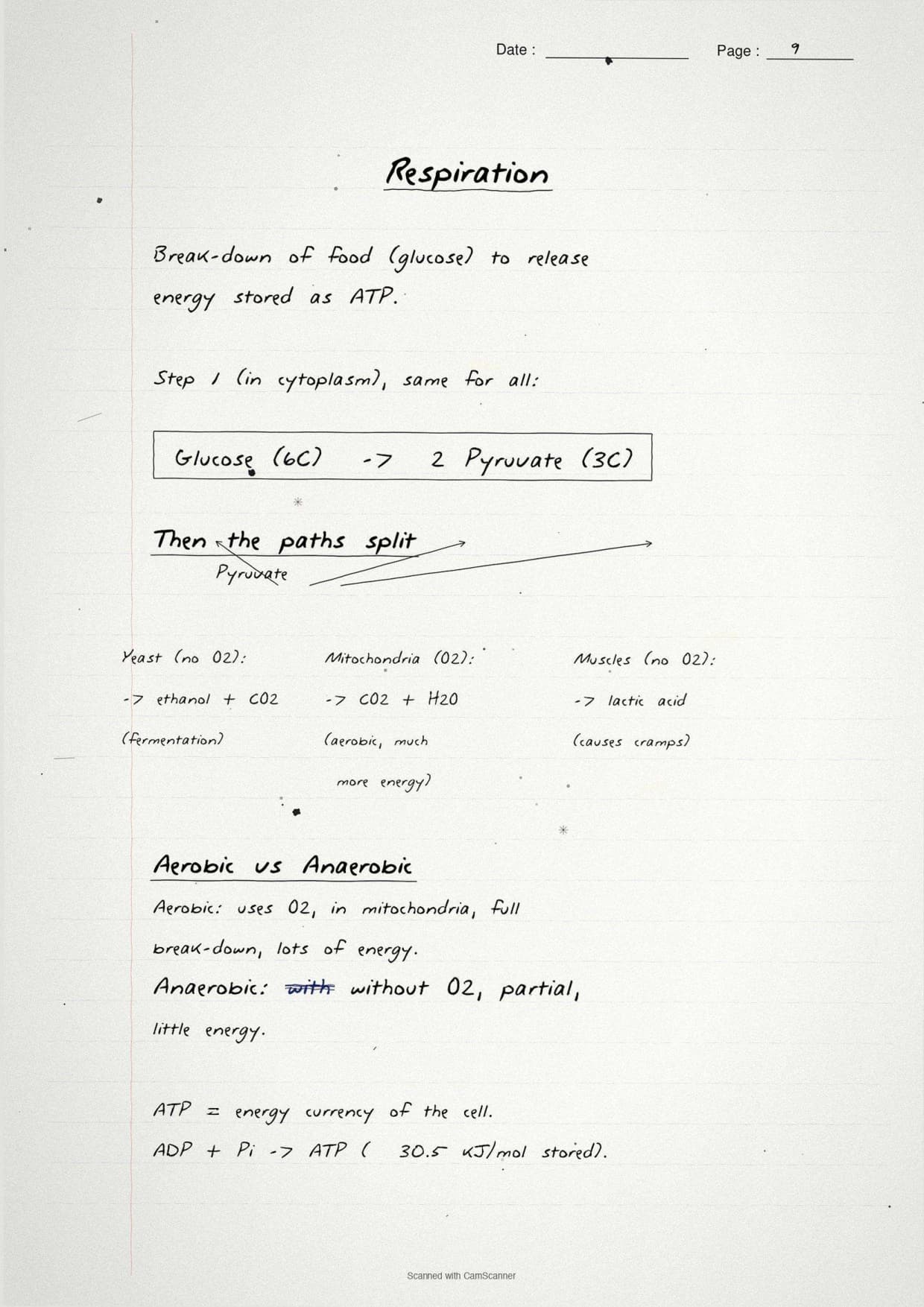
The two routes of respiration, aerobic and anaerobic, decide which gives more energy. In aerobic respiration, glucose breaks down fully with oxygen and releases the most energy:
The two anaerobic routes:
- In yeast: glucose → ethanol + carbon dioxide + a little energy (fermentation).
- In our muscles: glucose → lactic acid + a little energy, which is why hard exercise causes cramps.
- Key point: aerobic respiration releases far more energy than anaerobic from the same glucose.
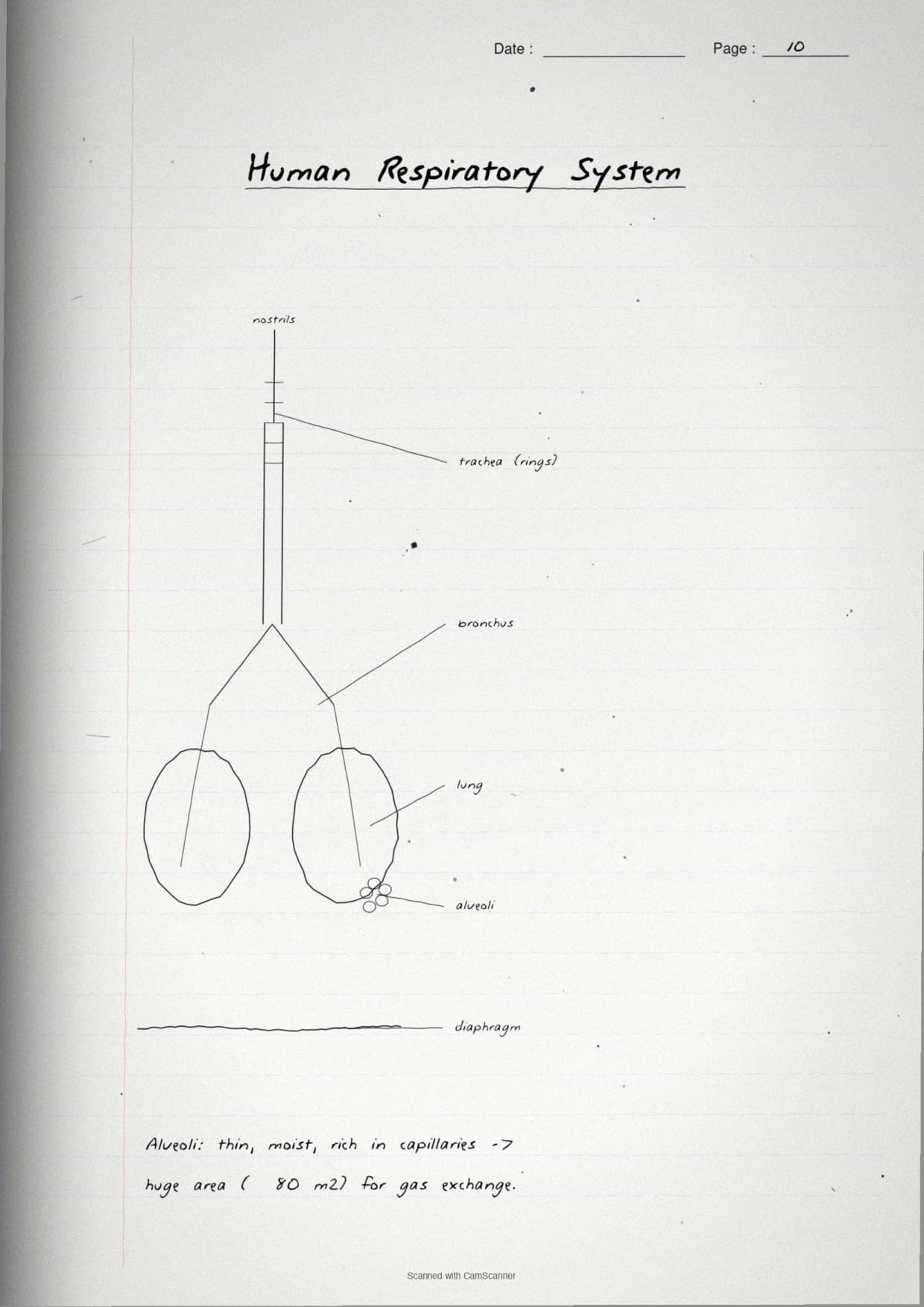
Air moves through the nostrils, trachea, bronchi, and finally into the tiny air sacs called alveoli, where gas exchange happens. Alveoli give a very large surface area for gas exchange and are richly supplied with blood capillaries, the line that answers most respiratory-system questions.
Transportation: The Heart, Blood and Plant Transport
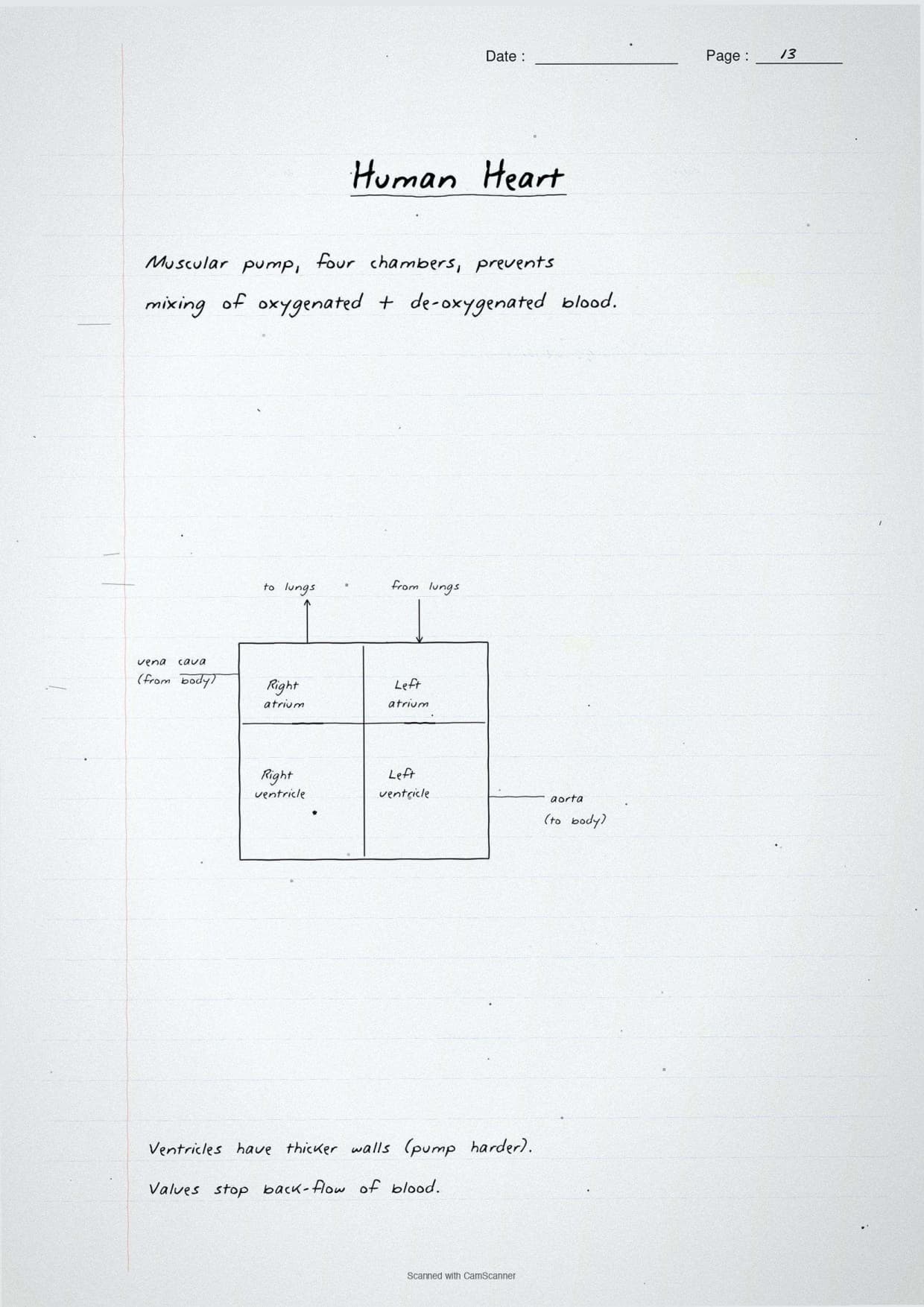
The labelled heart is a top 5-mark diagram, so trace the blood pathway carefully:
- Right side: right atrium and ventricle handle deoxygenated blood and send it to the lungs.
- Left side: left atrium and ventricle handle oxygenated blood and pump it to the whole body.
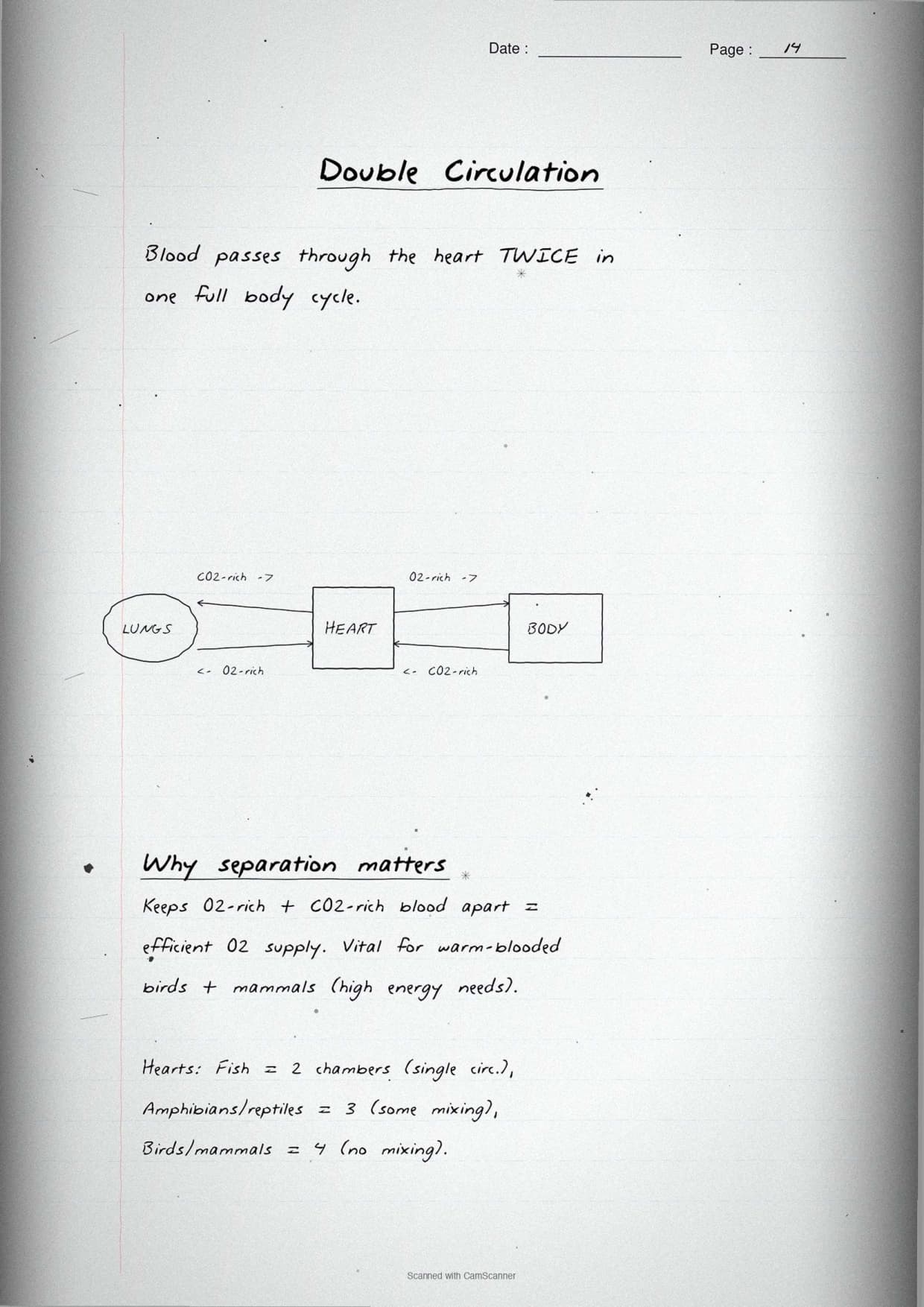
- Double circulation: blood passes through the heart twice in one round, keeping oxygenated and deoxygenated blood separate.
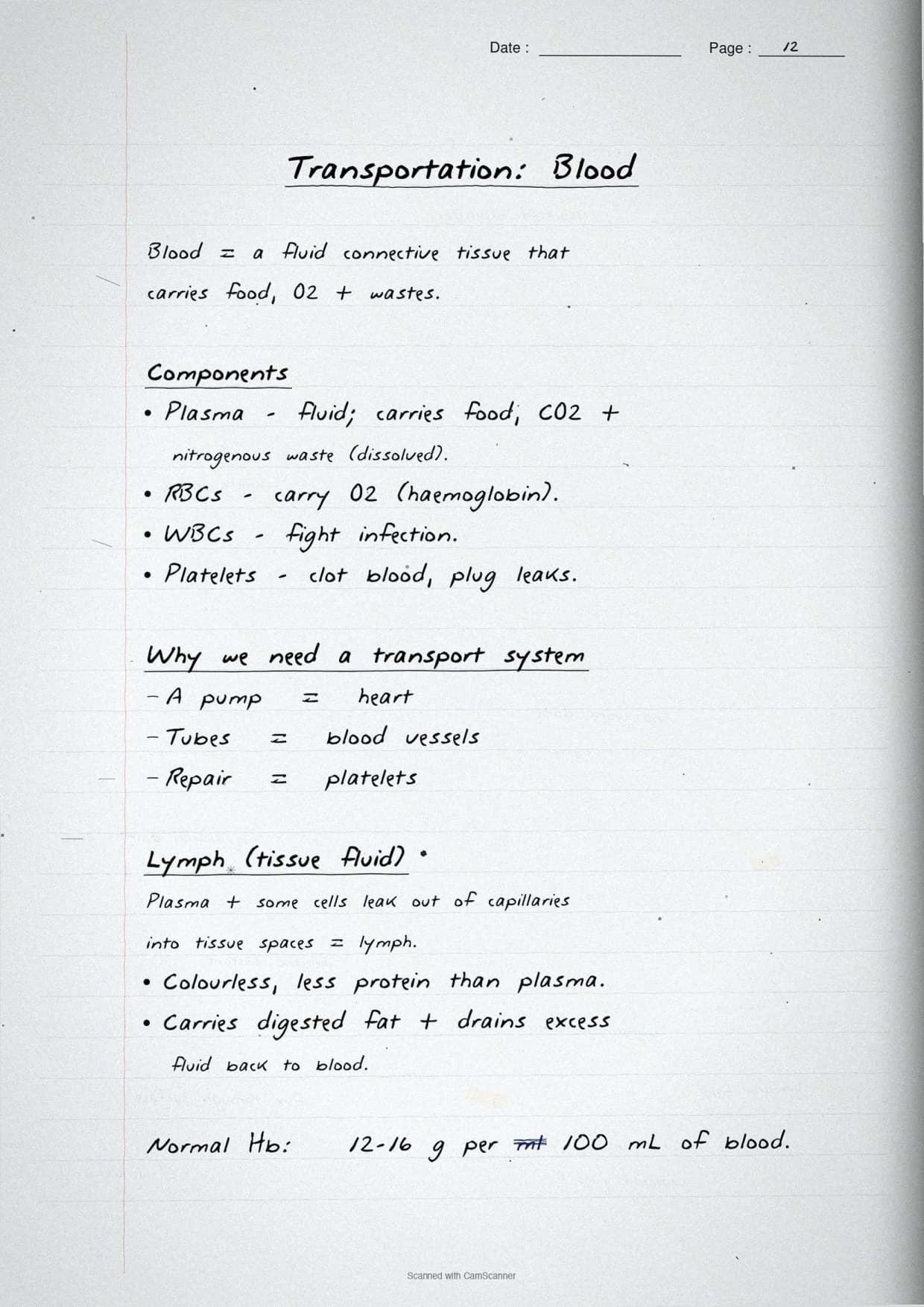
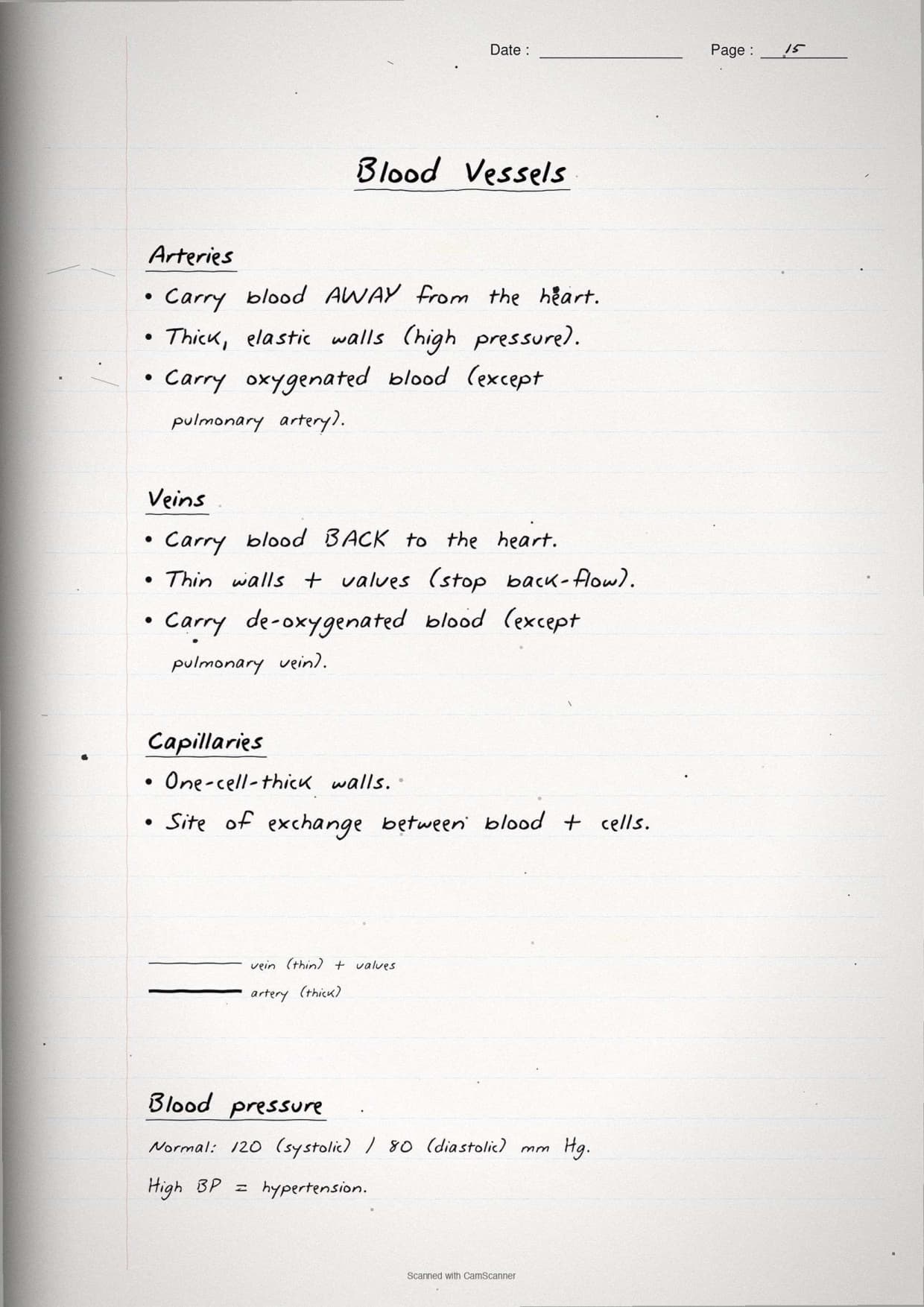
The three kinds of blood vessels:
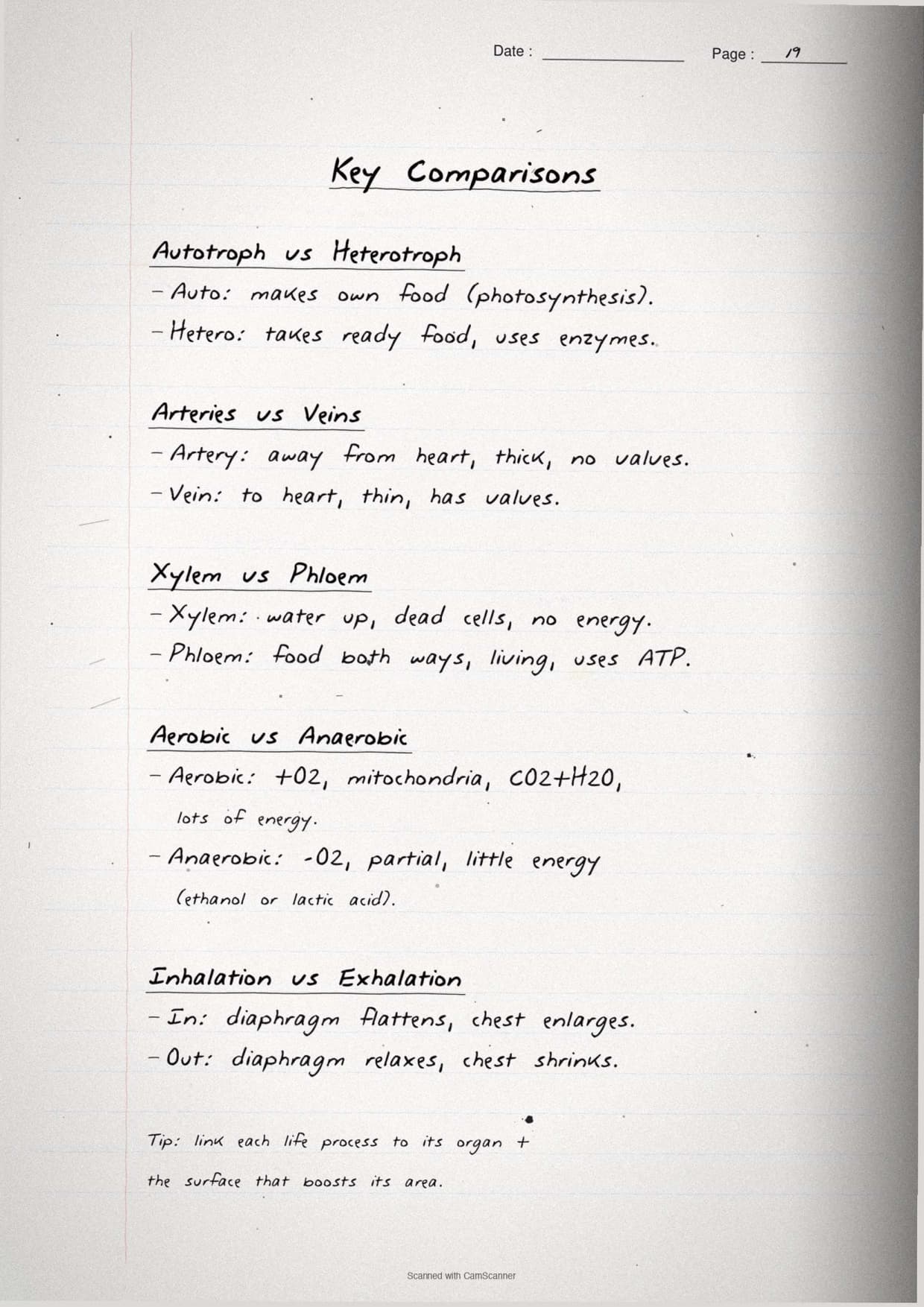
- Arteries: carry blood away from the heart, thick walls, oxygenated (except the pulmonary artery).
- Veins: carry blood back to the heart, have valves, deoxygenated (except the pulmonary vein).
- Capillaries: the thinnest vessels, one cell thick, where exchange with the cells takes place.
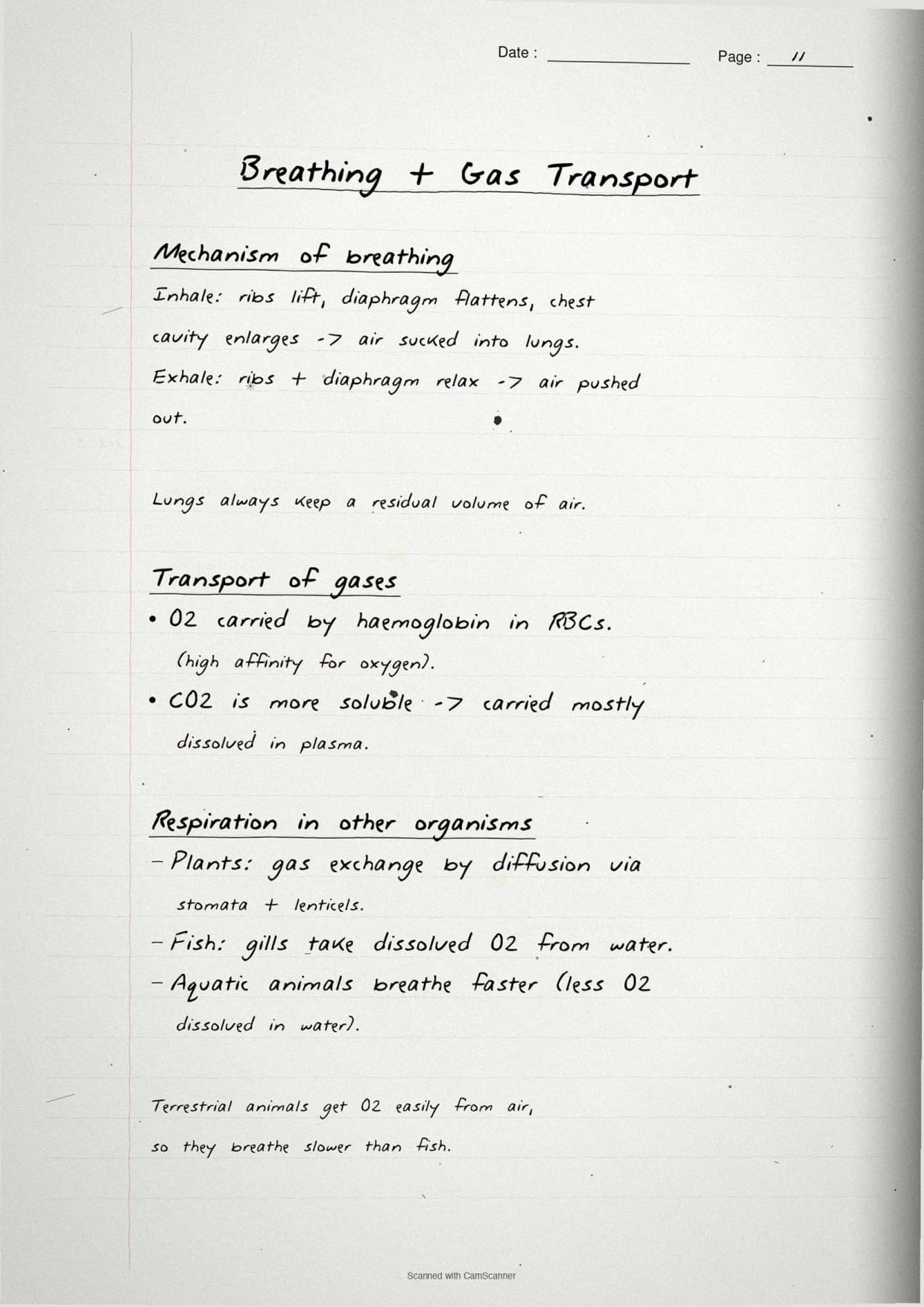
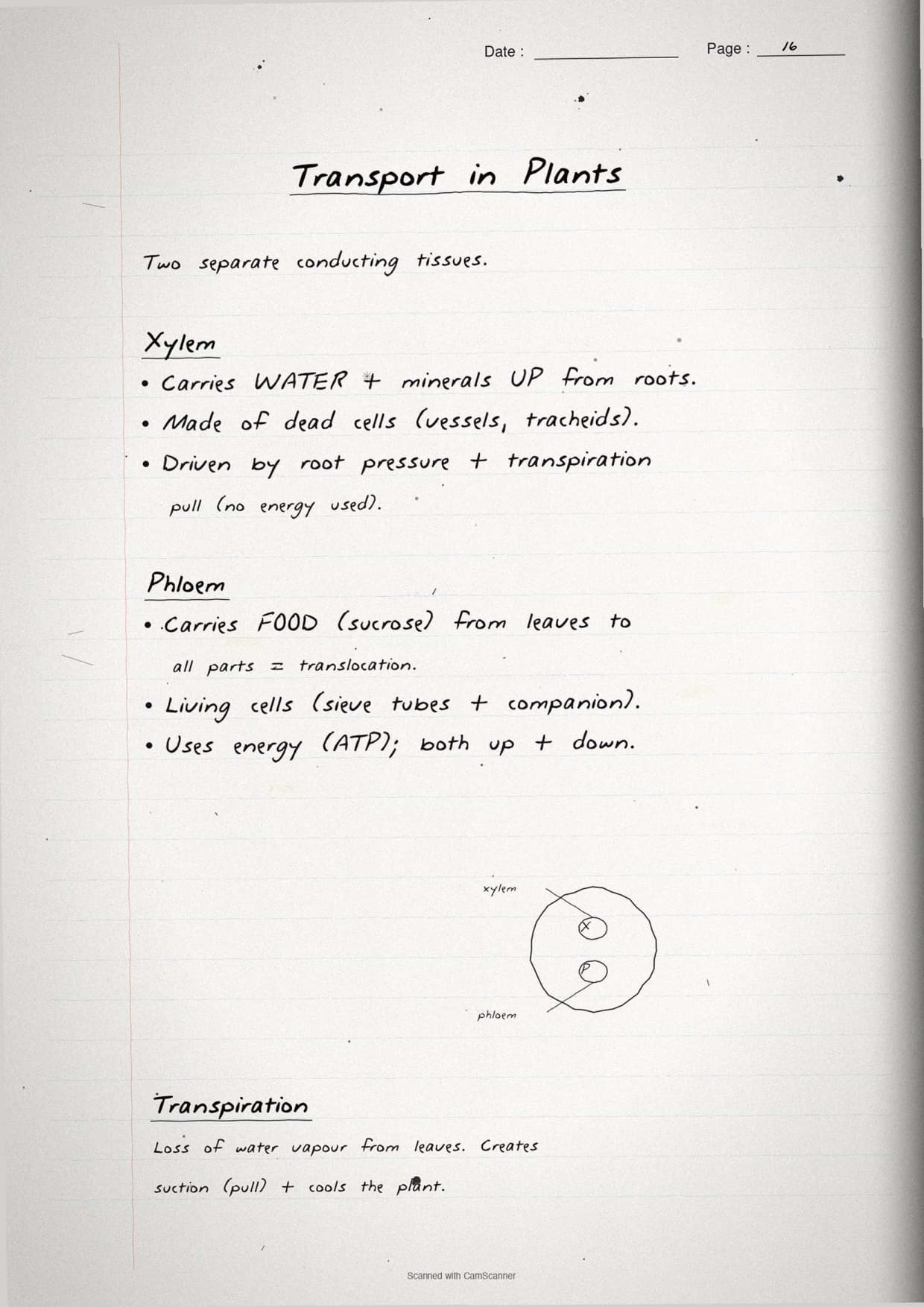
In plants, xylem carries water and minerals upward, pulled by transpiration, while phloem carries food from the leaves by translocation. Xylem moves only upward, but phloem moves food in both directions, the line examiners reward.
Excretion: The Human Excretory System and Nephron
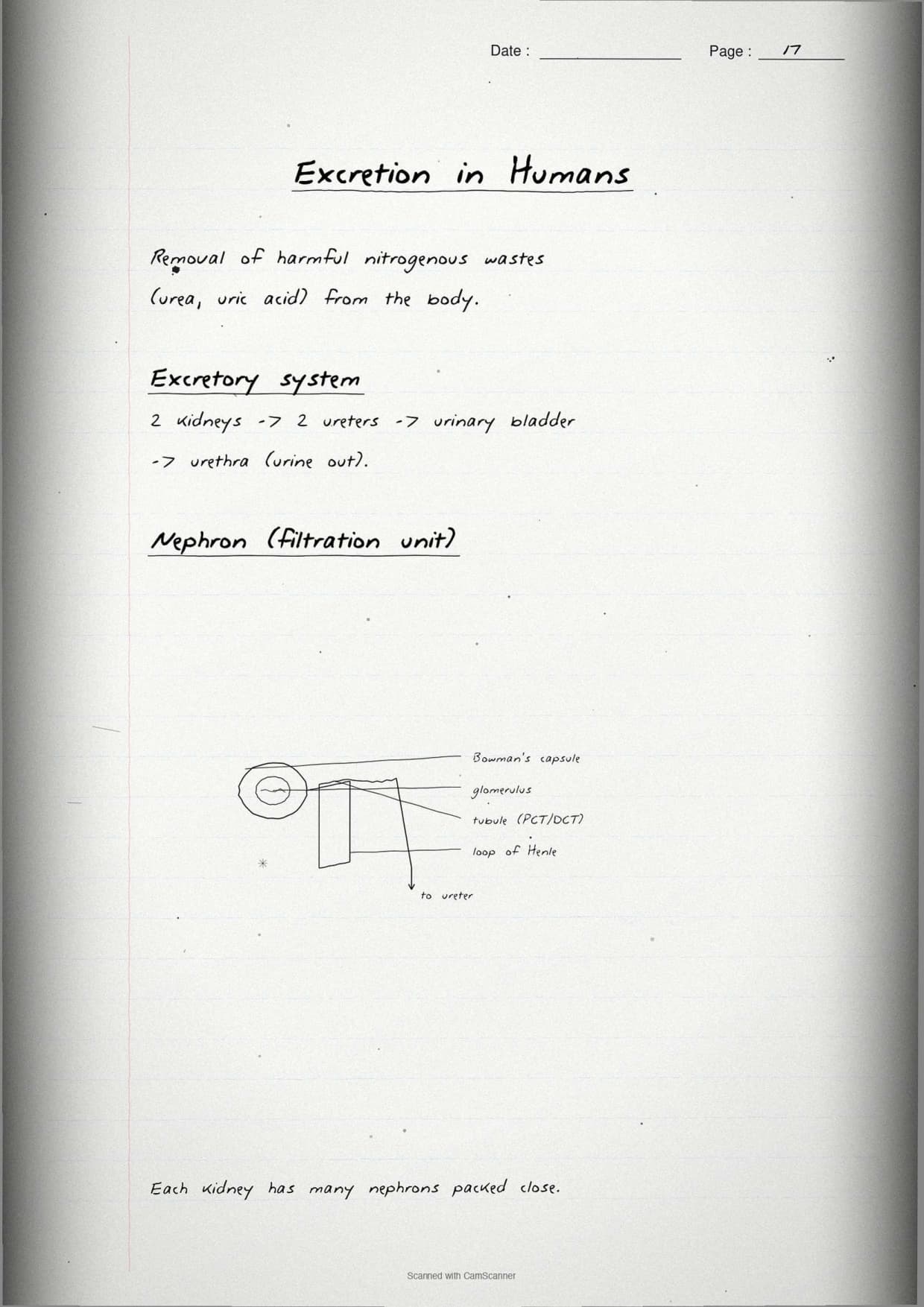
The last spread covers how the body removes waste. Excretion is the removal of harmful nitrogenous wastes such as urea. The parts of the excretory system, in order:
- Kidneys: a pair of bean-shaped organs that filter blood and make urine.
- Ureters: carry urine from each kidney to the bladder.
- Bladder and urethra: the bladder stores urine, the urethra passes it out.
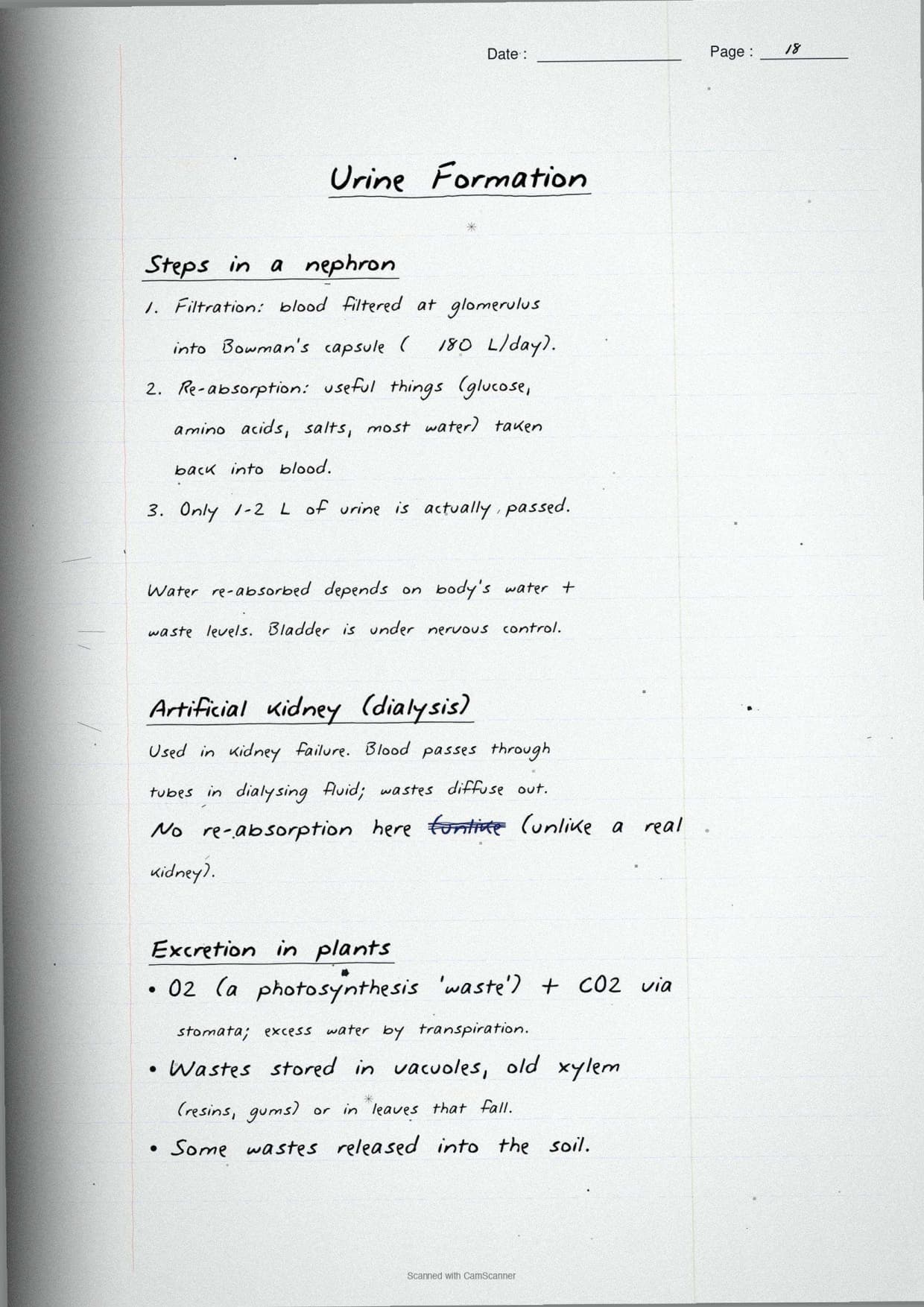
The three steps inside a single nephron, the kidney's filtering unit:
- Filtration: blood is filtered in the glomerulus; water, glucose, salts and urea pass into the tubule.
- Reabsorption: useful items like glucose, some salts and most water return to the blood.
- Urine formation: the leftover urea and excess water form urine.
By contrast, plants remove waste by storing it in leaves that fall, releasing gases through stomata, and giving out resins and gums. This contrast is a favourite 2-mark question.
How to Use These Handwritten Notes Effectively
Handwritten notes work best as a final revision layer, not your first read. Use the Life Processes handwritten notes like this:
- First pass: read in order, nutrition, respiration, transportation, then excretion.
- Active recall: cover the diagrams and redraw the heart, nephron and digestive system from memory.
- Label drill: practise labelling each diagram, as the board paper gives marks for correct labels alone.
- Self-test: attempt a short chapter 5 drill, then pair with the full solutions to compare answers.
Common Mistakes These Notes Help You Avoid
A few errors cost marks every year, mostly from mixing up the systems or mislabelling a diagram. The notes flag each soft point in the margin.
- Saying veins always carry deoxygenated blood. The pulmonary vein carries oxygenated blood.
- Mixing up the transport tissues. Xylem carries water, phloem carries food.
- Writing that anaerobic gives more energy. Aerobic respiration releases far more.
- Forgetting that reabsorption in the nephron returns glucose and most water to the blood.
- Calling bile an enzyme. Bile emulsifies fat; it has no enzyme of its own.
Fixing these five points moves most students from average to high marks. The exam rewards exact terms and correctly labelled diagrams, so always name the organ, state the process and label every part.
How These Notes Pair with the Solutions and Book PDF
To prepare fully, use these notes with the other resources for the same chapter, linked below.
| Resource | Best used for |
|---|---|
| Life Processes NCERT Solutions | Step-by-step answers for every question |
| Life Processes Class 10 Notes | Quick typed summary in one place |
| Life Processes Formula Sheet | One-page quick reference |
| Life Processes NCERT Book PDF | The original NCERT chapter text |
Tip: redraw the labelled heart and the nephron from memory, then write the photosynthesis and aerobic respiration equations in your own hand.
All Class 10 Science Handwritten Notes by Chapter
The table links the handwritten notes for every Class 10 Science chapter. Life Processes is highlighted.
| Chapter | Handwritten Notes |
|---|---|
| Chapter 1 | Chemical Reactions and Equations |
| Chapter 2 | Acids, Bases and Salts |
| Chapter 3 | Metals and Non-metals |
| Chapter 4 | Carbon and its Compounds |
| Chapter 5 | Life Processes |
| Chapter 6 | Control and Coordination |
| Chapter 7 | How do Organisms Reproduce? |
| Chapter 8 | Heredity |
| Chapter 9 | Light - Reflection and Refraction |
| Chapter 10 | The Human Eye and the Colourful World |
| Chapter 11 | Electricity |
| Chapter 12 | Magnetic Effects of Electric Current |
| Chapter 13 | Our Environment |
FAQs on Life Processes Handwritten Notes
Life Processes Class 10 Science Handwritten Notes Common Questions
Ques. Are these class 10 science chapter 5 Life Processes handwritten notes free to download?
Ans. Yes. The Life Processes handwritten notes are free to download as a PDF from this page. They follow the 2026-27 NCERT syllabus and cover the full chapter across 26 scanned, hand-drawn-diagram pages for quick revision.
Ques. What does Chapter 5 Life Processes cover in Class 10 Science?
Ans. The notes cover the four life processes: nutrition (autotrophic and heterotrophic, photosynthesis, the human digestive system), respiration (aerobic and anaerobic, the human respiratory system), transportation (the heart, blood vessels, xylem and phloem) and excretion (the kidney and the nephron), all of which the CBSE board paper tests directly.
Ques. What are the four life processes in Class 10 Science?
Ans. The four basic life processes are nutrition, respiration, transportation and excretion. Nutrition gets food and energy, respiration releases energy from food, transportation carries materials around the body, and excretion removes the harmful wastes that build up.
Ques. What is the difference between aerobic and anaerobic respiration?
Ans. Aerobic respiration uses oxygen, breaks glucose down fully into carbon dioxide and water, and releases a large amount of energy. Anaerobic respiration happens without oxygen, gives products like ethanol (in yeast) or lactic acid (in muscles), and releases far less energy from the same glucose.
Ques. Are these notes enough for the class 10 science chapter 5 board exam?
Ans. They are a strong final revision layer. For full preparation, pair them with the NCERT Solutions linked on this page so you can write out complete answers and labelled diagrams for every in-text and back-exercise question and check them against model answers.



Comments