




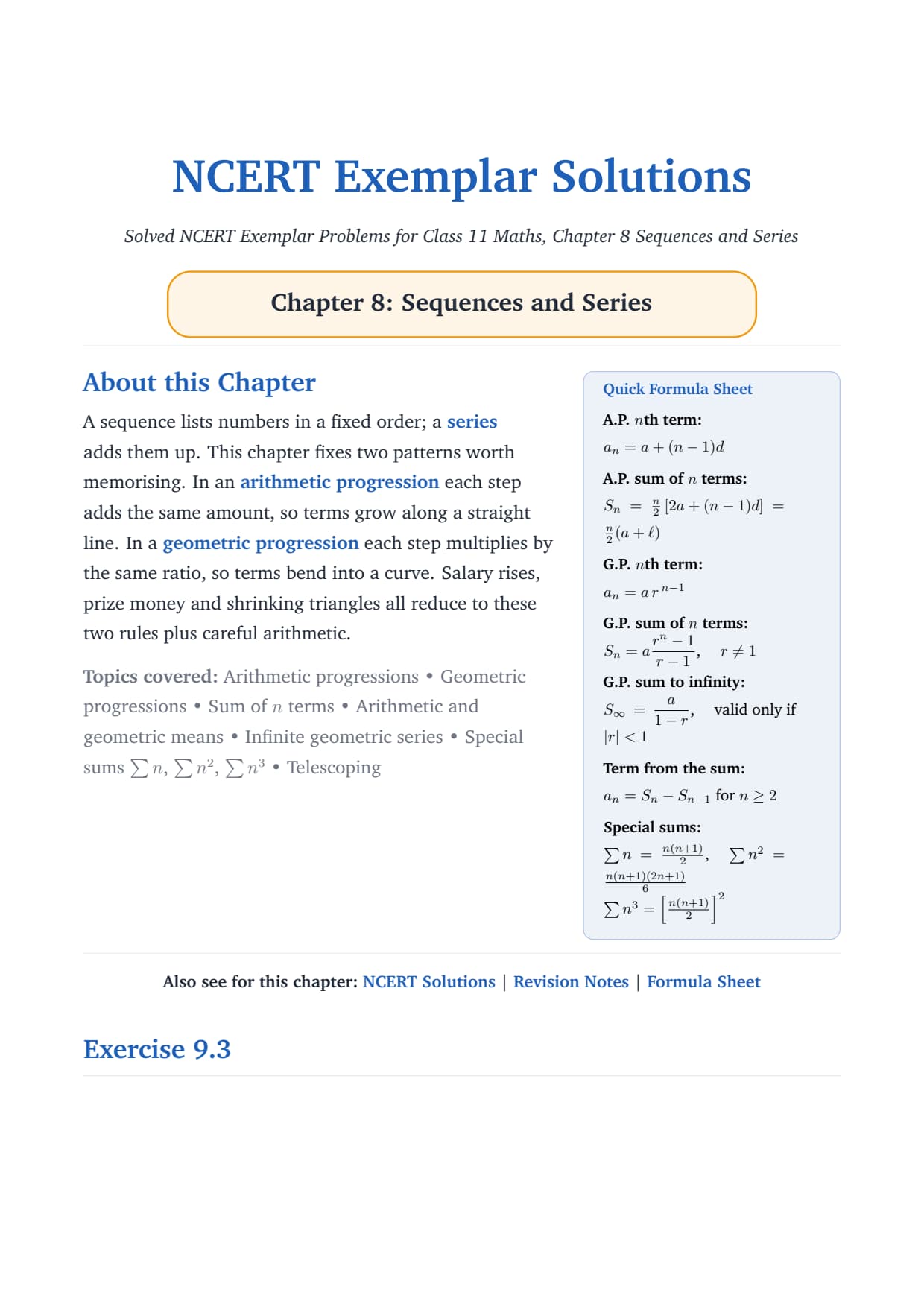
Inside the NCERT Exemplar Solutions for Class 11 Maths Chapter 8 Sequences and Series you will find every A.P. and G.P. question of the chapter solved step by step, the special-sum formulas laid out, and the one matching question where the printed key is wrong. All 36 questions are solved according to the 2026-27 NCERT Exemplar.
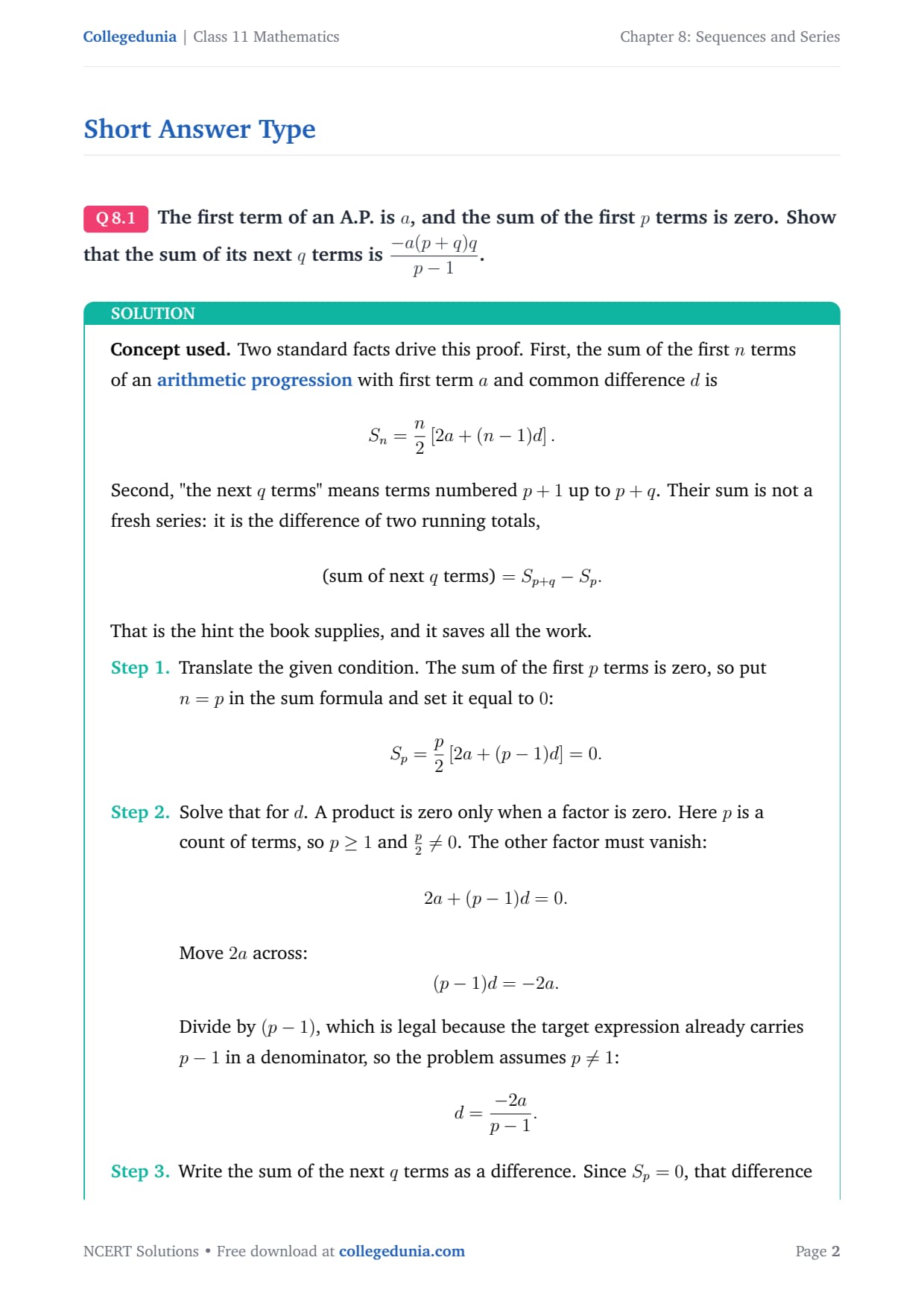
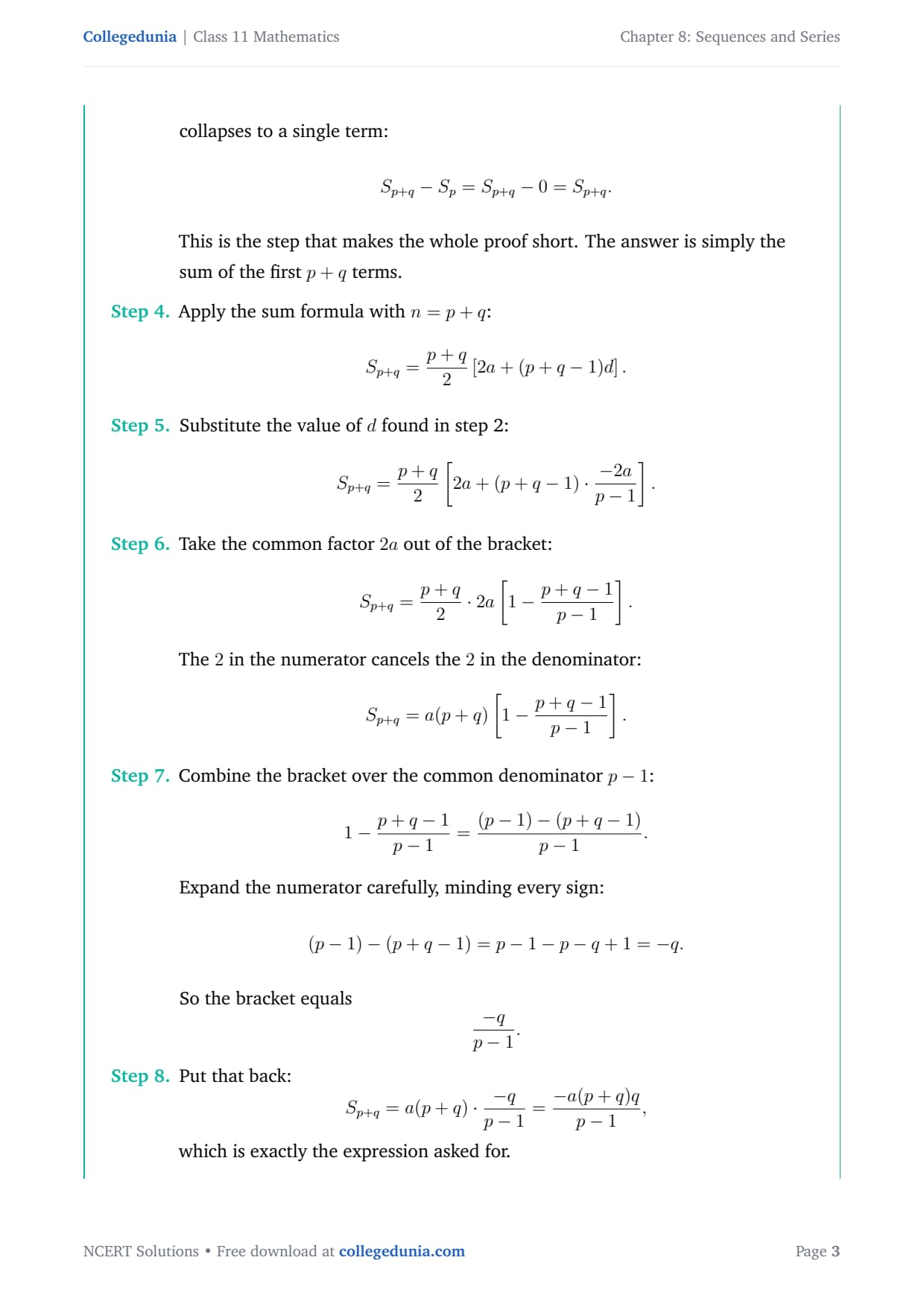
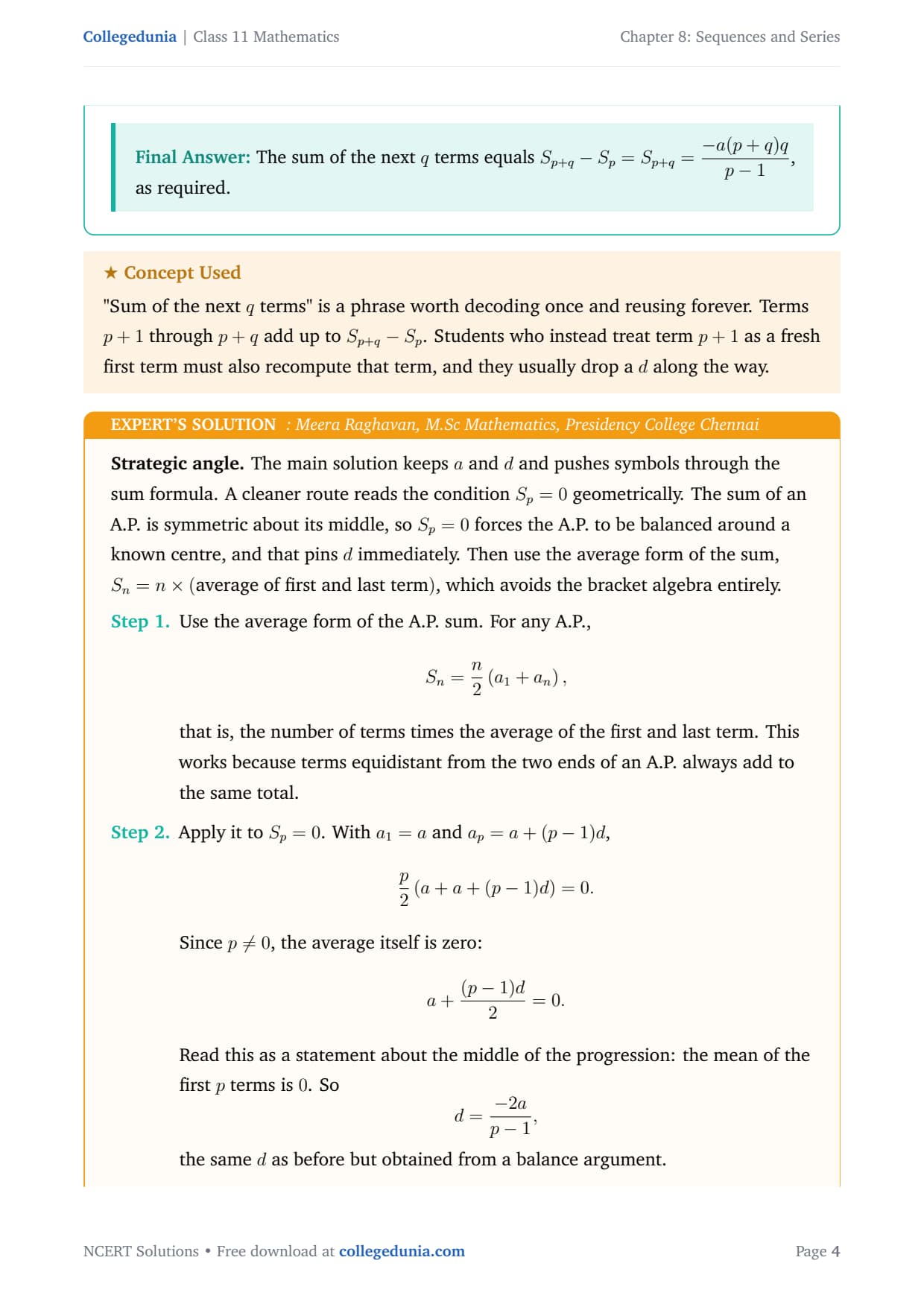
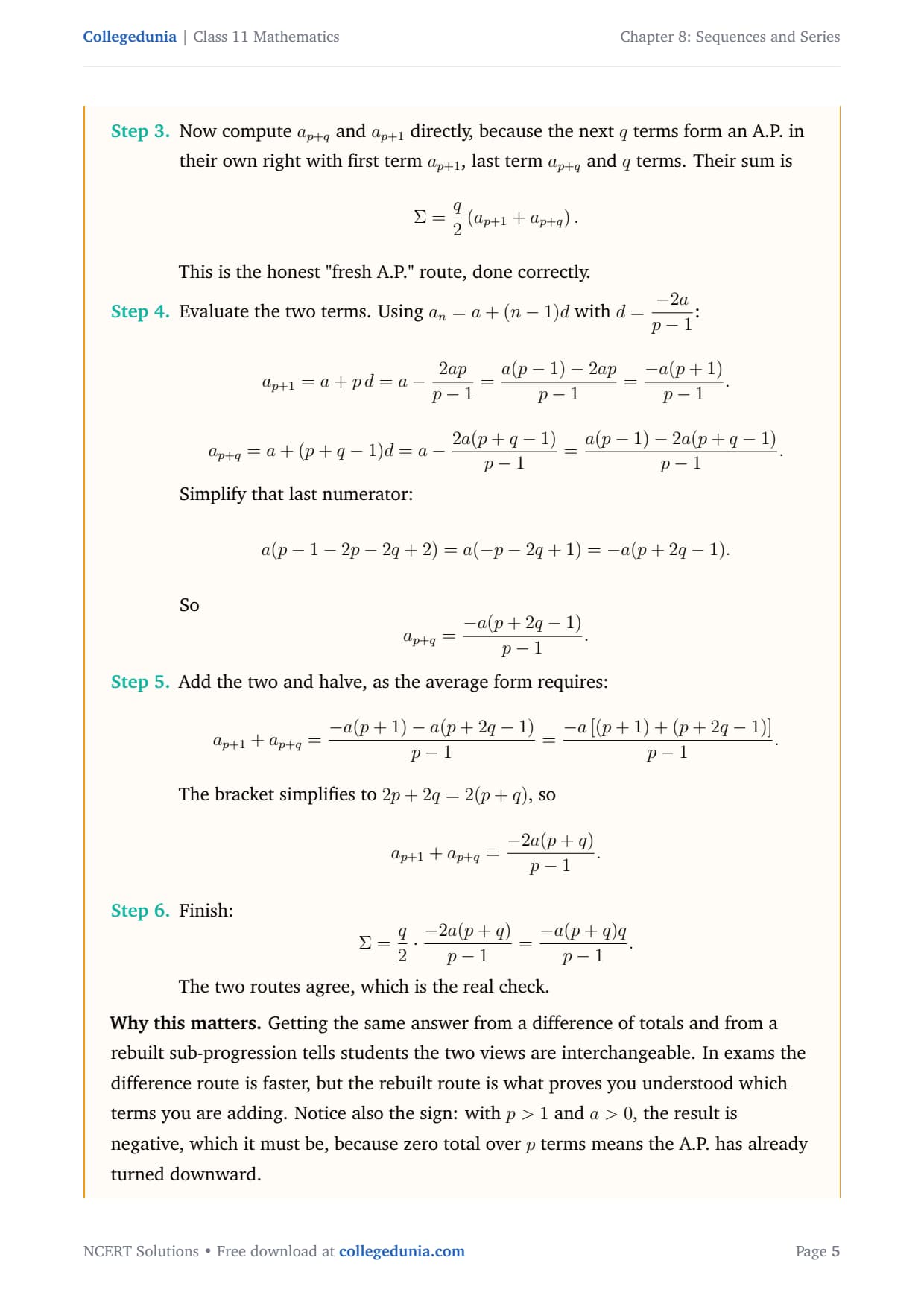
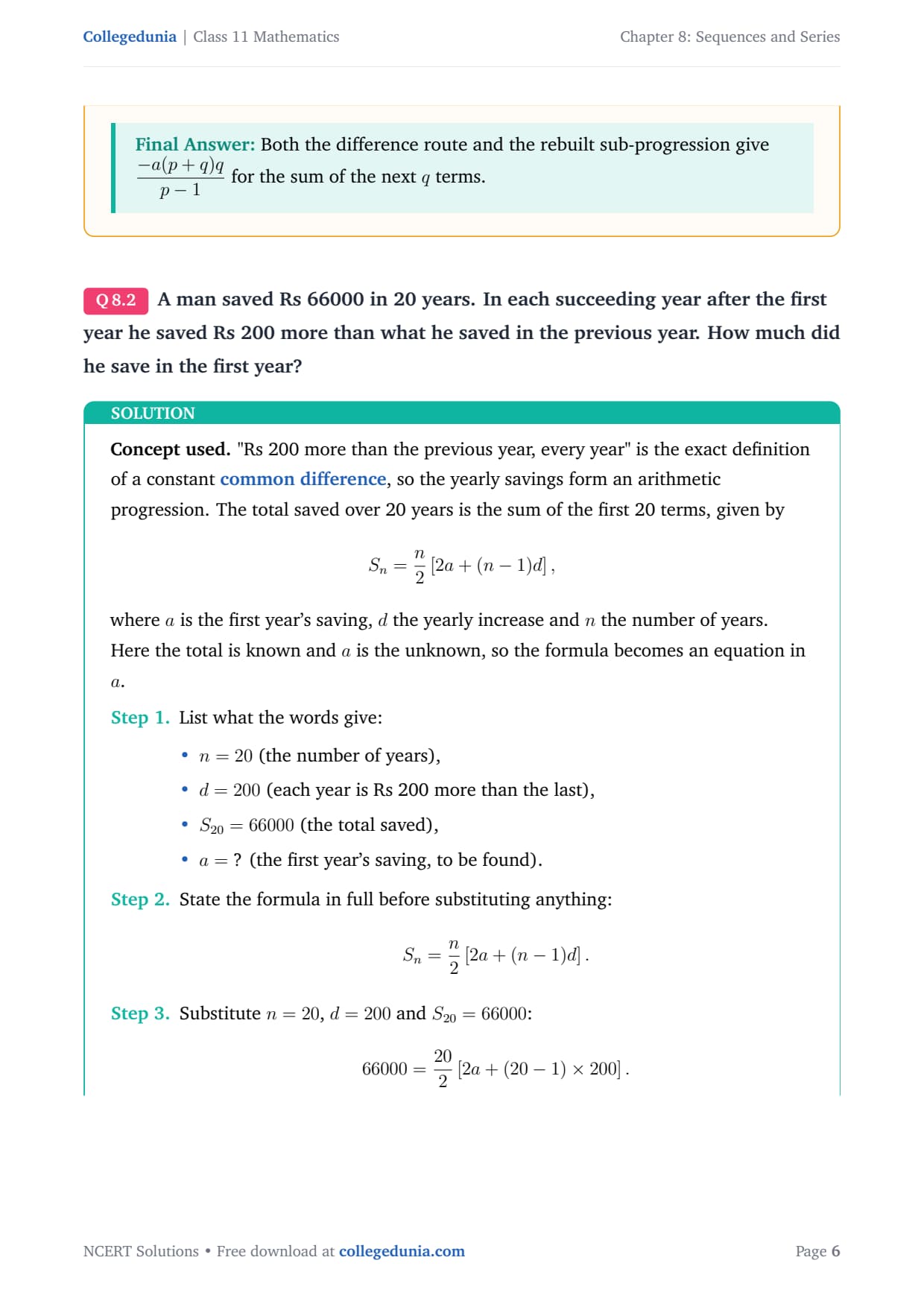

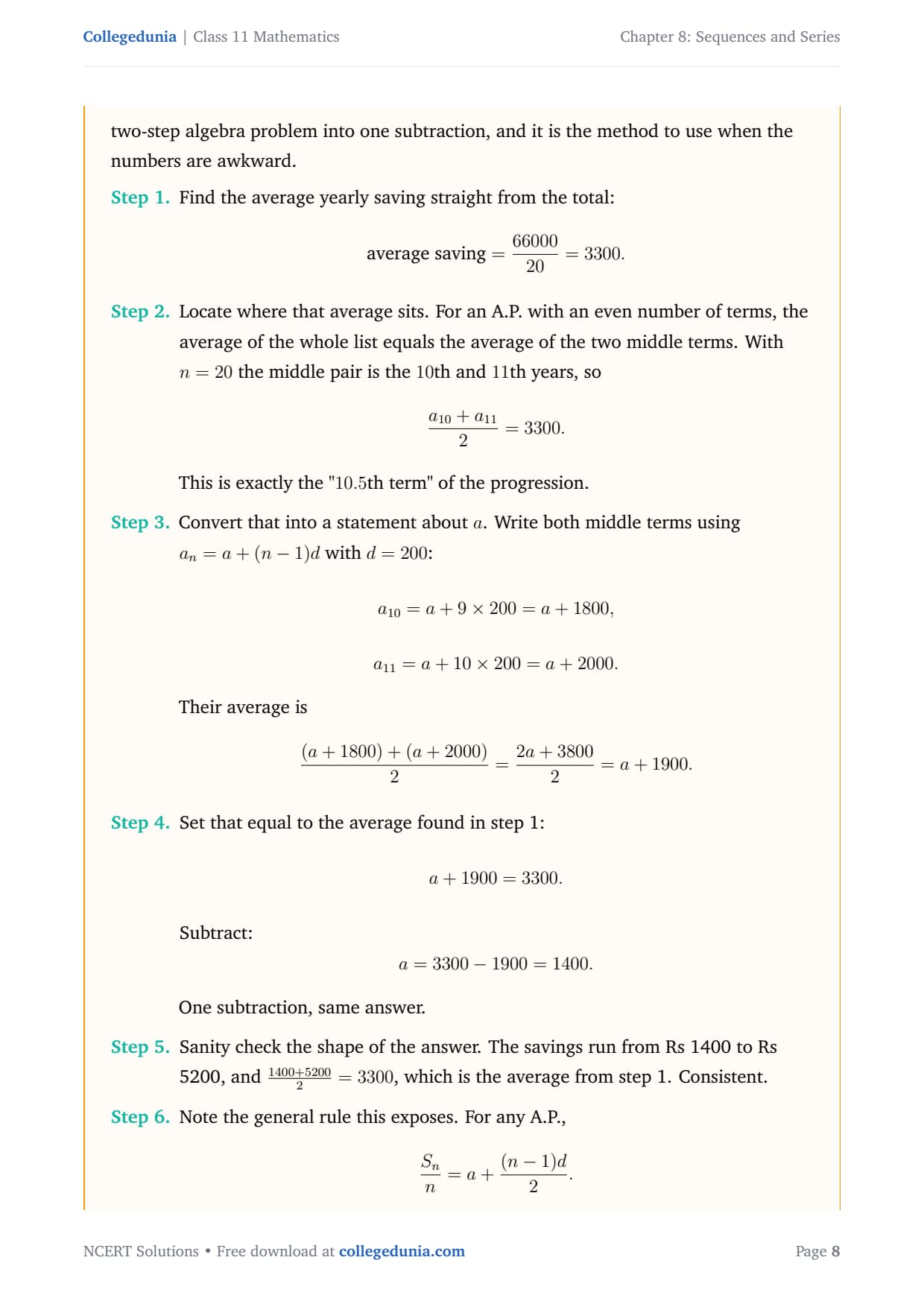
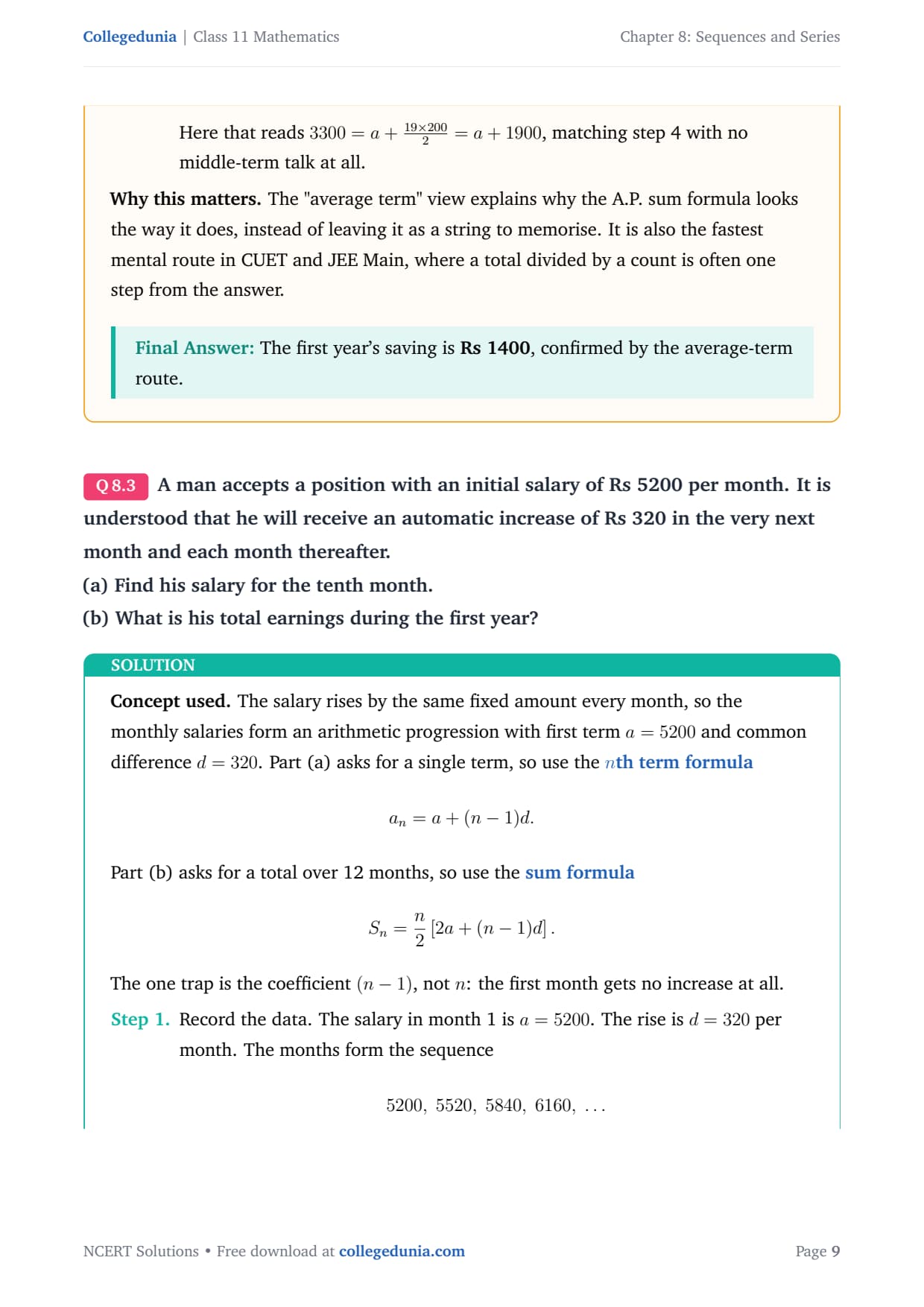
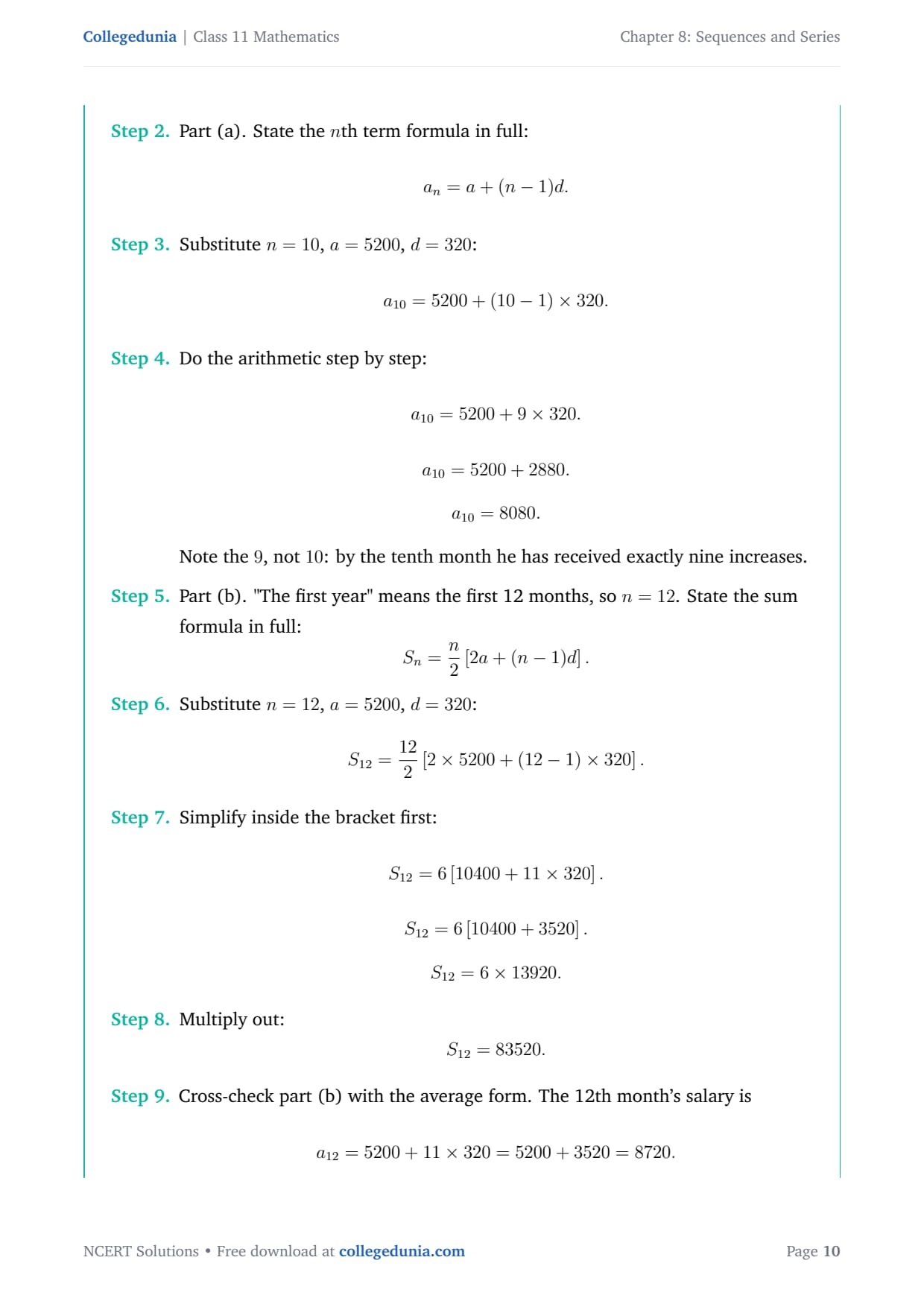
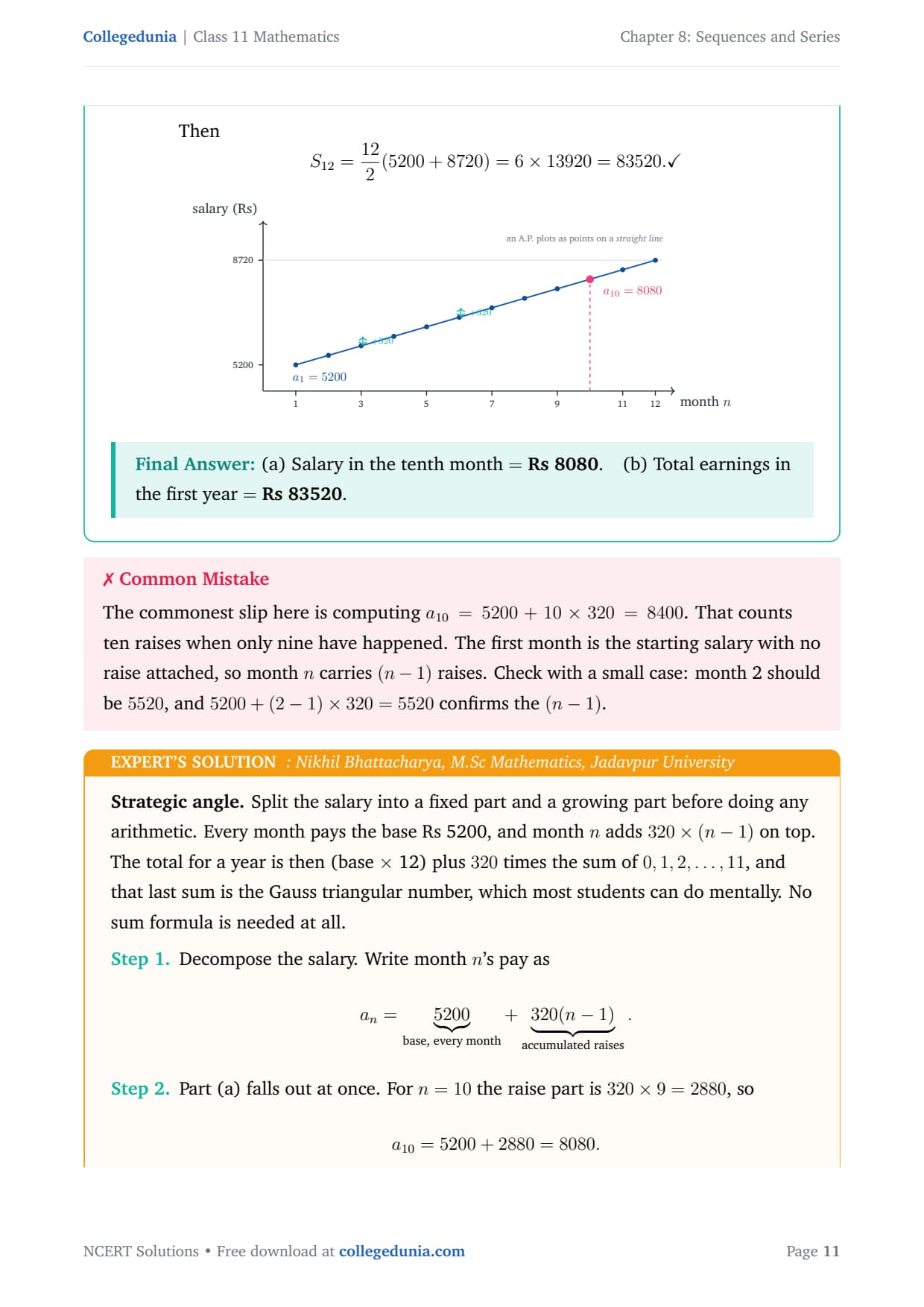
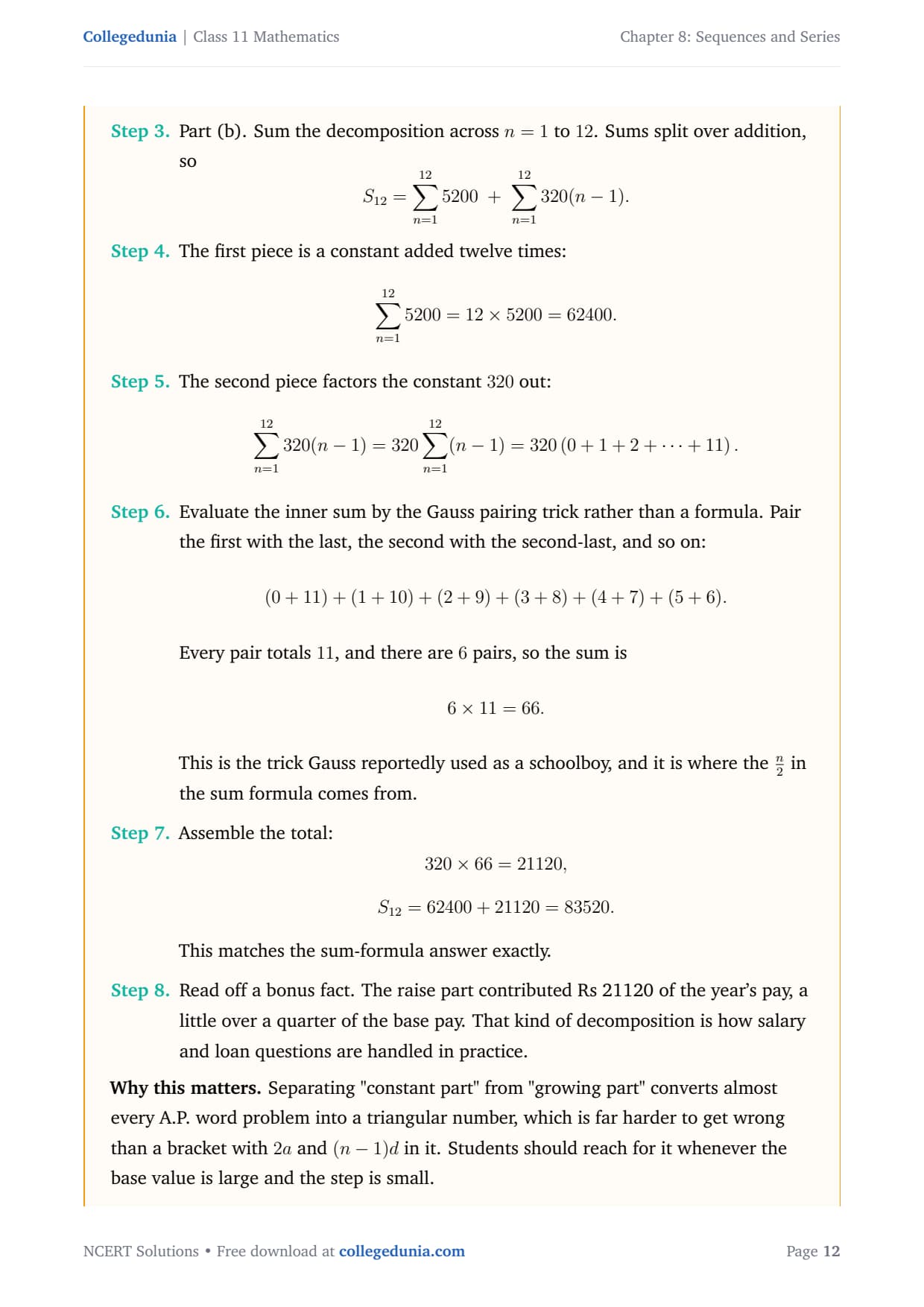
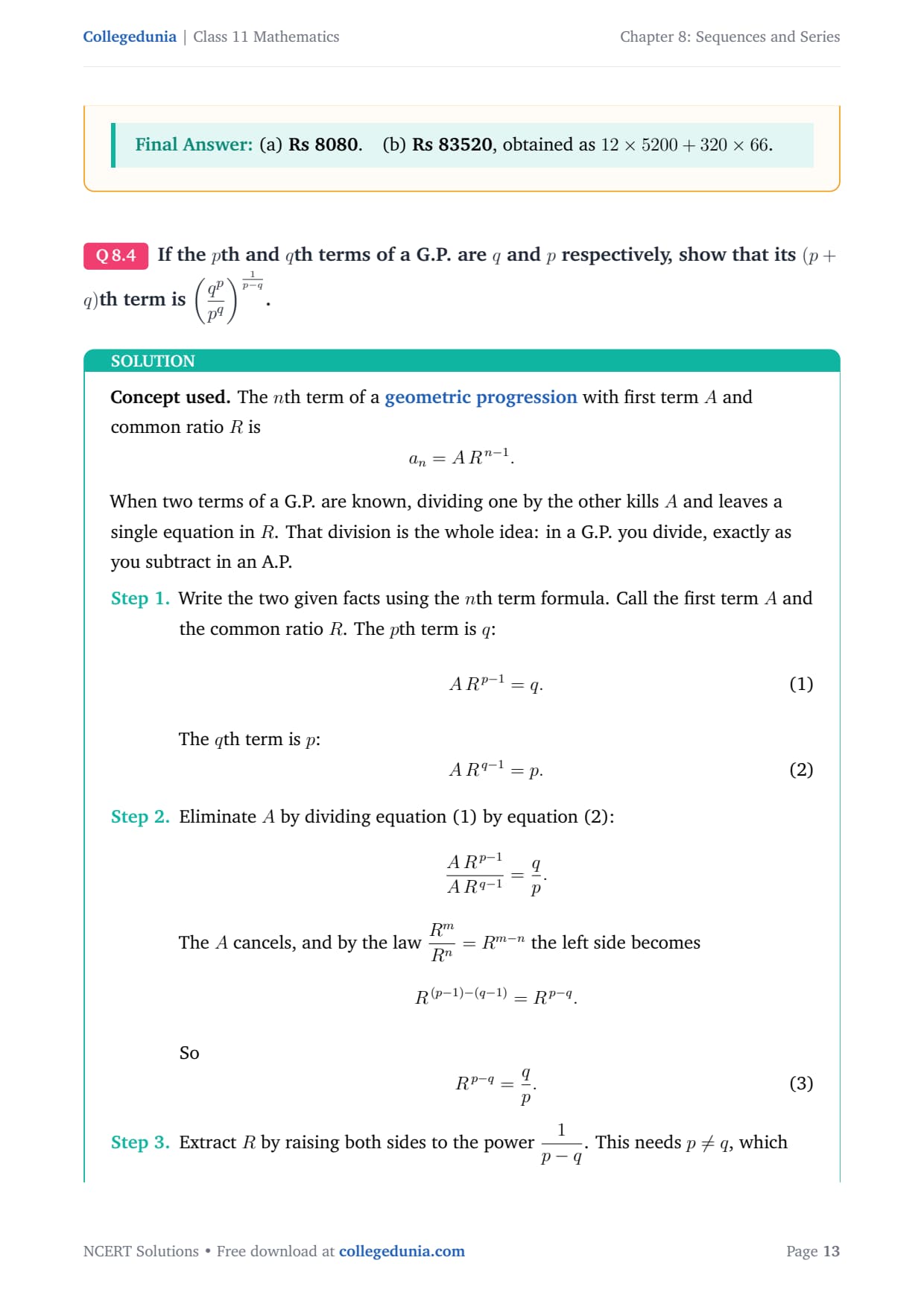
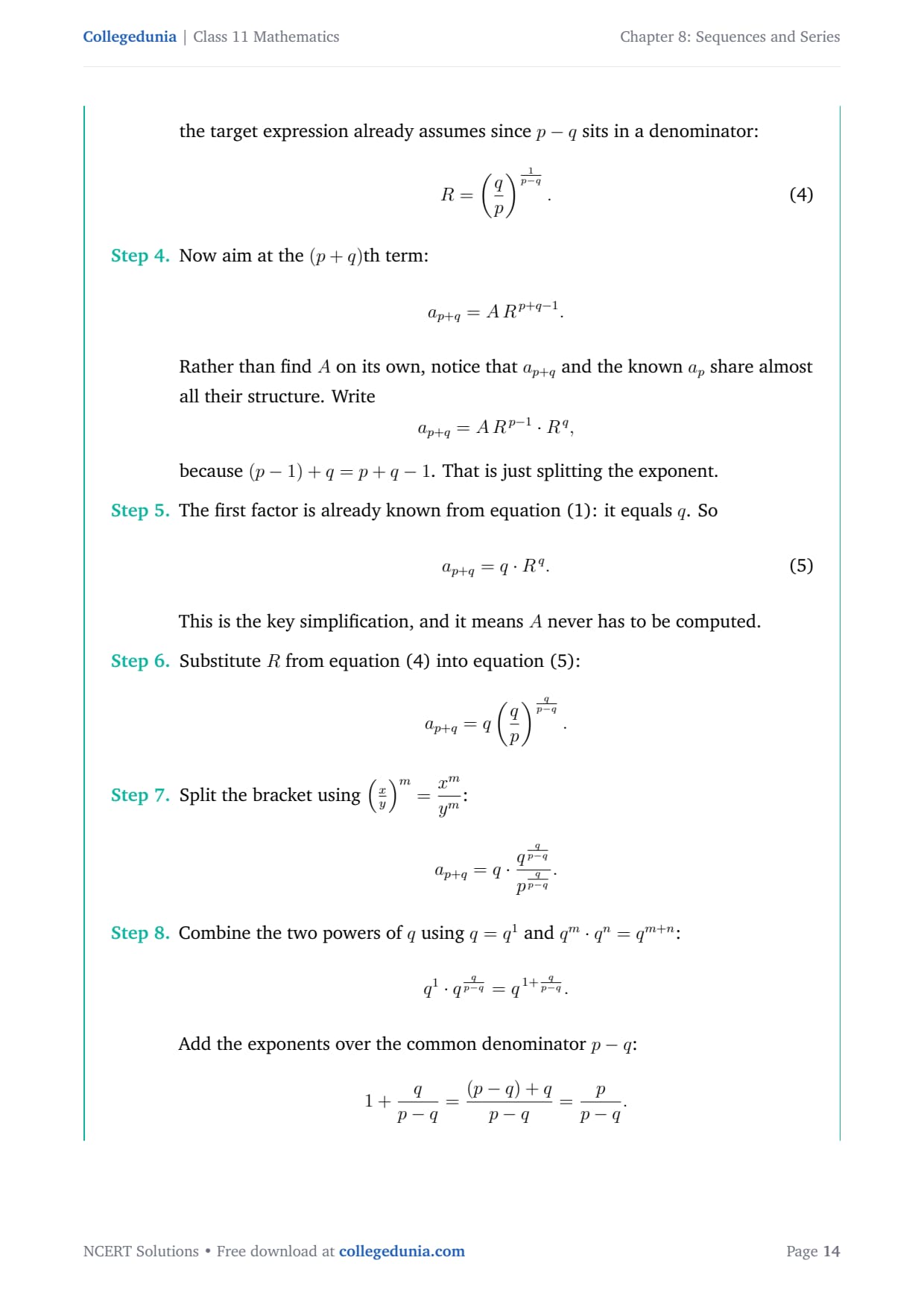
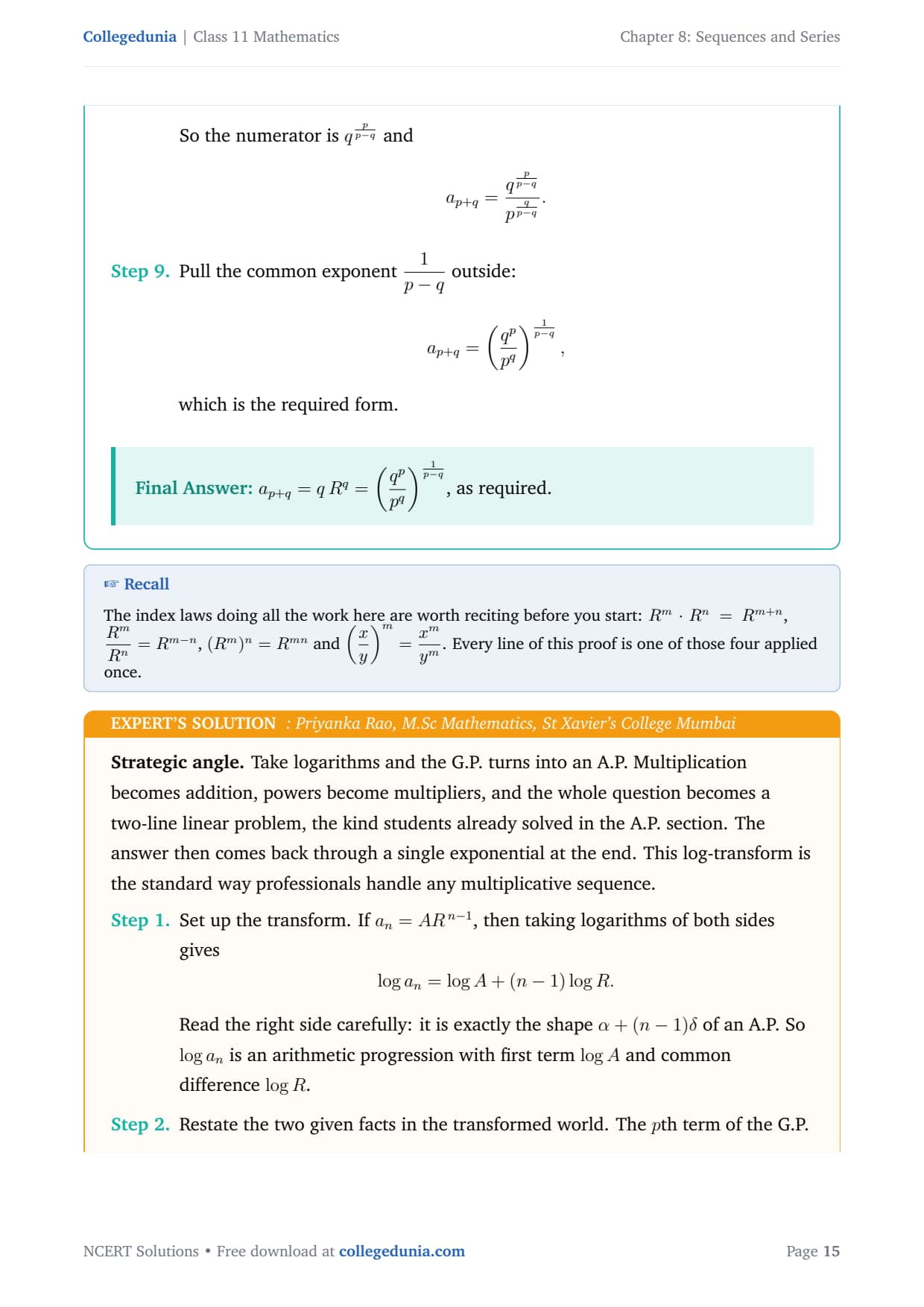
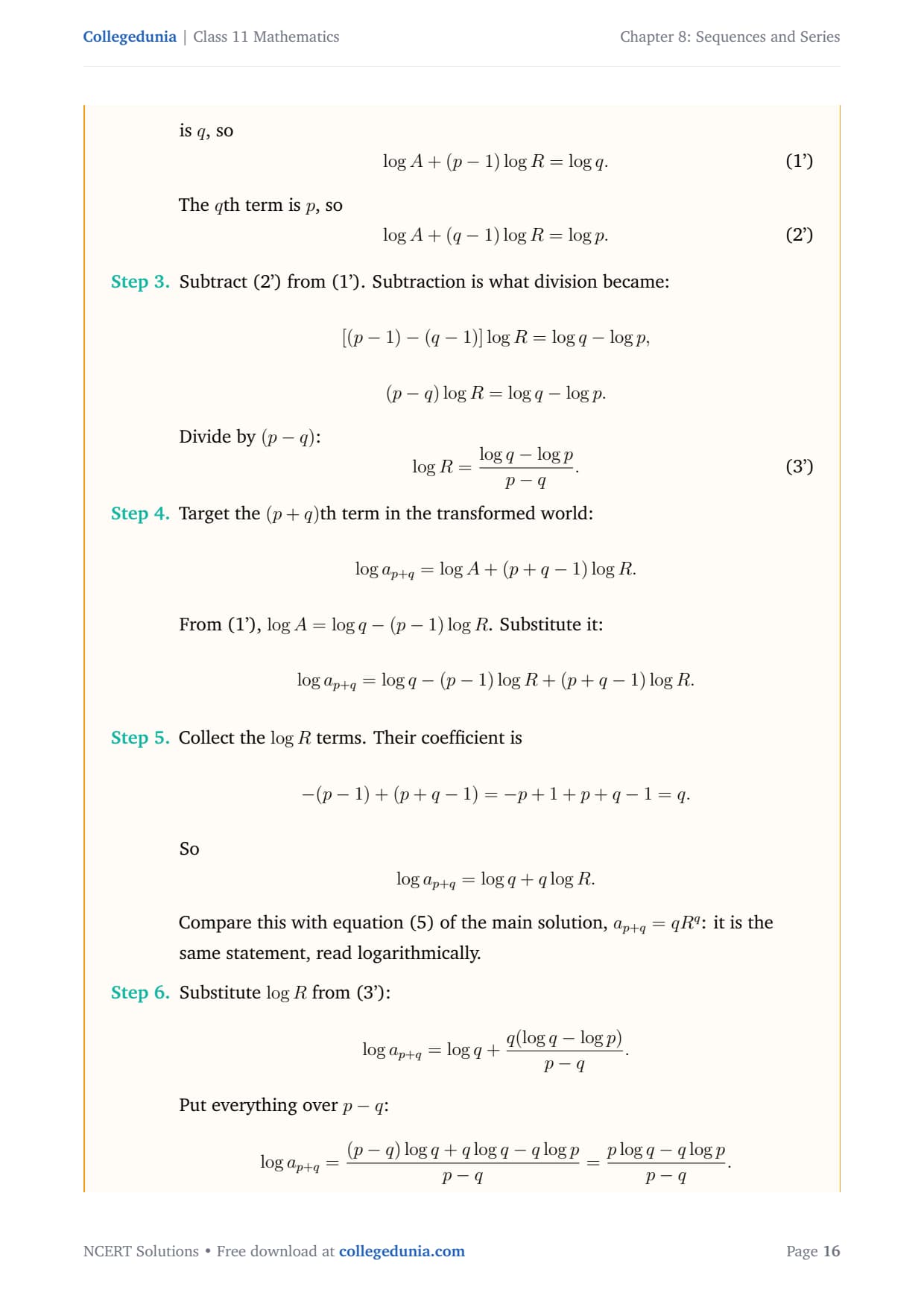
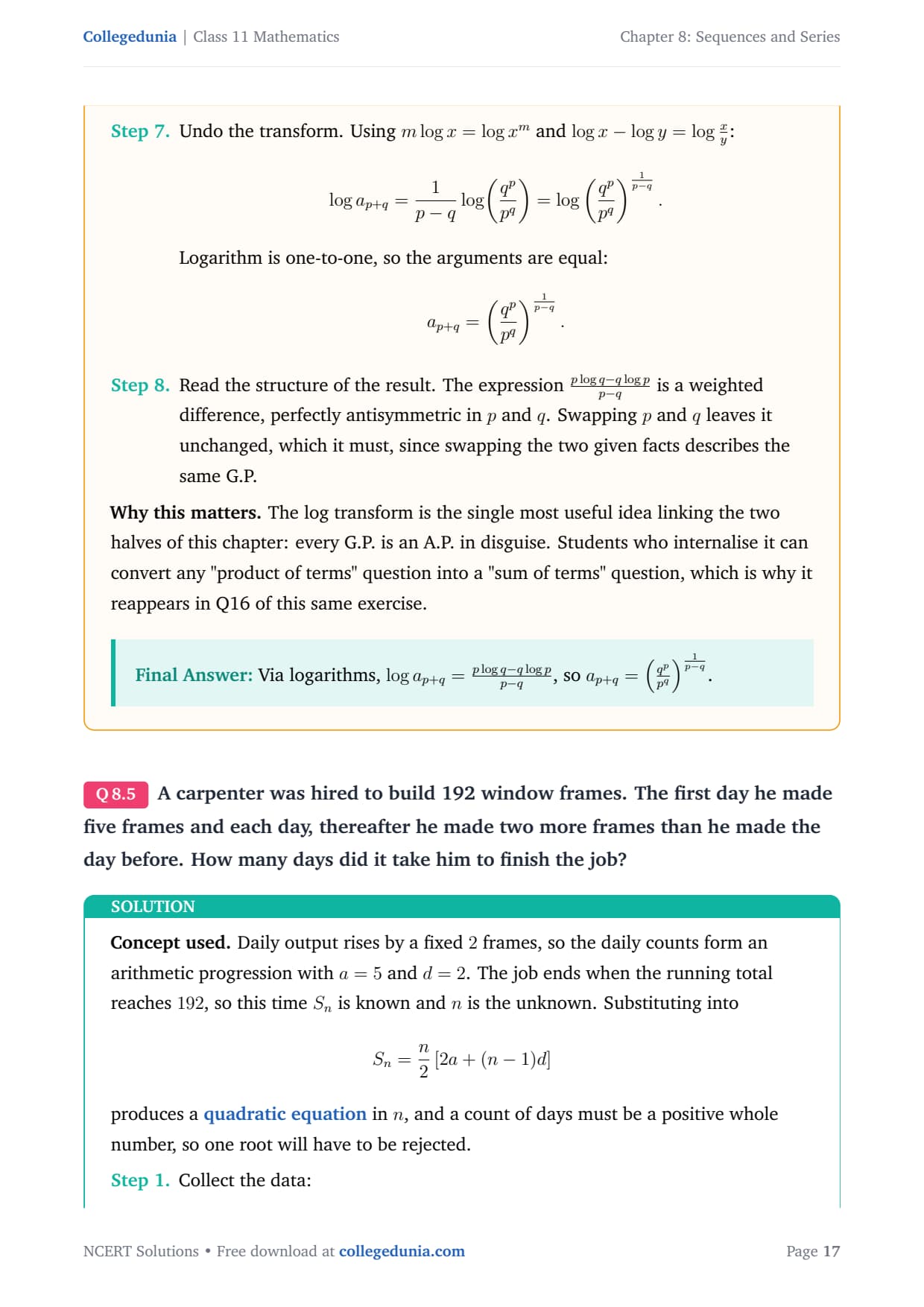
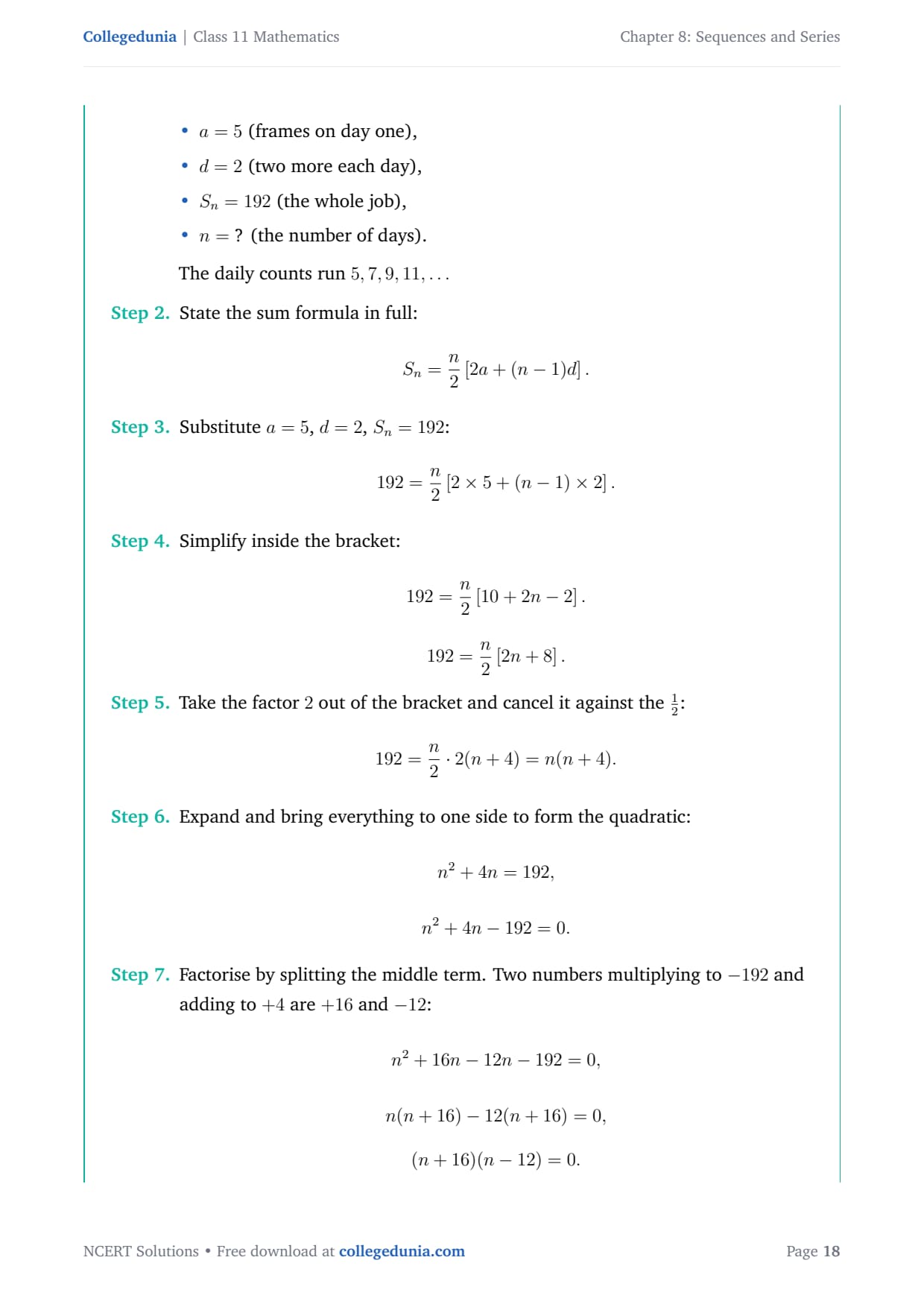
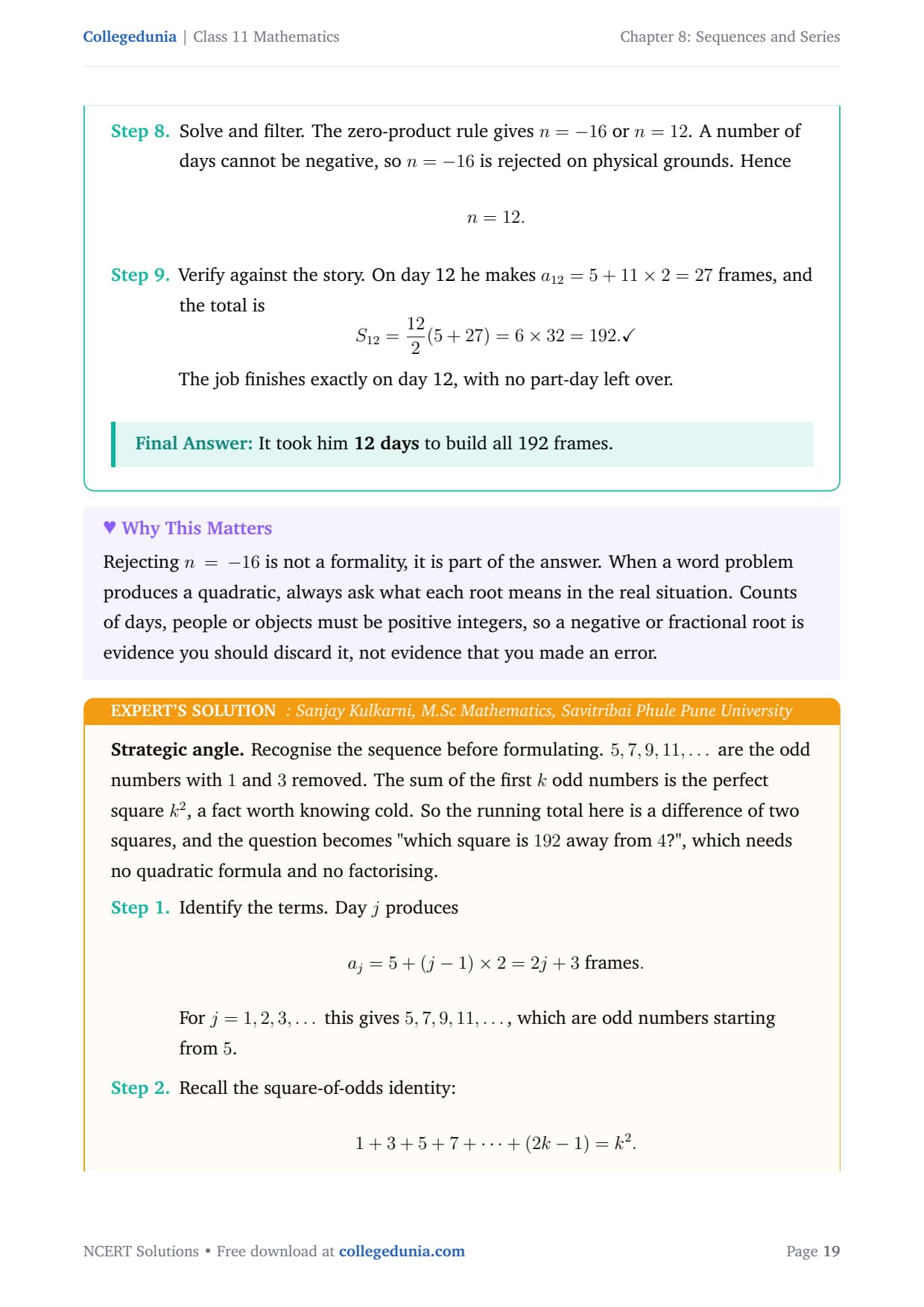
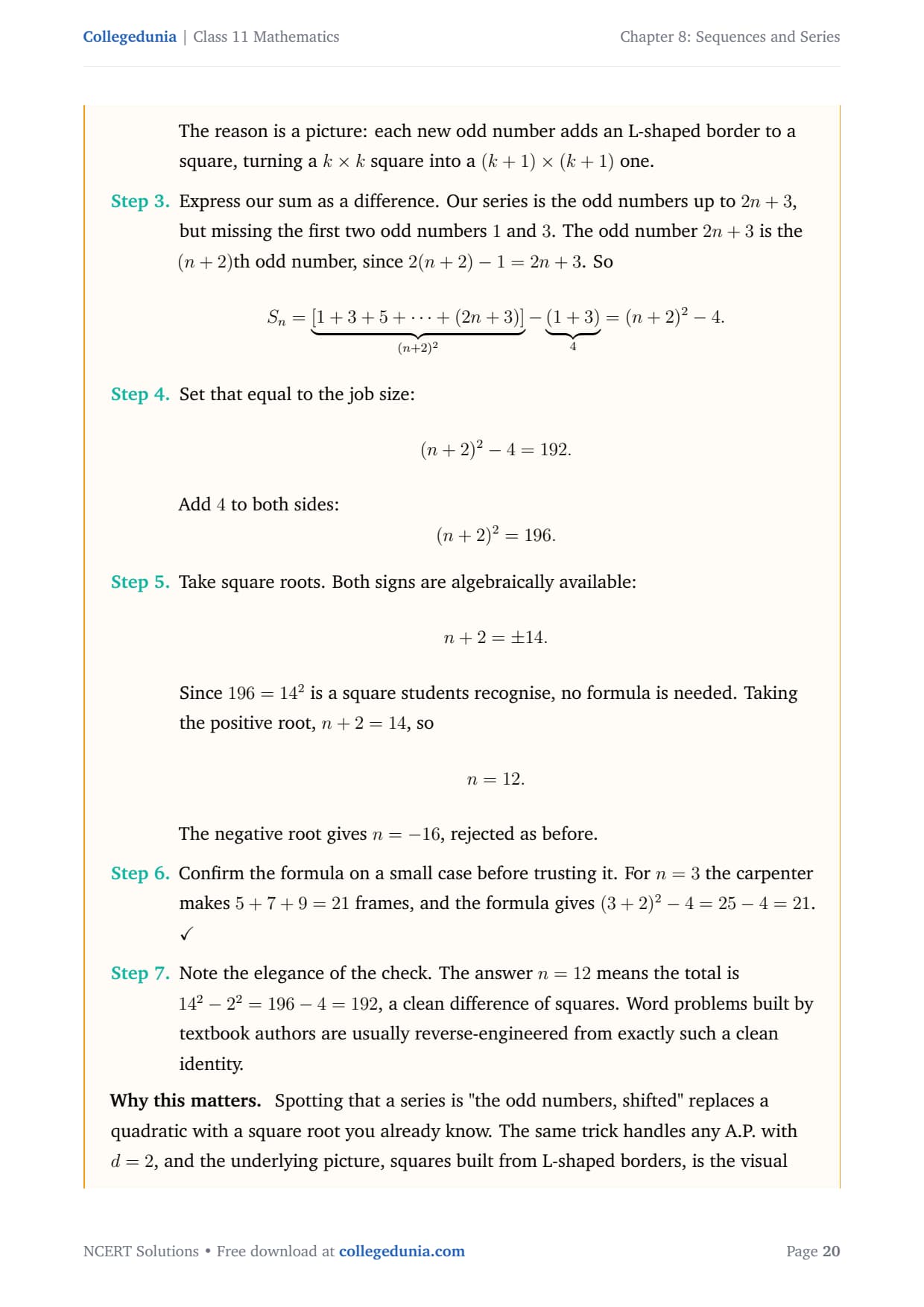
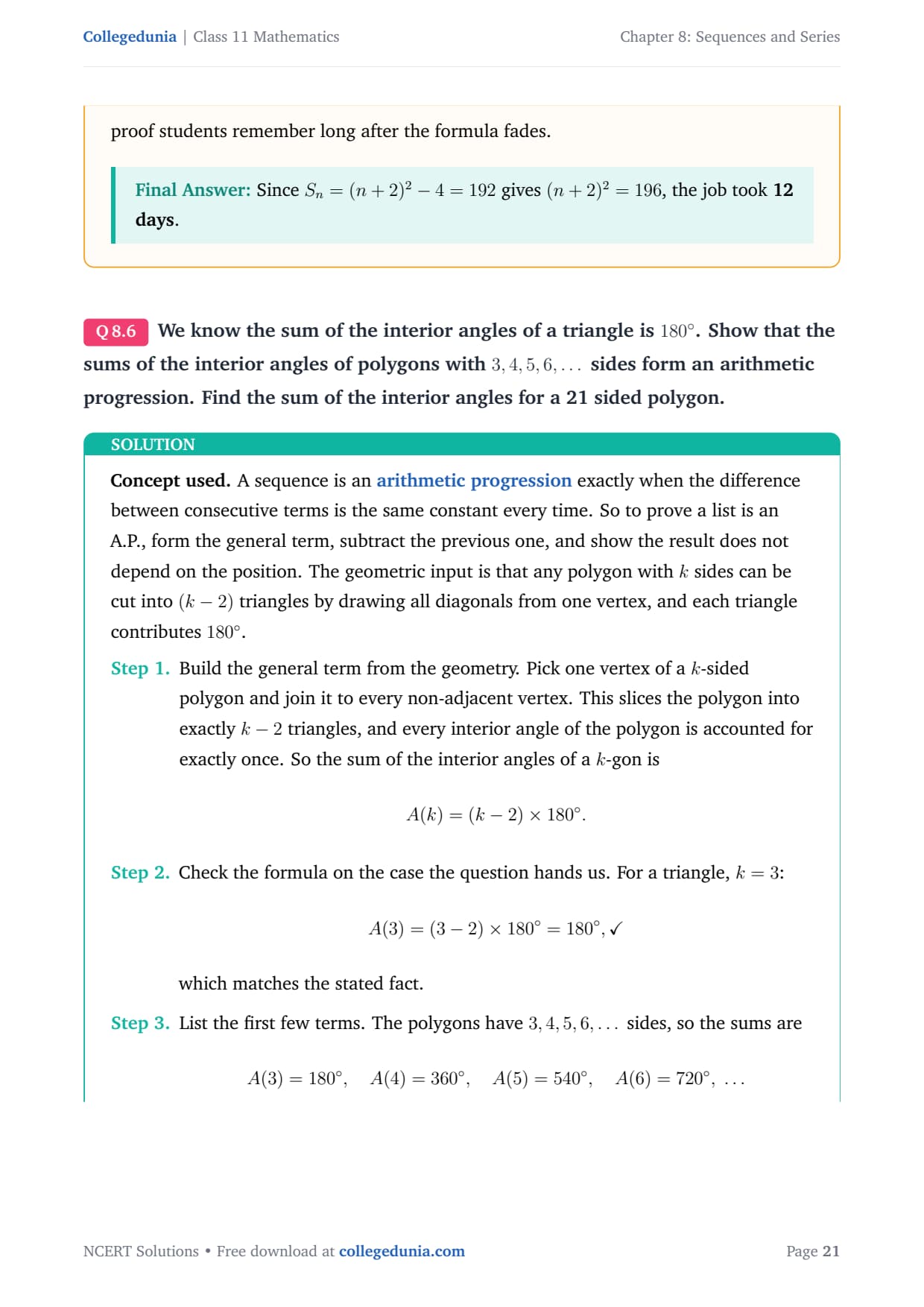
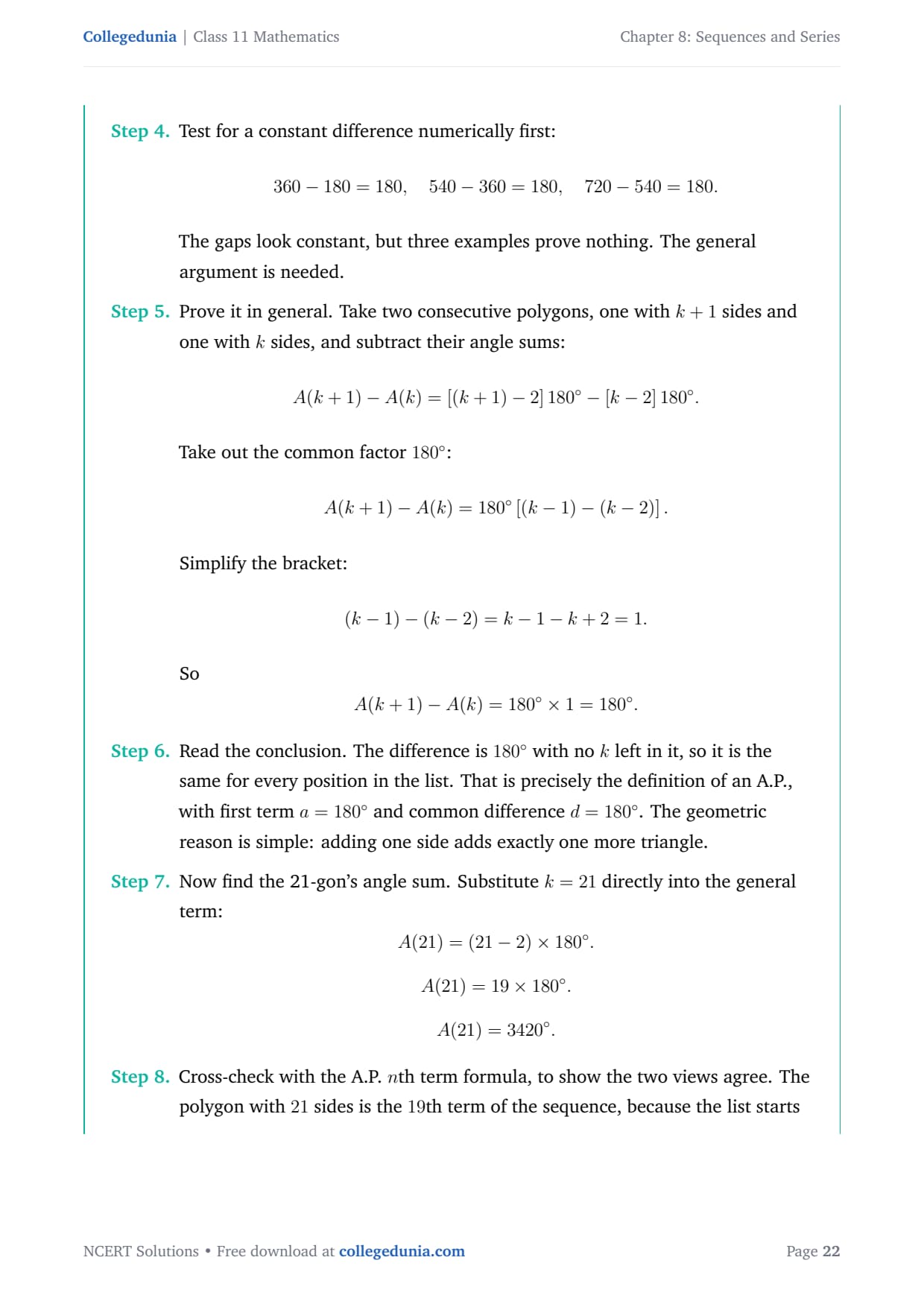
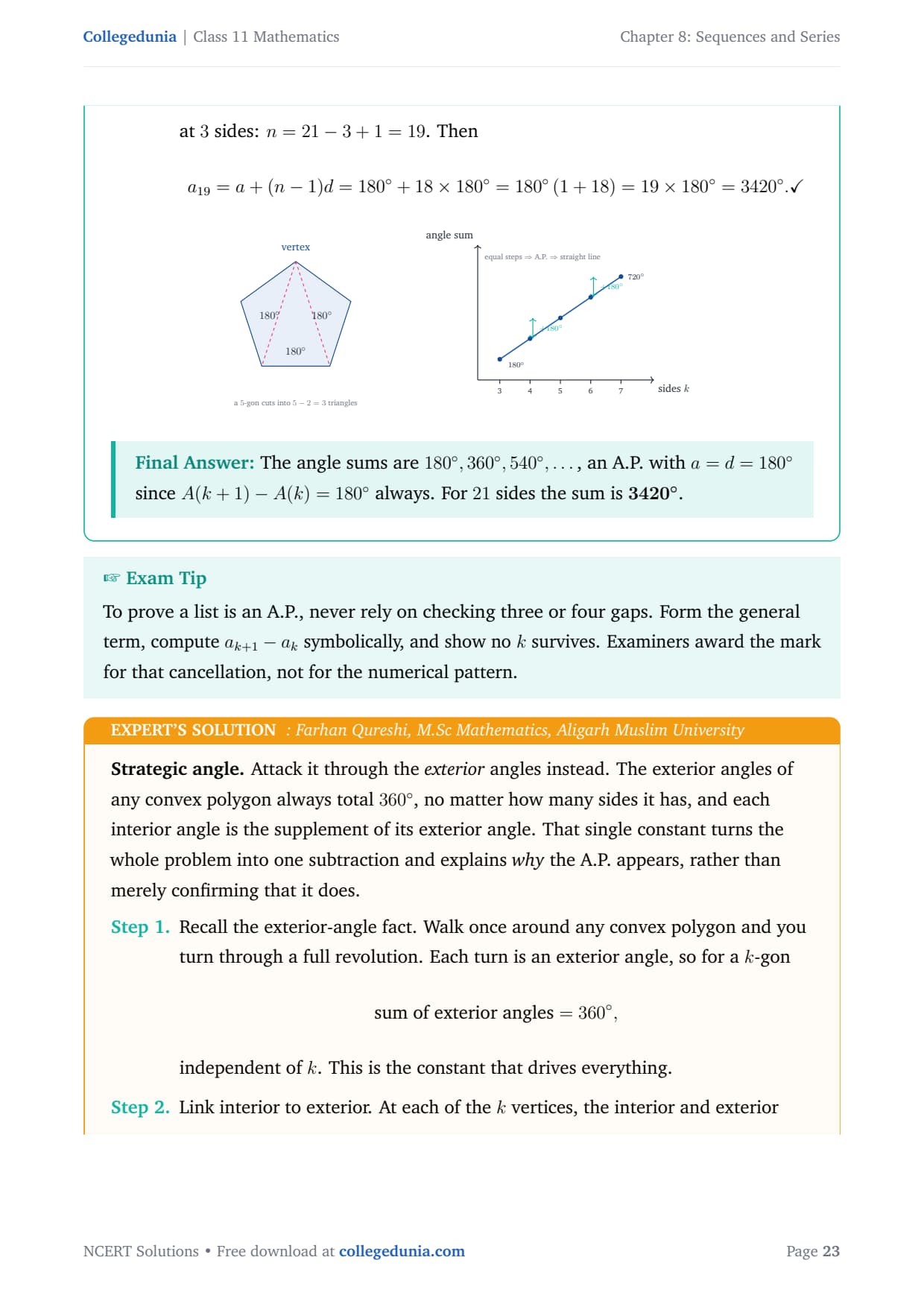
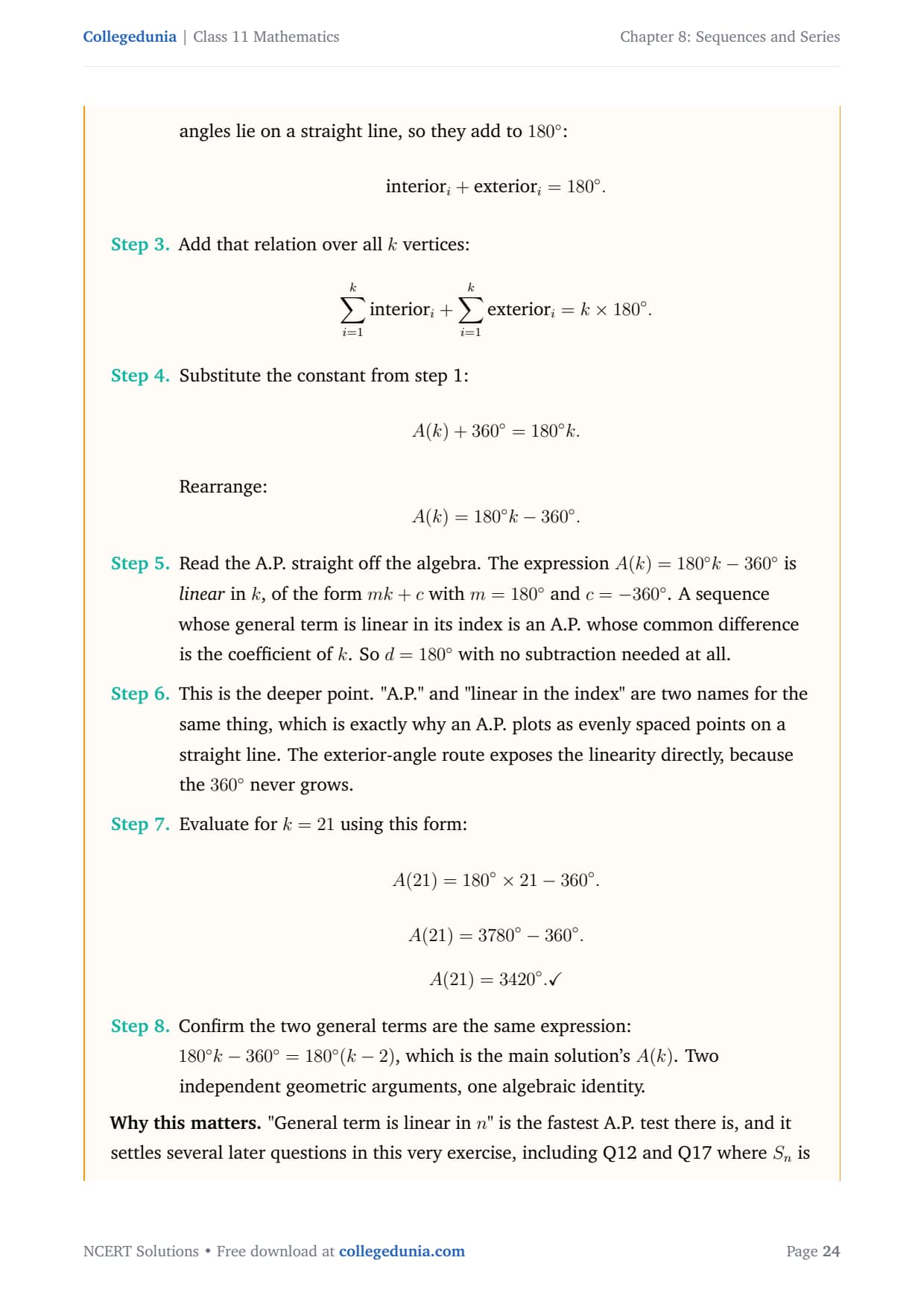
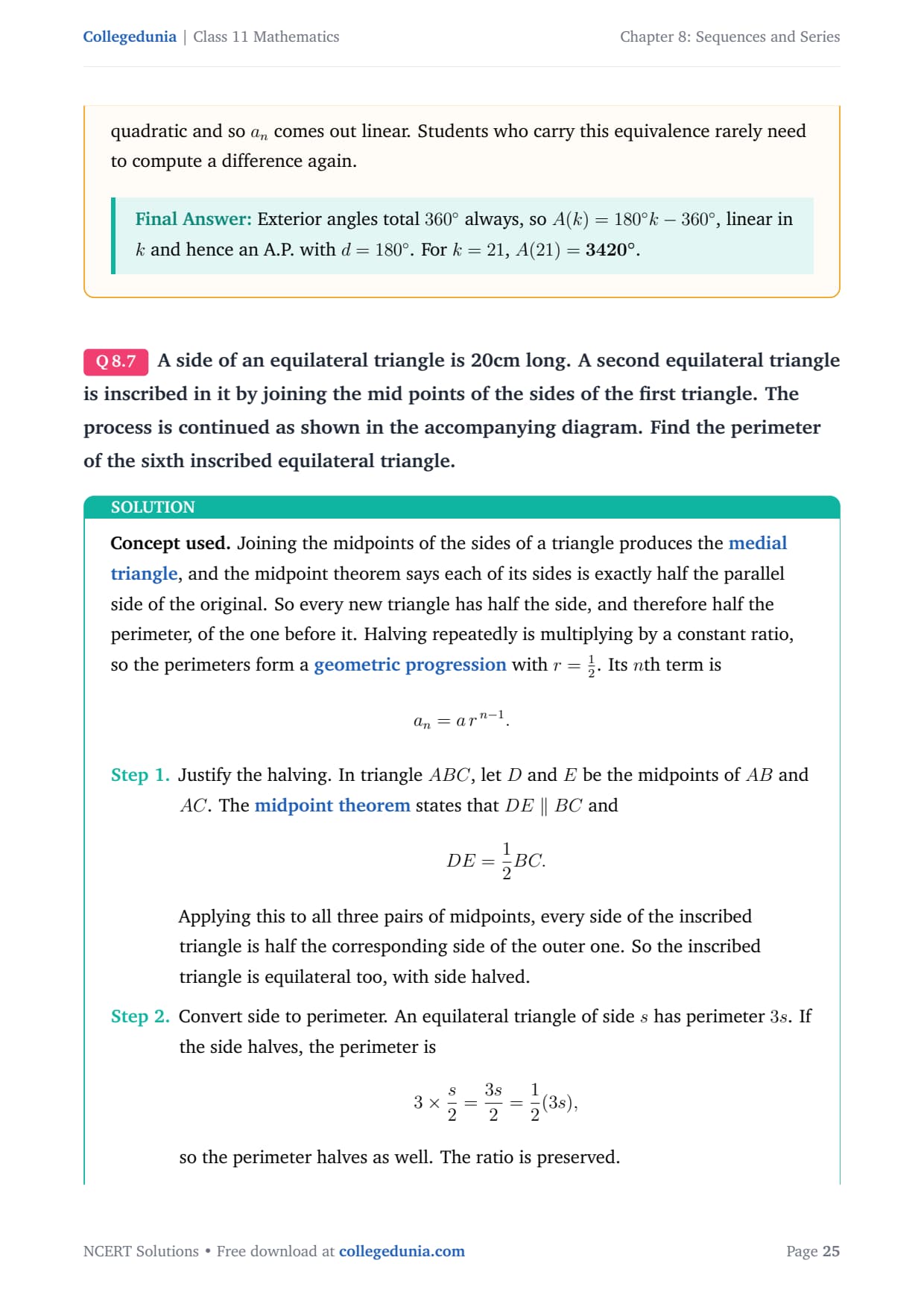
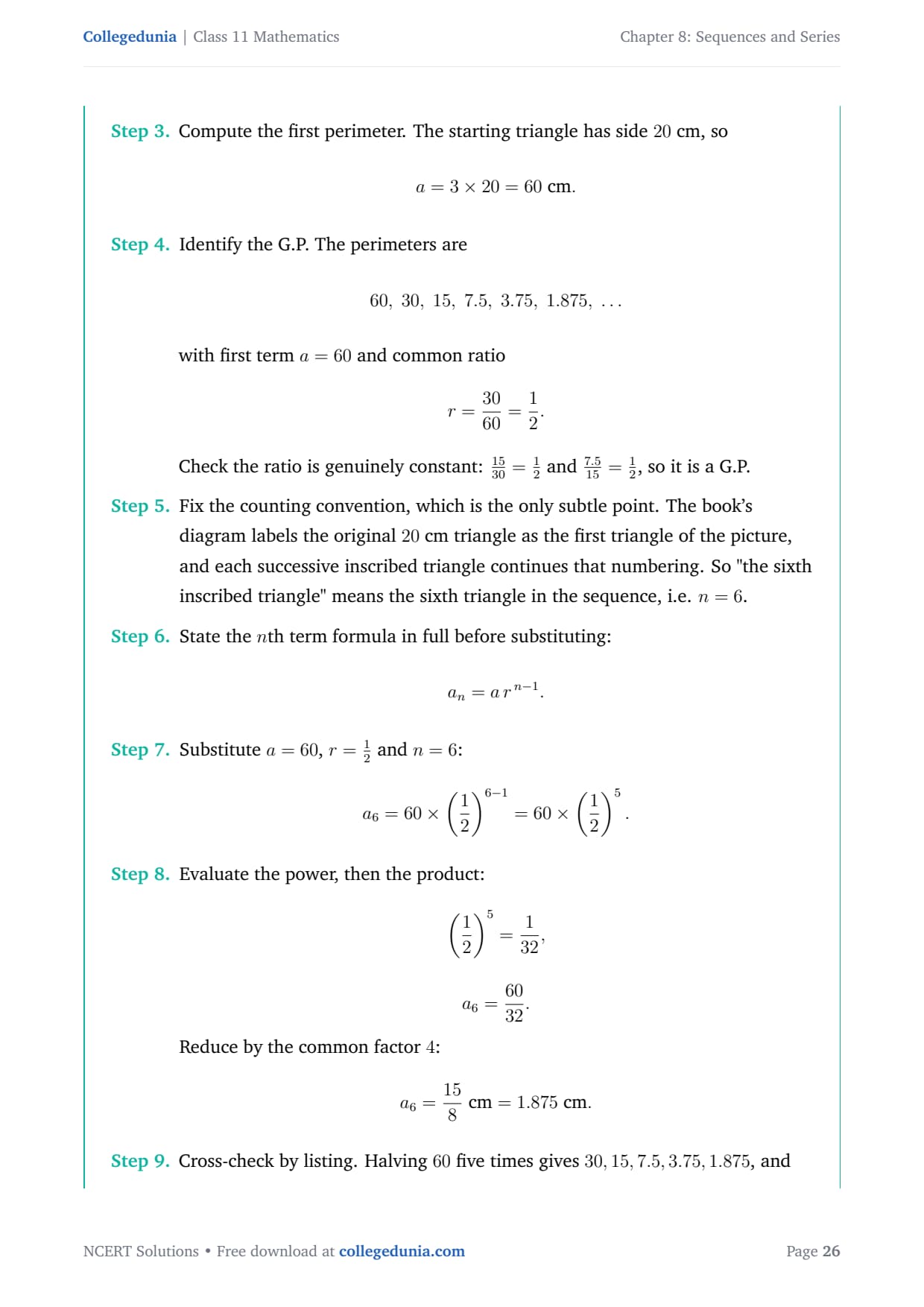
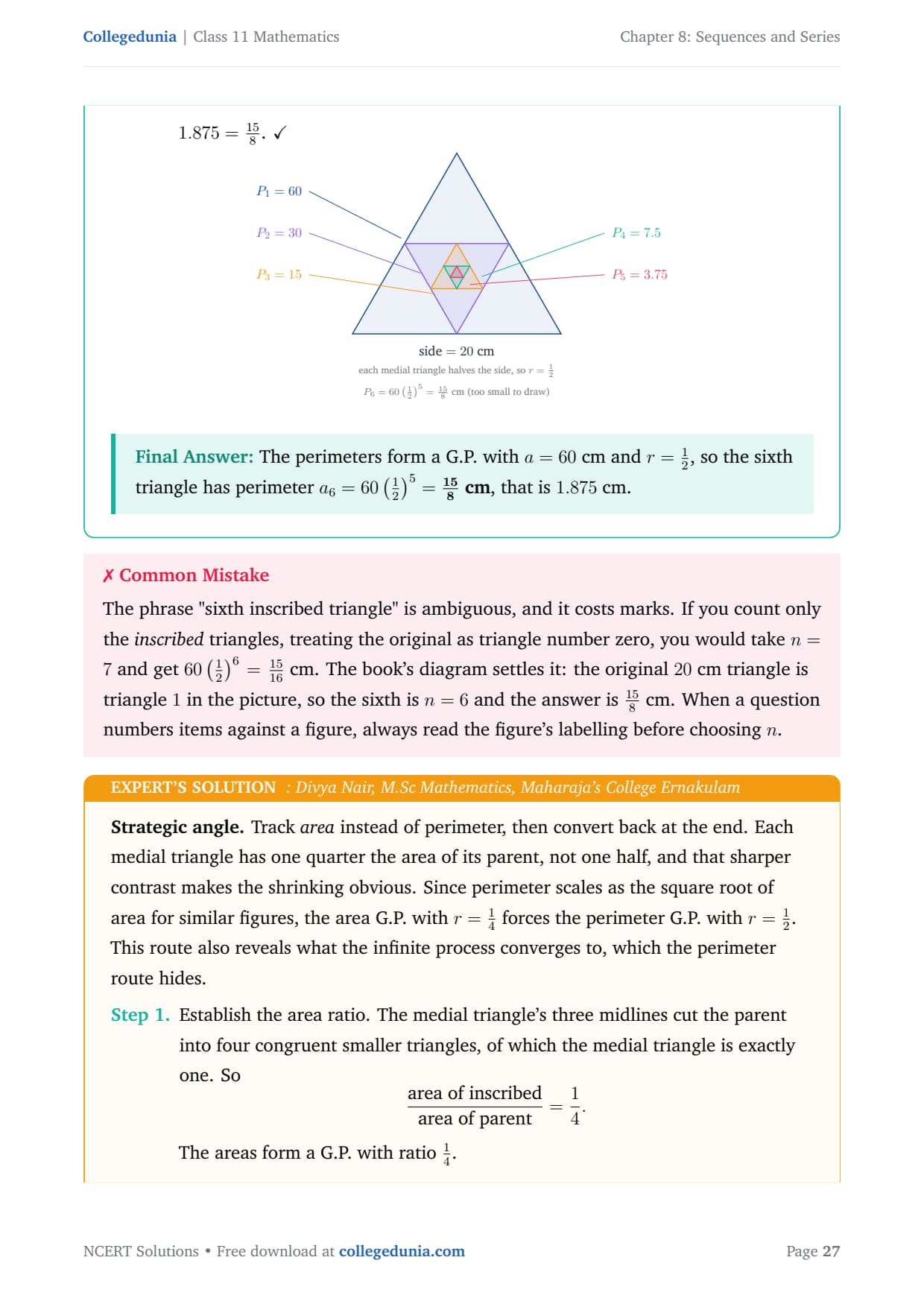
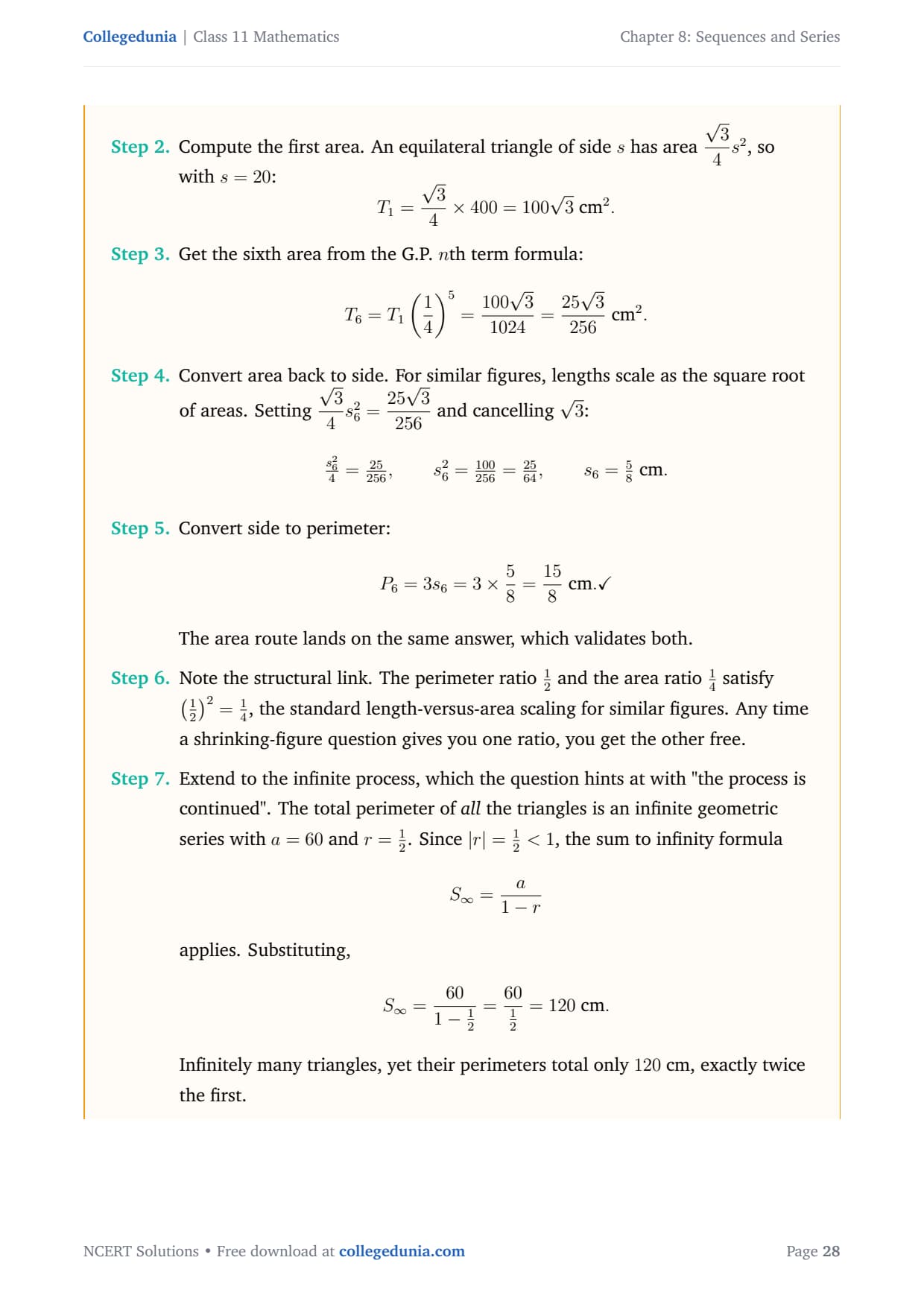
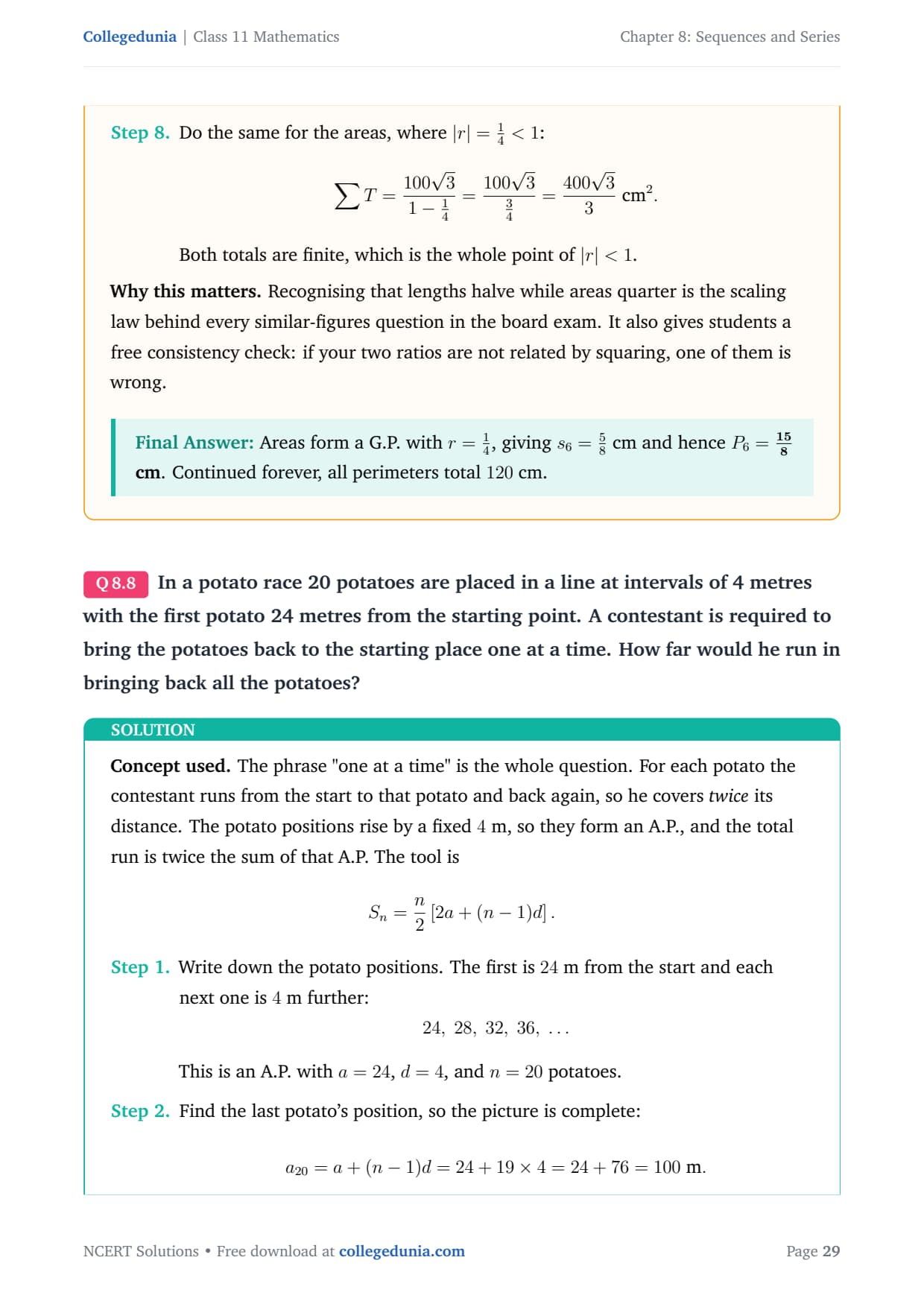
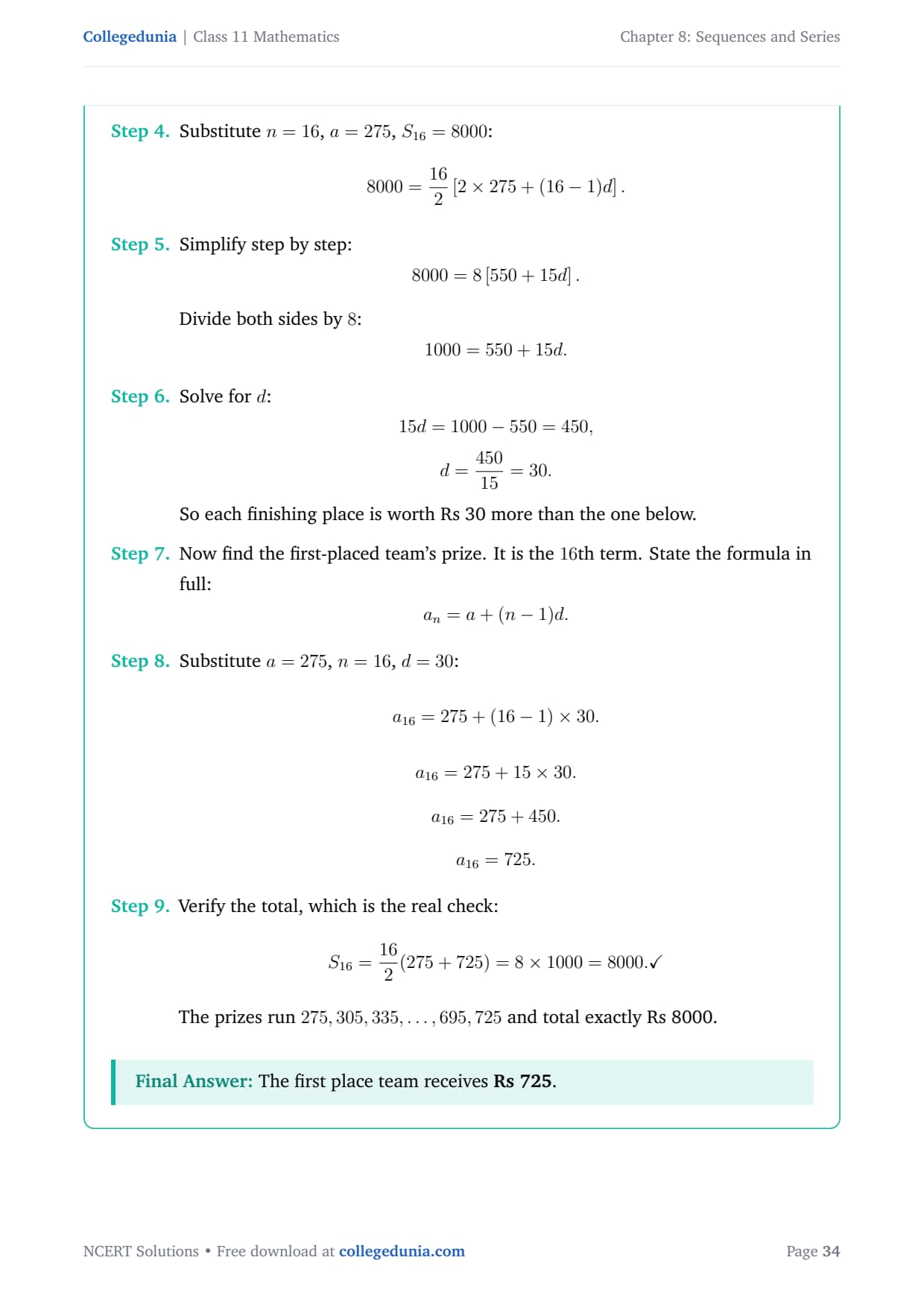
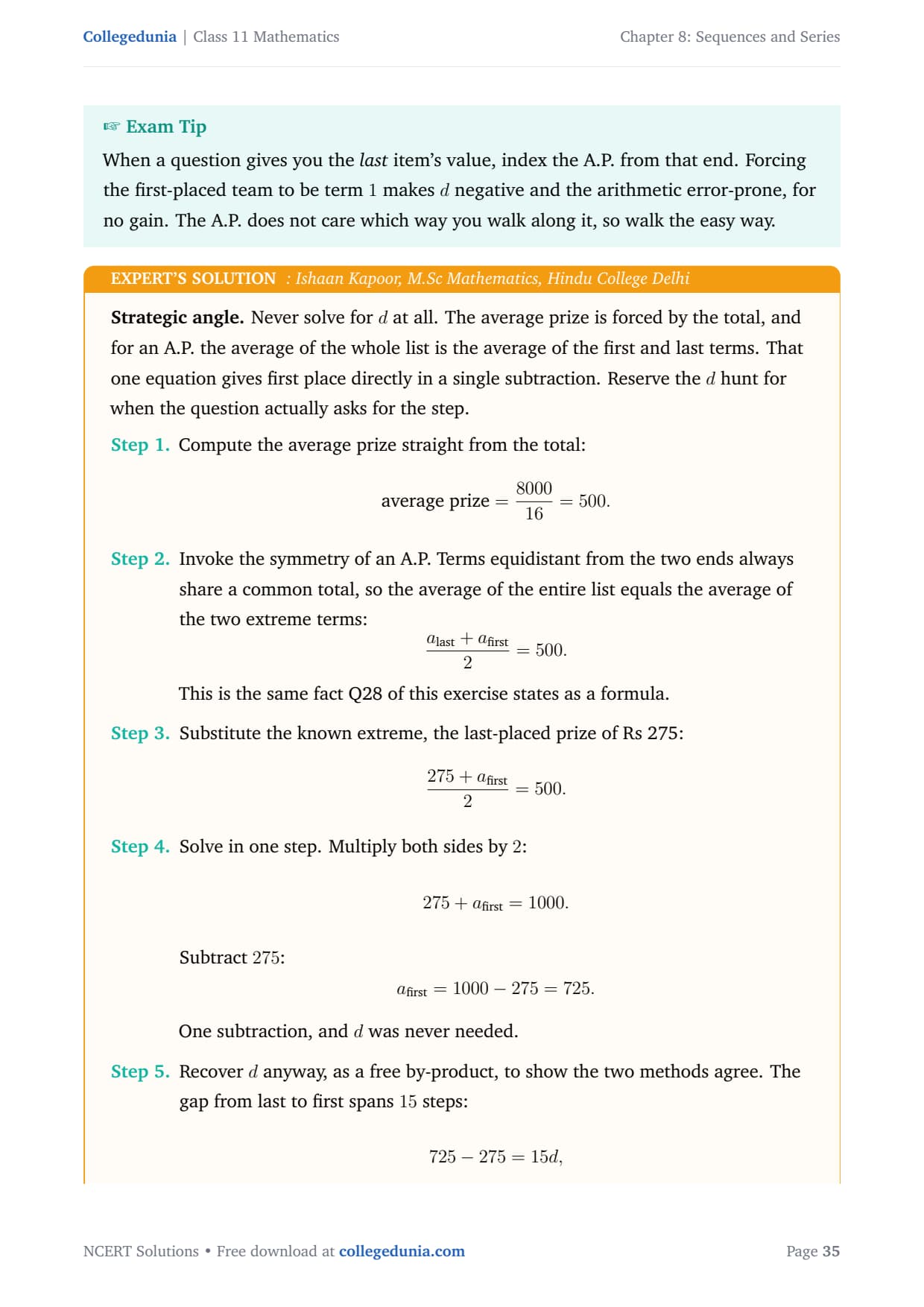
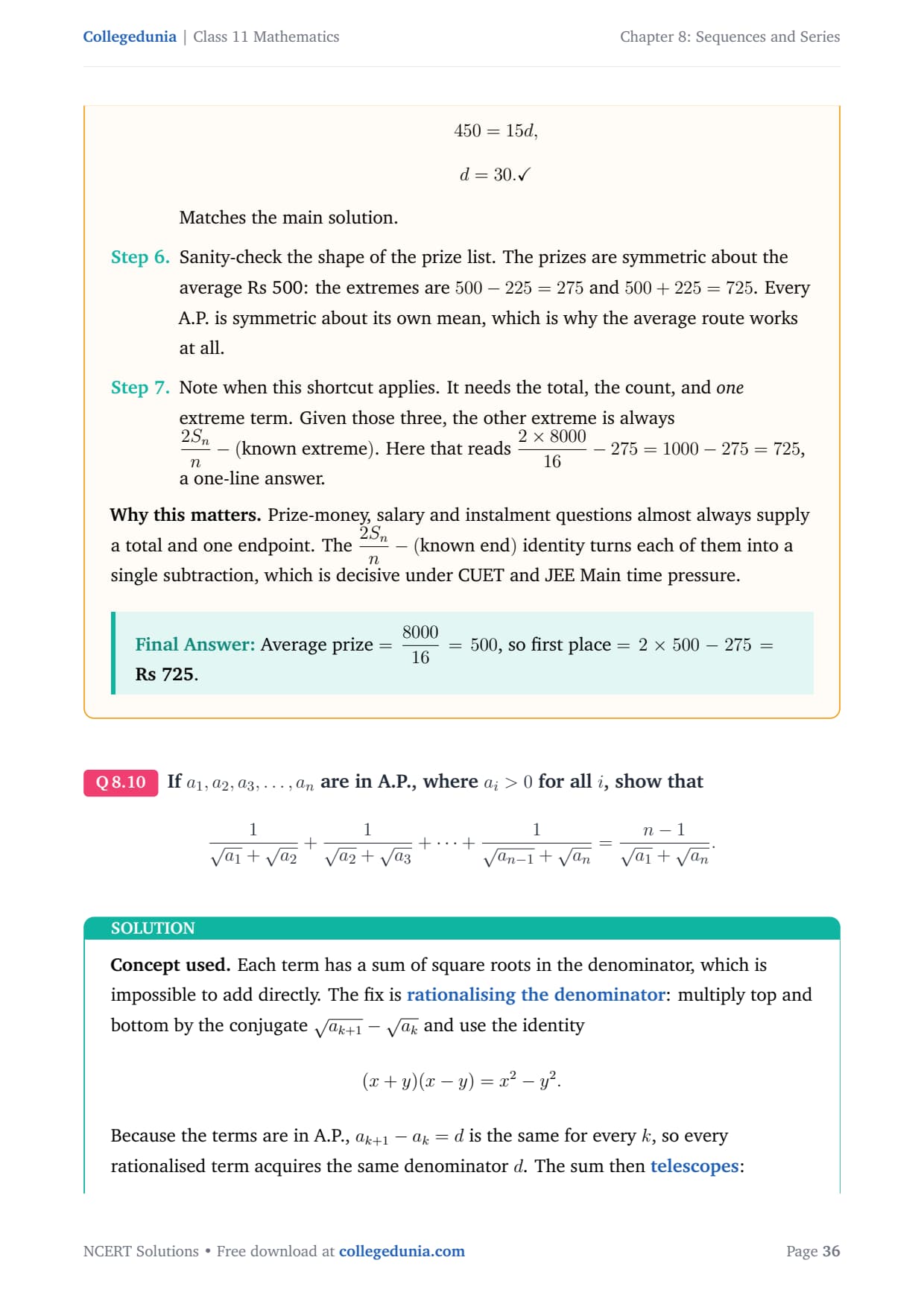
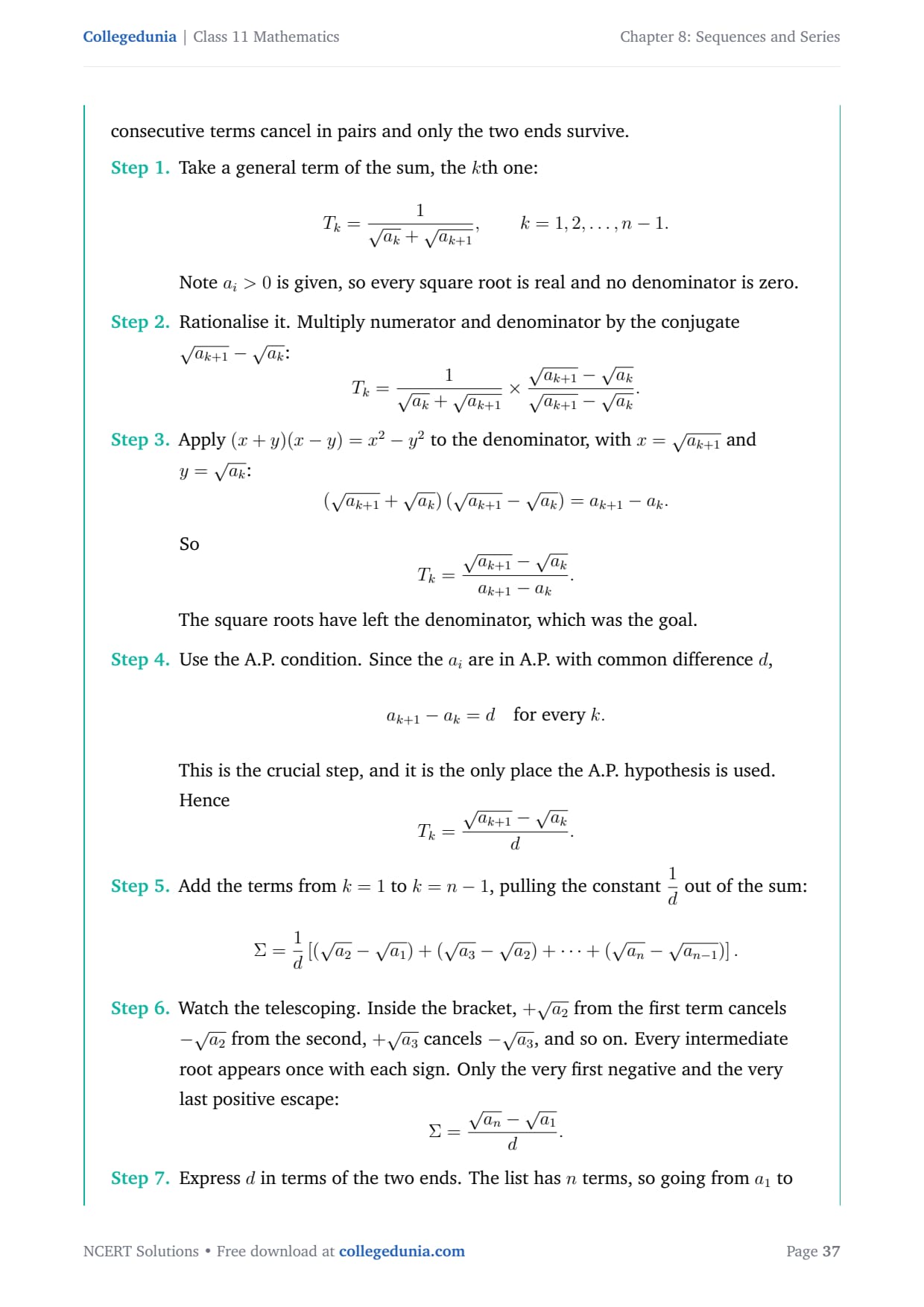
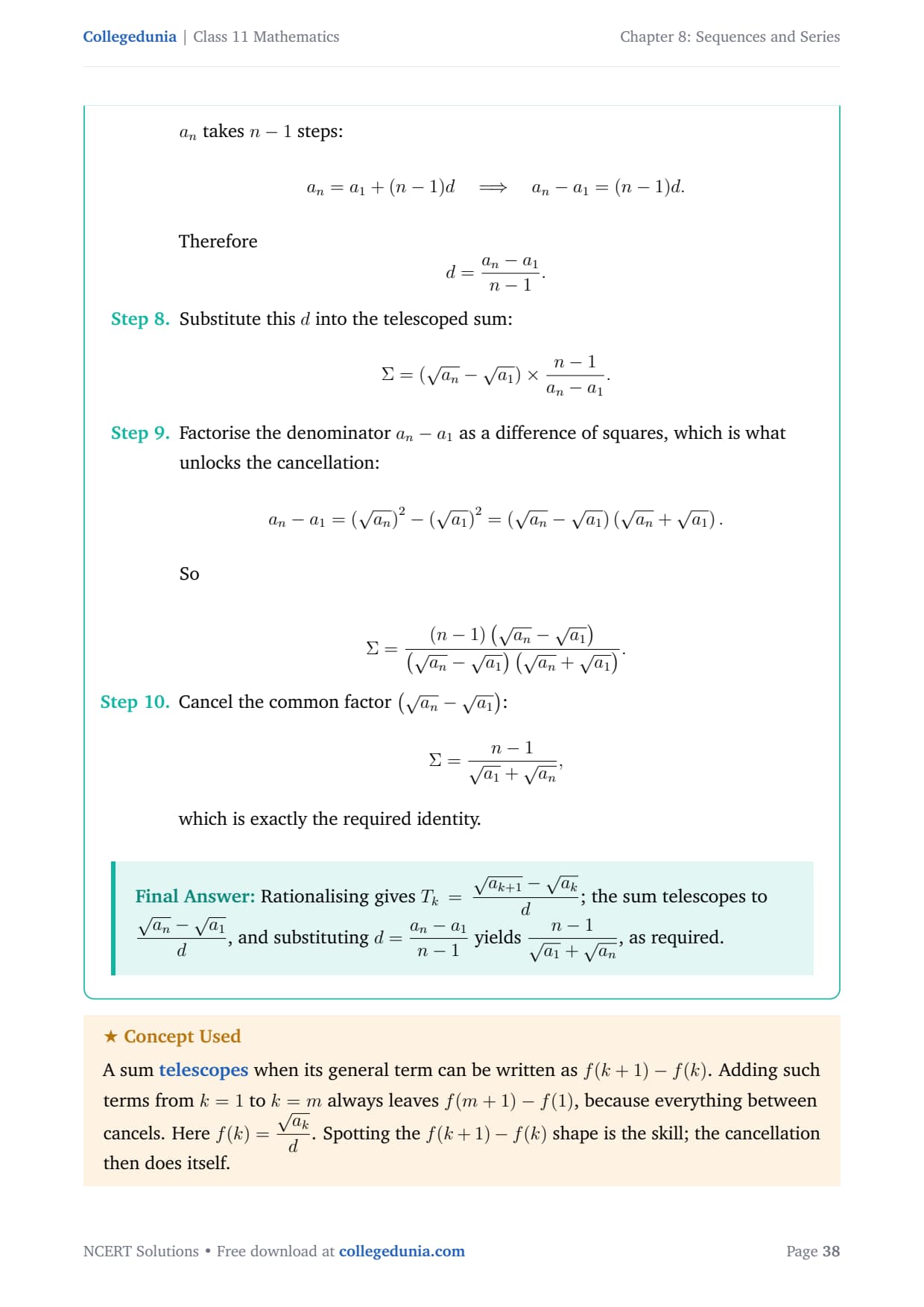
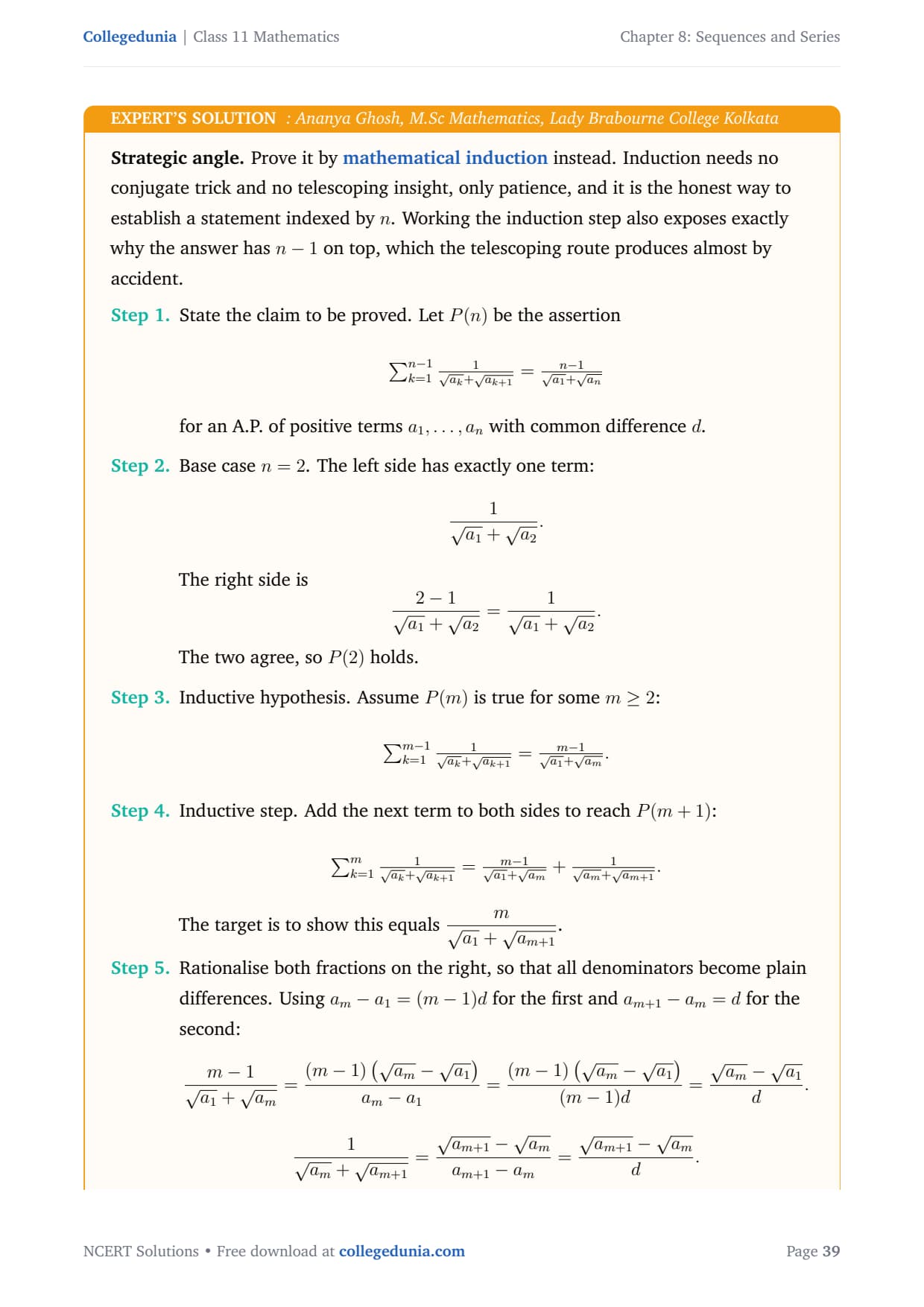
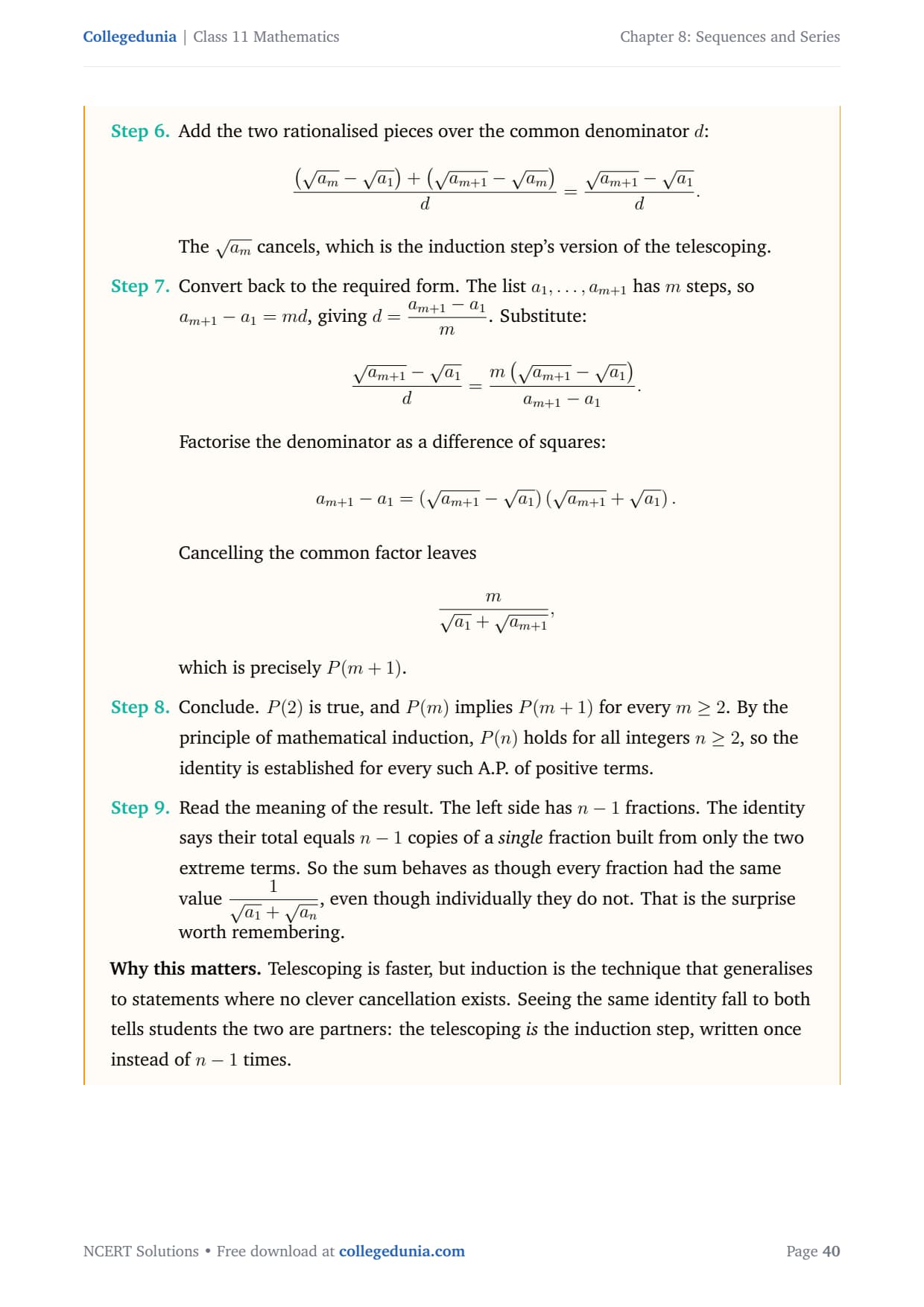
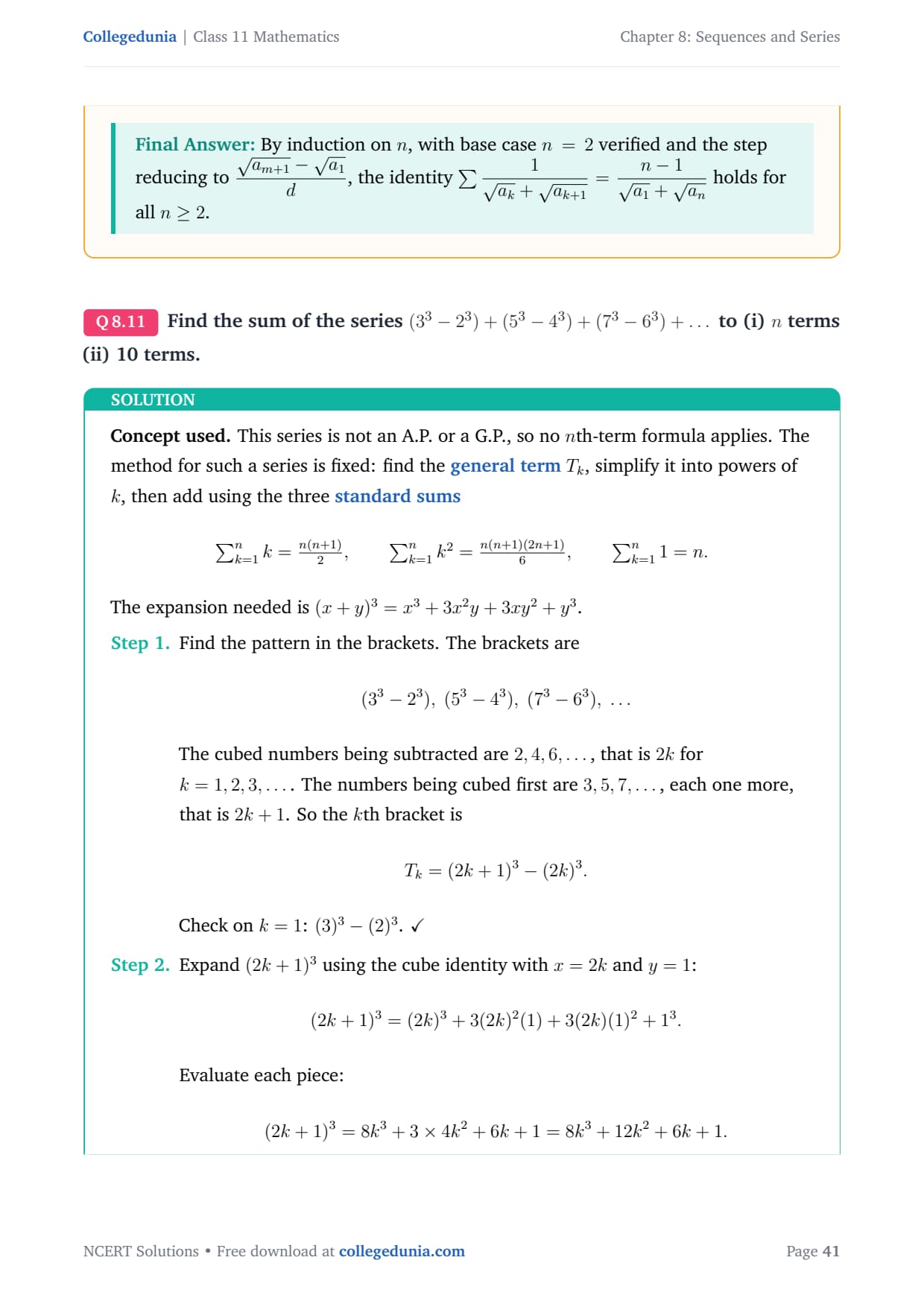
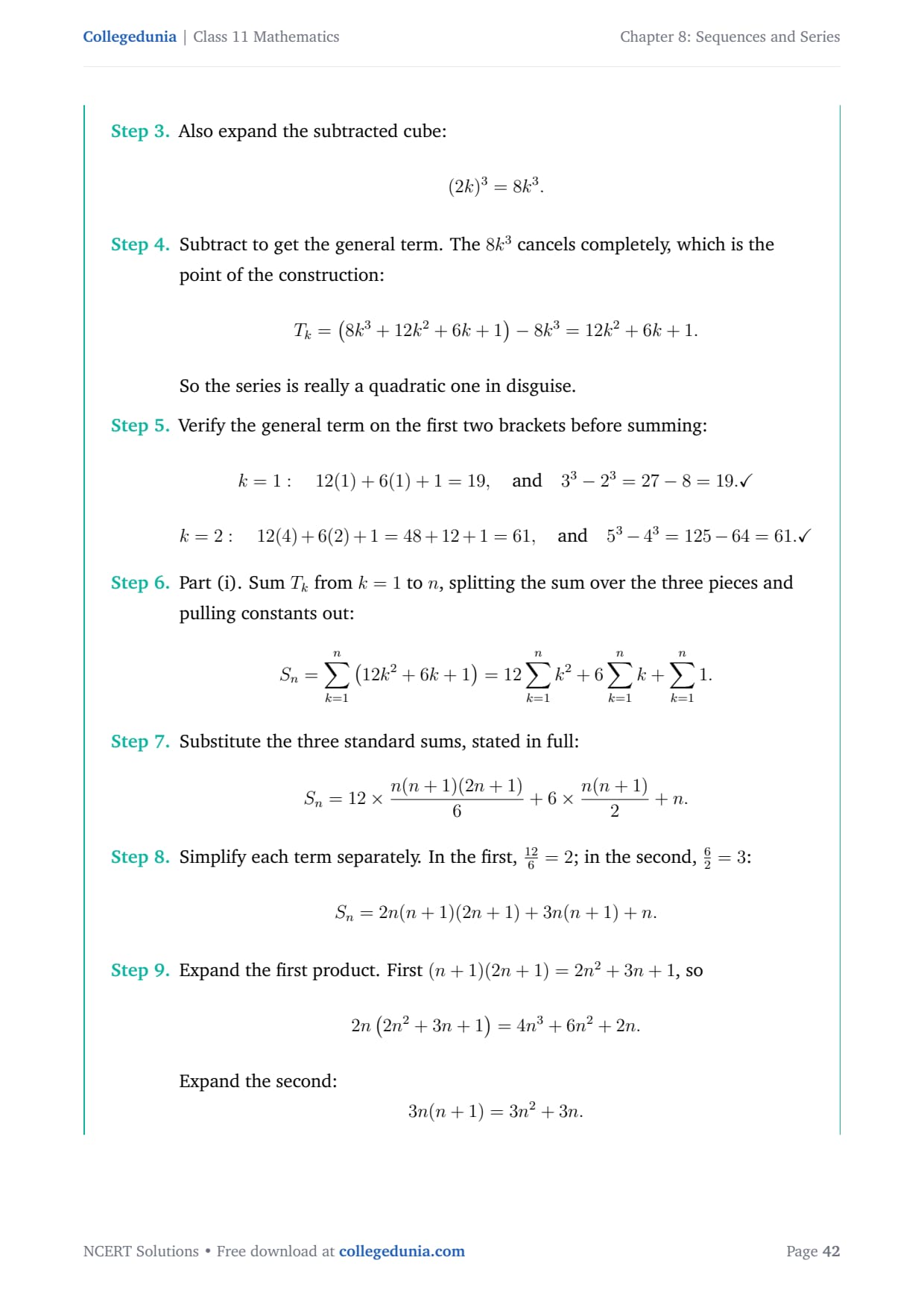
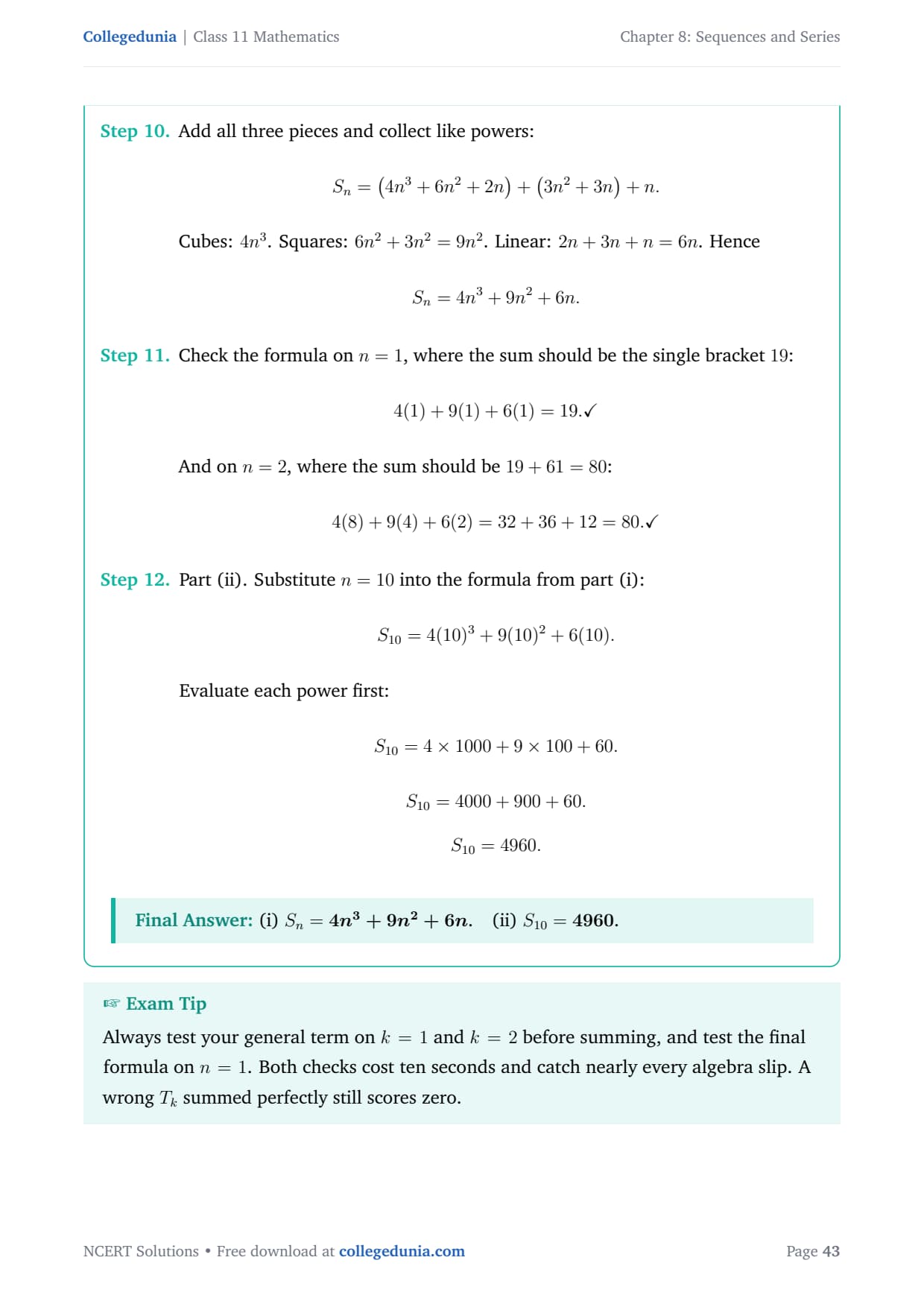
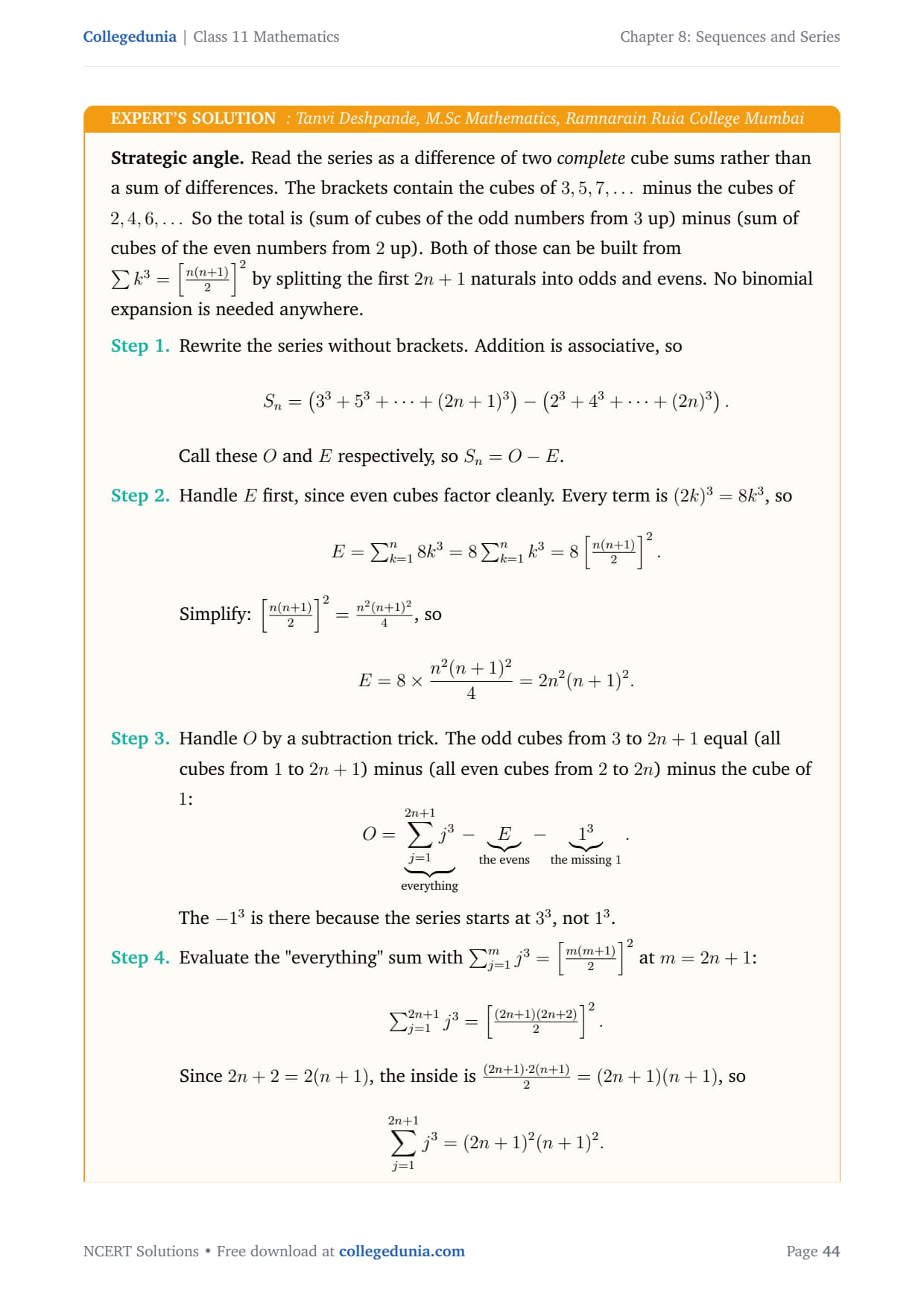
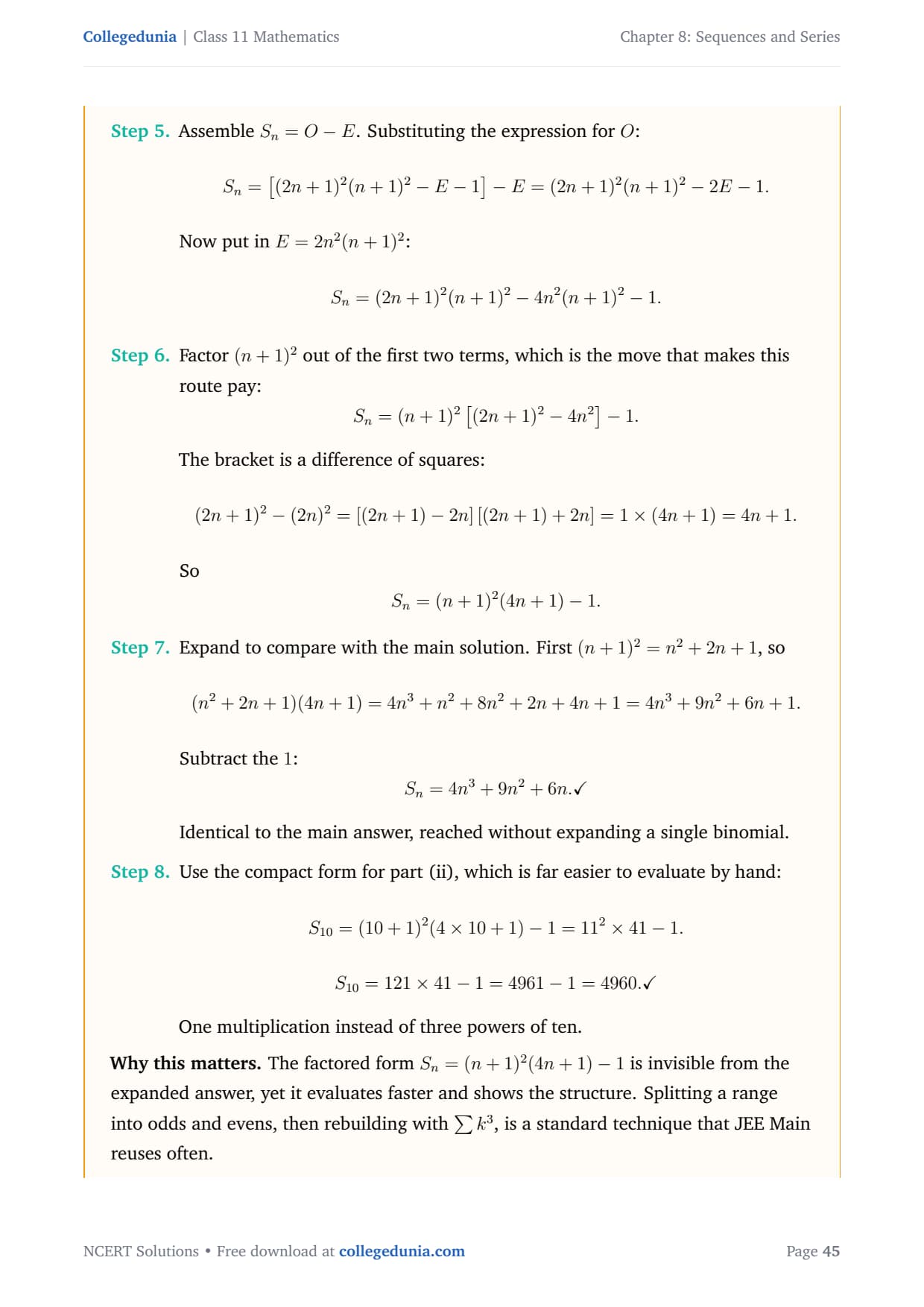
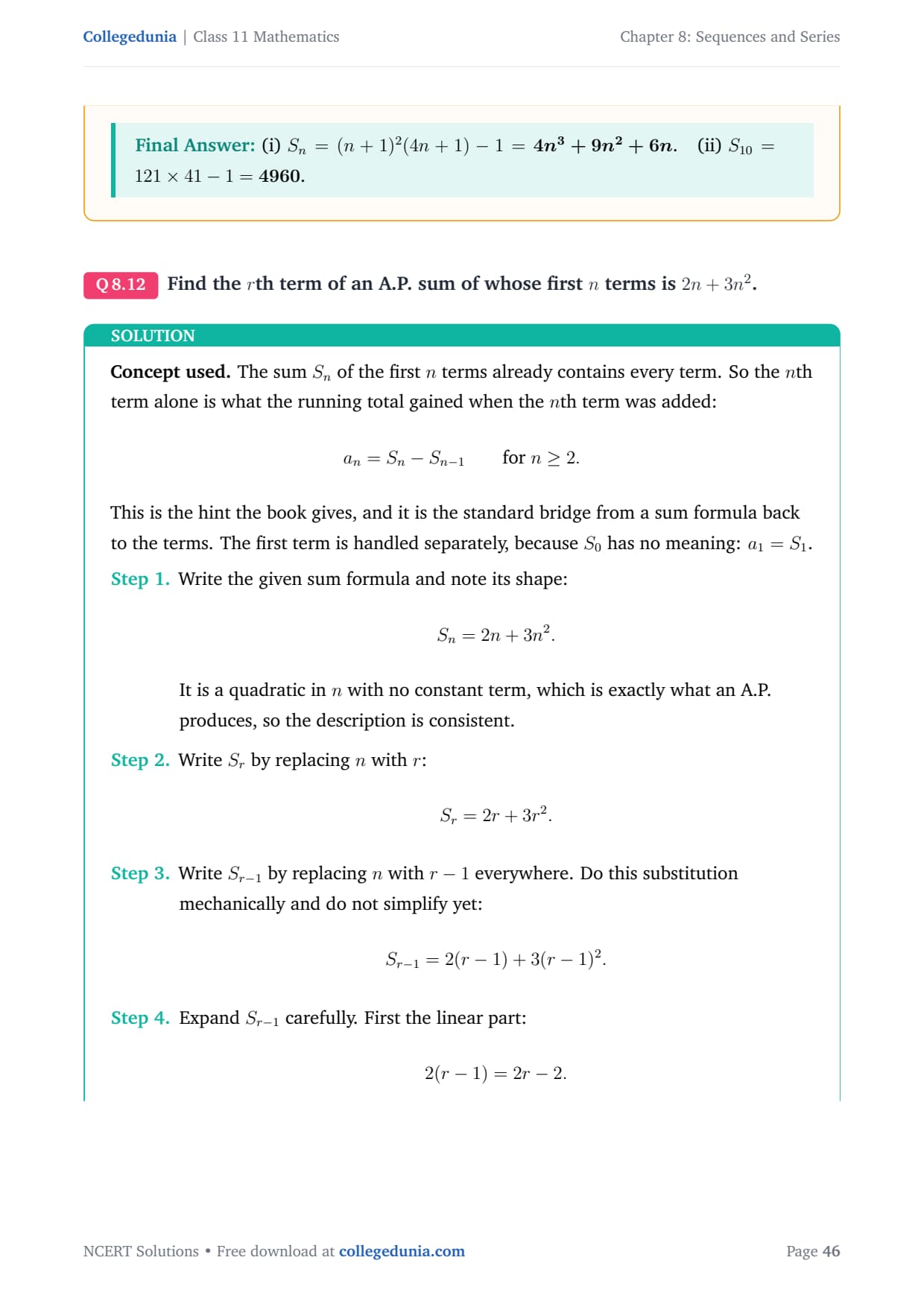
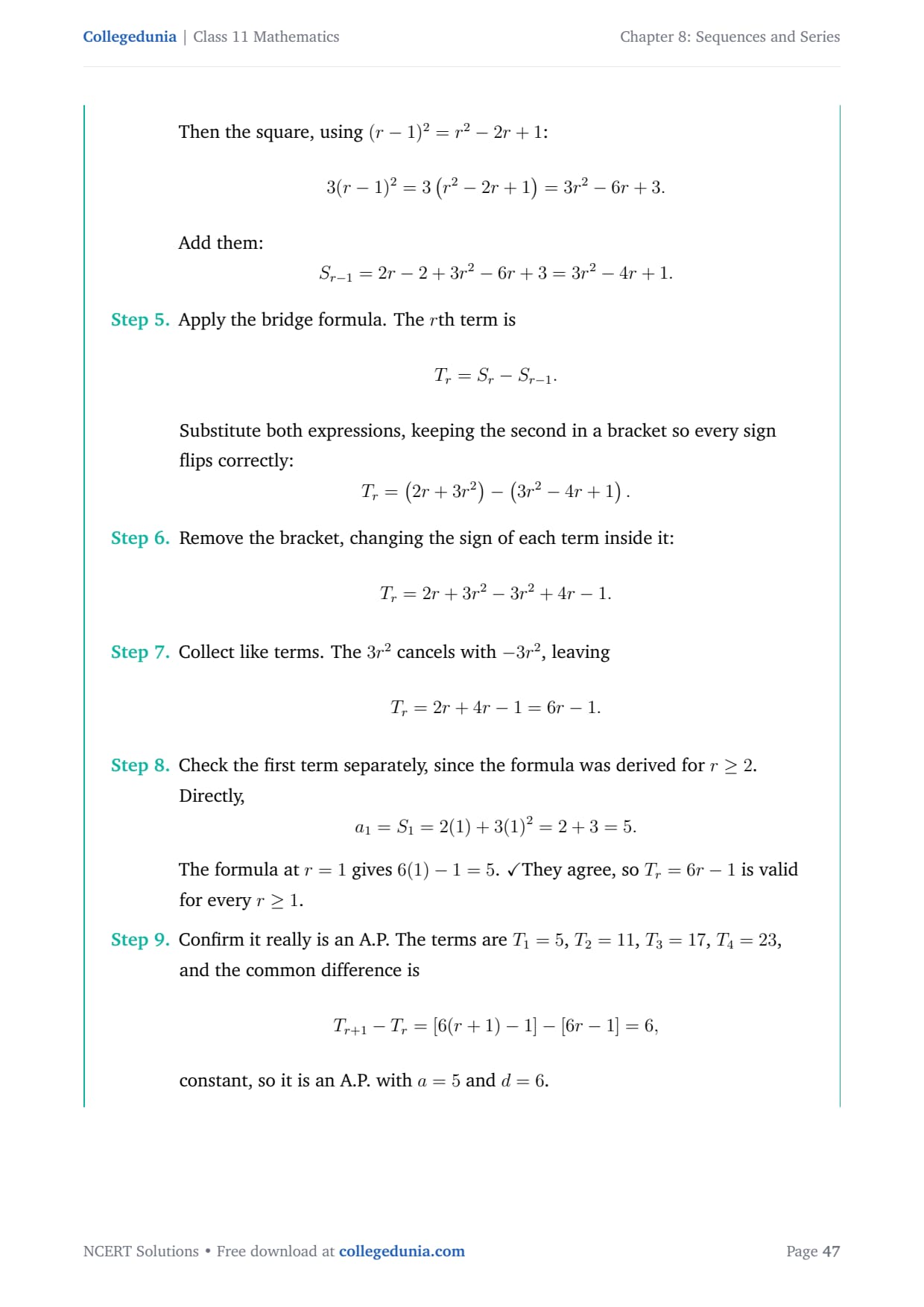
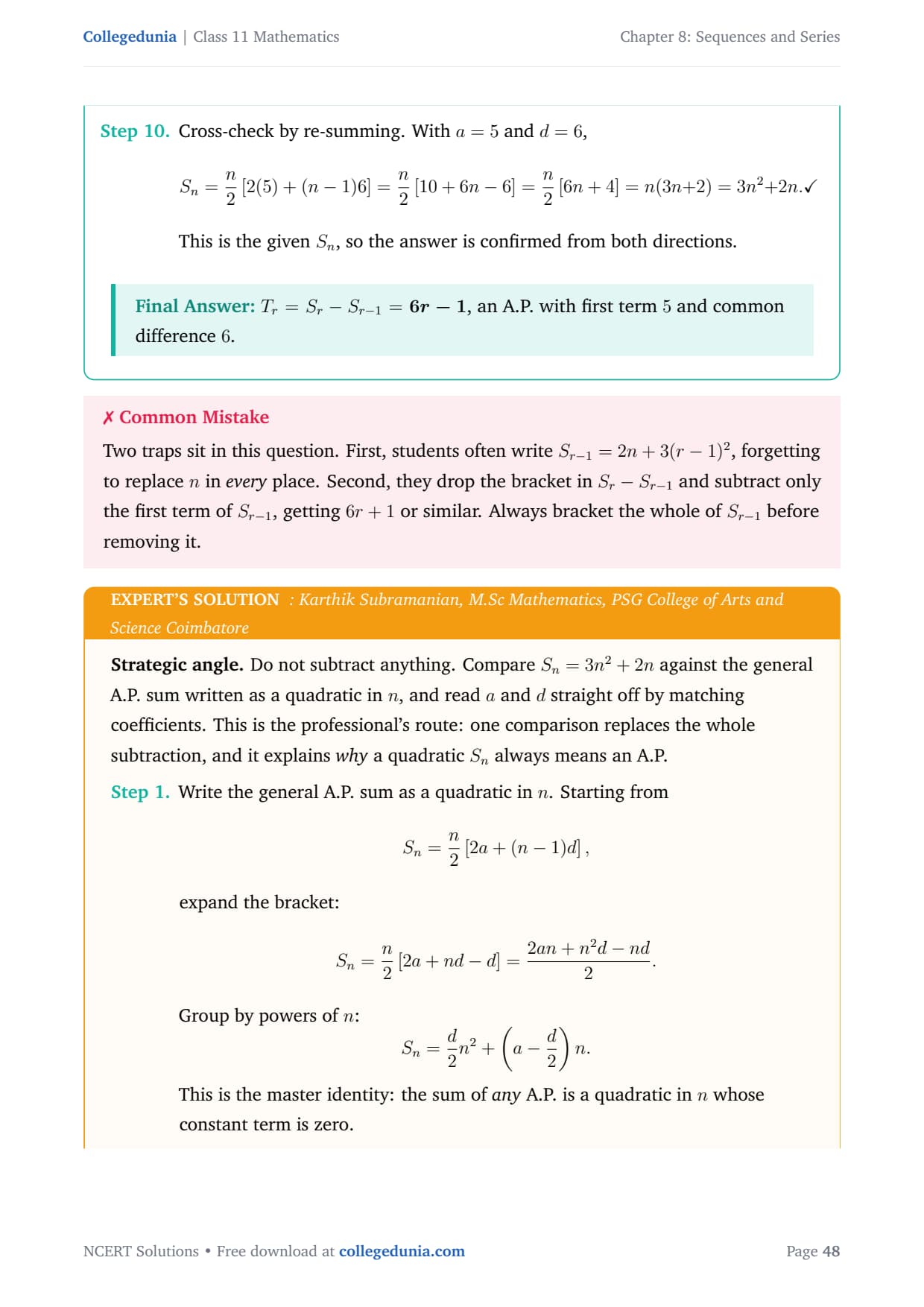
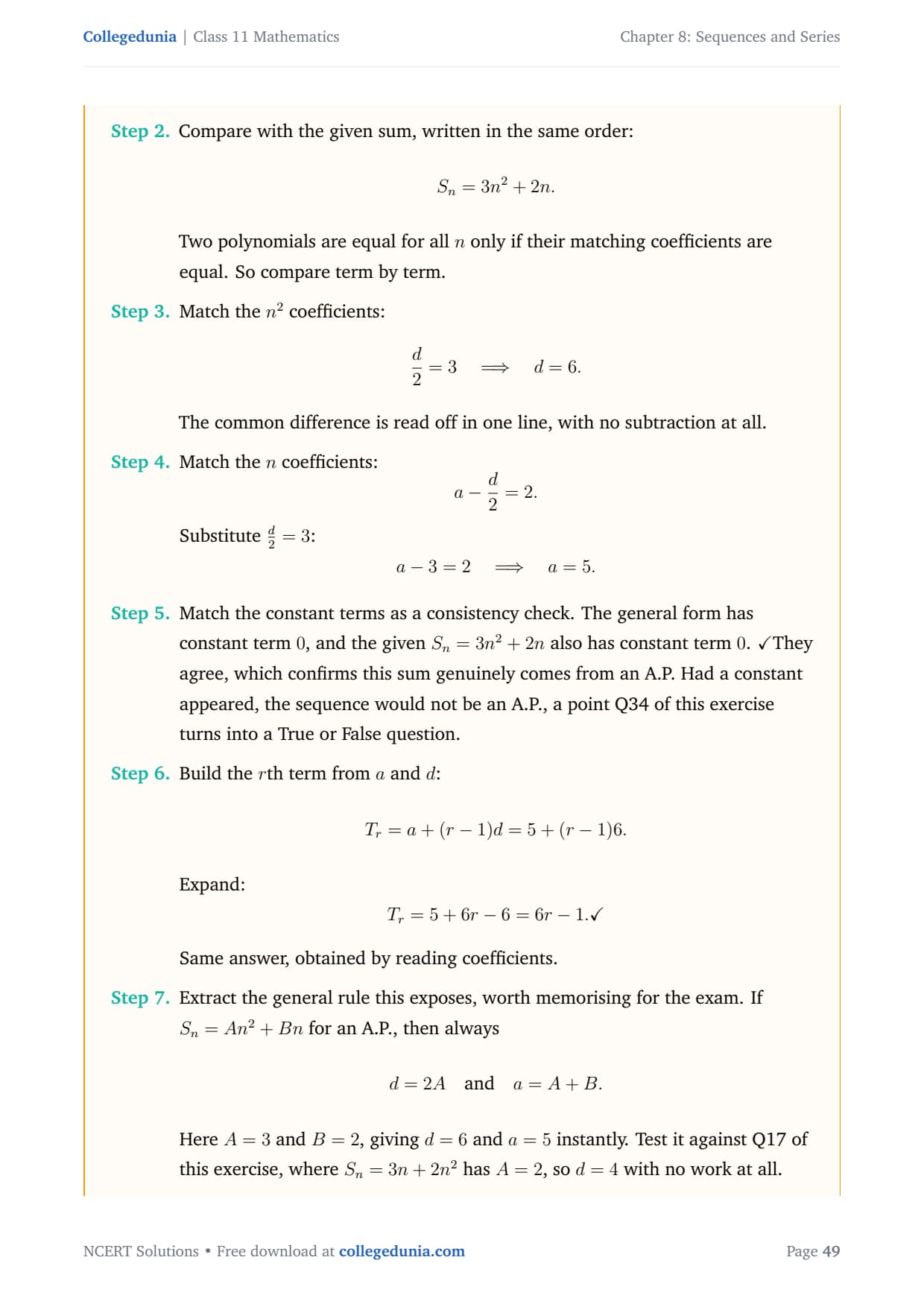
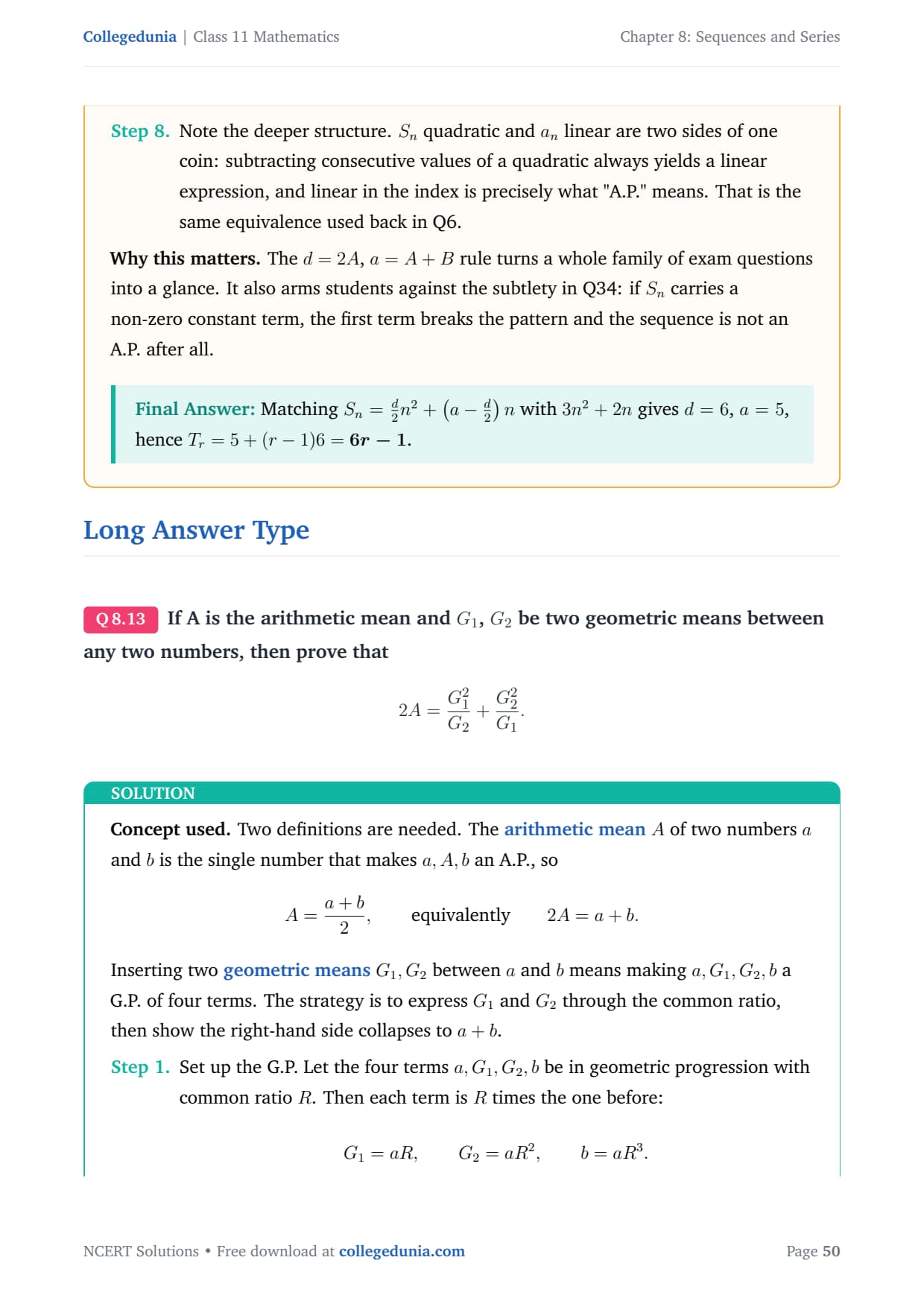
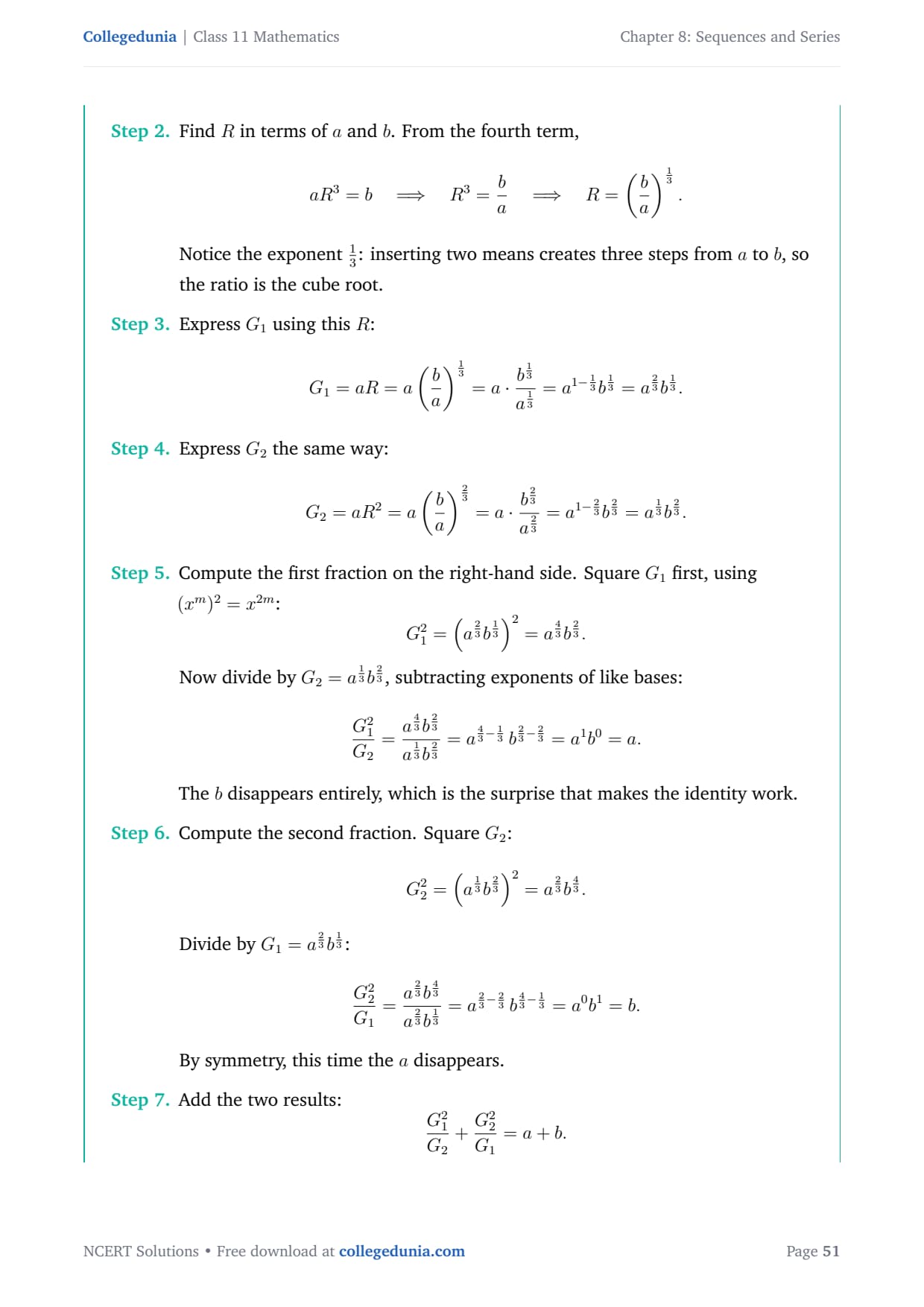
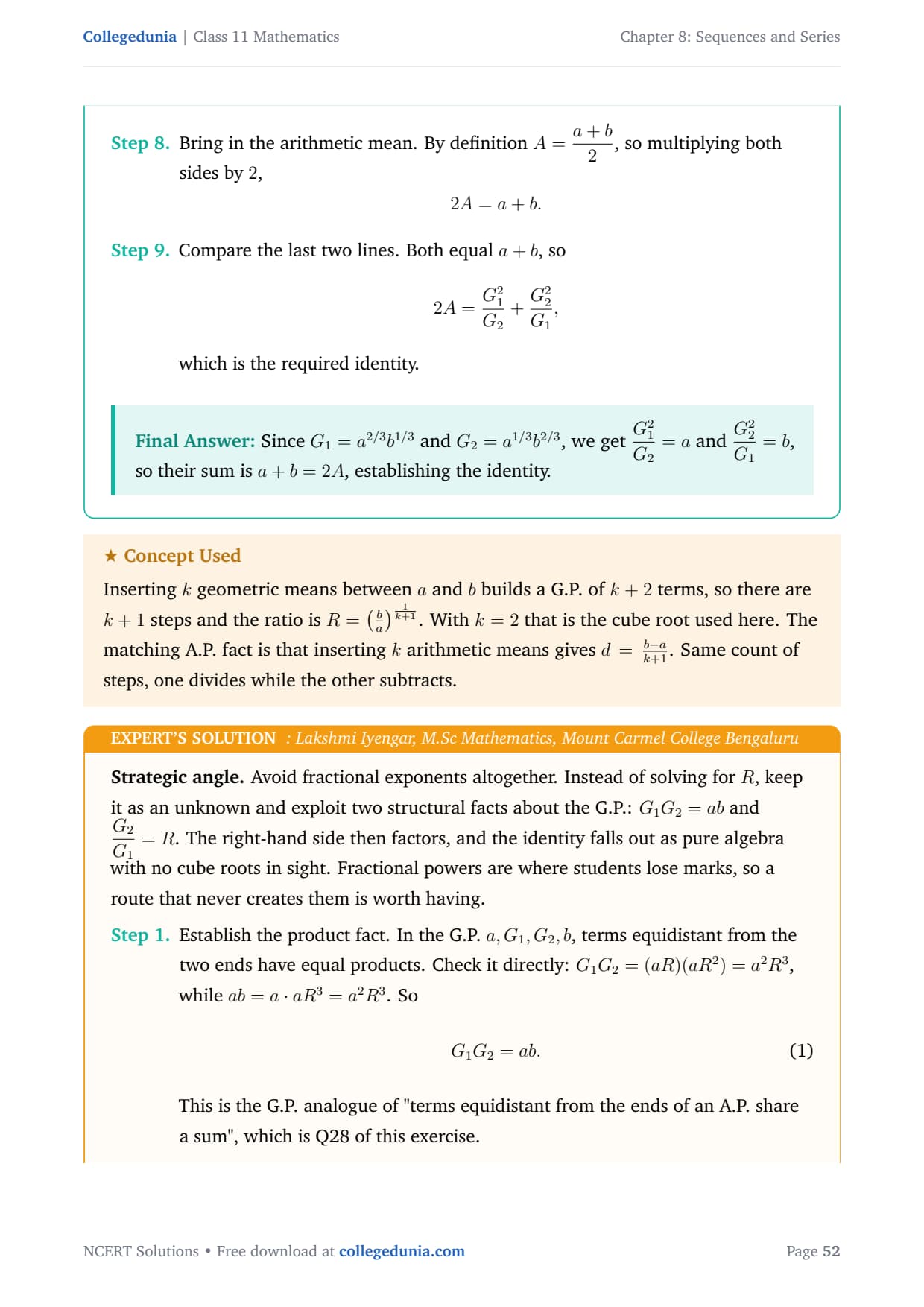
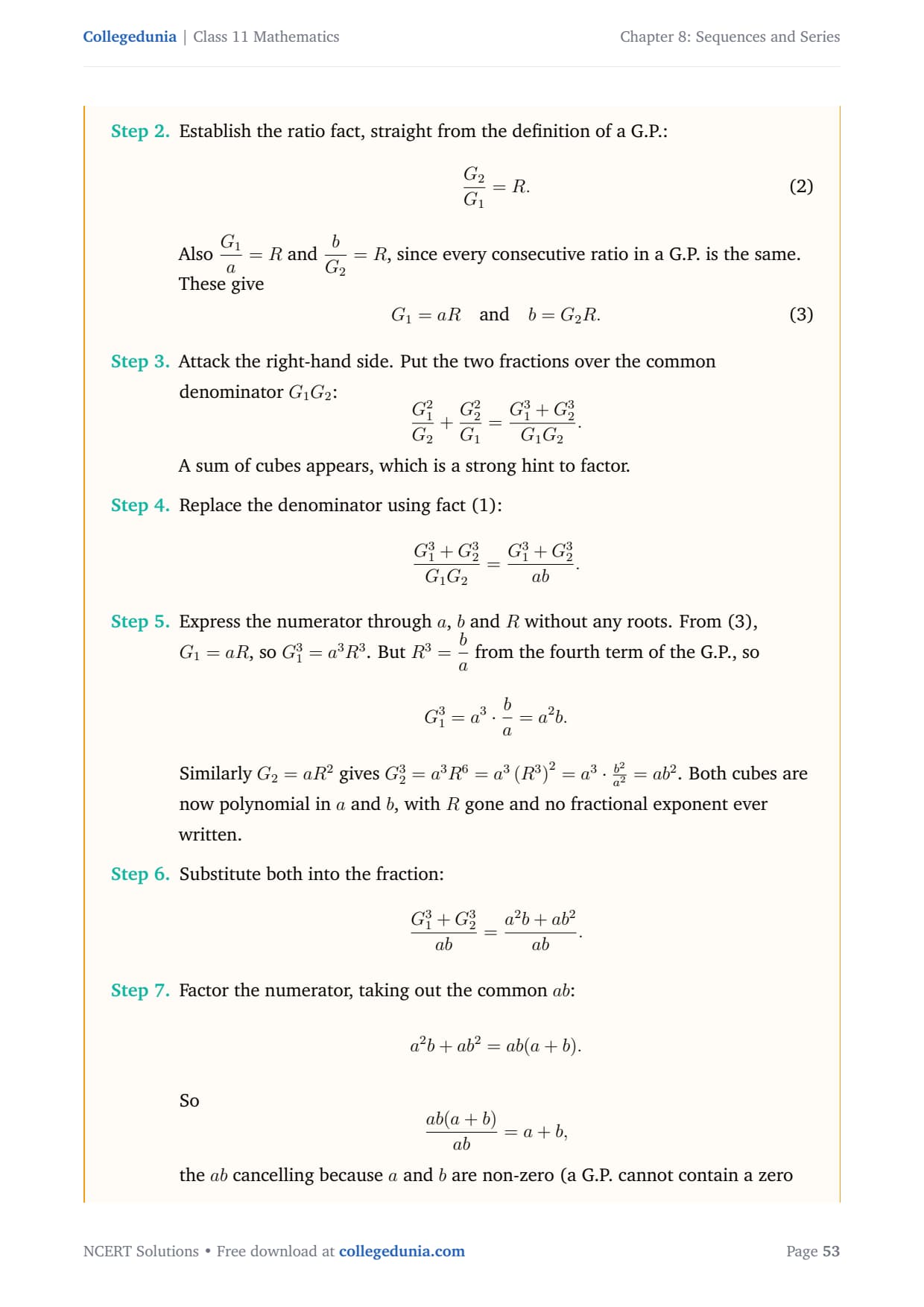
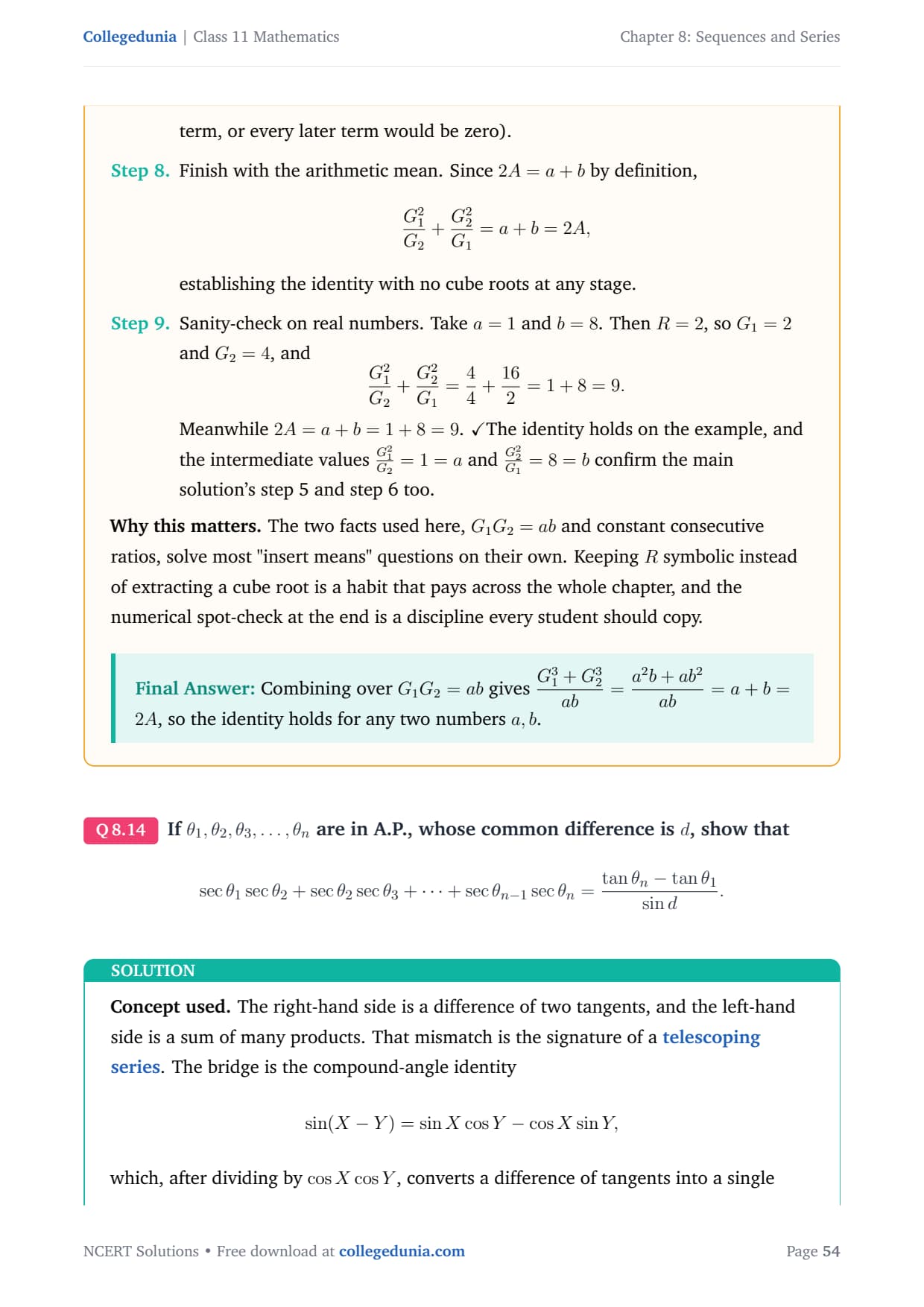
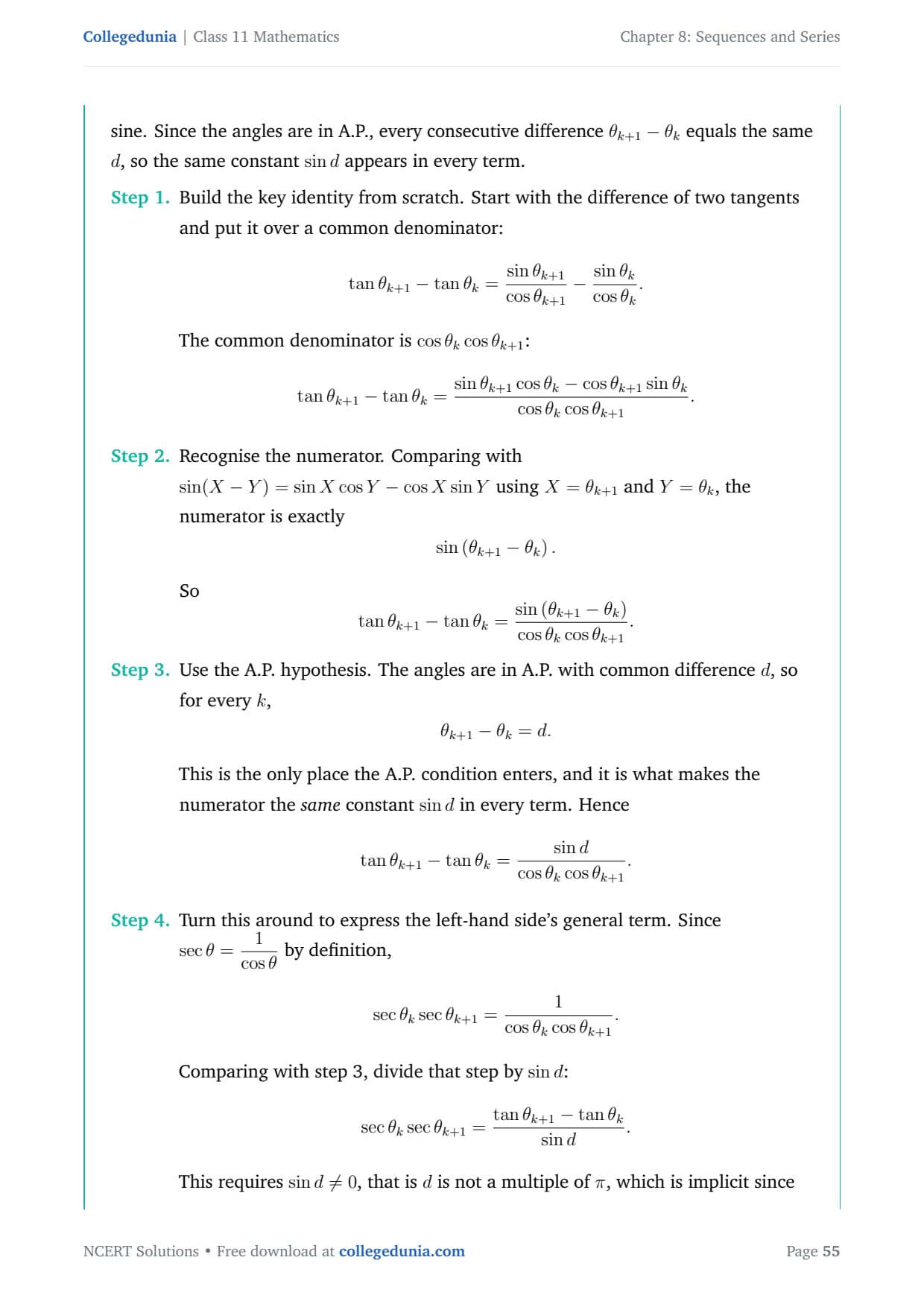
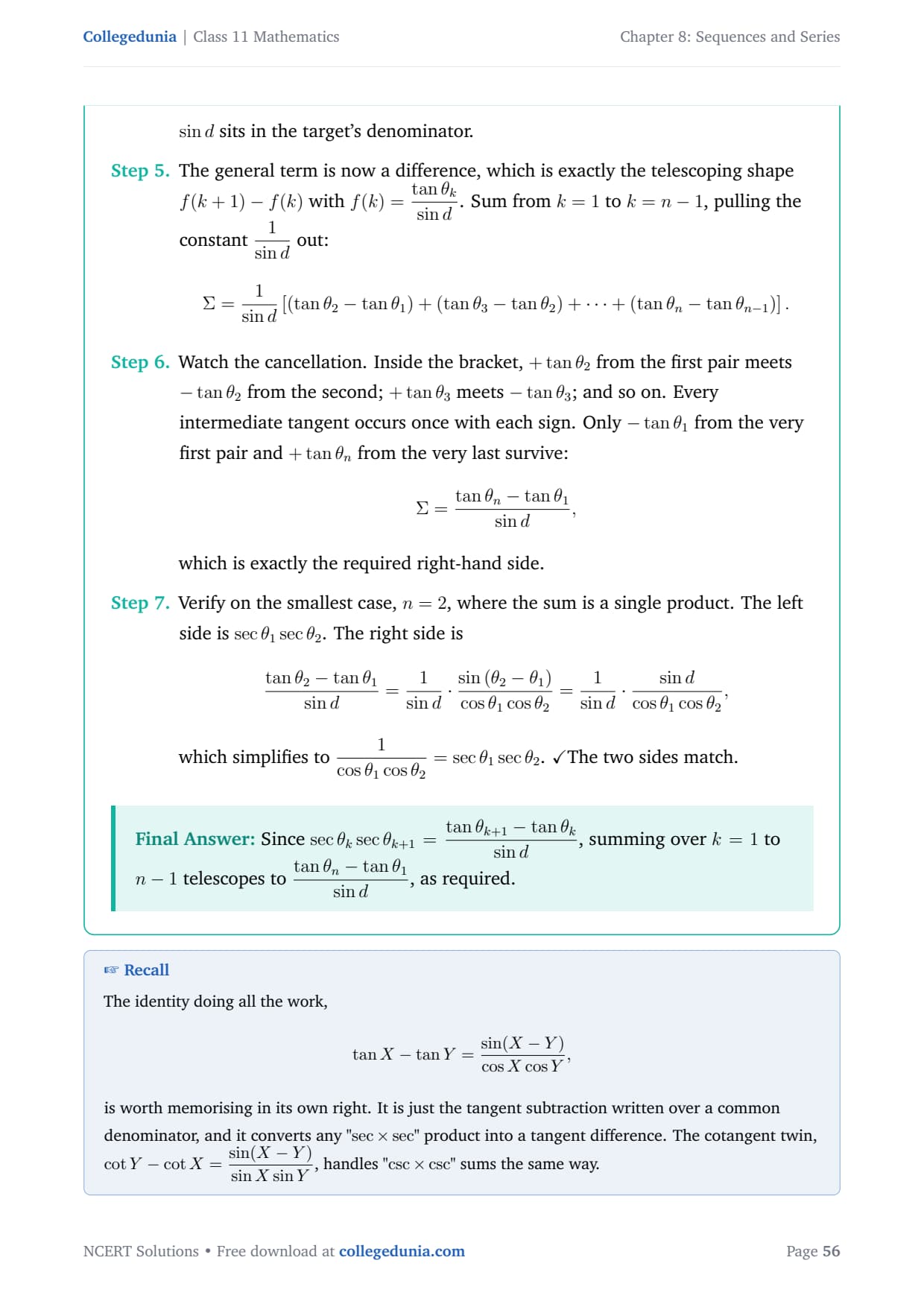
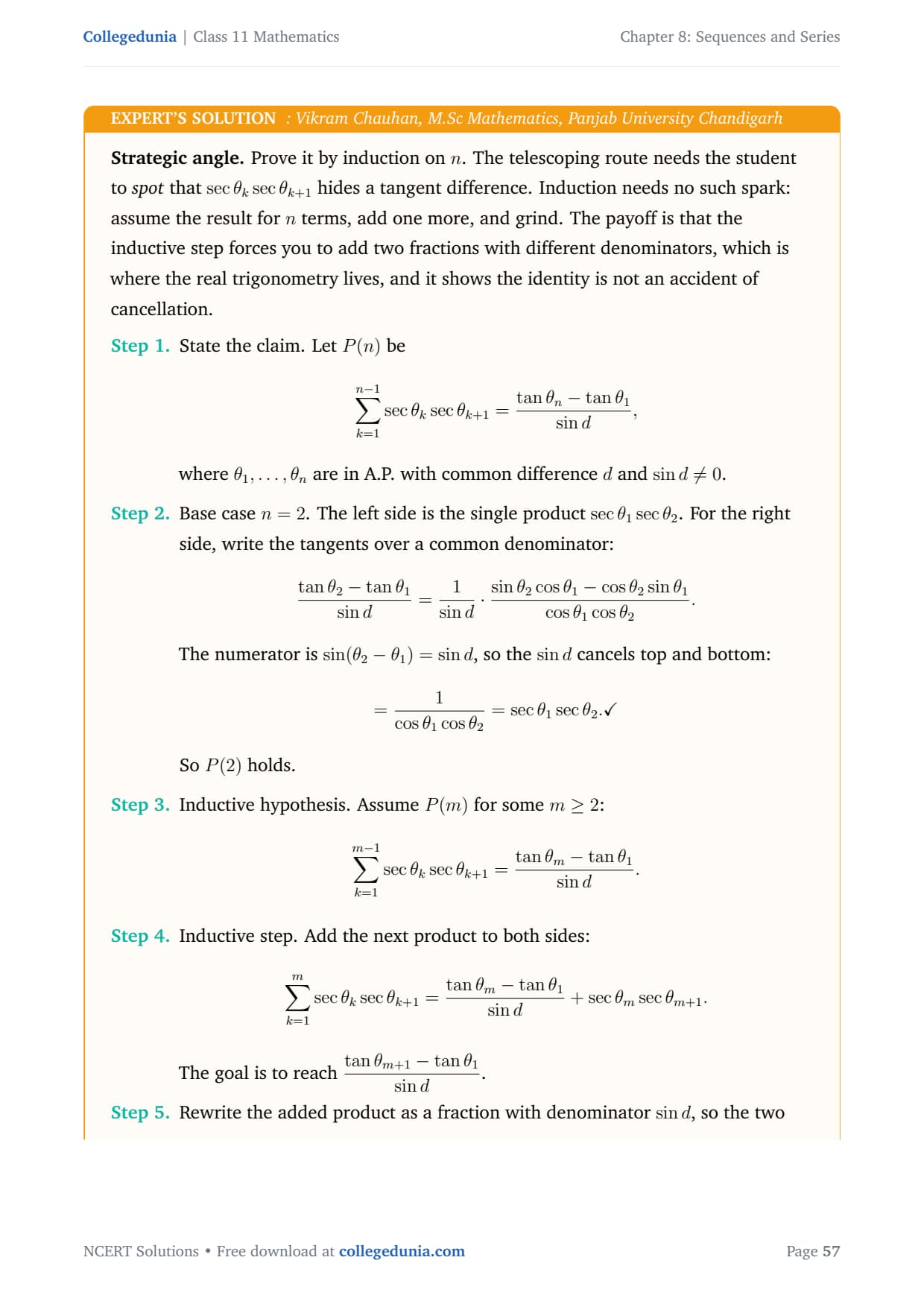
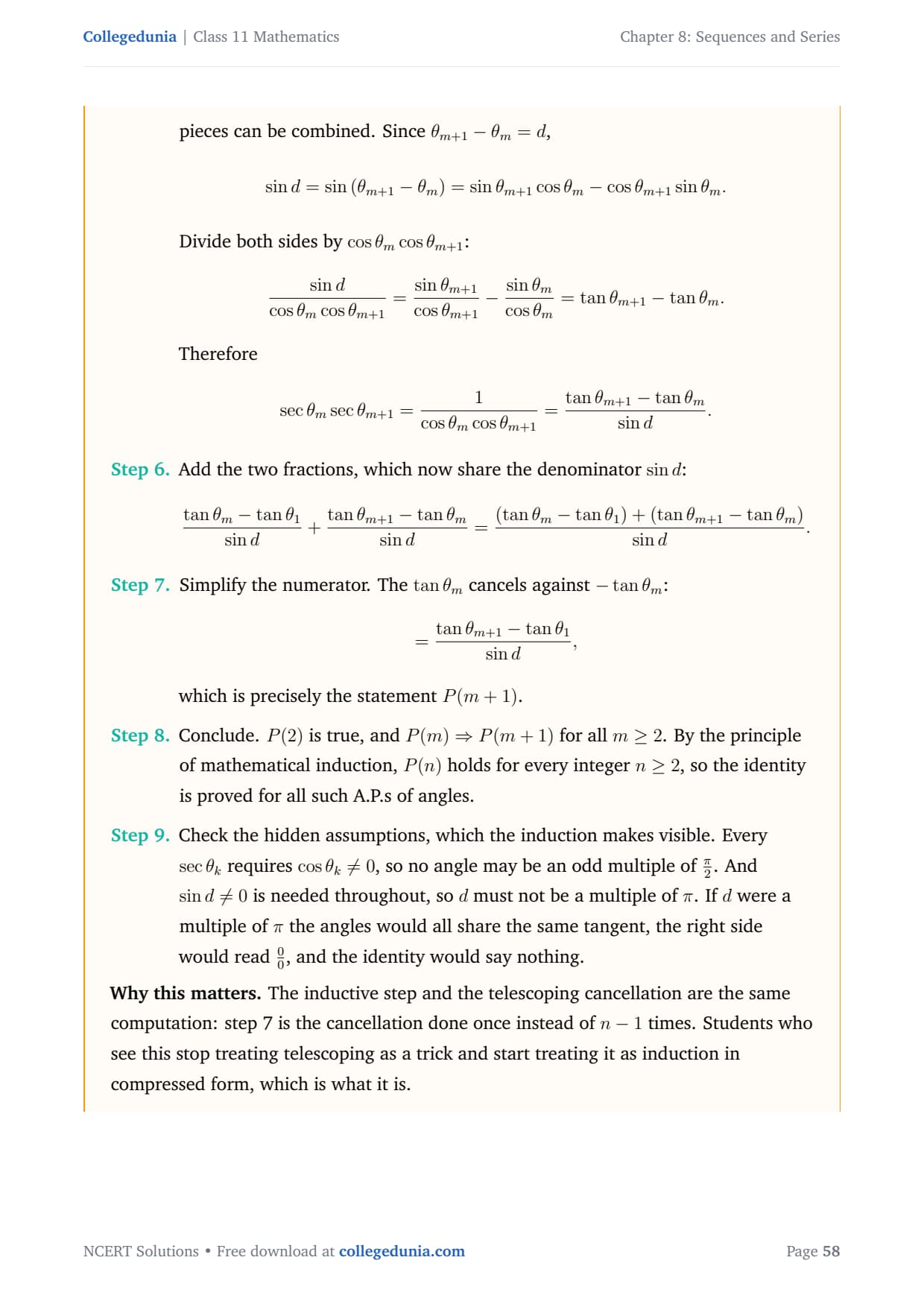
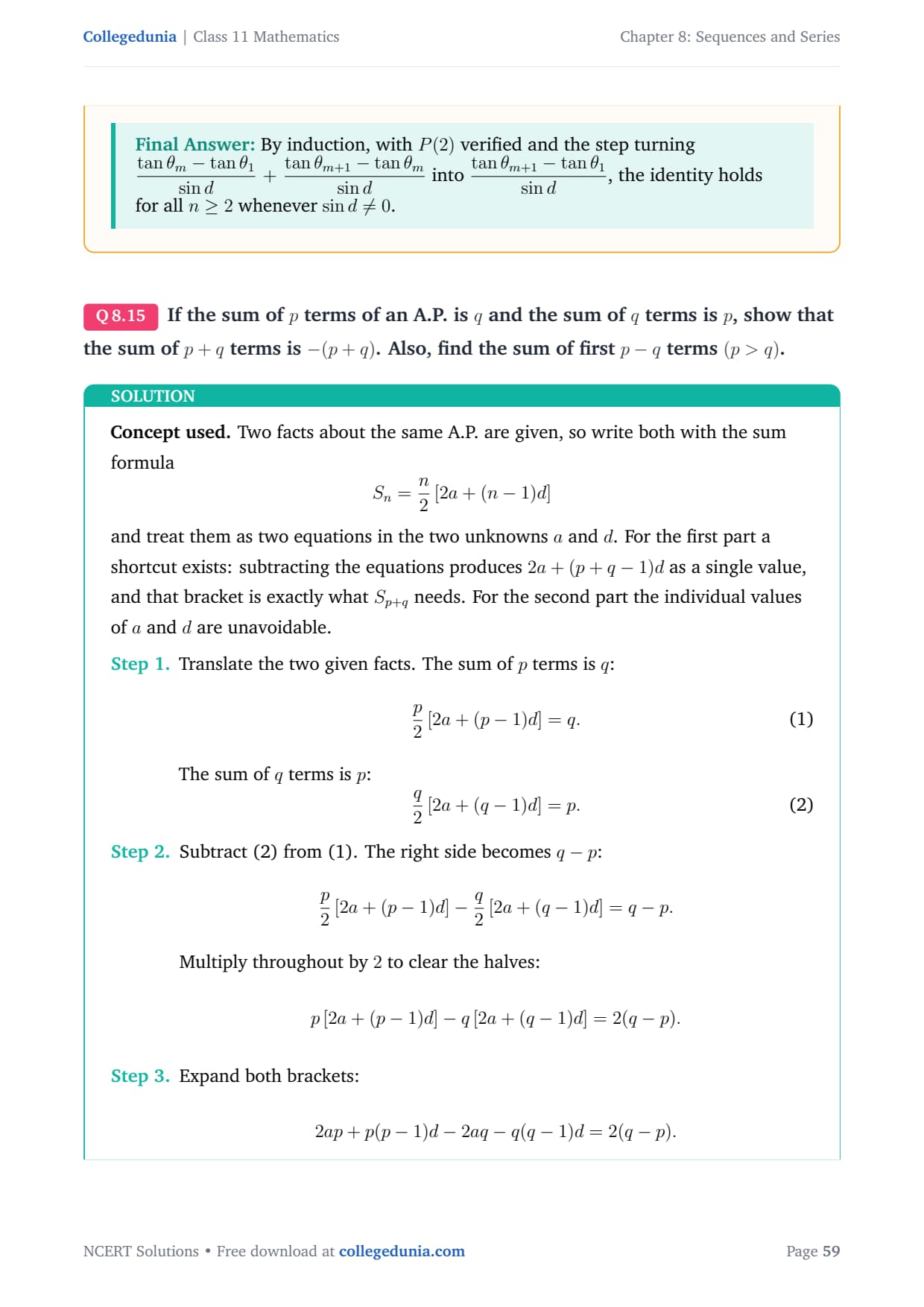
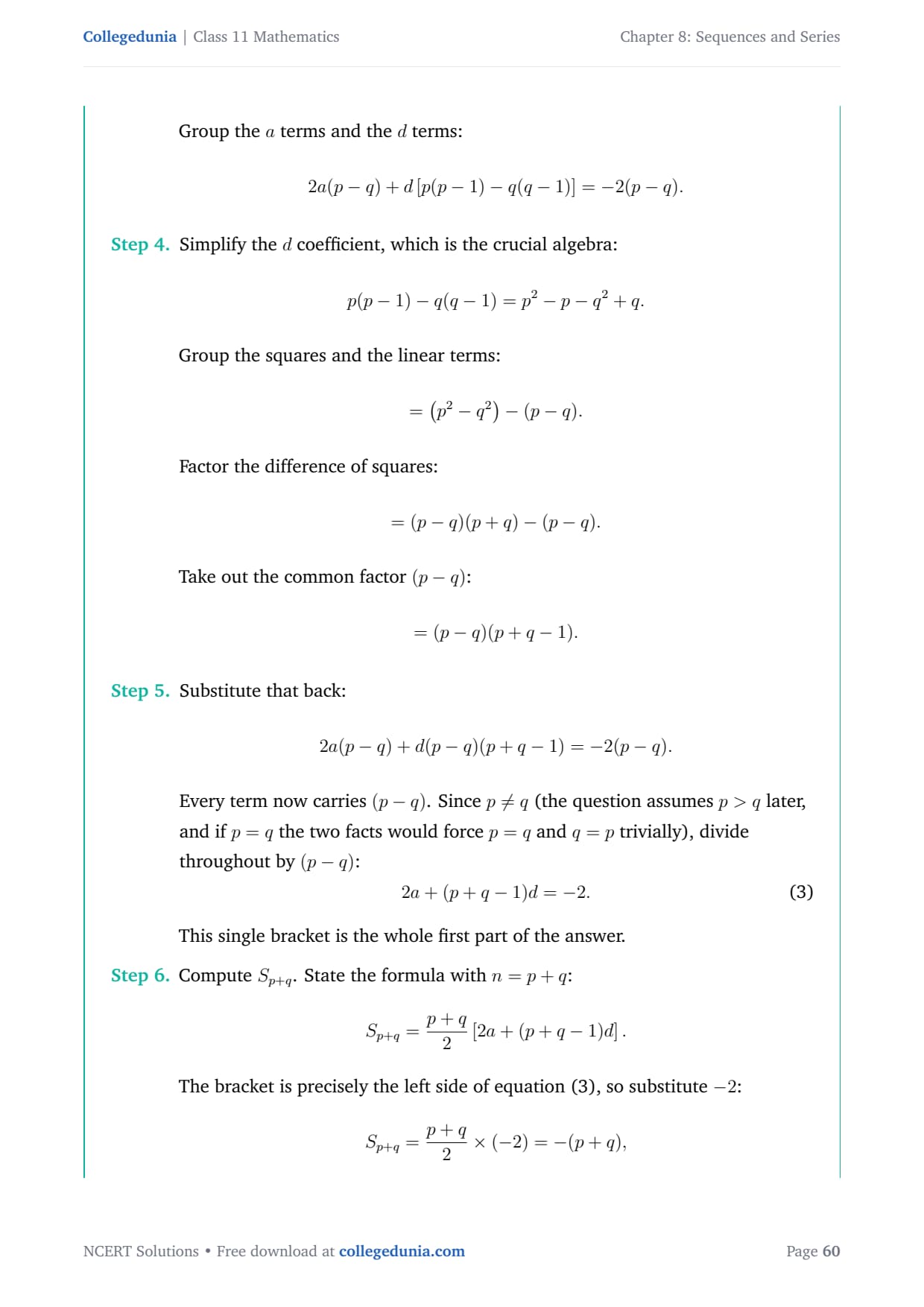
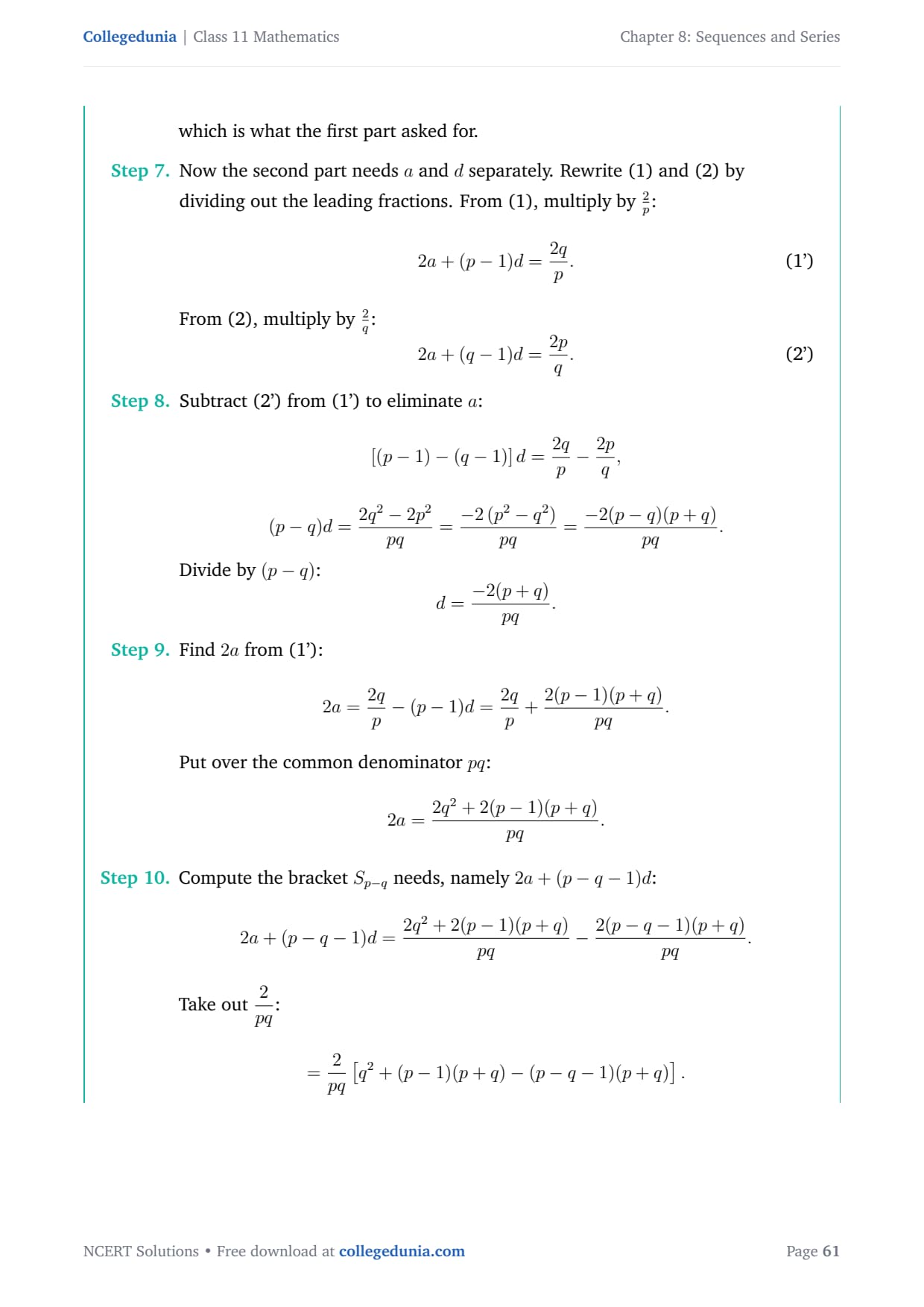
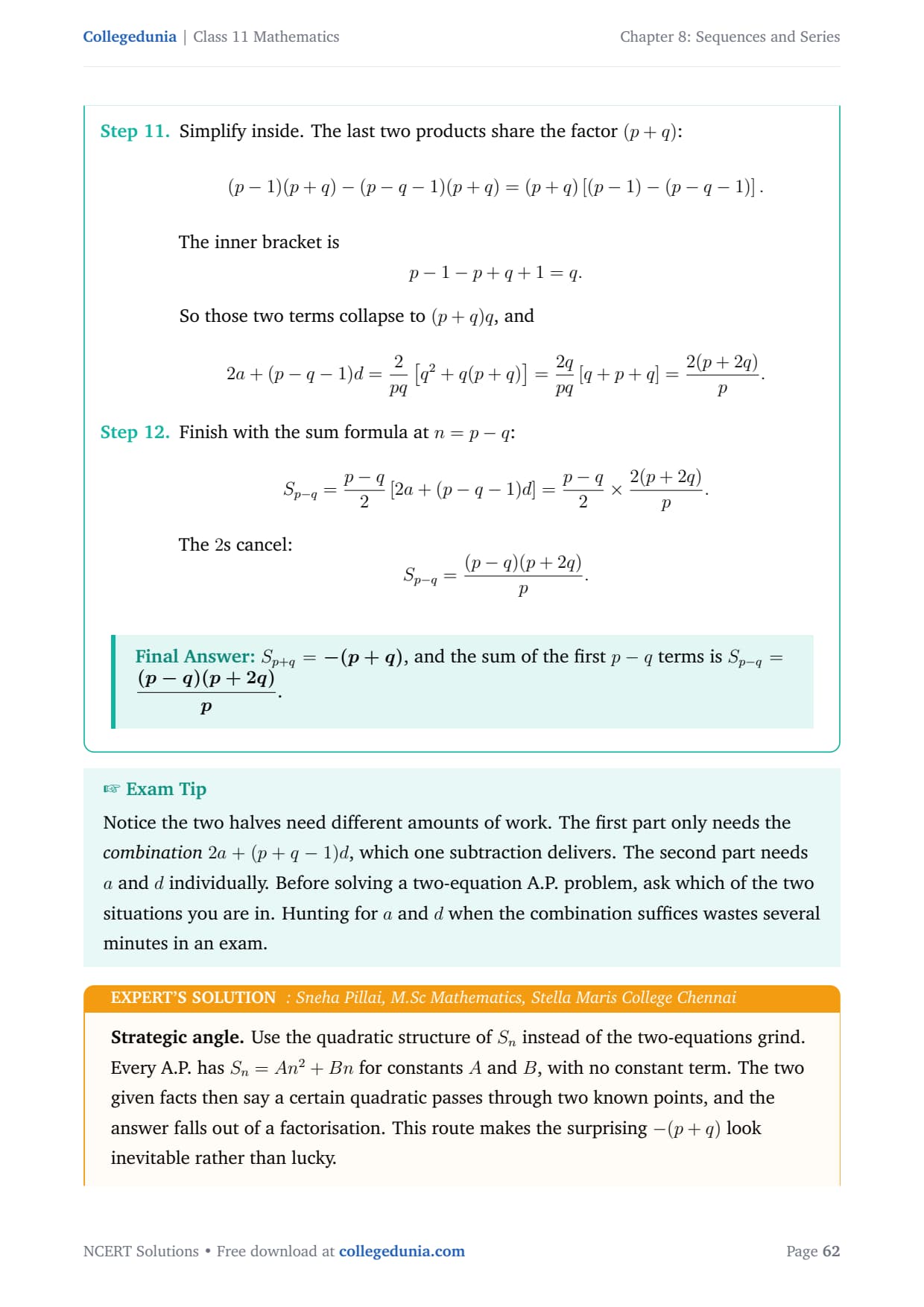
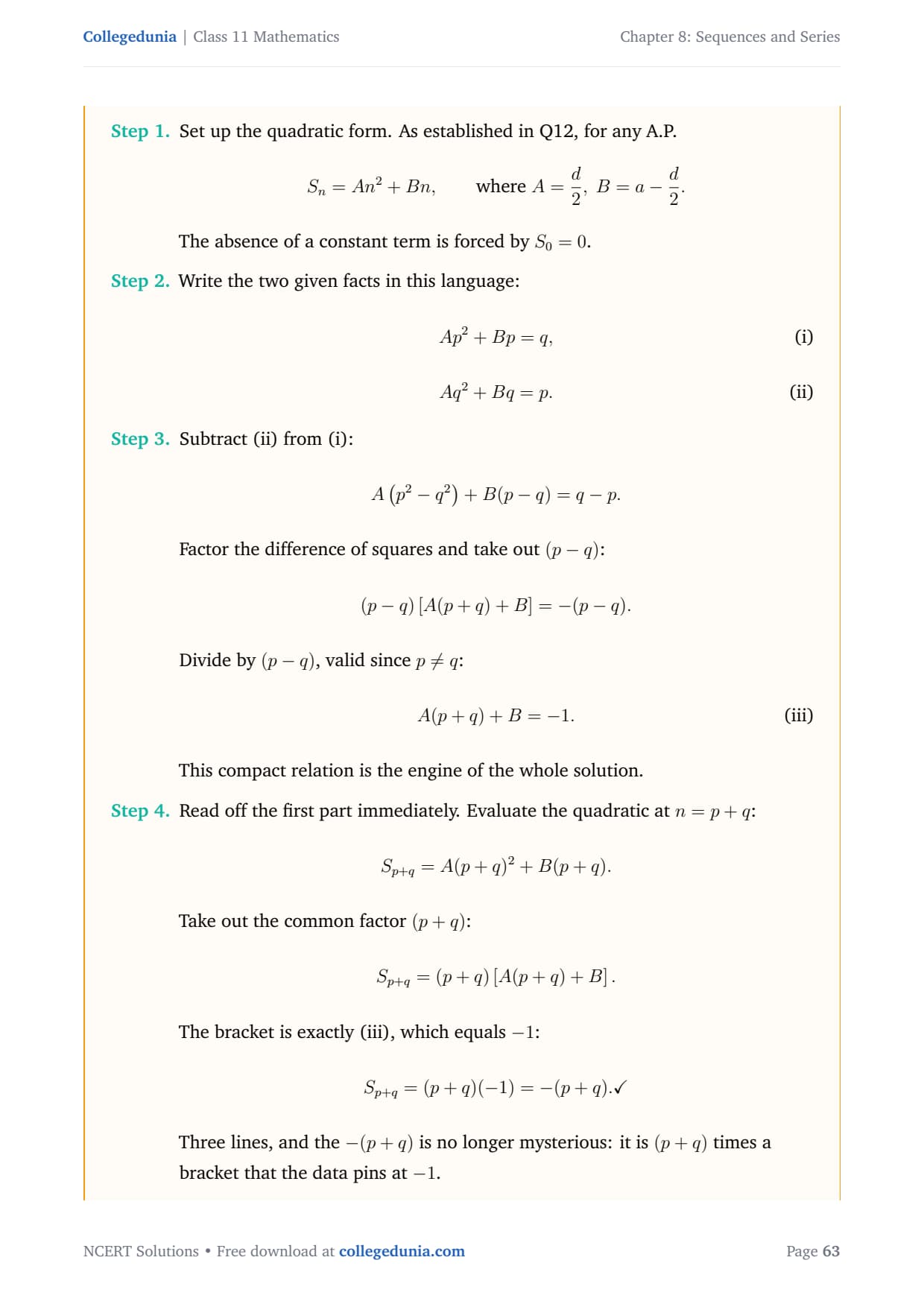
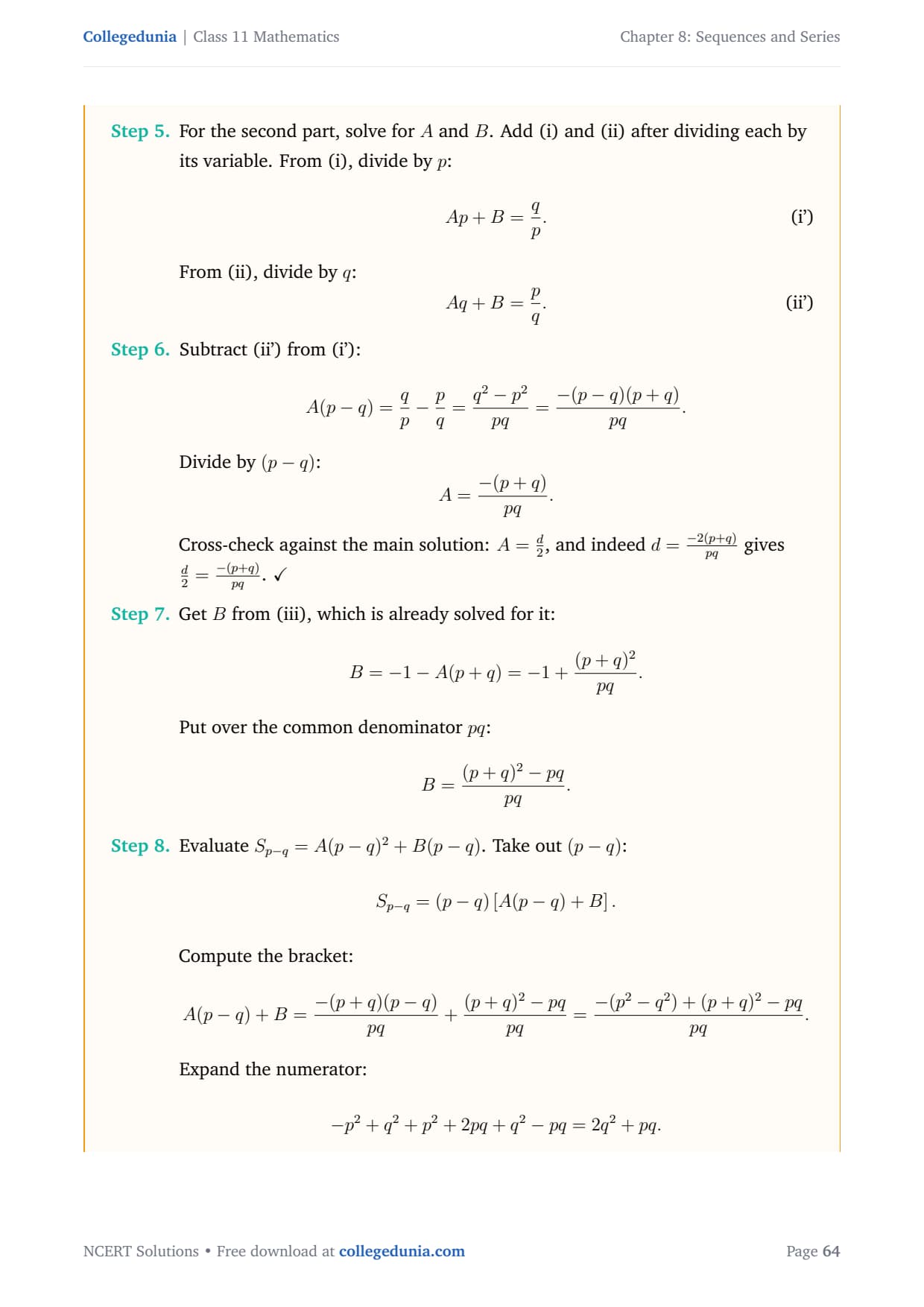
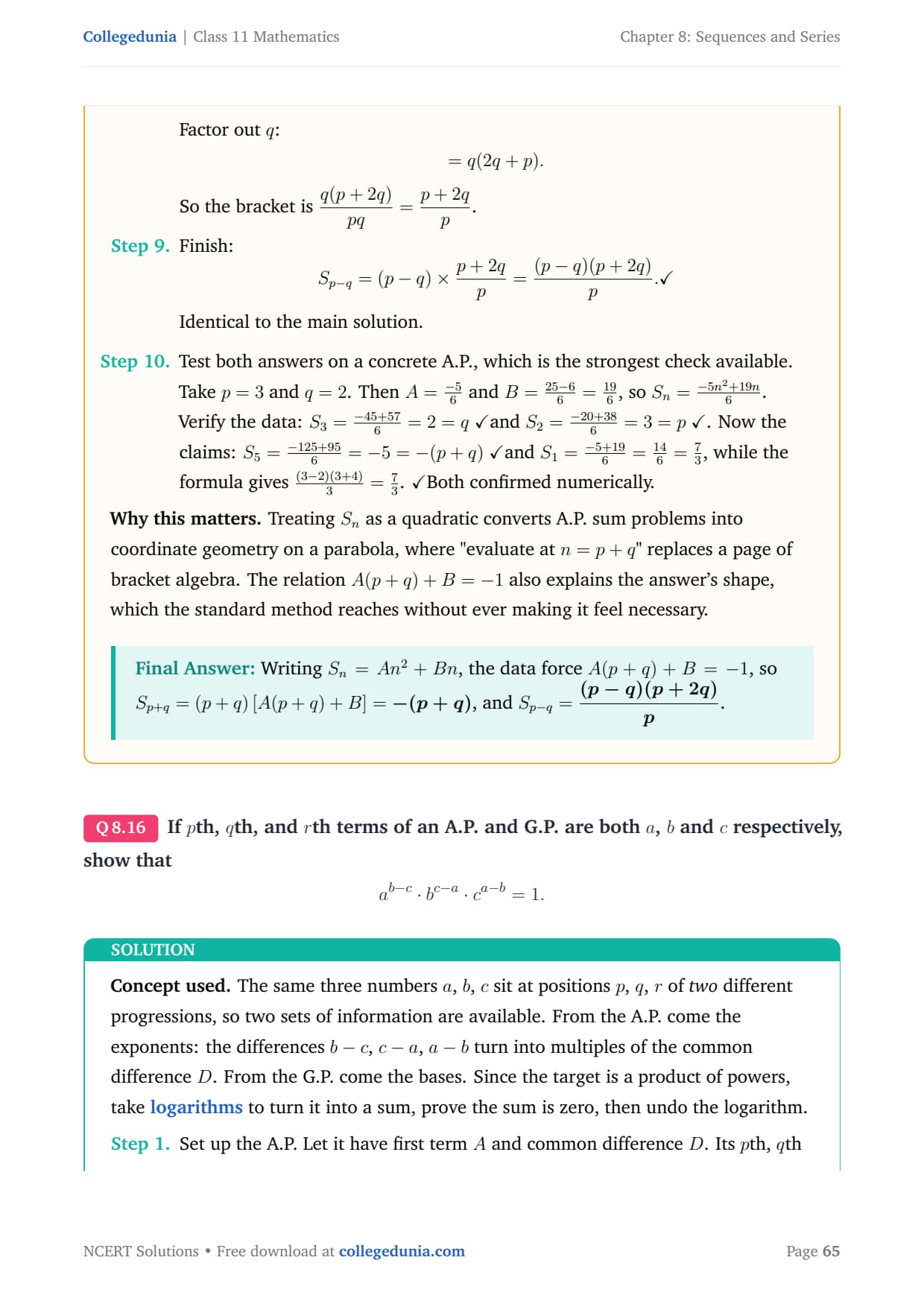
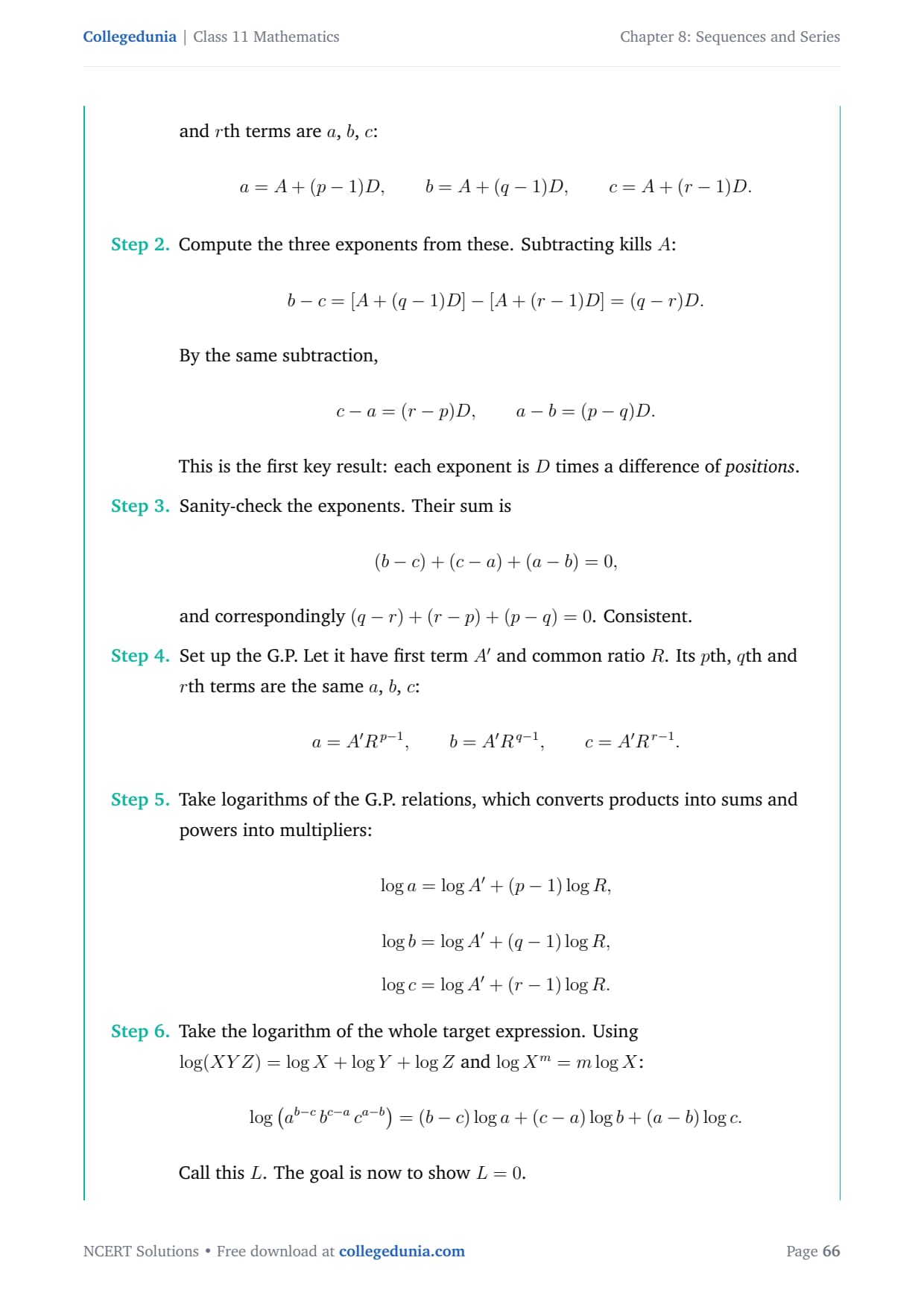
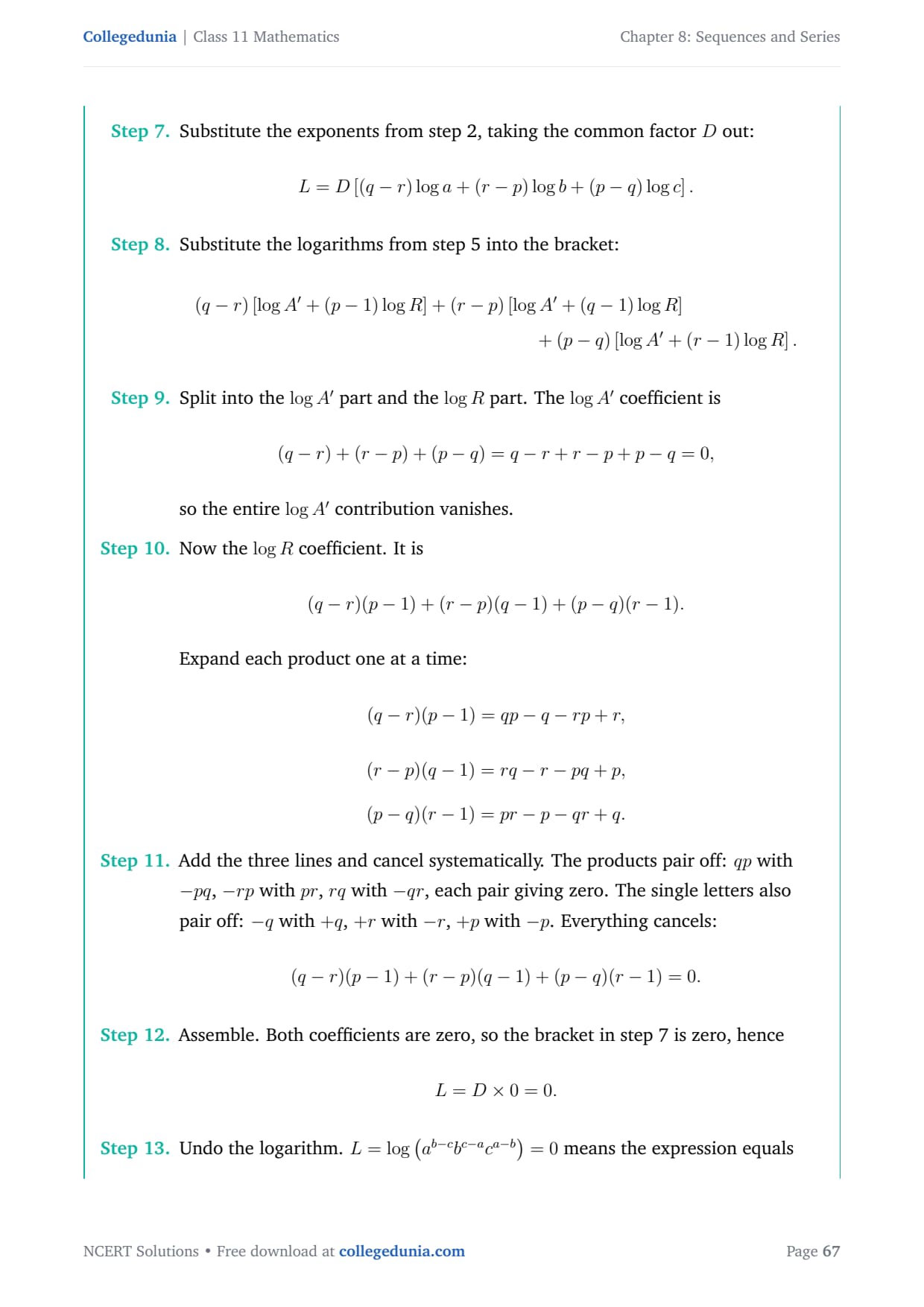
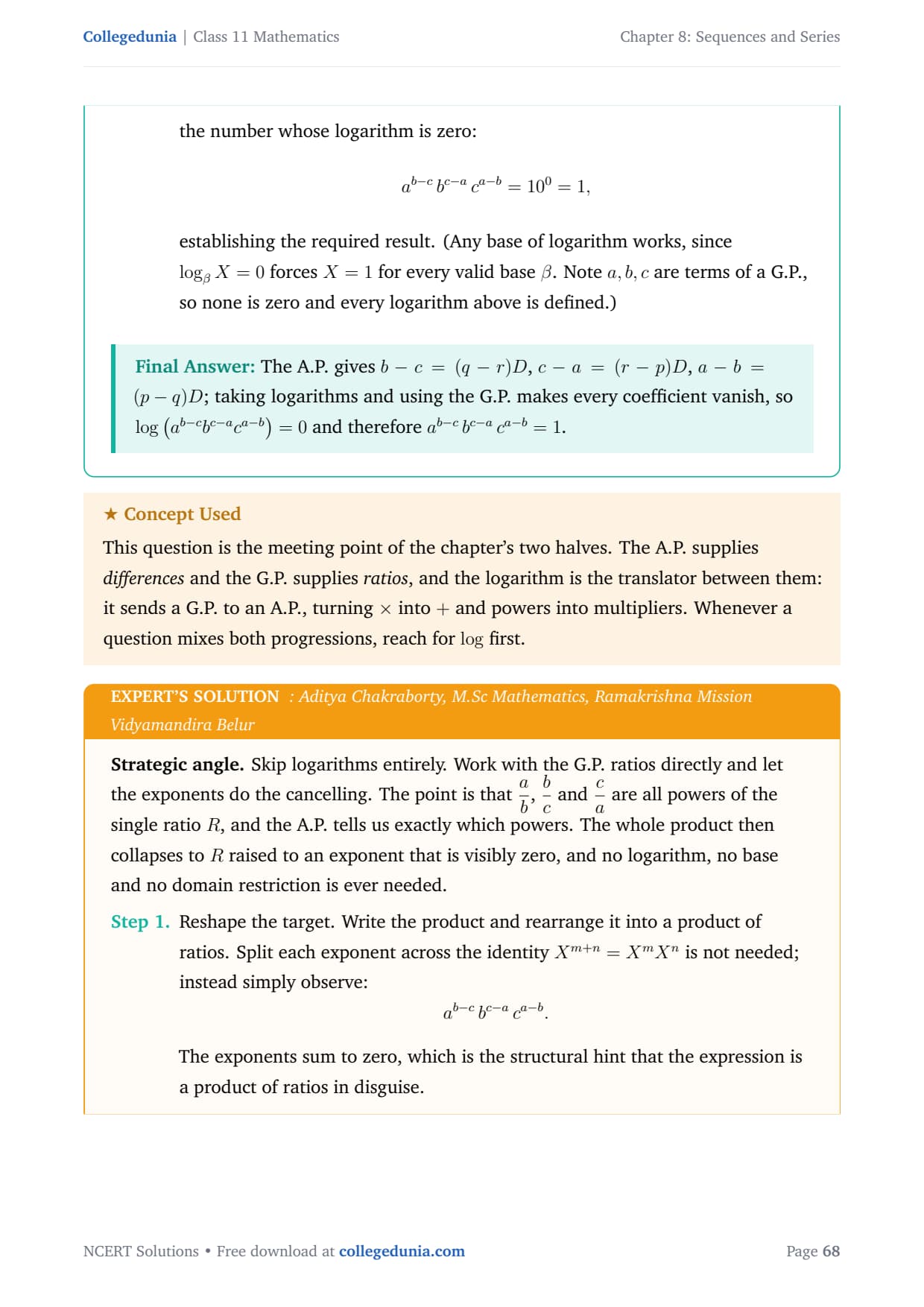
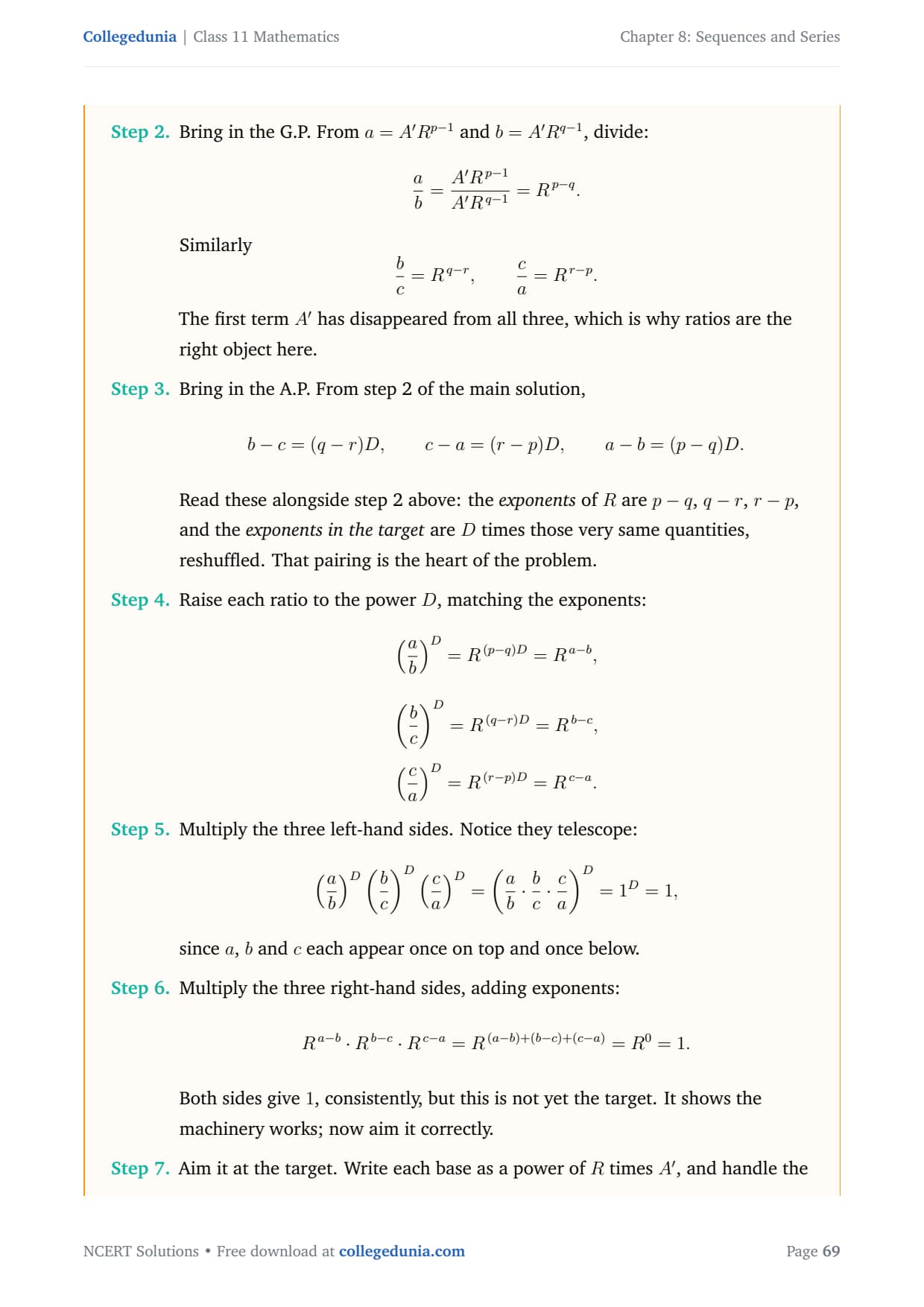
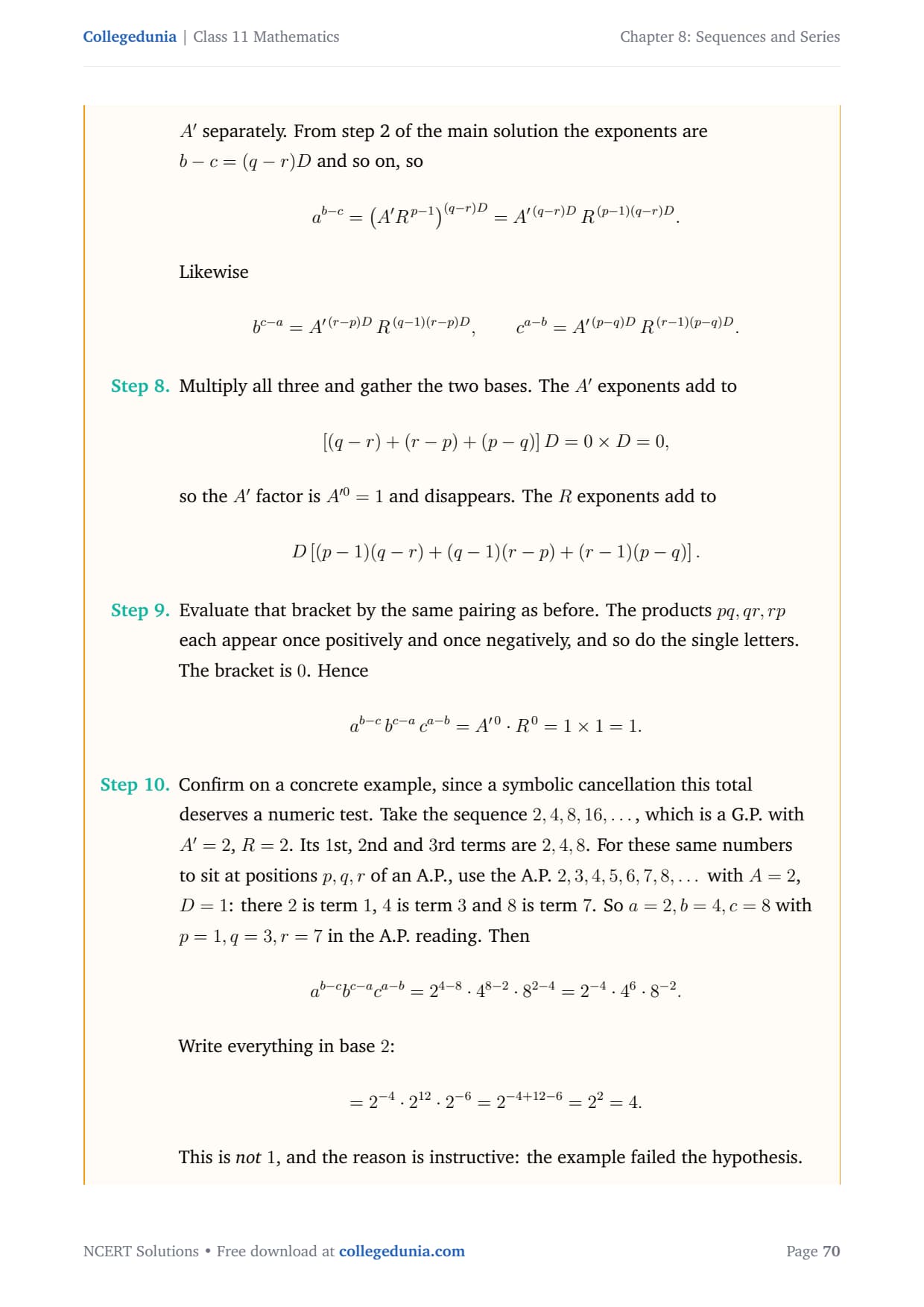
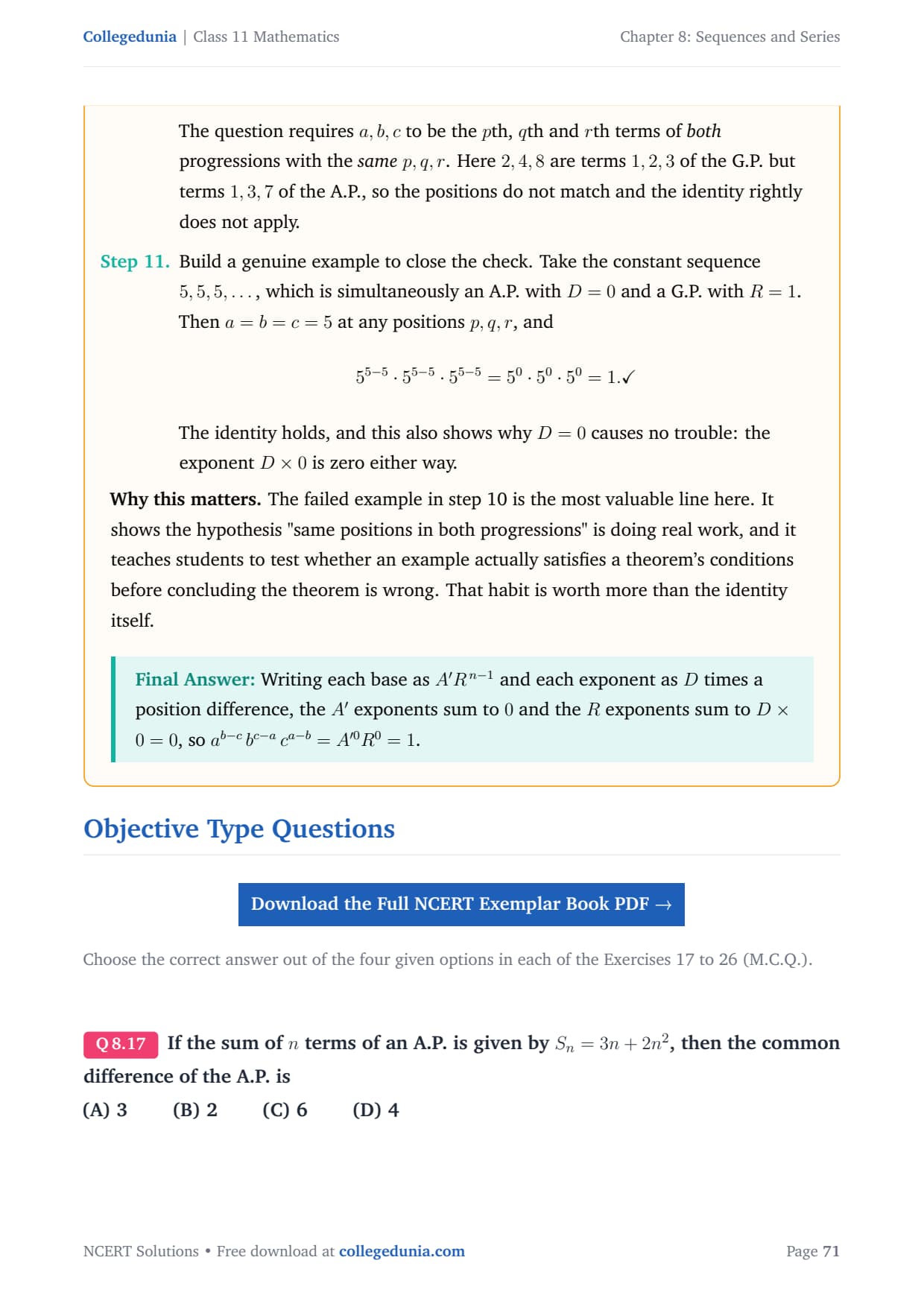
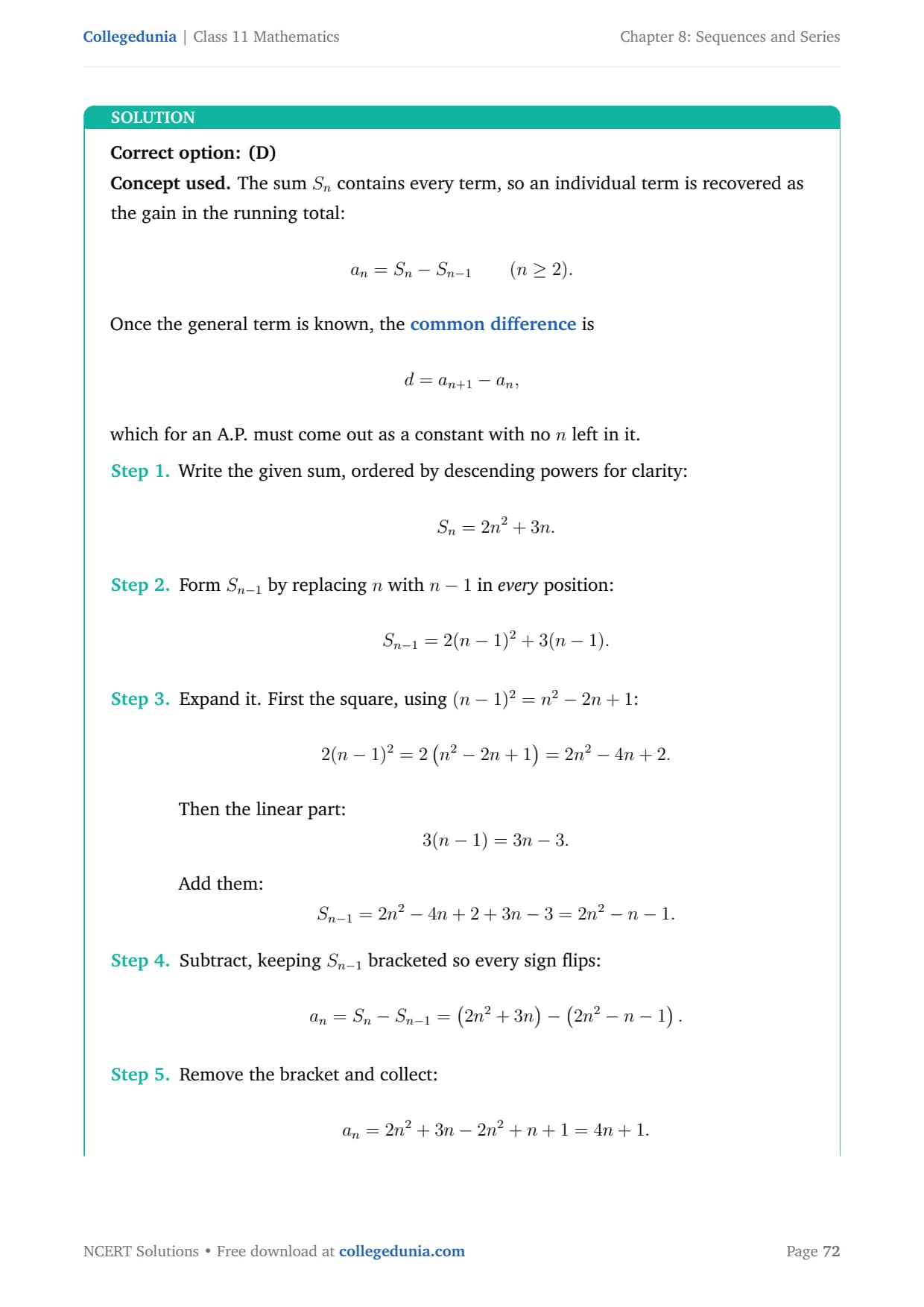
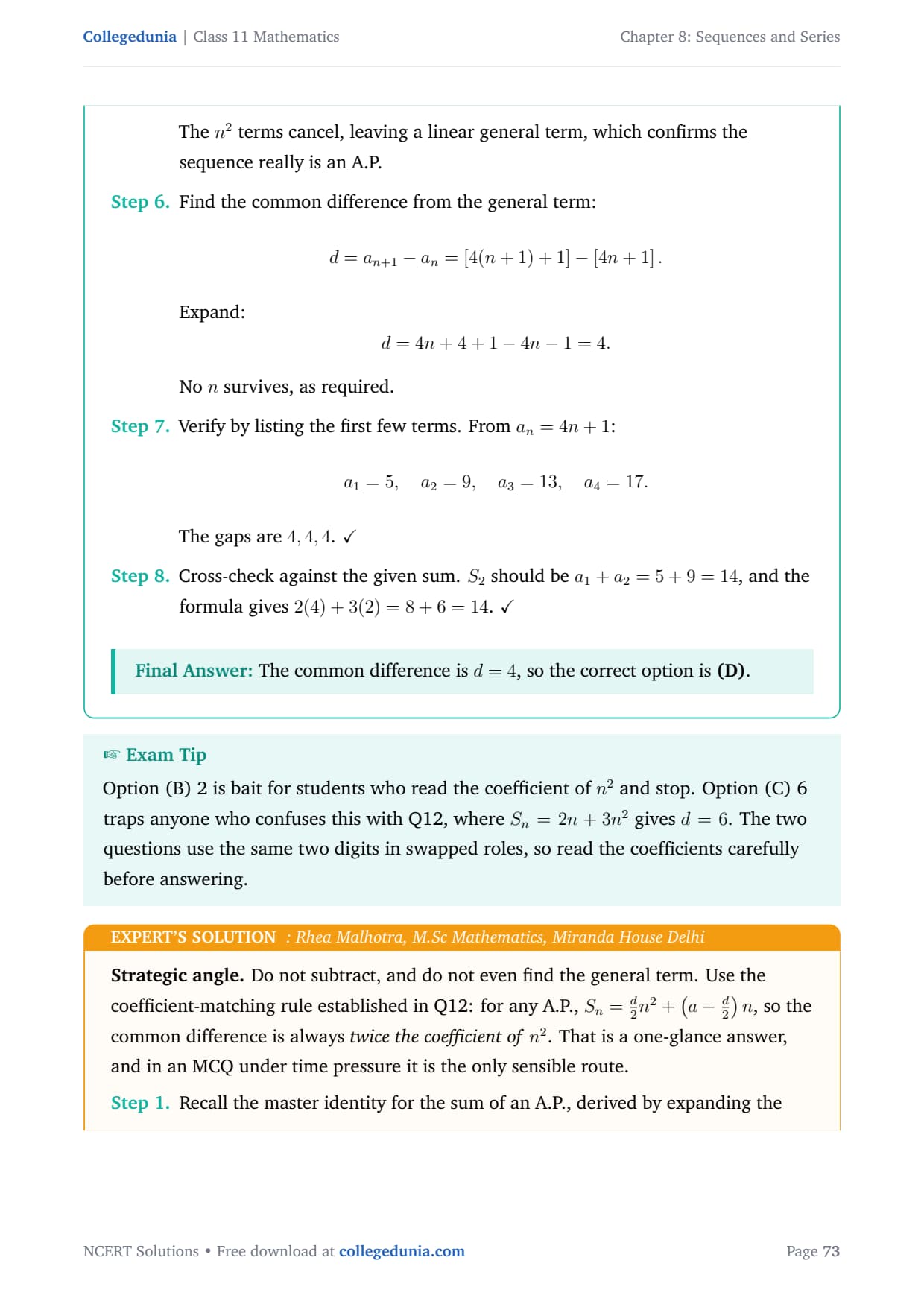
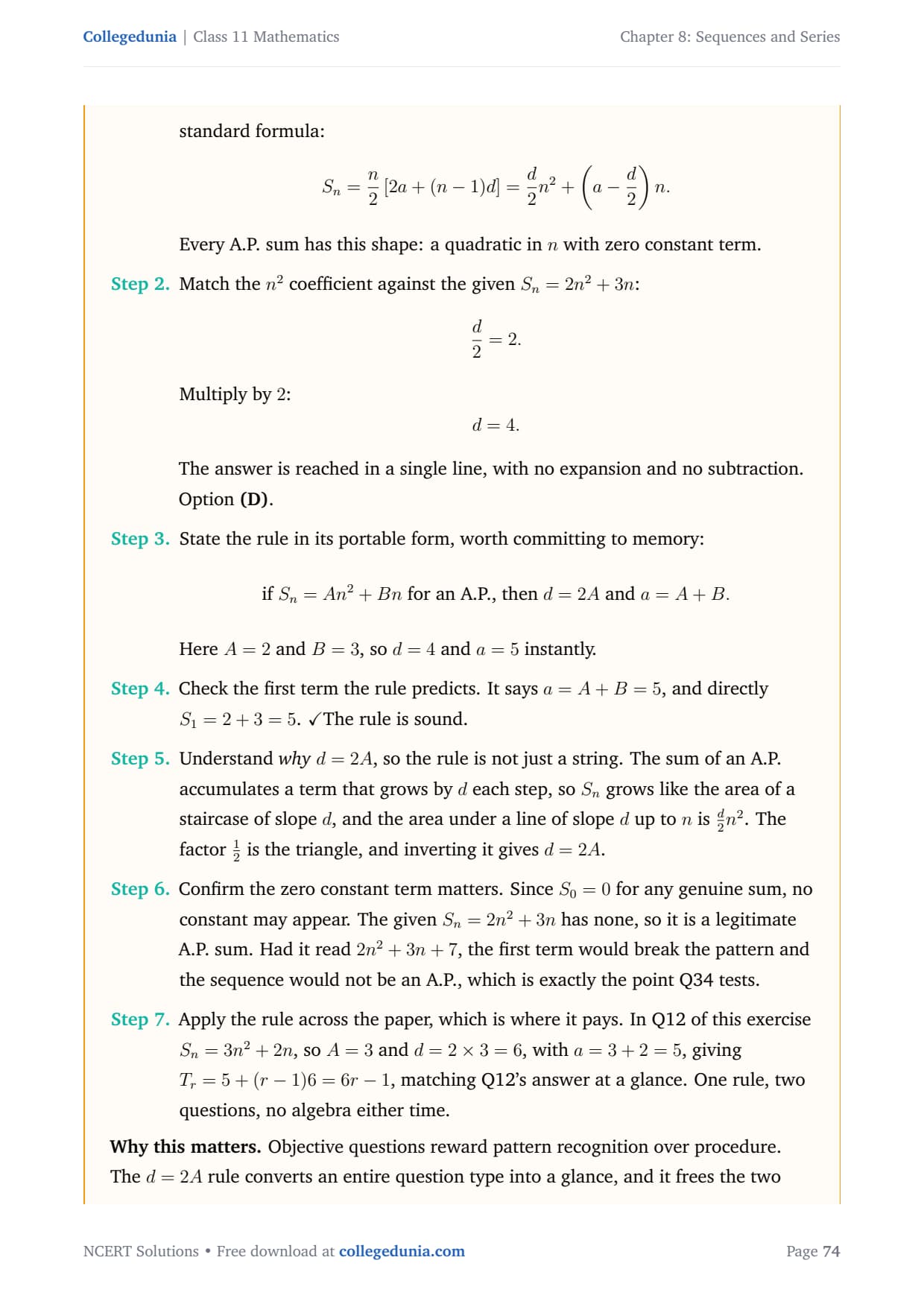
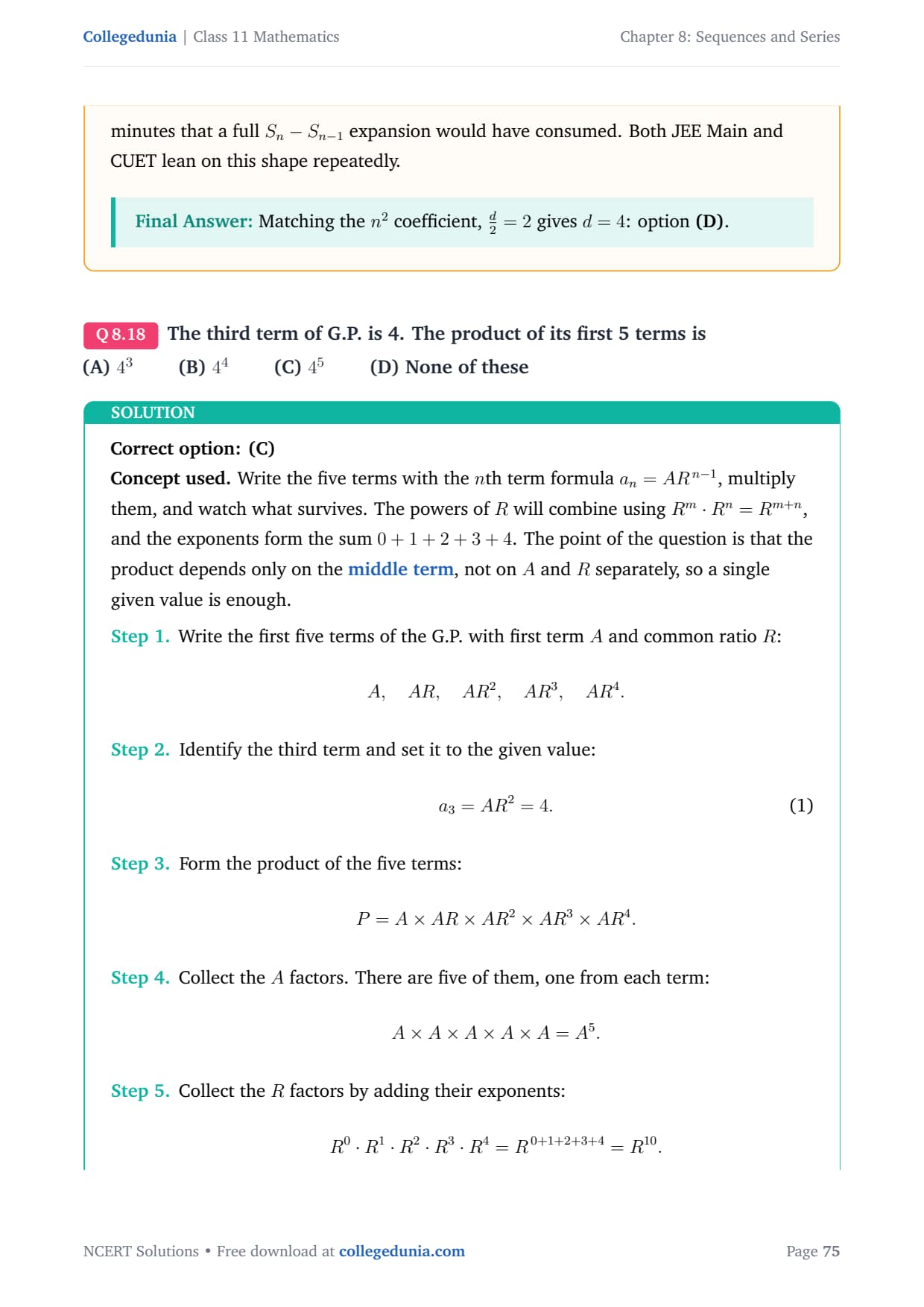
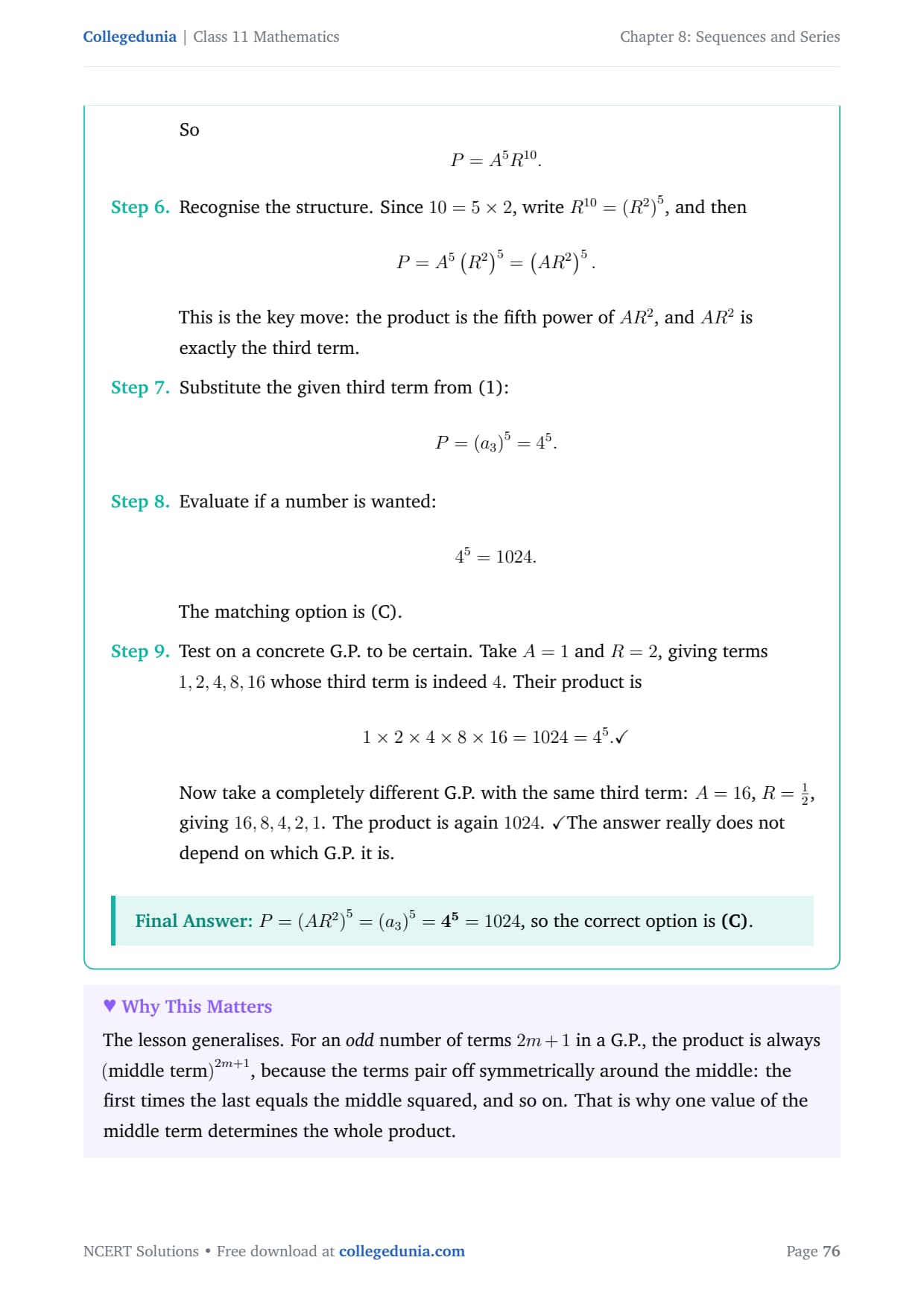
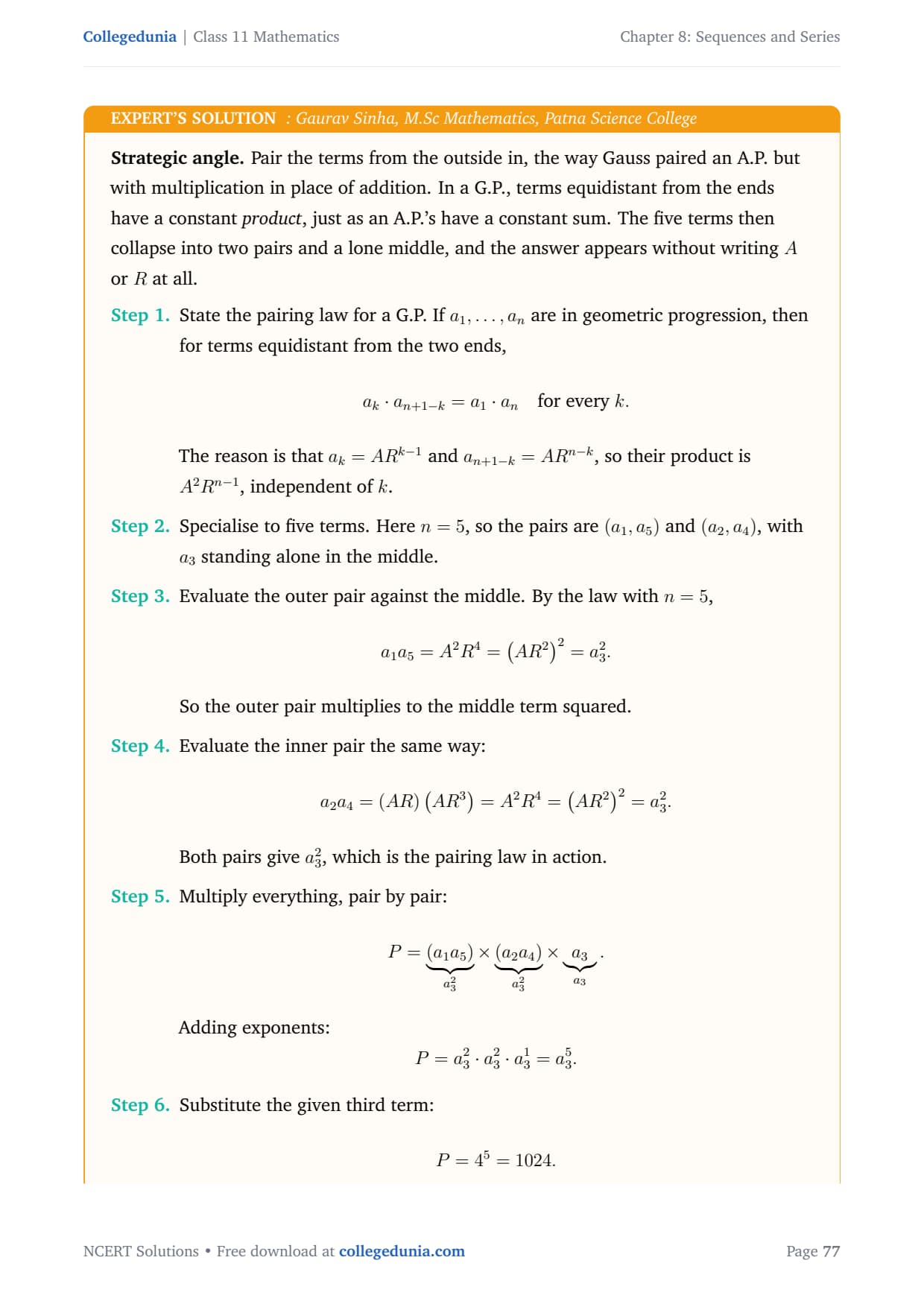
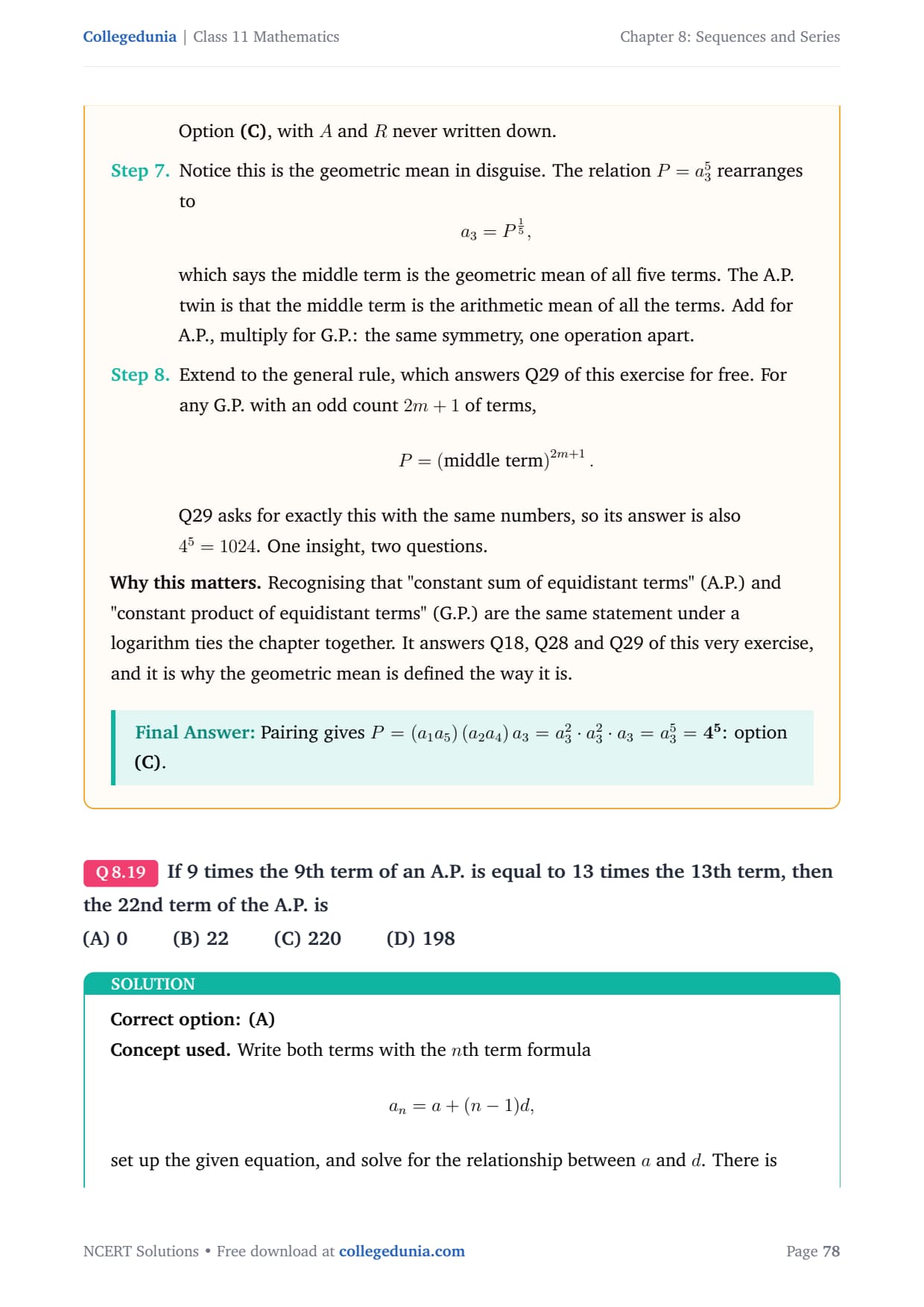
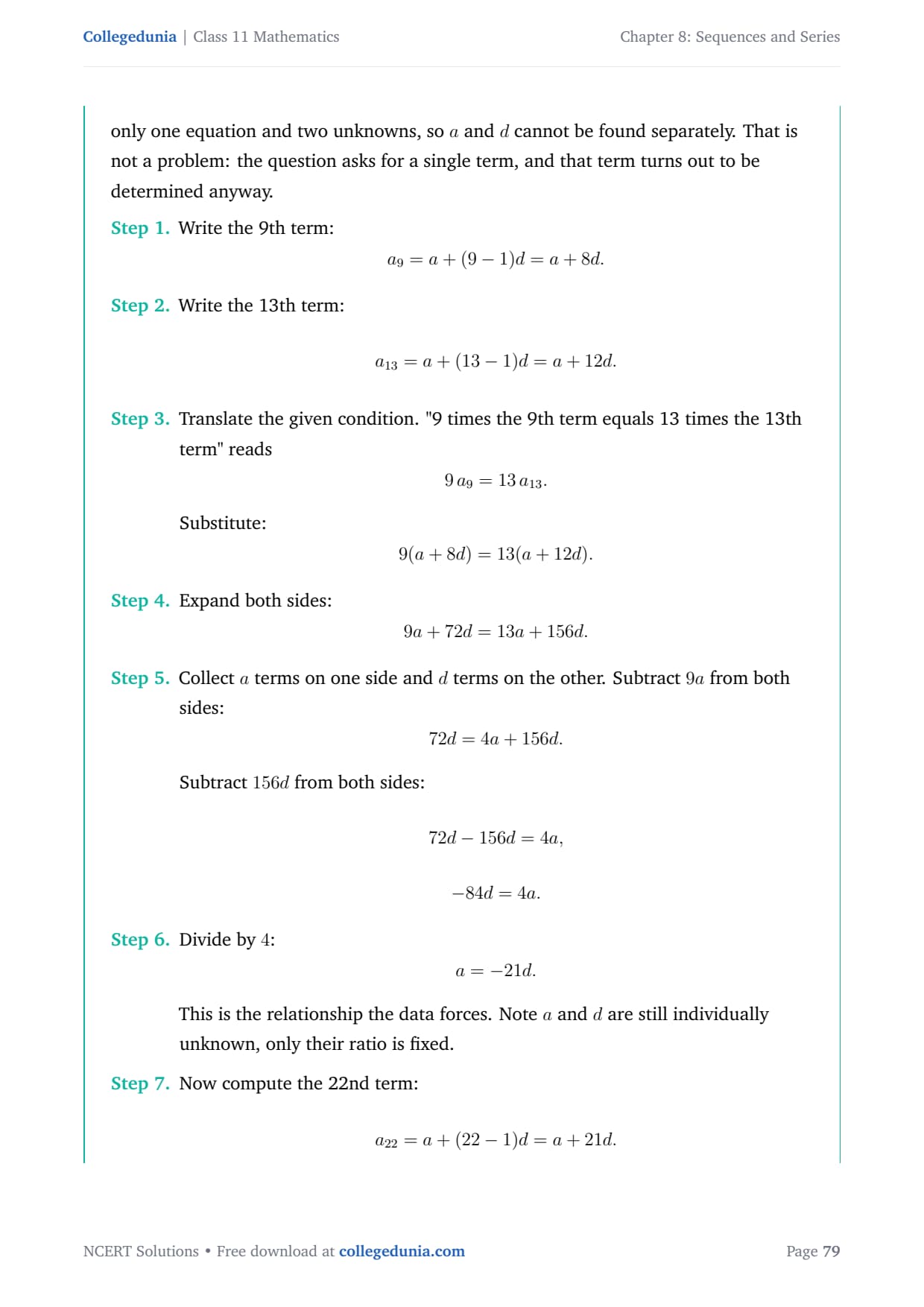
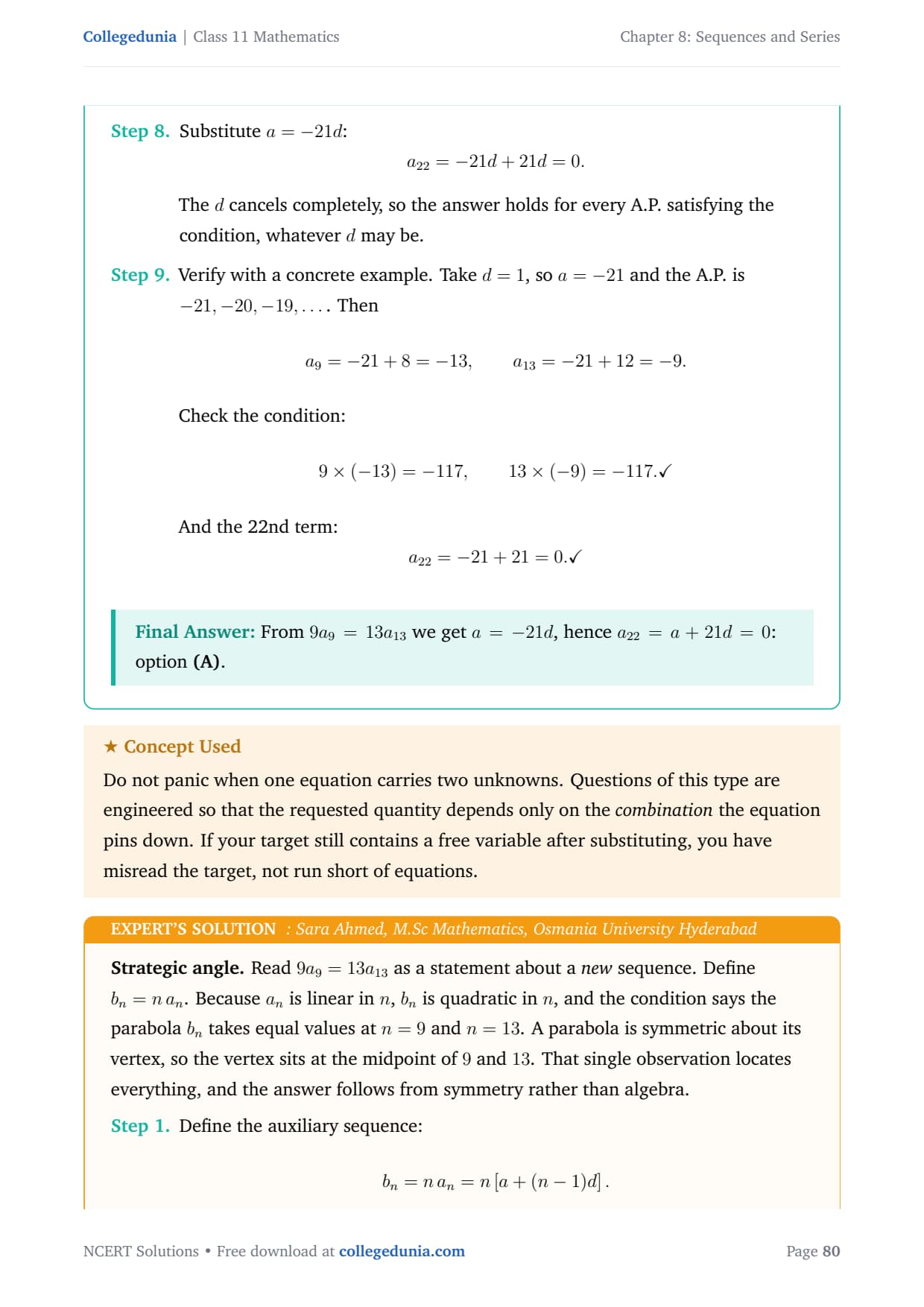
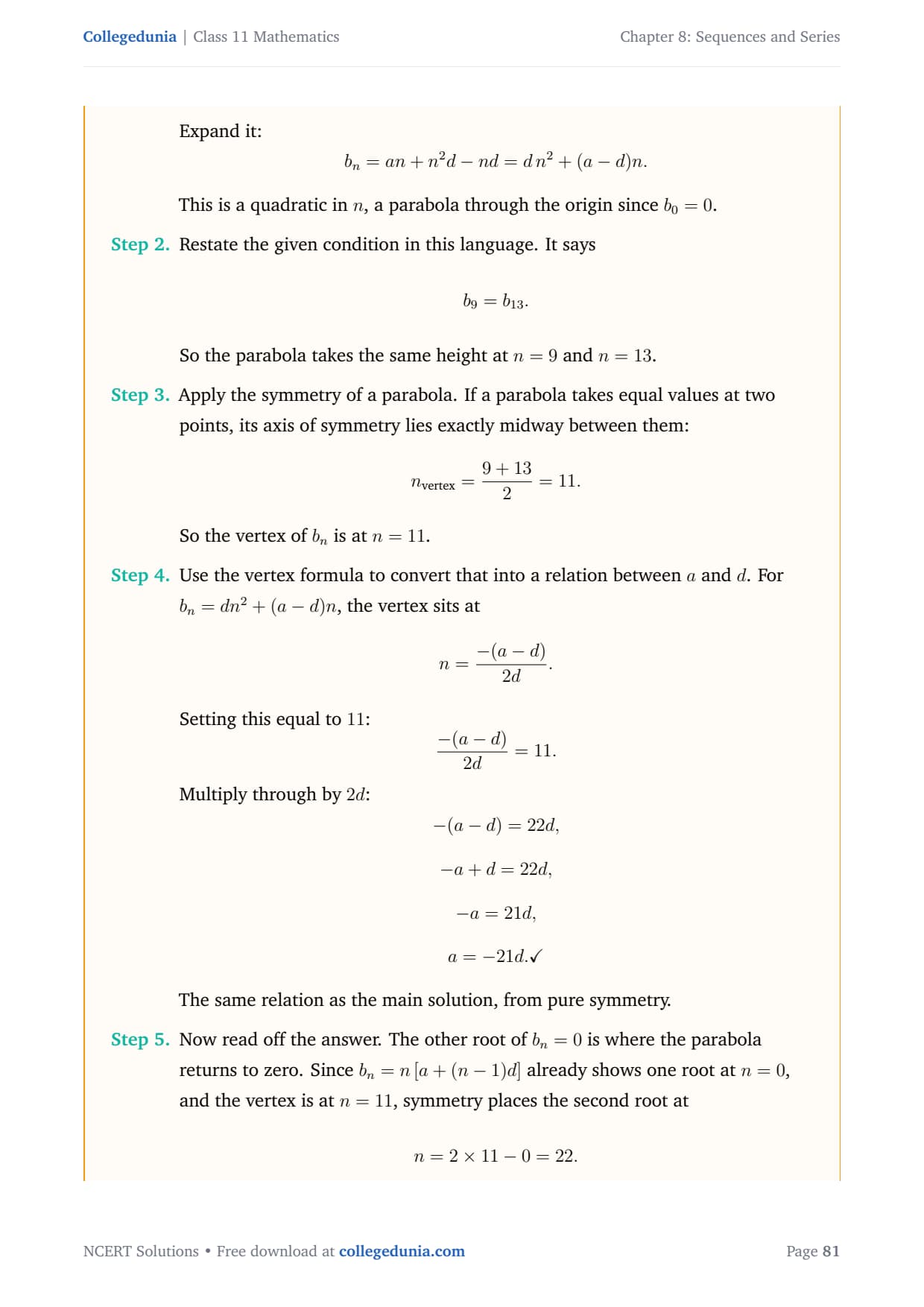
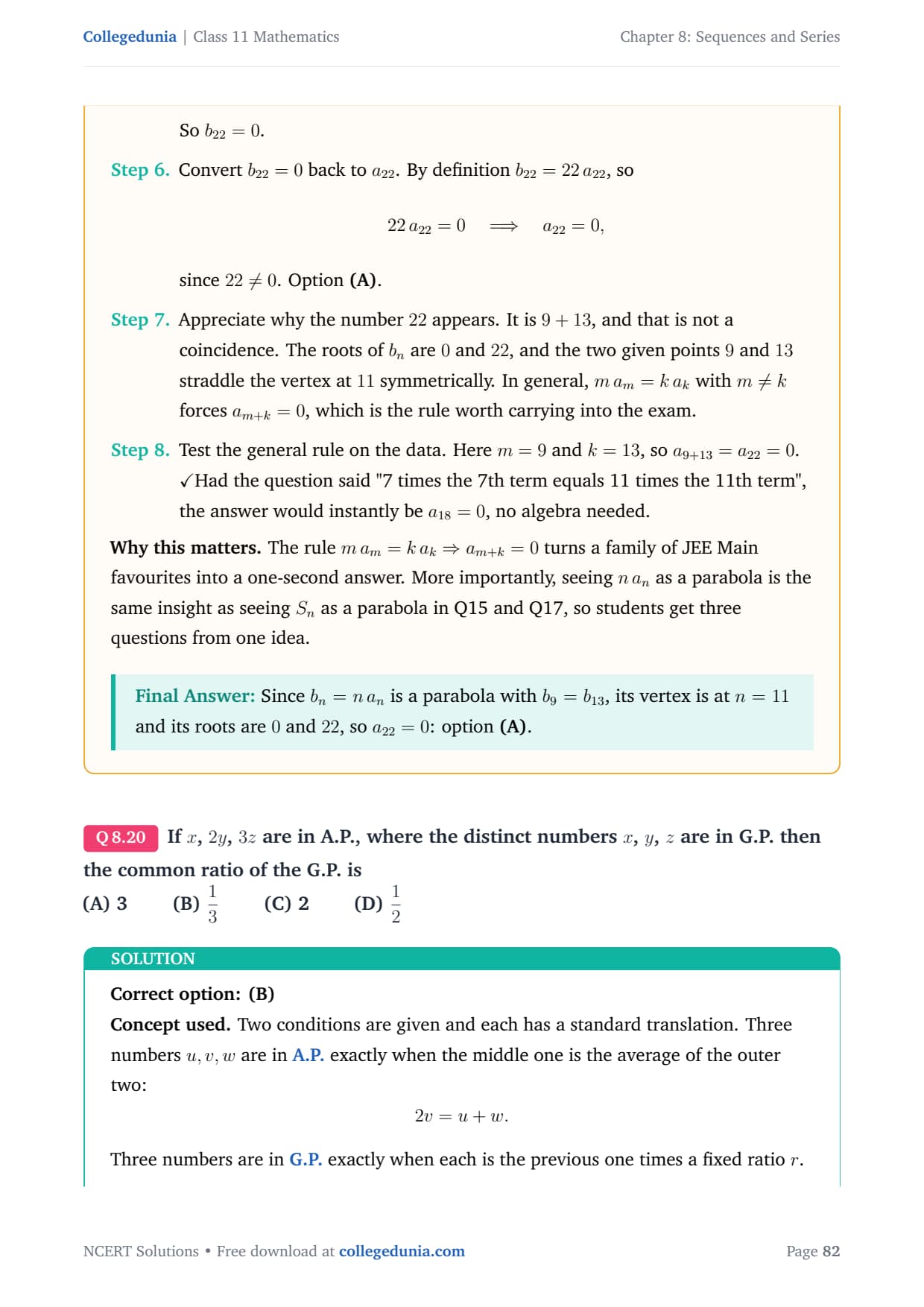
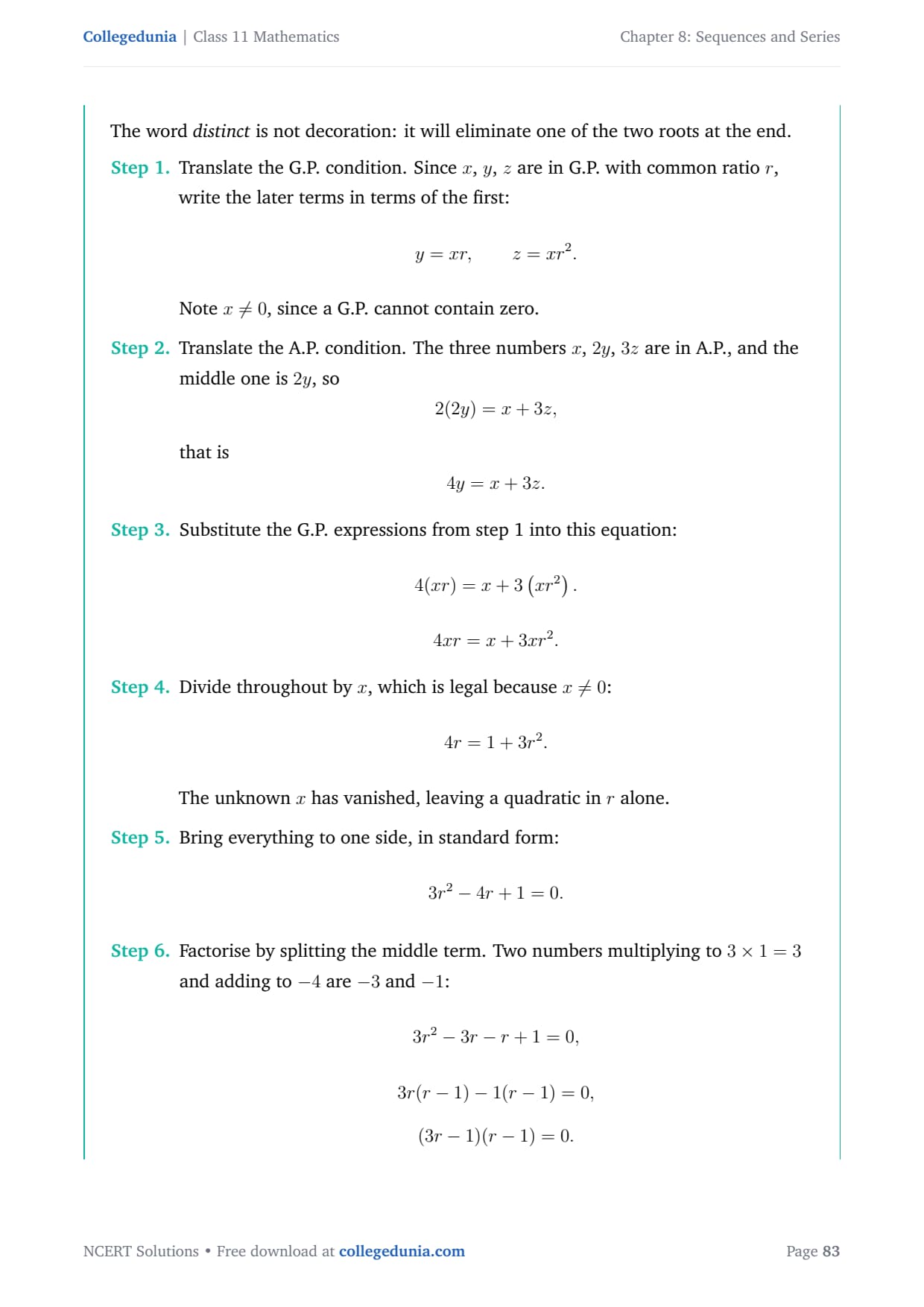
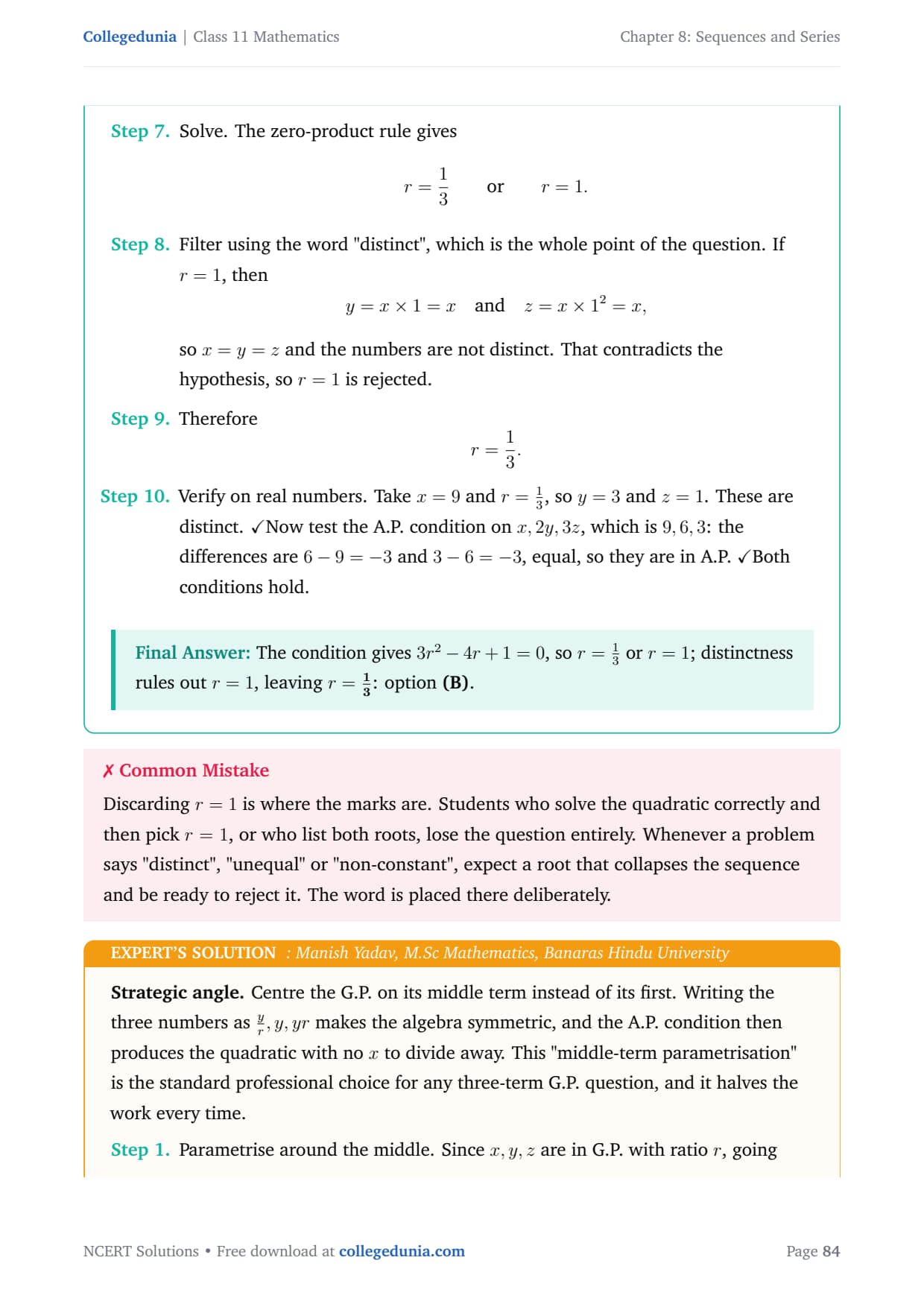
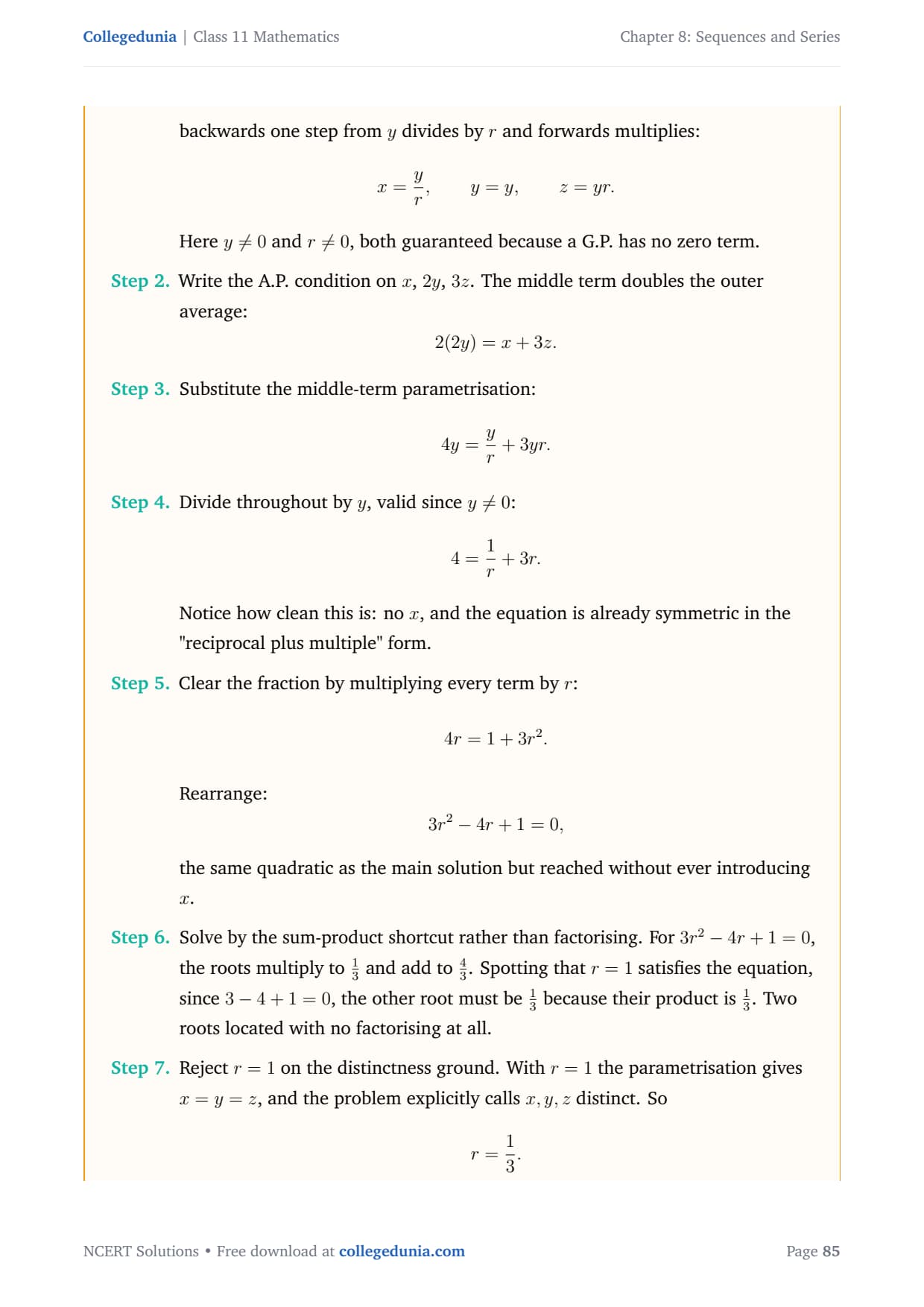
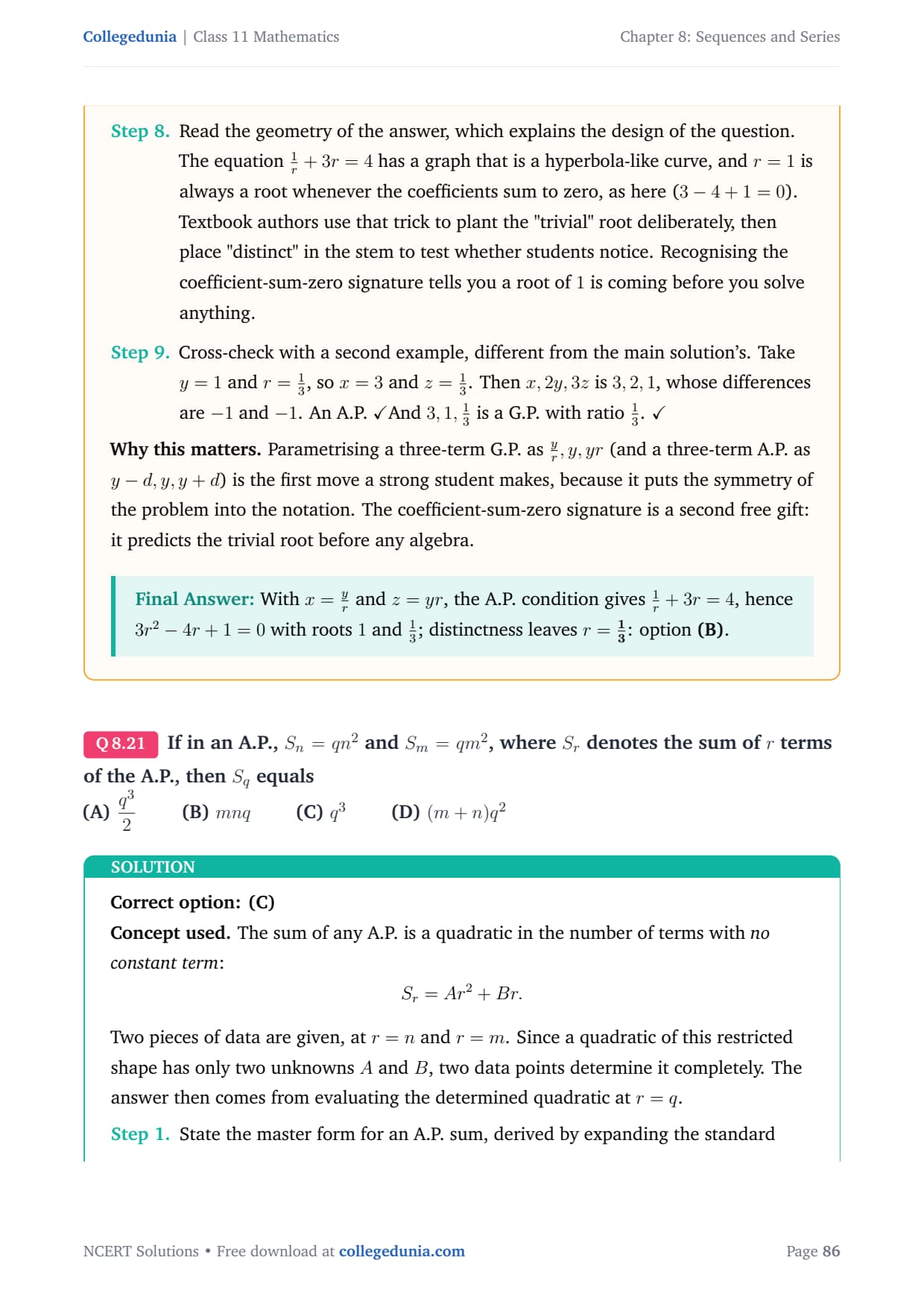
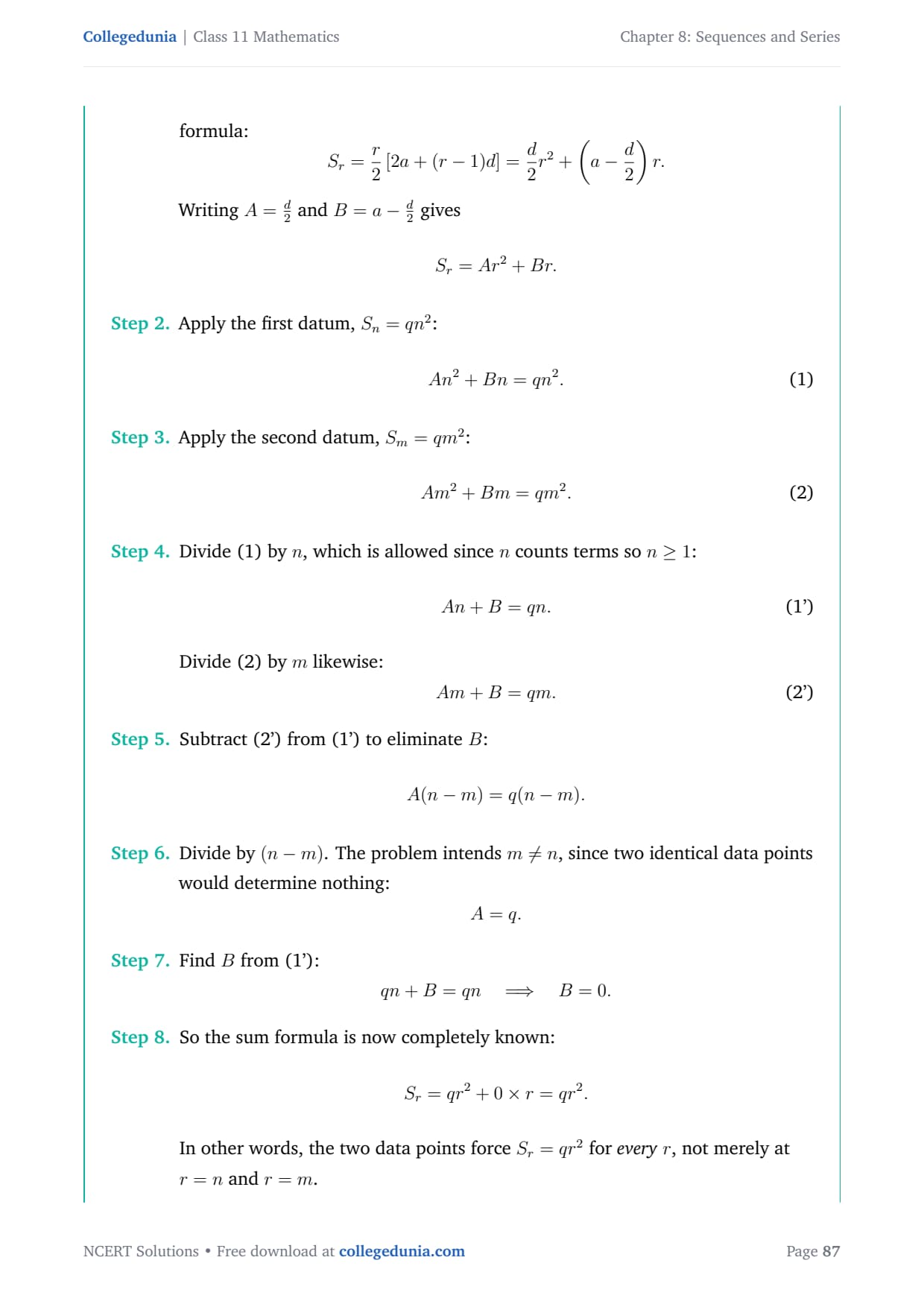
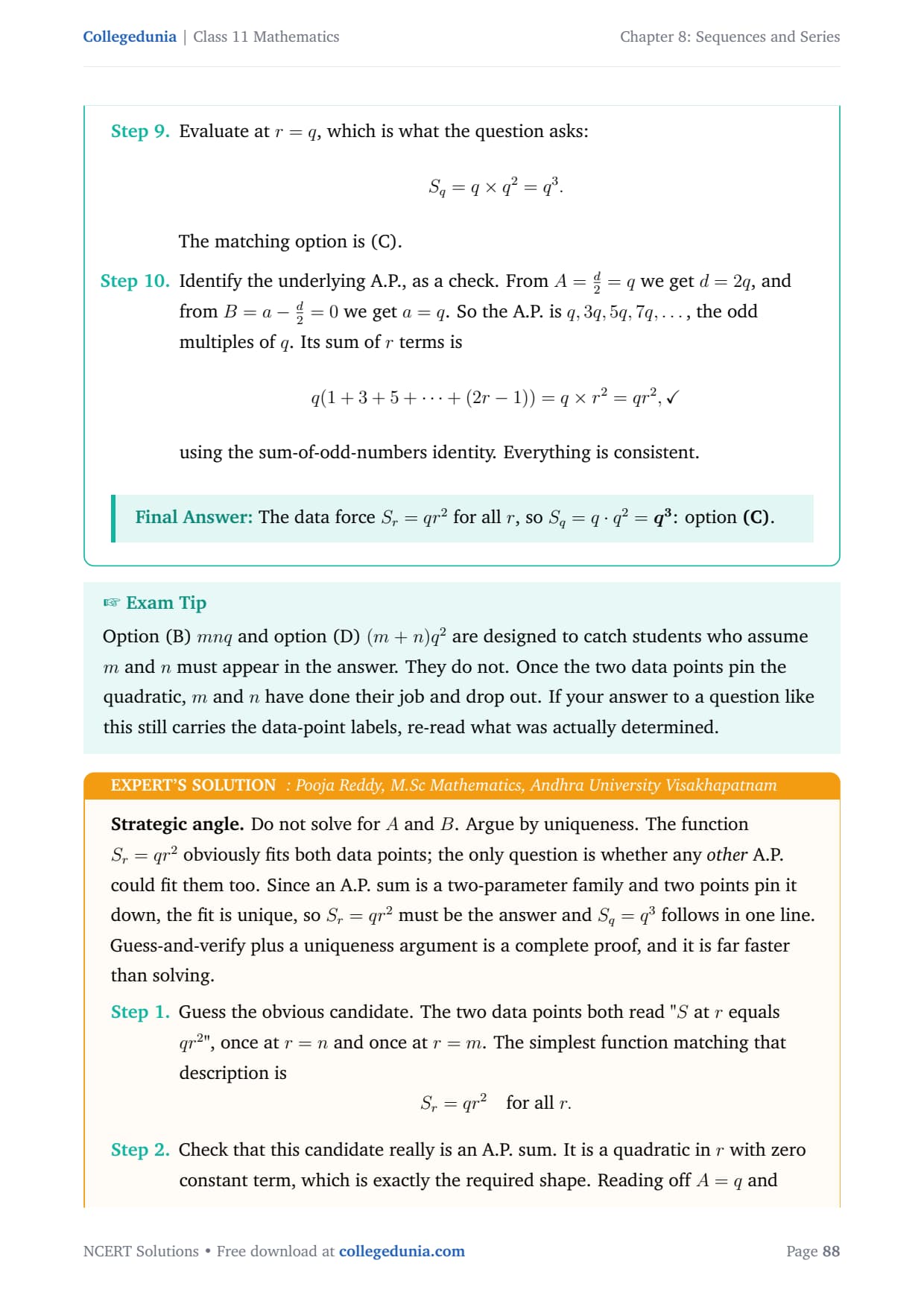
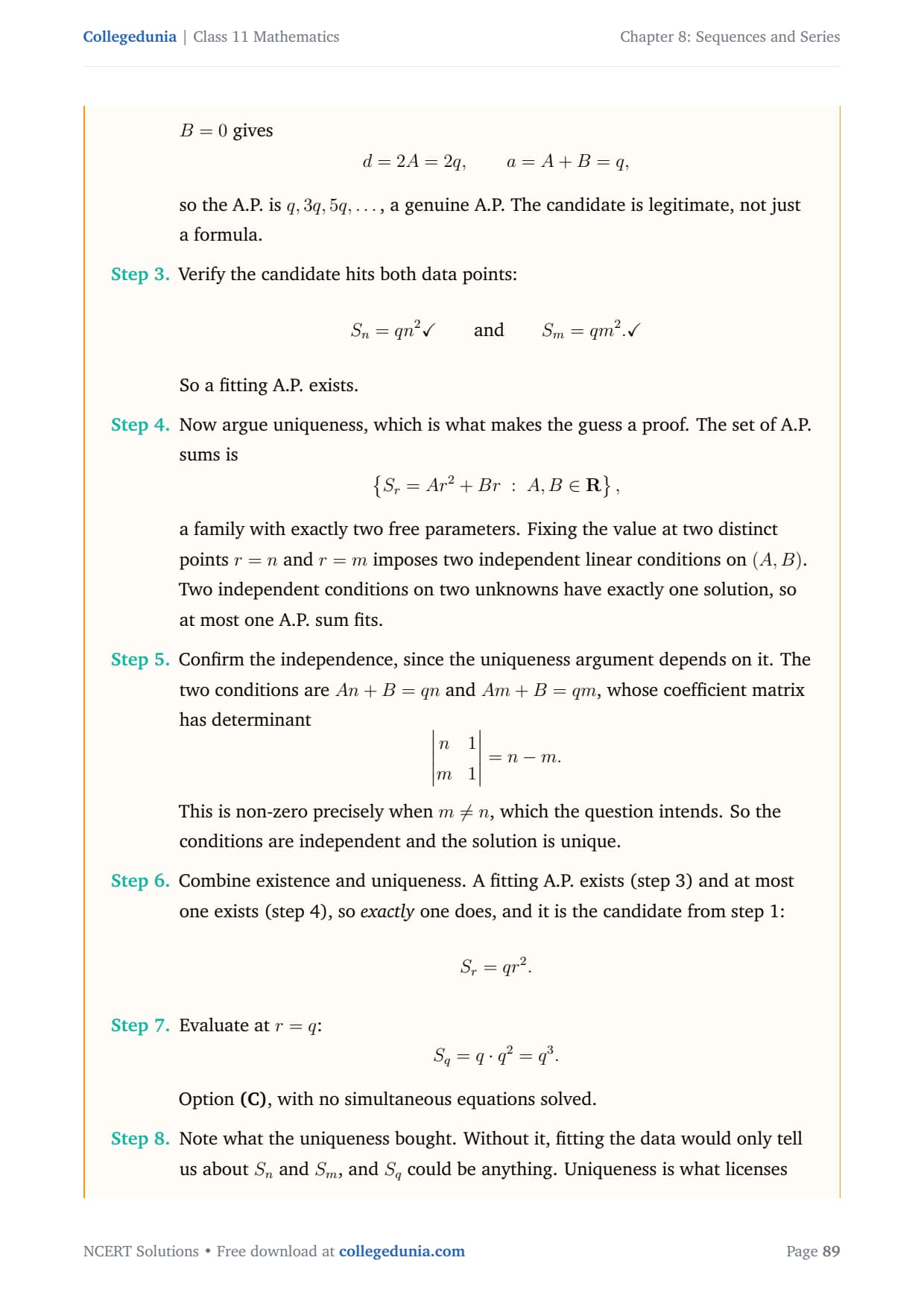
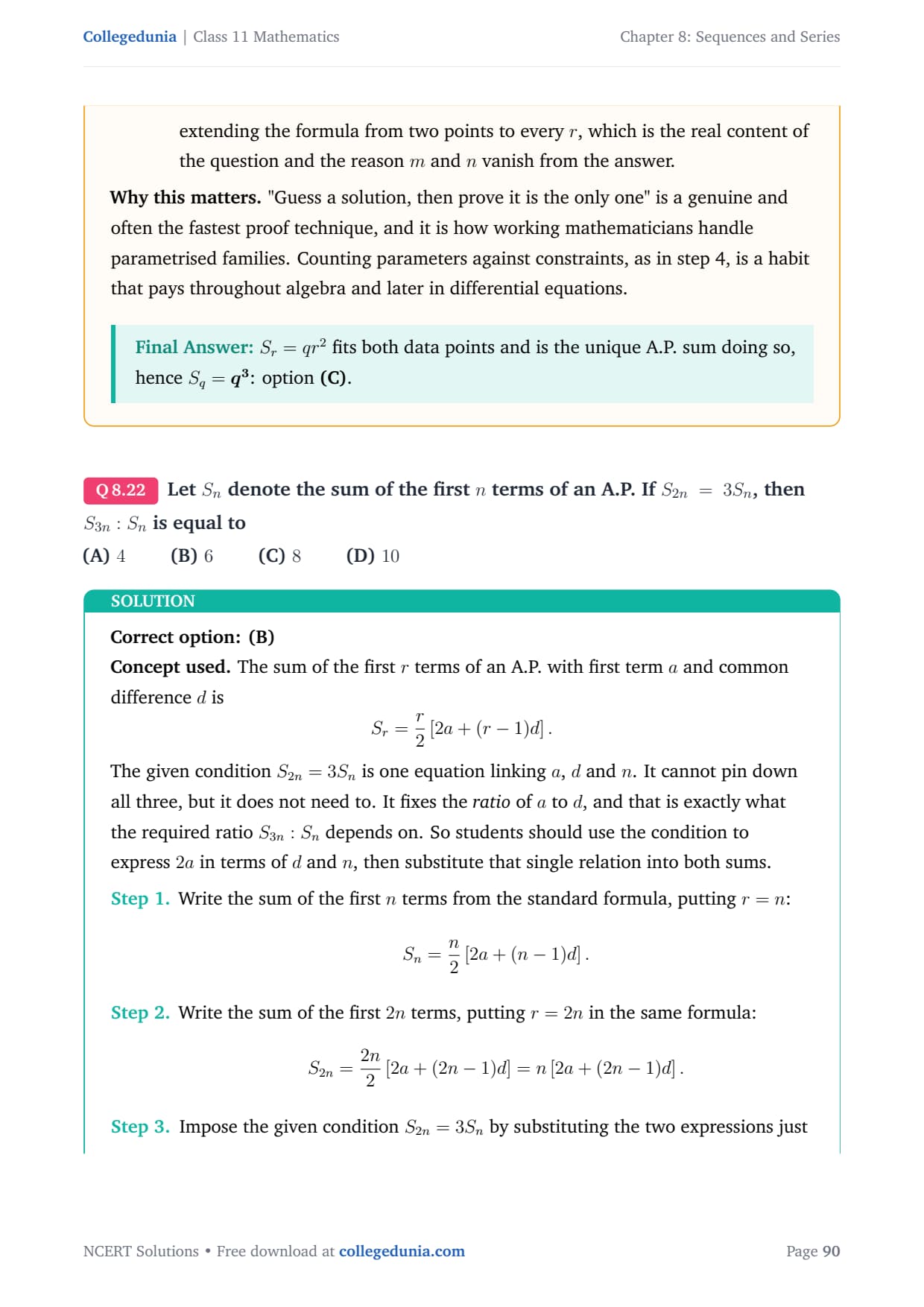
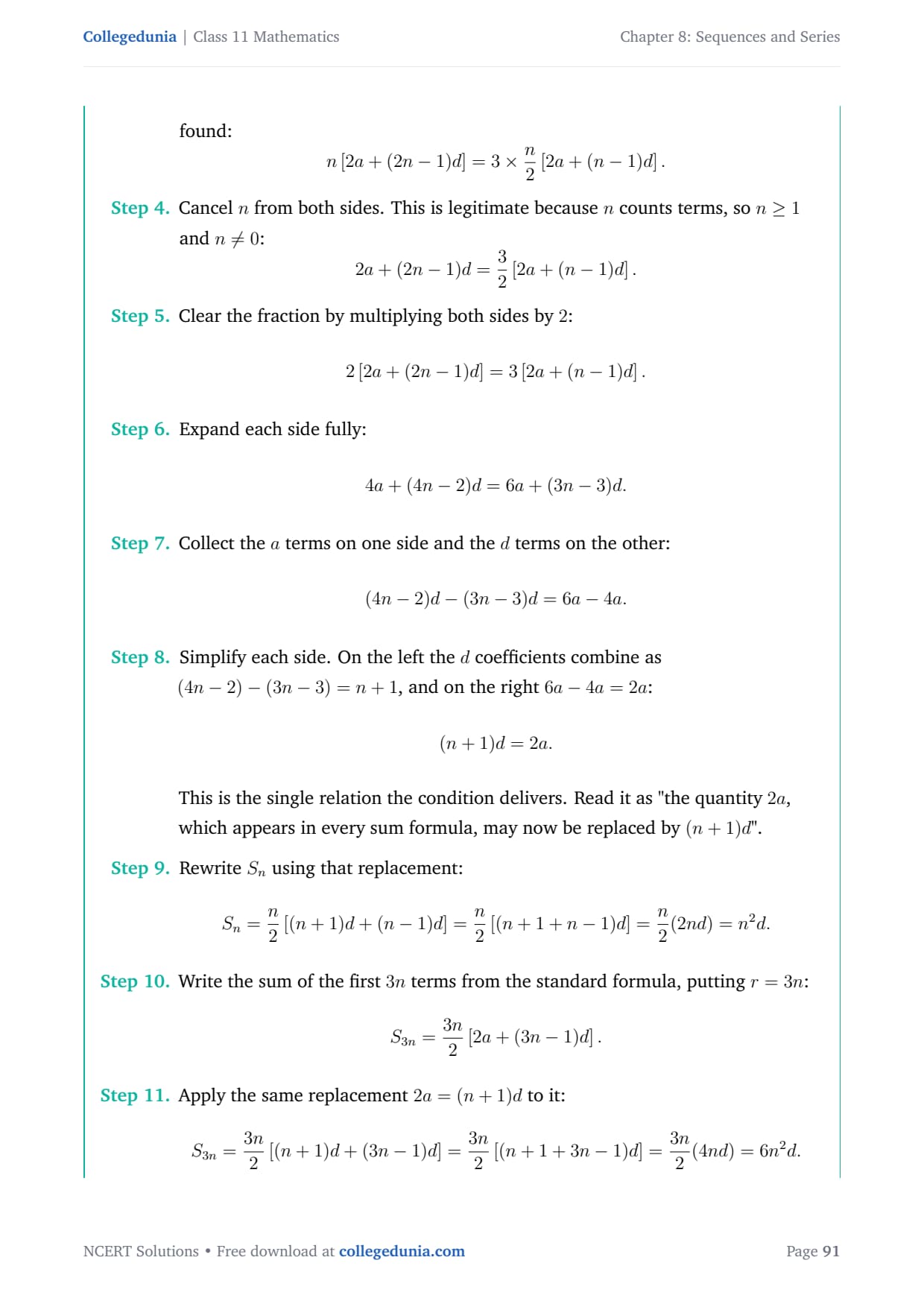
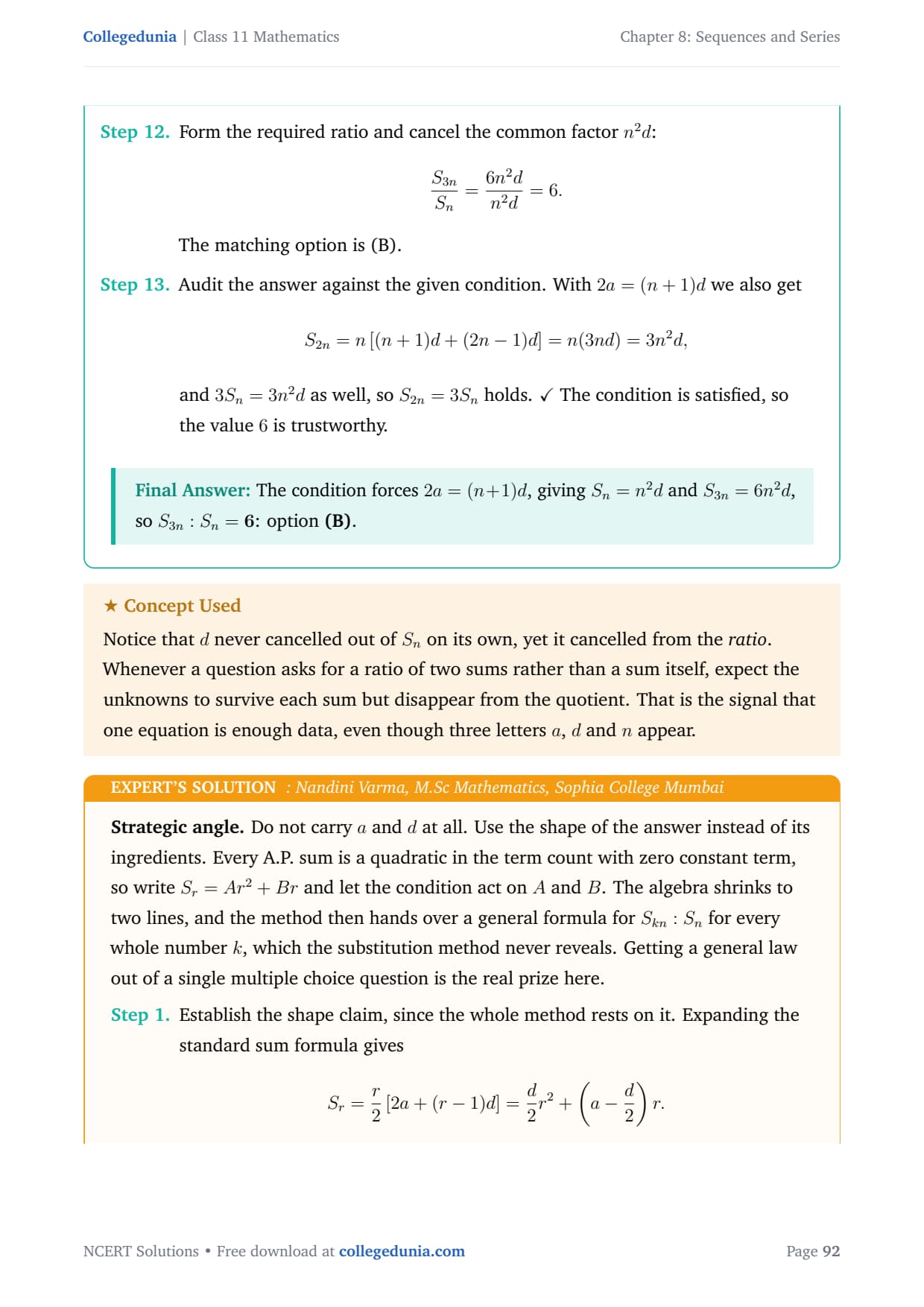
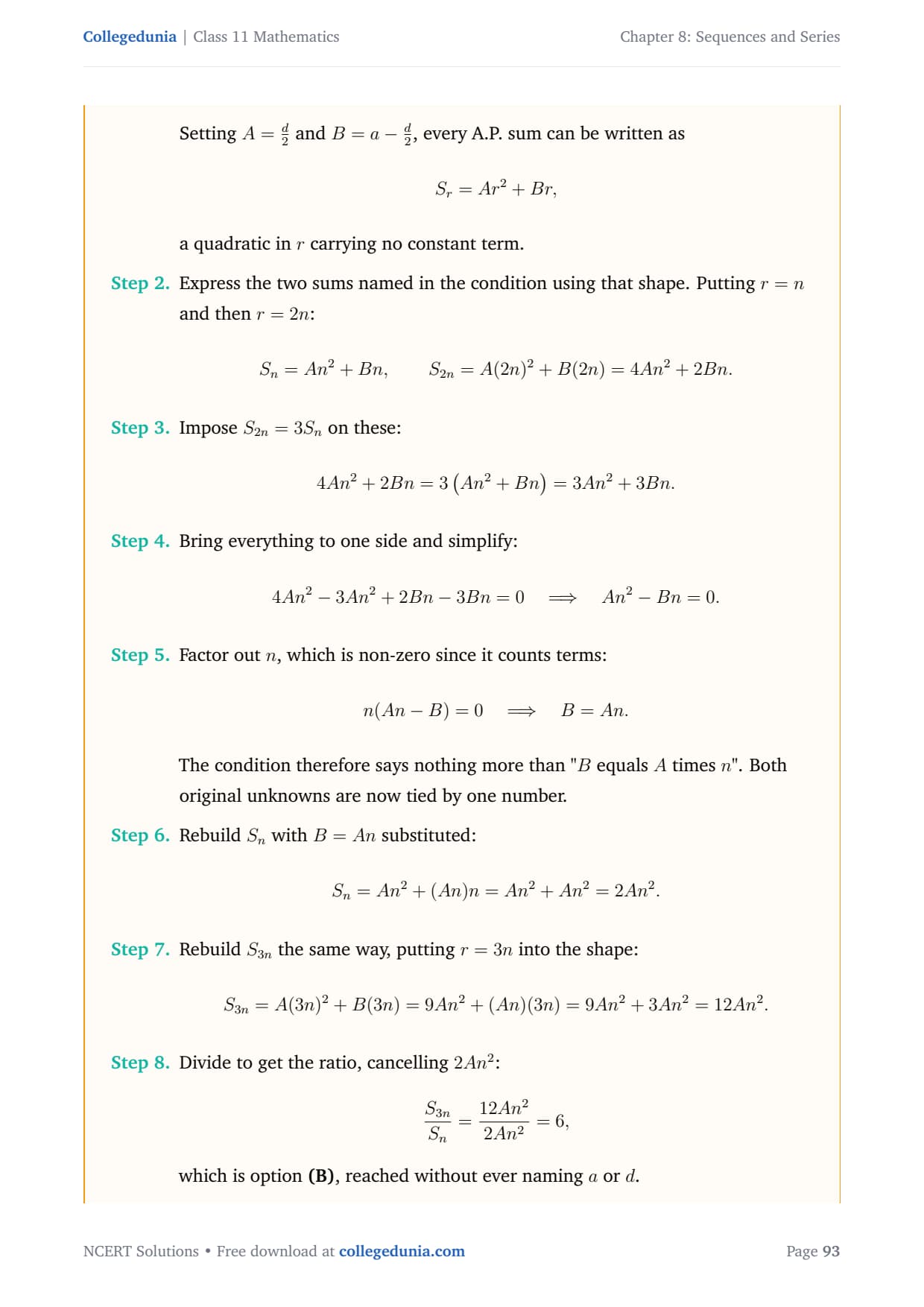
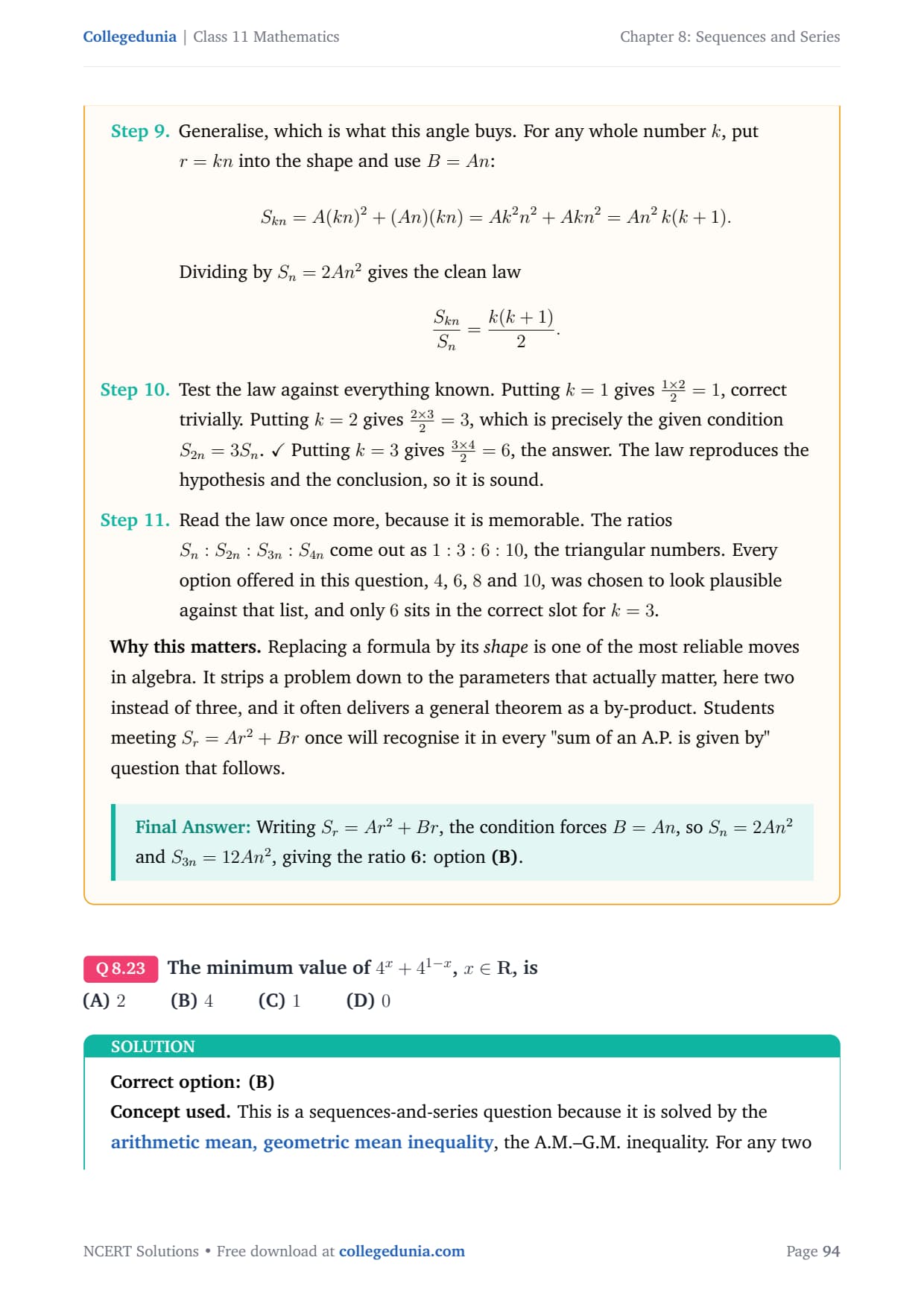
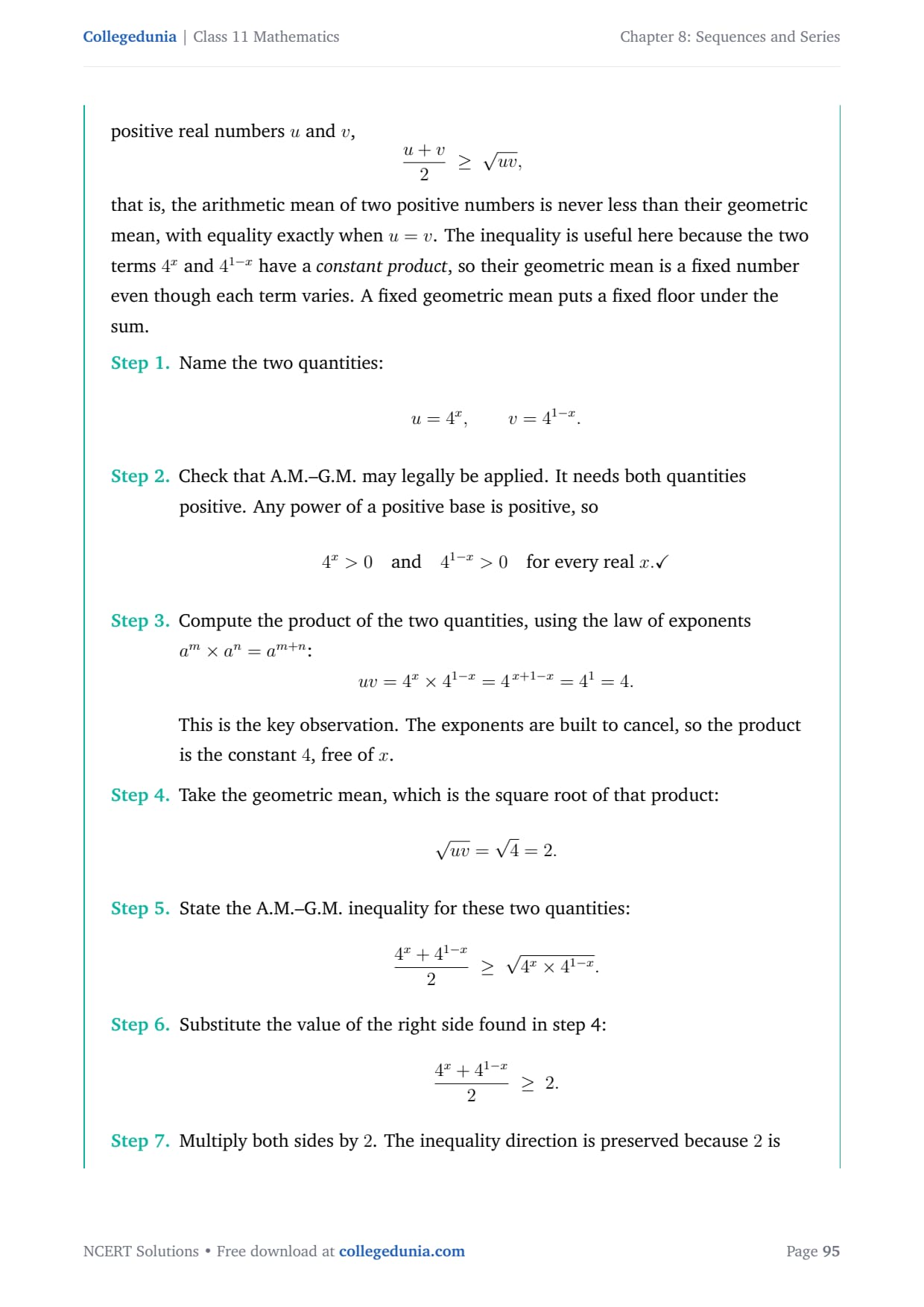
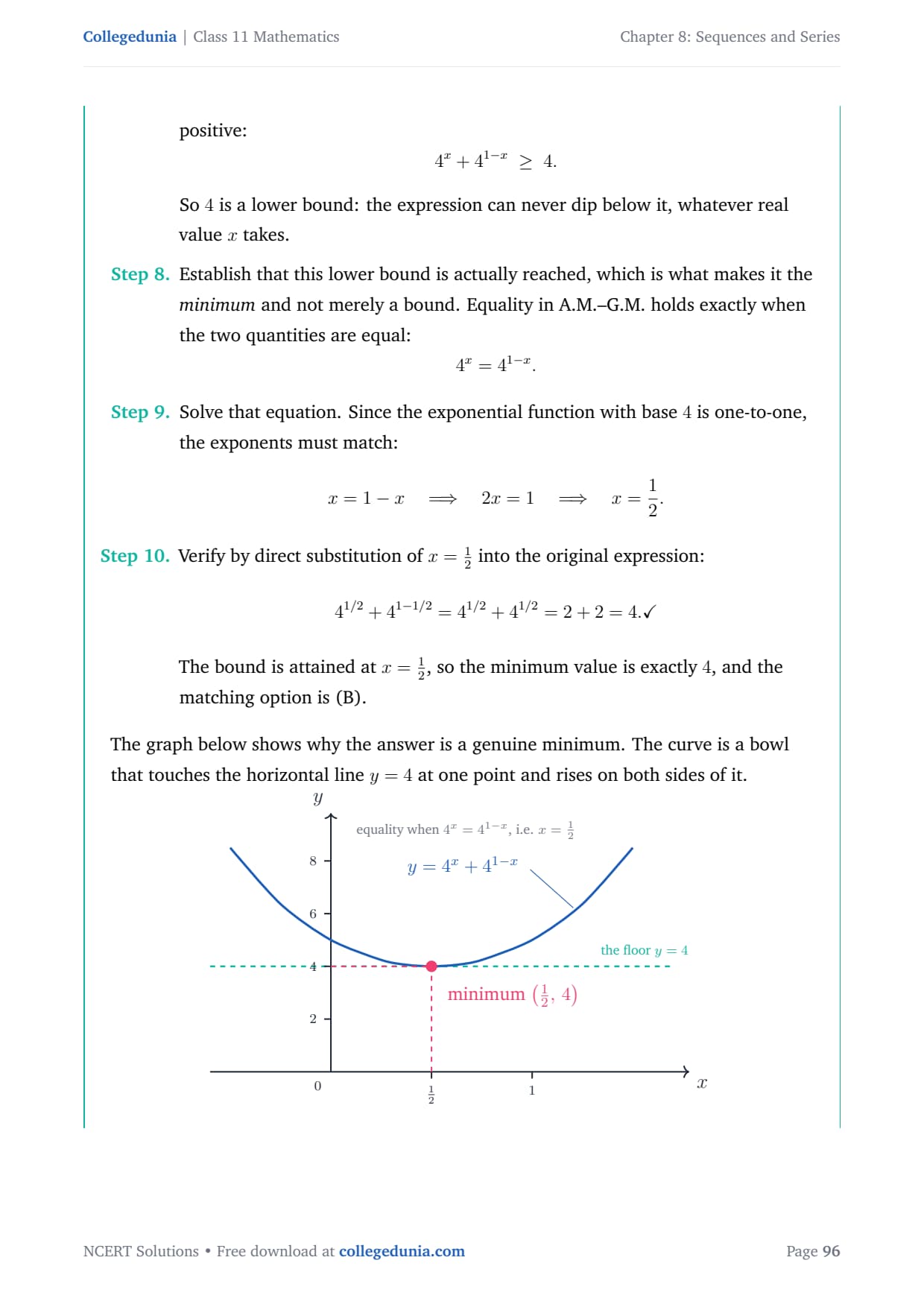
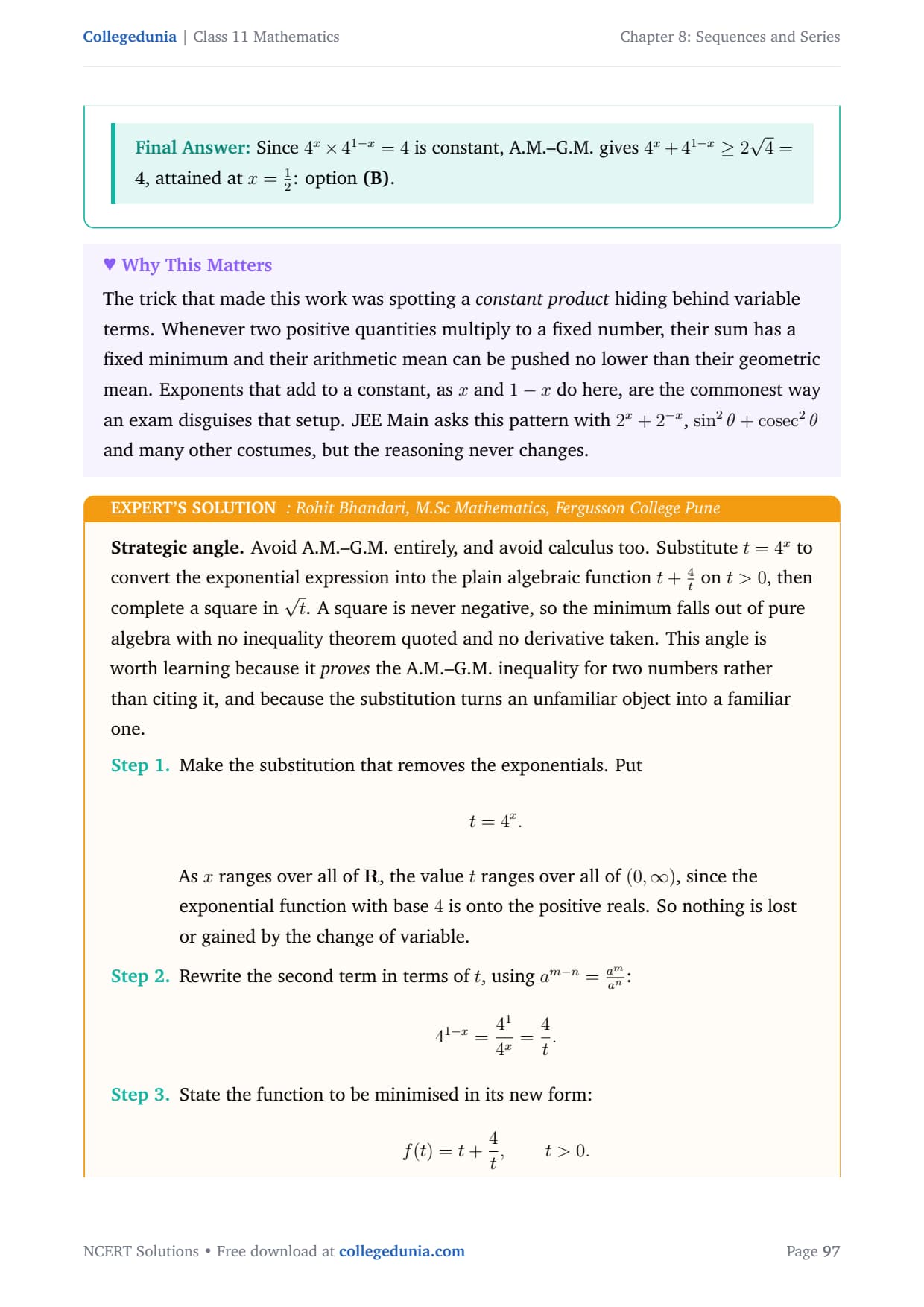
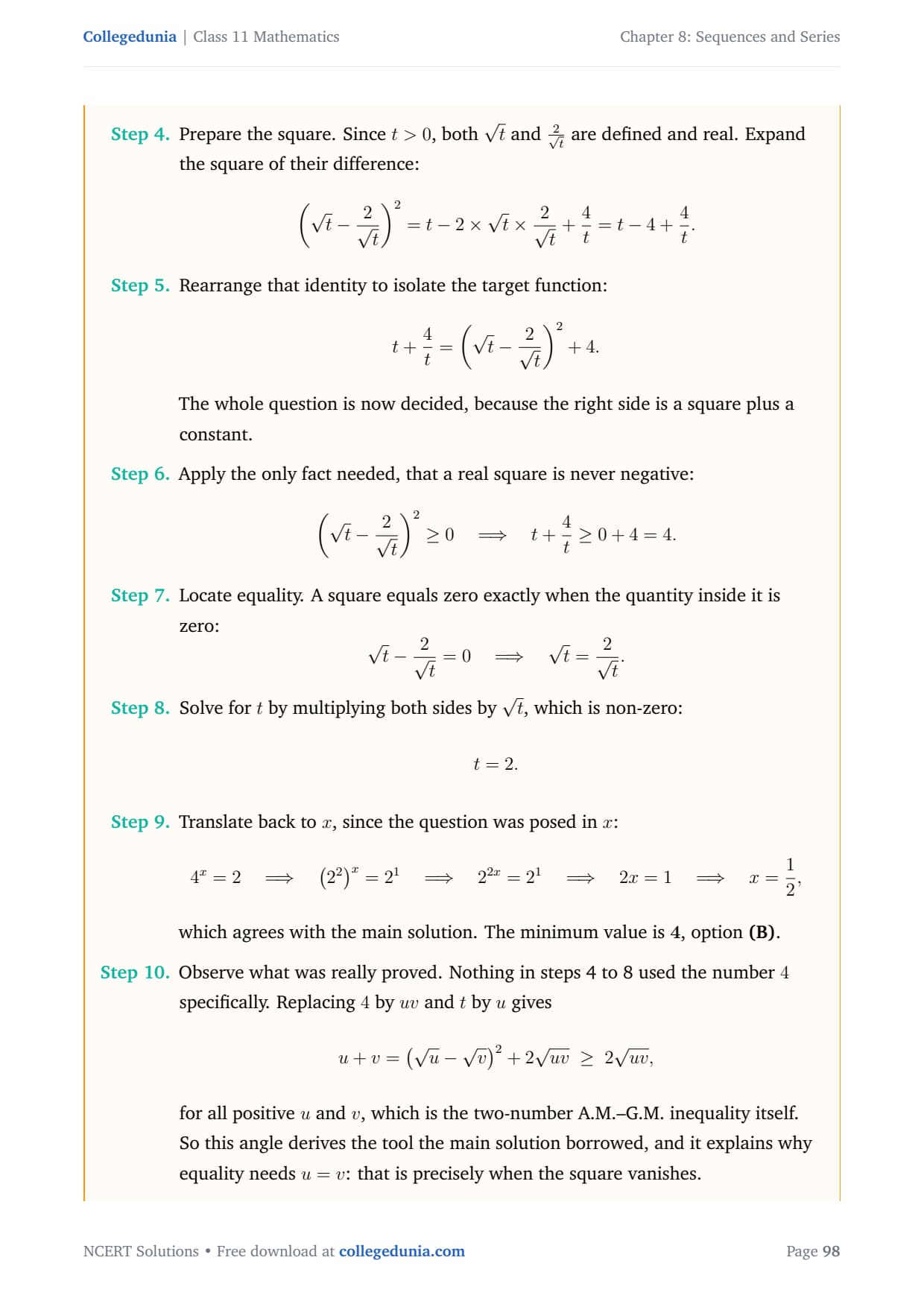
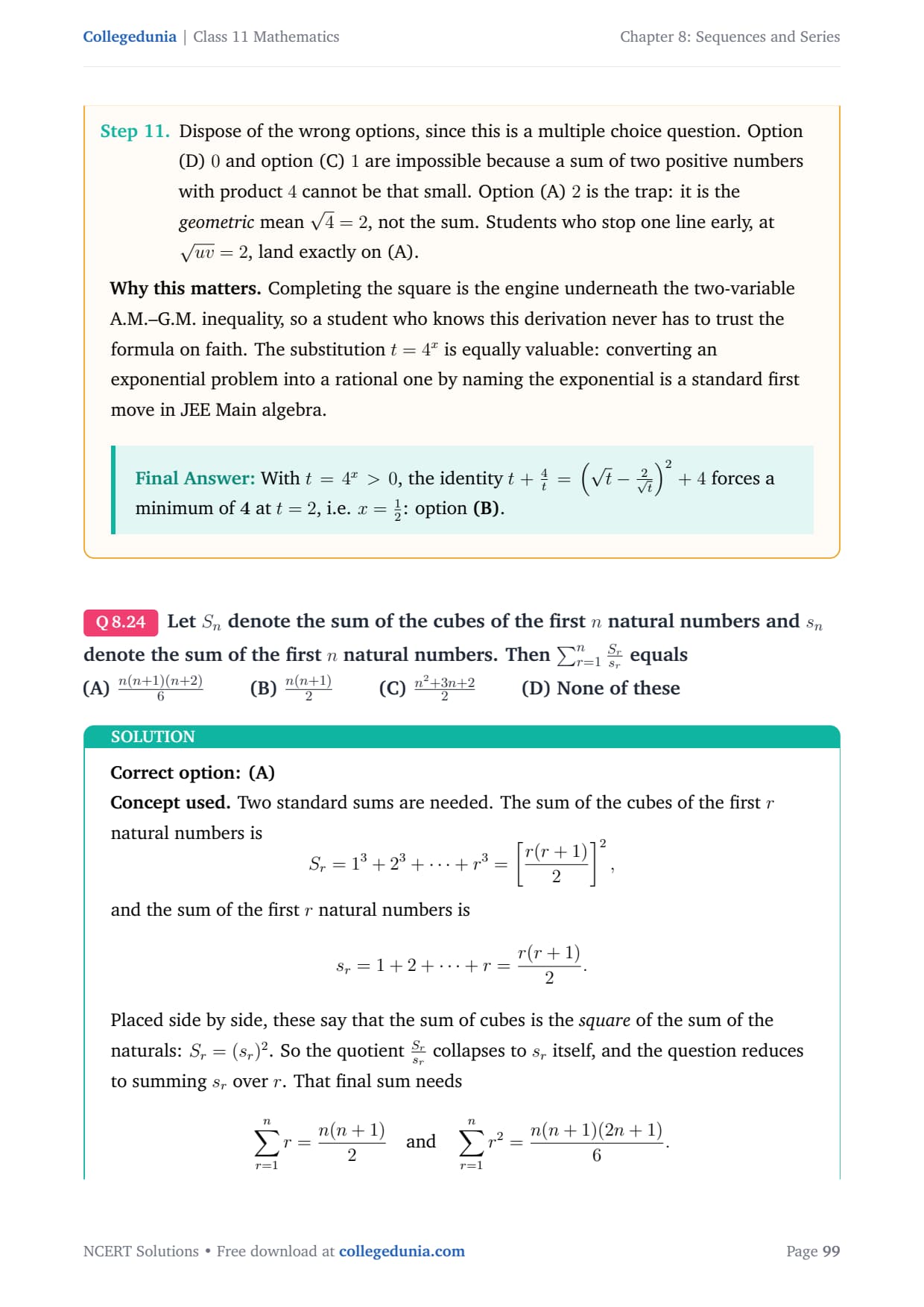
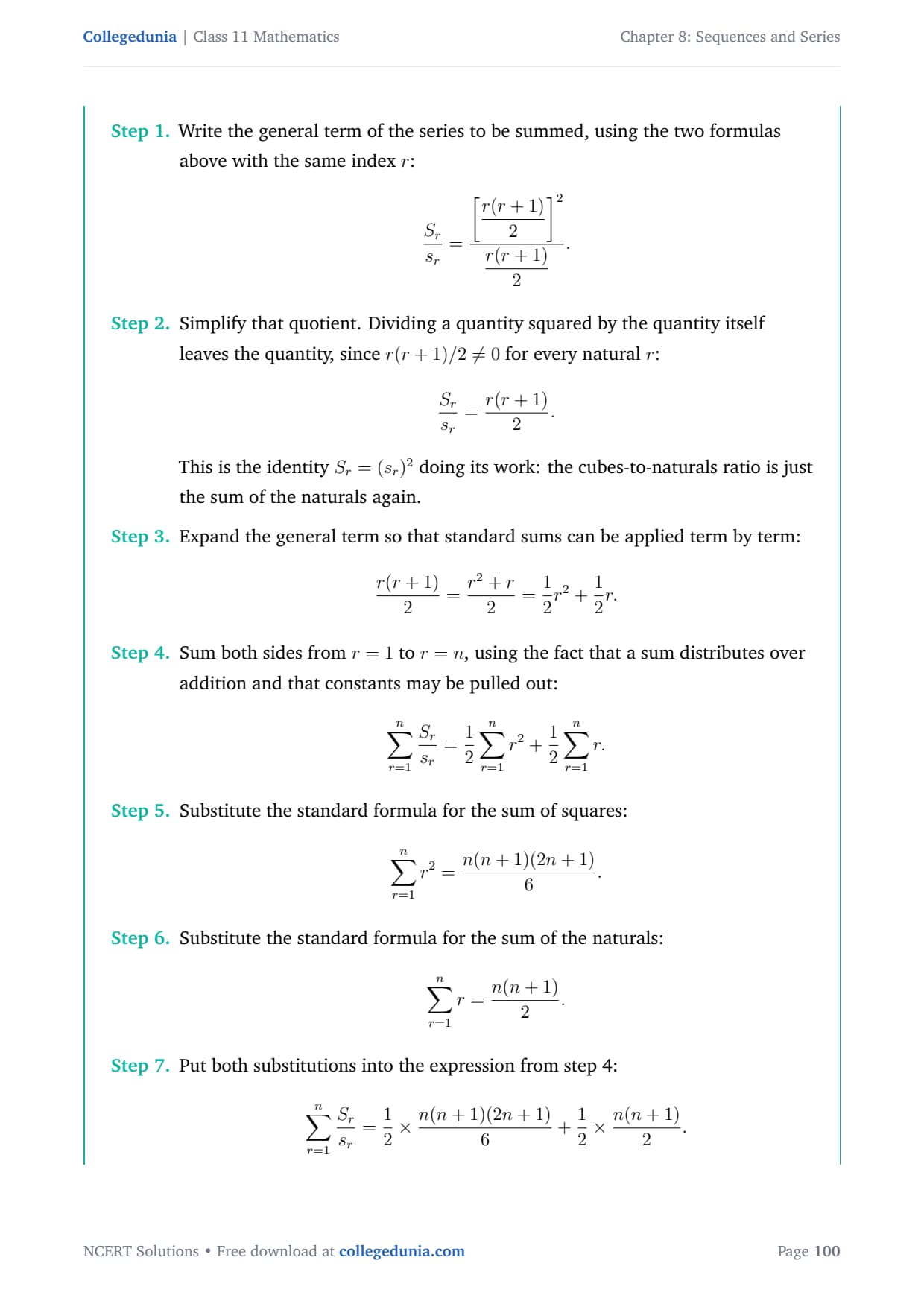
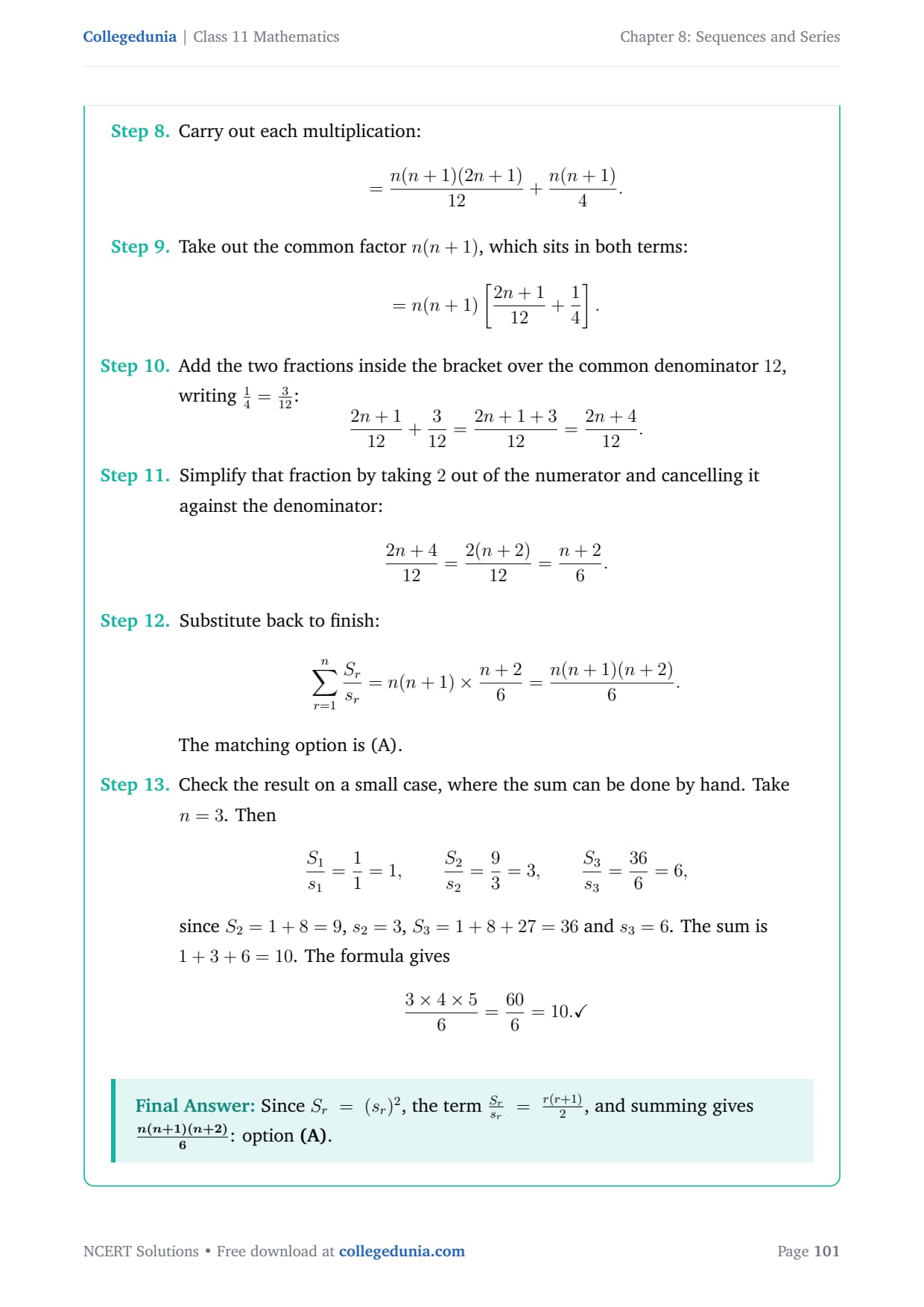
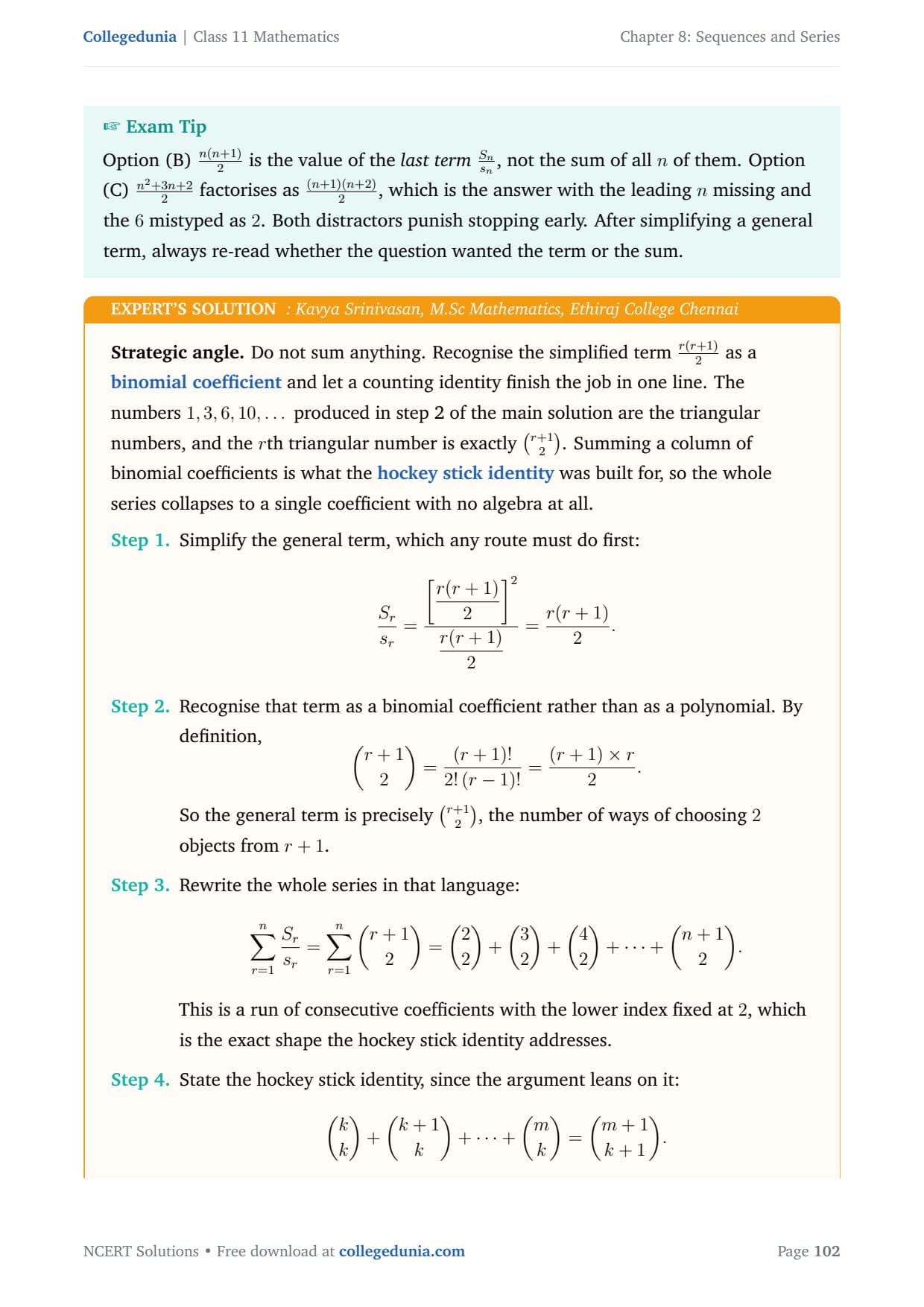
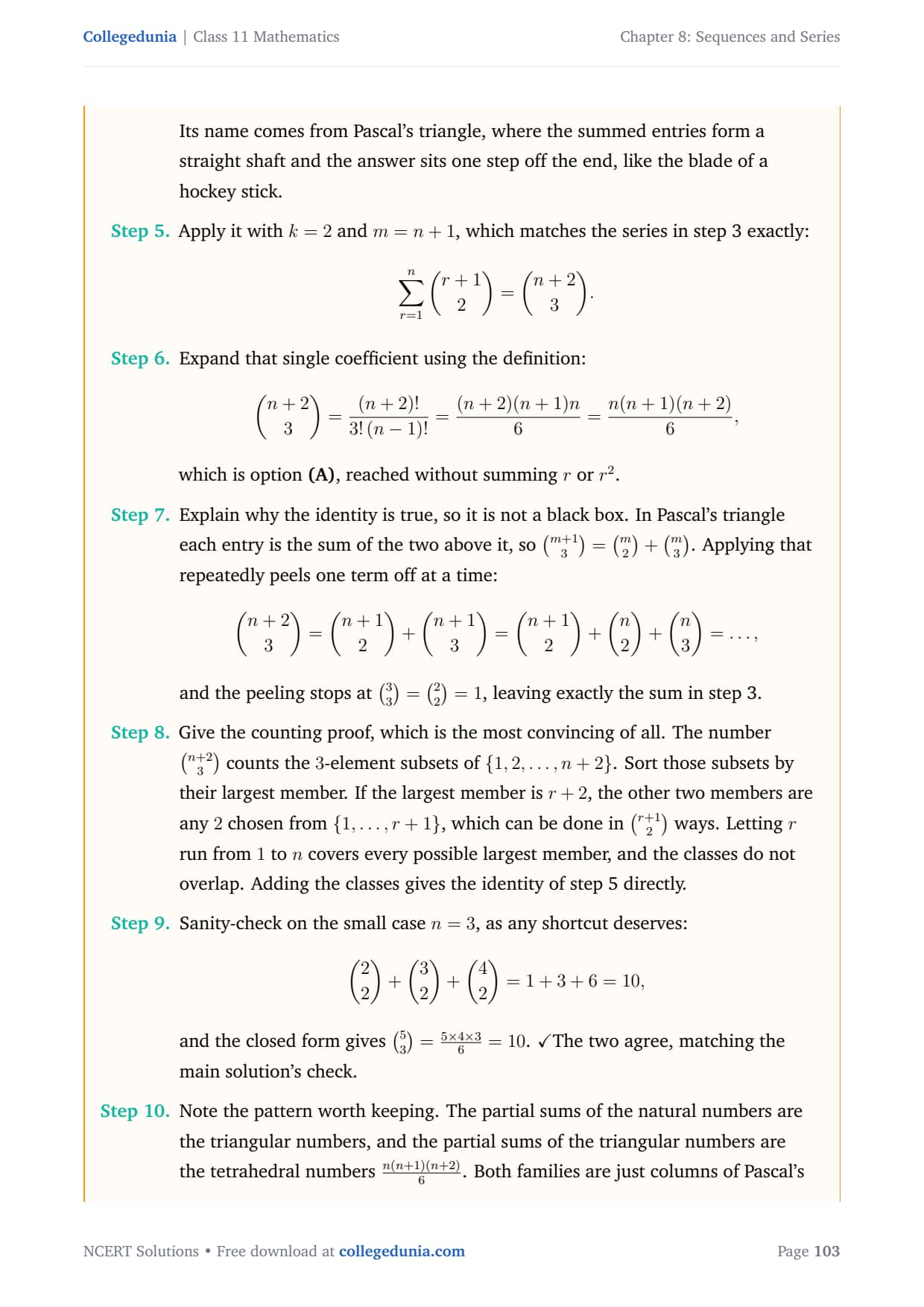
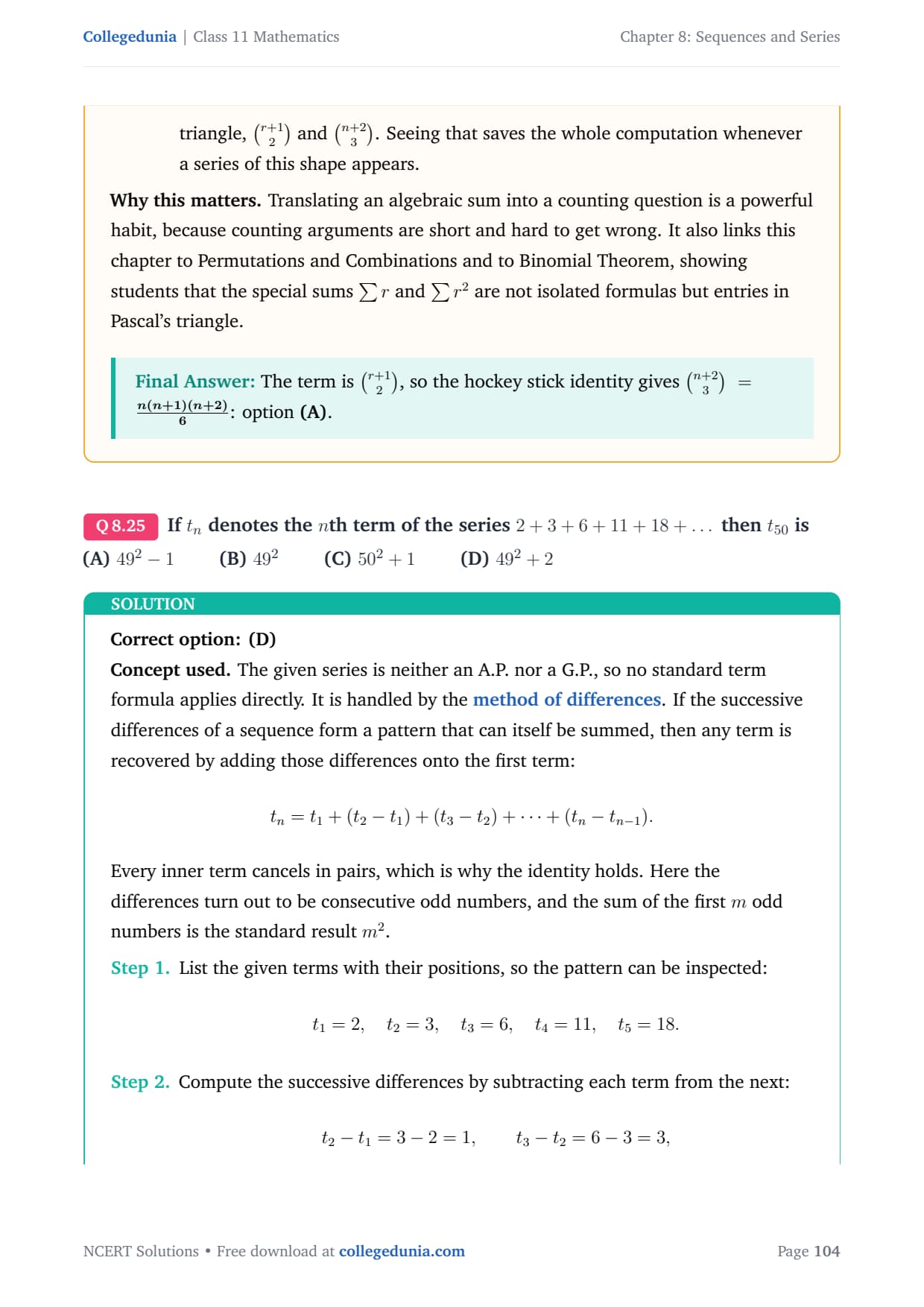
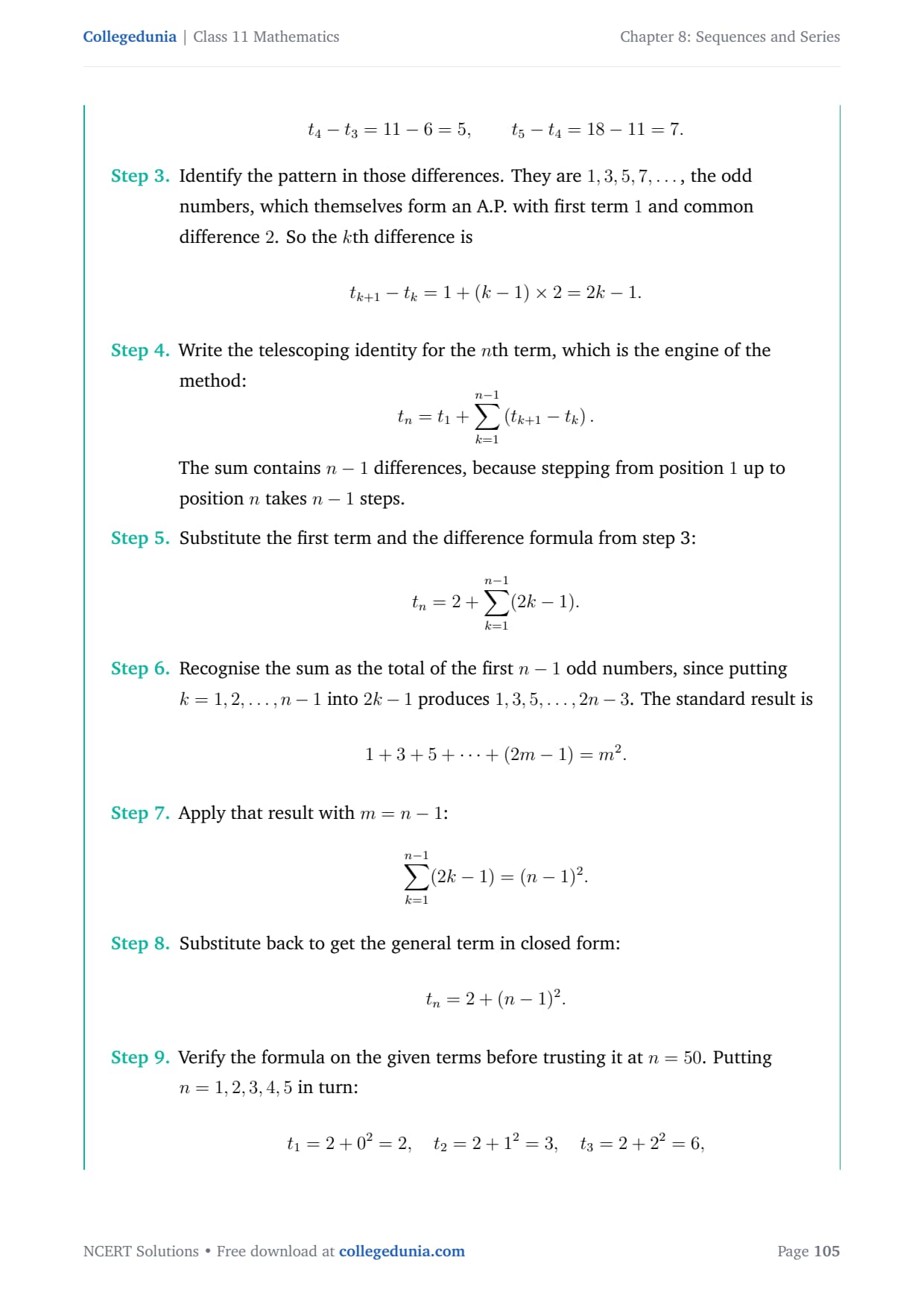
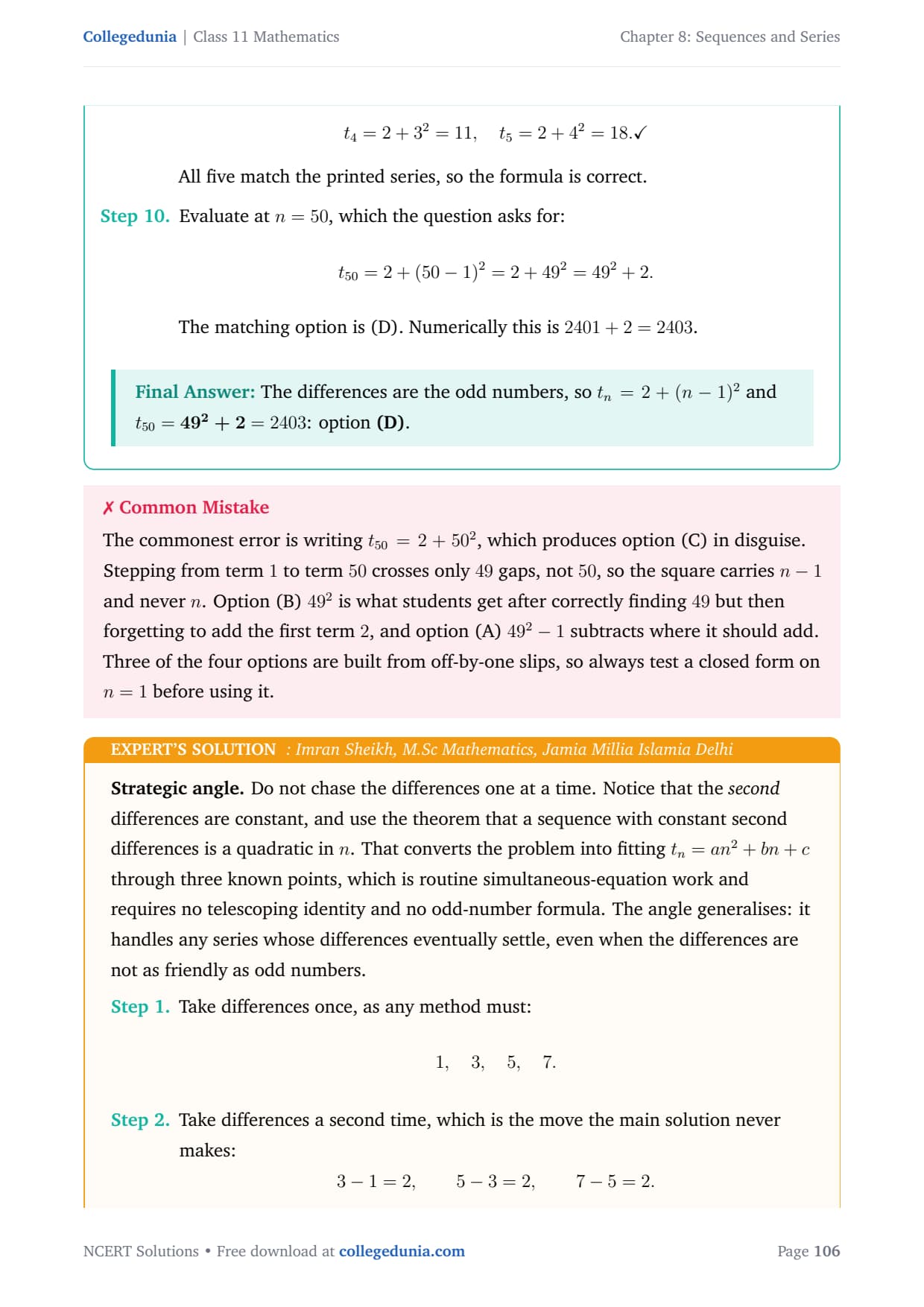
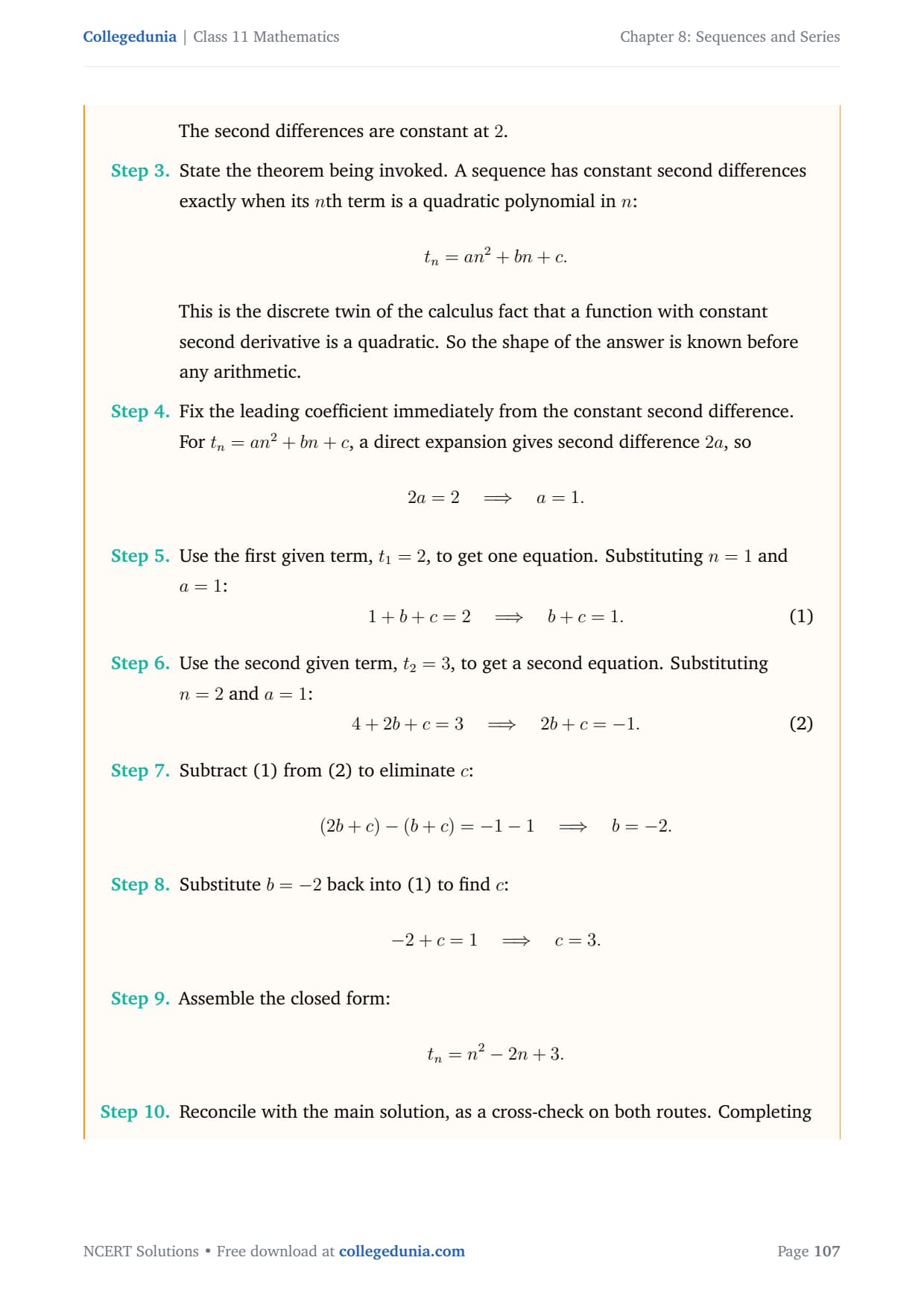
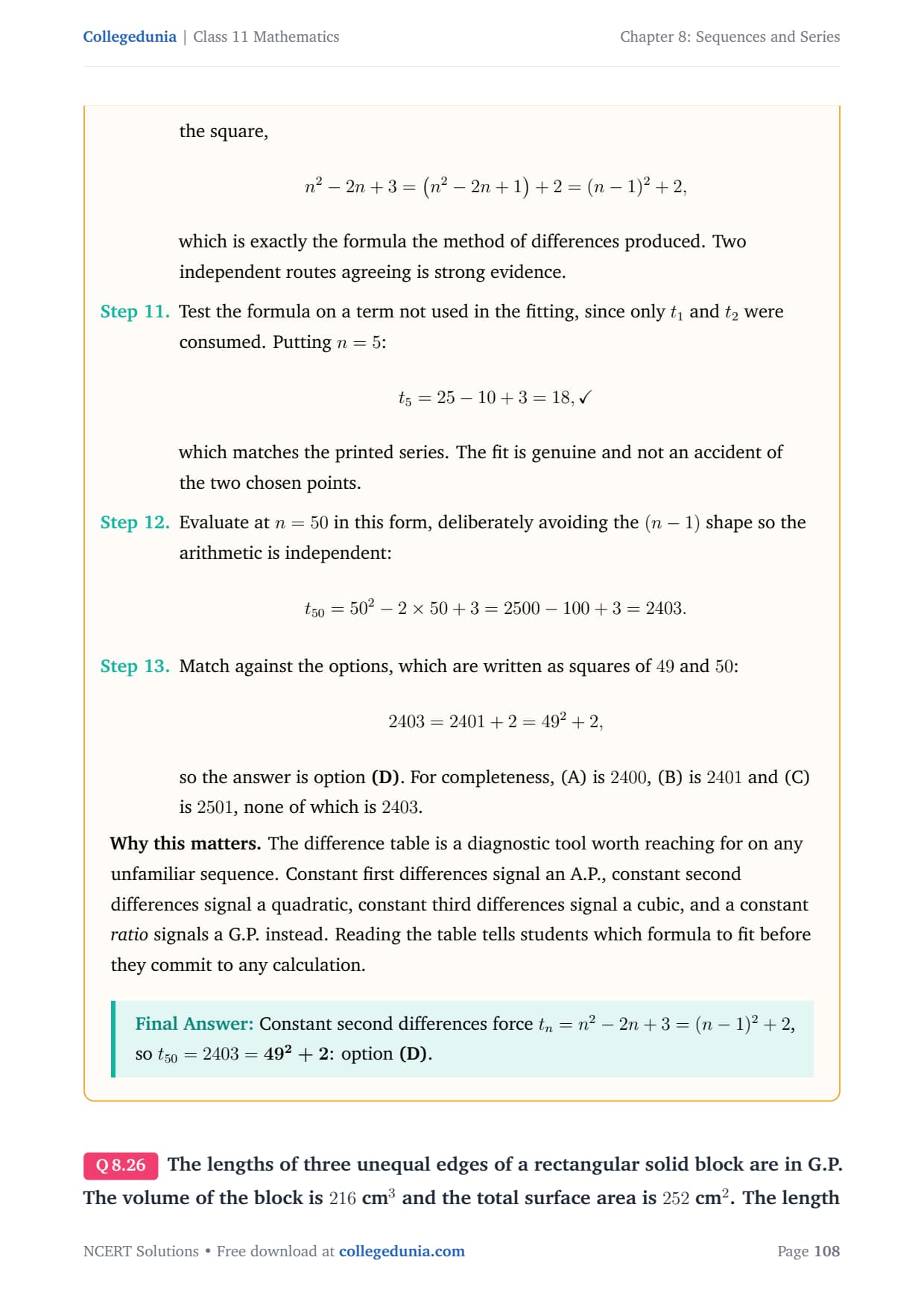
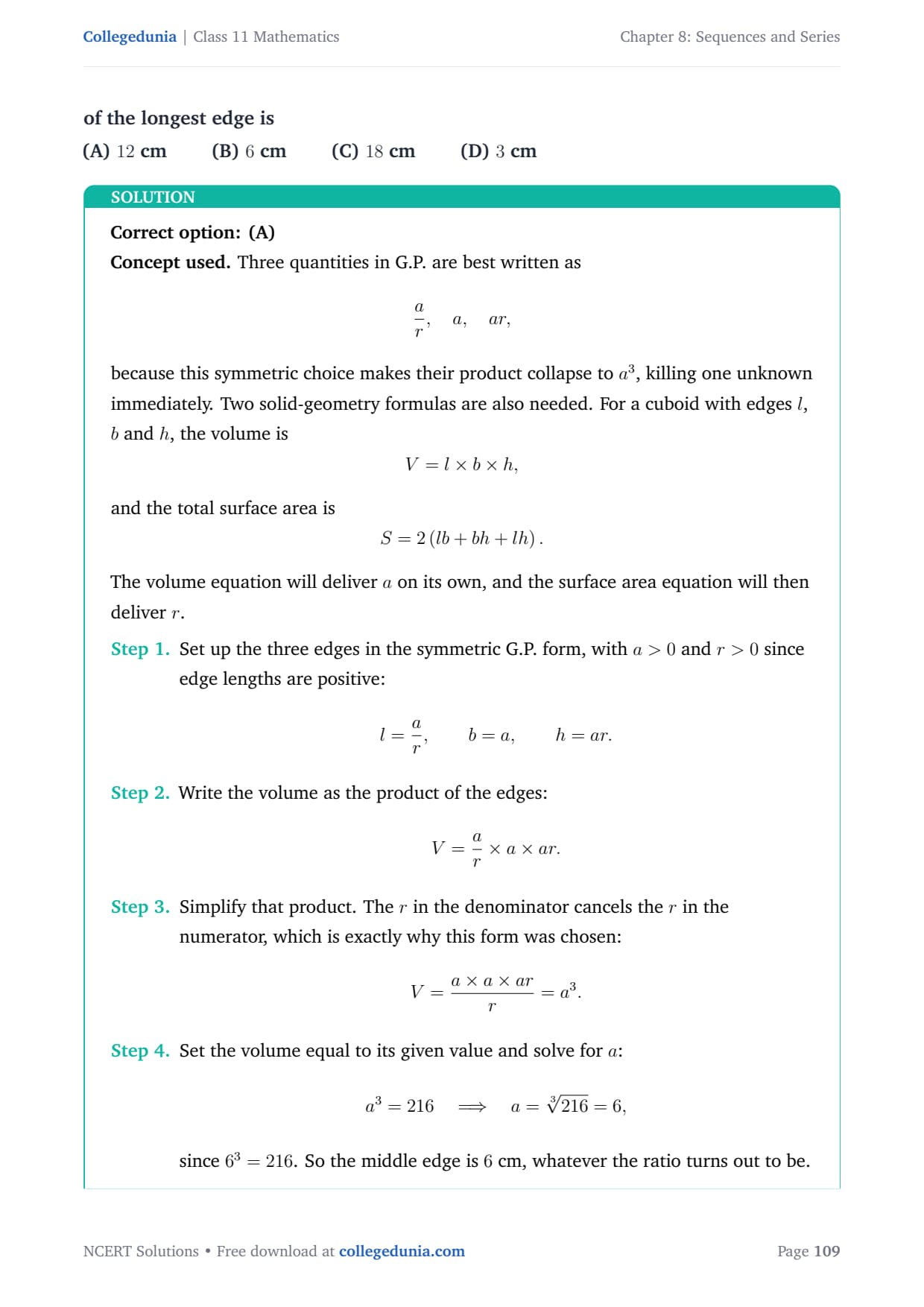
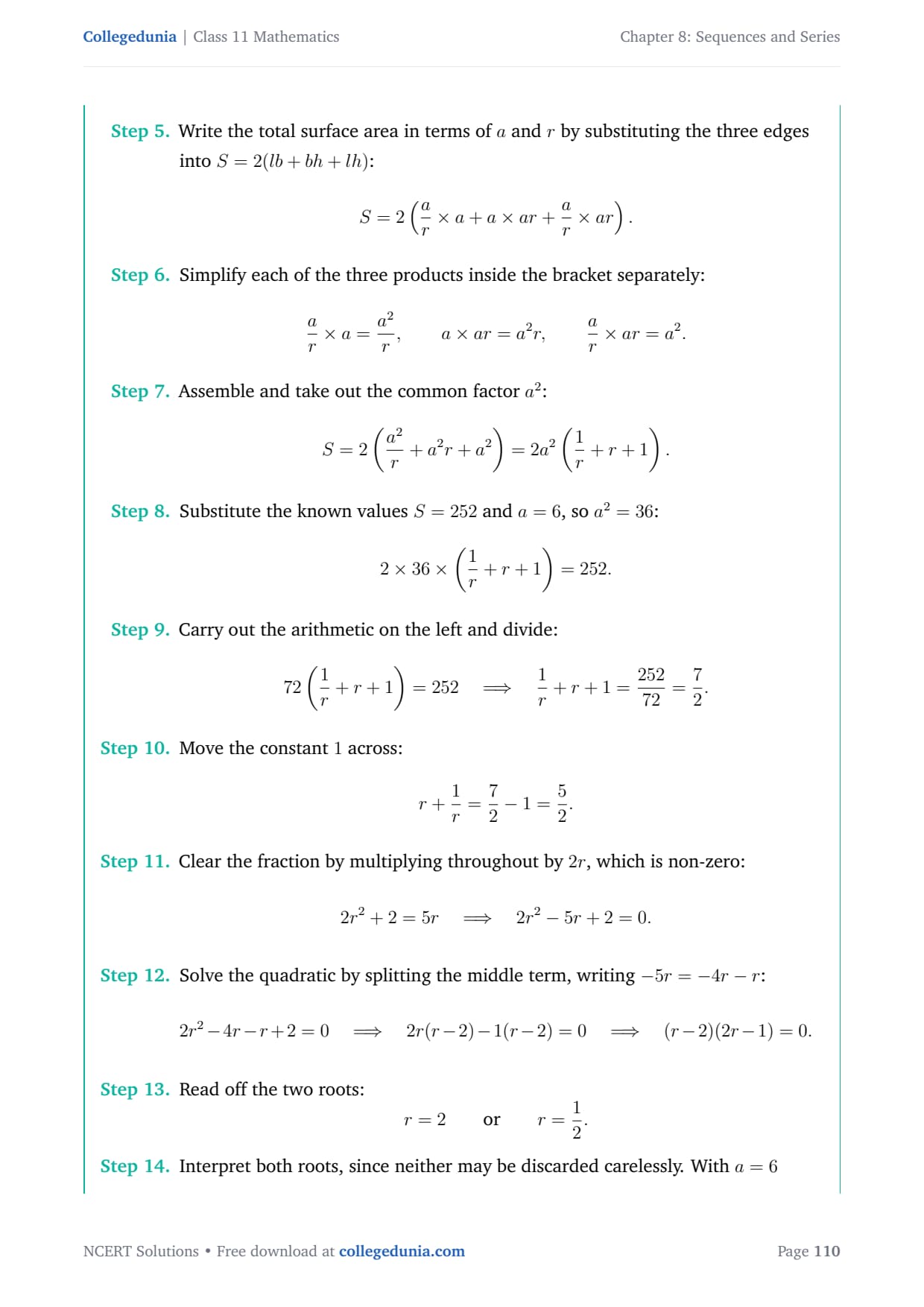
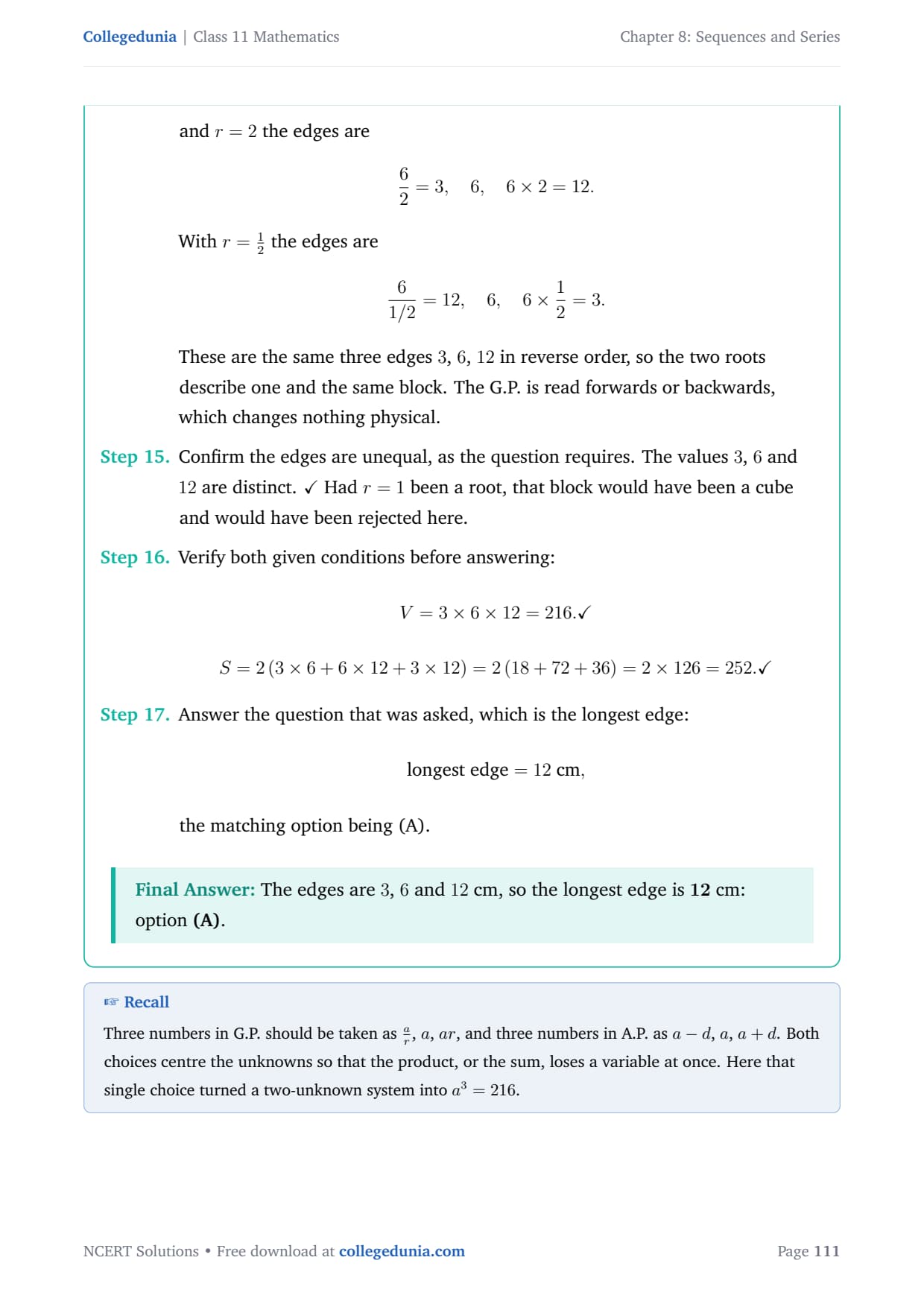
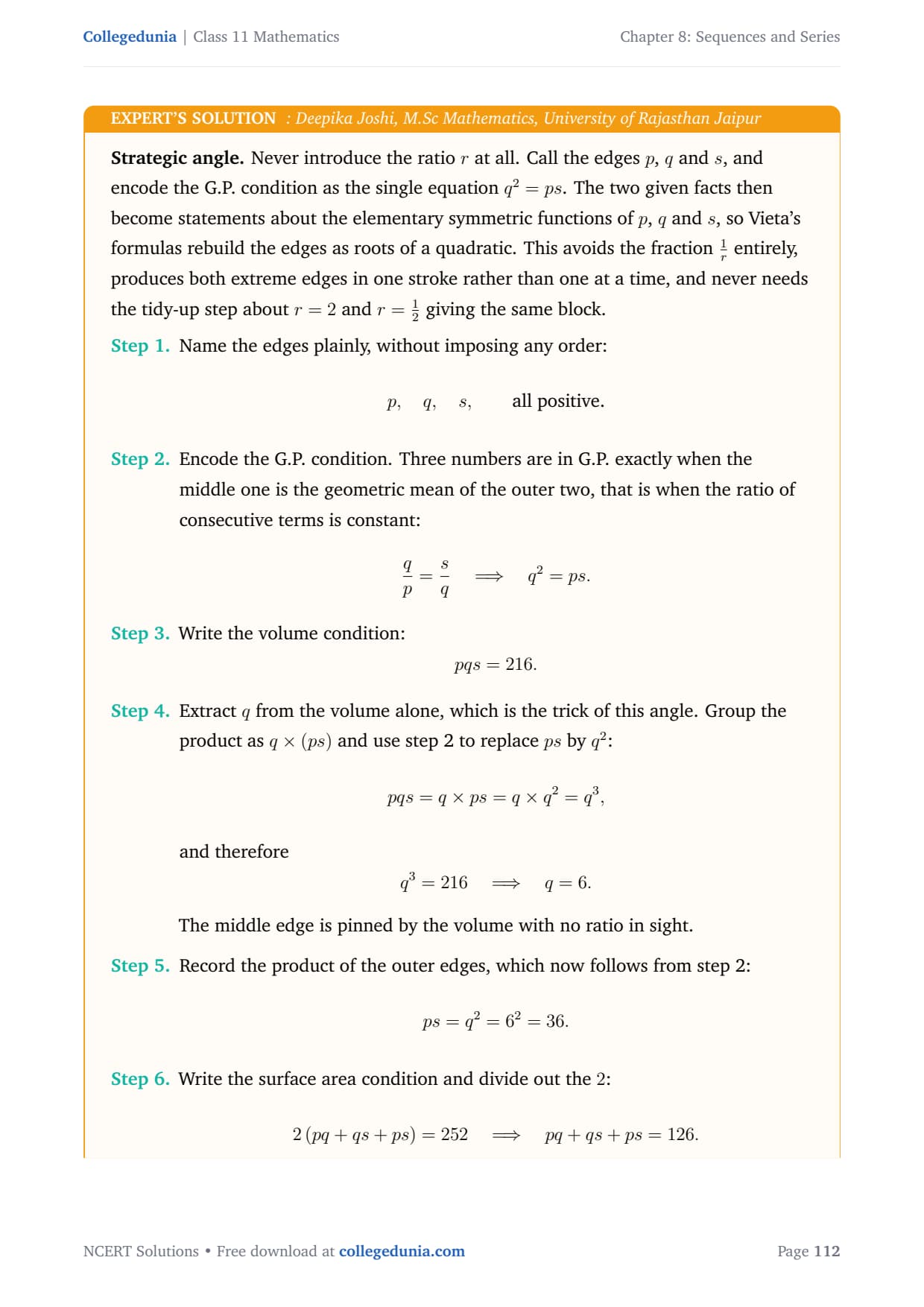
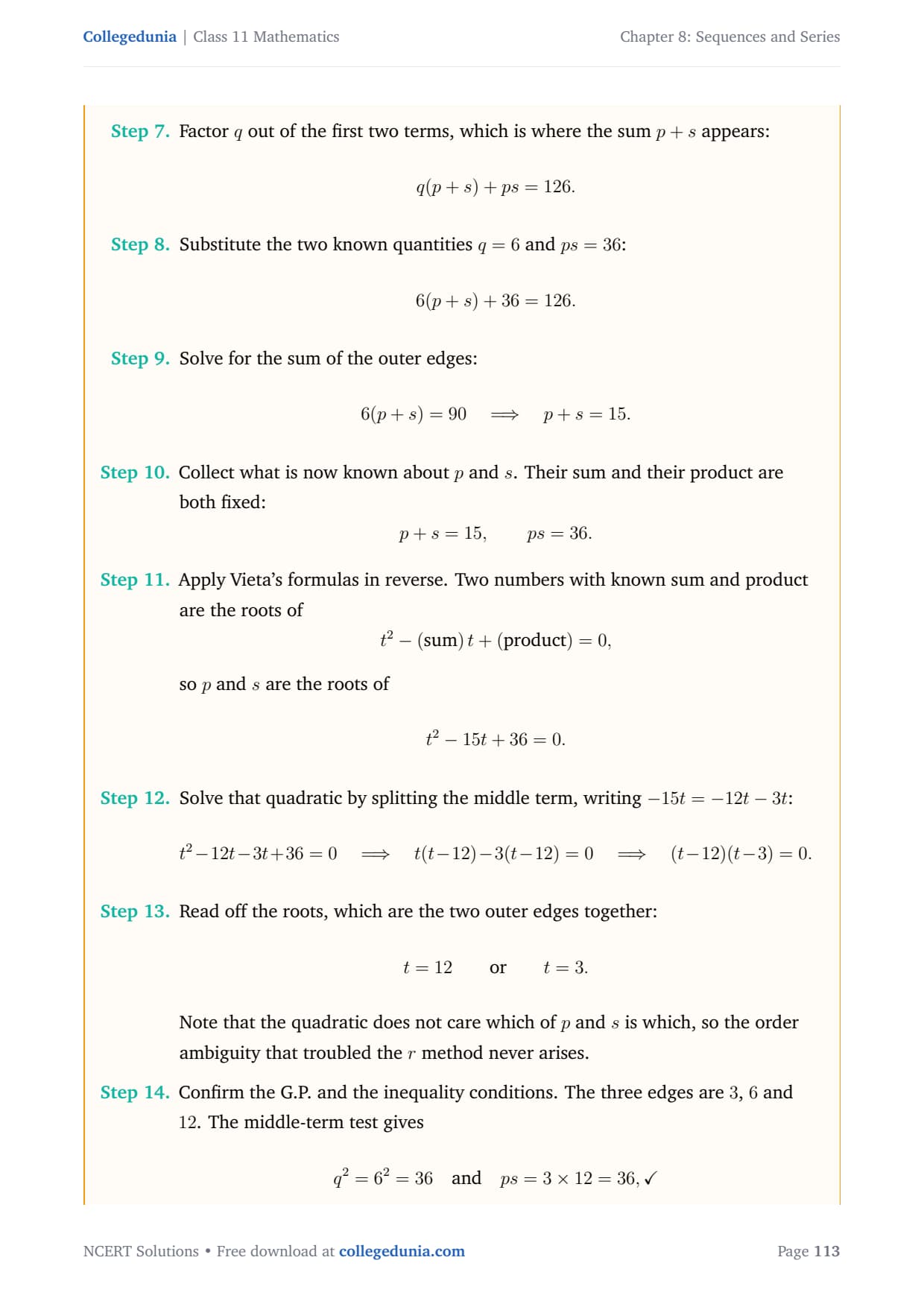
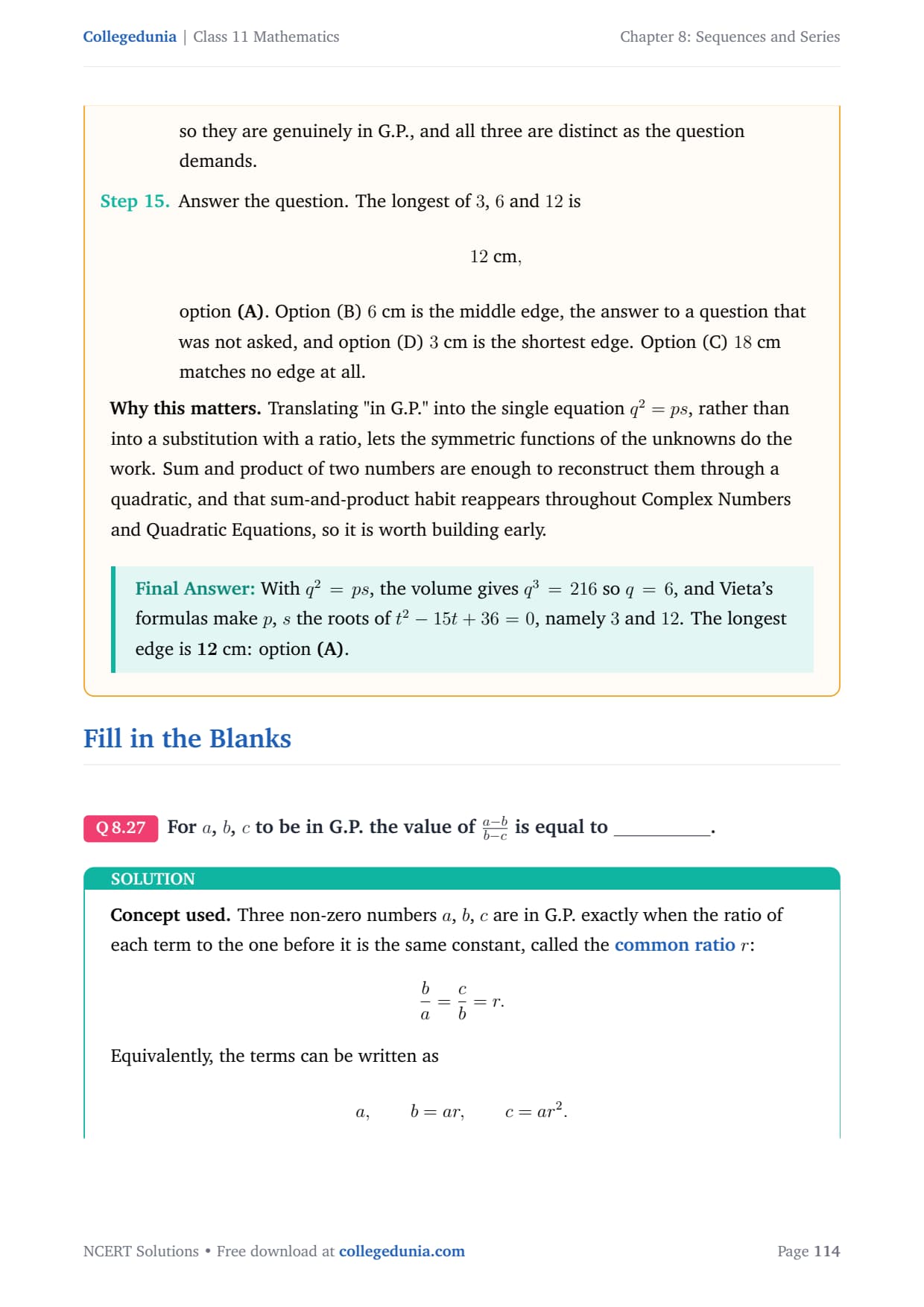
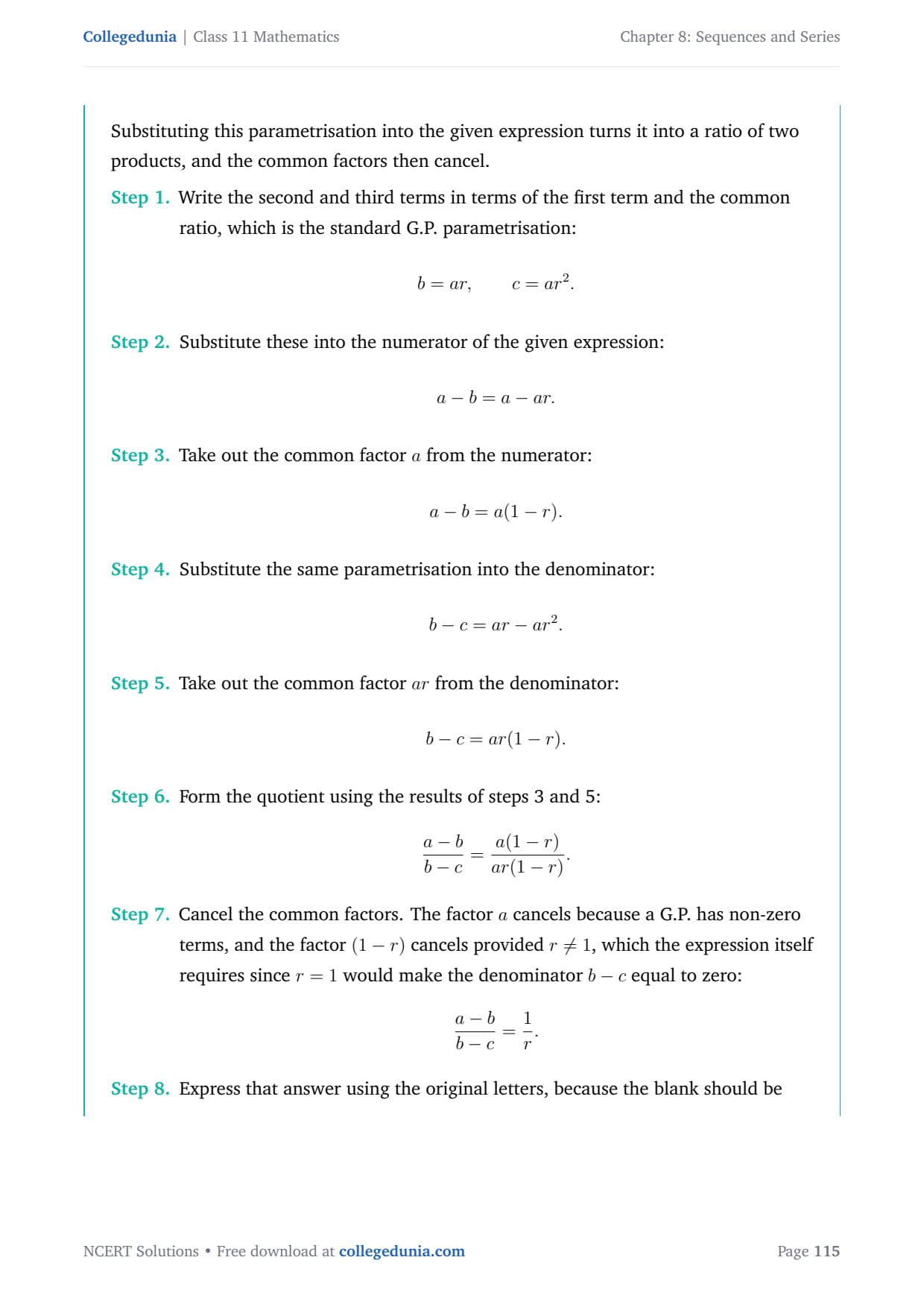
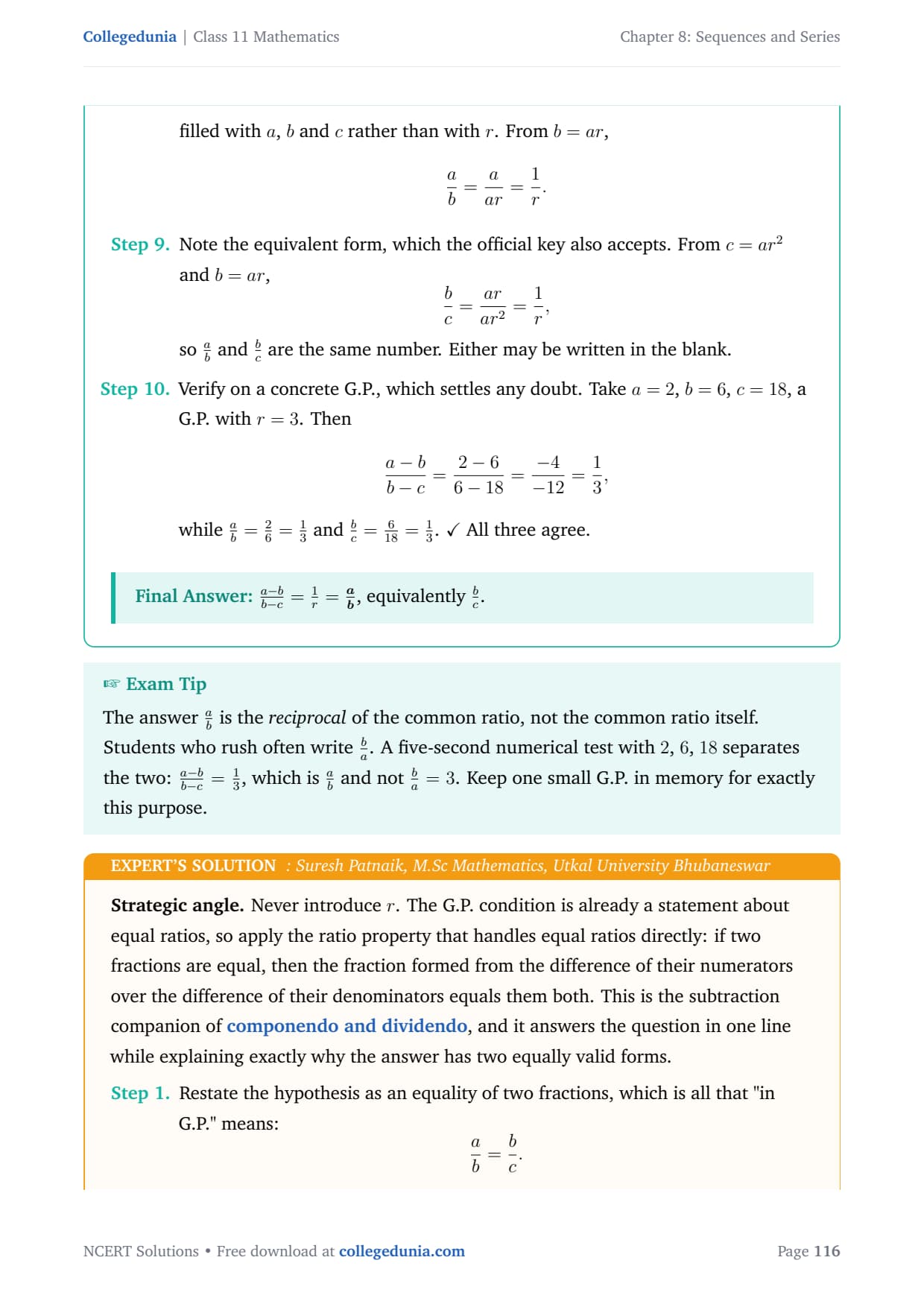
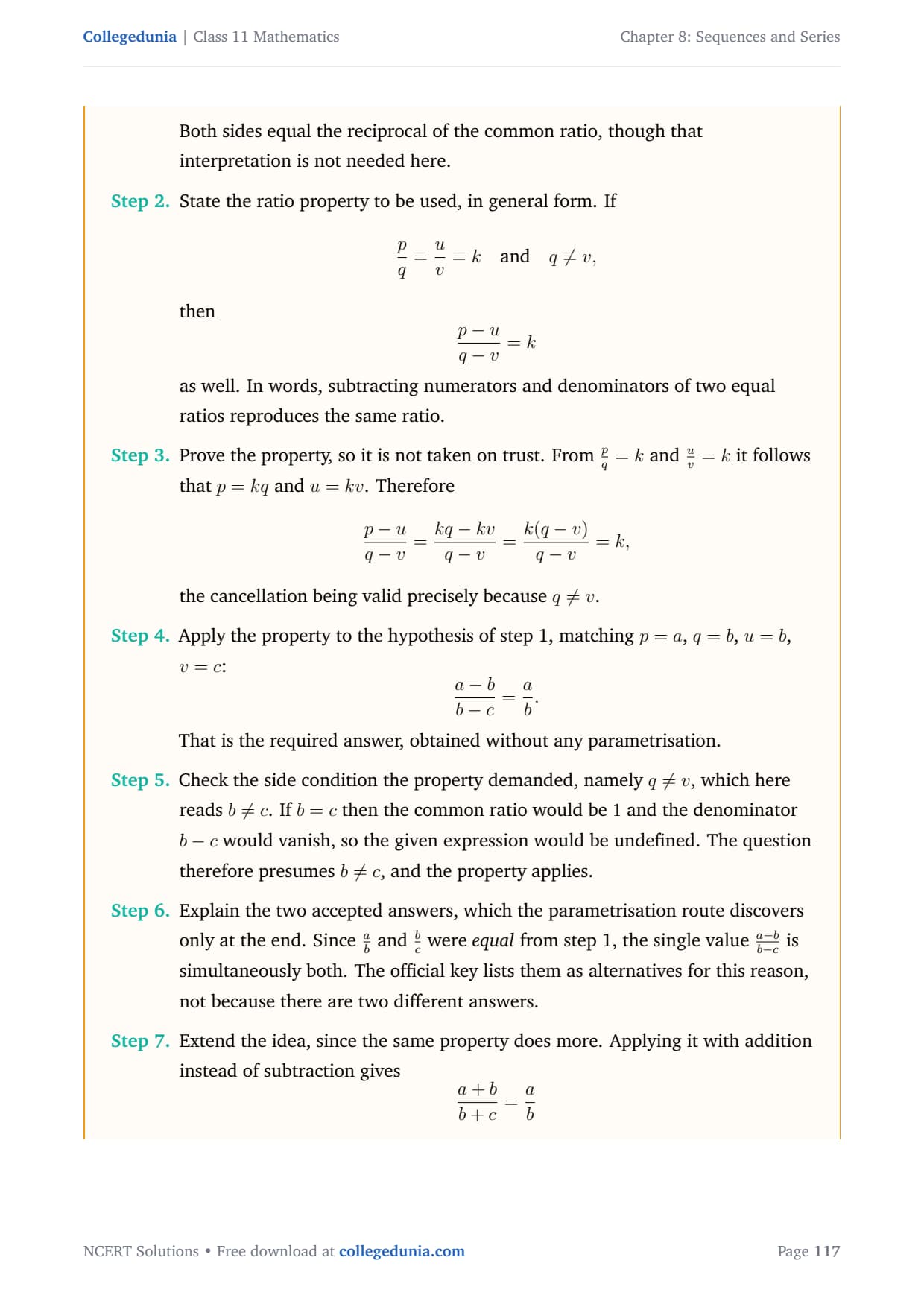
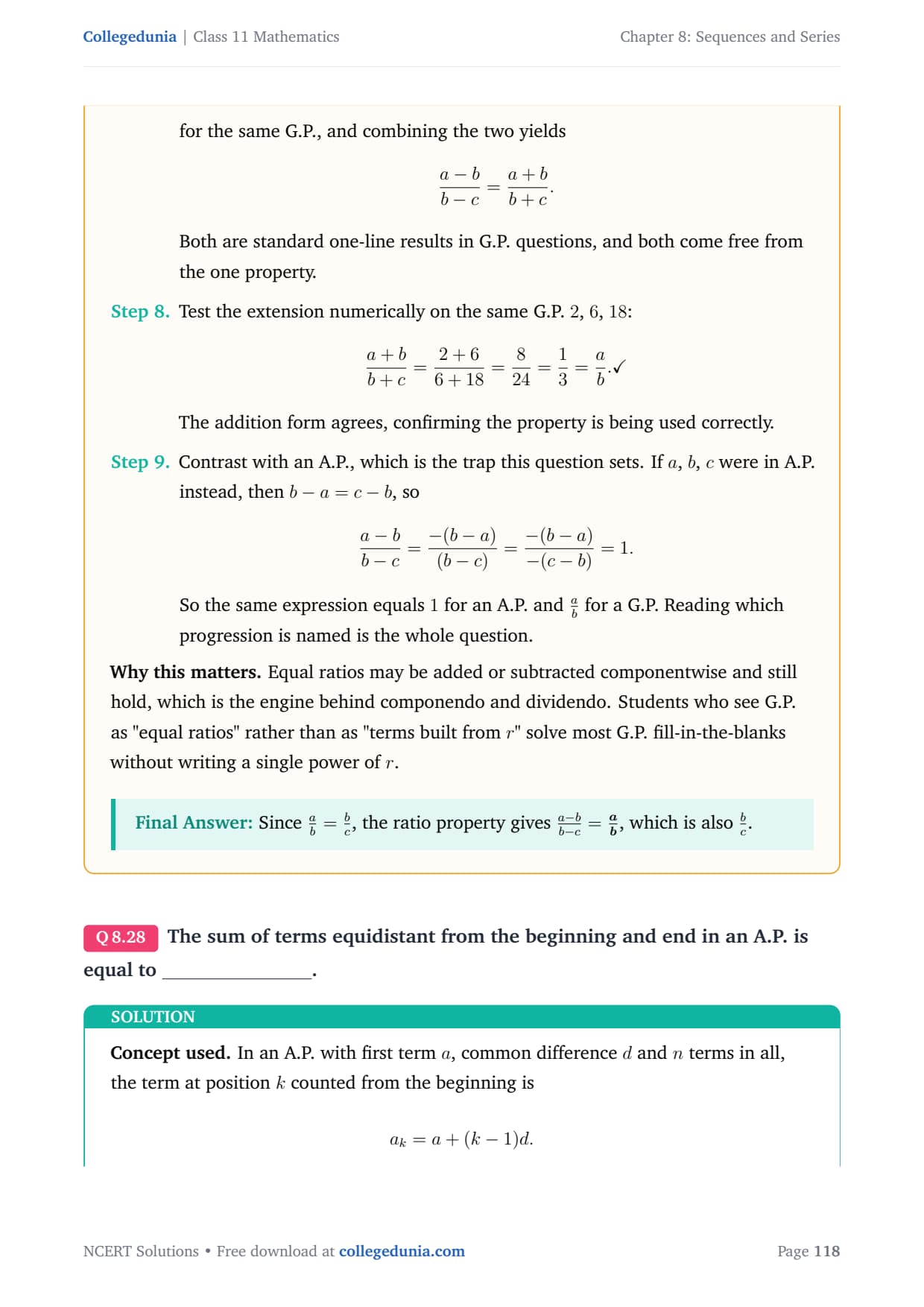
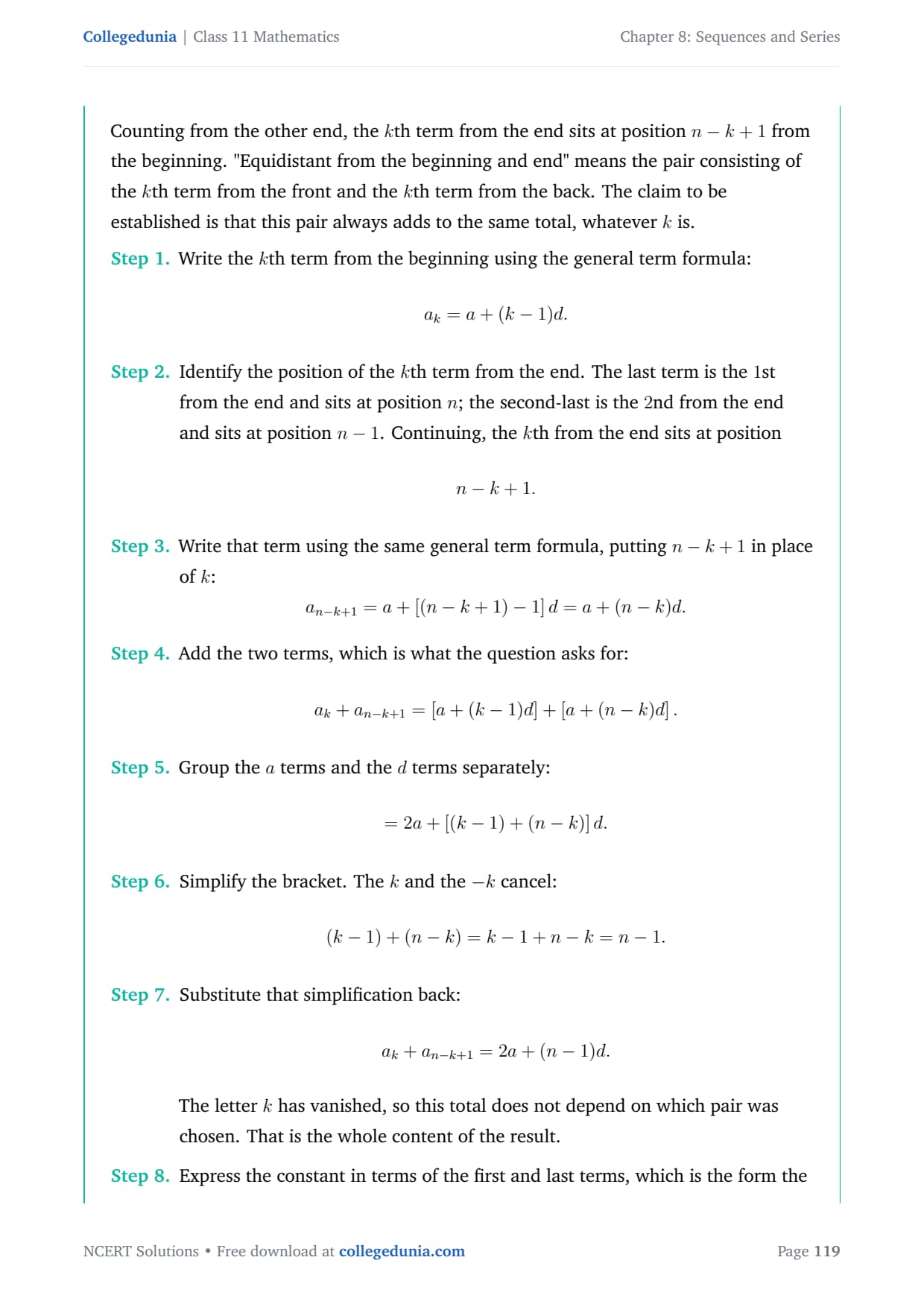
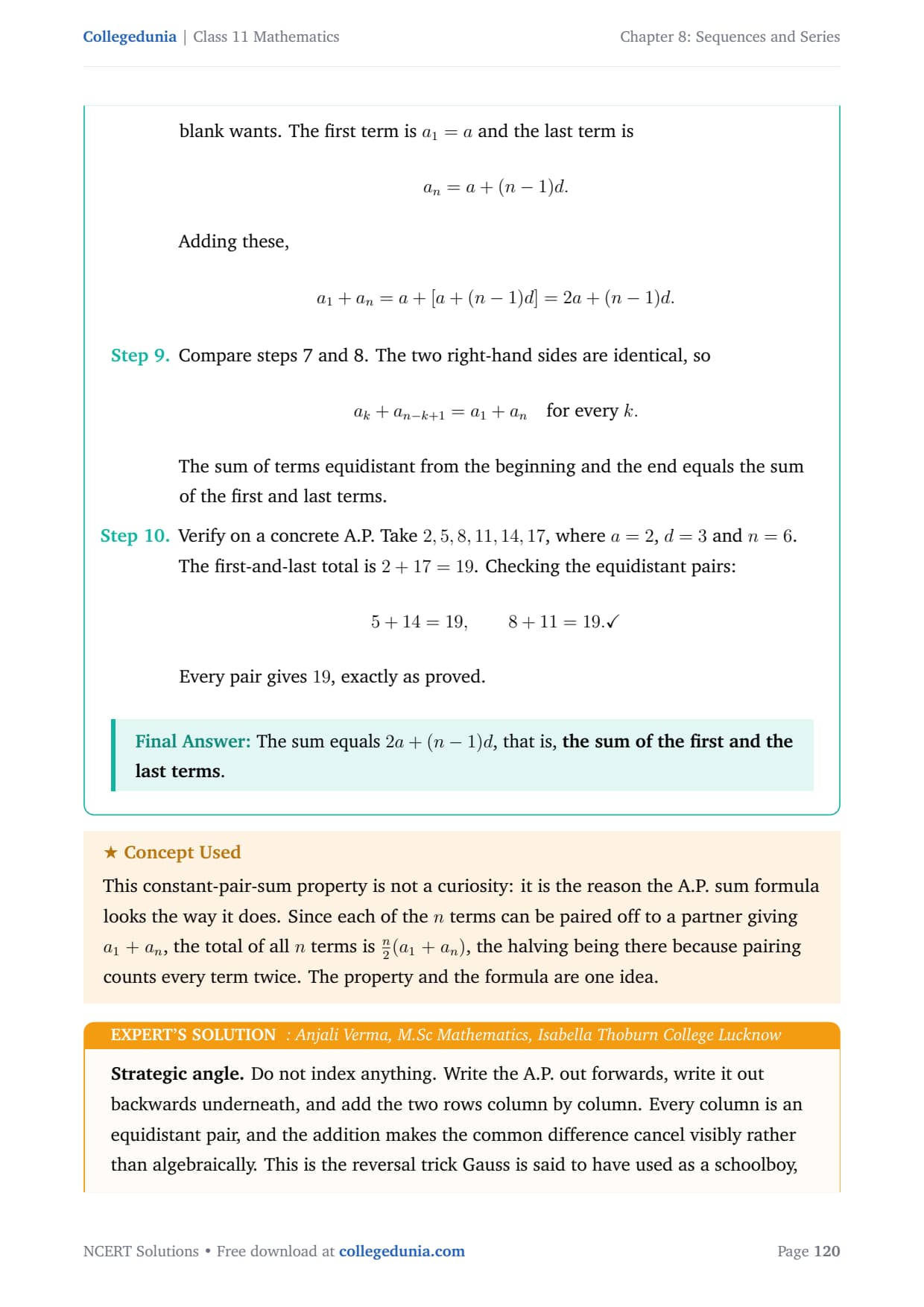
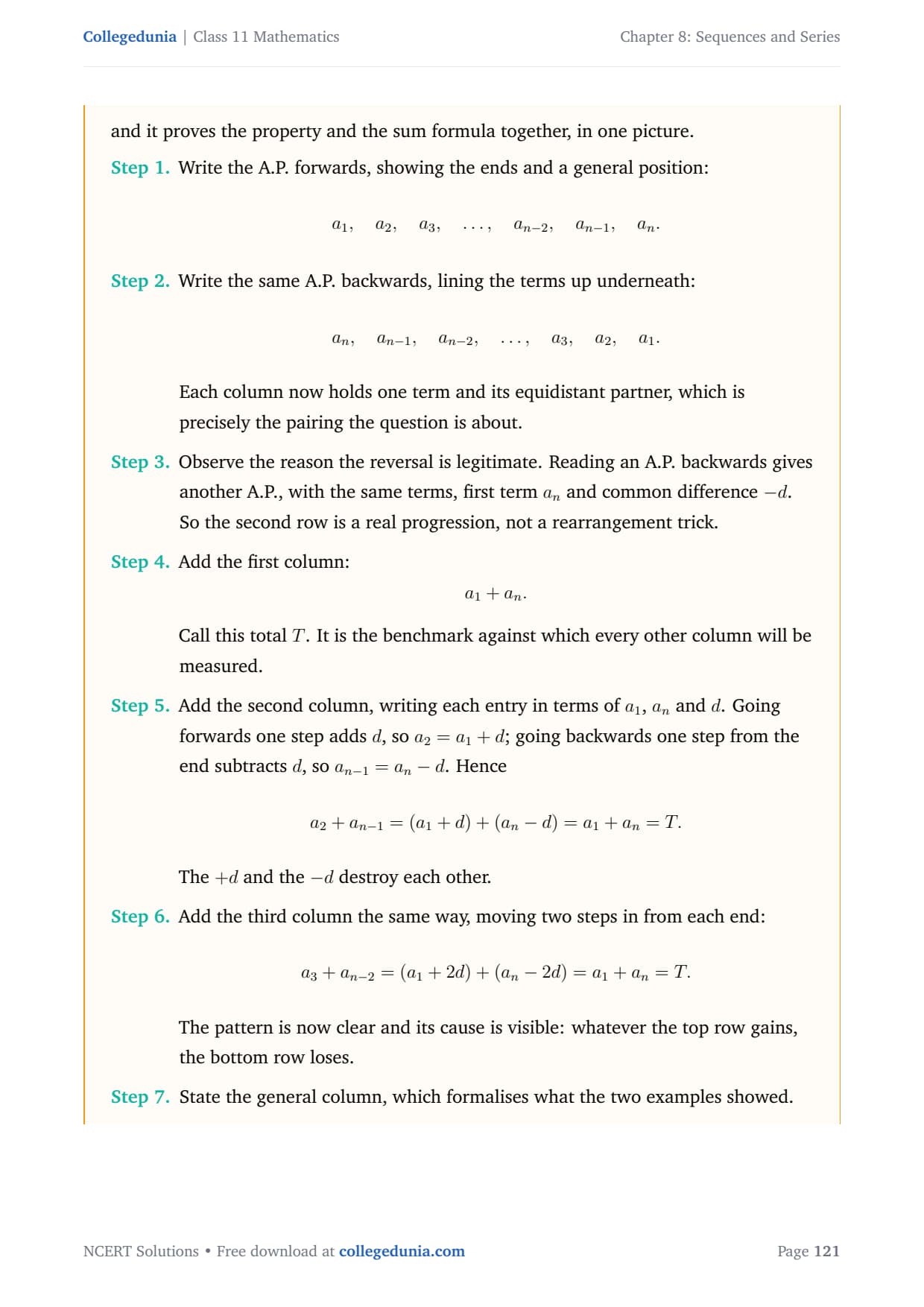
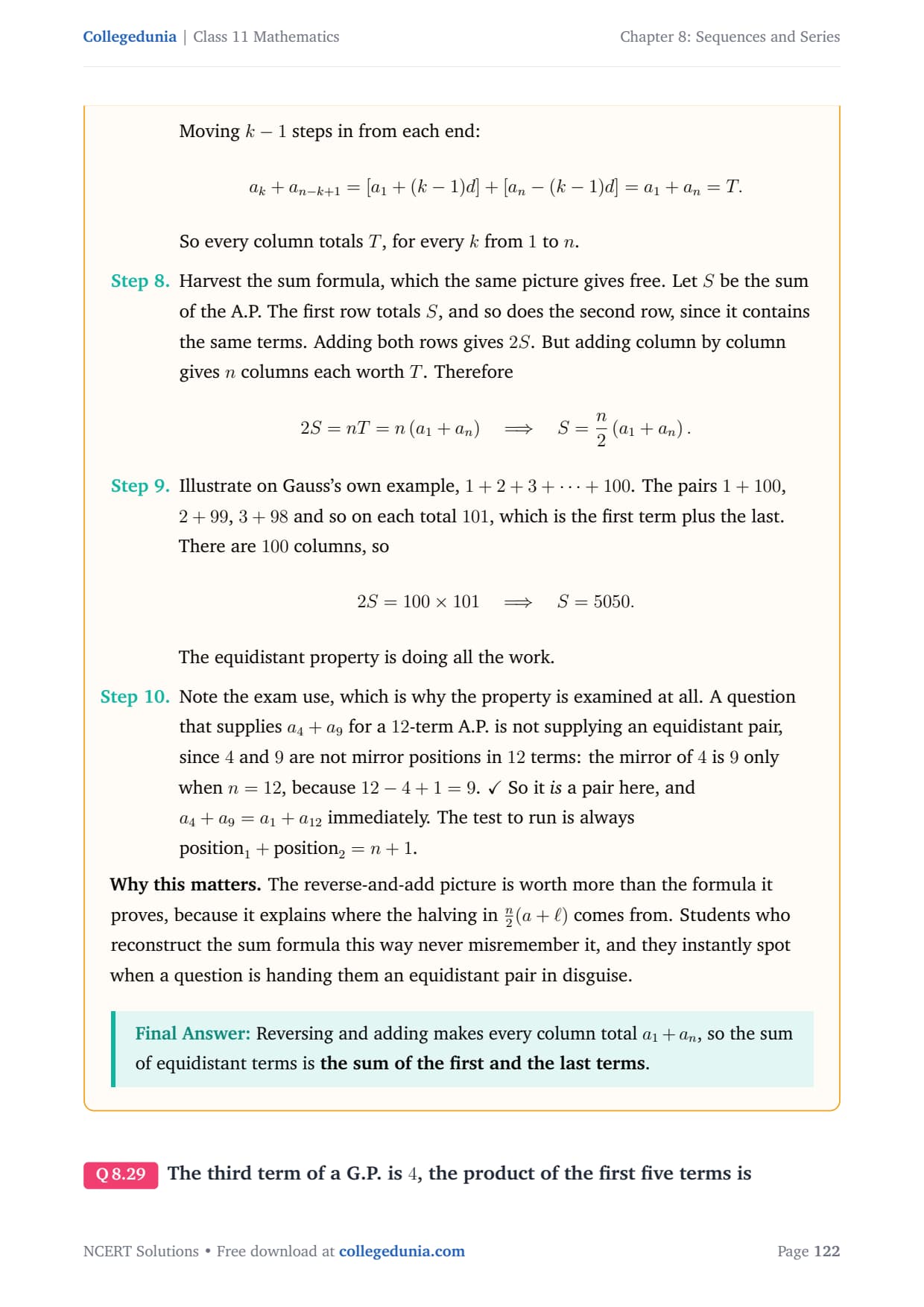
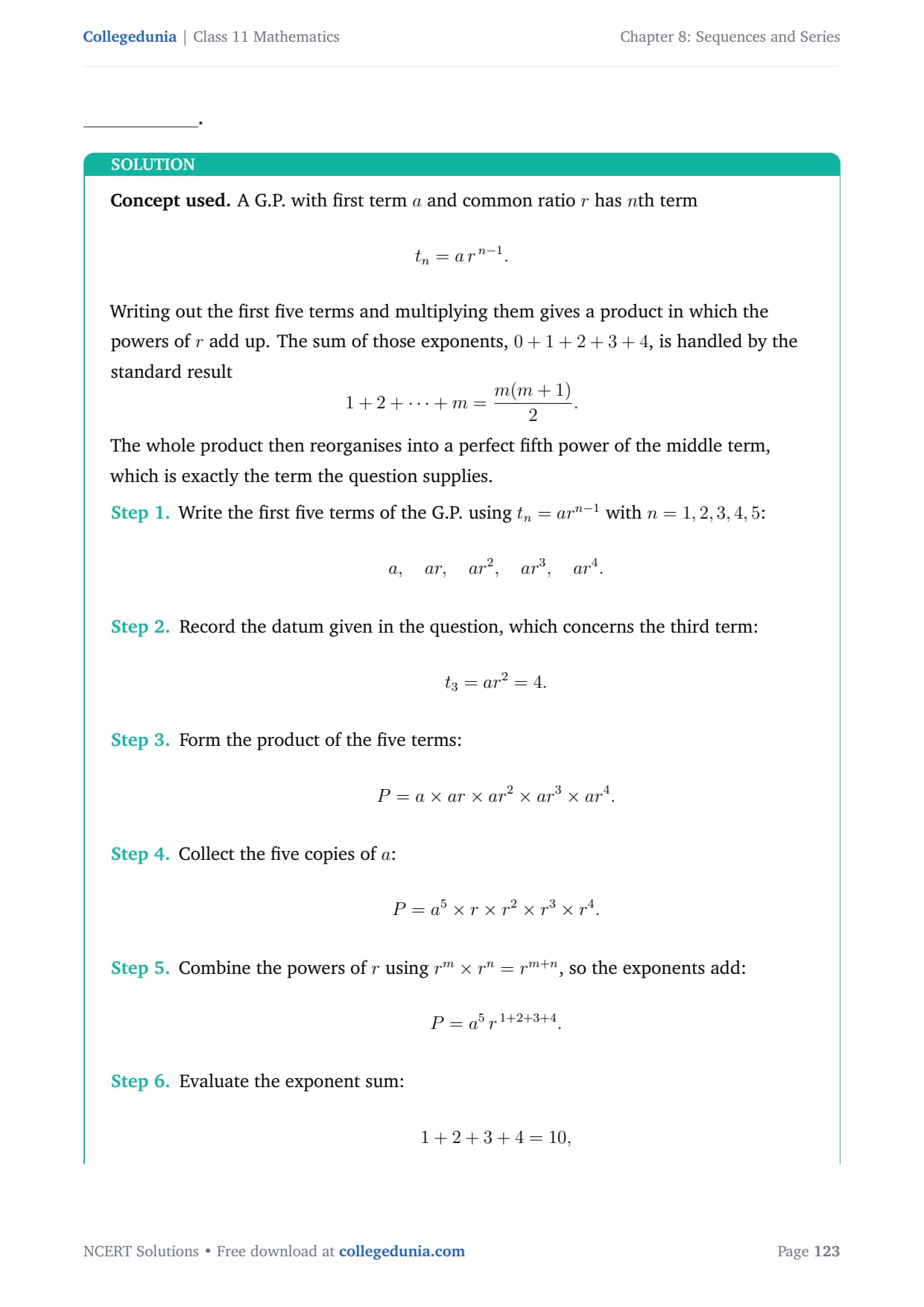
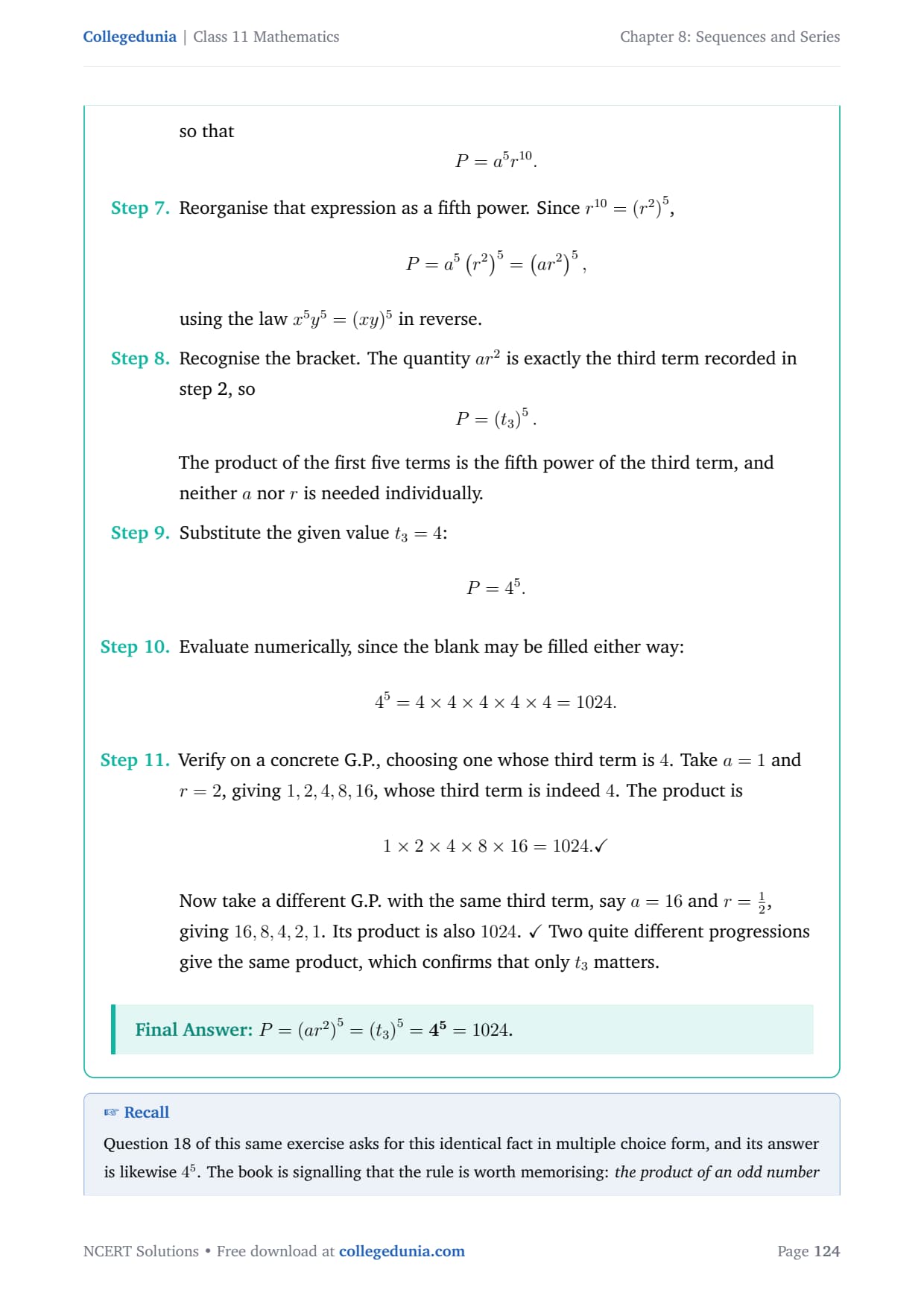
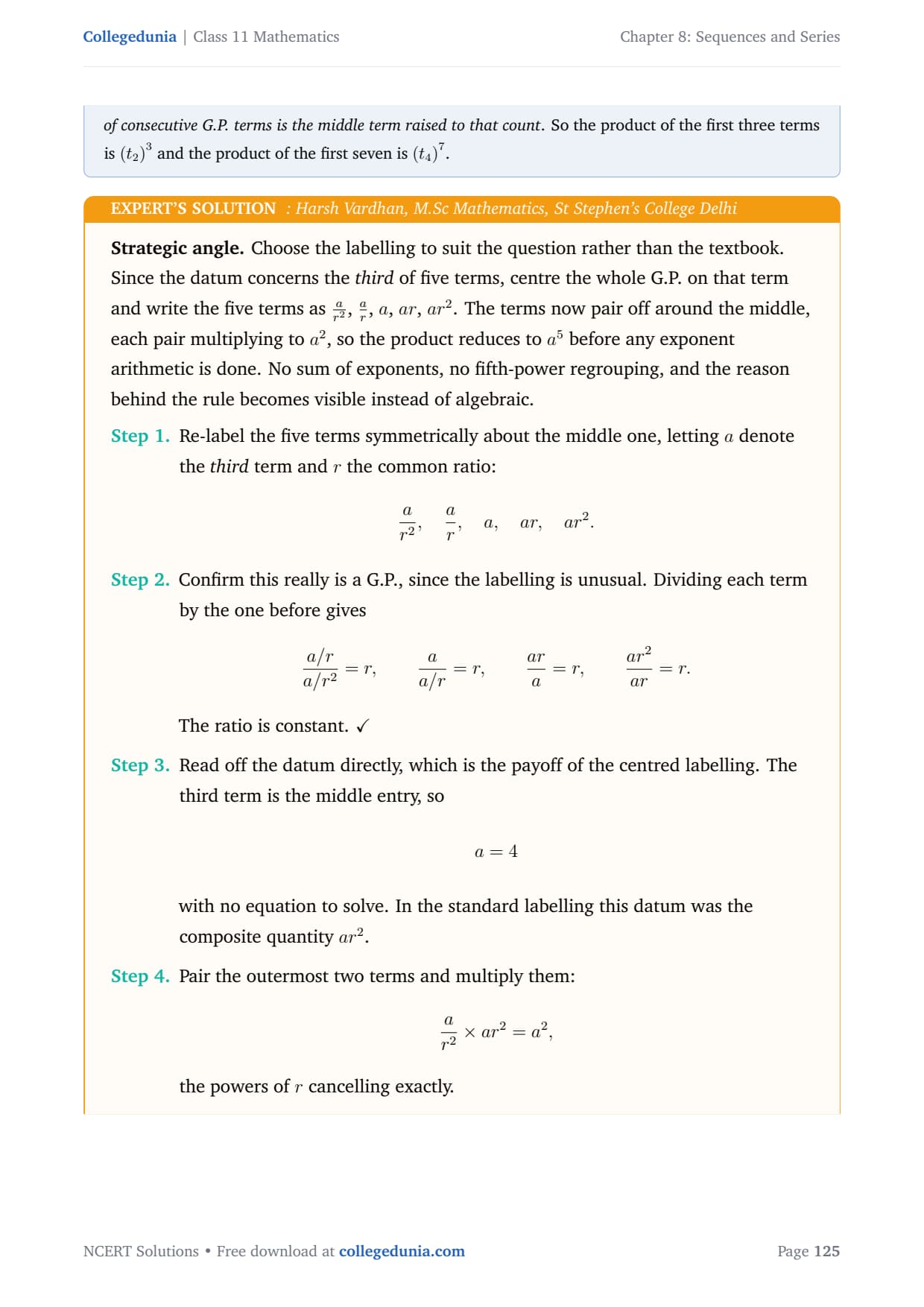
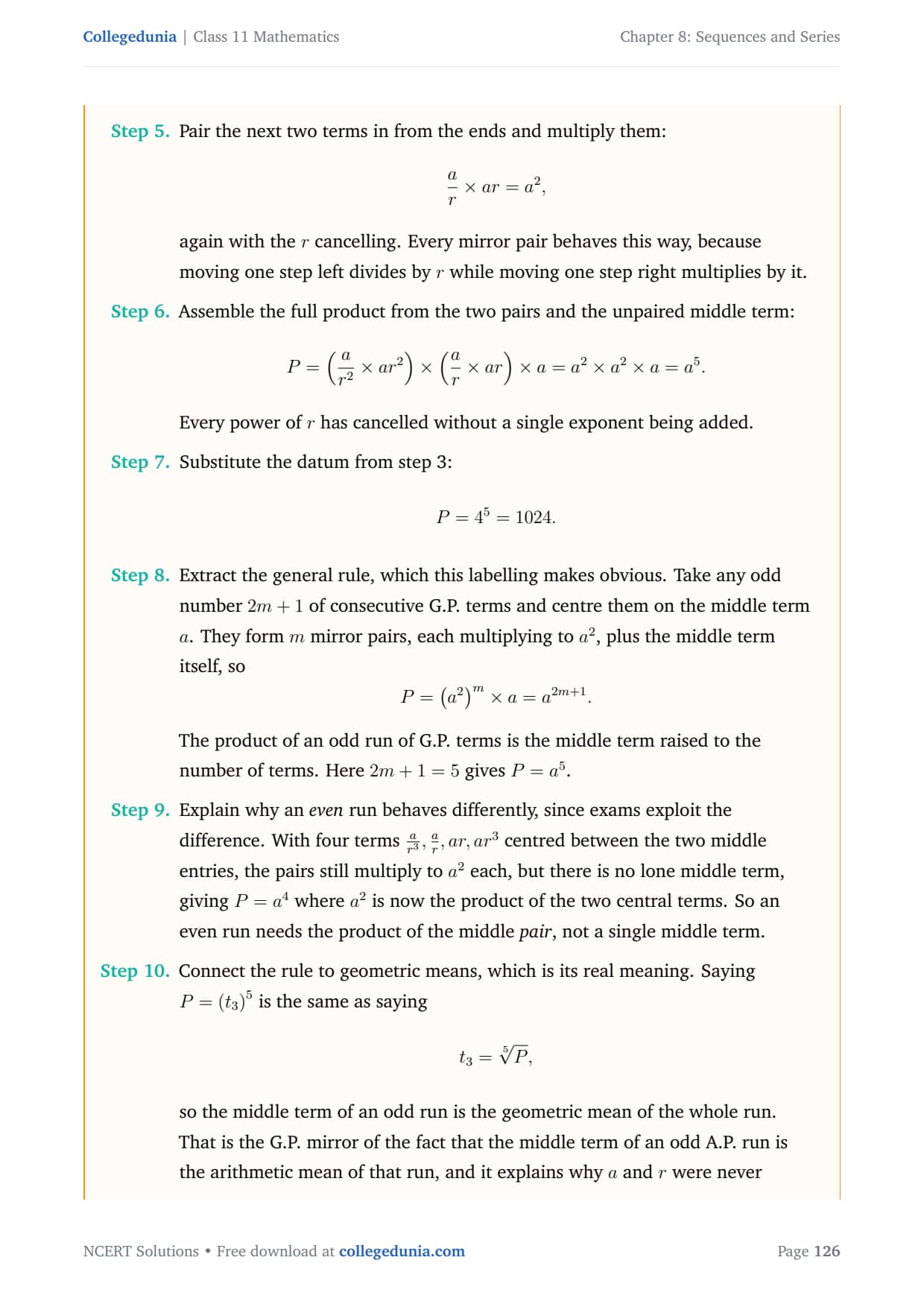
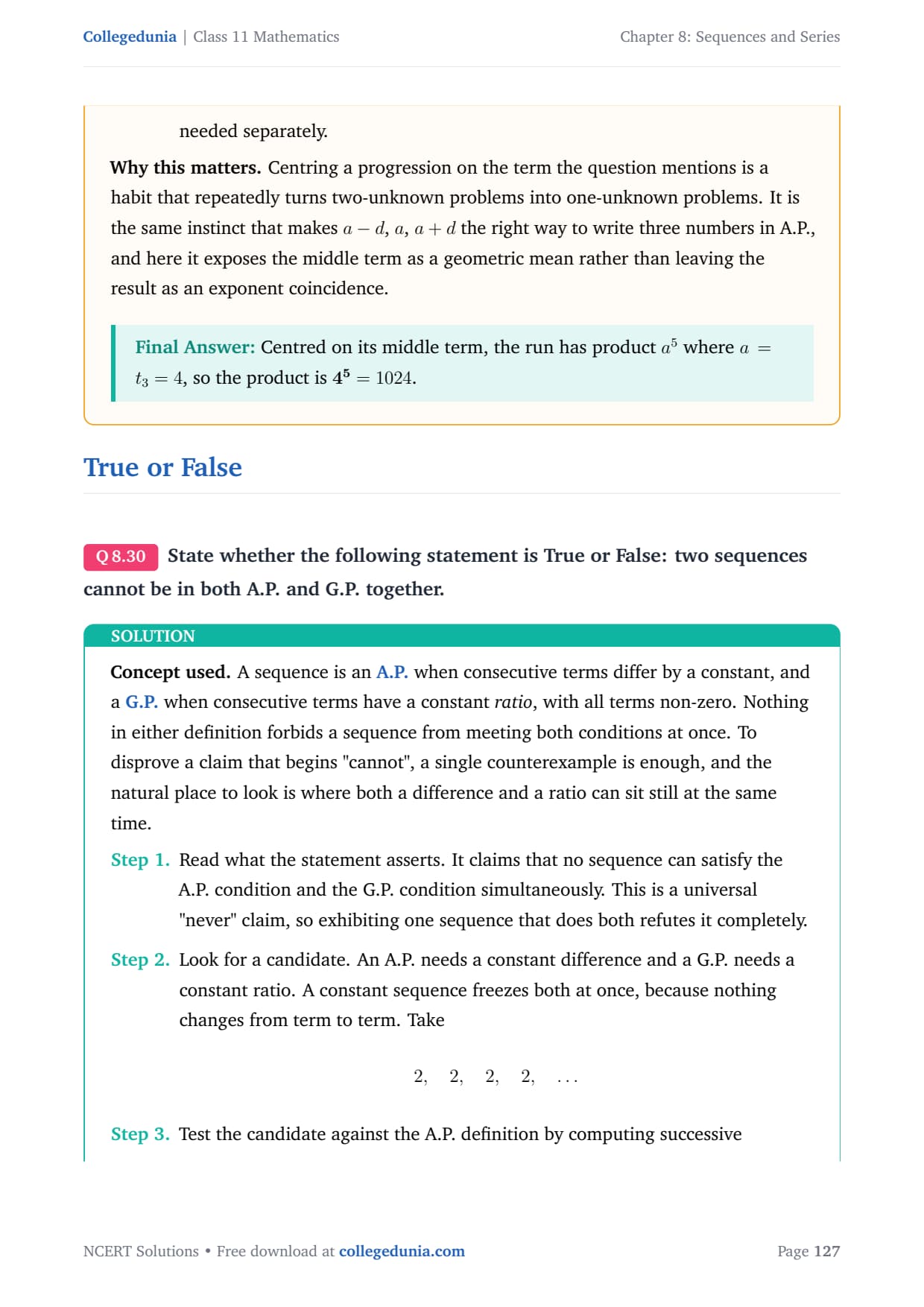
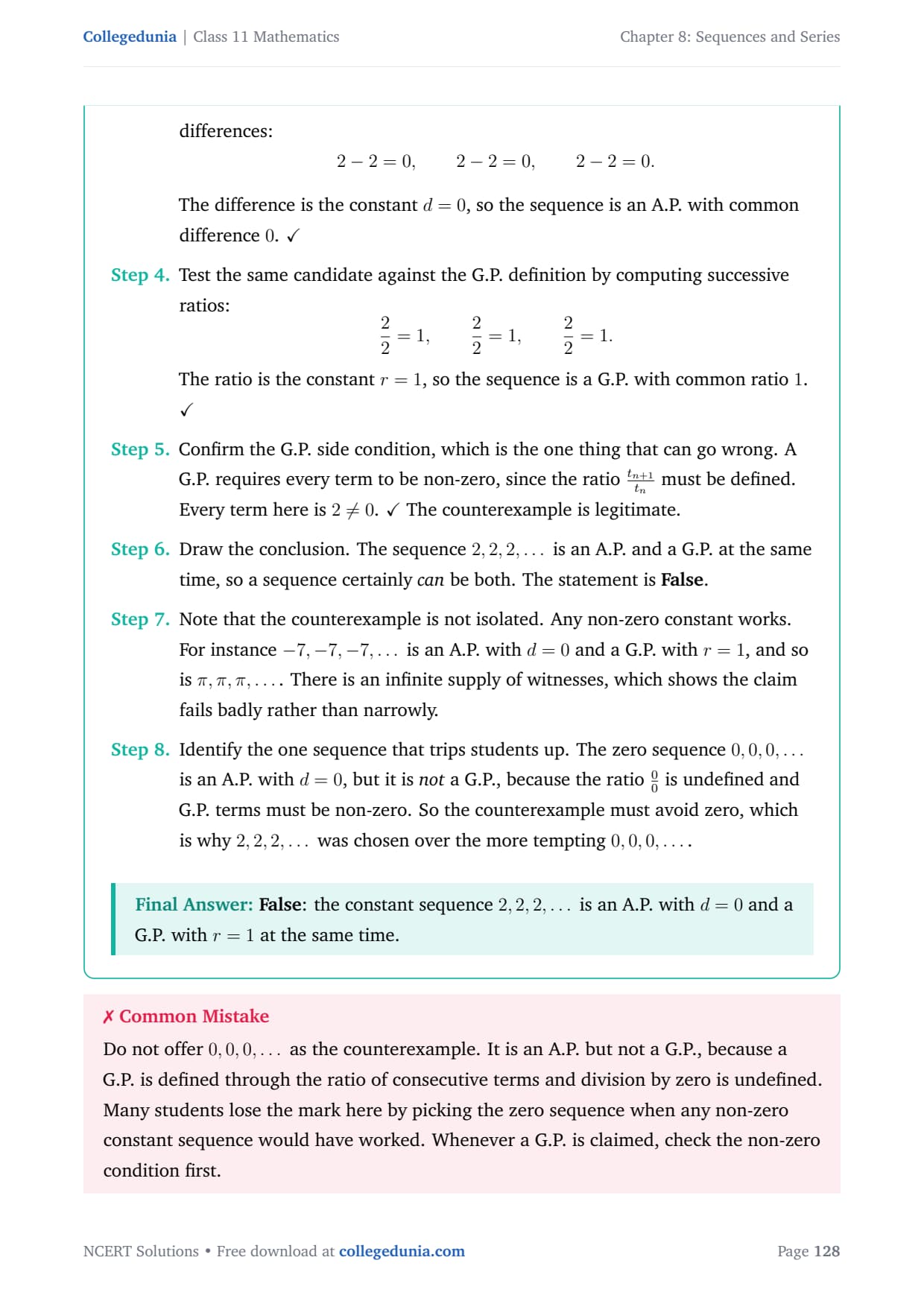
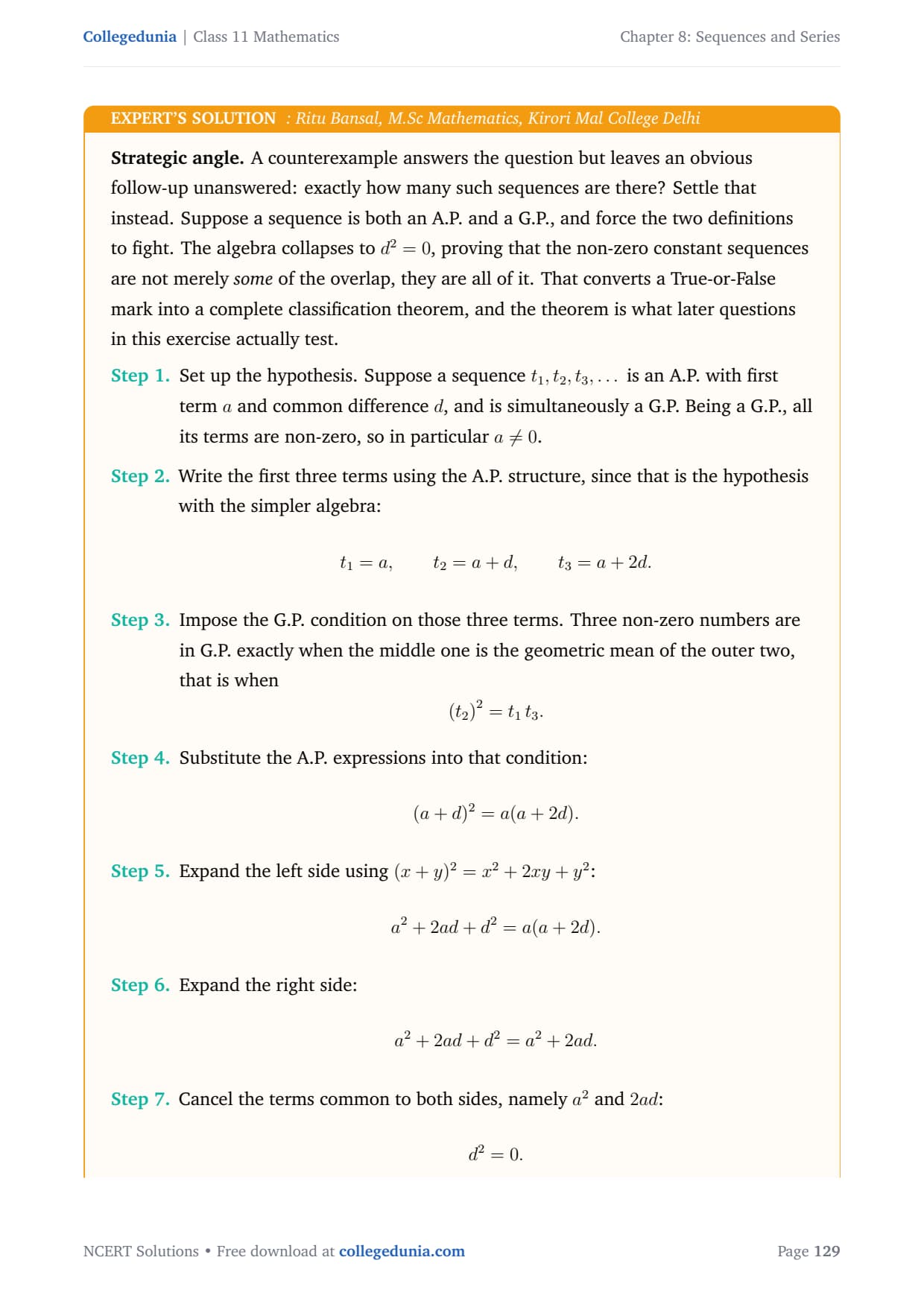
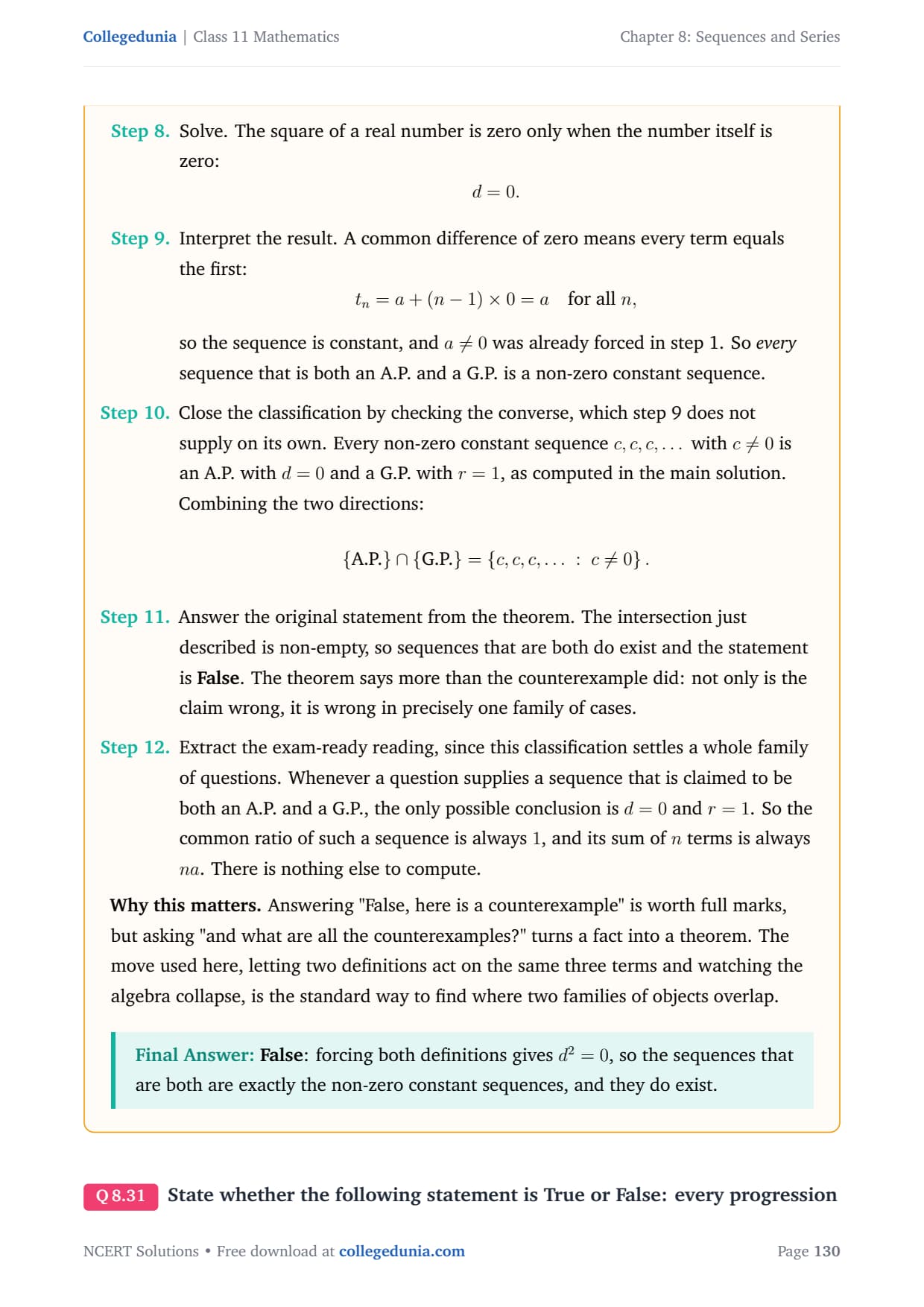
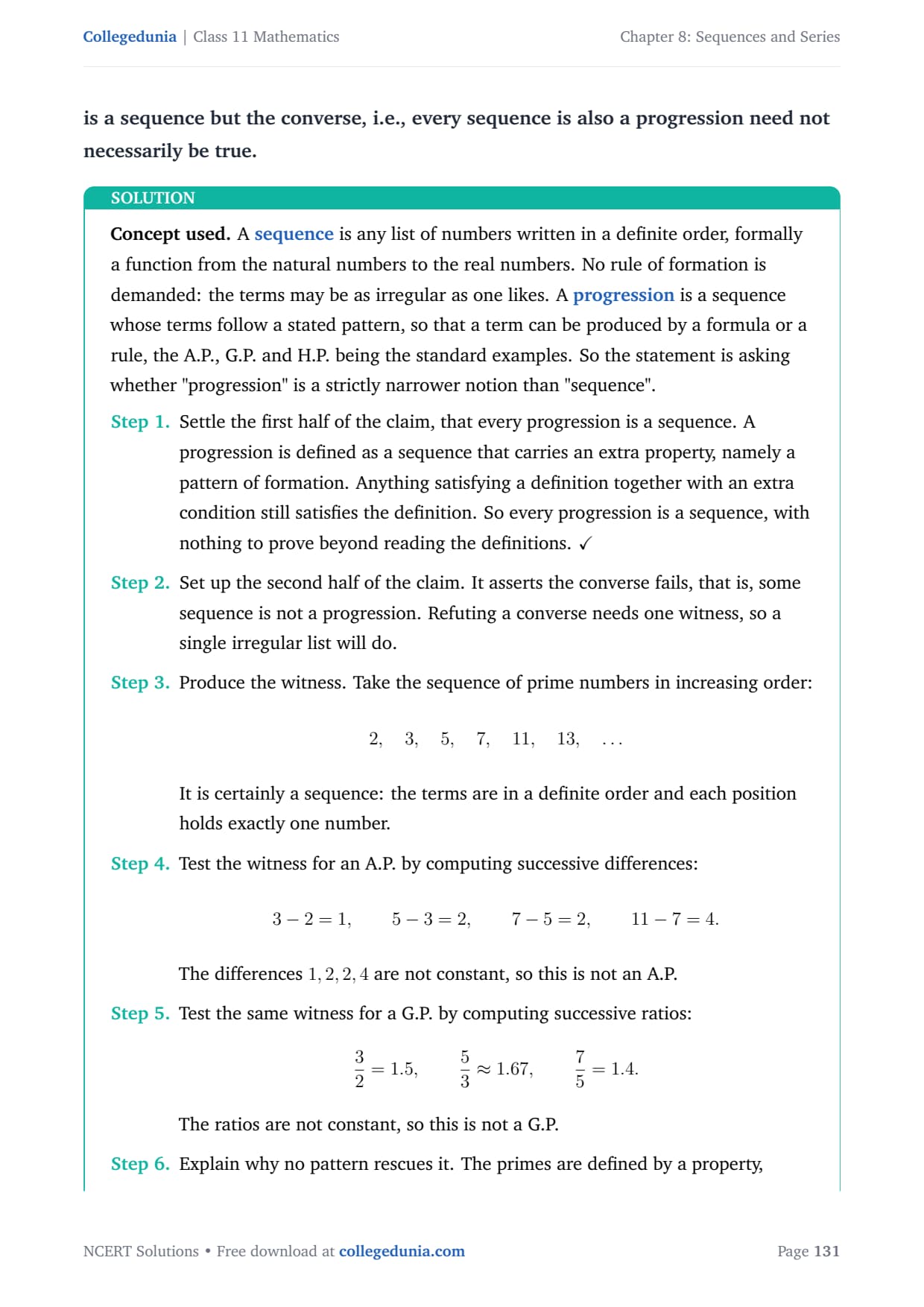
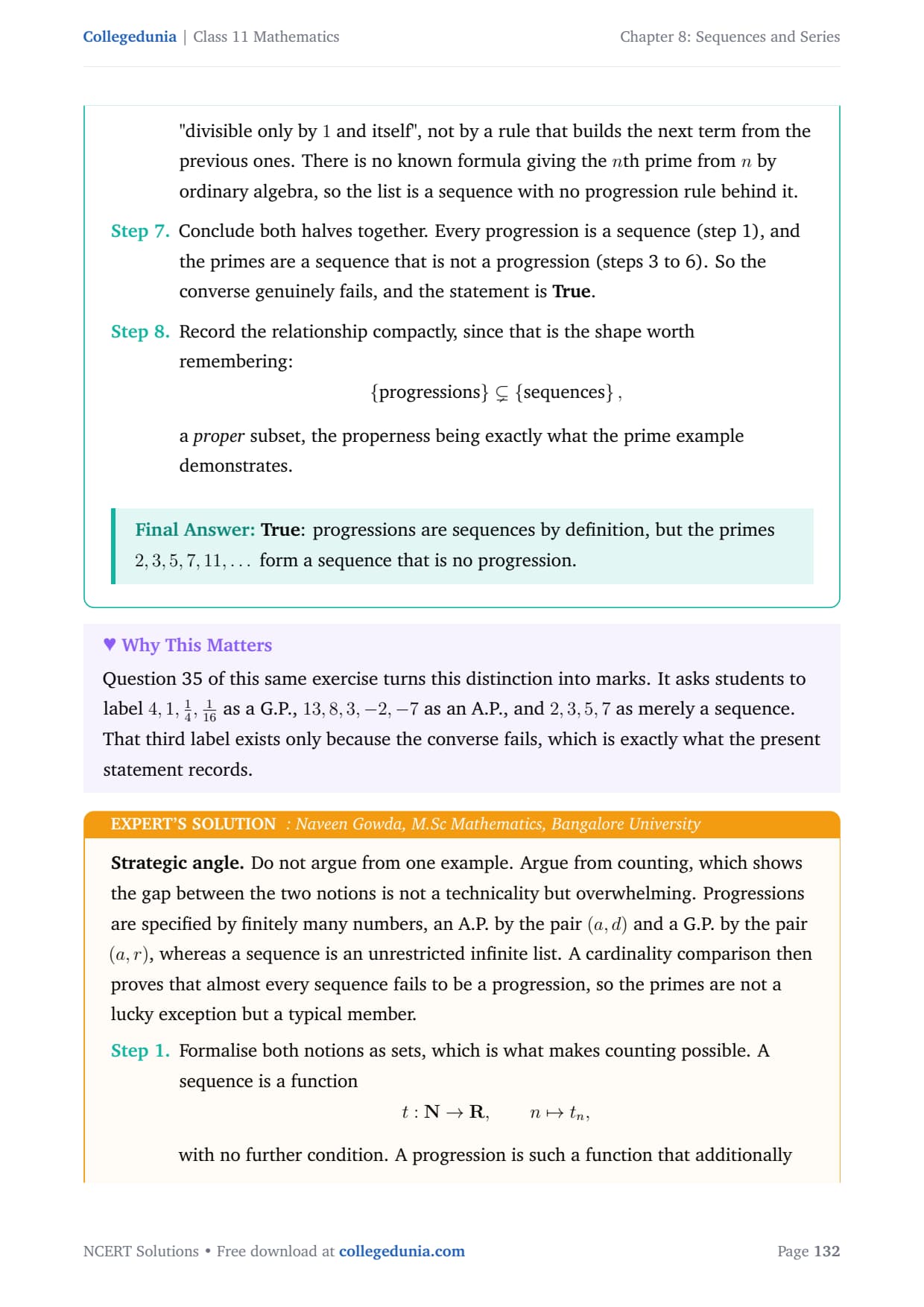
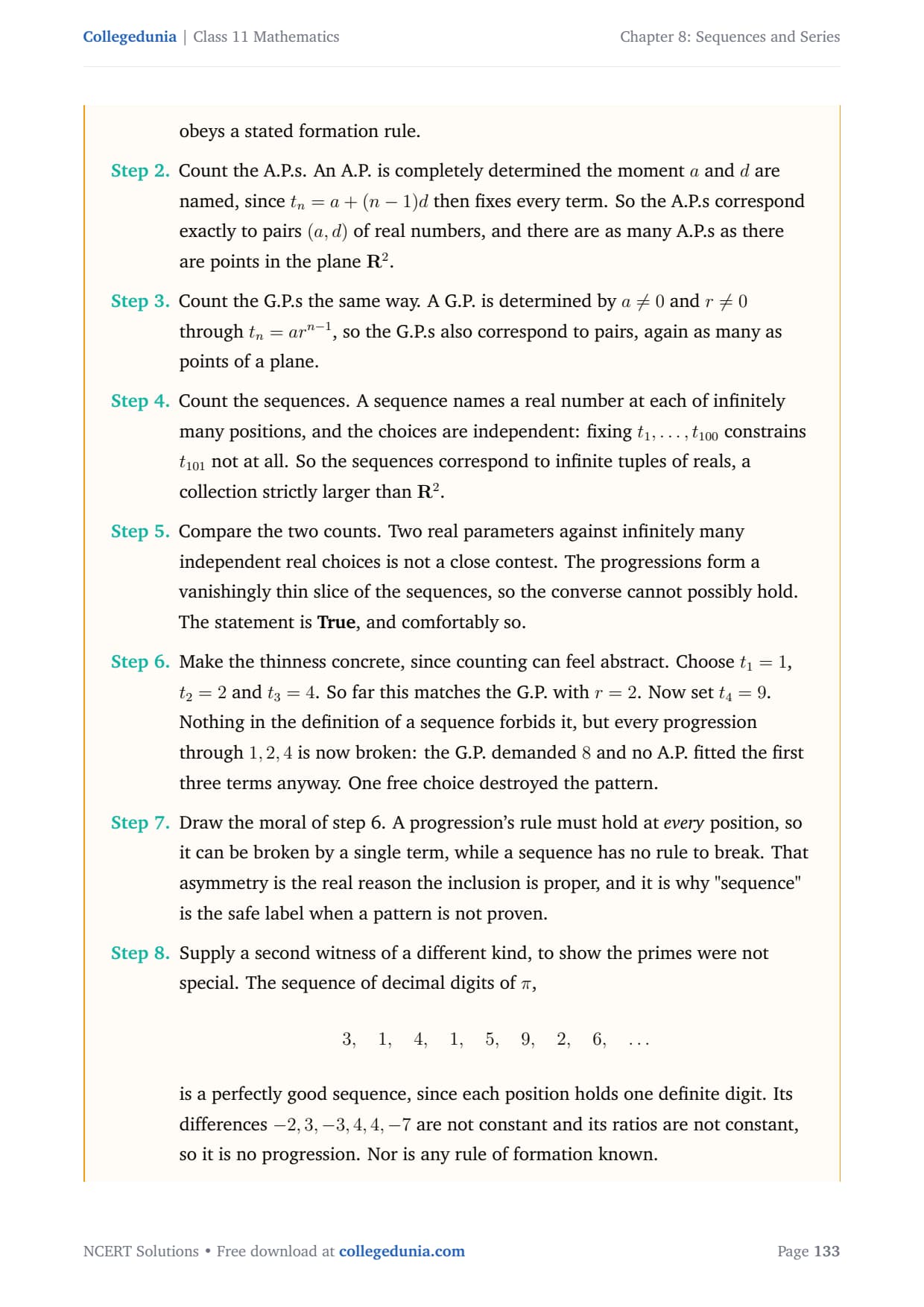
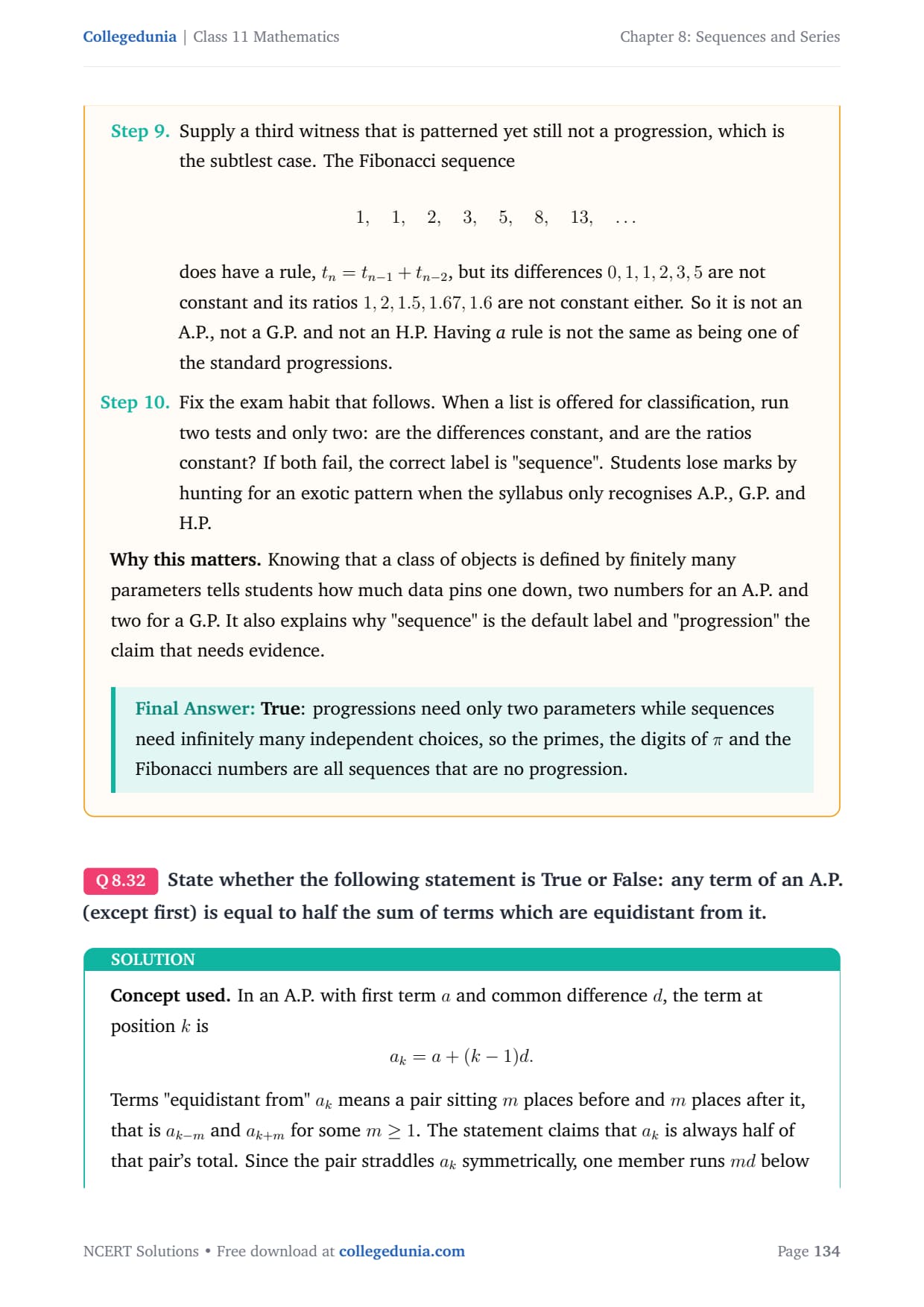
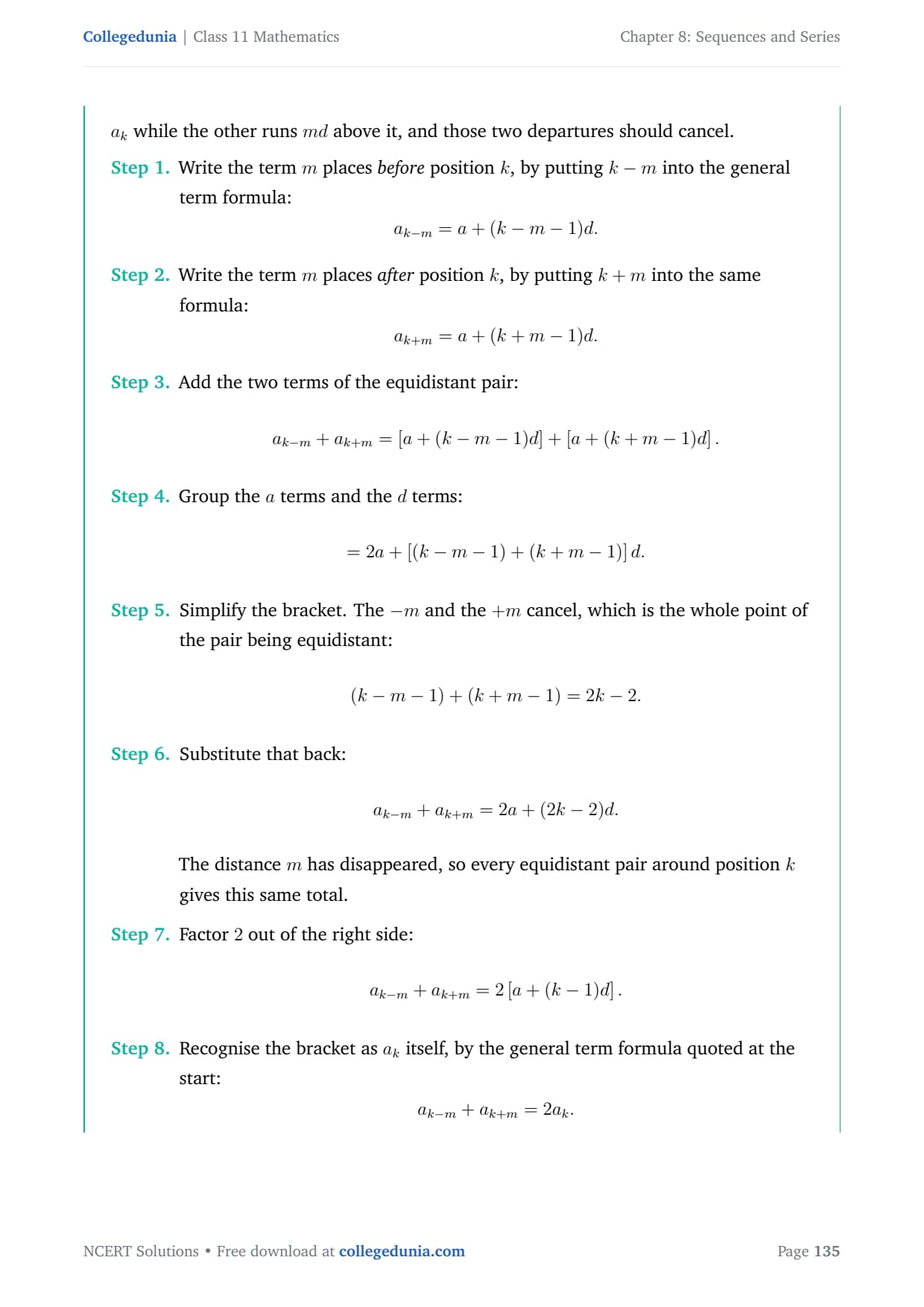
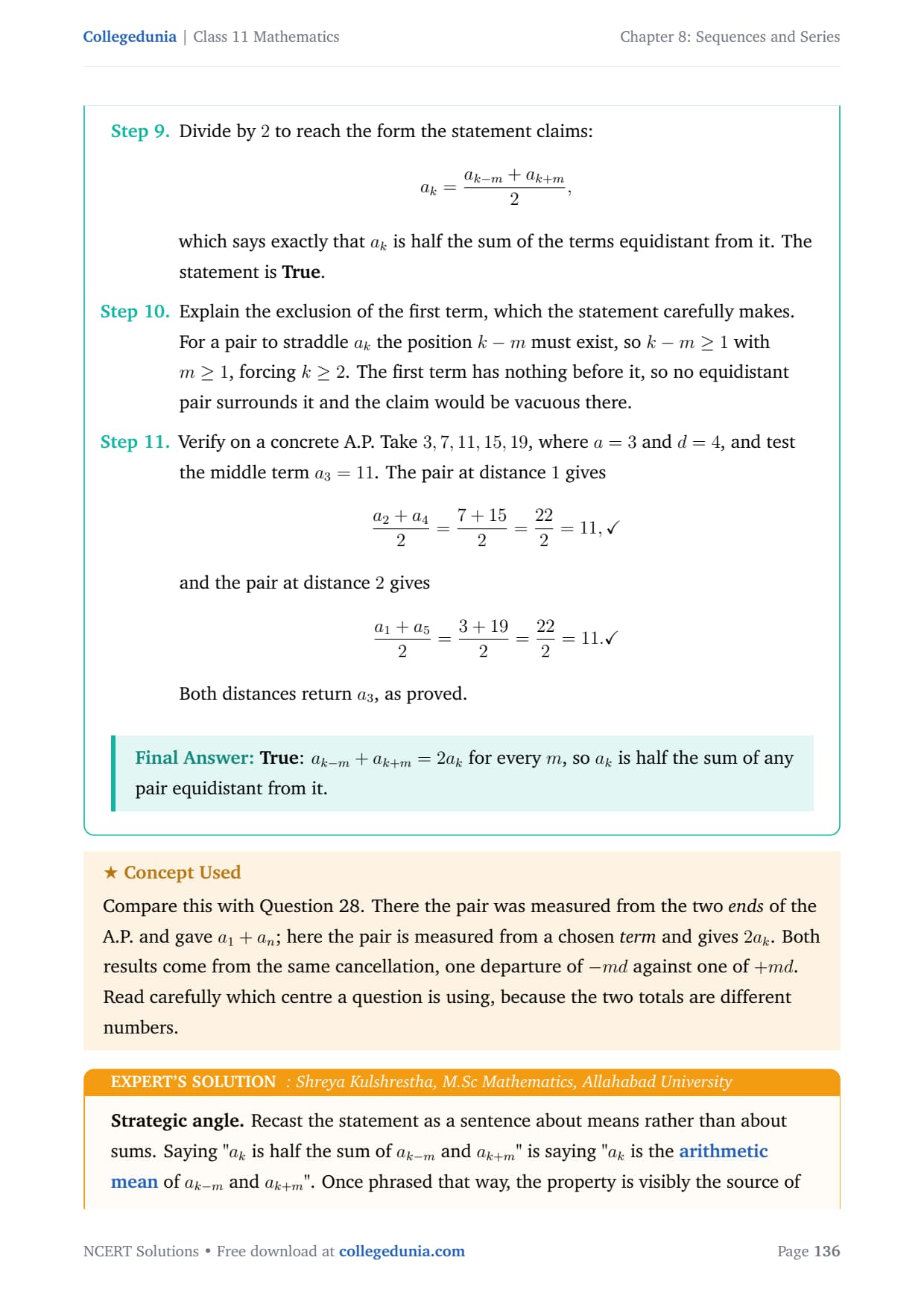
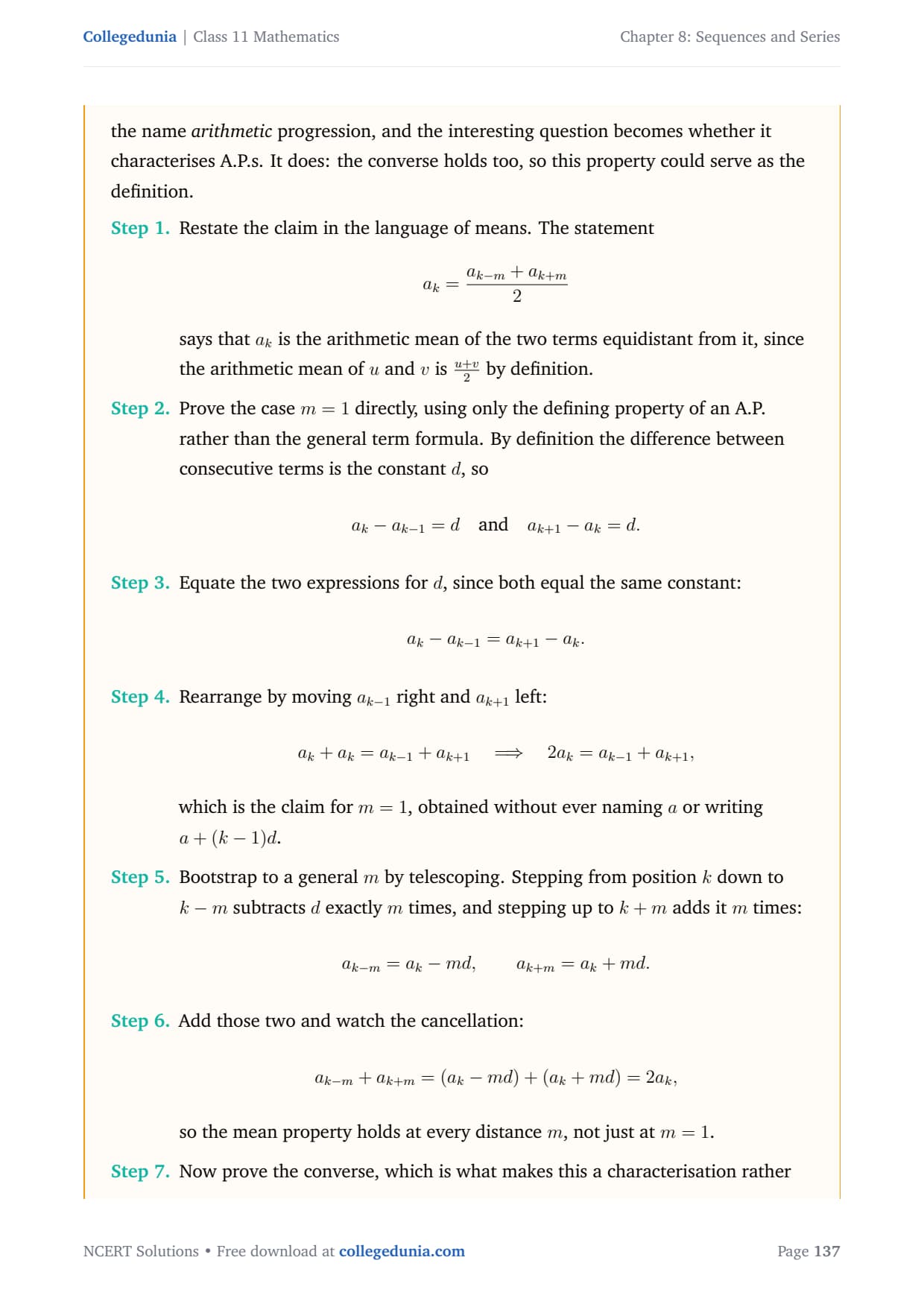
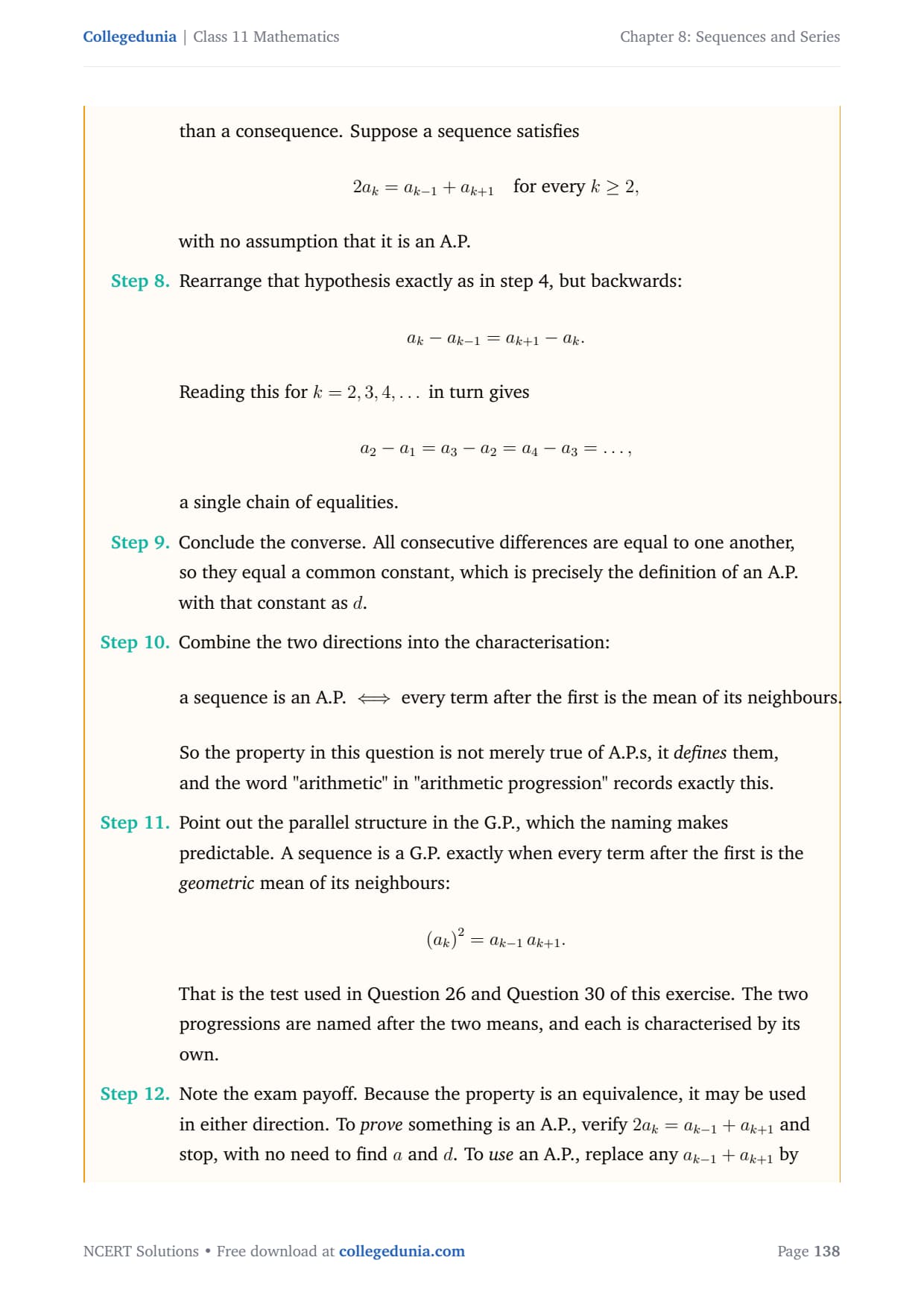
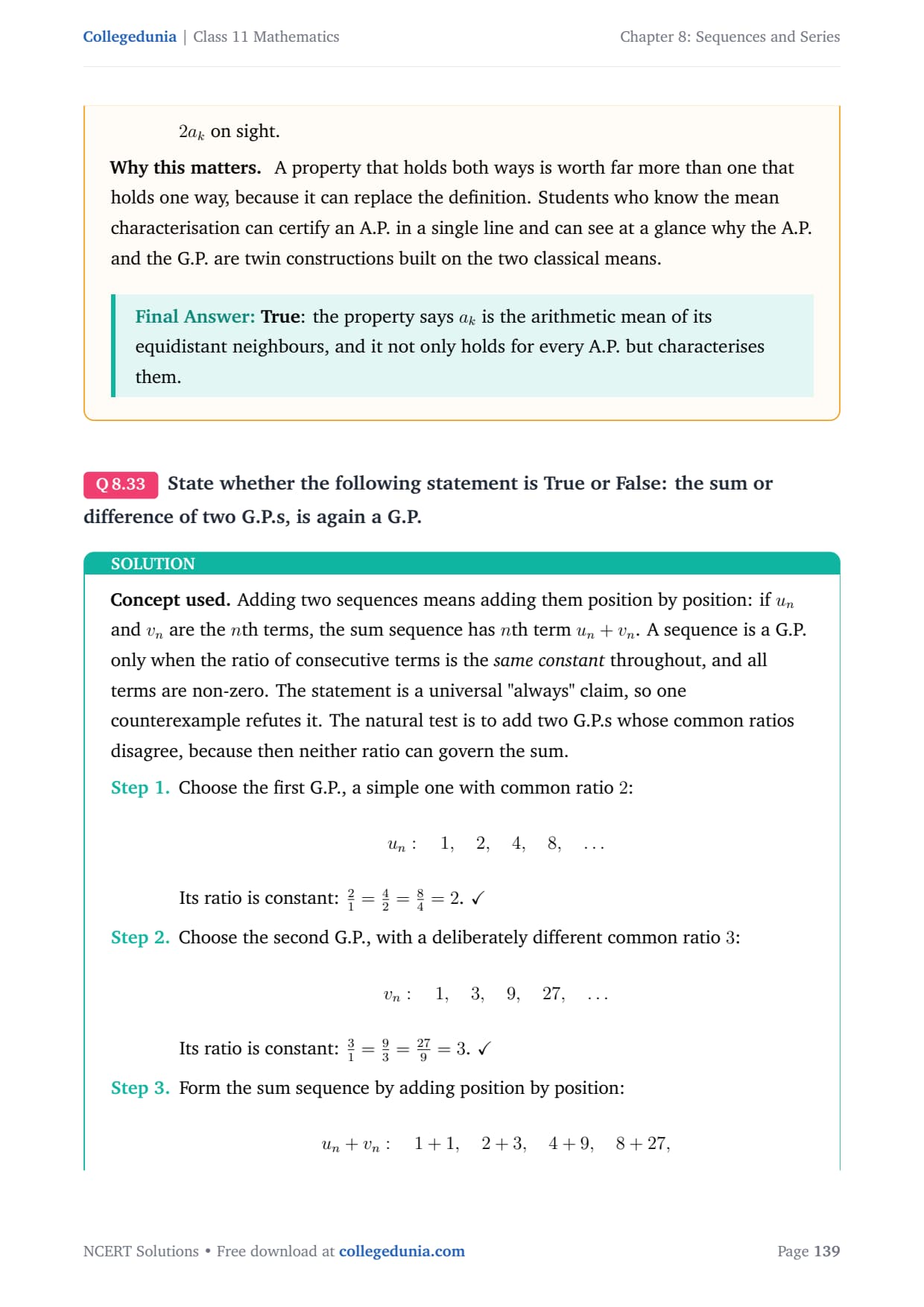
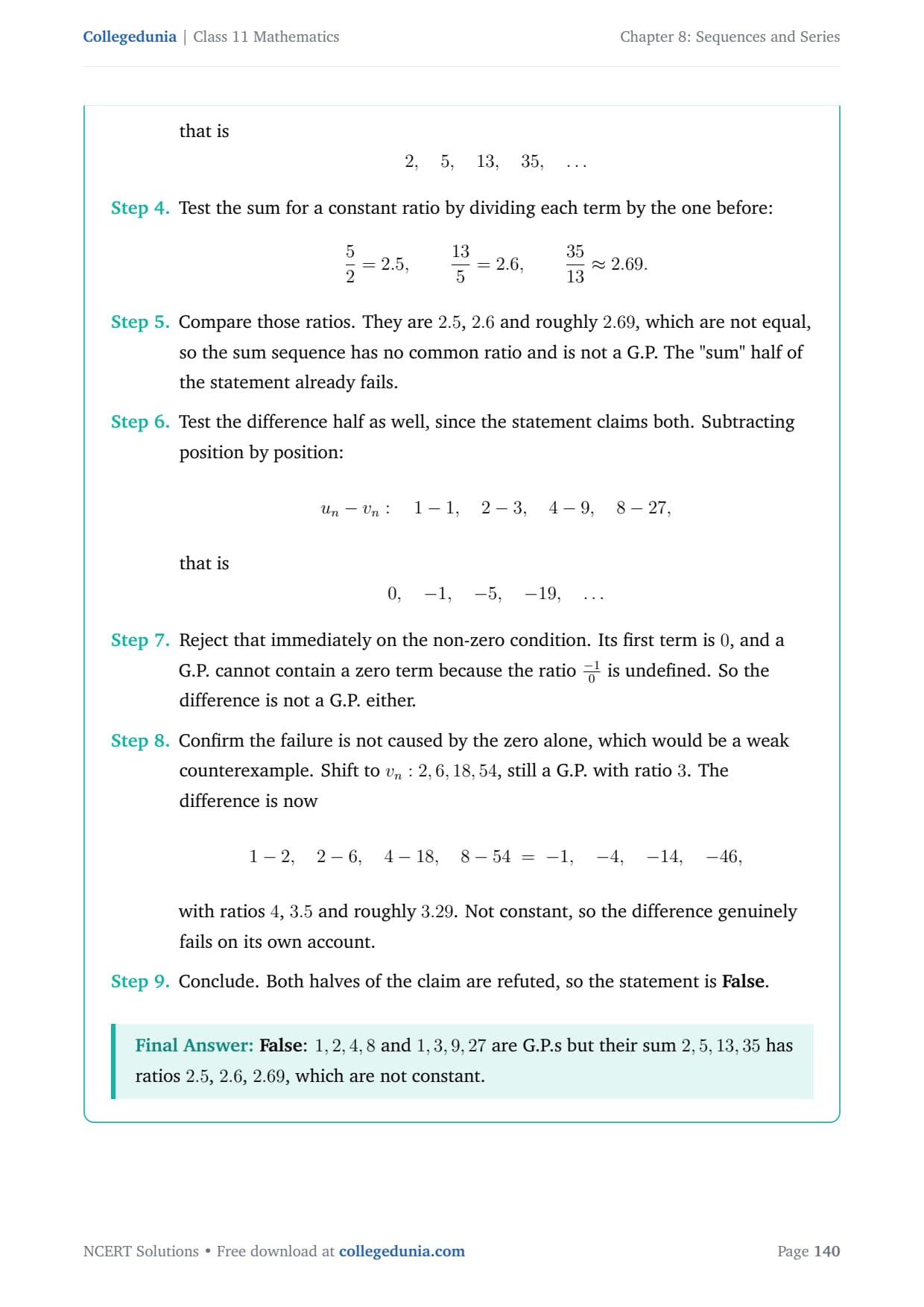
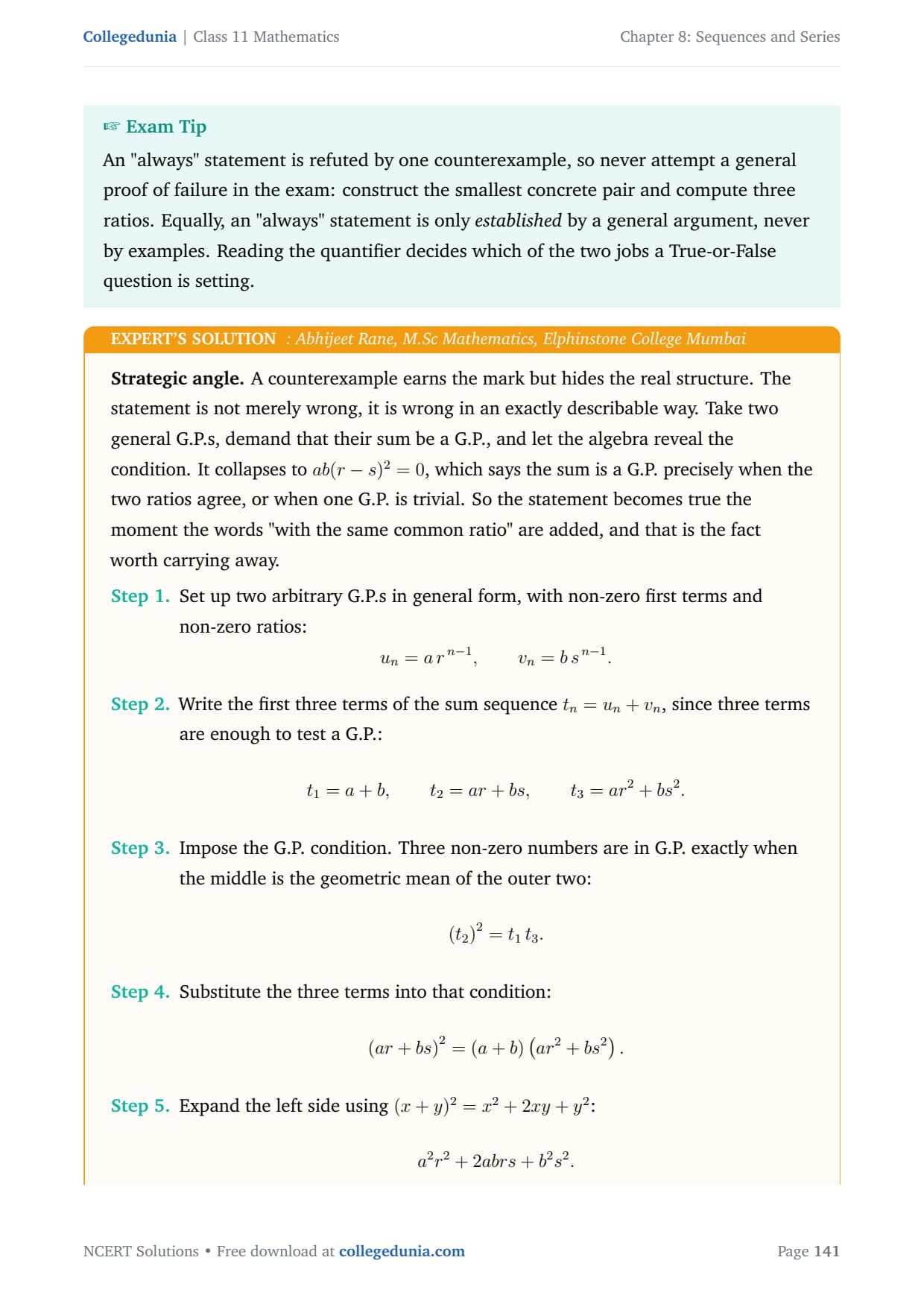
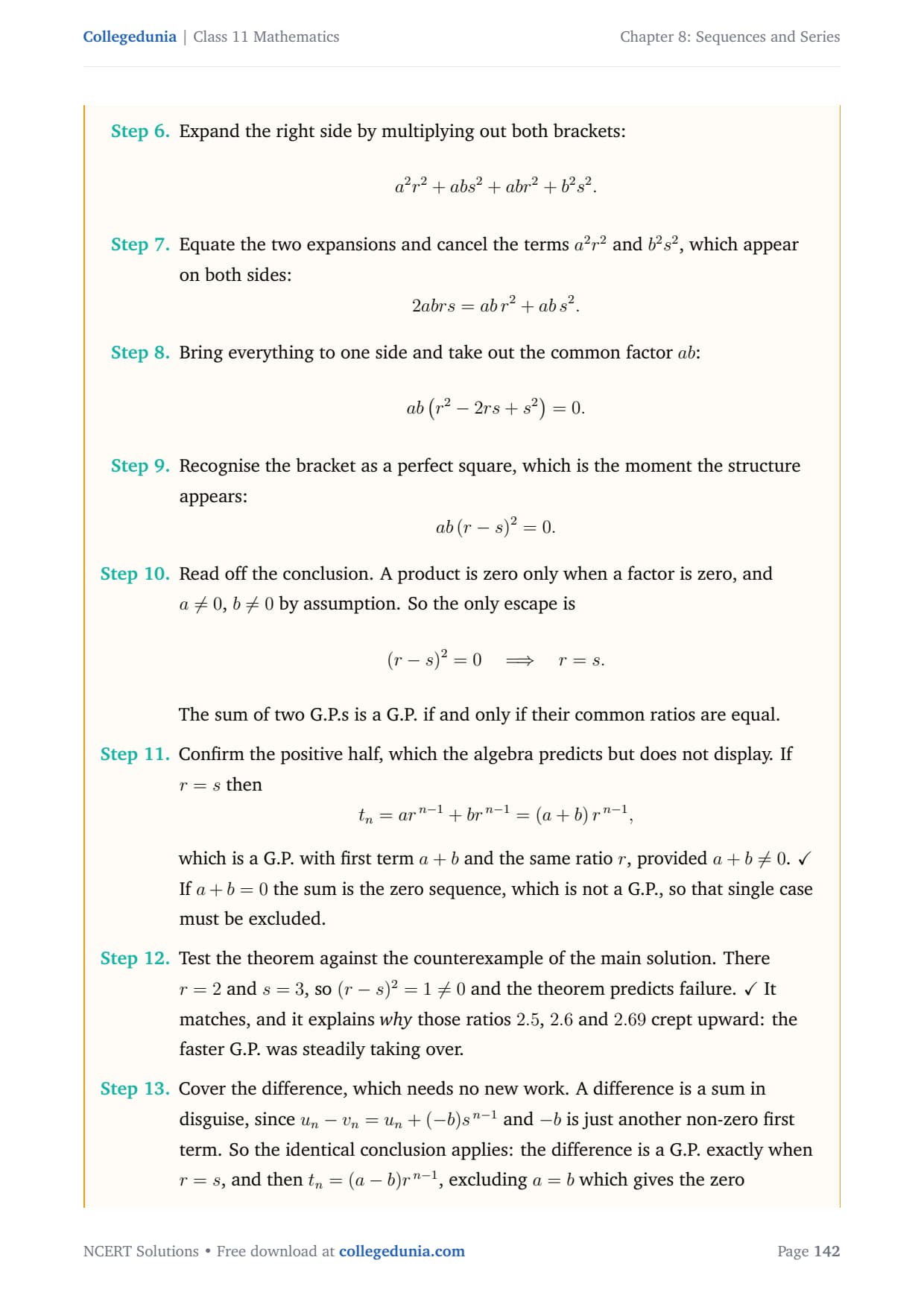
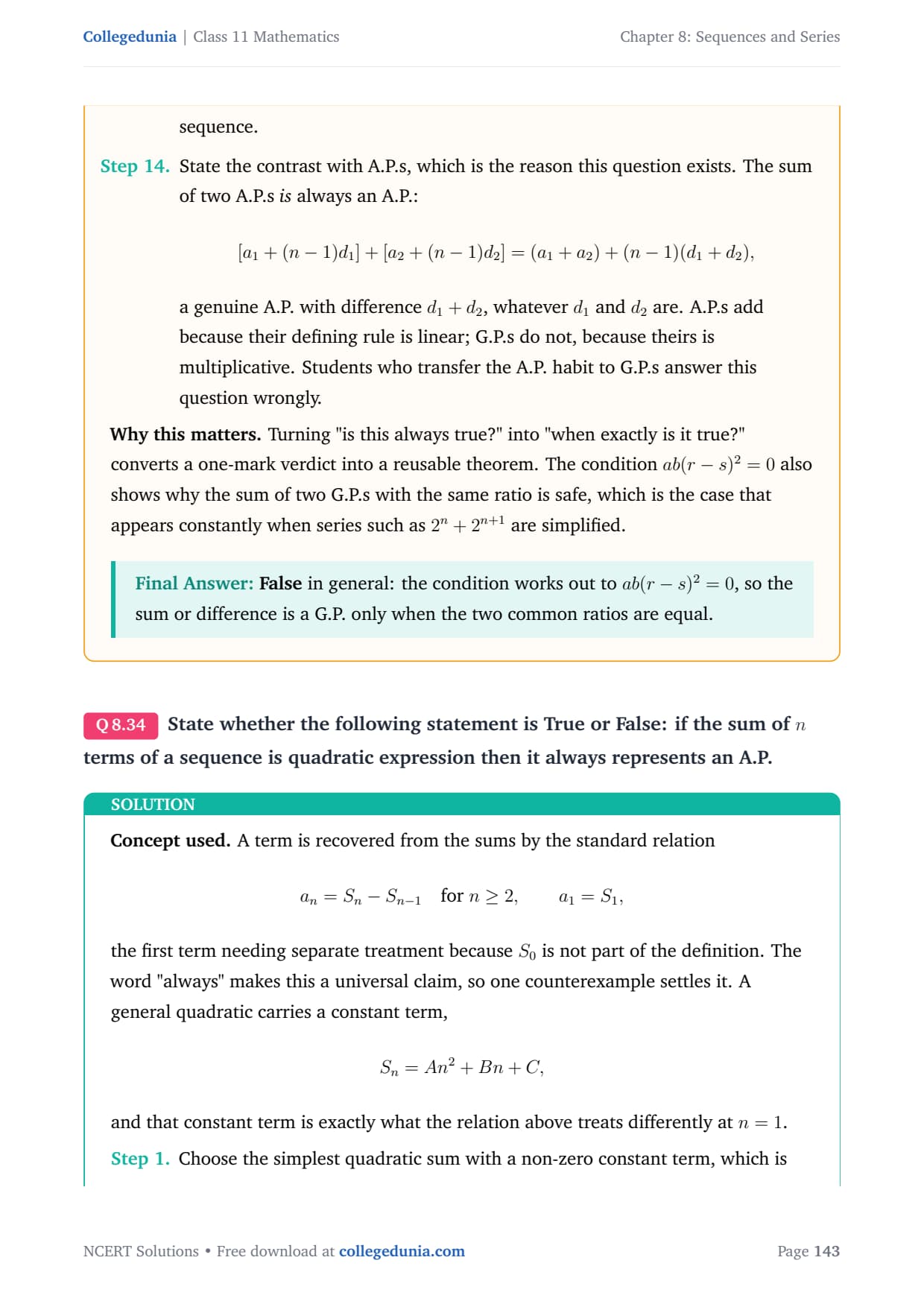
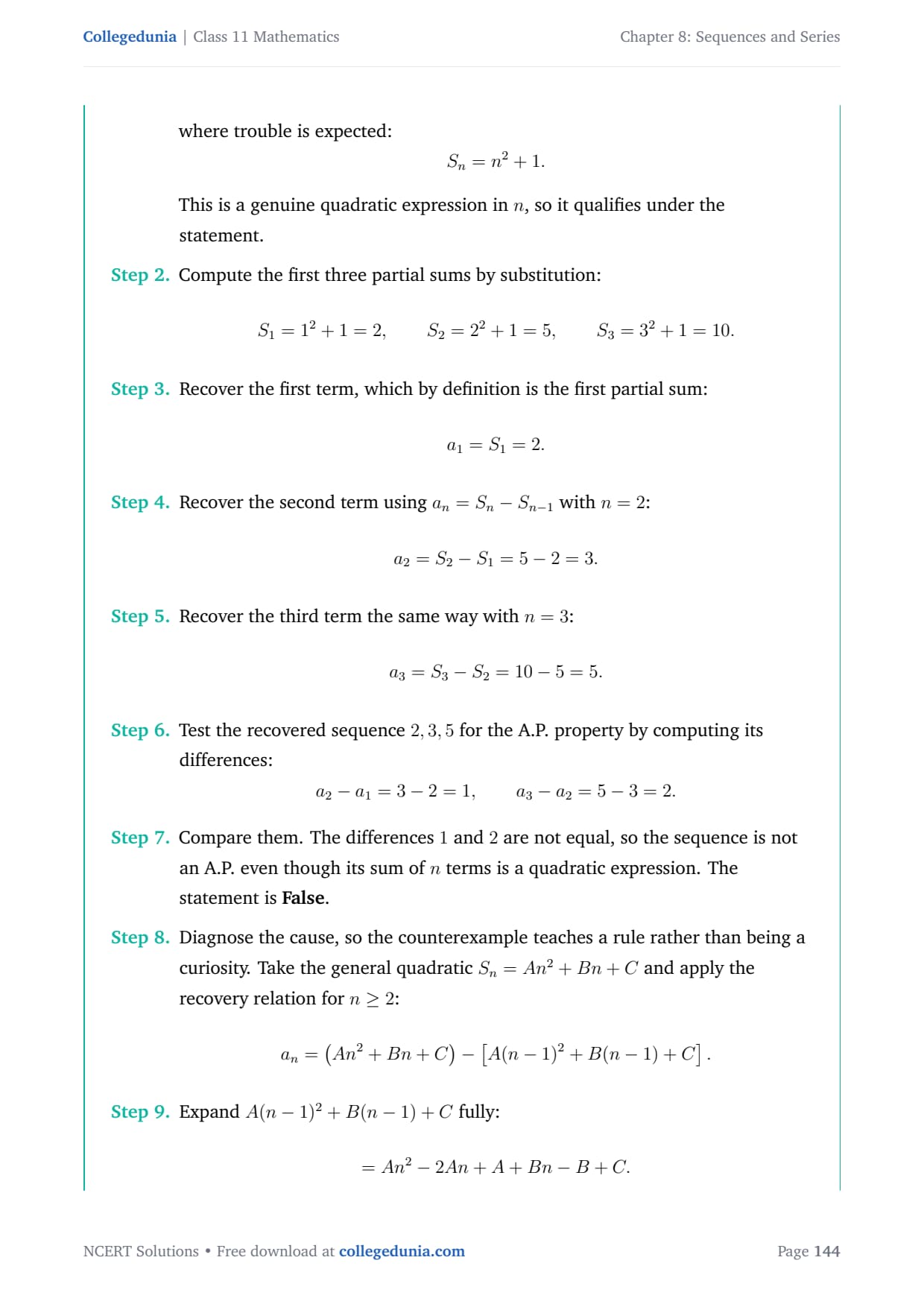
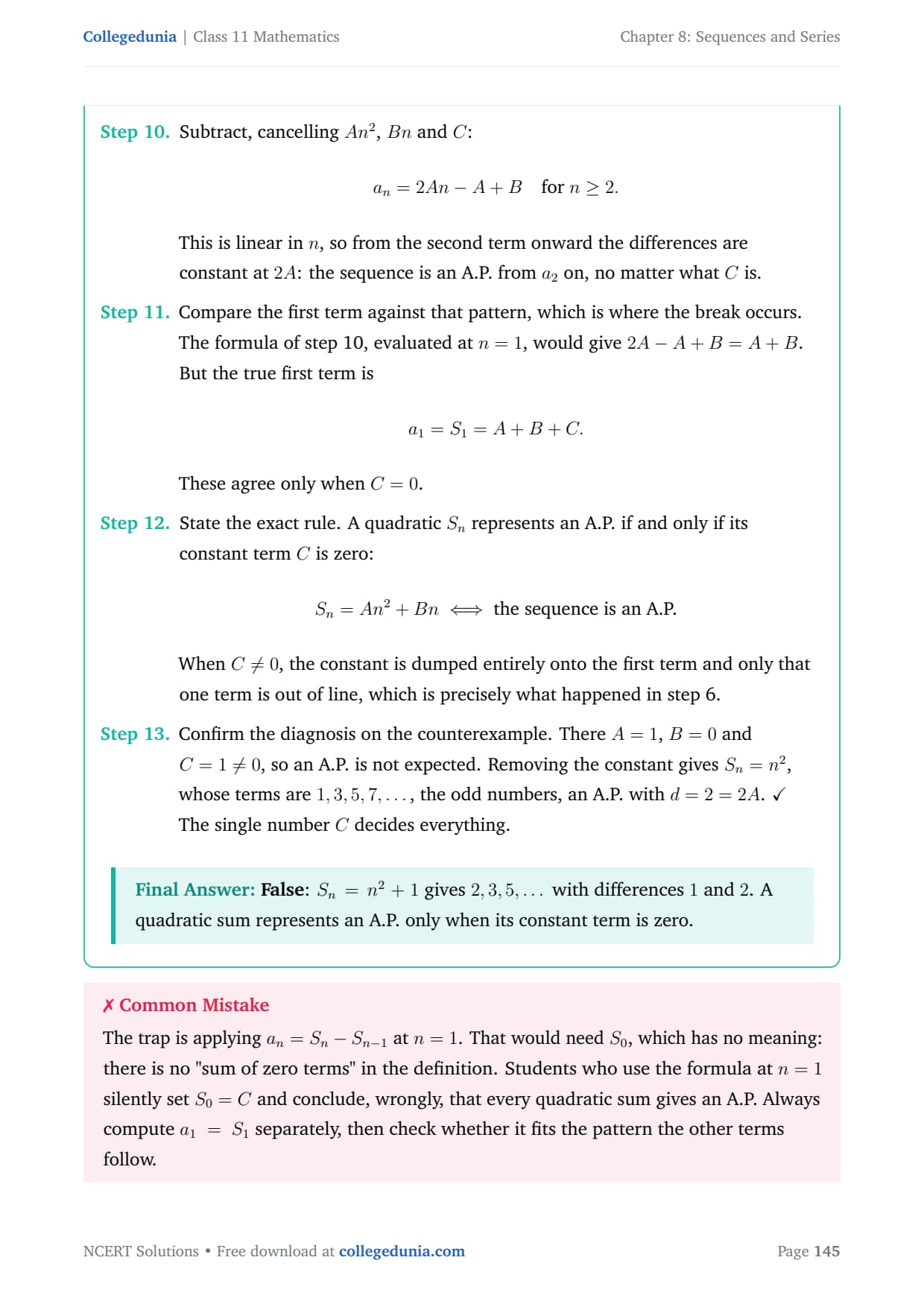
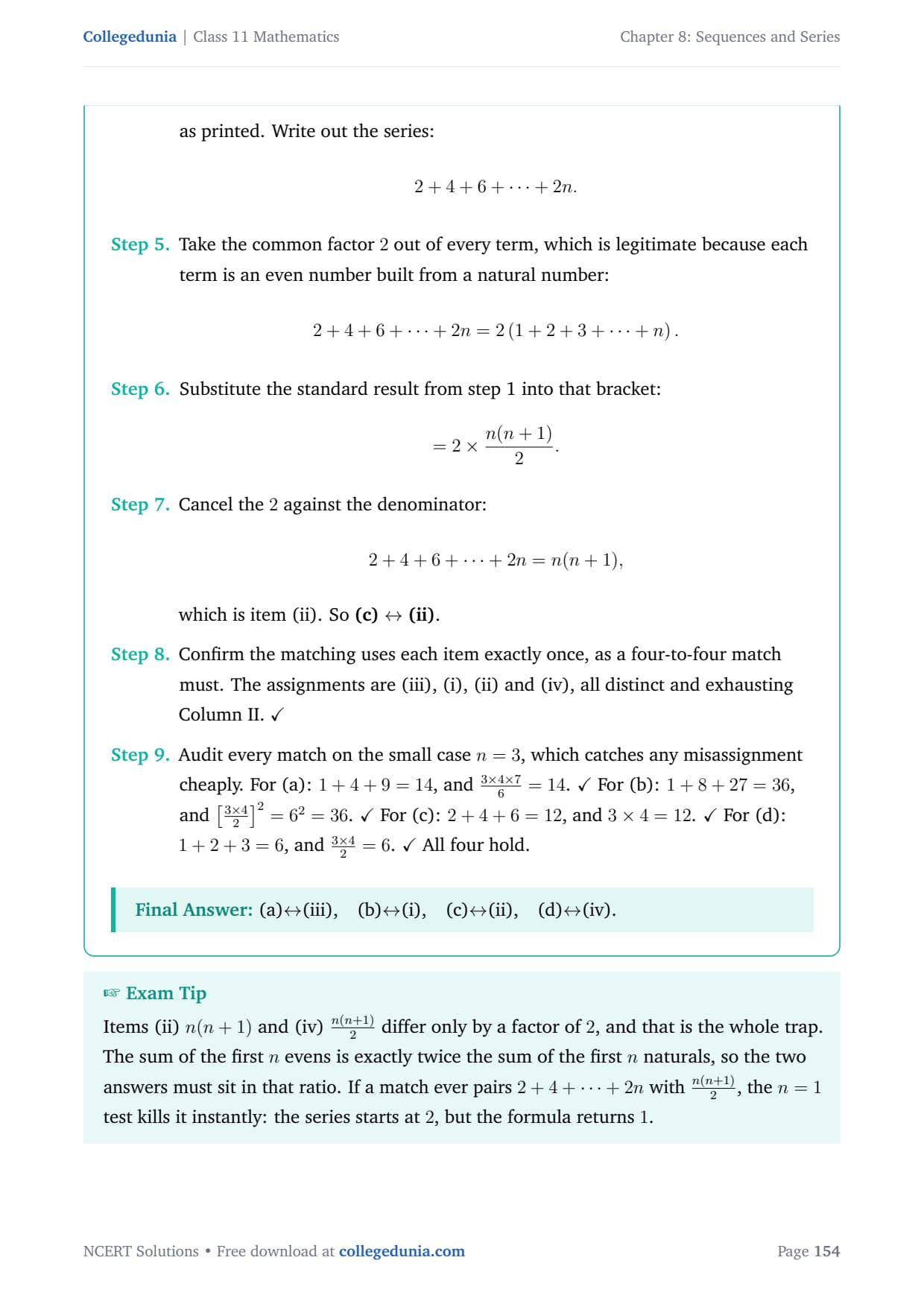
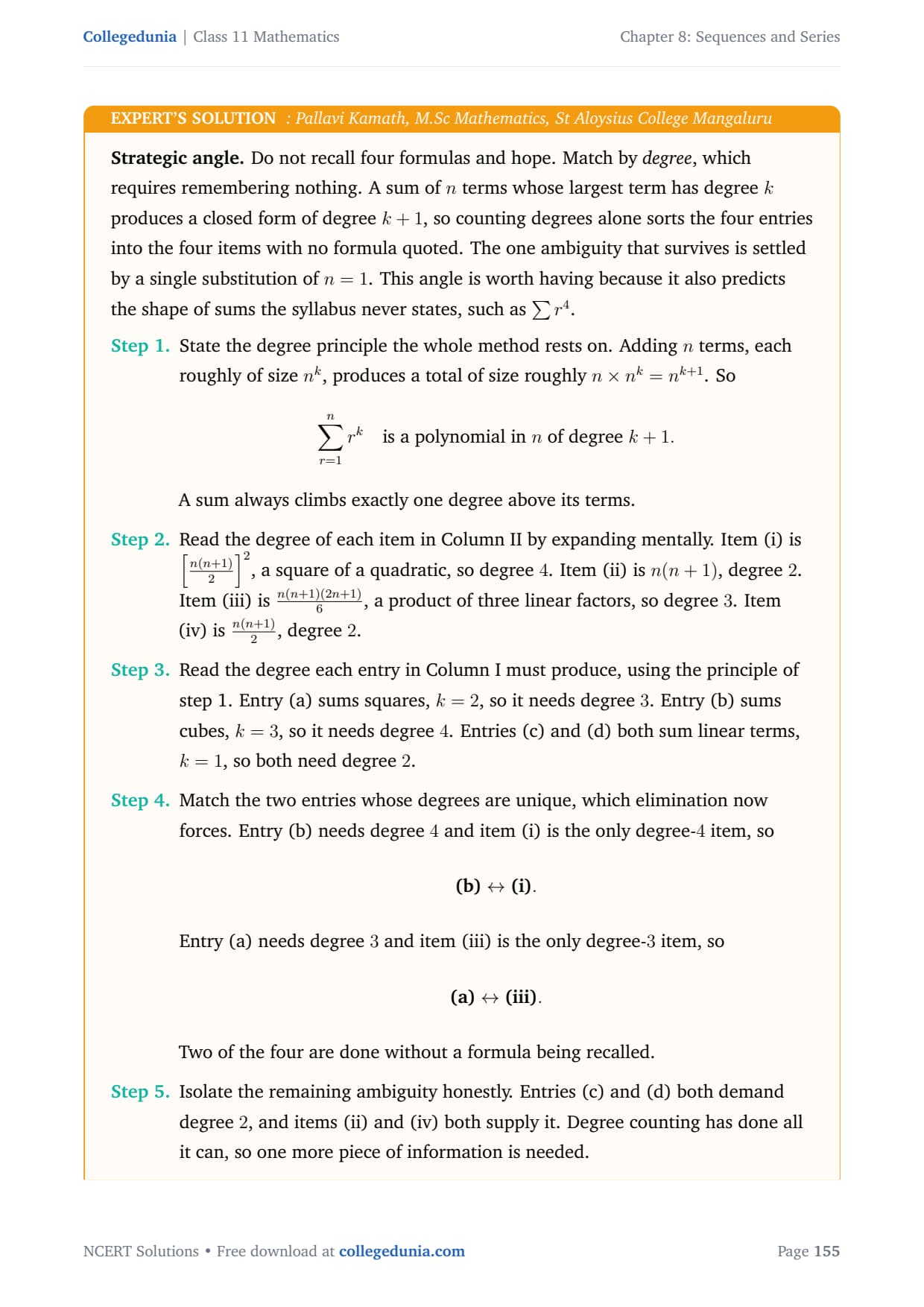
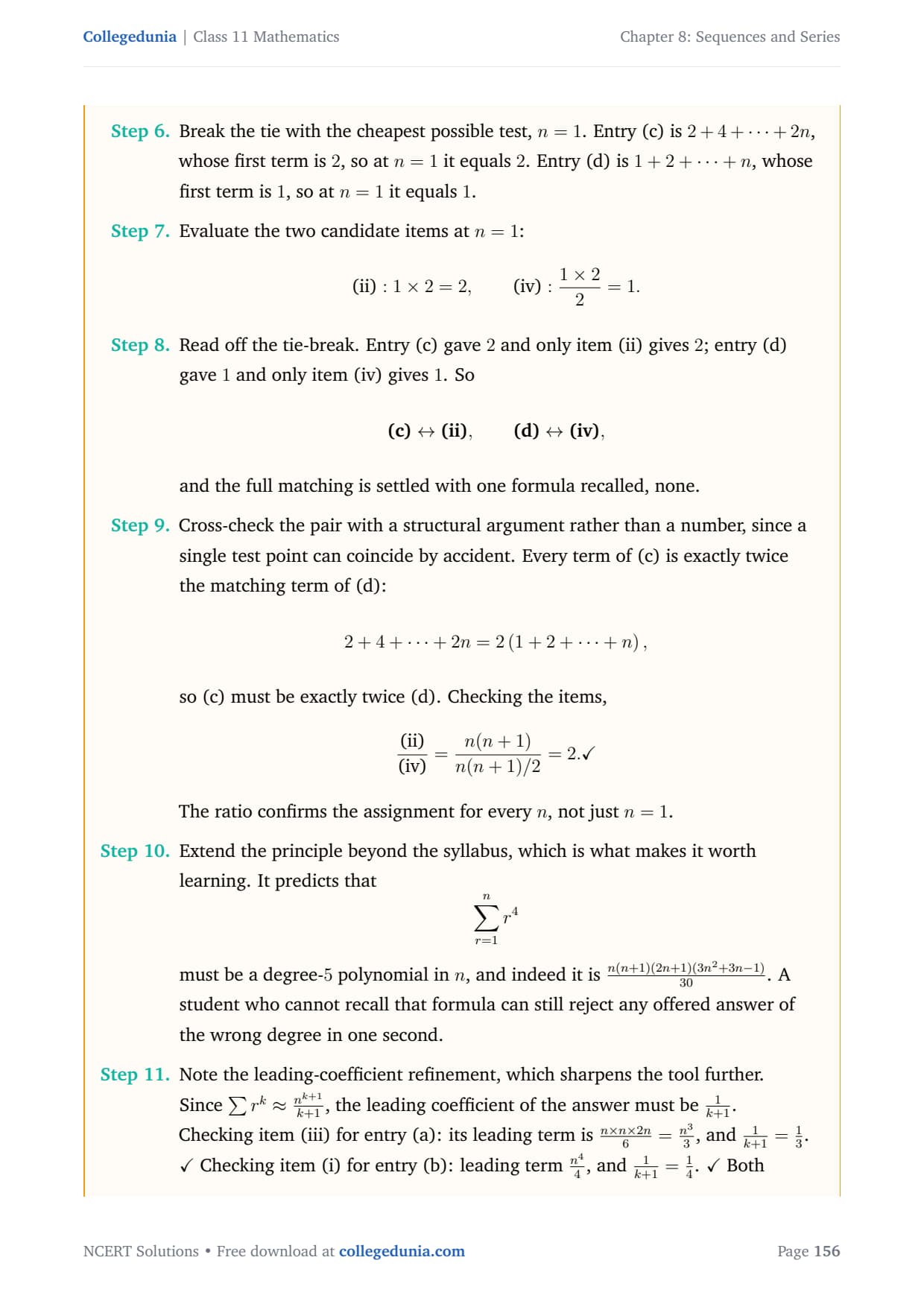
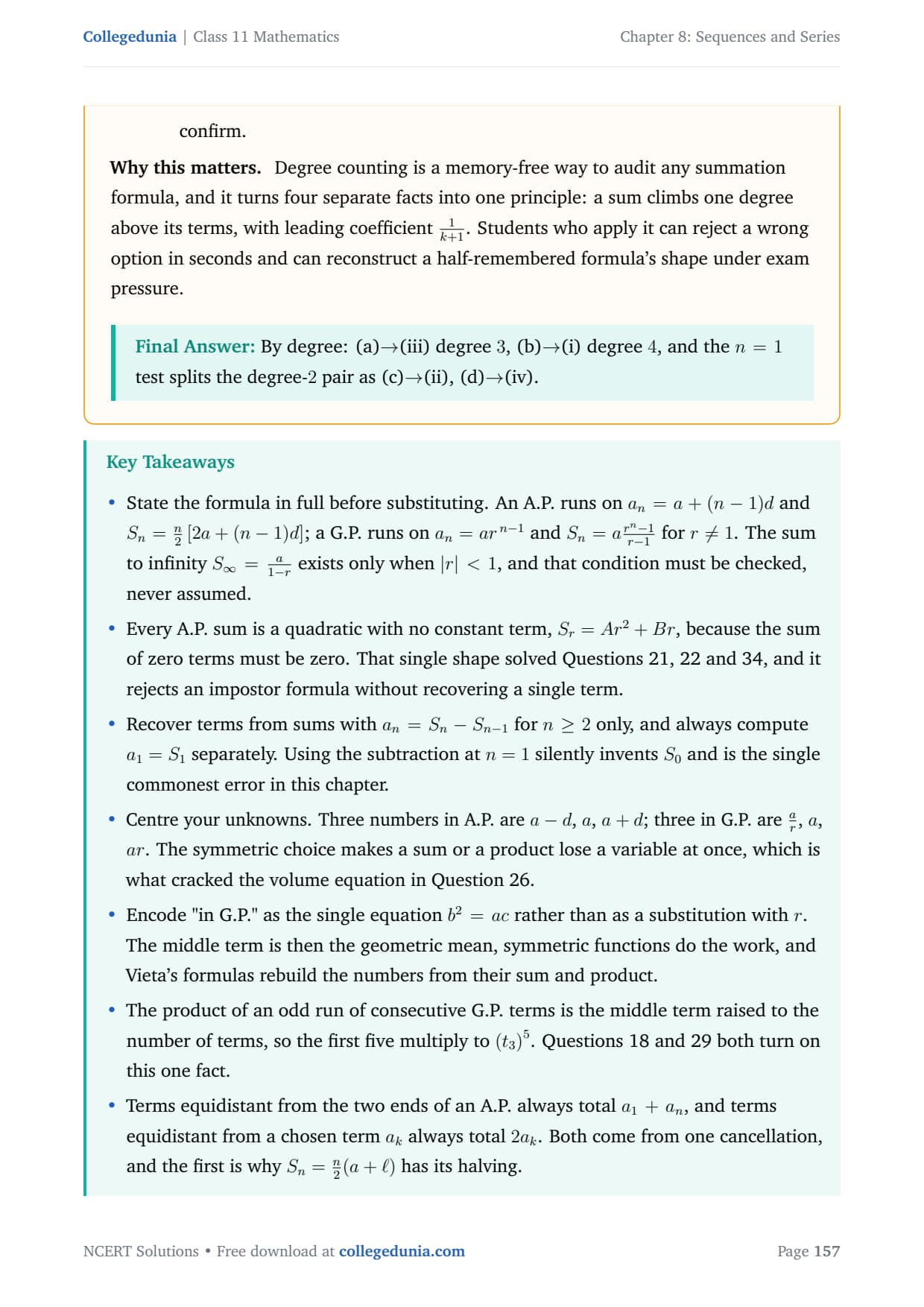
Every solution in this Collegedunia set is prepared by subject experts, based on the 2026-27 NCERT Exemplar, and checked line by line against the official answer key.
Sequences and Series has a single long exercise that mixes six question formats. The solutions PDF runs to 158 pages and covers all of them.
- 36 questions solved: Short Answer, Long Answer, Objective, Fill in the Blanks, True/False and Matching.
- One answer-key error flagged: the printed key is wrong on the Q35 matching question.
- Exam focus: useful for CBSE Boards, JEE Main, JEE Advanced and CUET.
Chapter Numbering in the Sequences and Series Exemplar Book
Students often open the Exemplar book, look for Chapter 8, and land somewhere else. The reason is simple. The 2026-27 NCERT syllabus lists Sequences and Series as Chapter 8, and that is the number used across this page and the PDF. The printed NCERT Exemplar book still follows its older order and prints the same content as Chapter 9.
- Syllabus and this page: Chapter 8 Sequences and Series, 2026-27 session.
- The printed Exemplar book: the same chapter appears as Chapter 9.
- The exercise label in the book: Exercise 9.3, which is where all 36 questions sit.
So when a solution here says Q20, it is Q20 of Exercise 9.3 in the book. Nothing else changes. The questions, the order and the answer key are the same in both numbering systems, and no question is added or dropped.
Topics Covered in the Class 11 Maths Sequences and Series Exemplar
The Exemplar keeps the textbook topics and hides them inside word problems and algebra. Most questions look like plain A.P. or G.P. sums until you read the second line. These are the topics the 36 questions are built on.
- Arithmetic progressions: the nth term, the sum of n terms, and problems where the term number itself is unknown.
- Geometric progressions: the nth term and sum, with a ratio that must be found from a quadratic.
- Arithmetic and geometric means: inserting means between two numbers and comparing A.M. with G.M.
- Infinite geometric series: the sum a ÷ (1 − r), which is valid only when |r| < 1.
- Special sums: ∑n, ∑n2 and ∑n3 used inside longer series.
- Telescoping and term-from-sum: getting an back out of a given Sn.
Important: a large share of the marks in this chapter is lost to counting, not to algebra. A term n steps along an A.P. carries (n − 1) common differences, never n. Test any closed form on n = 1 before using it.
Exercise 9.3 Question-Type Breakdown for Sequences and Series
All 36 questions sit inside one exercise, grouped by format. The table below shows how the exercise splits, so students can plan practice by question type instead of solving straight through.
| Question Type | Question Numbers | Count | What it tests |
|---|---|---|---|
| Short Answer | Q1 to Q12 | 12 | A.P. and G.P. terms, sums, salary and saving problems |
| Long Answer | Q13 to Q16 | 4 | Means, mixed series and multi-step word problems |
| Objective (MCQ) | Q17 to Q26 | 10 | One-line reasoning and off-by-one traps |
| Fill in the Blanks | Q27 to Q29 | 3 | Standard sums and ratio results |
| True/False | Q30 to Q34 | 5 | Spotting a false claim with one counter-example |
| Matching | Q35 and Q36 | 2 | Naming a list as an A.P., a G.P. or a plain sequence |
The Short Answer block (Q1 to Q12) is the largest group and the best place to start. The Long Answer block is only four questions, but each one carries several steps, so students should write those out in full rather than reading them.
The Answer-Key Error in the Sequences and Series Exemplar Matching Question
The printed answer key for this chapter is right almost everywhere. There is one question where the printed key is wrong, and it is a matching question, so a student self-checking against the key learns two wrong labels at once. Read this before marking your own work.
| Question | Printed key | Correct answer | The check that settles it |
|---|---|---|---|
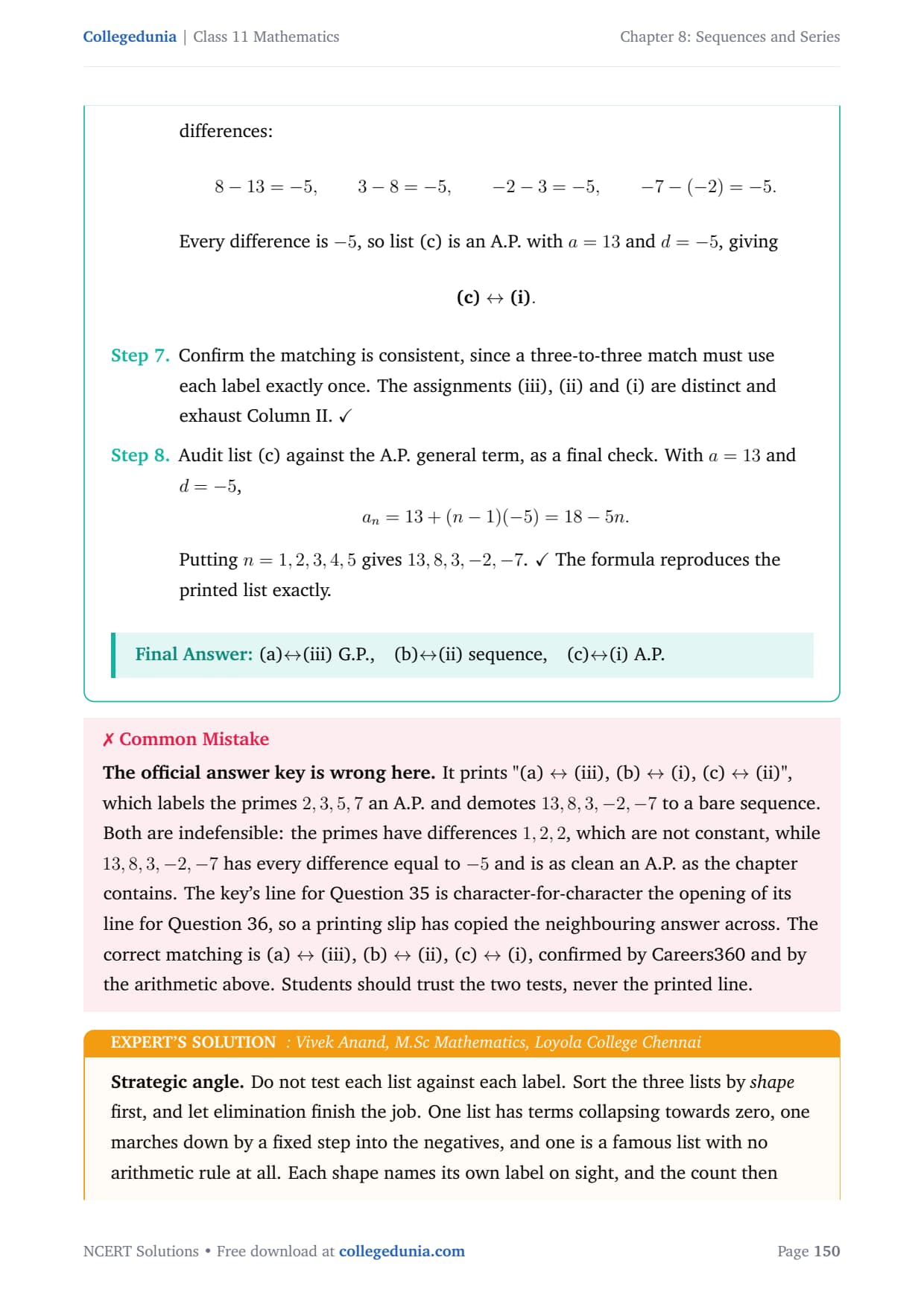
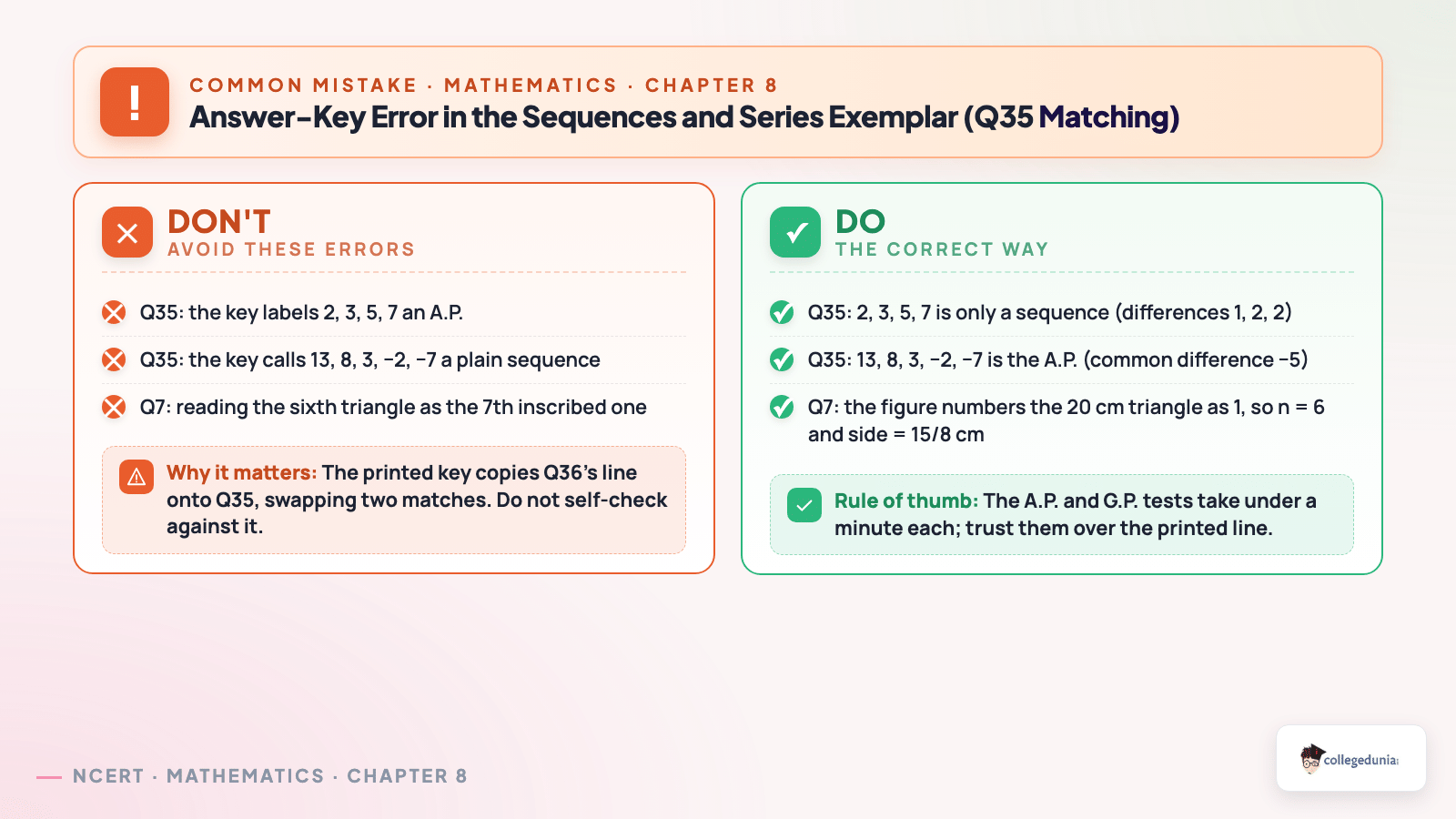
| Q35 | (a) to (iii), (b) to (i), (c) to (ii) | (a) to (iii), (b) to (ii), (c) to (i) | 2, 3, 5, 7 has differences 1, 2, 2; 13, 8, 3, −2, −7 has every difference −5 |
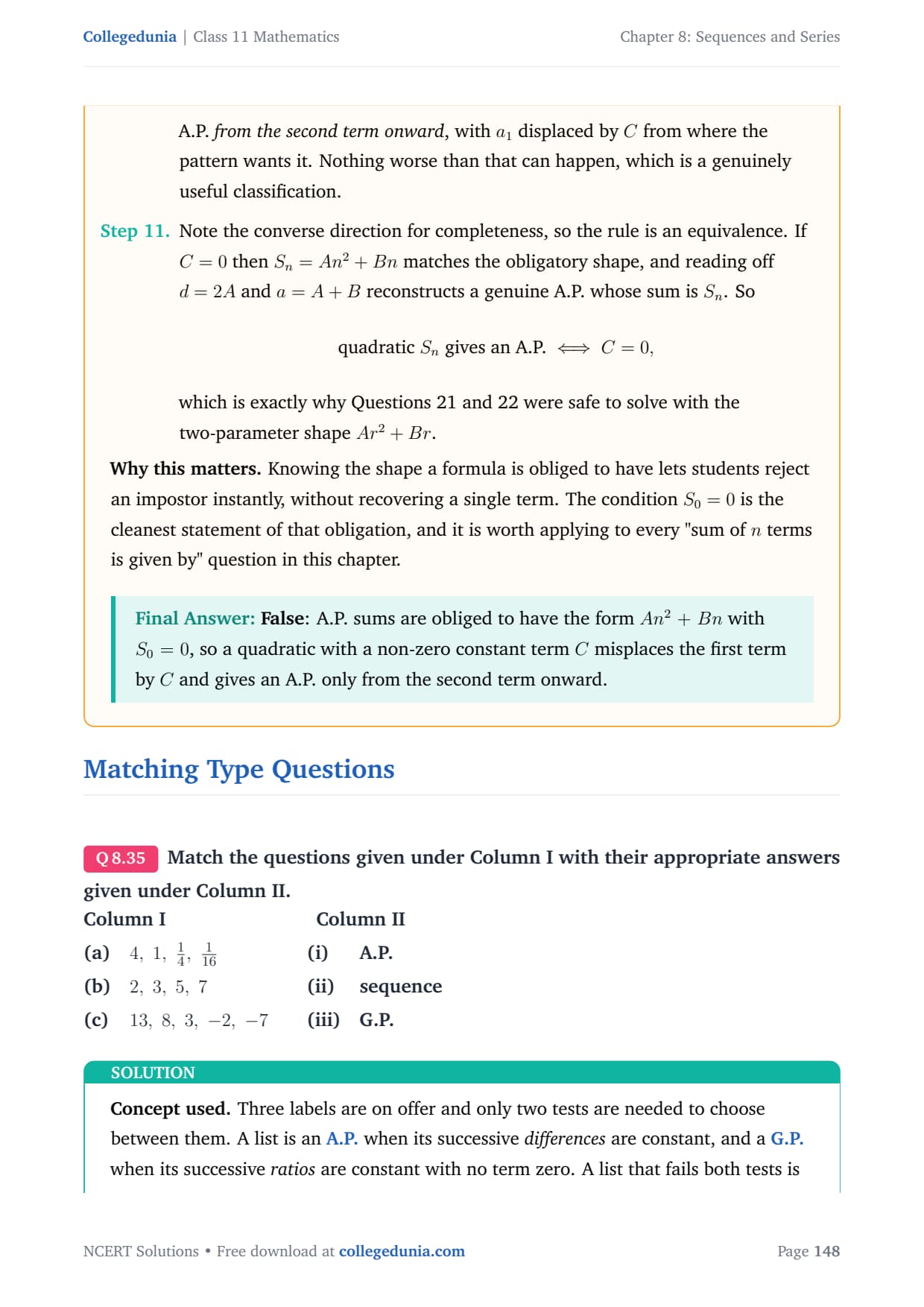
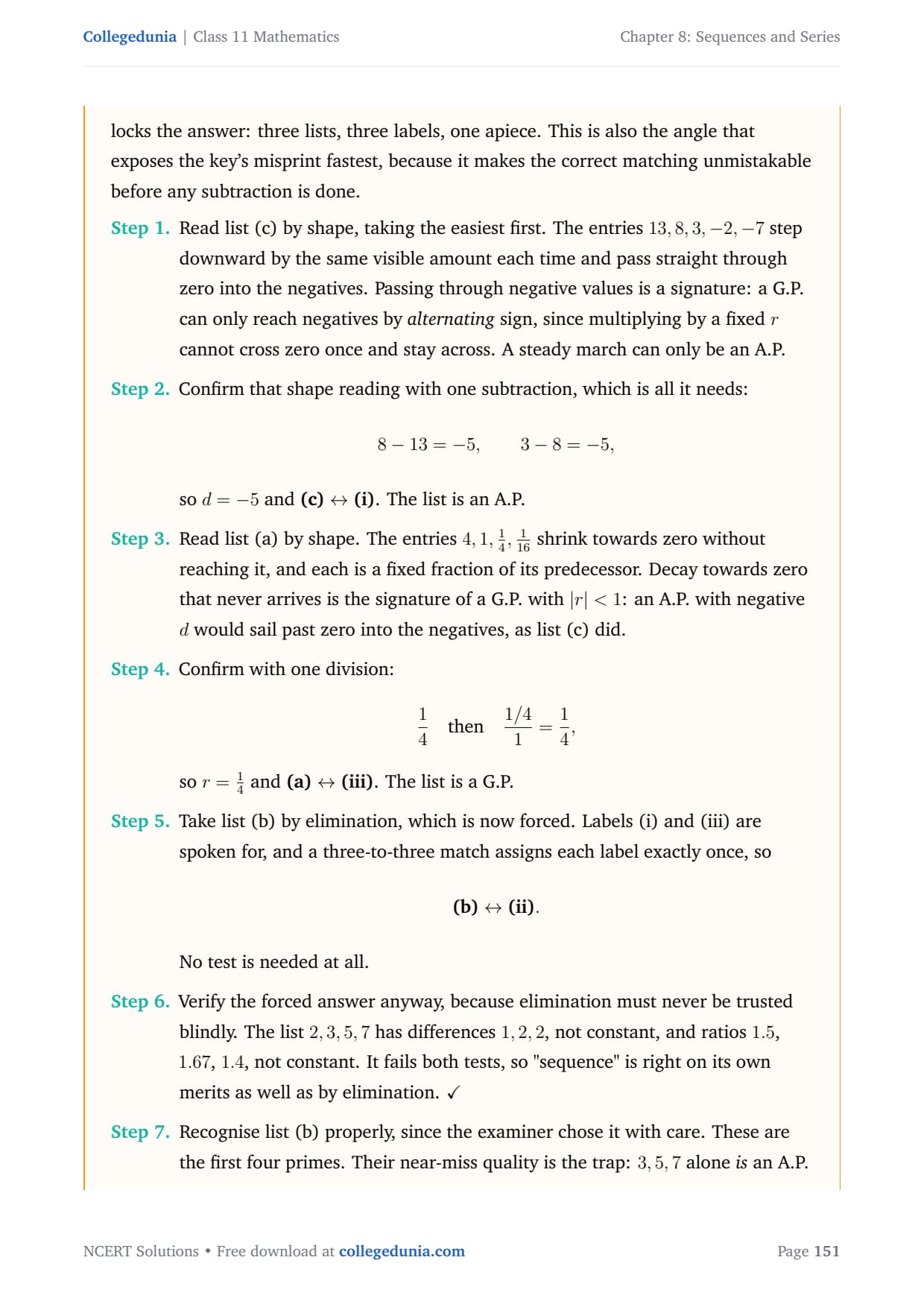
What Q35 asks. Column I gives three lists and Column II gives three labels: A.P., G.P. and sequence. The lists are (a) 4, 1, ¼, 1/16, (b) 2, 3, 5, 7 and (c) 13, 8, 3, −2, −7. Only two tests are needed. A list is an A.P. when its successive differences are equal, and a G.P. when its successive ratios are equal and no term is zero. Anything that fails both is still a sequence, because a sequence is just an ordered list with no pattern demanded.
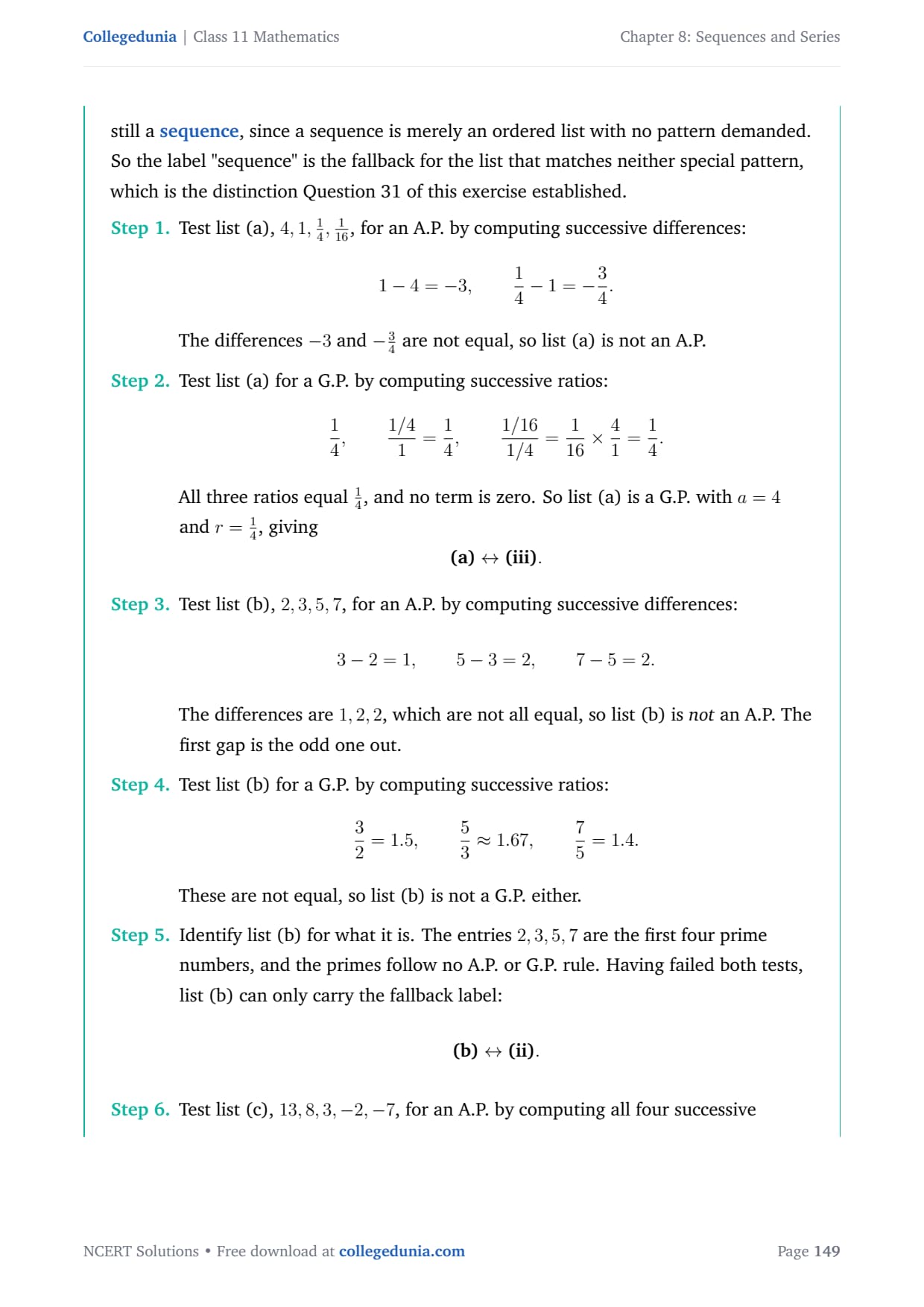
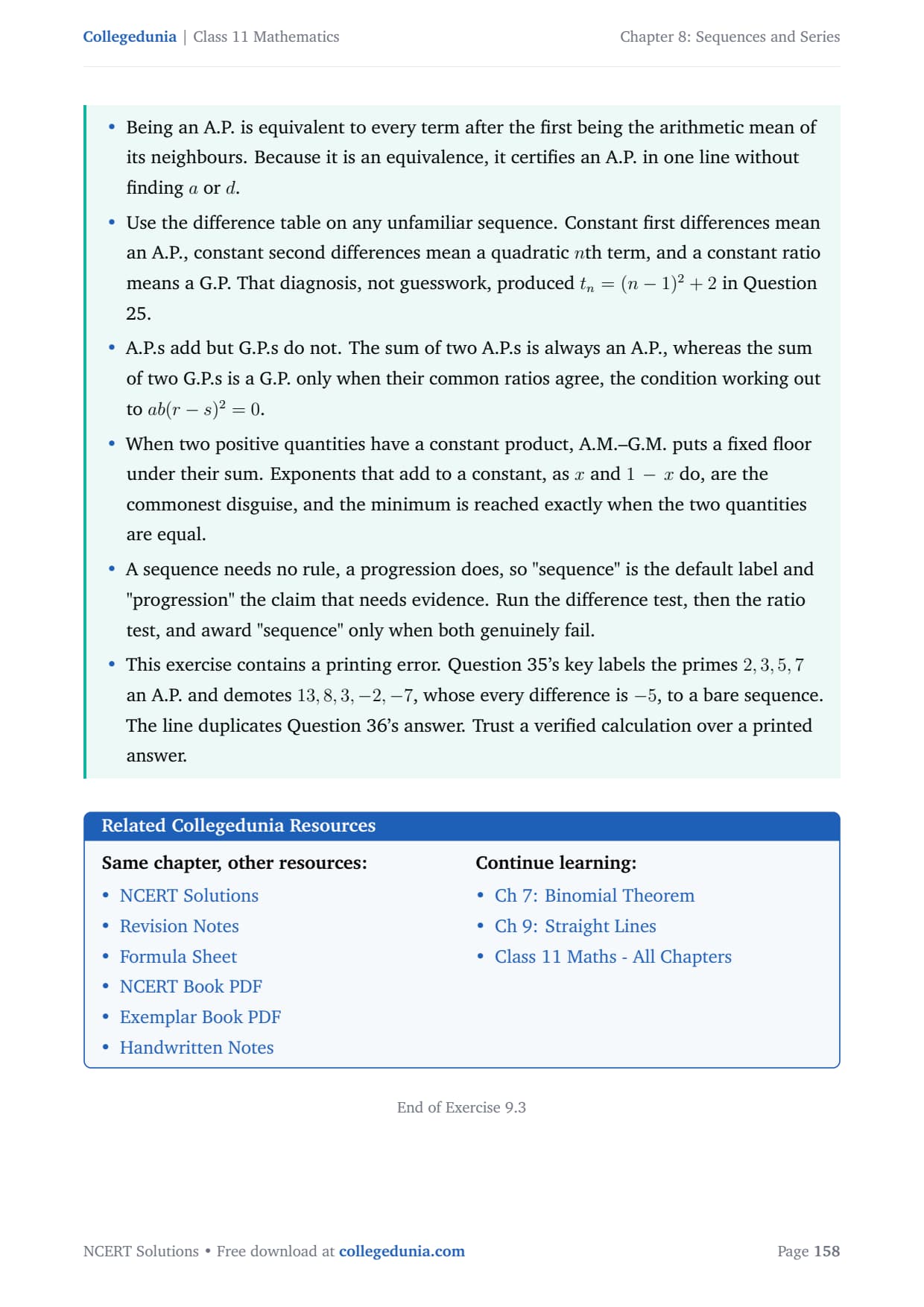
Why the printed key cannot be right. The key labels the primes 2, 3, 5, 7 an A.P. Their differences are 1, 2 and 2, which are not equal, so the list is not an A.P. The key then demotes 13, 8, 3, −2, −7 to a plain sequence, but every one of its differences is exactly −5, which makes it as clean an A.P. as the chapter contains. Both labels are the wrong way round. The key's line for Q35 is character for character the opening of its line for Q36, so a neighbouring answer has been copied across in printing.
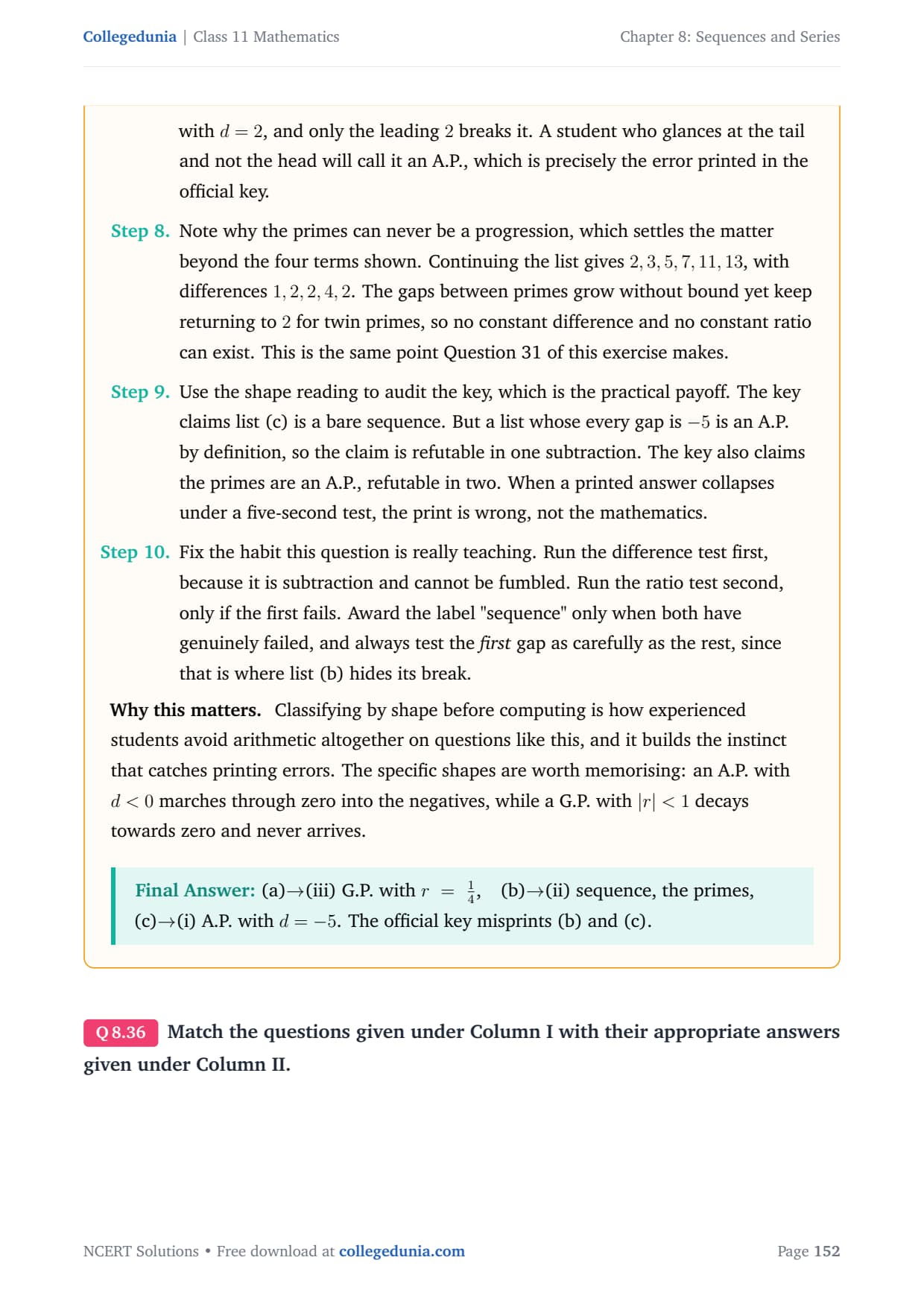
The correct matching. List (a) has ratios ¼, ¼, ¼, so it is the G.P., which is (iii). List (c) has a constant difference of −5, so it is the A.P., which is (i). List (b) fails both tests, so it is the plain sequence, which is (ii). Both tests take under a minute each, and students should trust them over the printed line.
Key Formulas Used in the Sequences and Series Exemplar
This chapter is formula-heavy, and the Exemplar assumes every one of these is already memorised. Students should know the whole list before starting the exercise.
| Result | Statement | Where it is used |
|---|---|---|
| A.P. nth term | an = a + (n − 1)d | Short Answer block, salary problems |
| A.P. sum of n terms | Sn = (n ÷ 2)[2a + (n − 1)d] = (n ÷ 2)(a + ℓ) | Saving and prize-money problems |
| G.P. nth term | an = a rn−1 | Shrinking-triangle and ratio questions |
| G.P. sum of n terms | Sn = a(rn − 1) ÷ (r − 1), for r ≠ 1 | Objective block |
| G.P. sum to infinity | S∞ = a ÷ (1 − r), valid only if |r| < 1 | Infinite series questions |
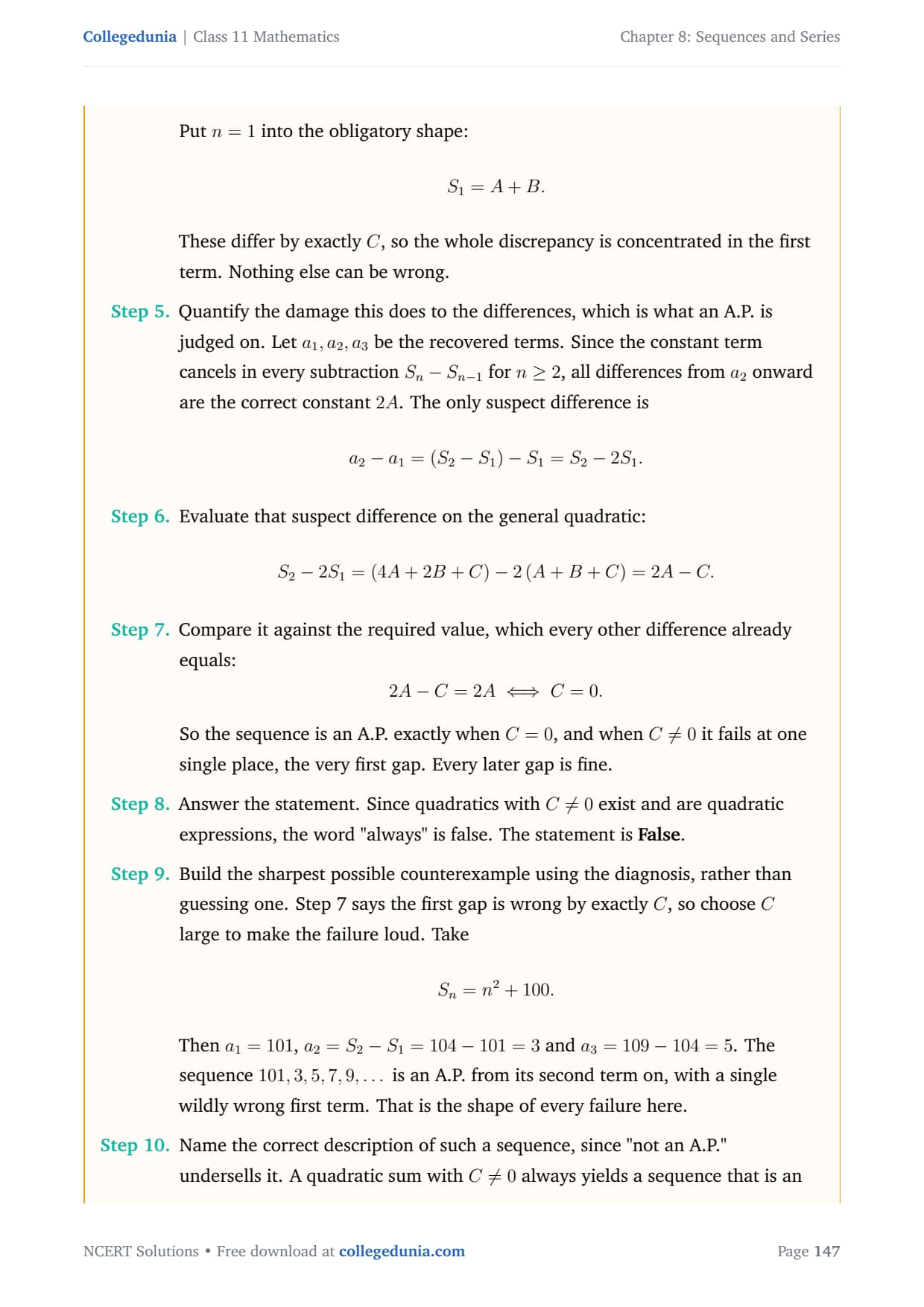
| Term from the sum | an = Sn − Sn−1, for n ≥ 2 only | Q12, Q34 |
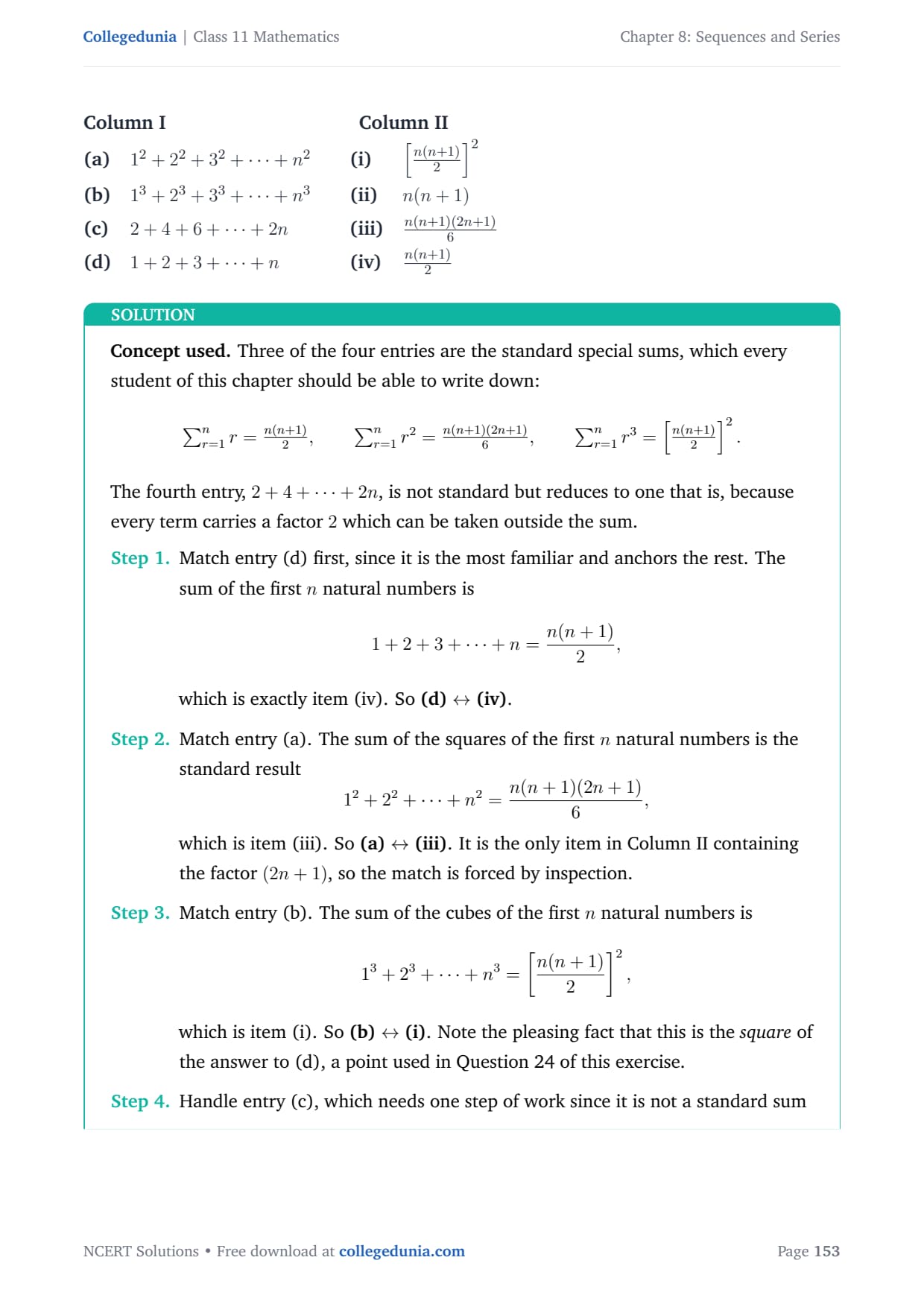
| Special sums | ∑n = n(n + 1) ÷ 2, ∑n2 = n(n + 1)(2n + 1) ÷ 6, ∑n3 = [n(n + 1) ÷ 2]2 | Long Answer block |
Tip: the two conditions attached to the formulas are where the Exemplar attacks. r ≠ 1 in the G.P. sum and |r| < 1 in the infinite sum are not decoration. Q20 is won or lost on rejecting r = 1, and several Objective questions test the |r| < 1 condition directly.
Common Mistakes Students Make in the Sequences and Series Exemplar
The same five reflexes cost marks every year in this chapter. Four of them are counting slips, not algebra slips.
- Counting n raises instead of (n − 1). In the salary question, month 10 carries nine raises, not ten. Check month 2 first, and the pattern is obvious.
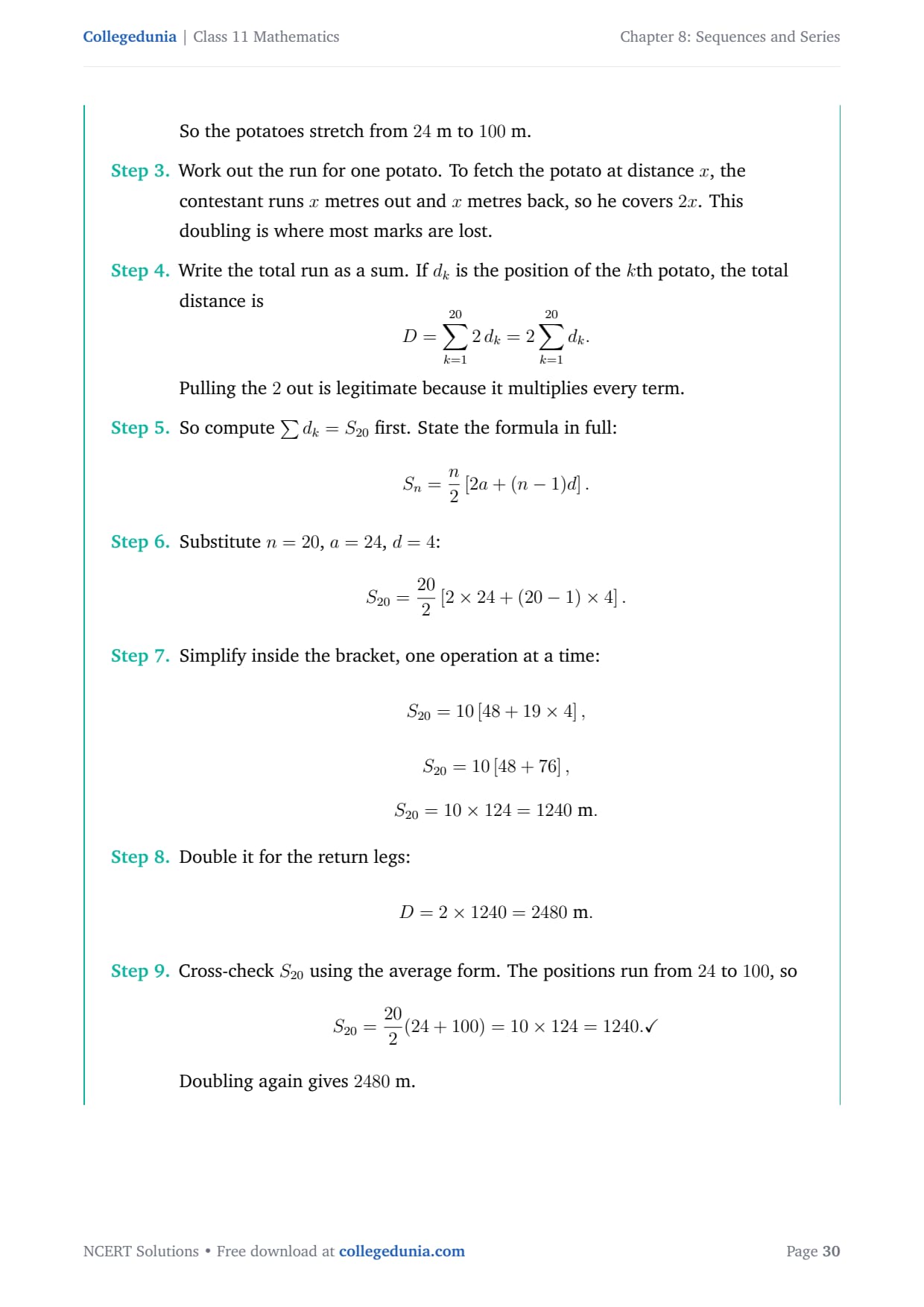
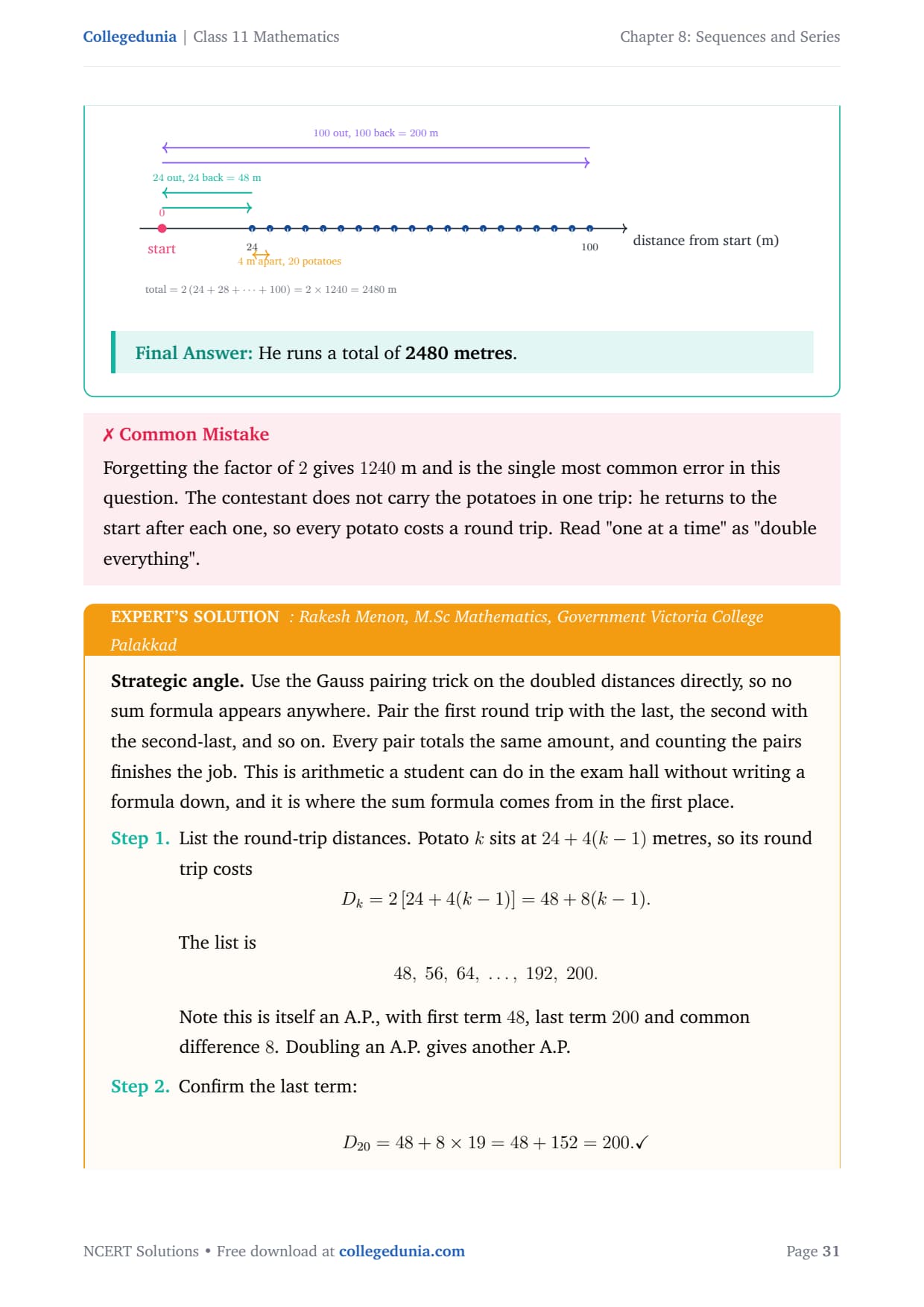
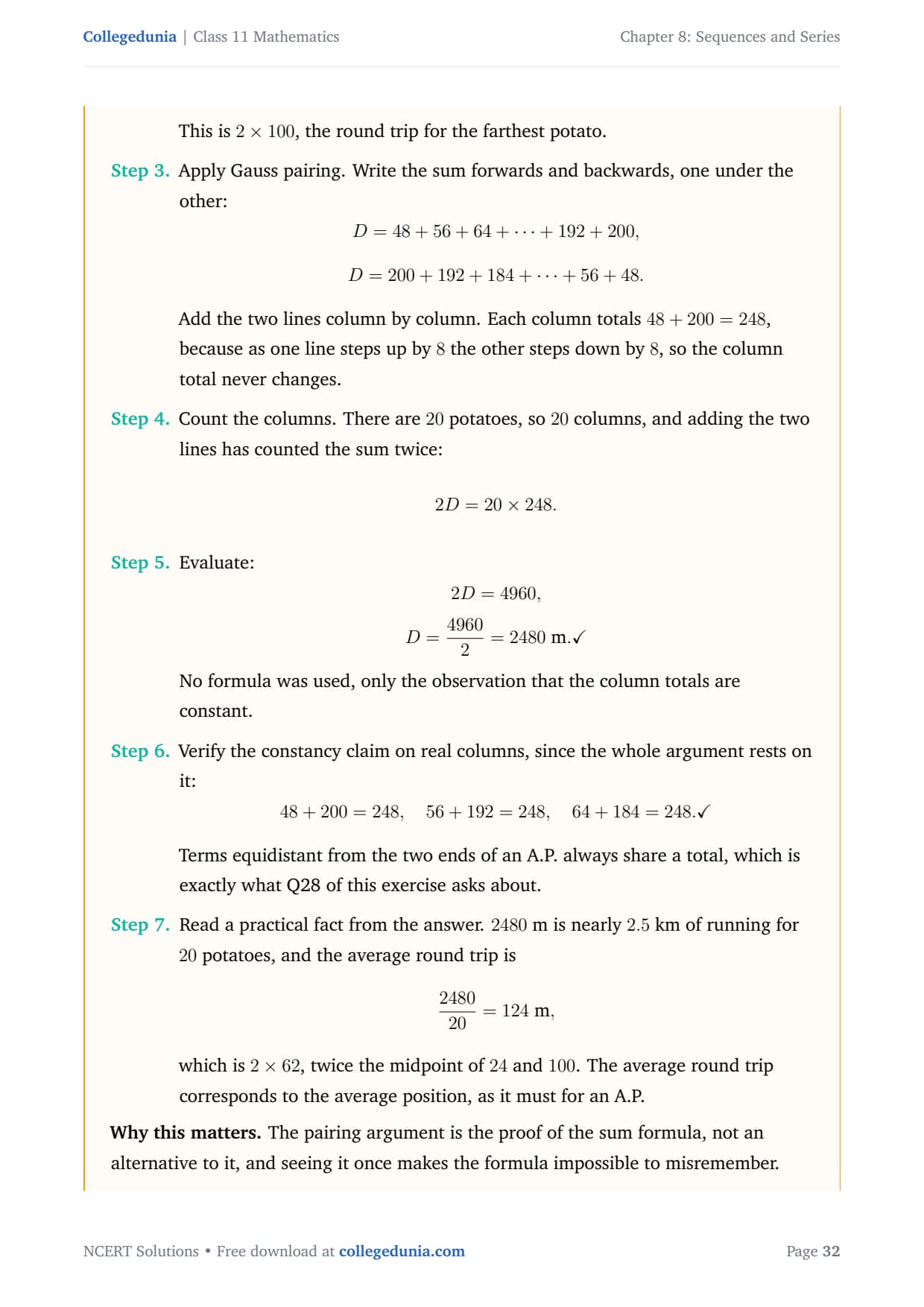
- Forgetting the return trip. The potato question says "one at a time", which means the contestant walks back each time, so every distance doubles. Dropping the factor of 2 gives 1240 m instead of the correct total.
- Keeping r = 1 as a root. When a question says "distinct" or "non-constant", it has planted a root that collapses the sequence. Solve the quadratic fully, then reject it.
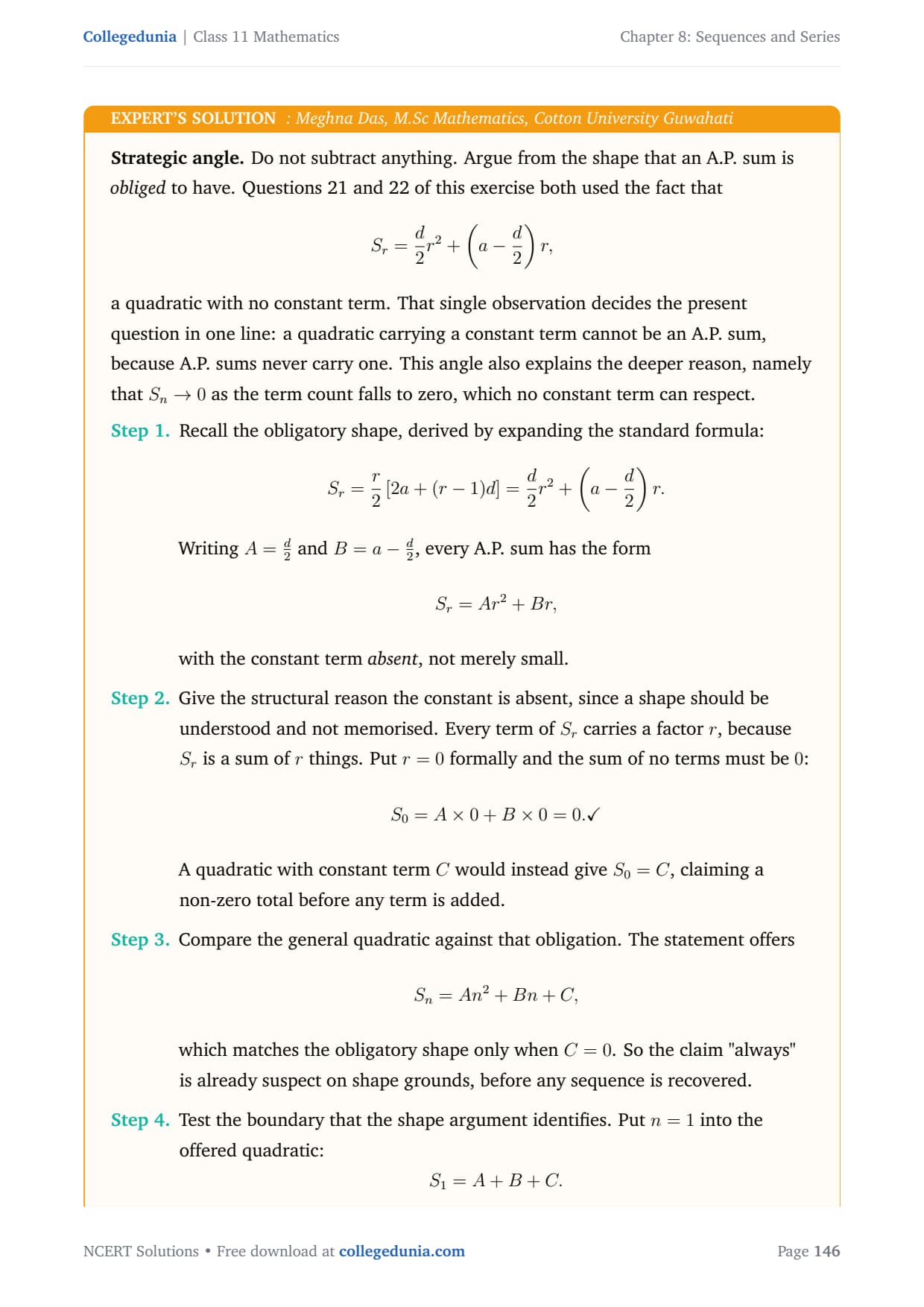
- Using an = Sn − Sn−1 at n = 1. That needs S0, which has no meaning. Always find a1 = S1 on its own line first.
- Offering 0, 0, 0 as a counter-example. It is an A.P. but not a G.P., because a G.P. is defined through ratios and you cannot divide by zero. Any non-zero constant sequence works instead.
How the Sequences and Series Exemplar Steps Up from the NCERT Textbook
The Exemplar adds no new topics. It asks the same ideas with one extra step buried in the question, as the table shows.
| Concept | NCERT Textbook asks | NCERT Exemplar asks |
|---|---|---|
| A.P. terms | Find the 10th term of a given A.P. | Find which term of a salary scale first crosses a value |
| G.P. ratio | Find r when two terms are given | Solve a quadratic for r, then reject the root that is not allowed |
| Sums | Add the first n terms of an A.P. | Recover an from a printed Sn and test whether it is an A.P. |
| Infinite series | Sum a G.P. with r = ½ | Decide first whether the sum exists at all |
| Special sums | Apply ∑n2 to a short list | Split a mixed series into ∑n, ∑n2 and ∑n3 pieces |
How to Use the Sequences and Series Exemplar for Boards and JEE Preparation
Split the exercise across four sittings. Finish the NCERT textbook exercises first, because the Exemplar assumes students can already write both standard sums without looking them up.
| Session | What to solve | Time |
|---|---|---|
| 1 | Short Answer Q1 to Q12 | 2 hours |
| 2 | Long Answer Q13 to Q16, every step written out | 1.5 hours |
| 3 | Objective Q17 to Q26 | 1 hour |
| 4 | Q27 to Q36, then re-solve everything marked wrong | 1 hour |
That is about 5.5 hours for the chapter. For JEE Main and JEE Advanced, the Objective block and the special sums matter most, since those are the ones that appear as single-answer questions. For CBSE Boards and CUET, the Long Answer word problems and the A.P. sum formula are the better use of time.
Practice Questions for Class 11 Maths Sequences and Series
After reading the solutions, students should test themselves on the same question types. The card below opens a set of solved practice questions with step-by-step answers for Sequences and Series.
Practice Card: Solved Practice Questions for Class 11 Maths Sequences and Series. Attempt each question, then check the solution.
Student Feedback
In a Collegedunia survey of 11,540 Class 11 students conducted before the 2026 exams, 68% of students said the off-by-one counting in the A.P. word problems was the slip they made most often. Only 6% of students had noticed that the printed key labels the wrong list an A.P. in the Q35 matching question.
Other Resources for Class 11 Maths Sequences and Series
Pair the Exemplar Solutions with the textbook solutions and the notes for full chapter revision. All the Sequences and Series resources are linked below.
| Resource | Link |
|---|---|
| NCERT Solutions | Sequences and Series Class 11 NCERT Solutions |
| Revision Notes | Sequences and Series Class 11 Notes |
| Handwritten Notes | Sequences and Series Class 11 Handwritten Notes |
| NCERT Book PDF | Sequences and Series Class 11 NCERT Book PDF |
| Exemplar Book PDF | Sequences and Series Class 11 NCERT Exemplar Book PDF |
NCERT Exemplar Solutions for Other Class 11 Maths Chapters
The full Class 11 Maths Exemplar set covers 14 chapters, 735 questions and 2,625 pages of solutions. Use the table to jump to any other chapter.
Sequences and Series Class 11 Maths NCERT Exemplar Solutions FAQs
Ques. How many questions are there in the Class 11 Maths Sequences and Series Exemplar?
Ans. Sequences and Series has 36 questions, all in one exercise. They are split into 12 Short Answer, 4 Long Answer, 10 Objective, 3 Fill in the Blanks, 5 True/False and 2 Matching questions. Every one of them is solved in the PDF on this page.
Ques. Why does the Exemplar book show Sequences and Series as Chapter 9?
Ans. The 2026-27 NCERT syllabus lists Sequences and Series as Chapter 8, and this page follows that. The printed NCERT Exemplar book still uses its older order and prints the same chapter as Chapter 9, with all 36 questions in Exercise 9.3. The content is identical in both.
Ques. Is the printed NCERT Exemplar answer key for Sequences and Series correct?
Ans. Almost. The key is wrong on one question, Q35. It calls the primes 2, 3, 5, 7 an A.P., although their differences are 1, 2 and 2, and it calls 13, 8, 3, −2, −7 a plain sequence, although every difference is −5. The correct matching is explained on this page.
Ques. When can the sum of an infinite geometric series be found?
Ans. Only when the common ratio satisfies |r| < 1. Then S∞ = a ÷ (1 − r). If |r| ≥ 1 the terms do not shrink and the sum does not exist. The Exemplar tests this condition directly, so check it before applying the formula.
Ques. Are the Class 11 Maths Sequences and Series Exemplar Solutions free to download?
Ans. Yes. The Sequences and Series NCERT Exemplar Solutions PDF is free to download from this page. It runs to 158 pages, solves every question step by step according to the 2026-27 NCERT Exemplar, and helps students prepare for CBSE Boards, JEE Main, JEE Advanced and CUET.



Comments