




Linear Inequalities is the one Class 11 Maths chapter where the Exemplar asks students to read an answer off a printed graph. The NCERT Exemplar Solutions for Class 11 Maths Chapter 5 Linear Inequalities on this page solve all 32 questions of the chapter, step by step, according to the 2026-27 NCERT Exemplar.
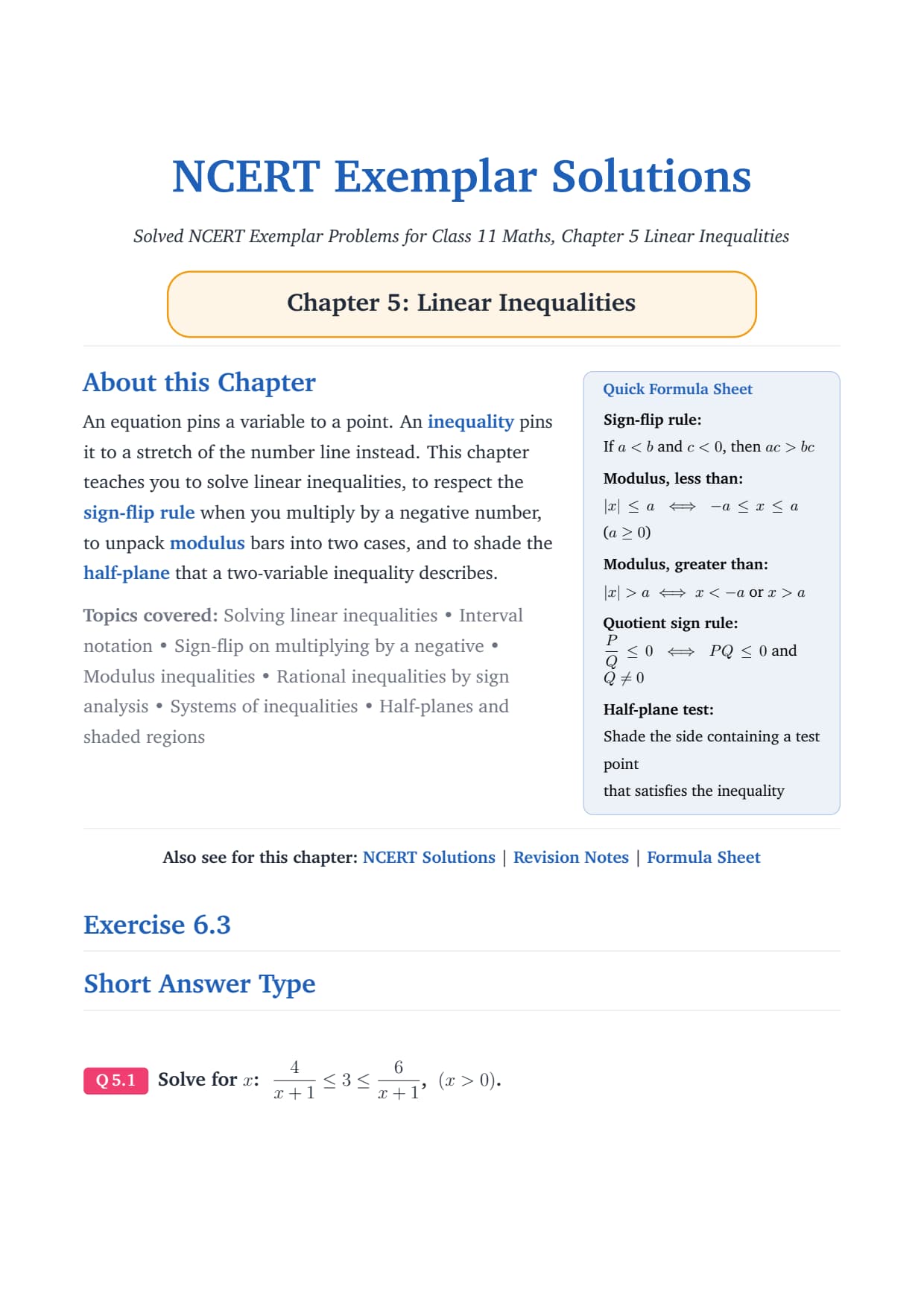
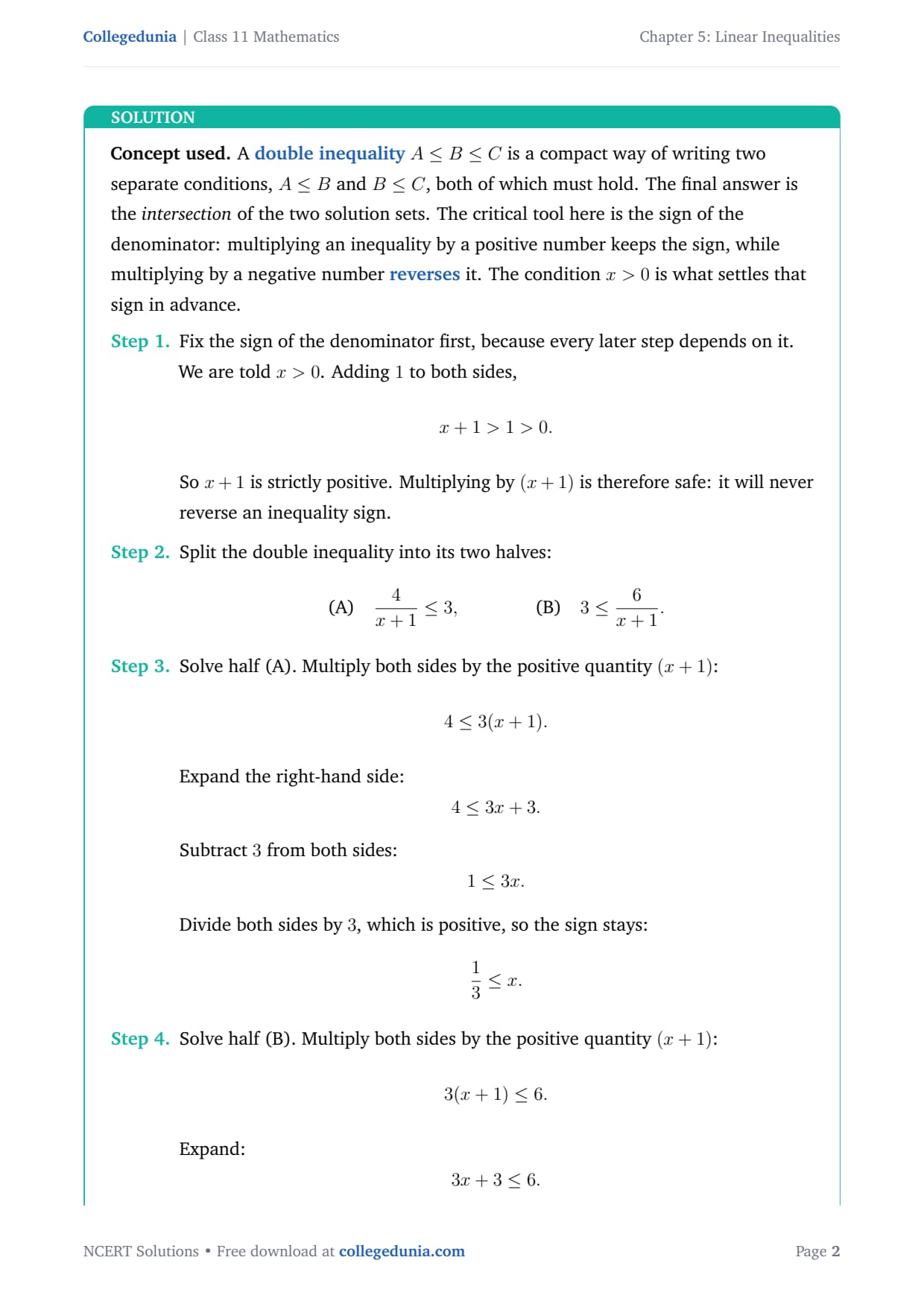
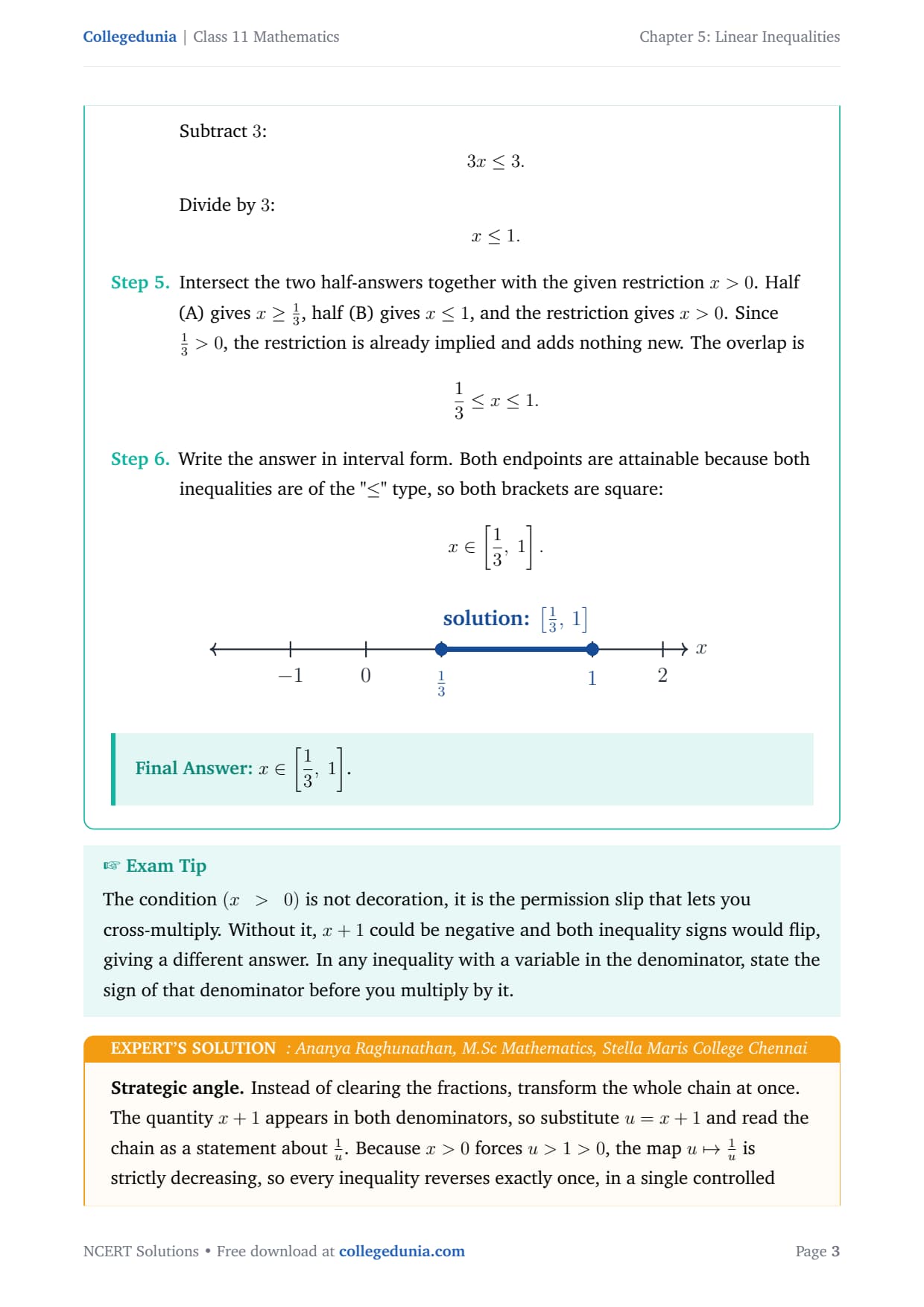
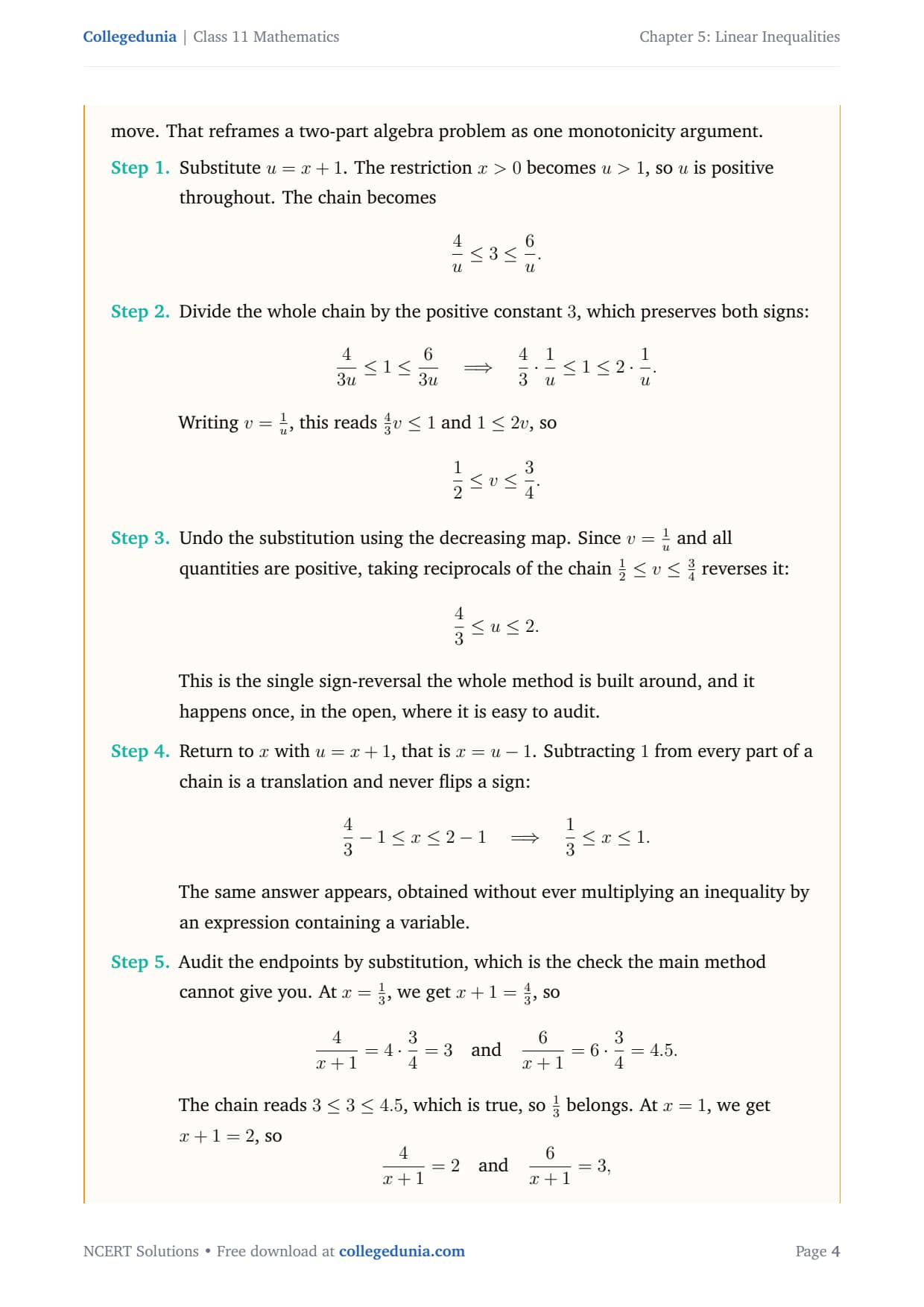
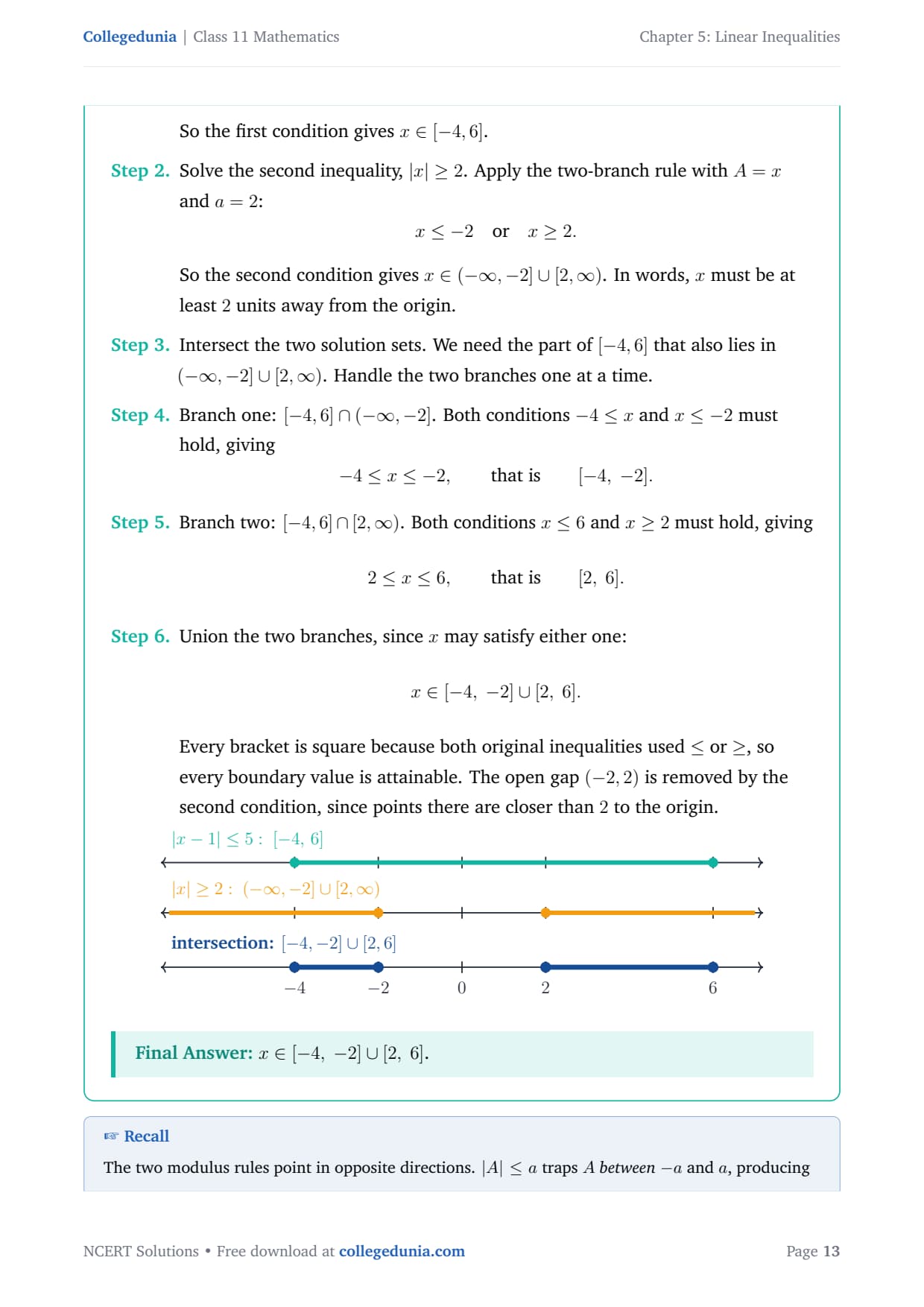
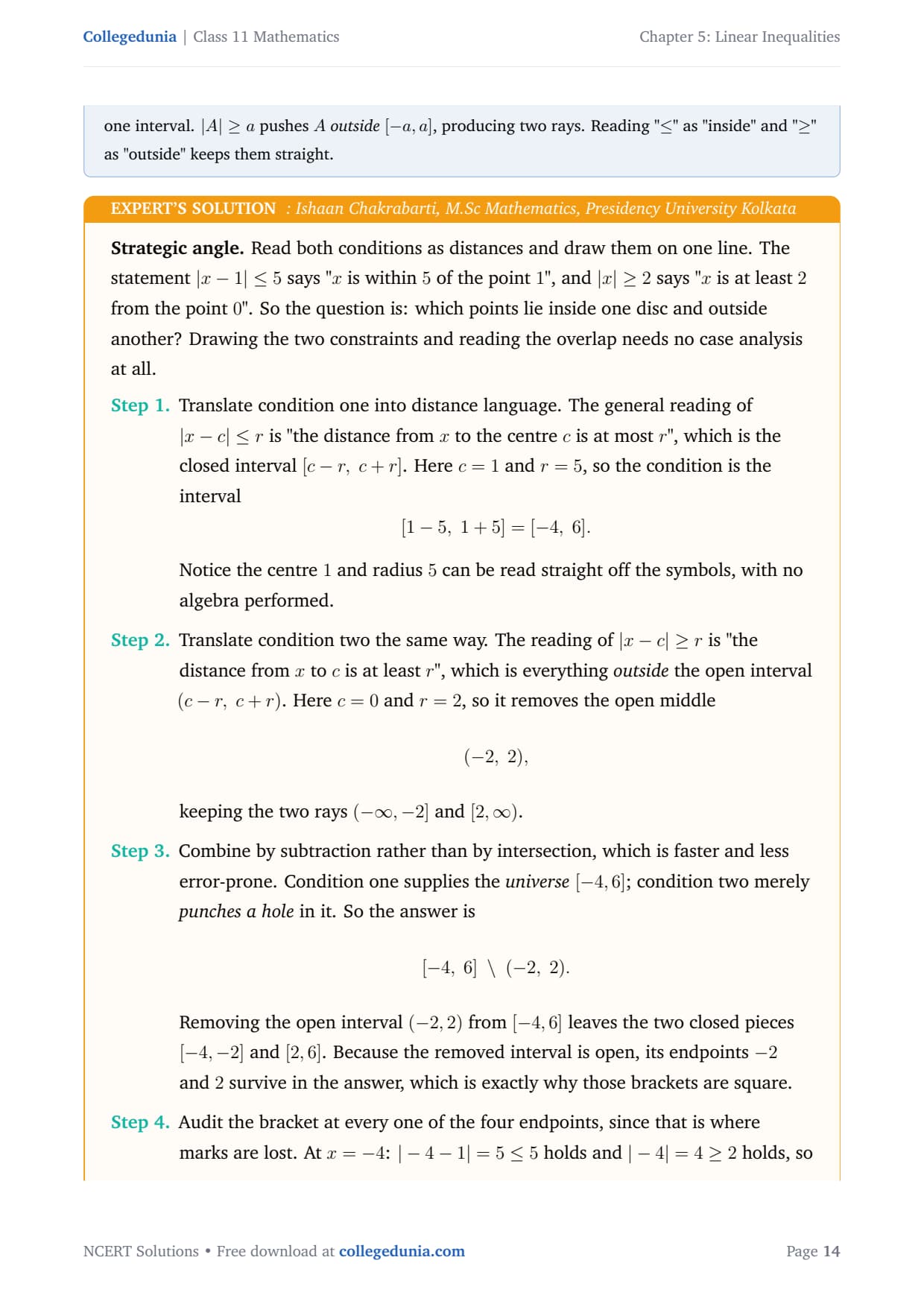
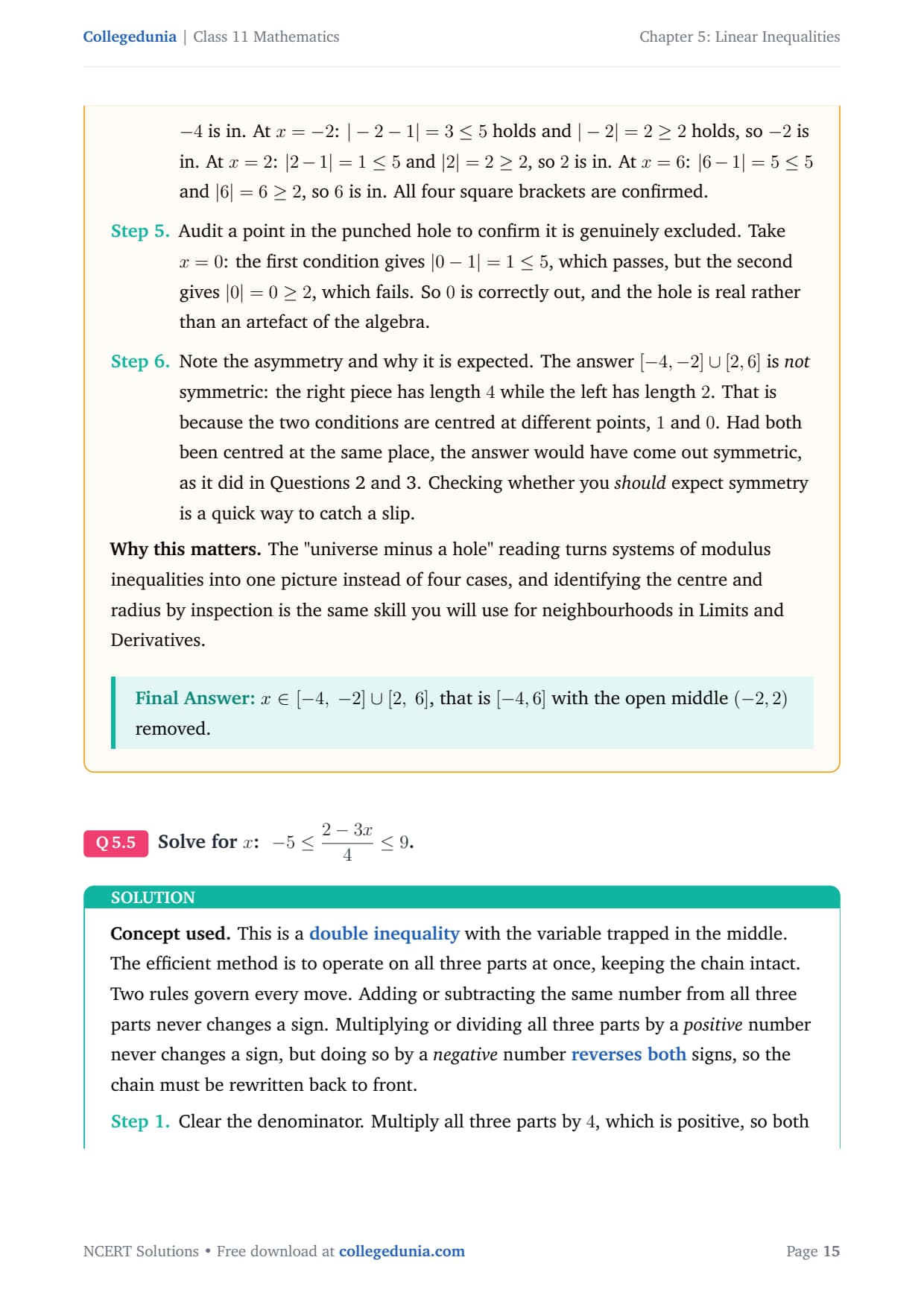
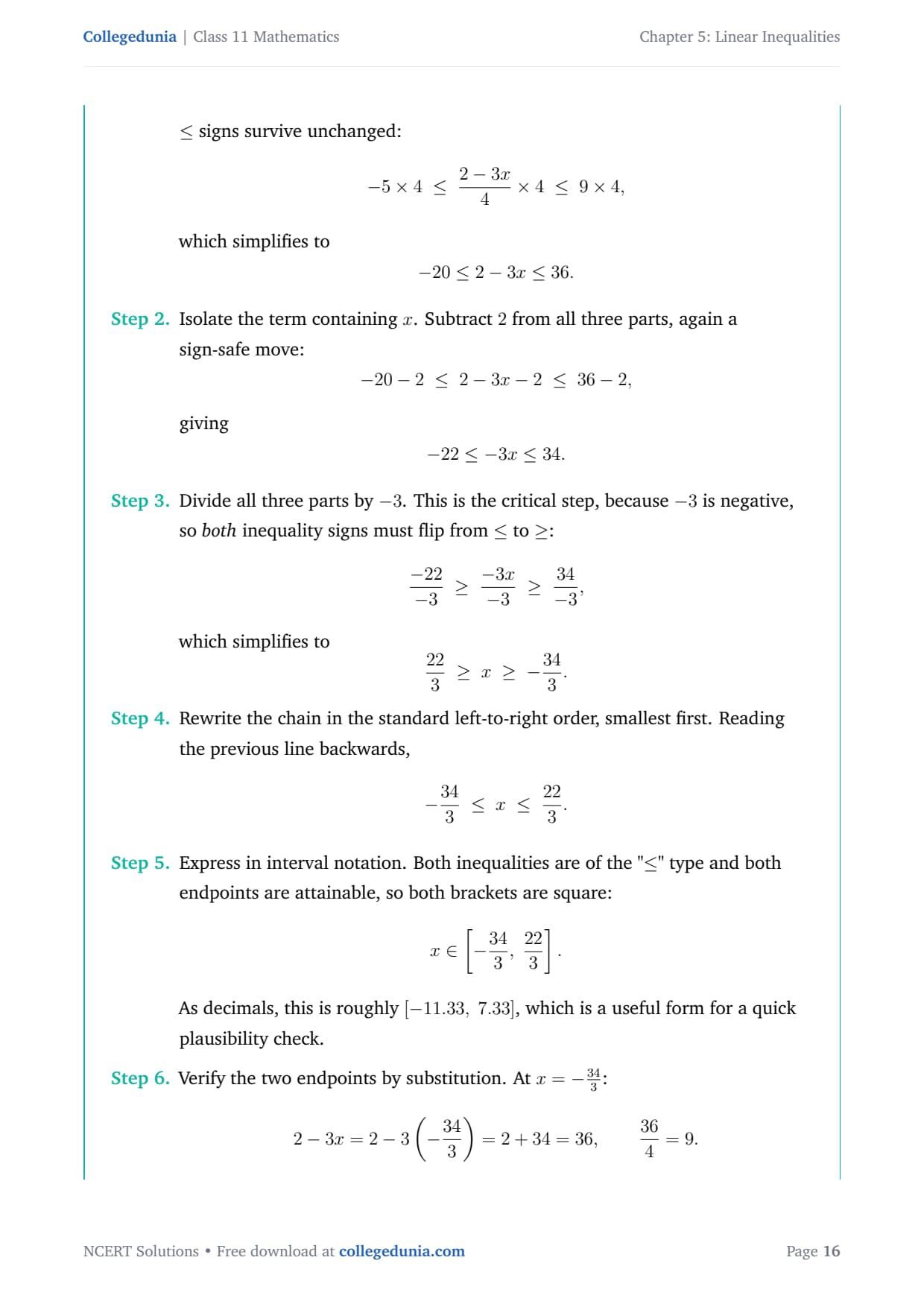
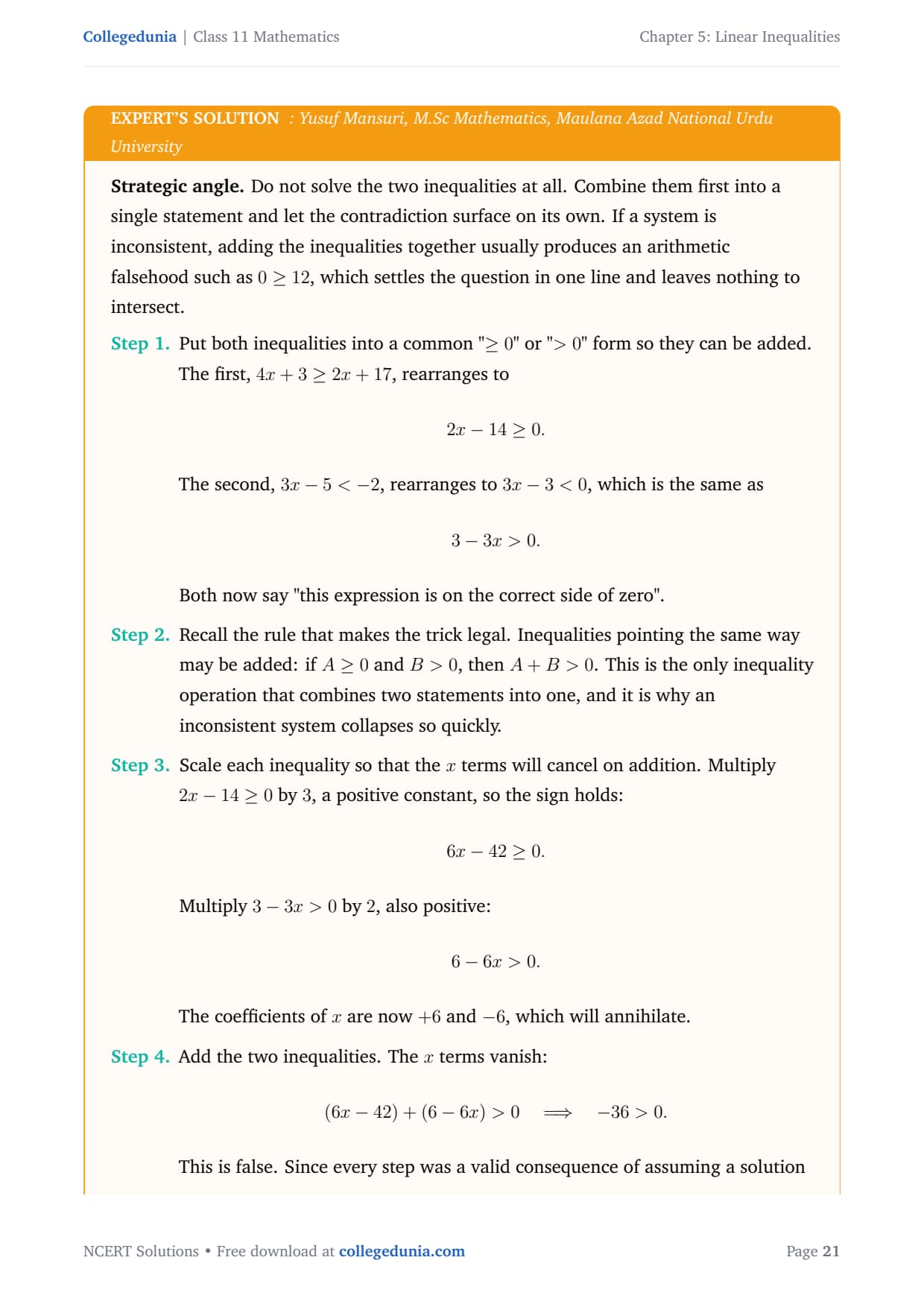
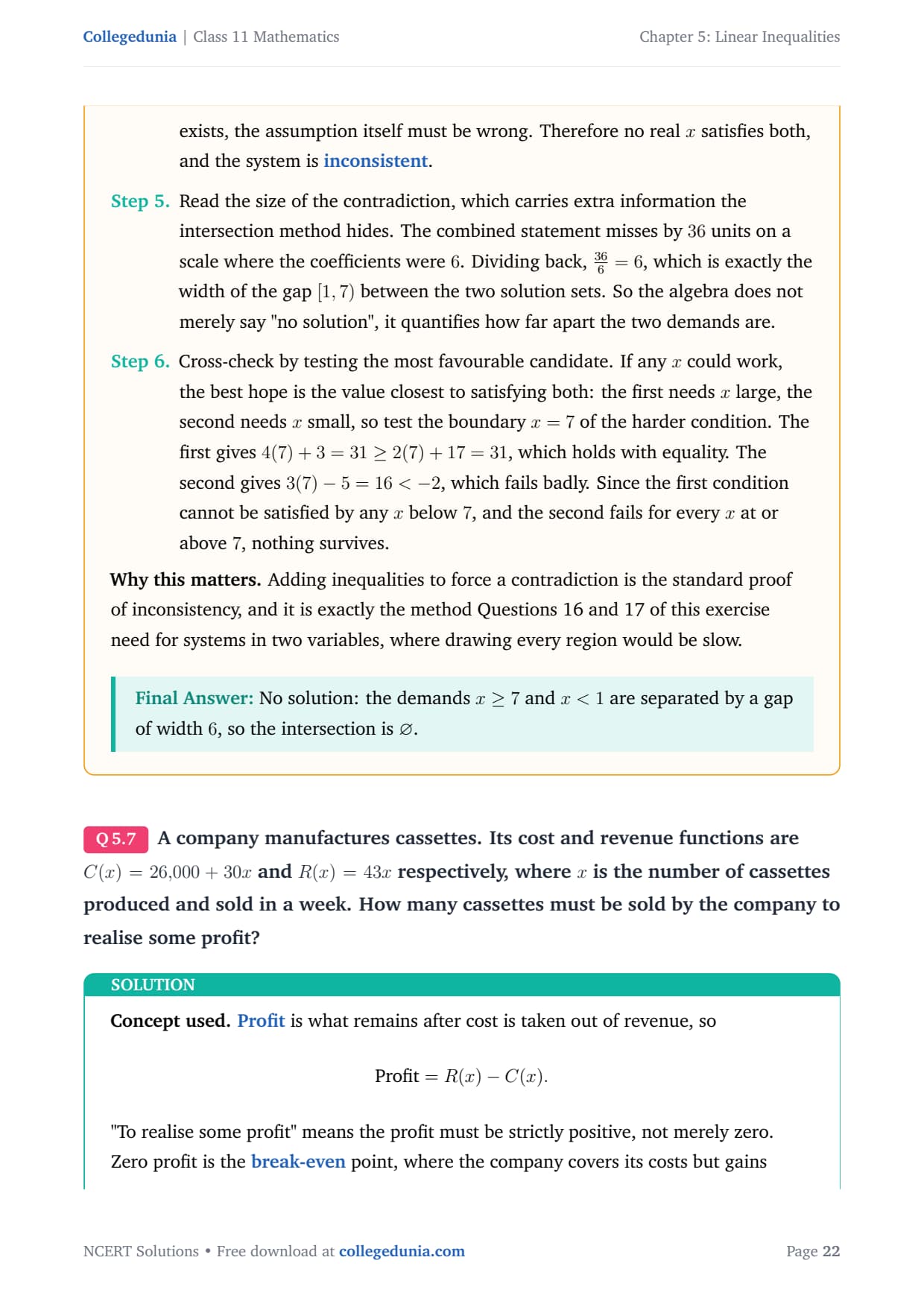
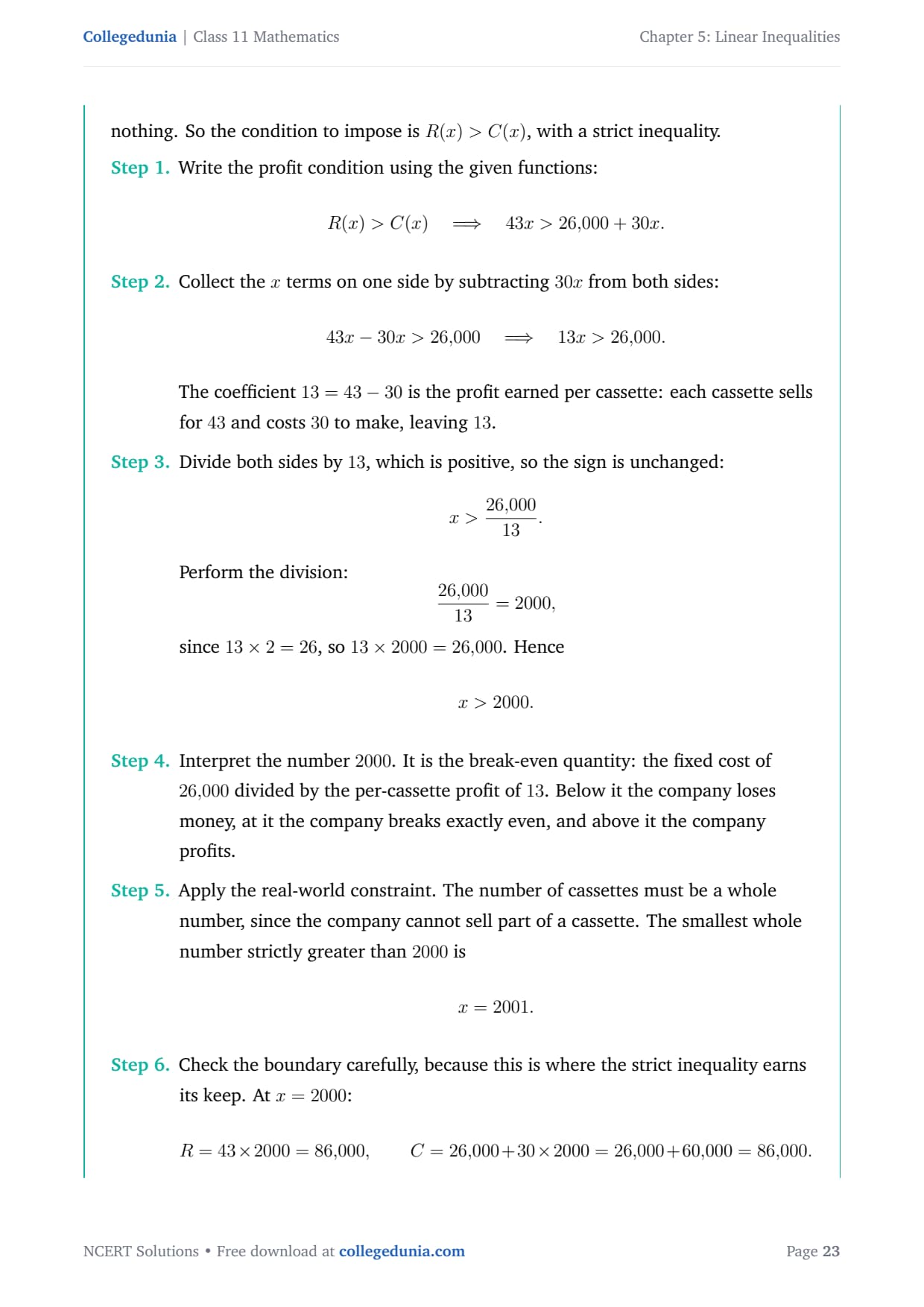
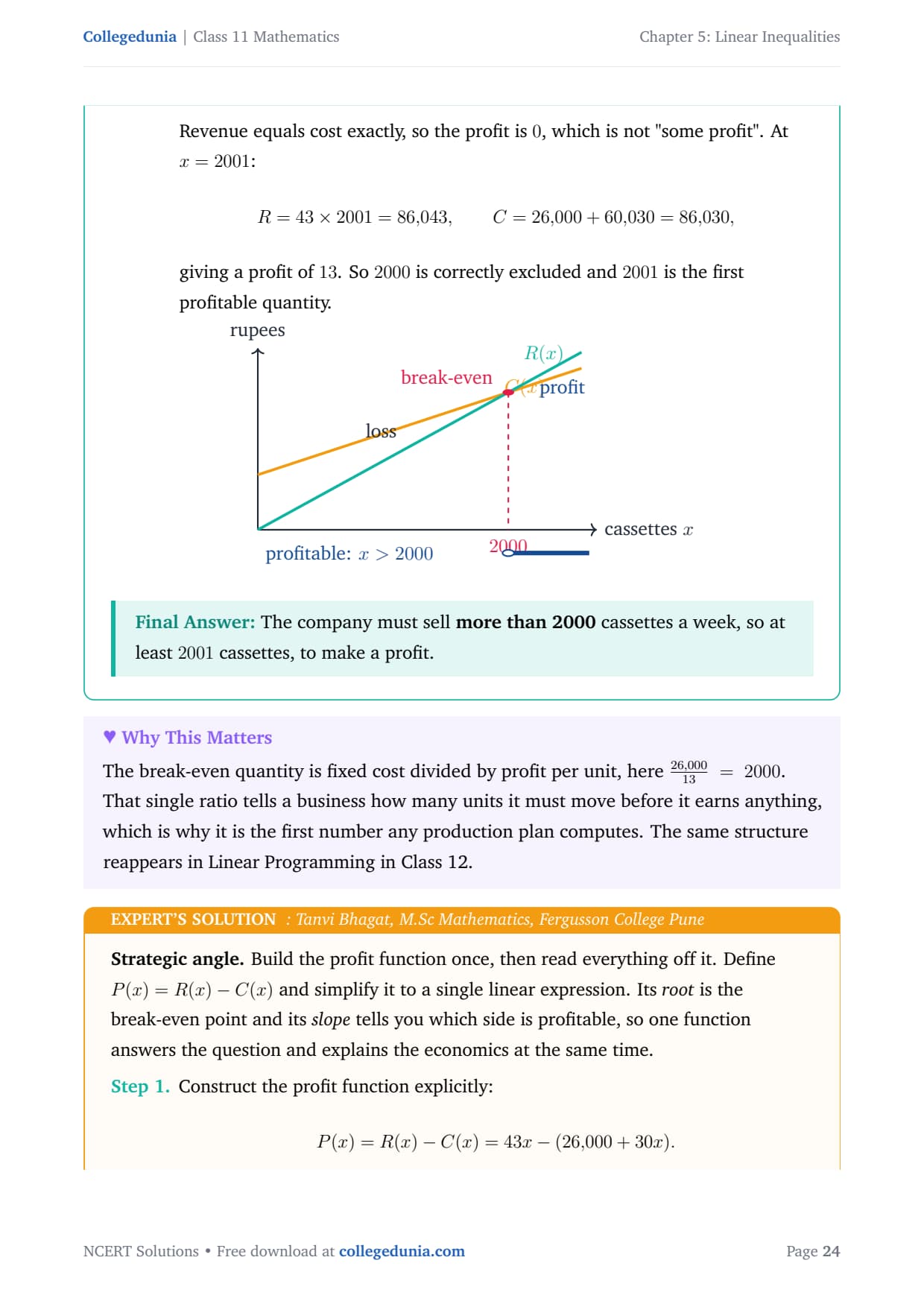
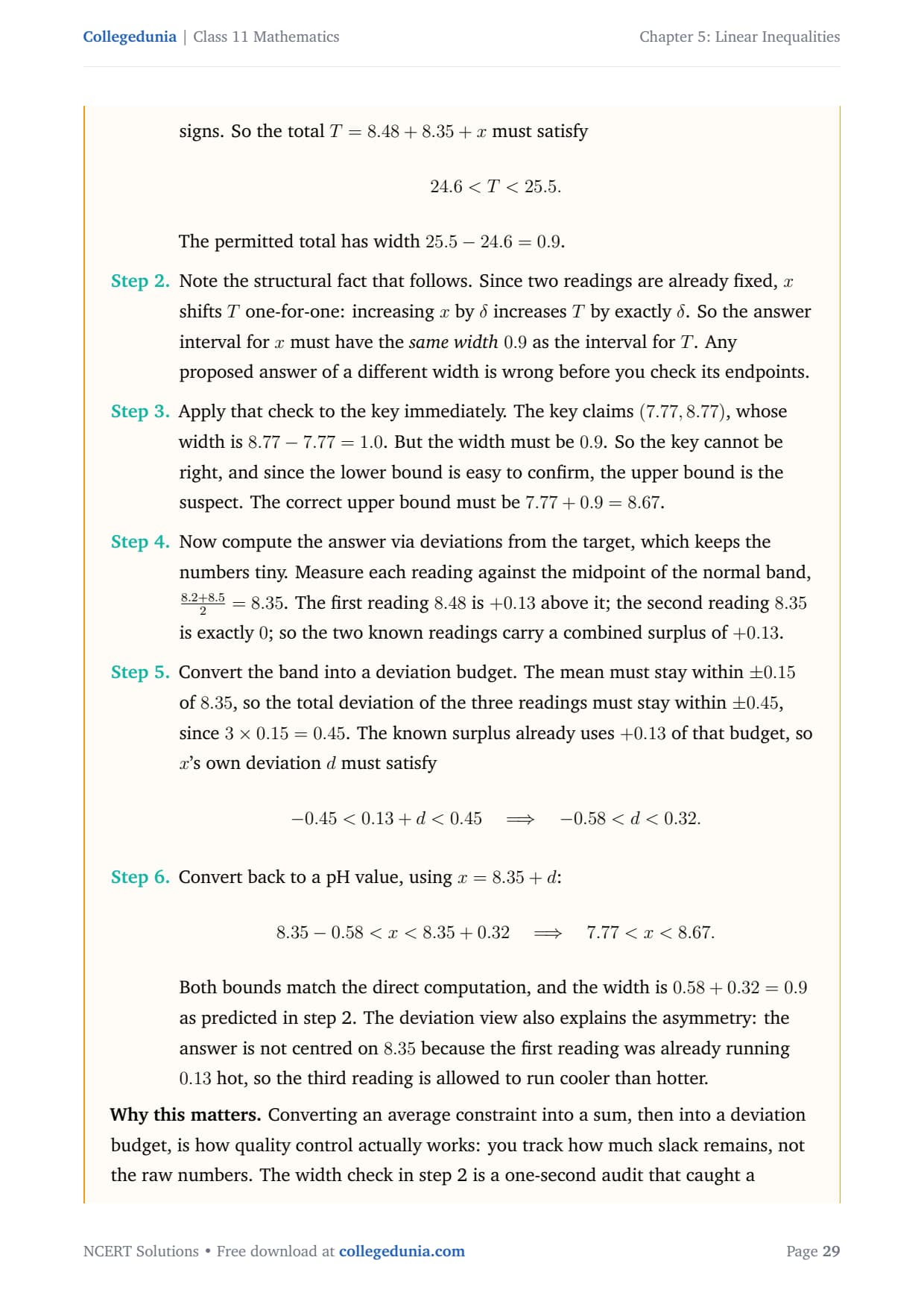
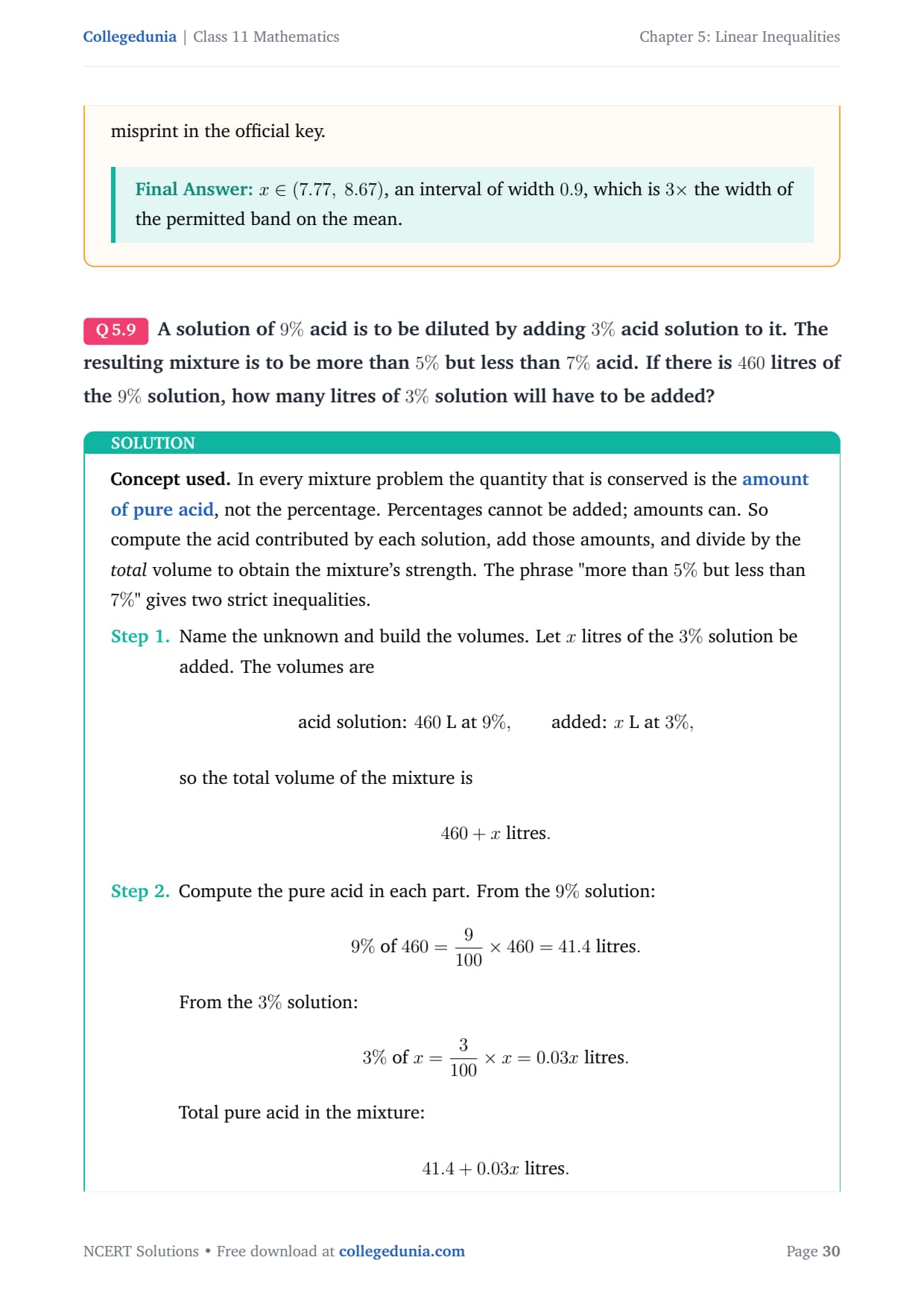
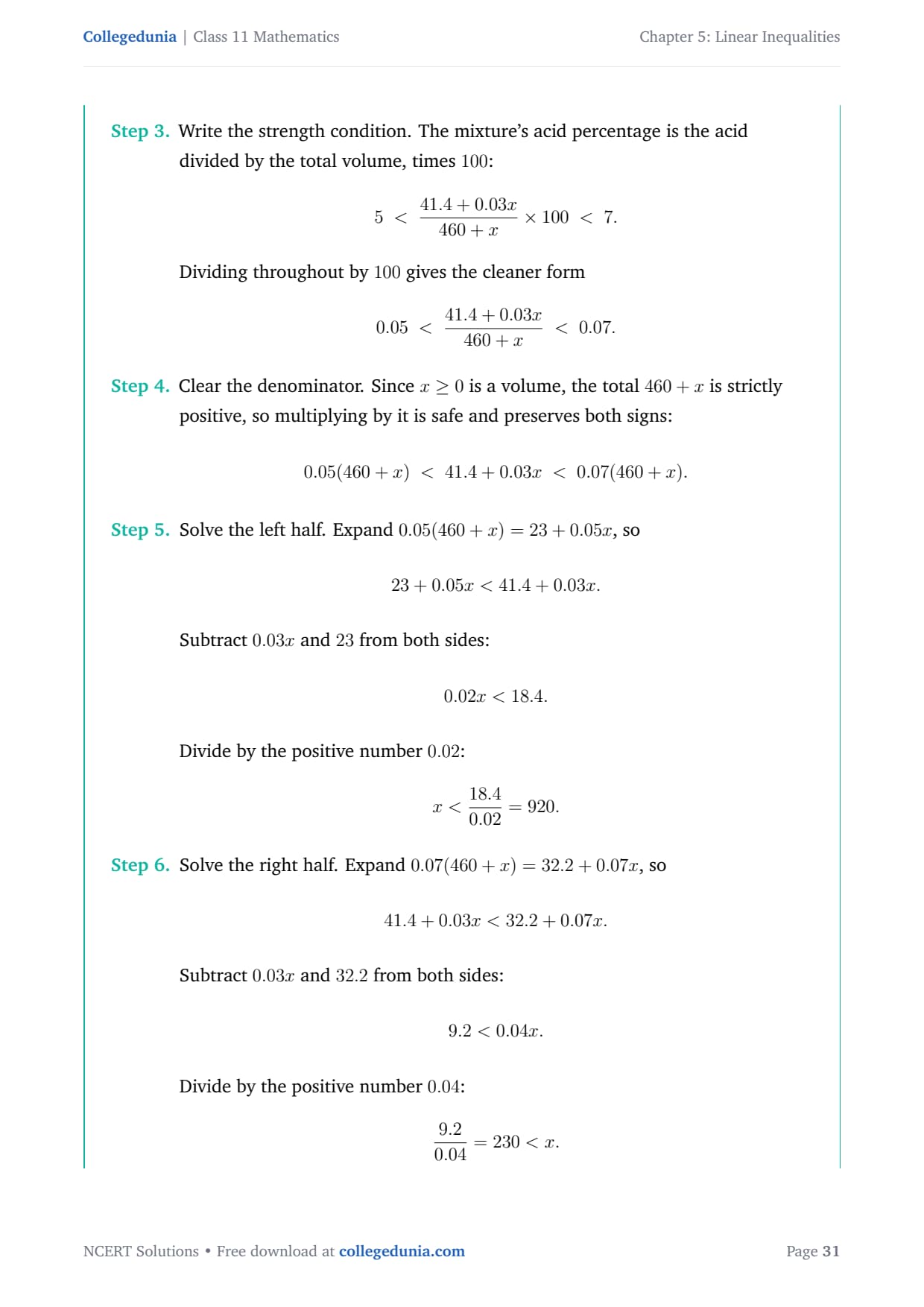
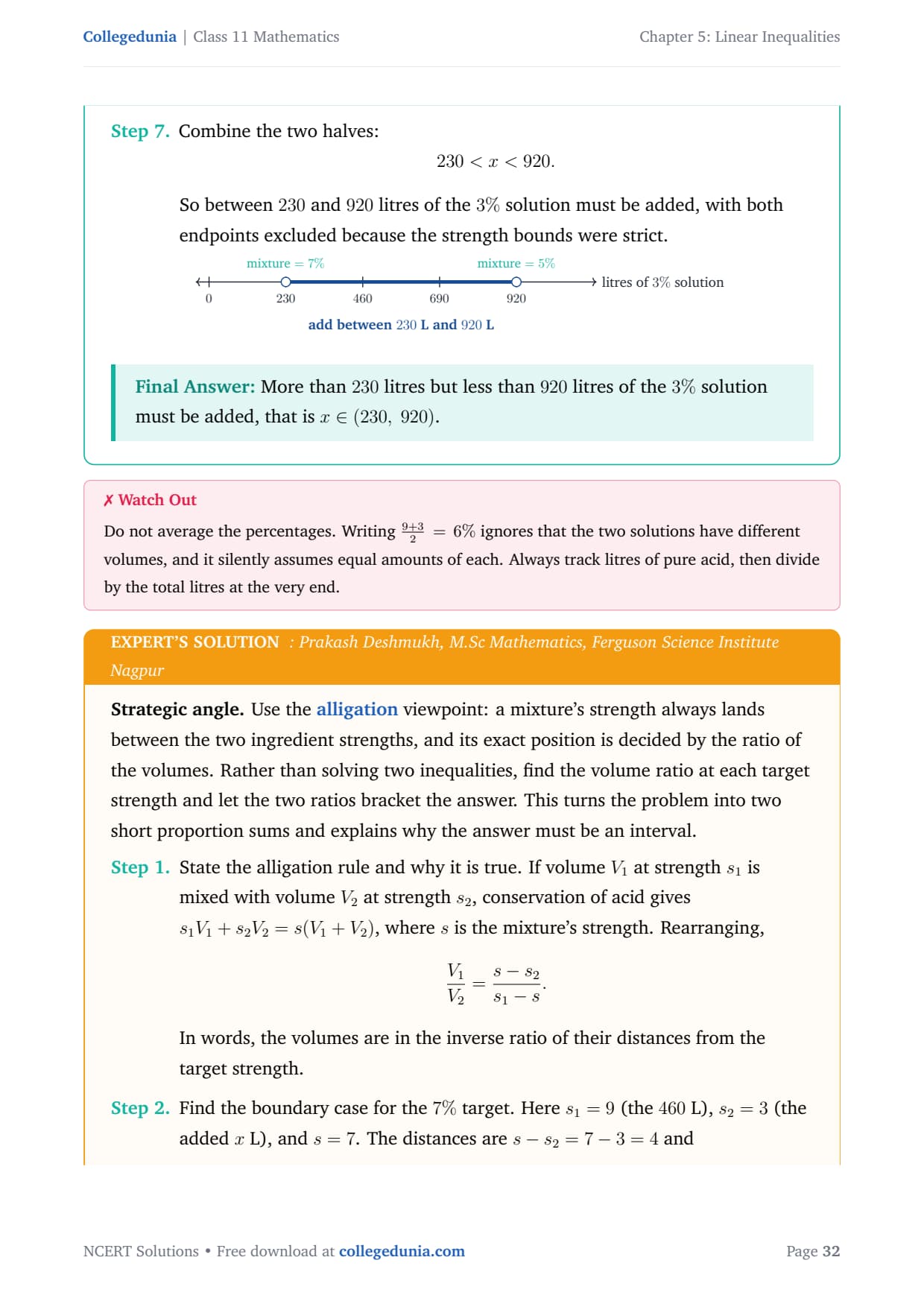
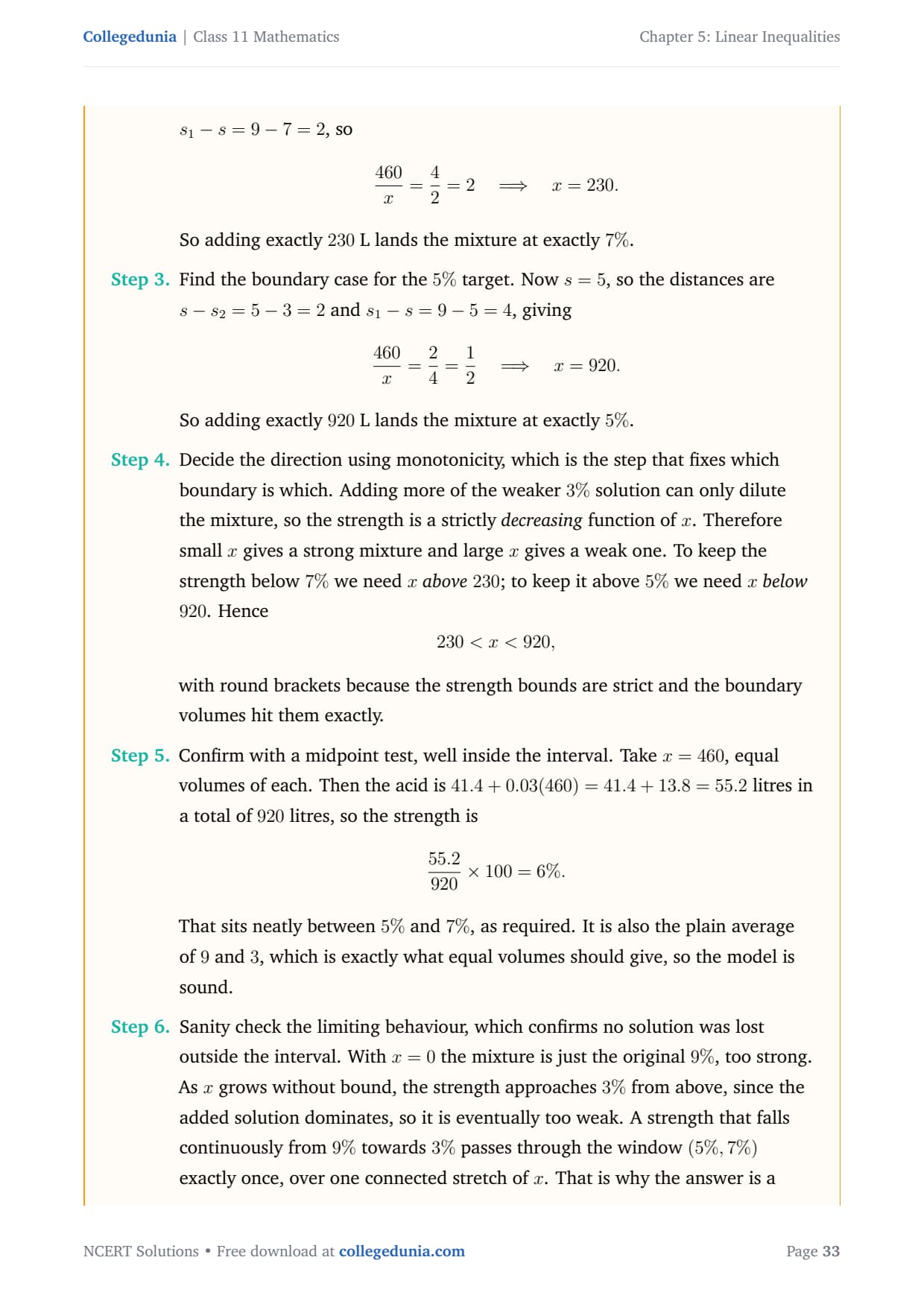
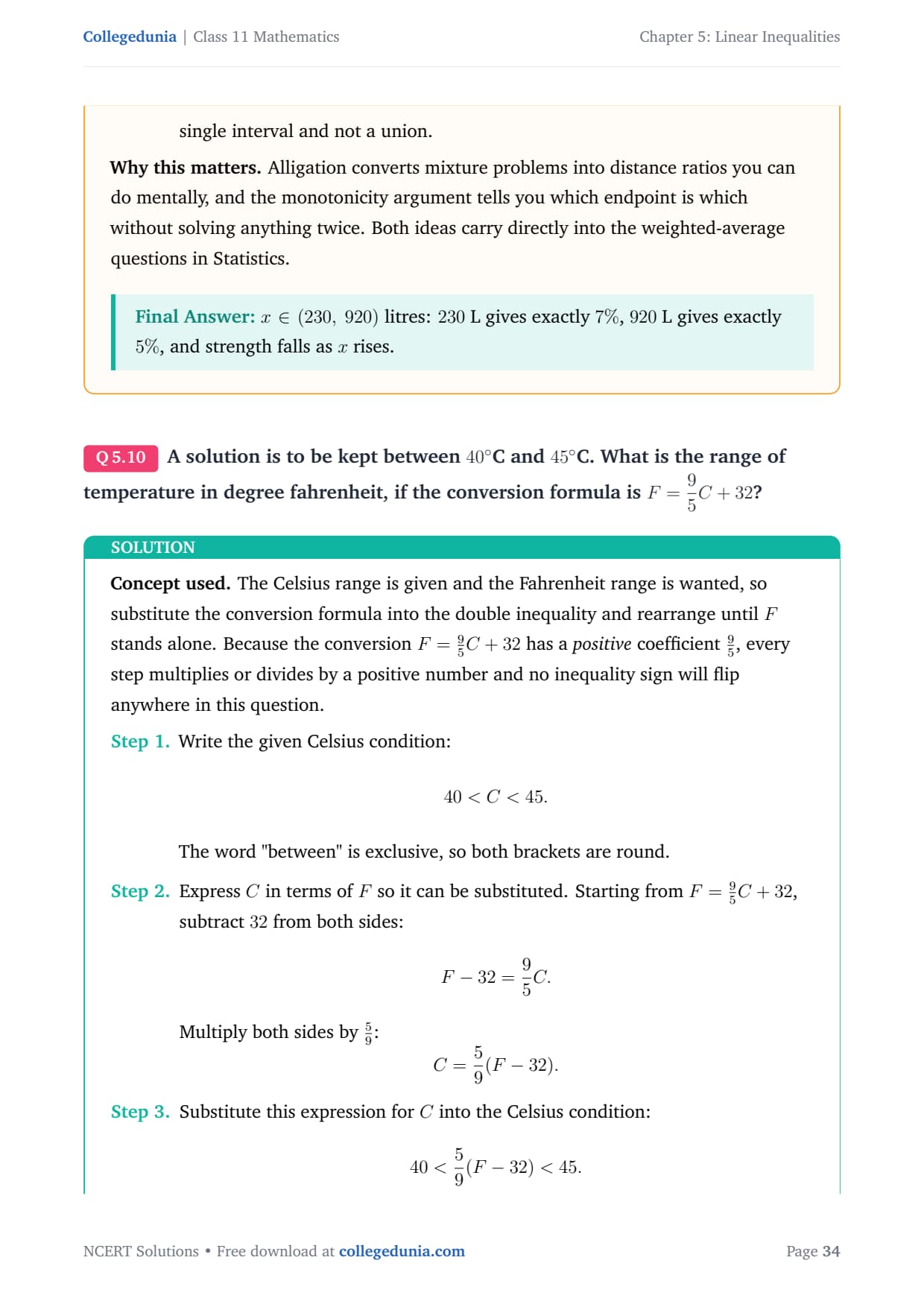
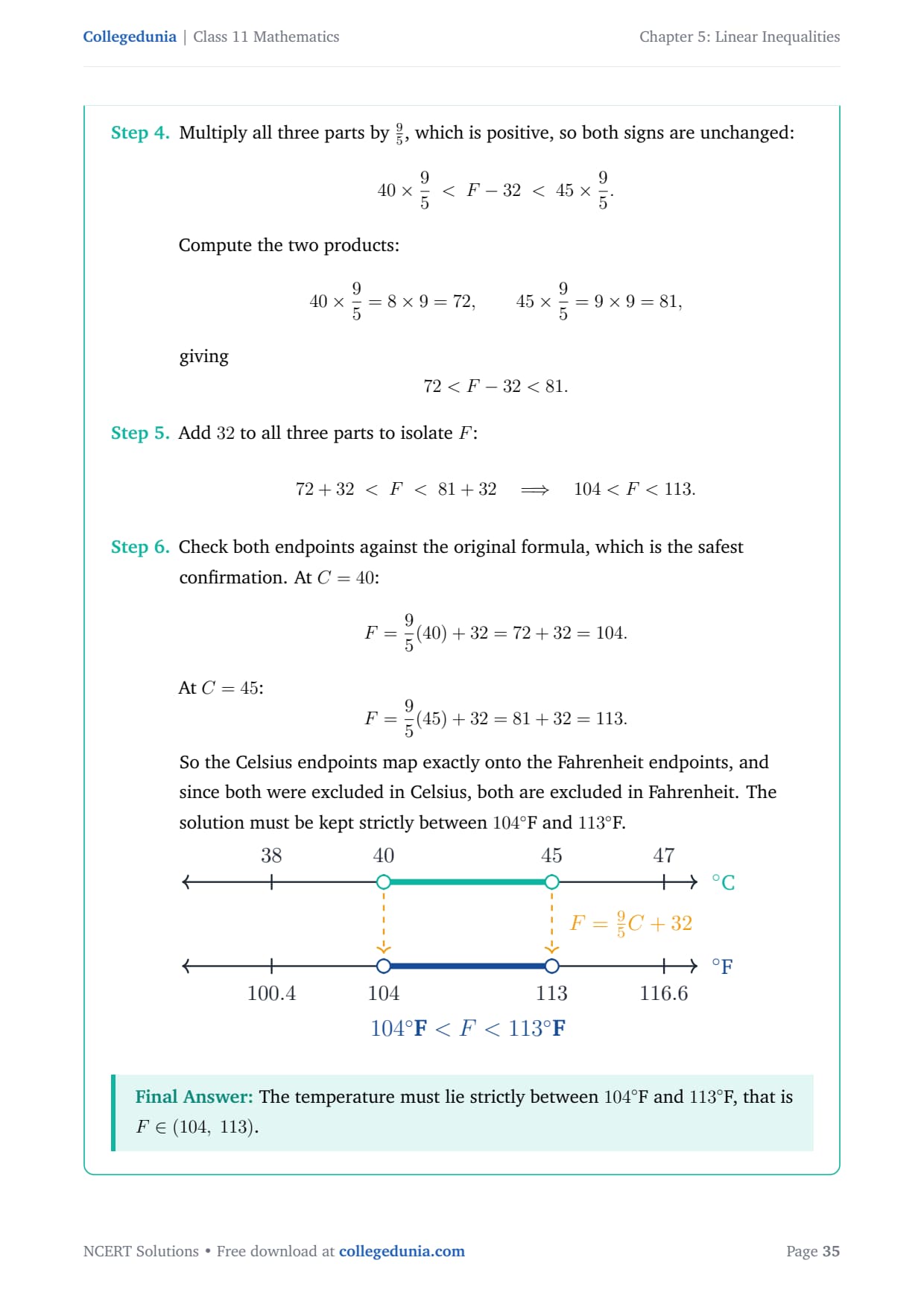
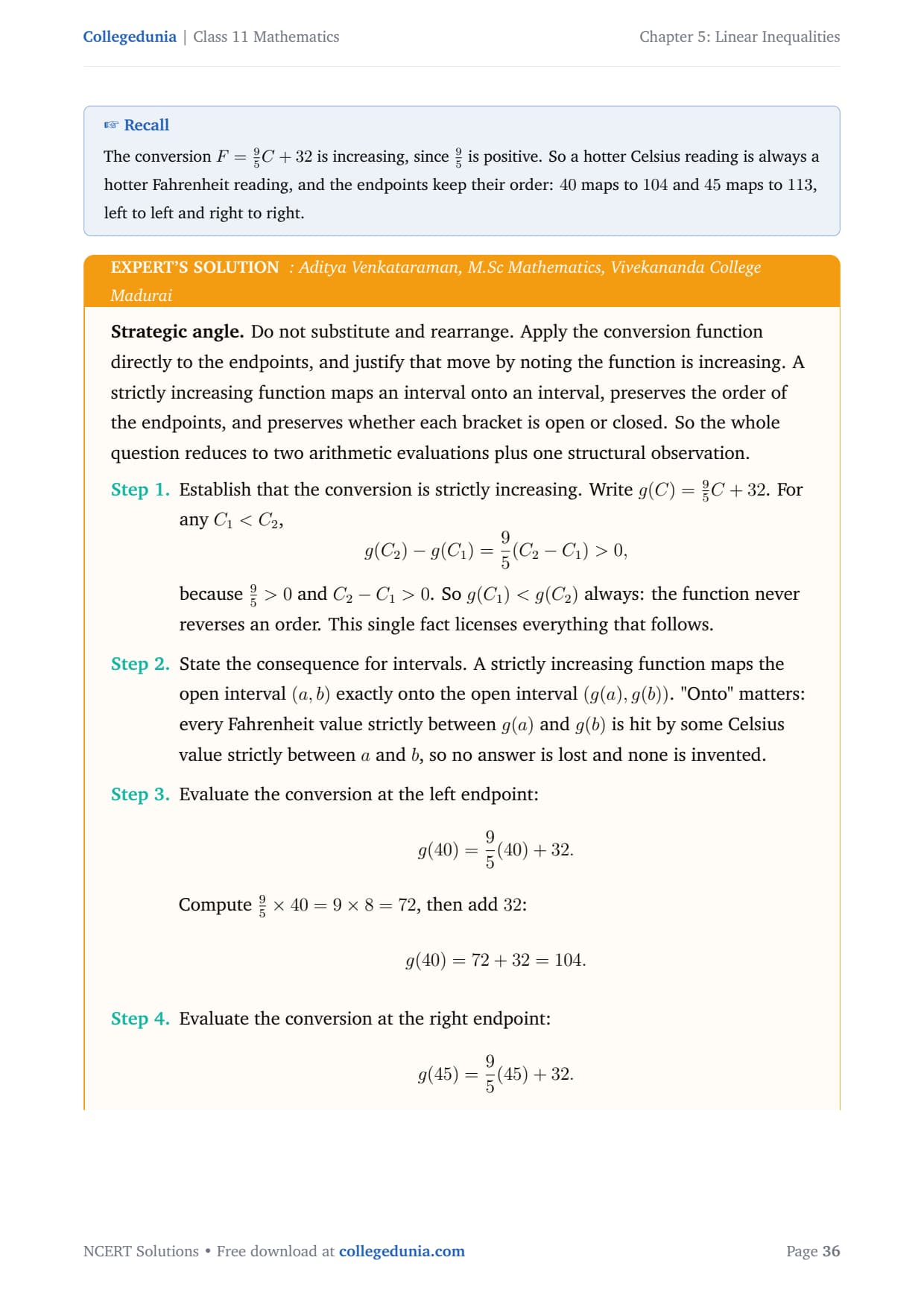
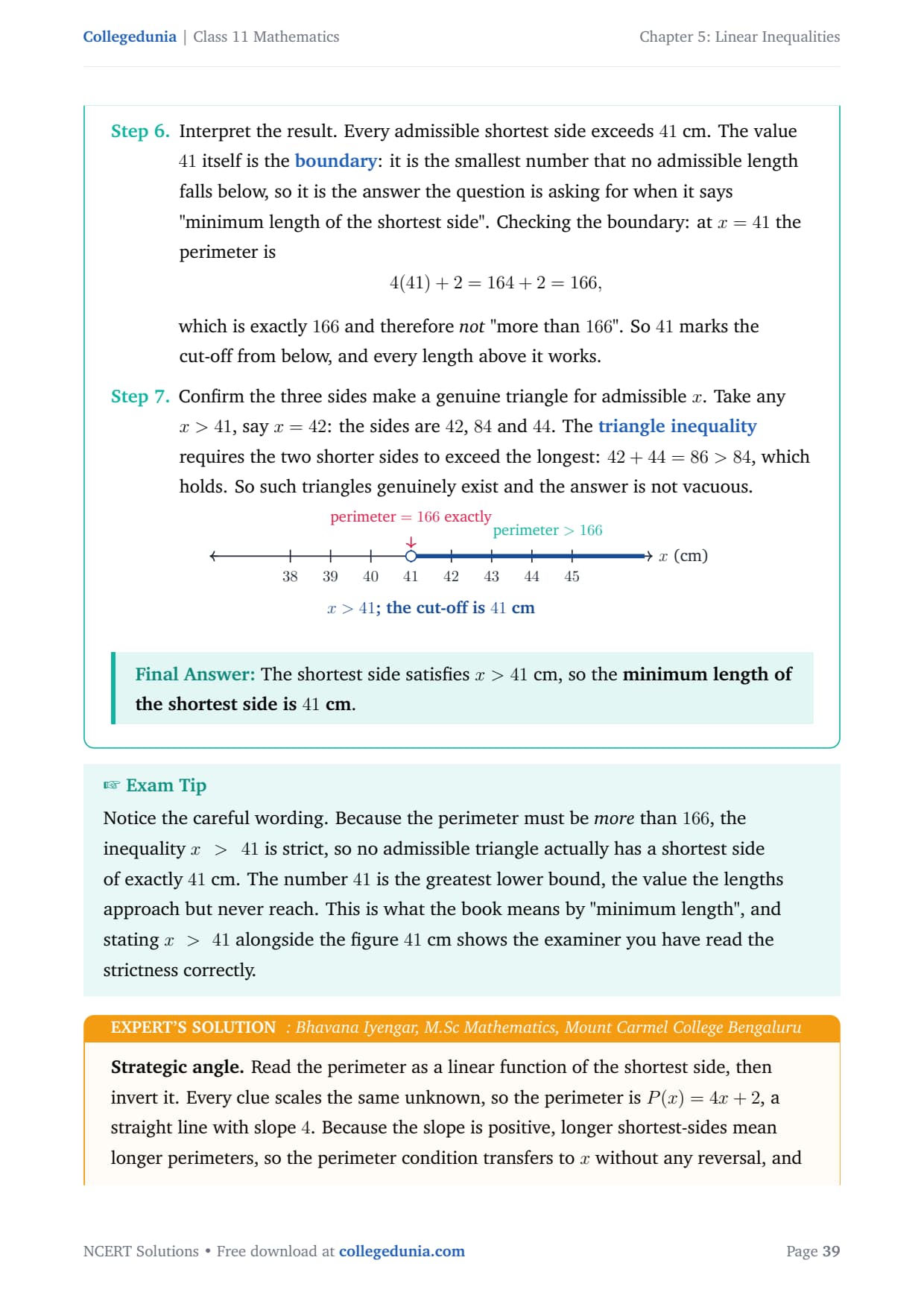
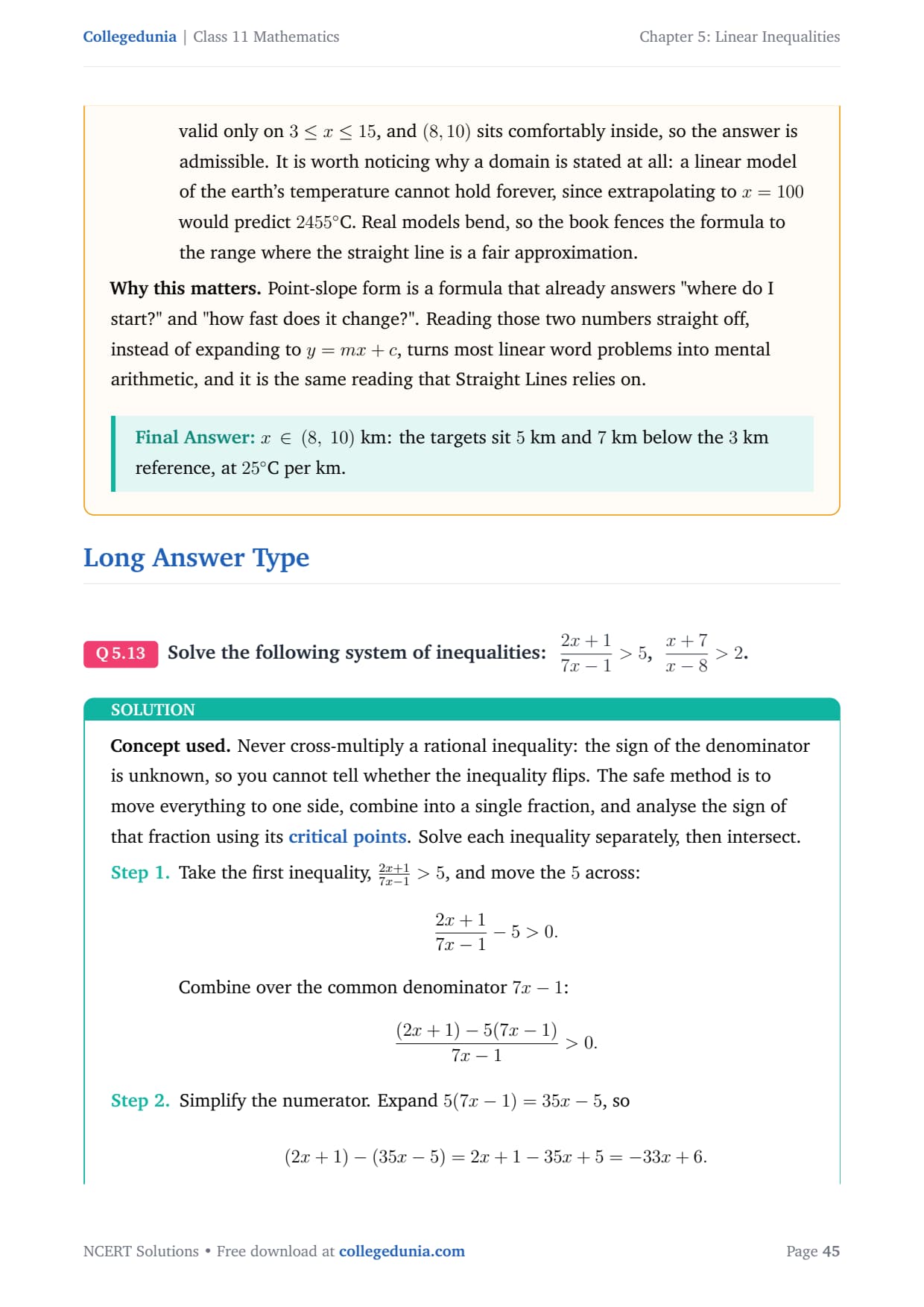
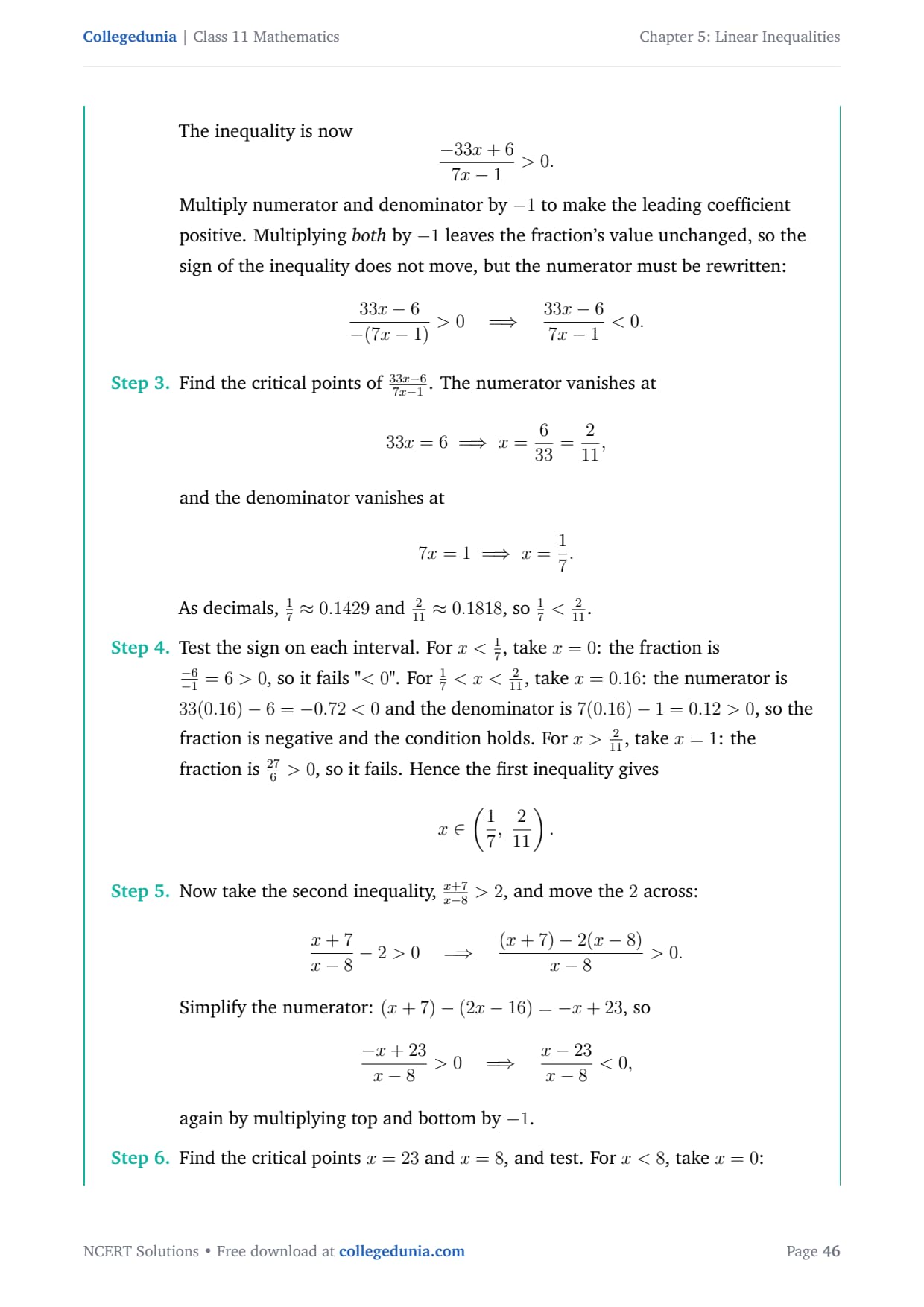
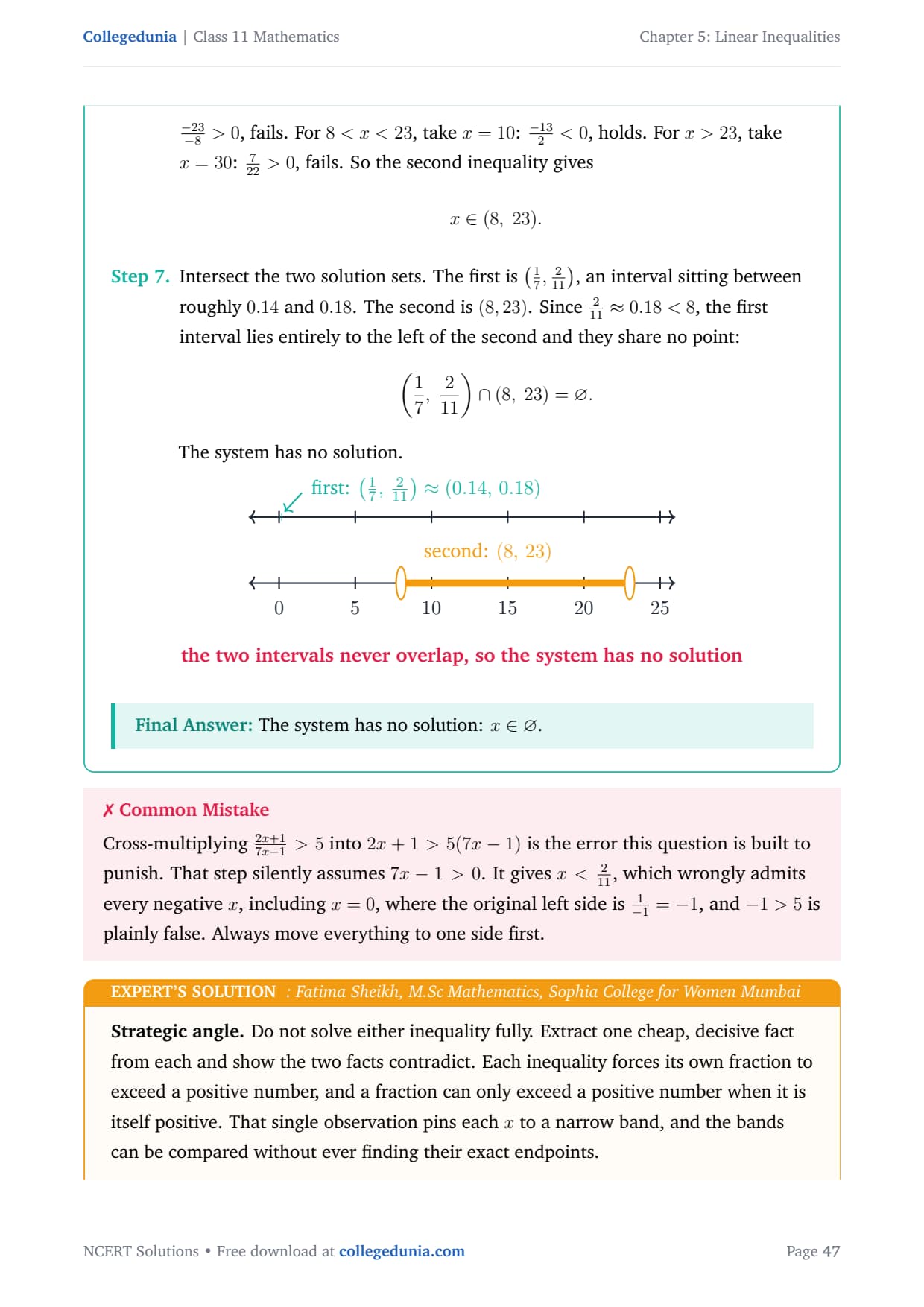
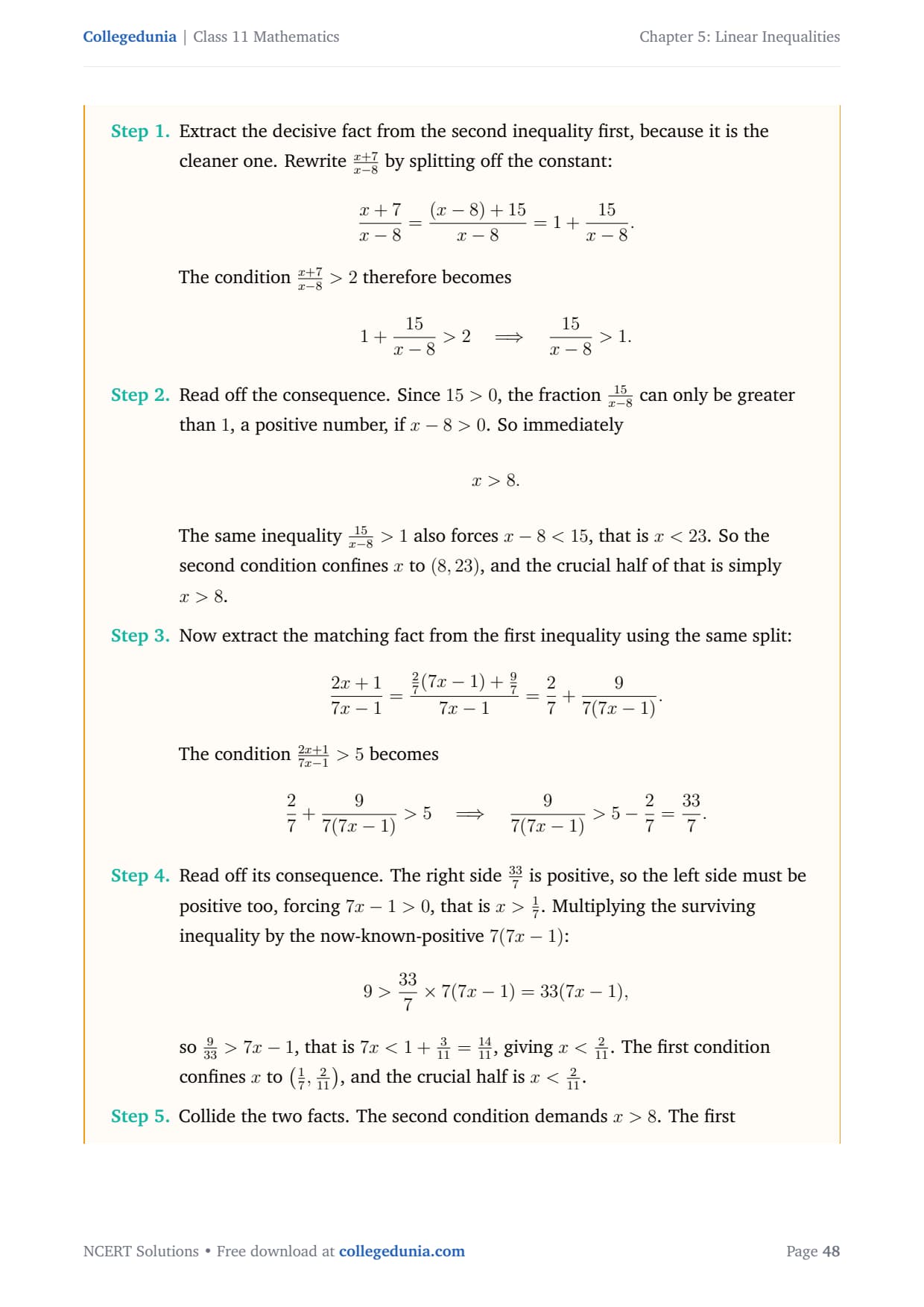
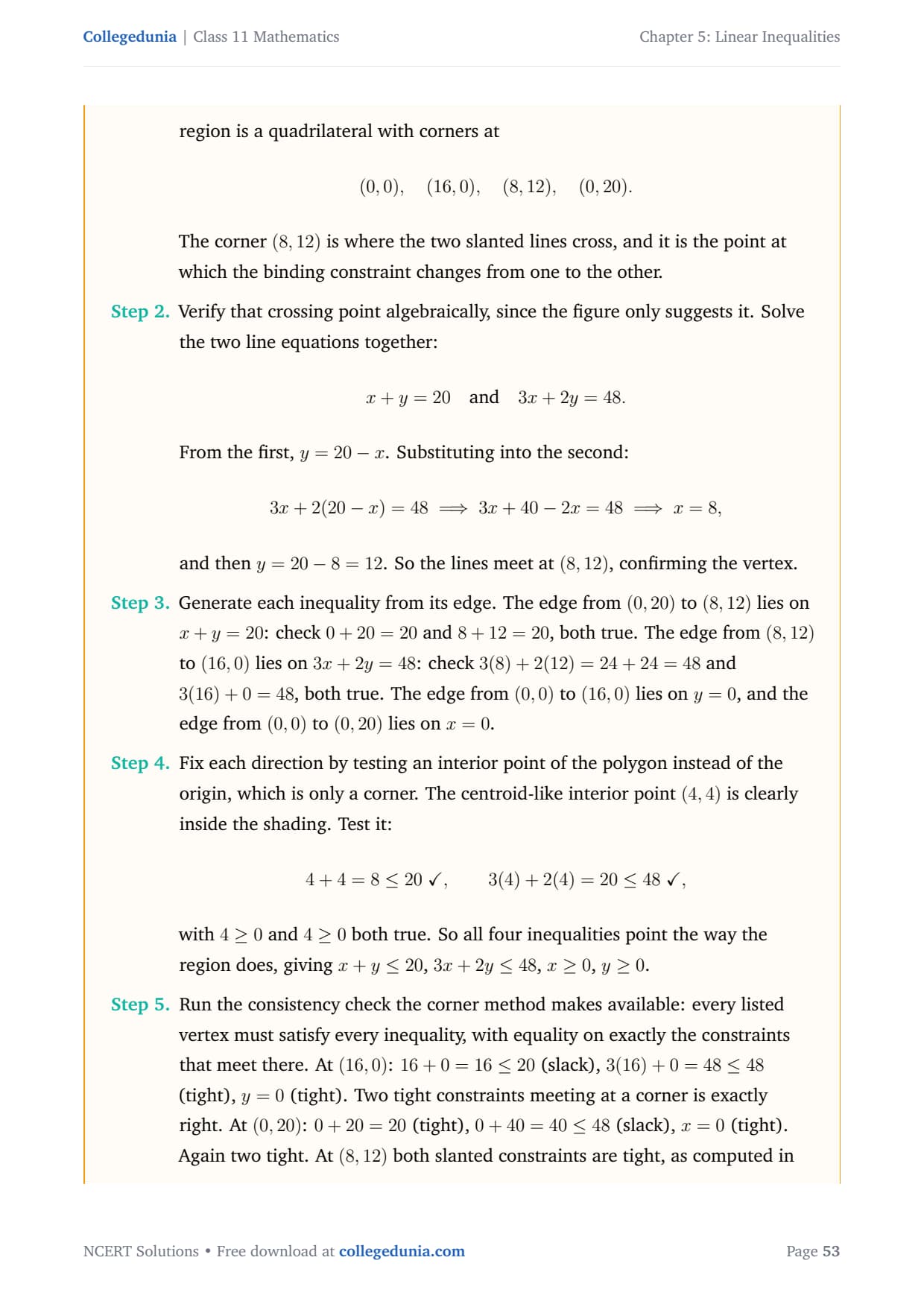
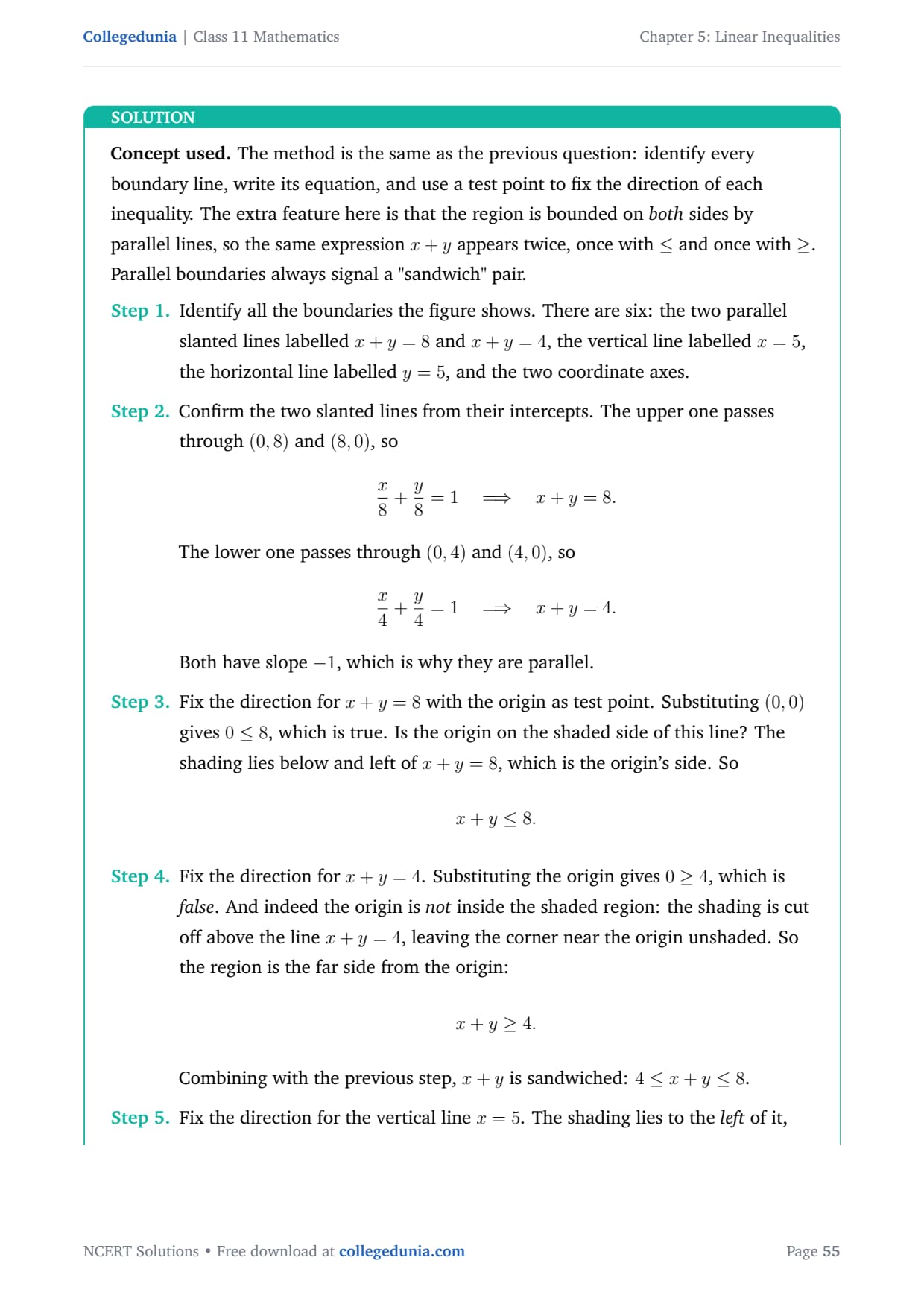
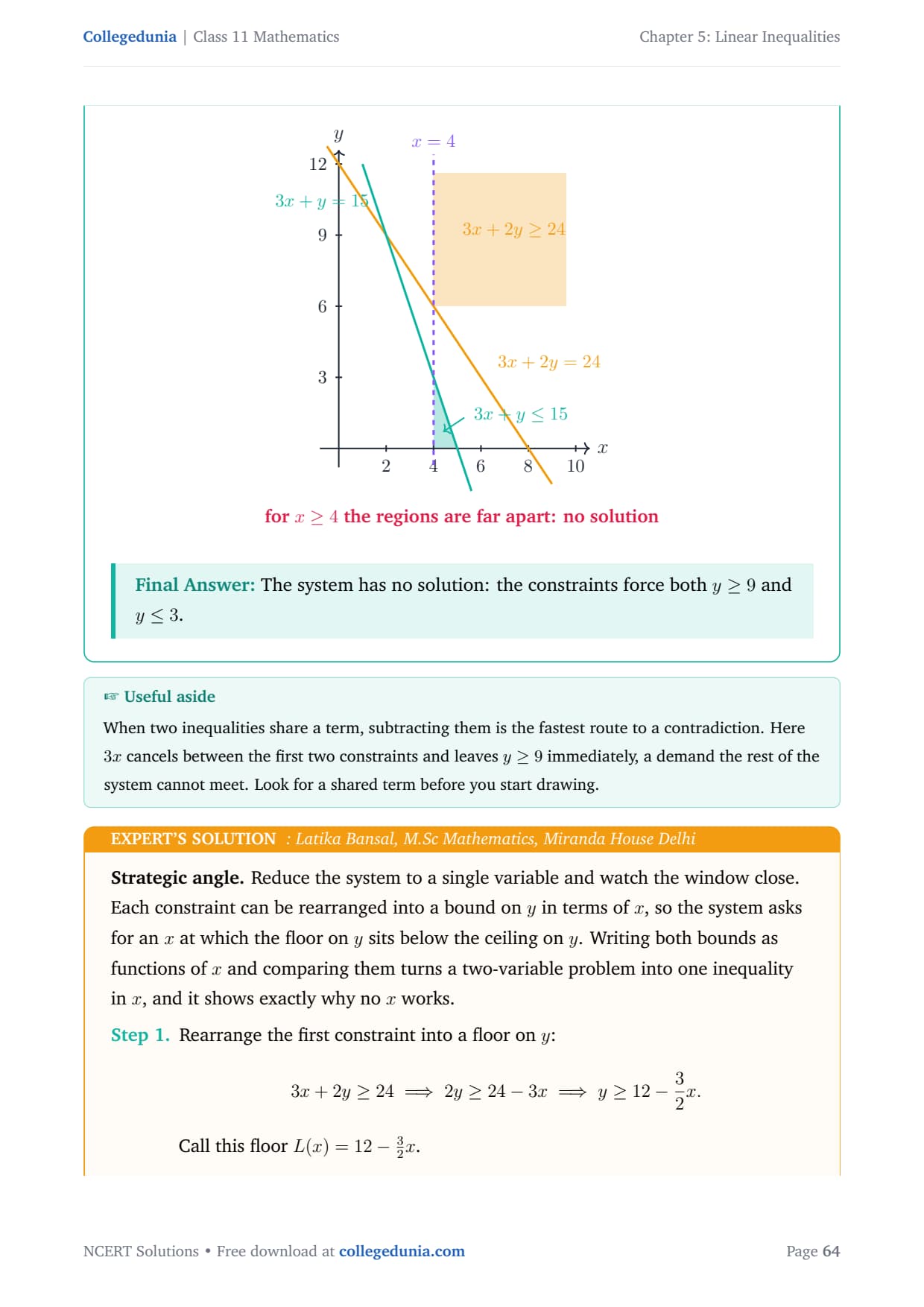
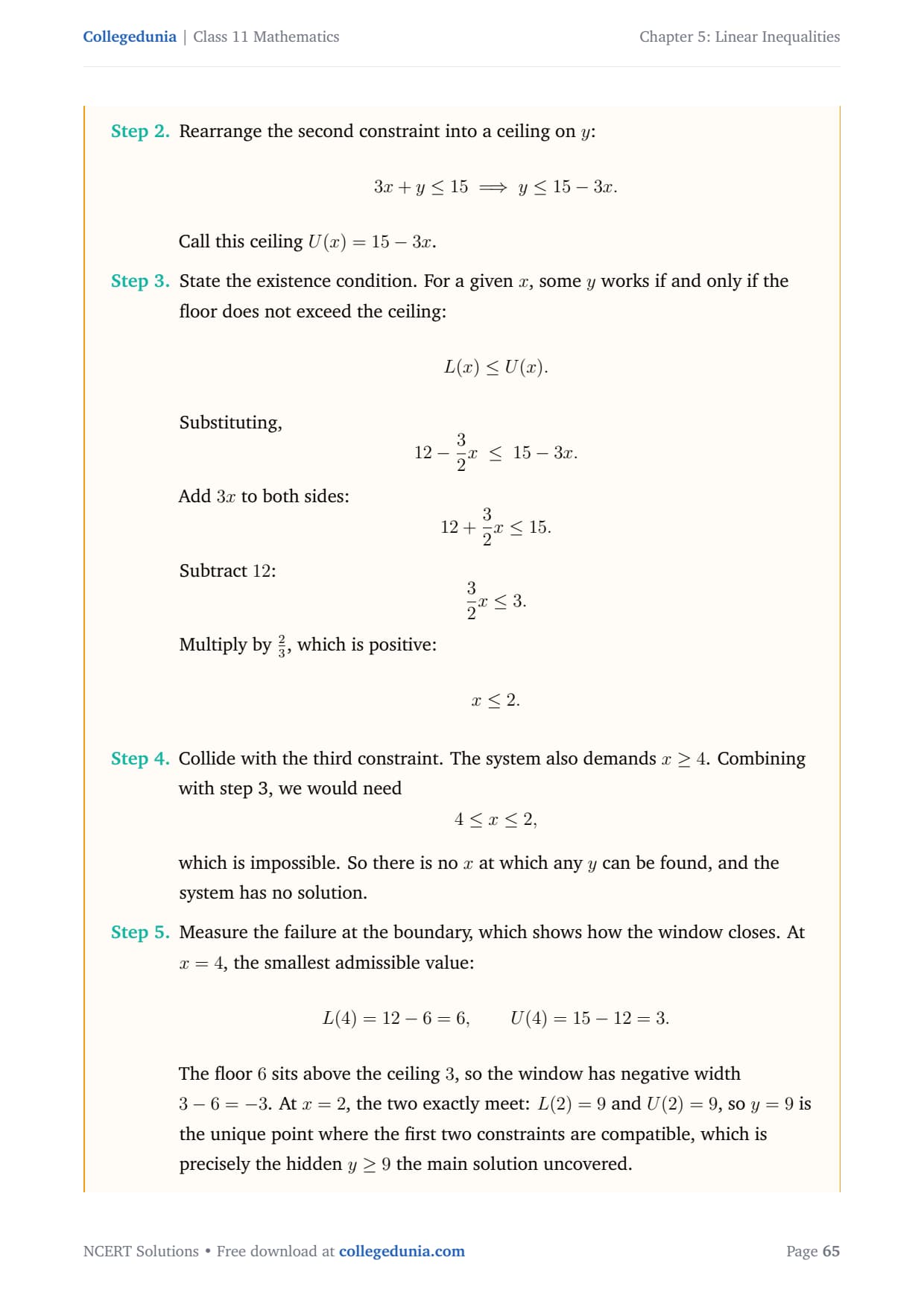
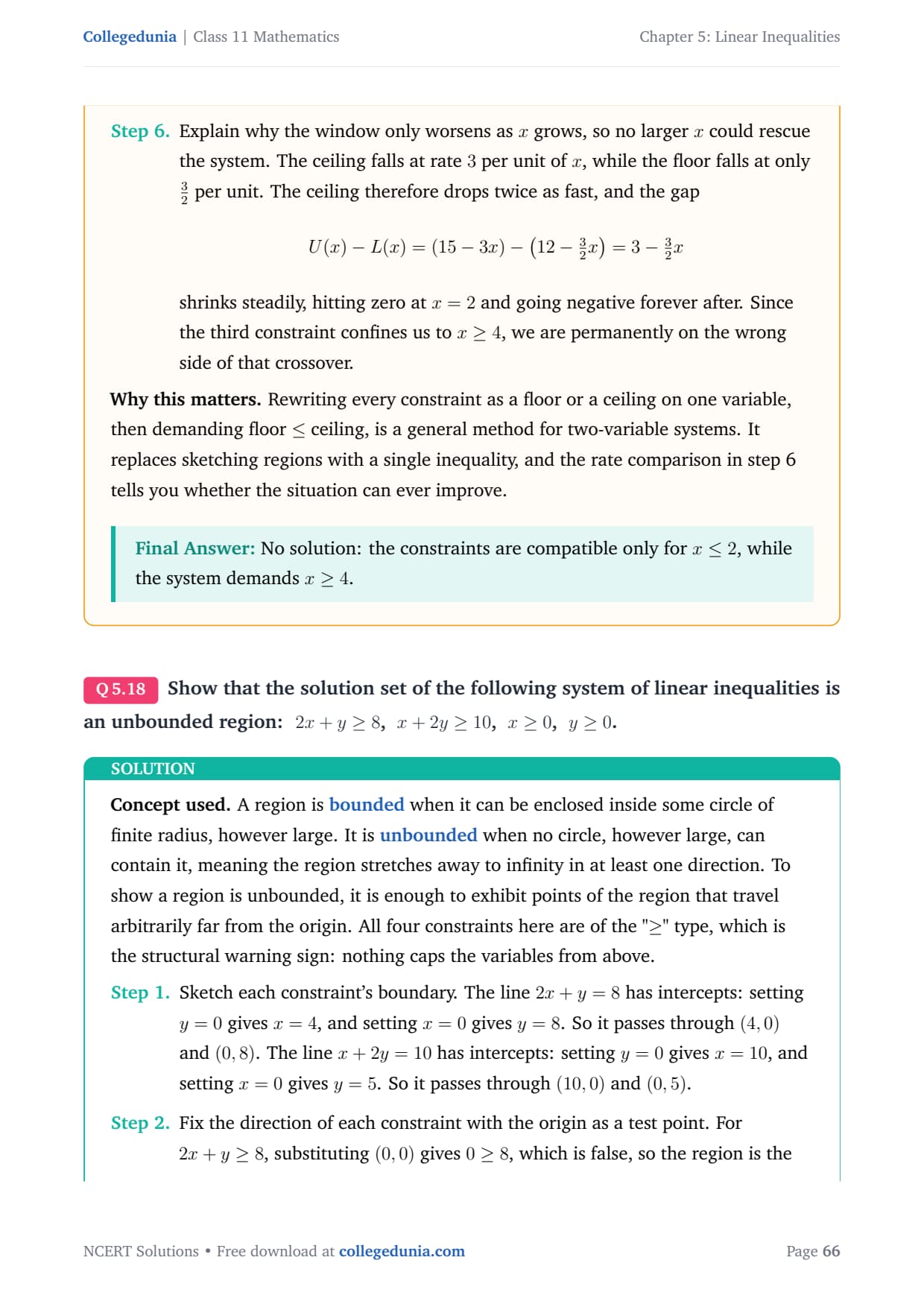
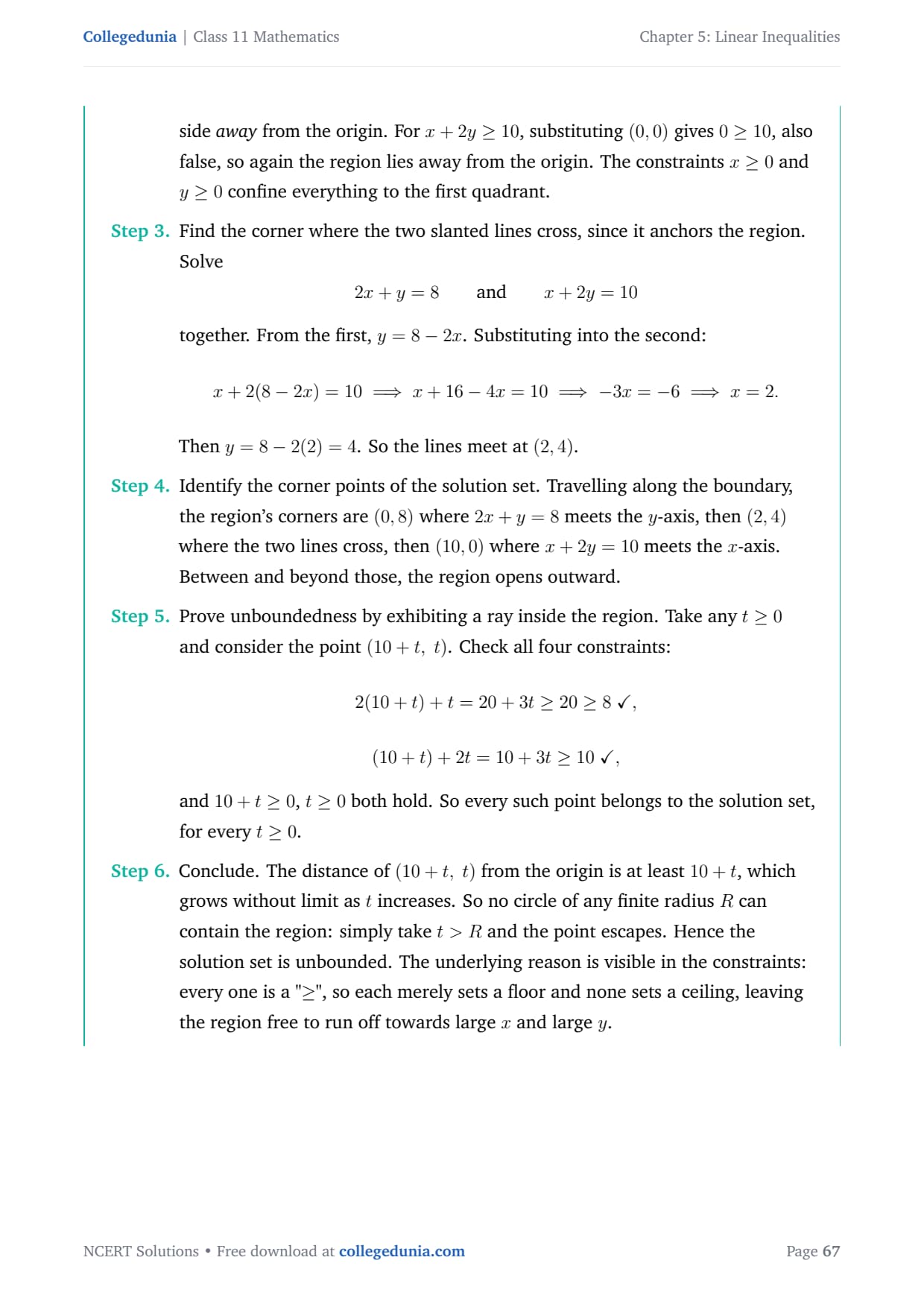
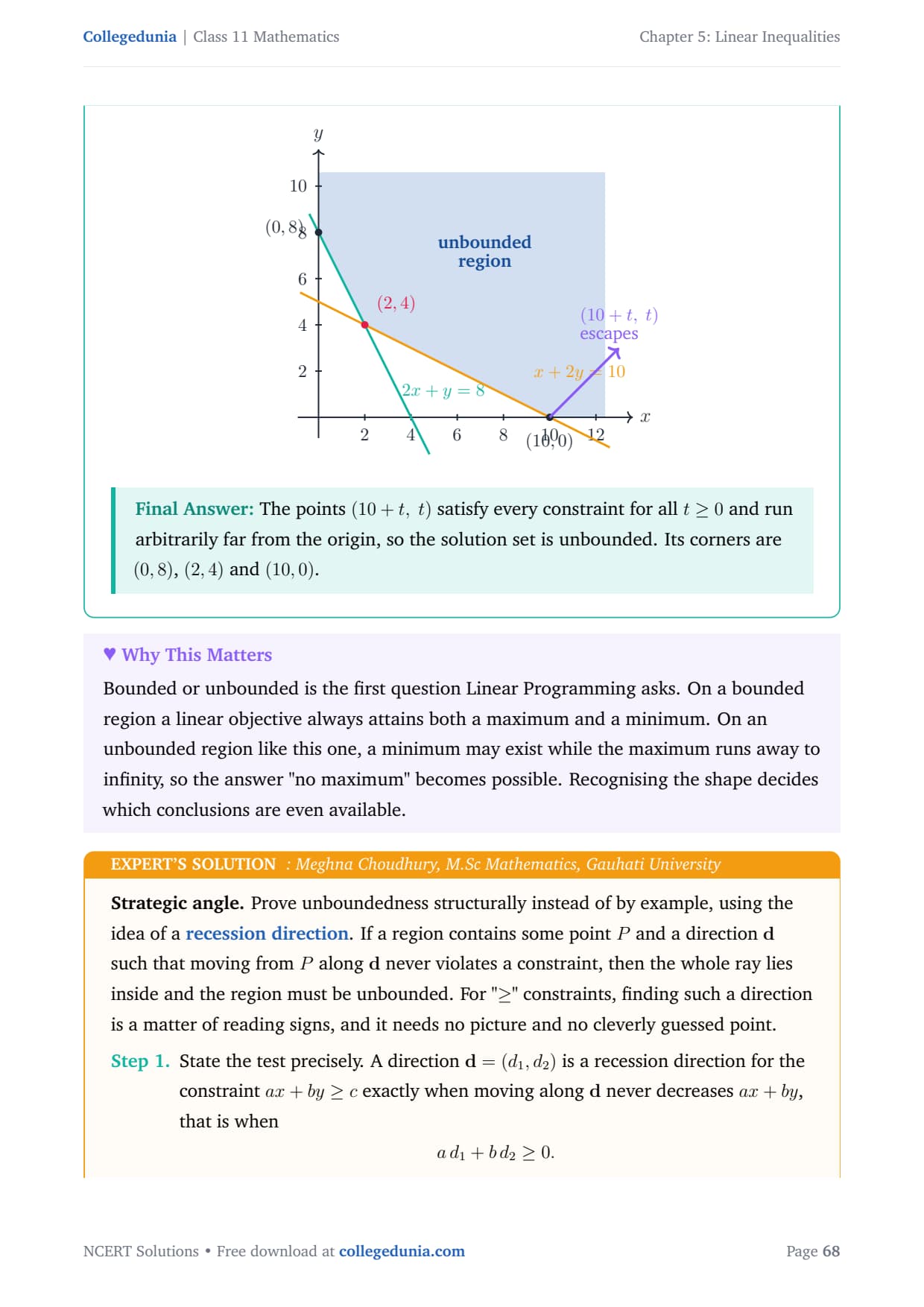
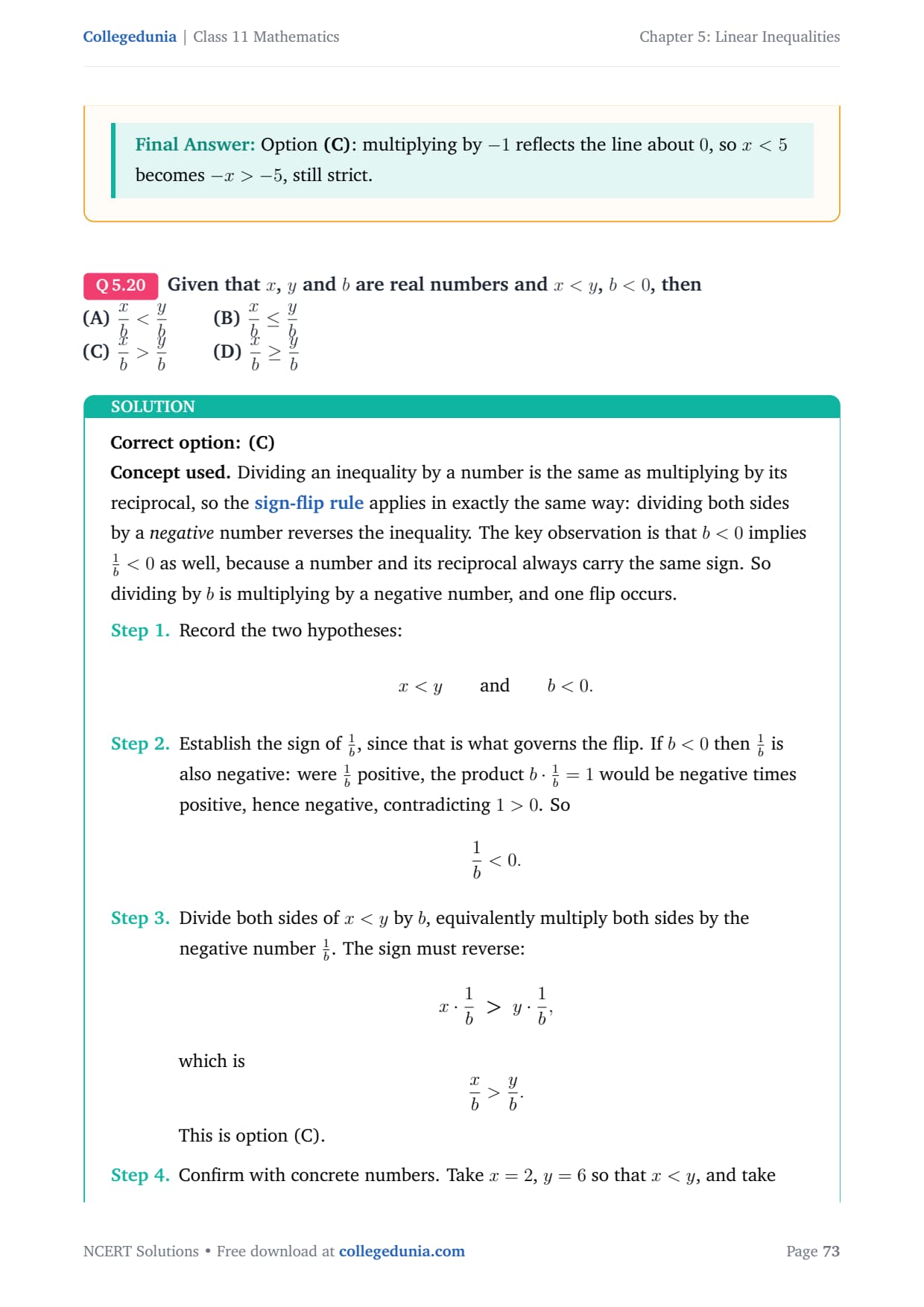
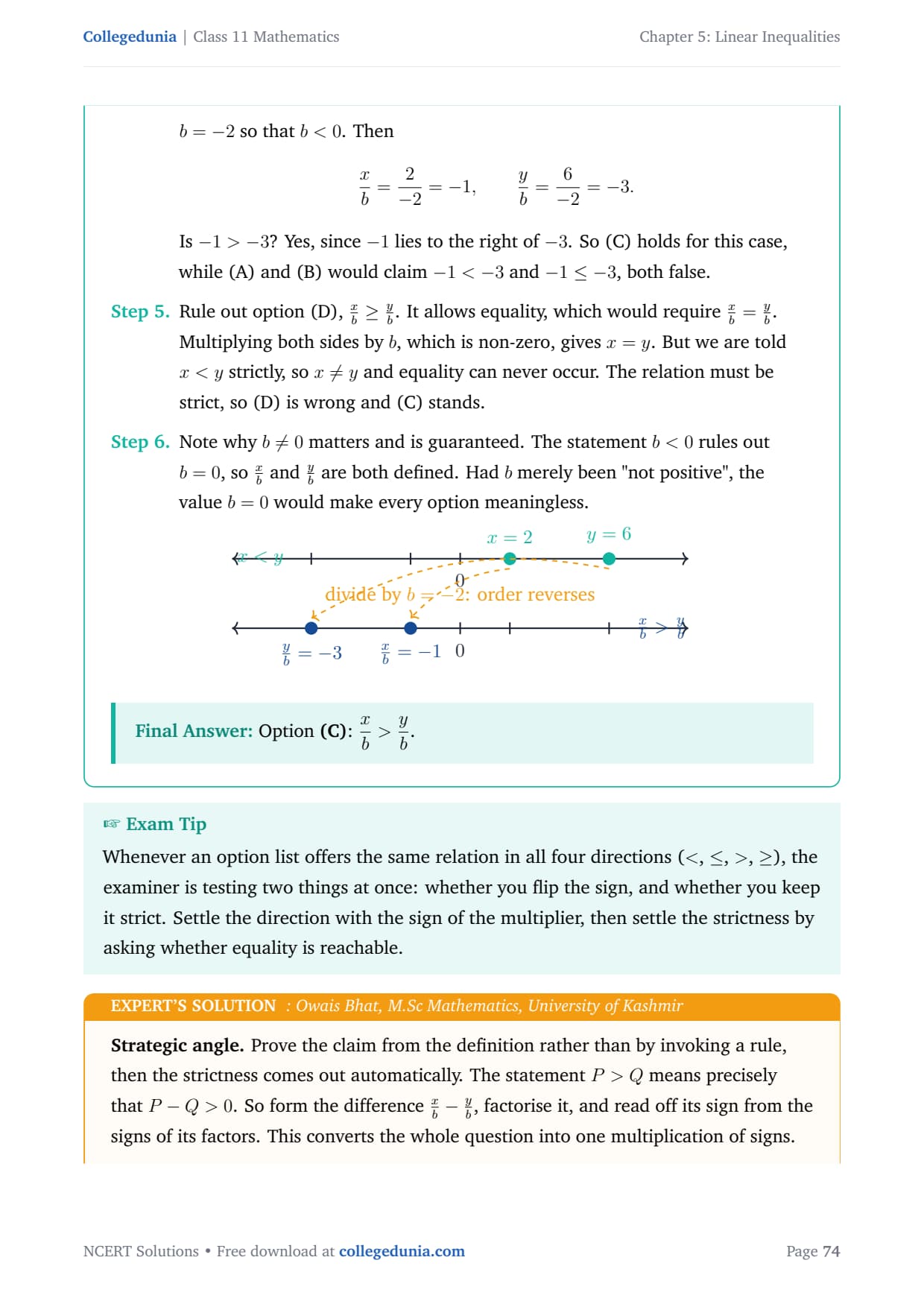
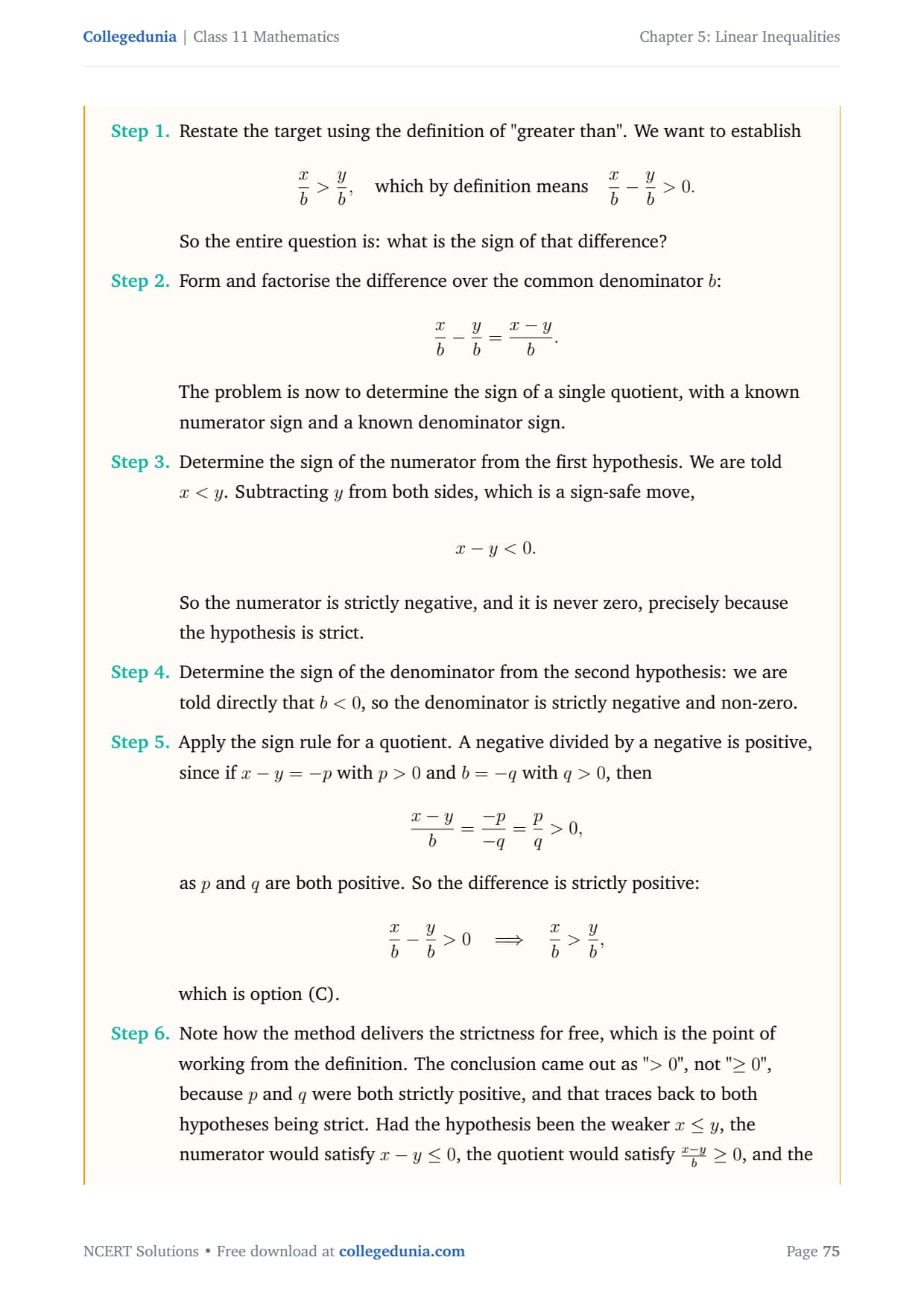
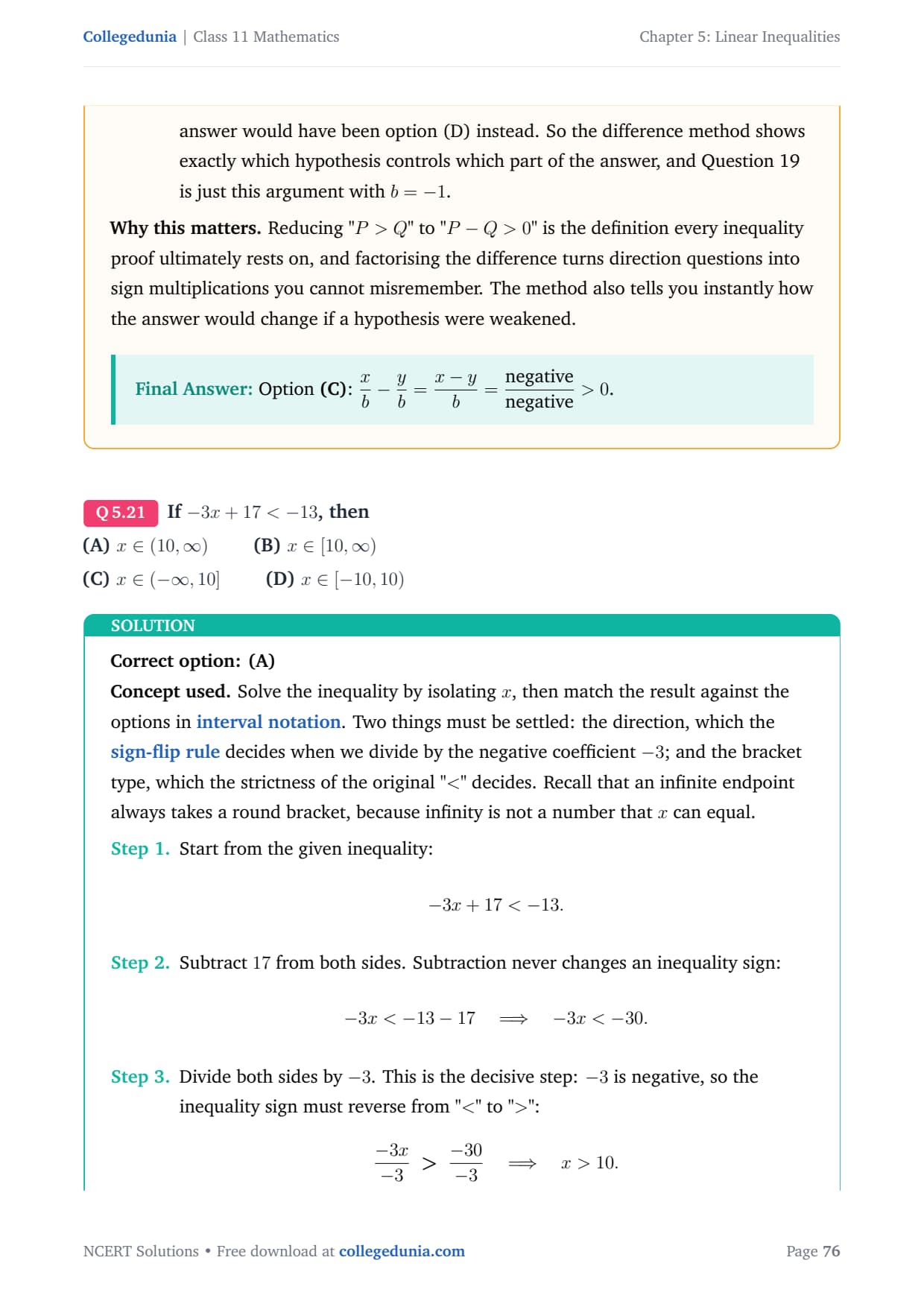
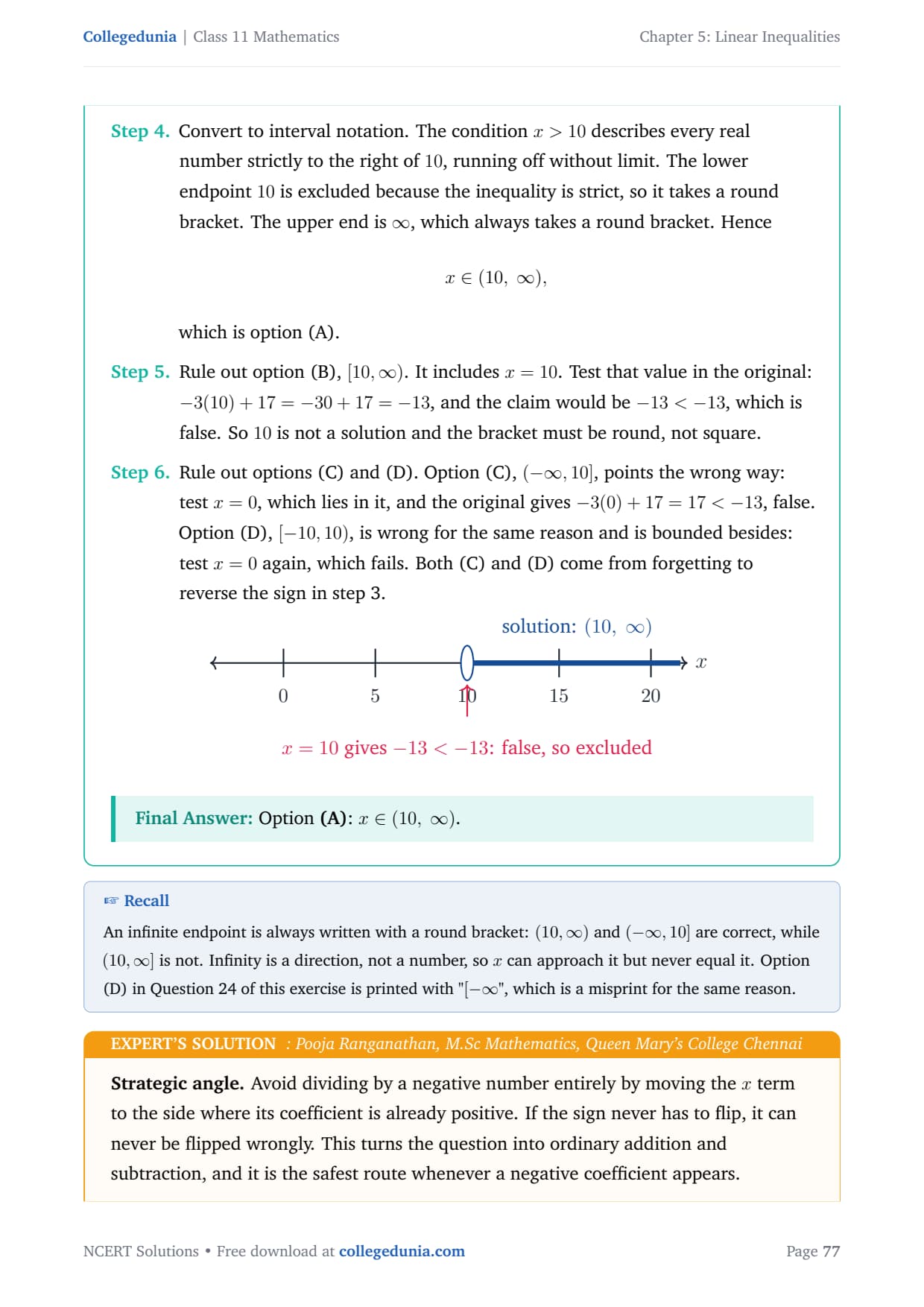
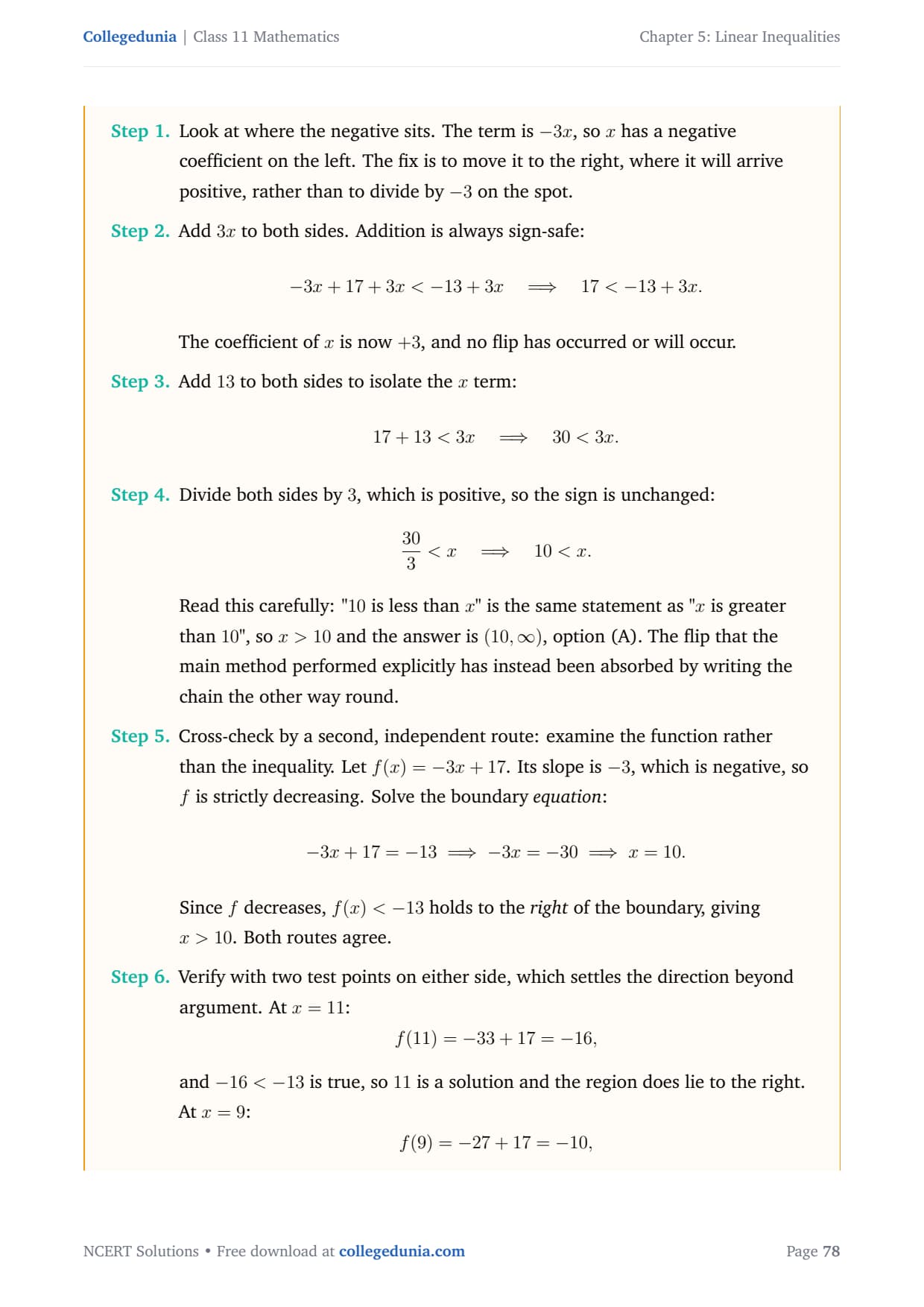
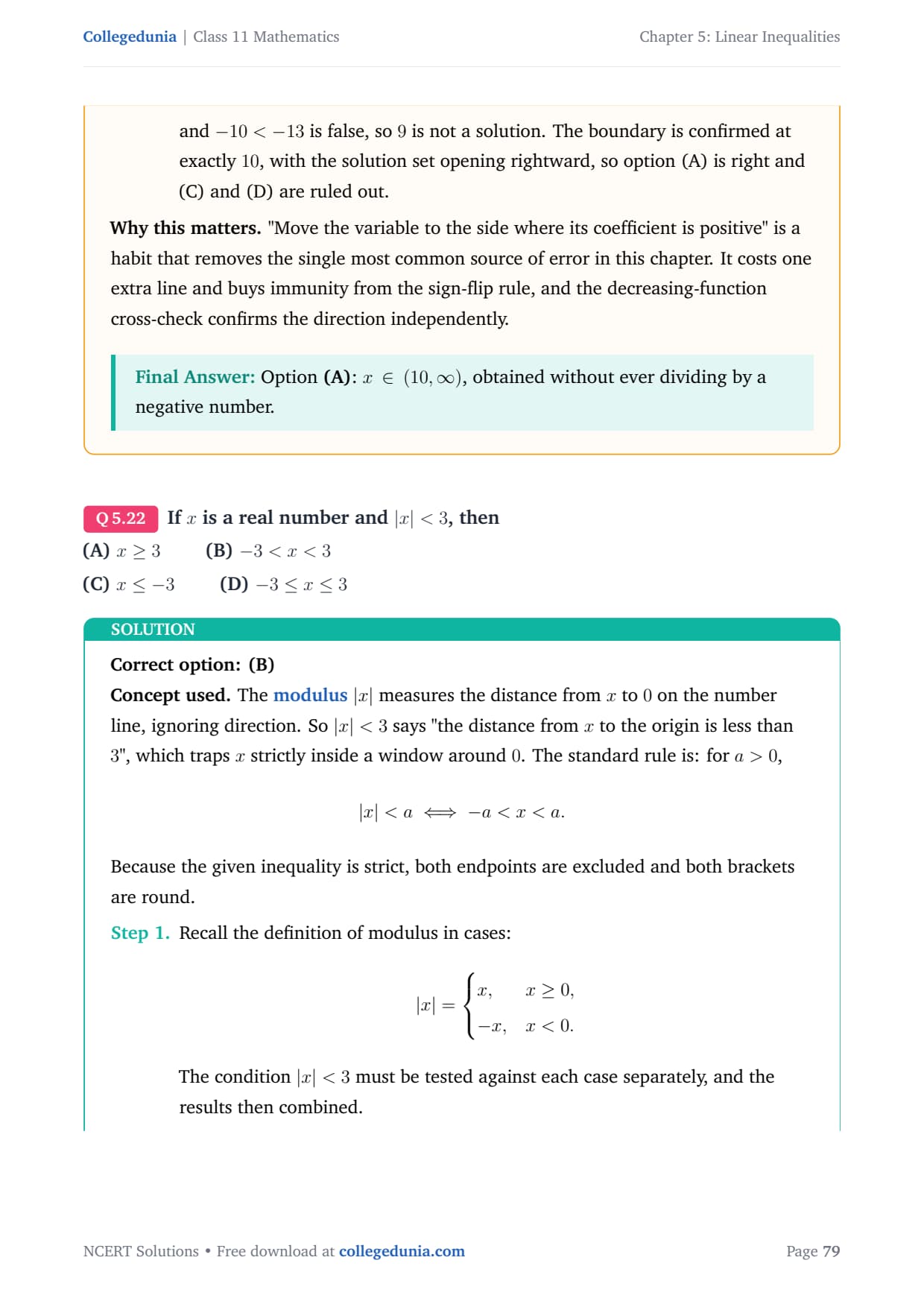
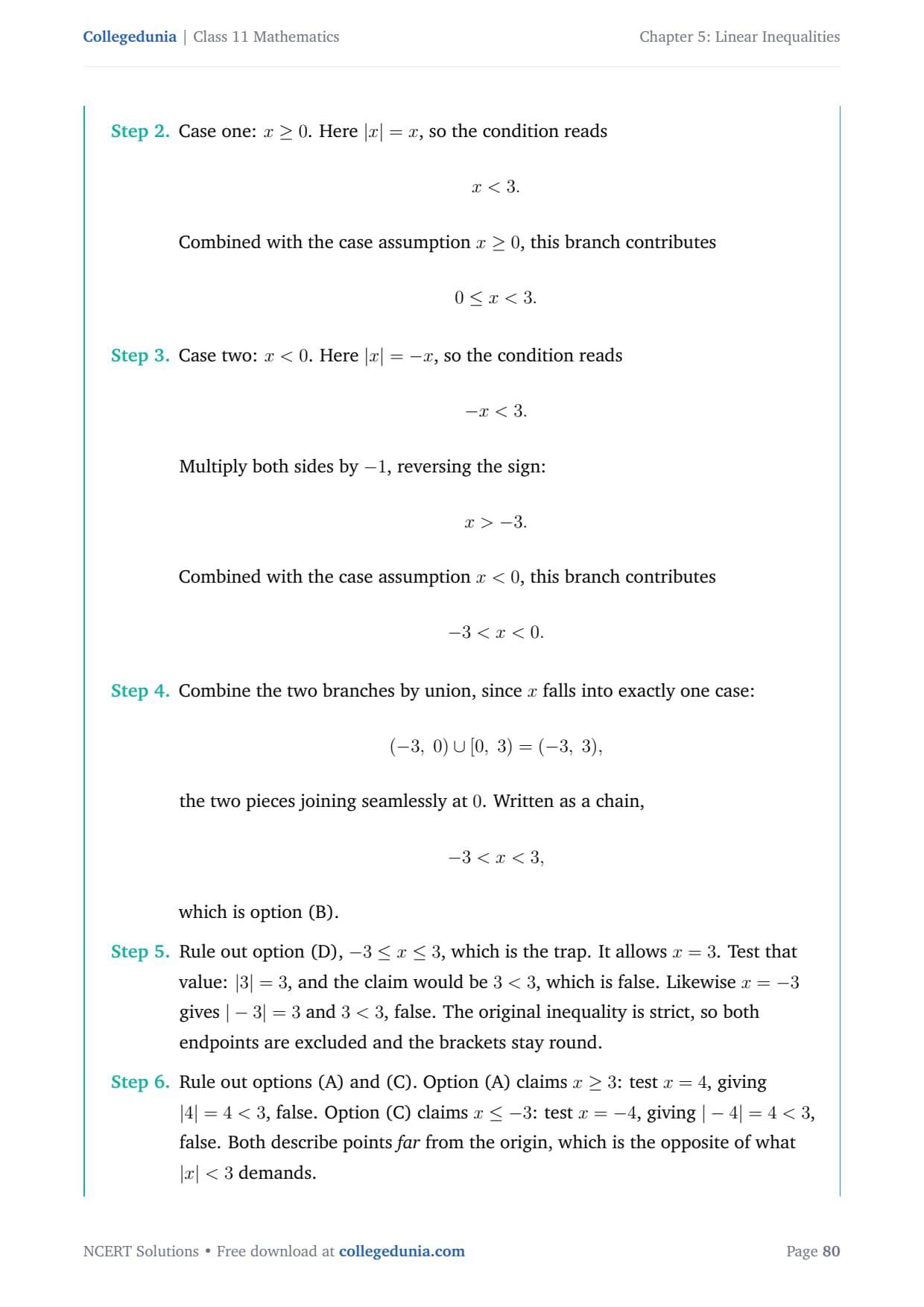
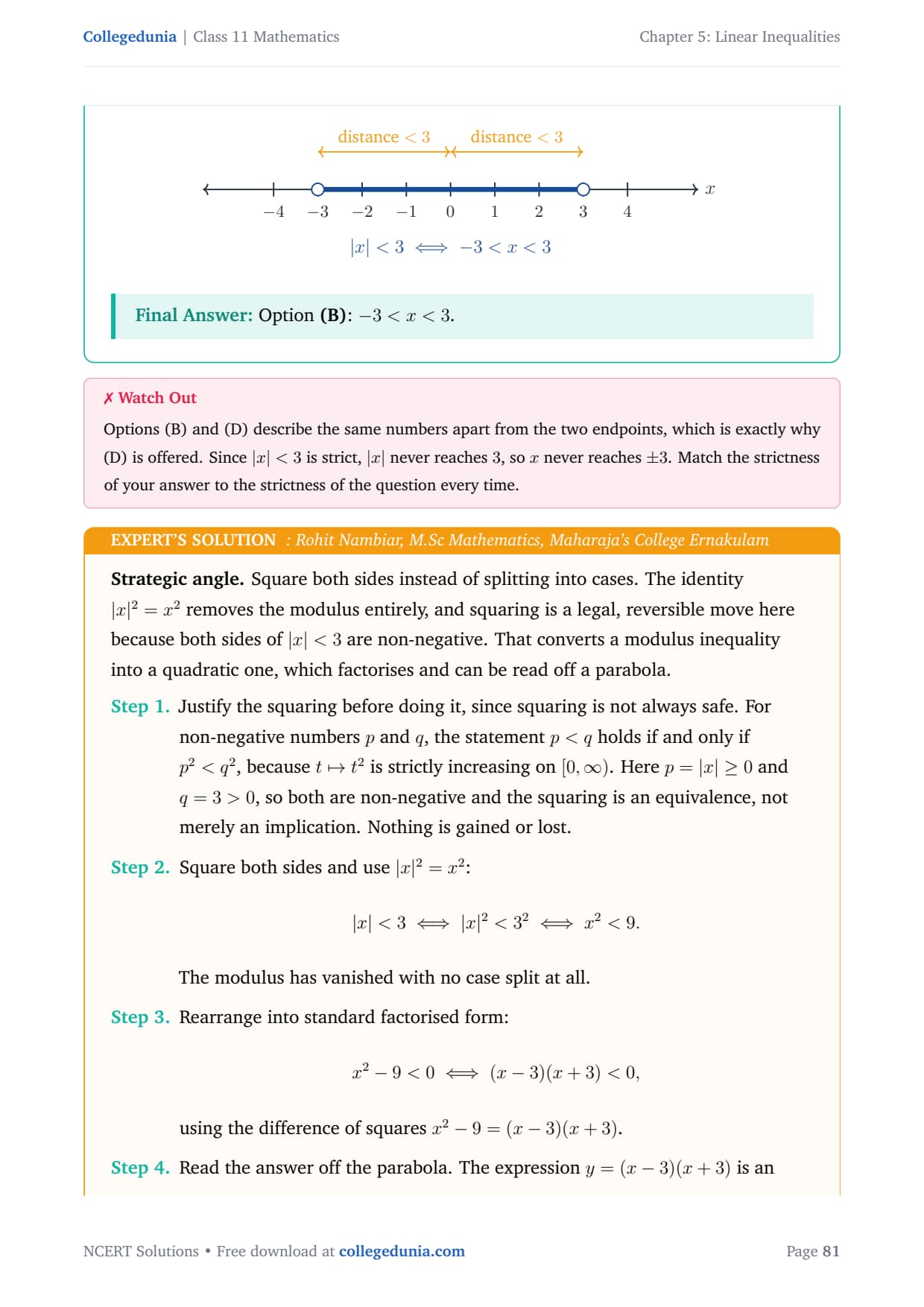
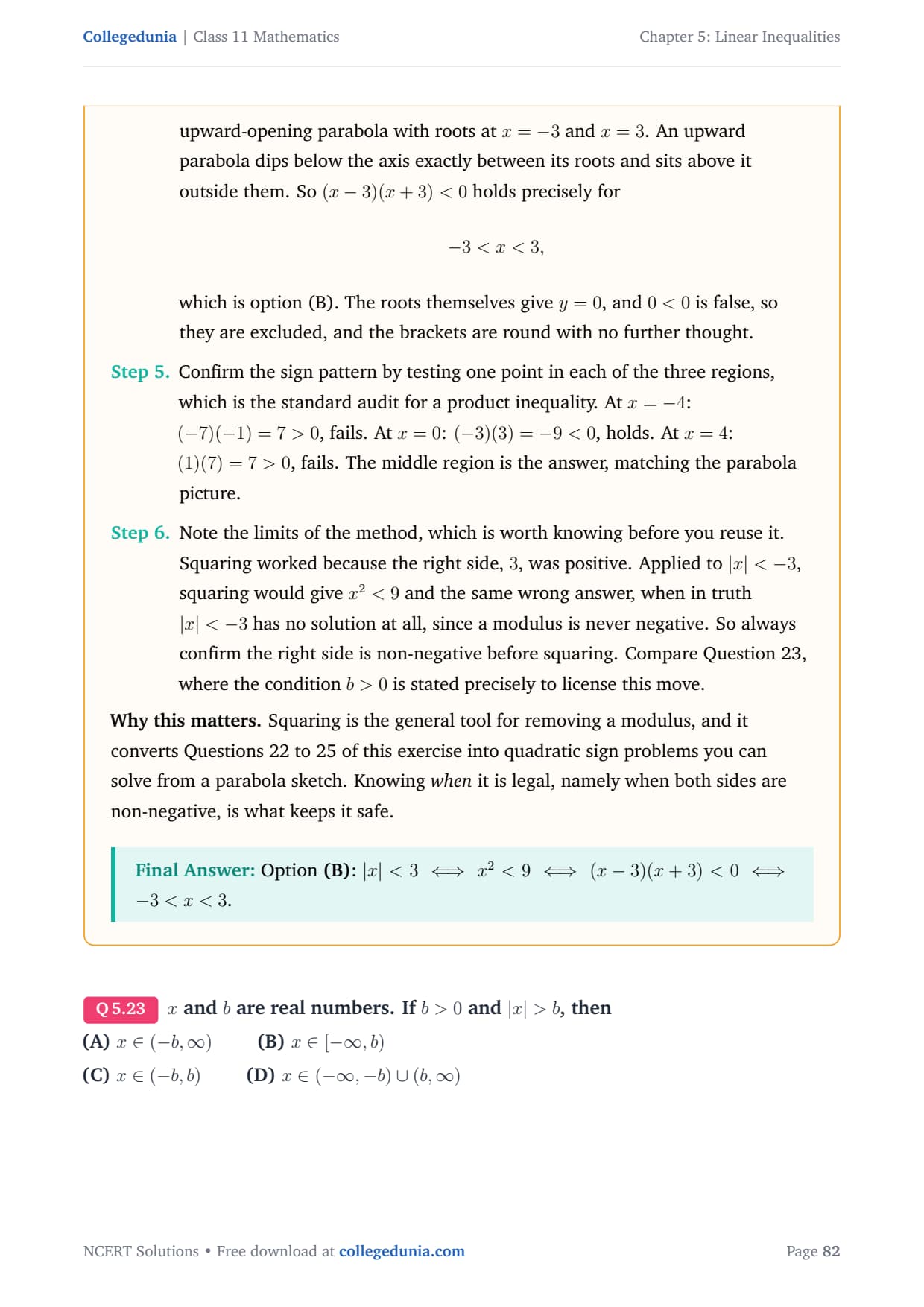
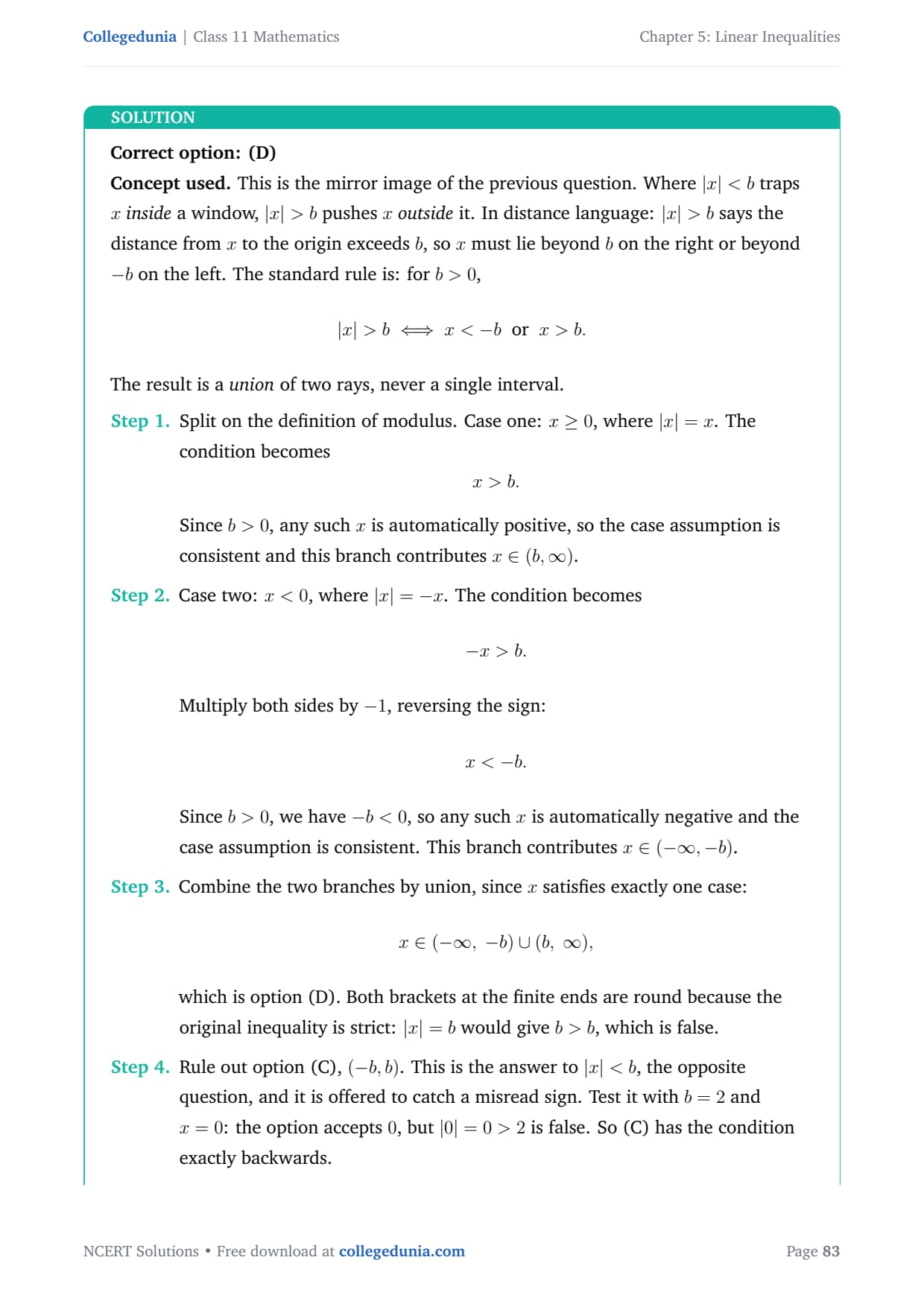
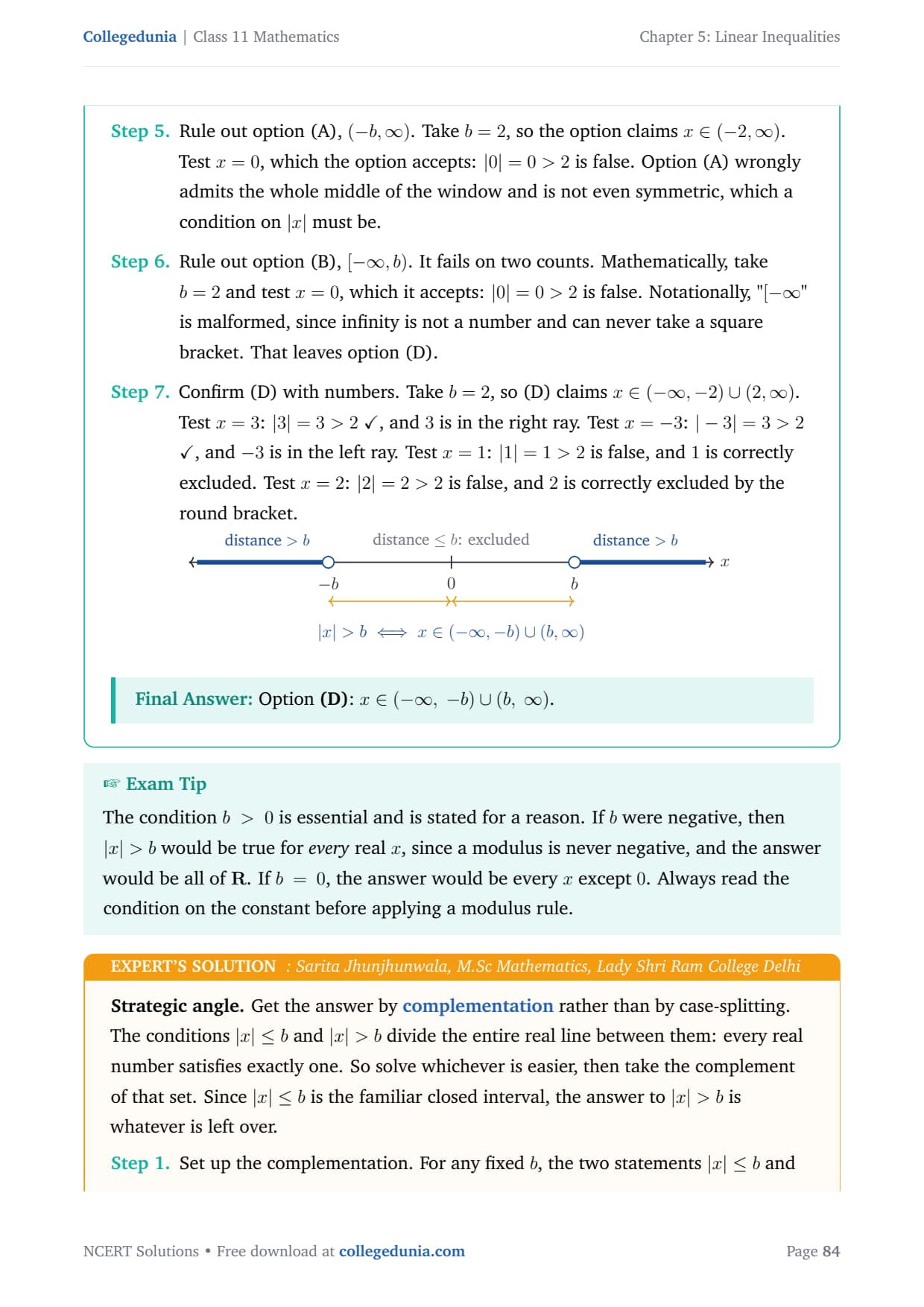
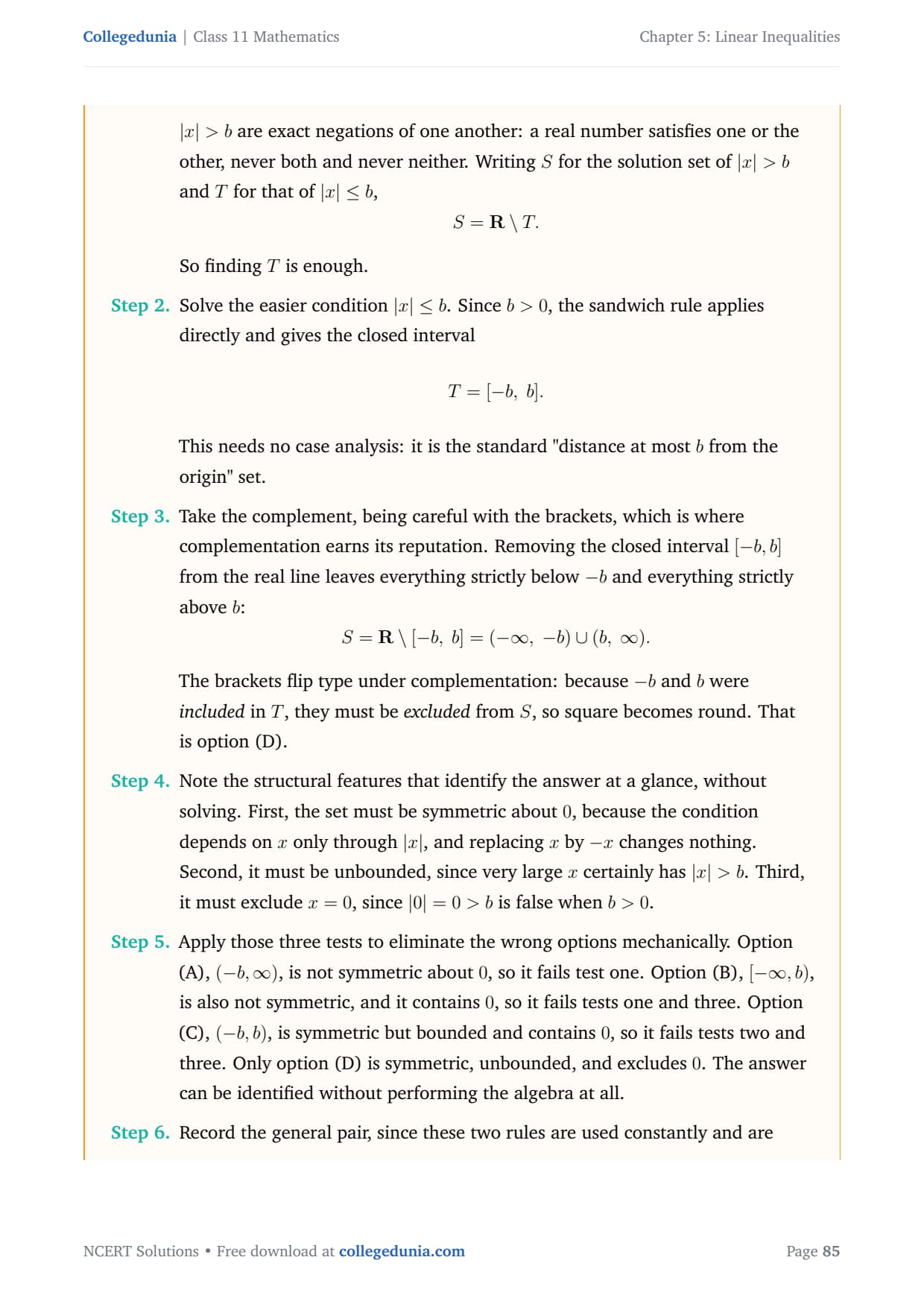
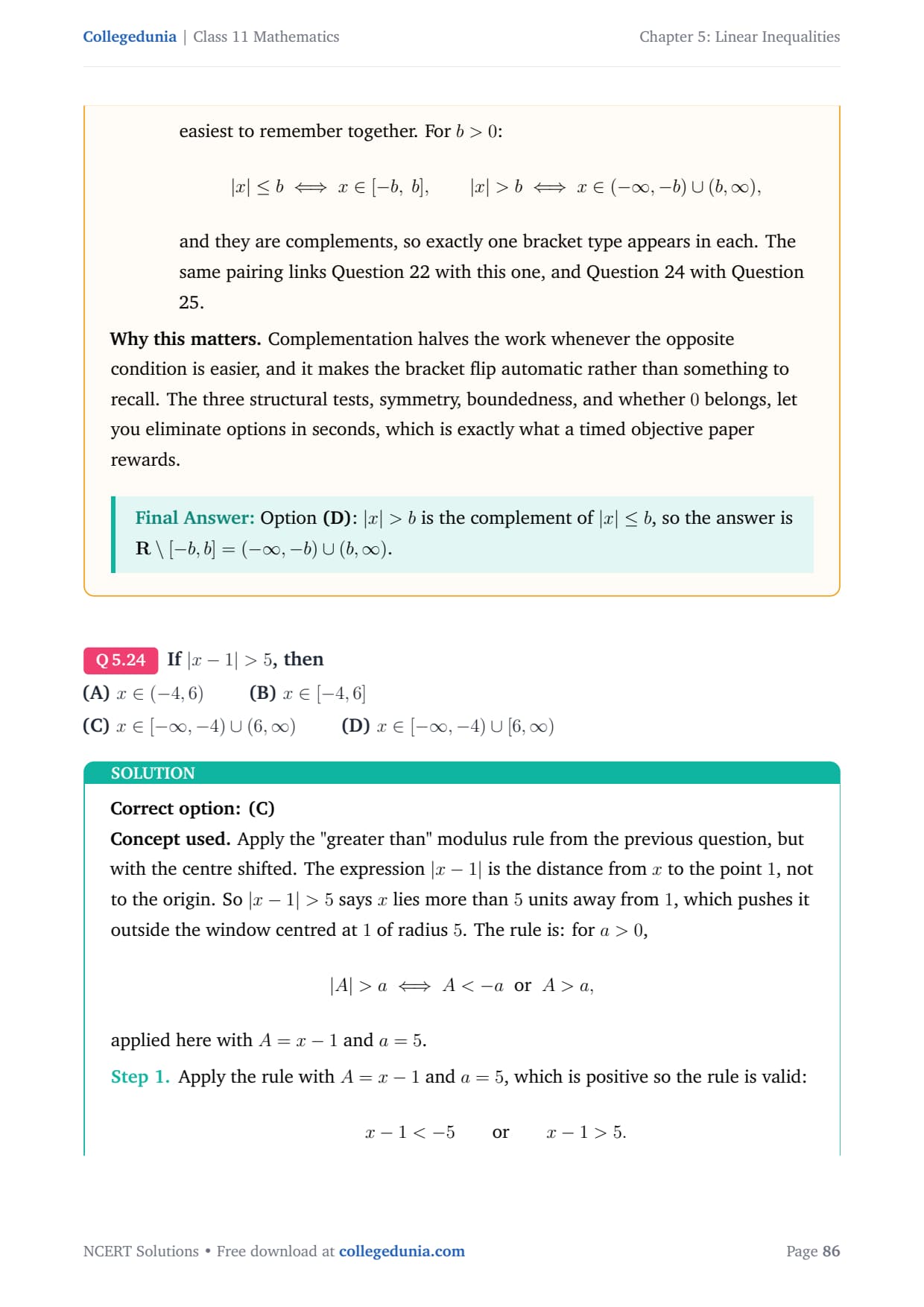
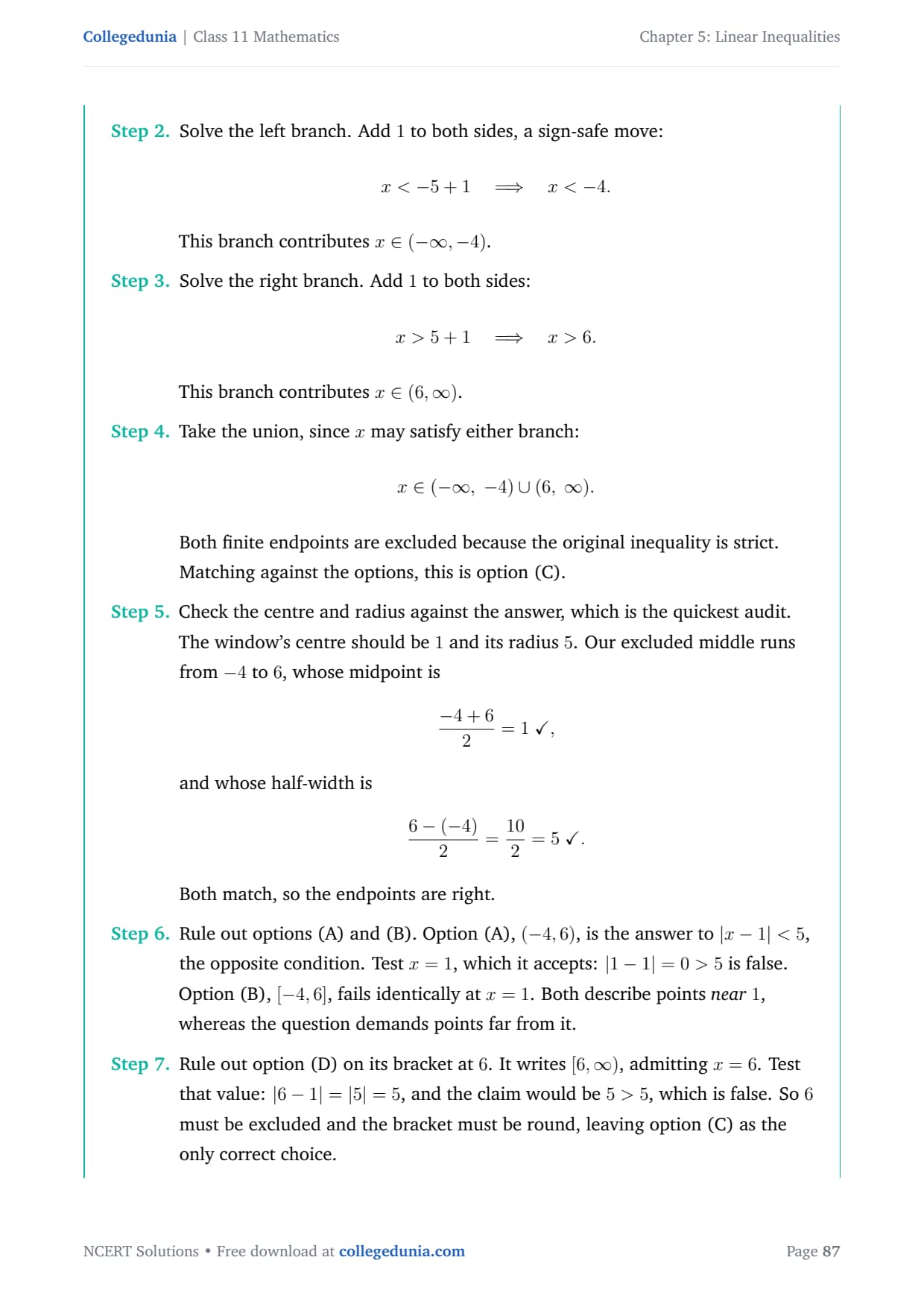
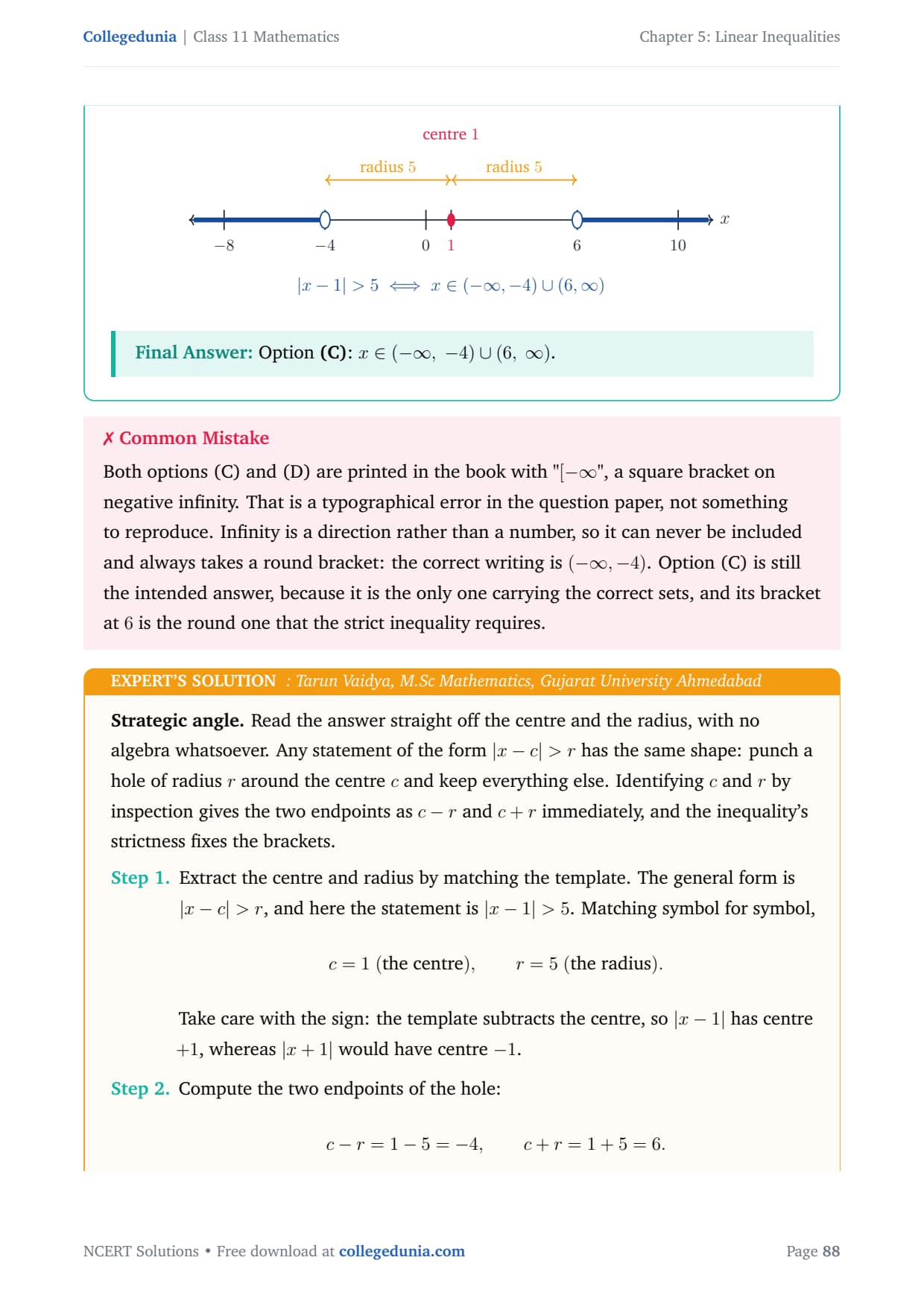
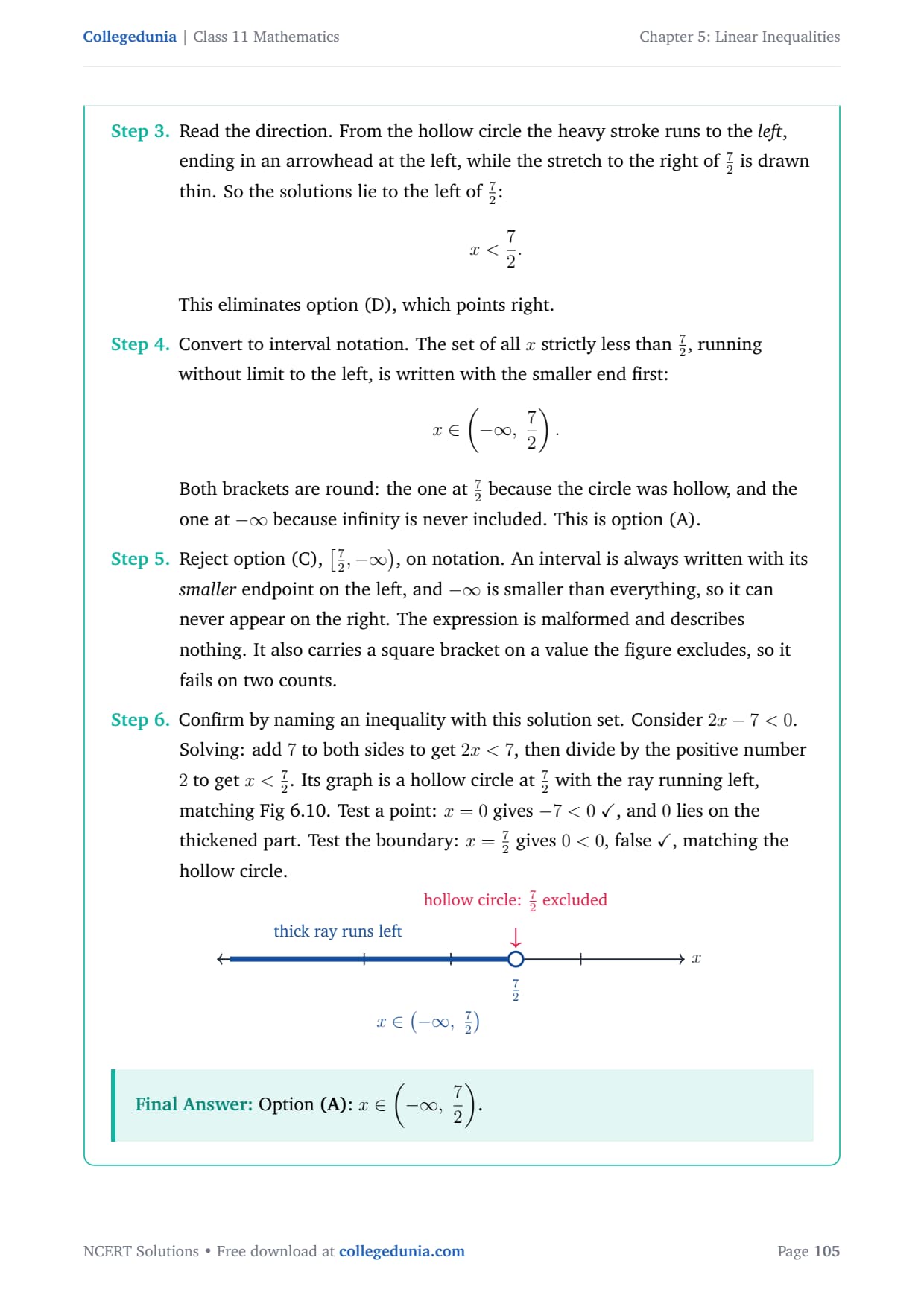
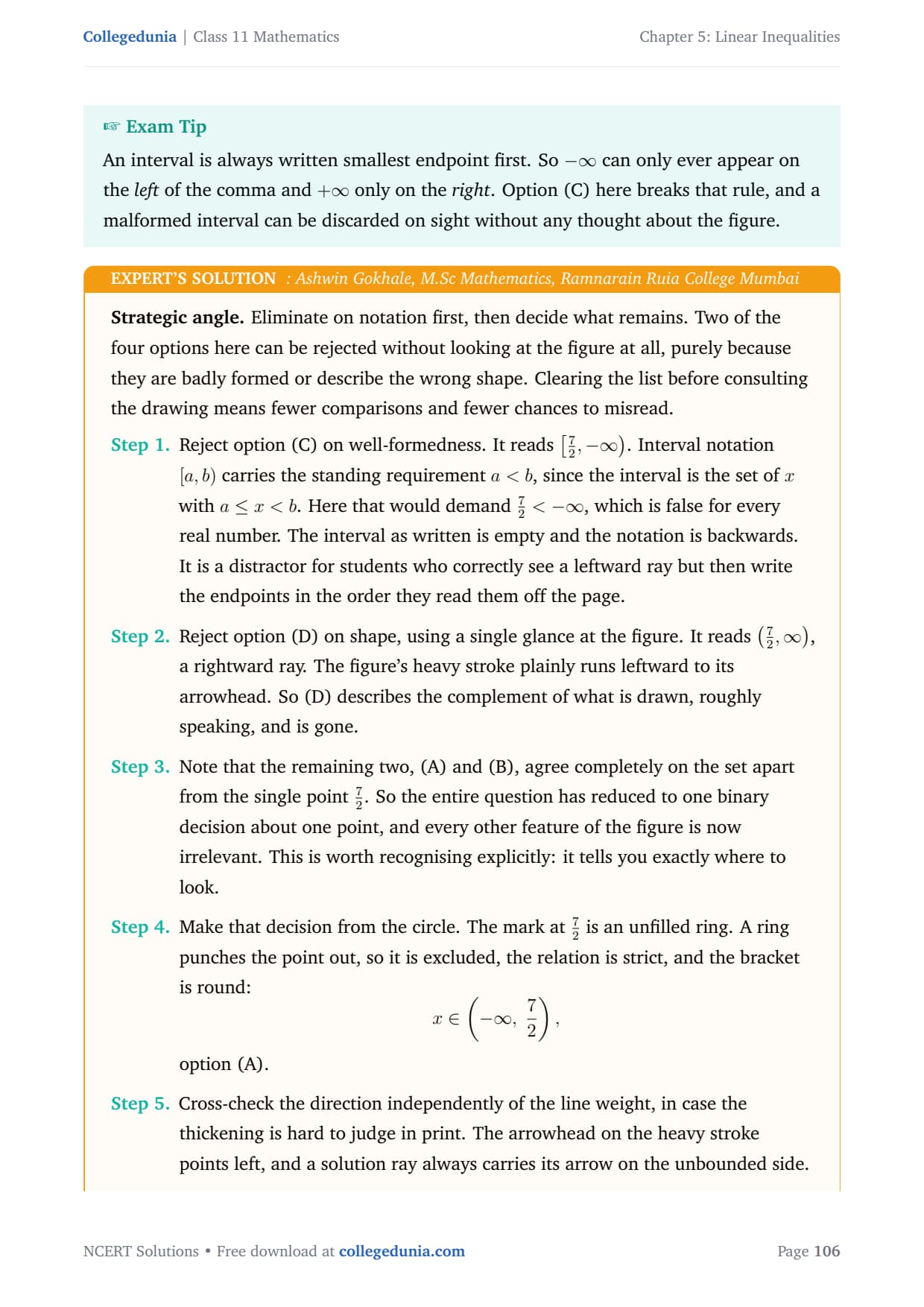
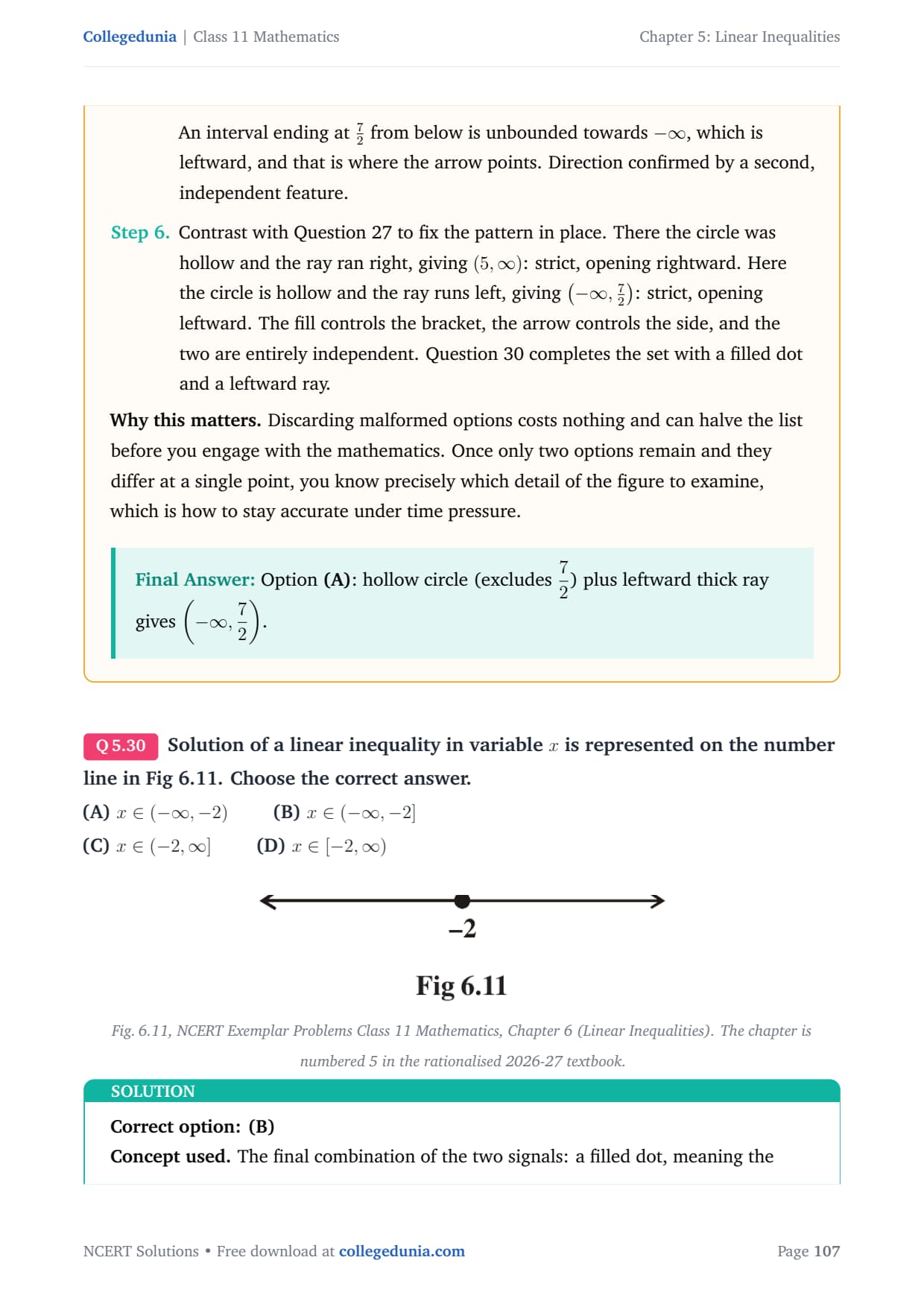
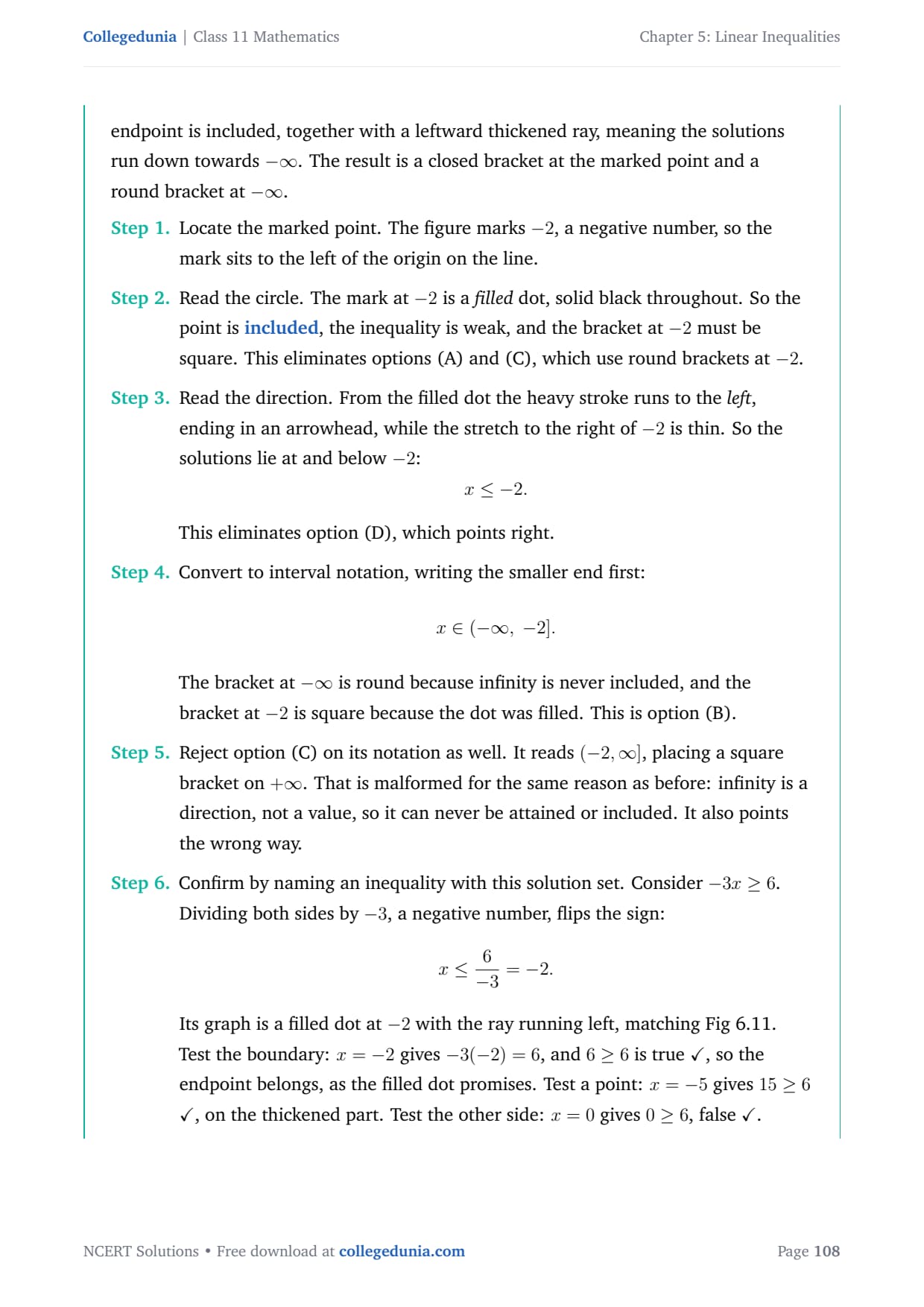
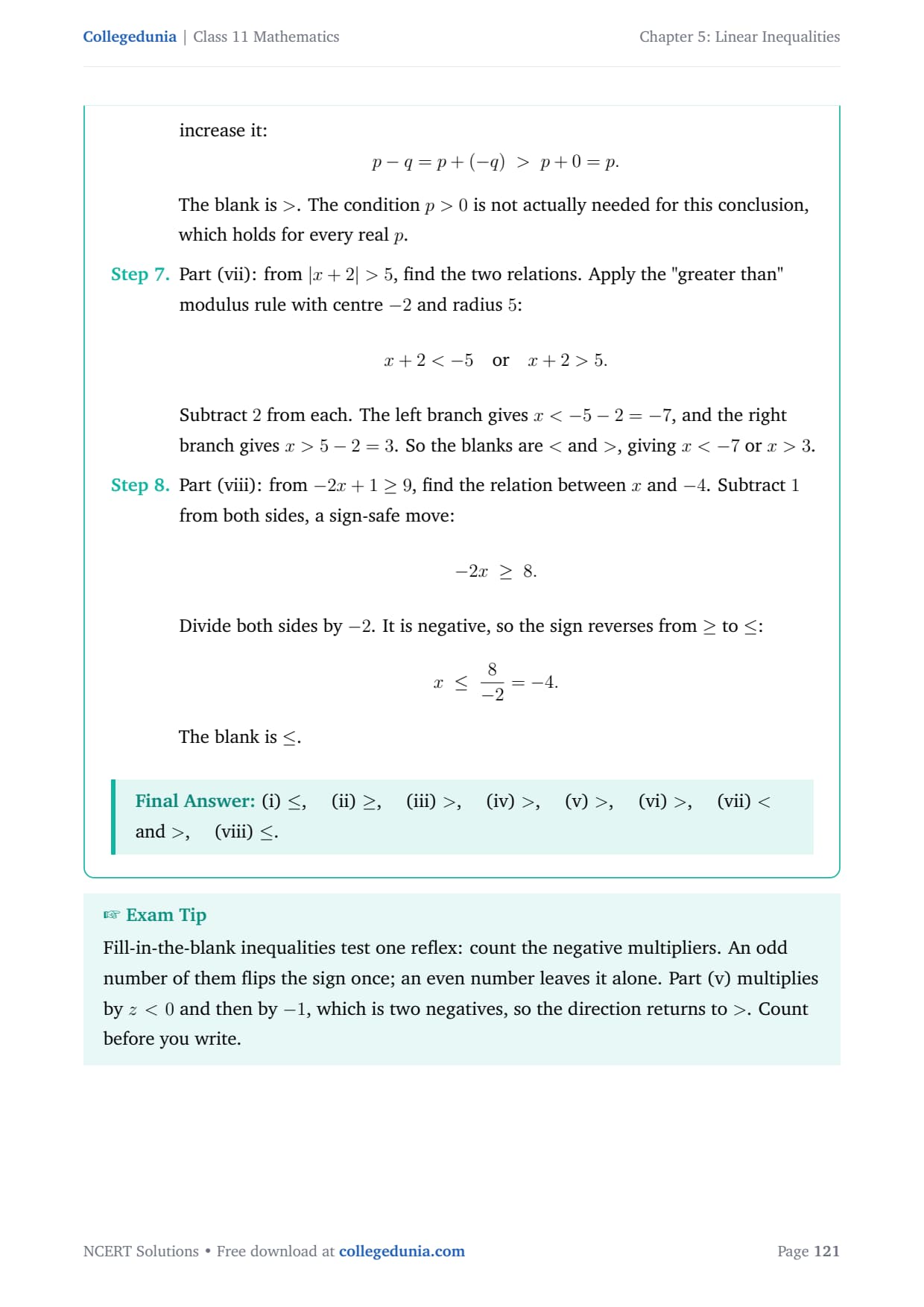
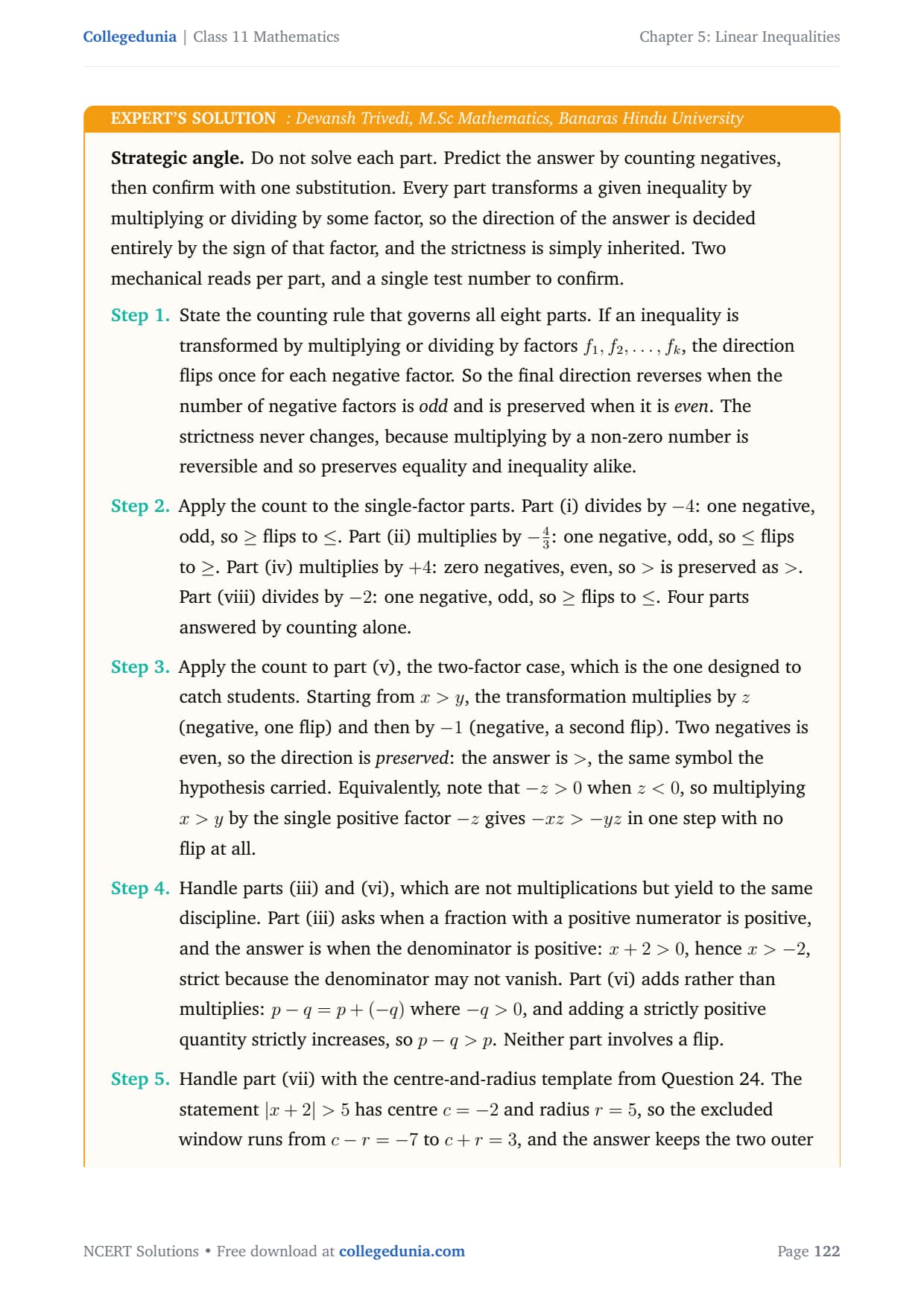
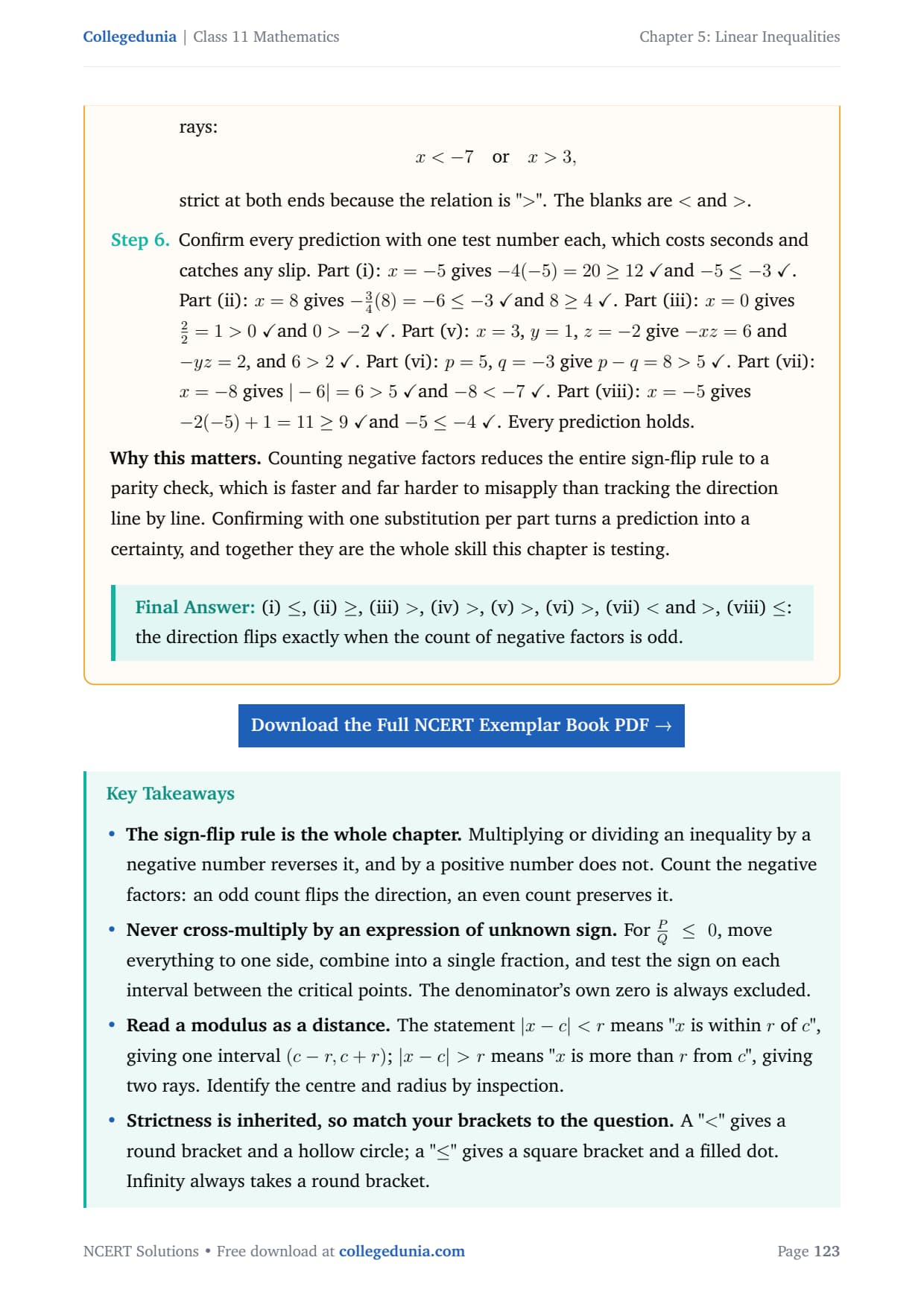
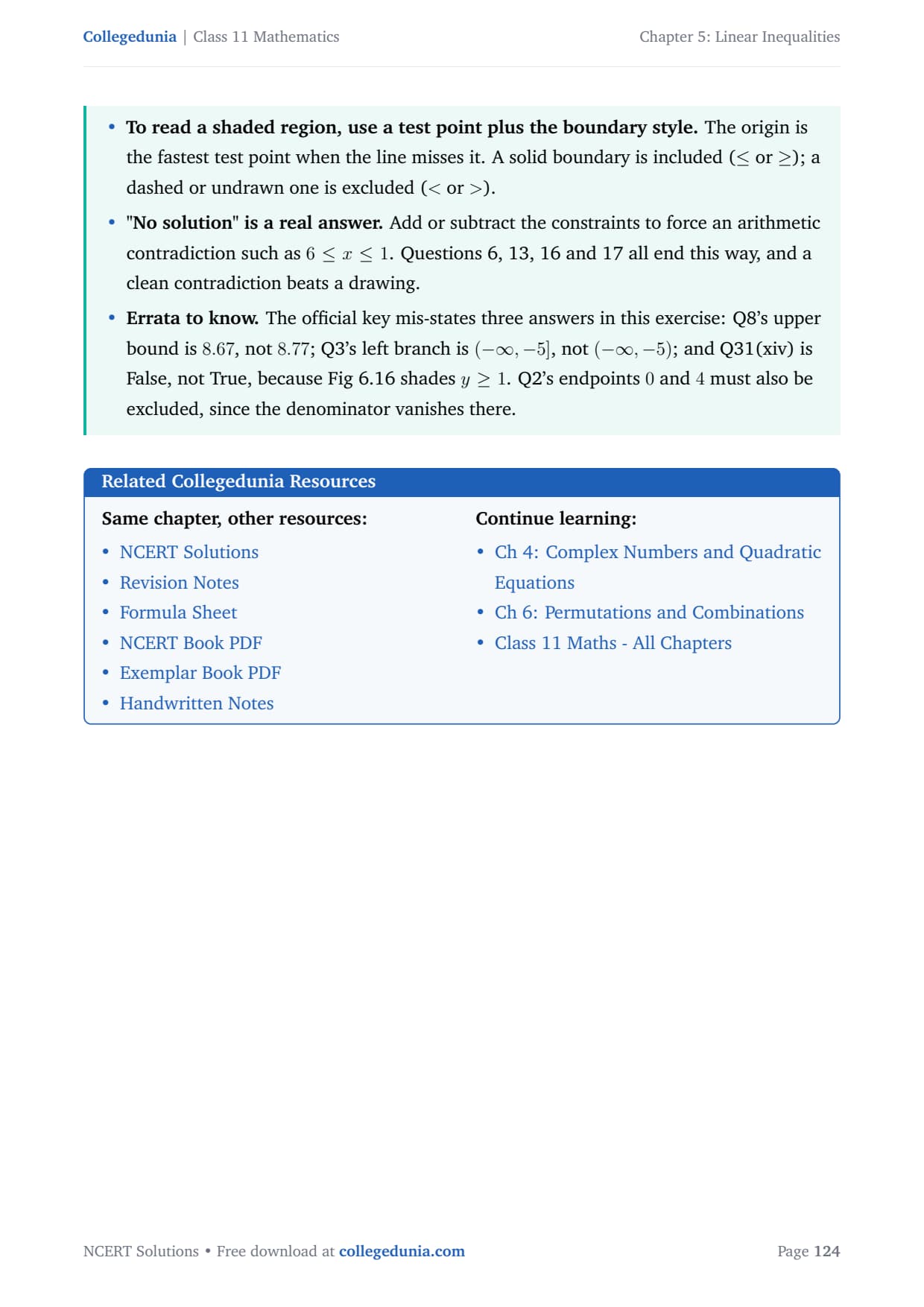
Every solution in this Collegedunia set is prepared by subject experts, based on the 2026-27 NCERT Exemplar, and checked line by line against the official answer key.
The Exemplar prints this chapter as Chapter 6, so its single long exercise is numbered Exercise 6.3 in the book's own numbering. The solutions PDF runs to 124 pages and covers every question in it.
- 32 questions solved: Short Answer, Long Answer, Objective, Fill in the Blanks and True/False.
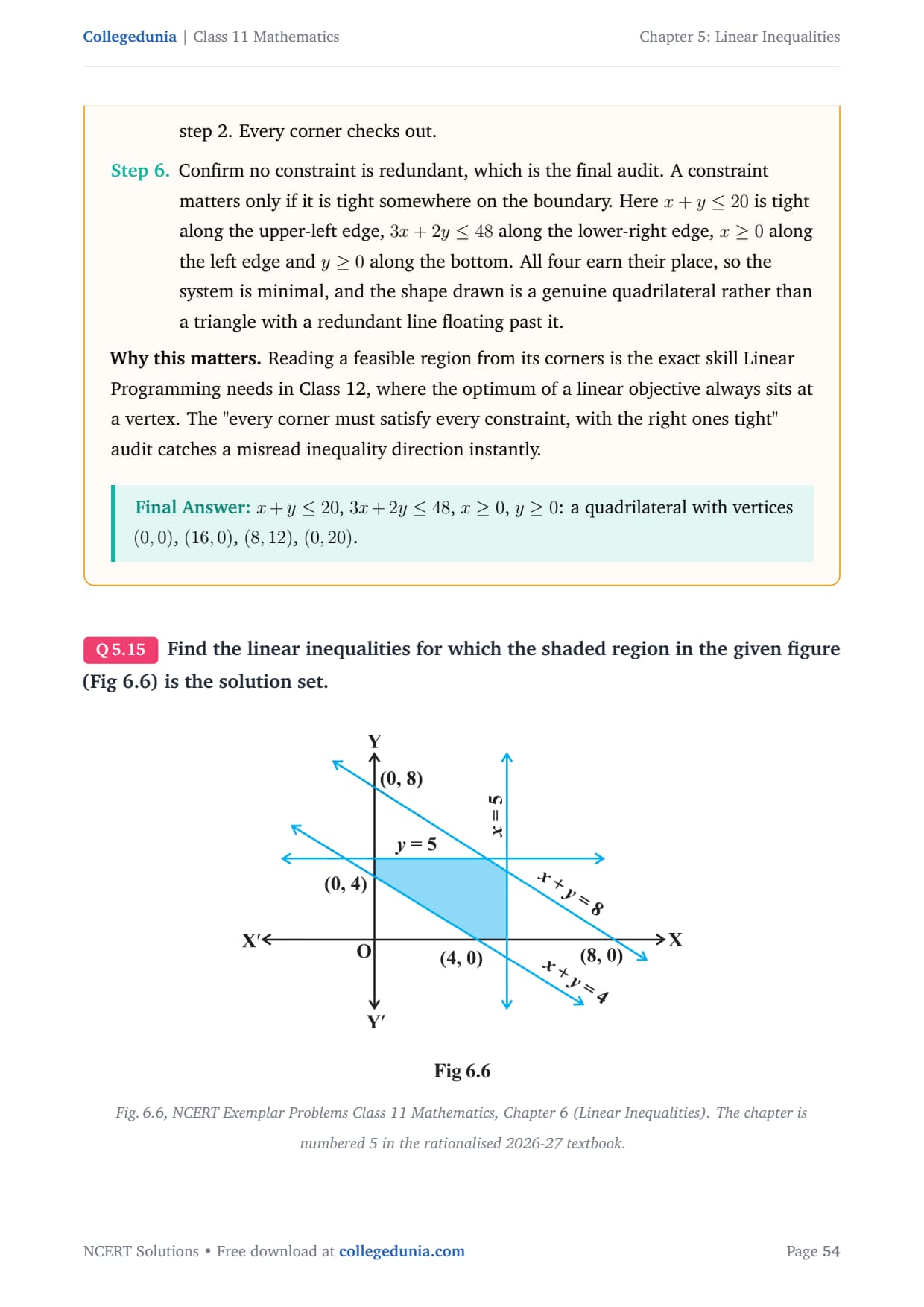
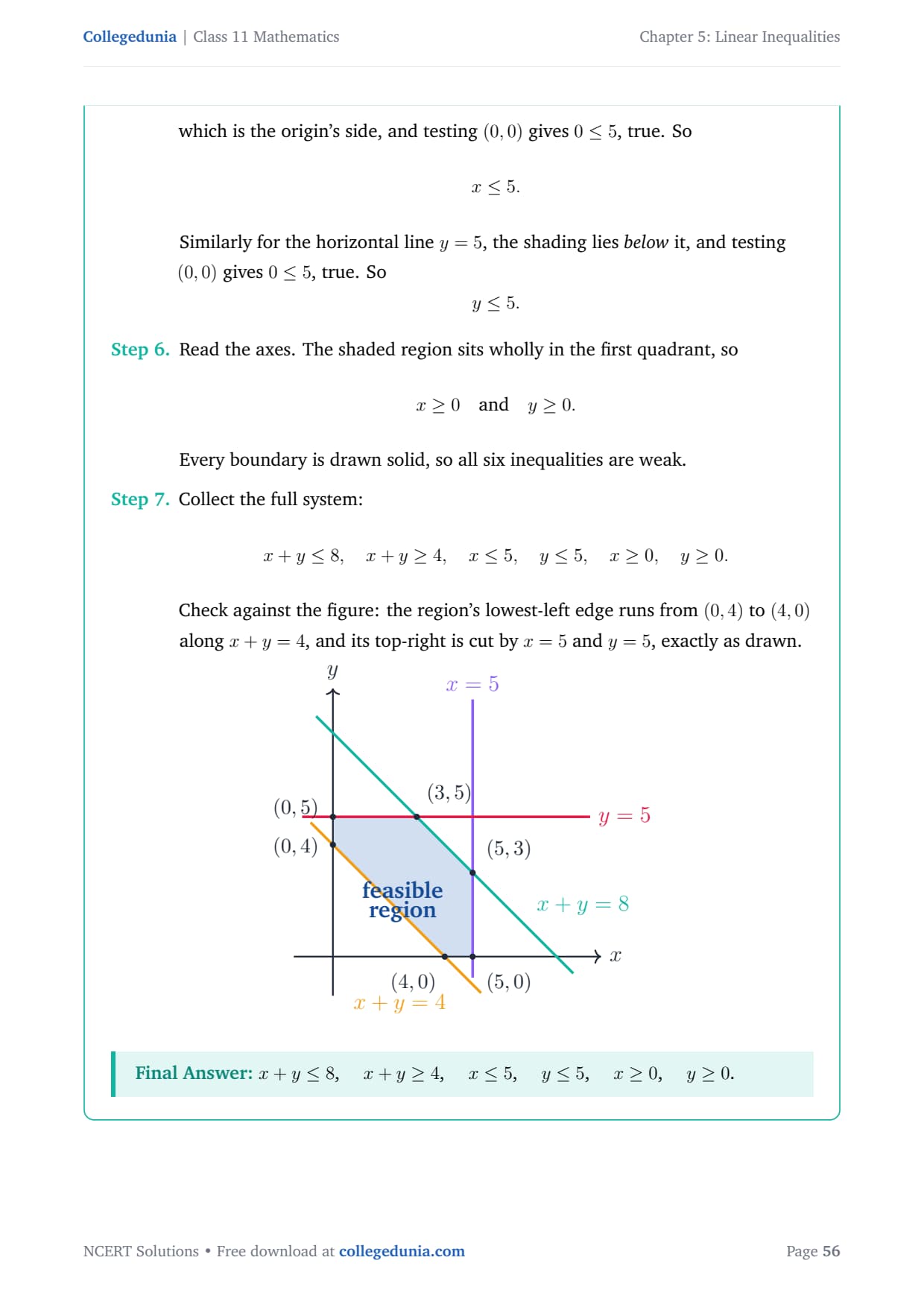
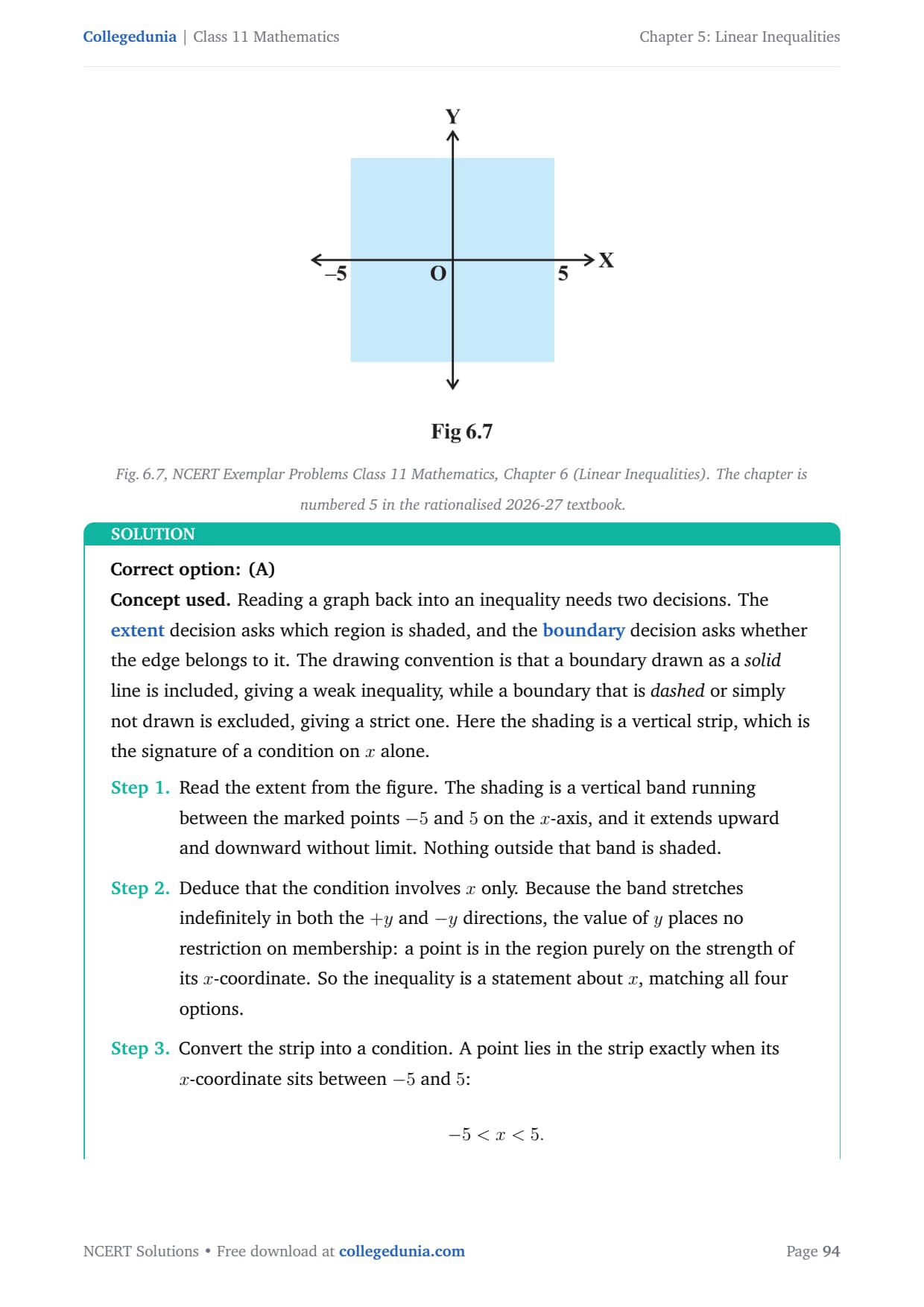
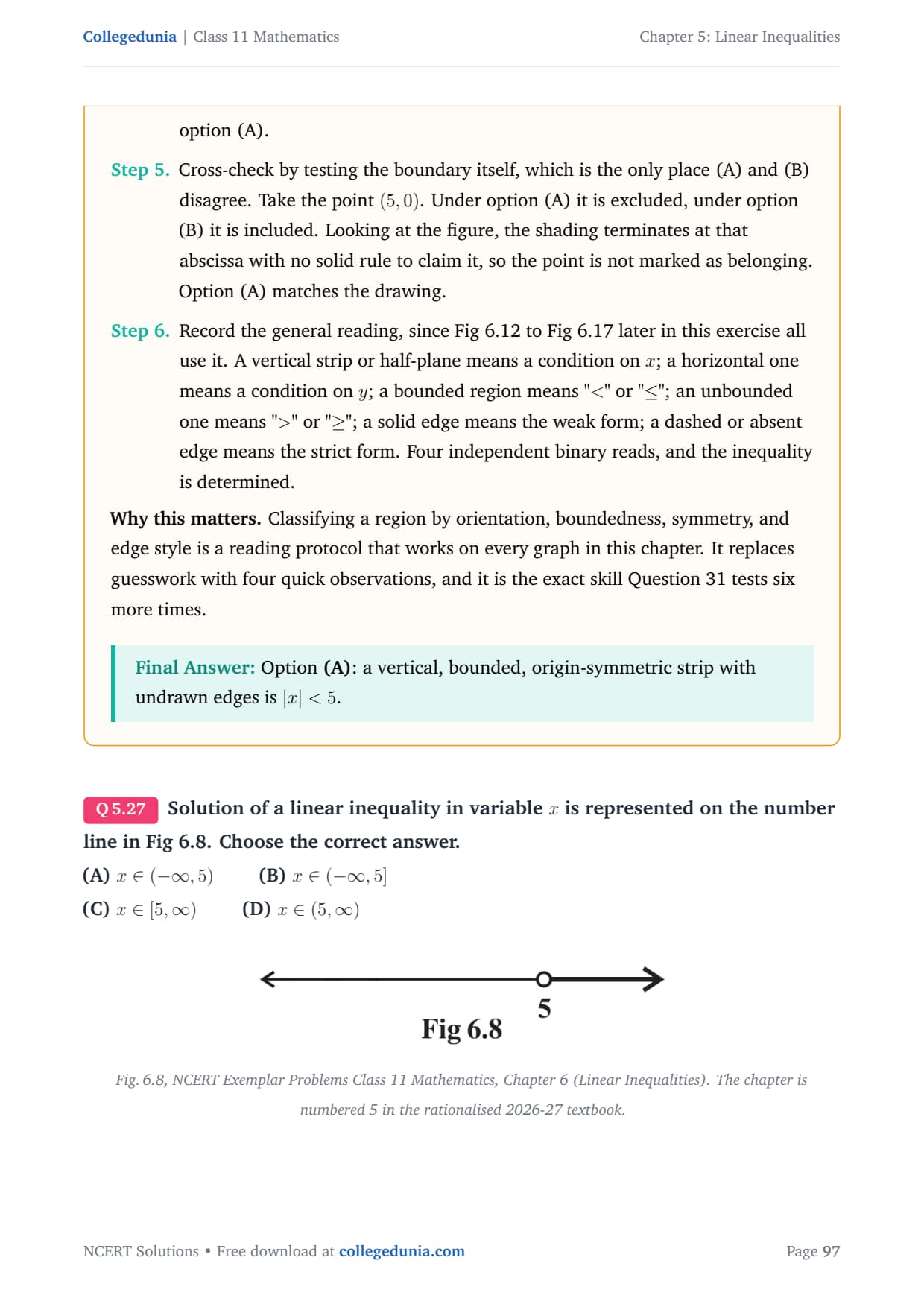
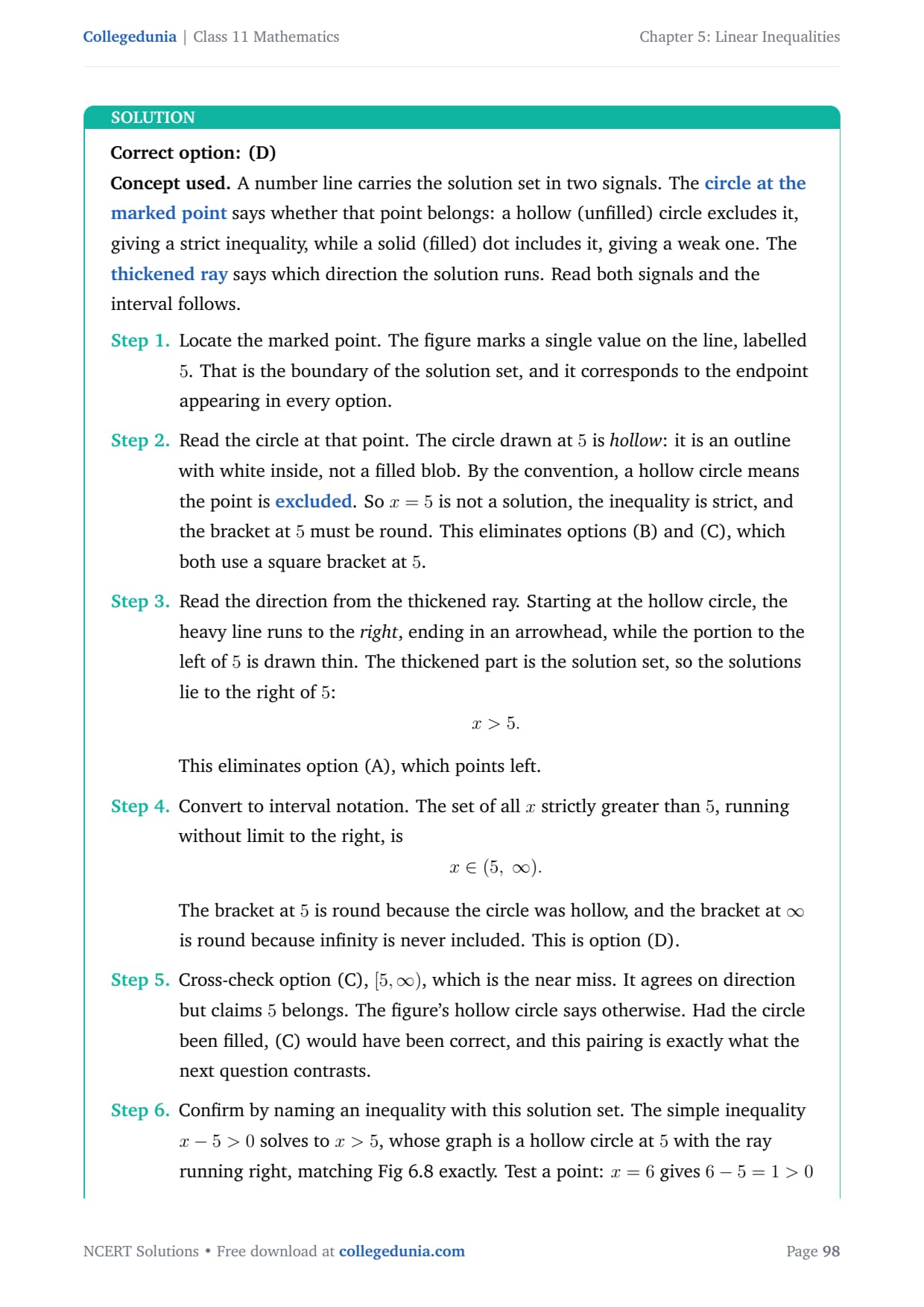
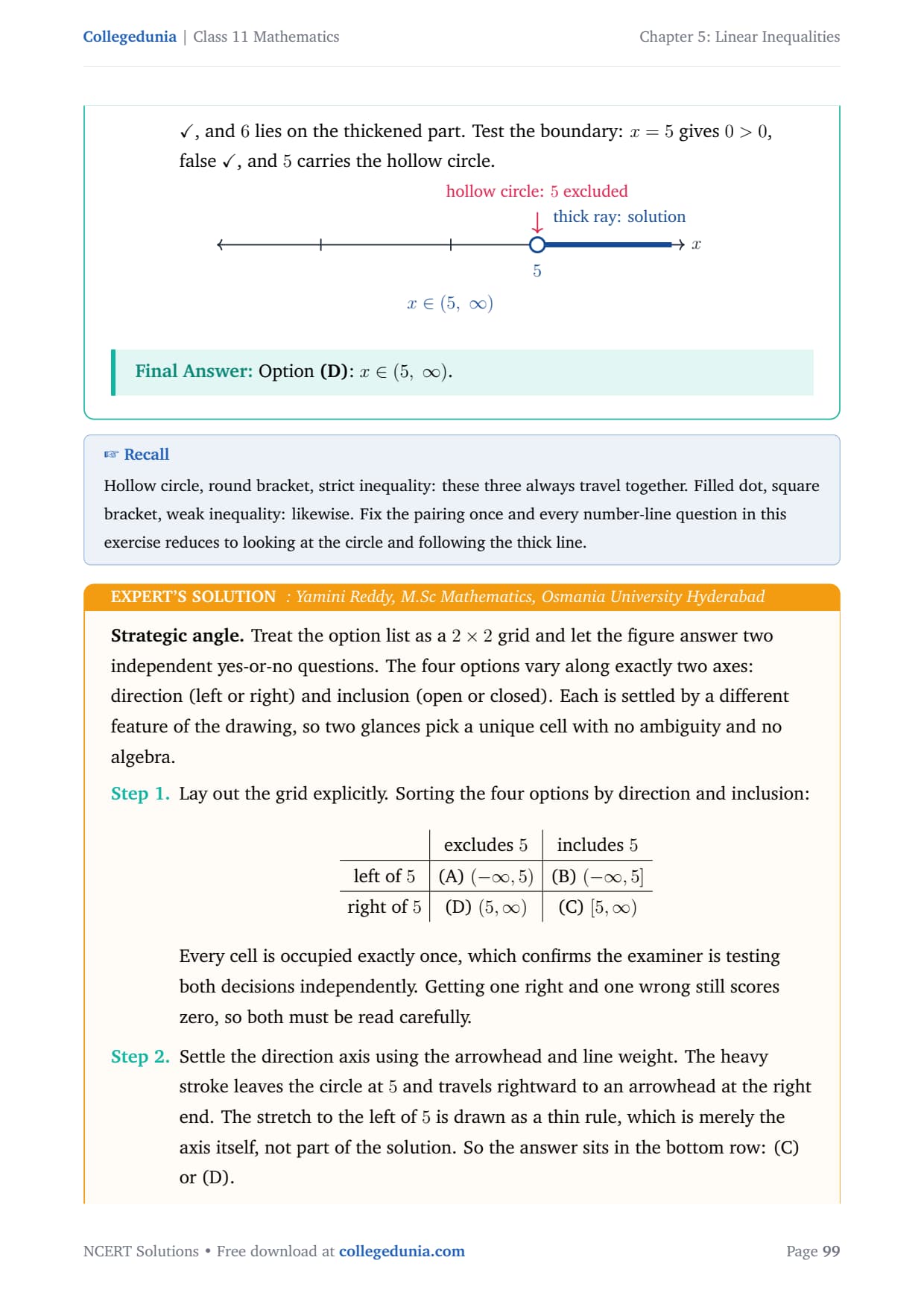
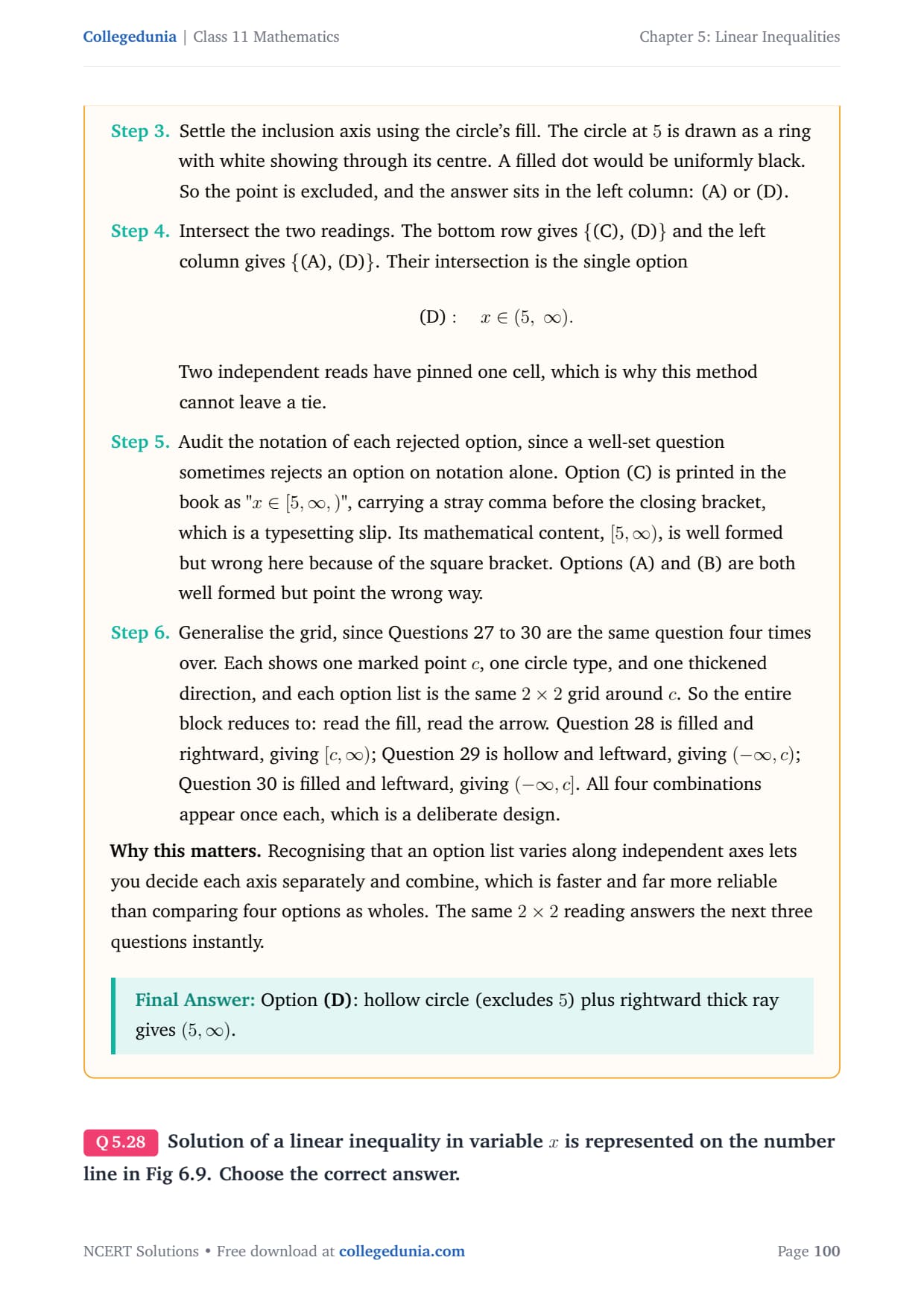
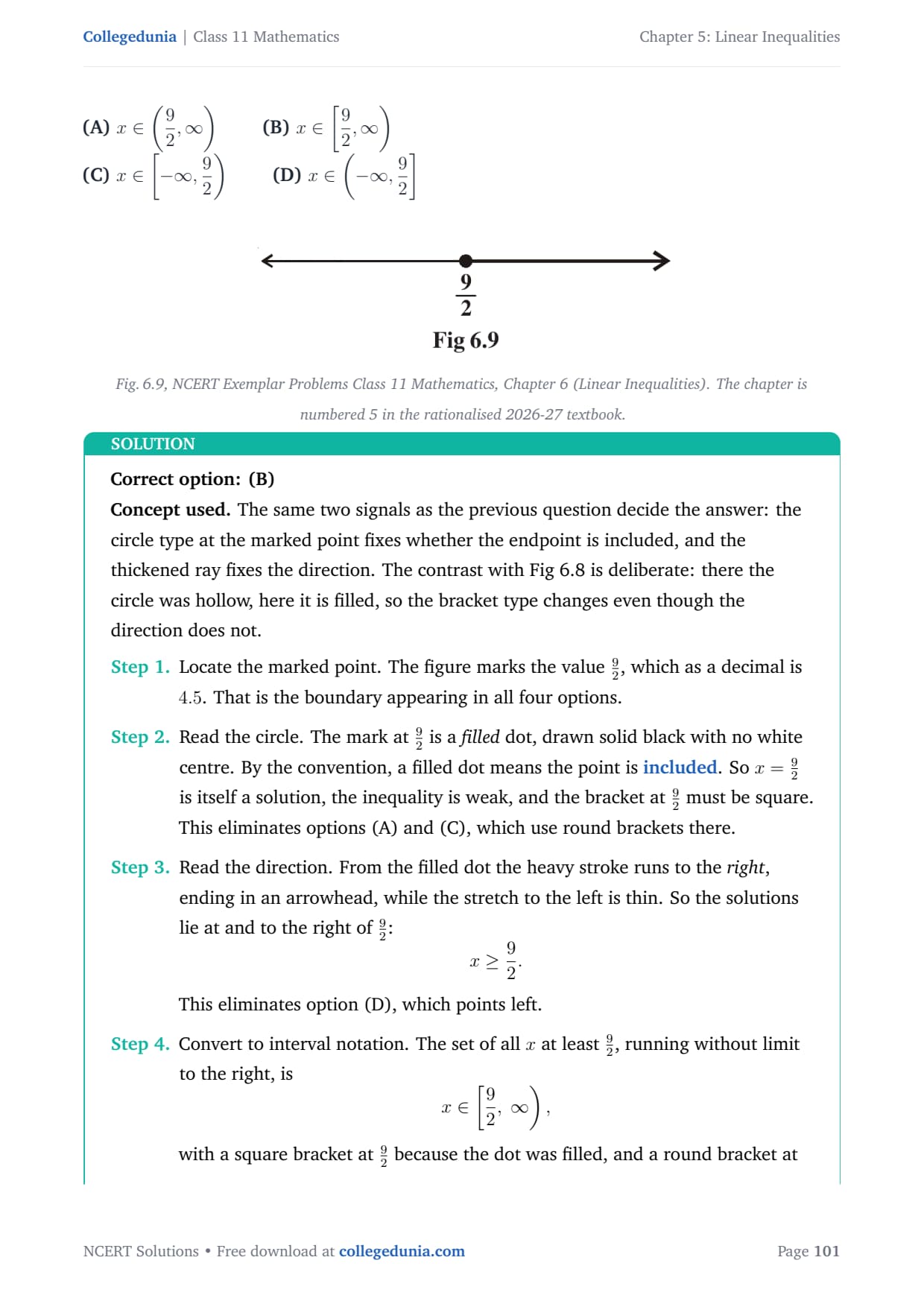
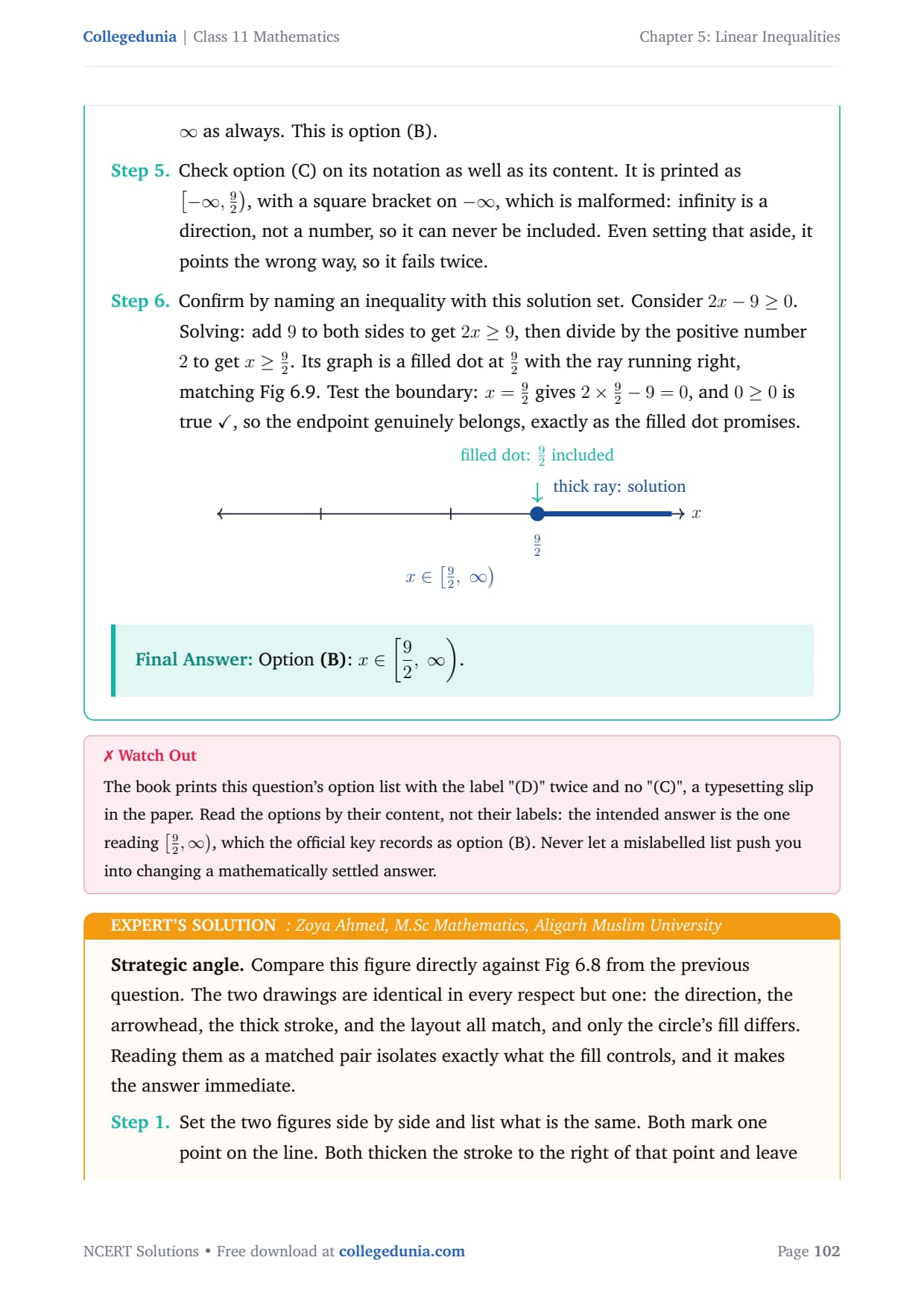
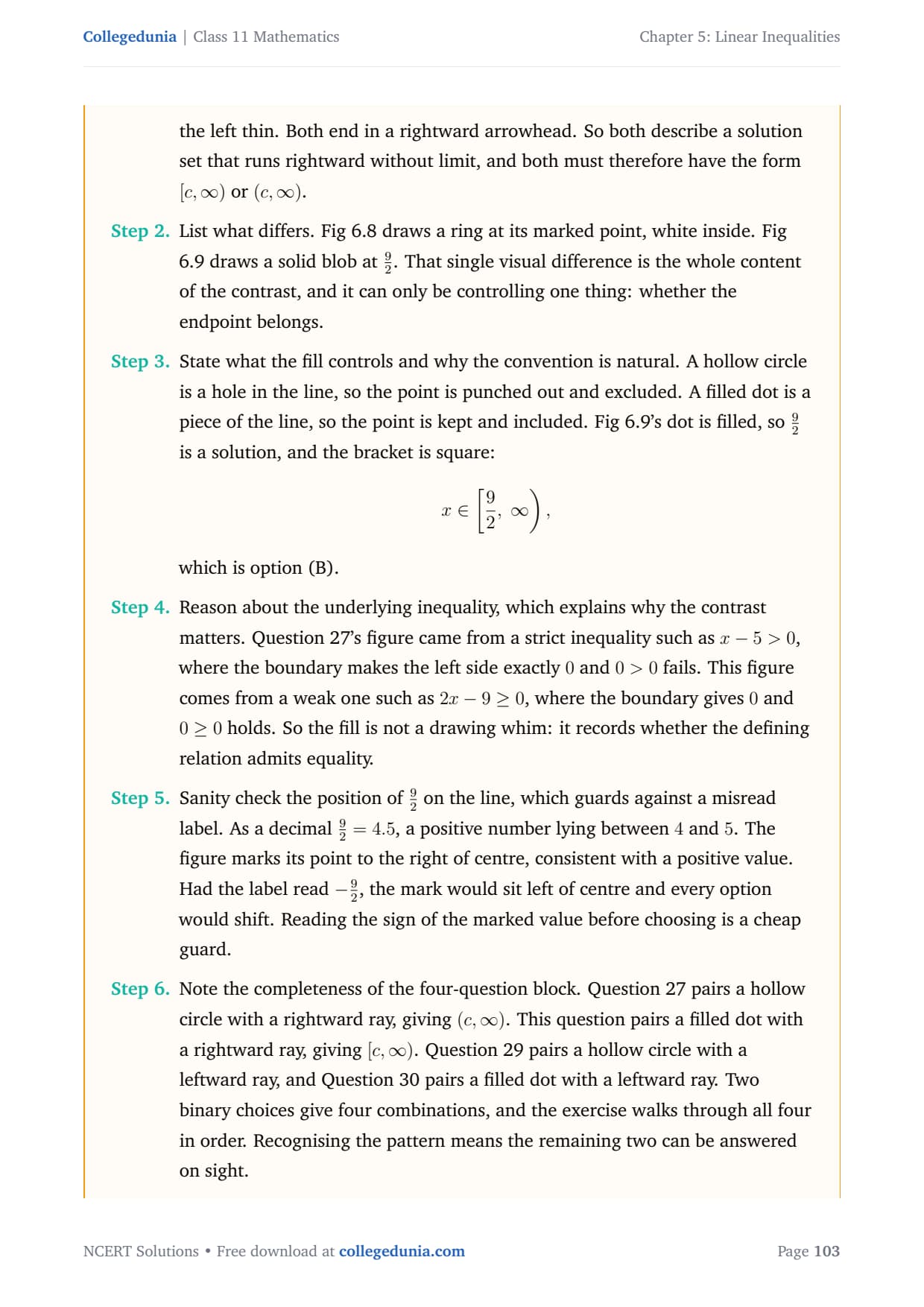
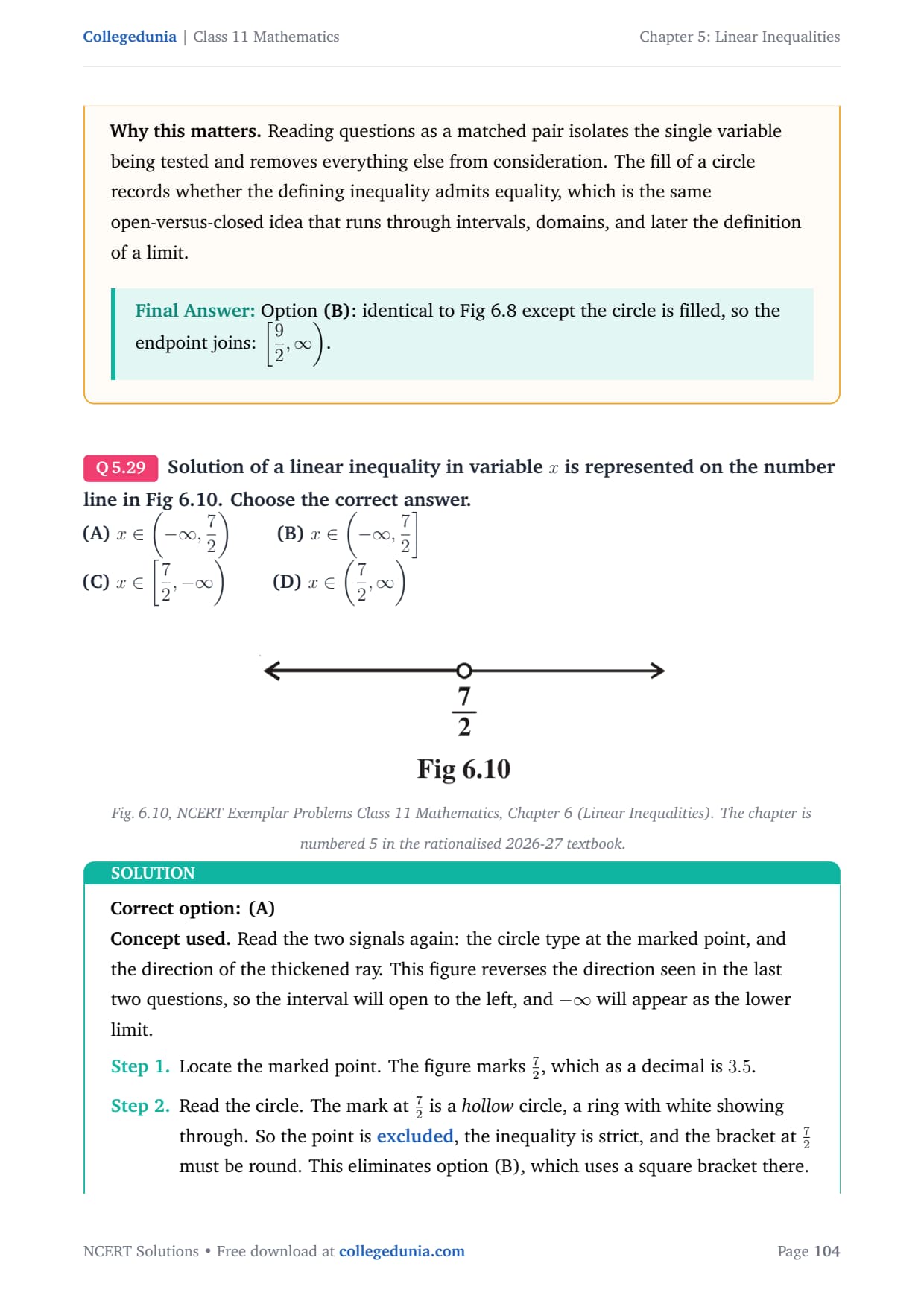
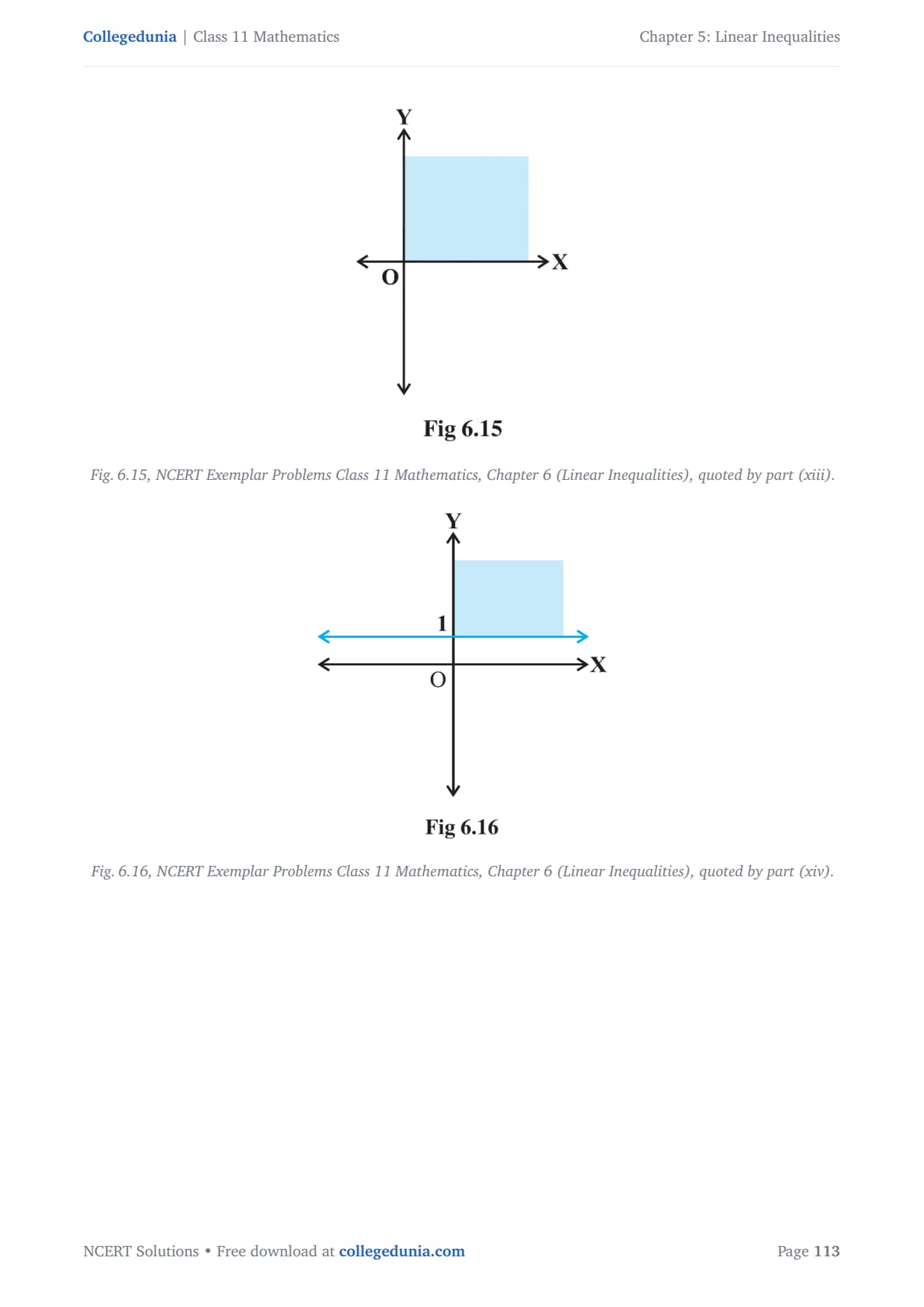
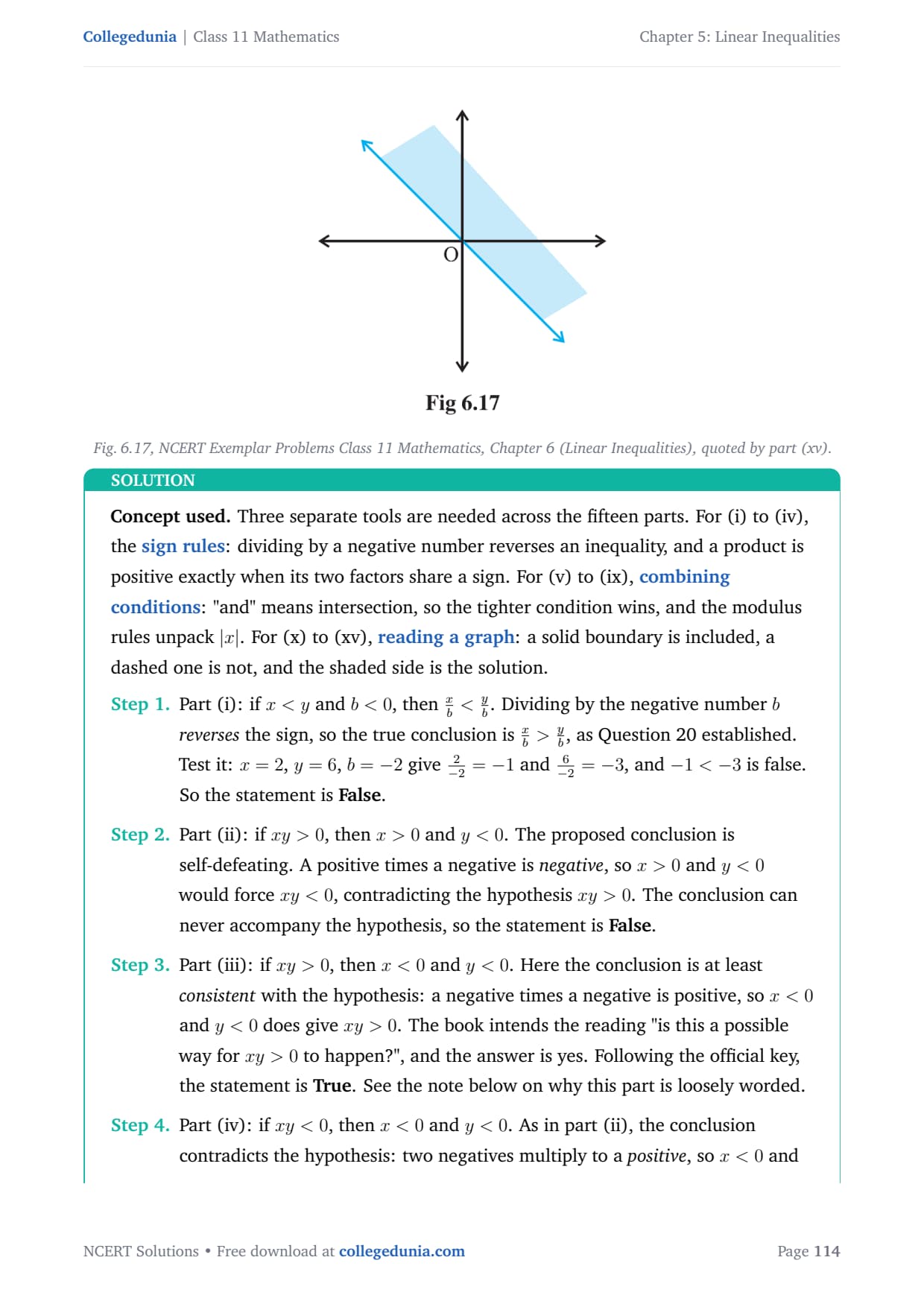
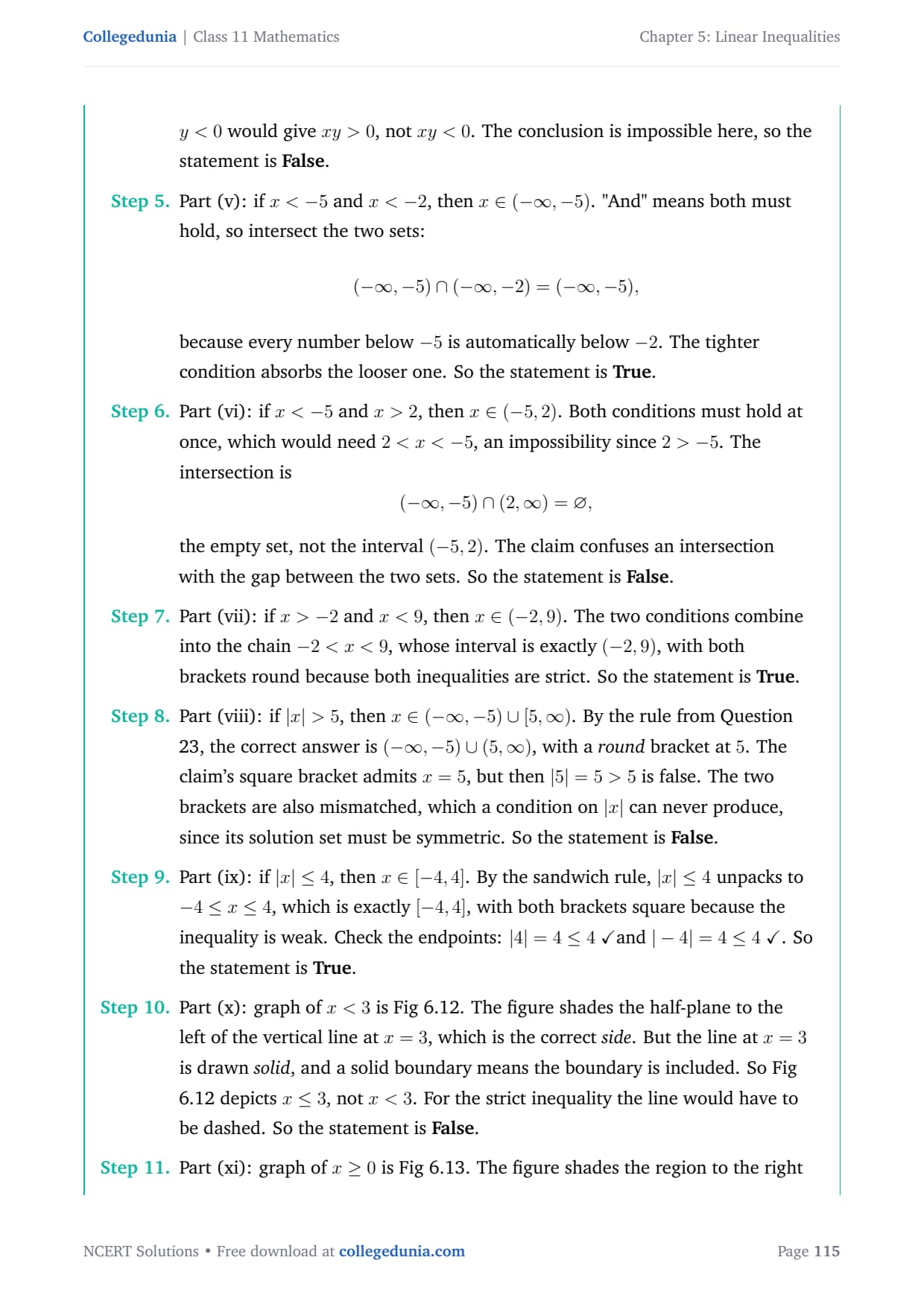
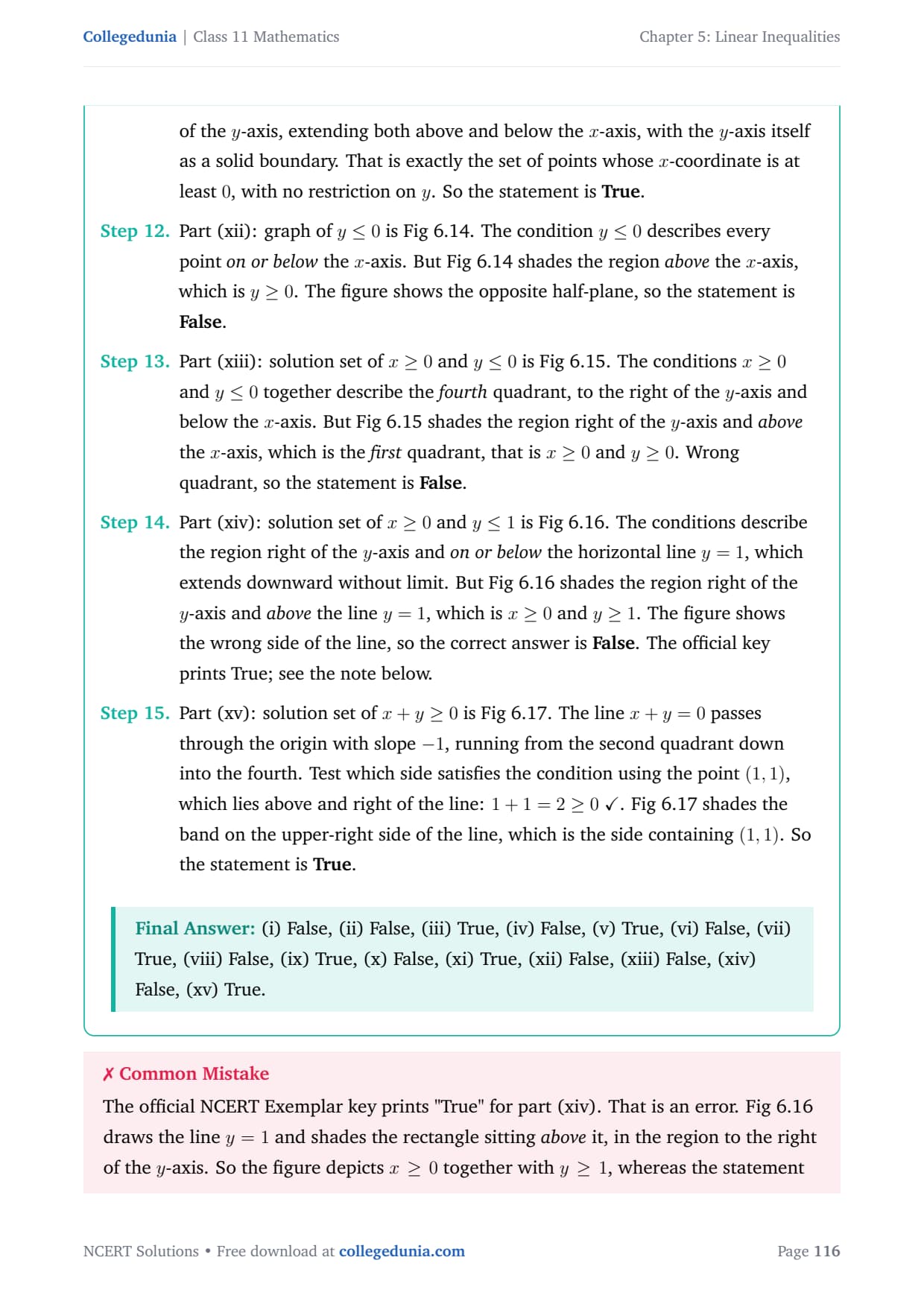
- All 13 book graphs embedded: Fig 6.5 to Fig 6.17 sit inside the solutions, so no question is unreadable.
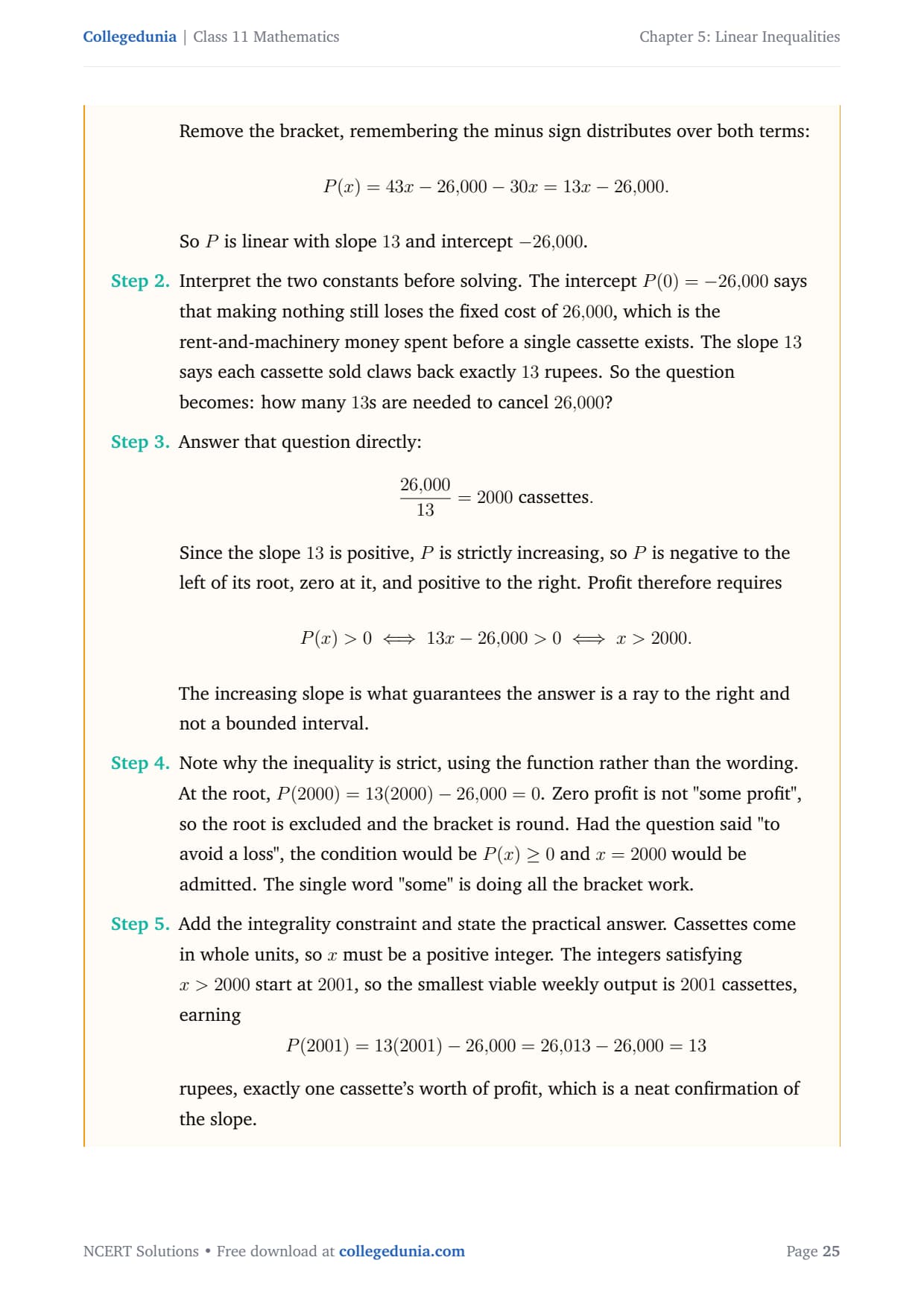
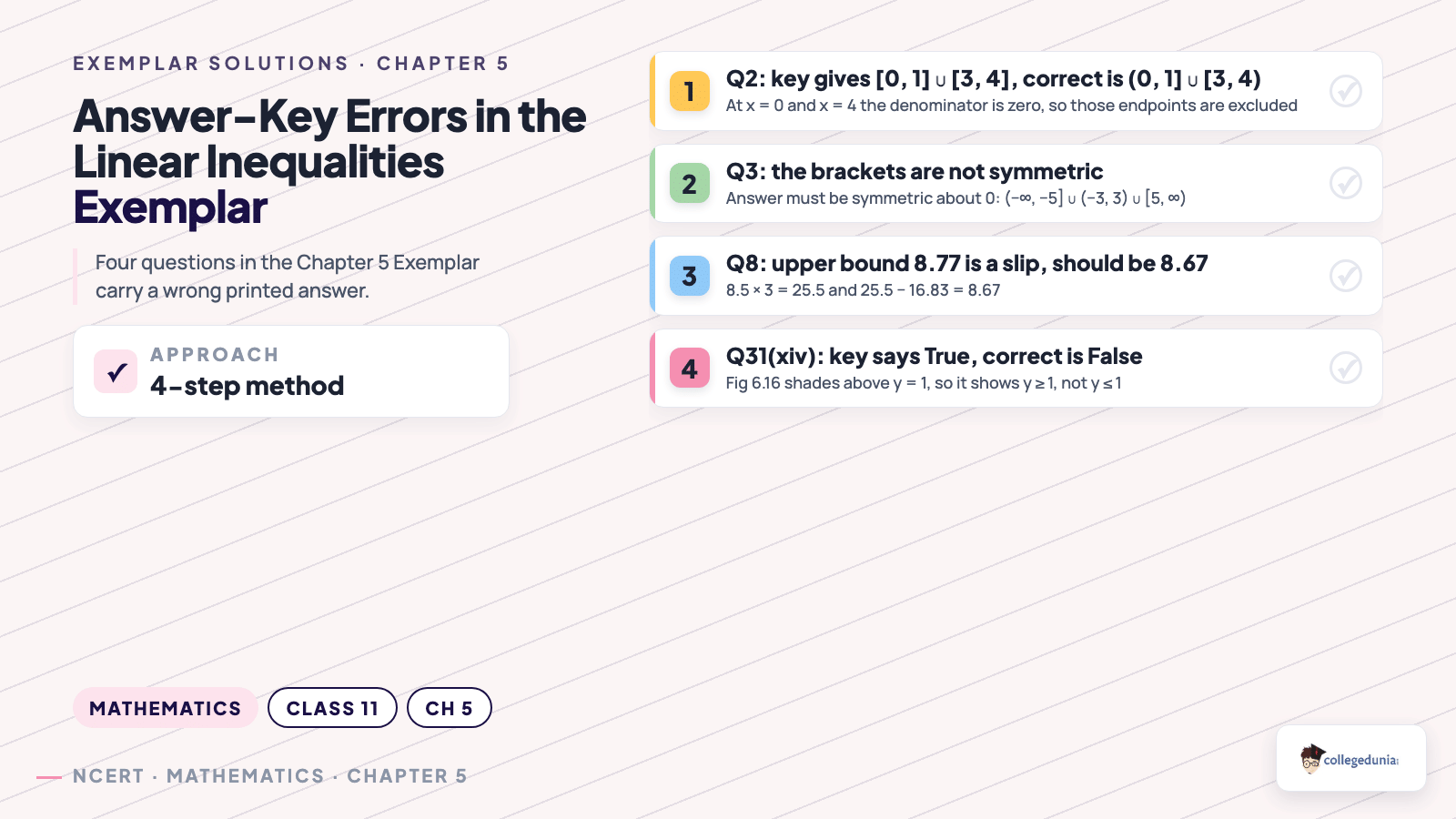
- Four answer-key errors flagged, including a defective printed interval and a figure misread.
Topics Covered in the Class 11 Maths Linear Inequalities Exemplar
The Exemplar reuses the textbook ideas inside harder wrappers. Most questions look like one-line algebra but hide a sign flip, an excluded point or a graph to decode. These are the topics the 32 questions are built on.
- The sign rules: multiplying or dividing an inequality by a negative number reverses it, which is the single most tested idea in the chapter.
- Modulus inequalities: |x| < a means −a < x < a, and |x| > a splits into two branches.
- Quotient inequalities: never cross-multiply by an expression whose sign is unknown. Move everything to one side and use the sign rule.
- Systems in one variable: "and" means intersection, so the tighter condition wins.
- Graphing two-variable systems: shading half-planes, finding the feasible region and deciding if it is bounded.
- Word problems: cost and revenue, pH averages, acid mixtures, temperature ranges and triangle side conditions.
Important: the Exemplar treats an excluded endpoint as a full mark. A value that makes a denominator zero can never be part of a solution set, no matter what the inequality sign says. That single rule fixes two of the four key errors below.
Exercise 6.3 Question-Type Breakdown for Linear Inequalities
All 32 questions sit inside the chapter's single exercise, grouped by format. The table below shows how the exercise is split, so students can plan practice by question type rather than solving straight through.
| Question Type | Question Numbers | Count | What it tests |
|---|---|---|---|
| Short Answer | Q1 to Q12 | 12 | Modulus and quotient inequalities, plus word problems |
| Long Answer | Q13 to Q18 | 6 | Two-variable systems, feasible regions, bounded or not |
| Objective (MCQ) | Q19 to Q30 | 12 | Sign flips, interval brackets, reading number-line graphs |
| True/False | Q31 | 1 | Fifteen parts, six of which quote a figure from the book |
| Fill in the Blanks | Q32 | 1 | Eight parts on sign rules and modulus branches |
The Long Answer block (Q13 to Q18) carries the most marks per question and is the one most students skip, because it needs a properly drawn graph. The MCQ block (Q19 to Q30) is the largest single group and four of its questions cannot be answered without looking at a figure, so it is worth a full practice session on its own.
Why the Linear Inequalities Exemplar Needs the Book's Own Graphs
This is the only chapter in the Class 11 Maths Exemplar whose solutions embed figures lifted from the book itself. Thirteen graphs, Fig 6.5 to Fig 6.17 in the Exemplar's own numbering, are placed inside the solutions next to the questions that quote them. Ten questions are simply unanswerable without them.
| Figures | Used by | What the student has to read |
|---|---|---|
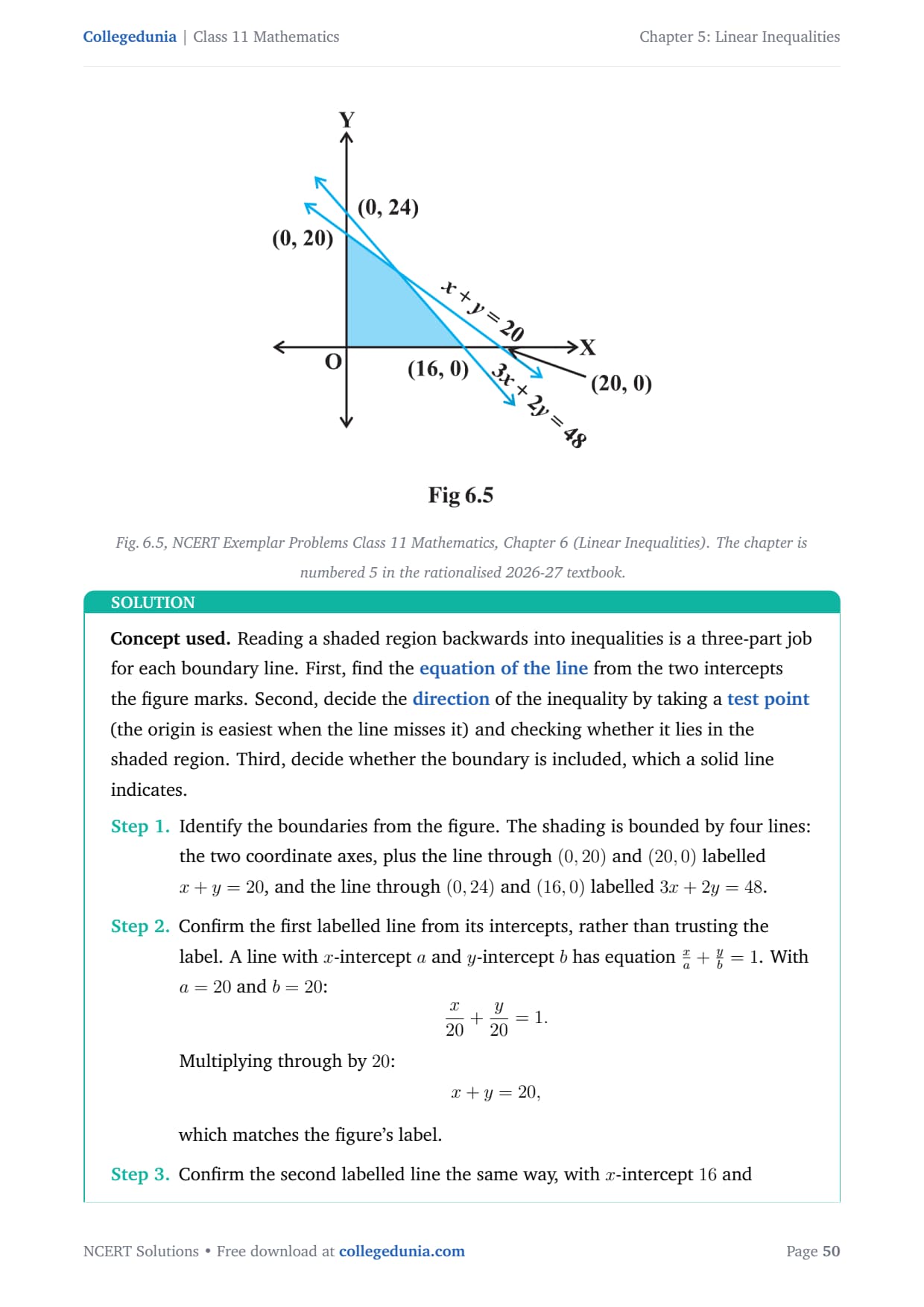
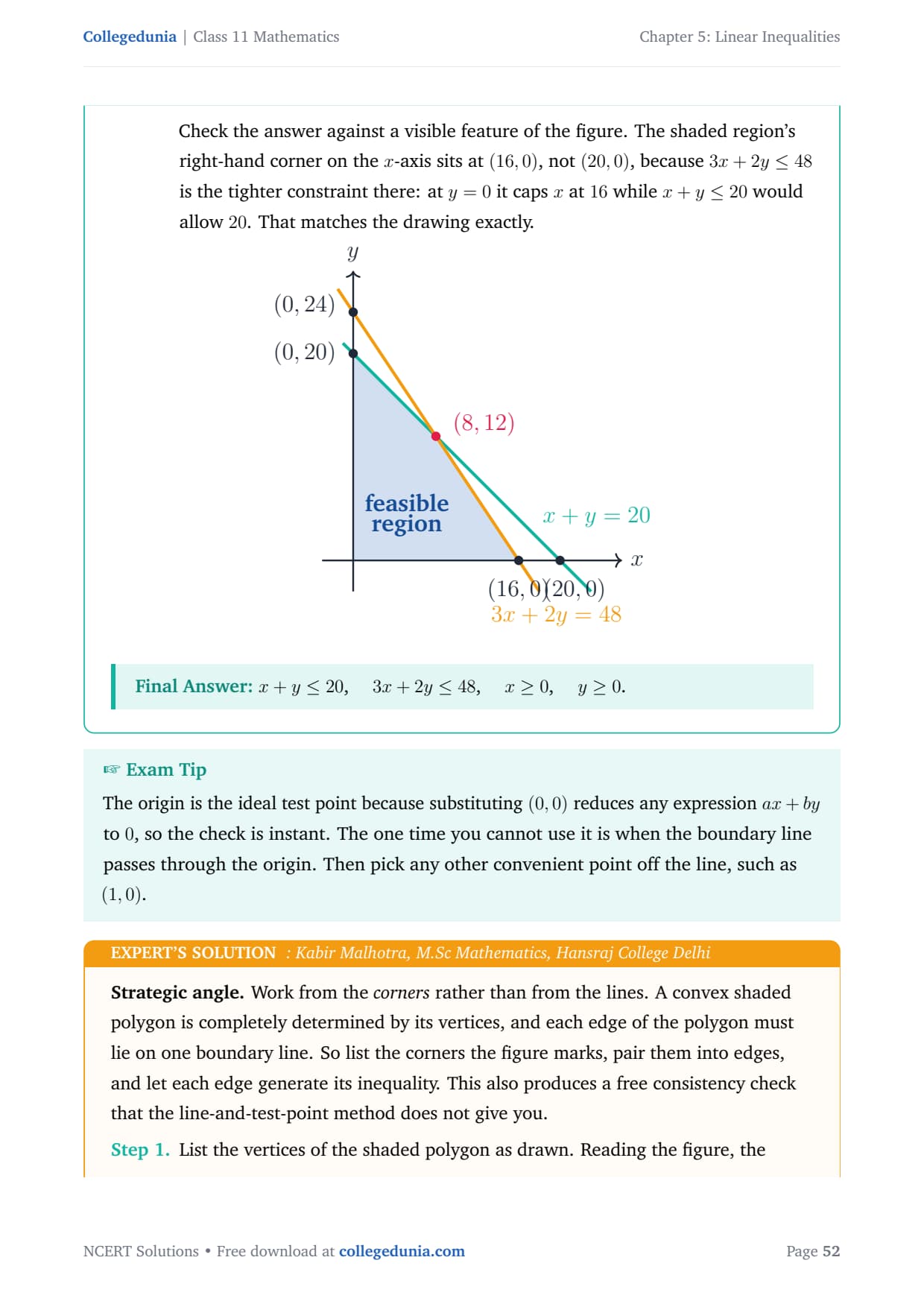
| Fig 6.5, Fig 6.6 | Q14, Q15 | A shaded region in the plane, to be written back as inequalities |
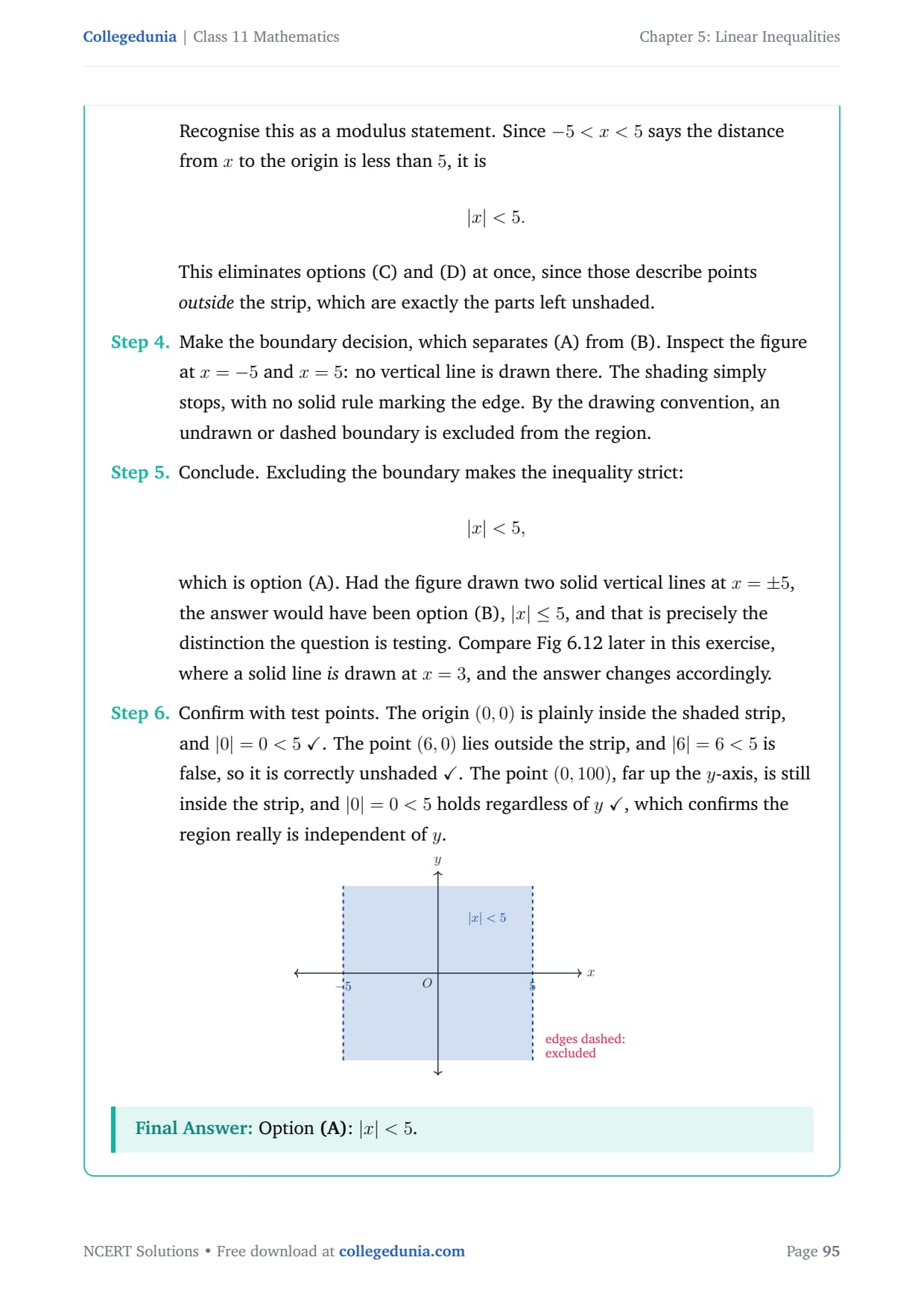
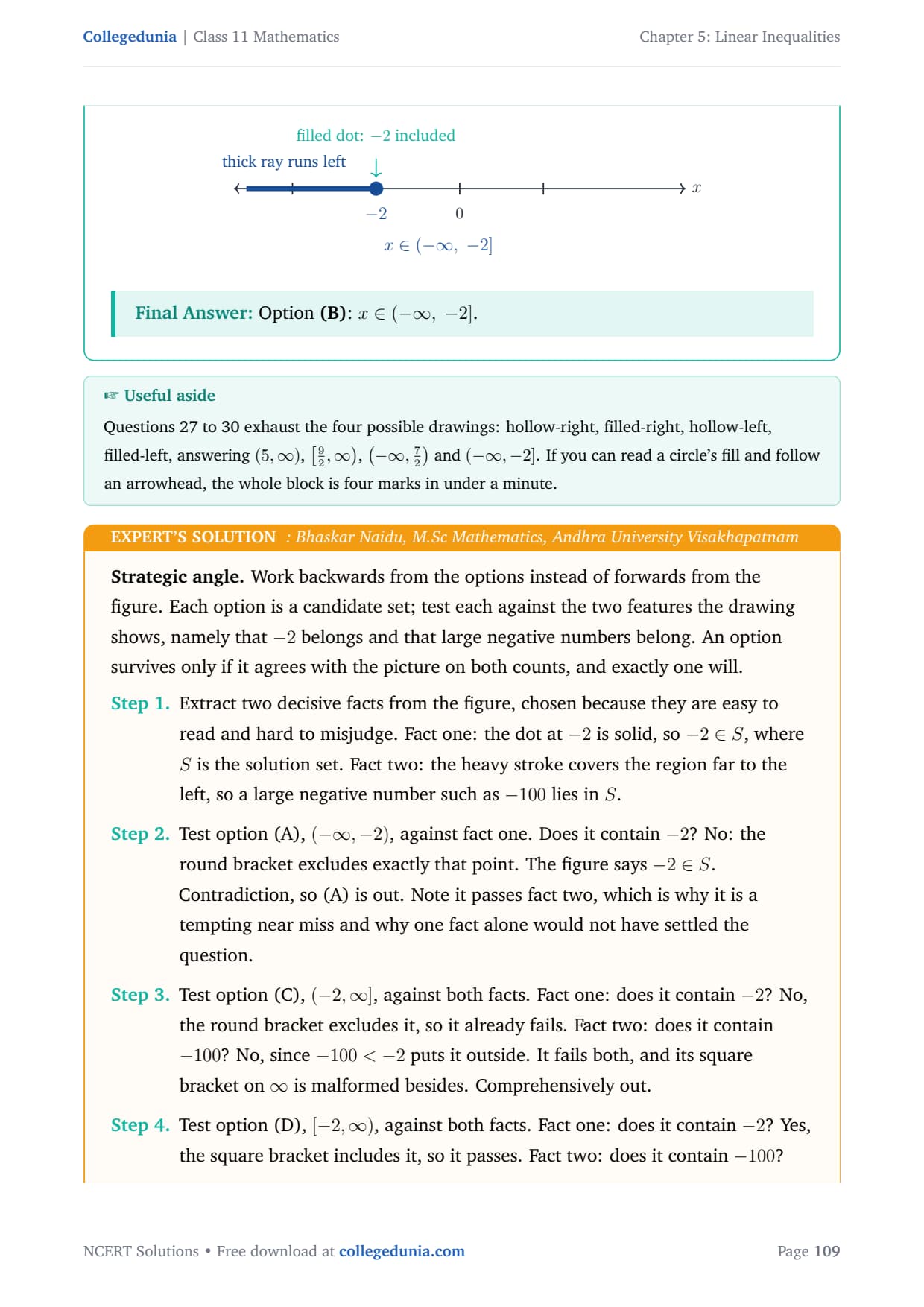
| Fig 6.7 | Q26 | A number-line graph, matched to a modulus inequality |
| Fig 6.8 to Fig 6.11 | Q27 to Q30 | Open or closed circles on a number line, which fix the bracket |
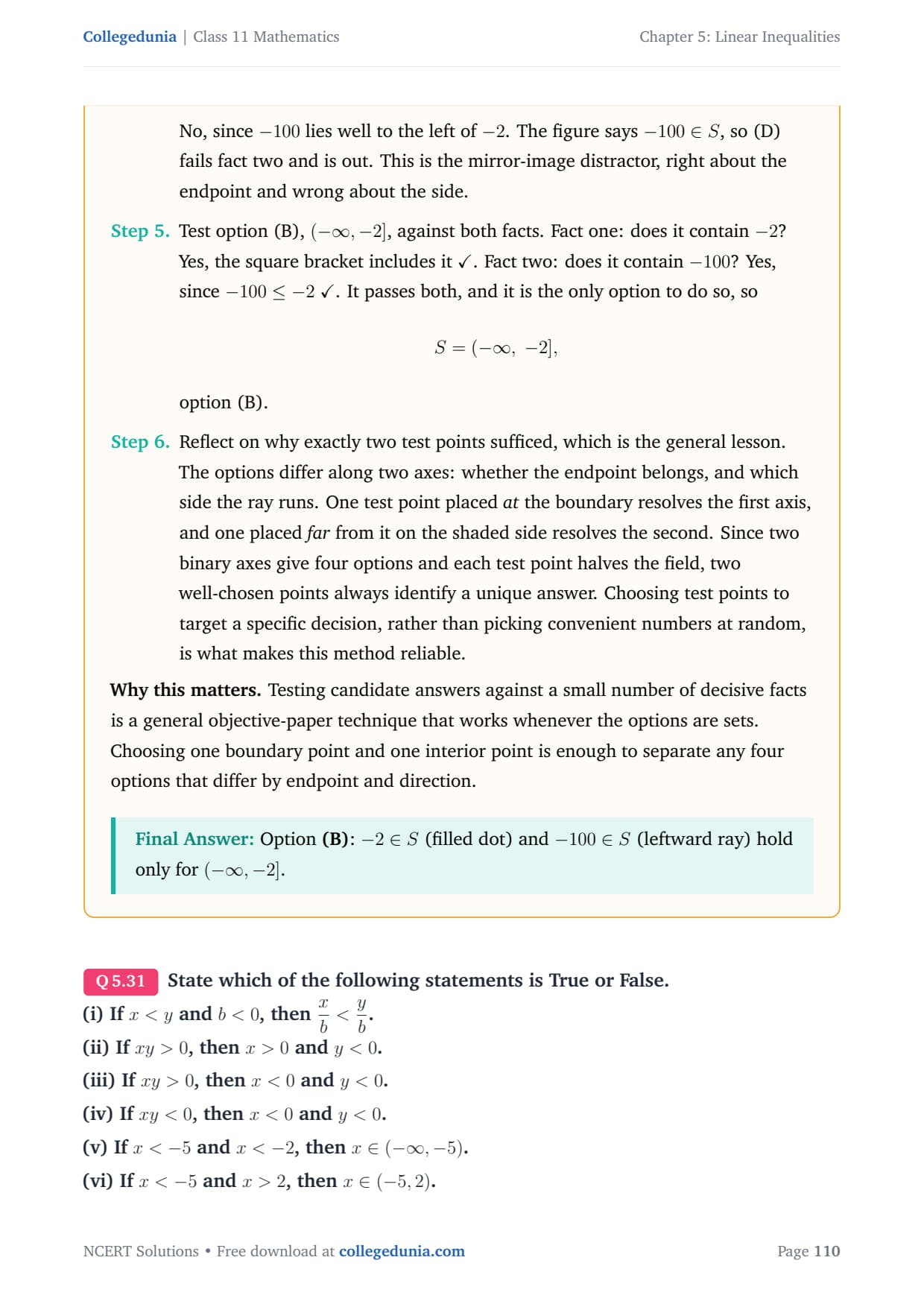
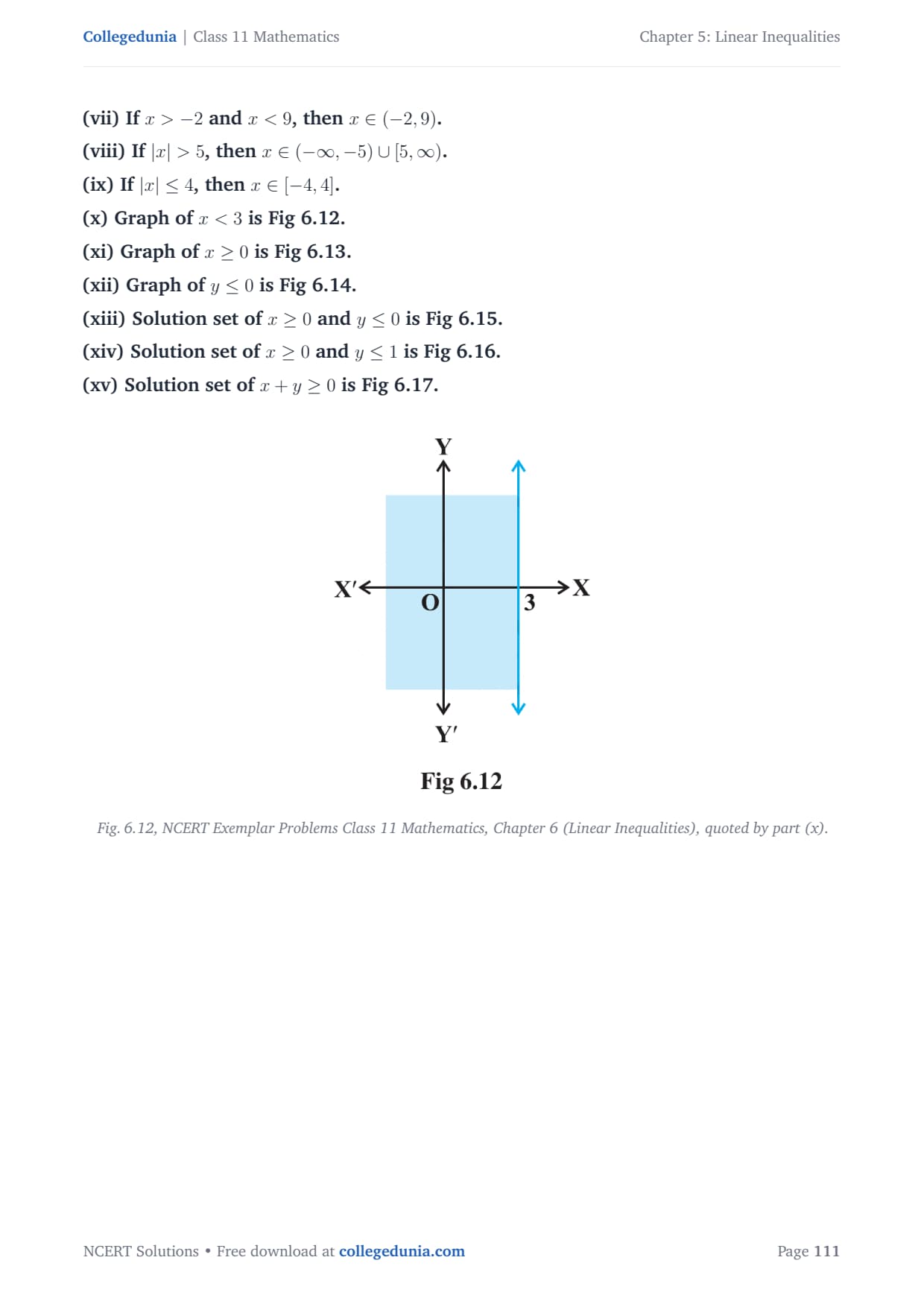
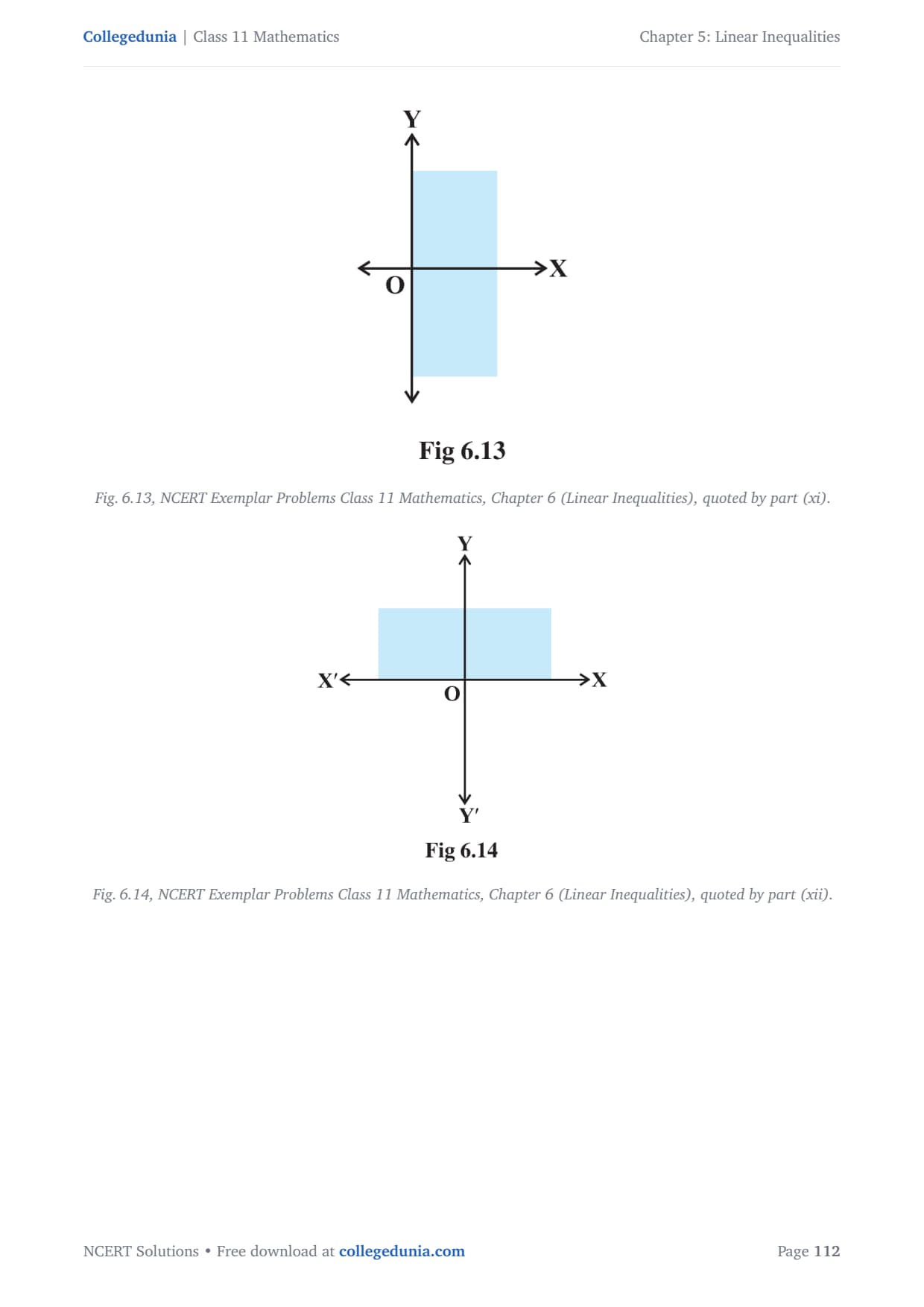
| Fig 6.12 to Fig 6.17 | Q31, parts (x) to (xv) | Which half-plane is shaded, and whether the boundary is included |
An MCQ that says "the inequality representing the following graph is" cannot be solved from the text. A student working from a solution set that only prints the option letter learns nothing. Every one of these questions is solved here with the figure in front of the student, and the shaded side and the circle style are named out loud in the working.
Four Answer-Key Errors in the Linear Inequalities Exemplar Every Student Must Know
The printed NCERT Exemplar answer key for this chapter has four questions where the given answer is wrong. Each one is checked below against the book's own results. Students who copy the key blindly will learn the wrong answer, so read this section before self-checking.
| Question | Printed key | Correct answer | Why |
|---|---|---|---|
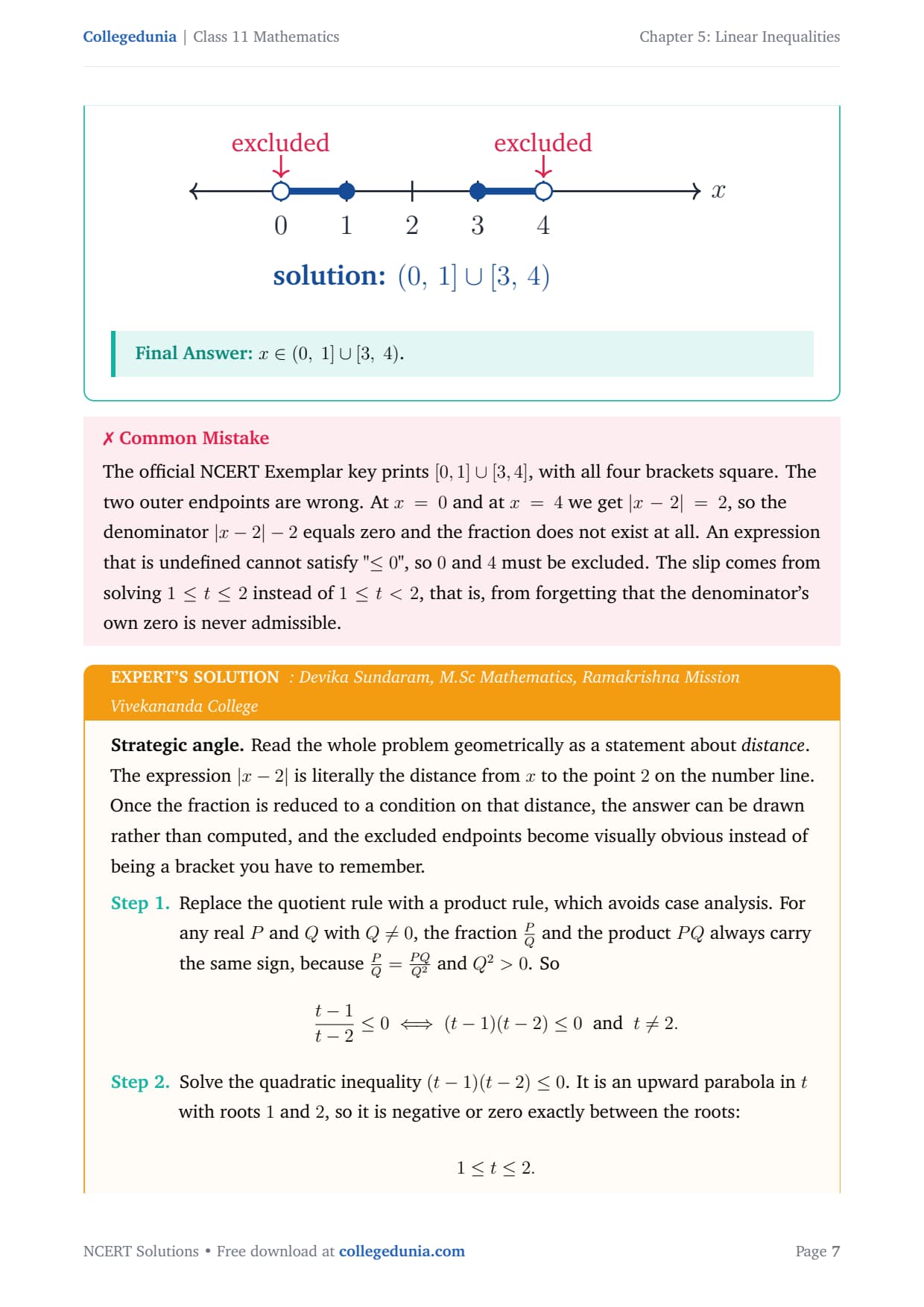
| Q2 | [0, 1] ∪ [3, 4] | (0, 1] ∪ [3, 4) | At x = 0 and x = 4 the denominator is zero |
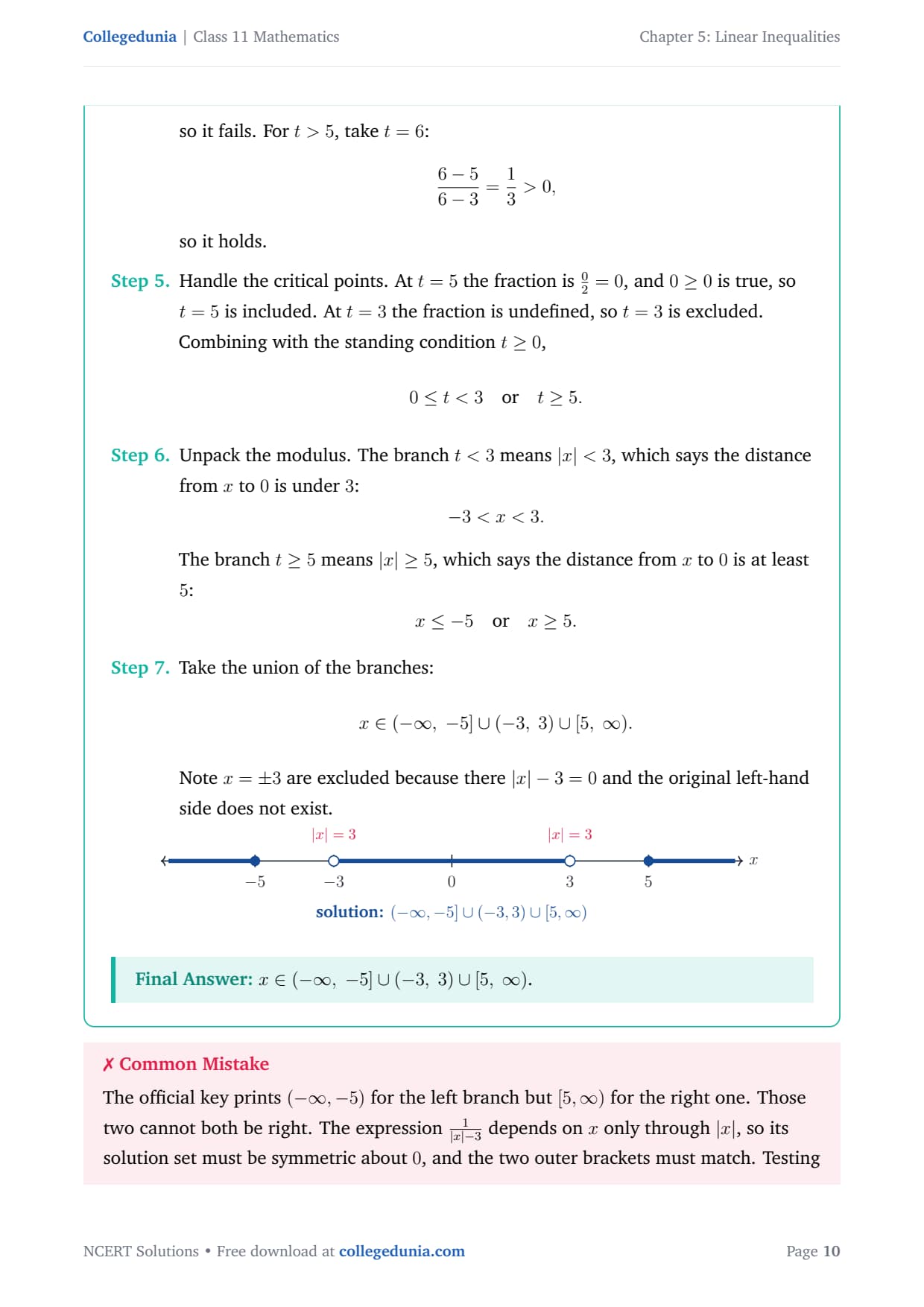
| Q3 | (−∞, −5) on the left, [5, ∞) on the right | (−∞, −5] ∪ (−3, 3) ∪ [5, ∞) | The set must be symmetric, so both outer brackets match |
| Q8 | Between 7.77 and 8.77 | Between 7.77 and 8.67 | 25.5 − 16.83 = 8.67, not 8.77 |
| Q31, part (xiv) | True | False | Fig 6.16 shades above y = 1, so it shows y ≥ 1 |
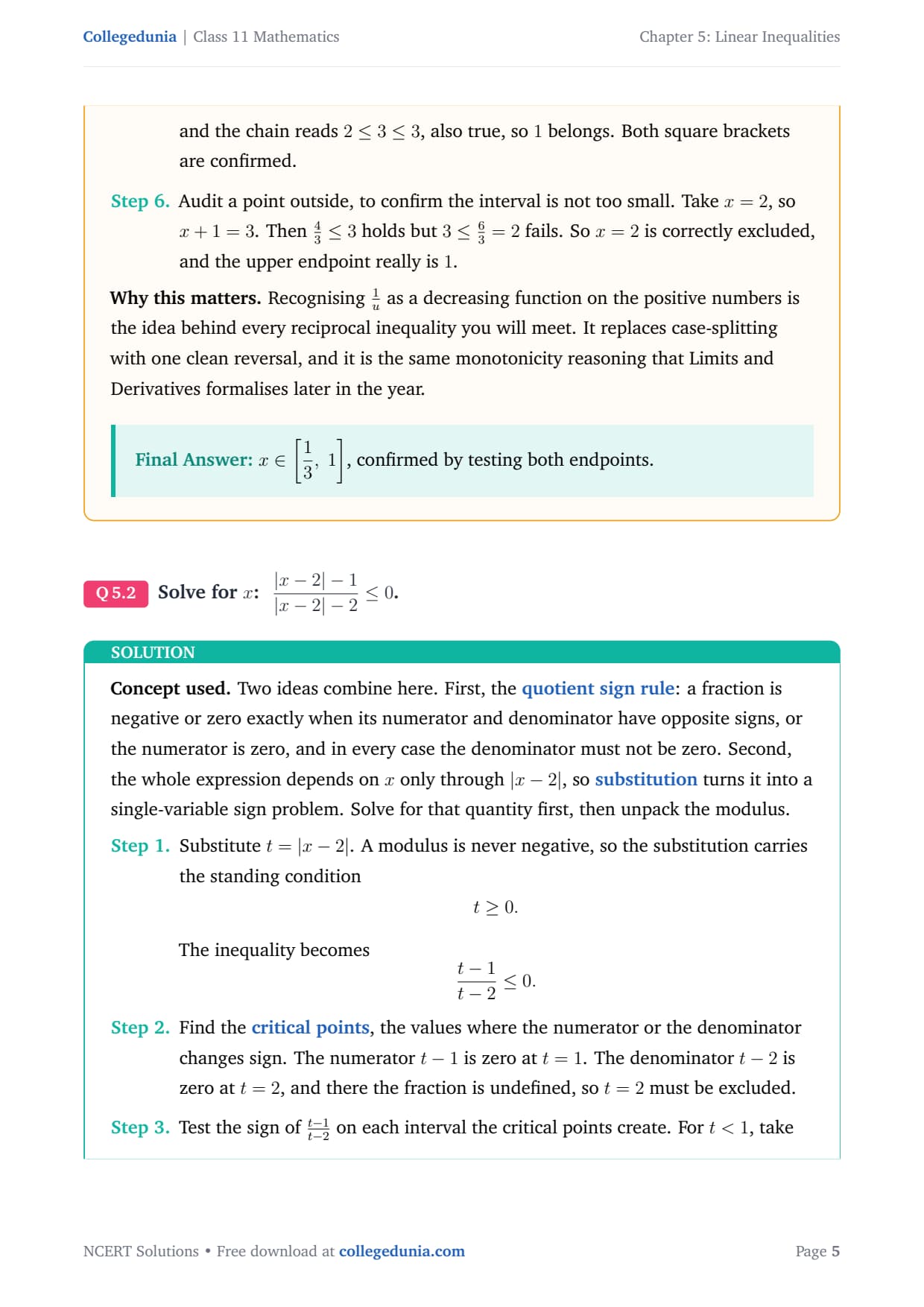
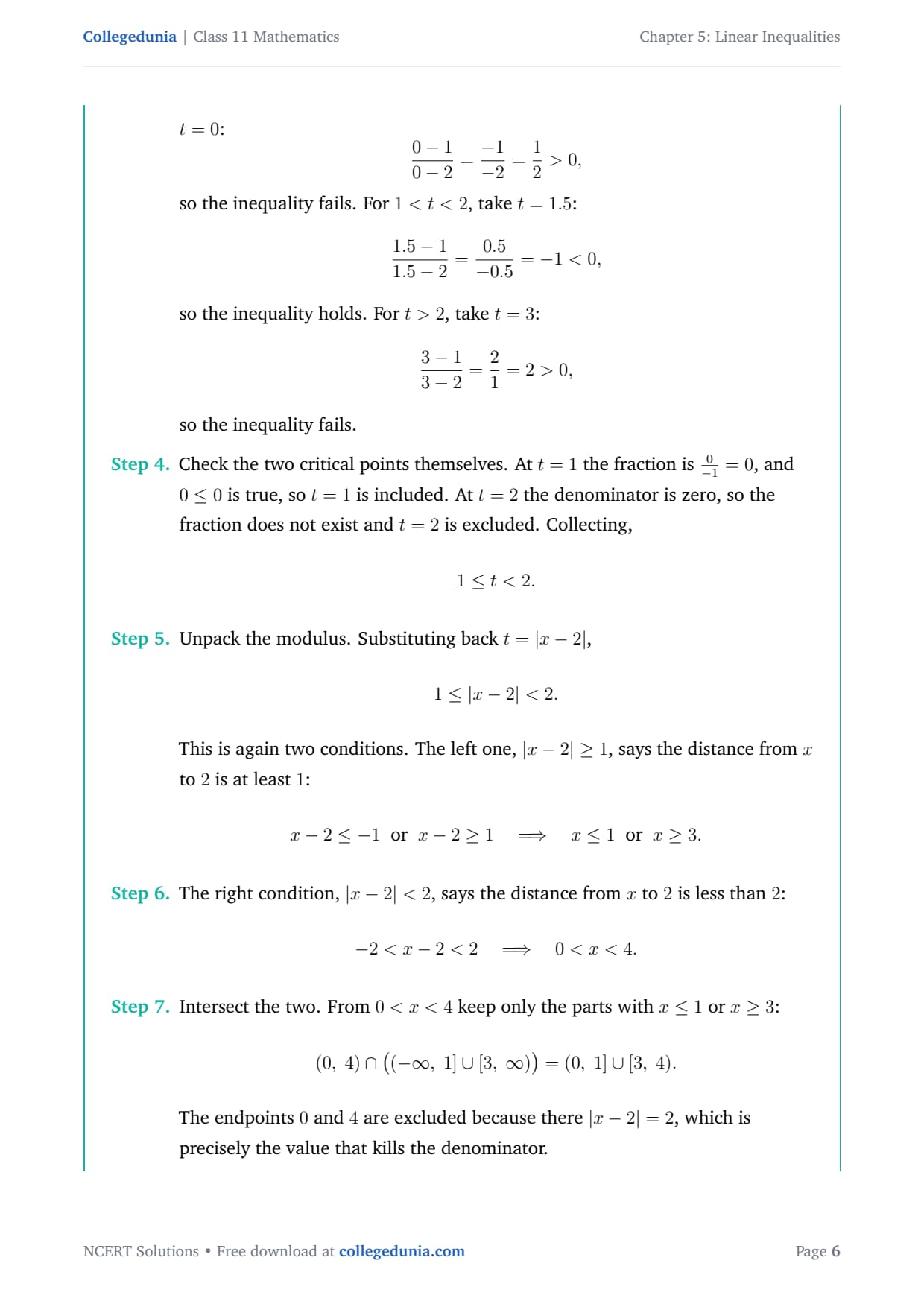
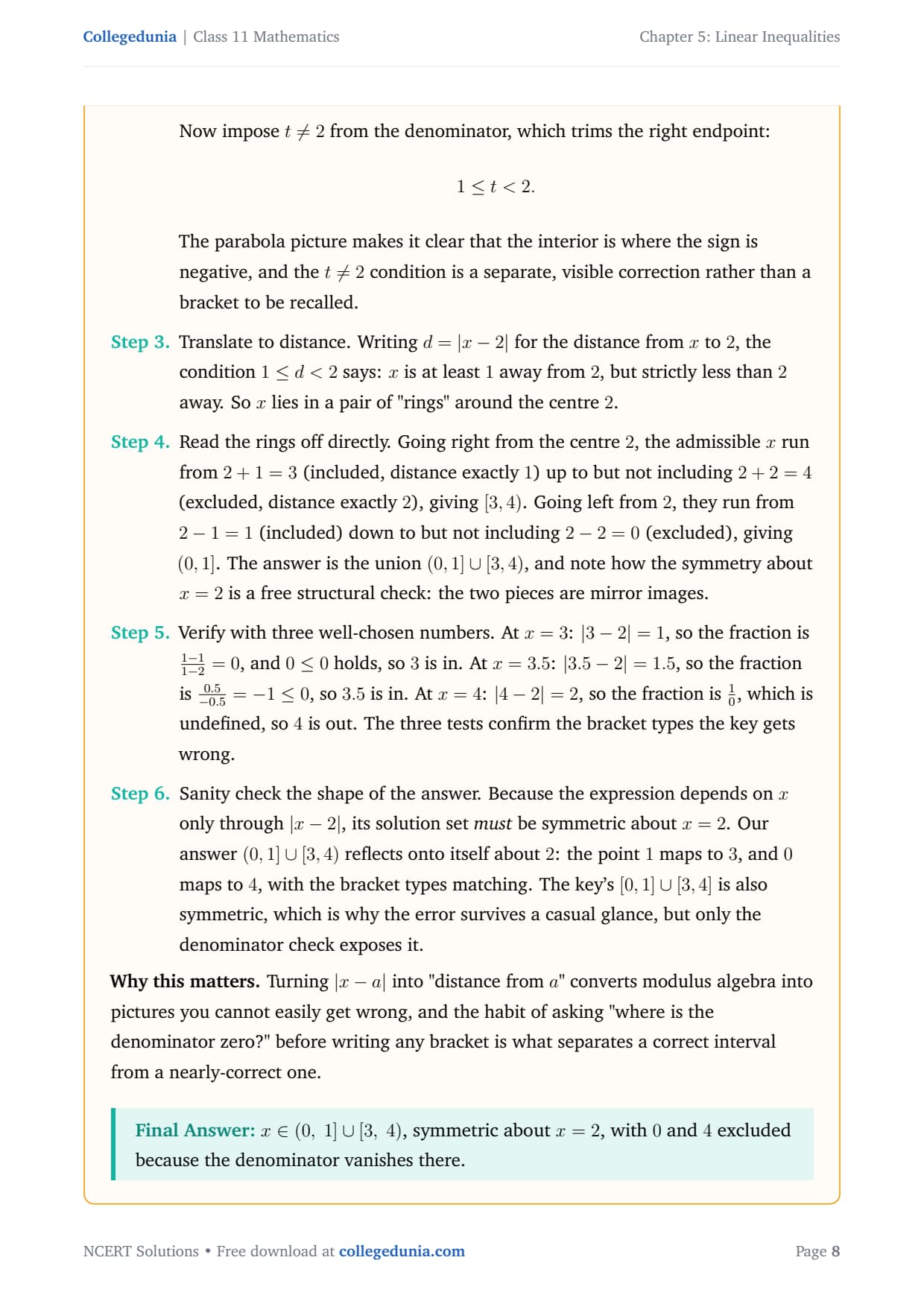
Q2 prints a defective interval. The question is (|x − 2| − 1) / (|x − 2| − 2) ≤ 0, and the key gives [0, 1] ∪ [3, 4] with all four brackets square. The two outer endpoints are wrong. At x = 0 and at x = 4, |x − 2| = 2, so the denominator |x − 2| − 2 equals zero and the fraction does not exist there at all. An expression that is undefined cannot satisfy "≤ 0", so 0 and 4 must be excluded. The correct set is (0, 1] ∪ [3, 4). The slip comes from solving 1 ≤ t ≤ 2 instead of 1 ≤ t < 2, which is to say, from forgetting that the denominator's own zero is never allowed.
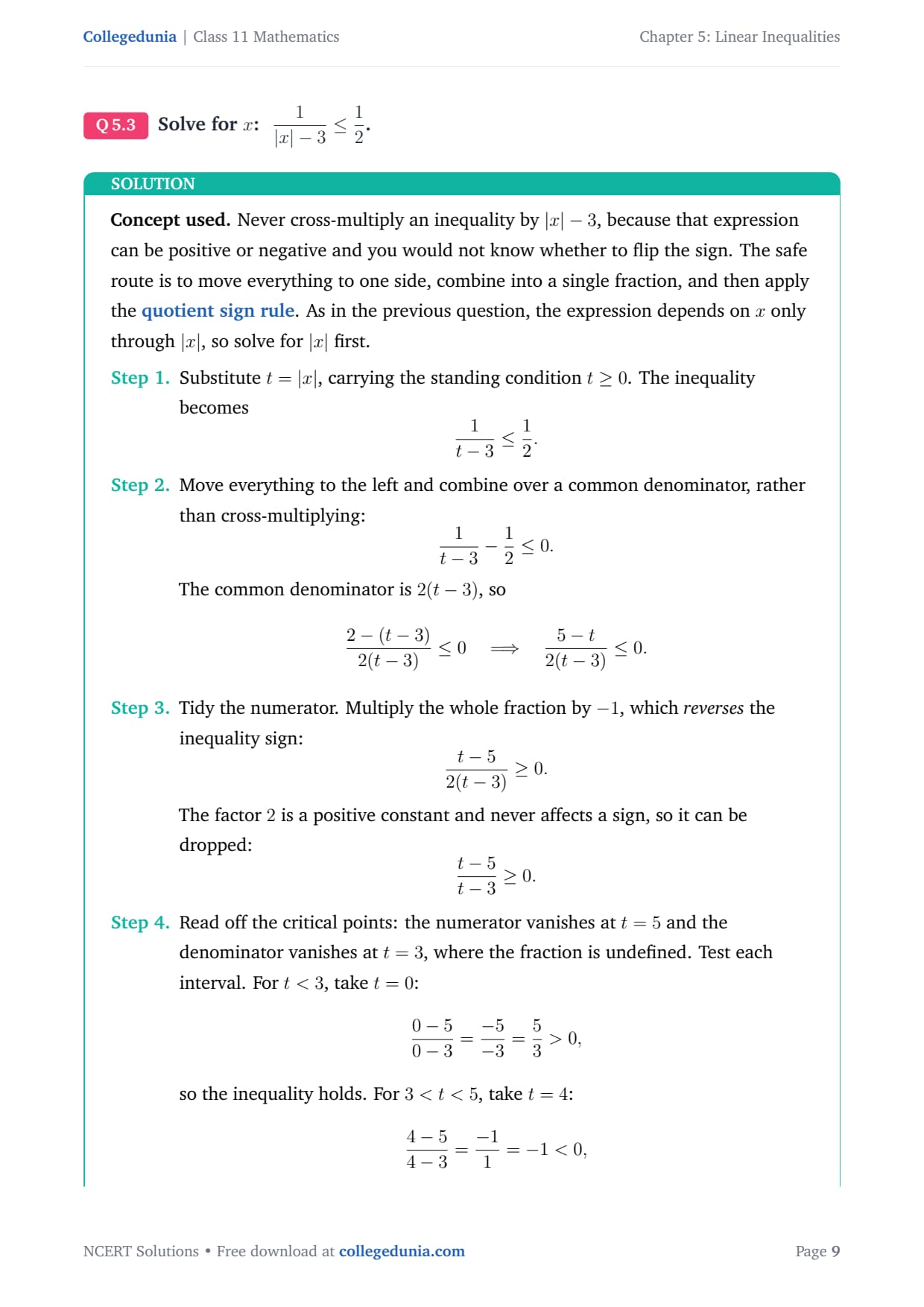
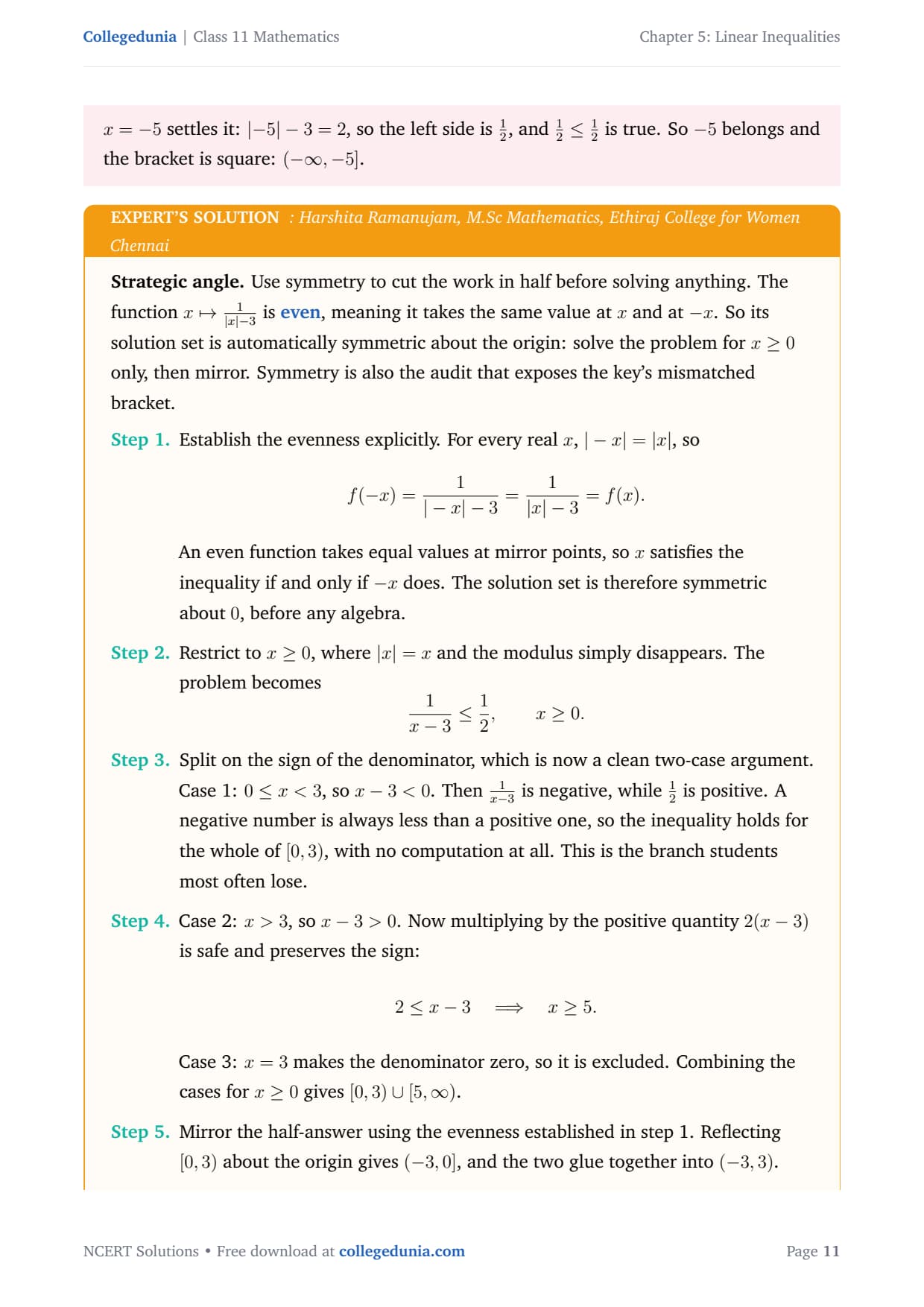
Q3 fails its own symmetry test. The question is 1 / (|x| − 3) ≤ 1/2, and the key prints a round bracket on the left, (−∞, −5), but a square bracket on the right, [5, ∞). Those two cannot both be right. The expression depends on x only through |x|, so its solution set must be symmetric about 0 and the two outer brackets must match. Testing x = −5 settles it: |−5| − 3 = 2, so the left side is 1/2, and 1/2 ≤ 1/2 is true. So −5 belongs and the bracket is square. The full answer is (−∞, −5] ∪ (−3, 3) ∪ [5, ∞).
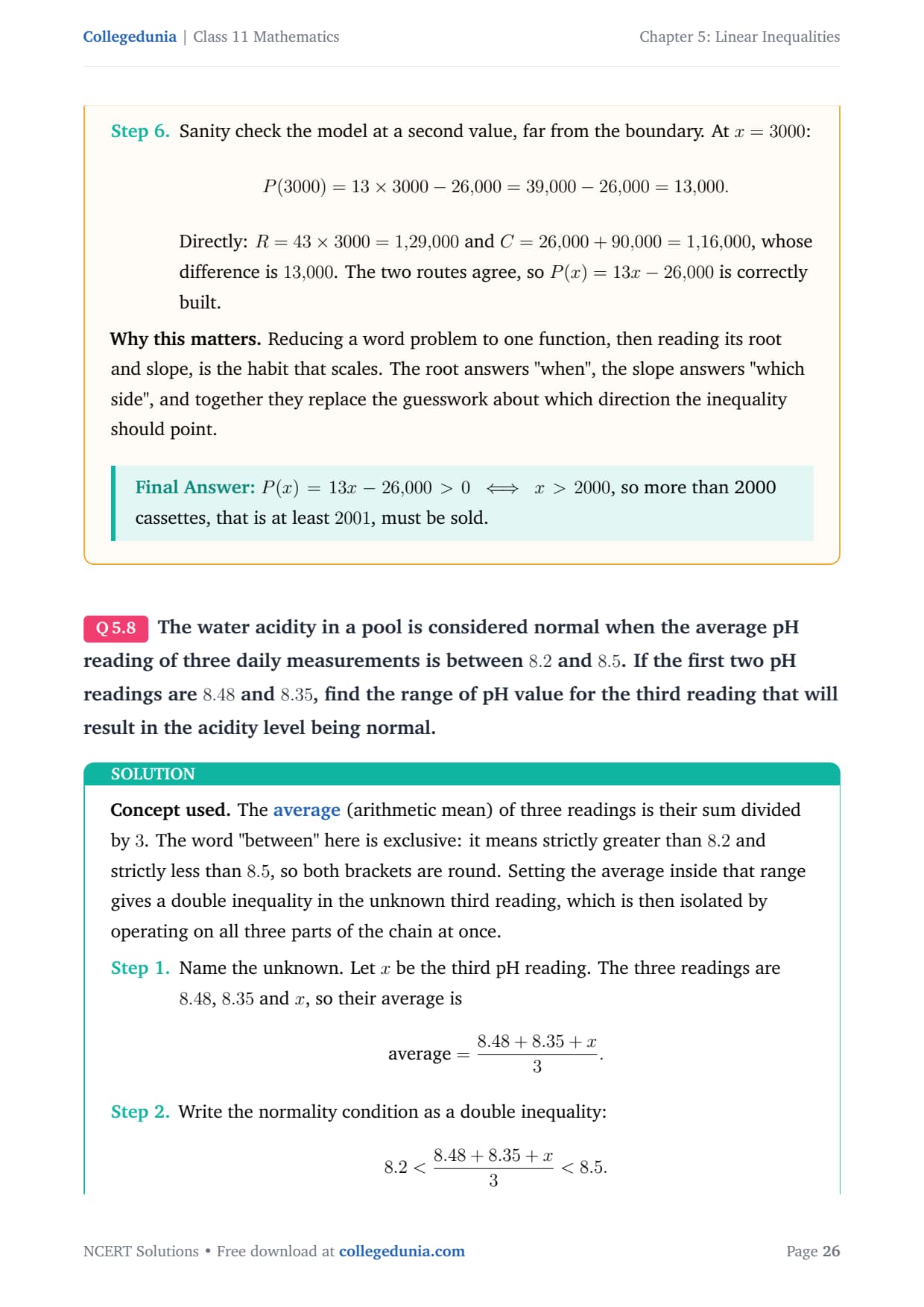
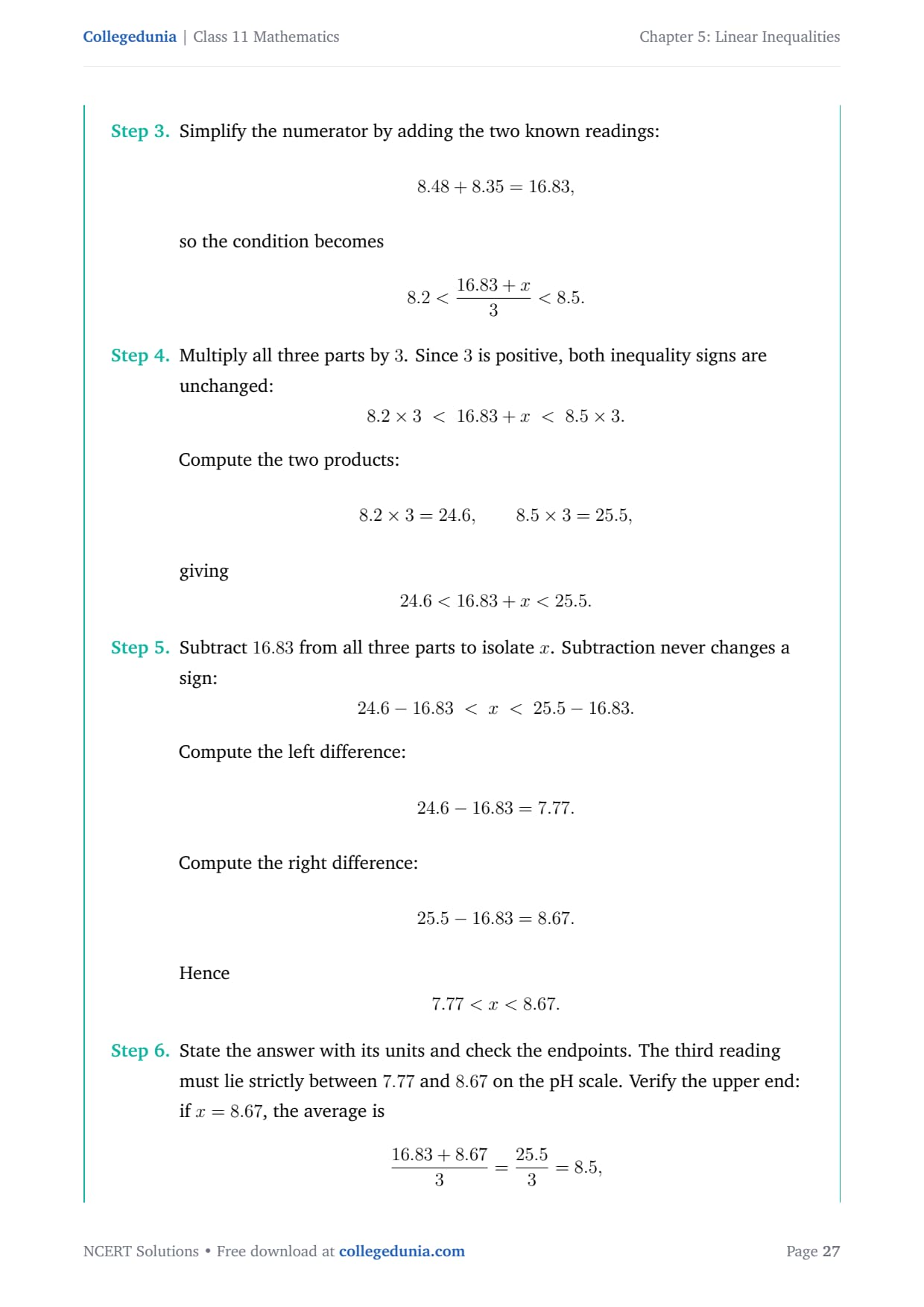
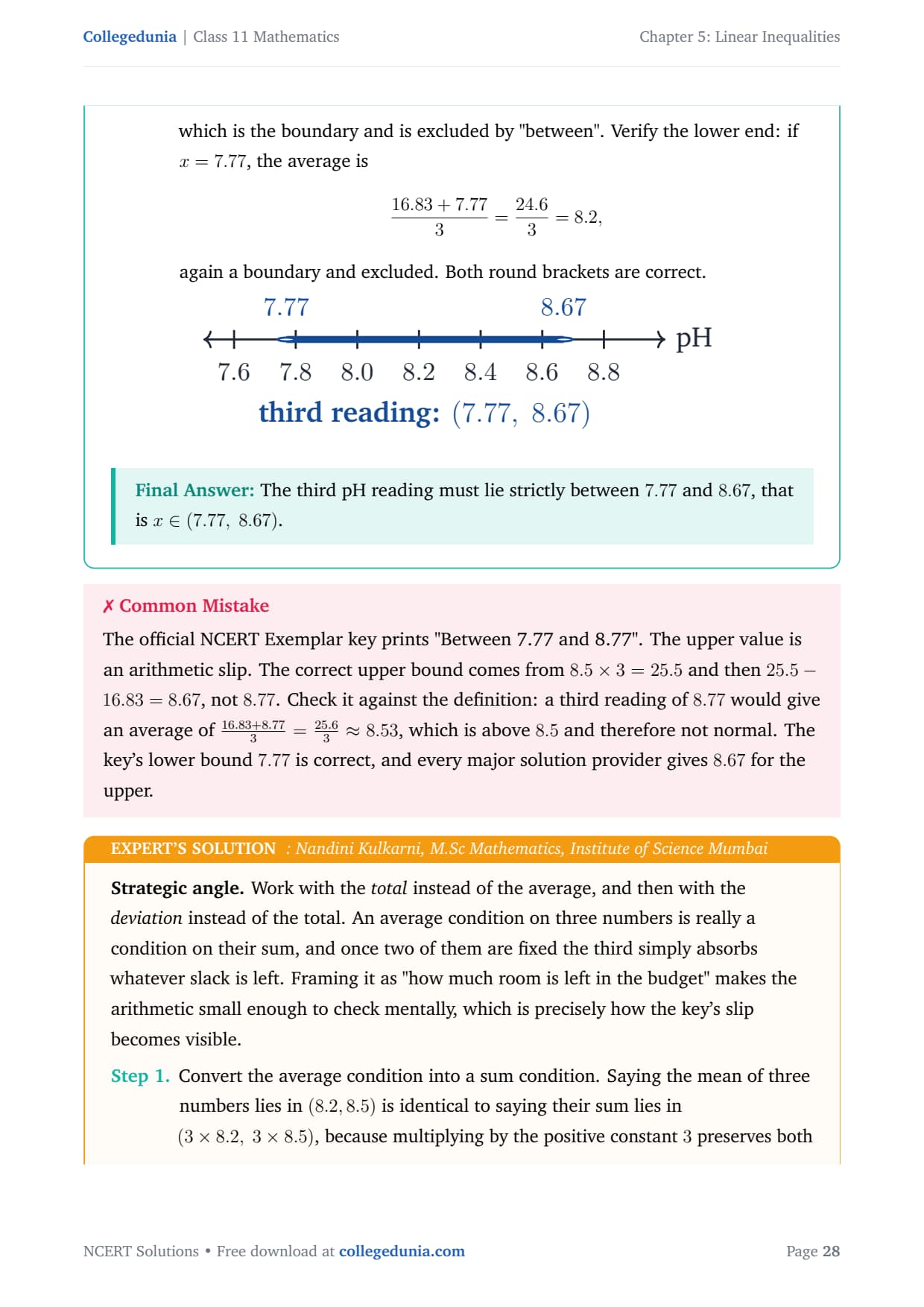
Q8 and Q31 part (xiv). Q8 asks for the third pH reading that keeps the average of three readings between 8.2 and 8.5, given the first two add to 16.83. The key prints "between 7.77 and 8.77". The upper value is an arithmetic slip: 8.5 × 3 = 25.5, and 25.5 − 16.83 = 8.67. Check it against the definition, since a third reading of 8.77 would give an average of 25.6 / 3, about 8.53, which is above 8.5 and so not normal. In Q31 part (xiv), the statement claims Fig 6.16 shows x ≥ 0 together with y ≤ 1. The figure draws the line y = 1 and shades the rectangle above it, to the right of the y-axis, so it depicts x ≥ 0 with y ≥ 1. A y ≤ 1 region would be shaded below the line and would run downward without limit. The correct answer is False.
Key Results Used in the Linear Inequalities Exemplar
Linear Inequalities has few formulas, but the Exemplar uses each of them in a place where a careless student loses the mark. Students should know these by heart before starting the exercise.
| Result | Statement | Where it is used |
|---|---|---|
| Sign flip | If a < b and c < 0, then ac > bc | Q19, Q20, Q31 part (i), Q32 |
| Modulus, less than | |x| < a means −a < x < a, for a > 0 | Q22, Q25, Q26 |
| Modulus, greater than | |x| > a means x < −a or x > a | Q23, Q24, Q31 part (viii) |
| Quotient sign rule | P / Q and the product PQ always share a sign, with Q ≠ 0 | Q1, Q2, Q3, Q13 |
| Intersection of conditions | "and" keeps only the tighter condition | Q4, Q6, Q31 parts (v) to (vii) |
| Feasible region | The overlap of the shaded half-planes, bounded only if it is enclosed on every side | Q16, Q17, Q18 |
Tip: the single most useful line in the whole chapter is P / Q and PQ share a sign whenever Q ≠ 0. It turns every fraction inequality into a product inequality, which needs no case analysis, and the "Q ≠ 0" tail is exactly what settles the Q2 error above.
Common Mistakes Students Make in the Linear Inequalities Exemplar
The Exemplar twists trigger the same wrong reflexes every year. These four cost the most marks in this chapter.
- Cross-multiplying by an unknown sign. Multiplying 1 / (x − 3) ≤ 1/2 by (x − 3) is only safe if you know that x > 3, and you do not.
- Keeping the denominator's zero in the answer. A value that kills the denominator is never a solution. This is the Q2 slip.
- Forgetting to reverse the sign. From −4x ≥ 12 the answer is x ≤ −3, not x ≥ −3.
- Reading a graph from the boundary line only. The line tells you the equation; the shading tells you the inequality, and the circle style tells you the bracket.
How the Linear Inequalities Exemplar Steps Up from the NCERT Textbook
The Exemplar does not add new topics. It asks the same ideas in a harder way, as the table shows.
| Concept | NCERT Textbook asks | NCERT Exemplar asks |
|---|---|---|
| One-variable inequalities | Solve 3x − 2 < 7 | Solve 4 / (x + 1) ≤ 3 ≤ 6 / (x + 1) for x > 0 |
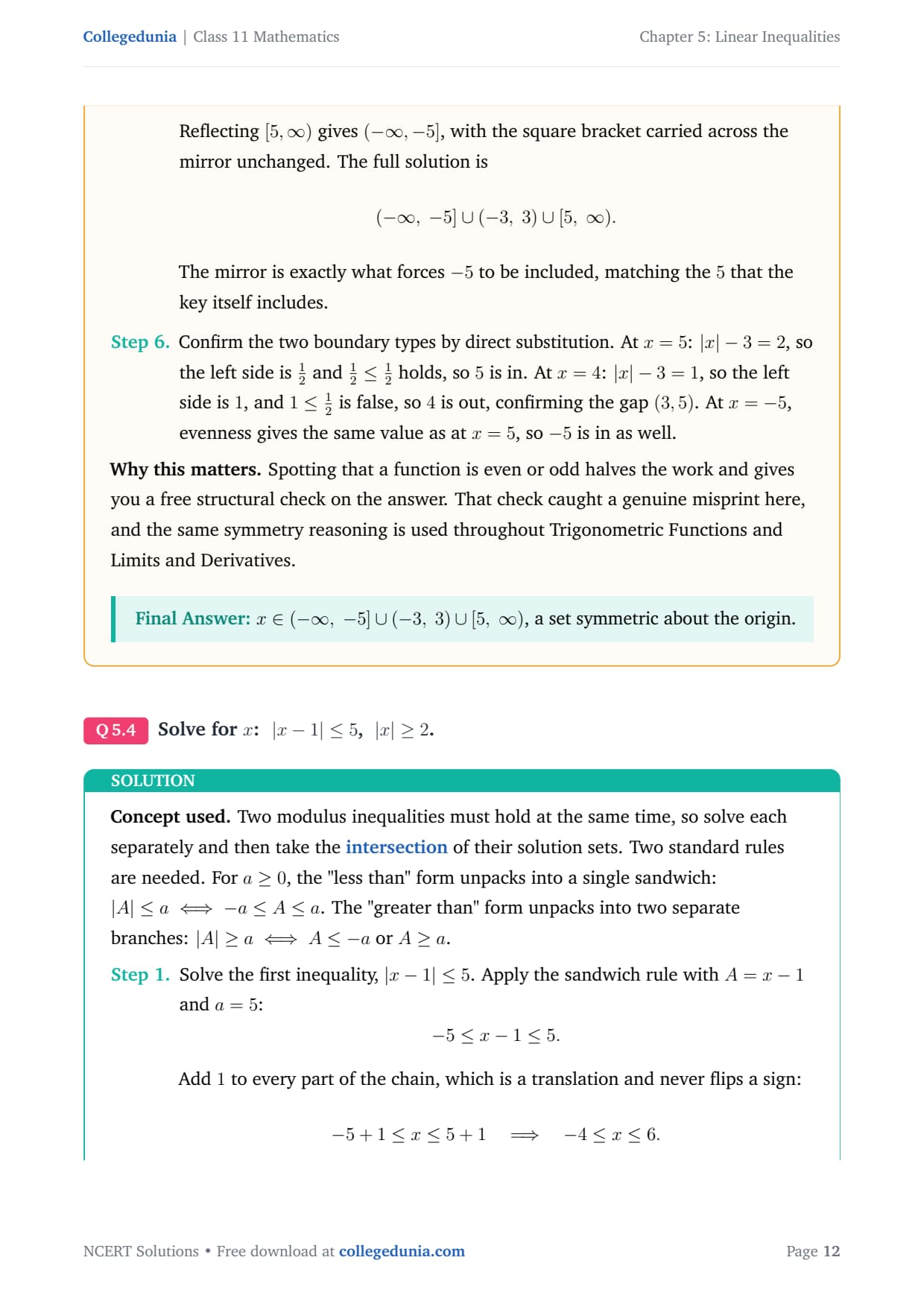
| Modulus | Solve |x| < 5 | Solve |x − 1| ≤ 5 together with |x| ≥ 2 |
| Graphing | Shade the region for 2x + y ≥ 6 | Read a shaded region off a printed figure and write its inequalities |
| Systems | Solve two inequalities in one variable | Show a three-inequality system has no solution, or an unbounded region |
| Word problems | Find the marks needed for an average | Fix an acid-mixture range or a break-even production count |
How to Use the Linear Inequalities Exemplar for Boards and JEE Preparation
Treat the exercise as four sittings, not one. Finish the NCERT textbook exercises first, because the Exemplar assumes students can already shade a half-plane and solve a modulus inequality without hesitating.
| Session | What to solve | Time |
|---|---|---|
| 1 | Short Answer Q1 to Q6, the algebra block | 1.5 hours |
| 2 | Short Answer Q7 to Q12, the word problems | 1 hour |
| 3 | Long Answer Q13 to Q18, graphs drawn on paper | 1.5 hours |
| 4 | Q19 to Q32, then re-solve everything marked wrong | 1.5 hours |
That is about 5.5 hours for the chapter. For JEE Main and JEE Advanced, the modulus and quotient inequalities matter most, because they turn up inside domain questions later. For CBSE Boards and CUET, the graphing block and the word problems are the better use of time.
Practice Questions for Class 11 Maths Linear Inequalities
After reading the solutions, students should test themselves on the same question types. The card below opens a set of solved practice questions with step-by-step answers for Linear Inequalities.
Practice Card: Solved Practice Questions for Class 11 Maths Linear Inequalities. Attempt each question, then check the solution.
Student Feedback
In a Collegedunia survey of 11,620 Class 11 students conducted before the 2026 exams, 64% of students said the graph-reading questions were the part they got wrong most often, mainly because their solution book skipped the figures. Only 8% of students had noticed that the printed answer key includes two points where the fraction in Q2 does not exist.
Other Resources for Class 11 Maths Linear Inequalities
Pair the Exemplar Solutions with the textbook solutions and the notes for full chapter revision. All the Linear Inequalities resources are linked below.
| Resource | Link |
|---|---|
| NCERT Solutions | Linear Inequalities Class 11 NCERT Solutions |
| Revision Notes | Linear Inequalities Class 11 Notes |
| Handwritten Notes | Linear Inequalities Class 11 Handwritten Notes |
| NCERT Book PDF | Linear Inequalities Class 11 NCERT Book PDF |
| Exemplar Book PDF | Linear Inequalities Class 11 NCERT Exemplar Book PDF |
NCERT Exemplar Solutions for Other Class 11 Maths Chapters
The full Class 11 Maths Exemplar set covers 14 chapters, 735 questions and 2,625 pages of solutions. Use the table to jump to any other chapter.
Linear Inequalities Class 11 Maths NCERT Exemplar Solutions FAQs
Ques. How many questions are there in the Class 11 Maths Linear Inequalities Exemplar?
Ans. Chapter 5 Linear Inequalities has 32 questions, all in one exercise, printed as Exercise 6.3 in the Exemplar's own numbering. They are split into 12 Short Answer, 6 Long Answer, 12 Objective, 1 True/False question with fifteen parts and 1 Fill in the Blanks question with eight parts. Every one of them is solved in the PDF on this page.
Ques. Do the Linear Inequalities Exemplar Solutions include the graphs from the book?
Ans. Yes. All 13 graphs, Fig 6.5 to Fig 6.17 in the Exemplar's own numbering, are placed inside the solutions next to the questions that quote them. Ten questions ask students to read a shaded region or a number line, so they cannot be solved without the figure in front of them.
Ques. Is the printed NCERT Exemplar answer key for Linear Inequalities correct?
Ans. Not fully. The key is wrong on four questions: Q2, Q3, Q8 and part (xiv) of Q31. For example, the key for Q2 prints [0, 1] ∪ [3, 4], but at x = 0 and x = 4 the denominator is zero, so the fraction does not exist there. Each error is explained on this page with the correct answer.
Ques. Why is the correct answer to Q2 of the Linear Inequalities Exemplar (0, 1] ∪ [3, 4)?
Ans. The inequality is (|x − 2| − 1) / (|x − 2| − 2) ≤ 0. At x = 0 and at x = 4 we get |x − 2| = 2, so the denominator equals zero and the fraction is undefined. An undefined expression cannot satisfy "≤ 0", so both endpoints are excluded and the outer brackets are round.
Ques. Are the Class 11 Maths Linear Inequalities Exemplar Solutions free to download?
Ans. Yes. The Linear Inequalities NCERT Exemplar Solutions PDF is free to download from this page. It runs to 124 pages, solves every question step by step according to the 2026-27 NCERT Exemplar, and helps students prepare for CBSE Boards, JEE Main, JEE Advanced and CUET.



Comments