




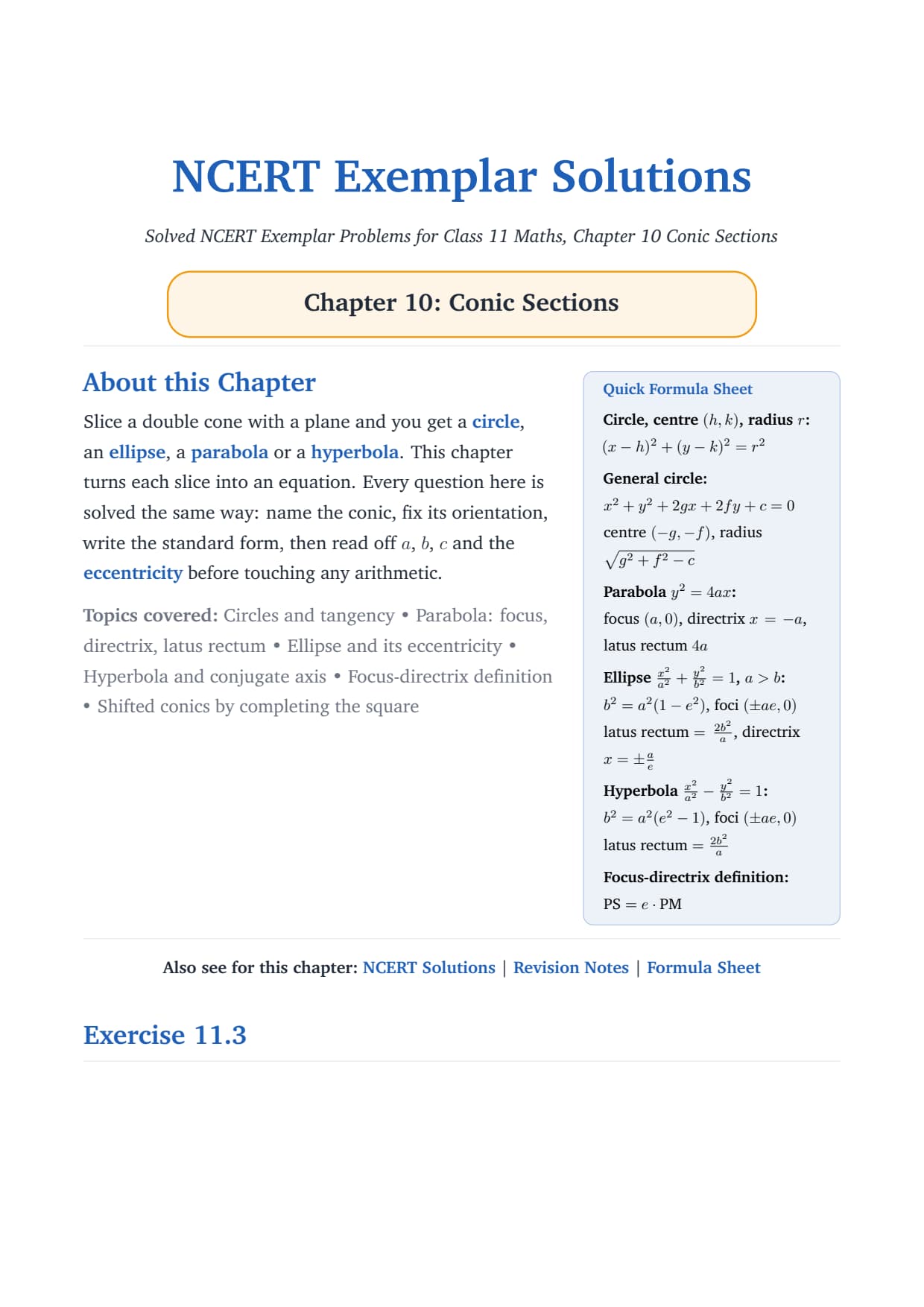
Conic Sections is the chapter where a single wrong reading of a denominator changes the whole answer. The NCERT Exemplar Solutions for Class 11 Maths Chapter 10 Conic Sections on this page solve all 59 questions of the chapter, step by step, according to the 2026-27 NCERT Exemplar.
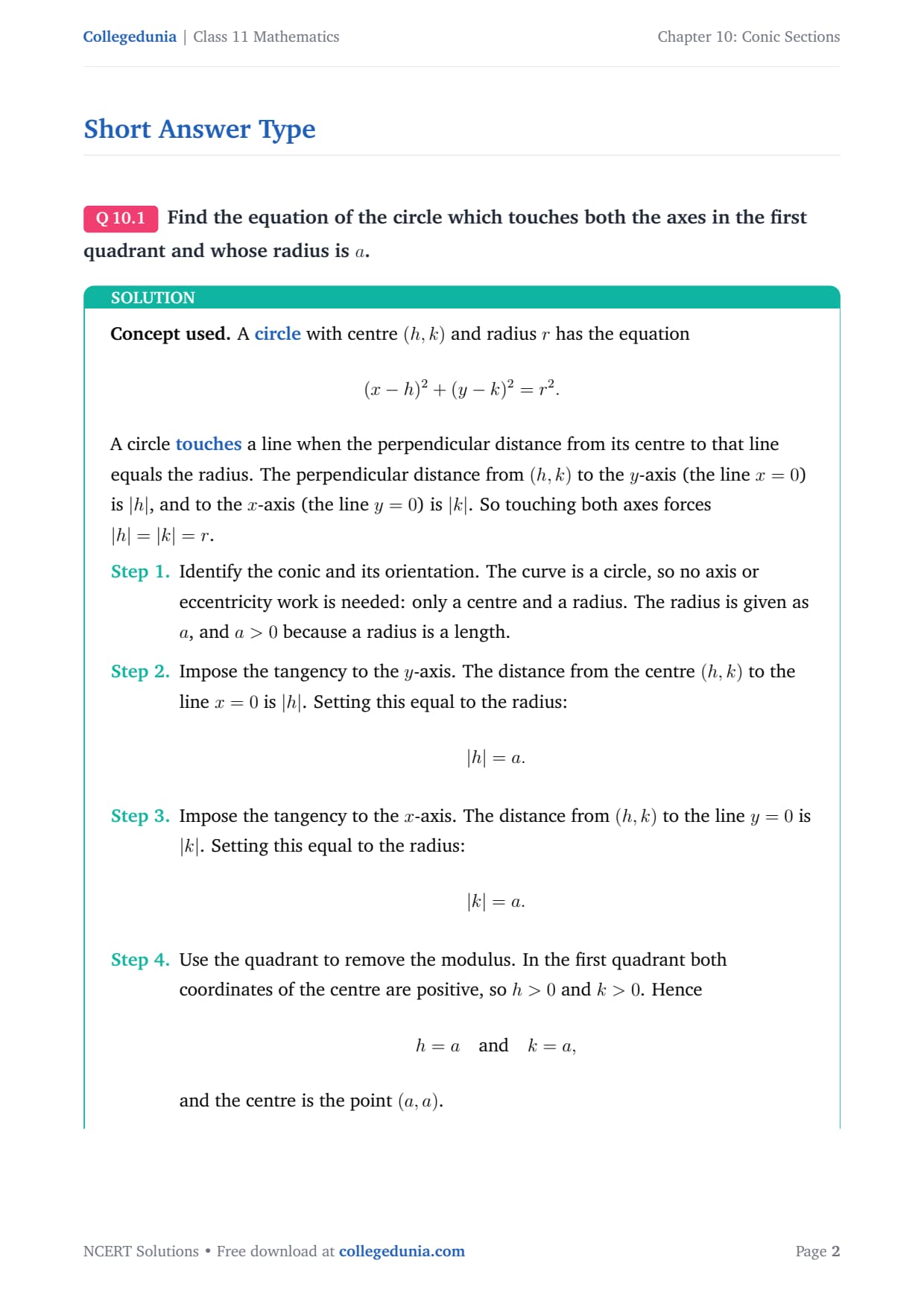
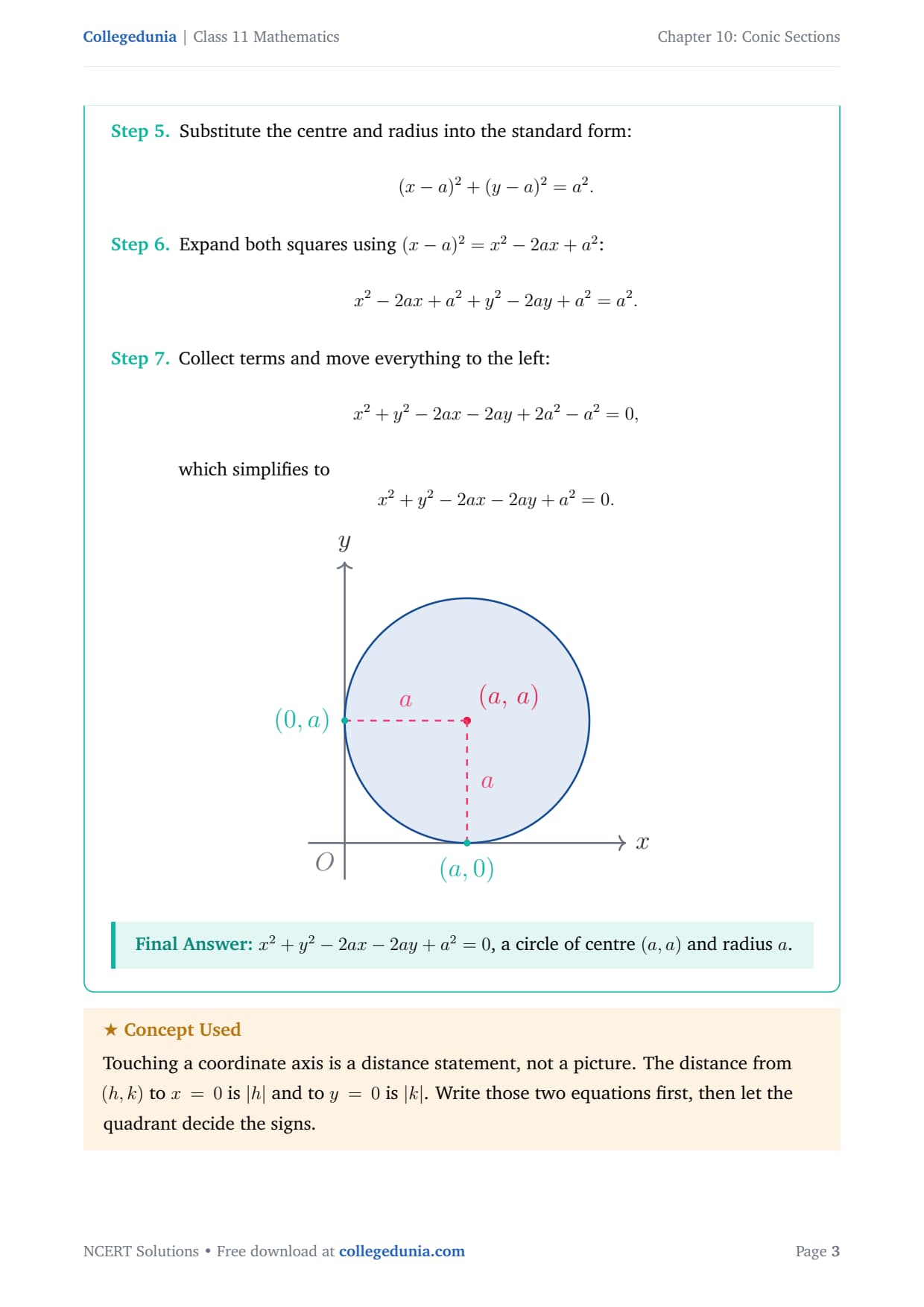
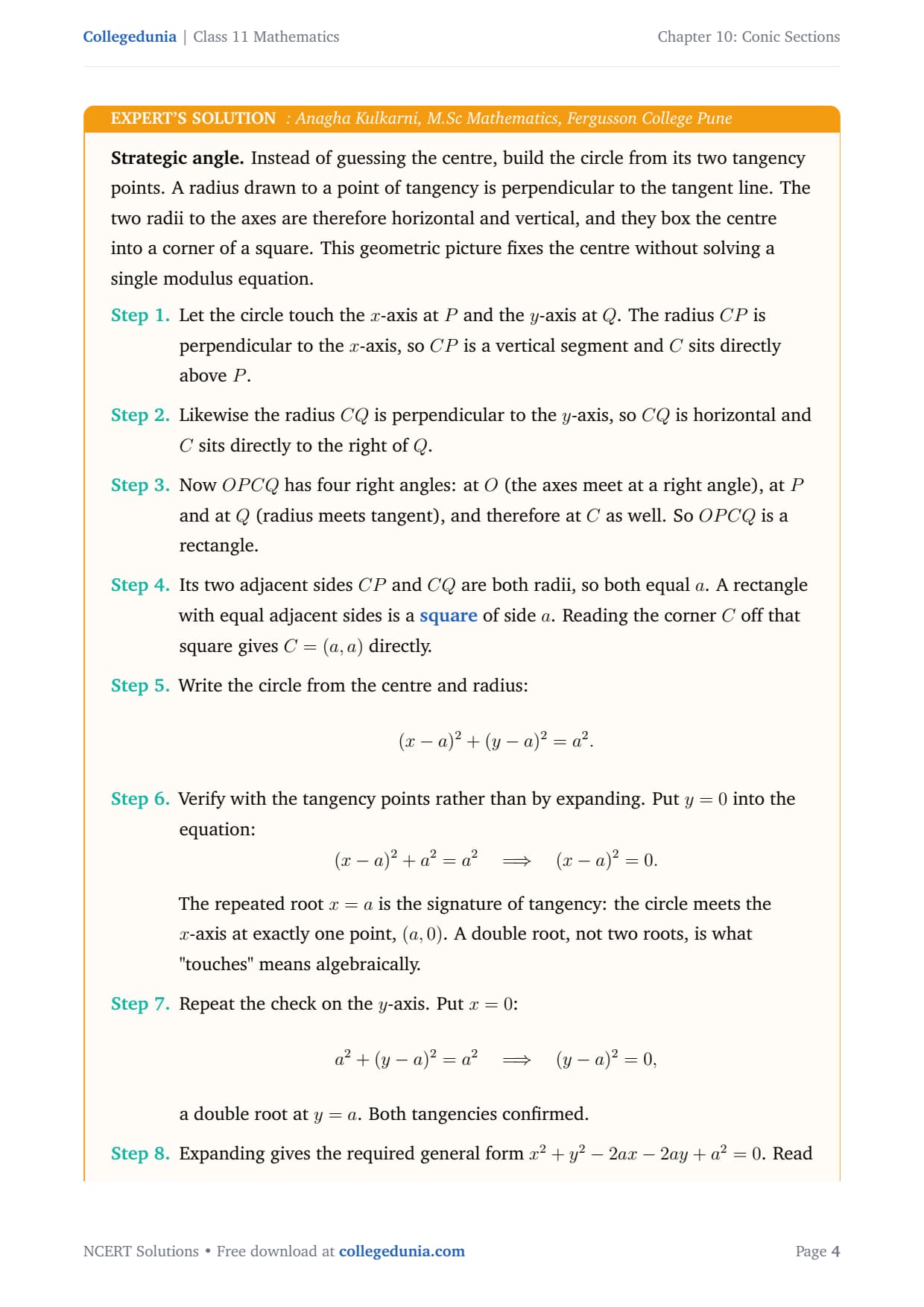
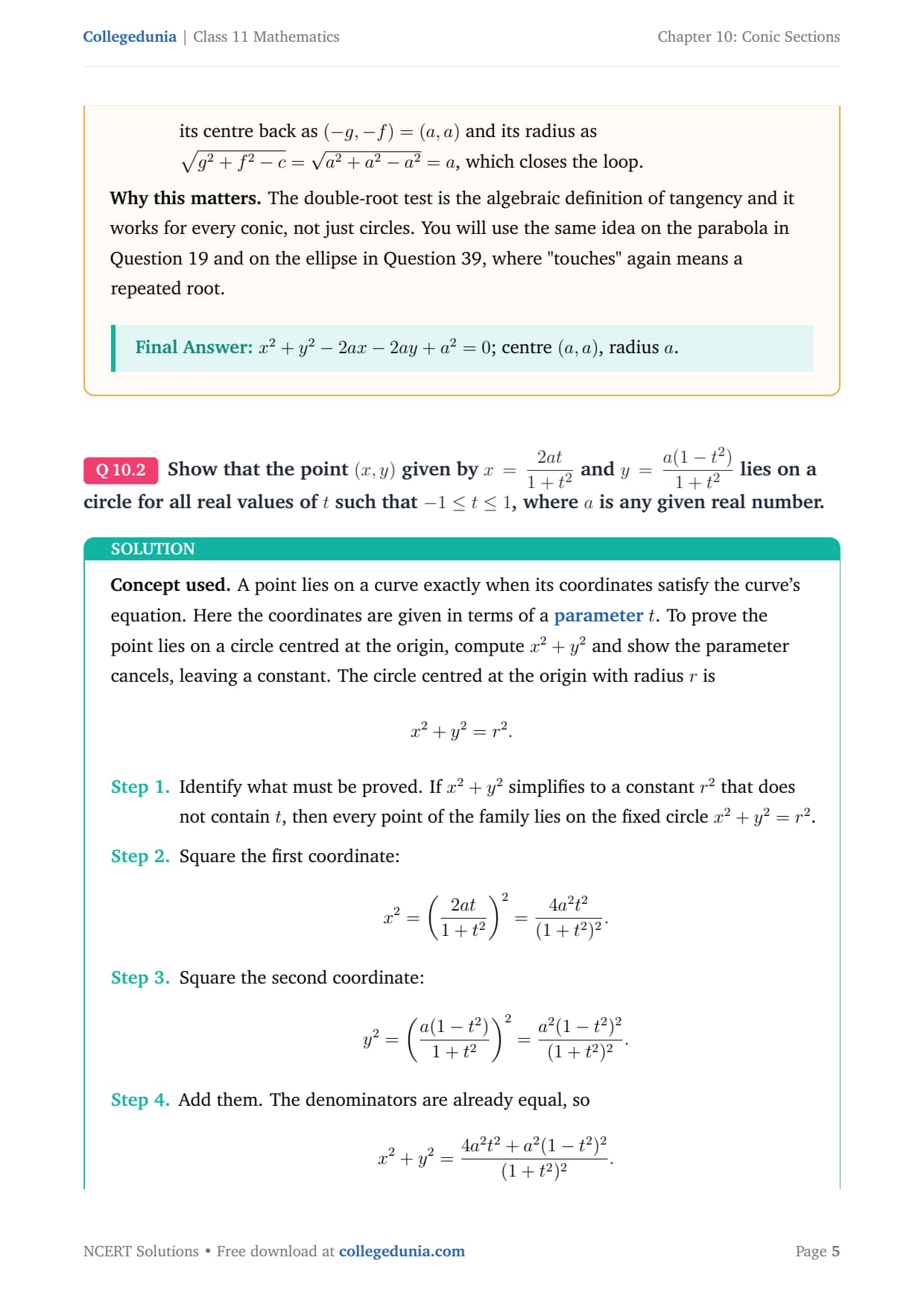
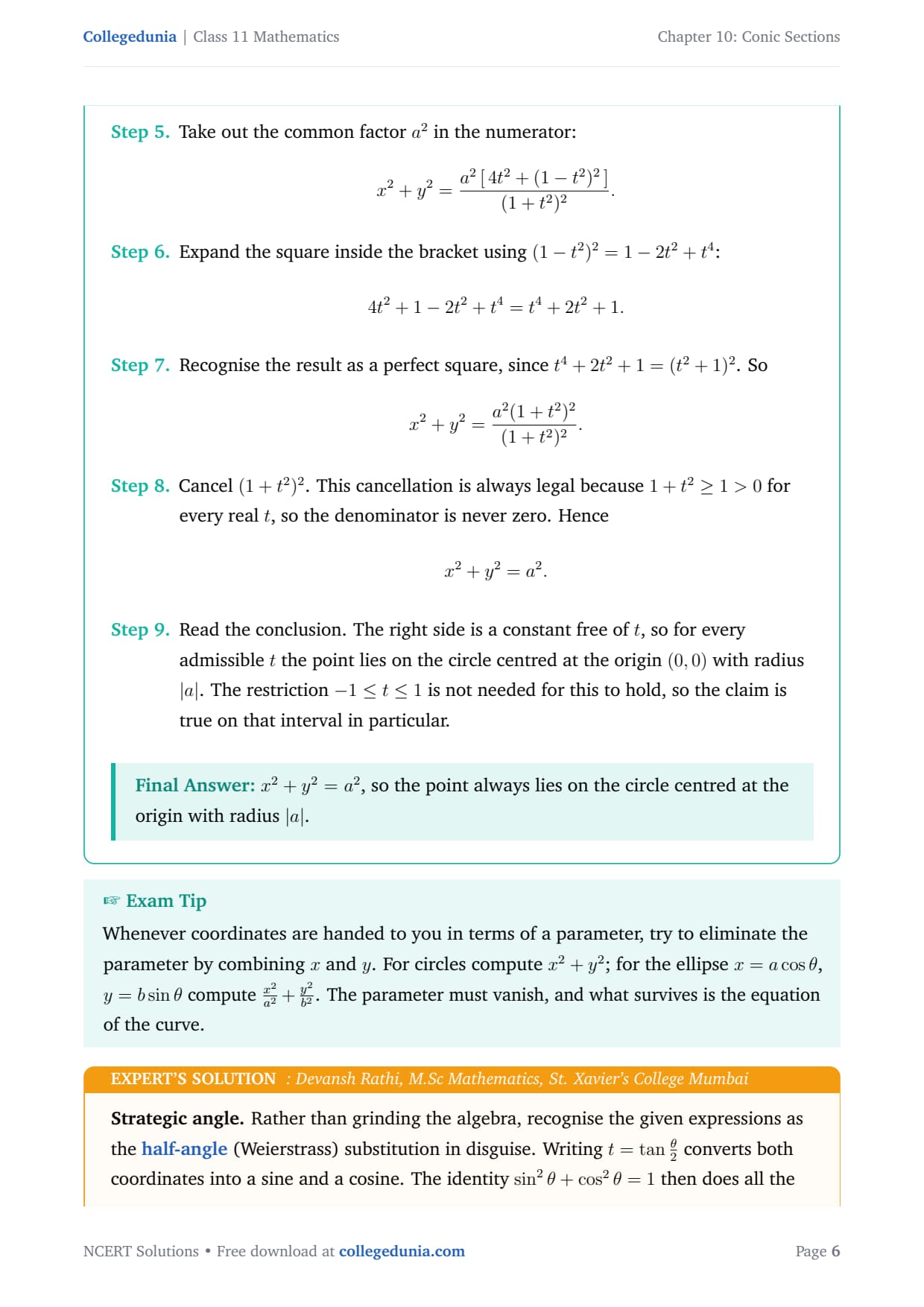
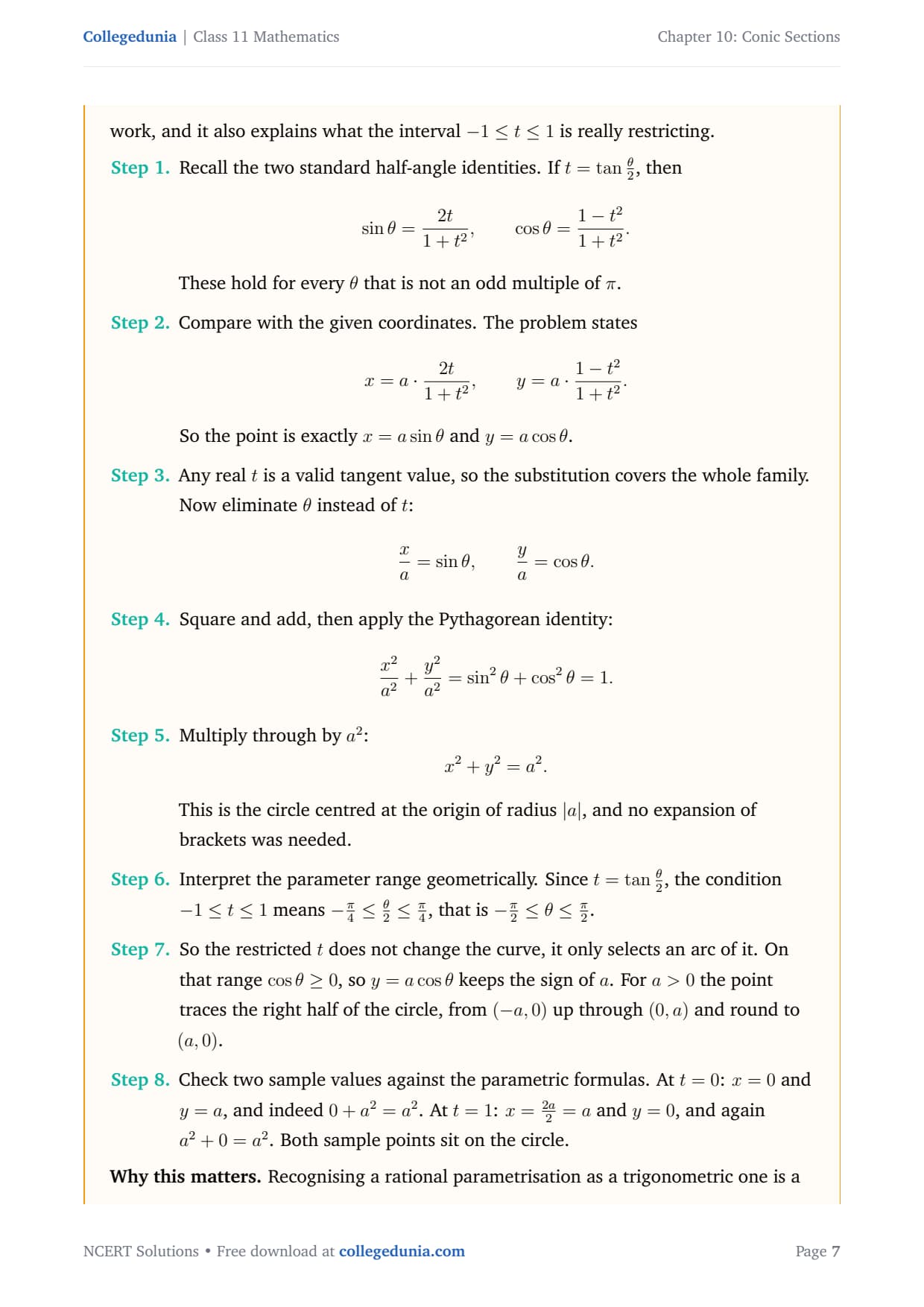
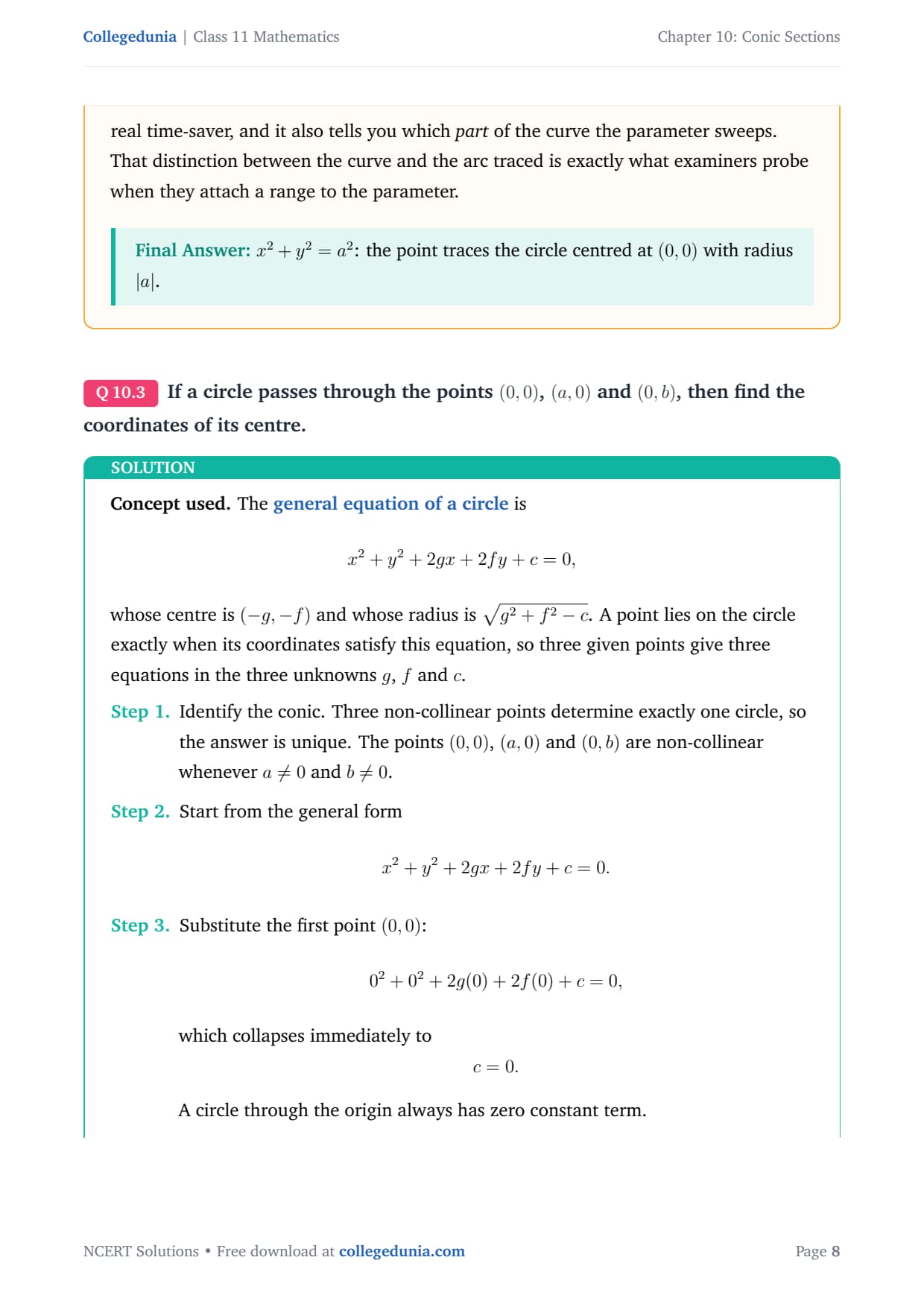
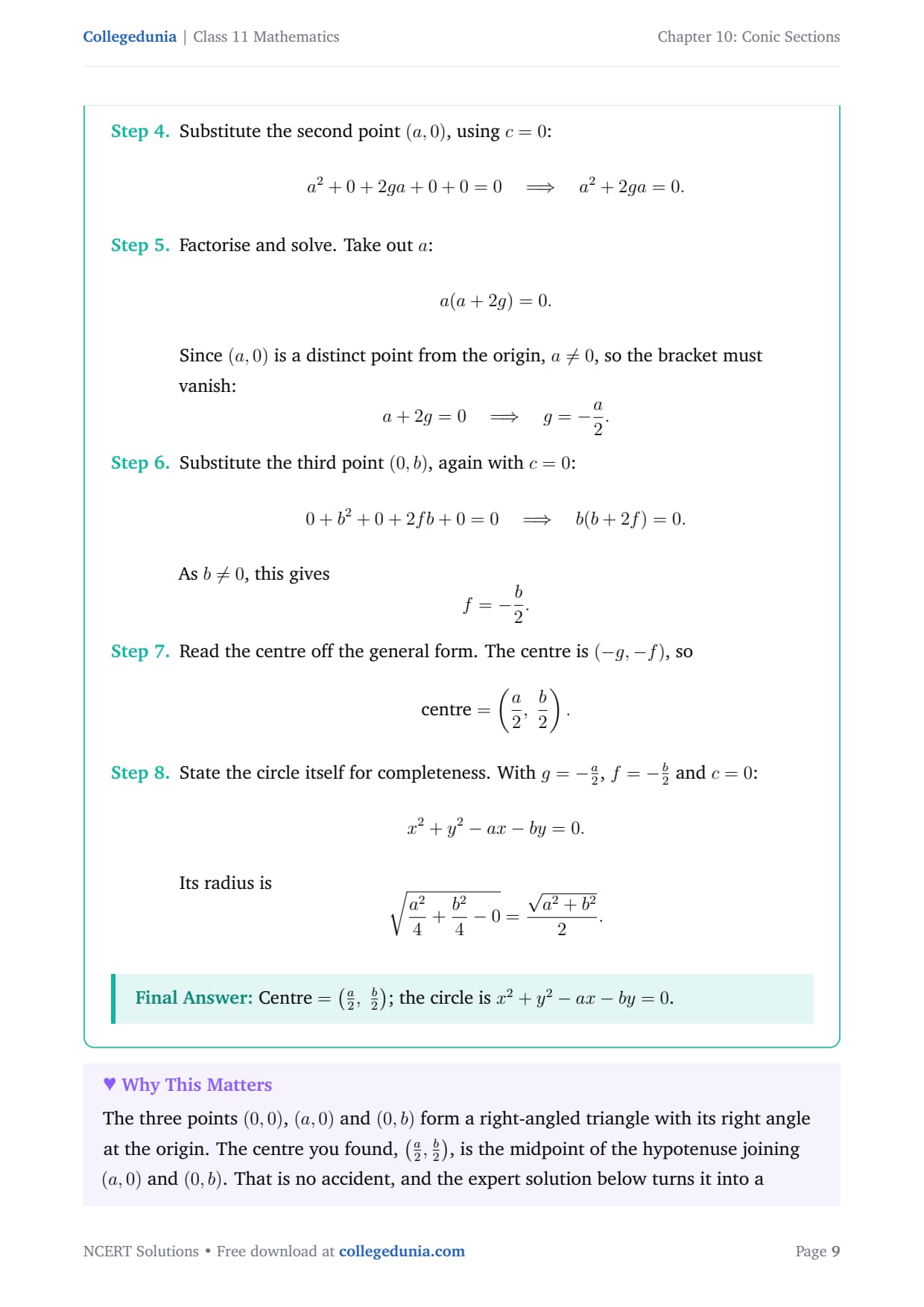
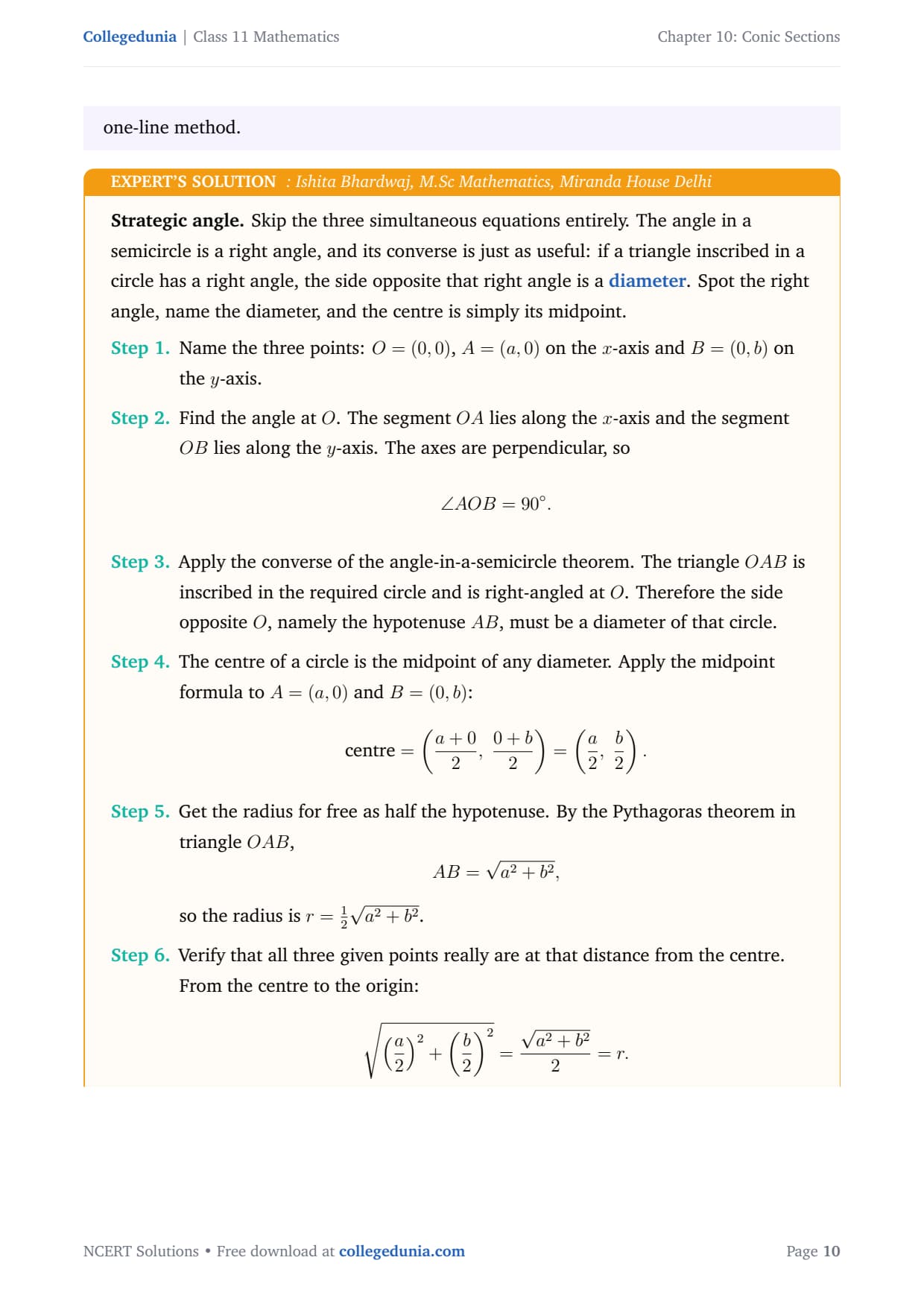
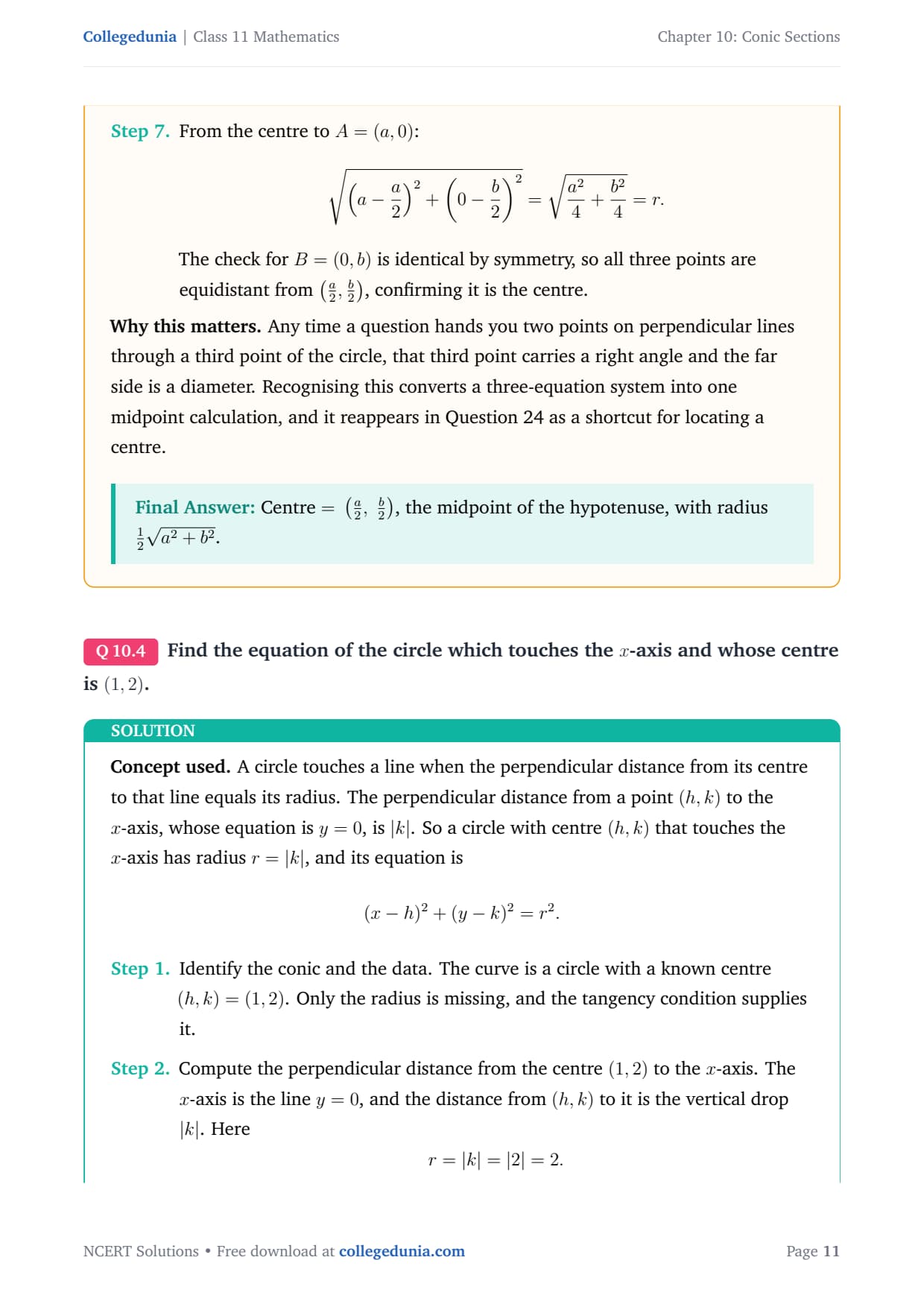
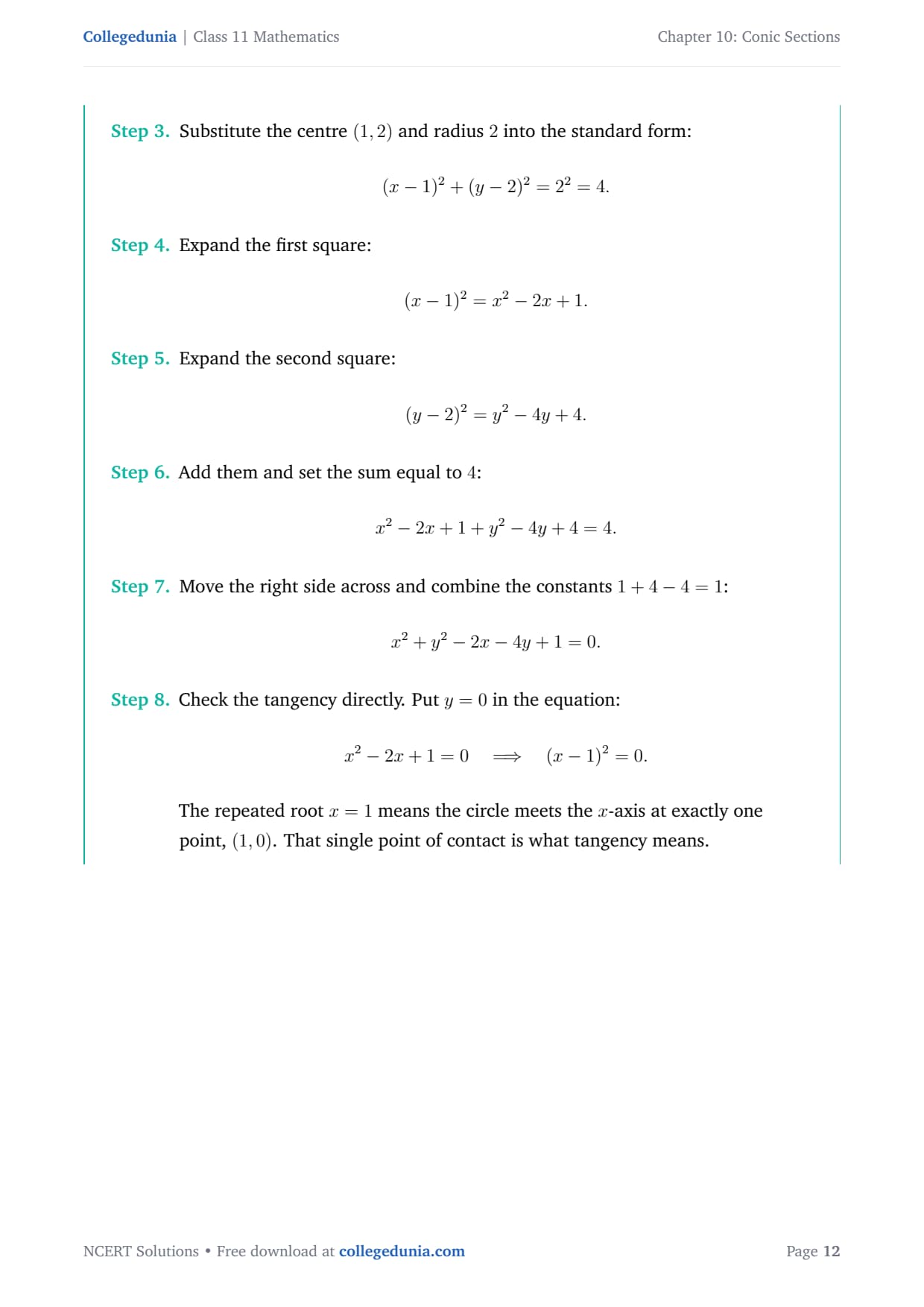
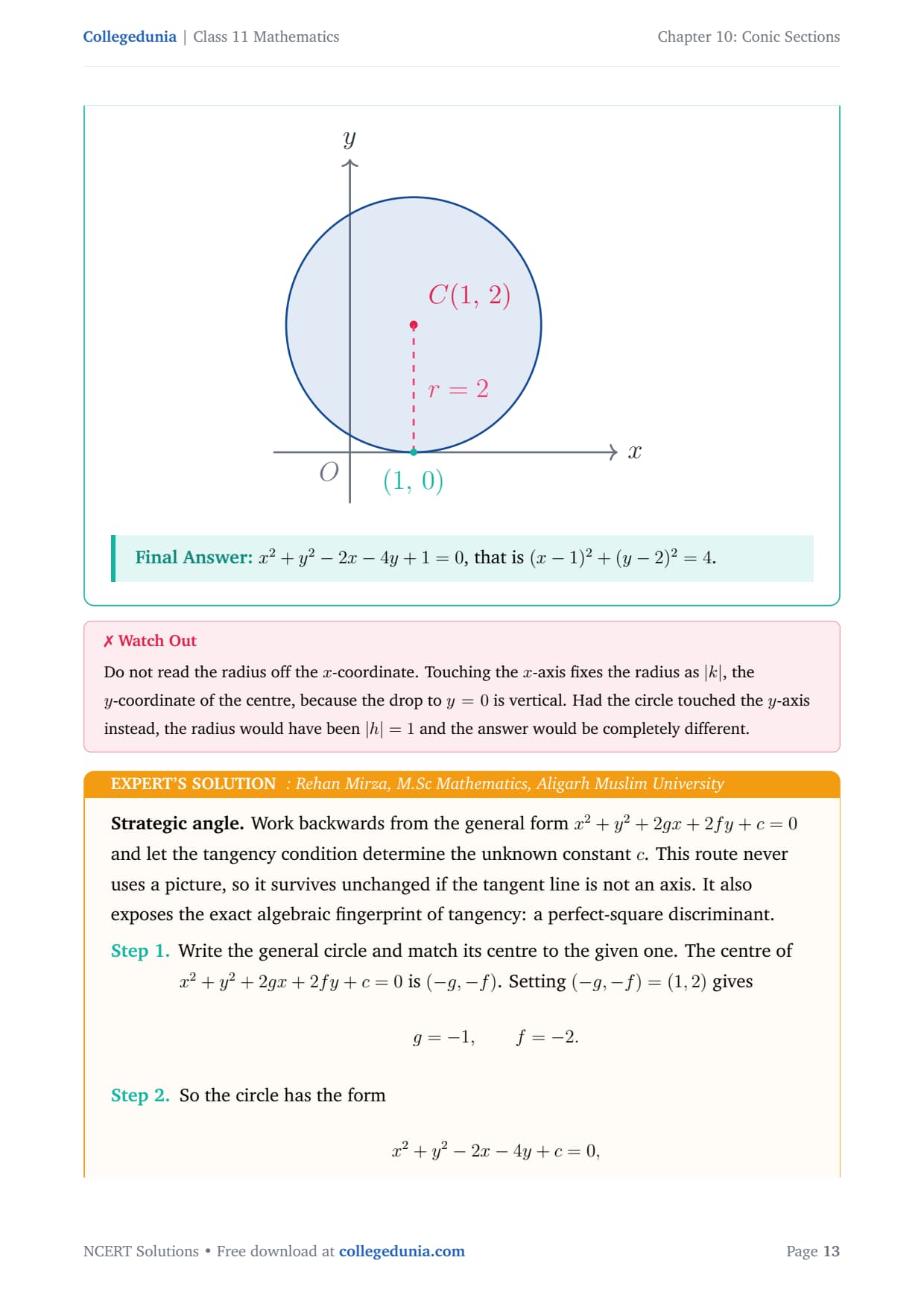
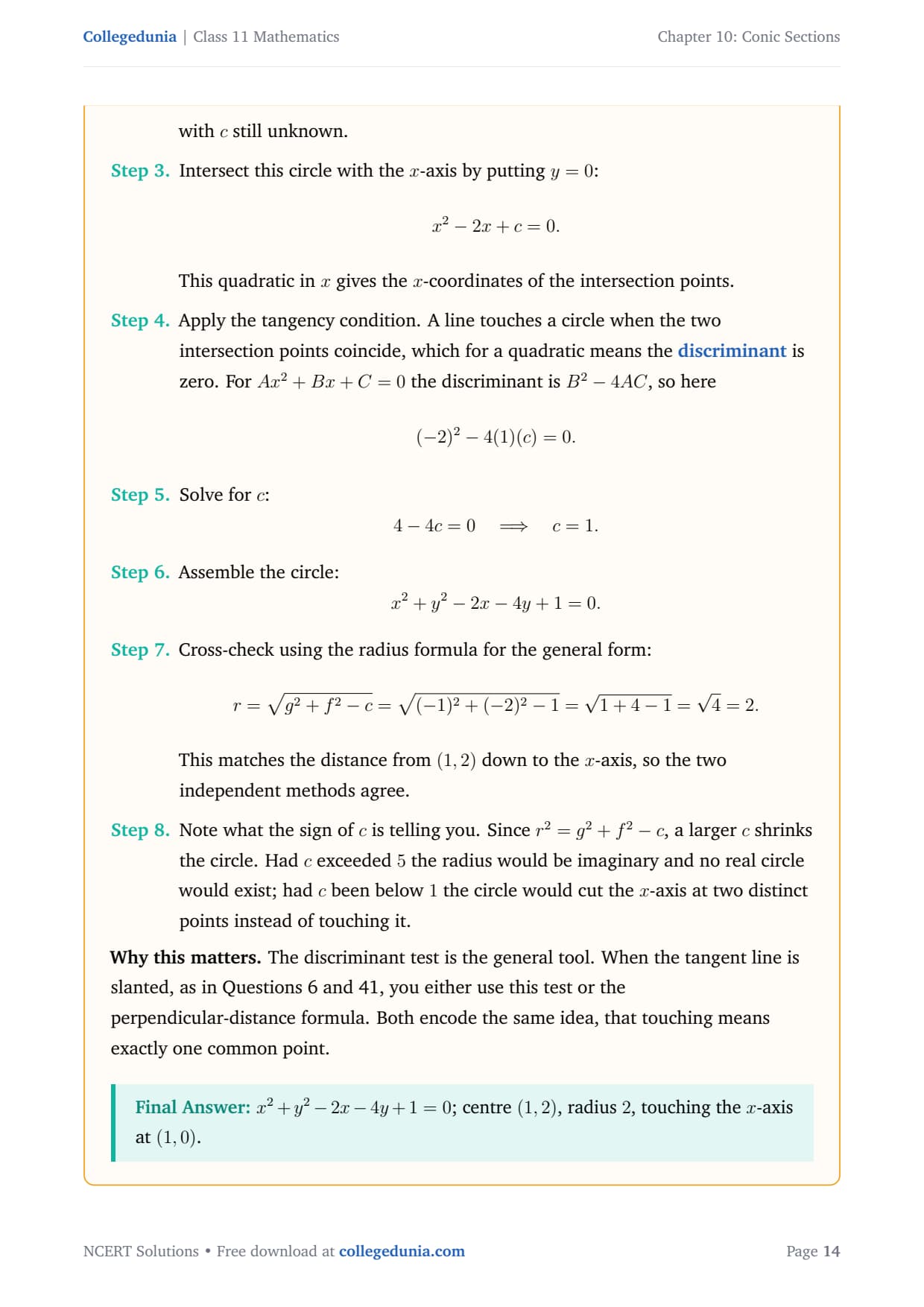
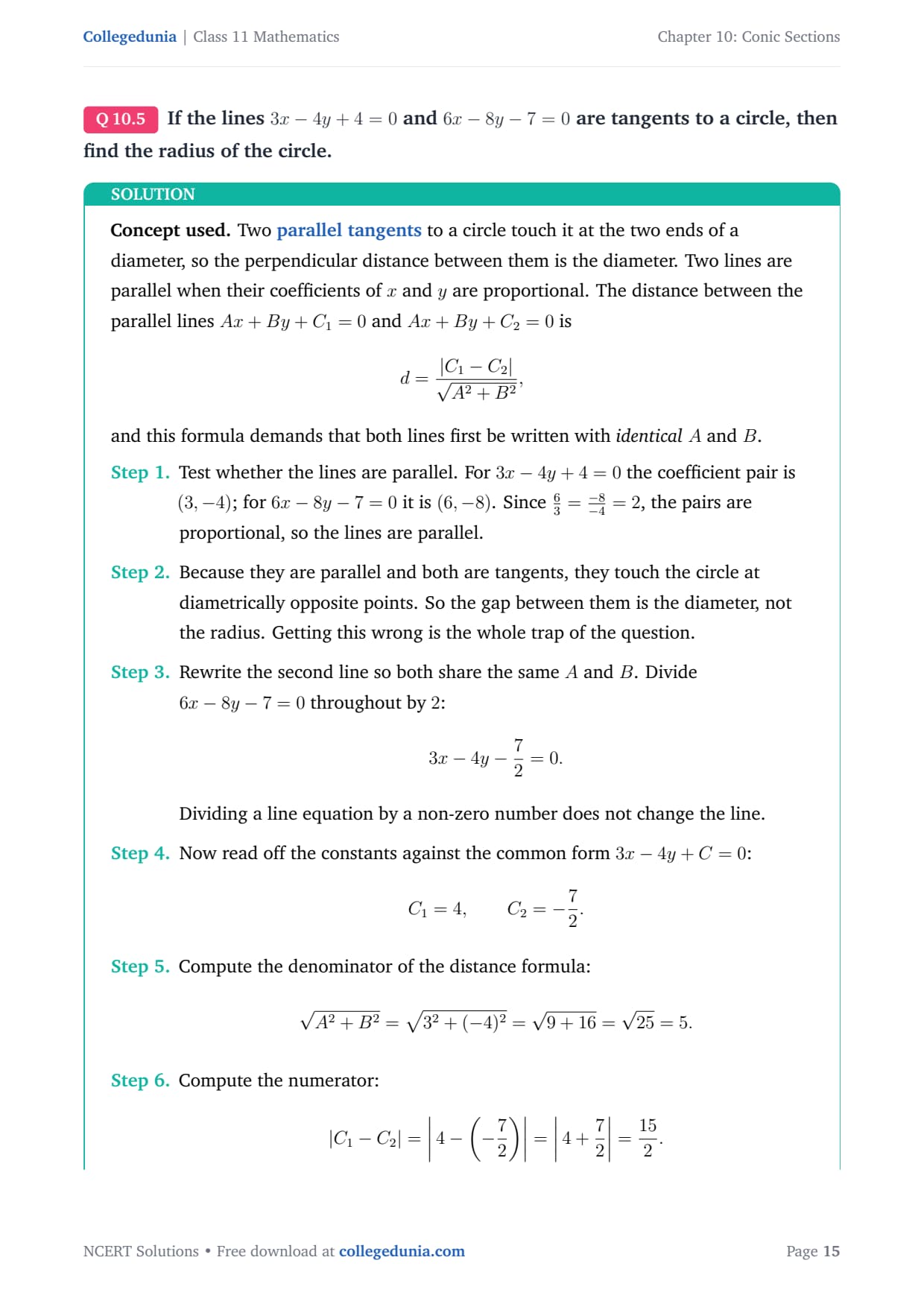
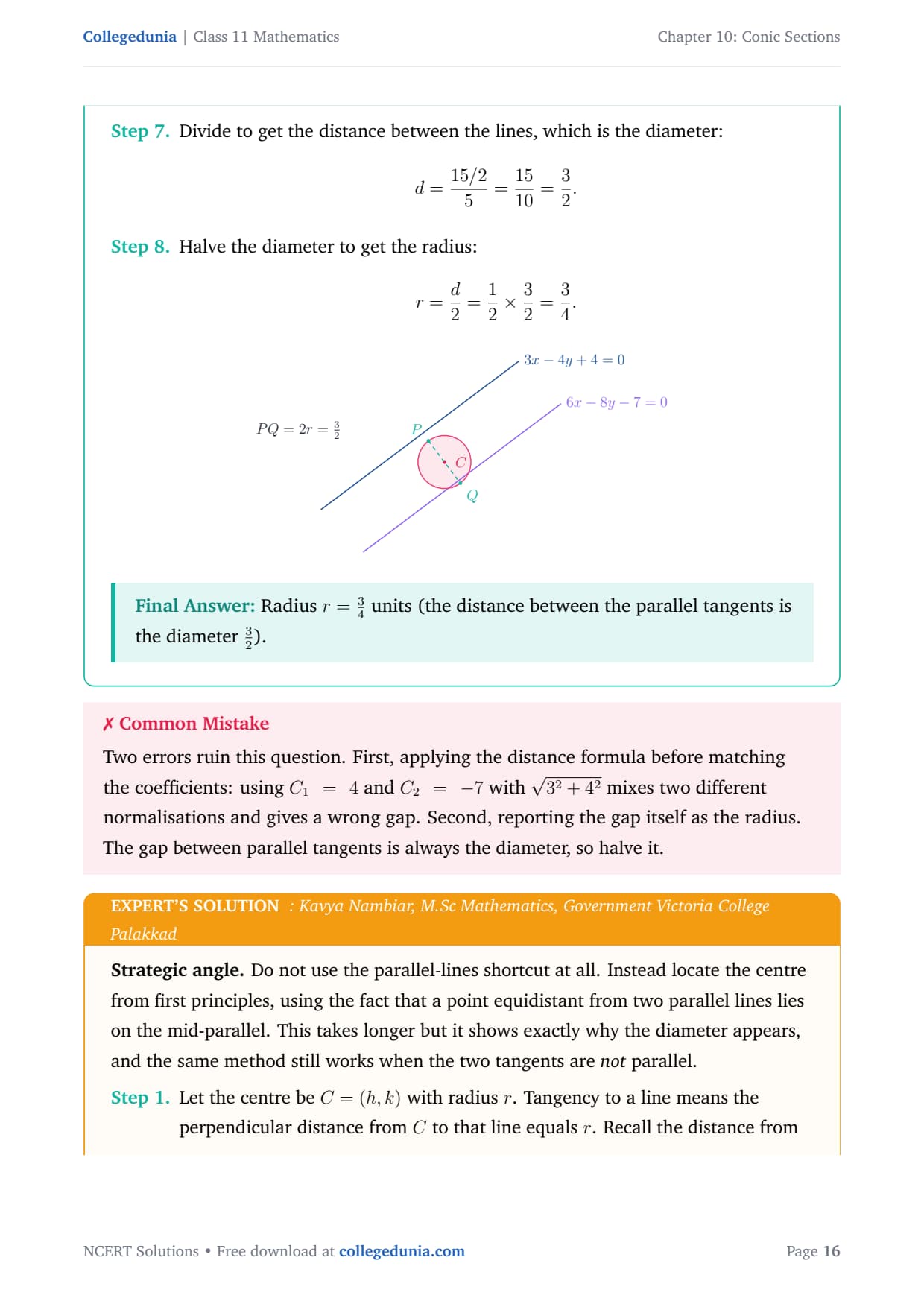
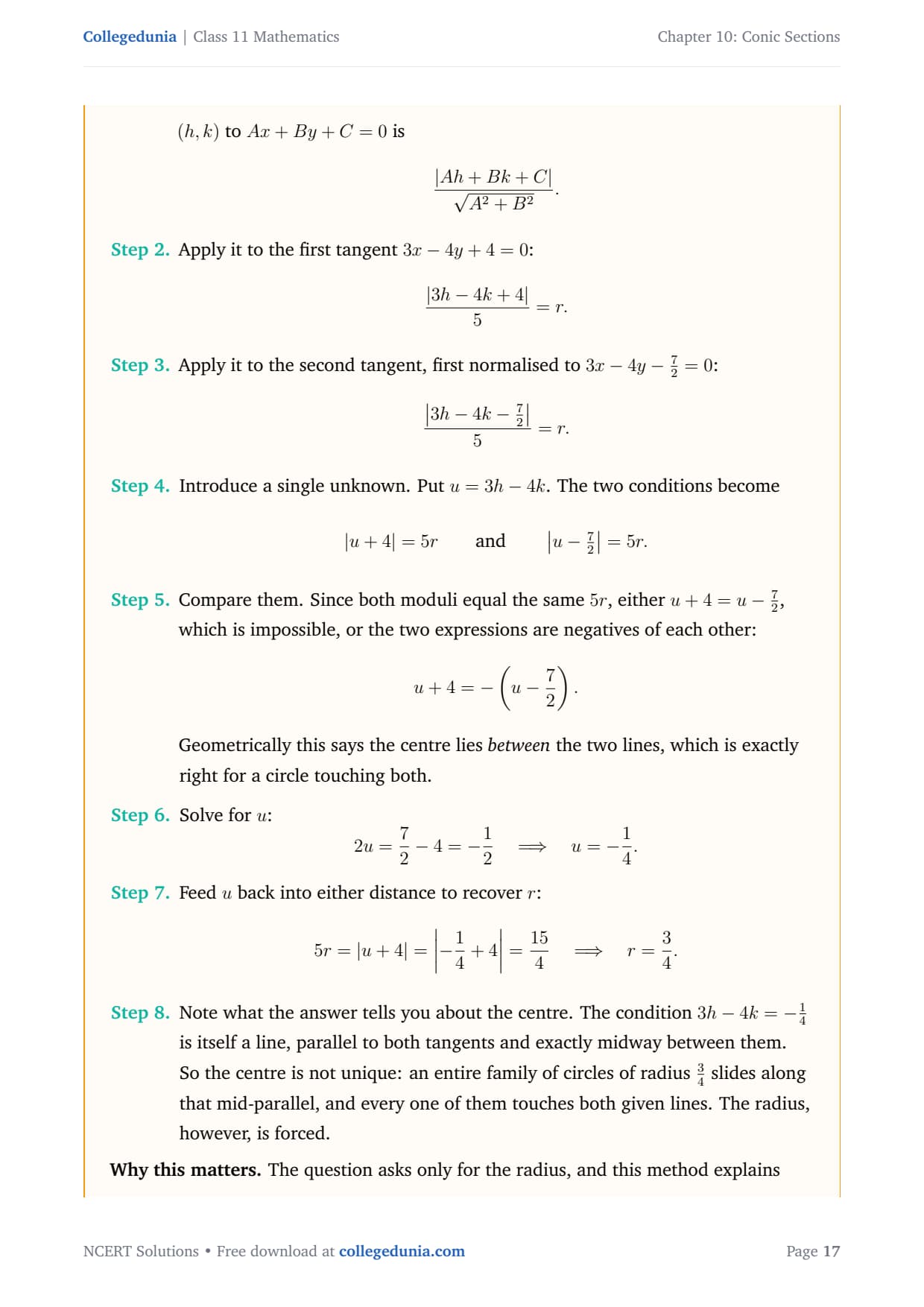
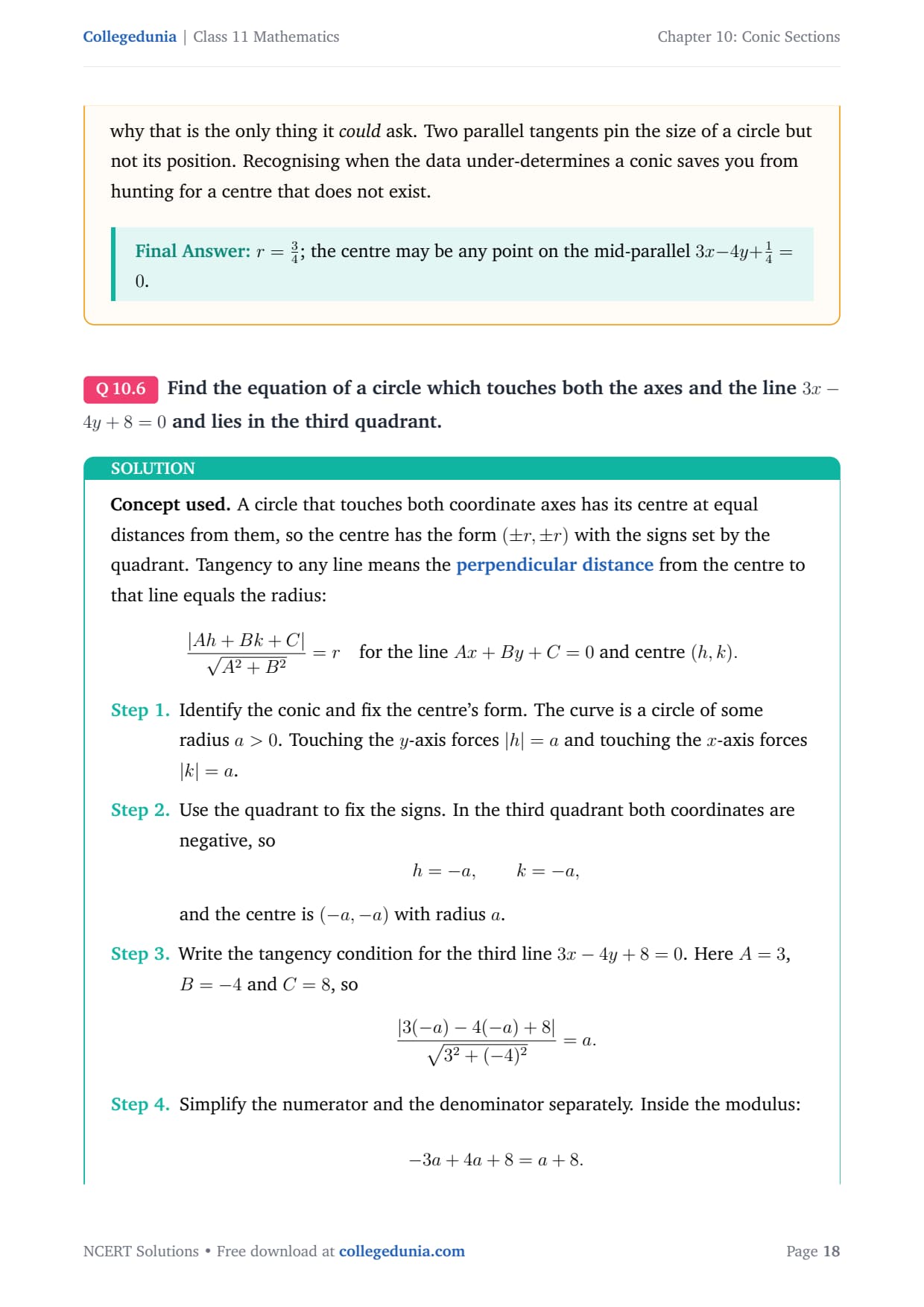
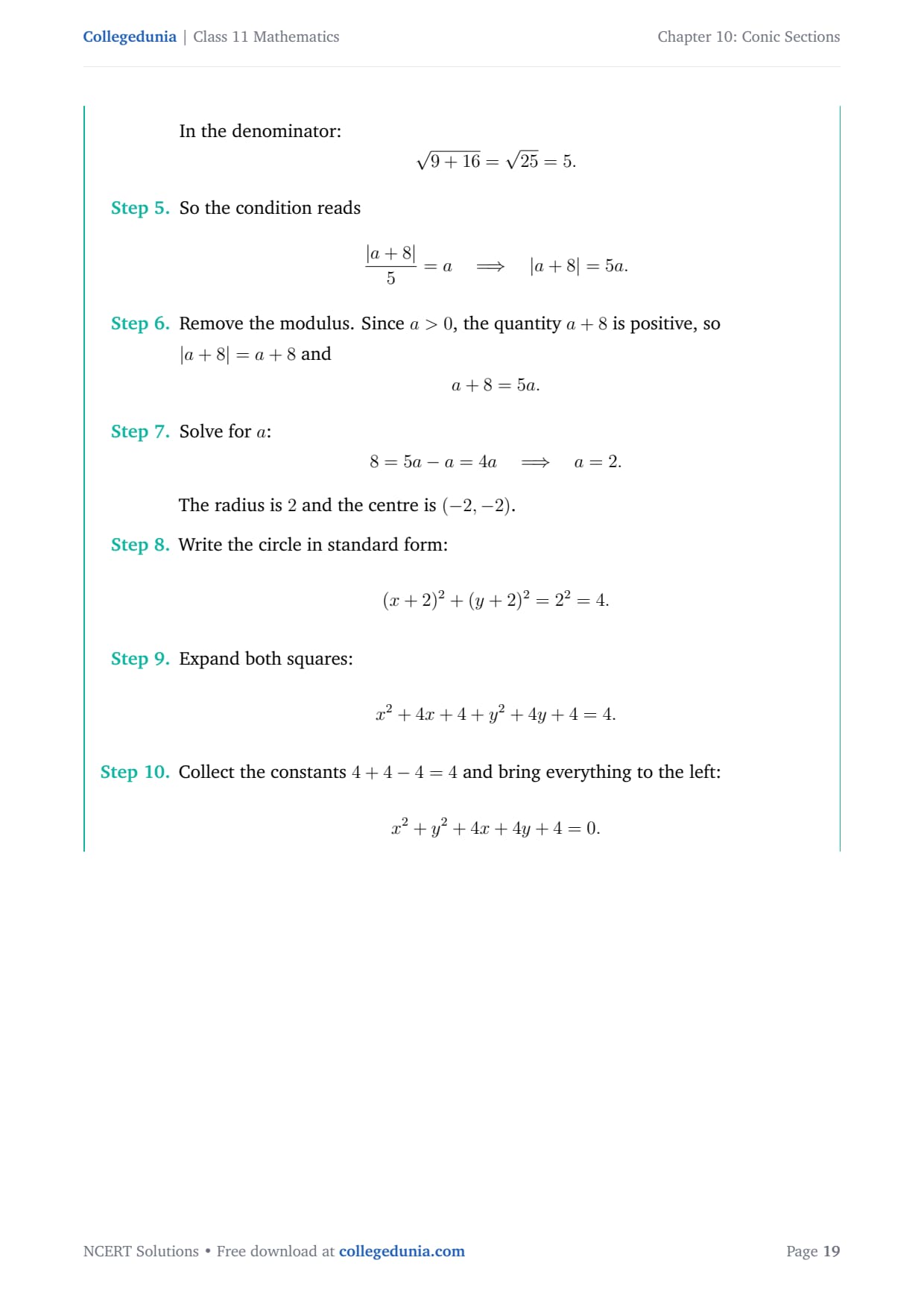
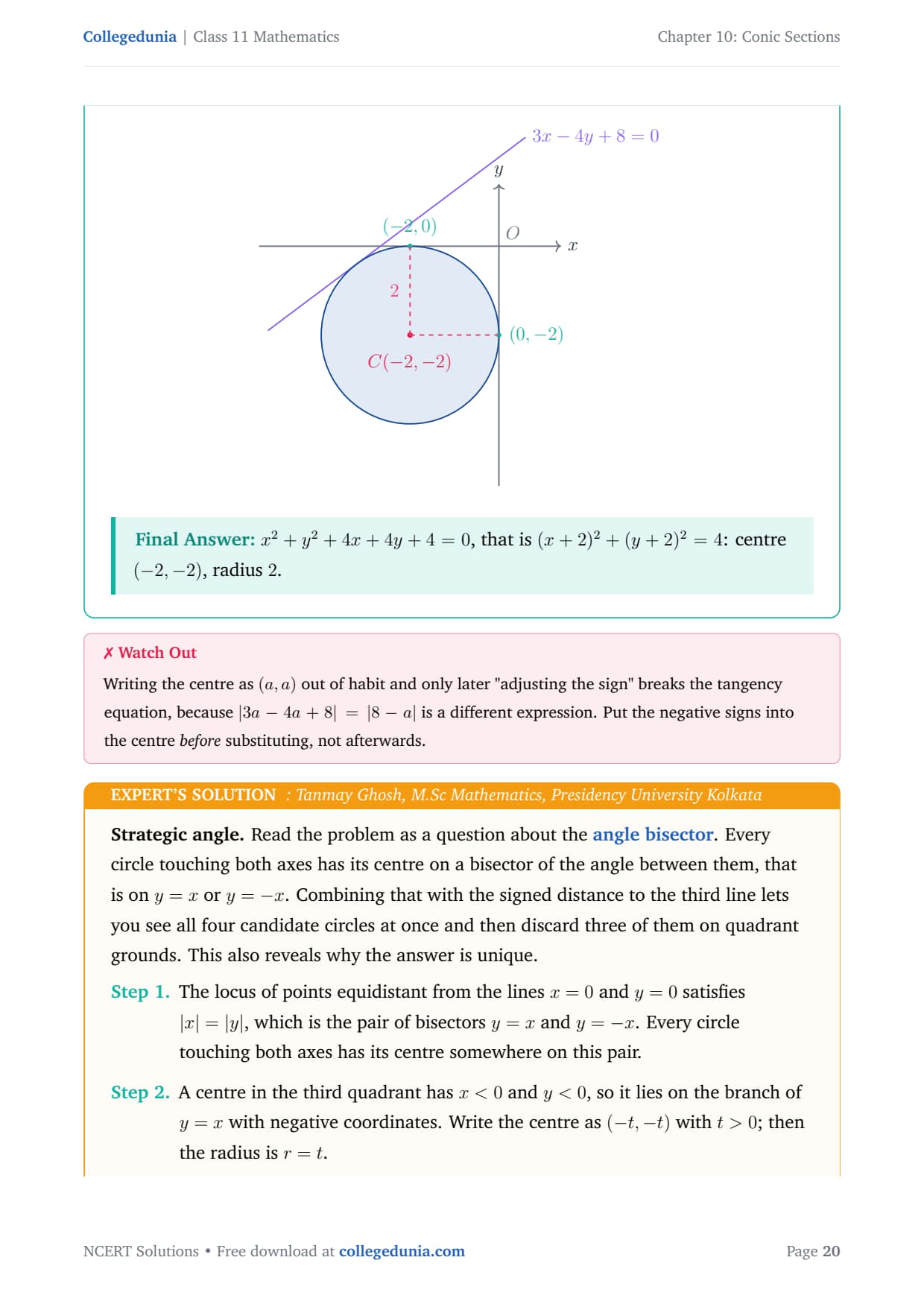
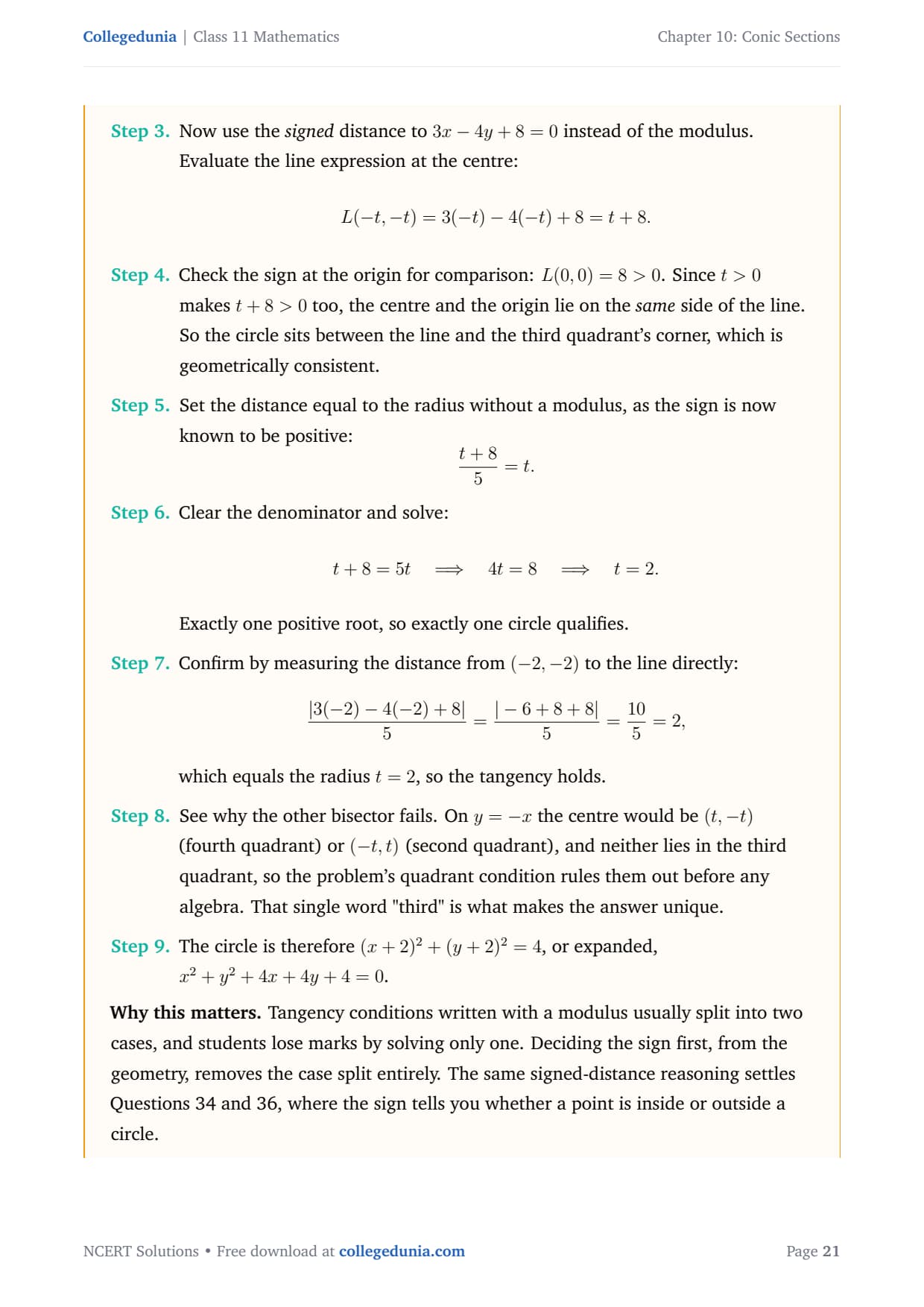
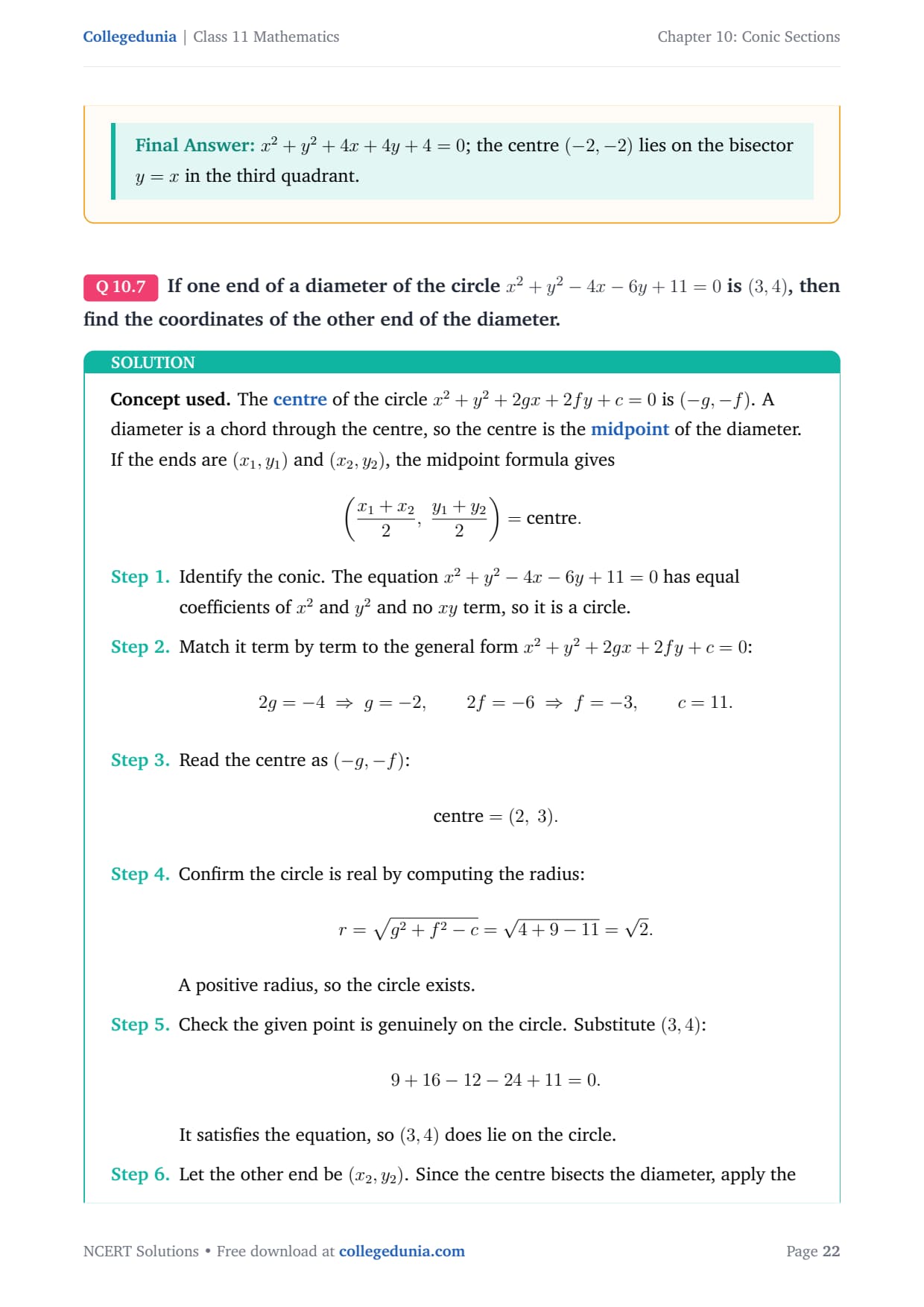
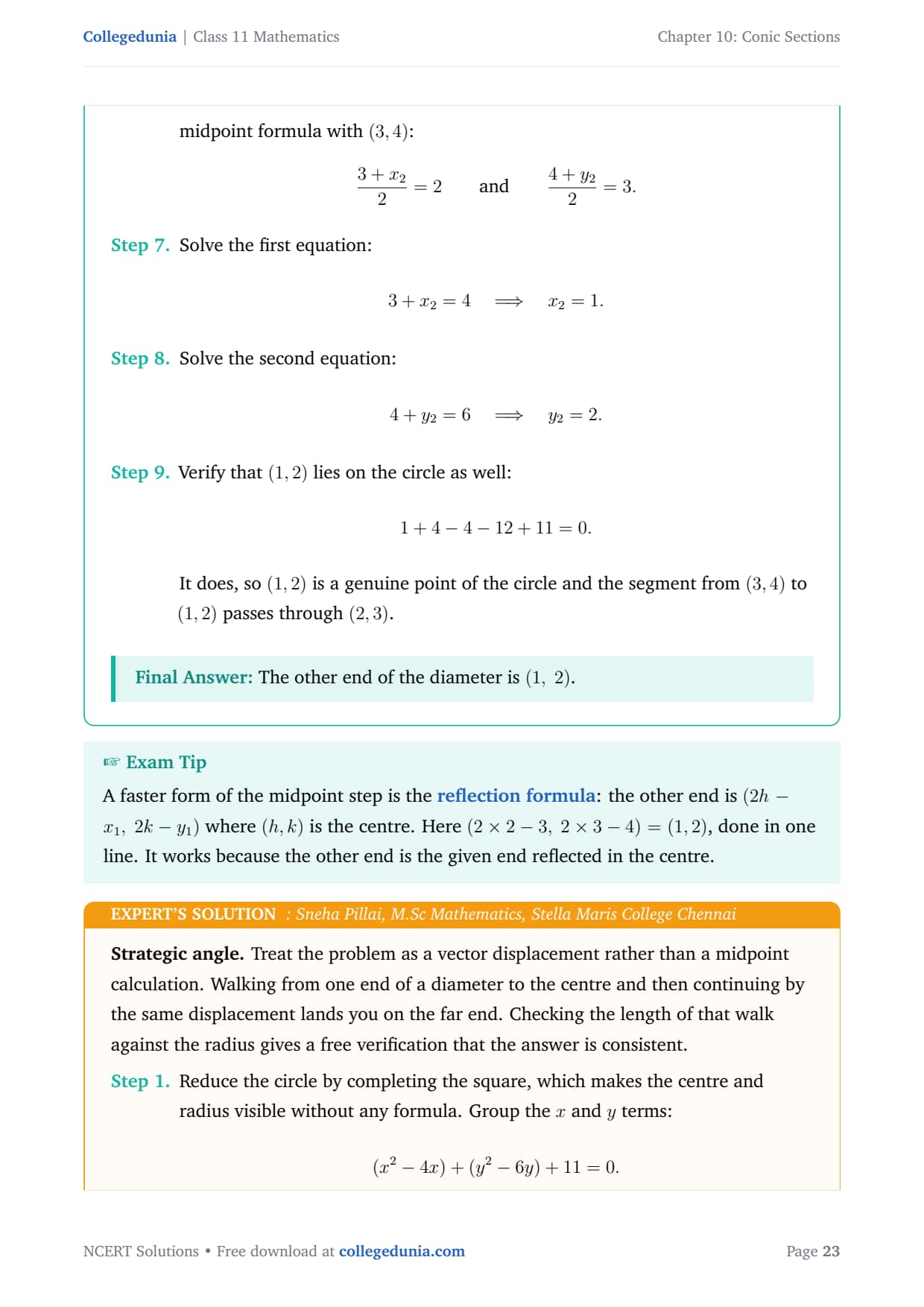
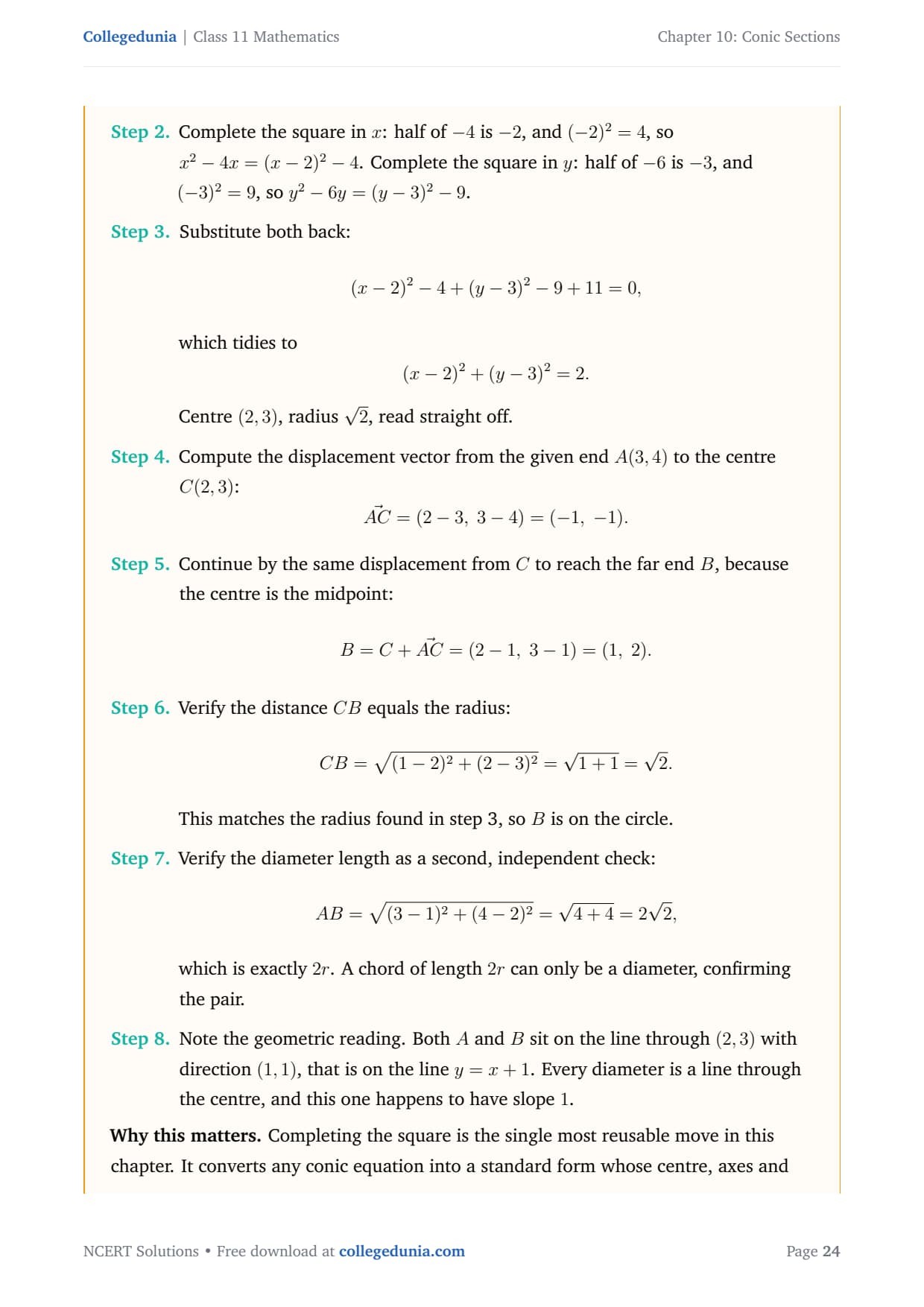
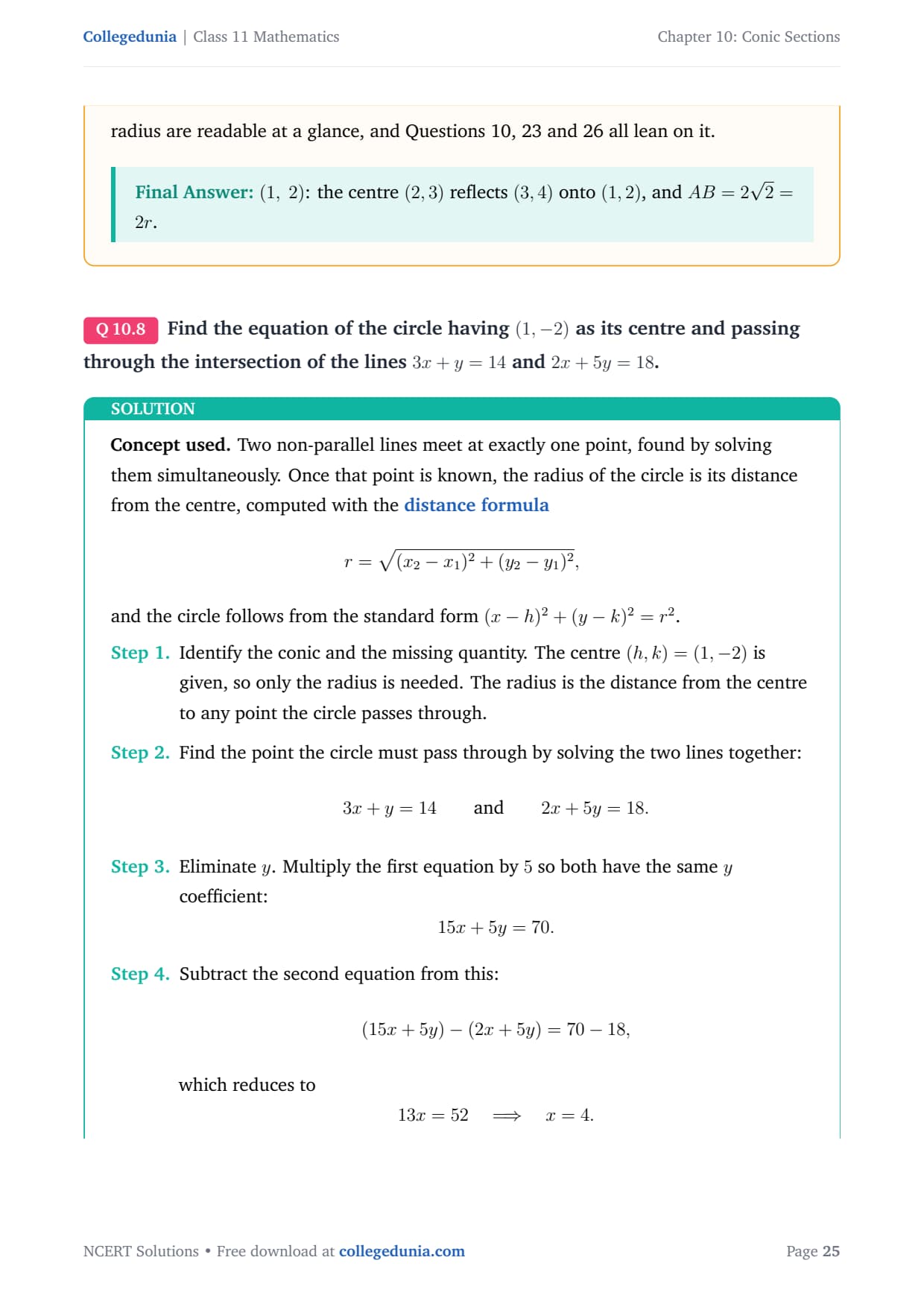
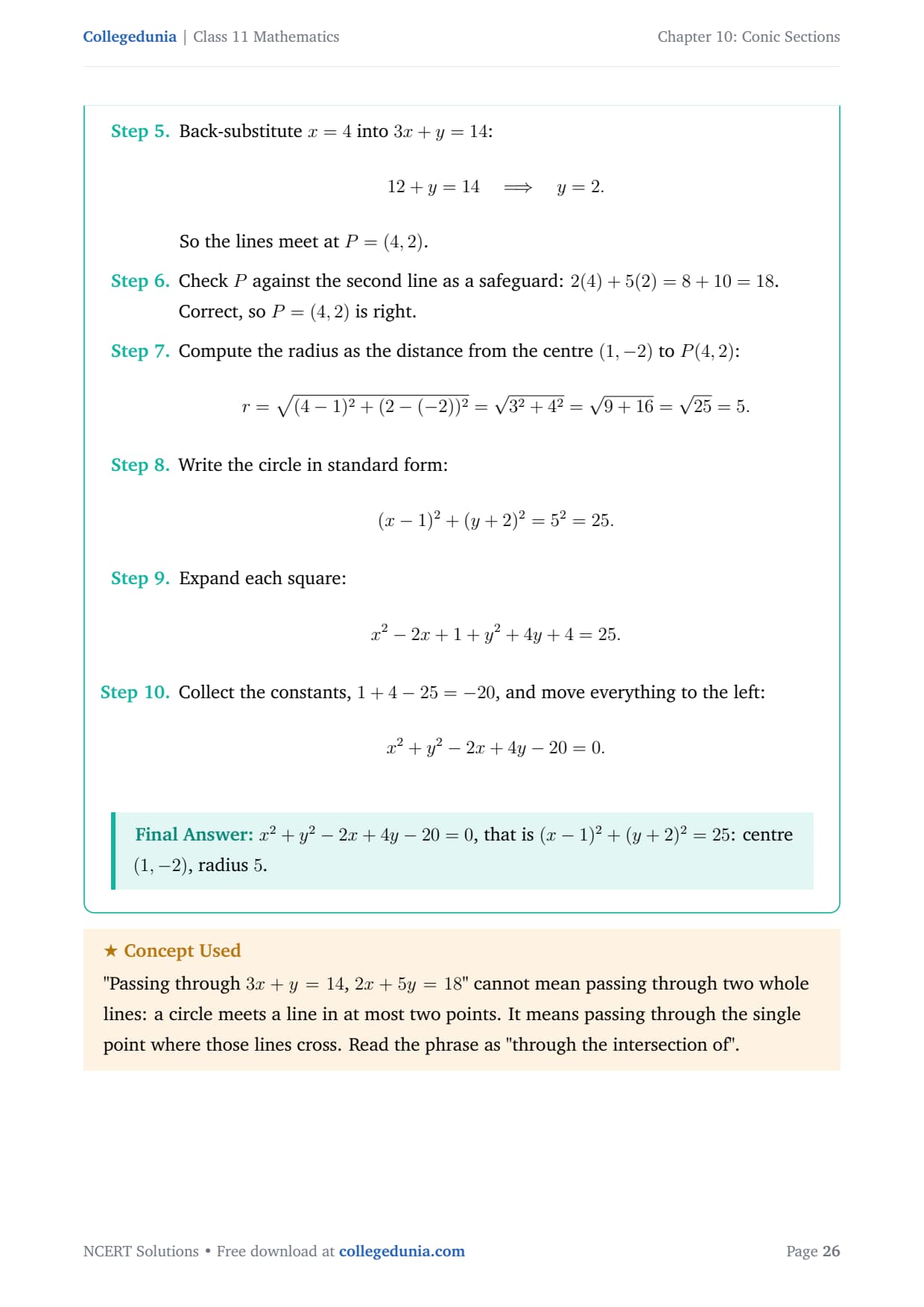
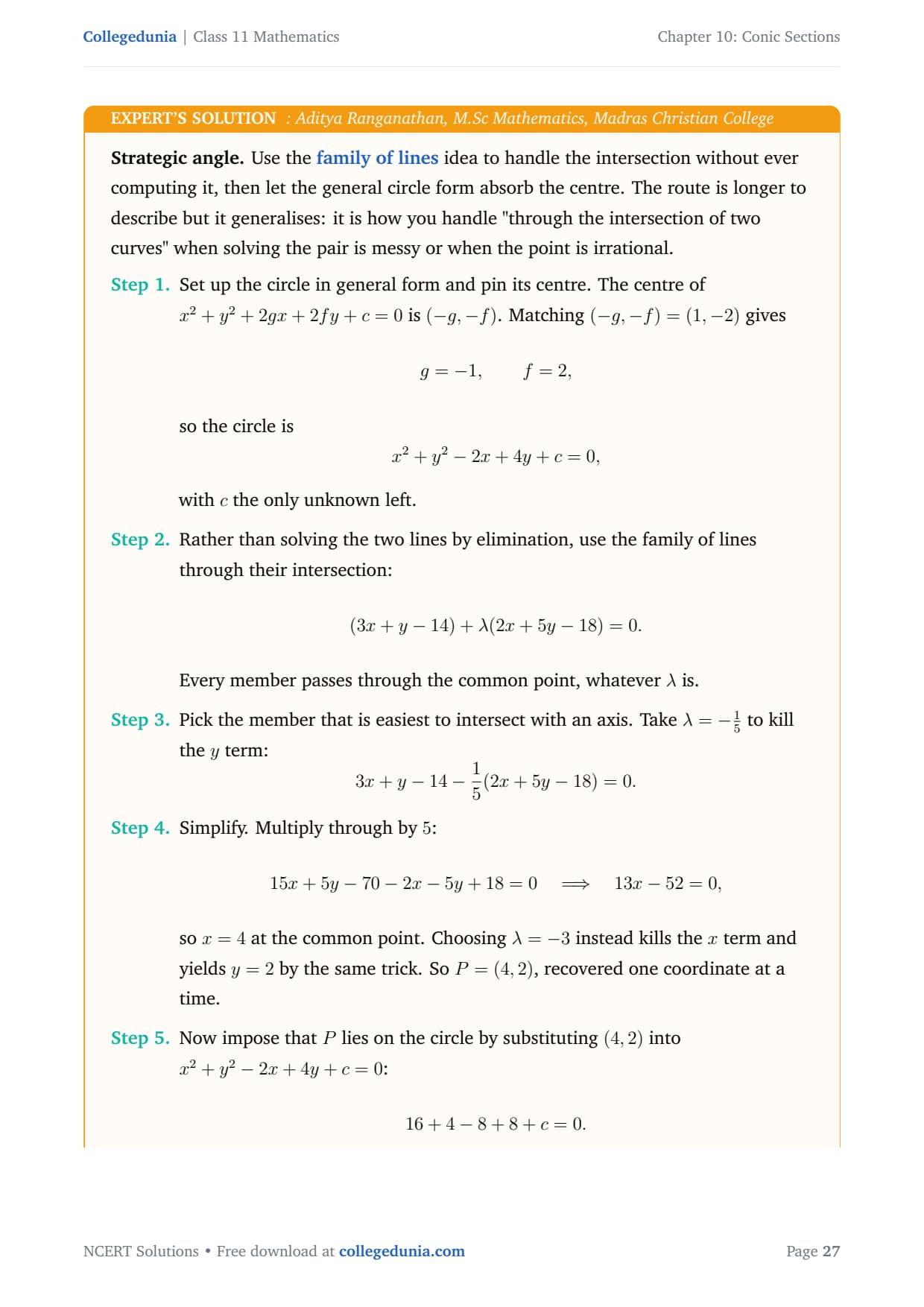
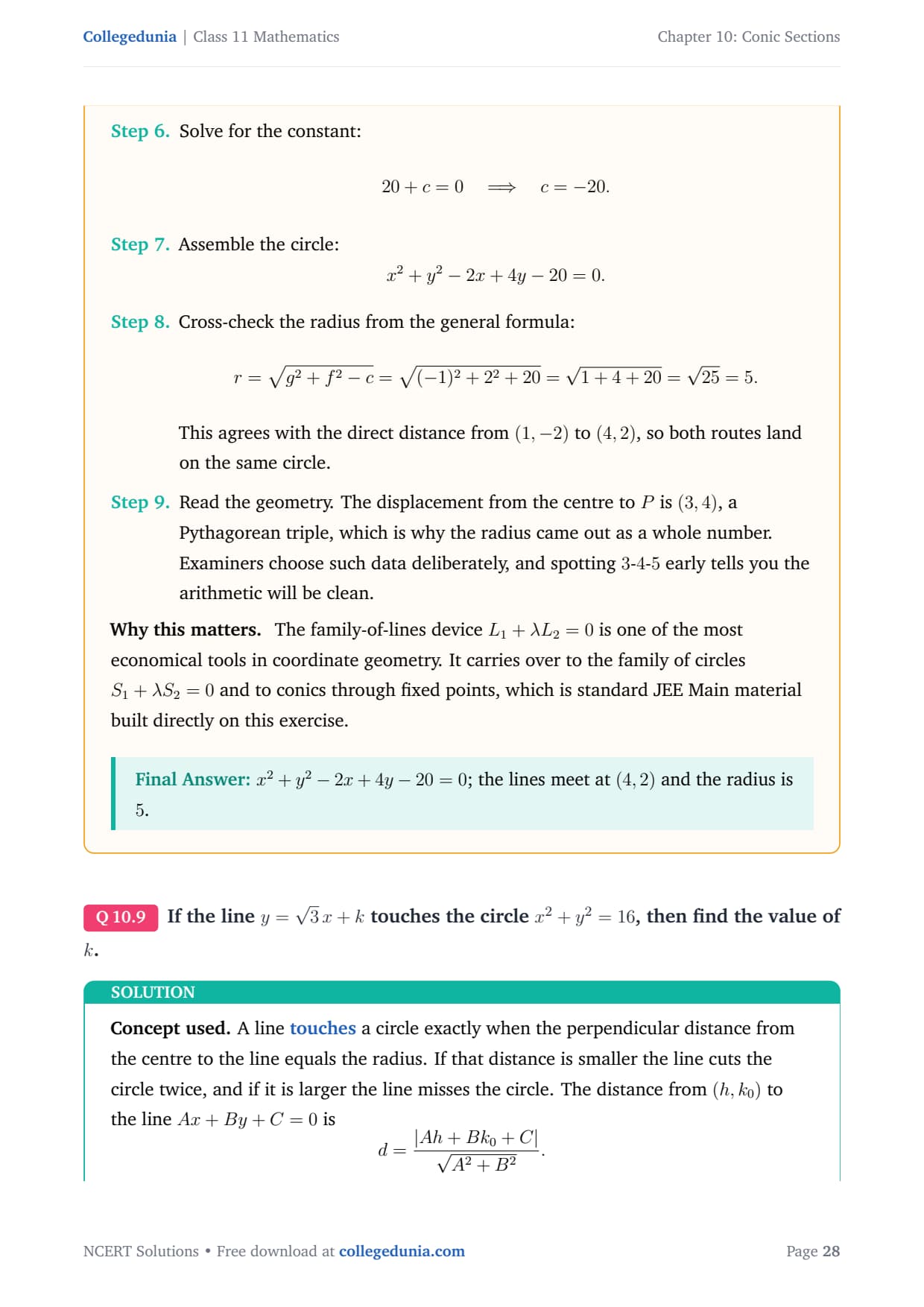
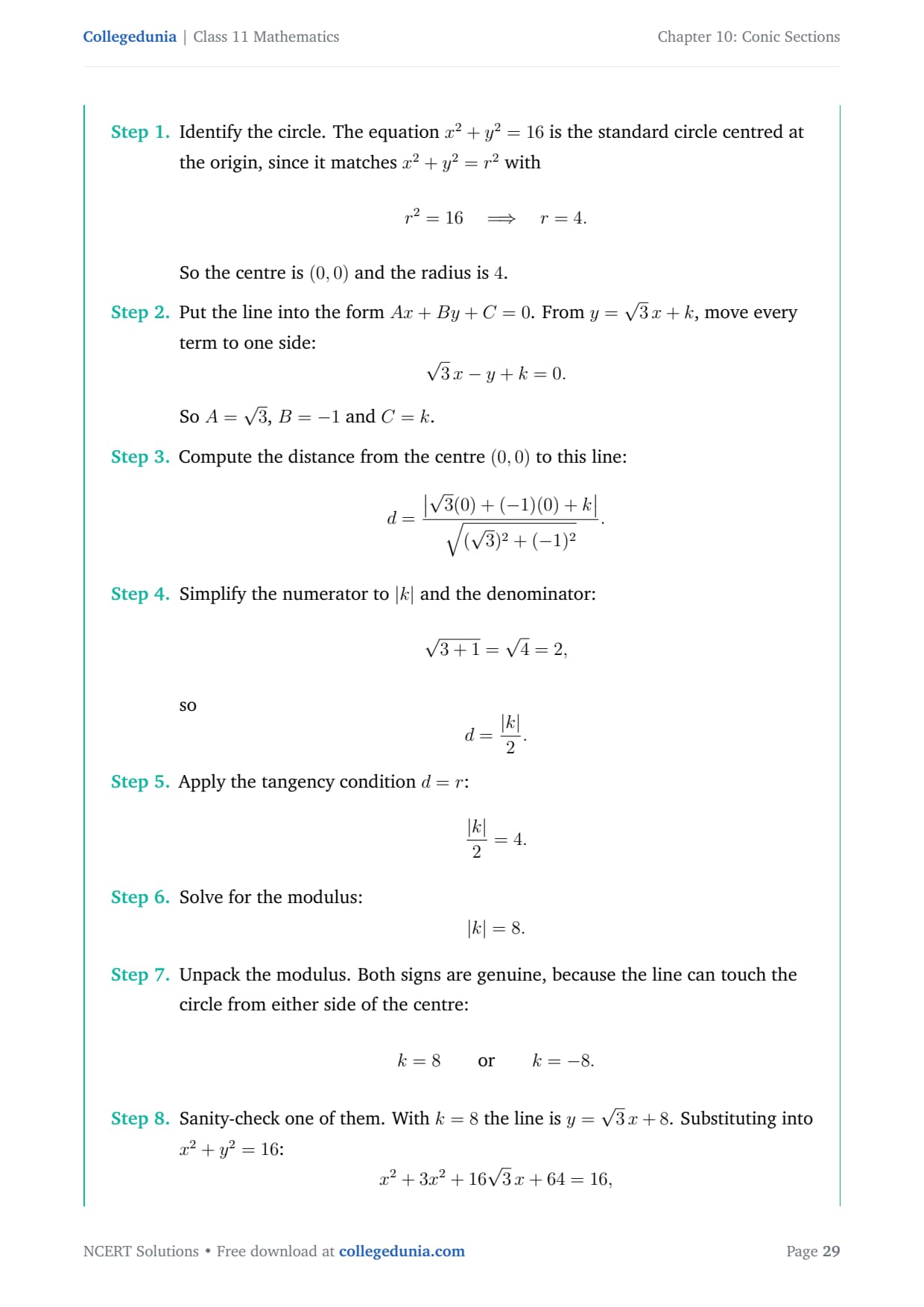
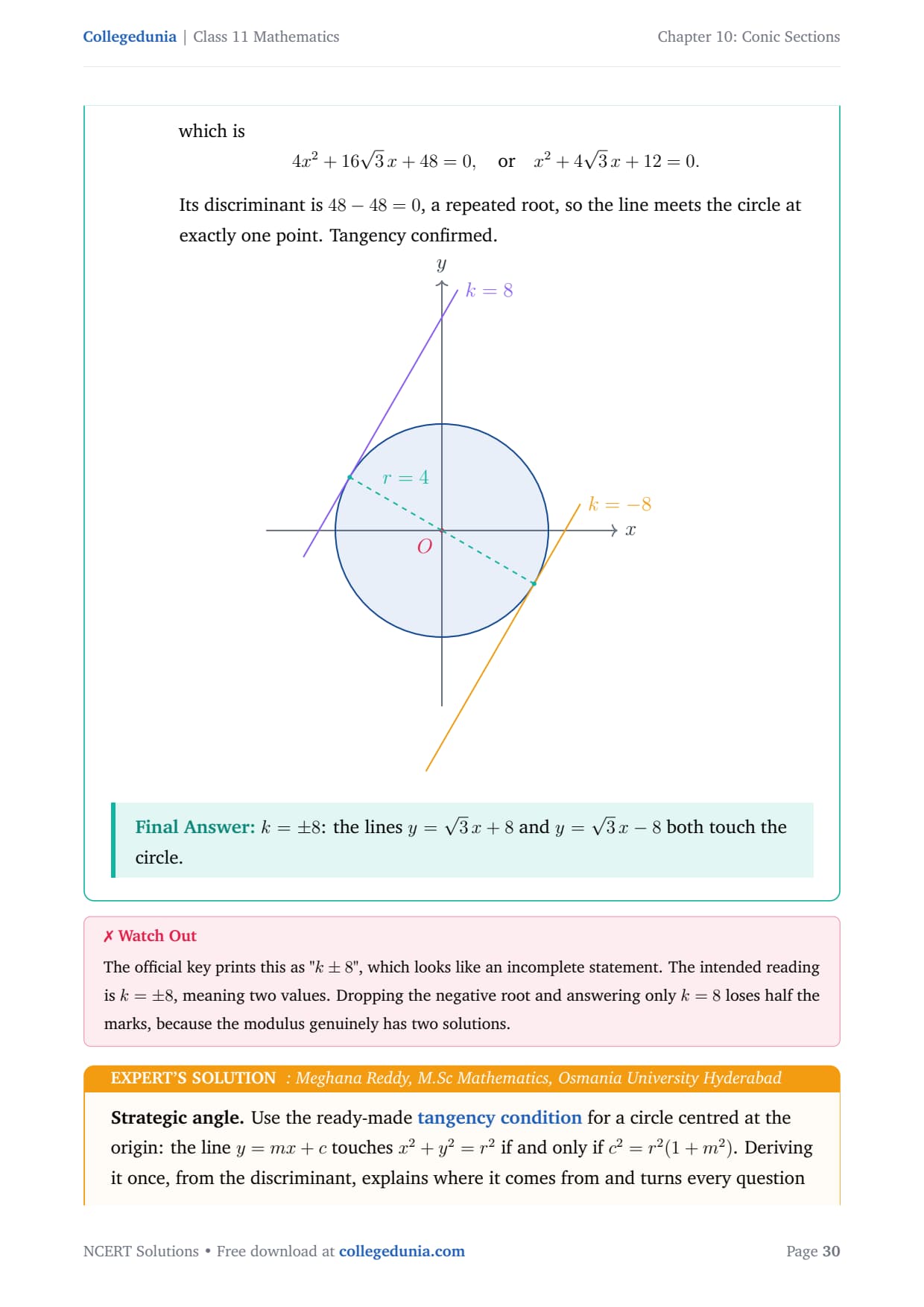
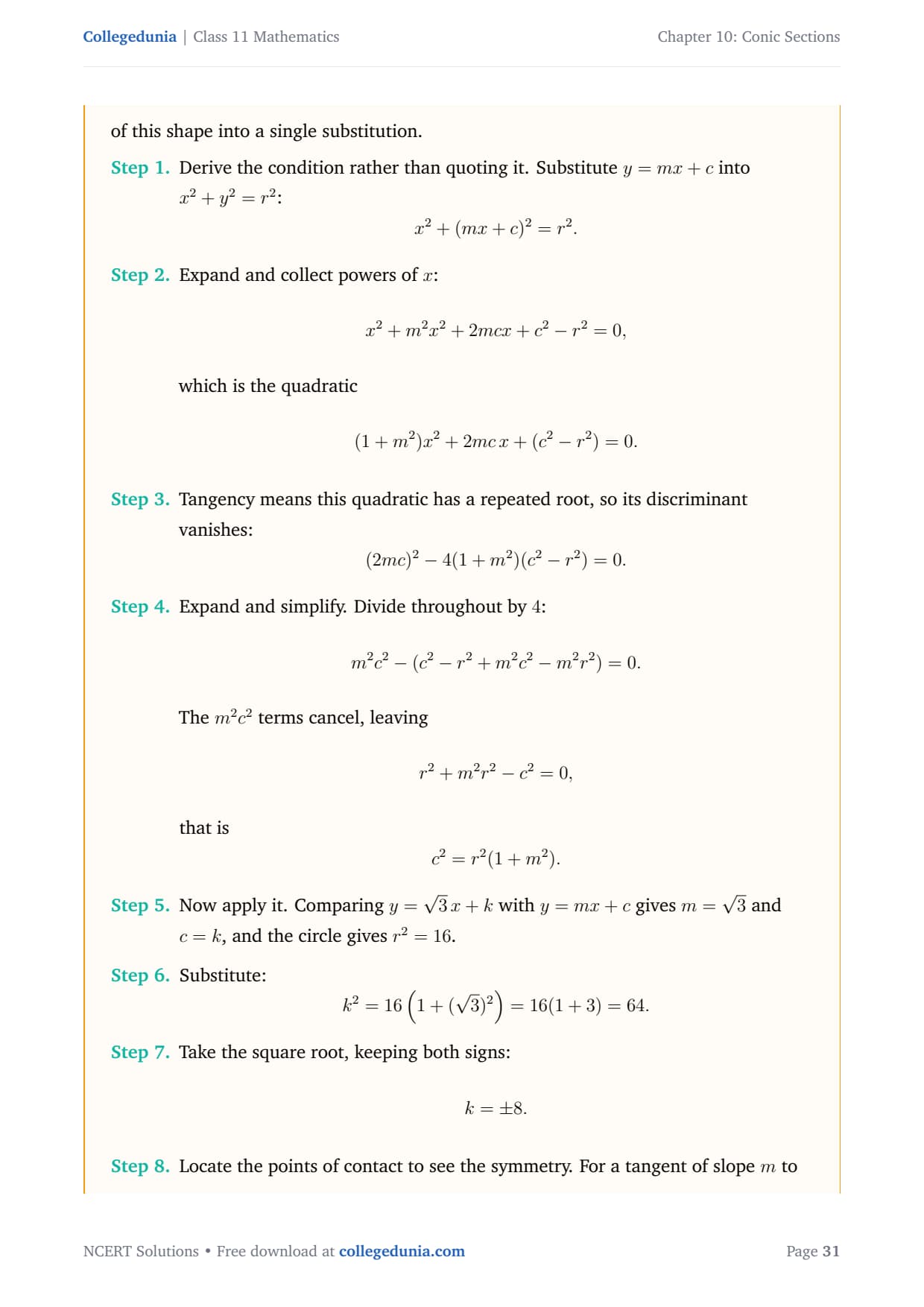
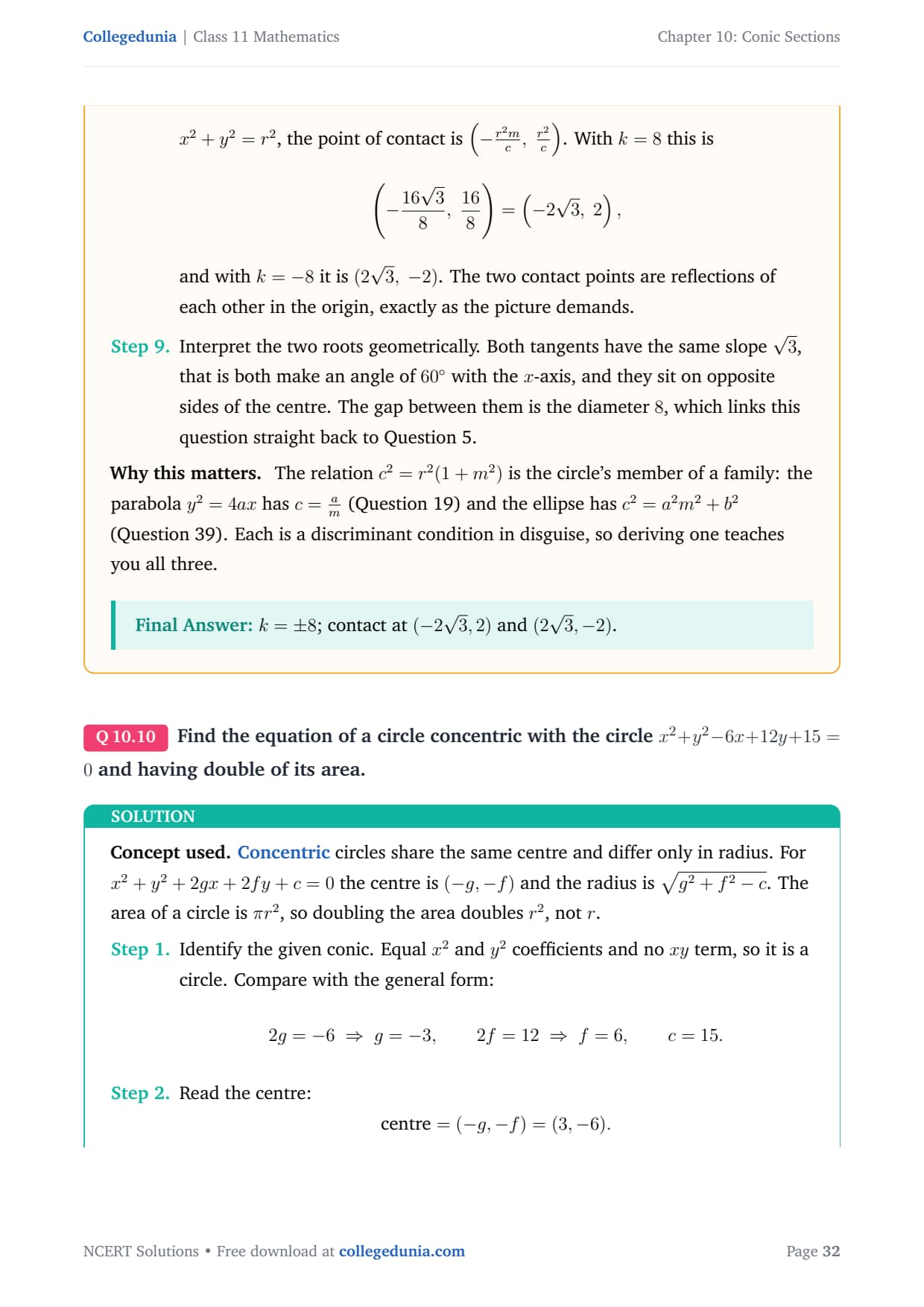
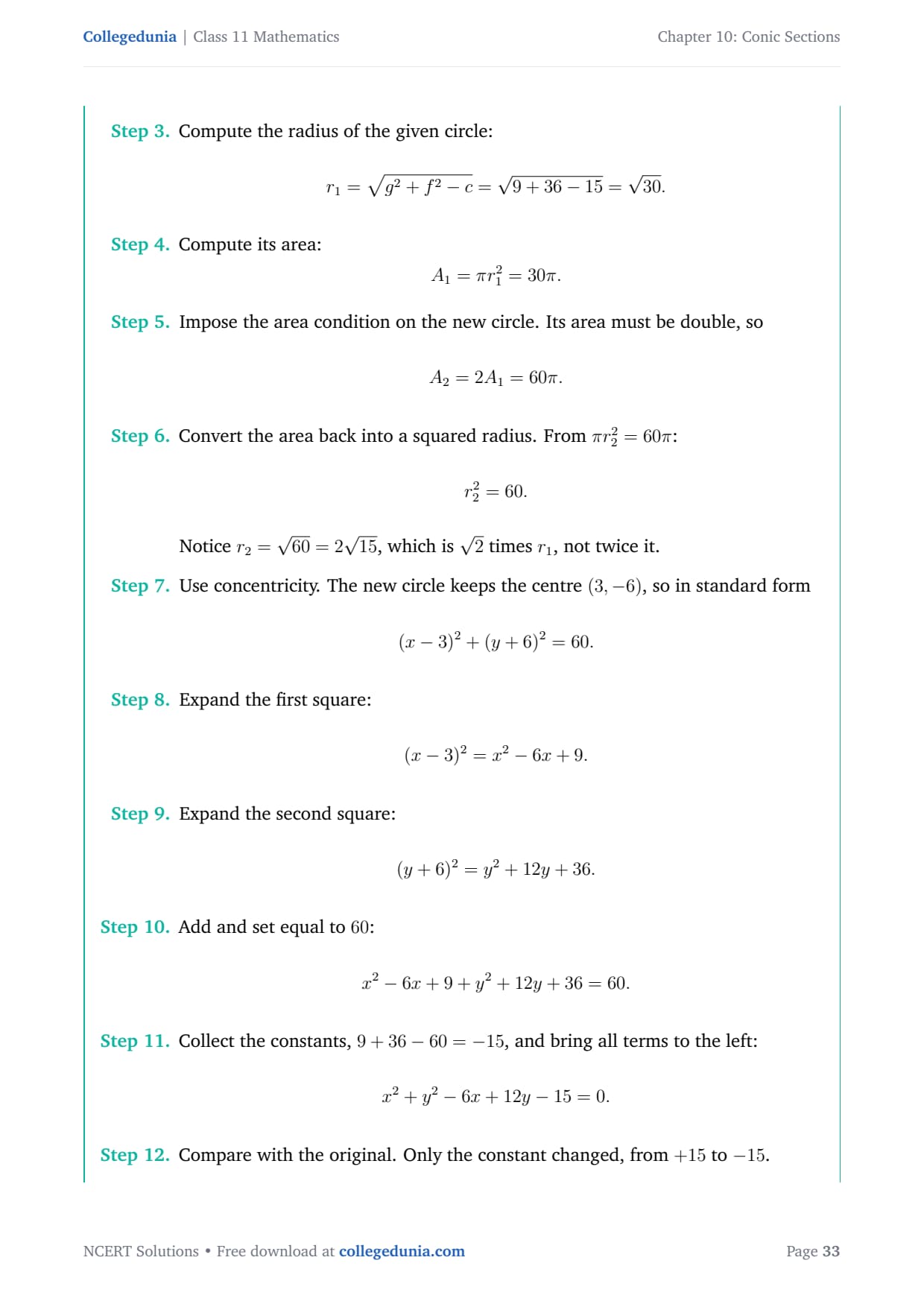
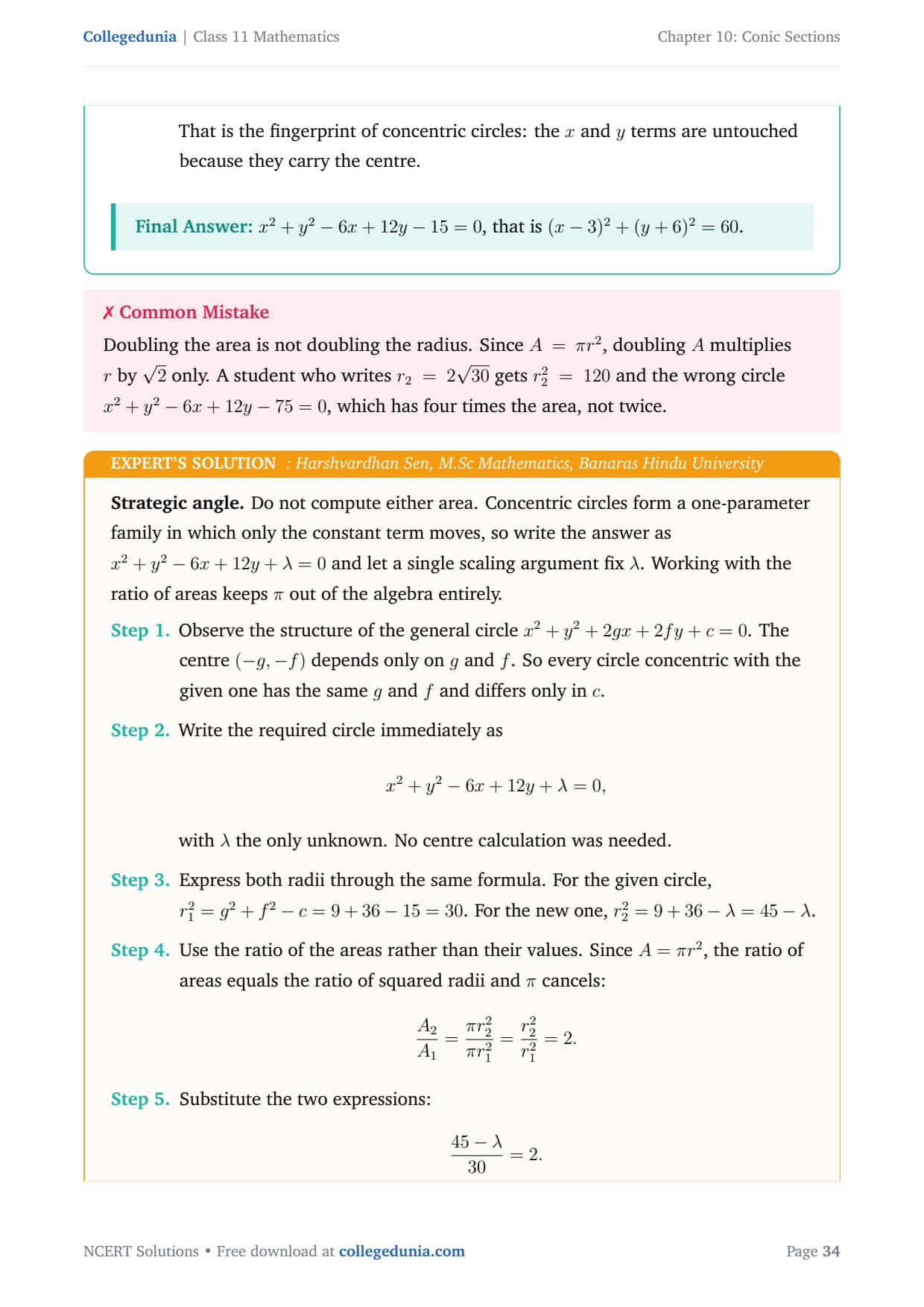
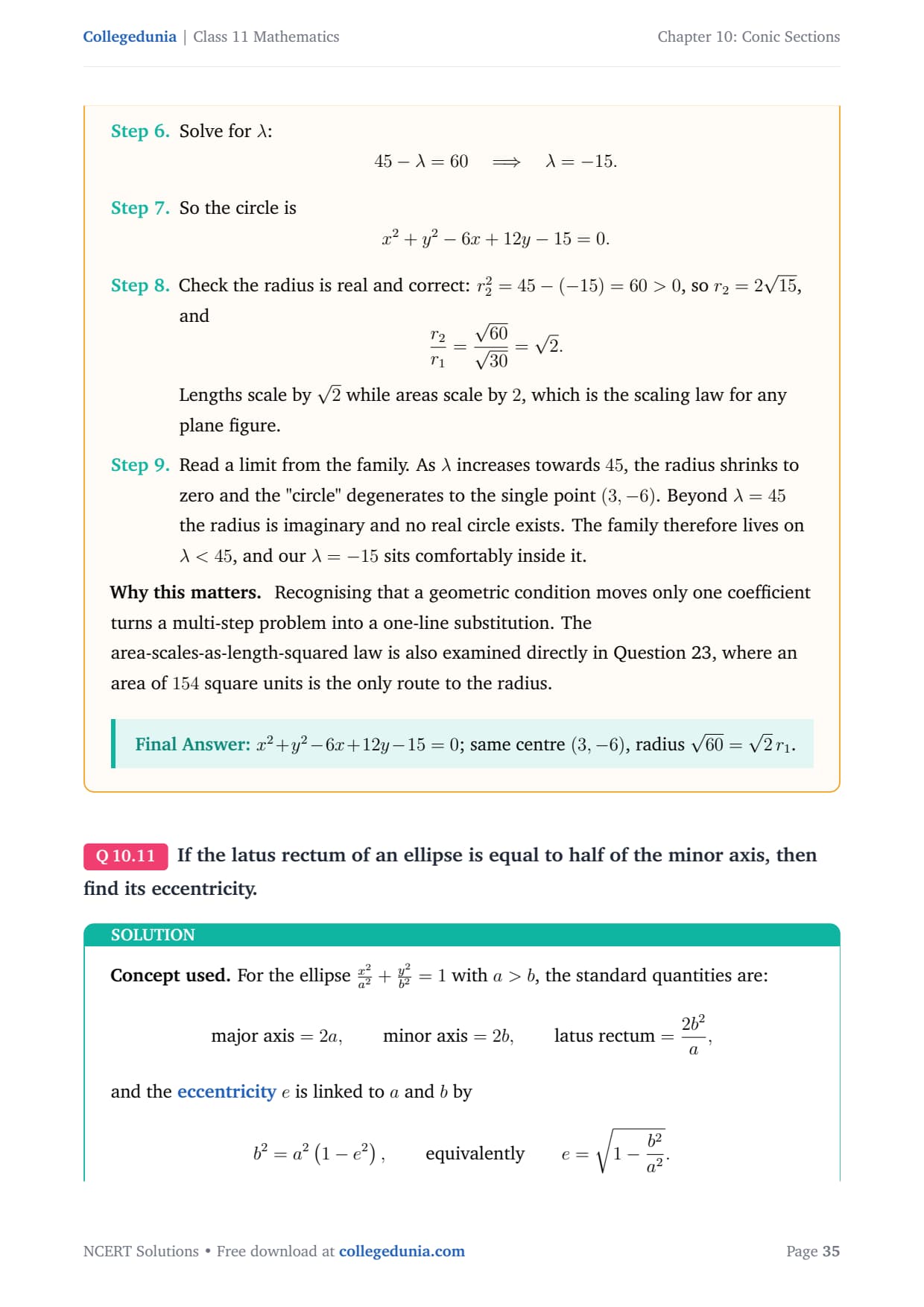
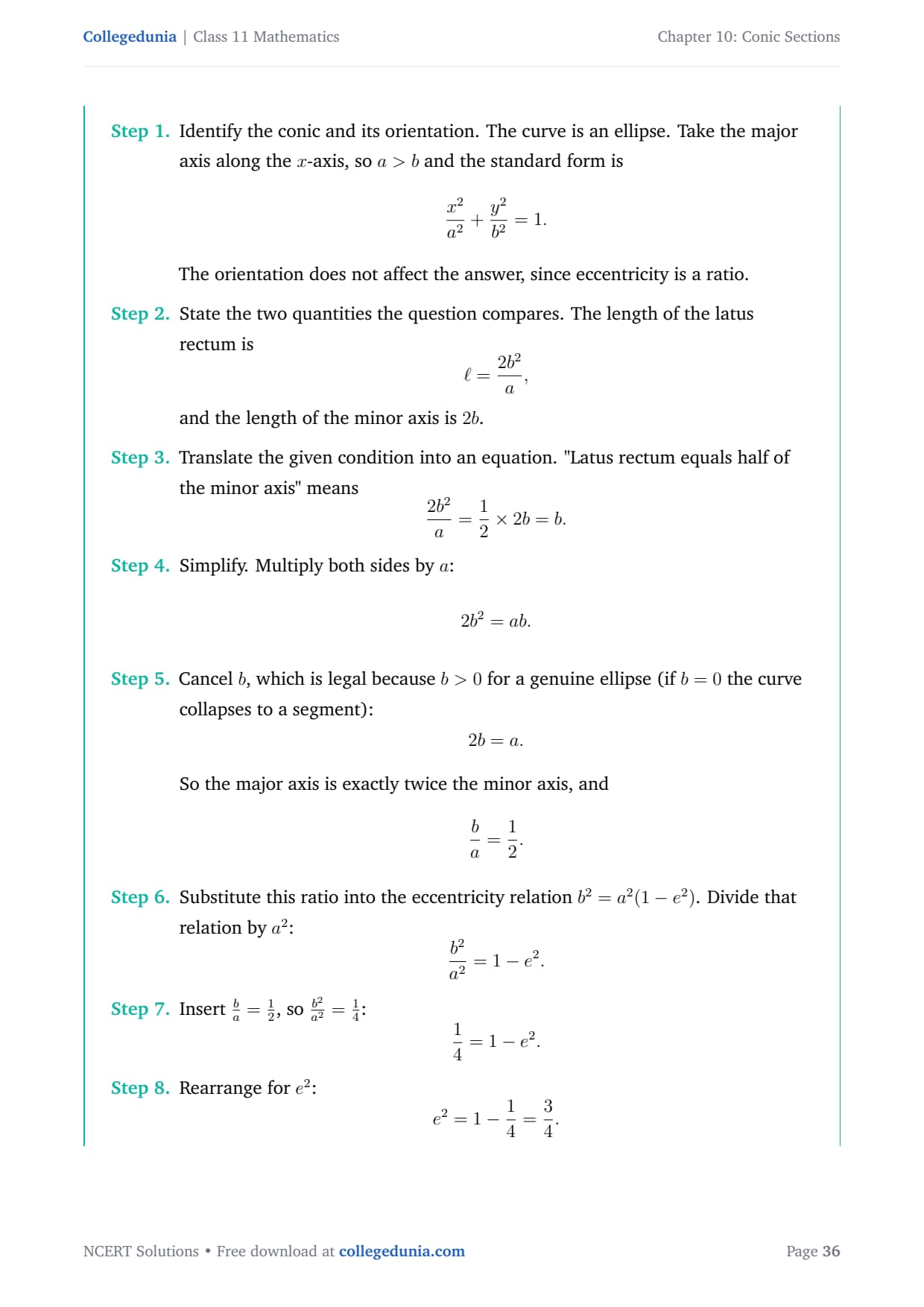
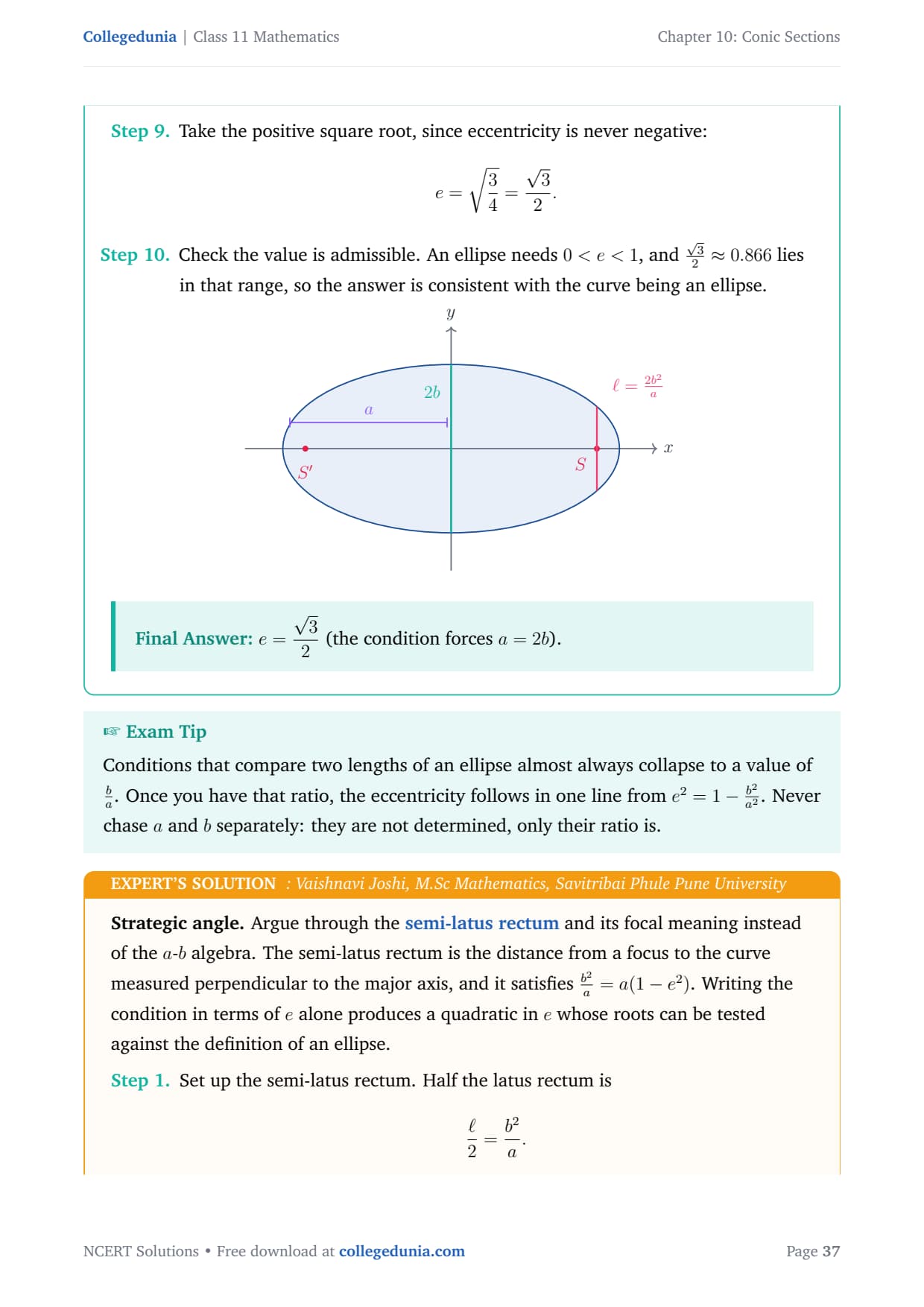
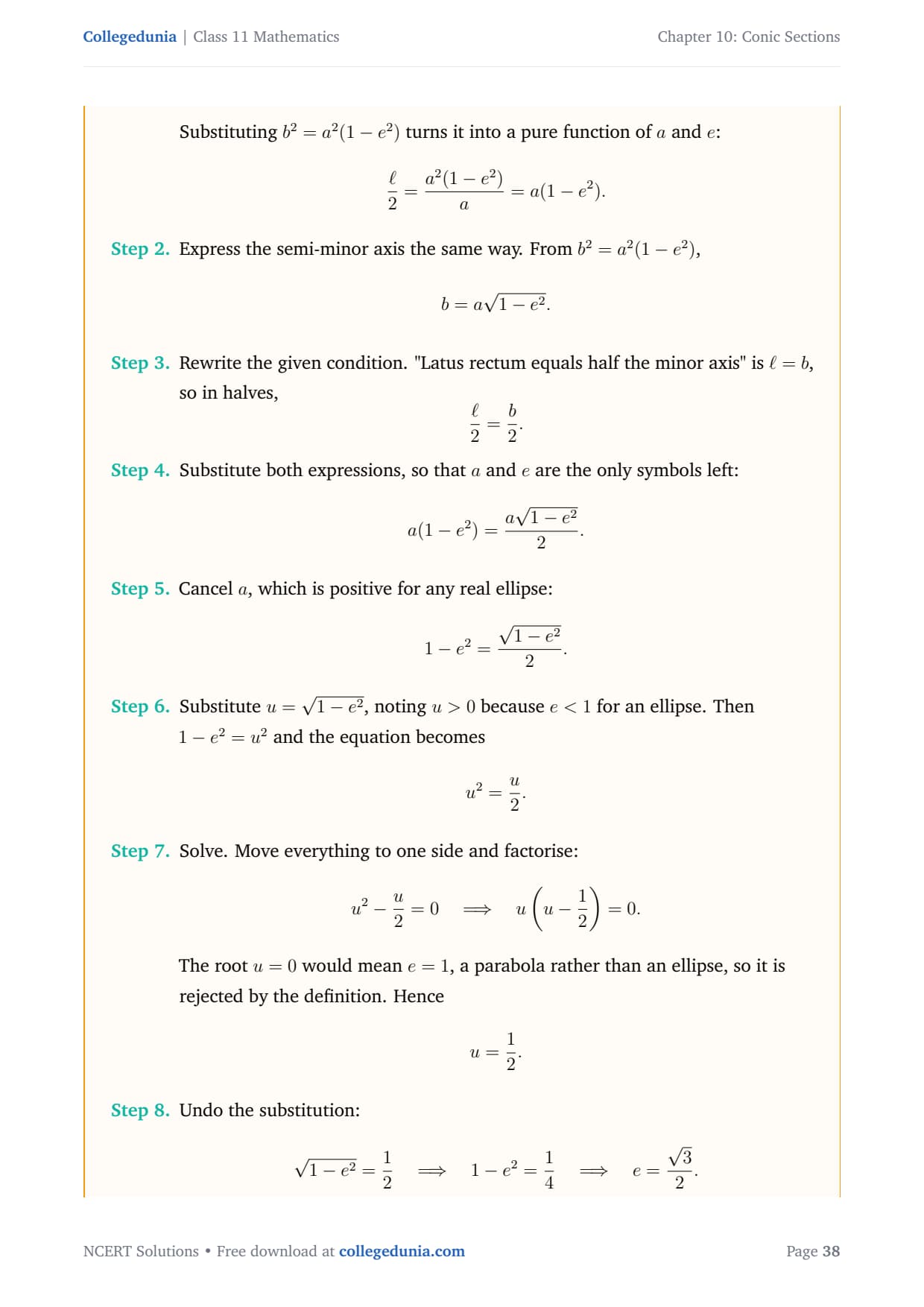
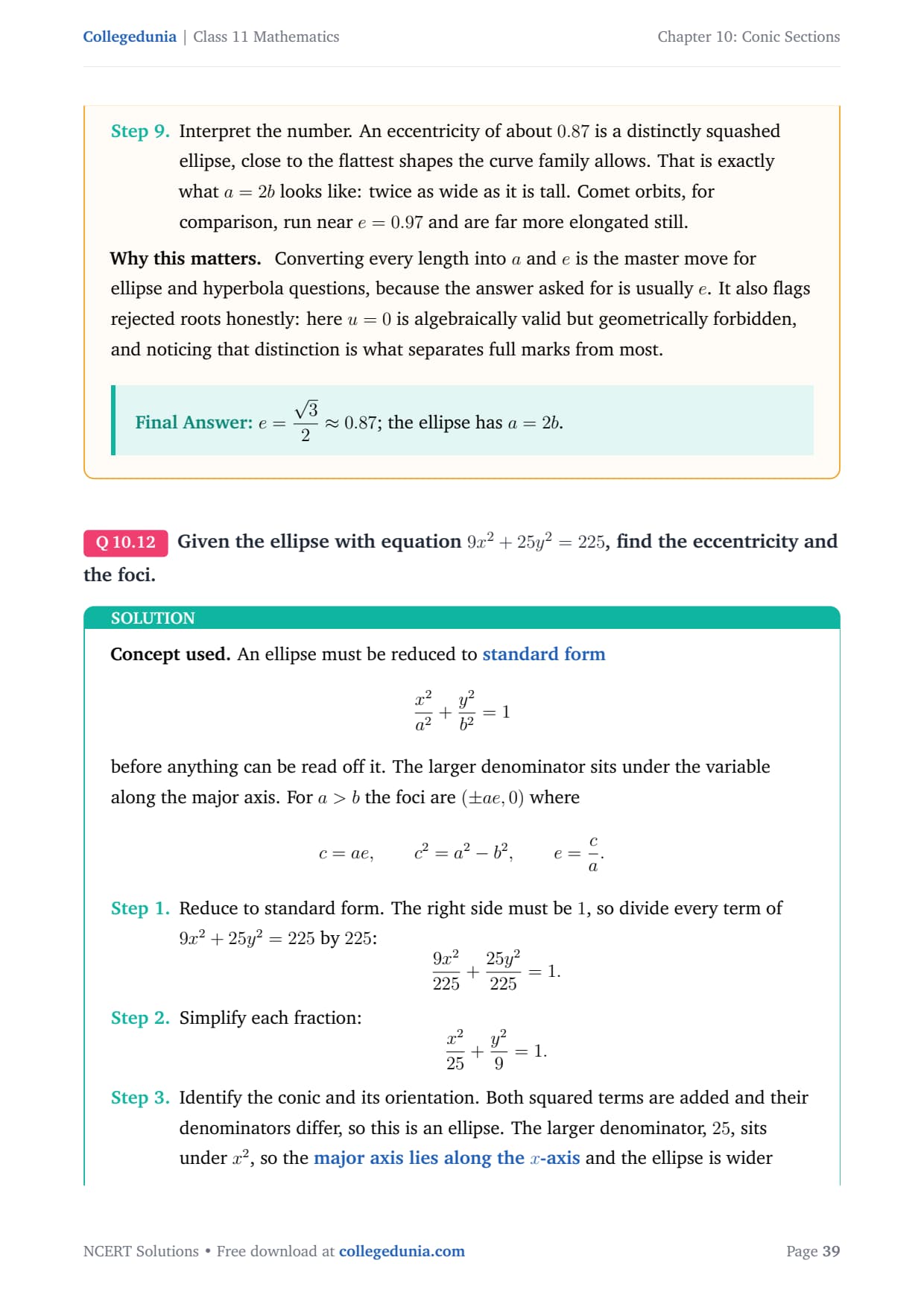
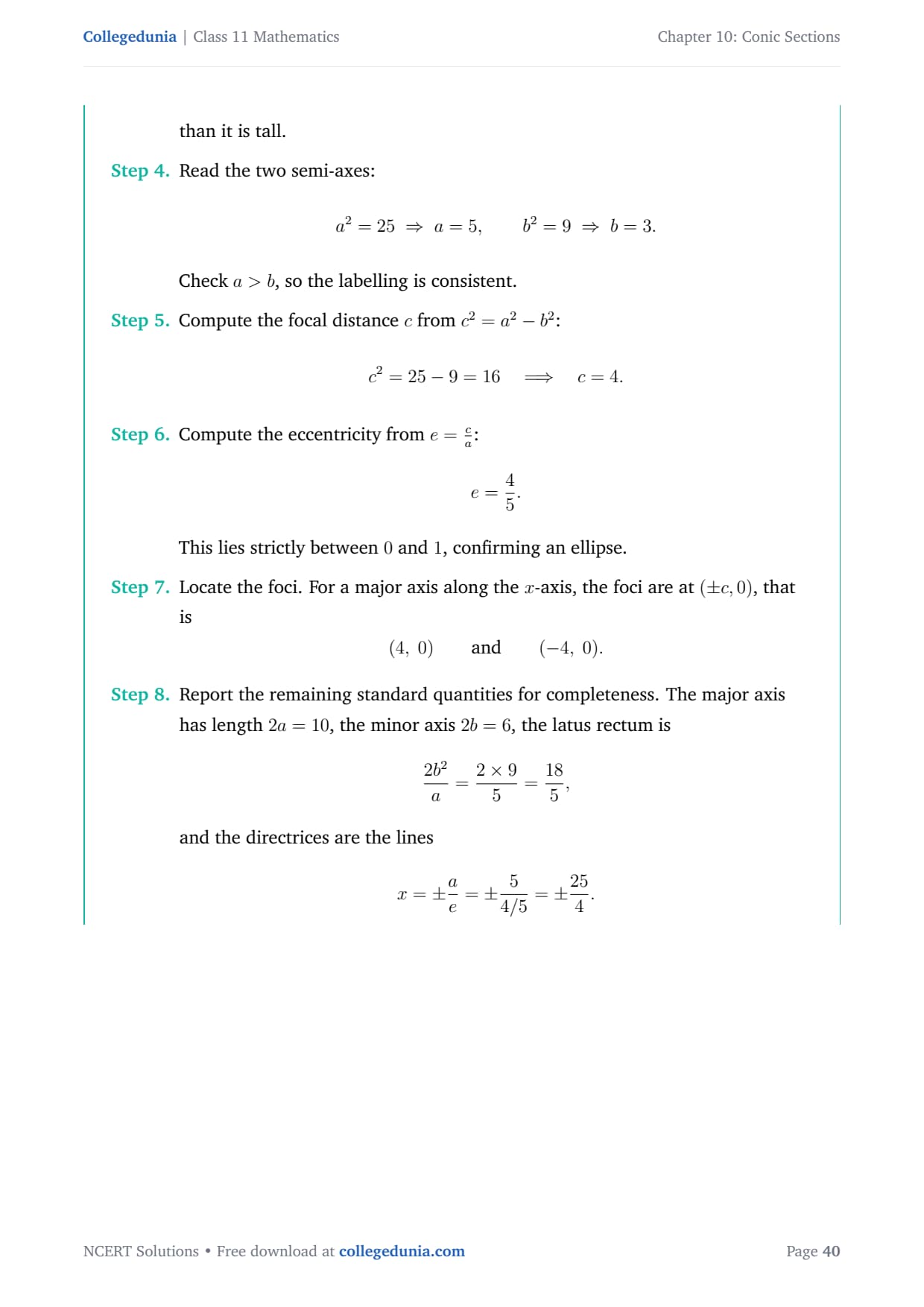
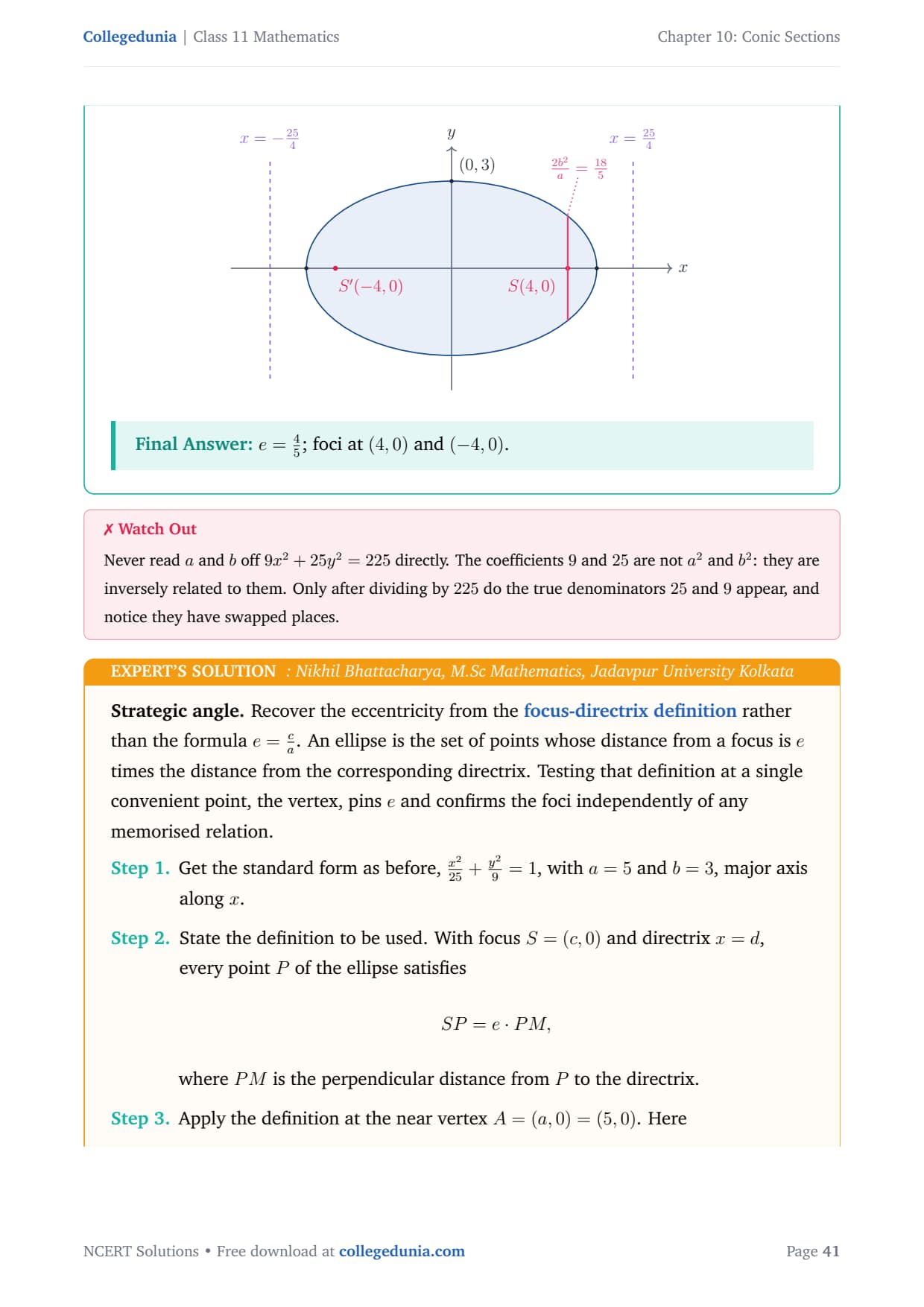
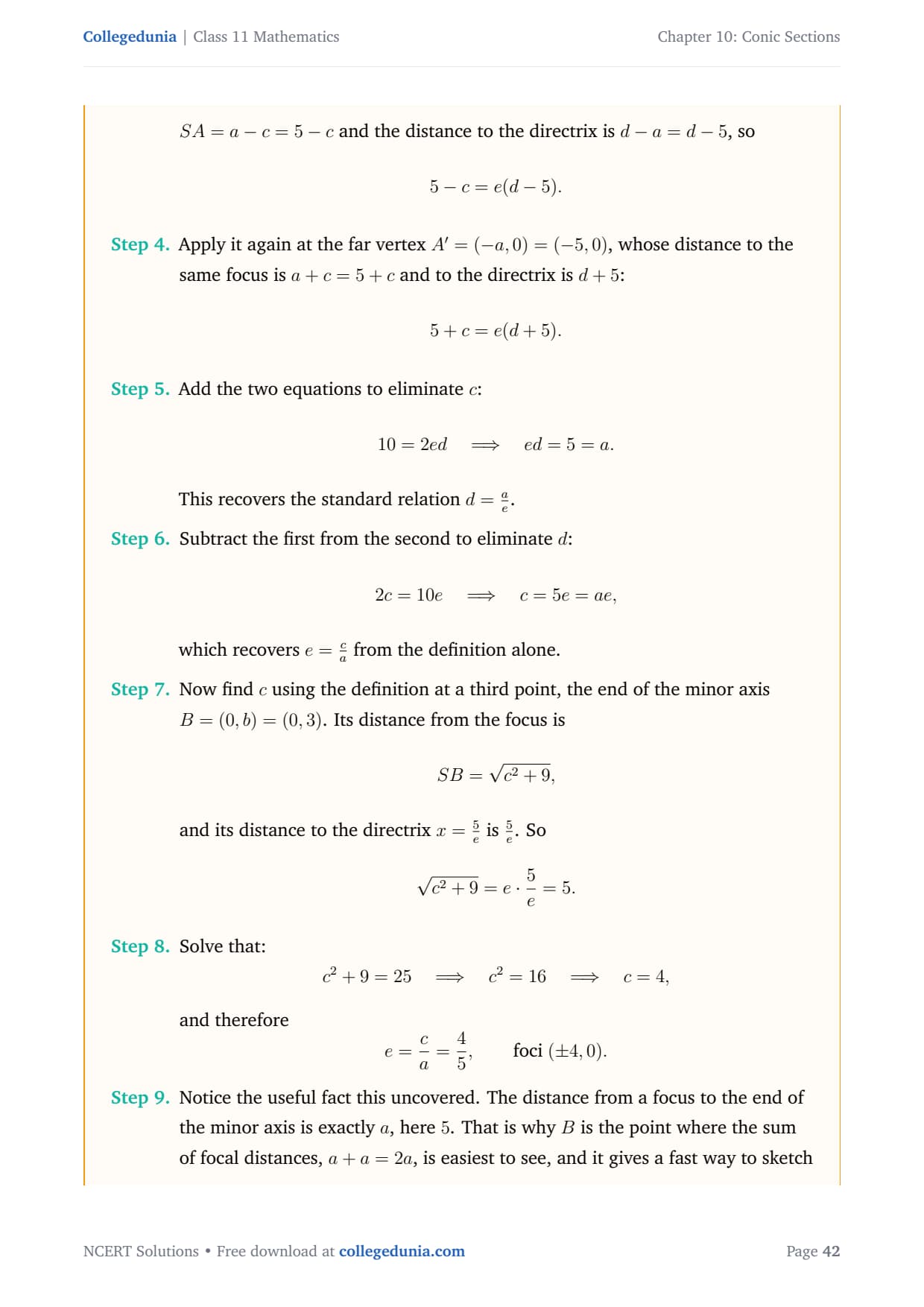
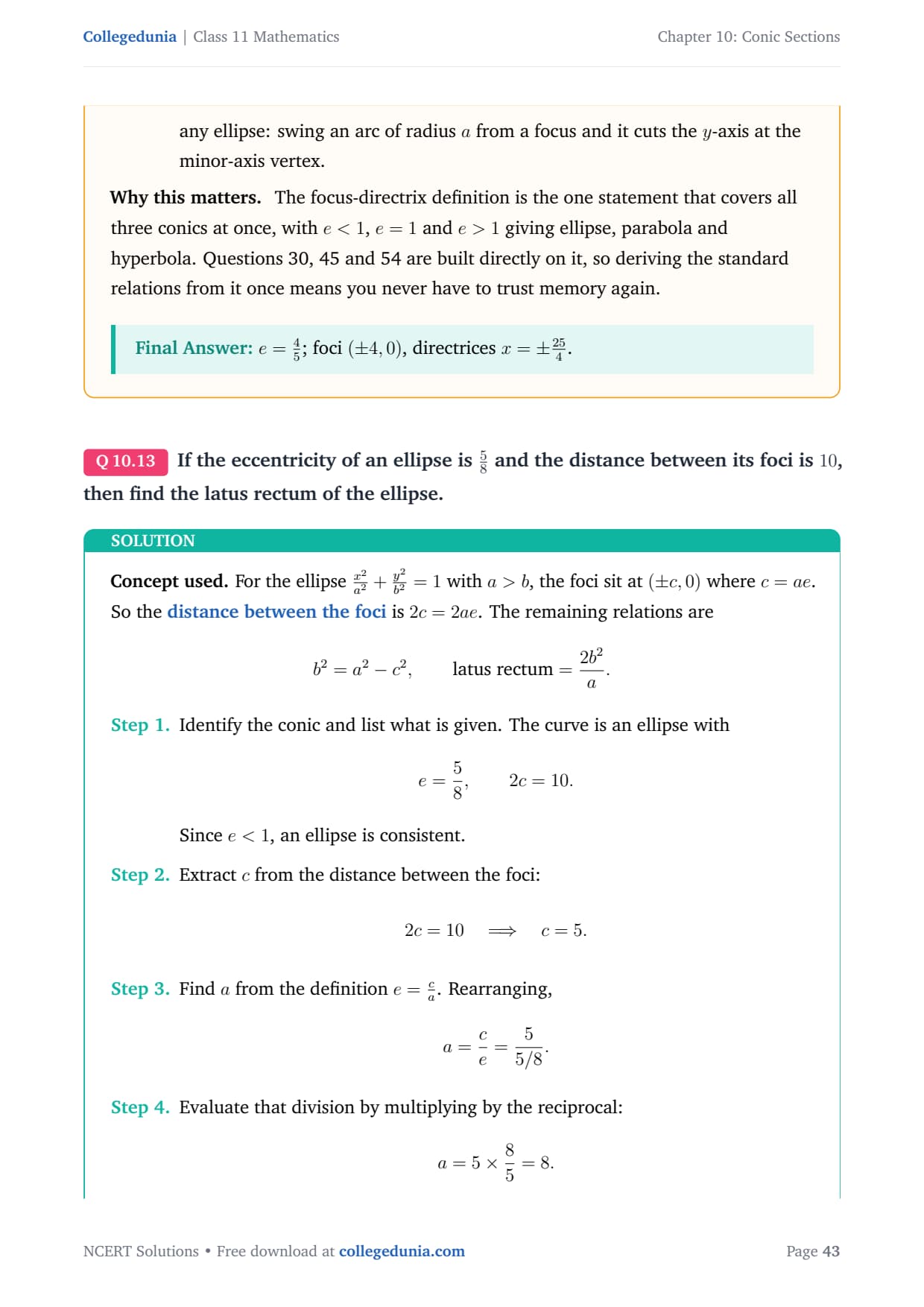
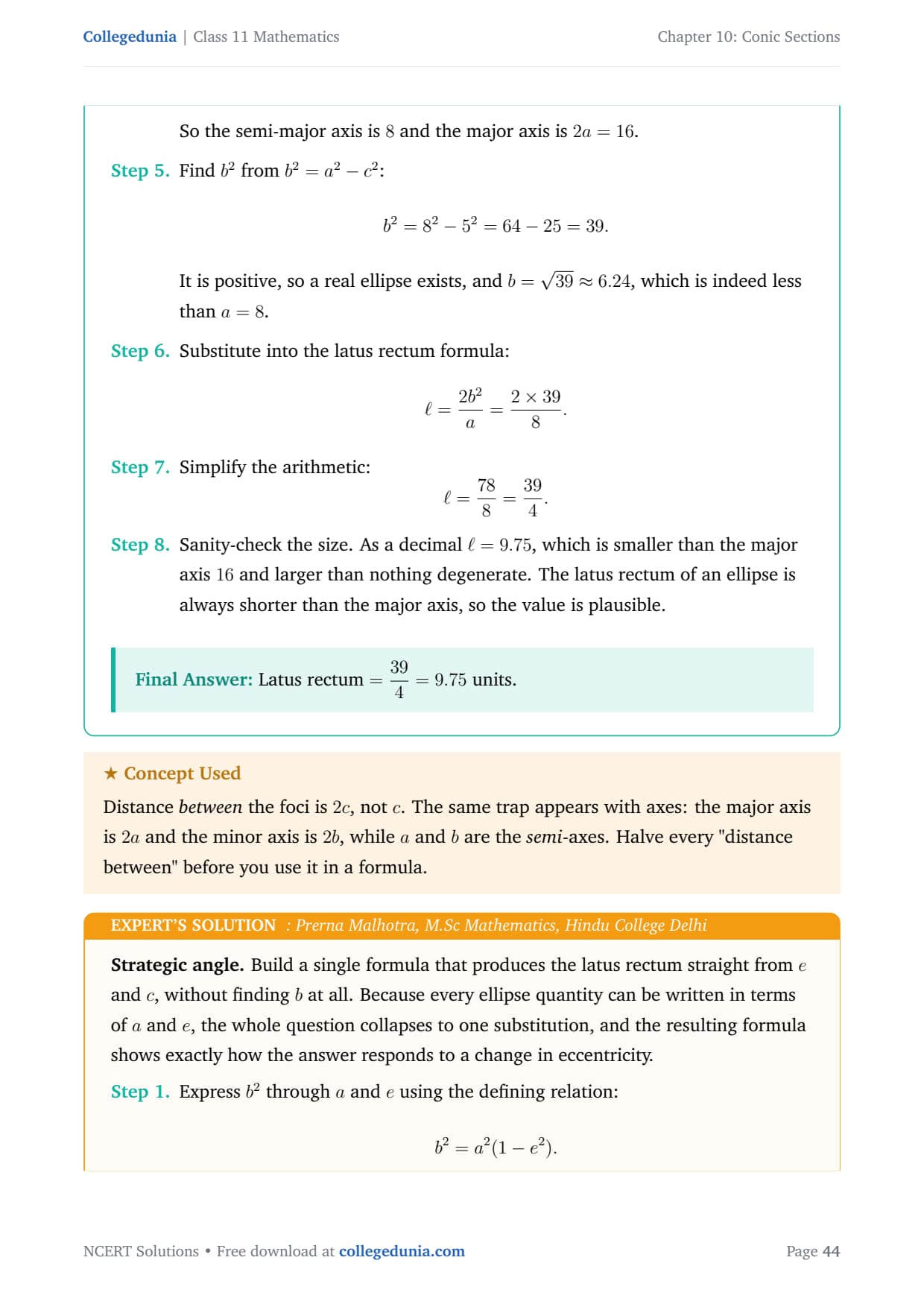
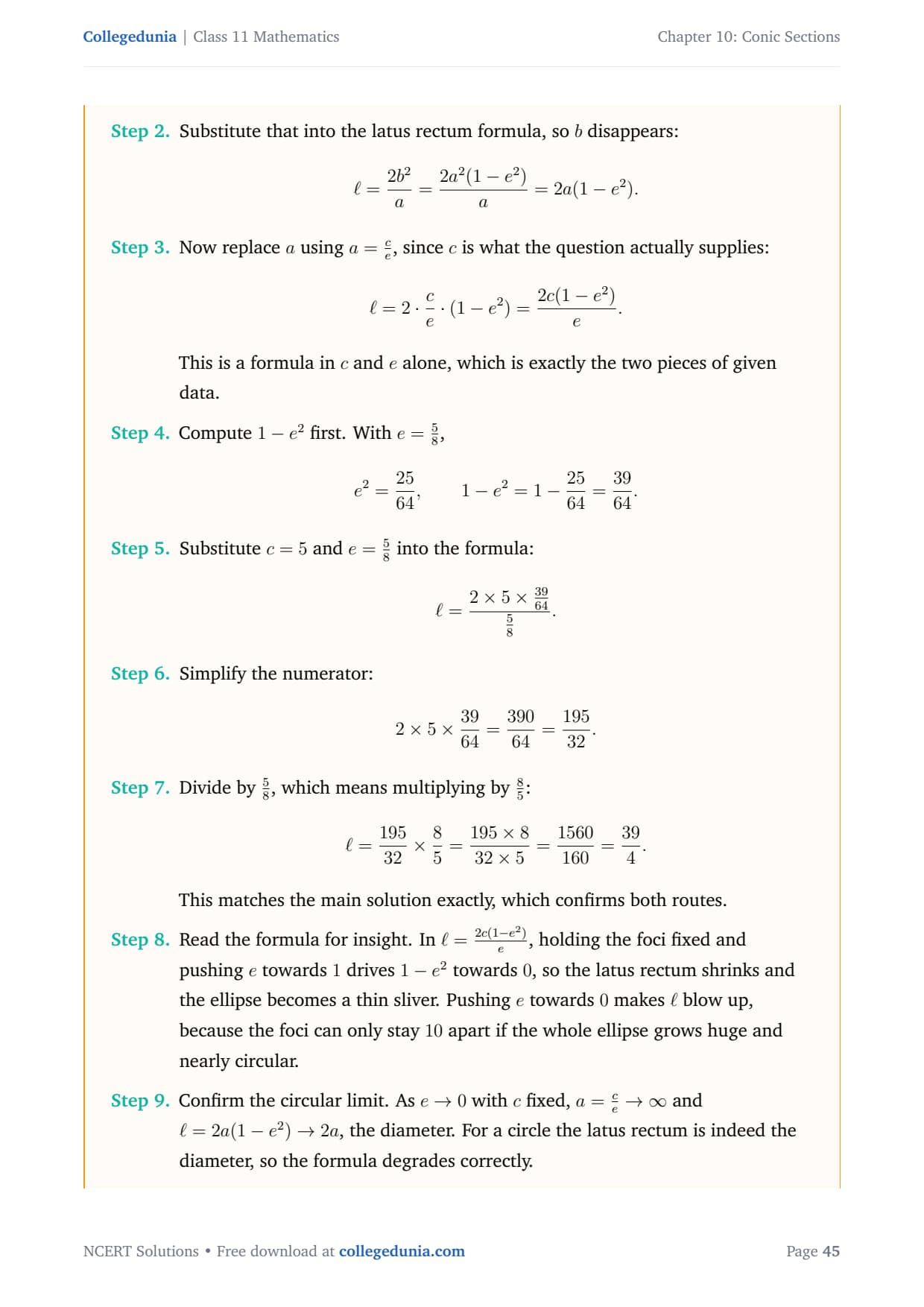
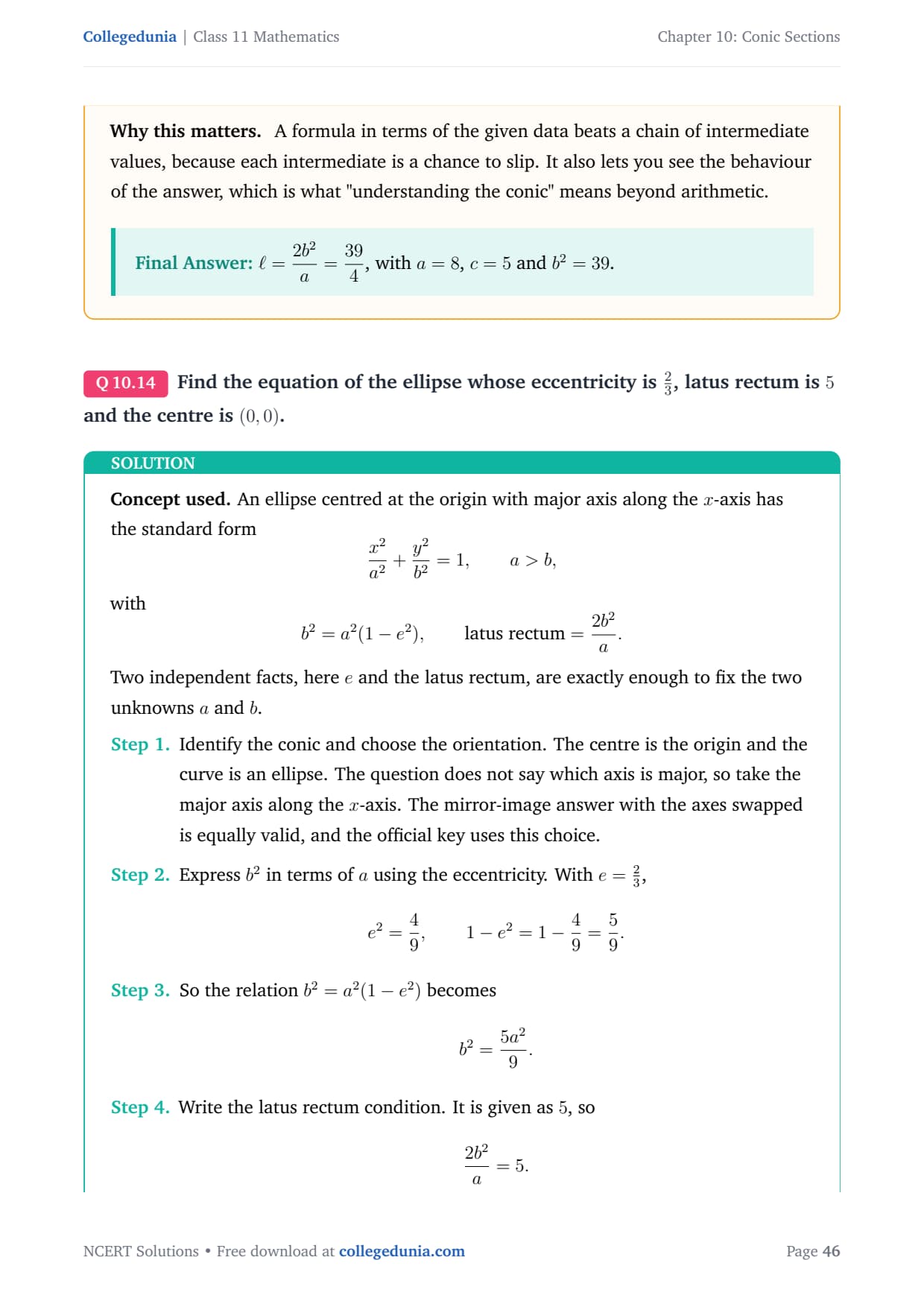
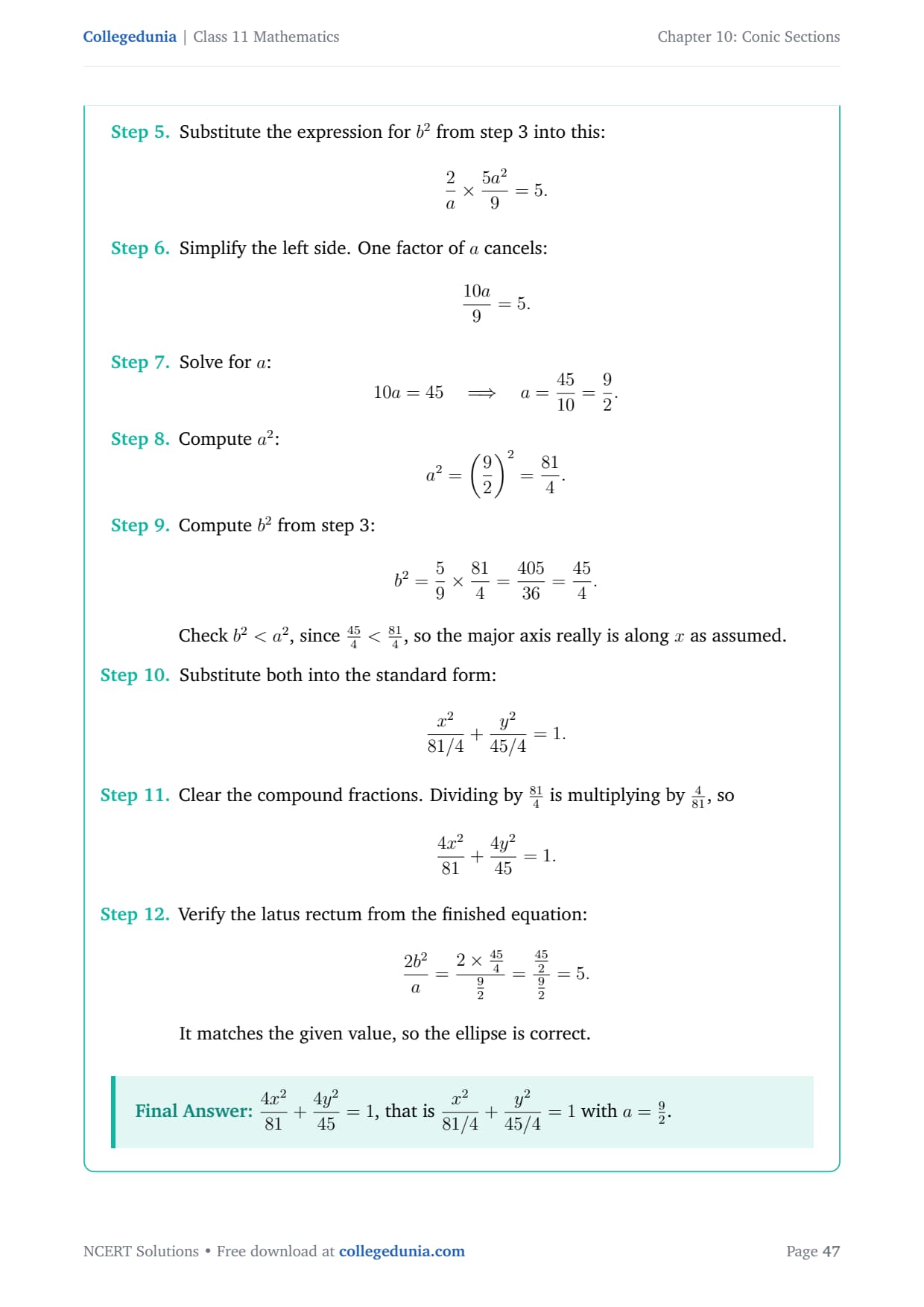
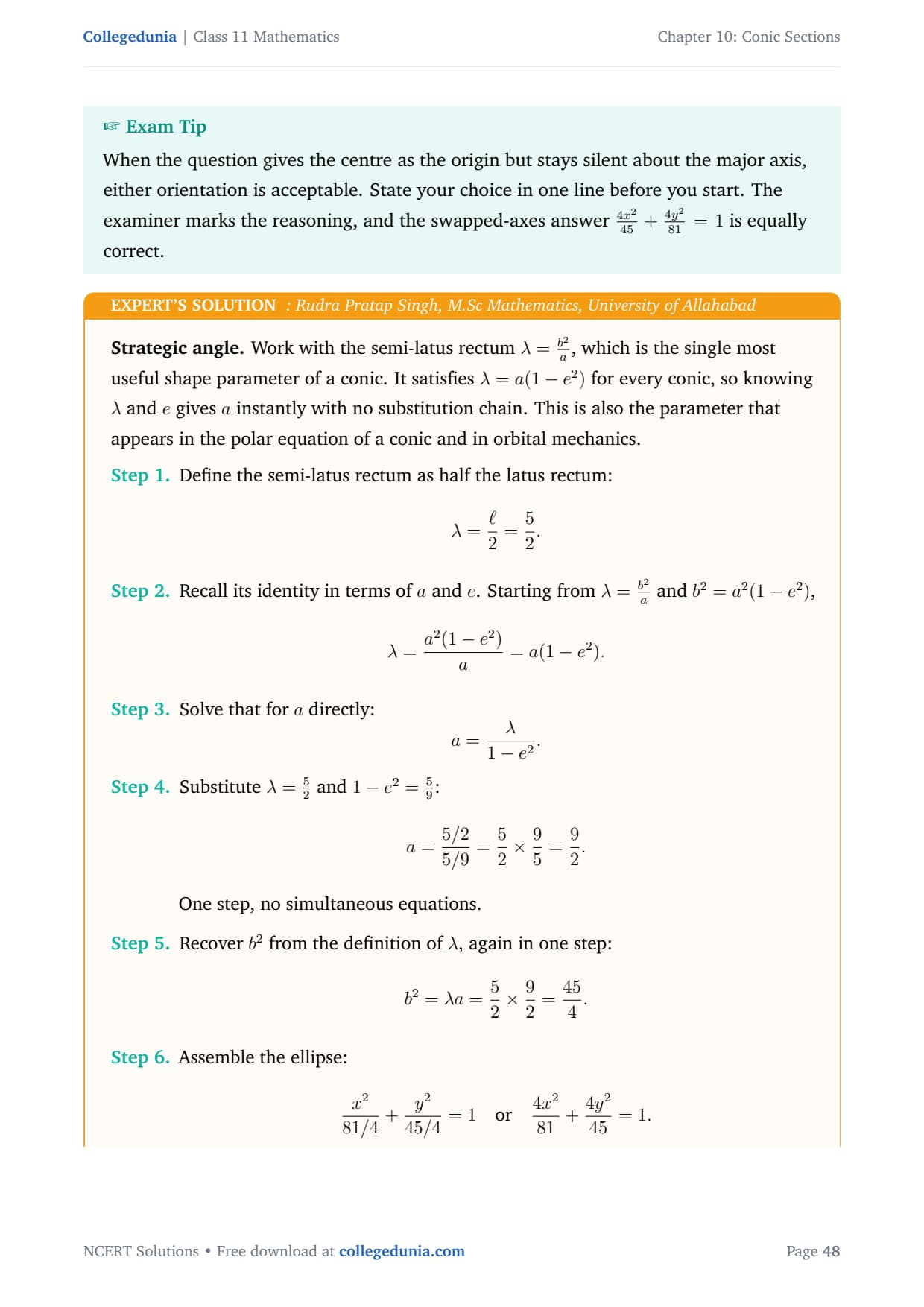
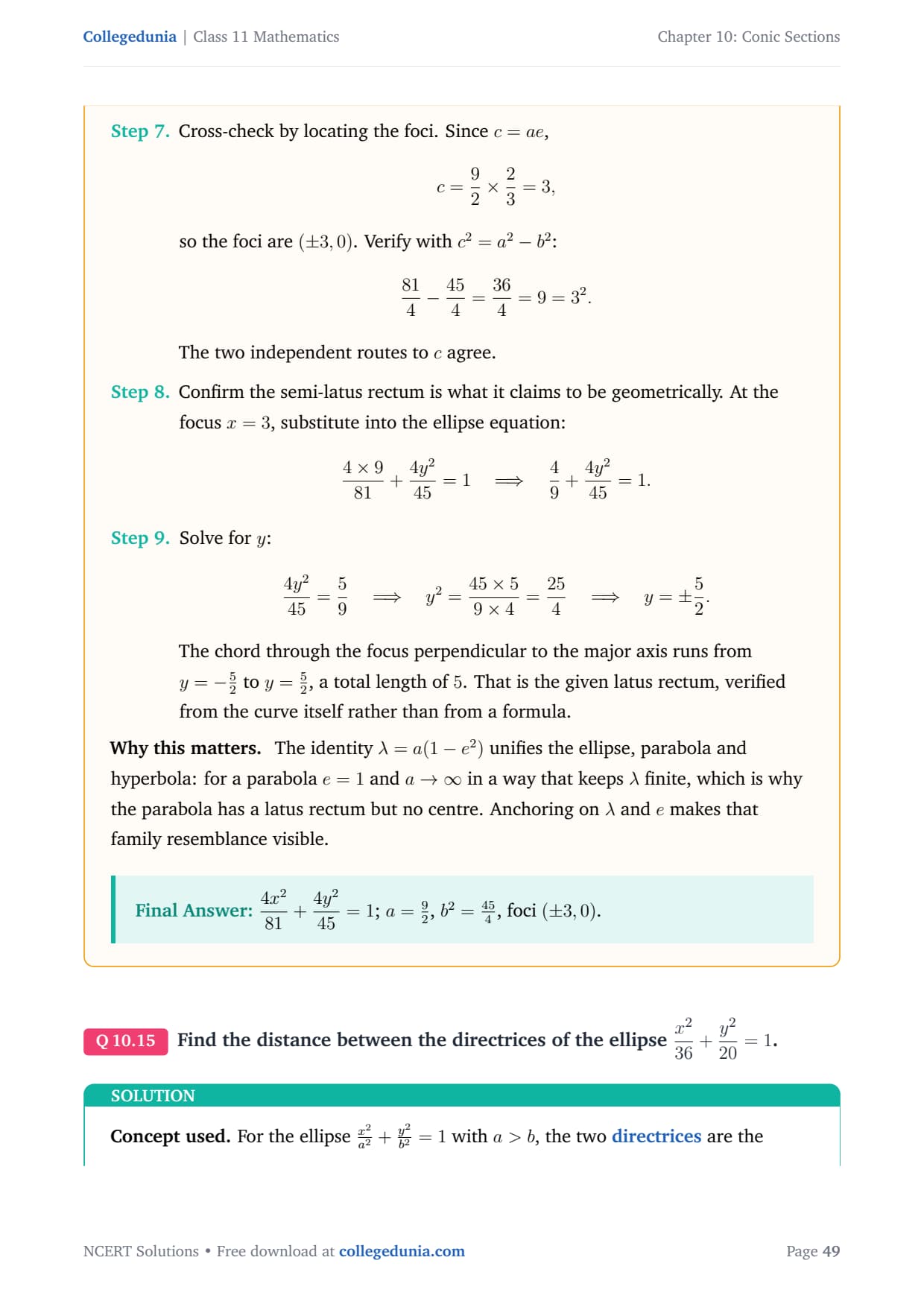
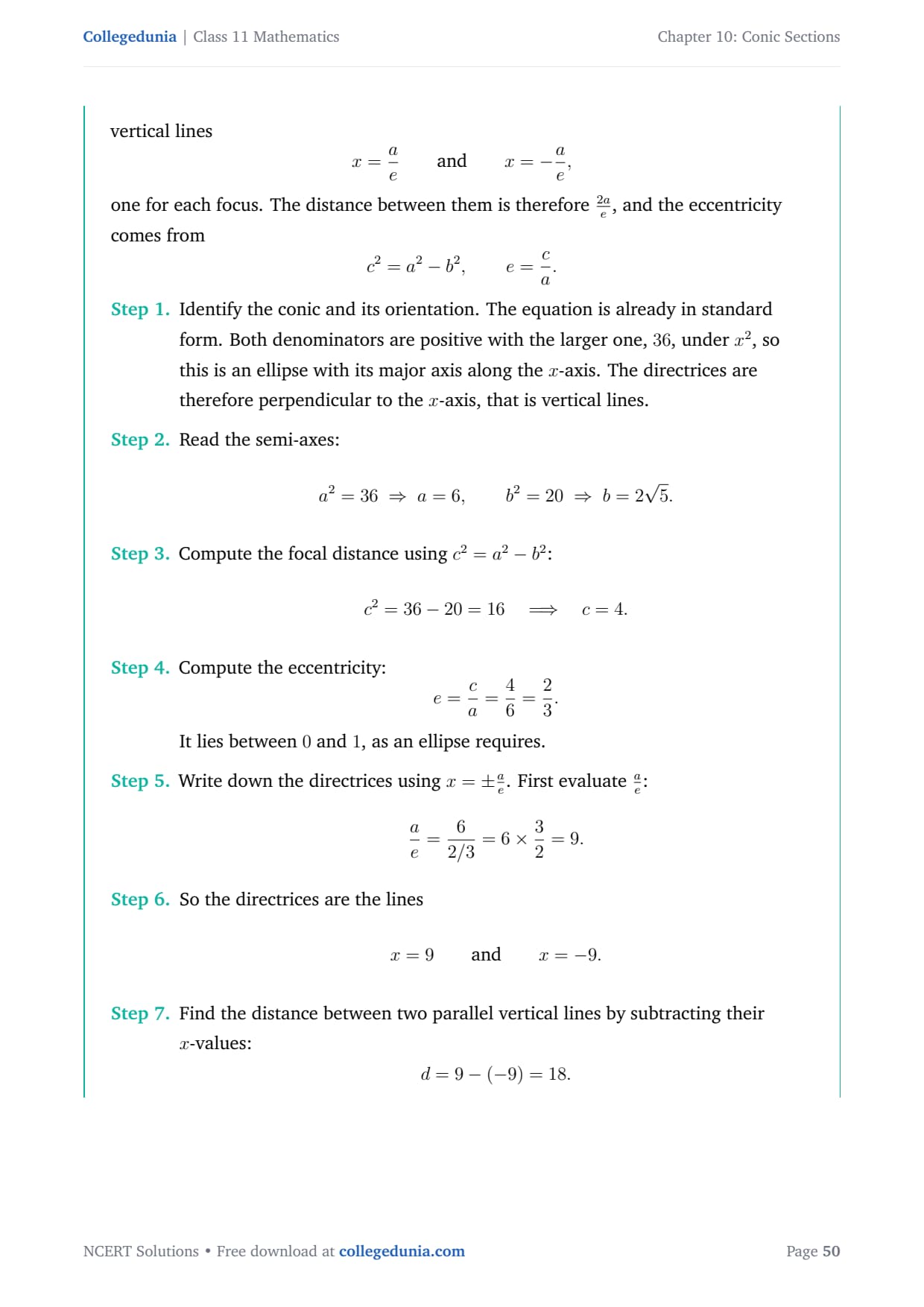
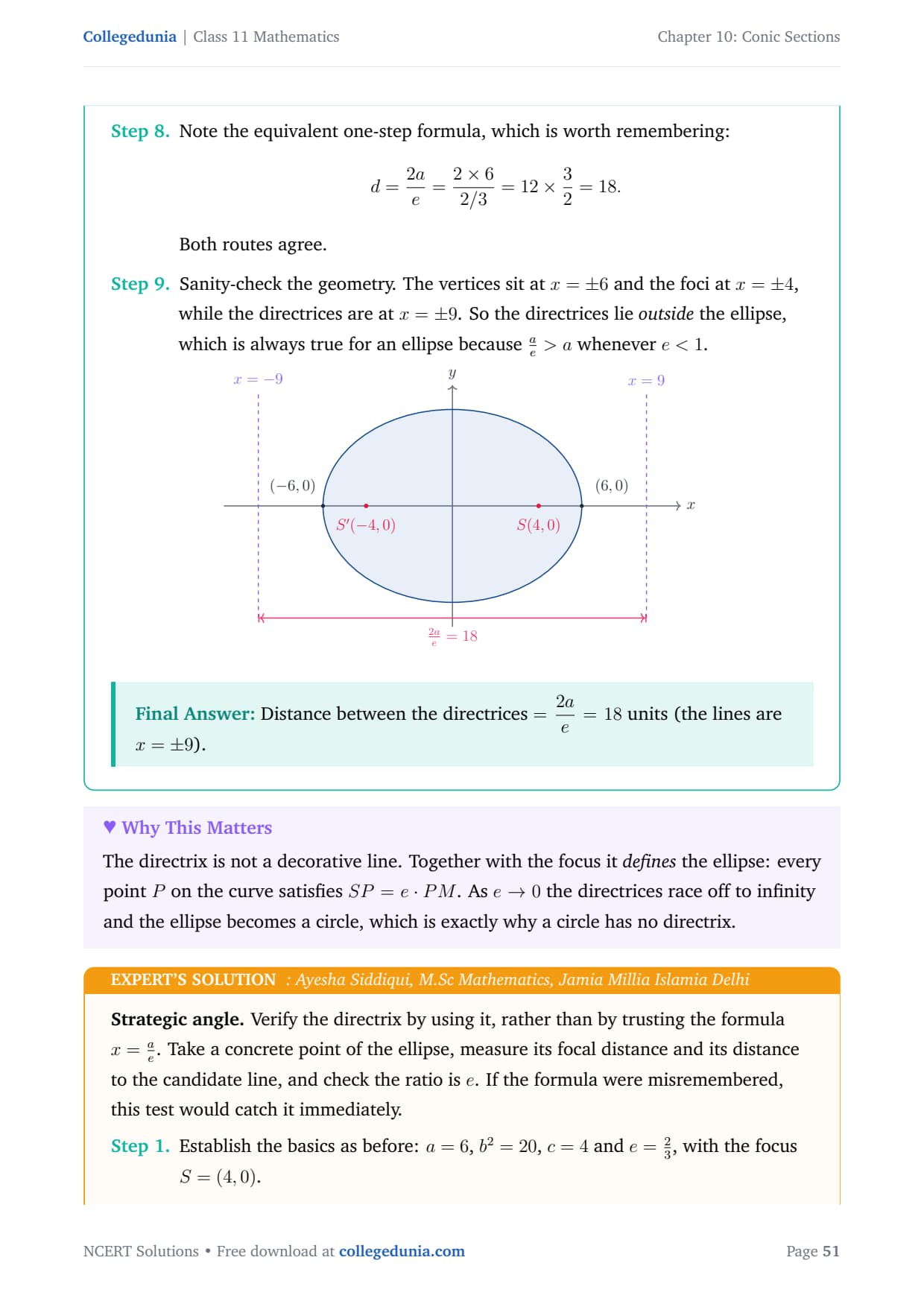
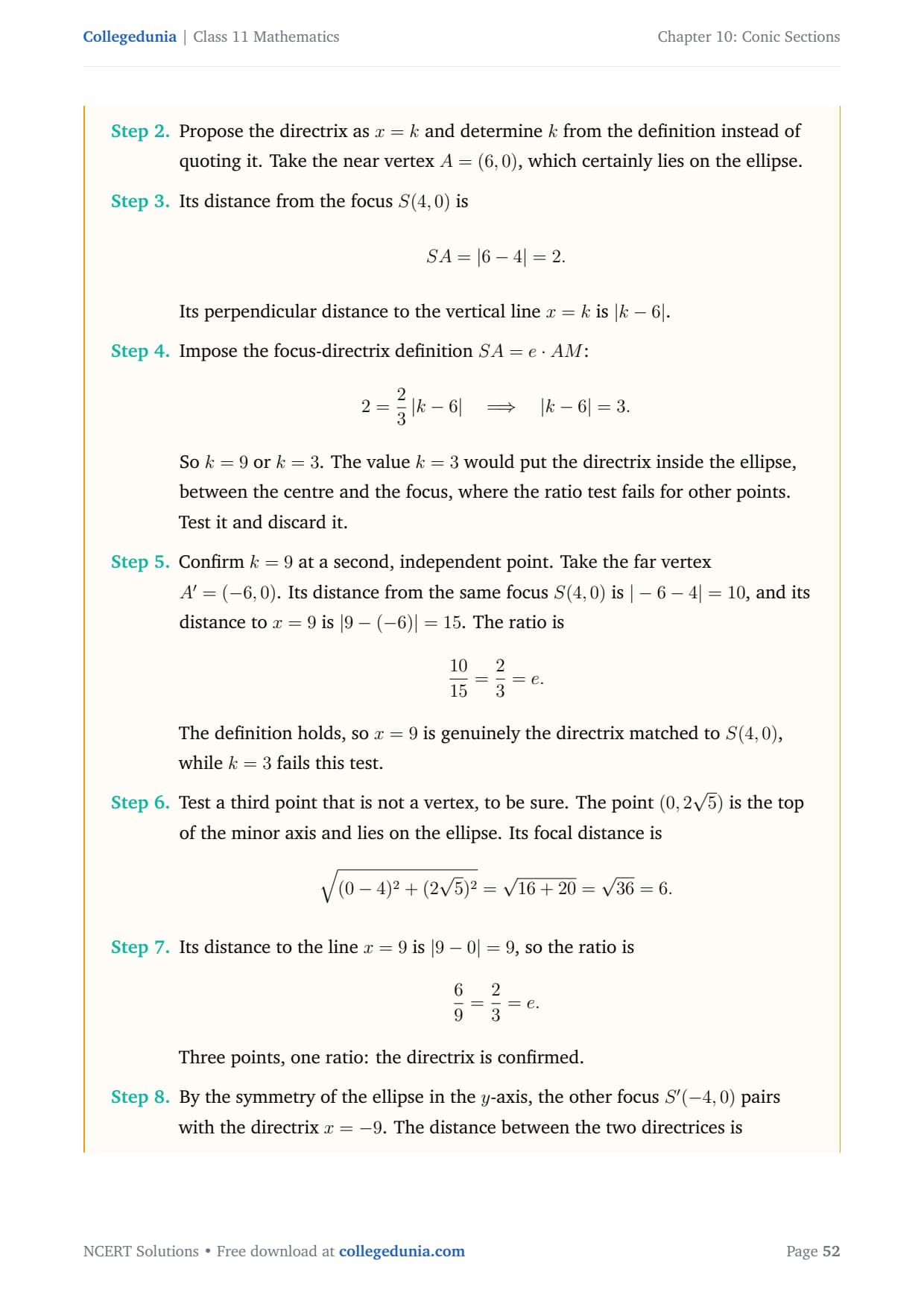
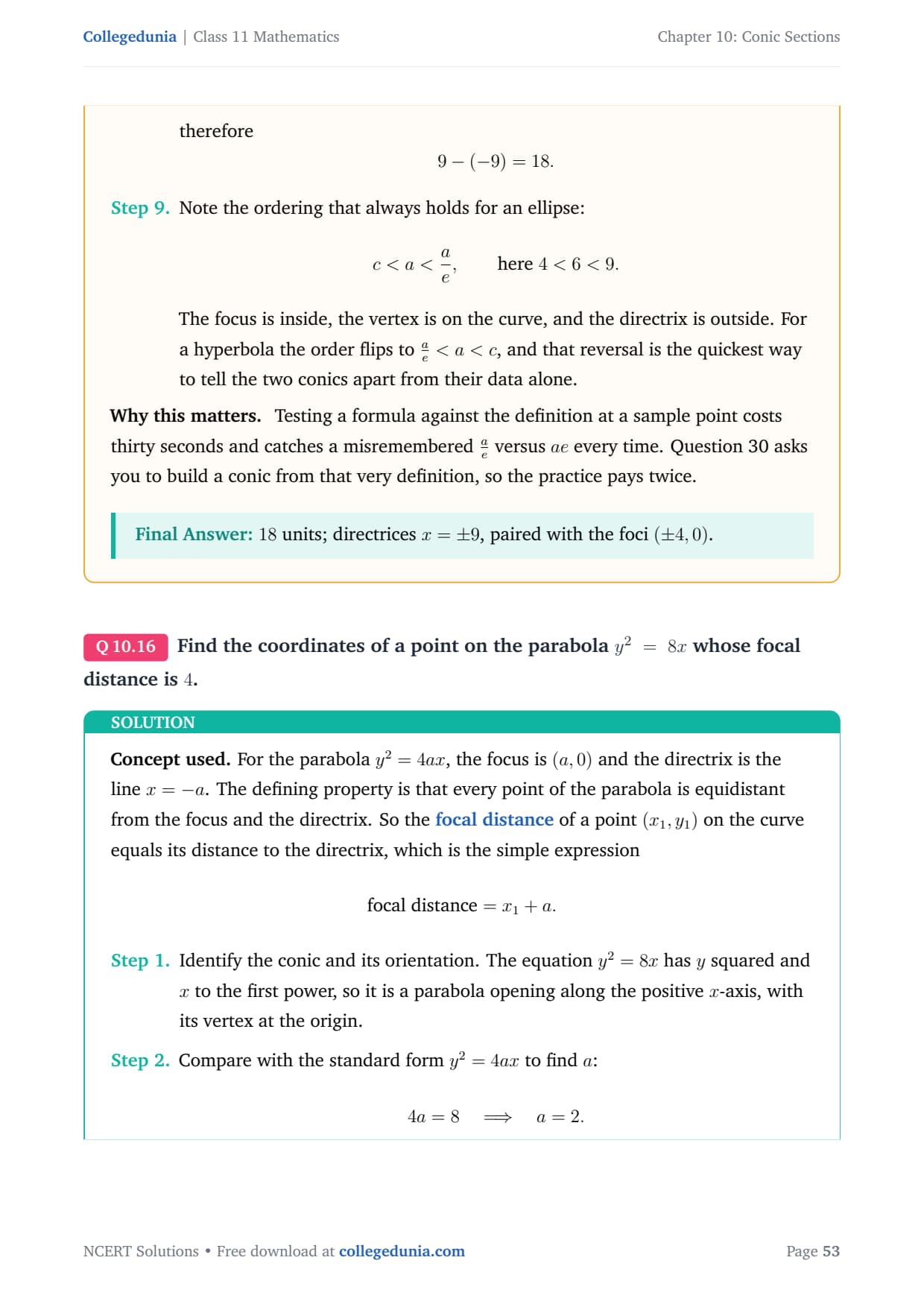
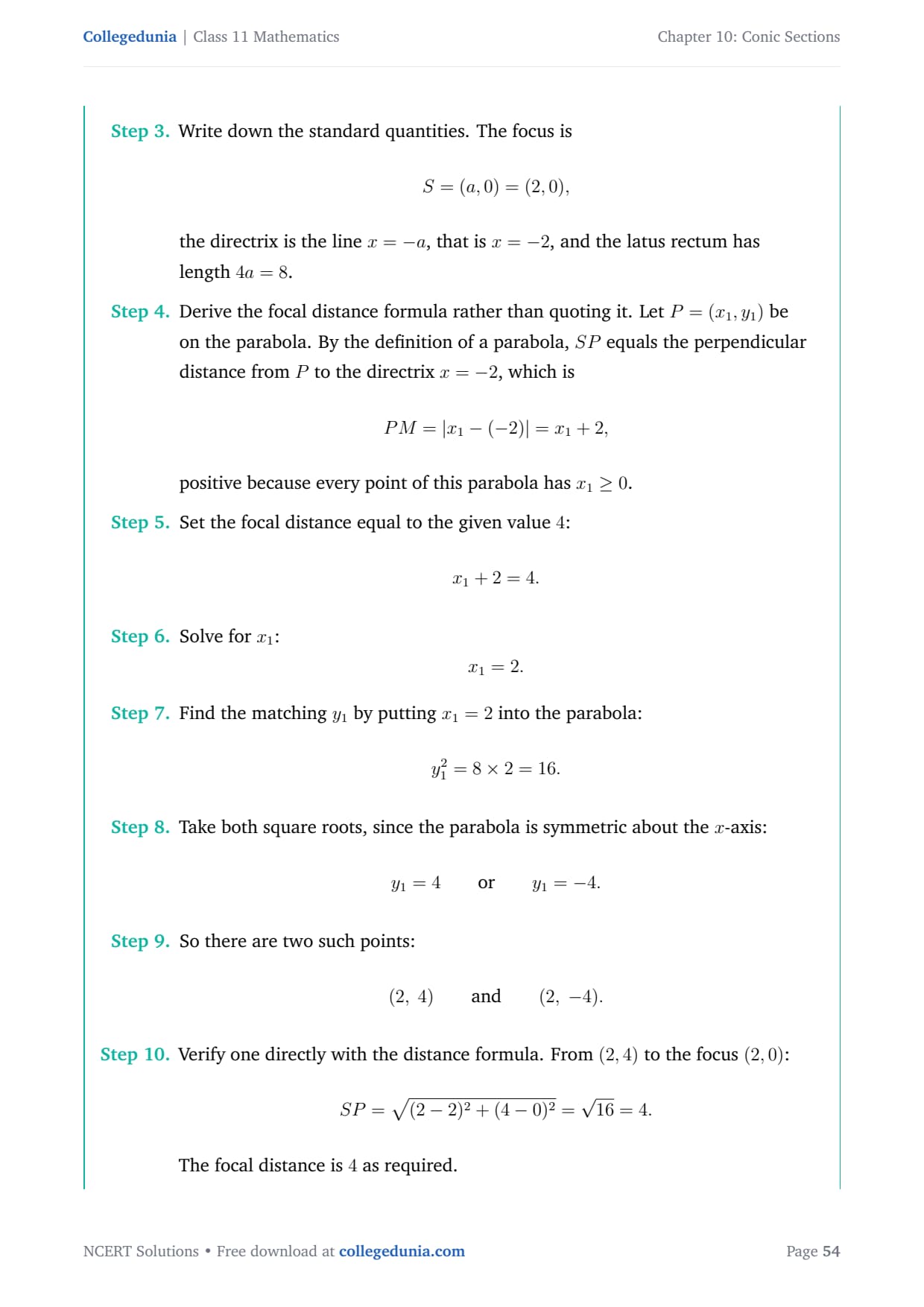
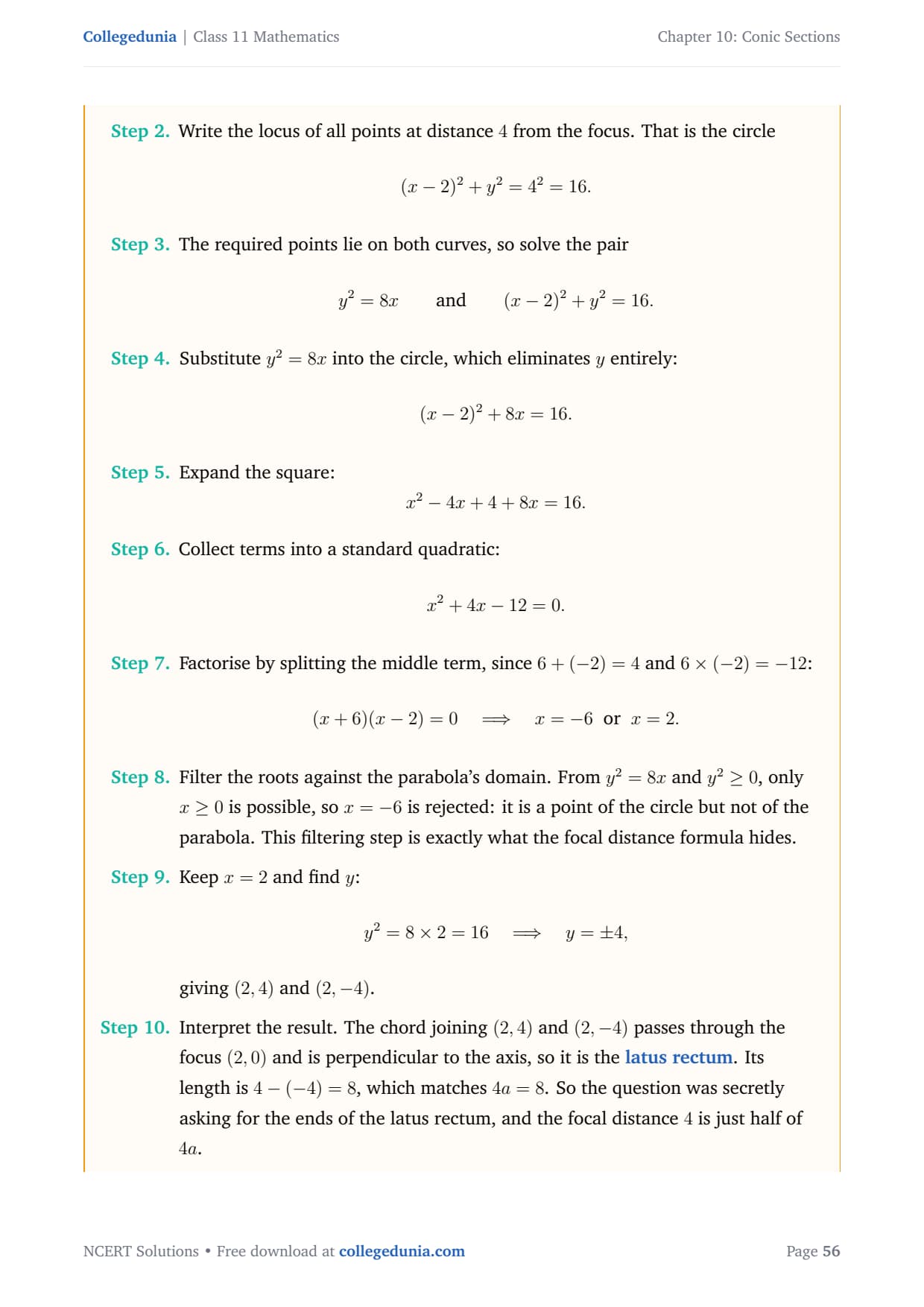
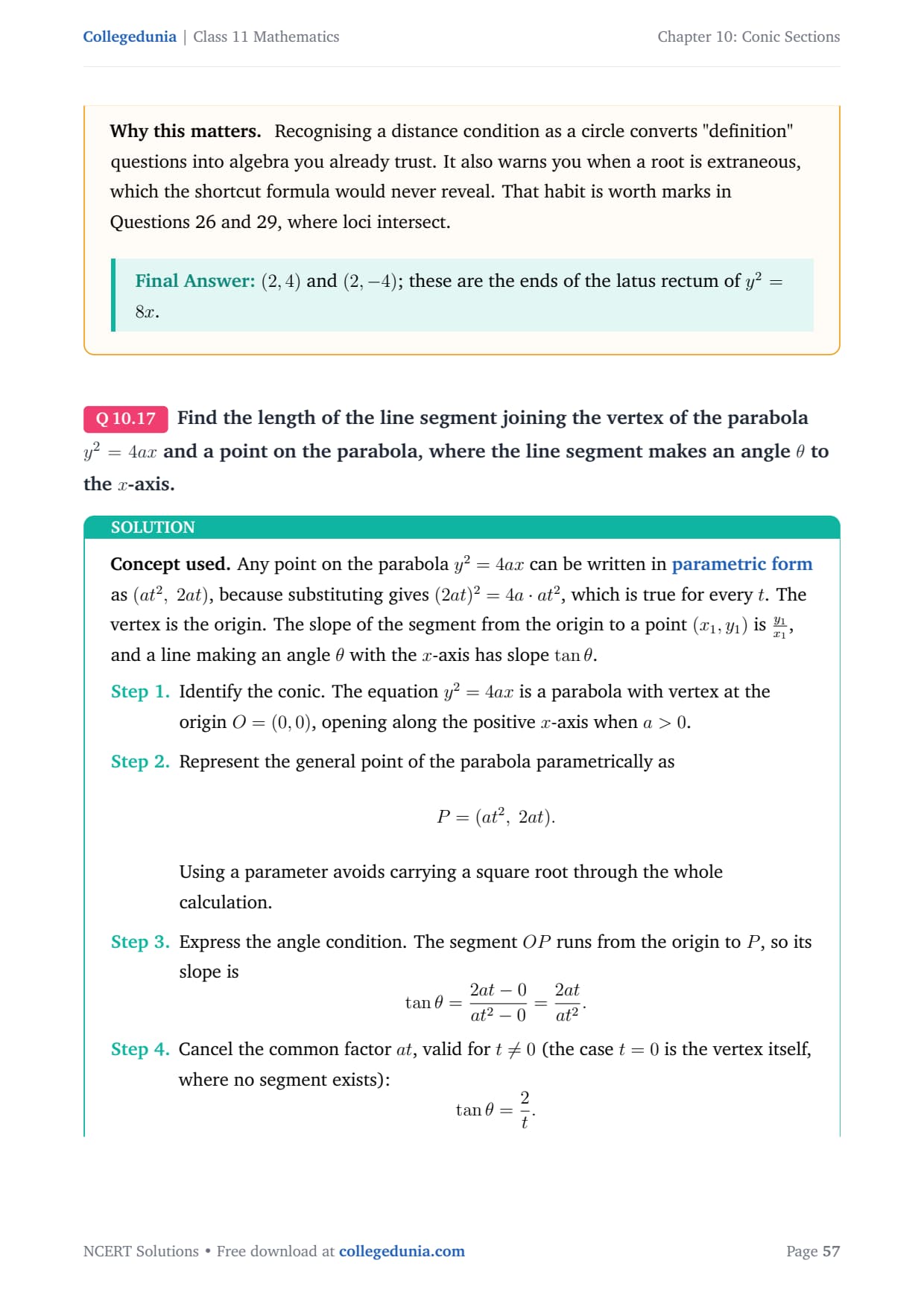
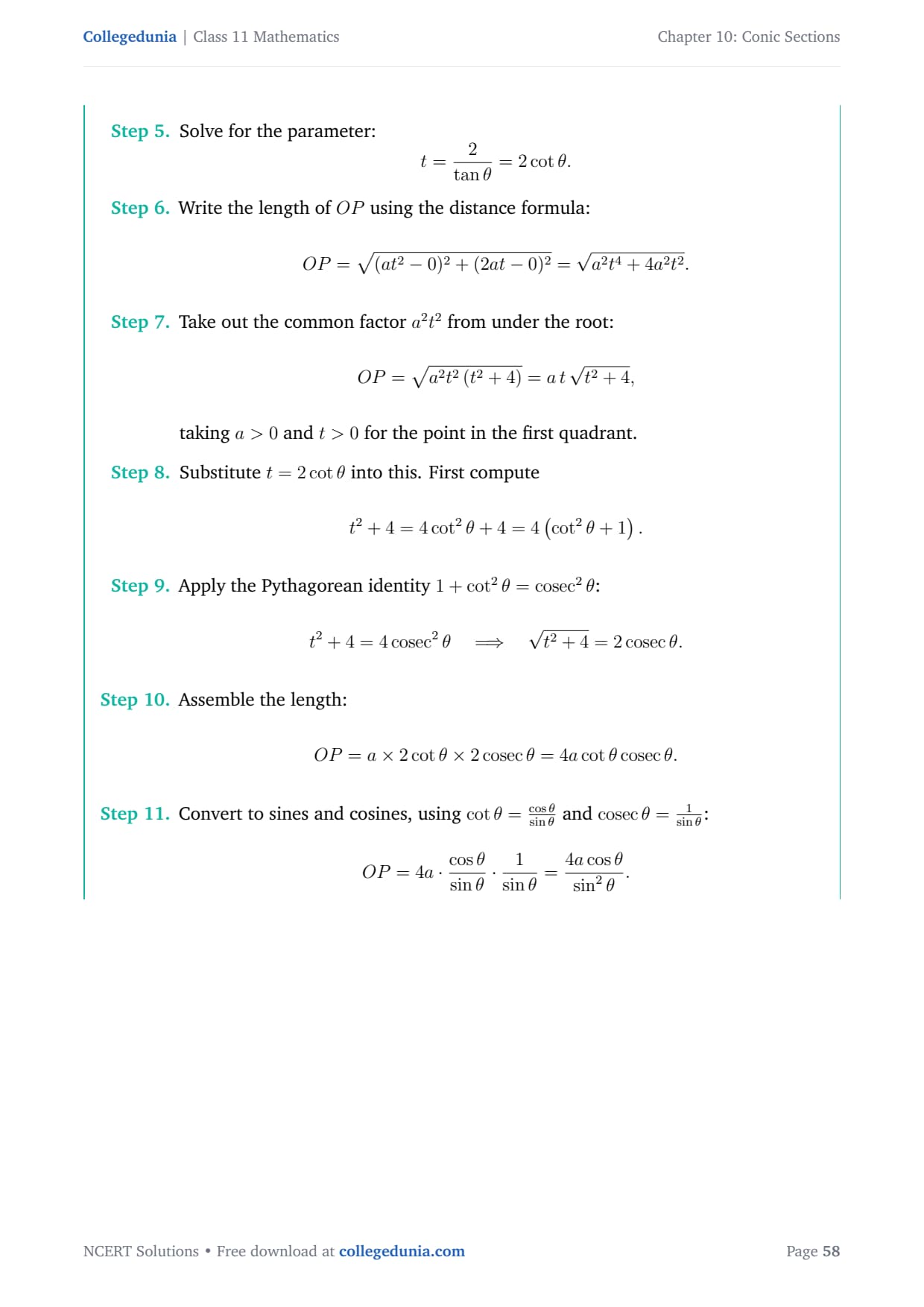
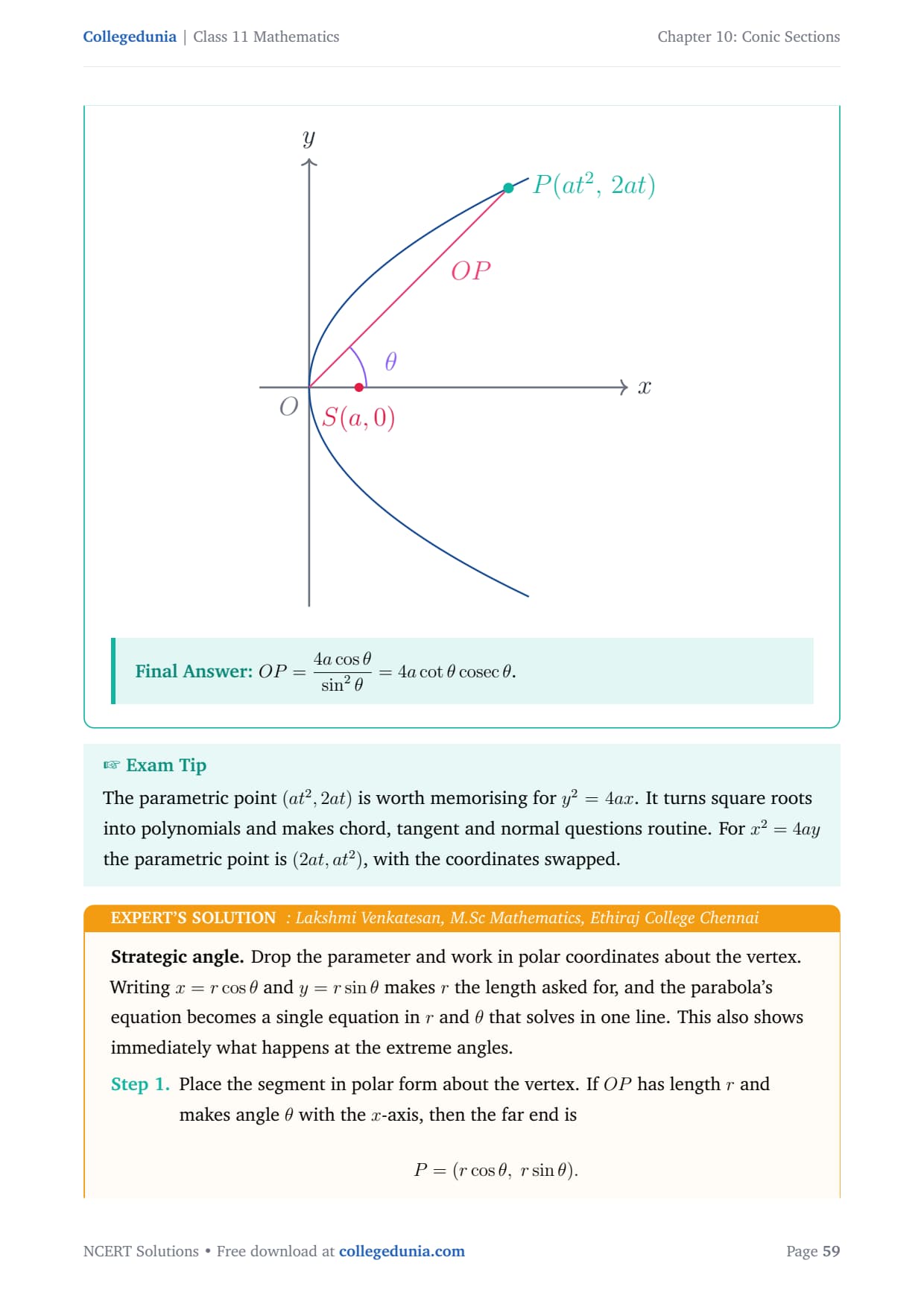
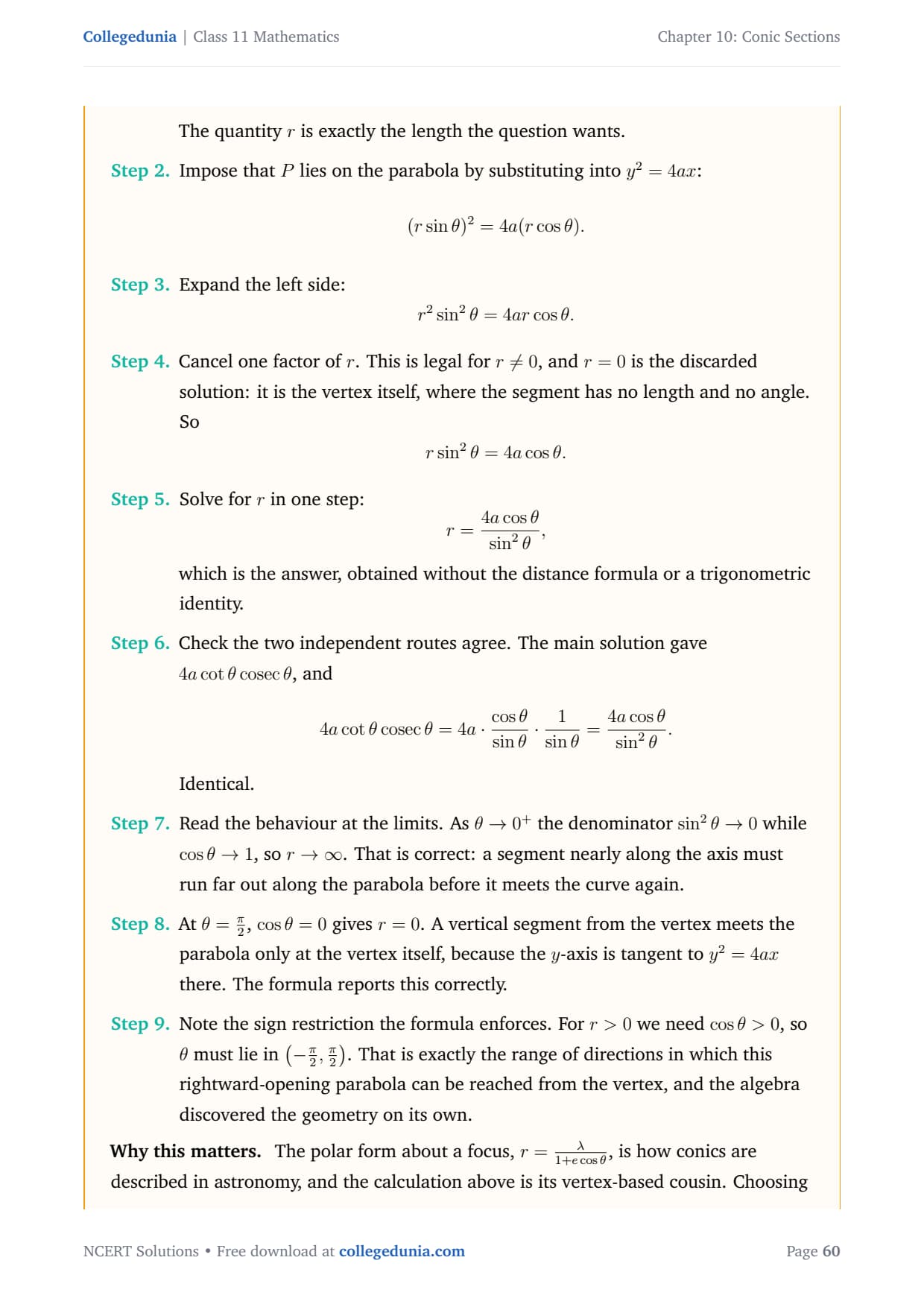
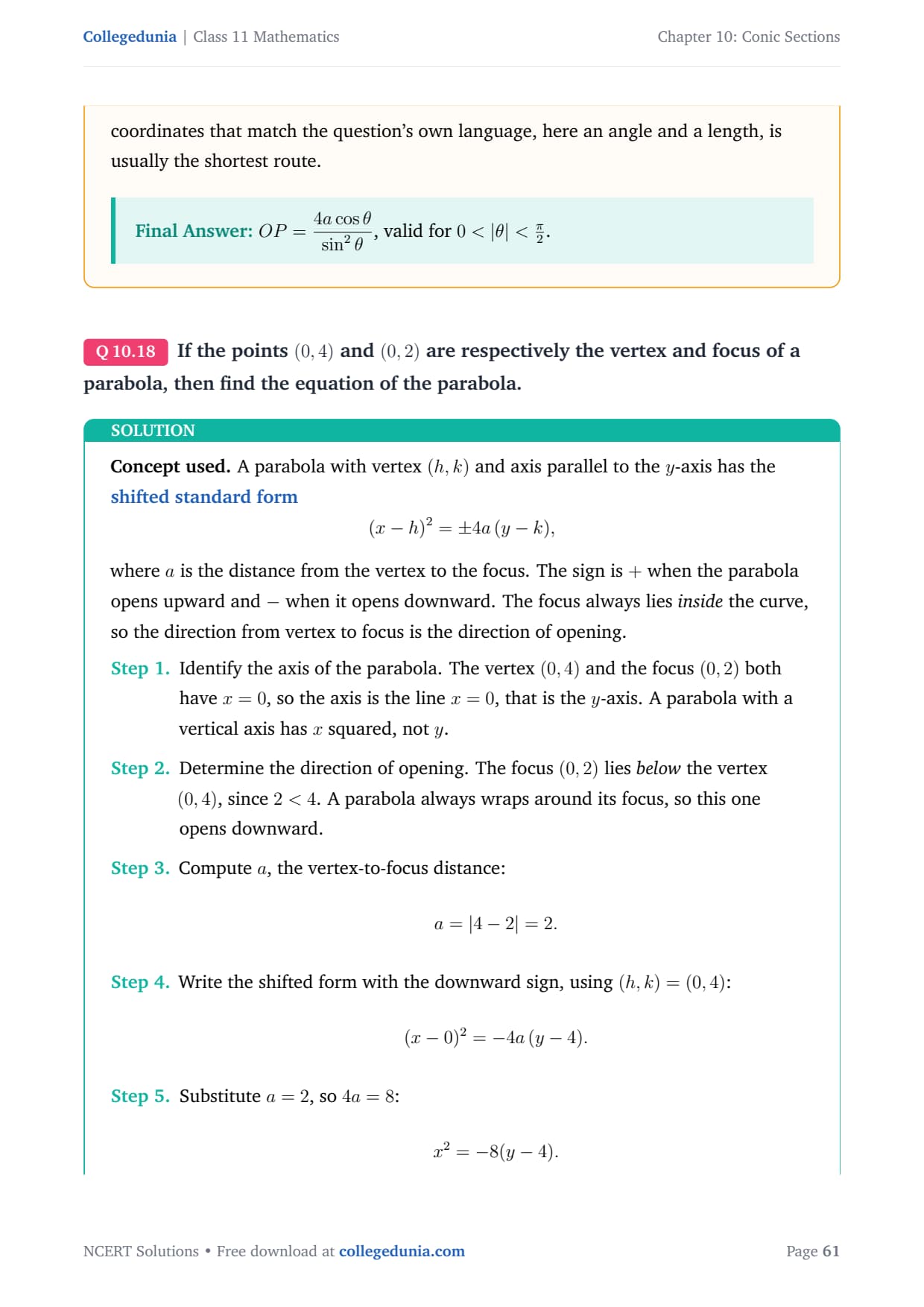
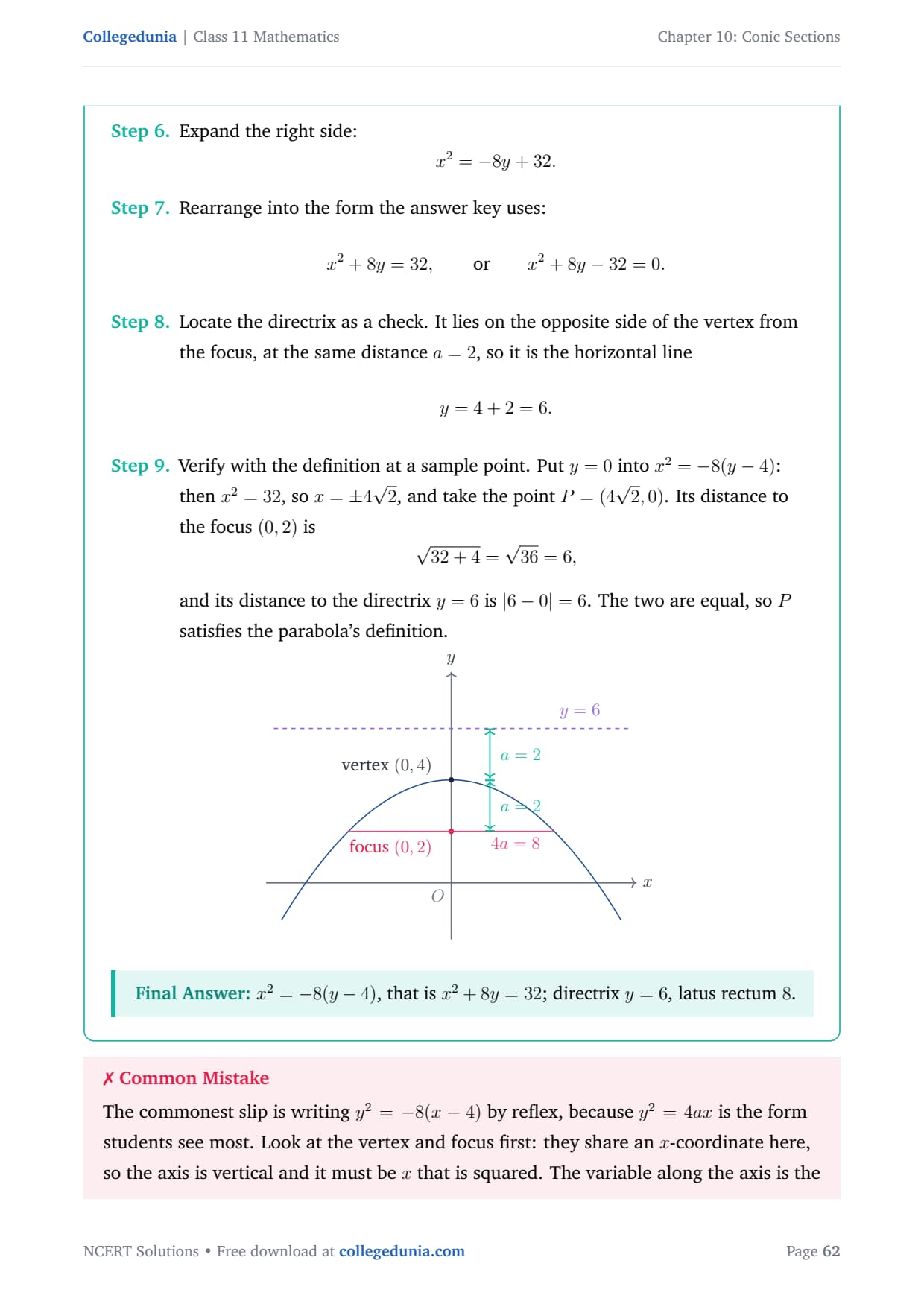
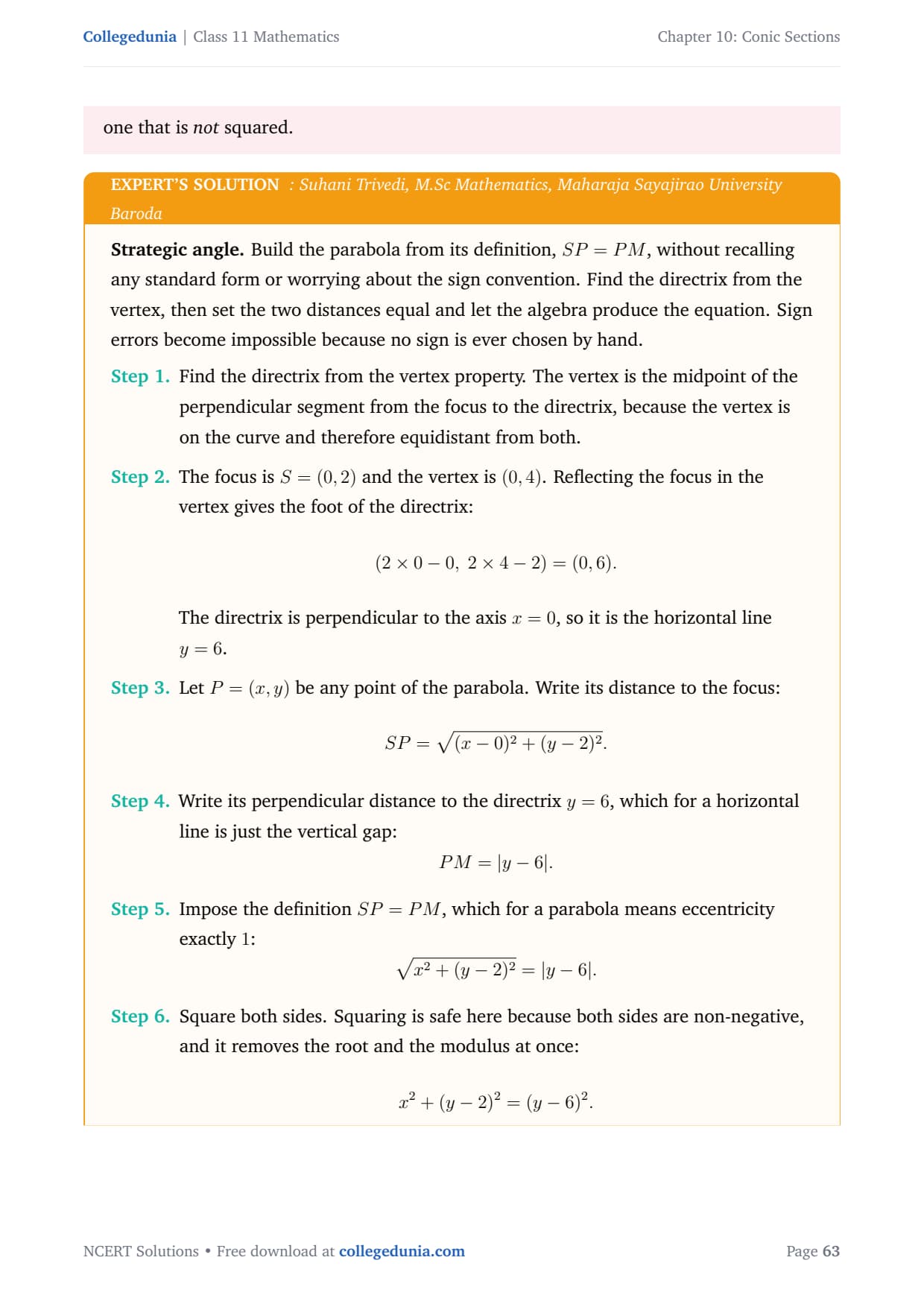
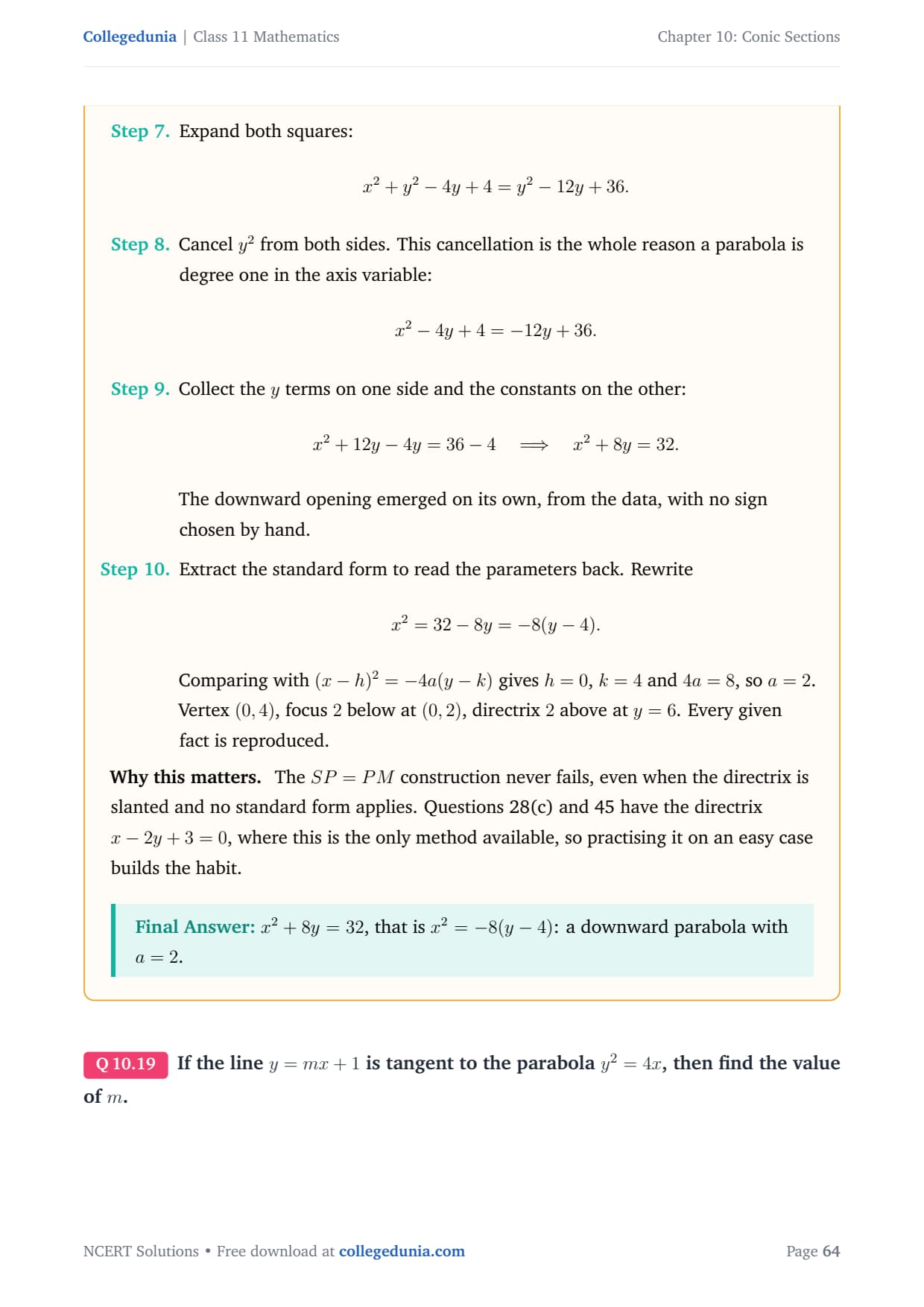
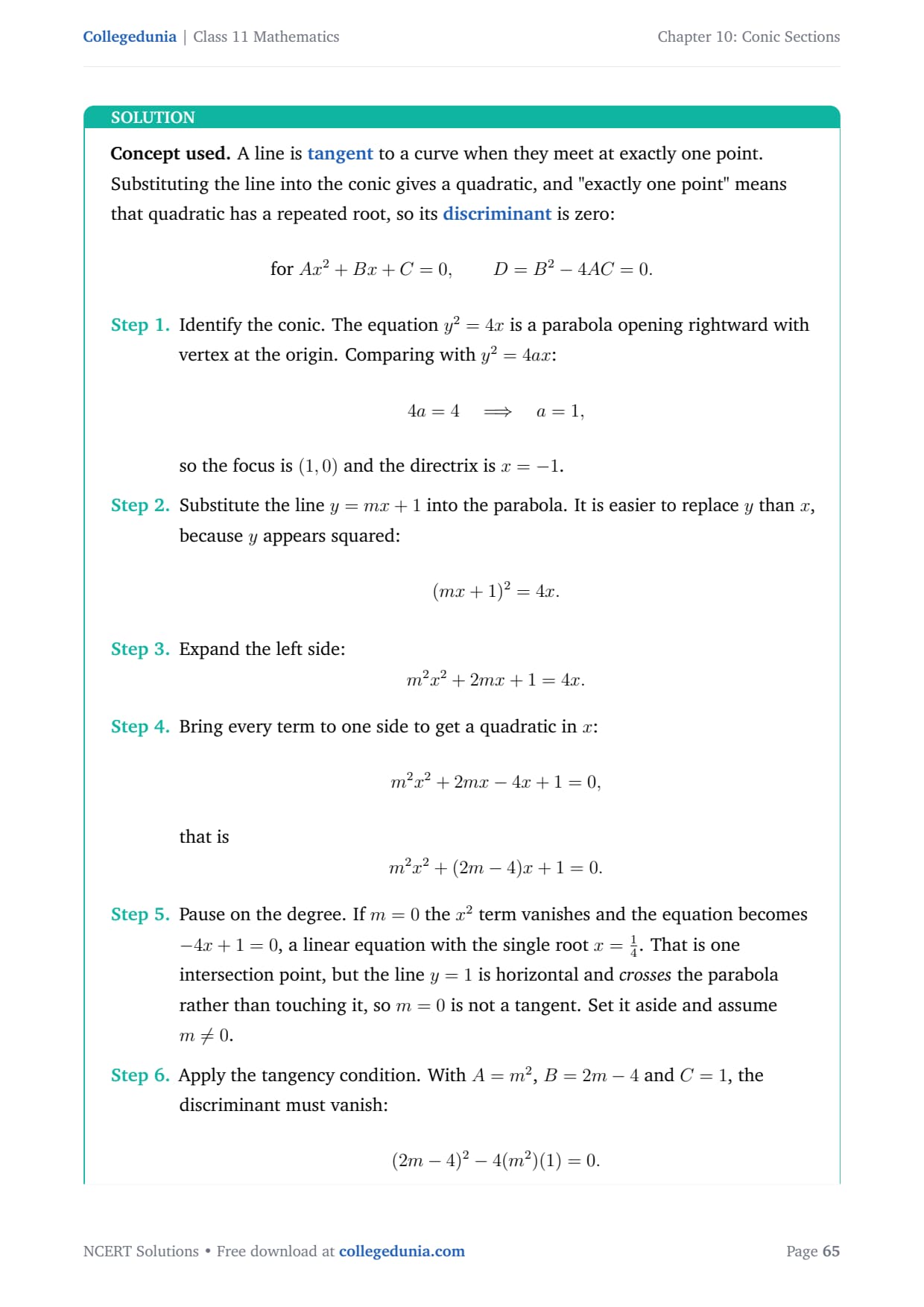
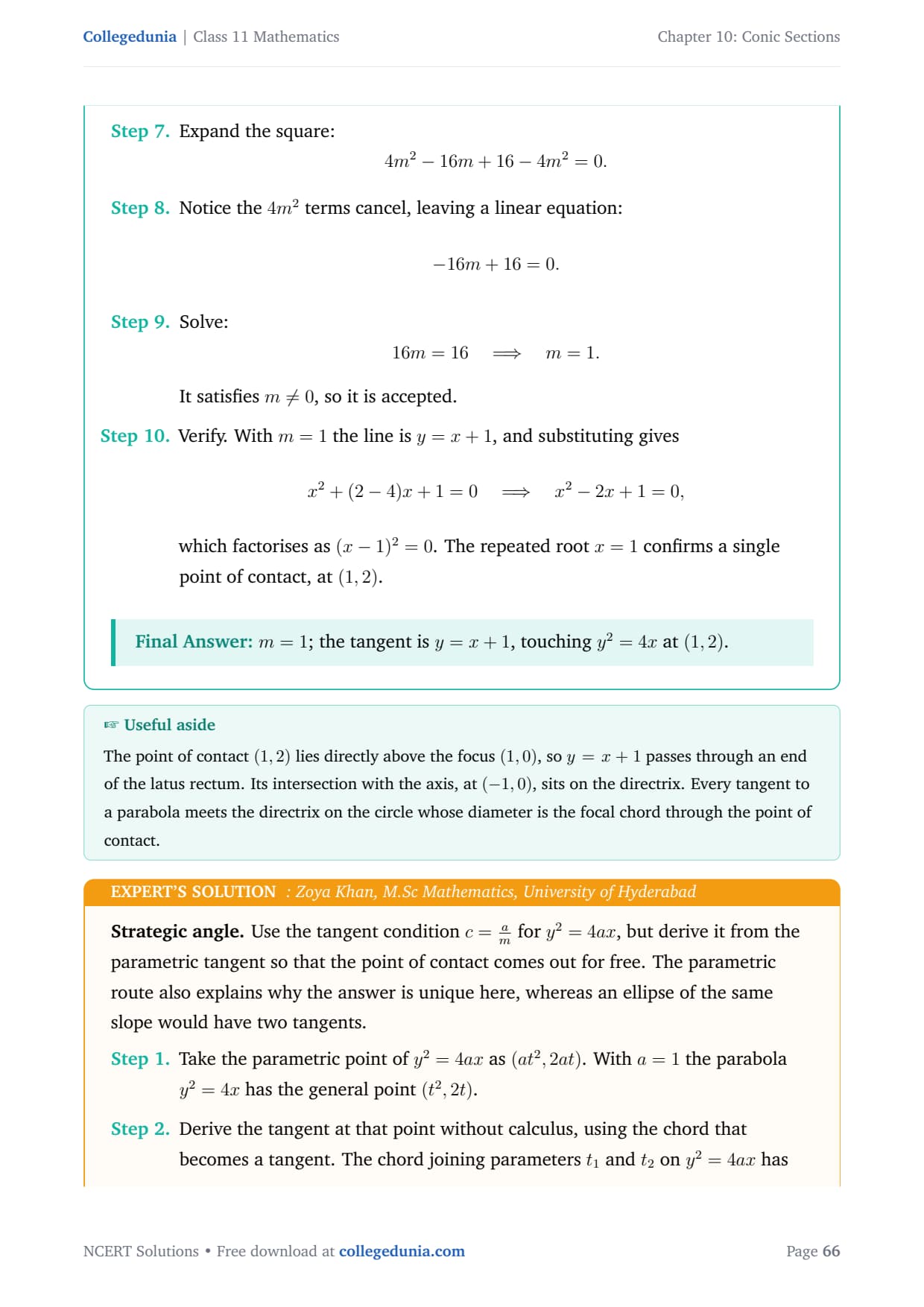
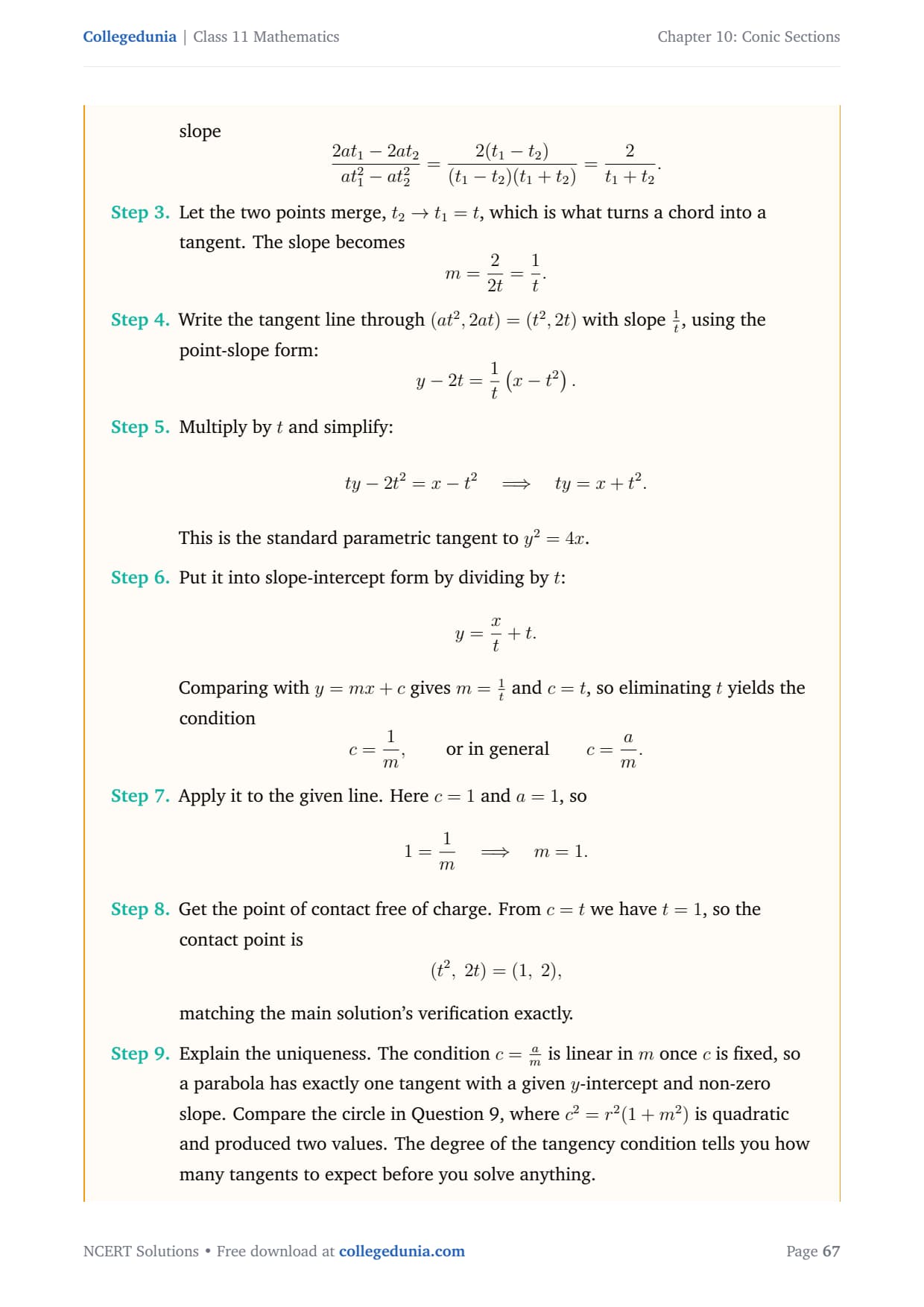
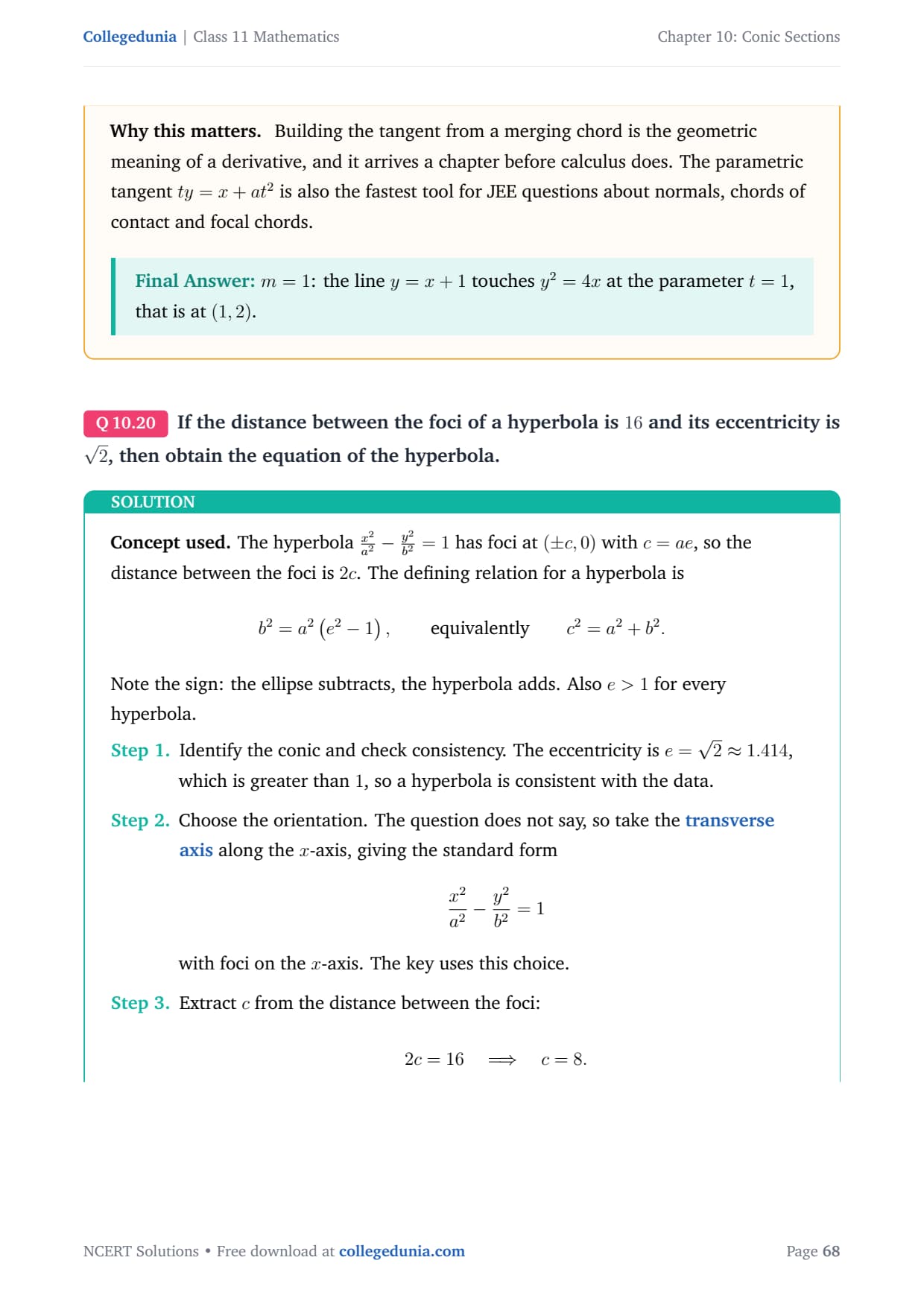
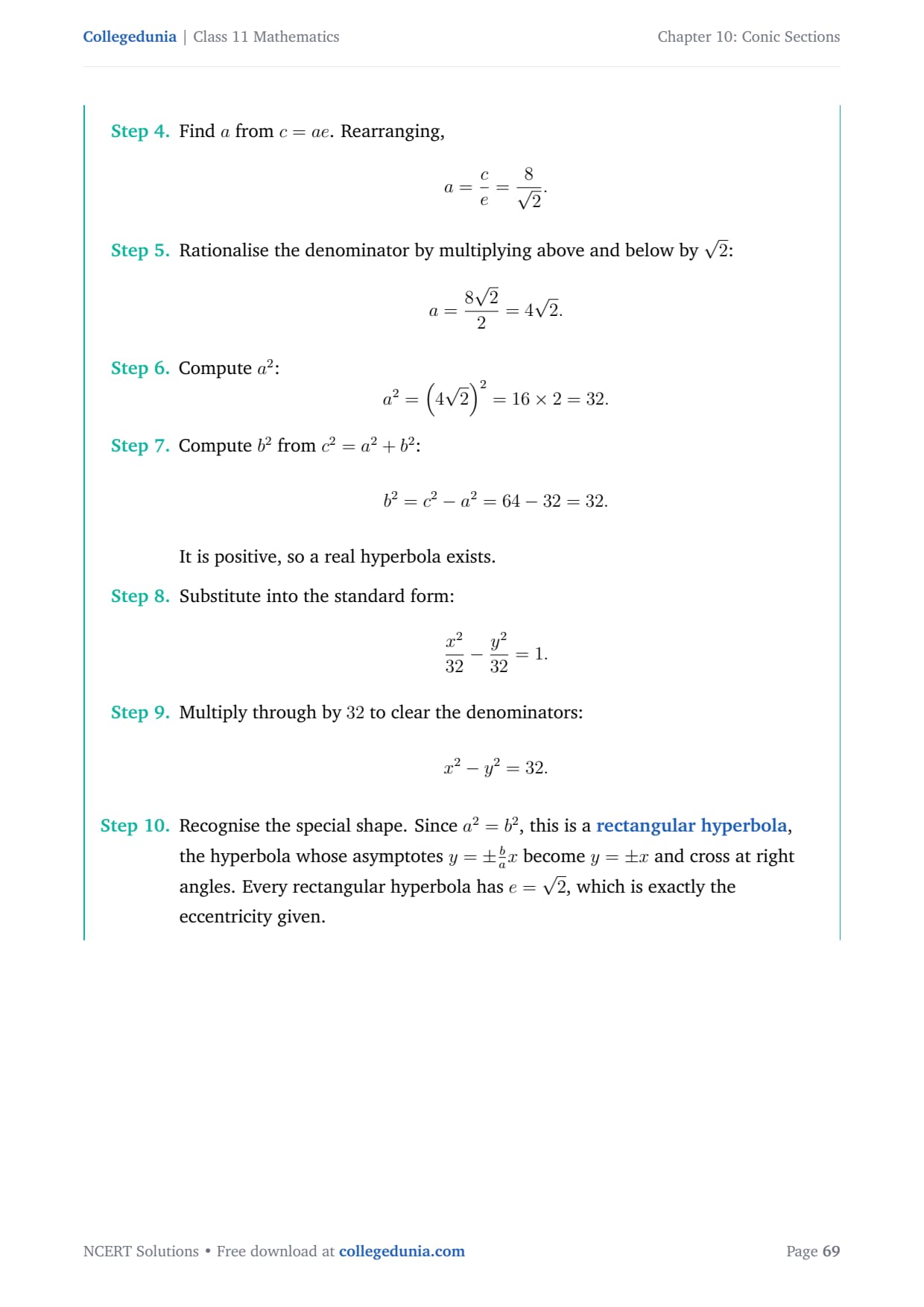
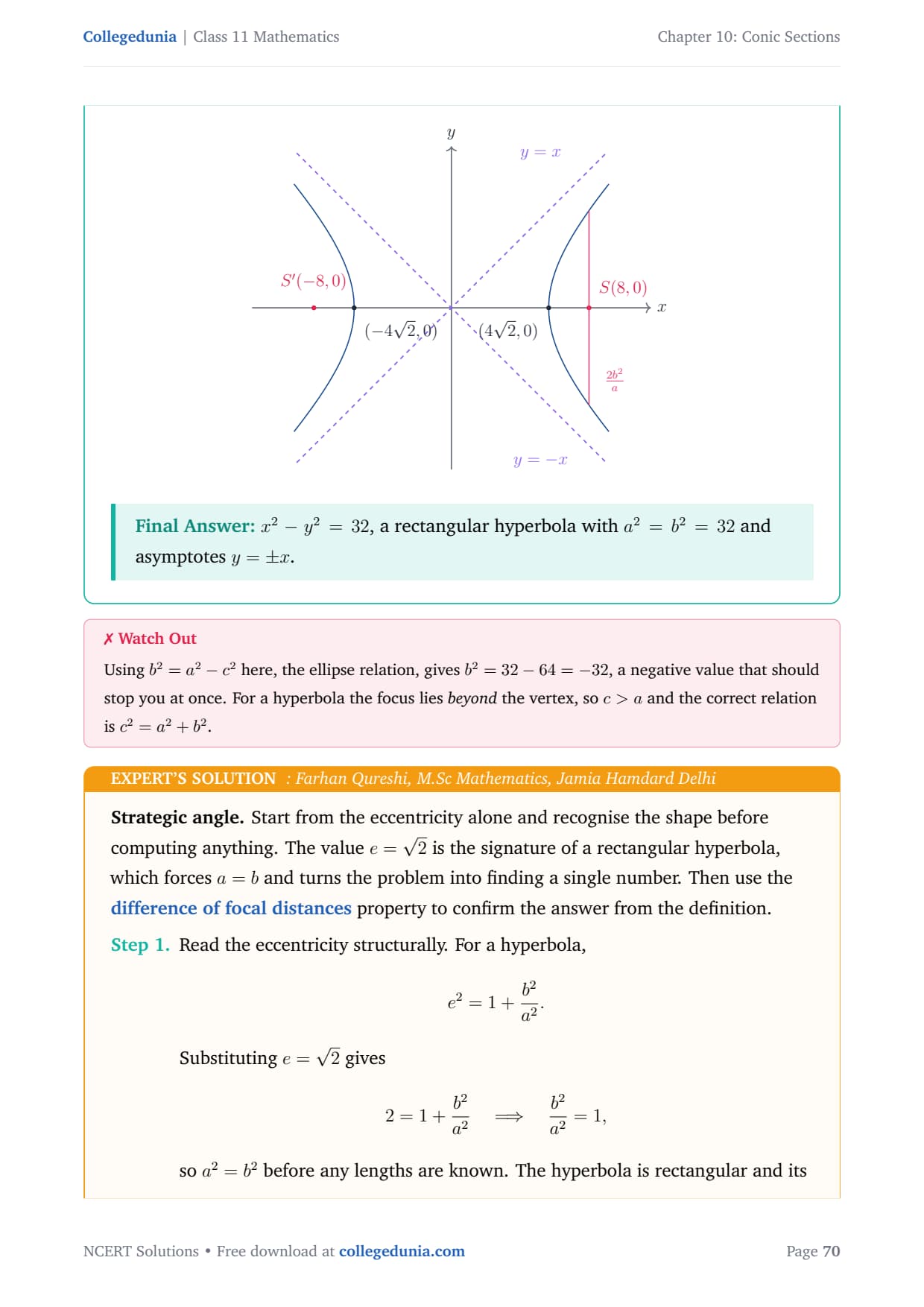
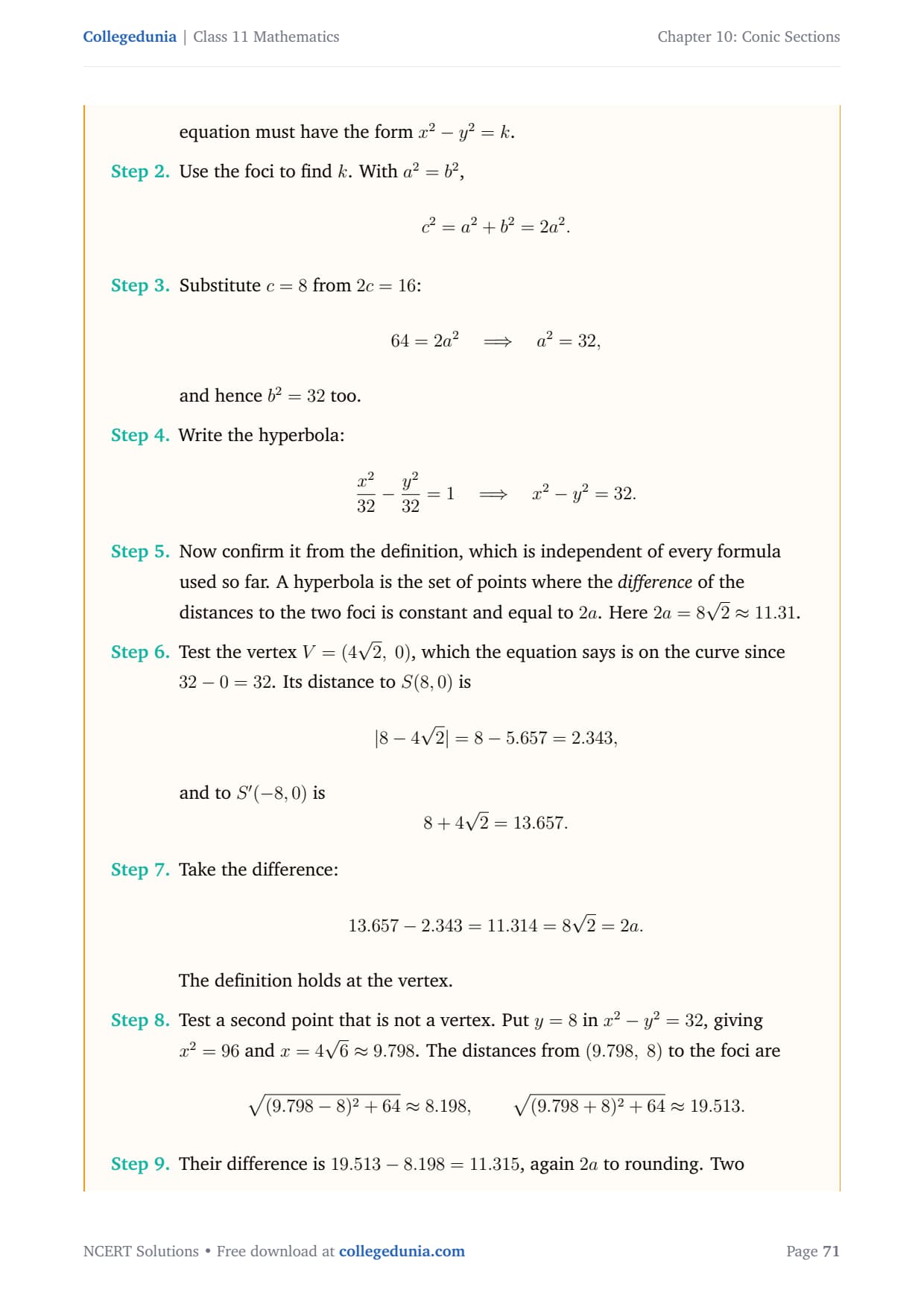
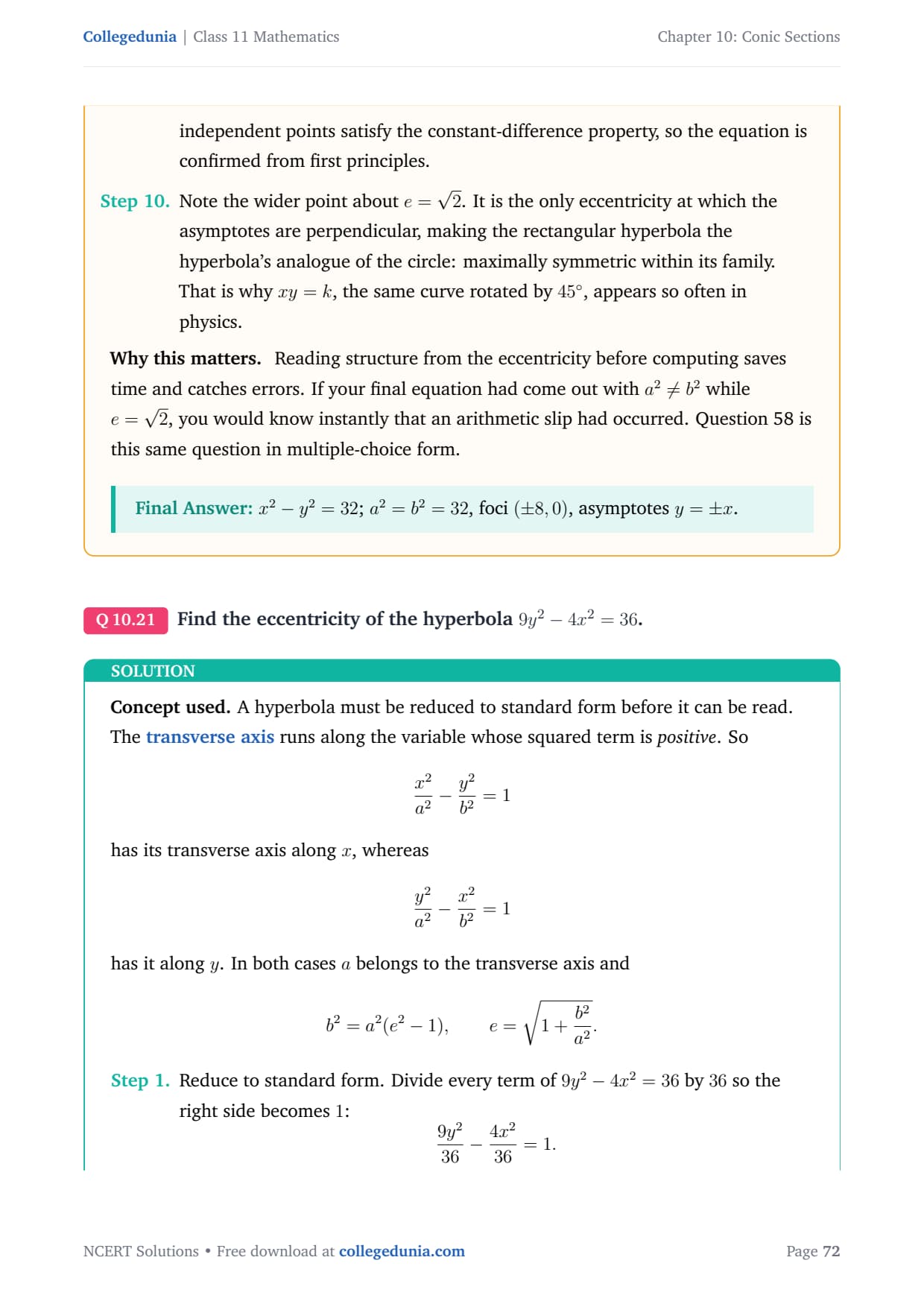
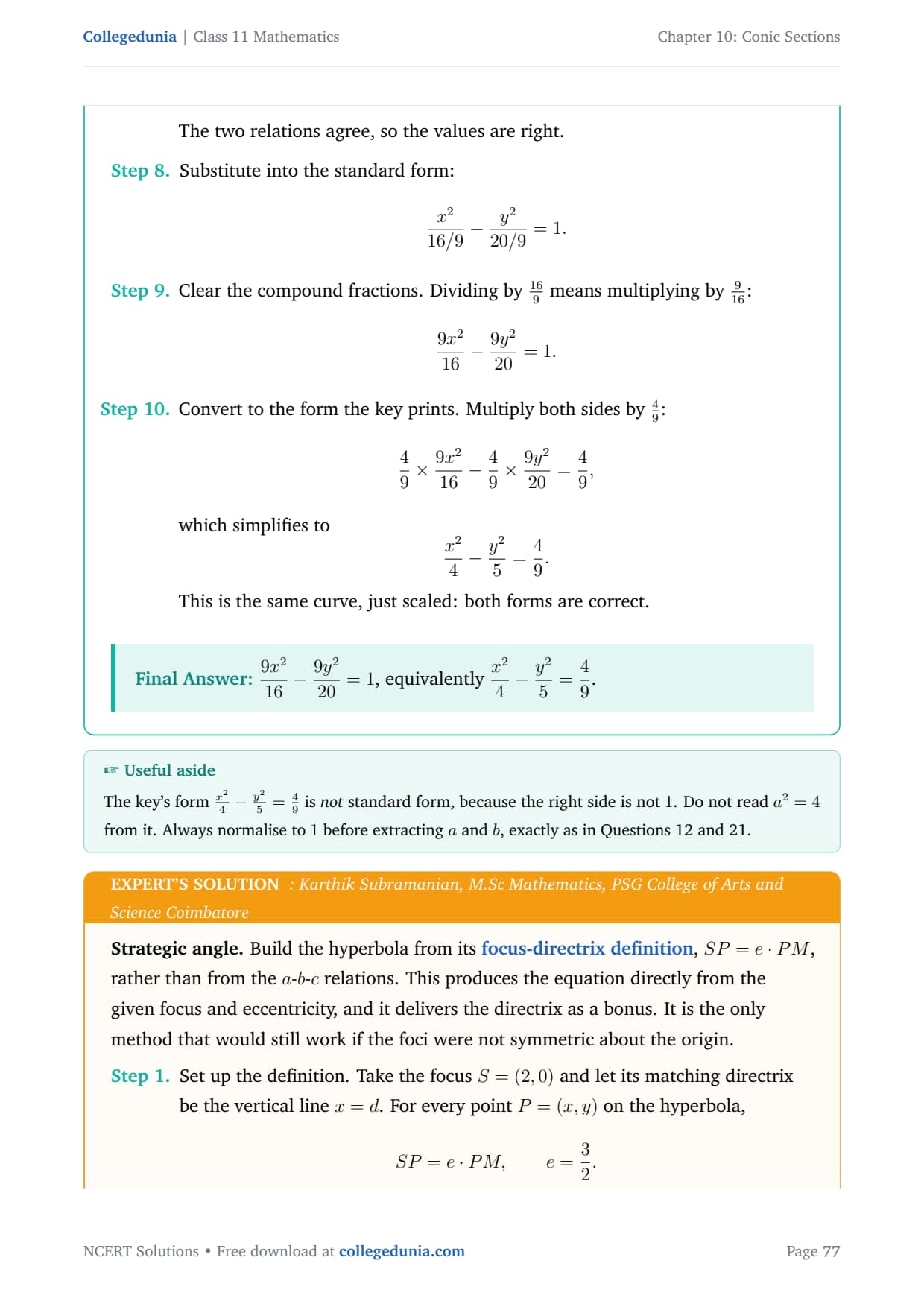
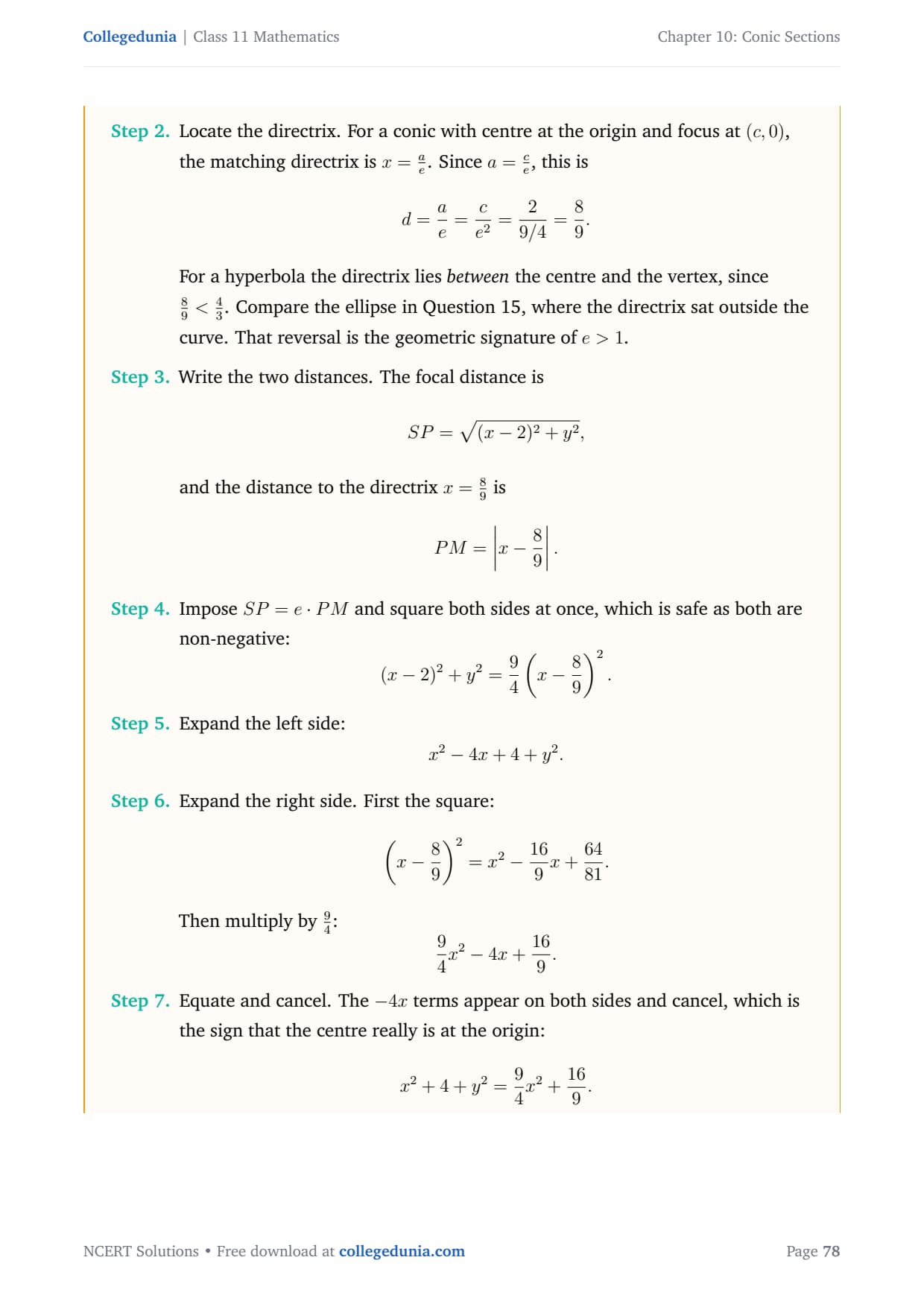
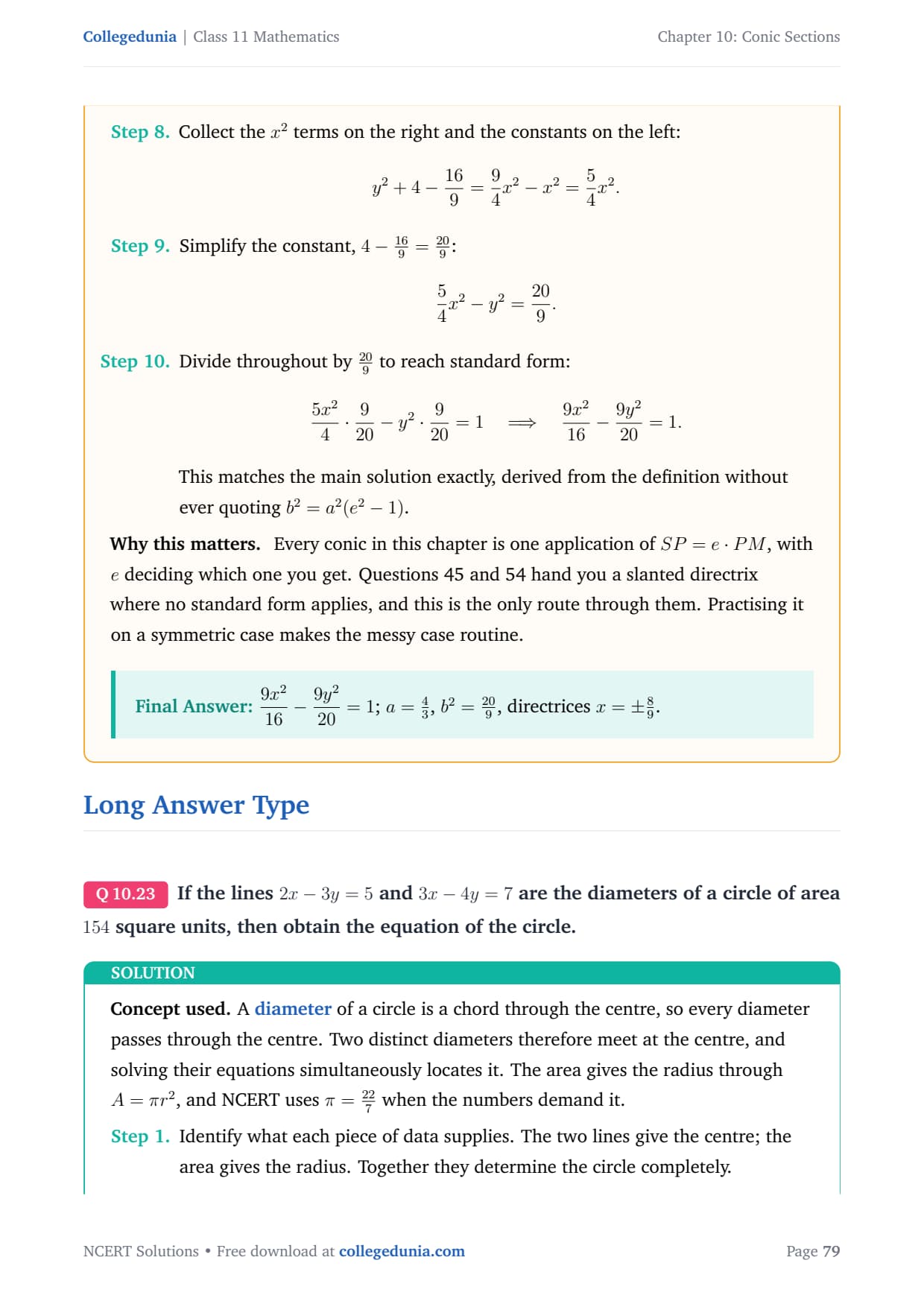
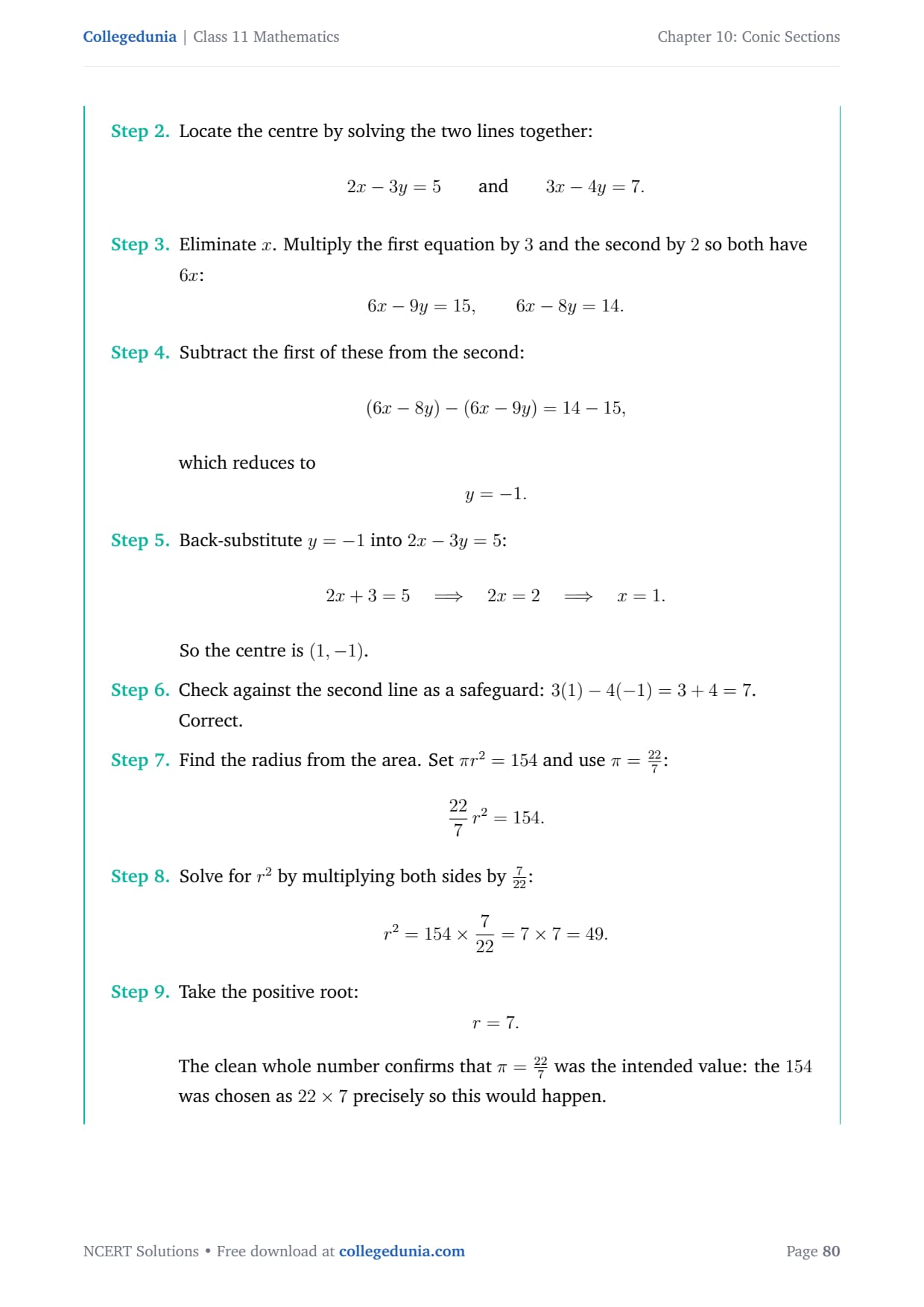
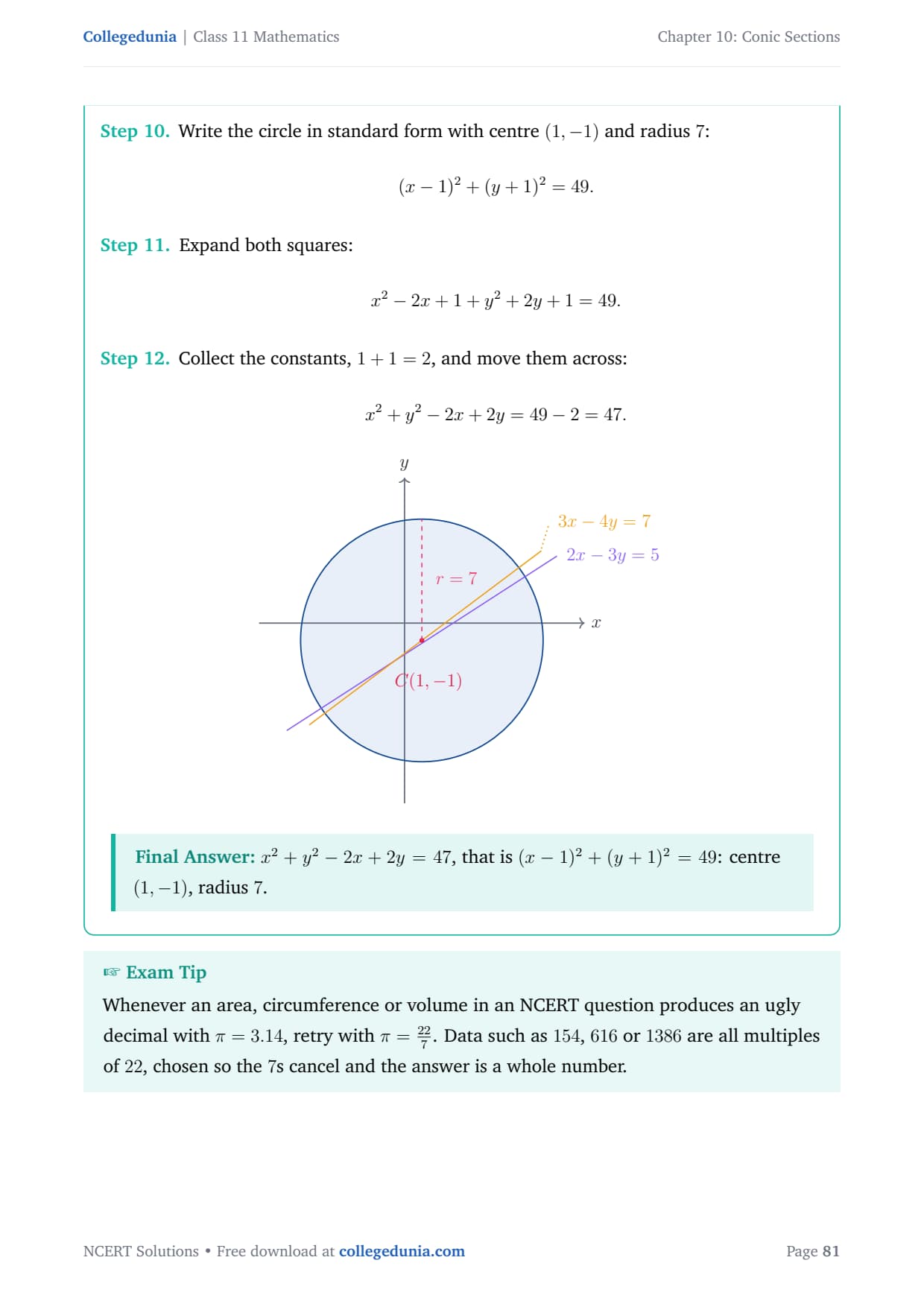
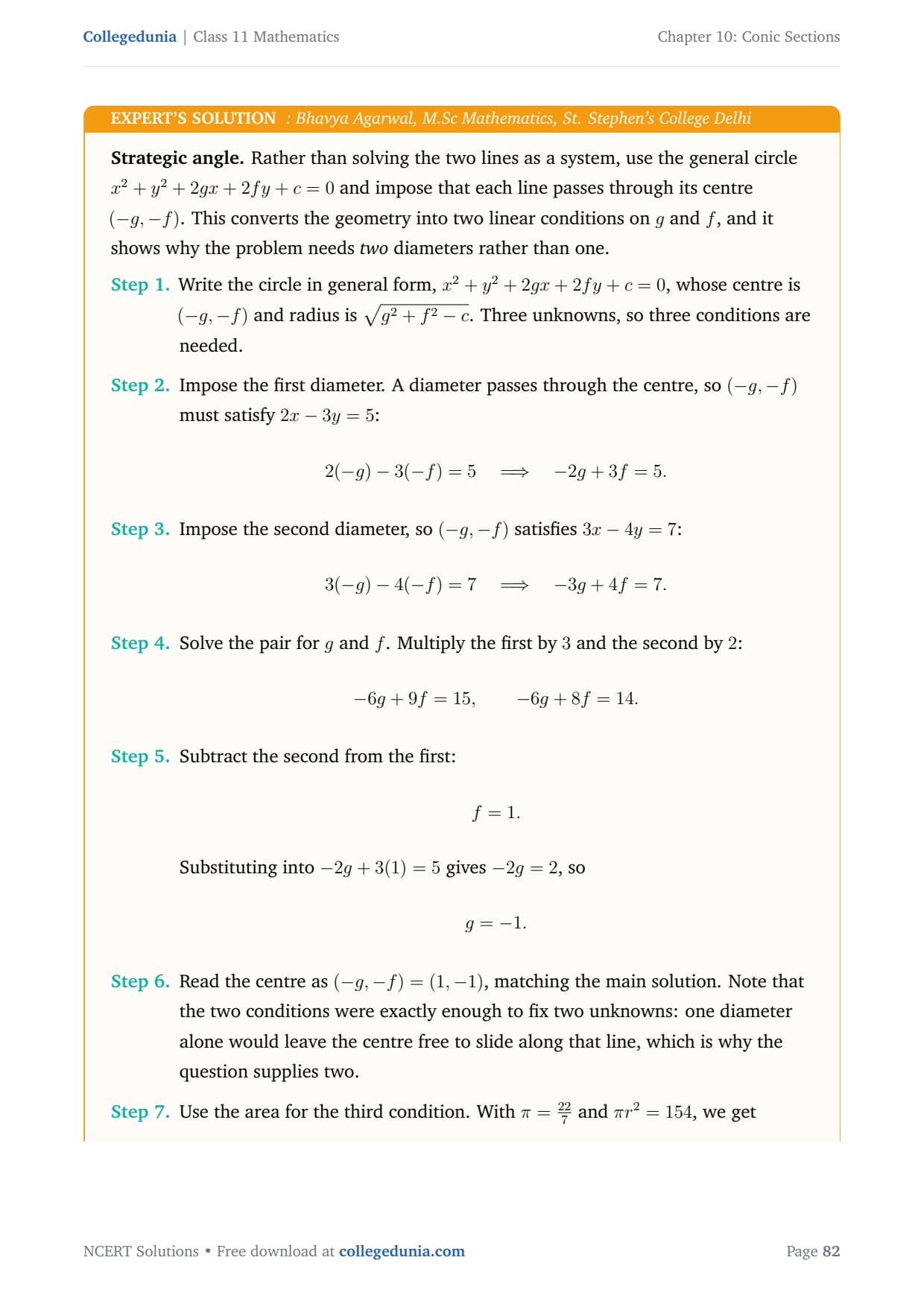
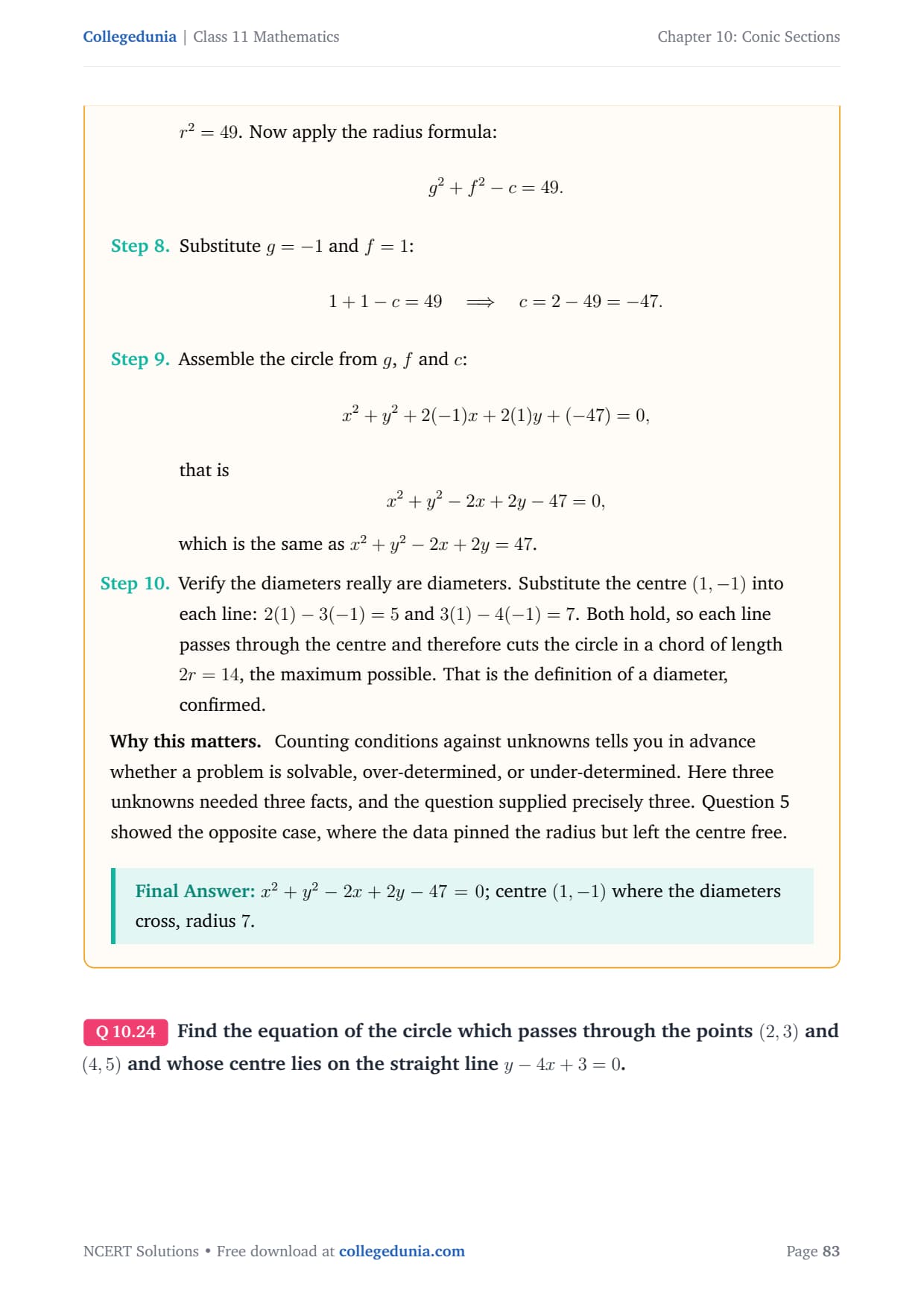
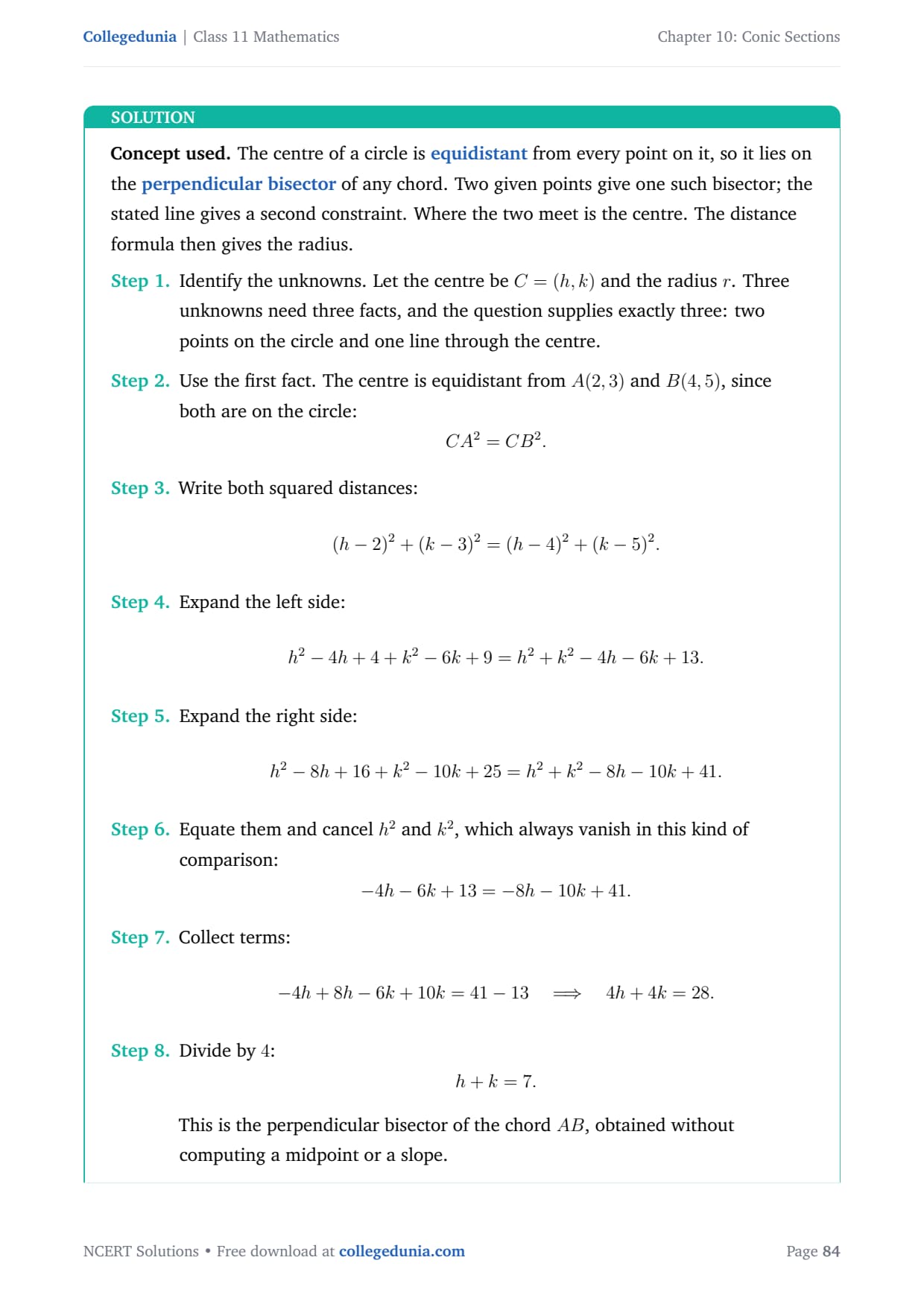
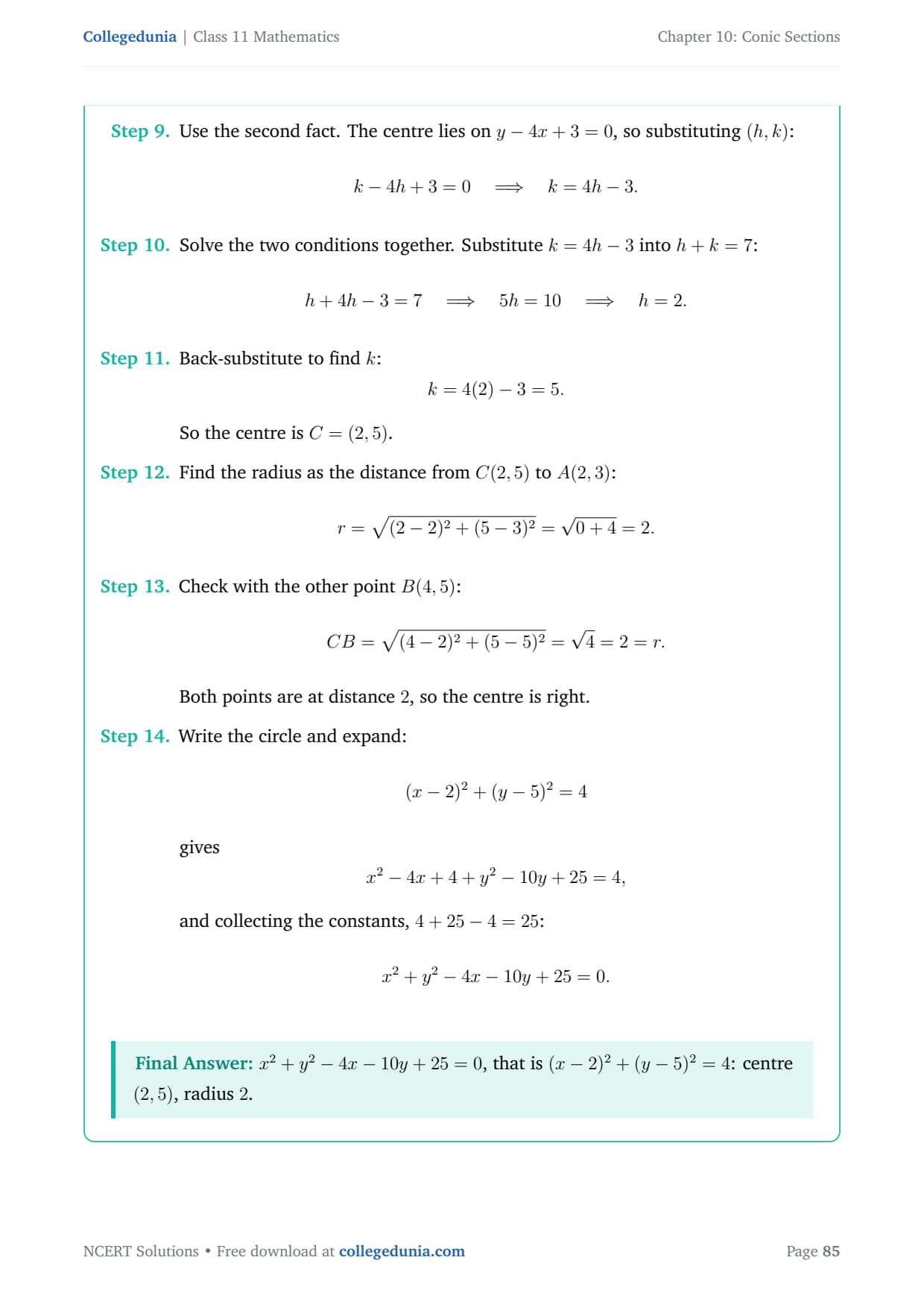
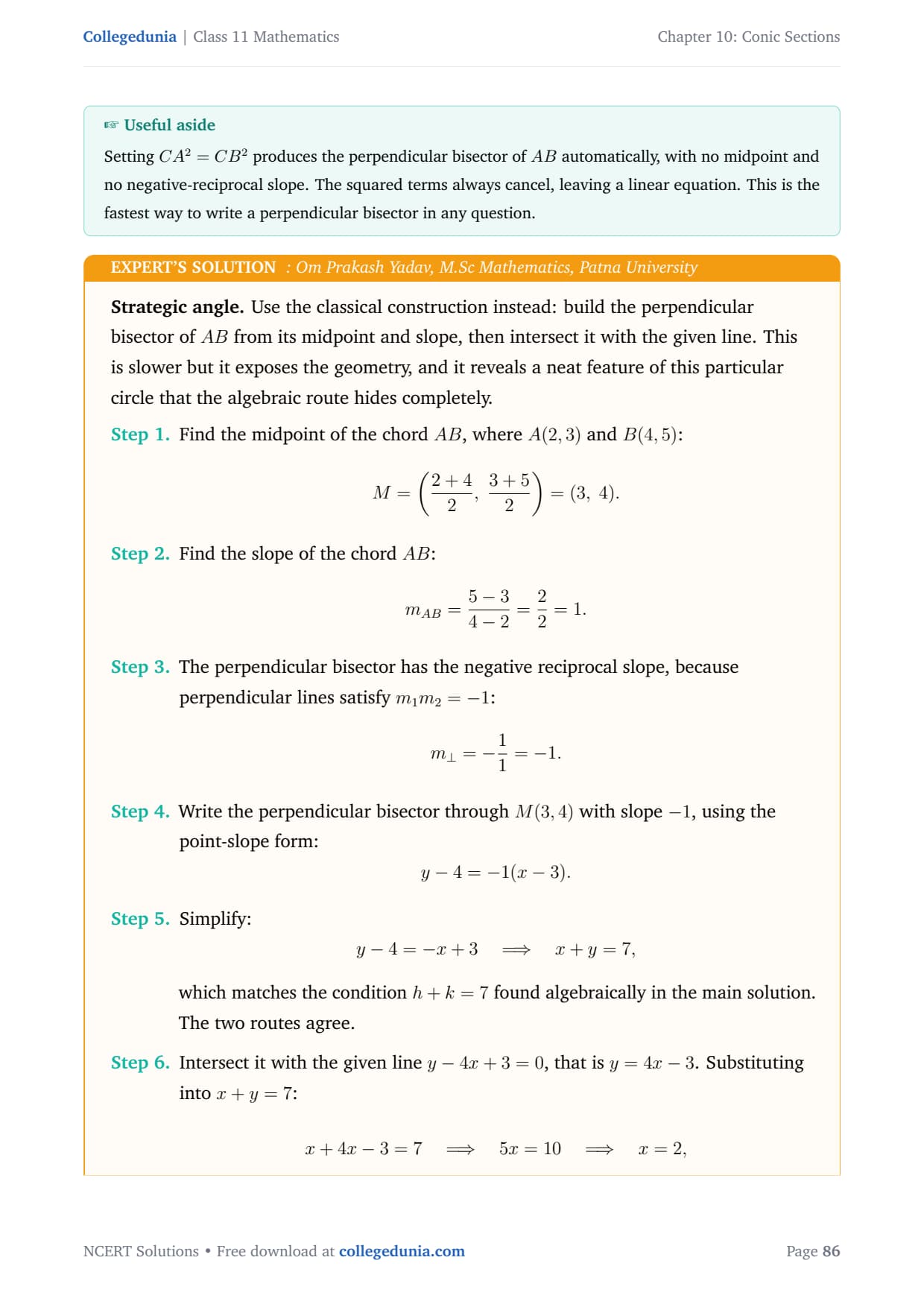
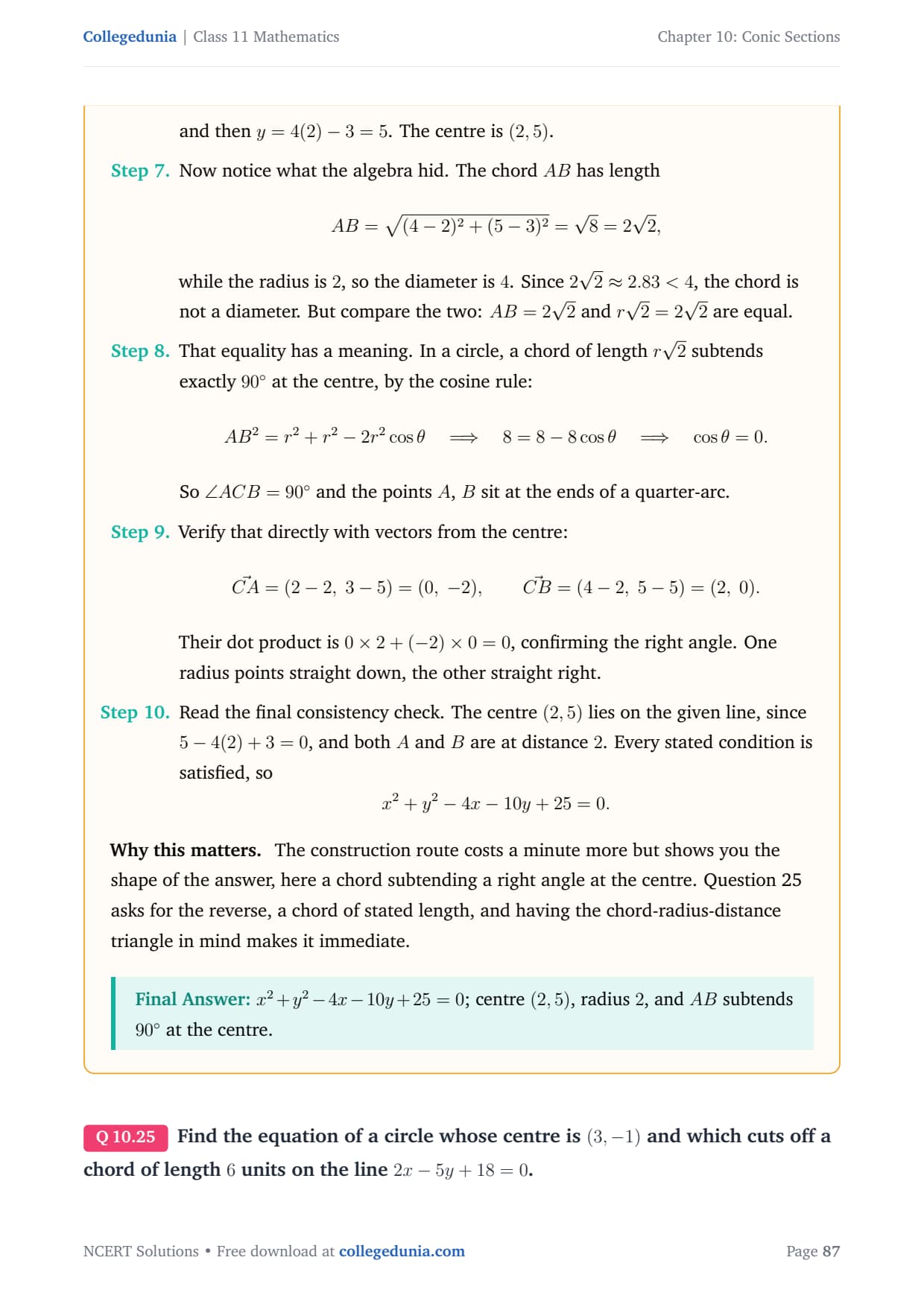
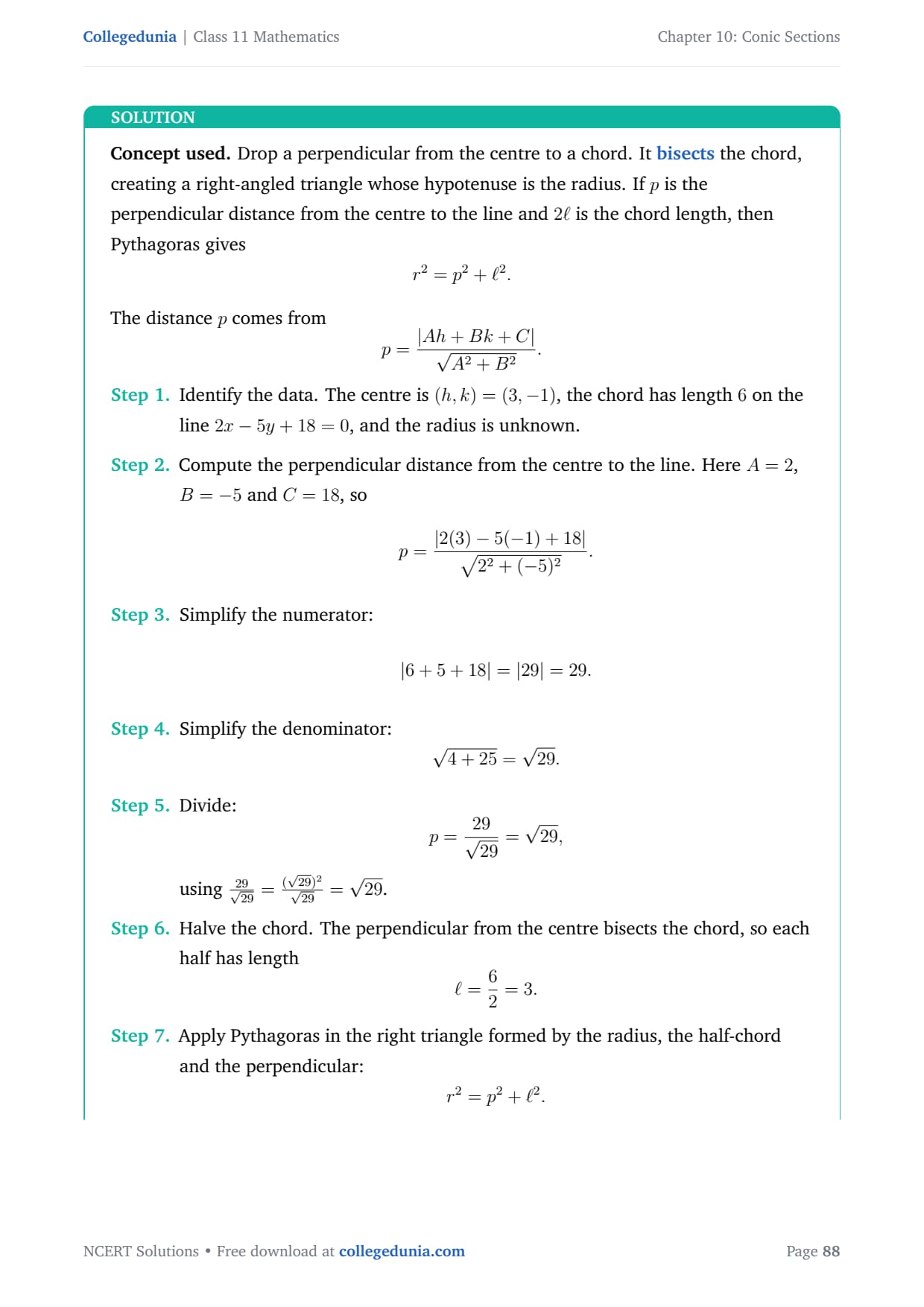
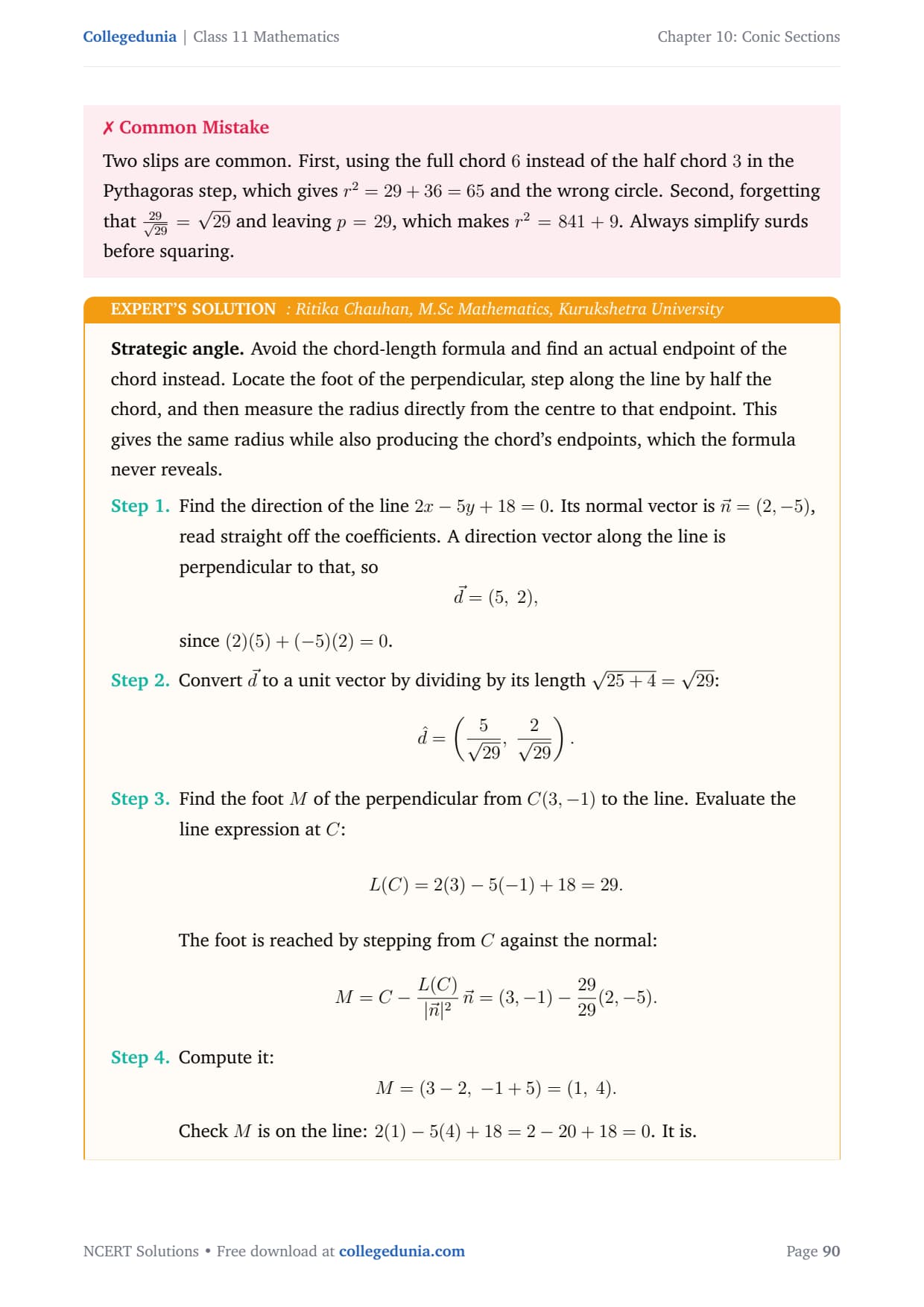
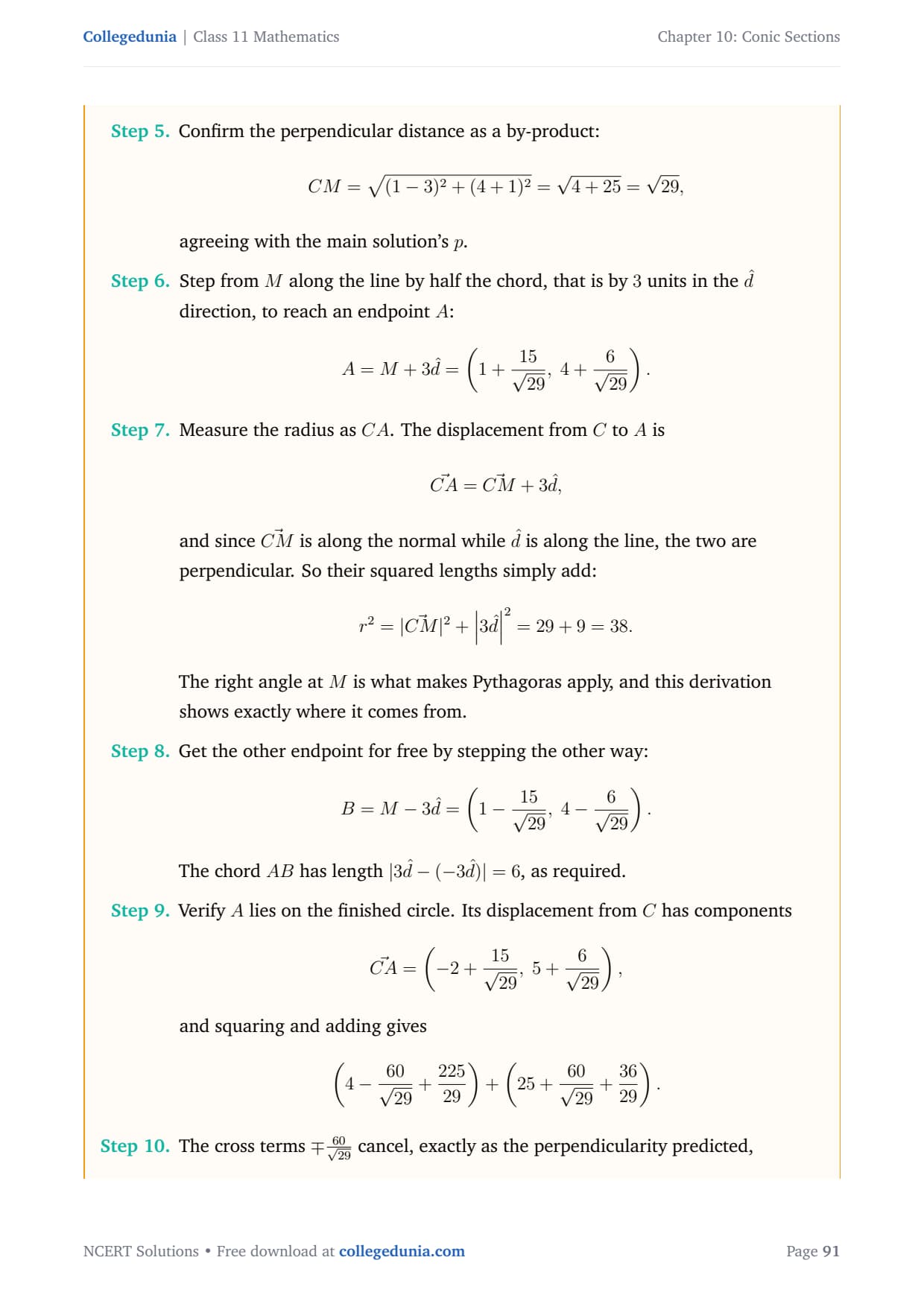
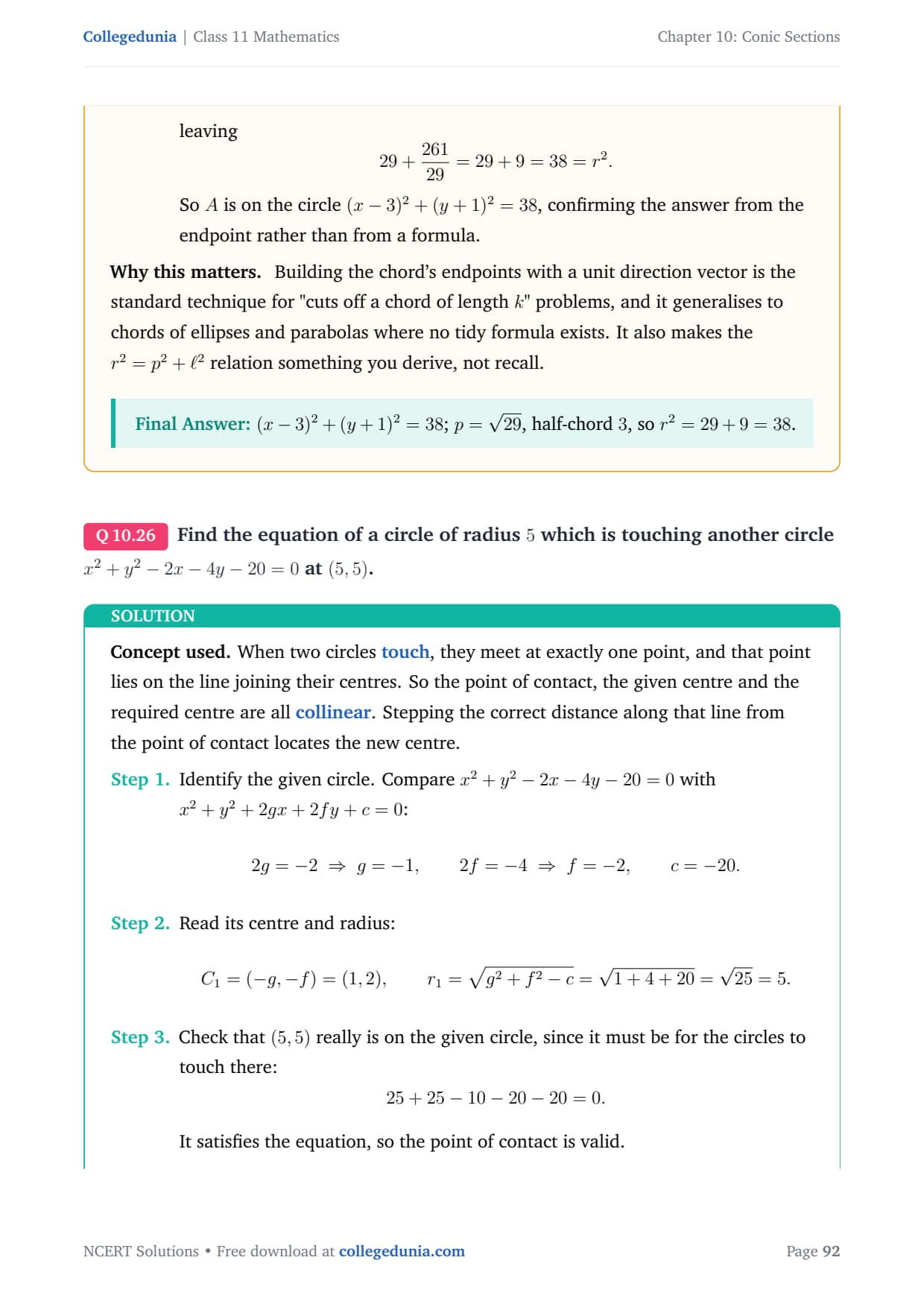
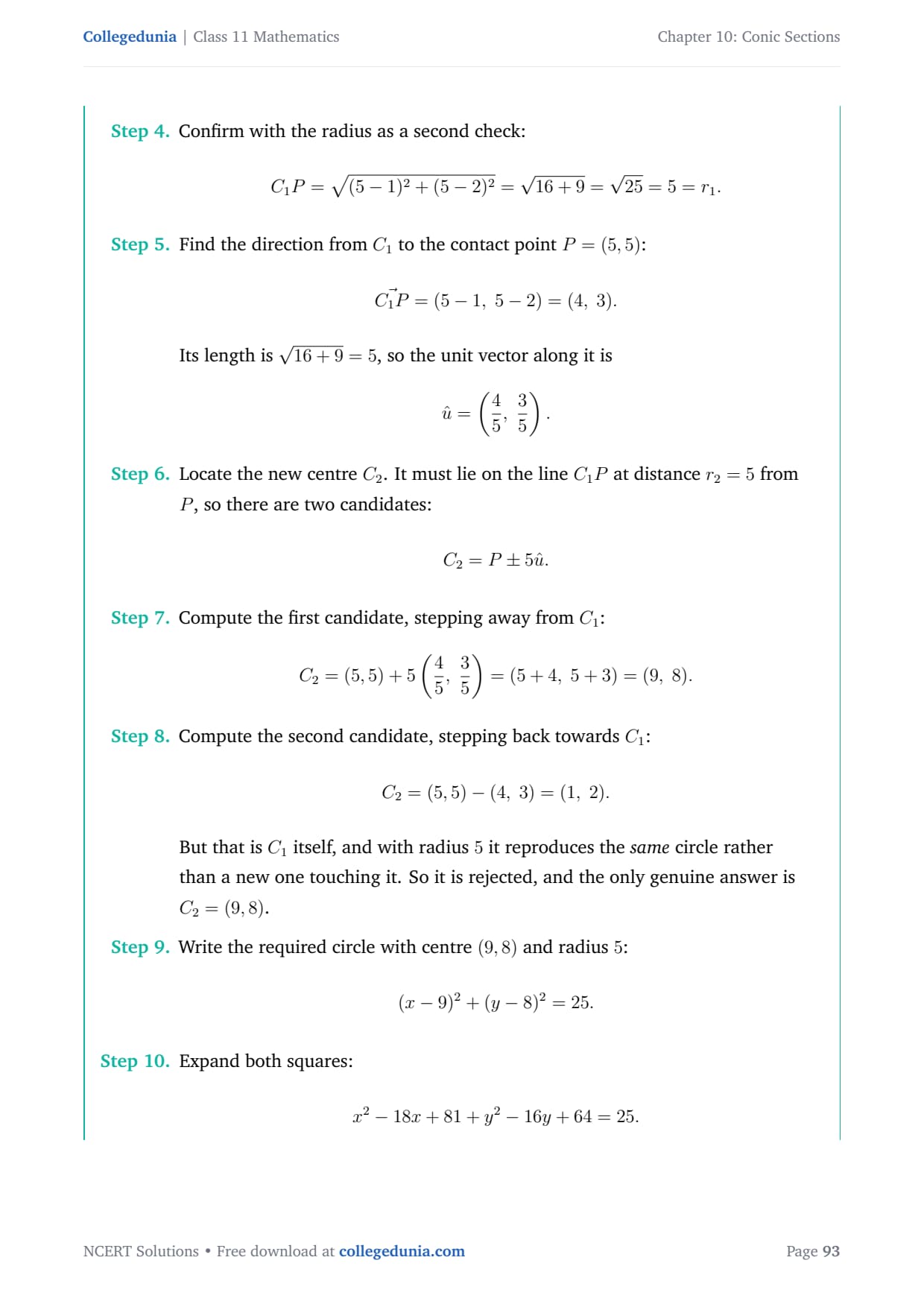
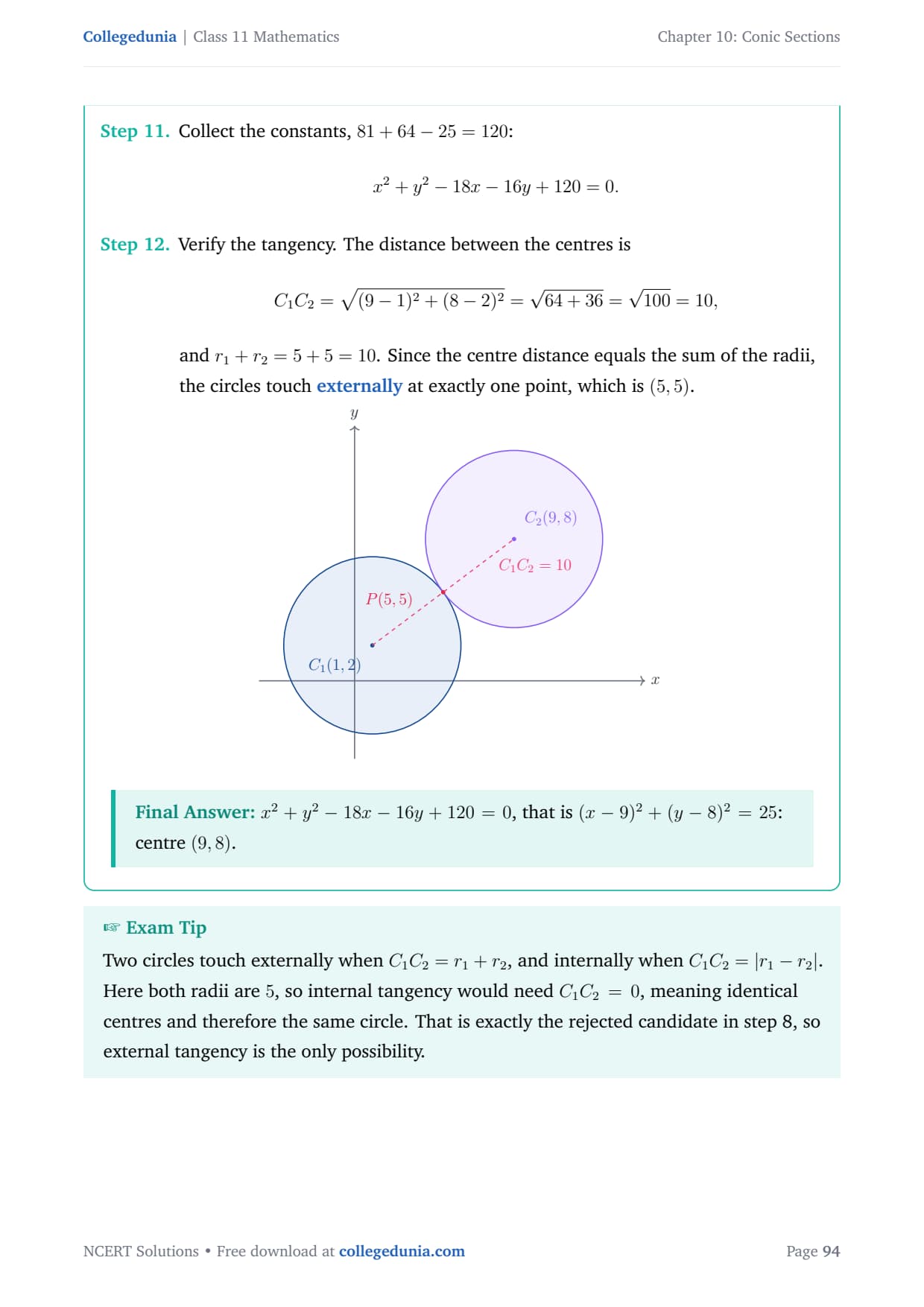
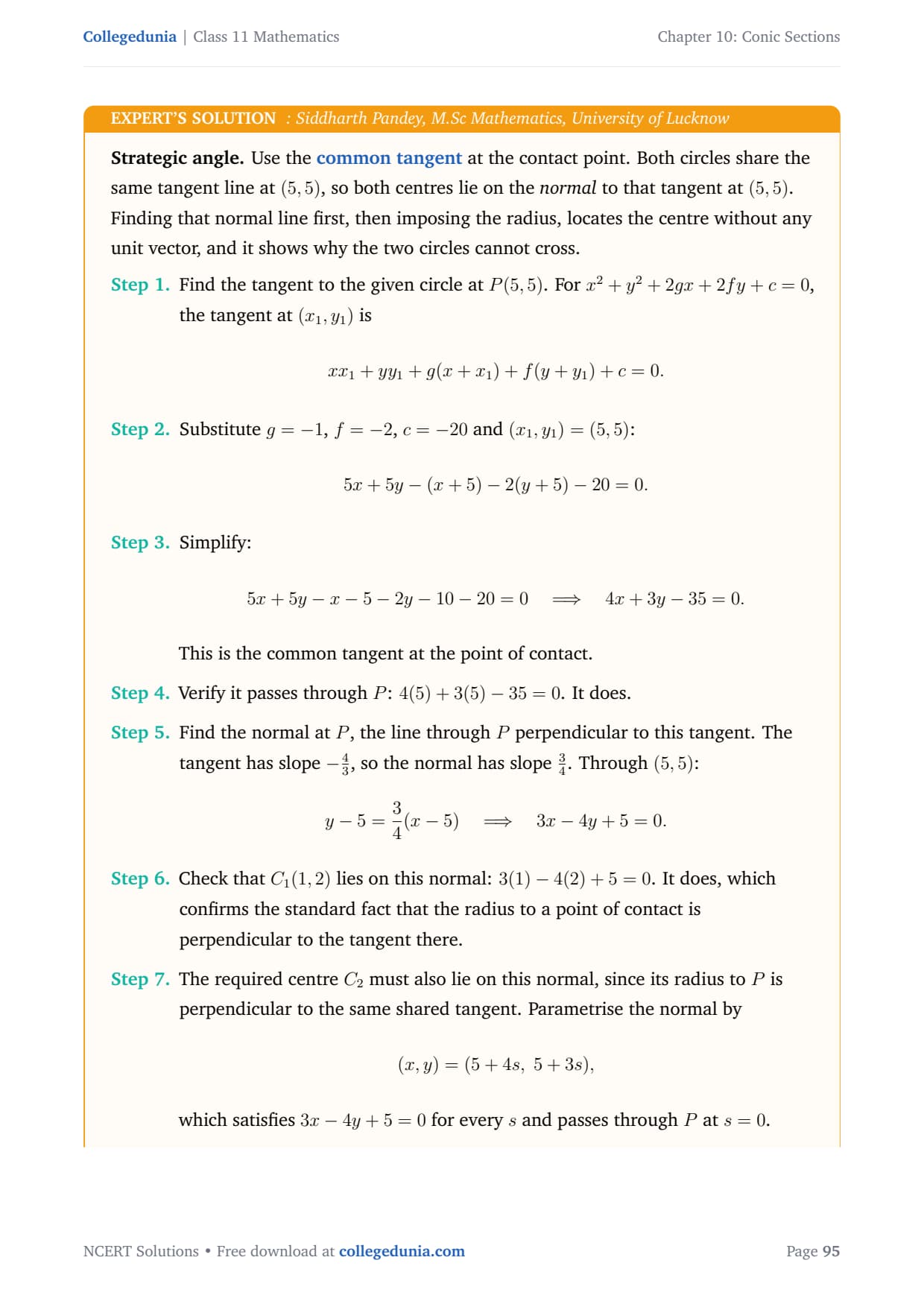
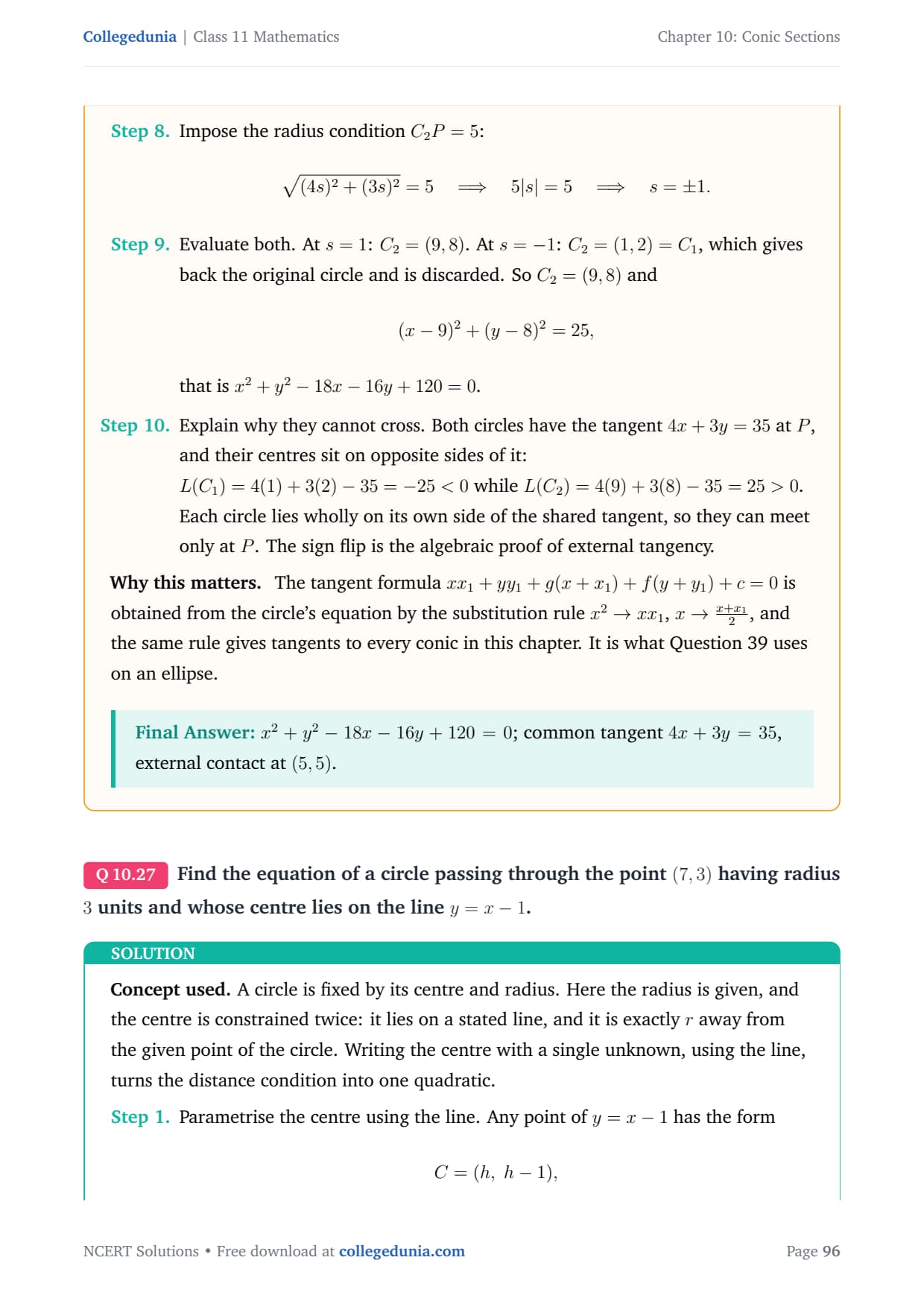
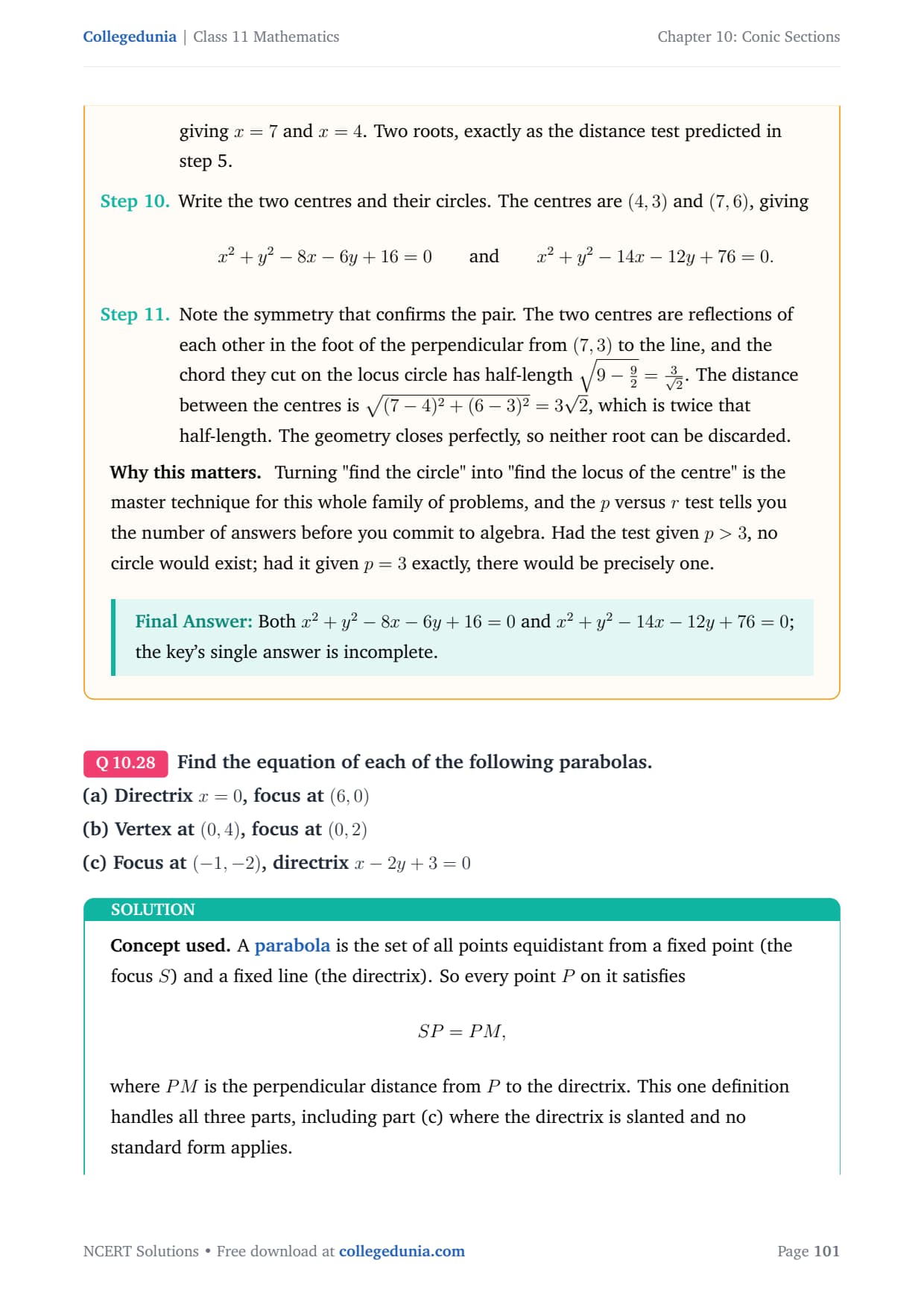
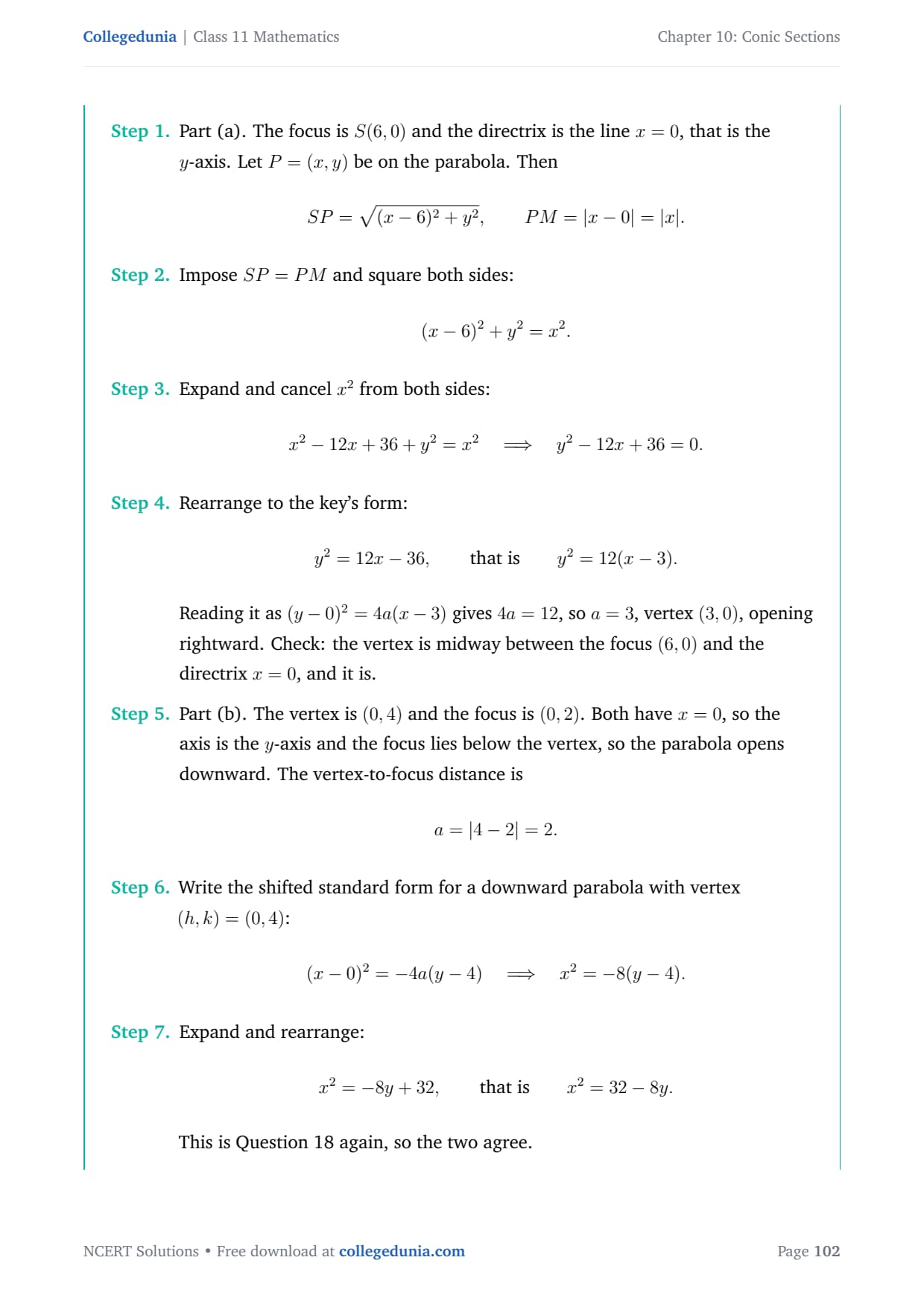
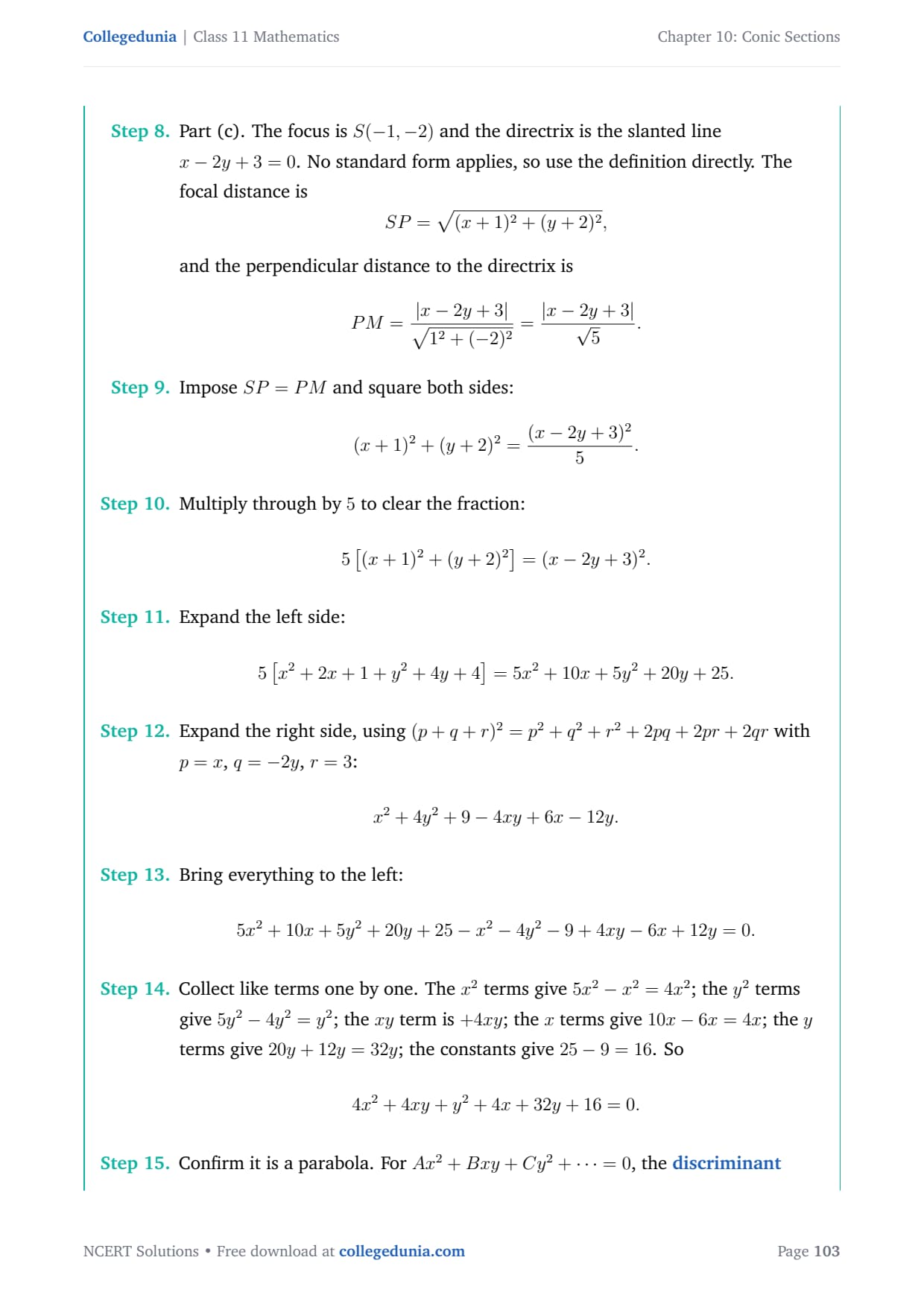
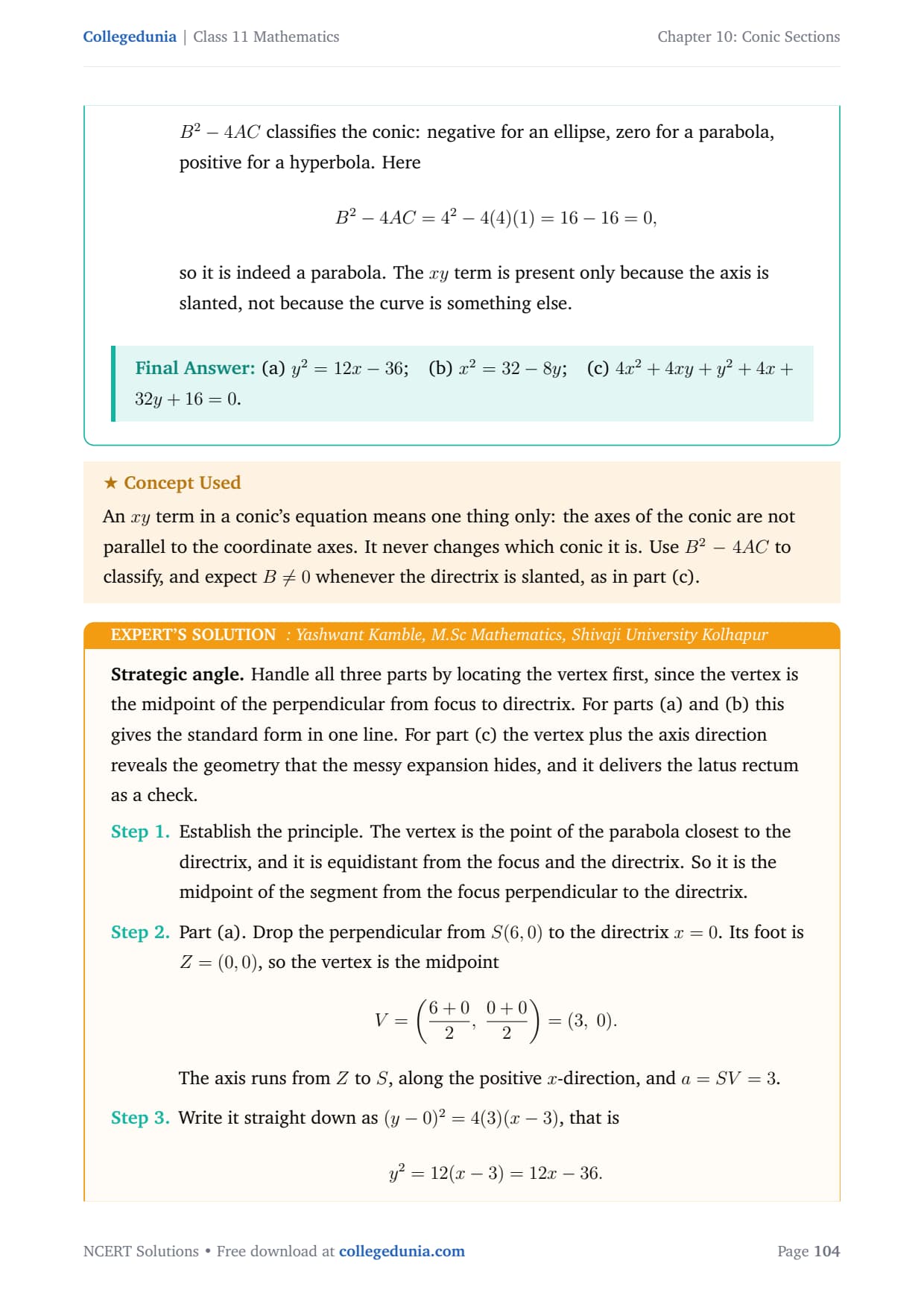
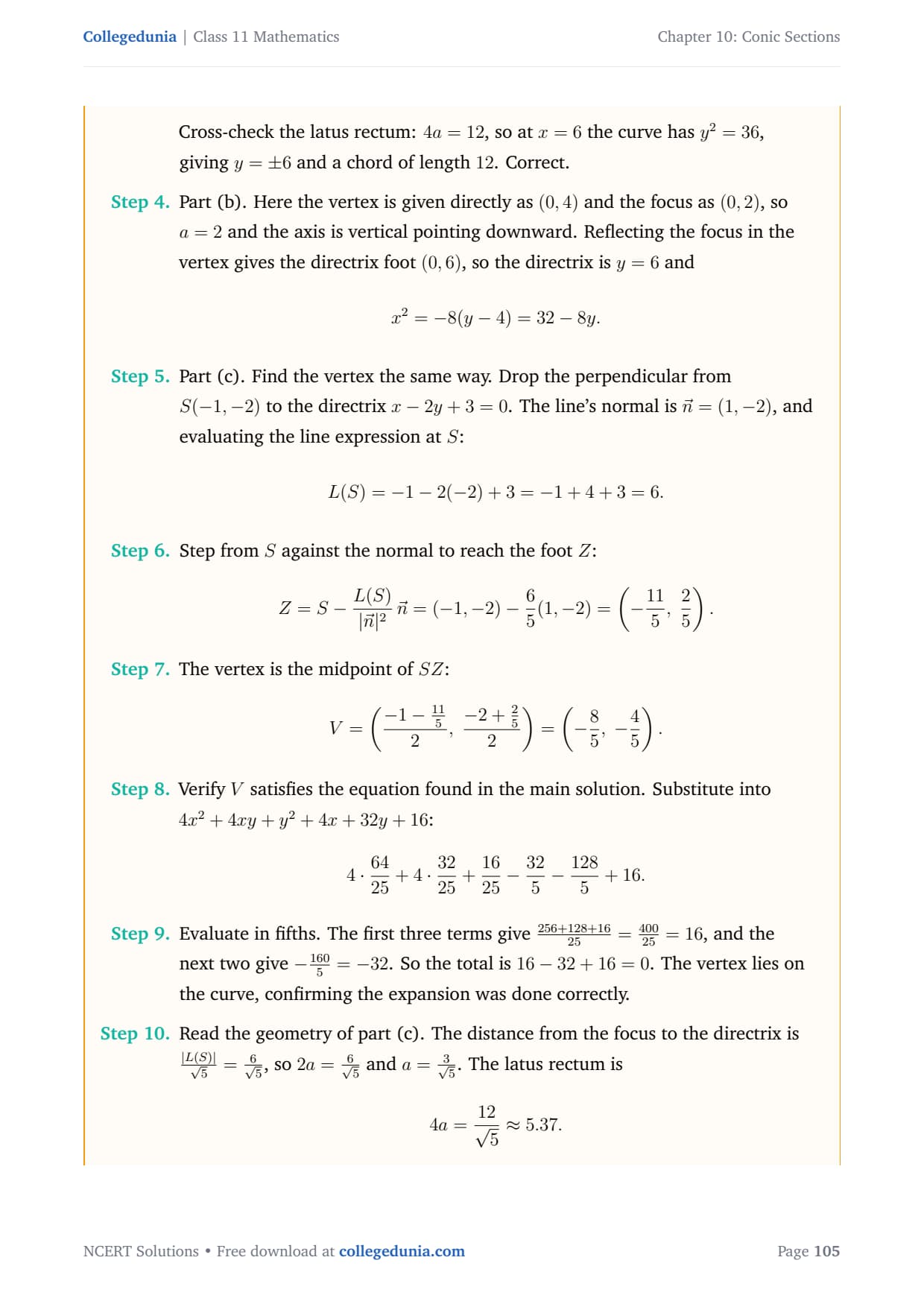
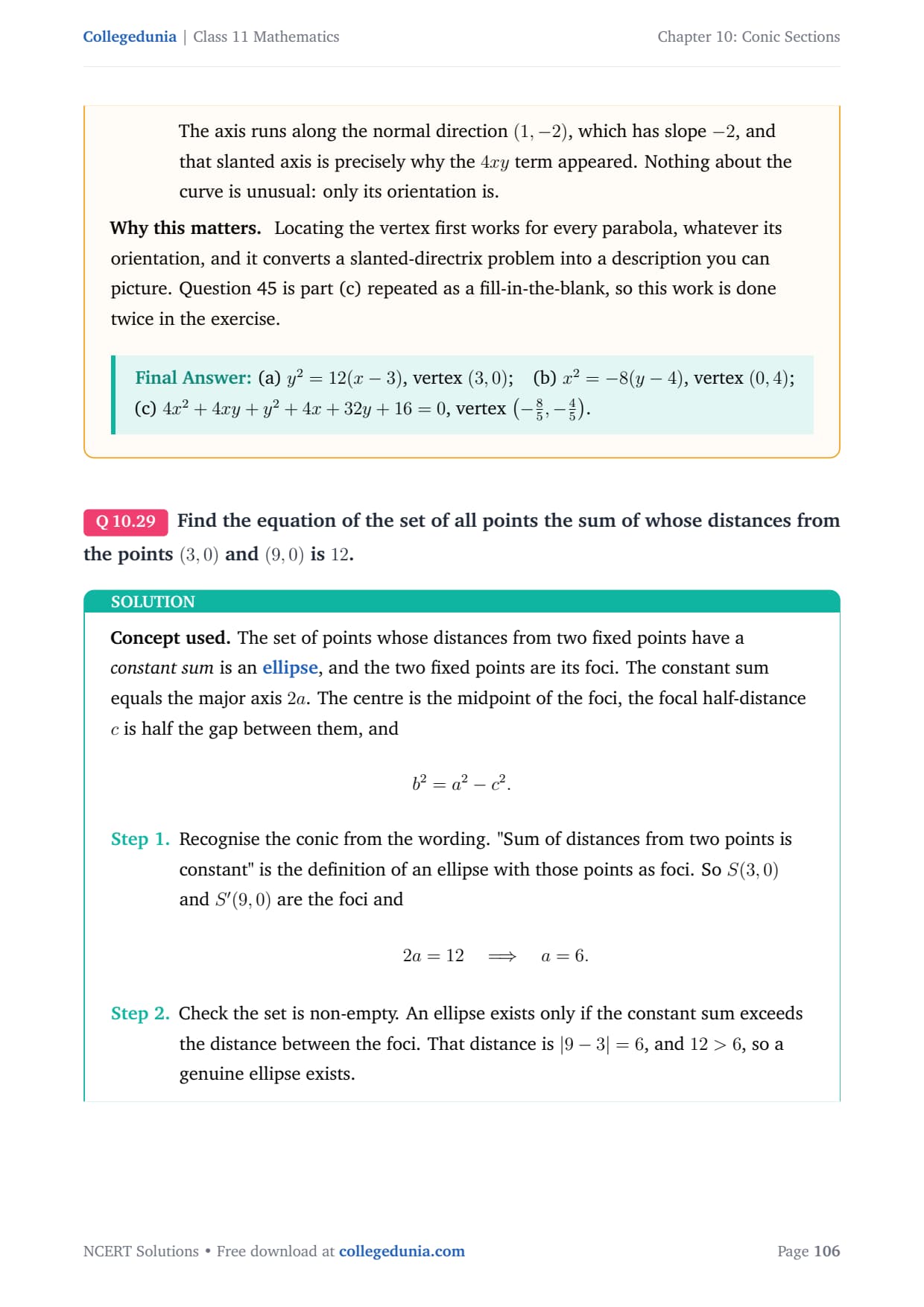
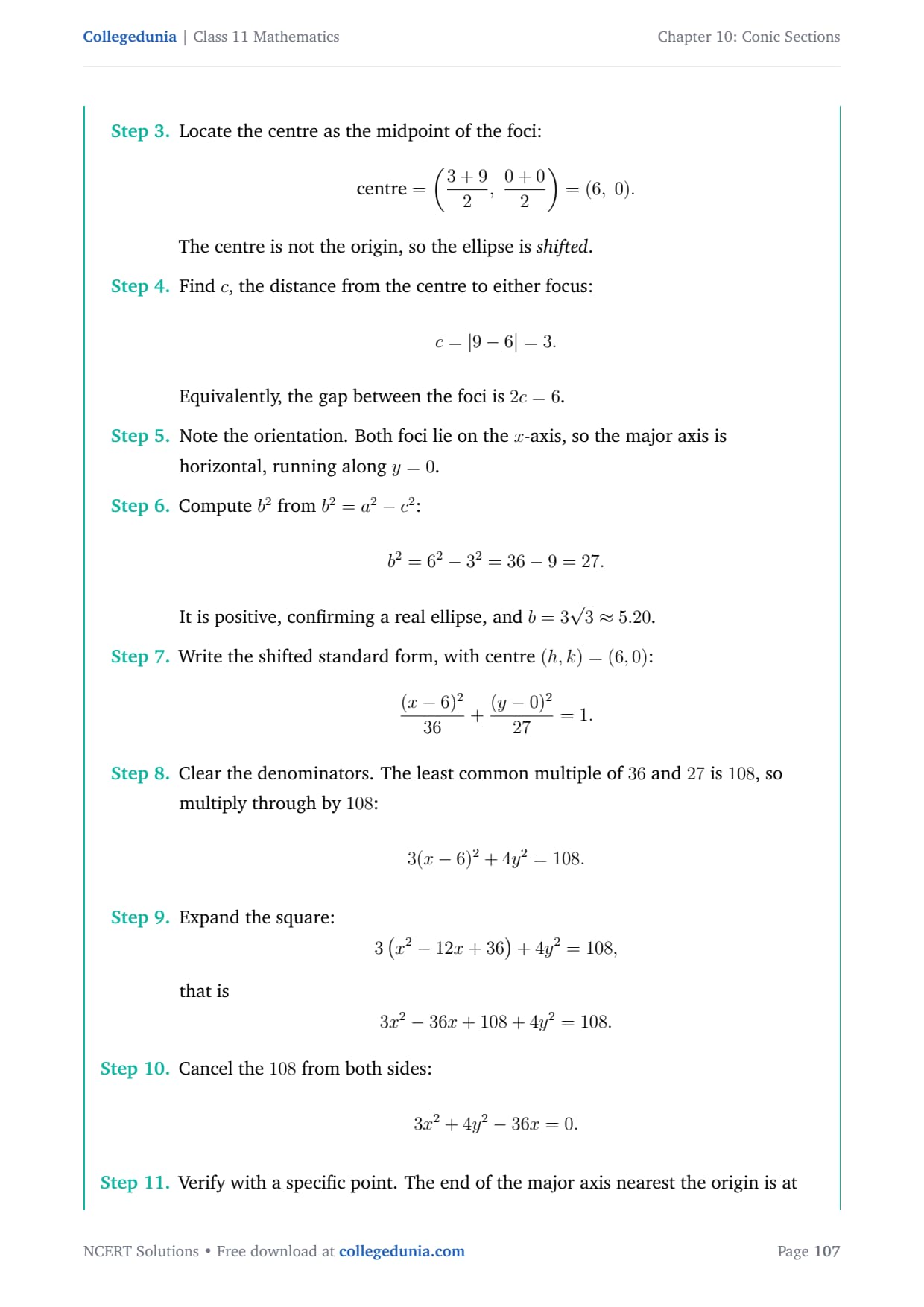
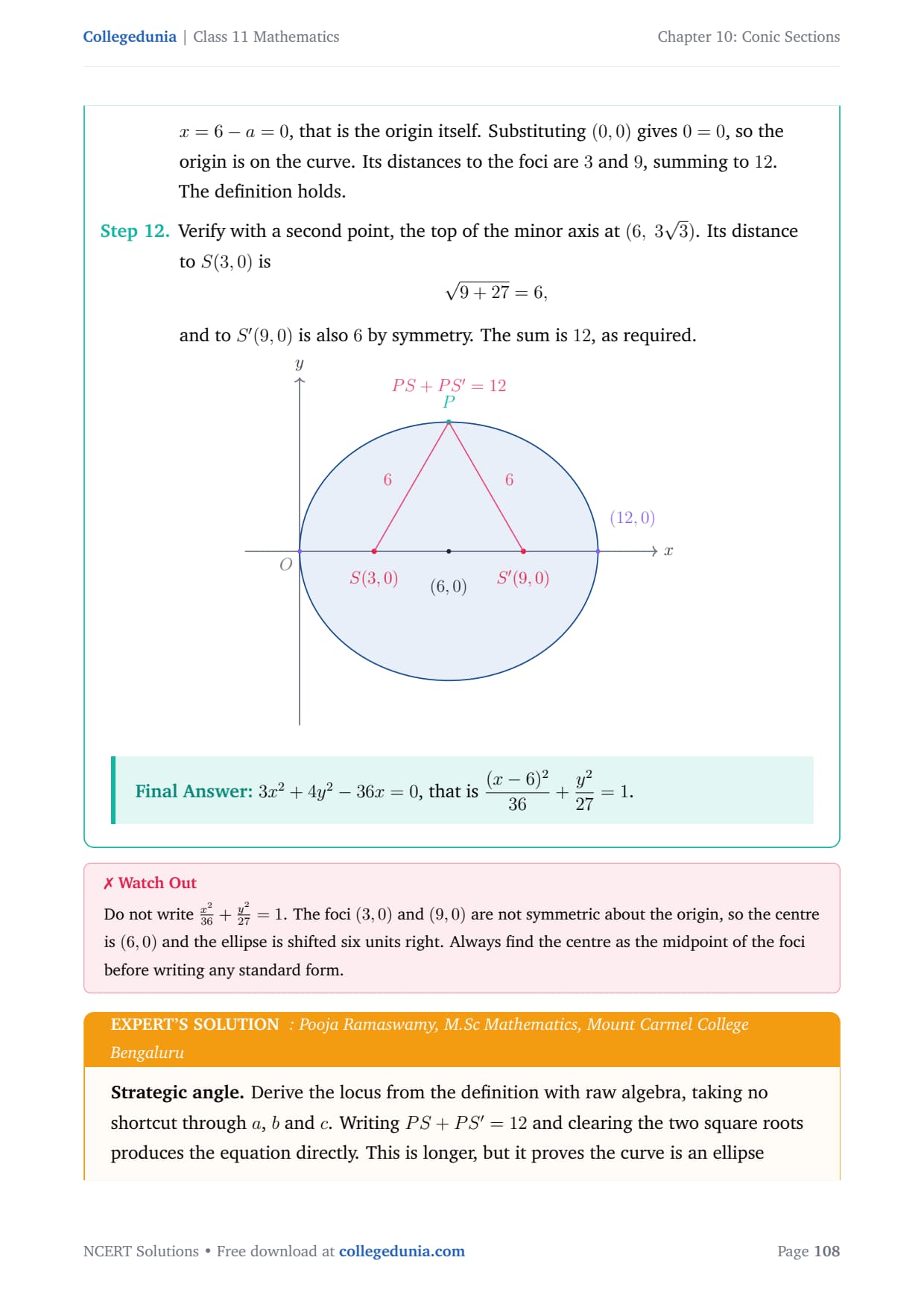
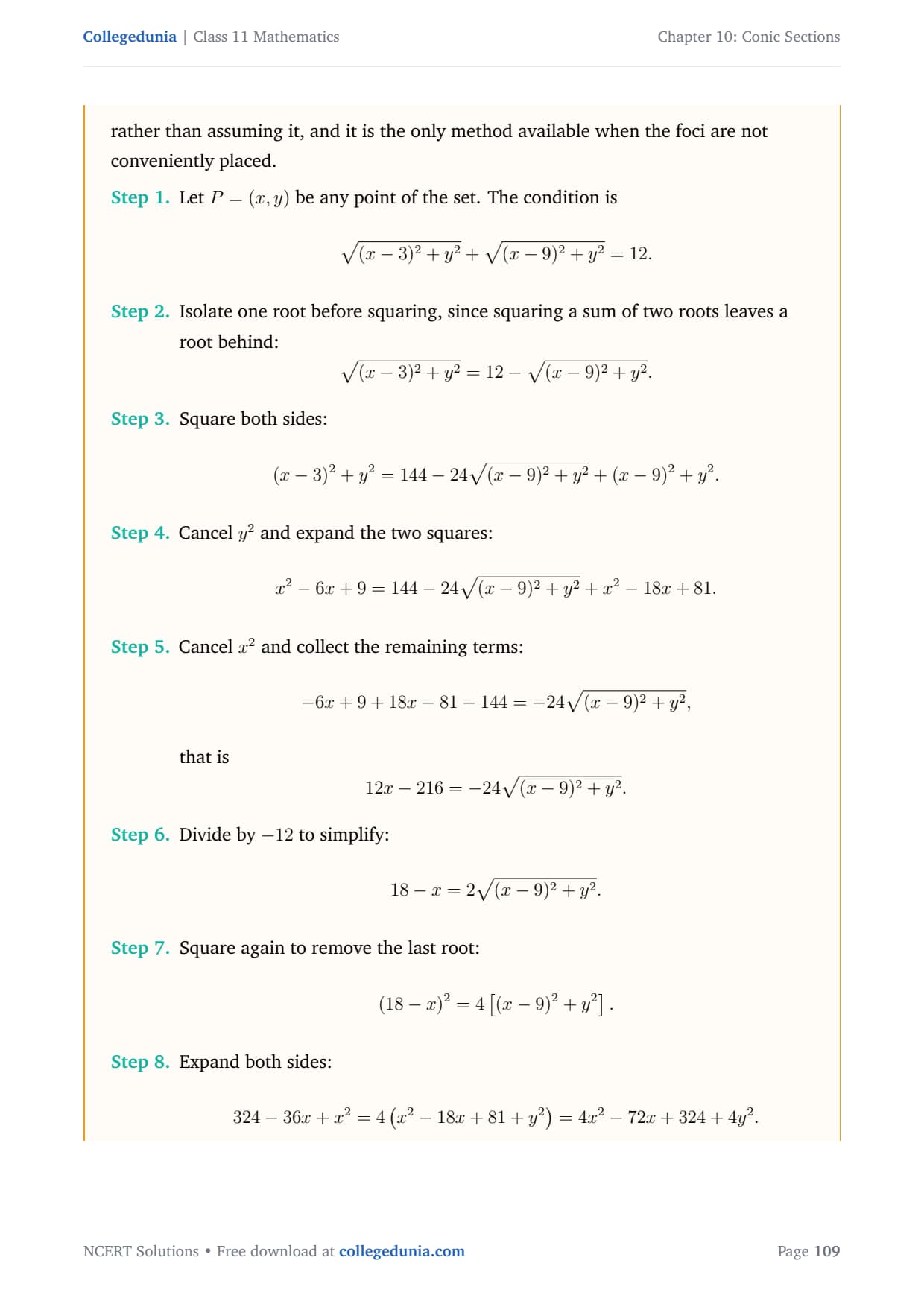
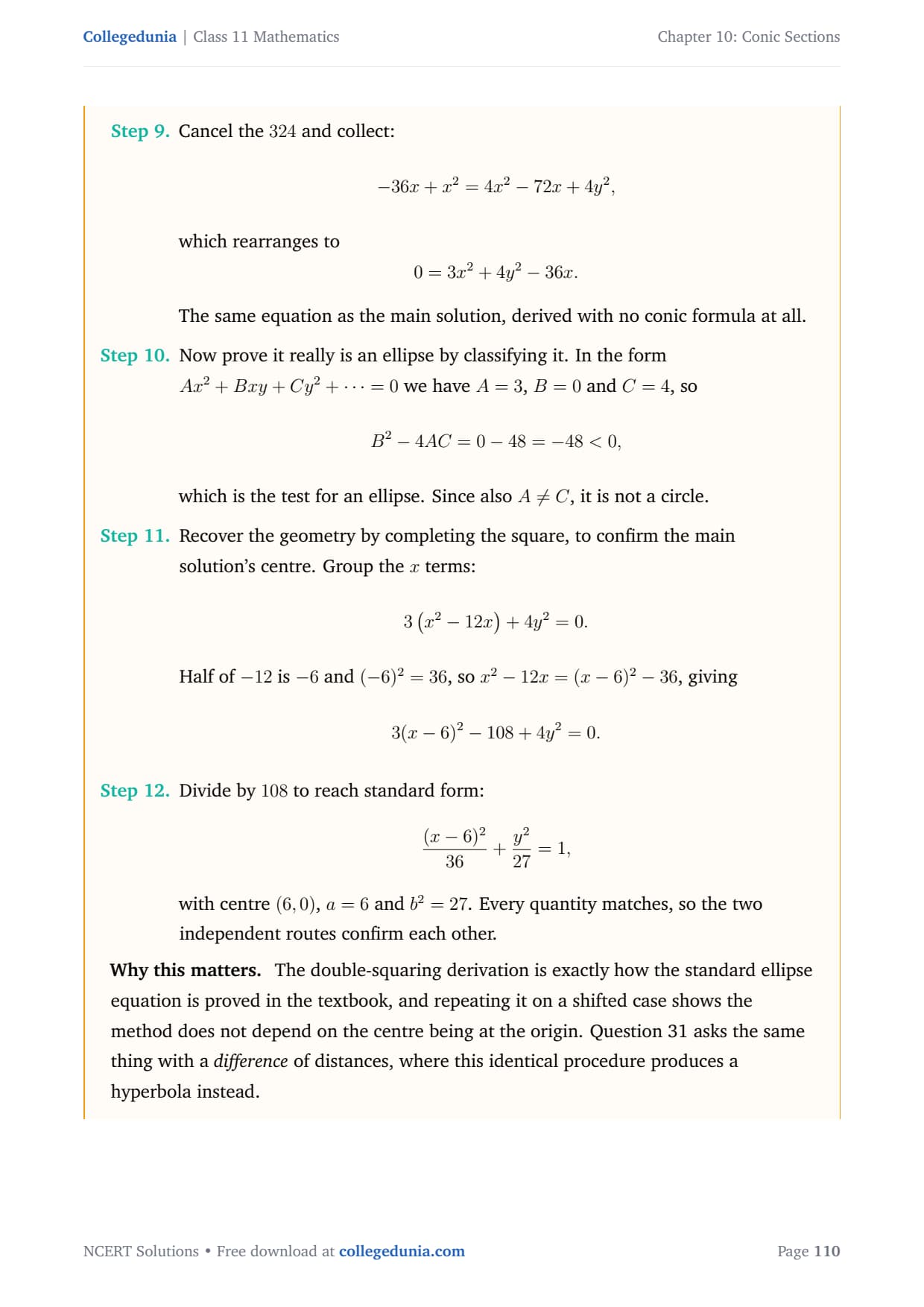
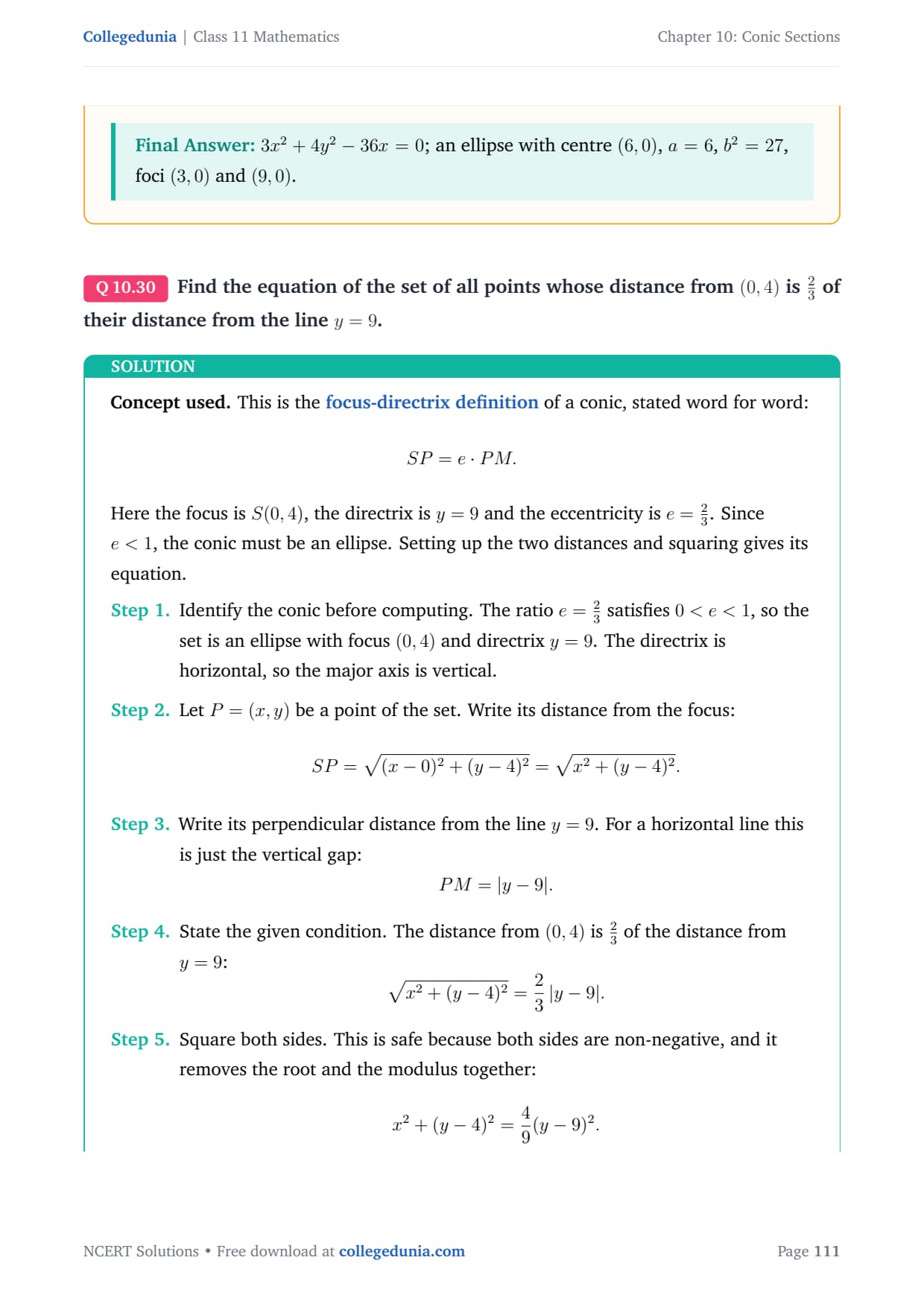
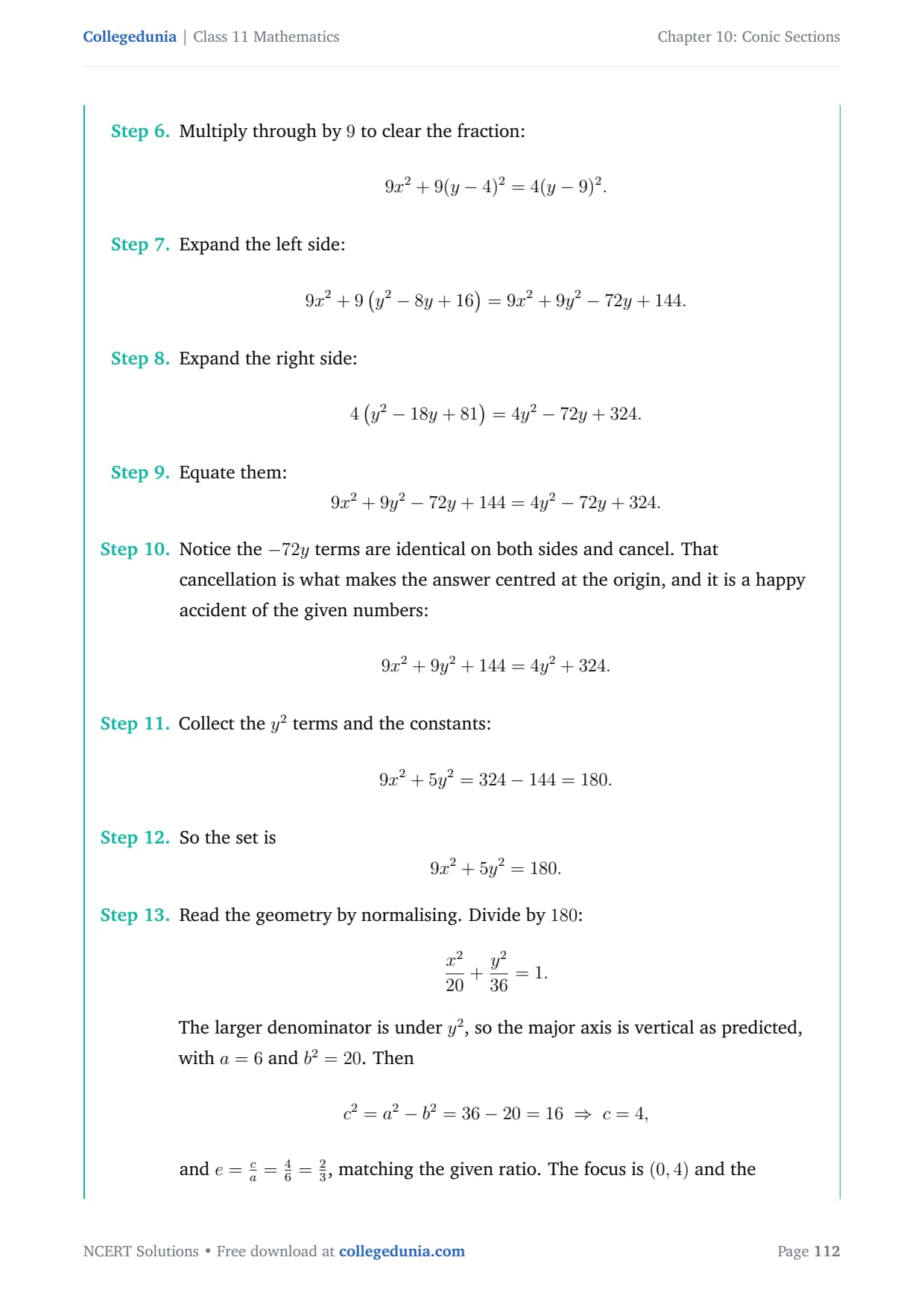
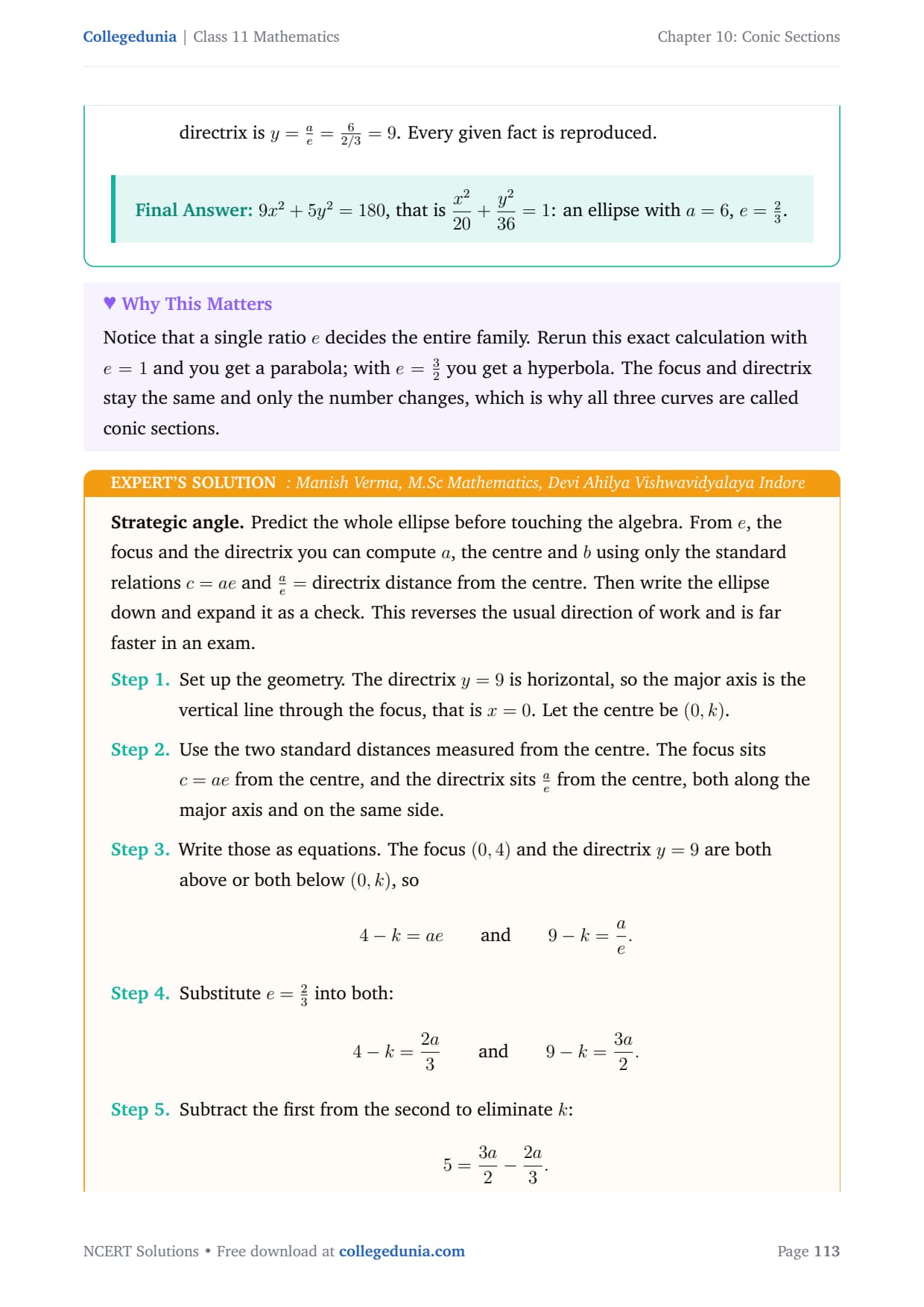
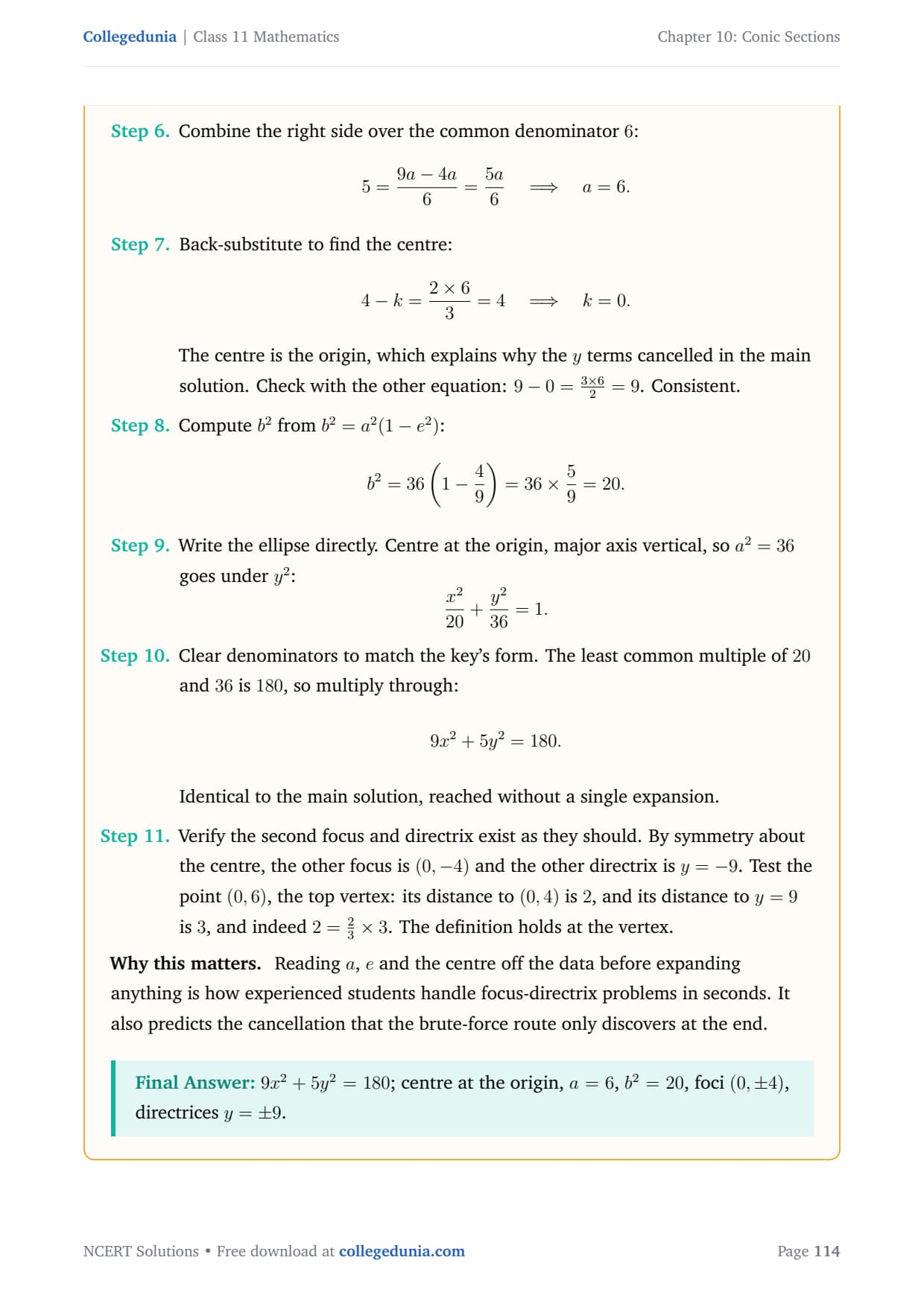
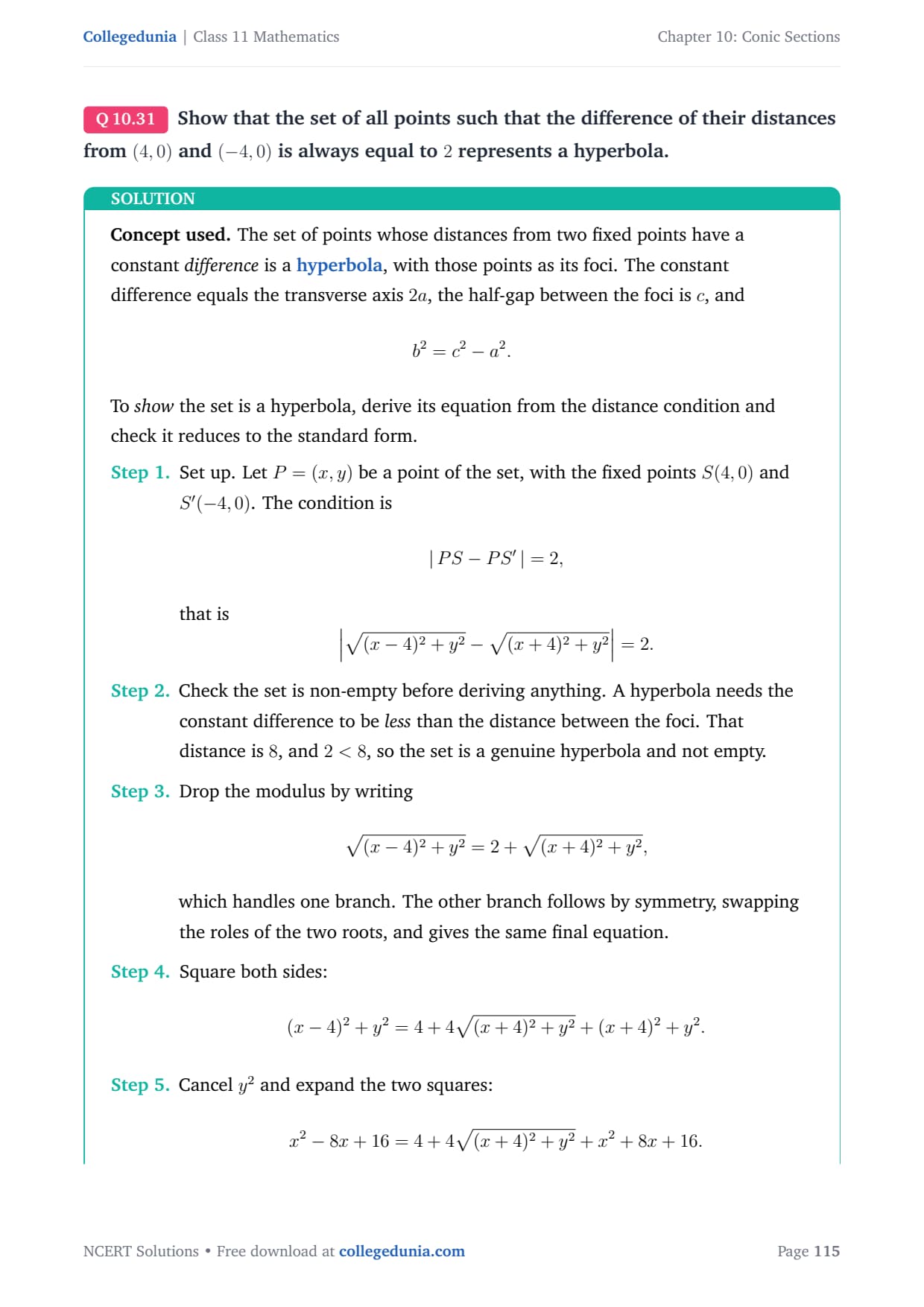
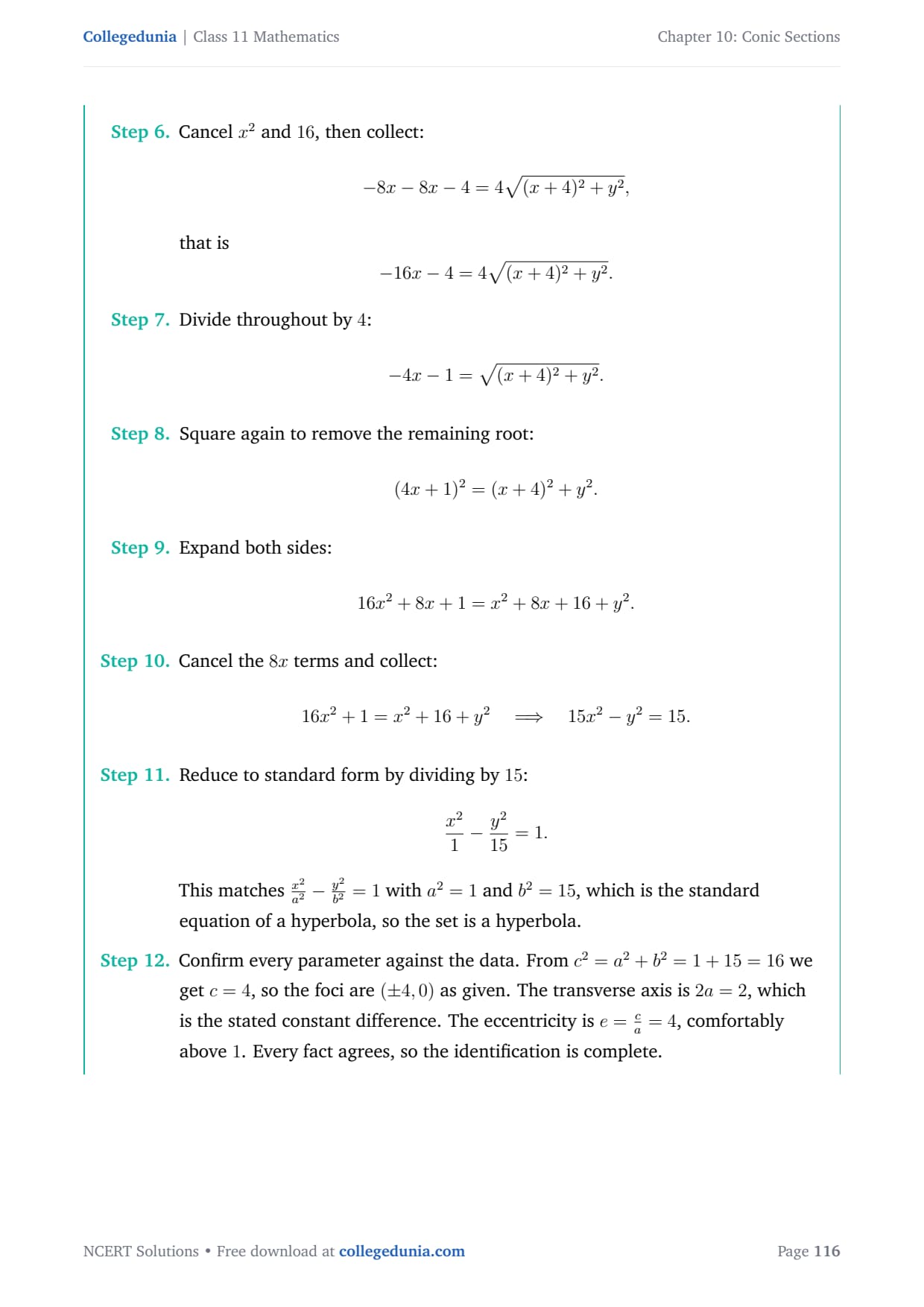
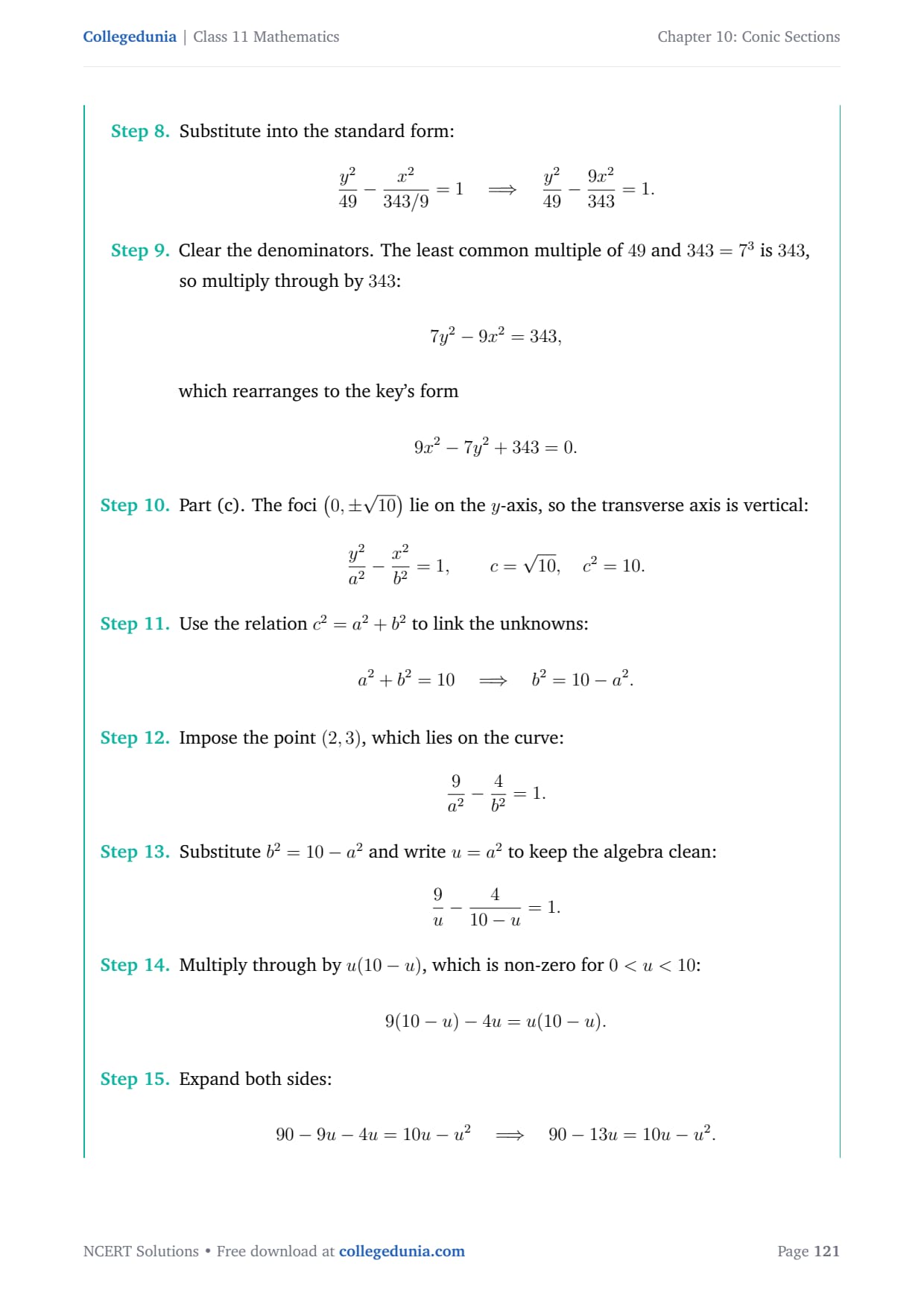
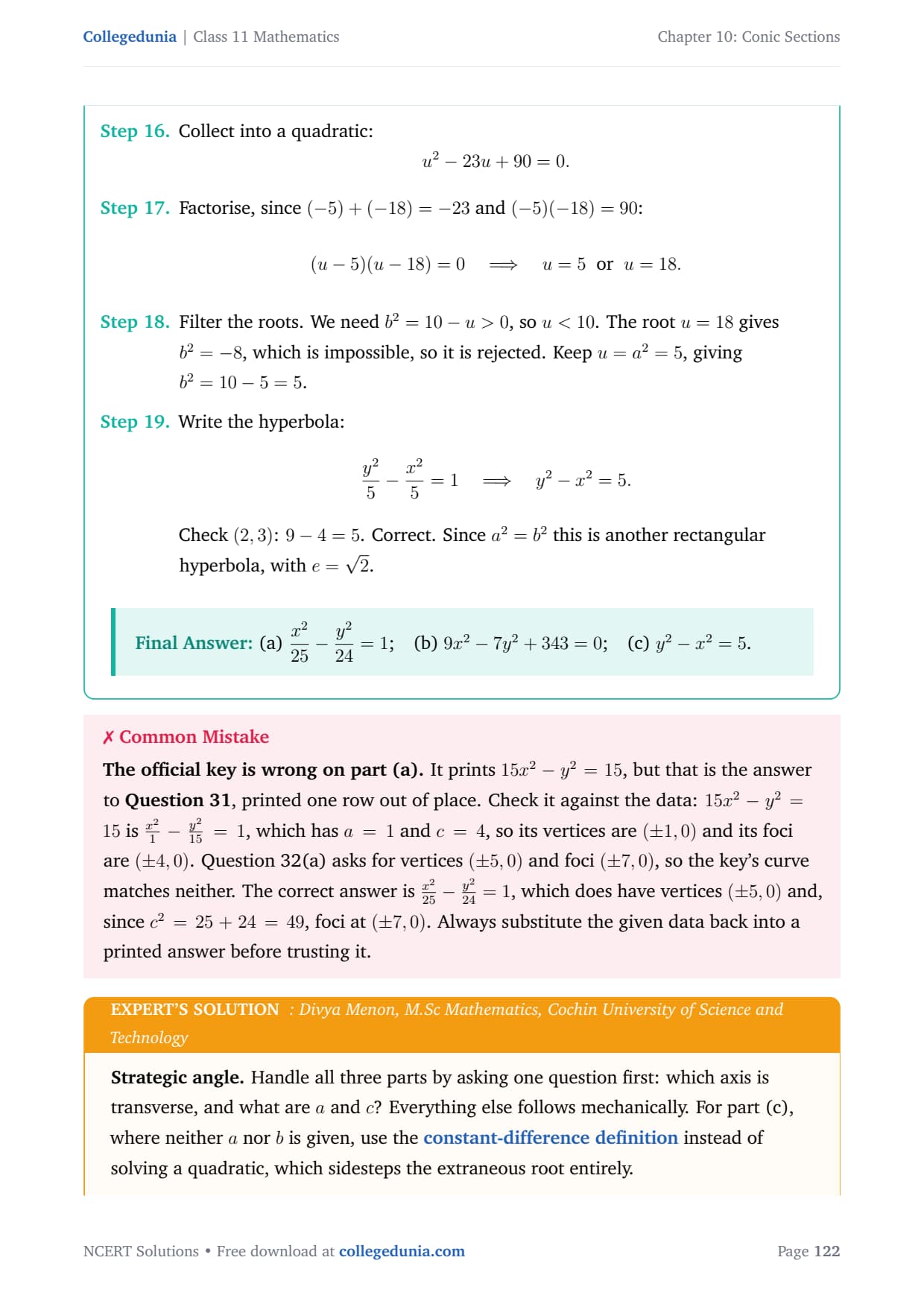
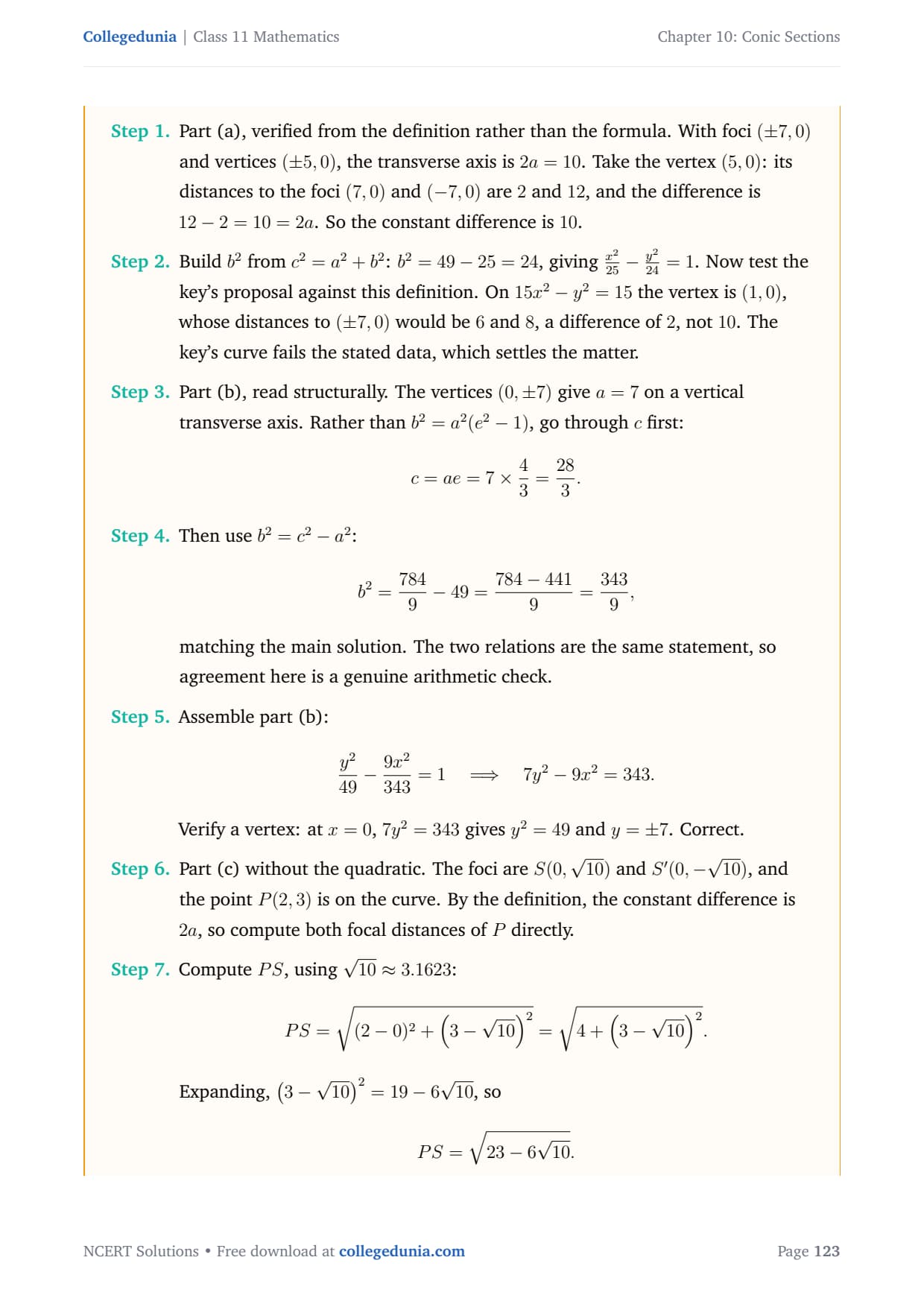
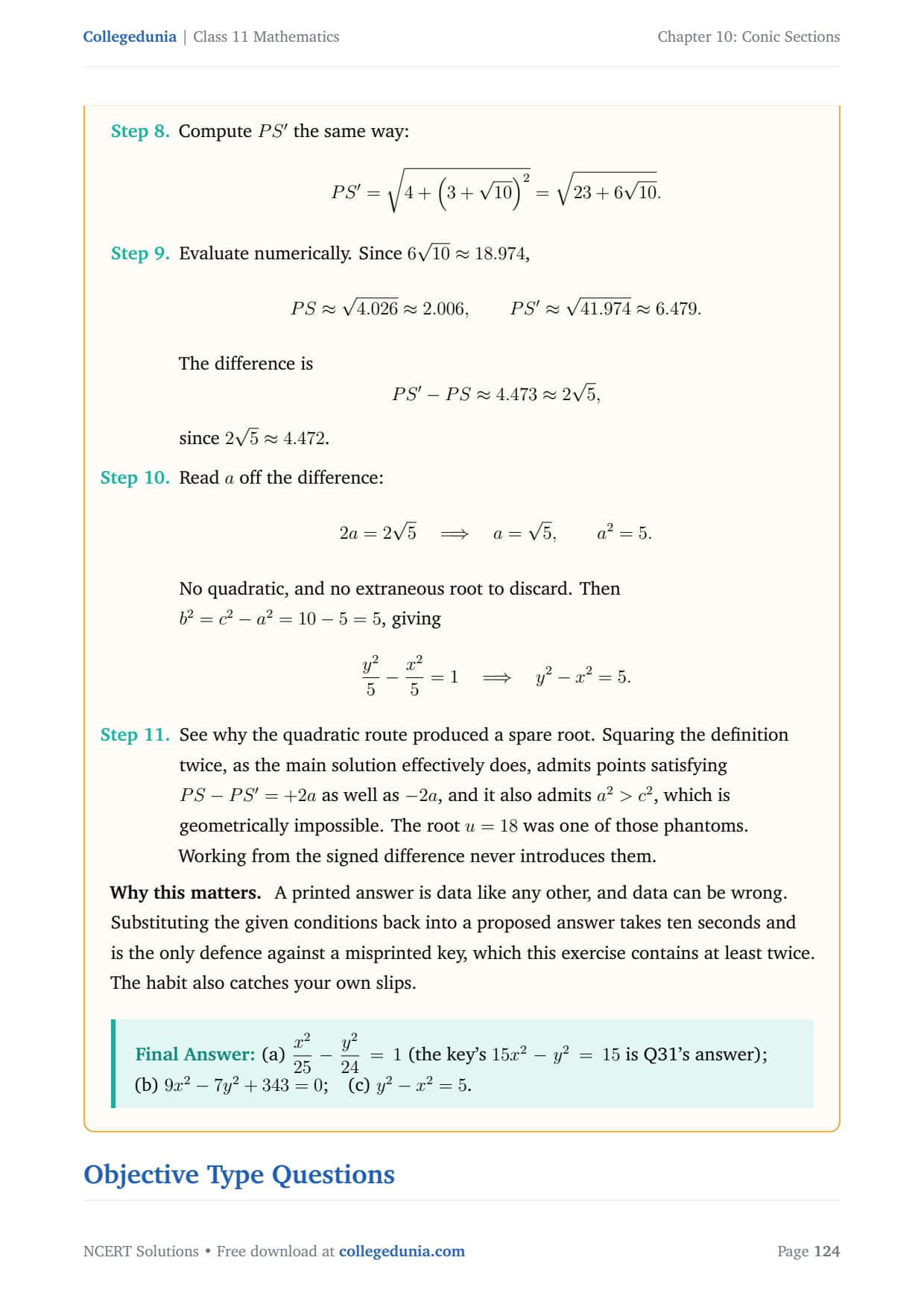
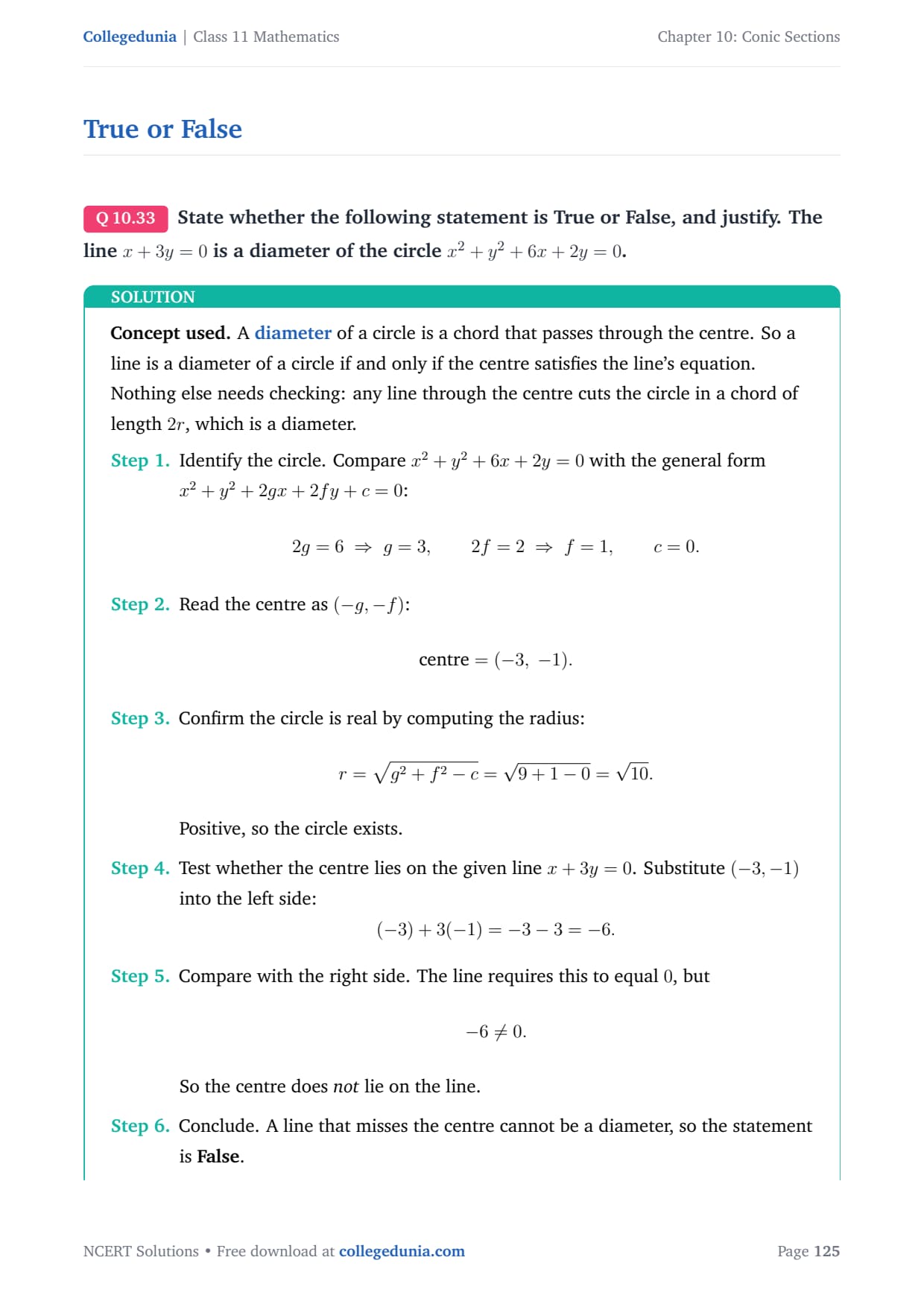
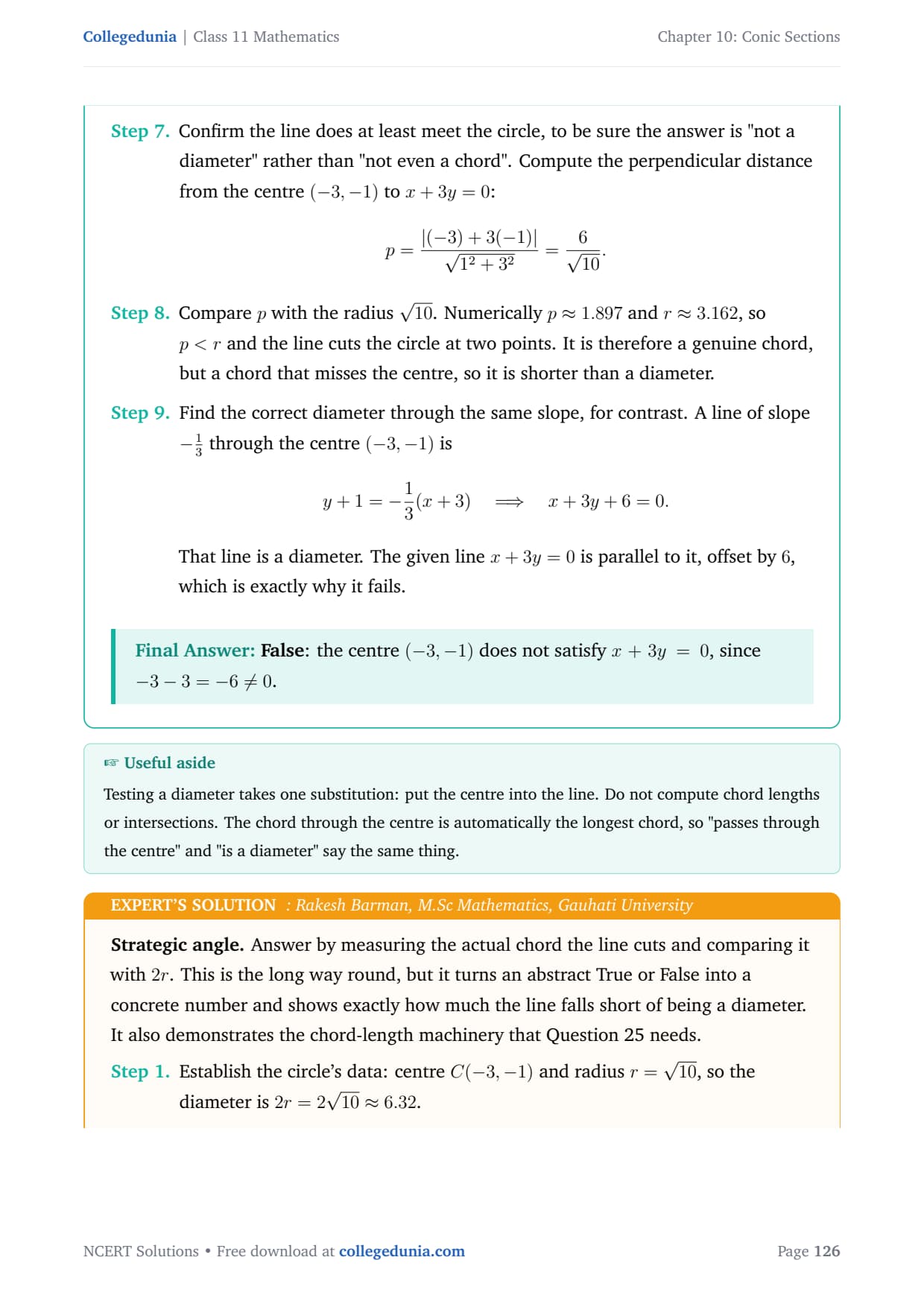
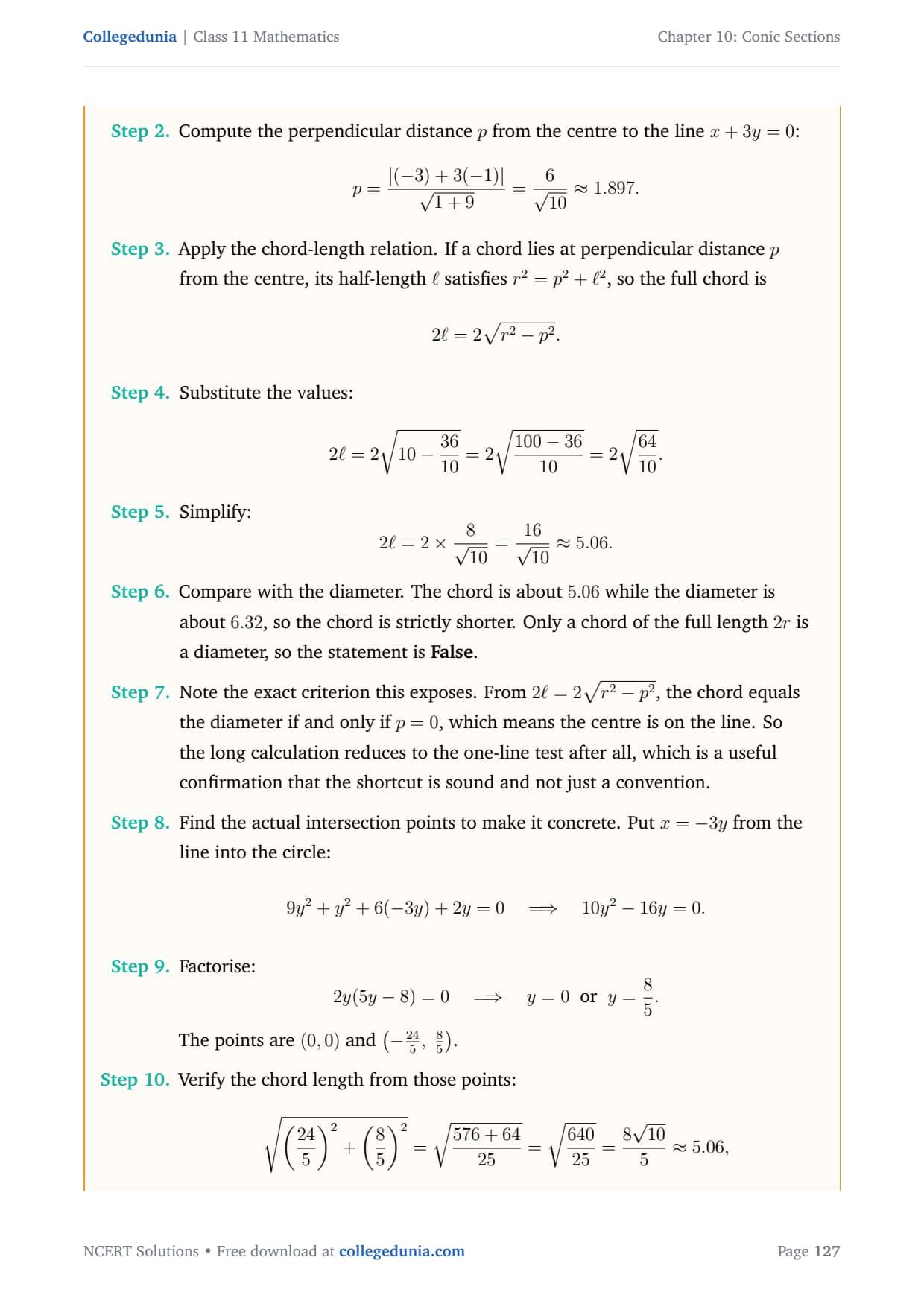
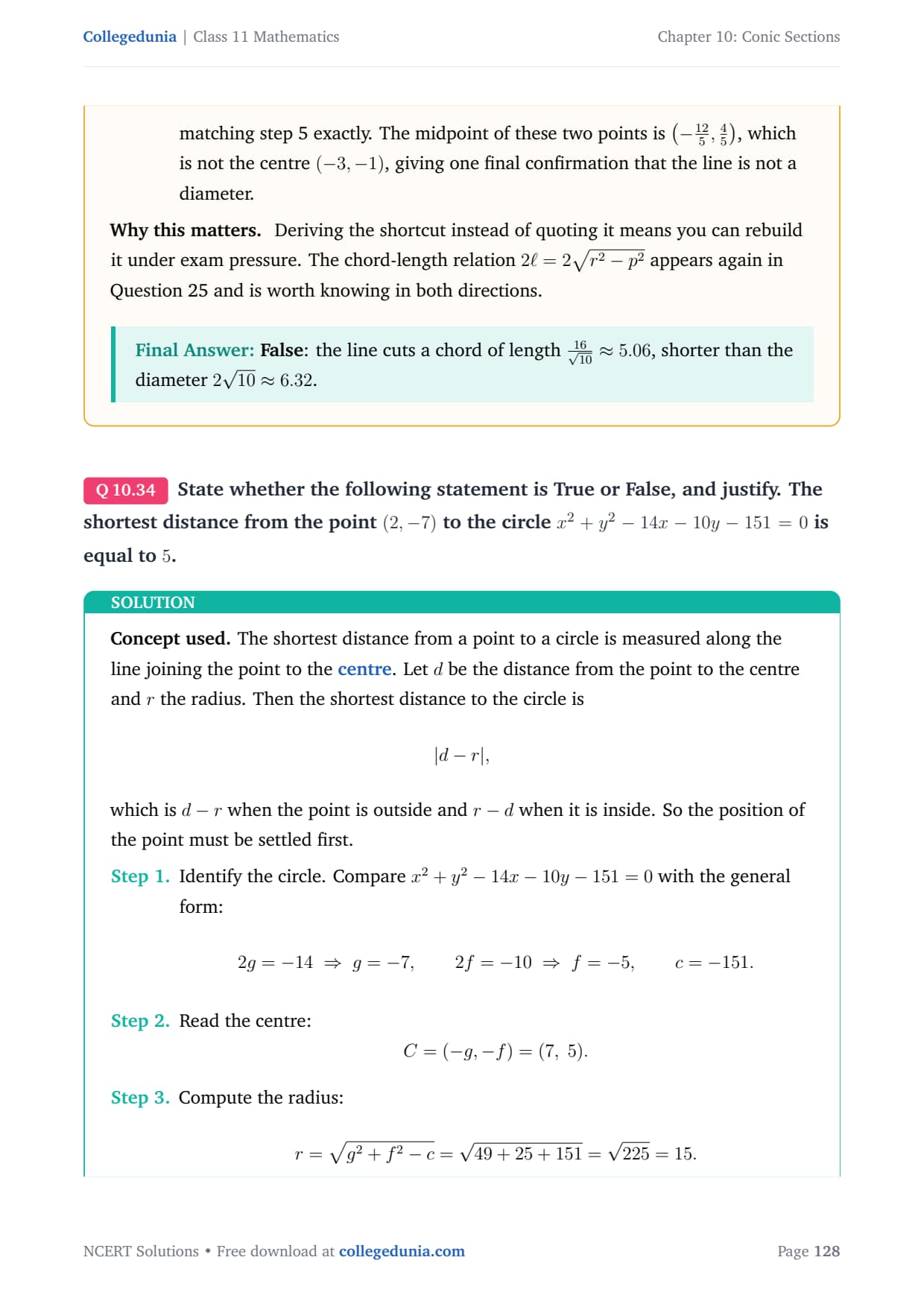
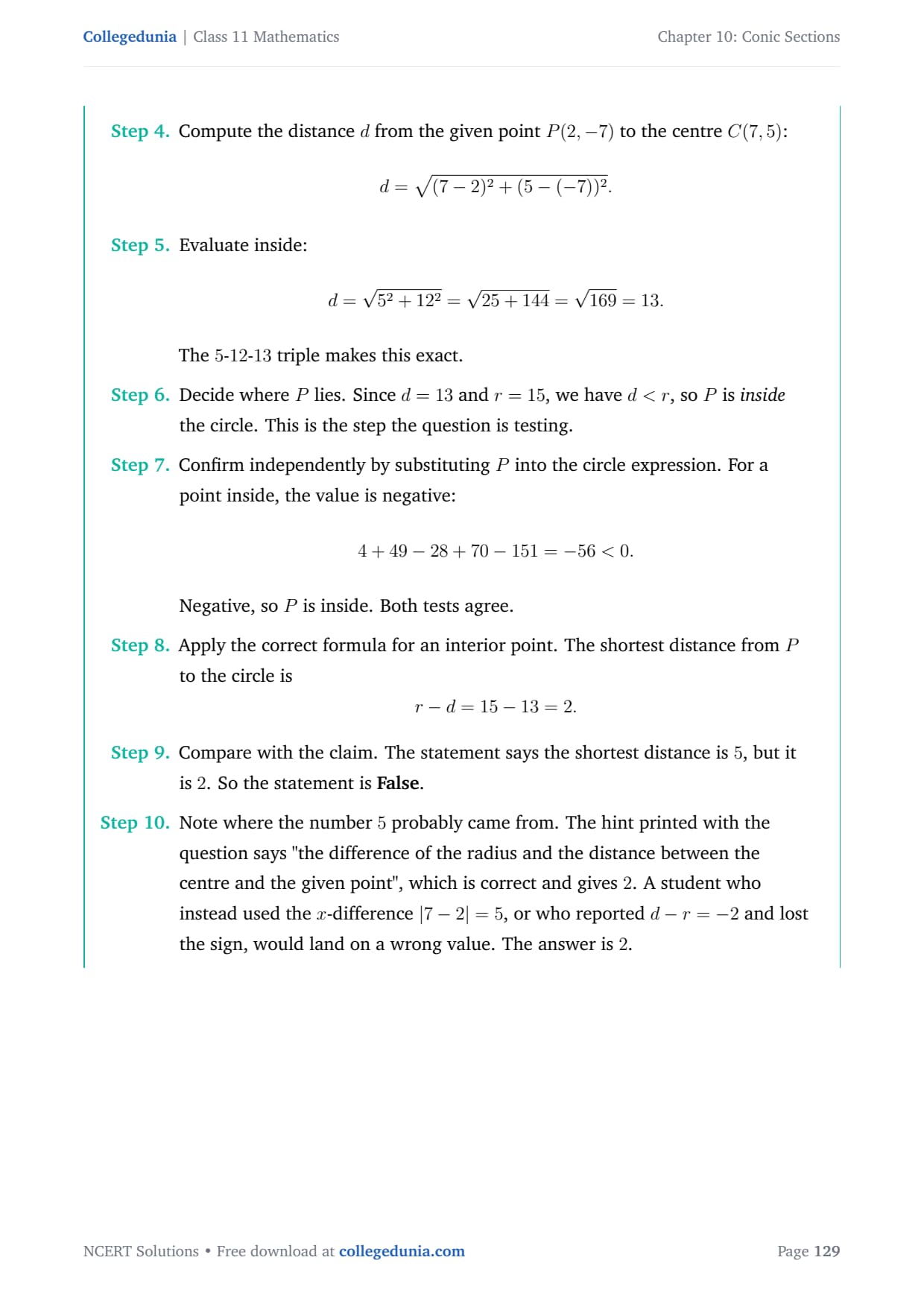
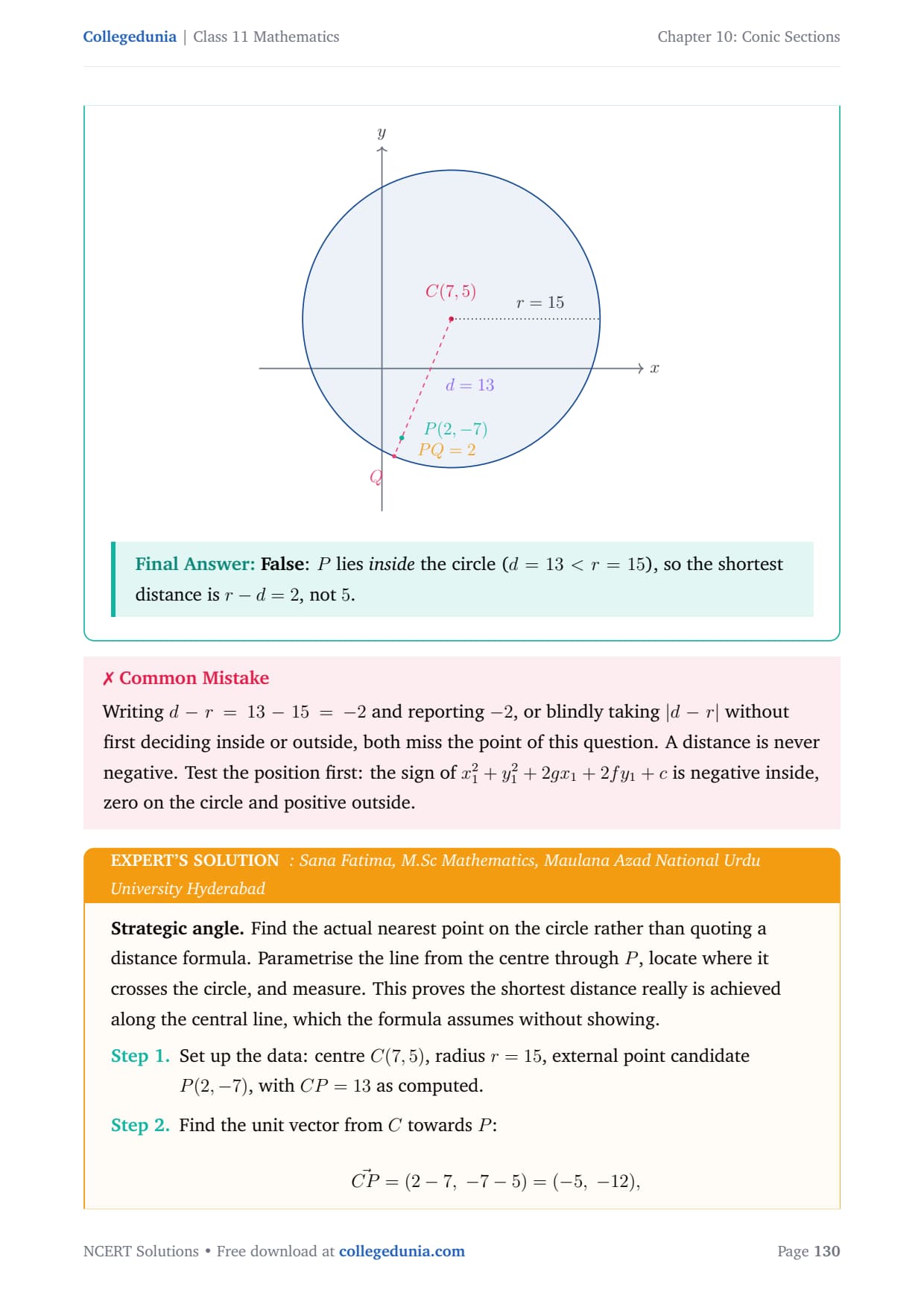
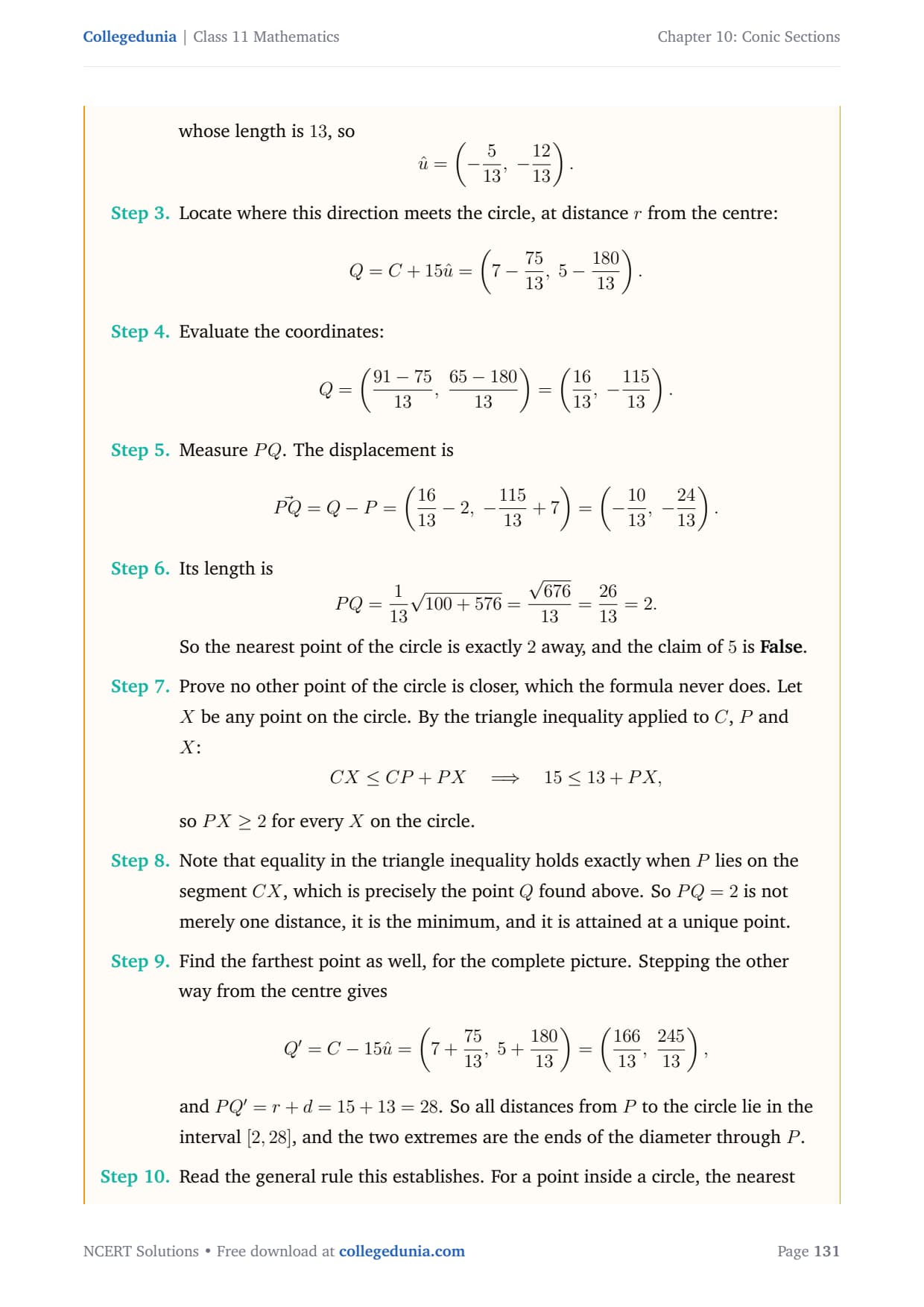
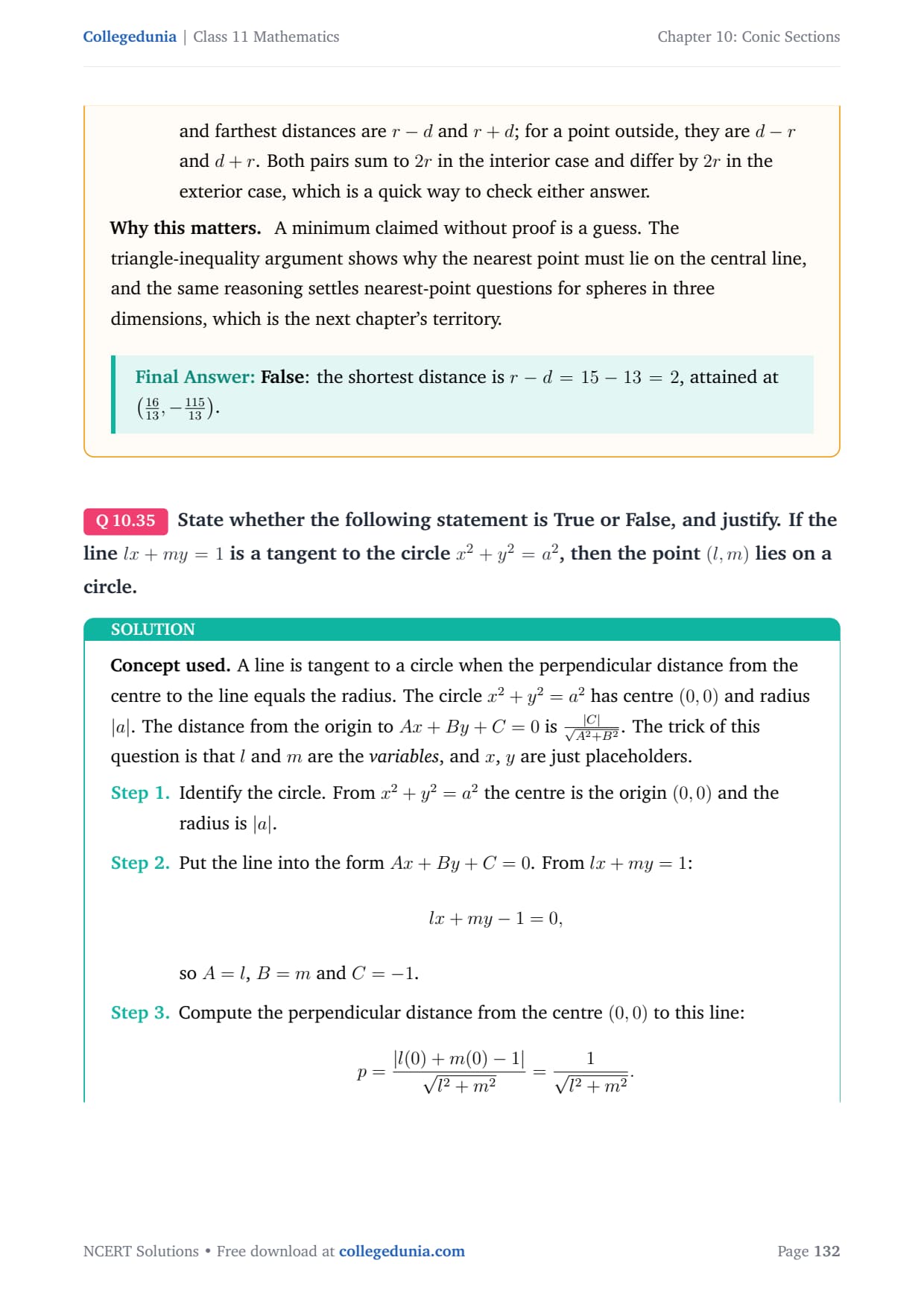
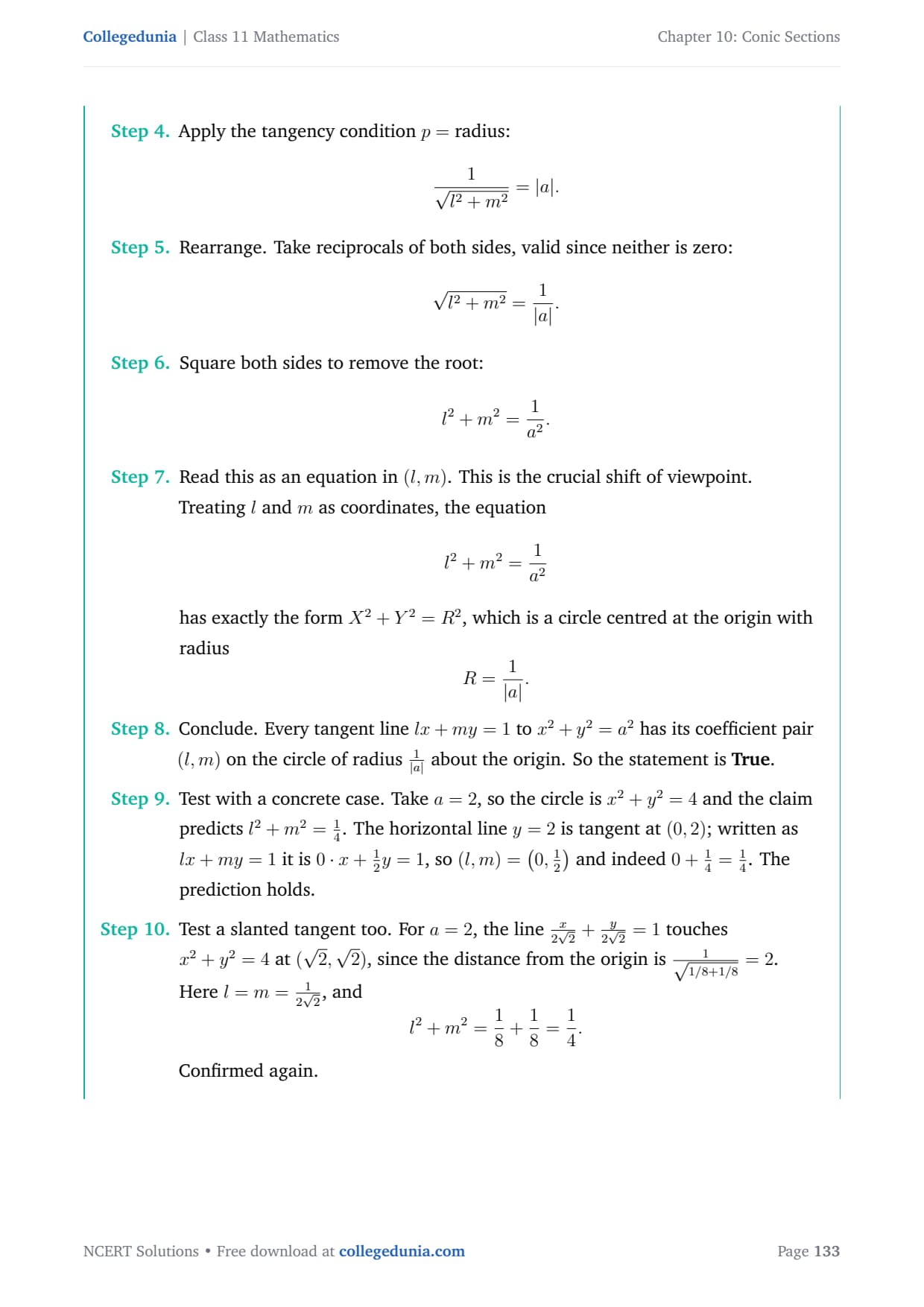
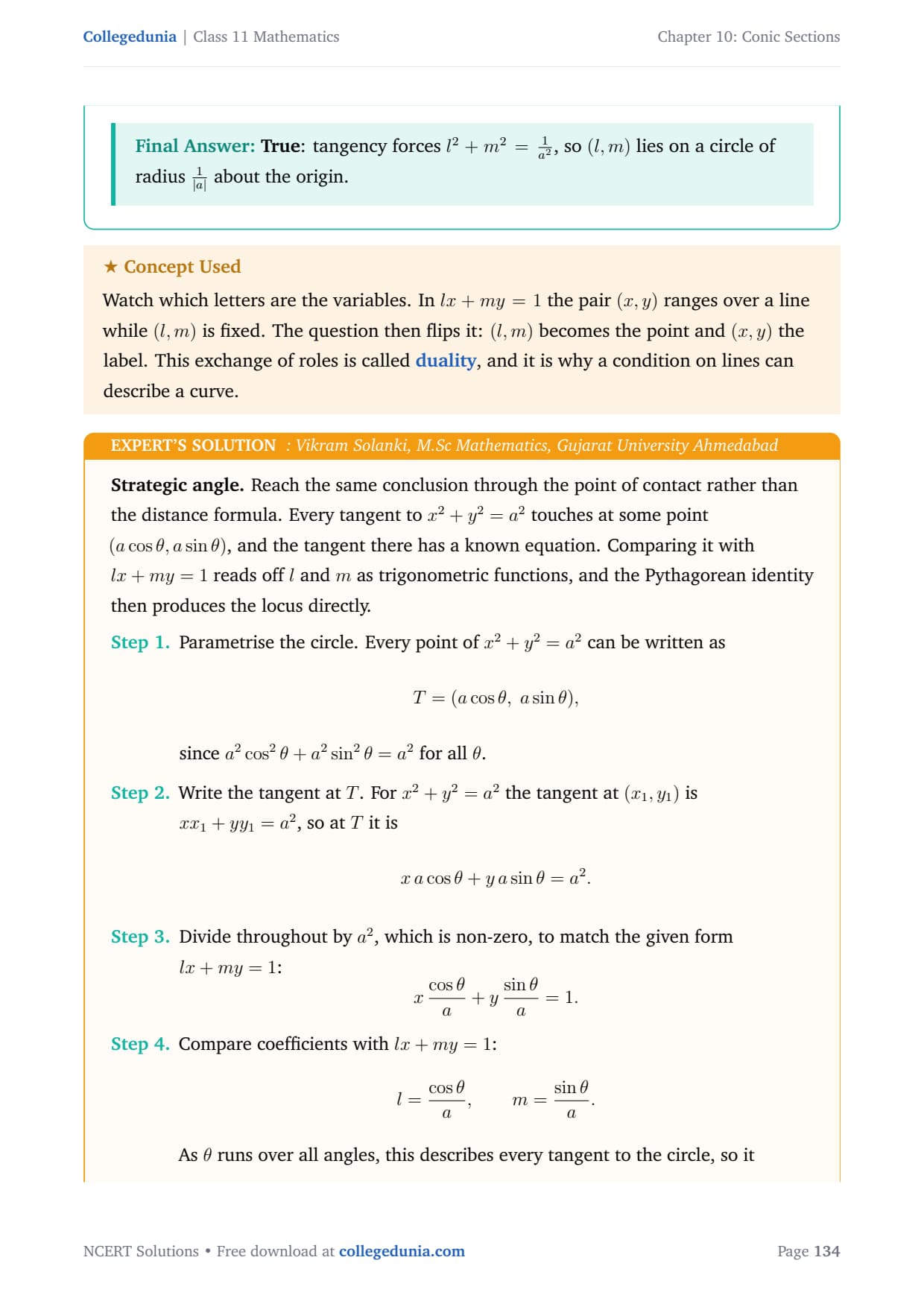
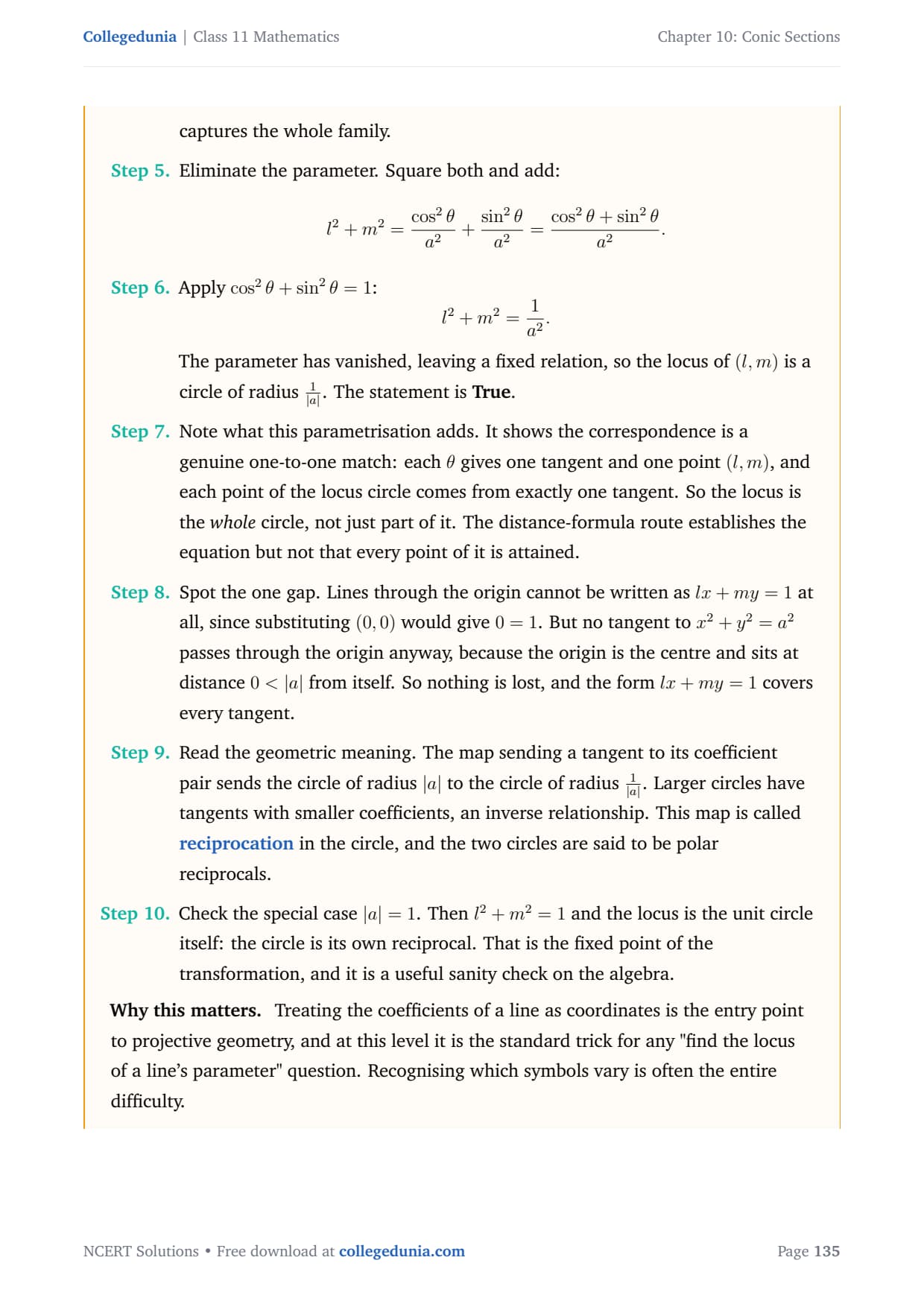
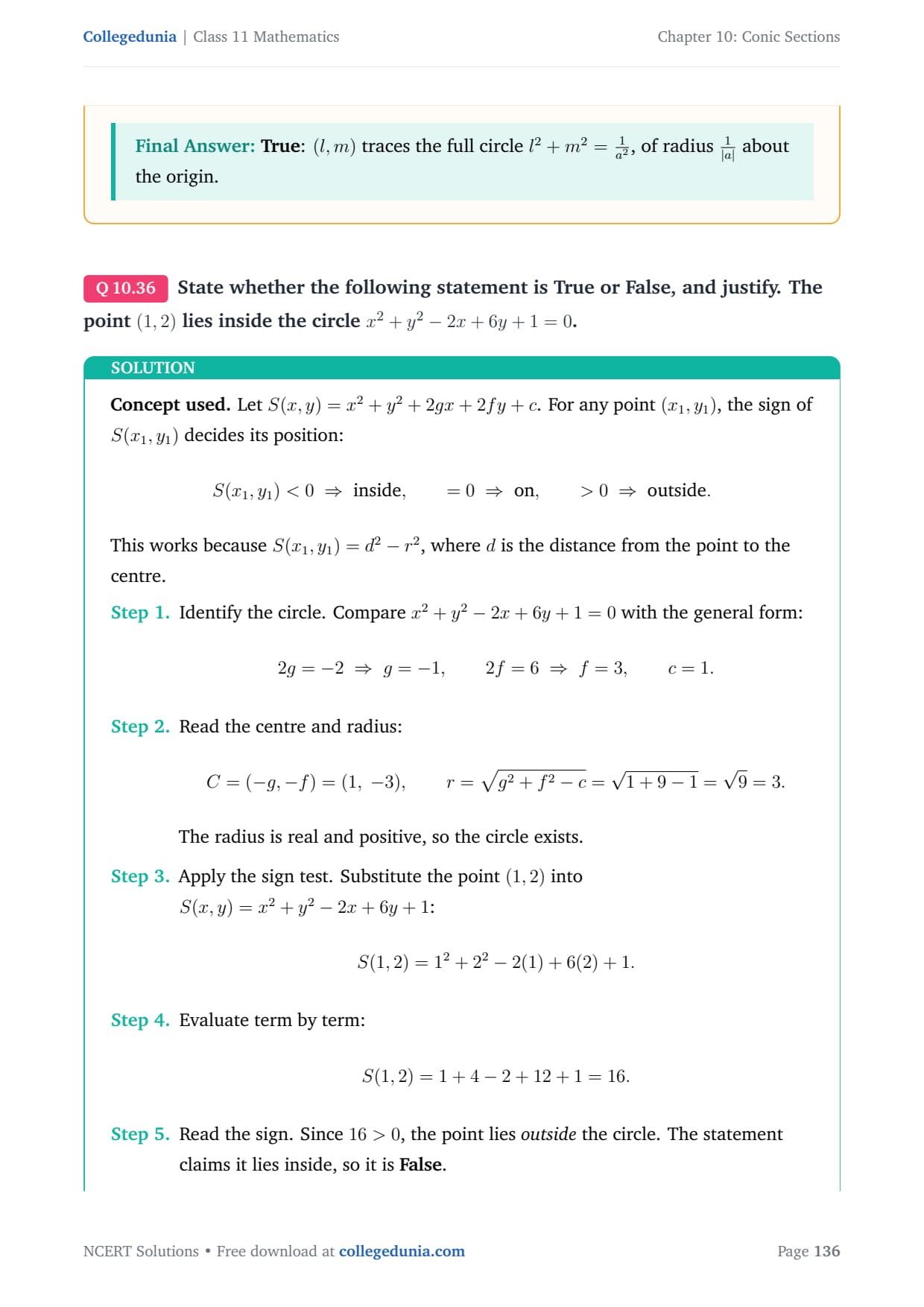
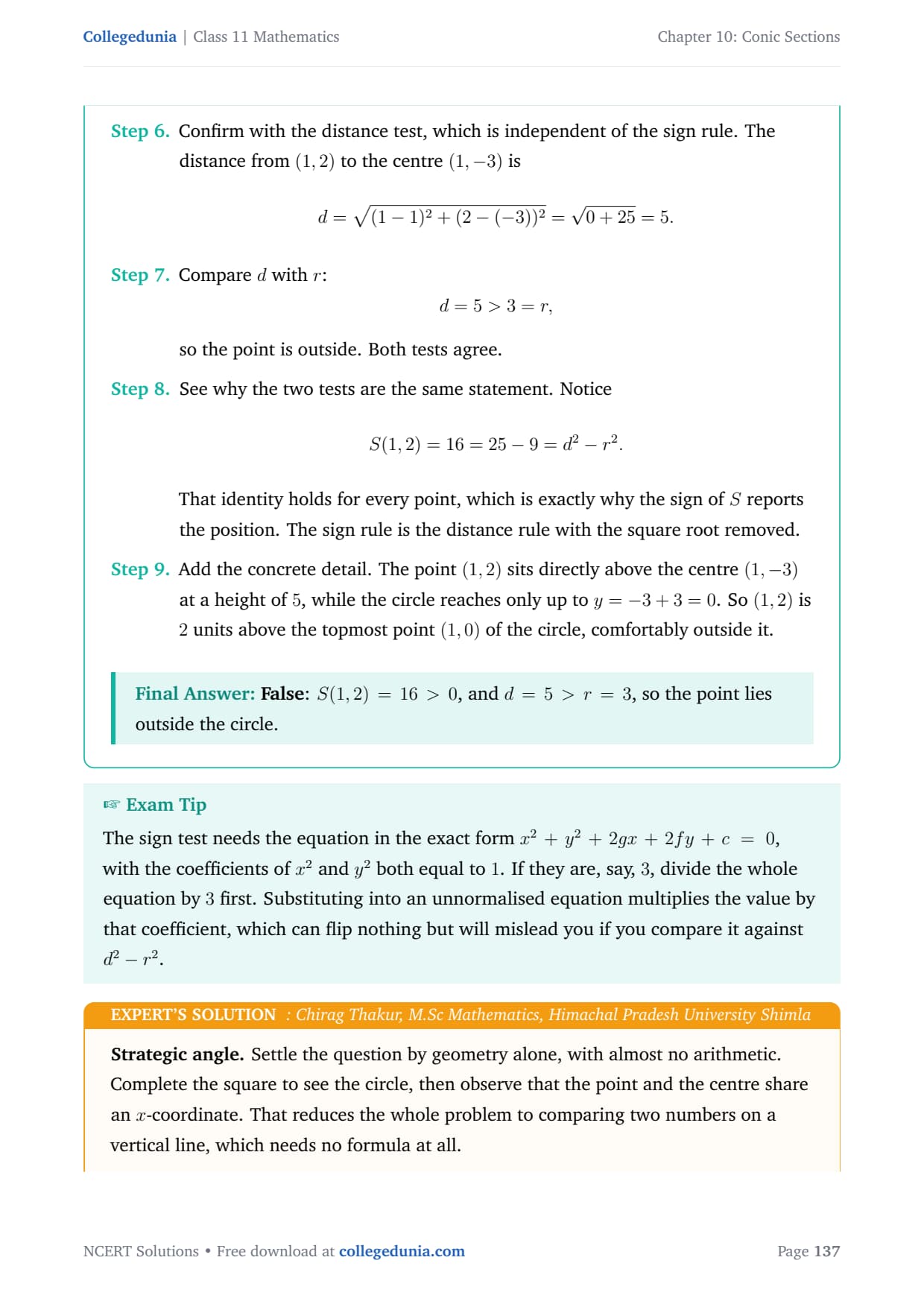
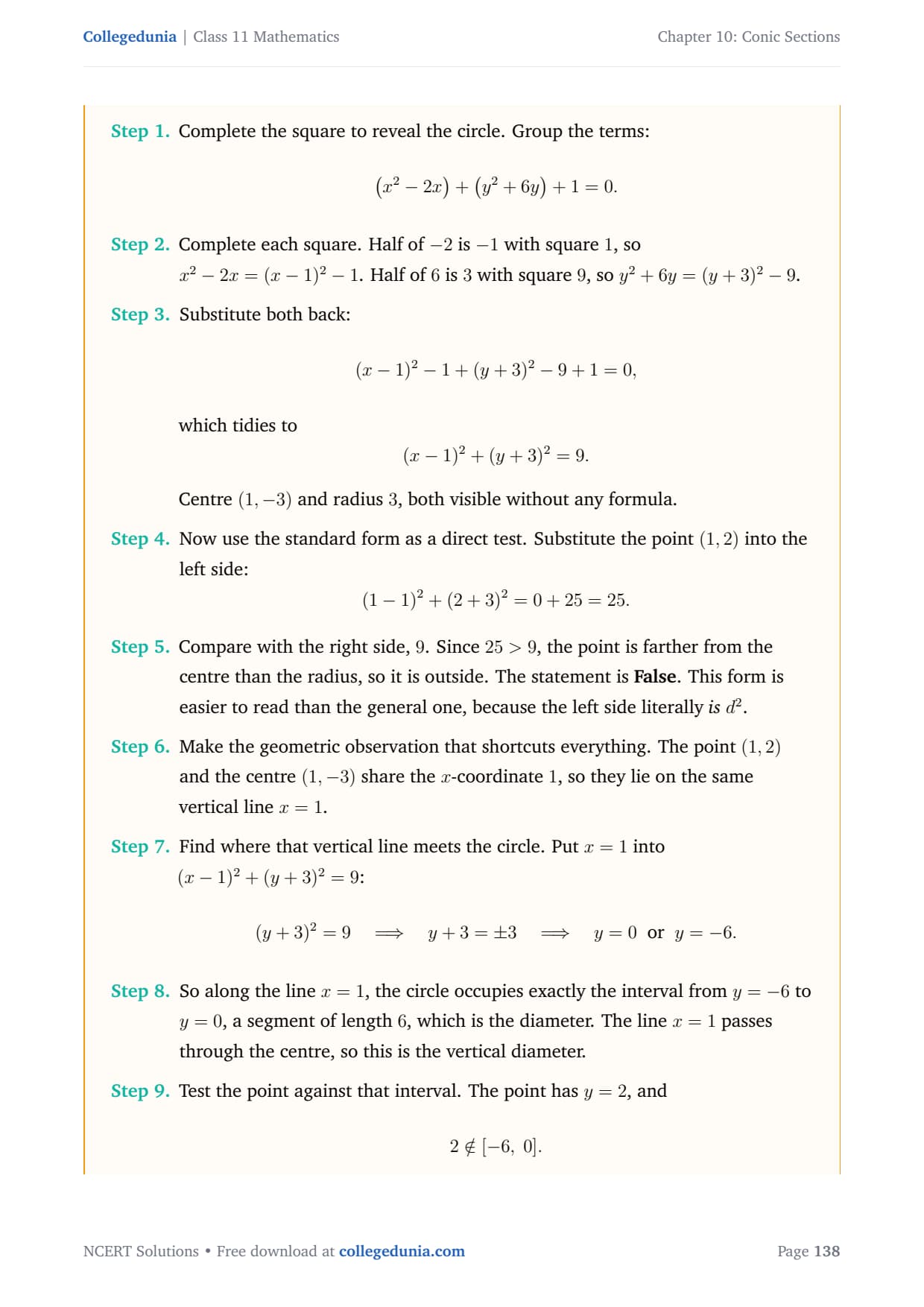
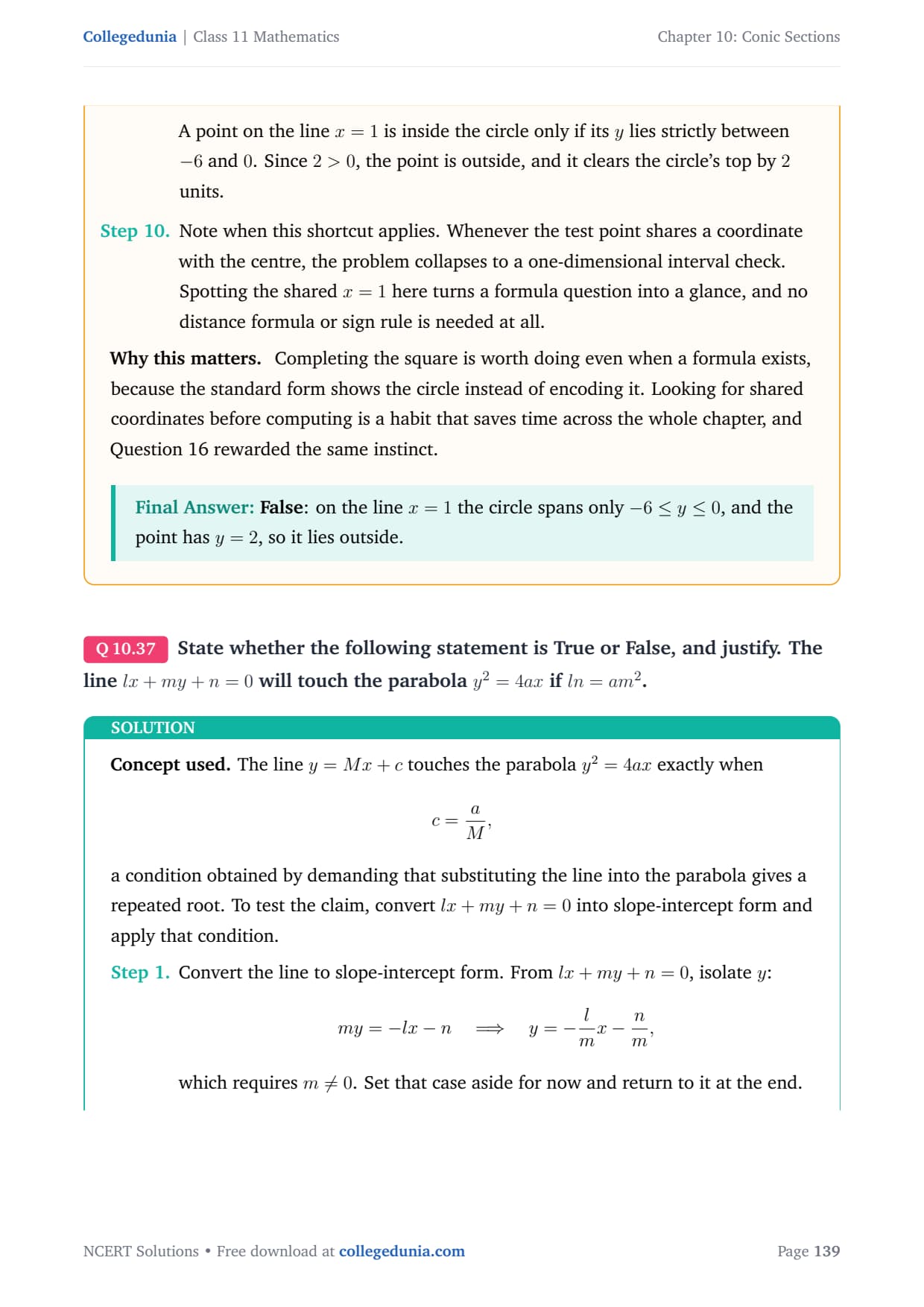
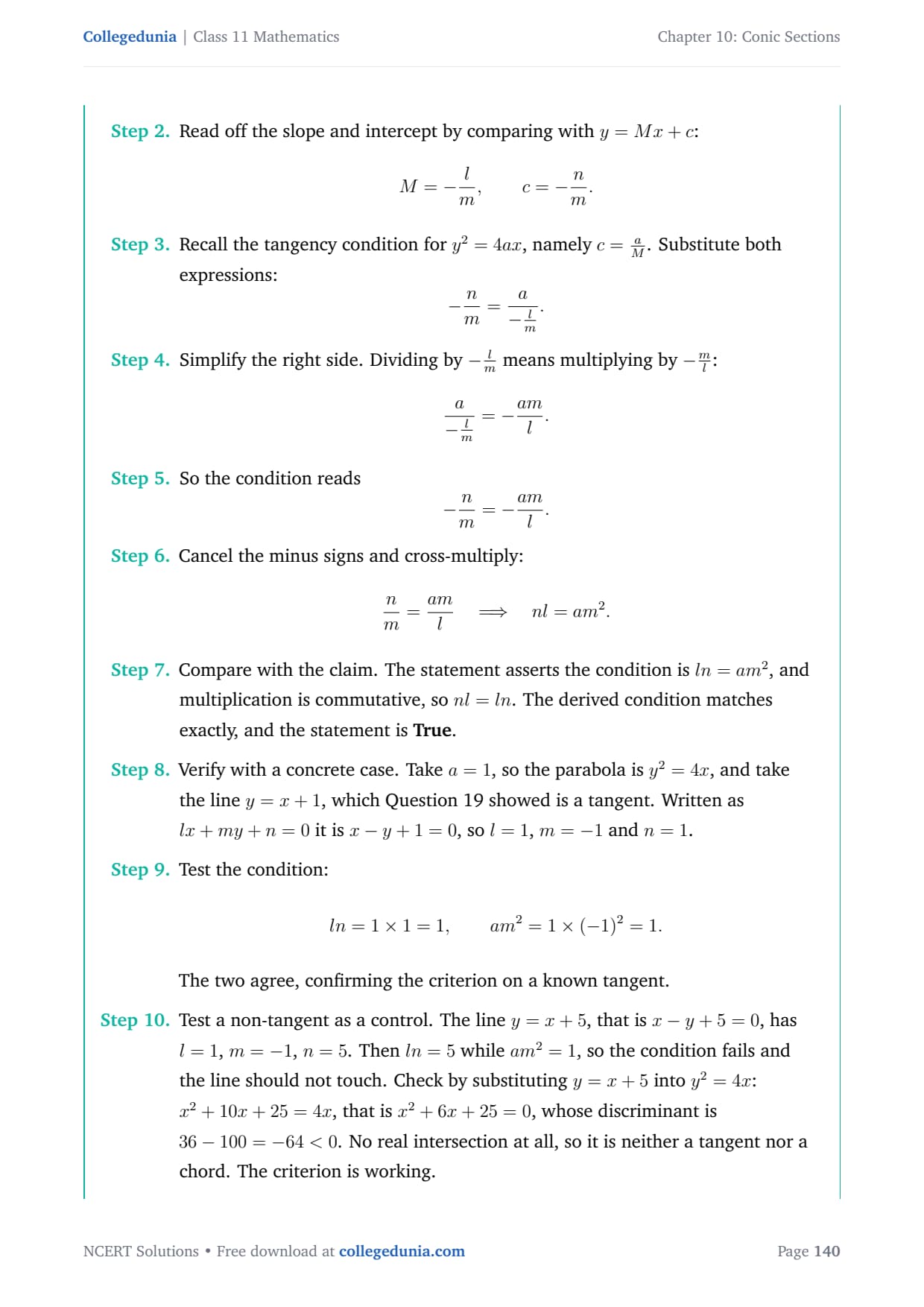
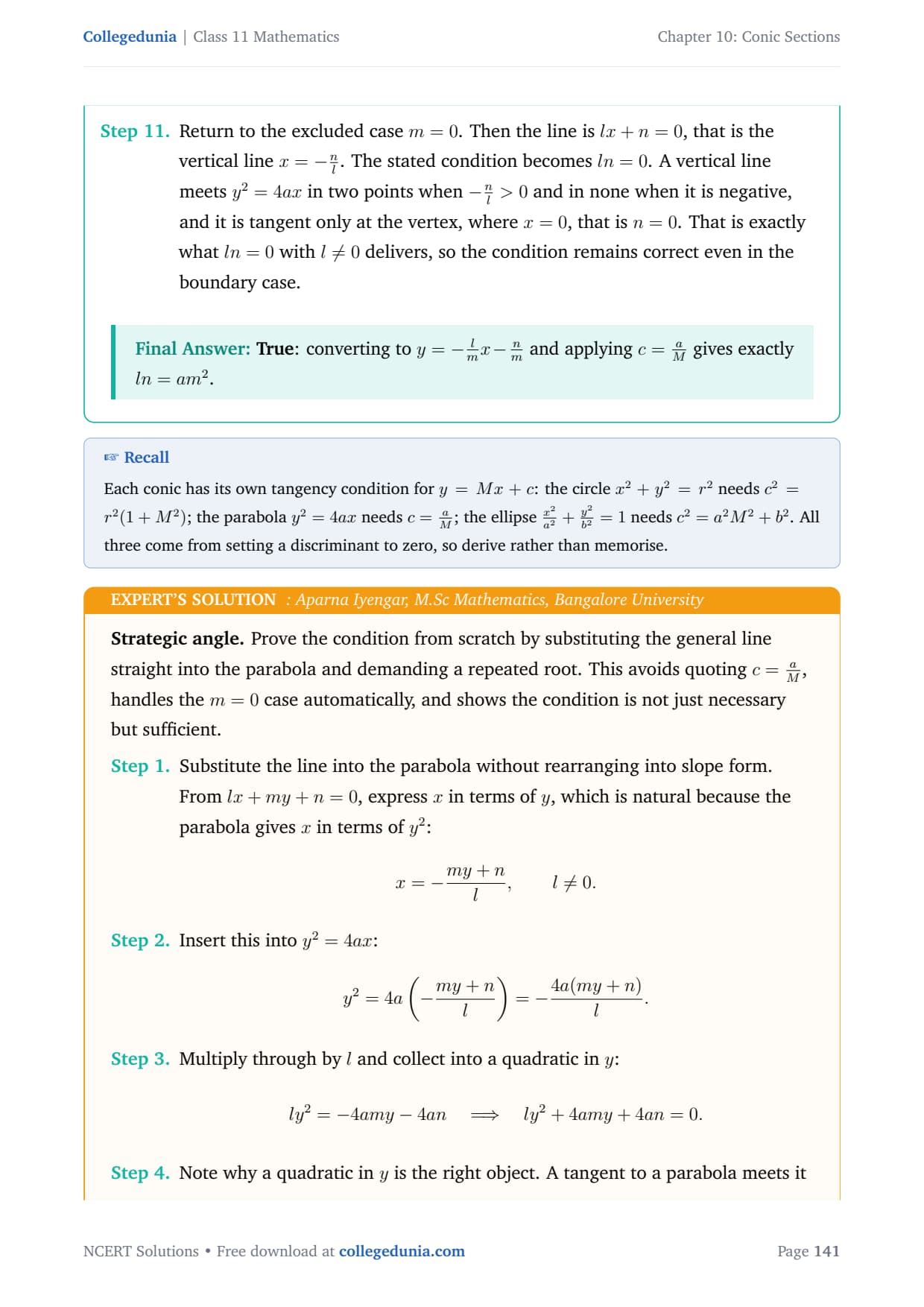
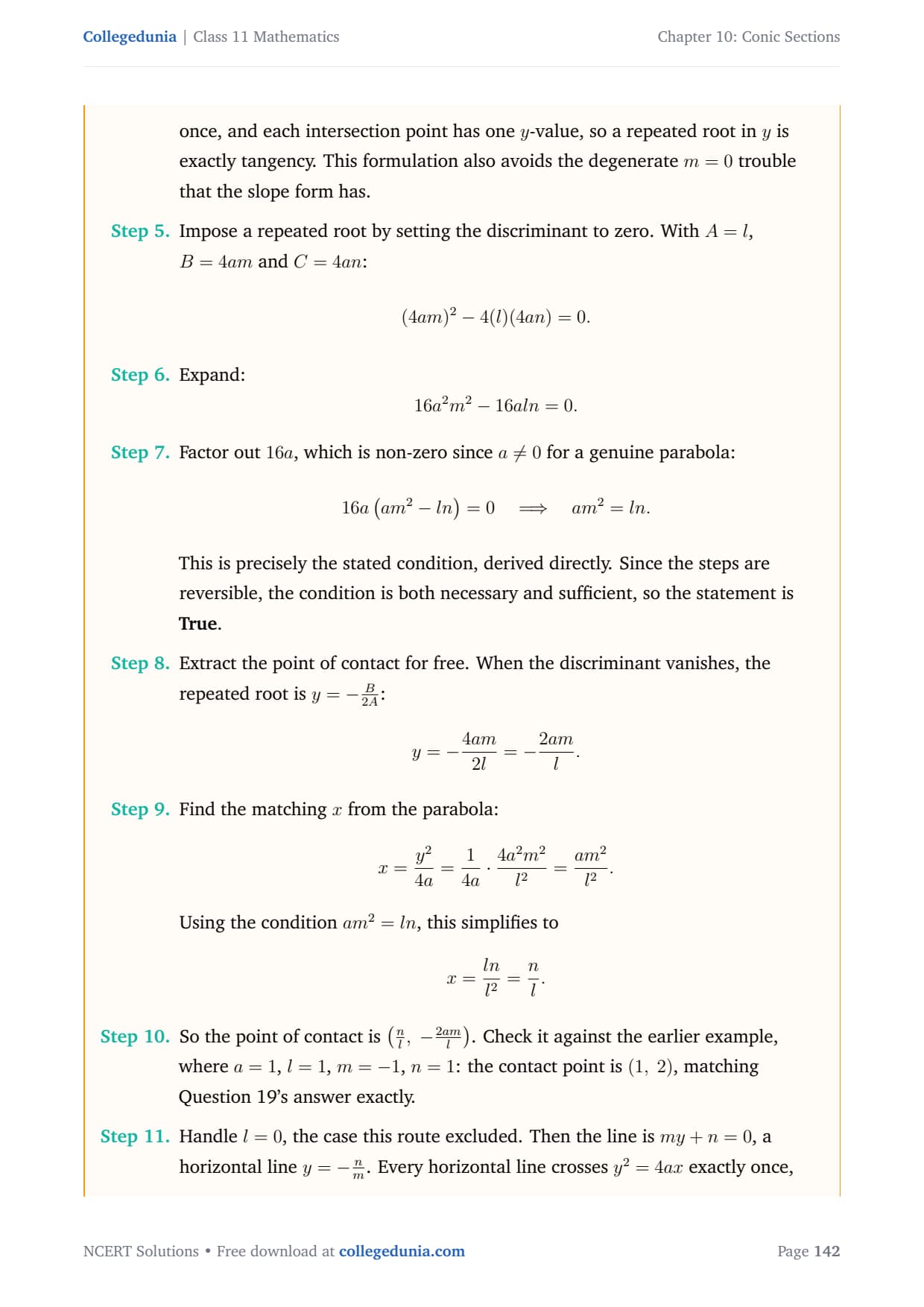
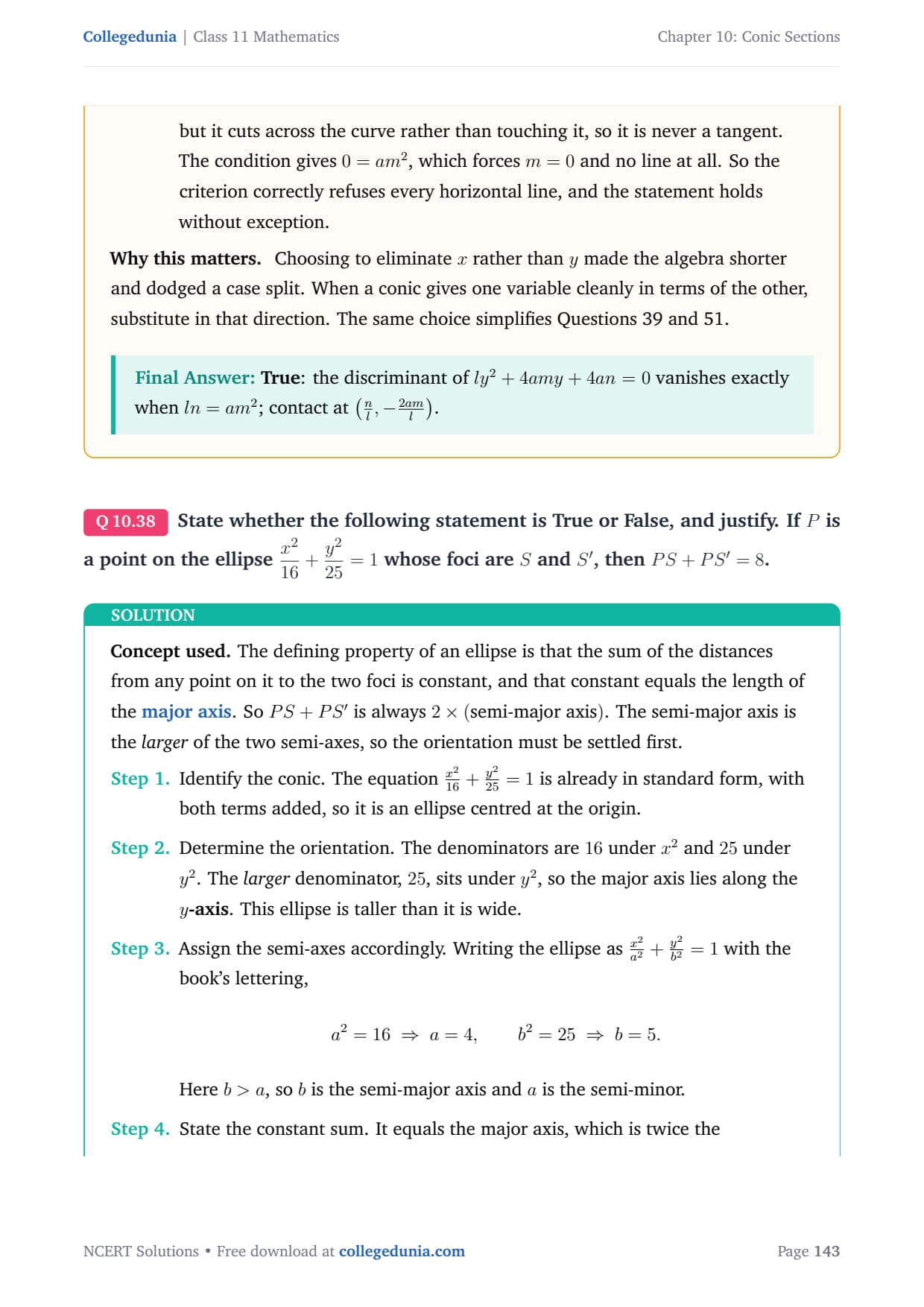
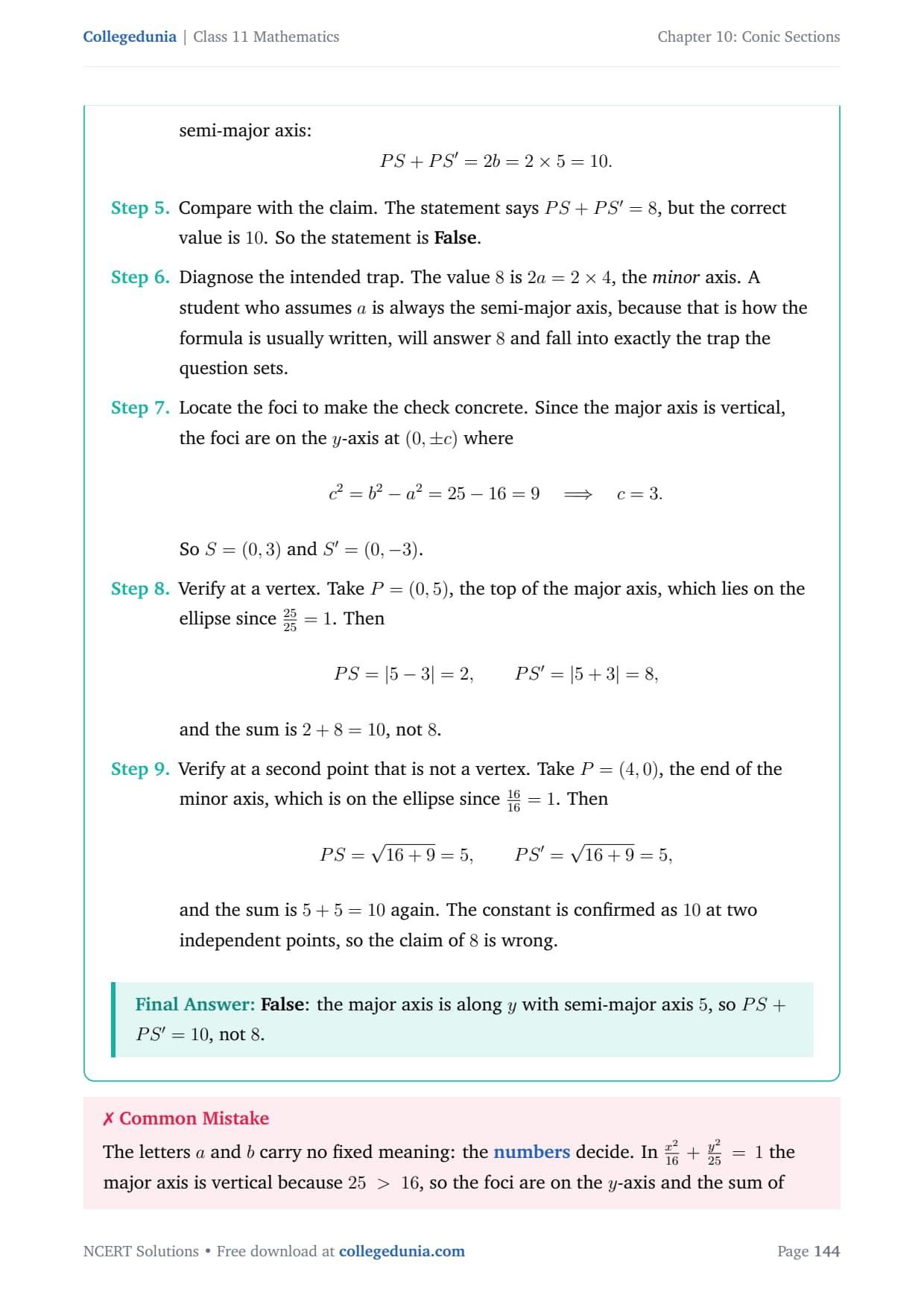
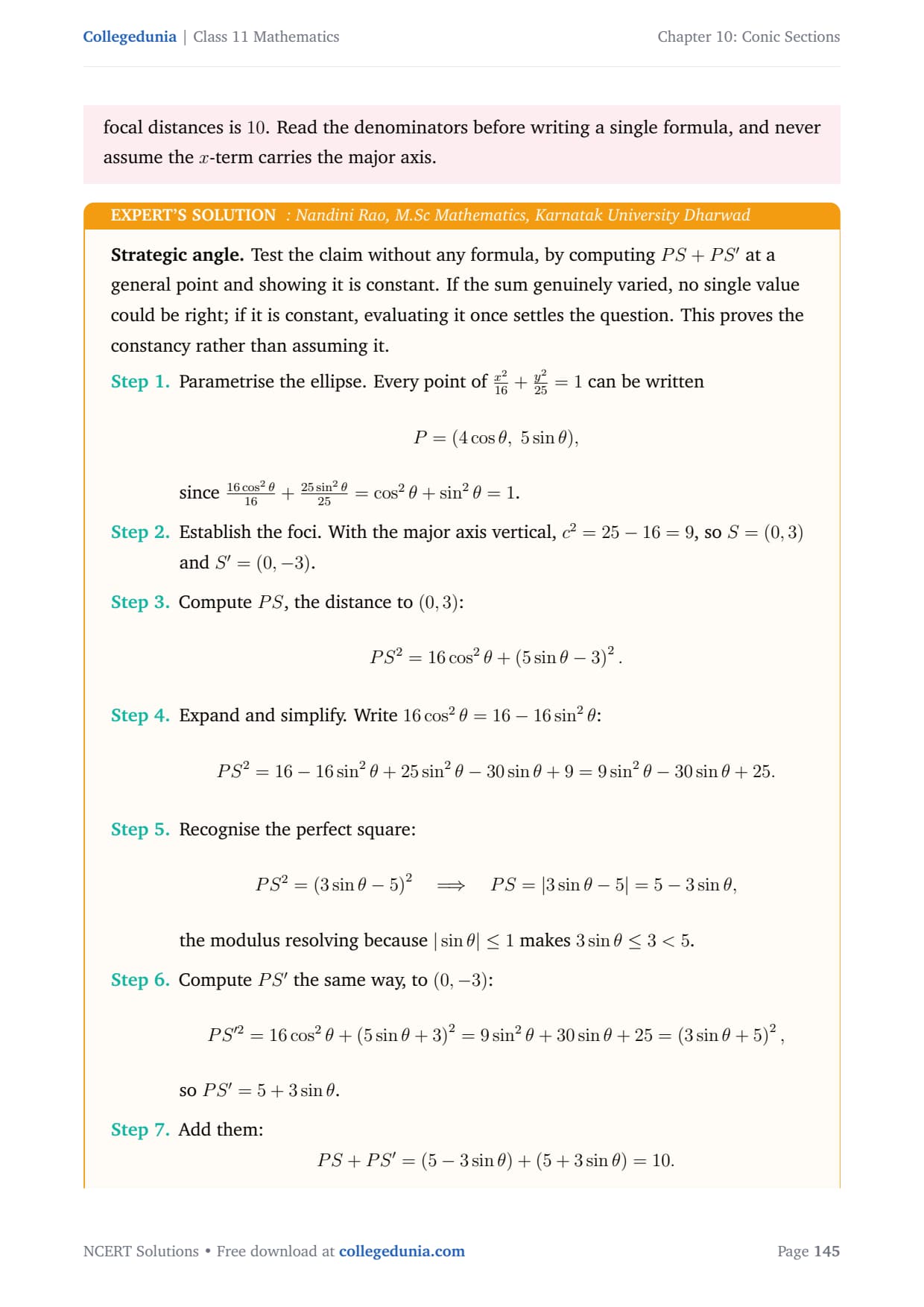
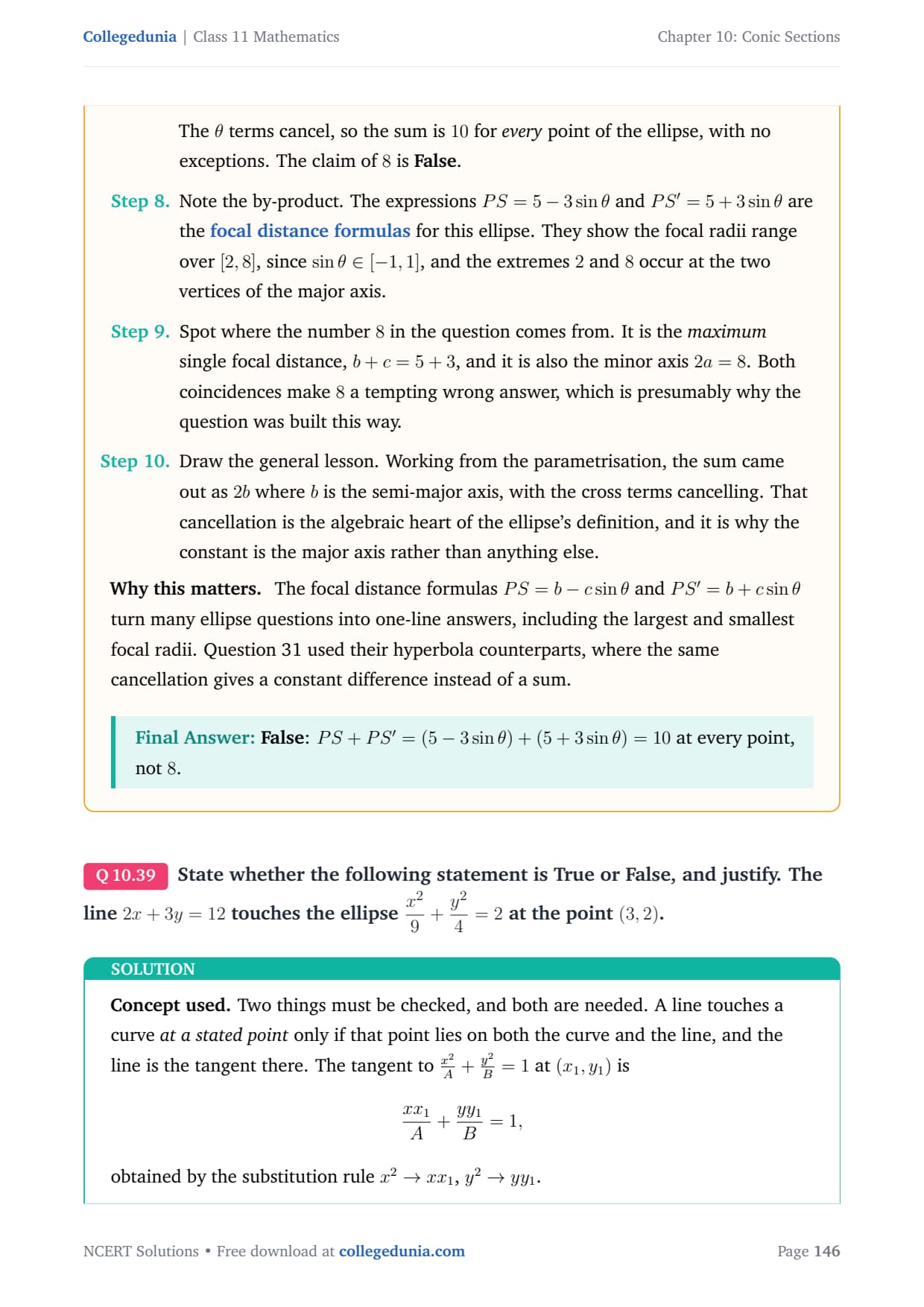
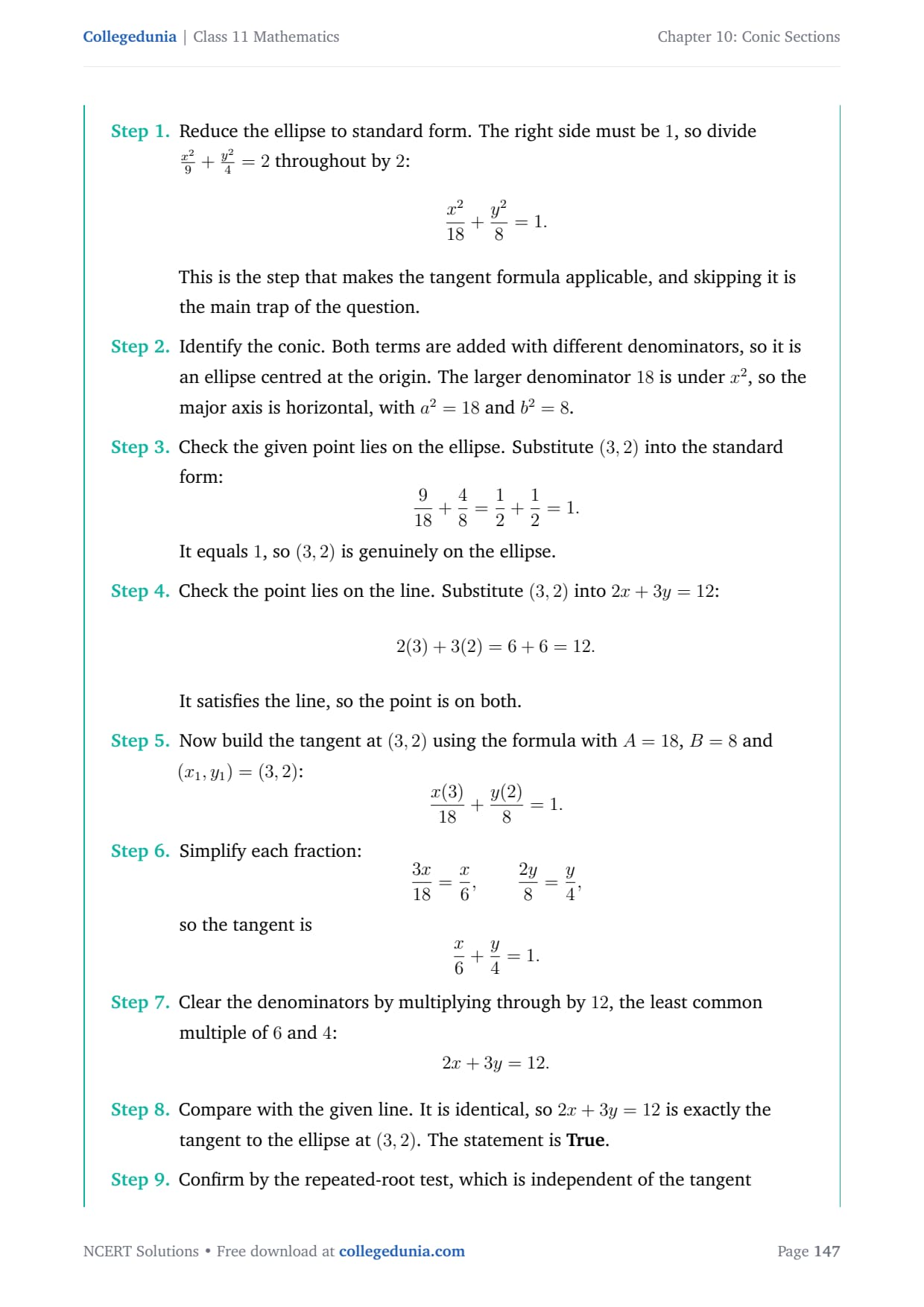
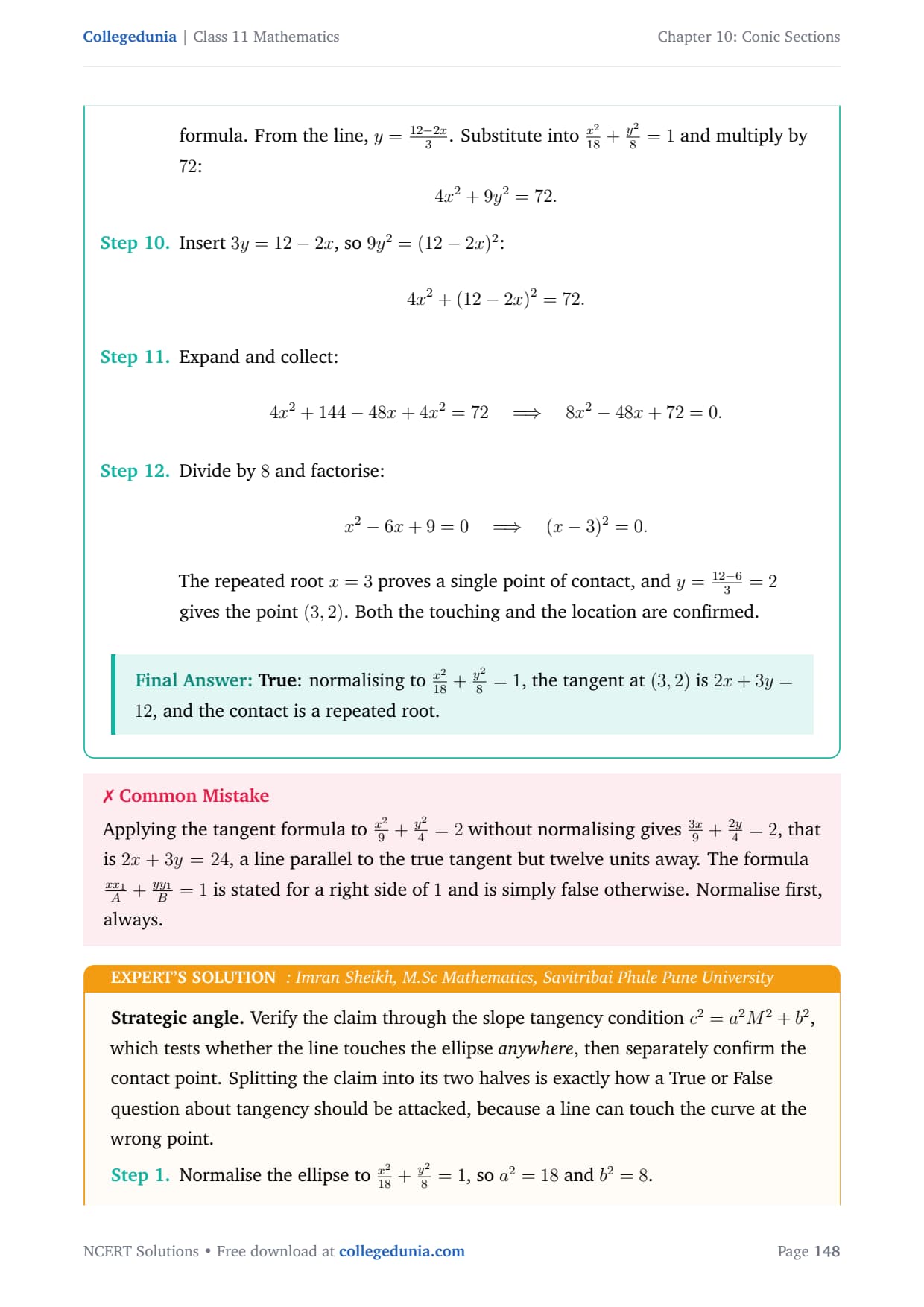
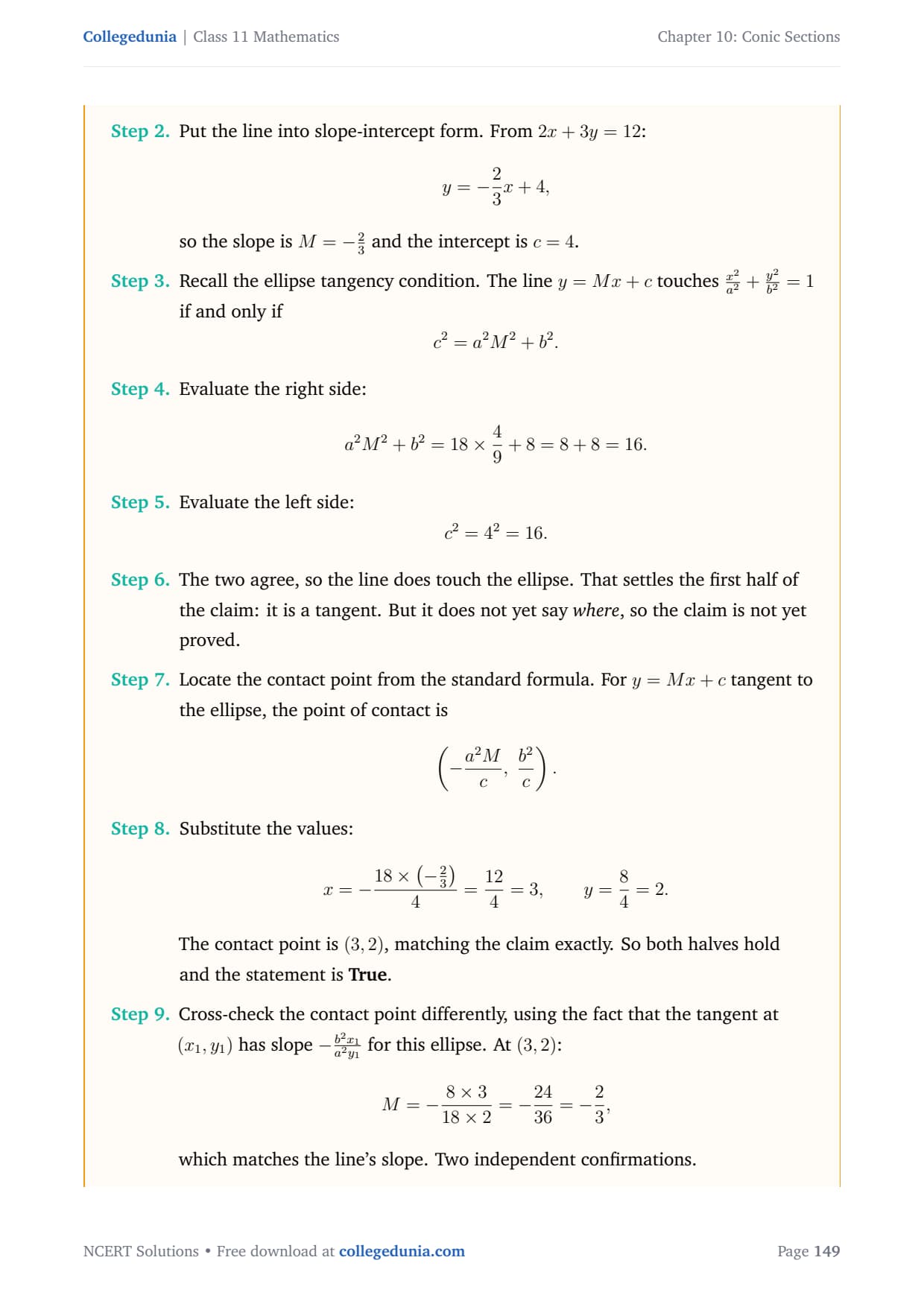
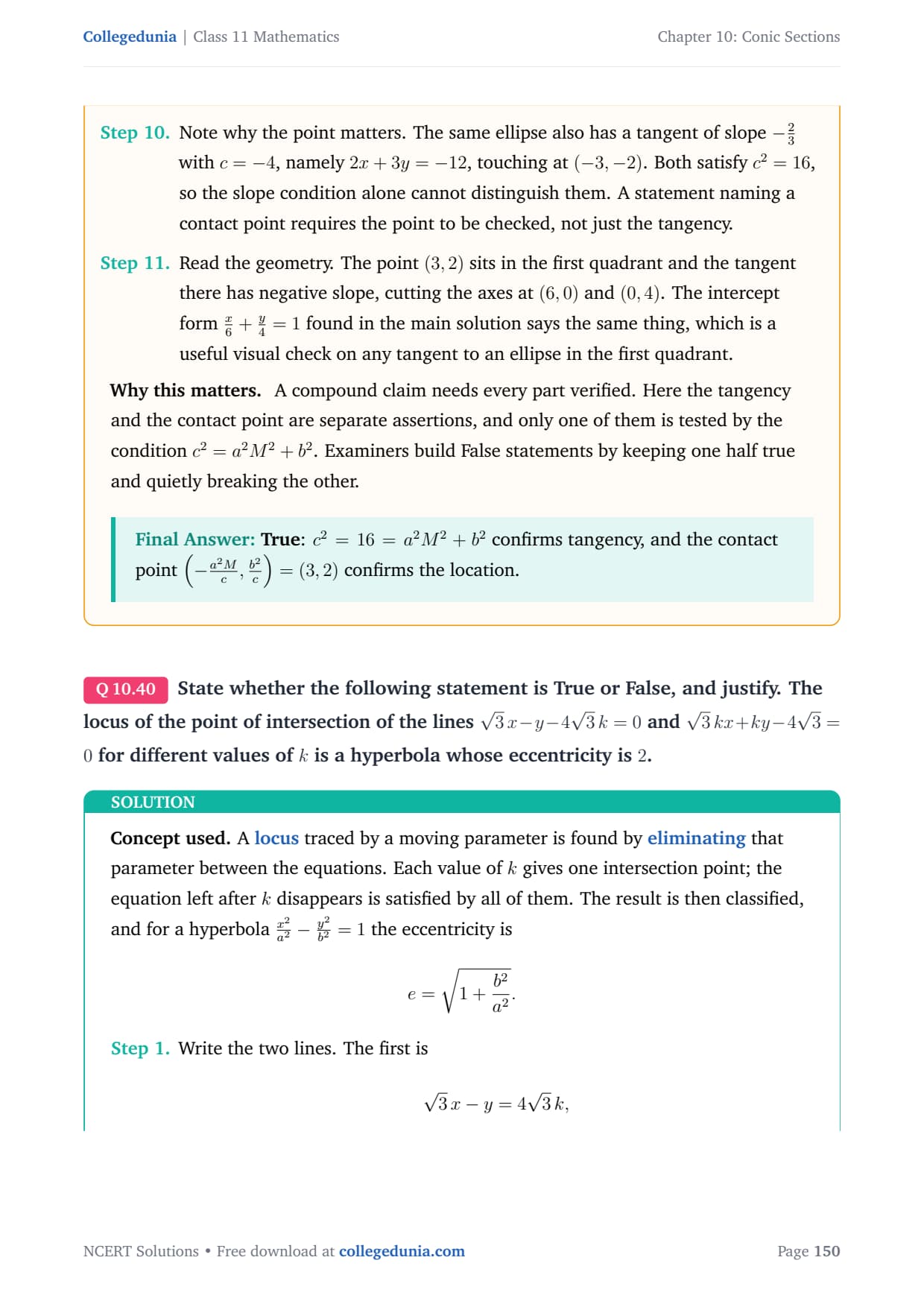
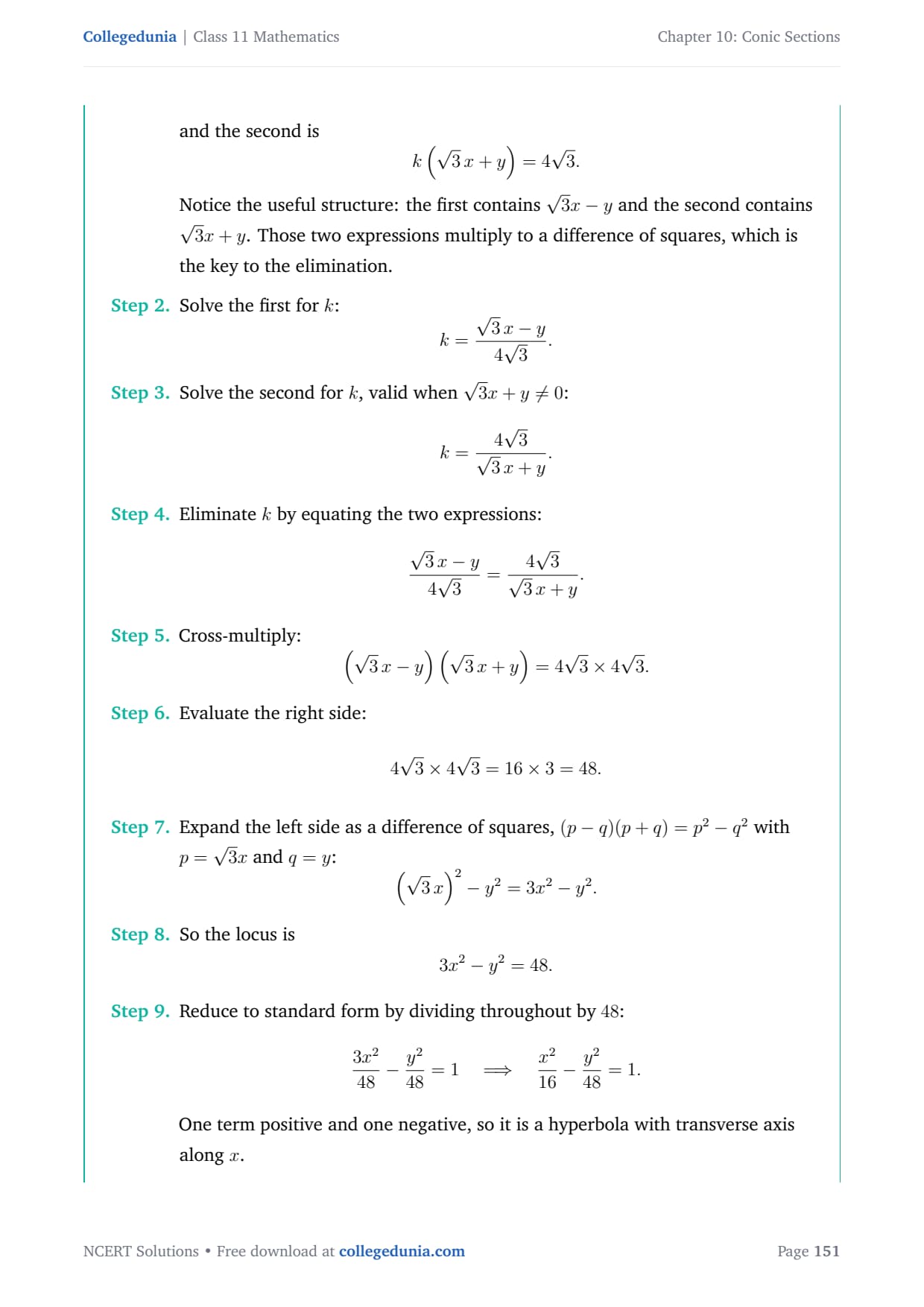
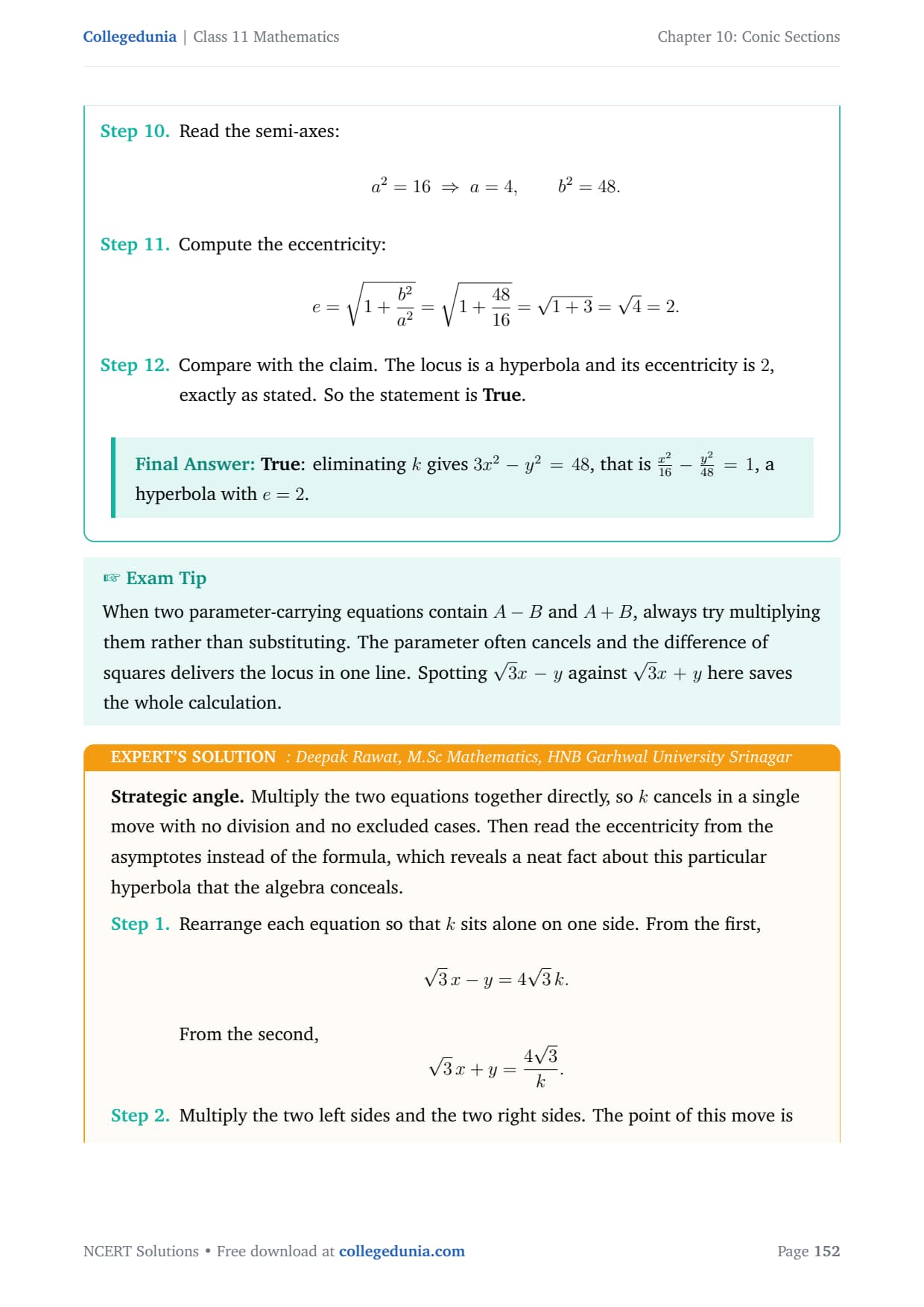
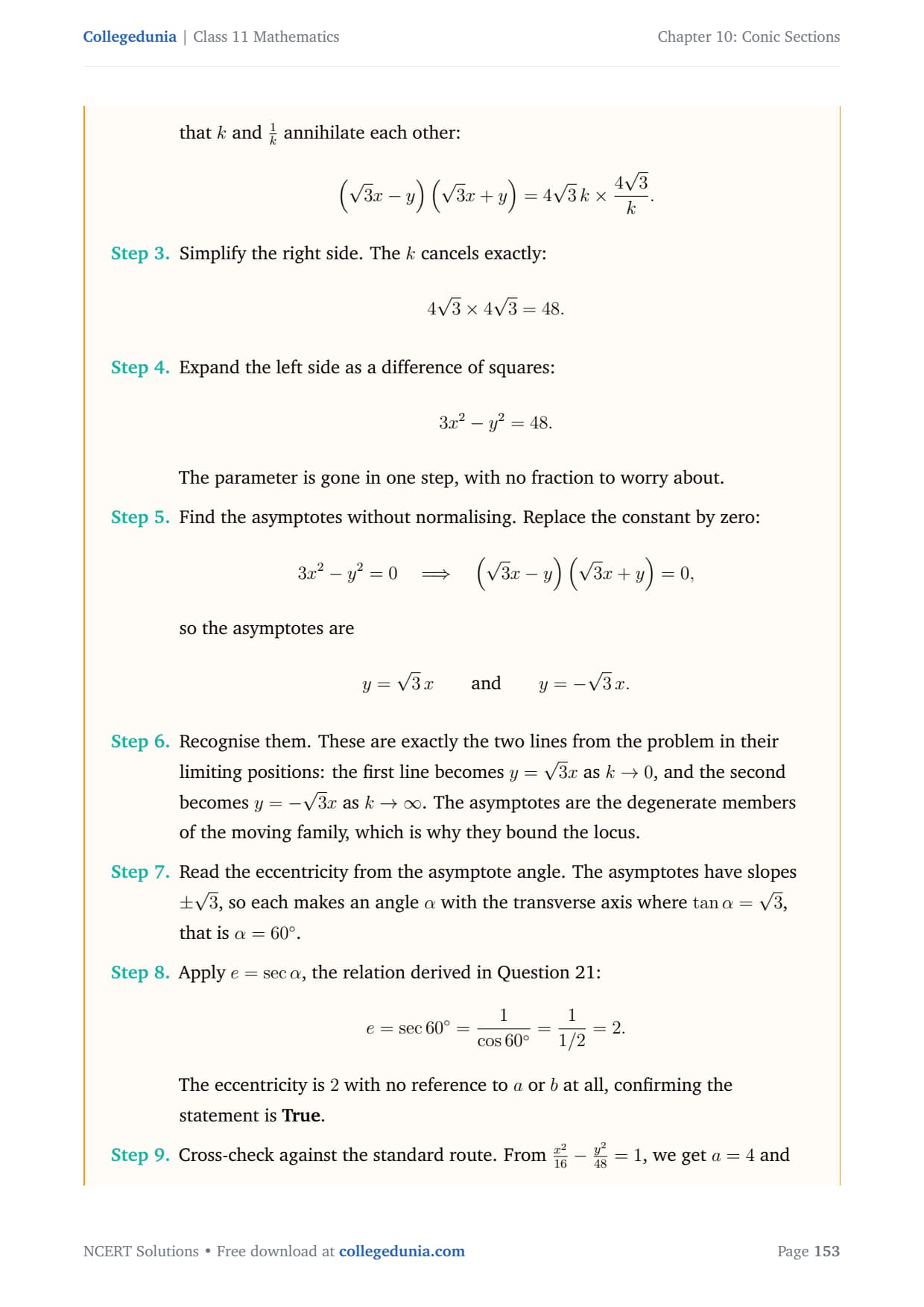
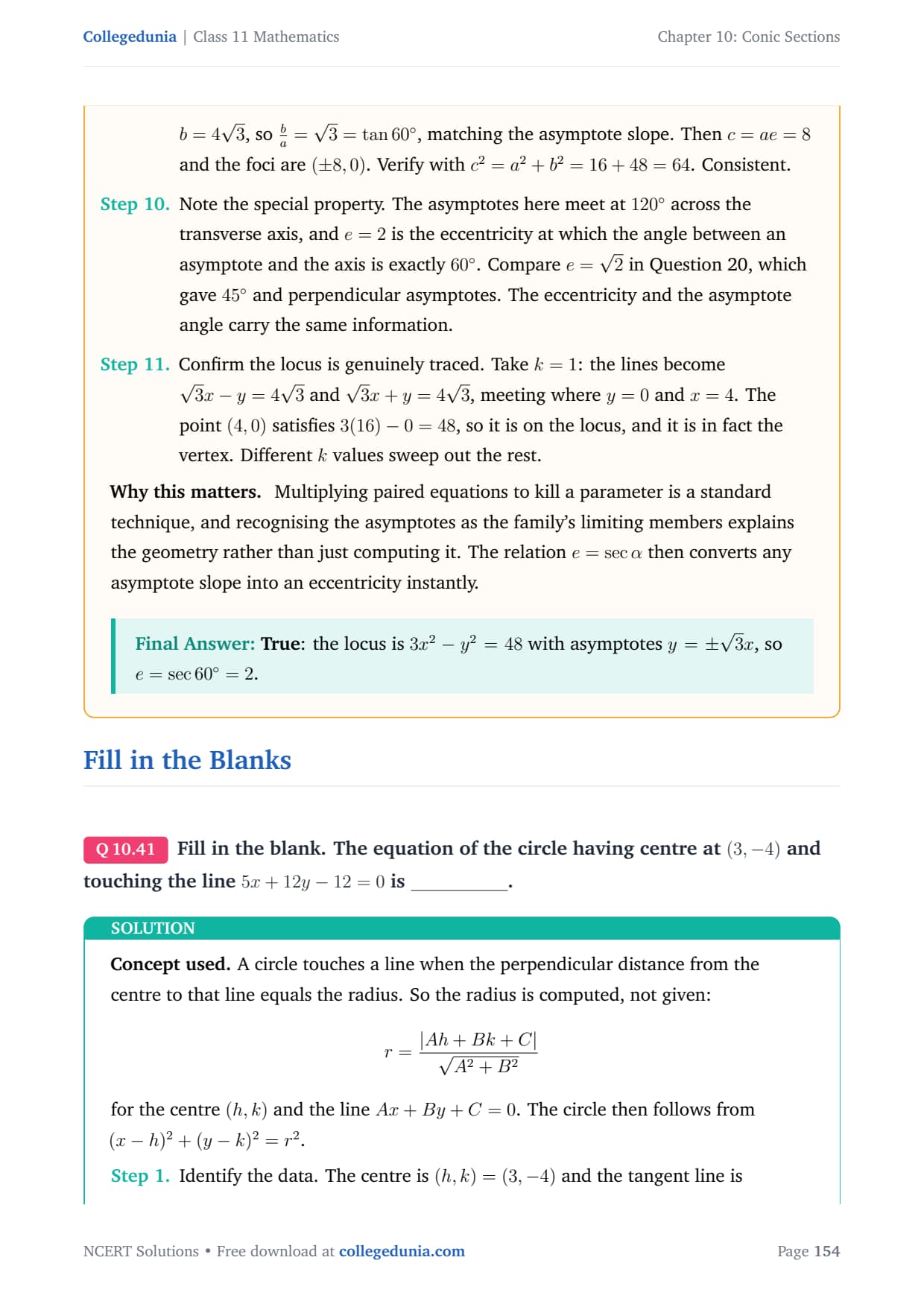
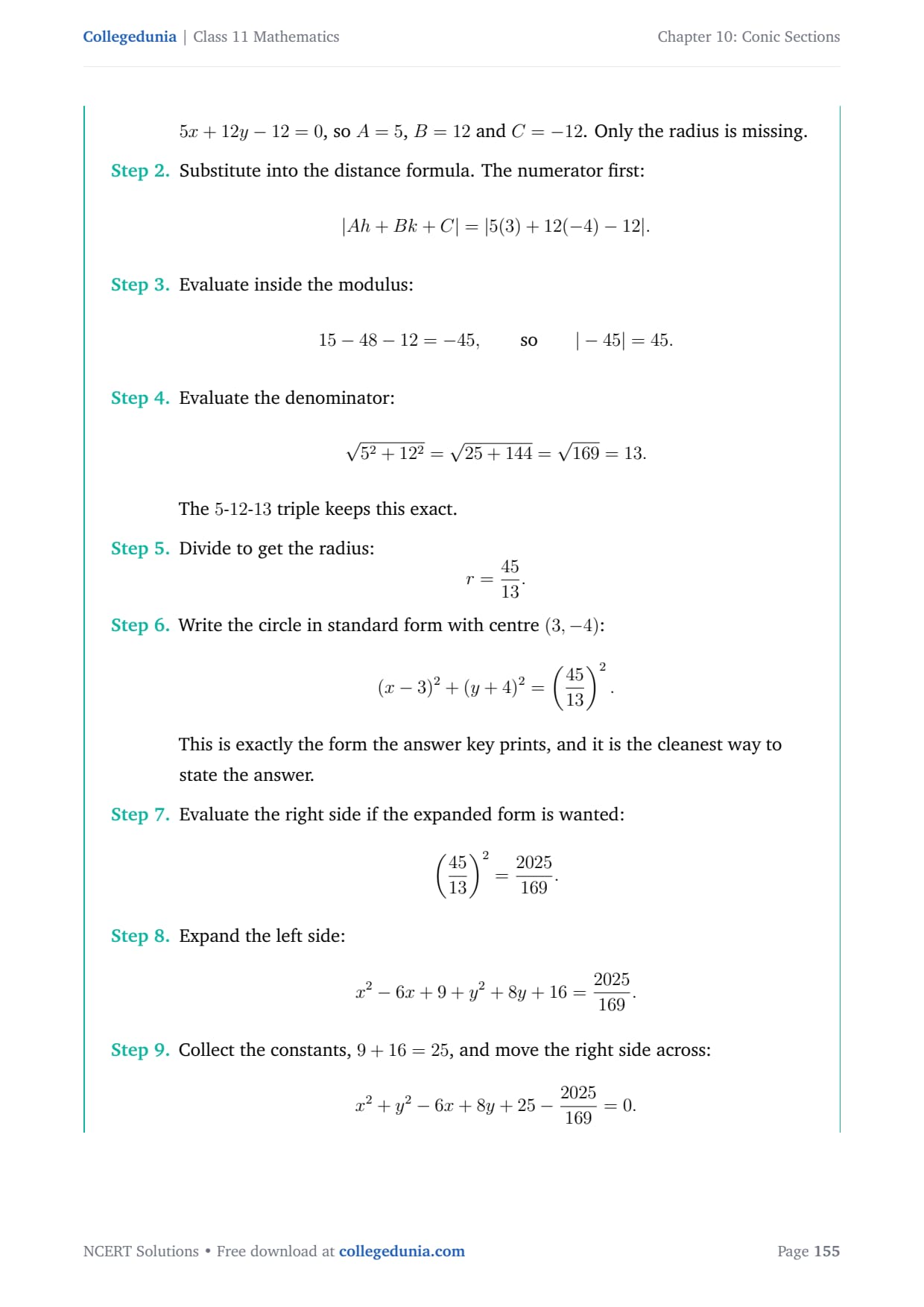
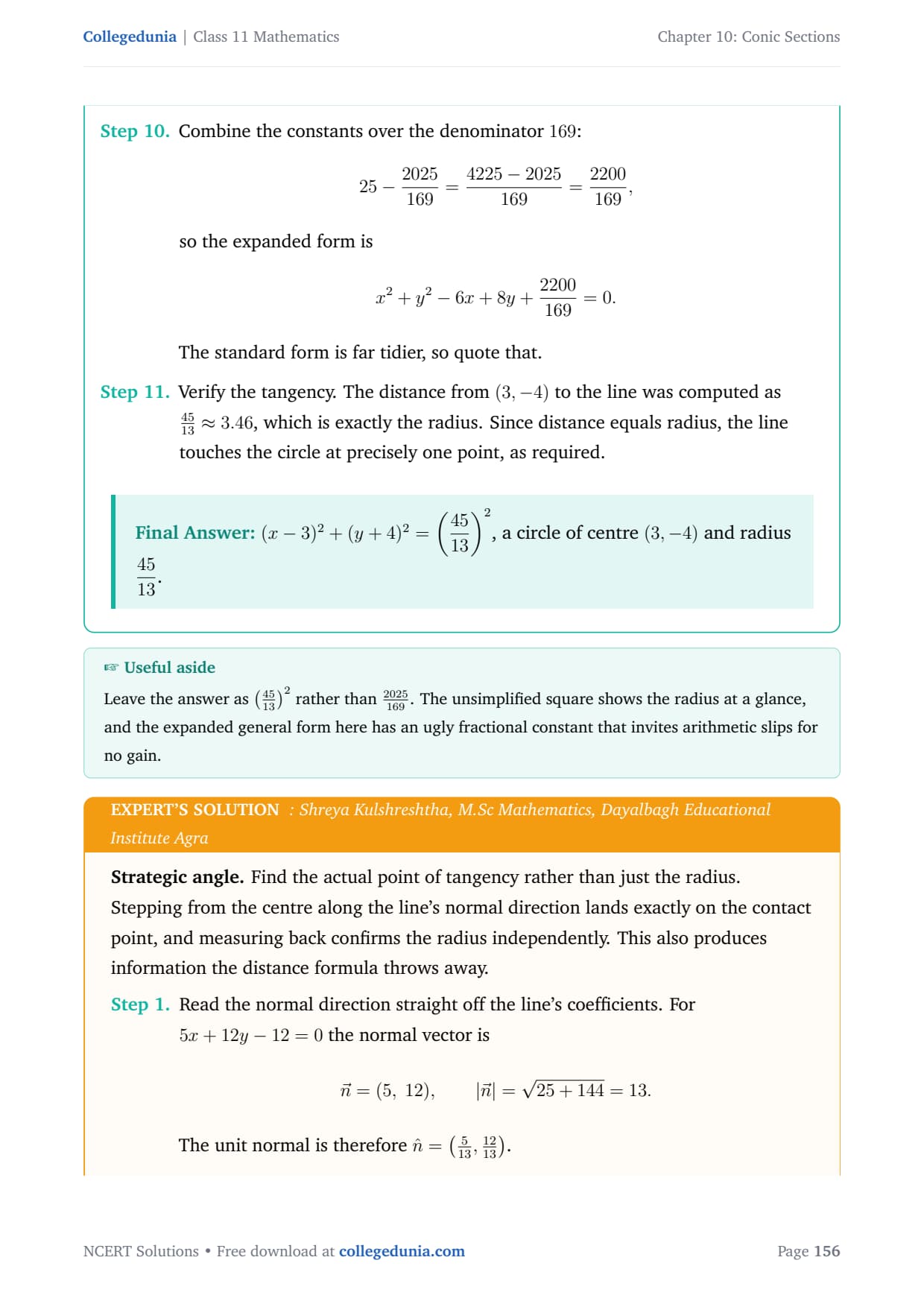
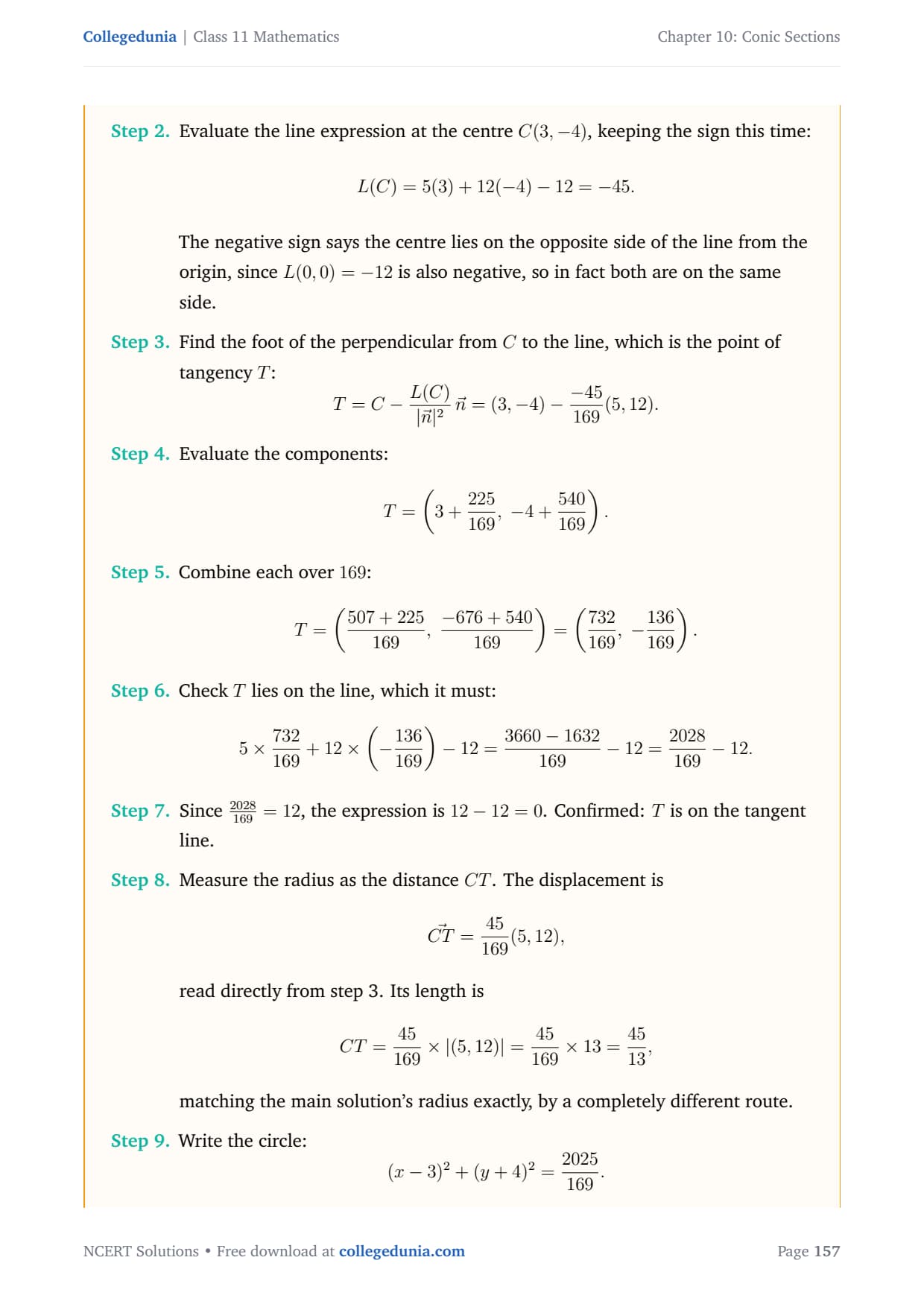
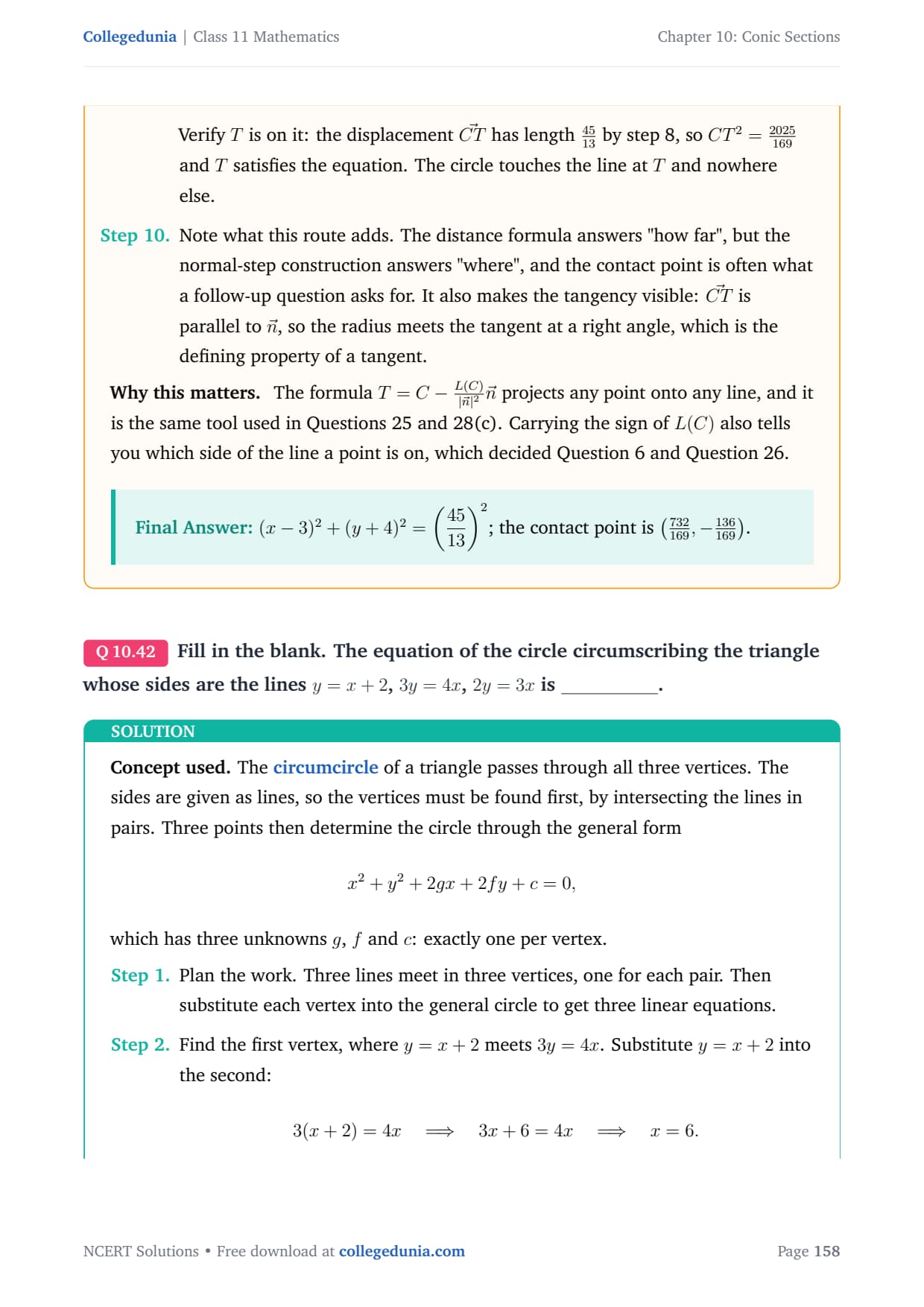
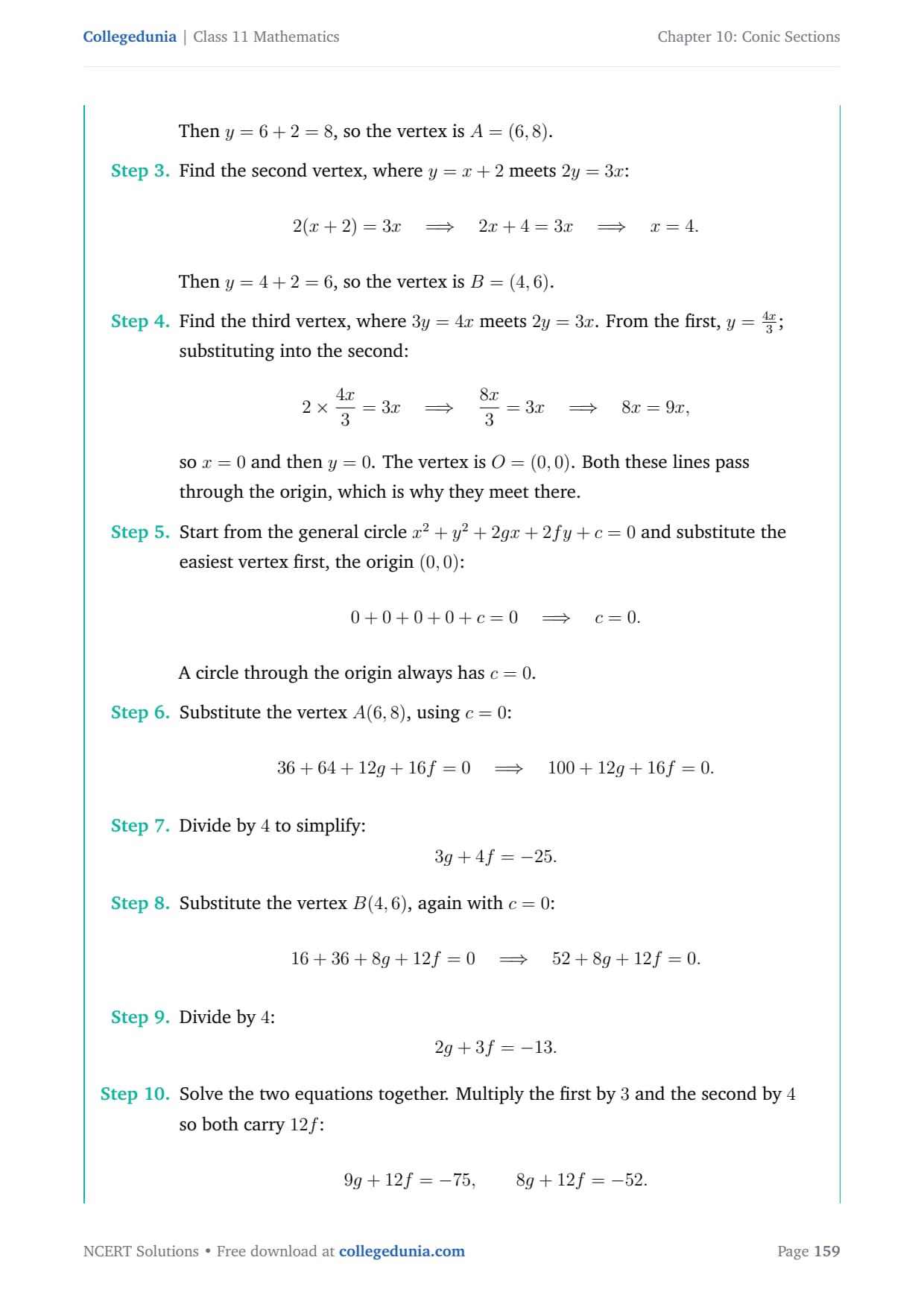
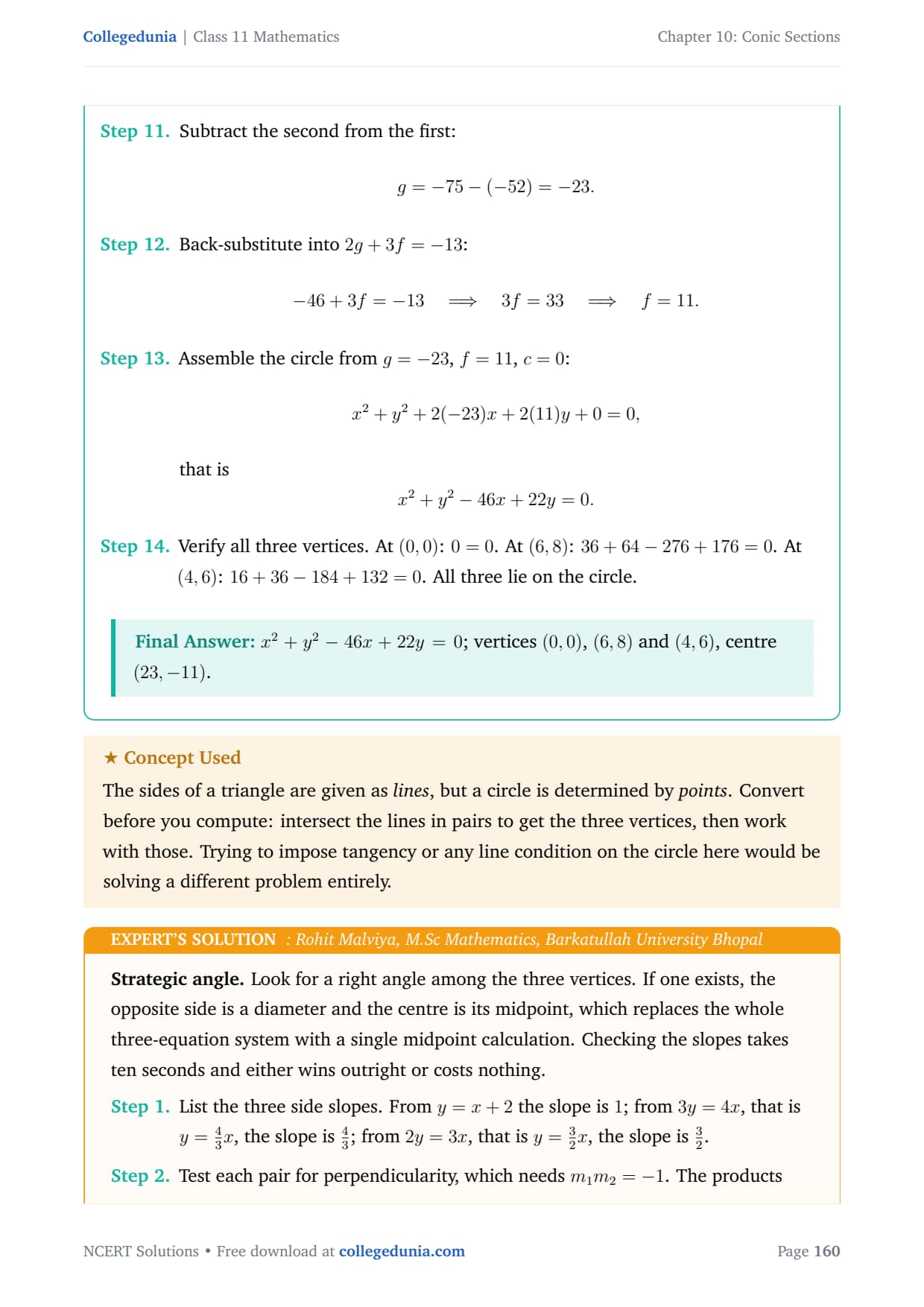
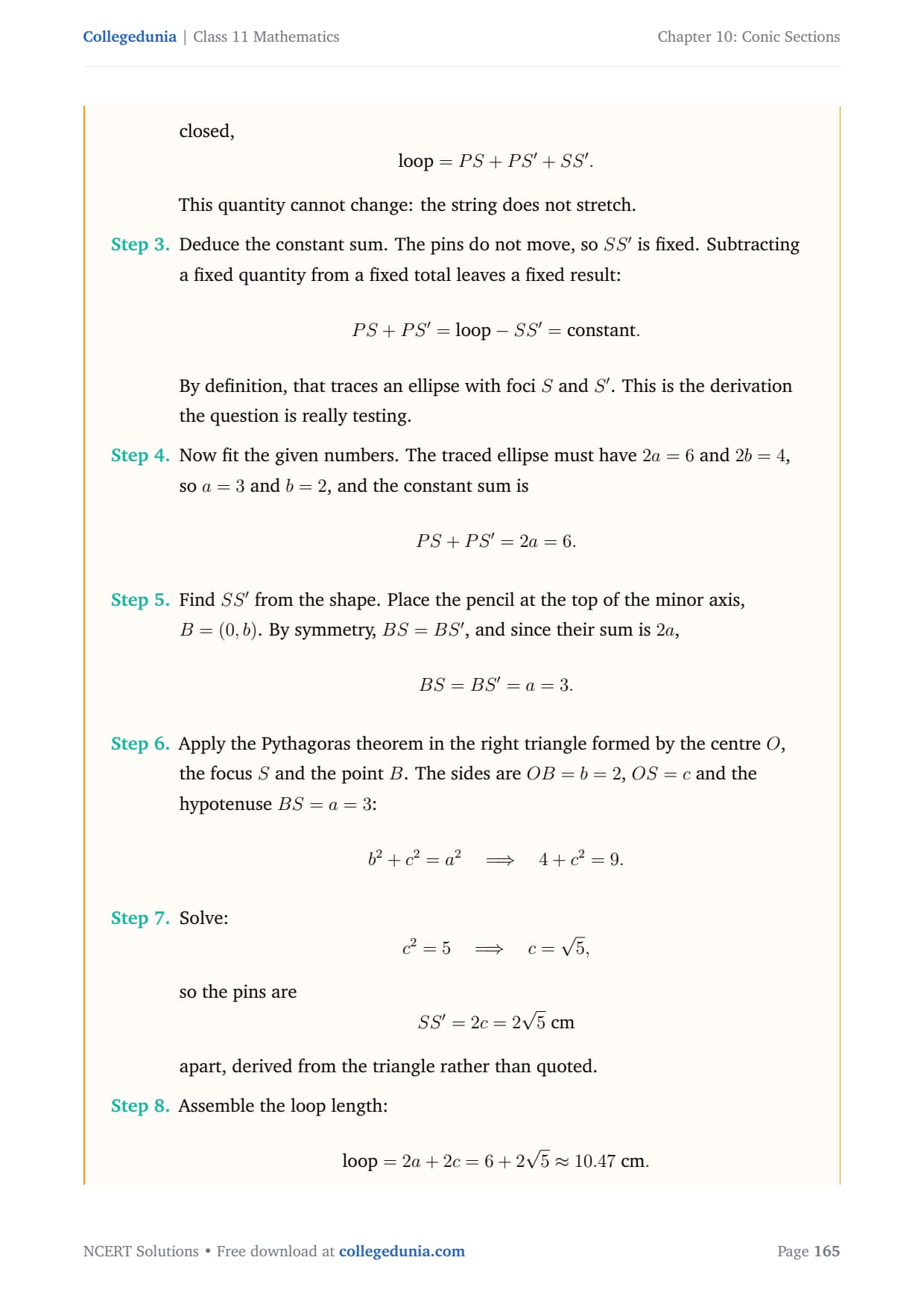
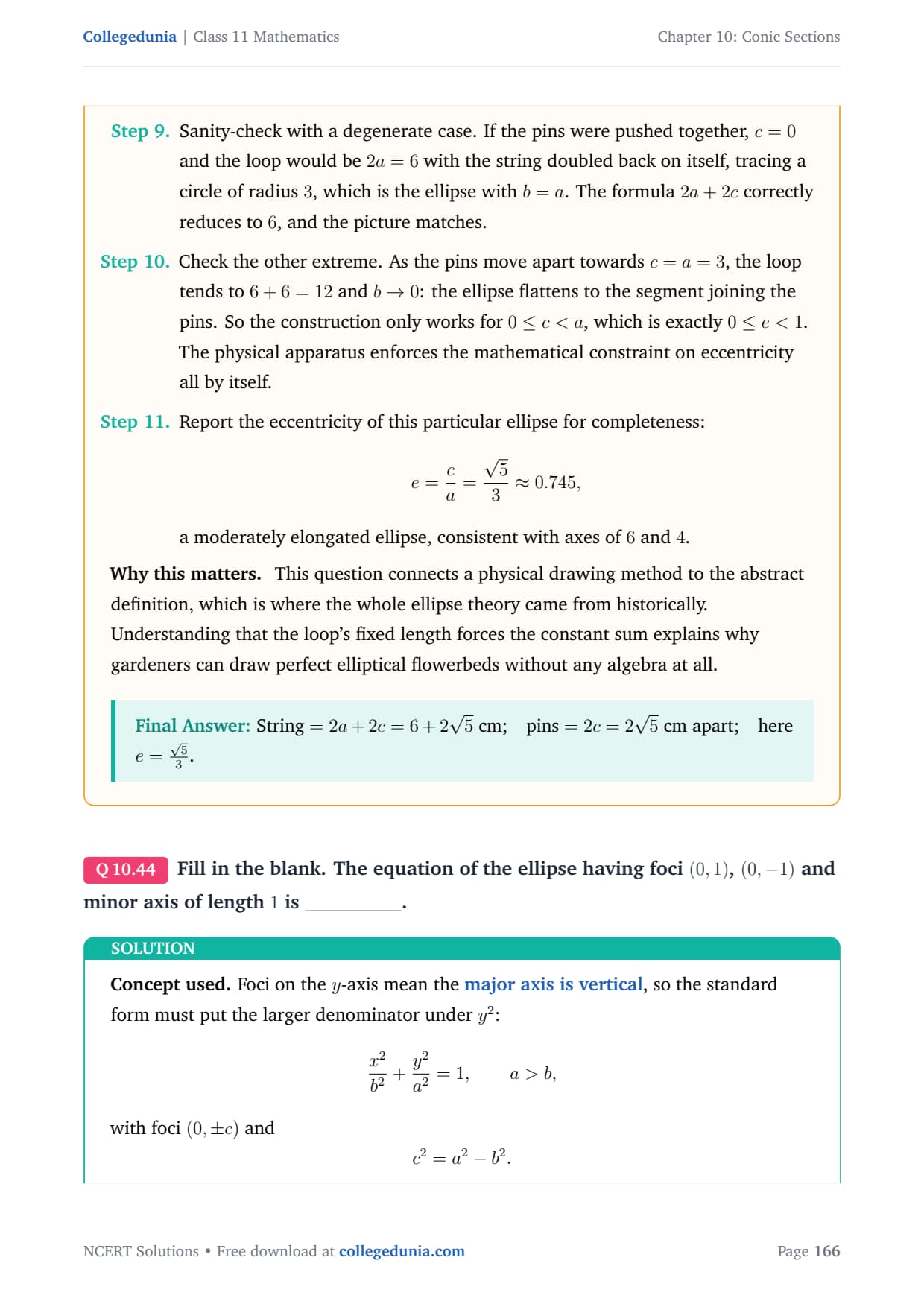
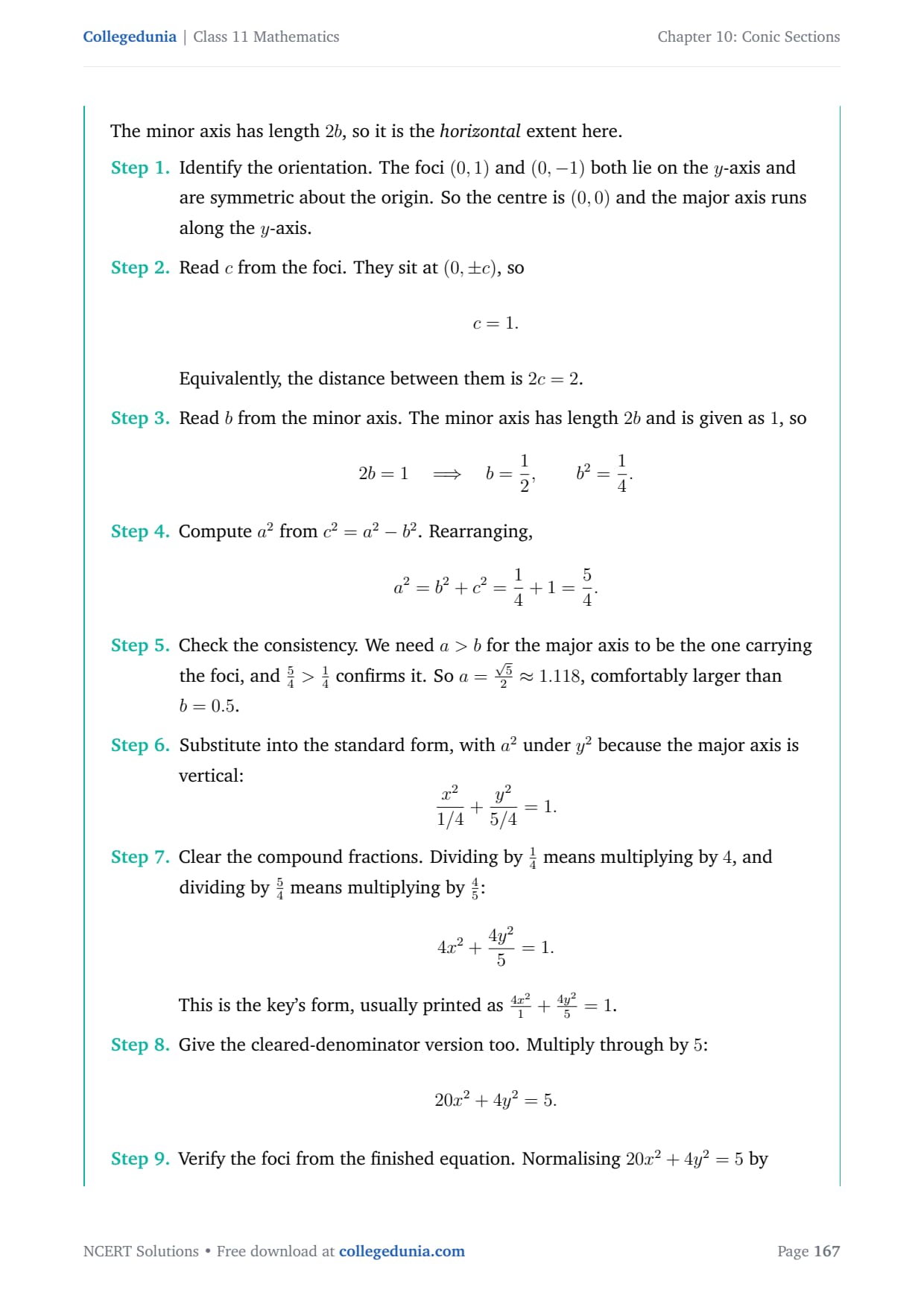
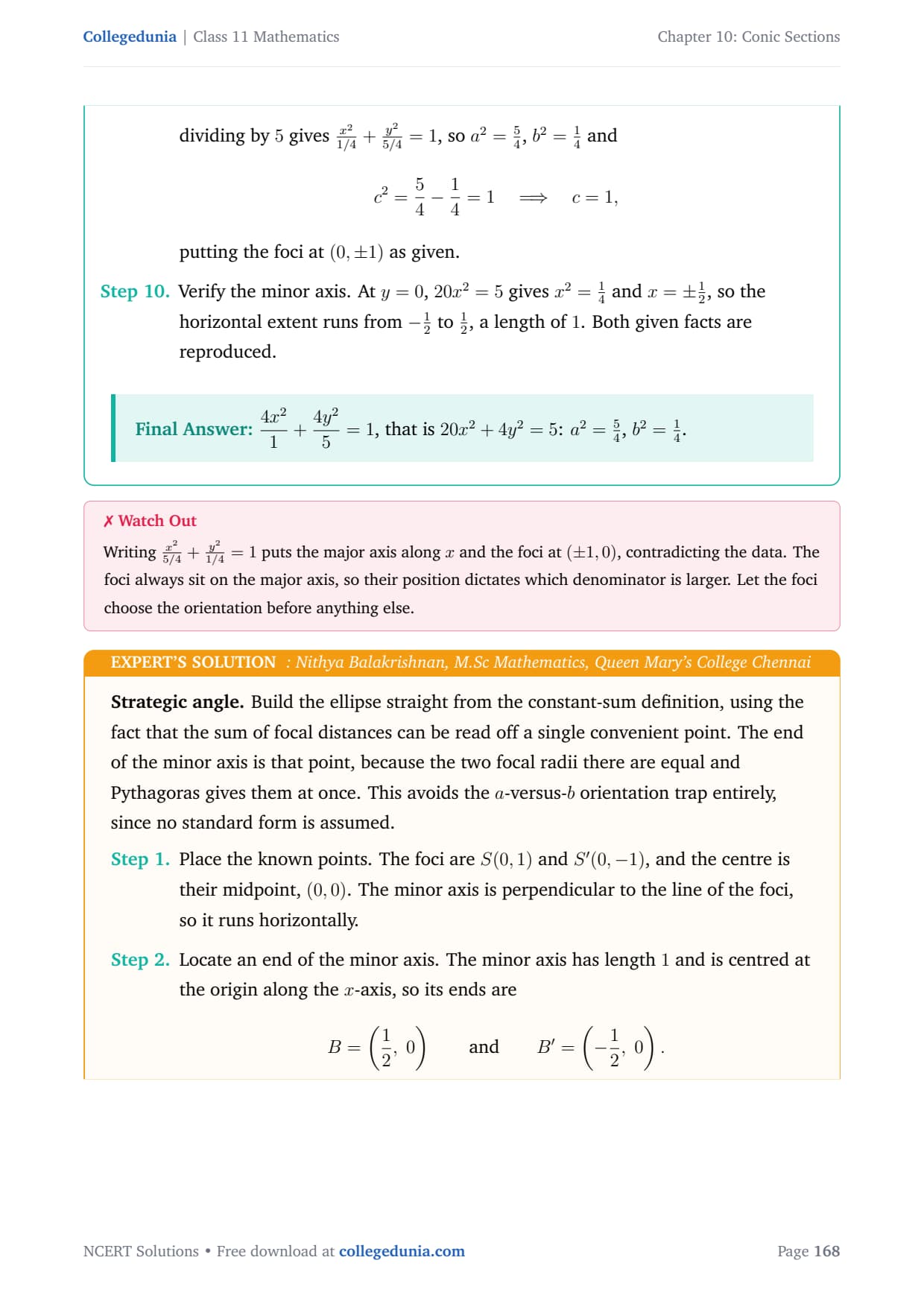
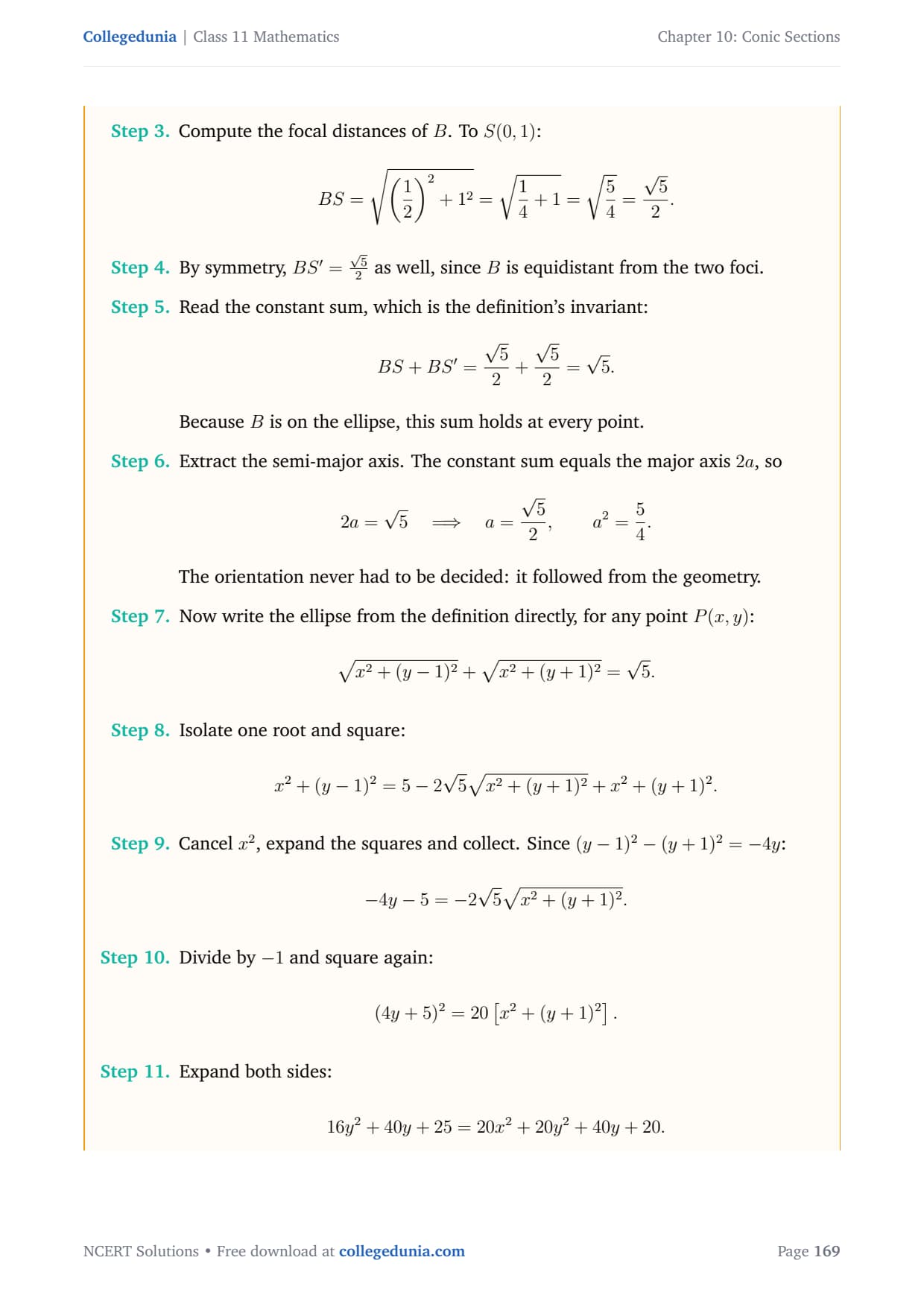
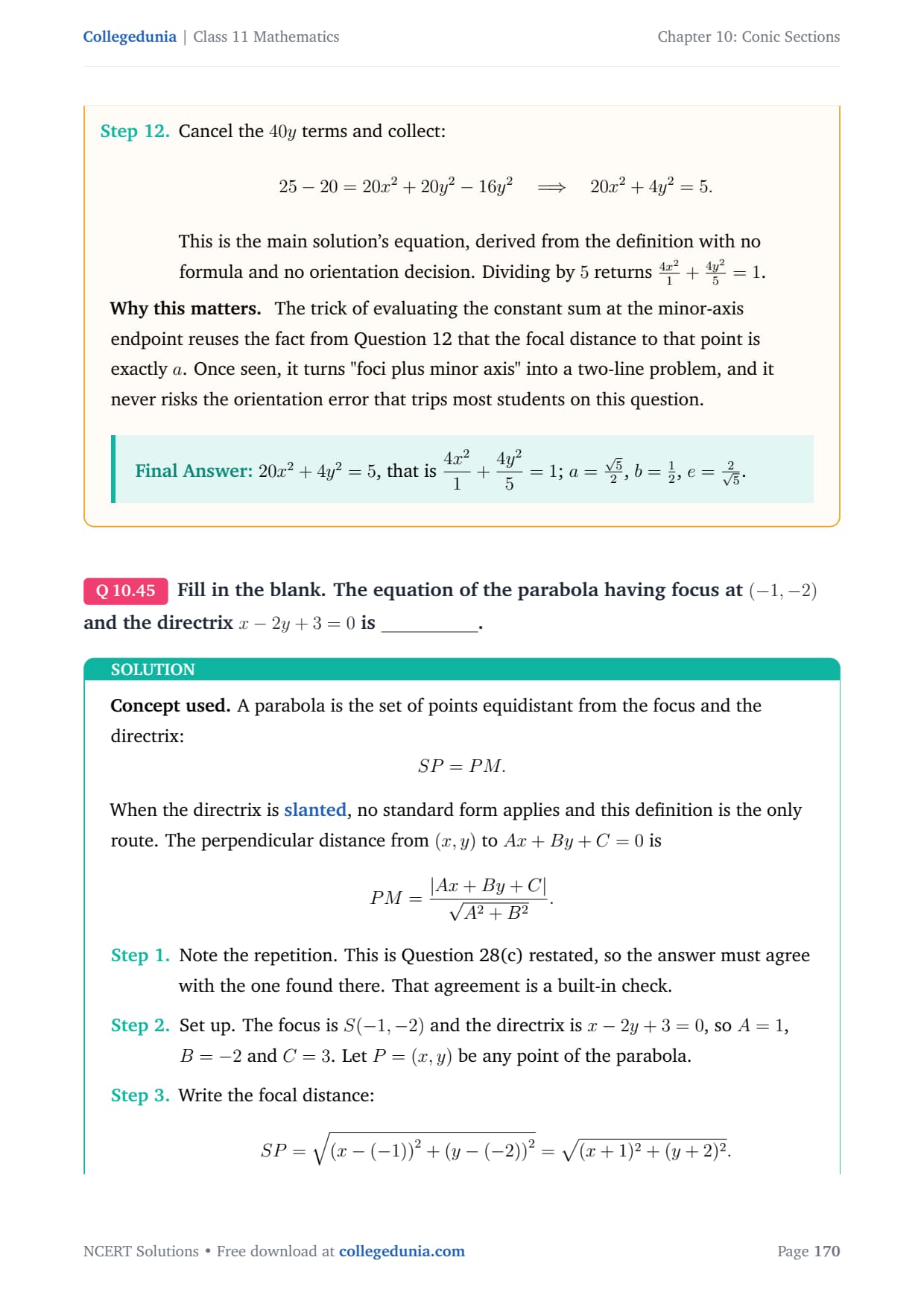
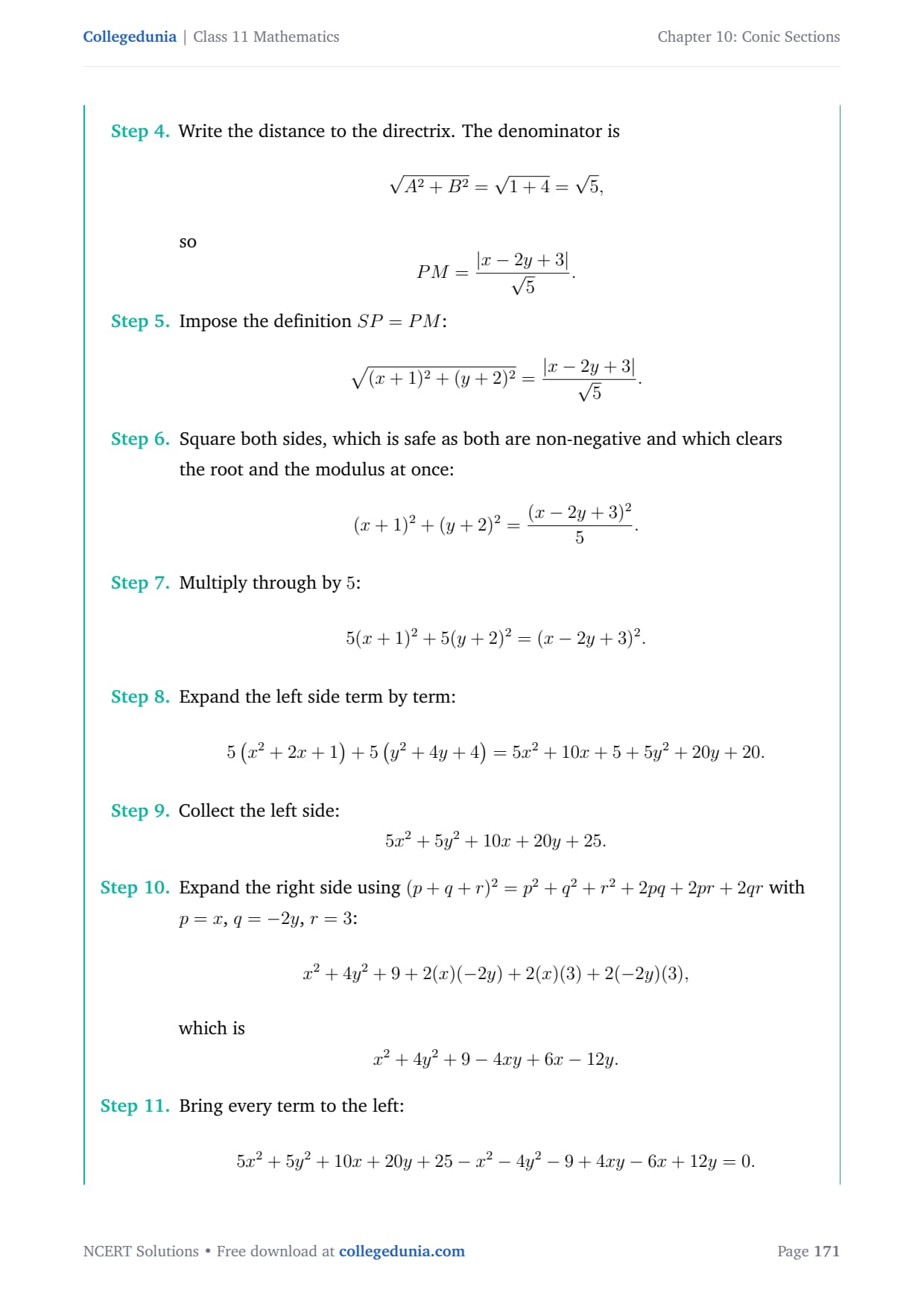
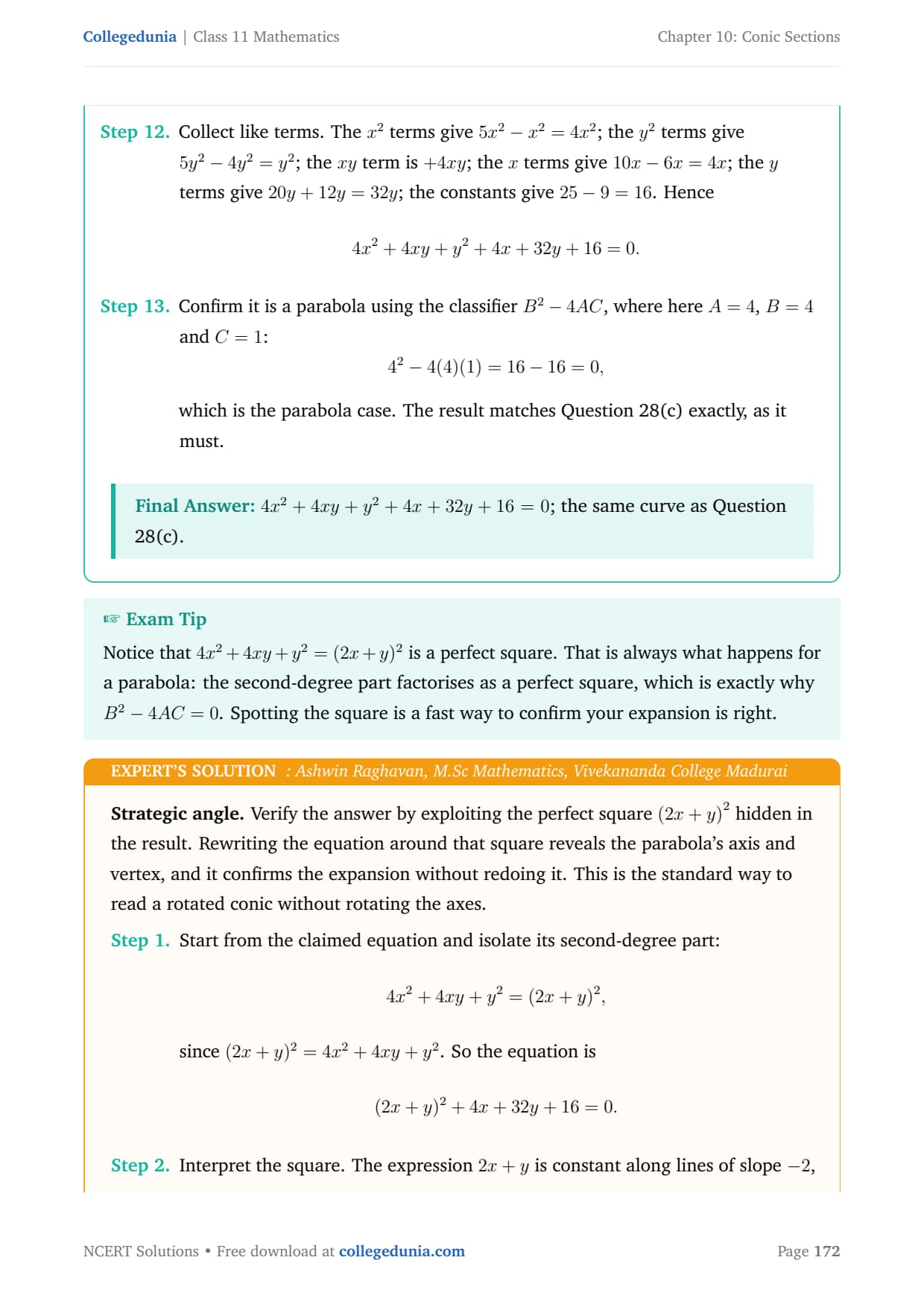
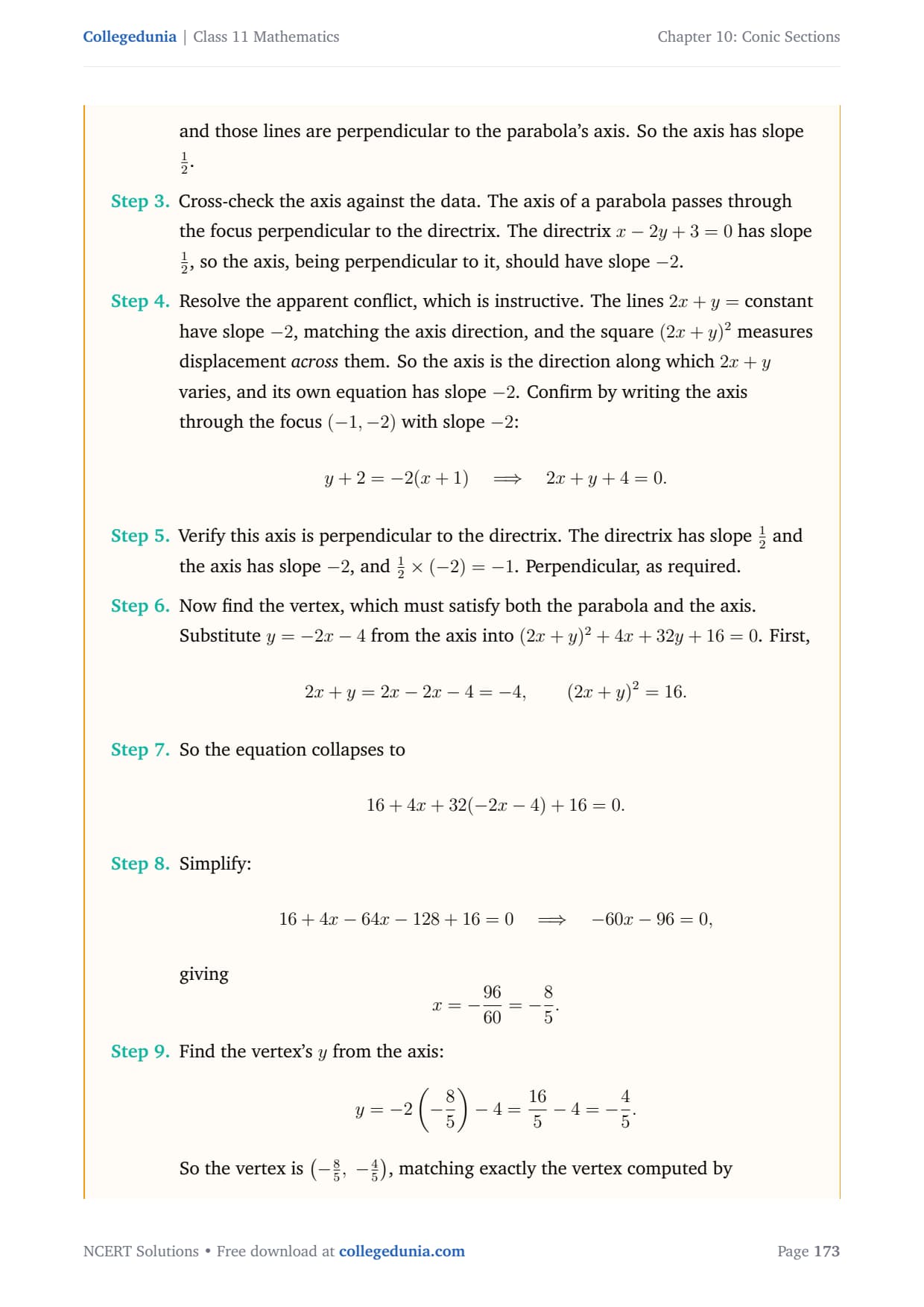
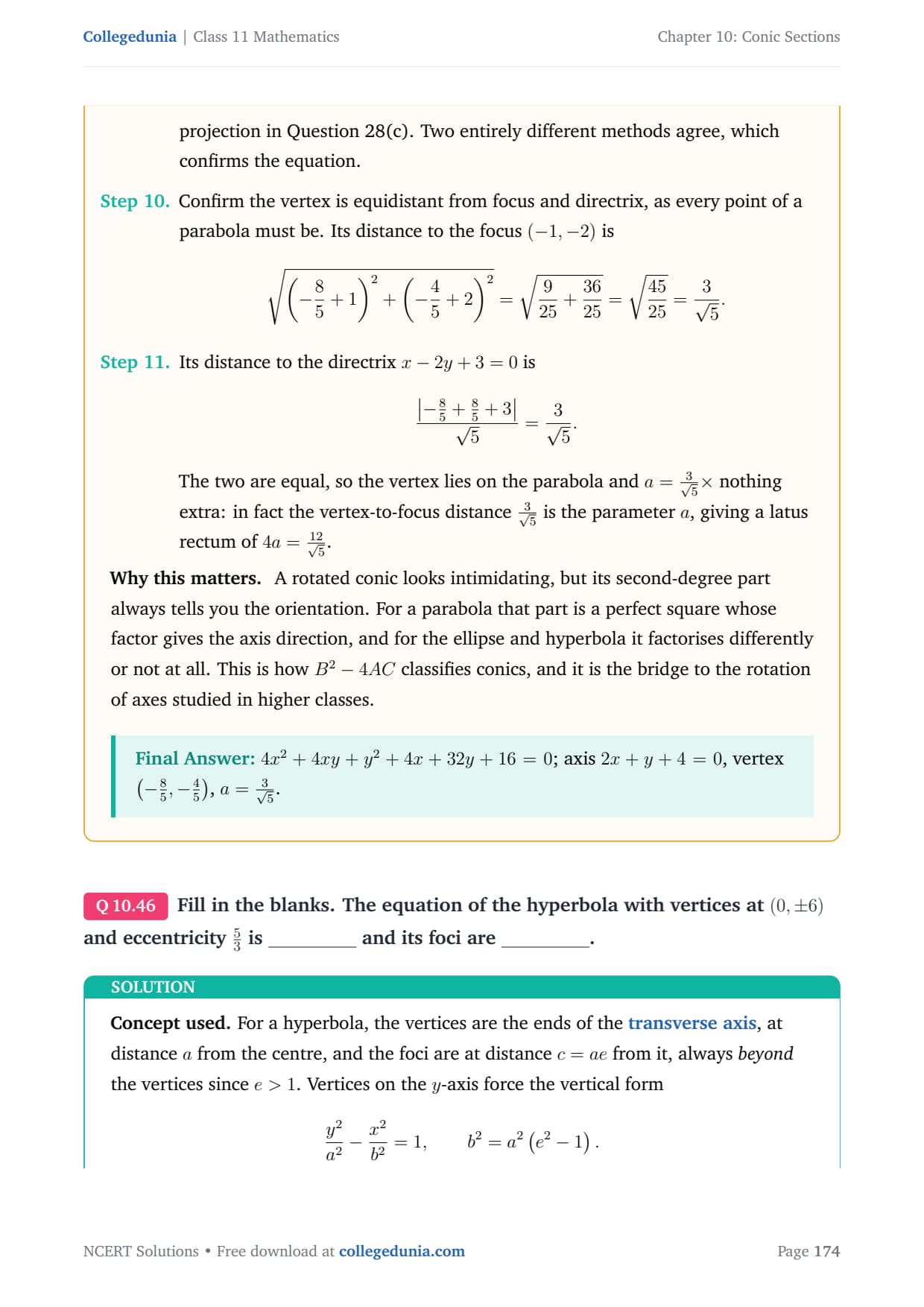
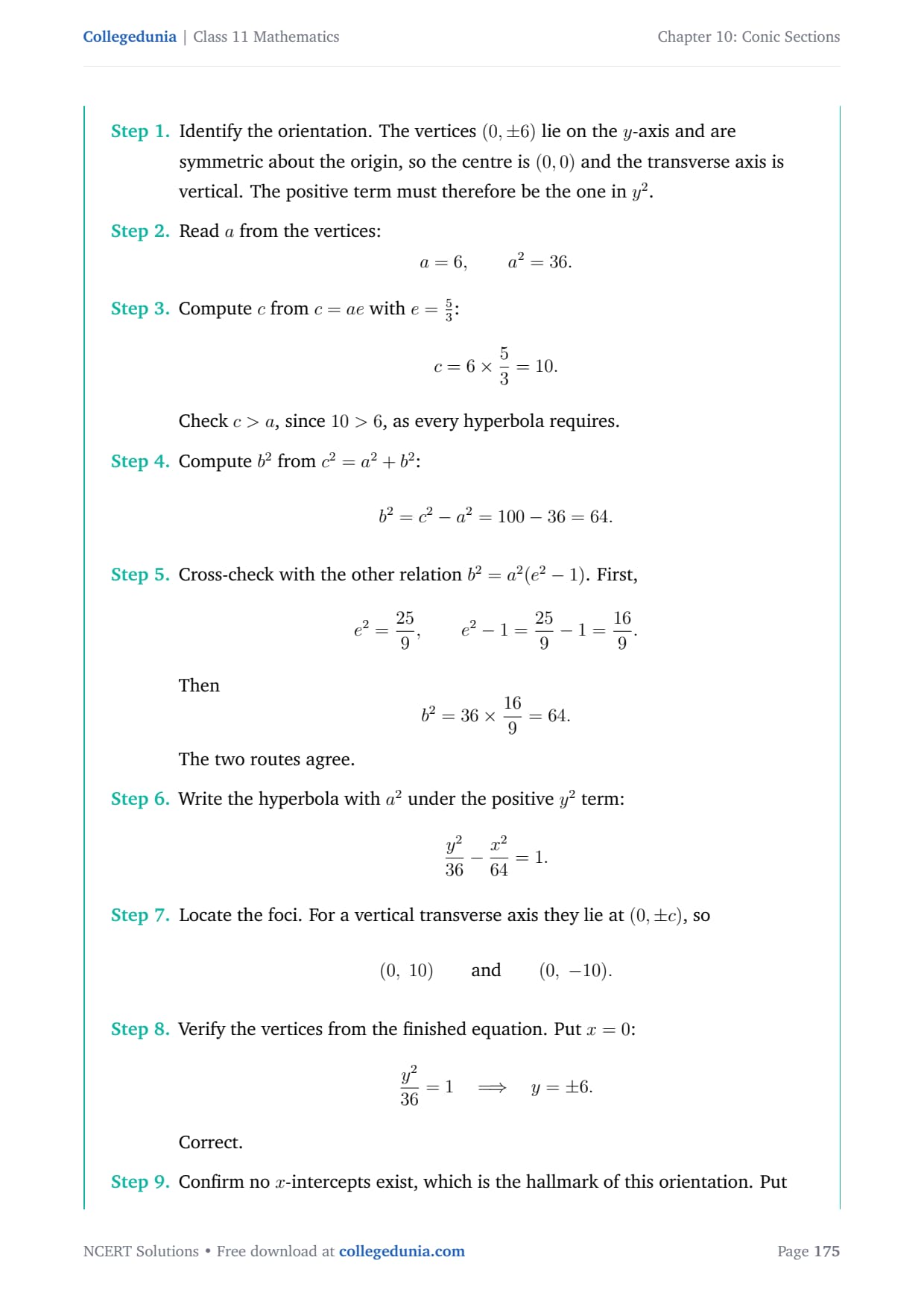
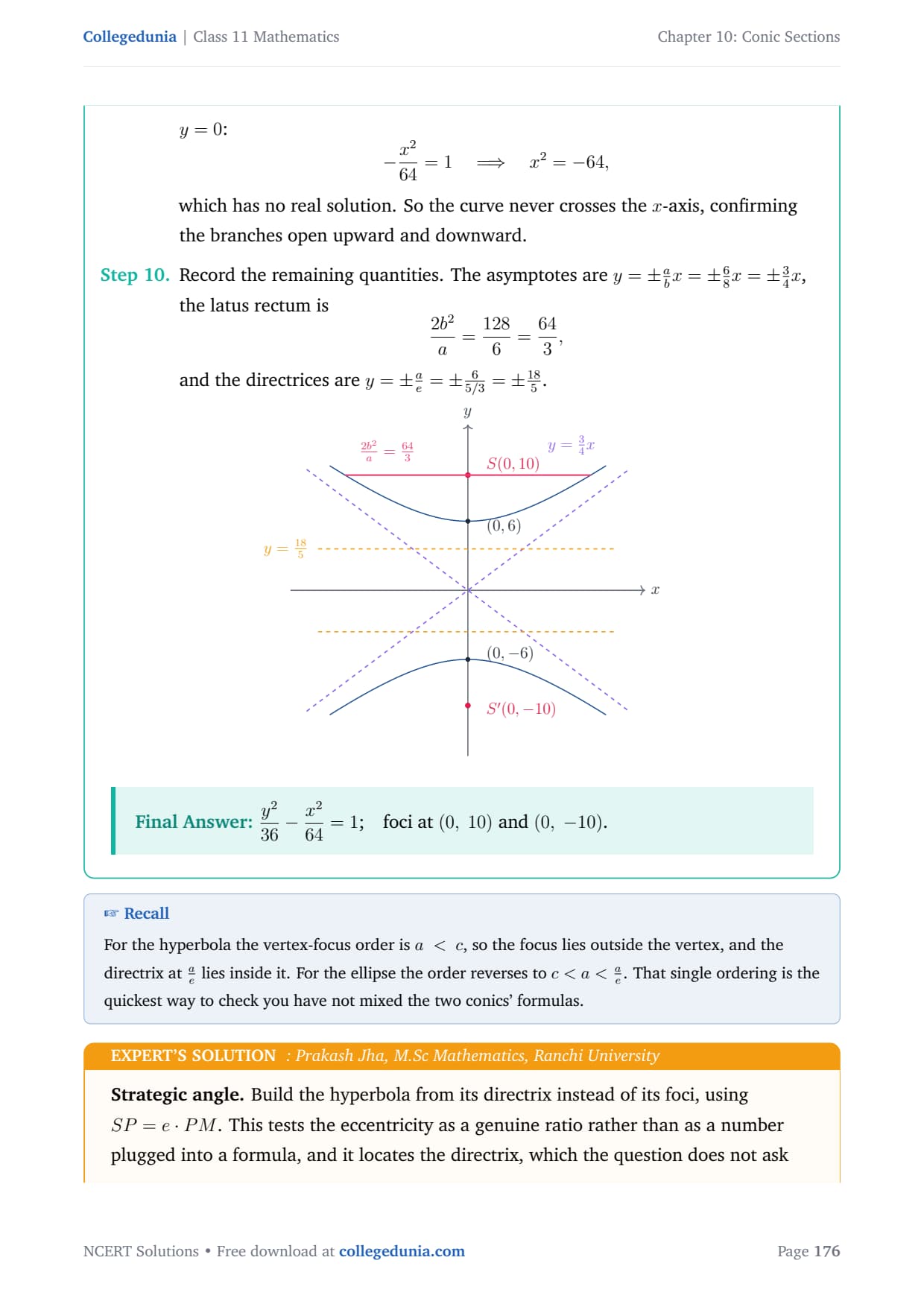
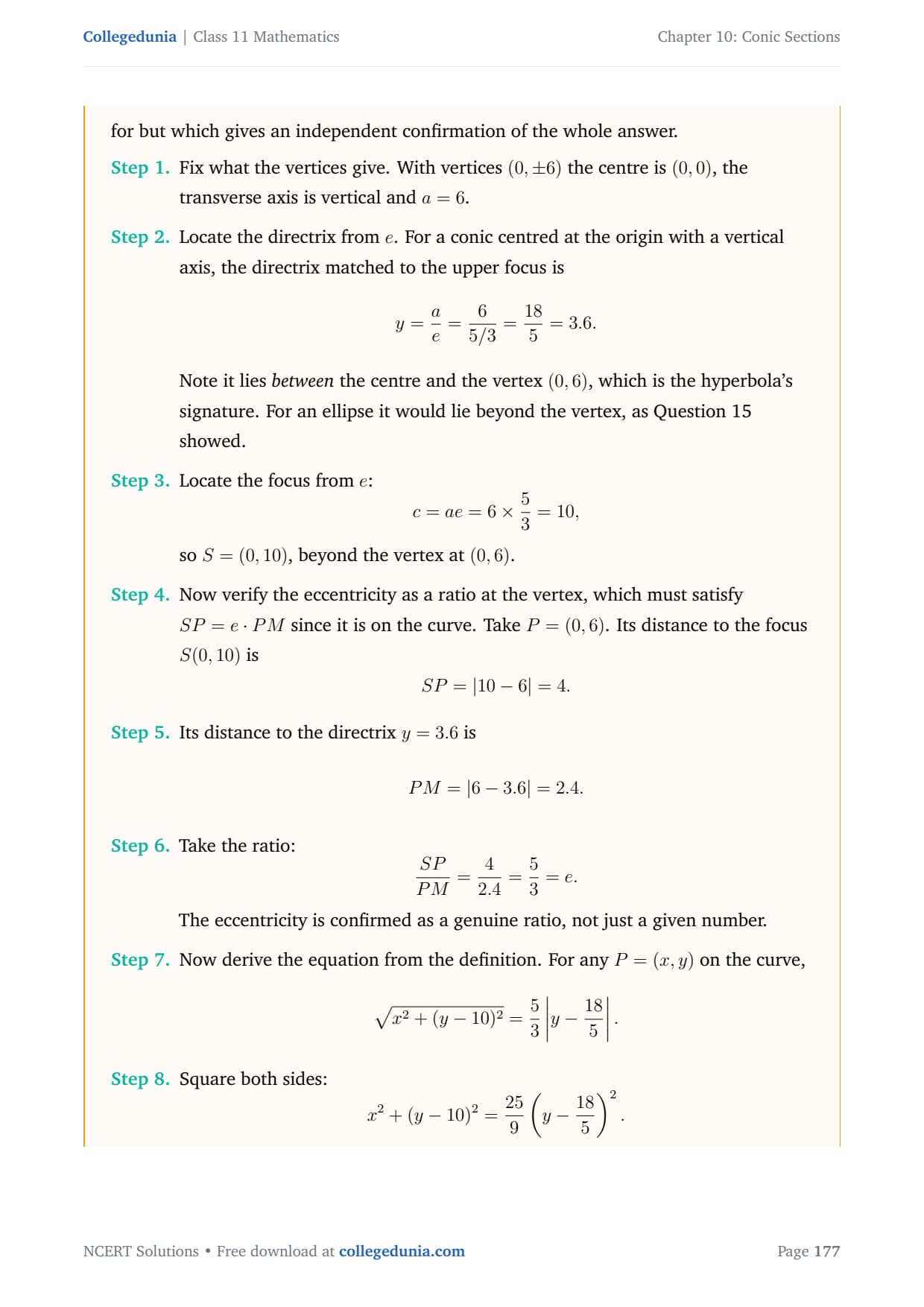
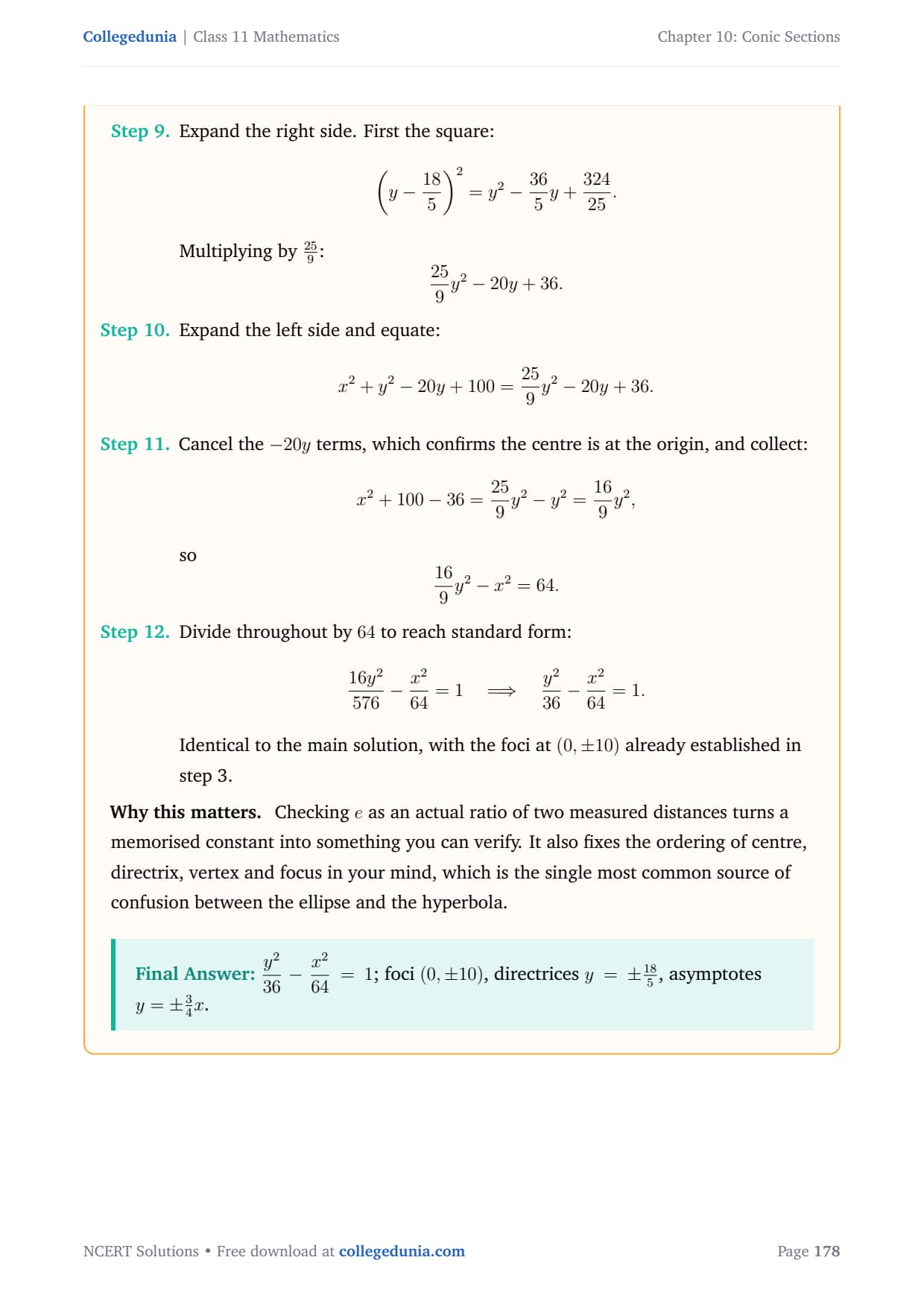
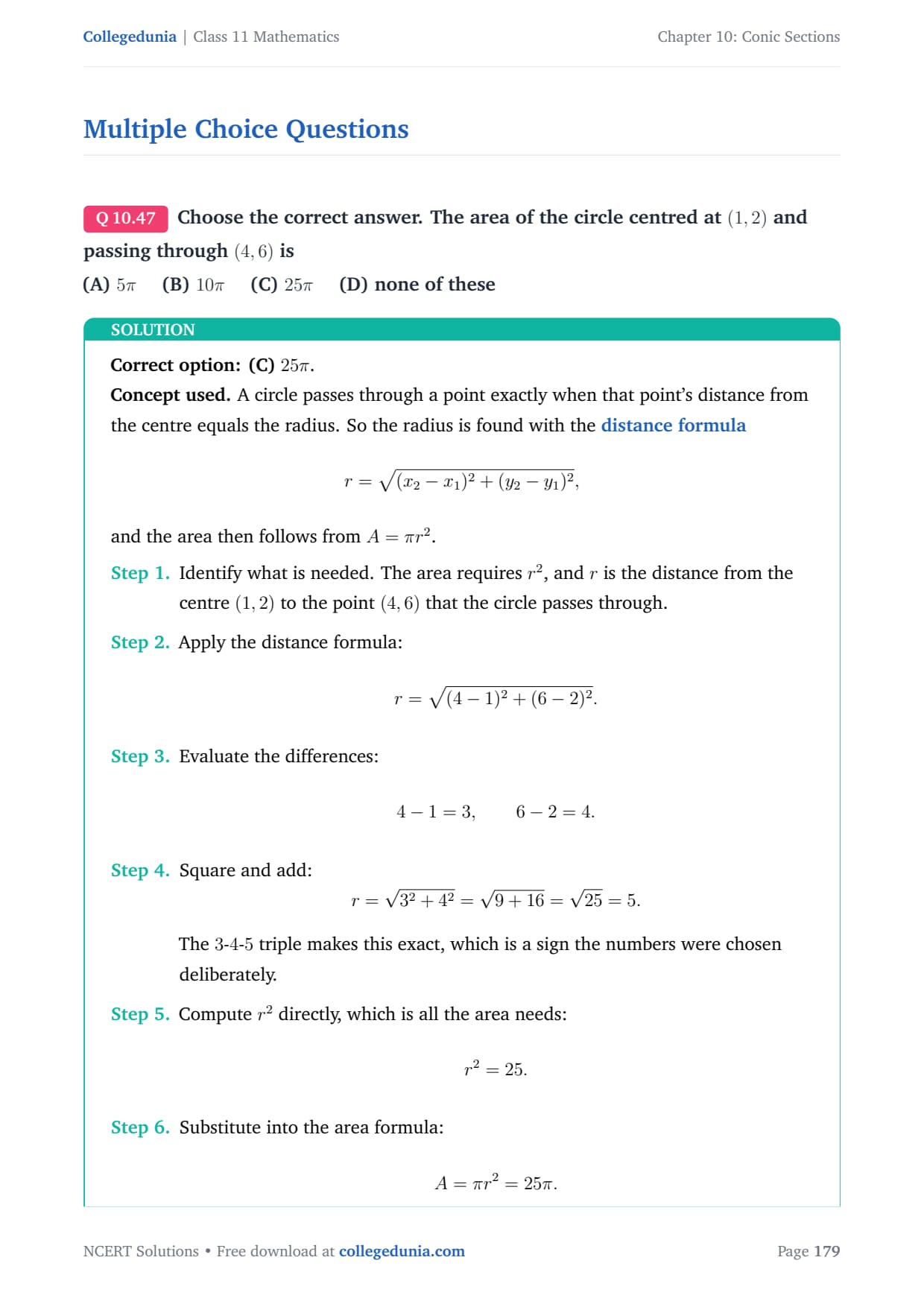
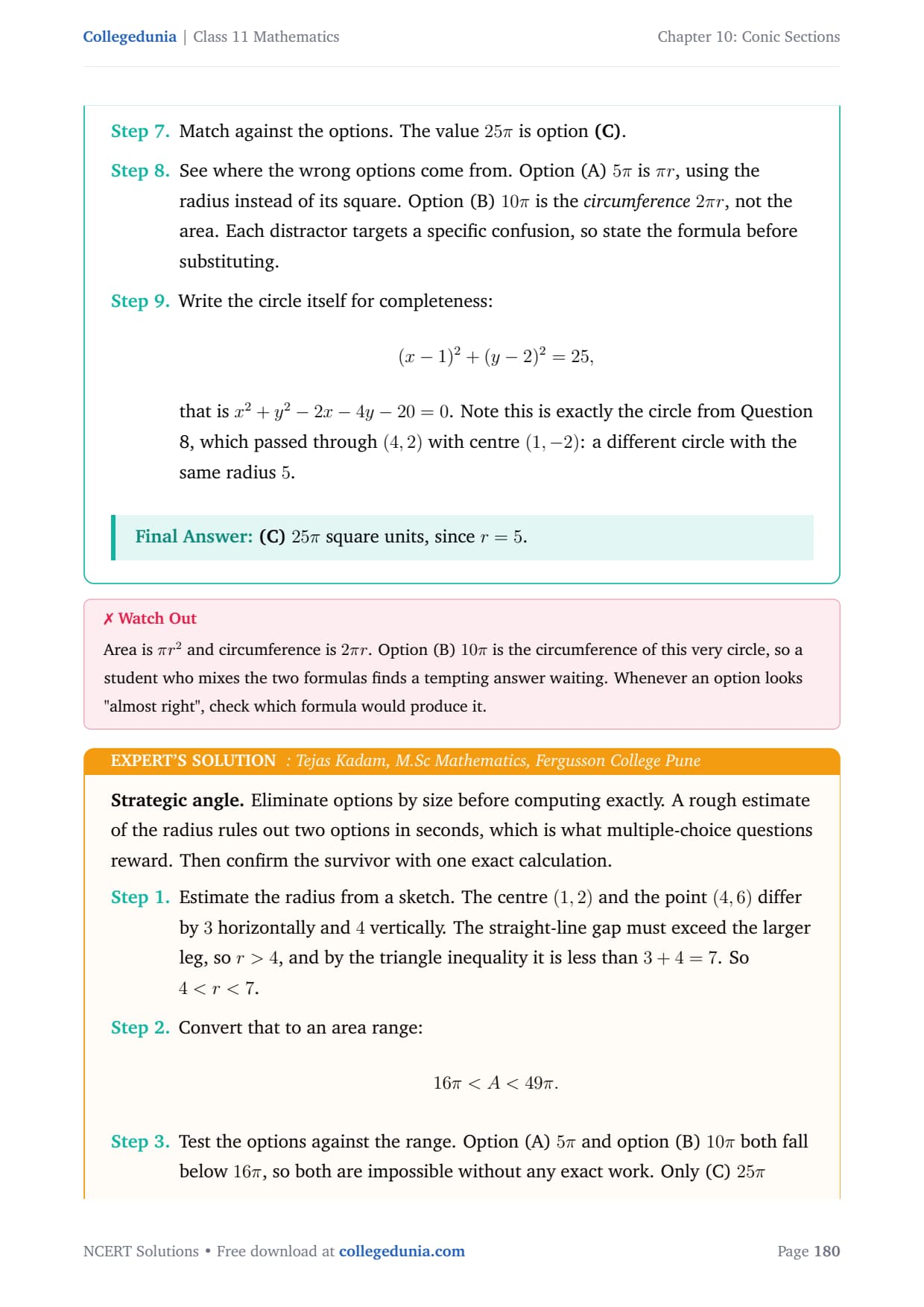
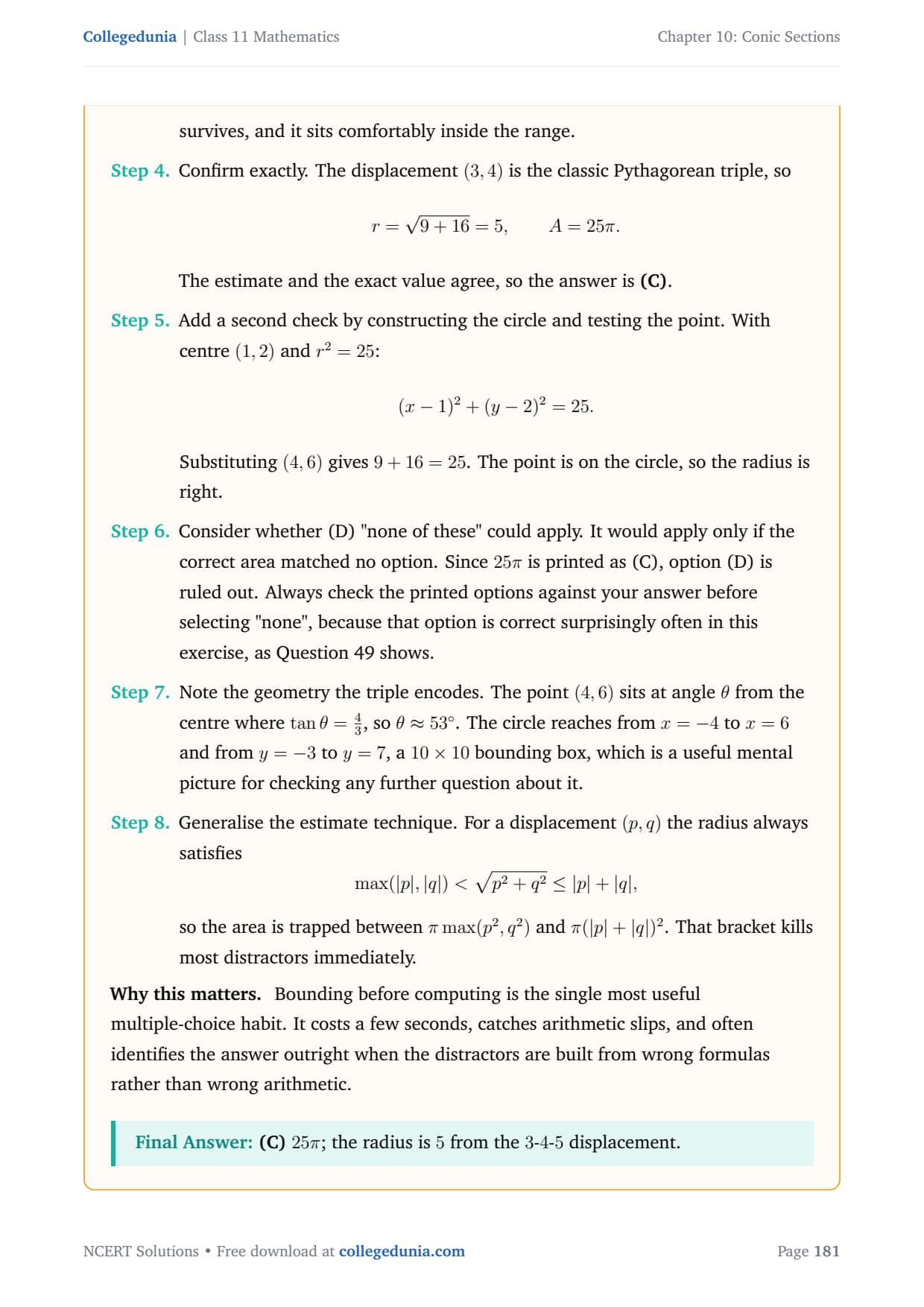
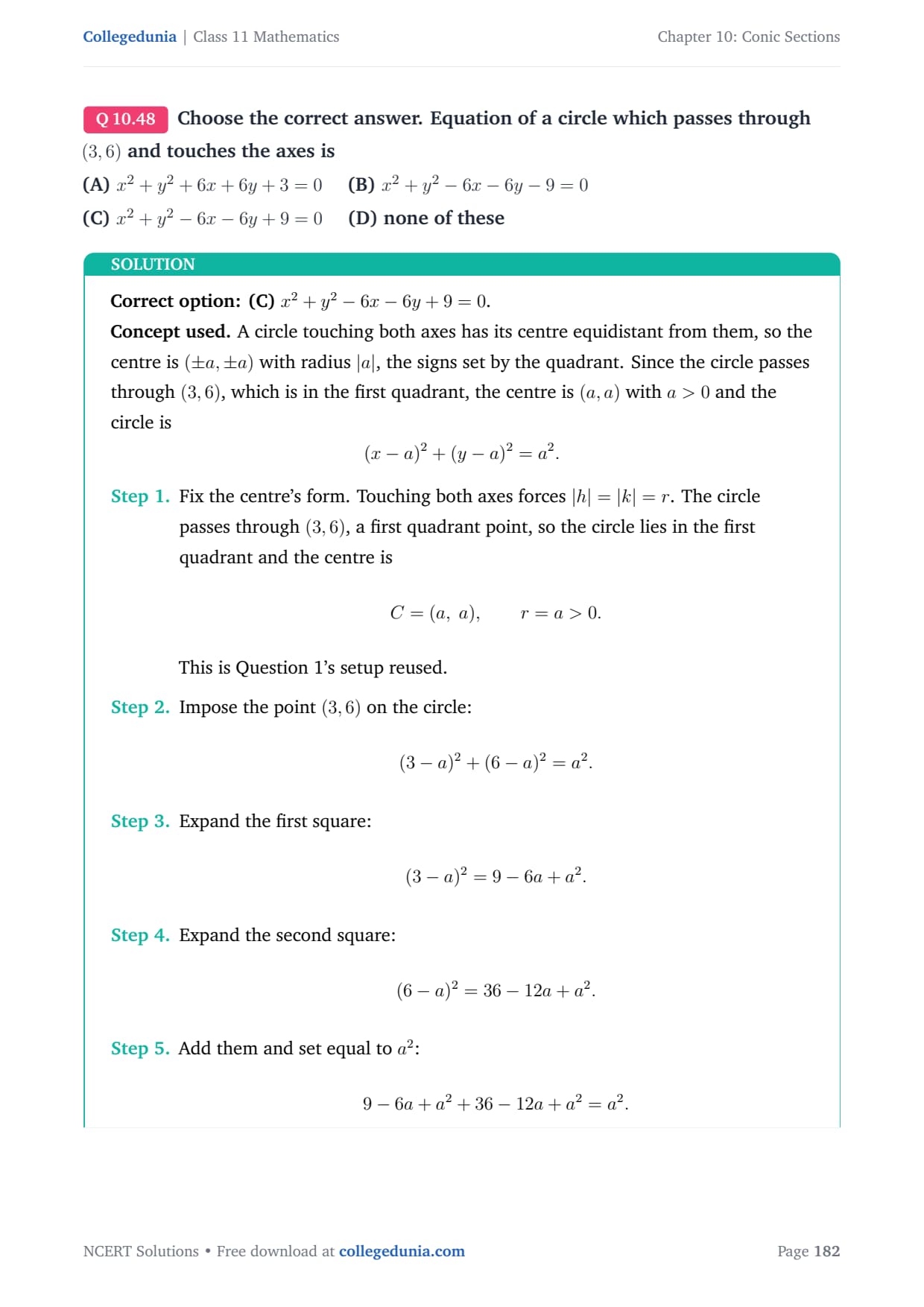
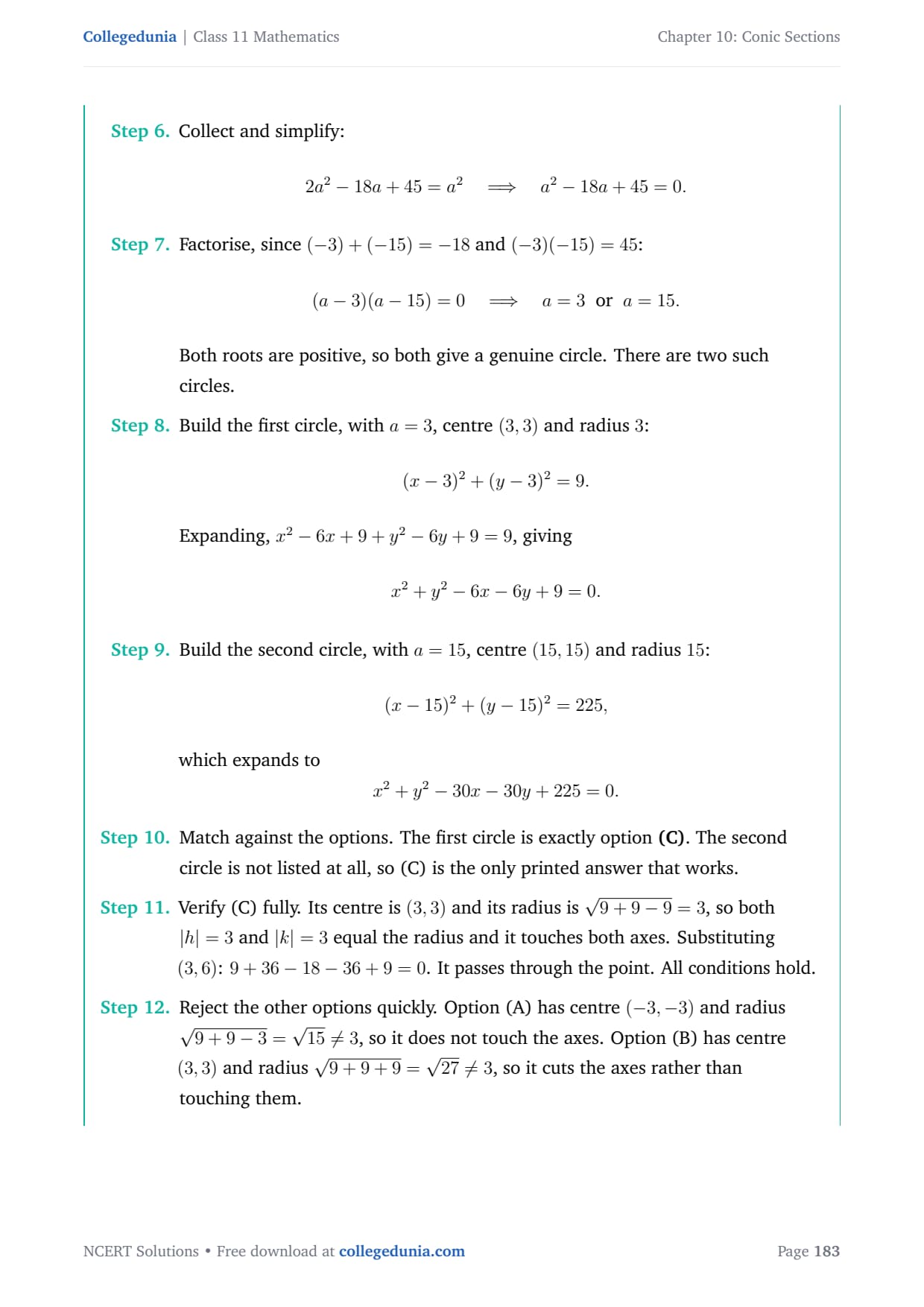
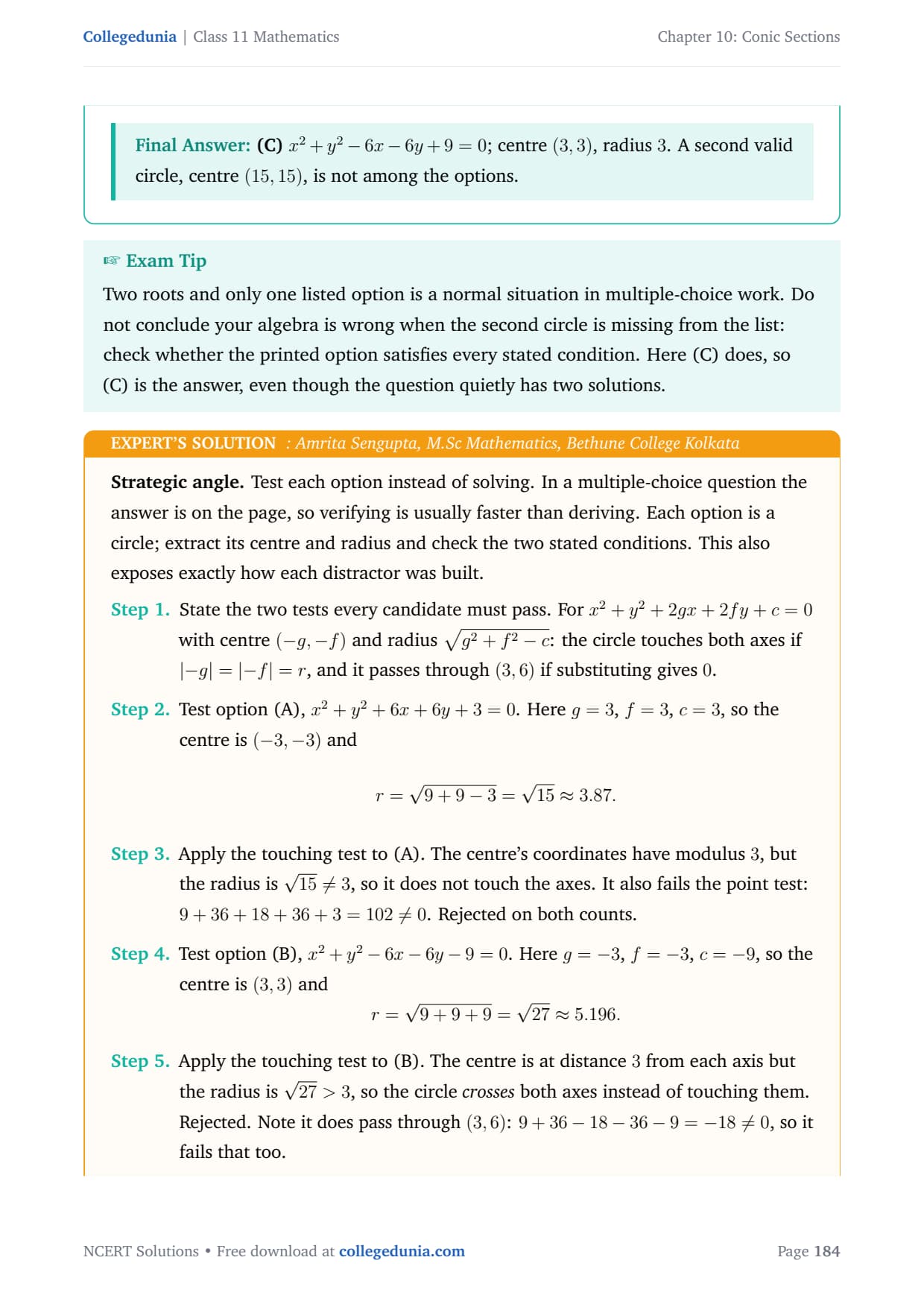
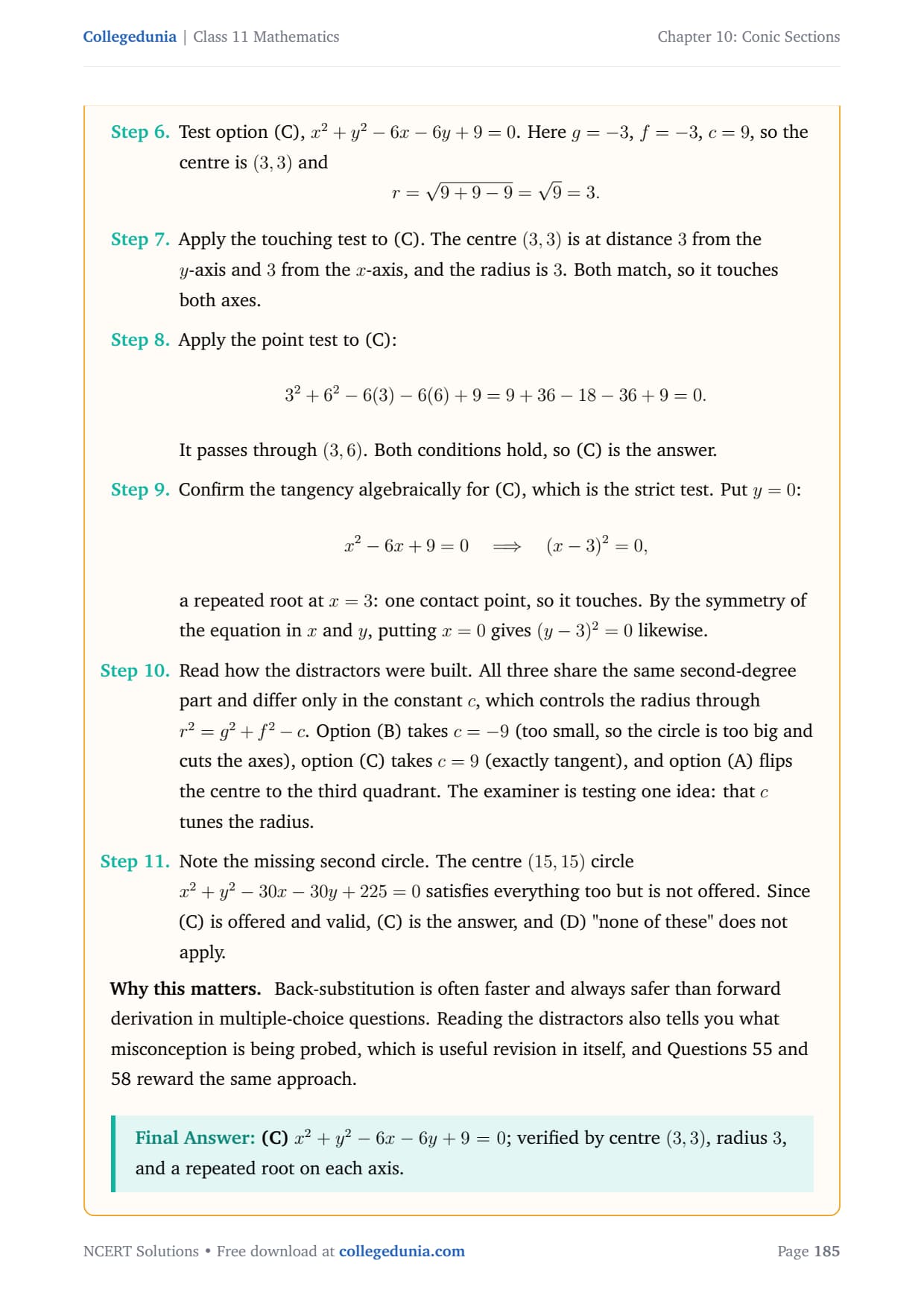
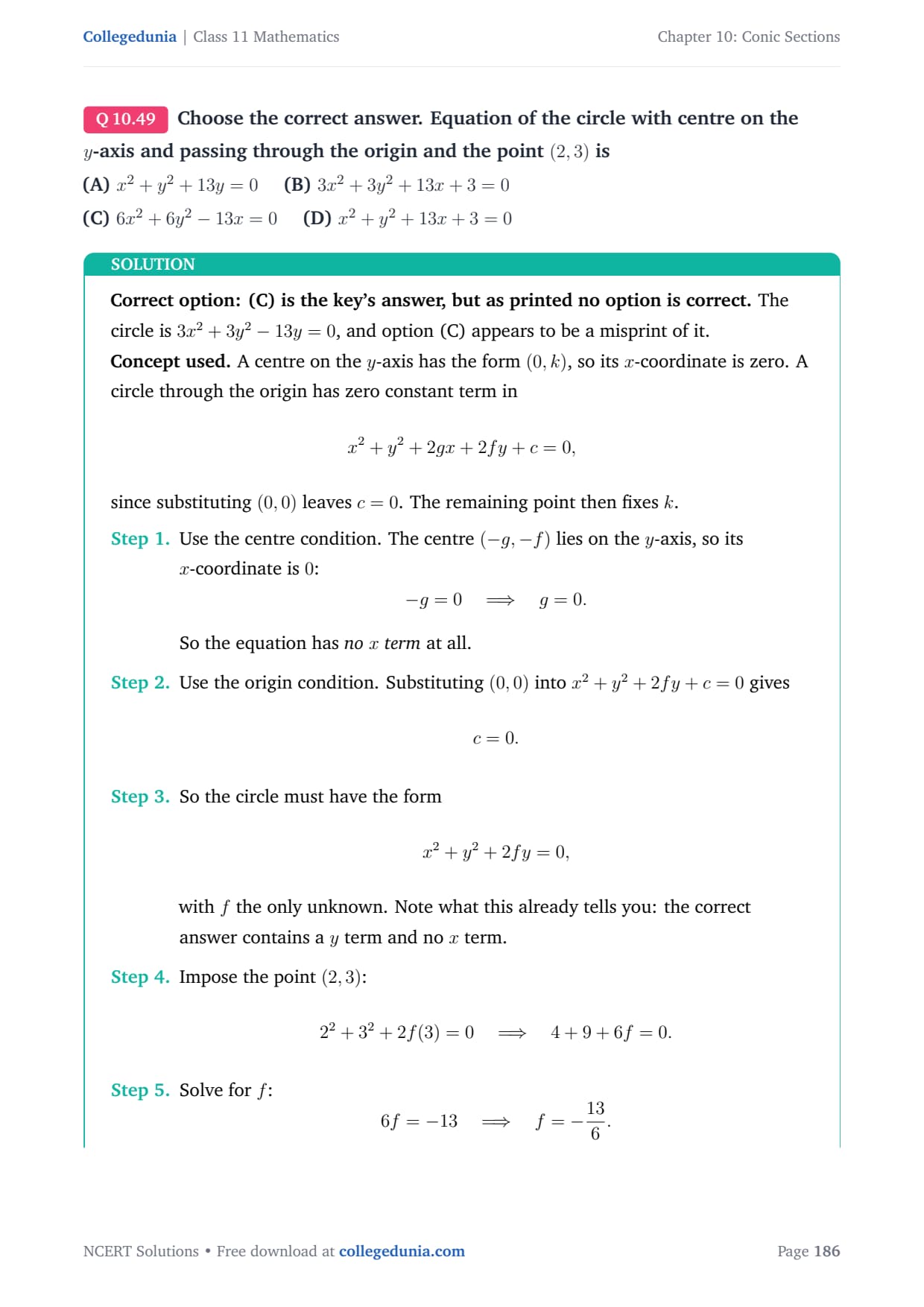
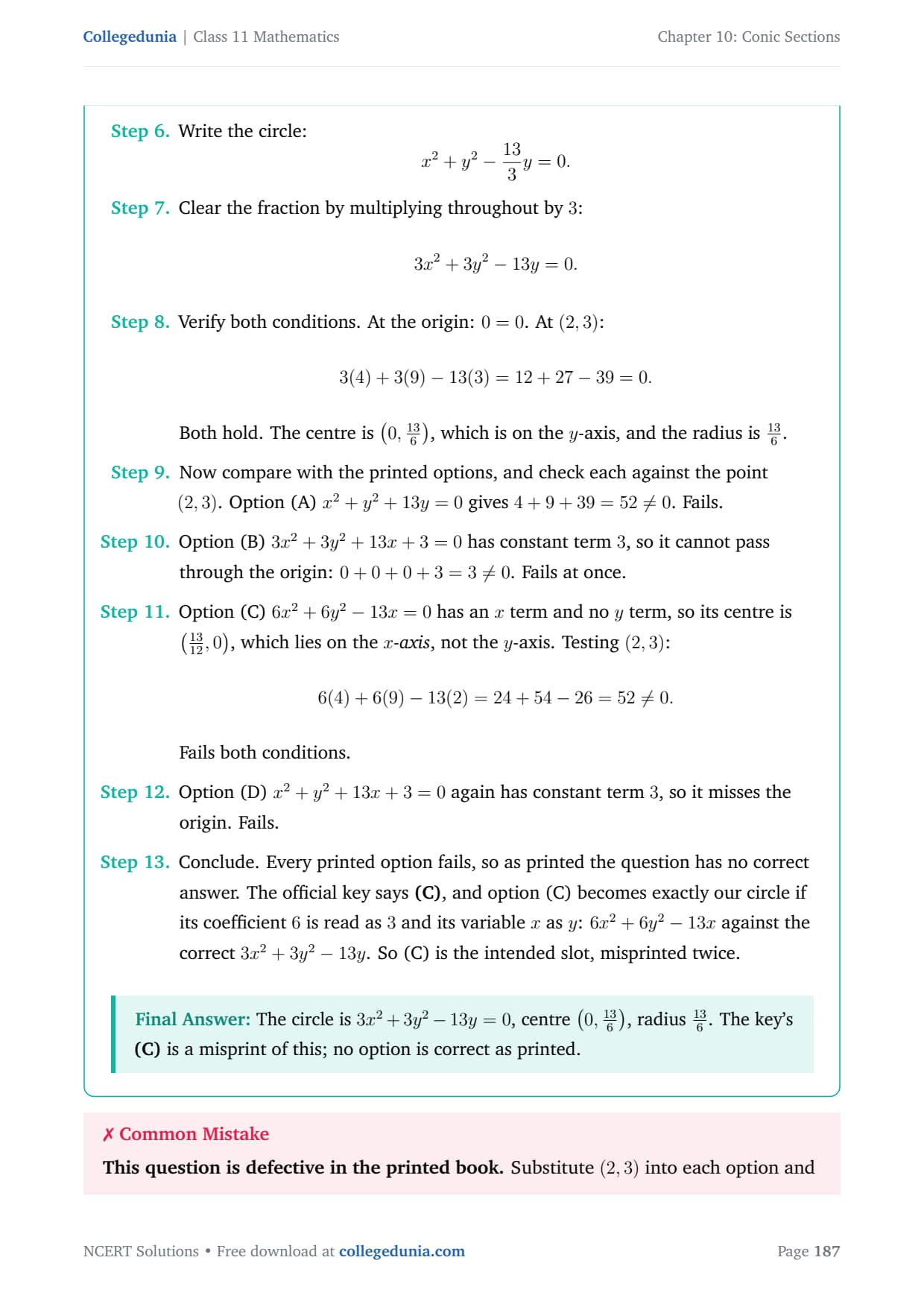
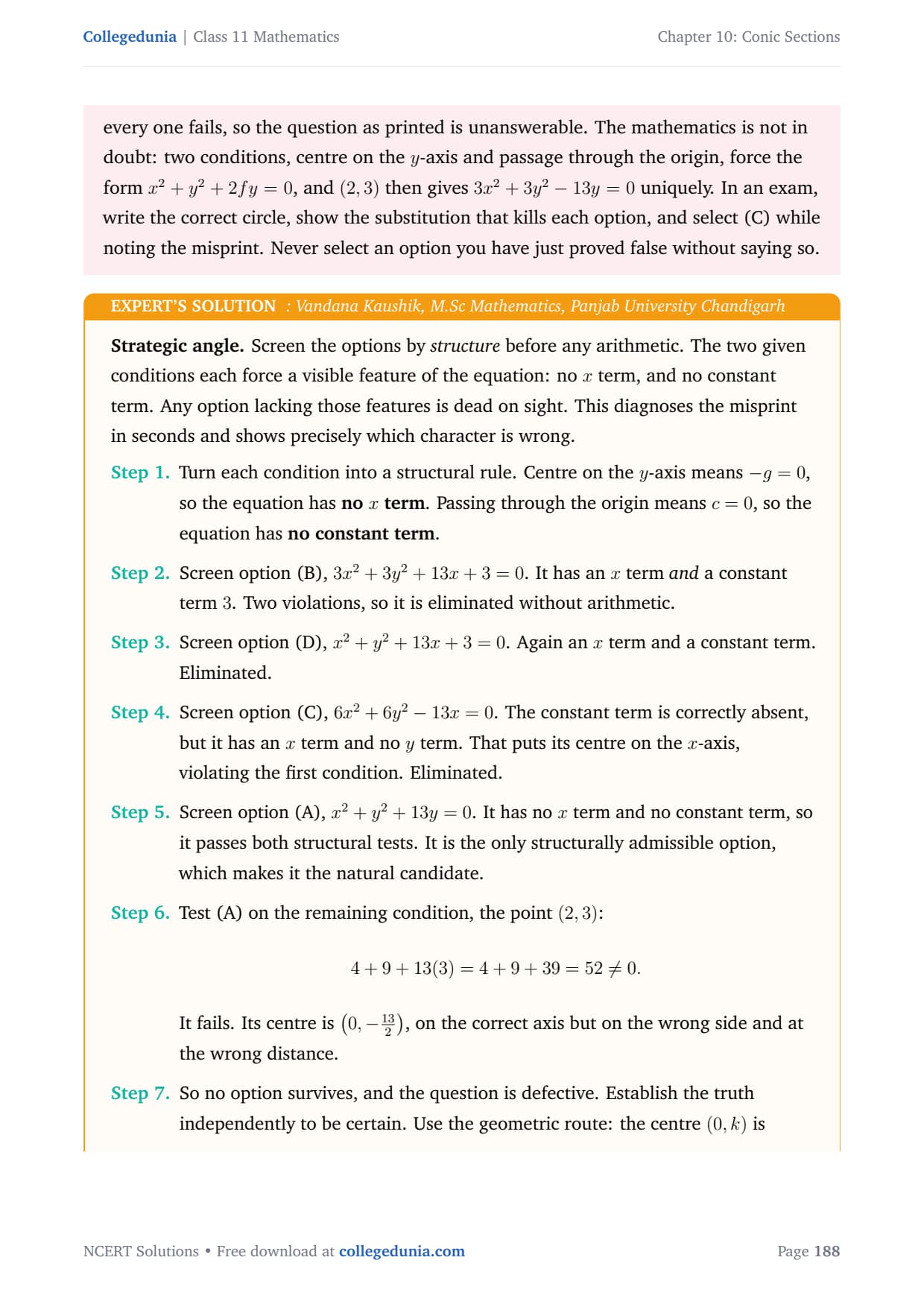
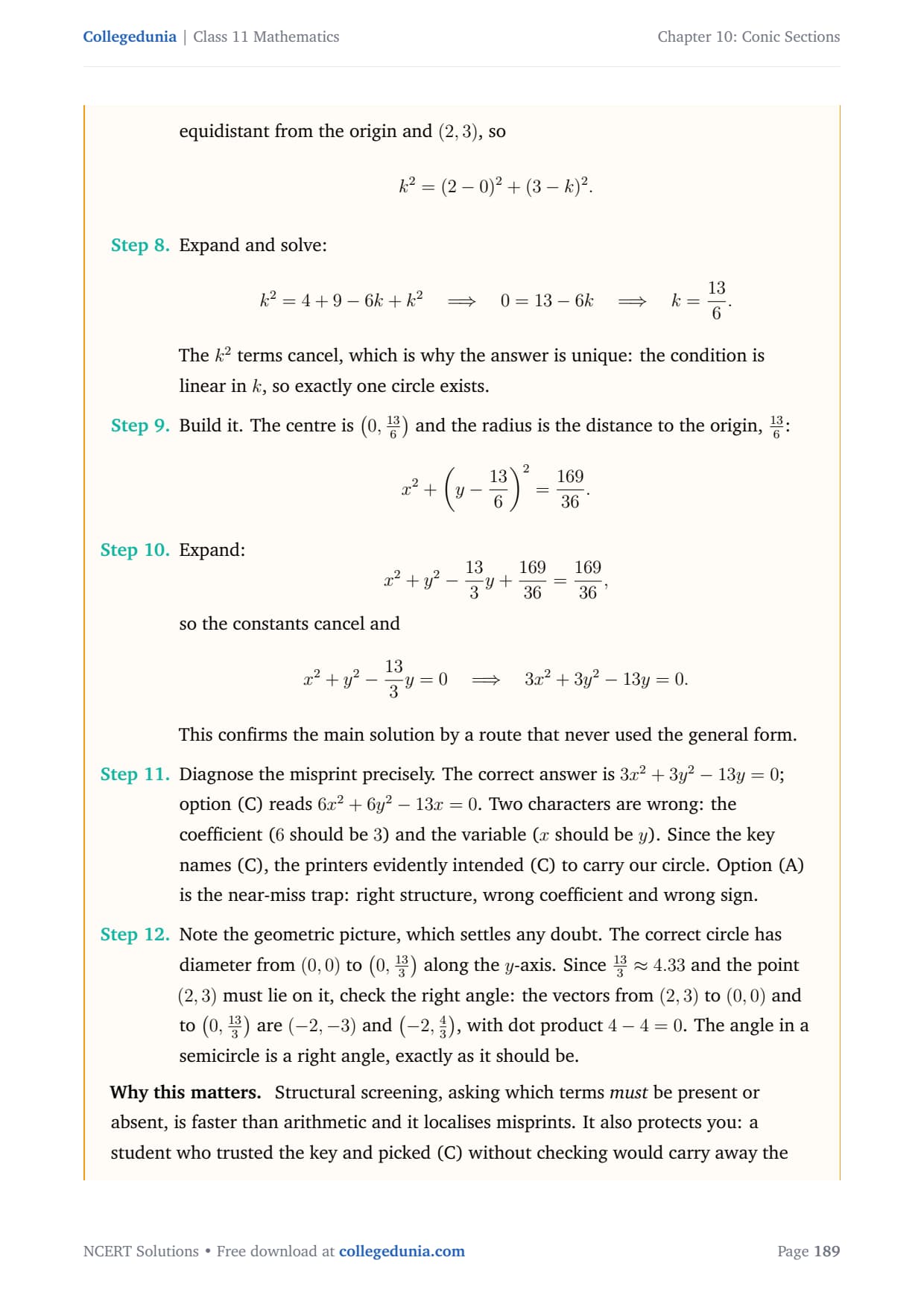
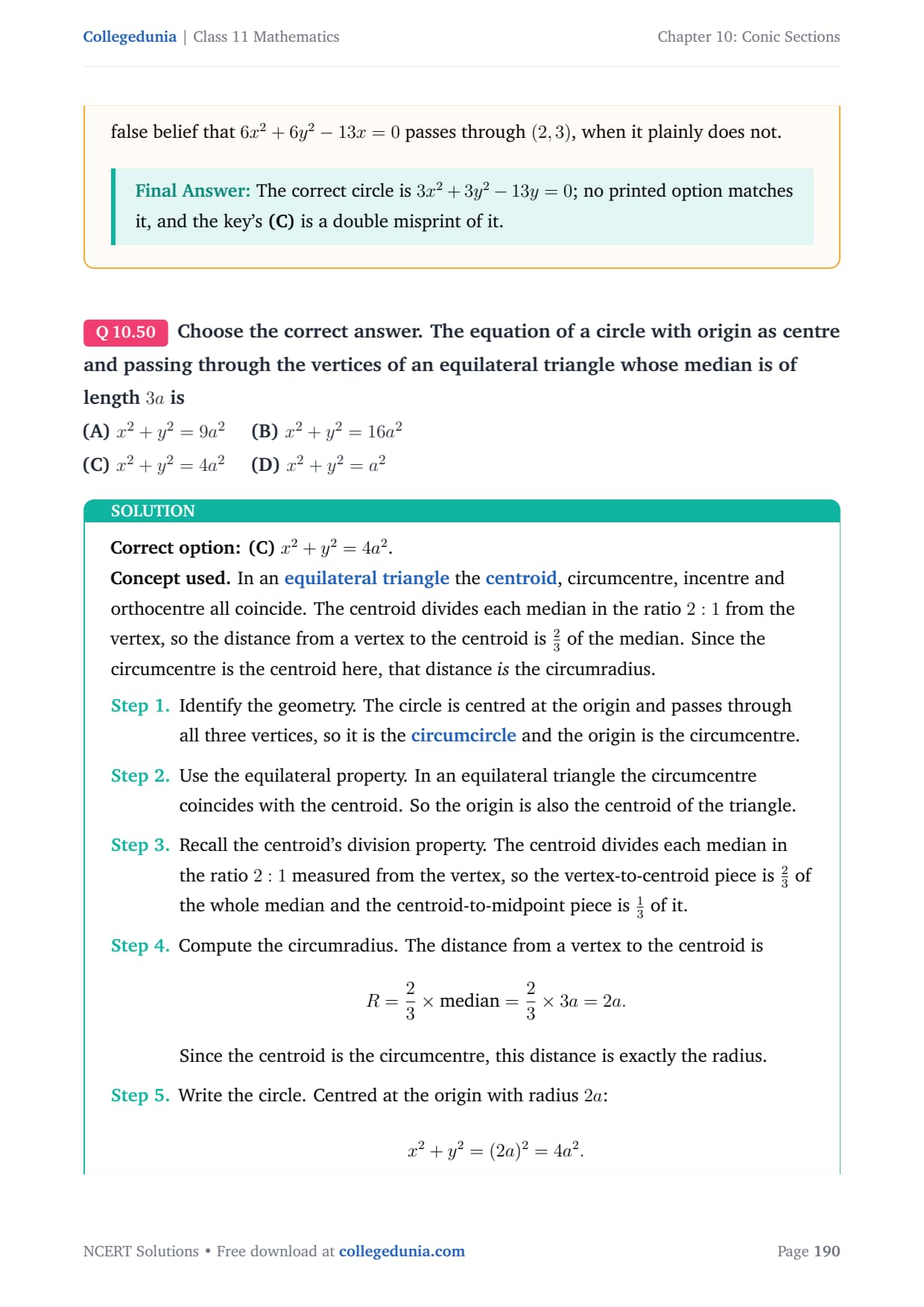
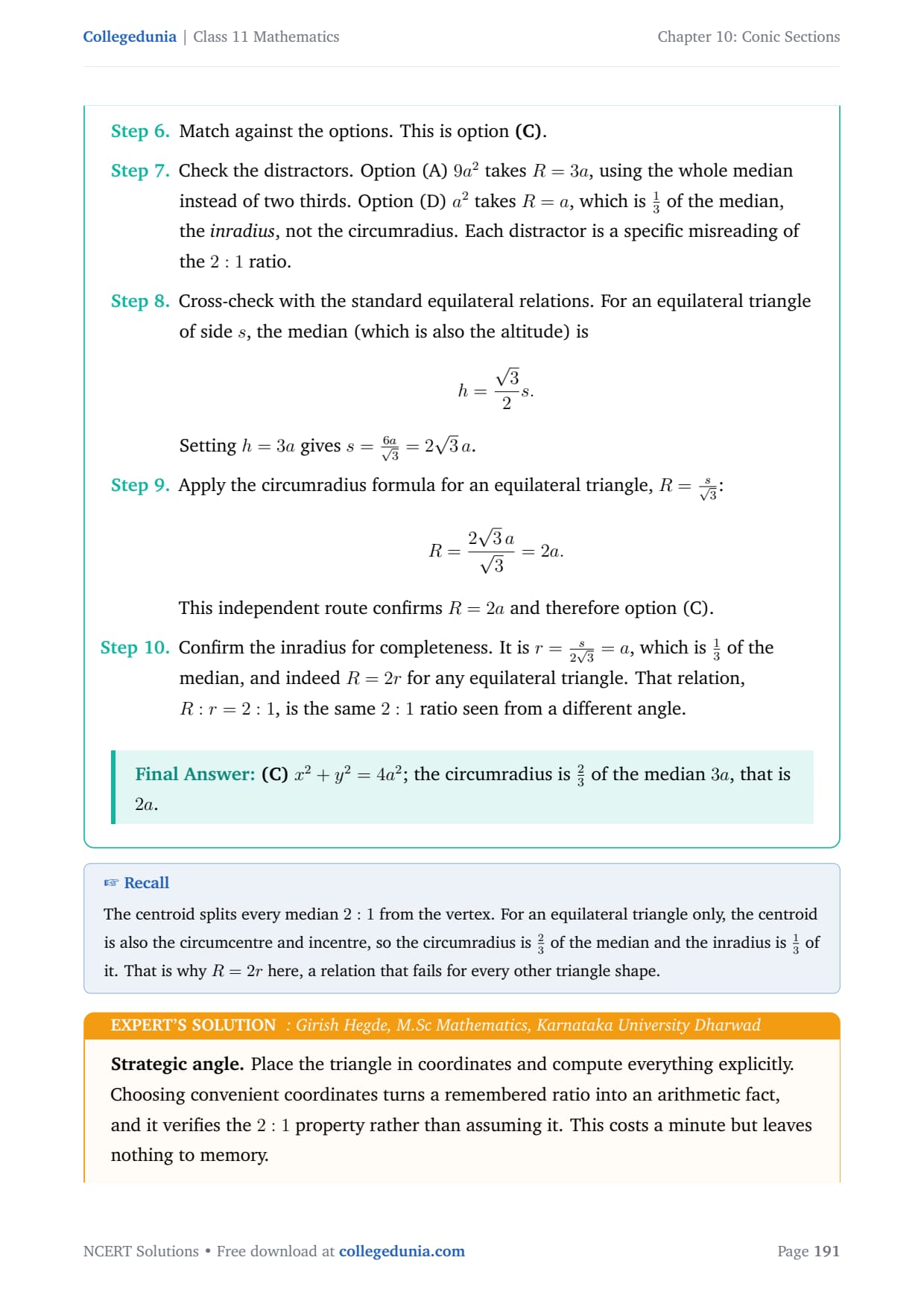
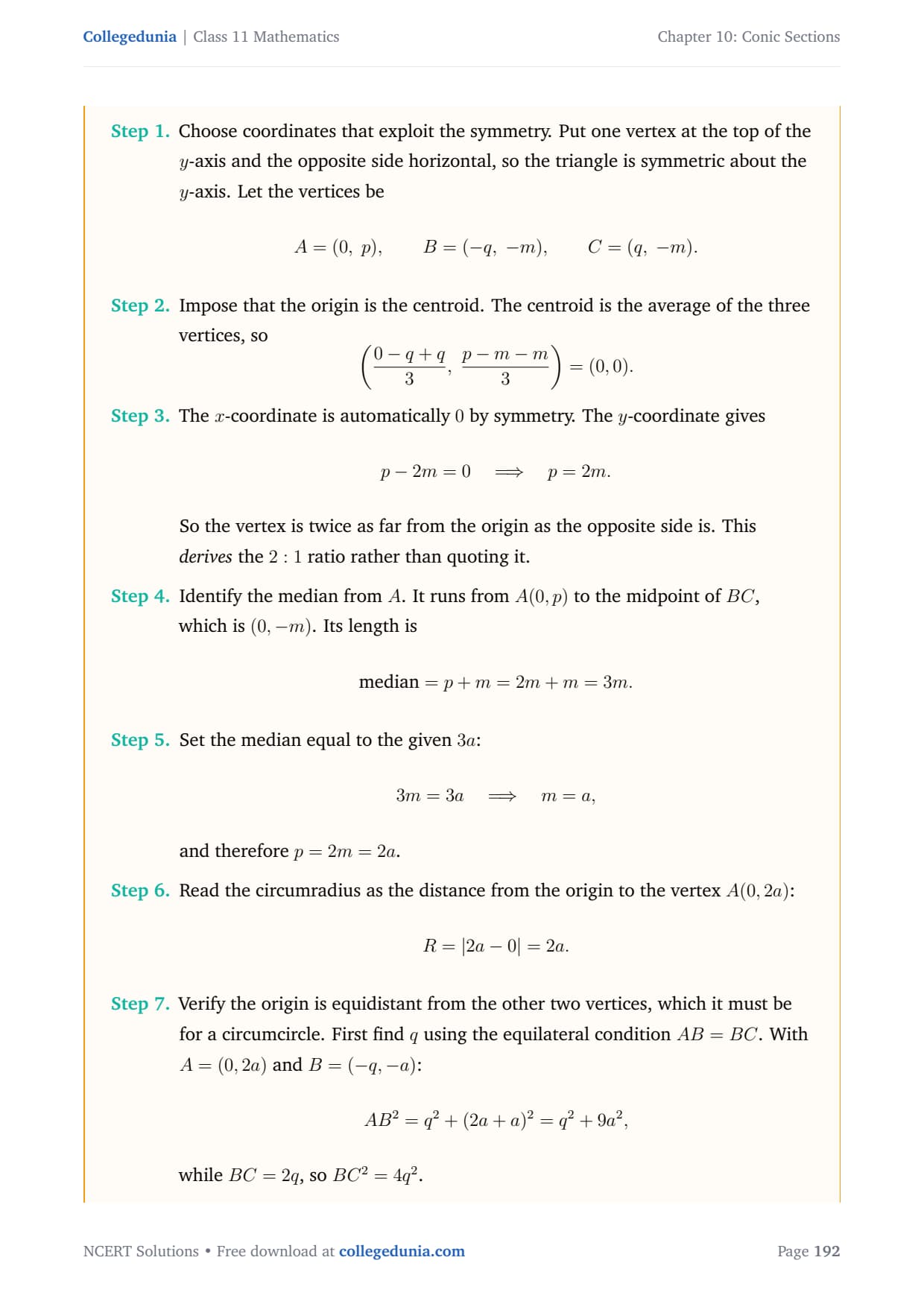
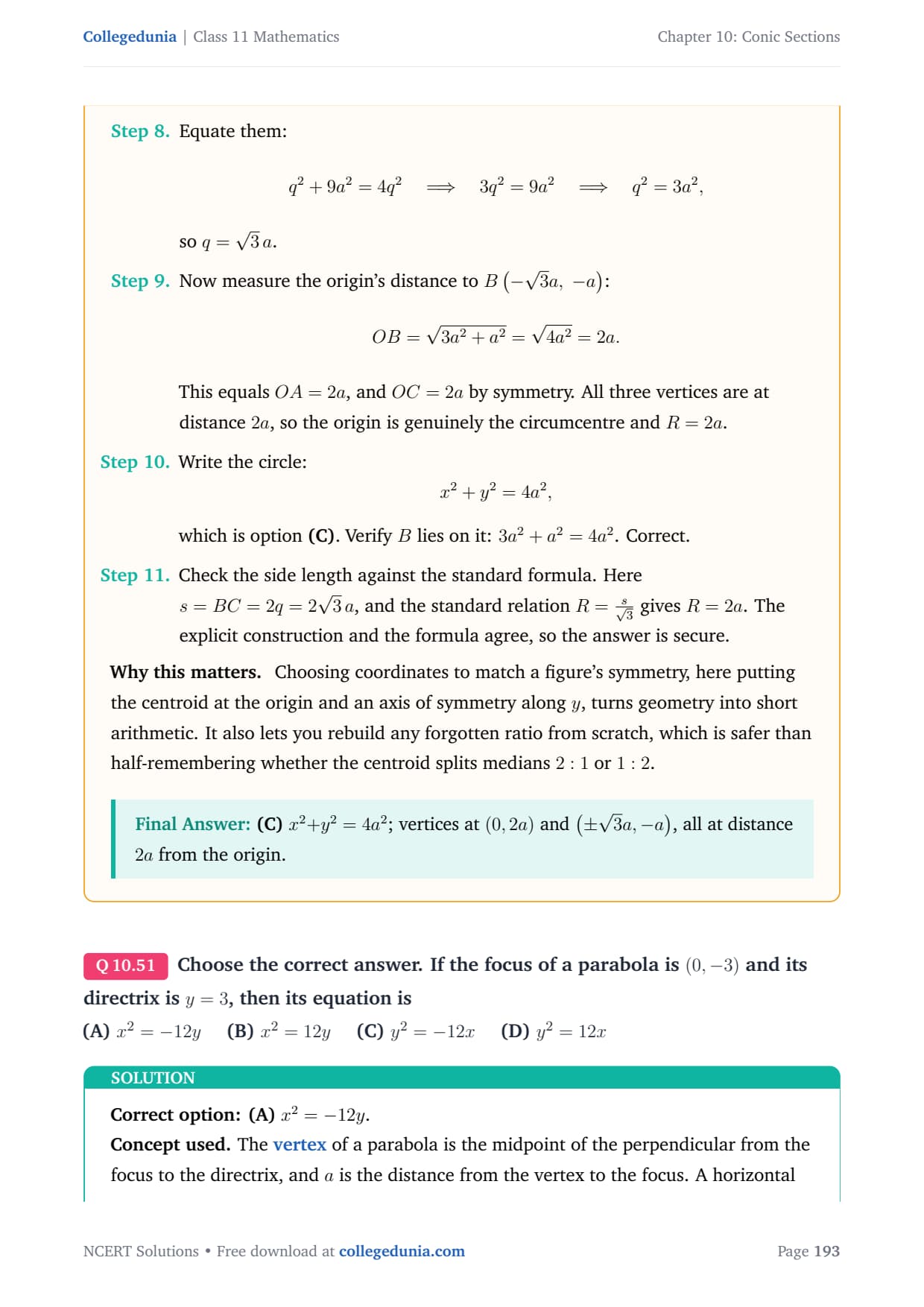
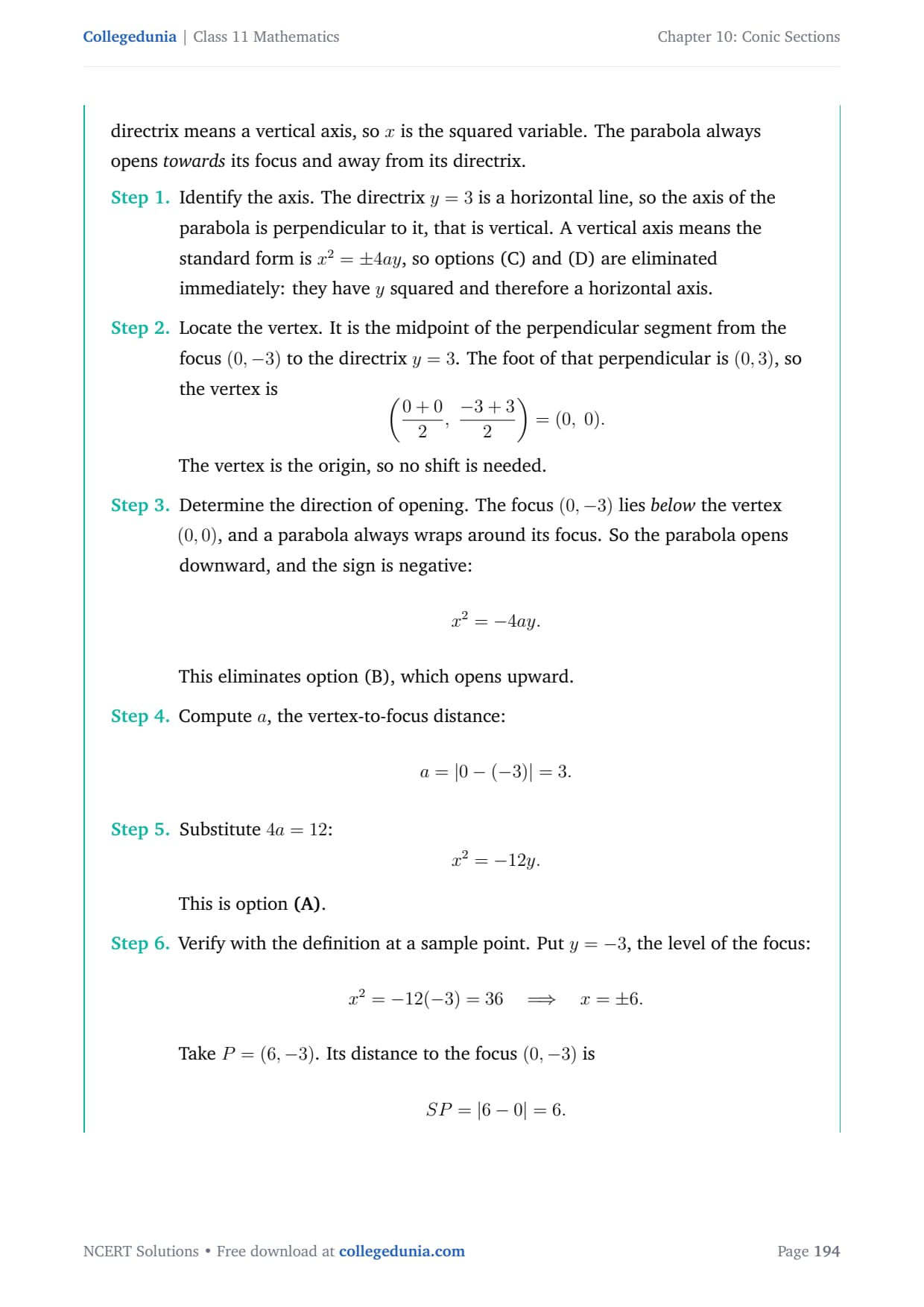
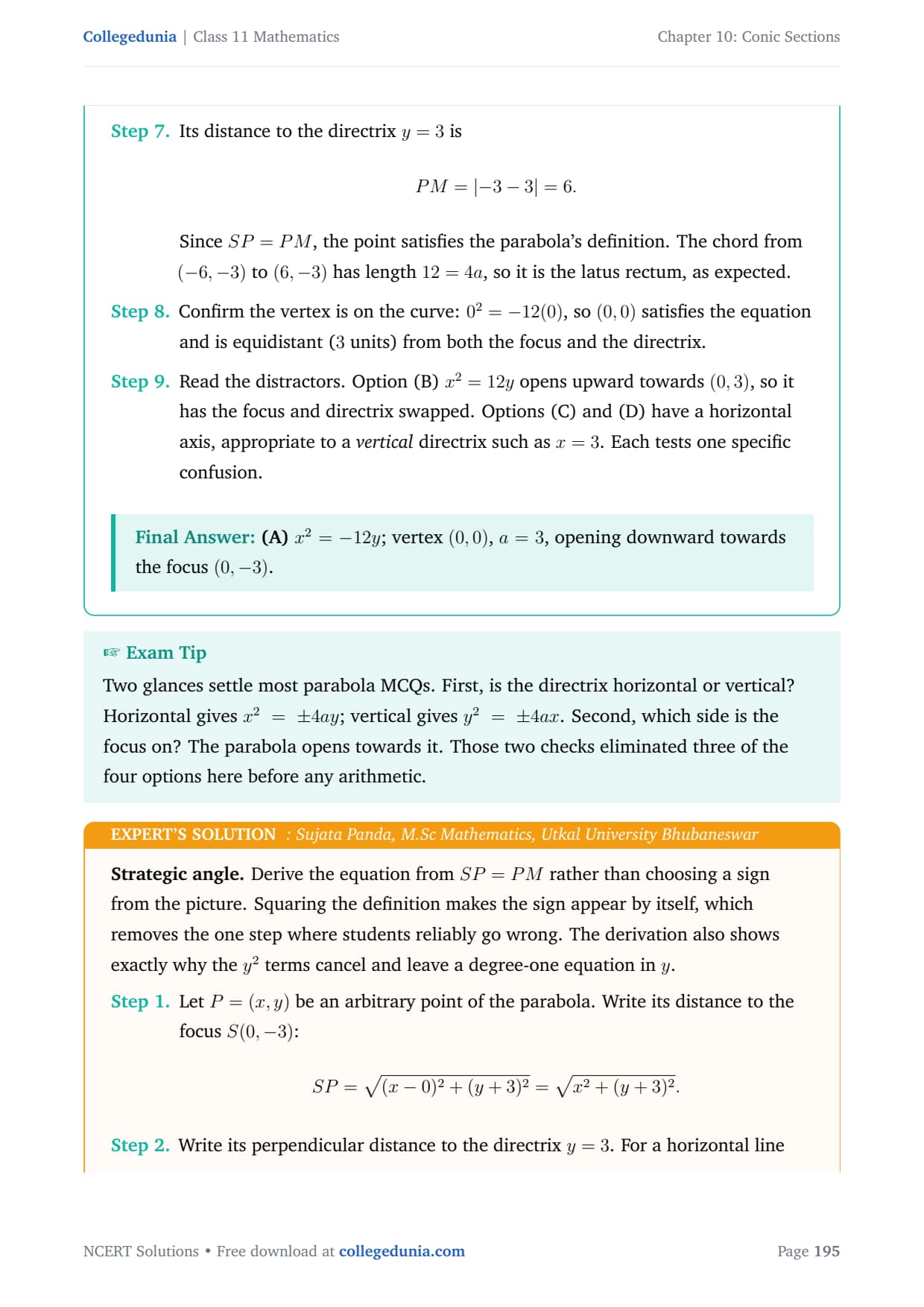
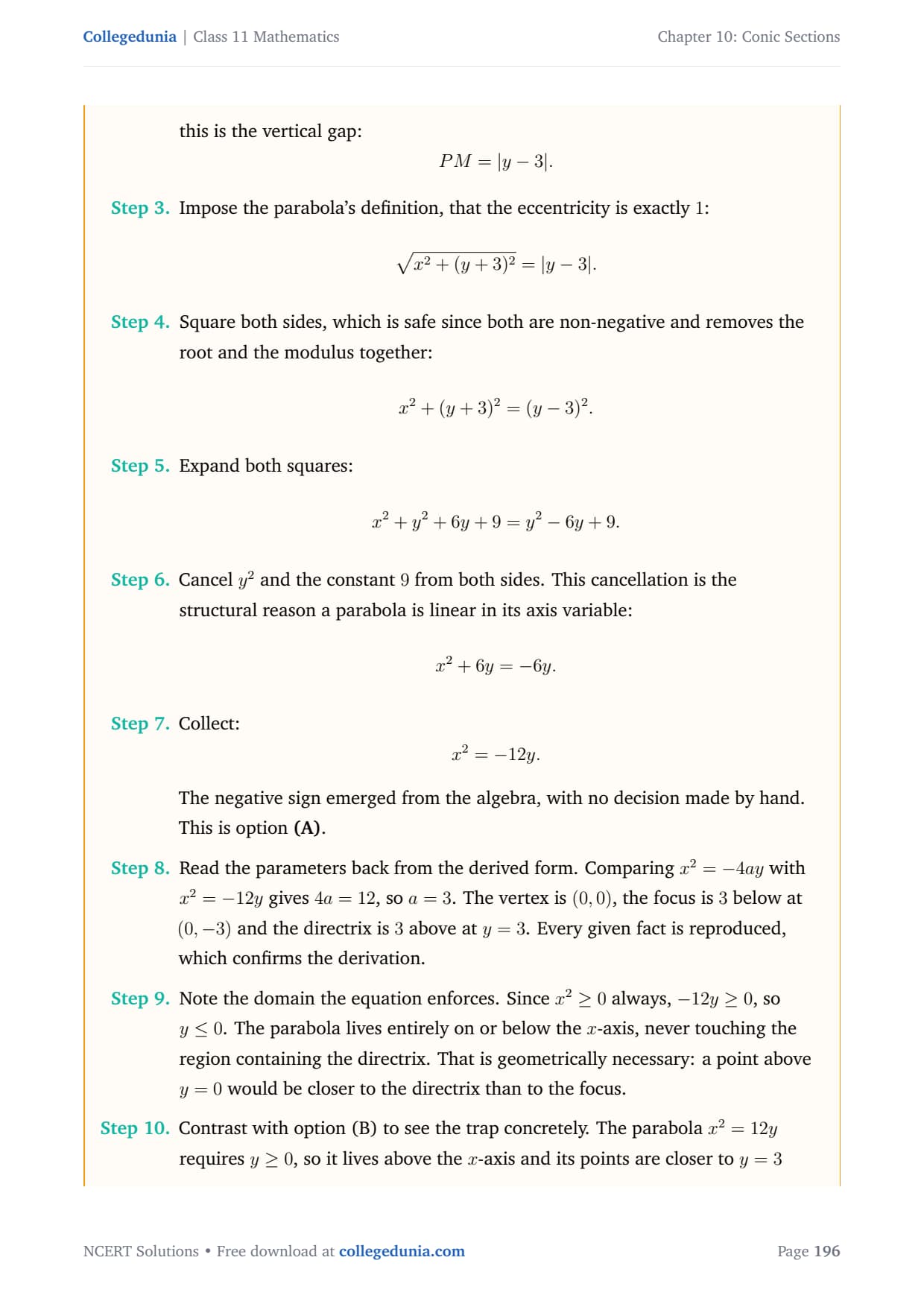
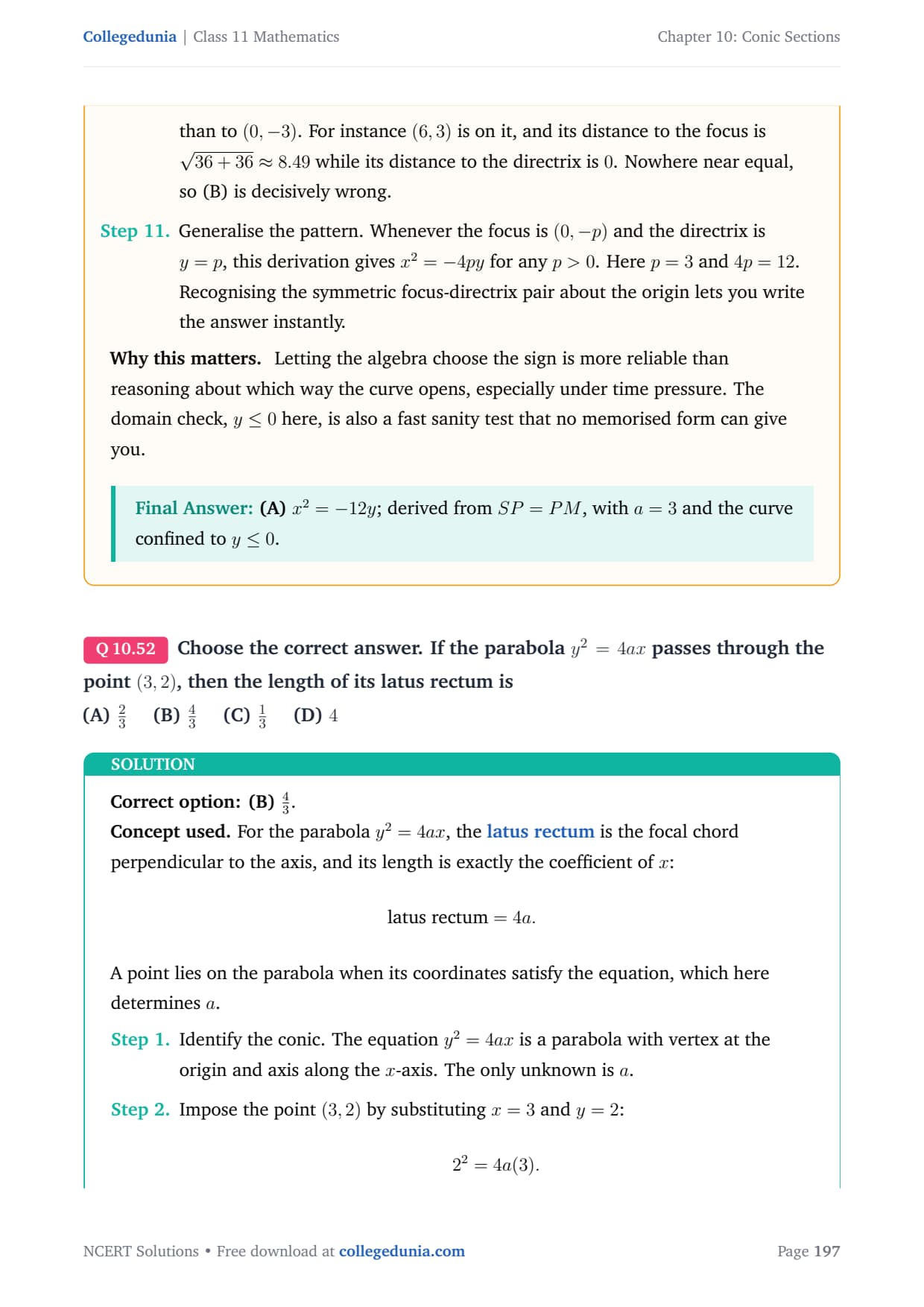
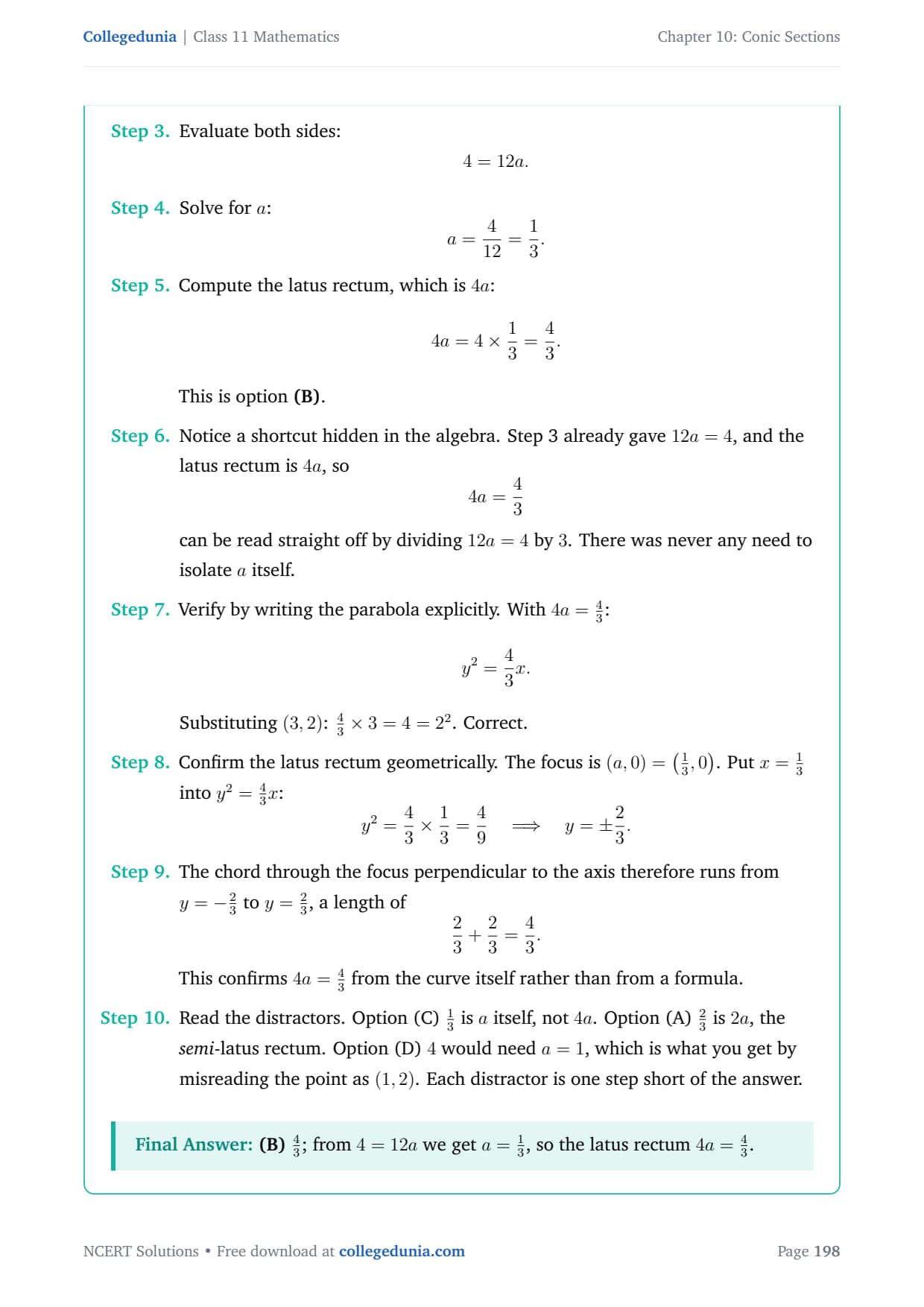
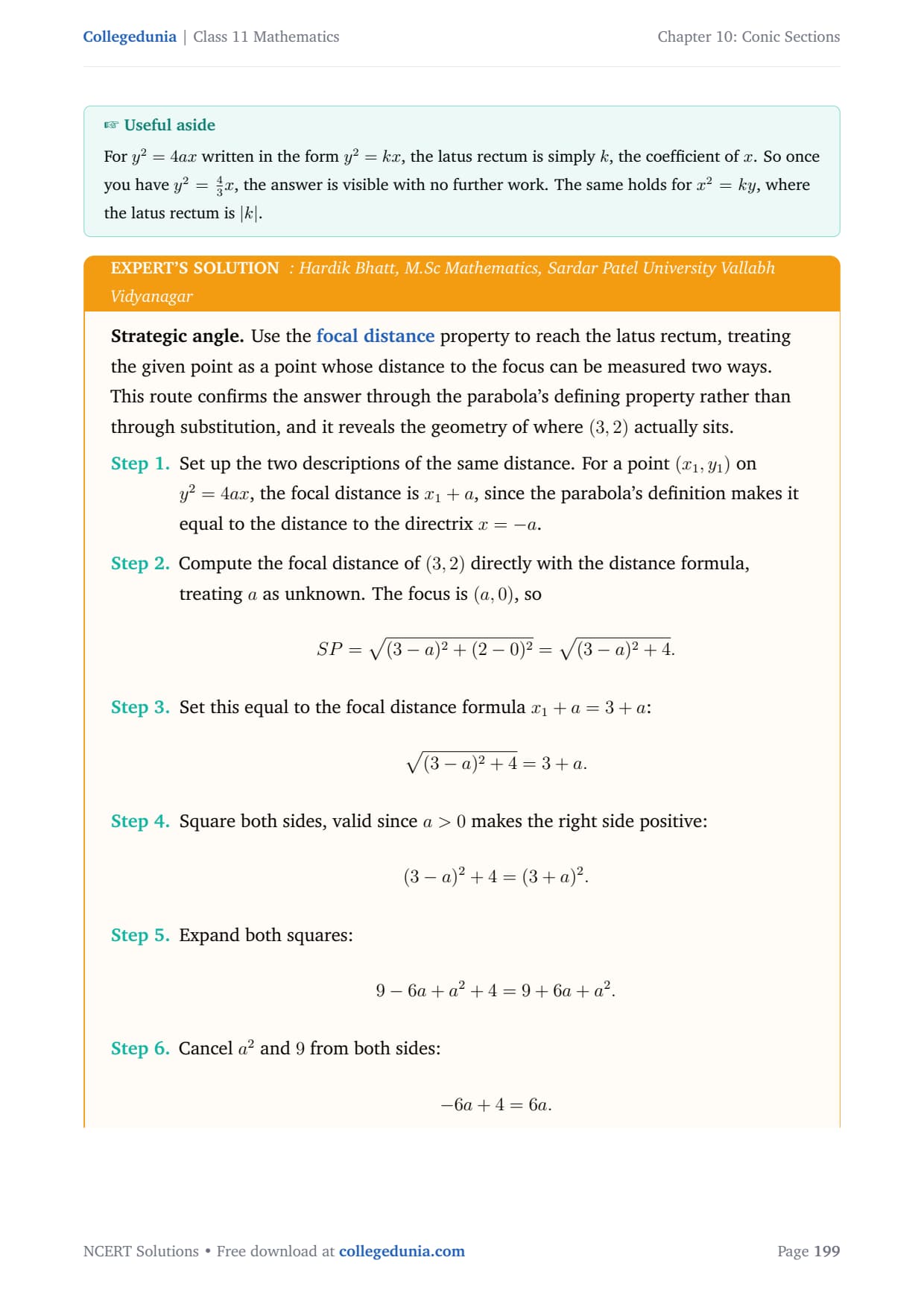
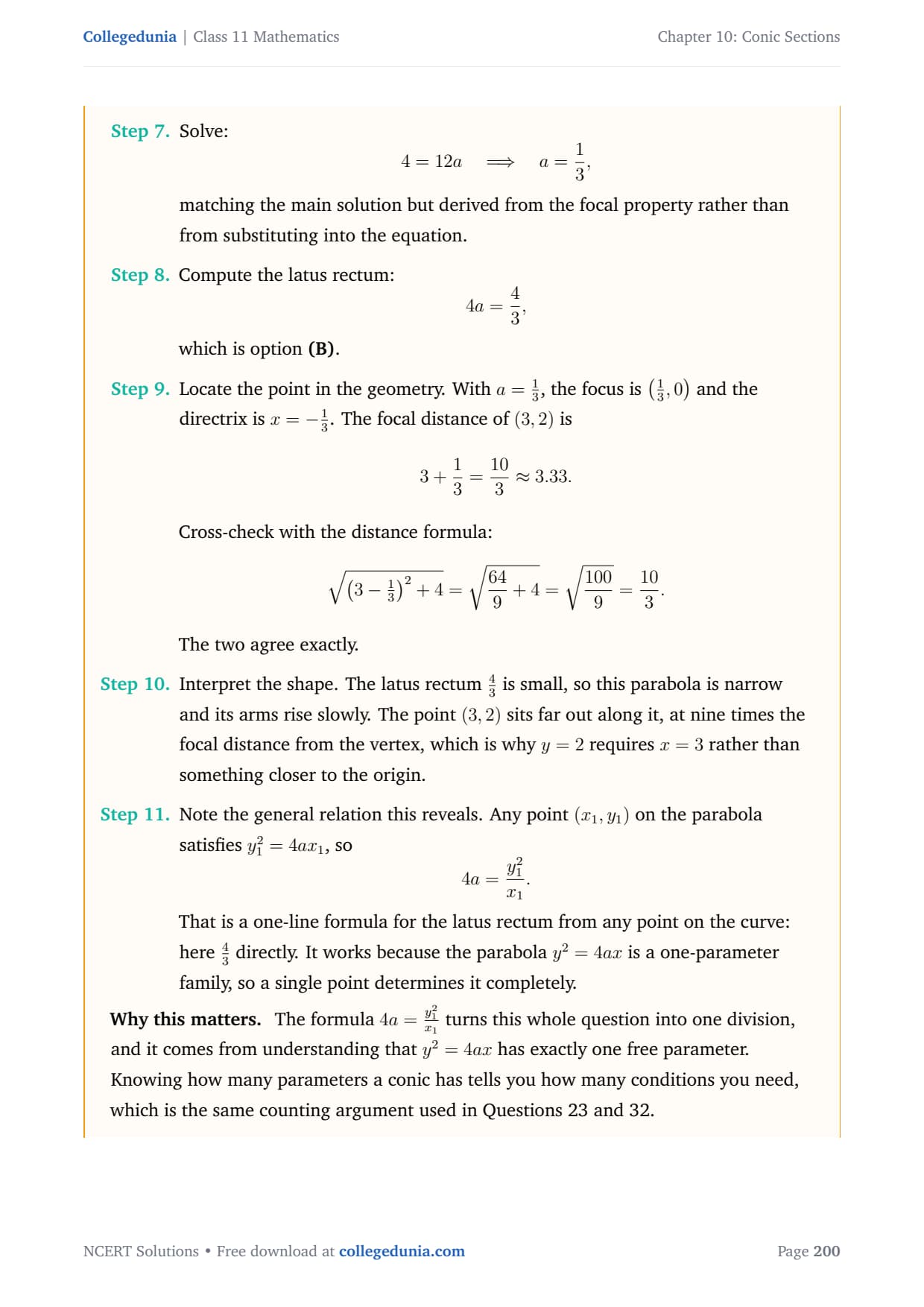
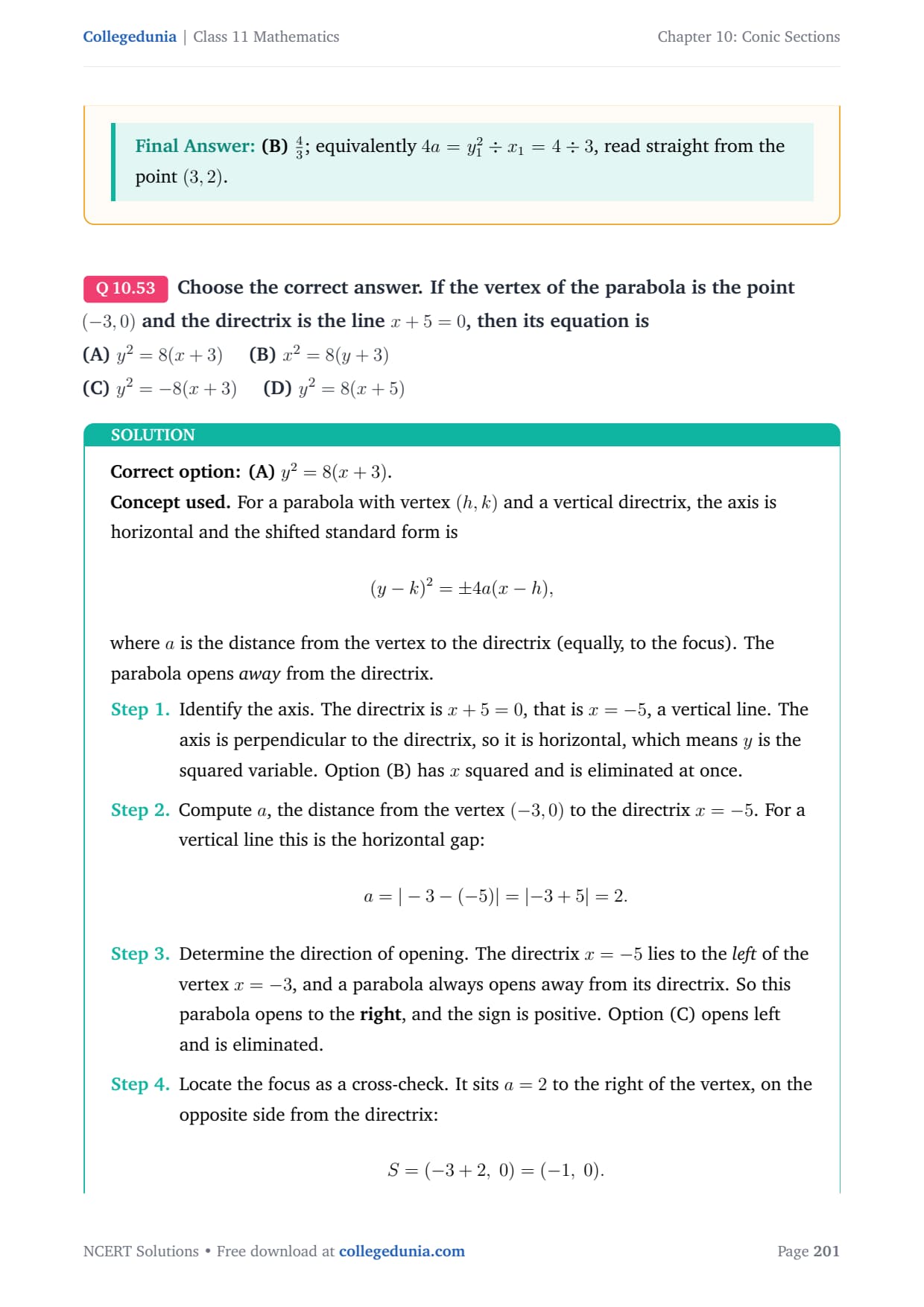
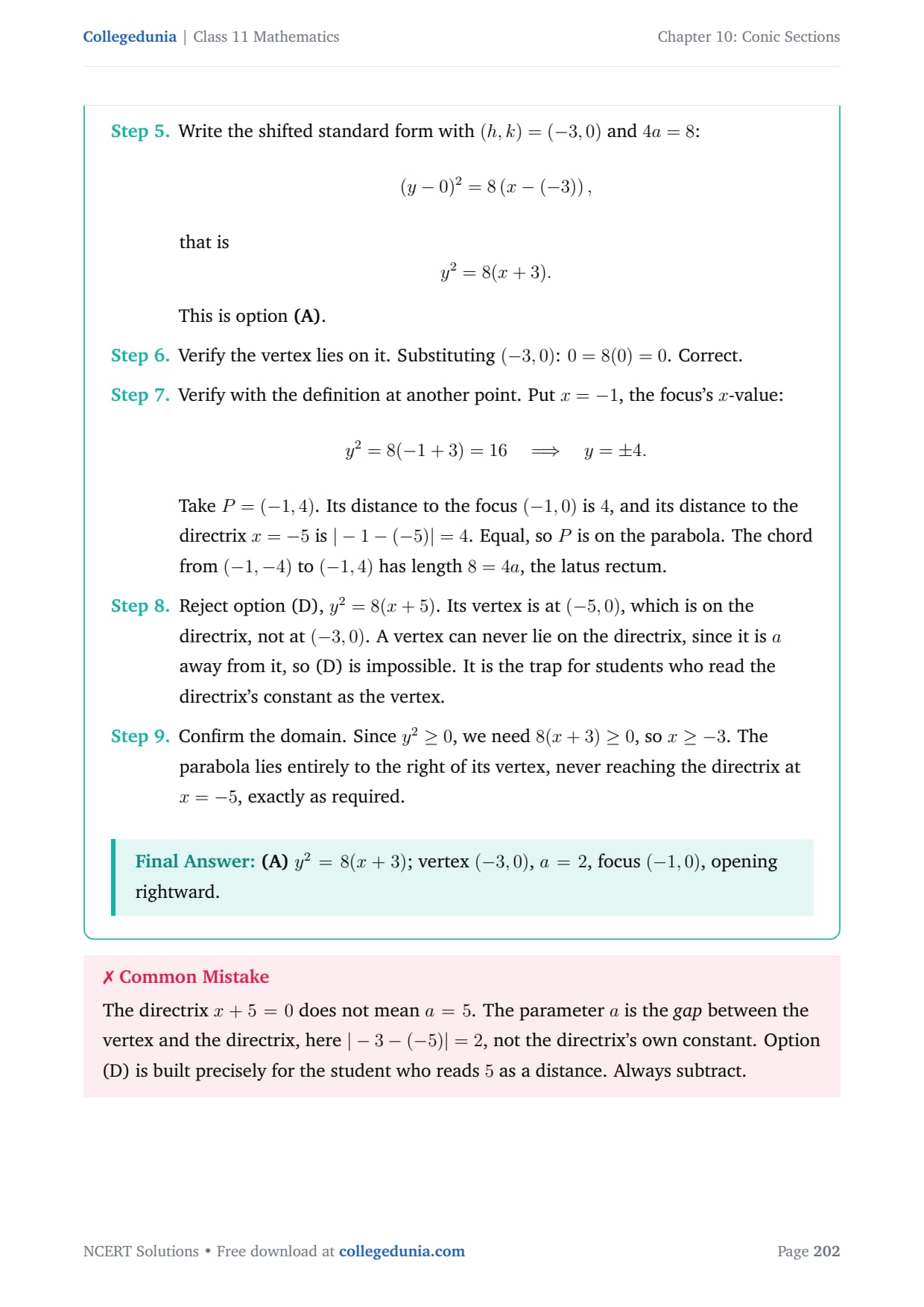
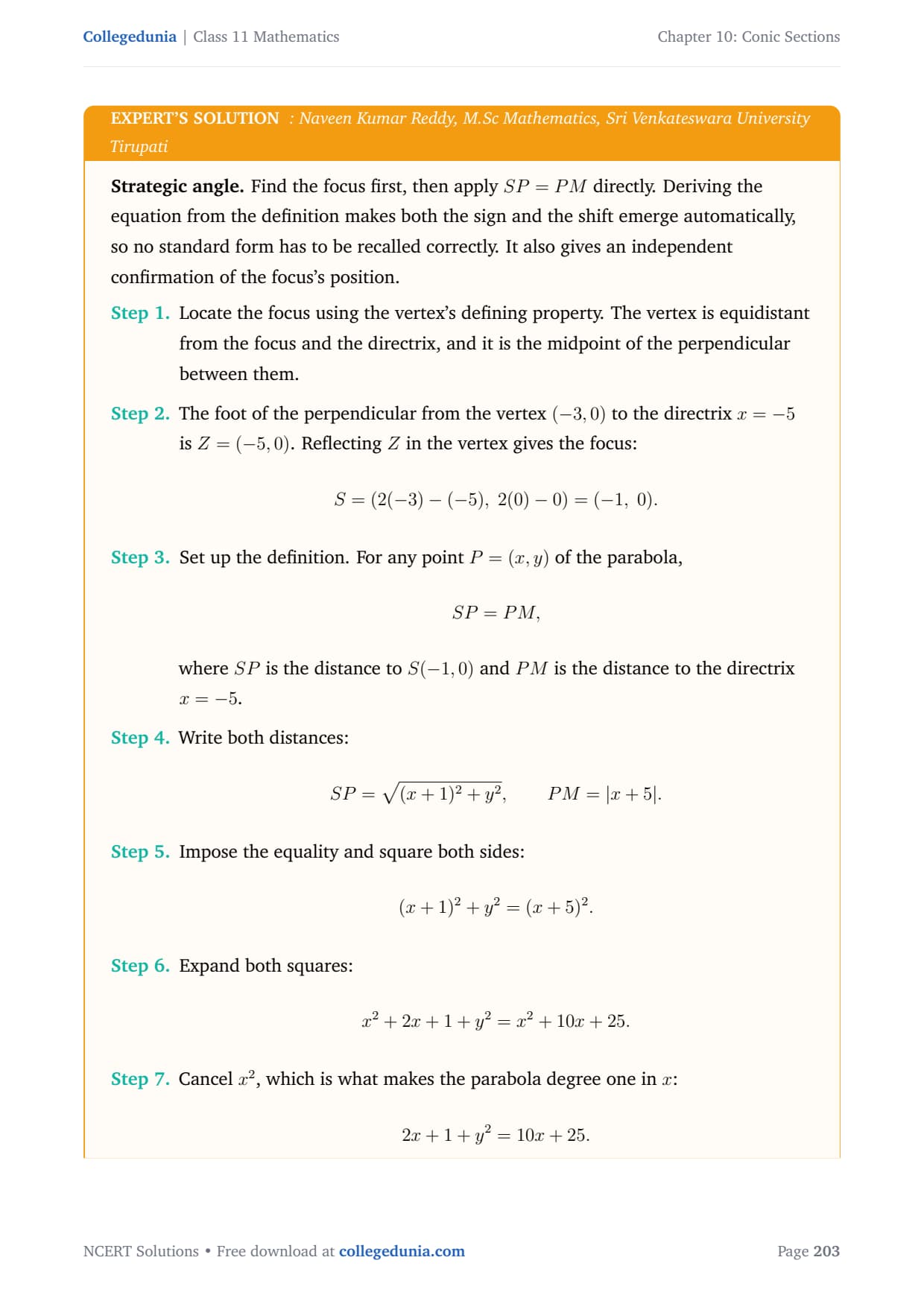
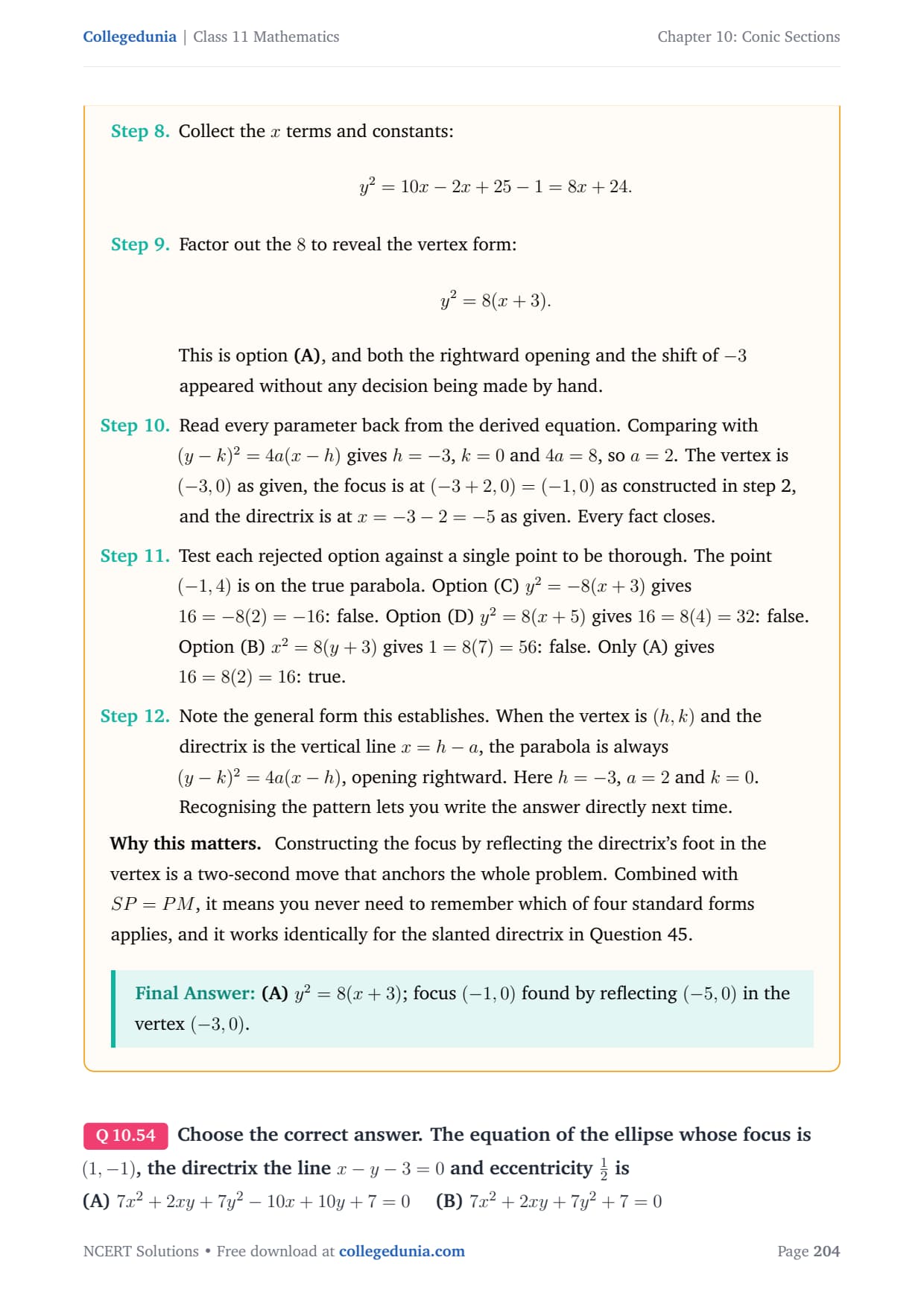
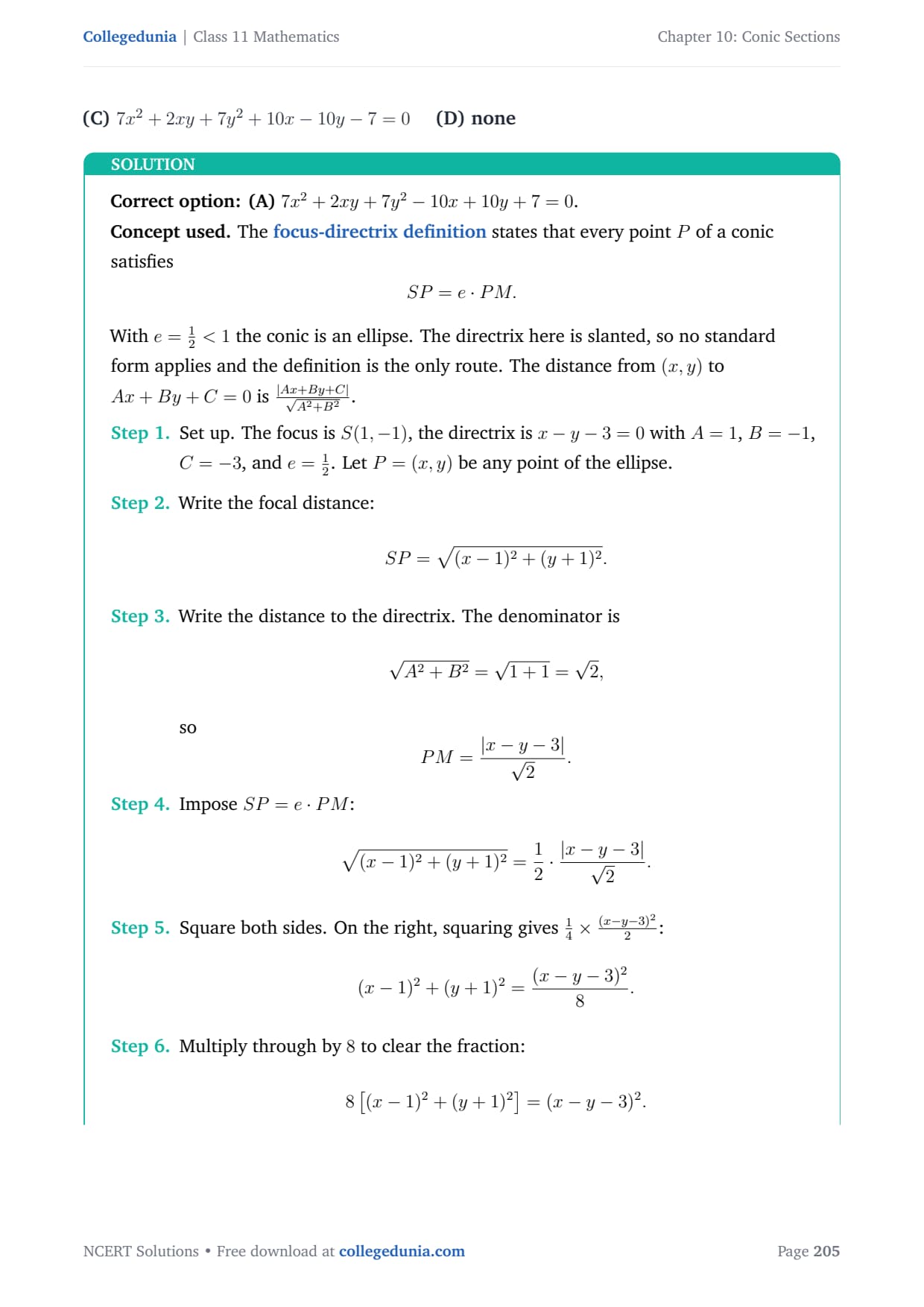
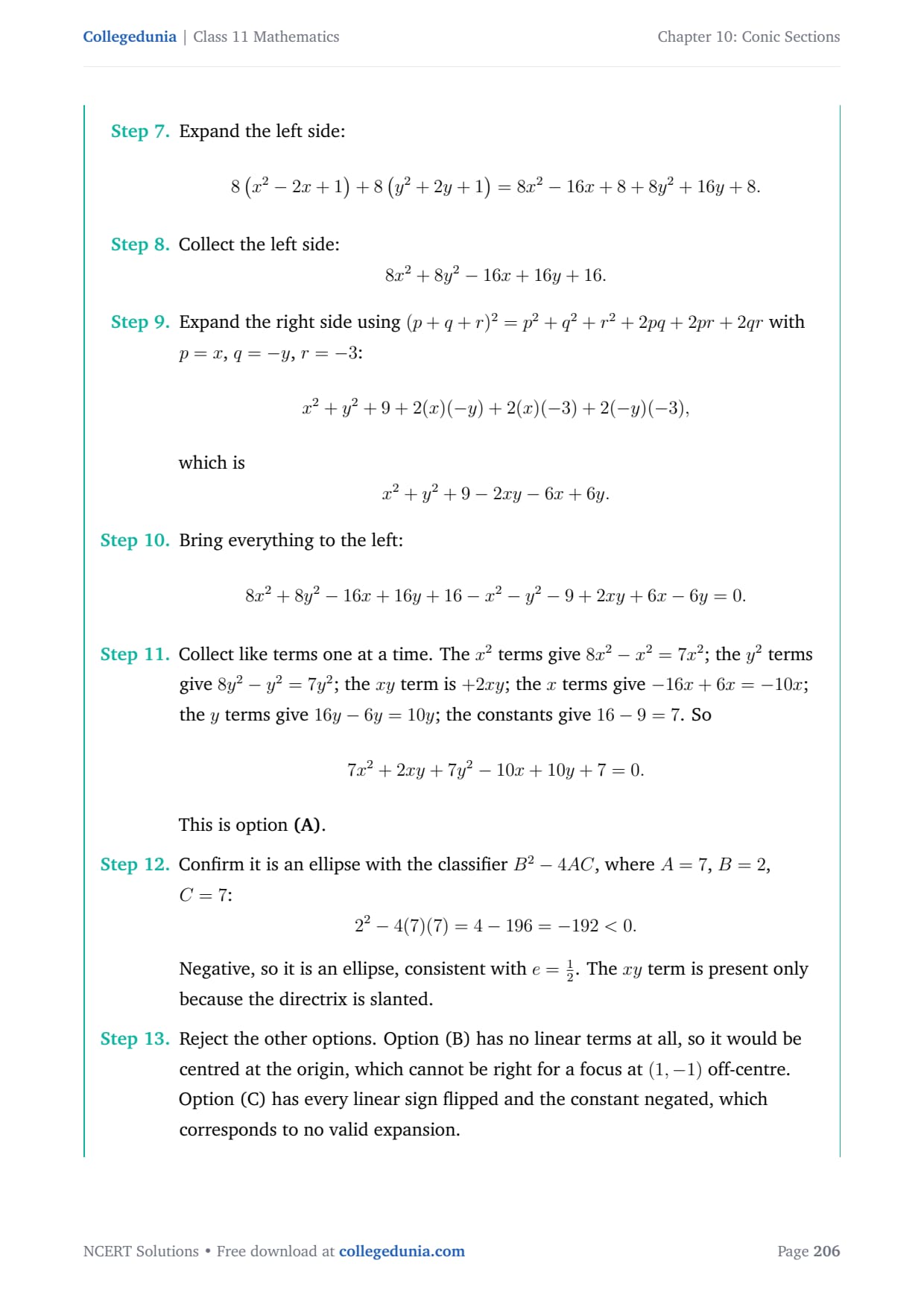
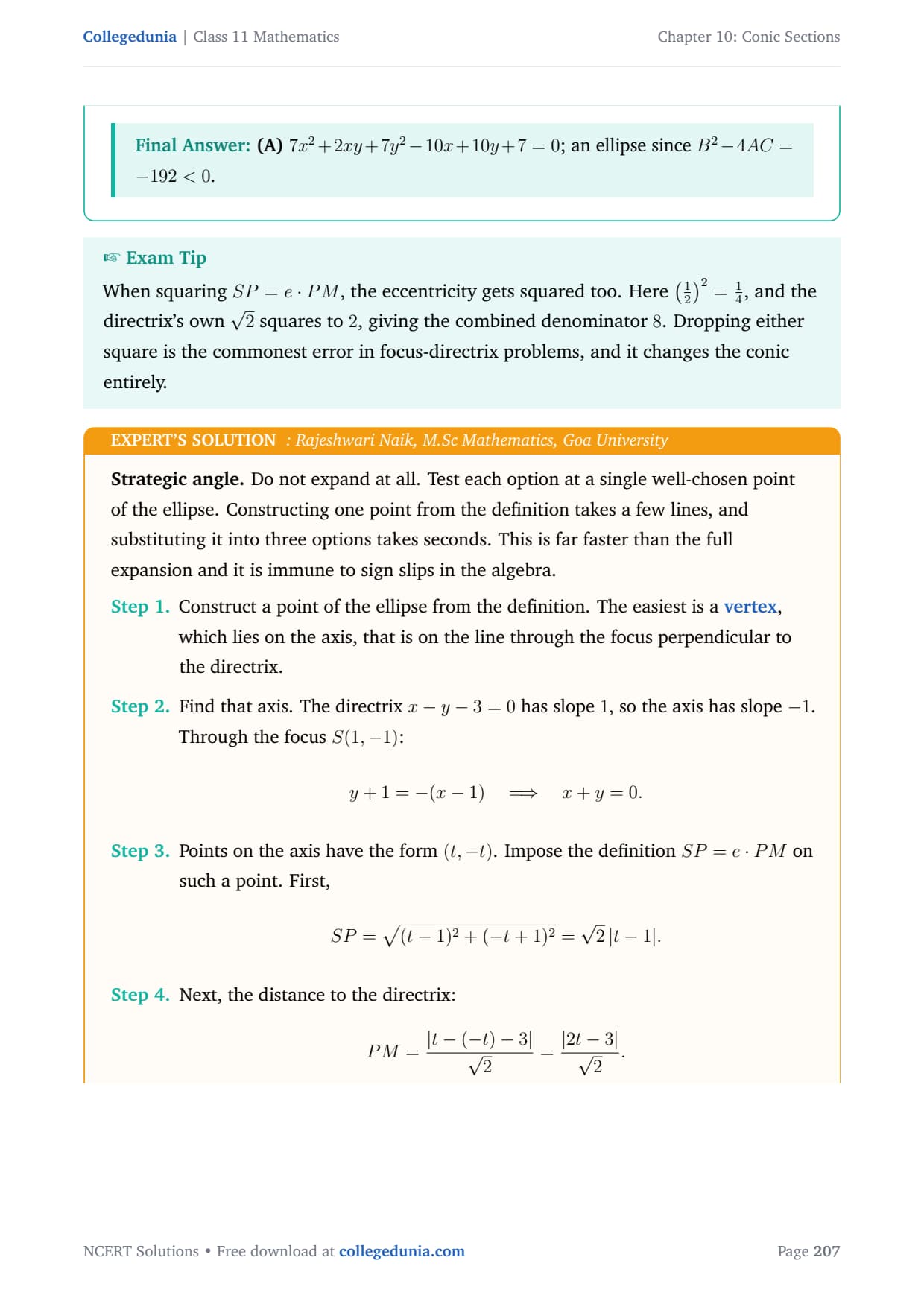
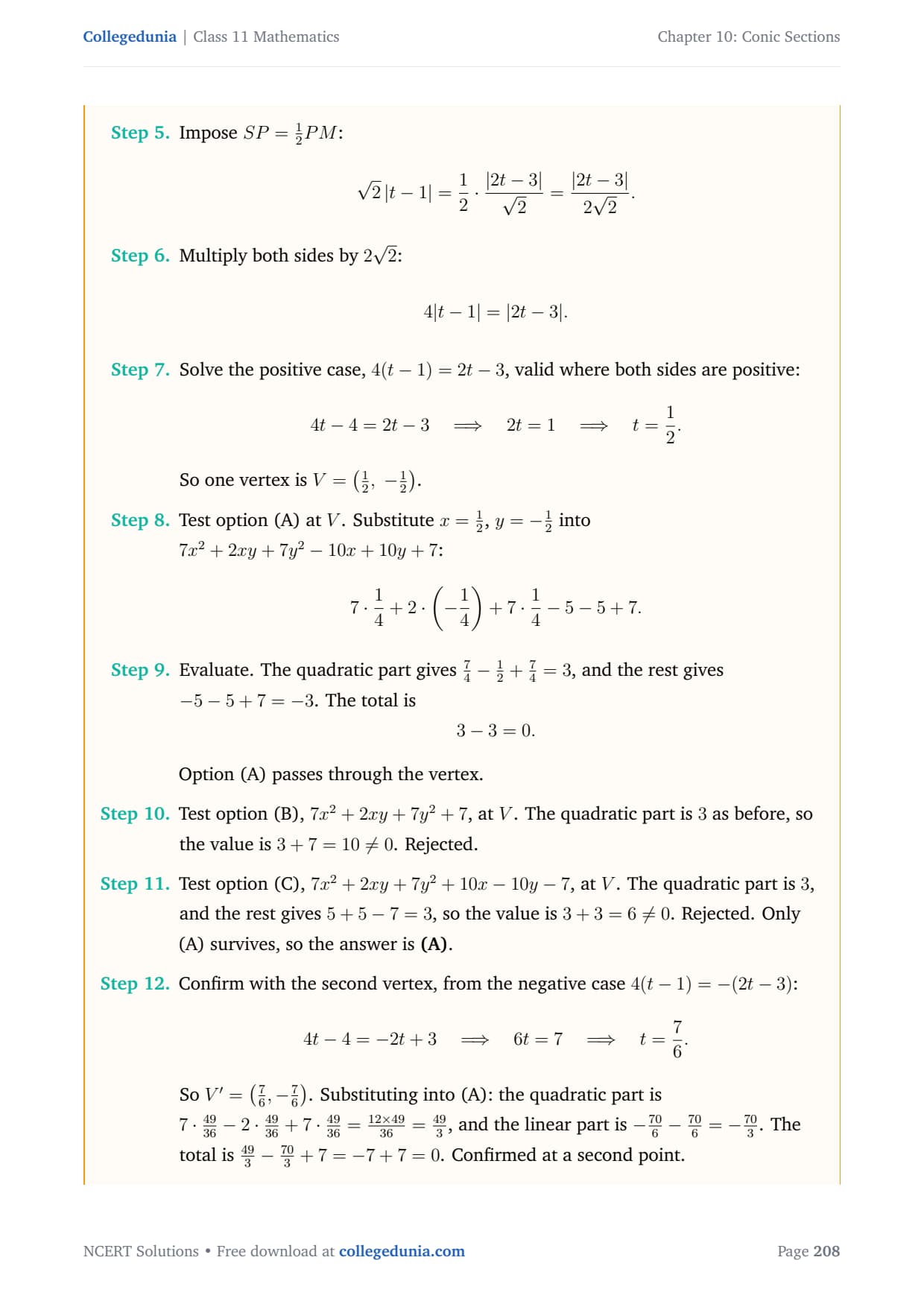
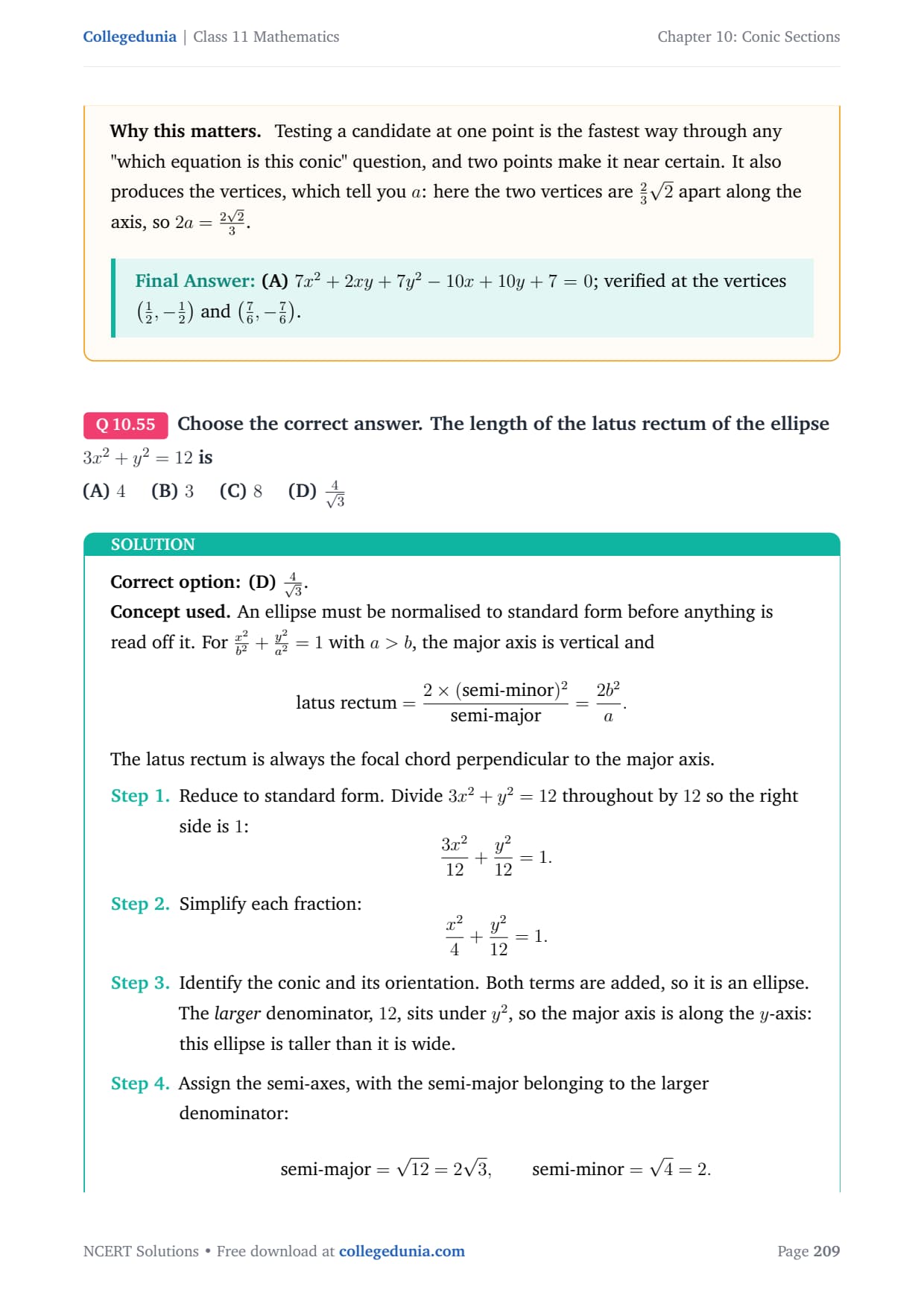
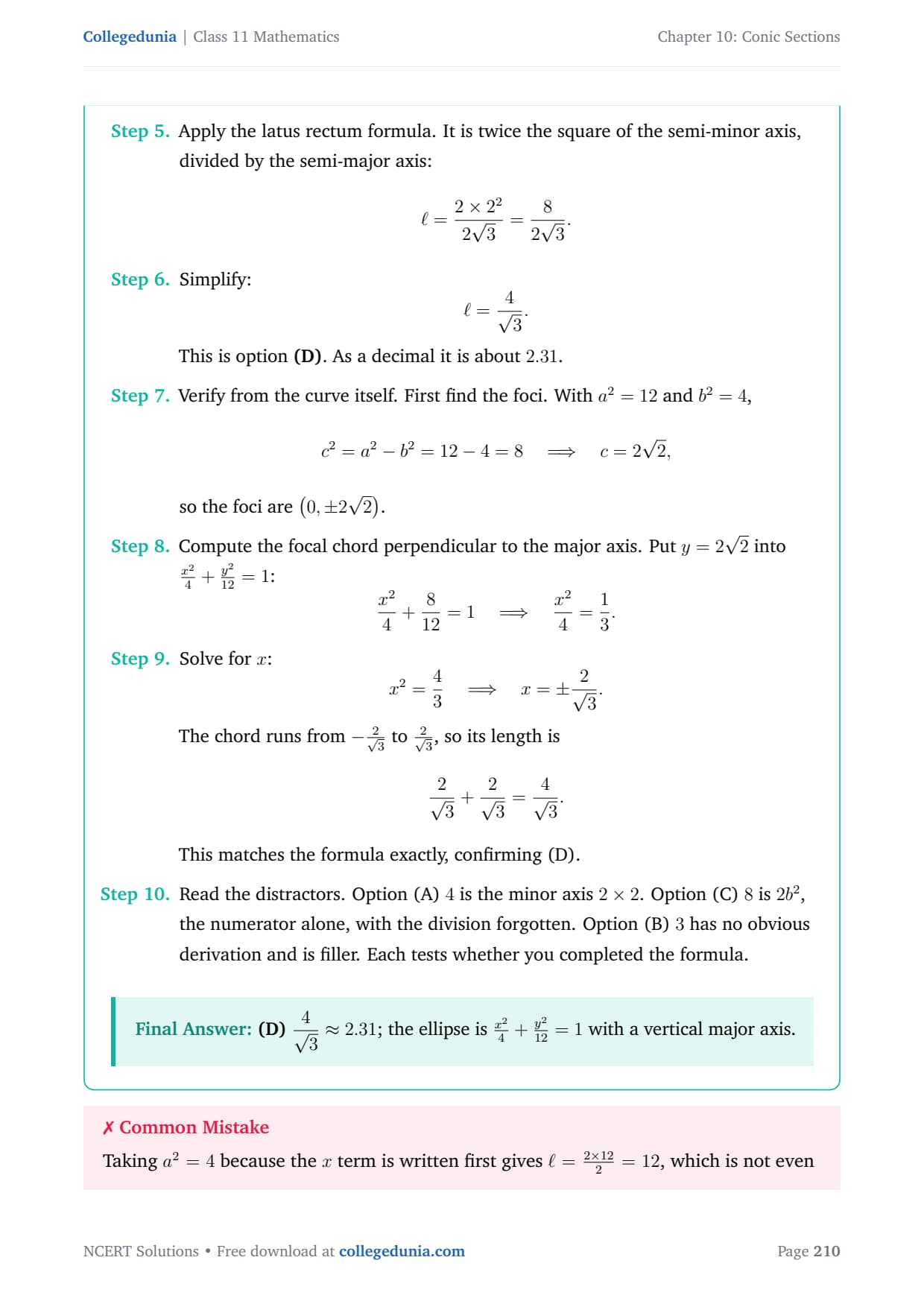
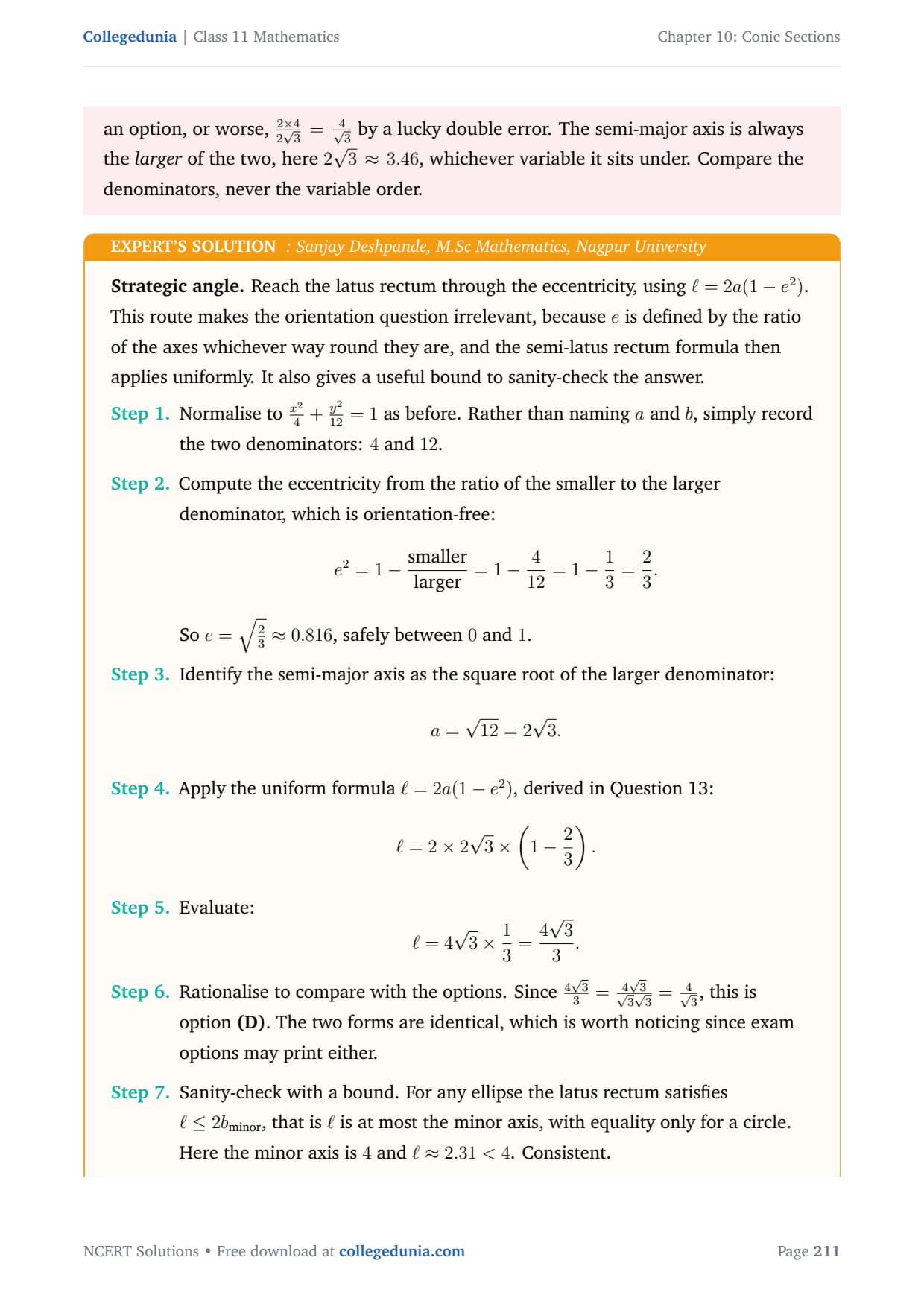
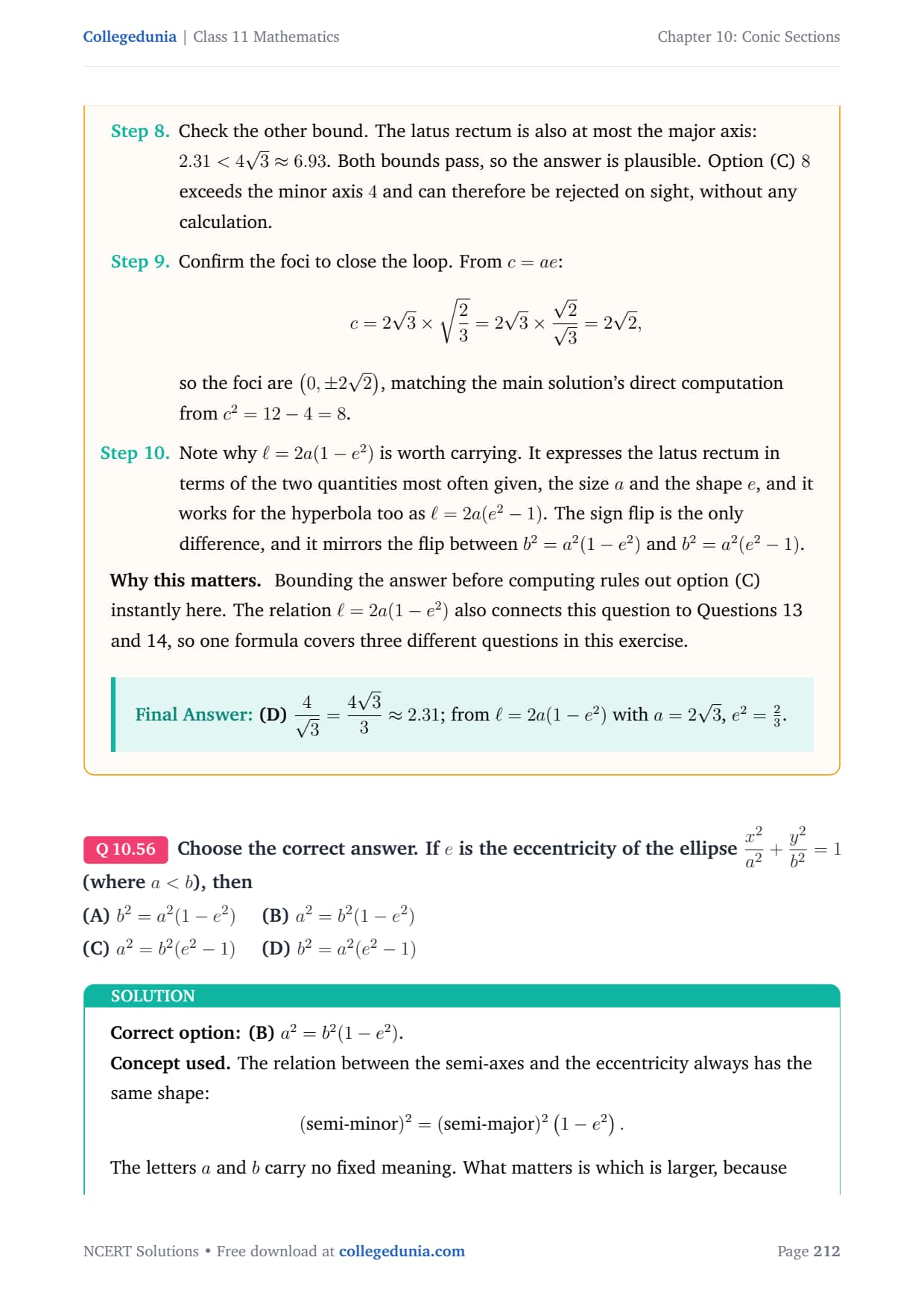
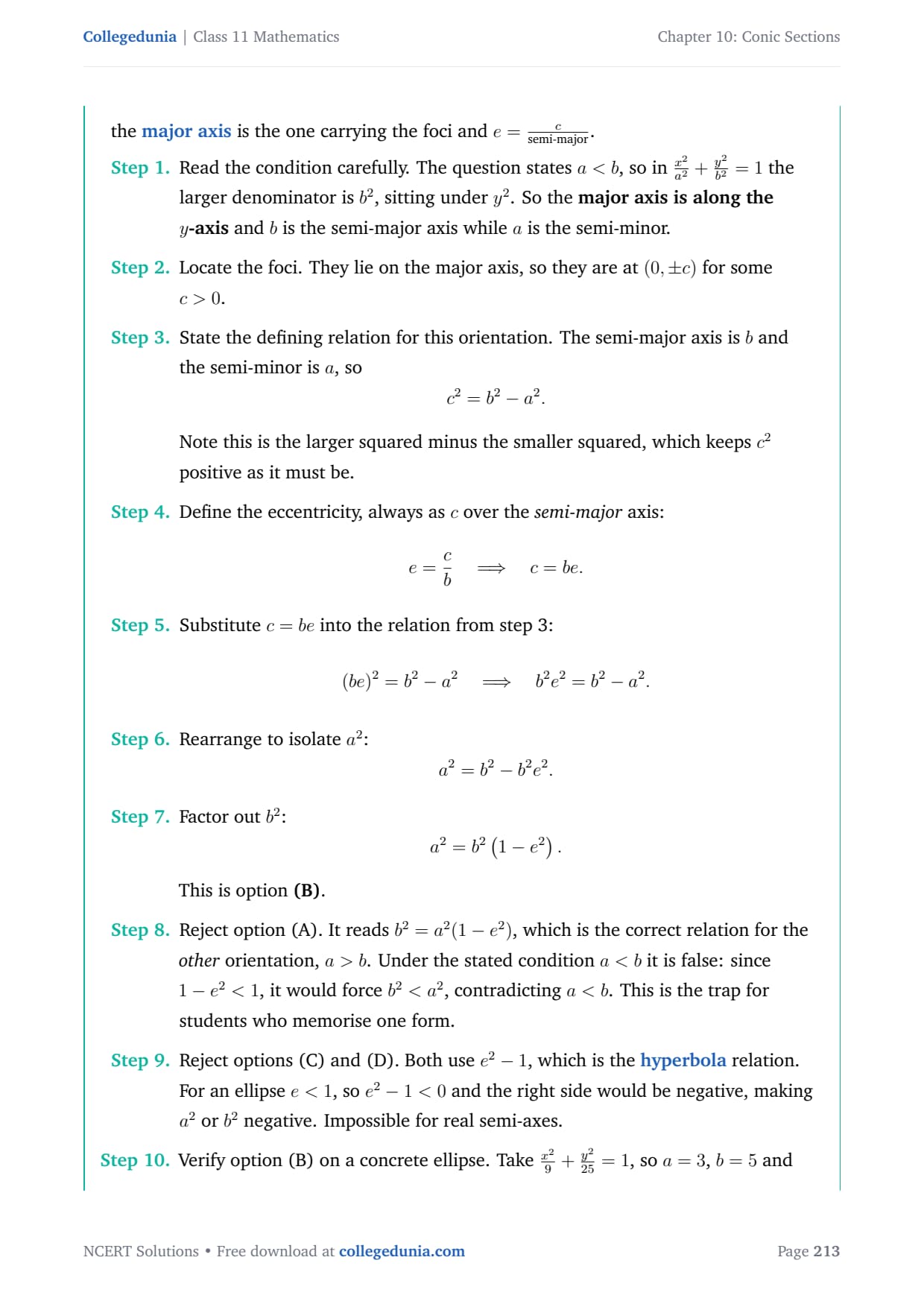
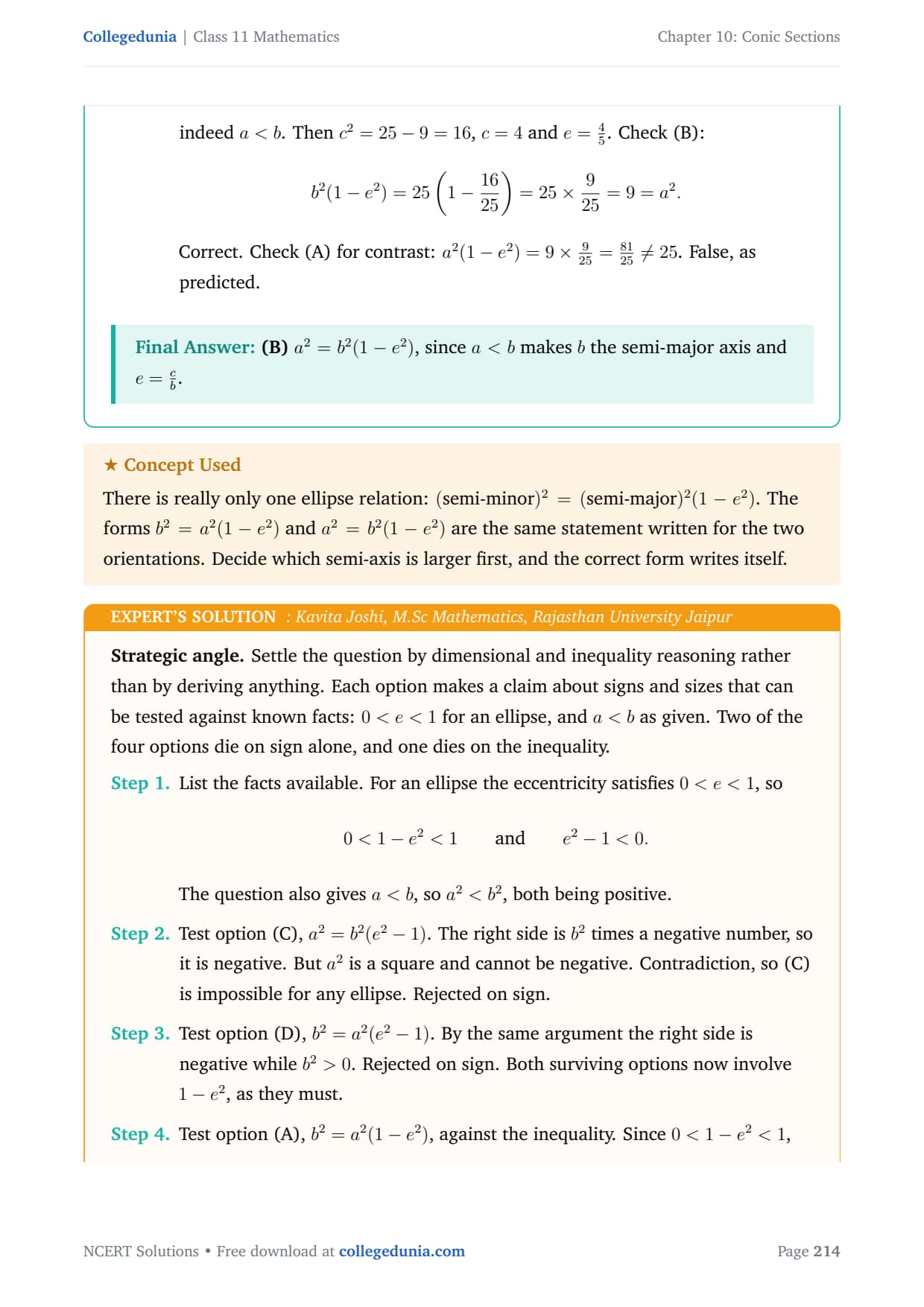
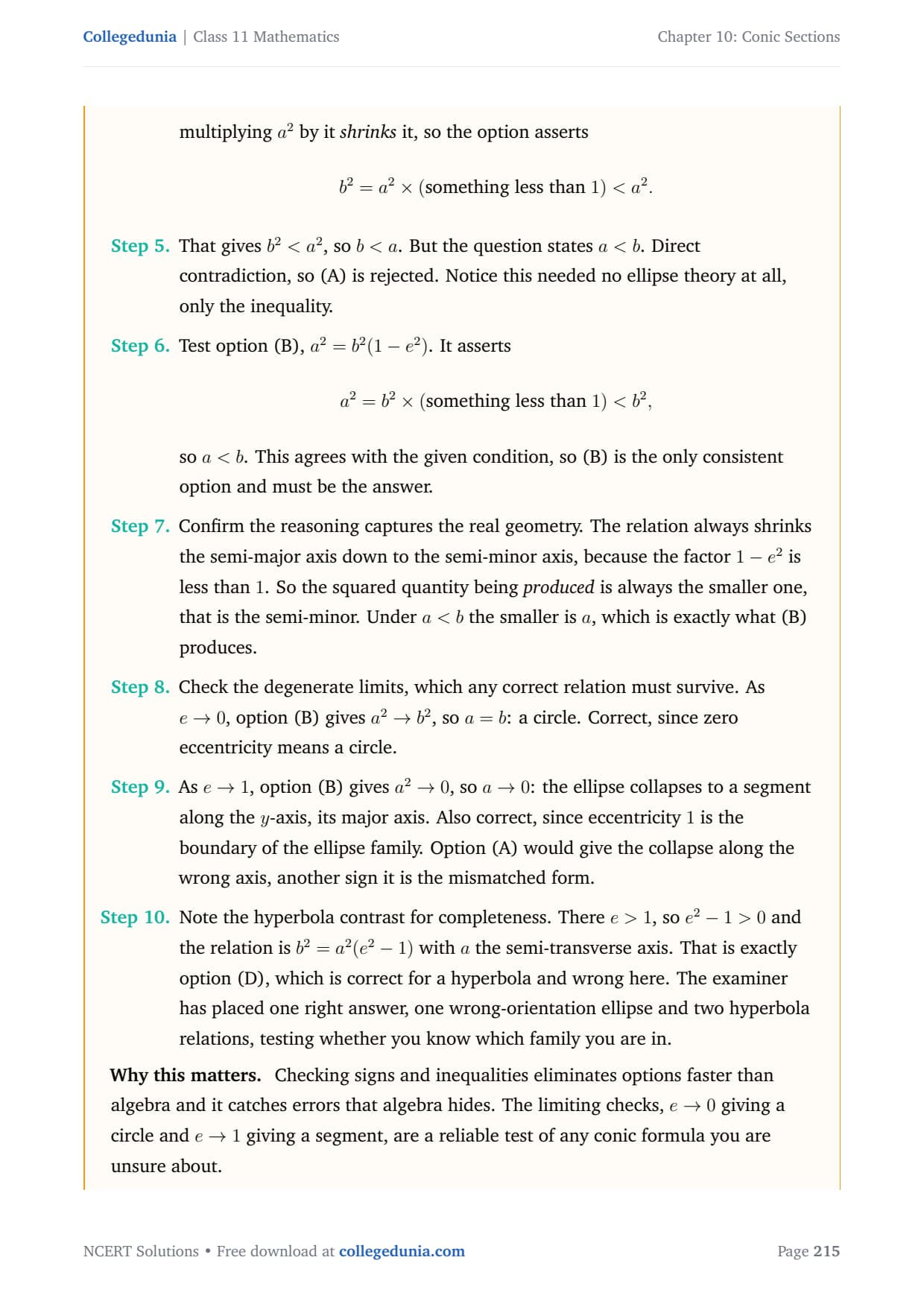
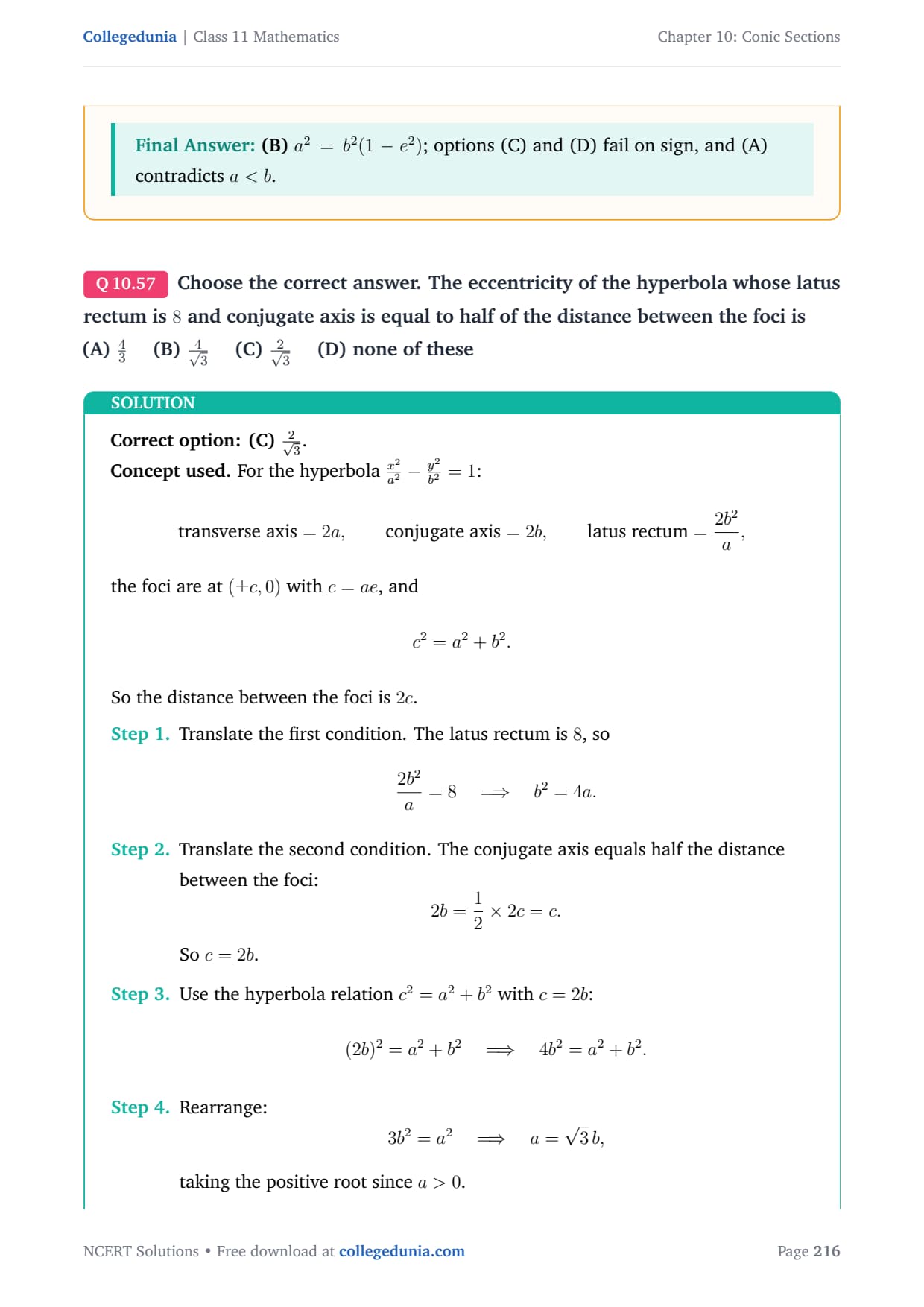
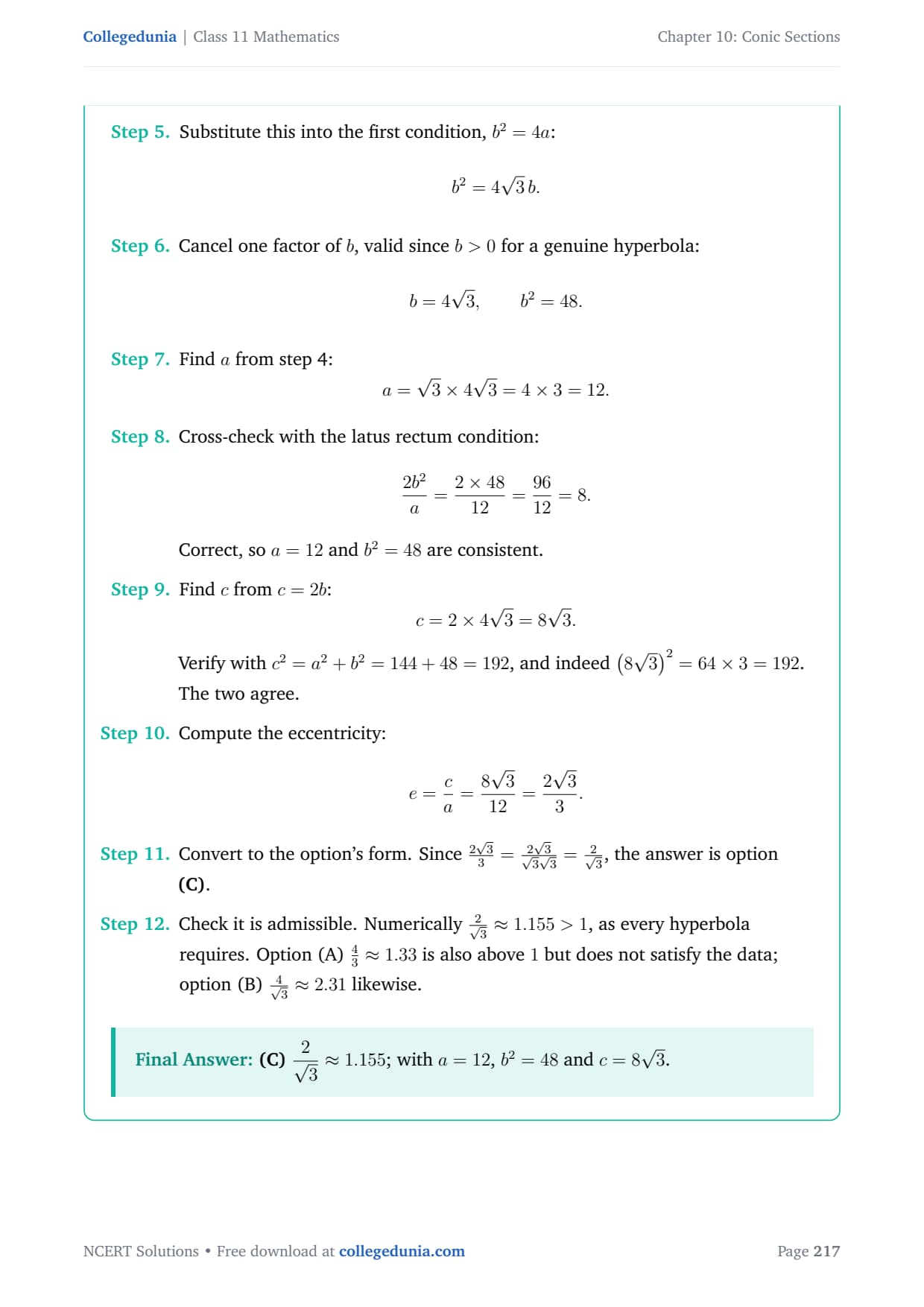
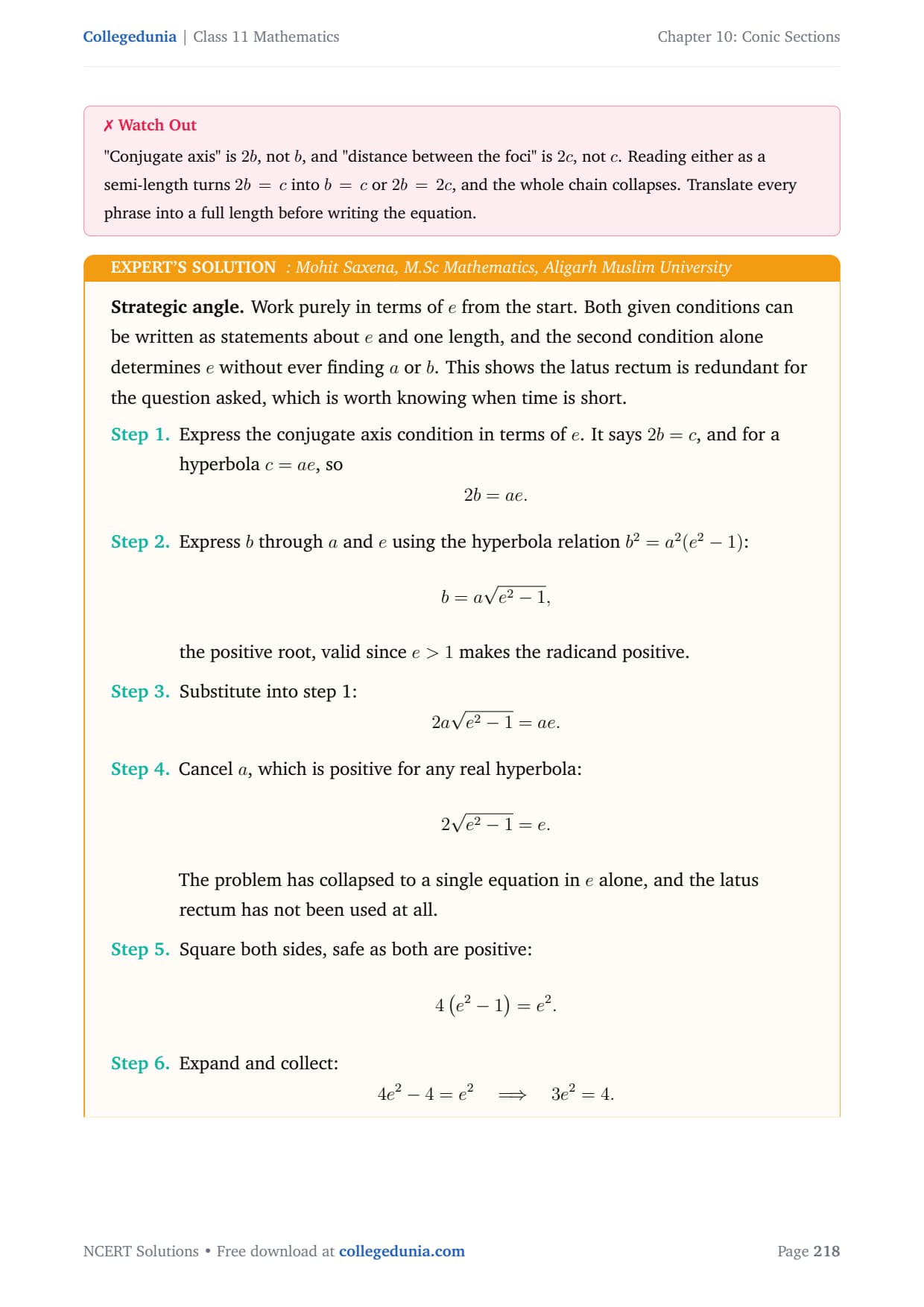
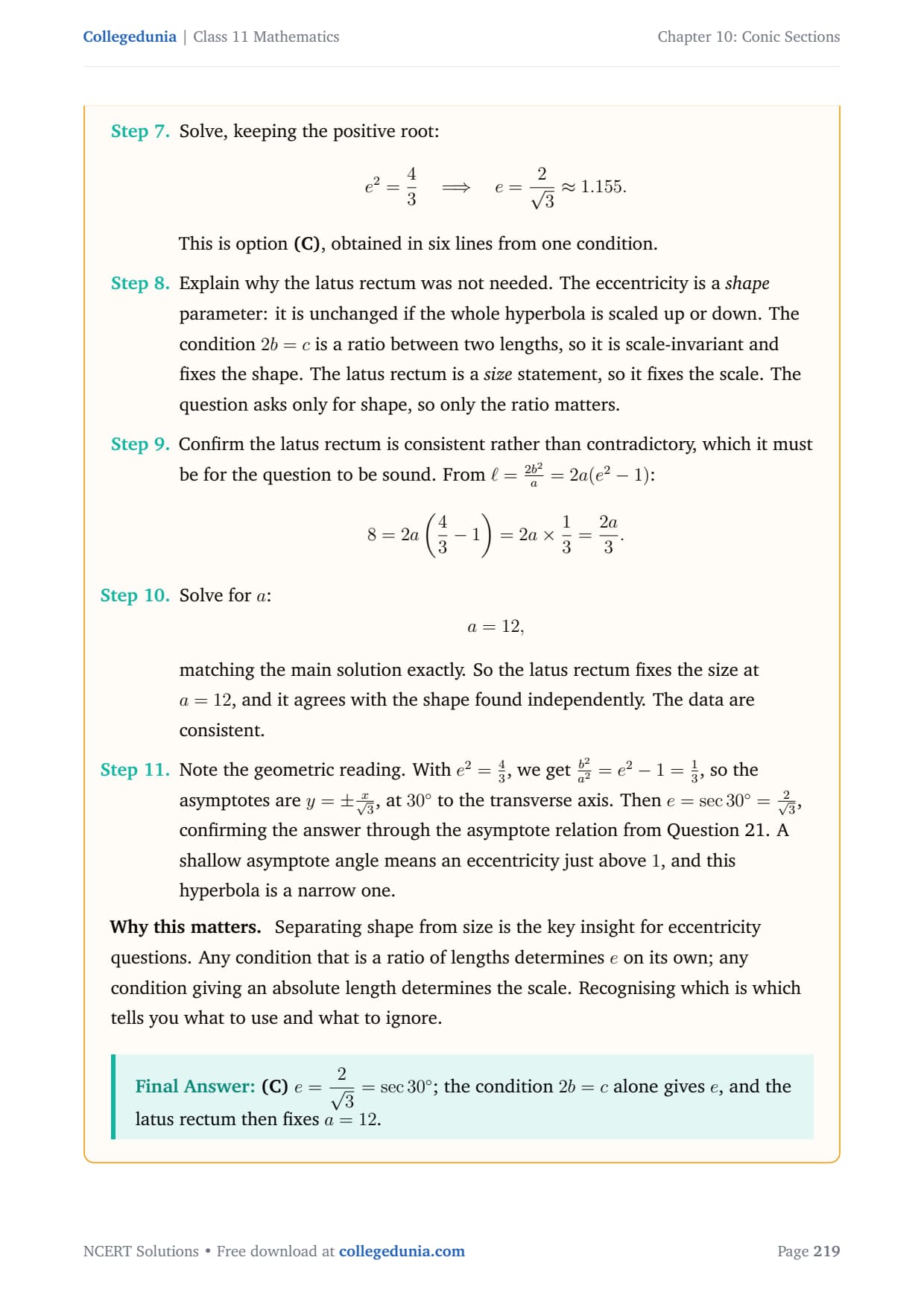
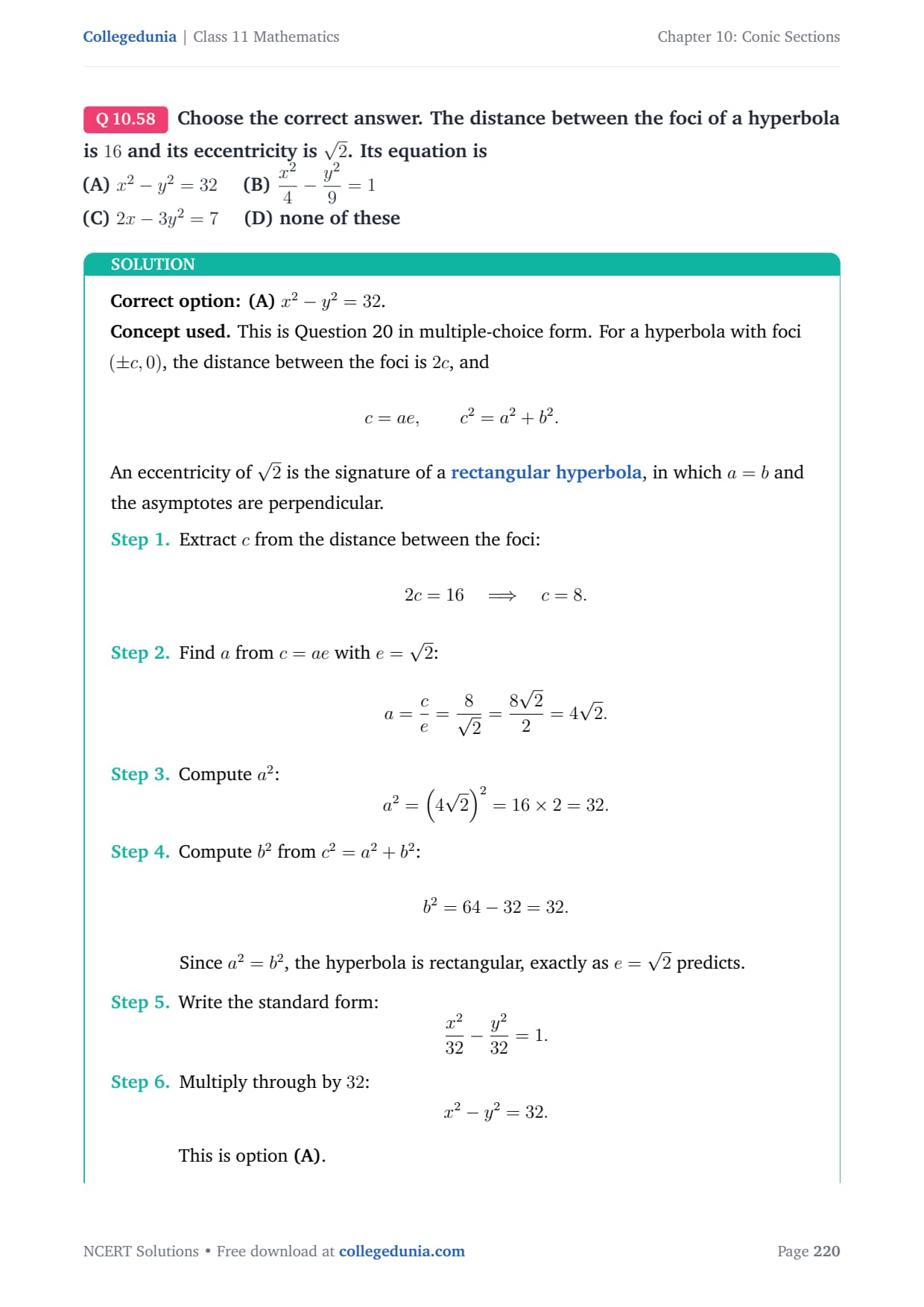
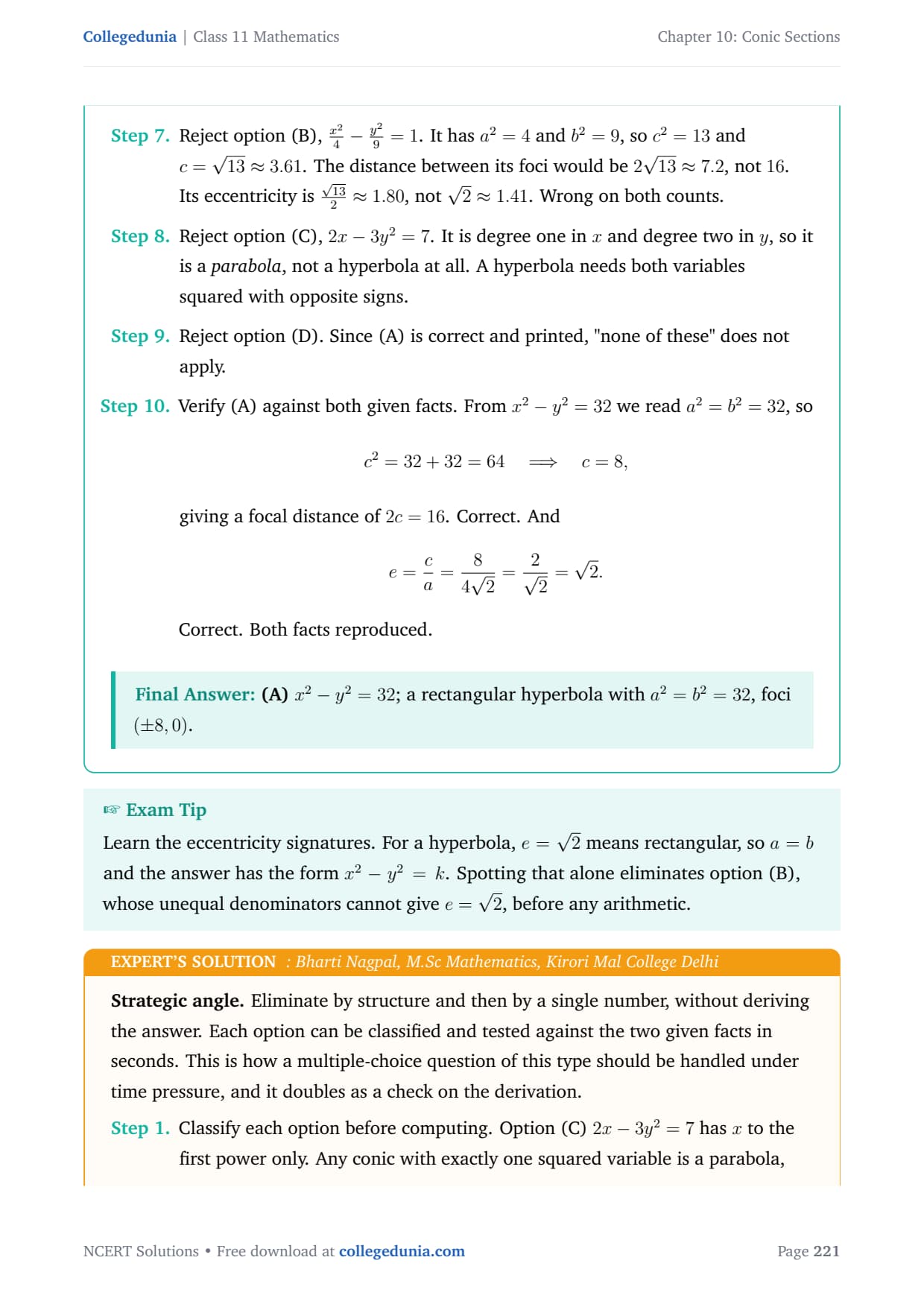
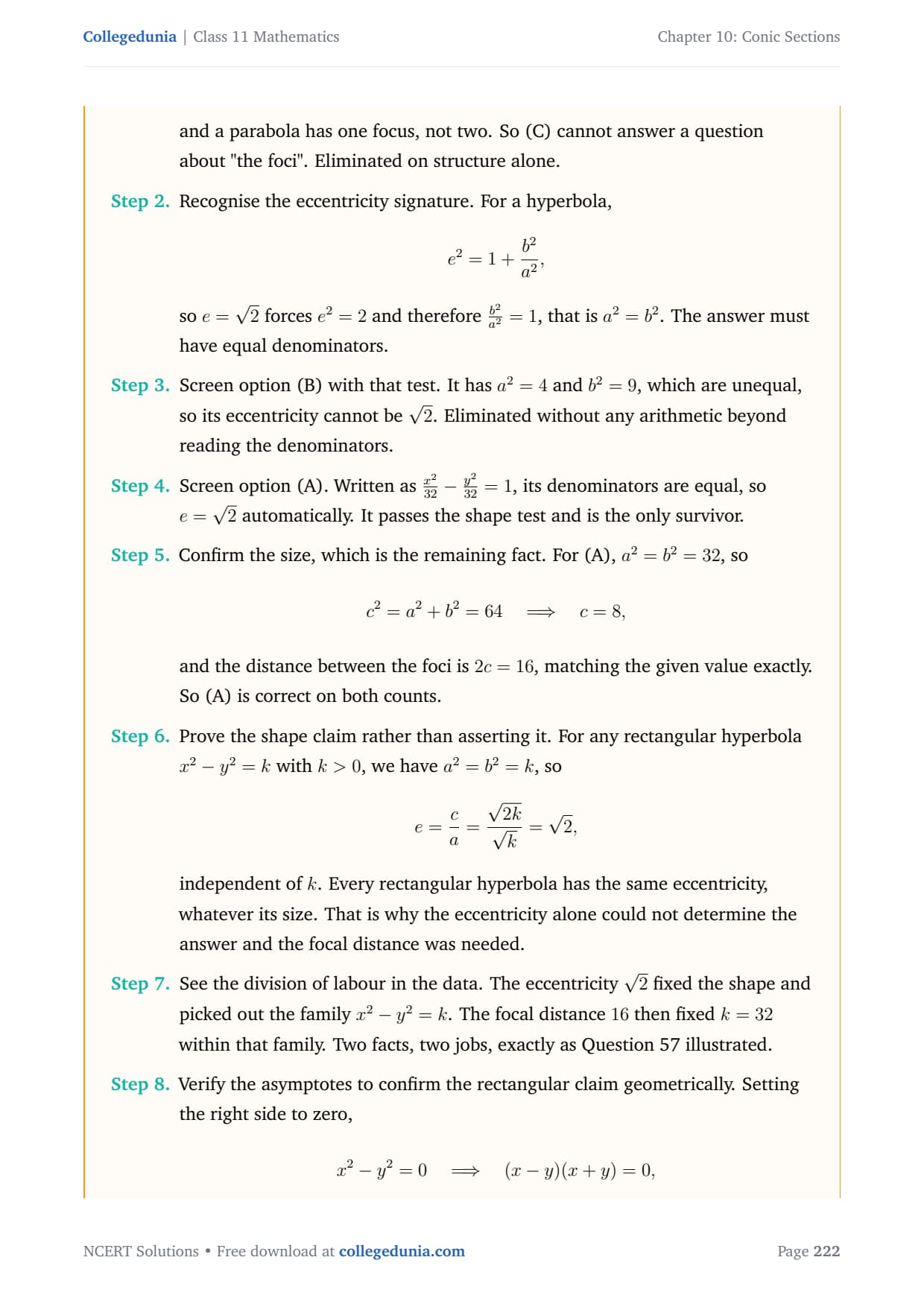
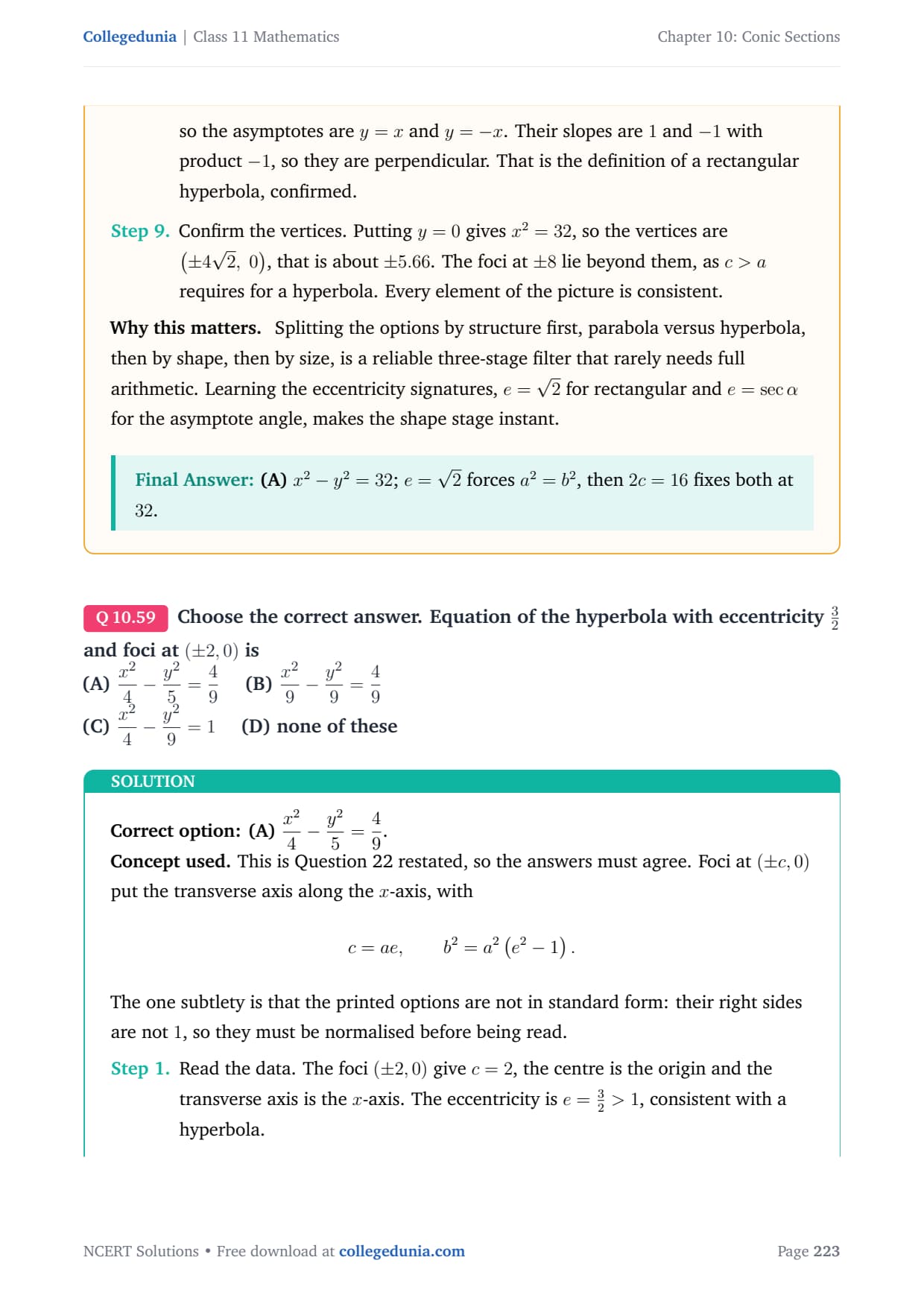
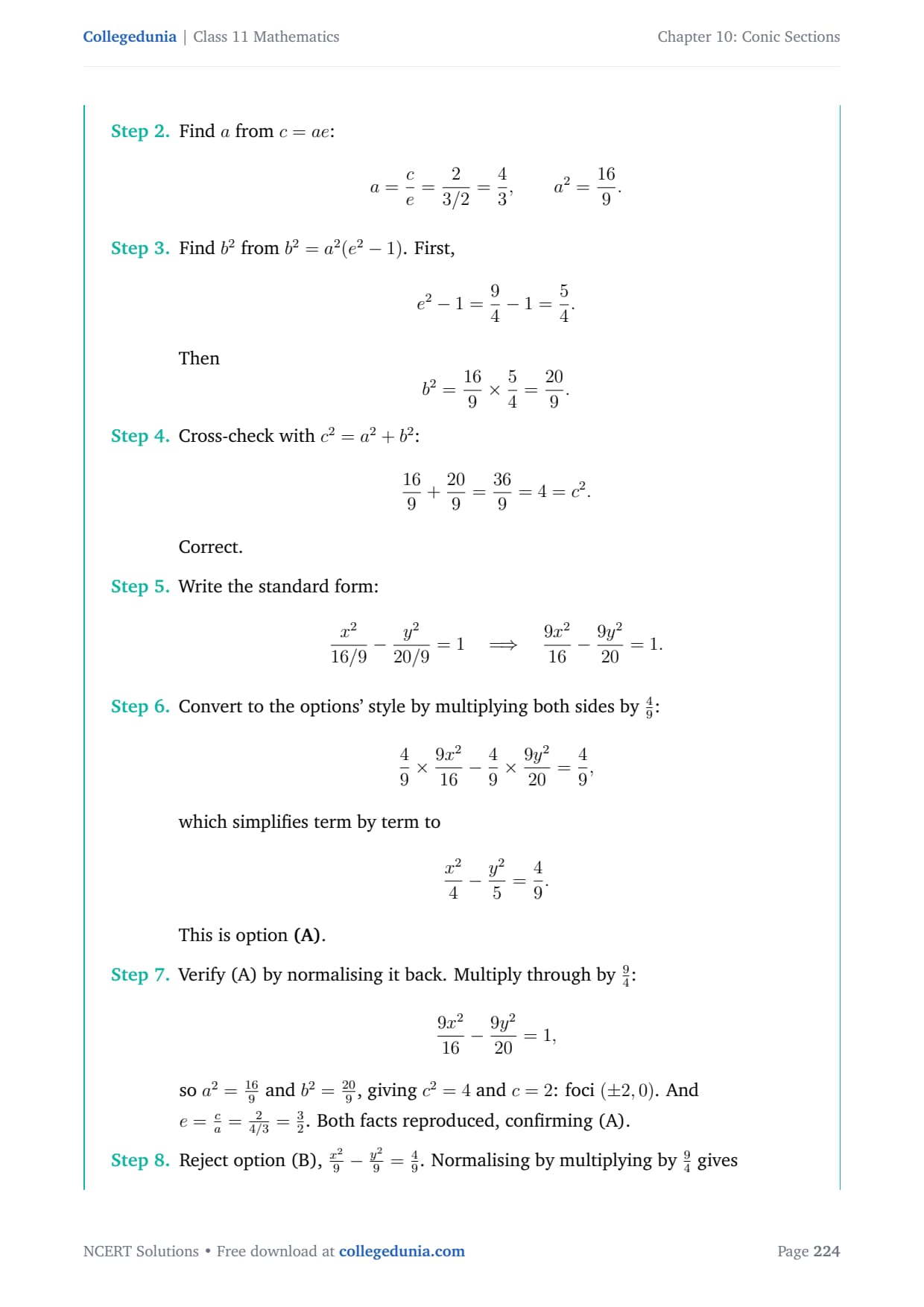
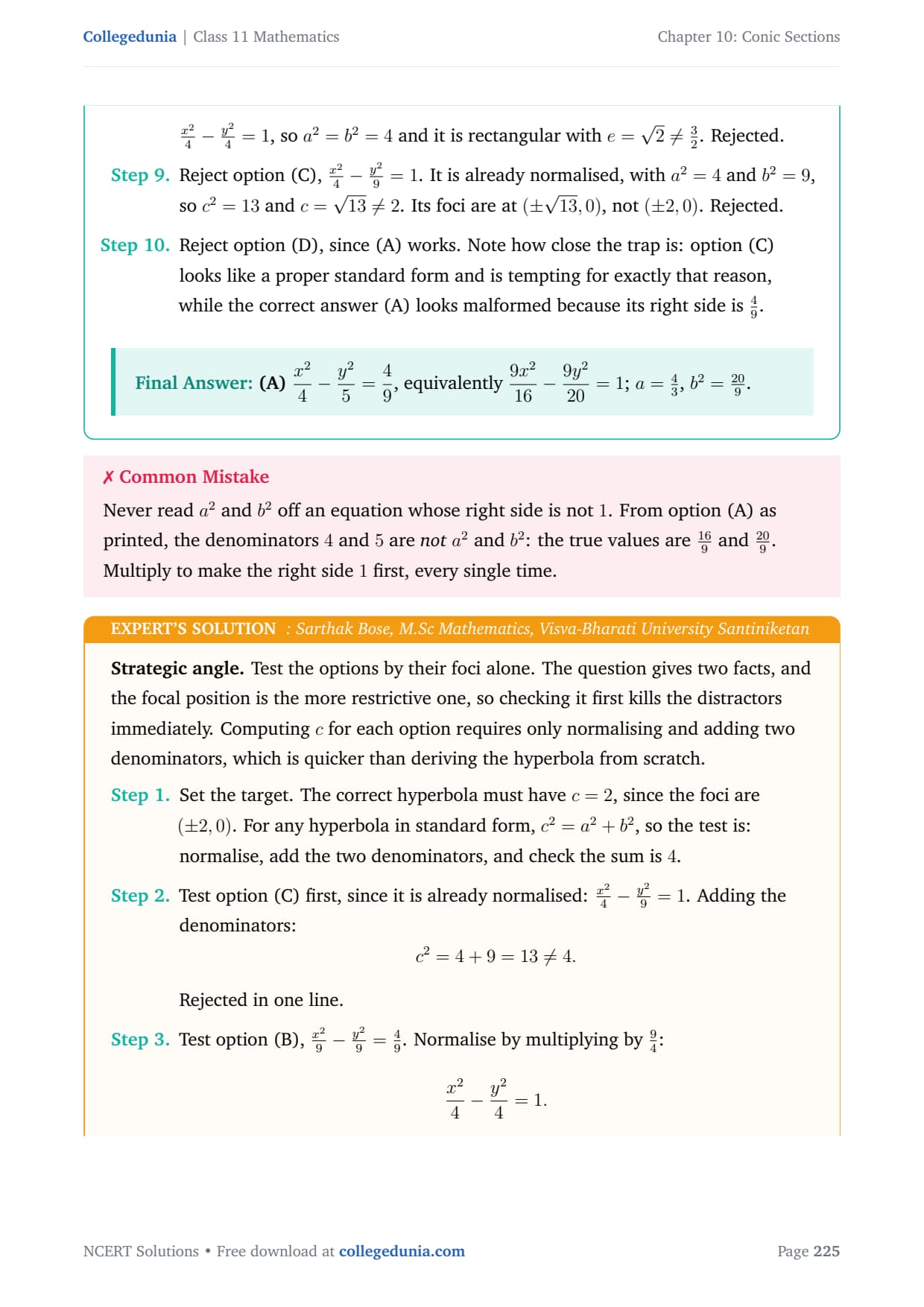
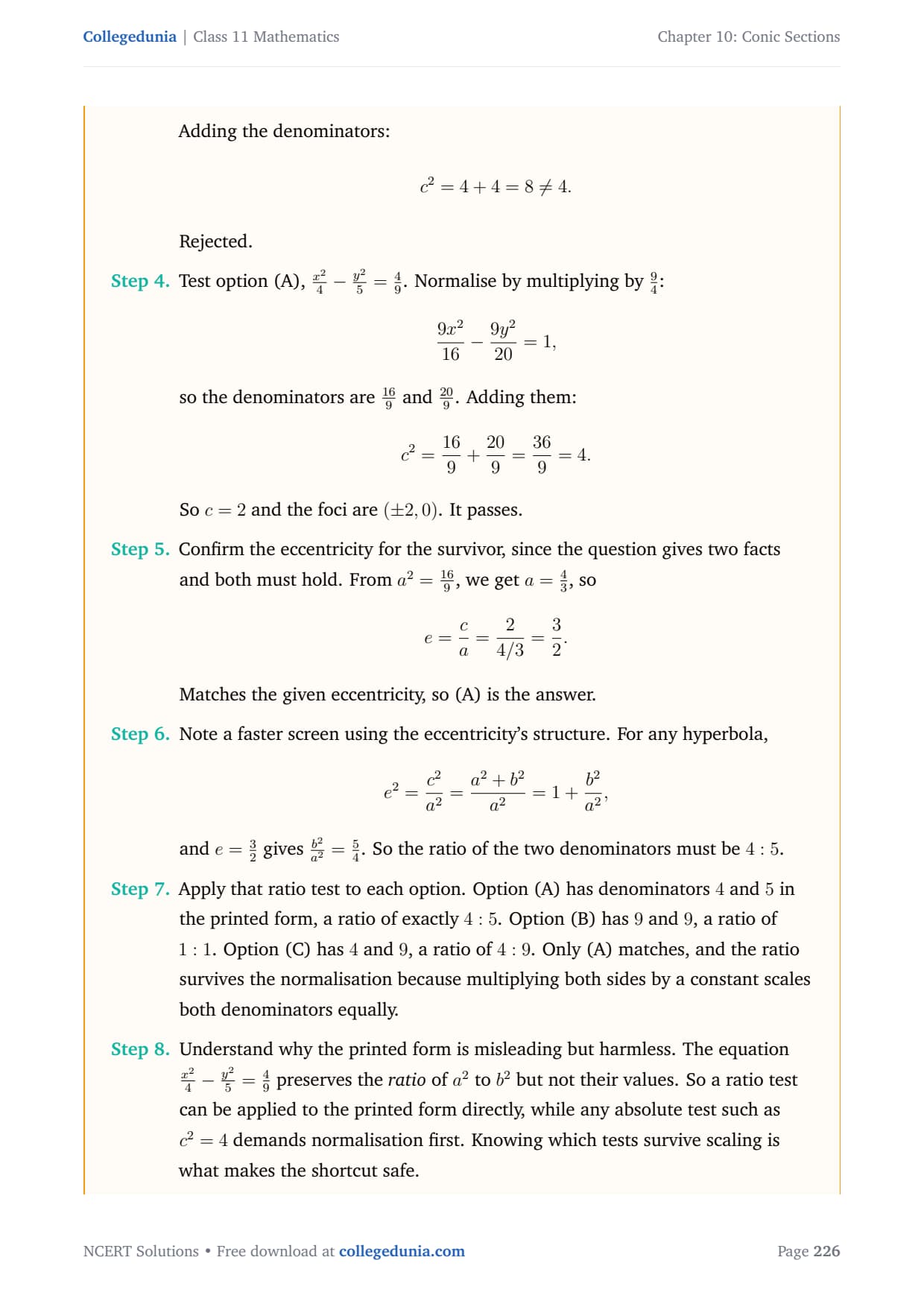
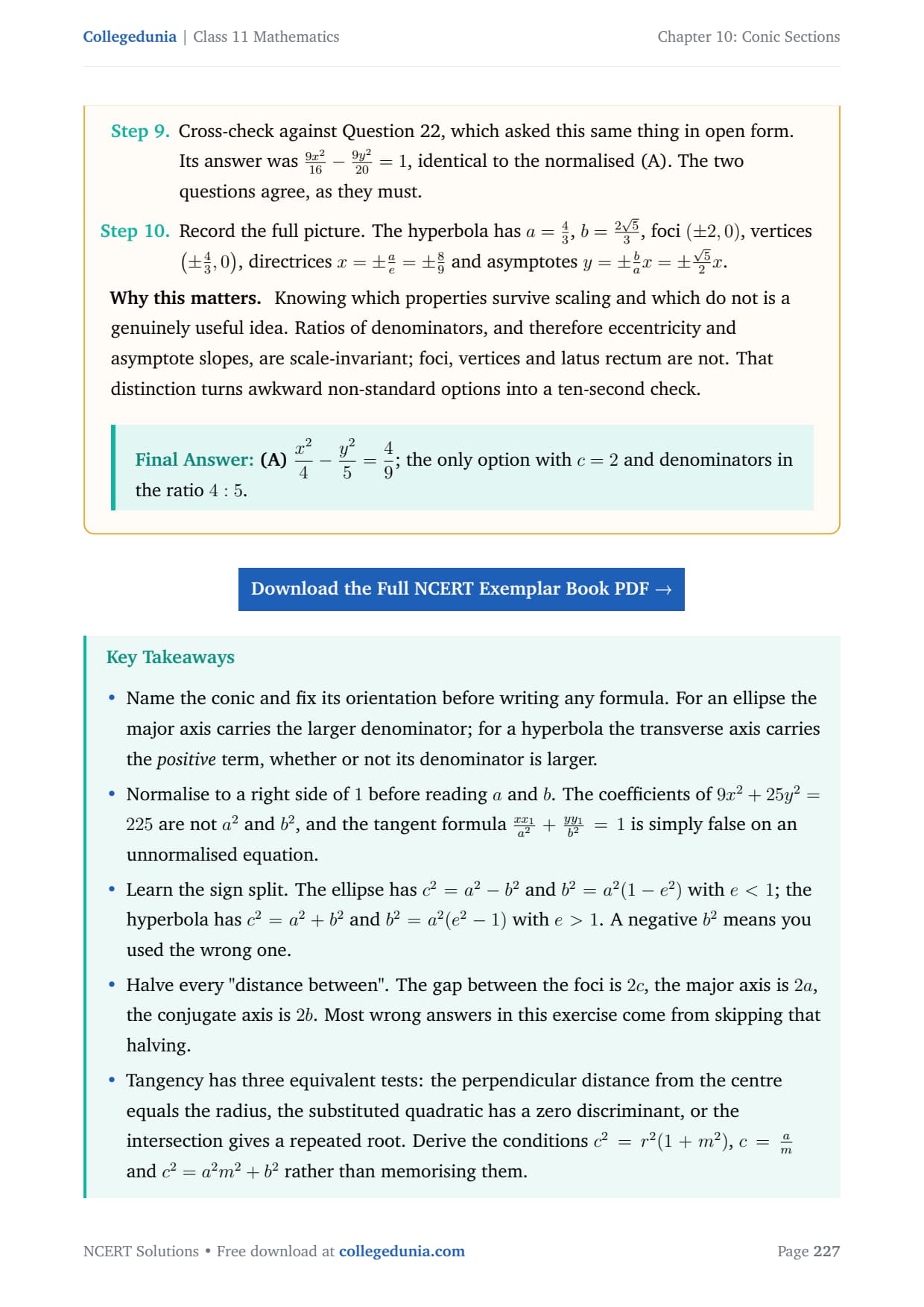
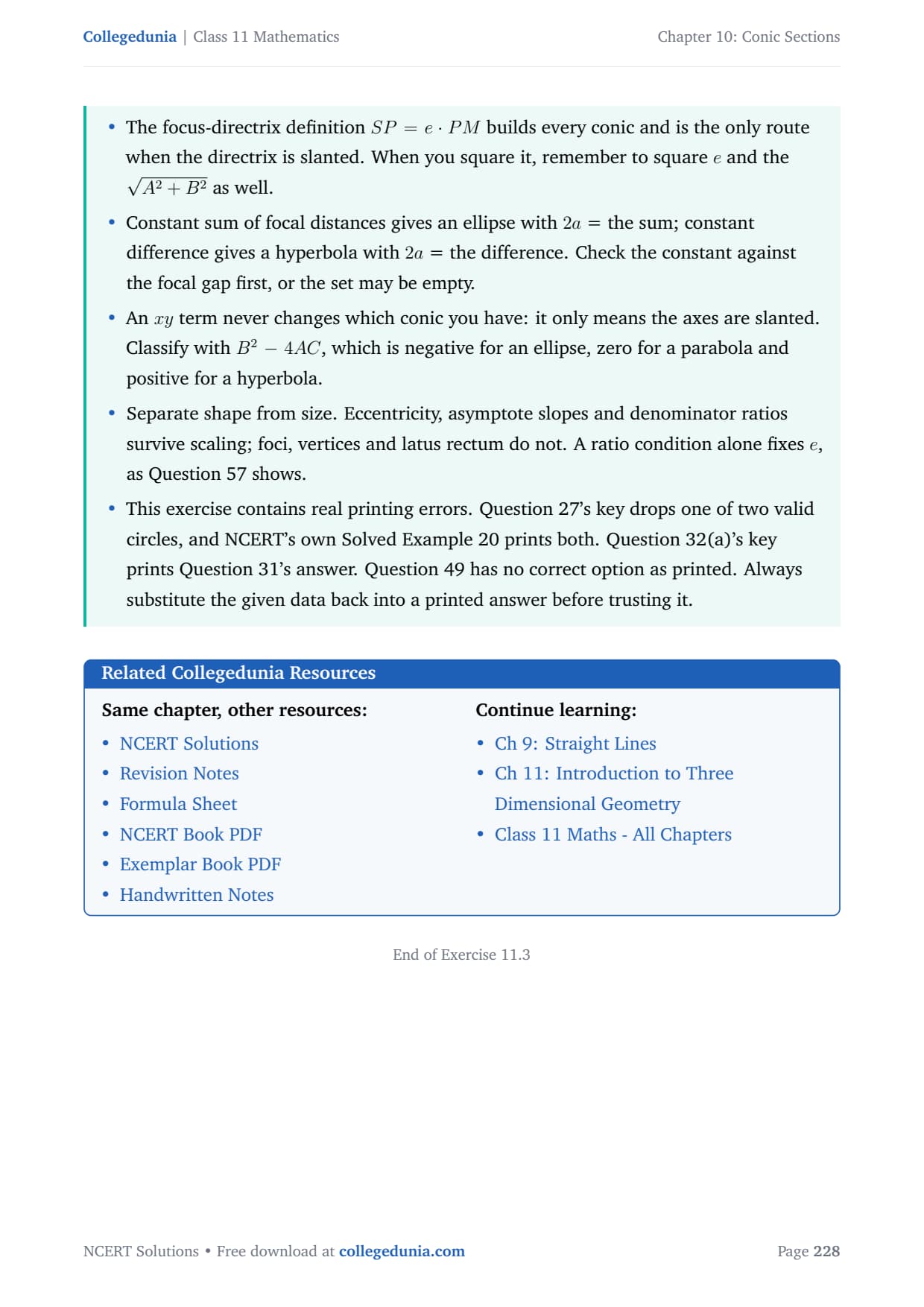
Every solution in this Collegedunia set is prepared by subject experts, based on the 2026-27 NCERT Exemplar, and checked line by line against the official answer key.
One numbering note before students start. The NCERT Exemplar book prints Conic Sections as its Chapter 11, and the exercise is numbered Exercise 11.3. In the current NCERT textbook order it is Chapter 10, which is the number used on this page. The questions are identical. The solutions PDF runs to 228 pages.
- 59 questions solved: Short Answer, Long Answer, True/False, Fill in the Blanks and Multiple Choice.
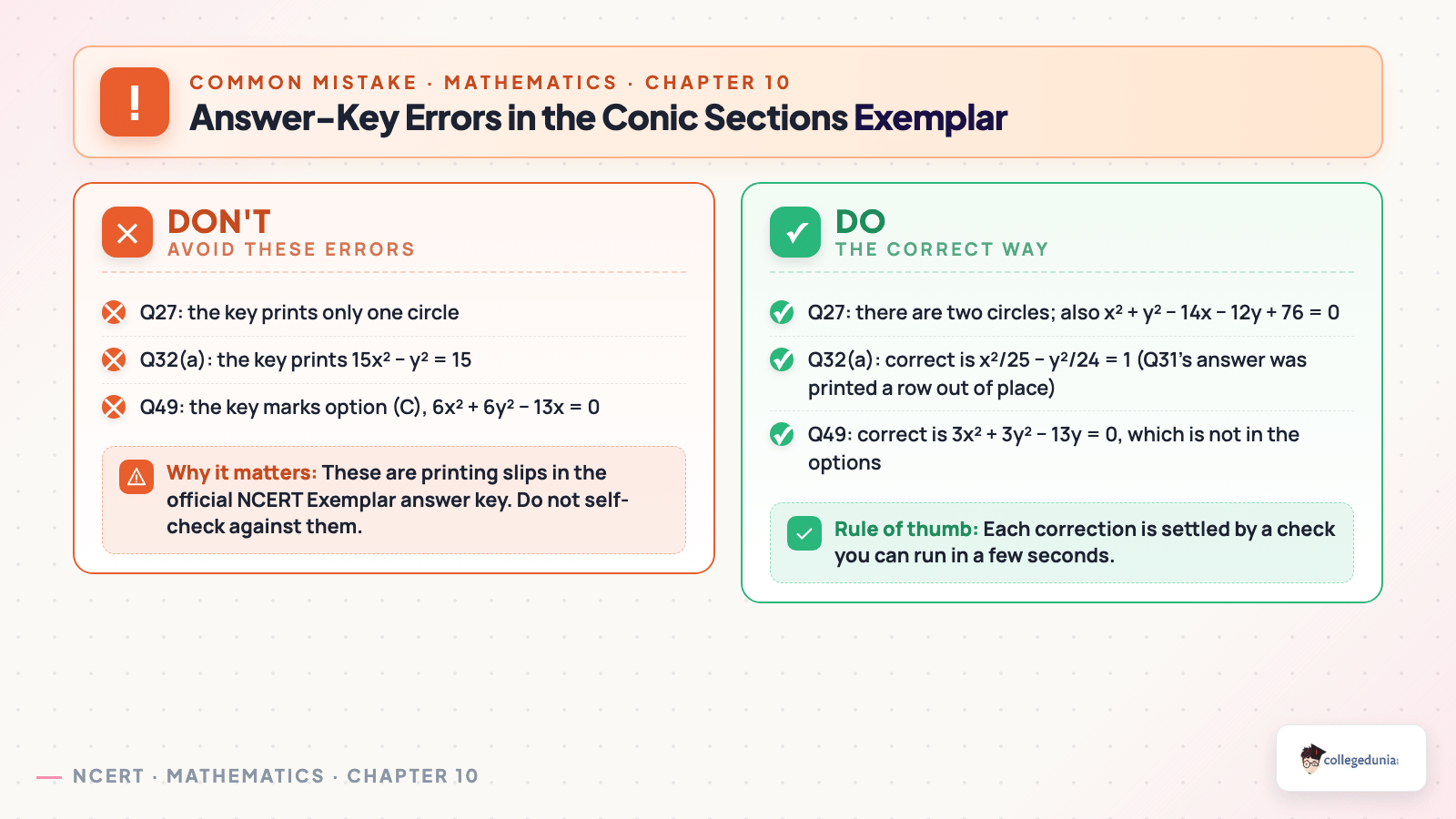
- Three errors in the printed key flagged: Q27, Q32(a) and Q49, each with the one-line check that settles it.
- Exam focus: useful for CBSE Boards, JEE Main, JEE Advanced and CUET.
Topics Covered in the Class 11 Maths Conic Sections Exemplar
The Conic Sections Exemplar works through all four curves, but it spends most of its questions on the circle and the ellipse. Very few questions hand students a standard equation directly. Most give a geometric condition, such as a tangent, a chord or a focal distance, and expect the equation to be built from it. These are the topics the 59 questions are built on.
- Circles from conditions: circles that touch both axes, touch a given line, or have a centre pinned to a line such as y = x − 1.
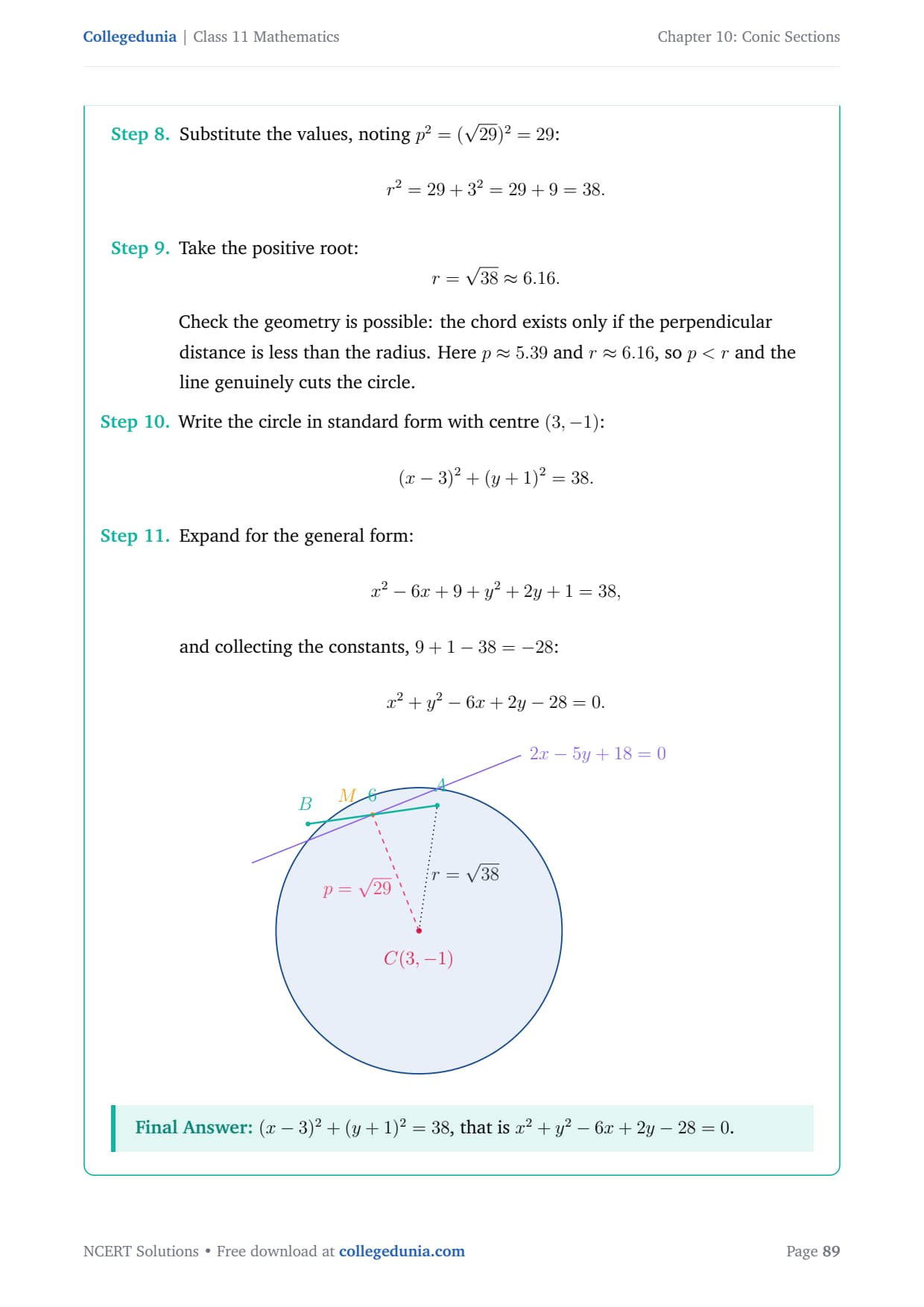
- Tangents and chords: the perpendicular distance from the centre as the tangency test, and the half-chord Pythagoras step.
- Position of a point: deciding inside, on, or outside a circle before computing any distance.
- Parabola: vertex, focus and directrix, the four standard forms, focal distance and latus rectum.
- Ellipse: eccentricity, foci, directrices, latus rectum and the sum of focal distances 2a.
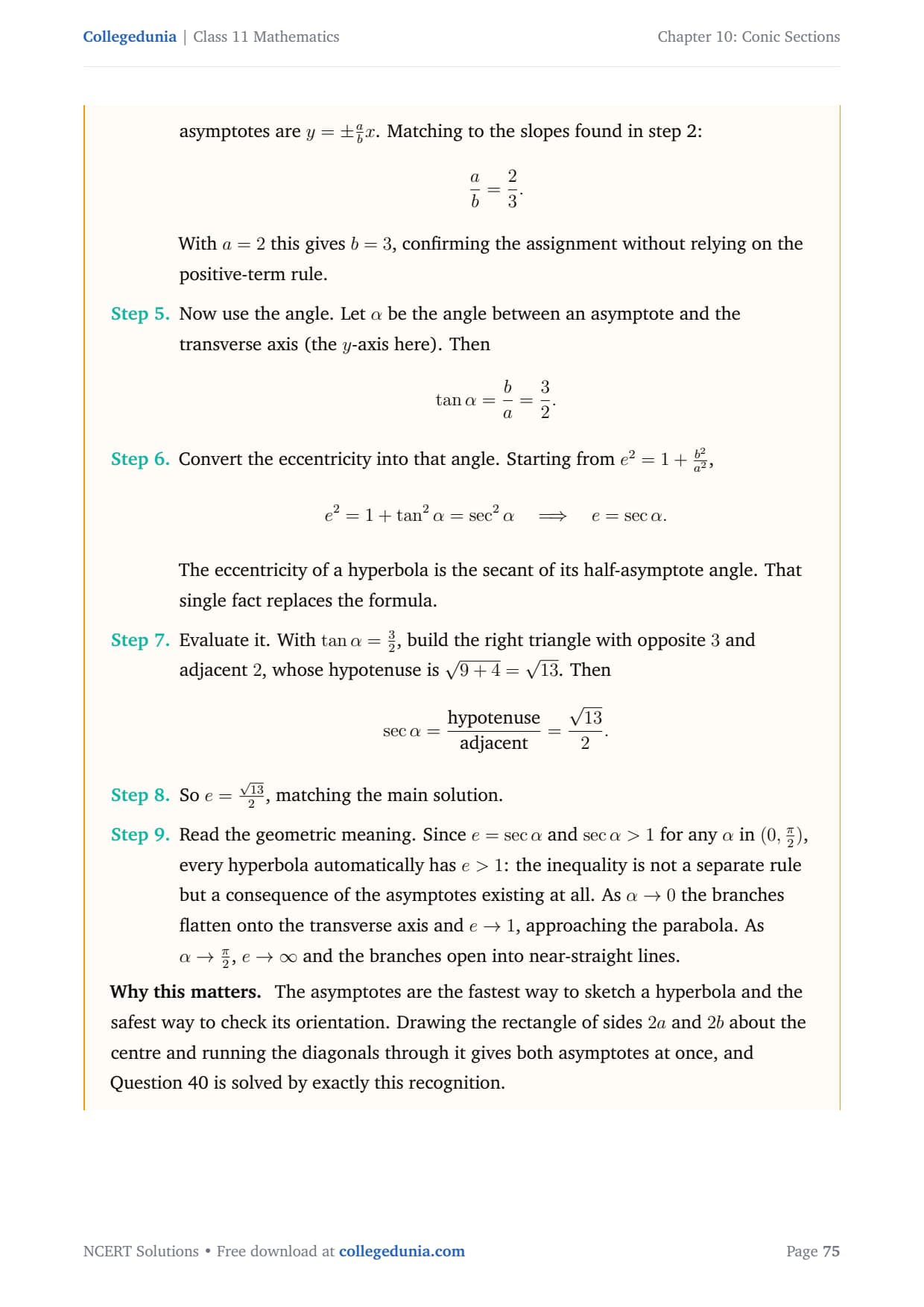
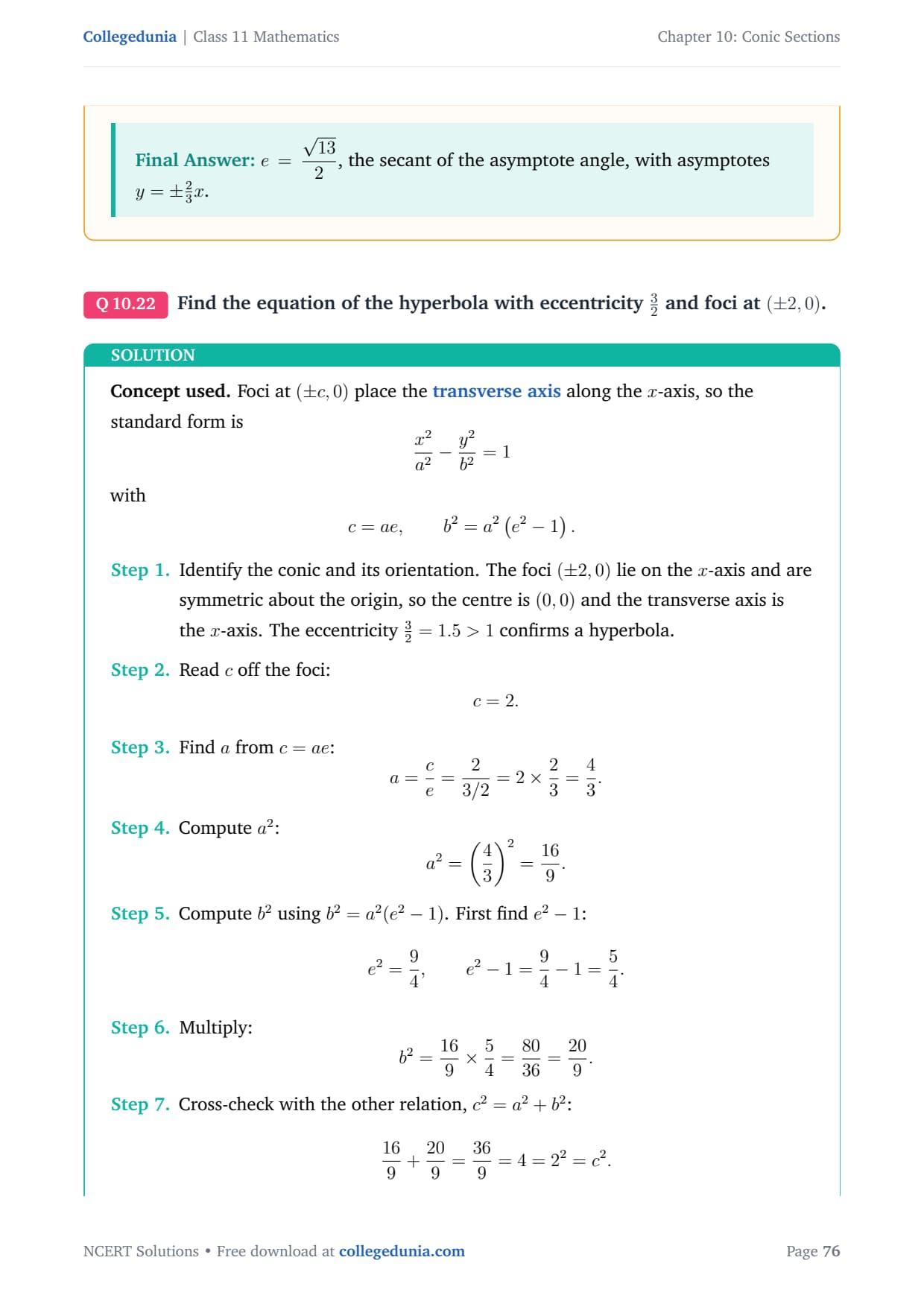
- Hyperbola: c2 = a2 + b2, eccentricity greater than 1, and the difference of focal distances.
- Focus-directrix definition: building a conic from SP = e × PM when the directrix is a slanted line.
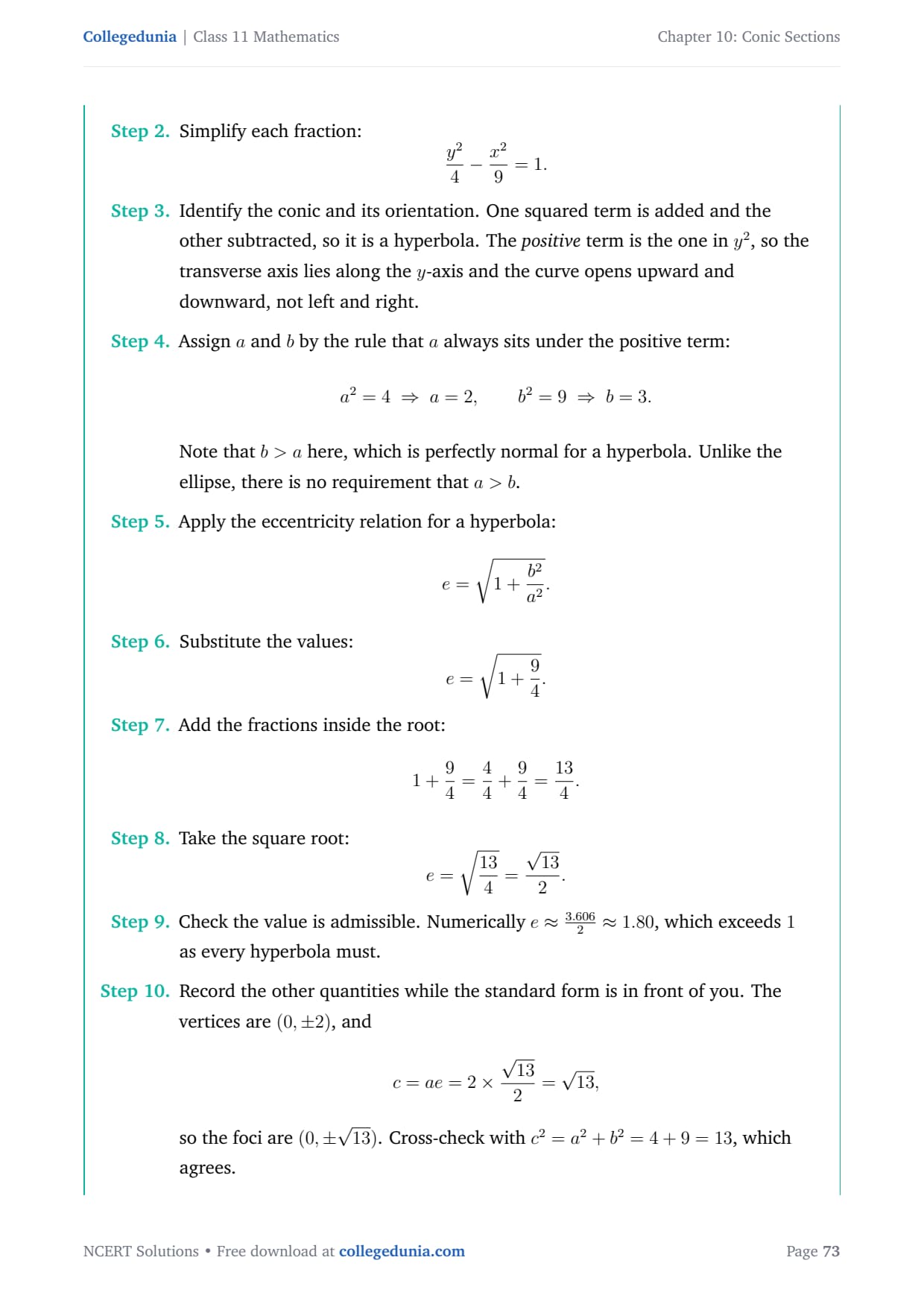
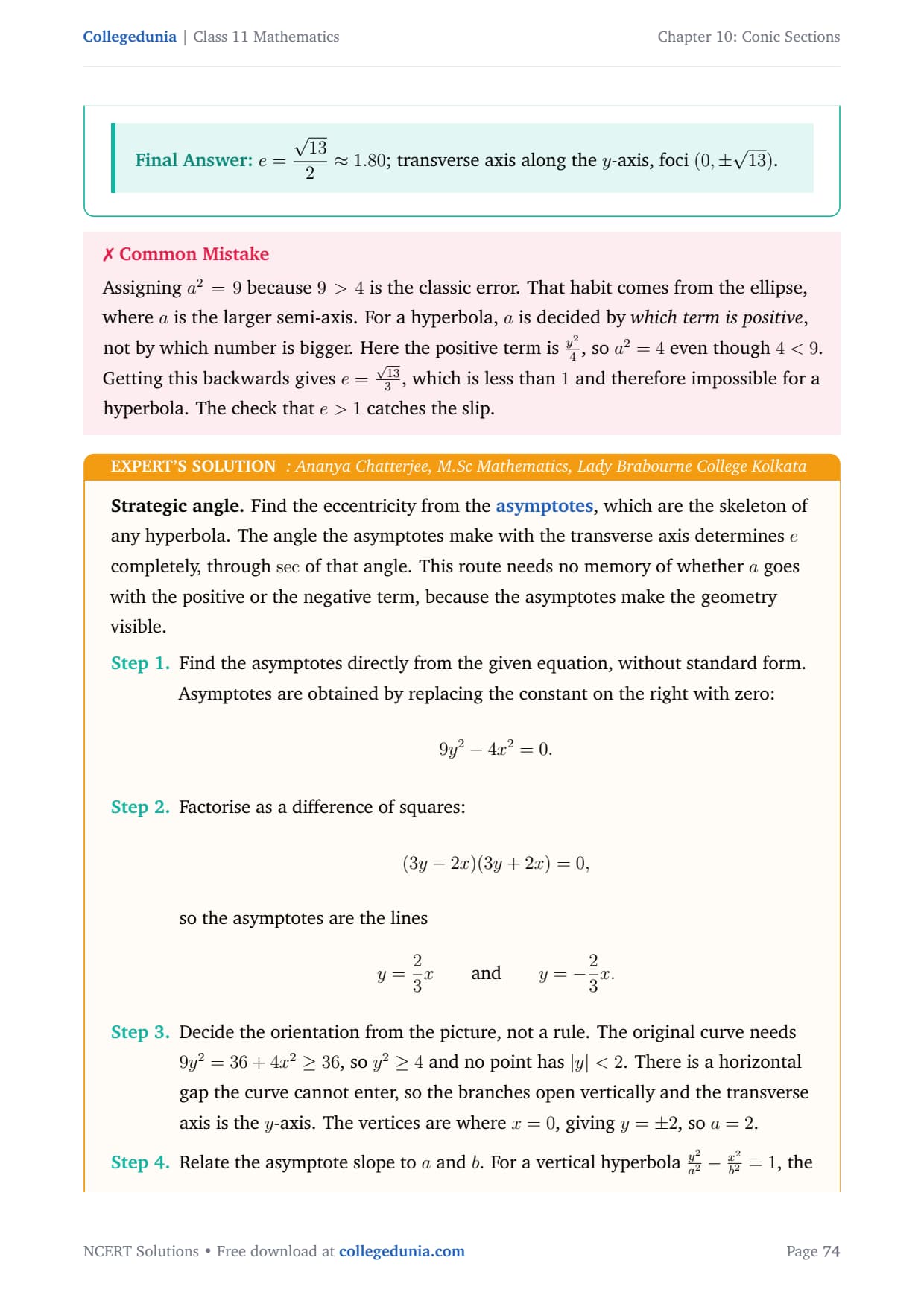
Important: for an ellipse, a is the larger semi-axis. For a hyperbola, a is decided by which term is positive, not by which number is larger. Students who carry the ellipse habit into Q21 get an eccentricity below 1, which is impossible for a hyperbola.
Exercise 11.3 Question-Type Breakdown for Conic Sections
All 59 questions sit inside the single exercise the book prints as Exercise 11.3, grouped by format. The table below shows how the exercise splits, so students can plan practice by question type rather than solving straight through.
| Question Type | Question Numbers | Count | What it tests |
|---|---|---|---|
| Short Answer | Q1 to Q22 | 22 | Circles from conditions, eccentricity, latus rectum, tangency |
| Long Answer | Q23 to Q32 | 10 | Full locus derivations and multi-condition circles and hyperbolas |
| True/False | Q33 to Q40 | 8 | Justifying or disproving a tangency or position claim |
| Fill in the Blanks | Q41 to Q46 | 6 | Building an equation from focus, directrix or axes data |
| Multiple Choice | Q47 to Q59 | 13 | One-line reasoning on all four conics |
The Long Answer block (Q23 to Q32) is where the chapter is won or lost. It holds the locus derivations in Q29 to Q31 and both of the multi-answer traps, Q27 and Q32. The Short Answer block is the largest group and is best split across two sittings, because Q1 to Q10 are circles and Q11 to Q22 move through the ellipse, parabola and hyperbola.
Three Errors in the Printed Conic Sections Exemplar Key Every Student Must Know
The printed NCERT Exemplar key for this chapter has three questions where students cannot simply trust what is printed. They are not the same kind of error, so they are listed separately below. One key is incomplete, one key row is wrong, and one question has an option list in which no option works. Each is settled by a check students can run in a few seconds.
| Question | What is printed | Correct answer | Type of error |
|---|---|---|---|
| Q27 | Only x2+y2−8x−6y+16 = 0 | That circle and also x2+y2−14x−12y+76 = 0 | Incomplete key (one of two answers dropped) |
| Q32(a) | 15x2 − y2 = 15 | x2/25 − y2/24 = 1 | Wrong key (Q31's answer printed one row out of place) |
| Q49 | Option (C), 6x2+6y2−13x = 0 | 3x2+3y2−13y = 0 (not in the options) | Defective option list |
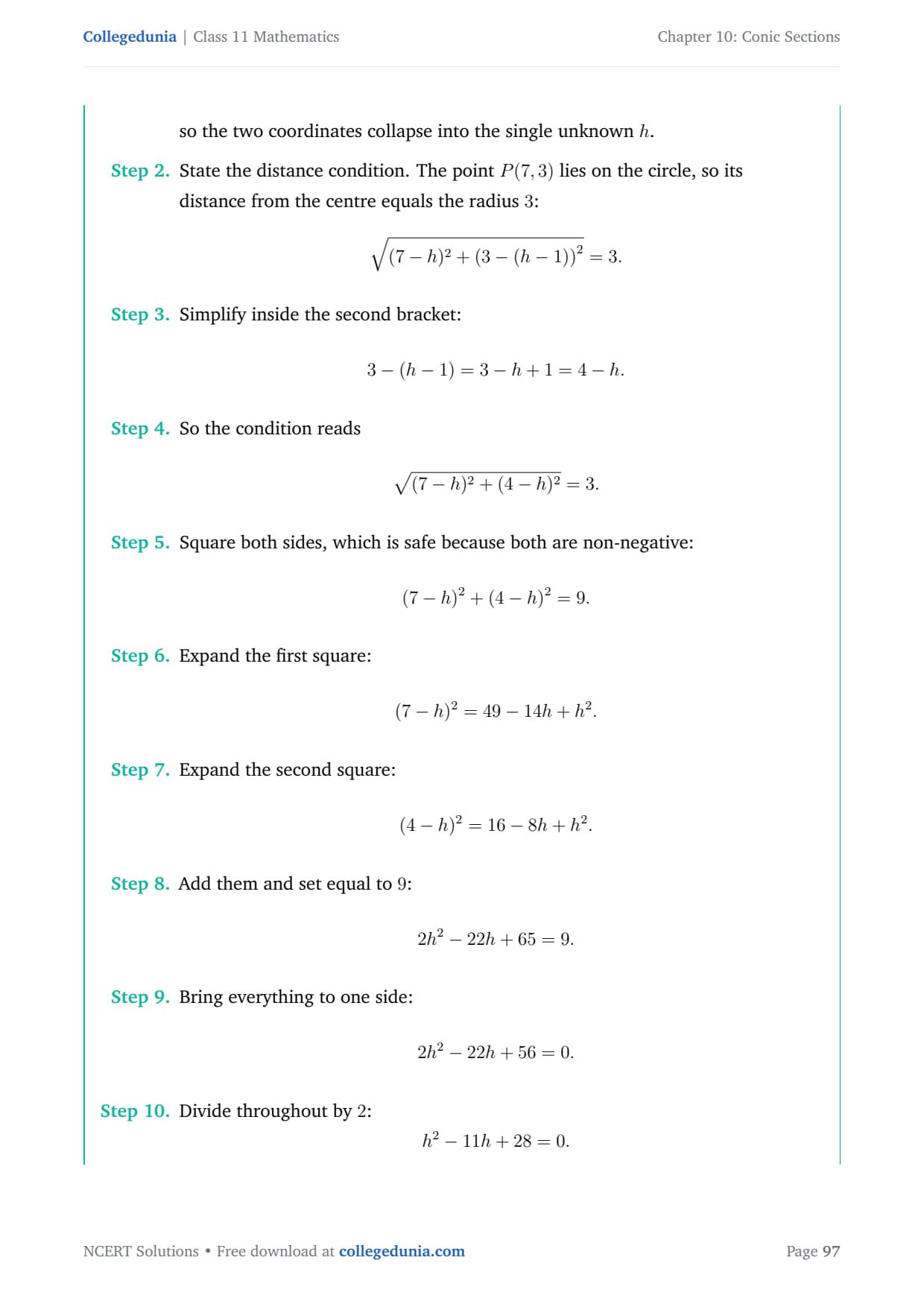
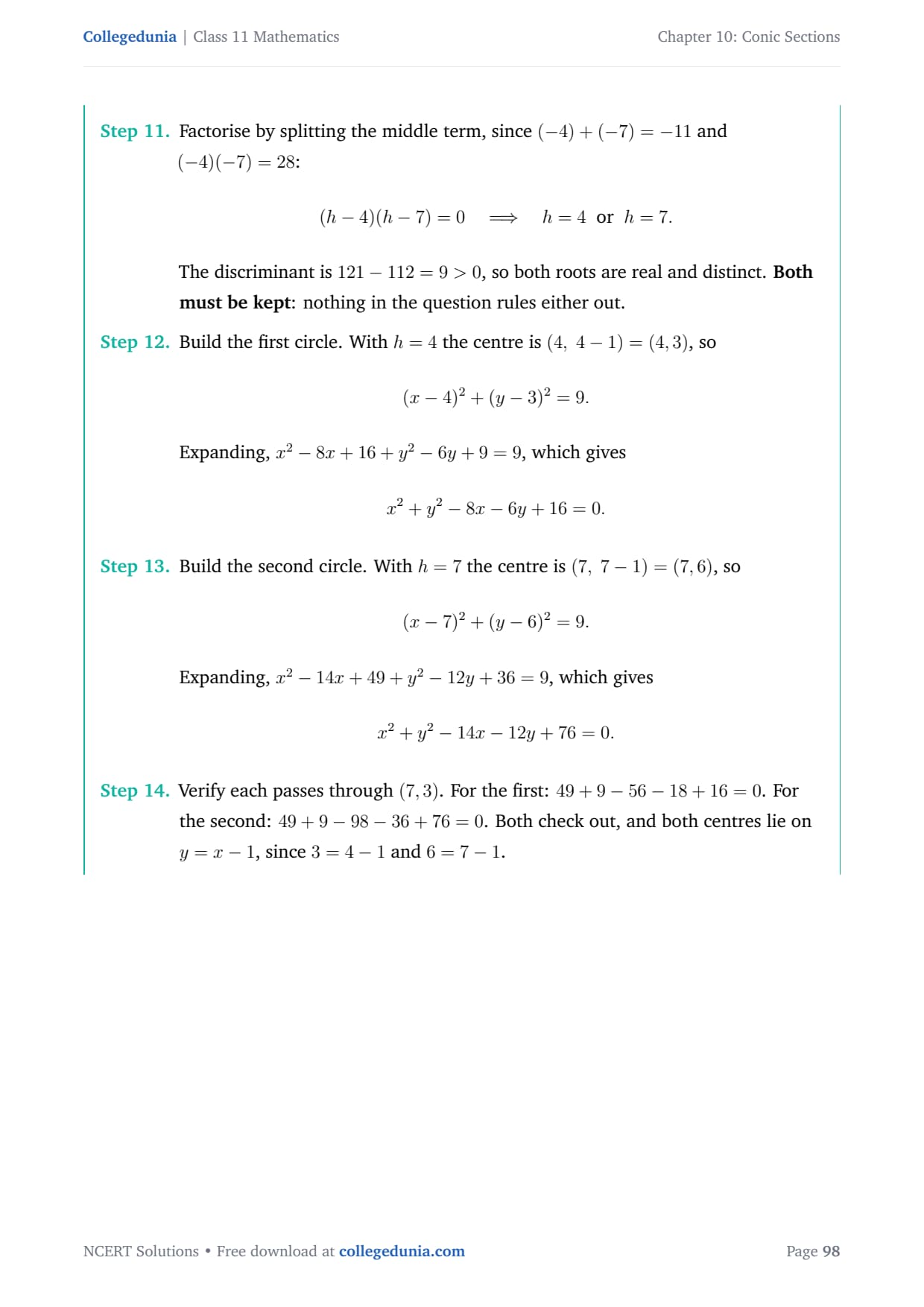
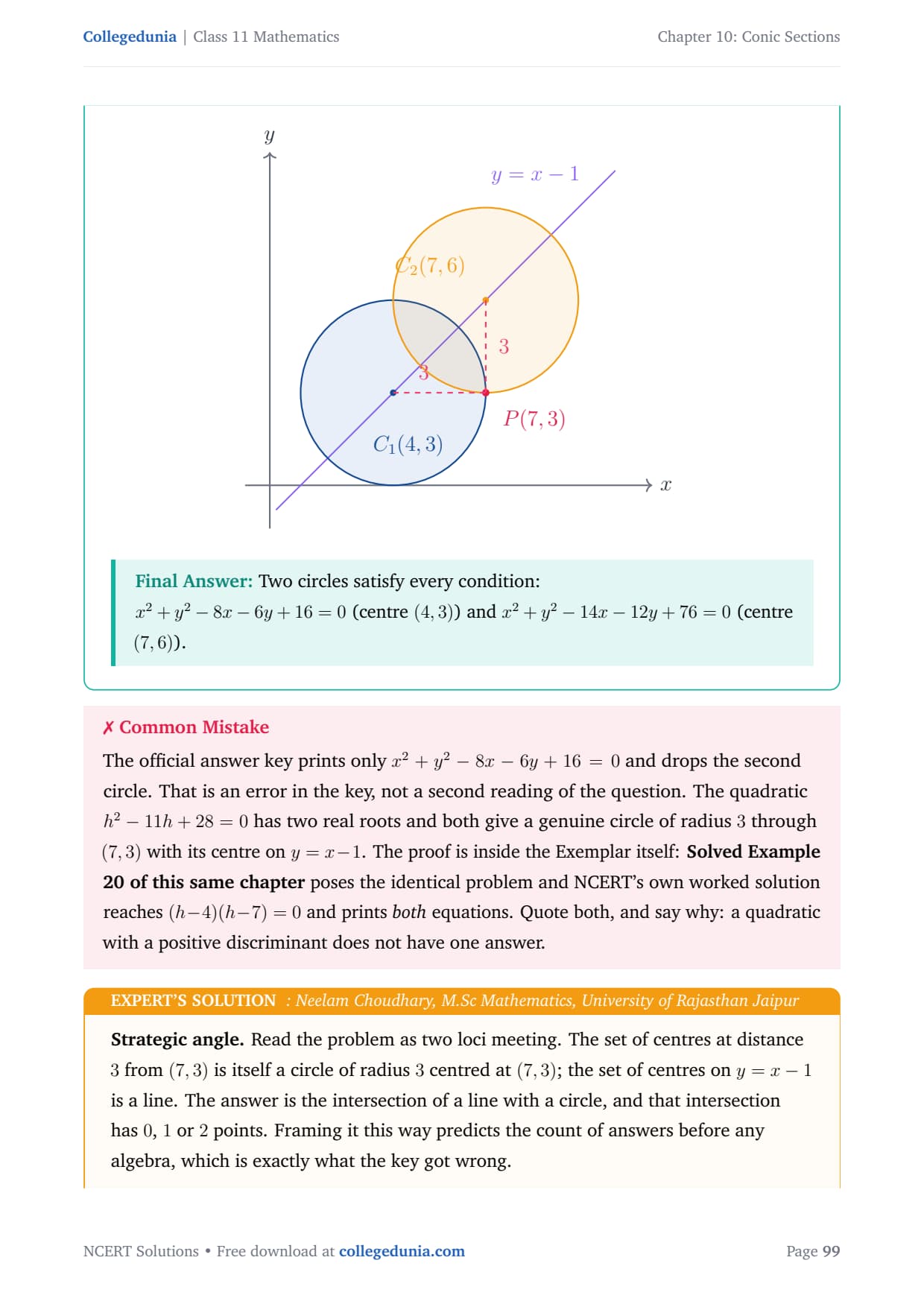
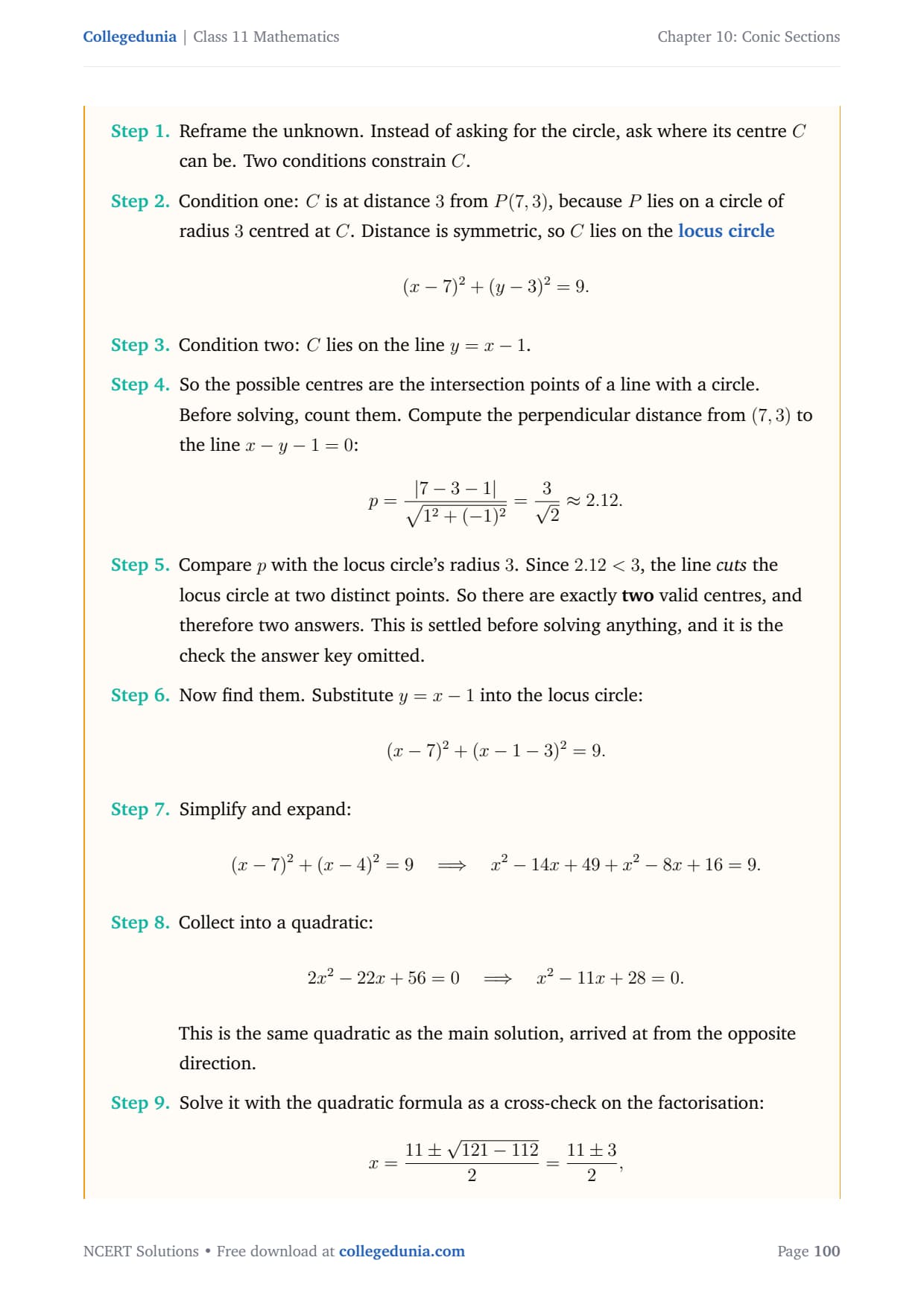
Q27 has two circles, not one. The question asks for a circle of radius 3 through (7,3) with its centre on y = x − 1. Putting the centre at (h, h−1) and using the radius condition gives h2 − 11h + 28 = 0, which factorises as (h−4)(h−7) = 0. Both roots are real, so both centres, (4,3) and (7,6), give a genuine circle of radius 3 through (7,3). The key prints only the first. The Exemplar itself settles this: Solved Example 20 of the same chapter poses the identical problem and prints both equations. A quadratic with a positive discriminant does not have one answer.
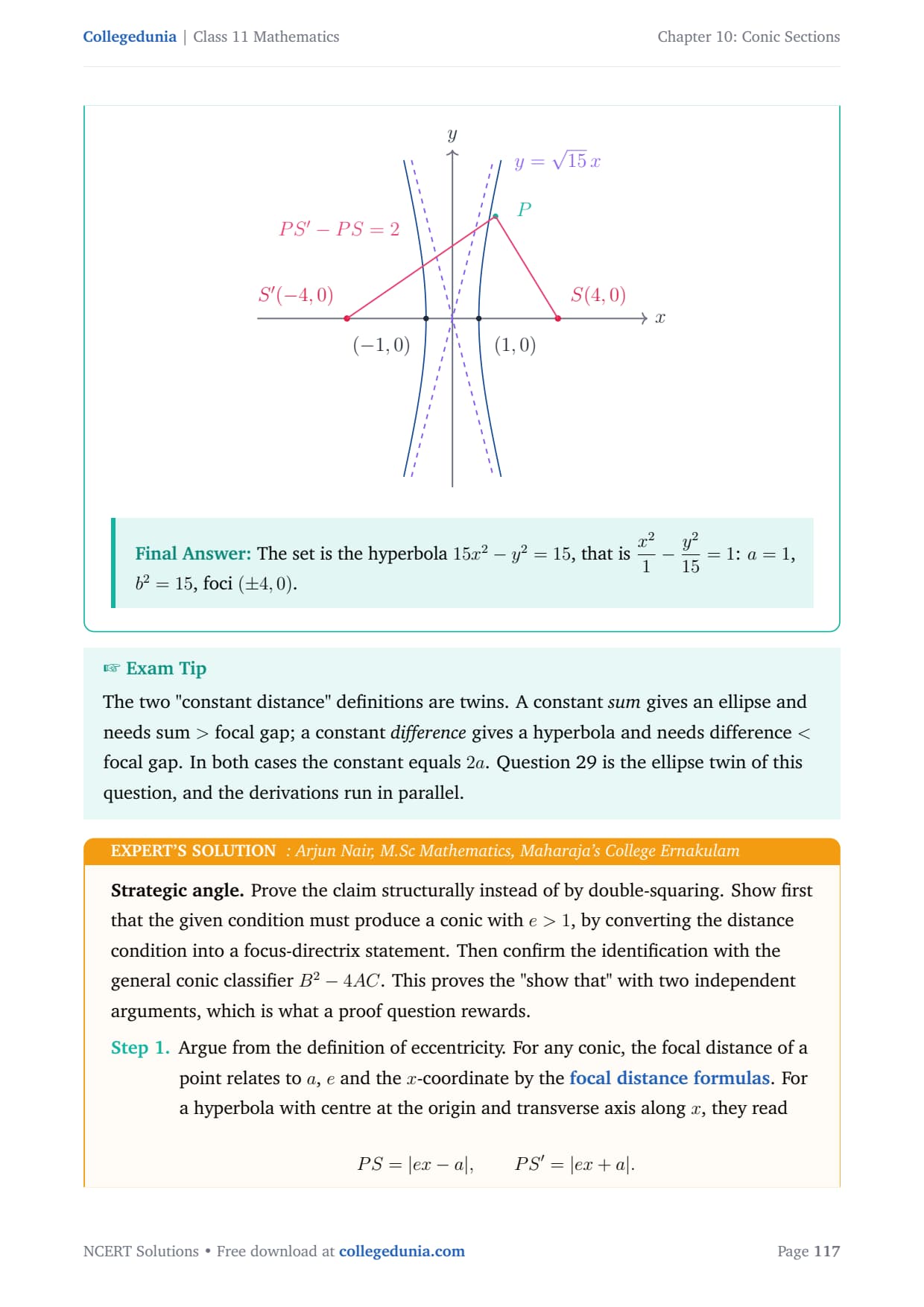
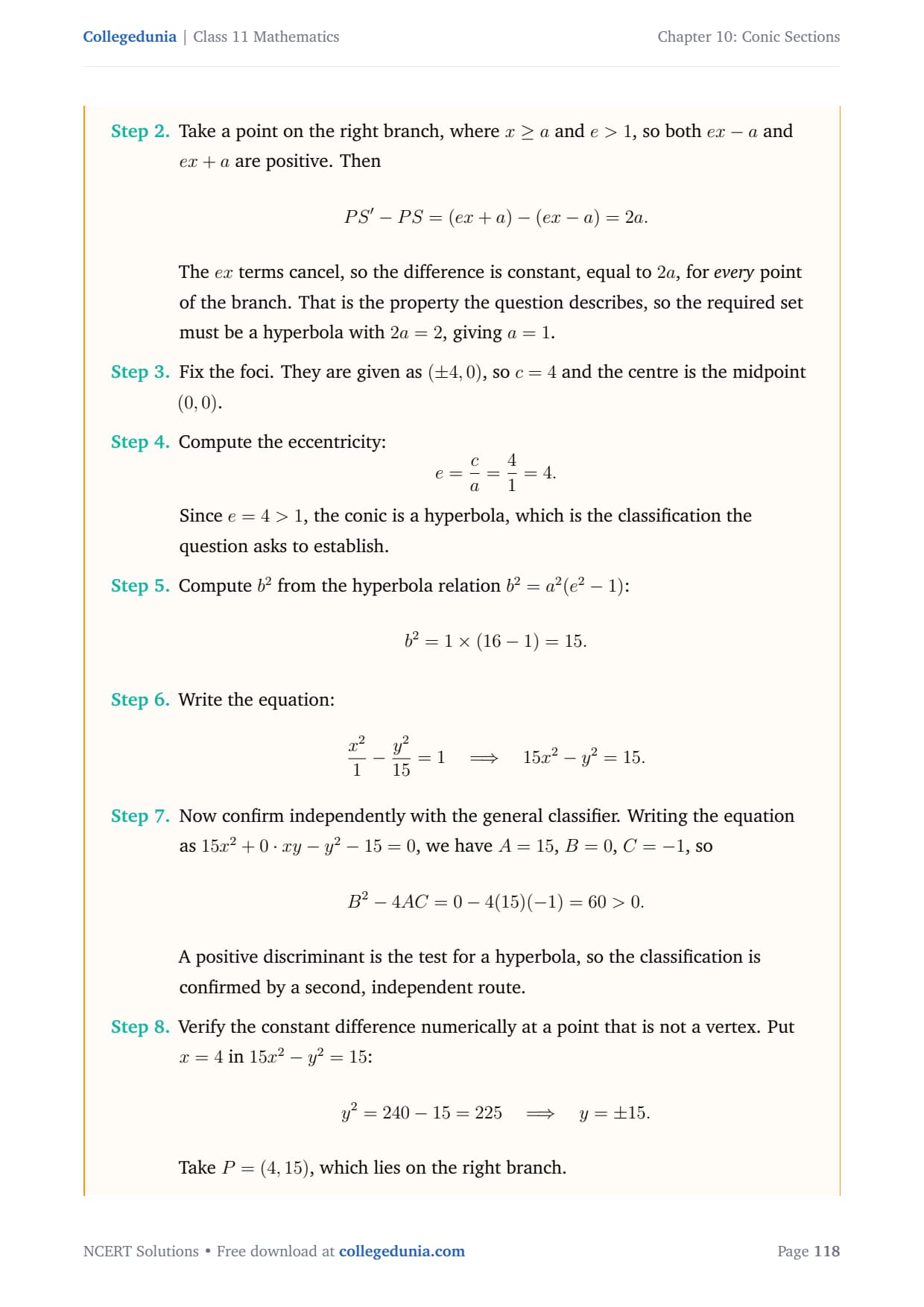
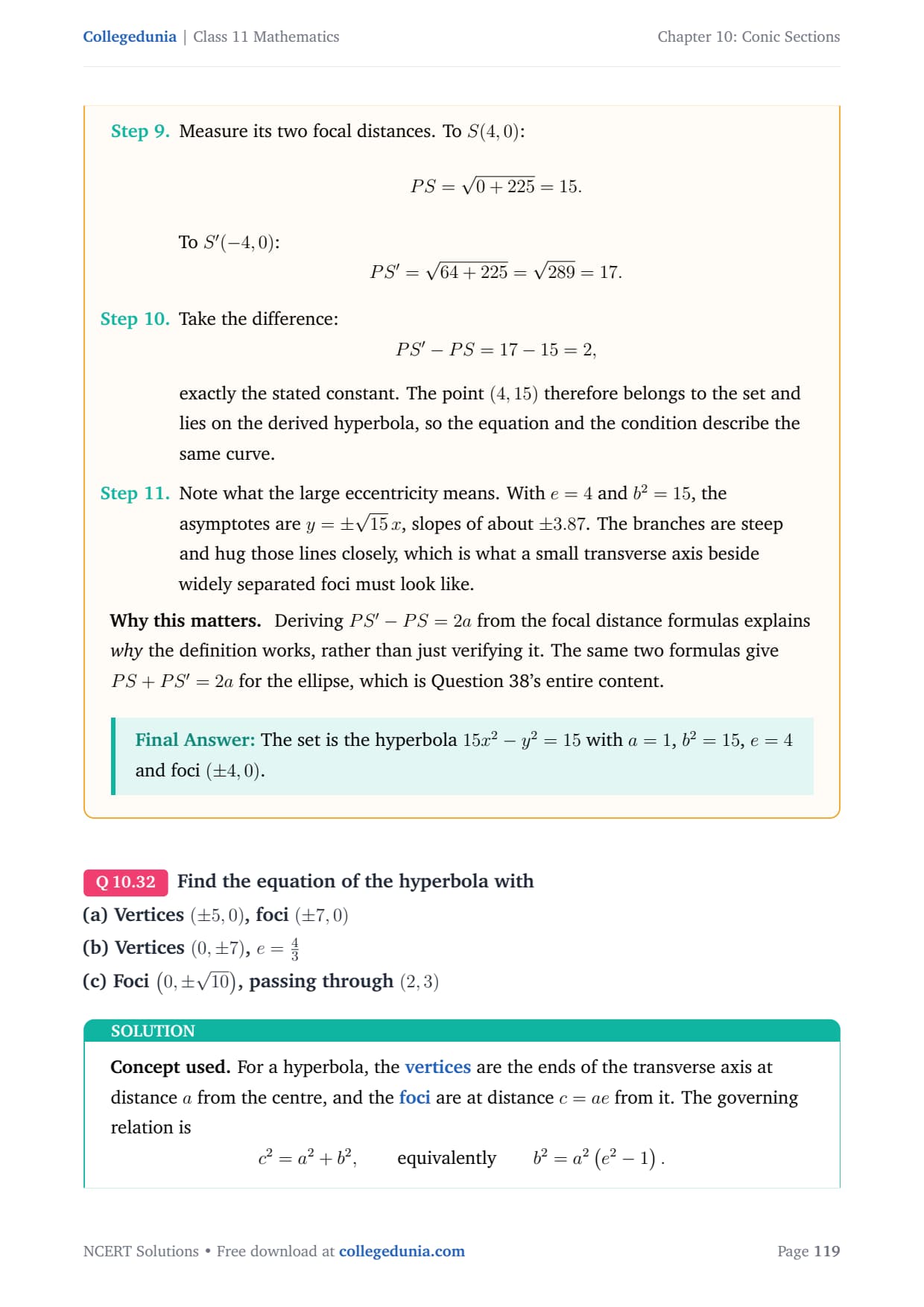
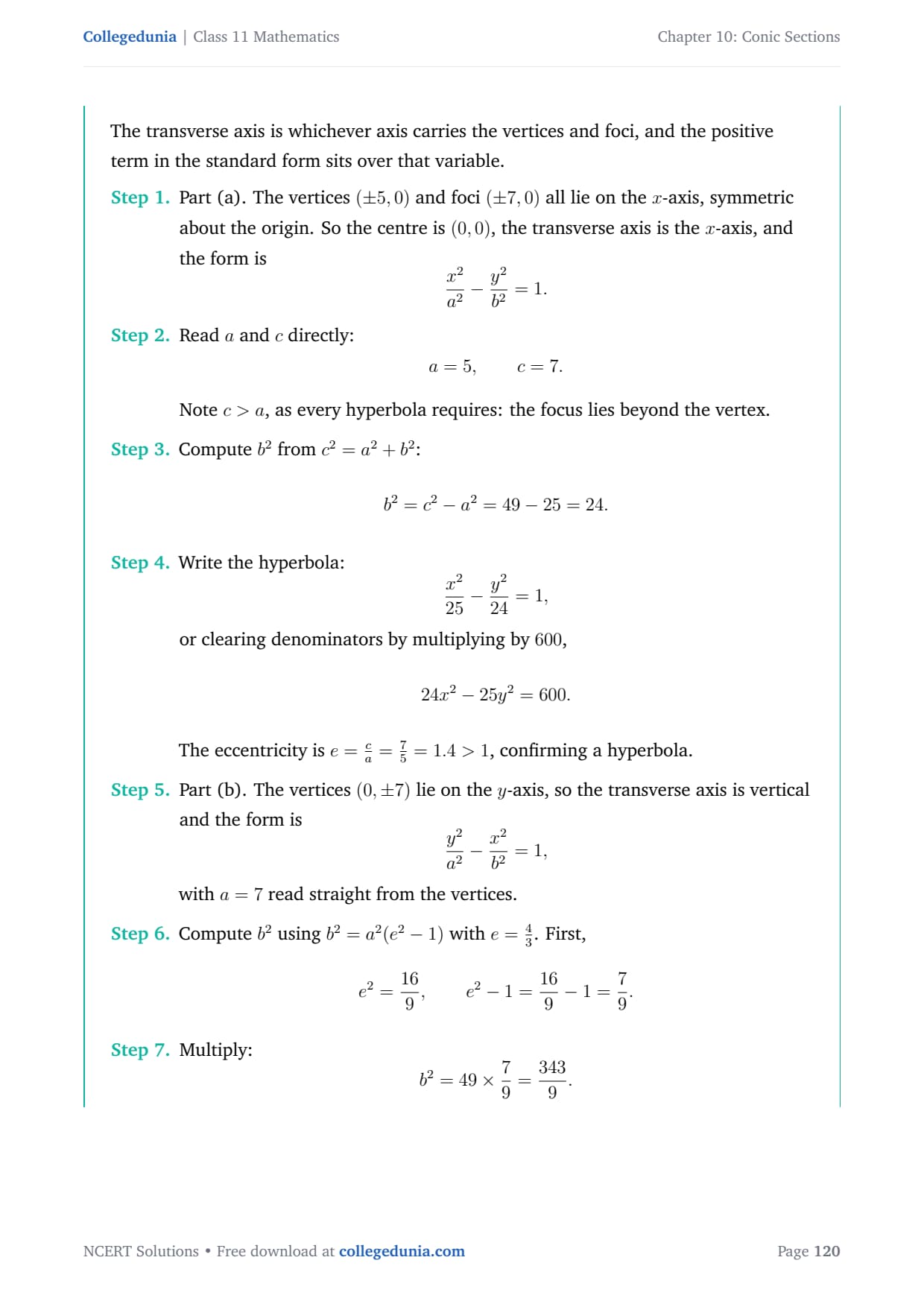
Q32(a) is a key row printed against the wrong question. The key gives 15x2 − y2 = 15, which is the answer to Q31. The check takes one line. Written in standard form, 15x2 − y2 = 15 is x2/1 − y2/15 = 1, so a = 1 and c = 4, giving vertices (±1, 0) and foci (±4, 0). Q32(a) asks for vertices (±5, 0) and foci (±7, 0), which the printed curve matches on neither count. The correct answer is x2/25 − y2/24 = 1, where c2 = 25 + 24 = 49 gives foci at (±7, 0) exactly as asked.
Q49 has no correct option. The question asks for the circle with centre on the y-axis passing through the origin and (2,3). Those two conditions force the form x2+y2+2fy = 0, and the point (2,3) then gives 3x2+3y2−13y = 0 uniquely. Substituting (2,3) into each printed option makes every one of them fail, including the key's (C). The mathematics is not in doubt, only the printing is. In an exam, students should write the correct circle, show the substitution that rules out each option, and mark (C) while noting the misprint. Never select an option you have just proved false without saying so.
Key Formulas Used in the Class 11 Maths Conic Sections Exemplar
Conic Sections is a formula-heavy chapter, and the Exemplar assumes every one of these is known before Q1. Students should be able to write this table from memory before starting the exercise.
| Result | Statement | Where it is used |
|---|---|---|
| General circle | x2+y2+2gx+2fy+c = 0, centre (−g, −f), radius √(g2+f2−c) | Q3, Q7, Q41, Q42 |
| Tangency test | Perpendicular distance from centre to the line equals the radius | Q5, Q9, Q35, Q39 |
| Position of a point | Sign of x12+y12+2gx1+2fy1+c: negative inside, zero on, positive outside | Q34, Q36 |
| Half-chord relation | r2 = p2 + (half chord)2, where p is the distance from centre to chord | Q25 |
| Ellipse eccentricity | b2 = a2(1 − e2), foci (±ae, 0) | Q11 to Q15, Q55, Q56 |
| Latus rectum | Ellipse and hyperbola: 2b2/a. Parabola y2 = 4ax: length 4a | Q11, Q13, Q52, Q55, Q57 |
| Focal distance on a parabola | For y2 = 4ax, the distance from the focus to (x, y) is x + a | Q16 |
| Hyperbola relation | c2 = a2 + b2 and e > 1 always | Q20 to Q22, Q32, Q57 to Q59 |
| Focus-directrix form | SP = e × PM, used when the directrix is a slanted line | Q30, Q45, Q54 |
Tip: the single most useful habit in this chapter is normalising an equation so that its right side is 1 before reading off a2 and b2. Q39 and Q59 both punish students who skip that step, because the tangent formula xx1/A + yy1/B = 1 is simply false when the right side is not 1.
Common Mistakes Students Make in the Conic Sections Exemplar
The same reflexes cost marks in this chapter every year. These five are the ones the solutions flag most often.
- Choosing a2 as the bigger number in a hyperbola. That rule belongs to the ellipse. For a hyperbola, a2 sits under the positive term, so in y2/4 − x2/9 = 1 it is 4, not 9. The check that e > 1 catches the slip instantly.
- Squaring the wrong variable in a parabola. When the vertex and focus share an x-coordinate the axis is vertical, so x is squared. The variable along the axis is the one that is not squared.
- Reporting the gap between two parallel tangents as the radius. That gap is the diameter, so it must be halved. Q5 is built on exactly this.
- Doubling the radius when the area doubles. Since A = πr2, doubling the area multiplies r by √2 only. Writing r = 2√30 in Q10 gives a circle with four times the area.
- Reading a off the directrix constant. In Q53 the directrix is x + 5 = 0 and the vertex is (−3, 0), so a is the gap, |−3 − (−5)| = 2, not 5. One option is built precisely for students who read 5 as the distance.
How the Conic Sections Exemplar Steps Up from the NCERT Textbook
The Exemplar adds no new topics to Conic Sections. It asks the same ideas in a harder direction, as the table shows.
| Concept | NCERT Textbook asks | NCERT Exemplar asks |
|---|---|---|
| Circles | Write the circle given centre and radius | Build it from a tangent line, a chord length, or a centre pinned to a line |
| Tangents | Check whether a point lies on a circle | Prove a line is a tangent using the distance-equals-radius test |
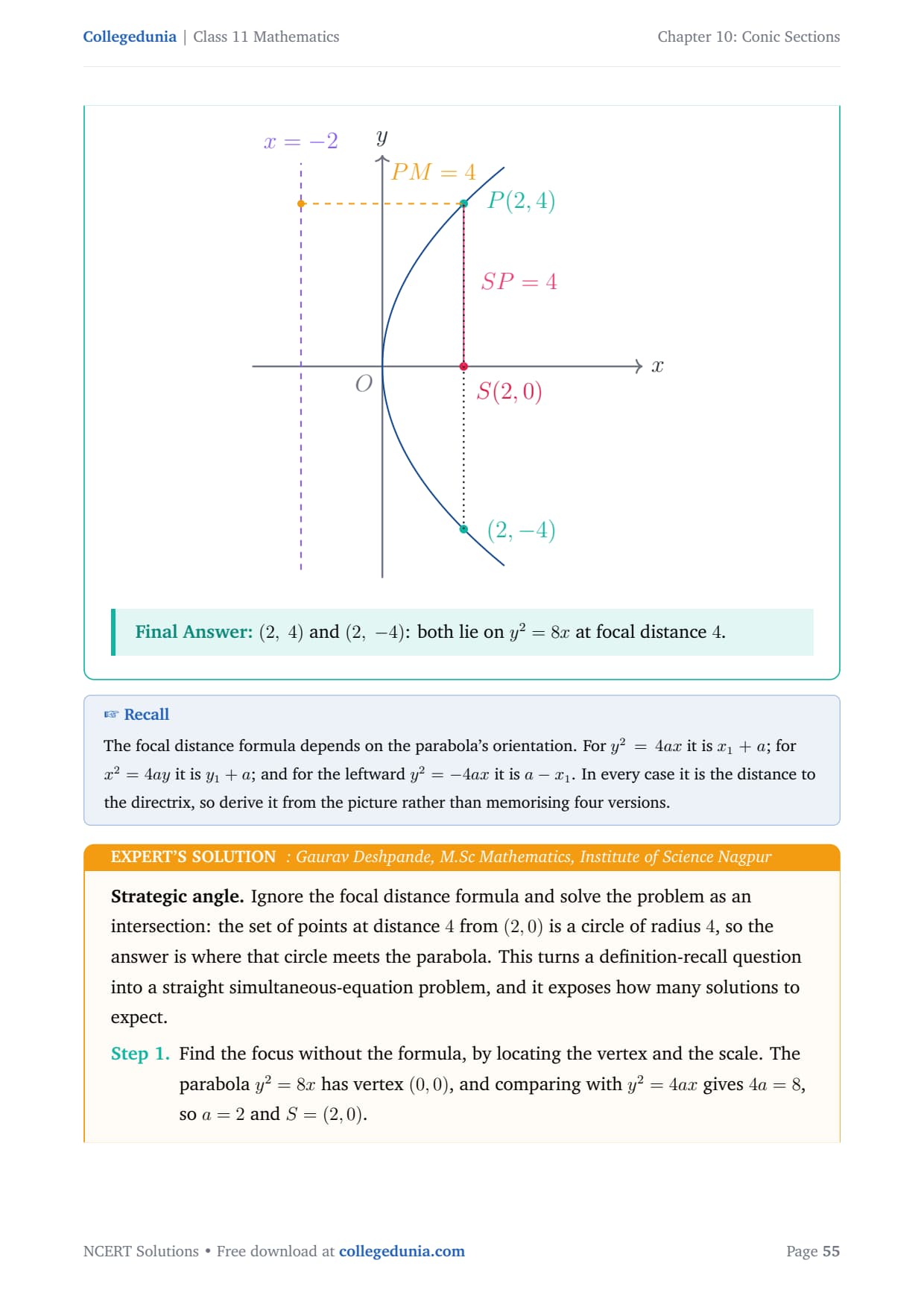
| Parabola | Find the focus of y2 = 8x | Find a point with a given focal distance, or the equation from a slanted directrix |
| Ellipse | Find e from a given equation | Find the equation from e and the latus rectum together |
| Hyperbola | Read a, b and e off a standard form | Derive the curve as a locus from a difference of distances |
How to Use the Conic Sections Exemplar for Boards and JEE Preparation
This is the longest exercise in the Class 11 Maths Exemplar after Limits and Derivatives, so treat it as five sittings, not one. Finish the NCERT textbook exercises first, because the Exemplar assumes students already know the four standard parabola forms cold.
| Session | What to solve | Time |
|---|---|---|
| 1 | Circles, Q1 to Q10 | 2 hours |
| 2 | Ellipse, parabola and hyperbola, Q11 to Q22 | 2 hours |
| 3 | Long Answer Q23 to Q32, full derivations written out | 2.5 hours |
| 4 | Q33 to Q46, justifying every True/False answer | 1.5 hours |
| 5 | Multiple Choice Q47 to Q59, then re-solve everything marked wrong | 1.5 hours |
That is about 9.5 hours for the chapter. For JEE Main and JEE Advanced, the Multiple Choice block and the tangency conditions carry the most weight, and Conic Sections is a scoring chapter there every year. For CBSE Boards and CUET, the Short Answer circles and the standard ellipse and hyperbola results are the better use of time.
Practice Questions for Class 11 Maths Conic Sections
After reading the solutions, students should test themselves on the same question types. The card below opens a set of solved practice questions with step-by-step answers for Conic Sections.
Practice Card: Solved Practice Questions for Class 11 Maths Conic Sections. Attempt each question, then check the solution.
Student Feedback
In a Collegedunia survey of 12,840 Class 11 students conducted before the 2026 exams, 76% of students said the hyperbola questions were the part of this chapter they got wrong most often, and choosing a2 as the larger denominator was the single most common reason. Only 6% of students had noticed that Q27 has two circles and not one.
Other Resources for Class 11 Maths Conic Sections
Pair the Exemplar Solutions with the textbook solutions and the notes for full chapter revision. All the Conic Sections resources are linked below.
| Resource | Link |
|---|---|
| NCERT Solutions | Conic Sections Class 11 NCERT Solutions |
| Revision Notes | Conic Sections Class 11 Notes |
| Handwritten Notes | Conic Sections Class 11 Handwritten Notes |
| NCERT Book PDF | Conic Sections Class 11 NCERT Book PDF |
| Exemplar Book PDF | Conic Sections Class 11 NCERT Exemplar Book PDF |
NCERT Exemplar Solutions for Other Class 11 Maths Chapters
The full Class 11 Maths Exemplar set covers 14 chapters, 735 questions and 2,625 pages of solutions. Use the table to jump to any other chapter.
Conic Sections Class 11 Maths NCERT Exemplar Solutions FAQs
Ques. How many questions are there in the Class 11 Maths Conic Sections Exemplar?
Ans. Conic Sections has 59 questions in a single exercise, which the Exemplar book prints as Exercise 11.3. They are split into 22 Short Answer, 10 Long Answer, 8 True/False, 6 Fill in the Blanks and 13 Multiple Choice questions. Every one of them is solved in the 228-page PDF on this page.
Ques. Why is Conic Sections numbered Chapter 11 in the NCERT Exemplar book?
Ans. The NCERT Exemplar book follows an older chapter order in which Conic Sections is Chapter 11 and its exercise is Exercise 11.3. The current NCERT textbook lists it as Chapter 10, which is the number used on this page. The questions and the exercise content are identical, so students can use either number to find the same set.
Ques. Is the printed NCERT Exemplar answer key for Conic Sections correct?
Ans. Not on three questions. The key for Q27 prints only one circle when there are two, the key row for Q32(a) prints Q31's answer, and Q49 has an option list in which no printed option is correct. Each of the three is explained on this page with the correct answer and a one-line check.
Ques. Why does Q27 of the Conic Sections Exemplar have two circles?
Ans. The centre lies on y = x − 1, so it is (h, h−1), and the radius condition gives h2 − 11h + 28 = 0. That factorises as (h−4)(h−7) = 0, so both (4,3) and (7,6) are valid centres and both circles pass through (7,3) with radius 3. Solved Example 20 of the same chapter prints both equations.
Ques. Are the Class 11 Maths Conic Sections Exemplar Solutions free to download?
Ans. Yes. The Conic Sections NCERT Exemplar Solutions PDF is free to download from this page. It runs to 228 pages, solves all 59 questions step by step according to the 2026-27 NCERT Exemplar, and helps students prepare for CBSE Boards, JEE Main, JEE Advanced and CUET.



Comments