

![Arya College of Engineering and IT - [ACEIT]](https://image-static.collegedunia.com/public/college_data/images/logos/1493718030logfv.jpg?h=71.7&w=71.7&mode=stretch)

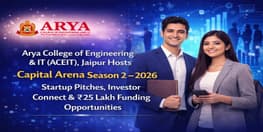
Capital Arena – Season 2, hosted by Arya College of Engineering & IT (ACEIT) in Jaipur on March 14–15, 2026, was a dynamic startup mela that united student innovators, entrepreneurs, investors, and industry leaders. It spotlighted live startup pitches, one-on-one investor meetings, expert mentorship, and seed funding opportunities up to INR 25 lakhs, fostering real-world venture growth.
Key Highlights and Guests
The event kicked off with inspiration from the chief guest, Prof. Nimit Ranjan Chowdhary, Vice Chancellor of RTU Kota, who motivated young talents. Chief Patron Er. Anurag Agarwal, Co-Founder & Chairman of ACEIT-Jaipur, guided the initiative to nurture entrepreneurship. Guest of Honour Mr. Pradeep Ojha, Joint Director at MSME-DYO Jaipur, delivered insights on scaling startups and tapping opportunities.
Activities included:
- Live pitch sessions: Teams showcased ideas to judges and audiences.
- Investor meetups: Direct 1:1 interaction for funding and feedback.
- Mentorship corners: Industry pros offered tailored advice.
- Funding buzz: Winners eyed up to INR 25 lakhs in seed capital, turning concepts into viable businesses.
This setup sparked collaboration, with participants from engineering backgrounds—like AI, robotics, and sustainable tech—pitching future-proof ideas aligned with India's booming startup scene.
Why It Matters for Students Like You
As an ACEIT student eyeing AI/ML, robotics, and engineering careers (think GATE prep and portfolios), events like this are goldmines. They bridge academics to industry: practice pitching ML-driven IoT solutions or renewable energy prototypes, network with MSME experts, and secure funding for projects. Jaipur's ecosystem, boosted by RTU ties, positions you for internships or startups—perfect for your self-learning via YouTube and skill-building habits.
Participation Tips for Next Season
To maximize events like Capital Arena:
- Prep your pitch: Boil your idea (e.g., AI for sustainable energy) into a 5-minute story: problem, solution, market, traction.
- Build a team: Mix mechanical/electrical engineers with coders for diverse angles.
- Leverage resources: Use college mentors; practice on platforms like YouTube's startup pitch tutorials.
- Follow up: Post-event, email investors—mention shared sessions for callbacks.
- Portfolio boost: Document your pitch video for LinkedIn or GATE applications, showing entrepreneurial edge.
Similar events (e.g., RTU hackathons, MSME startup fests) pop up quarterly—check ACEIT notices. This not only hones soft skills like communication but also future-proofs your career amid AI and emerging tech shifts.

.png?h=132&w=263&mode=stretch)
.png?h=132&w=263&mode=stretch)










.png?h=72&w=72&mode=stretch)


.jpeg?h=72&w=72&mode=stretch)





Comments