



Education Journalist | Study Abroad Lead
Indian students planning to travel to the United States may be able to secure earlier visa interview appointments by choosing select Indian consulates, after the U.S. Department of State’s latest update showed wide city-wise variation in “next available” interview dates across visa categories.
The U.S. Department of State’s Global Visa Wait Times page—last updated on 14 January 2026—lists estimated wait times for the next available interview appointment for student visas (F, M, J), visitor visas (B1/B2), and work petition categories (H, L, O, P, Q) by city/post.
For student visa interviews (F, M, J), the “next available appointment” estimate currently differs across the five main U.S. consular posts in India—meaning applicants who are flexible about interview city may find faster slots in some locations than others.
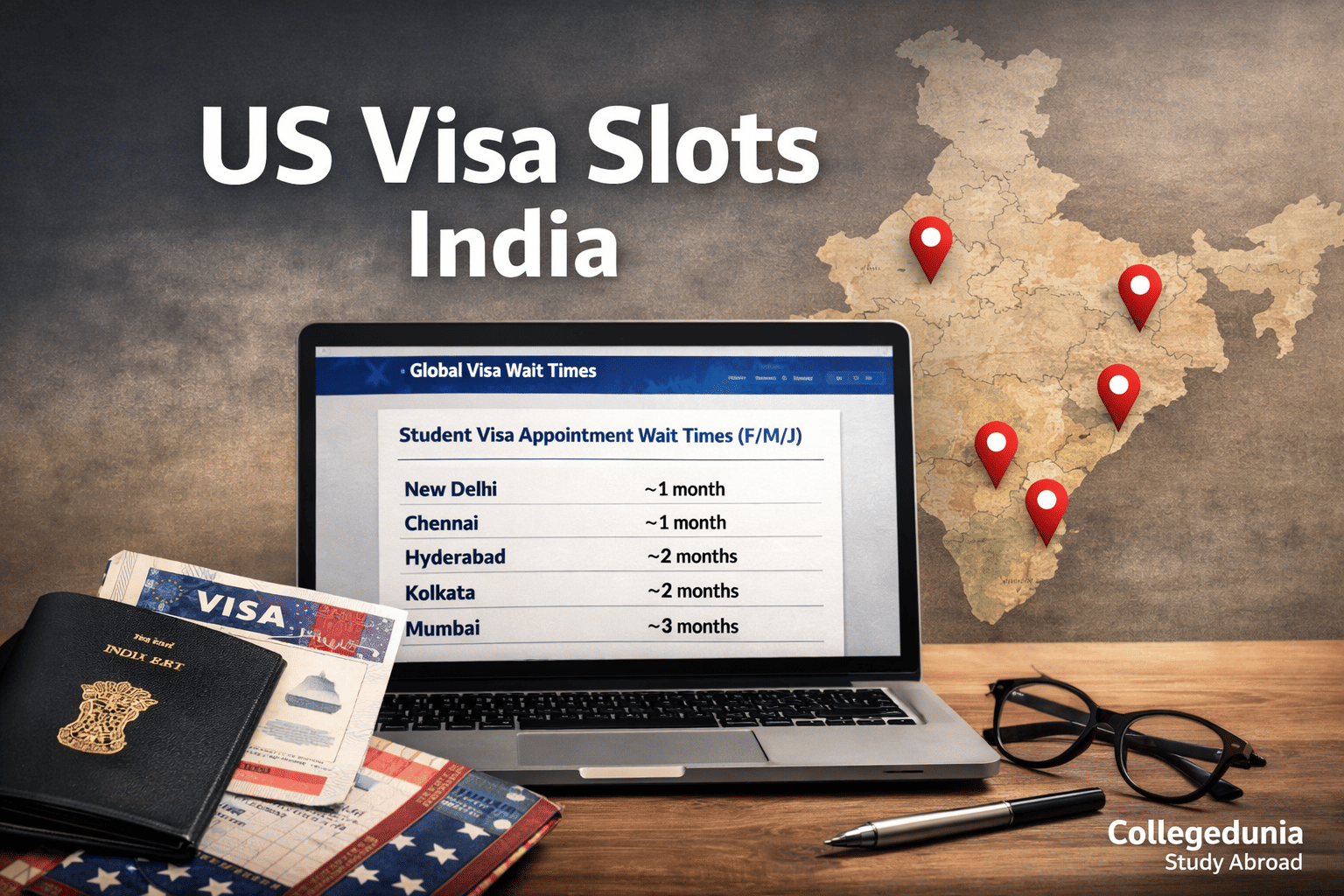
Key data: next available student visa interview (F/M/J)
| U.S. post in India | Next available interview (F/M/J) |
|---|---|
| New Delhi | ~1 month |
| Chennai (Madras) | ~1 month |
| Hyderabad | ~2 months |
| Kolkata | ~2 months |
| Mumbai (Bombay) | ~3 months |
Note: These are estimates and can shift as consulates open additional appointments. The State Department says posts release slots regularly, and applicants should check back to move to earlier dates when available.
Why this matters (especially for students)
Interview timing is a frequent bottleneck for Indian students trying to align visa stamping with university start dates, housing deadlines, and flight pricing. While student visa wait times are generally shorter than visitor visas, the latest dataset shows that Mumbai’s student visa “next available” estimate is longer than several other Indian posts.
Separately, the same official table shows that visitor visa (B1/B2) backlogs remain materially longer at some posts (for example, “next available” for B1/B2 runs into several months in parts of India), which can affect parents travelling for drop-offs or convocations.
Indian outlets reporting on the update cited the same 14 January refresh and flagged that some cities currently provide quicker access than others, depending on visa type.
What this means for Indian students?
- Consider interview city strategy early: If your timeline is tight, compare “next available” across Delhi, Chennai, Hyderabad, Kolkata, Mumbai before locking plans.
- Don’t rely only on the table—track openings: The State Department explicitly notes that new slots are released regularly, and rescheduling to an earlier slot may be possible if availability improves.
- Plan for variability and admin processing: The wait-time table does not include administrative processing, which can add time after interview in some cases.
- Keep academics and finances “interview-ready”: Earlier slots help only if your documents (I-20/DS-2019, SEVIS fee proof, funding evidence, academic history) are complete—especially close to course start dates.
- Parents travelling with you: If family plans include B1/B2 travel, note that visitor visa appointment delays can be much longer than student visas, so plan separately.
This report is based on the U.S. Department of State’s official Global Visa Wait Times update dated 14 January 2026. All figures are estimates and may change with staffing, workload, and slot releases.



Comments