



As we shift from designing just beautiful things to solving meaningful problems, the need for designers who think beyond the traditional role of designers is greater than ever before. Design impacts almost every area—from technology to lifestyle, healthcare, and sustainability. However, what makes great designers stand out is their ability to think differently, farther beyond the brief into innovative spaces, and from innovative to impactful and meaningful design.
At the School of DPUSOD, which is one of the best product design colleges in India, developing “out-of-the-box” designers is not just a philosophy; it is at the heart of the teaching philosophy. Once they can start thinking about combustion with creativity, functionality, tradition with modernity, and imagination with industry, it prepares students with the ways of thinking and doing that make them designers of space as pioneers.
Beyond Aesthetics: Building Designers Who Solve Problems
At DPUSOD, design education goes beyond "making things look good." Students are encouraged to view design as a tool for problem-solving and innovation. They are trained to see every project they are involved in - whether it is a product, service, or a digital experience - in a new light, and how it might enhance the experience of being a human being that is more enjoyable, simpler, and engaging.
The lens is of human-centered design, where students consider empathy, functionality, and usability as much as they consider form and style. They learn to ask questions like who will use this product, what problems it will solve, and how it will improve a person's life. This attitude enables them to deliver projects with solutions that are purposeful and translatable beyond aesthetics, as well as the initial problem they sought to address.
The institute fosters the ideology that design is a solution-driven discipline that empowers its students to break the mold and embrace design and its role in shaping human experience.
Experiential Learning: Where Creativity Meets Hands-On Practice
Traditional lecture-style classrooms do not support a culture of outside-the-box thinking. Here, the learning environment is based on experience, exploration, and experimentation.
The academic experience includes workshops, studio projects, live demonstrations, and industry projects, they are the norm rather than the exception. Students learn theory and put it into use to produce a real-world experience. They create prototypes, examine usability, look at concepts driven by sustainability, or work on solutions for external clients as part of their projects.
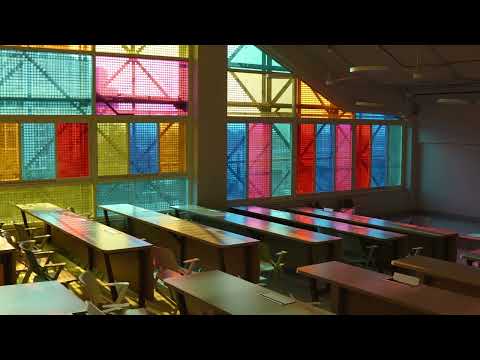
The DPUSOD design studios are dynamic and purposeful spaces the students can sketch, prototype, ideate, and iterate without thinking much about making flaws. Developing a culture of experimentation means students are encouraged to take risks when working. It is an important part of being innovative. The projects provide students with a chance to think a little differently and find ways to develop their ideas, even if it means taking a step outside their comfort zone.
Multidisciplinary Approach: Expanding Horizons of Design
Today, design is not in isolation—it overlaps with technology, business, psychology, communication, and sustainability. Keeping in mind this reality, they ensure their students have the opportunity to be exposed to other disciplines.
For example, our curriculum takes into account that when you are learning product design, you are also learning about ergonomics, materials, consumer behavior, and emerging technology, which includes AR/VR and AI. In the same vein, our courses ask the learners to connect art and science, creativity and logic, relaxation and technology.
This multidisciplinary learning facilitates students' ability to see the connections between the disciplines and inspire original thinking. When a designer knows and understands technology, human psychology, and market conditions, they are better equipped to help create innovative solutions that are relevant, practical, and ahead of the curve.
Industry Connect: Learning from the Real World
Innovation is never done in a vacuum: it is a product of engagement and exposure. This is why the institute is committed to developing strong industry relationships and ensuring that students are in touch with the realities of the practice.
Through internships, live projects, guest lectures, and mentorship programs, students have the chance to hear directly from practitioners who are on the cutting-edge of the design field. They engage with what is currently happening in the market, what types of projects practitioners are pursuing, and what areas on the horizon might hold promise.
These kinds of experiences act as bridges between what is taught in the classroom and what will be expected in the profession. But even more important, they encourage students to think beyond conventions and think differently. By witnessing how effective design leaders confront problems, students emerging into the field at DPUSOD have the confidence to propose creative ideas and solutions that lead to disruption.
Fostering a Culture of Innovation and Creativity
Central to the institute ethos is a dynamic campus environment where creativity and innovation are nurtured. Students are encouraged to express themselves freely, to collaborate with other students, and to experiment with concepts across a wide variety of design fields.
Competitions, exhibitions, and other design showcase competitions provide outlets for students to present a curated catalogue of their work, receive formal and informal feedback, and rework or refine their ideas. The processes and participation involved in these experiences build not only students’ confidence but also open them up to a positive and constructive critique process that parleys into a series of continual improvement opportunities.
Furthermore, the school promotes a growth mindset—mistakes are on the pathway to innovation. The institute promotes creating safe spaces where ideas can be tested without fear of failure, particularly format experimentation, but to ensure that students grow as designers without reservation or restraint to take creative risks.
Conclusion
Designers who can think beyond established norms are the individuals who will shape industries and impact society within our ever-changing world. At this institute, we have intentionally designed the learning process, learning experience, curriculum, problem-solving experience, practicum, multidisciplinary experience, and industry opportunities to support those types of thinkers.
The institute not only promotes creativity, innovation, and self-confidence, but it is the type of place where designers are elevated to envision the future. For students who look for a future will push boundaries and influence the design world, DPUSOD is beyond an institution and is the perfect platform that launches them into the future.
.png?h=132&w=263&mode=stretch)
.png?h=132&w=263&mode=stretch)



.png?h=78&w=78&mode=stretch)
.png?h=78&w=78&mode=stretch)
.png?h=78&w=78&mode=stretch)
![Symbiosis Institute of Design - [SID]](https://image-static.collegedunia.com/public/college_data/images/appImage/1498624703PPPPPPPP.jpg?h=111.44&w=263&mode=stretch)

![MIT Institute of Design - [MITID]](https://image-static.collegedunia.com/public/college_data/images/appImage/1607587712Untitled.png?h=111.44&w=263&mode=stretch)

![P.A. Inamdar College of Visual Effects, Design & Arts - [VEDA] Extension Centre](https://image-static.collegedunia.com/public/college_data/images/appImage/undefined?h=111.44&w=263&mode=stretch)











.jpg?h=72&w=72&mode=stretch)


![Dr DY Patil Dental College & Hospital - [DYPDCH]](https://image-static.collegedunia.com/public/college_data/images/logos/1470650464DPU Logo.png?h=72&w=72&mode=stretch)


.png?h=72&w=72&mode=stretch)
.png?h=72&w=72&mode=stretch)
.png?h=72&w=72&mode=stretch)

![MIT Institute of Design - [MITID]](https://image-static.collegedunia.com/public/college_data/images/logos/1761670385Screenshot20251028222248.png?h=72&w=72&mode=stretch)

![International School of Design - [INSD] Baner](https://image-static.collegedunia.com/public/college_data/images/logos/1651210098Screenshot20220429105620.jpg?h=72&w=72&mode=stretch)


![Times and Trends Academy - [TTA]](https://image-static.collegedunia.com/public/college_data/images/logos/1558178375TTALogo125130.jpg?h=72&w=72&mode=stretch)
![Atharva College of Fashion and Arts - [ACFA]](https://image-static.collegedunia.com/public/college_data/images/logos/col6758.jpg?h=72&w=72&mode=stretch)

![International School of Design - [INSD]](https://image-static.collegedunia.com/public/college_data/images/logos/17183504951557738637insd.jpeg?h=72&w=72&mode=stretch)
![Suryadatta Institute of Fashion Technology - [SIFT]](https://image-static.collegedunia.com/public/college_data/images/logos/16310982496054668921360968997778195552091536205807616n.jpg?h=72&w=72&mode=stretch)
![Symbiosis Institute of Design - [SID]](https://image-static.collegedunia.com/public/college_data/images/logos/17253609191630383474phptDKqBq.jpeg?h=72&w=72&mode=stretch)
![Vishwakarma Creative-I College - [VCIC]](https://image-static.collegedunia.com/public/college_data/images/logos/14770328961476788676Untitled.png?h=72&w=72&mode=stretch)



Comments