



Samir Sharma is the Principal of Silli Polytechnic. Besides his present role, he has also worked as Principal of Ramkrishna Sebashram Sangha Govt ITI, Technical Assistant and Junior Lecturer at Saroj Mohan Institute of Technologies and Technical Supervisor at National Information Technologies Ltd. He holds a diploma in Electronics and Telecommunication Engineering, B.E. in Electronics and Communication Engineering, and an M.Tech. in VLSI Design. Currently, he is also pursuing his PhD. Mr. Sharma has published two papers in reputed journals and taken part in seven conferences, workshops, and faculty development programs.

You have held key positions at Education institutes throughout your professional career. What are the key factors that keep you connected with the Education sector?
I am inspired to work in education as it offers me the opportunity to contribute to society and engage in continuous learning. I get to take part in professional development programs and build relationships with all levels of people in society. I also get the opportunity to build a strong base of skilled manpower for the country. These are the key factors that motivated me the most to keep teaching.
As principal of Silli Polytechnic, what is your leadership philosophy? How would you describe your leadership style?
In my opinion, a coordinator or mentor is the best way to describe ideal leadership. This is also what my philosophy of leadership is like. My leadership style includes the ability to change the mood and job role and the ability to work in any job role as desired by being humorous.
The Education system in India and other Foreign Countries is structured very differently. In your experience, what can an Inbound student gain from studying here at your University?
My university provides the opportunity to build a bold character among all students. We teach and train our students to develop and be associated with good lifestyles, and traditions. This cultural immersion and respect for all castes and creeds can be personally enriching and contribute to a well-rounded education for international students.
Being the principal of Silli Polytechnic, how do you strategize about the key programs and plans for the marketing and administration of your university?
Today, outcome-based education is a requirement for the country. Silli Polytechnic as a premier Institute of Jharkhand, is focused on its well-defined mission and vision for the institute. All activities have been aligned with its mission and vision, and that is the best way to marketing and administration.
Check Silli Polytechnic Reviews
How does the curriculum of Silli Polytechnic ensure the best practice of industry?
We make sure to take feedback from all stakeholders when shaping our curriculum. We interact with numerous individuals, including leading industry experts. We also arrange faculty development programs for our teachers, as they help us to adopt the best practises of the industry.
What do you see as Silli Polytechnic greatest strengths?
Our greatest strength lies in our ability to exercise patience. We also allow every employee to showcase their capabilities and take part in research. This in turn elicits the best performance from each member of my institute, as they are motivated and get to keep learning more. Our students are undoubtedly our biggest strengths.
What would you like people to know about your university they may not know?
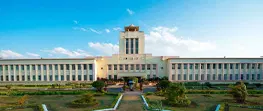
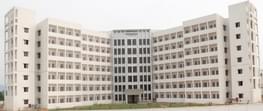
Our university, Jharkhand University of Technology, is consistently committed to creating opportunities. We focus on working not only for those who are already educated but also for first-generation learners from Jharkhand and nearby states. We try to provide the best education and state-of-the-art infrastructure to help them learn better so that they can apply themselves.
Any insights into how your university could be more welcoming to students of different races or economic backgrounds?
Creating a truly inclusive environment requires ongoing commitment and collaboration from all members of the university community. Regular assessments of policies and practises help to identify areas for improvement and ensure that the institution remains welcoming to students of all backgrounds. Community engagement and providing cultural competence training for faculty and staff will help to increase awareness and understanding of different cultures, backgrounds, and perspectives.
Any suggestions you would like to give to the current youth and the aspiring student?
In present-day India, opportunities abound for everyone. Honest and dedicated youth have the potential to contribute significantly to India's growth across various sectors. Hard work and dedication will pave the way for substantial advancements and securing prosperous livelihoods.

 (1).png?h=132&w=263&mode=stretch)
.png?h=132&w=263&mode=stretch)
.png?h=132&w=263&mode=stretch)













 (1).png?h=72&w=72&mode=stretch)





Comments