


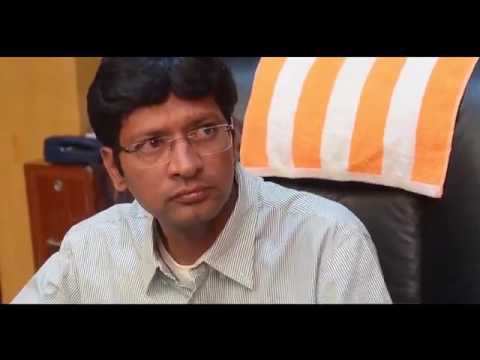
Dr. V. Sidda Reddy has been working as the Head of Information Technology Department at Teegala Krishna Reddy Engineering College, Hyderabad, Telangana. He has 23 years of work experience in the field of teaching and software. As part of his education, he has done M.Tech in IT from JNTUH and PhD. He has also published 12 research papers in various reputed national and international journals.

How does your IT Department enhance the skills of students and make them ready for the outside competitive world?
For the purpose of enhancing students' skills and training them as per industry standards, we always make sure that the curriculum of our IT Department remains up-to-date with the latest industry trends and includes courses on emerging technologies like Artificial Intelligence, Data Mining, Cloud Computing and IoT. In addition to this, we regularly collaborate with industry partners for project sponsorship and provide hands-on learning opportunities to students in the form of internships, co-op programs and real-world projects. Because practical exposure is very essential for young minds to sustain in a competitive job market.
Events like guest lectures and workshops on latest technologies and best practices of the corporate world, are organized too by us from time to time, wherein we invite eminent people and experts from industry to share their valuable suggestions, experiences and feedback with us. Other than this, our college offers popular industry certifications including ICT, Edunet, TNG and others to students and motivates them to get involved in research projects as much as possible, publish research papers and attend conferences.
Which features and factors make the programs of your department worth pursuing for students?
The programs which we are providing to our young and ambitious students at present have an industry relevant curriculum that not just includes latest trends, developments and demands of the corporate world, but also have value-added short-terms courses on latest technologies such as programming, Artificial Intelligence, Data Mining, IOT, Cloud Computing, Computer Networking and Project Process Management etc. Then we have an amazing academic team of highly qualified and experienced faculty members to teach and guide students. Apart from this, we have prioritized practical learning through modern labs and real-time projects. Last but not the least, we do have strong associations with leading IT companies, tech startups, and industry organizations to ensure seamless access to required resources, mentors, and placement opportunities for students.
What are some of the best practices of the courses that your college is offering to students at present?
We rigorously promote the concept of interdisciplinary learning by integrating IT with other fields like business, healthcare, or engineering. And the main aim here is to prepare students for a wide variety of IT roles in various industries. In addition to this, we assist students in preparing for industry certifications by integrating relevant content into the curriculum and offering exam preparation resources from time to time. Soft skills training sessions are also conducted by the college as and when needed to improve students' communication, problem-solving, leadership, teamwork and project management skills. Lastly, events such as workshops and seminars are also organized from time to time to help students explore how to build a great resume, appear for actual interviews and develop networking and professional etiquette. Mentorship programs are also available to connect students with experienced professionals or alumni of the IT field.
Check Teegala Krishna Reddy Engineering College Courses & Fees
What are some valuable insights of the programs that students are pursuing from your institution?
Our institution provides an extensive range of IT courses related to domains like programming, cyber security, data science, cloud computing, networking, software development and IOT, and this diverse offering allows students to explore specializations as per their interest and passion. And, as already mentioned, events like workshops, seminars and guest lectures are there to expose students to the happenings of the outside world and help them develop essential skills before stepping into the corporate world. Apart from this, we regularly collect feedback from students to assess the effectiveness of our courses as well as teaching methodologies and make necessary improvements as and when needed. Lastly, we do have placement specific services and career guidance programs for them, so that they can easily form long-lasting connections with industry professionals and transition smoothly into the workforce.
How do the courses of your college ensure the future preparedness of students?
The curriculum of our college allows students to explore a variety of IT subfields and specializations to cater to diverse interests and evolving career opportunities. And flexibility in course selection also helps them to align their studies with future goals. Also, with the objective of preparing students to work in cross-functional teams and help them tackle complex issues of the real world, we foster the culture of interdisciplinary learning by offering joint programs or integrating our courses with other departments or faculties. Then we have made it mandatory for students to pursue internships and work on real-world projects for gaining maximum hands-on exposure. Additionally, we encourage them to engage themselves in faculty-led research initiatives and projects and explore innovative solutions for the same by making best use of cutting-edge technologies and their classroom learning. Lastly, we do have enough arrangements to support the culture of creativity and Entrepreneurship and help students turn their unique business ideas into reality.
What are you most proud of in your career so far?
I am most proud of pursuing a PhD course and my decision to join the teaching profession and educate the young and ambitious generation of our society. Because, working as an educator is not just any ordinary job, but a noble profession as we are directly contributing in preparing the workforce of tomorrow and building our nation’s future.
What strategies do you usually employ to build an efficient work team in college?
I strongly believe that for team members to share ideas and collaborate effectively, regular, transparent and strong communication along with a trustworthy work environment is very essential. Apart from this, diversity and inclusiveness lead to more innovative and effective solutions. Therefore, I also follow the same approach and interact with my fellow faculty on a regular basis, as this not only allows us to collaborate efficiently as and when needed, but also promotes a culture of teamwork. Because, in today’s time where faculty are playing multiple roles and are involved in a wide variety of tasks including teaching, research work, student mentoring, accreditation work, examination work, and continuing learning, teamwork is left behind.
Check Teegala Krishna Reddy Engineering College Faculty
What was the most challenging task that you faced in your career so far?
I believe that nowadays teaching students itself is the most challenging aspect of being associated with the education sector, because we have to continuously upgrade our own skills in accordance with ever changing needs and developments of the industrial and academic world.
In your opinion, what are the most difficult aspects of your job as a Department Head?
In my opinion, managing the academic affairs of a department can be challenging as it includes designing and updating the curriculum, ensuring that courses are relevant and up-to-date, and coordinating with faculty to maintain high teaching standards. Apart from this, dealing with faculty’s issues and handling student-related matters such as their grievances, discipline violations, and academic counseling can be emotionally draining and time-consuming and complex too at the same time.
Apart from all this, managing the department’s budget, allocating resources efficiently, and finding funding for research and infrastructure upgrades can be a constant challenge as Engineering programs often require accreditation, which involves rigorous documentation and compliance with standards. Last but not the least, maintaining and improving the quality of education to meet accreditation requirements followed by encouraging and supporting faculty and students in research and innovation activities, securing research funding and ensuring that the department remains competitive in the academic world can be some of the most difficult tasks.
Any valuable advice which you would like to give to the current youth and aspiring students?
As we all know, the world is constantly changing, and learning doesn’t stop after one graduates or finishes formal education. Hence I would advise my dear students to embrace the concept of lifelong learning and continuously seek new knowledge and skills, whether through formal education, online courses, books, or hands-on experiences. Also, carefully define your short-term and long-term life goals, because having a clear sense of direction can help you make informed decisions and stay motivated throughout the journey.
And if goals seem too big in the beginning, break them down into smaller and manageable steps and simultaneously build a strong network of connections that can open up opportunities and provide you with the required support when you need it. Last but not the least, regularly attend workshops, seminars and conferences, and join clubs or organizations related to your interests. And while preparing yourself for your dreams, don’t forget to get involved in community service and giving back to society, as it will not only benefit others but will also brings a sense of fulfillment and purpose to your life.
.jpeg?h=132&w=263&mode=stretch)
.jpeg?h=132&w=263&mode=stretch)


.jpeg?h=78&w=78&mode=stretch)

.jpeg?h=78&w=78&mode=stretch)
![IIT Hyderabad - Indian Institute of Technology - [IITH]](https://image-static.collegedunia.com/public/college_data/images/appImage/1485941210cvr1.png?h=111.44&w=263&mode=stretch)

![International Institute of Information Technology - [IIIT]](https://image-static.collegedunia.com/public/college_data/images/appImage/25357_00.jpg?h=111.44&w=263&mode=stretch)

![Birla Institute of Technology and Science - [BITS]](https://image-static.collegedunia.com/public/college_data/images/appImage/28467_BITSH_New.png?h=111.44&w=263&mode=stretch)


![ICFAI Foundation for Higher Education - [IFHE]](https://image-static.collegedunia.com/public/college_data/images/appImage/150408804525355IFHENew.jpg?h=111.44&w=263&mode=stretch)

![University College of Engineering, Osmania University - [UCE]](https://image-static.collegedunia.com/public/college_data/images/appImage/24550_UCE_New.jpg?h=111.44&w=263&mode=stretch)
.png?h=42.55&w=42.98&mode=stretch)






![TKR Institute of Management and Science - [TKRIMS]](https://image-static.collegedunia.com/public/college_data/images/logos/1394370088T.K.R. Institute of Management and Science.jpg?h=72&w=72&mode=stretch)
![TKR College of Engineering and Technology - [TKRCET]](https://image-static.collegedunia.com/public/college_data/images/logos/1482231811logo.jpg?h=72&w=72&mode=stretch)

.jpeg?h=72&w=72&mode=stretch)
.jpeg?h=72&w=72&mode=stretch)


 (8).jpeg?h=72&w=72&mode=stretch)
.jpeg?h=72&w=72&mode=stretch)
.png?h=72&w=72&mode=stretch)
.png?h=72&w=72&mode=stretch)
.png?h=72&w=72&mode=stretch)
.png?h=72&w=72&mode=stretch)
![Holy Mary Institute of Technology and Science -[HITS]](https://image-static.collegedunia.com/public/college_data/images/logos/1476706744logo.png?h=72&w=72&mode=stretch)
![Vidya Jyothi Institute of Technology - [VJIT]](https://image-static.collegedunia.com/public/college_data/images/logos/1754139535Screenshot20250802182838.png?h=72&w=72&mode=stretch)
![Potti Sriramulu College of Engineering and Technology - [PSCMRCET]](https://image-static.collegedunia.com/public/college_data/images/logos/1480057855POTTI.png?h=72&w=72&mode=stretch)
![Sreyas Institute of Engineering and Technology - [SIET]](https://image-static.collegedunia.com/public/college_data/images/logos/1649888276sreyas.png?h=72&w=72&mode=stretch)
![Nalla Malla Reddy Engineering College - [NMREC]](https://image-static.collegedunia.com/public/college_data/images/logos/1604407589Logo.jpg?h=72&w=72&mode=stretch)
![Narsimha Reddy Engineering College - [NRCM]](https://image-static.collegedunia.com/public/college_data/images/logos/1747282076Screenshot20250515at9.34.24AM.png?h=72&w=72&mode=stretch)
![Sri Indu College of Engineering and Technology - [SICET] Ibrahimpatnam](https://image-static.collegedunia.com/public/college_data/images/logos/1745580467logonew2.png?h=72&w=72&mode=stretch)
![J.B. Institute of Engineering & Technology - [JBIET]](https://image-static.collegedunia.com/public/college_data/images/logos/1481615641cover.jpg?h=72&w=72&mode=stretch)
![Ellenki College of Engineering and Technology - [ECET]](https://image-static.collegedunia.com/public/college_data/images/logos/1696421151WhatsAppImage20231003at2.51.22PM.jpeg?h=72&w=72&mode=stretch)
![Mahaveer Institute of Science and Technology- [MIST]](https://image-static.collegedunia.com/public/college_data/images/logos/1481795787col28298.png?h=72&w=72&mode=stretch)
![AVN Institute of Engineering and Technology - [AVNIET], Ibrahimpatnam](https://image-static.collegedunia.com/public/college_data/images/logos/1658556045index.jpg?h=72&w=72&mode=stretch)
![CMR Technical Campus - [CMRTC]](https://image-static.collegedunia.com/public/college_data/images/logos/1593073367Logo.png?h=72&w=72&mode=stretch)
![Sree Dattha Institute of Engineering and Science - [SDES]](https://image-static.collegedunia.com/public/college_data/images/logos/1601382889collegelogo.jpg?h=72&w=72&mode=stretch)
![Visvesvaraya College of Engineering and Technology -[VCET], Ibrahimpatnam](https://image-static.collegedunia.com/public/college_data/images/logos/14821316091234.png?h=72&w=72&mode=stretch)
![Siddhartha Institute of Technology and Sciences - [SITS]](https://image-static.collegedunia.com/public/college_data/images/logos/1746265984Screenshot20250503at1.42.40PM.png?h=72&w=72&mode=stretch)



Comments