



Education Journalist | Study Abroad Lead
Thrombocytes, also known as Platelets, are a vital part of the blood and measure about 2 to 4 μm in diameter. Any damage caused to the normal flow of blood results in immediate action where signals are sent to the brain regarding platelets. The platelets quickly assist the damaged area and perform necessary functions in order to stop the bleeding. A lot of platelets or thrombocytes come together to form megakaryocytes. Every megakaryocyte will at least contain 2000-3000 numbers of platelets.
| Table of Contents |
Key Terms: Thrombocytes, Platelets, Blood, Coagulation, Homeostasis, Megakaryocytes, Blood Cells, Haemorrhage, Fibrin
What are Platelets?
[Click Here for Sample Questions]
Platelets are a crucial element belonging to blood, which is associated with the function of giving a reaction when we bleed. In simple terms, when our blood cells undergo any injury, by clumping, we notice blood clots, which is the response caused by these platelets. Whenever our body faces danger in the form of affecting the efficiency of blood cells, this sends a signal to them, in order to come and get the damage remedied within time.
Platelets also go by the name thrombocytes which have been derived from Greek origin. They have no nucleus of their own and are formed from megakaryocytes, which are the biggest cells, and break down to give platelets. A normal platelet count of a human body is measured as 150,000 to 450,000 platelets per microliter of blood. Again, this is different for different individuals and may vary based on different factors.
Platelets are oblate spheroids in shape. Their count or concentration can be calculated either manually or by using any electrical impedance like a Coulter counter. These tiny fragments can be seen only in mammals. In birds and amphibians, platelets are present as thrombocytes which circulate as intact mononuclear cells.
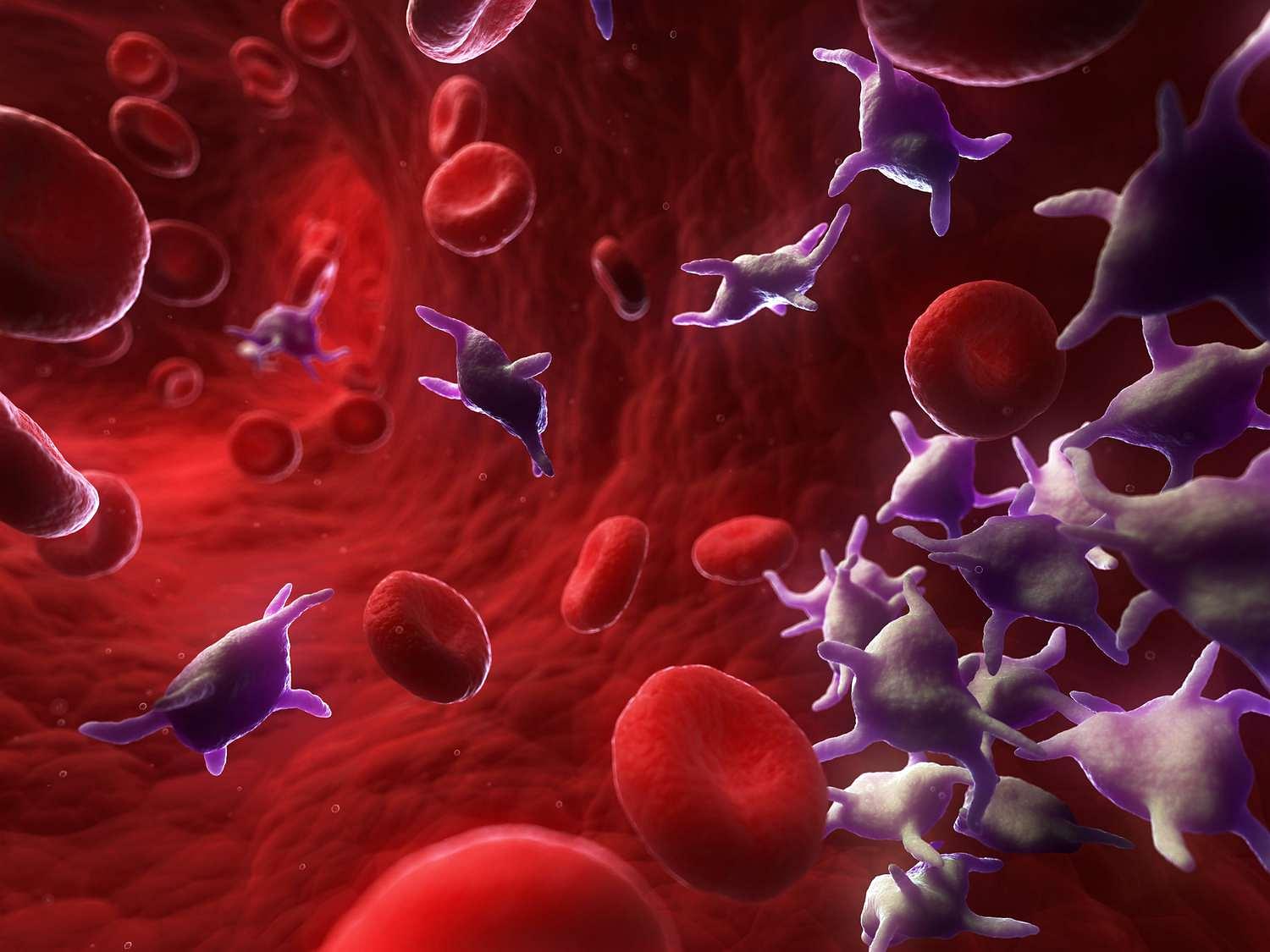
Platelets
Read More:
What is Coagulation?
[Click Here for Previous Year Questions]
The process by which the state of blood changes from liquid to a jelly form, in the process of clotting is known as coagulation. It can be said that coagulation results in hemostasis, eventually forming the clot. There are four important steps which happen here, activation, adhesion, aggregation of platelets, as well as the growth of fibrin.
When our endothelium present along the lining of our blood vessels gets affected in an injury, coagulation instantly takes place. When the blood undergoes prolonged exposure to the subendothelial space, two activities happen. At first, changes in the structure of platelets occur, and secondly production of fibrin. The four stages of hemostasis take place, thereby strengthening the plug.
Coagulation takes place in all mammals. It consists of cellular and proteinaceous components which serve as essential factors. If the process of coagulation is affected in some manner, it results in haemorrhage, bruising, or thrombosis.

Coagulation
Read More: Disorders of the Circulatory System
What is Hemostasis?
[Click Here for Sample Questions]
The word hemostasis has been derived from the ancient Greek word, where ‘hemo’ means blood, and ‘stasis’ means stopping the flow of blood. It is defined as a natural reaction produced by our body in response to an injury or cut. Here, it rushes into action and stops the blood flow, thereby allowing our body to heal by initiating the repair. This mechanism of the body is very crucial as it helps us keep alive, prevent unwanted infections, and obviously conserve our blood.
Sometimes the process doesn't work as it should, in which case it can lead to serious health problems. For example, the blood may clot in excessive amounts, or very minutely. It can be said that hemostasis is a group of many simultaneous processes. Although they appear distinct, every process is unique and happens at one time when our body forms a blood clot.

Homeostasis
Stages of Hemostasis
[Click Here for Previous Year Questions]
The process has been divided into a few major steps, where the mechanism takes place.
- Primary Hemostasis
Also known as the stage of platelet clotting, this happens when our body forms a temporary plug in order to protect against a fresh injury. To make this happen, the platelets in our body come together and attach themselves to the damaged tissue and get to work. After they have activated themselves, they assemble more platelets in order to form loose platelet plugs so as to prevent more loss of blood. The clot acts as a shield and stops all germs and debris which may worsen the situation.
- Secondary Hemostasis (Coagulation Cascade)
The platelet plug is solely assigned with the responsibility of stopping excessive bleeding. Sometimes it may require help from an outside force in order to stay stable in place. The secondary hemostasis comes into the picture here. Also known by the term coagulation cascade, the process involves molecules floating in our blood. These are the coagulation factors. This process thereby speeds up the effect of clotting. In the end, a substance called fibrin is formed. The platelet plug and the furin together hold the affected area, by forming a solid clot.
Read More: Hemophilia
Fibrin Clot Remodelling
In the mechanism of hemostasis, fibrin clot remodelling is the last stage. This happens when our body transforms the existing clot into a fibrin clot. This is done in order to protect our body, as clots are temporary measures and not that effective. The entire process witnesses fibrinolysis where our body transforms and reinvents the existing clot into the same type of tissue in the condition which was present before the injury.
Read More: Plasma vs Serum
Things to Remember
- Thrombocytes are parts of extremely large cells present in the bone marrow and are called megakaryocytes.
- These are the same as platelets, and assist our body in forming clots during emergencies like bleeding.
- Platelets coexist along with white blood cells and red blood cells. The normal platelet count of an average human body is present in the range of 150,000 to 450,000 platelets per microliter of blood.
- A sudden rise in platelet count may result because of Primary thrombocytosis, which can cause cardiac arrest or even serious clotting of blood vessels.
- Coagulation is a process where the blood changes its form, from liquid to gel. It occurs after the blood vessel has been injured, and eventually forms a clot. Platelet plug formation is the first step which occurs in the mechanism of coagulation.
- Hemostasis includes three necessary steps which are known as platelet clotting, coagulation cascade, and fibrin clot remodelling. Platelets instantly stick themselves to the edges of the cut, thereby preventing space for the bleeding to persist.
Sample Questions
Ques. Why does coagulation occur? (3 Marks)
Ans. After an outside force has affected the endothelium lining a blood vessel, blood naturally begins to clot. When bleeding occurs, and the blood is exposed to the subendothelial space, two processes initiate, which are known as the change in platelets, which occurs because they assemble and give out chemicals to attract more platelets, leading to the formation of the platelet plug. The next is the subendothelial tissue being exposed to plasma factor VII, which forms cross-linked fibrin.
Ques. What is the difference between hemostasis and homeostasis? (3 Marks)
Ans. Homeostasis has been defined as the stage of balanced internal, physical, and chemical conditions which are maintained by living beings. It is an optimal condition which is primary for survival, and here body temperature is kept at a stable homeostatic range. Whereas on the other hand, hemostasis is our body’s natural reaction to bleeding and takes necessary action to stop the flow of blood.
Ques. What are the factors affecting bleeding time? (3 Marks)
Ans. The different factors affecting bleeding time are chances of scarring of tissue, poor reproducing quality, time taken to perform the test, the temperature of the skin during the desired time, presence of many confounding variables, and also the density of thickness of the skin texture. Apart from this a person’s age also influences the bleeding time. It may be said that anatomic test location can also be added to this list while holding these factors accountable.
Ques. What factors decrease platelet count? (3 Marks)
Ans. There are many factors which end up reducing our platelet count like leukaemia, disorders relating to anaemia, severe infections of the body like hepatitis C, HIV, chemotherapy as a result of cancer, or radiation. Apart from this bad lifestyle habits like overconsumption of alcohol also lowers our platelet count. It has also been found from research that if your body has a deficiency of vitamin B12, it can cause the levels of platelets to fall.
Ques. What do we mean by the term 'thrombocytopenia'? (3 Marks)
Ans. When our bone marrow produces extremely fewer platelets, their number decreases. Or when they get destroyed due to some factors like cancer, or infections, their count lowers down. In this case, we may internally bleed, which ends up being a bruise. This is called thrombocytopenia and can be caused by reasons like too much medication, during pregnancy, liver disorders, or even an unhealthy immune system.
Ques. What are the main functions of the blood vessels? (3 Marks)
Ans. Blood vessels are primarily associated with the function of pumping blood to different parts of our body, including all our organs and tissues. It carries essential nutrients and oxygen flow in order to let our body perform essential functions. They are also responsible for carrying all metabolic waste products and releasing carbon dioxide away from the organs and tissue cells.
Ques. When do platelets increase? (3 Marks)
Ans. The number of platelets present in our body keeps fluctuating. They may increase drastically due to many reasons like severe loss of blood, different types of cancer, infections, lack of iron in the body, removal of the spleen, or hemolytic anaemia, a condition where the body gets rid of red blood cells a lot faster than their production. Other than this, if a person is deprived of sleep or under insurmountable stress, the platelet count of the person dramatically rises.
Ques. What is meant by Platelet dysfunction? (3 Marks)
Ans. Platelet dysfunction is a condition where our body platelets are normal, but their efficiency is not the same as they don't work as they are supposed to. Medications like the intake of aspirin may cause this. It's, therefore, necessary to know beforehand as many medicines increase our risk of bleeding. This may also result in other diseases.
Also check:



Comments