

.png?h=56&w=56&mode=stretch)


PTE Reading 2026 is a 23-30 minute section of the PTE exam with around 15-20 questions across 5 task types. It tests academic reading skills such as vocabulary in context, grammar, logical flow, main ideas, and inference using passages up to 300 words.
Most PTE Reading tasks offer partial credit, and the Reading & Writing: Fill in the Blanks question type also contributes to the Writing score. The section is scored on a 10-90 scale using responsible AI and plays a key role in the overall PTE score.
This article will explain the PTE Reading section pattern, question types, and scoring. You will also find tips and tricks and free practice tests to help you ace the section.
- PTE Reading Practice 2026
- PTE Reading Test Format 2026
- PTE Reading Question Types
3.1 1. Fill in the Blanks (Dropdown)
3.2 2. Multiple Choice, Multiple Answers
3.4 4. Fill in the blanks (Drag and Drop)
3.5 5. Multiple Choice, Single Answer
- How is PTE Reading Scored?
- PTE Academic Reading Preparation Tips
- FAQs
PTE Reading Practice 2026
Here are some free PTE reading practice tests 2026 by Collegedunia:
PTE Reading Test Format 2026
The PTE exam format for the Reading section is explained below:
- Duration: 23-30 minutes
- Number of questions: Variable, typically 15-20 items across 5 task types.
- Text types: Academic passages (up to 300 words), formal style.
- Key features:
- You can move between questions within the section.
- No separate time per question.
The section contributes to your Reading score (10-90 scale) and, for one task type (Fill in the Blanks), also to Writing.
PTE Reading Question Types
Here’s a detailed breakdown of the PTE Reading question types:
1. Fill in the Blanks (Dropdown)
- Description: A passage (up to 300 words) with several blanks. For each blank, choose the best word from a dropdown list (usually 4-5 options).
- Number of questions: 5-6
- Skills assessed: Reading and Writing (integrated task, grammar, collocations, vocabulary, context).
- Scoring: Partial credit (1 point per correct blank). High impact on both Reading and Writing scores.
Sample Question:

Check Answer
consultation, developed, facilitate, consistent
Tips:
- Skim the full text first to get the overall meaning.
- Read the sentence before and after each blank.
- Focus on grammar (tense, part of speech, articles, prepositions) and collocations. This task rewards strong grammar and academic vocabulary.
- Eliminate illogical options quickly.
2. Multiple Choice, Multiple Answers
- Description: Read a text (up to 300 words) and select all correct options for a question (usually 2-4 correct out of 5-7).
- Number of questions: 2-3
- Skills assessed: Reading (main ideas, details, inference, writer's purpose).
- Scoring: Partial credit (+1 for each correct, -1 for each incorrect; minimum 0). Negative marking makes it tricky; avoid guessing wildly.
Sample Question:
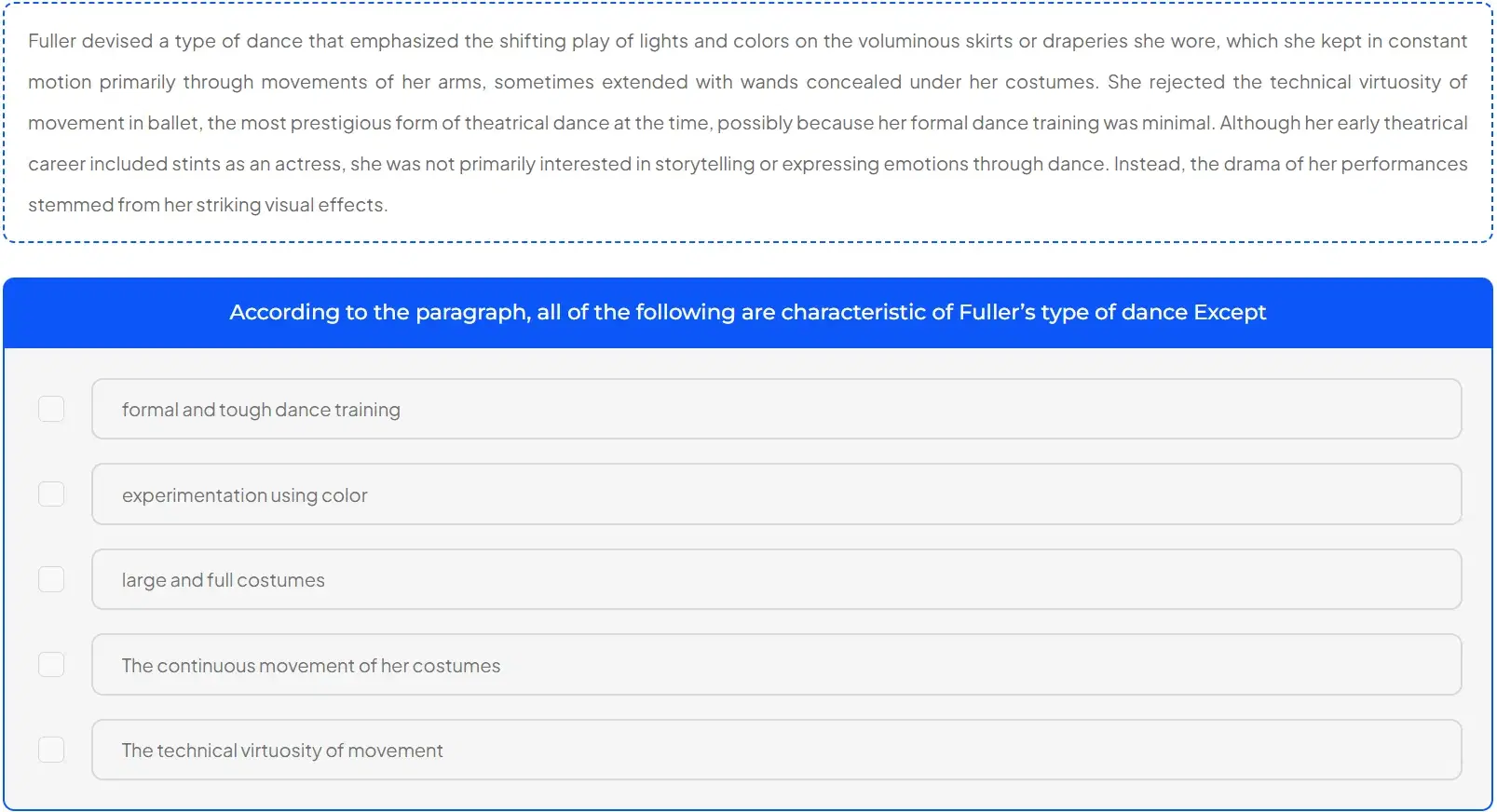
Check Answer
A and E
Tips:
- Read the question first.
- Scan the text for keywords.
- Be conservative; only select options directly supported by the text. Wrong choices often twist details or are partially true.
3. Reorder Paragraphs
- Description: Several jumbled text boxes (usually 4-6 short paragraphs). Drag them into the correct logical order.
- Number: 2-3
- Skills assessed: Reading (coherence, logical flow, connectors, pronouns, topic sentences).
- Scoring: Partial credit (1 point per correctly adjacent pair of boxes).
Sample Question:
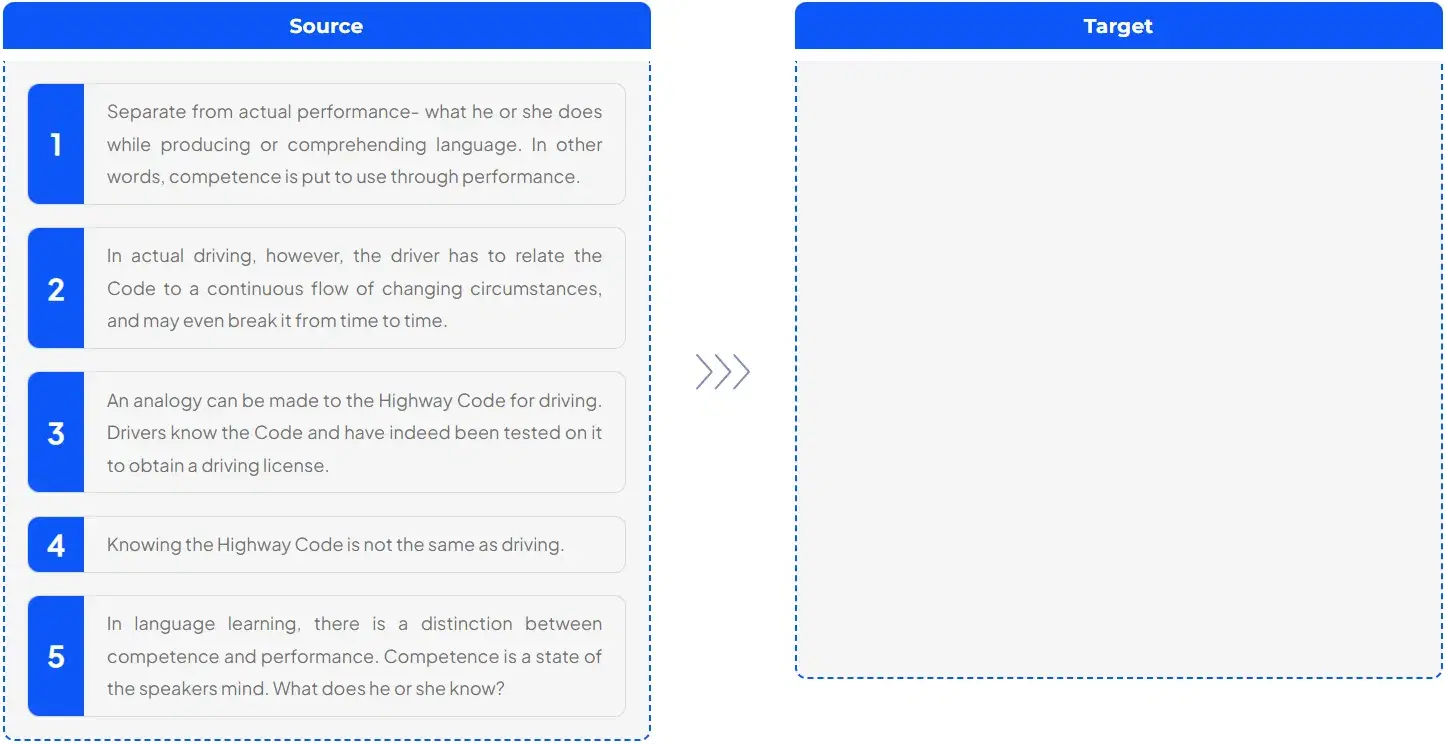
Check Answer
51324
Tips:
- Identify the topic or introductory sentence (often general, no backward references).
- Look for linking words (however, therefore, moreover), pronouns referring to previous ideas, and chronological or cause-and-effect flow.
- Practice by reading scrambled paragraphs from newspapers.
4. Fill in the blanks (Drag and Drop)
- Description: A shorter text with blanks will be given. A box below contains words (usually one extra word). Drag the correct words into the blanks.
- Number of questions: 4-5
- Skills assessed: Reading only (vocabulary, grammar, collocations in context).
- Scoring: Partial credit (1 point per correct placement).
Sample Question:

Check Answer
retrieve, unwittingly, episode, commonly
Tips:
- Use the process of elimination.
- Check grammar (e.g., noun, verb, or adjective fit) and meaning.
- Read the full sentence after placing words.
- This is often easier than the dropdown version if your vocabulary is strong.
5. Multiple Choice, Single Answer
- Description: Read a text and choose the best answer from 4-5 options.
- Number of questions: 2-3
- Skills assessed: Reading (main idea, specific details, inference, tone).
- Scoring: Correct or incorrect (all-or-nothing).
Sample Question:
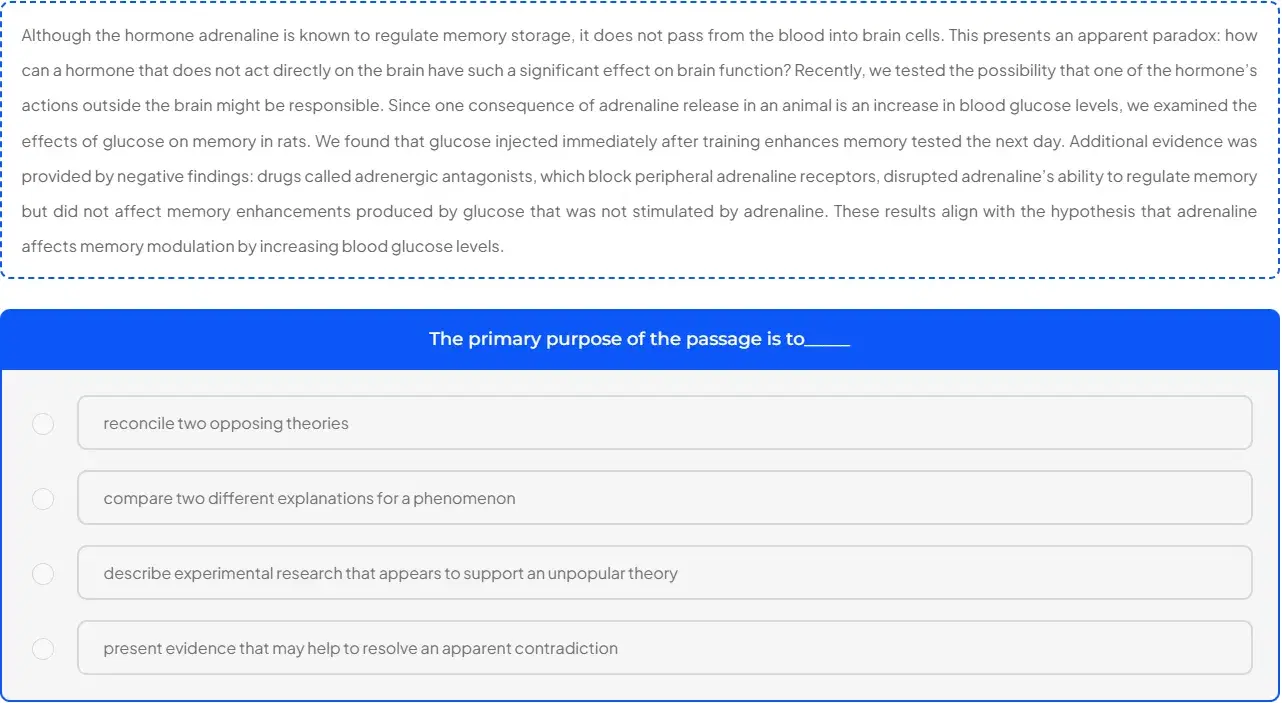
Check Answer
D
Tips:
- Eliminate clearly wrong options. The correct answer is usually directly supported or a close paraphrase.
- Watch for distractors that are true but irrelevant to the question.
How is PTE Reading Scored?
Here’s how the PTE Reading section is scored:
- Scale: 10-90 for Reading (and overall score).
- AI scoring: Highly consistent and objective (no human bias).
- Most tasks give partial credit, so even partial success helps.
- The Reading & Writing: Fill in the Blanks task boosts both Reading and Writing scores.
- Your Reading score is based on performance across all these tasks plus enabling skills (grammar, vocabulary, etc.).
- Overall PTE score (10-90) is a weighted combination, not a simple average.
How soon do PTE scores come out and how long are they valid?
Official PTE scores are usually available within 2 working days and remain valid for 2 years, which helps with university admissions or visa applications.
PTE Reading Preparation
Here are a few of the PTE preparation tips for the reading test, which will guide the candidates in their preparation process:
- Build foundations: Strengthen academic vocabulary (Academic Word List), grammar (collocations, tenses, prepositions), and reading speed. Read The Hindu, The Economic Times, BBC, The Guardian, or scientific articles daily.
- Practice smart: Use official Pearson materials (scored practice tests are best). Do timed section mocks. Focus more on high-value tasks: Fill in the Blanks (both types) and Re-order Paragraphs.
- Time management: Don’t get stuck; flag and return if needed. Blanks and Re-order give good returns for effort.
- Common pitfalls to avoid:
- Over-selecting in Multiple Choice, Multiple Answers (due to negative marking).
- Ignoring context in blanks.
- Weak logical flow recognition in Re-order.
- Indian English habits affecting collocations.
- Daily routine suggestion: 15-20 Fill in the Blanks, 5-10 Reorder, and full Reading sections 3-4 times a week. Review mistakes thoroughly (why an option was wrong).
- Resources:
- Official: Pearson PTE website, Official Guide to PTE Academic, scored practice tests.
- Free and affordable: PTE Academic Official app, YouTube channels (E2Language, Skills PTE, Jay from E2).
- Paid: Online platforms like Gurully, Lume Test, or coaching in India (common in Hyderabad, Chandigarh, Delhi, etc.).
- Books: Official Guide and practice question banks.
Are official scored practice tests worth it?
Yes. The PTE Scored Practice Test uses the same AI scoring engine as the real exam and gives a detailed breakdown of your Reading and other skills, making it the closest practice to the real thing.
The PTE Reading section lasts 23-30 minutes and includes 5 task types assessing academic reading skills. Most questions offer partial credit, and one task also affects your Writing score. Since there is negative marking in multiple-answer MCQs, accuracy and strategy are essential for a strong 10-90 Reading score.
FAQs
Ques. Does the PTE Academic give you detailed feedback on your Reading skills?
Ans. Yes. After your test, Pearson provides a Skills Profile showing strengths and weaknesses (e.g., vocabulary, grammar, reading) so you know where to improve before re-attempting.
Ques. Do Indian test-takers find any task especially hard?
Ans. Many report that Multiple Choice, Multiple Answers and Paragraph Re-ordering require careful strategy, not guessing, because wrong answers can reduce your score. (Reddit insight)
Ques. Should you rely only on speed for Reading?
Ans. No. Faster reading is useful, but skimming for main ideas and scanning for keywords often helps you answer more accurately under time pressure.
*The article might have information for the previous academic years, which will be updated soon subject to the notification issued by the University/College.



Comments