



Content Curator
Archaebacteria are the oldest form of living organism to be found on the earth after the evolution of life. Archaebacteria are a special kind of bacteria because they live in many harsh habitats like hot springs, extremely salty areas and marshy areas. Moreover, Archaebacteria are usually classified as bacteria because many of their features resemble the bacteria when observed under the microscope. Archaebacteria come under the kingdom of Monera.
Key terms: Archaebacteria, Bacteria, Archaea, Thermoacidophils, eukaryotes.
Archaebacteria
[Click Here for Sample Questions]
Archaebacteria are a special kind of bacteria because they survive in some of the harshest habitats. Archaebacteria is an ancient form of living organism present on the earth. Archaebacteria have a different cell wall structure from other bacteria. This feature helps archaebacteria to survive in extreme climate conditions.
Read More: Difference between Archae and Bacteria
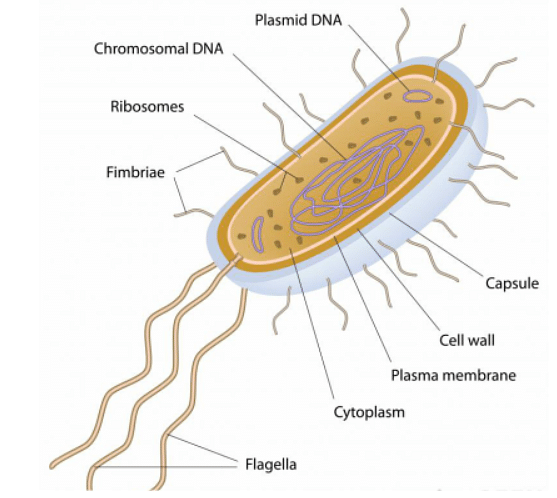
Archaebacteria
Archaebacteria are also known as extremophiles because they can survive under very harsh conditions such as deep under the ocean and even in volcanic vents. Apart from this, archaebacteria are completely different from prokaryotes while they show some resemblance with eukaryotes.
Read More:
Importance of archaebacteria
[Click Here for Sample Questions]
- Archaebacteria have the ability to produce methane because they are methanogens. Methanogens are present in the gut of several ruminant animals such as cows and buffalo.
- Scientists are compelled to reconsider the common definition of species due to the archaebacteria. Species are known to be a group with gene flow within its members while archaebacteria prevent the gene flow across its species.
Read More: Renin-Angiotensin System
Parts of Archaebacteria
[Click Here for Sample Questions]
Plasma Membrane: In Archaebacteria, there is the chirality of the glycerol linkage between the phospholipid head and the side chain. It is in the L-isomeric form. Also, both the linkage is present in between glycerol and side chain which provides more chemical stability to the membrane. In archaebacteria, isoprenoid chains are found.
Cell Wall: In Archaebacteria, S-layer cell wall is present which provides protection from the environment as well as from the internal pressure to the cell. Archaebacteria have a rigid cell wall.
Ribosomes: In archaebacteria, ribosomes are 70S in size. Ribosomes contain three ribonucleic acids (RNA) molecules such as 16S, 23S and 5S.
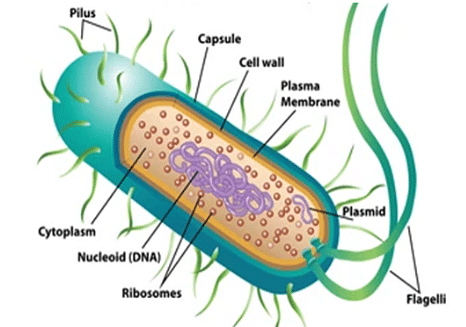
Parts of Archaebacteria
Pilus(Pili): In archaebacteria, pilus are composed of proteins. It has a tube-like structure which is used for the attachment to the surfaces.
Flagellum(Flagella): In archaebacteria, flagellum has a long hair-like surface which is polymerized. It is used for movement. Also, this rotating structure is responsible for the insertion of proteins in the cell.
Cytoplasm: In archaebacteria, all the living functions take place in the cytoplasm. The DNA is located in the cytoplasm.
Read More:
Features of Archaebacteria
[Click Here for Sample Questions]
Some of the features of Archaebacteria are given below:
- Archaebacteria are obligate anaerobes that can live under anaerobic conditions only. They cannot survive in the presence of oxygen. Example: methanogens
- Archaebacteria are facultative anaerobes which can bear anaerobic conditions comfortably. Example: Thermoacidophiles and halophiles.
- Lipids are present in the cell membranes of the archaebacteria.
- The presence of a rigid cell wall provides the shape as well as support to the archaebacteria. Under hypotonic conditions, it prevents the cell wall from bursting.
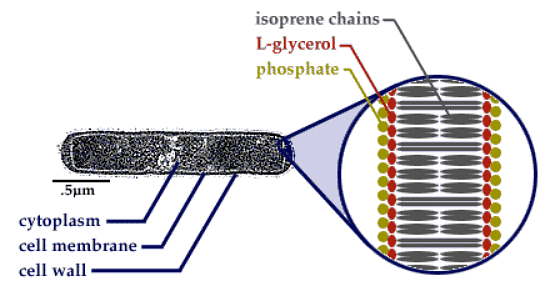
Cell wall of Archaebacteria
- In archaebacteria, the cell wall is made up of Pseudomurein which helps to prevent archaebacteria from the harmful effect of Lysozyme. The immune system of the host releases the enzyme that is known as Lysozyme. Lysozyme dissolves the cell wall of pathogenic bacteria.
- In archaebacteria, membrane bound organelles such as mitochondria, nuclei, endoplasmic, reticulum or chloroplast are not found. Cytoplasm contains all the compounds required for metabolism and nutrition.
- Archaebacteria can survive under extreme harsh conditions such as acidic, alkaline deep aquatic regions and in temperature above the boiling point.
- Archaebacteria can withstand a very high pressure upto 200 atmospheres.
- In archaebacteria, the mode of reproduction is asexual which is known as binary fission.
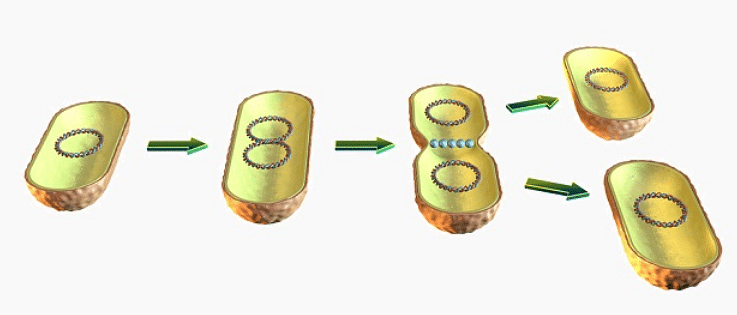
Reproduction in Archaebacteria
- In archaebacteria, the difference in ribosomal RNA depicts that archaebacteria diverged from the prokaryotes as well as eukaryotes.
- Archaebacteria perform specific gene transcription.
Read More:
Classification of Archaebacteria
[Click Here for Sample Questions]
The classification of archaebacteria is done on the basis of their phylogenetic relationship. The most important types of archaebacteria are mentioned below:
Crenarchaeota
Crenarchaeota are the kind of archaea which exist in a wide range of habitats. They are composed of special proteins that help them to function at high temperatures like 2300 C. They can tolerate very high temperatures as well as high pressure. Crenarchaeota found under the sea vents and hot springs. These contain hyperthermophiles, thermophiles and thermoacidophiles.

Crenarchaeota
Euryarchaeota
Euryarchaeota can live under extreme alkaline conditions and also have the ability to produce methane unlike any other living being on the earth. Euryarchaeota contain halophiles as well as methanogens.
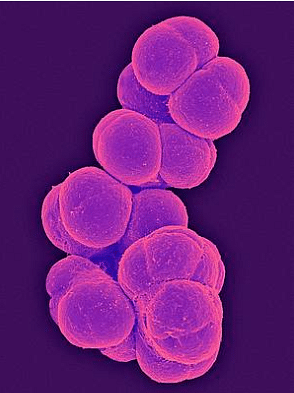
Euryarchaeota
Korarchaeota
Korarchaeota are the kind of archaea which is known to be the oldest living organism on the earth. Korarchaeota possesses the genes that are familiar to the Crenarchaeota and Euryarchaeota. Moreover, it is believed that all three are descended from a common ancestor. They include hyperthermophiles.
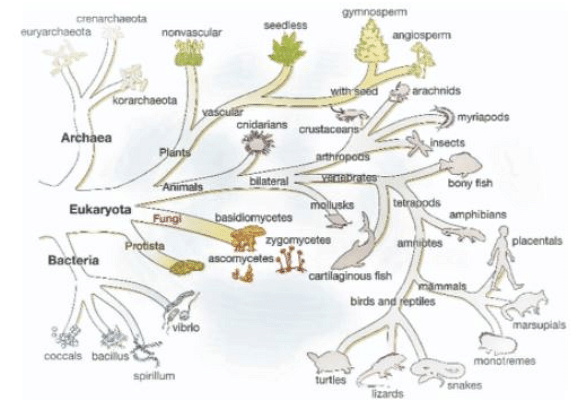
Classification of Organisms
Thaumarchaeota
Thaumarchaeota are a special type of archaea that oxidize ammonia.
Nanoarchaeota
Nanoarchaeota is an obligate symbiont of archaea and also belongs to the genus ignicoccus.
Read More:
Uses of Archaebacteria
[Click Here for Sample Questions]
There are many uses of archaebacteria. Some of them are mentioned below:
- Archaebacteria are used in the production of gobar gas from dung and sewage.
- Archaebacteria cause fermentation of cellulose in ruminants.
- Archaebacteria are helpful in the production of thermostable enzymes.
- Archaebacteria are helpful in the production of organic solvents.
Read More: Prokaryotic and Eukaryotic microorganisms
Things to Remember
[Click Here for Sample Questions]
- Archaebacteria is one of the oldest living organisms present on the earth after the evolution of life.
- Archaebacteria can survive under very harsh conditions such as under the sea as well as volcanic vents because they are extremophiles.
- Archaebacteria are used for many economic as well as commercial purposes.
- Archaebacteria can handle pressure in more than 200 atmospheres.
- In archaebacteria, the semi rigid cell wall is helpful to protect them from the environment.
- Asexual mode of reproduction is used in archaebacteria.
Also Read:
Sample Questions
Ques. What do you mean by Archaebacteria? Explain with the help of an example. [5 marks]
Ans. Archaebacteria are the oldest living organisms present on the earth. Archaebacteria come under the category of kingdom Monera. Archaebacteria have similar characteristics like bacteria when observed under the microscope. Archaebacteria can survive under very harsh conditions like salty areas(halophiles), hot springs(thermoacidophiles) and marshy areas(methogenes). Archaebacteria have a different wall structure which helps them to survive under extreme temperature regions. Some of the important examples of archaebacteria are discussed below:
- Lokiarchaeota: Lokiarchaeota is a kind of thermophilic archaebacteria found in deep sea vents called Loki's castle. It contains a unique genome. Also, a few of the genes of the genome are involved in phagocytosis. It comprises the eukaryotic genes. These genes are helpful in controlling their shapes. Moreover, it is considered that lokiarchaeota and eukaryotes shared the same ancestor from several million years ago.
- Methanobrevibacter smithii: It is a kind of bacteria which contains methane. It is found in the human gut. It is helpful in the breakdown of complex plant sugars as well as extracts energy from the food consumed by humans. Individuals who are suffering from colon cancer and obesity have very high levels of Euryarchaeota bacteria in their gut. This bacteria is helpful in preventing colon cancer.
Ques. What do you mean by Thermoacidophiles? [3 marks]
Ans. Thermoacidophiles are a special type of archaebacteria which have the dual ability to bear high temperature and high acidity. Thermoacidophiles can live in hot sulphur springs where the temperature may be as high as 80 degree celsius and pH as low as 2. For example: Thermo plasma, Thermoproteus.
Moreover, thermoacidophiles obtain energy from synthesis of food from oxidising sulphur because they are chemosynthetic in nature. They commonly oxidise sulphur to sulphuric acid under aerobic conditions. The following reaction takes place: 2S + 2H2O + 3O2 → 2H2SO4
When the conditions are anaerobic, thermoacidophiles may reduce sulphur to H2S.
Ques. What do you mean by Methonogenes? [2 marks]
Ans. Methanogens are microorganisms that produce methane under hypoxic conditions. Archaebacteria are strict anaerobes which live in marshy areas. With the help of hydrogen, they can convert formic acid and carbon dioxide into methane in marshy areas.
This capability of methanogens is commercially used to produce methane and fuel gas inside gobar gas plants.
E.g. Methanococcus, Methanobacterium.
Methanogen archaebacteria are useful to ruminants in the fermentation of cellulose.
E.g. cow, buffalo.
Ques. What do you mean by Halophiles? Why can these archaebacteria survive under high salt conditions? [3 marks]
Ans. Halophiles are aerobic archaebacteria that can live comfortably in anaerobic conditions. Halophiles commonly occur in salt rich substrata (2.5-5.0 M) such as salt pans, salt beds as well as salt marshes. They are also called aerobic chemoheterotrophs.
E.g. Halobacterium, Halococccus.
The cell membrane of Halophiles have red carotenoid pigment which is helpful to protect against harmful solar radiations. They cannot use external materials under anaerobic conditions. Halophiles can easily survive under high salt conditions because of some reasons which are mentioned below:
- Due to the presence of special lipids in the cell membranes.
- Due to the occurrence of mucilage covering.
- Due to the absence of sap vacuoles
- Due to the presence of high internal salt content
Ques. What are the main reasons to tolerate high temperature and high acidity in Thermoacidophiles? [2 marks]
Ans. Thermoacidophiles have the capability to survive under high temperature as well as high acidity conditions. The main causes are mentioned below:
- The presence of branched-chain lipids in the cell membranes helps to live under these conditions.
- Due to the occurrence of special resistant enzymes capable of operating under acidic conditions.
Ques. What are the main characteristics of Archaebacteria? [3 marks]
Ans. There are many characteristics of archaebacteria. Some of the characteristics are mentioned below:
- Archaebacteria are the most primitive form of life.
- Archaebacteria have the ability to survive under extreme harsh conditions such as salty areas, marshy areas and hot springs.
- Archaebacteria have a unique cell membrane which is made of ether linked phiphilids. The presence of this ether linkage helps them to live under high temperatures as well as high acidity.
- The cell membrane of archaebacteria has no peptidoglycans.
- Archaebacteria are not influenced by antibiotics.
- Archaebacteria have unique rRNA.
- It is considered that most of the archaebacteria are autotrophs.
- Archaebacteria are single celled microorganisms.
Ques. What are the uses of Archaebacteria? [2 marks]
Ans. There are many uses of archaebacteria. Some of them are mentioned below:
- Archaebacteria are used for the treatment of sewage.
- Archaebacteria are used in the production of gobar gas from dung and sewage.
- Archaebacteria cause the fermentation of cellulose in ruminants.
- Archaebacteria are helpful in the production of thermostable enzymes.
- Archaebacteria are helpful in the production of organic solvents.
Ques. What are the main differences in the cell membrane of archaebacteria from other domains cell membranes? [2 marks]
Ans. There are many fundamental differences between the cell membrane of archaebacteria from other domains. Some of them are mentioned below:
- Chirality of glycerol between the phospholipid head and side chain. It has an L-isomeric form, while bacteria and eukaryotes have a D-isomeric form.
- In archaebacteria, ether-linkage is present between the glycerol and side chain which provides more chemical stability to the membrane. On the other hand, ester-linked lipids are present in bacteria and eukaryotes.
- In archaebacteria, isoprenoid chains are present while unbranched fatty acids are present in bacteria and eukaryotes.
- In Archaebacteria, monolayers are found. However, only lipid bilayers are present in bacteria and eukaryotes.
Also Read:





Comments