




The NCERT Solutions for Class 9 Science Chapter 12 Patterns in Life Diversity and Classification cover MCQs, reasoning, diagram-based and case-study questions, according to the latest 2026-27 CBSE syllabus. Each answer is based on the five kingdom classification, the four criteria used to sort living things, and the taxonomic hierarchy from kingdom to species that NCERT uses across the chapter. These solutions solve all 15 Revise, Reflect, Refine questions in plain English so students can revise fast.
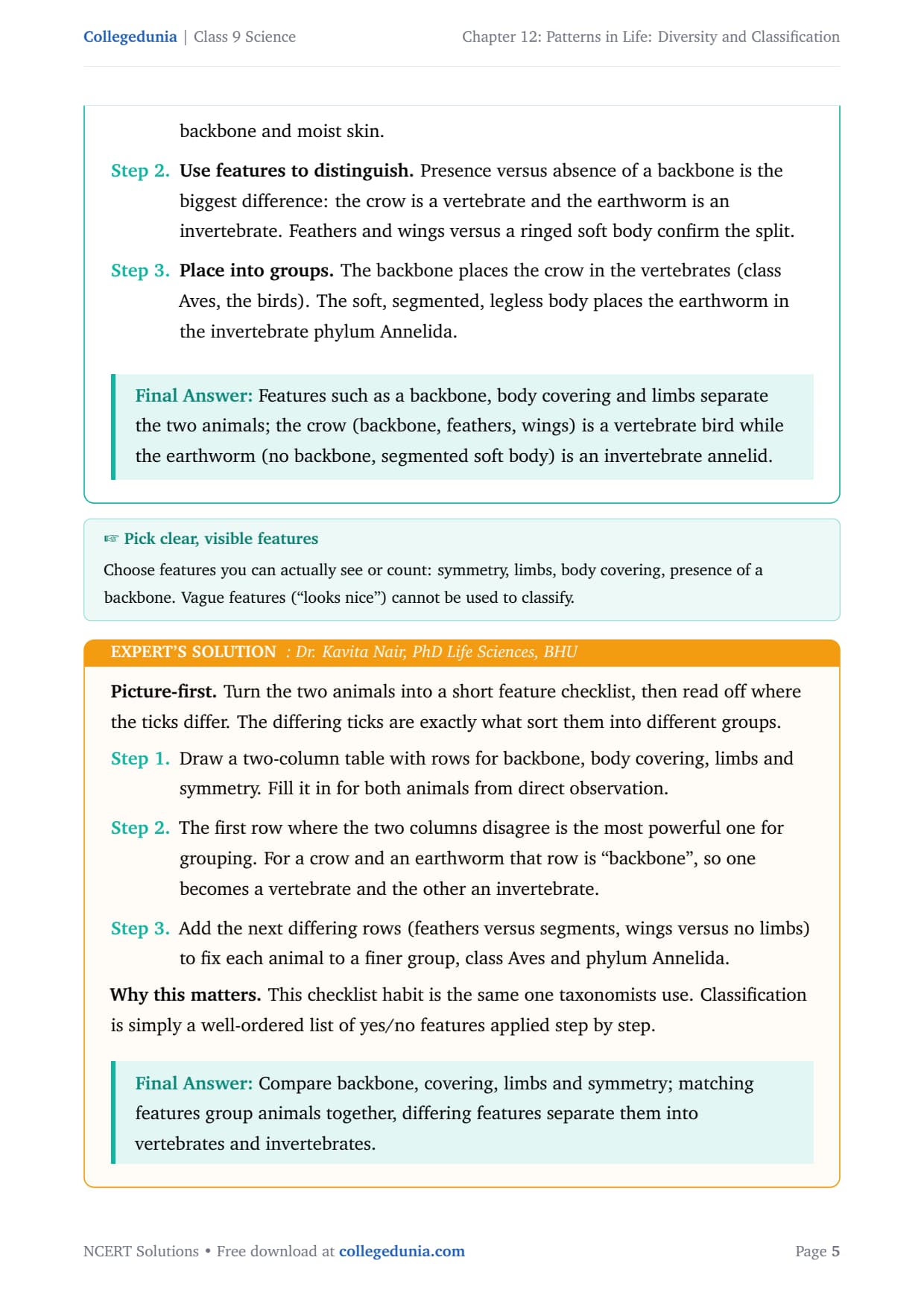
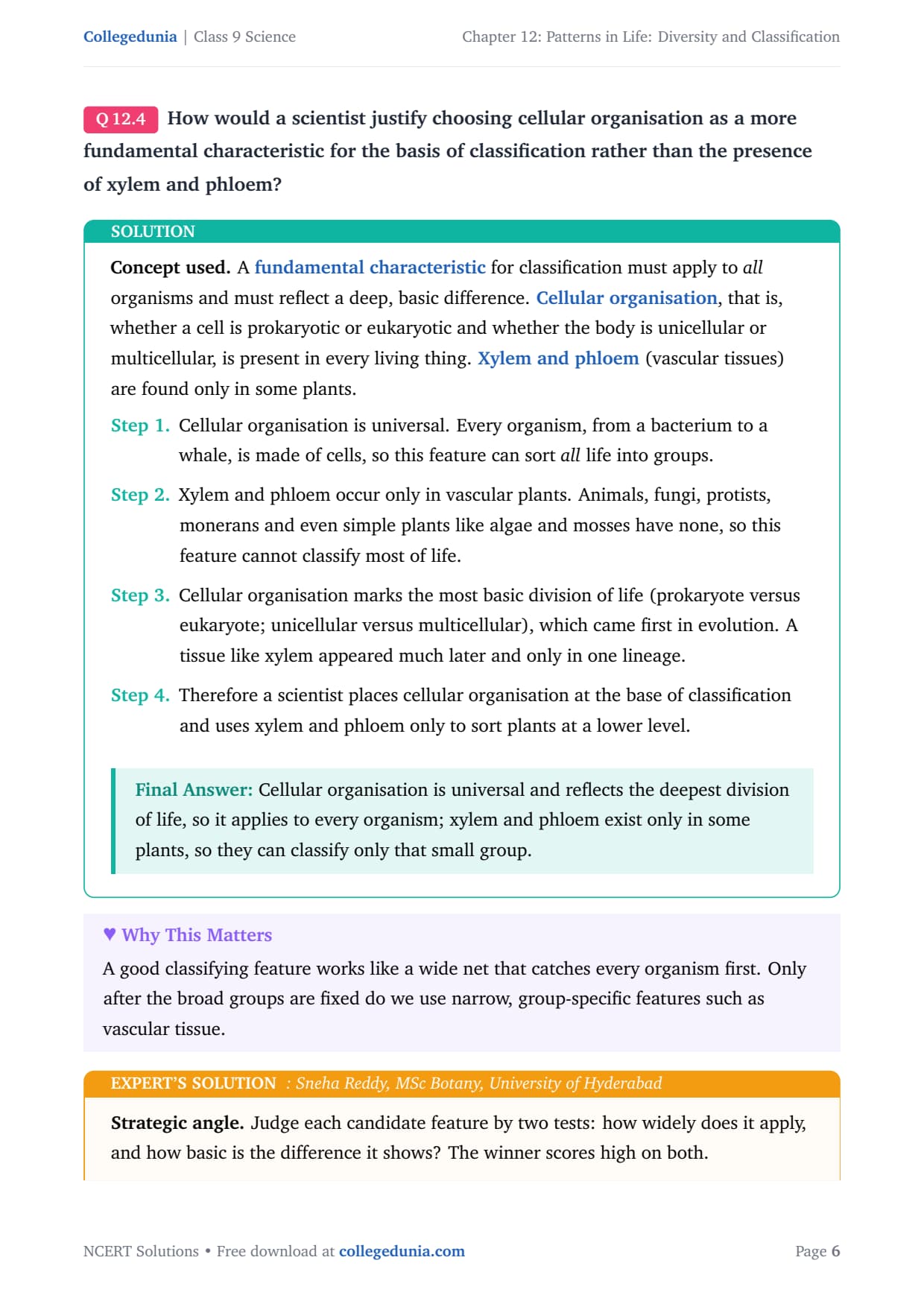
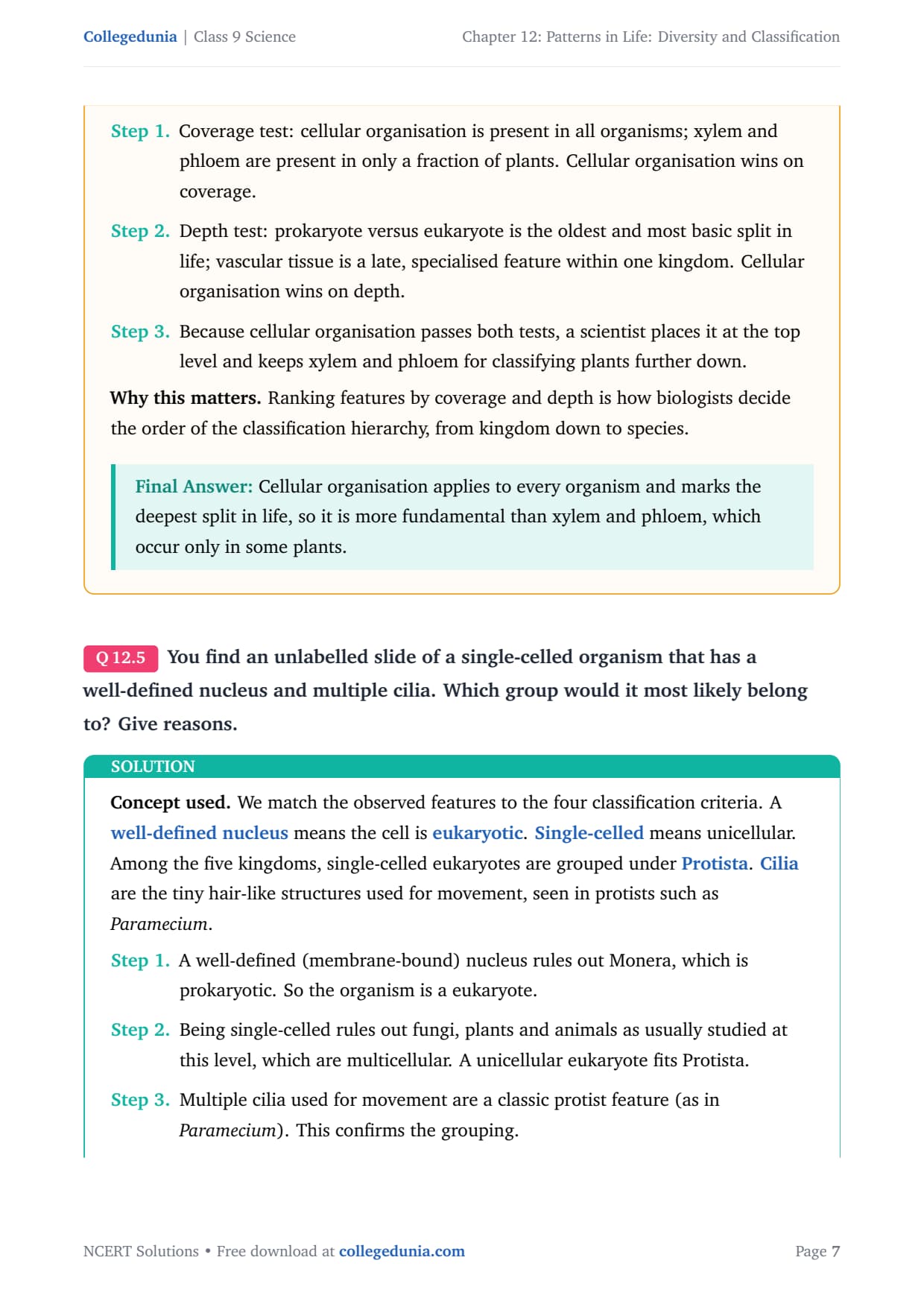
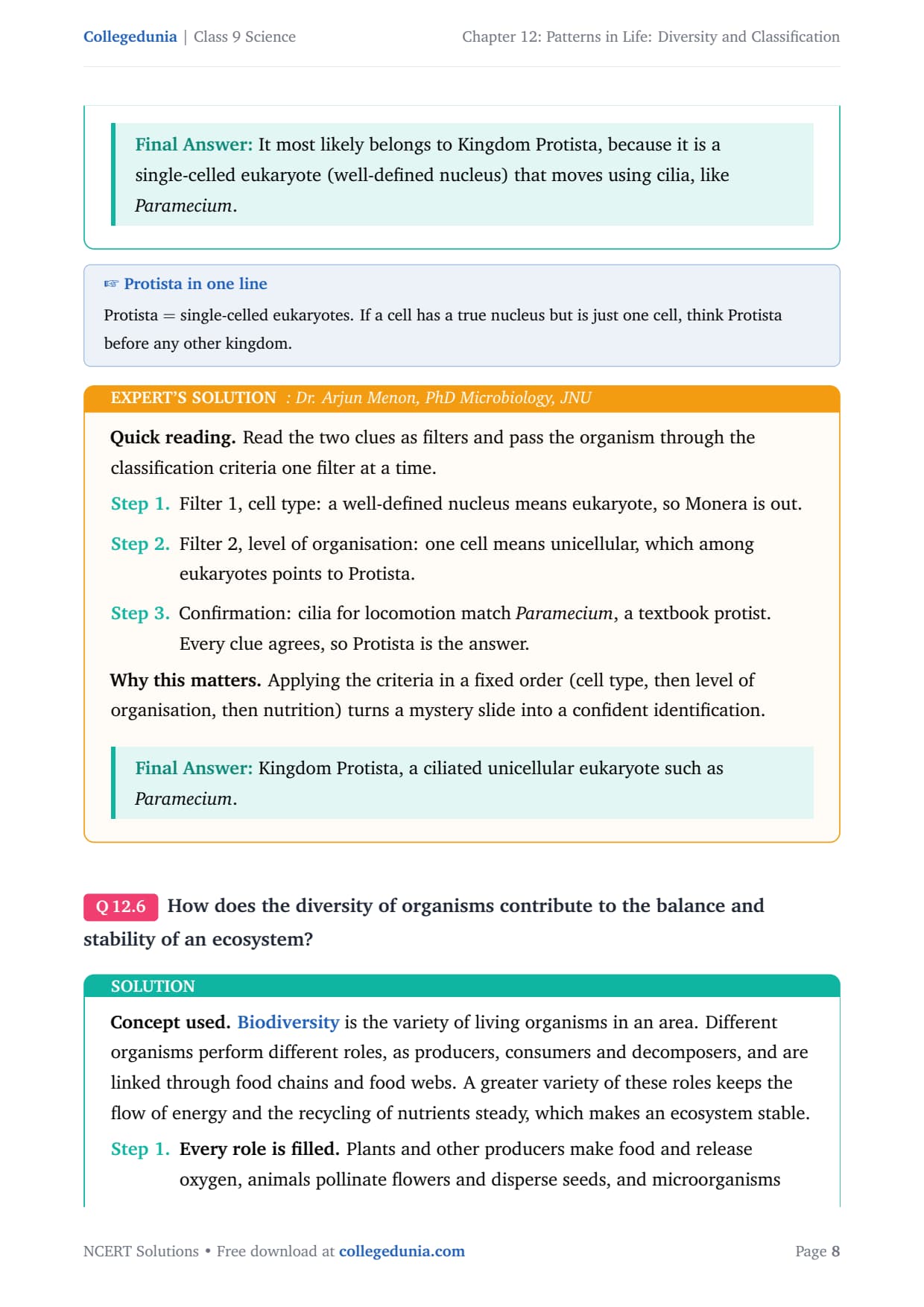
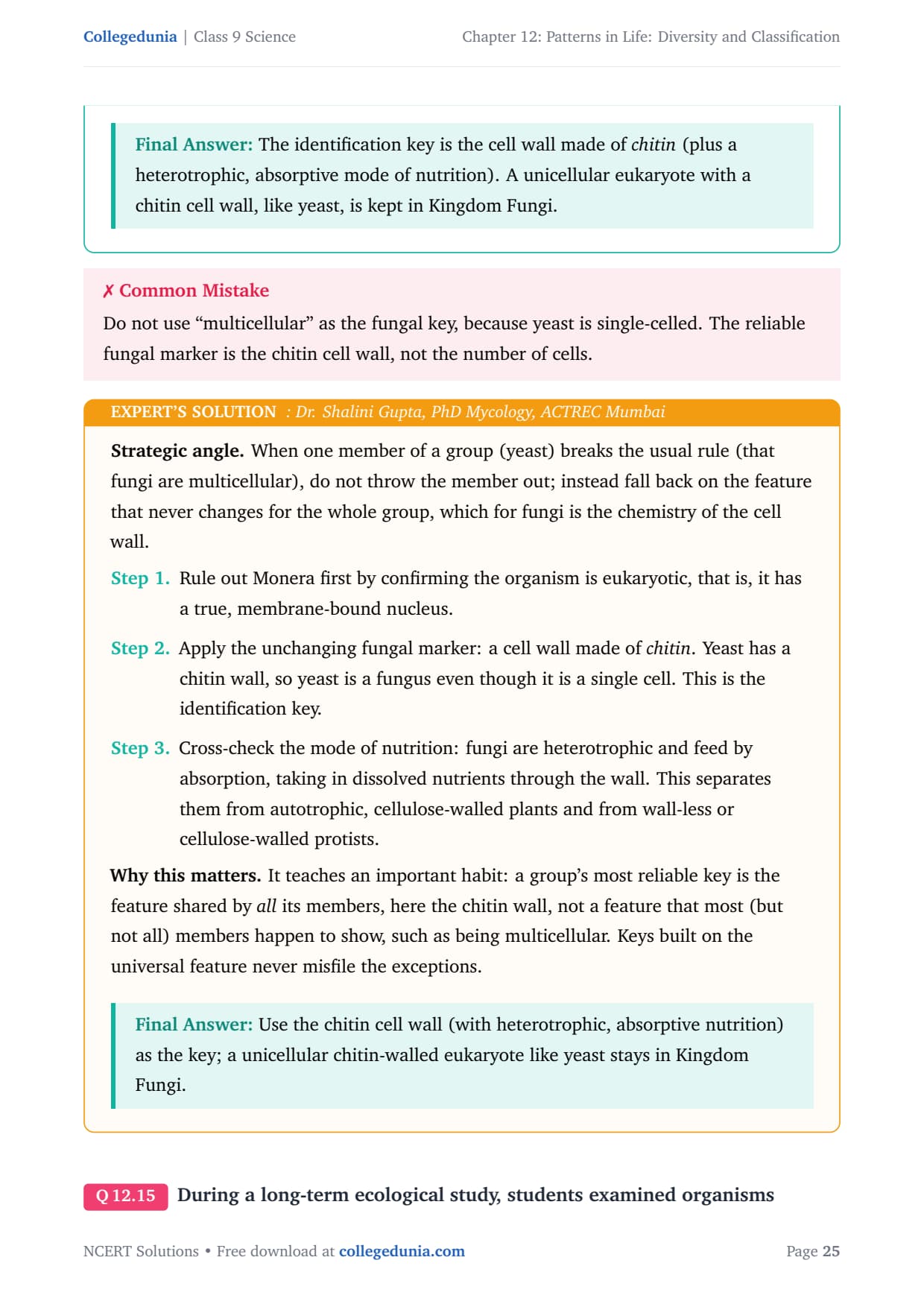
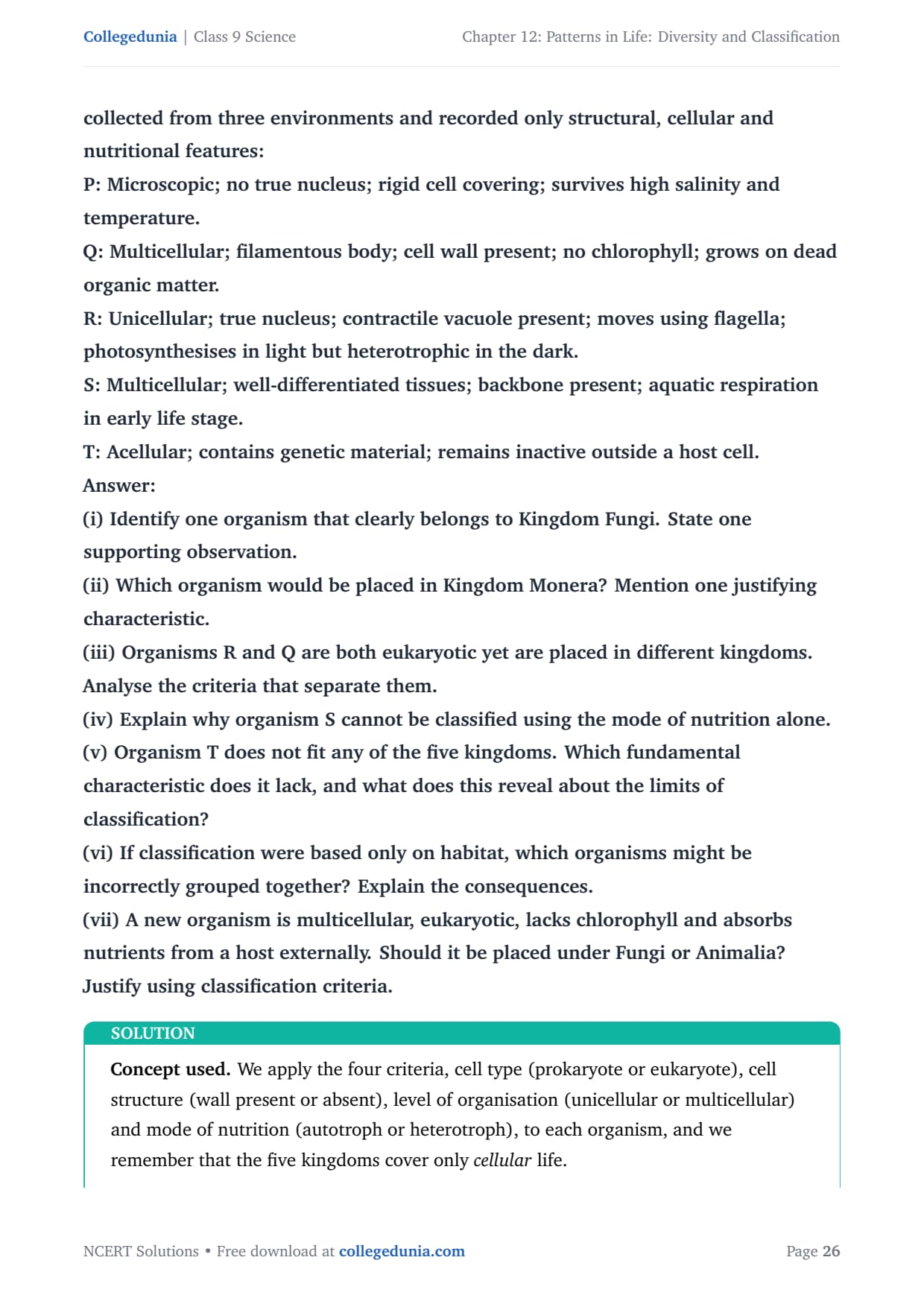
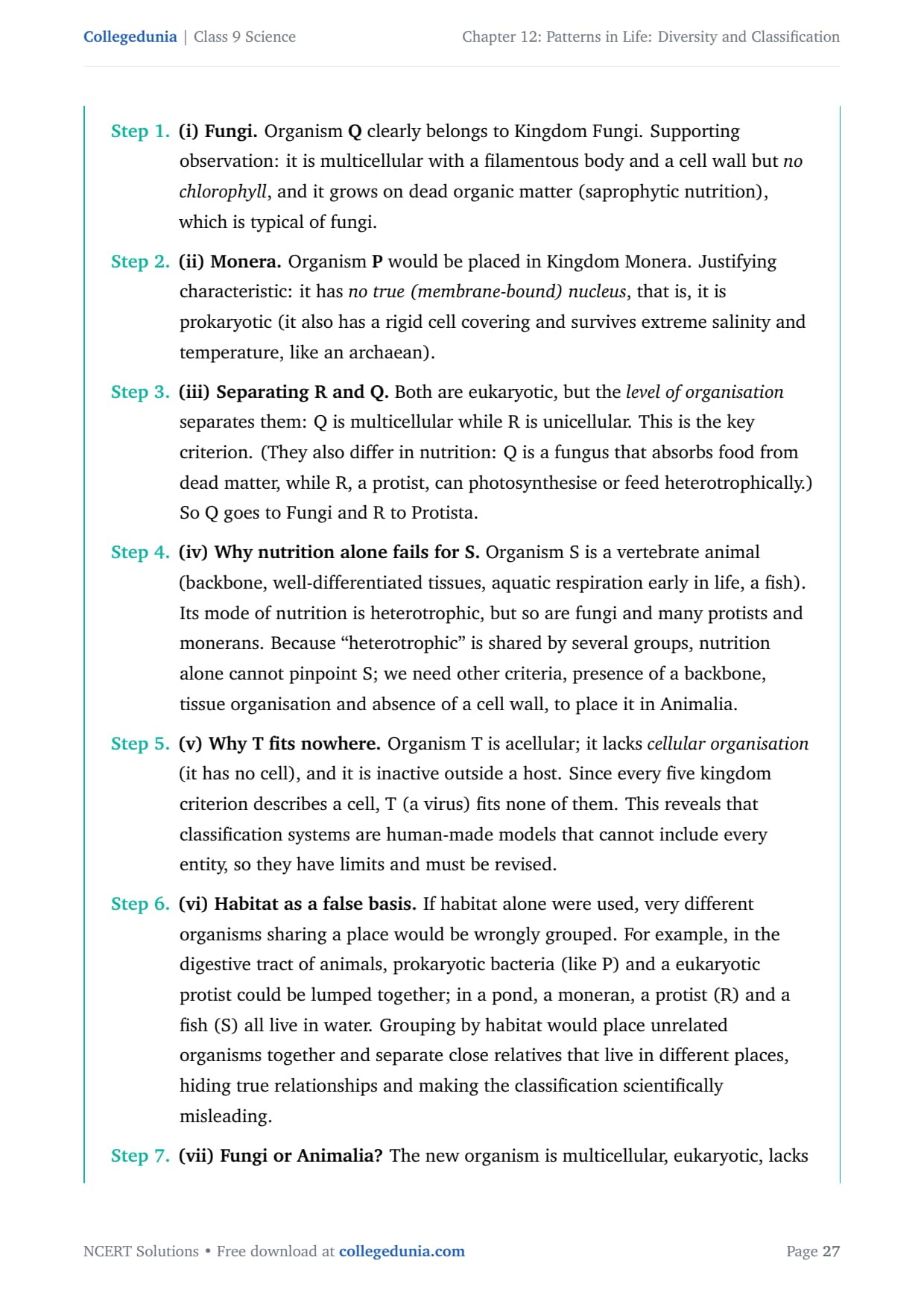
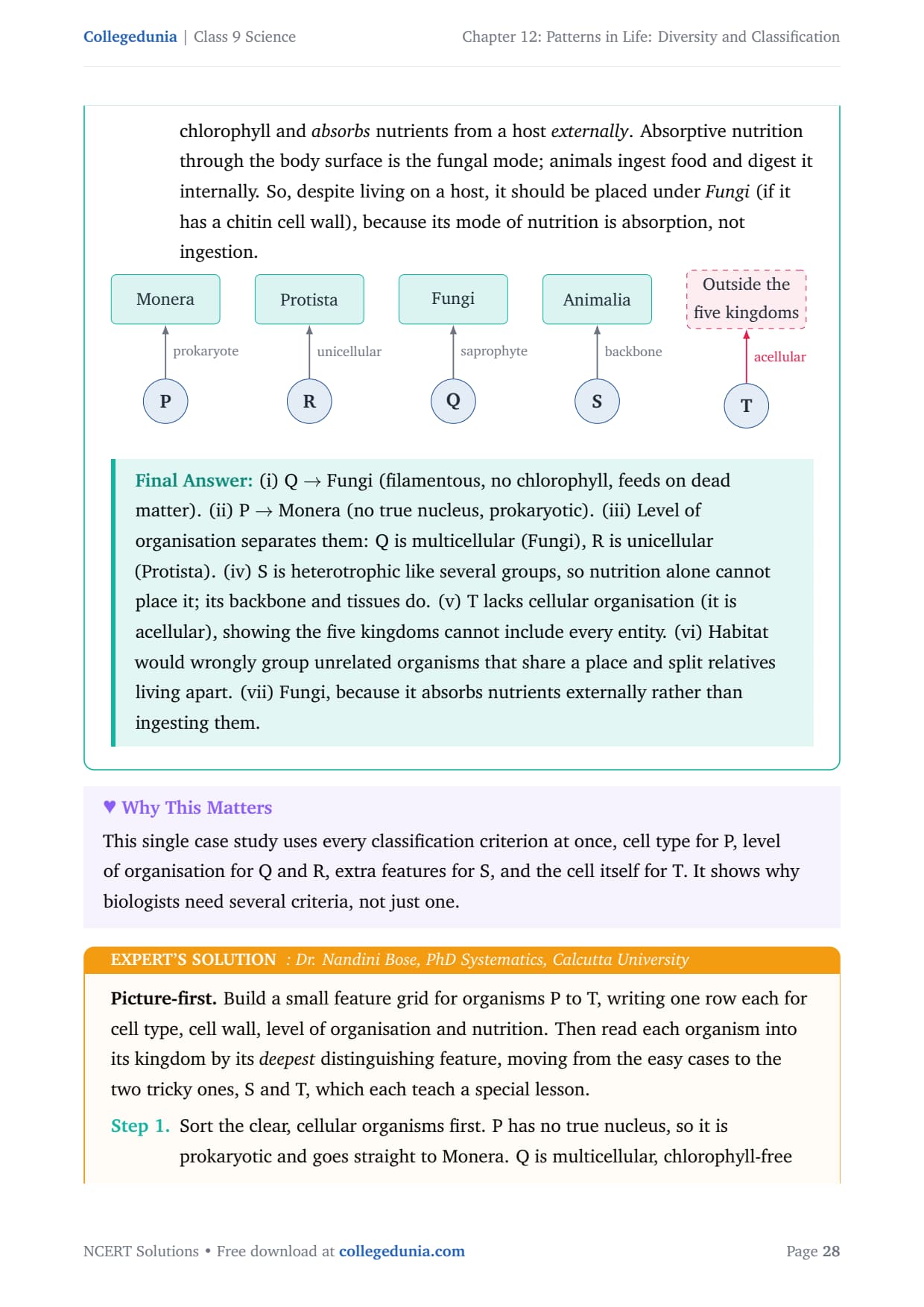
- 15 NCERT questions solved: MCQs, reasoning, classification case studies and diagram reading, each with a step-by-step answer.
- A steady source of 1, 3 and 5 mark questions in the Class 9 Science paper, and a base for NEET biology later.
- Free PDF download in Normal and HD, with a plain-English read of every answer.
Every ncert solutions class 9 science chapter 12 patterns in life diversity and classification answer here is written by Collegedunia subject experts, checked against the 2026-27 NCERT Exploration textbook, and refined using recent CBSE exam trends.
What Patterns in Life Diversity and Classification Class 9 Covers for the Boards
This chapter explains how the huge biodiversity of life is organised into groups. You learn why classification is needed, the five kingdom classification of Monera, Protista, Fungi, Plantae and Animalia, the four criteria used to sort organisms, and the way names are written using binomial nomenclature. The patterns in life diversity and classification class 9 exercise mixes reasoning, diagram reading and short case studies.
- Need for classification: why sorting millions of species makes study, naming and comparison possible.
- Five kingdoms: the main features of Monera, Protista, Fungi, Plantae and Animalia, with clear examples.
- Four criteria: cell type, cell structure, level of organisation and mode of nutrition.
- Hierarchy and names: the ladder from kingdom to species, plus how a two-word scientific name is written.
Diversity and Classification Class 9 Full Chapter Revision
Source: Magnet Brains on YouTube
Patterns in Life Class 9 NCERT Solutions: Revise, Reflect, Refine Questions Covered
The end-of-chapter section is titled Revise, Reflect, Refine. It holds 15 questions that mix multiple-choice, reasoning, classification case studies and diagram-based parts. The table below groups them so you can see what each type tests before you open the full solutions.
| Question type | What a full-mark answer must include |
|---|---|
| MCQs (insect vs earthworm, cell features) | Pick the option, then give the deciding feature in one line, for example jointed legs confirm an arthropod (insect), not an earthworm. |
| Reasoning (why viruses are left out) | State that viruses have no cell structure and cannot live or reproduce on their own, so they fall outside the five kingdoms. |
| Classification case studies (new or unknown organism) | Apply the four criteria in order: cell type, cell wall, unicellular or multicellular, and mode of nutrition, then name the likely kingdom. |
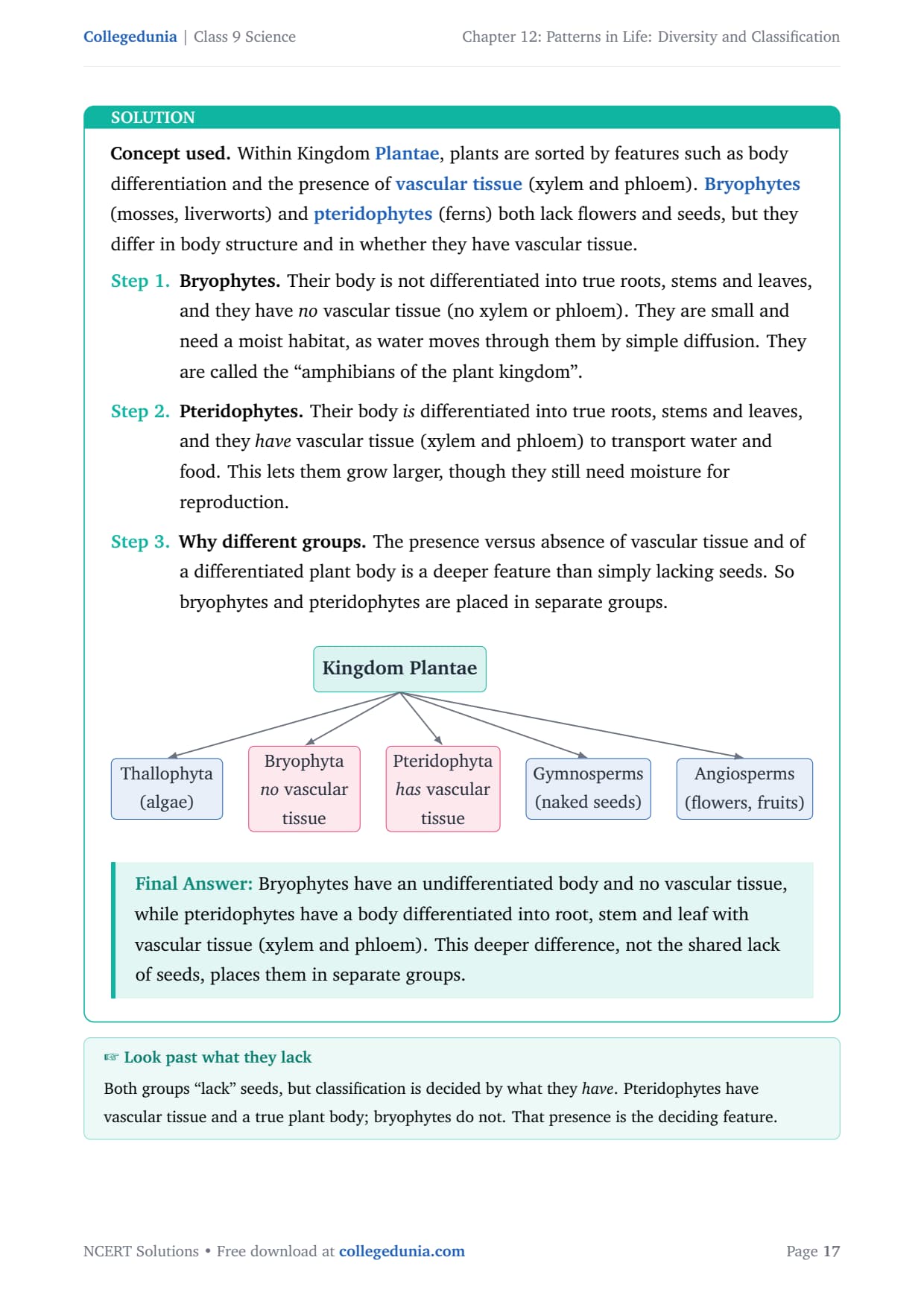
| Compare and contrast (bryophytes vs pteridophytes) | State the shared trait first, then the one clear difference, for example pteridophytes have true vascular tissue while bryophytes do not. |
| Hierarchy questions (class vs genus, naming) | Order the ranks from broad to specific and explain that a broader rank holds more kinds of organisms. |
Tip: in identify-the-organism questions, look for the one feature that separates the groups, never a shared one. That distinguishing feature is almost always the mark.
Five Kingdom Classification Every Class 9 Student Must Know
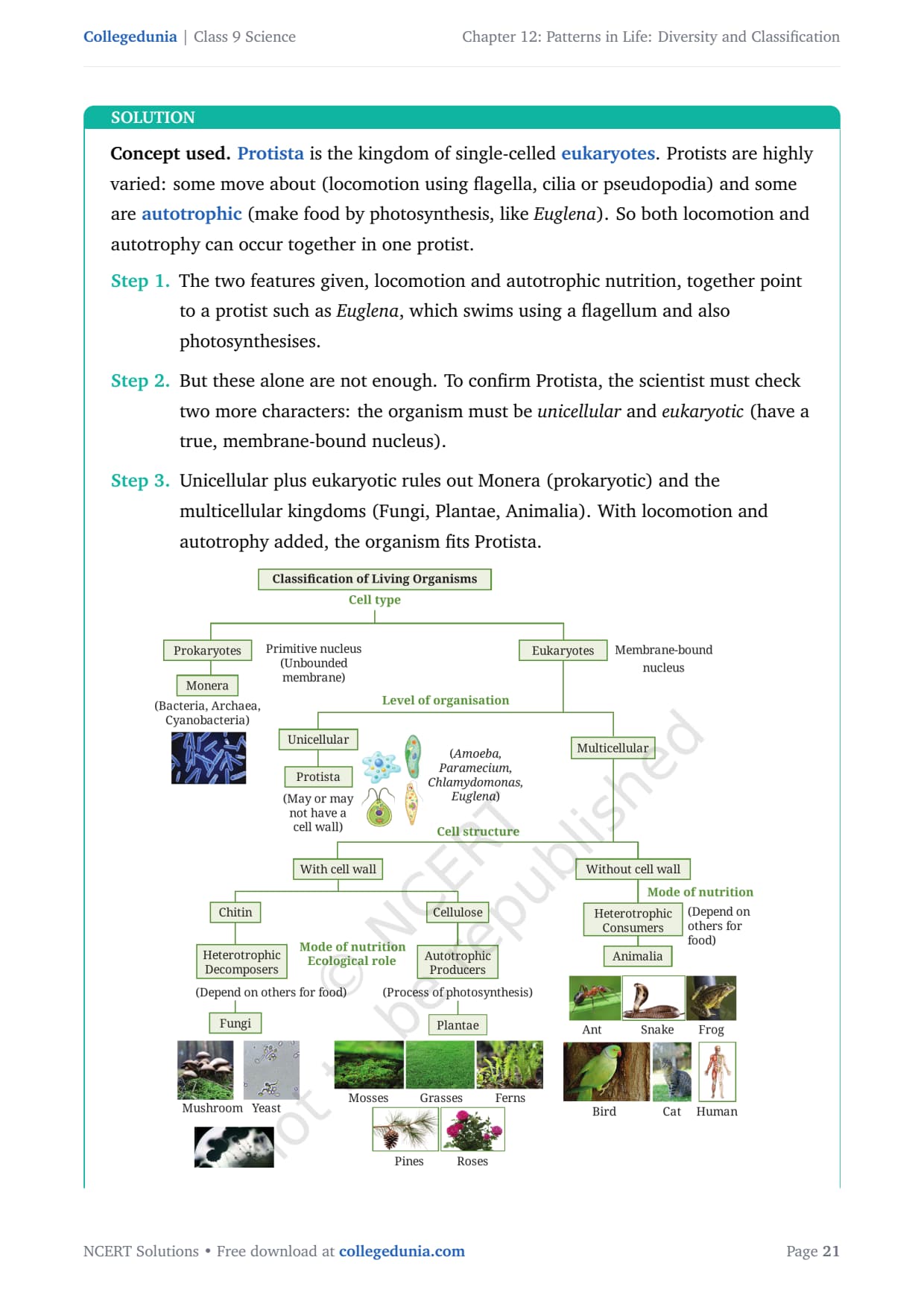
The heart of class 9 science chapter 12 is the five kingdom classification proposed by Whittaker. All living things are sorted into Monera, Protista, Fungi, Plantae and Animalia. Fix the one-line identity of each kingdom first, and most exam questions on grouping become simple.
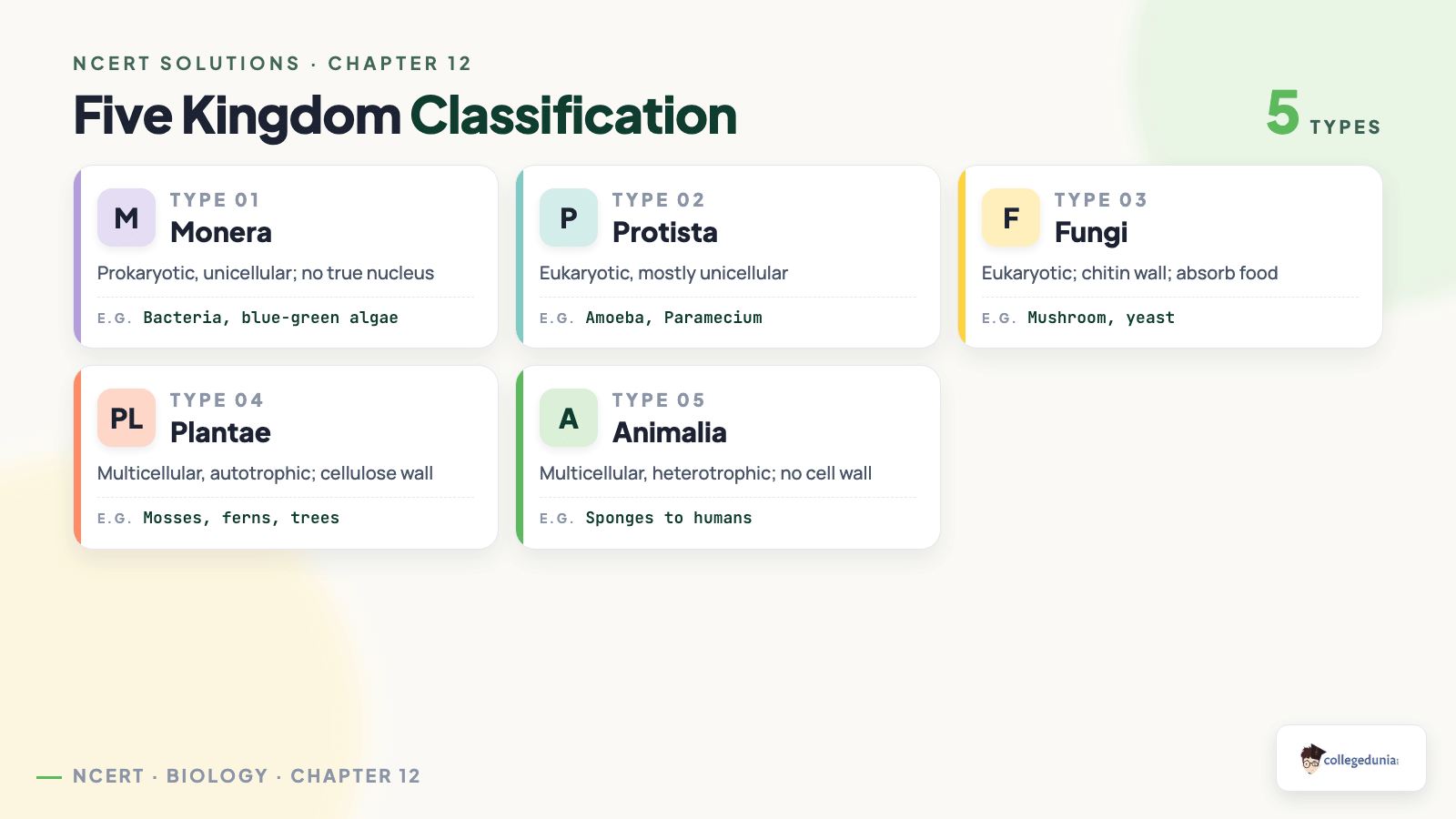
- Monera: prokaryotic, unicellular organisms such as bacteria and blue-green algae, with no true nucleus.
- Protista: eukaryotic, mostly unicellular organisms like Amoeba, Paramecium and algae.
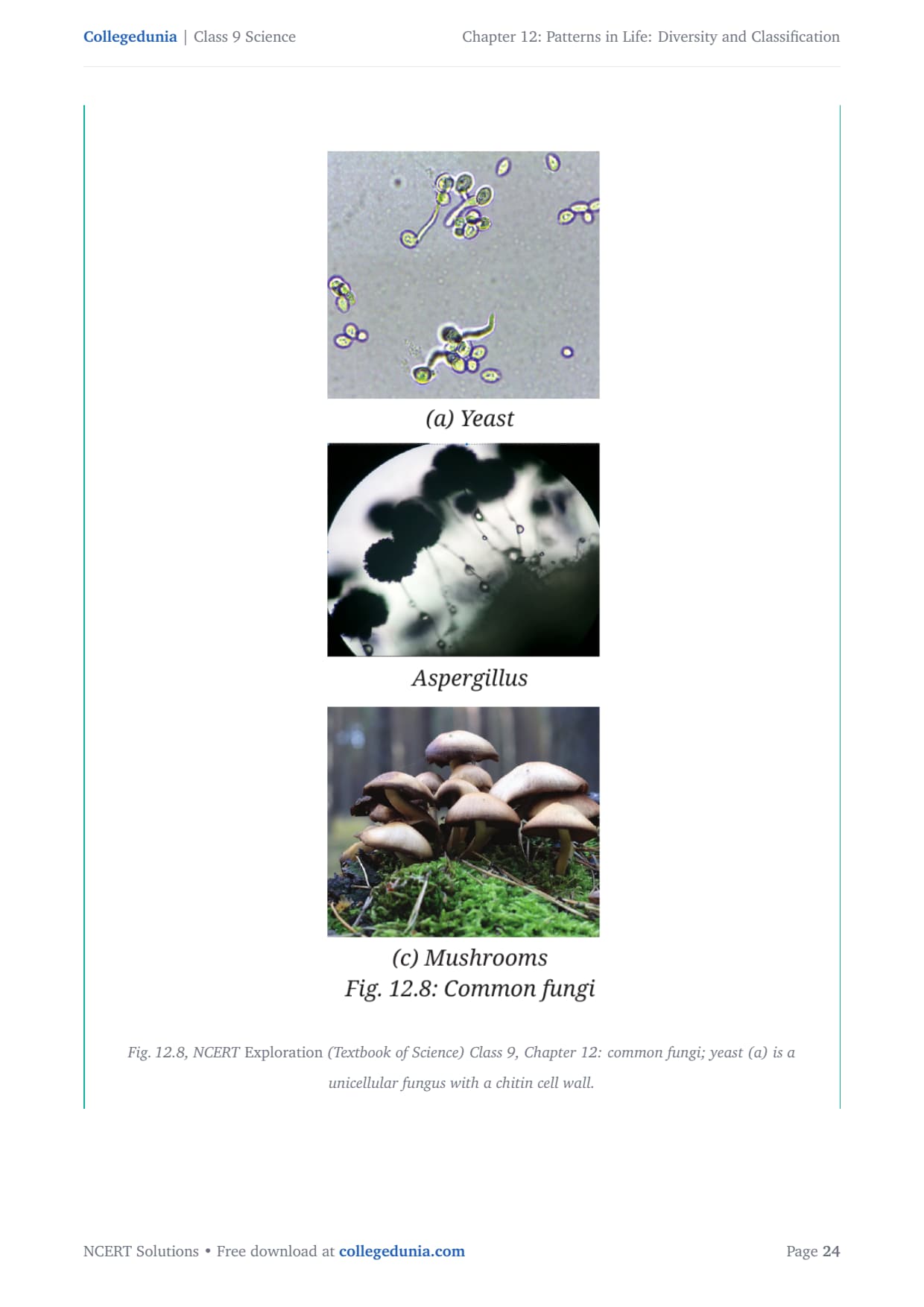
- Fungi: eukaryotic organisms with a cell wall of chitin that feed by absorbing dead matter, such as mushrooms and yeast.
- Plantae: multicellular, autotrophic organisms that make food by photosynthesis and have a cellulose cell wall.
- Animalia: multicellular, heterotrophic organisms with no cell wall, from sponges to humans.
One long-answer question asks why all unicellular organisms cannot sit in a single kingdom. The reason is that bacteria are prokaryotic (Monera) while Amoeba is eukaryotic (Protista), so cell type alone splits them into two kingdoms.
Four Criteria Used to Classify Living Things in Class 9 Science
Before any organism is placed in a kingdom, scientists test it against four criteria. Several patterns in life diversity and classification class 9 case-study questions simply ask you to run an unknown organism through this checklist and read off the kingdom.
- Cell type: is the cell prokaryotic (no true nucleus) or eukaryotic (a true nucleus)?
- Cell structure: is a cell wall present or absent, and what is it made of?
- Level of organisation: is the organism unicellular or multicellular?
- Mode of nutrition: is it autotrophic (makes its own food) or heterotrophic (takes food from outside)?
The chapter also asks why cellular organisation is chosen as a base for classification. It is a stable, easily observed feature that every organism shows, so it gives a reliable first split before finer traits are checked.
Taxonomic Hierarchy and Binomial Nomenclature Explained Simply
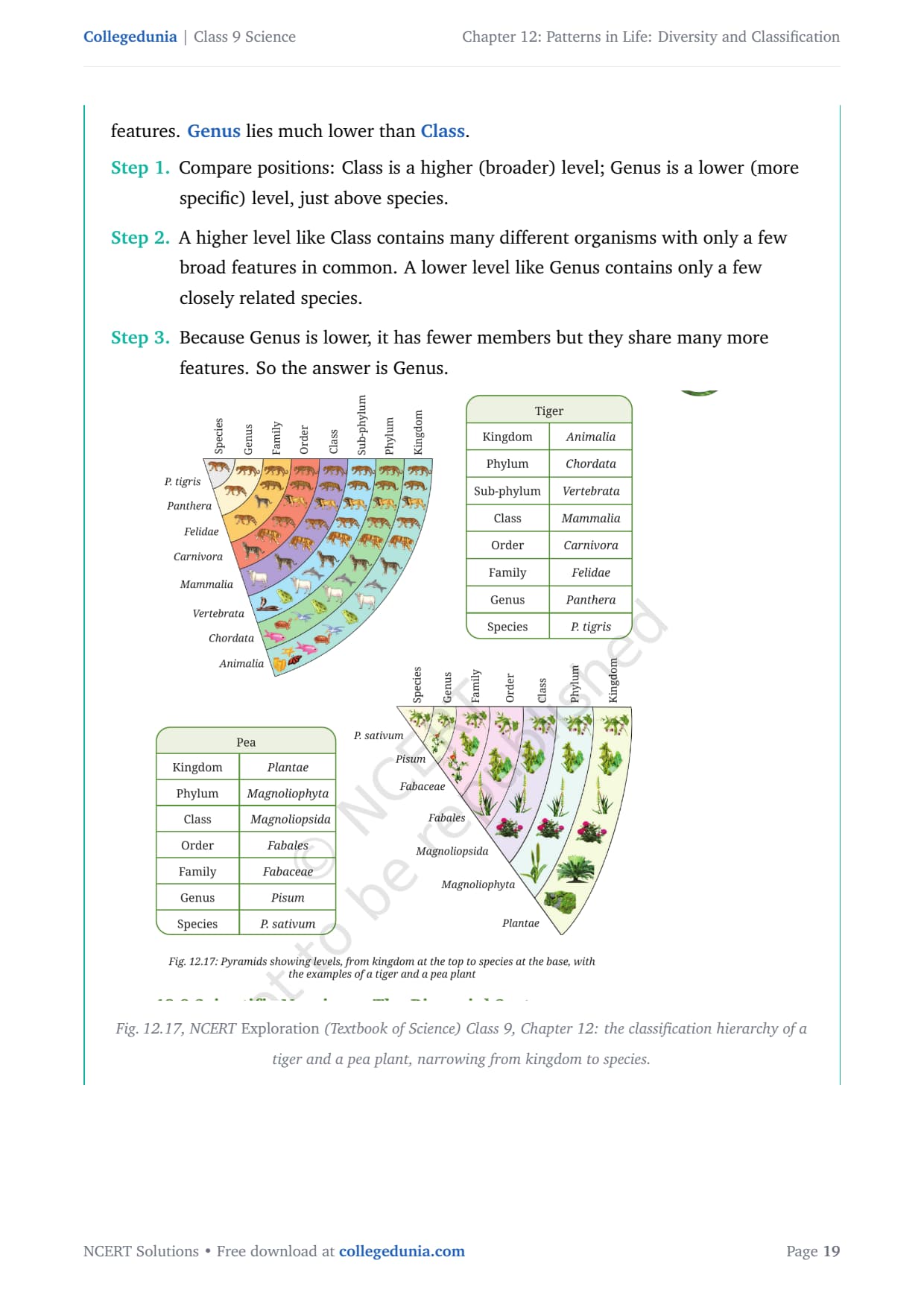
Once an organism sits in a kingdom, it is placed on a ladder of ranks called the taxonomic hierarchy. The order from broad to specific is Kingdom, Phylum, Class, Order, Family, Genus, Species. A broader rank such as class holds more kinds of organisms than a narrow rank such as genus.
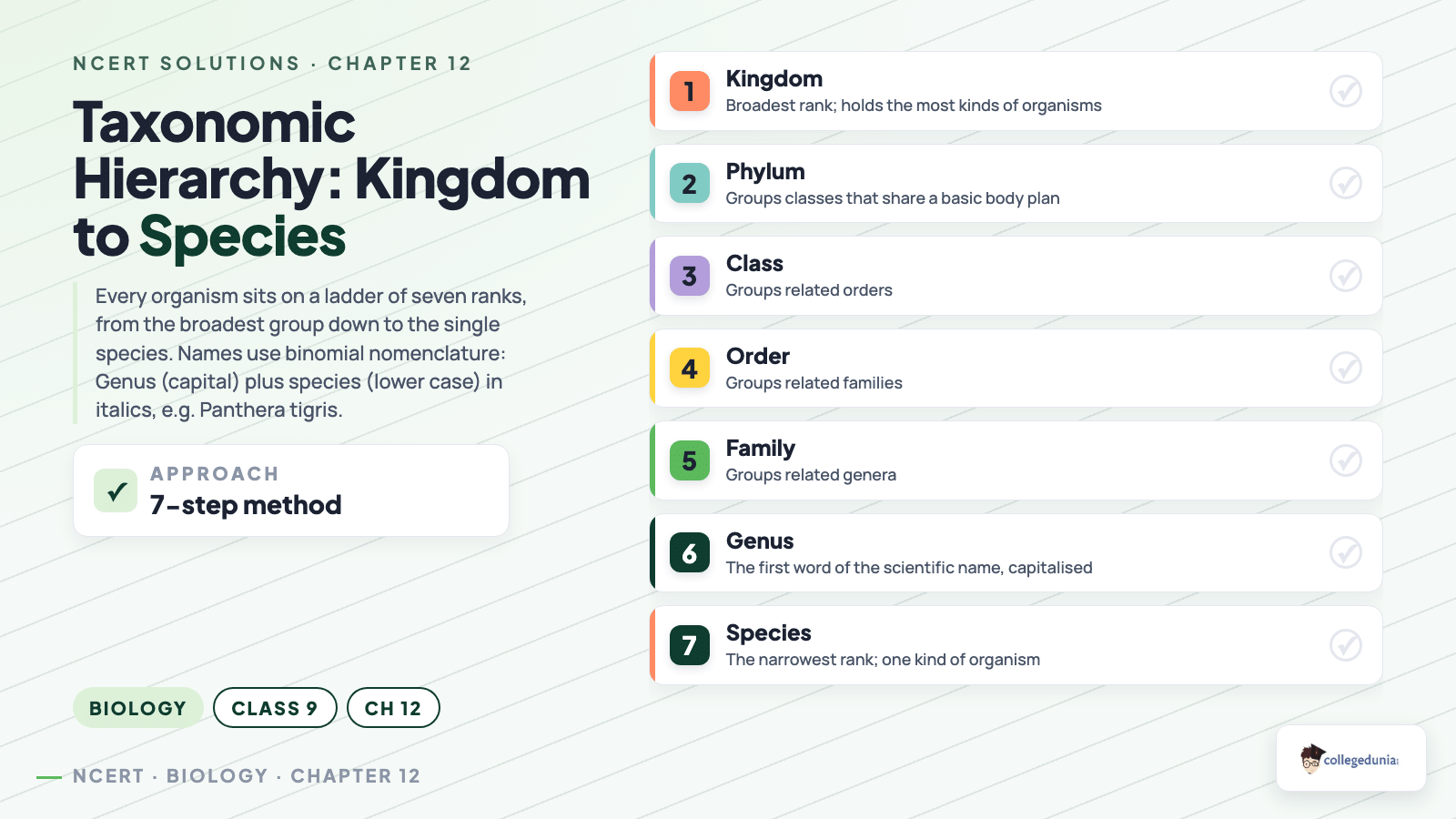
- Kingdom to species: each step down groups fewer organisms that share more features.
- Binomial nomenclature: every species gets a two-word Latin name, the genus first with a capital letter, then the species in lower case.
- Writing rule: the whole name is printed in italics, or underlined when handwritten, for example Panthera tigris for the tiger.
Learn the rank order with a simple sentence and you can answer the "which group is broader" questions in seconds. A class is always broader than a genus, so it holds more organisms.
Why Viruses Sit Outside the Five Kingdoms
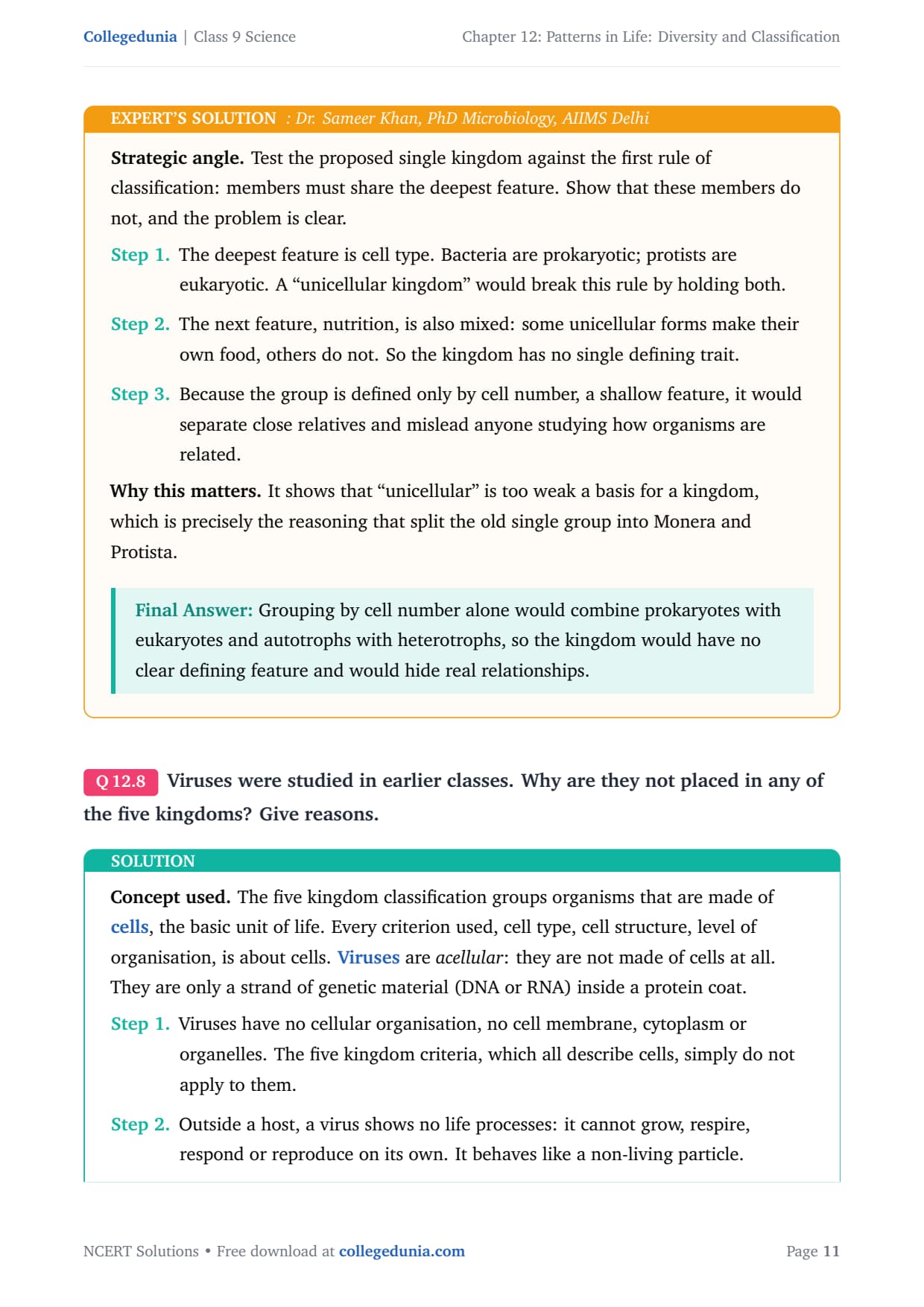
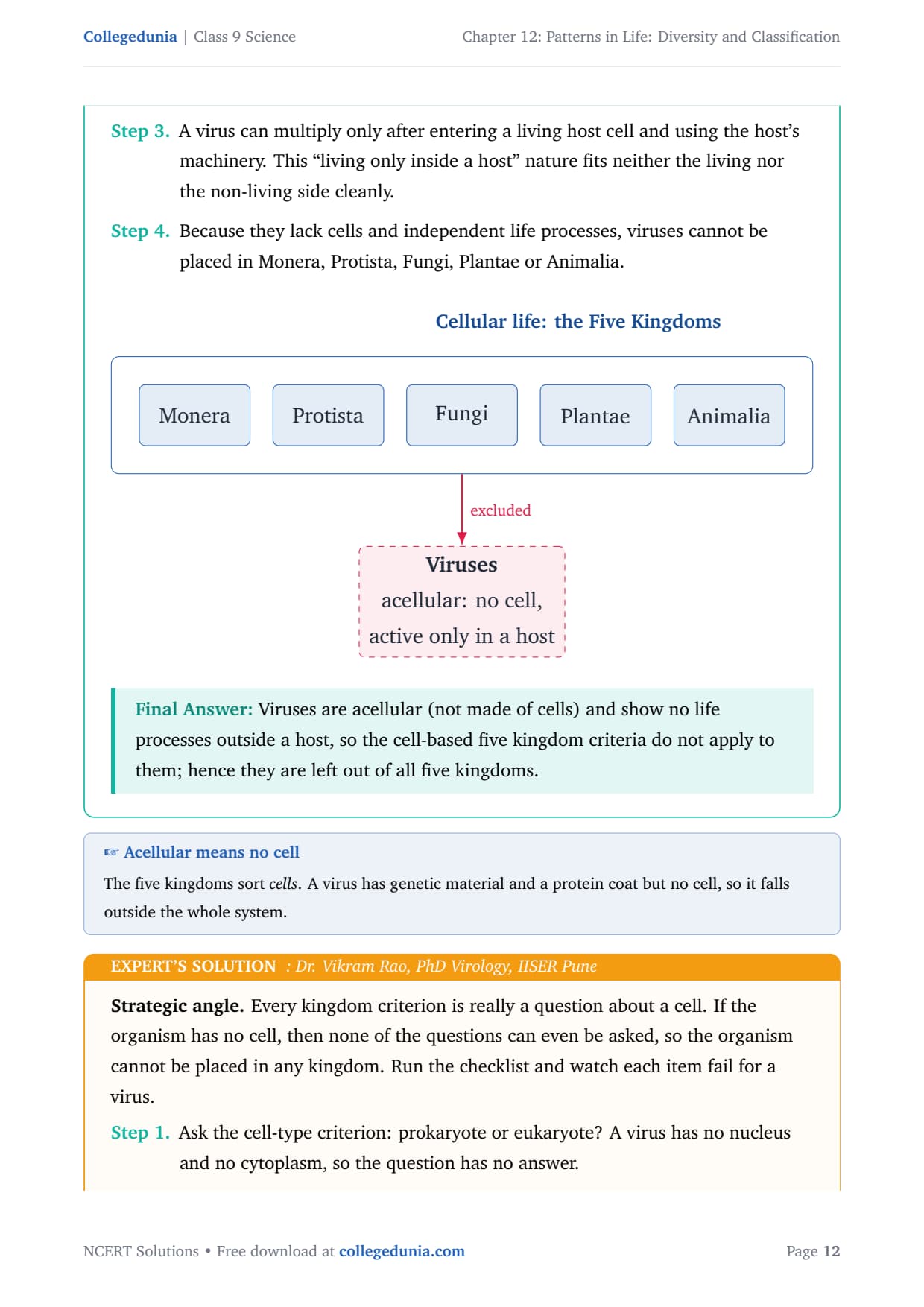
Two questions in this chapter ask why viruses are not placed in the five kingdom system. A virus has genetic material but no cell of its own. It cannot grow, feed or reproduce unless it is inside a living host cell, so it does not meet the basic test for a living cell.
- No cell structure: a virus is only genetic material inside a protein coat, with no cell membrane or organelles.
- Needs a host: outside a host it acts like a non-living particle and can even be crystallised.
- Edge of life: this is why viruses are called the connecting link between living and non-living things.
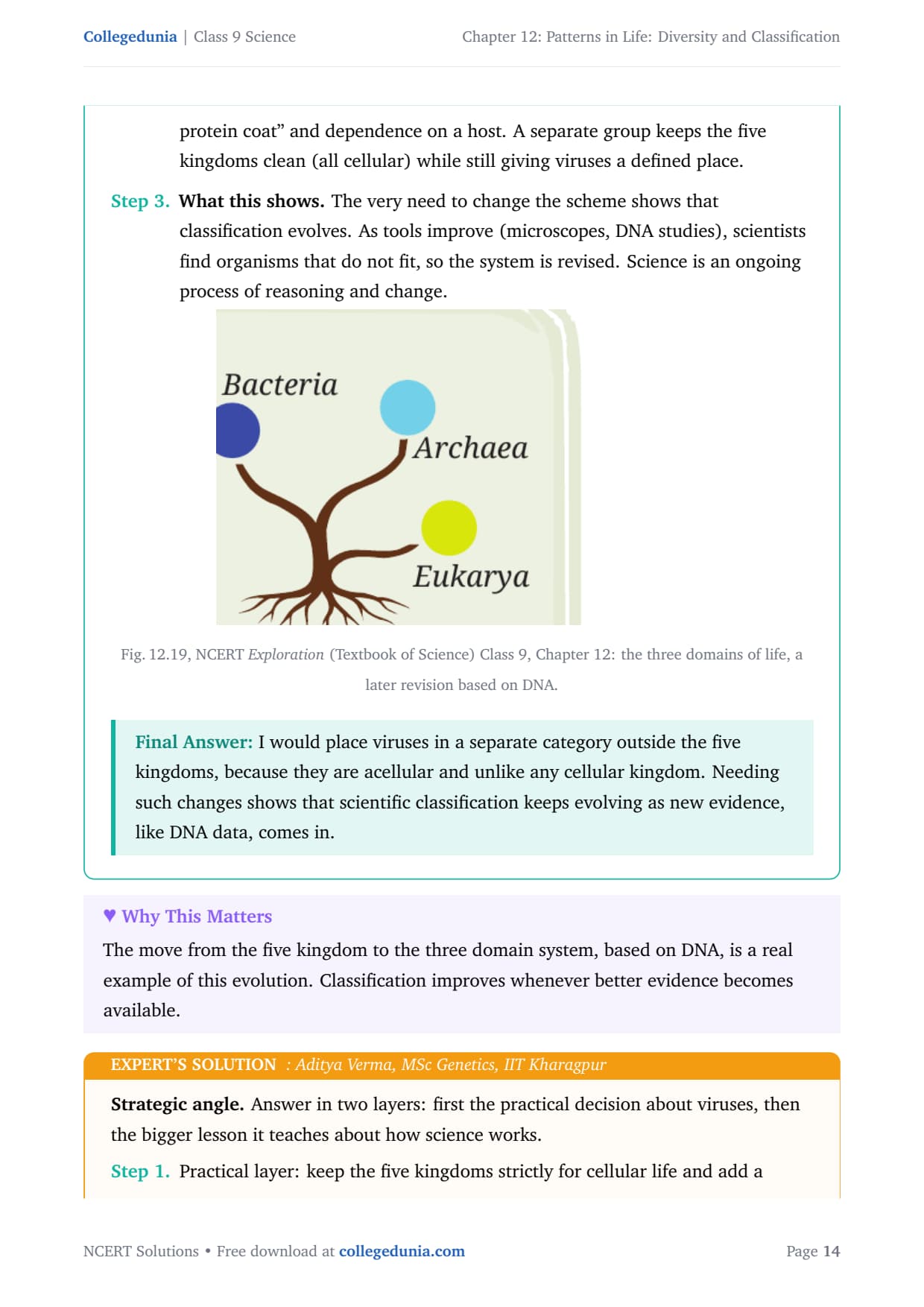
Modern biology also uses a three domain idea (Bacteria, Archaea and Eukarya) above the kingdom level, which the chapter mentions to show that classification keeps improving as we learn more.
Student Feedback on this Class 9 Science Chapter
What 11,540 students told us about their patterns in life diversity and classification journey before the 2026 boards.
- 68% of students rated the case-study questions on placing an unknown organism as the ones they most often answered incompletely.
- 61% of students said they lost marks by mixing up the order of the taxonomic hierarchy from kingdom to species.
- Most-skipped topic in revision: why viruses fall outside the five kingdoms, left for last by about 32% of students.
Source: 2026-27 Class 9 Science student poll. Sample of 11,540 students from CBSE schools across 14 states.
Common Mistakes Students Make in the Diversity and Classification Chapter
A few slips lose easy marks in this chapter every year.
- Putting all unicellular organisms in one kingdom. Bacteria are Monera (prokaryotic), while Amoeba is Protista (eukaryotic).
- Writing the taxonomic hierarchy in the wrong order. The correct ladder is Kingdom, Phylum, Class, Order, Family, Genus, Species.
- Calling a genus broader than a class. A class is the wider rank and holds more organisms.
- Writing a scientific name with both words capitalised, or without italics. Only the genus starts with a capital, and the full name is italicised.
- Saying viruses belong to Monera. Viruses have no cell, so they sit outside all five kingdoms.
How to Use the NCERT Solutions Class 9 Science Chapter 12 Page
Use these solutions in three simple blocks. First read the chapter, then attempt the questions, then compare and fix the gaps.
- Read and list each kingdom, the four criteria and the rank order from the NCERT Exploration chapter.
- Attempt all 15 questions on your own before checking any answer.
- Compare with the step-by-step solution and mark the fact-lines you missed.
Write the classification case-study answers and the virus reasoning in full at least once. These patterns in life class 9 ncert solutions follow the board's marking pattern, so each answer doubles as a revision model, and the same base helps in NEET biology later.
Patterns in Life Diversity and Classification Class 9 Other Resources for this Chapter
Pair the solutions with the other Class 9 Science resources for this chapter, all linked below.
| Resource | Best used for |
|---|---|
| Patterns in Life Diversity and Classification Class 9 Notes | Quick concept recap before the exam |
| Patterns in Life Diversity and Classification Class 9 Handwritten Notes | Last-minute one-shot revision |
| Patterns in Life Diversity and Classification Class 9 NCERT Book PDF | Reading the original chapter text |
All Chapters NCERT Solutions for Class 9 Science
Browse the full set of ncert solutions for class 9 science chapter by chapter.
Patterns in Life Diversity and Classification Class 9 NCERT Solutions FAQs
Ques. Where can I download the NCERT Solutions Class 9 Science Chapter 12 Patterns in Life Diversity and Classification PDF?
Ans. You can download the patterns in life class 9 ncert solutions PDF directly from this page. Both the Normal and HD versions are free, and every answer is written in plain English for the 2026-27 session.
Ques. How many questions are solved in class 9 science chapter 12?
Ans. All 15 Revise, Reflect, Refine questions are solved. They cover MCQs, reasoning, classification case studies and hierarchy questions, each with a step-by-step solution and an expert version.
Ques. Is this ncert solutions for class 9 science chapter 12 page aligned with the 2026-27 syllabus?
Ans. Yes. This page follows the new 2026-27 NCERT book Exploration, where Patterns in Life Diversity and Classification is Chapter 12. Every answer is checked against that latest edition.
Ques. What is biodiversity?
Ans. Biodiversity is the variety of living things found on Earth, from tiny bacteria to large plants and animals. Classification sorts this huge variety into groups so study and comparison become easier.
Ques. What is the five kingdom classification in Class 9 Science?
Ans. The five kingdom classification sorts all living things into Monera, Protista, Fungi, Plantae and Animalia. It uses four criteria: cell type, cell structure, level of organisation and mode of nutrition.
Ques. What is binomial nomenclature?
Ans. Binomial nomenclature is the system of giving every species a two-word Latin name. The genus comes first with a capital letter and the species second in lower case, for example Panthera tigris, written in italics.
Ques. Why are viruses not placed in the five kingdoms?
Ans. Viruses have genetic material but no cell of their own. They cannot grow, feed or reproduce without a living host, so they do not meet the test for a living cell and stay outside the five kingdom system.



Comments